EP2632264B1 - Neue formulierungen aus wasserunlöslichen chemischen verbindungen und verfahren zur verwendung einer formulierung aus der verbindung fl118 zur krebstherapie - Google Patents
Neue formulierungen aus wasserunlöslichen chemischen verbindungen und verfahren zur verwendung einer formulierung aus der verbindung fl118 zur krebstherapie Download PDFInfo
- Publication number
- EP2632264B1 EP2632264B1 EP11837250.7A EP11837250A EP2632264B1 EP 2632264 B1 EP2632264 B1 EP 2632264B1 EP 11837250 A EP11837250 A EP 11837250A EP 2632264 B1 EP2632264 B1 EP 2632264B1
- Authority
- EP
- European Patent Office
- Prior art keywords
- solution
- solvent
- dmso
- peg
- saline
- Prior art date
- Legal status (The legal status is an assumption and is not a legal conclusion. Google has not performed a legal analysis and makes no representation as to the accuracy of the status listed.)
- Not-in-force
Links
Images














Classifications
-
- C—CHEMISTRY; METALLURGY
- C07—ORGANIC CHEMISTRY
- C07D—HETEROCYCLIC COMPOUNDS
- C07D491/00—Heterocyclic compounds containing in the condensed ring system both one or more rings having oxygen atoms as the only ring hetero atoms and one or more rings having nitrogen atoms as the only ring hetero atoms, not provided for by groups C07D451/00 - C07D459/00, C07D463/00, C07D477/00 or C07D489/00
- C07D491/22—Heterocyclic compounds containing in the condensed ring system both one or more rings having oxygen atoms as the only ring hetero atoms and one or more rings having nitrogen atoms as the only ring hetero atoms, not provided for by groups C07D451/00 - C07D459/00, C07D463/00, C07D477/00 or C07D489/00 in which the condensed system contains four or more hetero rings
-
- A—HUMAN NECESSITIES
- A61—MEDICAL OR VETERINARY SCIENCE; HYGIENE
- A61K—PREPARATIONS FOR MEDICAL, DENTAL OR TOILETRY PURPOSES
- A61K31/00—Medicinal preparations containing organic active ingredients
- A61K31/33—Heterocyclic compounds
- A61K31/395—Heterocyclic compounds having nitrogen as a ring hetero atom, e.g. guanethidine or rifamycins
- A61K31/435—Heterocyclic compounds having nitrogen as a ring hetero atom, e.g. guanethidine or rifamycins having six-membered rings with one nitrogen as the only ring hetero atom
- A61K31/47—Quinolines; Isoquinolines
- A61K31/475—Quinolines; Isoquinolines having an indole ring, e.g. yohimbine, reserpine, strychnine, vinblastine
-
- A—HUMAN NECESSITIES
- A61—MEDICAL OR VETERINARY SCIENCE; HYGIENE
- A61K—PREPARATIONS FOR MEDICAL, DENTAL OR TOILETRY PURPOSES
- A61K45/00—Medicinal preparations containing active ingredients not provided for in groups A61K31/00 - A61K41/00
- A61K45/06—Mixtures of active ingredients without chemical characterisation, e.g. antiphlogistics and cardiaca
-
- A—HUMAN NECESSITIES
- A61—MEDICAL OR VETERINARY SCIENCE; HYGIENE
- A61K—PREPARATIONS FOR MEDICAL, DENTAL OR TOILETRY PURPOSES
- A61K47/00—Medicinal preparations characterised by the non-active ingredients used, e.g. carriers or inert additives; Targeting or modifying agents chemically bound to the active ingredient
- A61K47/06—Organic compounds, e.g. natural or synthetic hydrocarbons, polyolefins, mineral oil, petrolatum or ozokerite
- A61K47/08—Organic compounds, e.g. natural or synthetic hydrocarbons, polyolefins, mineral oil, petrolatum or ozokerite containing oxygen, e.g. ethers, acetals, ketones, quinones, aldehydes, peroxides
- A61K47/10—Alcohols; Phenols; Salts thereof, e.g. glycerol; Polyethylene glycols [PEG]; Poloxamers; PEG/POE alkyl ethers
-
- A—HUMAN NECESSITIES
- A61—MEDICAL OR VETERINARY SCIENCE; HYGIENE
- A61K—PREPARATIONS FOR MEDICAL, DENTAL OR TOILETRY PURPOSES
- A61K47/00—Medicinal preparations characterised by the non-active ingredients used, e.g. carriers or inert additives; Targeting or modifying agents chemically bound to the active ingredient
- A61K47/06—Organic compounds, e.g. natural or synthetic hydrocarbons, polyolefins, mineral oil, petrolatum or ozokerite
- A61K47/20—Organic compounds, e.g. natural or synthetic hydrocarbons, polyolefins, mineral oil, petrolatum or ozokerite containing sulfur, e.g. dimethyl sulfoxide [DMSO], docusate, sodium lauryl sulfate or aminosulfonic acids
-
- A—HUMAN NECESSITIES
- A61—MEDICAL OR VETERINARY SCIENCE; HYGIENE
- A61K—PREPARATIONS FOR MEDICAL, DENTAL OR TOILETRY PURPOSES
- A61K47/00—Medicinal preparations characterised by the non-active ingredients used, e.g. carriers or inert additives; Targeting or modifying agents chemically bound to the active ingredient
- A61K47/30—Macromolecular organic or inorganic compounds, e.g. inorganic polyphosphates
- A61K47/36—Polysaccharides; Derivatives thereof, e.g. gums, starch, alginate, dextrin, hyaluronic acid, chitosan, inulin, agar or pectin
- A61K47/40—Cyclodextrins; Derivatives thereof
-
- A—HUMAN NECESSITIES
- A61—MEDICAL OR VETERINARY SCIENCE; HYGIENE
- A61P—SPECIFIC THERAPEUTIC ACTIVITY OF CHEMICAL COMPOUNDS OR MEDICINAL PREPARATIONS
- A61P35/00—Antineoplastic agents
Definitions
- the present invention related generally to compositions and their use in therapy of cancer.
- Anticancer efficacy and selectivity are two critical factors for successful anti-cancer treatment.
- the classical approach for anticancer drug discovery is the use of cytotoxicity as a drug selection marker.
- the drug candidates identified via this approach usually show little selectivity to cancer versus normal tissues.
- the selected compounds fail to be developed for use as anticancer drugs because of their high toxicity to normal cells and tissues.
- An additional challenge in anticancer drug discovery and development is that cytotoxicity-based screening of chemical compound libraries over the past several decades has derived overwhelming numbers of compounds that show inhibition of cancer cell growth in vitro.
- identification of compounds that can exhibit clinically relevant anti-cancer effect in relevant animal models has proven very difficult.
- the present invention meets these and other needs.
- the present invention provides a pharmaceutical preparation and its use in inhibiting the growth of cancer in an individual.
- the use comprises administering to the individual a pharmaceutical preparation comprising an effective amount of 10H-1,3-Dioxolo[4,5-g]pyrano[3',4':6,7]indolizino[1,2-b]quinoline-8,11(7H,12H)-dione, 7-ethyl-7-hydroxy-, (S)- ("FL118") as defined in the claims.
- Growth of the cancer in the individual is inhibited subsequent to the administration.
- the pharmaceutical preparations are suitable for administering to an individual using a wide variety of techniques, and are particularly useful for intravenous and/or oral administration.
- the pharmaceutical preparations provided by the invention comprise an aqueous solution, a cyclodextrin, and a polar aprotic solvent or an alcohol as defined in the claims. They can further comprise helper cosolvents.
- the cyclodextrin in various embodiments is cyclodextrin ( ⁇ CD), hydroxypropyl- ⁇ -cyclodextrin (HP ⁇ CD) sulfobutylether- ⁇ -cyclodextrin (SBE ⁇ CD), or combinations thereof.
- the cyclodextrin is present as 0.125 -2.5% of the formulation.
- the polar aprotic solvent is present as 1-10% of the formulations and is dimethyl sulfoxide (DMSO).
- the pharmaceutical preparations of the invention include one or more additional anti-cancer agents, in addition to FL118.
- a method for inhibiting cancer growth in an individual comprises administering to the individual a pharmaceutical preparation that contains an effective amount of FL118.
- Preparations comprising various amounts of FL118 are disclosed herein, and include but are not necessarily limited to from 0.25 -5.0 mg/ml FL118.
- Various dosage schedules and methods of providing a person suspected of having or diagnosed with cancer an effective amount of FL118 are also disclosed herein. Additionally, methods for using preparations of the invention with other anti-cancer agents in combination therapies are also disclosed.
- the invention also provides strategies for preparing water-insoluble drug formulations for intravenous or oral administration. These methods generally comprise providing a Solvent A selected from the group consisting of ⁇ cyclodextrin ( ⁇ CD), hydroxypropyl- ⁇ -cyclodextrin (HP ⁇ CD) sulfobutylether- ⁇ -cyclodextrin (SBE ⁇ CD), and a Solvent B that is dimethyl sulfoxide (DMSO), dissolving the Solvent A in the Solvent B to make a leading Solvent A/Solvent B mixture, and then dissolving a FL118 in the Solvent A/Solvent B mixture.
- DMSO dimethyl sulfoxide
- compositions relate to compositions, methods of making the compositions, and methods of using the compositions for cancer therapy and is defined in the appended claims.
- the compositions comprise novel pharmaceutical preparations which contain effective concentrations of a chemical compound.
- the chemical compound is an anticancer agent with poor water solubility.
- Poorly water-soluble drug compounds include but are not necessarily limited to compounds which are Biopharmaceutics Classification System (BCS) class 2 or class 4 drugs.
- BCS Biopharmaceutics Classification System
- the BCS is well known to those skilled in the art and is based on the aqueous solubility of drugs reported in readily available reference literature, and for drugs that are administered orally it includes a correlation of human intestinal membrane permeability. (See, for example, Takagi et al., (2006) Molecular Pharmaceutics, Vol. 3, No.
- Solubility can be determined according to the parameters set forth in this matrix: Solubility in water Parts of water solvent required for 1 part of solute Solubility Range in water (mg/ml) very soluble ⁇ 1 ⁇ 1000 freely soluble from 1 to 10 100-1000 soluble from 10 to 30 33-100 sparingly soluble from 30 to 100 10-33 slightly soluble from 100 to 1000 1-10 very slightly soluble form 1000 to 10000 0.1-1 practically insoluble ⁇ 10000 ⁇ 0.1
- a poorly water-soluble pharmaceutical agent that can be provided as a pharmaceutical agent is any drug that falls into the categories: very slightly soluble, and practically insoluble as set forth in the above matrix, although the formulation method disclosed could increase a drug that falls into the categories sparingly soluble and slightly soluble for 10-100 folds of solubility in the formulated solution. This is very good for any drug with low potency and high maximum tolerated dose (MTD) such as irinotecan (MTD: 100 -200 mg/kg) for disease treatment.
- MTD maximum tolerated dose
- formulations for use in cancer therapy which comprise 10H-1,3-Dioxolo[4,5-g]pyrano[3',4':6,7]indolizino[1,2-b] quinoline-8,11(7H,12H)-dione, 7-ethyl-7-hydroxy-, (S)-.
- FL118 corresponds to NSC number 634724.
- This composition is also alternatively referred to as 10,11-Methylenedioxy-20S-camptothecin.
- the structure of this compound, as well as other structurally diverse compounds which are used for providing pharmaceutical preparations, are presented in Figure28 .
- FL118 possesses exceptional and surprising antitumor activity (with manageable toxicity) in human tumor xenograft animal models; 2) FL118 possesses broad potential in combination with other chemotherapeutic and chemopreventive agents for cancer treatment; 3) the invention provides formulations and methods of making formulations for FL118 for use as injectable and oral administration routes; 4) antitumor activity of FL118 has highly steric structural relevance, as the same compound with different steric structure (FL113) as described further below shows much weaker antitumor activity; and 5) FL118 possesses a unique mechanism of action (MOA).
- MOA unique mechanism of action
- FL118 selectively inhibits the expression of IAP (inhibitor of apoptosis) and Bcl-2 family antiapoptotic proteins including survivin, XIAP, cIAP-2 and Mcl-1; b) FL118 induces the expression of Bcl-2 family proapoptotic proteins (Bax, Bim) and apoptosis (caspase activation and PARP cleavage); and c) FL118 selectively inhibits both constitutive and taxol-induced activation of Akt survival signaling, while it shows little inhibitory effect on Erk1/2 signaling.
- IAP inhibitor of apoptosis
- Bcl-2 family antiapoptotic proteins including survivin, XIAP, cIAP-2 and Mcl-1
- Bax, Bim Bcl-2 family proapoptotic proteins
- apoptosis caspase activation and PARP cleavage
- FL118 selectively inhibits both constitutive and taxol-induced activation of Akt survival
- FL118 possesses unusual and surprising antitumor activity that can inhibit and even eradicate cancer, and it can be also used in combination with other chemotherapeutic and chemopreventive agents.
- the surprising antitumor activity of FL118 with manageable toxicity is consistent with its unique MOA that we characterize for the first time in this disclosure.
- a drug concentration described as having a range of 0.5 -1 mg/ml includes 0.5 mg/ml, 0.6 mg/ml, 0.7 mg/ml, 0.8 mg/ml, 0.9 mg/ml and 1.0 mg/ml.
- Each pharmaceutical preparation disclosed herein can comprise, consist essentially of, or consist of the components described for it. Further, any component of the solvents and co-solvents involved in the making and/or using the preparations may or may not be included in the pharmaceutical preparations provided by the invention.
- compositions of FL118 are provided in combination with other formulation components as defined in the claims.
- the formulations include a first solvent (also referred to herein as Solvent A or Sol A); a second solvent (also referred to herein as Solution B or Sol B); an aqueous solution, and optionally, one or more helper solvents.
- Solvent A or Sol A a first solvent
- Solution B or Sol B a second solvent
- aqueous solution aqueous solution
- helper solvents optionally, one or more helper solvents.
- the type and amount of each of these components can be adjusted to accommodate for such factors as a desired drug concentration, method of making the preparation, and the intended route of administration and formulation volume. Each of these factors will be related to considerations such as the intended dosing schedule, the sex, age, and size of the individual being treated, and the type and stage of disease being treated.
- pharmaceutical preparations of the invention comprise 0.25-2.0mg/ml FL118, 0.125-2.5% Solvent A, 1-10% Solvent B, and 0-10% helper solvents.
- Solvent A is any of a variety of cyclodextrins (CD) known to increase drug solubility.
- Solvent A can be ⁇ cyclodextrin ( ⁇ CD), hydroxypropyl- ⁇ -cyclodextrin (HP ⁇ CD) or sulfobutylether- ⁇ -cyclodextrin (SBE ⁇ CD).
- Solvent B is dimethyl sulfoxide (DMSO).
- the helper solvent can be a diol or double alcohol, such as propylene glycol (PG), or a polyether compound, such as polyethylene glycol 300 or 400 (PEG 300 or PEG 400). Combinations of helper solvents can also be included.
- a leading solvent solution is made - dissolve a Solvent A ( ⁇ CD, HP ⁇ CD or SBE ⁇ CD) into a Solvent B (DMSO) by gently swirling the solution in a tube for 5-15 minutes at room temperature to form a leading Solvent A/B mixture solution.
- Solvent A ⁇ CD, HP ⁇ CD or SBE ⁇ CD
- which Solvent A ( ⁇ CD, HP ⁇ CD or SBE ⁇ CD) is selected to make the leading Solvent A/B mixture solution depends on the chemical property of the water-insoluble compound. Generally speaking, if a compound has acidic group, the Solvent A can be ⁇ CD or HP ⁇ CD, since they are neutral or basic; if a compound has one or more basic groups, Solvent A can be SBE ⁇ CD, since SBE ⁇ CD has acidic groups.
- Solvent B (DMSO) which Solvent B (DMSO) to select depends on in which solvent (DMSO) the water-insoluble compound dissolves better. For example, testing indicates that FL113 and FL118 poorly dissolve in ethanol but dissolve in DMSO with a low but reasonable concentration ( ⁇ 1mg/ml). So DMSO is selected as Solvent B for FL118 formulation.
- Solvent A ( ⁇ CD, HP ⁇ CD or SBE ⁇ CD) in the final, ready-to-use formulation solution (W/V) is 0.125-2.5%, which depends on the compound final concentration in the ready-to-use formulated solution. Therefore, the percentage of Solvent A ( ⁇ CD, HP ⁇ CD or SBE ⁇ CD) in Solvent B (DMSO) is in the range of 2.5% to 50%, which is dependent on the amount of compound that we desire to formulate.
- helper solvent solution In general, an aqueous humor (distill water, saline or phosphate-buffered saline) is mixed with a helper solvent (PG, PEG 300 or PEG 400) by gently swirling on a swirling apparatus for up to overnight at 25-37°C.
- a helper solvent PG, PEG 300 or PEG 400
- helper solvent solutions include, but are not limited to: Recipe 1 saline (distill water or phosphate-buffered saline) is mixed with PG at 0%, ( H elper sol vent 1, Hsol-1 ), 1% (Hsol-2), 2% (Hsol-3), 3% (Hsol-4), 4% (Hsol-5), 5% (Hsol-6), 6% (Hsol-7), 7% (Hsol-8), 8% (Hsol-9), 9% (Hsol-10) and 10% (Hsol-11); Recipe 2 saline (distill water or phosphate-buffered saline) is mixed with PEG 400 (or PEG 300) at 1% (Hsol-1), 2% (Hsol-2), 3% (Hsol-3), 4% (Hsol-4), 5% (Hsol-5), 6% (Hsol-6), 7% (Hsol-7), 8% (Hsol-8), 9% (Hsol-9) and 10% (Hsol-10); and Recipe 3 saline (distill water or phosphate-b
- helper solvents PG, PEG 300 or PEG 400
- PG helper solvent
- PEG 300 or PEG 400 the higher percentage of helper solvents in the ready-to-use formulated solution, the potential more toxic the formulated solution would be.
- 3) Formulate water-insoluble compounds using both leading solvent solution and helper solvent solution. Dissolve a water-insoluble compound in leading solvent solution (the compound may or may not completely dissolved) by Vortex for 5-15 minutes. Then dilute the drug dissolved in leading solvent solution with helper solvent solution by gently swirling the mixture in a container on a swirling apparatus for 10-20 minutes at room temperature.
- FL118 in order to make FL118 at a final concentration of 0.5 mg/ml, we can dissolve 1 mg FL118 (as an example, but this can be any amount of FL118, so long as the same ratio is maintained) in 0.1 ml ⁇ 5% HP ⁇ CD ( ⁇ CD or SBE ⁇ CD) leading solution in DMSO via Vortex for 5 minutes. Then the resultant FL118/ HP ⁇ CD/DMSO mixture is further diluted in 1.9 ml (20x dilution) in one of the above water-based helper solvent solutions in the above three recipes by gently swirling the tube on a swirling apparatus for 10-20 minutes at room temperature.
- the final, ready-to-use FL118 formulation solution will be FL118 0.5 mg/ml, HP ⁇ CD ⁇ 0.25%, DMSO -5% and PG 0%; if the resultant FL118/ HP ⁇ CD/DMSO mixture is further diluted in 1.9 ml Hsol-11 of Recipe 1 to reach a total volume of 2 ml, the final, ready-to-use FL118 formulation solution will be FL118 0.5 mg/ml, HP ⁇ CD ⁇ 0.25%, DMSO -5% and PG 9.5%).
- the final, ready-to-use FL118 formulation solution will be FL118 0.5 mg/ml, HP ⁇ CD ⁇ 0.25%, DMSO ⁇ 5%, PG 0.95% and PEG 400 8.55%; if the resultant FL118/ HP ⁇ CD/DMSO mixture is further diluted in 1.9 ml Hsol-9 of Recipe 3 to reach a total volume of 2 ml, the final, ready-to-use FL118 formulation solution will be FL118 0.5 mg/ml, HP ⁇ CD ⁇ 0.25%, DMSO ⁇ 5%, PG 8.55% and PEG 400 0.95%.
- the resultant FL118/ HP ⁇ CD/DMSO mixture is further diluted in 3.8 ml (20x dilution) in one of the above 3 helper solvent solutions to reach a final volume of 4 ml (FL118 0.25 mg/ml, HP ⁇ CD ⁇ 0.125%, DMSO 5%, water-based helper cosolvents ⁇ 95%).
- FL118 0.25 mg/ml, HP ⁇ CD ⁇ 0.125%, DMSO 5%, water-based helper cosolvents ⁇ 95%) If a higher concentration of FL118 for injectable solution with this formulation process is desired, such as a final injectable solution at 1 mg/ml, we can dissolve 2 mg FL118 in 0.1 ml ⁇ 20% HP ⁇ CD (CD or SBE ⁇ CD) solution in DMSO via Vortex for 5-15 minutes.
- Strategy I can be used to formulate a chemical compound for i.v. injection (which is inherently compatible for i.p. and p.o. routes) at the desired concentration in preclinical animal model studies or in clinical trials, and for treatment of patients.
- the ability to formulate a drug in a wide range of different concentrations in the final, ready-to-use solution is important, because evaluation of a drug either in preclinical animal models or in clinical trials needs a dose escalation from low dose to high dose, while keeping an optimal and consistent volume size - too small volume may produce a larger system error and technical difficulty for drug administration, while too large volume may not be able to practically inject all of the solution to reach the drug dose needed. Additionally, different drug administration routes (i.v., i.p. or p.o.) can be adapted for different volumes.
- an aqueous humor (distill water, saline or phosphate-buffered saline) is used to dilute the resultant drug solution to a desired concentration and meanwhile, after drug dilution with an aqueous humor the percentage of helper solvents (PG, PEG 300 or PEG 400) in the final, ready-to-use drug formulation solution remains in the range from 1% to 10% in total.
- helper solvents PG, PEG 300 or PEG 400
- the resultant drug solution is further diluted with 1.72 ml aqueous humor (distill water, saline or phosphate-buffered saline) by gently swirling the tube on an apparatus for up to overnight at 25-37°C to reach a final volume of 2 ml (FL118 1 mg/ml, HP ⁇ CD ⁇ 0.5%, DMSO ⁇ 5%, PG 2%, PEG 400 2%).
- aqueous humor still water, saline or phosphate-buffered saline
- the water-insoluble compound dissolved in the leading master solvent mixture are then diluted in an aqueous humor (distill water, saline or phosphate-buffered saline) to reach the desired drug concentration by gently swirling the solution in a tube for up to overnight at 25-37°C on a swirling apparatus.
- an aqueous humor distill water, saline or phosphate-buffered saline
- the percentage of helper solvents (PG, PEG 300 or PEG 400) in the final, ready-to-use drug formulation solution remains in a range of 1% to 10% in total.
- the resultant FL118 solution is further diluted with 3.72 ml aqueous humor (distilled water, saline or phosphate-buffered saline) by gently swirling the solution in a large tube for up to overnight at 25-37°C on a swirling apparatus to reach a final volume of 4 ml (FL118 0.25 mg/ml, HP ⁇ CD ⁇ 0.125%, DMSO ⁇ 5%, PG 2%).
- aqueous humor distilled water, saline or phosphate-buffered saline
- the resultant FL118 solution is further diluted with 1.82 ml aqueous humor (distill water, saline or phosphate-buffered saline) by gently swirling the solution in a tube for up to overnight at 25-37°C on a swirling apparatus to reach a final volume of 2 ml (FL118 1 mg/ml, HP ⁇ CD ⁇ 0.5%, DMSO ⁇ 5%, PG 2%, PEG 400 2%).
- aqueous humor still water, saline or phosphate-buffered saline
- the formulation contains helper solvents (PG, PEG 300 or PEG 400) in any one of the three formulation strategies described above, the formulated solution increases drug solution stability.
- helper solvents PG, PEG 300 or PEG 400
- the formulated solution increases drug solution stability.
- the more the helper solvents are in the formulated ready-to-use drug solution the higher the potential toxicity of the formulated ready-to-use solution is. Therefore, during processing of the formulation strategies described above, it is preferable to test solubility without helper solvents (PG, PEG 300 or PEG 400).
- helper solvents PG, PEG 300 or PEG 400
- PG, PEG 300 or PEG 400 can be employed, particularly PG, PEG 300 or PEG 400 via the approaches described in Strategy II and Strategy III would obtain better solubility for water-insoluble drug especially for a difficult-to-solubilize drug.
- FL118 lack of helper solvents (PG, PEG 300 or PEG 400) in the finally formulated FL118 i.v.
- injection solution [FL118, Solvent A (HP ⁇ CD), Solvent B (DMSO) and aqueous humor (distilled water, saline or phosphate-buffered saline)] decrease the stability of the formulated FL118 solution, however, the formulated ready-to-use FL118 solution without helper solvents (PG, PEG 300 or PEG 400) is still suitable for i.v. injection. Importantly, this formulation of FL118 did not decrease FL118 antitumor activity, while keeping its non-toxic quality. In other words, if a water-insoluble drug or drug candidate formulated using the Strategies I, II and III in the final, ready-to-use solution without helper solvents (PG, PEG 300 or PEG 400) maintains reasonable stability for administration using an i.v. injection procedure, the helper solvents (PG, PEG 300 or PEG 400) can be excluded.
- the pharmaceutical formulations described above do not have to comprise fully solubulized drug, as long as the water-insoluble drug is not in a solid state. Rather, each compound molecule is dissolved in the final solvent mixture.
- the water-insoluble compound mixture formulated in the three strategies described above could be semi-transparent or nontransparent clear state with or without a faint color.
- the formulated water-insoluble drug or drug candidate in most cases is a milk-like or clear cloud solution with or without color after gently re-suspending by swirling.
- the water-insoluble compound solutions formulated in the three strategies described above are compatible with clinical practice to treat patients or animals with a disease via i.v., i.p.
- the compositions can be diluted in an aqueous solution (also referred to herein as an aqueous humor).
- the aqueous humor can be distilled water, saline or phosphate-buffered saline.
- the percentage of aqueous humor varies from the least 85% to the most 95%; the percentage of DMSO varies from the least 1% to the most 10%; the percentage of CD ( ⁇ CD, HP ⁇ CD or SBE ⁇ CD) varies from the least 0.125% to the most 2.5%; and the percentage of PG, PEG 300 or PEG varies from the least 0% to the most 10% in total.
- compositions described herein can be used in combination with other therapies, such as other anti-cancer agents, chemotherapies, dietary alterations, and surgical interventions.
- the FL118 when FL118 is the drug compound in a pharmaceutical preparation, it is preferable to have between 0.25 - 5mg/ml FL118 as an effective, final and ready-to-use concentration.
- the FL118 is provided in a pharmaceutical preparation which comprises 0.5 -1.0 mg/ml FL118, 95% aqueous solution, 0.25 -0.5% cyclodextrin, and 5% polar aprotic solvent (DMSO), which are suitable for the preclinical in vivo testing using human tumor mouse models.
- a pharmaceutical preparation of the invention comprises 0.5 -1 mg/ml FL118, 95% saline, 0.25 -0.5% HP ⁇ CD, and 5% DMSO.
- the pharmaceutical preparations of the invention can be provided in any well of a number of known pharmaceutical containers, such as a screw capped sterile vial, an ampule, a pre-loaded syringe, etc.
- Formulations can be provided as a ready-to-use liquid formulation for oral, i.v. or i.p. administration, or as a concentrated solution in the leading solvent (a type of CD dissolved in DMSO) suitable for diluting to a desirable concentration with aqueous humor (distill water, saline or phosphate-buffed saline) containing 0-10% one or two helper solvents (PG, PEG 300 or PEG 400) prior to administration.
- aqueous humor distill water, saline or phosphate-buffed saline
- helper solvents PG, PEG 300 or PEG 400
- the concentrated drug solution can be adopted to a tablet, or in caplet or capsule form.
- the invention provides a pharmaceutical preparation of the invention that is held at a refrigerated temperature, such as from 1 degree Celsius, to less than 8 degrees Celsius.
- the compositions can be held in a refrigerated temperature for up to 1 year in a sterile condition of the formulation solution.
- compositions of the invention can be administered to any human or non-human animal in need of therapy for one or more conditions for which the pharmaceutical preparation is intended to provide a prophylactic or therapeutic benefit.
- the present invention is expected to be useful for therapy of any of a wide variety of cancer types.
- the individual can be diagnosed with or suspected of having any of a variety of cancers, non-limiting examples of which include solid tumors and blood cancers (leukemia, lymphoma and myeloma).
- cancers include but are not limited to fibrosarcoma, myxosarcoma, liposarcoma, chondrosarcoma, osteogenic sarcoma, chordoma, angiosarcoma, endotheliosarcoma, lymphangiosarcoma, pseudomyxoma peritonei, lymphangioendotheliosarcoma, synovioma, mesothelioma, Ewing's tumor, leiomyosarcoma, rhabdomyosarcoma, colon carcinoma, pancreatic cancer, breast cancer, ovarian cancer, prostate cancer, squamous cell carcinoma, basal cell carcinoma, adenocarcinoma, head and neck cancer, sweat gland carcinoma, sebaceous gland carcinoma, papillary carcinoma, papillary adenocarcinomas, cystadenocarcinoma, medullary carcinoma, bronchogenic carcinoma, renal cell carcinoma, hepatoma, bile duct carcinoma,
- FL118 is an antitumor compound that has been extensively investigated with various formulations (Table 6) in the preclinical mouse models with or without human tumor for testing drug toxicity (mouse body weight loss) and evaluating drug antitumor activity (tumor growth inhibition, tumor regression and tumor eradication).
- oral administration of FL118 formulated via the three formulation approaches could reach higher MTD doses than the dose that can be reached via the i.v. and i.p. routes.
- the oral administration of FL118 reaches a MTD with 25% - 35% higher than the MTD reached via i.v. or i.p. administration of FL118, while the MTD that can be reached between i.v. and i.p. is very similar.
- FL118 administration schedules from for instance the data provided in the Example 8, we can see the maximum tolerated doses (MTD) of FL118 formulated via Strategies I, II and III (Table 6) in mouse models are about 1.5 mg/kg in the daily x 5 schedule (d x 5), about 1.5 mg/kg in the every other day x 5 schedule (q2 x 5), and 5 mg/kg in the weekly x 4 schedule (wk x 4).
- MTD maximum tolerated doses
- Up to three cycles can be applied; 3) every three day one time administration of FL118 for five time (q3 x 5) with a week to 10 days interval for three times as a cycle, with approximately one month between cycles; if the treatment shows favorable outcomes, another cycle could be applied. Up to three cycles can be applied; and 4) three time of wk x 4 with approximately one month between each wk x 4 for a cycle, and 2-3 cycles can be applied, which will depend on favorable outcomes. Additionally, the above four regimens can be used in combination among cycles to reach the best antitumor results with lowest toxicity to cancer patients.
- the effective dose for FL118 is an extremely potent anticancer drug when properly formulated as described herein.
- the MTD for FL118 in different schedules are all below 10 mg/kg in mouse models.
- MDT for FL118 is about 1.5 mg/kg.
- a sub-MTD of FL118 such as at 1.25 mg/kg, 1.0 mg/kg or 0.75 mg/kg for daily schedule still shows good antitumor activity.
- the percentage of human tumor in mouse models that are eradicated decreases. This is very similar to the situation in the data presented in Figures 6 , 7 , 8 , 10 , 14 and 15 with the wk x 4 schedule.
- the FL118 formulation solution was generated using the initial formulation (0.05 mg/ml, Tween 80 20%, DMSO 5%, saline 75%) and was administrated via the i.p. route.
- the initial FL118 formulation solution 0.05 mg/ml, Tween 80 20%, DMSO 5%, saline 75%)
- FL118 in the d x 5 and q2 x 3 or q2 x 5 schedules was unable to reach a meaningful antitumor activity, because in these schedules the MTD for FL118 is too low (d x5, ⁇ 0.2 mg/kg; q2 x 3 or q2 x 5, ⁇ 0.5 mg/kg).
- Table 7 shows the comparative relationship of the FL118 MTD doses in different parameters/scales.
- Table 7 shows the comparative relationship of the FL118 MTD doses in different parameters/scales.
- Table 7 An example for the FL118 daily x 5 schedule at the 1.5 mg/kg (MTD) in mouse models* Subject Body weight (kg) Body surface area (sq. m) Dose kg./day (mg) Dose/sq. m/day (mg) Mouse 0.018 0.0075 1.5 3.6 Infant 8 0.4 0.15 3.1 Older Child 20 0.8 0.12 3.1 Adult 70 1.85 0.07 2.7 * Adapted from Donald Pinkel: Cancer Research 18:853-856, 1958 .
- the libraries of small molecular weight compounds used in this invention are from multiple resources including collaborative, self-developed compounds, proprietary compounds and compounds collected by NCI Developmental Therapeutics Program (DTP).
- DTP NCI Developmental Therapeutics Program
- the compound FL118 is 10H-1,3-Dioxolo[4,5-g]pyrano[3',4':6,7]indolizino[1,2-b]quinoline-8,11(7H,12H)-dione, 7-ethyl-7-hydroxy-, (S)- (chemical definition), and its corresponding NSC number is NSC634724
- mice Six to 12-week-old female athymic nude mice (nu/nu, body weight 20-25 g) were purchased from Charles River Laboratories International, Inc. (Wilmington, MA) or Harlan Sprague Dawley Inc. (Indianapolis, IN). Six to 12-week-old female SCID mice were purchased from Roswell Animal facility (DLAR). Mice were housed at 5 mice per cage with water and food ad libitum. All animal experiments are performed in accordance with our IACUC-approved animal protocol.
- FL118 was first dissolved in DMSO at a concentration of 1mg/ml, and further diluted in a fresh Tween-80/saline solution. The final work solution consists of FL118 (0.05mg/ml), 75% saline (V/V), 20% Tween-80 (V/V) and 5% DMSO (V/V). Control solution (placebo or vehicle) is 75% saline, 20% Tween-80 and 5% DMSO without FL118.
- Other FDA-approved anticancer drugs used in this invention for a comparison were used clinical formulations from the corresponding manufactures.
- Tumors Human tumor xenografts were initially established by injecting s.c 1x10 6 cultured cancer cells. The xenografts were then passed several generations by transplanting 40-50 mg non-necrotic tumor tissues via a trocar from the passage tumors.
- Human primary tumors were initially obtained from cancer patients at Roswell Park Cancer Institute and established in SCID mice.
- Human tumor xenografts used in this study include human head & neck squamous cell carcinoma FaDu, human primary head & neck tumor 17073, human ileocecal adenocarcinoma HCT-8, human colon cancer SW620 and human primary colon cancer 11124 and 14528. Treatment was initiated 7 days after tumor transplantation when the tumor reaches 200-250 mg, at which the treatment was designated as Day 0. All cancer cells used for tumor establishment were tested for mycoplasma free. The transplantable tumor has similar histological profile of cultured cells.
- Drug doses and schedule All drugs were administered by intraperitoneal injection (i.p.) or per oral (p.o.) at various doses (0.2-2 mg/kg). The following schedules were used: 1) i.p. daily x 2: once a day for consecutive 2 days; 2) i.p. daily x 3: once a day for consecutive 3 days; 3) daily x 5: once a day for consecutive 5 days (i.p. or p.o.); 4) i.p. x 3 (day 0, 2, 4): 3 times on day 0, 2, and 4; 5) i.p. 2 days/week x 3/4: 2 times a week for 3 or 4 consecutive weeks; 6) weekly x 4: once a week for 4 consecutive weeks (i.p.
- i.p.x1 one time drug i.p. injection on Day 0.
- MTD Maximum Tolerated Dose
- Toxicity Evaluation The MTD was defined as the highest drug dose causing no drug-related lethality in mice with a weight loss ⁇ 20% of original body weight with reversible toxicities.
- the kinetics of drug-induced toxicities (such as body weight loss, diarrhea, and lethality) were determined daily for the first two weeks upon treatment or during drug treatment if treatment is more than two weeks and, drug toxicity was evaluated every other day thereafter.
- Antitumor activity was assessed by maximum tumor growth inhibition (MTGI), which is the mean tumor weight difference between treated group (MTWTG) and untreated control group (MTWCG) at the same time.
- MTGI (MTWTG - MTWCG) ⁇ MTWCG x 100%”.
- TTT tumor doubling time
- Tumor response was expressed as 1) partial tumor response (PR) when tumor weight was reduced at least 50% initial tumor size on Day 0 and 2) complete tumor response (CR) which was defined as inability to detect tumor via palpitation at the initial tumor-transplanted site.
- PR partial tumor response
- CR complete tumor response
- the cure was defined as animals achieved CR and maintained tumor free for at least 30 days after the last time drug administration.
- FL118 shows unusual and surprising antitumor activity in animal models of human tumor xenografts with manageable toxicity
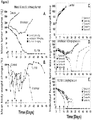
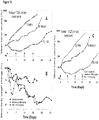
- Antitumor activity of FL118 is superior to FDA-approved therapeutic drugs currently used for cancer treatment in the clinic: To explore the anticancer efficacy potential of FL118, we compared antitumor activity of FL118 with those of FDA-approved therapeutic drugs including irinotecan and topotecan (topoisomerase I inhibitors), cisplatin and oxaliplatin (DNA platinating agents), docetaxel (microtubule polymerization promoter), gemcitabine and 5-FU (DNA synthesis inhibitors), doxorubicin (Topoisomerase II inhibitor) and Cytoxan (cyclophosphamide, alkylic agent). The results indicate that among all the tested compounds, FL118 showed surprising antitumor activity, which is strikingly superior to all the tested therapeutic drugs at the MTD in both head & neck and colon cancers ( Fig 1 ).
- irinotecan is the second most effective compound against the experimental tumors. Both FL118 and irinotecan are structurally relevant to the camptothecin compound family and belong to camptothecin analogs. Therefore, we further compared antitumor activity of FL118 with irinotecan in a human primary head & neck tumor xenograft in SCID mouse models at their MTD using the clinical relevant schedule for irinotecan (weekly x 4). The results showed that 2 out of 5 mice (40%) in the irinotecan-treated group showed complete response to irinotecan treatment.
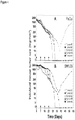
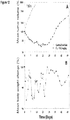
- FL118 effectively eradicates large and later stage human tumor xenografts in animal models: Generally speaking, large and late stage tumors respond poorly to chemotherapy. In contrast, mice bearing maximal human xenograft tumors allowed by IACUC (Institutional Animal Care and Use Committee) showed an unusual and surprising response to FL118 treatment in both FaDu head & neck tumors and SW620 colon tumors which could be even cured in many cases ( Fig 3 ).
- FL118 is functionally stable and shows surprising long shelf life.
- a ready-to-use FL118 injection solution (0.05mg/ml FL118, 75% saline, 20% Tween 80, 5% DMSO) was prepared and put in a +4°C refrigerator for more than 6 months. The solution was then used for tumor treatment in human tumor mouse models.
- FL118 showed as effective as newly prepared FL118 injection solution used in the experimental condition for the data shown in Fig 3 .
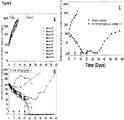
- Toxicity of FL118 to animals treated with different drug doses, schedules and routes We discovered that toxicity of FL118 could be managed by different schedules and demonstrate that interval of administration of FL118, such as weekly or biweekly (but not daily) schedules at the given FL118 formulation (0.05mg/ml FL118, 75% saline, 20% Tween 80, 5% DMSO), significantly diminished FL118 toxicity to animals. While the interval application of FL118 could lower FL118 toxicity in animals, at the same time, such approach increased its efficacy to inhibit tumor growth and eradicate tumor mass for a cure ( Figs 1-4 ). Table 1 summarizes the toxicity profile of FL118 in nude mice at different doses and schedules with i. p. and p.o. routes.
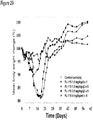
- the diagram in Fig 5 shows the toxicity profile of FL118 on its different doses and schedules in the i.p. route.
- the maximum tolerated dose (MTD) of FL118 via the i.p. and p.o. routes is shown in Table 2.
- Table 1 Toxicity induced by FL-118 in nude mice Drug Dose (mg/kg) Schedule Mice No 1 Weight loss Lethality FL-118 0.75 i.p. daily x 2 5 13.7 ⁇ 11.0 20 FL-118 0.50 i.p. daily x 3 5 30.7 ⁇ 4.2 100 FL-118 0.75 i.p. daily x 3 5 31.4 ⁇ 2.3 100 FL-118 0.20 i.p.
- mice were used for each experimental group.
- Table 2 The Maximum tolerated Dose (MTD) of FL-118 Schedule Route Mice MTD (mg/kg/dose) Daily x 5 (5 doses) i.p. Nude & SCID 0.2 Daily x 3 (3 doses) i.p. Nude ⁇ 0.5 Day 0, 2, & 4 (3 doses) i.p. Nude 0.5 2 days/week x 4 (8 doses) i.p. Nude 0.5 Weekly x 4 (4 doses) i.p. Nude & SCID 1.5 Daily x 5 (doses) p.o. SCID 0.6 Weekly x 4 (4 doses) p.o. Nude ⁇ 2.0
- results from human head & neck cancer animal model FL118 showed unusual and surprising efficacy for treatment of human head & neck cancer.
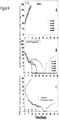
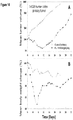
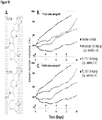
- the FaDu head & neck cancer cell line-established tumor was cured for 40% (2 out of 5 mice) by FL118 at 0.75 mg/kg (half of MTD) with a schedule of weekly x 4 via i.p. administration of drug ( Fig 6 ); the FaDu tumor was cured for 60% (6 out of 10 mice) by FL118 at a dose of 1 mg/kg (a dose under MTD) with the same schedule of weekly x 4 via i.p.
- FaDu tumor was cured by FL118 at a dose of 1.25 mg/kg (a dose close to but still under MTD) with the same schedule of weekly x 4 via i.p. injection ( Fig 8B ).
- Treatment of FaDu-derived head & neck tumor on athymic nude mouse models with FL118 at the dose of 1.5mg/kg with the schedule of weeklyx4 showed that 4 of 5 mice resulted in a cure without relapse, while one showed a temporary cure with relapse ( Fig 9 ).
- Table 3 summarizes these experiments.
- Table 3 Antitumor activity of FL-118 in nude mice bearing human FaDu head and neck tumor xenografts TREATMENT ANTITUMOR ACTIVITY Mice # MTGI (%) TDT (day) PR (%) CR (%) Control (vehicle) -- 3.6 ⁇ 0.4 0 0 20 FL-118 0.75 mg/kg, i.p. weekly x 4 96.7 ⁇ 3.9 29.2 ⁇ 6.6 40 40 5 FL-118 1.00 mg/kg, i.p. weekly x 4 96.7 ⁇ 5.4 42.8 ⁇ 12.6 40 50 10 FL-118 125 mg/kg, i.p.
- results from human colon cancer animal model FL118 also showed outstanding efficacy for human colon cancer.
- Table 4 summarizes the results derived from different doses for FL118 treatment of nude mice bearing human HCT-8 and SW620 colon tumor xenografts.
- Table 4: Antitumor activity of FL-118 in nude mice bearing human HCT-8 and SW620 colon tumor xenografts TREATMENT ANTITUMOR ACTIVITY Mice # MTGI (%) TDT (day) PR (%) CR (%) HCT-8 Control (vehicle) -- 3.3 ⁇ 0.4 0 0 20 FL-118 0.75 mg/kg, i.p.
- Antitumor activity and toxicity of FL118 and irinotecan in human lung cancer animal models The A549 lung cancer cell line-established tumors were treated with FL118 and irinotecan at their MTD with a schedule of weekly x 4 via i.p. administration. As shown, FL118 has a significant better antitumor activity in comparison with irinotecan ( Fig 11 ), while their toxicity is comparable.
- Oral administration (p.o.) of FL118 shows significant antitumor activity: For development of a new anticancer drug like FL118, oral administration of drug provides an attractive advantage. This is because the p.o. route offers more convenience than i.v. routes for cancer patients, greatly saves medical costs by reducing times of hospital stay, provided comparable antitumor activity and toxicity can be achieved. Therefore, we have determined antitumor efficacy and toxicity with the clinically favorable p.o. route for FL118. Studies using both human cancer cell line-derived and primary head & neck and colon cancer animal models demonstrated that FL118 shows significant antitumor activity via p.o. routes. These data are shown in Figures 12 - 14 . The body weight changes in the FL118-treated groups in comparison with the body weight changes in the vehicle-treated group shown in Figs 12 and 13 suggest that the MDT of FL118 is higher than 2 mg/kg via p.o. with this schedule.
- FL113 [10H,12H-1,3-Dioxolo[4,5-g]pyrano[3',4':6,7]indolizino[1,2-b]quinoline-8,11(7H,10H)-dione, 7-ethyl-7-hydroxy-, (+-) (chemical definition); NSC606174 (NSC number)] has the same molecular weight (MW, 392) as FL118 [10H-1,3-Dioxolo[4,5-g]pyrano[3',4':6,7]indolizino[1,2-b] quinoline-8,11(7H,12H)-dione, 7-ethyl-7-hydroxy-, (S)- (chemical definition); NSC634724 (NSC number)] has.
- FL118 has a distinct steric structure that is different from FL113 ( Fig 15A ). Due to the steric structure difference between FL118 and FL113, FL118 shows its antitumor activity in the human tumor mouse models much better than those of FL113, although FL113 antitumor activity is better than irinotecan in most cases. A representative example is shown in Fig 15 .
- HCT-8 colon cancer cells HCT-8 colon cancer cells, A2008 and Skov3 ovarian cancer cells were maintained in DMEM, supplemented with 10% fetal bovine serum (Mediatech Cellgro, Herndon, VA) and penicillin (100 units/ml)/ streptomycin (0.1 ⁇ g/ml) (Invitrogen, Grand Island, NY) in a humidified incubator with 5% CO2 at 37°C. Cells were routinely subcultured every 3 - 4 days.
- DMEM fetal bovine serum
- penicillin 100 units/ml
- streptomycin 0.1 ⁇ g/ml
- MTT cell growth/viability assay Cell growth and viability with and without FL118 and taxol treatment was determined by MTT assay. A tetrazolium salt, 3-[4,5-dimethylthiazol-2-yl]-2,5-diphenyltetrazolium bromide (MTT), was used as a colorimetric substrate for measuring cell viability. Non-viable cells, with altered cellular redox activity, are unable to reduce the MTT dye. After 72 hours with or without bortezomib treatment, MTT was added (to a final concentration of 0.5 mg/ml).
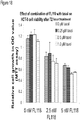
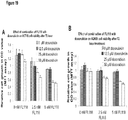
- HCT-8 colon cancer cells were grown in normal cell growth medium treated with a series of FL118 concentration alone or in combination with cisplatin at different concentrations. Cell growth/survival were determined 72 hours after treatment. Surprisingly, such combination resulted in a great inhibition of cancer cell growth in a wide range of drug concentration ( Fig 16 ).
- Mechanism of action (MOA) - FL118 acts as an IAP and Bcl-2 family antiapoptotic proteins-selective inhibitor
- Luciferase activity assay Cells were seeded in 48-well plates (2.5x10 4 per well) and grown at approximately 60-70% confluence in complete cell cultural medium containing 10% fetal bovine serum (FBS) in all experiments. Cells were either stably transfected with the pLuc-6309 survivin promoter-luciferase construct or untransfected cells or transiently transfected with relevant luciferase reporter vectors indicated in the data as follows: Briefly, 245 ng of targeting luciferase reporter constructs plus 5ng of internal control vector, pRK-tk in 30 ⁇ l serum-free DMEM was mixed in a 1.5 ml tube containing 30 ⁇ l serum-free DMEM containing 0.4 ⁇ l LipofectamineTM 2000.
- the DNA/Lipofectamine 2000 mixture (60 ⁇ l) was added to each well of 48-well plates, which already contained 300 ⁇ l corresponding complete growth medium.
- the DNA/Lipofectamine 2000 mixture was replaced after incubation for 16 hours by new complete growth medium containing either DMSA or FL118. Cells were treated with FL118 up to 24 hours, followed by processing for luciferase assays. For the luciferase assay, a Dual-Luciferase Reporter Assay System (Promega) was used.
- the transfected cells in 48-well plates were washed with PBS and lysed with 60 ⁇ l 1x passive lysis buffer on a shaker for up to 1 hour at 4°C. Twenty ⁇ l cell lysate per well was used to measure the Firefly and Renilla luciferase activity in a Luminometer by subsequently adding 20 ⁇ l luciferase assay reagent and 20 ⁇ l Stop-Glo reagent. Data were normalized to Renilla luciferase activity (internal control) as arbitrary units and plotted as histogram.
- MTT cell growth/viability assay Performed as described above.
- Western blot analysis Western blot analysis of phosphorylated or unphosphorylated protein expression was performed as follows. Cells with and without drug treatment were washed with phosphate-buffered saline (PBS) and lysed on ice for 30 minutes in PBS containing 1% Nonidet P-40, 0.5% sodium deoxycholate, 0.1% sodium dodecyl sulfate (SDS), 10 ⁇ g/ml phenylmethyl sulfonyl fluoride, and 20 ⁇ M leupeptin. Cell lysates were then centrifuged at 15,000g for 20 minutes at 4°C. Fifty ⁇ g total proteins from each sample were heated at 95°C for 5 minutes after mixing with equal volume of 2 X SDS loading buffer.
- PBS phosphate-buffered saline
- SDS sodium dodecyl sulfate
- the membrane was incubated in TBS-T buffer containing 5% skim milk containing the corresponding secondary antibody (1:5000) for 45-60 minutes at room temperature with shaking.
- Protein of interest was detected using Western Lightning®-ECL (Perkin Elmer, Waltham, MA) and visualized by autoradiography with various times (5-60 seconds) of exposure. Actin was detected as the internal control for normalization of total protein loading in each lane.
- Topoisomerase I (Top1) assay Effects of FL118 on Top1 activity were determined using a Topoisomerase I Assay Kit from TopoGEN (Port Orange, Florida) following the protocol supplied by the manufacture. Effects of FL118 on Top1 activity was determined by FL118's ability to block Top1 to process supercoiled plasmid DNAs into relaxed plasmid DNAs. Each reaction contains one unit of Top1, 0.625 ⁇ g supercoiled plasmid DNA substrates, 10 mM Tris-HCl (pH7.9), 1 mM EDTA, 150 mM NaCl, 0.1% bovine serum albumin (BSA), 100 ⁇ M spermidine and 5 % glycerol.
- BSA bovine serum albumin
- the reaction was supplied with or without FL118 or SN-38 (the active form of irinotecan, a known Top1 inhibitor which can be processed in vivo but not in vitro ). Incubations were carried out at 37°C for 30 minutes and the reaction was stopped by adding 5 ⁇ l stop buffer/gel loading dye. The plasmid DNAs in each reaction were separated by electrophoresis in a 1% agarose gel in 1xTAE buffer and stained for 15 minutes in 1xTAE buffer containing 0.5 ⁇ g/ml ethidium bromide. An electronic image was taken under an ultraviolet light.
- FL118 possesses unique mechanism of action (MOA)
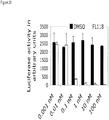
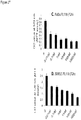
- FL118 selectively inhibits survivin promoter activity: FL118 effectively inhibits human survivin promoter-driven luciferase activity in A2008 ovarian cancer cells ( Fig 20 ) but shows no inhibitory effects on luciferase activity driven by gene promoters for the cyclin-dependent kinase inhibitor p21 (p21), dehydrofolate reductase (DHFR), human thrombin receptor (HTR) and thymidine kinase (TK) in either EKVX lung cancer cells ( Fig 21A ) or LNCaP prostate cancer cells ( Fig 21B ). Similar results were obtained in PC-3 prostate cancer cell as well ( Fig 22 A and B ).
- FL118 selectively inhibits endogenous survivin expression, it shows no inhibitory effects on the endogenous expression of p21 and DHFR ( Fig 22 C and D ). These data indicate high specificity for FL118 for inhibition of survivin gene transcription.
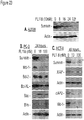
- FL118 inhibits the expression of multiple antiapoptotic proteins in the IAP and Bcl-2 families: We tested whether the superior survivin expression inhibitor activity of FL118 not only inhibits survivin expression, but would also inhibit other antiapoptotic protein expression in the IAP/Bcl-2 families. Consistent with this, using commercially available antibodies we showed in western blots that FL118 inhibits the expression of survivin, XIAP, cIAP2 and Mcl-1, while it only showed a minimal effect on Bcl-2 and Bcl-XL ( Fig 23 ). In contrast, FL118 increases the expression of pro-apoptotic proteins (Bax, Bim), possibly including survivin-2B marked by an asterisk ( Fig 23 ), indicating its high selectivity.
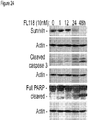
- FL118 induces apoptosis: Consistent with our demonstration that FL118 differentially regulates the expression of pro-survival and proapoptotic proteins in the IAP and Bcl-2 families ( Fig 23 ), modulation of the expression of these proteins in the IAP/Bcl-2 families by FL118 is associated with caspase activation and PARP cleavage ( Fig 24 ), which are hallmarks of apoptosis.
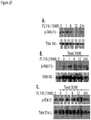
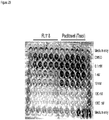
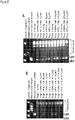
- FL118 inhibits cancer cell survival Akt signaling, while it shows no inhibitory effects on Erk1/2 signaling: Another unique feature of FL118 is that it inhibits both constitutive and taxol-induced Akt activation, while it shows no inhibitory effect on Erk signaling ( Fig 25 ), indicating its high selectivity and unique MOA. In addition to the foregoing data, FL118 is between 10 and 100 fold more effective than taxol for ablation of cancer cell viability ( Fig 26 ), which is consistent with the data from human tumor xenograft animal models presented herein. Additionally, one known MOA for camptothecin (CPT)-related compounds is their ability to inhibit topoisomerase I (Top1) activity.
- CPT camptothecin
- the dose used for FL118 [0.75 (50%MTD) -1.5 (MTD) mg/kg] in animal models is about 100 fold lower than the dose used for irinotecan (100-200 mg/kg). Therefore, this is consistent with the notion that the minor effect of FL118 at high concentration on Top1 activity makes little contribution to the MOA and antitumor activity of FL118 if any, especially considering the results from SN-38 control compounds.
- Ten compounds were selected from a compound pool for testing water-insoluble compound formulations ( Fig 28 ). While these compounds are structurally diverse with linear and non-linear dimensional characteristics, they share the property of being water-insoluble or having extremely low water solubility.
- aqueous humor e.g. saline
- an emulsifier e.g. Tween 80/Polysorbate 80
- the final FL118 solution for i.p. administration contains FL118 (0.05 mg/ml), DMSO (5%), Tween 80 (20%) and saline (75%), which is the FL118 formulation used for i.p. injection for the data presented in Figures 1-15 and Tables 1-4.
- Tween 80 is not a favorable formulation solvent and it would be desirable to obviate the requirement for Tween 80 or other similar reagents.
- solvents included DMSO, ethanol, propylene glycol (PG), polyethylene glycol 300 or 400 (PEG 300 or PEG 400), glycerin and a type of cyclodextrin (CD) - ⁇ CD, hydroxypropyl- ⁇ -cyclodextrin (HP ⁇ CD) or sulfobutylether- ⁇ -cyclodextrin (SBE ⁇ CD).
- DMSO dimethylformamide or DMF, was not considered, since DMF is a FDA-unfavorable solvent for use in human) to evaluate whether the drug candidate is able to partially dissolve in an acceptable concentration, even if at a low level (e.g.
- a separate water-based cosolvent mixture is made via mixing an aqueous humor (e.g. distilled water, saline or phosphate-buffered saline) with helper cosolvents (PG, PEG 400 or a type of CD).
- aqueous humor e.g. distilled water, saline or phosphate-buffered saline
- helper cosolvents PG, PEG 400 or a type of CD
- Recipe 1 saline with 5% PG (Solution 1), saline with 10% PG (Solution 2), saline with 15% PG (Solution 3), saline with 20% PG (Solution 4), saline with 25% PG (Solution 5);
- Recipe 2 saline with 5% PEG 400 (Solution 1), saline with 10% PEG 400 (Solution 2), saline with 15% PEG 400 (Solution 3), saline with 20% PEG 400 (Solution 4), saline with 25% PEG 400 (Solution 5), saline with 30% PEG 400 (Solution 6);
- Recipe 3 saline with 5% glycerin (Solution 1), saline with 10% glycerin (Solution 2);
- Recipe 4 ) saline with 2.5% HP ⁇ CD (Solution 1), saline with 5% HP ⁇ CD (Solution 1), saline with 5% HP ⁇
- Such tests are performed to determine if a partially dissolved drug candidate in a leading solvent (DMSO or ethanol) will significantly increase its solubility when a water insoluble drug candidate partially dissolved in a leading solvent (DMSO or ethanol) is diluted with a water-based helper cosolvent mixture (i.e. Embodiments Recipe1-8).
- a water-based helper cosolvent mixture i.e. Embodiments Recipe1-8.
- the 1 ml DMSO mixed with 5 mg FL118 is diluted in 19 ml water-based helper cosolvent mixture of the Embodiments 1 to 8, respectively, to make a solution containing 0.25 mg/ml FL118, 5% DMSO and helper cosolvents in aqueous humor 95%.
- the ready-to-use solution formulated in this approach contains 0.25 mg/ml FL118, 5% DMSO, 4.76% PG and 90.25% saline.
- the formulated ready-to-use solution contains 0.25 mg/ml FL118, 5% DMSO, 9% PG and 86% saline.
- the formulated ready-to-use solution contains 0.25 mg/ml FL118, 5% DMSO, 2.44% PG, 2.44% PEG 400 and 90.12% saline.
- the formulated ready-to-use solution contains 0.25 mg/ml FL118, 5% DMSO, 4.75% PG, 4.75% HP ⁇ CD and about 90.5% saline (here the percentage of saline is not exactly 90.5% because one gram HP ⁇ CD does not exactly occupy 1 ml volume; 1g HP ⁇ CD roughly occupies 0.5 ml volume).
- the final formulated solution contains 0.25 mg/ml FL118, 5% DMSO, 2.44% PG, 2.44% PEG 400, 4.75% HP ⁇ CD and about 90.47% saline.
- both FL118 and DMSO keep consistence at 0.25 mg/ml (FL118) and 5% (DMSO). From these formulation experiments, we found that pH is the key for a water-insoluble drug in the solid phase of the leading solvent (DMSO for the FL118 particular example) to be dissolved into the cosolvent phase. Specifically, in the case of FL118 solvent mixture, a pH ⁇ 1 adjusted with HCl is required to drive FL118 in the solid phase to be dissolved into the solvent phase. Then, the pH is readjusted back to pH 3-7 with NaOH, which does not cause FL118 to come out from the solvent phase.
- the water based solvent mixture that contains a higher percentage of helper cosolvent will be preferred because it could help dissolve more drug to reach a higher concentration.
- some of these formulations can reach higher concentrations of FL118 in the formulated solution (the drug formulated in the cosolvent mixture for up to 0.5 mg/ml).
- the formulation with Tween 80 (saline 75% + Tween 80 20% + DMSO 5%) could only reach 0.05 mg/ml of FL118.
- Example 6 In view of the failure of the extensive testing described in Example 6, we developed three new strategies to make water-insoluble compounds for i.v. injection, which are also suitable for i.p. and p.o. administration. The description of the three strategies to formulate water-insoluble compounds is below.
- the formulation in this strategy comprises a water-insoluble compound, Solvent A, Solvent B, distilled water buffered with or without sodium chloride and/or phosphate in the presence or absence of a low concentration of other helper cosolvents, which are very similar to the components used in the failed formulation experiments described above.
- Solvent A is selected from ⁇ CD, HP ⁇ CD or SBE ⁇ CD.
- Solvent B is selected from DMSO.
- Helper solvents are selected from propylene glycol (PG), polyethylene glycol 300 ((PEG 300) or polyethylene glycol 400 (PEG 400).
- Aqueous humor is distilled water, saline or phosphate-buffered saline.
- Formulation process, and selection of solvent type and concentration 1) Make leading solvent solution. Dissolve a Solvent A ( ⁇ CD, HP ⁇ CD or SBE ⁇ CD) into a Solvent B (DMSO) by gently swirling the solution in a tube for 5-15 minutes at room temperature to form a leading Solvent A/B mixture solution. Which Solvent A ( ⁇ CD, HP ⁇ CD or SBE ⁇ CD) is selected to make the leading Solvent A/B mixture solution depends on the chemical property of the water-insoluble compound. Generally speaking, if a compound has acidic group, the Solvent A can be ⁇ CD or HP ⁇ CD, since they are neutral or basic; if a compound has one or more basic groups, Solvent A can be SBE ⁇ CD, since SBE ⁇ CD has acidic groups.
- Solvent B i.e., DMSO
- solvent DMSO
- DMSO water-insoluble compound
- Solvent A ⁇ CD, HP ⁇ CD or SBE ⁇ CD
- W/V ready-to-use formulation solution
- the percentage of Solvent A ( ⁇ CD, HP ⁇ CD or SBE ⁇ CD) in Solvent B (DMSO) is in the range of 2.5% to 50%, which is dependent on the amount of compound that we desire to formulate.
- an aqueous humor (distill water, saline or phosphate-buffered saline) is mixed with a helper solvent (PG, PEG 300 or PEG 400) by gently swirling on a swirling apparatus for up to overnight at 25-37°C.
- PG helper solvent
- helper solvent solutions include, but are not limited to: Recipe 1 saline (distill water or phosphate-buffered saline) is mixed with PG at 0%, ( H elper sol vent 1, Hsol-1 ), 1% (Hsol-2), 2% (Hsol-3), 3% (Hsol-4), 4% (Hsol-5), 5% (Hsol-6), 6% (Hsol-7), 7% (Hsol-8), 8% (Hsol-9), 9% (Hsol-10) and 10% (Hsol-11); Recipe 2 saline (distill water or phosphate-buffered saline) is mixed with PEG 400 (or PEG 300) at 1% (Hsol-1), 2% (Hsol-2), 3% (Hsol-3), 4% (Hsol-4), 5% (Hsol-5), 6% (Hsol-6), 7% (Hsol-7), 8% (Hsol-8), 9% (Hsol-9) and 10% (Hsol-10); and Recipe 3 saline (distill water or phosphate-b
- helper solvents PG, PEG 300 or PEG 400
- PG helper solvent
- PEG 300 or PEG 400 the higher percentage of helper solvents in the ready-to-use formulated solution, the potential more toxic the formulated solution would be.
- 3) Formulate water-insoluble compounds using both leading solvent solution and helper solvent solution. Dissolve a water-insoluble compound in leading solvent solution (the compound may or may not completely dissolved) by Vortex for 5-15 minutes. Then dilute the drug dissolved in leading solvent solution with helper solvent solution by gently swirling the mixture in a container on a swirling apparatus for 10-20 minutes at room temperature.
- FL118 in order to make FL118 at a final concentration of 0.5 mg/ml, we can dissolve 1 mg FL118 (as an example, but this can be any amount of FL118, so long as the same ratio is maintained) in 0.1 ml ⁇ 5% HP ⁇ CD ( ⁇ CD or SBE ⁇ CD) leading solution in DMSO via Vortex for 5 minutes. Then the resultant FL118/ HP ⁇ CD/DMSO mixture is further diluted in 1.9 ml (20x dilution) in one of the above water-based helper solvent solutions in the above three recipes by gently swirling the tube on a swirling apparatus for 10-20 minutes at room temperature.
- the final, ready-to-use FL118 formulation solution will be FL118 0.5 mg/ml, HP ⁇ CD ⁇ 0.25%, DMSO ⁇ 5% and PG 0%; if the resultant FL118/ HP ⁇ CD/DMSO mixture is further diluted in 1.9 ml Hsol-11 of Recipe 1 to reach a total volume of 2 ml, the final, ready-to-use FL118 formulation solution will be FL118 0.5 mg/ml, HP ⁇ CD ⁇ 0.25%, DMSO ⁇ 5% and PG 9.5%).
- the final, ready-to-use FL118 formulation solution will be FL118 0.5 mg/ml, HP ⁇ CD ⁇ 0.25%, DMSO ⁇ 5%, PG 0.95% and PEG 400 8.55%; if the resultant FL118/ HP ⁇ CD/DMSO mixture is further diluted in 1.9 ml Hsol-9 of Recipe 3 to reach a total volume of 2 ml, the final, ready-to-use FL118 formulation solution will be FL118 0.5 mg/ml, HP ⁇ CD ⁇ 0.25%, DMSO ⁇ 5%, PG 8.55% and PEG 400 0.95%.
- the resultant FL118/ HP ⁇ CD/DMSO mixture is further diluted in 3.8 ml (20x dilution) in one of the above 3 helper solvent solutions to reach a final volume of 4 ml (FL118 0.25 mg/ml, HP ⁇ CD ⁇ 0.125%, DMSO 5%, water-based helper cosolvents ⁇ 95%).
- FL118 0.25 mg/ml, HP ⁇ CD ⁇ 0.125%, DMSO 5%, water-based helper cosolvents ⁇ 95%) If a higher concentration of FL118 for injectable solution with this formulation process is desired, such as a final injectable solution at 1 mg/ml, we can dissolve 2 mg FL118 in 0.1 ml ⁇ 20% HP ⁇ CD (CD or SBE ⁇ CD) solution in DMSO via Vortex for 5-15 minutes.
- Strategy I can be used to formulate a chemical compound for i.v. injection (which is inherently compatible for i.p. and p.o. routes) at the desired concentration in preclinical animal model studies or in clinical trials for treatment of patients.
- the ability to formulate a drug in a wide range of different concentrations in the final, ready-to-use solution is important, because evaluation of a drug either in preclinical animal models or in clinical trials needs a dose escalation from low dose to high dose, while keeping an optimal and consistent volume size - too small volume may produce a larger system error and technical difficulty for drug administration, while too large volume may not be able to practically inject all of the solution to reach the drug dose needed. Additionally, different drug administration routes (i.v., i.p. or p.o.) can be adapted for different volumes.
- an aqueous humor (distill water, saline or phosphate-buffered saline) is used to dilute the resultant drug solution to a desired concentration and meanwhile, after drug dilution with an aqueous humor the percentage of helper solvents (PG, PEG 300 or PEG 400) in the final, ready-to-use drug formulation solution remains in the range from 1% to 10% in total.
- helper solvents PG, PEG 300 or PEG 400
- the resultant drug solution is further diluted with 1.72 ml aqueous humor (distill water, saline or phosphate-buffered saline) by gently swirling the tube on an apparatus for up to overnight at 25-37°C to reach a final volume of 2 ml (FL118 1 mg/ml, HP ⁇ CD ⁇ 0.5%, DMSO ⁇ 5%, PG 2%, PEG 400 2%).
- aqueous humor still water, saline or phosphate-buffered saline
- the water-insoluble compound dissolved in the leading master solvent mixture are then diluted in an aqueous humor (distill water, saline or phosphate-buffered saline) to reach the desired drug concentration by gently swirling the solution in a tube for up to overnight at 25-37°C on a swirling apparatus.
- an aqueous humor distill water, saline or phosphate-buffered saline
- the percentage of helper solvents (PG, PEG 300 or PEG 400) in the final, ready-to-use drug formulation solution remains in a range of 1% to 10% in total.
- the resultant FL118 solution is further diluted with 3.72 ml aqueous humor (distilled water, saline or phosphate-buffered saline) by gently swirling the solution in a large tube for up to overnight at 25-37°C on a swirling apparatus to reach a final volume of 4 ml (FL118 0.25 mg/ml, HP ⁇ CD ⁇ 0.125%, DMSO ⁇ 5%, PG 2%).
- aqueous humor distilled water, saline or phosphate-buffered saline
- the resultant FL118 solution is further diluted with 1.82 ml aqueous humor (distill water, saline or phosphate-buffered saline) by gently swirling the solution in a tube for up to overnight at 25-37°C on a swirling apparatus to reach a final volume of 2 ml (FL118 1 mg/ml, HP ⁇ CD ⁇ 0.5%, DMSO ⁇ 5%, PG 2%, PEG 400 2%).
- aqueous humor still water, saline or phosphate-buffered saline
- a water-insoluble compound with large molecular weight in a non-linear structure needs a higher Solvent A : compound ratio (i.e. need more Solvent A).
- Solvent A compound ratio
- Table 5 Comparison of the three formulation strategies described above for water-insoluble compound formulation is summarized in Table 5.
- the formulation contains helper solvents (PG, PEG 300 or PEG 400) in any one of the three formulation strategies described above, the formulated solution increases drug solution stability.
- helper solvents PG, PEG 300 or PEG 400
- the formulated solution increases drug solution stability.
- the more the helper solvents are in the formulated ready-to-use drug solution the higher the potential toxicity of the formulated ready-to-use solution is. Therefore, during processing of the formulation strategies described above, it is preferable to test solubility without helper solvents (PG, PEG 300 or PEG 400).
- helper solvents PG, PEG 300 or PEG 400
- PG, PEG 300 or PEG 400 can be employed, particularly PG, PEG 300 or PEG 400 via the approaches described in Strategy II and Strategy III would obtain better solubility for water-insoluble drug especially for the tough water-insoluble drug.
- helper solvents PG, PEG 300 or PEG 400
- injection solution [FL118, Solvent A (HP ⁇ CD), Solvent B (DMSO) and aqueous humor (distilled water, saline or phosphate-buffered saline)] decrease the stability of the formulated FL118 solution, however, the formulated ready-to-use FL118 solution without helper solvents (PG, PEG 300 or PEG 400) is still suitable for i.v. injection. Importantly, this formulation of FL118 did not decrease FL118 antitumor activity, while keeping its non-toxic quality. In other words, if a water-insoluble drug or drug candidate formulated using the Strategies I, II and III in the final, ready-to-use solution without helper solvents (PG, PEG 300 or PEG 400) maintains reasonable stability for administration using an i.v. injection procedure, the helper solvents (PG, PEG 300 or PEG 400) can be excluded.
- the pharmaceutical formulations described above do not have to comprise fully solubulized drug, as long as the water-insoluble drug is not in a solid state. Rather, each compound molecule is dissolved in the final solvent mixture.
- the water-insoluble compound mixture formulated in the three strategies described above could be semi-transparent or nontransparent clear state with or without a faint color.
- the formulated water-insoluble drug or drug candidate in most cases is a milk-like or clear cloud solution with or without color after gently re-suspending by swirling.
- the water-insoluble compound solutions formulated in the three strategies described above are compatible with clinical practice to treat patients or animals with a disease via i.v., i.p. or per oral for single or combinational administration.
- the formulation solution placebo, vehicle or control solution without FL118
- the formulation solution containing one or two helper solvents tends to be toxic, depending on the percentages of the helper solvent.
- novel formulations for FL118 made in the strategies described above significantly improve FL118 maximum tolerated dose (MTD) without an apparent decrease in FL118 antitumor activity
- the MTD in the daily x 5 schedule is 0.2 mg/kg; the MTD in the day 0, 2 & 4 schedule (3 doses) is 0.5 mg/kg; and the MTD in the schedule of weekly x 4 (4 doses) is 1.5 mg/kg.
- FL118 in the daily x 5 schedule and the day 0, 2 & 4 schedule (3 doses) fails to reach a drug concentration that produces meaningful antitumor activity in the formulation containing Tween 80.
- the MTD is about 1.5 mg/kg; and for the schedule of weekly x 4 (wk x 4, 4 doses), the MTD is about 5 mg/kg.
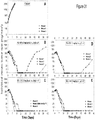
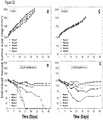
- FL118 effectively inhibits tumor growth and even appears to result in a cure ( Fig 30 A)
- control mice without FL118 treatment grow tumor to the maximal size allowed by the IACUC (Institute Animal Care and Use Committee) in two weeks ( Fig 30 B,C,D,E , F,G ).
Landscapes
- Health & Medical Sciences (AREA)
- Chemical & Material Sciences (AREA)
- Life Sciences & Earth Sciences (AREA)
- Public Health (AREA)
- Medicinal Chemistry (AREA)
- Veterinary Medicine (AREA)
- General Health & Medical Sciences (AREA)
- Pharmacology & Pharmacy (AREA)
- Animal Behavior & Ethology (AREA)
- Epidemiology (AREA)
- Organic Chemistry (AREA)
- Chemical Kinetics & Catalysis (AREA)
- General Chemical & Material Sciences (AREA)
- Engineering & Computer Science (AREA)
- Oil, Petroleum & Natural Gas (AREA)
- Inorganic Chemistry (AREA)
- Nuclear Medicine, Radiotherapy & Molecular Imaging (AREA)
- Pharmaceuticals Containing Other Organic And Inorganic Compounds (AREA)
- Medicinal Preparation (AREA)
Claims (11)
- Pharmazeutisches Präparat, umfassend eine wässrige Lösung, die 0,25 - 5,0 mg/ml 10H-1,3-Dioxolo[4,5-g]pyrano[3',4':6,7]indolizino[1,2-b]chinolin-8,11(7H,12H)-dion, 7-ethyl-7-hydroxy-, (S)- ("FL118"); 0,125 - 2,5 % eines Typs von Cyclodextrin und 1 - 10 % Dimethylsulfoxid (DMSO) umfasst.
- Pharmazeutisches Präparat, umfassend eine wässrige Lösung, die 0,25 - 5,0 mg/ml 10H-1,3-Dioxolo[4,5-g]pyrano[3',4':6,7]indolizino[1,2-b]chinolin-8,11(7H,12H)-dion, 7-ethyl-7-hydroxy-, (S)- ("FL118"); 0,125 - 2,5 % eines Typs von Cyclodextrin und 1 - 10 % Dimethylsulfoxid (DMSO) zur Verwendung beim Hemmen des Wachstums von Krebs umfasst.
- Pharmazeutisches Präparat zur Verwendung nach Anspruch 2, wobei die Verwendung eine intravenöse, orale oder intraperitoneale Verabreichung des pharmazeutischen Präparats umfasst.
- Pharmazeutisches Präparat nach Anspruch 1, wobei das Cyclodextrin Hydroxypropyl-β-cyclodextrin ist.
- Pharmazeutisches Präparat nach Anspruch 1, wobei das Pharmazeutikum 0,25 - 1 mg/ml FL118, 0,125 - 0,5 % Hydroxypropyl-β-cyclodextrin und 5 % Dimethylsulfoxid umfasst.
- Pharmazeutisches Präparat nach Anspruch 1, wobei das pharmazeutische Präparat mindestens eine zusätzliche Anti-Krebs-Verbindung umfasst.
- Pharmazeutisches Präparat zur Verwendung nach Anspruch 2, wobei das Cyclodextrin Hydroxypropyl-β-cyclodextrin ist.
- Pharmazeutisches Präparat zur Verwendung nach Anspruch 2, wobei das Pharmazeutikum 0,25 - 1 mg/ml FL118, 0,125 - 0,5 % Hydroxypropyl-β-cyclodextrin und 5 % Dimethylsulfoxid umfasst.
- Pharmazeutisches Präparat zur Verwendung nach Anspruch 2, wobei das pharmazeutische Präparat mindestens eine zusätzliche Anti-Krebs-Verbindung umfasst.
- Verfahren zum Herstellen eines pharmazeutischen Präparats nach Anspruch 1 zur Verwendung beim Hemmen des Wachstums von Krebs, wobei das Verfahren die Schritte umfasst des Bereitstellens eines Lösungsmittels A, ausgewählt aus der Gruppe bestehend aus β-Cyclodextrin (βCD), Hydroxypropyl-β-cyclodextrin (HPβCD) und Sulfobutylether-β-CyClodextrin (SBEβCD), und eines Lösungsmittels B, das Dimethylsulfoxid (DMSO) ist, des Lösens des Lösungsmittels A in dem Lösungsmittel B zum Erzeugen eines führenden Lösungsmittel A/Lösungsmittel B-Gemischs und dann des Lösens des FL118 in dem Lösungsmittel A/Lösungsmittel B-Gemisch.
- Verfahren nach Anspruch 10, ferner umfassend den Schritt des Verdünnens des Lösungsmittel A/Lösungsmittel B-Gemischs, welches das FL118 umfasst, mit einem Kammerwasser.
Applications Claiming Priority (2)
| Application Number | Priority Date | Filing Date | Title |
|---|---|---|---|
| US40799610P | 2010-10-29 | 2010-10-29 | |
| PCT/US2011/058558 WO2012058666A2 (en) | 2010-10-29 | 2011-10-31 | Novel formulations of water-insoluble chemical compounds and methods of using a formulation of compound fl118 for cancer therapy |
Publications (3)
| Publication Number | Publication Date |
|---|---|
| EP2632264A2 EP2632264A2 (de) | 2013-09-04 |
| EP2632264A4 EP2632264A4 (de) | 2014-04-23 |
| EP2632264B1 true EP2632264B1 (de) | 2019-10-02 |
Family
ID=45994848
Family Applications (1)
| Application Number | Title | Priority Date | Filing Date |
|---|---|---|---|
| EP11837250.7A Not-in-force EP2632264B1 (de) | 2010-10-29 | 2011-10-31 | Neue formulierungen aus wasserunlöslichen chemischen verbindungen und verfahren zur verwendung einer formulierung aus der verbindung fl118 zur krebstherapie |
Country Status (5)
| Country | Link |
|---|---|
| US (1) | US9422303B2 (de) |
| EP (1) | EP2632264B1 (de) |
| CN (1) | CN103442565B (de) |
| CA (1) | CA2816418C (de) |
| WO (1) | WO2012058666A2 (de) |
Families Citing this family (5)
| Publication number | Priority date | Publication date | Assignee | Title |
|---|---|---|---|---|
| US10344037B2 (en) * | 2014-03-26 | 2019-07-09 | Canget BioTek Pharma LLC | Use of the FL-one hundred eighteen core chemical structure platform to generate FL-one hundred eighteen derivatives for treatment of human disease |
| CA3111403A1 (en) * | 2018-09-17 | 2020-03-26 | Canget Biotekpharma | Matter of composition, synthesis, formulation and application of fl118 platform positions 7 and 9-derived analogues for treatment of human disease |
| WO2021016401A1 (en) * | 2019-07-22 | 2021-01-28 | Canget Biotekpharma | Novel anticancer drug fl118 formulation in combination with immunotherapy for treatment of human cancer |
| KR102349925B1 (ko) * | 2020-07-16 | 2022-01-12 | 주식회사 피노바이오 | Fl118 약물을 포함하는 화합물 및 이를 이용한 면역접합체 |
| US20250312469A1 (en) * | 2024-02-06 | 2025-10-09 | Canget Biotekpharma | FL118 COMPLEXES FOR TARGETING DDX5, UbE2T or USP2a |
Family Cites Families (7)
| Publication number | Priority date | Publication date | Assignee | Title |
|---|---|---|---|---|
| US5340817A (en) | 1987-04-14 | 1994-08-23 | Research Triangle Institute | Method of treating tumors with anti-tumor effective camptothecin compounds |
| CA2087898A1 (en) | 1992-01-24 | 1993-07-25 | Hiroshi Akimoto | Condensed heterocyclic compounds, their production and use |
| AU2001240024A1 (en) * | 2000-03-31 | 2001-10-15 | Supergen, Inc. | Camptothecin complexes |
| MXPA02012817A (es) * | 2000-06-30 | 2004-07-30 | Inex Pharmaceuticals Inc | Drogas antineoplasicas liposomales y uso de las mismas. |
| US6509027B2 (en) * | 2001-02-12 | 2003-01-21 | Supergen, Inc. | Injectable pharmaceutical composition comprising coated particles of camptothecin |
| US6653319B1 (en) | 2001-08-10 | 2003-11-25 | University Of Kentucky Research Foundation | Pharmaceutical formulation for poorly water soluble camptothecin analogues |
| WO2008073201A2 (en) | 2006-11-10 | 2008-06-19 | Health Research Inc. | Compositions and methods for identifying agents that alter expression of survivin |
-
2011
- 2011-10-31 WO PCT/US2011/058558 patent/WO2012058666A2/en not_active Ceased
- 2011-10-31 EP EP11837250.7A patent/EP2632264B1/de not_active Not-in-force
- 2011-10-31 CN CN201180063530.5A patent/CN103442565B/zh active Active
- 2011-10-31 CA CA2816418A patent/CA2816418C/en active Active
- 2011-10-31 US US13/881,785 patent/US9422303B2/en active Active
Non-Patent Citations (1)
| Title |
|---|
| None * |
Also Published As
| Publication number | Publication date |
|---|---|
| CA2816418C (en) | 2020-05-26 |
| WO2012058666A3 (en) | 2013-01-10 |
| WO2012058666A2 (en) | 2012-05-03 |
| CA2816418A1 (en) | 2012-05-03 |
| CN103442565B (zh) | 2016-08-10 |
| CN103442565A (zh) | 2013-12-11 |
| US20140066470A1 (en) | 2014-03-06 |
| EP2632264A4 (de) | 2014-04-23 |
| US9422303B2 (en) | 2016-08-23 |
| EP2632264A2 (de) | 2013-09-04 |
Similar Documents
| Publication | Publication Date | Title |
|---|---|---|
| DE69832375T2 (de) | Verwendungsmethoden makrocyklischer lactonverbindungen als mittel zur umkehr der mehrfach-arzneimittelresistenz in tumor-und anderen zellen | |
| ES2324378T3 (es) | Composicion farmaceutica que contiene epotilona. | |
| EP2632264B1 (de) | Neue formulierungen aus wasserunlöslichen chemischen verbindungen und verfahren zur verwendung einer formulierung aus der verbindung fl118 zur krebstherapie | |
| US20110008465A1 (en) | Sesquiterpene formulations, kits and methods of use thereof | |
| CN103281898A (zh) | St-246液体配制物以及方法 | |
| BR112020000196A2 (pt) | composições para administração parenteral de agentes terapêuticos | |
| EP2049121B1 (de) | Zusammensetzungen zur förderung der aktivität von anti-krebs-therapien | |
| TWI593430B (zh) | 含紫杉烷系活性成分液體組成物、其製造方法及液體製劑 | |
| US12053441B2 (en) | Formulations for improving the delivery of hydrophobic agents | |
| Wasowska et al. | Influence of the structure of new anthracycline antibiotics on their biological properties | |
| CN101433535A (zh) | 一种用于肿瘤化学治疗中的新型增敏和增效物质 | |
| EP2184066B1 (de) | Injektion, injektionslösung und herstellung eines injektionskits | |
| HK1189122B (en) | Novel formulations of water-insoluble chemical compounds and methods of using a formulation of compound fl118 for cancer therapy | |
| HK1189122A (en) | Novel formulations of water-insoluble chemical compounds and methods of using a formulation of compound fl118 for cancer therapy | |
| WO2016008289A1 (zh) | 一种盐酸伊立替康纳米脂束制剂及其制备方法 | |
| EP1956908A2 (de) | Gewisse zusammensetzungen und behandlungsverfahren | |
| CA2688486A1 (en) | Sesquiterpene formulations, kits and methods of use thereof | |
| EP3795140B1 (de) | Rutinzusammensetzungen | |
| Azab et al. | Modulation of epirubicin cytotoxicity by tamoxifen in human breast cancer cell lines | |
| US10314811B2 (en) | Compositions and methods for selectively inhibiting intestinal carboxylesterase 2 enzyme activity | |
| CN104027307A (zh) | 药物组合物及其制备方法 | |
| Kan | Characterization of in vivo activity of flavonoid dimer in modulating p-glycoprotein | |
| HK40043982A (en) | Rutin compositions | |
| CN121772924A (zh) | Polq抑制剂化合物和抗癌治疗剂或者放射疗法的组合 | |
| Choi et al. | Effects of water-soluble tacrolimus-PEG conjugate on insulin-dependent diabetes mellitus and systemic lupus erythematosus |
Legal Events
| Date | Code | Title | Description |
|---|---|---|---|
| PUAI | Public reference made under article 153(3) epc to a published international application that has entered the european phase |
Free format text: ORIGINAL CODE: 0009012 |
|
| 17P | Request for examination filed |
Effective date: 20130621 |
|
| AK | Designated contracting states |
Kind code of ref document: A2 Designated state(s): AL AT BE BG CH CY CZ DE DK EE ES FI FR GB GR HR HU IE IS IT LI LT LU LV MC MK MT NL NO PL PT RO RS SE SI SK SM TR |
|
| DAX | Request for extension of the european patent (deleted) | ||
| A4 | Supplementary search report drawn up and despatched |
Effective date: 20140321 |
|
| RIC1 | Information provided on ipc code assigned before grant |
Ipc: A01N 43/42 20060101AFI20140317BHEP Ipc: A61K 31/47 20060101ALI20140317BHEP |
|
| REG | Reference to a national code |
Ref country code: HK Ref legal event code: DE Ref document number: 1189122 Country of ref document: HK |
|
| 17Q | First examination report despatched |
Effective date: 20160211 |
|
| STAA | Information on the status of an ep patent application or granted ep patent |
Free format text: STATUS: EXAMINATION IS IN PROGRESS |
|
| REG | Reference to a national code |
Ref country code: DE Ref legal event code: R079 Ref document number: 602011062512 Country of ref document: DE Free format text: PREVIOUS MAIN CLASS: A01N0043420000 Ipc: A61K0031475000 |
|
| GRAP | Despatch of communication of intention to grant a patent |
Free format text: ORIGINAL CODE: EPIDOSNIGR1 |
|
| STAA | Information on the status of an ep patent application or granted ep patent |
Free format text: STATUS: GRANT OF PATENT IS INTENDED |
|
| RIC1 | Information provided on ipc code assigned before grant |
Ipc: A61K 47/40 20060101ALI20190329BHEP Ipc: A61K 47/20 20060101ALI20190329BHEP Ipc: A61K 47/10 20170101ALI20190329BHEP Ipc: A61K 31/475 20060101AFI20190329BHEP Ipc: C07D 491/22 20060101ALI20190329BHEP Ipc: A61P 35/00 20060101ALI20190329BHEP Ipc: A61K 45/06 20060101ALI20190329BHEP |
|
| INTG | Intention to grant announced |
Effective date: 20190426 |
|
| RIN1 | Information on inventor provided before grant (corrected) |
Inventor name: CAO, SHOUSONG Inventor name: LING, XIANG Inventor name: LI, FENGZHI |
|
| GRAS | Grant fee paid |
Free format text: ORIGINAL CODE: EPIDOSNIGR3 |
|
| GRAA | (expected) grant |
Free format text: ORIGINAL CODE: 0009210 |
|
| STAA | Information on the status of an ep patent application or granted ep patent |
Free format text: STATUS: THE PATENT HAS BEEN GRANTED |
|
| AK | Designated contracting states |
Kind code of ref document: B1 Designated state(s): AL AT BE BG CH CY CZ DE DK EE ES FI FR GB GR HR HU IE IS IT LI LT LU LV MC MK MT NL NO PL PT RO RS SE SI SK SM TR |
|
| REG | Reference to a national code |
Ref country code: GB Ref legal event code: FG4D |
|
| REG | Reference to a national code |
Ref country code: CH Ref legal event code: EP Ref country code: AT Ref legal event code: REF Ref document number: 1185441 Country of ref document: AT Kind code of ref document: T Effective date: 20191015 |
|
| REG | Reference to a national code |
Ref country code: DE Ref legal event code: R096 Ref document number: 602011062512 Country of ref document: DE |
|
| REG | Reference to a national code |
Ref country code: IE Ref legal event code: FG4D |
|
| REG | Reference to a national code |
Ref country code: CH Ref legal event code: NV Representative=s name: STOLMAR AND PARTNER INTELLECTUAL PROPERTY S.A., CH |
|
| REG | Reference to a national code |
Ref country code: NL Ref legal event code: FP |
|
| REG | Reference to a national code |
Ref country code: LT Ref legal event code: MG4D |
|
| REG | Reference to a national code |
Ref country code: AT Ref legal event code: MK05 Ref document number: 1185441 Country of ref document: AT Kind code of ref document: T Effective date: 20191002 |
|
| PG25 | Lapsed in a contracting state [announced via postgrant information from national office to epo] |
Ref country code: LV Free format text: LAPSE BECAUSE OF FAILURE TO SUBMIT A TRANSLATION OF THE DESCRIPTION OR TO PAY THE FEE WITHIN THE PRESCRIBED TIME-LIMIT Effective date: 20191002 Ref country code: AT Free format text: LAPSE BECAUSE OF FAILURE TO SUBMIT A TRANSLATION OF THE DESCRIPTION OR TO PAY THE FEE WITHIN THE PRESCRIBED TIME-LIMIT Effective date: 20191002 Ref country code: ES Free format text: LAPSE BECAUSE OF FAILURE TO SUBMIT A TRANSLATION OF THE DESCRIPTION OR TO PAY THE FEE WITHIN THE PRESCRIBED TIME-LIMIT Effective date: 20191002 Ref country code: PL Free format text: LAPSE BECAUSE OF FAILURE TO SUBMIT A TRANSLATION OF THE DESCRIPTION OR TO PAY THE FEE WITHIN THE PRESCRIBED TIME-LIMIT Effective date: 20191002 Ref country code: LT Free format text: LAPSE BECAUSE OF FAILURE TO SUBMIT A TRANSLATION OF THE DESCRIPTION OR TO PAY THE FEE WITHIN THE PRESCRIBED TIME-LIMIT Effective date: 20191002 Ref country code: PT Free format text: LAPSE BECAUSE OF FAILURE TO SUBMIT A TRANSLATION OF THE DESCRIPTION OR TO PAY THE FEE WITHIN THE PRESCRIBED TIME-LIMIT Effective date: 20200203 Ref country code: GR Free format text: LAPSE BECAUSE OF FAILURE TO SUBMIT A TRANSLATION OF THE DESCRIPTION OR TO PAY THE FEE WITHIN THE PRESCRIBED TIME-LIMIT Effective date: 20200103 Ref country code: NO Free format text: LAPSE BECAUSE OF FAILURE TO SUBMIT A TRANSLATION OF THE DESCRIPTION OR TO PAY THE FEE WITHIN THE PRESCRIBED TIME-LIMIT Effective date: 20200102 Ref country code: BG Free format text: LAPSE BECAUSE OF FAILURE TO SUBMIT A TRANSLATION OF THE DESCRIPTION OR TO PAY THE FEE WITHIN THE PRESCRIBED TIME-LIMIT Effective date: 20200102 Ref country code: FI Free format text: LAPSE BECAUSE OF FAILURE TO SUBMIT A TRANSLATION OF THE DESCRIPTION OR TO PAY THE FEE WITHIN THE PRESCRIBED TIME-LIMIT Effective date: 20191002 Ref country code: SE Free format text: LAPSE BECAUSE OF FAILURE TO SUBMIT A TRANSLATION OF THE DESCRIPTION OR TO PAY THE FEE WITHIN THE PRESCRIBED TIME-LIMIT Effective date: 20191002 |
|
| PG25 | Lapsed in a contracting state [announced via postgrant information from national office to epo] |
Ref country code: HR Free format text: LAPSE BECAUSE OF FAILURE TO SUBMIT A TRANSLATION OF THE DESCRIPTION OR TO PAY THE FEE WITHIN THE PRESCRIBED TIME-LIMIT Effective date: 20191002 Ref country code: RS Free format text: LAPSE BECAUSE OF FAILURE TO SUBMIT A TRANSLATION OF THE DESCRIPTION OR TO PAY THE FEE WITHIN THE PRESCRIBED TIME-LIMIT Effective date: 20191002 Ref country code: CZ Free format text: LAPSE BECAUSE OF FAILURE TO SUBMIT A TRANSLATION OF THE DESCRIPTION OR TO PAY THE FEE WITHIN THE PRESCRIBED TIME-LIMIT Effective date: 20191002 Ref country code: IS Free format text: LAPSE BECAUSE OF FAILURE TO SUBMIT A TRANSLATION OF THE DESCRIPTION OR TO PAY THE FEE WITHIN THE PRESCRIBED TIME-LIMIT Effective date: 20200224 |
|
| PG25 | Lapsed in a contracting state [announced via postgrant information from national office to epo] |
Ref country code: AL Free format text: LAPSE BECAUSE OF FAILURE TO SUBMIT A TRANSLATION OF THE DESCRIPTION OR TO PAY THE FEE WITHIN THE PRESCRIBED TIME-LIMIT Effective date: 20191002 |
|
| REG | Reference to a national code |
Ref country code: DE Ref legal event code: R097 Ref document number: 602011062512 Country of ref document: DE |
|
| PG2D | Information on lapse in contracting state deleted |
Ref country code: IS |
|
| PG25 | Lapsed in a contracting state [announced via postgrant information from national office to epo] |
Ref country code: RO Free format text: LAPSE BECAUSE OF FAILURE TO SUBMIT A TRANSLATION OF THE DESCRIPTION OR TO PAY THE FEE WITHIN THE PRESCRIBED TIME-LIMIT Effective date: 20191002 Ref country code: MC Free format text: LAPSE BECAUSE OF FAILURE TO SUBMIT A TRANSLATION OF THE DESCRIPTION OR TO PAY THE FEE WITHIN THE PRESCRIBED TIME-LIMIT Effective date: 20191002 Ref country code: DK Free format text: LAPSE BECAUSE OF FAILURE TO SUBMIT A TRANSLATION OF THE DESCRIPTION OR TO PAY THE FEE WITHIN THE PRESCRIBED TIME-LIMIT Effective date: 20191002 Ref country code: LU Free format text: LAPSE BECAUSE OF NON-PAYMENT OF DUE FEES Effective date: 20191031 Ref country code: EE Free format text: LAPSE BECAUSE OF FAILURE TO SUBMIT A TRANSLATION OF THE DESCRIPTION OR TO PAY THE FEE WITHIN THE PRESCRIBED TIME-LIMIT Effective date: 20191002 Ref country code: IS Free format text: LAPSE BECAUSE OF FAILURE TO SUBMIT A TRANSLATION OF THE DESCRIPTION OR TO PAY THE FEE WITHIN THE PRESCRIBED TIME-LIMIT Effective date: 20200202 |
|
| PLBE | No opposition filed within time limit |
Free format text: ORIGINAL CODE: 0009261 |
|
| STAA | Information on the status of an ep patent application or granted ep patent |
Free format text: STATUS: NO OPPOSITION FILED WITHIN TIME LIMIT |
|
| REG | Reference to a national code |
Ref country code: BE Ref legal event code: MM Effective date: 20191031 |
|
| PG25 | Lapsed in a contracting state [announced via postgrant information from national office to epo] |
Ref country code: SK Free format text: LAPSE BECAUSE OF FAILURE TO SUBMIT A TRANSLATION OF THE DESCRIPTION OR TO PAY THE FEE WITHIN THE PRESCRIBED TIME-LIMIT Effective date: 20191002 Ref country code: IT Free format text: LAPSE BECAUSE OF FAILURE TO SUBMIT A TRANSLATION OF THE DESCRIPTION OR TO PAY THE FEE WITHIN THE PRESCRIBED TIME-LIMIT Effective date: 20191002 Ref country code: SM Free format text: LAPSE BECAUSE OF FAILURE TO SUBMIT A TRANSLATION OF THE DESCRIPTION OR TO PAY THE FEE WITHIN THE PRESCRIBED TIME-LIMIT Effective date: 20191002 Ref country code: BE Free format text: LAPSE BECAUSE OF NON-PAYMENT OF DUE FEES Effective date: 20191031 |
|
| 26N | No opposition filed |
Effective date: 20200703 |
|
| PG25 | Lapsed in a contracting state [announced via postgrant information from national office to epo] |
Ref country code: SI Free format text: LAPSE BECAUSE OF FAILURE TO SUBMIT A TRANSLATION OF THE DESCRIPTION OR TO PAY THE FEE WITHIN THE PRESCRIBED TIME-LIMIT Effective date: 20191002 |
|
| PGFP | Annual fee paid to national office [announced via postgrant information from national office to epo] |
Ref country code: NL Payment date: 20201020 Year of fee payment: 10 |
|
| PGFP | Annual fee paid to national office [announced via postgrant information from national office to epo] |
Ref country code: DE Payment date: 20201022 Year of fee payment: 10 Ref country code: IE Payment date: 20201008 Year of fee payment: 10 Ref country code: GB Payment date: 20201014 Year of fee payment: 10 Ref country code: CH Payment date: 20201022 Year of fee payment: 10 Ref country code: FR Payment date: 20201020 Year of fee payment: 10 |
|
| PG25 | Lapsed in a contracting state [announced via postgrant information from national office to epo] |
Ref country code: CY Free format text: LAPSE BECAUSE OF FAILURE TO SUBMIT A TRANSLATION OF THE DESCRIPTION OR TO PAY THE FEE WITHIN THE PRESCRIBED TIME-LIMIT Effective date: 20191002 |
|
| PG25 | Lapsed in a contracting state [announced via postgrant information from national office to epo] |
Ref country code: HU Free format text: LAPSE BECAUSE OF FAILURE TO SUBMIT A TRANSLATION OF THE DESCRIPTION OR TO PAY THE FEE WITHIN THE PRESCRIBED TIME-LIMIT; INVALID AB INITIO Effective date: 20111031 Ref country code: MT Free format text: LAPSE BECAUSE OF FAILURE TO SUBMIT A TRANSLATION OF THE DESCRIPTION OR TO PAY THE FEE WITHIN THE PRESCRIBED TIME-LIMIT Effective date: 20191002 |
|
| REG | Reference to a national code |
Ref country code: DE Ref legal event code: R119 Ref document number: 602011062512 Country of ref document: DE |
|
| REG | Reference to a national code |
Ref country code: CH Ref legal event code: PL |
|
| PG25 | Lapsed in a contracting state [announced via postgrant information from national office to epo] |
Ref country code: TR Free format text: LAPSE BECAUSE OF FAILURE TO SUBMIT A TRANSLATION OF THE DESCRIPTION OR TO PAY THE FEE WITHIN THE PRESCRIBED TIME-LIMIT Effective date: 20191002 |
|
| REG | Reference to a national code |
Ref country code: NL Ref legal event code: MM Effective date: 20211101 |
|
| GBPC | Gb: european patent ceased through non-payment of renewal fee |
Effective date: 20211031 |
|
| PG25 | Lapsed in a contracting state [announced via postgrant information from national office to epo] |
Ref country code: MK Free format text: LAPSE BECAUSE OF FAILURE TO SUBMIT A TRANSLATION OF THE DESCRIPTION OR TO PAY THE FEE WITHIN THE PRESCRIBED TIME-LIMIT Effective date: 20191002 |
|
| PG25 | Lapsed in a contracting state [announced via postgrant information from national office to epo] |
Ref country code: NL Free format text: LAPSE BECAUSE OF NON-PAYMENT OF DUE FEES Effective date: 20211101 Ref country code: GB Free format text: LAPSE BECAUSE OF NON-PAYMENT OF DUE FEES Effective date: 20211031 Ref country code: DE Free format text: LAPSE BECAUSE OF NON-PAYMENT OF DUE FEES Effective date: 20220503 |
|
| PG25 | Lapsed in a contracting state [announced via postgrant information from national office to epo] |
Ref country code: LI Free format text: LAPSE BECAUSE OF NON-PAYMENT OF DUE FEES Effective date: 20211031 Ref country code: CH Free format text: LAPSE BECAUSE OF NON-PAYMENT OF DUE FEES Effective date: 20211031 |
|
| PG25 | Lapsed in a contracting state [announced via postgrant information from national office to epo] |
Ref country code: FR Free format text: LAPSE BECAUSE OF NON-PAYMENT OF DUE FEES Effective date: 20211031 |
|
| PG25 | Lapsed in a contracting state [announced via postgrant information from national office to epo] |
Ref country code: IE Free format text: LAPSE BECAUSE OF NON-PAYMENT OF DUE FEES Effective date: 20211031 |