EP2626060A1 - Solid powder cosmetic - Google Patents
Solid powder cosmetic Download PDFInfo
- Publication number
- EP2626060A1 EP2626060A1 EP11830730.5A EP11830730A EP2626060A1 EP 2626060 A1 EP2626060 A1 EP 2626060A1 EP 11830730 A EP11830730 A EP 11830730A EP 2626060 A1 EP2626060 A1 EP 2626060A1
- Authority
- EP
- European Patent Office
- Prior art keywords
- appropriate
- skin
- cosmetic composition
- amount
- mass
- Prior art date
- Legal status (The legal status is an assumption and is not a legal conclusion. Google has not performed a legal analysis and makes no representation as to the accuracy of the status listed.)
- Granted
Links
Images
Classifications
-
- A—HUMAN NECESSITIES
- A61—MEDICAL OR VETERINARY SCIENCE; HYGIENE
- A61K—PREPARATIONS FOR MEDICAL, DENTAL OR TOILETRY PURPOSES
- A61K8/00—Cosmetics or similar toiletry preparations
- A61K8/18—Cosmetics or similar toiletry preparations characterised by the composition
- A61K8/19—Cosmetics or similar toiletry preparations characterised by the composition containing inorganic ingredients
- A61K8/29—Titanium; Compounds thereof
-
- A—HUMAN NECESSITIES
- A61—MEDICAL OR VETERINARY SCIENCE; HYGIENE
- A61K—PREPARATIONS FOR MEDICAL, DENTAL OR TOILETRY PURPOSES
- A61K8/00—Cosmetics or similar toiletry preparations
- A61K8/02—Cosmetics or similar toiletry preparations characterised by special physical form
- A61K8/0241—Containing particulates characterized by their shape and/or structure
- A61K8/025—Explicitly spheroidal or spherical shape
-
- A—HUMAN NECESSITIES
- A61—MEDICAL OR VETERINARY SCIENCE; HYGIENE
- A61K—PREPARATIONS FOR MEDICAL, DENTAL OR TOILETRY PURPOSES
- A61K8/00—Cosmetics or similar toiletry preparations
- A61K8/18—Cosmetics or similar toiletry preparations characterised by the composition
- A61K8/19—Cosmetics or similar toiletry preparations characterised by the composition containing inorganic ingredients
- A61K8/23—Sulfur; Selenium; Tellurium; Compounds thereof
-
- A—HUMAN NECESSITIES
- A61—MEDICAL OR VETERINARY SCIENCE; HYGIENE
- A61K—PREPARATIONS FOR MEDICAL, DENTAL OR TOILETRY PURPOSES
- A61K8/00—Cosmetics or similar toiletry preparations
- A61K8/18—Cosmetics or similar toiletry preparations characterised by the composition
- A61K8/19—Cosmetics or similar toiletry preparations characterised by the composition containing inorganic ingredients
- A61K8/25—Silicon; Compounds thereof
-
- A—HUMAN NECESSITIES
- A61—MEDICAL OR VETERINARY SCIENCE; HYGIENE
- A61K—PREPARATIONS FOR MEDICAL, DENTAL OR TOILETRY PURPOSES
- A61K8/00—Cosmetics or similar toiletry preparations
- A61K8/18—Cosmetics or similar toiletry preparations characterised by the composition
- A61K8/19—Cosmetics or similar toiletry preparations characterised by the composition containing inorganic ingredients
- A61K8/26—Aluminium; Compounds thereof
-
- A—HUMAN NECESSITIES
- A61—MEDICAL OR VETERINARY SCIENCE; HYGIENE
- A61K—PREPARATIONS FOR MEDICAL, DENTAL OR TOILETRY PURPOSES
- A61K8/00—Cosmetics or similar toiletry preparations
- A61K8/18—Cosmetics or similar toiletry preparations characterised by the composition
- A61K8/19—Cosmetics or similar toiletry preparations characterised by the composition containing inorganic ingredients
- A61K8/27—Zinc; Compounds thereof
-
- A—HUMAN NECESSITIES
- A61—MEDICAL OR VETERINARY SCIENCE; HYGIENE
- A61K—PREPARATIONS FOR MEDICAL, DENTAL OR TOILETRY PURPOSES
- A61K8/00—Cosmetics or similar toiletry preparations
- A61K8/18—Cosmetics or similar toiletry preparations characterised by the composition
- A61K8/30—Cosmetics or similar toiletry preparations characterised by the composition containing organic compounds
- A61K8/33—Cosmetics or similar toiletry preparations characterised by the composition containing organic compounds containing oxygen
- A61K8/37—Esters of carboxylic acids
-
- A—HUMAN NECESSITIES
- A61—MEDICAL OR VETERINARY SCIENCE; HYGIENE
- A61K—PREPARATIONS FOR MEDICAL, DENTAL OR TOILETRY PURPOSES
- A61K8/00—Cosmetics or similar toiletry preparations
- A61K8/18—Cosmetics or similar toiletry preparations characterised by the composition
- A61K8/72—Cosmetics or similar toiletry preparations characterised by the composition containing organic macromolecular compounds
- A61K8/81—Cosmetics or similar toiletry preparations characterised by the composition containing organic macromolecular compounds obtained by reactions involving only carbon-to-carbon unsaturated bonds
- A61K8/8141—Compositions of homopolymers or copolymers of compounds having one or more unsaturated aliphatic radicals, each having only one carbon-to-carbon double bond, and at least one being terminated by only one carboxyl radical, or of salts, anhydrides, esters, amides, imides or nitriles thereof; Compositions of derivatives of such polymers
- A61K8/8152—Homopolymers or copolymers of esters, e.g. (meth)acrylic acid esters; Compositions of derivatives of such polymers
-
- A—HUMAN NECESSITIES
- A61—MEDICAL OR VETERINARY SCIENCE; HYGIENE
- A61Q—SPECIFIC USE OF COSMETICS OR SIMILAR TOILETRY PREPARATIONS
- A61Q1/00—Make-up preparations; Body powders; Preparations for removing make-up
- A61Q1/02—Preparations containing skin colorants, e.g. pigments
-
- A—HUMAN NECESSITIES
- A61—MEDICAL OR VETERINARY SCIENCE; HYGIENE
- A61Q—SPECIFIC USE OF COSMETICS OR SIMILAR TOILETRY PREPARATIONS
- A61Q1/00—Make-up preparations; Body powders; Preparations for removing make-up
- A61Q1/12—Face or body powders for grooming, adorning or absorbing
-
- A—HUMAN NECESSITIES
- A61—MEDICAL OR VETERINARY SCIENCE; HYGIENE
- A61K—PREPARATIONS FOR MEDICAL, DENTAL OR TOILETRY PURPOSES
- A61K2800/00—Properties of cosmetic compositions or active ingredients thereof or formulation aids used therein and process related aspects
- A61K2800/40—Chemical, physico-chemical or functional or structural properties of particular ingredients
- A61K2800/42—Colour properties
- A61K2800/43—Pigments; Dyes
- A61K2800/436—Interference pigments, e.g. Iridescent, Pearlescent
Definitions
- the present invention relates to a cosmetic composition and, more particularly, to a solid powder cosmetic composition used as a make-up cosmetic composition such as a foundation.
- Make-up cosmetic compositions have long been used for their effects of making users more beautiful (aesthetic effect), protecting skin (protective effect), and producing various positive moods of users (psychological effect).
- new types of such compositions adapted to the needs of the times have been developed one after another.
- make-up cosmetic composition is to suppress "skin dullness.”
- a basic cosmetic product which can activate dermal blood flow is used, or massage is applied to the skin.
- Make-up cosmetic compositions are actively used for masking "dullness" appearing on the skin.
- the present inventors have conducted a hearing survey of about 4,700 women to investigate when women feel dullness of bare skin (details will be described hereinbelow). In the survey, about 60% of the women answered that they felt dullness of bare skin more often in the evening. In case where foundation was applied to the skin, it filled the sulcus cutis (i.e., fine skin furrows) under the effect of sebum or the like after a lapse of time, and an area where the foundation remained at high density and a reddish area where bare skin was exposed tended to coexist on the skin. Regarding dullness of bare skin, women are thought to feel dullness of bare skin in the evening, when they are tired from their work, mainly from a psychological aspect. Taking into consideration the psychological aspect and uneven covering of the skin with a foundation after a lapse of time, cosmetic users' skin dullness developed at a specific time in the day is considered to be substantially mitigated by providing means that can cover skin dullness when such uneven covering occurs.
- a cosmetic product containing means for masking skin dullness, the means starting to work at lunch break.
- a second conceivable and preferable approach includes fixing make-up with an additional foundation which contains means for masking skin dullness, the means starting to work in the evening when uneven coverage of the skin with the additional foundation may occur.
- an object of the present invention is to provide a make-up cosmetic composition (e.g., a foundation) which contains latent means for masking skin dullness at the time of application thereof to the skin, the means gradually working a few hours after application.
- a make-up cosmetic composition e.g., a foundation
- latent means for masking skin dullness at the time of application thereof to the skin the means gradually working a few hours after application.
- the present inventors have conducted further studies, and have found that through incorporation, into a cosmetic composition, of an interference pearlescent pigment combined with a specific material (which hereinafter may be referred to as a "composite pearlescent pigment") in a specific amount, the "luster" of the interference pearlescent pigment remains masked at the time of making up, but the intrinsic "luster” of pearlescent pigment as a base material is developed during progress of uneven distribution of the cosmetic composition (e.g., foundation) occurring via contact between the composite pearlescent pigment and sebum or the like, whereby skin dullness of the exposed skin can be masked.
- a specific material which hereinafter may be referred to as a "composite pearlescent pigment”
- the inventors have also found that through incorporation of spherical powder particles in large amounts and high-viscosity oil into a cosmetic composition, skin dullness can be more effectively masked, the cosmetic composition can be readily applied uniformly, and caking (i.e., cohesion of powder particles to form agglomerates) can be prevented.
- the present invention has been accomplished on the basis of these findings.
- the present invention provides a solid powder cosmetic composition comprising the following ingredients (1) to (3) (hereinafter may be referred to as the cosmetic composition of the present invention):
- One embodiment of the cosmetic composition of the present invention is a solid powder cosmetic composition for preventing skin dullness.
- the present invention provides a solid powder cosmetic composition which can effectively mask skin dullness emerging on the skin with the lapse of time.
- the composite pearlescent pigment employed in the present invention is produced by combining an interference pearlescent pigment having a reflectance of 30% or higher with respect to visible light having a wavelength of 540 to 580 nm, with one or more materials selected from among polymethylmethacrylate (PMMA), silicon dioxide (silica), platy barium sulfate, zinc oxide, and aluminum chloride.
- PMMA polymethylmethacrylate
- silicon dioxide silicon dioxide
- platy barium sulfate zinc oxide
- aluminum chloride aluminum chloride
- the interference pearlescent pigment serving as a base material of the composite pearlescent pigment preferably has high reflectance to visible light having a wavelength of 540 to 580 nm. Specifically, the interference pearlescent pigment serving as a base material of the composite pearlescent pigment is required to have a reflectance of 30% or higher to visible light having a wavelength falling within the range.
- the base material of the composite pearlescent pigment No particular limitation is imposed on the base material of the composite pearlescent pigment, so long as the base material has such an optical property.
- Non-limitative specific examples of the base material include titanated mica (mica substrate coated with titanium dioxide and/or low-valence titanium oxide: also known as mica), iron oxide-coated mica, basic lead carbonate, and bismuth oxychloride.
- the color of the interference pearlescent pigment may be tuned by varying the thickness of a plate-like particle of the interference pearlescent pigment, and in the case of titanated mica, the thickness of a titanium dioxide layer or a low-valence titanium oxide layer on the mica, etc.
- the color of the interference pearlescent pigment is suitably gold, yellow, or green.
- the pearlescent pigment of such a color meets the condition "reflectance to visible light of 540 to 580 nm is 30% or higher.”
- the color is particularly preferably gold or yellow, for matching the color of the pigment with the color of the final product.
- the exemplified interference pearlescent pigments may be produced through a known method. Alternatively, commercial products such as Timiron series (product of Merck) and Flemenco series (product of BASF) may also be used.
- the composite pearlescent pigment is a composite powder produced by combining the aforementioned interference pearlescent pigment with one or more materials selected from among polymethylmethacrylate (PMMA), silicon dioxide (silica), platy barium sulfate, zinc oxide, and aluminum chloride (which hereinafter may be referred to as a combining material).
- PMMA polymethylmethacrylate
- silicon dioxide silicon dioxide
- platy barium sulfate platy barium sulfate
- zinc oxide and aluminum chloride
- the term “combining” refers to fixation of the interference pearlescent pigment particle via bonding to the combining material in a certain manner.
- the term “combining” includes coating and supporting, preferably coating.
- coating refers to the state in which a large number of microparticles of the combining material are bonded to the surface of a plate-like particle of the interference pearlescent pigment, realizing complete coverage of the interference pearlescent pigment particle. Unless otherwise specified, no particular limitation is imposed on the shape of the microparticles of the combining material.
- the interference pearlescent pigment may be combined with a combining material through a known method suited for the combining material, such as a mechanochemical process or a chemical process. Alternatively, commercial products such as Excel Pearl series (product of Miyoshi Kasei Inc.) may also be used.
- the cosmetic composition of the present invention contains one or more composite pearlescent pigments.
- the total amount of the composite pearlescent pigments is 1 to 8 mass% with respect to the total amount of the cosmetic composition, preferably 2 to 5 mass%.
- difficulty is encountered in completely masking skin dullness, even in the case where the interference color of the interference pearlescent pigment is developed after a lapse of time.
- the amount is in excess of 8 mass%, excessive shining attributed to the interference light is strengthened at the time of application of the cosmetic composition and after a lapse of time, whereby the cosmetic product becomes unsuitable for a general use situation.
- the material of the spherical powder particles incorporated into the cosmetic composition of the present invention includes polyethylene, polypropylene, polystyrene, polymethylmethacrylate, polyamide resin (Nylon), urethane, silicone resin, silicone rubber, silicone resin-coated rubber, polytetrafluoroethylene, silicon dioxide (silica), styrene-acrylic acid copolymer resin, benzoguanamine resin, and cellulose.
- the spherical powder particles may be subjected to surface treatment.
- Examples of the material for the surface treatment include a silicone compound, a fluorine-modified silicone compound, a fluorine-containing compound, a higher fatty acid, a higher alcohol, a fatty acid ester, a metal soap, an amino acid, and an alkyl phosphate.
- the particle size (mean particle size) of the spherical powder particles is preferably 1 to 30 ⁇ m in view of sensation of use of the cosmetic composition, particularly preferably 3 to 20 ⁇ m.
- the cosmetic composition of the present invention may contain spherical powder particles singly or in combination of two or more species.
- the cosmetic composition of the present invention contains spherical powder particles in an amount of 8 to 30 mass% with respect to the total amount of the cosmetic composition, preferably 10 to 20 mass%.
- the cosmetic composition foundation
- the amount is less than 8 mass%, difficulty is encountered in imparting sufficient extendability to the cosmetic product.
- the high-viscosity oil incorporated into the cosmetic composition of the present invention has "a viscosity of 500 to 100,000 cps, as measured by means of a B-type viscometer at 30°C.”
- the "viscosity” in the present invention refers to "the viscosity as measured by means of a B-type viscometer at 30°C.”
- the high-viscosity oil preferably has a viscosity of 1,000 to 20,000 cps.
- the viscosity oil When the viscosity is less than 500 cps, difficulty is encountered in imparting good adhesion to the cosmetic product, and the interference color of the cosmetic product attributed to the aforementioned composite pearlescent pigment is likely to be weakened, whereas when the viscosity is in excess of 100,000 cps, caking of the cosmetic product may occur.
- the high-viscosity oil include diisostearyl malate (about 2,000 cps) and glyceryl triisostearate (about 6,000 cps).
- one or more high-viscosity oils may be incorporated.
- the cosmetic composition of the present invention contains the high-viscosity oil in an amount of 1.5 to 5 mass% with respect to the total amount of the cosmetic composition, preferably 2 to 4 mass%.
- the amount is in excess of 5 mass%, caking of the cosmetic product may occur, whereas when the amount is less than 1.5 mass%, difficulty is encountered in imparting good adhesion to the cosmetic product, and the interference color of the cosmetic product attributed to the aforementioned composite pearlescent pigment is likely to be weakened.
- the cosmetic composition of the present invention may further contain other ingredients employable in solid powder cosmetic compositions in accordance with needs, in qualitative and quantitative ranges so as not to obviously impair target effects of the present invention.
- ingredients include powder ingredients other than the aforementioned (1) “composite pearlescent pigment” and (2) “spherical powder particles” (extender pigment, color pigment, white pigment, and interference pearlescent pigment and functional pigment other than the (1) “composite pearlescent pigment”); oils other than the (3) “high-viscosity oil” (higher alcohol, hydrocarbon oil, ester oil, polar oil, silicone oil, volatile oil, etc.); and other ingredients such as water, a surfactant (cationic surfactant, anionic surfactant, amphoteric surfactant, or nonionic surfactant), a lower alcohol, an ultraviolet absorber, a humectant, a blood flow stimulant, a refrigerant, an antiperspirant, an antibacterial agent, a skin rejuvenating agent, an anti-inflammatory agent, vitamins, an antioxidant, an antiseptic, a perfume, and a whitening agent.
- these ingredients may be incorporated into the cosmetic composition in the above qualitative and quantitative ranges, in accordance with needs.
- the cosmetic composition of the present invention is a solid powder cosmetic composition and may be produced as foundation, pressed powder, cheek color, eye shadow, etc. Specifically, the composition may be produced through a conventional method for producing solid powder cosmetic compositions under the conditions specified for the ingredients as described above. Typical production examples are given in the Examples hereinbelow. However, no particular limitation is imposed on the production method, and the cosmetic composition of the present invention may be produced through any of a variety of methods; for example, a wet process employing a solvent, a spray drying process, and agitation/mixing by means of a medium mill.
- Panelists of the hearing survey were recruited via the web site of Shiseido Company, Ltd. (the present applicant) and answered the query "Do you feel dullness of bare skin at a certain time of the day? Specify the time when you feel dullness of bare skin.”
- the time zone was set to 24 hours starting from 0 AM with intervals of 1 hour. Multiple choices were accepted.
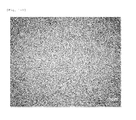
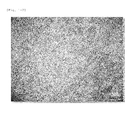
- Fig. 1-1 is a microscopic image showing the skin surface of a panelist immediately after applying make-up
- Fig. 1-1 is a microscopic image showing the skin surface of a panelist immediately after applying make-up
- FIG. 1-2 shows a microscopic image showing the skin surface of the same panelist at lunch break when typical uneven coverage of the foundation after a lapse of time was observed. These images are also available as color images. As is clear from Fig. 1-2 , the foundation filled the sulcus cutis, to cause uneven coverage of the foundation, whereby the crista cutis was exposed.
- test cosmetic products which were prepared so as to have the compositions shown in Tables 2 to 4.
- Each test product was subjected to a test for evaluating properties according to the composition thereof. Firstly, the test methods will be described, and then the composition of the test product and the test results will be disclosed.
- test cosmetic product was evaluated by 20 expert women panelists. Specifically, each panelist applied the test cosmetic product to the face at nine in the morning and evaluated the product in terms of (a) "uniformity immediately after application” (absence of uniformity (lower score) to presence of uniformity (higher score)) and (b) "excessive shining” (excessively shining (lower score) to not shining (higher score)) with a score. The scores given by all the panelists were averaged, and the test cosmetic product was evaluated in the above terms by the average scores.
- the scores (1 to 5) given by each panelist correspond to very poor (1), slightly poor (2), fair (3), good (4), and excellent (5).
- the scores were averaged, and the average value was evaluated with the following ratings.
- the scores (1 to 5) given by each panelist correspond to very poor (1), slightly poor (2), fair (3), good (4), and excellent (5).
- the scores were averaged, and the average value was evaluated with the following ratings.
- each test solid cosmetic product was gently rubbed with a sponge. After 200 repetitions of rubbing, the surface of the product was observed.
- Table 2 shows the compositions of the test cosmetic products of Examples 1 to 3 and Comparative Examples 1 and 2, and the test results of "uniformity immediately after application” and "skin dullness emerging with lapse of time.”
- Each test cosmetic product was produced through a method generally employed for preparing powder compact products. Specifically, a powder portion and an oily portion were mixed with agitation by means of a Henschel mixer (product of Mitsui Mining Co., Ltd.) and then the mixture was pulverized by means of a pulverizer (product of Hosokawa Micron Corporation). The product was put into a cosmetic pan and pressed, to thereby produce a test cosmetic product.
- a Henschel mixer product of Mitsui Mining Co., Ltd.
- a pulverizer product of Hosokawa Micron Corporation
- the "polymethylmethacrylate-coated titanated mica” is a composite pearlescent pigment.
- the "silica,” “vinyl dimethicone/methicone silsesquioxane crosspolymer,” and “polymethylmethacrylate” are spherical powder particles having a mean particle size of about 5 ⁇ m.
- the "diisostearyl malate” is a high-viscosity oil having a viscosity of about 2,000 cps.
- Table 3 shows the compositions of the test cosmetic products of Examples 1, and 4 to 7, and Comparative Examples 3 and 4, and the test results of "skin dullness emerging with lapse of time.”
- the test cosmetic products were produced through the same method as employed in production of the test products shown in Table 2.
- the base material of polymethylmethacrylate-coated titanated mica and that of zinc oxide-coated titanated mica was Timiron Super Gold (product of Merck).
- the coated titanated mica was produced by coating the base material with polymethylmethacrylate or zinc oxide through a conventional method.
- Aluminum chloride-coated titanated mica was Excel Pearl (gold) (product of Miyoshi Kasei Inc.).
- Table 4 shows the compositions of the test cosmetic products of Examples 1 and 8 and Comparative Examples 5 and 6, and the test results of "uniformity immediately after application” and "caking."
- the test cosmetic products were produced through the same method as employed in production of the test products shown in Table 2.
- glycol triisostearate is a high-viscosity oil having a viscosity of about 6,000 cps.
Landscapes
- Health & Medical Sciences (AREA)
- Life Sciences & Earth Sciences (AREA)
- Animal Behavior & Ethology (AREA)
- General Health & Medical Sciences (AREA)
- Public Health (AREA)
- Veterinary Medicine (AREA)
- Birds (AREA)
- Epidemiology (AREA)
- Chemical & Material Sciences (AREA)
- Inorganic Chemistry (AREA)
- Emergency Medicine (AREA)
- Cosmetics (AREA)
Abstract
Description
- The present invention relates to a cosmetic composition and, more particularly, to a solid powder cosmetic composition used as a make-up cosmetic composition such as a foundation.
- Make-up cosmetic compositions have long been used for their effects of making users more beautiful (aesthetic effect), protecting skin (protective effect), and producing various positive moods of users (psychological effect). In light of usability, function, seasonability, etc. of make-up cosmetic compositions, new types of such compositions adapted to the needs of the times have been developed one after another.
- Currently, one purpose of using a make-up cosmetic composition is to suppress "skin dullness." For example, in order to suppress "skin dullness," a basic cosmetic product which can activate dermal blood flow is used, or massage is applied to the skin. Make-up cosmetic compositions are actively used for masking "dullness" appearing on the skin.
- Today, life patterns of individuals are diversified into various kinds, and people seek cosmetics having finely-tuned functions tailored to diversified life scenes.
- Under such circumstances, the present inventors have conducted a hearing survey of about 4,700 women to investigate when women feel dullness of bare skin (details will be described hereinbelow). In the survey, about 60% of the women answered that they felt dullness of bare skin more often in the evening. In case where foundation was applied to the skin, it filled the sulcus cutis (i.e., fine skin furrows) under the effect of sebum or the like after a lapse of time, and an area where the foundation remained at high density and a reddish area where bare skin was exposed tended to coexist on the skin. Regarding dullness of bare skin, women are thought to feel dullness of bare skin in the evening, when they are tired from their work, mainly from a psychological aspect. Taking into consideration the psychological aspect and uneven covering of the skin with a foundation after a lapse of time, cosmetic users' skin dullness developed at a specific time in the day is considered to be substantially mitigated by providing means that can cover skin dullness when such uneven covering occurs.
- For example, many working women put on their make-up before going to the office in the morning. They often have chances to fix their make-up at lunch break, and they usually leave the office in the evening. At the time of fixing make-up at lunch break, uneven covering of the skin with the applied foundation is thought to occur due to secretion of sebum or the like after morning making-up. To cope with uneven covering, a first conceivable and preferable approach is a cosmetic product containing means for masking skin dullness, the means starting to work at lunch break. Similarly, a second conceivable and preferable approach includes fixing make-up with an additional foundation which contains means for masking skin dullness, the means starting to work in the evening when uneven coverage of the skin with the additional foundation may occur.
- Thus, an object of the present invention is to provide a make-up cosmetic composition (e.g., a foundation) which contains latent means for masking skin dullness at the time of application thereof to the skin, the means gradually working a few hours after application.
- As means for masking skin dullness, i.e., decreased brightness of the skin, with a foundation or a similar material, incorporation of an interference pearlescent pigment, which has a brightness higher than that of a simple pigment, into such a cosmetic product, is a suitable approach. However, when titanated mica, which is a typical interference pearlescent pigment, is not subjected to any treatment and incorporated into foundation or the like, the "luster" (also called "excessive shining") intrinsic to titanated mica is excessively noticeable, and a cosmetic product containing titanated mica is not suited for use in everyday life. However, as described above, it is difficult for a foundation having a brightness of a daily use level to sufficiently mask skin dullness when the foundation is present unevenly on the skin after a lapse of time. The present inventors have thought that an intrinsic property "luster" of the aforementioned titanated mica can be suitably employed for masking skin dullness of an exposed skin area which occurs due to unevenness of foundation on the skin.
- Under such circumstances, the present inventors have conducted further studies, and have found that through incorporation, into a cosmetic composition, of an interference pearlescent pigment combined with a specific material (which hereinafter may be referred to as a "composite pearlescent pigment") in a specific amount, the "luster" of the interference pearlescent pigment remains masked at the time of making up, but the intrinsic "luster" of pearlescent pigment as a base material is developed during progress of uneven distribution of the cosmetic composition (e.g., foundation) occurring via contact between the composite pearlescent pigment and sebum or the like, whereby skin dullness of the exposed skin can be masked. The inventors have also found that through incorporation of spherical powder particles in large amounts and high-viscosity oil into a cosmetic composition, skin dullness can be more effectively masked, the cosmetic composition can be readily applied uniformly, and caking (i.e., cohesion of powder particles to form agglomerates) can be prevented. The present invention has been accomplished on the basis of these findings.
- Accordingly, the present invention provides a solid powder cosmetic composition comprising the following ingredients (1) to (3) (hereinafter may be referred to as the cosmetic composition of the present invention):
- (1) an interference pearlescent pigment having a reflectance of 30% or higher to visible light having a wavelength of 540 to 580 nm, which has been combined with one or more materials selected from among polymethylmethacrylate, silicon dioxide, platy barium sulfate, zinc oxide, and aluminum chloride, in an amount of 1 to 8 mass%;
- (2) spherical powder particles in an amount of 8 to 30 mass%; and
- (3) an oil having a viscosity of 500 to 100,000 cps, as measured by means of a B-type viscometer at 30°C, in an amount of 1.5 to 5 mass% (hereinafter may be referred to as a high-viscosity oil);
- One embodiment of the cosmetic composition of the present invention is a solid powder cosmetic composition for preventing skin dullness.
- The present invention provides a solid powder cosmetic composition which can effectively mask skin dullness emerging on the skin with the lapse of time.
-
- [
Fig. 1-1 ] A microscopic image of skin surface immediately after applying make-up. - [
Fig. 1-2 ] A microscopic image of skin surface a period of time after applying make-up. - The composite pearlescent pigment employed in the present invention is produced by combining an interference pearlescent pigment having a reflectance of 30% or higher with respect to visible light having a wavelength of 540 to 580 nm, with one or more materials selected from among polymethylmethacrylate (PMMA), silicon dioxide (silica), platy barium sulfate, zinc oxide, and aluminum chloride.
- Visible light having a wavelength of 540 to 580 nm is classified as medium-wavelength light. Specific absorption peaks by hemoglobin are observed in this wavelength range, particularly at about 540 nm and about 580 nm. Skin dullness can be substantially masked through inhibition of the specific light absorption by hemoglobin. Therefore, in the present invention, the interference pearlescent pigment serving as a base material of the composite pearlescent pigment preferably has high reflectance to visible light having a wavelength of 540 to 580 nm. Specifically, the interference pearlescent pigment serving as a base material of the composite pearlescent pigment is required to have a reflectance of 30% or higher to visible light having a wavelength falling within the range. No particular limitation is imposed on the base material of the composite pearlescent pigment, so long as the base material has such an optical property. Non-limitative specific examples of the base material include titanated mica (mica substrate coated with titanium dioxide and/or low-valence titanium oxide: also known as mica), iron oxide-coated mica, basic lead carbonate, and bismuth oxychloride. The color of the interference pearlescent pigment may be tuned by varying the thickness of a plate-like particle of the interference pearlescent pigment, and in the case of titanated mica, the thickness of a titanium dioxide layer or a low-valence titanium oxide layer on the mica, etc. In the present invention, the color of the interference pearlescent pigment is suitably gold, yellow, or green. The pearlescent pigment of such a color meets the condition "reflectance to visible light of 540 to 580 nm is 30% or higher." In actual production of cosmetic compositions, the color is particularly preferably gold or yellow, for matching the color of the pigment with the color of the final product. The exemplified interference pearlescent pigments may be produced through a known method. Alternatively, commercial products such as Timiron series (product of Merck) and Flemenco series (product of BASF) may also be used.
- The composite pearlescent pigment is a composite powder produced by combining the aforementioned interference pearlescent pigment with one or more materials selected from among polymethylmethacrylate (PMMA), silicon dioxide (silica), platy barium sulfate, zinc oxide, and aluminum chloride (which hereinafter may be referred to as a combining material). The light provided by the interference pearlescent pigment through light interference assumes a characteristic "luster." When the interference pearlescent pigment is directly incorporated into a foundation or the like, the cosmetic product is more likely to exhibit "excessive shining." The "luster" or "excessive shining" may be reduced by combining the pigment with the aforementioned combining material. Also, when the composite pearlescent pigment is in contact with sebum secreted to the skin, the refractive index of the combining material lowers, and the interference color intrinsic to the interference pearlescent pigment is developed. As used herein, the term "combining" refers to fixation of the interference pearlescent pigment particle via bonding to the combining material in a certain manner. The term "combining" includes coating and supporting, preferably coating. The term "coating" refers to the state in which a large number of microparticles of the combining material are bonded to the surface of a plate-like particle of the interference pearlescent pigment, realizing complete coverage of the interference pearlescent pigment particle. Unless otherwise specified, no particular limitation is imposed on the shape of the microparticles of the combining material. Examples of the particle shape include sphere, plate, and amorphous form. The interference pearlescent pigment may be combined with a combining material through a known method suited for the combining material, such as a mechanochemical process or a chemical process. Alternatively, commercial products such as Excel Pearl series (product of Miyoshi Kasei Inc.) may also be used.
- The cosmetic composition of the present invention contains one or more composite pearlescent pigments. The total amount of the composite pearlescent pigments is 1 to 8 mass% with respect to the total amount of the cosmetic composition, preferably 2 to 5 mass%. When the total amount is less than 1 mass% with respect to the amount of the cosmetic composition, difficulty is encountered in completely masking skin dullness, even in the case where the interference color of the interference pearlescent pigment is developed after a lapse of time. When the amount is in excess of 8 mass%, excessive shining attributed to the interference light is strengthened at the time of application of the cosmetic composition and after a lapse of time, whereby the cosmetic product becomes unsuitable for a general use situation.
- No particular limitation is imposed on the material of the spherical powder particles incorporated into the cosmetic composition of the present invention, so long as the material can be incorporated into generally used cosmetic compositions. Examples of the material include polyethylene, polypropylene, polystyrene, polymethylmethacrylate, polyamide resin (Nylon), urethane, silicone resin, silicone rubber, silicone resin-coated rubber, polytetrafluoroethylene, silicon dioxide (silica), styrene-acrylic acid copolymer resin, benzoguanamine resin, and cellulose. The spherical powder particles may be subjected to surface treatment. Examples of the material for the surface treatment include a silicone compound, a fluorine-modified silicone compound, a fluorine-containing compound, a higher fatty acid, a higher alcohol, a fatty acid ester, a metal soap, an amino acid, and an alkyl phosphate. The particle size (mean particle size) of the spherical powder particles is preferably 1 to 30 µm in view of sensation of use of the cosmetic composition, particularly preferably 3 to 20 µm. The cosmetic composition of the present invention may contain spherical powder particles singly or in combination of two or more species.
- The cosmetic composition of the present invention contains spherical powder particles in an amount of 8 to 30 mass% with respect to the total amount of the cosmetic composition, preferably 10 to 20 mass%. When the amount of spherical powder particles is in excess of 30 mass%, the cosmetic composition (foundation) is likely to fail to be retained on the skin, whereas when the amount is less than 8 mass%, difficulty is encountered in imparting sufficient extendability to the cosmetic product.
- As described above, the high-viscosity oil incorporated into the cosmetic composition of the present invention has "a viscosity of 500 to 100,000 cps, as measured by means of a B-type viscometer at 30°C." Unless otherwise specified, the "viscosity" in the present invention refers to "the viscosity as measured by means of a B-type viscometer at 30°C." The high-viscosity oil preferably has a viscosity of 1,000 to 20,000 cps. When the viscosity is less than 500 cps, difficulty is encountered in imparting good adhesion to the cosmetic product, and the interference color of the cosmetic product attributed to the aforementioned composite pearlescent pigment is likely to be weakened, whereas when the viscosity is in excess of 100,000 cps, caking of the cosmetic product may occur. Examples of the high-viscosity oil include diisostearyl malate (about 2,000 cps) and glyceryl triisostearate (about 6,000 cps). Into the cosmetic composition of the present invention, one or more high-viscosity oils may be incorporated.
- The cosmetic composition of the present invention contains the high-viscosity oil in an amount of 1.5 to 5 mass% with respect to the total amount of the cosmetic composition, preferably 2 to 4 mass%. When the amount is in excess of 5 mass%, caking of the cosmetic product may occur, whereas when the amount is less than 1.5 mass%, difficulty is encountered in imparting good adhesion to the cosmetic product, and the interference color of the cosmetic product attributed to the aforementioned composite pearlescent pigment is likely to be weakened.
- The cosmetic composition of the present invention may further contain other ingredients employable in solid powder cosmetic compositions in accordance with needs, in qualitative and quantitative ranges so as not to obviously impair target effects of the present invention.
- Specific examples of other ingredients include powder ingredients other than the aforementioned (1) "composite pearlescent pigment" and (2) "spherical powder particles" (extender pigment, color pigment, white pigment, and interference pearlescent pigment and functional pigment other than the (1) "composite pearlescent pigment"); oils other than the (3) "high-viscosity oil" (higher alcohol, hydrocarbon oil, ester oil, polar oil, silicone oil, volatile oil, etc.); and other ingredients such as water, a surfactant (cationic surfactant, anionic surfactant, amphoteric surfactant, or nonionic surfactant), a lower alcohol, an ultraviolet absorber, a humectant, a blood flow stimulant, a refrigerant, an antiperspirant, an antibacterial agent, a skin rejuvenating agent, an anti-inflammatory agent, vitamins, an antioxidant, an antiseptic, a perfume, and a whitening agent. These ingredients may be incorporated into the cosmetic composition in the above qualitative and quantitative ranges, in accordance with needs.
- The cosmetic composition of the present invention is a solid powder cosmetic composition and may be produced as foundation, pressed powder, cheek color, eye shadow, etc. Specifically, the composition may be produced through a conventional method for producing solid powder cosmetic compositions under the conditions specified for the ingredients as described above. Typical production examples are given in the Examples hereinbelow. However, no particular limitation is imposed on the production method, and the cosmetic composition of the present invention may be produced through any of a variety of methods; for example, a wet process employing a solvent, a spray drying process, and agitation/mixing by means of a medium mill.
- The present invention will next be described in more detail by way of examples. Unless otherwise specified, the amounts of ingredients of the products of the Examples and Comparative Examples shown in the tables are represented by mass% with respect to the composition or product to which the ingredients are incorporated.
- About 4,700 women were investigated in terms of the time when they feel dullness of bare skin. The investigation was conducted in the following manner.
- Panelists of the hearing survey were recruited via the web site of Shiseido Company, Ltd. (the present applicant) and answered the query "Do you feel dullness of bare skin at a certain time of the day? Specify the time when you feel dullness of bare skin." The time zone was set to 24 hours starting from 0 AM with intervals of 1 hour. Multiple choices were accepted.
- Through the survey, about 50% of the panelists more strongly felt dullness of bare skin around five o'clock in the evening (panelists who reported feeling no dullness of bare skin (about 14%) were excluded).
- In addition to the above query, the panelists answered another query "Do you feel dullness of the skin wearing make-up in the evening after applying make-up?" In response to this query, about 80% of the effective answers were "yes."
- Based on these results, the present inventors have thought that change in state of bare skin and foundation-coated skin with lapse of time was caused by some factor, and observed such change in state of foundation-coated skin of each of the 50 women panelists in their 20s to 50s.
- In a specific procedure, the aforementioned women panelists applied a foundation of a formulation shown in Table 1 below (produced through a conventional method) after waking up. The skin surface of each panelist was magnified and observed under a video-microscope immediately after making up and at lunch break. As a result, in many panelists, the applied foundation filled the sulcus cutis under the effect of sebum or the like after a lapse of time, and on their skin, an area where the foundation remained at high density and a reddish area where bare skin was exposed were likely to be found.
Fig. 1-1 is a microscopic image showing the skin surface of a panelist immediately after applying make-up, andFig. 1-2 shows a microscopic image showing the skin surface of the same panelist at lunch break when typical uneven coverage of the foundation after a lapse of time was observed. These images are also available as color images. As is clear fromFig. 1-2 , the foundation filled the sulcus cutis, to cause uneven coverage of the foundation, whereby the crista cutis was exposed. -
[Table 1] Ingredients Amount (mass%) Fluorine-treated talc balance Synthetic fluorphlogopite 10 Barium sulfate 8 Silicone-treated titanium oxide 20 Silicone-treated iron oxide (red) as appropriate Silicone-treated iron oxide (yellow) as appropriate Silicone-treated iron oxide (black) as appropriate Vinyl dimethicone/methicone silsesquioxane crosspolymer 2 Silica 2 Nylon powder 2 Zinc oxide 3 Silica silylate 2 Chlorphenesin as appropriate Squalane 3 Petrolatum 1 Ethylhexyl methoxycinnamate 3 Tocopherol as appropriate Sorbitan sesquiisostearate as appropriate Total 100% - The present invention was evaluated by use of test cosmetic products which were prepared so as to have the compositions shown in Tables 2 to 4. Each test product was subjected to a test for evaluating properties according to the composition thereof. Firstly, the test methods will be described, and then the composition of the test product and the test results will be disclosed.
- Each test cosmetic product was evaluated by 20 expert women panelists. Specifically, each panelist applied the test cosmetic product to the face at nine in the morning and evaluated the product in terms of (a) "uniformity immediately after application" (absence of uniformity (lower score) to presence of uniformity (higher score)) and (b) "excessive shining" (excessively shining (lower score) to not shining (higher score)) with a score. The scores given by all the panelists were averaged, and the test cosmetic product was evaluated in the above terms by the average scores.
- The scores (1 to 5) given by each panelist correspond to very poor (1), slightly poor (2), fair (3), good (4), and excellent (5). The scores were averaged, and the average value was evaluated with the following ratings.
-
- 4 to 5: ○○ (excellent)
- 3 or more and less than 4: ○ (fair)
- 2 or more and less than 3: Δ (slightly poor) 1 or more and less than 2: X (very poor)
- In the system of the above test (1)-1, the face of each panelist was observed four hours after application of the test cosmetic product so as to check the state of skin dullness. The extent of skin dullness was evaluated with a score (1 to 5). The scores given by all the panelists were averaged, and the test cosmetic product was evaluated in terms of skin dullness emerging with lapse of time by the average scores (face with skin dullness (lower score) to face having a good complexion with no skin dullness (higher score)).
- The scores (1 to 5) given by each panelist correspond to very poor (1), slightly poor (2), fair (3), good (4), and excellent (5). The scores were averaged, and the average value was evaluated with the following ratings.
-
- 4 to 5: ○○ (excellent)
- 3 or more and less than 4: ○ (fair)
- 2 or more and less than 3: Δ (slightly poor)
- 1 or more and less than 2: X (very poor)
- The surface of each test solid cosmetic product was gently rubbed with a sponge. After 200 repetitions of rubbing, the surface of the product was observed.
-
- ○: No abnormality was observed on the surface of the product
- Δ: The surface of the product hardened in some degree, but the product could be taken with a sponge
- X: Surface hardened, and taking the product was impossible
- Table 2 shows the compositions of the test cosmetic products of Examples 1 to 3 and Comparative Examples 1 and 2, and the test results of "uniformity immediately after application" and "skin dullness emerging with lapse of time."
- Each test cosmetic product was produced through a method generally employed for preparing powder compact products. Specifically, a powder portion and an oily portion were mixed with agitation by means of a Henschel mixer (product of Mitsui Mining Co., Ltd.) and then the mixture was pulverized by means of a pulverizer (product of Hosokawa Micron Corporation). The product was put into a cosmetic pan and pressed, to thereby produce a test cosmetic product.
-
[Table 2] Ex. 1 Ex. 2 Ex. 3 Comp. Ex. 1 Comp. Ex. 2 Ingredients Amount (mass%) Metallic soap-treated talc balance balance balance balance balance Synthetic mica 20 20 20 20 20 Silicone-treated sericite 15 15 15 15 15 Platy barium sulfate 3 3 3 3 3 Synthetic wax 3 3 3 3 3 Silica 5 - - 2 10 Vinyl dimethicone/methicone silsesquioxane crosspolymer 5 10 - 2 15 Polymethylmethacrylate 5 5 10 2 15 Micro titanium oxide 8 8 8 8 8 Titanium oxide 10 10 10 10 10 Red iron oxide as appropriate as appropriate as appropriate as appropriate as appropriate Yellow iron oxide as appropriate as appropriate as appropriate as appropriate as appropriate Black iron oxide as appropriate as appropriate as appropriate as appropriate as appropriate Iron oxide-coated titanated mica 2 2 2 2 2 PMMA-coated titanated mica 3 3 3 3 3 Hyaluronic acid as appropriate as appropriate as appropriate as appropriate as appropriate Tranexamic acid 2 2 2 2 2 Chlorphenesin as appropriate as appropriate as appropriate as appropriate as appropriate Diisostearyl malate 3 3 3 3 3 Dimethicone 4 4 4 4 4 Ethylhexyl methoxycinnamate 4 4 4 4 4 Sorbitan sesquiisostearate 1 1 1 1 1 Tocopherol as appropriate as appropriate as appropriate as appropriate as appropriate Perfume as appropriate as appropriate as appropriate as appropriate as appropriate Total 100 100 100 100 100 Evaluation Uniformity immediately after application ○○ ○ ○ Δ X Dullness after a lapse of time ○○ ○ ○ Δ X - The employed materials listed in Table 2 are as follows: "silica" was Sansphere L-51S (product of Dokai Kagaku Kogyo); "vinyl dimethicone/methicone silsesquioxane crosspolymer" was Silicone Powder KSP100 (product of Shin-Etsu Chemical Co., Ltd.); "polymethylmethacrylate" was Ganz Pearl GMX-0810 (product of Ganz Chemical Co., Ltd.); "iron oxide-coated titanated mica" was produced by using Timiron Super Gold (product of Merck) as a base material, and iron oxide pigment (e.g., red iron oxide) as a coating; "polymethylmethacrylate-coated titanated mica" was produced by using Timiron Super Gold (product of Merck) as a base material, and polymethylmethacrylate as a coating; and "diisostearyl malate" was Cosmol 222 (product of Nisshin Seiyu).
- Among them, the "polymethylmethacrylate-coated titanated mica" is a composite pearlescent pigment. The "silica," "vinyl dimethicone/methicone silsesquioxane crosspolymer," and "polymethylmethacrylate" are spherical powder particles having a mean particle size of about 5 µm. The "diisostearyl malate" is a high-viscosity oil having a viscosity of about 2,000 cps.
- Unless otherwise specified, the same ingredients as disclosed in Table 2 were used to prepare test cosmetic products in the following experiments.
- As is clear from Table 2, when the amount of spherical powder particles is smaller than the predetermined value, the uniformity immediately after application and the extent of skin dullness emerging with lapse of time were inferior to those of Examples 1 to 3.
- Table 3 shows the compositions of the test cosmetic products of Examples 1, and 4 to 7, and Comparative Examples 3 and 4, and the test results of "skin dullness emerging with lapse of time." The test cosmetic products were produced through the same method as employed in production of the test products shown in Table 2.
-
[Table 3-1] Ex. 1 Ex. 4 Ex. 5 Ex. 6 Ingredients Amount (mass%) Metallic soap-treated talc balance balance balance balance Synthetic mica 20 20 20 20 Silicone-treated sericite 15 15 15 15 Platy Barium sulfate 3 3 3 3 Synthetic wax 3 3 3 3 Silica 5 5 5 5 Vinyl dimethicone/methicone silsesquioxane crosspolymer 5 5 5 5 Polymethylmethacrylate 5 5 5 5 Micro titanium oxide 8 8 8 8 Titanium oxide 10 10 10 10 Red iron oxide as appropriate as appropriate as appropriate as appropriate Yellow iron oxide as appropriate as appropriate as appropriate as appropriate Black iron oxide as appropriate as appropriate as appropriate as appropriate Iron oxide-coated titanated mica 2 2 2 2 PMMA-coated titanated mica 3 5 8 - Zinc oxide-coated titanated mica - - - 3 Aluminum chloride-coated titanated mica - - - - Hyaluronic acid as appropriate as appropriate as appropriate as appropriate Tranexamic acid 2 2 2 2 Chlorphenesin as appropriate as appropriate as appropriate as appropriate Diisostearyl malate 3 3 3 3 Dimethicone 4 4 4 4 Ethylhexyl methoxycinnamate 4 4 4 4 Sorbitan sesquiisostearate 1 1 1 1 Tocopherol as appropriate as appropriate as appropriate as appropriate Perfume as appropriate as appropriate as appropriate as appropriate Total 100 100 100 100 Evaluation Dullness after a lapse of time ○○ ○ ○ ○ [Table 3-2] Ex. 7 Comp. Ex. 3 Comp. Ex. 4 Ingredients Amount (mass%) Metallic soap-treated talc balance balance balance Synthetic mica 20 20 20 Silicone-treated sericite 15 15 15 Platy Barium sulfate 3 3 3 Synthetic wax 3 3 3 Silica 5 5 5 Vinyl dimethicone/methicone silsesquioxane crosspolymer 5 5 5 Polymethylmethacrylate 5 5 5 Micro titanium oxide 8 8 8 Titanium oxide 10 10 10 Red iron oxide as appropriate as appropriate as appropriate Yellow iron oxide as appropriate as appropriate as appropriate Black iron oxide as appropriate as appropriate as appropriate Iron oxide-coated titanated mica 2 2 2 PMMA-coated titanated mica - 1 15 Zinc oxide-coated titanated mica - - - Aluminum chloride-coated titanated mica 3 - - Hyaluronic acid as appropriate as appropriate as appropriate Tranexamic acid 2 2 2 Chlorphenesin as appropriate as appropriate as appropriate Diisostearyl malate 3 3 3 Dimethicone 4 4 4 Ethylhexyl methoxycinnamate 4 4 4 Sorbitan sesquiisostearate 1 1 1 Tocopherol as appropriate as appropriate as appropriate Perfume as appropriate as appropriate as appropriate Total 100 100 100 Evaluation Dullness after a lapse of time ○ Δ X - Regarding the employed materials listed in Table 3, the base material of polymethylmethacrylate-coated titanated mica and that of zinc oxide-coated titanated mica was Timiron Super Gold (product of Merck). The coated titanated mica was produced by coating the base material with polymethylmethacrylate or zinc oxide through a conventional method. Aluminum chloride-coated titanated mica was Excel Pearl (gold) (product of Miyoshi Kasei Inc.).
- As is clear from Table 3, skin dullness emerging with lapse of time was favorably masked, when each of the composite pearlescent pigments was incorporated in an amount falling within the scope of the invention. However, the skin dullness was not suitably masked, when the amount was excessively large or small.
- Table 4 shows the compositions of the test cosmetic products of Examples 1 and 8 and Comparative Examples 5 and 6, and the test results of "uniformity immediately after application" and "caking." The test cosmetic products were produced through the same method as employed in production of the test products shown in Table 2.
-
[Table 4] Ex. 1 Ex. 8 Comp. Ex. 5 Comp. Ex. 6 Ingredients Amount (mass%) Metallic soap-treated talc balance balance balance balance Synthetic mica 20 20 20 20 Silicone-treated sericite 15 15 15 15 Platy Barium sulfate 3 3 3 3 Synthetic wax 3 3 3 3 Silica 5 5 5 5 Vinyl dimethicone/methicone silsesquioxane crosspolymer 5 5 5 5 Polymethylmethacrylate 5 5 5 5 Micro titanium oxide 8 8 8 8 Titanium oxide 10 10 10 10 Red iron oxide as appropriate as appropriate as appropriate as appropriate Yellow iron oxide as appropriate as appropriate as appropriate as appropriate Black iron oxide as appropriate as appropriate as appropriate as appropriate Iron oxide-coated titanated mica 2 2 2 2 PMMA-coated titanated mica 3 3 3 3 Hyaluronic acid as appropriate as appropriate as appropriate as appropriate Tranexamic acid 2 2 2 2 Chlorphenesin as appropriate as appropriate as appropriate as appropriate Diisostearyl malate 3 - 1 8 Glyceryl triisostearate - 3 - - Dimethicone 4 4 6 - Ethylhexyl methoxycinnamate 4 4 4 3 Sorbitan sesquiisostearate 1 1 1 1 Tocopherol as appropriate as appropriate as appropriate as appropriate Perfume as appropriate as appropriate as appropriate as appropriate Total 100 100 100 100 Evaluation Uniformity immediately after application ○○ ○○ X X Caking ○ ○ ○ X - In Table 4, "glyceryl triisostearate" is a high-viscosity oil having a viscosity of about 6,000 cps. A commercial product thereof, Sun Espol GTI(S) (product of Taiyo Kagaku Co., Ltd.), was used as "glyceryl triisostearate."
- As is clear from Table 4, uniformity immediately after application was lacking, when the amount of high-viscosity oil was excessively small. In contrast, when the amount was excessively large, attention should be paid to uniformity immediately after application and occurrence of caking.
Claims (5)
- A solid powder cosmetic composition comprising the following ingredients (1) to (3):(1) an interference pearlescent pigment having a reflectance of 30% or higher to visible light having a wavelength of 540 to 580 nm, which has been combined with one or more materials selected from among polymethylmethacrylate, silicon dioxide, platy barium sulfate, zinc oxide, and aluminum chloride, in an amount of 1 to 8 mass%;(2) spherical powder particles in an amount of 8 to 30 mass%; and(3) an oil having a viscosity of 500 to 100,000 cps, as measured by means of a B-type viscometer at 30°C, in an amount of 1.5 to 5 mass%;
the amounts being on the basis of the total amount of the composition. - The solid powder cosmetic composition according to claim 1, wherein the interference pearlescent pigment is titanated mica assuming a color of gold, yellow, or green.
- The solid powder cosmetic composition according to claim 1, wherein the interference pearlescent pigment is titanated mica assuming a color of gold or yellow.
- The solid powder cosmetic composition according to any of claims 1 to 3, wherein the material with which the interference pearlescent pigment is combined is polymethylmethacrylate.
- The solid powder cosmetic composition according to any of claims 1 to 4, which is a solid powder cosmetic composition for masking skin dullness.
Applications Claiming Priority (2)
| Application Number | Priority Date | Filing Date | Title |
|---|---|---|---|
| JP2010226862 | 2010-10-06 | ||
| PCT/JP2011/073074 WO2012046798A1 (en) | 2010-10-06 | 2011-10-06 | Solid powder cosmetic |
Publications (3)
| Publication Number | Publication Date |
|---|---|
| EP2626060A1 true EP2626060A1 (en) | 2013-08-14 |
| EP2626060A4 EP2626060A4 (en) | 2015-08-05 |
| EP2626060B1 EP2626060B1 (en) | 2019-05-22 |
Family
ID=45927792
Family Applications (1)
| Application Number | Title | Priority Date | Filing Date |
|---|---|---|---|
| EP11830730.5A Not-in-force EP2626060B1 (en) | 2010-10-06 | 2011-10-06 | Solid powder cosmetic |
Country Status (9)
| Country | Link |
|---|---|
| US (1) | US20130209533A1 (en) |
| EP (1) | EP2626060B1 (en) |
| JP (1) | JP5178920B2 (en) |
| KR (1) | KR20130100782A (en) |
| CN (1) | CN103153269B (en) |
| ES (1) | ES2732820T3 (en) |
| RU (1) | RU2568842C2 (en) |
| TW (1) | TWI508749B (en) |
| WO (1) | WO2012046798A1 (en) |
Cited By (4)
| Publication number | Priority date | Publication date | Assignee | Title |
|---|---|---|---|---|
| EP3760182A1 (en) * | 2019-07-03 | 2021-01-06 | Chanel Parfums Beauté | Long-lasting solid cosmetic composition |
| WO2021001637A1 (en) * | 2019-07-03 | 2021-01-07 | Chanel Parfums Beaute | Solid cosmetic composition |
| WO2021001638A1 (en) * | 2019-07-03 | 2021-01-07 | Chanel Parfums Beaute | Solid hydrating cosmetic composition |
| FR3098107A1 (en) * | 2019-07-03 | 2021-01-08 | Chanel Parfums Beaute | Solid cosmetic composition |
Families Citing this family (9)
| Publication number | Priority date | Publication date | Assignee | Title |
|---|---|---|---|---|
| US9168394B2 (en) | 2013-03-13 | 2015-10-27 | Johnson & Johnson Consumer Inc. | Pigmented skin-care compositions |
| US9168393B2 (en) | 2013-03-13 | 2015-10-27 | Johnson & Johnson Consumer Inc. | Pigmented skin-care compositions |
| US9168209B2 (en) | 2013-03-13 | 2015-10-27 | Johnson & Johnson Consumer Inc. | Pigmented skin-care compositions |
| US9320687B2 (en) | 2013-03-13 | 2016-04-26 | Johnson & Johnson Consumer Inc. | Pigmented skin-care compositions |
| KR102586449B1 (en) * | 2016-08-11 | 2023-10-10 | (주)아모레퍼시픽 | Pressed powder cosmetic composition having improved application properties and formability |
| JP7361363B2 (en) * | 2019-06-27 | 2023-10-16 | ピアス株式会社 | Cosmetic compositions and cosmetics |
| JP7697927B2 (en) * | 2020-03-30 | 2025-06-24 | 株式会社コーセー | Powder-containing cosmetics |
| KR20220154613A (en) * | 2021-05-13 | 2022-11-22 | 가부시키가이샤 돔보 엔피쓰 | Oily powder foundation |
| KR20240093708A (en) * | 2022-02-25 | 2024-06-24 | 로레알 | Cosmetic compositions and uses of cosmetic compositions for reducing oil and shine of the skin |
Family Cites Families (13)
| Publication number | Priority date | Publication date | Assignee | Title |
|---|---|---|---|---|
| FR2712188B1 (en) * | 1993-11-08 | 1996-01-26 | Oreal | Cosmetic composition intended for making up the skin, its preparation process and make-up product obtained from said composition. |
| JP3522955B2 (en) * | 1996-02-21 | 2004-04-26 | 株式会社資生堂 | Zinc oxide coating, fatty acid solidifying powder using the same, and external preparation for skin |
| JP3650679B2 (en) * | 1996-09-06 | 2005-05-25 | ポーラ化成工業株式会社 | Makeup cosmetics |
| JP2002154929A (en) * | 2000-11-15 | 2002-05-28 | Shiseido Co Ltd | Makeup cosmetic |
| US7682604B2 (en) * | 2002-03-07 | 2010-03-23 | Shiseido Co., Ltd. | Composite powder, cosmetics containing the same, and process for producing composite powder |
| JP3671045B2 (en) * | 2002-03-07 | 2005-07-13 | 株式会社資生堂 | COMPOSITE POWDER, COSMETICS COMPRISING THE SAME, AND METHOD FOR PRODUCING COMPOSITE POWDER |
| US20050118220A1 (en) * | 2002-07-11 | 2005-06-02 | Catalysts& Chemicals Industries Co., Ltd | Cosmetics |
| JP3893388B2 (en) * | 2004-03-19 | 2007-03-14 | 花王株式会社 | Makeup cosmetics |
| AU2005290511B2 (en) * | 2004-10-07 | 2011-06-02 | Shiseido Company, Ltd. | Surface-treating agent, surface-treated powder, and cosmetic preparation containing same |
| KR101066781B1 (en) * | 2007-12-19 | 2011-09-21 | 가부시키가이샤 시세이도 | Manufacturing method of powder cosmetic |
| FR2932384B1 (en) * | 2008-06-17 | 2010-11-26 | Chanel Parfums Beaute | COMPACT POWDER FOR SKIN CARE OR MAKE-UP |
| JP2010030952A (en) * | 2008-07-29 | 2010-02-12 | Fuji Kasei Kk | Treated powder and cosmetic |
| JP5455168B2 (en) * | 2009-01-15 | 2014-03-26 | コニシ株式会社 | Cosmetics |
-
2011
- 2011-10-06 WO PCT/JP2011/073074 patent/WO2012046798A1/en not_active Ceased
- 2011-10-06 EP EP11830730.5A patent/EP2626060B1/en not_active Not-in-force
- 2011-10-06 RU RU2013117745/15A patent/RU2568842C2/en not_active IP Right Cessation
- 2011-10-06 TW TW100136318A patent/TWI508749B/en active
- 2011-10-06 CN CN201180048029.1A patent/CN103153269B/en active Active
- 2011-10-06 KR KR1020137011445A patent/KR20130100782A/en not_active Ceased
- 2011-10-06 ES ES11830730T patent/ES2732820T3/en active Active
- 2011-10-06 US US13/877,512 patent/US20130209533A1/en not_active Abandoned
- 2011-10-06 JP JP2011545130A patent/JP5178920B2/en active Active
Cited By (8)
| Publication number | Priority date | Publication date | Assignee | Title |
|---|---|---|---|---|
| EP3760182A1 (en) * | 2019-07-03 | 2021-01-06 | Chanel Parfums Beauté | Long-lasting solid cosmetic composition |
| WO2021001637A1 (en) * | 2019-07-03 | 2021-01-07 | Chanel Parfums Beaute | Solid cosmetic composition |
| WO2021001638A1 (en) * | 2019-07-03 | 2021-01-07 | Chanel Parfums Beaute | Solid hydrating cosmetic composition |
| FR3098108A1 (en) * | 2019-07-03 | 2021-01-08 | Chanel Parfums Beaute | Long-lasting solid cosmetic composition |
| FR3098110A1 (en) * | 2019-07-03 | 2021-01-08 | Chanel Parfums Beaute | Solid cosmetic composition |
| FR3098107A1 (en) * | 2019-07-03 | 2021-01-08 | Chanel Parfums Beaute | Solid cosmetic composition |
| FR3098109A1 (en) * | 2019-07-03 | 2021-01-08 | Chanel Parfums Beaute | Moisturizing solid cosmetic composition |
| US12472128B2 (en) | 2019-07-03 | 2025-11-18 | Chanel Parfums Beaute | Long-lasting solid cosmetic composition |
Also Published As
| Publication number | Publication date |
|---|---|
| TW201219059A (en) | 2012-05-16 |
| KR20130100782A (en) | 2013-09-11 |
| HK1184395A1 (en) | 2014-01-24 |
| CN103153269A (en) | 2013-06-12 |
| RU2568842C2 (en) | 2015-11-20 |
| RU2013117745A (en) | 2014-11-20 |
| EP2626060A4 (en) | 2015-08-05 |
| WO2012046798A1 (en) | 2012-04-12 |
| US20130209533A1 (en) | 2013-08-15 |
| JPWO2012046798A1 (en) | 2014-02-24 |
| EP2626060B1 (en) | 2019-05-22 |
| JP5178920B2 (en) | 2013-04-10 |
| ES2732820T3 (en) | 2019-11-26 |
| CN103153269B (en) | 2015-08-12 |
| TWI508749B (en) | 2015-11-21 |
Similar Documents
| Publication | Publication Date | Title |
|---|---|---|
| EP2626060B1 (en) | Solid powder cosmetic | |
| DE69930632T2 (en) | COSMETIC COMPOSITION FOR NATURAL APPEARANCE | |
| TWI290472B (en) | Cosmetic composition | |
| CA2366619C (en) | Optical makeup composition | |
| JP2011507957A (en) | Pigment composition having optical blurring effect suitable for use in cosmetics | |
| US20040213820A1 (en) | Cosmetic | |
| US20150182430A1 (en) | Multi-functional composite powder | |
| JP2004315426A (en) | Additives for cosmetics | |
| US7374783B2 (en) | Powders coated with specific lipoamino acid composition and cosmetics containing the same | |
| JP3456778B2 (en) | Core-shell pigment and makeup cosmetic containing the same | |
| JP4879834B2 (en) | Cosmetics containing multi-functional composite powder | |
| JP3040702B2 (en) | Cosmetics | |
| KR20050070037A (en) | Topical use of microfine calcined alumina | |
| US10470989B2 (en) | Surface-treated powder using theanine, and cosmetic preparation containing same | |
| JP6165797B2 (en) | Liquid foundation | |
| MX2014002403A (en) | Cosmetic composition intended for making up the skin, and article comprising said composition. | |
| JPS6327418A (en) | Cosmetic | |
| EP2684557A1 (en) | Foundation cosmetic and method for producing same | |
| JP2004123681A (en) | Makeup cosmetics | |
| JP4800139B2 (en) | Composite powder and cosmetic containing the composite powder | |
| HK1184395B (en) | Solid powder cosmetic | |
| JPH06157245A (en) | Powdery cosmetic | |
| JP7555564B2 (en) | Agent for suppressing diurnal changes in complexion | |
| JP2008088068A (en) | Cosmetic used for eyelash or eyebrow | |
| KR20170018070A (en) | A multi-step regimen for improving the appearance and feel of human skin |
Legal Events
| Date | Code | Title | Description |
|---|---|---|---|
| PUAI | Public reference made under article 153(3) epc to a published international application that has entered the european phase |
Free format text: ORIGINAL CODE: 0009012 |
|
| 17P | Request for examination filed |
Effective date: 20130430 |
|
| AK | Designated contracting states |
Kind code of ref document: A1 Designated state(s): AL AT BE BG CH CY CZ DE DK EE ES FI FR GB GR HR HU IE IS IT LI LT LU LV MC MK MT NL NO PL PT RO RS SE SI SK SM TR |
|
| DAX | Request for extension of the european patent (deleted) | ||
| RA4 | Supplementary search report drawn up and despatched (corrected) |
Effective date: 20150702 |
|
| RIC1 | Information provided on ipc code assigned before grant |
Ipc: A61K 8/27 20060101ALI20150626BHEP Ipc: A61K 8/02 20060101ALI20150626BHEP Ipc: A61K 8/26 20060101ALI20150626BHEP Ipc: A61K 8/25 20060101ALI20150626BHEP Ipc: A61K 8/29 20060101ALI20150626BHEP Ipc: A61K 8/81 20060101ALI20150626BHEP Ipc: A61K 8/23 20060101AFI20150626BHEP Ipc: A61K 8/37 20060101ALI20150626BHEP Ipc: A61Q 1/02 20060101ALI20150626BHEP Ipc: A61Q 1/12 20060101ALI20150626BHEP |
|
| STAA | Information on the status of an ep patent application or granted ep patent |
Free format text: STATUS: EXAMINATION IS IN PROGRESS |
|
| 17Q | First examination report despatched |
Effective date: 20170320 |
|
| GRAP | Despatch of communication of intention to grant a patent |
Free format text: ORIGINAL CODE: EPIDOSNIGR1 |
|
| STAA | Information on the status of an ep patent application or granted ep patent |
Free format text: STATUS: GRANT OF PATENT IS INTENDED |
|
| INTG | Intention to grant announced |
Effective date: 20190114 |
|
| GRAS | Grant fee paid |
Free format text: ORIGINAL CODE: EPIDOSNIGR3 |
|
| GRAA | (expected) grant |
Free format text: ORIGINAL CODE: 0009210 |
|
| STAA | Information on the status of an ep patent application or granted ep patent |
Free format text: STATUS: THE PATENT HAS BEEN GRANTED |
|
| AK | Designated contracting states |
Kind code of ref document: B1 Designated state(s): AL AT BE BG CH CY CZ DE DK EE ES FI FR GB GR HR HU IE IS IT LI LT LU LV MC MK MT NL NO PL PT RO RS SE SI SK SM TR |
|
| REG | Reference to a national code |
Ref country code: GB Ref legal event code: FG4D |
|
| REG | Reference to a national code |
Ref country code: CH Ref legal event code: EP |
|
| REG | Reference to a national code |
Ref country code: IE Ref legal event code: FG4D |
|
| REG | Reference to a national code |
Ref country code: DE Ref legal event code: R096 Ref document number: 602011059255 Country of ref document: DE |
|
| REG | Reference to a national code |
Ref country code: AT Ref legal event code: REF Ref document number: 1135219 Country of ref document: AT Kind code of ref document: T Effective date: 20190615 |
|
| REG | Reference to a national code |
Ref country code: NL Ref legal event code: MP Effective date: 20190522 |
|
| REG | Reference to a national code |
Ref country code: LT Ref legal event code: MG4D |
|
| PG25 | Lapsed in a contracting state [announced via postgrant information from national office to epo] |
Ref country code: AL Free format text: LAPSE BECAUSE OF FAILURE TO SUBMIT A TRANSLATION OF THE DESCRIPTION OR TO PAY THE FEE WITHIN THE PRESCRIBED TIME-LIMIT Effective date: 20190522 Ref country code: PT Free format text: LAPSE BECAUSE OF FAILURE TO SUBMIT A TRANSLATION OF THE DESCRIPTION OR TO PAY THE FEE WITHIN THE PRESCRIBED TIME-LIMIT Effective date: 20190922 Ref country code: SE Free format text: LAPSE BECAUSE OF FAILURE TO SUBMIT A TRANSLATION OF THE DESCRIPTION OR TO PAY THE FEE WITHIN THE PRESCRIBED TIME-LIMIT Effective date: 20190522 Ref country code: FI Free format text: LAPSE BECAUSE OF FAILURE TO SUBMIT A TRANSLATION OF THE DESCRIPTION OR TO PAY THE FEE WITHIN THE PRESCRIBED TIME-LIMIT Effective date: 20190522 Ref country code: NO Free format text: LAPSE BECAUSE OF FAILURE TO SUBMIT A TRANSLATION OF THE DESCRIPTION OR TO PAY THE FEE WITHIN THE PRESCRIBED TIME-LIMIT Effective date: 20190822 Ref country code: NL Free format text: LAPSE BECAUSE OF FAILURE TO SUBMIT A TRANSLATION OF THE DESCRIPTION OR TO PAY THE FEE WITHIN THE PRESCRIBED TIME-LIMIT Effective date: 20190522 Ref country code: HR Free format text: LAPSE BECAUSE OF FAILURE TO SUBMIT A TRANSLATION OF THE DESCRIPTION OR TO PAY THE FEE WITHIN THE PRESCRIBED TIME-LIMIT Effective date: 20190522 Ref country code: LT Free format text: LAPSE BECAUSE OF FAILURE TO SUBMIT A TRANSLATION OF THE DESCRIPTION OR TO PAY THE FEE WITHIN THE PRESCRIBED TIME-LIMIT Effective date: 20190522 |
|
| REG | Reference to a national code |
Ref country code: ES Ref legal event code: FG2A Ref document number: 2732820 Country of ref document: ES Kind code of ref document: T3 Effective date: 20191126 |
|
| PG25 | Lapsed in a contracting state [announced via postgrant information from national office to epo] |
Ref country code: RS Free format text: LAPSE BECAUSE OF FAILURE TO SUBMIT A TRANSLATION OF THE DESCRIPTION OR TO PAY THE FEE WITHIN THE PRESCRIBED TIME-LIMIT Effective date: 20190522 Ref country code: BG Free format text: LAPSE BECAUSE OF FAILURE TO SUBMIT A TRANSLATION OF THE DESCRIPTION OR TO PAY THE FEE WITHIN THE PRESCRIBED TIME-LIMIT Effective date: 20190822 Ref country code: GR Free format text: LAPSE BECAUSE OF FAILURE TO SUBMIT A TRANSLATION OF THE DESCRIPTION OR TO PAY THE FEE WITHIN THE PRESCRIBED TIME-LIMIT Effective date: 20190823 Ref country code: LV Free format text: LAPSE BECAUSE OF FAILURE TO SUBMIT A TRANSLATION OF THE DESCRIPTION OR TO PAY THE FEE WITHIN THE PRESCRIBED TIME-LIMIT Effective date: 20190522 |
|
| REG | Reference to a national code |
Ref country code: AT Ref legal event code: MK05 Ref document number: 1135219 Country of ref document: AT Kind code of ref document: T Effective date: 20190522 |
|
| PG25 | Lapsed in a contracting state [announced via postgrant information from national office to epo] |
Ref country code: CZ Free format text: LAPSE BECAUSE OF FAILURE TO SUBMIT A TRANSLATION OF THE DESCRIPTION OR TO PAY THE FEE WITHIN THE PRESCRIBED TIME-LIMIT Effective date: 20190522 Ref country code: DK Free format text: LAPSE BECAUSE OF FAILURE TO SUBMIT A TRANSLATION OF THE DESCRIPTION OR TO PAY THE FEE WITHIN THE PRESCRIBED TIME-LIMIT Effective date: 20190522 Ref country code: RO Free format text: LAPSE BECAUSE OF FAILURE TO SUBMIT A TRANSLATION OF THE DESCRIPTION OR TO PAY THE FEE WITHIN THE PRESCRIBED TIME-LIMIT Effective date: 20190522 Ref country code: EE Free format text: LAPSE BECAUSE OF FAILURE TO SUBMIT A TRANSLATION OF THE DESCRIPTION OR TO PAY THE FEE WITHIN THE PRESCRIBED TIME-LIMIT Effective date: 20190522 Ref country code: AT Free format text: LAPSE BECAUSE OF FAILURE TO SUBMIT A TRANSLATION OF THE DESCRIPTION OR TO PAY THE FEE WITHIN THE PRESCRIBED TIME-LIMIT Effective date: 20190522 Ref country code: SK Free format text: LAPSE BECAUSE OF FAILURE TO SUBMIT A TRANSLATION OF THE DESCRIPTION OR TO PAY THE FEE WITHIN THE PRESCRIBED TIME-LIMIT Effective date: 20190522 |
|
| REG | Reference to a national code |
Ref country code: DE Ref legal event code: R097 Ref document number: 602011059255 Country of ref document: DE |
|
| PG25 | Lapsed in a contracting state [announced via postgrant information from national office to epo] |
Ref country code: SM Free format text: LAPSE BECAUSE OF FAILURE TO SUBMIT A TRANSLATION OF THE DESCRIPTION OR TO PAY THE FEE WITHIN THE PRESCRIBED TIME-LIMIT Effective date: 20190522 |
|
| PGFP | Annual fee paid to national office [announced via postgrant information from national office to epo] |
Ref country code: IT Payment date: 20191031 Year of fee payment: 9 Ref country code: ES Payment date: 20191111 Year of fee payment: 9 |
|
| PLBE | No opposition filed within time limit |
Free format text: ORIGINAL CODE: 0009261 |
|
| STAA | Information on the status of an ep patent application or granted ep patent |
Free format text: STATUS: NO OPPOSITION FILED WITHIN TIME LIMIT |
|
| PG25 | Lapsed in a contracting state [announced via postgrant information from national office to epo] |
Ref country code: TR Free format text: LAPSE BECAUSE OF FAILURE TO SUBMIT A TRANSLATION OF THE DESCRIPTION OR TO PAY THE FEE WITHIN THE PRESCRIBED TIME-LIMIT Effective date: 20190522 |
|
| 26N | No opposition filed |
Effective date: 20200225 |
|
| PG25 | Lapsed in a contracting state [announced via postgrant information from national office to epo] |
Ref country code: PL Free format text: LAPSE BECAUSE OF FAILURE TO SUBMIT A TRANSLATION OF THE DESCRIPTION OR TO PAY THE FEE WITHIN THE PRESCRIBED TIME-LIMIT Effective date: 20190522 |
|
| PG25 | Lapsed in a contracting state [announced via postgrant information from national office to epo] |
Ref country code: MC Free format text: LAPSE BECAUSE OF FAILURE TO SUBMIT A TRANSLATION OF THE DESCRIPTION OR TO PAY THE FEE WITHIN THE PRESCRIBED TIME-LIMIT Effective date: 20190522 Ref country code: SI Free format text: LAPSE BECAUSE OF FAILURE TO SUBMIT A TRANSLATION OF THE DESCRIPTION OR TO PAY THE FEE WITHIN THE PRESCRIBED TIME-LIMIT Effective date: 20190522 |
|
| REG | Reference to a national code |
Ref country code: CH Ref legal event code: PL |
|
| PG25 | Lapsed in a contracting state [announced via postgrant information from national office to epo] |
Ref country code: CH Free format text: LAPSE BECAUSE OF NON-PAYMENT OF DUE FEES Effective date: 20191031 Ref country code: LU Free format text: LAPSE BECAUSE OF NON-PAYMENT OF DUE FEES Effective date: 20191006 Ref country code: LI Free format text: LAPSE BECAUSE OF NON-PAYMENT OF DUE FEES Effective date: 20191031 |
|
| REG | Reference to a national code |
Ref country code: BE Ref legal event code: MM Effective date: 20191031 |
|
| PG25 | Lapsed in a contracting state [announced via postgrant information from national office to epo] |
Ref country code: BE Free format text: LAPSE BECAUSE OF NON-PAYMENT OF DUE FEES Effective date: 20191031 |
|
| GBPC | Gb: european patent ceased through non-payment of renewal fee |
Effective date: 20191006 |
|
| PG25 | Lapsed in a contracting state [announced via postgrant information from national office to epo] |
Ref country code: GB Free format text: LAPSE BECAUSE OF NON-PAYMENT OF DUE FEES Effective date: 20191006 Ref country code: IE Free format text: LAPSE BECAUSE OF NON-PAYMENT OF DUE FEES Effective date: 20191006 |
|
| PG25 | Lapsed in a contracting state [announced via postgrant information from national office to epo] |
Ref country code: CY Free format text: LAPSE BECAUSE OF FAILURE TO SUBMIT A TRANSLATION OF THE DESCRIPTION OR TO PAY THE FEE WITHIN THE PRESCRIBED TIME-LIMIT Effective date: 20190522 |
|
| PG25 | Lapsed in a contracting state [announced via postgrant information from national office to epo] |
Ref country code: IS Free format text: LAPSE BECAUSE OF FAILURE TO SUBMIT A TRANSLATION OF THE DESCRIPTION OR TO PAY THE FEE WITHIN THE PRESCRIBED TIME-LIMIT Effective date: 20190922 |
|
| PG25 | Lapsed in a contracting state [announced via postgrant information from national office to epo] |
Ref country code: HU Free format text: LAPSE BECAUSE OF FAILURE TO SUBMIT A TRANSLATION OF THE DESCRIPTION OR TO PAY THE FEE WITHIN THE PRESCRIBED TIME-LIMIT; INVALID AB INITIO Effective date: 20111006 Ref country code: MT Free format text: LAPSE BECAUSE OF FAILURE TO SUBMIT A TRANSLATION OF THE DESCRIPTION OR TO PAY THE FEE WITHIN THE PRESCRIBED TIME-LIMIT Effective date: 20190522 |
|
| PG25 | Lapsed in a contracting state [announced via postgrant information from national office to epo] |
Ref country code: IT Free format text: LAPSE BECAUSE OF NON-PAYMENT OF DUE FEES Effective date: 20201006 |
|
| REG | Reference to a national code |
Ref country code: ES Ref legal event code: FD2A Effective date: 20220121 |
|
| PG25 | Lapsed in a contracting state [announced via postgrant information from national office to epo] |
Ref country code: ES Free format text: LAPSE BECAUSE OF NON-PAYMENT OF DUE FEES Effective date: 20201007 |
|
| PG25 | Lapsed in a contracting state [announced via postgrant information from national office to epo] |
Ref country code: MK Free format text: LAPSE BECAUSE OF FAILURE TO SUBMIT A TRANSLATION OF THE DESCRIPTION OR TO PAY THE FEE WITHIN THE PRESCRIBED TIME-LIMIT Effective date: 20190522 |
|
| P01 | Opt-out of the competence of the unified patent court (upc) registered |
Effective date: 20230607 |
|
| PGFP | Annual fee paid to national office [announced via postgrant information from national office to epo] |
Ref country code: FR Payment date: 20240919 Year of fee payment: 14 |
|
| PGFP | Annual fee paid to national office [announced via postgrant information from national office to epo] |
Ref country code: DE Payment date: 20240919 Year of fee payment: 14 |
|
| REG | Reference to a national code |
Ref country code: DE Ref legal event code: R119 Ref document number: 602011059255 Country of ref document: DE |
|
| PG25 | Lapsed in a contracting state [announced via postgrant information from national office to epo] |
Ref country code: DE Free format text: LAPSE BECAUSE OF NON-PAYMENT OF DUE FEES Effective date: 20260501 |
|
| PG25 | Lapsed in a contracting state [announced via postgrant information from national office to epo] |
Ref country code: FR Free format text: LAPSE BECAUSE OF NON-PAYMENT OF DUE FEES Effective date: 20251031 |