EP2607010A1 - Verfahren zum Verschweißen eines elektrischen Leiters mit einem Kontaktelement und bei demselben verwendeter Verbinder - Google Patents
Verfahren zum Verschweißen eines elektrischen Leiters mit einem Kontaktelement und bei demselben verwendeter Verbinder Download PDFInfo
- Publication number
- EP2607010A1 EP2607010A1 EP11306761.5A EP11306761A EP2607010A1 EP 2607010 A1 EP2607010 A1 EP 2607010A1 EP 11306761 A EP11306761 A EP 11306761A EP 2607010 A1 EP2607010 A1 EP 2607010A1
- Authority
- EP
- European Patent Office
- Prior art keywords
- contact element
- conductor
- connector
- clamping part
- hook
- Prior art date
- Legal status (The legal status is an assumption and is not a legal conclusion. Google has not performed a legal analysis and makes no representation as to the accuracy of the status listed.)
- Granted
Links
Images
Classifications
-
- B—PERFORMING OPERATIONS; TRANSPORTING
- B23—MACHINE TOOLS; METAL-WORKING NOT OTHERWISE PROVIDED FOR
- B23K—SOLDERING OR UNSOLDERING; WELDING; CLADDING OR PLATING BY SOLDERING OR WELDING; CUTTING BY APPLYING HEAT LOCALLY, e.g. FLAME CUTTING; WORKING BY LASER BEAM
- B23K31/00—Processes relevant to this subclass, specially adapted for particular articles or purposes, but not covered by any single one of main groups B23K1/00 - B23K28/00
- B23K31/02—Processes relevant to this subclass, specially adapted for particular articles or purposes, but not covered by any single one of main groups B23K1/00 - B23K28/00 relating to soldering or welding
-
- B—PERFORMING OPERATIONS; TRANSPORTING
- B23—MACHINE TOOLS; METAL-WORKING NOT OTHERWISE PROVIDED FOR
- B23K—SOLDERING OR UNSOLDERING; WELDING; CLADDING OR PLATING BY SOLDERING OR WELDING; CUTTING BY APPLYING HEAT LOCALLY, e.g. FLAME CUTTING; WORKING BY LASER BEAM
- B23K11/00—Resistance welding; Severing by resistance heating
- B23K11/002—Resistance welding; Severing by resistance heating specially adapted for particular articles or work
-
- B—PERFORMING OPERATIONS; TRANSPORTING
- B23—MACHINE TOOLS; METAL-WORKING NOT OTHERWISE PROVIDED FOR
- B23K—SOLDERING OR UNSOLDERING; WELDING; CLADDING OR PLATING BY SOLDERING OR WELDING; CUTTING BY APPLYING HEAT LOCALLY, e.g. FLAME CUTTING; WORKING BY LASER BEAM
- B23K11/00—Resistance welding; Severing by resistance heating
- B23K11/10—Spot welding; Stitch welding
- B23K11/11—Spot welding
- B23K11/115—Spot welding by means of two electrodes placed opposite one another on both sides of the welded parts
-
- H—ELECTRICITY
- H01—ELECTRIC ELEMENTS
- H01R—ELECTRICALLY-CONDUCTIVE CONNECTIONS; STRUCTURAL ASSOCIATIONS OF A PLURALITY OF MUTUALLY-INSULATED ELECTRICAL CONNECTING ELEMENTS; COUPLING DEVICES; CURRENT COLLECTORS
- H01R4/00—Electrically-conductive connections between two or more conductive members in direct contact, i.e. touching one another; Means for effecting or maintaining such contact; Electrically-conductive connections having two or more spaced connecting locations for conductors and using contact members penetrating insulation
- H01R4/02—Soldered or welded connections
- H01R4/023—Soldered or welded connections between cables or wires and terminals
-
- H—ELECTRICITY
- H01—ELECTRIC ELEMENTS
- H01R—ELECTRICALLY-CONDUCTIVE CONNECTIONS; STRUCTURAL ASSOCIATIONS OF A PLURALITY OF MUTUALLY-INSULATED ELECTRICAL CONNECTING ELEMENTS; COUPLING DEVICES; CURRENT COLLECTORS
- H01R4/00—Electrically-conductive connections between two or more conductive members in direct contact, i.e. touching one another; Means for effecting or maintaining such contact; Electrically-conductive connections having two or more spaced connecting locations for conductors and using contact members penetrating insulation
- H01R4/10—Electrically-conductive connections between two or more conductive members in direct contact, i.e. touching one another; Means for effecting or maintaining such contact; Electrically-conductive connections having two or more spaced connecting locations for conductors and using contact members penetrating insulation effected solely by twisting, wrapping, bending, crimping, or other permanent deformation
- H01R4/18—Electrically-conductive connections between two or more conductive members in direct contact, i.e. touching one another; Means for effecting or maintaining such contact; Electrically-conductive connections having two or more spaced connecting locations for conductors and using contact members penetrating insulation effected solely by twisting, wrapping, bending, crimping, or other permanent deformation by crimping
- H01R4/20—Electrically-conductive connections between two or more conductive members in direct contact, i.e. touching one another; Means for effecting or maintaining such contact; Electrically-conductive connections having two or more spaced connecting locations for conductors and using contact members penetrating insulation effected solely by twisting, wrapping, bending, crimping, or other permanent deformation by crimping using a crimping sleeve
-
- H—ELECTRICITY
- H01—ELECTRIC ELEMENTS
- H01R—ELECTRICALLY-CONDUCTIVE CONNECTIONS; STRUCTURAL ASSOCIATIONS OF A PLURALITY OF MUTUALLY-INSULATED ELECTRICAL CONNECTING ELEMENTS; COUPLING DEVICES; CURRENT COLLECTORS
- H01R43/00—Apparatus or processes specially adapted for manufacturing, assembling, maintaining, or repairing of line connectors or current collectors or for joining electric conductors
- H01R43/20—Apparatus or processes specially adapted for manufacturing, assembling, maintaining, or repairing of line connectors or current collectors or for joining electric conductors for assembling or disassembling contact members with insulating base, case or sleeve
-
- B—PERFORMING OPERATIONS; TRANSPORTING
- B23—MACHINE TOOLS; METAL-WORKING NOT OTHERWISE PROVIDED FOR
- B23K—SOLDERING OR UNSOLDERING; WELDING; CLADDING OR PLATING BY SOLDERING OR WELDING; CUTTING BY APPLYING HEAT LOCALLY, e.g. FLAME CUTTING; WORKING BY LASER BEAM
- B23K2101/00—Articles made by soldering, welding or cutting
- B23K2101/32—Wires
-
- B—PERFORMING OPERATIONS; TRANSPORTING
- B23—MACHINE TOOLS; METAL-WORKING NOT OTHERWISE PROVIDED FOR
- B23K—SOLDERING OR UNSOLDERING; WELDING; CLADDING OR PLATING BY SOLDERING OR WELDING; CUTTING BY APPLYING HEAT LOCALLY, e.g. FLAME CUTTING; WORKING BY LASER BEAM
- B23K2101/00—Articles made by soldering, welding or cutting
- B23K2101/36—Electric or electronic devices
- B23K2101/38—Conductors
-
- H—ELECTRICITY
- H01—ELECTRIC ELEMENTS
- H01R—ELECTRICALLY-CONDUCTIVE CONNECTIONS; STRUCTURAL ASSOCIATIONS OF A PLURALITY OF MUTUALLY-INSULATED ELECTRICAL CONNECTING ELEMENTS; COUPLING DEVICES; CURRENT COLLECTORS
- H01R11/00—Individual connecting elements providing two or more spaced connecting locations for conductive members which are, or may be, thereby interconnected, e.g. end pieces for wires or cables supported by the wire or cable and having means for facilitating electrical connection to some other wire, terminal, or conductive member, blocks of binding posts
- H01R11/11—End pieces or tapping pieces for wires, supported by the wire and for facilitating electrical connection to some other wire, terminal or conductive member
Definitions
- the invention relates to a method for welding an insulated, flexible electrical conductor with a rigid contact element made of metal, which has an approximately rectangular cross-section and the outside of a housing of an electrical device, from the same projecting, is attached, with which the conductor in his insulated region is inserted into a recess of a plastic body attached to the device in the immediate vicinity of the contact element and held in the same by clamping, as well as to a connector which can be used in the method.
- the contact elements are rigid flat metal parts with approximately rectangular cross-section, which protrude from the outside accessible from the housings of the devices, such as an electric motor or a magnetic switch.
- the electrical conductors to be connected to the contact elements are almost exclusively flexible insulated stranded conductors. They are stripped to seal with the contact elements at their ends and compressed so that they form a compact unit. Thereafter, the ends of the conductors are clamped in known manner in the isolated area in recesses of plastic bodies, which are mounted in the immediate vicinity of the contact elements on the housings of the respective devices.
- the bare, compressed ends of the conductor ends are then applied to the contact elements and welded to the same. It can easily happen that the ladder from a slip out predetermined position, so that no useful weld is formed. Accordingly, the greater the number of contact elements and the conductor to be connected, the larger the number of defective connections can become.
- the invention has for its object to make the initially described method so that faulty welded joints can be largely excluded.
- the connector is first set electrically conductive at the stripped end of the conductor, so that in a stranded conductor compaction of the same is not required.
- the connector is then set by taking advantage of the already existing plastic body by means of its hook in a slot of the plastic body in position and immovable.
- the connector is then in a predetermined position on the respective contact element, so that the connector and the contact element can finally be welded securely with, for example, two welding electrodes. Faulty welded joints can be excluded.
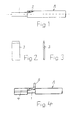
- Fig. 1 to 3 the parts are shown schematically, which are processed by the method according to the invention and connected to each other. It will be in the Fig. 4 and 7 illustrated connector having a crimping area for fixing to an electrical conductor and a laterally protruding hook for its positioning relative to a contact element.
- An in Fig. 1 shown wire A has a flexible electrical conductor 1, which is surrounded by an insulation 2.
- the conductor 1 is advantageously made of copper and is designed as a stranded conductor.
- a contact element 3 with which the conductor 1 is to be connected by welding, is according to the FIGS. 2 and 3 a flat metal component with a rectangular cross-section.
- Such a contact element belongs to an electrical device and protrudes from a housing thereof.
- a connector 4 of electrically conductive material is corresponding Fig. 4 connected to the conductor 1. It should be connected to the contact element 3 and has for its positioning a laterally at an angle of 90 ° or about 90 ° protruding hook fifth
- the contact element 3 is - as already mentioned - to an electrical device, such as an electric motor or a magnetic switch, both of which may be arranged in a motor vehicle.
- an electrical device such as an electric motor or a magnetic switch, both of which may be arranged in a motor vehicle.
- Such a device has at least two contact elements which protrude from a housing of the device to the outside. However, there are usually more or significantly more than two contact elements.
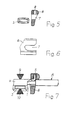
- Fig. 5 is a plan view of a contact element 3, in addition to which a reproduced in section plastic body 6 is arranged.
- the plastic body 6 consists for example of polyamide. It is fixedly mounted on the surface of the housing of a device from which the contact element 3 protrudes. The case is not shown for the sake of simplicity.
- the plastic body 6 has a continuous recess 7 for receiving the wire A in its isolated area.
- the recess 7 is dimensioned so that the wire A is held in the mounting position in the same by clamping.
- the core A can to do this in the outwardly open recess 7 (FIG. Fig. 6 ).
- the plastic body 6 also has a slot 8 for receiving the hook 4 attached to the connector 5.
Landscapes
- Engineering & Computer Science (AREA)
- Mechanical Engineering (AREA)
- Manufacturing & Machinery (AREA)
- Connections Effected By Soldering, Adhesion, Or Permanent Deformation (AREA)
- Manufacturing Of Electrical Connectors (AREA)
Abstract
Description
- Die Erfindung bezieht sich auf ein Verfahren zum Verschweißen eines isolierten, flexiblen elektrischen Leiters mit einem starren Kontaktelement aus Metall, das einen etwa rechteckigen Querschnitt hat und außen an einem Gehäuse eines elektrischen Geräts, von demselben abstehend, angebracht ist, mit welchem der Leiter in seinem isolierten Bereich in eine Ausnehmung eines an dem Gerät in unmittelbarer Nähe des Kontaktelements angebrachten Kunststoffkörpers eingebracht und in derselben durch Klemmung gehalten wird, sowie auf einen bei dem Verfahren verwendbaren Verbinder.
- Beispielsweise im Motorraum von Kraftfahrzeugen, insbesondere von Fahrzeugen mit elektrischem Antrieb oder mit einem Hybridantrieb, gibt es eine zunehmende Anzahl von an unterschiedlichen Geräten angebrachten Kontaktelementen, an welche elektrische Leiter angeschlossen werden müssen, und zwar nach Möglichkeit unter Einsatz von Robotern. Die Kontaktelemente sind starre Flachteile aus Metall mit etwa rechteckigem Querschnitt, die von außen zugänglich aus den Gehäusen der Geräte herausragen, wie beispielsweise aus einem Elektromotor oder aus einem Magnetschalter. Bei den an die Kontaktelemente anzuschließenden elektrischen Leitern handelt es sich nahezu ausschließlich um flexible isolierte Litzenleiter. Sie werden zum Verschweißen mit den Kontaktelementen an ihren Enden abisoliert und so verdichtet, daß sie eine kompakte Einheit bilden. Danach werden die Enden der Leiter in bekannter Technik im isolierten Bereich in Ausnehmungen von Kunststoffkörpern eingeklemmt, die in unmittelbarer Nähe der Kontaktelemente an den Gehäusen der jeweiligen Geräte angebracht sind. Die blanken, verdichteten Enden der Leiterenden werden dann an die Kontaktelemente angelegt und mit denselben verschweißt. Dabei kann es leicht geschehen, daß die Leiter aus einer vorgegebenen Lage herausrutschen, so daß keine brauchbare Schweißverbindung entsteht. Je größer die Anzahl der Kontaktelemente und der anzuschließenden Leiter ist, desto größer kann dementsprechend die Anzahl von fehlerhaften Verbindungen werden.
- Der Erfindung liegt die Aufgabe zugrunde, das eingangs geschilderte Verfahren so zu gestalten, daß fehlerhafte Schweißverbindungen weitestgehend ausgeschlossen werden können.
- Diese Aufgabe wird gemäß der Erfindung durch die Verwendung eines Verbinders aus elektrisch leitendem Material gelöst, der ein zum elektrisch leitenden Verbinden mit dem abisolierten Ende des Leiters geeignetes Klemmteil und einen von demselben unter einem Winkel von 90° bzw. etwa 90° abstehenden Haken hat, mit welchem
- der Verbinder zunächst mit seinem Klemmteil elektrisch leitend am Ende des abisolierten Leiters befestigt wird,
- der Haken danach in einen im Kunststoffkörper angebrachten Schlitz eingesteckt wird, in welchem er unverrückbar in einer Position gehalten wird, in welcher das Klemmteil an der Oberfläche des Kontaktelements anliegt, und
- das Klemmteil abschließend mit dem Kontaktelement verschweißt wird.
- Mit diesem Verfahren wird zunächst am abisolierten Ende des Leiters der Verbinder elektrisch leitend festgelegt, so daß bei einem Litzenleiter eine Kompaktierung desselben nicht erforderlich ist. Der Verbinder wird danach unter Ausnutzung des ohnehin vorhandenen Kunststoffkörpers mittels seines Hakens in einem Schlitz des Kunststoffkörpers positionsgerecht und unverrückbar festgelegt. Der Verbinder liegt dann in vorgegebener Position an dem jeweiligen Kontaktelement an, so daß der Verbinder und das Kontaktelement abschließend mit beispielsweise zwei Schweißelektroden sicher verschweißt werden können. Fehlerhafte Schweißverbindungen können ausgeschlossen werden.
- Das Verfahren nach der Erfindung wird anhand der Zeichnungen als Ausführungsbeispiel erläutert.
- Es zeigen:
-
Fig. 1 das Ende eines isolierten elektrischen Leiters. -
Fig. 2 und 3 zwei unterschiedliche Ansichten eines elektrischen Kontaktelements. -
Fig. 4 einen am Ende eines Leiters angebrachten Verbinder in schematischer Darstellung. -
Fig. 5 eine Draufsicht auf ein Kontaktelement mit neben demselben angebrachtem Kunststoffkörper ebenfalls in schematischer Darstellung. -
Fig. 6 eine Seitenansicht des Kunststoffkörpers nachFig. 5 . -
Fig. 7 eine Verbindungsstelle zwischen einem Verbinder und einem Kontaktelement. - In den
Fig. 1 bis 3 sind die Teile schematisch dargestellt, die mit dem Verfahren nach der Erfindung bearbeitet und miteinander verbunden werden sollen. Es wird dazu ein in denFig. 4 und7 dargestellter Verbinder eingesetzt, der einen Crimpbereich zum Festlegen an einem elektrischen Leiter und einen seitwärts abstehenden Haken zu seiner Positionierung relativ zu einem Kontaktelement aufweist. - Eine in
Fig. 1 dargestellte Ader A hat einen flexiblen elektrischer Leiter 1, der von einer Isolierung 2 umgeben ist. Der Leiter 1 besteht mit Vorteil aus Kupfer und ist als Litzenleiter ausgeführt. Am Ende der Ader A ist der Leiter 1 durch Entfernen der Isolierung 2 für Kontaktierungszwecke freigelegt. Ein Kontaktelement 3, mit dem der Leiter 1 durch Schweißen verbunden werden soll, ist gemäß denFig. 2 und 3 ein flaches Bauteil aus Metall mit einem rechteckigen Querschnitt. Ein solches Kontaktelement gehört zu einem elektrischen Gerät und ragt aus einem Gehäuse desselben heraus. Ein Verbinder 4 aus elektrisch leitendem Material ist entsprechendFig. 4 an den Leiter 1 angeschlossen. Er soll mit dem Kontaktelement 3 verbunden werden und hat für seine Positionierung einen seitwärts unter einem Winkel von 90° bzw. etwa 90° abstehenden Haken 5. - Das Kontaktelement 3 gehört - wie bereits erwähnt - zu einem elektrischen Gerät, wie beispielsweise einem Elektromotor oder einem Magnetschalter, die beide in einem Kraftfahrzeug angeordnet sein können. Ein solches Gerät hat mindestens zwei Kontaktelemente, die von einem Gehäuse des Geräts nach außen abstehen. Es sind in der Regel aber mehr bzw. wesentlich mehr als zwei Kontaktelemente.
- In
Fig. 5 ist eine Draufsicht auf ein Kontaktelement 3 dargestellt, neben dem ein im Schnitt wiedergegebener Kunststoffkörper 6 angeordnet ist. Der Kunststoffkörper 6 besteht beispielsweise aus Polyamid. Er ist fest auf der Oberfläche des Gehäuses eines Geräts angebracht, aus dem das Kontaktelement 3 herausragt. Das Gehäuse ist der Einfachheit halber nicht mit dargestellt. Der Kunststoffkörper 6 hat eine durchgehende Ausnehmung 7 zur Aufnahme der Ader A in ihrem isolierten Bereich. Die Ausnehmung 7 ist so dimensioniert, daß die Ader A in Montageposition in derselben durch Klemmung gehalten ist. Die Ader A kann dazu in die nach außen offene Ausnehmung 7 (Fig. 6 ) eingedrückt werden. Der Kunststoffkörper 6 hat außerdem einen Schlitz 8 zur Aufnahme des am Verbinder 4 angebrachten Hakens 5. - Das Verfahren nach der Erfindung wird beispielsweise wie folgt durchgeführt:
- Das Ende der Ader A wird zunächst abisoliert, so daß der Leiter 1 frei liegt (
Fig. 1 ). An dem blanken Leiter 1 wird dann das Kontaktelement 4 beispielsweise durch Crimpen befestigt (Fig. 4 ). Die so bestückte Ader A wird anschließend in die Ausnehmung 7 des Kunststoffkörpers 6 gedrückt. Dabei wird gleichzeitig der Haken 5 in den Schlitz 8 des Kunststoffkörpers 6 eingedrückt, in welchem er in seiner Endposition durch Klemmung unverrückbar gehalten ist. In dieser Endposition liegt der Verbinder 4 an der Oberfläche des Kontaktelements 3 an, und zwar in einer durch das Zusammenwirken von Kunststoffkörper 6 und Haken 5 definierten Lage. - Kontaktelement 3 und Verbinder 4 können dann beispielsweise mittels zweier Schweißelektroden 9 und 10 (
Fig. 7 ) sicher miteinander verschweißt werden.
Claims (3)
- Verfahren zum Verschweißen eines isolierten, flexiblen elektrischen Leiters mit einem starren Kontaktelement aus Metall, das einen etwa rechteckigen Querschnitt hat und außen an einem Gehäuse eines elektrischen Geräts, von demselben abstehend, angebracht ist, mit welchem der Leiter in seinem isolierten Bereich in eine Ausnehmung eines an dem Gerät in unmittelbarer Nähe des Kontaktelements angebrachten Kunststoffkörpers eingebracht und in derselben durch Klemmung gehalten wird, gekennzeichnet durch die Verwendung eines Verbinders (4) aus elektrisch leitendem Material, der ein zum elektrisch leitenden Verbinden mit dem abisolierten Ende des Leiters geeignetes Klemmteil und einen von demselben unter einem Winkel von 90° bzw. etwa 90° abstehenden Haken (5) hat, mit welchem- der Verbinder (4) zunächst mit seinem Klemmteil elektrisch leitend am Ende des abisolierten Leiters (1) befestigt wird,- der Haken (5) danach in einen im Kunststoffkörper (6) angebrachten Schlitz (8) eingesteckt wird, in welchem er unverrückbar in einer Position gehalten wird, in welcher das Klemmteil an der Oberfläche des Kontaktelements (3) anliegt, und- das Klemmteil abschließend mit dem Kontaktelement (3) verschweißt wird.
- Verbinder für ein Verfahren nach Anspruch 1, dadurch gekennzeichnet, daß er einen Klemmteil aufweist, an dem ein unter einem Winkel von 90° bzw. etwa 90° abstehender Haken (5) angebracht ist.
- Verbinder nach Anspruch 2, dadurch gekennzeichnet, daß das Klemmteil ein Crimpverbinder ist.
Priority Applications (1)
| Application Number | Priority Date | Filing Date | Title |
|---|---|---|---|
| EP11306761.5A EP2607010B1 (de) | 2011-12-23 | 2011-12-23 | Verfahren zum Verschweißen eines elektrischen Leiters mit einem Kontaktelement |
Applications Claiming Priority (1)
| Application Number | Priority Date | Filing Date | Title |
|---|---|---|---|
| EP11306761.5A EP2607010B1 (de) | 2011-12-23 | 2011-12-23 | Verfahren zum Verschweißen eines elektrischen Leiters mit einem Kontaktelement |
Publications (2)
| Publication Number | Publication Date |
|---|---|
| EP2607010A1 true EP2607010A1 (de) | 2013-06-26 |
| EP2607010B1 EP2607010B1 (de) | 2015-04-15 |
Family
ID=45463429
Family Applications (1)
| Application Number | Title | Priority Date | Filing Date |
|---|---|---|---|
| EP11306761.5A Active EP2607010B1 (de) | 2011-12-23 | 2011-12-23 | Verfahren zum Verschweißen eines elektrischen Leiters mit einem Kontaktelement |
Country Status (1)
| Country | Link |
|---|---|
| EP (1) | EP2607010B1 (de) |
Citations (6)
| Publication number | Priority date | Publication date | Assignee | Title |
|---|---|---|---|---|
| US3211829A (en) * | 1962-09-24 | 1965-10-12 | Burndy Corp | Deadend connector with anchor member |
| JPH0982374A (ja) * | 1995-09-07 | 1997-03-28 | Yazaki Corp | 電線と平板状導体との接続構造およびその接続方法 |
| JP2006092993A (ja) * | 2004-09-27 | 2006-04-06 | Yazaki Corp | 端子 |
| US20070119838A1 (en) * | 2003-05-12 | 2007-05-31 | Ola Pettersen | Novel connecting piece of electrically conducting material preferably a cable terminal and a mehtod of producing the same |
| JP2008262787A (ja) * | 2007-04-11 | 2008-10-30 | Yazaki Corp | 防水処理用のボルト止め端子、端子接続部の防水構造および防水方法 |
| EP2001085A1 (de) * | 2007-06-06 | 2008-12-10 | Nexans | Verfahren zur Herstellung einer elektrisch leitenden Verbindung |
-
2011
- 2011-12-23 EP EP11306761.5A patent/EP2607010B1/de active Active
Patent Citations (6)
| Publication number | Priority date | Publication date | Assignee | Title |
|---|---|---|---|---|
| US3211829A (en) * | 1962-09-24 | 1965-10-12 | Burndy Corp | Deadend connector with anchor member |
| JPH0982374A (ja) * | 1995-09-07 | 1997-03-28 | Yazaki Corp | 電線と平板状導体との接続構造およびその接続方法 |
| US20070119838A1 (en) * | 2003-05-12 | 2007-05-31 | Ola Pettersen | Novel connecting piece of electrically conducting material preferably a cable terminal and a mehtod of producing the same |
| JP2006092993A (ja) * | 2004-09-27 | 2006-04-06 | Yazaki Corp | 端子 |
| JP2008262787A (ja) * | 2007-04-11 | 2008-10-30 | Yazaki Corp | 防水処理用のボルト止め端子、端子接続部の防水構造および防水方法 |
| EP2001085A1 (de) * | 2007-06-06 | 2008-12-10 | Nexans | Verfahren zur Herstellung einer elektrisch leitenden Verbindung |
Also Published As
| Publication number | Publication date |
|---|---|
| EP2607010B1 (de) | 2015-04-15 |
Similar Documents
| Publication | Publication Date | Title |
|---|---|---|
| EP3025396B1 (de) | Terminal zur kontaktierung eines elektrischen leiters | |
| EP2599163B1 (de) | Elektrische verbindung | |
| WO2011045088A1 (de) | Zellverbinder | |
| EP2732507A1 (de) | Hochstrom-steckverbinder für kraftfahrzeuganwendungen | |
| DE102013004708A1 (de) | Elektrischer Litzenleiter mit Rundsteckkontaktbuchse | |
| WO2013075841A1 (de) | Zellkontaktieranordnung für einen energiespeicher | |
| EP2879918B1 (de) | Kraftfahrzeugenergieleitung mit einem fremdstartstützpunkt | |
| DE102010032911B4 (de) | Leiteranschlusselement | |
| DE102007018669A1 (de) | Batteriepolmessklemme mit Schutzelement | |
| DE102010039740A1 (de) | Kontaktelement zur Kontaktierung eines Schaltungsträgers, sowie Schaltungsträger mit einem Kontaktelement | |
| DE102010007597B4 (de) | Vorrichtung zum befestigen von flexiblen elementen und verfahren dazu | |
| DE102013201556B4 (de) | Batteriesystem mit einem Kontaktelement | |
| DE102012214158A1 (de) | Kontaktelemente zur Kontaktierung von Flachleitern | |
| EP2607010B1 (de) | Verfahren zum Verschweißen eines elektrischen Leiters mit einem Kontaktelement | |
| DE102018216965B3 (de) | Verfahren zum Kontaktieren zweier elektrischer Leitungen sowie Steckervorrichtung | |
| EP2747205B1 (de) | Verfahren zum elektrisch leitenden Verbinden eines Litzenleiters mit einem Kontaktelement | |
| EP2591873B1 (de) | Verfahren zum Verschweißen eines elektrischen Leiters mit einem Kontaktelement | |
| AT515298B1 (de) | Verbindungselement zum Kontaktieren von zumindest einem Zellpol einer Batteriezelle | |
| EP2720320A1 (de) | Zellverbinder für ein Batteriesystem | |
| EP2765628A1 (de) | Batteriesystem und Verfahren zur Herstellung eines Batteriesystems | |
| EP2797171B1 (de) | Anordnung zum elektrisch leitenden Verbinden von elektrischen Adern | |
| EP2234210B1 (de) | Klemme zum Festlegen eines elektrischen Leiters | |
| EP2720298B1 (de) | Zellverbinder für ein Batteriesystem | |
| DE19832985C2 (de) | Verbindungsvorrichtung | |
| EP2387111A1 (de) | Verfahren zum elektrischen Verbinden von Flachleitern mit Rundleitern |
Legal Events
| Date | Code | Title | Description |
|---|---|---|---|
| 17P | Request for examination filed |
Effective date: 20120807 |
|
| AK | Designated contracting states |
Kind code of ref document: A1 Designated state(s): AL AT BE BG CH CY CZ DE DK EE ES FI FR GB GR HR HU IE IS IT LI LT LU LV MC MK MT NL NO PL PT RO RS SE SI SK SM TR |
|
| AX | Request for extension of the european patent |
Extension state: BA ME |
|
| PUAI | Public reference made under article 153(3) epc to a published international application that has entered the european phase |
Free format text: ORIGINAL CODE: 0009012 |
|
| GRAP | Despatch of communication of intention to grant a patent |
Free format text: ORIGINAL CODE: EPIDOSNIGR1 |
|
| INTG | Intention to grant announced |
Effective date: 20141031 |
|
| GRAS | Grant fee paid |
Free format text: ORIGINAL CODE: EPIDOSNIGR3 |
|
| GRAA | (expected) grant |
Free format text: ORIGINAL CODE: 0009210 |
|
| AK | Designated contracting states |
Kind code of ref document: B1 Designated state(s): AL AT BE BG CH CY CZ DE DK EE ES FI FR GB GR HR HU IE IS IT LI LT LU LV MC MK MT NL NO PL PT RO RS SE SI SK SM TR |
|
| REG | Reference to a national code |
Ref country code: GB Ref legal event code: FG4D Free format text: NOT ENGLISH Ref country code: CH Ref legal event code: EP |
|
| REG | Reference to a national code |
Ref country code: IE Ref legal event code: FG4D Free format text: LANGUAGE OF EP DOCUMENT: GERMAN |
|
| REG | Reference to a national code |
Ref country code: AT Ref legal event code: REF Ref document number: 721670 Country of ref document: AT Kind code of ref document: T Effective date: 20150515 |
|
| REG | Reference to a national code |
Ref country code: DE Ref legal event code: R096 Ref document number: 502011006580 Country of ref document: DE Effective date: 20150528 |
|
| REG | Reference to a national code |
Ref country code: NL Ref legal event code: VDEP Effective date: 20150415 |
|
| REG | Reference to a national code |
Ref country code: LT Ref legal event code: MG4D |
|
| PG25 | Lapsed in a contracting state [announced via postgrant information from national office to epo] |
Ref country code: NL Free format text: LAPSE BECAUSE OF FAILURE TO SUBMIT A TRANSLATION OF THE DESCRIPTION OR TO PAY THE FEE WITHIN THE PRESCRIBED TIME-LIMIT Effective date: 20150415 |
|
| PG25 | Lapsed in a contracting state [announced via postgrant information from national office to epo] |
Ref country code: HR Free format text: LAPSE BECAUSE OF FAILURE TO SUBMIT A TRANSLATION OF THE DESCRIPTION OR TO PAY THE FEE WITHIN THE PRESCRIBED TIME-LIMIT Effective date: 20150415 Ref country code: FI Free format text: LAPSE BECAUSE OF FAILURE TO SUBMIT A TRANSLATION OF THE DESCRIPTION OR TO PAY THE FEE WITHIN THE PRESCRIBED TIME-LIMIT Effective date: 20150415 Ref country code: PT Free format text: LAPSE BECAUSE OF FAILURE TO SUBMIT A TRANSLATION OF THE DESCRIPTION OR TO PAY THE FEE WITHIN THE PRESCRIBED TIME-LIMIT Effective date: 20150817 Ref country code: NO Free format text: LAPSE BECAUSE OF FAILURE TO SUBMIT A TRANSLATION OF THE DESCRIPTION OR TO PAY THE FEE WITHIN THE PRESCRIBED TIME-LIMIT Effective date: 20150715 Ref country code: LT Free format text: LAPSE BECAUSE OF FAILURE TO SUBMIT A TRANSLATION OF THE DESCRIPTION OR TO PAY THE FEE WITHIN THE PRESCRIBED TIME-LIMIT Effective date: 20150415 Ref country code: ES Free format text: LAPSE BECAUSE OF FAILURE TO SUBMIT A TRANSLATION OF THE DESCRIPTION OR TO PAY THE FEE WITHIN THE PRESCRIBED TIME-LIMIT Effective date: 20150415 |
|
| PG25 | Lapsed in a contracting state [announced via postgrant information from national office to epo] |
Ref country code: GR Free format text: LAPSE BECAUSE OF FAILURE TO SUBMIT A TRANSLATION OF THE DESCRIPTION OR TO PAY THE FEE WITHIN THE PRESCRIBED TIME-LIMIT Effective date: 20150716 Ref country code: IS Free format text: LAPSE BECAUSE OF FAILURE TO SUBMIT A TRANSLATION OF THE DESCRIPTION OR TO PAY THE FEE WITHIN THE PRESCRIBED TIME-LIMIT Effective date: 20150815 Ref country code: RS Free format text: LAPSE BECAUSE OF FAILURE TO SUBMIT A TRANSLATION OF THE DESCRIPTION OR TO PAY THE FEE WITHIN THE PRESCRIBED TIME-LIMIT Effective date: 20150415 Ref country code: LV Free format text: LAPSE BECAUSE OF FAILURE TO SUBMIT A TRANSLATION OF THE DESCRIPTION OR TO PAY THE FEE WITHIN THE PRESCRIBED TIME-LIMIT Effective date: 20150415 |
|
| REG | Reference to a national code |
Ref country code: DE Ref legal event code: R097 Ref document number: 502011006580 Country of ref document: DE |
|
| PG25 | Lapsed in a contracting state [announced via postgrant information from national office to epo] |
Ref country code: DK Free format text: LAPSE BECAUSE OF FAILURE TO SUBMIT A TRANSLATION OF THE DESCRIPTION OR TO PAY THE FEE WITHIN THE PRESCRIBED TIME-LIMIT Effective date: 20150415 Ref country code: EE Free format text: LAPSE BECAUSE OF FAILURE TO SUBMIT A TRANSLATION OF THE DESCRIPTION OR TO PAY THE FEE WITHIN THE PRESCRIBED TIME-LIMIT Effective date: 20150415 |
|
| PLBE | No opposition filed within time limit |
Free format text: ORIGINAL CODE: 0009261 |
|
| STAA | Information on the status of an ep patent application or granted ep patent |
Free format text: STATUS: NO OPPOSITION FILED WITHIN TIME LIMIT |
|
| PG25 | Lapsed in a contracting state [announced via postgrant information from national office to epo] |
Ref country code: CZ Free format text: LAPSE BECAUSE OF FAILURE TO SUBMIT A TRANSLATION OF THE DESCRIPTION OR TO PAY THE FEE WITHIN THE PRESCRIBED TIME-LIMIT Effective date: 20150415 Ref country code: SK Free format text: LAPSE BECAUSE OF FAILURE TO SUBMIT A TRANSLATION OF THE DESCRIPTION OR TO PAY THE FEE WITHIN THE PRESCRIBED TIME-LIMIT Effective date: 20150415 Ref country code: RO Free format text: LAPSE BECAUSE OF NON-PAYMENT OF DUE FEES Effective date: 20150415 Ref country code: PL Free format text: LAPSE BECAUSE OF FAILURE TO SUBMIT A TRANSLATION OF THE DESCRIPTION OR TO PAY THE FEE WITHIN THE PRESCRIBED TIME-LIMIT Effective date: 20150415 |
|
| 26N | No opposition filed |
Effective date: 20160118 |
|
| PG25 | Lapsed in a contracting state [announced via postgrant information from national office to epo] |
Ref country code: IT Free format text: LAPSE BECAUSE OF FAILURE TO SUBMIT A TRANSLATION OF THE DESCRIPTION OR TO PAY THE FEE WITHIN THE PRESCRIBED TIME-LIMIT Effective date: 20150415 |
|
| PG25 | Lapsed in a contracting state [announced via postgrant information from national office to epo] |
Ref country code: BE Free format text: LAPSE BECAUSE OF NON-PAYMENT OF DUE FEES Effective date: 20151231 Ref country code: SI Free format text: LAPSE BECAUSE OF FAILURE TO SUBMIT A TRANSLATION OF THE DESCRIPTION OR TO PAY THE FEE WITHIN THE PRESCRIBED TIME-LIMIT Effective date: 20150415 |
|
| PG25 | Lapsed in a contracting state [announced via postgrant information from national office to epo] |
Ref country code: MC Free format text: LAPSE BECAUSE OF FAILURE TO SUBMIT A TRANSLATION OF THE DESCRIPTION OR TO PAY THE FEE WITHIN THE PRESCRIBED TIME-LIMIT Effective date: 20150415 Ref country code: LU Free format text: LAPSE BECAUSE OF FAILURE TO SUBMIT A TRANSLATION OF THE DESCRIPTION OR TO PAY THE FEE WITHIN THE PRESCRIBED TIME-LIMIT Effective date: 20151223 |
|
| REG | Reference to a national code |
Ref country code: CH Ref legal event code: PL |
|
| GBPC | Gb: european patent ceased through non-payment of renewal fee |
Effective date: 20151223 |
|
| REG | Reference to a national code |
Ref country code: IE Ref legal event code: MM4A |
|
| REG | Reference to a national code |
Ref country code: FR Ref legal event code: ST Effective date: 20160831 |
|
| PG25 | Lapsed in a contracting state [announced via postgrant information from national office to epo] |
Ref country code: IE Free format text: LAPSE BECAUSE OF NON-PAYMENT OF DUE FEES Effective date: 20151223 Ref country code: LI Free format text: LAPSE BECAUSE OF NON-PAYMENT OF DUE FEES Effective date: 20151231 Ref country code: GB Free format text: LAPSE BECAUSE OF NON-PAYMENT OF DUE FEES Effective date: 20151223 Ref country code: CH Free format text: LAPSE BECAUSE OF NON-PAYMENT OF DUE FEES Effective date: 20151231 |
|
| PG25 | Lapsed in a contracting state [announced via postgrant information from national office to epo] |
Ref country code: FR Free format text: LAPSE BECAUSE OF NON-PAYMENT OF DUE FEES Effective date: 20151231 |
|
| PG25 | Lapsed in a contracting state [announced via postgrant information from national office to epo] |
Ref country code: SM Free format text: LAPSE BECAUSE OF FAILURE TO SUBMIT A TRANSLATION OF THE DESCRIPTION OR TO PAY THE FEE WITHIN THE PRESCRIBED TIME-LIMIT Effective date: 20150415 Ref country code: HU Free format text: LAPSE BECAUSE OF FAILURE TO SUBMIT A TRANSLATION OF THE DESCRIPTION OR TO PAY THE FEE WITHIN THE PRESCRIBED TIME-LIMIT; INVALID AB INITIO Effective date: 20111223 Ref country code: BG Free format text: LAPSE BECAUSE OF FAILURE TO SUBMIT A TRANSLATION OF THE DESCRIPTION OR TO PAY THE FEE WITHIN THE PRESCRIBED TIME-LIMIT Effective date: 20150415 |
|
| PG25 | Lapsed in a contracting state [announced via postgrant information from national office to epo] |
Ref country code: CY Free format text: LAPSE BECAUSE OF FAILURE TO SUBMIT A TRANSLATION OF THE DESCRIPTION OR TO PAY THE FEE WITHIN THE PRESCRIBED TIME-LIMIT Effective date: 20150415 Ref country code: SE Free format text: LAPSE BECAUSE OF FAILURE TO SUBMIT A TRANSLATION OF THE DESCRIPTION OR TO PAY THE FEE WITHIN THE PRESCRIBED TIME-LIMIT Effective date: 20150415 |
|
| PG25 | Lapsed in a contracting state [announced via postgrant information from national office to epo] |
Ref country code: MT Free format text: LAPSE BECAUSE OF FAILURE TO SUBMIT A TRANSLATION OF THE DESCRIPTION OR TO PAY THE FEE WITHIN THE PRESCRIBED TIME-LIMIT Effective date: 20150415 |
|
| REG | Reference to a national code |
Ref country code: AT Ref legal event code: MM01 Ref document number: 721670 Country of ref document: AT Kind code of ref document: T Effective date: 20161223 |
|
| PG25 | Lapsed in a contracting state [announced via postgrant information from national office to epo] |
Ref country code: AT Free format text: LAPSE BECAUSE OF NON-PAYMENT OF DUE FEES Effective date: 20161223 |
|
| PG25 | Lapsed in a contracting state [announced via postgrant information from national office to epo] |
Ref country code: MK Free format text: LAPSE BECAUSE OF FAILURE TO SUBMIT A TRANSLATION OF THE DESCRIPTION OR TO PAY THE FEE WITHIN THE PRESCRIBED TIME-LIMIT Effective date: 20150415 Ref country code: TR Free format text: LAPSE BECAUSE OF FAILURE TO SUBMIT A TRANSLATION OF THE DESCRIPTION OR TO PAY THE FEE WITHIN THE PRESCRIBED TIME-LIMIT Effective date: 20150415 |
|
| PG25 | Lapsed in a contracting state [announced via postgrant information from national office to epo] |
Ref country code: AL Free format text: LAPSE BECAUSE OF FAILURE TO SUBMIT A TRANSLATION OF THE DESCRIPTION OR TO PAY THE FEE WITHIN THE PRESCRIBED TIME-LIMIT Effective date: 20150415 |
|
| PGFP | Annual fee paid to national office [announced via postgrant information from national office to epo] |
Ref country code: DE Payment date: 20251211 Year of fee payment: 15 |