EP2601209B1 - Genomics of actinoplanes utahensis - Google Patents
Genomics of actinoplanes utahensis Download PDFInfo
- Publication number
- EP2601209B1 EP2601209B1 EP11741187.6A EP11741187A EP2601209B1 EP 2601209 B1 EP2601209 B1 EP 2601209B1 EP 11741187 A EP11741187 A EP 11741187A EP 2601209 B1 EP2601209 B1 EP 2601209B1
- Authority
- EP
- European Patent Office
- Prior art keywords
- genome
- wild type
- genes
- strain
- utahensis
- Prior art date
- Legal status (The legal status is an assumption and is not a legal conclusion. Google has not performed a legal analysis and makes no representation as to the accuracy of the status listed.)
- Active
Links
Images
Classifications
-
- C—CHEMISTRY; METALLURGY
- C12—BIOCHEMISTRY; BEER; SPIRITS; WINE; VINEGAR; MICROBIOLOGY; ENZYMOLOGY; MUTATION OR GENETIC ENGINEERING
- C12N—MICROORGANISMS OR ENZYMES; COMPOSITIONS THEREOF; PROPAGATING, PRESERVING, OR MAINTAINING MICROORGANISMS; MUTATION OR GENETIC ENGINEERING; CULTURE MEDIA
- C12N15/00—Mutation or genetic engineering; DNA or RNA concerning genetic engineering, vectors, e.g. plasmids, or their isolation, preparation or purification; Use of hosts therefor
- C12N15/09—Recombinant DNA-technology
- C12N15/11—DNA or RNA fragments; Modified forms thereof; Non-coding nucleic acids having a biological activity
-
- C—CHEMISTRY; METALLURGY
- C12—BIOCHEMISTRY; BEER; SPIRITS; WINE; VINEGAR; MICROBIOLOGY; ENZYMOLOGY; MUTATION OR GENETIC ENGINEERING
- C12N—MICROORGANISMS OR ENZYMES; COMPOSITIONS THEREOF; PROPAGATING, PRESERVING, OR MAINTAINING MICROORGANISMS; MUTATION OR GENETIC ENGINEERING; CULTURE MEDIA
- C12N1/00—Microorganisms; Compositions thereof; Processes of propagating, maintaining or preserving microorganisms or compositions thereof; Processes of preparing or isolating a composition containing a microorganism; Culture media therefor
- C12N1/20—Bacteria; Culture media therefor
-
- C—CHEMISTRY; METALLURGY
- C07—ORGANIC CHEMISTRY
- C07K—PEPTIDES
- C07K14/00—Peptides having more than 20 amino acids; Gastrins; Somatostatins; Melanotropins; Derivatives thereof
- C07K14/195—Peptides having more than 20 amino acids; Gastrins; Somatostatins; Melanotropins; Derivatives thereof from bacteria
- C07K14/365—Peptides having more than 20 amino acids; Gastrins; Somatostatins; Melanotropins; Derivatives thereof from bacteria from Actinoplanes (G)
-
- C—CHEMISTRY; METALLURGY
- C12—BIOCHEMISTRY; BEER; SPIRITS; WINE; VINEGAR; MICROBIOLOGY; ENZYMOLOGY; MUTATION OR GENETIC ENGINEERING
- C12N—MICROORGANISMS OR ENZYMES; COMPOSITIONS THEREOF; PROPAGATING, PRESERVING, OR MAINTAINING MICROORGANISMS; MUTATION OR GENETIC ENGINEERING; CULTURE MEDIA
- C12N1/00—Microorganisms; Compositions thereof; Processes of propagating, maintaining or preserving microorganisms or compositions thereof; Processes of preparing or isolating a composition containing a microorganism; Culture media therefor
- C12N1/12—Unicellular algae; Culture media therefor
-
- C—CHEMISTRY; METALLURGY
- C12—BIOCHEMISTRY; BEER; SPIRITS; WINE; VINEGAR; MICROBIOLOGY; ENZYMOLOGY; MUTATION OR GENETIC ENGINEERING
- C12P—FERMENTATION OR ENZYME-USING PROCESSES TO SYNTHESISE A DESIRED CHEMICAL COMPOUND OR COMPOSITION OR TO SEPARATE OPTICAL ISOMERS FROM A RACEMIC MIXTURE
- C12P19/00—Preparation of compounds containing saccharide radicals
- C12P19/26—Preparation of nitrogen-containing carbohydrates
Definitions
- the present invention describes a mutated DNA-sequence of the wild type genome (SEQ ID 16053) of A. utahensis.
- Said strain is obtainable under KCTC9162 from the Korean Collection for Type Cultures (KCTC), as explained by Hyun et al., "Molecular Detection of a-Glucosidase Inhibitor-producing Actinomycetes", The Journal of Microbiology, June 2005, 43(3) 313-318 .
- Table 1 lists all seven strains that have been used during this project in the chronological order of their development. Table 1 list all A. utahensis strains used in this study in their chronological order. Strain Symbol Development Order Remark SE50-100 (1) wild type strain SN223-29-47 2 C445-P47 3 SN12755-48 4 SC3687-18-43 5 SC7177-40-17 6 SN19910-37-21 7 latest production strain
- the strain development of the Acarbose producer was performed by the method of stepwise selection of higher producing strains. This method uses the process of random mutation by chemical or physical means. Chemicals used to induce mutations were either alkylating agents or intercalating dyes that serve as frameshift mutagens. Physical treatment of cells to induce mutagenesis was done with UV light of 365 nm. Fragments of the mycelium were used for mutagenesis treatment in appropriate buffer systems. After the treatment the biological material was grown for a short period in liquid medium to allow phenotypic expression of the induced alterations and then plated on agar plates. A random selection of clones that survived the mutagenesis treatment was checked for their acarbose productivity in small scale shake flask experiments. The best mutant clones obtained during a mutation cycle of this kind were chosen for the next mutation step. Several such steps of mutation and selection resulted in a gradual increase of productivity.
- the preparation of genomic DNA of A . utahensis strain SE50-110 was performed by a modification of the general described procedure ( Maniatis T., Fritsch E.F., Sambrook J., Molecular Cloning - A Laboratory Manual, Cold Spring Harbor Press, 1982 ).
- the mycel of 50 mL of freshly grown culture was harvested by centrifugation (10 min., 4.000 rpm, 4 °C) in a Christ centrifuge. The pellet was washed 4 times in a buffer containing 15 % sucrose (Merck KGaA, Darmstadt, Germany, cat. 7651), 25 mM TrisHCI pH 7.2 (Merck KGaA, Darmstadt, Germany, cat.
- Fosmids are commonly used for preparing genomic libraries when a smaller insert size is desired.
- the inserts have an average size of 40 kb and are produced by random shearing, yielding a more uniform coverage of the genome than other library types.
- Fosmids are excellent candidates for closing gaps in a whole genome sequencing projects due to their uniform coverage.
- the fosmid-library construction for Actinoplanes utahensis wild type has been carried out on genomic DNA by IIT Biotech GmbH, (2015)sstr. 25, 33615 Bielefeld, Germany.
- the CopyControlTM Cloning System (EPICENTRE Biotechnologies, 726 Post Road, Madison, Wl 53713, USA) has been used.
- the kit was obtained from Biozym Scientific GmbH, Steinbrinksweg 27, 31840 Hessisch Oldendorf, Germany.
- Fosmid-library sequencing for Actinoplanes utahensis wild type has been carried out on a 3730xl DNA-Analyzer (Applied Biosystems, 850 Lincoln Centre Drive, Foster City, CA 94404, USA) by IIT Biotech GmbH, (2015)sstr. 25, 33615 Bielefeld, Germany.
- the device performs parallel Sanger-sequencing in 96 capillaries ( Sanger et al., J. Mol. Biol., 1975, 94 (3):441-448 ).
- the resulting flowgram files were base called and stored in FASTA format. Both files were later used for gap-closure and quality assessment.
- Genome Sequencer FLX (GS FLX) system (454 Life Sciences, 15 Commercial Street, Branford, CT 06405, USA) has been used for pyrosequencing of the A . utahensis wild type strain SE50-100 as well as the latest production strain SN19910-37-21. Two different protocols and reagent series were used on the GS FLX platform:
- the Genome Analyzer Ilx (GA Ilx) system (Illumina, Inc., 9885 Towne Centre Drive, San Diego, CA 92121, USA) including Cluster-Station and Paired-End-Module has been used for sequencing-by-synthesis of the five former productions strains SN223-29-47, C445-P47, SN12755-48, SC3687-18-43 and SC7177-40-17.
- the paired end protocol with a genome-DNA fragment size of approximately 330 bp and a read length of 2 x 36 bases was used. Library preparation, cluster generation and sequencing were performed according to the manufacturers manuals Paired-End sequencing Sample Preparation Guide (Part # 1005063 Rev.
- the visual assembly software package Consed ( Gordon et al., Genome Research, 1998, 8:195-202 ) was utilized. Within the graphical user interface, primer pairs at the ends of contiguous contigs were selected. These primer pairs were then used to amplify desired sequences from clones originating from the previously constructed fosmid-library in order to bridge the gaps between contiguous contigs.
- a fosmid-read is first aligned to the 5' end of a contig, extending it by its 5' remainder. Afterwards, the 3' end of the neighboring contig is aligned to this extension, spanning the previously existing gap and joining the two contigs.
- the program responsible for the intrinsic prediction of CDSs is Glimmer ( Delcher et al., Nucleic Acid Research, 1999, 27:4636-41 ). It first constructs a training set from CDSs with optimal characteristics taken from the genome to be analyzed. Based upon this set, an interpolated Markov Model is calculated, which is used in the actual search-run to identify all CDSs of the genomic sequence. Glimmer tends to calculate more CDSs as are actually there.
- CRITICA The extrinsic CDS-prediction has been carried out by CRITICA ( Badger et al., Mol. Biol. Evol., 1999, 16:512-24 ).
- CRITICA first makes use of the BLASTN algorithm ( Altschul et al., J. Mol. Biol., 1990, 215(3):403-10 ) in order to determine a list of genomic sequences which show at least slight similarity to sequences from public DNA-databases. If the translated amino acid sequence possesses a higher similarity than it would be expected based on the DNA-similarities, this is interpreted as evidence for being a conserved coding sequence.
- CRITICA combines these results with intrinsic analysis based on the distribution of hexa nucleotides to improve the prediction of previously unknown sequences. Despite this, CRITICA still tends to predict fewer CDS in cases were no homolog sequence is already stored in a public database.
- the Reganor software ( McHardy et al., Bioinformatics, 2004, 20(10):1622-31 ) has been used to optimize the results calculated by Glimmer and CRITICA. It combines the results of both programs and thus minimizes their respective shortcomings. Moreover, the CDS predicted by CRITICA form the basis of the combined results, complemented by the intrinsic predictions calculated by Glimmer.
- the identified open reading frames were analyzed through a variety of different software packages in order to draw conclusions from their RNA- and/or amino acid-sequences regarding their potential function. Besides their functional prediction, further characteristics and structural features have also been calculated.
- BLASTX Coulson, Trends in Biotechnology, 1994, 12:76-80 .
- BLASTX translates a given nucleotide sequence into three forward and three reverse complementary reading frames before it compares them against protein databases (e.g. the public, non-redundant protein database (nr-aa) at the National Center for Biotechnology Information (NCBI)).
- Enzymatic classification has been performed on the basis of enzyme commission (EC) numbers ( Webb, Edwin C., San Diego: Published for the International Union of Biochemistry and Molecular Biology by Academic Press, 1992, ISBN 0-12-227164-5 .
- EC enzyme commission
- COG orthologous groups of proteins
- the software SignalP ( Bendtsen et al., J. Mol. Biol., 2004, 340:783-95 and Nielsen et al., protein Engineering, 2997, 10:1-6 ) was used to predict the secretion capability of the identified CDSs. This is done by means of Hidden Markov Models and neural networks, searching for the appearance and position of potential signal peptide cleavage sites within the amino acid sequence. The resulting score can be interpreted as a probability measure for the secretion of the translated protein. SignalP retrieves only those proteins which are secreted by the classical signal-peptide-bound mechanisms.
- RNAshapes software Steffen et al., Bioinformatics, 2006, 22(4):500-503 . The results were used for the intrinsic prediction of transcriptional terminators which indicate operon and gene ends, respectively.
- the gsMapper software (version 2.3, 454 Life Science) was used to align the reads from the Genome Sequencer FLX platform against the wild type reference genome.
- the program implements a heuristic to find the best alignment position for each read within the reference sequence. After all reads have been aligned, multiple alignments for the reads that align contiguously to the reference are performed in order to form contigs. From the contigs' multiple alignments, consensus basecall sequences are produced using the flow-signals of the reads in the multiple alignments, resulting in quality and confidence values for each base.
- consensus basecall sequences are produced using the flow-signals of the reads in the multiple alignments, resulting in quality and confidence values for each base.
- the draft genome sequence of the Actinoplanes utahensis wild type strain SE50-100 has been determined by a combination of sequencing information from three high-throughput runs. These were carried out on a Genome Sequencer FLX system, using two paired-end (PE) and one whole genome shotgun (WGS) approaches. The sequencings resulted in the successful nucleotide sequence determination of about 2 million reads, accounting for approximately 407 million sequenced bases in total (see table 2 for detailed information on the outcomes of each run). Table 2 shows the results of the three high-throughput sequencing runs for the A. utahensis wild type strain SE50-100. Two paired-end (PE) and one whole genome shotgun (WGS) run were performed.
- the inferred read error is calculated from mismatches between the reads and the consensus sequence of the final assembled contigs and measures the frequency of incorrectly called bases.
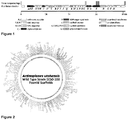
- Figure 1 shows former false sequencings of the acarbose cluster which were corrected by the performed high-throughput sequencing described here.
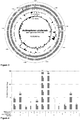
- Figure 2 depicts the circular mapping of the fosmid clones (grey) used to build the genomic scaffold.
- G+C guanine-cytosine
- Table 4 summarizes the outcomes of the gene prediction process. Table 4 shows the results of the gene prediction software for the A. utahensis wild type strain. Gene Prediction Parameter Value Coding sequences 8,027 Coding bases 7,904,275 (86.35%) Average gene length (bp) 985 Coding G+C content (%) 71.68 Non-coding G+C content (%) 68.70 Putative monocistronic transcriptional units 2,047 Putative polycistronic transcriptional units (PTU) 1,793 Average number of genes per PTU 3.34
- CDSs Due to extrinsic protein database comparisons 2,839 CDSs (35.67%) could be enzymatically characterized with an enzyme commission (EC) number. In addition 701 CDSs (8.73%), possessing typical transmembrane spanning regions, have been identified and classified as membrane-associated proteins. For a total number of 600 proteins signal peptides, and thus a high probability of being secreted into the extracellular medium, have been predicted. For additional 657 proteins, other secretion mechanisms were proposed. However, these predictions would result in an unusual high number of secreted proteins.
- CDSs with annotated function 4,909 (61.16%) CDSs with EC-number 2,839 (35.67%) CDSs with COG-category 3,983 (49.62%) CDSs with unknown function 2,684 (33.44%) Orphan CDSs 434 (5.41%)
- Membrane associated proteins 701 (8.73%) Signal peptide predicted (75% confidence) 600 (7.47%) Other secretion mechanism predicted (95% conf.) 657 (8.18%)
- the annotated wild type genome is shown as a circular plot in figure 3 .
- the G+C content third circle
- the G+C skew forth circle
- several sites of high importance are marked, including the origin of replication, the previously described trehalose ( Lee et al., Appl. Microbiol. Biotechnol., 2008, 80:767-778 ) and acarbose clusters, an interesting protein cluster consisting of about 25 contiguous ribosomal proteins as well as the location of an integrative and conjugative element (ICE).
- Table 6 lists the general features of the Actinoplanes utahensis wild type genome.
- Figure 3 shows a circular genome plot of the Actinoplanes utahensis SE50-100 wild type chromosome. On the outmost circle, genes in forward orientation are depicted. The second circle hosts genes on the reverse strand. The G+C content and the G+C skew are shown on the third and fourth circle, respectively.
- Table 6 lists the general features of the A. utahensis SE50-100 genome. Feature Genome Total size (bp) 9,122,632 G+C content (%) 71.29 No. of CDS 8,027 No. of orphans 434 Coding density (%) 86.35 Average gene length (bp) 985 No. of rRNAs 4 x 16S-23S-5S No. of transposease genes 39
- genes include, but are not limited to all elements of the acarbose cluster ( Wehmeier and Pipersberg, Appl. Microbiol. Biotechnol., 2004, 63: 613-625 ), the trehalose cluster ( Lee et al., Appl. Microbiol.
- the latest production strain SN19910-37-21 as well as five former strains were sequenced in order to reveal genetic differences responsible for the increased acarbose production in these strains.
- the latest strain has been sequenced on the Genome Sequencer FLX (GS FLX) system, whereas the former strains were sequenced using the Genome Analyzer Ilx (GA Ilx) platform solely based on paired-end data.
- the results are summarized in table 7. In total, 5.6 billion bases were sequenced. Table 7 lists all sequenced A. utahensis production strains in the order of their acarbose production.
- SNPs single nucleotide polymorphisms
- DIPs deletion/insertion polymorphisms
- the SNP based nucleotide transitions were not gaussian distributed but show a more than 100-fold preference for the two transition G ⁇ A and C ⁇ T.
- Figure 4 depicts these findings.
- Figure 4 shows the transition frequency of SNP mutations between the wild type and the latest production strain.
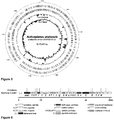
- Figure 5 visualizes only the 1,896 genes which were hit by a mutation event. On the outmost circle, forward oriented genes are listed. On the second circle, backward genes are depicted. The third and forth circles represent the G+C content and the G+C skew, respectively.
- the enzyme encoding genes which were affected by mutagenesis events are likely to have an impact on the overall metabolism as well as special pathways like the one encoding for the formation of acarbose. For this reason, these genes were mapped according to their EC numbers onto canonical pathways of the KEGG database to identify loss of functionality introduced by the mutagenesis experiments. While several enzymes of the central metabolism were affected by SNPs, only few genes were hit by mutations leading to a probable loss of function. In addition, for each of these severely changed genes at least one other gene, annotated with the same EC number, was still available, probably assisting for the knocked out version.
- Figure 6 shows the acarbose cluster in conjunction with the mutations which were introduced therein during the development of the depicted former production strains.
- Table 10 shows details on COG-classified genes of the A. utahensis wild type strain SE50-100. For each COG category and its subcategories, the number of annotated genes and the absolute percentage is listed.
- COG - Categories Population CDS with COG-category 3,983 (49.62%) Information storage and processing 1240 (15.45%) Translation. ribosomal structure and biogenesis 200 (2.49%) RNA processing and modification 2 (0.02%) Transcription 771 (9.61 %) Replication. recombination and repair 266 (3.31%) Chromatin structure and dynamics 1 (0.01%) Cellular processes and signaling 1398 (17.42%) Cell cycle control. cell division.
- chromosome partitioning 49 (0.61%) Nuclear structure 0 (0.00%) Defense mechanisms 84 (1.05%) Signal transduction mechanisms 592 (7.38%) Cell wall/membrane/envelope biogenesis 302 (3.76%) Cell motility 104 (1.30%) Cytoskeleton 8 (0.10%) Extracellular structures 0 (0.00%) Intracellular trafficking. secretion. and vesicular transport 89(1.11%) Posttranslational modification. protein turnover.
- chaperones 170 (2.12%) Metabolism 2409 (30.01 %) Energy production and conversion 308 (3.84%) Carbohydrate transport and metabolism 575 (7.16%) Amino acid transport and metabolism 521 (6.49%) Nucleotide transport and metabolism 82 (1.02%) Coenzyme transport and metabolism 187 (2.33%) Lipid transport and metabolism 234 (2.92%) Inorganic ion transport and metabolism 257 (3.20%) Secondary metabolites biosynthesis. transport and catabolism 245 (3.05%)
Landscapes
- Chemical & Material Sciences (AREA)
- Life Sciences & Earth Sciences (AREA)
- Health & Medical Sciences (AREA)
- Organic Chemistry (AREA)
- Engineering & Computer Science (AREA)
- Genetics & Genomics (AREA)
- Wood Science & Technology (AREA)
- Zoology (AREA)
- Biotechnology (AREA)
- Bioinformatics & Cheminformatics (AREA)
- Biochemistry (AREA)
- General Health & Medical Sciences (AREA)
- Molecular Biology (AREA)
- General Engineering & Computer Science (AREA)
- Microbiology (AREA)
- Medicinal Chemistry (AREA)
- Biomedical Technology (AREA)
- Biophysics (AREA)
- General Chemical & Material Sciences (AREA)
- Chemical Kinetics & Catalysis (AREA)
- Gastroenterology & Hepatology (AREA)
- Proteomics, Peptides & Aminoacids (AREA)
- Tropical Medicine & Parasitology (AREA)
- Virology (AREA)
- Botany (AREA)
- Plant Pathology (AREA)
- Physics & Mathematics (AREA)
- Cell Biology (AREA)
- Preparation Of Compounds By Using Micro-Organisms (AREA)
- Micro-Organisms Or Cultivation Processes Thereof (AREA)
- Measuring Or Testing Involving Enzymes Or Micro-Organisms (AREA)
- Developing Agents For Electrophotography (AREA)
- Peptides Or Proteins (AREA)
- Detergent Compositions (AREA)
- Medicines That Contain Protein Lipid Enzymes And Other Medicines (AREA)
- Pyridine Compounds (AREA)
- Enzymes And Modification Thereof (AREA)
Priority Applications (1)
| Application Number | Priority Date | Filing Date | Title |
|---|---|---|---|
| EP11741187.6A EP2601209B1 (en) | 2010-08-04 | 2011-08-01 | Genomics of actinoplanes utahensis |
Applications Claiming Priority (3)
| Application Number | Priority Date | Filing Date | Title |
|---|---|---|---|
| EP10171831 | 2010-08-04 | ||
| PCT/EP2011/063243 WO2012016960A1 (en) | 2010-08-04 | 2011-08-01 | Genomics of actinoplanes utahensis |
| EP11741187.6A EP2601209B1 (en) | 2010-08-04 | 2011-08-01 | Genomics of actinoplanes utahensis |
Publications (2)
| Publication Number | Publication Date |
|---|---|
| EP2601209A1 EP2601209A1 (en) | 2013-06-12 |
| EP2601209B1 true EP2601209B1 (en) | 2017-03-01 |
Family
ID=44629912
Family Applications (1)
| Application Number | Title | Priority Date | Filing Date |
|---|---|---|---|
| EP11741187.6A Active EP2601209B1 (en) | 2010-08-04 | 2011-08-01 | Genomics of actinoplanes utahensis |
Country Status (9)
| Country | Link |
|---|---|
| US (1) | US9719064B2 (da) |
| EP (1) | EP2601209B1 (da) |
| JP (3) | JP6332966B2 (da) |
| KR (1) | KR20160073433A (da) |
| CN (1) | CN103298828B (da) |
| CA (1) | CA2807264A1 (da) |
| ES (1) | ES2625773T3 (da) |
| TW (1) | TW201217533A (da) |
| WO (1) | WO2012016960A1 (da) |
Cited By (1)
| Publication number | Priority date | Publication date | Assignee | Title |
|---|---|---|---|---|
| WO2021073900A1 (en) | 2019-10-16 | 2021-04-22 | Bayer Aktiengesellschaft | Methods for the improved formation of acarbose |
Families Citing this family (20)
| Publication number | Priority date | Publication date | Assignee | Title |
|---|---|---|---|---|
| TW201217533A (en) * | 2010-08-04 | 2012-05-01 | Bayer Pharma AG | Genomics of actinoplanes utahensis |
| US9217154B2 (en) | 2011-12-08 | 2015-12-22 | Bayer Intellectual Property Gmbh | Actinomycete integrative and conjugative element from Actinoplanes sp. SE50/110 as plasmid for genetic transformation of related Actinobacteria |
| US9421199B2 (en) | 2014-06-24 | 2016-08-23 | Sydnexis, Inc. | Ophthalmic composition |
| WO2016172712A2 (en) | 2015-04-23 | 2016-10-27 | Sydnexis, Inc. | Ophthalmic composition |
| HK1248570A1 (zh) | 2015-05-29 | 2018-10-19 | 西德奈克西斯公司 | D2o稳定化的药物制剂 |
| US20200306337A1 (en) * | 2016-05-09 | 2020-10-01 | The Rockefeller University | Bioactive Metabolities Encoded by the Human Microbiome Using Primary Sequence Alone |
| WO2018169926A1 (en) * | 2017-03-14 | 2018-09-20 | Oregon State University | Peptide inhibitors targeting the neisseria gonorrhoeae pivotal anaerobic respiration factor ania |
| CN108624544B (zh) * | 2017-03-20 | 2021-08-27 | 浙江海正药业股份有限公司 | 阿卡波糖工程菌及其制备方法和应用 |
| CA3064053A1 (en) * | 2017-06-06 | 2018-12-13 | Zymergen Inc. | Prioritization of genetic modifications to increase throughput of phenotypic optimization |
| EP3877519B1 (en) | 2018-11-09 | 2026-03-11 | Ginkgo Bioworks, Inc. | Biosynthesis of mogrosides |
| WO2020117715A1 (en) | 2018-12-03 | 2020-06-11 | Board Of Regents, The University Of Texas System | Oligo-benzamide analogs and their use in cancer treatment |
| US20230371483A1 (en) * | 2019-07-25 | 2023-11-23 | The Regents Of The University Of California | Methods and compositions for sexing and sterilization in drosophila suzukii and aedes aegypti |
| CN112903657B (zh) * | 2021-01-28 | 2022-06-24 | 中山大学 | 一种三聚氰胺和甲醛的表面增强拉曼光谱检测方法 |
| KR102746831B1 (ko) * | 2022-01-03 | 2024-12-26 | 전남대학교 산학협력단 | 파에니바실러스 유래 전사 조절 유전자 및 이를 함유한 재조합 코리네박테리움 글루타미쿰을 이용한 l-아르기닌 생산 |
| CN115873886B (zh) * | 2022-04-27 | 2023-11-10 | 武汉合生科技有限公司 | 生物合成麦角硫因的方法及载体 |
| CN119630280A (zh) | 2022-05-14 | 2025-03-14 | 诺维信公司 | 用于预防、处理、抑制和/或消除植物病原性侵染和感染的组合物和方法 |
| CN116200351B (zh) * | 2022-10-08 | 2025-01-07 | 华中农业大学 | 一种Cr(VI)还原酶及其制备方法和在铬污染水体修复中的应用 |
| KR20240086804A (ko) * | 2022-12-08 | 2024-06-19 | 씨제이제일제당 (주) | 퓨린 뉴클레오티드를 생산하는 미생물 및 이를 이용한 퓨린 뉴클레오티드의 생산방법 |
| CN117143900B (zh) * | 2023-09-04 | 2025-11-28 | 绿康生化股份有限公司 | 敲除amtR基因的产杆菌肽工程菌及其制备方法和应用 |
| CN117778411B (zh) * | 2023-12-28 | 2024-10-29 | 石河子大学 | 棉花GhAnk3基因及其在抗高温方面的应用 |
Family Cites Families (4)
| Publication number | Priority date | Publication date | Assignee | Title |
|---|---|---|---|---|
| DE19708127A1 (de) * | 1997-02-28 | 1998-09-03 | Bayer Ag | Acarbose acb-Cluster: Isolierung von weiteren Genen der Acarbose Biosynthese und des Acarbose-Stoffwechsels aus Actinoplanes sp. SE 50/110 sowie deren Verwendung |
| DE10021667A1 (de) * | 2000-05-05 | 2001-11-08 | Bayer Ag | Neue Enzyme in der Acarbose-Synthese und deren Verwendung |
| US7630836B2 (en) * | 2001-05-30 | 2009-12-08 | The Kitasato Institute | Polynucleotides |
| TW201217533A (en) * | 2010-08-04 | 2012-05-01 | Bayer Pharma AG | Genomics of actinoplanes utahensis |
-
2011
- 2011-07-28 TW TW100126698A patent/TW201217533A/zh unknown
- 2011-08-01 JP JP2013522225A patent/JP6332966B2/ja active Active
- 2011-08-01 ES ES11741187T patent/ES2625773T3/es active Active
- 2011-08-01 KR KR1020137005236A patent/KR20160073433A/ko not_active Ceased
- 2011-08-01 EP EP11741187.6A patent/EP2601209B1/en active Active
- 2011-08-01 CN CN201180048284.6A patent/CN103298828B/zh active Active
- 2011-08-01 US US13/814,235 patent/US9719064B2/en active Active
- 2011-08-01 WO PCT/EP2011/063243 patent/WO2012016960A1/en not_active Ceased
- 2011-08-01 CA CA2807264A patent/CA2807264A1/en not_active Abandoned
-
2016
- 2016-11-22 JP JP2016226705A patent/JP6449214B2/ja active Active
-
2018
- 2018-10-17 JP JP2018195488A patent/JP6700365B2/ja active Active
Non-Patent Citations (3)
| Title |
|---|
| MICHELLE CHRISTIAN ET AL: "Targeting DNA Double-Strand Breaks with TAL Effector Nucleases", GENETICS, GENETICS SOCIETY OF AMERICA, AUSTIN, TX, US, vol. 186, no. 2, 1 October 2010 (2010-10-01), pages 757 - 761, XP002632806, ISSN: 0016-6731, [retrieved on 20100726], DOI: 10.1534/GENETICS.110.120717 * |
| PATRICK SCHWIENTEK ET AL: "The complete genome sequence of the acarbose producer Actinoplanes sp. SE50/110", BMC GENOMICS, BIOMED CENTRAL LTD, LONDON, UK, vol. 13, no. 1, 23 March 2012 (2012-03-23), pages 112, XP021094853, ISSN: 1471-2164, DOI: 10.1186/1471-2164-13-112 * |
| W FROMMER: "Neue Enzyminhibitoren aus Mikroorganismen", JOURNAL OF MEDICINAL PLANT RESEARCH, vol. 35, 1 July 1979 (1979-07-01), pages 195 - 217, XP055267236 * |
Cited By (2)
| Publication number | Priority date | Publication date | Assignee | Title |
|---|---|---|---|---|
| WO2021073900A1 (en) | 2019-10-16 | 2021-04-22 | Bayer Aktiengesellschaft | Methods for the improved formation of acarbose |
| US12351847B2 (en) | 2019-10-16 | 2025-07-08 | Bayer Aktiengesellschaft | Methods for the improved formation of acarbose |
Also Published As
| Publication number | Publication date |
|---|---|
| JP6449214B2 (ja) | 2019-01-09 |
| EP2601209A1 (en) | 2013-06-12 |
| US9719064B2 (en) | 2017-08-01 |
| TW201217533A (en) | 2012-05-01 |
| CN103298828B (zh) | 2016-08-03 |
| ES2625773T3 (es) | 2017-07-20 |
| KR20160073433A (ko) | 2016-06-27 |
| US20130302855A1 (en) | 2013-11-14 |
| CA2807264A1 (en) | 2012-02-09 |
| WO2012016960A1 (en) | 2012-02-09 |
| JP6700365B2 (ja) | 2020-05-27 |
| HK1184796A1 (zh) | 2014-01-30 |
| JP2013535206A (ja) | 2013-09-12 |
| JP2019030317A (ja) | 2019-02-28 |
| JP2017060500A (ja) | 2017-03-30 |
| JP6332966B2 (ja) | 2018-06-06 |
| CN103298828A (zh) | 2013-09-11 |
Similar Documents
| Publication | Publication Date | Title |
|---|---|---|
| EP2601209B1 (en) | Genomics of actinoplanes utahensis | |
| Kilian et al. | Evolution of Streptococcus pneumoniae and its close commensal relatives | |
| Jackson et al. | Comparative genomics of the fungal pathogens Candida dubliniensis and Candida albicans | |
| Santiviago et al. | Analysis of pools of targeted Salmonella deletion mutants identifies novel genes affecting fitness during competitive infection in mice | |
| Goodwin et al. | Finished genome of the fungal wheat pathogen Mycosphaerella graminicola reveals dispensome structure, chromosome plasticity, and stealth pathogenesis | |
| Schwientek et al. | The complete genome sequence of the acarbose producer Actinoplanes sp. SE50/110 | |
| Brouwers et al. | In vivo recombination of Saccharomyces eubayanus maltose-transporter genes yields a chimeric transporter that enables maltotriose fermentation | |
| Dietrich et al. | Genomes of Ashbya fungi isolated from insects reveal four mating-type loci, numerous translocations, lack of transposons, and distinct gene duplications | |
| Fischer et al. | Intraclonal genome diversity of the major Pseudomonas aeruginosa clones C and PA 14 | |
| Checcucci et al. | Creation and characterization of a genomically hybrid strain in the nitrogen-fixing symbiotic bacterium Sinorhizobium meliloti | |
| Coelho et al. | Comparative genomics of the closely related fungal genera Cryptococcus and Kwoniella reveals karyotype dynamics and suggests evolutionary mechanisms of pathogenesis | |
| Zhang et al. | An extremely streamlined macronuclear genome in the free-living protozoan Fabrea salina | |
| Hayden et al. | Large-insert genome analysis technology detects structural variation in Pseudomonas aeruginosa clinical strains from cystic fibrosis patients | |
| Denapaite et al. | A new variant of the capsule 3 cluster occurs in Streptococcus pneumoniae from deceased wild chimpanzees | |
| Reeb et al. | Evolution of Pleopsidium (lichenized Ascomycota) S943 group I introns and the phylogeography of an intron-encoded putative homing endonuclease | |
| Zhang et al. | Genome assembly of Scorias spongiosa and comparative genomics provide insights into ecological adaptation of honeydew-dependent sooty mould fungi | |
| HK1184796B (en) | Genomics of actinoplanes utahensis | |
| Eraso et al. | Analysis of Streptococcus dysgalactiae subspecies equisimilis gene transcripts during experimental primate necrotizing myositis | |
| Misas et al. | Updates and Comparative Analysis of the Mitochondrial Genomes of Paracoccidioides spp | |
| CN105087554B (zh) | Dna磷硫酰化修饰基因簇 | |
| Coelho et al. | Comparative genomics of Cryptococcus and Kwoniella reveals pathogenesis evolution and contrasting karyotype dynamics via intercentromeric recombination or chromosome fusion | |
| Weening et al. | In vivo recombination of Saccharomyces eubayanus maltose-transporter genes yields a chimeric transporter that enables maltotriose fermentation | |
| Seshadri | Investigating the Evolutionary History of Catarrhine Primates using Whole Genome Data | |
| dos Santos | Computational Genomics of Human-Infecting Microsporidia Species From the Genus Encephalitozoon | |
| CN119564829A (zh) | 抗菌肽在制备预防或治疗罗非鱼湖病毒病的药物中的应用 |
Legal Events
| Date | Code | Title | Description |
|---|---|---|---|
| PUAI | Public reference made under article 153(3) epc to a published international application that has entered the european phase |
Free format text: ORIGINAL CODE: 0009012 |
|
| 17P | Request for examination filed |
Effective date: 20130304 |
|
| AK | Designated contracting states |
Kind code of ref document: A1 Designated state(s): AL AT BE BG CH CY CZ DE DK EE ES FI FR GB GR HR HU IE IS IT LI LT LU LV MC MK MT NL NO PL PT RO RS SE SI SK SM TR |
|
| AX | Request for extension of the european patent |
Extension state: BA ME |
|
| 17Q | First examination report despatched |
Effective date: 20140806 |
|
| GRAP | Despatch of communication of intention to grant a patent |
Free format text: ORIGINAL CODE: EPIDOSNIGR1 |
|
| INTG | Intention to grant announced |
Effective date: 20160923 |
|
| RIN1 | Information on inventor provided before grant (corrected) |
Inventor name: KALINOWSKI, JOERN Inventor name: SELBER, KLAUS Inventor name: WEHLMANN, HERMANN Inventor name: WEINGAERTNER, BERNHARD Inventor name: WEHMEIER, UDO Inventor name: SCHWIENTEK, PATRICK Inventor name: PUEHLER, ALFRED Inventor name: ROSEN, WINFRIED |
|
| STAA | Information on the status of an ep patent application or granted ep patent |
Free format text: STATUS: GRANT OF PATENT IS INTENDED |
|
| GRAS | Grant fee paid |
Free format text: ORIGINAL CODE: EPIDOSNIGR3 |
|
| GRAA | (expected) grant |
Free format text: ORIGINAL CODE: 0009210 |
|
| STAA | Information on the status of an ep patent application or granted ep patent |
Free format text: STATUS: THE PATENT HAS BEEN GRANTED |
|
| AK | Designated contracting states |
Kind code of ref document: B1 Designated state(s): AL AT BE BG CH CY CZ DE DK EE ES FI FR GB GR HR HU IE IS IT LI LT LU LV MC MK MT NL NO PL PT RO RS SE SI SK SM TR |
|
| AX | Request for extension of the european patent |
Extension state: BA ME |
|
| REG | Reference to a national code |
Ref country code: GB Ref legal event code: FG4D |
|
| REG | Reference to a national code |
Ref country code: CH Ref legal event code: EP Ref country code: AT Ref legal event code: REF Ref document number: 871212 Country of ref document: AT Kind code of ref document: T Effective date: 20170315 |
|
| REG | Reference to a national code |
Ref country code: IE Ref legal event code: FG4D |
|
| REG | Reference to a national code |
Ref country code: DE Ref legal event code: R096 Ref document number: 602011035422 Country of ref document: DE |
|
| REG | Reference to a national code |
Ref country code: NL Ref legal event code: MP Effective date: 20170301 |
|
| REG | Reference to a national code |
Ref country code: LT Ref legal event code: MG4D |
|
| REG | Reference to a national code |
Ref country code: AT Ref legal event code: MK05 Ref document number: 871212 Country of ref document: AT Kind code of ref document: T Effective date: 20170301 |
|
| REG | Reference to a national code |
Ref country code: ES Ref legal event code: FG2A Ref document number: 2625773 Country of ref document: ES Kind code of ref document: T3 Effective date: 20170720 |
|
| REG | Reference to a national code |
Ref country code: FR Ref legal event code: PLFP Year of fee payment: 7 |
|
| PG25 | Lapsed in a contracting state [announced via postgrant information from national office to epo] |
Ref country code: NO Free format text: LAPSE BECAUSE OF FAILURE TO SUBMIT A TRANSLATION OF THE DESCRIPTION OR TO PAY THE FEE WITHIN THE PRESCRIBED TIME-LIMIT Effective date: 20170601 Ref country code: FI Free format text: LAPSE BECAUSE OF FAILURE TO SUBMIT A TRANSLATION OF THE DESCRIPTION OR TO PAY THE FEE WITHIN THE PRESCRIBED TIME-LIMIT Effective date: 20170301 Ref country code: HR Free format text: LAPSE BECAUSE OF FAILURE TO SUBMIT A TRANSLATION OF THE DESCRIPTION OR TO PAY THE FEE WITHIN THE PRESCRIBED TIME-LIMIT Effective date: 20170301 Ref country code: LT Free format text: LAPSE BECAUSE OF FAILURE TO SUBMIT A TRANSLATION OF THE DESCRIPTION OR TO PAY THE FEE WITHIN THE PRESCRIBED TIME-LIMIT Effective date: 20170301 Ref country code: GR Free format text: LAPSE BECAUSE OF FAILURE TO SUBMIT A TRANSLATION OF THE DESCRIPTION OR TO PAY THE FEE WITHIN THE PRESCRIBED TIME-LIMIT Effective date: 20170602 |
|
| PG25 | Lapsed in a contracting state [announced via postgrant information from national office to epo] |
Ref country code: AT Free format text: LAPSE BECAUSE OF FAILURE TO SUBMIT A TRANSLATION OF THE DESCRIPTION OR TO PAY THE FEE WITHIN THE PRESCRIBED TIME-LIMIT Effective date: 20170301 Ref country code: BG Free format text: LAPSE BECAUSE OF FAILURE TO SUBMIT A TRANSLATION OF THE DESCRIPTION OR TO PAY THE FEE WITHIN THE PRESCRIBED TIME-LIMIT Effective date: 20170601 Ref country code: LV Free format text: LAPSE BECAUSE OF FAILURE TO SUBMIT A TRANSLATION OF THE DESCRIPTION OR TO PAY THE FEE WITHIN THE PRESCRIBED TIME-LIMIT Effective date: 20170301 Ref country code: SE Free format text: LAPSE BECAUSE OF FAILURE TO SUBMIT A TRANSLATION OF THE DESCRIPTION OR TO PAY THE FEE WITHIN THE PRESCRIBED TIME-LIMIT Effective date: 20170301 Ref country code: RS Free format text: LAPSE BECAUSE OF FAILURE TO SUBMIT A TRANSLATION OF THE DESCRIPTION OR TO PAY THE FEE WITHIN THE PRESCRIBED TIME-LIMIT Effective date: 20170301 |
|
| PG25 | Lapsed in a contracting state [announced via postgrant information from national office to epo] |
Ref country code: NL Free format text: LAPSE BECAUSE OF FAILURE TO SUBMIT A TRANSLATION OF THE DESCRIPTION OR TO PAY THE FEE WITHIN THE PRESCRIBED TIME-LIMIT Effective date: 20170301 |
|
| PG25 | Lapsed in a contracting state [announced via postgrant information from national office to epo] |
Ref country code: EE Free format text: LAPSE BECAUSE OF FAILURE TO SUBMIT A TRANSLATION OF THE DESCRIPTION OR TO PAY THE FEE WITHIN THE PRESCRIBED TIME-LIMIT Effective date: 20170301 Ref country code: CZ Free format text: LAPSE BECAUSE OF FAILURE TO SUBMIT A TRANSLATION OF THE DESCRIPTION OR TO PAY THE FEE WITHIN THE PRESCRIBED TIME-LIMIT Effective date: 20170301 Ref country code: RO Free format text: LAPSE BECAUSE OF FAILURE TO SUBMIT A TRANSLATION OF THE DESCRIPTION OR TO PAY THE FEE WITHIN THE PRESCRIBED TIME-LIMIT Effective date: 20170301 Ref country code: SK Free format text: LAPSE BECAUSE OF FAILURE TO SUBMIT A TRANSLATION OF THE DESCRIPTION OR TO PAY THE FEE WITHIN THE PRESCRIBED TIME-LIMIT Effective date: 20170301 |
|
| PG25 | Lapsed in a contracting state [announced via postgrant information from national office to epo] |
Ref country code: PL Free format text: LAPSE BECAUSE OF FAILURE TO SUBMIT A TRANSLATION OF THE DESCRIPTION OR TO PAY THE FEE WITHIN THE PRESCRIBED TIME-LIMIT Effective date: 20170301 Ref country code: IS Free format text: LAPSE BECAUSE OF FAILURE TO SUBMIT A TRANSLATION OF THE DESCRIPTION OR TO PAY THE FEE WITHIN THE PRESCRIBED TIME-LIMIT Effective date: 20170701 Ref country code: PT Free format text: LAPSE BECAUSE OF FAILURE TO SUBMIT A TRANSLATION OF THE DESCRIPTION OR TO PAY THE FEE WITHIN THE PRESCRIBED TIME-LIMIT Effective date: 20170703 Ref country code: SM Free format text: LAPSE BECAUSE OF FAILURE TO SUBMIT A TRANSLATION OF THE DESCRIPTION OR TO PAY THE FEE WITHIN THE PRESCRIBED TIME-LIMIT Effective date: 20170301 |
|
| REG | Reference to a national code |
Ref country code: DE Ref legal event code: R097 Ref document number: 602011035422 Country of ref document: DE |
|
| PLBE | No opposition filed within time limit |
Free format text: ORIGINAL CODE: 0009261 |
|
| STAA | Information on the status of an ep patent application or granted ep patent |
Free format text: STATUS: NO OPPOSITION FILED WITHIN TIME LIMIT |
|
| PG25 | Lapsed in a contracting state [announced via postgrant information from national office to epo] |
Ref country code: DK Free format text: LAPSE BECAUSE OF FAILURE TO SUBMIT A TRANSLATION OF THE DESCRIPTION OR TO PAY THE FEE WITHIN THE PRESCRIBED TIME-LIMIT Effective date: 20170301 |
|
| 26N | No opposition filed |
Effective date: 20171204 |
|
| PG25 | Lapsed in a contracting state [announced via postgrant information from national office to epo] |
Ref country code: SI Free format text: LAPSE BECAUSE OF FAILURE TO SUBMIT A TRANSLATION OF THE DESCRIPTION OR TO PAY THE FEE WITHIN THE PRESCRIBED TIME-LIMIT Effective date: 20170301 |
|
| REG | Reference to a national code |
Ref country code: CH Ref legal event code: PL |
|
| PG25 | Lapsed in a contracting state [announced via postgrant information from national office to epo] |
Ref country code: MC Free format text: LAPSE BECAUSE OF FAILURE TO SUBMIT A TRANSLATION OF THE DESCRIPTION OR TO PAY THE FEE WITHIN THE PRESCRIBED TIME-LIMIT Effective date: 20170301 |
|
| PG25 | Lapsed in a contracting state [announced via postgrant information from national office to epo] |
Ref country code: LI Free format text: LAPSE BECAUSE OF NON-PAYMENT OF DUE FEES Effective date: 20170831 Ref country code: CH Free format text: LAPSE BECAUSE OF NON-PAYMENT OF DUE FEES Effective date: 20170831 |
|
| REG | Reference to a national code |
Ref country code: IE Ref legal event code: MM4A |
|
| REG | Reference to a national code |
Ref country code: BE Ref legal event code: MM Effective date: 20170831 |
|
| PG25 | Lapsed in a contracting state [announced via postgrant information from national office to epo] |
Ref country code: LU Free format text: LAPSE BECAUSE OF NON-PAYMENT OF DUE FEES Effective date: 20170801 |
|
| REG | Reference to a national code |
Ref country code: FR Ref legal event code: PLFP Year of fee payment: 8 |
|
| PG25 | Lapsed in a contracting state [announced via postgrant information from national office to epo] |
Ref country code: IE Free format text: LAPSE BECAUSE OF NON-PAYMENT OF DUE FEES Effective date: 20170801 |
|
| PG25 | Lapsed in a contracting state [announced via postgrant information from national office to epo] |
Ref country code: BE Free format text: LAPSE BECAUSE OF NON-PAYMENT OF DUE FEES Effective date: 20170831 |
|
| PG25 | Lapsed in a contracting state [announced via postgrant information from national office to epo] |
Ref country code: MT Free format text: LAPSE BECAUSE OF NON-PAYMENT OF DUE FEES Effective date: 20170801 |
|
| PG25 | Lapsed in a contracting state [announced via postgrant information from national office to epo] |
Ref country code: HU Free format text: LAPSE BECAUSE OF FAILURE TO SUBMIT A TRANSLATION OF THE DESCRIPTION OR TO PAY THE FEE WITHIN THE PRESCRIBED TIME-LIMIT; INVALID AB INITIO Effective date: 20110801 |
|
| PG25 | Lapsed in a contracting state [announced via postgrant information from national office to epo] |
Ref country code: CY Free format text: LAPSE BECAUSE OF NON-PAYMENT OF DUE FEES Effective date: 20170301 |
|
| PG25 | Lapsed in a contracting state [announced via postgrant information from national office to epo] |
Ref country code: MK Free format text: LAPSE BECAUSE OF FAILURE TO SUBMIT A TRANSLATION OF THE DESCRIPTION OR TO PAY THE FEE WITHIN THE PRESCRIBED TIME-LIMIT Effective date: 20170301 |
|
| PG25 | Lapsed in a contracting state [announced via postgrant information from national office to epo] |
Ref country code: TR Free format text: LAPSE BECAUSE OF FAILURE TO SUBMIT A TRANSLATION OF THE DESCRIPTION OR TO PAY THE FEE WITHIN THE PRESCRIBED TIME-LIMIT Effective date: 20170301 |
|
| PG25 | Lapsed in a contracting state [announced via postgrant information from national office to epo] |
Ref country code: AL Free format text: LAPSE BECAUSE OF FAILURE TO SUBMIT A TRANSLATION OF THE DESCRIPTION OR TO PAY THE FEE WITHIN THE PRESCRIBED TIME-LIMIT Effective date: 20170301 |
|
| P01 | Opt-out of the competence of the unified patent court (upc) registered |
Effective date: 20230507 |
|
| PGFP | Annual fee paid to national office [announced via postgrant information from national office to epo] |
Ref country code: ES Payment date: 20250903 Year of fee payment: 15 |
|
| PGFP | Annual fee paid to national office [announced via postgrant information from national office to epo] |
Ref country code: DE Payment date: 20250722 Year of fee payment: 15 |
|
| PGFP | Annual fee paid to national office [announced via postgrant information from national office to epo] |
Ref country code: IT Payment date: 20250728 Year of fee payment: 15 |
|
| PGFP | Annual fee paid to national office [announced via postgrant information from national office to epo] |
Ref country code: GB Payment date: 20250717 Year of fee payment: 15 |
|
| PGFP | Annual fee paid to national office [announced via postgrant information from national office to epo] |
Ref country code: FR Payment date: 20250721 Year of fee payment: 15 |