EP2591781A1 - Particle coating preparation - Google Patents
Particle coating preparation Download PDFInfo
- Publication number
- EP2591781A1 EP2591781A1 EP11803699.5A EP11803699A EP2591781A1 EP 2591781 A1 EP2591781 A1 EP 2591781A1 EP 11803699 A EP11803699 A EP 11803699A EP 2591781 A1 EP2591781 A1 EP 2591781A1
- Authority
- EP
- European Patent Office
- Prior art keywords
- compound
- rapidly disintegrating
- methacrylic acid
- tablet
- particle
- Prior art date
- Legal status (The legal status is an assumption and is not a legal conclusion. Google has not performed a legal analysis and makes no representation as to the accuracy of the status listed.)
- Granted
Links
Images

Classifications
-
- A—HUMAN NECESSITIES
- A61—MEDICAL OR VETERINARY SCIENCE; HYGIENE
- A61K—PREPARATIONS FOR MEDICAL, DENTAL OR TOILETRY PURPOSES
- A61K9/00—Medicinal preparations characterised by special physical form
- A61K9/20—Pills, tablets, discs, rods
- A61K9/2004—Excipients; Inactive ingredients
- A61K9/2022—Organic macromolecular compounds
- A61K9/2027—Organic macromolecular compounds obtained by reactions only involving carbon-to-carbon unsaturated bonds, e.g. polyvinyl pyrrolidone, poly(meth)acrylates
-
- A—HUMAN NECESSITIES
- A61—MEDICAL OR VETERINARY SCIENCE; HYGIENE
- A61K—PREPARATIONS FOR MEDICAL, DENTAL OR TOILETRY PURPOSES
- A61K31/00—Medicinal preparations containing organic active ingredients
- A61K31/33—Heterocyclic compounds
- A61K31/395—Heterocyclic compounds having nitrogen as a ring hetero atom, e.g. guanethidine or rifamycins
- A61K31/41—Heterocyclic compounds having nitrogen as a ring hetero atom, e.g. guanethidine or rifamycins having five-membered rings with two or more ring hetero atoms, at least one of which being nitrogen, e.g. tetrazole
- A61K31/425—Thiazoles
-
- A—HUMAN NECESSITIES
- A61—MEDICAL OR VETERINARY SCIENCE; HYGIENE
- A61K—PREPARATIONS FOR MEDICAL, DENTAL OR TOILETRY PURPOSES
- A61K31/00—Medicinal preparations containing organic active ingredients
- A61K31/33—Heterocyclic compounds
- A61K31/395—Heterocyclic compounds having nitrogen as a ring hetero atom, e.g. guanethidine or rifamycins
- A61K31/41—Heterocyclic compounds having nitrogen as a ring hetero atom, e.g. guanethidine or rifamycins having five-membered rings with two or more ring hetero atoms, at least one of which being nitrogen, e.g. tetrazole
- A61K31/425—Thiazoles
- A61K31/426—1,3-Thiazoles
-
- A—HUMAN NECESSITIES
- A61—MEDICAL OR VETERINARY SCIENCE; HYGIENE
- A61K—PREPARATIONS FOR MEDICAL, DENTAL OR TOILETRY PURPOSES
- A61K47/00—Medicinal preparations characterised by the non-active ingredients used, e.g. carriers or inert additives; Targeting or modifying agents chemically bound to the active ingredient
- A61K47/06—Organic compounds, e.g. natural or synthetic hydrocarbons, polyolefins, mineral oil, petrolatum or ozokerite
- A61K47/08—Organic compounds, e.g. natural or synthetic hydrocarbons, polyolefins, mineral oil, petrolatum or ozokerite containing oxygen, e.g. ethers, acetals, ketones, quinones, aldehydes, peroxides
- A61K47/10—Alcohols; Phenols; Salts thereof, e.g. glycerol; Polyethylene glycols [PEG]; Poloxamers; PEG/POE alkyl ethers
-
- A—HUMAN NECESSITIES
- A61—MEDICAL OR VETERINARY SCIENCE; HYGIENE
- A61K—PREPARATIONS FOR MEDICAL, DENTAL OR TOILETRY PURPOSES
- A61K47/00—Medicinal preparations characterised by the non-active ingredients used, e.g. carriers or inert additives; Targeting or modifying agents chemically bound to the active ingredient
- A61K47/30—Macromolecular organic or inorganic compounds, e.g. inorganic polyphosphates
- A61K47/32—Macromolecular compounds obtained by reactions only involving carbon-to-carbon unsaturated bonds, e.g. carbomers, poly(meth)acrylates, or polyvinyl pyrrolidone
-
- A—HUMAN NECESSITIES
- A61—MEDICAL OR VETERINARY SCIENCE; HYGIENE
- A61K—PREPARATIONS FOR MEDICAL, DENTAL OR TOILETRY PURPOSES
- A61K9/00—Medicinal preparations characterised by special physical form
- A61K9/0012—Galenical forms characterised by the site of application
- A61K9/0053—Mouth and digestive tract, i.e. intraoral and peroral administration
- A61K9/0056—Mouth soluble or dispersible forms; Suckable, eatable, chewable coherent forms; Forms rapidly disintegrating in the mouth; Lozenges; Lollipops; Bite capsules; Baked products; Baits or other oral forms for animals
-
- A—HUMAN NECESSITIES
- A61—MEDICAL OR VETERINARY SCIENCE; HYGIENE
- A61K—PREPARATIONS FOR MEDICAL, DENTAL OR TOILETRY PURPOSES
- A61K9/00—Medicinal preparations characterised by special physical form
- A61K9/20—Pills, tablets, discs, rods
-
- A—HUMAN NECESSITIES
- A61—MEDICAL OR VETERINARY SCIENCE; HYGIENE
- A61K—PREPARATIONS FOR MEDICAL, DENTAL OR TOILETRY PURPOSES
- A61K9/00—Medicinal preparations characterised by special physical form
- A61K9/20—Pills, tablets, discs, rods
- A61K9/2072—Pills, tablets, discs, rods characterised by shape, structure or size; Tablets with holes, special break lines or identification marks; Partially coated tablets; Disintegrating flat shaped forms
- A61K9/2077—Tablets comprising drug-containing microparticles in a substantial amount of supporting matrix; Multiparticulate tablets
- A61K9/2081—Tablets comprising drug-containing microparticles in a substantial amount of supporting matrix; Multiparticulate tablets with microcapsules or coated microparticles according to A61K9/50
-
- A—HUMAN NECESSITIES
- A61—MEDICAL OR VETERINARY SCIENCE; HYGIENE
- A61K—PREPARATIONS FOR MEDICAL, DENTAL OR TOILETRY PURPOSES
- A61K9/00—Medicinal preparations characterised by special physical form
- A61K9/48—Preparations in capsules, e.g. of gelatin, of chocolate
- A61K9/50—Microcapsules having a gas, liquid or semi-solid filling; Solid microparticles or pellets surrounded by a distinct coating layer, e.g. coated microspheres, coated drug crystals
- A61K9/5005—Wall or coating material
- A61K9/5015—Organic compounds, e.g. fats, sugars
-
- A—HUMAN NECESSITIES
- A61—MEDICAL OR VETERINARY SCIENCE; HYGIENE
- A61K—PREPARATIONS FOR MEDICAL, DENTAL OR TOILETRY PURPOSES
- A61K9/00—Medicinal preparations characterised by special physical form
- A61K9/48—Preparations in capsules, e.g. of gelatin, of chocolate
- A61K9/50—Microcapsules having a gas, liquid or semi-solid filling; Solid microparticles or pellets surrounded by a distinct coating layer, e.g. coated microspheres, coated drug crystals
- A61K9/5005—Wall or coating material
- A61K9/5021—Organic macromolecular compounds
- A61K9/5026—Organic macromolecular compounds obtained by reactions only involving carbon-to-carbon unsaturated bonds, e.g. polyvinyl pyrrolidone, poly(meth)acrylates
-
- A—HUMAN NECESSITIES
- A61—MEDICAL OR VETERINARY SCIENCE; HYGIENE
- A61P—SPECIFIC THERAPEUTIC ACTIVITY OF CHEMICAL COMPOUNDS OR MEDICINAL PREPARATIONS
- A61P9/00—Drugs for disorders of the cardiovascular system
- A61P9/08—Vasodilators for multiple indications
-
- A—HUMAN NECESSITIES
- A61—MEDICAL OR VETERINARY SCIENCE; HYGIENE
- A61K—PREPARATIONS FOR MEDICAL, DENTAL OR TOILETRY PURPOSES
- A61K9/00—Medicinal preparations characterised by special physical form
- A61K9/48—Preparations in capsules, e.g. of gelatin, of chocolate
- A61K9/50—Microcapsules having a gas, liquid or semi-solid filling; Solid microparticles or pellets surrounded by a distinct coating layer, e.g. coated microspheres, coated drug crystals
- A61K9/5073—Microcapsules having a gas, liquid or semi-solid filling; Solid microparticles or pellets surrounded by a distinct coating layer, e.g. coated microspheres, coated drug crystals having two or more different coatings optionally including drug-containing subcoatings
Definitions
- the present invention relates to an intraorally rapidly disintegrating tablet comprising 2-(3-cyano-4-isobutyloxyphenyl)-4-methyl-5-thiazolecarboxylic acid (hereinafter sometimes referred to as "Compound I”) as an active ingredient, which is a formulation that causes virtually no irritating sensation in the oral cavity or pharynx, and retains good dissolution properties even when it is stored under high temperature/high humidity conditions. More specifically, the present invention relates to an intraorally rapidly disintegrating tablet comprising a particle of Compound I coated with a layer containing a methacrylic acid copolymer and further overcoated with a water-soluble saccharide.
- Compound I 2-(3-cyano-4-isobutyloxyphenyl)-4-methyl-5-thiazolecarboxylic acid
- Intraorally rapidly disintegrating tablets disintegrate rapidly in the oral cavity, and consequently have been drawing attention as a dosage form to enhance patient's compliance by improving easiness of taking drugs, and various intraorally rapidly disintegrating tablets are known. Rapid disintegration in the oral cavity, however, works adversely in terms of sense of taste, such as bitterness and the like derived from drugs, and, therefore, masking the bitterness and the like is often a problem.
- Patent Document 1 a combination of a menthol and a sweetener
- Patent Document 2 a combination of an essential oil and a high-intensity sweetener
- Patent Document 3 a masking agent
- Patent Document 4 a sustained-release polymer, a gastrosoluble polymer, or an enteric polymer, or the like
- Patent Document 5 the method by coating an enteric polymer (Patent Document 5) resulted in good masking properties and showed no influence on the dissolution of Compound I from formulations, it has been found that there exist the problems of poor dissolution of Compound I from formulations or poor disintegration of formulations in the oral cavity after storage, especially after storage under high temperature/high humidity conditions.
- Patent Document 6 discloses a technique in which a particle coated with an enteric polymer, including methacrylic acid copolymers, is further coated with a water-soluble sugar alcohol, active ingredients are limited to acid-labile benzimidazol compounds or salts thereof, and the effect of the water-soluble sugar alcohol coating consists in increasing the hardness of intraorally rapidly disintegrating tablets.
- An object of the present invention is to provide an intraorally rapidly disintegrating tablet comprising Compound I as an active ingredient, which is a preparation that causes virtually no irritating sensation in the oral cavity or pharynx, and retains good dissolution and intraorally rapidly disintegrating properties even when it is stored under high temperature/high humidity conditions.
- an intraorally rapidly disintegrating tablet comprising Compound I as an active ingredient, when the tablet is made into a preparation containing a particle of Compound I coated with a component containing a methacrylic acid copolymer and further overcoated with a water-soluble saccharide, causes virtually no irritating sensation in the oral cavity or pharynx, and retains good dissolution and oral disintegration properties even when it is stored under high temperature/high humidity conditions.
- the present invention is directed to an intraorally rapidly disintegrating tablet comprising a particle containing a 2-(3-cyano-4-isobutyloxyphenyl)-4-methyl-5-thiazolecarboxylic acid-containing core particle coated with a layer containing a methacrylic acid copolymer and further overcoated with a layer containing a water-soluble saccharide.
- an intraorally rapidly disintegrating tablet comprising Compound I as an active ingredient and capable of being easily taken.
- This tablet causes virtually no irritating sensation in the oral cavity or pharynx, and retains good dissolution and intraorally rapidly disintegrating properties even when it is stored under high temperature/high humidity conditions.
- the present invention is directed to an intraorally rapidly disintegrating tablet comprising a particle containing a Compound I-containing core particle coated with a layer comprising a methacrylic acid copolymer and further overcoated with a layer containing a water-soluble saccharide.
- intraorally rapidly disintegrating tablet means a tablet capable of being taken by a patient, wherein the tablet disintegrates in the oral cavity, within 60 seconds, preferably within 30 seconds, with only saliva in the oral cavity or with a small amount of water.
- intraorally rapidly disintegrating properties it is only necessary for the intraorally rapidly disintegrating properties to be adequate in light of a purpose, and it is not necessary to stick to these values.
- the intraorally rapidly disintegrating tablet of the present invention preferably has a practical hardness of 29 N or more, and more preferably of 49 N or more.
- the preferred dissolution properties of the tablet of the invention are represented by a 60-min dissolution rate of 80% or more, as measured according to the Japanese Pharmacopoeia Paddle method at 50 revolutions per minute, using a pH 6.0 McIlvaine buffer solution. If the rate is lower than this, there is no comparability in dissolution properties to formulations of Compound I that have guaranteed medicinal effects, and concern about influence on medicinal effects is raised.
- the intraorally rapidly disintegrating tablet of the present invention comprises a particle containing a Compound I-containing core particle coated with a coating layer comprising a methacrylic acid copolymer and further overcoated with a water-soluble saccharide (hereinafter the particle is sometimes referred to as "Compound I-containing particle").
- the preferred content of Compound I is 5 to 25 wt% of the whole tablet. Specifically, this can be exemplified, for instance, by a 125 mg tablet containing 10 mg or 20 mg of Compound I or a 250 mg tablet containing 40 mg of Compound I. If the content is greater than this, poor masking and intraorally rapidly disintegrating properties may occur, and, furthermore, manufacturability and stability may deteriorate.
- the core particle in the present invention may contain a fluidizer, such as light anhydrous silicic acid, talc, stearic acid or metal salt thereof, or the like.
- the particle diameter of the core particle in the present invention which is influenced by the particle diameter of Compound I, the existence or kind of fluidizer, and the like, is usually 1 to 50 ⁇ m, and preferably 3 to 30 ⁇ m, as a median diameter as measured by a laser diffraction technique.
- the core particle in the present invention is coated with a layer containing a methacrylic acid copolymer as a main component.
- methacrylic acid copolymer include, but are not particularly limited to, methacrylic acid copolymer LD (for example, trade name: EUDRAGIT L30D55, Evonik), methacrylic acid copolymer L (for example, trade name: EUDRAGIT L100, Evonik), methacrylic acid copolymer S (for example, trade name: EUDRAGIT S100, Evonik), and the like.
- Aminoalkyl methacrylate copolymers and methacrylic acid ester copolymers which are enteric polymers as are methacrylic acid copolymers, are not preferable, because, when they are applied to Compound I, poor dissolution and intraorally rapidly disintegrating properties follow, and also larger amounts are required for the same level of masking properties.
- ethyl cellulose which is conventionally used to mask bitterness and the like, is not preferable, because, when it is applied to Compound I, poor dissolution and intraorally rapidly disintegrating properties follow.
- the content of the methacrylic acid copolymer is preferably 50 to 99 wt%, and particularly preferably 80 to 95 wt%, of the coating layer.
- the coating layer comprising a methacrylic acid copolymer may contain additives that are commonly used in coating agents for enteric formulations or for bitterness masking.
- additives may include plasticizers such as polyethylene glycol, propylene glycol, triacetin, triethyl citrate, and the like, anti-adhesives such as talc, stearic acid or metal salt thereof, and the like, and permeability-controlling agents such as polysorbate 80, hydroxypropylcellulose, hydroxypropylmethylcellulose, carboxymethyl cellulose, polyvinyl alcohol, and the like.
- the amount of plasticizers to be added is usually 1 to 30 wt%, and preferably 1 to 20 wt%, of the whole coating layer, depending on the type of plasticizer. If the amount exceeds 20 wt%, poor dissolution properties may occur after storage, especially after storage under high temperature/high humidity conditions. If the amount is less than 1 wt%, the action as plasticizers will be insufficient.
- the content (coating rate) of the coating layer containing a methacrylic acid copolymer which is influenced by the content or particle diameter of Compound I, and the like, is usually 0 to 60 wt%, and preferably 30 to 60 wt%, relative to the core particle. If the content is 20 wt% or less, insufficient masking properties may occur, and if the content is 70 wt% or more, poor dissolution properties may occur.
- the water-soluble saccharide is not particularly limited as long as it is a water-soluble saccharide used in pharmaceutical formulations.
- the water-soluble saccharide is preferably other than erythritol or sorbitol.
- one or more water-soluble saccharides selected from the group consisting of mannitol, xylitol, lactitol, palatinit, palatinose, maltitol, maltose, trehalose, lactose, sucrose, glucose, oligosaccharide, fructose, and maltose can be used.
- mannitol is particularly preferable.
- the content of the overcoating water-soluble saccharide which is influenced by the kind of water-soluble saccharide used, the content of Compound I, and the like, is usually 1 to 30 wt%, and preferably 5 to 20 wt%, relative to the Compound I-containing particle coated with a layer containing a methacrylic acid copolymer. If the content is less than 1%, poor dissolution of Compound I from formulations or poor disintegration of formulations in the oral cavity will occur after storage, especially after storage under high temperature/high humidity conditions (for example, 40°C, 75% relative humidity). If the content exceeds 30 wt%, the size of formulations is increased, which is not preferable.
- the overcoat layer may contain additives that are commonly used in a coating layer, in a range without affecting dissolution and disintegration properties.
- additives may include plasticizers such as polyethylene glycol, propylene glycol, triacetin, triethyl citrate, and the like, anti-adhesives such as talc, stearic acid or metal salt thereof, and the like, and permeability-controlling agents such as polysorbate 80, hydroxypropylcellulose, hydroxypropylmethylcellulose, carboxymethyl cellulose, polyvinyl alcohol, and the like.
- the content of such additives is usually 30 wt% or less for each, and 50 wt% or less in total, relative to the water-soluble saccharide.
- the Compound I-containing particle can be produced without difficulty using an ordinary fine particle coating apparatus or a fine particle coating apparatus with some modifications.
- it can be prepared by charging a fine particle coating apparatus with Compound I along with a fluidizer, and spraying a dispersion containing a methacrylic acid copolymer, subsequently a water-soluble saccharide solution.
- the intraorally rapidly disintegrating tablet of the present invention can be produced without difficulty using ordinary production equipment or production equipment with some modifications.
- An example of preferred technique of intraorally rapidly disintegrating tablet applied to the intraorally rapidly disintegrating tablet of the present invention is the technique disclosed in Japanese Patent Application Publication No. 2009-515871 . More specifically, it is a tablet formed by compression molding of: a granule comprising a particle containing an excipient such as mannitol and the like, a fluidizer such as light anhydrous silicic acid and the like, and a disintegrant such as crospovidone and the like, and coated with a disintegrant such as crospovidone and the like; a Compound I-containing particle; and optionally a lubricant such as calcium stearate and the like.
- a coating dispersion was prepared by adding 12.6 g of MACROGOL 6000 (NOF CORPORATION, trade name: MACROGOL 6000P) to 650.2 g of purified water to be dissolved, followed by the addition of 420.0 g of methacrylic acid copolymer LD (Evonik, trade name: EUDRAGIT L30D55) and sufficient agitation.
- Compound I-containing particles were obtained by charging a fine particle coating/granulating apparatus (POWREX CORPORATION, MP-01SFP) with 300 g of Compound I and 15 g of light anhydrous silicic acid (Freund Corporation), and the resulting mixture was sprayed with the above coating dispersion.
- Granules were obtained by charging a fluidized bed granulator (POWREX CORPORATION, MP-01) with 870 g of D-mannitol (TOWAKASEI KOGYO), 40 g of light anhydrous silicic acid (Freund Corporation), and 45 g of crospovidone (ISP), and the resulting mixture was sprayed with purified water.
- Disintegrant-coated granules were prepared by charging 45 g of crospovidone to powder coat the above granules.
- a coating dispersion was prepared by adding 100g of hypromellose (Shin-Etsu Chemical Co., Ltd., trade name: Tc-5R) to1900 g of purified water to be dissolved, followed by the addition of 15 g of light anhydrous silicic acid (Nippon Aerosil Co., Ltd., trade name: AEROSIL 200) and sufficient agitation. Subsequently, in the same manner as in Comparative Example 1, Compound I-containing particles were prepared, then mixed with disintegrant-coated granules and calcium stearate (NOF CORPORATION), and tableted to form tablets.
- hypromellose Shin-Etsu Chemical Co., Ltd., trade name: Tc-5R
- AEROSIL 200 light anhydrous silicic acid
- a coating dispersion was prepared by adding 40 g of polysorbate 80 (Wako Pure Chemical Industries), 20 g of sodium carboxymethylcellulose (Dai-ichi Kogyo Seiyaku Co., Ltd., trade name: CELLOGEN PR-S), 40 g of light anhydrous silicic acid (Nippon Aerosil Co., Ltd., trade name: AEROSIL 200), and 60 g of an aminoalkyl methacrylate copolymer (Evonik, trade name: EUDRAGIT RL30D) to 900 g of purified water, followed by sufficient agitation. Subsequently, in the same manner as in Comparative Example 1, Compound I-containing particles were prepared, then mixed with disintegrant-coated granules and calcium stearate (NOF CORPORATION), and tableted to form tablets.
- a coating dispersion was prepared by adding 12.6 g of MACROGOL 6000 (NOF CORPORATION, trade name: MACROGOL 6000P) to 650.2 g of purified water to be dissolved, followed by the addition of 420.0 g of methacrylic acid copolymer LD (Evonik, trade name: EUDRAGIT L30D55) and sufficient agitation. Then, an overcoat solution was prepared by adding 70 g of D-mannitol (TOWA-KASEI Co., Ltd.) to 630 g of purified water to be dissolved.
- Compound I-containing particles was obtained by charging a fine particle coating/granulating apparatus (POWREX CORPORATION, MP-01SFP) with 300 g of Compound I and 15 g of light anhydrous silicic acid (Freund Corporation), and the resulting mixture was sprayed with 984.0 g of the above coating dispersion, and subsequently with 441.0 g of the overcoat solution. Subsequently, in the same manner as in Comparative Example 1, Compound I-containing particles, disintegrant-coated granules, and calcium stearate (NOF CORPORATION) were mixed together and tableted to form tablets.
- POWREX CORPORATION MP-01SFP
- Example 2 (With half the amount of MACROGOL 6000 compared with Example 1)
- a coating dispersion was prepared by adding 6.3 g of MACROGOL 6000 (NOF CORPORATION, trade name: MACROGOL 6000P) to 607.3 g of purified water to be dissolved, followed by the addition of 420 g of methacrylic acid copolymer LD (Evonik, trade name: EUDRAGIT L30D55) and sufficient agitation. Then, an overcoat solution was prepared by adding 70 g of D-mannitol (TOWA-KASEI Co., Ltd.) to 630 g of purified water to be dissolved.
- Compound I-containing particles were obtained by charging a fine particle coating/granulating apparatus (POWREX CORPORATION, MP-01SFP) with 300 g of Compound I and 15.0 g of light anhydrous silicic acid (Freund Corporation), and the resulting mixture was sprayed with 984.0 g of the above coating dispersion, and subsequently 441.0 g of the overcoat solution. Subsequently, in the same manner as in Comparative Example 1, Compound I-containing particles, disintegrant-coated granules, and calcium stearate (NOF CORPORATION) were mixed together and tableted to form tablets.
- POWREX CORPORATION MP-01SFP
- the content of the plasticizer (polyethylene glycol) in the coating layer has an effect on the disintegration properties after storage, and the disintegration properties were better when the content was 4.7 wt% (Example 2) which is lower than 9.3 wt% (Example 1).
- Tablets were formed in the same manner as in Example 1, except that erythritol (NIKKEN CHEMICAL AND SYNTHETIC INDUSTRY Co., Ltd.) or sorbitol (Mitsubishi Shoji Foodtech Co., Ltd., Sorbit DP-50M) was used instead of D-mannitol, and their dissolution properties were assessed in the same manner as in Test Example 2. Results are shown in Figure 4 . As shown in Figure 4 , the effect of improving dissolution delay after storage under high temperature/high humidity conditions, as was observed in the case of using mannitol, was not observed in the case of using erythritol or sorbitol.
- the intraorally rapidly disintegrating tablet comprising Compound I as an active ingredient
- the tablet when the tablet is made into a preparation containing a particle of Compound I coated with a layer containing methacrylic acid copolymer and further overcoated with a water-soluble saccharide, causes virtually no irritating sensation in the oral cavity or pharynx, and retains good dissolution and oral disintegration properties even when it is stored under high temperature/high humidity conditions.
- the present invention is utilized in preparation of intraorally rapidly disintegrating tablets containing Compound I.
Landscapes
- Health & Medical Sciences (AREA)
- Chemical & Material Sciences (AREA)
- Veterinary Medicine (AREA)
- Life Sciences & Earth Sciences (AREA)
- Pharmacology & Pharmacy (AREA)
- Public Health (AREA)
- General Health & Medical Sciences (AREA)
- Animal Behavior & Ethology (AREA)
- Medicinal Chemistry (AREA)
- Epidemiology (AREA)
- Engineering & Computer Science (AREA)
- Bioinformatics & Cheminformatics (AREA)
- Chemical Kinetics & Catalysis (AREA)
- General Chemical & Material Sciences (AREA)
- Oil, Petroleum & Natural Gas (AREA)
- Inorganic Chemistry (AREA)
- Zoology (AREA)
- Nutrition Science (AREA)
- Physiology (AREA)
- Organic Chemistry (AREA)
- Heart & Thoracic Surgery (AREA)
- Cardiology (AREA)
- Nuclear Medicine, Radiotherapy & Molecular Imaging (AREA)
- Medicinal Preparation (AREA)
- Pharmaceuticals Containing Other Organic And Inorganic Compounds (AREA)
Abstract
Description
- The present invention relates to an intraorally rapidly disintegrating tablet comprising 2-(3-cyano-4-isobutyloxyphenyl)-4-methyl-5-thiazolecarboxylic acid (hereinafter sometimes referred to as "Compound I") as an active ingredient, which is a formulation that causes virtually no irritating sensation in the oral cavity or pharynx, and retains good dissolution properties even when it is stored under high temperature/high humidity conditions. More specifically, the present invention relates to an intraorally rapidly disintegrating tablet comprising a particle of Compound I coated with a layer containing a methacrylic acid copolymer and further overcoated with a water-soluble saccharide.
- Intraorally rapidly disintegrating tablets disintegrate rapidly in the oral cavity, and consequently have been drawing attention as a dosage form to enhance patient's compliance by improving easiness of taking drugs, and various intraorally rapidly disintegrating tablets are known. Rapid disintegration in the oral cavity, however, works adversely in terms of sense of taste, such as bitterness and the like derived from drugs, and, therefore, masking the bitterness and the like is often a problem. Various techniques for masking the bitterness and the like in the oral cavity are known in the area of intraorally rapidly disintegrating tablets, including, for example, methods by mixing a combination of a menthol and a sweetener (Patent Document 1), by mixing a combination of an essential oil and a high-intensity sweetener (Patent Document 2), by mixing calcium lactate as a masking agent (Patent Document 3), or the like. In addition, there are also methods by coating a drug itself, or a granule containing a drug, with a sustained-release polymer, a gastrosoluble polymer, or an enteric polymer, or the like (Patent Document 4).
- On the other hand, there is concern that Compound I, when formulated into an intraorally rapidly disintegrating tablet, might leave within the oral cavity or pharynx a distinctive irritating sensation caused by Compound I. However, when the above techniques for masking bitterness and the like were applied to Compound I, the masking was not sufficient by means of mixing a sweetener or a masking agent such as calcium lactate as in Patent Documents 1 to 3. In addition, although increasing the amount of coating would make it possible to sufficiently mask the irritation of a drug by means of coating a sustained-release polymer or gastrosoluble polymer as in Patent Document 4, the dissolution of Compound I from formulations would be extremely suppressed, which raised concern about the influence on medicinal effects.
- Furthermore, although the method by coating an enteric polymer (Patent Document 5) resulted in good masking properties and showed no influence on the dissolution of Compound I from formulations, it has been found that there exist the problems of poor dissolution of Compound I from formulations or poor disintegration of formulations in the oral cavity after storage, especially after storage under high temperature/high humidity conditions.
- In addition, although Patent Document 6 discloses a technique in which a particle coated with an enteric polymer, including methacrylic acid copolymers, is further coated with a water-soluble sugar alcohol, active ingredients are limited to acid-labile benzimidazol compounds or salts thereof, and the effect of the water-soluble sugar alcohol coating consists in increasing the hardness of intraorally rapidly disintegrating tablets.
-
- [Patent Document 1] Japanese Patent Laid-Open Publication No.
2000-159691 - [Patent Document 2] Japanese Patent Laid-Open Publication No.
2001-072578 - [Patent Document 3] Japanese Patent Laid-Open Publication No.
2008-094837 - [Patent Document 4] Japanese Patent Laid-Open Publication No.
2005-060309 - [Patent Document 5] Japanese Patent Laid-Open Publication No.
2005-023058 - [Patent Document 6] Japanese Patent Laid-Open Publication No.
2000-281564 - An object of the present invention is to provide an intraorally rapidly disintegrating tablet comprising Compound I as an active ingredient, which is a preparation that causes virtually no irritating sensation in the oral cavity or pharynx, and retains good dissolution and intraorally rapidly disintegrating properties even when it is stored under high temperature/high humidity conditions.
- In view of the above object, the present inventors conducted diligent studies and, as a result, have found that an intraorally rapidly disintegrating tablet comprising Compound I as an active ingredient, when the tablet is made into a preparation containing a particle of Compound I coated with a component containing a methacrylic acid copolymer and further overcoated with a water-soluble saccharide, causes virtually no irritating sensation in the oral cavity or pharynx, and retains good dissolution and oral disintegration properties even when it is stored under high temperature/high humidity conditions.
- That is, the present invention is directed to an intraorally rapidly disintegrating tablet comprising a particle containing a 2-(3-cyano-4-isobutyloxyphenyl)-4-methyl-5-thiazolecarboxylic acid-containing core particle coated with a layer containing a methacrylic acid copolymer and further overcoated with a layer containing a water-soluble saccharide.
- According to the present invention, there is provided an intraorally rapidly disintegrating tablet comprising Compound I as an active ingredient and capable of being easily taken. This tablet causes virtually no irritating sensation in the oral cavity or pharynx, and retains good dissolution and intraorally rapidly disintegrating properties even when it is stored under high temperature/high humidity conditions.
-
- [
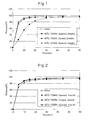
Figure 1] Figure 1 is a graphical representation showing the initial dissolution properties and dissolution properties after 40°C/75%RH unsealed storage of the tablet of Comparative Example 1. - [
Figure 2] Figure 2 is a graphical representation showing the initial dissolution properties and dissolution properties after 40°C/75%RH unsealed storage of the tablet of Example 1. - [
Figure 3] Figure 3 is a graphical representation showing the initial dissolution properties and dissolution properties after 40°C/75%RH unsealed storage of the tablet of Example 2. - [
Figure 4] Figure 4 is a graphical representation showing the initial dissolution properties and dissolution properties after 40°C/75%RH unsealed storage of the tablet of Reference Example. - The present invention is directed to an intraorally rapidly disintegrating tablet comprising a particle containing a Compound I-containing core particle coated with a layer comprising a methacrylic acid copolymer and further overcoated with a layer containing a water-soluble saccharide.
- In the present invention, "intraorally rapidly disintegrating tablet" means a tablet capable of being taken by a patient, wherein the tablet disintegrates in the oral cavity, within 60 seconds, preferably within 30 seconds, with only saliva in the oral cavity or with a small amount of water. However, it is only necessary for the intraorally rapidly disintegrating properties to be adequate in light of a purpose, and it is not necessary to stick to these values.
- The intraorally rapidly disintegrating tablet of the present invention preferably has a practical hardness of 29 N or more, and more preferably of 49 N or more.
The preferred dissolution properties of the tablet of the invention are represented by a 60-min dissolution rate of 80% or more, as measured according to the Japanese Pharmacopoeia Paddle method at 50 revolutions per minute, using a pH 6.0 McIlvaine buffer solution. If the rate is lower than this, there is no comparability in dissolution properties to formulations of Compound I that have guaranteed medicinal effects, and concern about influence on medicinal effects is raised. - The intraorally rapidly disintegrating tablet of the present invention comprises a particle containing a Compound I-containing core particle coated with a coating layer comprising a methacrylic acid copolymer and further overcoated with a water-soluble saccharide (hereinafter the particle is sometimes referred to as "Compound I-containing particle").
The preferred content of Compound I is 5 to 25 wt% of the whole tablet. Specifically, this can be exemplified, for instance, by a 125 mg tablet containing 10 mg or 20 mg of Compound I or a 250 mg tablet containing 40 mg of Compound I. If the content is greater than this, poor masking and intraorally rapidly disintegrating properties may occur, and, furthermore, manufacturability and stability may deteriorate. - Besides Compound I, the core particle in the present invention may contain a fluidizer, such as light anhydrous silicic acid, talc, stearic acid or metal salt thereof, or the like.
The particle diameter of the core particle in the present invention, which is influenced by the particle diameter of Compound I, the existence or kind of fluidizer, and the like, is usually 1 to 50 µm, and preferably 3 to 30 µm, as a median diameter as measured by a laser diffraction technique. - The core particle in the present invention is coated with a layer containing a methacrylic acid copolymer as a main component. Examples of the methacrylic acid copolymer include, but are not particularly limited to, methacrylic acid copolymer LD (for example, trade name: EUDRAGIT L30D55, Evonik), methacrylic acid copolymer L (for example, trade name: EUDRAGIT L100, Evonik), methacrylic acid copolymer S (for example, trade name: EUDRAGIT S100, Evonik), and the like. Aminoalkyl methacrylate copolymers and methacrylic acid ester copolymers, which are enteric polymers as are methacrylic acid copolymers, are not preferable, because, when they are applied to Compound I, poor dissolution and intraorally rapidly disintegrating properties follow, and also larger amounts are required for the same level of masking properties. In addition, ethyl cellulose, which is conventionally used to mask bitterness and the like, is not preferable, because, when it is applied to Compound I, poor dissolution and intraorally rapidly disintegrating properties follow.
The content of the methacrylic acid copolymer is preferably 50 to 99 wt%, and particularly preferably 80 to 95 wt%, of the coating layer. - The coating layer comprising a methacrylic acid copolymer may contain additives that are commonly used in coating agents for enteric formulations or for bitterness masking. Specific examples of such additives may include plasticizers such as polyethylene glycol, propylene glycol, triacetin, triethyl citrate, and the like, anti-adhesives such as talc, stearic acid or metal salt thereof, and the like, and permeability-controlling agents such as
polysorbate 80, hydroxypropylcellulose, hydroxypropylmethylcellulose, carboxymethyl cellulose, polyvinyl alcohol, and the like. The amount of plasticizers to be added is usually 1 to 30 wt%, and preferably 1 to 20 wt%, of the whole coating layer, depending on the type of plasticizer. If the amount exceeds 20 wt%, poor dissolution properties may occur after storage, especially after storage under high temperature/high humidity conditions. If the amount is less than 1 wt%, the action as plasticizers will be insufficient. - The content (coating rate) of the coating layer containing a methacrylic acid copolymer, which is influenced by the content or particle diameter of Compound I, and the like, is usually 0 to 60 wt%, and preferably 30 to 60 wt%, relative to the core particle. If the content is 20 wt% or less, insufficient masking properties may occur, and if the content is 70 wt% or more, poor dissolution properties may occur.
- In the Compound I-containing particle which has a coating layer containing a methacrylic acid copolymer and further overcoated with a water-soluble polysaccharide, the water-soluble saccharide is not particularly limited as long as it is a water-soluble saccharide used in pharmaceutical formulations. However, the water-soluble saccharide is preferably other than erythritol or sorbitol. For example, one or more water-soluble saccharides selected from the group consisting of mannitol, xylitol, lactitol, palatinit, palatinose, maltitol, maltose, trehalose, lactose, sucrose, glucose, oligosaccharide, fructose, and maltose can be used. Mannitol is particularly preferable.
- The content of the overcoating water-soluble saccharide, which is influenced by the kind of water-soluble saccharide used, the content of Compound I, and the like, is usually 1 to 30 wt%, and preferably 5 to 20 wt%, relative to the Compound I-containing particle coated with a layer containing a methacrylic acid copolymer. If the content is less than 1%, poor dissolution of Compound I from formulations or poor disintegration of formulations in the oral cavity will occur after storage, especially after storage under high temperature/high humidity conditions (for example, 40°C, 75% relative humidity). If the content exceeds 30 wt%, the size of formulations is increased, which is not preferable.
- The overcoat layer may contain additives that are commonly used in a coating layer, in a range without affecting dissolution and disintegration properties. Specific examples of such additives may include plasticizers such as polyethylene glycol, propylene glycol, triacetin, triethyl citrate, and the like, anti-adhesives such as talc, stearic acid or metal salt thereof, and the like, and permeability-controlling agents such as
polysorbate 80, hydroxypropylcellulose, hydroxypropylmethylcellulose, carboxymethyl cellulose, polyvinyl alcohol, and the like. The content of such additives is usually 30 wt% or less for each, and 50 wt% or less in total, relative to the water-soluble saccharide. - The Compound I-containing particle can be produced without difficulty using an ordinary fine particle coating apparatus or a fine particle coating apparatus with some modifications. For example, it can be prepared by charging a fine particle coating apparatus with Compound I along with a fluidizer, and spraying a dispersion containing a methacrylic acid copolymer, subsequently a water-soluble saccharide solution.
- By using the Compound I-containing particle instead of active ingredient particles of ordinary intraorally rapidly disintegrating tablet techniques, the intraorally rapidly disintegrating tablet of the present invention can be produced without difficulty using ordinary production equipment or production equipment with some modifications.
- An example of preferred technique of intraorally rapidly disintegrating tablet applied to the intraorally rapidly disintegrating tablet of the present invention is the technique disclosed in Japanese Patent Application Publication No.
2009-515871 - A coating dispersion was prepared by adding 12.6 g of MACROGOL 6000 (NOF CORPORATION, trade name: MACROGOL 6000P) to 650.2 g of purified water to be dissolved, followed by the addition of 420.0 g of methacrylic acid copolymer LD (Evonik, trade name: EUDRAGIT L30D55) and sufficient agitation.
Compound I-containing particles were obtained by charging a fine particle coating/granulating apparatus (POWREX CORPORATION, MP-01SFP) with 300 g of Compound I and 15 g of light anhydrous silicic acid (Freund Corporation), and the resulting mixture was sprayed with the above coating dispersion.
Granules were obtained by charging a fluidized bed granulator (POWREX CORPORATION, MP-01) with 870 g of D-mannitol (TOWAKASEI KOGYO), 40 g of light anhydrous silicic acid (Freund Corporation), and 45 g of crospovidone (ISP), and the resulting mixture was sprayed with purified water. Disintegrant-coated granules were prepared by charging 45 g of crospovidone to powder coat the above granules.
After 35.28 g of Compound I-containing particles and 2.25 g of calcium stearate (NOF CORPORATION) were added to 112.47 g of the disintegrant-coated granules and mixed together, the mixture was subjected to compression molding with a rotary tableting machine (HATA IRON WORKS Co., Ltd., HT-AP6SS-U) to form tablets. The molding condition was a tablet weight of 250 mg, and the tableting was performed using a φ8 mm flat punch with a cleavage line to give a hardness of about 78.5 N. - A coating dispersion was prepared by adding 100g of hypromellose (Shin-Etsu Chemical Co., Ltd., trade name: Tc-5R) to1900 g of purified water to be dissolved, followed by the addition of 15 g of light anhydrous silicic acid (Nippon Aerosil Co., Ltd., trade name: AEROSIL 200) and sufficient agitation. Subsequently, in the same manner as in Comparative Example 1, Compound I-containing particles were prepared, then mixed with disintegrant-coated granules and calcium stearate (NOF CORPORATION), and tableted to form tablets.
- A coating dispersion was prepared by adding 40 g of polysorbate 80 (Wako Pure Chemical Industries), 20 g of sodium carboxymethylcellulose (Dai-ichi Kogyo Seiyaku Co., Ltd., trade name: CELLOGEN PR-S), 40 g of light anhydrous silicic acid (Nippon Aerosil Co., Ltd., trade name: AEROSIL 200), and 60 g of an aminoalkyl methacrylate copolymer (Evonik, trade name: EUDRAGIT RL30D) to 900 g of purified water, followed by sufficient agitation. Subsequently, in the same manner as in Comparative Example 1, Compound I-containing particles were prepared, then mixed with disintegrant-coated granules and calcium stearate (NOF CORPORATION), and tableted to form tablets.
- After 24 g of Compound I, 0.75 g of aspartame (Ajinomoto Co., Inc.), 0.15 g of 1-menthol (The Suzuki Menthol Co., Ltd.), and 2.25 g of calcium stearate (NOF CORPORATION), were added to 122.85 g of the disintegrant-coated granules of Comparative Example 1 and mixed together, the mixture was tableted in the same manner as in Comparative Example 1 to form tablets.
- For the tablets of Comparative Examples 1 to 4, oral disintegration time and masking properties were assessed as initial values immediately after preparation. Concerning the assessment method, the assessment was performed by two healthy adult males; after tablets were placed on their tongues and allowed to disintegrate, the properties of masking the irritation of the basis were rated on the following criteria. The results are shown in Table 1.
- 0: Having a clear masking effect and causing no irritation
- 1: Having a masking effect and causing little irritation
- 2: Having a masking effect but causing irritation
- 3: Having a weak masking effect and causing strong irritation (tolerable)
- 4: Having no masking effect and causing strong irritation (intolerable)
-
[Table 1] Oral disintegration time (sec) Masking property Comparative Example 1 18 1 Comparative Example 2 48 2 Comparative Example 3 42 2 Comparative Example 4 22 3 - According to these results, with respect to the initial values immediately after preparation, only in the case of using the methacrylic acid copolymer of Comparative Example 1, both disintegration and masking properties were good. In the cases of using the hypromellose of Comparative Example 2, and even in the case of using the aminoalkyl methacrylate copolymer of Comparative Example 3, which is an acrylic polymer as is the methacrylic acid copolymer, both disintegration and masking properties were insufficient. In addition, the addition of aspartame and menthol in Comparative Example 4 did not result in adequate masking for Compound I.
- A coating dispersion was prepared by adding 12.6 g of MACROGOL 6000 (NOF CORPORATION, trade name: MACROGOL 6000P) to 650.2 g of purified water to be dissolved, followed by the addition of 420.0 g of methacrylic acid copolymer LD (Evonik, trade name: EUDRAGIT L30D55) and sufficient agitation. Then, an overcoat solution was prepared by adding 70 g of D-mannitol (TOWA-KASEI Co., Ltd.) to 630 g of purified water to be dissolved.
Compound I-containing particles was obtained by charging a fine particle coating/granulating apparatus (POWREX CORPORATION, MP-01SFP) with 300 g of Compound I and 15 g of light anhydrous silicic acid (Freund Corporation), and the resulting mixture was sprayed with 984.0 g of the above coating dispersion, and subsequently with 441.0 g of the overcoat solution.
Subsequently, in the same manner as in Comparative Example 1, Compound I-containing particles, disintegrant-coated granules, and calcium stearate (NOF CORPORATION) were mixed together and tableted to form tablets. - A coating dispersion was prepared by adding 6.3 g of MACROGOL 6000 (NOF CORPORATION, trade name: MACROGOL 6000P) to 607.3 g of purified water to be dissolved, followed by the addition of 420 g of methacrylic acid copolymer LD (Evonik, trade name: EUDRAGIT L30D55) and sufficient agitation. Then, an overcoat solution was prepared by adding 70 g of D-mannitol (TOWA-KASEI Co., Ltd.) to 630 g of purified water to be dissolved.
Compound I-containing particles were obtained by charging a fine particle coating/granulating apparatus (POWREX CORPORATION, MP-01SFP) with 300 g of Compound I and 15.0 g of light anhydrous silicic acid (Freund Corporation), and the resulting mixture was sprayed with 984.0 g of the above coating dispersion, and subsequently 441.0 g of the overcoat solution.
Subsequently, in the same manner as in Comparative Example 1, Compound I-containing particles, disintegrant-coated granules, and calcium stearate (NOF CORPORATION) were mixed together and tableted to form tablets. - For the tablets of Comparative Example 1 and Examples 1 and 2, oral disintegration time and dissolution properties after unsealed storage at 40°C/75%RH were assessed. In the dissolution test, the assessment was performed according to the Japanese Pharmacopoeia Paddle method at 50 revolutions per minute, using a pH 6.0 McIlvaine buffer solution as a test medium. The results are shown in Table 2. In addition, the masking properties of these formulations were respectively rated 1 according to Test Example 1 above.
-
[Table 2] Initial value After 2 weeks After 1 month Comparative Example 1 Oral disintegration time (sec) 19 26 40 Hardness (N) 78.5 67.7 71.6 Example 1 Oral disintegration time (sec) 16 22 23 Hardness (N) 75.5 64.7 61.8 Example 2 Oral disintegration time (sec) 18 18 19 Hardness (N) 78.5 66.7 58.8 - The above results showed that, for the tablet containing particles coated only with a methacrylic acid copolymer (Comparative Example 1), disintegration and dissolution were delayed after storage under high temperature/high humidity conditions, though their initial values immediately after preparation were good. However, when the particles in the tablet were further overcoated with mannitol (Example 1), both of the disintegration and dissolution properties after storage under high temperature/high humidity conditions were improved to be good.
- As for the coating with a methacrylic acid copolymer, the content of the plasticizer (polyethylene glycol) in the coating layer has an effect on the disintegration properties after storage, and the disintegration properties were better when the content was 4.7 wt% (Example 2) which is lower than 9.3 wt% (Example 1).
- Tablets were formed in the same manner as in Example 1, except that erythritol (NIKKEN CHEMICAL AND SYNTHETIC INDUSTRY Co., Ltd.) or sorbitol (Mitsubishi Shoji Foodtech Co., Ltd., Sorbit DP-50M) was used instead of D-mannitol, and their dissolution properties were assessed in the same manner as in Test Example 2. Results are shown in
Figure 4 . As shown inFigure 4 , the effect of improving dissolution delay after storage under high temperature/high humidity conditions, as was observed in the case of using mannitol, was not observed in the case of using erythritol or sorbitol. - As a result, it has been shown that the intraorally rapidly disintegrating tablet comprising Compound I as an active ingredient, when the tablet is made into a preparation containing a particle of Compound I coated with a layer containing methacrylic acid copolymer and further overcoated with a water-soluble saccharide, causes virtually no irritating sensation in the oral cavity or pharynx, and retains good dissolution and oral disintegration properties even when it is stored under high temperature/high humidity conditions.
- The present invention is utilized in preparation of intraorally rapidly disintegrating tablets containing Compound I.
Claims (4)
- An intraorally rapidly disintegrating tablet comprising a particle containing a 2-(3-cyano-4-isobutyloxyphenyl)-4-methyl-5-thiazolecarboxylic acid-containing core particle coated with a layer containing a methacrylic acid copolymer and further overcoated with a layer containing a water-soluble saccharide.
- The tablet of claim 1, wherein the water-soluble saccharide is mannitol.
- An intraorally rapidly disintegrating tablet obtained by compression molding of a particle comprising a 2-(3-cyano-4-isobutyloxyphenyl)-4-methyl-5-thiazolecarboxylic acid-containing core particle coated with a layer containing a methacrylic acid copolymer and further overcoated with a layer containing a water-soluble saccharide and a granule containing a disintegrant-containing particle coated with a disintegrant.
- The tablet of claim 3, wherein the disintegrant is crospovidone.
Applications Claiming Priority (2)
| Application Number | Priority Date | Filing Date | Title |
|---|---|---|---|
| JP2010156874 | 2010-07-09 | ||
| PCT/JP2011/065721 WO2012005365A1 (en) | 2010-07-09 | 2011-07-08 | Particle coating preparation |
Publications (3)
| Publication Number | Publication Date |
|---|---|
| EP2591781A1 true EP2591781A1 (en) | 2013-05-15 |
| EP2591781A4 EP2591781A4 (en) | 2014-12-03 |
| EP2591781B1 EP2591781B1 (en) | 2017-09-27 |
Family
ID=45441336
Family Applications (1)
| Application Number | Title | Priority Date | Filing Date |
|---|---|---|---|
| EP11803699.5A Not-in-force EP2591781B1 (en) | 2010-07-09 | 2011-07-08 | Particle coating preparation |
Country Status (24)
| Country | Link |
|---|---|
| US (1) | US20130101670A1 (en) |
| EP (1) | EP2591781B1 (en) |
| JP (1) | JP5000017B2 (en) |
| KR (1) | KR20130113348A (en) |
| CN (1) | CN102958522B (en) |
| AR (1) | AR082139A1 (en) |
| AU (1) | AU2011274851A1 (en) |
| BR (1) | BR112013000298A2 (en) |
| CA (1) | CA2804874C (en) |
| CL (1) | CL2013000089A1 (en) |
| CO (1) | CO6650363A2 (en) |
| EC (1) | ECSP12012360A (en) |
| ES (1) | ES2644064T3 (en) |
| MA (1) | MA34460B1 (en) |
| MX (1) | MX2013000282A (en) |
| NZ (1) | NZ605562A (en) |
| PE (1) | PE20131064A1 (en) |
| PH (1) | PH12013500032A1 (en) |
| RU (1) | RU2013105456A (en) |
| TN (1) | TN2012000623A1 (en) |
| TW (1) | TW201217001A (en) |
| UY (1) | UY33499A (en) |
| WO (1) | WO2012005365A1 (en) |
| ZA (1) | ZA201300106B (en) |
Cited By (1)
| Publication number | Priority date | Publication date | Assignee | Title |
|---|---|---|---|---|
| WO2021152009A1 (en) * | 2020-01-29 | 2021-08-05 | Alterno Labs D.O.O. | Granular pharmaceutical product for oral administration from a pre-filled straw and method of manufacturing such pharmaceutical product |
Families Citing this family (4)
| Publication number | Priority date | Publication date | Assignee | Title |
|---|---|---|---|---|
| US9248119B2 (en) | 2010-06-16 | 2016-02-02 | Takeda Pharmaceuticals U.S.A., Inc. | Modified release dosage forms of xanthine oxidoreductase inhibitor or xanthine oxidase inhibitors |
| ES2532210T3 (en) | 2010-09-10 | 2015-03-25 | Takeda Pharmaceuticals U.S.A., Inc. | Methods for the concomitant treatment of theophylline and febuxostat |
| CN106267220B (en) * | 2015-05-14 | 2019-06-28 | 北京科信必成医药科技发展有限公司 | Gualfenesin dextromethorphan hydrobromide is anhydrous to swallow taste masking preparation |
| JP7108384B2 (en) * | 2016-07-13 | 2022-07-28 | 日本ケミファ株式会社 | Orally disintegrating tablet of 2-[3-cyano-4-(2-methylpropoxy)phenyl]-4-methylthiazole-5-carboxylic acid |
Family Cites Families (12)
| Publication number | Priority date | Publication date | Assignee | Title |
|---|---|---|---|---|
| KR100554924B1 (en) * | 1998-05-18 | 2006-03-03 | 다케다 야쿠힌 고교 가부시키가이샤 | Oral disintegration tablets |
| JP4300652B2 (en) | 1998-09-21 | 2009-07-22 | 大正製薬株式会社 | Oral solid formulation |
| JP3389205B2 (en) | 1999-06-29 | 2003-03-24 | 武田薬品工業株式会社 | Oral quick disintegrating tablets |
| KR20050044545A (en) * | 2001-11-21 | 2005-05-12 | 에자이 가부시키가이샤 | Preparation compositions containing acid-unstable physiologically active compounds and process for producing the same |
| JP2005023058A (en) | 2003-06-10 | 2005-01-27 | Lion Corp | Chewable pharmaceutical preparation drug particles and method for producing the same, chewable solid pharmaceutical preparation containing drug particles and method for producing the same |
| JP5062872B2 (en) | 2003-08-13 | 2012-10-31 | 東和薬品株式会社 | Orally disintegrating tablets with reduced unpleasant taste |
| US20090155361A1 (en) * | 2005-08-18 | 2009-06-18 | Masahiko Narasaki | Tablet with multiple drug-containing sections |
| PE20070698A1 (en) * | 2005-11-14 | 2007-08-17 | Teijin Pharma Ltd | INTRAORAL RAPID DISGREGATION TABLET CONTAINING AMBROXOL HYDROCHLORIDE |
| JP5123517B2 (en) * | 2005-11-14 | 2013-01-23 | 帝人ファーマ株式会社 | Ambroxol oral disintegrating tablet |
| JP2008050324A (en) * | 2006-08-28 | 2008-03-06 | Ohara Yakuhin Kogyo Kk | Bitter-masking composition |
| JP5097488B2 (en) | 2006-09-13 | 2012-12-12 | 京都薬品工業株式会社 | Bitterness masking |
| US9248119B2 (en) * | 2010-06-16 | 2016-02-02 | Takeda Pharmaceuticals U.S.A., Inc. | Modified release dosage forms of xanthine oxidoreductase inhibitor or xanthine oxidase inhibitors |
-
2009
- 2009-07-15 NZ NZ605562A patent/NZ605562A/en not_active IP Right Cessation
-
2011
- 2011-07-08 RU RU2013105456/15A patent/RU2013105456A/en unknown
- 2011-07-08 PH PH1/2013/500032A patent/PH12013500032A1/en unknown
- 2011-07-08 BR BR112013000298A patent/BR112013000298A2/en not_active IP Right Cessation
- 2011-07-08 ES ES11803699.5T patent/ES2644064T3/en active Active
- 2011-07-08 PE PE2013000025A patent/PE20131064A1/en not_active Application Discontinuation
- 2011-07-08 KR KR1020127033960A patent/KR20130113348A/en not_active Withdrawn
- 2011-07-08 CN CN201180033820.5A patent/CN102958522B/en not_active Expired - Fee Related
- 2011-07-08 MX MX2013000282A patent/MX2013000282A/en not_active Application Discontinuation
- 2011-07-08 WO PCT/JP2011/065721 patent/WO2012005365A1/en not_active Ceased
- 2011-07-08 AR ARP110102459A patent/AR082139A1/en not_active Application Discontinuation
- 2011-07-08 JP JP2011550361A patent/JP5000017B2/en not_active Expired - Fee Related
- 2011-07-08 UY UY0001033499A patent/UY33499A/en not_active Application Discontinuation
- 2011-07-08 MA MA35652A patent/MA34460B1/en unknown
- 2011-07-08 CA CA2804874A patent/CA2804874C/en not_active Expired - Fee Related
- 2011-07-08 TW TW100124210A patent/TW201217001A/en unknown
- 2011-07-08 EP EP11803699.5A patent/EP2591781B1/en not_active Not-in-force
- 2011-07-08 US US13/808,457 patent/US20130101670A1/en not_active Abandoned
- 2011-07-08 AU AU2011274851A patent/AU2011274851A1/en not_active Abandoned
-
2012
- 2012-12-25 TN TNP2012000623A patent/TN2012000623A1/en unknown
- 2012-12-27 EC ECSP12012360 patent/ECSP12012360A/en unknown
-
2013
- 2013-01-04 ZA ZA2013/00106A patent/ZA201300106B/en unknown
- 2013-01-09 CL CL2013000089A patent/CL2013000089A1/en unknown
- 2013-01-09 CO CO13003384A patent/CO6650363A2/en unknown
Cited By (1)
| Publication number | Priority date | Publication date | Assignee | Title |
|---|---|---|---|---|
| WO2021152009A1 (en) * | 2020-01-29 | 2021-08-05 | Alterno Labs D.O.O. | Granular pharmaceutical product for oral administration from a pre-filled straw and method of manufacturing such pharmaceutical product |
Also Published As
| Publication number | Publication date |
|---|---|
| JPWO2012005365A1 (en) | 2013-09-05 |
| CN102958522A (en) | 2013-03-06 |
| ZA201300106B (en) | 2013-09-25 |
| PE20131064A1 (en) | 2013-09-23 |
| MX2013000282A (en) | 2013-02-11 |
| RU2013105456A (en) | 2014-08-20 |
| NZ605562A (en) | 2013-11-29 |
| UY33499A (en) | 2012-01-31 |
| MA34460B1 (en) | 2013-08-01 |
| ES2644064T3 (en) | 2017-11-27 |
| PH12013500032A1 (en) | 2013-02-11 |
| KR20130113348A (en) | 2013-10-15 |
| CA2804874C (en) | 2019-07-23 |
| CO6650363A2 (en) | 2013-04-15 |
| CA2804874A1 (en) | 2012-01-12 |
| WO2012005365A1 (en) | 2012-01-12 |
| TW201217001A (en) | 2012-05-01 |
| BR112013000298A2 (en) | 2016-05-31 |
| EP2591781A4 (en) | 2014-12-03 |
| CL2013000089A1 (en) | 2013-03-08 |
| CN102958522B (en) | 2015-12-16 |
| TN2012000623A1 (en) | 2014-04-01 |
| ECSP12012360A (en) | 2013-02-28 |
| US20130101670A1 (en) | 2013-04-25 |
| AR082139A1 (en) | 2012-11-14 |
| JP5000017B2 (en) | 2012-08-15 |
| AU2011274851A1 (en) | 2013-01-31 |
| EP2591781B1 (en) | 2017-09-27 |
Similar Documents
| Publication | Publication Date | Title |
|---|---|---|
| EP2415466B1 (en) | Orally disintegrating coated tablet | |
| JP5399749B2 (en) | Coated microparticles containing proton pump inhibitors | |
| JP4454791B2 (en) | Pharmaceutical formulation | |
| EP2591781B1 (en) | Particle coating preparation | |
| EP2591774B1 (en) | Orally disintegrating tablet | |
| JP6919119B2 (en) | A compressed solid pharmaceutical composition containing a γ-aminobutyric acid derivative substituted at the 3-position. | |
| JP7198575B2 (en) | Orally disintegrating tablet containing memantine hydrochloride | |
| JP2008231029A (en) | Bitter taste-masking preparation | |
| JP5713421B1 (en) | Orally disintegrating tablets | |
| KR102060738B1 (en) | Bitter taste masked pharmaceutical formulation comprising esomeprazole free base or alkali salt thereof and preparation method thereof | |
| WO2010119851A1 (en) | Orally disintegrating tablet | |
| JP2014114263A (en) | Intraorally rapidly disintegrating tablet | |
| JP6150564B2 (en) | Orally rapidly disintegrating tablets | |
| HK1182929A (en) | Particle coating preparation | |
| JP2007284394A (en) | Coated solid preparation | |
| HK1154515A (en) | Taste-masked multiparticulate pharmaceutical composition comprising a drug-containing core particle and a solvent-coacervated membrane |
Legal Events
| Date | Code | Title | Description |
|---|---|---|---|
| PUAI | Public reference made under article 153(3) epc to a published international application that has entered the european phase |
Free format text: ORIGINAL CODE: 0009012 |
|
| 17P | Request for examination filed |
Effective date: 20130108 |
|
| AK | Designated contracting states |
Kind code of ref document: A1 Designated state(s): AL AT BE BG CH CY CZ DE DK EE ES FI FR GB GR HR HU IE IS IT LI LT LU LV MC MK MT NL NO PL PT RO RS SE SI SK SM TR |
|
| RAX | Requested extension states of the european patent have changed |
Extension state: ME Payment date: 20130305 Extension state: BA Payment date: 20130305 |
|
| DAX | Request for extension of the european patent (deleted) | ||
| DAX | Request for extension of the european patent (deleted) | ||
| A4 | Supplementary search report drawn up and despatched |
Effective date: 20141103 |
|
| RIC1 | Information provided on ipc code assigned before grant |
Ipc: A61K 9/50 20060101ALI20141028BHEP Ipc: A61K 9/00 20060101ALI20141028BHEP Ipc: A61K 31/426 20060101AFI20141028BHEP Ipc: A61K 9/20 20060101ALI20141028BHEP Ipc: A61K 31/425 20060101ALI20141028BHEP Ipc: A61K 47/32 20060101ALI20141028BHEP Ipc: A61K 47/10 20060101ALI20141028BHEP |
|
| GRAP | Despatch of communication of intention to grant a patent |
Free format text: ORIGINAL CODE: EPIDOSNIGR1 |
|
| INTG | Intention to grant announced |
Effective date: 20161209 |
|
| GRAJ | Information related to disapproval of communication of intention to grant by the applicant or resumption of examination proceedings by the epo deleted |
Free format text: ORIGINAL CODE: EPIDOSDIGR1 |
|
| GRAP | Despatch of communication of intention to grant a patent |
Free format text: ORIGINAL CODE: EPIDOSNIGR1 |
|
| INTC | Intention to grant announced (deleted) | ||
| INTG | Intention to grant announced |
Effective date: 20170519 |
|
| GRAS | Grant fee paid |
Free format text: ORIGINAL CODE: EPIDOSNIGR3 |
|
| GRAA | (expected) grant |
Free format text: ORIGINAL CODE: 0009210 |
|
| AK | Designated contracting states |
Kind code of ref document: B1 Designated state(s): AL AT BE BG CH CY CZ DE DK EE ES FI FR GB GR HR HU IE IS IT LI LT LU LV MC MK MT NL NO PL PT RO RS SE SI SK SM TR |
|
| REG | Reference to a national code |
Ref country code: GB Ref legal event code: FG4D |
|
| REG | Reference to a national code |
Ref country code: CH Ref legal event code: EP |
|
| REG | Reference to a national code |
Ref country code: AT Ref legal event code: REF Ref document number: 931361 Country of ref document: AT Kind code of ref document: T Effective date: 20171015 |
|
| REG | Reference to a national code |
Ref country code: IE Ref legal event code: FG4D |
|
| REG | Reference to a national code |
Ref country code: DE Ref legal event code: R096 Ref document number: 602011041976 Country of ref document: DE |
|
| REG | Reference to a national code |
Ref country code: ES Ref legal event code: FG2A Ref document number: 2644064 Country of ref document: ES Kind code of ref document: T3 Effective date: 20171127 |
|
| PG25 | Lapsed in a contracting state [announced via postgrant information from national office to epo] |
Ref country code: SE Free format text: LAPSE BECAUSE OF FAILURE TO SUBMIT A TRANSLATION OF THE DESCRIPTION OR TO PAY THE FEE WITHIN THE PRESCRIBED TIME-LIMIT Effective date: 20170927 Ref country code: LT Free format text: LAPSE BECAUSE OF FAILURE TO SUBMIT A TRANSLATION OF THE DESCRIPTION OR TO PAY THE FEE WITHIN THE PRESCRIBED TIME-LIMIT Effective date: 20170927 Ref country code: FI Free format text: LAPSE BECAUSE OF FAILURE TO SUBMIT A TRANSLATION OF THE DESCRIPTION OR TO PAY THE FEE WITHIN THE PRESCRIBED TIME-LIMIT Effective date: 20170927 Ref country code: NO Free format text: LAPSE BECAUSE OF FAILURE TO SUBMIT A TRANSLATION OF THE DESCRIPTION OR TO PAY THE FEE WITHIN THE PRESCRIBED TIME-LIMIT Effective date: 20171227 Ref country code: HR Free format text: LAPSE BECAUSE OF FAILURE TO SUBMIT A TRANSLATION OF THE DESCRIPTION OR TO PAY THE FEE WITHIN THE PRESCRIBED TIME-LIMIT Effective date: 20170927 |
|
| REG | Reference to a national code |
Ref country code: NL Ref legal event code: MP Effective date: 20170927 |
|
| REG | Reference to a national code |
Ref country code: LT Ref legal event code: MG4D |
|
| REG | Reference to a national code |
Ref country code: AT Ref legal event code: MK05 Ref document number: 931361 Country of ref document: AT Kind code of ref document: T Effective date: 20170927 |
|
| PG25 | Lapsed in a contracting state [announced via postgrant information from national office to epo] |
Ref country code: GR Free format text: LAPSE BECAUSE OF FAILURE TO SUBMIT A TRANSLATION OF THE DESCRIPTION OR TO PAY THE FEE WITHIN THE PRESCRIBED TIME-LIMIT Effective date: 20171228 Ref country code: RS Free format text: LAPSE BECAUSE OF FAILURE TO SUBMIT A TRANSLATION OF THE DESCRIPTION OR TO PAY THE FEE WITHIN THE PRESCRIBED TIME-LIMIT Effective date: 20170927 Ref country code: BG Free format text: LAPSE BECAUSE OF FAILURE TO SUBMIT A TRANSLATION OF THE DESCRIPTION OR TO PAY THE FEE WITHIN THE PRESCRIBED TIME-LIMIT Effective date: 20171227 Ref country code: LV Free format text: LAPSE BECAUSE OF FAILURE TO SUBMIT A TRANSLATION OF THE DESCRIPTION OR TO PAY THE FEE WITHIN THE PRESCRIBED TIME-LIMIT Effective date: 20170927 |
|
| PG25 | Lapsed in a contracting state [announced via postgrant information from national office to epo] |
Ref country code: NL Free format text: LAPSE BECAUSE OF FAILURE TO SUBMIT A TRANSLATION OF THE DESCRIPTION OR TO PAY THE FEE WITHIN THE PRESCRIBED TIME-LIMIT Effective date: 20170927 |
|
| PG25 | Lapsed in a contracting state [announced via postgrant information from national office to epo] |
Ref country code: RO Free format text: LAPSE BECAUSE OF FAILURE TO SUBMIT A TRANSLATION OF THE DESCRIPTION OR TO PAY THE FEE WITHIN THE PRESCRIBED TIME-LIMIT Effective date: 20170927 Ref country code: CZ Free format text: LAPSE BECAUSE OF FAILURE TO SUBMIT A TRANSLATION OF THE DESCRIPTION OR TO PAY THE FEE WITHIN THE PRESCRIBED TIME-LIMIT Effective date: 20170927 |
|
| PG25 | Lapsed in a contracting state [announced via postgrant information from national office to epo] |
Ref country code: IS Free format text: LAPSE BECAUSE OF FAILURE TO SUBMIT A TRANSLATION OF THE DESCRIPTION OR TO PAY THE FEE WITHIN THE PRESCRIBED TIME-LIMIT Effective date: 20180127 Ref country code: EE Free format text: LAPSE BECAUSE OF FAILURE TO SUBMIT A TRANSLATION OF THE DESCRIPTION OR TO PAY THE FEE WITHIN THE PRESCRIBED TIME-LIMIT Effective date: 20170927 Ref country code: AT Free format text: LAPSE BECAUSE OF FAILURE TO SUBMIT A TRANSLATION OF THE DESCRIPTION OR TO PAY THE FEE WITHIN THE PRESCRIBED TIME-LIMIT Effective date: 20170927 Ref country code: SM Free format text: LAPSE BECAUSE OF FAILURE TO SUBMIT A TRANSLATION OF THE DESCRIPTION OR TO PAY THE FEE WITHIN THE PRESCRIBED TIME-LIMIT Effective date: 20170927 Ref country code: SK Free format text: LAPSE BECAUSE OF FAILURE TO SUBMIT A TRANSLATION OF THE DESCRIPTION OR TO PAY THE FEE WITHIN THE PRESCRIBED TIME-LIMIT Effective date: 20170927 |
|
| REG | Reference to a national code |
Ref country code: DE Ref legal event code: R097 Ref document number: 602011041976 Country of ref document: DE |
|
| REG | Reference to a national code |
Ref country code: FR Ref legal event code: PLFP Year of fee payment: 8 |
|
| PG25 | Lapsed in a contracting state [announced via postgrant information from national office to epo] |
Ref country code: DK Free format text: LAPSE BECAUSE OF FAILURE TO SUBMIT A TRANSLATION OF THE DESCRIPTION OR TO PAY THE FEE WITHIN THE PRESCRIBED TIME-LIMIT Effective date: 20170927 |
|
| PLBE | No opposition filed within time limit |
Free format text: ORIGINAL CODE: 0009261 |
|
| STAA | Information on the status of an ep patent application or granted ep patent |
Free format text: STATUS: NO OPPOSITION FILED WITHIN TIME LIMIT |
|
| PG25 | Lapsed in a contracting state [announced via postgrant information from national office to epo] |
Ref country code: PL Free format text: LAPSE BECAUSE OF FAILURE TO SUBMIT A TRANSLATION OF THE DESCRIPTION OR TO PAY THE FEE WITHIN THE PRESCRIBED TIME-LIMIT Effective date: 20170927 |
|
| 26N | No opposition filed |
Effective date: 20180628 |
|
| PG25 | Lapsed in a contracting state [announced via postgrant information from national office to epo] |
Ref country code: SI Free format text: LAPSE BECAUSE OF FAILURE TO SUBMIT A TRANSLATION OF THE DESCRIPTION OR TO PAY THE FEE WITHIN THE PRESCRIBED TIME-LIMIT Effective date: 20170927 |
|
| REG | Reference to a national code |
Ref country code: ES Ref legal event code: PC2A Owner name: TEIJIN LIMITED Effective date: 20190131 |
|
| REG | Reference to a national code |
Ref country code: GB Ref legal event code: 732E Free format text: REGISTERED BETWEEN 20190124 AND 20190130 |
|
| REG | Reference to a national code |
Ref country code: CH Ref legal event code: PL |
|
| PG25 | Lapsed in a contracting state [announced via postgrant information from national office to epo] |
Ref country code: MC Free format text: LAPSE BECAUSE OF FAILURE TO SUBMIT A TRANSLATION OF THE DESCRIPTION OR TO PAY THE FEE WITHIN THE PRESCRIBED TIME-LIMIT Effective date: 20170927 Ref country code: LU Free format text: LAPSE BECAUSE OF NON-PAYMENT OF DUE FEES Effective date: 20180708 |
|
| REG | Reference to a national code |
Ref country code: BE Ref legal event code: MM Effective date: 20180731 |
|
| REG | Reference to a national code |
Ref country code: IE Ref legal event code: MM4A |
|
| PG25 | Lapsed in a contracting state [announced via postgrant information from national office to epo] |
Ref country code: IE Free format text: LAPSE BECAUSE OF NON-PAYMENT OF DUE FEES Effective date: 20180708 Ref country code: CH Free format text: LAPSE BECAUSE OF NON-PAYMENT OF DUE FEES Effective date: 20180731 Ref country code: LI Free format text: LAPSE BECAUSE OF NON-PAYMENT OF DUE FEES Effective date: 20180731 |
|
| PG25 | Lapsed in a contracting state [announced via postgrant information from national office to epo] |
Ref country code: BE Free format text: LAPSE BECAUSE OF NON-PAYMENT OF DUE FEES Effective date: 20180731 |
|
| REG | Reference to a national code |
Ref country code: DE Ref legal event code: R082 Ref document number: 602011041976 Country of ref document: DE Representative=s name: HOEGER, STELLRECHT & PARTNER PATENTANWAELTE MB, DE Ref country code: DE Ref legal event code: R081 Ref document number: 602011041976 Country of ref document: DE Owner name: TEIJIN LIMITED, OSAKA-SHI, JP Free format text: FORMER OWNER: TEIJIN PHARMA LIMITED, TOKYO, JP |
|
| REG | Reference to a national code |
Ref country code: DE Ref legal event code: R082 Ref document number: 602011041976 Country of ref document: DE Representative=s name: HOEGER, STELLRECHT & PARTNER PATENTANWAELTE MB, DE Ref country code: DE Ref legal event code: R081 Ref document number: 602011041976 Country of ref document: DE Owner name: TEIJIN LIMITED, OSAKA-SHI, JP Free format text: FORMER OWNER: TEIJIN LIMITED, OSAKASHI-SHI, OSAKA, JP |
|
| PGFP | Annual fee paid to national office [announced via postgrant information from national office to epo] |
Ref country code: FR Payment date: 20190719 Year of fee payment: 9 Ref country code: DE Payment date: 20190719 Year of fee payment: 9 Ref country code: ES Payment date: 20190822 Year of fee payment: 9 Ref country code: IT Payment date: 20190730 Year of fee payment: 9 |
|
| PGFP | Annual fee paid to national office [announced via postgrant information from national office to epo] |
Ref country code: GB Payment date: 20190719 Year of fee payment: 9 |
|
| PG25 | Lapsed in a contracting state [announced via postgrant information from national office to epo] |
Ref country code: MT Free format text: LAPSE BECAUSE OF NON-PAYMENT OF DUE FEES Effective date: 20180708 |
|
| PG25 | Lapsed in a contracting state [announced via postgrant information from national office to epo] |
Ref country code: TR Free format text: LAPSE BECAUSE OF FAILURE TO SUBMIT A TRANSLATION OF THE DESCRIPTION OR TO PAY THE FEE WITHIN THE PRESCRIBED TIME-LIMIT Effective date: 20170927 |
|
| PG25 | Lapsed in a contracting state [announced via postgrant information from national office to epo] |
Ref country code: PT Free format text: LAPSE BECAUSE OF FAILURE TO SUBMIT A TRANSLATION OF THE DESCRIPTION OR TO PAY THE FEE WITHIN THE PRESCRIBED TIME-LIMIT Effective date: 20170927 Ref country code: HU Free format text: LAPSE BECAUSE OF FAILURE TO SUBMIT A TRANSLATION OF THE DESCRIPTION OR TO PAY THE FEE WITHIN THE PRESCRIBED TIME-LIMIT; INVALID AB INITIO Effective date: 20110708 |
|
| PG25 | Lapsed in a contracting state [announced via postgrant information from national office to epo] |
Ref country code: CY Free format text: LAPSE BECAUSE OF FAILURE TO SUBMIT A TRANSLATION OF THE DESCRIPTION OR TO PAY THE FEE WITHIN THE PRESCRIBED TIME-LIMIT Effective date: 20170927 Ref country code: MK Free format text: LAPSE BECAUSE OF NON-PAYMENT OF DUE FEES Effective date: 20170927 |
|
| PG25 | Lapsed in a contracting state [announced via postgrant information from national office to epo] |
Ref country code: AL Free format text: LAPSE BECAUSE OF FAILURE TO SUBMIT A TRANSLATION OF THE DESCRIPTION OR TO PAY THE FEE WITHIN THE PRESCRIBED TIME-LIMIT Effective date: 20170927 |
|
| REG | Reference to a national code |
Ref country code: DE Ref legal event code: R119 Ref document number: 602011041976 Country of ref document: DE |
|
| GBPC | Gb: european patent ceased through non-payment of renewal fee |
Effective date: 20200708 |
|
| PG25 | Lapsed in a contracting state [announced via postgrant information from national office to epo] |
Ref country code: GB Free format text: LAPSE BECAUSE OF NON-PAYMENT OF DUE FEES Effective date: 20200708 Ref country code: FR Free format text: LAPSE BECAUSE OF NON-PAYMENT OF DUE FEES Effective date: 20200731 |
|
| PG25 | Lapsed in a contracting state [announced via postgrant information from national office to epo] |
Ref country code: DE Free format text: LAPSE BECAUSE OF NON-PAYMENT OF DUE FEES Effective date: 20210202 |
|
| PG25 | Lapsed in a contracting state [announced via postgrant information from national office to epo] |
Ref country code: IT Free format text: LAPSE BECAUSE OF NON-PAYMENT OF DUE FEES Effective date: 20200708 |
|
| REG | Reference to a national code |
Ref country code: ES Ref legal event code: FD2A Effective date: 20211228 |
|
| PG25 | Lapsed in a contracting state [announced via postgrant information from national office to epo] |
Ref country code: ES Free format text: LAPSE BECAUSE OF NON-PAYMENT OF DUE FEES Effective date: 20200709 |