EP2584005A1 - Typical metal containing polysiloxane composition, process for production of same, and uses thereof - Google Patents
Typical metal containing polysiloxane composition, process for production of same, and uses thereof Download PDFInfo
- Publication number
- EP2584005A1 EP2584005A1 EP11795626.8A EP11795626A EP2584005A1 EP 2584005 A1 EP2584005 A1 EP 2584005A1 EP 11795626 A EP11795626 A EP 11795626A EP 2584005 A1 EP2584005 A1 EP 2584005A1
- Authority
- EP
- European Patent Office
- Prior art keywords
- polymer composition
- component
- group
- compound
- mol
- Prior art date
- Legal status (The legal status is an assumption and is not a legal conclusion. Google has not performed a legal analysis and makes no representation as to the accuracy of the status listed.)
- Granted
Links
Classifications
-
- C—CHEMISTRY; METALLURGY
- C08—ORGANIC MACROMOLECULAR COMPOUNDS; THEIR PREPARATION OR CHEMICAL WORKING-UP; COMPOSITIONS BASED THEREON
- C08G—MACROMOLECULAR COMPOUNDS OBTAINED OTHERWISE THAN BY REACTIONS ONLY INVOLVING UNSATURATED CARBON-TO-CARBON BONDS
- C08G77/00—Macromolecular compounds obtained by reactions forming a linkage containing silicon with or without sulfur, nitrogen, oxygen or carbon in the main chain of the macromolecule
- C08G77/04—Polysiloxanes
- C08G77/14—Polysiloxanes containing silicon bound to oxygen-containing groups
- C08G77/18—Polysiloxanes containing silicon bound to oxygen-containing groups to alkoxy or aryloxy groups
-
- C—CHEMISTRY; METALLURGY
- C08—ORGANIC MACROMOLECULAR COMPOUNDS; THEIR PREPARATION OR CHEMICAL WORKING-UP; COMPOSITIONS BASED THEREON
- C08L—COMPOSITIONS OF MACROMOLECULAR COMPOUNDS
- C08L83/00—Compositions of macromolecular compounds obtained by reactions forming in the main chain of the macromolecule a linkage containing silicon with or without sulfur, nitrogen, oxygen or carbon only; Compositions of derivatives of such polymers
- C08L83/04—Polysiloxanes
-
- C—CHEMISTRY; METALLURGY
- C08—ORGANIC MACROMOLECULAR COMPOUNDS; THEIR PREPARATION OR CHEMICAL WORKING-UP; COMPOSITIONS BASED THEREON
- C08K—Use of inorganic or non-macromolecular organic substances as compounding ingredients
- C08K3/00—Use of inorganic substances as compounding ingredients
- C08K3/10—Metal compounds
-
- C—CHEMISTRY; METALLURGY
- C09—DYES; PAINTS; POLISHES; NATURAL RESINS; ADHESIVES; COMPOSITIONS NOT OTHERWISE PROVIDED FOR; APPLICATIONS OF MATERIALS NOT OTHERWISE PROVIDED FOR
- C09D—COATING COMPOSITIONS, e.g. PAINTS, VARNISHES OR LACQUERS; FILLING PASTES; CHEMICAL PAINT OR INK REMOVERS; INKS; CORRECTING FLUIDS; WOODSTAINS; PASTES OR SOLIDS FOR COLOURING OR PRINTING; USE OF MATERIALS THEREFOR
- C09D183/00—Coating compositions based on macromolecular compounds obtained by reactions forming in the main chain of the macromolecule a linkage containing silicon, with or without sulfur, nitrogen, oxygen, or carbon only; Coating compositions based on derivatives of such polymers
- C09D183/04—Polysiloxanes
-
- H—ELECTRICITY
- H10—SEMICONDUCTOR DEVICES; ELECTRIC SOLID-STATE DEVICES NOT OTHERWISE PROVIDED FOR
- H10H—INORGANIC LIGHT-EMITTING SEMICONDUCTOR DEVICES HAVING POTENTIAL BARRIERS
- H10H20/00—Individual inorganic light-emitting semiconductor devices having potential barriers, e.g. light-emitting diodes [LED]
- H10H20/80—Constructional details
- H10H20/85—Packages
- H10H20/852—Encapsulations
- H10H20/854—Encapsulations characterised by their material, e.g. epoxy or silicone resins
-
- H—ELECTRICITY
- H10—SEMICONDUCTOR DEVICES; ELECTRIC SOLID-STATE DEVICES NOT OTHERWISE PROVIDED FOR
- H10W—GENERIC PACKAGES, INTERCONNECTIONS, CONNECTORS OR OTHER CONSTRUCTIONAL DETAILS OF DEVICES COVERED BY CLASS H10
- H10W74/00—Encapsulations, e.g. protective coatings
- H10W74/40—Encapsulations, e.g. protective coatings characterised by their materials
- H10W74/47—Encapsulations, e.g. protective coatings characterised by their materials comprising organic materials, e.g. plastics or resins
- H10W74/476—Organic materials comprising silicon
-
- C—CHEMISTRY; METALLURGY
- C08—ORGANIC MACROMOLECULAR COMPOUNDS; THEIR PREPARATION OR CHEMICAL WORKING-UP; COMPOSITIONS BASED THEREON
- C08G—MACROMOLECULAR COMPOUNDS OBTAINED OTHERWISE THAN BY REACTIONS ONLY INVOLVING UNSATURATED CARBON-TO-CARBON BONDS
- C08G77/00—Macromolecular compounds obtained by reactions forming a linkage containing silicon with or without sulfur, nitrogen, oxygen or carbon in the main chain of the macromolecule
- C08G77/04—Polysiloxanes
- C08G77/12—Polysiloxanes containing silicon bound to hydrogen
-
- C—CHEMISTRY; METALLURGY
- C08—ORGANIC MACROMOLECULAR COMPOUNDS; THEIR PREPARATION OR CHEMICAL WORKING-UP; COMPOSITIONS BASED THEREON
- C08G—MACROMOLECULAR COMPOUNDS OBTAINED OTHERWISE THAN BY REACTIONS ONLY INVOLVING UNSATURATED CARBON-TO-CARBON BONDS
- C08G77/00—Macromolecular compounds obtained by reactions forming a linkage containing silicon with or without sulfur, nitrogen, oxygen or carbon in the main chain of the macromolecule
- C08G77/04—Polysiloxanes
- C08G77/20—Polysiloxanes containing silicon bound to unsaturated aliphatic groups
-
- C—CHEMISTRY; METALLURGY
- C08—ORGANIC MACROMOLECULAR COMPOUNDS; THEIR PREPARATION OR CHEMICAL WORKING-UP; COMPOSITIONS BASED THEREON
- C08L—COMPOSITIONS OF MACROMOLECULAR COMPOUNDS
- C08L2201/00—Properties
- C08L2201/02—Flame or fire retardant/resistant
Definitions
- the present invention relates to a polysiloxane composition containing typical metal, a process for its production and its uses. Particularly, it relates to a sealing material and a gas barrier material, using such a polysiloxane composition.
- FPD flat-panel display
- a glass substrate is used as a base material for its display panel
- demand for its substitution by a transparent plastic substrate has been increasing with a view to thickness reduction, weight reduction, improvement of impact resistance as well as adaptability to a roll-to-roll process.
- the formed element or device such as a liquid crystal element, an organic EL element, a TFT element, a semiconductor element or a solar cell
- the formed element or device is weak against water and oxygen, whereby dark spots or dead pixels are likely to be formed in the display on such a display panel, or a semiconductor device, a solar cell, etc. tend to fail to function properly and tend to be practically useless. Therefore, a gas barrier plastic substrate is required wherein a gas barrier property against steam and oxygen gas is imparted to a plastic substrate.
- a transparent plastic film having a gas barrier property is likely to be increasingly used, in place of a non-transparent aluminum foil laminate film, in applications as packaging materials for e.g. foods, drugs, electronic materials, electronic components, etc.
- a PVD method physical vapor deposition method
- a CVD method chemical vapor deposition method
- polyvinylidene chloride, polyvinyl alcohol, an ethylene/vinyl alcohol copolymer or nylon 6 may, for example, be available, but as compared with a gas barrier layer formed by the PVD method or the CVD method, water and oxygen were more likely to permeate therethrough, and its gas barrier property was low. That is, a coating material having a high gas barrier property is desired.
- Patent Documents 1 and 2 propose a polysiloxane sealing material
- Patent Documents 3 and 4 propose an epoxy resin sealing material.
- their gas barrier property against water and oxygen, heat resistance, heat dissipation property, cracking resistance, and light resistance, particularly UV resistance are inadequate, and improvements are desired.
- the present invention has been made in view of the above-described problem, and it is an object of the present invention to provide a material suitable for sealing of an LED element, protection of wiring for an LED device, insulation and sealing of a power semiconductor or for a gas barrier layer for a transparent plastic substrate or transparent plastic film and to provide an LED device, a gas barrier component, a FPD device and a semiconductor device, using it.
- the present inventors have found that a polymer composition obtained by hydrosilylation polymerization of an unsaturated group-containing siloxane compound and a siloxane compound having a structure wherein hydrogen is directly bonded to silicon, in the presence of a specific organic metal compound component, has a high gas barrier property and mechanical properties and thus is useful for sealing of an LED element, protection of wiring for an LED device or insulation and sealing of a power semiconductor, or for e.g. a gas barrier layer for a transparent plastic substrate or a transparent plastic film, and have thus arrived at the present invention.
- the present invention provides a process for producing a polymer composition, which comprises mixing and reacting:
- the present invention provides a polymer composition produced by the above method.
- the present invention provides a sealing material, a gas barrier material or an insulating and sealing material for semiconductors, containing the above polymer composition.
- the present invention provides an LED device using the above sealing material.
- the present invention provides a resin component using the above gas barrier material.
- the present invention provides a semiconductor device using the above insulating and sealing material for semiconductors.
- the polymer composition of the present invention is useful as a sealing material, a protective film, a gas barrier material, etc., and is capable of providing a gas barrier resin component, an LED device, a semiconductor device, etc., excellent in the gas barrier property, mechanicals strength, UV resistance, heat resistance, etc. Further, it is also useful for a FPD device.
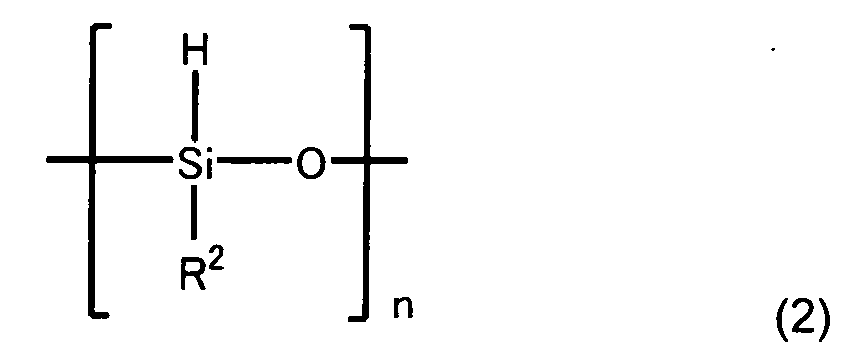
- the unsaturated group-containing siloxane compound of the formula (1) and the siloxane compound having a structure of the formula (2) wherein hydrogen is directly bonded to silicon are subjected to hydrosilylation polymerization by a metal catalyst of Group 8, 9 or 10 metal of the periodic table, to produce a polymer composition.
- the unsaturated group-containing siloxane compound of the formula (1) as component (A) is a chain or cyclic siloxane compound, siloxane oligomer or polysiloxane.
- R 1 is a hydrogen atom or a C 1-20 hydrocarbon group, and the hydrocarbon group may be saturated or unsaturated and may have a straight chain, branched chain or cyclic structure.
- R 1 may, for example, be an alkyl group, an aryl group, an arylalkyl group, an alkylaryl group, an alkenyl group such as a vinyl group, or an alkynyl group such as an acetynyl group, having from 1 to 20 carbon atoms, preferably from 1 to 10 carbon atoms.
- R 1 examples include groups of methyl, ethyl, n-propyl, isopropyl, n-butyl, i-butyl, sec-butyl, tert-butyl, n-pentyl, tert-amyl, n-hexyl, cyclohexyl, phenyl, toluyl, naphthyl, cyclobutyl, cyclobutenyl, cyclopentyl, cyclopentadienyl, cyclohexyl, cyclohexenyl, cyclooctenyl, cyclooctadienyl, 1-adamantyl, etc.
- R 1 is particularly preferably a linear alkyl group having at most 3 carbon atoms from the viewpoint of economical efficiency.
- a secondary or tertiary hydrocarbon group such as isopropyl, sec-butyl, cyclohexyl, tert-butyl, tert-amyl or 1-adamantyl, is preferred, and in order to increase the refractive index of the polymer composition, an aromatic group such as phenyl, toluyl or naphthyl is preferred.
- m is an integer of at least 3, and the upper limit is not particularly limited, but is preferably at most 100,000, particularly preferably at most 10,000, from the viewpoint of the viscosity or mixing efficiency.
- a is an integer of from 0 to 10. From the viewpoint of the reactivity of the terminal vinyl group and availability of the raw material, a is preferably an integer of from 0 to 4, more preferably 0 or 1. Further, in the formula (1), the siloxane structure is a chain or cyclic structure.
- Examples in the case of a chain structure include polyvinylhydrogensiloxane, polyvinylmethylsiloxane, polyvinylethylsiloxane, polyvinyl n-propylsiloxane, polyvinylisopropylsiloxane, polyvinyl n-butylsiloxane, polyvinylisobutylsiloxane, polyvinyl sec-butylsiloxane, polyvinyl tert-butylsiloxane, polyvinyl n-pentylsiloxane, polyvinylcyclopentylsiloxane, polyvinyl tert-amylsiloxane, polyvinyl n-hexylsiloxane, polyvinylcyclohexylsiloxane, polyvinyl n-heptylsiloxane, polyvinyl n-octylsilox
- the weight average molecular weight of such a polysiloxane is usually from 500 to 5,000,000, particularly preferably from 1,000 to 1,000,000.
- the hydrosilylation reaction proceeds effectively, and it is possible to obtain a polymer composition excellent in the gas barrier property and mechanical properties.
- an oligomer having a similar structure and having a weight average molecular weight of not higher than 500 is also within the scope of the present invention.
- Examples in the case of a cyclic structure include 2,4,6-trivinylcyclotrisiloxane, 2,4,6-trivinyl-2,4,6-trimethylcyclotrisiloxane, 2,4,6-trivinyl-2,4,6-triethylcyclotrisiloxane, 2,4,6-trivinyl-2,4,6-tri n-propylcyclotrisiloxane, 2,4,6-trivinyl-2,4,6-triisopropylcyclotrisiloxane, 2,4,6-trivinyl-2,4,6-tri n-butylcyclotrisiloxane, 2,4,6-trivinyl-2,4,6-triisobutylcyclotrisiloxane, 2,4,6-trivinyl-2,4,6-tri sec-butylcyclotrisiloxane, 2,4,6-trivinyl-2,4,6-tri tert-butylcyclotrisiloxane, 2,4,
- 2,4,6-trivinyl-2,4,6-triphenylcyclotrisiloxane, 2,4,6-trivinyl-2,4,6-tritoluylcyclotrisiloxane, 2,4,6-trivinyl-2,4,6-trinaphthylcyclotrisiloxane, etc. may be mentioned.
- 6-membered cyclic siloxanes such as 2,4,6-triallylcyclotrisiloxane, 2,4,6-triallyl-2,4,6-trimethylcyclotrisiloxane, 2,4,6-triallyl-2,4,6-triethylcyclotrisiloxane, 2,4,6-triallyl-2,4,6-tri n-propylcyclotrisiloxane, 2,4,6-triallyl-2,4,6-triisopropylcyclotrisiloxane, etc. may be mentioned.
- 2,4,6,8-tetravinylcyclotetrasiloxane 2,4,6,8-tetravinyl-2,4,6,8-tetramethylcyclotetrasiloxane, 2,4,6,8-tetravinyl-2,4,6,8-tetraethylcyclotetrasiloxane, 2,4,6,8-tetravinyl-2,4,6,8-tetra n-propylcyclotetrasiloxane, 2,4,6,8-tetravinyl-2,4,6,8-tetraisopropylcyclotetrasiloxane, 2,4,6,8-tetravinyl-2,4,6,8-tetra n-butylcyclotetrasiloxane, 2,4,6,8-tetravinyl-2,4,6,8-tetraisobutylcyclotetrasiloxane, 2,4,6,8-tetravinyl-2,4,6,8-tetra sec-butylcyclo
- a cyclotetrasiloxane such as 2,4,6,8-tetravinyl-2,4,6,8-tetraphenylcyclotetrasiloxane, 2,4,6,8-tetravinyl-2,4,6,8-tetratoluylcyclotrisiloxane, 2,4,6,8-tetravinyl-2,4,6,8-tetranaphthylcyclotetrasiloxane, etc. may be mentioned.
- 8-membered cyclic siloxanes such as 2,4,6,8-tetraallylcyclotetrasiloxane, 2,4,6,8-tetraallyl-2,4,6,8-tetramethylcyclotetrasiloxane, 2,4,6,8-tetraallyl-2,4,6,8-tetraethylcyclotetrasiloxane, 2,4,6,8-tetraallyl-2,4,6,8-tetra n-propylcyclotetrasiloxane, 2,4,6,8-tetraallyl-2,4,6,8-tetraisopropylcyclotetrasiloxane, etc. may be mentioned.
- 2,4,6,8,10-pentavinylcyclopentasiloxane 2,4,6,8,10-pentavinyl-2,4,6,8,10-pentamethylcyclopentasiloxane
- 2,4,6,8,10-pentavinyl-2,4,6,8,10-pentaethylcyclopentasiloxane 2,4,6,8,10-pentavinyl-2,4,6,8,10-penta n-propylcyclopentasiloxane
- 2,4,6,8,10-pentavinyl-2,4,6,8,10-pentaisopropylcyclopentasiloxane 2,4,6,8,10-pentavinyl-2,4,6,8,10-penta n-butylcyclopentasiloxane
- 2,4,6,8,10-pentavinyl-2,4,6,8,10-pentaisobutylcyclopentasiloxane 2,4,6,8,10-pentavinyl-2,
- 2,4,6,8,10-pentavinyl-2,4,6,8,10-pentaphenylcyclopentasiloxane 2,4,6,8,10-pentavinyl-2,4,6,8,10-pentatoluylcyclotrisiloxane, 2,4,6,8,10-pentavinyl-2,4,6,8,10-pentanaphthylcyclopentasiloxane, etc. may be mentioned.
- 10-membered cyclic siloxanes such as 2,4,6,8,10-pentaallylcyclopentasiloxane, 2,4,6,8,10-pentaallyl-2,4,6,8,10-pentamethylcyclopentasiloxane, 2,4,6,8,10-pentaallyl-2,4,6,8-pentaethylcyclopentasiloxane, 2,4,6,8,10-pentaallyl-2,4,6,8,10-penta n-propylcyclopentasiloxane, 2,4,6,8,10-pentaallyl-2,4,6,8,10-pentaisopropylcyclopentasiloxane, etc. may be mentioned.
- 2,4,6,8,10,12-hexavinyl-2,4,6,8,10,12-hexaisopropylcyclohexasiloxane 2,4,6,8,10,12,14-heptavinyl-2,4,6,8,10,12,14-heptaisopropylcycloheptasiloxane
- 2,4,6,8,10,12,14,16,18-nonavinyl-2,4,6,8,10,12,14,16,18-nonaisopropylcyclononasiloxane 2,4,6,8,10,12,14,16,18,20-decavinyl-2,4,6,8,10,12,14,16,18,20-decavinyl-2,4,6,8,10,12,14,16,18,20-de
- 2,4,6,8,10,12-hexavinyl-2,4,6,8,10,12-hexa n-butylcyclohexasiloxane 2,4,6,8,10,12,14-heptavinyl-2,4,6,8,10,12,14-hepta n-butylcycloheptasiloxane
- 2,4,6,8,10,12,14,16,18-nonavinyl-2,4,6,8,10,12,14,16,18-nona n-butylcyclononasiloxane 2,4,6,8,10,12,14,16,18,20-decavinyl-2,4,6,8,10,12,14,16,18,20-decavinyl-2,4,6,8,10,12,14,16,18
- 12-membered to 24-membered cyclic siloxanes such as 2,4,6,8,10,12-hexavinyl-2,4,6,8,10,12-hexa tert-butylcyclohexasiloxane, 2,4,6,8,10,12,14-heptavinyl-2,4,6,8,10,12,14-hepta tert-butylcycloheptasiloxane, 2,4,6,8,10,12,14,16-octavinyl-2,4,6,8,10,12,14,16-octa tert-butylcyclooctasiloxane, 2,4,6,8,10,12,14,16,18-nonavinyl-2,4,6,8,10,12,14,16,18-nona tert-butylcyclononasiloxane, 2,4,6,8,10,12,14,16,18,20-decavinyl-2,4,6,8,10,12,14,16,
- 26-Membered or higher membered cyclic siloxanes having similar structures may also be within the scope of the present invention.
- the siloxane compound having a structure of the formula (2) wherein hydrogen is directly bonded to silicon, as component (B), is a chain or cyclic siloxane compound, siloxane oligomer or polysiloxane.
- R 2 is a C 1-20 hydrocarbon group, and the hydrocarbon group may be saturated or unsaturated and may have a straight chain, branched chain or cyclic structure.
- the hydrocarbon group for R 2 may, for example, be an alkyl group, an aryl group, an arylalkyl group, an alkylaryl group, an alkenyl group such as a vinyl group, or an alkynyl group such as an acetynyl group, having from 1 to 20 carbon atoms, preferably from 1 to 10 carbon atoms.
- R 2 examples include methyl, ethyl, n-propyl, isopropyl, n-butyl, i-butyl, sec-butyl, tert-butyl, n-pentyl, tert-amyl, n-hexyl, cyclohexyl, phenyl, toluyl, naphthyl, cyclobutyl, cyclobutenyl, cyclopentyl, cyclopentadienyl, cyclohexyl, cyclohexenyl, cyclooctenyl, cyclooctadienyl, 1-adamantyl, etc.
- R 2 is particularly preferably a straight chain alkyl having at most 3 carbon atoms from the viewpoint of economical efficiency.
- a secondary or tertiary hydrocarbon group such as isopropyl, sec-butyl, cyclohexyl, tert-butyl, tert-amyl or 1-adamantyl, is preferred, and in order to increase the refractive index of the polymer composition, an aromatic group such as phenyl, toluyl or naphthyl, is preferred.
- n is an integer of at least 3, and the upper limit is not particularly limited, but is preferably at most 10,000 from the viewpoint of the viscosity and mixing efficiency.
- the siloxane structure is a chain or cyclic structure.
- Examples in the case of a cyclic structure include polymethylsiloxane, polyethylsiloxane, poly n-propylsiloxane, polyisopropylsiloxane, poly n-butylsiloxane, poyisobutylsiloxane, poly sec-butylsiloxane, poly tert-butylsiloxane, poly n-pentylsiloxane, polycyclopentylsiloxane, poly tert-amylsiloxane, poly n-hexylsiloxane, polycyclohexylsiloxane, poly n-heptylsiloxane, poly n-octylsiloxane, poly n-nonylsiloxane, poly n-decylsiloxane, polyphenylsiloxane, polytoluylsiloxane,
- the weight average molecular weight of such a polysiloxane is usually from 500 to 5,000,000, particularly preferably from 1,000 to 1,000,000.
- the hydrosilylation reaction proceeds efficiently, and a polymer composition excellent in the gas barrier property and mechanical properties may be obtained.
- an oligomer having a similar structure and having a weight average molecular weight of not higher than 500 is also within the scope of the present invention.
- Examples in the case of a cyclic structure include trimethylcyclotrisiloxane, tetramethylcyclotetrasiloxane, pentamethylcyclopentasiloxane, hexamethylcyclohexasiloxane, heptamethylcycloheptasiloxane, octamethylcyclooctasiloxane, nonamethylcyclononasiloxane, decamethylcyclodecasiloxane, undecamethylcycloundecasiloxane, dodecamethylcyclododecasiloxane, etc.
- triethylcyclotrisiloxane tetraethylcyclotetrasiloxane, pentaethylcyclopentasiloxane, hexaethylcyclohexasiloxane, heptaethylcycloheptasiloxane, octaethylcyclooctasiloxane, nonaethylcyclononasiloxane, decaethylcyclodecasiloxane, undecaethylcycloundecasiloxane, dodecaethylcyclododecasiloxane, etc. may be mentioned.
- triisopropylcyclotrisiloxane tetraisopropylcyclotetrasiloxane, pentaisopropylcyclopentasiloxane, hexaisopropylcyclohexasiloxane, heptaisopropylcycloheptasiloxane, octaisopropylcyclooctasiloxane, nonaisopropylcyclononasiloxane, decaisopropylcyclodecasiloxane, undecaisopropylcycloundecasiloxane, dodecaisopropylcyclododecasiloxane, etc. may be mentioned.
- triisobutylcyclotrisiloxane tetraisobutylcyclotetrasiloxane, pentaisobutylcyclopentasiloxane, hexaisobutylcyclohexasiloxane, heptaisobutylcycloheptasiloxane, octaisobutylcyclooctasiloxane, nonaisobutylcyclononasiloxane, decaisobutylcyclodecasiloxane, undecaisobutylcycloundecasiloxane, dodecaisobutylcyclododecasiloxane, etc. may be mentioned.
- tri sec-butylcyclotrisiloxane tetra sec-butylcyclotetrasiloxane, penta sec-butylcyclopentasiloxane, hexa sec-butylcyclohexasiloxane, hepta sec-butylcycloheptasiloxane, octa sec-butylcyclooctasiloxane, nona sec-butylcyclononasiloxane, deca sec-butylcyclodecasiloxane, undeca sec-butylcycloundecasiloxane, dodeca sec-butylcyclododecasiloxane, etc. may be mentioned.
- tri tert-butylcyclotrisiloxane tetra tert-butylcyclotetrasiloxane, penta tert-butylcyclopentasiloxane, hexa tert-butylcyclohexasiloxane, hepta tert-butylcycloheptasiloxane, octa tert-butylcyclooctasiloxane, nona tert-butylcyclononasiloxane, deca tert-butylcyclodecasiloxane, undeca tert-butylcycloundecasiloxane, dodeca tert-butylcyclododecasiloxane, etc. may be mentioned.
- 26-membered or higher membered cyclic siloxanes having similar structures are within the scope of the present invention.
- the organic metal compound of Group 1, 2, 12, 13 or 14 metal in the periodic table, as component (C), may be an organic metal compound comprising an organic group and a metal of lithium, magnesium, zinc, tin or aluminum.
- an alkyl group may be mentioned as a representative.
- a straight chain or branched chain C 1-20 alkyl group may be used.
- n-butyllithium, diethylmagnesium, diethylzinc, trimethylaluminum, triethylaluminum, tri-i-butylaluminum, tri-n-butylaluminum, tri-n-decylaluminum, tetraethyltin, tetrabutyltin, etc. may be mentioned.
- a straight chain or branched chain C 1-20 alkylaluminum or alkylzinc is preferred.
- trimethylaluminum triethylaluminum, triisobutylaluminum, dimethylzinc, diethylzinc, etc. containing no halogen.
- organic metal compounds may be used alone or as a mixture of two or more of them.
- component (D) As the metal catalyst of Group 8, 9 or 10 metal of the periodic table, as component (D), it is possible to use at least one member selected from the group consisting of metal catalysts of iron, ruthenium, osmium, cobalt, rhodium, iridium, nickel, palladium and platinum. From the viewpoint of the catalytic activities, preferred is a ruthenium catalyst or a platinum catalyst, and particularly preferred is a platinum catalyst.
- platinum catalysts may, for example, be platinum tetrachloride, platinum dichloride, platinum tetrabromide, platinum dibromide, platinum tetraiodide, platinum diiodide, hexachloroplatinic (IV) acid, hexabromoplatinic (IV) acid, hexaiodoplatinic (IV) acid, hexachloroplatinic (IV) acid hexahydrate, hexabromoplatinic (IV) acid hexahydrate, hexaiodoplatinic (IV) acid hexahydrate, etc.
- the platinum catalyst particularly preferred is a platinum compound having such a compound reduced by a reducing agent, or a metal complex of platinum synthesized from a silane compound having a vinyl group, a siloxane compound and the above platinum compound.
- the silane compound having a vinyl group is preferably a compound having at least two vinyl groups in one molecule from the viewpoint of the catalytic activities.
- a cyclic siloxane having vinyl groups such as 1,1,3,3-tetramethyl-1,3-divinyldisiloxane, 1,1,3,3-tetravinyl-1,3-dimethyldisiloxane or the above-mentioned component (A) may be mentioned.
- a platinum catalyst prepared by mixing the above platinum compound and a cyclic siloxane having a silicon atom to which a secondary or tertiary carbon atom is directly bonded and which has an alkenyl group: wherein each of R 3 and R 4 which are independent of each other, is a C 1-20 hydrocarbon group, or R 3 and R 4 are bonded together to form a cyclic structure, R 5 is a C 1-20 hydrocarbon group, or a hydrogen atom, and b is an integer of at least 3, and reducing the mixture.
- the process for producing a polymer composition which comprises mixing and reacting components (A), (B), (C) and (D) is not particularly limited, however, the following process may be used.
- any mixing method may be employed. For example, there may be (1) a method of preliminarily mixing components (A) and (B), followed by adding and mixing components (C) and (D) sequentially thereto, (2) a method of preliminarily mixing components (A) and (C), followed by adding and mixing components (B) and (D) sequentially thereto, (3) a method of preliminarily mixing components (A), (B) and (C), followed by adding and mixing component (D) thereto, or (4) a method of simultaneously mixing components (A), (B), (C) and (D).
- the conditions for reacting components (A), (B), (C) and (D) in the case of producing the polymer composition are not particularly limited, however, the following conditions may be used.
- Component (A) or (B) may be used as a reaction medium by itself, however, an inert solvent may be used as a reaction medium.
- the useful solvent for the reaction is not particularly limited so long as it is one which is used in this technical field, and for example, a saturated hydrocarbon such as n-pentane, i-pentane, n-hexane, cyclohexane, n-heptane or n-decane; an unsaturated hydrocarbon such as toluene, xylene or decene-1; an ether such as diethyl ether, dipropyl ether, tert-butyl methyl ether, dibutyl ether, cyclopentyl methyl ether or tetrahydrofuran; or an alcohol such as methanol, ethanol, isopropanol, n-butanol, sec-butanol, tert-butanol or 2-ethylhexan
- the reaction temperature in the case of the reaction is usually within a range of -100 to 200°C, preferably within a range of -85 to 150°C, as a temperature which is commonly industrially used.
- the pressure condition for the reaction may be under elevated pressure, ordinary pressure or reduced pressure.
- the stoichiometric proportions of components (B), (C) and (D) to component (A) are not particularly limited. Usually, however, to 1 mol of the Si content in component (A), the Si content in component (B) is within a range of from 0.01 mol to 1,000 mol, preferably from 0.1 mol to 100 mol. If the content is outside this range, the mechanical strength of the polymer composition film to be formed may decrease, or cracking or peeling may result in the polymer composition film. Further, to 1 mol of the Si content in component (A), the content of the organic metal compound as component (C) is within a range of from 0.001 mol to 100 mol, preferably from 0.01 mol to 10 mol. If the content is outside this range, the mechanical strength of the polymer composition film to be formed may decrease, or whitening, or cracking or peeling may result in the polymer composition film.
- the metal content as component (D) is within a range of from 0.00001 mol to 10 mol, preferably from 0.0001 mol to 1 mol. If the content is outside this range, formation of the polymer composition tends to be difficult, whereby the film may not be formed, or the polymer composition film may undergo coloration.
- the produced polymer composition may be used as it is, but may be purified by means of a purification means such as filtration using a glass filter or a sintered porous body, normal pressure or reduced pressure distillation, or column separation using silica, alumina or a polymer gel. At that time, such means maybe used in combination, as the case requires.
- a purification means such as filtration using a glass filter or a sintered porous body, normal pressure or reduced pressure distillation, or column separation using silica, alumina or a polymer gel.
- a purification means such as filtration using a glass filter or a sintered porous body, normal pressure or reduced pressure distillation, or column separation using silica, alumina or a polymer gel. At that time, such means maybe used in combination, as the case requires.
- a stirring vessel type reactor, a fluidized bed type reactor or a circulation type reactor may be used, and the polymerization operation may be carried out by any of a continuous system, a semibatch system and a batch system. Further, it may be carried out dividedly in two or more steps under different polymerization reaction conditions.
- the oxygen atom-containing organic compound of Group 4 metal may, for example, be a compound represented by the following formula (4): [O p M u (OR 7 ) q X r ] y (4) wherein M is Ti, Zr or Hf, R 7 is a C 1-20 , preferably C 1-10 , hydrocarbon group, X is fluorine, chlorine, bromine or iodine, p, q, u and r are p ⁇ 0, q>0, u ⁇ 1 and r ⁇ 0, respectively, and represent numbers compatible with atomic valences of Ti, Zr and Hf, and y is an integer. Particularly preferred is an oxygen atom-containing organic compound of Ti, Zr or Hf, which satisfies 0 ⁇ p ⁇ 1, 1 ⁇ u ⁇ 2, and 1 ⁇ q ⁇ 6.
- the hydrocarbon group for R 7 may, for example, be a straight chain or branched alkyl group, a cycloalkyl group, an arylalkyl group, an aryl group or an alkylaryl group.
- the formula (4) include an alkoxytitanium compound such as titanium tetramethoxide, titanium tetraethoxide, titanium tetra-n-propoxide, titanium tetra-i-propoxide, titanium tetra-n-butoxide, titanium tetra-i-butoxide, tetra(n-nonyl) titanate, tetra(2-ethylhexyl) titanate, tetracresyl titanate or hexa-i-propoxy dititanate; a halogenated titanium compound such as tetrachlorosilane; a halogenated zirconium such as tetrachlorozirconium or dichlorozirconium oxide; an alkoxyzirconium compound such as tetraethoxyzirconium or tetrabutoxyzirconium; a halogenated hafnium compound such as tetrachloroha
- oxygen atom-containing organic compounds of Group 4 metal having different hydrocarbon groups.
- Such oxygen atom-containing organic compounds of Group 4 metal may be used alone, or two or more of them may be used as mixed or after reacted.
- component (C) it is also within the scope of the present invention to add a compound such as an alcohol, an organic silanol or an organic silicon compound, which may be reacted or complexed with the organic metal compound of Group 1, 2, 12, 13 or 14 metal of the periodic table as component (C).
- a compound such as an alcohol, an organic silanol or an organic silicon compound, which may be reacted or complexed with the organic metal compound of Group 1, 2, 12, 13 or 14 metal of the periodic table as component (C).
- the alcohol which may be added is a C 1-18 linear or branched aliphatic alcohol, an alicyclic alcohol or an aromatic alcohol.
- Examples of the alcohol include methanol, ethanol, n-propanol, i-propanol, n-butanol, iso-butanol, sec-butanol, t-butanol, n-hexanol, 2-ethylhexanol, n-octanol, i-octanol, n-stearyl alcohol, cyclopentanol, cyclohexanol, ethylene glycol, etc.
- benzylalcohol and a phenol such as phenol, cresol, xylenol or hydroquinone, may, for example, be exemplified.
- the organic silanol which may be added is selected from compounds having an alkyl group, a cycloalkyl group, an arylalkyl group, an aryl group or an alkylaryl group, which have at least one hydroxy group and wherein the organic group has from 1 to 12 carbon atoms, preferably from 1 to 6 carbon atoms.
- trimethylsilanol triethylsilanol, triphenylsilanol, tert-butyldimethylsilanol, vinyldimethylsilanol, etc. may be mentioned.
- the organic silicon compound which may be added is a compound represented by the following formula (5): [O e Si f (OR 8 ) g R 9 h ] d (5) wherein each of R 8 and R 9 which are independent of each other, is a C 1-20 , preferably C 1-10 , hydrocarbon group, e, f, g and h are e ⁇ 0, f>0, g ⁇ 1 and h ⁇ 0, respectively, and represent numbers compatible with the atomic valence of Si, and d is an integer.
- the hydrocarbon group for R 8 and R 9 may, for example, be a linear or branched alkyl group, a cycloalkyl group, an arylalkyl group, an aryl group, an alkylaryl group, etc.
- Specific examples include tetramethoxysilane, tetraethoxysilane, tetra-n-propoxysilane, tetra-i-propoxysilane, tetra-n-butoxysilane, tetra-i-pentoxysilane, tetra-n-hexoxysilane, tetraphenoxysilane, tetrakis(2-ethylhexoxy)silane, tetrakis(2-ethylbutoxy)silane, tetrakis(2-methoxyethoxy)silane, methyltrimethoxysilane, ethyltrimethoxysilane, n-butyltrimethoxysilane, phenyltrimethoxysilane, vinyltrimethoxysilane, chloromethyltrimethoxysilane, 3-chloropropyltrimethoxysilane, 4-chlorophenyltrimeth
- an alkoxysilane or aryloxysilane such as dimethyldi-i-pentoxysilane, diethyldi-i-pentoxysilane, di-i-butyldi-i-pentoxysilane, diphenyldi-i-pentoxysilane, diphenyldi-n-octoxysilane, diisobutyldimethoxysilane, trimethylmethoxysilane, trimethylethoxysilane, dimethylethoxysilane, trimethyl-i-propoxysilane, trimethyl-n-propoxysilane, trimethyl-t-butoxysilane, trimethyl-i-butoxysilane, trimethyl-n-butoxysilane, trimethyl-n-pentoxysilane or trimethylphenoxysilane; a haloalkoxysilane such as dichlorodiethoxysilane, dichlorodiphenoxysilane or tribromo
- cyclohexenyltriethoxysilane, dicyclohexenyldiethoxysilane, tricyclohexenylethoxysilane, cyclohexenylmethyldiethoxysilane, cyclohexenylethyldiethoxysilane, cyclohexenylphenyldiethoxysilane, cyclohexenyldimethylethoxysilane, cyclohexenyldiethylethoxysilane, cyclohexenyldiphenylethoxysilane, etc. may be mentioned.
- organic silane compounds including alkoxysilanes such as isopropylvinyldimethoxysilane, isopropylvinyldiethoxysilane, isopropylvinylditert-butoxysilane, diisopropylvinylmethoxysilane, diisopropylvinylethoxysilane, diisopropylvinyl tert-butoxysilane, isopropyldivinylmethoxysilane, isopropyldivinylethoxysilane, isopropyldivinyl tert-butoxysilane, isopropylvinylmethylmethoxysilane, isopropylvinylmethylethoxysilane, isopropylvinylmethyl tert-butoxysilane, isopropylvinylethylmethoxysilane, isopropylvinylethylethoxysilane, isopropyl
- polyalkoxypolysiloxanes such as hexamethoxydisiloxane, octamethoxytrisiloxane, decamethoxytetrasiloxane, hexaethoxydisiloxane, octaethoxytrisiloxane, decaethoxytetrasiloxane, etc.; and polyalkylpolyalkoxypolysiloxanes such as 1,3-dimethyl-1,1,3,3-tetramethoxydisiloxane, 1,3,5-trimethyl-1,1,3,5,5,-pentamethoxydisiloxane, 1,3,5,7-tetramethyl-1,1,3,5,7,7-hexamethoxydisiloxane, etc. may be exemplified.
- Such alcohols, organic silanols and organic silicon compounds may be used alone or as a mixture of two or more of them.
- a polymer composition of the present invention By mixing and reacting the above-described components, a polymer composition of the present invention can be obtained.
- the polymer composition of the present invention is excellent in the refractive index, gas barrier property, mechanical strength, UV resistance, heat resistance and heat conductivity and can be a material having all of such properties. Such properties are of a level which cannot be sufficiently attained by conventional methyl group-substituted siloxane or phenyl group-substituted siloxane series.
- a polymer composition having a structure represented by Si-O-Al or Si-O-Zn is excellent in the above gas barrier property, mechanical strength, UV resistance, heat resistance and heat conductivity.
- Such a polymer composition can be used as a sealing material.
- a sealing material For example, it is useful for protecting and sealing LED chips, LED devices, semiconductors, power semiconductors, etc.
- a resin component may, for example, be a resin substrate or a resin film.
- the sealing material and the protective film obtained by the present invention can be used as a FPD device or a semiconductor device.
- a resin component having an improved gas barrier property can be used as a FPD device.
- Measurement of the film thickness was carried out by means of a stylus type surface roughness tester (Dektak 6M) manufactured by ULVAC.
- the refractive index was measured by means of MEL-30S (automatic wavelength scanning ellipsometer) manufactured by JASCO Corporation or a multi-wavelength Abbe's refractometer (DR-M4 (wavelength: 589 nm)) manufactured by Atago Co., Ltd.
- MEL-30S automated wavelength scanning ellipsometer
- DR-M4 multi-wavelength Abbe's refractometer
- the total light transmittance was measured by the method in accordance with JIS K7361-1.
- the wavelength dependency of the light transmittance was measured by means of an ultraviolet and visible spectrophotometer (V-530 (measuring wavelength region: 250 nm to 850 nm)) manufactured by JASCO Corporation.
- the UV irradiation test was carried out by means of EYE Super UV tester SUV-F1 manufactured by Iwasaki Electric Co., Ltd. under conditions of 68 mW/cm 2 (wavelength: 300 to 400 nm) and 120 hours.
- the durometer hardness was measured in accordance with JIS 7215 by means of a durometer hardness meter Type A.
- the density was measured by a water displacement method, the specific heat was measured by Pyris Diamond DSC manufactured by Perkin Elmer, and the thermodiffusion coefficient was measured by means of a laser flash analyzer (LFA-502) manufactured by Kyoto Electronics Manufacturing Co., Ltd., whereupon the heat conductivity was calculated.
- the oxygen permeability was measured by the method in accordance with JIS K7126-1, and the water permeability was measured by the method in accordance with JIS K7129A.
- the above hexane solution of the polymer composition was applied to a silicon substrate (n-type Si substrate having a thickness of 200 mm, manufactured by Philtech Inc.) by a bar coater and dried by removing the solvent under conditions of 100°C for 5 minutes.
- the polymer composition film was uniform and transparent, and its thickness was 10 ⁇ m.
- the refractive index was measured and found to be 1.490.
- a polymer composition was prepared in the same manner as in Example 1 except that 5.00 g of hexane was used instead of the 20 wt% hexane solution of triethylaluminum used in the preparation of the polymer composition in Example 1, and the polymer composition was applied to a silicon substrate and dried.
- the polymer composition film was uniform and transparent, and its thickness was 10 ⁇ m.
- a polymer composition was prepared in the same manner as in Example 1 except that 6.71 g (Zn content: 10 mmol) of a 18.4 wt% hexane solution of diethylzinc was used instead of the 20 wt% hexane solution of triethylaluminum used in the preparation of the polymer composition in Example 1, and the polymer composition was applied to a silicon substrate.
- the polymer composition film was uniform and transparent, and its thickness was 10 ⁇ m.
- the refractive index was measured and found to be 1.620.
- the above hexane solution of the polymer composition was applied to a silicon substrate by a bar coater and dried by removing the solvent under conditions of 100°C for 5 minutes.
- the polymer composition film was uniform and transparent, and its thickness was 10 ⁇ m.
- the refractive index was measured and found to be 1.788.
- the above hexane solution of the polymer composition was applied to a silicon substrate by a bar coater and dried by removing the solvent under conditions of 100°C for 5 minutes.
- the polymer composition film was uniform and transparent, and its thickness was 449 nm.
- the refractive index was measured and found to be 1.533.
- a polymer composition was prepared in the same manner as in Example 4 except that 5.00 g of hexane was used instead of the 20 wt% hexane solution of triethylaluminum used in the preparation of the polymer composition in Example 4, and the polymer composition was applied to a silicon substrate.
- the polymer composition film was uniform and transparent, and its thickness was 504 nm.
- a colorless transparent polymer composition was prepared in the same manner as in Example 4 except that 3.36 g (Zn content: 5.0 mmol) of a 18.4 wt% hexane solution of diethylzinc was used instead of the 20 wt% hexane solution of triethylaluminum used in the preparation of the polymer composition in Example 4, and the polymer composition was applied to a silicon substrate.
- the polymer composition film was uniform and transparent, and its thickness was 507 nm.
- the refractive index was measured and found to be 1.690.
- the above hexane solution of the polymer composition was applied to a silicon substrate by a bar coater and dried by removing the solvent under conditions of 100°C for 5 minutes.
- the polymer composition film was uniform and transparent, and its thickness was 1,412 nm.
- the refractive index was measured and found to be 1.790.
- the above polymer composition was cast and heat-cured under conditions of 150°C for 1 hour to obtain a cured plate sample of the polymer composition.
- the obtained cured plate sample of the polymer composition was colorless and transparent, and its surface was flat and smooth.
- the refractive index of the obtained cured plate sample was measured and found to be 1.557. Further, its total light transmittance was 91.5%, and after the UV irradiation test, the total light transmittance was maintained to be 91.5%.
- the wavelength dependency of the light transmittance was such that the light transmittance was at least 97.0% within the measured wavelength range, and after the UV irradiation test, the light transmittance was maintained to be at least 97.0%. That is, the UV resistance was found to be high.
- the durometer hardness of the obtained cured plate sample was 97.5, and after a heat resistance test of repeating temperature up and down from 150°C to 260°C three times, 97.5 was maintained. Further, after the heat resistance test of repeating temperature up and down from 150°C to 260°C three times, cracking, breakage or color change such as yellowing was not observed. That is, the heat resistance was found to be high.
- the heat conductivity of the obtained cured plate sample was 0.230 W/m ⁇ K, the oxygen permeability was 1,325 cc/m 2 ⁇ day, and the water permeability was 14.8 g/m 2 ⁇ day.
- the obtained cured plate sample was analyzed by 29 Si CP/MAS NMR, whereby a peak attributable to Si-O-Al was observed at ⁇ -110 ppm. That is, it was found that a primary structure chain comprising silicon, oxygen and aluminum was formed.
- a colorless transparent polymer composition was prepared and a cured plate sample of the polymer composition was obtained, in the same manner as in Example 7, except that 8.40 g (Zn content: 12.5 mmol) of a 18.4 wt% hexane solution of diethylzinc was used instead of the 20 wt% hexane solution of triethylaluminum used in the preparation of the polymer composition in Example 7.
- the obtained cured plate sample of the polymer composition was colorless and transparent, and its surface was flat and smooth.
- the refractive index of the obtained cured plate sample was measured and found to be 1.630. Further, its total light transmittance was 91.8%, and after the UV irradiation test, the total light transmittance was maintained to be 91.8%.
- the wavelength dependency of the light transmittance was such that the light transmittance was at least 97.0% within the measured wavelength range, and after the UV irradiation test, 97.0% was maintained. That is, the UV resistance was found to be high.
- the durometer hardness of the obtained cured plate sample was 96.0, and after a heat resistance test of repeating temperature up and down from 150°C to 260°C three times, 96.0 was maintained. Further, after the heat resistance test of repeating temperature up and down from 150°C to 260°C three times, cracking, breakage or color change such as yellowing was not observed. That is, the heat resistance was found to be high.
- the heat conductivity of the obtained cured plate sample was 0.251 W/m ⁇ K, the oxygen permeability was 1,032 cc/m 2 ⁇ day, and the water permeability was 12.5 g/m 2 ⁇ day.
- a polymer composition was prepared in the same manner as in Example 7 except that the 20 wt% hexane solution of triethylaluminum used in the preparation of the polymer composition in Example 7, was not added, to prepare a colorless transparent polymer composition and to obtain a cured plate sample of the polymer composition in the same manner as in Example 7.
- the obtained cured plate sample of the polymer composition was colorless and transparent, and its surface was flat and smooth.
- the refractive index of the obtained cured plate sample was measured and found to be 1.448. Further, its total light transmittance was 90.5%, and after the UV irradiation test, the total light transmittance decreased to 76.8%. Further, the wavelength dependency of the light transmittance was such that the light transmittance was at least 97.0% within the measured wavelength range, but after the UV irradiation test, it decreased to 89.2%. That is, by the UV irradiation, the polymer composition was remarkably deteriorated. That is, the UV resistance was found to be low.
- the durometer hardness of the obtained cured plate sample was 77.2, and after a heat resistance test of repeating temperature up and down from 150°C to 260°C three times, it decreased to 65.4. Further, after the heat resistance test of repeating temperature up and down from 150°C to 260°C three times, cracking and breakage were observed, and a color change to yellow was observed. That is, the heat resistance was found to be low.
- the heat conductivity of the obtained cured plate sample was 0.195 W/m ⁇ K, which was low as compared with the heat conductivity in Examples 7 and 8.
- the oxygen permeability of the obtained cured plate sample was 8,516 cc/m 2 ⁇ day, and the water permeability was 68.3 g/m 2 ⁇ day, and it was found that the oxygen permeability and water permeability were high as compared with those in Examples 7 and 8, and the gas barrier property is low.
- the above polymer composition was cast and heat-cured at 150°C for 1 hour to obtain a cured plate sample of the polymer composition.
- the obtained cured plate sample of the polymer composition was colorless and transparent, and its surface was flat and smooth.
- the refractive index of the obtained cured plate sample was measured and found to be 1.572. Further, its total light transmittance was 91.2%, and after the UV irradiation test, the total light transmittance was maintained to be 91.2%.
- the wavelength dependency of the light transmittance was such that the light transmittance was at least 97.0% within the measured wavelength range, and after the UV irradiation test, at least 97.0% was maintained. That is, the UV resistance was found to be high.
- the durometer hardness of the obtained cured plate sample was 98.5, and after a heat resistance test of repeating temperature up and down from 150°C to 260°C three times, 98.5 was maintained. Further, after the heat resistance test of repeating temperature up and down from 150°C to 260°C three times, cracking, breakage or color change such as yellowing was not observed. That is, the heat resistance was found to be high.
- the heat conductivity of the obtained cured plate sample was 0.230 W/m ⁇ K, the oxygen permeability was 1,150 cc/m 2 ⁇ day, and the water permeability was 13.8 g/m 2 ⁇ day.
- the obtained cured plate sample was analyzed by 29 Si CP/MAS NMR, whereby a peak attributable to Si-O-Al was observed at ⁇ -110 ppm. That is, it was found that a primary structure chain comprising silicon, oxygen and aluminum was formed.
- the above polymer composition was cast and heat-cured under conditions of 150°C for 1 hour to obtain a cured plate sample of the polymer composition.
- the obtained cured plate sample of the polymer composition was colorless and transparent, and its surface was flat and smooth.
- the refractive index of the obtained cured plate sample was measured and found to be 1.552. Further, its total light transmittance was 91.8%, and after the UV irradiation test, the total light transmittance was maintained to be 91.8%.
- the wavelength dependency of the light transmittance was such that the light transmittance was at least 98.0% within the measured wavelength range, and after the UV irradiation test, at least 98.0% was maintained. That is, the UV resistance was found to be high.
- the durometer hardness of the obtained cured plate sample was 98.0, and after a heat resistance test of repeating temperature up and down from 150°C to 260°C three times, 98.0 was maintained. Further, after the heat resistance test of repeating temperature up and down from 150°C to 260°C three times, cracking, breakage or color change such as yellowing was not observed. That is, the heat resistance was found to be high.
- the heat conductivity of the obtained cured plate sample was 0.229 W/m ⁇ K, the oxygen permeability was 1,210 cc/m 2 ⁇ day, and the water permeability was 14.5 g/m 2 ⁇ day.
- a polymer composition was prepared and a cured plate sample of the polymer composition was prepared in the same manner as in Example 7 except that 2.55 g (Al content: 12.5 mmol) of aluminumisopropoxide and 10.0 g of hexane were used instead of the 20 wt% hexane solution of triethylaluminum used in the preparation of the polymer composition in Example 7.
- the polymer composition was a turbid viscous slurry and non-uniform.
- the cured plate sample of the polymer composition was turbid and non-transparent, and its surface had irregularities and was not flat.
- a polymer composition was prepared in the same manner as in Example 7 except that 3.08 g (Al content: 12.5 mmol) of aluminum sec-butoxide and 12.0 g of hexane were used instead of the 20 wt% hexane solution of triethylaluminum used in the preparation of the polymer composition in Example 7, to obtain a colorless transparent polymer composition.
- a cured plate sample of the polymer composition was prepared in the same manner as in Example 7, whereby its surface was flat and smooth, but the surface was turbid and non-transparent.
- a colorless transparent polymer composition was prepared and a cured plate sample of the polymer composition was obtained in the same manner as in Example 10 except that 1.50 g (12.5 mmol) of dimethyldimethoxysilane was used instead of sec-butanol in the preparation of the polymer composition in Example 10.
- the obtained cured plate sample of the polymer composition was colorless and transparent, and its surface was flat and smooth.
- the refractive index of the obtained cured plate sample was measured and found to be 1.550. Further, its total light transmittance was 91.9%, and after the UV irradiation test, the total light transmittance was maintained to be 91.9%.
- the wavelength dependency of the light transmittance was such that the light transmittance was at least 98.0% within the measured wavelength range, and after the UV irradiation test, at least 98.0% was maintained. That is, the UV resistance was found to be high.
- the durometer hardness of the obtained cured plate sample was 98.0, and after a heat resistance test of repeating temperature up and down from 150°C to 260°C three times, 98.0 was maintained. Further, after the heat resistance test of repeating temperature up and down from 150°C to 260°C three times, cracking, breakage or color change such as yellowing was not observed. That is, the heat resistance was found to be high.
- the heat conductivity of the obtained cured plate sample was 0.229 W/m ⁇ K, the oxygen permeability was 1,430 cc/m 2 ⁇ day, and the water permeability was 16.5 g/m 2 ⁇ day.
- the polymer composition of the present invention is useful as a sealing material, a protective film and a gas barrier material, excellent in the gas barrier property, mechanical strength, UV resistance, heat resistance, etc., and it is thereby possible to provide a resin component having a gas barrier property, an LED device, a semiconductor device, etc.
Landscapes
- Chemical & Material Sciences (AREA)
- Chemical Kinetics & Catalysis (AREA)
- Organic Chemistry (AREA)
- Health & Medical Sciences (AREA)
- Medicinal Chemistry (AREA)
- Polymers & Plastics (AREA)
- Materials Engineering (AREA)
- Engineering & Computer Science (AREA)
- Life Sciences & Earth Sciences (AREA)
- Wood Science & Technology (AREA)
- Compositions Of Macromolecular Compounds (AREA)
- Led Device Packages (AREA)
- Structures Or Materials For Encapsulating Or Coating Semiconductor Devices Or Solid State Devices (AREA)
- Silicon Polymers (AREA)
- Polymers With Sulfur, Phosphorus Or Metals In The Main Chain (AREA)
- Manufacture Of Macromolecular Shaped Articles (AREA)
Abstract

Description
- The present invention relates to a polysiloxane composition containing typical metal, a process for its production and its uses. Particularly, it relates to a sealing material and a gas barrier material, using such a polysiloxane composition.
- For flat-panel display (hereinafter referred to as FPD) represented by liquid crystal display and organic EL display, a glass substrate is used as a base material for its display panel, however, demand for its substitution by a transparent plastic substrate has been increasing with a view to thickness reduction, weight reduction, improvement of impact resistance as well as adaptability to a roll-to-roll process. Further, it has been attempted to form an organic transistor on a plastic substrate by means of an organic semiconductor, or to form LSI, a Si thin film solar cell, an organic dye-sensitized solar cell and an organic semiconductor solar cell.
- Usually, in a case where such an element is formed on a commercially available plastic substrate, the formed element or device, such as a liquid crystal element, an organic EL element, a TFT element, a semiconductor element or a solar cell, is weak against water and oxygen, whereby dark spots or dead pixels are likely to be formed in the display on such a display panel, or a semiconductor device, a solar cell, etc. tend to fail to function properly and tend to be practically useless. Therefore, a gas barrier plastic substrate is required wherein a gas barrier property against steam and oxygen gas is imparted to a plastic substrate. On the other hand, a transparent plastic film having a gas barrier property is likely to be increasingly used, in place of a non-transparent aluminum foil laminate film, in applications as packaging materials for e.g. foods, drugs, electronic materials, electronic components, etc.
- As a method to apply a transparent gas barrier layer on a transparent plastic substrate or a transparent plastic film, a PVD method (physical vapor deposition method) and a CVD method (chemical vapor deposition method) are available, but both of them use a vacuum process. Therefore, it is desired to form a gas barrier layer by an economically advantageous coating method which is not a vacuum process and has a higher throughput. However, as a gas barrier polymer to be used in a coating method, polyvinylidene chloride, polyvinyl alcohol, an ethylene/vinyl alcohol copolymer or nylon 6 may, for example, be available, but as compared with a gas barrier layer formed by the PVD method or the CVD method, water and oxygen were more likely to permeate therethrough, and its gas barrier property was low. That is, a coating material having a high gas barrier property is desired.
- Further, also for a sealing material for an LED element, a material having a high gas barrier property is likewise desired. Patent Documents 1 and 2 propose a polysiloxane sealing material, and Patent Documents 3 and 4 propose an epoxy resin sealing material. However, their gas barrier property against water and oxygen, heat resistance, heat dissipation property, cracking resistance, and light resistance, particularly UV resistance, are inadequate, and improvements are desired.
-
- Patent Document 1:
JP-A-2004-186168 - Patent Document 2:
JP-A-2006-93354 - Patent Document 3:
JP-A-05-6946 - Patent Document 4: Japanese Patent No.
2,781,279 - The present invention has been made in view of the above-described problem, and it is an object of the present invention to provide a material suitable for sealing of an LED element, protection of wiring for an LED device, insulation and sealing of a power semiconductor or for a gas barrier layer for a transparent plastic substrate or transparent plastic film and to provide an LED device, a gas barrier component, a FPD device and a semiconductor device, using it.
- The present inventors have found that a polymer composition obtained by hydrosilylation polymerization of an unsaturated group-containing siloxane compound and a siloxane compound having a structure wherein hydrogen is directly bonded to silicon, in the presence of a specific organic metal compound component, has a high gas barrier property and mechanical properties and thus is useful for sealing of an LED element, protection of wiring for an LED device or insulation and sealing of a power semiconductor, or for e.g. a gas barrier layer for a transparent plastic substrate or a transparent plastic film, and have thus arrived at the present invention.
- The present invention provides a process for producing a polymer composition, which comprises mixing and reacting:
- as component (A), an unsaturated group-containing siloxane compound of the following formula (1):

- as component (B), a siloxane compound having a structure of the following formula (2) wherein hydrogen is directly bonded to silicon,

- as component (C), at least one member selected from the group consisting of organic metal compounds of Group 1, 2, 12, 13 and 14 metals of the periodic table, and
- as component (D), a metal catalyst of Group 8, 9 or 10 metal of the periodic table.
- Further, the present invention provides a polymer composition produced by the above method.
- Further, the present invention provides a sealing material, a gas barrier material or an insulating and sealing material for semiconductors, containing the above polymer composition.
- Further, the present invention provides an LED device using the above sealing material.
- Further, the present invention provides a resin component using the above gas barrier material.
- Further, the present invention provides a semiconductor device using the above insulating and sealing material for semiconductors.
- The polymer composition of the present invention is useful as a sealing material, a protective film, a gas barrier material, etc., and is capable of providing a gas barrier resin component, an LED device, a semiconductor device, etc., excellent in the gas barrier property, mechanicals strength, UV resistance, heat resistance, etc. Further, it is also useful for a FPD device.
- Now, the present invention will be described in detail.
- In the present invention, in the presence of at least one organic metal compound selected from the group consisting of organic metal compounds of Group 1, 2, 12, 13 and 14 metals in the periodic table, the unsaturated group-containing siloxane compound of the formula (1) and the siloxane compound having a structure of the formula (2) wherein hydrogen is directly bonded to silicon, are subjected to hydrosilylation polymerization by a metal catalyst of Group 8, 9 or 10 metal of the periodic table, to produce a polymer composition.
- The unsaturated group-containing siloxane compound of the formula (1) as component (A) is a chain or cyclic siloxane compound, siloxane oligomer or polysiloxane.
- In the formula (1), R1 is a hydrogen atom or a C1-20 hydrocarbon group, and the hydrocarbon group may be saturated or unsaturated and may have a straight chain, branched chain or cyclic structure.
- R1 may, for example, be an alkyl group, an aryl group, an arylalkyl group, an alkylaryl group, an alkenyl group such as a vinyl group, or an alkynyl group such as an acetynyl group, having from 1 to 20 carbon atoms, preferably from 1 to 10 carbon atoms.
- Specific examples for R1 include groups of methyl, ethyl, n-propyl, isopropyl, n-butyl, i-butyl, sec-butyl, tert-butyl, n-pentyl, tert-amyl, n-hexyl, cyclohexyl, phenyl, toluyl, naphthyl, cyclobutyl, cyclobutenyl, cyclopentyl, cyclopentadienyl, cyclohexyl, cyclohexenyl, cyclooctenyl, cyclooctadienyl, 1-adamantyl, etc.
- R1 is particularly preferably a linear alkyl group having at most 3 carbon atoms from the viewpoint of economical efficiency. However, in order to lower the refractive index of the polymer composition, a secondary or tertiary hydrocarbon group, such as isopropyl, sec-butyl, cyclohexyl, tert-butyl, tert-amyl or 1-adamantyl, is preferred, and in order to increase the refractive index of the polymer composition, an aromatic group such as phenyl, toluyl or naphthyl is preferred.
- In the formula (1), m is an integer of at least 3, and the upper limit is not particularly limited, but is preferably at most 100,000, particularly preferably at most 10,000, from the viewpoint of the viscosity or mixing efficiency.
- In the formula (1), a is an integer of from 0 to 10. From the viewpoint of the reactivity of the terminal vinyl group and availability of the raw material, a is preferably an integer of from 0 to 4, more preferably 0 or 1. Further, in the formula (1), the siloxane structure is a chain or cyclic structure.
- Examples in the case of a chain structure, include polyvinylhydrogensiloxane, polyvinylmethylsiloxane, polyvinylethylsiloxane, polyvinyl n-propylsiloxane, polyvinylisopropylsiloxane, polyvinyl n-butylsiloxane, polyvinylisobutylsiloxane, polyvinyl sec-butylsiloxane, polyvinyl tert-butylsiloxane, polyvinyl n-pentylsiloxane, polyvinylcyclopentylsiloxane, polyvinyl tert-amylsiloxane, polyvinyl n-hexylsiloxane, polyvinylcyclohexylsiloxane, polyvinyl n-heptylsiloxane, polyvinyl n-octylsiloxane, polyvinyl n-nonylsiloxane, polyvinyl n-decylsiloxane, polyvinylphenylsiloxane, polyvinyltoluylsiloxane, polyvinylnaphthylsiloxane, etc.
- There is no particular restriction as to the molecular weight of such a polysiloxane, however, the weight average molecular weight is usually from 500 to 5,000,000, particularly preferably from 1,000 to 1,000,000. When the weight average molecular weight is within such a range, the hydrosilylation reaction proceeds effectively, and it is possible to obtain a polymer composition excellent in the gas barrier property and mechanical properties. Further, an oligomer having a similar structure and having a weight average molecular weight of not higher than 500 is also within the scope of the present invention.
- Examples in the case of a cyclic structure include 2,4,6-trivinylcyclotrisiloxane, 2,4,6-trivinyl-2,4,6-trimethylcyclotrisiloxane, 2,4,6-trivinyl-2,4,6-triethylcyclotrisiloxane, 2,4,6-trivinyl-2,4,6-tri n-propylcyclotrisiloxane, 2,4,6-trivinyl-2,4,6-triisopropylcyclotrisiloxane, 2,4,6-trivinyl-2,4,6-tri n-butylcyclotrisiloxane, 2,4,6-trivinyl-2,4,6-triisobutylcyclotrisiloxane, 2,4,6-trivinyl-2,4,6-tri sec-butylcyclotrisiloxane, 2,4,6-trivinyl-2,4,6-tri tert-butylcyclotrisiloxane, 2,4,6-trivinyl-2,4,6-tri n-pentylcyclotrisiloxane, 2,4,6-trivinyl-2,4,6-tricyclopentylcyclotrisiloxane, 2,4,6-trivinyl-2,4,6-tri tert-amylcyclotrisiloxane, 2,4,6-trivinyl-2,4,6-tri n-hexylcyclotrisiloxane, 2,4,6-trivinyl-2,4,6-tricyclohexylcyclotrisiloxane, 2,4,6-trivinyl-2,4,6-tri n-heptylcyclotrisiloxane, 2,4,6-trivinyl-2,4,6-tri n-octylcyclotrisiloxane, 2,4,6-trivinyl-2,4,6-tri n-nonylcyclotrisiloxane, 2,4,6-trivinyl-2,4,6-tri n-decylcyclotrisiloxane, etc.
- Further, 2,4,6-trivinyl-2,4,6-triphenylcyclotrisiloxane, 2,4,6-trivinyl-2,4,6-tritoluylcyclotrisiloxane, 2,4,6-trivinyl-2,4,6-trinaphthylcyclotrisiloxane, etc. may be mentioned.
- Further, 6-membered cyclic siloxanes such as 2,4,6-triallylcyclotrisiloxane, 2,4,6-triallyl-2,4,6-trimethylcyclotrisiloxane, 2,4,6-triallyl-2,4,6-triethylcyclotrisiloxane, 2,4,6-triallyl-2,4,6-tri n-propylcyclotrisiloxane, 2,4,6-triallyl-2,4,6-triisopropylcyclotrisiloxane, etc. may be mentioned.
- Further, 2,4,6,8-tetravinylcyclotetrasiloxane, 2,4,6,8-tetravinyl-2,4,6,8-tetramethylcyclotetrasiloxane, 2,4,6,8-tetravinyl-2,4,6,8-tetraethylcyclotetrasiloxane, 2,4,6,8-tetravinyl-2,4,6,8-tetra n-propylcyclotetrasiloxane, 2,4,6,8-tetravinyl-2,4,6,8-tetraisopropylcyclotetrasiloxane, 2,4,6,8-tetravinyl-2,4,6,8-tetra n-butylcyclotetrasiloxane, 2,4,6,8-tetravinyl-2,4,6,8-tetraisobutylcyclotetrasiloxane, 2,4,6,8-tetravinyl-2,4,6,8-tetra sec-butylcyclotetrasiloxane, 2,4,6,8-tetravinyl-2,4,6,8-tetra tert-butylcyclotetrasiloxane, 2,4,6,8-tetravinyl-2,4,6,8-tetra n-pentylcyclotetrasiloxane, 2,4,6,8-tetravinyl-2,4,6,8-tetracyclopentylcyclotetrasiloxane, 2,4,6,8-tetravinyl-2,4,6,8-tetra tert-amylcyclotetrasiloxane, 2,4,6,8-tetravinyl-2,4,6,8-tetra n-hexylcyclotetrasiloxane, 2,4,6,8-tetravinyl-2,4,6,8-tetracyclohexylcyclotetrasiloxane, 2,4,6,8-tetravinyl-2,4,6,8-tetra n-heptylcyclotetrasiloxane, 2,4,6,8-tetravinyl-2,4,6,8-tetra n-octylcyclotetrasiloxane, 2,4,6,8-tetravinyl-2,4,6,8-tetra n-nonylcyclotetrasiloxane, 2,4,6,8-tetravinyl-2,4,6,8-tetra n-decylcyclotetrasiloxane, etc. may be mentioned.
- Further, a cyclotetrasiloxane such as 2,4,6,8-tetravinyl-2,4,6,8-tetraphenylcyclotetrasiloxane, 2,4,6,8-tetravinyl-2,4,6,8-tetratoluylcyclotrisiloxane, 2,4,6,8-tetravinyl-2,4,6,8-tetranaphthylcyclotetrasiloxane, etc. may be mentioned.
- Further, 8-membered cyclic siloxanes such as 2,4,6,8-tetraallylcyclotetrasiloxane, 2,4,6,8-tetraallyl-2,4,6,8-tetramethylcyclotetrasiloxane, 2,4,6,8-tetraallyl-2,4,6,8-tetraethylcyclotetrasiloxane, 2,4,6,8-tetraallyl-2,4,6,8-tetra n-propylcyclotetrasiloxane, 2,4,6,8-tetraallyl-2,4,6,8-tetraisopropylcyclotetrasiloxane, etc. may be mentioned.
- Further, 2,4,6,8,10-pentavinylcyclopentasiloxane, 2,4,6,8,10-pentavinyl-2,4,6,8,10-pentamethylcyclopentasiloxane, 2,4,6,8,10-pentavinyl-2,4,6,8,10-pentaethylcyclopentasiloxane, 2,4,6,8,10-pentavinyl-2,4,6,8,10-penta n-propylcyclopentasiloxane, 2,4,6,8,10-pentavinyl-2,4,6,8,10-pentaisopropylcyclopentasiloxane, 2,4,6,8,10-pentavinyl-2,4,6,8,10-penta n-butylcyclopentasiloxane, 2,4,6,8,10-pentavinyl-2,4,6,8,10-pentaisobutylcyclopentasiloxane, 2,4,6,8,10-pentavinyl-2,4,6,8,10-penta sec-butylcyclopentasiloxane, 2,4,6,8,10-pentavinyl-2,4,6,8,10-penta tert-butylcyclopentasiloxane, 2,4,6,8,10-pentavinyl-2,4,6,8,10-penta n-pentylcyclopentasiloxane, 2,4,6,8,10-pentavinyl-2,4,6,8,10-pentacyclopentylcyclopentasiloxane, 2,4,6,8,10-pentavinyl-2,4,6,8,10-penta tert-amylcyclopentasiloxane, 2,4,6,8,10-pentavinyl-2,4,6,8,10-penta n-hexylcyclopentasiloxane, 2,4,6,8,10-pentavinyl-2,4,6,8,10-pentacyclohexylcyclopentasiloxane, 2,4,6,8,10-pentavinyl-2,4,6,8,10-penta n-heptylcyclopentasiloxane, 2,4,6,8,10-pentavinyl-2,4,6,8,10-penta n-octylcyclopentasiloxane, 2,4,6,8,10-pentavinyl-2,4,6,8,10-penta n-nonylcyclopentasiloxane, 2,4,6,8,10-pentavinyl-2,4,6,8,10-penta n-decylcyclopentasiloxane, etc. may be mentioned.
- Further, 2,4,6,8,10-pentavinyl-2,4,6,8,10-pentaphenylcyclopentasiloxane, 2,4,6,8,10-pentavinyl-2,4,6,8,10-pentatoluylcyclotrisiloxane, 2,4,6,8,10-pentavinyl-2,4,6,8,10-pentanaphthylcyclopentasiloxane, etc. may be mentioned.
- Further, 10-membered cyclic siloxanes such as 2,4,6,8,10-pentaallylcyclopentasiloxane, 2,4,6,8,10-pentaallyl-2,4,6,8,10-pentamethylcyclopentasiloxane, 2,4,6,8,10-pentaallyl-2,4,6,8-pentaethylcyclopentasiloxane, 2,4,6,8,10-pentaallyl-2,4,6,8,10-penta n-propylcyclopentasiloxane, 2,4,6,8,10-pentaallyl-2,4,6,8,10-pentaisopropylcyclopentasiloxane, etc. may be mentioned.
- Further, 2,4,6,8,10,12-hexavinyl-2,4,6,8,10,12-hexamethylcyclohexasiloxane, 2,4,6,8,10,12,14-heptavinyl-2,4,6,8,10,12,14-heptamethylcycloheptasiloxane, 2,4,6, 8,10,12,14,16-octavinyl-2,4,6,8,10,12,14,16-octamethylcyclooctasiloxane, 2,4,6,8,10,12,14,16,18-nonavinyl-2,4,6,8,10,12,14,16,18-nonamethylcyclononasiloxane, 2,4,6,8,10,12,14,16,18,20-dectavinyl-2,4,6,8,10,12,14,16,18,20-decamethylcyclodecasiloxa ne, 2,4,6, 8,10,12,14,16,18,20,22-u ndecavinyl-2,4,6,8,10,12,14,16,18,20,22-undecamethylcycloundecasiloxane, 2,4,6,8,10,12,14,16,18,20,22,24-dodecavinyl-2,4,6,8,10,12,14,16,18,20,22,24-dodecamethylcyclododecasiloxane, etc. may be mentioned.
- Further, 2,4,6,8,10,12-hexavinyl-2,4,6,8,10,12-hexaethylcyclohexasiloxane, 2,4,6,8,10,12,14-heptavinyl-2,4,6,8,10,12,14-heptaethylcycloheptasiloxane, 2,4,6,8,10,12,14,16-octavinyl-2,4,6,8,10,12,14,16-octaethylcyclooctasiloxane, 2,4,6,8,10,12,14,16,18-nonavinyl-2,4,6,8,10,12,14,16,18-nonaethylcyclononasiloxane, 2,4,6,8,10,12,14,16,18,20-decavinyl-2,4,6,8,10,12,14,16,18,20-decaethylcyclodecasiloxane, 2,4,6,8,10,12,14,16,18,20,22-undecavinyl-2,4,6,8,10,12,14,16,18,20,22-undecaethylcycloundecasiloxane, 2,4,6,8,10,12,14,16,18,20,22,24-dodecavinyl-2,4,6,8,10,12,14,16,18,20,22,24-dodecaethylcyclododecasiloxane, etc. may be mentioned.
- Further, 2,4,6,8,10,12-hexavinyl-2,4,6,8,10,12-hexapropylcyclohexasiloxane, 2,4,6,8,10,12,14-heptavinyl-2,4,6,8,10,12,14-heptapropylcycloheptasiloxane, 2,4,6,8,10,12,14,16-octavinyl-2,4,6,8,10,12,14,16-octapropylcyclooctasiloxane, 2,4,6,8,10,12,14,16,18-nonavinyl-2,4,6,8,10,12,14,16,18-nonapropylcyclononasiloxane, 2,4,6,8,10,12,14,16,18,20-decavinyl-2,4,6,8,10,12,14,16,18,20-decapropylcyclodecasiloxane, 2,4,6,8,10,12,14,16,18,20,22-undecavinyl-2,4,6,8,10,12,14,16,18,20,22-undecapropylcycloundecasiloxane, 2,4,6,8,10,12,14,16,18,20,22,24-dodecavinyl-2,4,6,8,10,12,14,16,18,20,22,24-dodecapropylcyclododecasiloxane, etc. may be mentioned.
- Further, 2,4,6,8,10,12-hexavinyl-2,4,6,8,10,12-hexaisopropylcyclohexasiloxane, 2,4,6,8,10,12,14-heptavinyl-2,4,6,8,10,12,14-heptaisopropylcycloheptasiloxane, 2,4,6,8,10,12,14,16-octavinyl-2,4,6,8,10,12,14,16-octaisopropylcyclooctasiloxane, 2,4,6,8,10,12,14,16,18-nonavinyl-2,4,6,8,10,12,14,16,18-nonaisopropylcyclononasiloxane, 2,4,6,8,10,12,14,16,18,20-decavinyl-2,4,6,8,10,12,14,16,18,20-decaisopropylcyclodecasiloxa ne, 2,4,6,8,10,12,14,16,18,20,22-undecavinyl-2,4,6,8,10,12,14,16,18,20,22-undecaisopropylcycloundecasiloxane, 2,4,6,8,10,12,14,16,18,20,22,24-dodecavinyl-2,4,6,8,10,12,14,16,18,20,22,24-dodecaisopropylcyclododecasiloxane, etc. may be mentioned.
- Further, 2,4,6,8,10,12-hexavinyl-2,4,6,8,10,12-hexa n-butylcyclohexasiloxane, 2,4,6,8,10,12,14-heptavinyl-2,4,6,8,10,12,14-hepta n-butylcycloheptasiloxane, 2,4,6,8,10,12,14,16-octavinyl-2,4,6,8,10,12,14,16-octa n-butylcyclooctasiloxane, 2,4,6,8,10,12,14,16,18-nonavinyl-2,4,6,8,10,12,14,16,18-nona n-butylcyclononasiloxane, 2,4,6,8,10,12,14,16,18,20-decavinyl-2,4,6,8,10,12,14,16,18,20-deca n-butylcyclodecasiloxane, 2,4,6,8,10,12,14,16,18,20,22-undecavinyl-2,4,6,8,10,12,14,16,18,20,22-undeca n-butylcycloundecasiloxane, 2,4,6,8,10,12,14,16,18,20,22,24-dodecavinyl-2,4,6,8,10,12,14,16,18,20,22,24-dodeca n-butylcyclododecasiloxane, etc. may be mentioned.
- Further, 2,4,6,8,10,12-hexavinyl-2,4,6,8,10,12-hexaisobutylcyclohexasiloxane, 2,4,6,8,10,12,14-heptavinyl-2,4,6,8,10,12,14-heptaisobutylcycloheptasiloxane, 2,4,6,8,10,12,14,16-octavinyl-2,4,6,8,10,12,14,16-octaisobutylcyclooctasiloxane, 2,4,6,8,10,12,14,16,18-nonavinyl-2,4,6,8,10,12,14,16,18-nonaisobutylcyclononasiloxane, 2,4,6,8,10,12,14,16,18,20-decavinyl-2,4,6,8,10,12,14,16,18,20-decaisobutylcyclodecasiloxane, 2,4,6,8,10,12,14,16,18,20,22-u ndecavinyl-2,4,6,8,10,12,14,16,18,20,22-undecaisobutylcycloundecasiloxane, 2,4,6,8,10,12,14,16,18,20,22,24-dodecavinyl-2,4,6,8,10,12,14,16,18,20,22,24-dodecaisobutylcyclododecasiloxane, etc. may be mentioned.
- Further, 2,4,6,8,10,12-hexavinyl-2,4,6,8,10,12-hexa sec-butylcyclohexasiloxane, 2,4,6,8,10,12,14-heptavinyl-2,4,6,8,10,12,14-hepta sec-butylcycloheptasiloxane, 2,4,6,8,10,12,14,16-octavinyl-2,4,6,8,10,12,14,16-octa sec-butylcyclooctasiloxane, 2,4,6,8,10,12,14,16,18-nonavinyl-2,4,6,8,10,12,14,16,18-nona sec-butylcyclononasiloxane, 2,4,6,8,10,12,14,16,18,20-decavinyl-2,4,6,8,10,12,14,16,18,20-deca sec-butylcyclodecasiloxane, 2,4,6,8,10,12,14,16,18,20,22-undecavinyl-2,4,6,8,10,12,14,16,18,20,22-undeca sec-butylcycloundecasiloxane, 2,4,6,8,10,12,14,16,18,20,22,24-dodecavinyl-2,4,6,8,10,12,14,16,18,20,22,24-dodeca sec-butylcyclododecasiloxane, etc. may be mentioned.
- Further, 12-membered to 24-membered cyclic siloxanes such as 2,4,6,8,10,12-hexavinyl-2,4,6,8,10,12-hexa tert-butylcyclohexasiloxane, 2,4,6,8,10,12,14-heptavinyl-2,4,6,8,10,12,14-hepta tert-butylcycloheptasiloxane, 2,4,6,8,10,12,14,16-octavinyl-2,4,6,8,10,12,14,16-octa tert-butylcyclooctasiloxane, 2,4,6,8,10,12,14,16,18-nonavinyl-2,4,6,8,10,12,14,16,18-nona tert-butylcyclononasiloxane, 2,4,6,8,10,12,14,16,18,20-decavinyl-2,4,6,8,10,12,14,16,18,20-deca tert-butylcyclodecasiloxane, 2,4,6,8,10,12,14,16,18,20,22-undecavinyl-2,4,6,8,10,12,14,16,18,20,22-undeca tert-butylcycloundecasiloxane, 2,4,6,8,10,12,14,16,18,20,22,24-dodecavinyl-2,4,6,8,10,12,14,16,18,20,22,24-dodeca tert-butylcyclododecasiloxane, etc. may be mentioned.
- 26-Membered or higher membered cyclic siloxanes having similar structures may also be within the scope of the present invention.
- When an unsaturated group-containing siloxane compound having a cyclic structure is used, there may be a case where the heat resistance and cracking resistance of the polymer composition to be thereby formed, are improved.
- It is also within the scope of the present invention to use a mixture of the above siloxane compounds having chain and cyclic structures.
- The siloxane compound having a structure of the formula (2) wherein hydrogen is directly bonded to silicon, as component (B), is a chain or cyclic siloxane compound, siloxane oligomer or polysiloxane.
- In the formula (2), R2 is a C1-20 hydrocarbon group, and the hydrocarbon group may be saturated or unsaturated and may have a straight chain, branched chain or cyclic structure.
- The hydrocarbon group for R2 may, for example, be an alkyl group, an aryl group, an arylalkyl group, an alkylaryl group, an alkenyl group such as a vinyl group, or an alkynyl group such as an acetynyl group, having from 1 to 20 carbon atoms, preferably from 1 to 10 carbon atoms.
- Specific examples for R2 include methyl, ethyl, n-propyl, isopropyl, n-butyl, i-butyl, sec-butyl, tert-butyl, n-pentyl, tert-amyl, n-hexyl, cyclohexyl, phenyl, toluyl, naphthyl, cyclobutyl, cyclobutenyl, cyclopentyl, cyclopentadienyl, cyclohexyl, cyclohexenyl, cyclooctenyl, cyclooctadienyl, 1-adamantyl, etc.
- R2 is particularly preferably a straight chain alkyl having at most 3 carbon atoms from the viewpoint of economical efficiency. However, in order to lower the refractive index of the polymer composition, a secondary or tertiary hydrocarbon group such as isopropyl, sec-butyl, cyclohexyl, tert-butyl, tert-amyl or 1-adamantyl, is preferred, and in order to increase the refractive index of the polymer composition, an aromatic group such as phenyl, toluyl or naphthyl, is preferred.
- In the formula (2), n is an integer of at least 3, and the upper limit is not particularly limited, but is preferably at most 10,000 from the viewpoint of the viscosity and mixing efficiency. Further, in the formula (2), the siloxane structure is a chain or cyclic structure.
- Examples in the case of a cyclic structure include polymethylsiloxane, polyethylsiloxane, poly n-propylsiloxane, polyisopropylsiloxane, poly n-butylsiloxane, poyisobutylsiloxane, poly sec-butylsiloxane, poly tert-butylsiloxane, poly n-pentylsiloxane, polycyclopentylsiloxane, poly tert-amylsiloxane, poly n-hexylsiloxane, polycyclohexylsiloxane, poly n-heptylsiloxane, poly n-octylsiloxane, poly n-nonylsiloxane, poly n-decylsiloxane, polyphenylsiloxane, polytoluylsiloxane, polynaphthylsiloxane, etc.
- There is no particular restriction as to the molecular weight of such a polysiloxane, but the weight average molecular weight is usually from 500 to 5,000,000, particularly preferably from 1,000 to 1,000,000. When the weight average molecular weight is within such a range, the hydrosilylation reaction proceeds efficiently, and a polymer composition excellent in the gas barrier property and mechanical properties may be obtained. Further, an oligomer having a similar structure and having a weight average molecular weight of not higher than 500 is also within the scope of the present invention.
- Examples in the case of a cyclic structure include trimethylcyclotrisiloxane, tetramethylcyclotetrasiloxane, pentamethylcyclopentasiloxane, hexamethylcyclohexasiloxane, heptamethylcycloheptasiloxane, octamethylcyclooctasiloxane, nonamethylcyclononasiloxane, decamethylcyclodecasiloxane, undecamethylcycloundecasiloxane, dodecamethylcyclododecasiloxane, etc.
- Further, triethylcyclotrisiloxane, tetraethylcyclotetrasiloxane, pentaethylcyclopentasiloxane, hexaethylcyclohexasiloxane, heptaethylcycloheptasiloxane, octaethylcyclooctasiloxane, nonaethylcyclononasiloxane, decaethylcyclodecasiloxane, undecaethylcycloundecasiloxane, dodecaethylcyclododecasiloxane, etc. may be mentioned.
- Further, tri n-propylcyclotrisiloxane, tetra n-propylcyclotetrasiloxane, penta n-propylcyclopentasiloxane, hexa n-propylcyclohexasiloxane, hepta n-propylcycloheptasiloxane, octa n-propylcyclooctasiloxane, nona n-propylcyclononasiloxane, deca n-propylcyclodecasiloxane, undeca n-propylcycloundecasiloxane, dodeca n-propylcyclododecasiloxane, etc. may be mentioned.
- Further, triisopropylcyclotrisiloxane, tetraisopropylcyclotetrasiloxane, pentaisopropylcyclopentasiloxane, hexaisopropylcyclohexasiloxane, heptaisopropylcycloheptasiloxane, octaisopropylcyclooctasiloxane, nonaisopropylcyclononasiloxane, decaisopropylcyclodecasiloxane, undecaisopropylcycloundecasiloxane, dodecaisopropylcyclododecasiloxane, etc. may be mentioned.
- Further, tri n-butylcyclotrisiloxane, tetra n-butylcyclotetrasiloxane, penta n-butylcyclopentasiloxane, hexa n-butylcyclohexasiloxane, hepta n-butylcycloheptasiloxane, octa n-butylcyclooctasiloxane, nona n-butylcyclononasiloxane, deca n-butylcyclodecasiloxane, undeca n-butylcycloundecasiloxane, dodeca n-butylcyclododecasiloxane, etc. may be mentioned.
- Further, triisobutylcyclotrisiloxane, tetraisobutylcyclotetrasiloxane, pentaisobutylcyclopentasiloxane, hexaisobutylcyclohexasiloxane, heptaisobutylcycloheptasiloxane, octaisobutylcyclooctasiloxane, nonaisobutylcyclononasiloxane, decaisobutylcyclodecasiloxane, undecaisobutylcycloundecasiloxane, dodecaisobutylcyclododecasiloxane, etc. may be mentioned.
- Further, tri sec-butylcyclotrisiloxane, tetra sec-butylcyclotetrasiloxane, penta sec-butylcyclopentasiloxane, hexa sec-butylcyclohexasiloxane, hepta sec-butylcycloheptasiloxane, octa sec-butylcyclooctasiloxane, nona sec-butylcyclononasiloxane, deca sec-butylcyclodecasiloxane, undeca sec-butylcycloundecasiloxane, dodeca sec-butylcyclododecasiloxane, etc. may be mentioned.
- Further, tri tert-butylcyclotrisiloxane, tetra tert-butylcyclotetrasiloxane, penta tert-butylcyclopentasiloxane, hexa tert-butylcyclohexasiloxane, hepta tert-butylcycloheptasiloxane, octa tert-butylcyclooctasiloxane, nona tert-butylcyclononasiloxane, deca tert-butylcyclodecasiloxane, undeca tert-butylcycloundecasiloxane, dodeca tert-butylcyclododecasiloxane, etc. may be mentioned.
- Also 26-membered or higher membered cyclic siloxanes having similar structures are within the scope of the present invention.
- When a siloxane compound of the formula (2) having a cyclic structure is used, there may be a case where the heat resistance and cracking resistance of the polymer composition to be formed, are improved.
- It is also within the scope of the present invention to use a mixture of the above siloxane compounds having chain and cyclic structures.
- The organic metal compound of Group 1, 2, 12, 13 or 14 metal in the periodic table, as component (C), may be an organic metal compound comprising an organic group and a metal of lithium, magnesium, zinc, tin or aluminum. As the organic group, an alkyl group may be mentioned as a representative. As such an alkyl group, a straight chain or branched chain C1-20 alkyl group may be used.
- Specifically, for example, n-butyllithium, diethylmagnesium, diethylzinc, trimethylaluminum, triethylaluminum, tri-i-butylaluminum, tri-n-butylaluminum, tri-n-decylaluminum, tetraethyltin, tetrabutyltin, etc. may be mentioned.
- Among them, a straight chain or branched chain C1-20 alkylaluminum or alkylzinc is preferred.
- Specific examples include trimethylaluminum, triethylaluminum, tri-n-propylaluminum, tri n-butylaluminum, triisobutylaluminum, triisoprenylaluminum, tri n-hexylaluminum, tri n-octylaluminum, tri(2-methylpentyl)aluminum, dimethylaluminum chloride, methylaluminum sesquichloride, methylaluminum dichloride, diethylaluminum chloride, ethylaluminum sesquichloride, ethylaluminum dichloride, di n-propylaluminum chloride, di n-butylaluminum chloride, diisobutylaluminum chloride, isobutylaluminum dichloride, diethylaluminum iodide, diethylaluminum fluoride, diethylaluminum bromide, diisobutylaluminum hydride, diethylaluminum hydride, diethylaluminum methoxide, diethylaluminum ethoxide, diisobutylaluminum methoxide, diisobutylaluminum ethoxide, diisobutylaluminum isopropoxide, dimethylzinc, methylzinc chloride, methylzinc bromide, methylzinc iodide, methylzinc fluoride, diethylzinc, ethylzinc chloride, ethylzinc bromide, ethylzinc iodide, ethylzinc fluoride, etc.
- Particularly preferred are trimethylaluminum, triethylaluminum, triisobutylaluminum, dimethylzinc, diethylzinc, etc. containing no halogen.
- These organic metal compounds may be used alone or as a mixture of two or more of them.
- As the metal catalyst of Group 8, 9 or 10 metal of the periodic table, as component (D), it is possible to use at least one member selected from the group consisting of metal catalysts of iron, ruthenium, osmium, cobalt, rhodium, iridium, nickel, palladium and platinum. From the viewpoint of the catalytic activities, preferred is a ruthenium catalyst or a platinum catalyst, and particularly preferred is a platinum catalyst.
- Specific platinum catalysts may, for example, be platinum tetrachloride, platinum dichloride, platinum tetrabromide, platinum dibromide, platinum tetraiodide, platinum diiodide, hexachloroplatinic (IV) acid, hexabromoplatinic (IV) acid, hexaiodoplatinic (IV) acid, hexachloroplatinic (IV) acid hexahydrate, hexabromoplatinic (IV) acid hexahydrate, hexaiodoplatinic (IV) acid hexahydrate, etc. As the platinum catalyst, particularly preferred is a platinum compound having such a compound reduced by a reducing agent, or a metal complex of platinum synthesized from a silane compound having a vinyl group, a siloxane compound and the above platinum compound.
- The silane compound having a vinyl group is preferably a compound having at least two vinyl groups in one molecule from the viewpoint of the catalytic activities.
- Specifically, a cyclic siloxane having vinyl groups, such as 1,1,3,3-tetramethyl-1,3-divinyldisiloxane, 1,1,3,3-tetravinyl-1,3-dimethyldisiloxane or the above-mentioned component (A) may be mentioned.
- Particularly preferred is a platinum catalyst prepared by mixing the above platinum compound and a cyclic siloxane having a silicon atom to which a secondary or tertiary carbon atom is directly bonded and which has an alkenyl group:

- The process for producing a polymer composition, which comprises mixing and reacting components (A), (B), (C) and (D) is not particularly limited, however, the following process may be used.
- As the method for mixing components (A), (B), (C) and (D), any mixing method may be employed. For example, there may be (1) a method of preliminarily mixing components (A) and (B), followed by adding and mixing components (C) and (D) sequentially thereto, (2) a method of preliminarily mixing components (A) and (C), followed by adding and mixing components (B) and (D) sequentially thereto, (3) a method of preliminarily mixing components (A), (B) and (C), followed by adding and mixing component (D) thereto, or (4) a method of simultaneously mixing components (A), (B), (C) and (D).
- The conditions for reacting components (A), (B), (C) and (D) in the case of producing the polymer composition are not particularly limited, however, the following conditions may be used.
- Component (A) or (B) may be used as a reaction medium by itself, however, an inert solvent may be used as a reaction medium. The useful solvent for the reaction is not particularly limited so long as it is one which is used in this technical field, and for example, a saturated hydrocarbon such as n-pentane, i-pentane, n-hexane, cyclohexane, n-heptane or n-decane; an unsaturated hydrocarbon such as toluene, xylene or decene-1; an ether such as diethyl ether, dipropyl ether, tert-butyl methyl ether, dibutyl ether, cyclopentyl methyl ether or tetrahydrofuran; or an alcohol such as methanol, ethanol, isopropanol, n-butanol, sec-butanol, tert-butanol or 2-ethylhexanol, may be used. Further, a solvent mixture of such solvents may also be used.
- The reaction temperature in the case of the reaction is usually within a range of -100 to 200°C, preferably within a range of -85 to 150°C, as a temperature which is commonly industrially used. The pressure condition for the reaction may be under elevated pressure, ordinary pressure or reduced pressure.
- The stoichiometric proportions of components (B), (C) and (D) to component (A) are not particularly limited. Usually, however, to 1 mol of the Si content in component (A), the Si content in component (B) is within a range of from 0.01 mol to 1,000 mol, preferably from 0.1 mol to 100 mol. If the content is outside this range, the mechanical strength of the polymer composition film to be formed may decrease, or cracking or peeling may result in the polymer composition film. Further, to 1 mol of the Si content in component (A), the content of the organic metal compound as component (C) is within a range of from 0.001 mol to 100 mol, preferably from 0.01 mol to 10 mol. If the content is outside this range, the mechanical strength of the polymer composition film to be formed may decrease, or whitening, or cracking or peeling may result in the polymer composition film.
- To 1 mol of the Si content in component (A), the metal content as component (D) is within a range of from 0.00001 mol to 10 mol, preferably from 0.0001 mol to 1 mol. If the content is outside this range, formation of the polymer composition tends to be difficult, whereby the film may not be formed, or the polymer composition film may undergo coloration.
- The produced polymer composition may be used as it is, but may be purified by means of a purification means such as filtration using a glass filter or a sintered porous body, normal pressure or reduced pressure distillation, or column separation using silica, alumina or a polymer gel. At that time, such means maybe used in combination, as the case requires.
- As the reactor to be used for the reaction, one commonly used in this technical field may suitably be used. A stirring vessel type reactor, a fluidized bed type reactor or a circulation type reactor may be used, and the polymerization operation may be carried out by any of a continuous system, a semibatch system and a batch system. Further, it may be carried out dividedly in two or more steps under different polymerization reaction conditions.
- It is also within the scope of the present invention to add an oxygen atom-containing organic compound of Group 4 metal in order to increase the refractive index during or after the preparation of the polymer composition.
- The oxygen atom-containing organic compound of Group 4 metal may, for example, be a compound represented by the following formula (4):
[Op Mu (OR7)q Xr]y (4)
wherein M is Ti, Zr or Hf, R7 is a C1-20, preferably C1-10, hydrocarbon group, X is fluorine, chlorine, bromine or iodine, p, q, u and r are p≧0, q>0, u≧1 and r≧0, respectively, and represent numbers compatible with atomic valences of Ti, Zr and Hf, and y is an integer. Particularly preferred is an oxygen atom-containing organic compound of Ti, Zr or Hf, which satisfies 0≦p≦1, 1≦u≦2, and 1≦q≦6. - The hydrocarbon group for R7 may, for example, be a straight chain or branched alkyl group, a cycloalkyl group, an arylalkyl group, an aryl group or an alkylaryl group.
- Specific examples of the formula (4) include an alkoxytitanium compound such as titanium tetramethoxide, titanium tetraethoxide, titanium tetra-n-propoxide, titanium tetra-i-propoxide, titanium tetra-n-butoxide, titanium tetra-i-butoxide, tetra(n-nonyl) titanate, tetra(2-ethylhexyl) titanate, tetracresyl titanate or hexa-i-propoxy dititanate; a halogenated titanium compound such as tetrachlorosilane; a halogenated zirconium such as tetrachlorozirconium or dichlorozirconium oxide; an alkoxyzirconium compound such as tetraethoxyzirconium or tetrabutoxyzirconium; a halogenated hafnium compound such as tetrachlorohafnium; an alkoxyhafnium compound such as tetraethoxyhafnium or tetrabutoxyhafnium; etc.
- It is also within the scope of the present invention to use a plurality of oxygen atom-containing organic compounds of Group 4 metal having different hydrocarbon groups. Such oxygen atom-containing organic compounds of Group 4 metal may be used alone, or two or more of them may be used as mixed or after reacted.
- Further, it is also within the scope of the present invention to add a compound such as an alcohol, an organic silanol or an organic silicon compound, which may be reacted or complexed with the organic metal compound of Group 1, 2, 12, 13 or 14 metal of the periodic table as component (C).
- The alcohol which may be added, is a C1-18 linear or branched aliphatic alcohol, an alicyclic alcohol or an aromatic alcohol.
- Examples of the alcohol include methanol, ethanol, n-propanol, i-propanol, n-butanol, iso-butanol, sec-butanol, t-butanol, n-hexanol, 2-ethylhexanol, n-octanol, i-octanol, n-stearyl alcohol, cyclopentanol, cyclohexanol, ethylene glycol, etc. Further, benzylalcohol and a phenol such as phenol, cresol, xylenol or hydroquinone, may, for example, be exemplified.
- Further, the organic silanol which may be added, is selected from compounds having an alkyl group, a cycloalkyl group, an arylalkyl group, an aryl group or an alkylaryl group, which have at least one hydroxy group and wherein the organic group has from 1 to 12 carbon atoms, preferably from 1 to 6 carbon atoms.
- For example, trimethylsilanol, triethylsilanol, triphenylsilanol, tert-butyldimethylsilanol, vinyldimethylsilanol, etc. may be mentioned.
- The organic silicon compound which may be added is a compound represented by the following formula (5):
[OeSif(OR8)gR9 h]d (5)
wherein each of R8 and R9 which are independent of each other, is a C1-20, preferably C1-10, hydrocarbon group, e, f, g and h are e≧0, f>0, g≧1 and h≧0, respectively, and represent numbers compatible with the atomic valence of Si, and d is an integer. - The hydrocarbon group for R8 and R9 may, for example, be a linear or branched alkyl group, a cycloalkyl group, an arylalkyl group, an aryl group, an alkylaryl group, etc.
- Specific examples include tetramethoxysilane, tetraethoxysilane, tetra-n-propoxysilane, tetra-i-propoxysilane, tetra-n-butoxysilane, tetra-i-pentoxysilane, tetra-n-hexoxysilane, tetraphenoxysilane, tetrakis(2-ethylhexoxy)silane, tetrakis(2-ethylbutoxy)silane, tetrakis(2-methoxyethoxy)silane, methyltrimethoxysilane, ethyltrimethoxysilane, n-butyltrimethoxysilane, phenyltrimethoxysilane, vinyltrimethoxysilane, chloromethyltrimethoxysilane, 3-chloropropyltrimethoxysilane, 4-chlorophenyltrimethoxysilane, trimethoxysilane, methyltriethoxysilane, ethyltriethoxysilane, n-propyltriethoxysilane, n-butyltriethoxysilane, phenyltriethoxysilane, vinyltriethoxysilane, etc.
- Further, 3-aminopropyltriethoxysilane, triethoxysilane, ethyltri-i-propoxysilane, vinyltri-i-propoxysilane, i-pentyltri-n-butoxysilane, methyltri-i-pentoxysilane, ethyltri-i-pentoxysilane, methyltri-n-hexoxysilane, phenyltri-i-pentoxysilane, n-propyltrimethoxysilane, i-propyltrimethoxysilane, i-butyltrimethoxysilane, dimethyldimethoxysilane, methylphenyldimethoxysilane, diphenyldimethoxysilane, methyldimethoxysilane, dimethyldiethoxysilane, diethyldiethoxysilane, diphenyldiethoxysilane, methyldodecyldiethoxysilane, methyloctadecyldiethoxysilane, methylphenyldiethoxysilane, methyldiethoxysilane, dibenzyldiethoxysilane, diethoxysilane, dimethyldi-n-butoxysilane, etc. may be mentioned.
- Further, an alkoxysilane or aryloxysilane, such as dimethyldi-i-pentoxysilane, diethyldi-i-pentoxysilane, di-i-butyldi-i-pentoxysilane, diphenyldi-i-pentoxysilane, diphenyldi-n-octoxysilane, diisobutyldimethoxysilane, trimethylmethoxysilane, trimethylethoxysilane, dimethylethoxysilane, trimethyl-i-propoxysilane, trimethyl-n-propoxysilane, trimethyl-t-butoxysilane, trimethyl-i-butoxysilane, trimethyl-n-butoxysilane, trimethyl-n-pentoxysilane or trimethylphenoxysilane; a haloalkoxysilane such as dichlorodiethoxysilane, dichlorodiphenoxysilane or tribromoethoxysilane; a haloaryloxysilane; etc. may be mentioned.
- Further, isopropyltrimethoxysilane, diisopropyldimethoxysilane, triisopropylmethoxysilane, isopropylmethyldimethoxysilane, isopropylethyldimethoxysilane, isopropylphenyldimethoxysilane, isopropyldimethylmethoxysilane, isopropyldiethylmethoxysilane, isopropyldiphenylmethoxysilane, isopropyltriethoxysilane, diisopropyldiethoxysilane, triisopropylethoxysilane, isopropylmethyldiethoxysilane, isopropylethyldiethoxysilane, isopropylphenyldiethoxysilane, isopropyldimethylethoxysilane, isopropyldiethylethoxysilane, isopropyldiphenylethoxysilane,
sec-butyltrimethoxysilane, di sec-butyldimethoxysilane, tri sec-butylmethoxysilane, sec-butylmethyldimethoxysilane, sec-butylethyldimethoxysilane, sec-butylphenyldimethoxysilane, sec-butyldimethylmethoxysilane, sec-butyldiethylmethoxysilane, sec-butyldiphenylmethoxysilane, etc. may be mentioned. - Further, sec-butyltriethoxysilane, di sec-butyldiethoxysilane, tri sec-butylethoxysilane, sec-butylmethyldiethoxysilane, sec-butylethyldiethoxysilane, sec-butylphenyldiethoxysilane, sec-butyldimethylethoxysilane, sec-butyldiethylethoxysilane, sec-butyldiphenylethoxysilane, cyclopentyltrimethoxysilane, dicyclopentyldimethoxysilane, tricyclopentylmethoxysilane, cyclopentylmethyldimethoxysilane, cyclopentylethyldimethoxysilane, cyclopentylphenyldimethoxysilane, cyclopentyldimethylmethoxysilane, cyclopentyldiethylmethoxysilane, cyclopentyldiphenylmethoxysilane, etc. may be mentioned.
- Further, cyclopentyltriethoxysilane, dicyclopentyldiethoxysilane, tricyclopentylethoxysilane, cyclopentylmethyldiethoxysilane, cyclopentylethyldiethoxysilane, cyclopentylphenyldiethoxysilane, cyclopentyldimethylethoxysilane, cyclopentyldiethylethoxysilane, cyclopentyldiphenylethoxysilane, cyclopentadienyltrimethoxysilane, dicyclopentadienyldimethoxysilane, tricyclopentadienylmethoxysilane, cyclopentadienylmethyldimethoxysilane, cyclopentadienylethyldimethoxysilane, cyclopentadienylphenyldimethoxysilane, cyclopentadienyldimethylmethoxysilane, cyclopentadienyldiethylmethoxysilane, cyclopentadienyldiphenylmethoxysilane, etc. may be mentioned.
- Further, cyclopentadienyltriethoxysilane, dicyclopentadienyldiethoxysilane, tricyclopentadienylethoxysilane, cyclopentadienylmethyldiethoxysilane, cyclopentadienylethyldiethoxysilane, cyclopentadienylphenyldiethoxysilane, cyclopentadienyldimethylethoxysilane, cyclopentadienyldiethylethoxysilane, cyclopentadienyldiphenylethoxysilane, cyclohexyltrimethoxysilane, dicyclohexyldimethoxysilane, tricyclohexylmethoxysilane, cyclohexylmethyldimethoxysilane, cyclohexylethyldimethoxysilane, cyclohexylphenyldimethoxysilane, cyclohexyldimethylmethoxysilane, cyclohexyldiethylmethoxysilane, cyclohexyldiphenylmethoxysilane, etc. may be mentioned.
- Further, cyclohexyltriethoxysilane, dicyclohexyldiethoxysilane, tricyclohexylethoxysilane, cyclohexylmethyldiethoxysilane, cyclohexylethyldiethoxysilane, cyclohexylphenyldiethoxysilane, cyclohexyldimethylethoxysilane, cyclohexyldiethylethoxysilane, cyclohexyldiphenylethoxysilane, cyclohexenyltrimethoxysilane, dicyclohexenyldimethoxysilane, tricyclohexenylmethoxysilane, cyclohexenylmethyldimethoxysilne, cyclohexenylethyldimethoxysilane, cyclohexenylphenyldimethoxysilane, cyclohexenyldimethylmethoxysilane, cyclohexenyldiethylmethoxysilane, cyclohexenyldiphenylmethoxysilane, etc. may be mentioned.
- Further, cyclohexenyltriethoxysilane, dicyclohexenyldiethoxysilane, tricyclohexenylethoxysilane, cyclohexenylmethyldiethoxysilane, cyclohexenylethyldiethoxysilane, cyclohexenylphenyldiethoxysilane, cyclohexenyldimethylethoxysilane, cyclohexenyldiethylethoxysilane, cyclohexenyldiphenylethoxysilane, etc. may be mentioned.
- Further, organic silane compounds including alkoxysilanes such as isopropylvinyldimethoxysilane, isopropylvinyldiethoxysilane, isopropylvinylditert-butoxysilane, diisopropylvinylmethoxysilane, diisopropylvinylethoxysilane, diisopropylvinyl tert-butoxysilane, isopropyldivinylmethoxysilane, isopropyldivinylethoxysilane, isopropyldivinyl tert-butoxysilane, isopropylvinylmethylmethoxysilane, isopropylvinylmethylethoxysilane, isopropylvinylmethyl tert-butoxysilane, isopropylvinylethylmethoxysilane, isopropylvinylethylethoxysilane, isopropylvinylethyl tert-butoxysilane, isopropylphenyldimethoxysilane, isopropylphenyldiethoxysilane, isopropylphenylditert-butoxysilane, diisopropylphenylmethoxysilane, diisopropylphenylethoxysilane, diisopropylphenyl tert-butoxysilane, isopropyldiphenylmethoxysilane, isopropyldiphenylethoxysilane, isopropyldiphenyl tert-butoxysilane, isopropylphenylmethylmethoxysilane, isopropylphenylmethyldiethoxysilane, isopropylphenylmethyl tert-butoxysilane, isopropylphenylethylmethoxysilane, isopropylphenylethyldiethoxysilane, isopropylphenylethyl tert-butoxysilane, sec-butylvinyldimethoxysilane, sec-butylvinyldiethoxysilane, sec-butylvinylditert-butoxysilane, disec-butylvinylmethoxysilane, disec-butylvinylethoxysilane, disec-butylvinyl tert-butoxysilane, sec-butyldivinylmethoxysilane, sec-butyldivinylethoxysilane, sec-butyldivinyl tert-butoxysilane, sec-butylphenyldimethoxysilane, sec-butylphenyldiethoxysilane, sec-butylphenylditert-butoxysilane, disec-butylphenylmethoxysilane, disec-butylphenylethoxysilane, disec-butylphenyl tert-butoxysilane, sec-butyldiphenylmethoxysilane, sec-butyldiphenylethoxysilane, sec-butyldiphenyl tert-butoxysilane, etc; haloalkoxysilanes such as an aryloxysilanedichlorodiethoxysilane, dichlorodiphenoxysilane, tribromoethoxysilane, etc.; and haloaryloxysilanes; etc. may be mentioned.
- Further, polyalkoxypolysiloxanes such as hexamethoxydisiloxane, octamethoxytrisiloxane, decamethoxytetrasiloxane, hexaethoxydisiloxane, octaethoxytrisiloxane, decaethoxytetrasiloxane, etc.; and polyalkylpolyalkoxypolysiloxanes such as 1,3-dimethyl-1,1,3,3-tetramethoxydisiloxane, 1,3,5-trimethyl-1,1,3,5,5,-pentamethoxydisiloxane, 1,3,5,7-tetramethyl-1,1,3,5,7,7-hexamethoxydisiloxane, etc. may be exemplified.
- Such alcohols, organic silanols and organic silicon compounds may be used alone or as a mixture of two or more of them.
- By mixing and reacting the above-described components, a polymer composition of the present invention can be obtained. The polymer composition of the present invention is excellent in the refractive index, gas barrier property, mechanical strength, UV resistance, heat resistance and heat conductivity and can be a material having all of such properties. Such properties are of a level which cannot be sufficiently attained by conventional methyl group-substituted siloxane or phenyl group-substituted siloxane series.
- Among materials of the present invention, particularly, a polymer composition having a structure represented by Si-O-Al or Si-O-Zn, is excellent in the above gas barrier property, mechanical strength, UV resistance, heat resistance and heat conductivity.
- Such a polymer composition can be used as a sealing material. For example, it is useful for protecting and sealing LED chips, LED devices, semiconductors, power semiconductors, etc.
- Further, by coating a resin component with the polymer composition of the present invention, it is possible to improve the gas barrier property of the resin component. Such a resin component may, for example, be a resin substrate or a resin film.
- The sealing material and the protective film obtained by the present invention can be used as a FPD device or a semiconductor device. A resin component having an improved gas barrier property can be used as a FPD device.
- Now, Examples will be described, but it should be understood that the present invention is by no means limited to such Examples.
- Measurement of the film thickness was carried out by means of a stylus type surface roughness tester (Dektak 6M) manufactured by ULVAC.
- The refractive index was measured by means of MEL-30S (automatic wavelength scanning ellipsometer) manufactured by JASCO Corporation or a multi-wavelength Abbe's refractometer (DR-M4 (wavelength: 589 nm)) manufactured by Atago Co., Ltd.
- The total light transmittance was measured by the method in accordance with JIS K7361-1. The wavelength dependency of the light transmittance was measured by means of an ultraviolet and visible spectrophotometer (V-530 (measuring wavelength region: 250 nm to 850 nm)) manufactured by JASCO Corporation.
- The UV irradiation test was carried out by means of EYE Super UV tester SUV-F1 manufactured by Iwasaki Electric Co., Ltd. under conditions of 68 mW/cm2 (wavelength: 300 to 400 nm) and 120 hours.
- The durometer hardness was measured in accordance with JIS 7215 by means of a durometer hardness meter Type A.
- With respect to the heat conductivity, the density was measured by a water displacement method, the specific heat was measured by Pyris Diamond DSC manufactured by Perkin Elmer, and the thermodiffusion coefficient was measured by means of a laser flash analyzer (LFA-502) manufactured by Kyoto Electronics Manufacturing Co., Ltd., whereupon the heat conductivity was calculated.
- The oxygen permeability was measured by the method in accordance with JIS K7126-1, and the water permeability was measured by the method in accordance with JIS K7129A.
- CP/MAS NMR (Cross Polarization/Magic Angle Spinning Nuclear Magnetic Resonance) of 29Si was measured by VNMRS-400 manufactured by Varian.
- Into a 50 ml Schlenk flask reactor equipped with a stirrer, 17.1 g (50 mmol) of 2,4,6-trivinyl-2,4,6-triisopropylcyclotrisiloxane prepared in accordance with the method disclosed in
JP-A-2005-51192 - In a 50 ml Schlenk flask reactor equipped with a stirrer, 5.71 g (Al content: 10 mmol) of a 20 wt% hexane solution of triethylaluminum was added to 4.30 g (Si content: 50 mmol) of polymethylvinylsiloxane having a weight average molecular weight of 1,200, under a nitrogen stream, followed by stirring at room temperature for 20 hours. To the obtained reaction solution, 3.00 g (Si content: 50 mmol) of polymethylhydrogensiloxane having a weight average molecular weight of 1,600 was added, followed by stirring at room temperature for 1 hour, whereupon 0.034 g (0.010 mmol) of the platinum catalyst solution prepared as described above was added, followed by stirring at room temperature for 1 hour to obtain a hexane solution of the polymer composition.
- The above hexane solution of the polymer composition was applied to a silicon substrate (n-type Si substrate having a thickness of 200 mm, manufactured by Philtech Inc.) by a bar coater and dried by removing the solvent under conditions of 100°C for 5 minutes. The polymer composition film was uniform and transparent, and its thickness was 10 µm. Cross-cuts of 10×10=100 grid squares (1 mm square each) were formed, and a peeling test was carried out by means of a scotch tape, whereby no peeling was observed. Further, also in a heat resistance test by heating at 150°C for 5 hours, yellowing, cracking or peeling was not observed. The refractive index was measured and found to be 1.490.
- A polymer composition was prepared in the same manner as in Example 1 except that 5.00 g of hexane was used instead of the 20 wt% hexane solution of triethylaluminum used in the preparation of the polymer composition in Example 1, and the polymer composition was applied to a silicon substrate and dried. The polymer composition film was uniform and transparent, and its thickness was 10 µm. Cross-cuts of 10×10=100 grid squares (1 mm square each) were formed, and a peeling test was carried out by means of a scotch tape, whereby out of 100 squares, 13 squares were peeled. Further, in a heat resistance test by heating at 150°C for 5 hours, cracking and peeling were observed. The refractive index was measured and found to be 1.451.
- A polymer composition was prepared in the same manner as in Example 1 except that 6.71 g (Zn content: 10 mmol) of a 18.4 wt% hexane solution of diethylzinc was used instead of the 20 wt% hexane solution of triethylaluminum used in the preparation of the polymer composition in Example 1, and the polymer composition was applied to a silicon substrate.
- The polymer composition film was uniform and transparent, and its thickness was 10 µm. Cross-cuts of 10×10=100 grid squares (1 mm square each) were formed, and a peeling test was carried out by means of a scotch tape, whereby no peeling was observed. Further, also in a heat resistance test by heating at 150°C for 5 hours, yellowing, cracking or peeling was not observed. The refractive index was measured and found to be 1.620.
- In a 50 ml Schlenk flask reactor equipped with a stirrer, 1.36 g (5.0 mmol) tetraethoxyzirconium was added to 4.30 g (Si content: 50 mmol) of polymethylvinylsiloxane having a weight average molecular weight of 1,200, under a nitrogen stream, followed by stirring at room temperature for 20 hours, whereupon 5.71 g (Al content: 10 mmol) of a 20 wt% hexane solution of triethylaluminum was added, followed by further stirring at room temperature for 20 hours. To the obtained reaction solution, 3.00 g (Si content: 50 mmol) of polymethylhydrogensiloxane having a weight average molecular weight of 1,600 was added, followed by stirring at room temperature for 1 hour, whereupon 0.034 g (0.010 mmol) of the platinum catalyst solution prepared as in Example 1 was added, followed by stirring at room temperature for 1 hour to obtain a hexane solution of the polymer composition.
- The above hexane solution of the polymer composition was applied to a silicon substrate by a bar coater and dried by removing the solvent under conditions of 100°C for 5 minutes. The polymer composition film was uniform and transparent, and its thickness was 10 µm. Cross-cuts of 10x10=100 grid squares (1 mm square each) were formed, and a peeling test was carried out by means of a scotch tape, whereby no peeling was observed. Further, also in a heat resistance test by heating at 150°C for 5 hours, yellowing, cracking or peeling was not observed. The refractive index was measured and found to be 1.788.
- In a 50 ml Schlenk flask reactor equipped with a stirrer, 2.84 g (Al content: 5.0 mmol) of a 20 wt% hexane solution of ethylaluminum was added to 4.30 g (Si content: 50 mmol) of polymethylvinylsiloxane having a weight average molecular weight of 1,200, under a nitrogen stream, followed by stirring at room temperature for 20 hours. To the obtained reaction solution, 3.00 g (Si content: 50 mmol) of polymethylhydrogensiloxane having a weight average molecular weight of 1,600 was added, followed by stirring at room temperature for 1 hour, whereupon 0.0034 g (0.001 mmol) of the platinum catalyst solution prepared in Example 1 was added, followed by stirring at room temperature for 1 hour to obtain a colorless transparent hexane solution of the polymer composition.
- The above hexane solution of the polymer composition was applied to a silicon substrate by a bar coater and dried by removing the solvent under conditions of 100°C for 5 minutes. The polymer composition film was uniform and transparent, and its thickness was 449 nm. Cross-cuts of 10×10=100 grid squares (1 mm square each) were formed, and a peeling test was carried out by means of a scotch tape, whereby no peeling was observed. Further, also in a heat resistance test by heating at 150°C for 5 hours, yellowing, cracking or peeling was not observed. The refractive index was measured and found to be 1.533.
- A polymer composition was prepared in the same manner as in Example 4 except that 5.00 g of hexane was used instead of the 20 wt% hexane solution of triethylaluminum used in the preparation of the polymer composition in Example 4, and the polymer composition was applied to a silicon substrate. The polymer composition film was uniform and transparent, and its thickness was 504 nm. Cross-cuts of 10×10=100 grid squares (1 mm square each) were formed, and a peeling test was carried out by means of a scotch tape, whereby out of 100 squares, 13 squares were peeled. Further, also in a heat resistance test by heating at 150°C for 5 hours, cracking and peeling were observed. The refractive index was measured and found to be 1.451.
- A colorless transparent polymer composition was prepared in the same manner as in Example 4 except that 3.36 g (Zn content: 5.0 mmol) of a 18.4 wt% hexane solution of diethylzinc was used instead of the 20 wt% hexane solution of triethylaluminum used in the preparation of the polymer composition in Example 4, and the polymer composition was applied to a silicon substrate.
- The polymer composition film was uniform and transparent, and its thickness was 507 nm. Cross-cuts of 10×10=100 grid squares (1 mm square each) were formed, and a peeling test was carried out by means of a scotch tape, whereby no peeling was observed. Further, also in a heat resistance test by heating at 150°C for 5 hours, yellowing, cracking or peeling was not observed. The refractive index was measured and found to be 1.690.
- In a 50 ml Schlenk flask reactor equipped with a stirrer, 1.36 g (5.0 mmol) of tetraethoxyzirconium was added to 4.30 g (Si content: 50 mmol) of polymethylvinylsiloxane having a weight average molecular weight of 1,200, under a nitrogen stream, followed by stirring at room temperature for 20 hours, whereupon 2.84 g (Al content: 5.0 mmol) of a 20 wt% hexane solution of triethylaluminum was added, followed by stirring further at room temperature for 20 hours. To the obtained reaction solution, 3.00 g (Si content: 50 mmol) of polymethylhydrogensiloxane having a weight average molecular weight of 1,600 was added, followed by stirring at room temperature for 1 hour, whereupon 0.0034 g (0.001 mmol) of the platinum catalyst solution prepared in Example 1 was added, followed by stirring at room temperature for 1 hour to obtain a colorless transparent hexane solution of the polymer composition.
- The above hexane solution of the polymer composition was applied to a silicon substrate by a bar coater and dried by removing the solvent under conditions of 100°C for 5 minutes. The polymer composition film was uniform and transparent, and its thickness was 1,412 nm. Cross-cuts of 10×10=100 grid squares (1 mm square each) were formed, and a peeling test was carried out by means of a scotch tape, whereby no peeling was observed. Further, also in a heat resistance test by heating at 150°C for 5 hours, yellowing, cracking or peeling was not observed. The refractive index was measured and found to be 1.790.
- In a 50 ml Schlenk flask reactor equipped with a stirrer, 7.10 g (Al content: 12.5 mmol) of a 20 wt% hexane solution of triethylaluminum was added to 4.30 g (Si content: 50 mmol) of polymethylvinylsiloxane having a weight average molecular weight of 1,200, in a nitrogen stream, followed by stirring at room temperature for 20 hours. From the obtained reaction solution, hexane was distilled off under reduced pressure to obtain a colorless transparent Al-containing polymer.
- To the obtained Al-containing polymer, 3.00 g (Si content: 50 mmol) of polymethylhydrogensiloxane having a weight average molecular weight of 1,600 was added, followed by stirring at room temperature for 1 hour, whereupon 0.0034 g (0.001 mmol) of the platinum catalyst solution prepared in Example 1 was added, followed by stirring at room temperature for 1 hour to obtain a colorless transparent polymer composition.
- Into a glass mold of 50 mm × 50 mm × 2.0 mm in thickness, the above polymer composition was cast and heat-cured under conditions of 150°C for 1 hour to obtain a cured plate sample of the polymer composition.
- The obtained cured plate sample of the polymer composition was colorless and transparent, and its surface was flat and smooth.
- The refractive index of the obtained cured plate sample was measured and found to be 1.557. Further, its total light transmittance was 91.5%, and after the UV irradiation test, the total light transmittance was maintained to be 91.5%. The wavelength dependency of the light transmittance was such that the light transmittance was at least 97.0% within the measured wavelength range, and after the UV irradiation test, the light transmittance was maintained to be at least 97.0%. That is, the UV resistance was found to be high.
- The durometer hardness of the obtained cured plate sample was 97.5, and after a heat resistance test of repeating temperature up and down from 150°C to 260°C three times, 97.5 was maintained. Further, after the heat resistance test of repeating temperature up and down from 150°C to 260°C three times, cracking, breakage or color change such as yellowing was not observed. That is, the heat resistance was found to be high.
- The heat conductivity of the obtained cured plate sample was 0.230 W/m·K, the oxygen permeability was 1,325 cc/m2·day, and the water permeability was 14.8 g/m2·day.
- The obtained cured plate sample was analyzed by 29Si CP/MAS NMR, whereby a peak attributable to Si-O-Al was observed at δ-110 ppm. That is, it was found that a primary structure chain comprising silicon, oxygen and aluminum was formed.
- A colorless transparent polymer composition was prepared and a cured plate sample of the polymer composition was obtained, in the same manner as in Example 7, except that 8.40 g (Zn content: 12.5 mmol) of a 18.4 wt% hexane solution of diethylzinc was used instead of the 20 wt% hexane solution of triethylaluminum used in the preparation of the polymer composition in Example 7.
- The obtained cured plate sample of the polymer composition was colorless and transparent, and its surface was flat and smooth.
- The refractive index of the obtained cured plate sample was measured and found to be 1.630. Further, its total light transmittance was 91.8%, and after the UV irradiation test, the total light transmittance was maintained to be 91.8%. The wavelength dependency of the light transmittance was such that the light transmittance was at least 97.0% within the measured wavelength range, and after the UV irradiation test, 97.0% was maintained. That is, the UV resistance was found to be high.
- The durometer hardness of the obtained cured plate sample was 96.0, and after a heat resistance test of repeating temperature up and down from 150°C to 260°C three times, 96.0 was maintained. Further, after the heat resistance test of repeating temperature up and down from 150°C to 260°C three times, cracking, breakage or color change such as yellowing was not observed. That is, the heat resistance was found to be high.
- The heat conductivity of the obtained cured plate sample was 0.251 W/m·K, the oxygen permeability was 1,032 cc/m2·day, and the water permeability was 12.5 g/m2·day.
- A polymer composition was prepared in the same manner as in Example 7 except that the 20 wt% hexane solution of triethylaluminum used in the preparation of the polymer composition in Example 7, was not added, to prepare a colorless transparent polymer composition and to obtain a cured plate sample of the polymer composition in the same manner as in Example 7.
- The obtained cured plate sample of the polymer composition was colorless and transparent, and its surface was flat and smooth.
- The refractive index of the obtained cured plate sample was measured and found to be 1.448. Further, its total light transmittance was 90.5%, and after the UV irradiation test, the total light transmittance decreased to 76.8%. Further, the wavelength dependency of the light transmittance was such that the light transmittance was at least 97.0% within the measured wavelength range, but after the UV irradiation test, it decreased to 89.2%. That is, by the UV irradiation, the polymer composition was remarkably deteriorated. That is, the UV resistance was found to be low.
- The durometer hardness of the obtained cured plate sample was 77.2, and after a heat resistance test of repeating temperature up and down from 150°C to 260°C three times, it decreased to 65.4. Further, after the heat resistance test of repeating temperature up and down from 150°C to 260°C three times, cracking and breakage were observed, and a color change to yellow was observed. That is, the heat resistance was found to be low.
- The heat conductivity of the obtained cured plate sample was 0.195 W/m·K, which was low as compared with the heat conductivity in Examples 7 and 8.
- The oxygen permeability of the obtained cured plate sample was 8,516 cc/m2·day, and the water permeability was 68.3 g/m2·day, and it was found that the oxygen permeability and water permeability were high as compared with those in Examples 7 and 8, and the gas barrier property is low.
- In a 50 ml Schlenk flask reactor equipped with a stirrer, 7.10 g (Al content: 12.5 mmol) of a 20 wt% hexane solution of triethylaluminum was added to 5.70 g (Si content: 50 mmol) of polyisopropylvinylsiloxane having a weight average molecular weight of 30,000, in a nitrogen stream, followed by stirring at room temperature for 20 hours. From the obtained reaction solution, hexane was distilled off under reduced pressure to obtain a colorless transparent Al-containing polymer.
- To the obtained Al-containing polymer, 3.00 g (Si content: 50 mmol) of polymethylhydrogensiloxane having a weight average molecular weight of 1,600 was added, followed by stirring at room temperature for 1 hour, whereupon 0.0034 g (0.001 mmol) of the platinum catalyst solution prepared in Example 1 was added, followed by stirring at room temperature for 1 hour to obtain a colorless transparent polymer composition.
- Into a glass mold of 50 mm × 50 mm × 2.0 mm in thickness, the above polymer composition was cast and heat-cured at 150°C for 1 hour to obtain a cured plate sample of the polymer composition.
- The obtained cured plate sample of the polymer composition was colorless and transparent, and its surface was flat and smooth.
- The refractive index of the obtained cured plate sample was measured and found to be 1.572. Further, its total light transmittance was 91.2%, and after the UV irradiation test, the total light transmittance was maintained to be 91.2%. The wavelength dependency of the light transmittance was such that the light transmittance was at least 97.0% within the measured wavelength range, and after the UV irradiation test, at least 97.0% was maintained. That is, the UV resistance was found to be high.
- The durometer hardness of the obtained cured plate sample was 98.5, and after a heat resistance test of repeating temperature up and down from 150°C to 260°C three times, 98.5 was maintained. Further, after the heat resistance test of repeating temperature up and down from 150°C to 260°C three times, cracking, breakage or color change such as yellowing was not observed. That is, the heat resistance was found to be high.
- The heat conductivity of the obtained cured plate sample was 0.230 W/m·K, the oxygen permeability was 1,150 cc/m2·day, and the water permeability was 13.8 g/m2·day.
- The obtained cured plate sample was analyzed by 29Si CP/MAS NMR, whereby a peak attributable to Si-O-Al was observed at δ-110 ppm. That is, it was found that a primary structure chain comprising silicon, oxygen and aluminum was formed.
- In a 50 ml Schlenk flask reactor equipped with a stirrer, 7.10 g (Al content: 12.5 mmol) of a 20 wt% hexane solution of triethylaluminum was added to 4.30 g (Si content: 50 mmol) of polymethylvinylsiloxane having a weight average molecular weight of 30,000, in a nitrogen stream, followed by stirring at room temperature for 20 hours. To the obtained reaction solution, 5.56 g (75 mmol) of sec-butanol was added, followed by stirring at room temperature for 3 hours. From the obtained reaction solution, hexane and non-reacted 2-butanol were distilled off under reduced pressure to obtain a colorless transparent Al-containing polymer.
- To the obtained Al-containing polymer, 3.00 g (Si content: 50 mmol) of polymethylhydrogensiloxane having a weight average molecular weight of 1,600 was added, followed by stirring at room temperature for 1 hour, whereupon 0.0034 g (0.001 mmol) of the platinum catalyst solution prepared in Example 1 was added, followed by stirring at room temperature for 1 hour to obtain a colorless transparent polymer composition.
- Into a glass mold of 50 mm × 50 mm × 2.0 mm in thickness, the above polymer composition was cast and heat-cured under conditions of 150°C for 1 hour to obtain a cured plate sample of the polymer composition.
- The obtained cured plate sample of the polymer composition was colorless and transparent, and its surface was flat and smooth.
- The refractive index of the obtained cured plate sample was measured and found to be 1.552. Further, its total light transmittance was 91.8%, and after the UV irradiation test, the total light transmittance was maintained to be 91.8%. The wavelength dependency of the light transmittance was such that the light transmittance was at least 98.0% within the measured wavelength range, and after the UV irradiation test, at least 98.0% was maintained. That is, the UV resistance was found to be high.
- The durometer hardness of the obtained cured plate sample was 98.0, and after a heat resistance test of repeating temperature up and down from 150°C to 260°C three times, 98.0 was maintained. Further, after the heat resistance test of repeating temperature up and down from 150°C to 260°C three times, cracking, breakage or color change such as yellowing was not observed. That is, the heat resistance was found to be high.
- The heat conductivity of the obtained cured plate sample was 0.229 W/m·K, the oxygen permeability was 1,210 cc/m2·day, and the water permeability was 14.5 g/m2·day.
- A polymer composition was prepared and a cured plate sample of the polymer composition was prepared in the same manner as in Example 7 except that 2.55 g (Al content: 12.5 mmol) of aluminumisopropoxide and 10.0 g of hexane were used instead of the 20 wt% hexane solution of triethylaluminum used in the preparation of the polymer composition in Example 7.
- The polymer composition was a turbid viscous slurry and non-uniform. The cured plate sample of the polymer composition was turbid and non-transparent, and its surface had irregularities and was not flat.
- A polymer composition was prepared in the same manner as in Example 7 except that 3.08 g (Al content: 12.5 mmol) of aluminum sec-butoxide and 12.0 g of hexane were used instead of the 20 wt% hexane solution of triethylaluminum used in the preparation of the polymer composition in Example 7, to obtain a colorless transparent polymer composition.
- A cured plate sample of the polymer composition was prepared in the same manner as in Example 7, whereby its surface was flat and smooth, but the surface was turbid and non-transparent.
- A colorless transparent polymer composition was prepared and a cured plate sample of the polymer composition was obtained in the same manner as in Example 10 except that 1.50 g (12.5 mmol) of dimethyldimethoxysilane was used instead of sec-butanol in the preparation of the polymer composition in Example 10.
- The obtained cured plate sample of the polymer composition was colorless and transparent, and its surface was flat and smooth.
- The refractive index of the obtained cured plate sample was measured and found to be 1.550. Further, its total light transmittance was 91.9%, and after the UV irradiation test, the total light transmittance was maintained to be 91.9%. The wavelength dependency of the light transmittance was such that the light transmittance was at least 98.0% within the measured wavelength range, and after the UV irradiation test, at least 98.0% was maintained. That is, the UV resistance was found to be high.
- The durometer hardness of the obtained cured plate sample was 98.0, and after a heat resistance test of repeating temperature up and down from 150°C to 260°C three times, 98.0 was maintained. Further, after the heat resistance test of repeating temperature up and down from 150°C to 260°C three times, cracking, breakage or color change such as yellowing was not observed. That is, the heat resistance was found to be high.
- The heat conductivity of the obtained cured plate sample was 0.229 W/m·K, the oxygen permeability was 1,430 cc/m2·day, and the water permeability was 16.5 g/m2·day.
- The polymer composition of the present invention is useful as a sealing material, a protective film and a gas barrier material, excellent in the gas barrier property, mechanical strength, UV resistance, heat resistance, etc., and it is thereby possible to provide a resin component having a gas barrier property, an LED device, a semiconductor device, etc.
- The entire disclosure of Japanese Patent Application No.
2010-139215 filed on June 18, 2010
Claims (13)
- A process for producing a polymer composition, which comprises mixing and reacting:as component (A), an unsaturated group-containing siloxane compound of the following formula (1):
 as component (B), a siloxane compound having a structure of the following formula (2) wherein hydrogen is directly bonded to silicon,
 as component (C), at least one member selected from the group consisting of organic metal compounds of Group 1, 2, 12, 13 and 14 metals of the periodic table, andas component (D), a metal catalyst of Group 8, 9 or 10 metal of the periodic table.
 - The process according to Claim 1, wherein to 1 mol of the Si content in component (A), the Si content in component (B) is within a range of from 0.01 mol to 1,000 mol, the content of the organic metal compound as component (C) is within a range of from 0.001 mol to 100 mol, and the content of the metal catalyst as component (D) is within a range of from 0.00001 mol to 10 mol.
- The process according to Claim 1 or 2, wherein a compound of the following formula (4) is further added:
[Op Mu (OR7)q Xr]y (4)
wherein M is Ti, Zr or Hf, R7 is a C1-20 hydrocarbon group, X is fluorine, chlorine, bromine or iodine, p, q, u and r are p≧0, q>0, u≧1 and r≧0, respectively, and represent numbers compatible with atomic valences of Ti, Zr and Hf, and y is an integer. - The process according to Claim 1 or 2, wherein an alcohol, an organic silanol or an organic silicon compound is further added which reacts with an organic metal compound of Group 1, 2, 12, 13 or 14 metal of the periodic table, as component (C), or lets the organic metal compound form a complex.
- The process according to Claim 1 or 2, wherein component (C) is an organic aluminum compound or an organic zinc compound.
- The process according to Claim 1 or 2, wherein component (D) is a platinum catalyst or a ruthenium catalyst.
- A polymer composition produced by the process as defined in any one of Claims 1 to 6.
- A sealing material containing the polymer composition as defined in Claim 7.
- A gas barrier material containing the polymer composition as defined in Claim 7.
- An insulating and sealing material for semiconductors, containing the polymer composition as defined in Claim 7.
- An LED device using the sealing material as defined in Claim 8.
- A resin component using the gas barrier material as defined in Claim 9.
- A semiconductor device using the insulating and sealing material for semiconductors, as defined in Claim 10.
Applications Claiming Priority (2)
| Application Number | Priority Date | Filing Date | Title |
|---|---|---|---|
| JP2010139215 | 2010-06-18 | ||
| PCT/JP2011/063174 WO2011158719A1 (en) | 2010-06-18 | 2011-06-08 | Typical metal containing polysiloxane composition, process for production of same, and uses thereof |
Publications (3)
| Publication Number | Publication Date |
|---|---|
| EP2584005A1 true EP2584005A1 (en) | 2013-04-24 |
| EP2584005A4 EP2584005A4 (en) | 2015-07-29 |
| EP2584005B1 EP2584005B1 (en) | 2018-02-21 |
Family
ID=45348121
Family Applications (1)
| Application Number | Title | Priority Date | Filing Date |
|---|---|---|---|
| EP11795626.8A Active EP2584005B1 (en) | 2010-06-18 | 2011-06-08 | Typical metal containing polysiloxane composition, process for production of same, and uses thereof |
Country Status (9)
| Country | Link |
|---|---|
| US (1) | US8907038B2 (en) |
| EP (1) | EP2584005B1 (en) |
| JP (2) | JP6014971B2 (en) |
| KR (1) | KR101877070B1 (en) |
| CN (1) | CN102947393B (en) |
| MY (1) | MY156829A (en) |
| SG (1) | SG186368A1 (en) |
| TW (1) | TWI513739B (en) |
| WO (1) | WO2011158719A1 (en) |
Cited By (1)
| Publication number | Priority date | Publication date | Assignee | Title |
|---|---|---|---|---|
| RU2732410C1 (en) * | 2019-12-27 | 2020-09-16 | Федеральное государственное бюджетное учреждение науки Институт элементоорганических соединений им. А.Н. Несмеянова Российской академии наук (ИНЭОС РАН) | Method of producing polydiethylsiloxanes |
Families Citing this family (9)
| Publication number | Priority date | Publication date | Assignee | Title |
|---|---|---|---|---|
| EP2505613A4 (en) * | 2009-11-27 | 2012-12-12 | Jsr Corp | COMPOSITION, VULCANIZED PRODUCT, AND ELECTRONIC DEVICE |
| JP6206079B2 (en) * | 2012-10-30 | 2017-10-04 | 東ソー株式会社 | Polymetalloxane composition, production method thereof, and use thereof |
| JP5886773B2 (en) * | 2013-02-21 | 2016-03-16 | 信越化学工業株式会社 | Curable organopolysiloxane composition, optical element sealing material, and optical element |
| JP2015155521A (en) * | 2014-01-14 | 2015-08-27 | 東ソー株式会社 | Cyclic siloxane composition, method for producing the same, and use of the same |
| CN107507905A (en) * | 2017-07-21 | 2017-12-22 | 广州慧谷化学有限公司 | A kind of LED device |
| TWI648878B (en) * | 2018-05-15 | 2019-01-21 | 東貝光電科技股份有限公司 | LED light source, LED light source manufacturing method and direct type display thereof |
| JP7277766B2 (en) * | 2018-09-28 | 2023-05-19 | 日亜化学工業株式会社 | light emitting device |
| US11508885B2 (en) | 2018-09-28 | 2022-11-22 | Nichia Corporation | Light emitting device |
| CN115926734B (en) * | 2022-12-19 | 2025-04-25 | 广州华新科智造技术有限公司 | A kind of LED organic silicon encapsulation adhesive and preparation method thereof |
Family Cites Families (23)
| Publication number | Priority date | Publication date | Assignee | Title |
|---|---|---|---|---|
| JP3012309B2 (en) * | 1990-11-13 | 2000-02-21 | 東レ・ダウコーニング・シリコーン株式会社 | Curable organopolysiloxane composition |
| US5095131A (en) * | 1990-11-19 | 1992-03-10 | Dow Corning Corporation | Metal assisted alkylation of silica |
| JP3270489B2 (en) * | 1991-01-30 | 2002-04-02 | 東レ・ダウコーニング・シリコーン株式会社 | Curable organopolysiloxane composition |
| JPH056946A (en) | 1991-06-27 | 1993-01-14 | Nitto Denko Corp | Optical semiconductor device |
| JP2781279B2 (en) | 1994-11-09 | 1998-07-30 | 日東電工株式会社 | Epoxy resin composition for encapsulating optical semiconductor elements |
| JP3461404B2 (en) * | 1995-03-29 | 2003-10-27 | 東レ・ダウコーニング・シリコーン株式会社 | Curable organopolysiloxane composition |
| JPH11106734A (en) * | 1997-10-07 | 1999-04-20 | Toshiba Silicone Co Ltd | Adhesive polyorganosiloxane composition |
| JP2001031810A (en) * | 1999-07-23 | 2001-02-06 | Mitsui Chemicals Inc | Crosslinkable rubber composition and use thereof |
| JP2001279027A (en) * | 2000-03-30 | 2001-10-10 | Mitsui Chemicals Inc | Crosslinkable rubber composition and use thereof |
| US6512037B1 (en) * | 2001-06-06 | 2003-01-28 | Dow Corning Corporation | Silicone composition and cured silicone product |
| JP4438385B2 (en) | 2002-11-28 | 2010-03-24 | 東ソー株式会社 | Insulating film material, organosilane compound manufacturing method, insulating film, and semiconductor device using the same |
| JP2004186168A (en) | 2002-11-29 | 2004-07-02 | Shin Etsu Chem Co Ltd | Silicone resin composition for light emitting diode element |
| JP4733933B2 (en) * | 2004-06-18 | 2011-07-27 | 東レ・ダウコーニング株式会社 | Curable organopolysiloxane composition |
| JP4676735B2 (en) | 2004-09-22 | 2011-04-27 | 東レ・ダウコーニング株式会社 | Optical semiconductor device manufacturing method and optical semiconductor device |
| JP4841826B2 (en) * | 2004-11-09 | 2011-12-21 | 三井化学株式会社 | Method for producing crosslinkable rubber composition, method for producing extruded product, and method for producing crosslinked product of extruded product |
| JP5596250B2 (en) | 2005-03-02 | 2014-09-24 | スリーエム イノベイティブ プロパティズ カンパニー | Moisture-reactive composition and organic EL device |
| JP2006290917A (en) * | 2005-04-05 | 2006-10-26 | Mitsui Chemicals Inc | Rubber composition and its use |
| JP2007204644A (en) * | 2006-02-02 | 2007-08-16 | Two-One:Kk | Crosslinkable rubber composition and molded article and method for producing the same. |
| JP5334409B2 (en) * | 2006-12-26 | 2013-11-06 | Nok株式会社 | Rubber composition and use thereof |
| JP5555989B2 (en) * | 2008-08-08 | 2014-07-23 | 横浜ゴム株式会社 | Silicone resin composition, silicone resin using the same, and sealed optical semiconductor element |
| JP5655243B2 (en) * | 2009-10-19 | 2015-01-21 | 国立大学法人 熊本大学 | Indoxyl sulfate production inhibitor screening method, indoxyl sulfate metabolic production inhibitor, and renal injury reducing agent |
| EP2505613A4 (en) * | 2009-11-27 | 2012-12-12 | Jsr Corp | COMPOSITION, VULCANIZED PRODUCT, AND ELECTRONIC DEVICE |
| JP2011241291A (en) * | 2010-05-18 | 2011-12-01 | Tosoh Corp | Cyclic polysiloxane, method for producing the same, and use thereof |
-
2011
- 2011-05-12 JP JP2011107130A patent/JP6014971B2/en active Active
- 2011-06-08 EP EP11795626.8A patent/EP2584005B1/en active Active
- 2011-06-08 SG SG2012092466A patent/SG186368A1/en unknown
- 2011-06-08 MY MYPI2012005384A patent/MY156829A/en unknown
- 2011-06-08 WO PCT/JP2011/063174 patent/WO2011158719A1/en not_active Ceased
- 2011-06-08 CN CN201180030196.3A patent/CN102947393B/en active Active
- 2011-06-08 KR KR1020127031794A patent/KR101877070B1/en active Active
- 2011-06-08 US US13/704,014 patent/US8907038B2/en active Active
- 2011-06-14 TW TW100120661A patent/TWI513739B/en active
-
2016
- 2016-02-29 JP JP2016036973A patent/JP6372503B2/en active Active
Cited By (2)
| Publication number | Priority date | Publication date | Assignee | Title |
|---|---|---|---|---|
| RU2732410C1 (en) * | 2019-12-27 | 2020-09-16 | Федеральное государственное бюджетное учреждение науки Институт элементоорганических соединений им. А.Н. Несмеянова Российской академии наук (ИНЭОС РАН) | Method of producing polydiethylsiloxanes |
| WO2021133213A1 (en) * | 2019-12-27 | 2021-07-01 | Федеральное государственное бюджетное учреждение науки Институт элементоорганических соединений им. А.Н. Несмеянова Российской академии наук (ИНЭОС РАН) | Method for producing polydiethylsiloxanes |
Also Published As
| Publication number | Publication date |
|---|---|
| JP2012021139A (en) | 2012-02-02 |
| KR20130112700A (en) | 2013-10-14 |
| SG186368A1 (en) | 2013-01-30 |
| TWI513739B (en) | 2015-12-21 |
| KR101877070B1 (en) | 2018-07-10 |
| TW201204767A (en) | 2012-02-01 |
| US20130090447A1 (en) | 2013-04-11 |
| JP2016172848A (en) | 2016-09-29 |
| CN102947393A (en) | 2013-02-27 |
| EP2584005A4 (en) | 2015-07-29 |
| JP6372503B2 (en) | 2018-08-15 |
| JP6014971B2 (en) | 2016-10-26 |
| US8907038B2 (en) | 2014-12-09 |
| MY156829A (en) | 2016-03-31 |
| WO2011158719A1 (en) | 2011-12-22 |
| CN102947393B (en) | 2015-03-11 |
| EP2584005B1 (en) | 2018-02-21 |
Similar Documents
| Publication | Publication Date | Title |
|---|---|---|
| US8907038B2 (en) | Typical metal containing polysiloxane composition, process for its production, and its uses | |
| US9453105B2 (en) | Epoxy and alkoxysilyl group-containing silsesquioxane and composition thereof | |
| US9178120B2 (en) | Curable resin composition, curable resin composition tablet, molded body, semiconductor package, semiconductor component and light emitting diode | |
| CN1798810A (en) | Encapsulating composition for LED | |
| JP6087127B2 (en) | Thermosetting resin composition with improved fluidity and semiconductor package using the same | |
| WO2012067153A1 (en) | Silicone resin composition; and usage method for silicone resin-containing structure using same, optical semiconductor element sealed body using same, and said silicone resin composition using same | |
| JP2012021131A (en) | Two-liquid type curable polyorganosiloxane composition for semiconductor light-emitting device member, polyorganosiloxane cured product obtained by curing the composition, and method for producing the same | |
| US8906153B2 (en) | Product of polysiloxane condensation | |
| CN103210041B (en) | Thermosetting silicone resin composition, and silicone resin-containing structure and optical semiconductor element encapsulant obtained using same | |
| KR20100080605A (en) | Method of forming a ceramic silicon oxide type coating, method of producing an inorganic base material, agent for forming a ceramic silicon oxide type coating, and semiconductor device | |
| CN103221486B (en) | Thermosetting silicone resin composition, silicone resin-containing structure, optical semiconductor element sealing body, and silanol condensation catalyst | |
| JP2009173910A (en) | Curable composition | |
| US10889690B2 (en) | Siloxane monomers, their polymerization and uses thereof | |
| WO2018008539A1 (en) | Ultraviolet light emitting semiconductor device and manufacturing method therefor | |
| US10066059B2 (en) | Sealing material composition for LED | |
| JP2013191748A (en) | Semiconductor light emitting device | |
| JP6206079B2 (en) | Polymetalloxane composition, production method thereof, and use thereof | |
| JP6464210B2 (en) | Thermosetting resin composition with improved fluidity and semiconductor package using the same | |
| JP2015155521A (en) | Cyclic siloxane composition, method for producing the same, and use of the same | |
| JP7632468B2 (en) | Photocurable composition, cured product thereof, and method for producing the cured product | |
| TWI619615B (en) | Encapsulating method for optical device with multi-layered structure | |
| JP2012201658A (en) | Film-forming material, method of producing film using the same, and application thereof | |
| JP2013133382A (en) | Thermosetting silicone resin composition for optical semiconductor sealing |
Legal Events
| Date | Code | Title | Description |
|---|---|---|---|
| PUAI | Public reference made under article 153(3) epc to a published international application that has entered the european phase |
Free format text: ORIGINAL CODE: 0009012 |
|
| 17P | Request for examination filed |
Effective date: 20121213 |
|
| AK | Designated contracting states |
Kind code of ref document: A1 Designated state(s): AL AT BE BG CH CY CZ DE DK EE ES FI FR GB GR HR HU IE IS IT LI LT LU LV MC MK MT NL NO PL PT RO RS SE SI SK SM TR |
|
| DAX | Request for extension of the european patent (deleted) | ||
| RA4 | Supplementary search report drawn up and despatched (corrected) |
Effective date: 20150701 |
|
| RIC1 | Information provided on ipc code assigned before grant |
Ipc: C08G 77/50 20060101ALI20150625BHEP Ipc: H01L 33/56 20100101ALI20150625BHEP Ipc: H01L 23/29 20060101ALI20150625BHEP Ipc: C08L 83/05 20060101ALI20150625BHEP Ipc: C08K 3/10 20060101ALI20150625BHEP Ipc: C08L 83/07 20060101AFI20150625BHEP Ipc: H01L 23/31 20060101ALI20150625BHEP |
|
| 17Q | First examination report despatched |
Effective date: 20161202 |
|
| GRAP | Despatch of communication of intention to grant a patent |
Free format text: ORIGINAL CODE: EPIDOSNIGR1 |
|
| INTG | Intention to grant announced |
Effective date: 20170629 |
|
| GRAJ | Information related to disapproval of communication of intention to grant by the applicant or resumption of examination proceedings by the epo deleted |
Free format text: ORIGINAL CODE: EPIDOSDIGR1 |
|
| INTC | Intention to grant announced (deleted) | ||
| GRAP | Despatch of communication of intention to grant a patent |
Free format text: ORIGINAL CODE: EPIDOSNIGR1 |
|
| INTG | Intention to grant announced |
Effective date: 20170915 |
|
| GRAS | Grant fee paid |
Free format text: ORIGINAL CODE: EPIDOSNIGR3 |
|
| GRAA | (expected) grant |
Free format text: ORIGINAL CODE: 0009210 |
|
| AK | Designated contracting states |
Kind code of ref document: B1 Designated state(s): AL AT BE BG CH CY CZ DE DK EE ES FI FR GB GR HR HU IE IS IT LI LT LU LV MC MK MT NL NO PL PT RO RS SE SI SK SM TR |
|
| REG | Reference to a national code |
Ref country code: GB Ref legal event code: FG4D |
|
| REG | Reference to a national code |
Ref country code: CH Ref legal event code: EP |
|
| REG | Reference to a national code |
Ref country code: DE Ref legal event code: R096 Ref document number: 602011045846 Country of ref document: DE Ref country code: AT Ref legal event code: REF Ref document number: 971682 Country of ref document: AT Kind code of ref document: T Effective date: 20180315 |
|
| REG | Reference to a national code |
Ref country code: IE Ref legal event code: FG4D |
|
| REG | Reference to a national code |
Ref country code: NL Ref legal event code: MP Effective date: 20180221 |
|
| REG | Reference to a national code |
Ref country code: LT Ref legal event code: MG4D |
|
| REG | Reference to a national code |
Ref country code: AT Ref legal event code: MK05 Ref document number: 971682 Country of ref document: AT Kind code of ref document: T Effective date: 20180221 |
|
| PG25 | Lapsed in a contracting state [announced via postgrant information from national office to epo] |
Ref country code: FI Free format text: LAPSE BECAUSE OF FAILURE TO SUBMIT A TRANSLATION OF THE DESCRIPTION OR TO PAY THE FEE WITHIN THE PRESCRIBED TIME-LIMIT Effective date: 20180221 Ref country code: NO Free format text: LAPSE BECAUSE OF FAILURE TO SUBMIT A TRANSLATION OF THE DESCRIPTION OR TO PAY THE FEE WITHIN THE PRESCRIBED TIME-LIMIT Effective date: 20180521 Ref country code: HR Free format text: LAPSE BECAUSE OF FAILURE TO SUBMIT A TRANSLATION OF THE DESCRIPTION OR TO PAY THE FEE WITHIN THE PRESCRIBED TIME-LIMIT Effective date: 20180221 Ref country code: NL Free format text: LAPSE BECAUSE OF FAILURE TO SUBMIT A TRANSLATION OF THE DESCRIPTION OR TO PAY THE FEE WITHIN THE PRESCRIBED TIME-LIMIT Effective date: 20180221 Ref country code: ES Free format text: LAPSE BECAUSE OF FAILURE TO SUBMIT A TRANSLATION OF THE DESCRIPTION OR TO PAY THE FEE WITHIN THE PRESCRIBED TIME-LIMIT Effective date: 20180221 Ref country code: LT Free format text: LAPSE BECAUSE OF FAILURE TO SUBMIT A TRANSLATION OF THE DESCRIPTION OR TO PAY THE FEE WITHIN THE PRESCRIBED TIME-LIMIT Effective date: 20180221 Ref country code: CY Free format text: LAPSE BECAUSE OF FAILURE TO SUBMIT A TRANSLATION OF THE DESCRIPTION OR TO PAY THE FEE WITHIN THE PRESCRIBED TIME-LIMIT Effective date: 20180221 |
|
| PG25 | Lapsed in a contracting state [announced via postgrant information from national office to epo] |
Ref country code: BG Free format text: LAPSE BECAUSE OF FAILURE TO SUBMIT A TRANSLATION OF THE DESCRIPTION OR TO PAY THE FEE WITHIN THE PRESCRIBED TIME-LIMIT Effective date: 20180521 Ref country code: GR Free format text: LAPSE BECAUSE OF FAILURE TO SUBMIT A TRANSLATION OF THE DESCRIPTION OR TO PAY THE FEE WITHIN THE PRESCRIBED TIME-LIMIT Effective date: 20180522 Ref country code: SE Free format text: LAPSE BECAUSE OF FAILURE TO SUBMIT A TRANSLATION OF THE DESCRIPTION OR TO PAY THE FEE WITHIN THE PRESCRIBED TIME-LIMIT Effective date: 20180221 Ref country code: LV Free format text: LAPSE BECAUSE OF FAILURE TO SUBMIT A TRANSLATION OF THE DESCRIPTION OR TO PAY THE FEE WITHIN THE PRESCRIBED TIME-LIMIT Effective date: 20180221 Ref country code: RS Free format text: LAPSE BECAUSE OF FAILURE TO SUBMIT A TRANSLATION OF THE DESCRIPTION OR TO PAY THE FEE WITHIN THE PRESCRIBED TIME-LIMIT Effective date: 20180221 Ref country code: AT Free format text: LAPSE BECAUSE OF FAILURE TO SUBMIT A TRANSLATION OF THE DESCRIPTION OR TO PAY THE FEE WITHIN THE PRESCRIBED TIME-LIMIT Effective date: 20180221 |
|
| PG25 | Lapsed in a contracting state [announced via postgrant information from national office to epo] |
Ref country code: PL Free format text: LAPSE BECAUSE OF FAILURE TO SUBMIT A TRANSLATION OF THE DESCRIPTION OR TO PAY THE FEE WITHIN THE PRESCRIBED TIME-LIMIT Effective date: 20180221 Ref country code: EE Free format text: LAPSE BECAUSE OF FAILURE TO SUBMIT A TRANSLATION OF THE DESCRIPTION OR TO PAY THE FEE WITHIN THE PRESCRIBED TIME-LIMIT Effective date: 20180221 Ref country code: IT Free format text: LAPSE BECAUSE OF FAILURE TO SUBMIT A TRANSLATION OF THE DESCRIPTION OR TO PAY THE FEE WITHIN THE PRESCRIBED TIME-LIMIT Effective date: 20180221 Ref country code: AL Free format text: LAPSE BECAUSE OF FAILURE TO SUBMIT A TRANSLATION OF THE DESCRIPTION OR TO PAY THE FEE WITHIN THE PRESCRIBED TIME-LIMIT Effective date: 20180221 Ref country code: RO Free format text: LAPSE BECAUSE OF FAILURE TO SUBMIT A TRANSLATION OF THE DESCRIPTION OR TO PAY THE FEE WITHIN THE PRESCRIBED TIME-LIMIT Effective date: 20180221 |
|
| REG | Reference to a national code |
Ref country code: DE Ref legal event code: R097 Ref document number: 602011045846 Country of ref document: DE |
|
| PG25 | Lapsed in a contracting state [announced via postgrant information from national office to epo] |
Ref country code: CZ Free format text: LAPSE BECAUSE OF FAILURE TO SUBMIT A TRANSLATION OF THE DESCRIPTION OR TO PAY THE FEE WITHIN THE PRESCRIBED TIME-LIMIT Effective date: 20180221 Ref country code: SM Free format text: LAPSE BECAUSE OF FAILURE TO SUBMIT A TRANSLATION OF THE DESCRIPTION OR TO PAY THE FEE WITHIN THE PRESCRIBED TIME-LIMIT Effective date: 20180221 Ref country code: SK Free format text: LAPSE BECAUSE OF FAILURE TO SUBMIT A TRANSLATION OF THE DESCRIPTION OR TO PAY THE FEE WITHIN THE PRESCRIBED TIME-LIMIT Effective date: 20180221 Ref country code: DK Free format text: LAPSE BECAUSE OF FAILURE TO SUBMIT A TRANSLATION OF THE DESCRIPTION OR TO PAY THE FEE WITHIN THE PRESCRIBED TIME-LIMIT Effective date: 20180221 |
|
| PLBE | No opposition filed within time limit |
Free format text: ORIGINAL CODE: 0009261 |
|
| STAA | Information on the status of an ep patent application or granted ep patent |
Free format text: STATUS: NO OPPOSITION FILED WITHIN TIME LIMIT |
|
| 26N | No opposition filed |
Effective date: 20181122 |
|
| REG | Reference to a national code |
Ref country code: CH Ref legal event code: PL |
|
| GBPC | Gb: european patent ceased through non-payment of renewal fee |
Effective date: 20180608 |
|
| PG25 | Lapsed in a contracting state [announced via postgrant information from national office to epo] |
Ref country code: SI Free format text: LAPSE BECAUSE OF FAILURE TO SUBMIT A TRANSLATION OF THE DESCRIPTION OR TO PAY THE FEE WITHIN THE PRESCRIBED TIME-LIMIT Effective date: 20180221 |
|
| REG | Reference to a national code |
Ref country code: BE Ref legal event code: MM Effective date: 20180630 |
|
| REG | Reference to a national code |
Ref country code: IE Ref legal event code: MM4A |
|
| PG25 | Lapsed in a contracting state [announced via postgrant information from national office to epo] |
Ref country code: LU Free format text: LAPSE BECAUSE OF NON-PAYMENT OF DUE FEES Effective date: 20180608 Ref country code: MC Free format text: LAPSE BECAUSE OF FAILURE TO SUBMIT A TRANSLATION OF THE DESCRIPTION OR TO PAY THE FEE WITHIN THE PRESCRIBED TIME-LIMIT Effective date: 20180221 |
|
| PG25 | Lapsed in a contracting state [announced via postgrant information from national office to epo] |
Ref country code: GB Free format text: LAPSE BECAUSE OF NON-PAYMENT OF DUE FEES Effective date: 20180608 Ref country code: IE Free format text: LAPSE BECAUSE OF NON-PAYMENT OF DUE FEES Effective date: 20180608 Ref country code: FR Free format text: LAPSE BECAUSE OF NON-PAYMENT OF DUE FEES Effective date: 20180630 Ref country code: LI Free format text: LAPSE BECAUSE OF NON-PAYMENT OF DUE FEES Effective date: 20180630 Ref country code: CH Free format text: LAPSE BECAUSE OF NON-PAYMENT OF DUE FEES Effective date: 20180630 |
|
| PG25 | Lapsed in a contracting state [announced via postgrant information from national office to epo] |
Ref country code: BE Free format text: LAPSE BECAUSE OF NON-PAYMENT OF DUE FEES Effective date: 20180630 |
|
| PG25 | Lapsed in a contracting state [announced via postgrant information from national office to epo] |
Ref country code: MT Free format text: LAPSE BECAUSE OF NON-PAYMENT OF DUE FEES Effective date: 20180608 |
|
| PG25 | Lapsed in a contracting state [announced via postgrant information from national office to epo] |
Ref country code: TR Free format text: LAPSE BECAUSE OF FAILURE TO SUBMIT A TRANSLATION OF THE DESCRIPTION OR TO PAY THE FEE WITHIN THE PRESCRIBED TIME-LIMIT Effective date: 20180221 |
|
| PG25 | Lapsed in a contracting state [announced via postgrant information from national office to epo] |
Ref country code: PT Free format text: LAPSE BECAUSE OF FAILURE TO SUBMIT A TRANSLATION OF THE DESCRIPTION OR TO PAY THE FEE WITHIN THE PRESCRIBED TIME-LIMIT Effective date: 20180221 Ref country code: HU Free format text: LAPSE BECAUSE OF FAILURE TO SUBMIT A TRANSLATION OF THE DESCRIPTION OR TO PAY THE FEE WITHIN THE PRESCRIBED TIME-LIMIT; INVALID AB INITIO Effective date: 20110608 |
|
| PG25 | Lapsed in a contracting state [announced via postgrant information from national office to epo] |
Ref country code: MK Free format text: LAPSE BECAUSE OF NON-PAYMENT OF DUE FEES Effective date: 20180221 |
|
| PG25 | Lapsed in a contracting state [announced via postgrant information from national office to epo] |
Ref country code: IS Free format text: LAPSE BECAUSE OF FAILURE TO SUBMIT A TRANSLATION OF THE DESCRIPTION OR TO PAY THE FEE WITHIN THE PRESCRIBED TIME-LIMIT Effective date: 20180621 |
|
| P01 | Opt-out of the competence of the unified patent court (upc) registered |
Effective date: 20230523 |
|
| PGFP | Annual fee paid to national office [announced via postgrant information from national office to epo] |
Ref country code: DE Payment date: 20250429 Year of fee payment: 15 |