EP2572057B1 - Heat insulating panel with active regulation of heat transition - Google Patents
Heat insulating panel with active regulation of heat transition Download PDFInfo
- Publication number
- EP2572057B1 EP2572057B1 EP11716446.7A EP11716446A EP2572057B1 EP 2572057 B1 EP2572057 B1 EP 2572057B1 EP 11716446 A EP11716446 A EP 11716446A EP 2572057 B1 EP2572057 B1 EP 2572057B1
- Authority
- EP
- European Patent Office
- Prior art keywords
- heat
- insulation
- assembly
- panel
- active
- Prior art date
- Legal status (The legal status is an assumption and is not a legal conclusion. Google has not performed a legal analysis and makes no representation as to the accuracy of the status listed.)
- Not-in-force
Links
- 230000007704 transition Effects 0.000 title claims description 75
- 238000009413 insulation Methods 0.000 claims description 135
- 238000010438 heat treatment Methods 0.000 claims description 40
- 238000005253 cladding Methods 0.000 claims description 19
- 239000002184 metal Substances 0.000 claims description 16
- 229910052751 metal Inorganic materials 0.000 claims description 16
- 239000000110 cooling liquid Substances 0.000 claims description 12
- 239000004567 concrete Substances 0.000 claims description 11
- 239000004033 plastic Substances 0.000 claims description 6
- 229920003023 plastic Polymers 0.000 claims description 6
- 230000000007 visual effect Effects 0.000 claims description 6
- 239000002023 wood Substances 0.000 claims description 6
- 230000027455 binding Effects 0.000 claims description 4
- 238000009739 binding Methods 0.000 claims description 4
- 230000004048 modification Effects 0.000 claims description 4
- 238000012986 modification Methods 0.000 claims description 4
- 239000011449 brick Substances 0.000 claims description 3
- 238000002955 isolation Methods 0.000 claims description 3
- 239000011490 mineral wool Substances 0.000 claims description 3
- 239000000203 mixture Substances 0.000 claims description 3
- 239000011150 reinforced concrete Substances 0.000 claims description 3
- 229920002678 cellulose Polymers 0.000 claims description 2
- 239000001913 cellulose Substances 0.000 claims description 2
- 239000005416 organic matter Substances 0.000 claims description 2
- 229920002635 polyurethane Polymers 0.000 claims description 2
- 239000004814 polyurethane Substances 0.000 claims description 2
- 239000004575 stone Substances 0.000 claims description 2
- 239000002826 coolant Substances 0.000 claims 2
- 239000006260 foam Substances 0.000 claims 1
- 239000011521 glass Substances 0.000 claims 1
- 239000004417 polycarbonate Substances 0.000 claims 1
- 229920000515 polycarbonate Polymers 0.000 claims 1
- 239000011226 reinforced ceramic Substances 0.000 claims 1
- 229910052572 stoneware Inorganic materials 0.000 claims 1
- 230000004888 barrier function Effects 0.000 description 61
- 238000010276 construction Methods 0.000 description 50
- 238000009826 distribution Methods 0.000 description 36
- 238000001816 cooling Methods 0.000 description 30
- 239000007788 liquid Substances 0.000 description 21
- 230000002093 peripheral effect Effects 0.000 description 21
- 238000009435 building construction Methods 0.000 description 13
- 238000009423 ventilation Methods 0.000 description 13
- 239000011505 plaster Substances 0.000 description 9
- 238000004519 manufacturing process Methods 0.000 description 8
- 239000000463 material Substances 0.000 description 8
- 239000006096 absorbing agent Substances 0.000 description 7
- 239000011090 solid board Substances 0.000 description 4
- 230000003068 static effect Effects 0.000 description 4
- 239000004793 Polystyrene Substances 0.000 description 3
- 238000005516 engineering process Methods 0.000 description 3
- 239000011888 foil Substances 0.000 description 3
- 238000009434 installation Methods 0.000 description 3
- 238000000034 method Methods 0.000 description 3
- 229920002223 polystyrene Polymers 0.000 description 3
- 239000002689 soil Substances 0.000 description 3
- 239000000853 adhesive Substances 0.000 description 2
- 230000001070 adhesive effect Effects 0.000 description 2
- 238000000576 coating method Methods 0.000 description 2
- 230000001419 dependent effect Effects 0.000 description 2
- 239000011810 insulating material Substances 0.000 description 2
- 230000007774 longterm Effects 0.000 description 2
- 238000007726 management method Methods 0.000 description 2
- 230000001681 protective effect Effects 0.000 description 2
- 238000009416 shuttering Methods 0.000 description 2
- 239000007787 solid Substances 0.000 description 2
- 210000002268 wool Anatomy 0.000 description 2
- 229920005830 Polyurethane Foam Polymers 0.000 description 1
- 230000002745 absorbent Effects 0.000 description 1
- 239000002250 absorbent Substances 0.000 description 1
- 238000009825 accumulation Methods 0.000 description 1
- 230000009471 action Effects 0.000 description 1
- 229910052782 aluminium Inorganic materials 0.000 description 1
- XAGFODPZIPBFFR-UHFFFAOYSA-N aluminium Chemical compound [Al] XAGFODPZIPBFFR-UHFFFAOYSA-N 0.000 description 1
- 239000004927 clay Substances 0.000 description 1
- 239000011248 coating agent Substances 0.000 description 1
- 230000001143 conditioned effect Effects 0.000 description 1
- 238000005260 corrosion Methods 0.000 description 1
- 230000007797 corrosion Effects 0.000 description 1
- 230000001955 cumulated effect Effects 0.000 description 1
- 230000009977 dual effect Effects 0.000 description 1
- 230000000694 effects Effects 0.000 description 1
- 230000007613 environmental effect Effects 0.000 description 1
- 239000004744 fabric Substances 0.000 description 1
- 239000006261 foam material Substances 0.000 description 1
- 230000010354 integration Effects 0.000 description 1
- 230000002045 lasting effect Effects 0.000 description 1
- 239000011344 liquid material Substances 0.000 description 1
- 230000008520 organization Effects 0.000 description 1
- 239000011120 plywood Substances 0.000 description 1
- 239000011496 polyurethane foam Substances 0.000 description 1
- 230000008569 process Effects 0.000 description 1
- 230000003014 reinforcing effect Effects 0.000 description 1
- 238000003860 storage Methods 0.000 description 1
- 239000010902 straw Substances 0.000 description 1
- 238000004381 surface treatment Methods 0.000 description 1
- 238000007751 thermal spraying Methods 0.000 description 1
- XLYOFNOQVPJJNP-UHFFFAOYSA-N water Substances O XLYOFNOQVPJJNP-UHFFFAOYSA-N 0.000 description 1
- -1 wool Substances 0.000 description 1
Images





















Classifications
-
- E—FIXED CONSTRUCTIONS
- E04—BUILDING
- E04C—STRUCTURAL ELEMENTS; BUILDING MATERIALS
- E04C2/00—Building elements of relatively thin form for the construction of parts of buildings, e.g. sheet materials, slabs, or panels
- E04C2/44—Building elements of relatively thin form for the construction of parts of buildings, e.g. sheet materials, slabs, or panels characterised by the purpose
- E04C2/52—Building elements of relatively thin form for the construction of parts of buildings, e.g. sheet materials, slabs, or panels characterised by the purpose with special adaptations for auxiliary purposes, e.g. serving for locating conduits
- E04C2/521—Building elements of relatively thin form for the construction of parts of buildings, e.g. sheet materials, slabs, or panels characterised by the purpose with special adaptations for auxiliary purposes, e.g. serving for locating conduits serving for locating conduits; for ventilating, heating or cooling
- E04C2/525—Building elements of relatively thin form for the construction of parts of buildings, e.g. sheet materials, slabs, or panels characterised by the purpose with special adaptations for auxiliary purposes, e.g. serving for locating conduits serving for locating conduits; for ventilating, heating or cooling for heating or cooling
-
- F—MECHANICAL ENGINEERING; LIGHTING; HEATING; WEAPONS; BLASTING
- F24—HEATING; RANGES; VENTILATING
- F24S—SOLAR HEAT COLLECTORS; SOLAR HEAT SYSTEMS
- F24S20/00—Solar heat collectors specially adapted for particular uses or environments
- F24S20/60—Solar heat collectors integrated in fixed constructions, e.g. in buildings
- F24S20/66—Solar heat collectors integrated in fixed constructions, e.g. in buildings in the form of facade constructions, e.g. wall constructions
-
- Y—GENERAL TAGGING OF NEW TECHNOLOGICAL DEVELOPMENTS; GENERAL TAGGING OF CROSS-SECTIONAL TECHNOLOGIES SPANNING OVER SEVERAL SECTIONS OF THE IPC; TECHNICAL SUBJECTS COVERED BY FORMER USPC CROSS-REFERENCE ART COLLECTIONS [XRACs] AND DIGESTS
- Y02—TECHNOLOGIES OR APPLICATIONS FOR MITIGATION OR ADAPTATION AGAINST CLIMATE CHANGE
- Y02B—CLIMATE CHANGE MITIGATION TECHNOLOGIES RELATED TO BUILDINGS, e.g. HOUSING, HOUSE APPLIANCES OR RELATED END-USER APPLICATIONS
- Y02B10/00—Integration of renewable energy sources in buildings
- Y02B10/20—Solar thermal
-
- Y—GENERAL TAGGING OF NEW TECHNOLOGICAL DEVELOPMENTS; GENERAL TAGGING OF CROSS-SECTIONAL TECHNOLOGIES SPANNING OVER SEVERAL SECTIONS OF THE IPC; TECHNICAL SUBJECTS COVERED BY FORMER USPC CROSS-REFERENCE ART COLLECTIONS [XRACs] AND DIGESTS
- Y02—TECHNOLOGIES OR APPLICATIONS FOR MITIGATION OR ADAPTATION AGAINST CLIMATE CHANGE
- Y02E—REDUCTION OF GREENHOUSE GAS [GHG] EMISSIONS, RELATED TO ENERGY GENERATION, TRANSMISSION OR DISTRIBUTION
- Y02E10/00—Energy generation through renewable energy sources
- Y02E10/40—Solar thermal energy, e.g. solar towers
Definitions
- Technological handling is related to constructional handling of heat-insulating panel with active thermal protection for application with system of active regulation of heat transition used in panel building of new buildings and for the construction of prefabricated objects made of light external claddings and production of internal environment of the buildings in application of low-temperature heating and high-temperature cooling mostly with the use of renewable energy sources. Technological handling falls within the area of building industry.
- Design of usual energy saving buildings consists of the design of building constructions with massive layers of thermal insulation, that have from the standpoint of structure required thermal resistance, i.e. coefficient of heat transition and energy systems used for heating, ventilation and cooling, that use mainly renewable energy sources that is mostly solar and geothermal energy.
- Active heat protection brings so called internal energy source, considered as an energy system integrated into the zone between the static part and heat insulating part of the building construction in a form of low-temperature heat transitioning material obtained from captured and cumulated solar and geothermal energy to building constructions.
- Application of this active heat protection is implemented e.g. to a building where for the purpose of the distribution of low-temperature heat transitioning liquid material obtained from solar and geothermal energy to the exterior wall of constructed building, or to the interior part of the wall of e.g. listed buildings, tube system or hosepipe system is attached and overlaid with plaster, heat-insulation and cover plaster. This is applied to new buildings as well as to existing buildings when providing heat cladding.
- heat-insulating panels without active heat protection are that their heat resistance is directly proportional to the thickness of heat-insulation. Their function is to form the cover construction of building. They cannot actively react to sudden changes of exterior temperature. They do not have the capacity to provide heating, cooling and ventilation of the building.
- Low thermal losses i.e. thermal gains predetermine application of low-temperature heating systems e.g. large-area floor-, wall- and ceiling- heating or cooling for energy saving buildings. Recuperative ventilation of buildings with capacity of warm air heating system or cooling system is inevitable for reaching passive standard of energy.
- Laid open document US 2008/0295450 A1 presents a solution for a prefabricated multi-layer wall panel, which can be used for a modular building system. Described in detail is the manufacturing process of the panels.
- the known prefabricated multi-layer wall panel reduce the necessary steps of procedure at building construction sites
- the known prefabricated multi-layer wall panel comprises a layer comprising empty installation channels. The channels are provided for incorporating electric and cooling- or heating installations.
- the frames of the prefabricated multi-layer wall panel comprise at the upper and lower end openings, through which the electric, cooling- or heating-installations can be mounted.
- the known prefabricated multi-layer wall panels are an integral part of the building and cannot be mounted later on at the walls of the building.
- the invention relates to a heat-insulating panel for systems with active regulation of heat transition which comprises at least one heat-insulation.
- the above mentioned shortcomings are removed by the fact that on the surface of the heat-insulation or in the volume of the heat-insulation is applied at least one of a tube or hose or channel arrangement which directly distributes a heating or cooling liquid or gaseous media, whereby the heat-insulation is bounded at least from one side by a supporting frame and/or bounded at least from one side by a large scale boundary plate.
- the supporting frame and/or the large scale boundary plate comprises bindings and/or anchors, whereby the heat-insulation panel is applied by said bindings and/or anchors to a supporting structure and said supporting structure itself is connected to an interior and/or exterior side of a wall of a building.
- the heat-insulating panel according to the invention can have multiple purposes or can have just one.
- the most important functions are e.g. function of heat barrier, wall heating, cooling, ventilation, solar absorbent and combinations of these functions.
- Supporting structure of the panel consists of exterior and / or interior distant large-straight or profiled plate or panel design with a supporting frame which can be made of wood, plywood , metal profiles, plates, sheet metal, plastic or other suitable materials.
- Heat-insulation for the purposes of this invention may be polystyrene, mineral wool, stone wool, a mixture of polyurethane, cellulose, organic matter such as straw, wool, fabrics applied in heat-insulation systems of contact and ventilation and all other heat-insulation and their combinations applied in construction.
- heat insulating panel with active heat protection system for the application of active management of heat transition is preferred area bounded by exterior and / or interior distant large-straight or shaped plate affixed to a supporting frame or reinforcing elements.
- the carrier portion of heat-insulating panels contain appropriate anchors.
- the opportunity is that at least one face surface heat-insulating panel is provided with a protective film for reasons such as storage or transport.
- This protective film can be thin PVC film, which is after the delivery of heat insulation panel with active regulation of heat transition on the site swept up or left.
- Part of heat- insulating panel with active heat protection system for the application of active regulation of heat transition can also be thermally conductive or reflective layer.
- This thermally conductive or reflective layer may be based on coatings, thermally conductive films, conductive thermal spraying, coating or other combinations.
- the heat - insulation panel with active heat protection system for the application of active regulation of heat transition from the interior side of the building is directed to the interior surface of the panel lined with interior finishes.
- the building is directed into the exterior panel area lined with exterior surface treatment such as mesh, adhesive plaster and the like.
- Heat insulation panels can be multi-use but may also be special purposed. Their most important functions are: heat barrier, wall heating, cooling, ventilation, solar absorber, and combinations of these methods function.
- Heat insulation panels can be applied from the outside of the building or interior of the building including on the horizontal structures and in the capacity of floor and ceiling heating and cooling. Described above for the basic construction of heat insulating panel with active heat protection system for the application of active regulation of heat-transition lead to the following designing solutions of these panels:
- They are heat-insulating panels with one layer of insulation, which consist of active heat protection - heat barrier realized by tubular or hose or channel distribution arrangement the heat transition or cooling liquid or gaseous medium fit with devices on the solid board insulation as manufactured.
- Elements of the active heat protection - heat barrier may be attached to an insulating board system as used for example for laying pipes for underfloor heating.
- Elements of active heat protection - heat barrier may be deposited directly in the slot milled in the solid board insulation, or may be encapsulated, embedded in a rigid board insulation directly in its production. Active heat protection - heat barrier will be in all the above alternatives applied to at least one side of heat-insulating panel. Consequently the application of heat insulation panels for heat barrier, low-temperature heating, high temperature cooling, solar absorber. And then there are of heat insulation panels with one layer of insulation and the supporting frame, where the space between the frame is filled with heat insulation.
- Active heat protection - heat barrier is located just below the interior and / or exterior surface of the heat-insulating panel and is in contact with at least one thermally conductive layer.
- Heat insulating panel can be applied on interior and exterior of the building walls, or structural frames as lightweight cladding. Consequently, it is his application to heat barrier, low-temperature heating, high-temperature cooling and solar absorber.
- They are heat-insulating panels with one layer of insulation and peripheral hub plates. In these panels is the space between the peripheral hub plates filled with heat insulation.
- Active heat protection - heat barrier is located just below the interior and / or exterior surface of heat-insulating panel and is in contact with at least one thermally conductive layer.
- Heat insulating panel can be applied on interior and exterior side of the building walls, or structural frames as lightweight cladding. Consequently, it is his application to heat barrier, low-temperature heating, high temperature cooling, solar absorber. They are heat-insulating panels with one layer of insulation and marginal plates and large-scale air channels. In these panels is the space between the hub plates filled with heat insulation.
- Air ducts are located just below the interior and / or exterior surface of the heat-insulating panel and are in contact with at least one thermally conductive layer.
- Heat insulating panel can be applied on interior and exterior side of the building walls, or structural frames as lightweight cladding.
- Air heating and cooling, ventilation, solar hot air collector are heat-insulating panels with one layer of insulation and peripheral hub plates in combination with air ducts and heat barrier. In these panels is the space between the peripheral hub plates filled with heat insulation. Air ducts and heat barrier are placed just below the interior and / or exterior surface of the heat-insulating panel and are in contact with at least one thermally conductive layer. Heat insulation panels can be applied on interior and exterior side of the building walls, or structural frames as lightweight cladding. Consequently, it is his application to heat barrier, and low temperature hot air heating, cooling, ventilation, heat-air solar collector. They are heat-insulating panels with multiple layers of insulation, which consist of active heat protection - heat barrier fit with devices for solid board as heat insulation. from polystyrene. Active heat protection - heat barrier is maybe anchored to an insulating board system as used for example for laying pipes for underfloor heating.
- Active heat protection - heat barrier can may be deposited directly as milled grooves in rigid board insulation, or may be embedded, embedded in a rigid board insulation directly in its production. Active heat protection - heat barrier will be in all the above alternatives applied to at least one side heat-insulating panel, and can also be placed between layers of insulation. Consequently, it is his application to heat barrier, low-temperature heating, high-temperature cooling, solar absorber. They are heat-insulating panels with multiple layers of insulation with the median large-plate.
- the supporting frame is attached at the panels on the center large format plate.
- the center plate can be large-wood-based, drywall, metal, plastic, metal and other materials and combinations thereof.
- Heat insulation panel for the systems with the application of active regulation of heat transition provided with the median large-plate can be used for heat insulation of buildings already constructed, ie to use the exterior side side of the building.
- the supporting frame attached to the external wall insulation of buildings and anchors is mounted on the peripheral wall of the building.
- Heat insulation panel for the systems with the application of active regulation of heat transition provided with the median large-plate can also be used for structural frames of the building.
- the heat-insulating panel can be applied to heat barrier - active heat protection, heating and cooling.
- Heat insulating panel for systems with active regulation of heat transition can be arranged in the modification of self-supporting heat insulating panel.
- the supporting frame is with heat insulation and tube or hose or channel distribution of arrangement the heat transition liquid or gaseous medium applied permanent connection to the supporting structure of its interior and / or exterior side side.
- the supporting structure for the purposes of this invention concrete, reinforced concrete, expanded clay concrete panel or sheet metal, wood, metal, plastic plate or brick structure.
- Heat insulating panel for systems with active regulation of heat transition can be arranged in the modification of light facade.
- the base layer or lining interior / or exterior side finishes are metal plates or sheets.
- At least one metal plate or metal cladding or interior layers of the visual / or exterior side surface Preferably be at least one metal plate or metal cladding or interior layers of the visual / or exterior side surface to create at least one pipe or hose or channel distribution arrangement the heat transition liquid or gaseous media.
- They are heat-insulating panels with multiple layers of insulation with peripheral hub plates.
- For the heat insulation panels is in the inner space with insulation integrated at least one thermally conductive surface with active heat protection, which divides the panel to at least two parts. Panel can be applied to heat barrier - active heat protection, heating and cooling.
- thermoelectric panels with multiple layers of insulation with the peripheral plates with large-scale air channels.
- heat insulation panels is in the inner space with insulation integrated at least one thermally conductive surface, which creates air channels and distributes heat insulation panel to at least two parts. Panel can be applied to hot air heating, cooling, ventilation and air as the solar collector.
- heat-insulating panels with multiple layers of insulation with peripheral hub plates with air ducts and heat barrier.
- For the heat insulation panels with active heat protection system for the application of active regulation with peripheral heat transition plates with large-scale air channels and heat barrier is in the inner space with insulation integrated at least one thermally conductive surface, which creates air channels and divides the panel to at least two parts and at least one thermally conductive surface with heat barrier - active heat protection.
- the heat-insulating panel can be applied to hot air heating, cooling, ventilation, and air solar collector, heat barrier, low-temperature heating and high temperature cooling.
- heat-insulating panels with peripheral hub plates and warmed with a hollow core allowing controlled flow of air .
- active heat protection - heat barrier consisting of an isolated hollow core.
- the hollow core of insulation can be applied to one or more large-scale heat exchange units. It is also possible combination with active heat protection based tubes impregnated with liquid.
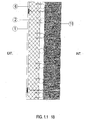
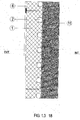
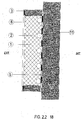
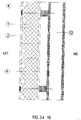
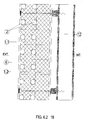
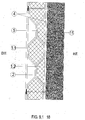
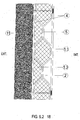
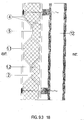
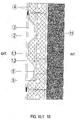
- Fig 14 to 12.2 , 14 and 15 disclose further heat insulation panels not forming part of the invention. Realizations of the heat insulating panels for the systems with active regulation of the heat transition according to the technological handling are illustrated in attached drawings. On Fig. 1.1 to 1.4 is shown a cross-section of heat insulating panel with one layer of insulation with elements of active heat protection - heat barrier undertaken in tube or hose arrangement of distribution of heat transition or cooling liquid medium applied to the perimeter bearing wall buildings.
- heat panel for the systems with active regulation of heat transition illustrated in Fig. 1.2
- It consists of heat insulation system in the form of solid plates, which is attached to pipe or hose arrangement 2 Distribution of heat transition liquid medium as an active heat protection - heat barrier.
- Heat insulation panel is fixed to the wall cladding 11 buildings, attached by mechanical anchors, eg. disc using dowels and / or using adhesives.
- Finishing panels layer 6 of exterior is applied , such as, plaster or other facade material.
- the active heat protection is possible to be fixed to a rigid board insulation 1, directly, without the system board, with appropriate fixtures, mechanical fasteners, as shown in Fig. 1.1 and 1.7 .
- the application of heat-insulating panel is used to attach the cladding to the building wall 11, or the supporting frame construction system of Building 12
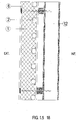
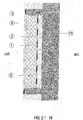
- the second base frame structure of heat insulation panel for systems with active regulation of heat transition shown in Fig. 2.1 and Fig. 15 .
- It consists of a supporting frame 3, whose inner space is filled with heat insulation 1 which may be made of rigid plate but as mineral wool, polyurethane foam and the like.
- Pipe or hose arrangement 2 Distribution of heat transition liquid medium as an active heat protection - heat barrier is applied from the external bearing walls 11 of the building. From the inside of the heat insulation is used a thermally conductive and reflective layer 5, such as aluminum foil.
- Heat insulation panel is fixed to the wall cladding 11 buildings by mechanical anchors, for example. disc using dowels.
- heat-insulating panel layer 6 of exterior For finishing of heat-insulating panel layer 6 of exterior is applied such as plaster or other facade material.
- Fig. 2.4 shows the application of heat insulation panels connected to the carrying frame structural system of 12 buildings.
- Fig. 2.2 active heat protection - heat barrier is placed directly in the heat insulation and a thermally-conductive reflective layer 5 is located by the panel which abuts the periphery of the bearing wall 11 of the building or supporting structural frame system 12 of the building as shown in Fig. 2.5 .
- Fig. 3.1 is shown the construction of heat-insulating panels with a tubular or hose arrangement of 2 heat transition liquid distribution media as heat protection placed directly in a heat insulation panel in part touching the perimeter bearing walls 11 of the building or supporting structural frame system 12 buildings as shown in Fig. 3.5
- Fig. 3.6 is shown the location of active heat protection imposed from the outside while the interior part of the heat-insulating panel.
- the space between the peripheral hub plates 4 is filled with heat insulation 1, which is just below the surface of distant large-scale plate 4 from the interior or developed channel arrangement 2 as channels for airflow.
- Heat insulation panels can be applied to the cladding of the building wall 11 or the supporting frame structural system of 12 buildings.
- Heat insulating panel can be applied to interior and exterior of the buildings on the perimeter walls 11 of the building or structural frames 12 as a lightweight cladding.
- engineered heat insulating panel may serve as a heat barrier combined with a heating or cooling, function of solar absorber associated with heat barrier, heating and cooling and combinations of these functions.
- Heat insulating panel is made up of rigid insulation board 1.1 with troughs milled to store two patterns of hose-pipe or 2 Distribution of heat transition liquid medium such as of active heat protection - heat barrier.
- Elements of active heat protection -heat barrier may be in a solid board and encapsulated or embedded in its production.
- Rigid board insulation 1.1 is provided with the facade of the visual structure of 6 in the form of plaster.
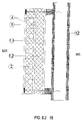
- Heat insulating panel can be used from interior or exterior side of the external bearing walls 11 of the building or structural frames 12, as shown in Fig. 6.2
- Active heat barrier may have in this case the function of the solar heat absorber or barrier, or wall heating, cooling, or combinations of these functions.
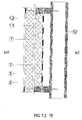
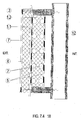
- Heat insulating panel can be placed on exterior side or from interior cladding of walls 11 of the building or supporting structural frame system 12 of the building, as shown in Fig. 7.3
- One part of the active heat protection is placed at the center of large-scale plate 7 and the second part of the active heat protection - heat barrier at the edge of the heat-insulating panel in contact with the cladding of the building wall 11.
- the heat insulation panels is in the inner space of the first insulation 1.1 integrated tube or hose arrangement 2 Distribution of heat transition liquid medium such as an active heat protection - heat barrier. Furthermore, the heat-insulating panels contained heat-conductive layer 5 in the form such film or sheet, which distributes heat-insulating panel into two parts.
- Heat insulating panel can be applied to heat barrier - active heat protection, heating and cooling.
- heat - insulating panel for the systems with active regulation of heat transition with heat transition to peripheral large-circuit plates 4 and channel arrangement 2, such as air ducts, distribution of gaseous heat transition medium, preferably air, such as an active heat protection - heat barrier, as shown in Fig. 9.1 and 9.2 .
- gaseous heat transition medium preferably air
- Fig. 9.1 and 9.2 In the inner space of heat insulating panel with two overarching layers of insulation 1.1 and 1.2 is integrated at least one thermally conductive layer 5 formed, which creates air ducts and heat insulation panel is divided into two parts. Air channels can play the role of solar air collector or heat barrier.
- Fig. 9.2 is illustrated by application of heat insulating panel from the interior side of the building where the panel can be used for air heating, cooling, ventilation.
- heat-insulating panel can also function in the outer wall for easy attachment to the support frame system of construction of 12 buildings, such as shown in Fig. 9.3 .
- an integrated thermally conductive layer 5 In the inner space of heat - insulating panel between the first and second layer of insulation 1.1 and 1.2 is an integrated thermally conductive layer 5 and divided panel into at least two parts.
- the second integrated thermally conductive layer 5 creates air channels.
- Heat insulating panel can be applied to hot air heating, cooling, ventilation in the imposition of the outer walls of the building, as shown in Fig. 10.2 Heat insulating panel can be used such as solar air collector, heat barrier for its imposing exterior side of the building as shown in Fig. 10.1 Heat insulating panel is also possible to fit the carrier frame construction system 12 of the building, as shown in Fig. 10.3
- Heat insulation panels are constructed with a supporting frame 3 filled heat insulation and a tube or hose 2 arranged by adding distribution of liquid heat transition media such as active heat protection - heat barrier, located at the edge of heat-insulating panel according to whether it is on the floor heating or cooling.
- liquid heat transition media such as active heat protection - heat barrier
- the cavity 9 in the core of heat insulation can be applied to one or more large-scale heat exchange bodies 10, as shown in Fig. 12.2
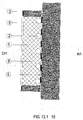
- Example 13 discloses a specific realization forming part of the invention, decribing a construction of heat insulation panels with active heat protection system for the application of active regulation of heat transition in the modification of self-supporting of heat insulation panel, as shown in Fig. 13.1 , in which is contained in the supporting frame 3 with heat insulation and a tube or hose or channel distribution arrangement of two heat transition liquid or gaseous medium applied permanent connection to the supporting structure 8 of the interior side and / or exterior side.
- heat isolation 1 provided with an insulation of facade structure 6 in the form of plaster or other facade materials.
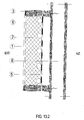
- the supporting structure 8 is a concrete or reinforced concrete or keramzit panel or sheet metal or wood, metal, plastic plate or brick structure or supporting frame of the building construction system as an alternative shown in Fig. 13.2 .
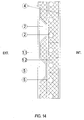
- His distant large scale plate 4 or the visual structure are the metal plates or sheets and at the distant large-scale plate 4 are formed channel organization 2 distribution of gaseous heat transition medium as shown in Fig. 14 .
- Other structural details are sufficiently described already in Example 10.
Landscapes
- Engineering & Computer Science (AREA)
- Life Sciences & Earth Sciences (AREA)
- Mechanical Engineering (AREA)
- Sustainable Development (AREA)
- Architecture (AREA)
- Structural Engineering (AREA)
- Civil Engineering (AREA)
- Physics & Mathematics (AREA)
- Sustainable Energy (AREA)
- Thermal Sciences (AREA)
- Chemical & Material Sciences (AREA)
- Combustion & Propulsion (AREA)
- General Engineering & Computer Science (AREA)
- Building Environments (AREA)
Description
- Technological handling is related to constructional handling of heat-insulating panel with active thermal protection for application with system of active regulation of heat transition used in panel building of new buildings and for the construction of prefabricated objects made of light external claddings and production of internal environment of the buildings in application of low-temperature heating and high-temperature cooling mostly with the use of renewable energy sources. Technological handling falls within the area of building industry.
- Design of usual energy saving buildings consists of the design of building constructions with massive layers of thermal insulation, that have from the standpoint of structure required thermal resistance, i.e. coefficient of heat transition and energy systems used for heating, ventilation and cooling, that use mainly renewable energy sources that is mostly solar and geothermal energy.
- In case of usual energy saving buildings, the system of building constructions with massive layer of thermal insulation are used, that have from the standpoint of the structure required thermal resistance, i.e. coefficient of heat transition. Even panels of shell structure, where the space between the concrete is filled with heat insulating materials, is filled with heat-insulating material, e.g. foam material. The shortcoming of such construction of panels is that at the connections of metal corrosion occurs in the intermediate space, where there in the winter temperature falls below the dew point and will bring about lasting moisture.
- Even construction of prefabricated panels with heat-insulation applied to concrete panel during his production as it is described in documents
FR-A-2584437 FR-A-2 507647 - Systems are also known as heat-insulation panels applied as lightweight cladding on the supporting frame structure.
- System of active heat protection that is already applied in the construction of some buildings has brought qualitatively new dimension into the problem of building constructions for energy saving buildings. Active heat protection brings so called internal energy source, considered as an energy system integrated into the zone between the static part and heat insulating part of the building construction in a form of low-temperature heat transitioning material obtained from captured and cumulated solar and geothermal energy to building constructions. Application of this active heat protection is implemented e.g. to a building where for the purpose of the distribution of low-temperature heat transitioning liquid material obtained from solar and geothermal energy to the exterior wall of constructed building, or to the interior part of the wall of e.g. listed buildings, tube system or hosepipe system is attached and overlaid with plaster, heat-insulation and cover plaster. This is applied to new buildings as well as to existing buildings when providing heat cladding.
- Moreover, a way of building by permanent shuttering, mostly polystyrene one, is known, where active heat protection is positioned and just after the action of positioning on the building the inner space of permanent shuttering is filled with poured concrete mixture. In the next step, the concrete must become solid and reach required stability within 28 days. This technology is so called "wet process of building". This is applied only to new buildings.
- The disadvantage of heat-insulating panels without active heat protection is that their heat resistance is directly proportional to the thickness of heat-insulation. Their function is to form the cover construction of building. They cannot actively react to sudden changes of exterior temperature. They do not have the capacity to provide heating, cooling and ventilation of the building.
- Low thermal losses, i.e. thermal gains predetermine application of low-temperature heating systems e.g. large-area floor-, wall- and ceiling- heating or cooling for energy saving buildings. Recuperative ventilation of buildings with capacity of warm air heating system or cooling system is inevitable for reaching passive standard of energy.
- Nowadays, we know numbers of variants combining in
principle 3 types of energy, i.e. solar energy obtained from solar collectors and solar panel roofs, geothermal energy obtained from heat pumps, soil thermal reservoirs, soil collectors or energy from surrounding environment obtained by heat pump in a system water-to-water, air-to-air and ground-to-ground. In many cases, combinations of these sources of heat and energetic systems are unnecessarily over-dimensioned and over-combined and therefore their investment costs are in view of overall economic return and energy saving unacceptable. The only way to achieve the design of optimal energy saving building from the point of view of energy demandingness, profits and environmental load is right application of heat sources and integration of energy systems in a building. Perfect harmony between building constructions and energy systems forming healthy, hygienically satisfying inner environment of buildings must be achieved. - Laid open document
US 2008/0295450 A1 presents a solution for a prefabricated multi-layer wall panel, which can be used for a modular building system. Described in detail is the manufacturing process of the panels. The known prefabricated multi-layer wall panel reduce the necessary steps of procedure at building construction sites The known prefabricated multi-layer wall panel comprises a layer comprising empty installation channels. The channels are provided for incorporating electric and cooling- or heating installations. The frames of the prefabricated multi-layer wall panel comprise at the upper and lower end openings, through which the electric, cooling- or heating-installations can be mounted. The known prefabricated multi-layer wall panels are an integral part of the building and cannot be mounted later on at the walls of the building. - Above mentioned shortcomings of existing systems of constructions of heat insulating panels without active heat regulation with respect to limited function, higher operating costs of the building and saving of primary sources of energy led to the possibility to solve this problem by appropriate technological means. The result of such effort is the further described construction of a heat-insulating panel for the systems with active regulation of heat transition.
- The object of the present invention is solved by the technical features according to
claim 1. - The invention relates to a heat-insulating panel for systems with active regulation of heat transition which comprises at least one heat-insulation.
- According to the invention the above mentioned shortcomings are removed by the fact that on the surface of the heat-insulation or in the volume of the heat-insulation is applied at least one of a tube or hose or channel arrangement which directly distributes a heating or cooling liquid or gaseous media, whereby the heat-insulation is bounded at least from one side by a supporting frame and/or bounded at least from one side by a large scale boundary plate. The supporting frame and/or the large scale boundary plate comprises bindings and/or anchors, whereby the heat-insulation panel is applied by said bindings and/or anchors to a supporting structure and said supporting structure itself is connected to an interior and/or exterior side of a wall of a building.
- The heat-insulating panel according to the invention can have multiple purposes or can have just one. The most important functions are e.g. function of heat barrier, wall heating, cooling, ventilation, solar absorbent and combinations of these functions.
- Advantageous arrangements and improvements are objects of dependent claims.
- Supporting structure of the panel consists of exterior and / or interior distant large-straight or profiled plate or panel design with a supporting frame which can be made of wood, plywood , metal profiles, plates, sheet metal, plastic or other suitable materials.
- Heat-insulation for the purposes of this invention may be polystyrene, mineral wool, stone wool, a mixture of polyurethane, cellulose, organic matter such as straw, wool, fabrics applied in heat-insulation systems of contact and ventilation and all other heat-insulation and their combinations applied in construction.
- To improve the static and dynamic properties of heat insulating panel with active heat protection system for the application of active management of heat transition is preferred area bounded by exterior and / or interior distant large-straight or shaped plate affixed to a supporting frame or reinforcing elements. In order to fix this heat insulation panel with active heat protection system for the application of active management heat transition, for example by using an additional heat insulation on the perimeter of the building panel, the carrier portion of heat-insulating panels contain appropriate anchors. The opportunity is that at least one face surface heat-insulating panel is provided with a protective film for reasons such as storage or transport. This protective film can be thin PVC film, which is after the delivery of heat insulation panel with active regulation of heat transition on the site swept up or left. Part of heat- insulating panel with active heat protection system for the application of active regulation of heat transition can also be thermally conductive or reflective layer.
- This thermally conductive or reflective layer may be based on coatings, thermally conductive films, conductive thermal spraying, coating or other combinations. For purposes of applying the heat - insulation panel with active heat protection system for the application of active regulation of heat transition from the interior side of the building is directed to the interior surface of the panel lined with interior finishes. But also for purposes of applying the heat insulation panel with active heat protection for the application of active regulation of heat transition from the outside, the building is directed into the exterior panel area lined with exterior surface treatment such as mesh, adhesive plaster and the like. Heat insulation panels can be multi-use but may also be special purposed. Their most important functions are: heat barrier, wall heating, cooling, ventilation, solar absorber, and combinations of these methods function. Heat insulation panels can be applied from the outside of the building or interior of the building including on the horizontal structures and in the capacity of floor and ceiling heating and cooling. Described above for the basic construction of heat insulating panel with active heat protection system for the application of active regulation of heat-transition lead to the following designing solutions of these panels:
- They are heat-insulating panels with one layer of insulation, which consist of active heat protection - heat barrier realized by tubular or hose or channel distribution arrangement the heat transition or cooling liquid or gaseous medium fit with devices on the solid board insulation as manufactured.
- Elements of the active heat protection - heat barrier may be attached to an insulating board system as used for example for laying pipes for underfloor heating.
- Elements of active heat protection - heat barrier may be deposited directly in the slot milled in the solid board insulation, or may be encapsulated, embedded in a rigid board insulation directly in its production. Active heat protection - heat barrier will be in all the above alternatives applied to at least one side of heat-insulating panel. Consequently the application of heat insulation panels for heat barrier, low-temperature heating, high temperature cooling, solar absorber. And then there are of heat insulation panels with one layer of insulation and the supporting frame, where the space between the frame is filled with heat insulation.
- Active heat protection - heat barrier is located just below the interior and / or exterior surface of the heat-insulating panel and is in contact with at least one thermally conductive layer. Heat insulating panel can be applied on interior and exterior of the building walls, or structural frames as lightweight cladding. Consequently, it is his application to heat barrier, low-temperature heating, high-temperature cooling and solar absorber. They are heat-insulating panels with one layer of insulation and peripheral hub plates. In these panels is the space between the peripheral hub plates filled with heat insulation.
- Active heat protection - heat barrier is located just below the interior and / or exterior surface of heat-insulating panel and is in contact with at least one thermally conductive layer. Heat insulating panel can be applied on interior and exterior side of the building walls, or structural frames as lightweight cladding. Consequently, it is his application to heat barrier, low-temperature heating, high temperature cooling, solar absorber. They are heat-insulating panels with one layer of insulation and marginal plates and large-scale air channels. In these panels is the space between the hub plates filled with heat insulation.
- Air ducts are located just below the interior and / or exterior surface of the heat-insulating panel and are in contact with at least one thermally conductive layer. Heat insulating panel can be applied on interior and exterior side of the building walls, or structural frames as lightweight cladding.
- Consequently, it is his application for air heating and cooling, ventilation, solar hot air collector. They are heat-insulating panels with one layer of insulation and peripheral hub plates in combination with air ducts and heat barrier. In these panels is the space between the peripheral hub plates filled with heat insulation. Air ducts and heat barrier are placed just below the interior and / or exterior surface of the heat-insulating panel and are in contact with at least one thermally conductive layer. Heat insulation panels can be applied on interior and exterior side of the building walls, or structural frames as lightweight cladding. Consequently, it is his application to heat barrier, and low temperature hot air heating, cooling, ventilation, heat-air solar collector. They are heat-insulating panels with multiple layers of insulation, which consist of active heat protection - heat barrier fit with devices for solid board as heat insulation. from polystyrene. Active heat protection - heat barrier is maybe anchored to an insulating board system as used for example for laying pipes for underfloor heating.
- Active heat protection - heat barrier can may be deposited directly as milled grooves in rigid board insulation, or may be embedded, embedded in a rigid board insulation directly in its production. Active heat protection - heat barrier will be in all the above alternatives applied to at least one side heat-insulating panel, and can also be placed between layers of insulation. Consequently, it is his application to heat barrier, low-temperature heating, high-temperature cooling, solar absorber. They are heat-insulating panels with multiple layers of insulation with the median large-plate. The supporting frame is attached at the panels on the center large format plate. The center plate can be large-wood-based, drywall, metal, plastic, metal and other materials and combinations thereof.
- Heat insulation panel for the systems with the application of active regulation of heat transition provided with the median large-plate can be used for heat insulation of buildings already constructed, ie to use the exterior side side of the building. In that case, the supporting frame attached to the external wall insulation of buildings and anchors is mounted on the peripheral wall of the building.
- Heat insulation panel for the systems with the application of active regulation of heat transition provided with the median large-plate can also be used for structural frames of the building. The heat-insulating panel can be applied to heat barrier - active heat protection, heating and cooling. In order to adapt to the mounting dimensions of the structures is advantageous if the intermediate large-plate heat insulating panel for the system with the application of active regulation of excess heat transition through the frame. Then it can be a spur to adapt to local building requirements. Heat insulating panel for systems with active regulation of heat transition can be arranged in the modification of self-supporting heat insulating panel. In this case, the supporting frame is with heat insulation and tube or hose or channel distribution of arrangement the heat transition liquid or gaseous medium applied permanent connection to the supporting structure of its interior and / or exterior side side. The supporting structure for the purposes of this invention, concrete, reinforced concrete, expanded clay concrete panel or sheet metal, wood, metal, plastic plate or brick structure.
- Heat insulating panel for systems with active regulation of heat transition can be arranged in the modification of light facade. In this case, the base layer or lining interior / or exterior side finishes are metal plates or sheets.
- Preferably be at least one metal plate or metal cladding or interior layers of the visual / or exterior side surface to create at least one pipe or hose or channel distribution arrangement the heat transition liquid or gaseous media.
- They are heat-insulating panels with multiple layers of insulation with peripheral hub plates. For the heat insulation panels is in the inner space with insulation integrated at least one thermally conductive surface with active heat protection, which divides the panel to at least two parts. Panel can be applied to heat barrier - active heat protection, heating and cooling.
- They are heat-insulating panels with multiple layers of insulation with the peripheral plates with large-scale air channels. For the heat insulation panels is in the inner space with insulation integrated at least one thermally conductive surface, which creates air channels and distributes heat insulation panel to at least two parts. Panel can be applied to hot air heating, cooling, ventilation and air as the solar collector.
- They are heat-insulating panels with multiple layers of insulation with peripheral hub plates with air ducts and heat barrier. For the heat insulation panels with active heat protection system for the application of active regulation with peripheral heat transition plates with large-scale air channels and heat barrier is in the inner space with insulation integrated at least one thermally conductive surface, which creates air channels and divides the panel to at least two parts and at least one thermally conductive surface with heat barrier - active heat protection. The heat-insulating panel can be applied to hot air heating, cooling, ventilation, and air solar collector, heat barrier, low-temperature heating and high temperature cooling.
- They are heat-insulating panels with peripheral hub plates and warmed with a hollow core allowing controlled flow of air . For the heat insulation panels is active heat protection - heat barrier consisting of an isolated hollow core. The hollow core of insulation can be applied to one or more large-scale heat exchange units. It is also possible combination with active heat protection based tubes impregnated with liquid.
- The advantages of the construction of the heat insulating panel for systems with active regulation of the heat transition according to established technological handling are apparent from the effects how it externally manifests itself. It is possible to point out, that building constructions for energy saving buildings are not dependent on the thickness of the static part of the construction but on the heat insulating ability of external insulating layers. This means that static part can be of maximum admissible thickness. By application of the building constructions with inner energy source, so-called active heat protection used in energy saving buildings, technical heat characteristics equal to usual building constructions used in energy saving buildings shall be achieved with few times thicker heat insulation. Building constructions with inner energy source of energy use at least 30% of long-term accumulated energy in a long-term heat reservoir with respect to the temperature of heat transitioning material supplied to the heat barrier-active heat protection with the temperature from 12°C. Rest of the energy is supplied from the short-term accumulation containers charged by the solar heat collectors and heat pump using the collector of soil heat reservoir, eventually by the other source. These abovementioned advantages are derived from abovementioned suggested constructions of heat insulating panels for systems with active regulation of heat transition according to the technological handling, that allows to use abovementioned constructions of systems of energy saving buildings.
-
Fig 14 to 12.2 ,14 and15 disclose further heat insulation panels not forming part of the invention. Realizations of the heat insulating panels for the systems with active regulation of the heat transition according to the technological handling are illustrated in attached drawings. OnFig. 1.1 to 1.4 is shown a cross-section of heat insulating panel with one layer of insulation with elements of active heat protection - heat barrier undertaken in tube or hose arrangement of distribution of heat transition or cooling liquid medium applied to the perimeter bearing wall buildings. -
Fig. 1.5 to 1.8 show a cross-section on the construction of heat insulating panel with one layer of insulation elements with active heat protection - heat barrier placed inside of tube or hose arrangement of distribution of heat transition or cooling liquid medium applied to the support frame system of construction of buildings. -
Fig. 2.1 to 2.3 show a cross-section on the construction of heat insulating panel frame structure with one layer of insulation elements with active heat protection - heat barrier placed inside of tube or hose arrangement of distribution of heat transition or cooling liquid medium applied to the perimeter bearing wall buildings. -
Fig. 2.4 and2.5 show a cross-section on the construction of heat insulating panel frame structure with one layer of insulation elements with active heat protection - heat barrier placed inside of tube or hose arrangement of distribution of heat transition or cooling liquid medium applied to the support frame system of construction of buildings. -
Fig. 3.1 to 3.3 show a cross-section on the construction of heat insulation panel with a peripheral large-scale plates with one layer of insulation elements with active heat protection - heat barrier placed inside of tube or hose arrangement of distribution of heat transition or cooling liquid medium applied to the perimeter bearing wall buildings.Fig. 3.4 to 3.6 show a cross-section of the construction of heat insulation panel with a peripheral large-scale plates with one layer of insulation elements with active heat protection - heat barrier placed inside of tube or hose arrangement of distribution of heat transition or cooling liquid medium applied to the support frame system of construction of buildings.Fig. 4.1 and4.2 show a cross-section of the construction of heat insulation panel with a peripheral large-scale plates with one layer of insulation elements with active heat protection - heat barrier implemented distribution channel arrangement of heat transition or cooling gaseous medium. -
Fig. 5.1 and5.2 show a cross-section of the construction of heat insulation panel with a peripheral large-scale plates with one layer of heat insulation in combination with a tubular or hose, while also organizing the distribution channel with heat transition liquid and gaseous media as a heat barrier and air ducts. -
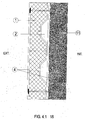
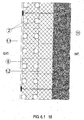
Fig. 6.1 and6.2 show a cross-section of the construction of heat insulating panel with two layers of heat insulation in combination with two tubular or hose arrangement distribution of heat transition liquid medium and provided with plaster on the facade. -
Fig. 7.1 and7.2 show a cross-section of the construction of heat insulating panel with one central large-plate with two layers of insulation elements with active heat protection - heat barrier placed inside of tube or hose arrangement of distribution of heat transition or cooling liquid medium and large-plate center, applied to the nasal circumferential wall of the building. -
Fig. 7.3 and7.4 show a cross-section of the construction of heat insulating panel with one central large-plate with two layers of insulation elements with active heat protection - heat barrier placed inside of tube or hose arrangement of distribution of heat transition or cooling liquid medium and large-plate center, applied to a carrier frame building construction system. -
Fig. 8.1 and8.2 show a cross-section of the construction of heat insulating panel with at least one large-marginal plate with two layers of heat insulation in combination with a tubular or hose arrangement of distribution of heat-carrying liquid medium and heat-conductive layer between two layers of insulation. - On
Fig. 9.1 to 9.3 is shown a cross-section of the construction of heat-insulating panel with the two outermost large-printed plates with two layers of heat insulation in combination with the channel arrangement of the heat transition gas distribution media. -
Fig. 10.1 to 10.3 show a cross-section of the construction of heat insulating panel with two large-scale boundary plates and two layers of insulation in combination with tubing or hose arrangement of heat transition liquid distribution media and distribution channel arrangements gaseous heat transition medium. -
Fig. 11 shows a cross-section of the application of heat insulating panel for low-temperature floor ceiling heating, low temperature ceiling heating and high temperature cooling. OnFig. 12.1 and12.2 are shown cross-sections of the construction of heat insulating panel with two large-scale boundary plates as heat insulation in the cavity and placed it in an alternative heat transition element. -
Fig. 13.1 and13.2 disclose a heat insulating panel according to the invention with the frame structure and supporting structure.Fig. 14 shows a cross-section of the construction of heat insulating panel in lightweight concrete facade. -
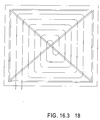
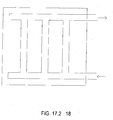
Fig. 15 shows a cross-section of construction of heat insulation panel with a supporting frame itself. OnFig. 16.1 to 16.4 is shown view to laying of active heat protection - heat barrier in heat insulation panels. OnFig. 17.1 and17.2 is shown a view of the imposition of air ducts in heat insulation panels. OnFig. 18.1 and18.2 is shown the way of the mounting assembly and supply of heat-insulating panel. - In this case of specific realization of the subject of technological handling is described the first basic construction of heat panel for the systems with active regulation of heat transition illustrated in
Fig. 1.2 It consists of heat insulation system in the form of solid plates, which is attached to pipe orhose arrangement 2 Distribution of heat transition liquid medium as an active heat protection - heat barrier. Heat insulation panel is fixed to the wall cladding 11 buildings, attached by mechanical anchors, eg. disc using dowels and / or using adhesives. Finishingpanels layer 6 of exterior is applied , such as, plaster or other facade material. - In an alternative embodiment shown in
fig. 1.5 is the application of heat insulating panel anchored to the support frame system of construction ofBuilding 12. - In variant realisations, the active heat protection is possible to be fixed to a
rigid board insulation 1, directly, without the system board, with appropriate fixtures, mechanical fasteners, as shown inFig. 1.1 and1.7 .The application of heat-insulating panel is used to attach the cladding to thebuilding wall 11, or the supporting frame construction system ofBuilding 12 - In the alternative shown in
FIG. 1.3 it is possible pipe orhose arrangement 2 Distribution of heat transition liquid medium as an active heat protection placed in troughs milled in a rigid board insulation first The application of heat-insulating panel is used to attach the cladding of thebuilding wall 11 or the supporting frame structural system of thebuilding 12, as shown inFig. 1.6 - In the alternative shown in
FIG. 1.4 , the possible elements of an active heat protection is possible to pour directly in the manufacture of rigid insulation board first .The application of heat-insulating panel it is used to attach the cladding of thebuilding wall 11 or the supportingframe construction system 12, as shown inFig. 1.8 . - In this case of specific realization of the subject of technological handling is described the second base frame structure of heat insulation panel for systems with active regulation of heat transition shown in
Fig. 2.1 andFig. 15 . It consists of a supportingframe 3, whose inner space is filled withheat insulation 1 which may be made of rigid plate but as mineral wool, polyurethane foam and the like. Pipe orhose arrangement 2 Distribution of heat transition liquid medium as an active heat protection - heat barrier is applied from theexternal bearing walls 11 of the building. From the inside of the heat insulation is used a thermally conductive andreflective layer 5, such as aluminum foil. - By supporting the outer wall of the
building 11 there is direct contact of active heat protection - heat barrier wall with 11 buildings, or even used a heat-conductivereflective layer 5, as shown inFig. 2.3 Heat insulation panel is fixed to the wall cladding 11 buildings by mechanical anchors, for example. disc using dowels. - For finishing of heat-insulating
panel layer 6 of exterior is applied such as plaster or other facade material. - In the alternative, in
Fig. 2.4 shows the application of heat insulation panels connected to the carrying frame structural system of 12 buildings. - In the alternative, in
Fig. 2.2 is shown active heat protection - heat barrier is placed directly in the heat insulation and a thermally-conductivereflective layer 5 is located by the panel which abuts the periphery of the bearingwall 11 of the building or supportingstructural frame system 12 of the building as shown inFig. 2.5 . - In this case of specific realization of the subject of technological handling is described the third basic design of heat insulating panel for systems with active regulation of heat transition with one layer of the heat insulation and peripheral hub plates.
- On
Fig. 3.1 is shown the construction of heat-insulating panels with a tubular or hose arrangement of 2 heat transition liquid distribution media as heat protection placed directly in a heat insulation panel in part touching theperimeter bearing walls 11 of the building or supportingstructural frame system 12 buildings as shown inFig. 3.5 - In the alternative, in
Fig. 3.3 and3.4 is shown the location of active heat protection imposed from the outside of the heat-insulating panel. - In the alternative, in
Fig. 3.6 is shown the location of active heat protection imposed from the outside while the interior part of the heat-insulating panel. - In this case of specific realization of the subject of technological handling is described derived construction of heat-insulating panel for the systems with active regulation of heat transition with heat transition plates with
peripheral hub Fig. 4.1 and4.2 . - The space between the
peripheral hub plates 4 is filled withheat insulation 1, which is just below the surface of distant large-scale plate 4 from the interior or developedchannel arrangement 2 as channels for airflow. Heat insulation panels can be applied to the cladding of thebuilding wall 11 or the supporting frame structural system of 12 buildings. - In this case of specific realization of the subject of technological handling is described derived construction of heat-insulating panel for the systems with active regulation of heat transition with heat transfer plates with
peripheral hub 4 in combination with a tubular or hose and at the same time with 2-channel distribution arrangement of heat transition of liquid and gaseous media as a heat barrier and air ducts, as shown inFig. 5.1 and5.2 . - Air ducts and active heat protection - heat barrier placed just below the interior and exterior surface of heat-insulating panel. Heat insulating panel can be applied to interior and exterior of the buildings on the
perimeter walls 11 of the building orstructural frames 12 as a lightweight cladding. - Thus, engineered heat insulating panel may serve as a heat barrier combined with a heating or cooling, function of solar absorber associated with heat barrier, heating and cooling and combinations of these functions.
- In this case of specific realization of the subject of technological handling is described derived construction of heat panel for the systems with active regulation of heat transition illustrated in
Fig. 6.1 and6.2 . Heat insulating panel is made up of rigid insulation board 1.1 with troughs milled to store two patterns of hose-pipe or 2 Distribution of heat transition liquid medium such as of active heat protection - heat barrier. Elements of active heat protection -heat barrier may be in a solid board and encapsulated or embedded in its production. - On the rigid insulation board 1.1 is glued a second layer of insulation 1.2. Rigid board insulation 1.1 is provided with the facade of the visual structure of 6 in the form of plaster. Heat insulating panel can be used from interior or exterior side of the
external bearing walls 11 of the building orstructural frames 12, as shown inFig. 6.2 - Active heat barrier may have in this case the function of the solar heat absorber or barrier, or wall heating, cooling, or combinations of these functions.
- In this case of specific realization of the subject of technological handling is described derived construction of heat insulating panel for the systems with active regulation of heat transition with multiple layers of insulation with the median large-
plate 7, as shown inFig. 7.1 The supportingframe 3 from the central panel is attached to the center of thelarge format plate 7. The first and second layer of insulation 1.1 and 1.2 is imposed on both sides of the median large-scale plates 7. Rigid board insulation 1.1 is provided with the facade of the visual structure of 6 in the form of plaster or other facade materials. - Pipe or
hose arrangement 2 Distribution of heat transition liquid medium such as an active heat protection - heat barrier affects conductive heatreflective foil 5. Heat insulating panel can be placed on exterior side or from interior cladding ofwalls 11 of the building or supportingstructural frame system 12 of the building, as shown inFig. 7.3 - Alternative solution to the heat-insulating panel as shown in
Figure 7.2 allows you to place two layers of pipe or hose arrangement of two heat transition liquid distribution media such as an active heat protection - heat barrier, while both touching two thermally conductivereflective foil 5. - One part of the active heat protection is placed at the center of large-
scale plate 7 and the second part of the active heat protection - heat barrier at the edge of the heat-insulating panel in contact with the cladding of thebuilding wall 11. - An alternative solution for positioning heat-insulating panels for structural frames of the
building 12 shown inFIG. 7.4 Dual active heat barrier allows to use multiple combinations of its functions. - In this case of specific realization of the subject of technological handling is described derived construction of heat - insulating panel for the systems with active regulation of heat transition with two layers of heat insulation of 1.1 and 1.2 with at least one large-
marginal plate 4, as shown inFig. 8.1 and8.2 . - In the heat insulation panels is in the inner space of the first insulation 1.1 integrated tube or
hose arrangement 2 Distribution of heat transition liquid medium such as an active heat protection - heat barrier. Furthermore, the heat-insulating panels contained heat-conductive layer 5 in the form such film or sheet, which distributes heat-insulating panel into two parts. - Heat insulating panel can be applied to heat barrier - active heat protection, heating and cooling. On the
cladding building wall 11 heat-insulating panel attached directly in contact with the second layer of insulation 1.2, as shown inFig. 8.1 - When applying a heat insulating panel for
structural frames 12 buildings, such as shown in obr.8.2 is necessary to use two largemarginal plates 4. Both largemarginal plates 4 can be joined together in the building normally used such as connecting elements is only shown on other figures. - In this case of specific realization of the subject of technological handling is described derived construction of heat - insulating panel for the systems with active regulation of heat transition with heat transition to peripheral large-
circuit plates 4 andchannel arrangement 2, such as air ducts, distribution of gaseous heat transition medium, preferably air, such as an active heat protection - heat barrier, as shown inFig. 9.1 and9.2 . In the inner space of heat insulating panel with two overarching layers of insulation 1.1 and 1.2 is integrated at least one thermallyconductive layer 5 formed, which creates air ducts and heat insulation panel is divided into two parts. Air channels can play the role of solar air collector or heat barrier.Fig. 9.2 is illustrated by application of heat insulating panel from the interior side of the building where the panel can be used for air heating, cooling, ventilation. - Alternatively, the use of heat-insulating panel can also function in the outer wall for easy attachment to the support frame system of construction of 12 buildings, such as shown in
Fig. 9.3 . - In this case of specific realization of the subject of technological handling is described derived construction of heat-insulating panel for the systems with active regulation of heat transition system for the application of active control of heat transition of a large-
scale boundary plates 4, with the first tube orhose arrangement 2 Distribution of heat transition liquid medium such as an active heat protection - heat barrier, and the second channel arrangement of two gas distribution of heat transition media, created such as air ducts for the purpose of warm-air heating, cooling, ventilation, which is shown inFig. 10.1 to 10.3 andFig. 14 . - In the inner space of heat - insulating panel between the first and second layer of insulation 1.1 and 1.2 is an integrated thermally
conductive layer 5 and divided panel into at least two parts. The second integrated thermallyconductive layer 5 creates air channels. - Heat insulating panel can be applied to hot air heating, cooling, ventilation in the imposition of the outer walls of the building, as shown in
Fig. 10.2 Heat insulating panel can be used such as solar air collector, heat barrier for its imposing exterior side of the building as shown inFig. 10.1 Heat insulating panel is also possible to fit the carrierframe construction system 12 of the building, as shown inFig. 10.3 - In this case of specific realization of the subject of technological handling is described a further derived structure of heat insulation panels with active heat protection system for the application of active regulation of heat transition for low-temperature floor heating, low temperature heating and cooling with high temperature ceiling
peripheral hub plates 4, as shownFig. 11 . - Heat insulation panels are constructed with a supporting
frame 3 filled heat insulation and a tube orhose 2 arranged by adding distribution of liquid heat transition media such as active heat protection - heat barrier, located at the edge of heat-insulating panel according to whether it is on the floor heating or cooling. - In this case of specific realization of the subject of technological handling is described another derived construction of heat insulation panels with active heat protection system for the application of active control of peripheral
heat transition plates 4 and hub with warmed insulated hollow core - hollow 9 formed of heat insulation allowing a controlled flow thermally conditioned air through a pipe or hose, or 2 channel distribution arrangement the heat transition liquid or gaseous medium, thereby implementing the function of active heat protection - heat barrier, as shown inFig. 12.1 - Alternatively, the
cavity 9 in the core of heat insulation can be applied to one or more large-scaleheat exchange bodies 10, as shown inFig. 12.2 - It is also possible combination with active heat protection on the basis of pipe or tubing impregnated with liquid.
- Example 13 discloses a specific realization forming part of the invention, decribing a construction of heat insulation panels with active heat protection system for the application of active regulation of heat transition in the modification of self-supporting of heat insulation panel, as shown in
Fig. 13.1 , in which is contained in the supportingframe 3 with heat insulation and a tube or hose or channel distribution arrangement of two heat transition liquid or gaseous medium applied permanent connection to the supportingstructure 8 of the interior side and / or exterior side. - It is preferred that between the supporting
structure 8 and heat insulation is an integrated thermally-conductive layer 5 .From facade of heat insulation panel isheat isolation 1 provided with an insulation offacade structure 6 in the form of plaster or other facade materials. - In doing so, the supporting
structure 8 is a concrete or reinforced concrete or keramzit panel or sheet metal or wood, metal, plastic plate or brick structure or supporting frame of the building construction system as an alternative shown inFig. 13.2 . - In this case of specific realization of the subject of technological handling is described another combined derived construction of heat insulating panels with active heat protection system for the application of active regulation of heat transition in lightweight concrete facade.
- His distant
large scale plate 4 or the visual structure are the metal plates or sheets and at the distant large-scale plate 4 are formedchannel organization 2 distribution of gaseous heat transition medium as shown inFig. 14 . Other structural details are sufficiently described already in Example 10. - The construction of heat insulating panel for the systems with active regulation of heat transition according to invention finds its utility in building industry.
Claims (13)
- An assembly and a wall, wherein the assembly comprises a heat-insulating panel for systems with active regulation of heat transition and a supporting structure, said heat-insulating panel comprises
at least one heat-insulation (1),
on the surface of the heat-insulation (1) or in the volume of the heat isolation (1) is applied at least one of a tube or hose or channel arrangement (2) which distribute directly a heating or cooling liquid or gaseous media, whereby the heat-insulation (1) is bounded at least from one side by a supporting frame (3) and/or bounded at least from one side by a large scale boundary plate (4),
whereby the supporting frame (3) and/or the large scale boundary plate (4) comprises bindings and/or anchors characterized in that
the heat-insulation panel is applied by said bindings and/or anchors to the supporting structure (8) and said supporting structure (8) itself is connected to an interior and/or exterior side of the wall (12) of a building. - An assembly and a wall according to claim 1, characterized in, that the heat-insulation (1) is made on the basis of insulating foam and/or mineral wool and/or stoneware waves and/or a mixture of polyurethane and/or cellulose and/or organic matter.
- An assembly and a wall according to claim 2, characterized in, that the at least one heat-insulation.(1) is provided with a thermally conductive or reflective or thermally conductive and heat reflective layer and/or film (5).
- An assembly and a wall according to claim 3, characterized in, that the thermally conductive or reflective or thermally conductive and heat reflective layer and/or film (5) is positioned between the heat-insulation (1) and the at least one of the tube or hose or channel arrangement (2), which distribute the heating or cooling liquid or gaseous media.
- An assembly and a wall according to claim 1, characterized in, that the heat-insulation (1) is provided with a visual structured finishing panel layer (6) on its exterior side.
- An assembly and a wall according to at least one of claims 1-5, characterized in, that the heat isolation (1) comprises at least a first and a second heat-insulation (1.1., 1.2).
- An assembly and a wall according to at least one of claims from 1 - 6, characterized in, that within the heat-insulation (1) is located a large scale plate (7).
- An assembly and a wall according to claim 7, characterized in, that the large scale plate (7) exceeds the supporting frame (3).
- An assembly and a wall according to claim 1, characterized in, that the heat-insulating panel comprises a cavity (9) or a channel arrangement (2), which distribute a gaseous heating or cooling medium, and further comprises the large scale boundary plate (4).
- An assembly and a wall according to claim -9, characterized in, that within the cavity (9) is positioned at least one heat-exchange element (10).
- An assembly and a wall according to claim 1, characterized in, that the supporting structure (8) is a concrete or reinforced concrete or ceramic panel or a sheet metal or wood or a metal plate or a plastic plate or a brick structure.
- An assembly and a wall according to claims 1 or 5, characterized in, that in a modification of lightweight concrete cladding, the channel arrangement (2) is positioned at the exterior side of the heat-insulating panel and the large-scale boundary plate (4) or the visual structured finishing panel layer (6) are in the form of a metal plate or plates on the basis of wood and/or plastic and/or polycarbonates and/or glass and/or stone.
- An assembly and a wall according to claim 12, characterized in, that the channel arrangement (2) distributes a gaseous heating or cooling medium.
Priority Applications (1)
| Application Number | Priority Date | Filing Date | Title |
|---|---|---|---|
| PL11716446T PL2572057T3 (en) | 2010-05-20 | 2011-02-25 | Heat insulating panel with active regulation of heat transition |
Applications Claiming Priority (3)
| Application Number | Priority Date | Filing Date | Title |
|---|---|---|---|
| SK5019-2010A SK50192010A3 (en) | 2010-05-20 | 2010-05-20 | Panel for thermal insulation systems with active control passage of heat |
| SK5031-2010U SK5725Y1 (en) | 2010-05-20 | 2010-05-20 | Thermal insulating panel for active control systems with heat transfer |
| PCT/SK2011/000004 WO2011146025A1 (en) | 2010-05-20 | 2011-02-25 | Heat insulating panel with active regulation of heat transition |
Publications (2)
| Publication Number | Publication Date |
|---|---|
| EP2572057A1 EP2572057A1 (en) | 2013-03-27 |
| EP2572057B1 true EP2572057B1 (en) | 2014-10-15 |
Family
ID=44320378
Family Applications (1)
| Application Number | Title | Priority Date | Filing Date |
|---|---|---|---|
| EP11716446.7A Not-in-force EP2572057B1 (en) | 2010-05-20 | 2011-02-25 | Heat insulating panel with active regulation of heat transition |
Country Status (3)
| Country | Link |
|---|---|
| EP (1) | EP2572057B1 (en) |
| PL (1) | PL2572057T3 (en) |
| WO (1) | WO2011146025A1 (en) |
Cited By (1)
| Publication number | Priority date | Publication date | Assignee | Title |
|---|---|---|---|---|
| WO2024175786A1 (en) * | 2023-02-24 | 2024-08-29 | Kumstel Wilfried | Surface heating element and method for producing such a surface heating element |
Families Citing this family (14)
| Publication number | Priority date | Publication date | Assignee | Title |
|---|---|---|---|---|
| US10746413B2 (en) | 2012-11-08 | 2020-08-18 | Iis Institute For Independent Studies Gmbh | Building envelope and method for adjusting the temperature in a building |
| US20150285522A1 (en) | 2012-11-08 | 2015-10-08 | Iis Institute For Independent Studies Gmbh | Building envelope and method for adjusting the temperature in a building |
| US9664396B2 (en) | 2012-11-08 | 2017-05-30 | Iis Institute For Independent Studies Gmbh | Building envelope and method for adjusting the temperature in a building |
| DE202012010993U1 (en) * | 2012-11-16 | 2013-11-20 | Reinz-Dichtungs-Gmbh | heat shield |
| DE202015100963U1 (en) | 2015-02-27 | 2016-03-01 | Reinz-Dichtungs-Gmbh | Heat shield and arrangement with such a heat shield |
| JP6362204B1 (en) * | 2017-04-24 | 2018-07-25 | 株式会社マテリ・アソート | Cold / hot water circulation insulation panel and no wind cooling prefabricated cabinet using the same |
| CN107724572B (en) * | 2017-10-17 | 2019-05-28 | 上海市浦东新区建设(集团)有限公司 | A kind of heat preservation wall construction method |
| WO2018154550A2 (en) * | 2018-05-10 | 2018-08-30 | Business Performance Advisors, Sa. | Inner temperature modification system based on air circulation with reflective thermal panel |
| CN112055653A (en) * | 2018-08-10 | 2020-12-08 | 赫卡石墨技术有限责任公司 | building board |
| EP3680095A1 (en) * | 2019-01-12 | 2020-07-15 | HEKA graphit.technology GmbH | Insulation panel |
| EP4612379A1 (en) | 2022-11-03 | 2025-09-10 | IIS Institute for Independent Studies Zürich GmbH | Construction, and method for producing same |
| DE102023105263A1 (en) | 2023-03-03 | 2024-09-05 | Iis Institute For Independent Studies Zürich Gmbh | Thermally active construction and method for producing the same |
| DE102022129060A1 (en) | 2022-11-03 | 2024-05-08 | Iis Institute For Independent Studies Zürich Gmbh | Thermally active construction and method for producing the same |
| FI131704B1 (en) * | 2023-07-26 | 2025-10-02 | Jaerki Verhous Oy | Facade unit |
Family Cites Families (3)
| Publication number | Priority date | Publication date | Assignee | Title |
|---|---|---|---|---|
| FR2507647B1 (en) | 1981-06-10 | 1986-05-02 | Borghese Louis | PREFABRICATED CONSTRUCTION PANEL AND METHOD FOR THE PRODUCTION OF SUCH A PANEL |
| FR2584437B1 (en) | 1985-07-05 | 1987-11-27 | Robert Jean | PREFABRICATION OF WALL ELEMENTS OR PANELS FOR THE REALIZATION OF THE OUTSIDE WALLS OF A BUILDING. |
| US20080295450A1 (en) * | 2007-05-29 | 2008-12-04 | Yitzhak Yogev | Prefabricated wall panels and a method for manufacturing the same |
-
2011
- 2011-02-25 EP EP11716446.7A patent/EP2572057B1/en not_active Not-in-force
- 2011-02-25 WO PCT/SK2011/000004 patent/WO2011146025A1/en not_active Ceased
- 2011-02-25 PL PL11716446T patent/PL2572057T3/en unknown
Cited By (1)
| Publication number | Priority date | Publication date | Assignee | Title |
|---|---|---|---|---|
| WO2024175786A1 (en) * | 2023-02-24 | 2024-08-29 | Kumstel Wilfried | Surface heating element and method for producing such a surface heating element |
Also Published As
| Publication number | Publication date |
|---|---|
| EP2572057A1 (en) | 2013-03-27 |
| PL2572057T3 (en) | 2015-07-31 |
| WO2011146025A1 (en) | 2011-11-24 |
Similar Documents
| Publication | Publication Date | Title |
|---|---|---|
| EP2572057A1 (en) | Heat insulating panel with active regulation of heat transition | |
| JP6250530B2 (en) | Thermal energy system for heating inside a building or construction material or for maintaining thermal equilibrium | |
| CA2789343C (en) | Prefabricated thermal energy storage enclosure | |
| US9664396B2 (en) | Building envelope and method for adjusting the temperature in a building | |
| US11629862B2 (en) | Building envelope and method for adjusting the temperature in a building | |
| US20220235951A1 (en) | Building envelope and method for adjusting the temperature in a building | |
| US20080066422A1 (en) | Self-Suporting Spatial Unit Having Non-Supporting Advanced Outer Walls | |
| EP2333474A2 (en) | Heat accumulating module with PCM, module's assembly and double heat accumulating wall | |
| CN101813400A (en) | Heating and cooling system for solar house | |
| WO2011033324A1 (en) | Thermo-frame element, and heat-radiating, radiant heat absorbing, air-heating and air-recooling bordering surfaces formed with this thermo-frame element | |
| CN200999417Y (en) | Dry floor heating module | |
| JP3195933U (en) | Hot water circulation floor heating structure | |
| EP2574197A1 (en) | Self-supporting heat insulating panel for the systems with active regulation of heat transition | |
| PL397667A1 (en) | Module plate for dry interior, especially the wall plate with variable temperature | |
| CN201778413U (en) | Heat preservation wall system suitable for frame structure | |
| SK50192010A3 (en) | Panel for thermal insulation systems with active control passage of heat | |
| SK50312010U1 (en) | Thermal insulating panel for active control systems with heat transfer | |
| SK5729Y1 (en) | Self-supporting thermal insulation panel for systems with active heat transfer | |
| SK50182010A3 (en) | Separate panel for thermal insulation systems with active control passage of heat | |
| JPH07166616A (en) | Heat saving energy wall board | |
| CN201567749U (en) | Composite dry floor heating module | |
| EP2374950A2 (en) | Method for constructing an energy-efficient building | |
| SE1651225A1 (en) | Exterior wall of a building and a building comprising an exterior wall | |
| CN115653224A (en) | Composite board and preparation method and application thereof | |
| JP2017227101A (en) | System insulation structure and construction method for the same |
Legal Events
| Date | Code | Title | Description |
|---|---|---|---|
| PUAI | Public reference made under article 153(3) epc to a published international application that has entered the european phase |
Free format text: ORIGINAL CODE: 0009012 |
|
| 17P | Request for examination filed |
Effective date: 20121220 |
|
| AK | Designated contracting states |
Kind code of ref document: A1 Designated state(s): AL AT BE BG CH CY CZ DE DK EE ES FI FR GB GR HR HU IE IS IT LI LT LU LV MC MK MT NL NO PL PT RO RS SE SI SK SM TR |
|
| DAX | Request for extension of the european patent (deleted) | ||
| 17Q | First examination report despatched |
Effective date: 20131113 |
|
| GRAP | Despatch of communication of intention to grant a patent |
Free format text: ORIGINAL CODE: EPIDOSNIGR1 |
|
| INTG | Intention to grant announced |
Effective date: 20140507 |
|
| GRAS | Grant fee paid |
Free format text: ORIGINAL CODE: EPIDOSNIGR3 |
|
| GRAA | (expected) grant |
Free format text: ORIGINAL CODE: 0009210 |
|
| AK | Designated contracting states |
Kind code of ref document: B1 Designated state(s): AL AT BE BG CH CY CZ DE DK EE ES FI FR GB GR HR HU IE IS IT LI LT LU LV MC MK MT NL NO PL PT RO RS SE SI SK SM TR |
|
| REG | Reference to a national code |
Ref country code: CH Ref legal event code: EP Ref country code: GB Ref legal event code: FG4D |
|
| REG | Reference to a national code |
Ref country code: IE Ref legal event code: FG4D |
|
| REG | Reference to a national code |
Ref country code: AT Ref legal event code: REF Ref document number: 691775 Country of ref document: AT Kind code of ref document: T Effective date: 20141115 |
|
| REG | Reference to a national code |
Ref country code: DE Ref legal event code: R096 Ref document number: 602011010616 Country of ref document: DE Effective date: 20141127 |
|
| REG | Reference to a national code |
Ref country code: DE Ref legal event code: R082 Ref document number: 602011010616 Country of ref document: DE Representative=s name: JECK - FLECK - HERRMANN PATENTANWAELTE, DE Ref country code: DE Ref legal event code: R082 Ref document number: 602011010616 Country of ref document: DE Representative=s name: JECK - FLECK PATENTANWAELTE, DE |
|
| REG | Reference to a national code |
Ref country code: DE Ref legal event code: R083 Ref document number: 602011010616 Country of ref document: DE |
|
| RIN2 | Information on inventor provided after grant (corrected) |
Inventor name: KALUS, DANIEL |
|
| REG | Reference to a national code |
Ref country code: NL Ref legal event code: VDEP Effective date: 20141015 |
|
| REG | Reference to a national code |
Ref country code: LT Ref legal event code: MG4D |
|
| PG25 | Lapsed in a contracting state [announced via postgrant information from national office to epo] |
Ref country code: NL Free format text: LAPSE BECAUSE OF FAILURE TO SUBMIT A TRANSLATION OF THE DESCRIPTION OR TO PAY THE FEE WITHIN THE PRESCRIBED TIME-LIMIT Effective date: 20141015 |
|
| PG25 | Lapsed in a contracting state [announced via postgrant information from national office to epo] |
Ref country code: LT Free format text: LAPSE BECAUSE OF FAILURE TO SUBMIT A TRANSLATION OF THE DESCRIPTION OR TO PAY THE FEE WITHIN THE PRESCRIBED TIME-LIMIT Effective date: 20141015 Ref country code: FI Free format text: LAPSE BECAUSE OF FAILURE TO SUBMIT A TRANSLATION OF THE DESCRIPTION OR TO PAY THE FEE WITHIN THE PRESCRIBED TIME-LIMIT Effective date: 20141015 Ref country code: ES Free format text: LAPSE BECAUSE OF FAILURE TO SUBMIT A TRANSLATION OF THE DESCRIPTION OR TO PAY THE FEE WITHIN THE PRESCRIBED TIME-LIMIT Effective date: 20141015 Ref country code: IS Free format text: LAPSE BECAUSE OF FAILURE TO SUBMIT A TRANSLATION OF THE DESCRIPTION OR TO PAY THE FEE WITHIN THE PRESCRIBED TIME-LIMIT Effective date: 20150215 Ref country code: NO Free format text: LAPSE BECAUSE OF FAILURE TO SUBMIT A TRANSLATION OF THE DESCRIPTION OR TO PAY THE FEE WITHIN THE PRESCRIBED TIME-LIMIT Effective date: 20150115 Ref country code: PT Free format text: LAPSE BECAUSE OF FAILURE TO SUBMIT A TRANSLATION OF THE DESCRIPTION OR TO PAY THE FEE WITHIN THE PRESCRIBED TIME-LIMIT Effective date: 20150216 |
|
| PG25 | Lapsed in a contracting state [announced via postgrant information from national office to epo] |
Ref country code: RS Free format text: LAPSE BECAUSE OF FAILURE TO SUBMIT A TRANSLATION OF THE DESCRIPTION OR TO PAY THE FEE WITHIN THE PRESCRIBED TIME-LIMIT Effective date: 20141015 Ref country code: HR Free format text: LAPSE BECAUSE OF FAILURE TO SUBMIT A TRANSLATION OF THE DESCRIPTION OR TO PAY THE FEE WITHIN THE PRESCRIBED TIME-LIMIT Effective date: 20141015 Ref country code: LV Free format text: LAPSE BECAUSE OF FAILURE TO SUBMIT A TRANSLATION OF THE DESCRIPTION OR TO PAY THE FEE WITHIN THE PRESCRIBED TIME-LIMIT Effective date: 20141015 Ref country code: SE Free format text: LAPSE BECAUSE OF FAILURE TO SUBMIT A TRANSLATION OF THE DESCRIPTION OR TO PAY THE FEE WITHIN THE PRESCRIBED TIME-LIMIT Effective date: 20141015 Ref country code: CY Free format text: LAPSE BECAUSE OF FAILURE TO SUBMIT A TRANSLATION OF THE DESCRIPTION OR TO PAY THE FEE WITHIN THE PRESCRIBED TIME-LIMIT Effective date: 20141015 Ref country code: GR Free format text: LAPSE BECAUSE OF FAILURE TO SUBMIT A TRANSLATION OF THE DESCRIPTION OR TO PAY THE FEE WITHIN THE PRESCRIBED TIME-LIMIT Effective date: 20150116 |
|
| REG | Reference to a national code |
Ref country code: DE Ref legal event code: R097 Ref document number: 602011010616 Country of ref document: DE |
|
| PG25 | Lapsed in a contracting state [announced via postgrant information from national office to epo] |
Ref country code: EE Free format text: LAPSE BECAUSE OF FAILURE TO SUBMIT A TRANSLATION OF THE DESCRIPTION OR TO PAY THE FEE WITHIN THE PRESCRIBED TIME-LIMIT Effective date: 20141015 Ref country code: RO Free format text: LAPSE BECAUSE OF FAILURE TO SUBMIT A TRANSLATION OF THE DESCRIPTION OR TO PAY THE FEE WITHIN THE PRESCRIBED TIME-LIMIT Effective date: 20141015 Ref country code: DK Free format text: LAPSE BECAUSE OF FAILURE TO SUBMIT A TRANSLATION OF THE DESCRIPTION OR TO PAY THE FEE WITHIN THE PRESCRIBED TIME-LIMIT Effective date: 20141015 |
|
| REG | Reference to a national code |
Ref country code: PL Ref legal event code: T3 |
|
| PLBE | No opposition filed within time limit |
Free format text: ORIGINAL CODE: 0009261 |
|
| STAA | Information on the status of an ep patent application or granted ep patent |
Free format text: STATUS: NO OPPOSITION FILED WITHIN TIME LIMIT |
|
| PG25 | Lapsed in a contracting state [announced via postgrant information from national office to epo] |
Ref country code: IT Free format text: LAPSE BECAUSE OF FAILURE TO SUBMIT A TRANSLATION OF THE DESCRIPTION OR TO PAY THE FEE WITHIN THE PRESCRIBED TIME-LIMIT Effective date: 20141015 |
|
| 26N | No opposition filed |
Effective date: 20150716 |
|
| PG25 | Lapsed in a contracting state [announced via postgrant information from national office to epo] |
Ref country code: LU Free format text: LAPSE BECAUSE OF FAILURE TO SUBMIT A TRANSLATION OF THE DESCRIPTION OR TO PAY THE FEE WITHIN THE PRESCRIBED TIME-LIMIT Effective date: 20150225 |
|
| REG | Reference to a national code |
Ref country code: SK Ref legal event code: T3 Ref document number: E 18881 Country of ref document: SK |
|
| PG25 | Lapsed in a contracting state [announced via postgrant information from national office to epo] |
Ref country code: MC Free format text: LAPSE BECAUSE OF FAILURE TO SUBMIT A TRANSLATION OF THE DESCRIPTION OR TO PAY THE FEE WITHIN THE PRESCRIBED TIME-LIMIT Effective date: 20141015 |
|
| REG | Reference to a national code |
Ref country code: IE Ref legal event code: MM4A |
|
| PG25 | Lapsed in a contracting state [announced via postgrant information from national office to epo] |
Ref country code: IE Free format text: LAPSE BECAUSE OF NON-PAYMENT OF DUE FEES Effective date: 20150225 |
|
| PG25 | Lapsed in a contracting state [announced via postgrant information from national office to epo] |
Ref country code: SI Free format text: LAPSE BECAUSE OF FAILURE TO SUBMIT A TRANSLATION OF THE DESCRIPTION OR TO PAY THE FEE WITHIN THE PRESCRIBED TIME-LIMIT Effective date: 20141015 |
|
| REG | Reference to a national code |
Ref country code: FR Ref legal event code: PLFP Year of fee payment: 6 |
|
| REG | Reference to a national code |
Ref country code: AT Ref legal event code: UEP Ref document number: 691775 Country of ref document: AT Kind code of ref document: T Effective date: 20141015 |
|
| PG25 | Lapsed in a contracting state [announced via postgrant information from national office to epo] |
Ref country code: MT Free format text: LAPSE BECAUSE OF FAILURE TO SUBMIT A TRANSLATION OF THE DESCRIPTION OR TO PAY THE FEE WITHIN THE PRESCRIBED TIME-LIMIT Effective date: 20141015 |
|
| REG | Reference to a national code |
Ref country code: FR Ref legal event code: PLFP Year of fee payment: 7 |
|
| PG25 | Lapsed in a contracting state [announced via postgrant information from national office to epo] |
Ref country code: SM Free format text: LAPSE BECAUSE OF FAILURE TO SUBMIT A TRANSLATION OF THE DESCRIPTION OR TO PAY THE FEE WITHIN THE PRESCRIBED TIME-LIMIT Effective date: 20141015 Ref country code: HU Free format text: LAPSE BECAUSE OF FAILURE TO SUBMIT A TRANSLATION OF THE DESCRIPTION OR TO PAY THE FEE WITHIN THE PRESCRIBED TIME-LIMIT; INVALID AB INITIO Effective date: 20110225 Ref country code: BG Free format text: LAPSE BECAUSE OF FAILURE TO SUBMIT A TRANSLATION OF THE DESCRIPTION OR TO PAY THE FEE WITHIN THE PRESCRIBED TIME-LIMIT Effective date: 20141015 |
|
| PG25 | Lapsed in a contracting state [announced via postgrant information from national office to epo] |
Ref country code: TR Free format text: LAPSE BECAUSE OF FAILURE TO SUBMIT A TRANSLATION OF THE DESCRIPTION OR TO PAY THE FEE WITHIN THE PRESCRIBED TIME-LIMIT Effective date: 20141015 |
|
| PG25 | Lapsed in a contracting state [announced via postgrant information from national office to epo] |
Ref country code: BE Free format text: LAPSE BECAUSE OF FAILURE TO SUBMIT A TRANSLATION OF THE DESCRIPTION OR TO PAY THE FEE WITHIN THE PRESCRIBED TIME-LIMIT Effective date: 20141015 |
|
| REG | Reference to a national code |
Ref country code: FR Ref legal event code: PLFP Year of fee payment: 8 |
|
| PGFP | Annual fee paid to national office [announced via postgrant information from national office to epo] |
Ref country code: DE Payment date: 20180322 Year of fee payment: 8 Ref country code: CH Payment date: 20180321 Year of fee payment: 8 Ref country code: GB Payment date: 20180321 Year of fee payment: 8 |
|
| PGFP | Annual fee paid to national office [announced via postgrant information from national office to epo] |
Ref country code: PL Payment date: 20180326 Year of fee payment: 8 Ref country code: FR Payment date: 20180328 Year of fee payment: 8 Ref country code: AT Payment date: 20180322 Year of fee payment: 8 |
|
| PG25 | Lapsed in a contracting state [announced via postgrant information from national office to epo] |
Ref country code: MK Free format text: LAPSE BECAUSE OF FAILURE TO SUBMIT A TRANSLATION OF THE DESCRIPTION OR TO PAY THE FEE WITHIN THE PRESCRIBED TIME-LIMIT Effective date: 20141015 |
|
| PGFP | Annual fee paid to national office [announced via postgrant information from national office to epo] |
Ref country code: CZ Payment date: 20180410 Year of fee payment: 8 |
|
| PG25 | Lapsed in a contracting state [announced via postgrant information from national office to epo] |
Ref country code: AL Free format text: LAPSE BECAUSE OF FAILURE TO SUBMIT A TRANSLATION OF THE DESCRIPTION OR TO PAY THE FEE WITHIN THE PRESCRIBED TIME-LIMIT Effective date: 20141015 |
|
| PGFP | Annual fee paid to national office [announced via postgrant information from national office to epo] |
Ref country code: SK Payment date: 20180820 Year of fee payment: 8 |
|
| REG | Reference to a national code |
Ref country code: DE Ref legal event code: R119 Ref document number: 602011010616 Country of ref document: DE |
|
| REG | Reference to a national code |
Ref country code: CH Ref legal event code: PL |
|
| REG | Reference to a national code |
Ref country code: AT Ref legal event code: MM01 Ref document number: 691775 Country of ref document: AT Kind code of ref document: T Effective date: 20190225 |
|
| GBPC | Gb: european patent ceased through non-payment of renewal fee |
Effective date: 20190225 |
|
| PG25 | Lapsed in a contracting state [announced via postgrant information from national office to epo] |
Ref country code: CZ Free format text: LAPSE BECAUSE OF NON-PAYMENT OF DUE FEES Effective date: 20190225 Ref country code: SK Free format text: LAPSE BECAUSE OF NON-PAYMENT OF DUE FEES Effective date: 20190225 |
|
| REG | Reference to a national code |
Ref country code: SK Ref legal event code: MM4A Ref document number: E 18881 Country of ref document: SK Effective date: 20190225 |
|
| PG25 | Lapsed in a contracting state [announced via postgrant information from national office to epo] |
Ref country code: LI Free format text: LAPSE BECAUSE OF NON-PAYMENT OF DUE FEES Effective date: 20190228 Ref country code: CH Free format text: LAPSE BECAUSE OF NON-PAYMENT OF DUE FEES Effective date: 20190228 Ref country code: AT Free format text: LAPSE BECAUSE OF NON-PAYMENT OF DUE FEES Effective date: 20190225 |
|
| PG25 | Lapsed in a contracting state [announced via postgrant information from national office to epo] |
Ref country code: DE Free format text: LAPSE BECAUSE OF NON-PAYMENT OF DUE FEES Effective date: 20190903 Ref country code: GB Free format text: LAPSE BECAUSE OF NON-PAYMENT OF DUE FEES Effective date: 20190225 |
|
| PG25 | Lapsed in a contracting state [announced via postgrant information from national office to epo] |
Ref country code: FR Free format text: LAPSE BECAUSE OF NON-PAYMENT OF DUE FEES Effective date: 20190228 |
|
| PG25 | Lapsed in a contracting state [announced via postgrant information from national office to epo] |
Ref country code: PL Free format text: LAPSE BECAUSE OF NON-PAYMENT OF DUE FEES Effective date: 20190225 |