EP2568423A1 - An object management system - Google Patents
An object management system Download PDFInfo
- Publication number
- EP2568423A1 EP2568423A1 EP12180378A EP12180378A EP2568423A1 EP 2568423 A1 EP2568423 A1 EP 2568423A1 EP 12180378 A EP12180378 A EP 12180378A EP 12180378 A EP12180378 A EP 12180378A EP 2568423 A1 EP2568423 A1 EP 2568423A1
- Authority
- EP
- European Patent Office
- Prior art keywords
- components
- data
- data sets
- identifications
- vehicle structure
- Prior art date
- Legal status (The legal status is an assumption and is not a legal conclusion. Google has not performed a legal analysis and makes no representation as to the accuracy of the status listed.)
- Ceased
Links
Images






Classifications
-
- G—PHYSICS
- G06—COMPUTING OR CALCULATING; COUNTING
- G06Q—INFORMATION AND COMMUNICATION TECHNOLOGY [ICT] SPECIALLY ADAPTED FOR ADMINISTRATIVE, COMMERCIAL, FINANCIAL, MANAGERIAL OR SUPERVISORY PURPOSES; SYSTEMS OR METHODS SPECIALLY ADAPTED FOR ADMINISTRATIVE, COMMERCIAL, FINANCIAL, MANAGERIAL OR SUPERVISORY PURPOSES, NOT OTHERWISE PROVIDED FOR
- G06Q10/00—Administration; Management
- G06Q10/06—Resources, workflows, human or project management; Enterprise or organisation planning; Enterprise or organisation modelling
-
- G—PHYSICS
- G06—COMPUTING OR CALCULATING; COUNTING
- G06Q—INFORMATION AND COMMUNICATION TECHNOLOGY [ICT] SPECIALLY ADAPTED FOR ADMINISTRATIVE, COMMERCIAL, FINANCIAL, MANAGERIAL OR SUPERVISORY PURPOSES; SYSTEMS OR METHODS SPECIALLY ADAPTED FOR ADMINISTRATIVE, COMMERCIAL, FINANCIAL, MANAGERIAL OR SUPERVISORY PURPOSES, NOT OTHERWISE PROVIDED FOR
- G06Q50/00—Information and communication technology [ICT] specially adapted for implementation of business processes of specific business sectors, e.g. utilities or tourism
- G06Q50/04—Manufacturing
-
- Y—GENERAL TAGGING OF NEW TECHNOLOGICAL DEVELOPMENTS; GENERAL TAGGING OF CROSS-SECTIONAL TECHNOLOGIES SPANNING OVER SEVERAL SECTIONS OF THE IPC; TECHNICAL SUBJECTS COVERED BY FORMER USPC CROSS-REFERENCE ART COLLECTIONS [XRACs] AND DIGESTS
- Y02—TECHNOLOGIES OR APPLICATIONS FOR MITIGATION OR ADAPTATION AGAINST CLIMATE CHANGE
- Y02P—CLIMATE CHANGE MITIGATION TECHNOLOGIES IN THE PRODUCTION OR PROCESSING OF GOODS
- Y02P90/00—Enabling technologies with a potential contribution to greenhouse gas [GHG] emissions mitigation
- Y02P90/30—Computing systems specially adapted for manufacturing
Definitions
- the present disclosure relates generally to managing objects and, in particular, to managing configurations for objects. Still more particularly, the present disclosure relates to a method and apparatus for managing a configuration of an object during different phases in the lifecycle of the object.
- objects such as aircraft, trains, ships, and other platforms, have complex configurations. These complex configurations may have thousands or hundreds of thousands of components. Ensuring that an object has been manufactured with the correct configuration as specified in a design for the object is desirable as part of managing the object during a lifecycle of the object.
- the lifecycle of an object may include phases, such as, for example, without limitation, the design of the object, the creation of a plan for manufacturing the object, the manufacturing of the object, inspection of the object, maintenance for the object, and/or other suitable types of phases.
- a bill of materials is a list of the raw materials, sub-assemblies, intermediate assemblies, subcomponents, parts, and/or other components needed for object.
- a bill of materials also may include the quantities of the components and other suitable information used for the object.
- a bill of materials may be used to define an object at any phase of the lifecycle of the object.
- an engineering bill of materials (EBOM) defines an object at the design phase.
- the engineering bill of materials identifies the components needed for manufacturing the object as specified in a design for the object.
- the design may take the form of, for example, a computer-aided design (CAD) model.
- CAD computer-aided design
- a manufacturing bill of materials defines an object during a manufacturing phase and/or after manufacturing of the object has been completed.
- the manufacturing bill of materials identifies the components of the object as the object is being and/or has been built.
- an object is considered to have a correct configuration when the manufacturing bill of materials can be reconciled with the engineering bill of materials. Reconciling these two different bills of materials includes making sure that both bills of materials are consistent with each other and define substantially the same configuration for the object.
- the different bills of materials for a particular object may be created at different times and/or using different systems. These bills of materials may be compatible with different software, have different formats, contain different data types and/or data content, identify different versions of components, and/or have other differences. As a result, detecting discrepancies between the different bills of materials may take more time, effort, and/or resources than desired.
- an engineering bill of materials for an aircraft may be created using a computer-aided design model of the aircraft.
- the manufacturing bill of materials may be created by operators at some later point in time using the engineering bill of materials and/or the model of the aircraft.
- the engineering and manufacturing bills of materials may not have the same format and/or may identify the components that form the configuration for the object in the same manner. Detecting discrepancies between engineering and manufacturing bills of materials may take more time, effort, and/or resources than desired.
- a method for managing a configuration of a vehicle structure is provided.
- Data sets are compared each representing the configuration of the vehicle structure at different phases in a lifecycle of the vehicle structure.
- Each of the data sets includes identifications of components for the vehicle structure. Differences are identified between the identifications of the components in the data sets.
- an apparatus comprises a computer system.
- the computer system is configured to compare data sets each representing a configuration of a vehicle structure at different phases in a lifecycle of the vehicle structure.
- Each of the data sets includes identifications of components for the vehicle structure.
- the computer system is further configured to identify differences between the identifications of the components in the data sets.
- a vehicle manufacturing system comprises a storage system and an object manager.
- the storage system is configured to store data sets each representing a configuration of a vehicle structure at different phases in a lifecycle of the vehicle structure. Each of the data sets includes identifications of components for the configuration of the vehicle structure.
- the object manager is configured to compare a first data set representing the configuration of the vehicle structure at a first phase in the lifecycle of the vehicle structure with a second data set representing the configuration of the vehicle structure at a second phase in the lifecycle of the vehicle structure.
- the object manages is further configured to identify differences between the identifications of the components for the vehicle structure in the first data set and the identifications of the components for the vehicle structure in the second data set.
- the object manages is further configured to record dispositions provided for the differences in the storage system.
- the present invention relates to a method for managing a configuration of a vehicle structure, the method comprising comparing data sets each representing the configuration of the vehicle structure at different phases in a lifecycle of the vehicle structure, wherein each data set includes identifications of components for the vehicle structure, and identifying differences between the identifications of the components in the data sets.
- the method may further comprise establishing whether the differences between the identifications of the components in the data sets are errors, recording error descriptions of established errors and difference descriptions of correct but different identifications of the components between the data sets, and correcting the error in the respective data set of the data sets and annotating correct differences in one or more of the data sets to establish a corrected correlation between identifications of the components in the data sets.
- the method may further comprise visually presenting on a display the differences identified between the identifications of the components in the data sets.
- the method may further comprise recording dispositions for the differences identified between the identifications of the components in the data sets.
- the method may further comprise recording dispositions provided for the differences identified between the identifications of the components in the data sets and repeating the steps of comparing the data sets, identifying the differences between the identifications of the components in the data sets, and recording the dispositions for the differences identified between the identifications of the components in the data sets until the differences are no longer present between the identifications of the components in the data sets.
- Advantageously comparing the data sets may comprise determining whether an identification of a particular component in a first data set matches any of the identifications of the components in a second data set, wherein the particular component is an assembly of a plurality of components for the vehicle structure, and assuming that all of the plurality of components for the assembly are present in the second data set if the identification for the particular component in the first data set matches one of the identifications of the components in the second data set.
- the differences between the identifications of the components in the data sets may indicate at least one of overages and underages in the components for the vehicle structure with respect the configuration of the vehicle structure at a particular phase in the lifecycle of the vehicle structure and may further comprise visually presenting on a display graphical indicators indicating the overages and the underages in the components for the vehicle structure.
- comparing the data sets may comprise comparing first unique keys for the identifications of the components in a first data set with second unique keys for the identifications of the components in a second data set.
- the method may further comprise adding a unique key to each identification of a component in each of the data sets in which the unique key for a particular component distinguishes the particular component from other components in the components for the vehicle structure, wherein the unique key for the particular component is common to all of the data sets and wherein unique keys for the identifications of the components in all of the data sets have a same format.
- the steps of comparing the data sets and identifying the differences between the identifications of the components in the data sets may be performed during one or more of the different phases of the lifecycle of the vehicle structure.
- the method may further comprise updating at least one of the data sets based on the differences between the identifications of the components in the data sets.
- a phase in the lifecycle of the vehicle structure may be selected from one of a design phase, a manufacturing planning phase, and a manufacturing phase, wherein the data sets may comprise at least two of design data, manufacturing planning data, and as-built data, and wherein the vehicle structure may be selected from one of an aircraft, an aircraft structure, a spacecraft, an automobile, a train, a surface ship, a submarine, a jet engine, a wing box, and an assembly for a vehicle.
- the present invention may relate to an apparatus comprising a computer system configured to compare data sets each representing a configuration of a vehicle structure at different phases in a lifecycle of the vehicle structure, wherein each data set includes identifications of components for the vehicle structure; and identify differences between the identifications of the components in the data sets.
- the computer system may be further configured to establish whether the differences between the identifications of the components in the data sets are errors, and record error descriptions of established errors and difference descriptions of correct but different identifications of the components between the data sets.
- the computer system may be configured to determine whether at least one of an overage and an underage in the components are present with respect to a particular data set in the data sets.
- the apparatus may further comprise a graphical user interface, wherein the computer system is further configured to visually present the differences identified on the graphical user interface and wherein the graphical user interface is configured to receive user input providing dispositions for the differences in a storage system.
- the computer system may be further configured to record dispositions for the differences identified between the identifications of the components in the data sets.
- the present invention may relate to a vehicle manufacturing system comprising a storage system configured to store data sets each representing a configuration of a vehicle structure at different phases in a lifecycle of the vehicle structure, wherein each of the data sets includes identifications of components for the configuration of the vehicle structure, an object manager configured to compare a first data set representing the configuration of the vehicle structure at a first phase in the lifecycle of the vehicle structure with a second data set representing the configuration of the vehicle structure at a second phase in the lifecycle of the vehicle structure, identify differences between the identifications of the components for the vehicle structure in the first data set and the identifications of the components for the vehicle structure in the second data set, and record dispositions provided for the differences in the storage system.
- the vehicle manufacturing system may also comprise a manufacturing facility configured to manufacture the vehicle structure.
- the vehicle manufacturing system may also comprise a graphical user interface, wherein the object manager is configured to visually present the differences identified on the graphical user interface and wherein the graphical user interface is configured to receive user input providing the dispositions for the differences in the storage system.
- the different advantageous embodiments recognize and take into account one or more different considerations.
- the different advantageous embodiments recognize and take into account that the parts for an object may be different during different phases in a lifecycle of the object.
- parts specified in a design for an object such as an aircraft
- an availability of parts may result in a different type of part than the part specified in the design for the aircraft being added to the manufacturing plan for the aircraft.
- the different advantageous embodiments recognize and take into account that when the manufacturing plan is used to manufacture the aircraft, the parts designated in the manufacturing plan may sometimes differ from the parts actually used to assemble the aircraft. The different advantageous embodiments recognize and take into account that these differences may occur based on an availability of parts, a client request to make a change to the aircraft after the manufacturing plan has been generated, a combination of the two, or for other reasons.
- the different advantageous embodiments recognize and take into account that it may be desirable to track the differences between the configuration specified in the design of the aircraft, the configuration planned for the aircraft, and the configuration for the aircraft actually built. Additionally, the different advantageous embodiments recognize and take into account that in some cases, updates to the design of the aircraft based on changes made when generating the manufacturing plan for the aircraft and/or actually assembling the aircraft may be desirable. Further, if changes are made for other reasons, such as regulatory or certification reasons, updating the data in the design of the aircraft also may be desirable. Further, updates for manufacturing plan also may be desirable based on these changes.
- the different advantageous embodiments provide a method and apparatus for managing an object, such as a vehicle structure.
- a method for managing a configuration of a vehicle structure is provided. Data sets, each representing the configuration of the vehicle structure at different phases in the lifecycle of the vehicle structure, are compared. Each data set includes identifications of components for the vehicle structure. Differences between the identifications of the components in the data sets are identified.
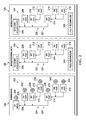
- an object management environment 100 is an example of an environment in the form of a block diagram in which the different advantageous embodiments may be implemented to manage an object 104 during phases 101 in a lifecycle 103 of the object 104.
- the different phases 101 in the lifecycle 103 of an object 104 may include, for example, without limitation, at least one of a conception phase, a design phase, a manufacturing planning phase, a manufacturing phase, a testing phase, a certification phase, a selling phase, a delivery phase, an in-use phase, an operation phase, an in-service phase, a support phase, a maintenance phase, a retirement phase, a recycling phase, a disposal phase, a reconfiguration phase, a re-engineering phase, and other suitable types of phases in the lifecycle 103 of the object 104.
- one of the phases 101 in the lifecycle 103 of the object 104 may be a combination of two or more of the phases listed above.
- the phrase "at least one of”, when used with a list of items, means different combinations of one or more of the listed items may be used and only one of each item in the list may be needed.
- “at least one of item A, item B, and item C” may include, for example, without limitation, item A, or item A and item B. This example also may include item A, item B, and item C, or item B and item C.
- "at least one of” may be, for example, without limitation, two of item A, one of item B, and ten of item C; four of item B and seven of item C; and other suitable combinations.
- the object 104 may be a vehicle structure 105.
- the vehicle structure 105 may be selected from one of an aircraft, a spacecraft, an automobile, a train, a surface ship, a submarine, an aircraft structure, a jet engine, a wing box, an assembly for a vehicle, and/or some other suitable type of structure for a vehicle.
- object 104 may be managed using a computer system 108 in the object management environment 100.
- the computer system 108 is configured to manage data 102 used in the different phases 101 in the lifecycle 103 of the object 104.
- an object manager 110 in the computer system 108 is configured to manage the data 102 used in the different phases 101 in the lifecycle 103 of the object 104.
- the computer system 108 may take the form of a number of computers 112 in these illustrative examples.
- a number of items means one or more items.
- a number of computers means one or more computers.
- the object manager 110 may be implemented as hardware, software, or a combination of the two in one or more of the computers 112 in the computer system 108.
- the data 102 for the object 104 is in the form of data sets 114.
- the data sets 114 may be stored in a storage system 113 in the computer system 108.
- the storage system 113 may comprise any number of databases, tables, reports, logs, spreadsheets, and/or other types of data structures.
- the data sets 114 identify components 115 for the object 104.
- the components 115 may include, for example, individual parts used in manufacturing the object 104, assemblies of parts, sub-assemblies of parts, and/or the object 104 itself. Further, the components 115 for the object 104 may include a number of designs, models, specifications, and/or other items used in the object 104. In one illustrative example, each of the data sets 114 may take the form of a bill of materials (BOM) used for the object 104.
- BOM bill of materials
- each of the data sets 114 identifying the components 115 for managing the object 104 may be for a different phase in the phases 101 in the lifecycle 103 of the object 104.
- each of the data sets 114 may include identifications of the components 115 that form a configuration 117 for the object 104 at a particular phase in the lifecycle 103 of the object 104.
- the identifications of the components 115 for the object 104 in a particular data set of the data sets 114 represent the configuration 117 for the object 104 at the phase corresponding to the particular data set.
- the configuration 117 for an object 104 includes the particular parts, sub-assemblies, assemblies, and/or other components for the object 104 as well as the manner in which these different components are assembled to form the object 104.
- the data sets 114 may include data for a design phase 118, a manufacturing planning phase 120, and a manufacturing phase 122 in the lifecycle 103 of the object.
- the data sets 114 may include design data 124 for the design phase 118, manufacturing planning data 126 for the manufacturing planning phase 120, and as-built data 128 for the manufacturing phase 122.
- the design data 124 identifies the components 115 specified in a design 130 for the object 104, relationships between the components 115 for the object 104, and other suitable information for the object 104.
- the design data 124 may also be referred to as "as-specified" data.
- the design data 124 may include the design 130 itself.
- the design 130 of the object 104 may be, for example, a computer aided design (CAD) model of the object 104.
- CAD computer aided design
- the design data 124 takes the form of an engineering bill of materials (EBOM) for the object 104.
- EBOM engineering bill of materials
- the engineering bill of materials may be represented in, for example, a hierarchical diagram identifying the design 130 of the object 104, assemblies specified in the design 130, subassemblies that form the assemblies, parts that form the subassemblies and/or assemblies of the object, and/or other suitable information as specified in the design 130.
- a hierarchical diagram is any diagram that shows relationships between the components 115 at different levels.
- One example of a hierarchical diagram may be a tree diagram.
- a tree diagram comprises linked nodes in which each node may have zero or more children nodes and, at most, one parent node.
- the manufacturing planning data 126 includes data that is used in planning the manufacturing of the object 104.
- the manufacturing planning data 126 may also be referred to as "as-planned" data.
- the manufacturing planning data 126 for the object 104 may include, for example, without limitation, an identification of the components 115 to be used in manufacturing the object 104, an identification of the assemblies and subassemblies to be formed using the components 115 for the object 104, instructions for manufacturing the object 104, and other suitable information for manufacturing the object 104.
- the manufacturing planning data 126 may include a manufacturing plan for manufacturing the object 104, a number of shop orders for the different parts, sub-assemblies, assemblies, and/or other components needed to manufacture the object 104, and/or other suitable information.
- a shop order is a list of the components 115, such as parts, sub-assemblies, and/or assemblies, which need to be obtained to assemble the object 104.
- a component may be obtained by purchasing the component, assembling various parts to form the component, and/or obtaining the component in some other suitable manner.
- a shop order may be, for example, a work order for a particular part.
- the manufacturing planning data 126 may be generated using the design data 124.
- the manufacturing planning data 126 may be generated in the form of a sales bill of materials (SBOM) when the design data 124 takes the form of an engineering bill of materials.
- SBOM sales bill of materials
- the sales bill of materials identifies the particular components that need to be ordered to manufacture the object 104. Similar to the engineering bill of materials, the sales bill of materials also may be represented in the form of a hierarchical diagram.
- the as-built data 128 includes data generated for the object 104 after manufacturing of the object 104 has been completed and/or after manufacturing of subassemblies and/or assemblies that form the object 104 has been completed. In this manner, the as-built data 128 may be generated as the object 104 is physically being manufactured. The as-built data 128 is generated based on the actual components 115 and/or relationships between the components 115 in the object 104 that are used in manufacturing the object 104. In these illustrative examples, the as-built data 128 may be generated in the form of a manufacturing bill of materials (MBOM). The manufacturing bill of materials also may be represented in the form of a hierarchical diagram.
- MOM manufacturing bill of materials
- each of the different data sets 114 may identify the components 115 for the object 104 using a unique key 135 for each of the components 115.
- the unique key 135 identifies a particular component in the components 115 such that the particular component may be distinguished from other components of the same type, part number, and/or model.
- the unique key 135 may comprise a component identifier 137 and an instance identifier 139 for each component. These two pieces of information may be included for every component identified in each of the different data sets 114.
- the component identifier 137 may be, for example, a part number or a model number. Different components may have the same part identifier. For example, bolts of the same type and/or model may have the same part number.
- the instance identifier 139 in the unique key 135 allows components having the same part identifier to be distinguished from each other.
- the instance identifier 139 for a component represents a precise installation instance for the bolt in the assembly.
- an assembly may include a group of bolts having the same part numbers.
- the instance identifier 139 used for a particular bolt may distinguish that bolt from the other bolts in the group of bolts using, for example, a location index for the particular bolt that describes a location of that bolt in the assembly.
- the unique key 135 is used for each component identified in each of the data sets 114.
- the different data sets 114 may have different formats, include different pieces of information for different attributes for the components 115 identified, and/or have other differences.
- each of the data sets 114 uses the unique key 135 to distinguish between the different components 115. In this manner, the unique key 135 may be common to all of the data sets 114.
- the data 102 may include other information in addition to, and/or in place of, the design data 124, the manufacturing planning data 126, and the as-built data 128.
- the data 102 may include work order details, notes, maintenance information, and/or other suitable information.
- one or more of the data sets 114 for the object 104 may be an empty set or a null set.
- the manufacturing planning phase 120 has not yet begun for the object 104
- the manufacturing planning data 126 and the as-built data 128 for the object 104 may be empty data sets.
- the design data 124, the manufacturing planning data 126, and/or the as-built data 128 may be changed during any of the phases 101 in the lifecycle 103 of the object 104. For example, changes may be made to the design data 124 during the manufacturing planning phase 120. In some cases, changes may be made to the design data 124 during the manufacturing phase 122. Additionally, in managing the data 102 for the object 104, the object manager 110 updates the data 102 with new data as the new data for the object 104 is entered for the object 104.
- the object manager 110 may perform inspections of the data 102 at any time during the lifecycle 103 of the object 104. For example, these inspections may be performed while the object 104 is being manufactured, after an assembly for the object 104 has been completed, after manufacturing of the object 104 has been completed, when maintenance of the object 104 is being performed, and/or at other times during the lifecycle 103 of the object.
- the object manager 110 selects at least two of the data sets 114 for inspection. This selection may be made based on, for example, user input received at the object manager 110. In some cases, all of the data sets 114 may be selected.
- the object manager 110 compares the data sets 114 that are selected to form a comparison 132. Further, the object manager 110 uses the unique key 135 for each component in the components 115 identified in each of the data sets 114 selected for the comparison to form the comparison 132.
- the design data 124 and the manufacturing planning data 126 may be selected for comparison.
- the object manager 110 compares the two data sets by determining whether the unique keys for the components 115 identified in the manufacturing planning data 126 match unique keys for the components 115 identified in the design data 124.
- the object manager 110 uses the comparison 132 and a policy 133 to determine whether any differences 131 are present between the data sets 114 that are selected.
- the policy 133 may include a number of rules, criteria, and/or other information for determining whether differences 131 are present between the data sets 114 based on the comparison 132 formed.
- Differences 131 may be identified when the data 102 in the different data sets 114 does not match as desired. For example, differences 131 may be present when the components 115 and/or the relationships between the components 115 identified in the different data sets 114 do not match as desired. In particular, one or more differences 131 may be identified when the unique keys identified in one data set do not match the unique keys identified in another data set.
- a difference 134 may comprise an overage 136 of the components 115 for the object 104, an underage 138 of the components 115 for the object, or a combination of the two.
- An overage 136 of the components 115 may be present when parts not identified in the data 102 for one phase in the phases 101 of the lifecycle 103 of the object 104 are identified in the data 102 for another phase.
- the overage 136 may be present when unique keys for parts not identified in the design data 124 for the object 104 are identified in the manufacturing planning data 126 and/or the as-built data 128. In this example, the overage 136 is with respect to the design data 124.
- An underage 138 of the components 115 may be present when parts that are identified in the data 102 for one phase in the phases 101 of the lifecycle 10 3 of the object 104 are not identified in the data 102 for another phase.
- the underage 138 may be present when the data 102 for the design data 124 identifies unique keys for parts that are not identified in the manufacturing planning data 126 and/or the as-built data 128.
- the underage 138 is with respect to the design data 124.
- a difference 134 between the identifications of the components 115 in the data sets 114 may be present in response to a number of different factors. For example, a difference 134 may be present when a phase in the phases 101 of the lifecycle 103 of the object 104 has not yet been completed. As one illustrative example, the difference 134 may be present between the design data 124 and the as-built data 128 when the manufacturing phase 122 has not yet been completed for the object 104.
- difference 134 may be present in response to an issue with the availability of parts, certain parts being discontinued, a client request for changes to one or more of the parts for the object 104, errors in the entry of the data 102 by a human operator, and/or other suitable factors.
- a difference 134 between the data sets 114 may be identified even when the unique keys for the components 115 identified in the data sets 114 match.
- the unique keys identified in the design data 124 may match the unique keys identified in the manufacturing planning data 126.
- the object manager 110 may also compare the information associated with each unique key 135 for the components 115 in these two data sets to form the comparison 132.
- the object manager 110 uses policy 133 and the comparison 132 of the information to determine whether one or more differences 131 are present.
- a difference 134 may be a discrepancy between the information associated with a unique key 135 in the design data 124 and the information associated with the same unique key 135 in the manufacturing planning data 126.
- the object manager 110 is configured to indicate when any differences 131 between the data sets 114 are identified.
- the object manager 110 may visually present any differences 131 identified on a display on a display system 140.
- the indication may be displayed on a graphical user interface on the display system 140.
- the display system 140 may be in communication with the computer system 108. In some illustrative examples, the display system 140 may be part of the computer system 108. The display system 140 may comprise a number of display devices that may be in any number of locations.
- the object manager 110 displays an indication of any differences 131 on the display system 140 at a manufacturing facility 142 at which the object 104 is being manufactured. In this manner, an operator at the manufacturing facility 142 may be able to respond to the indication of any differences 131 between the data sets 114.
- a disposition in these illustrative examples, is a resolution for the difference 134.
- a disposition may be a correction for the difference 134 when the difference 134 is an error, an explanation for the difference 134 when the difference 134 is a correct difference or some other suitable type of resolution for the difference 134.
- the disposition may include a description of the difference 134.
- the disposition may include an error description.
- the disposition may include a difference description. This difference description may be an explanation for the difference 134 and may indicate that the difference 134 is not an error.
- the object manager 110 is configured to record dispositions 144 provided for differences 131. In recording these dispositions 144, the object manager 110 stores the dispositions 144 in the storage system 113.
- a difference 134 When a difference 134 is identified, at least one of the object manager 110 and an operator establish whether the difference 134 is an error. For example, the operator may determine whether a difference 134 indicated on the display system 140 is the result of an error in the manufacturing of the object 104. If the difference 134 is the result of an error in the manufacturing of the object 104, the operator may respond by correcting the error. For example, the operator may correct the as-built data 128. This correction may be one form of providing a disposition for the difference 134.
- the operator may enter new data for one or more of the data sets 114 to correct the error.
- the object manager 110 is configured to use the new data to update the data sets 114 such that the difference between the data sets 114 is no longer present after the data sets 114 are updated.
- the operator may replace the part in the object 104 with the new part and enter new data into one or more of the data sets 114 to correct the error.
- the difference 134 may not be the result of an error.
- the difference 134 may have an explanation that makes the difference 134 correct or acceptable.
- the operator may respond by entering data that provides an explanation for the difference 134 between the components 115 identified in the data sets 114.
- the operator may provide an explanation for the difference 134.
- the explanation may indicate that the part identified in the design data 124 was no longer available when building the object 104 and that a new part was used during manufacturing. This explanation is an example of another type of disposition for the difference 134.
- the manufacturing planning data 126 may include instructions for a manufacturing plan for manufacturing the object 104.
- a client using the manufacturing plan to manufacture the object 104 may make a change to one or more of the instructions.
- the client may add a parameter, such as a torque value, to the instructions. This torque value may not be present in the design data 124.
- Object manager 110 may identify the added torque value in the instructions as a difference 134 between the design data 124 and the manufacturing planning data 126. As a result, the torque value may be added to the design data 124. In this manner, future manufacturing plans and/or other information in the manufacturing planning data 126 generated using the design data 124 may include the torque value.
- an operator may provide an explanation for the difference 134 between the design data 124 and the manufacturing planning data 126.
- the operator may indicate that the torque value was added to the manufacturing plan due to special circumstances during the manufacturing of the object 104.
- the explanation may also indicate that the torque value is not to be added to the design data 124.
- the particular difference 134 may no longer be identified by the object manager 110 when future comparisons are formed. In other words, the particular difference 134 is no longer flagged as an error between the different data sets 114.
- the object manager 110 may indicate the difference 134 by generating and sending out a report identifying the difference 134 between the data sets 114.
- the report may be sent to a number of operators at the manufacturing facility 142 and/or at other locations.
- the object manager 110 may indicate the difference 134 between the data sets 114 by performing at least one of sending out an email to an operator identifying the difference 134, recording the difference 134 in a database or table, generating a visible and/or audible alert, and some other suitable action to indicate that the data 102 in the data sets 114 does not match as desired.
- reconciling of the data sets 114 may be performed by ensuring that the different data sets 114 are consistent with each other, according to policy 133, and that dispositions 144 have been provided for any previously identified differences 131 between the data sets 114. Further, reconciling the data sets 114 ensures that the configuration 117 for the object 104 identified by each of the different data sets 114 is correct.
- the manufacturing facility 142 for the aircraft and the computer system 108 may be referred to as an aircraft manufacturing system.
- some, all, or none of the computer system 108 may be located in the manufacturing facility 142.
- the object manager 110 provides a system for managing the data 102 for the object 104 to reduce a number of errors that may be present in the data 102 over time during the lifecycle 103 of the object 104. Further, this type of management of the data 102 may reduce the number of errors made when actually manufacturing the object 104.
- data for the comparison 132 formed may be saved in the storage system 113 for future use. Further, the identification of the difference 134 may also be stored for future use. For example, data from multiple comparisons performed by the object manager 110 during the developing of the object 104 may be saved. The object manager 110 may be configured to analyze this data and determine the evolution of the degree of matching between the different data sets 114.
- the data sets 114 may be compared on a daily basis and the results of this comparison saved and analyzed. In this manner, the progress in matching the different components 115 may be evaluated over the duration of the development process. Further, the progress of a particular component in the different components 115 may be evaluated. In some illustrative examples, the results of the comparison of the data sets 114 for one component in the components 115 may be compared with the results of the comparison of the data sets 114 for another component in the components 115.
- An operator may also view the data stored from multiple comparisons performed over time to resolve repetitive issues with the matching of the components 115 in the different data sets 114 and/or spot trends in the matching of the components 115.
- the vehicle structure 105 may comprise hundreds, thousands, or hundreds of thousands of components 115. Inspecting the data 102 identifying the components 115 in the configuration 117 for the vehicle structure 105 at the different phases 101 in the lifecycle 103 of the vehicle structure 105 may be more time-consuming and require more effort than desired if performed manually by an operator.
- time constraints may be present for when identifications of differences 131 have to be made based on contracts, deadlines, regulations, and/or other suitable factors. Further, time constraints may be present in an effort to complete the vehicle structure 105 for delivery as fast as possible, when expected by a customer, or some combination thereof.
- the object manager 110 in computer system 108 allows inspections of the data 102 to be performed more rapidly and more efficiently such that these different time constraints may be satisfied. Further, the object manager 110 may allow inspections of different pairs of data sets in the data sets 114 to be compared at substantially the same time. For example, the object manager 110 may compare the design data 124 with the manufacturing planning data 126, while also comparing the design data 124 with the as-built data 128.
- assemblies for the object 104 may be manufactured at a different manufacturing facility than manufacturing facility 142.
- the object 104 may take some form other than a vehicle structure 105.
- the object 104 may be a complex assembly, a complex structure, a building, a bridge, a computer system, a piece of furniture having a complex configuration, or some other suitable type of object.
- the disposition provided for any difference 134 identified may be performed by software running on computer system 108.
- the disposition may be generated by an artificial intelligence (AI) implemented in computer system 108.
- AI artificial intelligence
- the data sets 114 stored in the storage system 113 may include data sets for other phases 101 in the lifecycle 103 of the object 104 other than the design phase 118, the manufacturing planning phase 120, and the manufacturing phase 122.
- the data sets 114 may include reconfiguration data 146 for a reconfiguration phase 148.
- a client may design a new configuration for the object 104 that is different from the configuration 117 for the object 104 as manufactured by a supplier.
- the client may wish to change the type of valves used in a hydraulic system in the object 104.
- the client may enter new data to form the reconfiguration data 146 identifying the components 115 for the new configuration of the object 104.
- the object manager 110 may be used to determine whether the new configuration for the object 104 meets requirements and can be re-certified.
- the object manager 110 forms a comparison 132 between the reconfiguration data 146 and the design data 124 for the object 104 using the policy 133.
- the policy 133 may include a number of criteria and/or requirements for changes to the design 130 of the object 104.
- the object manager 110 identifies any differences 131 between the reconfiguration data 146 and the design data 124 using the comparison 132.
- At least one of the object manager 110 and an operator may determine which of the differences 131 between the reconfiguration data 146 and the design data 124 meet the criteria and/or requirements of the policy 133 and which of the differences 131 are errors. Dispositions 144 may be provided for each of the differences 131 identified.
- changes may be made to at least one of the reconfiguration data 146 and the design data 124.
- the object manager 110 may also update other data sets in the data sets 114 when changes are made to the reconfiguration data 146 and/or the design data 124.
- the object manager 110 may be configured to manage the data 102 for the object 104 even after the fully assembled object 104 has been delivered to a client. Further, data sets 114 in the data 102 generated at any point in time during the lifecycle 103 of the object 104 may be compared to ensure that the data 102 is up-to-date and accurate. In some cases, two data sets may be generated during the same phase in the lifecycle 103 of the object 104. These two data sets may be compared to identify the differences 131 between the two data sets. In this manner, changes that occur during that phase in the lifecycle 103 may be evaluated.
- FIG. 2 an illustration of data sets is depicted in accordance with an advantageous embodiment.
- examples of data sets 114 from Figure 1 are depicted.
- an example of one implementation for the design data 124, the manufacturing planning data 126, and the as-built data 128 from Figure 1 is depicted.
- the design data 124, the manufacturing planning data 126, and the as-built data 128 are represented in the form of tree diagrams. These tree diagrams may be displayed on the display system 140 from Figure 1 .
- the design data 124 may include a tree diagram 202.
- the tree diagram 202 identifies components 204.
- These components 204 may include, but not be limited to, a model 206, a first part 208, a second part 210, a third part 212, a fourth part 214, a fifth part 216, and a sixth part 218.
- These components 204 may be identified from a design plan for the vehicle structure 105 in Figure 1 . Further, these components 204 form a design configuration 205 for the vehicle structure 105.
- the second part 210 and the third part 212 form an assembly.
- the fourth part 214, the fifth part 216, and the sixth part 218 form an assembly.
- the first part 208, the assembly formed by the second part 210 and the third part 212, and the assembly formed by the fourth part 214, the fifth part 216, and the sixth part 218 may be assembled to form the vehicle structure 105 in Figure 1 according to the model 206.
- the manufacturing planning data 126 also may include a tree diagram 220 identifying components 222. These components 222 may be identified from a manufacturing plan for manufacturing the vehicle structure 105 based on the design data 124. Further, these components 222 form a manufacturing plan configuration 223 for the vehicle structure 105.
- the as-built data 128 also may include a tree diagram 224 identifying components 226. These components 226 may be identified as the components actually assembled to form the vehicle structure 105. Further, these components 226 form an as-built configuration 227 for the vehicle structure 105.
- the components 204 identified in the design data 124 should be the same as the components 222 identified in the manufacturing planning data 126 and the components 226 identified in the as-built data 128.
- the object manager 110 in Figure 1 may select at least two of the design data 124, the manufacturing planning data 126, and the as-built data 128 for comparison in this illustrative example. This comparison may be used to determine whether any differences are present between these different data sets.
- the components 204 identified in the tree diagram 202 in the design data 124 may be compared to the components 222 identified in the tree diagram 220 for the manufacturing planning data 126. As depicted, a comparison between the design data 124 and the manufacturing planning data 126 determines that no differences are present between the components 204 identified in the design data 124 and the components 222 identified in the manufacturing planning data 126.
- model 206, the first part 208, the second part 210, and the fourth part 214 are identified in the manufacturing planning data 126.
- model 206, the first part 208, the second part 210, and the fourth part 214 are identified in the manufacturing plan for manufacturing for the vehicle structure 105.
- the object manager 110 may determine that the second part 210 is identified in the manufacturing plan as assembled. For example, the second part 210 may have been received from a supplier of the second part 210 in an assembled form and ready for use.
- the object manager 110 assumes that any parts used in the assembly of the second part 210 are present when the second part 210 is received in the assembled form. In other words, when comparing the design data 124 and the manufacturing planning data 126, the object manager 110 assumes that the third part 212 is present in the manufacturing planning data 126. In this manner, the third part 212 does not need to be specifically identified in the manufacturing planning data 126.
- the object manager 110 also determines that the fourth part 214 is identified in the manufacturing planning data 126 in an assembled form. As a result, the object manager 110 assumes that the fifth part 216 and the sixth part 218 are present in the manufacturing planning data 126. The fifth part 216 and the sixth part 218 do not need to be specifically identified in the manufacturing planning data 126.
- the object manager 110 uses the comparison between the design data 124 and the manufacturing planning data 126 to determine that no differences are present between these two data sets. When no differences are present between two data sets, these data sets are fully matched or fully reconciled.
- the object manager 110 then displays match indicators 230, 232, 234, 236, 238, 240, and 242 to indicate that the components 204 in the design data 124 have been matched with the components 222 in the manufacturing planning data 126.
- the match indicator 236 next to the third part 212 indicates that the third part 212 has been identified in the manufacturing planning data 126 based on the second part 210 being identified in the manufacturing planning data 126. Further, the match indicator 240 next to the fifth part 216 and the match indicator 242 next to the sixth part 218 indicate that these parts have been identified in the manufacturing planning data 126 based on the fourth part 214 being identified in the manufacturing planning data 126.
- indicator 244 indicates that all of the components 222 identified in the manufacturing planning data 126 are identified in the design data 124 and that all of the components 204 identified in the design data 124 are identified in the manufacturing planning data 126.
- the object manager 110 may compare the design data 124 and the as-built data 128. The object manager 110 also determines that no differences are present between the design data 124 and the as-built data 128, as indicated by indicator 246.
- the object manager 110 reconciles the design data 124, the manufacturing planning data 126, and the as-built data 128. In this illustrative example, this reconciliation ensures that the design configuration 205, the manufacturing plan configuration 223, and the as-built configuration 227 substantially match as desired.
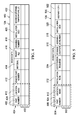
- FIG. 3 an illustration of a difference between data sets is depicted in accordance with an advantageous embodiment.
- the object manager 110 in Figure 1 compares the design data 124 and the manufacturing planning data 126 and determines that a difference is present between these two data sets.
- this comparison may be performed at a time prior to the comparison performed between the design data 124 and the manufacturing planning data 126 in Figure 2 , when no differences are present between these data sets.
- the comparison between the design data 124 and the manufacturing planning data 126 in Figure 3 is performed when the fourth part 214 has not yet been received from the supplier and added to the manufacturing plan for manufacturing the vehicle structure 105 in Figure 1 .
- the object manager 110 changes the match indicators 238, 240, and 242 displayed for the fourth part 214, the fifth part 216, and the sixth part 218, respectively, in Figure 2 to difference indicators 300, 302, and 304, respectively.
- these difference indicators 300, 302, and 304 indicate that the fourth part 214, the fifth part 216, and the sixth part 218, respectively, have not yet been identified in the manufacturing planning data 126.
- another indicator 306 is displayed for the manufacturing planning data 126 instead of the indicator 244 in Figure 2 . This indicator 306 indicates that the manufacturing planning data 126 has not yet been reconciled or matched with the design data 124.
- the object manager 110 may determine that the design configuration 205 does not match the manufacturing plan configuration 223 for the vehicle structure 105.
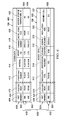
- FIG. 4 an illustration of a data set is depicted in accordance with an advantageous embodiment.
- an example of one of data sets 114 from Figure 1 is depicted.
- an example of one implementation for the design data 124 from Figure 1 is depicted.
- the design data 124 is represented in a first table 400.
- the design data 124 is an empty data set.
- the first table 400 representing the design data 124 has not yet been populated with information for any components 402.
- the components 402 that will be identified in the design data 124 are the components for forming the object 104 from Figure 1 .
- the first table 400 has not yet been populated with information for attributes 404 for any components 402. This information may be added to the first table 400 during a design phase 118 for the object 104 to be formed by the components 402.
- the attributes 404 include a part number 408, a location index 410, a vendor part number 412, a material 414, a weight 416, a drawing number 418, an installation side 420, and a maximum storage temperature 422.
- the part number 408 for a part is an identifier given to the part by the manufacturer who uses the part to form the object 104.
- the location index 410 for a part identifies a location for the part with respect to the configuration 117 for the object 104.
- the location index 410 may identify an installation location for the part with respect to the object 104.
- the vendor part number 412 is an identifier given to a part by the supplier of that part.
- the material 414 for a part may be the primary material from which the part is formed.
- the weight 416 of the part may be described in units such as, for example, without limitation, kilograms (kg).
- the drawing number 418 for a part is an identifier for the part used in a design for the object 104.
- the installation side 420 for a part is the side of the configuration 117 for the object 104 at which the part is to be installed.
- the maximum storage temperature 420 for a part is a maximum temperature for an environment in which the part is stored.
- the maximum storage temperature 420 may be described in units, such as, for example, without limitation, degrees Fahrenheit.
- the part number 408 and the location index 410 for a component form a unique key 424 for that component.
- the part number 408 is an example of a component identifier 137 from Figure 1 .
- the location index 410 is an example of instance identifier 139 from Figure 1 .
- the unique key 424 is different for each of the components 402 to be identified in the design table 400.
- a first part and a second part may have the same part number 408, but the location index 410 may be different for these two components.
- the location index 410 in the unique key 424 allows the different components 402 to be identified in the design data 124 to be distinguished from each other.
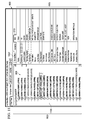
- FIG. 5 an illustration of a data set is depicted in accordance with an advantageous embodiment.
- an example of one of data sets 114 from Figure 1 is depicted.
- an example of one implementation for the as-built data 128 from Figure 1 is depicted.
- the as-built data 128 is represented in a second table 500.
- the as-built data 128 is an empty data set.
- the second table 500 representing the as-built data 128 has not yet been populated with information for any components 502.
- the second table 500 has not yet been populated with an identification of components 502 and/or information for attributes 504 for these components 502.
- the components 502 to be identified in the as-built data 128 are the components that are being assembled to form the object 104.
- the second table 520 is populated with information during a manufacturing phase 123 for the object 104.
- the attributes 504 for these components 502 include a part number 508, a location index 510, an installation tool 512, a certification required indication 514, a storage location 516, an assembly jig number 518, an installation side 520, and an assembly cell 522.
- the part number 508 and the location index 510 for a part form a unique key 524 for the part, similar to the unique key 424 identified in the design data 124 in Figure 4 .
- the unique key 524 is of the same type as the unique key 424 in Figure 4 .
- the installation tool 512 for a part is the tool used for installing the part to form the object 104.
- the certification required indication 514 for a part indicates whether the part requires a certification.
- the storage location 516 for a part is the location in which the part is stored.
- the assembly jig number 518 for a part is an identifier for an assembly jig for the part.
- the assembly cell 522 for a part may be a location in a manufacturing facility in which the part is installed in an assembly for the object.
- the first table 400 from Figure 4 and the second table 500 from Figure 5 have been populated with information.
- the design data 124 in the first table 400 identifies a first part 600 and a second part 602 as the components 402 for the object 104 as specified by a design of the object 104.
- the as-built data 128 in the second table 500 identifies a third part 604 for the object 104.
- the first part 600 and the second part 602 have the same part number 408.
- the location index 410 for the first part 600 is different from the location index 410 for the second part 602.
- the unique key 424 for the first part 600 and the unique key 424 for the second part 602 allows these parts to be distinguished from each other even when they have the same part number 408.
- this unique key 424 is common to the as-built data 128.
- the unique key 424 used for the components 402 identified in the design data 124 is the same type of unique key 524 used for the components 502 identified in the as-built data 128.
- the object manager 110 from Figure 1 may be used to form a comparison 132 between the as-built data 128 represented in second table 500 and the design data 124 represented in first table 400 in Figure 4 to ensure that the configuration 117 for the object 104 being manufactured is a correct configuration as specified by the design data 124.
- the comparison 132 is formed by matching the unique key 424 for each of the components 402 identified in the design data 124 with the unique key 524 for each of the components 502 identified in the as-built data 128.
- a match 606 is identified between the unique key 424 for the first part 600 identified in the design data 124 and the unique key 524 for the third part 604 identified in the as-built data 128.
- no match is found between the unique key 424 for the second part 602 identified in the design data 124 and the unique key 524 for any of the components 502 identified in the as-built data 128.
- This mismatch indicates an underage for the configuration 117 of the object 104 with respect to the design data 124. In other words, fewer parts than needed as specified by the design data 124 have been assembled for the object 104.
- an operator may determine whether the difference is the result of an error in the design data 124 and/or the as-built data 128 or the difference has an acceptable explanation. The operator may provide a disposition for this difference by providing the explanation.
- the first table 400 from Figure 4 and the second table 500 from Figure 5 have been populated with information.
- the design data 124 in the first table 400 identifies a first part 700 as a component in components 402 for the object 104 as specified by a design of the object 104.
- the as-built data 128 in the second table 500 identifies a second part 702 and a third part 704 for the object 104.
- the object manager 110 from Figure 1 may be used to form a comparison 132 between the as-built data 128 represented in second table 500 and the design data 124 represented in first table 400 in Figure 4 to ensure that the configuration 117 for the object 104 being manufactured is a correct configuration as specified by the design data 124.
- a match 706 is identified between the unique key 424 for the first part 700 identified in the design data 124 and the unique key 524 for the second part 702 identified in the as-built data 128.
- no match is found between the unique key 524 for the third part 704 identified in the as-built data 128 and the unique key 424 for any of the components 402 identified in the design data 124.
- This mismatch indicates an overage for the configuration 117 of the object 104 with respect to the design data 124. In other words, more parts than needed as specified by the design data 124 have been assembled to form the object 104. Further, in response to this difference, an operator may determine whether the difference is the result of an error in the design data 124 and/or the as-built data 128 or the difference has an acceptable explanation. The operator may provide a disposition for this difference by providing the explanation.
- the first table 400 from Figure 4 and the second table 500 from Figure 5 have been populated with information.
- the design data 124 in the first table 400 identifies a first part 800 and a second part 802 as the components 402 for the object 104.
- the as-built data 128 in the second table 500 identifies a third part 804 and a fourth part 806 for the object 104.
- the object manager 110 from Figure 1 may form a comparison 132 between these two data sets.
- This comparison 132 may indicate that the components 402 identified in the design data 124 match the components 502 identified in the as-built data 128.
- a match 808 is found between the unique key 424 for the first part 800 identified in the design data 124 and the unique key 524 for the third part 804 identified in the as-built data 128.
- a match 810 is found between the unique key 424 for the second part 802 identified in the design data 124 and the unique key 524 for the fourth part 806 identified in the as-built data 128
- the object manager 110 may use a policy 133 to determine whether any difference is present between the two data sets.
- the policy 133 may indicate that a component identified for the object 104 in the manufacturing phase 122 may need to be stored in a storage location 516 in which a temperature of the storage location 516 does not exceed a maximum storage temperature 422 for the particular component.
- the policy 133 may also include, for example, a list of storage locations and the maximum temperatures reaches at those storage locations.
- the policy 133 may indicate that the storage location, W-98, reaches a maximum temperature greater than about 100 degrees Fahrenheit.
- the object manager 110 identifies difference 812 between the information provided for the first part 800 in the design data 124 and the information provided for the third part 804 in the as-built data 128 using the policy 133. Further the object manager 110 identifies difference 814 between the information provided for the second part 802 in the design data 124 and the information provided for the fourth part 806 in the as-built data 128 using the policy 133. These differences may be referred to as discrepancies or inconsistencies in the information for the attributes provided by the two data sets.
- a graphical user interface 900 may be displayed on the display system 140 from Figure 1 .
- the graphical user interface 900 displays the results for a comparison between design data, such as design data 124 in Figure 1 , and manufacturing planning data, such as manufacturing planning data 126 in Figure 1 .
- the graphical user interface 900 displays a tree diagram 902 identifying components 903.
- the portion of the tree diagram 902 displayed in the graphical user interface 900 may identify the components 903 identified from the design data 124.
- a portion 904 of the tree diagram 902 is shown in an exploded view of the tree diagram 902 for an assembly 906.
- the assembly 906 comprises a plurality of parts 908.
- an information section 905 is also displayed in the graphical user interface 900. This information section 905 displays the results of the comparison between the two data sets, as well as other suitable information.
- a particular part in the components 903 identified in the tree diagram 902 may be matched to the manufacturing planning data 126 when, for example, a shop order instance (SOI) is present for the particular part.
- SOI shop order instance
- the presence of a shop order instance indicates that the particular part has been identified in the manufacturing plan and that an order for the particular part has been placed with the supplier.
- the assembly 906 has been selected in the tree diagram 902 for the design data 124.
- information about the assembly 906 is displayed in the information section 905.
- a shop order instance tab 910 is also displayed in the information section 905.
- the presence of the shop order instance tab 910 indicates that the assembly 906 is also identified in the manufacturing planning data 126.
- a shop order number 912 for the assembly 906 is displayed under the shop order instance tab 910.
- match indicators 914 displayed next to the assembly 906 and the parts 908 that form the assembly 906 indicate that no differences are found between the design data 124 and the manufacturing planning data 126 with respect to the assembly and the plurality of parts 908.
- the match indicators 914 indicate that the assembly 906 and all of the parts 908 that form the assembly 906 have been identified in the manufacturing planning data 126.
- FIG. 10 an illustration of a graphical user interface displaying results of another comparison between two data sets is depicted in accordance with an advantageous embodiment.
- a different portion 1000 of the tree diagram 902 is displayed on the graphical user interface 1000.
- This portion 1000 is for an assembly 1002 that includes a plurality of parts 1004.
- a part 1006 in the parts 1004 for the assembly 1002 has been selected.
- information for the part 1006 is displayed in the information section 905 on the graphical user interface 900.
- an indication of this difference is displayed under a comparison tab 1007 in the information section 905.
- an underage indication 1008 is displayed under the comparison tab 1007.
- This underage indication 1008 indicates that the part 1006 identified in the tree diagram 902 for the design data 124 has not been identified in the manufacturing planning data 126.
- This underage is also indicated by the absence of a shop order instance tab, such as the shop order instance tab 910 displayed on the graphical user interface 900 in Figure 9 .
- This underage is further indicated by a difference indicator 1010 next to the part 1006 in the tree diagram 902.
- a partial match indicator 1012 is displayed next to the assembly 1002 to indicate that not all of the parts 1004 for the assembly 1002 have been identified in the manufacturing planning data 126.
- FIG. 11 an illustration of a graphical user interface displaying results of a comparison between two data sets is depicted in accordance with an advantageous embodiment.
- the portion of the tree diagram 902 displayed on the graphical user interface 900 shows the components 903 that were identified in the manufacturing planning data 126 but not identified in the design data 124 in Figure 1 .
- information may be displayed under the shop order instance tab 910 in the information section 905 for a component identified in the manufacturing planning data 126.
- FIG. 12 an illustration of a graphical user interface displaying results of a comparison between two data sets is depicted in accordance with an advantageous embodiment.
- a part 1200 has been selected from the components 903 identified in the tree diagram 902.
- information for the part 1200 is displayed under a variance tab 1202 in the information section 905.
- an operator may determine whether the difference is an error. If the difference is an error, the operator may enter user input through the graphical user interface 900 that allows the operator to correct the error.
- Information about this correction may be entered in a notes section 1206 and/or a user comments section 1208 under a dispositions tab 1210 under the variance tab 1202. Further, when the difference is not an error, the operator may enter an explanation for the difference in the notes section 1206 and/or the user comments section 1208.
- a closed indicator 1204 next to the part 1200 indicates that a difference that was previously present between the design data 124 and the manufacturing planning data 126 in Figure 1 has now been resolved.
- an explanation for the difference was entered in the notes section 1206 and the user comments section 1208.
- a status 1212 of this difference has been identified as closed.
- the status 1212 of the difference may be identified as open.
- FIG. 13 an illustration of a flowchart of a process for identifying parts in a vehicle is depicted in accordance with an advantageous embodiment.
- the process illustrated in Figure 13 may be implemented using the object manager 110 in Figure 1 .
- the process begins by identifying data sets for the vehicle structure (operation 1300).
- Each data set identifies the components for the vehicle structure in a different phase in a lifecycle for the vehicle structure.
- each data set represents the configuration of the vehicle structure at a different phase in the lifecycle of the vehicle structure.
- the process then compares the data sets for the vehicle structure (operation 1302).
- the process identifies differences between the identifications of the components in the data sets (operation 1304).
- the operation 1304 may be performed by matching the unique keys for the different components in the different data sets.
- a difference may be the result of an error during the entry of data.
- the process then records error descriptions of established errors and difference descriptions of correct but different identifications of the components between the data sets (operation 1308). These error descriptions and difference descriptions are examples of the dispositions 144 in Figure 1 . In the operation 1308, when recorded, these error descriptions and difference descriptions are stored in a storage system, such as the storage system 113 in Figure 3 .
- the process corrects the errors in the respective data set of the data sets and annotates correct differences in one or more of the data sets to establish a corrected correlation between identifications of the components in the data sets (operation 1310), with the process terminating thereafter.
- the corrections and annotations may be made by, for example, the object manager 110 from Figure 1 and/or an operator.
- an operator may correct the differences that are the results of errors and make annotations providing explanations for the differences that are correct differences using a graphical user interface.
- FIG. 14 an illustration of a flowchart of a process for managing components used in a vehicle structure is depicted in accordance with an advantageous embodiment.
- the process illustrated in Figure 14 may be implemented using, for example, the object manager 110 in Figure 1 .
- the process begins by the object manager identifying a first data set and a second data set for comparison (operation 1400).
- the first data set may be, for example, the design data 124 in Figure 1 or the manufacturing planning data 126 in Figure 1 .
- the second data set may be, for example, the manufacturing planning data 126 in Figure 1 or the as-built data 128 in Figure 1 .
- the object manager compares the components identified in the first data set with the components identified in the second data set (operation 1402).
- the components identified in the first data set and the components identified in the second data set are matched to form a list of components.
- the components in this list of components may include matched components and/or unmatched components.
- a matched component is a component that is identified in both the first data set and the second data set.
- An unmatched component is a component that is identified in only one of these two data sets.
- the object manager displays the list of components in the form of a tree diagram on a graphical user interface (operation 1404). Next, the object manager selects a component from the list of components (operation 1406).
- the object manager determines whether the component is a matched component or an unmatched component (operation 1408). If the component is a matched component, the object manager determines whether any additional unprocessed components are present in the list of components (operation 1410).
- the object manager displays the results of the comparison in the graphical user interface (operation 1412), with the process terminating thereafter. However, if additional unprocessed components are present in the list of components, the process returns to operation 1406 as described above.
- the object manager determines whether a disposition has been previously provided for the difference between the first data set and the second data set with respect to this component (operation 1414). If a disposition has been previously provided, the process proceeds to operation 1410 as described above.
- the object manager generates an indication on the graphical user int erface that a disposition is needed for the component (operation 1416).
- This indicat ion may be, for example, a graphical indicator for display next to the component in the tree diagram.
- the indication may be text for display in a section under a tab on the graphical user interface that is displayed in response to a selection of the component in the tree diagram. Thereafter, the process returns to operation 1410 as described above.
- an operator may view the results of the comparison on the graphical user interface to enter new data.
- the new data may include, for example, explanations for differences identified between the components identified in the first data set and the second data set, new data correcting errors in the manufacturing of the vehicle structure, and/or other suitable data.
- the first data set and the second data set are considered fully matched or fully reconciled when no differences are present between the first data set and the second data set or when a disposition has been provided for any differences that have been identified between the two data sets.
- FIG. 15 an illustration of a flowchart of a process for manufacturing a vehicle is depicted in accordance with an advantageous embodiment.
- the process illustrated in Figure 15 may be implemented in manufacturing facility 142 in Figure 1 .
- the process begins by generating manufacturing planning data for the vehicle (operation 1500).
- the manufacturing planning data for the vehicle includes identifications of components for the vehicle. These components may include, for example, physical parts, tools, instructions, software components, and/or other components that may be needed for manufacturing the vehicle.
- the manufacturing planning data is compared to design data for the vehicle (operation 1502).
- the design data also includes identifications of components for the vehicle as specified in a design for the vehicle.
- the process determines whether any differences are present between the identifications of the components for the vehicle in these two data sets (operation 1504). If no differences are present, the vehicle is manufactured (operation 1506).
- the process generates as-built data for the vehicle as the vehicle is manufactured (operation 1508).
- the as-built data for the vehicle includes identifications of the components in the assembled configuration for the vehicle.
- the process compares the as-built data with the manufacturing planning data (operation 1510).
- the process determines whether any differences are present between the identification of components for the vehicle in these two data sets (operation 1512). If no differences are present, the process terminates.
- a disposition is a resolution for a difference. For example, if the difference is an error, then the disposition may be a correction to that error. In some cases, the disposition may be an explanation for the difference indicating that the difference is acceptable.
- the disposition may be provided by user input entered by an operator, may be generated by an artificial intelligence system, or may be generated in some other suitable manner. Thereafter, the process terminates.
- the process waits until a disposition has been provided for each of the differences present (operation 1516). The process then proceeds to operation 1506 as described above.
- each block in the flowcharts or block diagrams may represent a module, segment, function, and/or a portion of an operation or step.
- one or more of the blocks may be implemented as program code, in hardware, or a combination of the program code and hardware.
- the hardware may, for example, take the form of integrated circuits that are manufactured or configured to perform one or more operations in the flowcharts or block diagrams.
- the function or functions noted in the block may occur out of the order noted in the figures.
- two blocks shown in succession may be executed substantially concurrently, or the blocks may sometimes be performed in the reverse order, depending upon the functionality involved.
- other blocks may be added in addition to the illustrated blocks in a flowchart or block diagram.
- Data processing system 1600 is an example of one implementation for one or more of computers 112 in Figure 1 .
- a data processing system 1600 includes a communications framework 1602, which provides communications between a processor unit 1604, memory 1606, persistent storage 1608, a communications unit 1610, an input/output (I/O) unit 1612, and a display 1614.
- a communications framework 1602 which provides communications between a processor unit 1604, memory 1606, persistent storage 1608, a communications unit 1610, an input/output (I/O) unit 1612, and a display 1614.
- the processor unit 1604 serves to execute instructions for software that may be loaded into the memory 1606.
- the processor unit 1604 may be a number of processors, a multi-processor core, or some other type of processor, depending on the particular implementation.
- a number, as used herein with reference to an item, means one or more items.
- the processor unit 1604 may be implemented using a number of heterogeneous processor systems in which a main processor is present with secondary processors on a single chip.
- the processor unit 1604 may be a symmetric multi-processor system containing multiple processors of the same type.
- the memory 1606 and the persistent storage 1608 are examples of storage devices 1616.
- a storage device is any piece of hardware that is capable of storing information, such as, for example, without limitation, data, program code in functional form, and/or other suitable information either on a temporary basis and/or a permanent basis.
- the storage devices 1616 may also be referred to as computer readable storage devices in these examples.
- the memory 1606, in these examples, may be, for example, a random access memory or any other suitable volatile or non-volatile storage device.
- the persistent storage 1608 may take various forms, depending on the particular implementation.
- the persistent storage 1608 may contain one or more components or devices.
- the persistent storage 1608 may be a hard drive, a flash memory, a rewritable optical disk, a rewritable magnetic tape, or some combination of the above.
- the media used by the persistent storage 1608 also may be removable.
- a removable hard drive may be used for the persistent storage 1608.
- the communications unit 1610 in these examples, provides for communications with other data processing systems or devices.
- the communications unit 1610 is a network interface card.
- the communications unit 1610 may provide communications through the use of either or both physical and wireless communications links.
- the input/output unit 1612 allows for input and output of data with other devices that may be connected to the data processing system 1600.
- the input/output unit 1612 may provide a connection for user input through a keyboard, a mouse, and/or some other suitable input device. Further, the input/output unit 1612 may send output to a printer.
- the display 1614 provides a mechanism to display information to a user.
- Instructions for the operating system, applications, and/or programs may be located in the storage devices 1616, which are in communication with the processor unit 1604 through the communications framework 1602. In these illustrative examples, the instructions are in a functional form on the persistent storage 1608. These instructions may be loaded into the memory 1606 for execution by the processor unit 1604. The processes of the different embodiments may be performed by the processor unit 1604 using computer-implemented instructions, which may be located in a memory, such as the memory 1606.
- program code computer usable program code, or computer readable program code that may be read and executed by a processor in the processor unit 1604.
- the program code in the different embodiments may be embodied on different physical or computer readable storage media, such as the memory 1606 or the persistent storage 1608.
- Program code 1618 is located in a functional form on computer readable media 1620 that is selectively removable and may be loaded onto or transferred to the data processing system 1600 for execution by the processor unit 1604.
- the program code 1618 and the computer readable media 1620 form a computer program product 1622 in these examples.
- the computer readable media 1620 may be computer readable storage media 1624 or computer readable signal media 1626.
- the computer readable storage media 1624 may include, for example, an optical or magnetic disk that is inserted or placed into a drive or other device that is part of the persistent storage 1608 for transfer onto a storage device, such as a hard drive, that is part of the persistent storage 1608.
- the computer readable storage media 1624 also may take the form of a persistent storage, such as a hard drive, a thumb drive, or a flash memory, that is connected to the data processing system 1600. In some instances, the computer readable storage media 1624 may not be removable from the data processing system 1600.
- the computer readable storage media 1624 is a physical or tangible storage device used to store the program code 1618 rather than a medium that propagates or transmits the program code 1618.
- the computer readable storage media 1624 is also referred to as a computer readable tangible storage device or a computer readable physical storage device.
- the computer readable storage media 1624 is a media that can be touched by a person.
- the program code 1618 may be transferred to the data processing system 1600 using the computer readable signal media 1626.
- the computer readable signal media 1626 may be, for example, a propagated data signal containing the program code 1618.
- the computer readable signal media 1626 may be an electromagnetic signal, an optical signal, and/or any other suitable type of signal. These signals may be transmitted over communications links, such as wireless communications links, optical fiber cable, coaxial cable, a wire, and/or any other suitable type of communications link.
- the communications link and/or the connection may be physical or wireless in the illustrative examples.
- the program code 1618 may be downloaded over a network to the persistent storage 1608 from another device or data processing system through the computer readable signal media 1626 for use within the data processing system 1600.
- program code stored in a computer readable storage medium in a server data processing system may be downloaded over a network from the server to the data processing system 1600.
- the data processing system providing the program code 1618 may be a server computer, a client computer, or some other device capable of storing and transmitting the program code 1618.
- the different components illustrated for the data processing system 1600 are not meant to provide architectural limitations to the manner in which different embodiments may be implemented.
- the different advantageous embodiments may be implemented in a data processing system including components in addition to or in place of those illustrated for the data processing system 1600.
- Other components shown in Figure 16 can be varied from the illustrative examples shown.
- the different embodiments may be implemented using any hardware device or system capable of running program code.
- the data processing system may include organic components integrated with inorganic components and/or may be comprised entirely of organic components excluding a human being.
- a storage device may be comprised of an organic semiconductor.
- the processor unit 1604 may take the form of a hardware unit that has circuits that are manufactured or configured for a particular use. This type of hardware may perform operations without needing program code to be loaded into a memory from a storage device to be configured to perform the operations.
- the processor unit 1604 when the processor unit 1604 takes the form of a hardware unit, the processor unit 1604 may be a circuit system, an application specific integrated circuit (ASIC), a programmable logic device, or some other suitable type of hardware configured to perform a number of operations.
- ASIC application specific integrated circuit
- a programmable logic device the device is configured to perform the number of operations.
- the device may be reconfigured at a later time or may be permanently configured to perform the number of operations.
- Examples of programmable logic devices include, for example, a programmable logic array, programmable array logic, a field programmable logic array, a field programmable gate array, and other suitable hardware devices.
- the program code 1618 may be omitted, because the processes for the different embodiments are implemented in a hardware unit.
- the processor unit 1604 may be implemented using a combination of processors found in computers and hardware units.
- the processor unit 1604 may have a number of hardware units and a number of processors that are configured to run the program code 1618. With this depicted example, some of the processes may be implemented in the number of hardware units, while other processes may be implemented in the number of processors.
- a bus system may be used to implement the communications framework 1602 and may be comprised of one or more buses, such as a system bus or an input/output bus.
- the bus system may be implemented using any suitable type of architecture that provides for a transfer of data between different components or devices attached to the bus system.
- a communications unit may include a number of devices that transmit data, receive data, or transmit and receive data.
- a communications unit may be, for example, a modem or a network adapter, two network adapters, or some combination thereof.
- a memory may be, for example, the memory 1606, or a cache, such as found in an interface and memory controller hub that may be present in the communications framework 1602.
- the aircraft manufacturing and service method 1700 may include a specification and design 1702 of the aircraft 1800 in Figure 18 and a material procurement 1704.
- component and subassembly manufacturing 1706 and system integration 1708 of the aircraft 1800 in Figure 18 takes place. Thereafter, the aircraft 1800 in Figure 18 may go through certification and delivery 1710 in order to be placed in service 1712. While in service 1712 by a customer, the aircraft 1800 in Figure 18 is scheduled for routine maintenance and service 1714, which may include modification, reconfiguration, refurbishment, and other maintenance or service.
- Each of the processes of the aircraft manufacturing and service method 1700 may be performed or carried out by a system integrator, a third party, and/or an operator.
- the operator may be a customer.
- a system integrator may include, without limitation, any number of aircraft manufacturers and major-system subcontractors
- a third party may include, without limitation, any number of vendors, subcontractors, and suppliers
- an operator may be an airline, a leasing company, a military entity, a service organization, and so on.
- the aircraft 1800 is produced by the aircraft manufacturing and service method 1700 in Figure 17 and may include an airframe 1802 with a plurality of systems 1804 and an interior 1806.
- the systems 1804 include one or more of a propulsion system 1808, an electrical system 1810, a hydraulic system 1812, and an environmental system 1814. Any number of other systems may be included.
- an aerospace example is shown, different advantageous embodiments may be applied to other industries, such as the automotive industry.
- Apparatuses and methods embodied herein may be employed during at least one of the stages of the aircraft manufacturing and service method 1700 in Figure 17 .
- components or subassemblies produced in the component and subassembly manufacturing 1706 in Figure 17 may be fabricated or manufactured in a manner similar to components or subassemblies produced while the aircraft 1800 is in service 1712 in Figure 17 .
- one or more apparatus embodiments, method embodiments, or a combination thereof may be utilized during production stages, such as the component and subassembly manufacturing 1706 and the system integration 1708 in Figure 17 .
- One or more apparatus embodiments, method embodiments, or a combination thereof may be utilized while the aircraft 1800 is in service 1712 and/or during the maintenance and service 1714 in Figure 17 .
- the use of a number of the different advantageous embodiments may substantially expedite the assembly of and/or reduce the cost of the aircraft 1800.
- a method for managing a vehicle structure is provided.
- Data sets for managing the vehicle structure are identified.
- Each data set includes identifications of the components for the vehicle structure in a different phase in a lifecycle of the vehicle structure.
- a determination is made as to whether a difference is present between the identifications of the components in the data sets.
- the difference between the data sets is indicated when the difference is present between the identifications of the components in the data sets.
Landscapes
- Business, Economics & Management (AREA)
- Engineering & Computer Science (AREA)
- Economics (AREA)
- Human Resources & Organizations (AREA)
- Strategic Management (AREA)
- General Business, Economics & Management (AREA)
- Entrepreneurship & Innovation (AREA)
- Theoretical Computer Science (AREA)
- Marketing (AREA)
- General Physics & Mathematics (AREA)
- Tourism & Hospitality (AREA)
- Physics & Mathematics (AREA)
- General Health & Medical Sciences (AREA)
- Primary Health Care (AREA)
- Health & Medical Sciences (AREA)
- Development Economics (AREA)
- Educational Administration (AREA)
- Manufacturing & Machinery (AREA)
- Game Theory and Decision Science (AREA)
- Operations Research (AREA)
- Quality & Reliability (AREA)
- Management, Administration, Business Operations System, And Electronic Commerce (AREA)
- General Factory Administration (AREA)
Applications Claiming Priority (1)
| Application Number | Priority Date | Filing Date | Title |
|---|---|---|---|
| US13/230,534 US9904896B2 (en) | 2011-09-12 | 2011-09-12 | Object management system |
Publications (1)
| Publication Number | Publication Date |
|---|---|
| EP2568423A1 true EP2568423A1 (en) | 2013-03-13 |
Family
ID=47076071
Family Applications (1)
| Application Number | Title | Priority Date | Filing Date |
|---|---|---|---|
| EP12180378A Ceased EP2568423A1 (en) | 2011-09-12 | 2012-08-14 | An object management system |
Country Status (5)
| Country | Link |
|---|---|
| US (1) | US9904896B2 (https=) |
| EP (1) | EP2568423A1 (https=) |
| JP (2) | JP6132496B2 (https=) |
| CN (1) | CN103116818B (https=) |
| CA (1) | CA2781544C (https=) |
Families Citing this family (19)
| Publication number | Priority date | Publication date | Assignee | Title |
|---|---|---|---|---|
| US10481768B2 (en) | 2013-04-12 | 2019-11-19 | The Boeing Company | Nonconformance identification and visualization system and method |
| US9880694B2 (en) * | 2013-05-09 | 2018-01-30 | The Boeing Company | Shop order status visualization system |
| DE102014020080B4 (de) | 2013-03-25 | 2025-07-10 | Subaru Corporation | Ansauggeräuschübertragungsvorrichtung |
| US20140298216A1 (en) | 2013-03-28 | 2014-10-02 | The Boeing Company | Visualization of an Object Using a Visual Query System |
| US10416857B2 (en) | 2013-05-09 | 2019-09-17 | The Boeing Company | Serial number control visualization system |
| US9354621B2 (en) | 2014-06-16 | 2016-05-31 | General Electric Company | Systems and methods for control of an adaptive-cycle engine with power-thermal management system |
| US9505051B2 (en) * | 2014-07-09 | 2016-11-29 | The Boeing Company | Mobile platforms for performing operations along an exterior of a fuselage assembly |
| EP2990894B1 (en) * | 2014-08-25 | 2018-09-26 | The Boeing Company | Serial number control visualization system |
| CN104820682B (zh) * | 2015-04-17 | 2019-04-16 | 中车青岛四方机车车辆股份有限公司 | 一种高速列车需求数据实例构建方法和装置 |
| EP3101565A1 (en) * | 2015-06-01 | 2016-12-07 | Airbus Operations GmbH | Aircraft assembly system |
| CN104991938B (zh) * | 2015-07-07 | 2021-06-15 | 中国商用飞机有限责任公司 | 一种民用飞机服务视图构型数据库的构建方法 |
| US10664783B2 (en) * | 2016-01-08 | 2020-05-26 | The Boeing Company | System and methods for managing changes to a product in a manufacturing environment including conversion of an engineering bill of material to a manufacturing bill of material |
| US10048679B2 (en) | 2016-01-08 | 2018-08-14 | The Boeing Company | System and methods for managing changes to a product in a manufacturing environment including a minor model relational design |
| US10685147B2 (en) | 2016-02-29 | 2020-06-16 | The Boeing Company | Non-conformance mapping and visualization |
| CN106600205B (zh) * | 2016-10-31 | 2020-05-22 | 上海航天精密机械研究所 | 航天产品生产过程数据一致性保证方法 |
| US12182735B2 (en) | 2018-03-30 | 2024-12-31 | The Boeing Company | Quester evaluation for additive manufacturing of a vehicle part |
| DE102018128915A1 (de) * | 2018-11-16 | 2020-05-20 | Lenze Automation Gmbh | Verfahren zum Visualisieren der Automatisierung einer technischen Einrichtung |
| US11526847B2 (en) | 2019-12-18 | 2022-12-13 | The Boeing Company | Reconfiguring a vehicle for transfer from a first operator to a second operator |
| CN117807284B (zh) * | 2023-05-16 | 2025-08-01 | 宁德时代(上海)智能科技有限公司 | 信息显示方法、系统、设备以及存储介质 |
Citations (4)
| Publication number | Priority date | Publication date | Assignee | Title |
|---|---|---|---|---|
| US7127458B1 (en) * | 2001-06-15 | 2006-10-24 | I2 Technologies Us, Inc. | Matching and cleansing of part data |
| US20080114660A1 (en) * | 2006-10-31 | 2008-05-15 | Ford Motor Company | System and method for translating bill of material information for vehicle components |
| US20080120208A1 (en) * | 2006-10-30 | 2008-05-22 | Ford Motor Company | System and method for receiving and changing a bill of material for vehicle components |
| US20110173103A1 (en) * | 2010-01-14 | 2011-07-14 | Oracle International Corporation | Side-by-side comparison of associations for multi-level bills of material |
Family Cites Families (23)
| Publication number | Priority date | Publication date | Assignee | Title |
|---|---|---|---|---|
| JPH03221360A (ja) * | 1990-01-25 | 1991-09-30 | Nec Software Kansai Ltd | Cadシステムと生産管理システムとのデータリンク方式 |
| JP3563132B2 (ja) * | 1994-12-13 | 2004-09-08 | 富士通株式会社 | 部品手配処理方式 |
| JP3610201B2 (ja) * | 1997-09-30 | 2005-01-12 | キヤノン株式会社 | 品質管理システム及び方法 |
| US6336078B1 (en) * | 1997-09-30 | 2002-01-01 | Canon Kabushiki Kaisha | Quality management of components |
| US7209869B1 (en) * | 1998-09-01 | 2007-04-24 | Daimlerchrysler Ag | Method and system for resource requirement planning and generating a production schedule using a uniform data model |
| JP2000194741A (ja) | 1998-12-28 | 2000-07-14 | Fujitsu Ltd | 照合装置および記録媒体 |
| JP3611501B2 (ja) * | 2000-03-31 | 2005-01-19 | 富士通株式会社 | 生産管理方法および生産管理支援システム並びに生産管理支援のためのプログラムを記録した記録媒体 |
| US20030220852A1 (en) * | 2002-05-22 | 2003-11-27 | Andrew Back | Bill of materials change management schema |
| US7702636B1 (en) * | 2002-07-31 | 2010-04-20 | Cadence Design Systems, Inc. | Federated system and methods and mechanisms of implementing and using such a system |
| JP2005107983A (ja) | 2003-09-30 | 2005-04-21 | Honda Motor Co Ltd | 製品原価算出システム |
| US7546394B1 (en) | 2004-03-19 | 2009-06-09 | Xilinx, Inc. | Management of configuration data by generating a chain description data set that specifies an order of configuration chain for multi-device systems |
| US7899756B2 (en) * | 2004-12-01 | 2011-03-01 | Xerox Corporation | Critical parameter/requirements management process and environment |
| US7321804B2 (en) | 2004-12-15 | 2008-01-22 | The Boeing Company | Method for process-driven bill of material |
| US7530048B2 (en) * | 2005-04-09 | 2009-05-05 | Cadence Design Systems, Inc. | Defect filtering optical lithography verification process |
| US20070106410A1 (en) * | 2005-11-09 | 2007-05-10 | The Boeing Company | Systems and methods for production planning by visualizing products and resources in a manufacturing process |
| US7266518B2 (en) * | 2005-12-29 | 2007-09-04 | Kimberly-Clark Worldwide, Inc. | Spare parts inventory management |
| US20080003533A1 (en) * | 2006-03-30 | 2008-01-03 | Inventec Corporation | Material control system and method |
| US7970638B2 (en) * | 2006-11-15 | 2011-06-28 | International Business Machines Corporation | Planning parts demand coverage based on variable percentage of substitution parts |
| US20080301012A1 (en) * | 2007-05-31 | 2008-12-04 | Cogswell Thomas A | Methods and systems for distributing computer modeled product design and manufacture data to peripheral systems |
| JP4887243B2 (ja) | 2007-08-31 | 2012-02-29 | シャープ株式会社 | 情報照合装置、情報照合方法、プログラムおよび記録媒体 |
| US8032516B2 (en) | 2008-07-31 | 2011-10-04 | The Boeing Company | Methods and systems that provide unified bills of material |
| US8301420B2 (en) * | 2009-11-23 | 2012-10-30 | Dassault Systémes | Method and apparatus for creating a representation of a product or process |
| US8290830B2 (en) * | 2010-04-07 | 2012-10-16 | Siemens Product Lifecycle Management Software Inc. | System and method for visualization and comparison of physical assets using engineering design data |
-
2011
- 2011-09-12 US US13/230,534 patent/US9904896B2/en active Active
-
2012
- 2012-06-26 CA CA2781544A patent/CA2781544C/en active Active
- 2012-08-14 EP EP12180378A patent/EP2568423A1/en not_active Ceased
- 2012-09-11 JP JP2012199055A patent/JP6132496B2/ja active Active
- 2012-09-12 CN CN201210337126.9A patent/CN103116818B/zh active Active
-
2017
- 2017-04-18 JP JP2017081806A patent/JP6613258B2/ja active Active
Patent Citations (4)
| Publication number | Priority date | Publication date | Assignee | Title |
|---|---|---|---|---|
| US7127458B1 (en) * | 2001-06-15 | 2006-10-24 | I2 Technologies Us, Inc. | Matching and cleansing of part data |
| US20080120208A1 (en) * | 2006-10-30 | 2008-05-22 | Ford Motor Company | System and method for receiving and changing a bill of material for vehicle components |
| US20080114660A1 (en) * | 2006-10-31 | 2008-05-15 | Ford Motor Company | System and method for translating bill of material information for vehicle components |
| US20110173103A1 (en) * | 2010-01-14 | 2011-07-14 | Oracle International Corporation | Side-by-side comparison of associations for multi-level bills of material |
Non-Patent Citations (1)
| Title |
|---|
| EPO: "Mitteilung des Europäischen Patentamts vom 1. Oktober 2007 über Geschäftsmethoden = Notice from the European Patent Office dated 1 October 2007 concerning business methods = Communiqué de l'Office européen des brevets,en date du 1er octobre 2007, concernant les méthodes dans le domaine des activités", JOURNAL OFFICIEL DE L'OFFICE EUROPEEN DES BREVETS.OFFICIAL JOURNAL OF THE EUROPEAN PATENT OFFICE.AMTSBLATTT DES EUROPAEISCHEN PATENTAMTS, OEB, MUNCHEN, DE, vol. 30, no. 11, 1 November 2007 (2007-11-01), pages 592 - 593, XP007905525, ISSN: 0170-9291 * |
Also Published As
| Publication number | Publication date |
|---|---|
| CA2781544A1 (en) | 2013-03-12 |
| US20130067362A1 (en) | 2013-03-14 |
| CN103116818B (zh) | 2018-04-13 |
| JP6613258B2 (ja) | 2019-11-27 |
| JP2013061944A (ja) | 2013-04-04 |
| JP2017130232A (ja) | 2017-07-27 |
| US9904896B2 (en) | 2018-02-27 |
| JP6132496B2 (ja) | 2017-05-24 |
| CA2781544C (en) | 2017-10-17 |
| CN103116818A (zh) | 2013-05-22 |
Similar Documents
| Publication | Publication Date | Title |
|---|---|---|
| US9904896B2 (en) | Object management system | |
| US8606624B2 (en) | Risk reports for product quality planning and management | |
| US8209300B2 (en) | Online tracking of life-limited parts | |
| US8996151B2 (en) | Visualization of product build using precedence transversal method | |
| US8935286B1 (en) | Interactive system for managing parts and information for parts | |
| US7840295B2 (en) | Computer implemented method for defining an input product | |
| JP5971932B2 (ja) | 迅速なリワーク解析システム | |
| US8301419B1 (en) | Managing information for generating models of parts | |
| Pop et al. | Implementation of advanced product quality planning in the aerospace industry a way to improve the quality management | |
| US20130191080A1 (en) | System and method for addressing assembly issues during design and assembly planning of complex systems | |
| Zheng et al. | Research and application of bottom-up route-based product data conformity inspection approach for civil aircraft | |
| EP4350534A1 (en) | Instance graph database and model graph database for data management of a platform | |
| Williams et al. | Integrating craftsmanship metric data from the automotive supply chain into the OEM to improve the new product introduction process | |
| Tikhonov et al. | Planning, development, and quality systems of helicopters production in Russia | |
| Yunitarini et al. | An integrated website of electronic data interchange and computer-aided process planning in production outsourcing | |
| Fatahillah et al. | Development of a Web-Based eChecklist System for Final Product Inspection in a Coachbuilding Company | |
| Wang et al. | Digital twin based full lifecycle warehousing system for aviation MRO materials | |
| Kuusto | Approval Processes of Design: in Manufacturing Industry | |
| Stark | PLM and Artificial Intelligence | |
| Niemann et al. | Industrial Digitally Prototypes | |
| Boginsky | Planning, Development, and Quality Systems of Helicopters Production in Russia | |
| CA2815547C (en) | System and method for addressing assembly issues during design and assembly planning of complex systems | |
| Sokol | Improving the supply chain by sharing intelligent technical data packages | |
| Yang | Enhancing product quality control through applications of FMEA | |
| HK1170829B (en) | Rapid rework analysis system |
Legal Events
| Date | Code | Title | Description |
|---|---|---|---|
| PUAI | Public reference made under article 153(3) epc to a published international application that has entered the european phase |
Free format text: ORIGINAL CODE: 0009012 |
|
| 17P | Request for examination filed |
Effective date: 20120814 |
|
| AK | Designated contracting states |
Kind code of ref document: A1 Designated state(s): AL AT BE BG CH CY CZ DE DK EE ES FI FR GB GR HR HU IE IS IT LI LT LU LV MC MK MT NL NO PL PT RO RS SE SI SK SM TR |
|
| AX | Request for extension of the european patent |
Extension state: BA ME |
|
| 17Q | First examination report despatched |
Effective date: 20150107 |
|
| STAA | Information on the status of an ep patent application or granted ep patent |
Free format text: STATUS: THE APPLICATION HAS BEEN REFUSED |
|
| 18R | Application refused |
Effective date: 20190304 |