EP2560221A1 - Molten salt battery case, and molten salt battery - Google Patents
Molten salt battery case, and molten salt battery Download PDFInfo
- Publication number
- EP2560221A1 EP2560221A1 EP11768912A EP11768912A EP2560221A1 EP 2560221 A1 EP2560221 A1 EP 2560221A1 EP 11768912 A EP11768912 A EP 11768912A EP 11768912 A EP11768912 A EP 11768912A EP 2560221 A1 EP2560221 A1 EP 2560221A1
- Authority
- EP
- European Patent Office
- Prior art keywords
- case
- molten salt
- aluminum alloy
- salt battery
- aluminum
- Prior art date
- Legal status (The legal status is an assumption and is not a legal conclusion. Google has not performed a legal analysis and makes no representation as to the accuracy of the status listed.)
- Withdrawn
Links
Images


Classifications
-
- H—ELECTRICITY
- H01—ELECTRIC ELEMENTS
- H01M—PROCESSES OR MEANS, e.g. BATTERIES, FOR THE DIRECT CONVERSION OF CHEMICAL ENERGY INTO ELECTRICAL ENERGY
- H01M50/00—Constructional details or processes of manufacture of the non-active parts of electrochemical cells other than fuel cells, e.g. hybrid cells
- H01M50/10—Primary casings; Jackets or wrappings
- H01M50/138—Primary casings; Jackets or wrappings adapted for specific cells, e.g. electrochemical cells operating at high temperature
-
- H—ELECTRICITY
- H01—ELECTRIC ELEMENTS
- H01M—PROCESSES OR MEANS, e.g. BATTERIES, FOR THE DIRECT CONVERSION OF CHEMICAL ENERGY INTO ELECTRICAL ENERGY
- H01M10/00—Secondary cells; Manufacture thereof
- H01M10/05—Accumulators with non-aqueous electrolyte
- H01M10/054—Accumulators with insertion or intercalation of metals other than lithium, e.g. with magnesium or aluminium
-
- H—ELECTRICITY
- H01—ELECTRIC ELEMENTS
- H01M—PROCESSES OR MEANS, e.g. BATTERIES, FOR THE DIRECT CONVERSION OF CHEMICAL ENERGY INTO ELECTRICAL ENERGY
- H01M10/00—Secondary cells; Manufacture thereof
- H01M10/05—Accumulators with non-aqueous electrolyte
- H01M10/056—Accumulators with non-aqueous electrolyte characterised by the materials used as electrolytes, e.g. mixed inorganic/organic electrolytes
- H01M10/0561—Accumulators with non-aqueous electrolyte characterised by the materials used as electrolytes, e.g. mixed inorganic/organic electrolytes the electrolyte being constituted of inorganic materials only
- H01M10/0563—Liquid materials, e.g. for Li-SOCl2 cells
-
- H—ELECTRICITY
- H01—ELECTRIC ELEMENTS
- H01M—PROCESSES OR MEANS, e.g. BATTERIES, FOR THE DIRECT CONVERSION OF CHEMICAL ENERGY INTO ELECTRICAL ENERGY
- H01M10/00—Secondary cells; Manufacture thereof
- H01M10/05—Accumulators with non-aqueous electrolyte
- H01M10/056—Accumulators with non-aqueous electrolyte characterised by the materials used as electrolytes, e.g. mixed inorganic/organic electrolytes
- H01M10/0564—Accumulators with non-aqueous electrolyte characterised by the materials used as electrolytes, e.g. mixed inorganic/organic electrolytes the electrolyte being constituted of organic materials only
- H01M10/0566—Liquid materials
- H01M10/0569—Liquid materials characterised by the solvents
-
- H—ELECTRICITY
- H01—ELECTRIC ELEMENTS
- H01M—PROCESSES OR MEANS, e.g. BATTERIES, FOR THE DIRECT CONVERSION OF CHEMICAL ENERGY INTO ELECTRICAL ENERGY
- H01M4/00—Electrodes
- H01M4/02—Electrodes composed of, or comprising, active material
- H01M4/36—Selection of substances as active materials, active masses, active liquids
- H01M4/38—Selection of substances as active materials, active masses, active liquids of elements or alloys
- H01M4/387—Tin or alloys based on tin
-
- H—ELECTRICITY
- H01—ELECTRIC ELEMENTS
- H01M—PROCESSES OR MEANS, e.g. BATTERIES, FOR THE DIRECT CONVERSION OF CHEMICAL ENERGY INTO ELECTRICAL ENERGY
- H01M4/00—Electrodes
- H01M4/02—Electrodes composed of, or comprising, active material
- H01M4/36—Selection of substances as active materials, active masses, active liquids
- H01M4/48—Selection of substances as active materials, active masses, active liquids of inorganic oxides or hydroxides
- H01M4/483—Selection of substances as active materials, active masses, active liquids of inorganic oxides or hydroxides for non-aqueous cells
-
- H—ELECTRICITY
- H01—ELECTRIC ELEMENTS
- H01M—PROCESSES OR MEANS, e.g. BATTERIES, FOR THE DIRECT CONVERSION OF CHEMICAL ENERGY INTO ELECTRICAL ENERGY
- H01M50/00—Constructional details or processes of manufacture of the non-active parts of electrochemical cells other than fuel cells, e.g. hybrid cells
- H01M50/10—Primary casings; Jackets or wrappings
- H01M50/116—Primary casings; Jackets or wrappings characterised by the material
- H01M50/117—Inorganic material
- H01M50/119—Metals
-
- H—ELECTRICITY
- H01—ELECTRIC ELEMENTS
- H01M—PROCESSES OR MEANS, e.g. BATTERIES, FOR THE DIRECT CONVERSION OF CHEMICAL ENERGY INTO ELECTRICAL ENERGY
- H01M2300/00—Electrolytes
- H01M2300/0017—Non-aqueous electrolytes
- H01M2300/002—Inorganic electrolyte
- H01M2300/0022—Room temperature molten salts
-
- H—ELECTRICITY
- H01—ELECTRIC ELEMENTS
- H01M—PROCESSES OR MEANS, e.g. BATTERIES, FOR THE DIRECT CONVERSION OF CHEMICAL ENERGY INTO ELECTRICAL ENERGY
- H01M2300/00—Electrolytes
- H01M2300/0017—Non-aqueous electrolytes
- H01M2300/0025—Organic electrolyte
- H01M2300/0045—Room temperature molten salts comprising at least one organic ion
-
- Y—GENERAL TAGGING OF NEW TECHNOLOGICAL DEVELOPMENTS; GENERAL TAGGING OF CROSS-SECTIONAL TECHNOLOGIES SPANNING OVER SEVERAL SECTIONS OF THE IPC; TECHNICAL SUBJECTS COVERED BY FORMER USPC CROSS-REFERENCE ART COLLECTIONS [XRACs] AND DIGESTS
- Y02—TECHNOLOGIES OR APPLICATIONS FOR MITIGATION OR ADAPTATION AGAINST CLIMATE CHANGE
- Y02E—REDUCTION OF GREENHOUSE GAS [GHG] EMISSIONS, RELATED TO ENERGY GENERATION, TRANSMISSION OR DISTRIBUTION
- Y02E60/00—Enabling technologies; Technologies with a potential or indirect contribution to GHG emissions mitigation
- Y02E60/10—Energy storage using batteries
Definitions
- the present invention relates to a material for a case for a molten salt battery.
- a molten salt containing sodium ions is used for an electrolyte of a molten salt battery.
- the oxidation-reduction reaction of a sodium compound is performed on the positive electrode of a molten salt battery.
- the oxidation-reduction reaction of sodium ions is performed on the negative electrode of a molten salt battery.
- a case for a molten salt battery is influenced by oxidation reaction of the positive electrode or reduction reaction of the negative electrode. This provides an oxidizing atmosphere in a case on the side of the positive electrode. Therefore, material for the case is selected in consideration of corrosion from oxidization of a sodium compound. In the case on the side of the negative electrode, material for the case forms an alloy with sodium when sodium is deposited. Therefore, material for the case is selected in consideration of deterioration from alloying. However, material for the case has not yet been researched in detail.
- An objective of the present invention is to provide a case for a molten salt battery in which a molten salt containing sodium ions is used as an electrolyte, wherein the case has reduced deterioration from corrosion.
- a case for a molten salt battery in which the case is used for a molten salt battery containing as an electrolyte a molten salt containing a sodium ion. Also, the case is formed of aluminum or an aluminum alloy containing 90% by mass or more of aluminum.
- the positive electrode side of the case When charging and discharging of a molten salt battery are performed, the positive electrode side of the case will be in a state where oxidation reaction of aluminum occurs, and the negative electrode side of the case will be in a state where a reduction reaction occurs.
- aluminum is almost immune to being oxidized in the electrolyte containing sodium ions. Further, if aluminum has a negative potential in the electrolyte containing sodium ions, sodium metal will be deposited on aluminum by the reduction reaction of the sodium ions. Although the sodium metal on aluminum is ionized at the time of discharge, almost no deterioration of aluminum by the dissolution of sodium ions occurs. Therefore, a case for a molten salt battery can be formed of an aluminum alloy to thereby suppress the corrosion of the case.
- molten salt battery containing as an electrolyte a molten salt containing an anion represented by the following formula (1) and a cation of at least one of an alkali metal and an alkaline earth metal: (where R 1 and R 2 each independently denote fluorine or a fluoroalkyl group.)
- a case of the present invention is suitable as a case for a molten salt battery containing as an electrolyte a molten salt containing sodium ions.
- a second aspect of the present invention provides a molten salt battery using a case for a molten salt battery as described above. According to this invention, deterioration of the case can be suppressed.
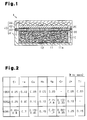
- a molten salt battery 1 comprises a positive electrode 10, a negative electrode 20, a separator 30 arranged between the positive electrode 10 and the negative electrode 20, and an accommodation case 40 for accommodating the positive electrode 10, the negative electrode 20, and the separator 30.
- the accommodation case 40 is filled with a molten salt
- the accommodation case 40 comprises a positive electrode case 41 electrically connected with the positive electrode 10, a negative electrode case 42 electrically connected with the negative electrode 20, a sealing member 43 for sealing the space between the positive electrode case 41 and the negative electrode case 42, and a plate spring 44 for pressing the negative electrode 20 toward the positive electrode 10.
- the positive electrode case 41 functions as a positive electrode terminal connected to an external apparatus.
- the negative electrode case 42 functions as a negative electrode terminal connected to an external apparatus.
- the sealing member 43 is formed of a fluorine-based elastic member.
- the fluorine-based elastic member is not corroded by positive electrode active material, negative electrode active material, and molten salt.
- the positive electrode case 41 and the negative electrode case 42 are formed of an aluminum alloy that is a conductive member. The aluminum alloy is not corroded by the oxidation-reduction reaction by charging and discharging of the molten salt battery 1.
- the positive electrode 10 comprises a current collector 11 and a positive electrode composition 12 containing a positive electrode active material.
- the current collector 11 collects the charge generated by the oxidation-reduction reaction of the positive electrode active material.
- An aluminum nonwoven fabric is used as the current collector 11. A plurality of small spaces are formed in the inner part of the aluminum nonwoven fabric. The small spaces in the aluminum nonwoven fabric are filled with the positive electrode composition 12.
- the positive electrode 10 is formed as follows. NaCrO 2 as a positive electrode active material, acetylene black, polyvinylidene fluoride, and N-methyl-2-pyrrolidone are mixed in a mass ratio of 85:10:5:50, respectively, to form the positive electrode composition 12.
- the acetylene black is used as a conducting material.
- the polyvinylidene fluoride is used as a binder resin.
- the N-methyl-2-pyrrolidone is used as a solvent.
- an aluminum nonwoven fabric having a diameter of 100 pm and a porosity of 80% is prepared.
- This aluminum nonwoven fabric is filled with the positive electrode composition 12.
- the aluminum nonwoven fabric is pressed at a pressure of 1000 kgf/cm.
- the porosity is defined by the proportion of the aluminum nonwoven fabric to the total volume of the same nonwoven fabric.
- NaFSA-KFSA A salt (hereinafter, NaFSA-KFSA) containing an anion (hereinafter, "FSA") represented by the following formula (1), a sodium cation, and a potassium cation is used as a molten salt.
- R 1 and R 2 each denote F (fluorine).
- the composition of NaFSA-KFSA is 0.45 mol% and 0.55 mol%, respectively.
- the eutectic temperature thereof is the lowest in the case of the above composition, and it is 57°C.
- An Sn-Na alloy is used as the negative electrode 20.
- the core part of the negative electrode 20 is Sn, and the surface of the negative electrode 20 is an Sn-Na alloy.
- the Sn-Na alloy is formed by plating in which Na is deposited on the Sn metal.
- the separator 30 isolates the positive electrode 10 from the negative electrode 20 so that the two electrodes may not be brought into contact with each other.
- the molten salt passes through the separator 30.
- the molten salt is brought into contact with the positive electrode 10 and the negative electrode 20.
- a glass cloth having a thickness of 200 ⁇ m is used as the separator 30.
- Fig. 2 shows the composition of each test object.
- the test object is in accordance with the Japanese Industrial Standards.
- the total amount of additives is less than 10% by mass.
- the oxidation reaction is most promoted under a condition when the potential of the positive electrode is the highest. Therefore, the oxidative degradation is evaluated at the maximum potential.
- the maximum potential difference is 3.5 V in the molten salt battery 1 using NaCrO 2 as a positive electrode active material. Therefore, each sample is evaluated for the current density when the potential of the positive electrode is 3.5 V.
- the current density at a potential of 3.5 V is 10 ⁇ Acm -2 or less for both the first time of measurement and the second time of measurement.
- the current density at 3.5 V is lower for the second time than for the first time.
- the current density of all the samples is within the range of the current value that does not prevent charge and discharge.
- the maximum of the current value to be judged as not preventing charge and discharge (hereinafter, allowable current density) is, for example, set to 10 ⁇ Acm -2 at a potential of 3.5 V.
- allowable current density is, for example, set to 10 ⁇ Acm -2 at a potential of 3.5 V.
- the current density at a potential of 3.5 V is smaller than the allowable current density.
- each sample is evaluated for the current value in the state where the potential of the positive electrode is held at 3.5 V.
- the current density decreases with the lapse of time for all the samples.
- the current generated by the oxidation reaction between an aluminum alloy and a sodium ion the current flows irrespective of the lapse of time. Therefore, the current of the present measurement is not caused by the oxidation reaction. Further, the current density of all the samples is lower than the allowable current density of the molten salt battery 1.
- the sweep is performed in the direction from 2.0 V to 0 V in analogy to the potential at the time of the charge of the molten salt battery 1.
- the potential is varied in the range of 0 V to 2.0 V by the charge and discharge.
- the aluminum alloy which is the negative electrode case 42
- the aluminum alloy will not be corroded when only sodium ions move from the same aluminum alloy at the time of discharge.
- sodium may be deposited on the deposited metal at the time of charge.
- the deposited metal and sodium form an alloy and destroy a part of the crystal structure of the aluminum alloy.
- a hole is formed in the part in which the alloy has been present, by the movement of the alloy of the deposited metal and sodium into the molten salt. In this way, the corrosion of the aluminum alloy proceeds.
- the reduction reaction of sodium ions is most promoted under a condition when the potential of the negative electrode 20 is the lowest. Therefore, the reduction deterioration is evaluated at 0 V.
- the potential of the negative electrode 20 is changed from 2 V to 0 V, reduction current is increased. That is, sodium ions are reduced to deposit sodium metal on an aluminum alloy.
- the current value at a potential of 0 V is 10 ⁇ A or less for all the samples. The current for all the samples is smaller than the allowable current value of the molten salt battery 1. That is, the corrosion of the aluminum alloy by the reduction of sodium ions rarely occurs.
- the positive electrode case 41 and the negative electrode case 42 are formed of an aluminum alloy containing 90% by mass or more of aluminum.
- the positive electrode case 41 is in a state where oxidation reaction of aluminum occurs, and the negative electrode case 42 is in a state where reduction reaction occurs.
- the positive electrode case 41 is almost immune to being oxidized in the electrolyte containing sodium ions.
- sodium metal is deposited on the negative electrode case 42 by the reduction reaction of sodium ions in the electrolyte containing sodium ions.
- the sodium metal on aluminum is ionized at the time of discharge.
- the positive electrode case 41 and the negative electrode case 42 can be formed of an aluminum alloy to thereby suppress the corrosion of the cases.
- the strength of an aluminum alloy increases with the addition of metal additives. However, if the ratio of the metal additives exceeds 10% by mass, any of the metal additives may be deposited, thereby reducing the workability of the aluminum alloy. Then, the content of the metal additives can be set to an amount less than 10% by mass to thereby ensure the strength of the accommodation case 40 and maintain the workability of the accommodation case 40.
- the component percentage of Si is 1.5% by mass or more
- metallic silicon of a Si single phase may be deposited in the aluminum alloy.
- the reduction reaction of sodium ions and Si occurs in the negative electrode case 42 to corrode the negative electrode case 42.
- the accommodation case 40 of the molten salt battery 1 is formed of an aluminum alloy having a component percentage of Si of less than 1.5% by mass. This can suppress the corrosion of the negative electrode case 42.
- the component percentage of Fe is 1.0% by mass or more
- FeAl 3 may be deposited in the aluminum alloy.
- the FeAl 3 corrodes in the positive electrode case 41.
- the positive electrode case 41 of the molten salt battery 1 is formed of an aluminum alloy having a component percentage of Fe of less than 1.0% by mass. This can suppress the corrosion of the positive electrode case 41.
- the component percentage of Cu is 0.5% by mass or more
- an intermetallic compound phase between Cu and other metal may be formed in the aluminum alloy.
- a corrosion reaction of the intermetallic compound phase occurs in the positive electrode case 41.
- the positive electrode case 41 of the molten salt battery 1 is formed of an aluminum alloy having a component percentage of Cu of less than 0.5% by mass. This can suppress the corrosion of the positive electrode case 41.
- the component percentage of Mn is 1.5% by mass or more, the percentage of Al 6 Mn in the aluminum alloy is increased to reduce the workability of the aluminum alloy. Then, the component percentage of Mn is preferably set to less than 1.5% by mass. This suppresses the distortion caused by poor workability in producing a case. As a result, an accommodation case 40 of the molten salt battery 1 having a small distortion can be formed.
- the accommodation case 40 of the molten salt battery 1 be formed of an aluminum alloy having a component percentage of Mg of less than 4.0% by mass. This suppresses the distortion caused by poor workability in producing the case. As a result, an accommodation case 40 having a small distortion can be formed.
- the accommodation case 40 of the molten salt battery 1 is preferably formed of an aluminum alloy having a component percentage of Cr of less than 0.5% by mass. This can suppress the corrosion of the positive electrode case 41.
- the component percentage of Zn is 1.0% by mass or more
- metal zinc of a Zn single phase may be deposited in the aluminum alloy.
- the part forming the Zn single phase is corroded by a reaction with a sodium compound.
- the accommodation case 40 is formed of an aluminum alloy having a component percentage of Zn of less than 1.5% by mass. This can suppress the corrosion of the accommodation case 40.
- Ti does not significantly dissolve in an aluminum alloy, but forms TiAl 3 at ordinary temperatures.
- the component percentage of Ti is 0.2% by mass or more, the percentage of TiAl 3 in the aluminum alloy is increased to reduce the workability of the aluminum alloy.
- the accommodation case 40 is formed of an aluminum alloy having a component percentage of Ti of less than 0.2% by mass. This suppresses the distortion caused by poor workability in producing the case.
- the above tests are performed under the conditions in which sodium is used for a counter electrode to promote oxidation. Therefore, even if the accommodation case 40 having the above composition is used as the case of the molten salt battery 1 containing the following sodium compound, the advantage of the above (1) is obtained.
- the positive electrode active material include NaCrO 2 mentioned in the embodiment, NaMnF 3 , Na 2 FePO 4 F, NaVPO 4 F, and Na 0.44 MnO 2 .
- the molten salt includes a salt in which R 1 and R 2 are replaced with CF3 (hereinafter, "TFSA") and a salt in which R 1 and R 2 are replaced with F and CF3, respectively, in the above formula (1).
- the molten salt further includes a molten salt containing a plurality of anions selected from the group of molten salts in which R 1 and R 2 in the above formula (1) are independently replaced with F or a fluoroalkyl group.
- the molten salt is not limited to a molten salt in which Na or K is used as a cation.
- the molten salt may be formed by using, as cations, one or two or more selected from the group consisting of alkali metals and alkaline earth metals.
- the alkali metals are selected from Li, Na, K, Rb, and cesium Cs. Further, the alkaline earth metals are selected from Be, Mg, Ca, Sr, and Ba.
- the simple salt of the molten salt in which FSA is used as an anion includes LiFSA, NaFSA, KFSA, RbFSA, CsFSA, Be(FSA) 2 , Mg(FSA) 2 , Ca(FSA) 2 , Sr(FSA) 2 , and Ba(FSA) 2 .
- a mixture thereof is also used as the molten salt of the molten salt battery 1.
- the simple salt of the molten salt in which TFSA is used as an anion includes LiTFSA, NaTFSA, KTFSA, RbTFSA, CsTFSA, Be(TFSA) 2 , Mg(TFSA) 2 , Ca(TFSA) 2 , Sr(TFSA) 2 , and Ba(TFSA) 2 . Further, a mixture thereof is also used as the molten salt of the molten salt battery 1.
- the measurement has been performed at a composition ratio of NaFSA-KFSA of 0.45 mol% and 0.55 mol%, respectively. Even if the above composition ratio is changed, the advantage of the above (1) is obtained.
- the molar ratio of KFSA may be set in the range of 0.4 or more and 0.7 or less.
- the molar ratio of KFSA is represented by the ratio of the number of moles of K-cations to that of the cations in the whole molten salt.
- the positive electrode case 41 and the negative electrode case 42 are formed of an aluminum alloy containing a metal other than aluminum.
- these cases can also be formed of pure aluminum.
- the accommodation case 40 comprises a positive electrode case 41 and a negative electrode case 42 that are separated from each other.
- the positive electrode case 41 and the negative electrode case 42 can also be integrated to form the accommodation case 40.
- at least one of the positive electrode 10 and the negative electrode 20 is electrically isolated from the accommodation case 40 before it is accommodated in the accommodation case 40.
Landscapes
- Chemical & Material Sciences (AREA)
- Chemical Kinetics & Catalysis (AREA)
- Electrochemistry (AREA)
- General Chemical & Material Sciences (AREA)
- Engineering & Computer Science (AREA)
- Inorganic Chemistry (AREA)
- Manufacturing & Machinery (AREA)
- General Physics & Mathematics (AREA)
- Condensed Matter Physics & Semiconductors (AREA)
- Physics & Mathematics (AREA)
- Materials Engineering (AREA)
- Secondary Cells (AREA)
- Sealing Battery Cases Or Jackets (AREA)
Abstract
Description
- The present invention relates to a material for a case for a molten salt battery.
- As described in Patent Document 1, a molten salt containing sodium ions is used for an electrolyte of a molten salt battery. The oxidation-reduction reaction of a sodium compound is performed on the positive electrode of a molten salt battery. The oxidation-reduction reaction of sodium ions is performed on the negative electrode of a molten salt battery.
-
- Patent Document 1: Japanese Laid-Open Patent Publication No.
2009-67644 - A case for a molten salt battery is influenced by oxidation reaction of the positive electrode or reduction reaction of the negative electrode. This provides an oxidizing atmosphere in a case on the side of the positive electrode. Therefore, material for the case is selected in consideration of corrosion from oxidization of a sodium compound. In the case on the side of the negative electrode, material for the case forms an alloy with sodium when sodium is deposited. Therefore, material for the case is selected in consideration of deterioration from alloying. However, material for the case has not yet been researched in detail.
- An objective of the present invention is to provide a case for a molten salt battery in which a molten salt containing sodium ions is used as an electrolyte, wherein the case has reduced deterioration from corrosion.
- To achieve the foregoing objective and in accordance with one aspect of the present invention, a case for a molten salt battery is provided, in which the case is used for a molten salt battery containing as an electrolyte a molten salt containing a sodium ion. Also, the case is formed of aluminum or an aluminum alloy containing 90% by mass or more of aluminum.
- When charging and discharging of a molten salt battery are performed, the positive electrode side of the case will be in a state where oxidation reaction of aluminum occurs, and the negative electrode side of the case will be in a state where a reduction reaction occurs. However, aluminum is almost immune to being oxidized in the electrolyte containing sodium ions. Further, if aluminum has a negative potential in the electrolyte containing sodium ions, sodium metal will be deposited on aluminum by the reduction reaction of the sodium ions. Although the sodium metal on aluminum is ionized at the time of discharge, almost no deterioration of aluminum by the dissolution of sodium ions occurs. Therefore, a case for a molten salt battery can be formed of an aluminum alloy to thereby suppress the corrosion of the case.
- In the case described above, the case is used for a molten salt battery containing as an electrolyte a molten salt containing an anion represented by the following formula (1) and a cation of at least one of an alkali metal and an alkaline earth metal:

- In a molten salt battery containing as an electrolyte a molten salt comprising the above anion and the above cation, aluminum is not corroded by the oxidation-reduction reaction at the time of discharging and charging. Therefore, a case of the present invention is suitable as a case for a molten salt battery containing as an electrolyte a molten salt containing sodium ions.
- In order to solve the problems as described above, a second aspect of the present invention provides a molten salt battery using a case for a molten salt battery as described above. According to this invention, deterioration of the case can be suppressed.
-
-
Fig. 1 is a schematic diagram showing a molten salt battery according to one embodiment of the present invention; -
Fig. 2 is a table showing the composition ratio of the case for a molten salt battery; -
Fig. 3 is a graph showing the oxidation characteristics ofaluminum 1050; -
Fig. 4 is a graph showing the oxidation characteristics ofaluminum 5052; -
Fig. 5 is a graph showing the oxidation characteristics ofaluminum 6061; -
Fig. 6 is a graph showing the oxidation characteristics of various aluminum alloys; and -
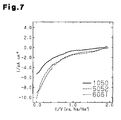
Fig. 7 is a graph showing the characteristics of various aluminum alloys in a reducing atmosphere. - One embodiment of the present invention will be described with reference to
Fig. 1 . - A molten salt battery 1 comprises a
positive electrode 10, anegative electrode 20, aseparator 30 arranged between thepositive electrode 10 and thenegative electrode 20, and anaccommodation case 40 for accommodating thepositive electrode 10, thenegative electrode 20, and theseparator 30. Theaccommodation case 40 is filled with a molten salt - The
accommodation case 40 comprises a positive electrode case 41 electrically connected with thepositive electrode 10, a negative electrode case 42 electrically connected with thenegative electrode 20, a sealing member 43 for sealing the space between the positive electrode case 41 and the negative electrode case 42, and aplate spring 44 for pressing thenegative electrode 20 toward thepositive electrode 10. - The positive electrode case 41 functions as a positive electrode terminal connected to an external apparatus. The negative electrode case 42 functions as a negative electrode terminal connected to an external apparatus. The sealing member 43 is formed of a fluorine-based elastic member. The fluorine-based elastic member is not corroded by positive electrode active material, negative electrode active material, and molten salt. The positive electrode case 41 and the negative electrode case 42 are formed of an aluminum alloy that is a conductive member. The aluminum alloy is not corroded by the oxidation-reduction reaction by charging and discharging of the molten salt battery 1.
- The
positive electrode 10 comprises acurrent collector 11 and apositive electrode composition 12 containing a positive electrode active material. Thecurrent collector 11 collects the charge generated by the oxidation-reduction reaction of the positive electrode active material. An aluminum nonwoven fabric is used as thecurrent collector 11. A plurality of small spaces are formed in the inner part of the aluminum nonwoven fabric. The small spaces in the aluminum nonwoven fabric are filled with thepositive electrode composition 12. - The
positive electrode 10 is formed as follows. NaCrO2 as a positive electrode active material, acetylene black, polyvinylidene fluoride, and N-methyl-2-pyrrolidone are mixed in a mass ratio of 85:10:5:50, respectively, to form thepositive electrode composition 12. The acetylene black is used as a conducting material. The polyvinylidene fluoride is used as a binder resin. The N-methyl-2-pyrrolidone is used as a solvent. - Next, an aluminum nonwoven fabric having a diameter of 100 pm and a porosity of 80% is prepared. This aluminum nonwoven fabric is filled with the
positive electrode composition 12. After drying, the aluminum nonwoven fabric is pressed at a pressure of 1000 kgf/cm. The porosity is defined by the proportion of the aluminum nonwoven fabric to the total volume of the same nonwoven fabric. - A salt (hereinafter, NaFSA-KFSA) containing an anion (hereinafter, "FSA") represented by the following formula (1), a sodium cation, and a potassium cation is used as a molten salt.

- An Sn-Na alloy is used as the
negative electrode 20. The core part of thenegative electrode 20 is Sn, and the surface of thenegative electrode 20 is an Sn-Na alloy. The Sn-Na alloy is formed by plating in which Na is deposited on the Sn metal. Theseparator 30 isolates thepositive electrode 10 from thenegative electrode 20 so that the two electrodes may not be brought into contact with each other. The molten salt passes through theseparator 30. The molten salt is brought into contact with thepositive electrode 10 and thenegative electrode 20. Specifically, a glass cloth having a thickness of 200 µm is used as theseparator 30. - The corrosive deterioration of the aluminum alloy, which is the material for the positive electrode case 41 and the negative electrode case 42, will be described with reference to
Figs. 2 to 7 . -
Fig. 2 shows the composition of each test object. The test object is in accordance with the Japanese Industrial Standards. In all the aluminum alloys, the total amount of additives is less than 10% by mass. -
- Measurement method: A linear sweep voltammetric method (two-electrode type measurement)
- Sample electrode: 1050, 5052, 6061 of the Japanese Industrial Standards in 2000 (refer to
Figs. 3 to 5 ) - Sample shape: A linear object of an aluminum alloy having a diameter of 1 mm
- Immersion area of a sample: 0.314 cm2 (1 cm in length)
- Counter electrode: Na metal
- Electrolyte: NaFSA-KFSA
- Composition ratio of NaFSA-KFSA = 0.45 mol%:0.55 mol%
- Sweep rate: 10 mV·S-1
- Sweep range: 2.0 V to 4.0 V (vs. Na/Na+)
- Measurement temperature: 90°C
- Measurement frequency: 2 times
- In the molten salt battery 1 of the above embodiment, the oxidation reaction is most promoted under a condition when the potential of the positive electrode is the highest. Therefore, the oxidative degradation is evaluated at the maximum potential. The maximum potential difference is 3.5 V in the molten salt battery 1 using NaCrO2 as a positive electrode active material. Therefore, each sample is evaluated for the current density when the potential of the positive electrode is 3.5 V.
- As shown in
Figs. 3 to 5 , in all the samples, the current density at a potential of 3.5 V is 10 µAcm-2 or less for both the first time of measurement and the second time of measurement. In addition, in all the samples, the current density at 3.5 V is lower for the second time than for the first time. With respect to the current generated by the oxidation reaction between an aluminum alloy and a sodium ion, the current flows irrespective of the number of times of measurement. Therefore, it is thought that the current of the present measurement is not caused by the oxidation reaction, but caused by the decomposition reaction of impurities such as water. - Further, the current density of all the samples is within the range of the current value that does not prevent charge and discharge. The maximum of the current value to be judged as not preventing charge and discharge (hereinafter, allowable current density) is, for example, set to 10 µAcm-2 at a potential of 3.5 V. Thus, in all the samples, the current density at a potential of 3.5 V is smaller than the allowable current density.
-
- Measurement method: A chronoamperometric method
- Sample electrode: 1050, 5052, 6061 of the Japanese Industrial Standards in 2000 (refer to
Fig. 6 ) - Sample shape: A linear object of an aluminum alloy having a diameter of 1 mm
- Immersion area of a sample: 0.314 cm2 (1 cm in length)
- Counter electrode: Na metal
- Electrolyte: NaFSA-KFSA
- Composition ratio of NaFSA-KFSA = 0.45 mol%:0.55 mol%
- Holding potential: 3.5 V (vs. Na/Na+)
- Measurement temperature: 90°C
- For the same reason as in Test 1, each sample is evaluated for the current value in the state where the potential of the positive electrode is held at 3.5 V.
- As shown in
Fig. 6 , the current density decreases with the lapse of time for all the samples. With respect to the current generated by the oxidation reaction between an aluminum alloy and a sodium ion, the current flows irrespective of the lapse of time. Therefore, the current of the present measurement is not caused by the oxidation reaction. Further, the current density of all the samples is lower than the allowable current density of the molten salt battery 1. -
- Measurement method: A linear sweep voltammetric method (two-electrode type measurement)
- Sample electrode: 1050, 5052, 6061 of the Japanese Industrial Standards in 2000 (refer to
Fig. 7 ) - Sample shape: A linear object of an aluminum alloy having a diameter of 1 mm
- Immersion area of a sample: 0.314 cm2 (1 cm in length)
- Counter electrode: Na metal
- Electrolyte: NaFSA-KFSA
- Composition ratio of NaFSA-KFSA = 0.45 mol%:0.55 mol%
- Sweep rate: 5 mV·S-1
- Sweep range: 2.0 V to 0 V (vs. Na/Na+)
- Measurement temperature: 90°C
- In the measurement of current, the sweep is performed in the direction from 2.0 V to 0 V in analogy to the potential at the time of the charge of the molten salt battery 1. On the
negative electrode 20 of the molten salt battery 1, the potential is varied in the range of 0 V to 2.0 V by the charge and discharge. - In the case of the above molten salt battery 1, sodium is deposited on the
negative electrode 20 at the time of charge. On the other hand, even if sodium is deposited on the aluminum alloy, which is the negative electrode case 42, the aluminum alloy will not be corroded when only sodium ions move from the same aluminum alloy at the time of discharge. However, when the aluminum alloy has a deposited metal thereon, sodium may be deposited on the deposited metal at the time of charge. At this time, the deposited metal and sodium form an alloy and destroy a part of the crystal structure of the aluminum alloy. Further, at the time of discharge, a hole is formed in the part in which the alloy has been present, by the movement of the alloy of the deposited metal and sodium into the molten salt. In this way, the corrosion of the aluminum alloy proceeds. - In the molten salt battery 1, the reduction reaction of sodium ions is most promoted under a condition when the potential of the
negative electrode 20 is the lowest. Therefore, the reduction deterioration is evaluated at 0 V. When the potential of thenegative electrode 20 is changed from 2 V to 0 V, reduction current is increased. That is, sodium ions are reduced to deposit sodium metal on an aluminum alloy. However, the current value at a potential of 0 V is 10 µA or less for all the samples. The current for all the samples is smaller than the allowable current value of the molten salt battery 1. That is, the corrosion of the aluminum alloy by the reduction of sodium ions rarely occurs. - According to the present embodiment, the following advantages can be obtained.
- According to the present embodiment, the positive electrode case 41 and the negative electrode case 42 are formed of an aluminum alloy containing 90% by mass or more of aluminum.
- As a result of charge and discharge of the molten salt battery 1, the positive electrode case 41 is in a state where oxidation reaction of aluminum occurs, and the negative electrode case 42 is in a state where reduction reaction occurs. However, the positive electrode case 41 is almost immune to being oxidized in the electrolyte containing sodium ions. Further, sodium metal is deposited on the negative electrode case 42 by the reduction reaction of sodium ions in the electrolyte containing sodium ions. The sodium metal on aluminum is ionized at the time of discharge. However, since the amount of the sodium metal deposited is very small, aluminum is almost immune to deterioration with the dissolution of sodium ions. Therefore, the positive electrode case 41 and the negative electrode case 42 can be formed of an aluminum alloy to thereby suppress the corrosion of the cases.
- The strength of an aluminum alloy increases with the addition of metal additives. However, if the ratio of the metal additives exceeds 10% by mass, any of the metal additives may be deposited, thereby reducing the workability of the aluminum alloy. Then, the content of the metal additives can be set to an amount less than 10% by mass to thereby ensure the strength of the
accommodation case 40 and maintain the workability of theaccommodation case 40. - The embodiment of the present invention may be modified as described below.
- According to the results of the above reduction test, it has been shown that the corrosion resistance of an aluminum alloy to a sodium battery is low for the aluminum alloy having a maximum component percentage of Si of 0.8% by mass. If the aluminum alloy has a component percentage of Si of less than 1.5% by mass, the same advantage as in the case of the above test object will be obtained. The reason for this is explained below.
- When the component percentage of Si is 1.5% by mass or more, metallic silicon of a Si single phase may be deposited in the aluminum alloy. In this case, the reduction reaction of sodium ions and Si occurs in the negative electrode case 42 to corrode the negative electrode case 42. Then, the
accommodation case 40 of the molten salt battery 1 is formed of an aluminum alloy having a component percentage of Si of less than 1.5% by mass. This can suppress the corrosion of the negative electrode case 42. - According to the results of the above oxidation test, it has been shown that the corrosion resistance of an aluminum alloy to a sodium battery is low for the aluminum alloy having a maximum component percentage of Fe of 0.7% by mass. If the aluminum alloy has a component percentage of Fe of less than 1.0% by mass, the same advantage as in the case of the above test object will be obtained. The reason for this is explained below.
- When the component percentage of Fe is 1.0% by mass or more, FeAl3 may be deposited in the aluminum alloy. In this case, the FeAl3 corrodes in the positive electrode case 41. Then, the positive electrode case 41 of the molten salt battery 1 is formed of an aluminum alloy having a component percentage of Fe of less than 1.0% by mass. This can suppress the corrosion of the positive electrode case 41.
- According to the results of the above oxidation test, it has been shown that the corrosion resistance of an aluminum alloy to a sodium battery is low for the aluminum alloy having a maximum component percentage of Cu of 0.4% by mass. If the aluminum alloy has a component percentage of Cu of less than 0.5% by mass, the same advantage as in the case of the above test object will be obtained. The reason for this is explained below.
- When the component percentage of Cu is 0.5% by mass or more, an intermetallic compound phase between Cu and other metal may be formed in the aluminum alloy. In this case, a corrosion reaction of the intermetallic compound phase occurs in the positive electrode case 41. Then, the positive electrode case 41 of the molten salt battery 1 is formed of an aluminum alloy having a component percentage of Cu of less than 0.5% by mass. This can suppress the corrosion of the positive electrode case 41.
- According to the results of the above oxidation test and reduction test, it has been shown that the corrosion resistance of an aluminum alloy to a sodium battery is low for the aluminum alloy having a maximum component percentage of Mn of 0.15% by mass. Mn is not significantly dissolved in an aluminum alloy and deposited as Al6Mn at ordinary temperatures. Al6Mn is inert to sodium ions similar to aluminum. Therefore, the same advantage as in the case of the above test object will be obtained even if the amount of Mn is increased.
- When the component percentage of Mn is 1.5% by mass or more, the percentage of Al6Mn in the aluminum alloy is increased to reduce the workability of the aluminum alloy. Then, the component percentage of Mn is preferably set to less than 1.5% by mass. This suppresses the distortion caused by poor workability in producing a case. As a result, an
accommodation case 40 of the molten salt battery 1 having a small distortion can be formed. - According to the results of the above oxidation test and reduction test, it has been shown that the corrosion resistance of an aluminum alloy to a sodium battery is low for the aluminum alloy having a maximum component percentage of Mg of 2.8% by mass. When the component percentage of Mg is 4% by mass or more, Al3Mg2 may be deposited in the aluminum alloy. Mg is inert to sodium ions similar to aluminum. Therefore, the same advantage as in the case of the above test object will be obtained even if the amount of Mg is increased.
- When Al3Mg2. is deposited in an aluminum alloy having a component percentage of Mg of 4.0% by mass or more, the workability of the aluminum alloy will be reduced. Then, it is preferred that the
accommodation case 40 of the molten salt battery 1 be formed of an aluminum alloy having a component percentage of Mg of less than 4.0% by mass. This suppresses the distortion caused by poor workability in producing the case. As a result, anaccommodation case 40 having a small distortion can be formed. - According to the results of the above oxidation test, it has been shown that the corrosion resistance of an aluminum alloy to a sodium battery is low for the aluminum alloy having a maximum component percentage of Cr of 0.35% by mass. If the aluminum alloy has a component percentage of Cr of less than 0.5% by mass, the same advantage as in the case of the above test object will be obtained. The reason for this is explained below.
- When the component percentage of Cr is 0.5% by mass or more, Al7Cr may be formed in the aluminum alloy. In this case, a corrosion reaction of the Al7Cr occurs in the positive electrode case 41. Then, the
accommodation case 40 of the molten salt battery 1 is preferably formed of an aluminum alloy having a component percentage of Cr of less than 0.5% by mass. This can suppress the corrosion of the positive electrode case 41. - According to the results of the above oxidation test, it has been shown that the corrosion resistance of an aluminum alloy to a sodium battery is low for the aluminum alloy having a maximum component percentage of Zn of 0.25% by mass. If the aluminum alloy has a component percentage of Zn of less than 1.0% by mass, the same advantage as in the case of the above test object will be obtained. The reason for this is explained below.
- When the component percentage of Zn is 1.0% by mass or more, metal zinc of a Zn single phase may be deposited in the aluminum alloy. In this case, the part forming the Zn single phase is corroded by a reaction with a sodium compound. Then, the
accommodation case 40 is formed of an aluminum alloy having a component percentage of Zn of less than 1.5% by mass. This can suppress the corrosion of theaccommodation case 40. - According to the results of the above oxidation test and reduction test, it has been shown that the corrosion resistance of an aluminum alloy to a sodium battery is low for the aluminum alloy having a maximum component percentage of Ti of 0.15% by mass. Ti is inert to sodium ions similar to aluminum. Therefore, the same advantage as in the case of the above test object will be obtained even if the amount of Mg is increased.
- Ti does not significantly dissolve in an aluminum alloy, but forms TiAl3 at ordinary temperatures. When the component percentage of Ti is 0.2% by mass or more, the percentage of TiAl3 in the aluminum alloy is increased to reduce the workability of the aluminum alloy. Then, the
accommodation case 40 is formed of an aluminum alloy having a component percentage of Ti of less than 0.2% by mass. This suppresses the distortion caused by poor workability in producing the case. - The above tests are performed under the conditions in which sodium is used for a counter electrode to promote oxidation. Therefore, even if the
accommodation case 40 having the above composition is used as the case of the molten salt battery 1 containing the following sodium compound, the advantage of the above (1) is obtained. Examples of the positive electrode active material include NaCrO2 mentioned in the embodiment, NaMnF3, Na2FePO4F, NaVPO4F, and Na0.44MnO2. - Although NaFSA-KFSA was used as the electrolyte of the molten salt battery 1 in the above Examples, the same results are obtained for the same type of molten salts as this. Therefore, even if the
accommodation case 40 having the above composition is used as the case of the molten salt battery 1 using the molten salt shown below as an electrolyte, the advantage of the above (1) is obtained. - The molten salt includes a salt in which R1 and R2 are replaced with CF3 (hereinafter, "TFSA") and a salt in which R1 and R2 are replaced with F and CF3, respectively, in the above formula (1). The molten salt further includes a molten salt containing a plurality of anions selected from the group of molten salts in which R1 and R2 in the above formula (1) are independently replaced with F or a fluoroalkyl group.
- Further, the molten salt is not limited to a molten salt in which Na or K is used as a cation. The molten salt may be formed by using, as cations, one or two or more selected from the group consisting of alkali metals and alkaline earth metals.
- The alkali metals are selected from Li, Na, K, Rb, and cesium Cs. Further, the alkaline earth metals are selected from Be, Mg, Ca, Sr, and Ba.
- The simple salt of the molten salt in which FSA is used as an anion includes LiFSA, NaFSA, KFSA, RbFSA, CsFSA, Be(FSA)2, Mg(FSA)2, Ca(FSA)2, Sr(FSA)2, and Ba(FSA)2. A mixture thereof is also used as the molten salt of the molten salt battery 1.
- The simple salt of the molten salt in which TFSA is used as an anion includes LiTFSA, NaTFSA, KTFSA, RbTFSA, CsTFSA, Be(TFSA)2, Mg(TFSA)2, Ca(TFSA)2, Sr(TFSA)2, and Ba(TFSA)2. Further, a mixture thereof is also used as the molten salt of the molten salt battery 1.
- In each of the above tests, the measurement has been performed at a composition ratio of NaFSA-KFSA of 0.45 mol% and 0.55 mol%, respectively. Even if the above composition ratio is changed, the advantage of the above (1) is obtained. For example, the molar ratio of KFSA may be set in the range of 0.4 or more and 0.7 or less. The molar ratio of KFSA is represented by the ratio of the number of moles of K-cations to that of the cations in the whole molten salt.
- According to the above embodiments, the positive electrode case 41 and the negative electrode case 42 are formed of an aluminum alloy containing a metal other than aluminum. However, these cases can also be formed of pure aluminum.
- According to the above embodiments, the
accommodation case 40 comprises a positive electrode case 41 and a negative electrode case 42 that are separated from each other. However, the positive electrode case 41 and the negative electrode case 42 can also be integrated to form theaccommodation case 40. In this case, at least one of thepositive electrode 10 and thenegative electrode 20 is electrically isolated from theaccommodation case 40 before it is accommodated in theaccommodation case 40.
Claims (3)
- A case for a molten salt battery, wherein
the case is used for a molten salt battery containing as an electrolyte a molten salt containing a sodium ion, and
the case is formed of aluminum or an aluminum alloy containing 90% by mass or more of aluminum. - The case for a molten salt battery according to claim 1, wherein the case is used for a molten salt battery containing as an electrolyte a molten salt containing an anion represented by the following formula (1) and a cation of at least one of an alkali metal and an alkaline earth metal:

- A molten salt battery using the case for a molten salt battery according to claim 1 or 2.
Applications Claiming Priority (2)
| Application Number | Priority Date | Filing Date | Title |
|---|---|---|---|
| JP2010095055A JP5516002B2 (en) | 2010-04-16 | 2010-04-16 | Molten salt battery case and molten salt battery |
| PCT/JP2011/059261 WO2011129391A1 (en) | 2010-04-16 | 2011-04-14 | Molten salt battery case, and molten salt battery |
Publications (2)
| Publication Number | Publication Date |
|---|---|
| EP2560221A1 true EP2560221A1 (en) | 2013-02-20 |
| EP2560221A4 EP2560221A4 (en) | 2016-09-14 |
Family
ID=44798760
Family Applications (1)
| Application Number | Title | Priority Date | Filing Date |
|---|---|---|---|
| EP11768912.5A Withdrawn EP2560221A4 (en) | 2010-04-16 | 2011-04-14 | BAC FOR MELT SALT BATTERY AND MELT SALT BATTERY |
Country Status (8)
| Country | Link |
|---|---|
| US (1) | US9276241B2 (en) |
| EP (1) | EP2560221A4 (en) |
| JP (1) | JP5516002B2 (en) |
| KR (1) | KR101812350B1 (en) |
| CN (1) | CN102473869A (en) |
| CA (1) | CA2766043A1 (en) |
| TW (1) | TW201203660A (en) |
| WO (1) | WO2011129391A1 (en) |
Families Citing this family (4)
| Publication number | Priority date | Publication date | Assignee | Title |
|---|---|---|---|---|
| WO2014170979A1 (en) * | 2013-04-18 | 2014-10-23 | 住友電気工業株式会社 | Negative electrode active material for sodium secondary battery using molten salt electrolyte solution, negative electrode, and sodium secondary battery using molten salt electrolyte solution |
| US9553336B2 (en) | 2013-11-15 | 2017-01-24 | Sumitomo Electric Industries, Ltd. | Power supply system for well |
| US20150140378A1 (en) * | 2013-11-15 | 2015-05-21 | Sumitomo Electric Industries, Ltd. | Molten salt battery and power supply system |
| JP6292011B2 (en) * | 2014-05-02 | 2018-03-14 | 住友電気工業株式会社 | Sodium ion secondary battery |
Family Cites Families (16)
| Publication number | Priority date | Publication date | Assignee | Title |
|---|---|---|---|---|
| JPS5943839A (en) * | 1982-09-03 | 1984-03-12 | Nippon Light Metal Co Ltd | Aluminum-magnesium alloy for die casting |
| JP2000348697A (en) * | 1999-06-02 | 2000-12-15 | Yuasa Corp | Batteries and battery-embedded electrical equipment |
| JP3623452B2 (en) * | 2000-01-31 | 2005-02-23 | 森田化学工業株式会社 | Method for producing sulfonylimide compound |
| JP2003157890A (en) * | 2001-11-21 | 2003-05-30 | Hitachi Ltd | Sodium secondary battery |
| JP2003293059A (en) * | 2002-04-01 | 2003-10-15 | Mitsubishi Alum Co Ltd | Aluminum alloy clad plate for secondary battery case, and secondary battery case |
| KR20050093467A (en) * | 2004-03-19 | 2005-09-23 | 삼원산업주식회사 | Method of manufacturing alumium alloy for battery case |
| JP4284261B2 (en) * | 2004-09-29 | 2009-06-24 | 株式会社東芝 | Secondary battery |
| JPWO2006101141A1 (en) | 2005-03-23 | 2008-09-04 | 国立大学法人京都大学 | Molten salt composition and use thereof |
| JP2006269374A (en) * | 2005-03-25 | 2006-10-05 | Toshiba Corp | Non-aqueous electrolyte battery |
| JP4750549B2 (en) * | 2005-12-19 | 2011-08-17 | 日本碍子株式会社 | Anode container for sodium-sulfur battery |
| JP5273765B2 (en) * | 2007-09-14 | 2013-08-28 | 国立大学法人京都大学 | Molten salt composition and use thereof |
| JP5321783B2 (en) * | 2008-03-04 | 2013-10-23 | 株式会社東芝 | Nonaqueous electrolyte secondary battery and battery pack |
| WO2009123328A1 (en) * | 2008-03-31 | 2009-10-08 | Nippon Shokubai Co., Ltd. | Sulfonylimide salt and method for producing the same |
| KR101684718B1 (en) * | 2009-09-28 | 2016-12-08 | 스미토모덴키고교가부시키가이샤 | Battery and energy system |
| JP2011165565A (en) * | 2010-02-12 | 2011-08-25 | Sumitomo Electric Ind Ltd | Molten salt battery |
| JP5712928B2 (en) * | 2010-04-06 | 2015-05-07 | 住友電気工業株式会社 | Separator manufacturing method, molten salt battery manufacturing method, separator, and molten salt battery |
-
2010
- 2010-04-16 JP JP2010095055A patent/JP5516002B2/en active Active
-
2011
- 2011-04-14 WO PCT/JP2011/059261 patent/WO2011129391A1/en not_active Ceased
- 2011-04-14 CA CA2766043A patent/CA2766043A1/en not_active Abandoned
- 2011-04-14 TW TW100112961A patent/TW201203660A/en unknown
- 2011-04-14 CN CN2011800030707A patent/CN102473869A/en active Pending
- 2011-04-14 EP EP11768912.5A patent/EP2560221A4/en not_active Withdrawn
- 2011-04-14 KR KR1020117030704A patent/KR101812350B1/en active Active
- 2011-12-22 US US13/335,242 patent/US9276241B2/en active Active
Also Published As
| Publication number | Publication date |
|---|---|
| EP2560221A4 (en) | 2016-09-14 |
| TW201203660A (en) | 2012-01-16 |
| CN102473869A (en) | 2012-05-23 |
| US9276241B2 (en) | 2016-03-01 |
| JP2011228046A (en) | 2011-11-10 |
| US20120100416A1 (en) | 2012-04-26 |
| KR20130009579A (en) | 2013-01-23 |
| CA2766043A1 (en) | 2011-10-20 |
| KR101812350B1 (en) | 2017-12-26 |
| WO2011129391A1 (en) | 2011-10-20 |
| JP5516002B2 (en) | 2014-06-11 |
Similar Documents
| Publication | Publication Date | Title |
|---|---|---|
| US20200176198A1 (en) | Electrolyte additives for zinc metal electrodes | |
| KR101905992B1 (en) | An all-solid-state battery with stable interface of lithium electrode | |
| Myung et al. | Electrochemical behavior and passivation of current collectors in lithium-ion batteries | |
| JP6742329B2 (en) | High voltage lithium-ion battery electrolyte system | |
| EP2544267A1 (en) | Process for production of negative electrode precursor material for battery, negative electrode precursor material for battery, and battery | |
| US20120129056A1 (en) | Negative electrode material for battery, negative electrode precursor material for battery, and battery | |
| JP5701627B2 (en) | Negative electrode for aluminum air battery and aluminum air battery | |
| JPWO2018221309A1 (en) | Secondary battery and device including secondary battery | |
| EP3975303A1 (en) | Nonaqueous electrolyte solution for magnesium secondary battery, and magnesium secondary battery using same | |
| US9276241B2 (en) | Molten salt battery case, and molten salt battery | |
| JP2015008154A (en) | Battery case | |
| JP6301931B2 (en) | Battery charge transfer mechanism | |
| WO2020115938A1 (en) | Nonaqueous electrolyte solution for magnesium secondary batteries and magnesium secondary battery using same | |
| EP4155435A1 (en) | Electrolytic solution, magnesium production method, magnesium, and magnesium foil | |
| JP5329066B2 (en) | Negative electrode active material for secondary battery and secondary battery using the same | |
| JP5342188B2 (en) | Negative electrode active material for secondary battery and secondary battery using the same | |
| CN115038817B (en) | Ni-plated steel sheet and method for producing the same | |
| JP7710197B2 (en) | Magnesium secondary battery and non-aqueous electrolyte for magnesium secondary battery | |
| US20060003228A1 (en) | Sheet anodes based on zinc-aluminum alloys and zinc-air batteries containing the same | |
| JP3053070B2 (en) | Anode zinc-based alloy for alkaline batteries | |
| WO2010055863A9 (en) | Negative electrode structure for lithium ion secondary battery, and method for producing same | |
| JP2010232148A (en) | Secondary battery | |
| JP2025539883A (en) | Aluminum alloys as anodes for aluminum battery production | |
| JPH0412587B2 (en) | ||
| JPS6188466A (en) | Nonaqueous electrolyte secondary battery |
Legal Events
| Date | Code | Title | Description |
|---|---|---|---|
| PUAI | Public reference made under article 153(3) epc to a published international application that has entered the european phase |
Free format text: ORIGINAL CODE: 0009012 |
|
| 17P | Request for examination filed |
Effective date: 20121101 |
|
| AK | Designated contracting states |
Kind code of ref document: A1 Designated state(s): AL AT BE BG CH CY CZ DE DK EE ES FI FR GB GR HR HU IE IS IT LI LT LU LV MC MK MT NL NO PL PT RO RS SE SI SK SM TR |
|
| DAX | Request for extension of the european patent (deleted) | ||
| RA4 | Supplementary search report drawn up and despatched (corrected) |
Effective date: 20160816 |
|
| RIC1 | Information provided on ipc code assigned before grant |
Ipc: H01M 4/38 20060101ALN20160809BHEP Ipc: H01M 2/02 20060101AFI20160809BHEP Ipc: H01M 10/0568 20100101ALI20160809BHEP Ipc: H01M 10/0563 20100101ALI20160809BHEP Ipc: H01M 10/0569 20100101ALI20160809BHEP Ipc: H01M 4/48 20060101ALN20160809BHEP Ipc: H01M 10/054 20100101ALI20160809BHEP |
|
| GRAP | Despatch of communication of intention to grant a patent |
Free format text: ORIGINAL CODE: EPIDOSNIGR1 |
|
| STAA | Information on the status of an ep patent application or granted ep patent |
Free format text: STATUS: GRANT OF PATENT IS INTENDED |
|
| RIC1 | Information provided on ipc code assigned before grant |
Ipc: H01M 2/02 20060101AFI20170623BHEP Ipc: H01M 10/0563 20100101ALI20170623BHEP Ipc: H01M 4/38 20060101ALN20170623BHEP Ipc: H01M 10/054 20100101ALI20170623BHEP Ipc: H01M 4/48 20100101ALN20170623BHEP Ipc: H01M 10/0568 20100101ALI20170623BHEP Ipc: H01M 10/0569 20100101ALI20170623BHEP |
|
| INTG | Intention to grant announced |
Effective date: 20170725 |
|
| STAA | Information on the status of an ep patent application or granted ep patent |
Free format text: STATUS: THE APPLICATION IS DEEMED TO BE WITHDRAWN |
|
| 18D | Application deemed to be withdrawn |
Effective date: 20171205 |