EP2559760B1 - Collectin Fragment zur linderung von Gefässkrankheiten - Google Patents
Collectin Fragment zur linderung von Gefässkrankheiten Download PDFInfo
- Publication number
- EP2559760B1 EP2559760B1 EP11750394.6A EP11750394A EP2559760B1 EP 2559760 B1 EP2559760 B1 EP 2559760B1 EP 11750394 A EP11750394 A EP 11750394A EP 2559760 B1 EP2559760 B1 EP 2559760B1
- Authority
- EP
- European Patent Office
- Prior art keywords
- minutes
- polypeptide
- seq
- cells
- dna
- Prior art date
- Legal status (The legal status is an assumption and is not a legal conclusion. Google has not performed a legal analysis and makes no representation as to the accuracy of the status listed.)
- Not-in-force
Links
- 208000019553 vascular disease Diseases 0.000 title claims description 4
- 102000004405 Collectins Human genes 0.000 title description 22
- 108090000909 Collectins Proteins 0.000 title description 22
- 239000012634 fragment Substances 0.000 title description 22
- 229920001184 polypeptide Polymers 0.000 claims description 78
- 108090000765 processed proteins & peptides Proteins 0.000 claims description 78
- 102000004196 processed proteins & peptides Human genes 0.000 claims description 78
- 206010003210 Arteriosclerosis Diseases 0.000 claims description 17
- 208000011775 arteriosclerosis disease Diseases 0.000 claims description 17
- 208000037265 diseases, disorders, signs and symptoms Diseases 0.000 claims description 9
- 201000010099 disease Diseases 0.000 claims description 7
- 239000003814 drug Substances 0.000 claims description 7
- 239000003153 chemical reaction reagent Substances 0.000 claims description 6
- 230000002265 prevention Effects 0.000 claims description 3
- 125000003275 alpha amino acid group Chemical group 0.000 claims 1
- 210000004027 cell Anatomy 0.000 description 49
- 108020004414 DNA Proteins 0.000 description 40
- 239000000243 solution Substances 0.000 description 36
- 150000001413 amino acids Chemical group 0.000 description 31
- 108090000623 proteins and genes Proteins 0.000 description 29
- 241000282414 Homo sapiens Species 0.000 description 28
- 239000000872 buffer Substances 0.000 description 28
- 239000013598 vector Substances 0.000 description 28
- SHIBSTMRCDJXLN-UHFFFAOYSA-N Digoxigenin Natural products C1CC(C2C(C3(C)CCC(O)CC3CC2)CC2O)(O)C2(C)C1C1=CC(=O)OC1 SHIBSTMRCDJXLN-UHFFFAOYSA-N 0.000 description 25
- QONQRTHLHBTMGP-UHFFFAOYSA-N digitoxigenin Natural products CC12CCC(C3(CCC(O)CC3CC3)C)C3C11OC1CC2C1=CC(=O)OC1 QONQRTHLHBTMGP-UHFFFAOYSA-N 0.000 description 25
- SHIBSTMRCDJXLN-KCZCNTNESA-N digoxigenin Chemical compound C1([C@@H]2[C@@]3([C@@](CC2)(O)[C@H]2[C@@H]([C@@]4(C)CC[C@H](O)C[C@H]4CC2)C[C@H]3O)C)=CC(=O)OC1 SHIBSTMRCDJXLN-KCZCNTNESA-N 0.000 description 25
- 239000002609 medium Substances 0.000 description 23
- 239000012528 membrane Substances 0.000 description 22
- 238000009396 hybridization Methods 0.000 description 21
- FAPWRFPIFSIZLT-UHFFFAOYSA-M Sodium chloride Chemical compound [Na+].[Cl-] FAPWRFPIFSIZLT-UHFFFAOYSA-M 0.000 description 18
- 238000006243 chemical reaction Methods 0.000 description 17
- TWRXJAOTZQYOKJ-UHFFFAOYSA-L Magnesium chloride Chemical compound [Mg+2].[Cl-].[Cl-] TWRXJAOTZQYOKJ-UHFFFAOYSA-L 0.000 description 16
- CURLTUGMZLYLDI-UHFFFAOYSA-N Carbon dioxide Chemical compound O=C=O CURLTUGMZLYLDI-UHFFFAOYSA-N 0.000 description 15
- 239000002299 complementary DNA Substances 0.000 description 15
- 238000000034 method Methods 0.000 description 15
- 239000002773 nucleotide Substances 0.000 description 14
- 125000003729 nucleotide group Chemical group 0.000 description 14
- 239000006228 supernatant Substances 0.000 description 14
- 238000004458 analytical method Methods 0.000 description 13
- XLYOFNOQVPJJNP-UHFFFAOYSA-N water Substances O XLYOFNOQVPJJNP-UHFFFAOYSA-N 0.000 description 13
- 239000013612 plasmid Substances 0.000 description 12
- 239000000523 sample Substances 0.000 description 12
- 210000001519 tissue Anatomy 0.000 description 12
- 239000000203 mixture Substances 0.000 description 11
- 230000002441 reversible effect Effects 0.000 description 11
- IQFYYKKMVGJFEH-XLPZGREQSA-N Thymidine Chemical compound O=C1NC(=O)C(C)=CN1[C@@H]1O[C@H](CO)[C@@H](O)C1 IQFYYKKMVGJFEH-XLPZGREQSA-N 0.000 description 10
- 239000001963 growth medium Substances 0.000 description 10
- FBOZXECLQNJBKD-ZDUSSCGKSA-N L-methotrexate Chemical compound C=1N=C2N=C(N)N=C(N)C2=NC=1CN(C)C1=CC=C(C(=O)N[C@@H](CCC(O)=O)C(O)=O)C=C1 FBOZXECLQNJBKD-ZDUSSCGKSA-N 0.000 description 9
- 239000001569 carbon dioxide Substances 0.000 description 9
- 229910002092 carbon dioxide Inorganic materials 0.000 description 9
- 239000012153 distilled water Substances 0.000 description 9
- 229960000485 methotrexate Drugs 0.000 description 9
- 239000011780 sodium chloride Substances 0.000 description 9
- 238000005406 washing Methods 0.000 description 9
- 108091032973 (ribonucleotides)n+m Proteins 0.000 description 8
- 108091028043 Nucleic acid sequence Proteins 0.000 description 8
- 238000010367 cloning Methods 0.000 description 8
- FDGQSTZJBFJUBT-UHFFFAOYSA-N hypoxanthine Chemical compound O=C1NC=NC2=C1NC=N2 FDGQSTZJBFJUBT-UHFFFAOYSA-N 0.000 description 8
- 229910001629 magnesium chloride Inorganic materials 0.000 description 8
- 230000010410 reperfusion Effects 0.000 description 8
- QKNYBSVHEMOAJP-UHFFFAOYSA-N 2-amino-2-(hydroxymethyl)propane-1,3-diol;hydron;chloride Chemical compound Cl.OCC(N)(CO)CO QKNYBSVHEMOAJP-UHFFFAOYSA-N 0.000 description 7
- UZOVYGYOLBIAJR-UHFFFAOYSA-N 4-isocyanato-4'-methyldiphenylmethane Chemical compound C1=CC(C)=CC=C1CC1=CC=C(N=C=O)C=C1 UZOVYGYOLBIAJR-UHFFFAOYSA-N 0.000 description 7
- JLVVSXFLKOJNIY-UHFFFAOYSA-N Magnesium ion Chemical compound [Mg+2] JLVVSXFLKOJNIY-UHFFFAOYSA-N 0.000 description 7
- 108010018927 conglutinin Proteins 0.000 description 7
- 230000000694 effects Effects 0.000 description 7
- 230000001965 increasing effect Effects 0.000 description 7
- 229910001425 magnesium ion Inorganic materials 0.000 description 7
- 108091008146 restriction endonucleases Proteins 0.000 description 7
- 238000012216 screening Methods 0.000 description 7
- 238000012163 sequencing technique Methods 0.000 description 7
- 241000588724 Escherichia coli Species 0.000 description 6
- HEMHJVSKTPXQMS-UHFFFAOYSA-M Sodium hydroxide Chemical compound [OH-].[Na+] HEMHJVSKTPXQMS-UHFFFAOYSA-M 0.000 description 6
- 210000004369 blood Anatomy 0.000 description 6
- QCUFYOBGGZSFHY-UHFFFAOYSA-N depsidomycin Chemical compound O=C1C(C(C)C)NC(=O)C(CC(C)C)NC(=O)C(NC(=O)C(NC=O)C(C)CC)C(C)OC(=O)C2CCCNN2C(=O)C(CC(C)C)NC(=O)C2CCCNN21 QCUFYOBGGZSFHY-UHFFFAOYSA-N 0.000 description 6
- 210000004408 hybridoma Anatomy 0.000 description 6
- 208000028867 ischemia Diseases 0.000 description 6
- 108020004999 messenger RNA Proteins 0.000 description 6
- 102000004169 proteins and genes Human genes 0.000 description 6
- 239000011541 reaction mixture Substances 0.000 description 6
- 238000012546 transfer Methods 0.000 description 6
- 229920000936 Agarose Polymers 0.000 description 5
- DWRXFEITVBNRMK-UHFFFAOYSA-N Beta-D-1-Arabinofuranosylthymine Natural products O=C1NC(=O)C(C)=CN1C1C(O)C(O)C(CO)O1 DWRXFEITVBNRMK-UHFFFAOYSA-N 0.000 description 5
- 241000701022 Cytomegalovirus Species 0.000 description 5
- 108010087870 Mannose-Binding Lectin Proteins 0.000 description 5
- 102000009112 Mannose-Binding Lectin Human genes 0.000 description 5
- 108700026244 Open Reading Frames Proteins 0.000 description 5
- 229920001213 Polysorbate 20 Polymers 0.000 description 5
- IQFYYKKMVGJFEH-UHFFFAOYSA-N beta-L-thymidine Natural products O=C1NC(=O)C(C)=CN1C1OC(CO)C(O)C1 IQFYYKKMVGJFEH-UHFFFAOYSA-N 0.000 description 5
- 239000008280 blood Substances 0.000 description 5
- 210000001715 carotid artery Anatomy 0.000 description 5
- 239000013604 expression vector Substances 0.000 description 5
- 208000023589 ischemic disease Diseases 0.000 description 5
- 238000004519 manufacturing process Methods 0.000 description 5
- 210000002826 placenta Anatomy 0.000 description 5
- 239000000256 polyoxyethylene sorbitan monolaurate Substances 0.000 description 5
- 235000010486 polyoxyethylene sorbitan monolaurate Nutrition 0.000 description 5
- 239000000047 product Substances 0.000 description 5
- 238000003757 reverse transcription PCR Methods 0.000 description 5
- 229940104230 thymidine Drugs 0.000 description 5
- 230000002792 vascular Effects 0.000 description 5
- 206010003445 Ascites Diseases 0.000 description 4
- 241000283690 Bos taurus Species 0.000 description 4
- UGQMRVRMYYASKQ-UHFFFAOYSA-N Hypoxanthine nucleoside Natural products OC1C(O)C(CO)OC1N1C(NC=NC2=O)=C2N=C1 UGQMRVRMYYASKQ-UHFFFAOYSA-N 0.000 description 4
- 102100034343 Integrase Human genes 0.000 description 4
- 241000829100 Macaca mulatta polyomavirus 1 Species 0.000 description 4
- 241000699666 Mus <mouse, genus> Species 0.000 description 4
- 108010007100 Pulmonary Surfactant-Associated Protein A Proteins 0.000 description 4
- 102000007615 Pulmonary Surfactant-Associated Protein A Human genes 0.000 description 4
- 108010007127 Pulmonary Surfactant-Associated Protein D Proteins 0.000 description 4
- 108010092799 RNA-directed DNA polymerase Proteins 0.000 description 4
- 101100536808 Tetrahymena thermophila TGP1 gene Proteins 0.000 description 4
- 210000004978 chinese hamster ovary cell Anatomy 0.000 description 4
- 208000030229 desmoplastic infantile ganglioglioma Diseases 0.000 description 4
- 238000001962 electrophoresis Methods 0.000 description 4
- 230000000302 ischemic effect Effects 0.000 description 4
- 210000004185 liver Anatomy 0.000 description 4
- 230000003950 pathogenic mechanism Effects 0.000 description 4
- 108091033319 polynucleotide Proteins 0.000 description 4
- 239000002157 polynucleotide Substances 0.000 description 4
- 102000040430 polynucleotide Human genes 0.000 description 4
- 241000894007 species Species 0.000 description 4
- 102000007469 Actins Human genes 0.000 description 3
- 108010085238 Actins Proteins 0.000 description 3
- 102000002260 Alkaline Phosphatase Human genes 0.000 description 3
- 108020004774 Alkaline Phosphatase Proteins 0.000 description 3
- 206010059245 Angiopathy Diseases 0.000 description 3
- BHPQYMZQTOCNFJ-UHFFFAOYSA-N Calcium cation Chemical compound [Ca+2] BHPQYMZQTOCNFJ-UHFFFAOYSA-N 0.000 description 3
- 102100024206 Collectin-10 Human genes 0.000 description 3
- 101710194645 Collectin-10 Proteins 0.000 description 3
- 101150074155 DHFR gene Proteins 0.000 description 3
- 206010021143 Hypoxia Diseases 0.000 description 3
- 206010061218 Inflammation Diseases 0.000 description 3
- 102000004856 Lectins Human genes 0.000 description 3
- 108090001090 Lectins Proteins 0.000 description 3
- 241001465754 Metazoa Species 0.000 description 3
- 239000002202 Polyethylene glycol Substances 0.000 description 3
- 102100027845 Pulmonary surfactant-associated protein D Human genes 0.000 description 3
- 240000004808 Saccharomyces cerevisiae Species 0.000 description 3
- 108091081024 Start codon Proteins 0.000 description 3
- 108020005038 Terminator Codon Proteins 0.000 description 3
- 241000700605 Viruses Species 0.000 description 3
- 239000002671 adjuvant Substances 0.000 description 3
- 239000011543 agarose gel Substances 0.000 description 3
- 238000000246 agarose gel electrophoresis Methods 0.000 description 3
- 229960000723 ampicillin Drugs 0.000 description 3
- AVKUERGKIZMTKX-NJBDSQKTSA-N ampicillin Chemical compound C1([C@@H](N)C(=O)N[C@H]2[C@H]3SC([C@@H](N3C2=O)C(O)=O)(C)C)=CC=CC=C1 AVKUERGKIZMTKX-NJBDSQKTSA-N 0.000 description 3
- 230000015572 biosynthetic process Effects 0.000 description 3
- 239000002981 blocking agent Substances 0.000 description 3
- 210000004204 blood vessel Anatomy 0.000 description 3
- 229910001424 calcium ion Inorganic materials 0.000 description 3
- 150000001720 carbohydrates Chemical class 0.000 description 3
- 239000000499 gel Substances 0.000 description 3
- 230000001146 hypoxic effect Effects 0.000 description 3
- 238000002649 immunization Methods 0.000 description 3
- 230000003053 immunization Effects 0.000 description 3
- 210000004969 inflammatory cell Anatomy 0.000 description 3
- 230000004054 inflammatory process Effects 0.000 description 3
- 239000002523 lectin Substances 0.000 description 3
- 239000003446 ligand Substances 0.000 description 3
- 239000003550 marker Substances 0.000 description 3
- 238000002156 mixing Methods 0.000 description 3
- 108010071584 oxidized low density lipoprotein Proteins 0.000 description 3
- 229920001223 polyethylene glycol Polymers 0.000 description 3
- 210000000952 spleen Anatomy 0.000 description 3
- 239000000725 suspension Substances 0.000 description 3
- 238000003786 synthesis reaction Methods 0.000 description 3
- 238000009281 ultraviolet germicidal irradiation Methods 0.000 description 3
- YBJHBAHKTGYVGT-ZKWXMUAHSA-N (+)-Biotin Chemical compound N1C(=O)N[C@@H]2[C@H](CCCCC(=O)O)SC[C@@H]21 YBJHBAHKTGYVGT-ZKWXMUAHSA-N 0.000 description 2
- 241000894006 Bacteria Species 0.000 description 2
- 108020003215 DNA Probes Proteins 0.000 description 2
- 239000003298 DNA probe Substances 0.000 description 2
- RTZKZFJDLAIYFH-UHFFFAOYSA-N Diethyl ether Chemical compound CCOCC RTZKZFJDLAIYFH-UHFFFAOYSA-N 0.000 description 2
- 241000701959 Escherichia virus Lambda Species 0.000 description 2
- LFQSCWFLJHTTHZ-UHFFFAOYSA-N Ethanol Chemical compound CCO LFQSCWFLJHTTHZ-UHFFFAOYSA-N 0.000 description 2
- 241000287828 Gallus gallus Species 0.000 description 2
- 101000756632 Homo sapiens Actin, cytoplasmic 1 Proteins 0.000 description 2
- 108010007622 LDL Lipoproteins Proteins 0.000 description 2
- 102000007330 LDL Lipoproteins Human genes 0.000 description 2
- CSNNHWWHGAXBCP-UHFFFAOYSA-L Magnesium sulfate Chemical compound [Mg+2].[O-][S+2]([O-])([O-])[O-] CSNNHWWHGAXBCP-UHFFFAOYSA-L 0.000 description 2
- 241000699670 Mus sp. Species 0.000 description 2
- 206010028980 Neoplasm Diseases 0.000 description 2
- 239000004677 Nylon Substances 0.000 description 2
- 238000009004 PCR Kit Methods 0.000 description 2
- NBIIXXVUZAFLBC-UHFFFAOYSA-N Phosphoric acid Chemical compound OP(O)(O)=O NBIIXXVUZAFLBC-UHFFFAOYSA-N 0.000 description 2
- 102000006382 Ribonucleases Human genes 0.000 description 2
- 108010083644 Ribonucleases Proteins 0.000 description 2
- 108010006785 Taq Polymerase Proteins 0.000 description 2
- 102000006601 Thymidine Kinase Human genes 0.000 description 2
- 108020004440 Thymidine kinase Proteins 0.000 description 2
- QWXOJIDBSHLIFI-UHFFFAOYSA-N [3-(1-chloro-3'-methoxyspiro[adamantane-4,4'-dioxetane]-3'-yl)phenyl] dihydrogen phosphate Chemical compound O1OC2(C3CC4CC2CC(Cl)(C4)C3)C1(OC)C1=CC=CC(OP(O)(O)=O)=C1 QWXOJIDBSHLIFI-UHFFFAOYSA-N 0.000 description 2
- 230000004913 activation Effects 0.000 description 2
- 210000004102 animal cell Anatomy 0.000 description 2
- 230000000844 anti-bacterial effect Effects 0.000 description 2
- 230000000840 anti-viral effect Effects 0.000 description 2
- 210000001072 colon Anatomy 0.000 description 2
- 238000012258 culturing Methods 0.000 description 2
- 238000011161 development Methods 0.000 description 2
- 230000018109 developmental process Effects 0.000 description 2
- 208000035475 disorder Diseases 0.000 description 2
- 238000009826 distribution Methods 0.000 description 2
- 239000000839 emulsion Substances 0.000 description 2
- 238000003505 heat denaturation Methods 0.000 description 2
- 210000003734 kidney Anatomy 0.000 description 2
- 238000002372 labelling Methods 0.000 description 2
- 150000002632 lipids Chemical class 0.000 description 2
- 230000007246 mechanism Effects 0.000 description 2
- 244000005700 microbiome Species 0.000 description 2
- 238000006386 neutralization reaction Methods 0.000 description 2
- 230000003472 neutralizing effect Effects 0.000 description 2
- 229920001778 nylon Polymers 0.000 description 2
- 210000000056 organ Anatomy 0.000 description 2
- 230000008506 pathogenesis Effects 0.000 description 2
- 230000008488 polyadenylation Effects 0.000 description 2
- 238000002360 preparation method Methods 0.000 description 2
- 210000001236 prokaryotic cell Anatomy 0.000 description 2
- 230000008439 repair process Effects 0.000 description 2
- 238000010839 reverse transcription Methods 0.000 description 2
- 239000003161 ribonuclease inhibitor Substances 0.000 description 2
- 210000002966 serum Anatomy 0.000 description 2
- 238000002791 soaking Methods 0.000 description 2
- 238000010186 staining Methods 0.000 description 2
- 238000003756 stirring Methods 0.000 description 2
- 208000024891 symptom Diseases 0.000 description 2
- 230000002992 thymic effect Effects 0.000 description 2
- 210000003556 vascular endothelial cell Anatomy 0.000 description 2
- DGVVWUTYPXICAM-UHFFFAOYSA-N β‐Mercaptoethanol Chemical compound OCCS DGVVWUTYPXICAM-UHFFFAOYSA-N 0.000 description 2
- OWEGMIWEEQEYGQ-UHFFFAOYSA-N 100676-05-9 Natural products OC1C(O)C(O)C(CO)OC1OCC1C(O)C(O)C(O)C(OC2C(OC(O)C(O)C2O)CO)O1 OWEGMIWEEQEYGQ-UHFFFAOYSA-N 0.000 description 1
- KSXTUUUQYQYKCR-LQDDAWAPSA-M 2,3-bis[[(z)-octadec-9-enoyl]oxy]propyl-trimethylazanium;chloride Chemical compound [Cl-].CCCCCCCC\C=C/CCCCCCCC(=O)OCC(C[N+](C)(C)C)OC(=O)CCCCCCC\C=C/CCCCCCCC KSXTUUUQYQYKCR-LQDDAWAPSA-M 0.000 description 1
- UAIUNKRWKOVEES-UHFFFAOYSA-N 3,3',5,5'-tetramethylbenzidine Chemical compound CC1=C(N)C(C)=CC(C=2C=C(C)C(N)=C(C)C=2)=C1 UAIUNKRWKOVEES-UHFFFAOYSA-N 0.000 description 1
- QRXMUCSWCMTJGU-UHFFFAOYSA-N 5-bromo-4-chloro-3-indolyl phosphate Chemical compound C1=C(Br)C(Cl)=C2C(OP(O)(=O)O)=CNC2=C1 QRXMUCSWCMTJGU-UHFFFAOYSA-N 0.000 description 1
- JIDDFPFGMDDOLO-UHFFFAOYSA-N 5-fluoro-1-(1-oxothiolan-2-yl)pyrimidine-2,4-dione Chemical compound O=C1NC(=O)C(F)=CN1C1S(=O)CCC1 JIDDFPFGMDDOLO-UHFFFAOYSA-N 0.000 description 1
- 229920001817 Agar Polymers 0.000 description 1
- 102100036826 Aldehyde oxidase Human genes 0.000 description 1
- 206010002915 Aortic valve incompetence Diseases 0.000 description 1
- 208000000575 Arteriosclerosis Obliterans Diseases 0.000 description 1
- 238000011725 BALB/c mouse Methods 0.000 description 1
- 108091003079 Bovine Serum Albumin Proteins 0.000 description 1
- 101100327917 Caenorhabditis elegans chup-1 gene Proteins 0.000 description 1
- 101100297345 Caenorhabditis elegans pgl-2 gene Proteins 0.000 description 1
- 208000020446 Cardiac disease Diseases 0.000 description 1
- 241000282693 Cercopithecidae Species 0.000 description 1
- 241000699802 Cricetulus griseus Species 0.000 description 1
- 230000004544 DNA amplification Effects 0.000 description 1
- 102100024746 Dihydrofolate reductase Human genes 0.000 description 1
- 238000002965 ELISA Methods 0.000 description 1
- 101150094690 GAL1 gene Proteins 0.000 description 1
- 102100028501 Galanin peptides Human genes 0.000 description 1
- 108010010803 Gelatin Proteins 0.000 description 1
- 108700028146 Genetic Enhancer Elements Proteins 0.000 description 1
- 108700039691 Genetic Promoter Regions Proteins 0.000 description 1
- 108700007698 Genetic Terminator Regions Proteins 0.000 description 1
- 208000009889 Herpes Simplex Diseases 0.000 description 1
- 101000928314 Homo sapiens Aldehyde oxidase Proteins 0.000 description 1
- 101100121078 Homo sapiens GAL gene Proteins 0.000 description 1
- 101001018318 Homo sapiens Myelin basic protein Proteins 0.000 description 1
- 101000632467 Homo sapiens Pulmonary surfactant-associated protein D Proteins 0.000 description 1
- 101001046426 Homo sapiens cGMP-dependent protein kinase 1 Proteins 0.000 description 1
- 241000714260 Human T-lymphotropic virus 1 Species 0.000 description 1
- 208000031226 Hyperlipidaemia Diseases 0.000 description 1
- 206010020772 Hypertension Diseases 0.000 description 1
- 241000712431 Influenza A virus Species 0.000 description 1
- 239000007760 Iscove's Modified Dulbecco's Medium Substances 0.000 description 1
- ZDXPYRJPNDTMRX-VKHMYHEASA-N L-glutamine Chemical compound OC(=O)[C@@H](N)CCC(N)=O ZDXPYRJPNDTMRX-VKHMYHEASA-N 0.000 description 1
- 229930182816 L-glutamine Natural products 0.000 description 1
- 108091026898 Leader sequence (mRNA) Proteins 0.000 description 1
- 102000003960 Ligases Human genes 0.000 description 1
- 108090000364 Ligases Proteins 0.000 description 1
- 101150028955 MBP gene Proteins 0.000 description 1
- 101710175243 Major antigen Proteins 0.000 description 1
- GUBGYTABKSRVRQ-PICCSMPSSA-N Maltose Natural products O[C@@H]1[C@@H](O)[C@H](O)[C@@H](CO)O[C@@H]1O[C@@H]1[C@@H](CO)OC(O)[C@H](O)[C@H]1O GUBGYTABKSRVRQ-PICCSMPSSA-N 0.000 description 1
- 241000124008 Mammalia Species 0.000 description 1
- 235000006679 Mentha X verticillata Nutrition 0.000 description 1
- 240000003321 Mentha requienii Species 0.000 description 1
- 235000002899 Mentha suaveolens Nutrition 0.000 description 1
- 235000001636 Mentha x rotundifolia Nutrition 0.000 description 1
- BACYUWVYYTXETD-UHFFFAOYSA-N N-Lauroylsarcosine Chemical compound CCCCCCCCCCCC(=O)N(C)CC(O)=O BACYUWVYYTXETD-UHFFFAOYSA-N 0.000 description 1
- 241001045988 Neogene Species 0.000 description 1
- 229930193140 Neomycin Natural products 0.000 description 1
- 208000008589 Obesity Diseases 0.000 description 1
- 241000283973 Oryctolagus cuniculus Species 0.000 description 1
- 102100026459 POU domain, class 3, transcription factor 2 Human genes 0.000 description 1
- 101710133394 POU domain, class 3, transcription factor 2 Proteins 0.000 description 1
- 208000030831 Peripheral arterial occlusive disease Diseases 0.000 description 1
- 206010035226 Plasma cell myeloma Diseases 0.000 description 1
- 108010076504 Protein Sorting Signals Proteins 0.000 description 1
- 102000004022 Protein-Tyrosine Kinases Human genes 0.000 description 1
- 108090000412 Protein-Tyrosine Kinases Proteins 0.000 description 1
- 241000714474 Rous sarcoma virus Species 0.000 description 1
- 101001000154 Schistosoma mansoni Phosphoglycerate kinase Proteins 0.000 description 1
- 238000002105 Southern blotting Methods 0.000 description 1
- 208000006011 Stroke Diseases 0.000 description 1
- 108091036066 Three prime untranslated region Proteins 0.000 description 1
- 108010022394 Threonine synthase Proteins 0.000 description 1
- 108700009124 Transcription Initiation Site Proteins 0.000 description 1
- HMNZFMSWFCAGGW-XPWSMXQVSA-N [3-[hydroxy(2-hydroxyethoxy)phosphoryl]oxy-2-[(e)-octadec-9-enoyl]oxypropyl] (e)-octadec-9-enoate Chemical compound CCCCCCCC\C=C\CCCCCCCC(=O)OCC(COP(O)(=O)OCCO)OC(=O)CCCCCCC\C=C\CCCCCCCC HMNZFMSWFCAGGW-XPWSMXQVSA-N 0.000 description 1
- 210000000683 abdominal cavity Anatomy 0.000 description 1
- 230000003187 abdominal effect Effects 0.000 description 1
- 230000002159 abnormal effect Effects 0.000 description 1
- 238000002835 absorbance Methods 0.000 description 1
- 238000009825 accumulation Methods 0.000 description 1
- 230000001154 acute effect Effects 0.000 description 1
- 239000008272 agar Substances 0.000 description 1
- 229910000147 aluminium phosphate Inorganic materials 0.000 description 1
- 125000000539 amino acid group Chemical group 0.000 description 1
- BFNBIHQBYMNNAN-UHFFFAOYSA-N ammonium sulfate Chemical compound N.N.OS(O)(=O)=O BFNBIHQBYMNNAN-UHFFFAOYSA-N 0.000 description 1
- 229910052921 ammonium sulfate Inorganic materials 0.000 description 1
- 235000011130 ammonium sulphate Nutrition 0.000 description 1
- 238000010171 animal model Methods 0.000 description 1
- 230000000692 anti-sense effect Effects 0.000 description 1
- 239000000427 antigen Substances 0.000 description 1
- 102000036639 antigens Human genes 0.000 description 1
- 108091007433 antigens Proteins 0.000 description 1
- 201000002064 aortic valve insufficiency Diseases 0.000 description 1
- 208000021328 arterial occlusion Diseases 0.000 description 1
- 210000004507 artificial chromosome Anatomy 0.000 description 1
- QVGXLLKOCUKJST-UHFFFAOYSA-N atomic oxygen Chemical compound [O] QVGXLLKOCUKJST-UHFFFAOYSA-N 0.000 description 1
- 229960002685 biotin Drugs 0.000 description 1
- 235000020958 biotin Nutrition 0.000 description 1
- 239000011616 biotin Substances 0.000 description 1
- 210000000601 blood cell Anatomy 0.000 description 1
- 108700007873 bovine collectin-43 Proteins 0.000 description 1
- 108010006025 bovine growth hormone Proteins 0.000 description 1
- 239000007853 buffer solution Substances 0.000 description 1
- 238000011088 calibration curve Methods 0.000 description 1
- 201000011510 cancer Diseases 0.000 description 1
- 229940041514 candida albicans extract Drugs 0.000 description 1
- 235000011089 carbon dioxide Nutrition 0.000 description 1
- HFNQLYDPNAZRCH-UHFFFAOYSA-N carbonic acid Chemical compound OC(O)=O.OC(O)=O HFNQLYDPNAZRCH-UHFFFAOYSA-N 0.000 description 1
- 230000007910 cell fusion Effects 0.000 description 1
- 239000006285 cell suspension Substances 0.000 description 1
- 238000012512 characterization method Methods 0.000 description 1
- 239000007795 chemical reaction product Substances 0.000 description 1
- 239000003795 chemical substances by application Substances 0.000 description 1
- 239000011248 coating agent Substances 0.000 description 1
- 238000000576 coating method Methods 0.000 description 1
- 238000010276 construction Methods 0.000 description 1
- 238000007796 conventional method Methods 0.000 description 1
- SUYVUBYJARFZHO-RRKCRQDMSA-N dATP Chemical compound C1=NC=2C(N)=NC=NC=2N1[C@H]1C[C@H](O)[C@@H](COP(O)(=O)OP(O)(=O)OP(O)(O)=O)O1 SUYVUBYJARFZHO-RRKCRQDMSA-N 0.000 description 1
- SUYVUBYJARFZHO-UHFFFAOYSA-N dATP Natural products C1=NC=2C(N)=NC=NC=2N1C1CC(O)C(COP(O)(=O)OP(O)(=O)OP(O)(O)=O)O1 SUYVUBYJARFZHO-UHFFFAOYSA-N 0.000 description 1
- RGWHQCVHVJXOKC-SHYZEUOFSA-J dCTP(4-) Chemical compound O=C1N=C(N)C=CN1[C@@H]1O[C@H](COP([O-])(=O)OP([O-])(=O)OP([O-])([O-])=O)[C@@H](O)C1 RGWHQCVHVJXOKC-SHYZEUOFSA-J 0.000 description 1
- HAAZLUGHYHWQIW-KVQBGUIXSA-N dGTP Chemical compound C1=NC=2C(=O)NC(N)=NC=2N1[C@H]1C[C@H](O)[C@@H](COP(O)(=O)OP(O)(=O)OP(O)(O)=O)O1 HAAZLUGHYHWQIW-KVQBGUIXSA-N 0.000 description 1
- NHVNXKFIZYSCEB-XLPZGREQSA-N dTTP Chemical compound O=C1NC(=O)C(C)=CN1[C@@H]1O[C@H](COP(O)(=O)OP(O)(=O)OP(O)(O)=O)[C@@H](O)C1 NHVNXKFIZYSCEB-XLPZGREQSA-N 0.000 description 1
- 230000002950 deficient Effects 0.000 description 1
- 238000004925 denaturation Methods 0.000 description 1
- 230000036425 denaturation Effects 0.000 description 1
- 230000001419 dependent effect Effects 0.000 description 1
- 230000008021 deposition Effects 0.000 description 1
- 230000027832 depurination Effects 0.000 description 1
- 238000001514 detection method Methods 0.000 description 1
- 206010012601 diabetes mellitus Diseases 0.000 description 1
- 230000004069 differentiation Effects 0.000 description 1
- 102000004419 dihydrofolate reductase Human genes 0.000 description 1
- 108020001096 dihydrofolate reductase Proteins 0.000 description 1
- 238000007865 diluting Methods 0.000 description 1
- 238000010790 dilution Methods 0.000 description 1
- 239000012895 dilution Substances 0.000 description 1
- 238000002224 dissection Methods 0.000 description 1
- 230000004064 dysfunction Effects 0.000 description 1
- 210000002889 endothelial cell Anatomy 0.000 description 1
- 210000003038 endothelium Anatomy 0.000 description 1
- 238000005516 engineering process Methods 0.000 description 1
- 239000003623 enhancer Substances 0.000 description 1
- 230000002255 enzymatic effect Effects 0.000 description 1
- 229910052564 epsomite Inorganic materials 0.000 description 1
- 238000012869 ethanol precipitation Methods 0.000 description 1
- ZMMJGEGLRURXTF-UHFFFAOYSA-N ethidium bromide Chemical compound [Br-].C12=CC(N)=CC=C2C2=CC=C(N)C=C2[N+](CC)=C1C1=CC=CC=C1 ZMMJGEGLRURXTF-UHFFFAOYSA-N 0.000 description 1
- 229960005542 ethidium bromide Drugs 0.000 description 1
- 210000003527 eukaryotic cell Anatomy 0.000 description 1
- 230000000763 evoking effect Effects 0.000 description 1
- 239000012894 fetal calf serum Substances 0.000 description 1
- 210000003754 fetus Anatomy 0.000 description 1
- 210000002950 fibroblast Anatomy 0.000 description 1
- MHMNJMPURVTYEJ-UHFFFAOYSA-N fluorescein-5-isothiocyanate Chemical compound O1C(=O)C2=CC(N=C=S)=CC=C2C21C1=CC=C(O)C=C1OC1=CC(O)=CC=C21 MHMNJMPURVTYEJ-UHFFFAOYSA-N 0.000 description 1
- 238000005194 fractionation Methods 0.000 description 1
- 230000008014 freezing Effects 0.000 description 1
- 238000007710 freezing Methods 0.000 description 1
- 239000008273 gelatin Substances 0.000 description 1
- 229920000159 gelatin Polymers 0.000 description 1
- 235000019322 gelatine Nutrition 0.000 description 1
- 235000011852 gelatine desserts Nutrition 0.000 description 1
- 238000012252 genetic analysis Methods 0.000 description 1
- 230000002068 genetic effect Effects 0.000 description 1
- 230000035931 haemagglutination Effects 0.000 description 1
- 208000019622 heart disease Diseases 0.000 description 1
- 102000054064 human MBP Human genes 0.000 description 1
- 230000036039 immunity Effects 0.000 description 1
- 238000000338 in vitro Methods 0.000 description 1
- 238000011534 incubation Methods 0.000 description 1
- 230000001939 inductive effect Effects 0.000 description 1
- 208000015181 infectious disease Diseases 0.000 description 1
- 230000002401 inhibitory effect Effects 0.000 description 1
- 230000015788 innate immune response Effects 0.000 description 1
- 238000003780 insertion Methods 0.000 description 1
- 230000037431 insertion Effects 0.000 description 1
- 238000005304 joining Methods 0.000 description 1
- 235000015250 liver sausages Nutrition 0.000 description 1
- 229910052943 magnesium sulfate Inorganic materials 0.000 description 1
- 210000004962 mammalian cell Anatomy 0.000 description 1
- 230000008774 maternal effect Effects 0.000 description 1
- 210000003205 muscle Anatomy 0.000 description 1
- 230000035772 mutation Effects 0.000 description 1
- 201000000050 myeloid neoplasm Diseases 0.000 description 1
- 208000010125 myocardial infarction Diseases 0.000 description 1
- 239000013642 negative control Substances 0.000 description 1
- 101150091879 neo gene Proteins 0.000 description 1
- 229960004927 neomycin Drugs 0.000 description 1
- 238000007857 nested PCR Methods 0.000 description 1
- 210000002569 neuron Anatomy 0.000 description 1
- 210000000440 neutrophil Anatomy 0.000 description 1
- 238000010899 nucleation Methods 0.000 description 1
- 235000020824 obesity Nutrition 0.000 description 1
- 210000001672 ovary Anatomy 0.000 description 1
- 230000001590 oxidative effect Effects 0.000 description 1
- 229910052760 oxygen Inorganic materials 0.000 description 1
- 239000001301 oxygen Substances 0.000 description 1
- 210000004738 parenchymal cell Anatomy 0.000 description 1
- 239000008188 pellet Substances 0.000 description 1
- 210000001539 phagocyte Anatomy 0.000 description 1
- 230000001766 physiological effect Effects 0.000 description 1
- 210000005059 placental tissue Anatomy 0.000 description 1
- 230000007505 plaque formation Effects 0.000 description 1
- 238000004321 preservation Methods 0.000 description 1
- 239000003805 procoagulant Substances 0.000 description 1
- 230000035755 proliferation Effects 0.000 description 1
- 230000000069 prophylactic effect Effects 0.000 description 1
- 238000000746 purification Methods 0.000 description 1
- 230000009467 reduction Effects 0.000 description 1
- 206010038464 renal hypertension Diseases 0.000 description 1
- 108700004121 sarkosyl Proteins 0.000 description 1
- 102000014452 scavenger receptors Human genes 0.000 description 1
- 108010078070 scavenger receptors Proteins 0.000 description 1
- 238000011451 sequencing strategy Methods 0.000 description 1
- 238000013207 serial dilution Methods 0.000 description 1
- 235000020183 skimmed milk Nutrition 0.000 description 1
- 210000000813 small intestine Anatomy 0.000 description 1
- 230000000391 smoking effect Effects 0.000 description 1
- 210000002460 smooth muscle Anatomy 0.000 description 1
- 230000035886 specific defense system Effects 0.000 description 1
- 238000001228 spectrum Methods 0.000 description 1
- 230000003393 splenic effect Effects 0.000 description 1
- 230000006641 stabilisation Effects 0.000 description 1
- 238000011105 stabilization Methods 0.000 description 1
- 230000000638 stimulation Effects 0.000 description 1
- 238000006467 substitution reaction Methods 0.000 description 1
- 239000000758 substrate Substances 0.000 description 1
- 230000001502 supplementing effect Effects 0.000 description 1
- 210000001550 testis Anatomy 0.000 description 1
- 230000017423 tissue regeneration Effects 0.000 description 1
- 230000000699 topical effect Effects 0.000 description 1
- 239000012096 transfection reagent Substances 0.000 description 1
- 230000009466 transformation Effects 0.000 description 1
- 239000012137 tryptone Substances 0.000 description 1
- 241000701161 unidentified adenovirus Species 0.000 description 1
- 241001529453 unidentified herpesvirus Species 0.000 description 1
- 241001430294 unidentified retrovirus Species 0.000 description 1
- 238000012795 verification Methods 0.000 description 1
- 230000003612 virological effect Effects 0.000 description 1
- 239000012138 yeast extract Substances 0.000 description 1
Images





Classifications
-
- C—CHEMISTRY; METALLURGY
- C07—ORGANIC CHEMISTRY
- C07K—PEPTIDES
- C07K14/00—Peptides having more than 20 amino acids; Gastrins; Somatostatins; Melanotropins; Derivatives thereof
- C07K14/435—Peptides having more than 20 amino acids; Gastrins; Somatostatins; Melanotropins; Derivatives thereof from animals; from humans
- C07K14/46—Peptides having more than 20 amino acids; Gastrins; Somatostatins; Melanotropins; Derivatives thereof from animals; from humans from vertebrates
- C07K14/47—Peptides having more than 20 amino acids; Gastrins; Somatostatins; Melanotropins; Derivatives thereof from animals; from humans from vertebrates from mammals
-
- A—HUMAN NECESSITIES
- A61—MEDICAL OR VETERINARY SCIENCE; HYGIENE
- A61P—SPECIFIC THERAPEUTIC ACTIVITY OF CHEMICAL COMPOUNDS OR MEDICINAL PREPARATIONS
- A61P9/00—Drugs for disorders of the cardiovascular system
- A61P9/10—Drugs for disorders of the cardiovascular system for treating ischaemic or atherosclerotic diseases, e.g. antianginal drugs, coronary vasodilators, drugs for myocardial infarction, retinopathy, cerebrovascula insufficiency, renal arteriosclerosis
-
- C—CHEMISTRY; METALLURGY
- C07—ORGANIC CHEMISTRY
- C07K—PEPTIDES
- C07K14/00—Peptides having more than 20 amino acids; Gastrins; Somatostatins; Melanotropins; Derivatives thereof
- C07K14/435—Peptides having more than 20 amino acids; Gastrins; Somatostatins; Melanotropins; Derivatives thereof from animals; from humans
- C07K14/46—Peptides having more than 20 amino acids; Gastrins; Somatostatins; Melanotropins; Derivatives thereof from animals; from humans from vertebrates
- C07K14/47—Peptides having more than 20 amino acids; Gastrins; Somatostatins; Melanotropins; Derivatives thereof from animals; from humans from vertebrates from mammals
- C07K14/4701—Peptides having more than 20 amino acids; Gastrins; Somatostatins; Melanotropins; Derivatives thereof from animals; from humans from vertebrates from mammals not used
- C07K14/4726—Lectins
-
- C—CHEMISTRY; METALLURGY
- C12—BIOCHEMISTRY; BEER; SPIRITS; WINE; VINEGAR; MICROBIOLOGY; ENZYMOLOGY; MUTATION OR GENETIC ENGINEERING
- C12N—MICROORGANISMS OR ENZYMES; COMPOSITIONS THEREOF; PROPAGATING, PRESERVING, OR MAINTAINING MICROORGANISMS; MUTATION OR GENETIC ENGINEERING; CULTURE MEDIA
- C12N15/00—Mutation or genetic engineering; DNA or RNA concerning genetic engineering, vectors, e.g. plasmids, or their isolation, preparation or purification; Use of hosts therefor
- C12N15/09—Recombinant DNA-technology
Definitions
- the present invention involves in a pathogenic mechanism of ischemic disease and, in particular, relates to a polypeptide which is useful to develop a reagent and medicine that are preferable for preventing and treating arteriosclerosis.
- angiopathy disease involved directly or indirectly with arteriosclerosis dominated them.
- arteriosclerosis diseases designated as "arteriosclerosis” involved with the symptom of arterial, in general, they include angiopathy like aortic incompetence, renal hypertension, ischemic cardiac disease, stroke, arteriosclerosis obliterans, aneurism, arterial dissection and acute arterial obstruction.
- condition of arteriosclerosis would be progressed with dysfunction of endothelial cells, lipid deposition in vascular wall and following accumulation of monocytic inflammatory cells into vascular wall, differentiation of these monocytic inflammatory cells into phagocytes and activation of the same, oxidative modulation and enzymatic modulation for lipid in blood vessel and evoking of local inflammation due to such modulation, progression of various inflammatory reaction, and excessive repair reaction or abnormal repair reaction involved with proliferation of smooth muscle in the vascular wall. It is therefore thought that condition of arteriosclerosis may also be involved with the particular inflammation and tissue-repair reaction. It has then been advised conventionally that treatment and control of pathogenesis elements of arteriosclerosis like hypertension, diabetes, hyperlipidemia, obesity and smoking is important in order to delay the progression of arteriosclerosis.
- polypeptide comprising the amino acid sequence set out in SEQ ID. NO: 1 as a part thereof and expression level of the polypeptide is increased in blood vessel of mammal which are recovered from ischemic condition by reperfusion of blood.
- the polypeptide disclosed herein is consisting of the amino acid sequence set out in SEQ ID. NO:1.
- the present invention defines a reagent or medicine comprising a polypeptide consisting of the amino acid sequence set out in SEQ ID NO. 1 for use in the prevention or treatment of vascular disease.
- pathogenic mechanism of ischemic disease will be clarified and a polypeptide which is useful for developing reagent and medicine that are preferable for preventing and treating arteriosclerosis will be also realized.
- the polypeptide according to the present invention is a protein belonged to collectin family.
- the collectin is a generic name of proteins having calcium ion (Ca 2+ )-dependent carbohydrate recognition region (CRD) and collagen-like region, and the member of these proteins is conceived to involve in basic immunity systems against a wide spectrum of microorganisms such as bacteria and viruses.
- Collectins that have been identified heretofore include mannan-binding protein (MBP), surfactant protein A (SP-A), surfactant protein D (SP-D), conglutinin and the like.
- MBP mannan-binding protein
- SP-A surfactant protein A
- SP-D surfactant protein D
- conglutinin and the like.
- involvement in nonspecific immune responses of the lectins such as conglutinin has been suggested that, for example, the lectins may play important roles in neutralizing and removing the various microorganisms in infants having insufficient maternal antibodies and undeveloped specific defense systems [ Super et al., Lancet, Vol.2, 1236-1239, 1989 ].
- WO 00/11161 identified a collectin which was expected to exhibit anti-bacterial or anti-viral activity in the human body.
- WO 01/59107 identified scavenger receptors having an SR structure and a collectin-like structure which could be utilized in the elucidation of mechanisms of development of a wide variety of diseases.
- the present inventors previously found that the conglutinin and the mannan-binding protein can inhibit infection and hemagglutination activity of H1 and H3 Type Influenza A viruses [ Wakamiya et al., Glycoconjugate J., Vol.8, 235, 1991 ; Wakamiya et al., Biochem. Biophys. Res. Comm., Vol.187, 1270-1278, 1992 ]. Thereafter, the present inventors isolated a cDNA clone encoding the conglutinin, and found that closer correlation may exist between the conglutinin gene and various surfactant protein D gene [ Suzuki et al., Biochem. Biophys. Res. Comm., Vol.191, 335-342, 1993 ].
- polypeptide disclosed herein comprises the amino acid sequence set out in SEQ ID. NO:1 as a part thereof, preferably, it consists of the amino acid sequence set out in SEQ ID. NO:1.
- polypeptide disclosed herein comprises the following six variants with the original physiological activity.
- Polypeptide variant consisting of the amino acid sequence (SEQ ID. NO:2) prepared by further adding three amino acids to N-terminal of the amino acid sequence set out in SEQ ID. NO:1 is disclosed herein.
- Polypeptide variant consisting of the amino acid sequence (SEQ ID. NO:3) prepared by further adding eighteen amino acids to N-terminal of the amino acid sequence set out in SEQ ID. NO:1 is disclosed herein.
- Polypeptide variant consisting of the amino acid sequence (SEQ ID. NO:4) prepared by further adding 127 amino acids to N-terminal of the amino acid sequence set out in SEQ ID. NO:1 is disclosed herein.
- Polypeptide variant consisting of the amino acid sequence (SEQ ID. NO:5) prepared by further adding 138 amino acids to N-terminal of the amino acid sequence set out in SEQ ID. NO:1 is disclosed herein.
- Polypeptide variant consisting of the amino acid sequence (SEQ ID. NO:6) prepared by further adding 220 amino acids to N-terminal of the amino acid sequence set out in SEQ ID. NO:1 is disclosed herein.
- Polypeptide variant consisting of the amino acid sequence (SEQ ID. NO:7) prepared by further adding 228 amino acids to N-terminal of the amino acid sequence set out in SEQ ID. NO:1 is disclosed herein.
- polypeptide disclosed herein is from human body, in particular, human placenta tissues, that can be expected to offer anti-bacterial activity and viral activity in human body and can also be expected to use it as physiologically active pharmaceutical substance.
- nucleotide sequences of insert DNA in fetus heart clone was sequenced by employing M13 Universal Promer (Pharmacia, SEQ ID NO:8, 5'-fluorescein cgacgttgtaaacgacggccagt-3') and M13 Reverse Primer (Pharmacia, SEQ ID NO:9, 5'-fluorescein caggaaacagctat gac-3').
- Probes for digoxigenin (DIG)-labeled cDNA probe [Reverse Primer, acaatctgatgagaaggtgatg (SEQ ID NO: 10) and Forward Primer, acgaggggctggatgggacat (SEQ ID NO:11) were prepared with 392A DNA/RNA Synthesizer (Applied Biosystems). DIGs were labeled with PCR DIG Probe synthesis Kit (Boeringer Mannheim). Components employed for the reaction were indicated in the following Table 1.
- PCR reaction performed 35 cycles with Zymoreactor (ATTO Corp.) wherein the single cycle consists of: 1 minute at 92°C, 1 minute at 55°C, and 2 minutes at 72°C.
- phage cDNA library derived from human placenta was titrated as follows. Escherichia coli Y1090r, 0.2 ml, which had been cultured at 37°C for 16 hours in mLB medium (LB medium (1 g tryptone, 0.5g yeast extract and 0.5 g NaCl in total volume of 100 ml) containing 10 mM MgSO 4 and 0.2% maltose) and 0.1 ml of cDNA library serially diluted with SM buffer (5.8 g NaCl, 2 g MgSO 4 ⁇ 7H 2 O, 2 M Tris-HCl (pH 7.5) 25 ml, and 2% gelatin 5 ml in total volume of 1L) were incubated at 37°C for 15 minutes, then the mixtures were added to 2.5 ml of LB-TOP agarose (0.75% agarose/LB medium) to make homogenous solutions, and plated onto 90 mm ⁇ LB Medium Plates (Iwaki Glass),
- the added solutions were hardened at room temperature for 15 minutes, then incubated for 5 hours at 42°C.
- the plaques on each of the plates were counted, and the titer of the phage was calculated. Consequently, the titer calculated to be 2.1 x 10 10 pfu/ml.
- the screening was performed as follows using the foregoing probes.
- Escherichia coli Y1090r - 0.6 ml, which had been cultured at 37°C for 16 hours in mLB medium, and cDNA library diluted with SM buffer to 1 x 10 5 pfu were incubated at 37°C for 15 minutes. Then the mixture was added to 7.5 ml of LB-TOP agarose (0.75% agarose) to make a homogenous solution. The solution was plated onto ten LB square plates of 140cm 2 (Nissui Seiyaku), hardened at room temperature for 15 minutes, then the plates were incubated for 5 hours at 42°C. After plaque formation of each of the plates was confirmed, the transfer to the nylon membranes was performed.
- the transfer was performed using Nytran 13N (Schleicher and Schuell Co.).
- the filters of 12.5cm x 9.0 cm in size were immersed in distilled water for 10 minutes to be wet, then the excess water was removed on Whatmann 3MM Paper, and the filters were placed on the plates having the plaques formed thereon. After standing for two minutes, the filters were removed and air-dried for 10 minutes.
- the phage DNA on the filters was denatured for 2 minutes with 0.2 M NaOH/1.5 M NaCl, followed by neutralization with 0.4 M Tris-HCl (pH 7.6) / 2 x SSC for 2 minutes and washing with 2 x SSC for 2 minutes. Thereafter, the phage DNA was fixed on the membrane by UV irradiation with GS GENE LINKER (BioRad).
- the filters were soaked in 2 x SSC, and the excess moisture was removed using Whatmann 3MM Paper. Then, the filters were placed in a hybridization bag and prehybridization at 68°C for one hour in a hybridization solution (5 x SSC, 1% blocking agent, 0.1% N-lauroyl sarcosine and 0.02% SDS) was performed. Subsequently, the hybridization solution was removed from the bag, and the hybridization solution containing DIG labeled cDNA probe at a concentration of 10 ng/ml was added thereto, and hybridization was proceeded at 55°C for 16 hours.
- a hybridization solution 5 x SSC, 1% blocking agent, 0.1% N-lauroyl sarcosine and 0.02% SDS
- the filters were washed in a solution of 2 x SSC/0.1% SDS for 5 minutes, twice; and further washed in a solution of 0.5 x SSC/0.1% SDS for 15 minutes, twice. Then, SDS was removed using DIG buffer I (100 mM Tris-HCl, 150 mM NaCl (pH 7.5)) for 1 minute, and the filters were blocked with DIG buffer II (1% blocking agent, DIG buffer I) for 30 minutes.
- DIG buffer I 100 mM Tris-HCl, 150 mM NaCl (pH 7.5)
- the solution was plated into ten 90mm ⁇ LB plates, hardened at room temperature for 15 minutes, then the plates were incubated for 5 hours at 42°C. Several plaques were obtained, and the secondary screening was performed essentially in accordance with the procedures of the primary screening.
- the plaque of the clone that was expected as being appropriate among the positive clones obtained in the above secondary screening was excised from the plates. Then it was placed into a tube containing distilled water 200 ⁇ l followed by stirring for 30 minutes at room temperature, then the tube was centrifuged at 15, 000 rpm for 5 minutes, and the supernatant was obtained therefrom.
- the insert DNA was amplified by PCR with TaKaRa LA PCR Kit Ver.2 (TAKARA Syuzo, Co.) using the resulting supernatant as a template.
- Components (diluted with water to be final volume of 50 ⁇ l) employed for PCR are indicated in the following Table 2.
- Table 2 Components (diluted with water to be final volume of 50 ⁇ l) employed for PCR are indicated in the following Table 2.
- Supernatant 27 10 x LA PCR Buffer II (Mg 2+ free) 5 ⁇ l 25 mM MgCl 2 5 ⁇ l dNTP Mix 8 ⁇ l 20 ⁇ M ⁇ gt11 Reverse Primer (SEQ ID NO:) 2.5 ⁇ l 20 ⁇ M ⁇ gt11 Forward Primer (SEQ ID NO:) 2.5 ⁇ l LA Taq polymerase 0.5 ⁇ l Water Balance
- PCR reaction was performed using Gene Amp PCR System 9600 (Applied Biosystems), with 30 cycles of: 20 seconds at 98°C, and 5 minutes at 68°C.
- the PCR product was verified by the electrophoresis on 1% agarose gel, and purified through excising from the gel. For this purification step, Sephaglas BandPrep Kit (Pharmacia) was used.
- the excised DNA fragment was incorporated into pCR2.1 vector of TA Cloning Kit (Invitrogen).
- the recombinant vector was transformed into TOP10F' cell included in the TA Cloning Kit (Invitrogen).
- the transformants were cultured in LB medium (containing 100 ⁇ g/ml ampicillin), and three kinds of plasmids were extracted by alkaline SDS method.
- DNA was cleaved with restriction enzymes that were expected to be adequate, and each DNA fragment was incorporated into pUC18 vector followed by transformation into XL1-Blue cell.
- the transformants were cultured on LB medium (containing 100 ⁇ g/ml ampicillin), and the plasmids were extracted by alkaline SDS method.
- the primers prepared were: M13 Universal Primer (SEQ ID NO: 8); M13 Reverse Primer (SEQ ID NO: 9) from the Autoread Sequencing Kit (Pharmacia); and the following FITC (Pharmacia, Fluore Prime) -labeled primers that were produced using a DNA/RNA synthesizer. Then the nucleotide sequences of the entire regions were sequenced with Autoread Sequencing Kit (Pharmacia) and Autosequencer (A.L.F.).
- FIG. 1 (a) An open reading frame of the obtained collectin is illustrated in Figure 1 (a) , wherein G-X-Y denotes a collagen-like region. Further, in Figure 1 (b) , each of the primer names and positions of the nucleotide sequences that were read from the sequencer (shown as allows) are illustrated. M13 Universal Primer (shown as U) and M13 Reverse Primer (shown as R) are also illustrated.
- nucleotide sequence around the 5'-end region comprising a transcription initiation site was determined using Cap site cDNA.
- PCR was performed using a program comprising 35 cycles of: heat denaturation for 20 seconds at 95°C, anealing for 20 seconds at 60°C, extension for 20 seconds at 72°C, with heat denaturation for 5 minutes at 95°C prior to the repeated reaction and final extension for 10 minutes at 72°C. After completing the first PCR, nested PCR was conducted.
- the reaction was performed using 1 ⁇ l of the first PCR product as a template, with primers 2RC2 Primer (5'-gtacgccacagc gtatgatgc-3' (SEQ ID NO: 18)) attached and synthetic TGP2 Primer (5'-cattcttgacaaacttcatag-3' (SEQ ID NO: 19)) that was synthesized similarly to TGP1 Primer, and with the same reaction components and program (except that the cycle number was 25) as in the first PCR.
- primers 2RC2 Primer (5'-gtacgccacagc gtatgatgc-3' (SEQ ID NO: 18)
- synthetic TGP2 Primer (5'-cattcttgacaaacttcatag-3' (SEQ ID NO: 19)
- PCR reaction was performed with TaKaRa PCR Thermal Cycler 480 (TAKARA Syuzo, Co.). After thus obtained PCR product was confirmed on agarose gel electrophoresis, the band was excised from the gel, followed by freezing at -80°C for 10 minutes, centrifuge at 15000 rpm, for 10 minutes, and the supernatant was purified by ethanol precipitation.
- TaKaRa PCR Thermal Cycler 480 TAKARA Syuzo, Co.
- the purified DNA fragment was incorporated into Novagen pT7Blue Vector, and the vector was transformed into competent XL1-Blue cell.
- the transformants were cultured on LB medium (containing 100 ⁇ g/ml ampicillin), and the plasmids were extracted by alkaline SDS method, followed by sequencing of the nucleotide sequence with Autoread Sequencing Kit (Pharmacia) and DNA Sequencer (A.L.F.).
- the employed primers were M13 Universal Primer (SEQ ID NO: 8) and M13 Reverse Primer (SEQ ID NO: 9) attached to AutoRead Sequencing Kit.
- the cDNA clone of the polypeptide that was obtained in Example 1 contained 2024 nucleotides set out in SEQ ID NO.20 which has open reading frame of 1026 nucleotides. It was also confirmed that a part of this nucleotide sequence comprises a region (739 th -1695 th nucleotides in the nucleotide sequence set out in SEQ ID NO.20) encoding 319 amino acids set out in SEQ ID NO: 1.
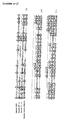
- amino acid sequence of the disclosed polypeptide was compared to those of three collectin proteins reported heretofore. The alignment is shown in Figure 2 . Homologous amino acid residues were boxed. This alignment suggests that the obtained polypeptide shares homology with known collectins and it belongs to the collectin family.
- any vector can be available as a matter of course provided that as far as it has been incorporated thereinto any polynucleotide encoding expression of the polypeptide disclosed herein or any active fragment thereof in order to allow expression of the polypeptide disclosed herein.
- any vector in which the polynucleotide is inserted may be referred to as a replicon such as plasmid, ⁇ -phage, cosmid and the like with the above described polynucleotide being incorporated therein so that the polynucleotide according to the present invention can be replicated and expressed.
- vectors capable of cloning longer DNA fragments than cosmid may include P1 phage, F factor and artificial chromosome YAC of yeast and the like.
- ⁇ -phage may include replacement vector and insertion vector, and these can be selected ad libitum taking into account of the length of gene to be introduced.
- vectors capable of being expressed in animal cells include for example, SV40 vectors, bovine papiloma virus vector, herpes virus vector, adenovirus vector, poxvirus vector, retrovirus vector and the like.
- commercially available vectors may include pUC19, pTV118N (Takara Shuzo Co., Ltd.), pUEX2 (Amersham), pGEX-4T, pKK233-2 (Pharmacia), pMAM-neo (Clontech), pGL2 (Promega), pDNA3.1+ (Invitrogen) and the like.
- a method of constructing such vectors can be performed utilizing restriction enzyme, ligase and the like by the conventional method without any particular limitation.
- the vector may usually comprise at least a promoter region (containing promoter, operator and Shine-Dalgarno sequence), initiation codon, a nucleotide sequence encoding the novel collectin, termination codon, terminator region and the like.
- a promoter region containing promoter, operator and Shine-Dalgarno sequence
- initiation codon a nucleotide sequence encoding the novel collectin
- termination codon terminator region and the like.
- yeast or an animal cell it is preferable that the vector includes at least promoter, initiation codon, nucleotide sequences encoding a signal peptide and the polypeptide according to the present invention, and termination codon.
- enhancer sequence, 5'- and 3'-untranslated region of the polypeptide according to the present invention, splicing junction, polyadenylation site and selectable marker can be also inserted into the vector.
- SV40 Sesimian Virus 40
- SR ⁇ cytomegalovirus
- actin promoter actin promoter
- viral LTR Long Terminal Repeat
- HTLV-1 LTR HIV-LTR
- Rous sarcoma virus LTR herpes simplex tyrosine kinase virus promoter and the like
- promoter may include cytomegalovirus, thymidine kinase (TK), ⁇ -actin and SV40 early gene promoter and the like. Since an enhancer is usually combined with a promoter sequence, it can be utilized as it is.
- a promoter specific for the cell can be selected. Furthermore, by combining these promoters in a homologous or heterologous manner, high expression can be expected, and an effect may be exerted that the polypeptide disclosed herein is stably obtained.
- a promoter used in prokaryotic cells PBAD, PL, trc, T7, SP6, T3, lac and the like may be included.
- a promoter that can result in high expression of the polypeptide disclosed herein in the cells from prokaryotic cells can be appropriately selected and used as a promoter in the present invention, as long as the promoter is compatible with the host.
- a promoter specific for the cell can be selected.
- promoter used in yeast may include GAL1, AOX1, CUP1, PGK and the like.
- a selectable marker incorporated in the above described vector for recovering only the intended vectors may include dihydrofolate reductase (hereinafter abbreviated as DHFR) gene (methotrexate resistant gene), neo gene (G418 resistant gene) and the like, and for example, in the case where DHFR gene is used as a selectable marker employing CHO cell of which DHFR gene is deleted, the selection can be also performed by a thymidine free medium.
- DHFR gene dihydrofolate reductase
- G418 resistant gene dihydrofolate reductase
- the selection can be also performed by a thymidine free medium.
- the gene when the gene is expressed in the cell by culturing in the medium at a higher methotrexate concentration and selecting resistant cells, the cell strain with higher expression can be also obtained.
- Genomic Southern analysis was performed in order to clarify whether the gene encoding expression of the polypeptide taken in Example 2 was a single copy gene or a multi copy gene.
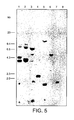
- genomic DNA (Promega) derived from human blood was digested with any one of the restriction enzymes, (1) EcoRI, (2) XbaI, (3) HindIII, (4) PstI, (5) BglII or (6) BamHI, followed by electrophoresis on 0.8% agarose gel at 100 mA, for 3 hours. After the electrophoresis was completed, they were transferred to a nylon membrane (Nytran 13N) to prepare a membrane for the analysis.
- restriction enzymes (1) EcoRI, (2) XbaI, (3) HindIII, (4) PstI, (5) BglII or (6) BamHI.
- the electrophoresed gel was first immersed in 100 ml of 0.25 N HCl for 10 minutes, washed three times with distilled water, then immersed twice in 100 ml of a denaturalizing solution (1.5 M NaCl, 0.5 M NaOH) for 15 minutes, and immersed in 100 ml of a neutralizing solution (0.5 M Tris-HCl, 3 M NaCl (pH 6.8)) for 30 minutes so that depurination, denaturation and neutralization were accomplished. Thereafter, they were transferred using Vacuum Blotting System (Toyobo Engineering, VB-30).
- a denaturalizing solution 1.5 M NaCl, 0.5 M NaOH
- a neutralizing solution 0.5 M Tris-HCl, 3 M NaCl (pH 6.8)
- the membrane which had been pretreated by immersing in 2 x SSC for 5 minutes and in 20 x SSC for 5 minutes was used, with a pad which had been soaked with 20 x SSC. After the transfer was terminated, fixation of them was performed by UV irradiation.
- Hybridization probe employed for the Southern analysis was the DNA probe [gaagacaagt cttcacatct tgttttcata aacactagag aggaacagca atggataaaa aaacagatgg tagggagaga gagccactgg atcggcctca cagactcaga g (SEQ ID NO: 23)] prepared by labeling primers [5'-gaagacaagtcttcaactcttg-3' (SEQ ID NO: 21) and 5'-ctctgagtctgtgaggccgatc-3' (SEQ ID NO: 22)] into a portion of open reading frame obtained in Example 2 with the above-mentioned PCR DIG Probe Synthesis Kit. Prior to hybridization, the probe was boiled for 10 minutes, and rapidly frozen with dry ice/ethanol for 5 minutes.
- the membrane that was subjected to the transfer step was immersed in 2 x SSC for 5 minutes, then prehybridization was performed in ExpressHyb Hybridization Solution (Clonetech), 10 ml at 65°C for 30 minutes. Subsequently, the above frozen probe was diluted to 10 ng/ml in ExpressHyb Hybridization Solution, and 2 ml of this solution was used for hybridization at 65°C for one hour.
- the membrane was washed by: shaking in 20 ml of 2 x SSC, 0.1% SDS solution at room temperature for 5 minutes twice, then in 20 ml of 0.2 x SSC, 0.1% SDS solution at 65°C for 15 minutes twice.
- the membrane was washed twice with 50 ml of DIG buffer I (100 mM Tris-HCl, 150 mM NaCl (pH 7.5)) at room temperature for one minute in order to remove SDS, and then blocked in 50 ml of DIG buffer II' (1.5% blocking agent in DIG buffer I) at room temperature for one hour.
- DIG buffer I 100 mM Tris-HCl, 150 mM NaCl (pH 7.5)
- the membrane was treated with 10 ml of alkaline phosphatase labeled anti-DIG antibody which had been diluted to 5000-fold in DIG buffer I containing 0.2% Tween20 for 30 minutes followed by washing twice by shaking in 50 ml of DIG buffer I which contains 0.2% Tween20 at room temperature for 20 minutes.
- CSPD registered trade mark, Boehringer Mannheim: chemiluminescence substrate
- RT-PCR Primer U 5'-gtgcccctggccctgcagaatg-3' (SEQ ID NO: 24) and RT-PCR Primer R: 5'-gcatatcaccctggggaacattttag-3' (SEQ ID NO: 25)
- RT-PCR Primer U 5'-gtgcccctggccctgcagaatg-3'
- RT-PCR Primer R 5'-gcatatcaccctggggaacattttag-3' (SEQ ID NO: 25)
- PCR has initiated with one cycle of 2 mintes at 94°C and subsequent 50 cycles of: 30 seconds at 94°C, 30 seconds at 60°C, and 1 minute and 30 seconds at 72°C.
- the reaction product was separated on 1% agarose gel electrophoresis, followed by staining with ethidium bromide solution (0.1 ⁇ g/ml), verification of the electrophoretic pattern with transilluminator, and identification of the expressed tissues.
- RT-PCR was performed to amplify a part of ⁇ -actin with each of the tissues, and the amount of RNA was corrected. This method was performed similarly to the above procedure with reverse transcriptase reaction, PCR reaction, and identified using 1% agarose gel electrophoresis as described above. Reaction mixture (total volume of 60 ⁇ l was finally made with distilled water) for reverse transcription reaction was noted in the following Table 7. [TABLE 7] 5 mM MgCl 2 1 x RNA PCR Buffer 1 mM dNTP Mixture 1 U/ ⁇ l Rnase inhibitor 0.25 U/ ⁇ l reverse transcriptase 2.5 ⁇ M Random 9mer RNA 10ng RNase free distilled water
- PCR was performed through one cycle of 10 minutes at 30°C, 15 minutes at 42°C, 5 minutes at 99°C, and 5 minutes at 5°C.
- PCR was performed through 30 cycles of: 15 seconds at 94°C, and 30 seconds at 68°C.
- Hybridization probe employed for this analysis was the DIG labeled DNA probe which was corresponding to the open reading frame as described above and was labeled using PCR DIG Probe Synthesis Kit (Boehringer Mannheim).
- the employed membrane was prepared by treating each 5 ⁇ g of genomic DNAs from the animals noted in the following Table 9 with restriction enzyme EcoRI, subjecting those to electrophoresis on agarose gel, transfer to Nytran 13N membrane, and fixation by UV irradiation.
- the membrane was immersed in 2 x SSC for 5 minutes, then prehybridization was performed in 10 ml of ExpressHyb Hybridization Solution at 65°C for 30 minutes. Subsequently, the probe that had been frozen as described above was diluted in the ExpressHyb Hybridization Solution to be 10 ng/ml, and 2 ml of thus diluted probe solution was used for hybridization at 65°C for one hour.
- the membrane was washed by: shaking in 20 ml of 2 x SSC, 0.1% SDS at room temperature for 5 minutes twice, and then shaking in 20 ml of 0.2 x SSC, 0.1% SDS at 68°C for 15 minutes twice.
- the membrane was washed twice with DIG buffer I at room temperature for one minute in order to remove SDS, and was blocked in 50 ml of DIG buffer II' at room temperature for one hour.
- the membrane was treated with 10 ml of alkaline phosphatase labeled anti-DIG antibody which had been diluted to 5000-fold in DIG buffer I which contains 0.2% Tween20 for 30 minutes followed by washing twice with shaking in 50 ml of DIG buffer I which contains 0.2% Tween20 at room temperature for 20 minutes. After soaking the membrane twice in 10 ml of DIG buffer III at room temperature for 3 minutes, it was placed in a hybridization bag, and CSPD that was diluted to 100-fold in DIG buffer III was added thereto so that the solution can spread over the membrane. Subsequently, the membrane was exposed to Instant Film T612.
- Collectins selected as subjects for analysis were several kinds of proteins belonging to the collectin family shown in Figure 6 .
- CL-L1 designates a collectin derived from human liver, which had been isolated by the present inventors (See, Japanese Patent Provisional Publication No. 11-206377 ).
- Each of the amino acid sequence was retrieved from GenBank database, and then, multiple alignments were produced by clustalw method using the regions containing lectin domains from the obtained data. Then the phylogenetic tree was created with N-J (neighbor-joining) method and Phylip Version 3.57c package program.
- any gene encoding the polypeptide disclosed herein has not belonged to any of these clusters similarly to CL-L1. Furthermore, it was speculated that the polypeptide disclosed herein may constitute a distinct cluster which is genetically diverse from those of the collectins reported heretofore including CL-L1.
- a sequence spanning from the initiation codon to termination codon of the gene set out in SEQ ID NO: 20 is amplified using a primer consisted of the nucleotide sequence: aaggaaaaaa gcggccgcat gcaacaagat ttgatgagg (SEQ ID NO: 26), and a primer consisted of the nucleotide sequence gctctagatt ataatgcaga tgacagtac (SEQ ID NO: 27) with Zymoreactor (ATTO Corp.).
- the cDNA of the polypeptide so obtained is digested with restriction enzymes NotI and XbaI, yielding a corresponding portion in cDNA of the polypeptide disclosed herein (670 th -1698 th nucleotides in the nucleotide sequence set out in SEQ ID NO:20), which may be an insert.
- Expression vector pNOW/CMV-A disclosed in Japanese Patent Provisional Publication No. 10-179169 is then digested with restriction enzymes NotI and XbaI, and the above insert is inserted at downstream of cytomegalovirus promoter (pCMV), namely, between P CMV (cytomegalovirus major antigen early promoter) and BGP poly A (bovine growth hormone polyadenylation signal), using a DNA ligation kit (Takara Shuzo Co., Ltd.).
- pCMV cytomegalovirus promoter
- P CMV cytomegalovirus major antigen early promoter
- BGP poly A bovine growth hormone polyadenylation signal
- Iscove' s Modified Dulbecco' s Medium IMDM, GIBCO
- 10% fetal calf serum FCS, GIBCO
- FCS fetal calf serum
- GIBCO medium without hypoxanthine and thymidine
- DHFR gene deficient DG44 Chinese Hamster Ovary (CHO) cell strains dhfr -
- dhfr - Chinese Hamster Ovary
- IMDM containing 100 ⁇ l solution separately and previously obtained by mixing 5 ⁇ g of DNA (plasmid pNOW1-hCL-P1) with lipofectin solution (DOTAP Liposomal Transfection Reagent; Boeringer Mannheim) with 10% FCS is added to be 6 ml, further, hypoxanthine (final concentration of 10 nM) (GIBCO) and thymidine (final concentration of 100 nM) (GIBCO) are added thereto, followed by culturing for 16 hours, to introduce the plasmid pNOW1-hCL-P1 into the host dhfr - CHO cells. Thereafter, the culture medium supernatant is discarded, followed by addition of 6 ml of IMDM added with 10% FCS, hypoxanthine, and thymidine, and further culture for 24 hours.
- DOTAP Liposomal Transfection Reagent Boeringer Mannheim
- the cells in which the expression vector pNOW1-hCL-P1 is incorporated are cultured for 24 hours, which are trypsinized and recovered from the dish, number of the cells are counted, and thereafter the mixture in which those cells are suspended in IMDM containing neomycin (G418) at a concentration of 400 ⁇ g/ml with 10% FCS is seeded (dispensed) into ten 96-well micro plates at an amount of 0.1 ml/well. The plates are cultured at 37C under a condition of 5% carbon dioxide (CO 2 ), and after two weeks, the surviving cells are collected as G418 resistant cells (clone).
- G418 resistant clones are identified for producibility of the polypeptide disclosed herein.
- Several clones are selected among the clones in which the production of the polypeptide disclosed herein is confirmed, and then each of the selected clones is seeded into a culture flask of 25 cm 2 .
- the culture is carried out until the cells become confluent (approximately 3 x 10 6 cells/25 cm 2 culture flask).
- the culture medium supernatant from each culture flask is discarded, then 2 ml of the IMDM containing 10% FCS identical to the composition described above is added thereto, followed by culture for four days, and collecting the culture medium supernatant.
- the produced amount of the polypeptide disclosed herein (rhCL-P1: recombinant human polypeptide) in the collected culture medium supernatant is determined.
- an amount of the produced polypeptide disclosed herein may be quantitatively determined according to the method of Suzuki et al. ( Y. Suzuki, et al., "Characterization of Recombinant Bovine Conglutinin Expressed in a Mammalian Cell", Biochem. Biophys. Res. Commun., 238:856-863 (1997 )).
- the selected each cell clone is mixed in IMDM containing 5 nM MTX, 400 ⁇ g/ml of G418 with 10% FCS previously dialyzed (JRH Bioscience), is seeded (dispensed) into ten 96-well micro plates at 0.1 ml/well.
- the cells are cultured at 37°C under a condition of 5% carbon dioxide (CO 2 ), and after two weeks, the surviving cells are collected as 5 nM MTX resistant cells (clones).
- clones are optionally selected among the clones in which the production of the polypeptide disclosed herein is confirmed, and then each of the selected clones is seeded into a culture flask of 25 cm 2 followed by two weeks culture until the cells become confluent. The culture medium supernatant is discarded, then 2 ml of the IMDM (5nM MTX and 400 ⁇ g/ml G418 are added) containing 10% FCS identical to the composition described above is added thereto, followed by culture for four days and collection of the culture medium supernatant, and production level of the polypeptode disclosed herein is determined.
- IMDM nM MTX and 400 ⁇ g/ml G418 are added
- Emulsion are prepared by mixing 100 ⁇ l of PBS (-) (PBS without calcium ion and magnesium ion) containing 100 ⁇ g of the polypeptide disclosed herein disolved therein with 100 ⁇ l of Complete Freund's adjuvant and the emulsion are injected into abdominal cavity of two BALB/c mice (female, eight weeks old).
- PBS PBS without calcium ion and magnesium ion
- Pellet is then soften and suspension was prepared by adding thereto 5 ⁇ 10 6 cells/ml of thymic cell suspension (solution prepared by suspending cells in hybridoma growth medium containing HAT and used as feeder cell to increase hybridoma efficiency). 0.1 ml of this suspension was seeded into each well of 96-well plate and was cultivated in a carbon dioxide (CO 2 ) incubator at 37°C under 5% carbon dioxide.
- CO 2 carbon dioxide
- HAT medium a hybridoma growth medium containing HAT
- the medium is substituted by removing 150 ⁇ l of the medium and supplementing 150 ⁇ l of HAT medium, and similar substitution on the medium is performed when cultivation is continued for further three days and for further seven days.
- 100 ⁇ l of supernatant is collected, and screening is performed for determining antibody titer to the polypeptide according to the present invention.
- Antibody positive cells are then transferred from the 96-well plate to 24-well multi plate with Pasteur pipette.
- 0.5 ml of HT medium (a hybridoma growth medium containing hypoxanthine and thymidine) is previously added to each well.
- Cloning is performed by diluting positive cells with suspension of thymic cells through limiting dilution, then adjusting them into one cell/ml, and seeding 0.2 ml of those into each well of 96-well pate. After cultivating them for ten days, antibody titer is then determined on the clone which forms single colony per well and two clones that show the higher antibody titer are selected.
- Cloning is performed again on these two clonies. Cloning method is similar to that according to the first cloning. Cultivation scale on antibody positive cells are then enlarged. They are transferred to 24-well plate, then are cultivated therein for three days, and are transferred to 25cm 2 flasks. Three days thereafter, they are transferred to 225cm 2 flasks and are cultivated therein for further three days. Monoclonal antibodies are then prepared by collecting supernatant.
- Antibody (anti-mouse-anti-human polypeptide antibody) so produced is diluted into 10 ⁇ g/ml with coating buffer (50mM carbonic acid-hydrogen carbonate buffer, pH 9.6), and 100 ⁇ l of the antibody soltuion is added to each well of 96-well ELISA plate. Incubation is then performed overnight at 4°C. They are washed three times with 300 ⁇ l of solution (TBS/T solution (25mM Tris-HCl, 0.14M NaCl, 5mM KCl, 0.05% Tween20, pH 7.4)). Following washing operations are similarly performed. 300 ⁇ l of 5% skim milk/TBS/T solution is added thereto and is left for one hour.
- coating buffer 50mM carbonic acid-hydrogen carbonate buffer, pH 9.6
- 100 ⁇ l of the antibody soltuion is added to each well of 96-well ELISA plate. Incubation is then performed overnight at 4°C. They are washed three times with 300 ⁇ l of solution (TBS/
- Calibration curve is prepared on the standard preparation according to this method, and an amount of the polypeptide disclosed herein so produced is determined.
- Ischemia/reperfusion model employing rat or mouse has been produced as an animal model which realizes this circumstance. This model has often been used in study to clarify the mechanism of these disorders.
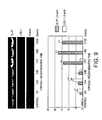
- ischemic condition was kept for 30 minutes on carotid artery of a rat (female, eight weeks old). Then, when blood has been reperfused, an examination was performed on time-coursely expression of mRNA involved in expression of the polypeptide disclosed herein as well as time-coursely expression on the protein from such mRNA. As the result thereof, as shown in Figure 8 , expression of the polypeptide disclosed herein in carotid artery endothelium indicated that their expression level in mRNA level increased from 48 hours, reached optimum level at 72 hours, and returned into normal level at 120 hours.
- the polypeptide disclosed herein will not offer effect at their usual expression level, their real effects will be produced by inducing topical expression with stimulation and increasing such expression.
- the polypeptide disclosed herein may take oxidized LDL which induces arteriosclerosis and duly develop such arteriosclerosis.
- administration of any polypeptide like that from binding domain which binds to extracellular domain of the polypeptide disclosed herein or any ligand thereof may limit such uptake and inhibit various vascular diseases including arteriosclerosis.
- Polypeptides disclosed herein contribute to resolution of pathogenic mechanism of ischemic diseases, in particular, diseases due to arteriosclerosis and can be employed to develop reagent and medicine which are suitable for prevention and treatment of these diseases.
Landscapes
- Health & Medical Sciences (AREA)
- Chemical & Material Sciences (AREA)
- Life Sciences & Earth Sciences (AREA)
- Organic Chemistry (AREA)
- Genetics & Genomics (AREA)
- General Health & Medical Sciences (AREA)
- Zoology (AREA)
- Biochemistry (AREA)
- Molecular Biology (AREA)
- Medicinal Chemistry (AREA)
- Biophysics (AREA)
- Proteomics, Peptides & Aminoacids (AREA)
- Gastroenterology & Hepatology (AREA)
- Engineering & Computer Science (AREA)
- Toxicology (AREA)
- Bioinformatics & Cheminformatics (AREA)
- Biomedical Technology (AREA)
- Biotechnology (AREA)
- General Engineering & Computer Science (AREA)
- Wood Science & Technology (AREA)
- Veterinary Medicine (AREA)
- Public Health (AREA)
- Animal Behavior & Ethology (AREA)
- Pharmacology & Pharmacy (AREA)
- Nuclear Medicine, Radiotherapy & Molecular Imaging (AREA)
- General Chemical & Material Sciences (AREA)
- Chemical Kinetics & Catalysis (AREA)
- Physics & Mathematics (AREA)
- Heart & Thoracic Surgery (AREA)
- Cardiology (AREA)
- Vascular Medicine (AREA)
- Plant Pathology (AREA)
- Microbiology (AREA)
- Urology & Nephrology (AREA)
- Peptides Or Proteins (AREA)
- Measuring Or Testing Involving Enzymes Or Micro-Organisms (AREA)
- Medicines That Contain Protein Lipid Enzymes And Other Medicines (AREA)
Claims (2)
- Reagens oder Medikament umfassend ein Polypeptid, das aus der in SEQ ID NO: 1 aufgeführten Aminosäuresequenz besteht, zur Verwendung bei der Prävention oder Behandlung von Gefäßkrankheit.
- Reagens oder Medikament nach Anspruch 1, wobei die Krankheit Arteriosklerose ist.
Applications Claiming Priority (2)
| Application Number | Priority Date | Filing Date | Title |
|---|---|---|---|
| JP2010047335 | 2010-03-04 | ||
| PCT/JP2011/001285 WO2011108281A1 (ja) | 2010-03-04 | 2011-03-04 | 虚血性疾患亢進作用を有するポリペプチド |
Publications (3)
| Publication Number | Publication Date |
|---|---|
| EP2559760A1 EP2559760A1 (de) | 2013-02-20 |
| EP2559760A4 EP2559760A4 (de) | 2013-08-07 |
| EP2559760B1 true EP2559760B1 (de) | 2015-10-21 |
Family
ID=44541950
Family Applications (1)
| Application Number | Title | Priority Date | Filing Date |
|---|---|---|---|
| EP11750394.6A Not-in-force EP2559760B1 (de) | 2010-03-04 | 2011-03-04 | Collectin Fragment zur linderung von Gefässkrankheiten |
Country Status (7)
| Country | Link |
|---|---|
| US (1) | US8609606B2 (de) |
| EP (1) | EP2559760B1 (de) |
| JP (2) | JPWO2011108281A1 (de) |
| KR (1) | KR20120135405A (de) |
| AU (1) | AU2011222224B9 (de) |
| CA (1) | CA2791193A1 (de) |
| WO (1) | WO2011108281A1 (de) |
Families Citing this family (1)
| Publication number | Priority date | Publication date | Assignee | Title |
|---|---|---|---|---|
| CN109477010B (zh) | 2016-07-05 | 2021-07-23 | 戈登可再生能源有限公司 | 用于将废弃塑料转化成燃料的系统和工艺 |
Family Cites Families (7)
| Publication number | Priority date | Publication date | Assignee | Title |
|---|---|---|---|---|
| JP3582965B2 (ja) | 1996-08-23 | 2004-10-27 | 株式会社イムノ・ジャパン | 哺乳動物細胞用発現ベクター |
| JP3878737B2 (ja) | 1998-01-23 | 2007-02-07 | 扶桑薬品工業株式会社 | 新規コレクチン |
| CN1320164A (zh) * | 1998-08-24 | 2001-10-31 | 扶桑药品工业株式会社 | 新的聚集蛋白 |
| EP1177296A2 (de) | 1999-05-11 | 2002-02-06 | Incyte Genomics, Inc. | Extrazellular matrix und adhesion-assoziierte proteinen |
| EP1262546B1 (de) * | 2000-02-14 | 2009-09-02 | Fuso Pharmaceutical Industries Ltd. | Scavenger-rezeptoren |
| JP2001340089A (ja) * | 2000-03-27 | 2001-12-11 | Shionogi & Co Ltd | スカベンジャーレセプター様タンパク質 |
| CN1694961A (zh) * | 2002-09-10 | 2005-11-09 | 内蒂穆恩公司 | 胶原凝集素-补体激活蛋白嵌合体 |
-
2011
- 2011-03-04 EP EP11750394.6A patent/EP2559760B1/de not_active Not-in-force
- 2011-03-04 US US13/582,495 patent/US8609606B2/en not_active Expired - Fee Related
- 2011-03-04 WO PCT/JP2011/001285 patent/WO2011108281A1/ja not_active Ceased
- 2011-03-04 JP JP2012503023A patent/JPWO2011108281A1/ja active Pending
- 2011-03-04 AU AU2011222224A patent/AU2011222224B9/en not_active Ceased
- 2011-03-04 KR KR1020127023256A patent/KR20120135405A/ko not_active Ceased
- 2011-03-04 CA CA2791193A patent/CA2791193A1/en not_active Abandoned
-
2014
- 2014-03-17 JP JP2014052889A patent/JP2014166999A/ja active Pending
Also Published As
| Publication number | Publication date |
|---|---|
| WO2011108281A1 (ja) | 2011-09-09 |
| EP2559760A1 (de) | 2013-02-20 |
| US20130065817A1 (en) | 2013-03-14 |
| KR20120135405A (ko) | 2012-12-13 |
| JPWO2011108281A1 (ja) | 2013-06-20 |
| CA2791193A1 (en) | 2011-09-09 |
| AU2011222224B2 (en) | 2014-02-13 |
| US8609606B2 (en) | 2013-12-17 |
| EP2559760A4 (de) | 2013-08-07 |
| AU2011222224B9 (en) | 2014-03-13 |
| AU2011222224A1 (en) | 2012-09-20 |
| JP2014166999A (ja) | 2014-09-11 |
Similar Documents
| Publication | Publication Date | Title |
|---|---|---|
| CN108271364A (zh) | 用于降解错误折叠的蛋白质的组合物和方法 | |
| US8084578B2 (en) | Monoclonal antibody against human scavenger receptor SRCL-P1 | |
| US7345158B2 (en) | Actin related cytoskeletal protein “LACS” | |
| EP1881004B1 (de) | Neuartiges Collectin | |
| EP2559760A1 (de) | Polypeptid zur linderung ischämischer leiden | |
| EP1428891A1 (de) | Nedl-1, ein neues gen | |
| JPWO2001059107A1 (ja) | 新規スカベンジャーレセプター | |
| EP1621548A2 (de) | Polypeptide, für diese kodierende CDNA und deren Verwendungen | |
| JP4504682B2 (ja) | 脂肪細胞分化関連遺伝子およびタンパク質 | |
| CA2752845A1 (en) | Use of vgii3 activity modulator for the modulation of adipogenesis | |
| JP4530631B2 (ja) | 新規タンパク質および癌の予防・治療剤 | |
| JP2004147642A (ja) | 新規タンパク質およびその用途 | |
| JPWO2005118631A1 (ja) | 新規タンパク質複合体およびその用途 | |
| JP2006166703A (ja) | 軟骨分化制御遺伝子 | |
| JP2002355065A (ja) | 心臓および骨格筋で高発現する新規遺伝子およびその用途 | |
| CA2341155A1 (en) | Genes encoding for the human and murine death inducer-obliterator-1 | |
| JP2003169683A (ja) | 新規脱共役蛋白質mt0029 | |
| JP2002355063A (ja) | 新規疾患関連遺伝子およびその用途 |
Legal Events
| Date | Code | Title | Description |
|---|---|---|---|
| PUAI | Public reference made under article 153(3) epc to a published international application that has entered the european phase |
Free format text: ORIGINAL CODE: 0009012 |
|
| 17P | Request for examination filed |
Effective date: 20120910 |
|
| AK | Designated contracting states |
Kind code of ref document: A1 Designated state(s): AL AT BE BG CH CY CZ DE DK EE ES FI FR GB GR HR HU IE IS IT LI LT LU LV MC MK MT NL NO PL PT RO RS SE SI SK SM TR |
|
| DAX | Request for extension of the european patent (deleted) | ||
| A4 | Supplementary search report drawn up and despatched |
Effective date: 20130704 |
|
| RIC1 | Information provided on ipc code assigned before grant |
Ipc: C12N 15/09 20060101AFI20130628BHEP Ipc: C07K 14/47 20060101ALI20130628BHEP |
|
| 17Q | First examination report despatched |
Effective date: 20140613 |
|
| GRAP | Despatch of communication of intention to grant a patent |
Free format text: ORIGINAL CODE: EPIDOSNIGR1 |
|
| INTG | Intention to grant announced |
Effective date: 20150427 |
|
| GRAS | Grant fee paid |
Free format text: ORIGINAL CODE: EPIDOSNIGR3 |
|
| GRAA | (expected) grant |
Free format text: ORIGINAL CODE: 0009210 |
|
| RAP1 | Party data changed (applicant data changed or rights of an application transferred) |
Owner name: FUSO PHARMACEUTICAL INDUSTRIES, LTD. |
|
| AK | Designated contracting states |
Kind code of ref document: B1 Designated state(s): AL AT BE BG CH CY CZ DE DK EE ES FI FR GB GR HR HU IE IS IT LI LT LU LV MC MK MT NL NO PL PT RO RS SE SI SK SM TR |
|
| REG | Reference to a national code |
Ref country code: GB Ref legal event code: FG4D Ref country code: NL Ref legal event code: MP Effective date: 20151021 |
|
| REG | Reference to a national code |
Ref country code: CH Ref legal event code: EP |
|
| REG | Reference to a national code |
Ref country code: AT Ref legal event code: REF Ref document number: 756637 Country of ref document: AT Kind code of ref document: T Effective date: 20151115 |
|
| REG | Reference to a national code |
Ref country code: IE Ref legal event code: FG4D |
|
| REG | Reference to a national code |
Ref country code: DE Ref legal event code: R096 Ref document number: 602011020840 Country of ref document: DE |
|
| REG | Reference to a national code |
Ref country code: LT Ref legal event code: MG4D |
|
| REG | Reference to a national code |
Ref country code: AT Ref legal event code: MK05 Ref document number: 756637 Country of ref document: AT Kind code of ref document: T Effective date: 20151021 |
|
| PG25 | Lapsed in a contracting state [announced via postgrant information from national office to epo] |
Ref country code: IS Free format text: LAPSE BECAUSE OF FAILURE TO SUBMIT A TRANSLATION OF THE DESCRIPTION OR TO PAY THE FEE WITHIN THE PRESCRIBED TIME-LIMIT Effective date: 20160221 Ref country code: NL Free format text: LAPSE BECAUSE OF FAILURE TO SUBMIT A TRANSLATION OF THE DESCRIPTION OR TO PAY THE FEE WITHIN THE PRESCRIBED TIME-LIMIT Effective date: 20151021 Ref country code: ES Free format text: LAPSE BECAUSE OF FAILURE TO SUBMIT A TRANSLATION OF THE DESCRIPTION OR TO PAY THE FEE WITHIN THE PRESCRIBED TIME-LIMIT Effective date: 20151021 Ref country code: LT Free format text: LAPSE BECAUSE OF FAILURE TO SUBMIT A TRANSLATION OF THE DESCRIPTION OR TO PAY THE FEE WITHIN THE PRESCRIBED TIME-LIMIT Effective date: 20151021 Ref country code: NO Free format text: LAPSE BECAUSE OF FAILURE TO SUBMIT A TRANSLATION OF THE DESCRIPTION OR TO PAY THE FEE WITHIN THE PRESCRIBED TIME-LIMIT Effective date: 20160121 Ref country code: HR Free format text: LAPSE BECAUSE OF FAILURE TO SUBMIT A TRANSLATION OF THE DESCRIPTION OR TO PAY THE FEE WITHIN THE PRESCRIBED TIME-LIMIT Effective date: 20151021 Ref country code: IT Free format text: LAPSE BECAUSE OF FAILURE TO SUBMIT A TRANSLATION OF THE DESCRIPTION OR TO PAY THE FEE WITHIN THE PRESCRIBED TIME-LIMIT Effective date: 20151021 |
|
| PG25 | Lapsed in a contracting state [announced via postgrant information from national office to epo] |
Ref country code: RS Free format text: LAPSE BECAUSE OF FAILURE TO SUBMIT A TRANSLATION OF THE DESCRIPTION OR TO PAY THE FEE WITHIN THE PRESCRIBED TIME-LIMIT Effective date: 20151021 Ref country code: SE Free format text: LAPSE BECAUSE OF FAILURE TO SUBMIT A TRANSLATION OF THE DESCRIPTION OR TO PAY THE FEE WITHIN THE PRESCRIBED TIME-LIMIT Effective date: 20151021 Ref country code: LV Free format text: LAPSE BECAUSE OF FAILURE TO SUBMIT A TRANSLATION OF THE DESCRIPTION OR TO PAY THE FEE WITHIN THE PRESCRIBED TIME-LIMIT Effective date: 20151021 Ref country code: PT Free format text: LAPSE BECAUSE OF FAILURE TO SUBMIT A TRANSLATION OF THE DESCRIPTION OR TO PAY THE FEE WITHIN THE PRESCRIBED TIME-LIMIT Effective date: 20160222 Ref country code: FI Free format text: LAPSE BECAUSE OF FAILURE TO SUBMIT A TRANSLATION OF THE DESCRIPTION OR TO PAY THE FEE WITHIN THE PRESCRIBED TIME-LIMIT Effective date: 20151021 Ref country code: GR Free format text: LAPSE BECAUSE OF FAILURE TO SUBMIT A TRANSLATION OF THE DESCRIPTION OR TO PAY THE FEE WITHIN THE PRESCRIBED TIME-LIMIT Effective date: 20160122 Ref country code: PL Free format text: LAPSE BECAUSE OF FAILURE TO SUBMIT A TRANSLATION OF THE DESCRIPTION OR TO PAY THE FEE WITHIN THE PRESCRIBED TIME-LIMIT Effective date: 20151021 Ref country code: AT Free format text: LAPSE BECAUSE OF FAILURE TO SUBMIT A TRANSLATION OF THE DESCRIPTION OR TO PAY THE FEE WITHIN THE PRESCRIBED TIME-LIMIT Effective date: 20151021 |
|
| REG | Reference to a national code |
Ref country code: DE Ref legal event code: R097 Ref document number: 602011020840 Country of ref document: DE |
|
| PG25 | Lapsed in a contracting state [announced via postgrant information from national office to epo] |
Ref country code: CZ Free format text: LAPSE BECAUSE OF FAILURE TO SUBMIT A TRANSLATION OF THE DESCRIPTION OR TO PAY THE FEE WITHIN THE PRESCRIBED TIME-LIMIT Effective date: 20151021 |
|
| PLBE | No opposition filed within time limit |
Free format text: ORIGINAL CODE: 0009261 |
|
| STAA | Information on the status of an ep patent application or granted ep patent |
Free format text: STATUS: NO OPPOSITION FILED WITHIN TIME LIMIT |
|
| PG25 | Lapsed in a contracting state [announced via postgrant information from national office to epo] |
Ref country code: SK Free format text: LAPSE BECAUSE OF FAILURE TO SUBMIT A TRANSLATION OF THE DESCRIPTION OR TO PAY THE FEE WITHIN THE PRESCRIBED TIME-LIMIT Effective date: 20151021 Ref country code: BE Free format text: LAPSE BECAUSE OF NON-PAYMENT OF DUE FEES Effective date: 20160331 Ref country code: RO Free format text: LAPSE BECAUSE OF FAILURE TO SUBMIT A TRANSLATION OF THE DESCRIPTION OR TO PAY THE FEE WITHIN THE PRESCRIBED TIME-LIMIT Effective date: 20151021 Ref country code: SM Free format text: LAPSE BECAUSE OF FAILURE TO SUBMIT A TRANSLATION OF THE DESCRIPTION OR TO PAY THE FEE WITHIN THE PRESCRIBED TIME-LIMIT Effective date: 20151021 Ref country code: DK Free format text: LAPSE BECAUSE OF FAILURE TO SUBMIT A TRANSLATION OF THE DESCRIPTION OR TO PAY THE FEE WITHIN THE PRESCRIBED TIME-LIMIT Effective date: 20151021 Ref country code: EE Free format text: LAPSE BECAUSE OF FAILURE TO SUBMIT A TRANSLATION OF THE DESCRIPTION OR TO PAY THE FEE WITHIN THE PRESCRIBED TIME-LIMIT Effective date: 20151021 |
|
| 26N | No opposition filed |
Effective date: 20160722 |
|
| REG | Reference to a national code |
Ref country code: DE Ref legal event code: R119 Ref document number: 602011020840 Country of ref document: DE |
|
| PG25 | Lapsed in a contracting state [announced via postgrant information from national office to epo] |
Ref country code: MC Free format text: LAPSE BECAUSE OF FAILURE TO SUBMIT A TRANSLATION OF THE DESCRIPTION OR TO PAY THE FEE WITHIN THE PRESCRIBED TIME-LIMIT Effective date: 20151021 Ref country code: LU Free format text: LAPSE BECAUSE OF FAILURE TO SUBMIT A TRANSLATION OF THE DESCRIPTION OR TO PAY THE FEE WITHIN THE PRESCRIBED TIME-LIMIT Effective date: 20160304 |
|
| REG | Reference to a national code |
Ref country code: CH Ref legal event code: PL |
|
| GBPC | Gb: european patent ceased through non-payment of renewal fee |
Effective date: 20160304 |
|
| PG25 | Lapsed in a contracting state [announced via postgrant information from national office to epo] |
Ref country code: SI Free format text: LAPSE BECAUSE OF FAILURE TO SUBMIT A TRANSLATION OF THE DESCRIPTION OR TO PAY THE FEE WITHIN THE PRESCRIBED TIME-LIMIT Effective date: 20151021 |
|
| REG | Reference to a national code |
Ref country code: IE Ref legal event code: MM4A |
|
| PG25 | Lapsed in a contracting state [announced via postgrant information from national office to epo] |
Ref country code: BE Free format text: LAPSE BECAUSE OF FAILURE TO SUBMIT A TRANSLATION OF THE DESCRIPTION OR TO PAY THE FEE WITHIN THE PRESCRIBED TIME-LIMIT Effective date: 20151021 |
|
| REG | Reference to a national code |
Ref country code: FR Ref legal event code: ST Effective date: 20161130 |
|
| PG25 | Lapsed in a contracting state [announced via postgrant information from national office to epo] |
Ref country code: IE Free format text: LAPSE BECAUSE OF NON-PAYMENT OF DUE FEES Effective date: 20160304 Ref country code: DE Free format text: LAPSE BECAUSE OF NON-PAYMENT OF DUE FEES Effective date: 20161001 Ref country code: LI Free format text: LAPSE BECAUSE OF NON-PAYMENT OF DUE FEES Effective date: 20160331 Ref country code: GB Free format text: LAPSE BECAUSE OF NON-PAYMENT OF DUE FEES Effective date: 20160304 Ref country code: FR Free format text: LAPSE BECAUSE OF NON-PAYMENT OF DUE FEES Effective date: 20160331 Ref country code: CH Free format text: LAPSE BECAUSE OF NON-PAYMENT OF DUE FEES Effective date: 20160331 |
|
| PG25 | Lapsed in a contracting state [announced via postgrant information from national office to epo] |
Ref country code: MT Free format text: LAPSE BECAUSE OF FAILURE TO SUBMIT A TRANSLATION OF THE DESCRIPTION OR TO PAY THE FEE WITHIN THE PRESCRIBED TIME-LIMIT Effective date: 20151021 |
|
| PG25 | Lapsed in a contracting state [announced via postgrant information from national office to epo] |
Ref country code: CY Free format text: LAPSE BECAUSE OF FAILURE TO SUBMIT A TRANSLATION OF THE DESCRIPTION OR TO PAY THE FEE WITHIN THE PRESCRIBED TIME-LIMIT Effective date: 20151021 Ref country code: HU Free format text: LAPSE BECAUSE OF FAILURE TO SUBMIT A TRANSLATION OF THE DESCRIPTION OR TO PAY THE FEE WITHIN THE PRESCRIBED TIME-LIMIT; INVALID AB INITIO Effective date: 20110304 |
|
| PG25 | Lapsed in a contracting state [announced via postgrant information from national office to epo] |
Ref country code: MT Free format text: LAPSE BECAUSE OF FAILURE TO SUBMIT A TRANSLATION OF THE DESCRIPTION OR TO PAY THE FEE WITHIN THE PRESCRIBED TIME-LIMIT Effective date: 20160331 Ref country code: TR Free format text: LAPSE BECAUSE OF FAILURE TO SUBMIT A TRANSLATION OF THE DESCRIPTION OR TO PAY THE FEE WITHIN THE PRESCRIBED TIME-LIMIT Effective date: 20151021 Ref country code: MK Free format text: LAPSE BECAUSE OF FAILURE TO SUBMIT A TRANSLATION OF THE DESCRIPTION OR TO PAY THE FEE WITHIN THE PRESCRIBED TIME-LIMIT Effective date: 20151021 |
|
| PG25 | Lapsed in a contracting state [announced via postgrant information from national office to epo] |
Ref country code: BG Free format text: LAPSE BECAUSE OF FAILURE TO SUBMIT A TRANSLATION OF THE DESCRIPTION OR TO PAY THE FEE WITHIN THE PRESCRIBED TIME-LIMIT Effective date: 20151021 |
|
| PG25 | Lapsed in a contracting state [announced via postgrant information from national office to epo] |
Ref country code: AL Free format text: LAPSE BECAUSE OF FAILURE TO SUBMIT A TRANSLATION OF THE DESCRIPTION OR TO PAY THE FEE WITHIN THE PRESCRIBED TIME-LIMIT Effective date: 20151021 |