EP2556089B1 - Selbstassemblierende antikörperhälften - Google Patents
Selbstassemblierende antikörperhälften Download PDFInfo
- Publication number
- EP2556089B1 EP2556089B1 EP11719347.4A EP11719347A EP2556089B1 EP 2556089 B1 EP2556089 B1 EP 2556089B1 EP 11719347 A EP11719347 A EP 11719347A EP 2556089 B1 EP2556089 B1 EP 2556089B1
- Authority
- EP
- European Patent Office
- Prior art keywords
- domain
- antibody
- linker
- nucleic acid
- chimeric molecule
- Prior art date
- Legal status (The legal status is an assumption and is not a legal conclusion. Google has not performed a legal analysis and makes no representation as to the accuracy of the status listed.)
- Not-in-force
Links
Images






Classifications
-
- C—CHEMISTRY; METALLURGY
- C07—ORGANIC CHEMISTRY
- C07K—PEPTIDES
- C07K16/00—Immunoglobulins [IG], e.g. monoclonal or polyclonal antibodies
-
- A—HUMAN NECESSITIES
- A61—MEDICAL OR VETERINARY SCIENCE; HYGIENE
- A61P—SPECIFIC THERAPEUTIC ACTIVITY OF CHEMICAL COMPOUNDS OR MEDICINAL PREPARATIONS
- A61P31/00—Antiinfectives, i.e. antibiotics, antiseptics, chemotherapeutics
- A61P31/12—Antivirals
-
- A—HUMAN NECESSITIES
- A61—MEDICAL OR VETERINARY SCIENCE; HYGIENE
- A61P—SPECIFIC THERAPEUTIC ACTIVITY OF CHEMICAL COMPOUNDS OR MEDICINAL PREPARATIONS
- A61P35/00—Antineoplastic agents
-
- A—HUMAN NECESSITIES
- A61—MEDICAL OR VETERINARY SCIENCE; HYGIENE
- A61P—SPECIFIC THERAPEUTIC ACTIVITY OF CHEMICAL COMPOUNDS OR MEDICINAL PREPARATIONS
- A61P37/00—Drugs for immunological or allergic disorders
-
- C—CHEMISTRY; METALLURGY
- C12—BIOCHEMISTRY; BEER; SPIRITS; WINE; VINEGAR; MICROBIOLOGY; ENZYMOLOGY; MUTATION OR GENETIC ENGINEERING
- C12N—MICROORGANISMS OR ENZYMES; COMPOSITIONS THEREOF; PROPAGATING, PRESERVING, OR MAINTAINING MICROORGANISMS; MUTATION OR GENETIC ENGINEERING; CULTURE MEDIA
- C12N15/00—Mutation or genetic engineering; DNA or RNA concerning genetic engineering, vectors, e.g. plasmids, or their isolation, preparation or purification; Use of hosts therefor
- C12N15/09—Recombinant DNA-technology
- C12N15/11—DNA or RNA fragments; Modified forms thereof; Non-coding nucleic acids having a biological activity
- C12N15/113—Non-coding nucleic acids modulating the expression of genes, e.g. antisense oligonucleotides; Antisense DNA or RNA; Triplex- forming oligonucleotides; Catalytic nucleic acids, e.g. ribozymes; Nucleic acids used in co-suppression or gene silencing
-
- C—CHEMISTRY; METALLURGY
- C07—ORGANIC CHEMISTRY
- C07K—PEPTIDES
- C07K2317/00—Immunoglobulins specific features
- C07K2317/50—Immunoglobulins specific features characterized by immunoglobulin fragments
- C07K2317/56—Immunoglobulins specific features characterized by immunoglobulin fragments variable (Fv) region, i.e. VH and/or VL
-
- C—CHEMISTRY; METALLURGY
- C12—BIOCHEMISTRY; BEER; SPIRITS; WINE; VINEGAR; MICROBIOLOGY; ENZYMOLOGY; MUTATION OR GENETIC ENGINEERING
- C12N—MICROORGANISMS OR ENZYMES; COMPOSITIONS THEREOF; PROPAGATING, PRESERVING, OR MAINTAINING MICROORGANISMS; MUTATION OR GENETIC ENGINEERING; CULTURE MEDIA
- C12N2310/00—Structure or type of the nucleic acid
- C12N2310/10—Type of nucleic acid
- C12N2310/12—Type of nucleic acid catalytic nucleic acids, e.g. ribozymes
-
- C—CHEMISTRY; METALLURGY
- C12—BIOCHEMISTRY; BEER; SPIRITS; WINE; VINEGAR; MICROBIOLOGY; ENZYMOLOGY; MUTATION OR GENETIC ENGINEERING
- C12N—MICROORGANISMS OR ENZYMES; COMPOSITIONS THEREOF; PROPAGATING, PRESERVING, OR MAINTAINING MICROORGANISMS; MUTATION OR GENETIC ENGINEERING; CULTURE MEDIA
- C12N2310/00—Structure or type of the nucleic acid
- C12N2310/30—Chemical structure
- C12N2310/31—Chemical structure of the backbone
- C12N2310/318—Chemical structure of the backbone where the PO2 is completely replaced, e.g. MMI or formacetal
- C12N2310/3181—Peptide nucleic acid, PNA
-
- C—CHEMISTRY; METALLURGY
- C12—BIOCHEMISTRY; BEER; SPIRITS; WINE; VINEGAR; MICROBIOLOGY; ENZYMOLOGY; MUTATION OR GENETIC ENGINEERING
- C12N—MICROORGANISMS OR ENZYMES; COMPOSITIONS THEREOF; PROPAGATING, PRESERVING, OR MAINTAINING MICROORGANISMS; MUTATION OR GENETIC ENGINEERING; CULTURE MEDIA
- C12N2310/00—Structure or type of the nucleic acid
- C12N2310/30—Chemical structure
- C12N2310/35—Nature of the modification
- C12N2310/351—Conjugate
- C12N2310/3513—Protein; Peptide
Definitions
- a hemi-antibody is composed of at least two chimeric molecules A and B, each comprising a polypeptide domain characteristic of a variable domain (or DV) of a heavy chain or light chain of an antibody, and a nucleotide domain, the nucleotide domain of A and that of B being able to pair in a double-stranded structure, for example in a hydric medium.
- chimeric molecules can be grafted biologically active nucleic acid sequences allowing for example to prevent the expression of target genes inside a human or non-human mammalian cell.
- the invention also relates to various applications of these hemi-antibodies, and in particular the use of these hemi-antibodies for therapeutic treatment or in vitro diagnostic applications and more generally for the detection of biological molecules.
- hemi-antibodies have a significant potential on the one hand for the treatment of genetic diseases or cancers and on the other hand for the treatment of infectious diseases.
- the use of such a chimeric molecule may make it possible to prevent the expression of mutated genes at the level of the translation, in order to reduce the presence of defective proteins, at the level of origin of the disease.
- this chimeric molecule can make it possible to inactivate intracellular proteins.
- this chimeric molecule can also make it possible to block the expression of genes of the pathogen which specifically condition either the primordial activities of the pathogen (for example , retro-transcription in a retrovirus), or resistances to existing treatments (for example, the resistance of bacteria to antibiotics).
- Nucleic acids or nucleic acid analogs, antisense or having ribo- or deoxyribo-nuclease activity are used to block gene expression, whether at the level of replication, transcription, or translation . Because they can act directly on a targeted sequence, these sequences have great potential for the treatment of genetic diseases, infectious diseases, and in the fight against resistance mechanisms (for example the resistance of bacteria to antibiotics).
- nucleotide sequences or analogs as a drug is very largely limited, on the one hand by the need to specifically address these sequences to the target cell and, on the other hand by the low efficiency of passage of these sequences through the cell membrane.
- these nucleotide sequences or the like can be modified by adding, in 5 'or 3', functions or lipophilic chemical groups (Manoharan et al., 1995; Pfeiffer and Höök, 2004) or short peptides, generally consisting of 1 to 5 beta-amino acid residues (i.e., amino acids in which the amine group is in the beta ( ⁇ ) position relative to to the carboxylate group).
- This modification facilitates the passage of nucleic acids through the plasma membrane, as has been demonstrated on cell cultures (Tripathi et al., 2005).
- nucleic acid sequences thus modified can be found, for the most part, aspecifically absorbed by various cells before reaching the target, thus reducing the effect of the treatment.
- chimeric molecules comprising a nucleic domain, for example, DNA, and a polypeptide domain characteristic of an antibody fragment comprising an epitope recognition site.
- chimeric nucleic acid / antibody molecules for example DNA / antibody or DNA / AC
- Vornlocher et al. (Trends in Molecular Medicine, 2006, 12 (1), 1-3 ) have described siRNA-associated protamine antibody-protamine Fab complexes in which protamine is genetically fused to the heavy chain of an antibody Fab fragment (F105) directed against HIV gp160 protein and siRNA is bound to the F105-protamine complex with a stoichiometry of 1: 6.
- Murtola et al. (Org Biomol Chem., 2008, 6, 3837-3842 ) have described artificial nucleases based on PNAs (PNAzymes) comprising 2 PNAs linked together by a diaminopropionic acid molecule (Dap) capable of cleaving a target RNA.
- PNAzymes PNAs comprising 2 PNAs linked together by a diaminopropionic acid molecule (Dap) capable of cleaving a target RNA.
- Dap diaminopropionic acid molecule
- HAC hemi-antibodies
- nucleic acid sequences of interest particularly biologically active nucleic acid sequences
- the hemi-antibody of the invention is capable of self-assembly, in particular in a hydrous or aqueous medium, including in a reducing medium, by intermediate domain (ii) of the chimeric molecule A and that of the chimeric molecule B, which pair a double-stranded structure.
- chimeric refers here to a molecule which associates several domains, of at least two different types by their function and / or by their nature, at least two of these domains being of a different nature, one being of a polypeptide nature and the other being of nucleotide nature.
- portion (s) of V H or V L is meant one or more (in particular two, three or even four) hypervariable regions, also called regions determining the complementarity or CDRs (in English “complementary determination regions"), and in particular all CDRs, of a V H or V L domain. Said CDRs regions are optionally used in combination with the non-variable fragments (frameworks 1, 2, etc.) present in the native variable domains of the antibodies.
- polypeptide domain “characteristic of a DV” is meant here a polypeptide domain having the properties of a DV domain, that is to say a polypeptide domain involved in the recognition of an epitope and in the binding to said epitope .
- Said polypeptide domain may be of synthetic origin or be derived from or derived from a DV of a given antibody (for example a human or humanized antibody), in particular said polypeptide domain may comprise or consist of a DV of a given antibody (for example a human or humanized antibody), or consist of a sequence obtained by insertion, deletion or substitution of amino acid residues, for example one, two, three, four, or five residues, in the sequence of a DV of a given antibody.
- said polypeptide domain is derived from a DV obtained by substitution of amino acid residues, for example one, two, three, four or five residues, with a monomer residue of an ANP or a beta-amino acid (for example a beta-alanine). This allows in particular to increase the recognition possibilities of said DV.
- the polypeptide domain (i) of A and that of B constitute a recognition site of a epitope, capable of interacting (preferably specifically) with an epitope.
- a hemi-antibody of the invention can be obtained by recombining fragments of different antibodies and in particular DV domains, or their active parts in the recognition of an epitope, derived or derived from different antibodies, said different antibodies possibly coming from or not of the same species of human or non-human mammal.
- a hemi-antibody comprises at least two DVs derived or derived from given antibodies (of a single antibody or of different antibodies), particularly a DV positioned in N-terminal of the chimeric molecule A and a DV positioned in N-terminal of the chimeric molecule B, which by joining and structuring, form a recognition site of an epitope.
- the domain (i) of the chimeric molecule A or B of a hemi-antibody of the invention comprises or consists of the variable domain V H of an antibody or one or more portion (s) of the V H domain of an antibody and the domain (i) of the other chimeric molecule of said hemi-antibody (respectively B or A) comprises or consists of the variable domain V L of the same antibody or a distinct antibody, or one or more portion (s) of this V L domain (said portions of V H or V L being as defined in the application).
- the domains (i) of the molecules A and B of a hemi-antibody are humanized.
- x element (s) means, in the present application, x element (s) or more of x element (s), for example two, three or four elements.
- phosphonate nucleic acid or “thioate nucleic acid” is meant herein modified nucleic acids, in which phosphors are blocked (ie esterified with methanol) or substituted with sulfur.
- a polypeptide domain (i) may be characteristic of a heavy chain or light chain DV of any antibody.
- polypeptide domain (i) of the chimeric molecule A and that of B are characteristic of a DV of the same antibody or, on the contrary, of distinct antibodies.
- the polypeptide domains (i) of A and B comprise at least one cysteine making it possible to establish a disulfide bridge between the polypeptide domain (i) of A and that of B, and at least one cysteine for establishing a disulfide bridge between the DV of A and that of B.
- the polypeptide domains (i) of A and B are characteristic of a DV of an antibody recognizing (preferably specifically) an epitope of an intra and / or extracellular antigen.
- a surface antigen for example, a antigen expressed on the surface of organelles or a cell or intracellular surface antigen.
- antigens can be in particular of cellular, viral, bacterial or tumoral origin.
- the polypeptide domains (i) of A and B and in particular their (i) N-terminal polypeptide domains are characteristic of DV of one or more antibodies directed against (that is to say, recognizing, preferably specifically) an antigen present on the surface of mammalian cells, for example against the CD4 protein, or against a viral antigen, in particular against a protein of a viral envelope, for example the outer envelope protein of an HIV virus (human immunodeficiency virus), or against a bacterial antigen, in particular against a bacterial envelope protein, or against a reverse transcriptase, in particular an HIV-1 reverse transcriptase or HIV-2.
- an antigen present on the surface of mammalian cells for example against the CD4 protein
- a viral antigen in particular against a protein of a viral envelope, for example the outer envelope protein of an HIV virus (human immunodeficiency virus), or against a bacterial antigen, in particular against a bacterial envelope protein, or against a reverse transcriptase, in particular an HIV-1 reverse transcript
- a polypeptide domain (i) preferably consists of 10 to 300 amino acid residues and more preferably 20 to 200 or 40 to 200 amino acid residues (the lower and upper bounds of these ranges of value being included).
- nucleotide domains (ii) as defined in the present application are single-stranded nucleic acids.
- nucleotide domain (ii) of the chimeric molecule A and that of the chimeric molecule B of a hemi-antibody, which are single-stranded structures, mimic, in the middle water and in particular in a reducing medium, in a double-stranded structure.
- the nucleotide domains (ii) of A and B are chosen from a polynucleotide, an ANP, or an LNP and are capable of forming a stable double-stranded structure, in particular an alpha helix.
- sequences of the nucleotide domains (ii) of the two chimeric molecules A and B are complementary and antiparallel, and in particular are capable of hybridizing, of preferably over their entire length.
- the hybridization of these two nucleotide domains makes it possible to reconstitute a hemi-antibody molecule, in particular in a fluid medium (including a reducing medium).
- the peptide domains (i) of molecules A and B of a hemi-antibody thus self-assembled are brought closer to one another in space, which makes it possible to structure and stabilize the recognition site of the epitope, in particular in a reducing medium.
- a labile bond in medium reductant for example a disulfide bridge
- the size of the domain (ii) ranges from 3 to 100 nucleotides and more preferably from 5 to 60 nucleotides (the lower and upper bounds of these ranges of value being included).
- a "linker” in the sense of the present invention is a spacer, that is to say it allows to move in space the two domains that it binds , so that these two areas can perform their function (s) optimally.
- a "linker” within the meaning of the present invention preferably comprises 1 to 20 carbons and comprises or consists of one or more element (s) (for example a element) chosen (s) among a peptide (or a polypeptide), a polynucleotide, in particular a polynucleotide as defined in the present application (or an analogue, in particular as defined in the present application), a polycarbonated chain, ethylenediamine, polylysine, beta-alanine, and a sugar.
- element for example a element chosen (s) among a peptide (or a polypeptide), a polynucleotide, in particular a polynucleotide as defined in the present application (or an analogue, in particular as defined in the present application), a polycarbonated chain, ethylenediamine, polylysine, beta-alanine, and a sugar.
- said linker is a peptide or a polypeptide, which comprises or consists for example of one or more lysine (s).
- This linker will be referred to herein as "peptide linker”.
- a linker comprises or consists of a nucleic acid, in particular a DNA or an RNA and consists for example of a sequence of 5 to 50 nucleotides (the lower and upper limits of this range of value being included).
- This linker will be referred to herein as a "nucleic linker”.
- the linker optionally linking the domains (i) and (ii) of a chimeric molecule A and the linker linking the domains (i) and (ii), where appropriate.
- a chimeric molecule B are peptide linkers.
- the domains (i) and (ii) are linked via a linker (for example a peptide linker) in the two chimeric molecules A and B of a hemisphere.
- a linker for example a peptide linker
- the linker present in A being preferably of the same size as the linker present in B.
- the same linker can bind the domains (i) and (ii) in A and in B.
- a "linker" within the meaning of the present invention comprises a bond which is labile in a reducing medium (for example a disulfide bridge) or comprises at least one its ends, one or more amino acid (s) or nucleotide (s) for forming, with one of the two molecules that it binds, such a bond.
- a reducing medium for example a disulfide bridge
- a labile bond in a reducing medium means a labile bond in a reducing medium and persistent in non-reducing medium, said bond being able to be covalent (for example a disulfide bridge) or non-covalent.
- the C-terminal end of the polypeptide domain (i) (for example a V H or V L domain or a portion of a V H or V domain L ) is covalently linked to the 3 'end of a nucleic acid (ii) (for example a LNA, a methylphosphonate nucleic acid or a thioate nucleic acid) or at the C-terminus of an ANP, for example via the NH 2 group of the side chain of a lysine linked to the C-terminus of said ANP by a peptide bond.
- a nucleic acid (ii) for example a LNA, a methylphosphonate nucleic acid or a thioate nucleic acid
- the C-terminal end of the polypeptide domain (i) is covalently bound to the 5 'end of the nucleic acid (ii) (for example, a LNA, a methylphosphonate nucleic acid or a thioate nucleic acid) or to the N-terminus of an ANP, by for example via a peptide bond or amide with one of the NH 2 groups of a lysine, said lysine being linked, by its COOH group, to the N-terminal end of said ANP.
- the nucleic acid (ii) for example, a LNA, a methylphosphonate nucleic acid or a thioate nucleic acid
- an ANP by for example via a peptide bond or amide with one of the NH 2 groups of a lysine, said lysine being linked, by its COOH group, to the N-terminal end of said ANP.
- the chimeric molecule A and / or the chimeric molecule B further comprises (include) a tag domain and / or a biologically active domain, said domain being linked either to the free end of the nucleotide domain (ii) of the chimeric molecule A or B is at the free end of a linker linked to the nucleotide domain (ii) of the chimeric molecule A or B.
- the binding of said label domain or said biologically active domain to the nucleotide domain (ii) the chimeric molecule A or B or at the free end of said linker is preferably carried out via a labile linkage in a reducing medium, for example a disulfide bridge, or on the contrary, via persistent binding in a reducing medium, for example via a bond established with a maleimide acid.
- this linker is of sufficient length to pass through a membrane (for example a plasma membrane or an intracellular membrane).
- this linker is a nucleic linker.
- the hemi-antibody of the invention makes it possible to deliver, in a target cell (in particular a human or non-human mammalian cell), a biologically active domain, which makes it possible to inhibit (completely) or partially) the expression of genes in said target cell, independently of functional mechanisms intrinsic to said cell.
- a target cell in particular a human or non-human mammalian cell
- a biologically active domain which makes it possible to inhibit (completely) or partially) the expression of genes in said target cell, independently of functional mechanisms intrinsic to said cell.
- the label domain and / or the biologically active domain is released inside the cell after reduction of the disulfide bridges.
- the label domain and / or the biologically active domain comprises or consists of a sequence of several (at least two) successive amino acid residues, forming the structure of a peptide or a a polypeptide.
- said label domain and / or said biologically active domain may comprise at least 4 or 6 amino acid residues, for example 4 to 200, 6 to 100 or 6 to 50 amino acid residues.
- a peptide denotes a chain of 2 to 20 successive residues (in particular 2, 3, 4, 5, 6, 7, 8, 9, 10, 11, 12, 13, 14, 15, 16, 17, 18, 19 or 20 residues), in particular a chain of 5 to 10, 10 to 15 or 15 to 20 successive amino acid residues.
- a polypeptide which also designates a protein or a fragment of a protein, is a sequence of more than 20 (at least 21) successive residues, in particular a chain of 21 to 1000 successive residues, preferably 21 to 500, 21 to 250 or 21 to 150 successive residues, and more preferably 21 to 50 or 21 to 100 successive amino acid residues.
- the chimeric molecule A and / or the chimeric molecule B comprises ( further comprising a lipophilic (or hydrophobic) element, in particular a sequence, a chemical group or a lipophilic chemical compound, which preferably comprises one or more aromatic group (s) and / or compound (s), by for example one or more tryptophan residue (s), said lipophilic element being preferably positioned at the free end of the chimeric molecule A or B.
- This lipophilic element is optionally linked to the chimeric molecule A or B via a bond which is labile in a reducing medium, for example a disulfide bridge.
- said one or one of said lipophilic element (s) may be replaced by a beta-peptide domain, that is to say a domain consisting of or comprising one or more several (for example 2, 3, 4, 5 or 6) beta-amino acid residues, for example 1 to 5 beta-amino acid residues.
- Said beta-peptide domain may for example comprise or consist of a chain of 2, 3, 4, 5 or 6 successive beta-amino acid residues.
- beta-amino acid mention will be made of beta-alanine.
- HAC_2 can be used in conjunction with HAC_1, for example administered to the same host, in particular to a human mammal or not human, HAC_1 and HAC_2 being administered separately (HAC_1 and HAC_2 being present in separate compositions, vesicles or virus particles of the invention and simultaneously or separately in time).
- HAC_1 and / or different types of HAC_2 can be administered to the same host, particularly to a human or non-human mammal.
- HAC_1 and HAC_2 can indeed be linked (or grafted) on the same nano particle or on two different nano particles.
- This grafting is carried out via one or more bond (s) labile (s) in a reducing medium, for example one or more disulfide bond (s), from the C-terminal end of the chimeric molecule ( A or B) which comprises the domain DV2a or DV2b, and in particular (when DV2a or DV2b is in the C-terminal position in HAC_1 or HAC_2) from the N-terminus of the DV2a or DV2b portion of HAC_1 or of HAC_2, if necessary via a linker
- the systems S3-DV2a and S4 / DV2b can be delivered (via HAC_1 and HAC_2 respectively) in the same cell when HAC_1 and HAC_2 or the nanoparticle (s) on which HAC_1 and / or HAC_2 are grafted are internalized and that labile bonds (eg disulfide bridges) are cleaved.
- HAC_1 and HAC_2 or the nanoparticle (s) on which HAC_1 and / or HAC_2 are grafted are internalized and that labile bonds (eg disulfide bridges) are cleaved.
- X / y domains are said to be "of different types" within the meaning of the present application when they differ in their domain x and / or in their domain y. According to one embodiment, both x and y differ between two x / y domains "of different types”.
- a nano particle on which are grafted HAC_1 and / or HAC_2 comprising different types of domains (i) / (ii) makes it possible to target different epitopes and therefore generally allows to target different types of cells.
- a nano particle on which HAC_1 and / or HAC_2 are grafted with a single type of domains (i) / (ii) makes it possible to target a single type of epitope and therefore generally only one type of cell.
- the nanoparticles used have an average size of between 1 and 100 nanometers, preferably between 1 and 50 nanometers.
- their average size may be 10 nanometers or less than 10 nanometers.
- a third type of hemi-antibody consisting of a portion of HAC_1 and a portion of HAC_2, may be formed.
- one of the DV2a and DV2b domains as defined in the present application is characteristic of one DV of the light chain of a given antibody and the other of these domains is characteristic a DV of the heavy chain of the same antibody.
- hemoglobin HAC_1 and HAC_2 hemi-antibodies are used and in particular when they are present on the same particle (in particular the same nanoparticle), it may be advantageous to protect (temporarily) the S3 and S4 parts, for example by hybridizing these domains with an RNA.
- This makes it possible to (temporarily) prevent a possible association between S3 and S4, so that these two domains can not associate before reaching the target cell (in particular this makes it possible to avoid a premature association of S3 and S4 when HAC_1 and HAC_2 are grafted on the same particle).
- the RNAs are then dehybridized or digested, which then makes possible an association between S3 and S4.
- HAC_1 hemi-antibodies in conjunction with one (or more) HAC_2 hemi-antibodies, and to design these hemi-antibodies so that the HAC_1 paratope and the HAC_2 paratope (ie that is, the recognition site present at their N-terminus) are specific for the same soluble antigen or, more specifically, for the same epitope of this soluble antigen.
- a hemi--antibody HAC-1 and a hemi--antibody HAC-2 are combined so as to reconstitute a complete antibody (having two sites for recognizing an epitope).
- Such reconstituted antibodies may be used in particular for therapeutic and / or diagnostic purposes and in particular when the antigen (s) of interest is (are) soluble.
- HAC_1 and HAC_2 whose paratopes are specific for the same soluble antigen or, more specifically, the same epitope of this soluble antigen.
- the subject of the invention is also a chimeric molecule A or B as defined in the present application.
- the subject of the invention is also a vesicle, in particular a liposome, and more particularly a liposome consisting of a viral membrane, for example a membrane of particles of the HIV-1 or HIV-2 virus, or a viral particle, said vesicle or said viral particle comprising one or more hemi-antibodies as defined in the present application and / or one or more chimeric molecules A and / or B as defined in this application.
- a vesicle in particular a liposome, and more particularly a liposome consisting of a viral membrane, for example a membrane of particles of the HIV-1 or HIV-2 virus, or a viral particle, said vesicle or said viral particle comprising one or more hemi-antibodies as defined in the present application and / or one or more chimeric molecules A and / or B as defined in this application.
- the subject of the invention is also nano particles (in particular nano particles as defined in the present application), on which one or more hemi-antibodies as defined in the present application, and in particular one or more hemi-antibodies.
- HAC_1 and / or one or more HAC_2 hemi-antibodies and / or one or more HAC_4 hemi-antibodies are linked (or grafted), via labile bonds in a reducing medium, for example a disulfide bridge (cf. Fig. 11 ).
- two hemi-antibodies are used, for example a hAC-antibody HAC_1 and a HAC_2 hemi-antibody as defined in the present application.
- One of these hemi-antibodies, for example HAC_2 may be present in a form incorporated into a vesicle, a viral particle or fixed on one or more particle (s) or nano particle (s) as defined in the present application.
- the other hemi-antibody, for example HAC_1 being present in solution.
- HAC_1 and HAC_2 may be directed respectively against an epitope of an HIV-1 or HIV-2 and an epitope expressed on the surface of mammalian cells, especially T cells, for example an epitope of the CD4 + CD4 + protein. .
- a substance or combination of substances is said to be "pharmaceutically acceptable" when it is suitable for administration to a host for therapeutic or prophylactic purposes. It is therefore preferentially nontoxic for the host to which it is administered.
- a "host” within the meaning of the present invention refers in particular to a human host (or patient) or a non-human animal, for example a human or non-human mammal.
- the kit of the invention comprises the hemi--antibody HAC_1 and / or the hemi- antibody HAC_2 as defined in the present application.
- the subject of the invention is also one or more element (s) chosen from: a hemi-antibody of the invention, a chimeric molecule A or B of the invention, a vesicle of the invention, or a particle or nano particle as defined in the present application a viral particle of the invention, a composition of the invention or a kit of the invention, for use as drug.
- element (s) chosen from: a hemi-antibody of the invention, a chimeric molecule A or B of the invention, a vesicle of the invention, or a particle or nano particle as defined in the present application a viral particle of the invention, a composition of the invention or a kit of the invention, for use as drug.
- Said elements may in particular be used in a host, for example a human or a non-human mammal, for the prevention or the treatment of a genetic disease, for example a myopathy, and / or an infectious disease, in particular of a viral disease and more particularly an infection with a lentivirus, for example HIV-1 or HIV-2, and / or a bacterial infection, for example an infection with a bacterium resistant to antibiotics and / or for the prevention or control of treatment of cancer.
- a host for example a human or a non-human mammal
- a genetic disease for example a myopathy
- infectious disease in particular of a viral disease and more particularly an infection with a lentivirus, for example HIV-1 or HIV-2, and / or a bacterial infection, for example an infection with a bacterium resistant to antibiotics and / or for the prevention or control of treatment of cancer.
- the subject of the invention is also the use of one or more elements chosen from those indicated above, for the manufacture of a medicament intended to prevent or treat the aforementioned diseases or infections, in a host, for example a human or a non-human mammal.
- the present application also describes a method for preventing or treating the aforementioned diseases or infections in a host in need thereof, said method comprising or consisting of a step of administering to said host one or more elements selected from those indicated above.
- the present application also describes the use of one or more elements selected from those indicated above, for labeling and / or amplifying the labeling of proteins, for example on the surface of a cell, in vitro, in vivo and ex vivo. vivo .
- the present application also describes a process for synthesizing a hemi-antibody as defined in the present application.
- This method may comprise a step in which the grafting or the bonding, on the C-terminal end of the polypeptide domain (i) (for example, the C-terminal end of a V H or V L domain or a portion of a V H or V L domain), a nucleotide domain (ii), for example an N- or C-terminal modified ANP with a lysine, or a 5 'or 3' modified nucleic acid by an NH 2 , is by the action of 2-mercapto-ethansulfonic acid or acid 3 mercaptopropionic acid, on a cysteine of said polypeptide domain (i).
- the lysine or modified nucleic acid can be replaced by beta-alanine, ethyl diamine, NH-CH (CONH2) - (CH2) 4NH, or NH2 (CH2) 4 (NH2) CH
- the process for synthesizing a hemi-antibody as described in the present application may comprise a step in which the polypeptide domains (i) of said hemi-antibody, which are antibody DVs (e.g. V H or V L of antibodies or comprise one or more portion (s) of a V H or V L domain of antibodies), are obtained either by digestion of one or more antibodies with an enzyme, for example pepsin , papain, trypsin, or by the expression of polynucleotides encoding these DVs, in systems such as bacteria, yeasts, insect cells, mammalian cells, or by in vitro syntheses , then by purification.
- an enzyme for example pepsin , papain, trypsin
- these domains are fused at their C-terminal end (3 'respectively of the sequence to be cloned).
- LPXTAAAA leucine - proline - X - Threonine - (Alanine) 4 , where X is any amino acid
- LPXTAAAA leucine - proline - X - Threonine - (Alanine) 4 , where X is any amino acid
- the nucleotide domain to be grafted in particular the nucleic acid or the ANP to be grafted, can be functionalized at one of its ends by a poly-G (poly-glycine), optionally via a lysine, the N-terminus of the poly-G remaining free.
- a polypeptide domain (i) for example a DV as defined in the present application
- a nucleotide domain (ii) for example a nucleic acid (or polynucleotide) or an ANP, as defined in the present application
- the LPXTAAAA sequence may advantageously be replaced by the sequence LPXTG (leucine-proline-X-Threonine-Glycine, where X is any amino acid, SEQ ID No. 7).
- the fusion between the DV and the ANP can be obtained by catalysis di-MethylSIC1 2 'dimethyledichloro silane, allowing the grafting of a C-terminal amine function of a peptide.
- the present application also describes the capacity of amplification of the sequence by PCR at the level of the label of a chimera once it has recognized an AG fixed on a support making it possible to identify and quantify the same AG present in a single copy.
- a complex between a hemi-antibody and an antigen of interest of the sample is formed by recognition of an epitope of the antigen of interest by the hemi-antibody recognition site.
- the antigens (or more generally the proteins) possibly present in the biological sample have been previously fixed on a solid support, a particle or any other element making it possible to isolate a complex formed between a hemi-antibody used and an antigen of the sample of the rest of the sample analyzed.
- the method may include a first step consisting in fixing the antigens (or more generally proteins) possibly present in the biological sample on a solid support, a particle or any other element making it possible to isolate said complex.
- the detection and, where appropriate, the quantification of antigens present in the sample are carried out by detecting a particular sequence present in the hemi-antibody used.
- the detection and, where appropriate, the quantification of antigens present in the sample may be carried out by amplifying, for example by PCR, a particular nucleotide sequence present in the hemi-antibody or one of the hemi-antibodies used. (For example a particular nucleotide sequence present in a label domain of said hemi-antibody).
- the measured amplification will be proportional to the number of hemi-antibody molecules. complexed to a given antigen (and therefore proportional to the number of molecules to a given antigen).
- biological sample is meant in this application a sample of blood, plasma, serum, urine or any other fluid likely to come from a host (especially a mammal) human or non-human , or a sample of tissue or cell (or even a single cell).
- the subject of the invention is also the use of one (or more) hemi-antibodies of the invention for the implementation of a method of analysis carried out from a chip (or biochip) to acid ( s) nucleic (s) (in particular DNA and / or RNA and / or ANP and / or ALN ”) for producing an antibody chip or a hybrid antibody / nucleic acid chip.
- a chip or biochip
- acid s
- nucleic (s) in particular DNA and / or RNA and / or ANP and / or ALN .
- step a) is eliminated in the method described above, the chip implemented in the context of this method being an antibody chip or a hybrid antibody / nucleic acid chip. as defined below.
- Step d) can be carried out after or before step c) or simultaneously with step c) .
- the steps of detection and / or quantification, or certain detection and / or quantification steps are performed by amplification by PCR and / or confocal microscopy.
- the hemi-antibodies contacted with the hybridization units are hemi-antibodies present in the form of protein / HAC complexes.
- the chips used in the context of the invention are impedance chips, and in particular chips as disclosed in the applications WO 2005/036170 and WO 2006/090073 .
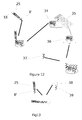
- the hemi-antibody (s) or one of the hemi-antibodies used in the biochip analysis method according to the invention is (are) such that it (s) comprises (s) a nucleotide domain (for example a label domain) complementary to a nucleotide sequence present on one or more hybridization unit (s) of the chip used (see figure 12 ).
- the invention also relates to a chip (or biochip) as defined in the present application, which comprises one or more hybridization units on which one (or more) hemi-antibodies as defined in the present application is complexed ( or linked).
- Said chip is therefore referred to as an "antibody chip (or biochip)" (when all the hybridization units of said chip are hybridized with a hemi-antibody) or a “mixed antibody / nucleic acid chip” (when one or more units hybridization of said chip are not hybridized with a hemi-antibody but with a nucleic acid).
- the present invention may therefore make it possible to functionalize complexation units of a nucleic acid chip, so as to confer on said complexing units the ability to recognize antigens and in particular epitopes.
- any other element having a surface, in particular particles with hemi-antibodies according to the invention, for example via ANP or nucleic acids complementary to a label domain present in said hemi-antibodies (cf. Fig.13 ).
- the subject of the invention is also a particle (for example a nanoparticle), and in particular a fluorescent or non-fluorescent particle, characterized in that one or more hemi-antibodies as defined in FIGS. present application and in particular one or more hemi-antibodies HAC_1 and / or one or more HAC_4 hemi-antibodies are linked to the surface of said particle.
- the hemi-antibody / particle binding may be via an ANP or a nucleic acid comprising a sequence complementary to a nucleic sequence of said hemi-antibody (for example complementary to the label domain of the hemi-antibody.
- Said particle may be, for example, a quantum dot (or Q-dot).
- Said particle may be used in particular for labeling ( in vivo, ex vivo or in vitro ) target cells, that is to say cells on the surface of which is present an epitope recognized by the site of recognition of a hemi- antibody according to the invention.
- the present application also describes the addressing ( in vivo, ex vivo or in vitro ) of one or more (in particular 2) ANPzyme to target cells.
- Catalytic ANP (referred to as ANPzyme in the present application) used in this application has the ability to specifically cut DNA.
- This ANPzyme comprises or consists of one or more unit (s) HD (histidine - aspartic acid), or DH (aspartic acid - histidine), EH (glutamic acid - histidine) or HE (histidine-glutamic acid).
- ANPzyme makes it possible to make cuts in the DNA whereas the use of two ANPzymes so that two contiguous and non-complementary sequences located on the two strands of a complementary DNA are cut off makes it possible to cut both strands, in the manner of a restriction enzyme resulting in an offset double-strand cut; the use of a system of contiguous ANPzymes makes it possible to introduce deletions into the DNA.
- the ANPzyme system (s) may be provided to a target cell by any means and in particular by using one or more hemi-antibodies of the invention.
- the invention therefore particularly relates to a hemi-antibody of the invention, wherein the tag domain and / or the biologically active domain comprises or consists of one or more ANPzyme (in particular one or more ANPzyme having an HD or DH pattern).
- ANPzyme in particular one or more ANPzyme having an HD or DH pattern.
- two ANPzymes are used in the context of the invention, they are preferably carried by the same hemi-antibody, which can be grafted onto a nontoxic nano particle (as described in the present application).
- the invention relates to a hemi-antibody as defined in the present application, in which the label domain and / or the biologically active domain comprises or consists of two ANPzyme, in particular two ANPzyme with HD or DH motif. , which are such that the two ANPZYMEs are linked by their N-terminal ends or possibly by their C-terminal ends via the same linker (these two ANPzymes are referred to in this application as "double anpzymtête speche" or " DAZtb "), so that these ANPZYMES recognize two contiguous and non-complementary sequences located on the two strands of a complementary DNA (see Fig. 14 ).
- DAZtb hybridizing to DNA, allows a double-strand cut shifted between the two strands of a DNA molecule.
- This tool can in particular be used to carry out the deletion of the region of the nucleotide sequence of a virus, for example an HIV virus and in particular HIV-1 virus conferring resistance to said virus (see Fig. 15 ) or the deletion of a region of the nucleotide sequence of a bacterium conferring resistance to one or more antibiotic (s); by way of example, mention may be made of the PBS sequence or sequences responsible for penetration into the nucleus.
- a virus for example an HIV virus and in particular HIV-1 virus conferring resistance to said virus (see Fig. 15 ) or the deletion of a region of the nucleotide sequence of a bacterium conferring resistance to one or more antibiotic (s); by way of example, mention may be made of the PBS sequence or sequences responsible for penetration into the nucleus.
- PNA sequences are determined to target and match a particular nucleic acid sequence (e.g., a particular DNA sequence).
- the present application describes two PNAzyme structures as defined above (these two PNAzyme may have identical or different sequences), connected such that they are upside down, that is to say connected by their ends C -terminals, or (preferably) by their N-termini, preferably via the same linker.
- Such a dual structure PNAzyme is called "double PNAzyme head-to-tail”.
- peptide sequence is meant here a chain of at least two (i.e. two or more) amino acids.
- the peptide sequence present in a PNAzyme constitutes a catalytic domain of an enzyme and in particular a nuclease, preferably a DNAse.
- said peptide sequence comprises or consists of one or more DH (aspartic acid - histidine), HD (histidine - aspartic acid), EH (glutamic acid - histidine) or HE (histidine - glutamic acid) units. .
- a PNAzyme and in particular a double PNAzyme head-to-tail makes it possible to operate, as with a restriction enzyme, a single-stranded or double-stranded cut in a DNA.
- the use of two double PNAzymes allows the creation of deletions in double-stranded DNA, where appropriate, by means of joined cuts on two complementary DNA strands.
- New chimeric molecules capable of self-assembly in a suitable medium, are synthesized. They comprise a part of a polypeptide nature and a part consisting of a nucleotide sequence or an analogue.
- the polypeptide part consists of antibody parts, and more precisely variable domains of one or more antibodies which are derived from the heavy and light chains of an antibody, and which, by structuring, specifically form a recognition site. of the epitope.
- the second part consists of a nucleic acid or an analogue such as ANP or LNA.
- a first type of HAC consists of two DV domains (a domain derived from a heavy chain of an antibody and a domain derived from a light chain of the same antibody, which specifically recognize the antigen) and two nucleic sequences.
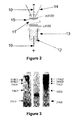
- One of the DV domains ( figure 1.3 ) is covalently coupled ( figure 1.4 ) C-terminal, either at the 5 'end of a nucleic acid (LNA, methylphosphonate nucleic acid, thioate nucleic acid ...), or at the N-terminus of an ANP.
- LNA methylphosphonate nucleic acid
- thioate nucleic acid a nucleic acid
- the other DV domain is covalently coupled at its C-terminal end, either at the 3 'end of a nucleic acid (LNA, methylphosphonate nucleic acid, thioate nucleic acid, etc.) or at the C-terminus. -terminal of an ANP.
- LNA methylphosphonate nucleic acid
- thioate nucleic acid etc.
- the two complementary nucleotide sequences oriented anti-parallel pair creating an alpha helix that allows the two protein parts to acquire a functional form.
- the ANP and / or nucleic acid sequences grafted as a result of the peptides of the DV domain act as a "zipper” type structure (ANP "Zipper” or structural) and the two DV domains are provided with to revive the active site of a hemi-antibody ( Figure 1.5a ), capable of targeting an intra and / or extracellular antigen.
- This self-assembly can be used to associate, in new assemblies, new DV domains or DV domains from existing unassociated DV domains to search for new affinities.
- This invention also describes a method of synthesis for HAC chimeras and finally particular examples of use of specific HAC especially to fight against HIV-1 & 2.
- Peptide spacers / linkers polymer of 1 to 20 carbons:
- the DV domains used retain at least one cysteine making it possible to establish disulphide bridges between DV domains.
- the nucleic acids and / or the ANPs are then grafted after the said cysteines, so that by hybridizing, the nucleic acids and / or grafted ANP judiciously dispose the cysteines by allowing the formation of the disulfide bridges between the two DV chains which will form the active site of the hemi-antibody.
- the pairing of the zipper nucleic sequences allows the formation of a stable molecule, with a disulfide bridge having a modified redox potential. This disulfide bridge is maintained in an intracellular medium, which increases the possibility of having a functional hemi-antibody site.
- linker spacer molecules such as Lysine, ethyl Diamine, beta-alanine ..., or any other hydrogen carbon chain, can be inserted between the nucleic acid and / or the structural ANP of the domain DV, so that once the nucleotides hybridized with each other, the offset introduced by the linker spacers between the two DV domains allow the optimization of formation of the active site of the hemi-antibody.
- an ANP (a) is grafted at the C-terminal of a DV domain, via the NH 2 of the side chain of a lysine linked to the C-terminal end of said ANP ( a) by a peptide bond.
- the ANP (a) is thus of orientation C to N, opposite to the orientation N towards C of the DV, and the lysine plays the role of spacer linker.
- the second domain DV is linked at its C-terminal end to the N-terminus of another ANP (b), thanks to a peptide or amide bond with one of the NH 2s of a lysine, the so-called lysine. being linked, by its COOH group, to the N-terminal end of the ANP (b) complementary to the ANP (a).
- the ANP (b) is thus oriented N towards C, as well as the DV.
- the grafting of an N-or C-terminal modified ANP with a lysine or a 5'- or 3'-modified nucleic acid with an NH 2 on the C-terminus -terminal of DV domains is through the action of 2-mercapto-ethansulfonic acid or by the action of 3-mercaptopropionic acid on DV cysteine involved in the formation of the disulfide bridge connecting the heavy chain and the light chain an antibody.
- the DV domains used to make the chimeras can come from either the digestion of antibodies by pepsin, papain, trypsin (or any other enzyme), or the expression of the genes encoding these peptides in cellular systems such as bacteria, yeasts, insect cells, or in vitro syntheses (kits) ..., then purification.
- the size of these domains may vary, for example, from 10 to 300, from 20 to 200 or from 40 to 200 amino acid residues.
- nucleic acids used to structure the hemi-antibody are complementary sequences, the size of which may vary for example from 3 to 100 or from 5 to 60 nucleotides. These sequences can be simple nucleotide sequences, ANPs, LNAs, etc.
- the nucleic acid or the ANP to be grafted is functionalized at one of its ends by a poly-G, optionally via a lysine, the N-terminus of the poly-G remaining free.
- the DV domain and the nucleic acid or the ANP are then fused under the action of sortase A.
- the LPXTAAAA sequence may advantageously be replaced by the sequence LPXTG (leucine-proline-X-Threonine-Glycine, where X is any amino acid, SEQ ID No. 7).
- the DNA / AC hemi-antibodies described have both the ability to specifically reach the targeted cell (recognition property conferred by the antibody portion) and that of delivering to the inside of the cell a biologically active domain (property conferred by the added hydrophobic sequence).
- the chimeric molecule ensures the addressing of the nucleic acid to the cell but also its penetration inside the cell.
- the invention also relates to an HAC that can be used to target specific cells to introduce, for example, a nucleic domain.
- biologically active eg ANP
- This biologically active domain is grafted with a covalent bond following one of the zipper nucleic sequences described above.
- the active or HAC antibody recognition site is directed to surface antigens. This allows on the one hand to specifically recognize the targeted cells, and on the other hand, promotes the penetration of a biologically active domain by bringing it closer to the membrane.
- the chimeric molecule consists of the variable parts of a hemi-antibody DV1a / DV1b ( figure 1.5a ).
- a structural nucleic acid zipper
- this nucleic acid grafted on a peptide DV1a is complementary and antiparallel to the structural nucleic acid (zipper) grafted on the second peptide DV1b.
- the two DV peptides then form a hemi-antibody with its active or recognition site.
- One of the two structural nucleic acids is continued by a nucleotide sequence (tag) ( figure 1.6 to 1.8 ) having a biologically active domain.
- the hemi-antibody makes it possible to target organelles or intracellular molecules.
- the biologically active domain may be a nucleic acid, an ANP, a mixed ANP / nucleic acid sequence, ANP / peptide and more generally a nucleotide sequence or an analog (ANP, LNA, methylphosphonates, methylsulphonates, nucleic acids or modified nucleic acids) or a mixing of these different molecules ”) a DNAzyme, ANPzyme, or a MiRNA, possibly an antisense, which entering the target cell will prevent the expression of a target sequence or degrade it or will present a DNAase or RNAase activity, or a combination of these two properties ( figure 4.19 ).
- the biologically active domain is an antisense sequence comprising all or part of the Lys3 tRNA, for example GTCCC or GUCCC, complementary to a portion of the HIV-1 viral RNA.
- the biologically active domain is an antisense sequence comprising all or part of the terminal sequence of tRNA_lys3, for example CGCCA, complementary to a portion of HIV-1 viral RNA.
- the biologically active domain itself is a combination of the two sequences GTCCC or GUCCC and CGCCA ( figure 6.22 ) (N 'ATGGTAGAG-cysteine C'& n 'cysteine-CTCTACCAT C').
- the antisense sequence itself is a sequence complementary to all or part of the PBS region or the TAR region of the viral RNA of HIV-1 or HIV-2.
- the antisense biologically active domain comprises ANPs ( figure 6.22 ).
- the biologically active domain is a DNAzyme type enzymatic activity sequence and complementary recognition sequences for all or part of the PBS sequence.
- the biologically active domain consists of a DNA / ANP-zyme dimer.
- the ANP part (flanking on both sides the DNA-Zyme loop) is complementary to a target sequence of interest that can be all or part of the PBS or TAR sequence of HIV-1 or HIV-2 ( figure 4.22 ) and the DNA-zyme part, formed from 2 to 23 residues, has a loop structure ( Figure 4.23 ) and will result in degradation of the target sequence by its RNase or DNase activity.
- the entire enzymatic sequence is an ANP, thus forming an ANP-zyme.
- the enzymatic loop of ANPzyme is completely or partially substituted with a unit comprising at least one amino acid such as DH (aspartic acid - histidine), HD (histidine - aspartic acid), EH (glutamic acid) - histidine) or HE (histidine - glutamic acid) ( figure 4.24 ).
- DH aspartic acid - histidine
- HD histidine - aspartic acid
- EH glutamic acid
- HE histidine - glutamic acid
- the ANPzyme, antisense, ANP / DNAzyme sequence itself is used alone or in combination with any part of the HAC_Tag (HAC, spacer sequence, lipophilic or aromatic end).
- HAC_Tag HAC, spacer sequence, lipophilic or aromatic end
- the biologically active sequence system can be adapted to all types of viruses, including bacteria by targeting antibiotic resistance genes to inhibit resistance and make the bacteria sensitive to the corresponding antibiotic.
- the antisense sequence itself comprises all or part of the RNA or DNA sequence of bacterial genes of antibiotic resistance or an antisense sequence complementary to all or part of this sequence.
- the grafted sequence may comprise a spacer sequence of 5 to 50 nucleotides aiming to optimize the distance between the nucleic domain ii) and the biologically active domain which must penetrate into the cell.
- the tag sequence comprises a deoxyribonucleic acid part acting as a spacer ( figure 1.6 ).
- the spacer is connected to an ANP sequence (or to another nucleic acid, modified or not) constituting the biologically active domain proper ( figure 1.8 ).
- the biologically active domain is for example linked at one of its ends to the spacer sequence by a labile sequence in a reducing medium, for example an SS disulfide bridge ( figure 1.7 ).
- the spacer sequence is absent and the biologically active domain is connected to the hemi-antibody by a covalent bond.
- a thiol function is present at the other free end of the spacer sequence.
- This function makes it possible to graft another molecule onto the spacer sequence by establishing, for example, an SS link.
- This SS bond is labile in a reducing medium such as the middle of the cell cytoplasm. This bond, after reduction of the SS bridge, allows the separation of the HAC and the biologically active domain.
- the thiol function is introduced at the end of the spacer sequence by fusion, with said sequence, of a sequence comprising a thiol function at one of the ends. Fusion of the spacer sequence and thiol-containing sequence at its free end can be achieved by ligase.
- the biologically active domain may, for example, comprise a thiol function at one of its ends for the establishment of a disulfide bridge between the biologically active domain and the spacer sequence.
- This thiol function can be replaced by a maleimide acid so that the bond between the spacer sequence and the biologically active domain is persistent in a reducing medium.
- the target of this HAC may be extra or intracellular, which implies, in the latter case, the passage of the nucleic acid through the plasma membrane.
- This passage is made possible by the addition of a hydrophobic sequence at the free end of the nucleic acid (biologically active domain) to be transferred.
- This lipophilic group ( figure 1.9 ) allows the biologically active domain to cross the cell membrane more easily.
- the lipophilic group is aromatic so as to to be inserted in a mixed ANP / nucleic acid helix in order to stabilize this structure formed between the antisense ANP and the nucleic acid target.
- the recognition site of the HAC_tag structure specifically binds to the cells comprising the target antigens; the lipophilic function grafted onto the biologically active domain (antisense ANP, DNAzyme, etc.) allows the nucleotide arm to cross the membrane, and more particularly, to the biologically active domain. Since the intracellular medium is a reducing medium, the SS bridges connecting the biologically active domain to the spacer sequence are reduced, thereby releasing the biologically active domain within the target cell.
- the antisense ANP then complexes with the target sense sequences (RNA in the cytoplasm or DNA in the nucleus) and blocks the possibilities of expression of the target sequence (at the level of transcription, retrotranscription, replication, and / or translation).
- the aromatic molecule such as tryptophan introduced at the end of the antisense ANP, stabilizes the ANP / DNA or RNA duplex that forms, thereby improving blocking efficiency by the ANP.
- the antibody used to make the HAC_tag is an antibody recognizing a protein of a viral or bacterial envelope.
- the antibody used to make the HAC tag is able to bind to the viral particle.
- the antibody used to make the HAC_tag is the anti-gp120-17b antibody.
- HAC_tag-gp120-17b can bind to virus particles and is driven by them to target cells of the virus through CD4 / gp120 interactions.
- the nucleic arm of the HAC-tag can cross the cell membrane thanks to the lipophilic function grafted at the end of the biologically active domain.
- the SS bridge connecting the spacer sequence and the biologically active domain, is reduced in the cytosol, releasing the biologically active domain into the cell.
- the biologically active sequence blocks or blocks and degrades the viral sequence, depending on whether the biologically active domain is antisense or antisense / ANPzyme.
- the antibody used for the synthesis of the hemi-antibody consists of an anti-retrotranscriptase antibody including anti-retrotranscriptase HIV-1 or HIV-2.
- the hemi-antibody is connected to the biologically active domain via a persistent bond in a reducing medium, for example via a maleimide acid.
- a spacer sequence may optionally be interposed between the hemi-antibody and the biologically active domain, the bonds connecting HAC, spacer sequence and biologically active domain being persistent in a reducing medium.
- the biologically active domain is preferably an ANPzyme, DNAzyme or ANP antisense sequence.
- the HAC-tag thus constituted is complex to the reverse transcriptase whereas the biologically active domain degrades and / or blocks the viral RNA.
- HAC_tag may be included (in particular packaged) in microspheres or liposomes, more particularly the HAC_tag will be included in liposomes consisting of viral membrane.
- HAC_1 is directed against the gp120 protein
- HAC_2 is directed against the CD4 protein.
- DV2a and DV2b form a recognition site HAC_3 ( figure 5.31 ) anti-retro-transcriptase when the two structural nucleic acids S3 and S4 hybridize.
- This system can be declined in various ways to deliver, within a cell, the two parts of a hemi-antibody, which can thus self-assemble in the cell.
- viral particles can be used to specifically deliver the hemi-antibodies and their biologically active domain in the cell.
- the antibody undergoes electrochemical reduction in a cooled reactor.
- the reactor consists of a vertical brass tube 2 mm in diameter and 1.5 cm in length containing the antibody solution to be electroreduced.
- the lower end of the tube is connected to the positive terminal of a generator by a mixed electrode composed of a filled needle and surrounded by a 20% duracryl gel (124 ⁇ L of duracryl ( Sigma ) 30% + 30 ⁇ L of 1.5M tris pH 8.9 + 43.6 ⁇ L H 2 O + 50 ⁇ L electroreduction buffer + 5 ⁇ L APS 10% + 2 ⁇ L Temed) contained in a 1.5 cm Tycon tube (N orton ), closed on one side using the flame of a Bunsen burner.
- the gel electrode allows the passage of electrolytes, but limits the diffusion of antibodies or their reduced forms.
- the upper end of the reactor is connected to the negative pole of the generator by a needle, so as to prevent contact between the reactor walls and the electrode through a pipette cone which guides the needle inside the reactor.
- the reactor is surrounded by a cooling system consisting of another twisted brass tube to form a spiral in which water circulates at the temperature of the melting ice under the action of a peristaltic pump.
- the parameters used for the reduction of the antibody in hemi-antibodies are: + 100V, 2mA, 10 sec.
- 15 ⁇ L of sequence tag_D (0.3 ⁇ g / ⁇ L) are added to 10 ⁇ L of a solution of chimeras functionalized with a sequence tag_C and diluted (1/1000) in milk / TBS1X.
- a BSA antigen deposit on a nitrocellulose membrane is incubated overnight at 4 ° C.
- the membrane After washing three times with 1X TBS for 5 minutes in order to eliminate specific scuffs, the membrane is denatured with 50 ⁇ l of 2.5% ⁇ -mercaptoethanol at a temperature of 95 ° C. for 20 minutes. 2 .mu.l of supernatant are deposited on a glass slide. The deposit is dried for 20 minutes in the open air and protected from light, then the slide is scanned ( Packard Bioscience ) at 455 nm.
- a negative control is carried out in parallel: a membrane comprising an antigen deposit is incubated with 15 ⁇ l of tag_D and 1 ml of milk / 1 ⁇ TBS at 4 ° C. overnight with stirring. The membrane undergoes the same protocol as before. 2 ⁇ L from its denaturation are likewise deposited on a glass slide and scanned to evaluate the nonspecific adhesion.
- the plasmid pLLC092 (http://isisbiolab.dabbledb.com/publish/laboratorvstocks/ff0e3c28-ca9a-4280-95ce-f170e7f7a39a/allentries.txt ) containing the sequence of the hexase-contiguous sortase was transfected into the cells.
- competent BL21 (DE3) (biolabs) under the control of a Lac promoter induced by IPTG (isopropyl ⁇ -D-1-thiogalactopyranoside).
- the expression of sortase A is then induced by IPTG (1 mM).
- the sortase A enzyme is then purified by the Ni-NTA Kit Fast Start Kit (Qiagen).
- the two sequences (IA) HS-LPGTG and (IB) LS-LPGTG above respectively corresponding to the variable part of the heavy chain and the light chain of anti-HEL antibodies (Hen Egg Lysozyme) were cloned into the vector pEXP5-NT (invitrogen) by Proteigenix.
- the vectors were transfected separately into competent bacteria Top10 one shot E. coli (invitrogen). Plasmid purification was done with the QIAfilter Plasmid Midi Kit (Qiagen).
- the expression of the two proteins HS-LPGTG & LS-LPGTG was carried out thanks to the expressway cell-free E.coli expression system kit (invitrogen). Both synthesized proteins were then purified by the Ni-NTA Kit Fast Start Kit (Qiagen).
- a TTTTTC sequence is added at the end of SP1 in order to be able to highlight the chimera formed by marking it with a fluorescent GAAAAA nucleic acid.
- SP1 and SP2 are taken up in a solution of 10% N-methyl-2-pyrrolidone (NMP) for a final concentration of 100 micro M.
- NMP N-methyl-2-pyrrolidone
- the tubes are incubated 24H at 37 ° C.
- Ni-NTA magnetic agarose beads (Qiagen) are precipitated, the supernatant is removed. Addition to these beads of 50uL of solution to be purified + 100uL of protein binding buffer (50mM NaH2PO4, 300mM NaCl, 20mM imidazole, pH8). Incubation 1H30 on wheel at room temperature at 7rpm. Precipitation of the balls recovery of supernatant No. 1. Two washes of the beads with 150 ⁇ L of protein binding buffer.
- protein binding buffer 50mM NaH2PO4, 300mM NaCl, 20mM imidazole, pH8
- the nitrocellulose membrane is then saturated with a superblocking buffer solution (Thermofisher) at 4 ° C. for 20 minutes, then hybridized overnight at 4 ° C. with gentle stirring, with a solution containing 250 nM of labeled HEL (Fluka) antigen.
- Dylight488 Thermofisher
- Typhoon scan 8600 (Amersham Biosciences).
- a solution of 18-base HIV-1 Primer Binding Sequence (or PBS) (5 'UGGCGCCCGAACAGGGAC 3', SEQ ID NO.10) at 10uM in H 2 O is mixed mole to mole, ie to a solution of ANPzyme (N 'TCCCTGHDTC C') at 10uM in 10% NMP, or at 10% NMP solution.
- PBS Primer Binding Sequence
- ANPzyme N 'TCCCTGHDTC C'
- the mixtures are incubated 4H at 37 ° C.
- the mixtures are deposited either in a native gel containing 20% acrylamide (1.5mL of TBE10X, 7.5mL of acrylamide / bis 19: 1 (biorad), 6mL dH2O, 87.5 ⁇ L of 10% APS and 7.5 ⁇ L of temed (Sigma)); either in a denaturing gel containing 20% acrylamide (7.2 g of urea (Sigma), 1.5 ml of TBE10X, 7.5 of acrylamide / bis 19: 1 (Biorad), 6 ml of dH2O, 87.5 ⁇ l of 10% APS and 7.5 ⁇ L of warmthd (Sigma)). After migration at 100V and 200mA for 1h30, the gels are revealed by ethidium bromide.
Landscapes
- Health & Medical Sciences (AREA)
- Life Sciences & Earth Sciences (AREA)
- Chemical & Material Sciences (AREA)
- Organic Chemistry (AREA)
- Genetics & Genomics (AREA)
- Engineering & Computer Science (AREA)
- General Health & Medical Sciences (AREA)
- Molecular Biology (AREA)
- Biomedical Technology (AREA)
- Medicinal Chemistry (AREA)
- Bioinformatics & Cheminformatics (AREA)
- Biophysics (AREA)
- Biochemistry (AREA)
- General Engineering & Computer Science (AREA)
- Biotechnology (AREA)
- Zoology (AREA)
- Wood Science & Technology (AREA)
- Immunology (AREA)
- Chemical Kinetics & Catalysis (AREA)
- Veterinary Medicine (AREA)
- Pharmacology & Pharmacy (AREA)
- Nuclear Medicine, Radiotherapy & Molecular Imaging (AREA)
- General Chemical & Material Sciences (AREA)
- Animal Behavior & Ethology (AREA)
- Public Health (AREA)
- Proteomics, Peptides & Aminoacids (AREA)
- Plant Pathology (AREA)
- Microbiology (AREA)
- Physics & Mathematics (AREA)
- Oncology (AREA)
- Communicable Diseases (AREA)
- Virology (AREA)
- Peptides Or Proteins (AREA)
- Medicines Containing Antibodies Or Antigens For Use As Internal Diagnostic Agents (AREA)
- Pharmaceuticals Containing Other Organic And Inorganic Compounds (AREA)
- Medicines That Contain Protein Lipid Enzymes And Other Medicines (AREA)
Claims (28)
- Chimäres Molekül, bezeichnet als "Antikörperhälfte", dadurch gekennzeichnet, dass es zwei chimäre Moleküle A und B umfasst oder aus diesen besteht, die jeweils umfassen oder bestehen aus:(i) einer Polypeptid-Domäne, die für eine variable Domäne (oder VD) einer schweren Kette oder einer leichten Kette eines Antikörpers charakteristisch ist, wobei diese Polypeptid-Domäne an einem Ende in den chimären Molekülen A und B positioniert ist, wobei die Polypeptid-Domäne (i) eines der beiden chimären Moleküle A oder B für eine VD einer leichten Kette eines Antikörpers charakteristisch ist und die Polypeptid-Domäne (i) des anderen chimären Moleküls, respektive B
oder A, für eine VD einer schweren Kette eines Antikörpers charakteristisch ist; und(ii) einer einzelsträngigen Nucleotid-Domäne, die aus einem Polynucleotid oder einem Polynucleotid-Analogon besteht, wobei die Nucleotid-Domäne von A und die von B sich zu einer Doppelstrangstruktur im wässrigen Medium verbinden können;wobei die Polypeptid-Domäne (i) und die Nucleotid-Domäne (ii) eines jeden chimären Moleküls A und B durch eine kovalente Bindung verbunden sind und die Domäne (ii) des chimären Moleküls A und die des chimären Moleküls B in einer Doppelstrangstruktur im wässrigen Medium verbunden sind. - Antikörperhälfte nach Anspruch 1,
wobei die Polypeptid-Domäne (i) und die Nucleotid-Domäne (ii) eines chimären Moleküls A oder B durch ein oder mehrere Bindungsmoleküle (oder Linker) verbunden sind, wobei der oder die Linker eine Hydrogencarbonat-Kette umfassen oder aus dieser bestehen, und ein oder mehrere Elemente umfassen oder aus diesen bestehen, die ausgewählt sind aus einem Peptid oder einem Polypeptid, einem Polynucleotid oder einem Polynucleotid-Analogon, einer Polycarbonat-, Ethylendiamin-, Polylysin-, Beta-Alanin-Kette und einem Zucker. - Antikörperhälfte nach Anspruch 1 oder 2, wobei:- in dem chimären Molekül A das C-terminale Ende der Polypeptid-Domäne (i) kovalent mit dem 3'-Ende einer Nucleinsäure oder mit dem C-terminalen Ende eines Polynucleotid-Analogons verbunden ist, das aus einer Peptid-Nucleinsäure (PNA) besteht; und/oder- in dem chimären Molekül B das C-terminale Ende der Polypeptid-Domäne (i) kovalent mit dem 5'-Ende einer Nucleinsäure oder mit dem N-terminalen Ende eines Polynucleotid-Analogons verbunden ist, das aus einer Peptid-Nucleinsäure (PNA) besteht.
- Antikörperhälfte nach Anspruch 3, wobei:- in dem chimären Molekül A die kovalente Bindung durch die NH2-Gruppe der Seitenkette eines Lysins hergestellt wird, das mit dem C-terminalen Ende der PNA durch eine Peptidbindung verbunden ist; und/oder- in dem chimären Molekül B die kovalente Bindung durch eine Peptid- oder Amidbindung mit einer der NH2-Gruppen eines Lysins hergestellt wird, wobei das Lysin durch seine COOH-Gruppe mit dem N-terminalen Ende der PNA verbunden ist.
- Antikörperhälfte nach einem der Ansprüche 1 bis 4, wobei das chimäre Molekül A und/oder das chimäre Molekül B ferner ein oder mehrere Elemente umfassen, die ausgewählt sind aus:• einer Markierungsdomäne und/oder einer biologisch aktiven Domäne, die ein Polynucleotid oder ein Analogon ist, das eine Markierungssequenz (oder Tag-Sequenz) und/oder eine biologisch aktive Sequenz, die die Expression der Ziel-Gene zu blockieren erlaubt, umfasst oder aus diesen besteht, wobei das Polynucleotid oder das Analogon aus den folgenden Elementen ausgewählt ist:- einer Nucleinsäure, einer Antisense-Nucleinsäure oder einer Nucleinsäure mit einer Endonuclease-Aktivität;- einer PNA, einer Antisense-PNA oder einer PNA mit einer Endonuclease-Aktivität (PNAzym),- einer LNA, einer Methylphosphonat-Nucleinsäure, einer Methylsulfonat-Nucleinsäure, einer modifizierten Nuclein- oder Desoxyribonucleinsäure, einem DNAzym, einem RNAzym oder einem PNAzym, einer microRNA (miRNA), einer kombinierten Sequenz aus PNA/Nucleinsäure oder PNA/Peptid, einem DNA/PNAzym-Dimer; und- einer Kombination aus wenigstens zwei dieser Elemente,wobei die Markierungsdomäne oder die biologisch aktive Domäne mit dem freien Ende der Nucleotid-Domäne (ii) des chimären Moleküls A oder B oder mit dem freien Ende eines mit der Nucleotid-Domäne (ii) des chimären Moleküls A oder B verbundenen Linkers verbunden ist, wobei der Linker so wie in Anspruch 2 ausgeführt ist, und die Bindung der Markierungsdomäne oder der biologisch aktiven Domäne mittels einer labilen Verbindung im Reduktionsmedium oder mittels einer persistenten Verbindung im Reduktionsmedium erfolgt; und• einem lipophilen Element, das ausgewählt ist aus einer Sequenz, einer chemischen Gruppe oder einer lipophilen chemischen Verbindung, das eine oder mehrere Gruppen und/oder aromatische Verbindungen umfasst, wobei das lipophile Element an dem freien Ende des chimären Moleküls A oder B positioniert ist.
- Antikörperhälfte nach einem der Ansprüche 1 bis 5, wobei:• das erste chimäre Molekül A oder B umfasst oder besteht aus:- einer Polypeptid-Domäne (i) wie in Anspruch 1 definiert und den folgenden Domänen, die ausgehend von dem C-terminalen Ende der Polypeptid-Domäne (i) nacheinander in der folgenden Reihenfolge positioniert sind:- ein Linker wie in Anspruch 2 definiert,- eine Nucleotid-Domäne (ii) wie in Anspruch 1 definiert,- ein Linker wie in Anspruch 2 definiert, der mittels einer labilen Verbindung im Reduktionsmedium oder mittels einer persistenten Verbindung im Reduktionsmedium verbunden ist mit- einer Markierungsdomäne oder der biologisch aktiven Domäne wie in Anspruch 5 definiert, und- ein lipophiles Element wie in Anspruch 5 definiert; und• das zweite chimäre Molekül, respektive B oder A umfasst oder besteht aus:- einer Polypeptid-Domäne (i) wie in Anspruch 1 definiert, wobei diese Domäne und die Polypeptid-Domäne (i) des ersten chimären Moleküls für eine VD ein und desselben Antikörpers charakteristisch sind, wobei eine der Domänen für eine VD der leichten Kette eines gegebenen Antikörpers und die andere für eine VD der schweren Kette desselben Antikörpers charakteristisch ist,und den folgenden Domänen, die ausgehend von dem C-terminalen Ende der Polypeptid-Domäne (i) nacheinander in der folgenden Reihenfolge positioniert sind:- ein Linker wie in Anspruch 2 definiert, und- eine Nucleotid-Domäne (ii) wie in Anspruch 1 definiert.
- Antikörperhälfte nach einem der Ansprüche 1 bis 6, wobei:• das erste chimäre Molekül A oder B umfasst oder besteht aus:- einer Polypeptid-Domäne (i) wie in Anspruch 1 definiert, und den folgenden Domänen, die ausgehend von dem C-terminalen Ende der Polypeptid-Domäne (i) nacheinander in der folgenden Reihenfolge positioniert sind:- ein Linker wie in Anspruch 2 definiert,- eine Nucleotid-Domäne (ii) wie in Anspruch 1 definiert, bezeichnet als S1,- ein Linker wie in Anspruch 2 definiert, der mittels einer labilen Verbindung im Reduktionsmedium verbunden ist mit- einer Markierungsdomäne oder einer biologisch aktiven Domäne wie in Anspruch 5 definiert, die mittels einer kovalenten Bindung verbunden ist mit- einem Linker wie in Anspruch 2 definiert,- einer zweiten Nucleotid-Domäne, bezeichnet als S3, die ein Polynucleotid oder ein Polynucleotid-Analogon umfasst oder aus diesem besteht und die sich mit einer komplementären Nucleotid-Domäne, bezeichnet als S4, in einer Doppelstrangstruktur im wässrigen Medium verbinden kann; und- ein Linker wie in Anspruch 2 definiert,- wobei die S3-Domäne oder der Linker mit dem C-terminalen Ende einer zweiten Polypeptid-Domäne, bezeichnet als VD2a, verbunden sind, die für eine VD einer schweren Kette oder einer leichten Kette eines Antikörpers charakteristisch ist, wobei VD2a und die Polypeptid-Domäne (i) des chimären Moleküls A oder B für die VD eines separaten Antikörpers charakteristisch sind, und- ein lipophiles Element wie in Anspruch 5 definiert, wobei das lipophile Element mittels einer labilen Verbindung im Reduktionsmedium oder mittels eines Linkers wie in Anspruch 2 definiert mit der VD2a verbunden ist, wobei der Linker eine labile Verbindung im Reduktionsmedium aufweist oder mittels einer labilen Verbindung im Reduktionsmedium mit der VD2a verbunden ist,• das zweite chimäre Molekül, respektive B oder A, umfasst oder besteht aus:- einer Polypeptid-Domäne (i) wie in Anspruch 1 definiert, wobei diese Domäne und die Polypeptid-Domäne (i) des ersten chimären Moleküls für die VD ein und desselben Antikörpers charakteristisch sind, wobei eine der Domänen für eine VD der leichten Kette eines gegebenen Antikörpers und die andere für eine VD der schweren Kette desselben Antikörpers charakteristisch ist,und den folgenden Domänen, die ausgehend von dem C-terminalen Ende der Polypeptid-Domäne (i) nacheinander in der folgenden Reihenfolge positioniert sind:- ein Linker wie in Anspruch 2 definiert, und- eine Nucleotid-Domäne (ii) wie in Anspruch 1 definiert, bezeichnet als S2, die sich mit S1 zu einer Doppelstrangstruktur im wässrigen Medium verbinden kann.
- Antikörperhälfte nach einem der Ansprüche 1 bis 7, wobei:• das erste chimäre Molekül A oder B umfasst oder besteht aus:- einer Polypeptid-Domäne (i) wie in Anspruch 1 definiert, und den folgenden Domänen, die ausgehend von dem C-terminalen Ende der Polypeptid-Domäne (i) nacheinander in der folgenden Reihenfolge positioniert sind:- ein Linker wie in Anspruch 2 definiert,- eine Nucleotid-Domäne (ii) wie in Anspruch 1 definiert, bezeichnet als S5,- ein Linker wie in Anspruch 2 definiert, wobei der Linker eine labile Verbindung im Reduktionsmedium aufweist oder mittels einer labilen Verbindung im Reduktionsmedium verbunden ist mit- einer zweiten Nucleotid-Domäne, bezeichnet als S4, die ein Polynucleotid oder ein Polynucleotid-Analogon umfasst oder aus diesem besteht und die sich mit einer komplementären Nucleotid-Domäne, bezeichnet als S3, zu einer Doppelstrangstruktur im wässrigen Medium verbinden kann; und- einem Linker wie in Anspruch 2 definiert,- wobei die S4-Domäne oder der Linker mit dem C-terminalen Ende einer zweiten Polypeptid-Domäne, bezeichnet als VD2b, verbunden ist, die für eine VD einer schweren Kette oder einer leichten Kette eines Antikörpers charakteristisch ist, wobei VD2b und die Polypeptid-Domäne (i) des chimären Moleküls für die VD eines separaten Antikörpers charakteristisch sind, und- ein lipophiles Element wie in Anspruch 5 definiert, wobei das lipophile Element mittels einer labilen Verbindung im Reduktionsmedium oder mittels eines Linkers wie in Anspruch 2 definiert mit der VD2b verbunden ist, wobei der Linker eine labile Verbindung im Reduktionsmedium aufweist, oder mittels einer labilen Verbindung im Reduktionsmedium mit der VD2b verbunden ist; und• das zweite chimäre Molekül, respektive B oder A, umfasst oder besteht aus:- einer Polypeptid-Domäne (i) wie in Anspruch 1 definiert, wobei diese Domäne und die Polypeptid-Domäne (i) des ersten chimären Moleküls für die VD ein und desselben Antikörpers charakteristisch sind, wobei eine der Domänen für eine VD der leichten Kette eines gegebenen Antikörpers und die andere für eine VD der schweren Kette desselben Antikörpers charakteristisch ist,und den folgenden Domänen, die ausgehend von dem C-terminalen Ende der Polypeptid-Domäne (i) nacheinander in der folgenden Reihenfolge positioniert sind:- ein Linker wie in Anspruch 2 definiert, und- eine Nucleotid-Domäne (ii) wie in Anspruch 1 definiert, bezeichnet als S6, die sich mit S5 zu einer Doppelstrangstruktur im wässrigen Medium verbinden kann.
- Antikörperhälfte nach einem der Ansprüche 1, 7 und 8,
wobei das Polynucleotid eine DNA oder eine RNA ist. - Antikörperhälfte nach einem der Ansprüche 1, 7 und 8,
wobei das Polynucleotid-Analogon eine Peptid-Nucleinsäure (PNA), eine verbrückte Nucleinsäure (LNA, Locked Nucleic Acid), eine Methylphosphonat-Nucleinsäure oder eine Thioat-Nucleinsäure ist. - Antikörperhälfte nach einem der Ansprüche 1 bis 10,
wobei die Polypeptid-Domänen (i) für VD-Domänen eines oder mehrerer Antikörper charakteristisch sind, die- gegen ein auf der Oberfläche von Zellen von Säugetieren vorhandenes Antigen, oder- gegen ein virales Antigen, oder- gegen ein bakterielles Antigen, oder- gegen eine reverse Transkriptasegerichtet sind. - Antikörperhälfte nach Anspruch 11,
wobei das auf der Oberfläche von Zellen von Säugetieren vorhandene Antigen das CD4-Protein ist, das virale Antigen das äußere Hüllprotein eines HI-Virus ist, das bakterielle Antigen ein Protein einer Bakterienhülle ist oder die reverse Transkriptase eine reverse Transkriptase von HIV-1 oder HIV-2 ist. - Antikörperhälfte nach einem der Ansprüche 5 bis 12,
wobei die Markierungsdomäne und/oder die biologisch aktive Domäne zwei ANPzyme umfassen oder aus diesen bestehen, wobei die ANPzyme durch ihre N-terminalen oder C-terminalen Enden mittels ein und desselben Linkers verbunden sind. - Antikörperhälfte nach einem der Ansprüche 5, 6 bis 8,
wobei die labile Verbindung im Reduktionsmedium eine Disulfidbrücke ist oder wobei die persistente Verbindung im Reduktionsmedium eine mit einer Maleimidsäure hegestellte Verbindung ist. - Vesikel mit einer oder mehreren Antikörperhälften wie in einem der Ansprüche 1 bis 14 definiert, wobei die Vesikel umfasst:• eine Antikörperhälfte wie in Anspruch 7 definiert, bezeichnet als HAC_1, wobei- die Polypeptid-Domäne (i) der chimären Moleküle A und B charakteristisch ist für eine VD eines Antikörpers, der gegen ein erstes auf der Oberfläche von Zellen von Säugetieren vorhandenes Antigen gerichtet ist oder der gegen ein virales Antigen gerichtet ist; und- die Polypeptid-Domäne VD2a charakteristisch ist für eine VD eines die reverse Transkriptase hemmenden Antikörpers; oder• eine Antikörperhälfte wie in Anspruch 8 definiert, bezeichnet als HAC_2, wobei- die Polypeptid-Domäne (i) der chimären Moleküle A und B charakteristisch ist für eine VD eines Antikörpers, der gegen ein zweites auf der Oberfläche von Zellen von Säugetieren vorhandenes Antigen gerichtet ist oder der gegen ein virales Antigen gerichtet ist; und- die Polypeptid-Domäne VD2b für eine VD desselben Antikörpers wie die Domäne VD2a charakteristisch ist, wobei VD2a oder VD2b für eine VD der leichten Kette eines gegebenen Antikörpers charakteristisch ist und die andere Domäne, respektive VD2b oder VD2a, für eine VD einer schweren Kette desselben Antikörpers charakteristisch ist.
- Vesikel nach Anspruch 15,
wobei die Vesikel ein Liposom ist, das aus einer Partikelmembran des HI-Virus Typ 1 oder Typ 2 gebildet ist, bei dem das virale Antigen das äußere Hüllprotein eines HI-Virus ist, der reverse Transkriptase-Hemmer ein reverse Transkriptase-Hemmer von HIV-1 oder HIV-2 ist oder das zweite Antigen das CD4-Protein ist. - Partikel, auf dem eine oder mehrere Antikörperhälften wie in einem der Ansprüche 1 bis 14 definiert gebunden sind, mittels- einer oder mehreren labilen Verbindungen im Reduktionsmedium; oder- einer PNA oder einer Nucleinsäure mit einer zu einer Nucleinsäuresequenz der Antikörperhälfte komplementären Sequenz.
- Partikel nach Anspruch 17,
wobei das Partikel ein Nanopartikel oder Quantenpunkt QD ist. - Pharmazeutische oder therapeutische Zusammensetzung,
die eine oder mehrere Antikörperhälften wie in einem der Ansprüche 1 bis 14 definiert oder eine oder mehrere Vesikel wie in Anspruch 15 oder 16 definiert oder ein oder mehrere Partikel wie in Anspruch 17 oder 18 definiert und gegebenenfalls einen pharmazeutisch verträglichen Träger, Verdünner und/oder Hilfsstoff umfasst, aus diesen besteht oder im Wesentlichen aus diesen besteht. - Zusammensetzung nach Anspruch 19,
zur Verwendung als Medikament zur Vorbeugung und/oder Behandlung eines Karzinoms und/oder einer Erbkrankheit und/oder einer Infektionskrankheit und/oder einer bakteriellen Erkrankung. - Zusammensetzung zur Verwendung nach Anspruch 20,
wobei die Erbkrankheit eine Myopathie ist und/oder die Infektionskrankheit eine Infektion durch einen Lentivirus ist und/oder die bakterielle Erkrankung eine Infektion durch ein antibiotikaresistentes Bakterium ist. - Zusammensetzung nach Anspruch 21,
wobei die Infektionskrankheit eine HIV-1- oder HIV-2-Infektion ist. - Kit mit einer oder mehreren Antikörperhälften wie in einem der Ansprüche 1 bis 14 definiert,
einer oder mehreren Vesikel wie in Anspruch 15 oder 16 definiert, einem oder mehreren Partikel wie in Anspruch 17 oder 18 definiert oder einer oder mehreren Zusammensetzungen wie in einem der Ansprüche 19 bis 22 definiert und gegebenenfalls einer Gebrauchsinformation. - Kit nach Anspruch 23,
zur Verwendung wie in Anspruch 20 definiert. - Verfahren zum Nachweis und gegebenenfalls zur Quantifizierung einer oder mehrerer interessierender, in einer Probe vorhandener Antikörperhälften, wobei das Verfahren die folgenden Schritte umfasst bzw. aus den folgenden Schritten besteht:- Inkontaktbringen der Antigene der Probe mit einer oder mehreren Antikörperhälften wie in einem der Ansprüche 1 bis 14 definiert;- Nachweis der eventuell zwischen der bzw. den Antikörperhälften und einem oder mehreren Antigenen der Probe gebildeten Komplexverbindungen;- gegebenenfalls Quantifizierung des oder der auf diese Weise nachgewiesenen Antigene,wobei die eventuell in der biologischen Probe vorhandenen Antigene zuvor auf einem festen Träger fixiert worden sind.
- Chip, dadurch gekennzeichnet, dass er eine oder mehrere Antikörperhälften wie in einem der Ansprüche 1 bis 14 definiert umfasst, wobei die Antikörperhälfte bzw. -hälften auf einer oder mehreren Hybridisierungseinheiten (oder Spots) des Chips gebunden sind.
- Verfahren zum Nachweis und gegebenenfalls zur Quantifizierung eines oder mehrerer interessierender, in einer Probe vorhandener Antigene, wobei das Verfahren die folgenden Schritte umfasst bzw. aus den folgenden Schritten besteht:a) Inkontaktbringen der Hybridisierungseinheiten (oder Spots) eines Nucleinsäure-Chips mit einer oder mehreren Antikörperhälften wie in einem der Ansprüche 1 bis 14 definiert, wobei die Antikörperhälfte an einer oder mehreren Hybridisierungseinheiten des Chips fixiert werden kann;b) Inkontaktbringen der Hybridisierungseinheiten des Chips (oder der mit der Antikörperhälfte in Schritt a) in Kontakt gebrachten Einheiten des Chips) mit den Proteinen oder den Antigenen der Probe (oder allgemein mit der Probe);c) Nachweis der eventuell zwischen der auf dem Chip fixierten Antikörperhälfte und einem oder mehreren Antigenen der Probe gebildeten Komplexverbindungen;d) gegebenenfalls Quantifizierung des oder der auf diese Weise nachgewiesenen Antigene.
- Kit umfassend oder bestehend aus:- einem Nucleinsäure-Chip; und- einer oder mehreren Antikörperhälften wie in einem der Ansprüche 1 bis 14 definiert oder einer oder mehreren Zusammensetzungen wie in Anspruch 19 definiert; und- gegebenenfalls einer Gebrauchsinformation; oder- einem Nucleinsäure-Chip, der eine oder mehrere Hybridisierungseinheiten (oder Spots) umfasst, auf denen eine Antikörperhälfte wie in einem der Ansprüche 1 bis 14 definiert hybridisiert wird; und- gegebenenfalls einer Gebrauchsinformation.
Applications Claiming Priority (2)
| Application Number | Priority Date | Filing Date | Title |
|---|---|---|---|
| FR1001516A FR2958645B1 (fr) | 2010-04-09 | 2010-04-09 | Hemi-anticorps a auto-assemblage |
| PCT/FR2011/050812 WO2011124869A1 (fr) | 2010-04-09 | 2011-04-08 | Hemi-anticorps a auto-assemblage |
Publications (2)
| Publication Number | Publication Date |
|---|---|
| EP2556089A1 EP2556089A1 (de) | 2013-02-13 |
| EP2556089B1 true EP2556089B1 (de) | 2015-12-16 |
Family
ID=42984647
Family Applications (1)
| Application Number | Title | Priority Date | Filing Date |
|---|---|---|---|
| EP11719347.4A Not-in-force EP2556089B1 (de) | 2010-04-09 | 2011-04-08 | Selbstassemblierende antikörperhälften |
Country Status (5)
| Country | Link |
|---|---|
| US (1) | US20130101665A1 (de) |
| EP (1) | EP2556089B1 (de) |
| ES (1) | ES2565344T3 (de) |
| FR (1) | FR2958645B1 (de) |
| WO (1) | WO2011124869A1 (de) |
Families Citing this family (3)
| Publication number | Priority date | Publication date | Assignee | Title |
|---|---|---|---|---|
| MX383072B (es) | 2015-12-24 | 2025-03-13 | Univ California | Reguladores del cftr y métodos para su uso |
| US10738338B2 (en) | 2016-10-18 | 2020-08-11 | The Research Foundation for the State University | Method and composition for biocatalytic protein-oligonucleotide conjugation and protein-oligonucleotide conjugate |
| JP2020531511A (ja) | 2017-08-24 | 2020-11-05 | ザ・リージエンツ・オブ・ザ・ユニバーシテイー・オブ・カリフオルニア | 眼球用医薬組成物 |
Family Cites Families (7)
| Publication number | Priority date | Publication date | Assignee | Title |
|---|---|---|---|---|
| US5635602A (en) * | 1993-08-13 | 1997-06-03 | The Regents Of The University Of California | Design and synthesis of bispecific DNA-antibody conjugates |
| FR2793414B1 (fr) * | 1999-05-10 | 2003-05-23 | Centre Nat Rech Scient | Conjugue acide nucleique-anticorps pour delivrer un acide nucleique etranger dans les cellules |
| FR2860006B1 (fr) | 2003-09-24 | 2006-12-22 | Commissariat Energie Atomique | Dispositif pour separer et/ou analyser plusieurs cibles moleculaires en solution dans un melange complexe |
| FR2882563B1 (fr) | 2005-02-25 | 2012-11-02 | Commissariat Energie Atomique | Procede et dispositif pour separer des cibles moleculaires dans un melange complexe |
| FR2882564B3 (fr) | 2005-02-28 | 2007-06-01 | Commissariat Energie Atomique | Procede et dispositif pour separer des cibles moleculaires dans un melange complexe |
| CA2598508A1 (fr) | 2005-02-25 | 2006-08-31 | Commissariat A L'energie Atomique | Procede et dispositif pour separer des cibles moleculaires dans un melange complexe |
| FR2886006B1 (fr) | 2005-05-20 | 2008-01-25 | Nanotec Solution Soc Civ Ile | Procede et appareil pour la determination d'un allongement, et capteur d'extensometrie mis en oeuvre pour ce procede |
-
2010
- 2010-04-09 FR FR1001516A patent/FR2958645B1/fr active Active
-
2011
- 2011-04-08 US US13/640,202 patent/US20130101665A1/en not_active Abandoned
- 2011-04-08 ES ES11719347.4T patent/ES2565344T3/es active Active
- 2011-04-08 WO PCT/FR2011/050812 patent/WO2011124869A1/fr not_active Ceased
- 2011-04-08 EP EP11719347.4A patent/EP2556089B1/de not_active Not-in-force
Also Published As
| Publication number | Publication date |
|---|---|
| FR2958645B1 (fr) | 2012-08-31 |
| US20130101665A1 (en) | 2013-04-25 |
| FR2958645A1 (fr) | 2011-10-14 |
| ES2565344T3 (es) | 2016-04-04 |
| WO2011124869A1 (fr) | 2011-10-13 |
| EP2556089A1 (de) | 2013-02-13 |
Similar Documents
| Publication | Publication Date | Title |
|---|---|---|
| EP2480672B1 (de) | Neue chimäre polynukleotide und polypeptide zur abscheidung eines polypeptids von interesse in kombination mit exosomen und verwendungen davon | |
| EP2268816B1 (de) | Polynukleotide und polypeptidchimären zur freisetzung eines interessierenden polypeptids in kombination mit exosomen und verwendung davon zur herstellung immunogener zusammensetzungen | |
| EP0797589B1 (de) | Peptide als vektoren zur intrazellulären adressierung von aktiven molekülen | |
| US20240287147A1 (en) | Pd-l1 binding peptides and peptide complexes and methods of use thereof | |
| FR2766826A1 (fr) | Vecteurs derives d'anticorps pour le transfert de substances dans les cellules | |
| EP2220254B1 (de) | Neues verfahren zur erstellung und durchsicht einer antikörperbibliothek | |
| EP2556089B1 (de) | Selbstassemblierende antikörperhälften | |
| Obeng et al. | Sortase A transpeptidation produces seamless, unbranched biotinylated nanobodies for multivalent and multifunctional applications | |
| EP1814905A1 (de) | Von maurocalcin abgeleitete peptide, die als vektoren für das intrazelluläre auffinden von interessierenden molekülen verwendet werden | |
| CN120189523A (zh) | 用于脂质化蛋白质结构的制备的方法 | |
| EP1735344B1 (de) | Impfstoffzusammensetzung enthaltend einen klasse-ii-mhc-liganden gekoppelt mit einem antigen, verfahren zu dessen herstellung und dessen verwendung | |
| CA2427896A1 (fr) | Vecteurs de transport a travers un epithelium a jonctions serrees | |
| JP2022173834A (ja) | 人工ウイルスキャプシド | |
| EP1446484B1 (de) | Nukleinsäure die für ein gewünschtes protein kodieren | |
| FR2759296A1 (fr) | Complexe non-covalent comprenant au moins un anticorps et un element de liaison aux immunoglobulines associe a une substance active, son procede de preparation et ses applications | |
| EP4507708B1 (de) | Peptid zum transport von molekülen durch zellbarrieren | |
| WO2002057462A1 (fr) | Vecteur pour l'introduction de molecules dans les cellules eucaryotes et molecules vectorisees par un tel vecteur | |
| CN121794291A (zh) | 转铁蛋白受体结合分子、其偶联物及其用于预防或治疗肌肉疾病的用途 | |
| CN111133104A (zh) | 通过模板化组装生成结合到识别分子的表位的方法 | |
| WO2025007748A1 (zh) | 纳米递送系统、其制备方法和用途 | |
| WO2026093377A1 (en) | Crispr rna molecules for improved ev-mediated delivery of cas12 rnp complexes | |
| JP2006513985A (ja) | 自己集合性ペプチドと相互作用することが可能な繊維造形性ペプチド | |
| Stevens | Covalent modification of tobacco mosaic virus coat protein for materials applications | |
| FR2997705A1 (fr) | Nucleotide 3' bloquant la traduction des proteines (sasb) |
Legal Events
| Date | Code | Title | Description |
|---|---|---|---|
| PUAI | Public reference made under article 153(3) epc to a published international application that has entered the european phase |
Free format text: ORIGINAL CODE: 0009012 |
|
| 17P | Request for examination filed |
Effective date: 20120928 |
|
| AK | Designated contracting states |
Kind code of ref document: A1 Designated state(s): AL AT BE BG CH CY CZ DE DK EE ES FI FR GB GR HR HU IE IS IT LI LT LU LV MC MK MT NL NO PL PT RO RS SE SI SK SM TR |
|
| RIN1 | Information on inventor provided before grant (corrected) |
Inventor name: FALCK, CAROLINE Inventor name: UGOLIN, NICOLAS Inventor name: LEFEVRE, EMILIE Inventor name: TISNE-VICROBECK, CARINE Inventor name: CHEVILLARD, SYLVIE |
|
| DAX | Request for extension of the european patent (deleted) | ||
| 17Q | First examination report despatched |
Effective date: 20140626 |
|
| GRAP | Despatch of communication of intention to grant a patent |
Free format text: ORIGINAL CODE: EPIDOSNIGR1 |
|
| INTG | Intention to grant announced |
Effective date: 20150609 |
|
| GRAR | Information related to intention to grant a patent recorded |
Free format text: ORIGINAL CODE: EPIDOSNIGR71 |
|
| GRAS | Grant fee paid |
Free format text: ORIGINAL CODE: EPIDOSNIGR3 |
|
| GRAA | (expected) grant |
Free format text: ORIGINAL CODE: 0009210 |
|
| INTG | Intention to grant announced |
Effective date: 20151022 |
|
| RAP1 | Party data changed (applicant data changed or rights of an application transferred) |
Owner name: COMMISSARIAT A L'ENERGIE ATOMIQUE ET AUX ENERGIES Owner name: CENTRE NATIONAL DE LA RECHERCHE SCIENTIFIQUE |
|
| AK | Designated contracting states |
Kind code of ref document: B1 Designated state(s): AL AT BE BG CH CY CZ DE DK EE ES FI FR GB GR HR HU IE IS IT LI LT LU LV MC MK MT NL NO PL PT RO RS SE SI SK SM TR |
|
| REG | Reference to a national code |
Ref country code: GB Ref legal event code: FG4D Free format text: NOT ENGLISH |
|
| REG | Reference to a national code |
Ref country code: CH Ref legal event code: EP |
|
| REG | Reference to a national code |
Ref country code: IE Ref legal event code: FG4D Free format text: LANGUAGE OF EP DOCUMENT: FRENCH |
|
| REG | Reference to a national code |
Ref country code: AT Ref legal event code: REF Ref document number: 765537 Country of ref document: AT Kind code of ref document: T Effective date: 20160115 |
|
| REG | Reference to a national code |
Ref country code: DE Ref legal event code: R096 Ref document number: 602011022023 Country of ref document: DE |
|
| REG | Reference to a national code |
Ref country code: ES Ref legal event code: FG2A Ref document number: 2565344 Country of ref document: ES Kind code of ref document: T3 Effective date: 20160404 |
|
| RAP2 | Party data changed (patent owner data changed or rights of a patent transferred) |
Owner name: COMMISSARIAT A L'ENERGIE ATOMIQUE ET AUX ENERGIES |
|
| REG | Reference to a national code |
Ref country code: DE Ref legal event code: R081 Ref document number: 602011022023 Country of ref document: DE Owner name: COMMISSARIAT A L'ENERGIE ATOMIQUE ET AUX ENERG, FR Free format text: FORMER OWNERS: CENTRE NATIONAL DE LA RECHERCHE SCIENTIFIQUE, PARIS, FR; COMMISSARIAT A L'ENERGIE ATOMIQUE ET AUX ENERGIES ALTERNATIVES, PARIS, FR |
|
| REG | Reference to a national code |
Ref country code: NL Ref legal event code: FP |
|
| REG | Reference to a national code |
Ref country code: LT Ref legal event code: MG4D |
|
| REG | Reference to a national code |
Ref country code: FR Ref legal event code: PLFP Year of fee payment: 6 |
|
| PG25 | Lapsed in a contracting state [announced via postgrant information from national office to epo] |
Ref country code: NO Free format text: LAPSE BECAUSE OF FAILURE TO SUBMIT A TRANSLATION OF THE DESCRIPTION OR TO PAY THE FEE WITHIN THE PRESCRIBED TIME-LIMIT Effective date: 20160316 Ref country code: LT Free format text: LAPSE BECAUSE OF FAILURE TO SUBMIT A TRANSLATION OF THE DESCRIPTION OR TO PAY THE FEE WITHIN THE PRESCRIBED TIME-LIMIT Effective date: 20151216 Ref country code: HR Free format text: LAPSE BECAUSE OF FAILURE TO SUBMIT A TRANSLATION OF THE DESCRIPTION OR TO PAY THE FEE WITHIN THE PRESCRIBED TIME-LIMIT Effective date: 20151216 |
|
| REG | Reference to a national code |
Ref country code: CH Ref legal event code: NV Representative=s name: BOHEST AG, CH |
|
| REG | Reference to a national code |
Ref country code: AT Ref legal event code: MK05 Ref document number: 765537 Country of ref document: AT Kind code of ref document: T Effective date: 20151216 |
|
| PG25 | Lapsed in a contracting state [announced via postgrant information from national office to epo] |
Ref country code: GR Free format text: LAPSE BECAUSE OF FAILURE TO SUBMIT A TRANSLATION OF THE DESCRIPTION OR TO PAY THE FEE WITHIN THE PRESCRIBED TIME-LIMIT Effective date: 20160317 Ref country code: RS Free format text: LAPSE BECAUSE OF FAILURE TO SUBMIT A TRANSLATION OF THE DESCRIPTION OR TO PAY THE FEE WITHIN THE PRESCRIBED TIME-LIMIT Effective date: 20151216 Ref country code: LV Free format text: LAPSE BECAUSE OF FAILURE TO SUBMIT A TRANSLATION OF THE DESCRIPTION OR TO PAY THE FEE WITHIN THE PRESCRIBED TIME-LIMIT Effective date: 20151216 Ref country code: SE Free format text: LAPSE BECAUSE OF FAILURE TO SUBMIT A TRANSLATION OF THE DESCRIPTION OR TO PAY THE FEE WITHIN THE PRESCRIBED TIME-LIMIT Effective date: 20151216 Ref country code: FI Free format text: LAPSE BECAUSE OF FAILURE TO SUBMIT A TRANSLATION OF THE DESCRIPTION OR TO PAY THE FEE WITHIN THE PRESCRIBED TIME-LIMIT Effective date: 20151216 |
|
| PG25 | Lapsed in a contracting state [announced via postgrant information from national office to epo] |
Ref country code: CZ Free format text: LAPSE BECAUSE OF FAILURE TO SUBMIT A TRANSLATION OF THE DESCRIPTION OR TO PAY THE FEE WITHIN THE PRESCRIBED TIME-LIMIT Effective date: 20151216 |
|
| REG | Reference to a national code |
Ref country code: NL Ref legal event code: PD Owner name: COMMISSARIAT A L'ENERGIE ATOMIQUE ET AUX ENERGIES Free format text: DETAILS ASSIGNMENT: VERANDERING VAN EIGENAAR(S), OVERDRACHT; FORMER OWNER NAME: COMMISSARIAT A L'ENERGIE ATOMIQUE ET AUX ENERGIES ALTERNATIVES Effective date: 20160322 |
|
| PG25 | Lapsed in a contracting state [announced via postgrant information from national office to epo] |
Ref country code: PT Free format text: LAPSE BECAUSE OF FAILURE TO SUBMIT A TRANSLATION OF THE DESCRIPTION OR TO PAY THE FEE WITHIN THE PRESCRIBED TIME-LIMIT Effective date: 20160418 Ref country code: IS Free format text: LAPSE BECAUSE OF FAILURE TO SUBMIT A TRANSLATION OF THE DESCRIPTION OR TO PAY THE FEE WITHIN THE PRESCRIBED TIME-LIMIT Effective date: 20160416 Ref country code: RO Free format text: LAPSE BECAUSE OF FAILURE TO SUBMIT A TRANSLATION OF THE DESCRIPTION OR TO PAY THE FEE WITHIN THE PRESCRIBED TIME-LIMIT Effective date: 20151216 Ref country code: SM Free format text: LAPSE BECAUSE OF FAILURE TO SUBMIT A TRANSLATION OF THE DESCRIPTION OR TO PAY THE FEE WITHIN THE PRESCRIBED TIME-LIMIT Effective date: 20151216 Ref country code: EE Free format text: LAPSE BECAUSE OF FAILURE TO SUBMIT A TRANSLATION OF THE DESCRIPTION OR TO PAY THE FEE WITHIN THE PRESCRIBED TIME-LIMIT Effective date: 20151216 Ref country code: SK Free format text: LAPSE BECAUSE OF FAILURE TO SUBMIT A TRANSLATION OF THE DESCRIPTION OR TO PAY THE FEE WITHIN THE PRESCRIBED TIME-LIMIT Effective date: 20151216 Ref country code: AT Free format text: LAPSE BECAUSE OF FAILURE TO SUBMIT A TRANSLATION OF THE DESCRIPTION OR TO PAY THE FEE WITHIN THE PRESCRIBED TIME-LIMIT Effective date: 20151216 |
|
| REG | Reference to a national code |
Ref country code: DE Ref legal event code: R097 Ref document number: 602011022023 Country of ref document: DE |
|
| PLBE | No opposition filed within time limit |
Free format text: ORIGINAL CODE: 0009261 |
|
| STAA | Information on the status of an ep patent application or granted ep patent |
Free format text: STATUS: NO OPPOSITION FILED WITHIN TIME LIMIT |
|
| PG25 | Lapsed in a contracting state [announced via postgrant information from national office to epo] |
Ref country code: DK Free format text: LAPSE BECAUSE OF FAILURE TO SUBMIT A TRANSLATION OF THE DESCRIPTION OR TO PAY THE FEE WITHIN THE PRESCRIBED TIME-LIMIT Effective date: 20151216 Ref country code: PL Free format text: LAPSE BECAUSE OF FAILURE TO SUBMIT A TRANSLATION OF THE DESCRIPTION OR TO PAY THE FEE WITHIN THE PRESCRIBED TIME-LIMIT Effective date: 20151216 |
|
| 26N | No opposition filed |
Effective date: 20160919 |
|
| PG25 | Lapsed in a contracting state [announced via postgrant information from national office to epo] |
Ref country code: LU Free format text: LAPSE BECAUSE OF FAILURE TO SUBMIT A TRANSLATION OF THE DESCRIPTION OR TO PAY THE FEE WITHIN THE PRESCRIBED TIME-LIMIT Effective date: 20160408 |
|
| REG | Reference to a national code |
Ref country code: IE Ref legal event code: MM4A |
|
| PG25 | Lapsed in a contracting state [announced via postgrant information from national office to epo] |
Ref country code: SI Free format text: LAPSE BECAUSE OF FAILURE TO SUBMIT A TRANSLATION OF THE DESCRIPTION OR TO PAY THE FEE WITHIN THE PRESCRIBED TIME-LIMIT Effective date: 20151216 |
|
| REG | Reference to a national code |
Ref country code: FR Ref legal event code: PLFP Year of fee payment: 7 |
|
| PG25 | Lapsed in a contracting state [announced via postgrant information from national office to epo] |
Ref country code: IE Free format text: LAPSE BECAUSE OF NON-PAYMENT OF DUE FEES Effective date: 20160408 |
|
| REG | Reference to a national code |
Ref country code: FR Ref legal event code: PLFP Year of fee payment: 8 |
|
| PG25 | Lapsed in a contracting state [announced via postgrant information from national office to epo] |
Ref country code: CY Free format text: LAPSE BECAUSE OF FAILURE TO SUBMIT A TRANSLATION OF THE DESCRIPTION OR TO PAY THE FEE WITHIN THE PRESCRIBED TIME-LIMIT Effective date: 20151216 Ref country code: HU Free format text: LAPSE BECAUSE OF FAILURE TO SUBMIT A TRANSLATION OF THE DESCRIPTION OR TO PAY THE FEE WITHIN THE PRESCRIBED TIME-LIMIT; INVALID AB INITIO Effective date: 20110408 |
|
| PG25 | Lapsed in a contracting state [announced via postgrant information from national office to epo] |
Ref country code: MK Free format text: LAPSE BECAUSE OF FAILURE TO SUBMIT A TRANSLATION OF THE DESCRIPTION OR TO PAY THE FEE WITHIN THE PRESCRIBED TIME-LIMIT Effective date: 20151216 Ref country code: MC Free format text: LAPSE BECAUSE OF FAILURE TO SUBMIT A TRANSLATION OF THE DESCRIPTION OR TO PAY THE FEE WITHIN THE PRESCRIBED TIME-LIMIT Effective date: 20151216 Ref country code: TR Free format text: LAPSE BECAUSE OF FAILURE TO SUBMIT A TRANSLATION OF THE DESCRIPTION OR TO PAY THE FEE WITHIN THE PRESCRIBED TIME-LIMIT Effective date: 20151216 Ref country code: MT Free format text: LAPSE BECAUSE OF FAILURE TO SUBMIT A TRANSLATION OF THE DESCRIPTION OR TO PAY THE FEE WITHIN THE PRESCRIBED TIME-LIMIT Effective date: 20151216 |
|
| PG25 | Lapsed in a contracting state [announced via postgrant information from national office to epo] |
Ref country code: BG Free format text: LAPSE BECAUSE OF FAILURE TO SUBMIT A TRANSLATION OF THE DESCRIPTION OR TO PAY THE FEE WITHIN THE PRESCRIBED TIME-LIMIT Effective date: 20151216 |
|
| PG25 | Lapsed in a contracting state [announced via postgrant information from national office to epo] |
Ref country code: AL Free format text: LAPSE BECAUSE OF FAILURE TO SUBMIT A TRANSLATION OF THE DESCRIPTION OR TO PAY THE FEE WITHIN THE PRESCRIBED TIME-LIMIT Effective date: 20151216 |
|
| PGFP | Annual fee paid to national office [announced via postgrant information from national office to epo] |
Ref country code: NL Payment date: 20190416 Year of fee payment: 9 |
|
| PGFP | Annual fee paid to national office [announced via postgrant information from national office to epo] |
Ref country code: ES Payment date: 20190606 Year of fee payment: 9 Ref country code: DE Payment date: 20190510 Year of fee payment: 9 Ref country code: IT Payment date: 20190423 Year of fee payment: 9 |
|
| PGFP | Annual fee paid to national office [announced via postgrant information from national office to epo] |
Ref country code: FR Payment date: 20190430 Year of fee payment: 9 Ref country code: BE Payment date: 20190430 Year of fee payment: 9 |
|
| PGFP | Annual fee paid to national office [announced via postgrant information from national office to epo] |
Ref country code: CH Payment date: 20190517 Year of fee payment: 9 |
|
| PGFP | Annual fee paid to national office [announced via postgrant information from national office to epo] |
Ref country code: GB Payment date: 20190516 Year of fee payment: 9 |
|
| REG | Reference to a national code |
Ref country code: DE Ref legal event code: R119 Ref document number: 602011022023 Country of ref document: DE |
|
| REG | Reference to a national code |
Ref country code: CH Ref legal event code: PL |
|
| REG | Reference to a national code |
Ref country code: NL Ref legal event code: MM Effective date: 20200501 |
|
| PG25 | Lapsed in a contracting state [announced via postgrant information from national office to epo] |
Ref country code: DE Free format text: LAPSE BECAUSE OF NON-PAYMENT OF DUE FEES Effective date: 20201103 Ref country code: CH Free format text: LAPSE BECAUSE OF NON-PAYMENT OF DUE FEES Effective date: 20200430 Ref country code: LI Free format text: LAPSE BECAUSE OF NON-PAYMENT OF DUE FEES Effective date: 20200430 |
|
| REG | Reference to a national code |
Ref country code: BE Ref legal event code: MM Effective date: 20200430 |
|
| PG25 | Lapsed in a contracting state [announced via postgrant information from national office to epo] |
Ref country code: BE Free format text: LAPSE BECAUSE OF NON-PAYMENT OF DUE FEES Effective date: 20200430 |
|
| GBPC | Gb: european patent ceased through non-payment of renewal fee |
Effective date: 20200408 |
|
| PG25 | Lapsed in a contracting state [announced via postgrant information from national office to epo] |
Ref country code: NL Free format text: LAPSE BECAUSE OF NON-PAYMENT OF DUE FEES Effective date: 20200501 |
|
| PG25 | Lapsed in a contracting state [announced via postgrant information from national office to epo] |
Ref country code: GB Free format text: LAPSE BECAUSE OF NON-PAYMENT OF DUE FEES Effective date: 20200408 |
|
| REG | Reference to a national code |
Ref country code: ES Ref legal event code: FD2A Effective date: 20210831 |
|
| PG25 | Lapsed in a contracting state [announced via postgrant information from national office to epo] |
Ref country code: IT Free format text: LAPSE BECAUSE OF NON-PAYMENT OF DUE FEES Effective date: 20200408 |
|
| PG25 | Lapsed in a contracting state [announced via postgrant information from national office to epo] |
Ref country code: ES Free format text: LAPSE BECAUSE OF NON-PAYMENT OF DUE FEES Effective date: 20200409 |
|
| PG25 | Lapsed in a contracting state [announced via postgrant information from national office to epo] |
Ref country code: FR Free format text: LAPSE BECAUSE OF NON-PAYMENT OF DUE FEES Effective date: 20200430 |