EP2553875B1 - Verfahren zur verwaltung von über einen geräteverwaltungsserver nicht zugänglichen geräten - Google Patents
Verfahren zur verwaltung von über einen geräteverwaltungsserver nicht zugänglichen geräten Download PDFInfo
- Publication number
- EP2553875B1 EP2553875B1 EP11762988.1A EP11762988A EP2553875B1 EP 2553875 B1 EP2553875 B1 EP 2553875B1 EP 11762988 A EP11762988 A EP 11762988A EP 2553875 B1 EP2553875 B1 EP 2553875B1
- Authority
- EP
- European Patent Office
- Prior art keywords
- gateway
- server
- message
- bootstrapped
- target device
- Prior art date
- Legal status (The legal status is an assumption and is not a legal conclusion. Google has not performed a legal analysis and makes no representation as to the accuracy of the status listed.)
- Active
Links
Images



Classifications
-
- H—ELECTRICITY
- H04—ELECTRIC COMMUNICATION TECHNIQUE
- H04L—TRANSMISSION OF DIGITAL INFORMATION, e.g. TELEGRAPHIC COMMUNICATION
- H04L41/00—Arrangements for maintenance, administration or management of data switching networks, e.g. of packet switching networks
- H04L41/02—Standardisation; Integration
- H04L41/0233—Object-oriented techniques, for representation of network management data, e.g. common object request broker architecture [CORBA]
-
- H—ELECTRICITY
- H04—ELECTRIC COMMUNICATION TECHNIQUE
- H04L—TRANSMISSION OF DIGITAL INFORMATION, e.g. TELEGRAPHIC COMMUNICATION
- H04L67/00—Network arrangements or protocols for supporting network services or applications
- H04L67/01—Protocols
- H04L67/12—Protocols specially adapted for proprietary or special-purpose networking environments, e.g. medical networks, sensor networks, networks in vehicles or remote metering networks
- H04L67/125—Protocols specially adapted for proprietary or special-purpose networking environments, e.g. medical networks, sensor networks, networks in vehicles or remote metering networks involving control of end-device applications over a network
-
- H—ELECTRICITY
- H04—ELECTRIC COMMUNICATION TECHNIQUE
- H04L—TRANSMISSION OF DIGITAL INFORMATION, e.g. TELEGRAPHIC COMMUNICATION
- H04L67/00—Network arrangements or protocols for supporting network services or applications
- H04L67/34—Network arrangements or protocols for supporting network services or applications involving the movement of software or configuration parameters
-
- H—ELECTRICITY
- H04—ELECTRIC COMMUNICATION TECHNIQUE
- H04L—TRANSMISSION OF DIGITAL INFORMATION, e.g. TELEGRAPHIC COMMUNICATION
- H04L67/00—Network arrangements or protocols for supporting network services or applications
- H04L67/50—Network services
- H04L67/56—Provisioning of proxy services
-
- H—ELECTRICITY
- H04—ELECTRIC COMMUNICATION TECHNIQUE
- H04W—WIRELESS COMMUNICATION NETWORKS
- H04W4/00—Services specially adapted for wireless communication networks; Facilities therefor
- H04W4/50—Service provisioning or reconfiguring
-
- H—ELECTRICITY
- H04—ELECTRIC COMMUNICATION TECHNIQUE
- H04L—TRANSMISSION OF DIGITAL INFORMATION, e.g. TELEGRAPHIC COMMUNICATION
- H04L61/00—Network arrangements, protocols or services for addressing or naming
- H04L61/09—Mapping addresses
- H04L61/25—Mapping addresses of the same type
- H04L61/2503—Translation of Internet protocol [IP] addresses
- H04L61/256—NAT traversal
- H04L61/2589—NAT traversal over a relay server, e.g. traversal using relay for network address translation [TURN]
Definitions
- the present invention relates to Device Management (DM) in a communication system. More particularly, the present invention relates to techniques for managing devices that are not directly accessible to a DM Server.
- DM Device Management
- OMA Open Mobile Alliance
- DM Device Management
- the OMA DM Working Group has developed the OMA-DM specification, which defines a two-way protocol between a DM Server and a DM Client associated with a device that is used for remote management of the device.
- OMA-DM has begun addressing the remote management needs of wired devices as well. Examples of OMA-DM include the setting of initial configuration information in devices, the subsequent installation and update of persistent information in devices, the retrieval of management information from devices, and the processing of events and alarms generated by devices.
- An instance of an interaction between a DM sever and a DM Client is referred to as a DM session and may be initiated by either the DM Client or the DM Server.
- the DM Client typically embedded at the device and the DM Server manages the device by invoking one or more commands on the DM Client.
- the DM Client processes the one or more commands and communicates a response back to the DM Server.
- Communication between the DM Server and the DM Client is implemented via the exchange of Synchronization Markup Language (SyncML) messages.
- Synchronization Markup Language Synchronization Markup Language
- FIG. 1 illustrates an exemplary communication system employing OMA-DM according to the related art.
- the exemplary communication system employing OMA-DM may include a wired network 100, a wireless network 102, a wired device 110, a wireless device 112, a DM Server 120, and a DM Authority 130.
- Each of the wired device 110 and the wireless device 112 has associated therewith a DM Client (not shown).
- the DM Authority 130 may be an Operations Support System (OSS).
- OSS Operations Support System
- solid lines represent physical connectivity and dotted lines represent logical connectivity.
- the exemplary communication system employing OMA-DM illustrated in FIG. 1 is merely one of a number of possible implementations.
- one of the wired network 100 and the wireless network 102 may be omitted.
- the wired network 100 and the wireless network 102 may be combined.
- the DM Server 120 and the DM Authority 130 are shown as connected to the wired network 100, one or both of the DM Server 120 and the DM Authority 130 may alternatively be connected to the wireless network 102.
- a two-way protocol based on the OMA-DM specification is utilized between the DM Server 120 and the DM Client associated with wireless device 112, and between the DM Server 120 and the DM Client associated with the wired device 110.
- the DM Authority 130 may direct the DM operations of the DM Client associated with each of the wired device 110 and wireless device 112 via the DM Server 120. Only the interaction between the DM Server 120 and a DM Client associated with each of the wired device 110 and wireless device 112, is within the scope of the OMA-DM specification.
- FIG. 2 is a signal diagram for a DM Server initiated DM session with a DM Client in a communication system according to the related art.
- the DM Server initiated DM session between a DM Server 202 and a DM Client 204 includes two phases.
- the first phase is a setup phase 210 and the second phase is a management phase 220.
- the setup phase 210 includes an exchange of information for authentication and device information.
- the exchange of information in the setup phase 210 includes one instance of each of three packages, namely Package 0 (212), Package 1 (214), and Package 2 (216).
- Package 0 (212) is communicated from DM Server 202 to DM Client 204 and is referred to as a Notification Message.
- Package 1 (214) is communicated from DM Client 204 to DM Server 202.
- Package 1 (214) includes client initialization information and device information.
- the client initialization information includes client credentials.
- Package 2 (216) is sent from DM Server 202 to DM Client 204.
- Package 2 (216) includes server initialization information and an initial management operation.
- the server initialization information includes one or more server credentials.
- the management phase 220 includes the exchange of one or more instances of two types of packages, namely Package 3 (222), and Package 4 (224).
- Package 3 (222) is communicated from DM Client 204 to DM Server 202.
- Package 3 (222) includes client response information to the management operation triggered by Package 2 (216).
- Package 4 (224) is communicated from DM Server 202 to DM Client 204.
- Package 4 (224) includes at least one of an additional management operation and one or more additional user interaction commands, if the DM session is continued beyond the Package 2 message 216. Additional cycles of a Package 3 message 222 and a Package 4 message 224 may be transmitted between the DM Server 202 and DM Client 204 until the DM session is terminated.
- DM bootstrapping is the process by which a DM Client transitions from an un-provisioned, empty state, to a state where it is able to initiate a DM session with an authorized DM Server.
- a DM Client that has already been bootstrapped can be further bootstrapped to enable the DM Client to initiate a DM session with a new DM Server.
- An example of the OMA-DM architecture is described below with reference to FIG. 3 .
- FIG. 3 illustrates an OMA-DM architecture according to the related art.
- the OMA-DM architecture includes a DM Server 340, a DM Client 310 and DM standard Management Objects (MOs) 320.
- the DM Client 310 and the DM standard MOs 320 are co-located in a device 300.
- the OMA-DM architecture may include additional structural elements. However, a description of additional structural elements of the OMA-DM architecture is omitted for conciseness.
- the DM Server 340 and DM Client 310 which have been described above, communicate via interfaces DM-1 330 and DM-2 332.
- DM Client 310 communicates via interface DM-5 334 with the DM Standard MOs 320.
- the DM protocol defines three standard Management Objects (MOs) 320 that all implementations of a DM Client 310 must support. These DM standard MOs 320 include DMAccount (DMAcc) MO 322, Device Information (Devlnfo) MO 324 and Device Details (DevDetail) MO 326.
- DMAcc DMAccount
- Devlnfo Device Information
- DevDetail Device Details
- the DMAcc MO 322 is used to manage information pertaining to bootstrapped DM Server 340. There is a single instance of the DMAcc MO 322 for each bootstrapped DM Server 340. For each DM Server 340 that has been successfully bootstrapped for DM device 310, the corresponding DMAcc MO 322 maintains information on a DM Server IDentifier (ID), connectivity information, server address, server and client credentials, etc.
- ID DM Server IDentifier
- the Devlnfo MO 324 provides basic information about the device 300 associated with the DM Client 310. The basic information includes a device ID, a device manufacturer ID, a model ID, and language settings.
- the DevDetail MO 326 provides additional information about the device 300 associated with the DM Client 310.
- the additional information includes device type, Original Equipment Manufacturer (OEM), hardware version, firmware version, software version, an indication of whether the device 300 supports optional features (e.g., large-object handling capability), maximum depth of the management tree, maximum total length of any Uniform Resource ID (URI), and maximum total length of any URI segment.
- OEM Original Equipment Manufacturer
- hardware version hardware version
- firmware version firmware version
- software version an indication of whether the device 300 supports optional features (e.g., large-object handling capability)
- maximum depth of the management tree maximum total length of any Uniform Resource ID (URI), and maximum total length of any URI segment.
- URI Uniform Resource ID
- OMA DM MOs be represented as a tree of named nodes.
- An example of a OMA DMAcc MO node tree according to the related art is provided in FIG. 4 as an example of an OMA DM MO node tree.
- FIG. 4 illustrates a DMAcc MO node tree according to the related art.
- FIG. 4 a pictorial description of a tree of named nodes of a DMAcc MO of the related art is shown.
- the nodes depicted in FIG. 4 are outside the scope of the present disclosure and therefore a description of each node is omitted herein for conciseness.
- a description of each node depicted in FIG. 4 can be found in section 5.3.1 of version 1.2.1 of the OMA DM Standardized Objects, the entire disclosure of which is hereby incorporated by reference.
- Each node in a MO is the potential target for invoking a management operation from the DM Server.
- the DM Server executes an operation on the corresponding node.
- Nodes are addressed using a URI.
- the URI of a node is the concatenation of the names of all the nodes from the root of the management tree, using '/' as the delimiter. For example, the URI of the "Name" node of the DMAcc MO shown in FIG. 4 is "Node: ⁇ x>/Name".
- OMA-DM was originally developed as a management protocol for hand-held wireless devices. Accordingly, OMA-DM is based on the premise that the DM Server and the DM Client can directly communicate with each other once the DM bootstrapping procedure has been successfully completed. Most commonly, the DM Server requests a DM session with the DM Client by sending a specially formatted Short Message Service (SMS) message to the DM Client. Upon receiving the message, the DM Client authenticates the DM Server and establishes the DM session.
- SMS Short Message Service
- OMA-DM is being extended to manage categories of devices that have traditionally not supported OMA-DM.
- direct communication between the DM Server and the DM Client is not possible. This can happen for various reasons.
- direct communication between the DM Server and the DM Client may not be possible if the device does not have a publicly routable address, such as a Mobile Subscriber (MS) Integrated Services Digital Network (ISDN) Number (MSISDN).
- MS Mobile Subscriber
- ISDN Integrated Services Digital Network
- MSISDN Mobile Subscriber
- direct communication between the DM Server and the DM Client may not be possible if the device is deployed behind a gateway that provides a Network Address Translation (NAT) and/or firewall functionality.
- NAT Network Address Translation
- direct communication between the DM Server and the DM Client may not be possible if the device supports a management protocol other than OMA-DM (i.e. the device does not have an embedded OMA-DM Client).
- SAMSUNG ELECTRONICS "End Device Bootstrapping Issues ; OMA-DM-GwMO-2010-0030-INP-End-Device-Bootstrapping-Issues", 2 August 2010, XP064070131 , refers to the problem of the DM Gateway not being bootstrapped to the DM server to which the end device is bootstrapped and suggests solutions, such as providing to the Gateway by the end device a list of DM servers to which the end device is bootstrapped.
- a DM Gateway is an entity that facilitates interaction between a DM Server and a DM Client, at least one of which runs OMA-DM, in situations where direct and unaided interaction between the DM Server and the DM Client is not possible.
- the DM Gateway is expected to play a major role in the management of devices. Accordingly, a Gateway MO (GwMO) enabler is being developed.
- GwMO Gateway MO
- the GwMO enabler that is being developed, aims to address the issue of managing end devices that are not directly accessible to the DM Server either because the devices are deployed behind a device that provides NAT and/or firewall functionality, or because the devices do not support the OMA-DM protocol.
- the GwMO enabler defines the following modes of operation for the DM Gateway:
- the OMA-DM Client responds to management commands from only those DM Servers with which a trusted relationship has been established via the DM Bootstrapping process. If the OMA-DM Client receives a management command from a DM Server with which it has not been previously bootstrapped, the DM Client silently discards the message.
- the DM Gateway will forward messages destined for an end device only if the originating DM Server is one with which the DM Gateway is itself bootstrapped. In other words, the case where the end device is bootstrapped to a DM Server, but the DM Gateway is not bootstrapped to the same DM Server, is not supported. The reason for this is that if an un-bootstrapped DM Server sends a message to the DM Gateway, for forwarding to the end device, the DM Client running on the DM Gateway will simply reject the message and not forward it to the target device.
- the DM Gateway forwards a command from a DM Server to the target device, even though the DM Gateway itself is not bootstrapped to the DM Server.
- An example of a case where this functionality is needed is where an end device is pre-bootstrapped to a vendor's diagnostics DM Server but the DM Gateway itself does not have a trusted relationship with the vendor's DM Server.
- An aspect of the present invention is to address at least the above-mentioned problems and/or disadvantages and to provide at least the advantages described below. Accordingly, an aspect of the present invention is to provide techniques for managing devices that are not directly accessible to a Device Management (DM) Server.
- DM Device Management
- a device for performing Device DM Gateway bootstrapping includes a memory for storing code of a DM client and a plurality of DM Management Objects (MOs), each of the plurality of DM MOs including one or more nodes, a processor for executing the code of the DM client stored in the memory, a communications unit for receiving and sending messages for the DM client, and the DM client for performing the DM Gateway bootstrapping based on at least one node included in at least one of the plurality of DM MOs.
- MOs DM Management Objects
- a method for a DM Gateway to process messages from a DM server includes receiving a message from a DM server for a target device associated with the DM Gateway, determining whether the DM Gateway is bootstrapped to the DM Server that sent the message, if it is determined that the DM Gateway is not bootstrapped to the DM Server that sent the message, determining whether the DM Gateway should forward the message to the target device despite the DM Gateway not being bootstrapped to the DM Server that sent the message, and if it is determined that the DM Gateway should forward the message to the target device despite the DM Gateway not being bootstrapped to the DM Server that sent the message, forwarding the message to the target device.
- the present invention is to provide techniques for managing devices that are not directly accessible to a Device Management (DM) Server.
- DM Device Management
- Exemplary embodiments of the present invention described below relate to techniques for Device Management (DM) in a communication system. More particularly, exemplary embodiments of the present invention described below relate to techniques for managing devices that are not directly accessible to a DM Server. While the techniques for managing devices that are not directly accessible to a Device Management (DM) Server may be described below in the context of Open Mobile Alliance (OMA) - DM and/or the OMA Gateway Management Object (GwMO) enabler, the present invention is not limited thereto and is similarly applicable to other DM or other OMA-DM enablers.
- OMA Open Mobile Alliance
- GwMO OMA Gateway Management Object
- a gateway device to support DM in a communication system is referred to as a DM Gateway.
- the term “device” may be inclusive of an associated DM Client running on the device.
- the term “device” may be inclusive of an associated DM Client running on the device.
- any number of DM Servers and/or devices may be utilized with the given DM Gateway.
- the DM Gateway may be physically located anywhere in a communication system, preferably, the DM Gateway is logically disposed between a DM Server and a device.
- Such devices include devices that are deployed behind a DM Gateway that provides a Network Address Translation (NAT) and/or firewall functionality, nomadic devices that don't have a globally routable address, and devices that do not have an embedded OMA-DM Client.
- NAT Network Address Translation
- the enhancements to OMA-DM according to exemplary embodiments of the present invention do not deviate from the conventional DM transaction model or control flow.
- enhancements to the OMA-DM protocol to enable a DM Gateway to forward messages from a DM Server to an associated device in the case where the DM Gateway is not bootstrapped to the DM Server in question whereas the associated device is.
- bootstrapping is the process by which a device moves from an un-provisioned, empty state, to a state where it is able to initiate a management session to a DM Server.
- the concept of DM Bootstrapping may be extended to DM Gateways.
- a new MO may be defined that includes a parent node and all leaf nodes pertaining to Gateway bootstrapping.
- the DMAcc MO may provide references to pertinent instances of the new MO.
- a plurality of new nodes is added to the DMAccount (DMAcc) Management Object (MO) of the related art, such as the DMAcc MO described above with respect to FIG. 4 .
- DMAcc MO DMAccount
- MO Management Object
- FIG. 5 illustrates a DMAcc MO node tree according to an exemplary embodiment of the present invention.
- the DMAcc MO node tree includes new nodes for DM Gateway bootstrapping and for supporting a Location Update Alert.
- the new nodes for DM Gateway bootstrapping include a DM Gateway (DMGateway) node 500, a Mode node 502, a Refresh Interval (RefreshInterval) node 504, and an Expiry Time (ExpiryTime) node 506, which are added to the DMAcc MO of the related art.
- the new node for supporting a Location Update Alert includes a Location Update (LocationUpdate) node 510, which is added to the DMAcc MO of the related art.
- the specific node names e.g., DMGateway, Mode, Refreshlnterval, ExpiryTime, and LocationUpdate
- the other nodes depicted in FIG. 5 are the nodes of the DMAcc MO of the related art depicted in FIG. 4 and are outside the scope of the present invention. Therefore a description of each these nodes is omitted herein for conciseness.
- the LocationUpdate node 510 will be described further below in the description of the Location Update Alert.
- the DMGateway node 500 may be added to the DMAcc MO of the related art as a parent node for all leaf nodes pertaining to Gateway bootstrapping, including each of the Mode node 502, the RefreshInterval node 504, and the ExpiryTime node 506.
- the DMGateway node 500 is located in the DMAcc MO at Node: ⁇ x> / DMGateway.
- the DMGateway node 500 should not be present in a DMAcc MO pertaining to traditional DM Servers (i.e. DM Servers that do not provide the DM Gateway functionality). However, in certain exemplary embodiments, the DMGateway node 500 must not be present in a DMAcc MO pertaining to the traditional DM Servers.
- the DMGateway node 500 includes the properties shown in Table 1. [Table 1] Status Occurrence Format Minimum Access Types Optional ZeroOrOne Node Get
- the Mode node 502 may be added to the DMAcc MO of the related art to indicate the operation mode for the DM Gateway in question.
- the Mode node 502 is located in the DMAcc MO at Node: ⁇ x> / DMGateway / Mode.
- the Mode node 502 includes the properties shown in Table 2. [Table 2] Status Occurrence Format Minimum Access Types Required One Integer Get
- the permitted values of the Mode node 502 are shown in Table 3. [Table 3] 0
- the DM Gateway is operating in a Transparent Mode.
- the DM Gateway maintains a mapping between the local/private and global/public identity of the device to assist the DM Server in sending a notification to the DM Client.
- the DM Gateway is operating in a Proxy Mode.
- the DM Gateway manages the device on behalf of other OMA-DM Servers.
- the DM Gateway is operating in a Protocol Adaptation Mode.
- the DM Gateway manages non-OMA-DM devices on behalf of other DM Servers.
- the RefreshInterval node 504 may be added to the DMAcc MO of the related art to specify the interval, in seconds, within which the device and the DM Gateway must exchange some communication in order for the DM Gateway bootstrapping information to remain valid. If the device and the DM Gateway do not exchange communication within this time interval, the device should automatically delete the DMAcc MO at the first available opportunity. If this node is not present in the DMAcc MO, the DM Gateway bootstrapping information should be deemed to be permanent. In certain exemplary embodiments, if this node is not present in the DMAcc MO, the DM Gateway bootstrapping information shall be deemed to be permanent.
- the RefreshInterval node 504 is located in the DMAcc MO at Node: ⁇ x> / DMGateway / RefreshInterval.
- the RefreshInterval node 504 includes the properties shown in Table 4. [Table 4] Status Occurrence Format Minimum Access Types Optional ZeroOrOne Integer Get, Replace
- the Expiry Time node 506 may be added to the DMAcc MO of the related art to specify the instant of time, in an ISO8601 based basic format, at which the Gateway bootstrapping information in the device will lapse, unless renewed. If the device and the Gateway do not exchange communication before this instant, the Device should automatically delete the DMAcc MO at the first available opportunity. The value of this node should be updated if the Device and the Gateway exchange communication before the Refresh Interval elapses. In certain exemplary embodiments, the value of this node must be updated if the device and the Gateway exchange communication before the refresh interval elapses. If the Gateway bootstrapping information never lapses, the value of this node should be the keyword "Perpetual" (without quotes). In certain exemplary embodiments, if the Gateway bootstrapping information never lapses, the value of this node must be the keyword "Perpetual" (without quotes).
- the ExpiryTime node 506 is located in the DMAcc MO at Node: ⁇ x> / DMGateway / ExpiryTime.
- the ExpiryTime node 506 includes the properties shown in Table 5. [Table 5] Status Occurrence Format Minimum Access Types Optional ZeroOrOne Character Get
- a new MO may be defined that includes the parent DMGateway node, and all leaf nodes pertaining to Gateway bootstrapping, including each of the Mode node, the RefreshInterval node, and the ExpiryTime node.
- the DMAcc MO may provide references to pertinent instances of the new MO.
- a new alert and a new node may added to the DMAcc MO of the related art, such as the DMAcc MO described above with respect to FIG. 4 .
- the new alert is referred to herein as the Location Update Alert.
- the new node added to the DMAcc MO of the related art is the LocationUpdate node 510 shown in FIG. 5 .
- the LocationUpdate node 510 may be added to the DMAcc MO of the related art to indicate whether or not the device should send a Location Update Alert to the DM Server at the earliest available opportunity upon detecting a change in its address. If the LocationUpdate node 510 is absent, its value defaults to false.
- the LocationUpdate node 510 is located in the DMAcc MO at Node: ⁇ x> / LocationUpdate.
- the LocationUpdate node 510 includes the properties shown in Table 6. [Table 6] Status Occurrence Format Minimum Access Types Optional ZeroOrOne Boolean Get, Replace
- the Location Update Alert can be issued at any time that the device detects that its address has changed. In other words, this alert can be issued in either Package 1 or Package 3. This alert may contain information on one or more of a hardware address of the device, an old address of the device, a new address of the device, etc.
- the Location Update Alert may be based on the Generic Alert mechanism defined by the OMA-DM Protocol or a new alert type may be defined for this purpose.
- a new MO may be defined that includes the LocationUpdate node.
- the DMAcc MO may provide a reference to pertinent instance of the new MO.
- FIG. 6 illustrates a Location Update Alert Synchronization Markup Language (SyncML) message according to an example representing background knowledge useful for understanding the present invention.
- SyncML Location Update Alert Synchronization Markup Language
- FIG. 6 a SyncML message for a Location Update Alert is shown.
- the particulars of the SyncML message depicted in FIG. 6 are outside the scope of the present disclosure and therefore a description thereof is omitted herein for conciseness.
- FIG. 7 is a flowchart illustrating an algorithm for a Device to issue a Location Update Alert to a DM Server according to an example representing background knowledge useful for understanding the present invention.
- the device upon restart, determines whether or not its address has changed in step 700. If the device determines that there has not been a change in the address of the device at step 700, the algorithm terminates. In contrast, if the device determines that there has been a change in the address of the device at step 700, the device determines whether or not that the address change is from one local address to another local address in step 702. If the device determines that both the old and new addresses are local to the network at step 702, the algorithm terminates.
- the device scans all the DMAcc MOs in step 704 and determines in step 706 if at least one instance of a DMAcc MO is located for which the LocationUpdate node has a value set to true. If the device determines at step 706 that there are no instances of a of a DMAcc MO located for which the LocationUpdate node has a value set to true, none of the bootstrapped DM Servers need to be updated with the new address of the device, and thus the algorithm terminates.
- the device determines in step 708 if there is at least one DM Gateway in Proxy or Adaptation mode. This is determined by looking for DMAcc MO instances which contain the ⁇ x>/DMGateway/Mode node that is set to a value of Proxy or Protocol Adaptation. If the device determines at step 708 that there is not at least one deployed DM Gateway in Proxy or Adaptation mode, the Location Update Alert is sent directly to the DM Servers for which the LocationUpdate node has a value set to true in step 710.
- the Location Update Alert is sent to all the DM Gateways that are deployed in the Proxy or Adaptation mode and for which the LocationUpdate node has a value set to true in step 712.
- enhancements to the OMA-DM protocol are described that enable a DM Gateway to forward messages from a DM Server to an associated device in the case where the DM Gateway is not bootstrapped to the DM Server in question whereas the associated device is.
- the LAN Device Inventory MO maintains a list of devices in the LAN that are associated with the DM Gateway.
- the LAN Device Inventory MO is populated by the DM Client running on the Gateway, as and when it gets associated/disassociated with devices in the LAN.
- the LAN Device Inventory MO may maintain the following one or more items of information about each device discovered in the LAN:
- the role of the LAN Device Inventory MO is expanded, according to an exemplary embodiment of the present invention, by including in the LAN Device Inventory MO the identifiers for all DM Servers with which the DM Client, residing on the end device, is bootstrapped, if any.
- a device When a device first detects that it is associated with a DM Gateway (as discussed in U.S. Patent Application Serial No. 12/846,661 ), it sends the DM Server IDs of all the DM Servers that it is bootstrapped with, in a Generic Alert message.
- This Generic Alert is referred to herein as the Bootstrapped DM Server List Alert, an example of which is shown in FIG. 8 .
- FIG. 8 illustrates a Bootstrapped DM Server List Alert SyncML message according to an exemplary embodiment of the present invention.
- FIG. 8 a SyncML message for a Bootstrapped DM Server List Alert is shown.
- the particulars of the SyncML message depicted in FIG. 8 are outside the scope of the present disclosure and therefore a description thereof is omitted herein for conciseness.
- the DM Gateway Upon receiving the Bootstrapped DM Server List Alert, the DM Gateway updates the corresponding entry for the device in question in the LAN Device Inventory MO.
- the OMA-DM version 1.3 Notification Message structure may be modified according to an exemplary embodiment of the present invention. More specifically, a ⁇ reason-data> field of the OMA-DM version 1.3 Notification Message may be substituted with a ⁇ reason-code> field according to an exemplary embodiment of the present invention. In addition, an ⁇ moi-data> field of the OMA-DM version 1.3 Notification Message may be substituted with a ⁇ moi-code> field according to an exemplary embodiment of the present invention.
- FIG. 9A The structure of the OMA-DM version 1.3 Notification Message including the ⁇ reason-data> and ⁇ moi-data> fields is shown in FIG. 9A and the structure of the Notification Message including the ⁇ reason-code> and ⁇ moi-code> fields according to an exemplary embodiment of the present invention is shown in FIG. 9B .
- FIG. 9A illustrates a structure of a Notification Message including ⁇ reason-data> and ⁇ moi-data> fields according to the related art.
- FIG. 9B illustrates a structure of the Notification Message including ⁇ reason-code> and ⁇ moi-code> fields according to an exemplary embodiment of the present invention.
- FIGs. 9A and 9B a pictorial description of a structure of a Notification Message of OMA-DM version 1.3 including a ⁇ reason-data> field 900 and a ⁇ moi-data> field 901, and a structure of a Notification Message including a ⁇ reason-code> field 902 and ⁇ moi-code> field 903 are shown, respectively. It is noted that the particulars of the fields depicted in FIGs. 9A and 9B that not discussed herein are outside the scope of the present disclosure and therefore their description is omitted herein for conciseness. A description of each of the fields depicted in FIGs.
- a bit set to true in a ⁇ moi-present> field 905 may indicate that the ⁇ moi-code> field 903 is present in the Notification Message.
- a bit set to true in a ⁇ reason-present> field 904 may indicate that the ⁇ reason-code> field 902 is present in the Notification Message.
- the ⁇ moi-present> field 905 and the ⁇ reason-present> field 904 are 1 bit fields located in the heading of the Notification Message.
- the purpose of the ⁇ moi-data> field 901 is to proactively indicate to the DM Client which MO is being managed in the subsequent management session. The same effect can be achieved by maintaining a binding between the MO identifier and an MO identifier code in some MO and only specifying the MO identifier code in the ⁇ moi-code> field 903 in the Notification message.
- the ⁇ moi-code> field 903 may be an 8 bit field that will allow up to 256 MO identifiers to be specified at any given time, which should be more than adequate for most needs.
- the purpose of the ⁇ reason-data> field 900 is to proactively indicate to the DM Client the reason for establishing a DM session. The same effect can be achieved by maintaining a binding between the reason string and a reason code in some MO and only specifying the reason code in the ⁇ reason-code> field 902 in the Notification message.
- the ⁇ reason-code> field 902 may be an 8 bit field that will allow up to 256 reasons for establishing the management session to be specified at any given time, which should be more than adequate for most needs.
- the binding between the reason-code and the reason-string can be either provided in one of the existing MOs, or in a new MO.
- the DM Gateway only has information about the server identifiers of the DM Servers that the target device is bootstrapped to.
- the DM Gateway does not maintain the credentials of these DM Servers. Because of this, the DM Gateway is susceptible to denial-of-service attacks.
- a Blacklist of DM Servers may be maintained according to an exemplary embodiment of the present invention. Messages from DM Servers on the blacklist are summarily rejected, unless explicitly allowed by a management command issued from a DM Server to which the DM Gateway is bootstrapped.
- the DM Server Blacklist can be either provided in one of the existing MOs, or in a new MO. An example of a DM Gateway processing messages from a DM Server is described below with reference to FIG. 10 .
- FIG. 10 is a flowchart illustrating an algorithm for a DM Gateway to process messages from a DM Server according to an exemplary embodiment of the present invention.
- the DM Gateway waits for a message to be received from a DM Server in step 1000. Once a message is received from the DM Server, the DM Gateway determines whether the message is destined for itself in step 1002. If the DM Gateway determines that the message is destined for itself at step 1002, the DM Gateway processes the received message as a normal DM message in step 1004. Thereafter the algorithm returns to step 1000. In contrast, if the DM Gateway determines that the message is not destined for itself at step 1002, the DM Gateway determines whether the target device is a device the DM Gateway is associated with in step 1006. In one exemplary embodiment, the DM Gateway can determine if the target device is a device the DM Gateway is associated with by determining if the target device has an entry in the LAN Device Inventory MO.
- the DM Gateway determines that the target device is not an associated device at step 1006, the message is ignored in step 1008. Thereafter the algorithm returns to step 1000.
- the DM Gateway determines whether it is bootstrapped to the DM Server that sent the message in step 1010. If the DM Gateway determines that it is bootstrapped to the DM Server that sent the message at step 1010, the DM Gateway forwards the message to the target device in step 1012. Thereafter the algorithm returns to step 1000.
- the DM Gateway determines whether the LAN Device Inventory MO entry for the target device has a list of bootstrapped servers for the device in step 1014. If the DM Gateway determines that the LAN Device Inventory MO entry for the target device does not have a list of bootstrapped servers for the device at step 1014, the DM Server ID is not in the LAN Device Inventory entry for the target device, and thus the DM Gateway ignores the message in step 1008. Thereafter the algorithm returns to step 1000.
- the DM Gateway determines whether the Server ID is included in the Bootstrap Server List for the target device in step 1016. If the DM Gateway determines that the Server ID is not included in the Bootstrap Server List for the target device at step 1016, the DM Gateway ignores the message in step 1008. Thereafter the algorithm returns to step 1000. In contrast, if the DM Gateway determines that the Server ID is in the Bootstrap Server List for the target device at step 1016, the DM Gateway determines whether the Server ID is included in the DM Gateway's Blacklist in step 1018.
- the DM Gateway determines whether there is a management override against the blacklisting of the DM Server that sent the message in step 1020. If the DM Gateway determines that there is a management override against the blacklisting of the DM Server ID at step 1020, the DM Gateway forwards the message to the target device in step 1012. Thereafter the algorithm returns to step 1000. In contrast, if the DM Gateway determines that there is not a management override against the blacklisting of the DM Server ID at step 1020, the DM Gateway ignores the message in step 1008. Thereafter the algorithm returns to step 1000.
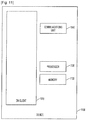
- a structure of a device including a DM Client according to an exemplary embodiment of the present invention will be described below with reference to FIG. 11 .
- FIG. 11 is a block diagram of a device including a DM Client according to an exemplary embodiment of the present invention.
- the device 1100 includes a DM Client 1110, a processor 1120, a memory 1130, and a communications unit 1140.
- the device 1100 may include any number of additional structural elements. However, a description of additional structural elements of device 1100 is omitted for conciseness.
- the DM Client 1110 may be implemented as code that is executed by the processor 1120 or may be implemented as hardware.
- code may be used herein to represent one or more of executable instructions, operand data, configuration parameters, and other information stored in memory 1130 of the device 1100.
- the operations of the DM Client 1110 include any of the operations explicitly or implicitly described above as being performed by a DM Client.
- the processor 1120 is used to process general operations of the device 1100 and may be used to execute the code of the DM Client 1110.
- the memory 1130 may store the code of the DM Client 1110 in addition to one or more of executable instructions, operand data, configuration parameters, and other information stored of the device 1100. Depending on the exact configuration and type of device, memory 1130 may be volatile (such as Random Access Memory (RAM)), non-volatile (such as Read Only Memory (ROM), flash memory, etc.) or some combination of thereof.
- RAM Random Access Memory
- ROM Read Only Memory
- the communications unit 1140 sends and receives data between the DM Client 1110 and other entities, such as a DM Gateway, DM server, etc.
- the communications unit 1140 may includes any number of transceivers, receivers, and transmitters of any number of types, such as wired, wireless, etc.
- a structure of a DM Gateway device according to an exemplary embodiment of the present invention will be described below with reference to FIG. 12 .
- FIG. 12 is a block diagram of a DM Gateway according to an exemplary embodiment of the present invention.
- the DM Gateway 1202 includes a processor 1204, a memory 1206, and a communications unit 1208.
- the DM Gateway 1202 may include any number of additional structural elements. However, a description of additional structural elements of the DM Gateway 1202 is omitted for conciseness.
- the processor 1204 is used to process general operations of the DM Gateway 1202 and may be used to execute code to perform any of the functions/operations/algorithms/roles explicitly or implicitly described herein as being performed by a DM Gateway. Further, the processor 1204 may communicate with and/or control the memory 1206 and/or the communications unit 1208.
- code may be used herein to represent one or more of executable instructions, operand data, configuration parameters, and other information stored in memory 1206.
- the memory 1206 may store code that is processed by the processor 1204 to execute any of the functions/operations/algorithms/roles explicitly or implicitly described herein as being performed by a DM Gateway. In addition, one or more of other executable instructions, operand data, configuration parameters, and other information may be stored in the memory 1206. Depending on the exact configuration of the DM Gateway 1202, memory 1206 may be volatile (such as Random Access Memory (RAM)), non-volatile (such as Read Only Memory (ROM), flash memory, etc.) or some combination thereof.
- RAM Random Access Memory
- ROM Read Only Memory
- the communications unit 1208 transmits and receives data between one or more of a device, a DM Server and other entities.
- the communications unit 1208 may includes any number of transceivers, receivers, and transmitters of any number of types, such as wired, wireless, etc.
- a structure of a DM Server device may be substantially the same as the structure of a DM Gateway described above with reference to FIG. 12 . Accordingly, a description thereof is omitted for conciseness.
- Certain aspects of the present invention may also be embodied as computer readable code on a computer readable recording medium.
- a computer readable recording medium is any data storage device that can store data, which can be thereafter read by a computer system. Examples of the computer readable recording medium include ROM, RAM, Compact Disc (CD)-ROMs, magnetic tapes, floppy disks, optical data storage devices, and carrier waves (such as data transmission through the Internet).
- the computer readable recording medium can also be distributed over network coupled computer systems so that the computer readable code is stored and executed in a distributed fashion. Also, functional programs, code, and code segments for accomplishing the present invention can be easily construed by programmers skilled in the art to which the present invention pertains.
Landscapes
- Engineering & Computer Science (AREA)
- Computer Networks & Wireless Communication (AREA)
- Signal Processing (AREA)
- Health & Medical Sciences (AREA)
- Computing Systems (AREA)
- General Health & Medical Sciences (AREA)
- Medical Informatics (AREA)
- Data Exchanges In Wide-Area Networks (AREA)
- Information Transfer Between Computers (AREA)
- Computer And Data Communications (AREA)
Claims (10)
- Verfahren zur Verarbeitung einer Nachricht, die von einem DM-Server empfangen wird, an einem Device-Management(DM)-Gateway, wobei das Verfahren Folgendes umfasst:Empfangen einer Nachricht für eine Zielvorrichtung, die mit dem DM-Gateway assoziiert ist, von einem DM-Server (Betriebe 1000, 1002, 1006);Bestimmen, ob für das DM-Gateway ein Bootstrapping zu dem DM-Server, der die Nachricht sendete, ausgeführt wird (Betrieb 1010);wenn bestimmt wird, dass für das DM-Gateway kein Bootstrapping zu dem DM-Server, der die Nachricht sendete, ausgeführt wird; Bestimmen, ob das DM-Gateway die Nachricht an die Zielvorrichtung weiterleiten soll, obwohl für das DM-Gateway kein Bootstrapping zu dem DM-Server, der die Nachricht sendete, ausgeführt wird (Betriebe 1014, 1016, 1018, 1020); undwenn bestimmt wird, dass das DM-Gateway die Nachricht an die Zielvorrichtung weiterleiten soll, obwohl für das DM-Gateway kein Bootstrapping zu dem DM-Server, der die Nachricht sendete, ausgeführt wird, Weiterleiten der Nachricht an die Zielvorrichtung (Betrieb 1012),wobei das Bestimmen, dass das DM-Gateway die Nachricht an die Zielvorrichtung weiterleiten soll, obwohl für das DM-Gateway kein Bootstrapping zu dem DM-Server, der die Nachricht sendete, ausgeführt wird, Folgendes umfasst: Bestimmen, dass ein LAN-Vorrichtungsinventar-MO-Eintrag für die Zielvorrichtung den DM-Server, der die Nachricht sendete, in einer Liste von Servern, für die Bootstrapping ausgeführt wird, für die Zielvorrichtung einschließt (Operationen 1014, 1016).
- Verfahren nach Anspruch 1, wobei das Bestimmen, dass das DM-Gateway die Nachricht an die Zielvorrichtung weiterleiten soll, obwohl für das DM-Gateway kein Bootstrapping zu dem DM-Server, der die Nachricht sendete, ausgeführt wird, ferner Folgendes umfasst:wenn bestimmt wird, dass der DM-Server, der die Nachricht sendete, in einer Liste von Servern, für die Bootstrapping ausgeführt wird, für die Zielvorrichtung eingeschlossen ist, Bestimmen, ob der DM-Server, der die Nachricht sendete, in einer Ausschlussliste des DM-Gateways eingeschlossen ist (Betrieb 1018); undwenn bestimmt wird, dass der DM-Server, der die Nachricht sendete, nicht in der Ausschlussliste eingeschlossen ist,Weiterleiten der Nachricht an die Zielvorrichtung (Betrieb 1020).
- Verfahren nach Anspruch 1, wobei Informationen für Vorrichtungen auf einem LAN, das mit dem DM-Gateway assoziiert ist, in dem LAN-Vorrichtungsinventar-MO gespeichert sind.
- Verfahren nach Anspruch 3, wobei die Liste von Servern, für die Bootstrapping ausgeführt wird, die Server-IDs der DM-Server umfasst, mit denen Bootstrapping für die Zielvorrichtung ausgeführt wird.
- Verfahren nach Anspruch 4, wobei die DM-Server-IDs aller DM-Server, mit denen Bootstrapping für die Zielvorrichtung ausgeführt wird, in einer generischen Warnnachricht empfangen werden, die von der Zielvorrichtung gesendet wird, und wobei das DM-Gateway den entsprechenden Eintrag für die Zielvorrichtung in dem LAN-Vorrichtungsinventar-MO nach Empfangen der generischen Warnnachricht aktualisiert.
- Device-Management(DM)-Gateway-Vorrichtung (1202), umfassend:eine Kommunikationseinheit (1208); undeinen Prozessor (1204), der für Folgendes konfiguriert ist:
nach Empfangen einer Nachricht für eine Zielvorrichtung (1100), die mit der DM-Gateway-Vorrichtung (1202) assoziiert ist, von einem DM-Server, Bestimmen, ob für die DM-Gateway-Vorrichtung (1202) Bootstrapping zu dem DM-Server, der die Nachricht sendete, ausgeführt wird; wenn bestimmt wird, dass für die DM-Gateway-Vorrichtung (1202) kein Bootstrapping zu dem DM-Server, der die Nachricht sendete, ausgeführt wird; Bestimmen, ob die DM-Gateway-Vorrichtung (1202) die Nachricht an die Zielvorrichtung (1100) weiterleiten soll, obwohl für die DM-Gateway-Vorrichtung (1202) kein Bootstrapping zu dem DM-Server, der die Nachricht sendete, ausgeführt wird; und wenn bestimmt wird, dass die DM-Gateway-Vorrichtung (1202) die Nachricht an die Zielvorrichtung (1100) weiterleiten soll, obwohl für die DM-Gateway-Vorrichtung (1202) kein Bootstrapping zu dem DM-Server, der die Nachricht sendete, ausgeführt wird, Weiterleiten der Nachricht an die Zielvorrichtung (1100), wobei das Bestimmen, dass die DM-Gateway-Vorrichtung (1202) die Nachricht an die Zielvorrichtung (1100) weiterleiten sollte, obwohl für die DM-Gateway-Vorrichtung (1200) kein Bootstrapping zu dem DM-Server, der die Nachricht sendete, ausgeführt wird, Folgendes umfasst: Bestimmen, dass der LAN-Vorrichtungsinventar-MO-Eintrag für die Zielvorrichtung (1100) den DM-Server, der die Nachricht sendete, in einer Liste von Servern, für die Bootstrapping ausgeführt wird, für die Zielvorrichtung (1100) einschließt. - DM-Gateway-Vorrichtung nach Anspruch 6, wobei das Bestimmen durch den Prozessor, dass die DM-Gateway-Vorrichtung (1202) die Nachricht an die Zielvorrichtung (1100) weiterleiten soll, obwohl für die DM-Gateway-Vorrichtung (1202) kein Bootstrapping zu dem DM-Server, der die Nachricht sendete, ausgeführt wird, ferner Folgendes umfasst: wenn bestimmt wird, dass der DM-Server, der die Nachricht sendete, in einer Liste von Servern, für die Bootstrapping ausgeführt wird, für die Zielvorrichtung (1100) eingeschlossen ist, Bestimmen, ob der DM-Server, der die Nachricht sendete, in einer Ausschlussliste der DM-Gateway-Vorrichtung (1202) eingeschlossen ist; und wenn bestimmt wird, dass der DM-Server, der die Nachricht sendete, nicht in der Ausschlussliste eingeschlossen ist, weiterleiten der Nachricht an die Zielvorrichtung (1100).
- DM-Gateway-Vorrichtung (1202) nach Anspruch 6, wobei Informationen für Vorrichtungen auf einem LAN, das mit der DM-Gateway-Vorrichtung (1202) assoziiert ist, in dem LAN-Vorrichtungsinventar-MO gespeichert sind.
- DM-Gateway-Vorrichtung (1202) nach Anspruch 8, wobei die Liste von Servern, für die Bootstrapping ausgeführt wird, die Server-IDs der DM-Server umfasst, mit denen Bootstrapping für die Zielvorrichtung (1100) ausgeführt wird.
- Gateway-Vorrichtung (1202) nach Anspruch 9, wobei der Prozessor ferner konfiguriert ist, um die DM-Server-IDs aller DM-Server, mit denen Bootstrapping für die Zielvorrichtung (1100) ausgeführt wird, in einer generischen Warnnachricht zu empfangen, die von der Zielvorrichtung (1100) gesendet wird, und wobei der Prozessor ferner konfiguriert ist, um den entsprechenden Eintrag für die Zielvorrichtung (1100) in dem LAN-Vorrichtungsinventar-MO nach Empfangen der generischen Warnnachricht zu aktualisieren.
Applications Claiming Priority (4)
| Application Number | Priority Date | Filing Date | Title |
|---|---|---|---|
| US31861010P | 2010-03-29 | 2010-03-29 | |
| US36998210P | 2010-08-02 | 2010-08-02 | |
| US13/053,076 US10051074B2 (en) | 2010-03-29 | 2011-03-21 | Techniques for managing devices not directly accessible to device management server |
| PCT/KR2011/002117 WO2011122816A2 (en) | 2010-03-29 | 2011-03-28 | Techniques for managing devices not directly accessible to device management server |
Publications (3)
| Publication Number | Publication Date |
|---|---|
| EP2553875A2 EP2553875A2 (de) | 2013-02-06 |
| EP2553875A4 EP2553875A4 (de) | 2017-10-25 |
| EP2553875B1 true EP2553875B1 (de) | 2020-04-29 |
Family
ID=44657604
Family Applications (1)
| Application Number | Title | Priority Date | Filing Date |
|---|---|---|---|
| EP11762988.1A Active EP2553875B1 (de) | 2010-03-29 | 2011-03-28 | Verfahren zur verwaltung von über einen geräteverwaltungsserver nicht zugänglichen geräten |
Country Status (6)
| Country | Link |
|---|---|
| US (1) | US10051074B2 (de) |
| EP (1) | EP2553875B1 (de) |
| JP (1) | JP5476616B2 (de) |
| KR (1) | KR101872039B1 (de) |
| CN (1) | CN102918803B (de) |
| WO (1) | WO2011122816A2 (de) |
Families Citing this family (15)
| Publication number | Priority date | Publication date | Assignee | Title |
|---|---|---|---|---|
| CN101437071B (zh) * | 2007-11-15 | 2011-09-28 | 华为技术有限公司 | 终端设备管理树管理对象实例化的方法及设备 |
| CN101854343B (zh) * | 2009-04-01 | 2014-07-09 | 华为终端有限公司 | 提供节点信息的方法、获取节点信息的方法及设备 |
| CN102142980B (zh) * | 2010-10-27 | 2014-05-07 | 华为技术有限公司 | 远程管理传感网络拓扑的方法及网关 |
| CN102724050A (zh) * | 2011-03-30 | 2012-10-10 | 华为终端有限公司 | 设备管理系统中对网关进行初始化的方法及装置 |
| CN102843251B (zh) * | 2011-06-22 | 2016-03-30 | 华为终端有限公司 | 管理终端的方法和装置 |
| US20150149606A1 (en) * | 2012-05-15 | 2015-05-28 | Telefonaktiebolaget L M Ericsson (Publ) | Managed object manipulation |
| JP5873782B2 (ja) * | 2012-09-19 | 2016-03-01 | 株式会社日立ソリューションズ | 端末管理装置、端末管理システム |
| KR102015806B1 (ko) * | 2012-10-22 | 2019-08-29 | 삼성전자 주식회사 | 전자장치, 네트워크 시스템 및 프라이비트 네트워크를 구축하는 방법 |
| CN105306233B (zh) * | 2014-06-19 | 2021-01-22 | 中兴通讯股份有限公司 | 终端管理方法及系统、服务器、终端 |
| US9602346B1 (en) * | 2014-12-11 | 2017-03-21 | Sprint Communications Company L.P. | Configuration data handling in wireless communication devices |
| WO2017027278A1 (en) * | 2015-08-11 | 2017-02-16 | Honeywell International Inc. | Frameworks and methodologies configured to provide access to building devices via domain concept abstraction |
| US9749860B2 (en) * | 2015-09-11 | 2017-08-29 | Lenovo Enterprise Solutions (Singapore) Pte, Ltd. | Peer-to-peer wireless connection between server computing device and mobile client computing device for authentication and server management |
| CN107547763A (zh) * | 2017-08-02 | 2018-01-05 | 上海与德科技有限公司 | 一种信息提示方法及移动终端 |
| US10833926B2 (en) * | 2017-11-17 | 2020-11-10 | T-Mobile Usa, Inc. | Touchless secure bootstrapping of IoT devices |
| CN111182374B (zh) * | 2019-12-31 | 2022-03-01 | 杭州迪普科技股份有限公司 | 一种健康检测报文发送方法及一种dpx设备 |
Family Cites Families (75)
| Publication number | Priority date | Publication date | Assignee | Title |
|---|---|---|---|---|
| US6151688A (en) * | 1997-02-21 | 2000-11-21 | Novell, Inc. | Resource management in a clustered computer system |
| US6993657B1 (en) * | 2000-09-08 | 2006-01-31 | Oracle International Corporation | Techniques for managing database systems with a community server |
| JP2002207671A (ja) * | 2001-01-05 | 2002-07-26 | Nec Saitama Ltd | 携帯電話機及び電子メール文章送信/再生方法 |
| WO2002057917A2 (en) * | 2001-01-22 | 2002-07-25 | Sun Microsystems, Inc. | Peer-to-peer network computing platform |
| CN1270480C (zh) * | 2001-12-03 | 2006-08-16 | 诺基亚有限公司 | 用于检索移动节点逻辑树信息的设备和相关方法 |
| WO2003075125A2 (en) * | 2002-03-01 | 2003-09-12 | Enterasys Networks, Inc. | Location aware data network |
| US7388869B2 (en) * | 2002-11-19 | 2008-06-17 | Hughes Network Systems, Llc | System and method for routing among private addressing domains |
| US7974613B1 (en) * | 2003-06-16 | 2011-07-05 | Hewlett-Packard Development Company, L.P. | Device capability determination for a mobile device |
| US8694620B2 (en) * | 2003-09-08 | 2014-04-08 | Microsoft Corporation | System and method for an OMA DM extension to manage mobile device configuration settings |
| US20050078708A1 (en) * | 2003-10-14 | 2005-04-14 | International Business Machines Corporation | Formatting packet headers in a communications adapter |
| US20050105524A1 (en) * | 2003-11-17 | 2005-05-19 | Hughes Electronics Corporation | System and method for provisioning of route information in a meshed communications network |
| US7533407B2 (en) * | 2003-12-16 | 2009-05-12 | Microsoft Corporation | System and methods for providing network quarantine |
| KR20060111610A (ko) * | 2003-12-22 | 2006-10-27 | 코닌클리케 필립스 일렉트로닉스 엔.브이. | 시청자의 기분을 모니터링하기 위한 콘텐츠-처리 시스템,방법 및 컴퓨터 프로그램 제품 |
| US9323515B1 (en) * | 2004-01-16 | 2016-04-26 | Qualcomm Incorporated | Network with broker for device management |
| KR101065307B1 (ko) * | 2004-01-19 | 2011-09-16 | 삼성에스디아이 주식회사 | 리튬이차전지용 캐소드 활물질 및 이를 이용한 리튬이차전지 |
| US7664836B2 (en) * | 2004-02-17 | 2010-02-16 | Zhe Khi Pak | Device and method for booting an operation system for a computer from a passive directly attached network device |
| SE528373C2 (sv) * | 2004-08-25 | 2006-10-31 | Smarttrust Ab | Förfarande och system för apparathantering |
| US8095601B2 (en) * | 2004-10-22 | 2012-01-10 | Microsoft Corporation | Inter-proximity communication within a rendezvous federation |
| KR100692524B1 (ko) | 2004-12-21 | 2007-03-09 | 한국전자통신연구원 | 디지털 홈서비스 통합 제공을 위한 홈게이트웨이 관리장치 및 방법 |
| US20060203722A1 (en) * | 2005-03-14 | 2006-09-14 | Nokia Corporation | System and method for managing performance of mobile terminals via remote diagnostics |
| US20060218628A1 (en) * | 2005-03-22 | 2006-09-28 | Hinton Heather M | Method and system for enhanced federated single logout |
| US7631346B2 (en) * | 2005-04-01 | 2009-12-08 | International Business Machines Corporation | Method and system for a runtime user account creation operation within a single-sign-on process in a federated computing environment |
| US7720784B1 (en) * | 2005-08-30 | 2010-05-18 | Walt Froloff | Emotive intelligence applied in electronic devices and internet using emotion displacement quantification in pain and pleasure space |
| US20070093243A1 (en) * | 2005-10-25 | 2007-04-26 | Vivek Kapadekar | Device management system |
| CN100407656C (zh) * | 2005-12-09 | 2008-07-30 | 华为技术有限公司 | 对终端设备进行管理的方法和系统 |
| US20070149243A1 (en) * | 2005-12-28 | 2007-06-28 | Kuen-Yih Hwang | System and method for routing special number calls from a dual-mode wireless communications device operating in the unlicensed mode |
| US8194642B2 (en) * | 2006-02-07 | 2012-06-05 | Cisco Technology, Inc. | System and method for providing multimedia services |
| US7707286B2 (en) * | 2006-05-11 | 2010-04-27 | Sonim Technologies, Inc. | Methods for managing presence information in a real-time communications network |
| KR100833335B1 (ko) | 2006-05-26 | 2008-05-29 | 휴미트 주식회사 | Oma 마스터 장치 관리 클라이언트를 이용한 장치 관리시스템 및 그 방법 |
| US20070280256A1 (en) * | 2006-06-01 | 2007-12-06 | Jan Forslow | Systems and methods for providing a heartbeat in a communications network |
| EP2025095A2 (de) * | 2006-06-08 | 2009-02-18 | Hewlett-Packard Development Company, L.P. | Geräteverwaltung in einem netzwerk |
| US20080021866A1 (en) * | 2006-07-20 | 2008-01-24 | Heather M Hinton | Method and system for implementing a floating identity provider model across data centers |
| CN101114933A (zh) * | 2006-07-26 | 2008-01-30 | 华为技术有限公司 | 对能力管理对象维护、对能力管理的方法、系统及终端 |
| WO2008022195A1 (en) * | 2006-08-15 | 2008-02-21 | Hewlett-Packard Development Company, L.P. | Device management system for mobile devices that supports multiple-point transport |
| US8977968B2 (en) * | 2006-08-29 | 2015-03-10 | Samsung Electronics Co., Ltd. | Pseudo-remote terminal IOTA mobile diagnostics and electronic customer care |
| WO2008028072A2 (en) * | 2006-08-30 | 2008-03-06 | Hewlett-Packard Development Company, L.P. | Electronic device management |
| US20080065746A1 (en) * | 2006-09-07 | 2008-03-13 | Ace*Comm Corporation | Consumer configurable mobile communication web filtering solution |
| US20080133767A1 (en) * | 2006-11-22 | 2008-06-05 | Metis Enterprise Technologies Llc | Real-time multicast peer-to-peer video streaming platform |
| CN101543016A (zh) * | 2006-11-29 | 2009-09-23 | 惠普开发有限公司 | 网络中的设备管理操作的基于ip的通知 |
| EP1936929A1 (de) * | 2006-12-21 | 2008-06-25 | Samsung Electronics Co., Ltd | Haptisches Erzeugungsverfahren und System für Mobiltelefon |
| GB0702771D0 (en) * | 2007-02-13 | 2007-03-21 | Sepura Ltd | Communications systems |
| US7886139B2 (en) | 2007-02-23 | 2011-02-08 | International Business Machines Corporation | Method to enable firmware to boot a system from an ISCSI device |
| US7689679B2 (en) * | 2007-02-23 | 2010-03-30 | International Business Machines Corporation | Method to enable infiniband network bootstrap |
| US9615352B2 (en) * | 2007-04-06 | 2017-04-04 | Sonim Technologies, Inc. | Media transmission before floor grant in real time communication network |
| EP1995909A1 (de) * | 2007-05-25 | 2008-11-26 | France Telecom | Dynamisches Bewertungsverfahren der Stimmung eines Benutzers von Instant-Messaging |
| CN102006333B (zh) * | 2007-06-11 | 2012-12-26 | 华为技术有限公司 | 安装软件组件的方法、系统及装置 |
| US20090016617A1 (en) * | 2007-07-13 | 2009-01-15 | Samsung Electronics Co., Ltd. | Sender dependent messaging viewer |
| CN101360121B (zh) * | 2007-07-31 | 2012-08-29 | 华为技术有限公司 | 设备管理中权限控制的方法、系统及终端 |
| CN101365148A (zh) | 2007-08-09 | 2009-02-11 | 华为技术有限公司 | 呼叫接入控制方法、系统和设备 |
| US20090055484A1 (en) * | 2007-08-20 | 2009-02-26 | Thanh Vuong | System and method for representation of electronic mail users using avatars |
| US8769129B2 (en) * | 2007-11-14 | 2014-07-01 | Juniper Networks, Inc. | Server initiated secure network connection |
| CN101437071B (zh) * | 2007-11-15 | 2011-09-28 | 华为技术有限公司 | 终端设备管理树管理对象实例化的方法及设备 |
| CN102546760B (zh) * | 2008-02-04 | 2015-11-25 | 华为技术有限公司 | 设备管理的方法和终端、装置、系统 |
| US8401022B2 (en) * | 2008-02-08 | 2013-03-19 | Oracle International Corporation | Pragmatic approaches to IMS |
| US20090270092A1 (en) * | 2008-04-28 | 2009-10-29 | Research In Motion Limited | Method for Assisting a Wireless Device to Find Closed Subscriber Group Cells |
| EP2321736A4 (de) * | 2008-08-08 | 2014-09-10 | Innopath Software Inc | Intelligenter mobileinrichtungsverwaltungs-client |
| WO2010068882A2 (en) * | 2008-12-11 | 2010-06-17 | Nortel Networks Limited | Automated text-based messaging interaction using natural language understanding technologies |
| CN101442566B (zh) | 2009-01-08 | 2012-07-11 | 中国电信股份有限公司 | 实现动态域名更新的方法和设备 |
| US8448245B2 (en) * | 2009-01-17 | 2013-05-21 | Stopthehacker.com, Jaal LLC | Automated identification of phishing, phony and malicious web sites |
| WO2010101442A2 (ko) * | 2009-03-06 | 2010-09-10 | 삼성전자주식회사 | 이동 중계국을 지원하는 광대역 무선통신 시스템의 그룹 핸드오버 방법 및 장치 |
| US8285797B2 (en) * | 2009-07-24 | 2012-10-09 | Samsung Electronics Co., Ltd. | Technique for controlling device management response messages |
| US8300578B2 (en) * | 2009-08-04 | 2012-10-30 | Sony Corporation | System, apparatus and method for seamless roaming through the use of routing update messages |
| US8509096B2 (en) * | 2009-08-06 | 2013-08-13 | Intel Corporation | Method and apparatus for activating a wireless communication device |
| US20110047253A1 (en) * | 2009-08-19 | 2011-02-24 | Samsung Electronics Co. Ltd. | Techniques for controlling gateway functionality to support device management in a communication system |
| US20120239936A1 (en) * | 2009-12-18 | 2012-09-20 | Nokia Corporation | Credential transfer |
| US8990413B2 (en) * | 2010-02-05 | 2015-03-24 | Oracle International Corporation | Service level cross network coordinated interaction |
| US9497225B2 (en) * | 2010-02-05 | 2016-11-15 | Oracle International Corporation | Service based consolidation of applications across networks |
| US8924544B2 (en) * | 2010-12-07 | 2014-12-30 | Samsung Electronics Co., Ltd. | Techniques for sessionless reporting by device management client |
| US9444887B2 (en) * | 2011-05-26 | 2016-09-13 | Qualcomm Incorporated | Multipath overlay network and its multipath management protocol |
| US20130151344A1 (en) * | 2011-12-08 | 2013-06-13 | First Data Corporation | System and method for storing and accessing electronic receipts |
| US20140088954A1 (en) * | 2012-09-27 | 2014-03-27 | Research In Motion Limited | Apparatus and method pertaining to automatically-suggested emoticons |
| KR102081229B1 (ko) * | 2013-06-24 | 2020-02-26 | 한국전자통신연구원 | 텍스트 입력에 따른 실시간 이미지 출력 장치 및 방법 |
| US9311467B2 (en) * | 2013-08-20 | 2016-04-12 | International Business Machines Corporation | Composite propensity profile detector |
| US9485206B2 (en) * | 2013-12-19 | 2016-11-01 | Websafety, Inc. | Devices and methods for improving web safety and deterrence of cyberbullying |
| US9509648B2 (en) * | 2014-04-11 | 2016-11-29 | International Business Machines Corporation | Associating sentiment with objects presented via social media |
-
2011
- 2011-03-21 US US13/053,076 patent/US10051074B2/en active Active
- 2011-03-28 EP EP11762988.1A patent/EP2553875B1/de active Active
- 2011-03-28 JP JP2013502463A patent/JP5476616B2/ja not_active Expired - Fee Related
- 2011-03-28 WO PCT/KR2011/002117 patent/WO2011122816A2/en not_active Ceased
- 2011-03-28 KR KR1020127028300A patent/KR101872039B1/ko not_active Expired - Fee Related
- 2011-03-28 CN CN201180026634.9A patent/CN102918803B/zh active Active
Non-Patent Citations (1)
| Title |
|---|
| None * |
Also Published As
| Publication number | Publication date |
|---|---|
| CN102918803B (zh) | 2016-08-03 |
| US20110238806A1 (en) | 2011-09-29 |
| WO2011122816A3 (en) | 2012-01-26 |
| CN102918803A (zh) | 2013-02-06 |
| JP2013527651A (ja) | 2013-06-27 |
| EP2553875A4 (de) | 2017-10-25 |
| KR20130076808A (ko) | 2013-07-08 |
| WO2011122816A2 (en) | 2011-10-06 |
| JP5476616B2 (ja) | 2014-04-23 |
| KR101872039B1 (ko) | 2018-07-31 |
| EP2553875A2 (de) | 2013-02-06 |
| US10051074B2 (en) | 2018-08-14 |
Similar Documents
| Publication | Publication Date | Title |
|---|---|---|
| EP2553875B1 (de) | Verfahren zur verwaltung von über einen geräteverwaltungsserver nicht zugänglichen geräten | |
| AU2010284774B2 (en) | Techniques for controlling gateway functionality to support Device Management in a communication system | |
| JP6908334B2 (ja) | モノのインターネット通信方法、モノのインターネット装置、及びモノのインターネットシステム | |
| US9615346B2 (en) | Method and apparatus for notifying information change in wireless communication system | |
| US8626921B2 (en) | Device and service management based on layer 2 through layer 7 device attributes | |
| EP2357860B1 (de) | Gerätemanagementserver, client und verfahren zur lokalisierung eines zieloperationsobjekts | |
| US20120317254A1 (en) | Network platform in a network device ecosystem | |
| US12316607B2 (en) | Methods and apparatus for operating and managing a constrained device within a network | |
| CN116743840A (zh) | 用于发现分层网络中的网络功能服务生产者的方法、系统和计算机可读介质 | |
| EP3163798B1 (de) | Verfahren zur verarbeitung von anfragenachrichten in einem drahtloskommunikationssystem und vorrichtung dafür | |
| KR102423812B1 (ko) | 안정적인 분산형 M2M/IoT 서비스들의 가능화 | |
| US8285797B2 (en) | Technique for controlling device management response messages | |
| JP5095831B6 (ja) | 機器管理の方法、端末、装置およびシステム | |
| JP5095831B2 (ja) | 機器管理の方法、端末、装置およびシステム | |
| EP3063964B1 (de) | Entdeckung und steuerung zwischen zwei geräten in einem weitbereichsnetzwerk |
Legal Events
| Date | Code | Title | Description |
|---|---|---|---|
| PUAI | Public reference made under article 153(3) epc to a published international application that has entered the european phase |
Free format text: ORIGINAL CODE: 0009012 |
|
| 17P | Request for examination filed |
Effective date: 20121029 |
|
| AK | Designated contracting states |
Kind code of ref document: A2 Designated state(s): AL AT BE BG CH CY CZ DE DK EE ES FI FR GB GR HR HU IE IS IT LI LT LU LV MC MK MT NL NO PL PT RO RS SE SI SK SM TR |
|
| DAX | Request for extension of the european patent (deleted) | ||
| RIN1 | Information on inventor provided before grant (corrected) |
Inventor name: NGUYEN, NHUT Inventor name: BHAT, KONG POSH |
|
| A4 | Supplementary search report drawn up and despatched |
Effective date: 20170927 |
|
| RIC1 | Information provided on ipc code assigned before grant |
Ipc: H04L 29/12 20060101ALN20170921BHEP Ipc: H04W 4/00 20090101ALI20170921BHEP Ipc: H04L 29/08 20060101ALI20170921BHEP Ipc: H04W 24/04 20090101AFI20170921BHEP Ipc: H04L 12/24 20060101ALN20170921BHEP |
|
| REG | Reference to a national code |
Ref country code: DE Ref legal event code: R079 Ref document number: 602011066534 Country of ref document: DE Free format text: PREVIOUS MAIN CLASS: H04L0012240000 Ipc: H04W0024040000 |
|
| RIC1 | Information provided on ipc code assigned before grant |
Ipc: H04L 12/24 20060101ALN20190930BHEP Ipc: H04W 4/00 20180101ALI20190930BHEP Ipc: H04L 29/12 20060101ALN20190930BHEP Ipc: H04W 4/50 20180101ALI20190930BHEP Ipc: H04L 29/08 20060101ALI20190930BHEP Ipc: H04W 24/04 20090101AFI20190930BHEP |
|
| GRAP | Despatch of communication of intention to grant a patent |
Free format text: ORIGINAL CODE: EPIDOSNIGR1 |
|
| STAA | Information on the status of an ep patent application or granted ep patent |
Free format text: STATUS: GRANT OF PATENT IS INTENDED |
|
| RIC1 | Information provided on ipc code assigned before grant |
Ipc: H04L 29/12 20060101ALN20191021BHEP Ipc: H04W 4/00 20180101ALI20191021BHEP Ipc: H04L 29/08 20060101ALI20191021BHEP Ipc: H04L 12/24 20060101ALN20191021BHEP Ipc: H04W 4/50 20180101ALI20191021BHEP Ipc: H04W 24/04 20090101AFI20191021BHEP |
|
| INTG | Intention to grant announced |
Effective date: 20191113 |
|
| GRAS | Grant fee paid |
Free format text: ORIGINAL CODE: EPIDOSNIGR3 |
|
| GRAA | (expected) grant |
Free format text: ORIGINAL CODE: 0009210 |
|
| STAA | Information on the status of an ep patent application or granted ep patent |
Free format text: STATUS: THE PATENT HAS BEEN GRANTED |
|
| AK | Designated contracting states |
Kind code of ref document: B1 Designated state(s): AL AT BE BG CH CY CZ DE DK EE ES FI FR GB GR HR HU IE IS IT LI LT LU LV MC MK MT NL NO PL PT RO RS SE SI SK SM TR |
|
| REG | Reference to a national code |
Ref country code: GB Ref legal event code: FG4D |
|
| REG | Reference to a national code |
Ref country code: CH Ref legal event code: EP |
|
| REG | Reference to a national code |
Ref country code: DE Ref legal event code: R096 Ref document number: 602011066534 Country of ref document: DE |
|
| REG | Reference to a national code |
Ref country code: AT Ref legal event code: REF Ref document number: 1265170 Country of ref document: AT Kind code of ref document: T Effective date: 20200515 |
|
| REG | Reference to a national code |
Ref country code: IE Ref legal event code: FG4D |
|
| REG | Reference to a national code |
Ref country code: NL Ref legal event code: MP Effective date: 20200429 |
|
| REG | Reference to a national code |
Ref country code: LT Ref legal event code: MG4D |
|
| PG25 | Lapsed in a contracting state [announced via postgrant information from national office to epo] |
Ref country code: LT Free format text: LAPSE BECAUSE OF FAILURE TO SUBMIT A TRANSLATION OF THE DESCRIPTION OR TO PAY THE FEE WITHIN THE PRESCRIBED TIME-LIMIT Effective date: 20200429 Ref country code: FI Free format text: LAPSE BECAUSE OF FAILURE TO SUBMIT A TRANSLATION OF THE DESCRIPTION OR TO PAY THE FEE WITHIN THE PRESCRIBED TIME-LIMIT Effective date: 20200429 Ref country code: PT Free format text: LAPSE BECAUSE OF FAILURE TO SUBMIT A TRANSLATION OF THE DESCRIPTION OR TO PAY THE FEE WITHIN THE PRESCRIBED TIME-LIMIT Effective date: 20200831 Ref country code: NO Free format text: LAPSE BECAUSE OF FAILURE TO SUBMIT A TRANSLATION OF THE DESCRIPTION OR TO PAY THE FEE WITHIN THE PRESCRIBED TIME-LIMIT Effective date: 20200729 Ref country code: IS Free format text: LAPSE BECAUSE OF FAILURE TO SUBMIT A TRANSLATION OF THE DESCRIPTION OR TO PAY THE FEE WITHIN THE PRESCRIBED TIME-LIMIT Effective date: 20200829 Ref country code: SE Free format text: LAPSE BECAUSE OF FAILURE TO SUBMIT A TRANSLATION OF THE DESCRIPTION OR TO PAY THE FEE WITHIN THE PRESCRIBED TIME-LIMIT Effective date: 20200429 Ref country code: GR Free format text: LAPSE BECAUSE OF FAILURE TO SUBMIT A TRANSLATION OF THE DESCRIPTION OR TO PAY THE FEE WITHIN THE PRESCRIBED TIME-LIMIT Effective date: 20200730 |
|
| REG | Reference to a national code |
Ref country code: AT Ref legal event code: MK05 Ref document number: 1265170 Country of ref document: AT Kind code of ref document: T Effective date: 20200429 |
|
| PG25 | Lapsed in a contracting state [announced via postgrant information from national office to epo] |
Ref country code: LV Free format text: LAPSE BECAUSE OF FAILURE TO SUBMIT A TRANSLATION OF THE DESCRIPTION OR TO PAY THE FEE WITHIN THE PRESCRIBED TIME-LIMIT Effective date: 20200429 Ref country code: RS Free format text: LAPSE BECAUSE OF FAILURE TO SUBMIT A TRANSLATION OF THE DESCRIPTION OR TO PAY THE FEE WITHIN THE PRESCRIBED TIME-LIMIT Effective date: 20200429 Ref country code: HR Free format text: LAPSE BECAUSE OF FAILURE TO SUBMIT A TRANSLATION OF THE DESCRIPTION OR TO PAY THE FEE WITHIN THE PRESCRIBED TIME-LIMIT Effective date: 20200429 Ref country code: BG Free format text: LAPSE BECAUSE OF FAILURE TO SUBMIT A TRANSLATION OF THE DESCRIPTION OR TO PAY THE FEE WITHIN THE PRESCRIBED TIME-LIMIT Effective date: 20200729 |
|
| PG25 | Lapsed in a contracting state [announced via postgrant information from national office to epo] |
Ref country code: NL Free format text: LAPSE BECAUSE OF FAILURE TO SUBMIT A TRANSLATION OF THE DESCRIPTION OR TO PAY THE FEE WITHIN THE PRESCRIBED TIME-LIMIT Effective date: 20200429 Ref country code: AL Free format text: LAPSE BECAUSE OF FAILURE TO SUBMIT A TRANSLATION OF THE DESCRIPTION OR TO PAY THE FEE WITHIN THE PRESCRIBED TIME-LIMIT Effective date: 20200429 |
|
| PG25 | Lapsed in a contracting state [announced via postgrant information from national office to epo] |
Ref country code: IT Free format text: LAPSE BECAUSE OF FAILURE TO SUBMIT A TRANSLATION OF THE DESCRIPTION OR TO PAY THE FEE WITHIN THE PRESCRIBED TIME-LIMIT Effective date: 20200429 Ref country code: DK Free format text: LAPSE BECAUSE OF FAILURE TO SUBMIT A TRANSLATION OF THE DESCRIPTION OR TO PAY THE FEE WITHIN THE PRESCRIBED TIME-LIMIT Effective date: 20200429 Ref country code: AT Free format text: LAPSE BECAUSE OF FAILURE TO SUBMIT A TRANSLATION OF THE DESCRIPTION OR TO PAY THE FEE WITHIN THE PRESCRIBED TIME-LIMIT Effective date: 20200429 Ref country code: EE Free format text: LAPSE BECAUSE OF FAILURE TO SUBMIT A TRANSLATION OF THE DESCRIPTION OR TO PAY THE FEE WITHIN THE PRESCRIBED TIME-LIMIT Effective date: 20200429 Ref country code: SM Free format text: LAPSE BECAUSE OF FAILURE TO SUBMIT A TRANSLATION OF THE DESCRIPTION OR TO PAY THE FEE WITHIN THE PRESCRIBED TIME-LIMIT Effective date: 20200429 Ref country code: ES Free format text: LAPSE BECAUSE OF FAILURE TO SUBMIT A TRANSLATION OF THE DESCRIPTION OR TO PAY THE FEE WITHIN THE PRESCRIBED TIME-LIMIT Effective date: 20200429 Ref country code: RO Free format text: LAPSE BECAUSE OF FAILURE TO SUBMIT A TRANSLATION OF THE DESCRIPTION OR TO PAY THE FEE WITHIN THE PRESCRIBED TIME-LIMIT Effective date: 20200429 Ref country code: CZ Free format text: LAPSE BECAUSE OF FAILURE TO SUBMIT A TRANSLATION OF THE DESCRIPTION OR TO PAY THE FEE WITHIN THE PRESCRIBED TIME-LIMIT Effective date: 20200429 |
|
| REG | Reference to a national code |
Ref country code: DE Ref legal event code: R097 Ref document number: 602011066534 Country of ref document: DE |
|
| PG25 | Lapsed in a contracting state [announced via postgrant information from national office to epo] |
Ref country code: SK Free format text: LAPSE BECAUSE OF FAILURE TO SUBMIT A TRANSLATION OF THE DESCRIPTION OR TO PAY THE FEE WITHIN THE PRESCRIBED TIME-LIMIT Effective date: 20200429 Ref country code: PL Free format text: LAPSE BECAUSE OF FAILURE TO SUBMIT A TRANSLATION OF THE DESCRIPTION OR TO PAY THE FEE WITHIN THE PRESCRIBED TIME-LIMIT Effective date: 20200429 |
|
| PLBE | No opposition filed within time limit |
Free format text: ORIGINAL CODE: 0009261 |
|
| STAA | Information on the status of an ep patent application or granted ep patent |
Free format text: STATUS: NO OPPOSITION FILED WITHIN TIME LIMIT |
|
| 26N | No opposition filed |
Effective date: 20210201 |
|
| PG25 | Lapsed in a contracting state [announced via postgrant information from national office to epo] |
Ref country code: SI Free format text: LAPSE BECAUSE OF FAILURE TO SUBMIT A TRANSLATION OF THE DESCRIPTION OR TO PAY THE FEE WITHIN THE PRESCRIBED TIME-LIMIT Effective date: 20200429 |
|
| PG25 | Lapsed in a contracting state [announced via postgrant information from national office to epo] |
Ref country code: MC Free format text: LAPSE BECAUSE OF FAILURE TO SUBMIT A TRANSLATION OF THE DESCRIPTION OR TO PAY THE FEE WITHIN THE PRESCRIBED TIME-LIMIT Effective date: 20200429 |
|
| REG | Reference to a national code |
Ref country code: CH Ref legal event code: PL |
|
| REG | Reference to a national code |
Ref country code: BE Ref legal event code: MM Effective date: 20210331 |
|
| PG25 | Lapsed in a contracting state [announced via postgrant information from national office to epo] |
Ref country code: LI Free format text: LAPSE BECAUSE OF NON-PAYMENT OF DUE FEES Effective date: 20210331 Ref country code: LU Free format text: LAPSE BECAUSE OF NON-PAYMENT OF DUE FEES Effective date: 20210328 Ref country code: CH Free format text: LAPSE BECAUSE OF NON-PAYMENT OF DUE FEES Effective date: 20210331 Ref country code: IE Free format text: LAPSE BECAUSE OF NON-PAYMENT OF DUE FEES Effective date: 20210328 Ref country code: FR Free format text: LAPSE BECAUSE OF NON-PAYMENT OF DUE FEES Effective date: 20210331 |
|
| PGFP | Annual fee paid to national office [announced via postgrant information from national office to epo] |
Ref country code: GB Payment date: 20220221 Year of fee payment: 12 |
|
| PG25 | Lapsed in a contracting state [announced via postgrant information from national office to epo] |
Ref country code: BE Free format text: LAPSE BECAUSE OF NON-PAYMENT OF DUE FEES Effective date: 20210331 |
|
| PG25 | Lapsed in a contracting state [announced via postgrant information from national office to epo] |
Ref country code: HU Free format text: LAPSE BECAUSE OF FAILURE TO SUBMIT A TRANSLATION OF THE DESCRIPTION OR TO PAY THE FEE WITHIN THE PRESCRIBED TIME-LIMIT; INVALID AB INITIO Effective date: 20110328 Ref country code: CY Free format text: LAPSE BECAUSE OF FAILURE TO SUBMIT A TRANSLATION OF THE DESCRIPTION OR TO PAY THE FEE WITHIN THE PRESCRIBED TIME-LIMIT Effective date: 20200429 |
|
| GBPC | Gb: european patent ceased through non-payment of renewal fee |
Effective date: 20230328 |
|
| PG25 | Lapsed in a contracting state [announced via postgrant information from national office to epo] |
Ref country code: GB Free format text: LAPSE BECAUSE OF NON-PAYMENT OF DUE FEES Effective date: 20230328 |
|
| PG25 | Lapsed in a contracting state [announced via postgrant information from national office to epo] |
Ref country code: GB Free format text: LAPSE BECAUSE OF NON-PAYMENT OF DUE FEES Effective date: 20230328 |
|
| PG25 | Lapsed in a contracting state [announced via postgrant information from national office to epo] |
Ref country code: MK Free format text: LAPSE BECAUSE OF FAILURE TO SUBMIT A TRANSLATION OF THE DESCRIPTION OR TO PAY THE FEE WITHIN THE PRESCRIBED TIME-LIMIT Effective date: 20200429 |
|
| PG25 | Lapsed in a contracting state [announced via postgrant information from national office to epo] |
Ref country code: TR Free format text: LAPSE BECAUSE OF FAILURE TO SUBMIT A TRANSLATION OF THE DESCRIPTION OR TO PAY THE FEE WITHIN THE PRESCRIBED TIME-LIMIT Effective date: 20200429 |
|
| PG25 | Lapsed in a contracting state [announced via postgrant information from national office to epo] |
Ref country code: MT Free format text: LAPSE BECAUSE OF FAILURE TO SUBMIT A TRANSLATION OF THE DESCRIPTION OR TO PAY THE FEE WITHIN THE PRESCRIBED TIME-LIMIT Effective date: 20200429 |
|
| PGFP | Annual fee paid to national office [announced via postgrant information from national office to epo] |
Ref country code: DE Payment date: 20250220 Year of fee payment: 15 |