EP2542702B1 - Verfahren zur vorhersage der fortbewegungsmuster von pferden - Google Patents
Verfahren zur vorhersage der fortbewegungsmuster von pferden Download PDFInfo
- Publication number
- EP2542702B1 EP2542702B1 EP12747875.8A EP12747875A EP2542702B1 EP 2542702 B1 EP2542702 B1 EP 2542702B1 EP 12747875 A EP12747875 A EP 12747875A EP 2542702 B1 EP2542702 B1 EP 2542702B1
- Authority
- EP
- European Patent Office
- Prior art keywords
- nucleotide
- seq
- horse
- position corresponding
- dna
- Prior art date
- Legal status (The legal status is an assumption and is not a legal conclusion. Google has not performed a legal analysis and makes no representation as to the accuracy of the status listed.)
- Active
Links
Images




Classifications
-
- C—CHEMISTRY; METALLURGY
- C12—BIOCHEMISTRY; BEER; SPIRITS; WINE; VINEGAR; MICROBIOLOGY; ENZYMOLOGY; MUTATION OR GENETIC ENGINEERING
- C12Q—MEASURING OR TESTING PROCESSES INVOLVING ENZYMES, NUCLEIC ACIDS OR MICROORGANISMS; COMPOSITIONS OR TEST PAPERS THEREFOR; PROCESSES OF PREPARING SUCH COMPOSITIONS; CONDITION-RESPONSIVE CONTROL IN MICROBIOLOGICAL OR ENZYMOLOGICAL PROCESSES
- C12Q1/00—Measuring or testing processes involving enzymes, nucleic acids or microorganisms; Compositions therefor; Processes of preparing such compositions
- C12Q1/68—Measuring or testing processes involving enzymes, nucleic acids or microorganisms; Compositions therefor; Processes of preparing such compositions involving nucleic acids
- C12Q1/6876—Nucleic acid products used in the analysis of nucleic acids, e.g. primers or probes
- C12Q1/6883—Nucleic acid products used in the analysis of nucleic acids, e.g. primers or probes for diseases caused by alterations of genetic material
-
- A—HUMAN NECESSITIES
- A01—AGRICULTURE; FORESTRY; ANIMAL HUSBANDRY; HUNTING; TRAPPING; FISHING
- A01K—ANIMAL HUSBANDRY; AVICULTURE; APICULTURE; PISCICULTURE; FISHING; REARING OR BREEDING ANIMALS, NOT OTHERWISE PROVIDED FOR; NEW BREEDS OF ANIMALS
- A01K29/00—Other apparatus for animal husbandry
-
- C—CHEMISTRY; METALLURGY
- C12—BIOCHEMISTRY; BEER; SPIRITS; WINE; VINEGAR; MICROBIOLOGY; ENZYMOLOGY; MUTATION OR GENETIC ENGINEERING
- C12Q—MEASURING OR TESTING PROCESSES INVOLVING ENZYMES, NUCLEIC ACIDS OR MICROORGANISMS; COMPOSITIONS OR TEST PAPERS THEREFOR; PROCESSES OF PREPARING SUCH COMPOSITIONS; CONDITION-RESPONSIVE CONTROL IN MICROBIOLOGICAL OR ENZYMOLOGICAL PROCESSES
- C12Q1/00—Measuring or testing processes involving enzymes, nucleic acids or microorganisms; Compositions therefor; Processes of preparing such compositions
- C12Q1/68—Measuring or testing processes involving enzymes, nucleic acids or microorganisms; Compositions therefor; Processes of preparing such compositions involving nucleic acids
- C12Q1/6876—Nucleic acid products used in the analysis of nucleic acids, e.g. primers or probes
-
- C—CHEMISTRY; METALLURGY
- C12—BIOCHEMISTRY; BEER; SPIRITS; WINE; VINEGAR; MICROBIOLOGY; ENZYMOLOGY; MUTATION OR GENETIC ENGINEERING
- C12Q—MEASURING OR TESTING PROCESSES INVOLVING ENZYMES, NUCLEIC ACIDS OR MICROORGANISMS; COMPOSITIONS OR TEST PAPERS THEREFOR; PROCESSES OF PREPARING SUCH COMPOSITIONS; CONDITION-RESPONSIVE CONTROL IN MICROBIOLOGICAL OR ENZYMOLOGICAL PROCESSES
- C12Q1/00—Measuring or testing processes involving enzymes, nucleic acids or microorganisms; Compositions therefor; Processes of preparing such compositions
- C12Q1/68—Measuring or testing processes involving enzymes, nucleic acids or microorganisms; Compositions therefor; Processes of preparing such compositions involving nucleic acids
- C12Q1/6876—Nucleic acid products used in the analysis of nucleic acids, e.g. primers or probes
- C12Q1/6881—Nucleic acid products used in the analysis of nucleic acids, e.g. primers or probes for tissue or cell typing, e.g. human leukocyte antigen [HLA] probes
-
- G—PHYSICS
- G01—MEASURING; TESTING
- G01N—INVESTIGATING OR ANALYSING MATERIALS BY DETERMINING THEIR CHEMICAL OR PHYSICAL PROPERTIES
- G01N33/00—Investigating or analysing materials by specific methods not covered by groups G01N1/00 - G01N31/00
- G01N33/48—Biological material, e.g. blood, urine; Haemocytometers
- G01N33/50—Chemical analysis of biological material, e.g. blood, urine; Testing involving biospecific ligand binding methods; Immunological testing
- G01N33/68—Chemical analysis of biological material, e.g. blood, urine; Testing involving biospecific ligand binding methods; Immunological testing involving proteins, peptides or amino acids
- G01N33/6872—Intracellular protein regulatory factors and their receptors, e.g. including ion channels
-
- G—PHYSICS
- G01—MEASURING; TESTING
- G01N—INVESTIGATING OR ANALYSING MATERIALS BY DETERMINING THEIR CHEMICAL OR PHYSICAL PROPERTIES
- G01N33/00—Investigating or analysing materials by specific methods not covered by groups G01N1/00 - G01N31/00
- G01N33/48—Biological material, e.g. blood, urine; Haemocytometers
- G01N33/50—Chemical analysis of biological material, e.g. blood, urine; Testing involving biospecific ligand binding methods; Immunological testing
- G01N33/68—Chemical analysis of biological material, e.g. blood, urine; Testing involving biospecific ligand binding methods; Immunological testing involving proteins, peptides or amino acids
- G01N33/6875—Nucleoproteins
-
- C—CHEMISTRY; METALLURGY
- C12—BIOCHEMISTRY; BEER; SPIRITS; WINE; VINEGAR; MICROBIOLOGY; ENZYMOLOGY; MUTATION OR GENETIC ENGINEERING
- C12Q—MEASURING OR TESTING PROCESSES INVOLVING ENZYMES, NUCLEIC ACIDS OR MICROORGANISMS; COMPOSITIONS OR TEST PAPERS THEREFOR; PROCESSES OF PREPARING SUCH COMPOSITIONS; CONDITION-RESPONSIVE CONTROL IN MICROBIOLOGICAL OR ENZYMOLOGICAL PROCESSES
- C12Q2600/00—Oligonucleotides characterized by their use
- C12Q2600/124—Animal traits, i.e. production traits, including athletic performance or the like
-
- C—CHEMISTRY; METALLURGY
- C12—BIOCHEMISTRY; BEER; SPIRITS; WINE; VINEGAR; MICROBIOLOGY; ENZYMOLOGY; MUTATION OR GENETIC ENGINEERING
- C12Q—MEASURING OR TESTING PROCESSES INVOLVING ENZYMES, NUCLEIC ACIDS OR MICROORGANISMS; COMPOSITIONS OR TEST PAPERS THEREFOR; PROCESSES OF PREPARING SUCH COMPOSITIONS; CONDITION-RESPONSIVE CONTROL IN MICROBIOLOGICAL OR ENZYMOLOGICAL PROCESSES
- C12Q2600/00—Oligonucleotides characterized by their use
- C12Q2600/156—Polymorphic or mutational markers
-
- G—PHYSICS
- G01—MEASURING; TESTING
- G01N—INVESTIGATING OR ANALYSING MATERIALS BY DETERMINING THEIR CHEMICAL OR PHYSICAL PROPERTIES
- G01N2333/00—Assays involving biological materials from specific organisms or of a specific nature
- G01N2333/435—Assays involving biological materials from specific organisms or of a specific nature from animals; from humans
- G01N2333/46—Assays involving biological materials from specific organisms or of a specific nature from animals; from humans from vertebrates
- G01N2333/47—Assays involving proteins of known structure or function as defined in the subgroups
- G01N2333/4701—Details
- G01N2333/4703—Regulators; Modulating activity
Definitions
- the present invention relates to methods for predicting the pattern of locomotion in horses including the ability of a horse to use different gaits and the ability to trot or pace at a fast speed.
- the methods comprise determining in a sample of DNA obtained from a horse the allele of at least one genetic marker, wherein said at least one genetic marker is located on horse chromosome 23, said marker being associated with the ability to use different gaits.
- Horses show a considerable variation in their pattern of locomotion both within and between breeds.
- the three basic gaits in horses are walk, trot and gallop.
- the horses use these different gaits according to their speed, walk is used at slow speed, trot is a faster mode of locomotion and gallop is the gait horses normally use to run fast.
- some horses have the ability to also use alternative gaits, for example pace and toelt, and such horses are called gaited horses.
- a horse that pace moves the two legs on the same side in a lateral movement in contrast to a trotting horse that makes a diagonal movement where the diagonal front and hind legs move forward and backwards together.
- toelt is a fifth gait named toelt, which is a four beet gait with the same foot fall pattern as the walk.
- a characteristic feature of toelt is that the horse then always has at least one hoof touching the ground, giving a very smooth gait.
- Examples of other similar alternative gaits, also known as ambling gaits are fox trot, the rack, running walk and paso cort.
- the alternative gaits vary in footfall pattern, timing, and cadence, and can be generally divided into four categories: pace, regular rhythm ambling, lateral ambling and diagonal ambling.
- Table 1 provides a classification of breeds as gaited or non-gaited horses.
- the Standardbred horse, used for harness racing has a unique ability to trot or pace at a very fast speed without falling into gallop which is the normal gait at high speed for a horse. In North America, a subpopulation of Standardbred horses that pace at very high speed has been developed.
- Other horse breeds used for harness racing includes breeds like the Cold-blooded trotter, Finnhorses, the Frensch trotter and the Orlove trotter.
- the pattern of locomotion in horses is under strong selection in horse breeding. For instance, the ability to race using gallop, trot and pace are selected in Thoroughbred horses, Standardbred trotters and Standardbred pacers, respectively. Horses with the ability to use alternative gaits are also highly desired by some riders and is a trait upon which many specialized breeds have been developed. Methods for predicting the pattern of locomotion in a horse, i.e. its ability to use different gaits, would therefore have a great utility in the horse breeding industry.
- WO 2010/029 527 discloses SNPs predictive of sprinting performance of horses.
- the present inventors have identified a genetic locus in horses that determines the horse's ability to use different gaits and the ability to trot at a fast speed.
- a premature stop codon in the gene for the doublesex and mab-3 related transcription factor 3 (DMRT3) was found in all tested horses with the ability to perform alternative gaits.
- Mutant horses express a truncated DMRT3 protein which lacks the last 174 amino acid residues but maintains a functional DNA-binding domain.
- DMRT3 is expressed in a subset of neurons in the spinal cord of the horse.
- the present invention provides methods for predicting the pattern of locomotion in horses including the ability of a horse to use different gaits, the ability to trot or pace at a fast speed, and the ability to perform in dressage.
- a first aspect of the invention provides methods for predicting the pattern of locomotion in horses including the ability of a horse to use alternative gaits, the ability to trot at a fast speed, and the ability to perform in dressage which comprise extracting protein from a sample obtained from a horse.
- the methods further comprise determining in said protein sample the presence or absence of a truncated form of the DMRT3 protein.
- the DMRT3 protein can be a DMRT3 protein truncated at amino acid position 300 corresponding to the protein SEQ ID NO: 4. The determination can be made by use of an immunochemical method, such as Western blot, using an anti DMRT3 antibody.
- a second aspect of the invention provides methods for predicting the pattern of locomotion in horses including the ability of a horse to use alternative gaits, the ability to trot at a fast speed, and the ability to perform in dressage which comprise extracting DNA from a sample obtained from a horse.
- the methods further comprise determining in said DNA the allele of at least one genetic marker, wherein said at least one genetic marker is located in the region between the flanking SNPs at nucleotide positions 22,628,976 (corresponding to position 51 in SEQ ID NO: 6) and 23,315,071 (corresponding to position 51 in SEQ ID NO: 7) on horse chromosome 23.
- the genetic marker can be selected from single nucleotide polymorphisms (SNPs) and insertion/deletions (INDELs).
- SNPs single nucleotide polymorphisms
- INDELs insertion/deletions
- the genetic marker is selected from the genetic markers listed in Tables 4, 5, 7 and 8.
- the genetic marker is located in the region between the flanking SNPs at nucleotide positions 22,919,878 and 23,011,289 on horse chromosome 23.
- the genetic marker is selected from the genetic markers listed in Table 8.
- the genetic marker is located at position 22,999,655 on horse chromosome 23, corresponding to position 939 in SEQ ID NO:1.
- the methods can comprise identifying in said DNA the nucleotide in one or more specific position(s) selected from the positions 22,919,878; 22,920,361; 22,920,434; 22,920,646; 22,920,717; 22,921,203; 22,922,079; 22,922,780; 22,923,569; 22,924,120; 22,924,142; 22,924,299; 22,924,380; 22,924,407; 22,926,098; 22,926,188; 22,926,872; 22,927,387; 22,927,607; 22,928,220; 22,928,537; 22,928,587; 22,929,137; 22,930,011; 22,932,024; 22,932,895; 22,933,218; 22,936,034; 22,940,759; 22,942,423; 22,945,643; 22,946,599; 22,948,774; 22,949,055; 22,949,108; 22,949,240; 22,949,710;
- the methods comprise identifying in said DNA the nucleotide in the specific position 22,999,655 on horse chromosome 23.
- the methods can comprise determining in said DNA the presence or absence of:
- the methods comprise determining in said DNA the presence or absence of:
- the methods comprise determining in said DNA the presence or absence of:
- the horse can be selected from any horse or breed of horses belonging to the species Equus caballus. Examples of horse breeds can be found in Table 1. Table 1. Classification of horse breeds as gaited or non-gaited, where gaited horses have the ability to perform alternative gaits in addition to the three basic gaits walk, trot and gallop.
- the methods according to the present invention can be used for paternity testing of horses.
- the present inventors have demonstrated that there is a locus, here named Gait, on horse chromosome 23 that has a major impact on the pattern of locomotion in horses.
- the present results show that homozygosity for a recessive allele at this locus is required for the ability of a horse to pace.
- the nonsense mutation at nucleotide position 22,999,655 in exon 2 of the DMRT3 gene is the causative mutation for the Gait allele.
- DMRT3 is a highly conserved gene present in all vertebrates studied so far.
- the function of the DMRT3 protein has not been established by any previous studies but the fact that it is expressed in brain and in the spinal cord of the mouse (MGI, www.informatics.jax.org) is consistent with a critical role for controlling locomotion as demonstrated by the present study.
- the nonsense mutation underlying the gait allele may very well have a phenotypic effect in the heterozygous condition since it occurs in the last exon of DMRT3 and is expected to encode a truncated form of the protein (SEQ ID NO:4) that lacks the last 174 amino acids ( Figure 5 ).
- SEQ ID NO:4 truncated form of the protein
- the mutant form of DMRT3 may therefore be able to bind to its target DNA sequences but may show defects as regards the interaction with other proteins required for its normal function and may therefore has a dominant-negative effect in heterozygotes. It is worth noticing that only one of the Icelandic horses was homozygous for the wild-type (non-pace) allele at the Gait locus.
- This study has established a genetic marker that can be used to predict the genetic constitution of a horse as regards its pattern of locomotion.
- the gait allele is present in most, if not all, gaited breeds some of which are listed as gaited in Table 1 and it may occur at a low frequency in other breeds as well.
- the marker also predictes a horse capacity to trot or pace at a high speed as it is found at a high frequency in horses used for harness racing. Further, we predict that horses with atleast one wild-type allel are better at showjumping, traditional dressage, and completion racing in gallop.
- the pattern of locomotion determines the ability of a horse to use alternative gaits, as well as the horse's ability to trot or pace at a fast speed, and its ability to performe in dressage.
- Alternative gaits include, pace, and the ambling gaits exemplified by toelt, running walk, rack, classic fino, paso corto, paso largo, paso ilano, sobreandando, fox trot.
- a horse being homozygous or heterozygous for the gait allele can be predicted to have the ability to use alternative gaits and to trot at high speed.
- a horse being homozygous or heterozygote for the wild type allele can be predicted to have better ability to perform in showjumping, dressage, and completion racing in gallop.
- the utility of this invention in the horse breeding industry includes the determination of the genotype of potential breeding animals to maximise the chance to obtain a progeny with a favoured pattern of locomotion.
- the information about the genotype at the DMRT3 locus may also be used by sellers and buyers of horses to predict the ability of the horse to perform different gaits.
- the methods according to the invention can be used to effectively introgress the gait allele into non-gaited breeds.
- the methods according to the present invention can be used for selecting horses for breeding.
- one aspect of the invention provides methods for selecting a horse for breeding, said methods comprising determining in a DNA sample obtained from said horse the allele of at least one genetic marker, wherein said at least one genetic marker is located in the region between the flanking SNPs at nucleotide positions 22,628,976 on horse chromosome 23.
- the genetic marker can be selected from single nucleotide polymorphisms (SNPs) and insertion/deletions (INDELs).
- the genetic marker is selected from the genetic markers listed in Tables 4, 5, 7 and 8.
- the genetic marker is located in the region between the flanking SNPs at nucleotide positions 22,919,878 and 23,011,289 on horse chromosome 23.
- the genetic marker is selected from the genetic markers listed in Table 8.
- the genetic marker is located at position 22,999,655 on horse chromosome 23, corresponding to position 939 in SEQ ID NO:1.
- the most reliable test for determining the genotype at the Gait locus is to determine the presence and/or absence of the nonsense mutation in exon 2 of DMRT3 (nucleotide position 22,999,655 on chromosome 23, corresponding to nucleotide position 939 in SEQ ID NO:3).
- genetic markers located in the interval between the flanking markers at nucleotide positions 22,628,976 and 23,315,071, and more specifically genetic markers located in the interval between positions 22,919,878 and 23,011,289, exemplified by the markers listed in Table 8 show a more or less strong association to the genotype for the causative SNP at nucleotide position 22,999,655 due to the presence of linkage disequilibrium in the region. Accordingly, one or more of these markers, individually or in combination, can be used to determine the genotype at the Gait locus, and can consequently as well be used in the methods according to the present invention.
- sample refers to any material containing nucleated cells from said horse to be tested.
- biological sample to be used in the methods of the present invention is selected from the group consisting of blood, sperm, hair roots, milk, body fluids as well as tissues including nucleated cells.
- DNA extraction, isolation and purification methods are well-known in the art and can be applied in the present invention.
- Standard protocols for the isolation of genomic DNA are inter alia referred to in Sambrook, J., Russell. D. W.. Molecular Cloning: A Laboratory Manual, the third edition, Cold Spring Harbor Laboratory Press, Cold Spring Harbor. New York, 1.31-1.38, 2001 and Sharma. R.C., et al. "A rapid procedure for isolation of RNA-free genomic DNA from mammalian cells", BioTechniques, 14. 176-178. 1993 .
- SNP refers to a single nucleotide polymorphism at a particular position in the horse genome that varies among a population of individuals. SNPs can be identified by their location within the disclosed particular sequence, i.e. within the interval of 22,628,976 and 23,315,071 base pairs on horse chromosome 23 or their name as shown in Tables 4, 5, 7 and 8. SNPs identified as being useful for predicting the ability of a horse to use different gaits according to the present invention are shown in Tables 4, 5, 7 and 8.
- the SNP BIEC2-620109 of Table 5 indicates that the nucleotide base (or the allele) at nucleotide position 22,967,656 on chromosome 23 of the reference sequence as referred to herein may be either Cytosine (C) or Thymidine (T).
- C Cytosine
- T Thymidine
- the allele associated with or indicative for a horse able to use five gaits is in the case of SNP BIEC2-620109 of Table 5 Thymidine (T).
- determining in said DNA the allele of at least one genetic marker refers to a method for determining or identifying whether a particular nucleotide sequence is present in a DNA sample.
- identifying in said DNA the nucleotide in one or more specific position on the horse chromosome 23 refers to a method for determining the identity of the nucleotide in said specific position on the horse chromosome 23, i.e. to determine whether the nucleotide in said specific position is Adenosine (A), Cytosine (C), Guanosine (G), or Thymidine (T).
- A Adenosine
- C Cytosine
- G Guanosine
- T Thymidine
- the invention thus also relates to the use of primers or primer pairs, wherein the primers or primer pairs hybridize(s) under stringent conditions to the DNA comprising the interval between nucleotide positions 22,628,976 and 23,315,071, preferably between positions 22,919,878 and 23,011,289, base pairs on horse chromosome 23, or to the complementary strand thereof.
- primers or primer pairs hybridize(s) under stringent conditions to the sequences SEQ ID NO: 1, 3 and 5 to 25.
- the primers of the invention have a length of at least 14 nucleotides such as 17 or 21 nucleotides.
- primers can be selected from SEQ NO:26, SEQ ID NO:27, SEQ ID NO:30, and SEQ ID NO:31.
- the primers actually binds to the position of the SNPs as referred to in Tables 4, 5, 7 and 8.
- Such an allele specific oligonucleotide in accordance with the present invention is typically an oligonucleotide of at least 14 to 21 nucleotide bases in length designed to detect a difference of a single base in the target's genetic sequence of the horse to be tested.
- one or more specific primers can be applied in order to identify more than a single SNP as referred to herein.
- such primer or such primers is/are useful to distinguish between different polymorphic variants as binding only occurs if the sequences of the primer and the target have full complementarily.
- the primers have a maximum length of 24 nucleotides.
- Such primers can be coupled with an appropriate detection method such as an elongation reaction or an amplification reaction, which may be used to differentiate between the polymorphic variants and then draw conclusions with regard to the horse as regards its ability to use different gaits.
- Hybridisation is preferably performed under stringent or highly stringent conditions.
- “Stringent or highly stringent conditions” of hybridization are well known to or can be established by the person skilled in the art according to conventional protocols. Appropriate stringent conditions for each sequence may be established on the basis of well-known parameters such as temperature, composition of the nucleic acid molecules, salt conditions etc.: see, for example, Sambrook et al. "Molecular Cloning, A Laboratory Manual", CSH Press, Cold Spring Harbor, 1989 or Higgins and Hames (eds.), “Nucleic acid hybridization, a practical approach", IRL Press, Oxford 1985 , see in particular the chapter “Hybridization Strategy” by Britten & Davidson.
- Typical (highly stringent) conditions comprise hybridization at 65°C in 0.5xSSC and 0.1% SDS or hybridization at 42°C in 50% formamide, 4xSSC and 0.1% SDS. Hybridization is usually followed by washing to remove unspecific signals. Washing conditions include conditions such as 65°C, 0.2xSSC and 0.1% SDS or 2xSSC and 0.1% SDS or 0.3xSSC and 0.1 % SDS at 25°C - 65°C.
- nucleotide positions 22,628,976 and 23,315,071 base pairs on horse chromosome 23 refer to the horse reference sequence according to the Sep. 2007 Equus caballus draft assembly EquCab2 (UCSC version equCab2). EquCab2 was produced by The Broad Institute. EquCab2 is available at the www.genome.ucsc.edu genome browser.
- a genome-wide screen for genes affecting pattern of locomotion using the horse SNP chip comprising assays for 54,602 single nucleotide polymorphisms in the horse genome (Illumina EquineSNP50 BeadChip; http://www.illumina.com/products/equine_snp50_whole_genome_genotyping kits.ilmn) was performed.
- a population material comprising 70 Icelandic horses in which 30 were classified as four-gaited and 40 were classified as five-gaited, i.e. only the latter had a documented ability to pace, was used in the assay. Animal material. Blood samples were collected from 70 Icelandic horses from Sweden.
- Genomic DNA was prepared from all horses using QIAamp DNA Blood Midi Kit (Qiagen). The owners of the horses were asked to classify their horses as four-gaited or five-gaited. Hair samples were collected from 61 Swedish Standardbred horses and 2 North-Swedish Trotter. DNA from six hair roots was extracted by adding 97 ⁇ l Chelex solution and 7 ⁇ l Proteinas K and incubated in 56°C for 60 minutes followed by an incubation in 95°C for 10 minutes. Genome-wide analysis (GWA).
- GWA Genome-wide analysis
- the GWA was performed using the Illumina EquineSNP50 BeadChip (http://www.illumina.com/products/equine_snp50-whole_genome_genotyping_kits.ilmn).
- the statistical analysis of the data was carried out using the software PLINK ( Purcell et al. 2007.
- PLINK a tool set for whole-genome association and population-based linkage analyses. Am. J. Hum. Genet. 81:559-575 ).
- DNA sequencing A number of coding and non-coding regions located between the flanking SNPs at nucleotide positions 22,628,976 and 23,315,071 base pairs on horse chromosome 23 was PCR amplified and sequenced to identify sequence polymorphisms.
- Illumina paired-end libraries were generated from these DNA samples (mean insert sizes of approximately 220 bases). The two libraries were sequenced (2 x 100 bp) on seven and five lanes, respectively, using an Illumina HiSeq instrument. The reads were mapped to the horse genome (EquCab2 reference assembly) using the software BWA, and PCR-duplicates were removed using the software Picard (http://picard.sourceforge.net). The average read depth obtained for each sample was approximately 30x. SNPs and small insertions/deletions were called from the mapping data after subjecting the alignments to realignment around indels and then variant calling using the Genome Analysis Toolkit (GATK).
- GATK Genome Analysis Toolkit
- the variant calls were subjected to recommended VariantFiltrationWalker filters for SNPs listed in the GATK wiki page (http://www.broadinstitute.org/gsa/wiki/index.php/The_Genome_Analysis_Toolkit) and read alignments overlapping SNP and insertion/deletion calls within the 438 kb Gait locus were then manually reviewed to remove obvious artifact calls. Read depths observed in one kilobase windows were used to call candidate duplications in the minimum IBD region, and mapping distances and orientations between paired reads were used to detect structural variations in relation to the reference assembly. The software ANNOVAR was used to annotate SNPs in relation to Ensembl genes. SNP analysis using TaqMan assays.
- TaqMan assays were designed to screen the SNPs at chromosome 23, nucleotide position 22,967,656 (BIEC2_620109; the SNP included in the Illumina SNP panel showing the strongest association to the phenotype) and at nucleotide position 22,999,655 (DMRT3.3; the SNP causing a premature Stop codon in DMRT3 exon 2).
- Custom TaqMan SNP Genotyping assays (Applied Biosystems, Foster City, CA) designed for these two SNPs are summarized in Table 3. Probe and primer designs were obtained from the Applied Biosystems web page (http://www5.appliedbiosystems.com/tools/ cadt/) using the custom genotyping assays order option.
- the ABI PRISM 7900 HT sequence detection system for 384-well format was used for the analysis.
- Table 3 Description of TaqMan assays for SNPs at nucleotide positions 22,967,656 (BIEC2_620109) and 22,999,655 (DMRT3.3) on horse chromosome 23.
- BIEC2_620109 SEQ ID NO Forward Primer Seq. GCAAAGTGCAGAAATAGTCTTTTGGA 26 Reverse Primer Seq.
- a chi-square test was performed for each marker separately in order to test for a significant difference in genotype frequencies between four-gaited versus five-gaited horses.
- a genetic model assuming a recessive mode of inheritance was used. Ten thousand permutations were used to correct for multiple testing.
- one or more sequence polymorphisms controlling the pattern of locomotion is located in the vicinity of the SNP at position 22,967,656 base pair (the most associated SNP) and within the interval defined by the flanking markers at positions 22,628,976 and 23,315,071 base pairs showing a significantly weaker association to the gait phenotype.
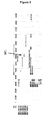
- This region spans 686 kilo base pairs and five genes are located in the interval ANKRD15, DMRT1, DMRT3, DMRT2 and GTF2A2 ( Figure 2 ).
- This locus was named the Gait locus and the results were consistent with a recessive inheritance of the allele associated with the ability to pace, while the wild-type allele (Non-pace) at this locus was dominant.
- Resequencing of selected regions refine the localization of the Gait locus.
- a number of amplicons (Table 2) from the genomic region harbouring the Gait locus as defined by the genome-wide screen (from nucleotide position 22,628,976 to position 23,315,071 on chromosome 23) were resequenced in a small set of four-gaited and five-gaited horses in order to refine the localization of the Gait locus. All the sequence polymorphisms detected in this analysis are summarized in Table 4.
- results showed that there is a distinct haplotype associated with the recessive gait allele and that the haplotype block showing a complete association to gait in this breed breaks up at nucleotide position 22,877,015 just upstream of the DMRT1 gene.
- the results refine the localization of the Gait locus to the interval from nucleotide position 22,877,015 base pair to position 23,315,071 base pair; ANKRD15 is located outside the critical interval for Gait. Table 4.
- the critical interval for the Gait locus comprises the four genes DMRT1, DMRT2, DMRT3 and GTF2A2.
- the DMRT genes belong to a family of transcription factors that contains the zinc-finger like DNA binding DM domain (Murphy et al. 2007. Vertebrate DM domain proteins bind similar DNA sequences and can heterodimerize on DNA. BMC Mol. Biol. 8:58). We sequenced most of the DMRT exons in this region and identified a small number of sequence polymorphisms (Table 4). One of these (DMRT3.3), located in exon 2 of DMRT3 at nucleotide position 22,999,655, caused a nonsense mutation in the allele associated with the ability to pace ( Figure 3 ).
- the gait allele is predicted to encode a truncated form of the DMRT3 protein (SEQ ID NO: 4) lacking the last 174 amino acids, reducing the total size of the protein from 474 to 300 amino acids.
- Full length wild-type horse DMRT3 is shown as SEQ ID NO: 2.
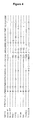
- An alignment of the part of the DMRT3 protein including the mutated amino acid position 301 (Serine) in horses shows that this protein is highly conserved among vertebrates including fish, bird and mammalian species ( Figure 4 ).
- SNP sequences SEQ ID NO sequence SNP position SEQ ID NO:5 BIEC2_620109 22 967 656 SEQ ID NO:6 BIEC2-619907 22 628 976 SEQ ID NO:7 BIEC2-620244 23315071 SEQ ID NO:8 ANKRD15.1 22 793 939 SEQ ID NO:9 ANKRD15.2 22810322 SEQ ID NO:10 ANKRD15.3 22812345 SEQ ID NO: 11 ANKRD15.4 22812251 SEQ ID NO:12 ANKRD15.5 22818132 SEQ ID NO:13 ANKRD15.6 22818158 SEQ ID NO:14 ANKRD15.7 22 821 872 SEQ ID NO:15 ANKRD15.8 22 821 884 SEQ ID NO:16 SNP.1 22868190 SEQ ID NO:17 SNP.2 22 868 678 SEQ ID NO:18 SNP.3 22 872 820 SEQ ID NO:19 SNP.4 22 876 848 SEQ ID NO:20
- This SNP was identified as heterozygous (AG) in the mutant horse and homozygous for the reference allele in the control horse.
- the G-allele at this SNP has likely occurred subsequent to the DMRT3 nonsense mutation.
- Electrophoretic mobility shift assays (EMSA). The oligonucleotide 5'-ggatccTCGAGAACAATGTAACAATTTCGCCC-3' and its complementary sequence were annealed in 10 mM Tris pH 7.5, 1 mM EDTA, 50 mM KCl by firstly heating to 95°C for 2 min and thereafter cooled to 25°C (2 min/degree).
- duplex was labelled with Klenow DNA polymerase and [ ⁇ -32P]-dCTP and purified using a Bio-Rad Micro Bio-Spin 30 column.
- DMRT3 wild type and mutant protein were produced by in vitro-translation using a TNT Quick Coupled Transcription/Translation System (Promega).
- EMSA was performed as described by Culbertson & Leeds, 2003 (Looking at mRNA decay pathways through the window of molecular evolution. Curr. Opin. Genet. Dev. 13, 207-214 ) with the following modifications. No plasmid DNA was added and 1.0 ⁇ l in vitro-translated protein and 150x cold competitor were used.
- DMRT3_Ser301STOP mutation has a major effect on gaits in horses.
- Our interpretation of the phenotypic consequences of this mutation is that homozygosity for the mutation is required but not sufficient for pacing, as many Standardbred Trotters and some Icelandic horses that are homozygous mutant do not pace.
- heterozygosity or homozygosity for the mutation are permissive to enable a variety of four-beat ambling gaits to be performed, with genetic modifiers that may be unique to each gaited breed.
- the mutation promotes ambling gaits and pace and it inhibits the transition from trot or pace to gallop, which explains its high frequency in pacers and trotters used for harness racing. It is an open question if the mutation alters the fate ofDMRT3-neurons or changes their transcriptional regulation, but it is clear that these neurons must have a key role for the control centre in the spinal cord coordinating limb movements.
Landscapes
- Life Sciences & Earth Sciences (AREA)
- Chemical & Material Sciences (AREA)
- Health & Medical Sciences (AREA)
- Engineering & Computer Science (AREA)
- Proteomics, Peptides & Aminoacids (AREA)
- Organic Chemistry (AREA)
- Analytical Chemistry (AREA)
- Molecular Biology (AREA)
- Immunology (AREA)
- Zoology (AREA)
- Wood Science & Technology (AREA)
- Biochemistry (AREA)
- Microbiology (AREA)
- Biotechnology (AREA)
- Physics & Mathematics (AREA)
- General Health & Medical Sciences (AREA)
- Urology & Nephrology (AREA)
- Biomedical Technology (AREA)
- Hematology (AREA)
- Genetics & Genomics (AREA)
- Cell Biology (AREA)
- Bioinformatics & Cheminformatics (AREA)
- General Engineering & Computer Science (AREA)
- Biophysics (AREA)
- Pathology (AREA)
- Environmental Sciences (AREA)
- Food Science & Technology (AREA)
- Medicinal Chemistry (AREA)
- General Physics & Mathematics (AREA)
- Animal Husbandry (AREA)
- Biodiversity & Conservation Biology (AREA)
- Measuring Or Testing Involving Enzymes Or Micro-Organisms (AREA)
Claims (11)
- Verfahren zum Vorhersagen des Bewegungsmusters in einem Pferd, einschließlich der Fähigkeit, alternative Gangarten zu nutzen, mit einer schnellen Geschwindigkeit zu traben oder Pass zu gehen, und in Dressur zu agieren, wobei das Verfahren Schritte umfasst von;i) Extrahieren von DNA aus einer von einem Pferd erhaltenen Probe,ii) Bestimmen der Anwesenheit oder Abwesenheit mindestens eines genetischen Markers, welcher verwendbar ist zum Vorhersagen der Fähigkeit eines Pferdes, verschiedene Gangarten zu nutzen, in der DNA, wobei der mindestens eine genetische Marker in der Region zwischen den flankierenden SNPs an Nukleotidpositionen 22.628.976, entsprechend Position 51 von SEQ ID NO: 6, und 23.315.071, entsprechend Position 51 von SEQ ID NO: 7, auf Pferdechromosom 23 lokalisiert ist; undwobei die Nukleotidposition des Markers sich auf die Pferd-Referenzsequenz nach der Sep. 2007 Equus caballus Entwurfs-Assemblierung EquCab2 bezieht.
- Verfahren nach Anspruch 1, wobei der mindestens eine genetische Marker in der Region zwischen den flankierenden SNPs an Nukleotidpositionen 22.919.878 und 23.011.289 Basenpaare auf Pferdechromosom 23 lokalisiert ist.
- Verfahren nach Anspruch 1, wobei der genetische Marker aus den in Tabelle 5, Tabelle 7 und Tabelle 8 aufgelisteten genetischen Markern ausgewählt ist.
- Verfahren nach Anspruch 2, wobei der genetische Marker aus den in Tabelle 8 aufgelisteten genetischen Markern ausgewählt ist.
- Verfahren nach Anspruch 2, umfassend Identifizieren des Nukleotids in einer oder mehreren spezifischen Position ausgewählt aus den Positionen
22.919.878; 22.920.361; 22.920.434; 22.920.646; 22.920.717; 22.921.203;
22.922.079; 22.922.780; 22.923.569; 22.924.120; 22.924.142; 22.924.299;
22.924.380; 22.924.407; 22.926.098; 22.926.188; 22.926.872; 22.927.387;
22.927.607; 22.928.220; 22.928.537; 22.928.587; 22.929.137; 22.930.011;
22.932.024; 22.932.895; 22.933.218; 22.936.034; 22.940.759; 22.942.423;
22.945.643; 22.946.599; 22.948.774; 22.949.055; 22.949.108; 22.949.240;
22.949.710; 22.956.846; 22.960.132; 22.960.528; 22.960.710; 22.964.042;
22.965.059; 22.967.119; 22.967.656; 22.967.915; 22.968.898; 22.973.984;
22.974.589; 22.979.124; 22.980.014; 22.982.879; 22.984.588; 22.985.746;
22.988.210; 22.988.991; 22.993.092; 22.994.591; 22.999.058; 22.999.655;
23.002.606; 23.003.956; 23.008.772; 23.008.789; 23.009.648; 23.010.164; und 23.011.289,
auf Pferdechromosom 23 in der DNA. - Verfahren nach Anspruch 1, umfassend Bestimmen der Anwesenheit oder Abwesenheit:i) des Nukleotids C in einer Nukleotidposition, welche Position 939 in SEQ ID NO: 1 entspricht,ii) des Nukleotids A in einer Nukleotidposition, welche Position 939 in SEQ ID NO: 3 entspricht,iii) des Nukleotids C und/oder T in einer Nukleotidposition, welche Position 51 in SEQ ID NO: 5 entspricht,iv) des Nukleotids A und/oder G in einer Nukleotidposition, welche Position 51 in SEQ ID NO: 6 entspricht,v) des Nukleotids C und/oder T in einer Nukleotidposition, welche Position 51 in SEQ ID NO: 7 entspricht,vi) des Nukleotids G und/oder C in einer Nukleotidposition, welche Position 51 in SEQ ID NO: 8 entspricht,vii) des Nukleotids A und/oder G in einer Nukleotidposition, welche Position 51 in SEQ ID NO: 9 entspricht,viii) des Nukleotids T und/oder G in einer Nukleotidposition, welche Position 51 in SEQ ID NO: 10 entspricht,ix) des Nukleotids T und/oder C in einer Nukleotidposition, welche Position 51 in SEQ ID NO: 11 entspricht,x) des Nukleotids C und/oder T in einer Nukleotidposition, welche Position 51 in SEQ ID NO: 12 entspricht,xi) des Nukleotids A und/oder G in einer Nukleotidposition, welche Position 51 in SEQ ID NO: 13 entspricht,xii) des Nukleotids A und/oder C in einer Nukleotidposition, welche Position 51 in SEQ ID NO: 14 entspricht,xiii) des Nukleotids G und/oder C in einer Nukleotidposition, welche Position 51 in SEQ ID NO: 15 entspricht,xiv) des Nukleotids C und/oder T in einer Nukleotidposition, welche Position 51 in SEQ ID NO: 16 entspricht,xv) des Nukleotids G und/oder A in einer Nukleotidposition, welche Position 51 in SEQ ID NO: 17 entspricht,xvi) des Nukleotids G und/oder C in einer Nukleotidposition, welche Position 51 in SEQ ID NO: 18 entspricht,xvii) des Nukleotids C und/oder A in einer Nukleotidposition, welche Position 51 in SEQ ID NO: 19 entspricht,xviii) des Nukleotids T und/oder C in einer Nukleotidposition, welche Position 51 in SEQ ID NO: 20 entspricht,xix) des Nukleotids C und/oder T in einer Nukleotidposition, welche Position 51 in SEQ ID NO: 21 entspricht,xx) des Nukleotids C und/oder T in einer Nukleotidposition, welche Position 51 in SEQ ID NO: 22 entspricht,xxi) des Nukleotids C und/oder A in einer Nukleotidposition, welche Position 51 in SEQ ID NO: 23 entspricht,xxii) des Nukleotids C und/oder G in einer Nukleotidposition, welche Position 51 in SEQ ID NO: 24 entspricht, und/oderxxiii) des Nukleotids A und/oder T in einer Nukleotidposition, welche Position 51 in SEQ ID NO: 25 entspricht,in der DNA.
- Verfahren nach Anspruch 4, umfassend Bestimmen der Anwesenheit oder Abwesenheit:i) des Nukleotids C in einer Nukleotidposition, welche Position 939 in SEQ ID NO: 1 entspricht, und/oderii) des Nukleotids A in einer Nukleotidposition, welche Position 939 in SEQ ID NO: 3 entspricht,in der DNA.
- Verfahren zum Vorhersagen des Bewegungsmusters in einem Pferd, einschließlich der Fähigkeit, alternative Gangarten zu nutzen, mit einer schnellen Geschwindigkeit zu traben oder Pass zu gehen, und in Dressur zu agieren, wobei das Verfahren Schritte umfasst von;i) Extrahieren von Protein aus einer von einem Pferd erhaltenen Probe, undii) Bestimmen der Anwesenheit oder Abwesenheit einer trunkierten Form des DMRT3-Proteins in der Proteinprobe.
- Verwendung des Verfahrens nach einem der Ansprüche 1-8 zur Feststellung der Vaterschaft.
- Verwendung des Verfahrens nach einem der Ansprüche 1-8 zur Selektion eines Pferdes zur Zucht.
- Verfahren zur Selektion eines Pferdes zur Zucht, wobei das Verfahren Bestimmen des Allels mindestens eines genetischen Markers, welcher verwendbar ist zum Vorhersagen der Fähigkeit eines Pferdes, verschiedene Gangarten zu nutzen, in einer von dem Pferd erhaltenen DNA-Probe umfasst, wobei der mindestens eine genetische Marker in der Region zwischen den flankierenden SNPs an Nukleotidpositionen 22.628.976 und 23.315.071, entsprechend Position 51 von SEQ ID NO: 6 bzw. SEQ ID NO: 7, auf Pferdechromosom 23 lokalisiert ist, wobei die Nukleotidposition des Markers sich auf die Pferd-Referenzsequenz nach der Sep. 2007 Equus caballus Entwurfs-Assemblierung EquCab2 bezieht.
Applications Claiming Priority (3)
| Application Number | Priority Date | Filing Date | Title |
|---|---|---|---|
| SE1130034 | 2011-05-05 | ||
| US201161514749P | 2011-08-03 | 2011-08-03 | |
| PCT/SE2012/050473 WO2012150905A1 (en) | 2011-05-05 | 2012-05-04 | A method to predict the pattern of locomotion in horses |
Publications (3)
| Publication Number | Publication Date |
|---|---|
| EP2542702A1 EP2542702A1 (de) | 2013-01-09 |
| EP2542702A4 EP2542702A4 (de) | 2013-05-29 |
| EP2542702B1 true EP2542702B1 (de) | 2014-04-09 |
Family
ID=47107957
Family Applications (1)
| Application Number | Title | Priority Date | Filing Date |
|---|---|---|---|
| EP12747875.8A Active EP2542702B1 (de) | 2011-05-05 | 2012-05-04 | Verfahren zur vorhersage der fortbewegungsmuster von pferden |
Country Status (9)
| Country | Link |
|---|---|
| US (7) | US20140057253A1 (de) |
| EP (1) | EP2542702B1 (de) |
| BR (1) | BR112013028471A2 (de) |
| CA (1) | CA2833439A1 (de) |
| DK (1) | DK2542702T3 (de) |
| EA (1) | EA027258B1 (de) |
| ES (1) | ES2465140T3 (de) |
| PT (1) | PT2542702E (de) |
| WO (1) | WO2012150905A1 (de) |
Families Citing this family (7)
| Publication number | Priority date | Publication date | Assignee | Title |
|---|---|---|---|---|
| US20140057253A1 (en) * | 2011-05-05 | 2014-02-27 | Capilet Genetics Ab | Method to predict the pattern of locomotion in horses |
| NZ743252A (en) * | 2015-12-01 | 2019-09-27 | Essity Hygiene & Health Ab | Process for producing nonwoven with improved surface properties |
| RU2675704C1 (ru) * | 2017-12-26 | 2018-12-24 | Федеральное государственное бюджетное научное учреждение "Всероссийский научно-исследовательский институт коневодства" | Способ оценки резвостных качеств лошадей рысистых пород по элементному составу волос |
| US20210079484A1 (en) * | 2018-04-17 | 2021-03-18 | Regents Of The University Of Minnesota | Biomarker for predicting equine gait and methods of use thereof |
| EP4204557A4 (de) | 2020-08-31 | 2024-12-11 | Etalon Diagnostics | Systeme und verfahren zur herstellung oder identifizierung von nichtmenschlichen tieren mit einem vorbestimmten phänotyp oder genotyp |
| RU2751141C1 (ru) * | 2020-12-15 | 2021-07-08 | Федеральное государственное бюджетное научное учреждение "Всероссийский научно-исследовательский институт коневодства" | Способ оценки скоростных качеств жеребцов чистокровной верховой породы по элементному составу волос |
| WO2022197237A1 (en) | 2021-03-19 | 2022-09-22 | The Regents Of The University Of California | Biomarkers for conformation of riding traits in horses |
Family Cites Families (7)
| Publication number | Priority date | Publication date | Assignee | Title |
|---|---|---|---|---|
| GB0111886D0 (en) * | 2001-05-15 | 2001-07-04 | Animal Health Trust | Genetic typing |
| US20030129630A1 (en) * | 2001-10-17 | 2003-07-10 | Equigene Research Inc. | Genetic markers associated with desirable and undesirable traits in horses, methods of identifying and using such markers |
| US20090156414A1 (en) * | 2004-07-02 | 2009-06-18 | Stephen Paul Harrison | Genetic Analysis in Racing Animals |
| JP5667057B2 (ja) * | 2008-09-11 | 2015-02-12 | ユニバーシティ・カレッジ・ダブリン,ナショナル・ユニバーシティ・オブ・アイルランド,ダブリン | 潜在的競技パフォーマンスを予測するための方法 |
| US20140057253A1 (en) * | 2011-05-05 | 2014-02-27 | Capilet Genetics Ab | Method to predict the pattern of locomotion in horses |
| US10550436B2 (en) * | 2014-08-04 | 2020-02-04 | Christa Lafayette | Using a breed matching database and genetic markers for color, curiosity, speed and gait to breed offspring with predetermined traits |
| US20210079484A1 (en) * | 2018-04-17 | 2021-03-18 | Regents Of The University Of Minnesota | Biomarker for predicting equine gait and methods of use thereof |
-
2012
- 2012-05-04 US US13/696,128 patent/US20140057253A1/en not_active Abandoned
- 2012-05-04 DK DK12747875.8T patent/DK2542702T3/da active
- 2012-05-04 WO PCT/SE2012/050473 patent/WO2012150905A1/en not_active Ceased
- 2012-05-04 PT PT127478758T patent/PT2542702E/pt unknown
- 2012-05-04 BR BR112013028471A patent/BR112013028471A2/pt not_active Application Discontinuation
- 2012-05-04 ES ES12747875.8T patent/ES2465140T3/es active Active
- 2012-05-04 EP EP12747875.8A patent/EP2542702B1/de active Active
- 2012-05-04 CA CA2833439A patent/CA2833439A1/en not_active Abandoned
- 2012-05-04 EA EA201391408A patent/EA027258B1/ru not_active IP Right Cessation
-
2014
- 2014-08-25 US US14/467,594 patent/US20150044681A1/en not_active Abandoned
-
2015
- 2015-07-09 US US14/795,415 patent/US20150376705A1/en not_active Abandoned
-
2017
- 2017-08-21 US US15/682,124 patent/US10378057B2/en active Active
-
2019
- 2019-06-20 US US16/447,027 patent/US20190382843A1/en not_active Abandoned
-
2021
- 2021-11-10 US US17/523,482 patent/US20220056530A1/en not_active Abandoned
-
2024
- 2024-10-21 US US18/921,127 patent/US20250122573A1/en active Pending
Also Published As
| Publication number | Publication date |
|---|---|
| WO2012150905A1 (en) | 2012-11-08 |
| US10378057B2 (en) | 2019-08-13 |
| US20150044681A1 (en) | 2015-02-12 |
| PT2542702E (pt) | 2014-05-30 |
| ES2465140T3 (es) | 2014-06-05 |
| DK2542702T3 (da) | 2014-06-02 |
| US20150376705A1 (en) | 2015-12-31 |
| CA2833439A1 (en) | 2012-11-08 |
| EP2542702A1 (de) | 2013-01-09 |
| US20140057253A1 (en) | 2014-02-27 |
| EP2542702A4 (de) | 2013-05-29 |
| EA027258B1 (ru) | 2017-07-31 |
| US20250122573A1 (en) | 2025-04-17 |
| BR112013028471A2 (pt) | 2016-09-06 |
| US20220056530A1 (en) | 2022-02-24 |
| US20170356047A1 (en) | 2017-12-14 |
| US20190382843A1 (en) | 2019-12-19 |
| EA201391408A1 (ru) | 2014-05-30 |
Similar Documents
| Publication | Publication Date | Title |
|---|---|---|
| US20250122573A1 (en) | Method to predict the pattern of locomotion in horses | |
| EP3060682B1 (de) | Genetische marker und verwendungen dafür | |
| KR102235340B1 (ko) | 토종닭의 성장 형질을 예측하기 위한 snp 마커 세트 및 이의 용도 | |
| KR20200073407A (ko) | 돼지 정액의 품질 판별용 단일염기다형성(snp) 마커 및 이의 용도 | |
| Biasoli et al. | A synonymous germline variant in a gene encoding a cell adhesion molecule is associated with cutaneous mast cell tumour development in Labrador and Golden Retrievers | |
| KR101595011B1 (ko) | 돼지의 유두 수 판단용 snp 마커 및 이의 용도 | |
| AU2009275988A1 (en) | A genetic marker test for Brachyspina and fertility in cattle | |
| US20210079484A1 (en) | Biomarker for predicting equine gait and methods of use thereof | |
| WO2011028134A1 (en) | Biological markers and uses therefor | |
| US8932810B2 (en) | Identification of mutation and method for detecting lavender foal syndrome in the horse | |
| US20130157873A1 (en) | Methods of assessing a risk of developing necrotizing meningoencephalitis | |
| US10174374B2 (en) | Detecting the brachyspina mutation | |
| US10770183B2 (en) | Methods of assessing a risk of developing necrotizing meningoencephalitis | |
| KR20100120447A (ko) | 생시 및 이유시 우량 돼지 조기 판단용 디엔에이 표지인자 및 이를 이용한 우량 돼지 조기 판단 방법 | |
| EP1660675B1 (de) | Polymorphismus des igf2-gens und verbesserte produktionseigenschaften von rindern | |
| KR102194879B1 (ko) | 개의 주인 친근성 예측용 snp 마커 및 이를 이용한 예측 방법 | |
| WO2004070055A1 (en) | Dna markers for marbling | |
| WO2022191758A1 (en) | Biomarkers for pyometra in dogs | |
| JP4430063B2 (ja) | Wfdc1の変異を検出する先天性眼疾患の検査方法 | |
| KR20220071761A (ko) | Snp를 검출 또는 증폭할 수 있는 제제를 포함하는 소의 등지방두께 판별용 조성물 및 이를 포함하는 키트 | |
| KR20040032838A (ko) | 시토크롬 p450 3a7 단백질의 기능이상과 관련된표지인자로서의 유전자 | |
| US20130323733A1 (en) | Methods of assessing a risk of developing necrotizing meningoencephalitis | |
| CN107988389A (zh) | 羊生长特性相关的snp标记、扩增其的引物及包括该引物的试剂盒和应用 | |
| NZ579456A (en) | Biological markers on Bovine Chromosome 14 for size and uses therefor |
Legal Events
| Date | Code | Title | Description |
|---|---|---|---|
| PUAI | Public reference made under article 153(3) epc to a published international application that has entered the european phase |
Free format text: ORIGINAL CODE: 0009012 |
|
| 17P | Request for examination filed |
Effective date: 20120824 |
|
| AK | Designated contracting states |
Kind code of ref document: A1 Designated state(s): AL AT BE BG CH CY CZ DE DK EE ES FI FR GB GR HR HU IE IS IT LI LT LU LV MC MK MT NL NO PL PT RO RS SE SI SK SM TR |
|
| AX | Request for extension of the european patent |
Extension state: BA ME |
|
| REG | Reference to a national code |
Ref country code: FR Ref legal event code: EL |
|
| A4 | Supplementary search report drawn up and despatched |
Effective date: 20130503 |
|
| RIC1 | Information provided on ipc code assigned before grant |
Ipc: C12Q 1/68 20060101AFI20130425BHEP |
|
| REG | Reference to a national code |
Ref country code: SE Ref legal event code: TRCL |
|
| RBV | Designated contracting states (corrected) |
Designated state(s): AL AT BE BG CH CY CZ DE DK EE ES FI FR GB GR HR HU IE IS IT LI LT LU LV MC MK MT NL NO PL PT RO RS SE SI SK SM TR |
|
| REG | Reference to a national code |
Ref country code: NO Ref legal event code: TC Ref country code: NO Ref legal event code: T2 |
|
| REG | Reference to a national code |
Ref country code: EE Ref legal event code: BB2E |
|
| GRAP | Despatch of communication of intention to grant a patent |
Free format text: ORIGINAL CODE: EPIDOSNIGR1 |
|
| RIC1 | Information provided on ipc code assigned before grant |
Ipc: C12Q 1/68 20060101AFI20140102BHEP Ipc: G01N 33/68 20060101ALI20140102BHEP |
|
| DAX | Request for extension of the european patent (deleted) | ||
| INTG | Intention to grant announced |
Effective date: 20140123 |
|
| GRAS | Grant fee paid |
Free format text: ORIGINAL CODE: EPIDOSNIGR3 |
|
| GRAA | (expected) grant |
Free format text: ORIGINAL CODE: 0009210 |
|
| AK | Designated contracting states |
Kind code of ref document: B1 Designated state(s): AL AT BE BG CH CY CZ DE DK EE ES FI FR GB GR HR HU IE IS IT LI LT LU LV MC MK MT NL NO PL PT RO RS SE SI SK SM TR |
|
| REG | Reference to a national code |
Ref country code: GB Ref legal event code: FG4D |
|
| REG | Reference to a national code |
Ref country code: AT Ref legal event code: REF Ref document number: 661409 Country of ref document: AT Kind code of ref document: T Effective date: 20140415 Ref country code: CH Ref legal event code: EP |
|
| REG | Reference to a national code |
Ref country code: IE Ref legal event code: FG4D |
|
| REG | Reference to a national code |
Ref country code: PT Ref legal event code: SC4A Free format text: AVAILABILITY OF NATIONAL TRANSLATION Effective date: 20140521 |
|
| REG | Reference to a national code |
Ref country code: DK Ref legal event code: T3 Effective date: 20140526 |
|
| REG | Reference to a national code |
Ref country code: NL Ref legal event code: T3 |
|
| REG | Reference to a national code |
Ref country code: ES Ref legal event code: FG2A Ref document number: 2465140 Country of ref document: ES Kind code of ref document: T3 Effective date: 20140605 |
|
| REG | Reference to a national code |
Ref country code: SE Ref legal event code: TRGR |
|
| REG | Reference to a national code |
Ref country code: DE Ref legal event code: R096 Ref document number: 602012001369 Country of ref document: DE Effective date: 20140618 |
|
| REG | Reference to a national code |
Ref country code: EE Ref legal event code: FG4A Ref document number: E009357 Country of ref document: EE Effective date: 20140606 |
|
| REG | Reference to a national code |
Ref country code: NO Ref legal event code: T2 Effective date: 20140409 |
|
| REG | Reference to a national code |
Ref country code: LT Ref legal event code: MG4D |
|
| PG25 | Lapsed in a contracting state [announced via postgrant information from national office to epo] |
Ref country code: GR Free format text: LAPSE BECAUSE OF FAILURE TO SUBMIT A TRANSLATION OF THE DESCRIPTION OR TO PAY THE FEE WITHIN THE PRESCRIBED TIME-LIMIT Effective date: 20140710 Ref country code: BG Free format text: LAPSE BECAUSE OF FAILURE TO SUBMIT A TRANSLATION OF THE DESCRIPTION OR TO PAY THE FEE WITHIN THE PRESCRIBED TIME-LIMIT Effective date: 20140709 Ref country code: LT Free format text: LAPSE BECAUSE OF FAILURE TO SUBMIT A TRANSLATION OF THE DESCRIPTION OR TO PAY THE FEE WITHIN THE PRESCRIBED TIME-LIMIT Effective date: 20140409 |
|
| PG25 | Lapsed in a contracting state [announced via postgrant information from national office to epo] |
Ref country code: HR Free format text: LAPSE BECAUSE OF FAILURE TO SUBMIT A TRANSLATION OF THE DESCRIPTION OR TO PAY THE FEE WITHIN THE PRESCRIBED TIME-LIMIT Effective date: 20140409 Ref country code: RS Free format text: LAPSE BECAUSE OF FAILURE TO SUBMIT A TRANSLATION OF THE DESCRIPTION OR TO PAY THE FEE WITHIN THE PRESCRIBED TIME-LIMIT Effective date: 20140409 Ref country code: LV Free format text: LAPSE BECAUSE OF FAILURE TO SUBMIT A TRANSLATION OF THE DESCRIPTION OR TO PAY THE FEE WITHIN THE PRESCRIBED TIME-LIMIT Effective date: 20140409 Ref country code: PL Free format text: LAPSE BECAUSE OF FAILURE TO SUBMIT A TRANSLATION OF THE DESCRIPTION OR TO PAY THE FEE WITHIN THE PRESCRIBED TIME-LIMIT Effective date: 20140409 |
|
| REG | Reference to a national code |
Ref country code: DE Ref legal event code: R097 Ref document number: 602012001369 Country of ref document: DE |
|
| PG25 | Lapsed in a contracting state [announced via postgrant information from national office to epo] |
Ref country code: SK Free format text: LAPSE BECAUSE OF FAILURE TO SUBMIT A TRANSLATION OF THE DESCRIPTION OR TO PAY THE FEE WITHIN THE PRESCRIBED TIME-LIMIT Effective date: 20140409 Ref country code: CZ Free format text: LAPSE BECAUSE OF FAILURE TO SUBMIT A TRANSLATION OF THE DESCRIPTION OR TO PAY THE FEE WITHIN THE PRESCRIBED TIME-LIMIT Effective date: 20140409 Ref country code: MC Free format text: LAPSE BECAUSE OF FAILURE TO SUBMIT A TRANSLATION OF THE DESCRIPTION OR TO PAY THE FEE WITHIN THE PRESCRIBED TIME-LIMIT Effective date: 20140409 Ref country code: RO Free format text: LAPSE BECAUSE OF FAILURE TO SUBMIT A TRANSLATION OF THE DESCRIPTION OR TO PAY THE FEE WITHIN THE PRESCRIBED TIME-LIMIT Effective date: 20140409 |
|
| PLBE | No opposition filed within time limit |
Free format text: ORIGINAL CODE: 0009261 |
|
| STAA | Information on the status of an ep patent application or granted ep patent |
Free format text: STATUS: NO OPPOSITION FILED WITHIN TIME LIMIT |
|
| 26N | No opposition filed |
Effective date: 20150112 |
|
| REG | Reference to a national code |
Ref country code: DE Ref legal event code: R097 Ref document number: 602012001369 Country of ref document: DE Effective date: 20150112 |
|
| PG25 | Lapsed in a contracting state [announced via postgrant information from national office to epo] |
Ref country code: SI Free format text: LAPSE BECAUSE OF FAILURE TO SUBMIT A TRANSLATION OF THE DESCRIPTION OR TO PAY THE FEE WITHIN THE PRESCRIBED TIME-LIMIT Effective date: 20140409 |
|
| PG25 | Lapsed in a contracting state [announced via postgrant information from national office to epo] |
Ref country code: MT Free format text: LAPSE BECAUSE OF FAILURE TO SUBMIT A TRANSLATION OF THE DESCRIPTION OR TO PAY THE FEE WITHIN THE PRESCRIBED TIME-LIMIT Effective date: 20140409 |
|
| PG25 | Lapsed in a contracting state [announced via postgrant information from national office to epo] |
Ref country code: SM Free format text: LAPSE BECAUSE OF FAILURE TO SUBMIT A TRANSLATION OF THE DESCRIPTION OR TO PAY THE FEE WITHIN THE PRESCRIBED TIME-LIMIT Effective date: 20140409 |
|
| REG | Reference to a national code |
Ref country code: FR Ref legal event code: PLFP Year of fee payment: 5 |
|
| PG25 | Lapsed in a contracting state [announced via postgrant information from national office to epo] |
Ref country code: CY Free format text: LAPSE BECAUSE OF FAILURE TO SUBMIT A TRANSLATION OF THE DESCRIPTION OR TO PAY THE FEE WITHIN THE PRESCRIBED TIME-LIMIT Effective date: 20140409 |
|
| PG25 | Lapsed in a contracting state [announced via postgrant information from national office to epo] |
Ref country code: HU Free format text: LAPSE BECAUSE OF FAILURE TO SUBMIT A TRANSLATION OF THE DESCRIPTION OR TO PAY THE FEE WITHIN THE PRESCRIBED TIME-LIMIT; INVALID AB INITIO Effective date: 20120504 Ref country code: TR Free format text: LAPSE BECAUSE OF FAILURE TO SUBMIT A TRANSLATION OF THE DESCRIPTION OR TO PAY THE FEE WITHIN THE PRESCRIBED TIME-LIMIT Effective date: 20140409 Ref country code: LU Free format text: LAPSE BECAUSE OF NON-PAYMENT OF DUE FEES Effective date: 20140504 |
|
| REG | Reference to a national code |
Ref country code: FR Ref legal event code: PLFP Year of fee payment: 6 |
|
| REG | Reference to a national code |
Ref country code: FR Ref legal event code: PLFP Year of fee payment: 7 |
|
| PG25 | Lapsed in a contracting state [announced via postgrant information from national office to epo] |
Ref country code: MK Free format text: LAPSE BECAUSE OF FAILURE TO SUBMIT A TRANSLATION OF THE DESCRIPTION OR TO PAY THE FEE WITHIN THE PRESCRIBED TIME-LIMIT Effective date: 20140409 |
|
| PG25 | Lapsed in a contracting state [announced via postgrant information from national office to epo] |
Ref country code: AL Free format text: LAPSE BECAUSE OF FAILURE TO SUBMIT A TRANSLATION OF THE DESCRIPTION OR TO PAY THE FEE WITHIN THE PRESCRIBED TIME-LIMIT Effective date: 20140409 |
|
| PGFP | Annual fee paid to national office [announced via postgrant information from national office to epo] |
Ref country code: ES Payment date: 20190604 Year of fee payment: 8 Ref country code: PT Payment date: 20190408 Year of fee payment: 8 |
|
| PGFP | Annual fee paid to national office [announced via postgrant information from national office to epo] |
Ref country code: AT Payment date: 20190527 Year of fee payment: 8 |
|
| PGFP | Annual fee paid to national office [announced via postgrant information from national office to epo] |
Ref country code: NL Payment date: 20201029 Year of fee payment: 9 |
|
| REG | Reference to a national code |
Ref country code: AT Ref legal event code: MM01 Ref document number: 661409 Country of ref document: AT Kind code of ref document: T Effective date: 20200504 |
|
| PG25 | Lapsed in a contracting state [announced via postgrant information from national office to epo] |
Ref country code: PT Free format text: LAPSE BECAUSE OF NON-PAYMENT OF DUE FEES Effective date: 20201104 Ref country code: AT Free format text: LAPSE BECAUSE OF NON-PAYMENT OF DUE FEES Effective date: 20200504 |
|
| PGFP | Annual fee paid to national office [announced via postgrant information from national office to epo] |
Ref country code: CH Payment date: 20201119 Year of fee payment: 9 Ref country code: EE Payment date: 20201026 Year of fee payment: 9 Ref country code: IT Payment date: 20201026 Year of fee payment: 9 Ref country code: DK Payment date: 20201026 Year of fee payment: 9 Ref country code: NO Payment date: 20201102 Year of fee payment: 9 Ref country code: IE Payment date: 20201029 Year of fee payment: 9 |
|
| PGFP | Annual fee paid to national office [announced via postgrant information from national office to epo] |
Ref country code: BE Payment date: 20201023 Year of fee payment: 9 |
|
| REG | Reference to a national code |
Ref country code: ES Ref legal event code: FD2A Effective date: 20210928 |
|
| PG25 | Lapsed in a contracting state [announced via postgrant information from national office to epo] |
Ref country code: ES Free format text: LAPSE BECAUSE OF NON-PAYMENT OF DUE FEES Effective date: 20200505 |
|
| REG | Reference to a national code |
Ref country code: EE Ref legal event code: MM4A Ref document number: E009357 Country of ref document: EE Effective date: 20210531 |
|
| REG | Reference to a national code |
Ref country code: DK Ref legal event code: EBP Effective date: 20210531 |
|
| REG | Reference to a national code |
Ref country code: NO Ref legal event code: MMEP |
|
| REG | Reference to a national code |
Ref country code: CH Ref legal event code: PL |
|
| REG | Reference to a national code |
Ref country code: NL Ref legal event code: MM Effective date: 20210601 |
|
| PG25 | Lapsed in a contracting state [announced via postgrant information from national office to epo] |
Ref country code: NO Free format text: LAPSE BECAUSE OF NON-PAYMENT OF DUE FEES Effective date: 20210531 Ref country code: CH Free format text: LAPSE BECAUSE OF NON-PAYMENT OF DUE FEES Effective date: 20210531 Ref country code: LI Free format text: LAPSE BECAUSE OF NON-PAYMENT OF DUE FEES Effective date: 20210531 Ref country code: EE Free format text: LAPSE BECAUSE OF NON-PAYMENT OF DUE FEES Effective date: 20210531 |
|
| REG | Reference to a national code |
Ref country code: BE Ref legal event code: MM Effective date: 20210531 |
|
| PG25 | Lapsed in a contracting state [announced via postgrant information from national office to epo] |
Ref country code: IE Free format text: LAPSE BECAUSE OF NON-PAYMENT OF DUE FEES Effective date: 20210504 Ref country code: DK Free format text: LAPSE BECAUSE OF NON-PAYMENT OF DUE FEES Effective date: 20210531 |
|
| PG25 | Lapsed in a contracting state [announced via postgrant information from national office to epo] |
Ref country code: NL Free format text: LAPSE BECAUSE OF NON-PAYMENT OF DUE FEES Effective date: 20210601 |
|
| PG25 | Lapsed in a contracting state [announced via postgrant information from national office to epo] |
Ref country code: BE Free format text: LAPSE BECAUSE OF NON-PAYMENT OF DUE FEES Effective date: 20210531 |
|
| PG25 | Lapsed in a contracting state [announced via postgrant information from national office to epo] |
Ref country code: IT Free format text: LAPSE BECAUSE OF NON-PAYMENT OF DUE FEES Effective date: 20200504 |
|
| PGFP | Annual fee paid to national office [announced via postgrant information from national office to epo] |
Ref country code: FI Payment date: 20250515 Year of fee payment: 14 |
|
| PGFP | Annual fee paid to national office [announced via postgrant information from national office to epo] |
Ref country code: DE Payment date: 20250520 Year of fee payment: 14 |
|
| PGFP | Annual fee paid to national office [announced via postgrant information from national office to epo] |
Ref country code: GB Payment date: 20250519 Year of fee payment: 14 |
|
| PGFP | Annual fee paid to national office [announced via postgrant information from national office to epo] |
Ref country code: IS Payment date: 20250523 Year of fee payment: 14 |
|
| PGFP | Annual fee paid to national office [announced via postgrant information from national office to epo] |
Ref country code: FR Payment date: 20250516 Year of fee payment: 14 |
|
| PGFP | Annual fee paid to national office [announced via postgrant information from national office to epo] |
Ref country code: SE Payment date: 20250520 Year of fee payment: 14 |
|
| PG25 | Lapsed in a contracting state [announced via postgrant information from national office to epo] |
Ref country code: IT Free format text: LAPSE BECAUSE OF NON-PAYMENT OF DUE FEES Effective date: 20210504 |