EP2531604B1 - Compositions and methods for enhanced parvovirus transduction - Google Patents
Compositions and methods for enhanced parvovirus transduction Download PDFInfo
- Publication number
- EP2531604B1 EP2531604B1 EP11740407.9A EP11740407A EP2531604B1 EP 2531604 B1 EP2531604 B1 EP 2531604B1 EP 11740407 A EP11740407 A EP 11740407A EP 2531604 B1 EP2531604 B1 EP 2531604B1
- Authority
- EP
- European Patent Office
- Prior art keywords
- aav
- vector
- aav vector
- bortezomib
- genome
- Prior art date
- Legal status (The legal status is an assumption and is not a legal conclusion. Google has not performed a legal analysis and makes no representation as to the accuracy of the status listed.)
- Active
Links
Images



Classifications
-
- C—CHEMISTRY; METALLURGY
- C12—BIOCHEMISTRY; BEER; SPIRITS; WINE; VINEGAR; MICROBIOLOGY; ENZYMOLOGY; MUTATION OR GENETIC ENGINEERING
- C12N—MICROORGANISMS OR ENZYMES; COMPOSITIONS THEREOF; PROPAGATING, PRESERVING, OR MAINTAINING MICROORGANISMS; MUTATION OR GENETIC ENGINEERING; CULTURE MEDIA
- C12N15/00—Mutation or genetic engineering; DNA or RNA concerning genetic engineering, vectors, e.g. plasmids, or their isolation, preparation or purification; Use of hosts therefor
- C12N15/09—Recombinant DNA-technology
- C12N15/63—Introduction of foreign genetic material using vectors; Vectors; Use of hosts therefor; Regulation of expression
- C12N15/79—Vectors or expression systems specially adapted for eukaryotic hosts
- C12N15/85—Vectors or expression systems specially adapted for eukaryotic hosts for animal cells
- C12N15/86—Viral vectors
-
- A—HUMAN NECESSITIES
- A61—MEDICAL OR VETERINARY SCIENCE; HYGIENE
- A61K—PREPARATIONS FOR MEDICAL, DENTAL OR TOILETRY PURPOSES
- A61K31/00—Medicinal preparations containing organic active ingredients
- A61K31/69—Boron compounds
-
- A—HUMAN NECESSITIES
- A61—MEDICAL OR VETERINARY SCIENCE; HYGIENE
- A61K—PREPARATIONS FOR MEDICAL, DENTAL OR TOILETRY PURPOSES
- A61K45/00—Medicinal preparations containing active ingredients not provided for in groups A61K31/00 - A61K41/00
- A61K45/06—Mixtures of active ingredients without chemical characterisation, e.g. antiphlogistics and cardiaca
-
- A—HUMAN NECESSITIES
- A61—MEDICAL OR VETERINARY SCIENCE; HYGIENE
- A61P—SPECIFIC THERAPEUTIC ACTIVITY OF CHEMICAL COMPOUNDS OR MEDICINAL PREPARATIONS
- A61P21/00—Drugs for disorders of the muscular or neuromuscular system
-
- A—HUMAN NECESSITIES
- A61—MEDICAL OR VETERINARY SCIENCE; HYGIENE
- A61P—SPECIFIC THERAPEUTIC ACTIVITY OF CHEMICAL COMPOUNDS OR MEDICINAL PREPARATIONS
- A61P21/00—Drugs for disorders of the muscular or neuromuscular system
- A61P21/04—Drugs for disorders of the muscular or neuromuscular system for myasthenia gravis
-
- A—HUMAN NECESSITIES
- A61—MEDICAL OR VETERINARY SCIENCE; HYGIENE
- A61P—SPECIFIC THERAPEUTIC ACTIVITY OF CHEMICAL COMPOUNDS OR MEDICINAL PREPARATIONS
- A61P43/00—Drugs for specific purposes, not provided for in groups A61P1/00-A61P41/00
-
- A—HUMAN NECESSITIES
- A61—MEDICAL OR VETERINARY SCIENCE; HYGIENE
- A61P—SPECIFIC THERAPEUTIC ACTIVITY OF CHEMICAL COMPOUNDS OR MEDICINAL PREPARATIONS
- A61P7/00—Drugs for disorders of the blood or the extracellular fluid
- A61P7/02—Antithrombotic agents; Anticoagulants; Platelet aggregation inhibitors
-
- A—HUMAN NECESSITIES
- A61—MEDICAL OR VETERINARY SCIENCE; HYGIENE
- A61P—SPECIFIC THERAPEUTIC ACTIVITY OF CHEMICAL COMPOUNDS OR MEDICINAL PREPARATIONS
- A61P7/00—Drugs for disorders of the blood or the extracellular fluid
- A61P7/04—Antihaemorrhagics; Procoagulants; Haemostatic agents; Antifibrinolytic agents
-
- A—HUMAN NECESSITIES
- A61—MEDICAL OR VETERINARY SCIENCE; HYGIENE
- A61K—PREPARATIONS FOR MEDICAL, DENTAL OR TOILETRY PURPOSES
- A61K48/00—Medicinal preparations containing genetic material which is inserted into cells of the living body to treat genetic diseases; Gene therapy
-
- C—CHEMISTRY; METALLURGY
- C12—BIOCHEMISTRY; BEER; SPIRITS; WINE; VINEGAR; MICROBIOLOGY; ENZYMOLOGY; MUTATION OR GENETIC ENGINEERING
- C12N—MICROORGANISMS OR ENZYMES; COMPOSITIONS THEREOF; PROPAGATING, PRESERVING, OR MAINTAINING MICROORGANISMS; MUTATION OR GENETIC ENGINEERING; CULTURE MEDIA
- C12N2750/00—MICROORGANISMS OR ENZYMES; COMPOSITIONS THEREOF; PROPAGATING, PRESERVING, OR MAINTAINING MICROORGANISMS; MUTATION OR GENETIC ENGINEERING; CULTURE MEDIA ssDNA viruses
- C12N2750/00011—Details
- C12N2750/14011—Parvoviridae
- C12N2750/14111—Dependovirus, e.g. adenoassociated viruses
- C12N2750/14141—Use of virus, viral particle or viral elements as a vector
- C12N2750/14143—Use of virus, viral particle or viral elements as a vector viral genome or elements thereof as genetic vector
Definitions
- parvoviruses such as adeno-associated viruses (AAV), disfavor genomes that differ substantially in size from the wild-type genome (e.g., less than about 80 to 85% and greater than about 105 to 107% of wild-type size). This observation also holds true for recombinant parvovirus vectors, where it can limit the size of the transgene and/or regulatory sequences (such as promoters) that can be packaged and efficiently delivered by the vector to target cells.
- AAV adeno-associated viruses
- the present invention overcomes previous shortcomings in the art by providing adeno-associated virus (AAV) vectors that contain an oversized AAV genome comprising a heterologous nucleotide sequence, and methods of their use
- AAV adeno-associated virus
- the present invention provides a composition
- a composition comprising: (a) an adeno-associated virus (AAV) vector comprising a heterologous nucleic acid of interest wherein the AAV vector genome is oversized relative to a wild type AAV genome; and (b) a proteasome inhibitor.
- AAV adeno-associated virus
- the size of the AAV vector genome can be greater than about 5.2 kb and in further embodiments, the AAV vector can comprise single stranded AAV vector genome, a double-stranded AAV vector genome or a self-complementary AAV vector genome.
- the proteasome inhibitor is bortezomib (Velcade ® ).
- the heterologous nucleic acid of interest can encode a clotting factor, which can be Factor VIII (FVIII).
- the heterologous nucleic acid of interest can encode dystrophin.
- the heterologous nucleic acid can comprise a coding sequence that has been optimized relative to a wild type nucleotide sequence. In other embodiments, the heterologous nucleic acid can comprise noncoding sequences that have been optimized relative to wild type noncoding sequences. In yet further embodiments, the AAV vector genome can be optimized relative to a wild type AAV genome.
- compositions of this invention include a pharmaceutical formulation comprising a composition of this invention in a pharmaceutically acceptable carrier.
- the present invention further provides in vitro methods, including an in vitro method of delivering a nucleic acid of interest to a cell, comprising introducing the composition or the pharmaceutical formulation of this invention into the cell.
- Also provided herein is a method of delivering a nucleic acid of interest to a subject (e.g ., a subject in need thereof), comprising administering the composition or the pharmaceutical formulation of this invention to the subject.
- Additional aspects of this disclosure include a method of delivering a nucleic acid of interest to a cell, comprising contacting the cell with: (a) an adeno-associated virus (AAV) vector comprising a heterologous nucleic acid of interest wherein the AAV vector genome is oversized as compared to a wild type AAV genome; and (b) a proteasome inhibitor.
- AAV adeno-associated virus
- Also provided herein is a method of delivering a nucleic acid of interest to a subject (e.g. , a subject in need thereof), comprising administering to the subject: (a an adeno-associated virus (AAV) vector comprising a heterologous nucleic acid of interest wherein the AAV vector genome is oversized as compared to a wild type AAV genome; and (b) a proteasome inhibitor.
- AAV adeno-associated virus
- the cell can be a muscle cell and/or a liver cell and/or a cell in a joint or osteochondral site.
- the AAV vector can be administered before, after and/or concurrently with the administration of the proteasome inhibitor, in any combination.
- the proteasome inhibitor is bortezomib (Velcade ® ).
- the heterologous nucleic acid of interest can encode FVIII. In other embodiments, the heterologous nucleic acid of interest can encode dystrophin.
- the heterologous nucleic acid or nucleotide sequence can comprise a coding sequence that has been optimized relative to a wild type nucleotide sequence.
- the heterologous nucleic acid or nucleotide sequence can comprise noncoding sequences that have been optimized relative to wild type noncoding sequences.
- the AAV vector genome can be optimized relative to a wild type AAV genome.
- kits comprising: (a) an adeno-associated virus (AAV) vector comprising a heterologous nucleic acid of interest wherein the AAV vector genome is oversized as compared to a wild type AAV genome; and (b) a proteasome inhibitor.
- AAV adeno-associated virus
- the kit can comprise a heterologous nucleic acid of interest that encodes FVIII.
- a kit can also comprise a heterologous nucleic acid of interest that encodes dystrophin.
- the proteasome inhibitor is bortezomib (Velcade ® ).
- the present disclosure further provides a method of treating hemophilia A in a subject (e.g ., a human subject), comprising administering to the subject: (a) an AAV vector comprising a heterologous nucleotide sequence encoding FVIII; and (b) bortezomib (Velcade ® ).
- the heterologous nucleic acid or nucleotide sequence encoding FVIII can comprise a coding sequence that has been optimized relative to a wild type nucleotide sequence.
- the heterologous nucleic acid or nucleotide sequence encoding FVIII can comprise noncoding sequences that have been optimized relative to wild type noncoding sequences.
- the AAV vector genome can be optimized relative to a wild type AAV genome.
- the AAV vector can be administered before, after and/or concurrently with the administration of the bortezomib (Velcade ® ), in any combination.
- the AAV vector is administered before the administration of the bortezomib (Velcade ® ).
- a method of treating muscular dystrophy in a subject comprising administering to the subject: (a) an AAV vector comprising a heterologous nucleotide sequence encoding dystrophin; and (b) bortezomib (Velcade ® ).
- the heterologous nucleic acid or nucleotide sequence encoding dystrophin can comprise a coding sequence that has been optimized relative to a wild type nucleotide sequence.
- the heterologous nucleic acid or nucleotide sequence encoding dystrophin can comprise noncoding sequences that have been optimized relative to wild type noncoding sequences.
- the AAV vector genome can be optimized relative to a wild type AAV genome.
- the AAV vector can be administered before, after and/or concurrently with the administration of the bortezomib (Velcade ® ), in any combination.
- the AAV vector is administered before the administration of the bortezomib (Velcade ® ).
- the AAV vector is AAV type 8. In some embodiments of this invention, the AAV vector is AAV type 2. In some embodiments of this invention, the AAV vector is AAV type 5.
- Particular embodiments of this invention are directed to parvovirus vectors for the delivery of nucleic acids to cells, both in vitro and in vivo, in combination or temporal association with administration of Velcade ® .
- additional embodiments are directed to delivery of novel modified blood coagulation factors e.g. , delivery of AAV encoding codon optimized Coagulation Factor VIII (e.g., as described in PCT/US2007/071 553 ) in combination or temporal association with Velcade ® .
- Nucleotide sequences are presented herein by single strand only, in the 5' to 3' direction, from left to right, unless specifically indicated otherwise. Nucleotides and amino acids are represented herein in the manner recommended by the IUPAC-IUB Biochemical Nomenclature Commission, or (for amino acids) by either the one-letter code, or the three letter code, both in accordance with 37 C.F.R. ⁇ 1.822 and established usage.
- a can mean one or more than one, depending on the context in which it is used.
- a cell can mean one cell or multiple cells.
- the term "about,” as used herein when referring to a measurable value such as an amount of a compound or agent of this invention, dose, time, temperature, and the like, is meant to encompass variations of ⁇ 20%, ⁇ 10%, ⁇ 5%, ⁇ 1%, ⁇ 0.5%, or even ⁇ 0.1% of the specified amount.
- consists essentially of (and grammatical variants), as applied to a polynucleotide or polypeptide sequence of this invention, means a polynucleotide or polypeptide that consists of both the recited sequence (e.g. , SEQ ID NO) and a total often or less (e.g., 1, 2, 3, 4, 5, 6, 7, 8, 9, or 10) additional nucleotides or amino acids on the 5' and/or 3' or N-terminal and/or C-terminal ends of the recited sequence such that the function of the polynucleotide or polypeptide is not materially altered.
- the total of ten or less additional nucleotides or amino acids includes the total number of additional nucleotides or amino acids on both ends added together.
- the term "materially altered,” as applied to polypeptides of the invention refers to an increase or decrease in activity of at least about 50% or more as compared to the activity of a polypeptide consisting of the recited sequence.
- parvovirus encompasses the family Parvoviridae, including autonomously replicating parvoviruses and dependoviruses.
- the autonomous parvoviruses include members of the genera Parvovirus , Erythrovirus , Densovirus , Iteravirus , and Contravirus.
- Exemplary autonomous parvoviruses include, but are not limited to, minute virus of mouse, bovine parvovirus, canine parvovirus, chicken parvovirus, feline panleukopenia virus, feline parvovirus, goose parvovirus, H1 parvovirus, muscovy duck parvovirus, B19 virus, and any other autonomous parvovirus now known or later discovered.
- Other autonomous parvoviruses are known to those skilled in the art. See, e.g., BERNARD N. FIELDS et al., VIROLOGY, volume 2, chapter 69 (4th ed., Lippincott-Raven Publishers ).
- AAV adeno-associated virus
- AAV type 1 AAV type 2, AAV type 3 (including types 3A and 3B), AAV type 4, AAV type 5, AAV type 6, AAV type 7, AAV type 8, AAV type 9, AAV type 10, AAV type 11, avian AAV, bovine AAV, canine AAV, equine AAV, ovine AAV, and any other AAV now known or later discovered. See , e.g., BERNARD N. FIELDS et al., VIROLOGY, volume 2, chapter 69 (4th ed., Lippincott-Raven Publishers ).
- the genomic sequences of the various serotypes of AAV and the autonomous parvoviruses, as well as the sequences of the terminal repeats (TRs), Rep proteins, and capsid subunits are known in the art. Such sequences may be found in the literature or in public databases such as GenBank.
- tropism refers to preferential entry of the virus into certain cells or tissues, optionally followed by expression (e.g. , transcription and, optionally, translation) of a sequence(s) carried by the viral genome in the cell, e.g., for a recombinant virus, expression of the heterologous nucleotide sequence(s).
- expression e.g. , transcription and, optionally, translation
- transcription of a heterologous nucleic acid sequence from the viral genome may not be initiated in the absence of trans-acting factors, e.g. , for an inducible promoter or otherwise regulated nucleic acid sequence.
- gene expression from the viral genome may be from a stably integrated provirus, from a non-integrated episome, as well as any other form in which the virus may take within the cell.
- polypeptide encompasses both peptides and proteins, unless indicated otherwise.
- a "polynucleotide” is a sequence of nucleotide bases, and may be RNA, DNA or DNA-RNA hybrid sequences (including both naturally occurring and non-naturally occurring nucleotide), but in representative embodiments are either single or double stranded DNA sequences.
- an “isolated” polynucleotide e.g. , an “isolated DNA” or an “isolated RNA" means a polynucleotide at least partially separated from at least some of the other components of the naturally occurring organism or virus, for example, the cell or viral structural components or other polypeptides or nucleic acids commonly found associated with the polynucleotide.
- an "isolated" polypeptide means a polypeptide that is at least partially separated from at least some of the other components of the naturally occurring organism or virus, for example, the cell or viral structural components or other polypeptides or nucleic acids commonly found associated with the polypeptide.
- virus vector As used herein, by “isolate” or “purify” (or grammatical equivalents) a virus vector, it is meant that the virus vector is at least partially separated from at least some of the other components in the starting material.
- a “therapeutic polypeptide” is a polypeptide that can alleviate or reduce symptoms that result from an absence or defect in a protein in a cell or subject.
- a “therapeutic polypeptide” is one that otherwise confers a benefit to a subject, e.g. , anti-cancer effects or improvement in transplant survivability.
- treat By the terms “treat,” “treating” or “treatment of” (or grammatically equivalent terms) it is meant that the severity of the subject's condition is reduced or at least partially improved or ameliorated and/or that some alleviation, mitigation or decrease in at least one clinical symptom is achieved and/or there is a delay in the progression of the condition and/or prevention or delay of the onset of a disease or disorder.
- the terms “treat,” “treating” or “treatment of” refer to both prophylactic and therapeutic regimens.
- an “active immune response” or “active immunity” is characterized by “participation of host tissues and cells after an encounter with the immunogen. It involves differentiation and proliferation of immunocompetent cells in lymphoreticular tissues, which lead to synthesis of antibody or the development of cell-mediated reactivity, or both.” Herbert B. Herscowitz, Immunophysiology: Cell Function and Cellular Interactions in Antibody Formation, in IMMUNOLOGY: BASIC PROCESSES 117 (Joseph A. Bellanti ed., 1985 ). Alternatively stated, an active immune response is mounted by the host after exposure to immunogens by infection or by vaccination.
- Active immunity can be contrasted with passive immunity, which is acquired through the "transfer of preformed substances (antibody, transfer factor, thymic graft, interleukin-2) from an actively immunized host to a non-immune host.” Id .
- a "protective" immune response or “protective” immunity as used herein indicates that the immune response confers some benefit to the subject in that it prevents or reduces the incidence of disease.
- a protective immune response or protective immunity may be useful in the treatment of disease, in particular cancer or tumors ( e.g. , by causing regression of a cancer or tumor and/or by preventing metastasis and/or by preventing growth of metastatic nodules).
- the protective effects may be complete or partial, as long as the benefits of the treatment outweigh any disadvantages thereof.
- the virus vector comprising the heterologous nucleotide sequence can be administered in an immunogenically effective amount, as described below.
- heterologous nucleotide sequence or “heterologous nucleic acid” is a sequence that is not naturally occurring in the virus.
- the heterologous nucleic acid comprises an open reading frame that encodes a polypeptide or nontranslated RNA of interest (e.g. , for delivery to a cell or subject).
- the heterologous nucleotide sequence or heterologous nucleic acid can also be a nucleotide sequence or nucleic acid that is not naturally occurring in a cell into which it is introduced or the heterologous nucleotide sequence or heterologous nucleic acid can be a nucleotide sequence or nucleic acid molecule that is the same as a nucleotide sequence or nucleic acid molecule that is naturally occurring but the heterologous nucleotide sequence or nucleic acid molecule is not present in the location or position where its naturally occurring counterpart is typically found and/or it is under the control of regulatory elements that that differ form those that regulate expression of the naturally occurring counterpart.
- virus vector refers to a virus (e.g. , AAV) particle that functions as a nucleic acid delivery vehicle, and which comprises the vector genome (e.g. , viral DNA [vDNA]) packaged within an AAV capsid.
- vector may be used to refer to the vector genome/vDNA alone.
- rAAV vector genome or "rAAV genome” is an AAV genome (i.e ., vDNA) that comprises one or more heterologous nucleotide sequences.
- rAAV vectors generally require only the 145 base terminal repeat(s) (TR(s)) in cis to generate virus. All other viral sequences are dispensable and may be supplied in trans ( Muzyczka, (1992) Curr. Topics Microbiol. Immunol. 158:97 ).
- the rAAV vector genome will only retain the minimal TR sequence(s) so as to maximize the size of the transgene that can be efficiently packaged by the vector.
- the structural and non-structural protein coding sequences may be provided in trans ( e.g., from a vector, such as a plasmid, or by stably integrating the sequences into a packaging cell).
- the rAAV vector genome comprises at least one TR sequence (e.g., AAV TR sequence), optionally two TRs (e.g., two AAV TRs), which typically will be at the 5' and 3' ends of the heterologous nucleotide sequence(s), but need not be contiguous thereto.
- the TRs can be the same or different from each other.
- An "AAV terminal repeat” or “AAV TR” may be from any AAV, including but not limited to serotypes 1, 2, 3, 4, 5, 6, 7, 8, 9, 10 or 11 or any other AAV now known or later discovered.
- the AAV terminal repeats need not have a wild-type terminal repeat sequence (e.g., a wild-type sequence may be altered by insertion, deletion, truncation or missense mutations), as long as the terminal repeat mediates the desired functions, e.g. , replication, virus packaging, integration, and/or provirus rescue, and the like.
- terminal repeat or "TR” includes any viral terminal repeat and synthetic sequences that form hairpin structures and function as an inverted terminal repeat, such as the "double-D sequence" as described in United States Patent No. 5,478,745 to Samulski et al.
- the virus vectors of the invention can further be "targeted” virus vectors (e.g. , having a directed tropism) and/or a "hybrid” parvovirus (i.e., in which the rAAV genome and viral capsid are from different parvoviruses) as described in international patent publication WO 00/28004 and Chao et al., (2000) Molecular Therapy 2:619 .
- targeted virus vectors e.g. , having a directed tropism
- a “hybrid” parvovirus i.e., in which the rAAV genome and viral capsid are from different parvoviruses
- the virus vectors of the invention can further be duplexed parvovirus particles as described in international patent publication WO 01/92551 .
- double stranded (duplex) genomes can be packaged into the virus capsids of this invention.
- viral capsid or genome can contain other modifications, including insertions, deletions and/or substitutions.
- virus vector encompasses hybrid, targeted and duplexed virus particles, as well as other modified forms of parvoviruses and AAV.
- the term “regulate,” “regulates,” or “regulation” refers to enhancement (e.g., an increase) or inhibition (e.g ., a decrease) in the specified level or activity.
- the term "enhance” or “increase” refers to an increase in the specified parameter of at least about 1.25-fold, 1.5-fold, 2-fold, 3-fold, 4-fold, 5-fold, 6-fold, 8-fold, 10-fold, twelve-fold, or even fifteen-fold.
- inhibitor or “reduce” or grammatical variations thereof as used herein refers to a decrease or diminishment in the specified level or activity of at least about 15%, 25%, 35%, 40%, 50%, 60%, 75%, 80%, 90%, 95% or more. In particular embodiments, the inhibition or reduction results in little or essentially no detectible activity (at most, an insignificant amount, e.g. , less than about 10% or even 5%).
- transduction refers to entry of a virus into the cell and expression (e.g., transcription and/or translation) of sequences delivered by the genome.
- transduction generally refers to entry of the recombinant virus into the cell and expression of a nucleic acid of interest delivered by the vector genome.
- transgene refers to any nucleic acid sequence used in the transfection or transduction (i.e., transformation) of a cell, which can be an in vitro cell or a cell in an organism.
- a transgene can be a coding sequence, a non-coding sequence, a cDNA, a gene or fragment or portion thereof, a genomic sequence, a regulatory element and the like.
- transgenic organism such as a transgenic plant or transgenic animal, is an organism into which a transgene has been delivered or introduced and the transgene can be expressed in the transgenic organism to produce a product, the presence of which can impart an effect (e.g ., a therapeutic or beneficial effect) and/or a phenotype (e.g. , a desired or altered phenotype) in the organism.
- an effect e.g ., a therapeutic or beneficial effect
- a phenotype e.g. , a desired or altered phenotype
- an AAV vector genome that is "oversized" relative to a wild type AAV genome is an AAV genome that is greater than 4680 nucleotides (4.68 kb), which is the size of the wild type AAV genome.
- Such an oversized AAV vector genome can be, for example, 4.7 kb, 4.8 kb, 4.9 kb, 5.0 kb, 5.1 kb, 5.2 kb, 5.3 kb, 5.4 kb, 5.5 kb, 5.6 kb, 5.7 kb, 5.8 kb, 5.9 kb, 6.0 kb, 6.1 kb, 6.2 kb, or 6.3 kb, etc.
- “Enhanced” or “increased” transduction refers to any increase in transduction that is useful, e.g. , for laboratory and/or clinical purposes.
- the compositions and methods of the present invention enhance or increase transduction of parvovirus vectors by at least about 10%, 15%, 20% 25%, 30%, 40%, 50%, 60% 75%, 90%, 100%, 150%, 200%, 250%, 300%, etc, as well as by at least about 2-fold, 3-fold, 5-fold, 10-fold, 15-fold, 25-fold, 50-fold, 75-fold, 100-fold, 500-fold, 1000-fold, 2000-fold, 5000-fold or more.
- the enhancement of or increase in transduction of the parvoviruses of this invention can be relative to a control or standard as would be well known in the art and as described herein.
- “Enhanced” or “increased” expression refers to any increase in expression of a heterologous nucleic acid molecule of this invention that is useful, e.g. , for laboratory and/or clinical purposes.
- the compositions and methods of the present invention enhance or increase expression of heterologous nucleic acid present in parvovirus vectors of this invention by at least about 10%, 15%, 20% 25%, 30%, 40%, 50%, 60% 75%, 90%, 100%, 150%, 200%, 250%, 300%, etc, as well as by at least about 2-fold, 3-fold, 5-fold, 10-fold, 15-fold, 25-fold, 50-fold, 75-fold, 100-fold, 500-fold, 1000-fold, 2000-fold, 5000-fold or more.
- the enhancement or increase in expression of a heterologous nucleic acid molecule of this invention can be relative to a control or standard as would be well known in the art and as described herein.
- a “therapeutically effective” amount as used herein is an amount that is sufficient to provide some improvement or benefit to the subject.
- a “therapeutically effective” amount is an amount that will provide some alleviation, mitigation, or decrease in at least one clinical symptom in the subject.
- the therapeutic effects need not be complete or curative, as long as some benefit is provided to the subject.
- cells that have been transduced with a virus vector may be administered to elicit an immunogenic response against the delivered polypeptide (e.g. , expressed as a transgene or in the capsid).
- a quantity of cells expressing an immunogenically effective amount of the polypeptide in combination with a pharmaceutically acceptable carrier is administered.
- An "immunogenically effective amount” is an amount of the expressed polypeptide that is sufficient to evoke an active immune response in the subject to which the pharmaceutical formulation is administered.
- the dosage is sufficient to produce a protective immune response (as defined herein).
- the degree of protection conferred need not be complete or permanent, as long as the benefits of administering the immunogenic polypeptide outweigh any disadvantages thereof.
- the present invention is based, in part, on the discovery that recombinant parvovirus vector genomes that differ substantially from the wild-type in size can be packaged into virions and infect target cells; however, transduction by these virions is reduced at points post-entry into the target cell. Without being bound by any particular theory of the invention, it is believed that transduction by such vectors is inhibited at least in part by intracellular trafficking mechanisms and/or second-strand synthesis.
- proteasome inhibitors can enhance transduction by parvovirus vectors, including those delivering vector genomes that substantially differ in size from the wild-type genome. See, for example, Hirsch et al. "Little vector, big gene transduction: fragmented genome reassembly of adeno-associated virus” Molecular Therapy 18(1):6-8 (2010 ); Johnson & Samulski “Enhancement of adeno-associated virus infection by mobilizing capsids into and out of the nucleolus” J. Virol. 83(6):2632-2644 (2009 ); and Grieger and Samulski "Packaging capacity of adeno-associated virus serotypes: impact of larger genomes on infectivity and postentry steps" J. Virol. 79(15):9933-9944 (2005 ).
- the invention provides a composition comprising: (a) a parvovirus vector comprising a heterologous nucleic acid of interest; and (b) a proteasome inhibitor, as defined in claim 1.
- the parvovirus vector is a hybrid AAV/autonomous parvovirus vector, e.g., comprising an AAV vector genome and an autonomous parvovirus capsid or vice versa.
- the parvovirus vector can further be a chimeric or targeted parvovirus vector ( see, e.g., WO 00/28004 and Chao et al., (2000) Molecular Therapy 2:619 .
- the parvovirus comprises a genome that does not differ substantially in size from the size of the wild-type genome.
- the size of the genome differs substantially from the wild-type size (e.g ., less than about 80 to 85% and greater than about 105 to 107% of wild-type size).
- the parvovirus (e.g. , an AAV) comprises an AAV vector genome that is greater than about 5.0, 5.2, 5.3, 5.4, or 5.5 kb and/or less than about 6, 6.1, 6.2, 6.3, 6.4 or 6.5 kb in size.
- the AAV vector genome is greater than about 5.2 kb and less than about 6.1 kb.
- the parvovirus (e.g., an AAV) comprises an AAV vector genome that is less than about 4.0, 3.9, 3.8, 3.7 or 3.6 kb in size.
- the parvovirus vector can comprise a single-stranded vector genome.
- the parvovirus vector can comprise a double-stranded vector genome. Double-stranded AAV vectors have been described, see, e.g., International Patent Publication No. WO 01/92551 .
- the present invention also encompasses a split transgene AAV vector, as is known in the art.
- a split transgene AAV vector See, e.g., Chao et al. "Expression of human factor VIII by splicing between dimerized AAV vectors” Mol Ther 5(6):716-722 (2002 ); Sarkar et al. “Total correction of hemophilia A mice with canine FVIII using an AAV8 serotype” Blood 103(4):1253-60 (2003 ); Chen et al. "The enhancing effects of the light chain on heavy chain secretion in split delivery of factor VIII gene” Mol Ther 15(10):1856-62 (2007 ); Lostal et al.
- the proteasome inhibitor can be any proteasome inhibitor now known or later discovered, including peptide analog and small molecule inhibitors. Numerous proteasome inhibitors are known in the art, and some have been used in cancer therapy.
- the proteasome inhibitor inhibits proteasomes that (1) cleave after hydrophobic side chains (chymotrypsin-like), (2) cleave after acidic side chains (postglutamyl peptidase), (3) cleave after basic side chains (trypsin-like), (4) cleave after branched-chain amino acids (BrAAP activity) or (5) cleave after small neutral amino acids (SNAAP activity).
- the proteasome inhibitor is (1) a C-terminal peptide aldehyde, (2) a peptide vinyl sulfone (e.g., a peptide modified at the C-terminus by a vinyl sulfone moiety), (3) lactacysin, (4) a di- or tripeptide aldehyde, (5) a peptide boron ester, (6) a peptide ⁇ -keto-carbonyl, (7) an ⁇ , ⁇ -epoxyketone, or (8) an anthracycline derivative.
- a C-terminal peptide aldehyde (2) a peptide vinyl sulfone (e.g., a peptide modified at the C-terminus by a vinyl sulfone moiety), (3) lactacysin, (4) a di- or tripeptide aldehyde, (5) a peptide boron ester, (6) a peptide ⁇ -keto-carbonyl
- the proteasome inhibitor includes one or more of the following: N -acetyl-L-leucyl-L-leucyl-L-norleucine (LLnL), MG-132, PS-341 (bortezomib or VelcadeTM), doxorubicin, aclarubicin, aclacinomycin A, AdaAhx 3 L 3 VS, AdaLys(Bio)Ahx 3 L 3 VS, ALLM, ALLN, epoxomicin, ⁇ -methylomuralide, MG-115, NLVS, NP-LLL-VS, proteasome inhibitor I, proteasome inhibitor II, proteasome inhibitor III, proteasome inhibitor IV, proteasome inhibitor VII, tyropeptin A or YU101. Numerous proteasome inhibitors are available from commercial sources such as Calbiochem and Millenium Pharmaceuticals, Inc.
- the proteasome inhibitor of this invention can be administered with dexamethasone and in some embodiments, the proteasome inhibitor can be administered in the absence of administration of dexamethasone.
- Proteasome inhibitors are known in the art and are described, for example, in Bogyo et al. (1997) Biopoly 43:269-280 ).
- the parvovirus vector can comprise any heterologous nucleic acid sequence(s) of interest.
- Nucleic acid sequences of interest include nucleic acid sequences encoding polypeptides, including therapeutic ( e.g. , for medical or veterinary uses) or immunogenic (e.g., for vaccines) polypeptides.
- a heterologous nucleic acid or nucleotide sequence comprising a coding sequence that has been optimized relative to a wild type coding sequence (e.g. , a coding sequence for FVIII or dystrophin) describes a coding sequence that has been optimized according to protocols well known in the art to, e.g., minimize usage of rare codons (e.g., human codons), remove alternative reading frames, etc., as would be known in the art (e.g., as described in PCT/US2007/071553 ).
- a heterologous nucleic acid or nucleotide sequence comprising noncoding sequences that have been optimized relative to wild type noncoding sequences describes a heterologous nucleic acid or nucleotide sequence comprising noncoding sequences that have been optimized according to protocols well known in the art, e.g. , to enhance the activity of the promoter, the poly A signal, terminal repeats and/or other noncoding elements, as well as to modulate the activity and/or function of cis elements and trans elements involved in gene expression, regulation and/or production, etc., as would be well known in the art.
- an AAV vector genome that has been optimized relative to a wild type AAV vector genome describes an AAV vector in which the genome has been optimized to enhance the activity of viral cis elements required for replication, packaging and/or delivery, etc., as would be well known in the art.
- Such an optimized AAV vector can comprise an optimized transcription cassette, optimized terminal repeats, etc., as would be well known in the art.
- Therapeutic polypeptides include, but are not limited to, cystic fibrosis transmembrane regulator protein (CFTR), dystrophin (including the protein product of dystrophin mini-genes, see, e.g. , Vincent et al., (1993) Nature Genetics 5:130 ; U.S. Patent Publication No. 2003/017131 , utrophin ( Tinsley et al., (1996) Nature 384:349 ), clotting factors and clotting factor regulatory proteins (e.g. , Factor VIII, Factor IX, Factor X, von Willebrand factor, ADAMTS 13, etc.
- CTR cystic fibrosis transmembrane regulator protein
- dystrophin including the protein product of dystrophin mini-genes, see, e.g. , Vincent et al., (1993) Nature Genetics 5:130 ; U.S. Patent Publication No. 2003/017131 , utrophin ( Tinsley et al., (1996) Nature
- erythropoietin erythropoietin, angiostatin, endostatin, catalase, tyrosine hydroxylase, superoxide dismutase, leptin, the LDL receptor, lipoprotein lipase, ornithine transcarbamylase, ⁇ -globin, ⁇ -globin, spectrin, ⁇ 1 -antitrypsin, adenosine deaminase, hypoxanthine guanine phosphoribosyl transferase, ⁇ -glucocerebrosidase, sphingomyelinase, lysosomal hexosaminidase A, branched-chain keto acid dehydrogenase, RP65 protein, cytokines ( e.g.
- ⁇ -interferon ⁇ -interferon, ⁇ -interferon, interferon- ⁇ , interleukin-2, interleukin-4, granulocyte-macrophage colony stimulating factor, lymphotoxin, and the like
- peptide growth factors e.g.
- somatotropin insulin, insulin-like growth factors 1 and 2, platelet derived growth factor, epidermal growth factor, fibroblast growth factor, nerve growth factor, neurotrophic factor-3 and -4, brain-derived neurotrophic factor, bone morphogenic proteins [including RANKL and VEGF], glial derived growth factor, transforming growth factor - ⁇ and - ⁇ , and the like), lysosomal acid ⁇ -glucosidase, ⁇ -galactosidase A, receptors ( e.g.
- the tumor necrosis growth factor ⁇ soluble receptor the tumor necrosis growth factor ⁇ soluble receptor
- anti-inflammatory factors such as IRAP, anti-myostatin proteins, aspartoacylase, monoclonal antibodies (including single chain monoclonal antibodies; an exemplary Mab is the herceptin Mab).
- suicide gene products e.g., thymidine kinase, cytosine deaminase, diphtheria toxin, and tumor necrosis factor
- proteins conferring resistance to a drug used in cancer therapy e.g., p53, Rb, Wt-1
- TRAIL e.g. , p53, Rb, Wt-1
- FAS-ligand any other polypeptide that has a therapeutic effect in a subject in need thereof.
- the parvovirus vector can be employed to deliver any heterologous nucleic acid with a biological effect to treat or ameliorate the symptoms associated with any disorder related to gene expression.
- the invention can be used to treat any disease state for which it is beneficial to deliver a therapeutic polypeptide.
- Illustrative disease states include, but are not limited to: cystic fibrosis (cystic fibrosis transmembrane regulator protein) and other diseases of the lung, hemophilia A (Factor VIII), hemophilia B (Factor IX), thalassemia (ß-globin), anemia (erythropoietin) and other blood disorders, Alzheimer's disease (GDF; neprilysin), multiple sclerosis (ß-interferon), Parkinson's disease (glial-cell line derived neurotrophic factor [GDNF]), Huntington's disease (RNAi to remove repeats), amyotrophic lateral sclerosis, epilepsy (galanin, neurotrophic factors), and other neurological disorders, cancer (endostatin, angiostatin, TRAIL, FAS-ligand, cytokines including interferons; RNAi including RNAi against VEGF or the multiple drug resistance gene product), diabetes mellitus (insulin), muscular dystrophies including Duchenne (
- arthritis e.g. , by delivering enos, inos), improve survival of heart transplants (superoxide dismutase), AIDS (soluble CD4), muscle wasting (insulin-like growth factor I), kidney deficiency (erythropoietin), anemia (erythropoietin), arthritis (anti-inflammatory factors such as IRAP and TNF ⁇ soluble receptor), hepatitis ( ⁇ -interferon), LDL receptor deficiency (LDL receptor), hyperammonemia (ornithine transcarbamylase), Krabbe's disease (galactocerebrosidase), Batten's disease, spinal cerebral ataxias including SCA1, SCA2 and SCA3, phenylketonuria (phenylalanine hydroxylase), autoimmune diseases, and the like.
- the invention can further be used following organ transplantation to increase the success of the transplant and/or to reduce the negative side effects of organ transplantation or adjunct therapies (e.g. , by administering immunosuppressant agents or inhibitory nucleic acids to block cytokine production).
- organ transplantation or adjunct therapies e.g. , by administering immunosuppressant agents or inhibitory nucleic acids to block cytokine production.
- bone morphogenic proteins including RANKL and/or VEGF
- Heterologous nucleotide sequences encoding polypeptides include those encoding reporter polypeptides (e.g. , an enzyme). Reporter polypeptides are known in the art and include, but are not limited to, Green Fluorescent Protein, ⁇ -galactosidase, alkaline phosphatase, luciferase, and chloramphenicol acetyltransferase gene.
- the nucleic acid may encode an antisense nucleic acid, a ribozyme (e.g. , as described in U.S. Patent No. 5,877,022 ), RNAs that effect spliceosome-mediated trans -splicing ( see , Puttaraju et al., (1999) Nature Biotech. 17:246 ; U.S. Patent No. 6,013,487 ; U.S. Patent No.
- RNAi interfering RNAs
- siRNA that mediate gene silencing (see , Sharp et al., (2000) Science 287:2431 ) or other non-translated RNAs, such as "guide" RNAs ( Gorman et al., (1998) Proc. Nat. Acad. Sci. USA 95:4929 ; U.S. Patent No. 5,869,248 to Yuan et a/. ), and the like.
- exemplary untranslated RNAs include RNAi against the multiple drug resistance (MDR) gene product ( e.g. , to treat tumors and/or for administration to the heart to prevent damage by chemotherapy), RNAi against myostatin (Duchenne muscular dystrophy), or RNAi against VEGF ( e.g. , to treat tumors).
- MDR multiple drug resistance
- the virus vector may also comprise a nucleic acid that shares homology with and recombines with a locus on the host chromosome. This approach may be utilized to correct a genetic defect in the host cell.
- the heterologous nucleic acid can further encode an immunogenic polypeptide, e.g., for vaccination.
- the nucleic acid may encode any immunogen of interest known in the art including, but not limited to, immunogens from human immunodeficiency virus (HIV), simian immunodeficiency virus (SIV), influenza virus, HIV or SIV gag proteins, tumor antigens, cancer antigens, bacterial antigens, viral antigens, and the like.
- HIV human immunodeficiency virus
- SIV simian immunodeficiency virus
- influenza virus HIV or SIV gag proteins
- tumor antigens cancer antigens
- bacterial antigens bacterial antigens
- viral antigens and the like.
- parvoviruses as vaccines is known in the art (see , e.g., Miyamura et a/., (1994) Proc. Nat. Acad. Sci USA 91:8507 ; U.S. Patent No. 5,916,563 to Young et al. , 5,905,040 to Mazzara et al. , U.S. Patent No. 5,882,652 , U.S. Patent No. 5,863,541 to Samulski et al. ; the disclosures of which are incorporated herein in their entireties by reference).
- the antigen may be presented in the parvovirus capsid. Alternatively, the antigen may be expressed from a heterologous nucleic acid introduced into a recombinant vector genome.
- An immunogenic polypeptide, or immunogen may be any polypeptide suitable for protecting the subject against a disease, including but not limited to microbial, bacterial, protozoal, parasitic, fungal and/or viral diseases.
- the immunogen may be an orthomyxovirus immunogen (e.g.
- an influenza virus immunogen such as the influenza virus hemagglutinin (HA) surface protein or the influenza virus nucleoprotein, or an equine influenza virus immunogen
- a lentivirus immunogen e.g., an equine infectious anemia virus immunogen, a Simian Immunodeficiency Virus (SIV) immunogen, or a Human Immunodeficiency Virus (HIV) immunogen, such as the HIV or SIV envelope GP160 protein, the HIV or SIV matrix/capsid proteins, and the HIV or SIV gag , pol and env genes products.
- the immunogen may also be an arenavirus immunogen (e.g.
- Lassa fever virus immunogen such as the Lassa fever virus nucleocapsid protein and the Lassa fever envelope gtycoprotein
- a poxvirus immunogen e.g. , vaccinia, such as the vaccinia L1 or L8 gene products
- a flavivirus immunogen e.g. , a yellow fever virus immunogen or a Japanese encephalitis virus immunogen
- a filovirus immunogen e.g.
- an Ebola virus immunogen or a Marburg virus immunogen, such as NP and GP gene products
- a bunyavirus immunogen e.g., RVFV, CCHF, and SFS viruses
- a coronavirus immunogen e.g., an infectious human coronavirus immunogen, such as the human coronavirus envelope glycoprotein, or a porcine transmissible gastroenteritis virus immunogen, or an avian infectious bronchitis virus immunogen.
- the immunogen may further be a polio immunogen, herpes immunogen (e.g., CMV, EBV, HSV immunogens) mumps immunogen, measles immunogen, rubella immunogen, diphtheria toxin or other diphtheria immunogen, pertussis antigen, hepatitis (e.g. , hepatitis A, hepatitis B or hepatitis C) immunogen, or any other vaccine immunogen known in the art.
- herpes immunogen e.g., CMV, EBV, HSV immunogens
- mumps immunogen e.g., measles immunogen
- rubella immunogen e.g., diphtheria toxin or other diphtheria immunogen
- pertussis antigen e.g. , hepatitis A, hepatitis B or hepatitis C
- hepatitis e.g. , hepatitis A, hepati
- the immunogen may be any tumor or cancer cell antigen.
- the tumor or cancer antigen is expressed on the surface of the cancer cell. Exemplary cancer and tumor cell antigens are described in S.A. Rosenberg, (1999) Immunity 10:281 ).
- cancer and tumor antigens include, but are not limited to: BRCA1 gene product, BRCA2 gene product, gp100, tyrosinase, GAGE-1/2, BAGE, RAGE, NY-ESO-1, CDK-4, ⁇ -catenin, MUM-1, Caspase-8, KIAA0205, HPVE, SART-1, PRAME, p15, melanoma tumor antigens ( Kawakami et al., (1994) Proc. Natl. Acad. Sci. USA 91:3515 ; Kawakami et al., (1994) J. Exp. Med., 180:347 ; Kawakami et al., (1994) Cancer Res.
- MART-1 Coulie et al., (1991) J. Exp. Med. 180:35 ), gp100 ( Wick et al., (1988) J. Cutan. Pathol. 4:201 ) and MAGE antigen, MAGE-1, MAGE-2 and MAGE-3 ( Van der Bruggen et al., (1991) Science, 254:1643 ); CEA, TRP-1, TRP-2, P-15 and tyrosinase ( Brichard et al., (1993) J. Exp. Med. 178:489 ); HER-2/neu gene product ( U.S. Pat. No.
- CA 125, LK26, FB5 endosialin
- TAG 72 AFP, CA19-9, NSE, DU-PAN-2, CA50, SPan-1, CA72-4, HCG, STN (sialyl Tn antigen), c-erbB-2 proteins, PSA, L-CanAg, estrogen receptor, milk fat globulin, p53 tumor suppressor protein ( Levine, (1993) Ann. Rev. Biochem.
- mucin antigens international patent publication WO 90/05142 ); telomerases; nuclear matrix proteins; prostatic acid phosphatase; papilloma virus antigens; and antigens associated with the following cancers: melanomas, adenocarcinoma, thymoma, lymphoma, sarcoma, lung cancer, liver cancer, colon cancer, non-Hodgkin's lymphoma, Hodgkin's lymphoma, leukemias, uterine cancer, breast cancer, prostate cancer, ovarian cancer, cervical cancer, bladder cancer, kidney cancer, pancreatic cancer and others ( see, e.g., Rosenberg, (1996) Ann. Rev. Med. 47:481-91 ).
- heterologous nucleotide sequence may encode any polypeptide that is desirably produced in a cell in vitro, ex vivo, or in vivo.
- the parvovirus vectors may be introduced into cultured cells and the expressed gene product isolated therefrom.
- heterologous nucleic acids(s) of interest can be operably associated with appropriate control sequences.
- the heterologous nucleic acid may be operably associated with expression control elements, such as transcription/translation control signals, origins of replication, polyadenylation signals, internal ribosome entry sites (IRES), promoters, enhancers, and the like.
- expression control elements such as transcription/translation control signals, origins of replication, polyadenylation signals, internal ribosome entry sites (IRES), promoters, enhancers, and the like.
- promoter/enhancer elements may be used depending on the level and tissue-specific expression desired.
- the promoter/enhancer may be constitutive or regulatable, depending on the pattern of expression desired.
- the promoter/enhancer may be native or foreign and can be a natural or a synthetic sequence. By foreign, it is intended that the transcriptional initiation region is not found in the wild-type host into which the transcriptional initiation region is introduced.
- the promoter/enhancer element can be native to the target cell or subject to be treated and/or can be native to the heterologous nucleic acid.
- the promoter/enhancer element is generally chosen so that it will function in the target cell(s) of interest.
- the promoter/enhancer element can optionally be a mammalian promoter/enhancer element.
- the promoter/enhance element may further be constitutive or regulatable.
- Regulatable promoters/enhancer elements for nucleic acid delivery can be tissue-specific promoter/enhancer elements, and include muscle specific (including cardiac, skeletal and/or smooth muscle), neural tissue specific (including brain-specific), eye (including retina-specific and cornea-specific), liver specific, bone marrow specific, pancreatic specific, spleen specific, and lung specific promoter/enhancer elements.
- Other inducible promoter/enhancer elements include hormone-inducible and metal-inducible elements.
- Exemplary inducible promoters/enhancer elements include, but are not limited to, a Tet on/off element, a RU486-inducible promoter, an ecdysone-inducible promoter, a rapamycin-inducible promoter, and a metallothionein promoter.
- heterologous nucleic acid sequence(s) will be transcribed and then translated in the target cells
- specific initiation signals may be required for efficient translation of inserted protein coding sequences.
- exogenous translational control sequences which may include the ATG initiation codon and adjacent sequences, can be of a variety of origins, both natural and synthetic.
- the heterologous nucleic acid is at least about 15, 18, 24, 50, 100, 250, 500, 1000 or more nucleotides long.
- the invention also provides pharmaceutical formulations comprising a composition of the invention in a pharmaceutically acceptable carrier.
- pharmaceutically acceptable is meant a material that is not biologically or otherwise undesirable, i.e., the material may be administered to a subject along with the selected particles, and/or populations thereof, without causing substantial deleterious biological effects or interacting in a deleterious manner with any of the other components of the composition in which it is contained.
- the pharmaceutically acceptable carrier is suitable for administration or delivery to humans and other subjects of this invention. The carrier would naturally be selected to minimize any degradation of the active ingredient and to minimize any adverse side effects in the subject, as would be well known to one of skill in the art (see, e.g., Remington's Pharmaceutical Science; latest editi on).
- compositions such as vaccines or other immunogenic compositions of the present invention can comprise an immunogenic amount of the PIV particles of this invention, in combination with a pharmaceutically acceptable carrier.
- exemplary pharmaceutically acceptable carriers include, but are not limited to, sterile pyrogen-free water and sterile pyrogen-free physiological saline solution.
- the invention also provides in vitro methods of delivering a nucleic acid of interest to a cell, the methods comprising contacting the cell with a parvovirus vector comprising the nucleic acid of interest and a proteasome inhibitor.
- the disclosure provides methods of delivering a nucleic acid of interest to a subject, the methods comprising administering a parvovirus vector comprising the nucleic acid of interest and a proteasome inhibitor to the subject.
- the parvovirus vector and proteasome inhibitor can be administered separately or in the same composition, optionally a pharmaceutical formulation. When administered separately, the parvovirus vector and proteasome inhibitor can optionally be administered concurrently ( e.g. , within minutes or hours of each other).
- avians as used herein includes, but is not limited to, chickens, ducks, geese, quail, turkeys, pheasant, parrots, parakeets.
- mammal as used herein includes, but is not limited to, humans, non-human primates bovines, ovines, caprines, equines, felines, canines, lagomorphs, etc. Human subjects include neonates, infants, juveniles, and adults.
- Dosages of the parvovirus vectors to be administered to a subject will depend upon the mode of administration, the target tissue or organ, the disease or condition to be treated, the individual subject's condition, the particular virus vector, and the nucleic acid to be delivered, and can be determined in a routine manner.
- Exemplary doses for achieving therapeutic effects are virus titers of at least about 10 5 , 10 6 , 10 7 , 10 8 , 10 9 , 10 10 , 10 11 , 10 12 , 10 3 , 10 14 , 10 15 transducing units or more, preferably about 10 6 , 10 7 or 10 8 to 10 12 or 10 13 transducing units.
- the dosage of proteasome inhibitor can be routinely determined, and will vary with the route of administration, the target tissue or organ, the particular proteasome inhibitor, the subject and other parameters that are within the purview of the worker of ordinary skill.
- the proteasome inhibitor is administered in an amount effective to enhance transduction by the parvovirus vector.
- more than one administration e.g. , two, three, four or more administrations of either the vector, the proteasome inhibitor or both, may be employed to achieve the desired level of nucleic acid expression over a period of various intervals, e.g ., daily, weekly, monthly, yearly, etc.
- Exemplary modes of administration include oral, rectal, transmucosal, topical, intranasal, intrathecal, intraocular, transdermal, inhalation, parenteral (e.g ., intravenous, subcutaneous, intradermal, intramuscular [including administration to cardiac, skeletal and/or diaphragm muscle], and intraarticular) administration, and the like, as well as direct tissue or organ injection.
- parenteral e.g ., intravenous, subcutaneous, intradermal, intramuscular [including administration to cardiac, skeletal and/or diaphragm muscle], and intraarticular
- the disclosure is practiced to treat a subject having or at risk for a condition including but not limited to: a muscular dystrophy [including Duchenne or Becker muscular dystrophy], hemophilia A, hemophilia B, multiple sclerosis, diabetes mellitus, Gaucher disease, Fabry disease, Pompe disease, cancer, arthritis, muscle wasting, heart disease [including congenital heart failure or peripheral artery disease], intimal hyperplasia, a neurological disorder [including epilepsy], Huntington's disease, Parkinson's disease or Alzheimer's disease, an autoimmune disease, cystic fibrosis, thalassemia, Hurler's disease, Krabbe's disease, phenylketonuria, Batten's disease, spinal cerebral ataxia, LDL receptor deficiency, hyperammonemia, anemia, arthritis, a retinal degenerative disorder including macular degeneration, adenosine deaminase deficiency, or cancer [including tumor-forming cancers].
- a muscular dystrophy including
- AAV adeno-associated virus
- the primary objective of these studies was to validate in small and large animal "combination therapy" using FDA approved drug bortezomib and AAV transgene vectors.
- the present studies describe the use of the proteasome inhibitor, bortezomib (also known as Velcade®), as this is the only proteasome inhibitor currently approved for clinical use by the FDA.
- bortezomib like most chemotherapy is dosed based on body surface area.
- the FDA-approved dose of (1.3 mg/m 2 ) was used.
- preclinical toxicity data has established a safe bortezomib dose for mice of 0.5 mg per kilogram of body weight 23 .
- mice given the 0.5 mg/kg dose without AAV vector tolerated the proteasome inhibitors without apparent side effect or change in hematologic parameters. Additional mice were tested with higher dose (1.0 mg/kg bortezomib), but occasionally mice receiving this dose displayed decreased activity and feeding. Therefore based on prior pre-clinical toxicity studies and analyses, proteasome inhibitor bortexomib was given at 0.5 mg/kg by a single portal vein injection co-administered with the AAV vectors in all mouse studies. Even though the dosing in mice was calculated on a per kilogram body weight basis vs. clinically recommended body surface area, the total dose used in mice is roughly equivalent to total dose used in dog studies described herein.
- AAV vectors and additional drugs are AAV vectors and additional drugs:
- the factor VIII expression vector used in these studies has been described previously 6 .
- the vector contains a canine B domain deleted (BDD) FVIII (cFVIII) cDNA driven by a synthetically derived short liver-specific promoter/enhancer, followed by a chimeric intron (IGBP/enh/intron).
- BDD canine B domain deleted
- cFVIII FVIII
- IGBP/enh/intron chimeric intron
- the factor IX vector has been described previously and contains a 4.2 kb expression cassette including the hFIX cDNA (1.4 kb) under transcriptional control of CMV enhancer/chicken ⁇ -actin promoter (rAAV-CBA-hFIX) 22 .
- All vectors were produced and titered at the UNC Virus Vector Core Facility as described previously 39 , including single strand and self-complementary AAV2 encoding green fluorescent protein (GFP), driven by CMV promoter (total size about 1.5kb); firefly luciferase encapsidated with AAV8 capsid; driven by CBA promoter; and AAV2 and AAV8 expressing human factor IX(hFIX).
- GFP green fluorescent protein
- CMV promoter total size about 1.5kb
- firefly luciferase encapsidated with AAV8 capsid driven by CBA promoter
- AAV2 and AAV8 expressing human factor IX(hFIX) expressing human factor IX(hFIX).
- Bortezomib Millennium Pharmaceutical Co, Cambridge, MA
- PBS phosphate buffered saline
- MG132 CalBioChem, La Jolla, CA
- Dexamethasone was purchased as inject
- 293T cells were grown in Dulbecco's modified Eagle's medium (Mediatech, Herndon, VA) supplemented with 9% fetal bovine serum and 1% penicillin/streptomycin solution and transduced at a multiplicity of infection of 1. At 3-5 days after transduction, cells were harvested, fixed in phosphate-buffered saline (PBS) containing 2% formaldehyde/0.2% glutaraldehyde, and analyzed by FACScan as previously described 40 .
- PBS phosphate-buffered saline
- FVIII deficient mice (FVIII -/- ) have a targeted deletion of exon 16 of the FVIIII gene.
- C57BI/6 FIX -/- mice have a targeted deletion of the promoter through the 3 rd exon of the FIX gene.
- FVIII -/- and FIX -/- mice were bred in house. Wild type C57B6 mice were purchased from the Jackson Laboratory (Bar Harbor, ME) for luciferase vector delivery at 7-8 weeks of age. Hemophilic mice were anesthetized using 2.5% Avertin for all procedures. All plasma samples were collected from the retro-orbital plexus into 3.2% citrated sodium and stored at -80°C. Retro-orbital blood collection and bioluminescence imaging were performed under isoflurane anesthesia.
- FIX -/- mice received portal vein injection of 3 x 10 10 gc/animal AAV2.hFIX or AAV8.hFIX vector in a total volume of 200 ⁇ l with or without a single dose of bortezomib (0.5 mg/kg) at the time of AAV delivery.
- FVIII -/- KO mice received portal venous injection of 3 x 10 10 gc/mouse AAV2.cFVIII or AAV8.cFVIII, along with bortezomib or MG132 (0.5 mg/kg body weight), as well as a single dose of 1 mg/kg of recombinant human factor VIIa (NovoSeven, Novo Nordisk, Denmark) to support perioperative hemostasis.
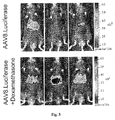
- C57B6 mice received 10 11 vector genomes/mouse AAV8 expressing firefly luciferase under transcriptional control of CMV enhancer/chicken ⁇ -actin promoter via tail vein; groups receiving dexamethasone therapy were treated with 0.2 mg/animal intraperitoneally 1-2 hours prior to AAV delivery.
- Four dogs (2 female/2 male) were also administered bortezomib (1.3 mg/m 2 ) at the time of vector administration.
- One male and one female dog were administered IV dexamethasone (1.0 mg/kg) at the time of vector and bortezomib administration.
- Nuclear and cytoplasmic fractions were isolated as described 45 with slight modification.
- Mouse livers were perfused with phosphate buffered saline (PBS) and minced on ice and homogenized (buffer: 250mM sucrose, 50mM Tris-HCl (pH 7.5), 25mM KCI, 5mM MgCl 2 , 0.5% NP-40, 1 mM phenylmethylsulfonyl fluoride (PMSF)), using a Dounce homogenizer.
- Nuclei and other organelles were collected by centrifugation for 10 min at 3,000 rpm in a Sorvall clinical centrifuge. The supernatant was filtered using a 40- ⁇ m-pore-size filter and used as the cytoplasm.
- the multilayered pellet was processed further into nuclear extract dissolved into distilled water.
- mice were injected intraperitoneally with 150 ⁇ g/g D-luciferin (Biotium, Hayward, CA) in PBS. Bioluminescence imaging with a CCD camera (IVIS, Xenogen) was initiated exactly 15 min after injection. Signal intensities from live whole body imaging is expressed as total photon flux (photons/s/cm 2 ).
- Quantitative PCR of canine factor VIII and of firefly luciferase transgenes
- Q-PCR for cFVIII DNA was performed on genomic DNA isolated from mouse liver 11 using iQ SYBR Green kit from Bio-Rad (Hercules, CA) at two weeks after factor VIII vector delivery.
- the copy number of cFVIII DNA was quantified against standards generated with linearized plasmid encoding canine BDD FVIII DNA serially diluted in pooled genomic DNAs from naive C57 mice, from 1 ⁇ 10 7 to 1 copy/reaction and normalized for mouse ⁇ -actin.
- the primer sequences used for canine FVIII were identical to those previously described 11,17 .
- Q-PCR for luciferase DNA was performed at one week after luciferase vector delivery.
- mice Following bioluminescence imaging, the mice were sacrificed and genomic DNA was extracted from liver, brain, heart, lung, spleen, stomach, kidney, ileum, muscle, and testis.
- Q-PCR of luciferase and beta actin was performed on genomic DNAs isolated using iQ SYBR Green kit from Bio-Rad (Hercules, CA). The copy numbers of luciferase and canine FVIII gene products were quantified and normalized for mouse ⁇ -actin and expressed as vector copies per cell. All Q-PCR reactions were performed on iCycler (Bio-Rad Laboratories, Hercules, CA).
- a vector carrying a genome approximately the same size as wild type AAV was used for the correction of hemophilia B in a mouse model.
- AAV vectors carrying a human factor IX expression cassette driven by the CMV enhancer/Chicken ⁇ -actin promoter, described previously 22 was infused via the portal vein to hemophilia B mice with or without a single dose of bortezomib at the time of the vector delivery.
- ssAAV2.FIX-treated mice averaged 2.4% factor IX activity over the 20 weeks of observation.
- the Factor VIII cDNA ( ⁇ 7.1 kb) contains a large B domain ( ⁇ 2.7 kb) that does not contribute to blood clotting; once the majority of sequences coding for the B-domain are removed, the cFVIII cDNA sequence of 4.5 kb can be incorporated in AAV vectors. Nevertheless, after the addition of promoter and other required transcriptional regulatory elements these vectors produce an oversized AAV expression cassette of 5.6 kb. AAV2 and AAV8 vectors were generated using the 5.6 kb FVIII expression plasmid.
- Virus was characterized for total particle number by qPCR, virion integrity by electron microscopy, capsid ratio by silver stain, and DNA genome size by alakaine gel electrophoresis. All vector parameters were consistent between multiple production runs for both mouse and canine studies with previous studies.
- proteasome inhibitors MG-132 also called Z-LLL
- bortezomib were chosen so that MG-132 could be compared with the clinically approved but untested agent, bortezomib.
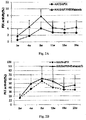
- mice receiving the AAV8 vector alone had canine FVIII detectable at the earliest examination at week one after transduction.
- canine factor VIII peaked at 8 weeks, then began to decrease.
- the improvement of factor VIII expression was not as significant or persistent as was observed using bortezomib.
- Bortezomib co-administration improved initial and sustained canine factor VIII expression.
- factor VIII expression was 259% higher in mice receiving the single dose of bortezomib when compared to mice receiving AAV8.cFVIII vector alone.
- Proteasome inhibitor increase nuclear accumulation of genomes in vivo
- Hemophilia A mice were next treated with a combination therapy of factor VIII vector and proteasome inhibitor and the abundance of vector sequences in the cytoplasm and nuclear compartment were compared.
- Two weeks after vector administration with or without bortezomib total liver cell cytoplasmic and nuclear fractions from AAV8.FVIII-treated mice were purified and examined to determine the location of intracellular accumulation of vector genomes.
- the ratio of genomes persisting in the nucleus rather than cytoplasm was increased by the single dose of bortezomib, supporting a role in influencing viral infection.
- Dexamethasone reduces ectopic AAV vector scatter to increase proportional hepatic transduction during liver-directed gene therapy
- mice treated with AAV8.cFVIII and the single dose of bortezomib exceeded even at the first timepoint (week 1) the peak value of the vector-only group, and maintained cFVIII activity of >50% normal throughout one year of observation (cFVIII activity 0.67 ⁇ 0.58 IU/ml at week 52), as shown in Figure 4 .
- the overall pattern of expression in bortezomib-treated mice was similar with and without the addition of dexamethasone.
- mice in each of the treatment groups developed FVIII-neutralizing antibodies at various times 2-20 weeks after vector exposure, despite cyclophosphamide dosing performed per the schedule outlined by Sarkar et al.
- 6 Inhibitor titers were near the lower limits of detection in the few AAV2.cFVIII-treated mice that developed antibodies, and the significance of these borderline titers is unclear.
- 16 inhibitors developed more frequently with AAV8.cFVIII than with AAV2.cFVIII, being seen in 6/10 mice receiving AAV8.cFVIII without proteasome inhibitor.
- WBCT Whole Blood Clotting Time
- the time to clot in hemostatically normal dogs is a WBCT of 6 - 10 minutes; the WBCT in untreated hemophilia A dogs is greater than 20 minutes.
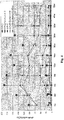
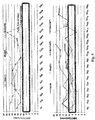
- the mean WBCT at one week after delivery of AAV8 alone was >16 minutes, as compared to 8.8 minutes in dogs receiving bortezomib + AAV8 ( Figure 5 and Table 4 ).
- the effect of the single dose of bortezomib was evident for months.
- Dogs that received bortezomib with vector had a mean of 0.07 ⁇ 0.08 hemorrhages/month, which was a striking improvement compared to matched, untreated hemophilic dogs ( P ⁇ 0.0001) and vector-only treated dogs ( P ⁇ 0.003).
- Bortezomib + vector dogs have had 1 and 2 spontaneous bleeds, respectively.
- the vector only dogs had 12 and 16 bleeds before each experiencing a fatal hemorrhage at 16 and 25 months after vector treatment, respectively.
- the canine factor VIII cDNA sequence incorporated in the vector was engineered for optimal mammalian codon usage and GC nucleotide content.
- Mice received vector infusion to portal vein either alone or in combination with 0.5 mg/kg of proteasome inhibitor bortezomib (PI). While it has been established that codon-optimization increases expression from clotting factor VIII and IX vectors, it was not established whether PI could further augment the more efficient codon-optimized vectors.
- the augmented expression of codon-optimized factor VIII following the single administration of bortezomib ( Figure 6 , upper line), persisted throughout the length of the study (12 weeks).
- Mice receiving treatment with AAV serotype 5 encoding an oversized transgene Factor VIII vector and subsequently injured were partially protected from pathologic changes (synovitis score 3.89 ⁇ 0.86), but coadministration of PI with the AAV5.FVIII resulted in the greatest protection from subsequent injury (synovitis score 2.77 ⁇ 0.45) ( Figure 7 ).
- factor VIII activity cannot be detected within the levels of sensitivity of the one-stage factor VIII activity assay ( ⁇ 1 % factor VIII).
- synovial fluid from mice treated with PI at the time of AAV5.FVIII delivery has measurable factor VIII activity (1.1-2.3% activity).
Landscapes
- Health & Medical Sciences (AREA)
- Life Sciences & Earth Sciences (AREA)
- Chemical & Material Sciences (AREA)
- Engineering & Computer Science (AREA)
- General Health & Medical Sciences (AREA)
- Medicinal Chemistry (AREA)
- Veterinary Medicine (AREA)
- Organic Chemistry (AREA)
- Pharmacology & Pharmacy (AREA)
- Animal Behavior & Ethology (AREA)
- Bioinformatics & Cheminformatics (AREA)
- Public Health (AREA)
- Genetics & Genomics (AREA)
- Chemical Kinetics & Catalysis (AREA)
- General Chemical & Material Sciences (AREA)
- Nuclear Medicine, Radiotherapy & Molecular Imaging (AREA)
- General Engineering & Computer Science (AREA)
- Biomedical Technology (AREA)
- Zoology (AREA)
- Wood Science & Technology (AREA)
- Biotechnology (AREA)
- Epidemiology (AREA)
- Biophysics (AREA)
- Plant Pathology (AREA)
- Biochemistry (AREA)
- Virology (AREA)
- Physics & Mathematics (AREA)
- Microbiology (AREA)
- Molecular Biology (AREA)
- Physical Education & Sports Medicine (AREA)
- Diabetes (AREA)
- Orthopedic Medicine & Surgery (AREA)
- Neurology (AREA)
- Hematology (AREA)
- Medicines Containing Material From Animals Or Micro-Organisms (AREA)
- Medicines That Contain Protein Lipid Enzymes And Other Medicines (AREA)
Applications Claiming Priority (2)
| Application Number | Priority Date | Filing Date | Title |
|---|---|---|---|
| US30199810P | 2010-02-05 | 2010-02-05 | |
| PCT/US2011/023715 WO2011097456A2 (en) | 2010-02-05 | 2011-02-04 | Compositions and methods for enhanced parvovirus transduction |
Publications (3)
| Publication Number | Publication Date |
|---|---|
| EP2531604A2 EP2531604A2 (en) | 2012-12-12 |
| EP2531604A4 EP2531604A4 (en) | 2013-07-10 |
| EP2531604B1 true EP2531604B1 (en) | 2017-04-05 |
Family
ID=44356082
Family Applications (1)
| Application Number | Title | Priority Date | Filing Date |
|---|---|---|---|
| EP11740407.9A Active EP2531604B1 (en) | 2010-02-05 | 2011-02-04 | Compositions and methods for enhanced parvovirus transduction |
Country Status (6)
| Country | Link |
|---|---|
| US (1) | US9169492B2 (enExample) |
| EP (1) | EP2531604B1 (enExample) |
| JP (1) | JP6141021B2 (enExample) |
| CA (1) | CA2788682C (enExample) |
| ES (1) | ES2628889T3 (enExample) |
| WO (1) | WO2011097456A2 (enExample) |
Cited By (8)
| Publication number | Priority date | Publication date | Assignee | Title |
|---|---|---|---|---|
| US10335466B2 (en) | 2014-11-05 | 2019-07-02 | Voyager Therapeutics, Inc. | AADC polynucleotides for the treatment of parkinson's disease |
| US10570395B2 (en) | 2014-11-14 | 2020-02-25 | Voyager Therapeutics, Inc. | Modulatory polynucleotides |
| US10597660B2 (en) | 2014-11-14 | 2020-03-24 | Voyager Therapeutics, Inc. | Compositions and methods of treating amyotrophic lateral sclerosis (ALS) |
| US11512327B2 (en) | 2017-08-03 | 2022-11-29 | Voyager Therapeutics, Inc. | Compositions and methods for delivery of AAV |
| US11697825B2 (en) | 2014-12-12 | 2023-07-11 | Voyager Therapeutics, Inc. | Compositions and methods for the production of scAAV |
| US11759506B2 (en) | 2017-06-15 | 2023-09-19 | Voyager Therapeutics, Inc. | AADC polynucleotides for the treatment of Parkinson's disease |
| US12084659B2 (en) | 2016-05-18 | 2024-09-10 | Voyager Therapeutics, Inc. | Modulatory polynucleotides |
| US12281321B2 (en) | 2018-09-28 | 2025-04-22 | Voyager Therapeutics, Inc. | Frataxin expression constructs having engineered promoters and methods of use thereof |
Families Citing this family (60)
| Publication number | Priority date | Publication date | Assignee | Title |
|---|---|---|---|---|
| WO2011100330A2 (en) * | 2010-02-12 | 2011-08-18 | The United States Of America, As Represented By The Secretary, Department Of Health & Human Services | Compositions and methods for preventing or treating a human parvovirus infection |
| AU2014251099B2 (en) * | 2013-04-08 | 2019-01-17 | The University Of Kansas | Chimeric adeno-associated virus/ bocavirus parvovirus vector |
| US10577627B2 (en) | 2014-06-09 | 2020-03-03 | Voyager Therapeutics, Inc. | Chimeric capsids |
| WO2016110518A1 (en) * | 2015-01-07 | 2016-07-14 | Universitat Autònoma De Barcelona | Single-vector gene construct comprising insulin and glucokinase genes |
| KR102698387B1 (ko) * | 2015-02-06 | 2024-08-22 | 더 유니버시티 오브 노쓰 캐롤라이나 엣 채플 힐 | 최적화된 인간 응고 인자 viii 유전자 발현 카세트 및 그의 용도 |
| DK3402530T3 (da) * | 2016-01-13 | 2020-11-23 | Genzyme Corp | Rekombinante aav-vektorer, der udtrykker knoglebeskyttende gener, herunder has2 og lubricin, som er anvendelige til behandling af osteoarthritis og relaterede ledtilstande hos pattedyr |
| US11702672B2 (en) | 2016-02-08 | 2023-07-18 | University Of Iowa Research Foundation | Methods to produce chimeric adeno-associated virus/bocavirus parvovirus |
| EA201892006A1 (ru) | 2016-03-07 | 2019-04-30 | Юниверсити Оф Айова Рисерч Фаундейшн | Aav-опосредованная экспрессия с использованием синтетического промотора и энхансера |
| US11976116B2 (en) | 2016-04-14 | 2024-05-07 | 2Seventy Bio, Inc. | Salvage chimeric antigen receptor systems |
| US11326182B2 (en) | 2016-04-29 | 2022-05-10 | Voyager Therapeutics, Inc. | Compositions for the treatment of disease |
| EP3448987A4 (en) | 2016-04-29 | 2020-05-27 | Voyager Therapeutics, Inc. | COMPOSITIONS FOR TREATING A DISEASE |
| BR112018072537A2 (pt) * | 2016-05-03 | 2019-03-26 | Wayne State University | método de reforço da liberação de um gene no olho através de mediação viral usando inibidores de proteassoma |
| KR102427379B1 (ko) | 2016-05-18 | 2022-08-02 | 보이저 테라퓨틱스, 인크. | 헌팅톤 질환을 치료하기 위한 조성물 및 방법 |
| WO2017205739A1 (en) | 2016-05-26 | 2017-11-30 | University Of Iowa Research Foundation | cis AND trans REQUIREMENTS FOR TERMINAL RESOLUTION OF HUMAN BOCAVIRUS 1 |
| CA3034094A1 (en) | 2016-08-16 | 2018-02-22 | Bluebird Bio, Inc. | Il-10 receptor alpha homing endonuclease variants, compositions, and methods of use |
| MA46059A (fr) | 2016-08-23 | 2019-07-03 | Bluebird Bio Inc | Variants de l'endonucléase homing tim3, compositions et procédés d'utilisation |
| EP3831281B1 (en) | 2016-08-30 | 2026-02-25 | The Regents of The University of California | Devices and systems for biomedical targeting and delivery |
| MA46389A (fr) | 2016-09-08 | 2019-07-17 | Bluebird Bio Inc | Variants de l'endonucléase homing pd1, compositions et procédés d'utilisation |
| JP7060591B2 (ja) | 2016-10-17 | 2022-04-26 | 2セブンティ バイオ インコーポレイテッド | TGFβR2エンドヌクレアーゼバリアント、組成物、および使用方法 |
| IL266628B2 (en) | 2016-11-17 | 2024-06-01 | Bluebird Bio Inc | TGFBeta signal converter |
| US11142775B2 (en) | 2017-01-13 | 2021-10-12 | University Of Iowa Research Foundation | Bocaparvovirus small noncoding RNA and uses thereof |
| US10436089B2 (en) * | 2017-01-18 | 2019-10-08 | Cummins Emission Solutions Inc. | Radio frequency sensor in an exhaust aftertreatment system |
| JP7236398B2 (ja) | 2017-02-15 | 2023-03-09 | 2セブンティ バイオ インコーポレイテッド | ドナー修復鋳型多重ゲノム編集 |
| WO2018204786A1 (en) | 2017-05-05 | 2018-11-08 | Voyager Therapeutics, Inc. | Compositions and methods of treating amyotrophic lateral sclerosis (als) |
| AU2018261003A1 (en) | 2017-05-05 | 2019-11-14 | Voyager Therapeutics, Inc. | Compositions and methods of treating Huntington's Disease |
| AU2018273979B2 (en) | 2017-05-25 | 2024-10-17 | Regeneron Pharmaceuticals, Inc. | CBLB endonuclease variants, compositions, and methods of use |
| EP3654860A1 (en) | 2017-07-17 | 2020-05-27 | Voyager Therapeutics, Inc. | Trajectory array guide system |
| CA3096821A1 (en) | 2017-09-27 | 2019-04-04 | Inozyme Pharma, Inc. | Methods of improving cardiovascular function and treating cardiovascular disease using a recombinant ectonucleotide pyrophosphatase phosphodiesterase (npp1) |
| WO2019067840A1 (en) | 2017-09-29 | 2019-04-04 | Voyager Therapeutics, Inc. | RESTRICTING CENTRAL AND PERIPHERAL NEUROLOGICAL PHENOTYPE FROM FRIEDREICH ATAXIA BY INTRAVENOUS ADMINISTRATION |
| WO2019070974A1 (en) | 2017-10-04 | 2019-04-11 | Bluebird Bio, Inc. | PCSK9 ENDONUCLEASE VARIANTS, COMPOSITIONS AND METHODS OF USE |
| TW202413649A (zh) | 2017-10-16 | 2024-04-01 | 美商航海家醫療公司 | 肌萎縮性脊髓側索硬化症(als)之治療 |
| WO2019079242A1 (en) | 2017-10-16 | 2019-04-25 | Voyager Therapeutics, Inc. | TREATMENT OF AMYOTROPHIC LATERAL SCLEROSIS (ALS) |
| WO2019200013A1 (en) * | 2018-04-11 | 2019-10-17 | Cancer Targeting Systems, Inc. | Therapeutic constructs for treating cancer |
| CA3099306A1 (en) | 2018-05-15 | 2019-11-21 | Voyager Therapeutics, Inc. | Compositions and methods for the treatment of parkinson's disease |
| ES2977415T3 (es) | 2018-06-14 | 2024-08-23 | Regeneron Pharma | Receptores de antígenos quiméricos contra CD79A |
| WO2020072059A1 (en) | 2018-10-04 | 2020-04-09 | Bluebird Bio, Inc. | Cblb endonuclease variants, compositions, and methods of use |
| US20220054656A1 (en) * | 2018-11-16 | 2022-02-24 | Asklepios Biopharmaceutical, Inc. | Therapeutic adeno-associated virus for treating pompe disease |
| US12404500B2 (en) | 2018-12-10 | 2025-09-02 | Novo Nordisk A/S | Homing endonuclease variants |
| KR20210102299A (ko) | 2018-12-10 | 2021-08-19 | 블루버드 바이오, 인코포레이티드. | Pdcd-1 호밍 엔도뉴클레아제 변이체 |
| JP7636650B2 (ja) | 2018-12-14 | 2025-02-27 | リジェネロン・ファーマシューティカルズ・インコーポレイテッド | 二量体形成剤調節性免疫受容体複合体 |
| CA3137078A1 (en) * | 2019-04-15 | 2020-10-22 | University Of Iowa Research Foundation | Methods and compositions for transgene expression |
| WO2021067598A1 (en) * | 2019-10-04 | 2021-04-08 | Ultragenyx Pharmaceutical Inc. | Methods for improved therapeutic use of recombinant aav |
| EP4132955A2 (en) | 2020-04-10 | 2023-02-15 | SOLA Biosciences LLC | Compositions and methods for the treatment of protein aggregation disorders |
| JP7894321B2 (ja) | 2020-04-28 | 2026-07-23 | ソラ・バイオサイエンシズ・エルエルシー | Tdp-43プロテイノパチーの処置のための組成物および方法 |
| US20230234997A1 (en) | 2020-06-05 | 2023-07-27 | Sola Biosciences Llc | Compositions and Methods for the Treatment of Synucleinopathies |
| CN116157145A (zh) | 2020-06-09 | 2023-05-23 | 依诺兹梅制药公司 | 可溶性enpp1或enpp3蛋白及其用途 |
| JP2023545731A (ja) | 2020-10-07 | 2023-10-31 | アスクレピオス バイオファーマシューティカル, インコーポレイテッド | 肢帯型2i(lgmd2i)を含むジストログリカノパチー障害を処置するためのフクチン関連タンパク質(fkrp)の治療的アデノ随伴ウイルス送達 |
| AU2021356692A1 (en) * | 2020-10-08 | 2023-05-04 | Biomarin Pharmaceutical Inc. | Liver specific production of enpp1 or enpp3 |
| CA3199433A1 (en) | 2020-10-26 | 2022-05-05 | Sola Biosciences Llc | Compositions and methods for the treatment of alzheimer's disease |
| JP2024515626A (ja) | 2021-04-16 | 2024-04-10 | アスクレピオス バイオファーマシューティカル, インコーポレイテッド | 血液脳関門を横断し低減された液性応答を惹起する合理的ポリプロイドaavビリオン |
| WO2023288267A1 (en) | 2021-07-14 | 2023-01-19 | 2Seventy Bio, Inc. | Engineered t cell receptors fused to binding domains from antibodies |
| US20250042958A1 (en) | 2021-10-08 | 2025-02-06 | Sola Biosciences Llc | Compositions and methods for the treatment of proteopathies |
| JP2024537178A (ja) | 2021-10-08 | 2024-10-10 | ソラ・バイオサイエンシズ・エルエルシー | p53媒介性癌の処置のための組成物および方法 |
| JP2025513801A (ja) | 2022-04-08 | 2025-04-30 | リジェネロン・ファーマシューティカルズ・インコーポレイテッド | 多部位受容体及びシグナル伝達複合体 |
| AU2023275764A1 (en) | 2022-05-26 | 2024-12-05 | Regeneron Pharmaceuticals, Inc. | Compositions for maintaining lentiviral vector and uses thereof |
| WO2024200573A1 (en) | 2023-03-27 | 2024-10-03 | LAVA Therapeutics N.V. | Nectin-4 binding agents and methods of use |
| WO2025012118A2 (en) | 2023-07-07 | 2025-01-16 | LAVA Therapeutics N.V. | 5t4 binding agents and methods of use |
| CN122602998A (zh) | 2024-01-16 | 2026-08-18 | 诺和诺德股份有限公司 | 靶向白蛋白的内切核酸酶、组合物和使用方法 |
| WO2025256977A1 (en) | 2024-06-13 | 2025-12-18 | Bayer Aktiengesellschaft | Novel igm and igg cleaving enzymes |
| WO2025256978A1 (en) | 2024-06-13 | 2025-12-18 | Bayer Aktiengesellschaft | Variants of igm and igg cleaving enzymes |
Family Cites Families (10)
| Publication number | Priority date | Publication date | Assignee | Title |
|---|---|---|---|---|
| US6436392B1 (en) | 1998-05-20 | 2002-08-20 | University Of Iowa Research Foundation | Adeno-associated virus vectors |
| US6924365B1 (en) | 1998-09-29 | 2005-08-02 | Transkaryotic Therapies, Inc. | Optimized messenger RNA |
| CA2376400A1 (en) * | 1999-06-08 | 2000-12-14 | University Of Iowa Research Foundation | Compounds and methods to enhance raav transduction |
| US7241447B1 (en) | 1999-10-07 | 2007-07-10 | University Of Iowa Research Foundation | Adeno-associated virus vectors and uses thereof |
| EP1608763A2 (en) | 2003-03-31 | 2005-12-28 | University Of Iowa Research Foundation | Compounds and methods to enhance raav transduction |
| US7943374B2 (en) * | 2005-08-21 | 2011-05-17 | Markus Hildinger | Super-size adeno-associated viral vector harboring a recombinant genome larger than 5.7 kb |
| WO2007092944A2 (en) * | 2006-02-08 | 2007-08-16 | Introgen Therapeutics, Inc. | Compositions and methods involving gene therapy and proteasome modulation |
| WO2007149852A2 (en) | 2006-06-19 | 2007-12-27 | Asklepios Biopharmaceutical, Inc. | Modified factor viii and factor ix genes and vectors for gene therapy |
| WO2008088895A2 (en) * | 2007-01-18 | 2008-07-24 | University Of Missouri-Columbia | Synthetic mini/micro-dystrophin genes to restore nnos to the sarcolemma |
| CA2683804A1 (en) * | 2007-04-13 | 2008-10-23 | Dana Farber Cancer Institute, Inc. | Receptor tyrosine kinase profiling |
-
2011
- 2011-02-04 US US13/575,975 patent/US9169492B2/en active Active
- 2011-02-04 JP JP2012552100A patent/JP6141021B2/ja active Active
- 2011-02-04 CA CA2788682A patent/CA2788682C/en active Active
- 2011-02-04 WO PCT/US2011/023715 patent/WO2011097456A2/en not_active Ceased
- 2011-02-04 EP EP11740407.9A patent/EP2531604B1/en active Active
- 2011-02-04 ES ES11740407.9T patent/ES2628889T3/es active Active
Non-Patent Citations (1)
| Title |
|---|
| NATHWANI AMIT C ET AL: "Self-complementary adeno-associated virus vectors containing a novel liver-specific human factor IX expression cassette enable highly efficient transduction of murine and nonhuman primate liver.", BLOOD 1 APR 2006, vol. 107, no. 7, 1 April 2006 (2006-04-01), pages 2653 - 2661, ISSN: 0006-4971 * |
Cited By (15)
| Publication number | Priority date | Publication date | Assignee | Title |
|---|---|---|---|---|
| US11027000B2 (en) | 2014-11-05 | 2021-06-08 | Voyager Therapeutics, Inc. | AADC polynucleotides for the treatment of Parkinson's disease |
| US10335466B2 (en) | 2014-11-05 | 2019-07-02 | Voyager Therapeutics, Inc. | AADC polynucleotides for the treatment of parkinson's disease |
| US10570395B2 (en) | 2014-11-14 | 2020-02-25 | Voyager Therapeutics, Inc. | Modulatory polynucleotides |
| US10597660B2 (en) | 2014-11-14 | 2020-03-24 | Voyager Therapeutics, Inc. | Compositions and methods of treating amyotrophic lateral sclerosis (ALS) |
| US10920227B2 (en) | 2014-11-14 | 2021-02-16 | Voyager Therapeutics, Inc. | Compositions and methods of treating amyotrophic lateral sclerosis (ALS) |
| US11198873B2 (en) | 2014-11-14 | 2021-12-14 | Voyager Therapeutics, Inc. | Modulatory polynucleotides |
| US12123002B2 (en) | 2014-11-14 | 2024-10-22 | Voyager Therapeutics, Inc. | Compositions and methods of treating amyotrophic lateral sclerosis (ALS) |
| US11542506B2 (en) | 2014-11-14 | 2023-01-03 | Voyager Therapeutics, Inc. | Compositions and methods of treating amyotrophic lateral sclerosis (ALS) |
| US12071625B2 (en) | 2014-11-14 | 2024-08-27 | Voyager Therapeutics, Inc. | Modulatory polynucleotides |
| US11697825B2 (en) | 2014-12-12 | 2023-07-11 | Voyager Therapeutics, Inc. | Compositions and methods for the production of scAAV |
| US12084659B2 (en) | 2016-05-18 | 2024-09-10 | Voyager Therapeutics, Inc. | Modulatory polynucleotides |
| US11759506B2 (en) | 2017-06-15 | 2023-09-19 | Voyager Therapeutics, Inc. | AADC polynucleotides for the treatment of Parkinson's disease |
| US11512327B2 (en) | 2017-08-03 | 2022-11-29 | Voyager Therapeutics, Inc. | Compositions and methods for delivery of AAV |
| US12305189B2 (en) | 2017-08-03 | 2025-05-20 | Voyager Therapeutics, Inc. | Compositions and methods for delivery of AAV |
| US12281321B2 (en) | 2018-09-28 | 2025-04-22 | Voyager Therapeutics, Inc. | Frataxin expression constructs having engineered promoters and methods of use thereof |
Also Published As
| Publication number | Publication date |
|---|---|
| WO2011097456A2 (en) | 2011-08-11 |
| JP6141021B2 (ja) | 2017-06-07 |
| EP2531604A4 (en) | 2013-07-10 |
| CA2788682C (en) | 2019-03-05 |
| ES2628889T3 (es) | 2017-08-04 |
| WO2011097456A3 (en) | 2011-12-08 |
| US9169492B2 (en) | 2015-10-27 |
| JP2013518899A (ja) | 2013-05-23 |
| EP2531604A2 (en) | 2012-12-12 |
| CA2788682A1 (en) | 2011-08-11 |
| US20130012574A1 (en) | 2013-01-10 |
Similar Documents
| Publication | Publication Date | Title |
|---|---|---|
| US9169492B2 (en) | Compositions and methods for enhanced parvovirus transduction | |
| US7867484B2 (en) | Heparin and heparan sulfate binding chimeric vectors | |
| JP7132934B2 (ja) | ポリプロイド性アデノ随伴ウイルスベクターならびにその作製および使用の方法 | |
| JP2022065003A (ja) | パルボウイルスベクターの高められた送達のための改変キャプシドタンパク質 | |
| Li et al. | Adeno-associated virus vectors: potential applications for cancer gene therapy | |
| US7892809B2 (en) | Chimeric vectors | |
| KR20160026841A (ko) | 스터퍼/필러 폴리누클레오티드 서열을 포함하는 벡터 및 사용 방법 | |
| KR20160033217A (ko) | 변종 aav 및 조성물, 세포, 기관 및 조직으로의 유전자 전이를 위한 방법 및 용도 | |
| EA038695B1 (ru) | Способы и композиции для переноса генов по сосудистой сети | |
| CN111918966B (zh) | 用于抑制与aav转导有关的先天免疫应答的方法和组合物 | |
| CA3200014A1 (en) | Novel compositions with tissue-specific targeting motifs and compositions containing same | |
| EP4146673A1 (en) | Modified adeno-associated virus 5 capsids and uses thereof | |
| JP2021522775A (ja) | 合理的なポリプロイド性アデノ随伴ウイルスベクターならびにその製造法および使用法 | |
| WO2022155482A1 (en) | Aav vectors targeting t-cells | |
| CN115960921A (zh) | 一组肝靶向新型腺相关病毒的获得及其应用 | |
| KR20220053575A (ko) | 항체 결합 및 중화 항체 억제를 위한 조성물 및 방법 | |
| US20230304033A1 (en) | Modified adeno-associated virus vectors that evade neutralizing antibodies and uses thereof | |
| JP2023510266A (ja) | 合成アデノ随伴ウイルス逆位末端反復、およびプロモーターとしてのそれらの使用の方法 | |
| WO2021102215A1 (en) | Methods and compositions for increasing transduction efficiency with cell membrane fusion proteins | |
| HK40038920A (en) | Methods and compositions for inhibition of innate immune response associated with aav transduction | |
| HK40082878A (en) | Synthetic adeno-associated virus inverted terminal repeats and methods of their use as promoters | |
| HK40038920B (en) | Methods and compositions for inhibition of innate immune response associated with aav transduction | |
| Liang | AAV-Nrf2 Mediated Rescue of Oxidative Stress in Mouse Models |
Legal Events
| Date | Code | Title | Description |
|---|---|---|---|
| PUAI | Public reference made under article 153(3) epc to a published international application that has entered the european phase |
Free format text: ORIGINAL CODE: 0009012 |
|
| 17P | Request for examination filed |
Effective date: 20120903 |
|
| AK | Designated contracting states |
Kind code of ref document: A2 Designated state(s): AL AT BE BG CH CY CZ DE DK EE ES FI FR GB GR HR HU IE IS IT LI LT LU LV MC MK MT NL NO PL PT RO RS SE SI SK SM TR |
|
| DAX | Request for extension of the european patent (deleted) | ||
| A4 | Supplementary search report drawn up and despatched |
Effective date: 20130611 |
|
| RIC1 | Information provided on ipc code assigned before grant |
Ipc: C12N 15/864 20060101AFI20130531BHEP Ipc: A61P 7/04 20060101ALI20130531BHEP Ipc: C12N 15/33 20060101ALI20130531BHEP Ipc: A61K 31/517 20060101ALI20130531BHEP Ipc: A61P 21/00 20060101ALI20130531BHEP Ipc: A61K 48/00 20060101ALI20130531BHEP |
|
| 17Q | First examination report despatched |
Effective date: 20151112 |
|
| GRAP | Despatch of communication of intention to grant a patent |
Free format text: ORIGINAL CODE: EPIDOSNIGR1 |
|
| INTG | Intention to grant announced |
Effective date: 20160906 |
|
| GRAS | Grant fee paid |
Free format text: ORIGINAL CODE: EPIDOSNIGR3 |
|
| GRAA | (expected) grant |
Free format text: ORIGINAL CODE: 0009210 |
|
| AK | Designated contracting states |
Kind code of ref document: B1 Designated state(s): AL AT BE BG CH CY CZ DE DK EE ES FI FR GB GR HR HU IE IS IT LI LT LU LV MC MK MT NL NO PL PT RO RS SE SI SK SM TR |
|
| REG | Reference to a national code |
Ref country code: GB Ref legal event code: FG4D |
|
| REG | Reference to a national code |
Ref country code: CH Ref legal event code: EP |
|
| REG | Reference to a national code |
Ref country code: AT Ref legal event code: REF Ref document number: 881883 Country of ref document: AT Kind code of ref document: T Effective date: 20170415 |
|
| REG | Reference to a national code |
Ref country code: IE Ref legal event code: FG4D |
|
| REG | Reference to a national code |
Ref country code: DE Ref legal event code: R096 Ref document number: 602011036664 Country of ref document: DE |
|
| REG | Reference to a national code |
Ref country code: NL Ref legal event code: FP |
|
| REG | Reference to a national code |
Ref country code: CH Ref legal event code: NV Representative=s name: MICHELI AND CIE SA, CH |
|
| REG | Reference to a national code |
Ref country code: ES Ref legal event code: FG2A Ref document number: 2628889 Country of ref document: ES Kind code of ref document: T3 Effective date: 20170804 |
|
| REG | Reference to a national code |
Ref country code: LT Ref legal event code: MG4D |
|
| PG25 | Lapsed in a contracting state [announced via postgrant information from national office to epo] |
Ref country code: NO Free format text: LAPSE BECAUSE OF FAILURE TO SUBMIT A TRANSLATION OF THE DESCRIPTION OR TO PAY THE FEE WITHIN THE PRESCRIBED TIME-LIMIT Effective date: 20170705 Ref country code: HR Free format text: LAPSE BECAUSE OF FAILURE TO SUBMIT A TRANSLATION OF THE DESCRIPTION OR TO PAY THE FEE WITHIN THE PRESCRIBED TIME-LIMIT Effective date: 20170405 Ref country code: LT Free format text: LAPSE BECAUSE OF FAILURE TO SUBMIT A TRANSLATION OF THE DESCRIPTION OR TO PAY THE FEE WITHIN THE PRESCRIBED TIME-LIMIT Effective date: 20170405 Ref country code: GR Free format text: LAPSE BECAUSE OF FAILURE TO SUBMIT A TRANSLATION OF THE DESCRIPTION OR TO PAY THE FEE WITHIN THE PRESCRIBED TIME-LIMIT Effective date: 20170706 |
|
| PG25 | Lapsed in a contracting state [announced via postgrant information from national office to epo] |
Ref country code: SE Free format text: LAPSE BECAUSE OF FAILURE TO SUBMIT A TRANSLATION OF THE DESCRIPTION OR TO PAY THE FEE WITHIN THE PRESCRIBED TIME-LIMIT Effective date: 20170405 Ref country code: IS Free format text: LAPSE BECAUSE OF FAILURE TO SUBMIT A TRANSLATION OF THE DESCRIPTION OR TO PAY THE FEE WITHIN THE PRESCRIBED TIME-LIMIT Effective date: 20170805 Ref country code: PL Free format text: LAPSE BECAUSE OF FAILURE TO SUBMIT A TRANSLATION OF THE DESCRIPTION OR TO PAY THE FEE WITHIN THE PRESCRIBED TIME-LIMIT Effective date: 20170405 Ref country code: BG Free format text: LAPSE BECAUSE OF FAILURE TO SUBMIT A TRANSLATION OF THE DESCRIPTION OR TO PAY THE FEE WITHIN THE PRESCRIBED TIME-LIMIT Effective date: 20170705 Ref country code: LV Free format text: LAPSE BECAUSE OF FAILURE TO SUBMIT A TRANSLATION OF THE DESCRIPTION OR TO PAY THE FEE WITHIN THE PRESCRIBED TIME-LIMIT Effective date: 20170405 Ref country code: RS Free format text: LAPSE BECAUSE OF FAILURE TO SUBMIT A TRANSLATION OF THE DESCRIPTION OR TO PAY THE FEE WITHIN THE PRESCRIBED TIME-LIMIT Effective date: 20170405 |
|
| REG | Reference to a national code |
Ref country code: DE Ref legal event code: R097 Ref document number: 602011036664 Country of ref document: DE |
|
| PG25 | Lapsed in a contracting state [announced via postgrant information from national office to epo] |
Ref country code: CZ Free format text: LAPSE BECAUSE OF FAILURE TO SUBMIT A TRANSLATION OF THE DESCRIPTION OR TO PAY THE FEE WITHIN THE PRESCRIBED TIME-LIMIT Effective date: 20170405 Ref country code: DK Free format text: LAPSE BECAUSE OF FAILURE TO SUBMIT A TRANSLATION OF THE DESCRIPTION OR TO PAY THE FEE WITHIN THE PRESCRIBED TIME-LIMIT Effective date: 20170405 Ref country code: SK Free format text: LAPSE BECAUSE OF FAILURE TO SUBMIT A TRANSLATION OF THE DESCRIPTION OR TO PAY THE FEE WITHIN THE PRESCRIBED TIME-LIMIT Effective date: 20170405 Ref country code: EE Free format text: LAPSE BECAUSE OF FAILURE TO SUBMIT A TRANSLATION OF THE DESCRIPTION OR TO PAY THE FEE WITHIN THE PRESCRIBED TIME-LIMIT Effective date: 20170405 Ref country code: RO Free format text: LAPSE BECAUSE OF FAILURE TO SUBMIT A TRANSLATION OF THE DESCRIPTION OR TO PAY THE FEE WITHIN THE PRESCRIBED TIME-LIMIT Effective date: 20170405 |
|
| PLBE | No opposition filed within time limit |
Free format text: ORIGINAL CODE: 0009261 |
|
| STAA | Information on the status of an ep patent application or granted ep patent |
Free format text: STATUS: NO OPPOSITION FILED WITHIN TIME LIMIT |
|
| REG | Reference to a national code |
Ref country code: FR Ref legal event code: PLFP Year of fee payment: 8 |
|
| PG25 | Lapsed in a contracting state [announced via postgrant information from national office to epo] |
Ref country code: SM Free format text: LAPSE BECAUSE OF FAILURE TO SUBMIT A TRANSLATION OF THE DESCRIPTION OR TO PAY THE FEE WITHIN THE PRESCRIBED TIME-LIMIT Effective date: 20170405 |
|
| 26N | No opposition filed |
Effective date: 20180108 |
|
| PG25 | Lapsed in a contracting state [announced via postgrant information from national office to epo] |
Ref country code: SI Free format text: LAPSE BECAUSE OF FAILURE TO SUBMIT A TRANSLATION OF THE DESCRIPTION OR TO PAY THE FEE WITHIN THE PRESCRIBED TIME-LIMIT Effective date: 20170405 |
|
| PG25 | Lapsed in a contracting state [announced via postgrant information from national office to epo] |
Ref country code: MC Free format text: LAPSE BECAUSE OF FAILURE TO SUBMIT A TRANSLATION OF THE DESCRIPTION OR TO PAY THE FEE WITHIN THE PRESCRIBED TIME-LIMIT Effective date: 20170405 |
|
| REG | Reference to a national code |
Ref country code: IE Ref legal event code: MM4A |
|
| PG25 | Lapsed in a contracting state [announced via postgrant information from national office to epo] |
Ref country code: LU Free format text: LAPSE BECAUSE OF NON-PAYMENT OF DUE FEES Effective date: 20180204 |
|
| PG25 | Lapsed in a contracting state [announced via postgrant information from national office to epo] |
Ref country code: IE Free format text: LAPSE BECAUSE OF NON-PAYMENT OF DUE FEES Effective date: 20180204 |
|
| REG | Reference to a national code |
Ref country code: AT Ref legal event code: UEP Ref document number: 881883 Country of ref document: AT Kind code of ref document: T Effective date: 20170405 |
|
| PG25 | Lapsed in a contracting state [announced via postgrant information from national office to epo] |
Ref country code: MT Free format text: LAPSE BECAUSE OF NON-PAYMENT OF DUE FEES Effective date: 20180204 |
|
| PG25 | Lapsed in a contracting state [announced via postgrant information from national office to epo] |
Ref country code: TR Free format text: LAPSE BECAUSE OF FAILURE TO SUBMIT A TRANSLATION OF THE DESCRIPTION OR TO PAY THE FEE WITHIN THE PRESCRIBED TIME-LIMIT Effective date: 20170405 |
|
| PG25 | Lapsed in a contracting state [announced via postgrant information from national office to epo] |
Ref country code: PT Free format text: LAPSE BECAUSE OF FAILURE TO SUBMIT A TRANSLATION OF THE DESCRIPTION OR TO PAY THE FEE WITHIN THE PRESCRIBED TIME-LIMIT Effective date: 20170405 Ref country code: HU Free format text: LAPSE BECAUSE OF FAILURE TO SUBMIT A TRANSLATION OF THE DESCRIPTION OR TO PAY THE FEE WITHIN THE PRESCRIBED TIME-LIMIT; INVALID AB INITIO Effective date: 20110204 |
|
| PG25 | Lapsed in a contracting state [announced via postgrant information from national office to epo] |
Ref country code: CY Free format text: LAPSE BECAUSE OF FAILURE TO SUBMIT A TRANSLATION OF THE DESCRIPTION OR TO PAY THE FEE WITHIN THE PRESCRIBED TIME-LIMIT Effective date: 20170405 Ref country code: MK Free format text: LAPSE BECAUSE OF NON-PAYMENT OF DUE FEES Effective date: 20170405 |
|
| PG25 | Lapsed in a contracting state [announced via postgrant information from national office to epo] |
Ref country code: AL Free format text: LAPSE BECAUSE OF FAILURE TO SUBMIT A TRANSLATION OF THE DESCRIPTION OR TO PAY THE FEE WITHIN THE PRESCRIBED TIME-LIMIT Effective date: 20170405 |
|
| P01 | Opt-out of the competence of the unified patent court (upc) registered |
Effective date: 20230525 |
|
| PGFP | Annual fee paid to national office [announced via postgrant information from national office to epo] |
Ref country code: NL Payment date: 20260116 Year of fee payment: 16 |
|
| REG | Reference to a national code |
Ref country code: CH Ref legal event code: U11 Free format text: ST27 STATUS EVENT CODE: U-0-0-U10-U11 (AS PROVIDED BY THE NATIONAL OFFICE) Effective date: 20260301 |
|
| PGFP | Annual fee paid to national office [announced via postgrant information from national office to epo] |
Ref country code: GB Payment date: 20260112 Year of fee payment: 16 |
|
| PGFP | Annual fee paid to national office [announced via postgrant information from national office to epo] |
Ref country code: ES Payment date: 20260305 Year of fee payment: 16 |
|
| PGFP | Annual fee paid to national office [announced via postgrant information from national office to epo] |
Ref country code: DE Payment date: 20260114 Year of fee payment: 16 |
|
| PGFP | Annual fee paid to national office [announced via postgrant information from national office to epo] |
Ref country code: AT Payment date: 20260127 Year of fee payment: 16 |
|
| PGFP | Annual fee paid to national office [announced via postgrant information from national office to epo] |
Ref country code: BE Payment date: 20260113 Year of fee payment: 16 Ref country code: FI Payment date: 20260213 Year of fee payment: 16 Ref country code: IT Payment date: 20260122 Year of fee payment: 16 |
|
| PGFP | Annual fee paid to national office [announced via postgrant information from national office to epo] |
Ref country code: FR Payment date: 20260108 Year of fee payment: 16 |
|
| PGFP | Annual fee paid to national office [announced via postgrant information from national office to epo] |
Ref country code: CH Payment date: 20260301 Year of fee payment: 16 |