EP2523402A1 - Kommunikationssystem, steuerungsvorrichtung, verfahren zur festlegung einer verarbeitungsregel, paketübertragungsverfahren und programm - Google Patents
Kommunikationssystem, steuerungsvorrichtung, verfahren zur festlegung einer verarbeitungsregel, paketübertragungsverfahren und programm Download PDFInfo
- Publication number
- EP2523402A1 EP2523402A1 EP11731778A EP11731778A EP2523402A1 EP 2523402 A1 EP2523402 A1 EP 2523402A1 EP 11731778 A EP11731778 A EP 11731778A EP 11731778 A EP11731778 A EP 11731778A EP 2523402 A1 EP2523402 A1 EP 2523402A1
- Authority
- EP
- European Patent Office
- Prior art keywords
- forwarding
- control device
- node
- path
- packet
- Prior art date
- Legal status (The legal status is an assumption and is not a legal conclusion. Google has not performed a legal analysis and makes no representation as to the accuracy of the status listed.)
- Withdrawn
Links
Images







Classifications
-
- H—ELECTRICITY
- H04—ELECTRIC COMMUNICATION TECHNIQUE
- H04L—TRANSMISSION OF DIGITAL INFORMATION, e.g. TELEGRAPHIC COMMUNICATION
- H04L45/00—Routing or path finding of packets in data switching networks
- H04L45/02—Topology update or discovery
- H04L45/036—Updating the topology between route computation elements, e.g. between OpenFlow controllers
-
- H—ELECTRICITY
- H04—ELECTRIC COMMUNICATION TECHNIQUE
- H04L—TRANSMISSION OF DIGITAL INFORMATION, e.g. TELEGRAPHIC COMMUNICATION
- H04L45/00—Routing or path finding of packets in data switching networks
- H04L45/02—Topology update or discovery
- H04L45/04—Interdomain routing, e.g. hierarchical routing
-
- H—ELECTRICITY
- H04—ELECTRIC COMMUNICATION TECHNIQUE
- H04L—TRANSMISSION OF DIGITAL INFORMATION, e.g. TELEGRAPHIC COMMUNICATION
- H04L49/00—Packet switching elements
- H04L49/25—Routing or path finding in a switch fabric
Definitions
- the present invention relates to a communication system, a control device, a processing rule setting method, a packet transmission method, and a program, and in particular relates to a communication system, a control device, a processing rule setting method used in the forwarding, a packet transmission method, and a program, for realizing communication by forwarding a packet by forwarding nodes disposed in a network.
- OpenFlow In recent years, technology known as OpenFlow has been proposed (refer to Non-Patent Document 1). In OpenFlow, communication is taken as end-to-end flow, and path control, recovery from failure, load balancing, and optimization are performed in flow units.
- An OpenFlow switch functioning as a forwarding node is provided with a secure channel for communication with an OpenFlow controller that is regarded as a control device, and operates according to a flow table in which appropriate addition or rewriting is instructed by the OpenFlow controller.
- the flow table In the flow table are definitions of sets of rules for collation with packet headers, actions (Actions) defining processing content, and flow statistical information (Stats), for each flow (refer to Fig. 10 ).
- Fig. 23 shows an example of action names and action content defined in Non-Patent Document 2.
- OUTPUT is an action for outputting to a specific port (interface).
- From SET_VLAN_VID to SET_TP_DST are actions for correcting fields of a packet header.
- an OpenFlow switch when an OpenFlow switch receives a packet, an entry is searched for that has a rule (FlowKey) matching header information of the received packet, from the flow table. As a result of the search, in a case where an entry matching the received packet is found, the OpenFlow switch executes processing content described in an Actions field of the entry in question, for the received packet. On the other hand, as a result of the search, in a case where an entry matching the received packet is not found, the OpenFlow switch forwards the received packet to the OpenFlow controller via a secure channel, requests determination of a path of the packet based on source and destination of the received packet, receives a flow entry for realizing this, and updates the flow table. In this way, the OpenFlow switch uses the entry contained in the flow table as a processing rule to perform packet forwarding.
- FlowKey FlowKey
- Non-Patent Documents 1 and 2 are incorporated herein by reference thereto.
- the following analysis is given by the present invention.
- path calculations in an OpenFlow controller and the amount of processing required for allotment of entries in a flow table based on a result thereof increase, so that the time from receiving a request to create a path from an OpenFlow switch until a response is given becomes long.
- Non-Patent Document 1 as an explanation of Figure 2 thereof, has a description of "all the flow tables are managed by the same controller," and merely describes that in an OpenFlow protocol a certain OpenFlow switch is allowed to be controlled by two or more controllers in order to improve performance and robustness.
- Non-Patent Document 2 in "4.3 Connection Interruption,” merely describes that in a case where a certain OpenFlow switch misses a controller, an attempt is made to connect to a backup controller.
- the present invention has been made in light of the abovementioned situations, and it is an object thereof to provide a configuration that can ensure performance not less than a predetermined level even in a case where a plurality of forwarding nodes exist, as in the example of abovementioned OpenFlow switches.
- a communication system comprising a plurality of forwarding nodes and a plurality of control devices, wherein each of the plurality of forwarding nodes comprises a packet processing unit that performs processing of a received packet based on a processing rule set in advance or received from a control device associated with an own forwarding node, and the plurality of control devices includes a first control device that comprises:
- a first control device which is connected to a plurality of forwarding nodes, each of the plurality of the forwarding nodes comprising a packet processing unit that performs processing of a received packet based on a processing rule set in advance or received from a control device associated with a forwarding node(s), wherein the first control device comprises:
- a second control device comprising:
- a processing rule setting method in a communication system comprising a plurality of control devices and a plurality of forwarding nodes each comprising a packet processing unit that performs processing of a received packet based on a processing rule set in advance or received from a control device associated with an own forwarding node, the processing rule setting method comprising:
- a program that is executed on a computer configuring the above mentioned first and second control devices. It is to be noted that this program can be recorded in a computer-readable storage medium. That is, the present invention can be embodied as a computer program product.
- a communication system comprising a plurality of forwarding nodes and a plurality of control devices, wherein each of the plurality of forwarding nodes comprises a packet processing unit that performs processing of a received packet based on a processing rule set in advance or received from a control device associated with an own forwarding node; each of the plurality of control devices comprises a correspondence management unit that stores correspondence between each of the plurality of forwarding nodes and each of the plurality of control devices; when a received packet is forwarded from a certain forwarding node, a control device associated with a forwarding node on a forwarding path refers to the correspondence between each of the plurality of forwarding nodes and each of the plurality of control devices to transmit the received packet; and a control device associated with a forwarding node at an end of the forwarding path transmits the new [sic. received] packet to the forwarding node at the end, and instructs the forwarding node at the end to output the new [sic.
- a communication method being a method of transmitting a packet in a communication system comprising a plurality of control devices, and a plurality of forwarding nodes each comprising a packet processing unit that performs processing of a received packet based on a processing rule set in advance or received from a control device associated with an own forwarding node, the communication method comprising:
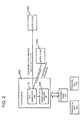
- a communication system comprises, as shown in Fig. 1 , a plurality of control devices 100A to 100C that generate and transmit, to forwarding node(s) on a calculated forwarding path, among forwarding nodes connected to each of the control devices, a processing rule determining a forwarding destination of a received packet, by referring to a network topology in which connection of the forwarding nodes are described, and a plurality of forwarding nodes 301A to 303A, 301B to 303B, and 301C to 303C, each of which is connected to any of the plurality of control devices 100A to 100C and comprises a packet processing unit that performs processing of a received packet based on a processing rule received from a control device associated with an own forwarding node.
- reference symbols in the drawings noted in this outline are examples shown solely in order to assist understanding, and are not intended to
- At least one of the plurality of control devices 100A to 100C (for example, control device 100A), as shown in Fig. 2 , comprises an correspondence management unit 16A that stores correspondences between the forwarding nodes 301A to 303A, 301B to 303B, and 301C to 303C, and the control devices 100A to 100C, and a path transmission unit 13 that, in response to a predetermined trigger such as reception of a packet for which a processing rule is unknown from a forwarding node, refers to correspondence between each of the forwarding nodes and each of the control devices, and transmits, among forwarding path information, forwarding path information that includes at least a forwarding node associated with the at least own control device, to an other control device(s) (for example, a control device 100B or 100C) associated with a forwarding node that is/are not associated with the own control device, among forwarding nodes on a forwarding path of a received packet.
- a predetermined trigger such as reception of a packet for which a
- a control device that is on a receiving side of the forwarding path information (for example, a control device 100 or 100C), as shown in Fig. 3 , comprises a database (topology DB) 15 that stores a network topology in which are described connection relationship among forwarding nodes including at least a forwarding node(s) associated with the own control device; a processing rule generation unit 18A that generates a processing rule by referring to a network topology, with regard to a forwarding node on a forwarding path of a received packet, among forwarding nodes associated with the control device, based on received forwarding path information; and a transmission unit 17A that transmits the generated processing rule to a forwarding node(s) in the forwarding path of the received packet, among forwarding nodes associated with the own control device.
- topology DB database
- the control device 100A in response to a request from a certain client node connected to the forwarding node 302A, calculates a forwarding path in which a packet is forwarded via forwarding nodes 302A, 303A, 302B, 303B, 302C, and 303C, as shown by a broken line in Fig. 1 .
- the control device 100A generates and transmits a processing rule implementing the forwarding path, for the forwarding nodes 302A and 303A that are connected to the own control device 100A.
- control device 100A refers to a correspondence between each of the forwarding nodes and each of the control devices, and transmits forwarding path information for generating a processing rule, to the control devices 100B and 100C that are associated with the forwarding nodes 301B to 303B, and 301C to 303C that are not connected to the own control device 100A.
- the control devices 100B and 100C that received the forwarding path information generate and transmit the processing rule to the forwarding nodes 302B, 303B, 302C, and 303C on the forwarding path, among the forwarding nodes connected to the own control device(s) (100B, 100C), based on the forwarding path information.
- control devices 100B and 100C use a forwarding path received from the control device 100A, and by generating and transmitting a processing rule, a processing rule is set for all forwarding nodes in the forwarding path.
- the control device 100A calculates a forwarding path for forwarding a packet via the forwarding nodes 302A, 303A, 302C, and 303C shown by a broken line in Fig. 4 .
- the control device 100A generates and transmits a processing rule implementing the forwarding path, to the forwarding nodes 302A and 303A that are connected to the control device 100A.
- the control device 100A refers to correspondences between respective forwarding nodes and respective control devices, and transmits forwarding path information to the control device 100C that is associated with the forwarding nodes 301C to 303C that are not connected to the own control device 100A.
- the control device 100C that received the forwarding path information generates and transmits the processing rule to the forwarding nodes 302C and 303C in the forwarding path, among the forwarding nodes connected to the own control device 100C, based on the forwarding path information.
- control device 100C In a case where a forwarding path has been generated that does not pass through the control device 100B, transmission of the forwarding path information to the control device 100B is omitted. In this case, too, the control device 100C generates and transmits a processing rule, using the forwarding path received from the control device 100A whereby the processing rule is set for all forwarding nodes in the forwarding path.
- the communication system according to the first aspect.
- each of the plurality of control devices may further comprise:
- the first control device comprising the path transmission unit may further comprise:
- a control device associated with a forwarding node(s) on the forwarding path may forward the new packet independently of transmission processing of a processing rule, and a control device associated with a forwarding node at an end of the forwarding path may transmit the new packet to the forwarding node at the end, and instruct the forwarding node at the end to output the new packet from a specified port.
- the forwarding path information may include a processing rule for transmission to a forwarding node that is not associated with the own first control device, and a second control device that received the forwarding path information may transmit a processing rule included in the forwarding path information to a forwarding node associated with the own second control device, among forwarding nodes on a forwarding path of a received packet.
- the forwarding path may be a forwarding path calculated in advance for a combination of a start point node and an end point node that are arbitrarily selected.
- the forwarding path may be cached for a predetermined time period, and calculation of a forwarding path may be omitted when a combination of an identical start point node and end point node is cached.
- each of the plurality of control devices may comprise: the path transmission unit and a path calculation unit that, when receiving from a forwarding node connected to the own control device a request to transmit a processing rule concerning a new packet, refers to the network topology and calculates a forwarding path, the path transmission unit of a first control device may transmit, to a second control device associated with a forwarding node that received a packet from a forwarding node on the forwarding path, connected to the own first control device, the new packet and a start point for calculating a forwarding path for a forwarding node associated with the second control device, instead of the forwarding path information; and the second control device that received the start point and the new packet may recalculate a forwarding path based on the start point and the new packet, and generates and transmits a processing rule.
- control device may comprise a data synchronization unit that obtains information of a plurality of forwarding nodes connected to the own control device, and based on the obtained data updates at least one of connection relationship of each of the plurality of forwarding nodes, and correspondence between each of the plurality of forwarding nodes and each of the plurality of control devices.
- the first control device according to the second aspect.
- the second control device according to the third aspect.
- first and second control devices, the processing rule setting method, the program, the communication system, and the communication method as described in the abovementioned second to seventh aspects, similar to the communication system of Mode 1, can be expanded to the contents of Mode 2 to Mode 9, with regard to respective elements and steps.
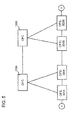
- Fig. 5 is a diagram showing a configuration of the first exemplary embodiment of the present invention.
- OFSs OpenFlow switches
- 301A, 302A, 301B, and 302B OpenFlow controllers
- OFCs OpenFlow controllers
- FIG. 5 the configuration of Fig. 5 is illustrative; there is no limitation to the number of OFSs or OFCs, and there is no necessity for the same number of OFSs to be connected to each of the respective OFCs.
- node A and node D are devices for transmitting and receiving a packet, such as a user terminal, various types of service server, or the like.
- OFSs 301A, 302A, 301B, and 302B correspond to the forwarding nodes described above, hold flow entries (rule + action) set by OFCs 100A and 100B in respective flow tables, and execute actions of flow entries that have a rule matching a received packet.
- the OFS 301A and 302A are connected to the OFC 100A, and operate according to a control from the OFC 100A.
- the OFSs 301B and 302B are connected to the OFC 100B, and operate according to a control from the OFC 100B. More specifically, in a case where a rule matching a received packet cannot be found in a flow table, the OFSs 301A and 302A request the OFC 100A to generate a forwarding path for the received packet and transmit (set) a flow entry (rule + action) for realizing the forwarding path.
- the OFSs 301B and 302B request the OFC 100B to generate a forwarding path for the received packet and transmit (set) a flow entry (rule + action) for realizing the forwarding path.
- These types of OFS can be configured by adding functions described above to switches of respective vendors, as described in Non-Patent Documents 1 and 2.
- the OFCs 100A and 100B correspond to the abovementioned control devices, and by transmitting (setting) flow entries (rule + action) to the OFSs 301A, 302A, 301B and 302B respectively connected thereto, control the later. Furthermore, the OFCs 100A and 100B of the present exemplary embodiment are connected, and as described later, forwarding path information generated by one thereof can be transmitted to the other.
- Fig. 6 is a diagram showing a configuration of an OFC of the first exemplary embodiment.
- the OFC 100 comprises a packet forwarding unit 11, a path calculation unit 12, a path transmission unit 13, an inter-OFC communication unit 14, a topology DB 15, an OFS-OFC correspondence management unit 16, an OFS communication unit 17, a flow generation unit 18, and a path acceptance unit 19.
- the packet forwarding unit 11 When there is no relevant flow entry in the OFS and a request for transmission (setting) of a processing rule (flow entry) is received, the packet forwarding unit 11 performs an operation of transmitting, to another OFC, a packet to which is attached a request for transmission (setting) of the processing rule (flow entry), via the inter-OFC communication unit 14.
- the path calculation unit 12 Based on a switch ID of a source of the request for transmission (setting) of the processing rule (flow entry) and a packet outputted from the OFS communication unit 17, the path calculation unit 12 refers to the network topology describing connection between forwarding nodes recorded in the topology DB 15, and calculates a forwarding path in a sequential flow including the packet forwarded from the OFS.
- This path calculation can exploit, for example, Dijkstra's shortest path algorithm.
- the path transmission unit 13 outputs a received packet and a forwarding path calculated in the path calculation unit 12, to the OFS-OFC correspondence management unit 16. Furthermore, the path transmission unit 13 refers to a correspondence between an OFS recorded in the OFS-OFC correspondence management unit 16 and an OFC connected to the OFS, and performs an operation of transmitting, via the inter-OFC communication unit 14, forwarding path information including the received packet and the forwarding path calculated in the path calculation unit 12, to an OFC (OFC associated with a certain OFS in the forwarding path) connected to a certain OFS in the forwarding path calculated in the path calculation unit 12.
- OFC OFC associated with a certain OFS in the forwarding path
- the inter-OFC communication unit 14 is connected to an inter-OFC communication unit 14 of an other OFC, and performs giving and receiving of forwarding path information and packets attached to requests for transmission (setting) of the flow entry in question as described above.
- the topology DB (database) 15 records network topology describing connection relationships of nodes (various types of service server and external network) including OFSs.
- Fig. 7 describes connection relationship of nodes including the OFCs of Fig. 5 in a table format.
- "OFS; 302A" and the like in actuality contain an IP address or MAC address of the OFS; 302A.
- the OFCs 100A and 100B each hold the topology DB 15, but a configuration is also possible in which the OFC 100A and 100B share the topology DB15.
- the OFS-OFC correspondence management unit 16 records correspondences between the OFS and the OFC connected to the OFS(s), and outputs a forwarding path and received packet outputted from the path transmission unit 13 and information of the OFS(s) connected to the OFC, to the flow generation unit 18.
- Fig. 8 describes connections between the OFSs and OFCs of Fig. 5 in a table format. It is to be noted that in the present exemplary embodiment, the OFS-OFC correspondence management unit 16 is provided independently of the topology DB 15, but it is also possible to merge the topology DB15 and the OFS-OFC correspondence management unit 16. For example, in addition to connections of the OFSs shown in Fig. 7 , fields describing connected OFCs may be provided.
- the OFS communication unit 17 Since there is no flow entry corresponding to the received packet, the OFS communication unit 17 outputs a request for transmission (setting) of a flow entry together with the received packet transmitted from the OFS, to the path calculation unit 12.
- the OFS communication unit 17 transmits a processing rule (flow entry) generated in the flow generation unit 18 to a certain OFS in the forwarding path, among OFSs (OFSs associated with the OFC) connected to the OFC, and directs setting of a processing rule (flow entry).
- the path acceptance unit 19 outputs the forwarding path information including the received packet received from an other OFC to the flow generation unit 18, and performs an operation to generate the processing rule (flow entry).
- the abovementioned packet forwarding unit 11, the path calculation unit 12, the path transmission unit 13, the inter-OFC communication unit 14, the topology DB 15, the OFS-OFC correspondence management unit 16, the OFS communication unit 17, the flow generation unit 18, and the path acceptance unit 19 can be realized by a storage device or devices provided in a computer configuring the respective OFCs and a computer program using the storage device(s) as hardware.
- Fig. 9 is a diagram showing a configuration of an OFS of the first exemplary embodiment described above.
- an OFS 300 comprises an OFC communication unit 31, a flow setting unit 32, a packet processing unit 33, and a flow table 34. Furthermore, in the OFS 300, an OFC to which the OFS 300 is connected (associated with the OFS 300) is set in advance.
- the OFC communication unit 31 receives a processing rule (flow entry) from the OFS communication unit 17 of the OFC, and in addition to outputting to the flow setting unit 32, in a case where there is no flow entry corresponding to a received packet from the packet processing unit 33, requests the OFC to generate a processing rule (flow entry) for calculation of a forwarding path to be applied to the received packet and for realization of the forwarding path.
- a processing rule flow entry
- the flow setting unit 32 performs an operation to record or update the processing rule (flow entry) transmitted from the OFC via the OFC communication unit 31, in the flow table 34.
- the packet processing unit 33 refers to the flow table 34, searches for a processing rule (flow entry) having a rule matching header information of the received packet received from a node including an other OFS, and executes processing content described in an Actions field of the processing rule (flow entry) matching the received packet.
- the flow table 34 is a table containing processing rules (flow entries) transmitted from an OFC via the OFC communication unit 31.
- Fig. 10 is a diagram showing a field configuration of the flow table 34. For example, with regard to a flow having a characteristic such that an IP address of a node A is described in a source IP address field (IP SA), and an IP address of a node D is described in a destination IP address field (IP DA), by setting an action (OUTPUT in Fig. 23 ) that is forwarding from an interface (port) for transmission to an OFS following a forwarding path, among neighboring OFSs, forwarding according to a forwarding path of a flow from the node A to the node D is realized. Otherwise, by setting various types of action of Fig. 23 , or having an Actions field empty, it is possible to change a MAC address or an IP address of a specific flow, or to drop a specific flow.
- IP SA source IP address field
- IP DA destination IP address field
- Fig. 11 is an example of a processing rule (flow entry) set in the OFSs 301A, 302A, 301B and 302B.
- a forwarding path for forwarding a packet between node A and node D via the OFSs 301A, 302A, 301B and 302B is set.
- an action for forwarding a packet from node A to node D as a destination in a forward direction (interface 2 (connected to OFS 302A; refer to Fig. 7 )
- an action for forwarding a packet from node D to node A as a destination in a reverse direction are set in OFS 301A.
- OFSs 302A, 301B and 302B by setting processing rules (flow entries) in a forward direction and a reverse direction, packet forwarding between node A and node D is performed in the above described forwarding path.
- Fig. 12 is a sequence diagram representing the operation of the present exemplary embodiment.
- a packet (new packet) with a destination of node D that does not match any processing rule (flow entry) stored in the flow table 34 of the OFS 301A is transmitted from node A that is connected to the OFS 301A.
- the OFS 301A On receiving a new packet (step S001), the OFS 301A makes a request to the OFC 100A, which is connected to the OFS 301A, for transmission (setting) of a processing rule (flow entry) including the new packet (step S002). It is to be noted that in step S001, in a case of receiving a packet that matches a processing rule (flow entry) stored in the flow table 34 of the OFS 301A, the following processing is not performed, but packet forwarding processing according to a node processing rule is performed, as shown in the lowest portion of Fig. 12 .
- the OFC 100A to which a request is made for transmission (setting) of the processing rule (flow entry), refers to the network topology of the topology DB 15, based on the OFS 301A that is a request source and node D that is a destination of the new packet, in the path calculation unit 12, to calculate a forwarding path in a sequential flow including the packet forwarded from the OFS 301A (step S003).
- a forwarding path is calculated, in which a packet from node A with a destination of node D is forwarded in a sequence of OFS 301A, 302A, 301B and 302B.
- the OFC 100A refers to a correspondence between OFS and OFC, stored in the OFS-OFC correspondence management unit 16, and searches for an OFC associated with an OFS not connected to the OFC 100A, among OFSs in the calculated forwarding path (step S004).
- the OFC 100B that is connected to the OFSs 301B and 302B which are not connected to the OFC 100A of Fig. 5 , is retrieved.
- the OFC 100A transmits forwarding path information including the received packet and forwarding path calculated in step S003, to the retrieved OFC 100B.
- the OFC 100A refers to the network topology of the topology DB 15 and information of the OFS connected to the own OFC 100A, generates a processing rule (flow entry) to be set in an OFS in the forwarding path, among OFSs connected to the OFC 100A, and performs transmission (setting) with respect to the OFSs 301A and 302A (step S006-1).
- the OFC 100B also refers to the network topology of the topology DB 15 and information of the OFS connected to the own OFC 100B, generates a processing rule (flow entry) to be set in an OFS in the forwarding path, among OFSs connected to the own OFC 100B, and performs transmission (setting) with respect to the OFSs 301B and 302B (step S006-2).
- processing is performed to record or update the received processing rule (flow entry) in the flow table 34 (step S007).
- the OFC performs transmission (setting) of a processing rule (flow entry) at the same time in an OFS in the forwarding path, among OFSs connected to the own OFC, but among these, an arrangement is possible in which transmission (setting) of the processing rule (flow entry) in a portion of the OFSs among these is performed, (for example, an OFS or OFSs on an upstream side of the forwarding path).
- each OFC performs transmission (setting) of a processing rule (flow entry) after receiving a request for transmission (setting) of a processing rule (flow entry) from respective OFSs.
- Fig. 13 is a diagram in which an operation according to a sequence of Fig. 12 is recorded in a configuration diagram of Fig. 5 .
- the OFC 100A With receipt of a request for transmission (setting) of a processing rule of a certain packet as a trigger from the OFS 301A, the OFC 100A performs calculation of the forwarding path, and sets a result thereof as a processing rule (flow entry) with respect to the OFSs 301A and 302A. Furthermore, by the OFC 100A transmitting forwarding path information to the OFC 100B, setting of a processing rule (flow entry) for the OFSs 301B and 302B is performed. As is clear also from Fig.
- the number of OFS/OFC is not particularly limited, and in a case where an other OFS is present in the forwarding path, it is possible to transmit the forwarding path information to an OFC concerned connected to the OFS, and to set a processing rule (flow entry).
- both OFCs 100A and 100B of Fig. 13 do not need to be provided with the path calculation unit 12 and the path acceptance unit 19; for example, a configuration can be used in which, if the OFC 100A receives a new packet, the path calculation unit 12 is disposed in the OFC 100A and the path acceptance unit 19 is disposed in the OFC 100B.
- FIG. 14 is a sequence diagram representing flow of bypass forwarding of a new packet in the present exemplary embodiment. Since the flow of steps S001 to S003 of Fig. 14 is the same as steps S001 to S003 of Fig. 12 , a description is given below concerning sequential flow performed after forwarding path calculation.
- the OFC 100A that has calculated a forwarding path searches for an OFS (an OFS located at the end of the forwarding path) that is connected to a destination node on the calculated forwarding path, then refers to correspondences between OFS and OFC, stored in the OFS-OFC correspondence management unit 16, and retrieves an OFC associated with the OFS concerned (step S104).
- a forwarding path is calculated in which a packet from node A to a destination of node D is forwarded in a sequence of OFS 301A, 302A, 301B and 302B.
- the OFS at the end of the forwarding path is the OFS 302B, and the OFC 100B connected to the OFS 302B is retrieved.
- the OFC 100A transmits a new packet received in step S001, to the retrieved OFC 100B, and requests a transmission from a specified interface of the subordinate OFS 302B (step S105).
- the OFC 100B requests the subordinate OFS 302B to transmit the new packet from a specified interface (step S106).
- the OFS 302B transmits the new packet from the specified interface in accordance with an instruction from the OFC 100B (step S107).
- Various methods can be considered as an arrangement in which the OFS 302B transmits the new packet to a specified interface; a processing rule (flow entry) for outputting a packet having specified header information from a specified interface may be stored in each OFS, and processing for writing the header information in a new packet may be performed by the OFC 100B.
- the number of OFS/OFC is not particularly limited and it is possible to transmit a packet without going through an OFS along the forwarding path.
- the forwarding path is not limited to the above description.
- operation is approximately the same as the above description.
- Fig. 16 is a diagram showing a configuration of the OFC 101 of the second exemplary embodiment of the present invention.
- a point of difference from the OFC 100 of the first exemplary embodiment shown in Fig. 6 is the addition of a data synchronization unit 20 for obtaining information of nodes connected to the OFC 100.
- the data synchronization unit 20 specifically, collects information of devices and configurations thereof coming from various nodes on a network using LLDP (Link Layer Discovery Protocol) or various types of vendor protocol, acquires physical connections between nodes, and performs an operation to reflect results thereof in a topology DB 15 or OFS-OFC correspondence management unit 16.
- LLDP Link Layer Discovery Protocol
- the data synchronization unit 20 is not installed in all OFCs, but a data synchronization unit 20 of a certain OFC updates a topology DB 15 and an OFS-OFC correspondence management unit 16 of an other OFC, via an inter-OFC communication unit 14.
- Fig. 17 is a diagram showing a configuration of the OFC 102 of the third exemplary embodiment of the present invention.
- a point of difference from the OFC 100 of the first exemplary embodiment shown in Fig. 6 is the addition of a path recording unit 22 to the path calculation unit 12.
- the path recording unit 22 is used in order to record a forwarding path calculated in a path calculation unit 12 until a predetermined timing has been reached.
- Fig. 18 is a sequence diagram representing the operation of the present exemplary embodiment.
- a packet (new packet) with a destination of node D that does not match any processing rule (flow entry) stored in a flow table 34 of an OFS 301A is transmitted from node A that is connected to the OFS 301A.
- step S001 receives a new packet (step S001) and requests an OFC 100A, which is connected to the own OFS 301A, to transmit (set) a processing rule (flow entry) including the new packet (step S002) is the same as in the first exemplary embodiment.
- step S001 in a case of receiving a packet that matches a processing rule (flow entry) stored in the flow table 34 of the OFS 301A, the following processing is not performed but packet forwarding processing according to a node processing rule is performed, as shown in the lowest portion of Fig. 18 .
- the OFC 100A Before calculating a forwarding path in the path calculation unit 12, the OFC 100A, to which a request is made for transmission (setting) of the processing rule (flow entry), refers to the path recording unit 22, and searches forwarding path information having a characteristic that is the same as the new packet (for example, a packet having a destination of node D, from the OFS 301A) (step S201).
- the OFC 100A omits calculation of the forwarding path and performs operation of step S004 and following.
- the OFC 100A in a case of not finding forwarding path information having a characteristic that is the same as the new packet (for example, a packet having a destination of node D, from the OFS 301A), the OFC 100A, based on node D that is the destination of the new packet and the OFS 301A that is the origin of the request, refers to network topology of the topology DB 15 and calculates a forwarding path in a sequential flow including the packet forwarded from the OFS 301A (step S202). After that, the OFC 100A stores the calculated forwarding path together with a characteristic of the new packet in the path recording unit 22 (step S203).
- Fig. 19 is a diagram showing a configuration of an OFC 103 of the fourth exemplary embodiment of the present invention. Points of difference from the OFC 100 of the first exemplary embodiment shown in Fig. 6 are the addition of a path recording unit 22 to the path calculation unit 12, and the addition of a speculative path calculation unit 23 that generates and stores a forwarding path in the path recording unit 22.
- the path recording unit 22 is used in order to store a forwarding path calculated in the path calculation unit 12 until a predetermined timing has been reached.
- the speculative path calculation unit 23 refers to a topology DB 15, calculates a forwarding path from a certain OFS to a certain node, and records in the path recording unit 22.
- "speculative" means not waiting for a transmission (setting) request regarding a processing rule (flow entry), but preemptively generating a processing rule (flow entry).
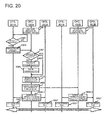
- Fig. 20 is a sequence diagram representing the operation of the present exemplary embodiment.
- a packet (new packet) with a destination of node D that does not match any processing rule (flow entry) stored in a flow table 34 of an OFS 301A is transmitted from node A that is connected to the OFS 301A.
- the speculative path calculation unit 23 of OFCs 100A and 100B performs calculation of a speculative forwarding path (steps S300-1 and S300-2).
- step S001 receives a new packet (step S001) and requests the OFC 100A, which is connected to the OFS 301A, to transmit (set) a processing rule (flow entry) including the new packet (step S002), is the same as in the first exemplary embodiment.
- step S001 in a case of receiving a packet that matches a processing rule (flow entry) stored in the flow table 34 of the OFS 301A, the following processing is not performed but packet forwarding processing according to a node processing rule is performed, as shown in the lowest portion of Fig. 20 .
- the OFC 100A Before calculating a forwarding path in the path calculation unit 12, the OFC 100A, to which a request is made for transmission (setting) of the processing rule (flow entry), refers to the path recording unit 22, and searches forwarding path information having a characteristic that is the same as the new packet (for example, a packet having a destination of node D, from the OFS 301A) (step S301).
- the OFC 100A omits calculation of the forwarding path to perform operation of step S004 and following.
- the OFC 100A in a case of not finding forwarding path information having a characteristic that is the same as the new packet (for example, a packet having a destination of node D, from the OFS 301A), the OFC 100A, based on node D that is the destination of the new packet and the OFS 301A that is the origin of the request, refers to network topology of the topology DB 15 and calculates a forwarding path in a sequential flow including the packet transmitted from the OFS 301A (step S302). After that, the OFC 100A stores the calculated forwarding path together with a characteristic of the new packet in the path recording unit 22 (step S303).
- Fig. 21 is a diagram representing an outline operation of the fifth exemplary embodiment of the present invention.
- a point is that an OFC 100A transmits a new packet and an OFS (301B) that is a start point for which an OFC 100B calculates a forwarding path, not forwarding path information.
- the OFC 100B generates a forwarding path from the OFS 301B that has been specified as the start point, as far as a destination node (node D), and performs transmission (setting) of a processing rule (flow entry) corresponding thereto to an OFS connected to thc OFC 100B.
- Fig. 22 is a sequence diagram representing the operation of the present exemplary embodiment.
- step S001 receives a new packet (step S001) and requests the OFC 100A, which is connected to the OFS 301A, to transmit (set) a processing rule (flow entry) including the new packet (step S002) is the same as in the first exemplary embodiment.
- step S001 in a case of receiving a packet that matches a processing rule (flow entry) stored in a flow table 34 of the OFS 301A, the following processing is not performed but packet forwarding processing according to a node processing rule is performed, as shown in the lowest portion of Fig. 22 .
- the OFC 100A to which a request for transmission (setting) of the processing rule (flow entry) is made, refers to network topology of a topology DB 15, based on the request source OFS 301A and node D that is a destination of the new packet, in the path calculation unit 12, and calculates a forwarding path in a sequential flow including the packet forwarded from the OFS 301A (step S403).
- the OFC 100A does not calculate all forwarding paths from node A to node D, but calculates a partial forwarding path showing which OFS connected to the own OFC (100A) is to be passed through in the forwarding and from which interface output is to made.
- the OFC 100A refers to a correspondence between OFS and OFC, stored in an OFS-OFC correspondence management unit 16, and searches for an OFC connected to an OFS (a start point OFS of a segment for which a forwarding path has not been calculated) that is connected to an output interface of an OFS that is an end of the calculated forwarding path (step S404).
- the OFC 100B that is connected to the OFS 301B of Fig. 21 is retrieved.
- the OFC 100A transmits, to the OFC 100B, an OFS (a start point OFS of a segment for which a forwarding path has not been calculated) that is connected to an output interface of an OFS that is an end of the calculated forwarding path, and a new packet received in step S001 (step S405).
- an OFS a start point OFS of a segment for which a forwarding path has not been calculated
- the OFS that is a start point OFS of the segment for which a forwarding path has not been calculated and the OFC 100B that receives a new packet received in step S001 refer to the network topology of the topology DB 15, based on the OFS 301B that is specified as start point and node D that is a destination of the new packet, in the path calculation unit 12, to calculate a forwarding path according to an OFS group connected to the OFC 100B (step S406).
- the OFC 100B calculates a forwarding path for forwarding from the OFS 301B to the OFS 302B, and forwarding from an interface #2 of the OFS 302B to node D.
- the OFC 100A refers to the network topology of the topology DB 15 and information of the OFS connected to the OFC 100A, generates a processing rule (flow entry) to be set in an OFS in the forwarding path, among OFSs connected to the OFC 100A, and performs transmission (setting) with respect to the OFSs 301A and 302A (step S407-1).
- the OFC 100B also refers to the network topology of the topology DB 15 and information of the OFS connected to the OFC 100B, generates a processing rule (flow entry) to be set in an OFS in the forwarding path, among OFSs connected to the own control device OFC (100B), and performs transmission (setting) to the OFSs 301B and 302B (step S407-2).
- processing is performed to register or update the received processing rule (flow entry) in the flow table 34 (step S007).
- the present exemplary embodiment it is possible to perform the forwarding path calculation by distributing the calculation to several OFCs. Furthermore, since the abovementioned configuration is used, it is possible to dispose the topology DB 15 in a distributed manner.
- the present exemplary embodiment can be configured in a combination with the second to the fourth exemplary embodiments as described above.
- a modified embodiment is possible in which the OFC 100A uses a cached forwarding path, and path calculation is performed by the OFC 100B and following.
- a modified embodiment is possible in which the OFC 100A uses a speculative forwarding path calculated in advance, and path calculation is performed by the OFC 100B and following.
- each OFC is respectively provided with a path calculation unit 12.
- forwarding path calculation processing does not occur in OFCs on a side receiving forwarding path information. Therefore, the path calculation unit 12 in OFCs where the forwarding path calculation processing does not occur regularly can be omitted. For a similar reason, it is possible to omit a path acceptance unit 19 from OFCs that do not receive the forwarding path information.
Landscapes
- Engineering & Computer Science (AREA)
- Computer Networks & Wireless Communication (AREA)
- Signal Processing (AREA)
- Computing Systems (AREA)
- Theoretical Computer Science (AREA)
- Data Exchanges In Wide-Area Networks (AREA)
Applications Claiming Priority (2)
| Application Number | Priority Date | Filing Date | Title |
|---|---|---|---|
| JP2010000740 | 2010-01-05 | ||
| PCT/JP2011/050009 WO2011083780A1 (ja) | 2010-01-05 | 2011-01-04 | 通信システム、制御装置、処理規則の設定方法、パケットの送信方法およびプログラム |
Publications (2)
| Publication Number | Publication Date |
|---|---|
| EP2523402A1 true EP2523402A1 (de) | 2012-11-14 |
| EP2523402A4 EP2523402A4 (de) | 2017-10-18 |
Family
ID=44305516
Family Applications (1)
| Application Number | Title | Priority Date | Filing Date |
|---|---|---|---|
| EP11731778.4A Withdrawn EP2523402A4 (de) | 2010-01-05 | 2011-01-04 | Kommunikationssystem, steuerungsvorrichtung, verfahren zur festlegung einer verarbeitungsregel, paketübertragungsverfahren und programm |
Country Status (5)
| Country | Link |
|---|---|
| US (2) | US20110317701A1 (de) |
| EP (1) | EP2523402A4 (de) |
| JP (3) | JPWO2011083780A1 (de) |
| CN (2) | CN102714628B (de) |
| WO (1) | WO2011083780A1 (de) |
Families Citing this family (71)
| Publication number | Priority date | Publication date | Assignee | Title |
|---|---|---|---|---|
| JPH0693102B2 (ja) | 1987-01-31 | 1994-11-16 | コニカ株式会社 | 粒状性及び鮮鋭性の改良されたハロゲン化銀カラ−写真感光材料 |
| JP5488979B2 (ja) * | 2010-02-03 | 2014-05-14 | 日本電気株式会社 | コンピュータシステム、コントローラ、スイッチ、及び通信方法 |
| JP5488980B2 (ja) * | 2010-02-08 | 2014-05-14 | 日本電気株式会社 | コンピュータシステム、及び通信方法 |
| US20120051346A1 (en) * | 2010-08-24 | 2012-03-01 | Quantenna Communications, Inc. | 3-address mode bridging |
| US9178833B2 (en) | 2011-10-25 | 2015-11-03 | Nicira, Inc. | Chassis controller |
| CN103166876B (zh) * | 2011-12-08 | 2018-05-04 | 中兴通讯股份有限公司 | OpenFlow网络域间的数据发送方法及装置 |
| US9425987B2 (en) | 2012-02-10 | 2016-08-23 | Nec Corporation | Computer system and visualization method of virtual network |
| JP5967109B2 (ja) * | 2012-02-10 | 2016-08-10 | 日本電気株式会社 | コンピュータシステム、及び仮想ネットワークの可視化方法 |
| CN102594689B (zh) * | 2012-02-22 | 2015-06-10 | 中兴通讯股份有限公司 | 一种分布式网络控制方法及装置 |
| US8923296B2 (en) * | 2012-02-23 | 2014-12-30 | Big Switch Networks, Inc. | System and methods for managing network packet forwarding with a controller |
| CN104185972A (zh) * | 2012-03-05 | 2014-12-03 | 日本电气株式会社 | 网络系统、交换机和网络构建方法 |
| IN2014DN07935A (de) * | 2012-03-23 | 2015-05-01 | Nec Corp | |
| CN104221339A (zh) * | 2012-03-28 | 2014-12-17 | 日本电气株式会社 | 通信系统、通信装置、控制装置、通信装置的控制方法及程序 |
| JP5849162B2 (ja) * | 2012-04-18 | 2016-01-27 | ニシラ, インコーポレイテッド | 分散ネットワーク制御システムにおけるチャーン化を最小限にするためのトランザクションの使用 |
| US9832114B2 (en) * | 2012-05-25 | 2017-11-28 | Nec Corporation | Packet forwarding system, control apparatus, packet forwarding method, and program |
| EP2858317B1 (de) * | 2012-05-31 | 2017-07-12 | Nec Corporation | Steuerungsvorrichtung, kommunikationssystem, schaltsteuerungsverfahren und programm |
| JP5889122B2 (ja) * | 2012-06-15 | 2016-03-22 | 株式会社Nttドコモ | 制御ノード及び通信制御方法 |
| WO2014019196A1 (zh) * | 2012-08-02 | 2014-02-06 | 华为技术有限公司 | 拓扑信息处理方法及设备 |
| CN103051539B (zh) | 2012-12-14 | 2015-09-16 | 中兴通讯股份有限公司 | 一种基于dht的控制网络实现方法、系统和网络控制器 |
| CN104871529B (zh) * | 2012-12-17 | 2018-09-18 | 马维尔国际贸易有限公司 | 网络发现装置 |
| US9253117B1 (en) | 2012-12-18 | 2016-02-02 | Google Inc. | Systems and methods for reducing network hardware of a centrally-controlled network using in-band network connections |
| US8989194B1 (en) * | 2012-12-18 | 2015-03-24 | Google Inc. | Systems and methods for improving network redundancy and for facile initialization in a centrally-controlled network |
| CN106170024B (zh) | 2012-12-24 | 2019-12-24 | 华为技术有限公司 | 一种基于软件定义网络中数据处理的系统、方法和节点 |
| US9065768B2 (en) * | 2012-12-28 | 2015-06-23 | Futurewei Technologies, Inc. | Apparatus for a high performance and highly available multi-controllers in a single SDN/OpenFlow network |
| CN103067277B (zh) * | 2013-01-06 | 2016-06-22 | 华为技术有限公司 | 建立控制通道的方法、转发设备和控制设备 |
| US9166869B2 (en) | 2013-01-14 | 2015-10-20 | International Business Machines Corporation | Management of distributed network switching cluster |
| CN103945335B (zh) | 2013-01-21 | 2017-03-15 | 华为技术有限公司 | 一种群组会话的方法、装置和系统 |
| US9094285B2 (en) | 2013-01-25 | 2015-07-28 | Argela Yazilim ve Bilisim Teknolojileri San. ve Tic. A.S. | Automatic discovery of multiple controllers in Software Defined Networks (SDNs) |
| KR102087226B1 (ko) * | 2013-02-14 | 2020-03-10 | 삼성전자주식회사 | 다수의 사업자 지원을 위한 sdn 기반의 네트워크 공유 방법 |
| WO2014131429A1 (en) * | 2013-02-26 | 2014-09-04 | Telefonaktiebolaget L M Ericsson (Publ) | Traffic recovery in openflow networks |
| WO2014136867A1 (ja) * | 2013-03-07 | 2014-09-12 | 日本電気株式会社 | 通信システム、統合コントローラ、パケット転送方法及びプログラム |
| US9137174B2 (en) * | 2013-03-14 | 2015-09-15 | Lenovo Enterprise Solutions (Singapore) Pte. Ltd. | Synchronization of OpenFlow controller devices via OpenFlow switching devices |
| CN105075198B (zh) * | 2013-03-26 | 2018-04-17 | 日本电气株式会社 | 控制装置、通信系统和控制信息发送方法 |
| US20160094357A1 (en) * | 2013-04-24 | 2016-03-31 | Nec Corporation | Control apparatus, computer system, communication control method, and program |
| CN103580909B (zh) * | 2013-05-22 | 2018-06-19 | 新华三技术有限公司 | 一种硬件资源定制方法及装置 |
| CN104283756B (zh) | 2013-07-02 | 2017-12-15 | 新华三技术有限公司 | 一种实现分布式多租户虚拟网络的方法和装置 |
| WO2015006970A1 (zh) * | 2013-07-19 | 2015-01-22 | 华为技术有限公司 | 交换设备、控制器、交换设备配置、报文处理方法及系统 |
| US9325609B2 (en) * | 2013-08-23 | 2016-04-26 | Futurewei Technologies, Inc. | Segmented source routing in a network |
| CN104426815B (zh) * | 2013-08-27 | 2019-07-09 | 中兴通讯股份有限公司 | 一种sdn中流表下发的方法和系统、of控制器和of交换机 |
| US8611355B1 (en) * | 2013-09-03 | 2013-12-17 | tw telecom holdings inc. | Buffer-less virtual routing |
| CN104838624B (zh) * | 2013-11-22 | 2017-12-08 | 华为技术有限公司 | 一种控制业务数据在虚拟网络中转发的方法、装置及系统 |
| US10516604B2 (en) | 2013-12-19 | 2019-12-24 | Nec Corporation | Packet forwarding system, control apparatus, and control method and program for relay device |
| CN104734988B (zh) * | 2013-12-23 | 2018-10-30 | 杭州华为数字技术有限公司 | 软件定义网络中路由控制的方法和开放流控制器 |
| CN104734964B (zh) | 2013-12-24 | 2018-12-14 | 华为技术有限公司 | 报文处理方法、节点及系统 |
| CN104796344B (zh) * | 2014-01-16 | 2020-01-14 | 中兴通讯股份有限公司 | 基于SDN实现报文转发的方法、系统、Openflow交换机及服务器 |
| ES2719541T3 (es) | 2014-01-28 | 2019-07-11 | Huawei Tech Co Ltd | Procedimiento y aparato de modificación de reglas de procesamiento |
| US8989199B1 (en) | 2014-02-24 | 2015-03-24 | Level 3 Communications, Llc | Control device discovery in networks having separate control and forwarding devices |
| CN105099995B (zh) | 2014-04-29 | 2018-09-28 | 华为技术有限公司 | Sdn网络系统、控制器及控制方法 |
| CN105340224A (zh) | 2014-05-30 | 2016-02-17 | 华为技术有限公司 | 网络控制方法和装置 |
| JP6266484B2 (ja) * | 2014-09-26 | 2018-01-24 | アラクサラネットワークス株式会社 | 通信装置及び、通信装置の制御方法 |
| CN104363173A (zh) * | 2014-10-31 | 2015-02-18 | 武汉烽火网络有限责任公司 | 一种转发路由信息生成方法、控制器及软件定义网络系统 |
| KR20160099890A (ko) * | 2015-02-13 | 2016-08-23 | 한국전자통신연구원 | 도메인들 간의 링크 감지 방법 및 그 방법을 수행하는 장치 |
| US9521071B2 (en) * | 2015-03-22 | 2016-12-13 | Freescale Semiconductor, Inc. | Federation of controllers management using packet context |
| US9967134B2 (en) | 2015-04-06 | 2018-05-08 | Nicira, Inc. | Reduction of network churn based on differences in input state |
| CN106385365B (zh) | 2015-08-07 | 2019-09-06 | 新华三技术有限公司 | 基于开放流Openflow表实现云平台安全的方法和装置 |
| JP6606919B2 (ja) * | 2015-08-25 | 2019-11-20 | 富士通株式会社 | フロースイッチ、コントローラ、及び、中継装置 |
| CN106559439B (zh) * | 2015-09-25 | 2019-10-01 | 华为技术有限公司 | 一种业务处理方法及设备 |
| US10204122B2 (en) | 2015-09-30 | 2019-02-12 | Nicira, Inc. | Implementing an interface between tuple and message-driven control entities |
| JP6033393B2 (ja) * | 2015-12-25 | 2016-11-30 | 株式会社Nttドコモ | 制御ノード及び通信制御方法 |
| WO2017184758A1 (en) * | 2016-04-20 | 2017-10-26 | Brocade Communications Systems, Inc. | Communication framework for a federation of network controllers |
| US11019167B2 (en) | 2016-04-29 | 2021-05-25 | Nicira, Inc. | Management of update queues for network controller |
| US10536398B2 (en) * | 2016-05-12 | 2020-01-14 | Cisco Technology, Inc. | Plug and play in a controller based network |
| US10491522B2 (en) | 2016-05-13 | 2019-11-26 | Cisco Technology, Inc. | Data plane integration |
| JP6938944B2 (ja) * | 2016-05-26 | 2021-09-22 | 富士通株式会社 | 情報処理装置、及び、負荷分散制御方法 |
| CN107592270B (zh) * | 2016-07-07 | 2021-10-15 | 华为技术有限公司 | FlowSpec消息的处理方法和装置以及系统 |
| JP6834795B2 (ja) * | 2017-06-16 | 2021-02-24 | 富士通株式会社 | 通信制御装置、通信制御方法、及び、通信制御プログラム |
| CN109818867B (zh) * | 2017-11-21 | 2020-10-27 | 华为技术有限公司 | 一种配置方法及装置 |
| CN118178260A (zh) | 2019-03-28 | 2024-06-14 | 株式会社Lg生活健康 | 牙膏组合物 |
| US12068955B2 (en) * | 2020-10-21 | 2024-08-20 | Huawei Technologies Co., Ltd. | Method for controlling traffic forwarding, device, and system |
| CN114143259A (zh) * | 2021-11-26 | 2022-03-04 | 中徽建技术有限公司 | 一种海量网络数据处理方法及系统 |
| US12689577B2 (en) | 2024-07-03 | 2026-07-21 | Bank Of America Corporation | Optimizing network routing and data processing with dynamic route optimization |
Family Cites Families (17)
| Publication number | Priority date | Publication date | Assignee | Title |
|---|---|---|---|---|
| US5805072A (en) * | 1994-12-12 | 1998-09-08 | Ultra-High Speed Network | VC connection method |
| US5758083A (en) * | 1995-10-30 | 1998-05-26 | Sun Microsystems, Inc. | Method and system for sharing information between network managers |
| US6671819B1 (en) * | 2000-04-06 | 2003-12-30 | Bbnt Solutions Llc | System and methods routing packets on alterate paths |
| JP2004129156A (ja) | 2002-10-07 | 2004-04-22 | Ntt Docomo Inc | 経路制御システム、経路制御装置、転送装置及び経路制御方法 |
| JP2005012317A (ja) * | 2003-06-17 | 2005-01-13 | Nec Corp | 通信システム |
| US20050111356A1 (en) * | 2003-11-25 | 2005-05-26 | Whittaker Stewart Mark A. | Connection controller |
| JP3777185B2 (ja) * | 2004-02-05 | 2006-05-24 | 日本電信電話株式会社 | Gmpls+ip/mplsネットワークおよびノード |
| WO2006025296A1 (ja) * | 2004-08-31 | 2006-03-09 | Nec Corporation | 障害回復方法およびネットワーク装置ならびにプログラム |
| US8068408B2 (en) * | 2004-11-01 | 2011-11-29 | Alcatel Lucent | Softrouter protocol disaggregation |
| US8996722B2 (en) * | 2004-11-01 | 2015-03-31 | Alcatel Lucent | Softrouter feature server |
| JP4508984B2 (ja) | 2005-08-26 | 2010-07-21 | 富士通株式会社 | 複数エリアに分割されるネットワークにおけるパス設定方法及び通信装置 |
| CN100454841C (zh) * | 2006-06-02 | 2009-01-21 | 华为技术有限公司 | 一种多域路由计算方法和系统 |
| JP4598789B2 (ja) * | 2007-02-22 | 2010-12-15 | 日本電信電話株式会社 | 経路計算制御方法、経路計算制御プログラムおよび経路計算制御装置 |
| EP2597816B1 (de) * | 2007-09-26 | 2019-09-11 | Nicira Inc. | Netzbetriebenes System zur Verwaltung und Sicherung von Netzwerken |
| CN101471853B (zh) * | 2007-12-29 | 2012-02-29 | 华为技术有限公司 | 一种路由计算方法、单元及系统 |
| CN101415023A (zh) * | 2008-08-08 | 2009-04-22 | 西安瑞友信息技术资讯有限公司 | 服务器智能动态负载均衡技术 |
| US8705513B2 (en) * | 2009-12-15 | 2014-04-22 | At&T Intellectual Property I, L.P. | Methods and apparatus to communicatively couple virtual private networks to virtual machines within distributive computing networks |
-
2011
- 2011-01-04 EP EP11731778.4A patent/EP2523402A4/de not_active Withdrawn
- 2011-01-04 CN CN201180005536.7A patent/CN102714628B/zh not_active Expired - Fee Related
- 2011-01-04 CN CN201510684232.8A patent/CN105245449B/zh not_active Expired - Fee Related
- 2011-01-04 JP JP2011548995A patent/JPWO2011083780A1/ja active Pending
- 2011-01-04 WO PCT/JP2011/050009 patent/WO2011083780A1/ja not_active Ceased
- 2011-07-25 US US13/137,168 patent/US20110317701A1/en not_active Abandoned
-
2015
- 2015-07-06 JP JP2015135096A patent/JP6075416B2/ja active Active
-
2016
- 2016-09-15 US US15/266,183 patent/US10200307B2/en active Active
-
2017
- 2017-01-11 JP JP2017002443A patent/JP6358347B2/ja active Active
Non-Patent Citations (1)
| Title |
|---|
| See references of WO2011083780A1 * |
Also Published As
| Publication number | Publication date |
|---|---|
| JP6075416B2 (ja) | 2017-02-08 |
| CN102714628A (zh) | 2012-10-03 |
| US20170005950A1 (en) | 2017-01-05 |
| JP2015201891A (ja) | 2015-11-12 |
| JP6358347B2 (ja) | 2018-07-18 |
| JP2017063506A (ja) | 2017-03-30 |
| CN105245449B (zh) | 2019-07-30 |
| US20110317701A1 (en) | 2011-12-29 |
| EP2523402A4 (de) | 2017-10-18 |
| US10200307B2 (en) | 2019-02-05 |
| JPWO2011083780A1 (ja) | 2013-05-13 |
| CN102714628B (zh) | 2015-11-25 |
| WO2011083780A1 (ja) | 2011-07-14 |
| CN105245449A (zh) | 2016-01-13 |
Similar Documents
| Publication | Publication Date | Title |
|---|---|---|
| US10200307B2 (en) | Communication system, control device, processing rule setting method, packet transmission method, and program | |
| US8605622B2 (en) | Route setup server, route setup method and route setup program | |
| EP2897327B1 (de) | Kommunikationssystem, knoten, steuerungsvorrichtung, kommunikationsverfahren und programm | |
| CN102577271B (zh) | 信息系统、控制服务器、虚拟网络管理方法以及程序 | |
| JP5850068B2 (ja) | 制御装置、通信システム、通信方法およびプログラム | |
| JP5994846B2 (ja) | 通信システム、制御装置、ノード、ノードの制御方法およびプログラム | |
| WO2011118585A1 (ja) | 情報システム、制御装置、仮想ネットワークの管理方法およびプログラム | |
| JPWO2011155510A1 (ja) | 通信システム、制御装置、パケットキャプチャ方法およびプログラム | |
| US10171352B2 (en) | Communication system, node, control device, communication method, and program | |
| WO2015125804A1 (ja) | 通信システム、制御装置、通信制御方法、および、プログラム | |
| CN105075196A (zh) | 控制器、通信系统、路径切换方法和程序 | |
| WO2011118574A1 (ja) | 通信システム、制御装置、遅延測定方法およびプログラム | |
| US20160301595A1 (en) | Communication system, communication method, network information combination apparatus, processing rule conversion method, and processing rule conversion program | |
| WO2011118586A1 (ja) | 通信システム、制御装置、転送ノード、処理規則の更新方法およびプログラム | |
| WO2013062070A1 (ja) | 制御装置、通信システム、仮想ネットワークの管理方法およびプログラム | |
| RU2612610C1 (ru) | Устройство управления, система связи, способ передачи управляющей информации и программа | |
| WO2014123194A1 (ja) | 通信システム、制御装置、通信制御方法およびプログラム | |
| JP2012257335A (ja) | 通信システム、ノード、制御装置、通信方法およびプログラム | |
| HK1171131A (en) | Information system, control server, virtual network management method, and program | |
| HK1181928B (en) | Communication system, node, control apparatus, communication method and program |
Legal Events
| Date | Code | Title | Description |
|---|---|---|---|
| PUAI | Public reference made under article 153(3) epc to a published international application that has entered the european phase |
Free format text: ORIGINAL CODE: 0009012 |
|
| 17P | Request for examination filed |
Effective date: 20120802 |
|
| AK | Designated contracting states |
Kind code of ref document: A1 Designated state(s): AL AT BE BG CH CY CZ DE DK EE ES FI FR GB GR HR HU IE IS IT LI LT LU LV MC MK MT NL NO PL PT RO RS SE SI SK SM TR |
|
| AX | Request for extension of the european patent |
Extension state: BA ME |
|
| RA4 | Supplementary search report drawn up and despatched (corrected) |
Effective date: 20170915 |
|
| RIC1 | Information provided on ipc code assigned before grant |
Ipc: H04L 12/751 20130101ALI20170911BHEP Ipc: H04L 12/715 20130101AFI20170911BHEP Ipc: H04L 12/947 20130101ALI20170911BHEP |
|
| STAA | Information on the status of an ep patent application or granted ep patent |
Free format text: STATUS: THE APPLICATION IS DEEMED TO BE WITHDRAWN |
|
| 18D | Application deemed to be withdrawn |
Effective date: 20180417 |