EP2491069B1 - Production of glycerol based polyols - Google Patents
Production of glycerol based polyols Download PDFInfo
- Publication number
- EP2491069B1 EP2491069B1 EP10825389.9A EP10825389A EP2491069B1 EP 2491069 B1 EP2491069 B1 EP 2491069B1 EP 10825389 A EP10825389 A EP 10825389A EP 2491069 B1 EP2491069 B1 EP 2491069B1
- Authority
- EP
- European Patent Office
- Prior art keywords
- glycerol
- polyols
- product
- combination
- weight
- Prior art date
- Legal status (The legal status is an assumption and is not a legal conclusion. Google has not performed a legal analysis and makes no representation as to the accuracy of the status listed.)
- Active
Links
Images

Classifications
-
- C—CHEMISTRY; METALLURGY
- C08—ORGANIC MACROMOLECULAR COMPOUNDS; THEIR PREPARATION OR CHEMICAL WORKING-UP; COMPOSITIONS BASED THEREON
- C08G—MACROMOLECULAR COMPOUNDS OBTAINED OTHERWISE THAN BY REACTIONS ONLY INVOLVING UNSATURATED CARBON-TO-CARBON BONDS
- C08G65/00—Macromolecular compounds obtained by reactions forming an ether link in the main chain of the macromolecule
- C08G65/34—Macromolecular compounds obtained by reactions forming an ether link in the main chain of the macromolecule from hydroxy compounds or their metallic derivatives
-
- C—CHEMISTRY; METALLURGY
- C07—ORGANIC CHEMISTRY
- C07C—ACYCLIC OR CARBOCYCLIC COMPOUNDS
- C07C41/00—Preparation of ethers; Preparation of compounds having groups, groups or groups
- C07C41/01—Preparation of ethers
- C07C41/09—Preparation of ethers by dehydration of compounds containing hydroxy groups
-
- C—CHEMISTRY; METALLURGY
- C07—ORGANIC CHEMISTRY
- C07C—ACYCLIC OR CARBOCYCLIC COMPOUNDS
- C07C51/00—Preparation of carboxylic acids or their salts, halides or anhydrides
- C07C51/41—Preparation of salts of carboxylic acids
-
- C—CHEMISTRY; METALLURGY
- C08—ORGANIC MACROMOLECULAR COMPOUNDS; THEIR PREPARATION OR CHEMICAL WORKING-UP; COMPOSITIONS BASED THEREON
- C08G—MACROMOLECULAR COMPOUNDS OBTAINED OTHERWISE THAN BY REACTIONS ONLY INVOLVING UNSATURATED CARBON-TO-CARBON BONDS
- C08G65/00—Macromolecular compounds obtained by reactions forming an ether link in the main chain of the macromolecule
- C08G65/02—Macromolecular compounds obtained by reactions forming an ether link in the main chain of the macromolecule from cyclic ethers by opening of the heterocyclic ring
- C08G65/26—Macromolecular compounds obtained by reactions forming an ether link in the main chain of the macromolecule from cyclic ethers by opening of the heterocyclic ring from cyclic ethers and other compounds
-
- C—CHEMISTRY; METALLURGY
- C08—ORGANIC MACROMOLECULAR COMPOUNDS; THEIR PREPARATION OR CHEMICAL WORKING-UP; COMPOSITIONS BASED THEREON
- C08G—MACROMOLECULAR COMPOUNDS OBTAINED OTHERWISE THAN BY REACTIONS ONLY INVOLVING UNSATURATED CARBON-TO-CARBON BONDS
- C08G65/00—Macromolecular compounds obtained by reactions forming an ether link in the main chain of the macromolecule
- C08G65/02—Macromolecular compounds obtained by reactions forming an ether link in the main chain of the macromolecule from cyclic ethers by opening of the heterocyclic ring
- C08G65/26—Macromolecular compounds obtained by reactions forming an ether link in the main chain of the macromolecule from cyclic ethers by opening of the heterocyclic ring from cyclic ethers and other compounds
- C08G65/2603—Macromolecular compounds obtained by reactions forming an ether link in the main chain of the macromolecule from cyclic ethers by opening of the heterocyclic ring from cyclic ethers and other compounds the other compounds containing oxygen
- C08G65/2606—Macromolecular compounds obtained by reactions forming an ether link in the main chain of the macromolecule from cyclic ethers by opening of the heterocyclic ring from cyclic ethers and other compounds the other compounds containing oxygen containing hydroxyl groups
- C08G65/2609—Macromolecular compounds obtained by reactions forming an ether link in the main chain of the macromolecule from cyclic ethers by opening of the heterocyclic ring from cyclic ethers and other compounds the other compounds containing oxygen containing hydroxyl groups containing aliphatic hydroxyl groups
Definitions
- This invention relates to methods of producing a unique composition of glycerol-based polyol products.
- the unique glycerol-based polyol products include branched, cyclic polyols and a beneficial co-product lactic acid and/or lactate salt as an anti-biodegrading agent.
- Glycerol-based polyols include polyglycerols, polyglycerol derivatives and a polymer consisting of glycerol units and at least another monomer units to other multiple monomers units.
- the molecular weight of glycerol-based polyols produced through the improved methods can be preferentially high but also can be low as needed.
- Glycidol-based synthesis is particularly useful in producing structured or hyperbranched polyglycerols (HBPG) and high molecular weight HBPG, such as those described in US Patent 6,822,068 B2 and US Published Application 2008/282579 A1 .
- HBPG structured or hyperbranched polyglycerols
- HBPG high molecular weight polyglycerols
- Unfortunately these syntheses rely on expensive monomer glycidol which is often so expensive that in many cases their use on an industrial scale is cost prohibitive.
- At least one embodiment of the invention is directed towards a method of synthesizing glycerol-based polyol products.
- the method comprises the step of: reacting a reaction mass comprising at least glycerol monomer in the presence of a strong base catalyst of a concentration above 2%, in a low reactivity atmospheric environment at a temperature above 200 degrees C which produces a product comprising branched, cyclic polyols and a co-product comprising lactic acid, lactic salt, and any combination thereof.
- the method can further comprise the steps of providing a catalyst above 3%.
- the catalyst is selected from the group consisting of: NaOH, KOH, CsOH, a base stronger than NaOH, and any combination thereof.
- the strong base catalyst in the particular amount can be used with combining a base weaker than NaOH.
- the atmospheric environment is an atmospheric pressure of less than 760 mm Hg and/or may be a flow of an inert gas selected from the list of N 2 , CO 2 , He, other inert gases and any combination thereof and the flow is at a rate of 0.2 to 15 mol of inert gas per hour per mol of monomer.
- the particular atmospheric environment profile applied can be stead, gradual increase, gradual decrease or any combination thereof.
- the method may produce glycerol-based polyol products are selected from the group consisting of: polyglycerols, polyglycerol derivatives, a polyol having both glycerol monomer units and non-glycerol monomer units and any combination thereof.
- the glycerol-based polyols products have at least two hydroxyl groups. At least a portion of the produced polyols may have both at least a 0.1 degree of branching and at least a 0.01 degree of cyclization.
- the co-product may be at least 1% by weight.
- the glycerol-based polyol products may be at least 166 Daltons in molecular weight.
- the glycerol-based polyol products may have a polydispersity of at least 1.
- the method may make use of different forms of glycerol including pure, technical, crude, or any combination thereof.
- the method may further comprise other monomers selected from the group consisting of polyols such as pentaerythritol and glycols, amines, other monomers capable of reacting with glycerol or glycerol-based polyol intermediates and any combination thereof.
- the monomer(s) and/or catalyst (s) can be mixed at the very beginning of the reaction, at any time during the reaction and any combination thereof.
- the glycerol-based polyol products may be resistant to biological contamination for at least two years after synthesis.
- the method may further comprise the steps of pre-determining the desired molecular weight of the produced polyglycerol and adjusting the atmospheric environment to match the environment optimum for producing the desired molecular weight.
- the method may further comprise the steps of pre-determining the desired degree of branching and the desired degree of cyclization of the produced polyglycerol and the desired amount of co-product, and adjusting the atmospheric environment to match the environment optimum for producing the desired degree of branching, degree of cyclization and amount of co-product lactic acid and/or lactate salt.
- the branched, cyclic polyols may be in molecular weight range of 2,240 to 150,000 Daltons and have a polydispersity range of 1 to 30.
- Glycerol-based polyols means any polymers containing repeating glycerol monomer units such as polyglycerols, polyglycerol derivatives, and a polymer consisting of glycerol monomer units and at least another monomer units to other multiple monomers units regardless of the sequence of monomers unit arrangements. These polymers also comprise at least two or multiple free hydroxyl groups.
- “Degree of Branching” or DB means the mol fraction of monomer units at the base of a chain branching away from the main polymer chain relative to a perfectly branched dendrimer, determined by 13 C NMR based on known literature method described in Macromolecules, 1999, 32, 4240 . Cyclic units are not included in the degree of branching. In a perfect dendrimer the DB is 1 or 100%.
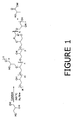
- FIG. 1 illustrates a compound with a DB of 1/7.
- “Hyperbranched” means a polymer, which is highly branched with three-dimensional tree-like structures or dendritic architecture.
- “Degree of cyclization” or DC means the mol fraction of cyclic structure units relative to the total monomer units in a polymer.
- the cyclic structure units can be formed by intramolecular cyclization of the polyols or any other ways to incorporate in the polyols.
- the cyclic structure units comprise basic structure units (V, VI and VII of FIG. 2 ) and the analogues thereof.
- the degree of cyclization may be determined by 13 C NMR.
- Low reactivity atmospheric environment is an atmospheric environment which is less reactive than the standard earth environment, which is achieved by substituting the atmospheric environment with an inert gas such as nitrogen, CO 2 , He, and any combination thereof, or by reducing the atmospheric pressure to less than 760 mm Hg.
- Solids means all starting materials used in the reaction except for solvents and water. Solids, includes but is not limited to products, co-products or by-products and any starting materials.
- FIG. 1 describes a glycerol-based polyol produced from glycerol.
- the polyol comprises a structure including at least two repeating units selecting from at least one of the structures listed in FIG. 2 including structures I and II, branched structures III, IV, and VIII, cyclic structures V, VI, VII and any combination thereof. Any structure in FIG. 2 can be combined with any structure or structures including itself through any free hydroxyl group functionality in the structure.
- the cyclic linkages of any basic cyclic structures in FIG. 2 may contain any structure or structures as a part or parts of linkages. In FIG. 1 and FIG.
- R and R' are (CH 2 ) n and n can independently be 1 or 0, and M can be H, metal or other counterion.
- a unique composition of glycerol-based polyol is produced from glycerol and at least one or more other monomers.
- Suitable monomers are any polyols or hydrogen active compounds such as those described in US 6,822,068 B2 , such as pentaerythrital, glycols, amines, etc. capable of reacting with glycerol or any polyglycerol structures.
- the glycerol-based polyol products produced by the present method comprise branched, cyclized structure units in the polyol and co-product lactic acid or lactate salt.
- the glycerol-based polyols have at least 0.1 of degree of branching, preferentially from 0.2 to 0.5, and a degree of cyclization at least 0.01, preferentially 0.02 to 0.19.
- the valuable co-product lactic acid or and lactate salt produced in the invention is at least 1%, preferentially 5% to 30%, by weight in the product solids.
- the produced lactic acid or lactic salt is particularly useful as it protects the glycerol-based polyols from bacterial and fungal spoilage. Biochallenge experimental tests show that the polyglycerols products are not susceptible to biological infestation such as from bacteria or fungi. Experimentally produced samples have gone for over 2 years without biological infestation or spoilage.
- Branching is particularly useful as it facilitates increased molecular weight of the glycerol-based polyols and constructs structured polyols thereof As described in US Published Application 2009/0130006 A1 branched glycerol-based polyols are capable of reducing scales in Bayer liquor during aluminum processing. As described in US patent application, application number 12/499, 916 , the glycerol-based polyols effectively increase brightness and whiteness of coated paper substrate without being frustrated by greening effect.
- the inventive method comprises particular concentration of a strong base as the catalyst under a particular distillation environment at high reaction temperature for a desired reaction time.
- the strong base is CsOH, KOH, NaOH, any other strong base stronger than NaOH or any combination thereof in the amount of above 2%, preferably above 3%.
- the particular distillation environment is inert gas flow rates of more than 0.2 mol of inert gas per hour per mol of monomer used.
- the inert gas is nitrogen, carbon dioxide, any other inert gas, or any combination thereof.
- the particular distillation environment is a vacuum pressure of less than 760 mmHg.
- the reaction temperature is above 200 and below 300 degrees Celsius. In at least one embodiment the reaction temperature is from 230 to 260 degrees Celsius. The reaction is conducted over 2 hours to a number of hours as desired.
- the reaction produced polyols have a polydispersity of at least 1. In at least one embodiment, the reaction produced polyols have a polydispersity within the range of 1 to 30.
- polydispersity is a term of art whose precise definition is provided in Principles of Polymerization, 4th Edition, by George Odion Wiley-InterScience (2004), Introduction pages 18-25 .
- the inventive method has a number of benefits.
- One advantage is the high proportion of valuable lactic acid or lactate salt present in the reaction product.
- the lactic acid has been observed to be as much as at least 11% to 22% by weight of the reaction product.
- the produced lactic acid is particularly useful as it protects the polyglycerol from bacterial and fungal spoilage. Experimentally produced samples have gone for over 2 years without biological infestation or spoilage.
- the degree of cyclization of the resulting polyol is 0.15 to 0.18.
- At least 30 to 35% of the produced polyglycerols are branched or hyperbranched polyglycerols. Branching or hyperbranching is particularly useful as it facilitates increased molecular weight of the polyglycerols. Furthermore as described in US Published Application 2009/0130006 A1 branched and hyperbranched polyglycerols are also capable of reducing scale in Bayer liquor during aluminum processing.
- the inventive process uses a higher amount of a strong base as the catalyst under a particular distillation environment to effectively produce the branched, cyclized glycerol-based polyols in a wide range of molecular weights with a beneficial co-product lactic acid or lactate as anti-biodegrading agent.
- the low reactivity atmospheric environment removes water that forms as a reaction byproduct, which prevents the water from inhibiting the polymerization reactions.
- a general procedure described here was followed by the examples.
- a reaction mixture of glycerol (500.0 parts) and a strong base in a particular amount (% by weight of active relative to the total weight of reaction solids) was stirred and gradually heated up to 230 to 260 degrees Celsius under particular inert gas flow rates.
- the reaction mixture was stirred at this temperature for a desired reaction time (in hours), and in-process samples were drawn after two or four hours and every one or two hours thereafter for product characterizations.
- Particular inert gas flow rates were applied starting from reaction time between 0 to 4 hours to the end of the reaction to remove water and possibly other volatiles from the reaction mixture and the condensation polymerization.
- Table 1 Molecular Weights of Polyglycerols Over Reaction Time* Rxn time, hours
- Example 3 CsOH, 12.3% Cpd MW Cpd MW Cpd MW 4 1 185 8 330 12 300 6 2 430 9 650 13 690 8 3 2,500 10 2,100 14 3,500 10 4 3,600 11 3,000 15 5,900 12 5 6,200 - - - - 14 6 7,800 - - - - 16 7 9,100 - - - - * Cpd is a sample's or a compound's identity, and consistently used in other Tables 2 and 3.
- Table 2 Composition Analysis by 13 C NMR for Polyglycerols* Cpd L% DB Cpd L% DB Cpd L% DB 1 2 0.15 8 8 0.21 12 7 0.21 2 6 0.24 9 12 0.29 13 12 0.29 3 10 0.30 10 14 0.31 14 15 0.33 4 14 0.32 11 14 0.32 15 16 0.34 5 15 0.34 - - - - - 6 13 0.34 - - - - - - 7 13 0.33 - - - - - * L%, determined as lactate (sodium) salt and calculated as lactic acid by weight; DB, degree of branching by mol fraction based on known literature method cited in the definition section.
- Turbid cell suspensions in TSB were prepared for bacterial cultures and 0.5 ml of this cell suspension was inoculated into 10 mL of the produced polyol solutions. Final cell density in the inoculated products were estimated at approximately 5x10 6 cfu/ml. A spore suspension in phosphate buffer was used for the fungal isolate and 0.5 mL of the spore suspension was inoculated into 10 mL of the product samples. Final spore density in the inoculated product sample was estimated at approximately 5x10 4 spores/mL. Viability of the test cultures was confirmed by inoculation of 0.5 mL of the cell/spore suspensions into 10 mL TSB.
Landscapes
- Chemical & Material Sciences (AREA)
- Organic Chemistry (AREA)
- Medicinal Chemistry (AREA)
- Polymers & Plastics (AREA)
- Health & Medical Sciences (AREA)
- Chemical Kinetics & Catalysis (AREA)
- Oil, Petroleum & Natural Gas (AREA)
- Engineering & Computer Science (AREA)
- Polyethers (AREA)
- Polyurethanes Or Polyureas (AREA)
- Organic Low-Molecular-Weight Compounds And Preparation Thereof (AREA)
- Polyesters Or Polycarbonates (AREA)
- Preparation Of Compounds By Using Micro-Organisms (AREA)
Description
- This invention relates to methods of producing a unique composition of glycerol-based polyol products. The unique glycerol-based polyol products include branched, cyclic polyols and a beneficial co-product lactic acid and/or lactate salt as an anti-biodegrading agent. Glycerol-based polyols include polyglycerols, polyglycerol derivatives and a polymer consisting of glycerol units and at least another monomer units to other multiple monomers units. The molecular weight of glycerol-based polyols produced through the improved methods can be preferentially high but also can be low as needed.
- Glycidol-based synthesis is particularly useful in producing structured or hyperbranched polyglycerols (HBPG) and high molecular weight HBPG, such as those described in
US Patent 6,822,068 B2 andUS Published Application 2008/282579 A1 . Unfortunately these syntheses rely on expensive monomer glycidol which is often so expensive that in many cases their use on an industrial scale is cost prohibitive. - A number of production processes have been developed for synthesis of glycerol-based polyols, particularly polyglycerols, from inexpensive monomer glycerol. However, these syntheses are mostly limited to producing linear or at least mostly linear, low molecular weight polyglycerols (or oligoglycerols).
US Patent 2,258,892 describes various reaction conditions for synthesizing polyglycerols at reaction temperature 200 to 260 degrees Celsius employing 1% of a caustic or salt by weight as the catalyst relative to glycerol used, but only oligomeric polyglycerol products were produced (mean molecular weight: 116 to 314 Daltons).. In US patent 5,641,816 0.12% of LiOH or lithium soaps under nitrogen atmosphere were used. InUS patent 6,620,904 B2 0.1 % of calcium hydroxide under vacuum was used. InWO 2007/049950 A2 1% of a weak acid alkaline metal salt was used. In each of these cases, however, only oligomeric polyglycerols were produced. - Another strategy used in the prior art is the use of small amounts of strong bases. In
EP 0719752 B1 1% of sodium hydroxide under vacuum or nitrogen was used.JP 3 717193 US Application 2008/306211 A1 describes using 0.3% or 0.4% of KOH. Again however the only major product was oligomeric polyglycerols or olygomeric glycerol-based polyols. Other methods are described inUS Patents 3,637,774 ,4,551,561 , and5,198,532 , Chinese Patent ApplicationCN 101186696A and Scientific Article Determination of the Optimum Conditions for the Condensation of Glycerin in the Presence of Potassium Hydroxide, D. A. Zhukov, et al., Zhurnal Prikladoni Khimii, Vol. 57, No. 2, pp. 389-392 (1984). Unfortunately these methods also only produce linear polyglycerols with no branching or cyclized structures. - Although glycerol is not expensive, the current processes for the glycerol-based condensation polymerizations are often inefficient. The resulting polyols are linear and often have rather low molecular weights, mostly less than 1000 Daltons. In addition these prior art methods lack any anti-biodegrading agents. Thus there is a clear need for and utility in an improved method of synthesizing polyglycerols and other glycerol-based polyols. The art described in this section is not intended to constitute an admission that any patent, publication or other information referred to herein is "prior art" with respect to this invention, unless specifically designated as such. In addition, this section should not be construed to mean that a search has been made or that no other pertinent information as defined in 37 C.F.R. § 1.56(a) exists.
- Subject-matter of the present invention are methods according to claims 1-13.
- At least one embodiment of the invention is directed towards a method of synthesizing glycerol-based polyol products. The method comprises the step of: reacting a reaction mass comprising at least glycerol monomer in the presence of a strong base catalyst of a concentration above 2%, in a low reactivity atmospheric environment at a temperature above 200 degrees C which produces a product comprising branched, cyclic polyols and a co-product comprising lactic acid, lactic salt, and any combination thereof. The method can further comprise the steps of providing a catalyst above 3%. The catalyst is selected from the group consisting of: NaOH, KOH, CsOH, a base stronger than NaOH, and any combination thereof. The strong base catalyst in the particular amount can be used with combining a base weaker than NaOH. The atmospheric environment is an atmospheric pressure of less than 760 mm Hg and/or may be a flow of an inert gas selected from the list of N2, CO2, He, other inert gases and any combination thereof and the flow is at a rate of 0.2 to 15 mol of inert gas per hour per mol of monomer. The particular atmospheric environment profile applied can be stead, gradual increase, gradual decrease or any combination thereof.
- The method may produce glycerol-based polyol products are selected from the group consisting of: polyglycerols, polyglycerol derivatives, a polyol having both glycerol monomer units and non-glycerol monomer units and any combination thereof. The glycerol-based polyols products have at least two hydroxyl groups. At least a portion of the produced polyols may have both at least a 0.1 degree of branching and at least a 0.01 degree of cyclization. The co-product may be at least 1% by weight. The glycerol-based polyol products may be at least 166 Daltons in molecular weight. The glycerol-based polyol products may have a polydispersity of at least 1.
- The method may make use of different forms of glycerol including pure, technical, crude, or any combination thereof. The method may further comprise other monomers selected from the group consisting of polyols such as pentaerythritol and glycols, amines, other monomers capable of reacting with glycerol or glycerol-based polyol intermediates and any combination thereof. The monomer(s) and/or catalyst (s) can be mixed at the very beginning of the reaction, at any time during the reaction and any combination thereof. The glycerol-based polyol products may be resistant to biological contamination for at least two years after synthesis. The method may further comprise the steps of pre-determining the desired molecular weight of the produced polyglycerol and adjusting the atmospheric environment to match the environment optimum for producing the desired molecular weight. The method may further comprise the steps of pre-determining the desired degree of branching and the desired degree of cyclization of the produced polyglycerol and the desired amount of co-product, and adjusting the atmospheric environment to match the environment optimum for producing the desired degree of branching, degree of cyclization and amount of co-product lactic acid and/or lactate salt. The branched, cyclic polyols may be in molecular weight range of 2,240 to 150,000 Daltons and have a polydispersity range of 1 to 30.
- A detailed description of the invention is hereafter described with specific reference being made to the drawings in which:
-
FIG. 1 is an illustration of an inventive polymerization reaction. -
FIG. 2 is an illustration of basic structural units useful with the inventive polymerization reaction. - For purposes of this application the definition of these terms is as follows:
- "Glycerol-based polyols" means any polymers containing repeating glycerol monomer units such as polyglycerols, polyglycerol derivatives, and a polymer consisting of glycerol monomer units and at least another monomer units to other multiple monomers units regardless of the sequence of monomers unit arrangements. These polymers also comprise at least two or multiple free hydroxyl groups.
- "Degree of Branching" or DB means the mol fraction of monomer units at the base of a chain branching away from the main polymer chain relative to a perfectly branched dendrimer, determined by 13C NMR based on known literature method described in Macromolecules, 1999, 32, 4240. Cyclic units are not included in the degree of branching. In a perfect dendrimer the DB is 1 or 100%.
FIG. 1 illustrates a compound with a DB of 1/7. - "Hyperbranched" means a polymer, which is highly branched with three-dimensional tree-like structures or dendritic architecture.
- "Degree of cyclization" or DC means the mol fraction of cyclic structure units relative to the total monomer units in a polymer. The cyclic structure units can be formed by intramolecular cyclization of the polyols or any other ways to incorporate in the polyols. The cyclic structure units comprise basic structure units (V, VI and VII of
FIG. 2 ) and the analogues thereof. The degree of cyclization may be determined by 13C NMR. - "Low reactivity atmospheric environment" is an atmospheric environment which is less reactive than the standard earth environment, which is achieved by substituting the atmospheric environment with an inert gas such as nitrogen, CO2, He, and any combination thereof, or by reducing the atmospheric pressure to less than 760 mm Hg.
- "Solids" means all starting materials used in the reaction except for solvents and water. Solids, includes but is not limited to products, co-products or by-products and any starting materials.
- In the event that the above definitions or a definition stated elsewhere in this application is inconsistent with a meaning (explicit or implicit) which is commonly used, in a dictionary, or stated in a source incorporated by reference into this application, the application and the claim terms in particular are understood to be construed according to the definition in this application, and not according to the common definition, dictionary definition, or the definition that was incorporated by reference.
-
FIG. 1 describes a glycerol-based polyol produced from glycerol. The polyol comprises a structure including at least two repeating units selecting from at least one of the structures listed inFIG. 2 including structures I and II, branched structures III, IV, and VIII, cyclic structures V, VI, VII and any combination thereof. Any structure inFIG. 2 can be combined with any structure or structures including itself through any free hydroxyl group functionality in the structure. The cyclic linkages of any basic cyclic structures inFIG. 2 may contain any structure or structures as a part or parts of linkages. InFIG. 1 andFIG. 2 the numbers m, n, n', o, p, q and r in each structure can independently be any numeric number 0, 1, 2, ...m...or r. InFIG. 1 R and R' are (CH2)n and n can independently be 1 or 0, and M can be H, metal or other counterion. - In at least one embodiment, a unique composition of glycerol-based polyol is produced from glycerol and at least one or more other monomers. Suitable monomers are any polyols or hydrogen active compounds such as those described in
US 6,822,068 B2 , such as pentaerythrital, glycols, amines, etc. capable of reacting with glycerol or any polyglycerol structures. - The glycerol-based polyol products produced by the present method comprise branched, cyclized structure units in the polyol and co-product lactic acid or lactate salt. In at least one embodiment the glycerol-based polyols have at least 0.1 of degree of branching, preferentially from 0.2 to 0.5, and a degree of cyclization at least 0.01, preferentially 0.02 to 0.19. In at least one embodiment the valuable co-product lactic acid or and lactate salt produced in the invention is at least 1%, preferentially 5% to 30%, by weight in the product solids. The produced lactic acid or lactic salt is particularly useful as it protects the glycerol-based polyols from bacterial and fungal spoilage. Biochallenge experimental tests show that the polyglycerols products are not susceptible to biological infestation such as from bacteria or fungi. Experimentally produced samples have gone for over 2 years without biological infestation or spoilage.
- Branching is particularly useful as it facilitates increased molecular weight of the glycerol-based polyols and constructs structured polyols thereof As described in
US Published Application 2009/0130006 A1 branched glycerol-based polyols are capable of reducing scales in Bayer liquor during aluminum processing. As described inUS patent application, application number 12/499, 916 - In at least one embodiment the inventive method comprises particular concentration of a strong base as the catalyst under a particular distillation environment at high reaction temperature for a desired reaction time. The strong base is CsOH, KOH, NaOH, any other strong base stronger than NaOH or any combination thereof in the amount of above 2%, preferably above 3%. In at least one embodiment the particular distillation environment is inert gas flow rates of more than 0.2 mol of inert gas per hour per mol of monomer used. In at least one embodiment the inert gas is nitrogen, carbon dioxide, any other inert gas, or any combination thereof. In at least one embodiment the particular distillation environment is a vacuum pressure of less than 760 mmHg. The reaction temperature is above 200 and below 300 degrees Celsius. In at least one embodiment the reaction temperature is from 230 to 260 degrees Celsius. The reaction is conducted over 2 hours to a number of hours as desired.
- In at least one embodiment, the reaction produced polyols have a polydispersity of at least 1. In at least one embodiment, the reaction produced polyols have a polydispersity within the range of 1 to 30. For purposes of this application the term "polydispersity" is a term of art whose precise definition is provided in Principles of Polymerization, 4th Edition, by George Odion Wiley-InterScience (2004), Introduction pages 18-25.
- The inventive method has a number of benefits. One advantage is the high proportion of valuable lactic acid or lactate salt present in the reaction product. In at least one embodiment, the lactic acid has been observed to be as much as at least 11% to 22% by weight of the reaction product. The produced lactic acid is particularly useful as it protects the polyglycerol from bacterial and fungal spoilage. Experimentally produced samples have gone for over 2 years without biological infestation or spoilage.
- In at least one embodiment the degree of cyclization of the resulting polyol is 0.15 to 0.18.
- In at least one embodiment, at least 30 to 35% of the produced polyglycerols are branched or hyperbranched polyglycerols. Branching or hyperbranching is particularly useful as it facilitates increased molecular weight of the polyglycerols. Furthermore as described in
US Published Application 2009/0130006 A1 branched and hyperbranched polyglycerols are also capable of reducing scale in Bayer liquor during aluminum processing. - Without being limited to theory it is believed that the beneficial effects of the inventive process are a result of the unique conditions that the polymerization reaction occurs within. In prior art glycerol-based condensation polymerizations either no catalyst is used, weak bases or organic acid salts of alkaline metals are used, or a low catalyst loading of a strong base as the catalyst, typically from 0.1 to 2% is used. This results in linear or mostly linear glycerol-based polyols, and often low molecular weight glycerol-based polyols. In contrast the inventive process uses a higher amount of a strong base as the catalyst under a particular distillation environment to effectively produce the branched, cyclized glycerol-based polyols in a wide range of molecular weights with a beneficial co-product lactic acid or lactate as anti-biodegrading agent. Furthermore, the low reactivity atmospheric environment removes water that forms as a reaction byproduct, which prevents the water from inhibiting the polymerization reactions.
- The foregoing may be better understood by reference to the following Examples, which are presented for purposes of illustration and are not intended to limit the scope of the invention:
- A general procedure described here was followed by the examples. A reaction mixture of glycerol (500.0 parts) and a strong base in a particular amount (% by weight of active relative to the total weight of reaction solids) was stirred and gradually heated up to 230 to 260 degrees Celsius under particular inert gas flow rates. The reaction mixture was stirred at this temperature for a desired reaction time (in hours), and in-process samples were drawn after two or four hours and every one or two hours thereafter for product characterizations. Particular inert gas flow rates were applied starting from reaction time between 0 to 4 hours to the end of the reaction to remove water and possibly other volatiles from the reaction mixture and the condensation polymerization.
- All samples in this invention were analyzed with a standard "borate" SEC method (size exclusion chromatography) and the reported molecular weights (MW) were weight average molecular weights based on calibration system of PEG/PEO narrow MW standards. For reaction time less than 8 hours the cut-off of integration limit was set right before the monomer glycerol (excluding glycerol), and for the reaction time at or greater than 8 hours the cut-off was set right before the co-product sodium lactate peak (excluding sodium lactate). The composition analyses were conducted by 13C NMR and GC-FID.
- As shown in Tables 1, 2 and 3, a spectrum of unique desirable glycerol-based polyol products was produced through this invention. In Table 1 the molecular weights of polyglycerols increased efficiently with reaction time, and reached thousands of Daltons after reaction time of 8 hours.
Table 1: Molecular Weights of Polyglycerols Over Reaction Time* Rxn time, hours Example 1 NaOH, 3.6% Example 2 KOH, 5.0% Example 3 CsOH, 12.3% Cpd MW Cpd MW Cpd MW 4 1 185 8 330 12 300 6 2 430 9 650 13 690 8 3 2,500 10 2,100 14 3,500 10 4 3,600 11 3,000 15 5,900 12 5 6,200 - - - - 14 6 7,800 - - - - 16 7 9,100 - - - - * Cpd is a sample's or a compound's identity, and consistently used in other Tables 2 and 3. Table 2: Composition Analysis by 13C NMR for Polyglycerols* Cpd L% DB Cpd L% DB Cpd L% DB 1 2 0.15 8 8 0.21 12 7 0.21 2 6 0.24 9 12 0.29 13 12 0.29 3 10 0.30 10 14 0.31 14 15 0.33 4 14 0.32 11 14 0.32 15 16 0.34 5 15 0.34 - - - - - - 6 13 0.34 - - - - - - 7 13 0.33 - - - - - - * L%, determined as lactate (sodium) salt and calculated as lactic acid by weight; DB, degree of branching by mol fraction based on known literature method cited in the definition section. Table 3: Analysis of Residual Glycerol by GC-FID* Cpd Glycerol % Cpd Glycerol % Cpd Glycerol % 2 5.1 9 2.9 13 2.3 4 0.2 11 <0.1 15 <0.1 * Glycerol determined by weight relative to the product solids on instrument HP 5890 Series II (column DB-wax, temperature program 60 to 250 degrees Celsius) and calibrated with pure glycerol. - In this invention the effects of the particular distillation environment on the molecular weights of polglycerols are shown in Table 4.
Table 4: Nitrogen Flow rate Dependence of Glycerol-based Polymerization* Rxn time Example 4 N2 flow rate 0.19 Example 5 N2 flow rate 0.93 Example 6 N2 flow rate 1.86 Example 7 flow rate 3.72 Example 8 N2 flow rate 7.45 Hours MW MW MW MW MW 8 570 1,200 2,100 3,100 4,100 10 730 2,200 3,500 6,400 6,700 16 1,200 4,700 6,800 9,300 6,700 * Unit of nitrogen flow rate is mol of nitrogen gas per hour for per mol of monomer or monomers; the reaction conditions for all examples are identical except the nitrogen flow rate (3.6% NaOH used). - The produced polyol's resistance to biological spoilage was proven with the following experiment:
- Turbid cell suspensions in TSB were prepared for bacterial cultures and 0.5 ml of this cell suspension was inoculated into 10 mL of the produced polyol solutions. Final cell density in the inoculated products were estimated at approximately 5x10⁶ cfu/ml. A spore suspension in phosphate buffer was used for the fungal isolate and 0.5 mL of the spore suspension was inoculated into 10 mL of the product samples. Final spore density in the inoculated product sample was estimated at approximately 5x10⁴ spores/mL. Viability of the test cultures was confirmed by inoculation of 0.5 mL of the cell/spore suspensions into 10 mL TSB. No growth was observed in inoculated product samples (Table 5). In order to confirm the cultures were not viable, 0.1 mL of inoculated product samples was plated on TGE agar for bacterial test isolates and PDA for the fungal test isolate. The results proved that these polyol products do not readily support growth/viability of bacteria or fungi.
Table 5: Examination of inoculated media/product samples after 7-day incubation at room temperature. Test Medium B. cereus P. aeruginosa K. pneumoniae PAE Fungus TSB Control Growth Growth No growth Growth Polyol Product No growth No growth No growth No growth Polyol Product No growth No growth No growth No growth Table 6: Observations of growth on TGE/PDA with inoculated product samples after 5-day incubation at room temperature. Test Medium B. cereus P. aeruginosa K. pneumoniae PAE Fungus Polyol Product No growth No growth No growth No growth Polyol Product No growth No growth No growth No growth - While this invention may be embodied in many different forms, there are shown in the drawings and described in detail herein specific preferred embodiments of the invention. The present disclosure is an exemplification of the principles of the invention and is not intended to limit the invention to the particular embodiments illustrated. All patents, patent applications, scientific papers, and any other referenced materials mentioned herein are incorporated by reference in their entirety. Furthermore, the invention encompasses any possible combination of some or all of the various embodiments described herein and incorporated herein.
- All ranges and parameters disclosed herein are understood to encompass any and all subranges subsumed therein, and every number between the endpoints. For example, a stated range of "1 to 10" should be considered to include any and all subranges between (and inclusive of) the minimum value of 1 and the maximum value of 10; that is, all subranges beginning with a minimum value of 1 or more, (e.g. 1 to 6.1), end ending with a maximum value of 10 or less, (e.g. 2.3 to 9.4, 3 to 8, 4 to 7), and finally to each number 1, 2, 3, 4, 5, 6, 7, 8, 9, and 10 contained within the range.
- The above disclosure is intended to be illustrative and not exhaustive. This description will suggest many variations and alternatives to one of ordinary skill in this art. All these alternatives and variations are intended to be included within the scope of the claims where the term "comprising" means "including, but not limited to". Those familiar with the art may recognize other equivalents to the specific embodiments described herein which equivalents are also intended to be encompassed by the claims.
- This completes the description of the preferred and alternate embodiments of the invention. Those skilled in the art may recognize other equivalents to the specific embodiment described herein which equivalents are intended to be encompassed by the claims attached hereto.
Claims (13)
- A method of synthesizing glycerol-based polyol products comprising the step of:reacting a reaction mass comprising at least glycerol monomer in the presence of a base catalyst selected from NaOH, KOH, CsOH, a base stronger than NaOH, or any combination thereof, of a concentration of above 2% by weight (relative to the total weight of reaction solids, wherein solids means are starting materials used in the reaction except for solvents and water), in an environment at an atmospheric pressure of less than 760 mm Hg and/or in an inert gas atmosphere selected from N2, CO2, He or other inert gases, or any combination thereof,at a temperature above 200°C and below 300°C which produces a product comprising glycerol-based polyols comprising branched and cyclized structure units in the polyol, and a co-product comprising lactic acid and/or lactate salt.
- The method of claim 1 further comprising the steps of providig the catalyst above 3% by weight.
- The method of claim 1 in which the atmospheric environment is a flow of an inert gas selected from the list of N2, CO2, He, other inert gases and any combination thereof and the flow is at a rate of 0.2 to 15 mol of inert gas per hour per mol of monomer(s).
- The method of claim 1 in which the glycerol-based polyol products are selected from the group consisting of polyglycerols, polyglycerol derivatives, a polyol having both glycerol monomer units and non-glycerol monomer units and any combination thereof, wherein the polyols have at least two hydroxyl groups.
- The method of claim 1 in which at least a portion of the produced polyols have both at least a 0.1 degree of branching and at least a 0.01 degree of cyclization.
- The method of claim 1 in which the co-product is at least 1% by weight.
- The method of claim 1 in which the glycerol-based polyol products are at least 166 Daltons in weight.
- The method of claim 1 in which the glycerol-based polyol products have a polydispersity of at least 1.
- The method of claim 1 in which the glycerol is pure, technical, crude, or any combination thereof.
- The method of claim 1 further comprising other monomers selected from the group of polyols such as pentaerythritol and glycols, amines, other monomers capable of reacting with glycerol or glycerol-based polyol intermediates and any combination thereof.
- The method of claim 1 further comprising the steps of pre-determining the desired molecular weight of the produced polyglycerol and adjusting the atmospheric environment to match the environment optimum for producing the desired molecular weight.
- The method of claim 1 further comprising the steps of pre-determining the desired degree of branching and the desired degree of cyclization of the produced polyglycerol and the desired amount of co-product, and adjusting the atmospheric environment to match the environment optimum for producing the desired degree of branching, degree of cyclization and amount of co-product lactic acid and/or lactate salt.
- The method of claim 1 in which the branched, cyclic polyols are in molecular weight range of 2,240 to 150,000 Daltons and have a polydispersity range of 1 to 30.
Applications Claiming Priority (2)
| Application Number | Priority Date | Filing Date | Title |
|---|---|---|---|
| US12/582,827 US9290620B2 (en) | 2009-10-21 | 2009-10-21 | Production and composition of glycerol based polyols |
| PCT/US2010/050807 WO2011049723A2 (en) | 2009-10-21 | 2010-09-30 | Production and composition of glycerol based polyols |
Publications (3)
| Publication Number | Publication Date |
|---|---|
| EP2491069A2 EP2491069A2 (en) | 2012-08-29 |
| EP2491069A4 EP2491069A4 (en) | 2013-07-03 |
| EP2491069B1 true EP2491069B1 (en) | 2014-05-21 |
Family
ID=43879810
Family Applications (1)
| Application Number | Title | Priority Date | Filing Date |
|---|---|---|---|
| EP10825389.9A Active EP2491069B1 (en) | 2009-10-21 | 2010-09-30 | Production of glycerol based polyols |
Country Status (8)
| Country | Link |
|---|---|
| US (1) | US9290620B2 (en) |
| EP (1) | EP2491069B1 (en) |
| KR (1) | KR101848937B1 (en) |
| CN (1) | CN102666650B (en) |
| BR (1) | BR112012009635B1 (en) |
| CA (1) | CA2777327C (en) |
| ES (1) | ES2471496T3 (en) |
| WO (1) | WO2011049723A2 (en) |
Families Citing this family (17)
| Publication number | Priority date | Publication date | Assignee | Title |
|---|---|---|---|---|
| US8884049B2 (en) | 2009-10-21 | 2014-11-11 | Nalco Company | Glycerol based polymer surface active chemistry and production |
| US8101045B2 (en) * | 2010-01-05 | 2012-01-24 | Nalco Company | Modifying agent for yankee coatings |
| US9416490B2 (en) | 2010-03-10 | 2016-08-16 | Nalco Company | Cross-linked glycerol based polymers as digestion aids for improving wood pulping processes |
| US8709209B2 (en) * | 2010-03-10 | 2014-04-29 | Nalco Company | Anionic lipophilic glycerol-based polymers for organic deposition control in papermaking processes |
| US8728275B2 (en) * | 2012-07-27 | 2014-05-20 | Ecolab Usa Inc. | Glycerol-based polymers for reducing deposition of organic contaminants in papermaking processes |
| US8366877B2 (en) * | 2010-03-10 | 2013-02-05 | Nalco Company | Lipohydrophilic glycerol based polymers as digestion aids for improving wood pulping processes |
| IN2014DN08895A (en) * | 2012-05-31 | 2015-05-22 | Nalco Co | |
| CA2892629C (en) * | 2012-12-28 | 2016-08-30 | Nalco Company | Anionic lipophilic glycerol-based polymers for organic deposition control in papermaking processes |
| US9353301B2 (en) | 2013-11-25 | 2016-05-31 | Ecolab Usa Inc. | Composition for dust control |
| EP3331962B1 (en) | 2015-08-07 | 2021-02-17 | Ecolab USA Inc. | Carbonyl functional inversion agents for water-in-oil latices and methods of use |
| MX2018001621A (en) | 2015-08-07 | 2018-05-28 | Ecolab Usa Inc | Nonionic inversion agents for water-in-oil latices and methods of use. |
| CA2994684A1 (en) | 2015-08-07 | 2017-02-16 | Xiaojin Harry Li | Phosphorus functional inversion agents for water-in-oil latices and methods of use |
| US10836665B2 (en) | 2015-09-10 | 2020-11-17 | Dow Global Technologies Llc | Scale inhibitor methods and compositions |
| WO2019221925A1 (en) * | 2018-05-18 | 2019-11-21 | Novomer, Inc. | Integrated systems and processes for chemical production |
| AR118538A1 (en) | 2019-03-28 | 2021-10-20 | Ecolab Usa Inc | SELF-INVESTING POLYMER EMULSIONS |
| CN112174570B (en) * | 2020-10-10 | 2022-05-03 | 江苏润天建材有限公司 | Environment-friendly cement grinding aid and preparation method thereof |
| AU2023314793A1 (en) | 2022-07-29 | 2025-02-20 | Championx Llc | Emulsion polymers and methods for improving pumpability |
Family Cites Families (20)
| Publication number | Priority date | Publication date | Assignee | Title |
|---|---|---|---|---|
| US2258892A (en) * | 1938-08-25 | 1941-10-14 | Benjamin R Harris | Ethers of polyglycerols |
| US3637774A (en) * | 1969-11-03 | 1972-01-25 | Vigen K Babayan | Process for preparation and purification of polyglycerols and esters thereof |
| DE3346097A1 (en) * | 1983-12-21 | 1985-07-04 | Hoechst Ag, 6230 Frankfurt | METHOD FOR PRODUCING POLYGLYCERINES |
| GB8427886D0 (en) * | 1984-11-03 | 1984-12-12 | Manchester Inst Science Tech | Formation of polyols |
| US5198532A (en) * | 1991-03-19 | 1993-03-30 | Shell Oil Company | Polycondensation of epihalohydrin and polyhydric alcohols and thermal condensation to form polyethercyclicpolyols |
| US5641816A (en) * | 1991-07-25 | 1997-06-24 | Henkel Kommanditgesellschaft Auf Aktien | Process for the production of polyol compounds |
| DE4124665A1 (en) * | 1991-07-25 | 1993-01-28 | Henkel Kgaa | METHOD FOR PRODUCING POLYOL COMPOUNDS |
| US5399371A (en) * | 1993-06-17 | 1995-03-21 | Henkel Corporation | Low calorie substitute for an edible oil |
| JP3717193B2 (en) | 1994-05-20 | 2005-11-16 | 太陽化学株式会社 | Polyglycerin fraction, fatty acid ester thereof and method for producing the same |
| FR2728896A1 (en) | 1994-12-29 | 1996-07-05 | Inst Francais Du Petrole | PROCESS FOR OBTAINING POLYGLYCEROLS AND POLYGLYCEROL ESTERS |
| US5756639A (en) * | 1995-07-28 | 1998-05-26 | Shell Oil Company | Copolymerization of polyetherpolyols with epoxy resins |
| US6822068B2 (en) * | 1998-12-22 | 2004-11-23 | Bayer Aktiengesellschaft | Method for producing highly-branched glycidol-based polyols |
| US6683222B2 (en) * | 1999-02-18 | 2004-01-27 | Taiyo Kagaku Co., Ltd. | Polyether-polyol compound |
| US6620904B2 (en) * | 2000-11-06 | 2003-09-16 | Lonza Inc. | Processes for preparing linear polyglycerols and polyglycerol esters |
| MY142392A (en) | 2005-10-26 | 2010-11-30 | Malaysian Palm Oil Board | A process for preparing polymers of polyhydric alcohols |
| CN101189996B (en) | 2006-11-30 | 2012-05-02 | 四川宇妥藏药药业有限责任公司 | Health tea and preparation method thereof |
| US7845097B2 (en) * | 2006-12-07 | 2010-12-07 | Callaway Golf Company | Chemically-treated outsole assembly for a golf shoe |
| US20080306211A1 (en) * | 2007-02-06 | 2008-12-11 | Cargill, Incorporated | Process for prepapring polycerol and mixed ethers |
| US20090082483A1 (en) * | 2007-09-20 | 2009-03-26 | Petrovic Zoran S | Polyglycerol based polyols and polyurethanes and methods for producing polyols and polyurethanes |
| US9284625B2 (en) * | 2007-11-20 | 2016-03-15 | Nalco Company | Use of polyols as scale control reagents in the mining processes |
-
2009
- 2009-10-21 US US12/582,827 patent/US9290620B2/en active Active
-
2010
- 2010-09-30 ES ES10825389.9T patent/ES2471496T3/en active Active
- 2010-09-30 KR KR1020127011196A patent/KR101848937B1/en active Active
- 2010-09-30 BR BR112012009635-4A patent/BR112012009635B1/en active IP Right Grant
- 2010-09-30 EP EP10825389.9A patent/EP2491069B1/en active Active
- 2010-09-30 WO PCT/US2010/050807 patent/WO2011049723A2/en not_active Ceased
- 2010-09-30 CA CA2777327A patent/CA2777327C/en active Active
- 2010-09-30 CN CN201080047946.3A patent/CN102666650B/en active Active
Also Published As
| Publication number | Publication date |
|---|---|
| WO2011049723A3 (en) | 2011-08-25 |
| WO2011049723A2 (en) | 2011-04-28 |
| CA2777327C (en) | 2017-07-04 |
| BR112012009635A2 (en) | 2016-05-17 |
| EP2491069A2 (en) | 2012-08-29 |
| CN102666650B (en) | 2014-10-29 |
| BR112012009635B1 (en) | 2019-09-17 |
| CN102666650A (en) | 2012-09-12 |
| US9290620B2 (en) | 2016-03-22 |
| EP2491069A4 (en) | 2013-07-03 |
| CA2777327A1 (en) | 2011-04-28 |
| AU2010308475A1 (en) | 2012-05-03 |
| US20110092743A1 (en) | 2011-04-21 |
| KR20120089702A (en) | 2012-08-13 |
| KR101848937B1 (en) | 2018-04-13 |
| ES2471496T3 (en) | 2014-06-26 |
Similar Documents
| Publication | Publication Date | Title |
|---|---|---|
| US9290620B2 (en) | Production and composition of glycerol based polyols | |
| CN103717640B (en) | The preparation method of branched polyether carbonic ester and its purposes | |
| US20230312815A1 (en) | Synthesis of polymers from cyclic diolides | |
| HU228388B1 (en) | Long-chain polyether polyols with a high proportion of primary oh groups process for producing thereof and their using | |
| EP1620489B1 (en) | Polytrimethylene ether glycol with excellent quality from biochemically-derived 1,3-propanediol | |
| WO2011142259A1 (en) | Method for producing aliphatic polycarbonate | |
| AU2007207522A1 (en) | Process for producing polytrimethylene ether glycol | |
| AU2010308475B2 (en) | Production and composition of glycerol based polyols | |
| US11965061B2 (en) | Catalyst for copolymerization of carbon dioxide and epoxy and method of manufacturing the same | |
| KR101230907B1 (en) | Manufacturing Method of Lactide from Lactic acid | |
| KR102717144B1 (en) | Double metal cyanide catalysts prepared by combination of hydrogen hexacyanocobaltate and zinc carboxylate and propylene oxide polymerization using the same | |
| KR101439431B1 (en) | Cobalt-yittrium based supported catalyst for reductive amination reaction and preparation method of polyetheramine compound using the catalyst | |
| EP2855410B1 (en) | Glycerol based polymer surface active chemistry and production | |
| US7714097B2 (en) | Polymer synthesis from macrocycles | |
| CN106905524B (en) | A kind of preparation method of both-end alkenyl polypropylene oxide | |
| WO2023121913A1 (en) | Semi-batch alkylene oxide polymerization process using a lewis acid catalyst | |
| KR101684640B1 (en) | A manufacturing method of glycidol using glycerol and glycidol manufactured by the method | |
| JP4474919B2 (en) | Method for producing glycerin polyalkylene glycol ether derivative | |
| KR20120131851A (en) | Manufacturing Method of Lactide from Lactic acid | |
| KR101293818B1 (en) | METHOD FOR PREPARING α, β-UNSATURATED ALDEHYDE | |
| JP2010006759A (en) | Alkylene oxide adduct of cyclic carbonate | |
| KR101426409B1 (en) | Cobalt-yittrium based catalyst for reductive amination reaction and preparation method of polyetheramine compound using the catalyst | |
| KR102119198B1 (en) | Method for producing medical polyoxypropylene polymer, and method for producing medical polyoxypropylene/polyoxyethylene block copolymer | |
| EP3333148B1 (en) | Process for making a 2-acetoxyalkanoic ester | |
| JP3902921B2 (en) | Method for producing aliphatic polyester, method for producing caproic acid, Propionibacterium acnes CAP103 strain |
Legal Events
| Date | Code | Title | Description |
|---|---|---|---|
| PUAI | Public reference made under article 153(3) epc to a published international application that has entered the european phase |
Free format text: ORIGINAL CODE: 0009012 |
|
| 17P | Request for examination filed |
Effective date: 20120521 |
|
| AK | Designated contracting states |
Kind code of ref document: A2 Designated state(s): AL AT BE BG CH CY CZ DE DK EE ES FI FR GB GR HR HU IE IS IT LI LT LU LV MC MK MT NL NO PL PT RO SE SI SK SM TR |
|
| DAX | Request for extension of the european patent (deleted) | ||
| A4 | Supplementary search report drawn up and despatched |
Effective date: 20130603 |
|
| RIC1 | Information provided on ipc code assigned before grant |
Ipc: C07C 59/08 20060101ALI20130527BHEP Ipc: C07C 41/09 20060101ALI20130527BHEP Ipc: C07C 43/13 20060101ALI20130527BHEP Ipc: C08G 65/34 20060101AFI20130527BHEP |
|
| GRAP | Despatch of communication of intention to grant a patent |
Free format text: ORIGINAL CODE: EPIDOSNIGR1 |
|
| INTG | Intention to grant announced |
Effective date: 20140103 |
|
| GRAS | Grant fee paid |
Free format text: ORIGINAL CODE: EPIDOSNIGR3 |
|
| GRAA | (expected) grant |
Free format text: ORIGINAL CODE: 0009210 |
|
| AK | Designated contracting states |
Kind code of ref document: B1 Designated state(s): AL AT BE BG CH CY CZ DE DK EE ES FI FR GB GR HR HU IE IS IT LI LT LU LV MC MK MT NL NO PL PT RO SE SI SK SM TR |
|
| REG | Reference to a national code |
Ref country code: GB Ref legal event code: FG4D |
|
| REG | Reference to a national code |
Ref country code: CH Ref legal event code: EP |
|
| REG | Reference to a national code |
Ref country code: AT Ref legal event code: REF Ref document number: 669586 Country of ref document: AT Kind code of ref document: T Effective date: 20140615 |
|
| REG | Reference to a national code |
Ref country code: IE Ref legal event code: FG4D |
|
| REG | Reference to a national code |
Ref country code: ES Ref legal event code: FG2A Ref document number: 2471496 Country of ref document: ES Kind code of ref document: T3 Effective date: 20140626 |
|
| REG | Reference to a national code |
Ref country code: DE Ref legal event code: R096 Ref document number: 602010016322 Country of ref document: DE Effective date: 20140710 |
|
| REG | Reference to a national code |
Ref country code: AT Ref legal event code: MK05 Ref document number: 669586 Country of ref document: AT Kind code of ref document: T Effective date: 20140521 Ref country code: NL Ref legal event code: VDEP Effective date: 20140521 |
|
| REG | Reference to a national code |
Ref country code: LT Ref legal event code: MG4D |
|
| PG25 | Lapsed in a contracting state [announced via postgrant information from national office to epo] |
Ref country code: NO Free format text: LAPSE BECAUSE OF FAILURE TO SUBMIT A TRANSLATION OF THE DESCRIPTION OR TO PAY THE FEE WITHIN THE PRESCRIBED TIME-LIMIT Effective date: 20140821 Ref country code: FI Free format text: LAPSE BECAUSE OF FAILURE TO SUBMIT A TRANSLATION OF THE DESCRIPTION OR TO PAY THE FEE WITHIN THE PRESCRIBED TIME-LIMIT Effective date: 20140521 Ref country code: GR Free format text: LAPSE BECAUSE OF FAILURE TO SUBMIT A TRANSLATION OF THE DESCRIPTION OR TO PAY THE FEE WITHIN THE PRESCRIBED TIME-LIMIT Effective date: 20140822 Ref country code: LT Free format text: LAPSE BECAUSE OF FAILURE TO SUBMIT A TRANSLATION OF THE DESCRIPTION OR TO PAY THE FEE WITHIN THE PRESCRIBED TIME-LIMIT Effective date: 20140521 Ref country code: IS Free format text: LAPSE BECAUSE OF FAILURE TO SUBMIT A TRANSLATION OF THE DESCRIPTION OR TO PAY THE FEE WITHIN THE PRESCRIBED TIME-LIMIT Effective date: 20140921 |
|
| PG25 | Lapsed in a contracting state [announced via postgrant information from national office to epo] |
Ref country code: HR Free format text: LAPSE BECAUSE OF FAILURE TO SUBMIT A TRANSLATION OF THE DESCRIPTION OR TO PAY THE FEE WITHIN THE PRESCRIBED TIME-LIMIT Effective date: 20140521 Ref country code: SE Free format text: LAPSE BECAUSE OF FAILURE TO SUBMIT A TRANSLATION OF THE DESCRIPTION OR TO PAY THE FEE WITHIN THE PRESCRIBED TIME-LIMIT Effective date: 20140521 Ref country code: PL Free format text: LAPSE BECAUSE OF FAILURE TO SUBMIT A TRANSLATION OF THE DESCRIPTION OR TO PAY THE FEE WITHIN THE PRESCRIBED TIME-LIMIT Effective date: 20140521 Ref country code: LV Free format text: LAPSE BECAUSE OF FAILURE TO SUBMIT A TRANSLATION OF THE DESCRIPTION OR TO PAY THE FEE WITHIN THE PRESCRIBED TIME-LIMIT Effective date: 20140521 Ref country code: AT Free format text: LAPSE BECAUSE OF FAILURE TO SUBMIT A TRANSLATION OF THE DESCRIPTION OR TO PAY THE FEE WITHIN THE PRESCRIBED TIME-LIMIT Effective date: 20140521 |
|
| PG25 | Lapsed in a contracting state [announced via postgrant information from national office to epo] |
Ref country code: PT Free format text: LAPSE BECAUSE OF FAILURE TO SUBMIT A TRANSLATION OF THE DESCRIPTION OR TO PAY THE FEE WITHIN THE PRESCRIBED TIME-LIMIT Effective date: 20140922 |
|
| PG25 | Lapsed in a contracting state [announced via postgrant information from national office to epo] |
Ref country code: DK Free format text: LAPSE BECAUSE OF FAILURE TO SUBMIT A TRANSLATION OF THE DESCRIPTION OR TO PAY THE FEE WITHIN THE PRESCRIBED TIME-LIMIT Effective date: 20140521 Ref country code: EE Free format text: LAPSE BECAUSE OF FAILURE TO SUBMIT A TRANSLATION OF THE DESCRIPTION OR TO PAY THE FEE WITHIN THE PRESCRIBED TIME-LIMIT Effective date: 20140521 Ref country code: BE Free format text: LAPSE BECAUSE OF FAILURE TO SUBMIT A TRANSLATION OF THE DESCRIPTION OR TO PAY THE FEE WITHIN THE PRESCRIBED TIME-LIMIT Effective date: 20140521 Ref country code: CZ Free format text: LAPSE BECAUSE OF FAILURE TO SUBMIT A TRANSLATION OF THE DESCRIPTION OR TO PAY THE FEE WITHIN THE PRESCRIBED TIME-LIMIT Effective date: 20140521 Ref country code: SK Free format text: LAPSE BECAUSE OF FAILURE TO SUBMIT A TRANSLATION OF THE DESCRIPTION OR TO PAY THE FEE WITHIN THE PRESCRIBED TIME-LIMIT Effective date: 20140521 Ref country code: RO Free format text: LAPSE BECAUSE OF FAILURE TO SUBMIT A TRANSLATION OF THE DESCRIPTION OR TO PAY THE FEE WITHIN THE PRESCRIBED TIME-LIMIT Effective date: 20140521 |
|
| REG | Reference to a national code |
Ref country code: DE Ref legal event code: R097 Ref document number: 602010016322 Country of ref document: DE |
|
| PG25 | Lapsed in a contracting state [announced via postgrant information from national office to epo] |
Ref country code: NL Free format text: LAPSE BECAUSE OF FAILURE TO SUBMIT A TRANSLATION OF THE DESCRIPTION OR TO PAY THE FEE WITHIN THE PRESCRIBED TIME-LIMIT Effective date: 20140521 |
|
| PLBE | No opposition filed within time limit |
Free format text: ORIGINAL CODE: 0009261 |
|
| STAA | Information on the status of an ep patent application or granted ep patent |
Free format text: STATUS: NO OPPOSITION FILED WITHIN TIME LIMIT |
|
| 26N | No opposition filed |
Effective date: 20150224 |
|
| PG25 | Lapsed in a contracting state [announced via postgrant information from national office to epo] |
Ref country code: IT Free format text: LAPSE BECAUSE OF FAILURE TO SUBMIT A TRANSLATION OF THE DESCRIPTION OR TO PAY THE FEE WITHIN THE PRESCRIBED TIME-LIMIT Effective date: 20140521 Ref country code: LU Free format text: LAPSE BECAUSE OF FAILURE TO SUBMIT A TRANSLATION OF THE DESCRIPTION OR TO PAY THE FEE WITHIN THE PRESCRIBED TIME-LIMIT Effective date: 20140930 Ref country code: MC Free format text: LAPSE BECAUSE OF FAILURE TO SUBMIT A TRANSLATION OF THE DESCRIPTION OR TO PAY THE FEE WITHIN THE PRESCRIBED TIME-LIMIT Effective date: 20140521 |
|
| REG | Reference to a national code |
Ref country code: CH Ref legal event code: PL |
|
| REG | Reference to a national code |
Ref country code: DE Ref legal event code: R097 Ref document number: 602010016322 Country of ref document: DE Effective date: 20150224 |
|
| REG | Reference to a national code |
Ref country code: FR Ref legal event code: ST Effective date: 20150529 |
|
| PG25 | Lapsed in a contracting state [announced via postgrant information from national office to epo] |
Ref country code: LI Free format text: LAPSE BECAUSE OF NON-PAYMENT OF DUE FEES Effective date: 20140930 Ref country code: SI Free format text: LAPSE BECAUSE OF FAILURE TO SUBMIT A TRANSLATION OF THE DESCRIPTION OR TO PAY THE FEE WITHIN THE PRESCRIBED TIME-LIMIT Effective date: 20140521 Ref country code: CH Free format text: LAPSE BECAUSE OF NON-PAYMENT OF DUE FEES Effective date: 20140930 |
|
| PG25 | Lapsed in a contracting state [announced via postgrant information from national office to epo] |
Ref country code: FR Free format text: LAPSE BECAUSE OF NON-PAYMENT OF DUE FEES Effective date: 20140930 |
|
| PG25 | Lapsed in a contracting state [announced via postgrant information from national office to epo] |
Ref country code: SM Free format text: LAPSE BECAUSE OF FAILURE TO SUBMIT A TRANSLATION OF THE DESCRIPTION OR TO PAY THE FEE WITHIN THE PRESCRIBED TIME-LIMIT Effective date: 20140521 |
|
| PG25 | Lapsed in a contracting state [announced via postgrant information from national office to epo] |
Ref country code: MT Free format text: LAPSE BECAUSE OF FAILURE TO SUBMIT A TRANSLATION OF THE DESCRIPTION OR TO PAY THE FEE WITHIN THE PRESCRIBED TIME-LIMIT Effective date: 20140521 Ref country code: CY Free format text: LAPSE BECAUSE OF FAILURE TO SUBMIT A TRANSLATION OF THE DESCRIPTION OR TO PAY THE FEE WITHIN THE PRESCRIBED TIME-LIMIT Effective date: 20140521 Ref country code: BG Free format text: LAPSE BECAUSE OF FAILURE TO SUBMIT A TRANSLATION OF THE DESCRIPTION OR TO PAY THE FEE WITHIN THE PRESCRIBED TIME-LIMIT Effective date: 20140521 |
|
| PG25 | Lapsed in a contracting state [announced via postgrant information from national office to epo] |
Ref country code: HU Free format text: LAPSE BECAUSE OF FAILURE TO SUBMIT A TRANSLATION OF THE DESCRIPTION OR TO PAY THE FEE WITHIN THE PRESCRIBED TIME-LIMIT; INVALID AB INITIO Effective date: 20100930 Ref country code: TR Free format text: LAPSE BECAUSE OF FAILURE TO SUBMIT A TRANSLATION OF THE DESCRIPTION OR TO PAY THE FEE WITHIN THE PRESCRIBED TIME-LIMIT Effective date: 20140521 |
|
| PG25 | Lapsed in a contracting state [announced via postgrant information from national office to epo] |
Ref country code: MK Free format text: LAPSE BECAUSE OF FAILURE TO SUBMIT A TRANSLATION OF THE DESCRIPTION OR TO PAY THE FEE WITHIN THE PRESCRIBED TIME-LIMIT Effective date: 20140521 |
|
| PG25 | Lapsed in a contracting state [announced via postgrant information from national office to epo] |
Ref country code: AL Free format text: LAPSE BECAUSE OF FAILURE TO SUBMIT A TRANSLATION OF THE DESCRIPTION OR TO PAY THE FEE WITHIN THE PRESCRIBED TIME-LIMIT Effective date: 20140521 |
|
| PGFP | Annual fee paid to national office [announced via postgrant information from national office to epo] |
Ref country code: DE Payment date: 20250805 Year of fee payment: 16 |
|
| PGFP | Annual fee paid to national office [announced via postgrant information from national office to epo] |
Ref country code: GB Payment date: 20250807 Year of fee payment: 16 |
|
| PGFP | Annual fee paid to national office [announced via postgrant information from national office to epo] |
Ref country code: IE Payment date: 20250812 Year of fee payment: 16 |
|
| PGFP | Annual fee paid to national office [announced via postgrant information from national office to epo] |
Ref country code: ES Payment date: 20251014 Year of fee payment: 16 |