EP2487306A1 - Bauelementsystem - Google Patents
Bauelementsystem Download PDFInfo
- Publication number
- EP2487306A1 EP2487306A1 EP11154087A EP11154087A EP2487306A1 EP 2487306 A1 EP2487306 A1 EP 2487306A1 EP 11154087 A EP11154087 A EP 11154087A EP 11154087 A EP11154087 A EP 11154087A EP 2487306 A1 EP2487306 A1 EP 2487306A1
- Authority
- EP
- European Patent Office
- Prior art keywords
- adhesive
- component system
- cladding element
- fibers
- building
- Prior art date
- Legal status (The legal status is an assumption and is not a legal conclusion. Google has not performed a legal analysis and makes no representation as to the accuracy of the status listed.)
- Granted
Links
- 238000005253 cladding Methods 0.000 claims abstract description 31
- 230000001070 adhesive effect Effects 0.000 claims abstract description 24
- 239000000853 adhesive Substances 0.000 claims abstract description 23
- 239000011521 glass Substances 0.000 claims abstract description 21
- 239000002131 composite material Substances 0.000 claims abstract description 20
- 239000004567 concrete Substances 0.000 claims abstract description 12
- 230000008878 coupling Effects 0.000 claims abstract description 10
- 238000010168 coupling process Methods 0.000 claims abstract description 10
- 238000005859 coupling reaction Methods 0.000 claims abstract description 10
- 239000007767 bonding agent Substances 0.000 claims abstract description 8
- 239000004568 cement Substances 0.000 claims abstract description 6
- 239000000919 ceramic Substances 0.000 claims abstract description 5
- 239000002184 metal Substances 0.000 claims abstract description 5
- 239000011449 brick Substances 0.000 claims abstract description 4
- 238000000576 coating method Methods 0.000 claims description 12
- 239000011248 coating agent Substances 0.000 claims description 9
- 239000004744 fabric Substances 0.000 claims description 9
- 239000000463 material Substances 0.000 claims description 9
- 239000000835 fiber Substances 0.000 claims description 7
- 125000006850 spacer group Chemical group 0.000 claims description 4
- 229920000642 polymer Polymers 0.000 claims description 3
- 239000004753 textile Substances 0.000 claims description 3
- 229920000049 Carbon (fiber) Polymers 0.000 claims description 2
- 239000004698 Polyethylene Substances 0.000 claims description 2
- 239000004372 Polyvinyl alcohol Substances 0.000 claims description 2
- DQXBYHZEEUGOBF-UHFFFAOYSA-N but-3-enoic acid;ethene Chemical compound C=C.OC(=O)CC=C DQXBYHZEEUGOBF-UHFFFAOYSA-N 0.000 claims description 2
- 239000004917 carbon fiber Substances 0.000 claims description 2
- 238000005034 decoration Methods 0.000 claims description 2
- 239000005038 ethylene vinyl acetate Substances 0.000 claims description 2
- 239000011368 organic material Substances 0.000 claims description 2
- 229920001200 poly(ethylene-vinyl acetate) Polymers 0.000 claims description 2
- 229920003229 poly(methyl methacrylate) Polymers 0.000 claims description 2
- 229920002037 poly(vinyl butyral) polymer Polymers 0.000 claims description 2
- 229920000058 polyacrylate Polymers 0.000 claims description 2
- -1 polyethylene Polymers 0.000 claims description 2
- 229920000573 polyethylene Polymers 0.000 claims description 2
- 239000004926 polymethyl methacrylate Substances 0.000 claims description 2
- 229920002635 polyurethane Polymers 0.000 claims description 2
- 239000004814 polyurethane Substances 0.000 claims description 2
- 229920002451 polyvinyl alcohol Polymers 0.000 claims description 2
- 239000012209 synthetic fiber Substances 0.000 claims description 2
- 229920002994 synthetic fiber Polymers 0.000 claims description 2
- 229920001169 thermoplastic Polymers 0.000 claims description 2
- 239000004416 thermosoftening plastic Substances 0.000 claims description 2
- 235000013311 vegetables Nutrition 0.000 claims description 2
- 239000003365 glass fiber Substances 0.000 claims 1
- 239000004570 mortar (masonry) Substances 0.000 description 7
- 230000000694 effects Effects 0.000 description 3
- 229920001296 polysiloxane Polymers 0.000 description 3
- 230000008646 thermal stress Effects 0.000 description 3
- 229920002125 Sokalan® Polymers 0.000 description 2
- 239000000470 constituent Substances 0.000 description 2
- 238000010276 construction Methods 0.000 description 2
- 230000007935 neutral effect Effects 0.000 description 2
- 239000004584 polyacrylic acid Substances 0.000 description 2
- 239000000758 substrate Substances 0.000 description 2
- 239000002023 wood Substances 0.000 description 2
- OKTJSMMVPCPJKN-UHFFFAOYSA-N Carbon Chemical compound [C] OKTJSMMVPCPJKN-UHFFFAOYSA-N 0.000 description 1
- 229910000831 Steel Inorganic materials 0.000 description 1
- 239000000654 additive Substances 0.000 description 1
- 230000000996 additive effect Effects 0.000 description 1
- 239000002313 adhesive film Substances 0.000 description 1
- 239000003513 alkali Substances 0.000 description 1
- 229910052799 carbon Inorganic materials 0.000 description 1
- 239000003086 colorant Substances 0.000 description 1
- 238000009500 colour coating Methods 0.000 description 1
- 230000001747 exhibiting effect Effects 0.000 description 1
- 230000002349 favourable effect Effects 0.000 description 1
- 230000001771 impaired effect Effects 0.000 description 1
- 230000009191 jumping Effects 0.000 description 1
- 238000000034 method Methods 0.000 description 1
- 239000000203 mixture Substances 0.000 description 1
- 229920003023 plastic Polymers 0.000 description 1
- 239000004033 plastic Substances 0.000 description 1
- 230000008439 repair process Effects 0.000 description 1
- 239000010959 steel Substances 0.000 description 1
- 230000035882 stress Effects 0.000 description 1
Images
Classifications
-
- E—FIXED CONSTRUCTIONS
- E04—BUILDING
- E04B—GENERAL BUILDING CONSTRUCTIONS; WALLS, e.g. PARTITIONS; ROOFS; FLOORS; CEILINGS; INSULATION OR OTHER PROTECTION OF BUILDINGS
- E04B1/00—Constructions in general; Structures which are not restricted either to walls, e.g. partitions, or floors or ceilings or roofs
- E04B1/62—Insulation or other protection; Elements or use of specified material therefor
- E04B1/74—Heat, sound or noise insulation, absorption, or reflection; Other building methods affording favourable thermal or acoustical conditions, e.g. accumulating of heat within walls
-
- B—PERFORMING OPERATIONS; TRANSPORTING
- B32—LAYERED PRODUCTS
- B32B—LAYERED PRODUCTS, i.e. PRODUCTS BUILT-UP OF STRATA OF FLAT OR NON-FLAT, e.g. CELLULAR OR HONEYCOMB, FORM
- B32B15/00—Layered products comprising a layer of metal
- B32B15/14—Layered products comprising a layer of metal next to a fibrous or filamentary layer
-
- B—PERFORMING OPERATIONS; TRANSPORTING
- B32—LAYERED PRODUCTS
- B32B—LAYERED PRODUCTS, i.e. PRODUCTS BUILT-UP OF STRATA OF FLAT OR NON-FLAT, e.g. CELLULAR OR HONEYCOMB, FORM
- B32B17/00—Layered products essentially comprising sheet glass, or glass, slag, or like fibres
- B32B17/06—Layered products essentially comprising sheet glass, or glass, slag, or like fibres comprising glass as the main or only constituent of a layer, next to another layer of a specific material
- B32B17/067—Layered products essentially comprising sheet glass, or glass, slag, or like fibres comprising glass as the main or only constituent of a layer, next to another layer of a specific material of fibres or filaments
Definitions
- the invention relates to a component system for use in a composite coupling system, comprising a cladding element, preferably made of glass, ceramic or metal, a decoupling element and a bonding agent.
- Such systems with a decoupling element are regularly used when the cladding elements to be mounted are very large and / or they have a different coefficient of expansion than the surface to be clad, as is the case with steel and glass, for example.
- thermal stresses that result from the different extent of the substrate and the cladding element lead to tearing of the cladding element or to solve the attachment, which is why such cladding elements are usually installed with external mechanical mounts.
- Another disadvantage is that because of the special composition of the composite mortar, a connection between glass and concrete is possible, so that an attachment of cladding elements of other materials is just as impossible as an attachment of cladding elements on materials other than concrete.
- a semi-finished structural element for the covering of surfaces which consists of a glass sheet and a composite mortar, wherein the composite mortar in turn next to a finely divided neutral additive and cement contains a polyacrylic acid derivative to compensate for the thermal stresses.
- This semi-finished component can also be attached to not yet cured concrete, but also with a tile adhesive on the surface of the building.
- a disadvantage of this prior art is that again only a glass pane can be used as a cladding element.
- the composite mortar layer comprises cement and thus also alkaline constituents.
- These alkaline components can dissolve with the moisture that occurs during bonding and reach this way to the glass. There they can attack applied coatings.
- the aforementioned solutions of the prior art are not suitable for use in conjunction with glass plates which have a coating on their on-site side which is not resistant to alkaline materials. This is the case, for example, with organic colors, but above all with fluorescent and self-luminous coatings.
- Object of the present invention is to avoid the disadvantages mentioned and to provide a device system available, which also with other materials than glass provides sufficient adhesion with simultaneous stability against elongation effects and which can also be used together with sensitive coatings of the cladding element ,
- a particularly favorable variant is the use of fibers, which are preferably connected to a spacer fabric or tissue as a decoupling element.
- a spacer fabric or fabric can be made in different thicknesses and with different material properties, so that it at the same time having the required stability for holding the cladding elements, has sufficient adhesive properties in connection with the bonding agent and is also free of alkaline components.
- the spacer fabric or fabric is made using textile, synthetic, carbon, glass, or vegetable fibers, and any other type of fiber which is capable of exhibiting the above-mentioned characteristics can be used.
- thermoplastic and stress-relieving composite film which preferably comprises polyethylene, polyurethane, polyvinyl alcohol, polymethyl methacrylate, ethylene vinyl acetate, polyacrylate or polyvinyl butyral.
- the adhesive may alternatively but also have a polymer adhesive.
- the cladding element can, especially when it comes to aesthetic issues, be designed to be transparent and have on its side of the customer a coating, such as a color layer or a self-luminous layer. Regularly serve such layers for decoration purposes, although other purposes, such as the protection of component surfaces, are conceivable.
- the coating may have organic materials and be at least partially self-luminous.
- a complete composite coupling system having at least one component system, wherein the composite coupling system additionally comprises a structure, such as concrete or bricks and an adhesive, such as a commercially available tile adhesive, wherein the component system with the help of the adhesive permanently with the building surface is connected and forms in its entirety the composite coupling system.
- the composite coupling system additionally comprises a structure, such as concrete or bricks and an adhesive, such as a commercially available tile adhesive, wherein the component system with the help of the adhesive permanently with the building surface is connected and forms in its entirety the composite coupling system.
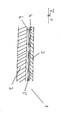
- FIG. 1 shows a section through a complete composite coupling system 1, comprising a component system 3,4,5, an adhesive 6 and the structure 7 itself.
- the cladding element 3 which is preferably a glass plate. However, it can also be used any other materials, such as metal, ceramic, plastic or wood.
- a, not shown, coating, such as color be appropriate.
- the bonding agent 4 follows, which is preferably a strongly adhesive film or a polymer adhesive, on whose on-site rear then the decoupling element 5 is attached.
- This decoupling element 5 can already be applied in the factory. An application only on the site is also possible.
- the decoupling element 5 is particularly advantageously made of a fabric, which may be of textile type, but also of synthetic fibers to carbon fibers may exist or at least partially. Alternatively, a stress-relieving film can be used. About the type of fabric used and the thickness of the fabric, the elastic and the wear properties can be adapted to the particular application.
- the cladding elements 3, in particular those made of glass and / or ceramic, can be factory-made and prefabricated in sufficient size away from the construction site. All materials which belong directly to the component system 3,4,5 are tied off on delivery, so that an individual cutting of the component system can take place at the construction site, without the effect according to the invention being impaired.
- the component system itself is with a commercially available adhesive 6, when attached to load-bearing components such as brick and / or concrete walls or in all usual for tiles substrates, this will usually be a commercially available tile adhesive, on site on the wall or ceiling or attached to the ground and thus forms the entire composite coupling system.
- the on-site side of the component system is completely independent of the cladding element 3 used, so as to ensure that virtually any cladding element 3 can be used, which are classically very expensive attached to the wall or even on the ceiling can. This applies not only to glass, but also to metal and other materials to wood.
- the decoupling element 5 and the adhesive 4 By a suitable selection of the decoupling element 5 and the adhesive 4, it is otherwise ensured that the cladding element 3 itself is more or less watertightly separated from the structure 7. This allows the use of more complex and sensitive, about not alkali-resistant color coatings on the site side of the cladding element, which was previously not possible according to the prior art.
Landscapes
- Physics & Mathematics (AREA)
- Engineering & Computer Science (AREA)
- Architecture (AREA)
- Acoustics & Sound (AREA)
- Electromagnetism (AREA)
- Civil Engineering (AREA)
- Structural Engineering (AREA)
- Finishing Walls (AREA)
- Laminated Bodies (AREA)
Abstract
Description
- Gegenstand der Erfindung ist ein Bauelementsystem zur Verwendung in einem Verbundkopplungssystem, aufweisend ein Verkleidungselement, bevorzugt aus Glas, Keramik oder Metall, ein Entkopplungselement und einen Haftmittler.
- Derartige Systeme mit einem Entkopplungselement kommen regelmäßig dann zum Einsatz, wenn die anzubringenden Verkleidungselemente sehr groß sind und/oder diese einen anderen Ausdehnungskoeffizienten als die zu verkleidende Oberfläche, wie dies etwa bei Stahl und Glas, der Fall ist, aufweisen. In diesen Fällen können thermische Spannungen, die sich aus der unterschiedlichen Ausdehnung des Untergrundes und des Verkleidungselements ergeben, zum Reißen des Verkleidungselementes oder zum Lösen der Befestigung führen, weshalb solche Verkleidungselemente meistens mit externen mechanischen Halterungen verbaut werden.
- Im Stand der Technik sind dennoch entsprechende Lösungen mit einem Entkoppelungselement bekannt. So ist aus der
EP 0 700 776 ein Bauwerk bekannt, bestehend aus einem Betonkörper mit einer vorgesetzten Glasscheibe, wobei die Glasscheibe bauwerksseitig eine Beschichtung aus Verbundmörtel aufweist, der wiederum neben einem neutralen Zuschlagsstoff und Zement ein Polyacrylsäurederivat enthält. Dieser Verbundmörtel verfügt über eine ausreichende Elastizität, um die auftretenden Spannungen abzubauen. Er verbindet sich gleichzeitig fest mit dem Beton des Baukörpers. - Nachteilig an diesem Stand der Technik ist, dass die Verbindung zwischen der Glasscheibe, dem Verbundmörtel und dem Beton nicht nachträglich erfolgen kann, da eine sichere Verbindung nur möglich ist, wenn der Beton noch nicht ausgehärtet ist. Es ist daher erforderlich, die Glasscheibe bereits in die Verschalung einzubringen, bevor der Beton in die Verschalung gefüllt wird. Dies macht das Verfahren aufwändig und Reparaturen ausgesprochen schwierig. Ein weiterer Nachteil ist der, dass wegen der speziellen Zusammensetzung des Verbundmörtels eine Verbindung nur zwischen Glas und Beton möglich ist, so dass eine Befestigung von Verkleidungselementen anderer Materialien ebenso wenig möglich ist, wie eine Befestigung von Verkleidungselementen auf anderen Materialien als Beton.
- Weiterhin ist aus der
EP 0 790 370 ein Halbzeugbauelement für die Verkleidung von Oberflächen bekannt, welches aus einer Glasscheibe und einem Verbundmörtel besteht, wobei der Verbundmörtel wiederum neben einem feinteiligen neutralen Zuschlagsstoff und Zement ein Polyacrylsäurederivat enthält, um die thermischen Spannungen auszugleichen. Dieses Halbzeugbauelement kann ebenfalls an noch nicht ausgehärtetem Beton, aber auch mit einem Fliesenkleber an der Oberfläche des Baukörpers befestigt werden. Nachteilig an diesem Stand der Technik ist, dass erneut nur eine Glasscheibe als Verkleidungselement eingesetzt werden kann. - Die beiden genannten Offenbarungen haben weiterhin den Nachteil, dass die Verbundmörtelschicht Zement und damit auch alkalische Bestandteile aufweist. Diese alkalischen Bestandteile können sich mit der beim Verkleben auftretenden Durchfeuchtung lösen und auf diesem Weg bis zur Glasscheibe gelangen. Dort können sie aufgebrachte Beschichtungen angreifen. Aus diesem Grund sind die genannten Lösungen aus dem Stand der Technik nicht geeignet, um in Verbindung mit Glasplatten verwendet zu werden, die an ihrer bauseitigen Seite eine Beschichtung aufweisen, welche nicht beständig gegenüber alkalischen Materialien ist. Dies ist etwa bei organischen Farben, vor allem aber bei fluoreszierenden und selbstleuchtenden Beschichtungen der Fall.
- Aufgabe der vorliegenden Erfindung ist es, die genannten Nachteile zu vermeiden und ein Bauelementsystem zur Verfügung zu stellen, welches auch mit anderen Materialen als Glas eine ausreichende Haftung bei gleichzeitiger Stabilität gegenüber Dehnungseffekten bietet und welches auch in Verbindung mit empfindlichen Beschichtungen des Verkleidungselementes zusammen eingesetzt werden kann.
- Aus dem Stand der Technik sind auch weitere Befestigungsmöglichkeiten bekannt, etwa eine unmittelbare Verklebung des Verkleidungselementes mit dem Bauwerk unter Einsatz eines Klebers auf Silikonbasis. Das Silikon bietet dabei eine ausreichende Elastizität um thermische Spannungen aufzufangen. Nachteilig ist hier vor allem, dass Silikon altert und daher eine dauerhaft stabile Verbindung zwischen Verkleidungselement und Baukörper nicht gewährleistet werden kann und eine annähernd vollflächige Verklebung auf dampfdichten Oberflächen nicht möglich ist.
- Diese Aufgabe wird erfindungsgemäß durch ein Bauelementsystem der Eingangs genannten Art gelöst, bei dem weder das Entkopplungselement noch der Haftmittler Zement oder andere alkalische Bestandteile aufweisen, wobei bevorzugt Verkleidungselemente, Haftmittler und Entkopplungselement vollflächig miteinander verbunden, also laminiert, sind.
- Eine besonders günstige Variante ist die Verwendung von Fasern, die vorzugsweise zu einem Abstandsgewirk oder Gewebe als Entkopplungselement verbunden sind. Ein derartiges Abstandsgewirk oder Gewebe kann in verschiedenen Dicken und mit verschiedenen Materialeigenschaften hergestellt werden, so dass es gleichzeitig über die erforderliche Stabilität zum Halten der Verkleidungselemente verfügt, ausreichende Hafteigenschaften in Verbindung mit dem Haftmittler aufweist und darüber hinaus frei von alkalischen Bestandteilen ist. Bevorzugt wird das Abstandsgewirk oder Gewebe unter Verwendung von Textil-, Kunst-, Karbon-, Glas-, oder Pflanzenfasern hergestellt, wobei auch jeglicher andere Fasemtyp, welcher geeignet ist, die oben genannten Eigenschaften darzustellen, eingesetzt werden kann.
- Beim Haftmittler hat es sich als günstig erwiesen, eine hoch reißfeste thermoplastische und spannungsabbauende Verbundfolie einzusetzen, die bevorzugt Polyethylen, Polyurethan, Polyvinylalkohol, Polymethylmethacrylat, Ethylenvinylacetat, Polyacrylat oder Polyvenylbutyral aufweist. Der Haftmittler kann alternativ aber auch einen Polymerkleber aufweisen.
- Das Verkleidungselement kann, insbesondere wenn es auf ästethische Fragen besonders ankommt, transparent ausgestaltet sein und auf seiner bauseitigen Seite eine Beschichtung, etwa eine Farbschicht oder eine selbstleuchtende Schicht, aufweisen. Regelmäßig dienen derartige Schichten zu Dekorationszwecken, wobei allerdings auch andere Einsatzzwecke, etwa zum Schutz von Bauteiloberflächen, denkbar sind. Die Beschichtung kann dabei organische Materialien aufweisen und zumindest teilweise selbstleuchtend sein.
- Zur Verfügung gestellt wird auch ein komplettes Verbundkopplungssystem, welches mindestens ein Bauelementsystem aufweist, wobei das Verbundkopplungssystem zusätzlich einen Baukörper, etwa aus Beton oder Ziegeln und einen Kleber, etwa einen handelsüblichen Fliesenkleber, aufweist, wobei das Bauelementsystem mit Hilfe des Klebers dauerhaft mit dem Baukörper flächig verbunden ist und in seiner Gesamtheit das Verbundkopplungssystem bildet.
- Ein gesondertes Ausführungsbeispiel wird nachfolgend anhand der
Fig. 1 erläutert, die einen Schnitt durch ein komplettes Verbundkopplungssystem 1, aufweisend ein Bauelementsystem 3,4,5, einen Kleber 6 sowie den Baukörper 7 selbst, zeigt. - An der Außenseite findet sich das Verkleidungselement 3, welches vorzugsweise eine Glasplatte ist. Es können allerdings auch jegliche andere Materialien verwendet werden, so etwa Metall, Keramik, Kunststoff oder auch Holz. Auf der bauseitigen Seite der Glasplatte kann eine, hier nicht gezeigte, Beschichtung, etwa farblicher Art, angebracht sein. Bauseitig folgt dann der Haftmittler 4, welcher bevorzugt eine stark klebende Folie oder ein Polymerkleber ist, auf deren bauseitiger Rückseite dann das Entkopplungselement 5 angebracht ist. Dieses Entkopplungselement 5 kann bereits im Werk aufgebracht sein. Eine Aufbringung erst auf der Baustelle ist aber ebenfalls möglich. Das Entkopplungselement 5 besteht besonders vorteilhaft aus einem Gewebe, welches textiler Art sein, aber auch aus Kunstfasern bis hin zu Karbonfasern bestehen kann oder zumindest teilweise bestehen kann. Alternativ kann eine spannungsabbauende Folie zum Einsatz kommen. Über die Art des verwendeten Gewebematerials sowie die Dicke des Gewebes können die elastischen und die Trageigenschaften an die jeweilige Anwendung angepasst werden.
- Durch die vollflächige, beidseitige Verklebung von Verkleidungselement 3 und Entkopplungselement 5 mittels der hier gezeigten Folie 4 entsteht eine besonders gute Haftwirkung. Darüber hinaus führt dies dazu, dass im Falle von Beschädigungen, etwa einem Springen der Glasplatte durch starke äußere Einwirkungen, die einzelnen Teile nicht lose von der Wand fallen, was die Sicherheit erhöht. Dies ermöglicht auch den Einsatz des Verbundsystems an Decken, wobei hier Versuche mit mehreren Quadratmeter großen Glasplatten bereits erfolgreich unternommen wurden, wobei der Effekt auch erreicht wird, wenn statt der Folie ein entsprechender Kleber verwendet wird.
- Ein weiterer Vorteil dieses Aufbaus ist, dass die Verkleidungselemente 3, insbesondere solche aus Glas und/oder Keramik, in ausreichender Größe abseits der Baustelle fabrikmäßig hergestellt und vorkonfektioniert werden können. Alle Materialien, die direkt zu dem Bauelementsystem 3,4,5 gehören, sind bei Lieferung abgebunden, so dass an der Baustelle ein individueller Zuschnitt des Bauelementsystems erfolgen kann, ohne dass die erfindungsgemäße Wirkung beeinträchtigt wird.
- Das Bauelementsystem selbst wird mit einem handelsüblichen Kleber 6, bei Befestigung an tragfähigen Bauteilen wie beispielsweise Ziegel- und/oder Betonwänden bzw. bei allen für Fliesen üblichen Untergründen, wird dies in der Regel ein handelsüblicher Fliesenkleber sein, bauseits an der Wand oder Decke oder auch dem Boden befestigt und bildet somit das gesamte Verbundkopplungssystem.
- Durch die Verwendung eines separaten Entkopplungselementes 5 ist die bauseitige Seite des Bauelementsystems völlig unabhängig von dem verwendeten Verkleidungselement 3, so dass sichergestellt ist, dass praktisch jedes Verkleidungselement 3 verwendet werden kann, welches klassischerweise nur sehr aufwändig an der Wand oder gar an der Decke befestigt werden kann. Dies gilt nicht nur für Glas, sondern eben auch für Metall und andere Materialien bis hin zu Holz.
- Durch eine geeignete Auswahl des Entkopplungselementes 5 sowie des Haftmittlers 4 wird im Übrigen sichergestellt, dass das Verkleidungselement 3 selbst mehr oder weniger wasserdicht vom Baukörper 7 getrennt ist. Dies ermöglicht die Verwendung auch aufwändiger und empfindlicher, etwa nicht alkalibeständiger Farbbeschichtungen an der bauseitigen Seite des Verkleidungselementes, was bisher nach dem Stand der Technik nicht möglich war.
Claims (11)
- Bauelementsystem zur Verwendung in einem Verbundkopplungssystem, aufweisend ein Verkleidungselement, bevorzugt aus Glas, Keramik oder Metall, ein mit dem Verkleidungselement verbundenes Entkopplungselement, welches mit dem Verkleidungselement über einen Haftmittler fest verbunden ist, dadurch gekennzeichnet, dass weder das Entkopplungselement noch der Haftmittler Zement oder andere alkalische Bestandteile aufweist.
- Bauelementsystem nach dem vorhergehenden Anspruch, dadurch gekennzeichnet, dass Verkleidungselement, Haftmittler und Entkopplungselement vollflächig miteinander verbunden (laminiert) sind.
- Bauelementsystem nach einem der vorhergehenden Ansprüche, dadurch gekennzeichnet, dass das Entkopplungselement Fasern aufweist, die vorzugsweise zu einem Abstandsgewirk oder Gewebe verbunden sind.
- Bauelementsystem nach dem vorhergehenden Anspruch, dadurch gekennzeichnet, dass das die Fasern aus einer Gruppe von Materialien ausgewählt werden:- Textilfasern,- Kunstfasern,- Carbonfasern,- Glasfasern,- Pflanzenfasern.
- Bauelementsystem nach einem der vorhergehenden Ansprüche, dadurch gekennzeichnet, dass der Haftmittler eine hoch reißfeste thermoplastische und spannungsabbauende Verbundfolie aufweist, die bevorzugt Polyethylen, Polyurethan, Polyvinylalkohol, Polymethylmethacrylat, Ethylenvinylacetat, Polyacrylat oder Polyvenylbutyral aufweist.
- Bauelementsystem nach einem der vorhergehenden Ansprüche 1 bis 4, dadurch gekennzeichnet, dass das der Haftmittler einen Polymerkleber aufweist.
- Bauelementsystem nach einem der vorhergehenden Ansprüche, dadurch gekennzeichnet, dass das Verkleidungselement transparent ausgestaltet ist und auf seiner bauseitigen Seite eine Beschichtung aufweist.
- Bauelementsystem nach dem vorhergehenden Anspruch, dadurch gekennzeichnet, dass die Beschichtung farbig ist und Dekorationszwecken dient.
- Bauelementsystem nach dem vorhergehenden Anspruch 7, dadurch gekennzeichnet, dass die Beschichtung organische Materialien aufweist.
- Bauselementsystem nach dem vorhergehenden Anspruch, dadurch gekennzeichnet, dass die Beschichtung zumindest teilweise selbstleuchtend ist.
- Verbundkopplungssystem, aufweisend mindestens ein Bauelementsystem nach einem der vorhergehenden Ansprüche, einen Baukörper, etwa aus Beton oder Ziegeln, und einen Kleber, etwa einen handelsüblichen Fliesenkleber, mit dem das mindestens eine Verkleidungselement mit dem Baukörper dauerhaft und flächig verbunden ist.
Priority Applications (1)
| Application Number | Priority Date | Filing Date | Title |
|---|---|---|---|
| EP11154087.8A EP2487306B1 (de) | 2011-02-10 | 2011-02-10 | Bauelementsystem |
Applications Claiming Priority (1)
| Application Number | Priority Date | Filing Date | Title |
|---|---|---|---|
| EP11154087.8A EP2487306B1 (de) | 2011-02-10 | 2011-02-10 | Bauelementsystem |
Publications (2)
| Publication Number | Publication Date |
|---|---|
| EP2487306A1 true EP2487306A1 (de) | 2012-08-15 |
| EP2487306B1 EP2487306B1 (de) | 2014-05-28 |
Family
ID=44147654
Family Applications (1)
| Application Number | Title | Priority Date | Filing Date |
|---|---|---|---|
| EP11154087.8A Not-in-force EP2487306B1 (de) | 2011-02-10 | 2011-02-10 | Bauelementsystem |
Country Status (1)
| Country | Link |
|---|---|
| EP (1) | EP2487306B1 (de) |
Citations (7)
| Publication number | Priority date | Publication date | Assignee | Title |
|---|---|---|---|---|
| DE824097C (de) * | 1950-10-24 | 1951-12-10 | Hans Erich Dorn | Glasfliese |
| DE1929631U (de) * | 1964-12-16 | 1965-12-23 | Udo Schmidt-Tophoff | Verbundplatte aus glas mit glasfaser und polyesterharz. |
| DE7504468U (de) * | 1975-07-10 | Hasenfratz H Kg | Säurebeständiger Luftkanal | |
| EP0700776A2 (de) | 1994-09-09 | 1996-03-13 | Hans Peter Böe | Bauwerk aus einem Betonkörper mit zumindest einer vorgesetzten Glasscheibe |
| CH687090A5 (de) * | 1993-06-11 | 1996-09-13 | Max Stutz | Isolationsplatten. |
| EP0790370A1 (de) | 1996-02-16 | 1997-08-20 | Hans Peter Böe | Halbzeug-Bauelement für die Verkleidung von Oberflächen |
| US20050118915A1 (en) * | 2001-02-09 | 2005-06-02 | Raphael Heifetz | Flexible reflective insulating structures |
-
2011
- 2011-02-10 EP EP11154087.8A patent/EP2487306B1/de not_active Not-in-force
Patent Citations (7)
| Publication number | Priority date | Publication date | Assignee | Title |
|---|---|---|---|---|
| DE7504468U (de) * | 1975-07-10 | Hasenfratz H Kg | Säurebeständiger Luftkanal | |
| DE824097C (de) * | 1950-10-24 | 1951-12-10 | Hans Erich Dorn | Glasfliese |
| DE1929631U (de) * | 1964-12-16 | 1965-12-23 | Udo Schmidt-Tophoff | Verbundplatte aus glas mit glasfaser und polyesterharz. |
| CH687090A5 (de) * | 1993-06-11 | 1996-09-13 | Max Stutz | Isolationsplatten. |
| EP0700776A2 (de) | 1994-09-09 | 1996-03-13 | Hans Peter Böe | Bauwerk aus einem Betonkörper mit zumindest einer vorgesetzten Glasscheibe |
| EP0790370A1 (de) | 1996-02-16 | 1997-08-20 | Hans Peter Böe | Halbzeug-Bauelement für die Verkleidung von Oberflächen |
| US20050118915A1 (en) * | 2001-02-09 | 2005-06-02 | Raphael Heifetz | Flexible reflective insulating structures |
Also Published As
| Publication number | Publication date |
|---|---|
| EP2487306B1 (de) | 2014-05-28 |
Similar Documents
| Publication | Publication Date | Title |
|---|---|---|
| DE102012224201A1 (de) | Vakuumisolierende Fassadenplatte mit verbesserter Handhabbarkeit | |
| DE112011102636T5 (de) | Außendämmwand aus mechanisch verankerten Dämmplatten mit Gitterrippenverstärkung | |
| DE102007016814B4 (de) | Bauwerksverkleidung für eine Außenwand eines Bauwerkes, sowie Bauwerk und Bauwerksteil | |
| BE1023717B1 (de) | Isolierendes wandelement | |
| AT511073B1 (de) | Fassadenkonstruktion zur Wärmedämmung und Verkleidung von Gebäudeaußenwänden sowie Verfahren zur Herstellung einer solchen Fassadenkonstruktion | |
| EP0790370A1 (de) | Halbzeug-Bauelement für die Verkleidung von Oberflächen | |
| DE102014002154A1 (de) | Gebäudeplatte, insbesondere zur Verwendung als Boden-, Wand- oder Deckenplatte | |
| EP2154310B1 (de) | Gebäudewandbekleidung mit Bekleidungsplatten | |
| EP2708677A1 (de) | Mehrschichtige Wand mit angklebten Ziegeln | |
| EP2487306B1 (de) | Bauelementsystem | |
| DE202011002621U1 (de) | Bauelementsystem | |
| DE202011106980U1 (de) | Unbrennbare Bauplatte | |
| DE60200345T2 (de) | Gipsdämmstoffplatte für Fassaden | |
| EP2826928B1 (de) | Gebäudefassade oder -dach mit Natursteinplatten oder keramischen Kacheln und Verfahren zur Herstellung | |
| EP2766539B1 (de) | Armierungsputz eines wärmedämm-verbundsystems | |
| DE102011101485A1 (de) | Verfahren zur Herstellung dünnwandiger Betonplatten | |
| EP2412890A2 (de) | Fassadensystem mit Luftspalt zur Befestigung von kleinformatigen Abdeckplatten und Verfahren zu seiner Montage | |
| AT12547U1 (de) | Gedämmter schacht | |
| DE102004042301A1 (de) | Dichtprofil für Gebäude | |
| DE102007053690A1 (de) | Plattenförmiges Dämmelement | |
| DE10008748A1 (de) | Naturdämmfassade | |
| DE202007005496U1 (de) | Plattenförmiges Bauelement | |
| DE102008027312A1 (de) | Plattenförmiges Bauelement | |
| EP2383111B1 (de) | Wärmedämmverbundsystem sowie Verfahren zur Herstellung eines Wärmedämmverbundsystems | |
| DE102005028071B3 (de) | Klebebewehrung mit Brandschutz |
Legal Events
| Date | Code | Title | Description |
|---|---|---|---|
| PUAI | Public reference made under article 153(3) epc to a published international application that has entered the european phase |
Free format text: ORIGINAL CODE: 0009012 |
|
| AK | Designated contracting states |
Kind code of ref document: A1 Designated state(s): AL AT BE BG CH CY CZ DE DK EE ES FI FR GB GR HR HU IE IS IT LI LT LU LV MC MK MT NL NO PL PT RO RS SE SI SK SM TR |
|
| AX | Request for extension of the european patent |
Extension state: BA ME |
|
| 17P | Request for examination filed |
Effective date: 20130215 |
|
| 17Q | First examination report despatched |
Effective date: 20130506 |
|
| GRAP | Despatch of communication of intention to grant a patent |
Free format text: ORIGINAL CODE: EPIDOSNIGR1 |
|
| INTG | Intention to grant announced |
Effective date: 20131220 |
|
| GRAS | Grant fee paid |
Free format text: ORIGINAL CODE: EPIDOSNIGR3 |
|
| GRAA | (expected) grant |
Free format text: ORIGINAL CODE: 0009210 |
|
| AK | Designated contracting states |
Kind code of ref document: B1 Designated state(s): AL AT BE BG CH CY CZ DE DK EE ES FI FR GB GR HR HU IE IS IT LI LT LU LV MC MK MT NL NO PL PT RO RS SE SI SK SM TR |
|
| REG | Reference to a national code |
Ref country code: GB Ref legal event code: FG4D Free format text: NOT ENGLISH |
|
| REG | Reference to a national code |
Ref country code: CH Ref legal event code: EP |
|
| REG | Reference to a national code |
Ref country code: AT Ref legal event code: REF Ref document number: 670335 Country of ref document: AT Kind code of ref document: T Effective date: 20140615 |
|
| REG | Reference to a national code |
Ref country code: IE Ref legal event code: FG4D Free format text: LANGUAGE OF EP DOCUMENT: GERMAN |
|
| REG | Reference to a national code |
Ref country code: DE Ref legal event code: R096 Ref document number: 502011003228 Country of ref document: DE Effective date: 20140710 |
|
| REG | Reference to a national code |
Ref country code: NL Ref legal event code: VDEP Effective date: 20140528 |
|
| REG | Reference to a national code |
Ref country code: LT Ref legal event code: MG4D |
|
| PG25 | Lapsed in a contracting state [announced via postgrant information from national office to epo] |
Ref country code: GR Free format text: LAPSE BECAUSE OF FAILURE TO SUBMIT A TRANSLATION OF THE DESCRIPTION OR TO PAY THE FEE WITHIN THE PRESCRIBED TIME-LIMIT Effective date: 20140829 Ref country code: LT Free format text: LAPSE BECAUSE OF FAILURE TO SUBMIT A TRANSLATION OF THE DESCRIPTION OR TO PAY THE FEE WITHIN THE PRESCRIBED TIME-LIMIT Effective date: 20140528 Ref country code: FI Free format text: LAPSE BECAUSE OF FAILURE TO SUBMIT A TRANSLATION OF THE DESCRIPTION OR TO PAY THE FEE WITHIN THE PRESCRIBED TIME-LIMIT Effective date: 20140528 Ref country code: NO Free format text: LAPSE BECAUSE OF FAILURE TO SUBMIT A TRANSLATION OF THE DESCRIPTION OR TO PAY THE FEE WITHIN THE PRESCRIBED TIME-LIMIT Effective date: 20140828 Ref country code: CY Free format text: LAPSE BECAUSE OF FAILURE TO SUBMIT A TRANSLATION OF THE DESCRIPTION OR TO PAY THE FEE WITHIN THE PRESCRIBED TIME-LIMIT Effective date: 20140528 |
|
| PG25 | Lapsed in a contracting state [announced via postgrant information from national office to epo] |
Ref country code: SE Free format text: LAPSE BECAUSE OF FAILURE TO SUBMIT A TRANSLATION OF THE DESCRIPTION OR TO PAY THE FEE WITHIN THE PRESCRIBED TIME-LIMIT Effective date: 20140528 Ref country code: RS Free format text: LAPSE BECAUSE OF FAILURE TO SUBMIT A TRANSLATION OF THE DESCRIPTION OR TO PAY THE FEE WITHIN THE PRESCRIBED TIME-LIMIT Effective date: 20140528 Ref country code: HR Free format text: LAPSE BECAUSE OF FAILURE TO SUBMIT A TRANSLATION OF THE DESCRIPTION OR TO PAY THE FEE WITHIN THE PRESCRIBED TIME-LIMIT Effective date: 20140528 Ref country code: LV Free format text: LAPSE BECAUSE OF FAILURE TO SUBMIT A TRANSLATION OF THE DESCRIPTION OR TO PAY THE FEE WITHIN THE PRESCRIBED TIME-LIMIT Effective date: 20140528 |
|
| PG25 | Lapsed in a contracting state [announced via postgrant information from national office to epo] |
Ref country code: PT Free format text: LAPSE BECAUSE OF FAILURE TO SUBMIT A TRANSLATION OF THE DESCRIPTION OR TO PAY THE FEE WITHIN THE PRESCRIBED TIME-LIMIT Effective date: 20140929 |
|
| PG25 | Lapsed in a contracting state [announced via postgrant information from national office to epo] |
Ref country code: DK Free format text: LAPSE BECAUSE OF FAILURE TO SUBMIT A TRANSLATION OF THE DESCRIPTION OR TO PAY THE FEE WITHIN THE PRESCRIBED TIME-LIMIT Effective date: 20140528 Ref country code: RO Free format text: LAPSE BECAUSE OF FAILURE TO SUBMIT A TRANSLATION OF THE DESCRIPTION OR TO PAY THE FEE WITHIN THE PRESCRIBED TIME-LIMIT Effective date: 20140528 Ref country code: SK Free format text: LAPSE BECAUSE OF FAILURE TO SUBMIT A TRANSLATION OF THE DESCRIPTION OR TO PAY THE FEE WITHIN THE PRESCRIBED TIME-LIMIT Effective date: 20140528 Ref country code: ES Free format text: LAPSE BECAUSE OF FAILURE TO SUBMIT A TRANSLATION OF THE DESCRIPTION OR TO PAY THE FEE WITHIN THE PRESCRIBED TIME-LIMIT Effective date: 20140528 Ref country code: CZ Free format text: LAPSE BECAUSE OF FAILURE TO SUBMIT A TRANSLATION OF THE DESCRIPTION OR TO PAY THE FEE WITHIN THE PRESCRIBED TIME-LIMIT Effective date: 20140528 Ref country code: EE Free format text: LAPSE BECAUSE OF FAILURE TO SUBMIT A TRANSLATION OF THE DESCRIPTION OR TO PAY THE FEE WITHIN THE PRESCRIBED TIME-LIMIT Effective date: 20140528 |
|
| PG25 | Lapsed in a contracting state [announced via postgrant information from national office to epo] |
Ref country code: PL Free format text: LAPSE BECAUSE OF FAILURE TO SUBMIT A TRANSLATION OF THE DESCRIPTION OR TO PAY THE FEE WITHIN THE PRESCRIBED TIME-LIMIT Effective date: 20140528 Ref country code: NL Free format text: LAPSE BECAUSE OF FAILURE TO SUBMIT A TRANSLATION OF THE DESCRIPTION OR TO PAY THE FEE WITHIN THE PRESCRIBED TIME-LIMIT Effective date: 20140528 |
|
| REG | Reference to a national code |
Ref country code: DE Ref legal event code: R097 Ref document number: 502011003228 Country of ref document: DE |
|
| PLBE | No opposition filed within time limit |
Free format text: ORIGINAL CODE: 0009261 |
|
| STAA | Information on the status of an ep patent application or granted ep patent |
Free format text: STATUS: NO OPPOSITION FILED WITHIN TIME LIMIT |
|
| 26N | No opposition filed |
Effective date: 20150303 |
|
| REG | Reference to a national code |
Ref country code: DE Ref legal event code: R097 Ref document number: 502011003228 Country of ref document: DE Effective date: 20150303 |
|
| PG25 | Lapsed in a contracting state [announced via postgrant information from national office to epo] |
Ref country code: SI Free format text: LAPSE BECAUSE OF FAILURE TO SUBMIT A TRANSLATION OF THE DESCRIPTION OR TO PAY THE FEE WITHIN THE PRESCRIBED TIME-LIMIT Effective date: 20140528 |
|
| REG | Reference to a national code |
Ref country code: FR Ref legal event code: PLFP Year of fee payment: 6 |
|
| PG25 | Lapsed in a contracting state [announced via postgrant information from national office to epo] |
Ref country code: IS Free format text: LAPSE BECAUSE OF FAILURE TO SUBMIT A TRANSLATION OF THE DESCRIPTION OR TO PAY THE FEE WITHIN THE PRESCRIBED TIME-LIMIT Effective date: 20140528 |
|
| PG25 | Lapsed in a contracting state [announced via postgrant information from national office to epo] |
Ref country code: MT Free format text: LAPSE BECAUSE OF FAILURE TO SUBMIT A TRANSLATION OF THE DESCRIPTION OR TO PAY THE FEE WITHIN THE PRESCRIBED TIME-LIMIT Effective date: 20140528 |
|
| REG | Reference to a national code |
Ref country code: FR Ref legal event code: PLFP Year of fee payment: 7 |
|
| PG25 | Lapsed in a contracting state [announced via postgrant information from national office to epo] |
Ref country code: HU Free format text: LAPSE BECAUSE OF FAILURE TO SUBMIT A TRANSLATION OF THE DESCRIPTION OR TO PAY THE FEE WITHIN THE PRESCRIBED TIME-LIMIT; INVALID AB INITIO Effective date: 20110210 Ref country code: SM Free format text: LAPSE BECAUSE OF FAILURE TO SUBMIT A TRANSLATION OF THE DESCRIPTION OR TO PAY THE FEE WITHIN THE PRESCRIBED TIME-LIMIT Effective date: 20140528 Ref country code: BG Free format text: LAPSE BECAUSE OF FAILURE TO SUBMIT A TRANSLATION OF THE DESCRIPTION OR TO PAY THE FEE WITHIN THE PRESCRIBED TIME-LIMIT Effective date: 20140528 |
|
| PG25 | Lapsed in a contracting state [announced via postgrant information from national office to epo] |
Ref country code: TR Free format text: LAPSE BECAUSE OF FAILURE TO SUBMIT A TRANSLATION OF THE DESCRIPTION OR TO PAY THE FEE WITHIN THE PRESCRIBED TIME-LIMIT Effective date: 20140528 |
|
| REG | Reference to a national code |
Ref country code: FR Ref legal event code: PLFP Year of fee payment: 8 |
|
| PG25 | Lapsed in a contracting state [announced via postgrant information from national office to epo] |
Ref country code: MK Free format text: LAPSE BECAUSE OF FAILURE TO SUBMIT A TRANSLATION OF THE DESCRIPTION OR TO PAY THE FEE WITHIN THE PRESCRIBED TIME-LIMIT Effective date: 20140528 |
|
| PG25 | Lapsed in a contracting state [announced via postgrant information from national office to epo] |
Ref country code: AL Free format text: LAPSE BECAUSE OF FAILURE TO SUBMIT A TRANSLATION OF THE DESCRIPTION OR TO PAY THE FEE WITHIN THE PRESCRIBED TIME-LIMIT Effective date: 20140528 |
|
| PGFP | Annual fee paid to national office [announced via postgrant information from national office to epo] |
Ref country code: CH Payment date: 20200325 Year of fee payment: 10 |
|
| PGFP | Annual fee paid to national office [announced via postgrant information from national office to epo] |
Ref country code: LU Payment date: 20210210 Year of fee payment: 11 Ref country code: MC Payment date: 20210209 Year of fee payment: 11 Ref country code: IT Payment date: 20210212 Year of fee payment: 11 Ref country code: IE Payment date: 20210208 Year of fee payment: 11 |
|
| PGFP | Annual fee paid to national office [announced via postgrant information from national office to epo] |
Ref country code: GB Payment date: 20210209 Year of fee payment: 11 Ref country code: BE Payment date: 20210205 Year of fee payment: 11 |
|
| PG25 | Lapsed in a contracting state [announced via postgrant information from national office to epo] |
Ref country code: LI Free format text: LAPSE BECAUSE OF NON-PAYMENT OF DUE FEES Effective date: 20210228 Ref country code: CH Free format text: LAPSE BECAUSE OF NON-PAYMENT OF DUE FEES Effective date: 20210228 |
|
| PG25 | Lapsed in a contracting state [announced via postgrant information from national office to epo] |
Ref country code: MC Free format text: LAPSE BECAUSE OF NON-PAYMENT OF DUE FEES Effective date: 20220228 |
|
| REG | Reference to a national code |
Ref country code: BE Ref legal event code: MM Effective date: 20220228 |
|
| GBPC | Gb: european patent ceased through non-payment of renewal fee |
Effective date: 20220210 |
|
| PG25 | Lapsed in a contracting state [announced via postgrant information from national office to epo] |
Ref country code: LU Free format text: LAPSE BECAUSE OF NON-PAYMENT OF DUE FEES Effective date: 20220210 |
|
| PG25 | Lapsed in a contracting state [announced via postgrant information from national office to epo] |
Ref country code: IE Free format text: LAPSE BECAUSE OF NON-PAYMENT OF DUE FEES Effective date: 20220210 Ref country code: GB Free format text: LAPSE BECAUSE OF NON-PAYMENT OF DUE FEES Effective date: 20220210 |
|
| PG25 | Lapsed in a contracting state [announced via postgrant information from national office to epo] |
Ref country code: BE Free format text: LAPSE BECAUSE OF NON-PAYMENT OF DUE FEES Effective date: 20220228 |
|
| PGFP | Annual fee paid to national office [announced via postgrant information from national office to epo] |
Ref country code: FR Payment date: 20230227 Year of fee payment: 13 Ref country code: AT Payment date: 20230227 Year of fee payment: 13 |
|
| PG25 | Lapsed in a contracting state [announced via postgrant information from national office to epo] |
Ref country code: IT Free format text: LAPSE BECAUSE OF NON-PAYMENT OF DUE FEES Effective date: 20220210 |
|
| PGFP | Annual fee paid to national office [announced via postgrant information from national office to epo] |
Ref country code: DE Payment date: 20230224 Year of fee payment: 13 |
|
| REG | Reference to a national code |
Ref country code: DE Ref legal event code: R119 Ref document number: 502011003228 Country of ref document: DE |
|
| REG | Reference to a national code |
Ref country code: AT Ref legal event code: MM01 Ref document number: 670335 Country of ref document: AT Kind code of ref document: T Effective date: 20240210 |
|
| PG25 | Lapsed in a contracting state [announced via postgrant information from national office to epo] |
Ref country code: AT Free format text: LAPSE BECAUSE OF NON-PAYMENT OF DUE FEES Effective date: 20240210 |
|
| PG25 | Lapsed in a contracting state [announced via postgrant information from national office to epo] |
Ref country code: AT Free format text: LAPSE BECAUSE OF NON-PAYMENT OF DUE FEES Effective date: 20240210 |
|
| PG25 | Lapsed in a contracting state [announced via postgrant information from national office to epo] |
Ref country code: DE Free format text: LAPSE BECAUSE OF NON-PAYMENT OF DUE FEES Effective date: 20240903 |
|
| PG25 | Lapsed in a contracting state [announced via postgrant information from national office to epo] |
Ref country code: FR Free format text: LAPSE BECAUSE OF NON-PAYMENT OF DUE FEES Effective date: 20240229 |
|
| PG25 | Lapsed in a contracting state [announced via postgrant information from national office to epo] |
Ref country code: FR Free format text: LAPSE BECAUSE OF NON-PAYMENT OF DUE FEES Effective date: 20240229 Ref country code: DE Free format text: LAPSE BECAUSE OF NON-PAYMENT OF DUE FEES Effective date: 20240903 |