EP2483289B2 - Verfahren zur vorbeugung und entfernung von trisulphid-bindungen - Google Patents
Verfahren zur vorbeugung und entfernung von trisulphid-bindungen Download PDFInfo
- Publication number
- EP2483289B2 EP2483289B2 EP10763112.9A EP10763112A EP2483289B2 EP 2483289 B2 EP2483289 B2 EP 2483289B2 EP 10763112 A EP10763112 A EP 10763112A EP 2483289 B2 EP2483289 B2 EP 2483289B2
- Authority
- EP
- European Patent Office
- Prior art keywords
- trisulfide
- protein
- antibody
- cysteine
- antibodies
- Prior art date
- Legal status (The legal status is an assumption and is not a legal conclusion. Google has not performed a legal analysis and makes no representation as to the accuracy of the status listed.)
- Active
Links
Images














Classifications
-
- C—CHEMISTRY; METALLURGY
- C07—ORGANIC CHEMISTRY
- C07K—PEPTIDES
- C07K16/00—Immunoglobulins [IG], e.g. monoclonal or polyclonal antibodies
-
- C—CHEMISTRY; METALLURGY
- C07—ORGANIC CHEMISTRY
- C07K—PEPTIDES
- C07K1/00—General methods for the preparation of peptides, i.e. processes for the organic chemical preparation of peptides or proteins of any length
- C07K1/107—General methods for the preparation of peptides, i.e. processes for the organic chemical preparation of peptides or proteins of any length by chemical modification of precursor peptides
- C07K1/113—General methods for the preparation of peptides, i.e. processes for the organic chemical preparation of peptides or proteins of any length by chemical modification of precursor peptides without change of the primary structure
- C07K1/1133—General methods for the preparation of peptides, i.e. processes for the organic chemical preparation of peptides or proteins of any length by chemical modification of precursor peptides without change of the primary structure by redox-reactions involving cystein/cystin side chains
Definitions
- mAbs monoclonal antibodies
- mAbs monoclonal antibodies
- mAbs monoclonal antibodies
- the proteins are subject to considerable heterogeneity.
- molecular heterogeneity can result from chemically-induced modifications such as oxidation, deamidation, and glycation as well post-translational modifications such as proteolytic maturation, protein folding, glycosylation, phosphorylation, and disulfide bond formation.
- Molecular heterogeneity is undesirable because therapeutic products must be extensively characterized by an array of sophisticated analytical techniques and meet acceptable standards that ensure product quality and consistency.
- intrachain disulfide linkages may involve each remaining cysteine residue present in the molecule. Incomplete disulfide bond formation, or bond breakage via oxidation or beta-elimination followed by disulfide scrambling, are all potential sources of antibody heterogeneity.
- a further type of modification namely trisulfide (-CH 2 -S-S-S-CH 2 -) bond formation, was recently reported within the interchain, hinge region bonds of a human IgG2 antibody. See, Pristatsky et al., Anal. Chem. 81: 6148 (2009 ).
- Trisulfide linkages have previously been detected in superoxide dismutase (Okado-Matsumoto et al., Free Radical Bio. Med. 41: 1837 (2006)), a truncated form of interleukin-6 ( Breton et al., J. Chromatog. 709: 135 (1995 )), and bacterially expressed human growth hormone (hGH) ( Canova-Davis et al., Anal. Chem. 68: 4044 (1996 )). In the case of hGH, it was speculated that trisulfide formation was promoted by H 2 S released during the fermentation process. See, International Published Patent Application No. WO 96/02570 .
- the present invention relates to a method for converting trisulfide bonds to disulfide bonds in proteins wherein the method comprises:
- a or “an” entity refers to one or more of that entity; for example, “an antibody” or “a protein” is understood to represent one or more antibody or protein molecules, respectively.
- the terms “a” (or “an”), “one or more,” and “at least one” can be used interchangeably herein.
- polypeptide is intended to encompass a singular "polypeptide” as well as plural “polypeptides,” and refers to a molecule composed of monomers (amino acids) linearly linked by amide bonds (also known as peptide bonds).
- polypeptide refers to any chain or chains of two or more amino acids, and does not refer to a specific length of the product.
- protein refers to any chain or chains of two or more polypeptide.
- an antibody may be referred to as "a protein” even though it is comprised of multiple polypeptides (for example, an IgG antibody is comprised of two heavy chain and two light chain polypeptides).
- peptides, dipeptides, tripeptides, oligopeptides, "amino acid chain,” or any other term used to refer to a chain or chains of two or more amino acids are included within the definition of "protein”or “polypeptide,” and the terms “protein” or “polypeptide” may be used instead of, or interchangeably with any of these terms.
- protein and polypeptide encompass plural polypeptides, these terms encompass polypeptide multimers such as antibodies.
- polypeptide is also intended to refer to the products of post-expression modifications of the polypeptide, including without limitation glycosylation (e.g. modification with N-acetyl glucosamine, galactose, or sialic acid moities), pegylation (i.e . covalent attachment of polyethylene glycol) acetylation, phosphorylation, amidation, glycation (e.g. dextran modification), derivatization by known protecting/blocking groups, proteolytic cleavage, or modification by non-naturally occurring amino acids.
- glycosylation e.g. modification with N-acetyl glucosamine, galactose, or sialic acid moities
- pegylation i.e . covalent attachment of polyethylene glycol
- phosphorylation i.e . covalent attachment of polyethylene glycol
- amidation e.g. dextran modification
- derivatization by known protecting/blocking groups
- proteolytic cleavage
- Polypeptides can have a defined three-dimensional structure, although they do not necessarily have such structure. Polypeptides with a defined three-dimensional structure are referred to as folded, and polypeptides which do not possess a defined three-dimensional structure, but rather can adopt a large number of different conformations, and are referred to as unfolded.
- the term glycoprotein refers to a protein coupled to at least one carbohydrate moiety that is attached to the protein via an oxygen-containing or a nitrogen-containing side chain of an amino acid residue, e.g., a serine residue or an asparagine residue.
- an “isolated” polypeptide or a fragment, variant, or derivative thereof is intended a polypeptide that is not in its natural milieu. No particular level of purification is required.
- an isolated polypeptide can be removed from its native or natural environment.
- Recombinantly produced polypeptides and proteins expressed in host cells are considered isolated for purposes of the invention, as are native or recombinant polypeptides which have been separated, fractionated, or partially or substantially purified by any suitable technique.
- fragment when referring to antibodies or antibody polypeptides for use in the method of the present invention include any polypeptides which retain at least some of the antigen-binding properties of the corresponding native antibody or polypeptide. Fragments of polypeptides for use in the method of the present invention include proteolytic fragments, as well as deletion fragments, in addition to specific antibody fragments discussed elsewhere herein. Variants of antibodies and antibody polypeptides for use in the method of the present invention include fragments as described above, and also polypeptides with altered amino acid sequences due to amino acid substitutions, deletions, or insertions.
- Variants may occur naturally or be non-naturally occurring Non-naturally occurring variants may be produced using art-known mutagenesis techniques.
- Variant polypeptides may comprise conservative or non-conservative amino acid substitutions, deletions or additions.
- Derivatives of antibodies and antibody polypeptides for use in the method of the present invention are polypeptides which have been altered so as to exhibit additional features not found on the native polypeptide. Examples include fusion proteins.
- Variant polypeptides may also be referred to herein as "polypeptide analogs.”
- a "derivative" of an antibody or antibody polypeptide refers to a subject polypeptide having one or more residues chemically derivatized by reaction of a functional side group.
- derivatives are those peptides which contain one or more naturally occurring amino acid derivatives of the twenty standard amino acids.
- 4-hydroxyproline can be substituted for proline
- 5-hydroxylysine can be substituted for lysine
- 3-methylhistidine can be substituted for histidine
- homoserine can be substituted for serine
- ornithine can be substituted for lysine.
- Proteins secreted by mammalian cells can have a signal peptide or secretory leader sequence which is cleaved from the mature protein once export of the growing protein chain across the rough endoplasmic reticulum has been initiated.
- Polypeptides secreted by vertebrate cells can have a signal peptide fused to the N-terminus of the polypeptide, which is cleaved from the complete or "full length” polypeptide to produce a secreted or "mature" form of the polypeptide.
- the native signal peptide, e the native signal peptide, e .
- an immunoglobulin heavy chain or light chain signal peptide is used, or a functional derivative of that sequence that retains the ability to direct the secretion of the polypeptide that is operably associated with it.
- a heterologous mammalian signal peptide, or a functional derivative thereof may be used.
- the wild-type leader sequence may be substituted with the leader sequence of human tissue plasminogen activator (TPA) or mouse ⁇ -glucuronidase.
- the present methods include the use of antibodies, or antigen-binding fragments, variants, or derivatives thereof.
- antibodies encompasses full-sized antibodies as well as antigen-binding fragments, variants, analogs, or derivatives of such antibodies, e.g., naturally occurring antibody or immunoglobulin molecules or engineered antibody molecules or fragments that bind antigen in a manner similar to antibody molecules.
- an antibody or immunoglobulin comprises at least the variable domain of a heavy chain, and normally comprises at least the variable domains of a heavy chain and a light chain.
- Basic immunoglobulin structures in vertebrate systems are relatively well understood. See , e.g ., Harlow et al., Antibodies: A Laboratory Manual, (Cold Spring Harbor Laboratory Press, 2nd ed. 1988 ).
- immunoglobulin comprises various broad classes of polypeptides that can be distinguished biochemically. Heavy chains are classified as gamma, mu, alpha, delta, or epsilon, ( ⁇ , ⁇ , ⁇ , ⁇ , ⁇ ) with some subclasses among them (e.g., ⁇ 1- ⁇ 4). It is the nature of this chain that determines the "class” of the antibody as IgG, IgM, IgA IgG, or IgE, respectively.
- the immunoglobulin subclasses e.g., IgG1, IgG2, IgG3, IgG4, IgA1, etc. are well characterized and are known to confer functional specialization.
- immunoglobulin classes are clearly within the scope described herein although the following discussion will generally be directed to the IgG class of immunoglobulin molecules.
- IgG a standard immunoglobulin molecule comprises two identical light chain polypeptides of molecular weight approximately 23,000 Daltons, and two identical heavy chain polypeptides of molecular weight 53,000-70,000.
- the four chains are typically joined by disulfide bonds in a "Y" configuration wherein the light chains bracket the heavy chains starting at the mouth of the "Y” and continuing through the variable region.
- Light chains are classified as either kappa or lambda ( ⁇ , ⁇ ). Each heavy chain class may be bound with either a kappa or lambda light chain.
- the light and heavy chains are covalently bonded to each other, and the "tail" portions of the two heavy chains are bonded to each other by covalent disulfide linkages or non-covalent linkages when the immunoglobulins are generated either by hybridomas, B cells or genetically engineered host cells.
- the amino acid sequences run from an N-terminus at the forked ends of the Y configuration to the C-terminus at the bottom of each chain.
- variable domains of both the light (VL) and heavy (VH) chain portions determine antigen recognition and specificity.
- the constant domains of the light chain (CL) and the heavy chain (CHI, CH2 or CH3) confer important biological properties such as secretion, transplacental mobility, Fc receptor binding, complement binding, and the like.
- the N-terminal portion is a variable region and at the C-terminal portion is a constant region; the CH3 and CL domains actually comprise the carboxy-terminus of the heavy and light chain, respectively.
- variable region allows the antibody to selectively recognize and specifically bind epitopes on antigens. That is, the VL domain and VH domain, or subset of the complementarity determining regions (CDRs), of an antibody combine to form the variable region that defines a three dimensional antigen binding site.
- This quaternary antibody structure forms the antigen binding site present at the end of each arm of the Y. More specifically, the antigen binding site is defined by three CDRs on each of the VH and VL chains.
- a complete immunoglobulin molecule may consist of heavy chains only, with no light chains. See , e.g ., Hamers-Casterman et al., Nature 363:446-448 (1993 ).
- each antigen binding domain is short, non-contiguous sequences of amino acids that are specifically positioned to form the antigen binding domain as the antibody assumes its three dimensional configuration in an aqueous environment.
- the remainder of the amino acids in the antigen binding domains referred to as “framework” regions, show less inter-molecular variability.
- the framework regions largely adopt a ⁇ -sheet conformation and the CDRs form loops which connect, and in some cases form part of, the ⁇ -sheet structure.
- framework regions act to form a scaffold that provides for positioning the CDRs in correct orientation by inter-chain, non-covalent interactions.
- the antigen binding domain formed by the positioned CDRs defines a surface complementary to the epitope on the immunoreactive antigen. This complementary surface promotes the non-covalent binding of the antibody to its cognate epitope.
- the amino acids comprising the CDRs and the framework regions, respectively can be readily identified for any given heavy or light chain variable region by one of ordinary skill in the art, since they have been precisely defined ( see , " Sequences of Proteins of Immunological Interest," Kabat, E., et al., U.S. Department of Health and Human Services, (1983 ); and Chothia and Lesk, J. Mol. Biol., 196:901-917 (1987 ).
- Antibodies or antigen-binding fragments, variants, or derivatives thereof include, but are not limited to, polyclonal, monoclonal, multispecific, human, humanized, primatized, or chimeric antibodies, single chain antibodies, epitope-binding fragments, e.g ., Fab, Fab' and F(ab') 2 , Fd, Fvs, single-chain Fvs (scFv), single-chain antibodies, disulfide-linked Fvs (sdFv), fragments comprising either a VL or VH domain, fragments produced by a Fab expression library, and anti-idiotypic (anti-Id) antibodies.
- ScFv molecules are known in the art and are described, e .
- human antibodies include antibodies having the amino acid sequence of a human immunoglobulin and include antibodies isolated from human immunoglobulin libraries or from animals transgenic for one or more human immunoglobulins and that do not express endogenous immunoglobulins, as described infra and, for example in, U.S. Pat. No. 5,939,598 by Kucherlapati et al .
- a human antibody is still “human” even if amino acid substitutions are made in the antibody.
- Antibodies or antigen-binding fragments, variants or derivatives thereof may be "multispecific,” e.g., bispecific, trispecific or of greater multispecificity, meaning that it recognizes and binds to two or more different epitopes present on one or more different antigens ( e . g ., proteins) at the same time.
- an antibody is “monospecific” or “multispecific,” e.g., "bispecific,” refers to the number of different epitopes with which a binding polypeptide reacts.
- Multispecific antibodies may be specific for different epitopes of a target polypeptide described herein or may be specific for a target polypeptide as well as for a heterologous epitope, such as a heterologous polypeptide or solid support material.
- a gene product can be either a nucleic acid, e . g ., a messenger RNA produced by transcription of a gene, or a polypeptide which is translated from a transcript.
- Gene products described herein further include nucleic acids with post transcriptional modifications, e . g ., polyadenylation, or polypeptides with post translational modifications, e . g ., methylation, glycosylation, the addition of lipids, association with other protein subunits, proteolytic cleavage, and the like.
- the terms “treat” or “treatment” refer to both therapeutic treatment and prophylactic or preventative measures, wherein the object is to prevent or slow down (lessen) an undesired physiological change or disorder, such as the development or spread of cancer.
- Beneficial or desired clinical results include, but are not limited to, alleviation of symptoms, diminishment of extent of disease, stabilized ( i . e ., not worsening) state of disease, delay or slowing of disease progression, amelioration or palliation of the disease state, and remission (whether partial or total), whether detectable or undetectable.
- Treatment can also mean prolonging survival as compared to expected survival if not receiving treatment.
- Those in need of treatment include those already with the condition or disorder as well as those prone to have the condition or disorder or those in which the condition or disorder is to be prevented.
- Trisulfide bonds are generated by the insertion of an additional sulfur atom into a disulfide bond, thereby resulting in the covalent bonding of three consecutive sulfur atoms. Trisulfide bonds can form between cysteine residues in proteins and can form intramolecularly ( i . e ., between two cysteines in the same protein) or intermolecularly ( i.e . between two cysteines in separate proteins). In the case of antibodies, such as IgG1 antibodies, two intermolecular disulfide bonds link the heavy chains together and an intermolecular disulfide bonds also links each of the heavy and light chains.
- IgG2 molecules contain three intermolecular disulfide bonds that link the heavy chains
- IgG3 molecules contain 6-16 intermolecular disulfide bonds that link the heavy chains. Trisulfide modifications can occur at either of these disulfide linkages, but occur more frequently at the heavy-light (HL) link than at the heavy-heavy (HH) link.
- the heat treatment can last for a variable period of time.
- the protein can be heated for about 30 seconds, about 1 minute, about 2 minutes, about 3 minutes, about 4 minutes, about 5 minutes, about 6 minutes, about 7 minutes, about 8 minutes, about 9 minutes, about 10 minutes, about 15 minutes, about 20 minutes, or about 30 minutes.
- the protein is heated from about 30 seconds to about 10 minutes.
- the reducing agent can be glutathione.
- the concentration of glutathione can be, for example, from 0.5 mM to 1.0 mM, from 0.5 mM to 2.0 mM, from 0.5 mM to 3 mM.
- the concentration of glutathione is from 1.0 mM to 3 mM. In some particular embodiments, the concentration is about 1.0 mM glutathione.
- the glutathione is L- glutathione.
- the solution comprising the reducing agent can be applied in a single step or in multiple steps.
- the solution comprising the reducing agent can be applied at a constant concentration or as a continuous or step-wise gradient of increasing or decreasing concentrations.
- the contact time of the reducing agent with the protein sample can be controlled by selecting an appropriate column flow rate. For example, higher flow rates and shorter contact times can be used with higher concentrations of the reducing agent.
- the contact time is at least about 5 minutes, about 10 minutes, about 20 minutes, about 30 minutes, about 40 minutes, about 50 minutes, about 60 minutes, about 90 minutes, about 2 hours, about 3 hours, about 4 hours, or about 5 hours. In some embodiments, the contact time is less than about 24 hours, less than about 20 hours, less than about 12 hours, or less than about 6 hours. In some embodiments, the contact time is about 1 hour.
- the trisulfide bond-containing protein can be a protein that is produced in a cell culture.
- the protein produced by the cell culture can be a recombinant protein or a protein naturally expressed by the cells grown in the culture.
- the protein can be an intracellular protein, a transmembrane protein, or a secreted protein.
- the antibody can be an antibody that binds to LINGO-1.
- the antibody can also be an antibody that binds to human LINGO-1.
- the anti-LINGO-1 antibody is selected from the group consisting of Li13, Li33, Li62, Li81, and Li113 and chimeric or humanized versions thereof.
- the anti-LINGO-1 antibody is a variant of Li13, Li33, Li62, Li81, or Li113.
- the anti-LINGO-1 antibody is Li81 M96L or Li81 M96F, each of which contain an amino acid substitution in methionine 96 of the light chain of the Li81 antibody.
- “Mab1" and “mAb-A” as referred to in the examples below are the anti-LINGO-1 antibody Li81.
- Li62 is derived from Li33. It includes the Li33 heavy chain and a light chain that was identified in a library screen. Li113 was identified by isolated targeted phage display. It includes the Li62 light chain as well as the Li62 VH CDR1 and CDR2 sequences, but has alterations in the VH CDR3 sequence. Li62 and Li113 are described in International Application No. PCT/US2009/003999 (published as WO 2010/005570 ).
- VH sequences of Li13, Li33, Li62, Li81, and Li113 are shown in Table 1 below.
- Table 1 LINGO-1 Antibody VH Sequences Antibody VH SEQUENCE VH CDR1 VH CDR2 VH CDR3 Lil3 HYEMY (SEQ ID NO:2) Li33 IYPMF (SEQ ID NO:5) Li62 IYPMF (SEQ ID NO:9) Li81 AYEMK (SEQ ID NO:13) Li1 1 3 IYPMF (SEQ ID NO: 17)
- VL sequences of Li13, Li33, Li62, Li81, Li113, Li81 M96L, and Li81 M96F are shown in the Table 2 below.
- Table 2 LINGO-1 Antibody VL Sequences Antibody VL SEQUENCE VL CDR1 VL CDR2 VL CDR3 Li13 Li33 Li62 Li81 Li113 Li81 M96L Li81 M96F
- the antibody can be an antibody that binds to Fn14.
- Fn14 a TWEAK receptor
- Fn14 is a growth factor-regulated immediate-early response gene that decreases cellular adhesion to the extracellular matrix and reduces serum-stimulated growth and migration.
- the anti-Fn14 antibody is selected from the group consisting of P4A8, P3G5, and P2D3 and chimeric or humanized versions thereof.
- Anti-Fn14 antibodies P4A8, P3G5, and P2D3 were raised in Fn14-deficient mice by administration of CHO cells expressing human surface Fn14 and boosted with Fn14-myc-His protein. These antibodies are described in more detail in International Application Number PCT/US2009/043382, filed on May 8, 2009 .
- VH sequences of P4A8, P3G5, and P2D3 antibodies are shown in Table 3 below.
- Table 3 Fn14 Antibody VH Sequences Antibody VH SEQUENCE VH CDR1 VH CDR2 VH CDR3 P4A8 P3G5 DYGIH (SEQ ID NO:45) P2D3 huP4 A8version 1 huP4 A8 version 2
- VL sequences of P4A8, P3G5, and P2D3 antibodies are shown in Table 4 below.
- the cell culture can comprise, for example, bacterial cells, yeast cells or mammalian cells.
- Cell types that can be used according to the present methods include any mammalian cells that are capable of growing in culture, for example, CHO (Chinese Hamster Ovary) (including CHO-K1, CHO DG44, and CHO DUXB11), VERO, HeLa, (human cervical carcinoma), CVI (monkey kidney line), (including COS and COS-7), BHK (baby hamster kidney), MDCK, C127, PC12, HEK-293 (including HEK-293T and HEK-293E), PER C6, NS0, WI38, R1610 (Chinese hamster fibroblast) BALBC/3T3 (mouse fibroblast), HAK (hamster kidney line), SP2/O (mouse myeloma), P3x63-Ag3.653 (mouse myeloma), BFA-1c1BPT (bovine endothelial cells
- Protein trisulfide bond formation can be prevented, inhibited or curtailed via monitoring and manipulating the quantity and/or rate of nutrient feed, amino acid, or other nutrient supplements provided to a cell culture during a bioreactor culture run.
- Optimal cell culture media compositions vary according to the type of cell culture being propagated.
- the nutrient media can be a commercially available media.
- the nutrient media can contain e.g ., inorganic salts, carbohydrates (e .g., sugars such as glucose, galactose, maltose or fructose), amino acids, vitamins ( e.g ., B group vitamins ( e.g ., B12), vitamin A vitamin E, riboflavin, thiamine and biotin), fatty acids and lipids ( e.g ., cholesterol and steroids), proteins and peptides ( e.g ., albumin, transferrin, fibronectin and fetuin), serum ( e.g ., compositions comprising albumins, growth factors and growth inhibitors, such as, fetal bovine serum, newborn calf serum and horse serum), trace elements (e.g ., zinc, copper, selenium and tricarboxylic acid intermediates
- nutrient medias include, but are not limited to, basal media (e.g ., MEM, DMEM, GMEM), complex media (RPMI 1640, Iscoves DMEM, Leibovitz L-15, Leibovitz L-15, TC 100), serum free media (e.g ., CHO, Ham F10 and derivatives, Ham F12, DMEM/F12).
- basal media e.g ., MEM, DMEM, GMEM
- complex media RPMI 1640, Iscoves DMEM, Leibovitz L-15, Leibovitz L-15, TC 100
- serum free media e.g CHO, Ham F10 and derivatives, Ham F12, DMEM/F12
- Common buffers found in nutrient media include PBS, Hanks BSS, Earles salts, DPBS, HBSS, and EBSS.
- Media for culturing mammalian cells are well known in the art and are
- nutrient media can include ascorbate, citrate, cysteine/cystine, glutamine, folic acid, glutathione, linoleic acid, linolenic acid, lipoic acid, oleic acid, palmitic acid, pyridoxal/pyridoxine, riboflavin, selenium, thiamine, T can be and transferrin.
- the nutrient media can be serum-free media, a protein-free media, or a chemically defined media.
- Protein trisulfide bond formation can be prevented, inhibited or curtailed via monitoring and/or manipulating the concentration of cysteine and/or cystine present in a cell culture media at or below a threshold level.
- methionine can T replace cysteine and/or cystine in a nutrient feed. The total amount of feed can be lowered in order to reduce cysteine and/or cystine levels.
- the threshold level can be, for example about 150 ⁇ M, about 125 ⁇ M, about 100 ⁇ M, about 90 ⁇ M, about 80 ⁇ M, about 70 ⁇ M, about 60 ⁇ M, about 50 ⁇ M, about 40 ⁇ M, about 30 ⁇ M, or about 20 ⁇ M.
- Protein trisulfide bond formation can be prevented, inhibited or curtailed via monitoring and/or manipulating the concentration of hydrogen sulfide (H 2 S), sodium sulfide, and/or sodium hydrogen sulfide at or below a threshold level.
- a reactant, scavenging molecule, or "sponge” can be introduced into the cell culture medium.
- a "sponge” as used herein, is a molecule, compound, or material that can reduce, eliminate, or inhibit the ability of sulfur or sulfur-containing compounds to form trisulfide bonds. For example, sodium sulfite can be introduced to react with and eliminate H 2 S.
- the threshold level can be, for example, about 10 mM, about 9 mM, about 8 mM, about 7 mM, about 6 mM, about 5 mM, about 4 mM, about 3 mM, about 2 mM, about 1 mM, about 0.9 mM, about 0.8 mM, about 0.7 mM, about 0.6 mM. about 0.5 mM, about 0.4 mM, about 0.3 mM, about 0.2 mM, or about 0.1 mM.
- Protein trisulfide bond formation can be prevented, inhibited, or curtailed by harvesting the conditioned cell culture media from a cell culture during a particular phase of cell growth.
- Typical cell culture growth curves include inoculation of nutrient media with the starter cells followed by lag phase growth. The lag phase is followed by log phase growth of the culture, ultimately resulting in a plateau phase.
- the term "bioreactor run" can include one or more of the lag phase, log phase, or plateau phase growth periods during a cell culture cycle.
- the protein samples can be obtained from cell culture during maximum growth phase in order to minimize formation or accumulation trisulfide bonds.
- the cell cultures can be harvested when the cell culture is at approximately maximum cell density.
- Protein samples can be obtained from cell culture at a time when protein production, e.g . recombinant protein production, is maximal. For example, harvest can ocurr on day 13 of a bioreactor run. The cell culture can be harvested prior to the peak induction of trisulfide bond formation.
- Protein trisulfide bond formation can be prevented, inhibited or curtailed via temporarily or constantly growing the cell culture at a preferred temperature.
- the temperature can be maintained at a temperature of above 35 °C. In other words, the temperature can be maintained at a steady temperature throughout the culture, or the temperature can be shifted.
- the cell culture can be maintained at about 35 °C throughout the culturing process.
- the cell culture can be grown at 35 °C but shifted to a lower temperature, e.g., a temperature of about 32 °C.
- the temperature shift can occur, for example, 1, 2, 3, 4, or 5 days before harvesting the culture.
- the temperature shift can occur, for example, at day 9 of the bioreactor process.
- a decrease in temperature can be performed in combination with a reduction in feed.
- Protein samples can be obtained from the cell cultures using methods known to those of skill in the art. For example, methods such as freeze-thaw cycling, sonication, mechanical disruption, or use of cell lysing agents can be used to disrupt cells to obtain protein samples. Where proteins are secreted by cells in the cell culture, a protein sample can easily be recovered from the supernatant. Protein samples can also be obtained using methods such as spheroplast preparation and lysis, cell disruption using glass beads, and cell disruption using liquid nitrogen, for example.
- Protein samples can also be further processed or purified before the cysteine column wash.
- samples can be subjected to ammonium sulfate or ethanol precipitation, acid extraction, anion or cation exchange chromatography, phosphocellulose chromatography, hydrophobic interaction chromatography, affinity chromatography, hydroxylapatite chromatography and lectin chromatography, protein refolding steps and/or high performance liquid chromatography (HPLC) either before or after the cysteine column wash.
- HPLC high performance liquid chromatography
- Proteins that have been treated according to the methods described herein to prevent and/or eliminate trisulfide bonds can be prepared for subsequent use in diagnostic assays, immunoassays and/or pharmaceutical compositions.
- the protein, e.g. antibody, treated with the methods described herein has increased storage stability compared to an untreated control.
- the protein, e.g. antibody, treated with the methods described herein has a decreased tendency to aggregate compared to an untreated control.
- treatment of a protein, e . g . antibody, with the methods described herein results in decreased oxidation, e.g. methionine oxidation, as compared to an untreated control.
- one embodiment not covered by the present invention provides a method for reducing protein oxidation, e.g . methionine oxidation, in a composition of proteins, e.g. antibodies, comprising reducing the level of trisulfides in the composition of proteins.
- Another embodiment not covered by the present invention provides a method for reducing protein aggregation in a composition of proteins, e.g . antibodies, comprising reducing the level of trisulfides in the composition of proteins.
- Another embodiment not covered by the present invention provides a method of increasing protein stability in a composition of proteins, e.g . antibodies, comprising reducing the level of trisulfides in the composition of proteins.
- one embodiment not covered by the present invention provides a method for improving long-term antibody storage stability by converting trisulfide bonds to disulfide bonds in an antibody wherein the method comprises: (a) allowing antibodies in a solution comprising at least one antibody with at least one trisulfide bond to contact and associate with a solid support; (b) exposing said antibodies to a solution comprising a reducing agent; (c) replacing the solution comprising the reducing agent with a solution lacking the reducing agent, and (d) preparing said antibodies in a composition for long-term storage.
- improving long-term antibody storage stability reduces cleavage or loss of covalent bonding of antibody light chains from intact antibody molecules. In another embodiment not covered by the present invention, improving long-term antibody storage stability reduces the formation of antibody aggregates.
- the method of improving long-term antibody storage stability results in an improvement in long-term storage stability in an amount selected from the group consisting of: (a) at least about 5% improvement; (b) improvement of 5% or more; (c) at least about 10% improvement; (d) improvement of 10% or more; (e) at least about 15% improvement; (f) improvement of 15% or more; (g) at least about 20% improvement; (h) improvement of 20% or more; (i) at least about 25% improvement; (j) improvement of 25% or more; (k) at least about 30% improvement; (1) improvement of 30% or more; (m) at least about 40% improvement; (n) improvement of 40% or more; (o) at least about 50% improvement; (p) improvement of 50% or more; (q) at least about 60% improvement; (r) improvement of 60% or more; (s) at least about 80% improvement; and (t) improvement of 80% or more.
- the amount of improvement can be determined by comparing the antibody specific binding activity, percentage of intact antibody molecules, or percentage of antibody aggregates in an antibody composition prepared according to the methods described versus an antibody composition not prepared according to the methods described.
- the improvement can be determined at any time during or after long-term storage.
- the long-term storage comprises storage for a period selected from the group consisting of: (a) 1 month or longer; (b) 2 months or longer; (c) 3 months or longer; (d) 4 months or longer; (a) 5 months or longer; (e) 6 months or longer; (f) 8 months or longer; (g) 10 months or longer; (h) 12 months or longer; (i) 18 months or longer; (j) 24 months or longer; (k) 30 months or longer; (1) 36 months or longer; (m) 48 months or longer; and (n) 72 months or longer.
- the antibodies are stored in a substantially hydrated or a substantially non-hydrated form.
- the long term storage comprises storage for a period of 1 month or longer at a temperature selected from the group consisting of: (a) -70 °C or below; (b) about -70 °C; (c) -70 °C or above; (d) -20 °C or below; (e) about -20 °C; (f)-20 °C or above; (g) 0 °C or below; (h) about 0 °C; (i) 0 °C or above; (j) 4 °C or below; (k) about 4 °C; (1) 4 °C or above; and (m) 20 °C or below.
- the protein treated with the methods described herein is formulated into a "pharmaceutically acceptable” form.
- “Pharmaceutically acceptable” refers to a bioproduct that is, within the scope of sound medical judgment, suitable for contact with the tissues of human beings and animals without excessive toxicity or other complications commensurate with a reasonable benefit/risk ratio.
- Antibodies treated according to the methods described herein can be formulated into pharmaceutical compositions for administration to mammals, including humans.
- the pharmaceutical compositions used in the methods of this invention comprise pharmaceutically acceptable carriers, including, e.g ., ion exchangers, alumina, aluminum stearate, lecithin, serum proteins, such as human serum albumin, buffer substances such as phosphates, glycine, sorbic acid, potassium sorbate, partial glyceride mixtures of saturated vegetable fatty acids, water, salts or electrolytes, such as protamine sulfate, disodium hydrogen phosphate, potassium hydrogen phosphate, sodium chloride, zinc salts, colloidal silica, magnesium trisilicate, polyvinyl pyrrolidone, cellulose-based substances, polyethylene glycol, sodium carboxymethylcellulose, polyacrylates, waxes, polyethylene-polyoxypropylene-block polymers, polyethylene glycol and wool fat.
- pharmaceutically acceptable carriers including, e.g .,
- compositions used in the methods of the present invention can be administered by any suitable method, e.g., parenterally, intraventricularly, orally, by inhalation spray, topically, rectally, nasally, buccally, vaginally or via an implanted reservoir.
- parenteral as used herein includes subcutaneous, intravenous, intramuscular, intra-articular, intra-synovial, intrasternal, intrathecal, intrahepatic, intralesional and intracranial injection or infusion techniques.
- a specific dosage and treatment regimen for any particular patient will depend upon a variety of factors, including the particular antibody used, the patient's age, body weight, general health, sex, and diet, and the time of administration, rate of excretion, drug combination, and the severity of the particular disease being treated. Judgment of such factors by medical caregivers is within the ordinary skill in the art.
- the amount will also depend on the individual patient to be treated, the route of administration, the type of formulation, the characteristics of the compound used, the severity of the disease, and the desired effect. The amount used can be determined by pharmacological and pharmacokinetic principles well known in the art.
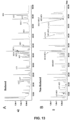
- IgG1 monoclonal antibody (IgG1 mAb-A) expressed in Chinese Hamster Ovary (CHO) cell clarified conditioned medium (CCM) was found to contain a trisulfide modification via multiple analytical techniques. Mass spectrum analysis showed a peak width broadening for the intact, non-reduced mAb. See e.g. Figure 15 . The average mass was increased, and both the mass increase and the peak broadening effect were eliminated by reducing conditions. See e.g. Figure 14 .
- IgG1 mAb preparations of IgG1 mAb were first analyzed for monomeric, high and low molecular weight species by size exclusion high pressure liquid chromatography (SEC-HPLC) under isocratic conditions. The analysis was performed using a Tosoh Biosciences G3000SWXL analytical column with a TSKgel guard column (#08543), a Waters 600S controller and a 717plus autosampler controlled by Empower software. Subsequent peptide mapping analysis was performed by high pressure liquid chromatography and mass spectrometry (LC-MS). Monoclonal antibodies (approximately 100 ⁇ g) were treated with 4-vinylpyridine at ambient temperature for 30 minutes in the presence of approximately 6 M guanidine hydrochloride.
- SEC-HPLC size exclusion high pressure liquid chromatography
- the percentage of trisulfide-linked H-L peptides was calculated from peak areas on the UV trace or on the extracted-ion-chromatogram of all three charged states, 1+ to 3+, with known peptides used as internal standards.
- the percent H-L trisulfide was calculated as (peak area of trisulfide) / (peak area of disulfide + peak area of trisulfide) .
- the limit of detection for the assay was ⁇ 0.1%.
- the limit of quantification is ⁇ 1%.
- IgG1 mAb-A preparation containing H-L trisulfide displayed increased sensitivity to extreme heat treatment compared to a similar preparation, termed "mAb-A-LT", in which trisulfides were undetectable.
- analysis of IgG1 mAb was performed by denaturing, non-reducing capillary electrophoresis in the presence of sodium dodecyl sulfate using an IgG Purity/Heterogeneity Assay Kit (#A10663) and ProteomeLab PA-800 instrument (Beckman Coulter).
- Trisulfide Bonds Can be Removed Using an On-Column Cysteine Wash
- Trisulfide bond modifications represent a source of undesirable molecular heterogeneity.
- methods were developed wherein the conversion of trisulfide bonds to disulfide bonds were incorporated into a standard purification scheme.
- IgG1 mAb-A containing high levels of trisulfide at the H-L bond (13.1%) were secreted from Chinese hamster Ovary (CHO) host cells into the culture supernatant. Clarified, conditioned medium (CCM), generated by removal of the cells by centrifugation and filtration, was used as load material for Protein A affinity chromatography. Load materials were stored at -70°C and thawed less than 18 hr prior to column purification.
- Chromatography was performed at ambient temperature using an AKTA Explorer 10 with Unicorn software (GE Healthcare). Columns (Omnifit) were 0.66 cm in diameter and packed with Protein A affinity resin (MabSelect SuRe, GE Healthcare) to a bed height of 20 cm. Column load materials were filtered (0.22 ⁇ M, Millipak 20) immediately prior to the start of chromatography. Protein A resin was equilibrated to neutral pH with phosphate buffered saline (PBS) and loaded with CHO cell CCM to a capacity of 25-35 mg of IgG1 per mL of resin.
- PBS phosphate buffered saline
- the column load was chased with three column volumes (3 CV's) of PBS to clear non-binding impurities, then washed at neutral pH with 5 CV's of PBS containing L-cysteine hydrochloride (USP grade, J.T. Baker, #2071 or Sigma, #C6852) or PBS lacking cysteine as a control.
- This multiple wash strategy was adopted to control the contact time of cysteine with the mAb and to flush the free amino acid from the column prior to elution of the product.
- the column was washed with a high salt buffer solution, designed to promote clearance of impurities, followed by a low salt concentration wash solution designed to promote efficient desorbtion of product during the final elution step. Elution was performed at pH 3.5 and the eluate fraction was adjusted to >pH 5 using base solution.
- the trisulfide content of mAb-A following the 3 mM cysteine column wash was decreased to below the level of quantitation via peptide mapping assay ( ⁇ 1%).
- the trisulfide content remained similar in the column load and eluate materials (13.1 %).
- the cysteine wash did not diminish the recovery of mAb-A in the column eluate fraction. This result indicates that the decrease in trisulfide content was due to conversion of trisulfide bonds to disulfides and not due to a chromatographic separation of different species.
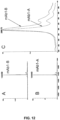
- the cysteine wash treatment increased the level of intact mAb-A detected by non-reducing electrophoresis following extreme heating ( Figure 1C ) and restored it to the level observed for the alternative preparation, mAb-A-LT, in which trisulfide was undetectable prior to the on-column cysteine wash ( Figure 1B ).
- the level of intact mAb-A-LT following heating was unchanged by the on-column cysteine wash ( Figure 1D ). This result indicates that the exposure to cysteine had no major adverse effect on mAb-A integrity.
- LC-90 assay non-reducing, denaturing microfluidic electrophoresis for rapid analysis. This assay was performed by conducting denaturing, non-reducing electrophoresis in the presence of sodium dodecyl sulfate using a HT Protein Express LabChip Kit (#760301) and LabChip 90 instrument (Caliper Life Sciences). Samples were prepared by heating to 100 °C for 3 minutes in the presence of 5 mM N-ethylmaleimide, essentially as per manufacturer's kit instructions.
- IgG1-C The efficacy of the on-column cysteine wash strategy was also examined using a third IgG1-based molecule, termed IgG1-C.
- IgG1-C has a novel structure that facilitates bispecific ligand binding. However, it retains the Fc and Fab regions typical of an IgG1 mAb. Similar to the effects seen on the IgG1 mAb-A and mAb-B molecules, the on-column cysteine wash decreased the H-L trisulfide content of IgG1-C from 11% to 1.0%, with a concomitant increase in the level of intact mAb detected following heating and electrophoretic analysis.
- a low level of aggregation may be tolerable when trisulfide level is inconveniently high in the untreated molecule and when the Protein A step will be followed by subsequent purification steps that are capable of clearing the aggregate, for example, via anion exchange or hydrophobic interaction chromatography.
- the binding of mAb-A, mAb-B, and IgG1-C to their respective ligands in vitro was unaffected by the on-column cysteine wash treatment (Table 7). This data also suggests that the cysteine column wash has minimal impact on native protein structure.
- the rate of cysteine oxidation in phosphate buffered saline (PBS) solution was also assessed in order to determine if the cysteine column wash strategy can be performed in tandem with preparative-scale purification of IgG1 mAbs by Protein A affinity capture.
- PBS phosphate buffered saline
- a column wash solution containing 1.0 mM cysteine was held at ambient temperature in the absence of light. Cysteine oxidation was monitored by periodically measuring the level of free sulhydryl groups relative to a standard curve generated from a freshly prepared cysteine reference solution using Ellman's reagent according to manufacturer's instructions (Thermo Pierce, #22582).
- Cysteine Wash can be Combined with a High Salt Wash
- Trisulfide Bonds Can be Removed Using an On-Column Glutathione Wash
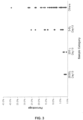
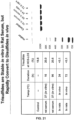
- Figure 2 summarizes the results of an experiment testing the impact of fermentation time in a 200 liter bioreactor using the anti-LINGO-1 antibody Li81. The time course revealed a bell shaped curve. At early time points, trisulfide levels were high. Trisulfide levels dropped as cultures achieved maximum cell density and maximum antibody production, and the levels increased again at later time points. Based on these studies, day 13 was selected as ideal for production. See also Figure 21 .
- Monoclonal antibodies are an important class of biopharmaceuticals for treatment of disease ( Nieri et al., Curr. Med. Chem. 16 (2009) 753-779 and Walsh, Nat. Biotechnol. 24 (2006) 769-776 ). All share similar structural characteristics, high specificity, and long half-life. Successful development of biopharmaceuticals relies on continuous improvements in methods used to assess product heterogeneity. Common sources of heterogeneity are post-translational modifications, resulting from glycosylation, oxidation, deamidation, disulfide linkage scrambling, proteolytic cleavage, misfolding, etc. ( Liu et al., J. Pharm. Sci. 97 (2008) 2426-2447 ).
- Monoclonal antibodies [mAb1 (aglycosyl form), mAb2 (wild type and aglycosyl forms), mAb3, mAb4, mAb5, mAb6, and mAb7] were produced in CHO cells and purified by protein A affinity chromatography at Biogen Idec (Cambridge, MA). Natural human myeloma IgGs were obtained from Sigma-Aldrich (St. Louis, MO). Product numbers were I 5154 for IgG1, I 5404 for IgG2, I 5654 for IgG3, and I 4639 for IgG4. Commercial mAb pharmaceuticals (referred to as Drug 1, Drug 2, and Drug 3) were obtained through appropriate agencies.
- Tryptic peptide mapping of non-reduced mAb1-B revealed all the predicted disulfide-linked peptide clusters as major components in the peptide map ( Figure 13 ). Three extra peaks, eluting at 16, 19, and 54 min in the tryptic map of the non-reduced protein that were not present in the peptide map of the reduced protein were also detected. The molecular masses of the components in these peaks are 788.217, 1292.457, and 5486.767 Da, respectively.
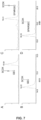
- Panels A and C in Figure 7 show extracted ion chromatograms (EIC) of the peptides eluting at 16 and 19 min, respectively.
- the mass of the 1292.457-Da component is 32 Da higher than the mass calculated for the disulfide-linked peptide cluster PepLT19-20/PepHT17 (1260.486 Da), which arises by partial digestion of the protein (i.e ., the peptide bond between peptides PepLT19 and PepLT20 has not been cleaved).
- the peptide clusters that elute at 16 and 19 min both contain Cys residue 5 of the light chain (LC5) and Cys residue 5 of the heavy chain (HC5) which form the interchain disulfide that links the heavy chain and light chain ( Figure 6 ).
- FIG. 8 shows the CID mass spectra obtained from the doubly charged ions of the disulfide-linked and the presumed trisulfide-linked PepLT19-20/PepHT17 peptide clusters. Fragment ions lacking a Cys residue showed the same masses in both spectra. However, all the fragment ions containing Cys showed 32-Da differences in the corresponding CID spectrum. For example, m / z of the y 1 ion is 571.25 for PepLT19-20/PepHT17 disulfide cluster, but 603.08 for the corresponding trisulfide cluster.
- the EIC data for the modified and unmodified LC5-HC5 and HC6/7-HC6/7 peptide clusters were used to quantify trisulfide levels in the mAb1-B sample. Trisulifide bonds in mAb1-B accounted for 20% of the LC5-HC5 linkage and 4% of the HC6/7-HC6/7 linkages.
- Trisulfides in Other Antibodies Natural and recombinant antibody preparations representing all IgG subclasses were examined in order to better understand the frequency of occurrence of trisulfide linkages in antibodies. Tables 12 and 13 show all subclasses of IgG antibodies contain trisulfides. See also Figure 18 .
- Trisulfide levels at the LC5-HC5 linkage in the mAb1 preparations ranged from 0.2-39.3%.
- Trisulfide levels at the LC5-HC5 linkage of the mAb2 preparations varied from ⁇ 0.1% to 21%.
- Trisulfide levels in the HC6/7-HC6/7 linkages were considerably lower than in the LC5-HC5 linkage and demonstrated that the LC5-HC5 connection was the most sensitive site for trisulfide modification. No trisulfides were detected in intrachain disulfide linkages.
- IgG2 In IgG2, IgG3, and IgG4 mAbs, the heavy and light chains are joined via a LC5-HC3 disulfide bond in place of the LC5-HC5 linkage found in IgG1 mAbs.
- Trisulfide levels in the HC6/7-HC6/7 linkages were 4% for mAb5 and ⁇ 1% for mAb6 (Table 12 and Figure 6D ) and no intrachain trisulfides were detected.
- Trisulfide levels at the LC5-HC3 linkage of IgG 2 mAb3 ranged from 0.4 to 6% (Table 12 and Figure 6B ), and there was no detectable trisulfide in the hinge and intrachain disulfide linkages. Trisulfide levels at the LC5-HC3 linkage of IgG3 mAb4 was 5% (Table 12 and Figure 6C ).
- Monoclonal antibody 7 (mAb7) a chimeric human/murine IgG2a antibody, contained 19-28% trisulfides at LC5-HC3 and 0-1% trisulfides in each of the three Cys linkages between the heavy chains (Table 12). Table 12.
- Trisulfide levels in recombinant antibodies detected using the detailed peptide mapping method Sample Number of Preparations Trisulfide (%) Cys linkages Between the light and heavy chains Between the heavy chains mAb1 (human IgG1) 7 0.2-39.3 0-6.8 LC5-HC5 mAb2 (human IgG1) 3 ⁇ 0.1-15.8 0-4.7 HC6/7-HC6/7 mAb3 (human IgG2) 11 0.4-6.3 Not observed LC5-HC3 mAb4 (human IgG3) 1 11.0 Not observed LC5-HC3 mAb5 (human IgG4) 1 10.8 4.0 LC5-HC3 mAb6 (human IgG4) 1 5.2 Not observed HC6/7-HC6/7 mAb7 (murine IgG2a) 4 19.0-28.1 0-3.0 LC5-HC3 HC6/7/8-HC6/7/8
- Table 13 summarizes peptide mapping results from additional studies where three commercial IgG1 therapeutic mAbs and natural preparations of IgG1, IgG2, IgG3, and IgG4 samples isolated from human myeloma plasma were characterized.
- the three commercial IgG1 therapeutic mAbs contained 1-4% trisulfide at the LC5-HC5 linkage.
- the IgG1, IgG2, IgG3, and IgG4 samples isolated from human myeloma plasma contained ⁇ 1% trisulfide at the linkage between the light and heavy chains (LC5-HC5 for IgG1 and LC5-HC3 for the rest; Table 13 and Figure 6 ) and no other trisulfide linkages were detected.
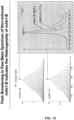
- FIG. 9A shows the EICs (I and II) and UV trace (III) of the disulfide and trisulfide linked peptide clusters containing LC5 and HC5 in the Lys-C peptide map of the non-reduced protein.
- the percentage of trisulfide modified LC5-HC5 shown in Figure 9A -III is about 20%, the same as that seen in the tryptic peptide map.
- the focused peptide mapping method utilizing the simplified digestion process and a reduced separation time from 70 min to 15 min, was applied to all subsequent trisulfide analyses of IgG1 antibodies.
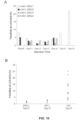
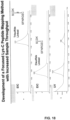
- FIG. 10A shows time course studies from four 200-L bioreactors that were run under near identical conditions. The four bioreactors all showed a similar profile where trisulfide levels were minimal around day 12 or day 13 and considerably higher earlier or later ( e.g . at day 9 or day 16). Bioreactor studies with mAb2 (wild type and aglycosyl forms) showed a similar trend (data not shown). Trisulfide levels in mAb1 samples from 2000-L bioreactors using conditions developed at the 200 L scale showed similar consistency ( Figure 10B ).
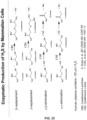
- mAb1-B a mAb1 sample that contained 20% LC5-HC5 trisulfide linkage was exposed to the reducing reagents, sodium sulfite, TCEP, and cysteine (Table 14). Partial reduction with these reagents resulted in >95% reduction of the level of trisulfide in the mAb. Tryptic peptide mapping of the sample treated with 2 mM cysteine showed nearly complete conversion of the trisulfides to the expected disulfides without reduction of the intrachain and interchain disulfides. It was interesting to note, as seen by SDS-PAGE analysis, that only treatment with 2 mM cysteine maintained the mAbs in an intact form; TCEP and sodium sulfite partially reduced the disulfide linkages (data not shown).
- mAb1-B containing 20% trisulfide was incubated in rat serum at 37 °C for 16 h and 96 h; the same material was also injected into rats and isolated from the serum 24 and 72 h post injection. No change in the level of the trisulfide was detected in the samples incubated in rat serum in vitro compared with the untreated control (Table 15). In contrast, no trisulfide was detected in the sample that had circulated in rat for 24 h and for 72 h following intraperitoneal injection.
- trisulfides are a common post-translational modification in antibodies and can occur in all IgG frameworks, independent of their glycosylation state.
- the modification can occur in recombinant and natural antibodies as well as in non-clinical preparations and commercial therapeutics.
- Trisulfide levels in the samples varied from below the detection limit to >40%, but the presence of high levels of trisulfide had no observable effect on the function or stability of the antibody.
- Peptide mapping of non-reduced protein samples utilizing a LC-MS system is a sensitive and reliable method for identifying and quantifying trisulfides.
- trisulfides occurred in the heavy-light and heavy-heavy interchain linkages that connect the four subunits and not in any of the intrachain disulfides. The highest levels were consistently observed in the heavy-light chain linkage.
- a focused Lys-C peptide mapping method for human IgG1 was developed. This protocol shortened analysis time significantly. The percentages of the trisulfide in the light and heavy chain linkage can be easily quantified from chromatograms using either UV traces or EICs.
- Quantification from the EIC is preferred when the level of trisulfide is below 3%.
- the detection limit of the method estimated from EICs is 0.1%, with a RSD of 3.8% based on more than twenty independent experiments.
- the Lys-C peptide mapping method developed for mAb1 is applicable to all human IgG1 antibodies. Similar peptide mapping strategies were successfully developed for quantification of trisulfide linkages in IgG2, IgG3, and IgG4 antibodies.
- Pristatsky and coworkers Pristatsky et al., Anal. Chem.
- the trisulfide linkage was stable to prolonged storage at 4 °C and at room temperature and in rat serum in vitro, but was rapidly converted to a disulfide within 24 h after systemic administration to rats.
- the rapid conversion of the trisulfide to a disulfide in rats is consistent with other reported reduction-oxidation related changes that occur in vivo , e.g. the rearrangement of human IgG2 antibody hinge disulfides ( Liu et al., J. Biol. Chem. 283 (2008) 29266-29272 ) and Fab-arm exchange of human IgG4 ( Labrijn et al., Nat. Biotechnol. 27 (2009) 767-771 ).
- the three samples (approximately 100 ⁇ g) were denatured and alkylated for an hour at 25 °C in 115 ⁇ L of 8 M guanidine, 0.1 mM NEM in 50 mM sodium phosphate buffer, pH 6.5.
- the samples were then diluted by mixing with 246 ⁇ L of 50 mM sodium phosphate buffer, pH 6.5 before an addition of 10 ⁇ g lysyl endopeptidase (Lys-C, Wako Chemicals).
- the digestion was performed at 25 °C for 18 hours.
Landscapes
- Chemical & Material Sciences (AREA)
- Organic Chemistry (AREA)
- Health & Medical Sciences (AREA)
- Chemical Kinetics & Catalysis (AREA)
- General Health & Medical Sciences (AREA)
- Life Sciences & Earth Sciences (AREA)
- Biochemistry (AREA)
- Biophysics (AREA)
- Genetics & Genomics (AREA)
- Medicinal Chemistry (AREA)
- Molecular Biology (AREA)
- Proteomics, Peptides & Aminoacids (AREA)
- Analytical Chemistry (AREA)
- General Chemical & Material Sciences (AREA)
- Immunology (AREA)
- Peptides Or Proteins (AREA)
Claims (8)
- Verfahren zur Umwandlung von Trisulphid-Bindungen in Disulphid-Bindungen in Proteinen, wobei das Verfahren Folgendes umfasst:(a) Ermöglichen, dass Proteine in einer Lösung, die mindestens ein Protein mit mindestens einer Trisulphid-Bindung umfasst, mit einem festen Träger in Kontakt kommen und assoziieren;(b) Aussetzen der an den festen Träger gebundenen Proteine einer Lösung, die ein Reduktionsmittel umfasst; und(c) Ersetzen der das Reduktionsmittel umfassenden Lösung durch eine Lösung, der das Reduktionsmittel fehlt,wobei die Proteine Antikörper oder antigenbindende Fragmente davon sind, wobei die Antikörper oder antigenbindenden Fragmente davon IgG1, IgG3 oder IgG4 sind undwobei das Reduktionsmittel in einer Konzentration vorliegt, die ausgewählt ist aus der Gruppe bestehend aus:(a) 0,5 bis 3 mM;(b) 0,5 bis 1 mM;(c) etwa 3 mM; und(d) etwa 1 mM.
- Verfahren nach Anspruch 1, wobei das Reduktionsmittel ausgewählt ist aus der Gruppe bestehend aus Cystein, L-Cystein, reduziertem Glutathion (GSH) und L-GSH.
- Verfahren nach Anspruch 2, wobei das Reduktionsmittel Cystein ist.
- Verfahren nach Anspruch 3, wobei die Proteine dem Reduktionsmittel bei einem pH-Wert von etwa 6 bis etwa 8 ausgesetzt werden.
- Verfahren nach einem der Ansprüche 1 bis 4, wobei die Lösung, der das Reduktionsmittel fehlt, ein Alkalimetallsalz umfasst.
- Verfahren nach Anspruch 1, wobei die Antikörper oder antigenbindenden Fragmente davon IgG1 sind.
- Verfahren nach einem der Ansprüche 1 bis 6, wobei der feste Träger spezifisch an die Proteine bindet.
- Verfahren nach Anspruch 1, wobei der feste Träger ein Protein-A-Chromatographiemedium ist.
Applications Claiming Priority (5)
| Application Number | Priority Date | Filing Date | Title |
|---|---|---|---|
| US24837709P | 2009-10-02 | 2009-10-02 | |
| US25044309P | 2009-10-09 | 2009-10-09 | |
| US25903509P | 2009-11-06 | 2009-11-06 | |
| US31907310P | 2010-03-30 | 2010-03-30 | |
| PCT/US2010/051189 WO2011041721A1 (en) | 2009-10-02 | 2010-10-01 | Methods of preventing and removing trisulfide bonds |
Related Child Applications (1)
| Application Number | Title | Priority Date | Filing Date |
|---|---|---|---|
| EP19163897.2 Division-Into | 2019-03-19 |
Publications (3)
| Publication Number | Publication Date |
|---|---|
| EP2483289A1 EP2483289A1 (de) | 2012-08-08 |
| EP2483289B1 EP2483289B1 (de) | 2019-03-20 |
| EP2483289B2 true EP2483289B2 (de) | 2025-03-26 |
Family
ID=43016606
Family Applications (1)
| Application Number | Title | Priority Date | Filing Date |
|---|---|---|---|
| EP10763112.9A Active EP2483289B2 (de) | 2009-10-02 | 2010-10-01 | Verfahren zur vorbeugung und entfernung von trisulphid-bindungen |
Country Status (4)
| Country | Link |
|---|---|
| US (2) | US9005926B2 (de) |
| EP (1) | EP2483289B2 (de) |
| DK (1) | DK2483289T4 (de) |
| WO (1) | WO2011041721A1 (de) |
Families Citing this family (12)
| Publication number | Priority date | Publication date | Assignee | Title |
|---|---|---|---|---|
| EP2483289B2 (de) * | 2009-10-02 | 2025-03-26 | Biogen MA Inc. | Verfahren zur vorbeugung und entfernung von trisulphid-bindungen |
| US9562252B2 (en) | 2011-05-13 | 2017-02-07 | Biogen Ma Inc. | Methods of preventing and removing trisulfide bonds |
| SG10202102467RA (en) * | 2014-07-24 | 2021-04-29 | Genentech Inc | Methods of conjugating an agent to a thiol moiety in a protein that contains at least one trisulfide bond |
| CA2938333A1 (en) | 2015-08-12 | 2017-02-12 | Pfizer Inc. | Capped and uncapped antibody cysteines, and their use in antibody-drug conjugation |
| SG11201809408SA (en) * | 2016-04-28 | 2018-11-29 | Merck Patent Gmbh | Method for reducing the trisulfide level in proteins |
| BR112018073133A2 (pt) | 2016-05-10 | 2019-04-30 | Genentech Inc | métodos de diminuição das ligações trissulfeto durante a produção recombinante de polipeptídeos |
| US12486318B2 (en) | 2016-06-15 | 2025-12-02 | Yale University | Anti-guanosine antibody as a molecular delivery vehicle |
| MA49962A (fr) | 2017-08-22 | 2020-07-01 | Biogen Ma Inc | Procédés de purification d'anticorps présentant des agrégats réduits à poids moléculaire élevé |
| US12304970B2 (en) | 2018-02-01 | 2025-05-20 | Yale University | Nuclear localization signals, compositions formed therefrom, and methods of use thereof for delivery of cargo to the nucleus |
| CN110824096B (zh) * | 2018-08-13 | 2022-11-29 | 齐鲁制药有限公司 | 一种蛋白错配二硫键的分析方法 |
| KR20250099418A (ko) * | 2018-08-15 | 2025-07-01 | 브리스톨-마이어스 스큅 컴퍼니 | 하류 크로마토그래피에서의 재산화에 의한 단백질 단편화 제어 전략 |
| CA3202429A1 (en) * | 2020-12-20 | 2022-06-23 | Regeneron Pharmaceuticals, Inc. | Methods for identification of scrambled disulfides in biomolecules |
Citations (4)
| Publication number | Priority date | Publication date | Assignee | Title |
|---|---|---|---|---|
| US20040038331A1 (en) † | 2002-08-23 | 2004-02-26 | Reddy M. Parameswara | Solid phase synthesis of biomolecule conjugates |
| WO2006047340A2 (en) † | 2004-10-22 | 2006-05-04 | Amgen Inc. | Methods for refolding of recombinant antibodies |
| WO2006060083A1 (en) † | 2004-10-22 | 2006-06-08 | Amgen Inc. | Methods for refolding polypeptides |
| US7470779B2 (en) † | 2002-09-20 | 2008-12-30 | Pfizer Inc. | Process for decreasing aggregate levels of pegylated protein |
Family Cites Families (42)
| Publication number | Priority date | Publication date | Assignee | Title |
|---|---|---|---|---|
| US4411993A (en) | 1981-04-29 | 1983-10-25 | Steven Gillis | Hybridoma antibody which inhibits interleukin 2 activity |
| US4474893A (en) | 1981-07-01 | 1984-10-02 | The University of Texas System Cancer Center | Recombinant monoclonal antibodies |
| US4714681A (en) | 1981-07-01 | 1987-12-22 | The Board Of Reagents, The University Of Texas System Cancer Center | Quadroma cells and trioma cells and methods for the production of same |
| US4683195A (en) | 1986-01-30 | 1987-07-28 | Cetus Corporation | Process for amplifying, detecting, and/or-cloning nucleic acid sequences |
| US5892019A (en) | 1987-07-15 | 1999-04-06 | The United States Of America, As Represented By The Department Of Health And Human Services | Production of a single-gene-encoded immunoglobulin |
| US4925648A (en) | 1988-07-29 | 1990-05-15 | Immunomedics, Inc. | Detection and treatment of infectious and inflammatory lesions |
| US5601819A (en) | 1988-08-11 | 1997-02-11 | The General Hospital Corporation | Bispecific antibodies for selective immune regulation and for selective immune cell binding |
| US5530101A (en) | 1988-12-28 | 1996-06-25 | Protein Design Labs, Inc. | Humanized immunoglobulins |
| EP0739904A1 (de) | 1989-06-29 | 1996-10-30 | Medarex, Inc. | Bispezifische Reagenzien für die AIDS-Therapie |
| EP1690935A3 (de) | 1990-01-12 | 2008-07-30 | Abgenix, Inc. | Bildung von xenogenen Antikörpern |
| DK0553244T4 (da) | 1990-10-05 | 2005-08-01 | Celldex Therapeutics Inc | Målrettet immunostimulering med bispecifikke reagenser |
| AU8727291A (en) | 1990-10-29 | 1992-06-11 | Cetus Oncology Corporation | Bispecific antibodies, method of production, and uses thereof |
| EP0582595A1 (de) | 1991-04-26 | 1994-02-16 | Surface Active Limited | Neue antikörper und verfahren zu ihrer verwendung |
| JPH0517431A (ja) | 1991-07-11 | 1993-01-26 | Seiko Epson Corp | 安定化システイン溶液 |
| EP1306095A3 (de) | 1992-03-05 | 2003-06-25 | Board Of Regents, The University Of Texas System | Methoden und Zusammensetzungen zur Zielrichtung der Gefässe von festen Tumoren |
| DK44593D0 (da) | 1993-04-20 | 1993-04-20 | Novo Nordisk As | Fremgangsmaade til fremstilling af et polypeptid |
| JPH0789856A (ja) | 1993-09-20 | 1995-04-04 | Otsuka Pharmaceut Factory Inc | プラスチック容器入りアミノ酸輸液製剤 |
| ZA955789B (en) | 1994-07-15 | 1996-03-11 | Novo Nordisk As | A method of converting a hydrophobic derivative of a polypeptide into the native form |
| US5731168A (en) | 1995-03-01 | 1998-03-24 | Genentech, Inc. | Method for making heteromultimeric polypeptides |
| ATE230277T1 (de) * | 1997-06-13 | 2003-01-15 | Genentech Inc | Stabilisierte antikörperformulierung |
| SE9802454D0 (sv) | 1998-07-08 | 1998-07-08 | Pharmacia & Upjohn Ab | Production of peptides |
| US6897044B1 (en) | 1999-01-28 | 2005-05-24 | Biogen Idec, Inc. | Production of tetravalent antibodies |
| UA74557C2 (en) | 1999-09-03 | 2006-01-16 | Applied Research Systems | A method for producing a heterologous secreted protein from chinese hamster ovaries cells grown on microcarriers |
| AU2002327164A1 (en) | 2001-01-29 | 2002-12-09 | Idec Pharmaceuticals Corporation | Engineered tetravalent antibodies and methods of use |
| EE200300408A (et) | 2001-02-23 | 2003-12-15 | Immunex Corporation | Aktiivsete valkude saagise suurendamine |
| US20030020733A1 (en) | 2001-07-24 | 2003-01-30 | Yin Memphis Zhihong | Computer display having selective area magnification |
| US20040048315A1 (en) | 2002-08-28 | 2004-03-11 | Pharmacia Corporation | Method for the preparation of growth hormone and antagonist thereof having lower levels of isoform impurities thereof |
| US7425328B2 (en) | 2003-04-22 | 2008-09-16 | Purdue Pharma L.P. | Tissue factor antibodies and uses thereof |
| US20090131311A1 (en) | 2004-12-29 | 2009-05-21 | Novo Nordisk Healthcare Ag | Method for Preventing Formation of Trisulfide Derivatives of Polypeptides |
| SI1904104T1 (sl) | 2005-07-08 | 2013-12-31 | Biogen Idec Ma Inc. | Protitelesa SP35 in njihova uporaba |
| US7785366B2 (en) | 2005-10-26 | 2010-08-31 | Maurer Christopher W | Mitral spacer |
| GEP20125693B (en) | 2007-01-09 | 2012-11-26 | Biogen Idec Inc | Sp35 antibodies and usage thereof |
| ES2392701T3 (es) | 2007-05-11 | 2012-12-13 | Amgen Inc. | Medios de alimentación mejorados |
| PE20090309A1 (es) * | 2007-06-04 | 2009-04-18 | Wyeth Corp | Conjugado portador-caliqueamicina y un metodo de deteccion de caliqueamicina |
| US7896608B2 (en) | 2007-06-28 | 2011-03-01 | Circle Wind Corp. | Three-vaned drag-type wind turbine |
| BRPI0820073A2 (pt) | 2007-11-12 | 2015-06-23 | U3 Pharma Gmbh | Anticorpos anti-axl |
| AU2009246640A1 (en) | 2008-05-15 | 2009-11-19 | Biogen Idec Ma Inc. | Anti-Fn14 antibodies and uses thereof |
| EP2315779A2 (de) | 2008-07-09 | 2011-05-04 | Biogen Idec MA Inc. | Antikörper gegen lingo oder fragmente davon enthaltende zusammensetzungen |
| AR076564A1 (es) | 2009-05-11 | 2011-06-22 | U3 Pharma Gmbh | Anticuerpos humanizados de axl(receptor de tirosina quinasa) |
| JP2011051946A (ja) | 2009-09-03 | 2011-03-17 | Lotte Co Ltd | 硫化水素産生酵素阻害剤 |
| EP2483289B2 (de) | 2009-10-02 | 2025-03-26 | Biogen MA Inc. | Verfahren zur vorbeugung und entfernung von trisulphid-bindungen |
| US9562252B2 (en) | 2011-05-13 | 2017-02-07 | Biogen Ma Inc. | Methods of preventing and removing trisulfide bonds |
-
2010
- 2010-10-01 EP EP10763112.9A patent/EP2483289B2/de active Active
- 2010-10-01 DK DK10763112.9T patent/DK2483289T4/da active
- 2010-10-01 WO PCT/US2010/051189 patent/WO2011041721A1/en not_active Ceased
- 2010-10-01 US US13/499,858 patent/US9005926B2/en active Active
-
2015
- 2015-03-04 US US14/638,215 patent/US10308706B2/en active Active
Patent Citations (5)
| Publication number | Priority date | Publication date | Assignee | Title |
|---|---|---|---|---|
| US20040038331A1 (en) † | 2002-08-23 | 2004-02-26 | Reddy M. Parameswara | Solid phase synthesis of biomolecule conjugates |
| US7470779B2 (en) † | 2002-09-20 | 2008-12-30 | Pfizer Inc. | Process for decreasing aggregate levels of pegylated protein |
| WO2006047340A2 (en) † | 2004-10-22 | 2006-05-04 | Amgen Inc. | Methods for refolding of recombinant antibodies |
| WO2006060083A1 (en) † | 2004-10-22 | 2006-06-08 | Amgen Inc. | Methods for refolding polypeptides |
| US20060194280A1 (en) † | 2004-10-22 | 2006-08-31 | Amgen Inc. | Methods for refolding of recombinant antibodies |
Also Published As
| Publication number | Publication date |
|---|---|
| US9005926B2 (en) | 2015-04-14 |
| US20120264916A1 (en) | 2012-10-18 |
| WO2011041721A1 (en) | 2011-04-07 |
| EP2483289B1 (de) | 2019-03-20 |
| DK2483289T3 (da) | 2019-06-11 |
| US10308706B2 (en) | 2019-06-04 |
| EP2483289A1 (de) | 2012-08-08 |
| DK2483289T4 (da) | 2025-05-19 |
| US20150274808A1 (en) | 2015-10-01 |
Similar Documents
| Publication | Publication Date | Title |
|---|---|---|
| US10590454B2 (en) | Methods of preventing and removing trisulfide bonds | |
| EP2483289B1 (de) | Verfahren zur vorbeugung und entfernung von trisulphid-bindungen | |
| US11352612B2 (en) | Manufacturing of alkaline phosphatases | |
| KR102873279B1 (ko) | Il-17 항체 내의 시스테인 잔기의 선택적 환원 | |
| KR102182885B1 (ko) | 당단백질의 제조를 위한 조성물 및 방법 | |
| Mimura et al. | Micro-heterogeneity of antibody molecules | |
| US10421985B2 (en) | Methods for producing sialylated therapeutic proteins | |
| HK1194079B (en) | Methods of preventing and removing trisulfide bonds | |
| HK1194079A (en) | Methods of preventing and removing trisulfide bonds | |
| TR2022003651T2 (tr) | Anti̇kor üreti̇mi̇nde fukozi̇lasyon ve temel varyantlari azaltmaya yöneli̇k hücre kültürü ortami | |
| US20250382366A1 (en) | Methods of producing anti-cd19 antibodies | |
| WO2024018489A1 (en) | Method for selective reduction of disulfide bonds in an immunoglobulin | |
| HK1110334A (en) | Methods for refolding of recombinant antibodies |
Legal Events
| Date | Code | Title | Description |
|---|---|---|---|
| PUAI | Public reference made under article 153(3) epc to a published international application that has entered the european phase |
Free format text: ORIGINAL CODE: 0009012 |
|
| 17P | Request for examination filed |
Effective date: 20120329 |
|
| AK | Designated contracting states |
Kind code of ref document: A1 Designated state(s): AL AT BE BG CH CY CZ DE DK EE ES FI FR GB GR HR HU IE IS IT LI LT LU LV MC MK MT NL NO PL PT RO RS SE SI SK SM TR |
|
| DAX | Request for extension of the european patent (deleted) | ||
| 17Q | First examination report despatched |
Effective date: 20140618 |
|
| RAP1 | Party data changed (applicant data changed or rights of an application transferred) |
Owner name: BIOGEN MA INC. |
|
| TPAC | Observations filed by third parties |
Free format text: ORIGINAL CODE: EPIDOSNTIPA |
|
| STAA | Information on the status of an ep patent application or granted ep patent |
Free format text: STATUS: EXAMINATION IS IN PROGRESS |
|
| GRAP | Despatch of communication of intention to grant a patent |
Free format text: ORIGINAL CODE: EPIDOSNIGR1 |
|
| STAA | Information on the status of an ep patent application or granted ep patent |
Free format text: STATUS: GRANT OF PATENT IS INTENDED |
|
| INTG | Intention to grant announced |
Effective date: 20180926 |
|
| GRAS | Grant fee paid |
Free format text: ORIGINAL CODE: EPIDOSNIGR3 |
|
| GRAA | (expected) grant |
Free format text: ORIGINAL CODE: 0009210 |
|
| STAA | Information on the status of an ep patent application or granted ep patent |
Free format text: STATUS: THE PATENT HAS BEEN GRANTED |
|
| AK | Designated contracting states |
Kind code of ref document: B1 Designated state(s): AL AT BE BG CH CY CZ DE DK EE ES FI FR GB GR HR HU IE IS IT LI LT LU LV MC MK MT NL NO PL PT RO RS SE SI SK SM TR |
|
| RAP1 | Party data changed (applicant data changed or rights of an application transferred) |
Owner name: BIOGEN MA INC. |
|
| REG | Reference to a national code |
Ref country code: GB Ref legal event code: FG4D |
|
| REG | Reference to a national code |
Ref country code: CH Ref legal event code: EP |
|
| REG | Reference to a national code |
Ref country code: DE Ref legal event code: R096 Ref document number: 602010057689 Country of ref document: DE |
|
| REG | Reference to a national code |
Ref country code: AT Ref legal event code: REF Ref document number: 1110414 Country of ref document: AT Kind code of ref document: T Effective date: 20190415 |
|
| REG | Reference to a national code |
Ref country code: IE Ref legal event code: FG4D |
|
| REG | Reference to a national code |
Ref country code: DK Ref legal event code: T3 Effective date: 20190607 |
|
| REG | Reference to a national code |
Ref country code: NL Ref legal event code: FP |
|
| PG25 | Lapsed in a contracting state [announced via postgrant information from national office to epo] |
Ref country code: SE Free format text: LAPSE BECAUSE OF FAILURE TO SUBMIT A TRANSLATION OF THE DESCRIPTION OR TO PAY THE FEE WITHIN THE PRESCRIBED TIME-LIMIT Effective date: 20190320 Ref country code: LT Free format text: LAPSE BECAUSE OF FAILURE TO SUBMIT A TRANSLATION OF THE DESCRIPTION OR TO PAY THE FEE WITHIN THE PRESCRIBED TIME-LIMIT Effective date: 20190320 Ref country code: FI Free format text: LAPSE BECAUSE OF FAILURE TO SUBMIT A TRANSLATION OF THE DESCRIPTION OR TO PAY THE FEE WITHIN THE PRESCRIBED TIME-LIMIT Effective date: 20190320 Ref country code: NO Free format text: LAPSE BECAUSE OF FAILURE TO SUBMIT A TRANSLATION OF THE DESCRIPTION OR TO PAY THE FEE WITHIN THE PRESCRIBED TIME-LIMIT Effective date: 20190620 |
|
| REG | Reference to a national code |
Ref country code: LT Ref legal event code: MG4D |
|
| PG25 | Lapsed in a contracting state [announced via postgrant information from national office to epo] |
Ref country code: RS Free format text: LAPSE BECAUSE OF FAILURE TO SUBMIT A TRANSLATION OF THE DESCRIPTION OR TO PAY THE FEE WITHIN THE PRESCRIBED TIME-LIMIT Effective date: 20190320 Ref country code: BG Free format text: LAPSE BECAUSE OF FAILURE TO SUBMIT A TRANSLATION OF THE DESCRIPTION OR TO PAY THE FEE WITHIN THE PRESCRIBED TIME-LIMIT Effective date: 20190620 Ref country code: LV Free format text: LAPSE BECAUSE OF FAILURE TO SUBMIT A TRANSLATION OF THE DESCRIPTION OR TO PAY THE FEE WITHIN THE PRESCRIBED TIME-LIMIT Effective date: 20190320 Ref country code: GR Free format text: LAPSE BECAUSE OF FAILURE TO SUBMIT A TRANSLATION OF THE DESCRIPTION OR TO PAY THE FEE WITHIN THE PRESCRIBED TIME-LIMIT Effective date: 20190621 Ref country code: HR Free format text: LAPSE BECAUSE OF FAILURE TO SUBMIT A TRANSLATION OF THE DESCRIPTION OR TO PAY THE FEE WITHIN THE PRESCRIBED TIME-LIMIT Effective date: 20190320 |
|
| REG | Reference to a national code |
Ref country code: AT Ref legal event code: MK05 Ref document number: 1110414 Country of ref document: AT Kind code of ref document: T Effective date: 20190320 |
|
| REG | Reference to a national code |
Ref country code: CH Ref legal event code: NV Representative=s name: STOLMAR AND PARTNER INTELLECTUAL PROPERTY S.A., CH |
|
| PG25 | Lapsed in a contracting state [announced via postgrant information from national office to epo] |
Ref country code: CZ Free format text: LAPSE BECAUSE OF FAILURE TO SUBMIT A TRANSLATION OF THE DESCRIPTION OR TO PAY THE FEE WITHIN THE PRESCRIBED TIME-LIMIT Effective date: 20190320 Ref country code: IT Free format text: LAPSE BECAUSE OF FAILURE TO SUBMIT A TRANSLATION OF THE DESCRIPTION OR TO PAY THE FEE WITHIN THE PRESCRIBED TIME-LIMIT Effective date: 20190320 Ref country code: PT Free format text: LAPSE BECAUSE OF FAILURE TO SUBMIT A TRANSLATION OF THE DESCRIPTION OR TO PAY THE FEE WITHIN THE PRESCRIBED TIME-LIMIT Effective date: 20190720 Ref country code: AL Free format text: LAPSE BECAUSE OF FAILURE TO SUBMIT A TRANSLATION OF THE DESCRIPTION OR TO PAY THE FEE WITHIN THE PRESCRIBED TIME-LIMIT Effective date: 20190320 Ref country code: SK Free format text: LAPSE BECAUSE OF FAILURE TO SUBMIT A TRANSLATION OF THE DESCRIPTION OR TO PAY THE FEE WITHIN THE PRESCRIBED TIME-LIMIT Effective date: 20190320 Ref country code: EE Free format text: LAPSE BECAUSE OF FAILURE TO SUBMIT A TRANSLATION OF THE DESCRIPTION OR TO PAY THE FEE WITHIN THE PRESCRIBED TIME-LIMIT Effective date: 20190320 Ref country code: ES Free format text: LAPSE BECAUSE OF FAILURE TO SUBMIT A TRANSLATION OF THE DESCRIPTION OR TO PAY THE FEE WITHIN THE PRESCRIBED TIME-LIMIT Effective date: 20190320 Ref country code: RO Free format text: LAPSE BECAUSE OF FAILURE TO SUBMIT A TRANSLATION OF THE DESCRIPTION OR TO PAY THE FEE WITHIN THE PRESCRIBED TIME-LIMIT Effective date: 20190320 |
|
| PG25 | Lapsed in a contracting state [announced via postgrant information from national office to epo] |
Ref country code: SM Free format text: LAPSE BECAUSE OF FAILURE TO SUBMIT A TRANSLATION OF THE DESCRIPTION OR TO PAY THE FEE WITHIN THE PRESCRIBED TIME-LIMIT Effective date: 20190320 Ref country code: PL Free format text: LAPSE BECAUSE OF FAILURE TO SUBMIT A TRANSLATION OF THE DESCRIPTION OR TO PAY THE FEE WITHIN THE PRESCRIBED TIME-LIMIT Effective date: 20190320 |
|
| REG | Reference to a national code |
Ref country code: DE Ref legal event code: R026 Ref document number: 602010057689 Country of ref document: DE |
|
| PLBI | Opposition filed |
Free format text: ORIGINAL CODE: 0009260 |
|
| PLBI | Opposition filed |
Free format text: ORIGINAL CODE: 0009260 |
|
| PG25 | Lapsed in a contracting state [announced via postgrant information from national office to epo] |
Ref country code: IS Free format text: LAPSE BECAUSE OF FAILURE TO SUBMIT A TRANSLATION OF THE DESCRIPTION OR TO PAY THE FEE WITHIN THE PRESCRIBED TIME-LIMIT Effective date: 20190720 Ref country code: AT Free format text: LAPSE BECAUSE OF FAILURE TO SUBMIT A TRANSLATION OF THE DESCRIPTION OR TO PAY THE FEE WITHIN THE PRESCRIBED TIME-LIMIT Effective date: 20190320 |
|
| PGFP | Annual fee paid to national office [announced via postgrant information from national office to epo] |
Ref country code: LU Payment date: 20191111 Year of fee payment: 10 |
|
| PLAB | Opposition data, opponent's data or that of the opponent's representative modified |
Free format text: ORIGINAL CODE: 0009299OPPO |
|
| PLBI | Opposition filed |
Free format text: ORIGINAL CODE: 0009260 |
|
| PLAX | Notice of opposition and request to file observation + time limit sent |
Free format text: ORIGINAL CODE: EPIDOSNOBS2 |
|
| 26 | Opposition filed |
Opponent name: PATENTANWAELTE ISENBRUCK BOESL HOERSCHLER PARTG MB Effective date: 20191218 |
|
| 26 | Opposition filed |
Opponent name: HOFFMAN EITLE PATENT- UND RECHTSANWAELTE PARTNERSC Effective date: 20191220 |
|
| PGFP | Annual fee paid to national office [announced via postgrant information from national office to epo] |
Ref country code: NL Payment date: 20191114 Year of fee payment: 10 Ref country code: MC Payment date: 20191129 Year of fee payment: 10 |
|
| 26 | Opposition filed |
Opponent name: ARNOLD & SIEDSMA B.V. Effective date: 20191220 |
|
| R26 | Opposition filed (corrected) |
Opponent name: HOFFMAN EITLE PATENT- UND RECHTSANWAELTE PARTNERSCHAFTSGESELLSCHAFT MBB Effective date: 20191220 |
|
| PG25 | Lapsed in a contracting state [announced via postgrant information from national office to epo] |
Ref country code: SI Free format text: LAPSE BECAUSE OF FAILURE TO SUBMIT A TRANSLATION OF THE DESCRIPTION OR TO PAY THE FEE WITHIN THE PRESCRIBED TIME-LIMIT Effective date: 20190320 |
|
| PGFP | Annual fee paid to national office [announced via postgrant information from national office to epo] |
Ref country code: BE Payment date: 20191119 Year of fee payment: 10 |
|
| PG25 | Lapsed in a contracting state [announced via postgrant information from national office to epo] |
Ref country code: TR Free format text: LAPSE BECAUSE OF FAILURE TO SUBMIT A TRANSLATION OF THE DESCRIPTION OR TO PAY THE FEE WITHIN THE PRESCRIBED TIME-LIMIT Effective date: 20190320 |
|
| PGFP | Annual fee paid to national office [announced via postgrant information from national office to epo] |
Ref country code: MT Payment date: 20191121 Year of fee payment: 10 |
|
| PLAF | Information modified related to communication of a notice of opposition and request to file observations + time limit |
Free format text: ORIGINAL CODE: EPIDOSCOBS2 |
|
| PLAF | Information modified related to communication of a notice of opposition and request to file observations + time limit |
Free format text: ORIGINAL CODE: EPIDOSCOBS2 |
|
| PLAF | Information modified related to communication of a notice of opposition and request to file observations + time limit |
Free format text: ORIGINAL CODE: EPIDOSCOBS2 |
|
| PLBB | Reply of patent proprietor to notice(s) of opposition received |
Free format text: ORIGINAL CODE: EPIDOSNOBS3 |
|
| PG25 | Lapsed in a contracting state [announced via postgrant information from national office to epo] |
Ref country code: CY Free format text: LAPSE BECAUSE OF FAILURE TO SUBMIT A TRANSLATION OF THE DESCRIPTION OR TO PAY THE FEE WITHIN THE PRESCRIBED TIME-LIMIT Effective date: 20190320 |
|
| REG | Reference to a national code |
Ref country code: NL Ref legal event code: MM Effective date: 20201101 |
|
| PG25 | Lapsed in a contracting state [announced via postgrant information from national office to epo] |
Ref country code: LU Free format text: LAPSE BECAUSE OF NON-PAYMENT OF DUE FEES Effective date: 20201001 Ref country code: MC Free format text: LAPSE BECAUSE OF NON-PAYMENT OF DUE FEES Effective date: 20201103 |
|
| REG | Reference to a national code |
Ref country code: BE Ref legal event code: MM Effective date: 20201031 |
|
| PG25 | Lapsed in a contracting state [announced via postgrant information from national office to epo] |
Ref country code: NL Free format text: LAPSE BECAUSE OF NON-PAYMENT OF DUE FEES Effective date: 20201101 Ref country code: HU Free format text: LAPSE BECAUSE OF FAILURE TO SUBMIT A TRANSLATION OF THE DESCRIPTION OR TO PAY THE FEE WITHIN THE PRESCRIBED TIME-LIMIT; INVALID AB INITIO Effective date: 20101001 |
|
| PG25 | Lapsed in a contracting state [announced via postgrant information from national office to epo] |
Ref country code: BE Free format text: LAPSE BECAUSE OF NON-PAYMENT OF DUE FEES Effective date: 20201031 |
|
| APBM | Appeal reference recorded |
Free format text: ORIGINAL CODE: EPIDOSNREFNO |
|
| APBP | Date of receipt of notice of appeal recorded |
Free format text: ORIGINAL CODE: EPIDOSNNOA2O |
|
| APAH | Appeal reference modified |
Free format text: ORIGINAL CODE: EPIDOSCREFNO |
|
| PLAB | Opposition data, opponent's data or that of the opponent's representative modified |
Free format text: ORIGINAL CODE: 0009299OPPO |
|
| R26 | Opposition filed (corrected) |
Opponent name: PATENTANWAELTE ISENBRUCK BOESL HOERSCHLER PARTG MBB Effective date: 20191218 |
|
| APBQ | Date of receipt of statement of grounds of appeal recorded |
Free format text: ORIGINAL CODE: EPIDOSNNOA3O |
|
| PG25 | Lapsed in a contracting state [announced via postgrant information from national office to epo] |
Ref country code: MK Free format text: LAPSE BECAUSE OF FAILURE TO SUBMIT A TRANSLATION OF THE DESCRIPTION OR TO PAY THE FEE WITHIN THE PRESCRIBED TIME-LIMIT Effective date: 20190320 Ref country code: MT Free format text: LAPSE BECAUSE OF NON-PAYMENT OF DUE FEES Effective date: 20201001 |
|
| P01 | Opt-out of the competence of the unified patent court (upc) registered |
Effective date: 20230525 |
|
| PLAB | Opposition data, opponent's data or that of the opponent's representative modified |
Free format text: ORIGINAL CODE: 0009299OPPO |
|
| R26 | Opposition filed (corrected) |
Opponent name: PATENTANWAELTE ISENBRUCK BOESL HOERSCHLER PARTG MBB Effective date: 20191218 |
|
| APBU | Appeal procedure closed |
Free format text: ORIGINAL CODE: EPIDOSNNOA9O |
|
| PUAH | Patent maintained in amended form |
Free format text: ORIGINAL CODE: 0009272 |
|
| STAA | Information on the status of an ep patent application or granted ep patent |
Free format text: STATUS: PATENT MAINTAINED AS AMENDED |
|
| 27A | Patent maintained in amended form |
Effective date: 20250326 |
|
| AK | Designated contracting states |
Kind code of ref document: B2 Designated state(s): AL AT BE BG CH CY CZ DE DK EE ES FI FR GB GR HR HU IE IS IT LI LT LU LV MC MK MT NL NO PL PT RO RS SE SI SK SM TR |
|
| REG | Reference to a national code |
Ref country code: DE Ref legal event code: R102 Ref document number: 602010057689 Country of ref document: DE |
|
| REG | Reference to a national code |
Ref country code: DK Ref legal event code: T4 Effective date: 20250514 |
|
| PGFP | Annual fee paid to national office [announced via postgrant information from national office to epo] |
Ref country code: DK Payment date: 20250923 Year of fee payment: 16 |
|
| PGFP | Annual fee paid to national office [announced via postgrant information from national office to epo] |
Ref country code: GB Payment date: 20250923 Year of fee payment: 16 |
|
| PGFP | Annual fee paid to national office [announced via postgrant information from national office to epo] |
Ref country code: FR Payment date: 20250924 Year of fee payment: 16 |
|
| PGFP | Annual fee paid to national office [announced via postgrant information from national office to epo] |
Ref country code: IE Payment date: 20250925 Year of fee payment: 16 |
|
| REG | Reference to a national code |
Ref country code: CH Ref legal event code: U11 Free format text: ST27 STATUS EVENT CODE: U-0-0-U10-U11 (AS PROVIDED BY THE NATIONAL OFFICE) Effective date: 20251101 |
|
| PGFP | Annual fee paid to national office [announced via postgrant information from national office to epo] |
Ref country code: DE Payment date: 20250923 Year of fee payment: 16 |
|
| PGFP | Annual fee paid to national office [announced via postgrant information from national office to epo] |
Ref country code: CH Payment date: 20251101 Year of fee payment: 16 |