EP2482065B1 - Erkennungsverfahren mit einem dotierungsmittel für ein ionenmobilitätsspektrometer - Google Patents
Erkennungsverfahren mit einem dotierungsmittel für ein ionenmobilitätsspektrometer Download PDFInfo
- Publication number
- EP2482065B1 EP2482065B1 EP10818327.8A EP10818327A EP2482065B1 EP 2482065 B1 EP2482065 B1 EP 2482065B1 EP 10818327 A EP10818327 A EP 10818327A EP 2482065 B1 EP2482065 B1 EP 2482065B1
- Authority
- EP
- European Patent Office
- Prior art keywords
- gas
- sample
- dopant
- dopants
- sampling substrate
- Prior art date
- Legal status (The legal status is an assumption and is not a legal conclusion. Google has not performed a legal analysis and makes no representation as to the accuracy of the status listed.)
- Not-in-force
Links
Images



Classifications
-
- G—PHYSICS
- G01—MEASURING; TESTING
- G01N—INVESTIGATING OR ANALYSING MATERIALS BY DETERMINING THEIR CHEMICAL OR PHYSICAL PROPERTIES
- G01N27/00—Investigating or analysing materials by the use of electric, electrochemical, or magnetic means
- G01N27/62—Investigating or analysing materials by the use of electric, electrochemical, or magnetic means by investigating the ionisation of gases, e.g. aerosols; by investigating electric discharges, e.g. emission of cathode
- G01N27/622—Ion mobility spectrometry
-
- G—PHYSICS
- G01—MEASURING; TESTING
- G01N—INVESTIGATING OR ANALYSING MATERIALS BY DETERMINING THEIR CHEMICAL OR PHYSICAL PROPERTIES
- G01N27/00—Investigating or analysing materials by the use of electric, electrochemical, or magnetic means
- G01N27/62—Investigating or analysing materials by the use of electric, electrochemical, or magnetic means by investigating the ionisation of gases, e.g. aerosols; by investigating electric discharges, e.g. emission of cathode
- G01N27/64—Investigating or analysing materials by the use of electric, electrochemical, or magnetic means by investigating the ionisation of gases, e.g. aerosols; by investigating electric discharges, e.g. emission of cathode using wave or particle radiation to ionise a gas, e.g. in an ionisation chamber
Definitions
- the present disclosure relates to an ion mobility spectrometer detection method using dopants.
- IMS Ion mobility spectrometry
- sample vapor or vaporized solid sample particles to be detected are ionized to form ions which then migrate directedly through a drift tube under the influence of a weak electric field.
- a collector provided at an end of the drift tube is used to measure the drift times taken by the ions to pass through the electric field, so that mobilities of the ions i.e., drift velocities of the ions under the influence of per unit electric field intensity, can be calculated from the drift times taken by the ions.
- the mobilities of ions obtained from various substances are specific under certain conditions depending upon the mass the number of charges and the space structure of the ions, the types of the substances can be determined by matching the detected mobility values of the resultant ions with those collected in a standard library.
- the drift tube is the core component of an ion mobility spectrometer, the basic structure of which is shown in Fig 1 , comprising a sample inlet, an ionization region, an ion gate, a drift region and a collector etc.
- the sample inlet into which the sample to be detected is introduced and carried by a carrier gas to the ionization region.
- Purified air is usually used as the carrier gas.
- Electrons emitted from an ion source 63Ni in the ionization region will react with N 2 or O 2 comprising the air and a small amount of water molecules present in the air to generate reactant cluster ions, such as (H 2 O) n H + , (H 2 O) n NO + , (H 2 O) n NH 4 + , (H 2 O) n O 2 - , (H 2 O) n (CO 2 ) m O 2 - , (H 2 O) n OH + , etc.
- the ionization of gas molecules of the sample to be detected which occurs in the ionization region of the drift tube, is regarded as a process of secondary ionization.
- the concentration ratio of the carrier gas to the sample vapor causes the molecules of the carrier gas to be more easily ionized by the ion source than the molecules of the sample vapor. Therefore, air molecules first undergo ionization to form reactant ions. Since the free path for the ionized molecules of the carrier gas is much shorter than the geometrical size of the ionization chamber, the ionized molecules of the carrier gas will collide with the sample vapor molecules frequently, thereby leading to the transfer of electric charges or protons from the ionized molecules of the carrier gas to the sample molecules. The occurrence of such transfer reaction of electric charges or protons depends on proton or electron affinity of the molecules participating in the reaction. The electric charges will be transferred from the molecules having small electron or proton affinities to those having large electron or proton affinities.
- the addition of dopants is usually adopted to modify molecule composition of the reactants and the ionization mechanisms so that chemical composition of the resultant product ions can be changed to improve the sensitivity and selectivity of the instrument. It is necessary that the dopant molecules have an electron affinity less than that of the sample molecules (e.g., explosives) and higher than that of other components contained in the carrier gas.
- the sample molecules e.g., explosives
- cluster ions having relatively stable composition can be preferably generated through ionization to prevent interferences with lower affinities in the carrier gas from participating in the ionization reaction.
- the electron or proton affinity of the sample molecules is greater than that of the dopant molecules, these cluster ions then react with the sample vapor molecules to form the sample molecule ions for detection.
- the addition of dopants can cause a shift in peak positions corresponding to the resultant product ions in the spectrum. In this way, the ion peaks, which can be hardly distinguished due to peak overlap in a case where no dopant is added, can be separated from each other to realize identification of the target components even in the presence of interferents.
- the currently common-used dopants for the detection of explosives are halogenated compounds, and the dopants usually used for drug detection include nicotinamide, acetone, ammonia water or the like.
- PCT patents for example, WO Pat. No. 2006129101 and WO Pat. No. 2004102611 discloses ways of adding chemical dopants.
- the ion mobility spectrometer disclosed in PCT patent WO Pat. No. 2006129101 employs at least two reservoirs for supplying various dopants. The reservoirs are connected with an ionization chamber of the instrument. An inlet port is provided at a side of a selectively permeable membrane facing a sample inlet. Thus, the sample gas is brought into contact with the dopants before being ionized.
- the circulation gas passage in the drift tube and the doping gas passage are separated from each other.
- 2004102611 comprises a molecular sieve doped with a dopant which can be used to continuously supply a first dopant.
- the system further comprises additional reservoirs containing various dopants to selectively supply other dopants in addition to the first dopant into the air by means of switches.
- the apparatus disclosed in US Pat. No. 6495824 comprises a plurality of reservoirs containing various dopants to selectively add different dopants into the flow of the carrier gas according to changes in detection signals.
- the added dopants react with samples to generate resultant adduct products having different mobilities.
- An information library containing known reaction information of an substance to be detected with different dopants, can be established. By comparing between the observation results and the data in the information library for specific combination of the sample and various dopants, it can be determined whether the sample contains the substance to be detected.
- the sample gas is mixed with the doping gas before entering into the instrument, or the doping gas is added into the drift gas, so as to eliminate the problem caused by interference when the ion mobility spectrometer is used to analyze a large number of inert gas samples.
- Patents WO2006/123107 , EP 0509171 , US 5283199 , US 5234838 , US 5032721 , DE 19609582 , DE 10212110 , WO2007/085898 , etc. describe various dopants used for analysis by ion mobility spectrometry to adapt to different applications.
- a dopant containing diamyl ketone for example, is added into a circulation gas passage.
- a small amount of a dopant sulphur dioxide, for example is added into a sample to be detected by means of a temperature-controlled permeable tube.
- Acetone and carbon tetrachloride for example, can be added as dopants into the carrier gas before the sample is injected.
- a small amount of substituted phenol dopants e.g., methyl salicylate, 2-hydroxy hypnone
- amine dopants e.g., methylamine
- DMMP dimethyl methylphosphonate
- Amides for example, are supplied as ionization dopants to generate reactant ions and then interact with a substance to be detected for the detection of peroxide explosives.
- Fig 2 depicts a schematic view of the structure of an ion mobility spectrometer system using a dopant in the prior art.
- the detection system comprises a sample feeding port 21, a drift tube 20 containing an ion source 10, and a gas passage system communicated with the drift tube.
- a dopant gas source 41 is used for supplying a dopant gas that is added into the system by the carrier gas or the drift gas.
- a sampling substrate is used for collecting a certain amount of a sample and is guided, together with the collected sample, into the sample feeding port of the drift tube.
- the gas passage system comprises a pump (not shown) and a filter 34.
- Outlet of the gas passage system is communicated with a gas inlet 31 disposed at an end of a drift region opposite to an ionization region and a gas inlet 32 disposed at a position in the ionization region which is adjacent to an ion source, respectively, to supply a clean gas flow used as the drift gas and the sample carrier gas, such as air.
- An inlet of the gas passage system is communicated with a gas outlet 33 disposed at a position in the ionization region which is adjacent to an ion gate, to guide the unionized drift gas and carrier gas molecules out of the drift tube. Then, the unionized drift gas and carrier gas molecules are dried and purified to be used for circulation in the gas passage system.
- the dopant gas source 41 can be arranged in the carrier gas passage connected to the gas inlet 31 or in the drift gas passage connected to the gas inlet 32.
- the obtained dopant vapor is mixed with the drift gas or the carrier gas to enter into the drift tube.
- the dopant gas source 41 can be combined with a drying and cleaning device and also can be connected with a sample feeding device (not shown).
- the sample feeding port and the ionization region are separated from each other by a selectively permeable membrane.
- a doping inlet is provided at a side of the selectively permeable membrane facing the sample feeding port, so that the sample gas is brought into contact with the dopant before ionization.
- a reference US 4,551,624 discloses an ion mobility spectrometer system with improved specificity.
- the ion mobility spectrometer has a reaction chamber and a drift chamber, an ionization source disposed in the reaction chamber, an injection grid separating said reaction and drift chambers, a collector electrode disposed in the drift chamber and a sample input injecting the sample and carrier into the reaction chamber.
- a source injects acetone and/or carbon tetrachloride as reagents into the carrier gas prior to entering the sample input.
- the acetone and carbon tetrachloride reactants both render the ion mobility spectrometer more specific for detection and identification.
- a reference US 6,627,444 discloses a method and a solid phase calibrant, which is suitable for use by untrained personnel to calibrate an analytical instrument under field conditions away from a laboratory.
- Filter discs or other suitable substrates are impregnated, by the process of adsorption, with solutions of known concentrations of analytes and chromatographic phase materials, such as polymers, in suitable solvents.
- the substrate material is selected to be chemically inert and to not negatively interact with the analytes, the calibration process, or the analytical instrumentation.
- the polymers cause the analyte to adhere to the substrate until the solution is desorbed by heating, so that the impregnated substrates form stable calibration solution in solid phase which can be easily and reliably stored, transported, and used by operators with minimal training.
- the substrate is preferably contained in a card holder which can be easily inserted into and preferably mate with an inlet for the analytical instrument.
- the solid phase calibrant is desorbed by heating the substrate to release a standardized amount of analyte calibrant into the instrument.
- this disclosure aims to overcome at least one aspect of defects and problems existing in the prior art.
- An object of this disclosure is to provide an ion mobility spectrometer (IMS) detection method using dopants, in which it is unnecessary to provide a dopant gas source in a gas passage system, thereby avoiding the drawbacks of requiring complicate gas passage system design and gas passage parts made of highly corrosion-resistant materials due to the addition and usage of the dopant
- Another object of this disclosure is to provide a detection method by means of an ion mobility spectrometer (IMS) using a dopant, in which a proper dose of the dopant is combined with a sampling substrate and is introduced, together with a sample, into the spectrometer by sampling and sample feeding operations, thereby achieving a similar dopant addition effect as in a case where the dopant gas source is provided in the system, and thereby avoiding the defect existing in the prior art that it is difficult to accurately control the amount of the dopant due to the accumulation of the dopant in the system.
- IMS ion mobility spectrometer
- a further object of this disclosure is to provide an ion mobility spectrometer (IMS) detection system using a dopant, in which it is unnecessary to provide a dopant gas source in a gas passage, thereby simplifying the whole structure of the spectrometer and reducing the manufacturing cost of the system.
- IMS ion mobility spectrometer
- a detection method using an ion mobility spectrometer (IMS) with a dopant comprises a drift tube having a sample feeding port and a gas passage system communicated therewith.
- the gas passage system comprises a pump, a filtering device, a gas inlet and a gas outlet provided on the drift tube for providing a clean gas used as the drift gas and the sample carrier gas.
- the said detection method comprises providing a sampling substrate for sample collection, preparing a solution of the dopants and before the dopants are mixed with the sample to be detected, combining the dopant with the sampling substrate, after the dopants have been combined with the sampling substrate, collecting a sample using the sampling substrate combined with the dopant, and guiding the sampling substrate that has collected the sample to the sample feeding port of the ion mobility spectrometer for detection.
- the said method of combining the dopant with the sampling substrate comprises the following steps: soaking the sampling substrate into the dopant solution, and taking the sampling substrate out and drying it.
- the said method of combining the dopant with the sampling substrate comprises the following steps: adding droplets of the dopant solution to a sample collecting region of the sampling substrate.
- the said dopant includes halogenated hydrocarbons and nicotinamide.
- the said halogenated hydrocarbons is trichloromethane of which a solution is prepared to have a hundred percent of purity.
- the gas passage system comprises two gas inlets provided on the drift tube, through which a clean gas is supplied to be used as the drift gas and the sample carrier gas, respectively, and a gas outlet provided on the drift tube to guide the unionized drift gas and carrier gas molecules out of the drift tube.
- the dose of the dopant can be accurately controlled.
- IMS ion mobility spectrometer
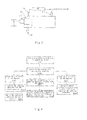
- the ion mobility spectrometer employed comprises a sample feeding device, a drift tube, and a gas passage system communicated with the drift tube (which will be described with reference to Fig 3 later).
- the detection method according to this invention comprises the following steps: providing a sampling substrate for sample collection at step S100; combining the dopant with the sampling substrate at step S200; collecting the sample using the sampling substrate combined with the dopant at step S300; and introducing the sampling substrate that has collected the sample into a sample feeding port of the ion mobility spectrometer for detection at step S400.
- the sampling substrate may be any suitable substrate known in the prior art made of knitwear, cotton fabric, Teflon, glass yarn or glass fiber, and the like.
- the sampling substrate itself should not contain any contamination source and should not be dyed and colored. Furthermore, there should be no fiber or cotton thread to drop off during operation.
- the material for the substrate should be high temperature-resistant, have good chemical inertness, mechanical strength and deformation elasticity, and be easy to be used for sampling and sample-feeding operations. Also, the material may be chemically treated to improve its absorption capability for the sample and to enhance its desorption efficiency.
- the above-mentioned sampling substrate is combined with a dopant to be used for detection.
- a solution of the dopant is first prepared having a certain concentration including a concentration of 100% (pure dopant in a liquid state), and then, the specific sampling substrate provided at step S100 is soaked into the dopant solution for a predetermined time; and finally, the soaked sampling substrate is taken out of the dopant solution and is put into an enclosed container to be dried. After that, the dried sampling substrate is quickly sealed for future use.
- a solution of the dopant is first prepared having a certain concentration including a concentration of 100% (pure dopant in a liquid state) and is sealed into a dedicated reagent bottle. Then, the appropriate dose of the dopant solution is applied to a sample collecting region of the sampling substrate before detection.
- the sampling substrate can be combined with an appropriate amount of the dopant at step S200.
- the sampling substrate combined with the appropriate amount of the dopant can be achieved by changing the concentration of the dopant solution prepared at step S210, the type of the material for the sampling substrate provided at step S230, and the soaking duration at step S250.
- suitable combination of the sampling substrate with the dopant can be achieved by changing the concentration of the dopant solution prepared at step S210 and/or the amount of the dopant solution applied onto the sample collecting region of the sampling substrate.
- step S300 the sample is collected using the sampling substrate combined with the appropriate amount of the dopant.
- the sampling substrate used contains the dopant, which is different from the sampling substrate known in the prior art, the collection operation is substantially identical with that known in the prior art. Therefore, the detailed explanation for step S300 is omitted herein.
- step S400 the sampling substrate that has collected the sample is introduced into the sample feeding port of the ion mobility spectrometer (to be described hereinafter) to obtain the spectrum.
- the said ion mobility spectrometer detection system comprises an ion mobility spectrometer comprising a sample feeding port 210, a drift tube 200 containing an ion source 100, and a gas passage system communicated with the drift tube, a sampling substrate for collecting a sample to be detected, and a dopant, which is combined with the sampling substrate so as to be introduced, together with the sampling substrate that has collected the samples, into the sample feeding port of the drift tube.
- the gas passage system in accordance with this invention employs, but is not limited to, a carrier gas passage and a drift gas passage which have the same structures as those known in the prior art.
- the gas passage system in accordance with this invention comprises a pump (not shown) and a filtering device 340.
- the outlet of the gas passage system is communicated with a gas inlet 310 disposed at an end of a drift region opposite to an ionization region and a gas inlet 320 disposed at a position in the ionization region which is adjacent to the ion source, respectively, to supply clean air used as the drift gas and the sample carrier gas.
- the inlet of the gas passage system is communicated with a gas outlet 330 disposed at a position in the ionization region which is adjacent to an ion gate, to guide unionized drift gas and carrier gas molecules out of the drift tube. Then, the unionized drift gas and carrier gas molecules are dried and purified to be used for circulation in the gas passage system.
- the sampling substrate introduced into the sample feeding port of the drift tube contains not only the sample carried therewith, but also an appropriate amount of the dopant.
- the detection method according to this invention creatively combines the sampling substrate with the dopant, thereby leading to a simplified whole structure of the system and easier and more accurate control of the dose of the dopant.
- the ion mobility spectrometer detection method in accordance with this invention may be applied to various fields, such as the detection for drugs, explosives, and chemical warfare agents. Since different application fields involve different target substances, various types of dopants are used, including halogenated hydrocarbons such as trichloromethane and amides such as nicotinamide, etc.
- trichloromethane having 100% concentration is also first obtained, and then, a certain volume of trichloromethane primary liquid is dropped using a pipette onto a sample collecting region of the sampling substrate made of fiber material.
- the dopant used during detection may be a liquid dopant, such as dichloroethene and trichloromethane, or a solid dopant, such as hexachloroethane and nicotinamide, etc.
- a solid dopant dissolved in a suitable solvent is used in most cases, although the primary liquid can be used in a case where liquid trichloromethane is taken as a dopant.
- a solution with a lower concentration instead of a primary liquid, in consideration of doping dose and so on.
- Fig 5a shows a detection spectrum obtained when no sampling substrate carrying both the dopant and the sample is introduced, which only contains a reactant ion peak corresponding to the air molecules.
- Fig 5b shows a detection spectrum obtained by applying a certain amount of RDX sample to a sampling substrate which is not combined with the dopant and then introducing the sampling substrate into the sample feeding port of the spectrometer, in which a RDX sample peak can be observed in addition to the reactant ion peak corresponding to the air molecules.
- Fig 5c shows a detection spectrum obtained by introducing a sampling substrate, which has been combined with the dopant and is not supplied with the sample, into the sample feeding port of the spectrometer, in which the reactant ion peak corresponding to the air molecules and the reactant ion peak corresponding to the dopant molecules with substantially the same height.
- Fig 5d shows a detection spectrum obtained from the introduction of a sampling substrate combined with the dopant and containing the same amount of the RDX sample as that in Fig 5b , in which the height of the RDX peak is remarkably increased and the shape of the peak is remarkably improved due to the addition of the dopant.
- the detection method in accordance with this invention can provide spectra with good separation effects.
- an accurate detection can also be achieved by properly adjusting the amount of the dopant to be combined with the sampling substrate.
- two dopants which are mutually soluble with each other and do not react with each other can be used as a solution having a "corresponding concentration or suitable concentration" to soak the sampling substrate.
- the combination can also be achieved by dropping the dopant solution onto the sampling substrate which has been soaked in the corresponding solvent to adapt to the case where various dopants are required during detection.
- the combination process may be complicated, it is still significant in consideration of the simplification of the whole structure of the detection system along with easy and accurate control of the dopant.
- one skilled in the art can know operational parameters in other combination processes including the composition of a dopant solution, soaking duration and so on, through limited number of experiments.
- the combination of a sampling substrate with dopants in accordance with the present invention is not limited to the one-off combination with trichloromethane as described in the embodiment, but comprises single or multiple combinations with other dopants known in the prior art. Furthermore, it is not limited to the combination with liquid dopants, but comprises the combination with dopants in any state.
Landscapes
- Chemical & Material Sciences (AREA)
- Physics & Mathematics (AREA)
- Health & Medical Sciences (AREA)
- Life Sciences & Earth Sciences (AREA)
- Electrochemistry (AREA)
- Chemical Kinetics & Catalysis (AREA)
- Analytical Chemistry (AREA)
- Biochemistry (AREA)
- General Health & Medical Sciences (AREA)
- General Physics & Mathematics (AREA)
- Immunology (AREA)
- Pathology (AREA)
- Spectroscopy & Molecular Physics (AREA)
- Toxicology (AREA)
- Other Investigation Or Analysis Of Materials By Electrical Means (AREA)
Claims (7)
- Ein Verfahren zum Erfassen einer zu erfassenden Probe durch ein lonenmobilitässpektrometer (IMS), unter Verwendung von Dotiermitteln, wobei das lonenmobilitätsspektrometer eine Driftröhre (200) aufweist mit einem Probenzuführtor (210) und einem Gasdurchlasssystem, das mit demselben kommuniziert, wobei das Gasdurchlasssystem eine Pumpe, eine Filtervorrichtung (340) und einen Gaseinlass (310, 320) und einen Gasauslass (330) aufweist, vorgesehen auf der Driftröhre (200), zum Bereitstellen von sauberem Gas, das als das Driftgas und das Probenträgergas verwendet wird, und das Erfassungsverfahren folgende Schritte aufweist:Bereitstellen eines Probenahmesubstrats für Probensammlung;Vorbereiten einer Lösung der Dotiermittel, und bevor die Dotiermittel mit der zu erfassenden Probe gemischt werden, Kombinieren der Dotiermittel mit dem Probenahmesubstrat;nachdem die Dotiermittel mit dem Probenahmesubstrat kombiniert wurden, Sammeln der Probe unter Verwendung des Probenahmesubstrats, das mit den Dotiermitteln kombiniert ist; undEinführen des Probenahmesubstrats, das die Probe gesammelt hat, in das Probenzuführtor (210) des lonenmobilitässpektrometers für eine Erfassung.
- Das Erfassungsverfahren gemäß Anspruch 1, bei dem das Kombinieren der Dotiermittel mit dem Probenahmesubstrat folgende Schritte aufweist:Tränken des Probenahmesubstrats in der Dotiermittellösung und Herausnehmen des Probenahmesubstrats und Trocknen desselben.
- Das Erfassungsverfahren gemäß Anspruch 1, bei dem das Kombinieren der Dotiermittel mit dem Probenahmesubstrat folgenden Schritt aufweist:Hinzufügen der Dotiermittellösung in Tröpfchen auf eine Probensammelregion des Probenahmesubstrats.
- Das Erfassungsverfahren gemäß Anspruch 2 oder 3, bei dem die Substanzen, die für Dotiermittel verwendet werden, Halogenkohlenwasserstoffe, Nikotinamid, Azeton und Ammoniakwasser umfassen.
- Das Erfassungsverfahren gemäß Anspruch 4, bei dem ein stellvertretender Halogenkohlenwasserstoff Trichlormethan ist, aus dem eine Lösung hergestellt wird, um eine hundertprozentige Reinheit aufzuweisen.
- Das Erfassungsverfahren gemäß Anspruch 4, bei dem das Gasdurchlasssystem folgende Merkmale aufweist:zwei Gaseinlässe (310, 320), die auf der Driftröhre (200) vorgesehen sind, durch die reines Gas, das als das Driftgas und das Probenträgergas verwendet wird, jeweils zugeführt wird, und einen Gasauslass (330), der auf der Driftröhre (200) vorgesehen ist, um das unionisierte Driftgas und Trägergasmoleküle aus der Driftröhre (200) zu leiten.
- Das Erfassungsverfahren gemäß Anspruch 6, bei dem das Trägergas reinen Stickstoff oder gereinigte Luft aufweist.
Priority Applications (1)
| Application Number | Priority Date | Filing Date | Title |
|---|---|---|---|
| PL10818327T PL2482065T3 (pl) | 2009-09-25 | 2010-07-02 | Sposób wykrywania za pomocą spektrometru ruchliwości jonów z użyciem domieszki |
Applications Claiming Priority (2)
| Application Number | Priority Date | Filing Date | Title |
|---|---|---|---|
| CN2009100931799A CN102033100B (zh) | 2009-09-25 | 2009-09-25 | 使用掺杂剂的离子迁移谱仪(ims)的检测系统及检测方法 |
| PCT/CN2010/074932 WO2011035633A1 (zh) | 2009-09-25 | 2010-07-02 | 使用掺杂剂的离子迁移谱仪的检测方法和系统 |
Publications (4)
| Publication Number | Publication Date |
|---|---|
| EP2482065A1 EP2482065A1 (de) | 2012-08-01 |
| EP2482065A4 EP2482065A4 (de) | 2013-05-01 |
| EP2482065B1 true EP2482065B1 (de) | 2015-07-29 |
| EP2482065B8 EP2482065B8 (de) | 2016-11-23 |
Family
ID=43795360
Family Applications (1)
| Application Number | Title | Priority Date | Filing Date |
|---|---|---|---|
| EP10818327.8A Not-in-force EP2482065B8 (de) | 2009-09-25 | 2010-07-02 | Erkennungsverfahren mit einem dotierungsmittel für ein ionenmobilitätsspektrometer |
Country Status (8)
| Country | Link |
|---|---|
| US (1) | US8237110B2 (de) |
| EP (1) | EP2482065B8 (de) |
| CN (1) | CN102033100B (de) |
| BR (1) | BR112012003467B1 (de) |
| DE (1) | DE112010000007B4 (de) |
| GB (1) | GB2485970B (de) |
| PL (1) | PL2482065T3 (de) |
| WO (1) | WO2011035633A1 (de) |
Families Citing this family (29)
| Publication number | Priority date | Publication date | Assignee | Title |
|---|---|---|---|---|
| CN102074448B (zh) * | 2009-11-20 | 2014-09-24 | 同方威视技术股份有限公司 | 离子迁移谱仪以及提高其检测灵敏度的方法 |
| CN102297791A (zh) * | 2010-06-23 | 2011-12-28 | 中国科学院大连化学物理研究所 | 一种离子迁移谱专用采样薄片的处理方法 |
| CN102565181B (zh) * | 2010-12-31 | 2014-04-09 | 同方威视技术股份有限公司 | 用于离子迁移谱仪的进样装置及其使用方法和离子迁移谱仪 |
| CN103175887A (zh) * | 2011-12-20 | 2013-06-26 | 中国科学院大连化学物理研究所 | 一种外接气源与离子迁移谱联用的系统 |
| US8686355B2 (en) * | 2012-03-08 | 2014-04-01 | Morpho Detection, Llc | Detection system assembly, dryer cartridge, and regenerator and methods for making and using the same |
| CN103515182B (zh) * | 2012-06-29 | 2015-12-16 | 中国科学院大连化学物理研究所 | 一种离子迁移谱干燥管的交替使用和再生方法 |
| US9310308B2 (en) * | 2012-12-07 | 2016-04-12 | Ldetek Inc. | Micro-plasma emission detector unit and method |
| CN103871827A (zh) * | 2012-12-12 | 2014-06-18 | 中国科学院大连化学物理研究所 | 一种交叉式离子迁移管 |
| CN103884766A (zh) * | 2012-12-21 | 2014-06-25 | 中国科学院大连化学物理研究所 | 加入多种掺杂剂提高离子迁移谱仪识别检测的装置及应用 |
| CN103219219A (zh) * | 2012-12-28 | 2013-07-24 | 何山 | 离子迁移谱分析仪器载气净化装置 |
| CN104715999B (zh) * | 2013-12-15 | 2017-01-11 | 中国科学院大连化学物理研究所 | 一种离子迁移谱仪及其气路控制方法 |
| CN104297013B (zh) * | 2014-10-22 | 2017-12-15 | 公安部第一研究所 | 一种离子迁移谱采样条的净化处理方法 |
| CN105548327A (zh) * | 2014-10-28 | 2016-05-04 | 中国科学院大连化学物理研究所 | 一种提高离子迁移谱灵敏度的快速检测方法 |
| CN105628783A (zh) * | 2014-10-28 | 2016-06-01 | 中国科学院大连化学物理研究所 | 试剂分子在离子迁移谱检测过氧化爆炸物hmtd的应用 |
| US20170213715A1 (en) * | 2015-12-18 | 2017-07-27 | Morpho Detection, Llc | Detection of compounds through dopant-assisted photoionization |
| US10126278B2 (en) | 2016-03-04 | 2018-11-13 | Ldetek Inc. | Thermal stress resistant micro-plasma emission detector unit |
| US20180356320A1 (en) * | 2017-06-07 | 2018-12-13 | Rapiscan Systems, Inc. | Systems and methods for substance detection using positive dopants |
| CN109900528A (zh) * | 2017-12-11 | 2019-06-18 | 中国科学院大连化学物理研究所 | 一种远程快速高灵敏检测tatp的装置和应用 |
| WO2019144228A1 (en) | 2018-01-23 | 2019-08-01 | Ldetek Inc. | Valve assembly for a gas chromatograph |
| CN111239234B (zh) * | 2018-11-29 | 2023-04-07 | 中国科学院大连化学物理研究所 | 一种在线监测氨气的非放射性方法 |
| CN117434139A (zh) * | 2018-12-29 | 2024-01-23 | 同方威视技术股份有限公司 | 多功能离子迁移谱仪装置 |
| CN110487887A (zh) * | 2019-09-19 | 2019-11-22 | 北京金茂数源科技发展有限公司 | 化学气体痕量检测仪 |
| CN110646501A (zh) * | 2019-10-31 | 2020-01-03 | 大连大学 | 一种检测环境激素邻苯二甲酸二甲酯的方法 |
| CN114295705A (zh) * | 2020-09-22 | 2022-04-08 | 苏州传澈特种材料有限公司 | 一种痕量检测方法 |
| CN112485321B (zh) * | 2020-11-24 | 2021-09-24 | 中国科学院大连化学物理研究所 | 一种含氨气体中氨气含量的离子迁移谱测定方法 |
| CN114624324B (zh) * | 2020-12-11 | 2025-01-14 | 中国科学院大连化学物理研究所 | 一种用离子迁移谱仪快速检测白酒大曲和酒醅中乳酸的方法 |
| CN113764256A (zh) * | 2021-08-25 | 2021-12-07 | 奕瑞影像科技成都有限公司 | 电晕放电离子源组件及离子迁移谱仪 |
| CN115183152A (zh) * | 2022-07-26 | 2022-10-14 | 中国科学院大连化学物理研究所 | 一种泵抽气进样离子迁移谱分析仪控制气路 |
| CN115144458A (zh) * | 2022-07-26 | 2022-10-04 | 中国科学院大连化学物理研究所 | 一种离子迁移谱测试丙泊酚的定量分析方法 |
Family Cites Families (36)
| Publication number | Priority date | Publication date | Assignee | Title |
|---|---|---|---|---|
| US3699333A (en) | 1968-10-23 | 1972-10-17 | Franklin Gno Corp | Apparatus and methods for separating, concentrating, detecting, and measuring trace gases |
| US4311669A (en) * | 1980-08-21 | 1982-01-19 | The Bendix Corporation | Membrane interface for ion mobility detector cells |
| US4551624A (en) * | 1983-09-23 | 1985-11-05 | Allied Corporation | Ion mobility spectrometer system with improved specificity |
| US4777363A (en) | 1986-08-29 | 1988-10-11 | Research Corporation Technologies, Inc. | Ion mobility spectrometer |
| US5032721A (en) | 1990-06-01 | 1991-07-16 | Environmental Technologies Group, Inc. | Acid gas monitor based on ion mobility spectrometry |
| US5234838A (en) * | 1990-04-17 | 1993-08-10 | Environmental Technologies Group, Inc. | Ammonia monitor based on ion mobility spectrometry with selective dopant chemistry |
| US5095206A (en) | 1990-06-01 | 1992-03-10 | Environmental Technologies Group, Inc. | Method and apparatus for improving the specificity of an ion mobility spectrometer utillizing sulfur dioxide dopant chemistry |
| US5283199A (en) * | 1990-06-01 | 1994-02-01 | Environmental Technologies Group, Inc. | Chlorine dioxide monitor based on ion mobility spectrometry with selective dopant chemistry |
| GB9120192D0 (en) | 1991-09-21 | 1991-11-20 | Graseby Ionics Ltd | Ion mobility spectrometry equipment |
| GB2291200A (en) | 1994-07-15 | 1996-01-17 | Ion Track Instr | Ion mobility spectrometer and method of operation for enhanced detection of narotics |
| DE19502674C1 (de) * | 1995-01-20 | 1996-09-12 | Inst Umwelttechnologien Gmbh | Ionenmobilitätsspektrometer mit interner GC-Säule |
| DE19609582C1 (de) | 1996-03-12 | 1997-05-28 | Bruker Saxonia Analytik Gmbh | Photoionisations-Ionenmobilitätsspektrometrie |
| US6642513B1 (en) * | 1998-10-06 | 2003-11-04 | General Electric Company | Materials and apparatus for the detection of contraband |
| GB9914552D0 (en) | 1999-06-23 | 1999-08-25 | Graseby Dynamics Ltd | Ion mobility spectrometers |
| US6495824B1 (en) * | 2000-03-13 | 2002-12-17 | Bechtel Bwxt Idaho, Llc | Ion mobility spectrometer, spectrometer analyte detection and identification verification system, and method |
| US6639214B1 (en) | 2000-05-09 | 2003-10-28 | Air Products And Chemicals, Inc. | Method of improving the performance of an ion mobility spectrometer used to detect trace atmospheric impurities in gases |
| US6627444B1 (en) * | 2000-08-07 | 2003-09-30 | Smiths Detection - Toronto Ltd. | Method and solid phase calibration sample for calibration of analytical instructions |
| DE10212110A1 (de) | 2002-03-13 | 2003-09-25 | Draeger Safety Ag & Co Kgaa | Verfahren zur Messung von Formaldehydspuren mittels Ionenmobilitätsspektrometrie |
| US7112785B2 (en) * | 2003-04-04 | 2006-09-26 | Jeol Usa, Inc. | Method for atmospheric pressure analyte ionization |
| GB0310943D0 (en) | 2003-05-13 | 2003-06-18 | Smiths Group Plc | Ims systems |
| CA2550088A1 (en) * | 2003-12-18 | 2005-07-07 | Sionex Corporation | Methods and apparatus for enhanced ion based sample detection using selective pre-separation and amplification |
| CN100359314C (zh) * | 2004-02-17 | 2008-01-02 | 陈格 | 液体样品的干燥保存方法 |
| EP1877382B1 (de) * | 2005-05-06 | 2012-11-28 | Smiths Detection Inc. | Verwendung von Isobutyramide als Ionisierungreagenz in der IMS-Spektrometrie |
| GB0509874D0 (en) | 2005-05-14 | 2005-06-22 | Smiths Group Plc | Detection systems and dopants |
| GB0511224D0 (en) | 2005-06-02 | 2005-07-06 | Smiths Group Plc | IMS systems |
| GB0511279D0 (en) | 2005-06-02 | 2005-07-13 | Univ Warwick | Assay |
| FR2896585B1 (fr) | 2006-01-20 | 2008-12-05 | Commissariat Energie Atomique | Introduction d'additifs pour une interface d'ionisation a pression atmospherique en entree d'un spectrometre |
| GB0612047D0 (en) * | 2006-06-17 | 2006-07-26 | Smiths Group Plc | Dopant delivery and detection systems |
| CN101169389A (zh) * | 2006-10-26 | 2008-04-30 | 中国科学院大连化学物理研究所 | 一种快速测定溶液中三硝基甲苯或黑索金的方法 |
| GB0621990D0 (en) | 2006-11-04 | 2006-12-13 | Smiths Group Plc | Detection |
| GB0704137D0 (en) * | 2007-03-03 | 2007-04-11 | Smiths Detection Watford Ltd | Ion mobility spectrometers |
| GB0704547D0 (en) * | 2007-03-09 | 2007-04-18 | Smiths Detection Watford Ltd | Ion mobility spectrometers |
| WO2009018305A1 (en) * | 2007-07-30 | 2009-02-05 | Particle Measuring Systems, Inc. | Detection of analytes using ion mobility spectrometry |
| GB0723563D0 (en) * | 2007-12-01 | 2008-01-09 | Smiths Detection Watford Ltd | Detection apparatus |
| CN201242505Y (zh) * | 2008-04-29 | 2009-05-20 | 同方威视技术股份有限公司 | 一种可连续提供采样载体的装置 |
| CN201247223Y (zh) * | 2008-07-16 | 2009-05-27 | 同方威视技术股份有限公司 | 离子迁移谱仪 |
-
2009
- 2009-09-25 CN CN2009100931799A patent/CN102033100B/zh active Active
-
2010
- 2010-07-02 GB GB1019221.9A patent/GB2485970B/en not_active Expired - Fee Related
- 2010-07-02 DE DE112010000007T patent/DE112010000007B4/de not_active Expired - Fee Related
- 2010-07-02 WO PCT/CN2010/074932 patent/WO2011035633A1/zh not_active Ceased
- 2010-07-02 BR BR112012003467-7A patent/BR112012003467B1/pt not_active IP Right Cessation
- 2010-07-02 EP EP10818327.8A patent/EP2482065B8/de not_active Not-in-force
- 2010-07-02 US US12/994,293 patent/US8237110B2/en not_active Expired - Fee Related
- 2010-07-02 PL PL10818327T patent/PL2482065T3/pl unknown
Also Published As
| Publication number | Publication date |
|---|---|
| GB2485970A (en) | 2012-06-06 |
| EP2482065A4 (de) | 2013-05-01 |
| BR112012003467B1 (pt) | 2019-06-25 |
| CN102033100A (zh) | 2011-04-27 |
| DE112010000007T5 (de) | 2011-06-22 |
| US8237110B2 (en) | 2012-08-07 |
| DE112010000007B4 (de) | 2012-12-13 |
| US20110297821A1 (en) | 2011-12-08 |
| BR112012003467A2 (pt) | 2016-03-01 |
| PL2482065T3 (pl) | 2016-01-29 |
| EP2482065B8 (de) | 2016-11-23 |
| GB201019221D0 (en) | 2010-12-29 |
| CN102033100B (zh) | 2013-03-13 |
| WO2011035633A1 (zh) | 2011-03-31 |
| GB2485970B (en) | 2013-09-18 |
| EP2482065A1 (de) | 2012-08-01 |
Similar Documents
| Publication | Publication Date | Title |
|---|---|---|
| EP2482065B1 (de) | Erkennungsverfahren mit einem dotierungsmittel für ein ionenmobilitätsspektrometer | |
| US7985949B2 (en) | Detection of analytes using ion mobility spectrometry | |
| EP2435166B1 (de) | System zur analyse von direktatmosphärendruckproben | |
| EP2503329B1 (de) | Verfahren zur erhöhung der erkennungsempfindlichkeit eines ionenmobilitätsspektrometers | |
| US20150069254A1 (en) | Sample analyzing system | |
| RU2008129138A (ru) | Система спектрометрии подвижности ионов (варианты) и пробоприемник | |
| US9164059B2 (en) | Ion mobility spectrometer with device for generating ammonia gas | |
| CN106841367A (zh) | 一种时间分辨动态热解析的离子迁移谱检测方法 | |
| JP2012069516A (ja) | 薬物検知装置 | |
| WO2014058507A2 (en) | Reagent impregnated swipe for chemical detection | |
| KR20150115684A (ko) | 이온 검출 방법 | |
| CN107195529A (zh) | 一种基于激发态质子电子协同转移反应的离子化方法及其装置 | |
| Zhang et al. | Implementation and study of dopant‐assisted photoionization with a miniature capillary inlet ion trap mass spectrometer | |
| CN118330010B (zh) | 多路液相进样的质谱分析方法及多路液相进样系统及用途 | |
| JP2007108025A (ja) | ガスクロマトグラフ用試料注入装置 | |
| CN103594327B (zh) | 离子迁移谱仪以及提高其检测灵敏度的方法 | |
| US10119937B2 (en) | Method for detecting organophosphorus compounds and illicit drugs | |
| CN219144122U (zh) | 检测无机气体的离子迁移谱装置 | |
| TW200402532A (en) | Differential methods for carrying out ion mobility spectrometry analyses | |
| KR20260035894A (ko) | 가스 이온 증류 | |
| Marinsky et al. | Spectrometry^ Mass Spectrometry Ion Mobility |
Legal Events
| Date | Code | Title | Description |
|---|---|---|---|
| PUAI | Public reference made under article 153(3) epc to a published international application that has entered the european phase |
Free format text: ORIGINAL CODE: 0009012 |
|
| 17P | Request for examination filed |
Effective date: 20111228 |
|
| AK | Designated contracting states |
Kind code of ref document: A1 Designated state(s): AL AT BE BG CH CY CZ DE DK EE ES FI FR GB GR HR HU IE IS IT LI LT LU LV MC MK MT NL NO PL PT RO SE SI SK SM TR |
|
| DAX | Request for extension of the european patent (deleted) | ||
| A4 | Supplementary search report drawn up and despatched |
Effective date: 20130405 |
|
| RIC1 | Information provided on ipc code assigned before grant |
Ipc: G01N 27/64 20060101AFI20130328BHEP |
|
| 17Q | First examination report despatched |
Effective date: 20140129 |
|
| GRAP | Despatch of communication of intention to grant a patent |
Free format text: ORIGINAL CODE: EPIDOSNIGR1 |
|
| INTG | Intention to grant announced |
Effective date: 20150205 |
|
| GRAS | Grant fee paid |
Free format text: ORIGINAL CODE: EPIDOSNIGR3 |
|
| GRAA | (expected) grant |
Free format text: ORIGINAL CODE: 0009210 |
|
| AK | Designated contracting states |
Kind code of ref document: B1 Designated state(s): AL AT BE BG CH CY CZ DE DK EE ES FI FR GB GR HR HU IE IS IT LI LT LU LV MC MK MT NL NO PL PT RO SE SI SK SM TR |
|
| REG | Reference to a national code |
Ref country code: GB Ref legal event code: FG4D |
|
| REG | Reference to a national code |
Ref country code: CH Ref legal event code: EP |
|
| REG | Reference to a national code |
Ref country code: AT Ref legal event code: REF Ref document number: 739697 Country of ref document: AT Kind code of ref document: T Effective date: 20150815 |
|
| REG | Reference to a national code |
Ref country code: IE Ref legal event code: FG4D |
|
| REG | Reference to a national code |
Ref country code: DE Ref legal event code: R096 Ref document number: 602010026331 Country of ref document: DE |
|
| REG | Reference to a national code |
Ref country code: AT Ref legal event code: MK05 Ref document number: 739697 Country of ref document: AT Kind code of ref document: T Effective date: 20150729 |
|
| REG | Reference to a national code |
Ref country code: LT Ref legal event code: MG4D |
|
| REG | Reference to a national code |
Ref country code: NL Ref legal event code: MP Effective date: 20150729 |
|
| PG25 | Lapsed in a contracting state [announced via postgrant information from national office to epo] |
Ref country code: NO Free format text: LAPSE BECAUSE OF FAILURE TO SUBMIT A TRANSLATION OF THE DESCRIPTION OR TO PAY THE FEE WITHIN THE PRESCRIBED TIME-LIMIT Effective date: 20151029 Ref country code: GR Free format text: LAPSE BECAUSE OF FAILURE TO SUBMIT A TRANSLATION OF THE DESCRIPTION OR TO PAY THE FEE WITHIN THE PRESCRIBED TIME-LIMIT Effective date: 20151030 Ref country code: LV Free format text: LAPSE BECAUSE OF FAILURE TO SUBMIT A TRANSLATION OF THE DESCRIPTION OR TO PAY THE FEE WITHIN THE PRESCRIBED TIME-LIMIT Effective date: 20150729 Ref country code: FI Free format text: LAPSE BECAUSE OF FAILURE TO SUBMIT A TRANSLATION OF THE DESCRIPTION OR TO PAY THE FEE WITHIN THE PRESCRIBED TIME-LIMIT Effective date: 20150729 Ref country code: LT Free format text: LAPSE BECAUSE OF FAILURE TO SUBMIT A TRANSLATION OF THE DESCRIPTION OR TO PAY THE FEE WITHIN THE PRESCRIBED TIME-LIMIT Effective date: 20150729 |
|
| PG25 | Lapsed in a contracting state [announced via postgrant information from national office to epo] |
Ref country code: IS Free format text: LAPSE BECAUSE OF FAILURE TO SUBMIT A TRANSLATION OF THE DESCRIPTION OR TO PAY THE FEE WITHIN THE PRESCRIBED TIME-LIMIT Effective date: 20151129 Ref country code: AT Free format text: LAPSE BECAUSE OF FAILURE TO SUBMIT A TRANSLATION OF THE DESCRIPTION OR TO PAY THE FEE WITHIN THE PRESCRIBED TIME-LIMIT Effective date: 20150729 Ref country code: HR Free format text: LAPSE BECAUSE OF FAILURE TO SUBMIT A TRANSLATION OF THE DESCRIPTION OR TO PAY THE FEE WITHIN THE PRESCRIBED TIME-LIMIT Effective date: 20150729 Ref country code: ES Free format text: LAPSE BECAUSE OF FAILURE TO SUBMIT A TRANSLATION OF THE DESCRIPTION OR TO PAY THE FEE WITHIN THE PRESCRIBED TIME-LIMIT Effective date: 20150729 Ref country code: PT Free format text: LAPSE BECAUSE OF FAILURE TO SUBMIT A TRANSLATION OF THE DESCRIPTION OR TO PAY THE FEE WITHIN THE PRESCRIBED TIME-LIMIT Effective date: 20151130 Ref country code: SE Free format text: LAPSE BECAUSE OF FAILURE TO SUBMIT A TRANSLATION OF THE DESCRIPTION OR TO PAY THE FEE WITHIN THE PRESCRIBED TIME-LIMIT Effective date: 20150729 |
|
| PG25 | Lapsed in a contracting state [announced via postgrant information from national office to epo] |
Ref country code: NL Free format text: LAPSE BECAUSE OF FAILURE TO SUBMIT A TRANSLATION OF THE DESCRIPTION OR TO PAY THE FEE WITHIN THE PRESCRIBED TIME-LIMIT Effective date: 20150729 |
|
| PG25 | Lapsed in a contracting state [announced via postgrant information from national office to epo] |
Ref country code: IT Free format text: LAPSE BECAUSE OF FAILURE TO SUBMIT A TRANSLATION OF THE DESCRIPTION OR TO PAY THE FEE WITHIN THE PRESCRIBED TIME-LIMIT Effective date: 20150729 Ref country code: EE Free format text: LAPSE BECAUSE OF FAILURE TO SUBMIT A TRANSLATION OF THE DESCRIPTION OR TO PAY THE FEE WITHIN THE PRESCRIBED TIME-LIMIT Effective date: 20150729 Ref country code: SK Free format text: LAPSE BECAUSE OF FAILURE TO SUBMIT A TRANSLATION OF THE DESCRIPTION OR TO PAY THE FEE WITHIN THE PRESCRIBED TIME-LIMIT Effective date: 20150729 Ref country code: DK Free format text: LAPSE BECAUSE OF FAILURE TO SUBMIT A TRANSLATION OF THE DESCRIPTION OR TO PAY THE FEE WITHIN THE PRESCRIBED TIME-LIMIT Effective date: 20150729 Ref country code: CZ Free format text: LAPSE BECAUSE OF FAILURE TO SUBMIT A TRANSLATION OF THE DESCRIPTION OR TO PAY THE FEE WITHIN THE PRESCRIBED TIME-LIMIT Effective date: 20150729 |
|
| REG | Reference to a national code |
Ref country code: DE Ref legal event code: R097 Ref document number: 602010026331 Country of ref document: DE |
|
| PG25 | Lapsed in a contracting state [announced via postgrant information from national office to epo] |
Ref country code: RO Free format text: LAPSE BECAUSE OF FAILURE TO SUBMIT A TRANSLATION OF THE DESCRIPTION OR TO PAY THE FEE WITHIN THE PRESCRIBED TIME-LIMIT Effective date: 20150729 |
|
| PLBE | No opposition filed within time limit |
Free format text: ORIGINAL CODE: 0009261 |
|
| 26N | No opposition filed |
Effective date: 20160502 |
|
| REG | Reference to a national code |
Ref country code: FR Ref legal event code: PLFP Year of fee payment: 7 |
|
| GRAM | Information related to correction after decision after decision to grant or to maintain patent in amended form deleted |
Free format text: ORIGINAL CODE: EPIDOSDCDEC |
|
| GRAT | Correction requested after decision to grant or after decision to maintain patent in amended form |
Free format text: ORIGINAL CODE: EPIDOSNCDEC |
|
| PG25 | Lapsed in a contracting state [announced via postgrant information from national office to epo] |
Ref country code: SI Free format text: LAPSE BECAUSE OF FAILURE TO SUBMIT A TRANSLATION OF THE DESCRIPTION OR TO PAY THE FEE WITHIN THE PRESCRIBED TIME-LIMIT Effective date: 20150729 |
|
| PLAA | Information modified related to event that no opposition was filed |
Free format text: ORIGINAL CODE: 0009299DELT |
|
| PLBE | No opposition filed within time limit |
Free format text: ORIGINAL CODE: 0009261 |
|
| STAA | Information on the status of an ep patent application or granted ep patent |
Free format text: STATUS: NO OPPOSITION FILED WITHIN TIME LIMIT |
|
| R26N | No opposition filed (corrected) |
Effective date: 20160502 |
|
| RBV | Designated contracting states (corrected) |
Designated state(s): AL AT BE BG CH CY CZ DE DK EE ES FI FR GR HR HU IE IS IT LI LT LU LV MC MK MT NL NO PL PT RO SE SI SK SM TR |
|
| PG25 | Lapsed in a contracting state [announced via postgrant information from national office to epo] |
Ref country code: BE Free format text: LAPSE BECAUSE OF FAILURE TO SUBMIT A TRANSLATION OF THE DESCRIPTION OR TO PAY THE FEE WITHIN THE PRESCRIBED TIME-LIMIT Effective date: 20150729 |
|
| REG | Reference to a national code |
Ref country code: DE Ref legal event code: R119 Ref document number: 602010026331 Country of ref document: DE |
|
| REG | Reference to a national code |
Ref country code: CH Ref legal event code: PL |
|
| PG25 | Lapsed in a contracting state [announced via postgrant information from national office to epo] |
Ref country code: MC Free format text: LAPSE BECAUSE OF FAILURE TO SUBMIT A TRANSLATION OF THE DESCRIPTION OR TO PAY THE FEE WITHIN THE PRESCRIBED TIME-LIMIT Effective date: 20150729 |
|
| PG25 | Lapsed in a contracting state [announced via postgrant information from national office to epo] |
Ref country code: LI Free format text: LAPSE BECAUSE OF NON-PAYMENT OF DUE FEES Effective date: 20160731 Ref country code: CH Free format text: LAPSE BECAUSE OF NON-PAYMENT OF DUE FEES Effective date: 20160731 Ref country code: DE Free format text: LAPSE BECAUSE OF NON-PAYMENT OF DUE FEES Effective date: 20170201 |
|
| REG | Reference to a national code |
Ref country code: IE Ref legal event code: MM4A |
|
| REG | Reference to a national code |
Ref country code: FR Ref legal event code: PLFP Year of fee payment: 8 |
|
| PG25 | Lapsed in a contracting state [announced via postgrant information from national office to epo] |
Ref country code: IE Free format text: LAPSE BECAUSE OF NON-PAYMENT OF DUE FEES Effective date: 20160702 |
|
| PG25 | Lapsed in a contracting state [announced via postgrant information from national office to epo] |
Ref country code: LU Free format text: LAPSE BECAUSE OF NON-PAYMENT OF DUE FEES Effective date: 20160702 |
|
| PG25 | Lapsed in a contracting state [announced via postgrant information from national office to epo] |
Ref country code: SM Free format text: LAPSE BECAUSE OF FAILURE TO SUBMIT A TRANSLATION OF THE DESCRIPTION OR TO PAY THE FEE WITHIN THE PRESCRIBED TIME-LIMIT Effective date: 20150729 Ref country code: CY Free format text: LAPSE BECAUSE OF FAILURE TO SUBMIT A TRANSLATION OF THE DESCRIPTION OR TO PAY THE FEE WITHIN THE PRESCRIBED TIME-LIMIT Effective date: 20150729 Ref country code: HU Free format text: LAPSE BECAUSE OF FAILURE TO SUBMIT A TRANSLATION OF THE DESCRIPTION OR TO PAY THE FEE WITHIN THE PRESCRIBED TIME-LIMIT; INVALID AB INITIO Effective date: 20100702 |
|
| PG25 | Lapsed in a contracting state [announced via postgrant information from national office to epo] |
Ref country code: TR Free format text: LAPSE BECAUSE OF FAILURE TO SUBMIT A TRANSLATION OF THE DESCRIPTION OR TO PAY THE FEE WITHIN THE PRESCRIBED TIME-LIMIT Effective date: 20150729 Ref country code: MK Free format text: LAPSE BECAUSE OF FAILURE TO SUBMIT A TRANSLATION OF THE DESCRIPTION OR TO PAY THE FEE WITHIN THE PRESCRIBED TIME-LIMIT Effective date: 20150729 Ref country code: MT Free format text: LAPSE BECAUSE OF NON-PAYMENT OF DUE FEES Effective date: 20160731 |
|
| REG | Reference to a national code |
Ref country code: FR Ref legal event code: PLFP Year of fee payment: 9 |
|
| PG25 | Lapsed in a contracting state [announced via postgrant information from national office to epo] |
Ref country code: BG Free format text: LAPSE BECAUSE OF FAILURE TO SUBMIT A TRANSLATION OF THE DESCRIPTION OR TO PAY THE FEE WITHIN THE PRESCRIBED TIME-LIMIT Effective date: 20150729 |
|
| PG25 | Lapsed in a contracting state [announced via postgrant information from national office to epo] |
Ref country code: AL Free format text: LAPSE BECAUSE OF FAILURE TO SUBMIT A TRANSLATION OF THE DESCRIPTION OR TO PAY THE FEE WITHIN THE PRESCRIBED TIME-LIMIT Effective date: 20150729 |
|
| PGFP | Annual fee paid to national office [announced via postgrant information from national office to epo] |
Ref country code: FR Payment date: 20200611 Year of fee payment: 11 |
|
| PGFP | Annual fee paid to national office [announced via postgrant information from national office to epo] |
Ref country code: PL Payment date: 20200625 Year of fee payment: 11 |
|
| PG25 | Lapsed in a contracting state [announced via postgrant information from national office to epo] |
Ref country code: FR Free format text: LAPSE BECAUSE OF NON-PAYMENT OF DUE FEES Effective date: 20210731 |
|
| PG25 | Lapsed in a contracting state [announced via postgrant information from national office to epo] |
Ref country code: PL Free format text: LAPSE BECAUSE OF NON-PAYMENT OF DUE FEES Effective date: 20210702 |