EP2479265B1 - Glucoamylase variants with altered properties - Google Patents
Glucoamylase variants with altered properties Download PDFInfo
- Publication number
- EP2479265B1 EP2479265B1 EP12164788.7A EP12164788A EP2479265B1 EP 2479265 B1 EP2479265 B1 EP 2479265B1 EP 12164788 A EP12164788 A EP 12164788A EP 2479265 B1 EP2479265 B1 EP 2479265B1
- Authority
- EP
- European Patent Office
- Prior art keywords
- seq
- glucoamylase
- variant
- sequence
- parent
- Prior art date
- Legal status (The legal status is an assumption and is not a legal conclusion. Google has not performed a legal analysis and makes no representation as to the accuracy of the status listed.)
- Active
Links
Images




Classifications
-
- C—CHEMISTRY; METALLURGY
- C12—BIOCHEMISTRY; BEER; SPIRITS; WINE; VINEGAR; MICROBIOLOGY; ENZYMOLOGY; MUTATION OR GENETIC ENGINEERING
- C12N—MICROORGANISMS OR ENZYMES; COMPOSITIONS THEREOF; PROPAGATING, PRESERVING, OR MAINTAINING MICROORGANISMS; MUTATION OR GENETIC ENGINEERING; CULTURE MEDIA
- C12N9/00—Enzymes; Proenzymes; Compositions thereof; Processes for preparing, activating, inhibiting, separating or purifying enzymes
- C12N9/14—Hydrolases (3)
- C12N9/24—Hydrolases (3) acting on glycosyl compounds (3.2)
- C12N9/2402—Hydrolases (3) acting on glycosyl compounds (3.2) hydrolysing O- and S- glycosyl compounds (3.2.1)
- C12N9/2405—Glucanases
- C12N9/2408—Glucanases acting on alpha -1,4-glucosidic bonds
- C12N9/2411—Amylases
- C12N9/2428—Glucan 1,4-alpha-glucosidase (3.2.1.3), i.e. glucoamylase
-
- Y—GENERAL TAGGING OF NEW TECHNOLOGICAL DEVELOPMENTS; GENERAL TAGGING OF CROSS-SECTIONAL TECHNOLOGIES SPANNING OVER SEVERAL SECTIONS OF THE IPC; TECHNICAL SUBJECTS COVERED BY FORMER USPC CROSS-REFERENCE ART COLLECTIONS [XRACs] AND DIGESTS
- Y02—TECHNOLOGIES OR APPLICATIONS FOR MITIGATION OR ADAPTATION AGAINST CLIMATE CHANGE
- Y02E—REDUCTION OF GREENHOUSE GAS [GHG] EMISSIONS, RELATED TO ENERGY GENERATION, TRANSMISSION OR DISTRIBUTION
- Y02E50/00—Technologies for the production of fuel of non-fossil origin
- Y02E50/10—Biofuels, e.g. bio-diesel
Definitions
- the present invention relates to variants of a parent glucoamylase having altered properties (e.g ., improved thermostability and/or specific activity).
- the present invention provides compositions comprising the variant glucoamylases, including starch hydrolyzing compositions, animal feed compositions and cleaning compositions.
- the invention also relates to DNA constructs encoding the variants and methods of producing the glucoamylase variants in host cells.
- Glucoamylase enzymes are starch hydrolyzing exo-acting carbohydrases, which catalyze the removal of successive glucose units from the non-reducing ends of starch or related oligo and polysaccharide molecules.
- Glucoamylases can hydrolyze both the linear and branched glucosidic linkages of starch (e.g., amylose and amylopectin).
- Glucoamylases are produced by numerous strains of bacteria, fungi, yeast and plants. Particularly interesting, and commercially important, glucoamylases are fungal enzymes that are extracellularly produced, for example from strains of Aspergillus ( Svensson et al. (1983) Carlsberg Res. Commun. 48:529 - 544 ; Boel et al., (1984) EMBO J. 3:1097 - 1102 ; Hayashida et al., (1989) Agric. Biol. Chem.
- glucoamylases are very important enzymes and have been used in a wide variety of applications that require the hydrolysis of starch (e.g . for producing glucose and other monosaccharides from starch).
- Glucoamylases are used to produce high fructose corn sweeteners, which comprise over 50% of the sweetener market in the United States.
- glucoamylases may be, and commonly are, used with alpha amylases in starch hydrolyzing processes to hydrolyze starch to dextrins and then glucose. The glucose may then be converted to fructose by other enzymes (e.g .
- glucose isomerases glucose isomerases
- crystallized or used in fermentations to produce numerous end products (e.g., ethanol, citric acid, lactic acid, succinate, ascorbic acid intermediates, glutamic acid, glycerol and 1, 3-propanediol).
- Ethanol produced by using glucoamylases in the fermentation of starch and/or cellulose containing material may be used as a source of fuel or for alcoholic consumption.
- WO 2006/060062 discloses the Trichoderma reesei glucoamylase TrGA and uses in starch conversion, animal feed and alcohol fermentation.
- glucoamylases have been used successfully in commercial applications for many years, a need still exists for new glucoamylases having altered properties.
- the present invention provides a glucoamylase variant, which is a variant of a parent glucoamylase, said parent glucoamylase having an amino acid sequence having at least 95% sequence identity with the amino acid sequence: said variant only having one, two, three or four substitutions as compared to said parent, wherein said substitutions comprise the substitution T430A, T430E, T430F, T430G, T430H, T430I, T430K, T430M, T430N, T430Q, T430R or T430V in SEQ ID NO: 2 or an equivalent position in said parent glucoamylase as determined by sequence alignment.
- the glucoamylase variant is a variant of a parent glucoamylase that has at least 97% or at least 98% sequence identity with the sequence of SEQ ID NO: 2.
- said variant has only two, three or four substitutions as compared to said parent, the further substitutions being selected from substitutions at a position corresponding to position 10, 14, 15, 23, 42, 45, 46, 59, 60, 61, 67, 68, 72, 73, 97, 98, 99, 102, 108, 110, 113, 114, 122, 124, 125, 133, 140, 144, 145, 147, 152, 53, 164, 175, 182,204, 205, 214, 216, 219, 228, 229, 230, 231, 236, 239, 240, 241, 242, 244, 263.
- the variant has increased specific activity compared to the glucoamylase comprising the sequence of SEQ ID NO: 2.
- the variant has increased thermostability compared to the glucoamylase comprising the sequence of SEQ ID NO: 2.
- the variant has increased specific activity and increased thermostability compared to the glucoamylase comprising SEQ ID NO: 2.
- the parent glucoamylase is obtained from a Trichoderma spp.
- the present invention provides a polynucleotide encoding the variant of the first aspect of the invention.
- the present invention provides a host cell comprising a polynucleotide of the second aspect of the invention.
- the present invention provides an enzyme composition comprising the glucoamylase variant of the first aspect of the invention.
- composition is suitable for use in a starch conversion process, an animal feed composition, or a starch containing substrate fermentation process.
- composition further comprises an alpha amylase.
- the present invention provides a method of producing a variant glucoamylase in a host cell comprising:
- the method further comprises recovering the glucoamylase variant from said culture.
- glucose glycoamylase (EC 3.2.1.3) refers to an enzyme that catalyzes the release of D-glucose from the non-reducing ends of starch and related oligo-and polysaccharides.
- parent refers to a sequence that has sequence and/or structural identity with TrGA (e.g., SEQ ID NOs: 1, 2 and/or 3) and is a native or naturally occurring sequence in a host cell.
- TrGA refers to a Trichoderma reesei glucoamylase sequence having the mature protein sequence illustrated in SEQ ID NO:2, which includes the catalytic domain having the sequence illustrated in SEQ ID NO:3.
- the isolation, cloning and expression of the TrGA are described in WO 2006/060062 and U.S. Pat. Pub. No. 2006/0094080 published May 4, 2006 .
- the TrGA is also considered a parent glucoamylase sequence.
- the parent sequence refers to a TrGA that is the starting point for protein engineering.
- the numbering of the glucoamylase amino acids herein is based on the sequence of the TrGA glucoamylase sequence (SEQ ID NO: 2 and SEQ ID NO: 3).
- TrGA mature form of a protein or polypeptide
- a mature form of the TrGA includes the catalytic domain, linker region and starch binding domain having the amino acid sequence of SEQ ID NO:2.
- Trichoderma glucoamylase homologues refers to parent glucoamylases having at least 80% amino acid sequence identity to the TrGA sequence (SEQ ID NO:1, SEQ ID NO:2 or SEQ ID NO:3) and which glucoamylases retain the functional characteristics of a glucoamylase.
- a "homologous sequence” means a nucleic acid or polypeptide sequence having at least 100%, at least 99%, at least 98%, at least 97%, at least 96%, at least 95%, at least 94%, at least 93%, at least 92%, at least 91%, at least 90%, at least 88%, at least 85%, at least 80%, at least 75%, at least 70%, at least 65%, at least 60%, at least 55%, at least 50%, or at least 45% sequence identity to a nucleic acid sequence or polypeptide sequence when optimally aligned for comparison, wherein the function of the candidate nucleic acid sequence or polypeptide sequence is essentially the same as the nucleic acid sequence or polypeptide sequence said candidate homologous sequence is being compared with.
- homologous sequences have between 85% and 100% sequence identity, while in other embodiments there is between 90% and 100% sequence identity, and in other embodiments, there is 95% and 100% sequence identity.
- the candidate homologous sequence or parent is compared with the TrGA nucleic acid sequence or mature protein sequence. The sequence identity can be measured over the entire length of the parent or homologous sequence.
- glucoamylase variant As used herein, the terms "glucoamylase variant", “variant” and “TrGA variant” are used in reference to glucoamylases that are similar to a parent glucoamylase sequence (e.g., the TrGA or Trichoderma glucoamylase homologues) but have at least one substitution, deletion or insertion in their amino acid sequence that makes them different in sequence from a parent glucoamylase. In some cases they have been manipulated/engineered to include at least one substitution, deletion or insertion in their amino acid sequence that makes them different in sequence from a parent glucoamylase.
- TrGA Trichoderma glucoamylase homologues
- catalytic domain refers to a structural region of a polypeptide, which contains the active site for substrate hydrolysis.
- linker refers to a short amino acid sequence generally having between 3 and 40 amino acid residues that covalently bind an amino acid sequence comprising a starch binding domain with an amino acid sequence comprising a catalytic domain.
- starch binding domain refers to an amino acid sequence that binds preferentially to a starch substrate.
- mutant sequence and “mutant gene” are used interchangeably and refer to a polynucleotide sequence that has an alteration in at least one codon occurring in a host cell's parent sequence.
- the expression product of the mutant sequence is a variant protein with an altered amino acid sequence relative to the parent.
- the expression product may have an altered functional capacity (e.g ., enhanced enzymatic activity).
- polypeptide refers to any characteristic or attribute of a polypeptide that can be selected or detected. These properties include, but are not limited to oxidative stability, substrate specificity, catalytic activity, thermal stability, pH activity profile, resistance to proteolytic degradation, K M , K CAT , K CAT /K M ratio, protein folding, ability to bind a substrate and ability to be secreted.
- nucleic acid refers to any characteristic or attribute of a nucleic acid that can be selected or detected. These properties include, but are not limited to, a property affecting gene transcription (e.g ., promoter strength or promoter recognition), a property affecting RNA processing (e.g ., RNA splicing and RNA stability), a property affecting translation (e.g ., regulation, binding of mRNA to ribosomal proteins).
- a property affecting gene transcription e.g ., promoter strength or promoter recognition
- RNA processing e.g ., RNA splicing and RNA stability
- translation e.g ., regulation, binding of mRNA to ribosomal proteins.
- thermoally stable and “thermostable” refer to glucoamylase variants of the present invention that retain a specified amount of enzymatic activity after exposure to identified temperatures over a given period of time under conditions prevailing during the hydrolysis of starch substrates, for example while exposed to altered temperatures.
- thermostability in the context of a property such as thermostability refers to a higher retained starch hydrolytic activity over time as compared to another reference (e.g., parent) glucoamylase.
- thermostability in the context of a property such as thermostability refers to a lower retained starch hydrolytic activity over time as compared to another reference glucoamylase.
- the term "specific activity" is defined as the activity per mg of glucoamylase protein.
- the activity for glucoamylase is determined by the ethanol assay described herein and expressed as the amount of glucose which is produced from the starch substrate.
- the protein concentration can be determined using the Caliper assay described herein.
- active and biologically active refer to a biological activity associated with a particular protein. It follows that the biological activity of a given protein refers to any biological activity typically attributed to that protein by those skilled in the art. For example, an enzymatic activity associated with a glucoamylase is hydrolytic and, thus an active glucoamylase has hydrolytic activity.
- polynucleotide and “nucleic acid”, used interchangeably herein, refer to a polymeric form of nucleotides of any length, either ribonucleotides or deoxyribonucleotides. These terms include, but are not limited to, a single-, double- or triple-stranded DNA, genomic DNA, cDNA, RNA, DNA-RNA hybrid, or a polymer comprising purine and pyrimidine bases, or other natural, chemically, biochemically modified, non-natural or derivatized nucleotide bases.
- DNA construct As used herein, the terms "DNA construct,” “transforming DNA” and “expression vector” are used interchangeably to refer to DNA used to introduce sequences into a host cell or organism.
- the DNA may be generated in vitro by PCR or any other suitable technique(s) known to those in the art.
- the DNA construct, transforming DNA or recombinant expression cassette can be incorporated into a plasmid, chromosome, mitochondrial DNA, plastid DNA, virus, or nucleic acid fragment.
- the recombinant expression cassette portion of an expression vector, DNA construct or transforming DNA includes, among other sequences, a nucleic acid sequence to be transcribed and a promoter.
- expression vectors have the ability to incorporate and express heterologous DNA fragments in a host cell.
- vector refers to a polynucleotide construct designed to introduce nucleic acids into one or more cell types.
- Vectors include cloning vectors, expression vectors, shuttle vectors, plasmids, cassettes and the like.
- the term "introduced” refers to any method suitable for transferring the nucleic acid sequence into the cell. Such methods for introduction include but are not limited to protoplast fusion, transfection, transformation, conjugation, and transduction.
- the terms “transformed” and “stably transformed” refer to a cell that has a non-native (heterologous) polynucleotide sequence integrated into its genome or as an episomal plasmid that is maintained for at least two generations.
- selectable marker refers to a nucleic acid (e.g ., a gene) capable of expression in host cells which allows for ease of selection of those hosts containing the vector.
- selectable markers are genes that confer antimicrobial resistance or a metabolic advantage on the host cell to allow cells containing the exogenous DNA to be distinguished from cells that have not received any exogenous sequence during the transformation.
- promoter refers to a nucleic acid sequence that functions to direct transcription of a downstream gene.
- the promoter together with other transcriptional and translational regulatory nucleic acid sequences (also termed “control sequences") is necessary to express a given gene.
- control sequences also termed “control sequences”
- transcriptional and translational regulatory sequences include, but are not limited to, promoter sequences, ribosomal binding sites, transcriptional start and stop sequences, translational start and stop sequences, and enhancer or activator sequences.
- a nucleic acid is "operably linked" when it is placed into a functional relationship with another nucleic acid sequence.
- DNA encoding a secretory leader i.e ., a signal peptide
- DNA for a polypeptide is operably linked to DNA for a polypeptide if it is expressed as a preprotein that participates in the secretion of the polypeptide.
- "operably linked” means that the DNA sequences being linked are contiguous, and, in the case of a secretory leader, contiguous and in reading phase.
- gene refers to a polynucleotide (e.g ., a DNA segment), that encodes a polypeptide and includes regions preceding and following the coding regions as well as intervening sequences (introns) between individual coding segments (exons).
- homologous genes refers to a pair of genes from different, but usually related species, which correspond to each other and which are identical or very similar to each other.
- the term encompasses genes that are separated by speciation (i.e ., the development of new species) (e.g ., orthologous genes), as well as genes that have been separated by genetic duplication (e.g ., paralogous genes).
- ortholog and “orthologous genes” refer to genes in different species that have evolved from a common ancestral gene (i.e ., a homologous gene) by speciation. Typically, orthologs retain the same function during the course of evolution. Identification of orthologs finds use in the reliable prediction of gene function in newly sequenced genomes.
- paralogous genes refer to genes that are related by duplication within a genome. While orthologs retain the same function through the course of evolution, paralogs evolve new functions, even though some functions are often related to the original one. Examples of paralogous genes include, but are not limited to genes encoding trypsin, chymotrypsin, elastase, and thrombin, which are all serine proteinases and occur together within the same species.
- homology refers to sequence similarity or identity, with identity being preferred. This homology is determined using standard techniques known in the art (see e.g., Smith and Waterman, (1981) Adv. Appl. Math., 2:482 ; Needleman and Wunsch, (1988) J. Mol. Biol., 48:443 ; Pearson and Lipman, (1988) Proc. Natl. Acad. Sci. USA 85:2444 ; programs such as GAP, BESTFIT, FASTA, and TFASTA in the Wisconsin Genetics Software Package (Genetics Computer Group, Madison, WI); and Devereux et al., (1984) Nucl. Acid Res., 12:387-395 ).
- the "percent (%) nucleic acid sequence identity” or “percent (%) amino acid sequence identity” is defined as the percentage of nucleotide residues or amino acid residues in a candidate sequence that are identical with the nucleotide residues or amino acid residues of the starting sequence (i.e ., TrGA).
- the sequence identity can be measured over the entire length of the starting sequence (i.e., TrGA SEQ ID NO:2 or 3).
- Homologous sequences are determined by known methods of sequence alignment.
- a commonly used alignment method is BLAST described by Altschul et al., ( Altschul et al., (1990) J. Mol. Biol., 215:403-410 ; and Karlin et al., (1993) Proc. Natl. Acad. Sci. USA 90:5873-5787 ).
- a particularly useful BLAST program is the WU-BLAST-2 program ( See , Altschul et al., (1996) Meth. Enzymol., 266:460-480 ).
- WU-BLAST-2 uses several search parameters, most of which are set to the default values.
- the HSP S and HSP S2 parameters are dynamic values and are established by the program itself depending upon the composition of the particular sequence and composition of the particular database against which the sequence of interest is being searched. However, the values may be adjusted to increase sensitivity.
- a % amino acid sequence identity value is determined by the number of matching identical residues divided by the total number of residues of the "longer" sequence in the aligned region. The "longer" sequence is the one having the most actual residues in the aligned region (gaps introduced by WU-Blast-2 to maximize the alignment score are ignored).
- PILEUP creates a multiple sequence alignment from a group of related sequences using progressive, pair-wise alignments. It can also plot a tree showing the clustering relationships used to create the alignment. PILEUP uses a simplification of the progressive alignment method of Feng and Doolittle ( Feng and Doolittle, (1987) J. Mol. Evol., 35:351-360 ). The method is similar to that described by Higgins and Sharp ( Higgins and Sharp, (1989) CABIOS 5:151-153 ). Useful PILEUP parameters including a default gap weight of 3.00, a default gap length weight of 0.10, and weighted end gaps.
- optical alignment refers to the alignment giving the highest percent identity score.
- An “equivalent position” refers to an optimal alignment between two sequences. For example using Figs. 5D and 5E, position 491 in TrGA (SEQ ID NO: 2) is C491; the equivalent position for Aspergillus niger is position C509; and the equivalent position for Aspergillus awamori is position Q538. See Figure 8 for an exemplary alignment of the three-dimensional sequence.
- hybridization refers to the process by which a strand of nucleic acid joins with a complementary strand through base pairing, as known in the art.
- a nucleic acid sequence is considered to be "selectively hybridizable" to a reference nucleic acid sequence if the two sequences specifically hybridize to one another under moderate to high stringency hybridization and wash conditions.
- Hybridization conditions are based on the melting temperature (Tm) of the nucleic acid binding complex or probe.
- Tm melting temperature
- maximum stringency typically occurs at about Tm-5°C (5° below the Tm of the probe); “high stringency” at about 5-10°C below the Tm; “intermediate stringency” at about 10-20°C below the Tm of the probe; and “low stringency” at about 20-25°C below the Tm.
- maximum stringency conditions may be used to identify sequences having strict identity or near-strict identity with the hybridization probe; while an intermediate or low stringency hybridization can be used to identify or detect polynucleotide sequence homologs.
- Moderate and high stringency hybridization conditions are well known in the art.
- An example of high stringency conditions includes hybridization at about 42°C in 50% formamide, 5X SSC, 5X Denhardt's solution, 0.5% SDS and 100 ⁇ g/ml denatured carrier DNA followed by washing two times in 2X SSC and 0.5% SDS at room temperature and two additional times in 0.1X SSC and 0.5% SDS at 42°C.
- moderate stringent conditions include an overnight incubation at 37°C in a solution comprising 20% formamide, 5 x SSC (150mM NaCl, 15 mM trisodium citrate), 50 mM sodium phosphate (pH 7.6), 5 x Denhardt's solution, 10% dextran sulfate and 20 mg/ml denatured sheared salmon sperm DNA, followed by washing the filters in 1x SSC at about 37 - 50°C.
- Those of skill in the art know how to adjust the temperature, ionic strength, etc. as necessary to accommodate factors such as probe length and the like.
- recombinant includes reference to a cell or vector, that has been modified by the introduction of a heterologous or homologous nucleic acid sequence or that the cell is derived from a cell so modified.
- recombinant cells express genes that are not found in identical form within the native (non-recombinant) form of the cell or express native genes that are otherwise abnormally expressed, under expressed or not expressed at all as a result of deliberate human intervention.
- mutant DNA sequences are generated with site saturation mutagenesis in at least one codon. In other embodiments, site saturation mutagenesis is performed for two or more codons. In a further embodiment, mutant DNA sequences have more than 50%, more than 55%, more than 60%, more than 65%, more than 70%, more than 75%, more than 80%, more than 85%, more than 90%, more than 95%, more than 98% or more than 99% homology with the parent sequence. In alternative embodiments, mutant DNA is generated in vivo using any known mutagenic procedure such as, for example, radiation, nitrosoguanidine and the like. The desired DNA sequence is then isolated and used in the methods provided herein.
- heterologous protein refers to a protein or polypeptide that does not naturally occur in the host cell.
- homologous protein refers to a protein or polypeptide native or naturally occurring in a cell and includes native proteins that are over-expressed in the cell whether by recombinant DNA technology or naturally.
- An enzyme is "over-expressed" in a host cell if the enzyme is expressed in the cell at a higher level than the level at which it is expressed in a corresponding wild-type cell.
- polypeptide proteins and polypeptide are used interchangeably herein.
- the conventional one-letter and three-letter codes for amino acid residues are used.
- the 3-letter code for amino acids as defined in conformity with the IUPAC-IUB Joint Commission on Biochemical Nomenclature (JCBN). It is also understood that a polypeptide may be coded for by more than one nucleotide sequence due to the degeneracy of the genetic code.
- Variants of the present disclosure are described by the following nomenclature: [original amino acid residue/position/substituted amino acid residue].
- the substitution of leucine for arginine at position 76 is represented as R76L.
- the substitution is represented as 1) Q172C, Q172D or Q172R; 2) Q172C, D, or R or c) Q172C/D/R.
- a position suitable for substitution is identified herein without a specific amino acid suggested, it is to be understood that any amino acid residue may be substituted for the amino acid residue present in the position.
- a variant glucoamylase contains a deletion in comparison with other glucoamylases the deletion is indicated with "*".
- a deletion at position R76 is represented as R76*.
- a deletion of two or more consecutive amino acids is indicated for example as (76 - 78)*.
- signal sequence refers to any sequence of nucleotides and/or amino acids which may participate in the secretion of the mature or precursor forms of the protein.
- This definition of signal sequence is a functional one, meant to include all those amino acid sequences encoded by the N-terminal portion of the protein gene, which participate in the effectuation of the secretion of protein. They are often, but not universally, bound to the N-terminal portion of a protein or to the N-terminal portion of a precursor protein.
- the signal sequence may be endogenous or exogenous.
- the signal sequence may be that normally associated with the protein (e.g ., glucoamylase), or may be from a gene encoding another secreted protein.
- precursor form of a protein or peptide refers to a mature form of the protein having a prosequence operably linked to the amino or carbonyl terminus of the protein.
- the precursor may also have a "signal" sequence operably linked, to the amino terminus of the prosequence.
- the precursor may also have additional polypeptides that are involved in post-translational activity (e.g ., polypeptides cleaved therefrom to leave the mature form of a protein or peptide).
- derived from and “obtained from” refer to not only a glucoamylase produced or producible by a strain of the organism in question, but also a glucoamylase encoded by a DNA sequence isolated from such strain and produced in a host organism containing such DNA sequence. Additionally, the term refers to a glucoamylase which is encoded by a DNA sequence of synthetic and/or cDNA origin and which has the identifying characteristics of the glucoamylase in question.
- improved hit refers to a variant that was identified by screening an enhanced combinatorial consensus mutagenesis library.
- the parent glucoamylase will have at least 50%, at least 60%, at least 70%, at least 80%, at least 90%, at least 95%, at least 96%, at least 97% at least 98%, and at least 99% sequence identity with SEQ ID NO: 2 or SEQ ID NO: 3.
- the parent glucoamylase will be a Trichoderma glucoamylase homologue.
- the variant will have altered properties.
- the parent glucoamylase will have structural identity with the glucoamylase of SEQ ID NOs: 2 or 3.
- the variant of a glucoamylase parent comprises at least one of the following substitutions in the following positions in an amino acid sequence set forth in SEQ ID NO:2 or 3: T10D/F/G/K/L/M/P/R/S; L14E/H; N15D/N; P23A/G; F59A/G; K60F/H; N61D/1/L/QN/W; R65A/C/G/I/K/M/SN/Y; T67C/I/K/M/T; E68I/M/W; A72E/G/L/M/Q/R/W/Y; G73C/L/W; S97F/M/N/P/R/SN/W/Y; L98H/M; A99C/L/M/N/P; S102A/C/I/L/M/N/R/V/W/Y; E110Q/S/W; L113E/N; K114C/D/E/L/
- the glucoamylase variants of the present disclosure may also provide higher rates of starch hydrolysis at low substrate concentrations as compared to the parent glucoamylase.
- the variant may have a higher Vmax or lower Km than a parent glucoamylase when tested under the same conditions.
- the variant glucoamylase may have a higher Vmax at a temperature range of 25°C to 70°C ( e.g . at 25°C to 35°C; 30°C - 35°C; 40°C to 50°C; at 50°C to 55°C and at 55°C to 62°C).
- the Michaelis-Menten constant, Km and Vmax values can be easily determined using standard known procedures.
- the variant has increased thermal stability compared to the parent glucoamylase at selected temperatures in the range of 40 to 80°C, also in the range of 50 to 75°C and in the range of 60 to 70°C, and at a pH range of 4.0 to 6.0. In some embodiments, the thermostability is determined as described in the Examples. In some embodiments, the variant has increased thermal stability at lower temperature compared to the parent glucoamylase at selected temperature in the range of 20 to 50°C, including 35 to 45 and 30°C to 40°C.
- the invention relates to a variant glucoamylase as defined in the claims having both altered thermostability and altered specific activity as compared to a parent ( e.g ., wildtype).
- the altered specific activity is an increased specific activity.
- the altered thermostability is an increased thermostability at high temperatures (e.g ., at temperatures above 80°C) as compared to the parent glucoamylase.
- the parent glucoamylase will be a Trichoderma glucoamylase homologue and in further embodiments, the parent glucoamylase will have at least 50%, at least 60%, at least 70%, at least 80%, at least 90%, at least 95% and at least 98% sequence identity to SEQ ID NO:2 or 3. In some embodiments, the parent glucoamylase will also have structural identity to SEQ ID NO: 2 and/or 3. In some embodiments, the variant having increased thermostability and specific activity has a substitution in at least one of the positions: 228, 230, 231, 268, 291, 417, 433, and 451 of SEQ ID NO: 2 and/or 3.
- the present disclosure also provides isolated polynucleotides comprising a nucleotide sequence (i) having at least 50% identity to SEQ ID NO:4, including at least 60%, at least 70%, at least 80%, at least 90%, at least 95%, and at least 99%, or (ii) being capable of hybridizing to a probe derived from the nucleotide sequence set forth in SEQ ID NO:4, under conditions of intermediate to high stringency, or (iii) being complementary to a nucleotide sequence having at least 90% sequence identity to the sequence set forth in SEQ ID NO:4.
- Probes useful according to the present disclosure may include at least 50, 100, 150, 200, 250, 300 or more contiguous nucleotides of SEQ ID NO:4.
- the encoded polypeptide also has structural identity to SEQ ID NOs: 2 and/or 3.
- the present disclosure further provides isolated polynucleotides that encode variant glucoamylases which comprise an amino acid sequence comprising at least 50%, at least 60%, at least 70%, at least 80% , at least 90%, at least 93%, at least 95%, at least 97%, at least 98%, or at least 99% amino acid sequence identity to SEQ ID NO:2. Additionally, the present invention provides expression vectors comprising any of polynucleotides, as defined in the claims.
- the DNA construct includes nucleic acids coding for a signal sequence, that is, an amino acid sequence linked to the amino terminus of the polypeptide which directs the encoded polypeptide into the cell's secretory pathway.
- the 5' end of the coding sequence of the nucleic acid sequence may naturally include a signal peptide coding region which is naturally linked in translation reading frame with the segment of the glucoamylase coding sequence which encodes the secreted glucoamylase or the 5' end of the coding sequence of the nucleic acid sequence may include a signal peptide which is foreign to the coding sequence.
- the selective marker is the amd S gene, which encodes the enzyme acetamidase, allowing transformed cells to grow on acetamide as a nitrogen source. The use of A.
- Methods used to ligate the DNA construct comprising a nucleic acid sequence encoding a variant glucoamylase, a promoter, a termination and other sequences and to insert them into a suitable vector are well known in the art. Linking is generally accomplished by ligation at convenient restriction sites. If such sites do not exist, synthetic oligonucleotide linkers are used in accordance with conventional practice. (See, Sambrook (1989) supra, and Bennett and Lasure, MORE GENE MANIPULATIONS IN FUNGI, Academic Press, San Diego (1991) pp 70 - 76 .). Additionally, vectors can be constructed using known recombination techniques (e.g ., Invitrogen Life Technologies, Gateway Technology).
- the filamentous fungal parent cell may be a cell of a species of, but not limited to, Trichoderma, (e.g., Trichoderma reesei, the asexual morph of Hypocrea jecorina, previously classified as T . longibrachiatum, Trichoderma viride, Trichoderma koningii, Trichoderma harzianum ) ( Sheir-Neirs et al., (1984) Appl. Microbiol. Biotechnol 20:46- 53 ; ATCC No. 56765 and ATCC No. 26921); Penicillium sp., Humicola sp. ( e.g., H. insolens, H.
- Trichoderma e.g., Trichoderma reesei, the asexual morph of Hypocrea jecorina, previously classified as T . longibrachiatum, Trichoderma viride, Trichoderma koningii, Trichoderma harzianum
- Trichoderma or " Trichoderma sp. " or " Trichoderma spp.” refer to any fungal genus previously or currently classified as Trichoderma.
- the host cells will be gram-positive bacterial cells.
- Non-limiting examples include strains of Streptomyces, (e.g., S . lividans , S. coelicolor and S . griseus ) and Bacillus.
- the genus Bacillus includes all species within the genus "Bacillus,” as known to those of skill in the art, including but not limited to B. subtilis, B. licheniformis, B. lentus, B. brevis, B. stearothermophilus, B. alkalophilus, B. amyloliquefaciens, B. clausii, B. halodurans, B. megaterium, B.
- the preparation of Trichoderma sp. for transformation involves the preparation of protoplasts from fungal mycelia (See, Campbell et al., (1989) Curr. Genet. 16:53-56 ; Pentilla et al., (1987) Gene 61:155 - 164 ).
- Agrobacterium tumefaciens-mediated transformation of filamentous fungi is known (See, de Groot et al., (1998) Nat. Biotechnol. 16:839 - 842 ).
- genetically stable transformants are constructed with vector systems whereby the nucleic acid encoding the variant glucoamylase is stably integrated into a host strain chromosome. Transformants are then purified by known techniques.
- the host cells are plant cells, such as cells from a monocot plant (e.g. corn, wheat and sorghum) or cells from a dicot plant ( e.g . soybean).
- a monocot plant e.g. corn, wheat and sorghum
- a dicot plant e.g . soybean
- Methods for making DNA constructs useful in transformation of plants and methods for plant transformation are known. Some of these methods include Agrobacterium tumefaciens mediated gene transfer; microprojectile bombardment, PEG mediated transformation of protoplasts, electroporation and the like.
- USP 6,803,499 USP 6,777,589 ; Fromm et al (1990) Biotechnol. 8:833-839 ; Potrykus et al (1985) Mol.Gen. Genet. 199:169 - 177 .
- the present invention further relates to methods of producing the variant glucoamylases as defined in the claims, which comprises transforming a host cell with an expression vector comprising a polynucleotide encoding a variant glucoamylase according to the invention, culturing the host cell under conditions suitable for expression and production of the variant glucoamylase and optionally recovering the variant glucoamylase.
- Yeast Malt Extract e.g ., Yeast Malt Extract (YM) broth, Luria Bertani (LB) broth and Sabouraud Dextrose (SD) broth
- LB Luria Bertani
- SD Sabouraud Dextrose
- a glucoamylase coding sequence is under the control of an inducible promoter
- the inducing agent e.g ., a sugar, metal salt or antimicrobial
- the present disclosure relates to methods of producing the variant glucoamylase in a plant host comprising transforming a plant cell with a vector comprising a polynucleotide encoding a glucoamylase variant according to the invention and growing the plant cell under conditions suitable for the expression and production of the variant.
- assays are carried out to evaluate the expression of a variant glucoamylase by a cell line that has been transformed with a polynucleotide encoding a variant glucoamylase encompassed by the invention.
- the assays can be carried out at the protein level, the RNA level and/or by use of functional bioassays particular to glucoamylase activity and/or production.
- Some of these assays include Northern blotting, dot blotting (DNA or RNA analysis), RT-PCR (reverse transcriptase polymerase chain reaction), in situ hybridization using an appropriately labeled probe (based on the nucleic acid coding sequence) and conventional Southern blotting and autoradiography.
- protein expression is evaluated by immunological methods, such as immunohistochemical staining of cells, tissue sections or immunoassay of tissue culture medium, ( e.g ., by Western blot or ELISA).
- immunoassays can be used to qualitatively and quantitatively evaluate expression of a glucoamylase. The details of such methods are known to those of skill in the art and many reagents for practicing such methods are commercially available.
- the glucoamylases of the present invention may be recovered or purified from culture media by a variety of procedures known in the art including centrifugation, filtration, extraction, precipitation and the like.
- compositions are Compositions:
- the variant glucoamylases of the invention may be used in enzyme compositions including but not limited to starch hydrolyzing and saccharifying compositions, cleaning and detergent compositions (e.g ., laundry detergents, dish washing detergents, and hard surface cleaning compositions), alcohol fermentation compositions, and in animal feed compositions. Further the variant glucoamylases may be used in baking applications, such as bread and cake production, brewing, healthcare, textile, environmental waste conversion processes, biopulp processing, and biomass conversion applications.
- an enzyme composition of the present disclosure comprising a variant glucoamylase encompassed by the invention will be optionally used in combination with any one or combination of the following enzymes - alpha amylases, proteases, pullulanases, isoamylases, cellulases, hemicellulases, xylanases, cyclodextrin glycotransferases, lipases, phytases, laccases, oxidases, esterases, cutinases, xylanases, granular starch hydrolyzing enzymes and other glucoamylases.
- the enzyme composition will include an alpha amylase such as fungal alpha amylases (e.g. Aspergillus sp.) or bacterial alpha amylases ( e.g. Bacillus sp. such as B. stearothermophilus, B. amyloliguefaciens and B. licheniformis ) and variants and hybrids thereof.
- the alpha amylase is an acid stable alpha amylase.
- the alpha amylase is Aspergillus kawachi alpha amylase (AkAA), see US 7,037,704 .
- alpha amylases contemplated for use in the compositions of the invention include GZYME G997, SPEZYME FRED, SPEZYME XTRA, (Danisco US, Inc, Genencor Division), TERMAMYL 120-L and SUPRA (Novozymes, Biotech.).
- the enzyme composition will include an acid fungal protease.
- the acid fungal protease is derived from a Trichoderma sp and may be any one of the proteases disclosed in US 2006/015342, published 7/13/2006 ( e.g. SEQ ID NO:10).
- the enzyme composition will include a phytase (e.g., a Buttiauxiella spp. or variant thereof (e.g., see PCT patent publication WO 2006/043178 ).
- the variant glucoamylases of the invention may be combined with other glucoamylases.
- the glucoamylases of the invention will be combined with one or more glucoamylases derived from strains of Aspergillus or variants thereof, such as A. oryzae, A. niger, A. kawachi, and A. awamori; glucoamylases derived from strains of Humicola or variants thereof, particularly H.
- grisea such as the glucoamylase having at least 90%, 93%, 95%, 96%, 97%, 98% and 99% sequence identity to SEQ ID NO: 3 disclosed in WO 05/052148 ; glucoamylases derived from strains of Talaromyces or variants thereof, particularly T . emersonii; glucoamylases derived from strains of Athelia and particularly A. rolfsii; glucoamylases derived from strains of Penicillium, particularly P . chrysogenum.
- variant glucoamylases disclosed herein may be used for starch conversion processes, and particularly in the production of dextrose for fructose syrups, specialty sugars and in alcohol and other end-product (e.g. organic acid, ascorbic acid, and amino acids) production from fermentation of starch containing substrates (G.M.A van Beynum et al., Eds. (1985) STARCH CONVERSION TECHNOLOGY, Marcel Dekker Inc. NY).
- Dextrins produced using variant glucoamylase compositions of the present disclosure may result in glucose yields of at least 80%, at least 85%, at least 90% and at least 95%.
- Production of alcohol from the fermentation of starch substrates using glucoamylases encompassed by the invention may include the production of fuel alcohol or potable alcohol.
- the production of alcohol will be greater when the variant glucoamylase is used under the same conditions as the parent glucoamylase.
- the production of alcohol will be between about 0.5% and 2.5% better, including but not limited to 0.6%, 0.7%, 0.8%, 0.9%, 1.0%, 1.1%, 1.2%, 1.3%, 1.4%, 1.5%, 1.6%. 1.7%, 1.8%, 1.9%, 2.0%, 2.1 %, 2.2%, 2.3%, and 2.4% more alcohol than the parent glucoamylase.
- the variant glucoamylases of the invention will find use in the hydrolysis of starch from various plant-based substrates, which are used for alcohol production.
- the plant-based substrates will include corn, wheat, barley, rye, milo, rice, sugar cane, potatoes and combinations thereof.
- the plant-based substrate will be fractionated plant material, for example a cereal grain such as corn, which is fractionated into components such as fiber, germ, protein and starch (endosperm) ( USP 6,254,914 and USP 6,899,910 ).
- the alcohol will be ethanol.
- alcohol fermentation production processes are characterized as wet milling or dry milling processes.
- the variant glucoamylase will be used in a wet milling fermentation process and in other embodiments the variant glucoamylase will find use in a dry milling process.
- Dry grain milling involves a number of basic steps, which generally include: grinding, cooking, liquefaction, saccharification, fermentation and separation of liquid and solids to produce alcohol and other co-products.
- Plant material and particularly whole cereal grains, such as corn, wheat or rye are ground. In some cases the grain may be first fractionated into component parts.
- the ground plant material may be milled to obtain a coarse or fine particle.
- the ground plant material is mixed with liquid (e.g. water and/or thin stillage) in a slurry tank.
- the slurry is subjected to high temperatures (e.g. 90°C to 105°C or higher) in a jet cooker along with liquefying enzymes ( e.g .
- alpha amylases to solublize and hydrolyze the starch in the grain to dextrins.
- the mixture is cooled down and further treated with saccharifying enzymes, such as glucoamylases encompassed by the instant invention, to produce glucose.
- saccharifying enzymes such as glucoamylases encompassed by the instant invention.
- the mash containing glucose may then be fermented for approximately 24 to 120 hours in the presence of fermentation microorganisms, such as ethanol producing microorganism and particularly yeast ( Saccharomyces spp).
- the solids in the mash are separated from the liquid phase and alcohol such as ethanol and useful co-products such as distillers' grains are obtained.
- the variant glucoamylase is used in a process for starch hydrolysis wherein the temperature of the process is between 30°C and 75°C, in some embodiments, between 40°C and 65°C. In some embodiments, the variant glucoamylase is used in a process for starch hydrolysis at a pH of between pH 3.0 and pH 6.5.
- the fermentation processes in some embodiments include milling of a cereal grain or fractionated grain and combining the ground cereal grain with liquid to form a slurry which is then mixed in a single vessel with a variant glucoamylase according to the invention and optionally other enzymes such as, but not limited to, alpha amylases, other glucoamylases, phytases, proteases, pullulanases, isoamylases or other enzymes having granular starch hydrolyzing activity and yeast to produce ethanol and other co-products (See e.g., USP 4,514,496 , WO 04/081193 and WO 04/080923 ).
- the present disclosure pertains to a method of saccharifying a liquid starch solution, which comprises an enzymatic saccharification step using a variant glucoamylase of the invention.
- the present disclosure also provides an animal feed composition or formulation comprising at least one variant glucoamylase encompassed by the invention.
- Methods of using a glucoamylase enzyme in the production of feeds comprising starch are provided in WO 03/049550 . Briefly, the glucoamylase variant is admixed with a feed comprising starch.
- the glucoamylase is capable of degrading resistant starch for use by the animal.
- GA glucosecoamylase
- GAU glucoamylase unit
- wt % weight percent
- °C degrees Centigrade
- rpm repetitions per minute
- H 2 O water
- dH 2 O deionized water
- dIH 2 O deionized water
- Milli-Q filtration aa or AA (amino acid); bp (base pair); kb (kilobase pair); kD (kilodaltons); g or gm (grams); ⁇ g (micrograms); mg (milligrams); ⁇ L (microliters); ml and mL (milliliters); mm (millimeters); ⁇ m (micrometer); M (molar); mM (millimolar); ⁇ M (micromolar); U (units); V (volts); MW (molecular weight); sec(s) or s(s) (second/
- the reagent solutions were: NaAc buffer (200 mM sodium acetate buffer pH 4.5); Substrate (50 mM p-nitrophenyl- ⁇ -D-glucopyranoside (Sigma N-1377) in NaAc buffer (0.3 g/20ml)) and stop solution (800 mM glycine-NaOH buffer pH 10). 30 ⁇ l filtered supernatant was placed in a fresh 96-well flat bottom MTP. To each well 50 ⁇ l NaAc buffer and 120 ⁇ l substrate was added and incubated for 30 minutes at 50°C (Thermolab systems iEMS Incubator/shaker HT). The reaction was terminated by adding 100 ⁇ l stop solution. The absorbance was measured at 405 nm in a MTP-reader (Molecular Devices Spectramax 384 plus) and the activity was calculated using a molar extinction coefficient of 0.011 ⁇ M/cm.
- Thermal stability was calculated as % residual activity as follows: ABS 340 residual - blank ABS 340 initial - blank X 100 % .
- the crude supernatant material was tested for remaining glucose in the culture medium after the growth period. If remaining glucose was found, the thermal stability was not calculated.
- the PI of a variant is the quotient "Variant-residual activity/WT-residual activity.”
- the PI of WT is 1.0 and a variant with a PI > 1.0 has a specific activity that is greater than WT.
- Protein levels were measured using a microfluidic electrophoresis instrument (Caliper Life Sciences, Hopkinton, MA, USA).
- the microfluidic chip and protein samples were prepared according to the manufacturer's instructions (LABCHIP® HT Protein Express, P/N 760301).
- Culture supernatants were prepared and stored in 96-well microtiter plates at -20°C until use, when they were thawed by warming in a 37°C incubator for 30 minutes. After shaking briefly, 2 ⁇ l of each culture sample was transferred to a 96-well PCR plate (Bio-Rad, Hercules, CA,USA) containing 7 ⁇ l samples buffer (Caliper) followed by heating the plate to 90°C for 5 minutes on a thermostatically controlled plate heater.
- the plate was allowed to cool before adding 40 ⁇ l water to each sample.
- the plate was then placed in the instrument along with a protein standard supplied and calibrated by the manufacturer. As the proteins move past a focal point in the chip, the fluorescence signal was recorded and the protein concentration was determined by quantitating the signal relative to the signal generated by the calibrated set of protein standards.
- the data was processed in the following way.
- the calibration ladders are checked for correctness of the peak pattern. 1f the calibration ladder which was associated with the run did not suffice, it was replaced by a calibration ladder of an adjacent run.
- For peak detection the default settings of the global peak find option of the caliper software were used. The peak of interest was selected at 75 kDA +/-10%.
- the performance index (PI) for the specific activity was calculated.
- the PI of a variant is the quotient "Variant-specific activity/WT-specific activity.”
- the PI of WT is 1.0 and a variant with a PI > 1.0 had a specific activity that is greater than WT.
- Hexokinase cocktail 10 - 15 minutes prior to use, 90 ml water was added to a BoatIL container glucose HK R1 (IL test glucose (HK) kit, Instrument Laboratory # 182507-40) and gently mixed. 100 ⁇ l of Hexokinase cocktail was added to 85 ⁇ l of dH 2 O. 15 ⁇ l of sample was added to the mixtures and incubated for 10 minutes in the dark at room temperature. Absorbance was read at 340 nm in a MTP-reader. Glucose concentrations were calculated according to a glucose (0 - 2 mg/ml) standard curve.
- 8% stock solution 8 g of soluble corn starch (Sigma #S4180) was suspended in 40 ml dH 2 O at room temperature. 50 ml of boiling dH 2 O was added to the slurry in a 250 ml flask and cooked for 5 minutes. The starch solution was cooled to 25°C and the volume adjusted to 100 ml with dH 2 O.
- Stop solution 800 mM Glycine-NaOH buffer, pH 10.
- the crude supernatant material was tested for remaining glucose in the culture medium after the growth period. If remaining glucose was found, the amount of glucose produced by the Glucoamylase was not calculated.
- Example 1 Construction of TrGA site evalution libraries (SELs) in the pTTT vector for expression in Trichoderma reesei
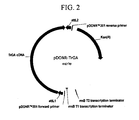
- a Trichoderma reesei cDNA sequence (SEQ ID NO: 4) was cloned into pDONR TM 201 via the Gateway® BP recombination reaction (Invitrogen, Carlsbad, CA, USA) resulting in the entry vector pDONR-TrGA ( Fig. 2 ).
- the cDNA sequence (SEQ ID NO:4) encodes the TrGA signal peptide, the prosequence, and the mature protein, including the catalytic domain, linker region and starch binding domain (SEQ ID NO: 1).
- SEQ ID NO:4 and SEQ ID NO:1 are shown in Figure 1B and 1A .
- Figure 1C illustrates the precursor and mature protein TrGA domains.
- the TrGA coding sequence (SEQ ID NO:4) was cloned into the Gateway compatible destination vector pTTT-Dest ( Fig. 3 ) via the GATEWAY® LR recombination reaction.
- the expression vector contained the T . reesei cbhI-derived promoter and terminator regions which allowed for strong inducible expression of a gene of interest.
- the vector also contained the Aspergillus nidulans amdS selective marker which allowed for growth of the transformants on acetamide as a sole nitrogen source.
- the expression vector also contained T .
- telomere regions which allowed for non-chromosomal plasmid maintenance in a fungal cell.
- the cbhI promoter and terminator regions were separated by the chloramphenicol resistance gene, Cm R , and the lethal E . coli gene, ccd B, flanked by the bacteriophage lambda-based specific recombination sites attR1, attR2.
- This configuration allowed for direct selection of recombinants containing the TrGA gene under control of the cbhI regulatory elements in the right orientation via the GATEWAY® LR recombination reaction.
- the final expression vector pTTT-TrGA is shown in Figure 4 .
- each SEL library started with two independent PCR amplifications on the pDONR-TrGA entry vector: one using the Gateway F (pDONR201 - FW) and a specific mutagenesis primer R (Table 2), and the other- the Gateway primer R (pDONR201 - RV) and a specific mutagenesis primer F (Table 2).
- High fidelity PHUSION DNA polymerase (Finnzymes OY, Espoo, Finland) was used in a PCR amplification reaction including 0.2 ⁇ M primers. The reactions were carried out for 25 cycles according to the protocol provided by Finnzymes.
- the SELs were transformed into T . reesei using the PEG protoplast method.
- the E.coli clones of the SELs confirmed by sequence analysis were grown overnight at 37°C in deep well microtiter plates (Greiner Art. No. 780271) containing 1.200 ⁇ l of 2xYT medium with ampicillin (100 ⁇ g/ml) and kanamycin (50 ⁇ g/ml).
- Plasmid DNAs were isolated from the cultures using CHEMAGIC® Plasmid Mini Kit (Chemagen - Biopolymer Technologie AG, Baesweiler, Germany) and were transformed individually into a T.
- spores were grown for 16-24 hours at 24°C in Trichoderma Minimal Medium (MM) (20g/L glucose, 15g/L KH 2 PO 4 , pH 4.5, 5g/L (NH 4 ) 2 SO 4 , 0.6g/L MgSO 4 x7H 2 O, 0.6 g/L CaCl 2 x2H 2 O, 1 ml of 1000X T .
- MM Trichoderma Minimal Medium
- transformation mixtures containing up to 600 ng of DNA and 1-5x 10 5 protoplasts in a total volume of 25 ⁇ l were treated with 200 ml of 25% PEG solution, diluted with 2 volumes of 1.2M sorbitol solution, mixed with 3% selective top agarose MM with acetamide (the same Minimal Medium as mentioned above but (NH 4 ) 2 SO 4 was substituted with 20 mM acetamide) and poured onto 2% selective agarose with acetamide either in 24 well microtiter plates or in a 20x20 cm Q-tray divided in 48 wells. The plates were incubated at 28°C for 5 to 8 days.
- Spores from the total population of transformants regenerated on each individual well were harvested from the plates using a solution of 0.85% NaCl, 0.015% Tween 80. Spore suspensions were used to inoculate fermentations in 96 wells MTPs. In the case of 24 well MTPs, an additional plating step on a fresh 24 well MTP with selective acetamide MM was introduced in order to enrich the spore numbers.
- Example 3 Fermentation of T. reesei transformants expressing TrGA variants in a MTP format
- 96 well filter plates (Coming Art.No. 3505) containing 200 ⁇ l of LD-GSM medium (5.0 g/L (NH 4 ) 2 SO 4 , 33 g/L, 1,4-Piperazinebis(propanesulfonic acid), pH 5.5, 9.0 g/L Casamino acids, 1.0 g/L KH 2 PO 4 , 1.0 g/L CaCl 2 x2H 2 O, 1.0 g/L MgSO 4 x7H 2 2.5 ml/L of 1000X T.reesei trace elements, 20 g/L Glucose, 10 g/L Sophorose) were inoculated in quadruplicate with spore suspensions of T.
- LD-GSM medium 5.0 g/L (NH 4 ) 2 SO 4 , 33 g/L, 1,4-Piperazinebis(propanesulfonic acid)
- pH 5.5 9.0 g/L Casamino acids
- TrGA variants more than 10 4 spores per well.
- the plates were incubated at 28°C with 230 rpm shaking and 80% humidity for 6 days. Culture supernatants were harvested by vacuum filtration. The supernatants were used in different assays for screening of variants with improved properties.
- TrGA producing transformants were initially pregrown in 250 ml shake flasks containing 30 ml of Proflo medium.
- Proflo medium contained: 30 g/L ⁇ -lactose, 6.5 g/L (NH 4 ) 2 SO 4 , 2 g/L KH 2 PO 4 , 0.3 g/L MgSO 4 x7H 2 O, 0.2 g/L CaCl 2 x2H 2 O, 1 ml/L 1000X trace element salt solution as mentioned above, 2 ml/L 10% Tween 80, 22.5 g/L ProFlo cottonseed flour (Traders protein, Memphis, TN), 0.72 g/L CaCO 3 .
- Lactose Defined Medium The composition of the Lactose Defined Medium was as follows: 5 g/L (NH 4 ) 2 SO 4 , 33 g/L 1,4-Piperazinebis (propanesulfonic acid) buffer, pH 5.5, 9 g/L casamino acids, 4.5 g/L KH 2 PO 4 , 1.0 g/L MgSO 4 x7H 2 O, 5 ml/L Mazu DF60-P antifoam (Mazur Chemicals, IL), 1ml/L of 1000X trace element solution. 40 ml/L of 40% (w/v) lactose solution was added to the medium after sterilization. Shake flasks with the Lactose Defined Medium were incubated at 28°C, 140 rpm for 4 - 5 days.
- Mycelium was removed from the culture samples by centrifugation and the supernatant was analyzed for total protein content (BCA Protein Assay Kit, Pierce Cat. No.23225) and GA activity, as described above in the Experimental section.
- the protein profile of the whole broth samples was determined by SDS-PAGE electrophoresis. Samples of the culture supernatant were mixed with an equal volume of 2X sample loading buffer with reducing agent and separated on NUPAGE® Novex 10% Bis-Tris Gel with MES SDS Running Buffer (Invitrogen, Carlsbad, CA, USA). Polypeptide bands were visualized in the SDS gel with SIMPLYBLUE SafeStain (Invitrogen, Carlsbad, CA, USA).
- the parent TrGA molecule had a residual activity between 15 and 44 % (day-to-day variation) under the conditions described.
- the performance index was calculated based on the TrGA thermostability of the same batch.
- Variants which had a thermal stability performance index (PI) of more than 1.0 are shown in the following Table 3.
- Table 3 includes those variants that, when tested, showed an increased performance index over the parent glucoamylase.
- Variants were tested in an ethanol screening assay using the assays described above.
- Table 4 shows the results of the screening assay for variants with a Performance Index (PI) > 1.0 compared to the parent TrGA PI.
- the PI is calculated from the specific activities (activity/mg enzyme) of the WT and the variant enzymes. It is the quotient "Variant-specific activity/WT-specific activity.”
- the PI of the specific activity for the wildtype TrGA was 1.0 and a variant with a PI > 1.0 had a specific activity that was greater than the parent TrGA.
- the specific activity was the activity measured by the ethanol screening assay divided by the results obtained in the Caliper assay described above.
- Table 4 provides the variants having a performance index of at least 1.0. These included the following sites: 10, 14, 15, 23, 59, 60, 61, 65, 67, 68, 72, 73, 97, 98, 99, 102, 110, 113, 133, 140, 144, 145, 147, 152, 153, 164, 182, 204, 205, 214, 216, 219, 228, 229, 230, 231, 236, 239, 241, 242, 263, 264, 265, 268, 269, 276, 284, 291, 300, 301, 303, 311, 338, 342, 344, 346, 349, 359, 361, 364, 375, 379, 382, 390, 391, 393, 394, 410, 417, 418, 430, 431, 433, 442, 444, 448, and 451.
- the sites showing the highest specific activity (having a performance index above 1.2), included: 61, 67, 72, 97, 102, 133, 145, 153, 205, 219, 228, 230, 231, 239, 263, 268, 291, 311, 342, 394, 430, 431 and 451.
- Table 5 shows the variants that had a performance index of 1.0 or better as compared to the parent for both properties: specific activity and thermostability. These included the following sites: 10, 15, 59, 61, 68, 72, 73, 97, 99, 102, 133, 140, 153, 182, 204, 205, 214, 228, 229, 230, 231, 236, 241, 242, 264, 265, 268, 275, 284, 291, 300, 301, 303, 311, 338, 344, 346, 359, 361, 364, 375, 370, 382, 391, 393, 394, 410, 417, 430, 431, 433, 444, 448, and 451.
- Trichoderma reesei Hypocrea jecorina glucoamylase (TrGA) was determined at 1.9 ⁇ resolution.
- Table 6 shows the coordinates for the Trichoderma glucoamylase crystal structure. TrGA was crystallized in an intact form containing 599 residues and all post-translational modifications that would normally occur in the natural host. The crystal structure was produced and analyzed as follows:
- H. jecorina GA Protein expression and purification -
- the gene encoding H. jecorina GA was cloned and expressed according to the protocols described in patent application publication no. US 2006/0094080 Al, by Dunn-Coleman et al. (May 4, 2006 ).
- TrGA protein material used for all crystallization experiments was initially purified in one step by anion exchange chromatography as follows: concentrated culture supernatants of expressed TrGA, consisting of 180 mg/ml total protein, were prepared by diluting sample 1:10 in a 25 mM Tris-HCl, pH 8.0 buffer. A HIPREP 16/10 Q Sepharose FF column (GE Helthcare) was employed for the anion exchange purification. The HIPREP column was equilibrated with 4 column volumes (CV) starting buffer (25 mM Tris-HCl, pH 8.0) followed by application of 10 ml of the diluted protein sample.
- CV column volumes
- the TrGA sample was diluted after the last concentration step in distilled water until a conductivity of the protein sample was reached that corresponded to the conductivity of the starting buffer of the anion purification, i.e. 25 mM Tris-HCl, pH 8.0.
- the MONOQ column was first equilibrated with 4 column volumes (CV) starting buffer, followed by application of the diluted protein sample to the column. Bound protein was eluted from the MONOQ column by two different gradients. In the first a 4 CV linear pH gradient was applied where the pH of the starting buffer was decreased from 8.0 to 6.0.
- TrGA protein crystallization The protein sample that was used to find the initial TrGA crystallization conditions was a sample of the TrGA material that was purified once by anion exchange purification and thereafter stored at -20°C. The TrGA protein sample was thawed and diluted with 50 mM sodium acetate buffer, pH 4.3, to approximately 12 mg/ml, prior to the initial crystallization experiments. TrGA crystals were found to grow in solution consisting of 25% PEG 3350, 0.20M ammonium acetate, 0.10M Bis-Tris pH 5.5 (reservoir solution), using the vapor-diffusion method with hanging drops (McPherson 1982), at 20° C.
- Crystallization drops were prepared by mixing equal amounts of protein solution (12 mg/ml) and reservoir solution to a final volume of 10 ⁇ l.
- the two orthorhombic TrGA datasets were collected from single crystals mounted in sealed capillary tubes, at room temperature.
- the orthorhombic X-ray dataset was used to solve the TrGA structure by molecular replacement (MR) and the high resolution orthorhombic dataset was used for the final orthorhombic space group TrGA structure model.
- the C centered monoclinic dataset was collected from a single frozen TrGA crystal at 100K, equilibrated in a cryo-protective agent comprised of 25% PEG 3350, 15% Glycerol 50 mM CaCl 2 and 0.1 M Bis-Tris pH 5.5 as cryoprotectant, mounted in rayon-fiber loops, and plunge frozen in liquid nitrogen prior to transportation to the synchrotron.
- the high-resolution orthorhombic (1.9 ⁇ ) data set and the C centric monoclinic dataset (1.8 ⁇ ) were both collected at a synchrotron source, beam line 911:5 at MAX LAB in Lund, Sweden. Both datasets that were collected at a synchrotron source were processed with MOSFLM, and scaled with program SCALA included in the CCP4 program package (Collaborative Computational Project Number 4 1994). All subsequent data processing was performed using the CCP4 program package (Collaborative Computational Project Number 4 1994), unless otherwise stated. A set of 5% of the reflections from each data set was set aside and used for monitoring the R-free ( Brunger, A (1992) Nature, 355: 472-475 ).
- TrGA structure was initially solved by MR with the automatic replacement program MOLREP (Collaborative Computational Project Number 4 1994), included in the CCP4 program package, using the initial lo-resolution orthorhombic dataset, and using the coordinates of Aspergillus awamori GA (AaGA) variant X 100 (pdb entry 1GLM ( Aleshin, et al (1994) J. Mol. Biol. 238:575-591 ) as search model.
- the A. awamori GA search model was edited to remove all glycosylation moieties attached to the protein molecule as N- and O- glycosylations, and all solvent molecules before carrying out the MR experiments.
- Model fitting and refinement - The refined MR solution model was used to calculate an initial density map from the lo-resolution orthorhombic TrGA dataset. Electron density for a disulfide bridge between residues 19 and 26 of TrGA, a disulfide bridge not present in the A. awamori variant X100 structure model, could readily be identified in this electron density map. This was taken as an indication that the electron density map was of sufficient quality to be used to build a structure model of TrGA from its amino acid sequence.
- the resolution of the initial TrGA structure model was extended to the resolution of the high-resolution orthorhombic dataset (1.9 ⁇ ) by refining the initial TrGA structure model against the high-resolution dataset for 10 cycles of restrained refinement using the program Refmac 5.0.
- Most water molecules in the structure models were located automatically by using the water picking protocols in the refinement programs, and then manually selected or discarded by inspection by eye. All structural comparisons were made with either Coot (Emsley et al. (2004) supra ) or O ( Jones et al. (1991) Acta Crystallogr., A47: 110-119 ), and figures were prepared with PyMOL ( DeLano W.L. (2002) The PyMOL Molecular Graphics System. Palo Alto, CA, USA; DeLano Scientific ).
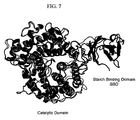
- TrGA catalytic core segment followed the same ( ⁇ / ⁇ ) 6 -barrel topology described by Aleshin et al. (1992, supra ) for the AaGA, consisting of a double barrel of alpha helices with the C-terminal of the outer helix leading into the N-terminus of an inner helix. It was possible to identify key differences in the electron density such as the disulfide bridge between residues 19 and 26 and ar insertion (residues 257-260) relative to AaGA. The segment comprising 80-100 also underwent extensive model rebuilding. One major glycosylation site was identified at Asn 171, which had up to four glycoside moieties attached.
- the crystal structure of the TrGA identified in Example 8 was superposed on the previously identified crystal structure of the Aspergillus awamori GA (AaGA).
- the AaGA crystal structure was obtained from the protein database (PDB) and the form of AaGA that was crystallized was the form containing only a catalytic domain.
- the structure of the Trichoderma reesei glucoamylase with all three regions intact was determined to 1.8 Angstrom resolution herein (see Table 6 and Example 8).
- sites were identified that could be mutated in TrGA and result in increased stability and/or specific activity. These sites include 108, 124, 175 and 316 at the active site. Also identified were specific pairwise variants Y47W/Y31 5F and Y47F/Y315W. Other sites identified were 143, D44, P45, D46, R122, R125, V181, E242, Y310, D313, V314, N317, R408, and N409. Because of the high structural homology it is expected that beneficial variants found at sites in Trichoderma reesei GA would have similar consequences in Aspergillus awamori and other homologous glucoamylases.
Landscapes
- Life Sciences & Earth Sciences (AREA)
- Chemical & Material Sciences (AREA)
- Health & Medical Sciences (AREA)
- Genetics & Genomics (AREA)
- Organic Chemistry (AREA)
- Zoology (AREA)
- Engineering & Computer Science (AREA)
- Bioinformatics & Cheminformatics (AREA)
- Wood Science & Technology (AREA)
- Microbiology (AREA)
- Biotechnology (AREA)
- Biomedical Technology (AREA)
- Molecular Biology (AREA)
- Biochemistry (AREA)
- General Engineering & Computer Science (AREA)
- General Health & Medical Sciences (AREA)
- Medicinal Chemistry (AREA)
- Micro-Organisms Or Cultivation Processes Thereof (AREA)
- Enzymes And Modification Thereof (AREA)
- Fodder In General (AREA)
- Preparation Of Compounds By Using Micro-Organisms (AREA)
Priority Applications (1)
| Application Number | Priority Date | Filing Date | Title |
|---|---|---|---|
| PL12164788T PL2479265T3 (pl) | 2007-10-09 | 2008-04-08 | Odmiany glukoamylazy o zmienionych właściwościach |
Applications Claiming Priority (2)
| Application Number | Priority Date | Filing Date | Title |
|---|---|---|---|
| PCT/US2007/021683 WO2008045489A2 (en) | 2006-10-10 | 2007-10-09 | Glucoamylase variants with altered properties |
| EP08742678A EP2195423A1 (en) | 2007-10-09 | 2008-04-08 | Glucoamylase variants with altered properties |
Related Parent Applications (2)
| Application Number | Title | Priority Date | Filing Date |
|---|---|---|---|
| EP08742678A Division EP2195423A1 (en) | 2006-10-10 | 2008-04-08 | Glucoamylase variants with altered properties |
| EP08742678.9 Division | 2008-04-08 |
Publications (2)
| Publication Number | Publication Date |
|---|---|
| EP2479265A1 EP2479265A1 (en) | 2012-07-25 |
| EP2479265B1 true EP2479265B1 (en) | 2014-06-11 |
Family
ID=39720559
Family Applications (6)
| Application Number | Title | Priority Date | Filing Date |
|---|---|---|---|
| EP12164788.7A Active EP2479265B1 (en) | 2007-10-09 | 2008-04-08 | Glucoamylase variants with altered properties |
| EP12169318.8A Not-in-force EP2514818B1 (en) | 2007-10-09 | 2008-04-08 | Glucoamylase variants |
| EP08742678A Withdrawn EP2195423A1 (en) | 2006-10-10 | 2008-04-08 | Glucoamylase variants with altered properties |
| EP08742666A Withdrawn EP2195422A1 (en) | 2007-10-09 | 2008-04-08 | Glucoamylase variants |
| EP12164776.2A Active EP2479264B1 (en) | 2007-10-09 | 2008-04-08 | Glucoamylase variants with altered properties |
| EP12157549.2A Active EP2481796B1 (en) | 2007-10-09 | 2008-04-08 | Glucoamylase variants |
Family Applications After (5)
| Application Number | Title | Priority Date | Filing Date |
|---|---|---|---|
| EP12169318.8A Not-in-force EP2514818B1 (en) | 2007-10-09 | 2008-04-08 | Glucoamylase variants |
| EP08742678A Withdrawn EP2195423A1 (en) | 2006-10-10 | 2008-04-08 | Glucoamylase variants with altered properties |
| EP08742666A Withdrawn EP2195422A1 (en) | 2007-10-09 | 2008-04-08 | Glucoamylase variants |
| EP12164776.2A Active EP2479264B1 (en) | 2007-10-09 | 2008-04-08 | Glucoamylase variants with altered properties |
| EP12157549.2A Active EP2481796B1 (en) | 2007-10-09 | 2008-04-08 | Glucoamylase variants |
Country Status (9)
| Country | Link |
|---|---|
| EP (6) | EP2479265B1 (pl) |
| JP (2) | JP5463292B2 (pl) |
| CN (1) | CN102776164B (pl) |
| BR (1) | BRPI0817853B1 (pl) |
| CA (5) | CA2702019C (pl) |
| DK (3) | DK2479264T3 (pl) |
| ES (4) | ES2502743T3 (pl) |
| PL (4) | PL2479265T3 (pl) |
| WO (2) | WO2009048487A1 (pl) |
Families Citing this family (33)
| Publication number | Priority date | Publication date | Assignee | Title |
|---|---|---|---|---|
| MX2011012841A (es) | 2009-06-03 | 2012-01-27 | Danisco Inc | Variantes de celulasa con expresion, actividad y/o estabilidad mejoradas y usos de las mismas. |
| AU2010284963C1 (en) | 2009-08-19 | 2014-11-27 | Danisco Us Inc. | Variants of glucoamylase |
| EP2467475A1 (en) * | 2009-08-19 | 2012-06-27 | Danisco US Inc. | Combinatorial variants of glucoamylase with improved specific activity and/or thermostability |
| DK2602317T3 (da) | 2009-11-20 | 2017-11-13 | Danisco Us Inc | Beta-glucosidasevarianter med forbedrede egenskaber |
| WO2011127802A1 (en) * | 2010-04-14 | 2011-10-20 | Novozymes A/S | Polypeptides having glucoamylase activity and polynucleotides encoding same |
| WO2012019169A1 (en) | 2010-08-06 | 2012-02-09 | Danisco Us Inc. | Production of isoprene under neutral ph conditions |
| CN103068997A (zh) | 2010-08-06 | 2013-04-24 | 丹尼斯科美国公司 | 中性pH糖化和发酵 |
| SG192025A1 (en) | 2011-03-17 | 2013-08-30 | Danisco Us Inc | Glycosyl hydrolase enzymes and uses thereof for biomass hydrolysis |
| MX335994B (es) | 2011-04-29 | 2016-01-07 | Danisco Us Inc | Proceso de ph unico para licuacion y sacarificacion de almidon para jarabes de glucosa de alta densidad. |
| US8951764B2 (en) | 2011-08-05 | 2015-02-10 | Danisco Us Inc. | Production of isoprenoids under neutral pH conditions |
| BR112015003124B1 (pt) * | 2012-08-14 | 2020-12-29 | Danisco Us Inc. | variantes de glicoamilase de trichoderma reesei, composição enzimática e método de processamento de amido |
| MX2015002099A (es) | 2012-08-22 | 2015-05-11 | Dupont Nutrition Biosci Aps | Variantes que tienen actividad glucoamilasa. |
| CN102994476B (zh) * | 2012-11-27 | 2014-03-12 | 山东蔚蓝生物科技有限公司 | 一种糖化酶 |
| EP2931888A1 (en) | 2012-12-12 | 2015-10-21 | Danisco US Inc. | Variants of cellobiohydrolases |
| CN104870643A (zh) | 2012-12-12 | 2015-08-26 | 丹尼斯科美国公司 | 纤维二糖水解酶的变体 |
| WO2014093275A1 (en) | 2012-12-12 | 2014-06-19 | Danisco Us Inc. | Variants of cellobiohydrolases |
| EP2931886A1 (en) | 2012-12-12 | 2015-10-21 | Danisco US Inc. | Variants of cellobiohydrolases |
| EP2931890A1 (en) | 2012-12-12 | 2015-10-21 | Danisco US Inc. | Variants of cellobiohydrolases |
| CA2903934A1 (en) * | 2013-03-07 | 2014-09-12 | Novozymes A/S | Glucoamylase variants and polynucleotides encoding same |
| EP3027741B1 (en) | 2013-07-29 | 2019-10-23 | Danisco US Inc. | Gh61 enzyme variants |
| WO2015084920A2 (en) | 2013-12-04 | 2015-06-11 | Danisco Us Inc. | Glucoamylase variants |
| WO2015118123A1 (en) | 2014-02-07 | 2015-08-13 | Novozymes A/S | Compositions for producing glucose syrups |
| BR112017011275A2 (pt) | 2014-12-01 | 2018-04-03 | Novozymes A/S | composição, e, processo para a produção de xarope de glicose. |
| EP3234166A1 (en) | 2014-12-19 | 2017-10-25 | Danisco US Inc. | Glucoamylase blends |
| WO2018106656A1 (en) | 2016-12-06 | 2018-06-14 | Danisco Us Inc | Truncated lpmo enzymes and use thereof |
| EP3673039B1 (en) * | 2017-09-29 | 2025-03-19 | International N&H Denmark ApS | Production of brewer's wort having increased fermentable sugars |
| CZ308536B6 (cs) * | 2017-10-10 | 2020-11-11 | Fyzikální ústav AV ČR, v.v.i. | Luminofory na bázi Eu2+ a Eu2+/Ce3+ dopovaných granátů |
| BR112022000351A2 (pt) | 2019-07-09 | 2022-05-10 | Dupont Nutrition Biosci Aps | Composições de enzima particuladas revestidas de gordura |
| WO2021046073A1 (en) | 2019-09-05 | 2021-03-11 | Dupont Nutrition Biosciences Aps | Feed composition |
| JP2024536931A (ja) | 2021-09-27 | 2024-10-08 | インターナショナル エヌ アンド エイチ デンマーク エーピーエス | 飼料添加組成物及びそれを使用する方法 |
| CN119546193A (zh) | 2022-05-17 | 2025-02-28 | 国际N&H丹麦有限公司 | 包含酶组合的饲料添加剂 |
| WO2024227153A1 (en) | 2023-04-28 | 2024-10-31 | International N&H Denmark Aps | Ruminant feed additive compositions |
| CN118703475B (zh) * | 2024-05-31 | 2026-02-17 | 中农科睿生物科技研究有限公司 | 热稳定的葡萄糖淀粉酶TaGA58040及其编码基因和应用 |
Family Cites Families (43)
| Publication number | Priority date | Publication date | Assignee | Title |
|---|---|---|---|---|
| JPS5534046A (en) | 1978-09-01 | 1980-03-10 | Cpc International Inc | Novel glucoamyrase having excellent heat resistance and production |
| GB2089836B (en) | 1980-12-16 | 1984-06-20 | Suntory Ltd | Process for producing alcohol by fermentation without cooking |
| US4794175A (en) | 1983-12-20 | 1988-12-27 | Cetus Corporation | Glucoamylase CDNA |
| US4618579A (en) | 1984-09-28 | 1986-10-21 | Genencor, Inc. | Raw starch saccharification |
| JPH0630586B2 (ja) | 1984-12-15 | 1994-04-27 | サントリー株式会社 | グルコアミラ−ゼ遺伝子 |
| DE3650202T3 (de) | 1985-08-29 | 2004-06-03 | Genencor International, Inc., South San Francisco | Expression von heterologen Polypeptiden in filamentösen Pilzen, Verfahren zu deren Herstellung und Vektoren zu deren Herstellung. |
| US5024941A (en) | 1985-12-18 | 1991-06-18 | Biotechnica International, Inc. | Expression and secretion vector for yeast containing a glucoamylase signal sequence |
| DK122686D0 (da) | 1986-03-17 | 1986-03-17 | Novo Industri As | Fremstilling af proteiner |
| GB8610600D0 (en) | 1986-04-30 | 1986-06-04 | Novo Industri As | Transformation of trichoderma |
| DE3854256T2 (de) | 1987-06-06 | 1996-02-01 | Omnigene Inc | Expressionsvektor für hefe. |
| US6803499B1 (en) | 1989-08-09 | 2004-10-12 | Dekalb Genetics Corporation | Methods and compositions for the production of stably transformed, fertile monocot plants and cells thereof |
| US6777589B1 (en) | 1990-01-22 | 2004-08-17 | Dekalb Genetics Corporation | Methods and compositions for the production of stably transformed, fertile monocot plants and cells thereof |
| US5290474A (en) | 1990-10-05 | 1994-03-01 | Genencor International, Inc. | Detergent composition for treating cotton-containing fabrics containing a surfactant and a cellulase composition containing endolucanase III from trichoderma ssp |
| US5246853A (en) | 1990-10-05 | 1993-09-21 | Genencor International, Inc. | Method for treating cotton-containing fabric with a cellulase composition containing endoglucanase components and which composition is free of exo-cellobiohydrolase I |
| ES2170748T3 (es) | 1990-10-05 | 2002-08-16 | Genencor Int | Procedimientos para el tratamiento de tejidos que contienen algodon con celulasa. |
| US5475101A (en) | 1990-10-05 | 1995-12-12 | Genencor International, Inc. | DNA sequence encoding endoglucanase III cellulase |
| ES2322032T3 (es) | 1990-12-10 | 2009-06-16 | Genencor Int | Sacrificacion mejorada de celulosa por clonacion y amplificacion del gen de beta-glucosidasa de trichoderma reesei. |
| US5861271A (en) | 1993-12-17 | 1999-01-19 | Fowler; Timothy | Cellulase enzymes and systems for their expressions |
| CN101659926A (zh) | 1994-06-30 | 2010-03-03 | 诺沃奇梅兹有限公司 | 非毒性、非产毒性、非致病性镰孢属表达系统及所用启动子和终止子 |
| US5744716A (en) | 1995-06-08 | 1998-04-28 | Scp Global Technologies, A Division Of Preco, Inc. | Fluid displacement level, density and concentration measurement system |
| CN1261567C (zh) * | 1997-11-26 | 2006-06-28 | 诺维信公司 | 热稳定的葡糖淀粉酶 |
| US6255084B1 (en) | 1997-11-26 | 2001-07-03 | Novozymes A/S | Thermostable glucoamylase |
| MXPA01000352A (es) * | 1998-07-15 | 2002-06-04 | Novozymes As | Varientes de glucoamilasa. |
| US6268328B1 (en) | 1998-12-18 | 2001-07-31 | Genencor International, Inc. | Variant EGIII-like cellulase compositions |
| US6254914B1 (en) | 1999-07-02 | 2001-07-03 | The Board Of Trustees Of The University Of Illinois | Process for recovery of corn coarse fiber (pericarp) |
| CN100510067C (zh) * | 1999-07-09 | 2009-07-08 | 诺维信公司 | 葡糖淀粉酶变体 |
| WO2002014490A2 (en) | 2000-08-11 | 2002-02-21 | Genencor International, Inc. | Bacillus transformation, transformants and mutant libraries |
| US6582914B1 (en) | 2000-10-26 | 2003-06-24 | Genencor International, Inc. | Method for generating a library of oligonucleotides comprising a controlled distribution of mutations |
| US6309872B1 (en) * | 2000-11-01 | 2001-10-30 | Novozymes Biotech, Inc | Polypeptides having glucoamylase activity and nucleic acids encoding same |
| WO2003029449A2 (en) * | 2001-10-01 | 2003-04-10 | Novozymes A/S | Glucoamylase variants |
| GB0129864D0 (en) | 2001-12-13 | 2002-02-06 | Danisco | Animal feed |
| US20040219649A1 (en) | 2003-03-10 | 2004-11-04 | Novozymes A/S | Alcohol product processes |
| CN102210376B (zh) | 2003-03-10 | 2014-12-31 | 波伊特研究股份有限公司 | 利用生淀粉生产乙醇的方法 |
| EP1627049B1 (en) | 2003-05-29 | 2010-02-17 | Genencor International, Inc. | Novel trichoderma genes |
| US6899910B2 (en) | 2003-06-12 | 2005-05-31 | The United States Of America As Represented By The Secretary Of Agriculture | Processes for recovery of corn germ and optionally corn coarse fiber (pericarp) |
| NZ526666A (en) | 2003-07-14 | 2004-11-26 | Propeller Jet Ltd | Impeller drive for a jet propulsion unit |
| SI1685244T1 (sl) | 2003-11-21 | 2012-06-29 | Danisco Us Inc | Ekspresija encimov, ki hidrolizirajo zrnat škrob, v Trichodermi in postopek za proizvajanje glukoze iz zrnatih škrobnih substratov |
| US9236043B2 (en) | 2004-04-02 | 2016-01-12 | Knfb Reader, Llc | Document mode processing for portable reading machine enabling document navigation |
| US7037704B2 (en) | 2004-05-27 | 2006-05-02 | Genencor International, Inc. | Heterologous expression of an Aspergillus kawachi acid-stable alpha amylase and applications in granular starch hydrolysis |
| US7413887B2 (en) | 2004-05-27 | 2008-08-19 | Genecor International, Inc. | Trichoderma reesei glucoamylase and homologs thereof |
| GB0423139D0 (en) | 2004-10-18 | 2004-11-17 | Danisco | Enzymes |
| CN101068922B (zh) * | 2004-11-30 | 2015-06-03 | 金克克国际有限公司 | 里氏木霉葡糖淀粉酶及其同源物 |
| US20080280328A1 (en) * | 2005-11-18 | 2008-11-13 | Novozymes A/S | Glucoamylase Variants |
-
2008
- 2008-04-08 ES ES12157549.2T patent/ES2502743T3/es active Active
- 2008-04-08 EP EP12164788.7A patent/EP2479265B1/en active Active
- 2008-04-08 WO PCT/US2008/004556 patent/WO2009048487A1/en not_active Ceased
- 2008-04-08 EP EP12169318.8A patent/EP2514818B1/en not_active Not-in-force
- 2008-04-08 PL PL12164788T patent/PL2479265T3/pl unknown
- 2008-04-08 PL PL12169318T patent/PL2514818T3/pl unknown
- 2008-04-08 DK DK12164776.2T patent/DK2479264T3/da active
- 2008-04-08 PL PL12164776T patent/PL2479264T3/pl unknown
- 2008-04-08 EP EP08742678A patent/EP2195423A1/en not_active Withdrawn
- 2008-04-08 WO PCT/US2008/004574 patent/WO2009048488A1/en not_active Ceased
- 2008-04-08 PL PL12157549T patent/PL2481796T3/pl unknown
- 2008-04-08 DK DK12169318.8T patent/DK2514818T3/da active
- 2008-04-08 CA CA2702019A patent/CA2702019C/en active Active
- 2008-04-08 DK DK12157549.2T patent/DK2481796T3/da active
- 2008-04-08 BR BRPI0817853-4A patent/BRPI0817853B1/pt active IP Right Grant
- 2008-04-08 ES ES12169318.8T patent/ES2504983T3/es active Active
- 2008-04-08 ES ES12164776.2T patent/ES2516265T3/es active Active
- 2008-04-08 EP EP08742666A patent/EP2195422A1/en not_active Withdrawn
- 2008-04-08 EP EP12164776.2A patent/EP2479264B1/en active Active
- 2008-04-08 EP EP12157549.2A patent/EP2481796B1/en active Active
- 2008-04-08 ES ES12164788.7T patent/ES2518916T3/es active Active
- 2008-04-08 JP JP2010528856A patent/JP5463292B2/ja not_active Expired - Fee Related
- 2008-04-08 JP JP2010528857A patent/JP5594898B2/ja not_active Expired - Fee Related
- 2008-04-08 CN CN201210042998.2A patent/CN102776164B/zh active Active
- 2008-04-08 CA CA3069377A patent/CA3069377C/en active Active
- 2008-04-08 CA CA2702024A patent/CA2702024C/en active Active
- 2008-04-08 CA CA3069361A patent/CA3069361C/en active Active
- 2008-04-08 CA CA2948231A patent/CA2948231C/en active Active
Also Published As
Similar Documents
| Publication | Publication Date | Title |
|---|---|---|
| EP2479265B1 (en) | Glucoamylase variants with altered properties | |
| US11130946B2 (en) | Glucoamylase variants with altered properties | |
| US8592194B2 (en) | Glucoamylase variants with altered properties | |
| EP2222842B1 (en) | Glucoamylase variants with altered properties | |
| US20120164695A1 (en) | Combinatorial variants of glucoamylase with improved specific activity and/or thermostability |
Legal Events
| Date | Code | Title | Description |
|---|---|---|---|
| PUAI | Public reference made under article 153(3) epc to a published international application that has entered the european phase |
Free format text: ORIGINAL CODE: 0009012 |
|
| 17P | Request for examination filed |
Effective date: 20120504 |
|
| AC | Divisional application: reference to earlier application |
Ref document number: 2195423 Country of ref document: EP Kind code of ref document: P |
|
| AK | Designated contracting states |
Kind code of ref document: A1 Designated state(s): AT BE BG CH CY CZ DE DK EE ES FI FR GB GR HR HU IE IS IT LI LT LU LV MC MT NL NO PL PT RO SE SI SK TR |
|
| 17Q | First examination report despatched |
Effective date: 20130325 |
|
| RIC1 | Information provided on ipc code assigned before grant |
Ipc: C07K 14/37 20060101ALI20131120BHEP Ipc: C12R 1/885 20060101ALN20131120BHEP Ipc: C12N 9/24 20060101AFI20131120BHEP Ipc: C12N 15/62 20060101ALN20131120BHEP Ipc: C12N 15/56 20060101ALI20131120BHEP Ipc: C12N 9/34 20060101ALI20131120BHEP Ipc: C12N 15/31 20060101ALI20131120BHEP |
|
| RIC1 | Information provided on ipc code assigned before grant |
Ipc: C12N 9/24 20060101AFI20131128BHEP Ipc: C12N 15/56 20060101ALI20131128BHEP Ipc: C12N 15/62 20060101ALN20131128BHEP Ipc: C12R 1/885 20060101ALN20131128BHEP Ipc: C12N 15/31 20060101ALI20131128BHEP Ipc: C12N 9/34 20060101ALI20131128BHEP Ipc: C07K 14/37 20060101ALI20131128BHEP |
|
| GRAP | Despatch of communication of intention to grant a patent |
Free format text: ORIGINAL CODE: EPIDOSNIGR1 |
|
| RIC1 | Information provided on ipc code assigned before grant |
Ipc: C12R 1/885 20060101ALN20131209BHEP Ipc: C12N 9/34 20060101ALI20131209BHEP Ipc: C12N 9/24 20060101AFI20131209BHEP Ipc: C12N 15/31 20060101ALI20131209BHEP Ipc: C07K 14/37 20060101ALI20131209BHEP Ipc: C12N 15/56 20060101ALI20131209BHEP Ipc: C12N 15/62 20060101ALN20131209BHEP |
|
| INTG | Intention to grant announced |
Effective date: 20140106 |
|
| GRAS | Grant fee paid |
Free format text: ORIGINAL CODE: EPIDOSNIGR3 |
|
| GRAA | (expected) grant |
Free format text: ORIGINAL CODE: 0009210 |
|
| AC | Divisional application: reference to earlier application |
Ref document number: 2195423 Country of ref document: EP Kind code of ref document: P |
|
| AK | Designated contracting states |
Kind code of ref document: B1 Designated state(s): AT BE BG CH CY CZ DE DK EE ES FI FR GB GR HR HU IE IS IT LI LT LU LV MC MT NL NO PL PT RO SE SI SK TR |
|
| REG | Reference to a national code |
Ref country code: GB Ref legal event code: FG4D |
|
| REG | Reference to a national code |
Ref country code: CH Ref legal event code: EP |
|
| REG | Reference to a national code |
Ref country code: IE Ref legal event code: FG4D |
|
| REG | Reference to a national code |
Ref country code: AT Ref legal event code: REF Ref document number: 672272 Country of ref document: AT Kind code of ref document: T Effective date: 20140715 |
|
| REG | Reference to a national code |
Ref country code: DE Ref legal event code: R096 Ref document number: 602008032777 Country of ref document: DE Effective date: 20140724 |
|
| REG | Reference to a national code |
Ref country code: DK Ref legal event code: T3 Effective date: 20140903 |
|
| PG25 | Lapsed in a contracting state [announced via postgrant information from national office to epo] |
Ref country code: GR Free format text: LAPSE BECAUSE OF FAILURE TO SUBMIT A TRANSLATION OF THE DESCRIPTION OR TO PAY THE FEE WITHIN THE PRESCRIBED TIME-LIMIT Effective date: 20140912 Ref country code: NO Free format text: LAPSE BECAUSE OF FAILURE TO SUBMIT A TRANSLATION OF THE DESCRIPTION OR TO PAY THE FEE WITHIN THE PRESCRIBED TIME-LIMIT Effective date: 20140911 Ref country code: LT Free format text: LAPSE BECAUSE OF FAILURE TO SUBMIT A TRANSLATION OF THE DESCRIPTION OR TO PAY THE FEE WITHIN THE PRESCRIBED TIME-LIMIT Effective date: 20140611 |
|
| REG | Reference to a national code |
Ref country code: ES Ref legal event code: FG2A Ref document number: 2518916 Country of ref document: ES Kind code of ref document: T3 Effective date: 20141105 Ref country code: NL Ref legal event code: VDEP Effective date: 20140611 |
|
| REG | Reference to a national code |
Ref country code: AT Ref legal event code: MK05 Ref document number: 672272 Country of ref document: AT Kind code of ref document: T Effective date: 20140611 |
|
| REG | Reference to a national code |
Ref country code: LT Ref legal event code: MG4D |
|
| PG25 | Lapsed in a contracting state [announced via postgrant information from national office to epo] |
Ref country code: LV Free format text: LAPSE BECAUSE OF FAILURE TO SUBMIT A TRANSLATION OF THE DESCRIPTION OR TO PAY THE FEE WITHIN THE PRESCRIBED TIME-LIMIT Effective date: 20140611 Ref country code: HR Free format text: LAPSE BECAUSE OF FAILURE TO SUBMIT A TRANSLATION OF THE DESCRIPTION OR TO PAY THE FEE WITHIN THE PRESCRIBED TIME-LIMIT Effective date: 20140611 Ref country code: SE Free format text: LAPSE BECAUSE OF FAILURE TO SUBMIT A TRANSLATION OF THE DESCRIPTION OR TO PAY THE FEE WITHIN THE PRESCRIBED TIME-LIMIT Effective date: 20140611 |
|
| REG | Reference to a national code |
Ref country code: PL Ref legal event code: T3 |
|
| PG25 | Lapsed in a contracting state [announced via postgrant information from national office to epo] |
Ref country code: SK Free format text: LAPSE BECAUSE OF FAILURE TO SUBMIT A TRANSLATION OF THE DESCRIPTION OR TO PAY THE FEE WITHIN THE PRESCRIBED TIME-LIMIT Effective date: 20140611 Ref country code: RO Free format text: LAPSE BECAUSE OF FAILURE TO SUBMIT A TRANSLATION OF THE DESCRIPTION OR TO PAY THE FEE WITHIN THE PRESCRIBED TIME-LIMIT Effective date: 20140611 Ref country code: CZ Free format text: LAPSE BECAUSE OF FAILURE TO SUBMIT A TRANSLATION OF THE DESCRIPTION OR TO PAY THE FEE WITHIN THE PRESCRIBED TIME-LIMIT Effective date: 20140611 Ref country code: EE Free format text: LAPSE BECAUSE OF FAILURE TO SUBMIT A TRANSLATION OF THE DESCRIPTION OR TO PAY THE FEE WITHIN THE PRESCRIBED TIME-LIMIT Effective date: 20140611 Ref country code: PT Free format text: LAPSE BECAUSE OF FAILURE TO SUBMIT A TRANSLATION OF THE DESCRIPTION OR TO PAY THE FEE WITHIN THE PRESCRIBED TIME-LIMIT Effective date: 20141013 |
|
| PG25 | Lapsed in a contracting state [announced via postgrant information from national office to epo] |
Ref country code: AT Free format text: LAPSE BECAUSE OF FAILURE TO SUBMIT A TRANSLATION OF THE DESCRIPTION OR TO PAY THE FEE WITHIN THE PRESCRIBED TIME-LIMIT Effective date: 20140611 Ref country code: NL Free format text: LAPSE BECAUSE OF FAILURE TO SUBMIT A TRANSLATION OF THE DESCRIPTION OR TO PAY THE FEE WITHIN THE PRESCRIBED TIME-LIMIT Effective date: 20140611 Ref country code: IS Free format text: LAPSE BECAUSE OF FAILURE TO SUBMIT A TRANSLATION OF THE DESCRIPTION OR TO PAY THE FEE WITHIN THE PRESCRIBED TIME-LIMIT Effective date: 20141011 |
|
| REG | Reference to a national code |
Ref country code: DE Ref legal event code: R097 Ref document number: 602008032777 Country of ref document: DE |
|
| PLBE | No opposition filed within time limit |
Free format text: ORIGINAL CODE: 0009261 |
|
| STAA | Information on the status of an ep patent application or granted ep patent |
Free format text: STATUS: NO OPPOSITION FILED WITHIN TIME LIMIT |
|
| PG25 | Lapsed in a contracting state [announced via postgrant information from national office to epo] |
Ref country code: IT Free format text: LAPSE BECAUSE OF FAILURE TO SUBMIT A TRANSLATION OF THE DESCRIPTION OR TO PAY THE FEE WITHIN THE PRESCRIBED TIME-LIMIT Effective date: 20140611 |
|
| 26N | No opposition filed |
Effective date: 20150312 |
|
| REG | Reference to a national code |
Ref country code: DE Ref legal event code: R097 Ref document number: 602008032777 Country of ref document: DE Effective date: 20150312 |
|
| PG25 | Lapsed in a contracting state [announced via postgrant information from national office to epo] |
Ref country code: BE Free format text: LAPSE BECAUSE OF FAILURE TO SUBMIT A TRANSLATION OF THE DESCRIPTION OR TO PAY THE FEE WITHIN THE PRESCRIBED TIME-LIMIT Effective date: 20140611 |
|
| REG | Reference to a national code |
Ref country code: HU Ref legal event code: AG4A Ref document number: E023367 Country of ref document: HU |
|
| PG25 | Lapsed in a contracting state [announced via postgrant information from national office to epo] |
Ref country code: SI Free format text: LAPSE BECAUSE OF FAILURE TO SUBMIT A TRANSLATION OF THE DESCRIPTION OR TO PAY THE FEE WITHIN THE PRESCRIBED TIME-LIMIT Effective date: 20140611 |
|
| PGFP | Annual fee paid to national office [announced via postgrant information from national office to epo] |
Ref country code: TR Payment date: 20150406 Year of fee payment: 8 |
|
| PGFP | Annual fee paid to national office [announced via postgrant information from national office to epo] |
Ref country code: HU Payment date: 20150317 Year of fee payment: 8 Ref country code: PL Payment date: 20150407 Year of fee payment: 8 |
|
| PG25 | Lapsed in a contracting state [announced via postgrant information from national office to epo] |
Ref country code: LU Free format text: LAPSE BECAUSE OF FAILURE TO SUBMIT A TRANSLATION OF THE DESCRIPTION OR TO PAY THE FEE WITHIN THE PRESCRIBED TIME-LIMIT Effective date: 20150408 Ref country code: MC Free format text: LAPSE BECAUSE OF FAILURE TO SUBMIT A TRANSLATION OF THE DESCRIPTION OR TO PAY THE FEE WITHIN THE PRESCRIBED TIME-LIMIT Effective date: 20140611 |
|
| REG | Reference to a national code |
Ref country code: CH Ref legal event code: PL |
|
| REG | Reference to a national code |
Ref country code: IE Ref legal event code: MM4A |
|
| PG25 | Lapsed in a contracting state [announced via postgrant information from national office to epo] |
Ref country code: CH Free format text: LAPSE BECAUSE OF NON-PAYMENT OF DUE FEES Effective date: 20150430 Ref country code: LI Free format text: LAPSE BECAUSE OF NON-PAYMENT OF DUE FEES Effective date: 20150430 |
|
| REG | Reference to a national code |
Ref country code: FR Ref legal event code: PLFP Year of fee payment: 9 |
|
| PG25 | Lapsed in a contracting state [announced via postgrant information from national office to epo] |
Ref country code: IE Free format text: LAPSE BECAUSE OF NON-PAYMENT OF DUE FEES Effective date: 20150408 |
|
| PG25 | Lapsed in a contracting state [announced via postgrant information from national office to epo] |
Ref country code: MT Free format text: LAPSE BECAUSE OF FAILURE TO SUBMIT A TRANSLATION OF THE DESCRIPTION OR TO PAY THE FEE WITHIN THE PRESCRIBED TIME-LIMIT Effective date: 20140611 |
|
| PG25 | Lapsed in a contracting state [announced via postgrant information from national office to epo] |
Ref country code: HU Free format text: LAPSE BECAUSE OF NON-PAYMENT OF DUE FEES Effective date: 20160409 |
|
| REG | Reference to a national code |
Ref country code: FR Ref legal event code: PLFP Year of fee payment: 10 |
|
| PG25 | Lapsed in a contracting state [announced via postgrant information from national office to epo] |
Ref country code: BG Free format text: LAPSE BECAUSE OF FAILURE TO SUBMIT A TRANSLATION OF THE DESCRIPTION OR TO PAY THE FEE WITHIN THE PRESCRIBED TIME-LIMIT Effective date: 20140611 |
|
| PG25 | Lapsed in a contracting state [announced via postgrant information from national office to epo] |
Ref country code: CY Free format text: LAPSE BECAUSE OF FAILURE TO SUBMIT A TRANSLATION OF THE DESCRIPTION OR TO PAY THE FEE WITHIN THE PRESCRIBED TIME-LIMIT Effective date: 20140611 |
|
| PG25 | Lapsed in a contracting state [announced via postgrant information from national office to epo] |
Ref country code: PL Free format text: LAPSE BECAUSE OF NON-PAYMENT OF DUE FEES Effective date: 20160408 |
|
| REG | Reference to a national code |
Ref country code: FR Ref legal event code: PLFP Year of fee payment: 11 |
|
| PG25 | Lapsed in a contracting state [announced via postgrant information from national office to epo] |
Ref country code: TR Free format text: LAPSE BECAUSE OF NON-PAYMENT OF DUE FEES Effective date: 20160408 |
|
| PGFP | Annual fee paid to national office [announced via postgrant information from national office to epo] |
Ref country code: FI Payment date: 20250421 Year of fee payment: 18 |
|
| PGFP | Annual fee paid to national office [announced via postgrant information from national office to epo] |
Ref country code: DE Payment date: 20250305 Year of fee payment: 18 |
|
| PGFP | Annual fee paid to national office [announced via postgrant information from national office to epo] |
Ref country code: ES Payment date: 20250509 Year of fee payment: 18 Ref country code: DK Payment date: 20250411 Year of fee payment: 18 |
|
| PGFP | Annual fee paid to national office [announced via postgrant information from national office to epo] |
Ref country code: GB Payment date: 20260316 Year of fee payment: 19 |
|
| PGFP | Annual fee paid to national office [announced via postgrant information from national office to epo] |
Ref country code: FR Payment date: 20260309 Year of fee payment: 19 |