EP2473548B1 - A method for removing methylene-bridged polyphenyl polyamines from an aqueous stream - Google Patents
A method for removing methylene-bridged polyphenyl polyamines from an aqueous stream Download PDFInfo
- Publication number
- EP2473548B1 EP2473548B1 EP10737860.6A EP10737860A EP2473548B1 EP 2473548 B1 EP2473548 B1 EP 2473548B1 EP 10737860 A EP10737860 A EP 10737860A EP 2473548 B1 EP2473548 B1 EP 2473548B1
- Authority
- EP
- European Patent Office
- Prior art keywords
- membrane
- stream
- brine
- aniline
- methylene
- Prior art date
- Legal status (The legal status is an assumption and is not a legal conclusion. Google has not performed a legal analysis and makes no representation as to the accuracy of the status listed.)
- Not-in-force
Links
- 238000000034 method Methods 0.000 title claims description 38
- 229920000768 polyamine Polymers 0.000 title claims description 33
- 229920006389 polyphenyl polymer Polymers 0.000 title claims description 33
- PAYRUJLWNCNPSJ-UHFFFAOYSA-N Aniline Chemical compound NC1=CC=CC=C1 PAYRUJLWNCNPSJ-UHFFFAOYSA-N 0.000 claims description 150
- 239000012528 membrane Substances 0.000 claims description 101
- 239000007788 liquid Substances 0.000 claims description 39
- YXFVVABEGXRONW-UHFFFAOYSA-N Toluene Chemical compound CC1=CC=CC=C1 YXFVVABEGXRONW-UHFFFAOYSA-N 0.000 claims description 36
- 239000011148 porous material Substances 0.000 claims description 36
- OKKJLVBELUTLKV-UHFFFAOYSA-N Methanol Chemical compound OC OKKJLVBELUTLKV-UHFFFAOYSA-N 0.000 claims description 33
- LFQSCWFLJHTTHZ-UHFFFAOYSA-N Ethanol Chemical compound CCO LFQSCWFLJHTTHZ-UHFFFAOYSA-N 0.000 claims description 22
- XLYOFNOQVPJJNP-UHFFFAOYSA-N water Substances O XLYOFNOQVPJJNP-UHFFFAOYSA-N 0.000 claims description 16
- 238000012546 transfer Methods 0.000 claims description 14
- 238000004519 manufacturing process Methods 0.000 claims description 12
- 238000009736 wetting Methods 0.000 claims description 12
- HPXRVTGHNJAIIH-UHFFFAOYSA-N cyclohexanol Chemical compound OC1CCCCC1 HPXRVTGHNJAIIH-UHFFFAOYSA-N 0.000 claims description 6
- 239000012267 brine Substances 0.000 description 79
- HPALAKNZSZLMCH-UHFFFAOYSA-M sodium;chloride;hydrate Chemical compound O.[Na+].[Cl-] HPALAKNZSZLMCH-UHFFFAOYSA-M 0.000 description 79
- 239000012074 organic phase Substances 0.000 description 19
- 229920001343 polytetrafluoroethylene Polymers 0.000 description 17
- 239000004810 polytetrafluoroethylene Substances 0.000 description 17
- 239000012071 phase Substances 0.000 description 15
- 229920001774 Perfluoroether Polymers 0.000 description 11
- 239000000080 wetting agent Substances 0.000 description 10
- HEMHJVSKTPXQMS-UHFFFAOYSA-M Sodium hydroxide Chemical compound [OH-].[Na+] HEMHJVSKTPXQMS-UHFFFAOYSA-M 0.000 description 9
- 150000003839 salts Chemical class 0.000 description 9
- 239000004812 Fluorinated ethylene propylene Substances 0.000 description 8
- WSFSSNUMVMOOMR-UHFFFAOYSA-N Formaldehyde Chemical compound O=C WSFSSNUMVMOOMR-UHFFFAOYSA-N 0.000 description 8
- 239000008346 aqueous phase Substances 0.000 description 8
- 229920009441 perflouroethylene propylene Polymers 0.000 description 8
- 238000009826 distribution Methods 0.000 description 7
- 238000006385 ozonation reaction Methods 0.000 description 7
- FAPWRFPIFSIZLT-UHFFFAOYSA-M Sodium chloride Chemical compound [Na+].[Cl-] FAPWRFPIFSIZLT-UHFFFAOYSA-M 0.000 description 6
- 230000002209 hydrophobic effect Effects 0.000 description 6
- -1 polytetrafluoroethylene Polymers 0.000 description 6
- 239000004743 Polypropylene Substances 0.000 description 5
- 238000005191 phase separation Methods 0.000 description 5
- 229920001155 polypropylene Polymers 0.000 description 5
- 230000003068 static effect Effects 0.000 description 5
- 238000005406 washing Methods 0.000 description 5
- VEXZGXHMUGYJMC-UHFFFAOYSA-N Hydrochloric acid Chemical compound Cl VEXZGXHMUGYJMC-UHFFFAOYSA-N 0.000 description 4
- 230000008901 benefit Effects 0.000 description 4
- 229920001577 copolymer Polymers 0.000 description 4
- HQQADJVZYDDRJT-UHFFFAOYSA-N ethene;prop-1-ene Chemical group C=C.CC=C HQQADJVZYDDRJT-UHFFFAOYSA-N 0.000 description 4
- HCDGVLDPFQMKDK-UHFFFAOYSA-N hexafluoropropylene Chemical group FC(F)=C(F)C(F)(F)F HCDGVLDPFQMKDK-UHFFFAOYSA-N 0.000 description 4
- 125000006850 spacer group Chemical group 0.000 description 4
- BFKJFAAPBSQJPD-UHFFFAOYSA-N tetrafluoroethene Chemical group FC(F)=C(F)F BFKJFAAPBSQJPD-UHFFFAOYSA-N 0.000 description 4
- 239000003377 acid catalyst Substances 0.000 description 3
- 230000001419 dependent effect Effects 0.000 description 3
- ZZTCPWRAHWXWCH-UHFFFAOYSA-N diphenylmethanediamine Chemical compound C=1C=CC=CC=1C(N)(N)C1=CC=CC=C1 ZZTCPWRAHWXWCH-UHFFFAOYSA-N 0.000 description 3
- 238000001704 evaporation Methods 0.000 description 3
- 230000008020 evaporation Effects 0.000 description 3
- 230000004907 flux Effects 0.000 description 3
- 238000006386 neutralization reaction Methods 0.000 description 3
- 239000011780 sodium chloride Substances 0.000 description 3
- 235000011121 sodium hydroxide Nutrition 0.000 description 3
- 239000002904 solvent Substances 0.000 description 3
- 239000002033 PVDF binder Substances 0.000 description 2
- 230000000694 effects Effects 0.000 description 2
- 238000002474 experimental method Methods 0.000 description 2
- 238000000605 extraction Methods 0.000 description 2
- 238000009434 installation Methods 0.000 description 2
- 239000000463 material Substances 0.000 description 2
- 239000000203 mixture Substances 0.000 description 2
- 229920000642 polymer Polymers 0.000 description 2
- 229920002981 polyvinylidene fluoride Polymers 0.000 description 2
- 239000000126 substance Substances 0.000 description 2
- 239000002699 waste material Substances 0.000 description 2
- OHKOAJUTRVTYSW-UHFFFAOYSA-N 2-[(2-aminophenyl)methyl]aniline Chemical compound NC1=CC=CC=C1CC1=CC=CC=C1N OHKOAJUTRVTYSW-UHFFFAOYSA-N 0.000 description 1
- UTNMPUFESIRPQP-UHFFFAOYSA-N 2-[(4-aminophenyl)methyl]aniline Chemical compound C1=CC(N)=CC=C1CC1=CC=CC=C1N UTNMPUFESIRPQP-UHFFFAOYSA-N 0.000 description 1
- YBRVSVVVWCFQMG-UHFFFAOYSA-N 4,4'-diaminodiphenylmethane Chemical compound C1=CC(N)=CC=C1CC1=CC=C(N)C=C1 YBRVSVVVWCFQMG-UHFFFAOYSA-N 0.000 description 1
- OKTJSMMVPCPJKN-UHFFFAOYSA-N Carbon Chemical compound [C] OKTJSMMVPCPJKN-UHFFFAOYSA-N 0.000 description 1
- 239000004696 Poly ether ether ketone Substances 0.000 description 1
- 150000001298 alcohols Chemical class 0.000 description 1
- 230000009286 beneficial effect Effects 0.000 description 1
- JUPQTSLXMOCDHR-UHFFFAOYSA-N benzene-1,4-diol;bis(4-fluorophenyl)methanone Chemical compound OC1=CC=C(O)C=C1.C1=CC(F)=CC=C1C(=O)C1=CC=C(F)C=C1 JUPQTSLXMOCDHR-UHFFFAOYSA-N 0.000 description 1
- 229910052799 carbon Inorganic materials 0.000 description 1
- 239000000919 ceramic Substances 0.000 description 1
- 238000006243 chemical reaction Methods 0.000 description 1
- 238000004140 cleaning Methods 0.000 description 1
- 238000010276 construction Methods 0.000 description 1
- 239000000835 fiber Substances 0.000 description 1
- 229920002313 fluoropolymer Polymers 0.000 description 1
- 239000012510 hollow fiber Substances 0.000 description 1
- 238000005259 measurement Methods 0.000 description 1
- WSFSSNUMVMOOMR-NJFSPNSNSA-N methanone Chemical compound O=[14CH2] WSFSSNUMVMOOMR-NJFSPNSNSA-N 0.000 description 1
- 230000003472 neutralizing effect Effects 0.000 description 1
- 239000012466 permeate Substances 0.000 description 1
- 239000004033 plastic Substances 0.000 description 1
- 229920003023 plastic Polymers 0.000 description 1
- 229920000515 polycarbonate Polymers 0.000 description 1
- 239000004417 polycarbonate Substances 0.000 description 1
- 229920002530 polyetherether ketone Polymers 0.000 description 1
- 238000012545 processing Methods 0.000 description 1
- 239000000047 product Substances 0.000 description 1
- 238000000926 separation method Methods 0.000 description 1
- 238000004065 wastewater treatment Methods 0.000 description 1
- 238000003466 welding Methods 0.000 description 1
Images

Classifications
-
- C—CHEMISTRY; METALLURGY
- C08—ORGANIC MACROMOLECULAR COMPOUNDS; THEIR PREPARATION OR CHEMICAL WORKING-UP; COMPOSITIONS BASED THEREON
- C08G—MACROMOLECULAR COMPOUNDS OBTAINED OTHERWISE THAN BY REACTIONS ONLY INVOLVING UNSATURATED CARBON-TO-CARBON BONDS
- C08G73/00—Macromolecular compounds obtained by reactions forming a linkage containing nitrogen with or without oxygen or carbon in the main chain of the macromolecule, not provided for in groups C08G12/00 - C08G71/00
- C08G73/02—Polyamines
-
- B—PERFORMING OPERATIONS; TRANSPORTING
- B01—PHYSICAL OR CHEMICAL PROCESSES OR APPARATUS IN GENERAL
- B01D—SEPARATION
- B01D61/00—Processes of separation using semi-permeable membranes, e.g. dialysis, osmosis or ultrafiltration; Apparatus, accessories or auxiliary operations specially adapted therefor
-
- C—CHEMISTRY; METALLURGY
- C08—ORGANIC MACROMOLECULAR COMPOUNDS; THEIR PREPARATION OR CHEMICAL WORKING-UP; COMPOSITIONS BASED THEREON
- C08G—MACROMOLECULAR COMPOUNDS OBTAINED OTHERWISE THAN BY REACTIONS ONLY INVOLVING UNSATURATED CARBON-TO-CARBON BONDS
- C08G12/00—Condensation polymers of aldehydes or ketones with only compounds containing hydrogen attached to nitrogen
- C08G12/02—Condensation polymers of aldehydes or ketones with only compounds containing hydrogen attached to nitrogen of aldehydes
- C08G12/04—Condensation polymers of aldehydes or ketones with only compounds containing hydrogen attached to nitrogen of aldehydes with acyclic or carbocyclic compounds
- C08G12/06—Amines
- C08G12/08—Amines aromatic
-
- C—CHEMISTRY; METALLURGY
- C08—ORGANIC MACROMOLECULAR COMPOUNDS; THEIR PREPARATION OR CHEMICAL WORKING-UP; COMPOSITIONS BASED THEREON
- C08G—MACROMOLECULAR COMPOUNDS OBTAINED OTHERWISE THAN BY REACTIONS ONLY INVOLVING UNSATURATED CARBON-TO-CARBON BONDS
- C08G73/00—Macromolecular compounds obtained by reactions forming a linkage containing nitrogen with or without oxygen or carbon in the main chain of the macromolecule, not provided for in groups C08G12/00 - C08G71/00
- C08G73/02—Polyamines
- C08G73/026—Wholly aromatic polyamines
- C08G73/0266—Polyanilines or derivatives thereof
-
- C—CHEMISTRY; METALLURGY
- C08—ORGANIC MACROMOLECULAR COMPOUNDS; THEIR PREPARATION OR CHEMICAL WORKING-UP; COMPOSITIONS BASED THEREON
- C08J—WORKING-UP; GENERAL PROCESSES OF COMPOUNDING; AFTER-TREATMENT NOT COVERED BY SUBCLASSES C08B, C08C, C08F, C08G or C08H
- C08J11/00—Recovery or working-up of waste materials
- C08J11/04—Recovery or working-up of waste materials of polymers
-
- C—CHEMISTRY; METALLURGY
- C08—ORGANIC MACROMOLECULAR COMPOUNDS; THEIR PREPARATION OR CHEMICAL WORKING-UP; COMPOSITIONS BASED THEREON
- C08G—MACROMOLECULAR COMPOUNDS OBTAINED OTHERWISE THAN BY REACTIONS ONLY INVOLVING UNSATURATED CARBON-TO-CARBON BONDS
- C08G2261/00—Macromolecular compounds obtained by reactions forming a carbon-to-carbon link in the main chain of the macromolecule
- C08G2261/70—Post-treatment
Definitions
- the present invention relates to a method for removing methylene-bridged polyphenyl polyamines from an aqueous stream, and to a method for producing methylene-bridged polyphenyl polyamines.
- the aqueous phase is washed with aniline to extract and recover the remaining DADPM, and again the liquid of the washing operation is separated for a second time in an aqueous brine phase and an organic phase, the latter substantially consisting of aniline and DADPM with some traces of water, and an aqueous phase.
- this washing and separating is done in one apparatus.
- the aqueous phase both before and after this second separation, comprises nearly all salt provided by the neutralization of the acid catalyst.
- the aqueous phases are typically referred to as brine.
- this brine after the second phase separation, is further treated to remove the remaining aniline from the brine by means of a so-called aniline stripping column, before the brine is treated in a waste water treatment unit.
- the above objectives may be accomplished by a method for removing methylene-bridged polyphenyl polyamines from an aqueous stream comprising the methylene-bridged polyphenyl polyamines according to a first aspect of the present invention.
- a method for removing methylene-bridged polyphenyl polyamines from an aqueous stream comprising the methylene-bridged polyphenyl polyamines according to the present invention comprises the steps of
- the organic phase preferably comprises or even consists of aniline.
- the membrane is wetted, or so-to-say pre-wetted, before contacting the membrane with both the aqueous stream comprising methyl-bridged polyphenyl polyamines and the organic stream, which wetting is done using a suitable liquid having a surface tension of less than 40mN/m, being toluene or cyclohexanol, ethanol or methanol.
- a suitable liquid having a surface tension of less than 40mN/m being toluene or cyclohexanol, ethanol or methanol.
- a liquid having a surface tension of more than 10mN/m and less than 40mN/m is used, e.g. an alcohol, e.g. an alcohol with a surface tension of more than 15mN/m and less than 35mN/m.
- Wetting and pre-wetting is to be understood as filling substantially all pores of the membrane with this suitable liquid, thereby expelling the air from the pores.
- the liquid surface tension is measured using the AquaPi tensiometer of the company Kibron Inc, Finland.
- toluene has a liquid surface tension, measured using the AquaPi tensiometer of 22mN/m
- methanol has a liquid surface tension, measured using the AquaPi tensiometer of 22.7mN/m
- ethanol has a liquid surface tension, measured using the AquaPi tensiometer of 22.1 mN/m
- cyclohexanol has a liquid surface tension, measured using the AquaPi tensiometer of 34 mN/m.
- the membrane after wetting with the liquid, may have a water break through pressure of more than 0.2 bar.
- the water break through pressure of the membrane, after wetting with the wetting agent is the pressure difference measured between the two surfaces of the membrane, which pressure is necessary to force water through the membrane. This measurement is done using a breakthrough cell, which measures the pressure applied and the resultant flux of the permeate through the membrane by this pressure. Breakthrough pressure is reached when water flux (or in this particular method, brine flux) starts to increase linearly with pressure.
- the break through pressure of the membrane, after wetting with a wetting agent is more than 0.5 bar.
- An over-pressure e.g. of 0.5 bars, is applied in the brine phase as compared to the organic phase, e.g. aniline, as typically this is not enough to have a breakthrough of the brine into the organic phase, e.g. an aniline phase, and expel the organic liquid of the organic phase, such as aniline, from the pores of the membrane.
- this pressure will be sufficient to keep the organic phase, e.g. aniline, from flowing through the membrane and assures an interface area on the surface or pores of the membrane for mass transfer, allowing extraction of methylene-bridged polyphenyl polyamines by an organic phase such as aniline to take place.
- the membrane may be provided as one sheet of porous material.
- a sheet of porous material is hereinafter referred to as a porous sheet.
- the membrane may consist of one porous sheet.
- the membrane may comprise at least two stacked porous sheets.
- the at least two sheets are stacked, which means that the sheets are in contact with at least one of the other sheets along one of its surfaces.
- the sheets form a layered membrane, all sheets being substantially parallel with the each other.
- At least one of the one or more porous sheets may have an average pore size less than or equal to 0.05 micron.
- each of the stacked porous sheets may have an average pore size in the range of up to 0.05 micron.
- pores of the sheet are a parameter subjected to a statistic distribution, characterized by an average and a standard deviation.
- substantially no pores, or even no pores have a pore size of more than 0.05 micron, this in particular if only one porous sheet is used as a membrane.
- the membrane is preferably a hydrophobic membrane, such as membranes provided from polytetrafluoroethylene (PTFE), fluorinated ethylene propylene (i.e. a copolymer of hexafluoropropylene and tetrafluoroethylene, also referred to as FEP), perfluoroalkoxy (PFA) or combinations thereof.
- PTFE polytetrafluoroethylene
- FEP fluorinated ethylene propylene
- PFA perfluoroalkoxy
- DyneonTM TFMTM PTFE or any modified PTFE.
- the membrane and optionally some or all of its sheets, may have a pore size of 0.05 micron maximum and a high hydrophobicity.
- Membranes can be used as flat sheets, tubular structures, and are optionally hollow fiber structures. They can be ceramic or polymeric membranes.
- the membranes preferably are made from PTFE, PFA, PVDF, PP, PEEK, polycarbonate, carbon or any other suitable and optionally hydrophobic materials. Thickness of the membranes may be up to 2mm, but preferably are in the range of up to and including 1mm.
- the aqueous stream may be one of the brine waste stream of a DADPM production unit, such as in general described in e.g. WO2009037087 and WO2009037088 .
- a DADPM production unit such as in general described in e.g. WO2009037087 and WO2009037088 .
- it is the brine stream after neutralization of the effluent of the DADPM reactor, obtained by means of a phase separator.
- the membranes are held in a pertraction module, suitable to allow the two liquid streams to flow, each on one side of the membrane.
- the use of membrane being provided from fluorinated ethylene propylene (i.e. a copolymer of hexafluoropropylene and tetrafluoroethylene, also referred to as FEP), perfluoroalkoxy (PFA) or combinations thereof are preferred. This because these materials can be thermally welded to the parts of the frame contacting the membrane.
- Such frame parts are preferably provided from polytetrafluoroethylene (PTFE), fluorinated ethylene propylene (i.e.
- FEP hexafluoropropylene and tetrafluoroethylene
- TFM PTFE which is a modified PTFE
- PFA perfluoroalkoxy
- other polymer frame parts such as polypropylene frame parts may be used, which frame parts optionally may be welded to the membrane using appropriate welding temperatures.
- the membranes may be positioned in a module as flat sheets, i.e. being held substantially according to a flat surface, or as cylindrical tubes, or as a spirally wound membrane.
- the aqueous stream may flow in the tube, the organic stream at the outer side of the tubes, or vice versa.
- the two streams flow counter-stream, i.e. the streams flow in an opposite direction along the membrane, or cross stream.
- the purest aqueous stream meets the purest organic stream.
- the pertraction of the methylene-bridged polyphenyl polyamines from an aqueous stream using an organic stream as set out above, in particular when the aqueous stream is a brine stream of a methylene-bridged polyphenyl polyamine production unit and the organic stream is an aniline stream, is preferably performed at process temperatures ranging between 50 deg C and 200 deg C, more preferred in the range of 75 deg C to 125 deg C.
- the aqueous and organic stream may exchange thermal energy as well.
- the volume ratio of aqueous stream over organic stream used during pertraction may be in the range of 20/1 to 2/1.
- a method for producing methylene-bridged polyphenyl polyamines is provided.
- a method for producing methylene-bridged polyphenyl polyamines according to the present invention comprises the steps of
- the aqueous stream comprising methylene-bridged polyphenyl polyamines may be a brine obtained after the conversion of aniline and formaldehyde, in presence of an acid catalyst, typically hydrochloric acid, in to methylene-bridged polyphenyl polyamines, and neutralizing the effluent using a base, typically caustic soda.
- the neutralized effluent may be separated using a phase separation, into an organic phase, substantially consisting of methylene-bridged polyphenyl polyamines and aniline, and an aqueous brine phase, comprising water, salt and traces of DADPM and aniline. Brine strength variations may, only to a minor extent, influence the performance of the pertraction.
- An aqueous stream can have typically around 2000 to 3000 ppm of DADPM, while concentrated brine streams may have around 200 to 300 ppm of DADPM content. As the higher brine strength has an effect on the distribution coefficient also, the amount of aniline needed to wash the stream is significantly reduced.
- the membrane Before starting up the pertraction, the membrane is wetted preferably using toluene, ethanol or methanol.
- An advantage of the use of any of the methods according to the invention is that a washing step, washing the brine with aniline and subsequent separating the washing mixture into again an organic aniline phase comprising DADPM and a brine phase comprising aniline, is replaced by the pertraction step.
- the benefit is that to perform the pertraction, no brine evaporation is necessary to bring the brine to a desired density (brine strength) sufficient to perform the phase separation efficiently. As such, no energy is required to perform the evaporation, hence an economical benefit is obtained.
- the use of a method according to the present invention may make the extraction step more robust and reliable to process parameter fluctuations. The presence of free organics in the aqueous stream can be dealt with.
- %w or weight percentage of a component refers to the weight of the component over the total weight of the composition in which the component is present and of which it is part.
- methylene-bridged polyphenyl polyamines also referred to as DADPM or MDA, includes both diaminodiphenylmethane isomers, such as 4,4'-diaminodiphenylmethane, 2,4'-diaminodiphenylmethane and/or 2,2'-diaminodiphenylmethane, and higher homologues thereof or higher polymers thereof.
- the liquid's surface tension is measured using the AquaPi tensiometer of the company Kibron Inc, Finland, at room temperature, i.e. 20 °C.
- the pertraction modules membrane being e.g. of PTFE, may be very hydrophobic.
- the aniline nor the brine can easily expel the air from the pores of the membrane. Hence mass transfer through the membrane is difficult to be obtained.
- Forcing the aniline in the pores by pressure requires too high pressure (pressure > 0.5bars) and may compromise safe functioning of the membrane after start up.
- a wetting liquid with the surface tension less than 40 mN/m, and more preferably less than 35 mN/m is used to fill the pore. This may be done by filling the module with wetting agent and allow the wetting agent to penetrate into the membrane. Some pressure may be used. Once wetted, the excess of wetting agent may be evacuated before start up. After start up, the wetting liquid in the membrane is dissolved in aniline.
- aniline Preferably, toluene, cyclohexanol, ethanol or methanol is used. Though toluene and methanol are more preferred, methanol is most preferred, because this product can be treaded and separated of easily and its use does not require any major change in the normal production processes.
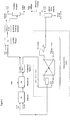
- the aniline leaving the pertraction module 305 is provided, via an overflow system 332 of tubing and valves, to a vessel 330 which held at atmospheric pressure.
- the tubes are designed such that the dimension of the tubes is too large to be completely filled with aniline effluent from the pertraction module 305 under normal operational conditions.
- the opened valve 334 located at the highest elevation HI will define the static pressure in the aniline stream in the pertraction module 305.
- the brine leaving the pertraction module 305 is provided to a vessel 340 being held at atmospheric pressure, via an overflow system 342 of tubing and valves.
- the tubes are designed such that the dimension of the tubes are too large to be completely filled with brine effluent from the pertraction module 305 under normal operational conditions.
- the overflow systems 332 and 342 have a feed line for feeding in a liquid, and a exhaust line for allowing liquid to leave, which feed and exhaust are coupled to each other by means of at least one intermediate tube, but preferably at least two intermediate tubes (as shown in Fig.3 ) each comprising a valve.
- Each of the feed line, the exhaust line and the intermediate tube(s) are dimensioned such that the maximum liquid feed can pass through the tube without the liquid occupying the complete inner surface of a cross section in a direction perpendicular to the liquid flow direction.
- the intermediate tubes allow liquid to flow from the feed to the exhaust, in case of valves when the valve is opened.
- the overflow system When the overflow system has more than one intermediate tube, the overflow system is installed such that the intermediate tubes are positioned at varying altitudes. The highest altitude of the overflow system is provided by one of the intermediate tubes.
- the intermediate tube By holding the exhaust line at a given pressure (e.g. atmospheric), the intermediate tube, or in case of more than one such intermediate tubes, the intermediate tube with the opened valve and positioned at the lowest altitude as installed, will define an overpressure in the liquid feeding line.
- the opened valve 344 located at the highest elevation H2 will define the static pressure in the brine stream in the pertraction module 305.
- the difference in elevation H2-H1 will define the pressure ⁇ p which is established between brine and aniline throughout the pertraction module over the membrane.
- the pressure ⁇ p is in fact a static pressure occurring between the two streams in the pertraction module 305.
- This static pressure arrangement allows a careful fine-tuning of the pressure difference between the phases, as a too high pressure on the brine side will result in leaking of the membrane. In this case these pressure differences are very low, typically less than 1 bar, but more preferred less than 0.5 bar.
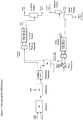
- the brine 346, freed from DADPM in the vessel 340 is further treated in the aniline stripper as is shown in Figures 1 and 2 .
- the aniline 336, with the DADPM is recycled to the feed of the reactor converting aniline and formaldehyde (fed as formalin) into DADPM.
- a brine stream with a flow of 240 1/h was fed to one side of the Gore Disso 3 lve ozonation module, the brine stream contained about 0.8wt% NaCl and contained about 2000 ppm's of DADPM.
- An aniline stream without DADPM and a flow of 130 1/h was fed to the other side of the Gore Disso 3 lve ozonation unit in counter current.
- the module Before contacting the module with the brine and the aniline, the module was prewetted with toluene. At a temperature of 80°C 30% of the DADPM was removed and transferred to the aniline. The mass transfer coefficient in this case was 7*10 -6 m/s.
- a brine stream with a flow of 250 1/h was fed to one side of the Gore Disso 3 lve ozonation module, the brine stream contained about 12.8wt% NaCl and contained about 450 ppm's of DADPM.
- An aniline stream without DADPM and a flow of 150 1/h was fed to the other side of the Gore Disso 3 lve ozonation module in counter current.
- the module was prewetted with toluene. At a temperature of 85°C 55% of the DADPM was removed and transferred to the aniline.
- the mass transfer coefficient in this case was 1.2*10 -5 m/s.
- a brine stream with a flow of 120 1/h was fed to one side of the Gore Disso 3 lve ozonation unit, the brine stream contained about 12.67 wt% NaCl and contained about 240 ppm's of DADPM.
- An aniline stream without DADPM and a flow of 75 1/h was fed to the other side of the Gore Disso 3 lve ozonation unit in counter current.
- the module was wetted with methanol. At a temperature of 90°C, 64% of the DADPM was removed and transferred to the aniline.
- the mass transfer coefficient in this case was 2.7*10 -5 m/s.
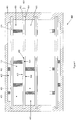
- the module construction of the flat sheet membrane is to be chemically resistant to aniline or brine. Bonding techniques using chemically resistant plastics, e.g. fluoroplastics such as PTFE, PFA, PVDF, TFM, PTFE, but also e.g. polypropylene, which are thermowelded onto the membranes, optionally to make stacks of 1, 2 or more membranes (each optionally being a stack of a number of porous sheets) and optionally being separated by means of spacers. In this way a sufficiently chemical resistant module can be build.
- chemically resistant plastics e.g. fluoroplastics such as PTFE, PFA, PVDF, TFM, PTFE, but also e.g. polypropylene, which are thermowelded onto the membranes, optionally to make stacks of 1, 2 or more membranes (each optionally being a stack of a number of porous sheets) and optionally being separated by means of spacers.
- aniline is provided to the channels 431, allowing the surface 434 of the sheet 414, being a surface of membrane 414, to contact the aniline stream.
- Brine is provided to the channels 433, allowing the surface 432 of the sheet 412, being a surface of membrane 414, to contact the brine stream.
- the membrane needs to be pre-wetted before it can be used as a pertraction module, typical solvents which can be used are: toluene, alcohols, e.g. ethanol but preferentially methanol which is already a substance present in the DADPM process. Once pre-wetted the used solvent or wetting agent is removed by dissolving it in aniline.
- the removal efficiency of the DADPM from the brine to the aniline depends on the distribution coefficient, which is a function of a.o. brine strength and temperature.
- the distribution coefficient is defined as the DADPM concentration in aniline over the DADPM concentration in brine.
- the distribution coefficient increased with higher brine concentrations and lowers at higher temperatures.
- the mass transfer increased significantly at higher temperature, which is due to a salt complex formed between the DADPM and the salt which dissociates at higher temperatures. Therefore to the method preferably operate at a sufficiently high temperature, higher than 50°C and preferably higher than 80°C to reduce possible fouling of a complex or salt which can be formed between the brine and DADPM and to get improved mass transfer between the phases.
Landscapes
- Chemical & Material Sciences (AREA)
- Chemical Kinetics & Catalysis (AREA)
- Medicinal Chemistry (AREA)
- Polymers & Plastics (AREA)
- Organic Chemistry (AREA)
- Health & Medical Sciences (AREA)
- Separation Using Semi-Permeable Membranes (AREA)
- Water Supply & Treatment (AREA)
- Engineering & Computer Science (AREA)
- Life Sciences & Earth Sciences (AREA)
- Sustainable Development (AREA)
- Organic Low-Molecular-Weight Compounds And Preparation Thereof (AREA)
- Phenolic Resins Or Amino Resins (AREA)
- Manufacture Of Porous Articles, And Recovery And Treatment Of Waste Products (AREA)
Priority Applications (1)
| Application Number | Priority Date | Filing Date | Title |
|---|---|---|---|
| EP10737860.6A EP2473548B1 (en) | 2009-09-02 | 2010-07-22 | A method for removing methylene-bridged polyphenyl polyamines from an aqueous stream |
Applications Claiming Priority (3)
| Application Number | Priority Date | Filing Date | Title |
|---|---|---|---|
| EP09167225 | 2009-09-02 | ||
| EP10737860.6A EP2473548B1 (en) | 2009-09-02 | 2010-07-22 | A method for removing methylene-bridged polyphenyl polyamines from an aqueous stream |
| PCT/EP2010/060627 WO2011026690A1 (en) | 2009-09-02 | 2010-07-22 | A method for removing methylene-bridged polyphenyl polyamines from an aqueous stream |
Publications (2)
| Publication Number | Publication Date |
|---|---|
| EP2473548A1 EP2473548A1 (en) | 2012-07-11 |
| EP2473548B1 true EP2473548B1 (en) | 2018-06-06 |
Family
ID=41467232
Family Applications (1)
| Application Number | Title | Priority Date | Filing Date |
|---|---|---|---|
| EP10737860.6A Not-in-force EP2473548B1 (en) | 2009-09-02 | 2010-07-22 | A method for removing methylene-bridged polyphenyl polyamines from an aqueous stream |
Country Status (15)
| Country | Link |
|---|---|
| US (1) | US8829243B2 (enExample) |
| EP (1) | EP2473548B1 (enExample) |
| JP (1) | JP5373972B2 (enExample) |
| KR (1) | KR101687437B1 (enExample) |
| CN (1) | CN102639603B (enExample) |
| AU (1) | AU2010291458B2 (enExample) |
| BR (1) | BR112012004581A2 (enExample) |
| CA (1) | CA2771008C (enExample) |
| ES (1) | ES2683738T3 (enExample) |
| HU (1) | HUE038012T2 (enExample) |
| IN (1) | IN2012DN01475A (enExample) |
| MX (1) | MX341587B (enExample) |
| PT (1) | PT2473548T (enExample) |
| RU (1) | RU2503654C2 (enExample) |
| WO (1) | WO2011026690A1 (enExample) |
Family Cites Families (16)
| Publication number | Priority date | Publication date | Assignee | Title |
|---|---|---|---|---|
| GB1437969A (en) * | 1973-01-02 | 1976-06-03 | Allied Chem | Extraction process |
| US4966707A (en) * | 1986-05-13 | 1990-10-30 | Celanese Corporation | Liquid/liquid extractions with microporous membranes |
| IL101906A0 (en) | 1992-05-18 | 1992-12-30 | Yissum Res Dev Co | Extraction of electrolytes from aqueous solutions |
| DE69509018T2 (de) | 1994-08-17 | 1999-10-07 | General Electric Co., Schenectady | Verfahren zur Rückgewinnung von Aminen oder deren Salzen aus wässrigen Salzbrühen durch Adsorption |
| DE19804915A1 (de) * | 1998-02-07 | 1999-08-12 | Basf Ag | Verfahren zur Herstellung von Methylendi(phenylamin) und Methylendi(phenylisocyanat) |
| FR2787727B1 (fr) * | 1998-12-23 | 2002-01-11 | Eastman Kodak Co | Procede pour le traitement de solution aqueuse contenant des especes ioniques a extraire |
| DE19919490B4 (de) * | 1999-04-29 | 2005-04-14 | Forschungszentrum Jülich GmbH | Verfahren zur Abtrennung organischer Substanzen aus einem wässrigen Gemisch |
| RU2330016C2 (ru) * | 2002-03-28 | 2008-07-27 | Хантсмэн Интернэшнл Ллс | Способ получения диаминодифенилметана и его высших гомологов |
| US7122709B2 (en) * | 2003-03-13 | 2006-10-17 | 3M Innovative Properties Company | Method for obtaining ethanol |
| US7919178B2 (en) * | 2003-03-21 | 2011-04-05 | Millipore Corporation | Spatially-controlled modified porous membrane |
| WO2005054182A1 (en) | 2003-12-03 | 2005-06-16 | Shell Internationale Research Maatschappij B.V. | Method for separating organic acid from a hydroperoxide stream |
| KR20080037050A (ko) * | 2005-08-26 | 2008-04-29 | 엔테그리스, 아이엔씨. | 교환 수지를 함유하는 다공성 막 |
| US7794593B2 (en) * | 2005-11-30 | 2010-09-14 | 3M Innovative Properties Company | Cross-flow membrane module |
| DE102008021899A1 (de) | 2007-09-19 | 2009-04-09 | Siemens Aktiengesellschaft | Kraftstoffsystem für eine schwimmende Einrichtung und Verfahren zu deren Betreiben |
| EP2062869A1 (en) * | 2007-09-19 | 2009-05-27 | Huntsman International Llc | Process for the production of di-and polyamines of the diphenylmethane series |
| EP2039676A1 (en) | 2007-09-19 | 2009-03-25 | Huntsman International Llc | Process for the production of di-and polyamines of the diphenylmethane series |
-
2010
- 2010-07-22 IN IN1475DEN2012 patent/IN2012DN01475A/en unknown
- 2010-07-22 RU RU2012112397/04A patent/RU2503654C2/ru active
- 2010-07-22 AU AU2010291458A patent/AU2010291458B2/en not_active Ceased
- 2010-07-22 CA CA2771008A patent/CA2771008C/en not_active Expired - Fee Related
- 2010-07-22 US US13/391,743 patent/US8829243B2/en not_active Expired - Fee Related
- 2010-07-22 WO PCT/EP2010/060627 patent/WO2011026690A1/en not_active Ceased
- 2010-07-22 HU HUE10737860A patent/HUE038012T2/hu unknown
- 2010-07-22 BR BR112012004581A patent/BR112012004581A2/pt not_active IP Right Cessation
- 2010-07-22 JP JP2012527260A patent/JP5373972B2/ja not_active Expired - Fee Related
- 2010-07-22 KR KR1020127008323A patent/KR101687437B1/ko not_active Expired - Fee Related
- 2010-07-22 EP EP10737860.6A patent/EP2473548B1/en not_active Not-in-force
- 2010-07-22 ES ES10737860.6T patent/ES2683738T3/es active Active
- 2010-07-22 MX MX2012002509A patent/MX341587B/es active IP Right Grant
- 2010-07-22 PT PT107378606T patent/PT2473548T/pt unknown
- 2010-07-22 CN CN201080039515.2A patent/CN102639603B/zh not_active Expired - Fee Related
Non-Patent Citations (1)
| Title |
|---|
| None * |
Also Published As
| Publication number | Publication date |
|---|---|
| BR112012004581A2 (pt) | 2016-04-05 |
| RU2012112397A (ru) | 2013-10-10 |
| US20120184775A1 (en) | 2012-07-19 |
| CN102639603B (zh) | 2013-10-30 |
| IN2012DN01475A (enExample) | 2015-06-05 |
| KR101687437B1 (ko) | 2016-12-19 |
| CN102639603A (zh) | 2012-08-15 |
| WO2011026690A1 (en) | 2011-03-10 |
| JP2013503827A (ja) | 2013-02-04 |
| ES2683738T3 (es) | 2018-09-27 |
| CA2771008A1 (en) | 2011-03-10 |
| RU2503654C2 (ru) | 2014-01-10 |
| MX2012002509A (es) | 2012-04-10 |
| US8829243B2 (en) | 2014-09-09 |
| JP5373972B2 (ja) | 2013-12-18 |
| AU2010291458B2 (en) | 2013-01-10 |
| PT2473548T (pt) | 2018-06-19 |
| MX341587B (es) | 2016-08-26 |
| CA2771008C (en) | 2013-12-10 |
| EP2473548A1 (en) | 2012-07-11 |
| AU2010291458A1 (en) | 2012-03-08 |
| HUE038012T2 (hu) | 2018-09-28 |
| KR20120092107A (ko) | 2012-08-20 |
Similar Documents
| Publication | Publication Date | Title |
|---|---|---|
| Kebria et al. | Membrane distillation: basics, advances, and applications | |
| US20160038879A1 (en) | Membrane distillation module and wastewater treatment apparatus | |
| SG182241A1 (en) | Separation membrane module for oil-containing wastewater treatment, oil-containing wastewater treatment method, and oil-containing wastewater treatment apparatus | |
| KR20190117707A (ko) | 막 증류용 다공질 막 및 막 증류용 모듈의 운전 방법 | |
| CN113905807B (zh) | 正渗透膜和正渗透膜组件及其制造方法 | |
| WO2012090862A1 (ja) | 複合半透膜 | |
| KR20120083363A (ko) | 붕소 제거용 역삼투 복합체 막 | |
| KR101524225B1 (ko) | 막 증류용 분리막 모듈 | |
| JPWO2016027869A1 (ja) | 複合中空糸膜モジュールおよびその製造方法 | |
| JPWO2018003949A1 (ja) | 中空糸複合膜モジュール及びその製造方法 | |
| Ramlow et al. | Influence of dye class on the comparison of direct contact and vacuum membrane distillation applied to remediation of dyeing wastewater | |
| CN113842783B (zh) | 一种耐酸型高通量聚芳醚复合纳滤膜、制备方法及应用 | |
| AU2010291458B2 (en) | A method for removing methylene-bridged polyphenyl polyamines from an aqueous stream | |
| KR101517653B1 (ko) | 크산텐계 화합물을 포함하는 고투과 유량 역삼투 분리막 및 이를 제조하는 방법 | |
| CN109328101B (zh) | 复合多孔质中空纤维膜、复合多孔质中空纤维膜组件及其运行方法 | |
| JP2774843B2 (ja) | スパイラル型脱気膜モジュール | |
| CN105126654A (zh) | 一种中空纤维正渗透膜以及制备方法 | |
| Xu et al. | Preparation of a novel hollow-fiber anion-exchange membrane and its preliminary performance in diffusion dialysis | |
| KR20170047114A (ko) | 수처리 분리막의 제조방법 및 이에 의하여 제조된 수처리 분리막 및 수처리 분리막을 포함하는 수처리 모듈 | |
| Shahroie et al. | Short review on membrane distillation techniques for removal of dissolved ammonia | |
| CN105214518A (zh) | 石墨烯疏水性聚四氟乙烯微孔膜的制备方法 | |
| Banerjee | Life Cycle Analysis of Polymeric Membrane-Based Processes | |
| Fothedar et al. | Journal of Membrane Science & Research | |
| Yang et al. | Synthesis of polypiperazine-amide thin-film membrane on PPESK hollow fiber UF membrane | |
| Remanan et al. | 4 Membrane Distillation |
Legal Events
| Date | Code | Title | Description |
|---|---|---|---|
| PUAI | Public reference made under article 153(3) epc to a published international application that has entered the european phase |
Free format text: ORIGINAL CODE: 0009012 |
|
| 17P | Request for examination filed |
Effective date: 20120402 |
|
| AK | Designated contracting states |
Kind code of ref document: A1 Designated state(s): AL AT BE BG CH CY CZ DE DK EE ES FI FR GB GR HR HU IE IS IT LI LT LU LV MC MK MT NL NO PL PT RO SE SI SK SM TR |
|
| DAX | Request for extension of the european patent (deleted) | ||
| 17Q | First examination report despatched |
Effective date: 20170918 |
|
| GRAP | Despatch of communication of intention to grant a patent |
Free format text: ORIGINAL CODE: EPIDOSNIGR1 |
|
| INTG | Intention to grant announced |
Effective date: 20180209 |
|
| GRAS | Grant fee paid |
Free format text: ORIGINAL CODE: EPIDOSNIGR3 |
|
| GRAA | (expected) grant |
Free format text: ORIGINAL CODE: 0009210 |
|
| AK | Designated contracting states |
Kind code of ref document: B1 Designated state(s): AL AT BE BG CH CY CZ DE DK EE ES FI FR GB GR HR HU IE IS IT LI LT LU LV MC MK MT NL NO PL PT RO SE SI SK SM TR |
|
| REG | Reference to a national code |
Ref country code: GB Ref legal event code: FG4D |
|
| REG | Reference to a national code |
Ref country code: CH Ref legal event code: EP Ref country code: AT Ref legal event code: REF Ref document number: 1005998 Country of ref document: AT Kind code of ref document: T Effective date: 20180615 |
|
| REG | Reference to a national code |
Ref country code: PT Ref legal event code: SC4A Ref document number: 2473548 Country of ref document: PT Date of ref document: 20180619 Kind code of ref document: T Free format text: AVAILABILITY OF NATIONAL TRANSLATION Effective date: 20180611 |
|
| REG | Reference to a national code |
Ref country code: IE Ref legal event code: FG4D |
|
| REG | Reference to a national code |
Ref country code: DE Ref legal event code: R096 Ref document number: 602010051102 Country of ref document: DE |
|
| REG | Reference to a national code |
Ref country code: NL Ref legal event code: FP |
|
| REG | Reference to a national code |
Ref country code: ES Ref legal event code: FG2A Ref document number: 2683738 Country of ref document: ES Kind code of ref document: T3 Effective date: 20180927 |
|
| REG | Reference to a national code |
Ref country code: HU Ref legal event code: AG4A Ref document number: E038012 Country of ref document: HU |
|
| REG | Reference to a national code |
Ref country code: LT Ref legal event code: MG4D |
|
| PG25 | Lapsed in a contracting state [announced via postgrant information from national office to epo] |
Ref country code: CY Free format text: LAPSE BECAUSE OF FAILURE TO SUBMIT A TRANSLATION OF THE DESCRIPTION OR TO PAY THE FEE WITHIN THE PRESCRIBED TIME-LIMIT Effective date: 20180606 Ref country code: LT Free format text: LAPSE BECAUSE OF FAILURE TO SUBMIT A TRANSLATION OF THE DESCRIPTION OR TO PAY THE FEE WITHIN THE PRESCRIBED TIME-LIMIT Effective date: 20180606 Ref country code: BG Free format text: LAPSE BECAUSE OF FAILURE TO SUBMIT A TRANSLATION OF THE DESCRIPTION OR TO PAY THE FEE WITHIN THE PRESCRIBED TIME-LIMIT Effective date: 20180906 Ref country code: NO Free format text: LAPSE BECAUSE OF FAILURE TO SUBMIT A TRANSLATION OF THE DESCRIPTION OR TO PAY THE FEE WITHIN THE PRESCRIBED TIME-LIMIT Effective date: 20180906 Ref country code: SE Free format text: LAPSE BECAUSE OF FAILURE TO SUBMIT A TRANSLATION OF THE DESCRIPTION OR TO PAY THE FEE WITHIN THE PRESCRIBED TIME-LIMIT Effective date: 20180606 Ref country code: FI Free format text: LAPSE BECAUSE OF FAILURE TO SUBMIT A TRANSLATION OF THE DESCRIPTION OR TO PAY THE FEE WITHIN THE PRESCRIBED TIME-LIMIT Effective date: 20180606 |
|
| PG25 | Lapsed in a contracting state [announced via postgrant information from national office to epo] |
Ref country code: HR Free format text: LAPSE BECAUSE OF FAILURE TO SUBMIT A TRANSLATION OF THE DESCRIPTION OR TO PAY THE FEE WITHIN THE PRESCRIBED TIME-LIMIT Effective date: 20180606 Ref country code: GR Free format text: LAPSE BECAUSE OF FAILURE TO SUBMIT A TRANSLATION OF THE DESCRIPTION OR TO PAY THE FEE WITHIN THE PRESCRIBED TIME-LIMIT Effective date: 20180907 Ref country code: LV Free format text: LAPSE BECAUSE OF FAILURE TO SUBMIT A TRANSLATION OF THE DESCRIPTION OR TO PAY THE FEE WITHIN THE PRESCRIBED TIME-LIMIT Effective date: 20180606 |
|
| REG | Reference to a national code |
Ref country code: AT Ref legal event code: MK05 Ref document number: 1005998 Country of ref document: AT Kind code of ref document: T Effective date: 20180606 |
|
| PG25 | Lapsed in a contracting state [announced via postgrant information from national office to epo] |
Ref country code: SK Free format text: LAPSE BECAUSE OF FAILURE TO SUBMIT A TRANSLATION OF THE DESCRIPTION OR TO PAY THE FEE WITHIN THE PRESCRIBED TIME-LIMIT Effective date: 20180606 Ref country code: RO Free format text: LAPSE BECAUSE OF FAILURE TO SUBMIT A TRANSLATION OF THE DESCRIPTION OR TO PAY THE FEE WITHIN THE PRESCRIBED TIME-LIMIT Effective date: 20180606 Ref country code: CZ Free format text: LAPSE BECAUSE OF FAILURE TO SUBMIT A TRANSLATION OF THE DESCRIPTION OR TO PAY THE FEE WITHIN THE PRESCRIBED TIME-LIMIT Effective date: 20180606 Ref country code: PL Free format text: LAPSE BECAUSE OF FAILURE TO SUBMIT A TRANSLATION OF THE DESCRIPTION OR TO PAY THE FEE WITHIN THE PRESCRIBED TIME-LIMIT Effective date: 20180606 Ref country code: EE Free format text: LAPSE BECAUSE OF FAILURE TO SUBMIT A TRANSLATION OF THE DESCRIPTION OR TO PAY THE FEE WITHIN THE PRESCRIBED TIME-LIMIT Effective date: 20180606 Ref country code: IS Free format text: LAPSE BECAUSE OF FAILURE TO SUBMIT A TRANSLATION OF THE DESCRIPTION OR TO PAY THE FEE WITHIN THE PRESCRIBED TIME-LIMIT Effective date: 20181006 Ref country code: AT Free format text: LAPSE BECAUSE OF FAILURE TO SUBMIT A TRANSLATION OF THE DESCRIPTION OR TO PAY THE FEE WITHIN THE PRESCRIBED TIME-LIMIT Effective date: 20180606 |
|
| PG25 | Lapsed in a contracting state [announced via postgrant information from national office to epo] |
Ref country code: SM Free format text: LAPSE BECAUSE OF FAILURE TO SUBMIT A TRANSLATION OF THE DESCRIPTION OR TO PAY THE FEE WITHIN THE PRESCRIBED TIME-LIMIT Effective date: 20180606 Ref country code: IT Free format text: LAPSE BECAUSE OF FAILURE TO SUBMIT A TRANSLATION OF THE DESCRIPTION OR TO PAY THE FEE WITHIN THE PRESCRIBED TIME-LIMIT Effective date: 20180606 |
|
| REG | Reference to a national code |
Ref country code: CH Ref legal event code: PL |
|
| REG | Reference to a national code |
Ref country code: DE Ref legal event code: R097 Ref document number: 602010051102 Country of ref document: DE |
|
| PG25 | Lapsed in a contracting state [announced via postgrant information from national office to epo] |
Ref country code: MC Free format text: LAPSE BECAUSE OF FAILURE TO SUBMIT A TRANSLATION OF THE DESCRIPTION OR TO PAY THE FEE WITHIN THE PRESCRIBED TIME-LIMIT Effective date: 20180606 Ref country code: LU Free format text: LAPSE BECAUSE OF NON-PAYMENT OF DUE FEES Effective date: 20180722 |
|
| PLBE | No opposition filed within time limit |
Free format text: ORIGINAL CODE: 0009261 |
|
| STAA | Information on the status of an ep patent application or granted ep patent |
Free format text: STATUS: NO OPPOSITION FILED WITHIN TIME LIMIT |
|
| REG | Reference to a national code |
Ref country code: IE Ref legal event code: MM4A |
|
| PG25 | Lapsed in a contracting state [announced via postgrant information from national office to epo] |
Ref country code: CH Free format text: LAPSE BECAUSE OF NON-PAYMENT OF DUE FEES Effective date: 20180731 Ref country code: LI Free format text: LAPSE BECAUSE OF NON-PAYMENT OF DUE FEES Effective date: 20180731 Ref country code: IE Free format text: LAPSE BECAUSE OF NON-PAYMENT OF DUE FEES Effective date: 20180722 |
|
| 26N | No opposition filed |
Effective date: 20190307 |
|
| GBPC | Gb: european patent ceased through non-payment of renewal fee |
Effective date: 20180906 |
|
| PG25 | Lapsed in a contracting state [announced via postgrant information from national office to epo] |
Ref country code: DK Free format text: LAPSE BECAUSE OF FAILURE TO SUBMIT A TRANSLATION OF THE DESCRIPTION OR TO PAY THE FEE WITHIN THE PRESCRIBED TIME-LIMIT Effective date: 20180606 Ref country code: SI Free format text: LAPSE BECAUSE OF FAILURE TO SUBMIT A TRANSLATION OF THE DESCRIPTION OR TO PAY THE FEE WITHIN THE PRESCRIBED TIME-LIMIT Effective date: 20180606 |
|
| PG25 | Lapsed in a contracting state [announced via postgrant information from national office to epo] |
Ref country code: FR Free format text: LAPSE BECAUSE OF NON-PAYMENT OF DUE FEES Effective date: 20180806 |
|
| PG25 | Lapsed in a contracting state [announced via postgrant information from national office to epo] |
Ref country code: GB Free format text: LAPSE BECAUSE OF NON-PAYMENT OF DUE FEES Effective date: 20180906 |
|
| PG25 | Lapsed in a contracting state [announced via postgrant information from national office to epo] |
Ref country code: AL Free format text: LAPSE BECAUSE OF FAILURE TO SUBMIT A TRANSLATION OF THE DESCRIPTION OR TO PAY THE FEE WITHIN THE PRESCRIBED TIME-LIMIT Effective date: 20180606 |
|
| PG25 | Lapsed in a contracting state [announced via postgrant information from national office to epo] |
Ref country code: MT Free format text: LAPSE BECAUSE OF NON-PAYMENT OF DUE FEES Effective date: 20180722 |
|
| PG25 | Lapsed in a contracting state [announced via postgrant information from national office to epo] |
Ref country code: TR Free format text: LAPSE BECAUSE OF FAILURE TO SUBMIT A TRANSLATION OF THE DESCRIPTION OR TO PAY THE FEE WITHIN THE PRESCRIBED TIME-LIMIT Effective date: 20180606 |
|
| PG25 | Lapsed in a contracting state [announced via postgrant information from national office to epo] |
Ref country code: MK Free format text: LAPSE BECAUSE OF NON-PAYMENT OF DUE FEES Effective date: 20180606 |
|
| PGFP | Annual fee paid to national office [announced via postgrant information from national office to epo] |
Ref country code: PT Payment date: 20200626 Year of fee payment: 11 |
|
| PGFP | Annual fee paid to national office [announced via postgrant information from national office to epo] |
Ref country code: NL Payment date: 20200617 Year of fee payment: 11 Ref country code: BE Payment date: 20200617 Year of fee payment: 11 |
|
| PGFP | Annual fee paid to national office [announced via postgrant information from national office to epo] |
Ref country code: DE Payment date: 20200615 Year of fee payment: 11 Ref country code: ES Payment date: 20200803 Year of fee payment: 11 |
|
| PGFP | Annual fee paid to national office [announced via postgrant information from national office to epo] |
Ref country code: HU Payment date: 20200627 Year of fee payment: 11 |
|
| REG | Reference to a national code |
Ref country code: DE Ref legal event code: R119 Ref document number: 602010051102 Country of ref document: DE |
|
| REG | Reference to a national code |
Ref country code: NL Ref legal event code: MM Effective date: 20210801 |
|
| REG | Reference to a national code |
Ref country code: BE Ref legal event code: MM Effective date: 20210731 |
|
| PG25 | Lapsed in a contracting state [announced via postgrant information from national office to epo] |
Ref country code: HU Free format text: LAPSE BECAUSE OF NON-PAYMENT OF DUE FEES Effective date: 20210723 Ref country code: DE Free format text: LAPSE BECAUSE OF NON-PAYMENT OF DUE FEES Effective date: 20220201 |
|
| PG25 | Lapsed in a contracting state [announced via postgrant information from national office to epo] |
Ref country code: PT Free format text: LAPSE BECAUSE OF NON-PAYMENT OF DUE FEES Effective date: 20220124 Ref country code: NL Free format text: LAPSE BECAUSE OF NON-PAYMENT OF DUE FEES Effective date: 20210801 |
|
| PG25 | Lapsed in a contracting state [announced via postgrant information from national office to epo] |
Ref country code: BE Free format text: LAPSE BECAUSE OF NON-PAYMENT OF DUE FEES Effective date: 20210731 |
|
| REG | Reference to a national code |
Ref country code: ES Ref legal event code: FD2A Effective date: 20220929 |
|
| PG25 | Lapsed in a contracting state [announced via postgrant information from national office to epo] |
Ref country code: ES Free format text: LAPSE BECAUSE OF NON-PAYMENT OF DUE FEES Effective date: 20210723 |