EP2468561A1 - Verfahren zum Betreiben eines Kraftstoffsystems sowie Kraftstoffsystem - Google Patents
Verfahren zum Betreiben eines Kraftstoffsystems sowie Kraftstoffsystem Download PDFInfo
- Publication number
- EP2468561A1 EP2468561A1 EP11009839A EP11009839A EP2468561A1 EP 2468561 A1 EP2468561 A1 EP 2468561A1 EP 11009839 A EP11009839 A EP 11009839A EP 11009839 A EP11009839 A EP 11009839A EP 2468561 A1 EP2468561 A1 EP 2468561A1
- Authority
- EP
- European Patent Office
- Prior art keywords
- fuel tank
- venting
- temperature
- fuel
- valve
- Prior art date
- Legal status (The legal status is an assumption and is not a legal conclusion. Google has not performed a legal analysis and makes no representation as to the accuracy of the status listed.)
- Granted
Links
Images



Classifications
-
- F—MECHANICAL ENGINEERING; LIGHTING; HEATING; WEAPONS; BLASTING
- F02—COMBUSTION ENGINES; HOT-GAS OR COMBUSTION-PRODUCT ENGINE PLANTS
- F02M—SUPPLYING COMBUSTION ENGINES IN GENERAL WITH COMBUSTIBLE MIXTURES OR CONSTITUENTS THEREOF
- F02M25/00—Engine-pertinent apparatus for adding non-fuel substances or small quantities of secondary fuel to combustion-air, main fuel or fuel-air mixture
- F02M25/08—Engine-pertinent apparatus for adding non-fuel substances or small quantities of secondary fuel to combustion-air, main fuel or fuel-air mixture adding fuel vapours drawn from engine fuel reservoir
- F02M25/0836—Arrangement of valves controlling the admission of fuel vapour to an engine, e.g. valve being disposed between fuel tank or absorption canister and intake manifold
-
- B—PERFORMING OPERATIONS; TRANSPORTING
- B60—VEHICLES IN GENERAL
- B60K—ARRANGEMENT OR MOUNTING OF PROPULSION UNITS OR OF TRANSMISSIONS IN VEHICLES; ARRANGEMENT OR MOUNTING OF PLURAL DIVERSE PRIME-MOVERS IN VEHICLES; AUXILIARY DRIVES FOR VEHICLES; INSTRUMENTATION OR DASHBOARDS FOR VEHICLES; ARRANGEMENTS IN CONNECTION WITH COOLING, AIR INTAKE, GAS EXHAUST OR FUEL SUPPLY OF PROPULSION UNITS IN VEHICLES
- B60K15/00—Arrangement in connection with fuel supply of combustion engines or other fuel consuming energy converters, e.g. fuel cells; Mounting or construction of fuel tanks
- B60K15/03—Fuel tanks
- B60K15/035—Fuel tanks characterised by venting means
- B60K15/03519—Valve arrangements in the vent line
-
- F—MECHANICAL ENGINEERING; LIGHTING; HEATING; WEAPONS; BLASTING
- F02—COMBUSTION ENGINES; HOT-GAS OR COMBUSTION-PRODUCT ENGINE PLANTS
- F02D—CONTROLLING COMBUSTION ENGINES
- F02D41/00—Electrical control of supply of combustible mixture or its constituents
- F02D41/0025—Controlling engines characterised by use of non-liquid fuels, pluralities of fuels, or non-fuel substances added to the combustible mixtures
- F02D41/003—Adding fuel vapours, e.g. drawn from engine fuel reservoir
- F02D41/0032—Controlling the purging of the canister as a function of the engine operating conditions
-
- F—MECHANICAL ENGINEERING; LIGHTING; HEATING; WEAPONS; BLASTING
- F02—COMBUSTION ENGINES; HOT-GAS OR COMBUSTION-PRODUCT ENGINE PLANTS
- F02D—CONTROLLING COMBUSTION ENGINES
- F02D41/00—Electrical control of supply of combustible mixture or its constituents
- F02D41/02—Circuit arrangements for generating control signals
- F02D41/04—Introducing corrections for particular operating conditions
- F02D41/042—Introducing corrections for particular operating conditions for stopping the engine
-
- F—MECHANICAL ENGINEERING; LIGHTING; HEATING; WEAPONS; BLASTING
- F02—COMBUSTION ENGINES; HOT-GAS OR COMBUSTION-PRODUCT ENGINE PLANTS
- F02M—SUPPLYING COMBUSTION ENGINES IN GENERAL WITH COMBUSTIBLE MIXTURES OR CONSTITUENTS THEREOF
- F02M25/00—Engine-pertinent apparatus for adding non-fuel substances or small quantities of secondary fuel to combustion-air, main fuel or fuel-air mixture
- F02M25/08—Engine-pertinent apparatus for adding non-fuel substances or small quantities of secondary fuel to combustion-air, main fuel or fuel-air mixture adding fuel vapours drawn from engine fuel reservoir
- F02M25/089—Layout of the fuel vapour installation
-
- B—PERFORMING OPERATIONS; TRANSPORTING
- B60—VEHICLES IN GENERAL
- B60K—ARRANGEMENT OR MOUNTING OF PROPULSION UNITS OR OF TRANSMISSIONS IN VEHICLES; ARRANGEMENT OR MOUNTING OF PLURAL DIVERSE PRIME-MOVERS IN VEHICLES; AUXILIARY DRIVES FOR VEHICLES; INSTRUMENTATION OR DASHBOARDS FOR VEHICLES; ARRANGEMENTS IN CONNECTION WITH COOLING, AIR INTAKE, GAS EXHAUST OR FUEL SUPPLY OF PROPULSION UNITS IN VEHICLES
- B60K15/00—Arrangement in connection with fuel supply of combustion engines or other fuel consuming energy converters, e.g. fuel cells; Mounting or construction of fuel tanks
- B60K15/03—Fuel tanks
- B60K2015/0319—Fuel tanks with electronic systems, e.g. for controlling fuelling or venting
-
- B—PERFORMING OPERATIONS; TRANSPORTING
- B60—VEHICLES IN GENERAL
- B60K—ARRANGEMENT OR MOUNTING OF PROPULSION UNITS OR OF TRANSMISSIONS IN VEHICLES; ARRANGEMENT OR MOUNTING OF PLURAL DIVERSE PRIME-MOVERS IN VEHICLES; AUXILIARY DRIVES FOR VEHICLES; INSTRUMENTATION OR DASHBOARDS FOR VEHICLES; ARRANGEMENTS IN CONNECTION WITH COOLING, AIR INTAKE, GAS EXHAUST OR FUEL SUPPLY OF PROPULSION UNITS IN VEHICLES
- B60K15/00—Arrangement in connection with fuel supply of combustion engines or other fuel consuming energy converters, e.g. fuel cells; Mounting or construction of fuel tanks
- B60K15/03—Fuel tanks
- B60K2015/0321—Fuel tanks characterised by special sensors, the mounting thereof
-
- B—PERFORMING OPERATIONS; TRANSPORTING
- B60—VEHICLES IN GENERAL
- B60K—ARRANGEMENT OR MOUNTING OF PROPULSION UNITS OR OF TRANSMISSIONS IN VEHICLES; ARRANGEMENT OR MOUNTING OF PLURAL DIVERSE PRIME-MOVERS IN VEHICLES; AUXILIARY DRIVES FOR VEHICLES; INSTRUMENTATION OR DASHBOARDS FOR VEHICLES; ARRANGEMENTS IN CONNECTION WITH COOLING, AIR INTAKE, GAS EXHAUST OR FUEL SUPPLY OF PROPULSION UNITS IN VEHICLES
- B60K15/00—Arrangement in connection with fuel supply of combustion engines or other fuel consuming energy converters, e.g. fuel cells; Mounting or construction of fuel tanks
- B60K15/03—Fuel tanks
- B60K2015/03256—Fuel tanks characterised by special valves, the mounting thereof
- B60K2015/03289—Float valves; Floats therefor
-
- B—PERFORMING OPERATIONS; TRANSPORTING
- B60—VEHICLES IN GENERAL
- B60K—ARRANGEMENT OR MOUNTING OF PROPULSION UNITS OR OF TRANSMISSIONS IN VEHICLES; ARRANGEMENT OR MOUNTING OF PLURAL DIVERSE PRIME-MOVERS IN VEHICLES; AUXILIARY DRIVES FOR VEHICLES; INSTRUMENTATION OR DASHBOARDS FOR VEHICLES; ARRANGEMENTS IN CONNECTION WITH COOLING, AIR INTAKE, GAS EXHAUST OR FUEL SUPPLY OF PROPULSION UNITS IN VEHICLES
- B60K15/00—Arrangement in connection with fuel supply of combustion engines or other fuel consuming energy converters, e.g. fuel cells; Mounting or construction of fuel tanks
- B60K15/03—Fuel tanks
- B60K2015/03256—Fuel tanks characterised by special valves, the mounting thereof
- B60K2015/03296—Pressure regulating valves
-
- B—PERFORMING OPERATIONS; TRANSPORTING
- B60—VEHICLES IN GENERAL
- B60K—ARRANGEMENT OR MOUNTING OF PROPULSION UNITS OR OF TRANSMISSIONS IN VEHICLES; ARRANGEMENT OR MOUNTING OF PLURAL DIVERSE PRIME-MOVERS IN VEHICLES; AUXILIARY DRIVES FOR VEHICLES; INSTRUMENTATION OR DASHBOARDS FOR VEHICLES; ARRANGEMENTS IN CONNECTION WITH COOLING, AIR INTAKE, GAS EXHAUST OR FUEL SUPPLY OF PROPULSION UNITS IN VEHICLES
- B60K15/00—Arrangement in connection with fuel supply of combustion engines or other fuel consuming energy converters, e.g. fuel cells; Mounting or construction of fuel tanks
- B60K15/03—Fuel tanks
- B60K2015/03328—Arrangements or special measures related to fuel tanks or fuel handling
- B60K2015/03388—Arrangements or special measures related to fuel tanks or fuel handling in case of a roll over of the vehicle
-
- B—PERFORMING OPERATIONS; TRANSPORTING
- B60—VEHICLES IN GENERAL
- B60K—ARRANGEMENT OR MOUNTING OF PROPULSION UNITS OR OF TRANSMISSIONS IN VEHICLES; ARRANGEMENT OR MOUNTING OF PLURAL DIVERSE PRIME-MOVERS IN VEHICLES; AUXILIARY DRIVES FOR VEHICLES; INSTRUMENTATION OR DASHBOARDS FOR VEHICLES; ARRANGEMENTS IN CONNECTION WITH COOLING, AIR INTAKE, GAS EXHAUST OR FUEL SUPPLY OF PROPULSION UNITS IN VEHICLES
- B60K15/00—Arrangement in connection with fuel supply of combustion engines or other fuel consuming energy converters, e.g. fuel cells; Mounting or construction of fuel tanks
- B60K15/03—Fuel tanks
- B60K15/035—Fuel tanks characterised by venting means
- B60K15/03504—Fuel tanks characterised by venting means adapted to avoid loss of fuel or fuel vapour, e.g. with vapour recovery systems
- B60K2015/03514—Fuel tanks characterised by venting means adapted to avoid loss of fuel or fuel vapour, e.g. with vapour recovery systems with vapor recovery means
-
- F—MECHANICAL ENGINEERING; LIGHTING; HEATING; WEAPONS; BLASTING
- F02—COMBUSTION ENGINES; HOT-GAS OR COMBUSTION-PRODUCT ENGINE PLANTS
- F02D—CONTROLLING COMBUSTION ENGINES
- F02D2200/00—Input parameters for engine control
- F02D2200/02—Input parameters for engine control the parameters being related to the engine
- F02D2200/06—Fuel or fuel supply system parameters
- F02D2200/0602—Fuel pressure
-
- F—MECHANICAL ENGINEERING; LIGHTING; HEATING; WEAPONS; BLASTING
- F02—COMBUSTION ENGINES; HOT-GAS OR COMBUSTION-PRODUCT ENGINE PLANTS
- F02D—CONTROLLING COMBUSTION ENGINES
- F02D2200/00—Input parameters for engine control
- F02D2200/02—Input parameters for engine control the parameters being related to the engine
- F02D2200/06—Fuel or fuel supply system parameters
- F02D2200/0606—Fuel temperature
Definitions
- the invention relates to a method for operating a fuel system of an internal combustion engine, wherein the fuel system has a fuel tank and a ventilation device having at least one vent valve for venting the fuel tank.
- the invention further relates to a fuel system.
- the corresponding fuel system is associated with a motor vehicle or a drive system of the motor vehicle, for example.
- the drive system has at least one internal combustion engine and is designed, for example, as a hybrid drive system, thus has the internal combustion engine and at least one electric machine, the internal combustion engine and the electric machine generating a drive torque of the drive system at least temporarily together.
- the internal combustion engine is supplied by the fuel system fuel from the fuel tank. Frequently used as fuel is a volatile hydrocarbon fuel, for example gasoline.
- the fuel tank therefore normally contains both a volume of liquid fuel and a volume of gaseous fuel, which is obtained in particular above the liquid fuel.
- the fuel tank may be a closed tank, in particular a pressure tank, or a partially closed, in particular also pressureless, tank. The closed tank is used in particular to reduce emissions.
- the venting device is associated with the fuel tank. It serves to vent the fuel tank. In this way, too high a pressure in the fuel tank can be reduced by the venting device.
- the venting device vents the fuel tank, for example by a vent line.
- gaseous as well as liquid fuel can escape from the fuel tank through the venting device or the venting line.
- the vented fuel is thus initially present as a mixture of gaseous and liquid fuel. This is particularly the case when the venting of the fuel tank is carried out at high fuel tank internal pressure. This is due to the high pressure or the large Pressure difference between the fuel tank internal pressure and the pressure outside of the fuel tank high flow velocities of the vented fuel, whereby liquid fuel is entrained by the gaseous fuel.
- the gaseous fuel may readily be supplied to the internal combustion engine or its intake system, wherein between the fuel tank and the internal combustion engine, a venting device associated fuel storage, which is preferably designed as activated carbon storage, may be arranged.
- the fuel storage is used to cache gaseous fuel, so absorb when not needed gaseous fuel is present and deliver as soon as the gaseous fuel can be discharged into the engine. However, no liquid fuel may enter the fuel accumulator or the internal combustion engine.
- the venting device can have at least one separating device which serves for the separation of gaseous and liquid fuel.
- the separating device is therefore intended to prevent the transfer of liquid fuel from the fuel tank through the venting device into the internal combustion engine or the fuel storage.
- the separation device deposits liquid fuel and allows gaseous fuel to pass.
- the separated liquid fuel enters a buffer of the separator.
- the term buffer does not mean that an actual (intermediate) storage of the liquid fuel is provided. Rather, the liquid fuel can be discharged directly from the buffer or the separating device, preferably in the direction of the fuel tank. In this case, however, an increase in the fill level of the intermediate store can result, for example, due to a limitation of the discharge volume flow, in particular through a line cross section or the like.
- the separated liquid fuel can therefore be removed at least temporarily not as fast as it is introduced into the buffer.
- an intermediate storage of the liquid fuel for example over a certain period of time, can be realized.
- the level of the buffer is therefore greater than a limit level, because this may affect the efficiency of the separator.
- the separating device can be assigned to the fuel delivery device. This is used to convey liquid fuel from the buffer, especially in the direction of the fuel tank.
- the fuel delivery device is usually designed as a suction jet pump, being often used as the operating means of the suction jet pump fuel, which is supported by a fuel pump of the fuel system from the fuel tank in the direction of the internal combustion engine.
- the venting of the fuel tank by means of the venting device usually takes place on the basis of the fuel tank internal pressure and a temperature.
- This means that the bleed valve of the bleed device is adjusted based on the fuel tank internal pressure and the temperature for bleeding the fuel tank.
- This control unit is used to adjust the bleed valve based on the fuel tank internal pressure and the temperature for bleeding the fuel tank.
- the fuel tank internal pressure is usually limited by at least one mechanical overflow valve, which is designed for a typical pressure level. If the temperature in the fuel tank then changes, for example as a result of heat input by the still warm engine or due to external influences, then a fuel tank internal pressure correlating with the vapor pressure of the fuel sets in the tank. If this reaches or exceeds the typical pressure level, and in particular a defined maximum fuel tank internal pressure, the overflow valve opens to vent the fuel tank.
- a deactivated internal combustion engine is to understand an internal combustion engine at a standstill, while an activated internal combustion engine is operated at least at idle, in particular provides a torque
- the venting of the fuel tank therefore takes place on the basis of exclusively the fuel tank internal pressure.
- the permissible maximum fuel tank internal pressure changes with the temperature, that is, depends on it.
- the fuel tank internal pressure can be reduced only via the overflow valve, it may therefore happen that the fuel tank is subjected to a fuel tank internal pressure, which causes forces above a strength of the fuel tank. This leads, for example, to unacceptable flow behavior or to unwanted, non-reversible deformations of the fuel tank, in particular a fuel tank shell.
- venting valve for venting the fuel tank in a first operating mode based solely on a temperature, and / or by venting the engine over a certain period of time when deactivating the internal combustion engine.
- the vent valve can usually be adjusted to vent or close the fuel tank.
- a closing of the fuel tank is to be understood as closing the venting valve; the fuel tank does not have to be hermetically sealed even after closing. Even with a closing of the fuel tank by means of the vent valve can therefore be removed or supplied to the fuel tank at another point, but not via the vent valve, fuel.
- the setting of the venting valve for venting the fuel tank solely on the basis of the temperature is provided in particular when the internal combustion engine is deactivated. It is therefore not, as known from the prior art, provided that the vent valve for venting the fuel tank is set as soon as the fuel tank internal pressure exceeds a certain fuel tank internal pressure, in particular a maximum fuel tank internal pressure. Rather, the setting of the vent valve is substantially independent of the fuel tank internal pressure, but due only to the temperature. If the internal combustion engine is activated, that is, it is at least in idle mode, it is possible to select the first mode, but a different mode of operation is preferred, in which the vent valve based solely on pressure or both the temperature and the pressure Bleeding the fuel tank is adjusted.
- the venting valve may also be designed in the first operating mode such that it is adjusted in addition to the temperature due to at least the fuel tank internal pressure for venting the fuel tank. It can therefore be provided that the vent valve is adjustable in the first mode based solely on the fuel tank internal pressure or based solely on the temperature for venting the fuel tank. It is therefore always envisaged that the vent valve can be adjusted based solely on the temperature, independently of the fuel tank internal pressure, for venting the fuel tank. In addition, however, bleeding may be effected by the fuel tank internal pressure, regardless of the temperature-caused bleeding.
- vent valve may be set to vent when the temperature exceeds a certain temperature without the pressure, in particular the fuel tank internal pressure, being greater than a certain pressure or when the pressure exceeds the predetermined pressure without the temperature being greater than the specific temperature.
- the venting valve is adjusted both on the basis of the temperature and the pressure. In this case, for example, the pressure at which the vent valve is set for venting, depending on the temperature or the temperature at which the venting is to take place, selected as a function of the pressure.
- the venting takes place over the specific period of time.
- the venting takes place immediately upon deactivation.
- the fuel tank is vented when the engine is deactivated, that is, from an activated to a deactivated state passes.
- the venting is provided immediately before, in particular until the deactivation of the internal combustion engine.
- Bleeding is provided over the specified period. This period may include a predetermined period of time.
- the venting can also be provided until a renewed activation of the internal combustion engine.
- venting over a certain period of time when the internal combustion engine is deactivated is in particular at and / or within a certain period of time after a Falling below or exceeding a limit temperature provided by the temperature. It is therefore only intended, for example, to vent the fuel tank when deactivating the internal combustion engine, if previously, within the specific period of time before deactivation, the limit temperature was undershot or exceeded by the temperature. In particular, when the temperature falls below or exceeds the limit temperature, a flag is set and, after the expiry of the specific time span, should the undershooting or exceeding no longer exist, the flag is reset. If the internal combustion engine is now to be deactivated, venting takes place over the specific period only if the flag is set.
- Another alternative possibility is to operate a pressure-evaluating control unit, which is associated, for example, with the internal combustion engine, even after deactivating the internal combustion engine, at least over a certain period of time.
- the control unit is deactivated together with the internal combustion engine, so that the deactivation of the internal combustion engine, the controller is inoperative.
- the control unit continues to be operated. This is provided, in particular, to a point in time at which it can be assumed that the pressure is no longer so high due to heat input by the internal combustion engine that the fuel tank is damaged.
- the venting of the fuel tank may be interrupted when the temperature exceeds the limit temperature. In this way, the escape of fuel by excessive outgassing at high temperatures is avoided. Likewise, the venting may be performed at below the limit temperature to protect the fuel tank from the occurrence of excessive fuel tank internal pressure at very low temperatures.
- the method described, in particular the setting of the vent valve only due to the temperature, can therefore be used for a variety of applications.
- vent valve is set when exceeding or falling below a limit temperature for venting the fuel tank.
- the venting by means of the vent valve thus takes place when the limit temperature is exceeded or, alternatively, when it falls below.
- a plurality of venting valves at least one of which is set when the first limit temperature (maximum temperature) is exceeded and at least one other when the fuel tank is vented below a second limit temperature (minimum temperature). In this way, damage to the fuel tank can be avoided both due to very low and very high temperatures and the associated high fuel tank internal pressure.
- a development of the invention provides that in a second operating mode based on exclusively a pressure, in particular a fuel tank internal pressure, the vent valve is set to vent the fuel tank.
- the second operating mode may be selected, for example, when the internal combustion engine is activated, so that in this case the venting of the fuel tank takes place exclusively on the basis of the pressure.
- a further development of the invention provides that in a third operating mode both the temperature and the pressure, the vent valve is set to vent the fuel tank.
- the third operating mode can also be selected, for example, when the internal combustion engine is activated.
- both the temperature and the pressure are used to set the vent valve.
- other sizes can be used.
- the specific period of time is selected such that the fuel tank internal pressure is reduced by a certain differential pressure.
- the specific period of time may also be selected as a function of a storage capacity of a fuel accumulator, which serves for (intermediate) storage of gaseous fuel.
- the fuel accumulator is preferably provided in terms of flow after the vent valve, so that when venting the fuel tank vented fuel can pass through the vent valve in the fuel tank.
- the specific time period is chosen in particular in such a way that, even after termination of the venting and with the internal combustion engine deactivated, it can be assumed that the fuel tank internal pressure permanently remains below the maximum permissible fuel tank internal pressure.
- the particular period may also be selected such that the fuel tank internal pressure is brought to an ambient pressure of the fuel system.
- a temperature an ambient temperature, a fuel tank internal temperature, a fuel temperature, a vent valve temperature, a line temperature or a Abscheidevoriquesstemperatur is used.
- the temperature can therefore be any temperature relevant to the fuel tank or the fuel.
- the temperature is particularly preferably a fuel tank temperature or the fuel tank internal temperature. The latter can, but does not have to correspond to the fuel temperature.
- the temperature of the vent valve or the temperature of a, in particular fuel-carrying, line can be used.
- the temperature of a separator can also be used.
- the separation device usually serves to separate gaseous and liquid fuel in order to prevent the transfer of liquid fuel from the fuel tank through the venting device into the internal combustion engine or the fuel storage device.
- the separation device may be provided before or after the venting valve and is usually associated with the venting device.
- the temperature is determined by measurement. It may additionally be subjected to a correction, for example the addition of an offset temperature.
- a further development of the invention provides that, at least when the internal combustion engine is deactivated, a control unit evaluates the temperature and adjusts the venting valve accordingly, and that the control unit or another control unit evaluates at least the pressure when the internal combustion engine is activated and adjusts the venting valve accordingly.
- at least one control device is provided, which is assigned to the internal combustion engine or the fuel system.
- the control unit should evaluate the temperature with deactivated internal combustion engine and adjust the vent valve according to the above explanations.
- the control unit or the further control unit is provided to evaluate at least the pressure and preferably the temperature when the internal combustion engine is activated and also to adjust the venting valve accordingly.
- venting valve is integrated in a ventilation valve which switches in dependence on the fuel tank level, in a fuel tank assigned safety valve, in a tank lid of the fuel tank, in a separation device, in the fuel tank or in an overflow valve or in such a fluidic manner. , is connected in parallel or parallel.
- the integration in one of the aforementioned elements allows a very space-saving and thus cost-effective design of the vent valve.
- the vent valve may also be present as a separate element and be assigned to the said elements fluidically.
- the ventilation valve is designed in particular as FLVV (Fill Limit Venting Valve). Such allows venting of the fuel tank as long as the fuel tank level is less than a certain fuel tank level, in particular fuel tank maximum level.
- the ventilation valve thus ensures ventilation of the fuel tank, in particular when fuel is supplied to the fuel tank.
- the safety valve is available, for example, as a rollover safety valve or ROV (roll-over valve). Both the ventilation valve and the safety valve are usually associated with the fuel tank and upstream of the separation device, so that the fuel first passes through the ventilation valve or the safety valve before it enters the separation device.
- the overflow valve is present for example as a pressure relief valve, so it is designed such that it produces a flow connection between its input and its output only when the pressure difference between them exceeds a certain value.
- the venting valve has at least one temperature shaping element, in particular a temperature expansion element, preferably a wax expansion element or a bimetallic element.
- a temperature expansion element preferably a wax expansion element or a bimetallic element.
- the temperature shaping element is an element which changes its shape as a function of the temperature. It can be present for example as a temperature expansion element which at least increases its length with increasing temperature.
- the temperature shaping element can be present, for example, as a wax expansion element or as a bimetallic element.
- the wax expansion element is, for example, a capsule filled with wax, the filling volume of which increases or decreases as a function of the temperature and thereby sets the venting valve for venting or closing the fuel tank.
- the invention further relates to a fuel system of an internal combustion engine, in particular for carrying out the method according to the preceding embodiments, wherein the fuel system has a fuel tank and a ventilation device having at least one vent valve for venting the fuel tank. It is provided that the fuel system is adapted to adjust the vent valve for venting the fuel tank in a first mode using only one temperature, and / or that when deactivating the internal combustion engine venting over a certain period is provided.
- the fuel system may be developed as described above.
- the invention also relates to a drive system with a fuel system according to the preceding embodiments, which is operated or operable in particular according to the method described above.
- the drive system in particular has at least one internal combustion engine and is designed, for example, as a hybrid drive system.
- the FIG. 1 shows a schematic representation of a fuel system 1.
- the fuel system 1 is for example part of a motor vehicle or a drive system of the motor vehicle.
- the fuel system 1 has a fuel tank 2 and a venting device 3 for venting the fuel tank 2.
- the venting device 3 may have a separating device, not shown here.
- the separator serves to separate liquid fuel from a mixture of liquid and gaseous fuel.
- the separated liquid fuel is then present in a buffer of the separation device and can be supplied to the fuel tank 2, for example, by a return line.
- the return line preferably has a valve, in particular a drainage valve or check valve.
- valve instead of the return line, only the valve can be provided, in particular if the separation device is present at least in some areas in the fuel tank 2, so that fuel leaving the intermediate store flows directly into the fuel tank 2 through the valve.
- the valve is designed so that fuel can only get out of the buffer through the return line, but can not get into it. Thus, it is prevented that passes through the return line fuel from the fuel tank 2 in the buffer.
- the venting device 3 is connected via a vent line 4 in flow communication with the fuel tank 2.
- a vent valve 5 is provided which switches depending on the fuel tank level.
- the vent valve 5 is optional, the fuel system 1 can therefore also be present without this.
- the vent valve 5 is designed such that it is open only at a fuel tank level below a certain fuel tank level, in particular a maximum fuel tank level, so fuel, especially gaseous fuel, can get from the fuel tank 2 into the vent line 4.
- the vent line 4 has a vent valve 6, which can be actuated by means of an actuating device, not shown here.
- vent valve 6 and the actuating device are preferably designed such that the flow cross-section of the vent valve 6 is continuously adjustable.
- the vent line 4 opens into a fuel reservoir 7, in particular an activated carbon storage, a.
- the fuel storage 7 serves for the intermediate storage of gaseous fuel.
- the bleed valve 6, two overflow valves 8 and 9 are connected in parallel.
- the overflow valves 8 and 9 each have a closing member 11 spring-loaded by a spring 10. They are designed so that they allow opposite flow directions.
- the overflow valves 8 and 9 open and close depending on a pressure difference between a first, arranged on one side of the vent valve 6 section 4a of the vent line 4 and a second, arranged on the opposite side of the vent valve 6 section 4b.
- the overflow valve 8 opens as soon as there is a pressure in the section 4a, which exerts a force on the closing body 11 of the overflow valve 8 which is greater than a force caused by a pressure present in the section 4b plus the spring force of the spring 10 of the overflow valve 8
- the overflow valve 9 opens when the force caused by the pressure in the section 4b is greater than the force exerted by the pressure present in the section 4a plus the spring force of the spring 10 of the overflow valve 9.
- the vent valve 6 is connected to a control unit 12 and a further control unit 13.
- the control unit 12 is also activated when the internal combustion engine is deactivated, while the further control unit 13 is activated only when the internal combustion engine is activated.
- the control unit 12 has a temperature input 14, to which a temperature sensor, not shown here, is connected. Accordingly, a temperature signal is present at the temperature input 14, which represents, for example, a temperature of the fuel tank 2, for example the fuel temperature.
- the control unit 12 has a temperature switch 15, which establishes an electrical connection between a terminal 16, for example a permanent plus of a vehicle, and the venting valve 6 solely on the basis of the temperature transmitted via the temperature input 14. When the temperature switch 15 is closed, a venting of the fuel tank 2 via the vent valve 6 is effected, with the temperature switch 15 open, the vent valve 6, however, be closed, so that no venting of the fuel tank 2 is performed.
- the further control unit 13 is connected to a pressure sensor 17, by means of which a fuel tank internal pressure of the fuel tank 2 can be determined.
- the further Control unit 13 is designed to adjust the vent valve 6 due to at least the fuel tank internal pressure, in particular due to only the fuel tank internal pressure. It is now provided that when the internal combustion engine is deactivated, the control unit 12 exclusively evaluates the temperature which is provided via the temperature input 14 and adjusts the vent valve in accordance with the temperature. In contrast, the further control unit 13 exclusively evaluates the pressure determined by the pressure sensor 17 when the internal combustion engine is activated and also sets the vent valve 6 accordingly. The venting of the fuel tank 2 by means of the vent valve 6 thus takes place either by the control unit 12 or the further control unit 13. It is therefore sufficient if only one of these control units 12 and 13, the vent valve 6 is set for venting to achieve the venting of the fuel tank 2 ,
- the further control unit 13 sets the vent valve 6 to vent the fuel tank 2 over a certain period of time.
- the control unit 12 can be omitted or additionally provided.
- an inadmissible thermal load of the fuel tank 2 can be avoided, because regardless of the state of the other control unit 13, the vent valve 6 by means of the control unit 12th based on only the temperature for venting the fuel tank 2 is adjustable.
- the vent valve 6 shown here is in the form of an FTIV (Fuel Tank Isolation Valve) before or is integrated into such.
- the FTIV is electronically adjustable both by the control unit 12 and the further control unit 13 for venting the fuel tank 2.
- FIGS. 2 to 8 Embodiments of the vent valve 6, which are separated from the FTIV. They are thus preferred in the Fuel System 1 of FIG. 1 provided that they are connected in parallel to the FTIV, if such is provided at all.
- the basis of the FIGS. 2 to 8 described embodiments of the vent valve 6 purely mechanically working, which eliminates in the FIG. 1 represented control unit 12, so that the FTIV - if present - is set by means of the further control unit 13 for aerating the fuel tank 2, while the vent valve 6 operates independently of the FTIV.
- the basis of the FIGS. 2 to 8 described bleed valves 6 can replace, for example, the spill valve 8.
- they are arranged in the fuel system 1 such that they can establish a flow connection between the fuel tank 2 and a further device, for example the fuel reservoir 7, for aerating the fuel tank 2.
- the FIG. 2 shows a first mechanical embodiment of the vent valve 6.
- the vent valve 6 is designed such that it is adjustable both on the basis of only one temperature and on the basis of only one pressure for venting the fuel tank 2.
- a temperature shaping element 18 is provided, which is designed as Wachsdehnelement.
- the temperature shaping element 18 is in operative connection with a closing body 19 of the venting valve 6. It is designed such that when the limit temperature is exceeded, the vent valve 6 causes the valve seat 20 to be released, and thus a flow connection between an inlet 21 and an outlet 22.
- the closing body 19 is in an open position, which is indicated by the dotted line.
- the input 21 is assigned to the fuel tank 2 and the output 22 to the fuel reservoir 7, so that the venting of the fuel tank 2 takes place in the direction of the fuel reservoir 7.
- the venting valve 6 also allows the closing body 19 to release the valve seat 20 independently of the temperature deformation changing element 18 when a force exerted on the closing body 19 by a differential pressure between the inlet 21 and the outlet 22 exceeds the spring force of a spring 23. Accordingly, the venting valve 6 releases the flow connection between the inlet 21 and the outlet 22, both on the basis of only one temperature and on the basis of only one pressure or one pressure difference, in each case essentially independently of one another.
- the spring 23 or the spring force caused by this counteracts the displacement of the closing body by the temperature shaping element 18 or urges it in the direction of its closed position (indicated by the solid line).
- the spring 23 is for example chosen such that in a normal operation of the fuel system 1, the closing body 19 can be urged out of the valve seat 20 solely due to the temperature change element 18, but not due to a pressure difference between the input 21 and the output 22 Pressure difference, which does not occur in a normal operation, thus a release of the flow connection is provided due solely to the pressure.
- the FIG. 3 shows a second mechanical embodiment of the vent valve 6.
- the vent valve 6 is integrated into the vent valve 5.
- the vent valve 5 is designed here as FLW (Fill Limit Venting Valve). Such allows a venting of the fuel tank 2, as long as the fuel tank level is less than a certain fuel tank level, in particular fuel tank maximum level. Ventilation of the fuel tank 2, in particular when supplying fuel into the fuel tank 2, is thus ensured via the ventilation valve 5.
- the vent valve 6 may be integrated into a safety valve associated with the fuel tank 2.
- the safety valve is designed, for example, as a rollover safety valve or ROV (roll-over valve).
- the ventilation valve 5 accordingly has a float 24, which is arranged in the fuel tank 2. When the fuel in the fuel tank 2 reaches a fuel tank maximum level, the float 24 closes a valve seat 25 of the ventilation valve 5.
- the ventilation valve 5 simultaneously has the function of an overflow valve.
- a valve body 26 is provided, which is forced out of a valve seat 27 upon reaching a certain fuel tank internal pressure. In this way, the fuel tank 2 can be vented upon reaching the specific fuel tank internal pressure, but not when the fuel tank level is greater than or equal to the fuel tank maximum level.
- the vent valve 6 is integrated in the vent valve 5.
- the structure of the vent valve 6 substantially corresponds to the basis of the FIG. 2 described, so that reference is made to the above statements. In principle, however, each of the embodiments of the venting valve 6 described here can be integrated into the venting valve 5.
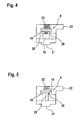
- FIG. 4 shows a third mechanical embodiment of the vent valve 6. This corresponds essentially to the basis of the FIG. 2 described so here too Reference is made to the above statements.
- the closing body 19 is shown both in its closed position (solid line) and in its open position (dotted line).
- a second spring 28 is provided here, which is arranged on the opposite side of the first spring 23 of the closing body 19.
- the second spring 28 is supported on the one hand on the temperature-shaping element 18, on the other hand on the closing body 19.
- the second spring 28 thus counteracts the spring 23.
- vent valve 6 can be adjusted such that the closing body 19 can be urged out of the valve seat 20 both due to the temperature alone (by means of the temperature shaping element 18) and due to only the pressure difference between the inlet 21 and outlet 22, the vent valve. 6 So is set to bleed the fuel tank 2.
- FIG. 5 shows a fourth mechanical embodiment of the vent valve 6.
- the closing body 19 is itself formed as the temperature-shape changing element 18 or has this at least partially.
- a support member 29 is provided to support the closing body 19 and the temperature-shaping element 18. It can be provided that the support element 29 eccentrically engages the closing body 19 or the temperature shaping element 18. Accordingly, with an expansion of the temperature-shaping element 18, a comparatively small force suffices to achieve lifting or tilting by deformation of the temperature-shaping element 18 and thus at least partial release of the valve seat 20.
- the temperature shaping element 18 does not have to counteract the entire spring force caused by the spring 23 in order to set the venting valve 6 for aerating the fuel tank 2 or for releasing the flow connection between the inlet 21 and the outlet 22.
- the support element 29 is optional in this embodiment because an at least partial release of the valve seat 20 can already be achieved by a change in the shape of the temperature shaping element 18 and its supports on the valve seat 20.
- the FIG. 6 shows a fifth mechanical embodiment of the venting valve 6. Shown is the closing body 19 of the venting valve 6 in its closed position. Again, reference is first made to the above statements.
- the temperature-shape changing element 18 is between the support member 29 and the closing body 19, where it acts off-center on this.
- the support member 29 may be omitted if the temperature shaping element 18 can be attached directly, for example, to a wall of the vent valve 6. Due to the eccentric attack of the temperature-shaping element 18 on the closing body 19, the force required for opening, which must counteract the spring force of the spring 23, is significantly reduced.
- the support element 29 may be arranged on the temperature shaping element 18 in such a way that, when the temperature changes, it is forced out of this or displaced into it.
- FIG. 7 shows the vent valve of the FIG. 6 , wherein the closing body 19 is in its open position, so that a flow connection between the inlet 21 and the outlet 22 is present.
- the flow connection is indicated by the arrow 30.
- FIG. 8 shows a sixth mechanical embodiment of the vent valve 6.
- the closing body 19 is analogous to the embodiment of FIG. 5 , formed as a temperature-shape changing element 18 and is present here as a bimetallic element. This is rotatably mounted in a support hinge 31 and a bearing point. The bearing is provided in such a way that upon deformation of the bimetallic element or of the temperature shaping element 18, the valve seat 20 is released.
- the closing body 19 is again shown in its closed position (solid line) and its open position (dotted line).
Landscapes
- Engineering & Computer Science (AREA)
- Chemical & Material Sciences (AREA)
- Combustion & Propulsion (AREA)
- Mechanical Engineering (AREA)
- General Engineering & Computer Science (AREA)
- Life Sciences & Earth Sciences (AREA)
- Sustainable Development (AREA)
- Sustainable Energy (AREA)
- Transportation (AREA)
- Cooling, Air Intake And Gas Exhaust, And Fuel Tank Arrangements In Propulsion Units (AREA)
- Supplying Secondary Fuel Or The Like To Fuel, Air Or Fuel-Air Mixtures (AREA)
Abstract
Description
- Die Erfindung betrifft ein Verfahren zum Betreiben eines Kraftstoffsystems einer Brennkraftmaschine, wobei das Kraftstoffsystem über einen Kraftstofftank und eine mindestens ein Entlüftungsventil aufweisende Entlüftungseinrichtung zur Entlüftung des Kraftstofftanks verfügt. Die Erfindung betrifft weiterhin ein Kraftstoffsystem.
- Verfahren der eingangs genannten Art sind aus dem Stand der Technik bekannt. Das entsprechende Kraftstoffsystem ist beispielsweise einem Kraftfahrzeug beziehungsweise einem Antriebssystem des Kraftfahrzeugs zugeordnet. Das Antriebssystem verfügt dabei insbesondere über zumindest eine Brennkraftmaschine und ist beispielsweise als Hybridantriebssystem ausgebildet, weist also die Brennkraftmaschine sowie zumindest eine elektrische Maschine auf, wobei die Brennkraftmaschine und die elektrische Maschine ein Antriebsmoment des Antriebssystems zumindest zeitweise gemeinsam erzeugen. Der Brennkraftmaschine wird von dem Kraftstoffsystem Kraftstoff aus dem Kraftstofftank zugeführt. Häufig wird als Kraftstoff ein flüchtiger Kohlenwasserstoffkraftstoff, beispielsweise Benzin, verwendet. Der Kraftstofftank enthält daher normalerweise sowohl ein Volumen an flüssigem Kraftstoff als auch ein Volumen an gasförmigem Kraftstoff, welches insbesondere oberhalb des flüssigen Kraftstoffs anfällt. Der Kraftstofftank kann ein geschlossener Tank, insbesondere ein Drucktank, oder ein teilgeschlossener, insbesondere auch druckloser, Tank sein. Der geschlossene Tank wird insbesondere zur Reduzierung von Emissionen verwendet.
- Bedingt durch Schwankungen der Temperatur des Kraftstoffs, beispielsweise verursacht durch Veränderungen der Umgebungstemperatur, können Druckschwankungen in dem Kraftstofftank auftreten. Aus diesem Grund ist die Entlüftungseinrichtung dem Kraftstofftank zugeordnet. Sie dient der Entlüftung des Kraftstofftanks. Auf diese Weise kann ein zu hoher Druck in dem Kraftstofftank durch die Entlüftungseinrichtung reduziert werden. Zu diesem Zweck entlüftet die Entlüftungseinrichtung den Kraftstofftank beispielsweise durch eine Entlüftungsleitung. Bei dem Entlüften kann durch die Entlüftungseinrichtung beziehungsweise die Entlüftungsleitung sowohl gasförmiger als auch flüssiger Kraftstoff aus dem Kraftstofftank heraus gelangen. Der entlüftete Kraftstoff liegt also zunächst als Gemisch aus gasförmigem und flüssigem Kraftstoff vor. Dies ist insbesondere dann der Fall, wenn das Entlüften des Kraftstofftanks bei hohem Kraftstofftankinnendruck durchgeführt wird. Dabei liegen, bedingt durch den hohen Druck beziehungsweise die große Druckdifferenz zwischen Kraftstofftankinnendruck und dem Druck außerhalb des Kraftstofftanks hohe Strömungsgeschwindigkeiten des entlüfteten Kraftstoffs vor, wodurch flüssiger Kraftstoff von dem gasförmigen Kraftstoff mitgerissen wird.
- Der gasförmige Kraftstoff darf ohne weiteres der Brennkraftmaschine beziehungsweise deren Ansaugsystem zugeführt werden, wobei zwischen dem Kraftstofftank und der Brennkraftmaschine ein der Entlüftungseinrichtung zugeordneter Kraftstoffspeicher, welcher bevorzugt als Aktivkohlespeicher ausgebildet ist, angeordnet sein kann. Der Kraftstoffspeicher dient dazu, gasförmigen Kraftstoff zwischenzuspeichern, also aufzunehmen, wenn nicht benötigter gasförmiger Kraftstoff vorliegt und abzugeben, sobald der gasförmige Kraftstoff in die Brennkraftmaschine abgeführt werden kann. Es darf jedoch kein flüssiger Kraftstoff in den Kraftstoffspeicher beziehungsweise die Brennkraftmaschine gelangen.
- Die Entlüftungseinrichtung kann aus diesem Grund zumindest eine Abscheidevorrichtung aufweisen, welche zur Trennung von gasförmigem und flüssigem Kraftstoff dient. Die Abscheidevorrichtung ist demnach dazu vorgesehen, das Überführen von flüssigem Kraftstoff von dem Kraftstofftank durch die Entlüftungseinrichtung in die Brennkraftmaschine beziehungsweise den Kraftstoffspeicher zu verhindern. Dabei scheidet die Abscheidevorrichtung flüssigen Kraftstoff ab und lässt gasförmigen Kraftstoff passieren. Der abgeschiedene flüssige Kraftstoff gelangt in einen Zwischenspeicher der Abscheidevorrichtung. Der Begriff Zwischenspeicher bedeutet dabei nicht, dass tatsächlich eine (Zwischen-) Speicherung des flüssigen Kraftstoffs vorgesehen ist. Vielmehr kann der flüssige Kraftstoff unmittelbar aus dem Zwischenspeicher beziehungsweise der Abscheidevorrichtung abgeführt werden, bevorzugt in Richtung des Kraftstofftanks. Dabei kann sich jedoch, beispielsweise durch eine Begrenzung des Abführvolumenstroms, insbesondere durch einen Leitungsquerschnitt oder dergleichen, ein Anstieg des Füllstands des Zwischenspeichers ergeben. Der abgeschiedene flüssige Kraftstoff kann demnach zumindest zeitweise nicht so schnell abgeführt werden, wie er in den Zwischenspeicher eingebracht wird. Selbstverständlich ist auch eine Zwischenspeicherung des flüssigen Kraftstoffs, beispielsweise über eine bestimmte Zeitspanne, realisierbar.
- Beim Betreiben des Kraftstoffsystems sollte verhindert werden, dass die sich in dem Zwischenspeicher beziehungsweise der Abscheidevorrichtung befindliche Menge des flüssigen Kraftstoffs eine Grenzmenge überschreitet, der Füllstand des Zwischenspeichers demnach größer als ein Grenzfüllstand wird, weil dies die Wirksamkeit der Abscheidevorrichtung beeinträchtigen kann. Je größer die Menge flüssigen Kraftstoffs in dem Zwischenspeicher ist, umso größer wird das Risiko, dass zusammen mit dem gasförmigen Kraftstoff auch flüssiger Kraftstoff wieder aus der Abscheidevorrichtung heraus gelangt und in Richtung des Kraftstoffspeichers beziehungsweise der Brennkraftmaschine mitgenommen wird. Aus diesem Grund kann der Abscheidevorrichtung die Kraftstofffördereinrichtung zugeordnet werden. Diese wird dazu eingesetzt, flüssigen Kraftstoff aus dem Zwischenspeicher zu fördern, insbesondere in Richtung des Kraftstofftanks. Die Kraftstofffördereinrichtung ist dabei üblicherweise als Saugstrahlpumpe ausgebildet, wobei als Betriebsmittel der Saugstrahlpumpe häufig Kraftstoff verwendet wird, welcher von einer Kraftstoffpumpe des Kraftstoffsystems aus dem Kraftstofftank in Richtung der Brennkraftmaschine gefördert wird.
- Bei bekannten Verfahren zum Betreiben des Kraftstoffsystems der Brennkraftmaschine erfolgt das Entlüften des Kraftstofftanks mittels der Entlüftungseinrichtung üblicherweise aufgrund des Kraftstofftankinnendrucks und einer Temperatur. Das bedeutet, dass das Entlüftungsventil der Entlüftungseinrichtung anhand des Kraftstofftankinnendrucks und der Temperatur zum Entlüften des Kraftstofftanks eingestellt wird. Dies ist jedoch nur bei aktivierter Brennkraftmaschine möglich, weil nur in diesem Fall ein der Brennkraftmaschine beziehungsweise dem Kraftstoffsystem zugeordnetes Steuergerät aktiviert ist. Dieses Steuergerät dient dazu, das Entlüftungsventil anhand des Kraftstofftankinnendrucks und der Temperatur zum Entlüften des Kraftstofftanks einzustellen. In Stillstandsphasen, also bei deaktivierter Brennkraftmaschine und damit deaktiviertem Steuergerät, wird der Kraftstofftankinnendruck üblicherweise durch mindestens ein mechanisches Überströmventil begrenzt, welches auf ein typisches Druckniveau ausgelegt ist. Verändert sich nun die Temperatur in dem Kraftstofftank, beispielsweise durch Wärmeeintrag durch die noch betriebswarme Brennkraftmaschine oder durch äußere Einflüsse, so stellt sich ein mit dem Dampfdruck des Kraftstoffs korrelierender Kraftstofftankinnendruck in dem Tank ein. Erreicht beziehungsweise überschreitet dieser das typische Druckniveau, und insbesondere einen definierten maximalen Kraftstofftankinnendruck, so öffnet sich das Überströmventil zum Entlüften des Kraftstofftanks. Unter einer deaktivierter Brennkraftmaschine ist dabei eine Brennkraftmaschine im Stillstand zu verstehen, während eine aktivierte Brennkraftmaschine zumindest im Leerlauf betrieben wird, insbesondere ein Drehmoment zur Verfügung stellt
- Bei deaktivierter Brennkraftmaschine erfolgt somit das Entlüften des Kraftstofftanks aufgrund ausschließlich des Kraftstofftankinnendrucks. Häufig ist es jedoch der Fall, dass sich der zulässige maximale Kraftstofftankinnendruck mit der Temperatur verändert, also von dieser abhängig ist. Insbesondere bei deaktivierter Brennkraftmaschine, wenn der Kraftstofftankinnendruck lediglich über das Überströmventil abgebaut werden kann, kann es demnach dazu kommen, dass der Kraftstofftank mit einem Kraftstofftankinnendruck beaufschlagt wird, welcher Kräfte oberhalb einer Festigkeit des Kraftstofftanks bewirkt. Dies führt beispielsweise zu nicht akzeptablem Fließverhalten beziehungsweise zu ungewollten, nicht reversiblen Deformationen des Kraftstofftanks, insbesondere einer Kraftstofftankschale.
- Es ist demnach Aufgabe der Erfindung, ein Verfahren zum Betreiben eines Kraftstoffsystems einer Brennkraftmaschine vorzuschlagen, welches die genannten Nachteile nicht aufweist, sondern ein zuverlässiges Betreiben des Kraftstoffsystems, insbesondere auch bei deaktivierter Brennkraftmaschine, ermöglicht.
- Dies wird erfindungsgemäß erreicht, indem in einer ersten Betriebsart anhand ausschließlich einer Temperatur das Entlüftungsventil zum Entlüften des Kraftstofftanks eingestellt wird, und/oder indem bei einem Deaktivieren der Brennkraftmaschine das Entlüften über einen bestimmten Zeitraum erfolgt. Das Entlüftungsventil kann üblicherweise zum Entlüften oder Verschließen des Kraftstofftanks eingestellt werden. Unter einem Verschließen des Kraftstofftanks ist dabei ein Verschließen des Entlüftungsventils zu verstehen; der Kraftstofftank muss also auch nach dem Verschließen nicht hermetisch dicht sein. Auch bei einem Verschließen des Kraftstofftanks mittels des Entlüftungsventils kann demnach an anderer Stelle, nicht jedoch über das Entlüftungsventil, dem Kraftstofftank Kraftstoff entnommen oder zugeführt werden.
- Das Einstellen des Entlüftungsventils zum Entlüften des Kraftstofftanks ausschließlich anhand der Temperatur ist insbesondere bei deaktivierter Brennkraftmaschine vorgesehen. Es ist also nicht, wie aus dem Stand der Technik bekannt, vorgesehen, dass das Entlüftungsventil zum Entlüften des Kraftstofftanks eingestellt wird, sobald der Kraftstofftankinnendruck einen bestimmten Kraftstofftankinnendruck, insbesondere einen maximalen Kraftstofftankinnendruck, übersteigt. Vielmehr erfolgt das Einstellen des Entlüftungsventils im Wesentlichen unabhängig von dem Kraftstofftankinnendruck, sondern aufgrund lediglich der Temperatur. Ist die Brennkraftmaschine dagegen aktiviert, befindet sich also zumindest im Leerlaufbetrieb, ist es zwar möglich, die erste Betriebsart auszuwählen, bevorzugt wird jedoch eine von dieser unterschiedliche Betriebsart, bei welcher das Entlüftungsventil anhand ausschließlich eines Drucks beziehungsweise sowohl anhand der Temperatur als auch des Drucks zum Entlüften des Kraftstofftanks eingestellt wird.
- Selbstverständlich kann das Entlüftungsventil auch in der ersten Betriebsart derart ausgebildet sein, dass es neben der Temperatur aufgrund zumindest des Kraftstofftankinnendrucks zum Entlüften des Kraftstofftanks eingestellt wird. Es kann demnach vorgesehen sein, dass das Entlüftungsventil in der ersten Betriebsart anhand ausschließlich des Kraftstofftankinnendrucks oder anhand ausschließlich der Temperatur zum Entlüften des Kraftstofftanks einstellbar ist. Es ist also stets vorgesehen, dass das Entlüftungsventil anhand ausschließlich der Temperatur, unabhängig von dem Kraftstofftankinnendruck, zum Entlüften des Kraftstofftanks einstellbar ist. Zusätzlich kann das Entlüften jedoch unabhängig von dem durch die Temperatur bewirkten Entlüften auch durch den Kraftstofftankinnendruck bewirkt sein. Es erfolgt demnach ein Entlüften entweder aufgrund ausschließlich der Temperatur oder aufgrund ausschließlich des Kraftstofftankinnendrucks, nicht jedoch aufgrund beider Parameter, beispielsweise aufgrund eines Kraftstofftankinnendrucks, welcher in Abhängigkeit der Temperatur gewählt ist. Somit kann das Entlüftungsventil beispielsweise zum Entlüften eingestellt werden, wenn die Temperatur eine bestimmte Temperatur überschreitet, ohne dass der Druck, insbesondere der Kraftstofftankinnendruck, größer als ein bestimmter Druck ist, oder wenn der Druck den bestimmten Druck überschreitet, ohne dass die Temperatur größer ist als die bestimmte Temperatur. Alternativ oder zusätzlich kann es jedoch auch vorgesehen sein, dass das Entlüftungsventil sowohl anhand der Temperatur als auch des Drucks eingestellt wird. Dabei wird beispielsweise der Druck, bei welcher das Entlüftungsventil zum Entlüften eingestellt wird, in Abhängigkeit der Temperatur oder die Temperatur, bei welcher das Entlüften erfolgen soll, in Abhängigkeit des Drucks gewählt.
- Zusätzlich oder alternativ kann es vorgesehen sein, dass bei dem Deaktivieren der Brennkraftmaschine das Entlüften über den bestimmten Zeitraum erfolgt. Bevorzugt erfolgt das Entlüften unmittelbar bei dem Deaktivieren. Somit wird der Kraftstofftank entlüftet, wenn die Brennkraftmaschine deaktiviert wird, also von einem aktivierten in einen deaktivierten Zustand übergeht. Es kann auch vorgesehen sein, dass das Entlüften unmittelbar vor, insbesondere bis zu dem Deaktivieren der Brennkraftmaschine vorgesehen ist. Darunter ist zu verstehen, dass das Entlüften ununterbrochen zumindest bis zum Deaktivieren der Brennkraftmaschine erfolgt. Das Entlüften ist über den bestimmten Zeitraum vorgesehen. Dieser Zeitraum kann eine vorbestimmte Zeitspanne umfassen. Alternativ kann das Entlüften auch bis zu einem erneuten Aktivieren der Brennkraftmaschine vorgesehen sein.
- Das Entlüften über einen bestimmten Zeitraum bei einem Deaktivieren der Brennkraftmaschine ist insbesondere bei und/oder in einer bestimmten Zeitspanne nach einem Unterschreiten beziehungsweise Überschreiten einer Grenztemperatur durch die Temperatur vorgesehen. Es ist also beispielsweise nur dann vorgesehen, den Kraftstofftank bei dem Deaktivieren der Brennkraftmaschine zu Entlüften, wenn zuvor, innerhalb der bestimmten Zeitspanne vor dem Deaktivieren, die Grenztemperatur durch die Temperatur unterschritten beziehungsweise überschritten wurde. Insbesondere wird bei einem Unterschreiten beziehungsweise Überschreiten der Grenztemperatur durch die Temperatur ein Merker gesetzt und nach Ablauf der bestimmten Zeitspanne, sollte das Unterschreiten beziehungsweise Überschreiten nicht mehr vorliegen, wieder zurückgesetzt. Soll nun die Brennkraftmaschine deaktiviert werden, so erfolgt das Entlüften über den bestimmten Zeitraum nur dann, wenn der Merker gesetzt ist.
- Eine andere, alternative Möglichkeit ist es, ein den Druck auswertendes Steuergerät, welches beispielsweise der Brennkraftmaschine zugeordnet ist, auch nach dem Deaktivieren der Brennkraftmaschine zumindest über einen gewissen Zeitraum zu betreiben. Üblicherweise wird das Steuergerät zusammen mit der Brennkraftmaschine deaktiviert, so dass mit dem Deaktivieren der Brennkraftmaschine das Steuergerät funktionslos wird. Hier kann es jedoch vorgesehen sein, dass das Steuergerät weiterhin betrieben wird. Dies ist insbesondere bis zu einem Zeitpunkt vorgesehen, zu dem davon ausgegangen werden kann, dass sich der Druck nicht mehr aufgrund eines Wärmeeintrags durch die Brennkraftmaschine soweit erwärmt, dass es zu einer Beschädigung des Kraftstofftanks kommt.
- Mit dieser Vorgehensweise kann zuverlässig das Auftreten eines unzulässig hohen Kraftstofftankinnendrucks vermieden werden, insbesondere auch bei deaktivierter Brennkraftmaschine. Alternativ kann auch das Belüften des Kraftstofftanks unterbrochen werden, wenn die Temperatur die Grenztemperatur überschreitet. Auf diese Weise wird das Entweichen von Kraftstoff durch übermäßiges Ausgasen bei hohen Temperaturen vermieden. Ebenso kann das Belüften bei dem Unterschreiten der Grenztemperatur durchgeführt werden, um den Kraftstofftank vor dem Auftreten eines zu hohen Kraftstofftankinnendrucks bei sehr tiefen Temperaturen zu schützen. Das beschriebene Verfahren, insbesondere das Einstellen des Entlüftungsventils nur aufgrund der Temperatur, kann demnach für eine Vielzahl von Anwendungsfällen eingesetzt werden.
- Eine Weiterbildung der Erfindung sieht vor, dass das Entlüftungsventil bei einem Überschreiten beziehungsweise Unterschreiten einer Grenztemperatur zum Entlüften des Kraftstofftanks eingestellt wird. Das Entlüften mittels des Entlüftungsventils erfolgt also bei dem Überschreiten der Grenztemperatur oder alternativ bei dem Unterschreiten. Es können auch mehrere Entlüftungsventile vorgesehen sein, wobei zumindest eines bei Überschreiten einer ersten Grenztemperatur (Maximaltemperatur) und zumindest ein anderes bei Unterschreiten einer zweiten Grenztemperatur (Minimaltemperatur) zum Entlüften des Kraftstofftanks eingestellt wird. Auf diese Weise können Beschädigungen des Kraftstofftanks sowohl aufgrund sehr niedriger als auch sehr hoher Temperaturen und dem damit einhergehenden hohen Kraftstofftankinnendruck vermieden werden.
- Eine Weiterbildung der Erfindung sieht vor, dass in einer zweiten Betriebsart anhand ausschließlich eines Drucks, insbesondere eines Kraftstofftankinnendrucks, das Entlüftungsventil zum Entlüften des Kraftstofftanks eingestellt wird. Dabei kann die zweite Betriebsart beispielsweise bei aktivierter Brennkraftmaschine gewählt sein, so dass in diesem Fall das Entlüften des Kraftstofftanks ausschließlich aufgrund des Drucks erfolgt.
- Eine Weiterbildung der Erfindung sieht vor, dass in einer dritten Betriebsart sowohl anhand der Temperatur als auch des Drucks das Entlüftungsventil zum Entlüften des Kraftstofftanks eingestellt wird. Auch die dritte Betriebsart kann beispielsweise bei aktivierter Brennkraftmaschine gewählt sein. Hier ist es vorgesehen, dass zum Einstellen des Entlüftungsventils sowohl die Temperatur als auch der Druck herangezogen werden. Zusätzlich können selbstverständlich auch weitere Größen verwendet werden.
- Eine Weiterbildung der Erfindung sieht vor, dass der bestimmte Zeitraum derart gewählt wird, dass der Kraftstofftankinnendruck um einen bestimmten Differenzdruck reduziert wird. Insbesondere bei deaktivierter Brennkraftmaschine kann der bestimmte Zeitraum auch in Abhängigkeit von einem Speichervermögen eines Kraftstoffspeichers gewählt sein, welcher zur (Zwischen-) Speicherung von gasförmigem Kraftstoff dient. Der Kraftstoffspeicher ist bevorzugt strömungstechnisch nach dem Entlüftungsventil vorgesehen, so dass beim Entlüften des Kraftstofftanks entlüfteter Kraftstoff über das Entlüftungsventil in den Kraftstoffspeicher gelangen kann. Der bestimmte Zeitraum ist insbesondere derart gewählt, dass auch nach einem Beenden des Entlüftens und bei deaktivierter Brennkraftmaschine davon ausgegangen werden kann, dass der Kraftstofftankinnendruck dauerhaft unterhalb des maximal zulässigen Kraftstofftankinnendrucks verbleibt. Der bestimmte Zeitraum kann auch derart gewählt sein, dass der Kraftstofftankinnendruck auf einen Umgebungsdruck des Kraftstoffsystems gebracht wird.
- Eine Weiterbildung der Erfindung sieht vor, dass als Temperatur eine Umgebungstemperatur, einen Kraftstofftankinnentemperatur, eine Kraftstofftemperatur, eine Entlüftungsventiltemperatur, eine Leitungstemperatur oder eine Abscheidevorrichtungstemperatur verwendet wird. Prinzipiell kann die Temperatur demnach eine beliebige, für den Kraftstofftank beziehungsweise den Kraftstoff relevante Temperatur sein. Besonders bevorzugt ist die Temperatur jedoch eine Kraftstofftanktemperatur beziehungsweise die Kraftstofftankinnentemperatur. Letztere kann, muss jedoch nicht der Kraftstofftemperatur entsprechen. Alternativ kann auch die Temperatur des Entlüftungsventils oder die Temperatur einer, insbesondere kraftstoffführenden, Leitung herangezogen werden. Auch die Temperatur einer Abscheidevorrichtung kann verwendet werden. Die Abscheidevorrichtung dient dabei üblicherweise der Trennung von gasförmigem und flüssigem Kraftstoff, um das Überführen von flüssigem Kraftstoff von dem Kraftstofftank durch die Entlüftungseinrichtung in die Brennkraftmaschine beziehungsweise den Kraftstoffspeicher zu verhindern. Die Abscheidevorrichtung kann strömungstechnisch vor oder nach dem Entlüftungsventil vorgesehen sein und ist üblicherweise der Entlüftungseinrichtung zugeordnet. Bevorzugt wird die Temperatur durch Messung bestimmt. Sie kann zusätzlich einer Korrektur unterzogen werden, beispielsweise der Addition einer Offsettemperatur.
- Eine Weiterbildung der Erfindung sieht vor, dass zumindest bei deaktivierter Brennkraftmaschine ein Steuergerät die Temperatur auswertet und das Entlüftungsventil entsprechend einstellt, und dass das Steuergerät oder ein weiteres Steuergerät ausschließlich bei aktivierter Brennkraftmaschine zumindest den Druck auswertet und das Entlüftungsventil entsprechend einstellt. Demnach ist zumindest das eine Steuergerät vorgesehen, welches der Brennkraftmaschine oder dem Kraftstoffsystem zugeordnet ist. Das Steuergerät soll bei deaktivierter Brennkraftmaschine die Temperatur auswerten und das Entlüftungsventil gemäß den vorstehenden Ausführungen einstellen. Zugleich ist das Steuergerät oder das weitere Steuergerät dazu vorgesehen, bei aktivierter Brennkraftmaschine zumindest den Druck und vorzugsweise die Temperatur auszuwerten und ebenfalls das Entlüftungsventil entsprechend einzustellen. Es kann also vorgesehen sein, dass bei deaktivierter Brennkraftmaschine ausschließlich das eine Steuergerät aktiviert ist, während bei aktivierter Brennkraftmaschine sowohl das eine als auch das weitere Steuergerät aktiviert sind, also dem Einstellen des Entlüftungsventils dienen. Ebenso ist es vorstellbar, dass bei deaktivierter Brennkraftmaschine ausschließlich das eine Steuergerät und bei aktivierter Brennkraftmaschine ausschließlich das weitere Steuergerät aktiviert ist, so dass jeweils das eine oder das weitere Steuergerät für das Einstellen des Entlüftungsventils verwendet wird. In einer besonders vorteilhaften Ausführungsform ist lediglich das eine Steuergerät vorgesehen, welches in diesem Fall bei deaktivierter Brennkraftmaschine das Entlüftungsventil anhand ausschließlich der Temperatur und bei aktivierter Brennkraftmaschine zumindest anhand des Drucks einstellt.
- Eine Weiterbildung der Erfindung sieht vor, dass das Entlüftungsventil in ein in Abhängigkeit des Kraftstofftankfüllstands schaltendes Belüftungsventil, in ein dem Kraftstofftank zugeordnetes Sicherheitsventil, in einen Tankdeckel des Kraftstofftanks, in eine Abscheidevorrichtung, in den Kraftstofftank oder in ein Überströmventil integriert oder einem solchen strömungstechnisch vor-, nach- oder parallel geschaltet wird. Die Integration in eines der vorgenannten Elemente ermöglicht eine äußerst platzsparende und damit kostengünstige Ausführung des Entlüftungsventils. Selbstverständlich kann das Entlüftungsventil auch als separates Element vorliegen und dem genannten Elementen strömungstechnisch zugeordnet sein. Das Belüftungsventil ist insbesondere als FLVV (Fill Limit Venting Valve) ausgebildet. Ein solches ermöglicht ein Belüften des Kraftstofftanks, solange der Kraftstofftankfüllstand kleiner ist als ein bestimmter Kraftstofftankfüllstand, insbesondere Kraftstofftankmaximalfüllstand. Über das Belüftungsventil wird somit das Belüften des Kraftstofftanks, insbesondere bei einem Zuführen von Kraftstoff in den Kraftstofftank, sichergestellt. Das Sicherheitsventil liegt beispielsweise als Überroll-Sicherheitsventil beziehungsweise ROV (Roll Over Valve) vor. Sowohl das Belüftungsventil als auch das Sicherheitsventil sind üblicherweise dem Kraftstofftank zugeordnet und der Abscheidevorrichtung strömungstechnisch vorgeschaltet, so dass der Kraftstoff zunächst das Belüftungsventil beziehungsweise das Sicherheitsventil durchläuft, bevor es in die Abscheidevorrichtung gelangt. Das Überströmventil liegt beispielsweise als Druckbegrenzungsventil vor, ist also derart ausgebildet, dass es eine Strömungsverbindung zwischen seinem Eingang und seinem Ausgang nur dann herstellt, wenn die Druckdifferenz zwischen diesen einen bestimmten Wert überschreitet.
- Eine Weiterbildung der Erfindung sieht vor, dass das Entlüftungsventil zumindest ein Temperaturformänderungselement, insbesondere Temperaturdehnelement, bevorzugt ein Wachsdehnelement oder ein Bimetallelement, aufweist. Auf diese Weise kann das Einstellen des Entlüftungsventils zur Entlüftung des Kraftstofftanks ausschließlich mechanisch erfolgen, ohne dass eine elektrische oder elektronische Ansteuerung des Entlüftungsventils notwendig ist. Das Einstellen ist demnach mittels des Temperaturformänderungselements vorgesehen. Das Temperaturformänderungselement ist dabei ein Element, welches seine Form in Abhängigkeit von der Temperatur ändert. Es kann beispielsweise als Temperaturdehnelement vorliegen, welches zumindest seine Länge mit ansteigender Temperatur vergrößert. Das Temperaturformänderungselement kann beispielsweise als Wachsdehnelement oder als Bimetallelement vorliegen. Das Wachsdehnelement ist beispielsweise eine mit Wachs gefüllte Kapsel, deren Füllvolumen sich in Abhängigkeit von der Temperatur vergrößert oder verkleinert und dadurch das Entlüftungsventil zum Entlüften beziehungsweise Verschließen des Kraftstofftanks eingestellt.
- Die Erfindung betrifft weiterhin ein Kraftstoffsystem einer Brennkraftmaschine, insbesondere zur Durchführung des Verfahrens gemäß den vorstehenden Ausführungen, wobei das Kraftstoffsystem über einen Kraftstofftank und eine mindestens ein Entlüftungsventil aufweisende Entlüftungseinrichtung zur Entlüftung des Kraftstofftanks verfügt. Dabei ist vorgesehen, dass das Kraftstoffsystem dazu ausgebildet ist, in einer ersten Betriebsart anhand ausschließlich einer Temperatur das Entlüftungsventil zum Entlüften des Kraftstofftanks einzustellen, und/oder dass bei einem Deaktivieren der Brennkraftmaschine das Entlüften über einen bestimmten Zeitraum vorgesehen ist. Das Kraftstoffsystem kann gemäß den vorstehenden Ausführungen weitergebildet sein.
- Die Erfindung betrifft auch ein Antriebssystem mit einem Kraftstoffsystem gemäß den vorstehenden Ausführungen, welches insbesondere gemäß dem vorstehend beschriebenen Verfahren betrieben wird beziehungsweise betreibbar ist. Das Antriebssystem verfügt dabei insbesondere über zumindest eine Brennkraftmaschine und ist beispielsweise als Hybridantriebssystem ausgebildet.
- Die Erfindung wird nachfolgend anhand der in der Zeichnung dargestellten Ausführungsbeispiele näher erläutert, ohne dass eine Beschränkung der Erfindung erfolgt. Dabei zeigen:
- Figur 1
- eine schematische Darstellung eines Kraftstoffsystems einer Brennkraftmaschine mit einer Entlüftungseinrichtung, die mindestens ein Entlüftungsventil zur Entlüftung eines Kraftstofftanks aufweist, wobei das Entlüftungsventil elektrisch betätigbar ist,
- Figur 2
- eine erste mechanische Ausführungsform des Entlüftungsventils,
- Figur 3
- eine zweite mechanische Ausführungsform des Entlüftungsventils,
- Figur 4
- eine dritte mechanische Ausführungsform des Entlüftungsventils,
- Figur 5
- eine vierte mechanische Ausführungsform des Entlüftungsventils,
- Figur 6
- eine fünfte mechanische Ausführungsform des Entlüftungsventils in einem ersten Zustand,
- Figur 7
- das aus der
Figur 6 bekannte Entlüftungsventil in einem zweiten Zustand, und - Figur 8
- eine sechste mechanische Ausführungsform des Entlüftungsventils.
- Die
Figur 1 zeigt eine schematische Darstellung eines Kraftstoffsystems 1. Das Kraftstoffsystem 1 ist beispielsweise Bestandteil eines Kraftfahrzeugs beziehungsweise eines Antriebssystems des Kraftfahrzeugs. Das Kraftstoffsystem 1 verfügt über einen Kraftstofftank 2 und eine Entlüftungseinrichtung 3 zur Entlüftung des Kraftstofftanks 2. Die Entlüftungseinrichtung 3 kann eine hier nicht dargestellte Abscheidevorrichtung aufweisen. Die Abscheidevorrichtung dient dazu, flüssigen Kraftstoff aus einem Gemisch von flüssigem und gasförmigem Kraftstoff abzuscheiden. Der abgeschiedene flüssige Kraftstoff liegt anschließend in einem Zwischenspeicher der Abscheidevorrichtung vor und kann, beispielsweise durch eine Rückführungsleitung, wieder dem Kraftstofftank 2 zugeführt werden. Die Rückführungsleitung weist bevorzugt ein Ventil, insbesondere Drainageventil beziehungsweise Rückschlagventil, auf. Anstelle der Rückführungsleitung kann auch lediglich das Ventil vorgesehen sein, insbesondere wenn die Abscheidevorrichtung zumindest bereichsweise in dem Kraftstofftank 2 vorliegt, so dass durch das Ventil aus dem Zwischenspeicher austretender Kraftstoff unmittelbar in den Kraftstofftank 2 gelangt. Das Ventil ist derart ausgebildet, dass Kraftstoff durch die Rückführungsleitung lediglich aus dem Zwischenspeicher herausgelangen, nicht jedoch in ihn hineingelangen kann. Somit wird verhindert, dass durch die Rückführungsleitung Kraftstoff aus dem Kraftstofftank 2 in den Zwischenspeicher gelangt. - Die Entlüftungseinrichtung 3 steht über eine Entlüftungsleitung 4 in Strömungsverbindung mit dem Kraftstofftank 2. Auf der dem Kraftstofftank 2 zugewandten Seite der Entlüftungsleitung 4 beziehungsweise in dem Kraftstofftank 2 ist dabei ein Belüftungsventil 5 vorgesehen, welches in Abhängigkeit des Kraftstofftankfüllstands schaltet. Das Belüftungsventil 5 ist jedoch optional, das Kraftstoffsystem 1 kann demnach auch ohne dieses vorliegen. Üblicherweise ist das Belüftungsventil 5 derart ausgeführt, dass es nur bei einem Kraftstofftankfüllstand unterhalb eines bestimmten Kraftstofftankfüllstands, insbesondere eines Maximalkraftstofftankfüllstands, geöffnet ist, also Kraftstoff, insbesondere gasförmiger Kraftstoff, aus dem Kraftstofftank 2 in die Entlüftungsleitung 4 gelangen kann. Die Entlüftungsleitung 4 weist ein Entlüftungsventil 6 auf, welches mittels einer hier nicht dargestellten Betätigungseinrichtung betätigbar ist. Das Entlüftungsventil 6 und die Betätigungseinrichtung sind dabei bevorzugt derart ausgebildet, dass der Durchströmungsquerschnitt des Entlüftungsventils 6 stetig einstellbar ist. Auf der dem Kraftstofftank 2 abgewandten Seite mündet die Entlüftungsleitung 4 in einen Kraftstoffspeicher 7, insbesondere einen Aktivkohlespeicher, ein. Der Kraftstoffspeicher 7 dient der Zwischenspeicherung von gasförmigem Kraftstoff.
- Dem Entlüftungsventil 6 sind zwei Überströmventile 8 und 9 parallel geschaltet. Die Überströmventile 8 und 9 weisen jeweils einen von einer Feder 10 federkraftbeaufschlagten Schließkörper 11 auf. Sie sind derart ausgebildet, dass sie entgegengesetzte Durchströmungsrichtungen ermöglichen. Die Überströmventile 8 und 9 öffnen beziehungsweise schließen in Abhängigkeit von einer Druckdifferenz zwischen einem ersten, auf einer Seite des Entlüftungsventils 6 angeordneten Abschnitt 4a der Entlüftungsleitung 4 und einem zweiten, auf der gegenüberliegenden Seite des Entlüftungsventils 6 angeordneten Abschnitt 4b. Das Überströmventil 8 öffnet, sobald in dem Abschnitt 4a ein Druck vorliegt, welcher eine Kraft auf den Schließkörper 11 des Überströmventil 8 bewirkt, welche größer ist als eine von einem in dem Abschnitt 4b vorliegenden Druck bewirkte Kraft zuzüglich der Federkraft der Feder 10 des Überströmventils 8. Das Überströmventil 9 öffnet dagegen, wenn die von dem Druck in dem Abschnitt 4b bewirkte Kraft größer ist als die von dem in dem Abschnitt 4a vorliegenden Druck bewirkte Kraft zuzüglich der Federkraft der Feder 10 des Überströmventil 9. Mittels der Überströmventile 8 und 9 kann damit das Entlüftungsventil 6 umgangen werden, wenn auf einer Seite des Entlüftungsventils 6 ein zu hoher Druck vorliegen sollte.
- Das Entlüftungsventil 6 ist an ein Steuergerät 12 und ein weiteres Steuergerät 13 angeschlossen. Das Steuergerät 12 ist dabei auch dann aktiviert, wenn die Brennkraftmaschine deaktiviert ist, während das weitere Steuergerät 13 ausschließlich bei aktivierter Brennkraftmaschine aktiviert ist. Das Steuergerät 12 weist einen Temperatureingang 14 auf, an welchen ein hier nicht dargestellter Temperatursensor angeschlossen ist. An dem Temperatureingang 14 liegt demnach ein Temperatursignal an, welches beispielsweise eine Temperatur des Kraftstofftanks 2, beispielsweise die Kraftstofftemperatur, wiedergibt. Das Steuergerät 12 weist einen Temperaturschalter 15 auf, welcher ausschließlich aufgrund der über den Temperatureingang 14 übermittelten Temperatur eine elektrische Verbindung zwischen einem Anschluss 16, beispielsweise einem Dauerplus eines Fahrzeugs, und dem Entlüftungsventil 6 herstellt. Bei geschlossenem Temperaturschalter 15 wird insofern ein Entlüften des Kraftstofftanks 2 über das Entlüftungsventil 6 bewirkt, bei geöffnetem Temperaturschalter 15 kann das Entlüftungsventil 6 dagegen geschlossen sein, so dass kein Entlüften des Kraftstofftanks 2 durchgeführt wird.
- Das weitere Steuergerät 13 ist an einen Drucksensor 17 angeschlossen, mittels welchem ein Kraftstofftankinnendruck des Kraftstofftanks 2 bestimmbar ist. Das weitere Steuergerät 13 ist dazu ausgeführt, das Entlüftungsventil 6 aufgrund zumindest des Kraftstofftankinnendrucks, insbesondere aufgrund lediglich des Kraftstofftankinnendrucks, einzustellen. Es ist nun vorgesehen, dass bei deaktivierter Brennkraftmaschine das Steuergerät 12 ausschließlich die Temperatur auswertet, welche über den Temperatureingang 14 bereitgestellt wird und das Entlüftungsventil entsprechend der Temperatur einstellt. Dagegen wertet das weitere Steuergerät 13 ausschließlich bei aktivierter Brennkraftmaschine den mittels des Drucksensors 17 bestimmten Druck aus und stellt das Entlüftungsventil 6 ebenfalls entsprechend ein. Das Belüften des Kraftstofftanks 2 mittels des Belüftungsventils 6 erfolgt somit entweder durch das Steuergerät 12 oder das weitere Steuergerät 13. Es ist demnach ausreichend, wenn lediglich eines dieser Steuergeräte 12 und 13 das Entlüftungsventil 6 zum Entlüften einstellt, um das Entlüften des Kraftstofftanks 2 zu erreichen.
- Bei deaktivierter Brennkraftmaschine liegt eine erste Betriebsart vor, in welcher ausschließlich anhand der Temperatur das Entlüftungsventil 6 zur Entlüftung des Kraftstofftanks 2 eingestellt wird. Bei aktivierter Brennkraftmaschine liegt dagegen eine zweite Betriebsart vor, in der das weitere Steuergerät 13 das Entlüftungsventil 6 ausschließlich anhand des Kraftstofftankinnendrucks zum Entlüften des Kraftstofftanks 2 einstellt. Alternativ kann es selbstverständlich vorgesehen sein, dass das weitere Steuergerät 13 beziehungsweise dessen Funktionalität in das Steuergerät 12 integriert ist.
- Alternativ oder zusätzlich kann es vorgesehen sein, dass bei einem Deaktivieren der Brennkraftmaschine das weitere Steuergerät 13 das Entlüftungsventil 6 zu einem Entlüften des Kraftstofftanks 2 über einen bestimmten Zeitraum einstellt. In diesem Fall kann das Steuergerät 12 entfallen oder zusätzlich vorgesehen sein. Auf diese Weise kann trotz eines nach dem Deaktivieren der Brennkraftmaschine erfolgenden Wärmeeintrags in den Kraftstofftank 2 (angedeutet durch die Pfeile Q̇) eine unzulässige thermische Belastung des Kraftstofftanks 2 vermieden werden, weil unabhängig von dem Zustand des weiteren Steuergerät 13 das Entlüftungsventil 6 mittels des Steuergeräts 12 anhand ausschließlich der Temperatur zum Entlüften des Kraftstofftanks 2 einstellbar ist. Das hier dargestellte Entlüftungsventil 6 liegt in Form eines FTIV (Fuel Tank Isolation Valve) vor beziehungsweise ist in ein solches integriert. Das FTIV ist dabei elektronisch sowohl von dem Steuergerät 12 als auch dem weiteren Steuergerät 13 zum Belüften des Kraftstofftanks 2 einstellbar.
- Im Gegensatz dazu zeigen die
Figuren 2 bis 8 Ausführungsformen des Entlüftungsventils 6, welche von dem FTIV getrennt vorliegen. Sie sind damit bevorzugt derart in dem Kraftstoffsystem 1 derFigur 1 vorgesehen, dass sie dem FTIV parallel geschaltet sind, sofern ein solches überhaupt vorgesehen ist. Weil die anhand derFiguren 2 bis 8 beschriebenen Ausführungsformen des Entlüftungsventils 6 rein mechanisch arbeiten, entfällt das in derFigur 1 dargestellte Steuergerät 12, so dass das FTIV - sofern vorhanden - mittels des weiteren Steuergerät 13 zum Belüften des Kraftstofftanks 2 eingestellt wird, während das Entlüftungsventil 6 unabhängig von dem FTIV arbeitet. Die anhand derFiguren 2 bis 8 beschriebenen Entlüftungsventile 6 können beispielsweise das Überströmventil 8 ersetzen. Alternativ sind sie derart in dem Kraftstoffsystem 1 angeordnet, dass sie zum Belüften des Kraftstofftanks 2 eine Strömungsverbindung zwischen dem Kraftstofftank 2 und einer weiteren Einrichtung, beispielsweise dem Kraftstoffspeicher 7, herstellen können. - Die
Figur 2 zeigt eine erste mechanische Ausführungsform des Entlüftungsventils 6. Das Entlüftungsventil 6 ist derart ausgebildet, dass es sowohl anhand ausschließlich einer Temperatur als auch anhand ausschließlich eines Drucks zum Belüften des Kraftstofftanks 2 einstellbar ist. Zum Einstellen anhand ausschließlich der Temperatur ist ein Temperaturformänderungselement 18 vorgesehen, welches als Wachsdehnelement ausgebildet ist. Das Temperaturformänderungselement 18 steht mit einem Schließkörper 19 des Entlüftungsventils 6 in Wirkverbindung. Es ist derart ausgebildet, dass es das Entlüftungsventil 6 bei einem Überschreiten einer Grenztemperatur ein Freigeben des Ventilsitzes 20 und damit einer Strömungsverbindung zwischen einem Eingang 21 und einem Ausgang 22 bewirkt. Der Schließkörper 19 befindet sich dabei in einer Offenposition, welche durch die punktierte Linie angedeutet ist. Der Eingang 21 ist dem Kraftstofftank 2 und der Ausgang 22 dem Kraftstoffspeicher 7 zugeordnet, so dass das Entlüften des Kraftstofftanks 2 in Richtung des Kraftstoffspeichers 7 erfolgt. - Das Temperaturformänderungselement 18 ist jedoch nicht fest mit dem Schließkörper 19 verbunden. Vielmehr erlaubt das Entlüftungsventil 6 auch, dass der Schließkörper 19 den Ventilsitz 20 unabhängig von dem Temperaturformänderungselement 18 freigibt, wenn eine von einem Differenzdruck zwischen dem Eingang 21 und dem Ausgang 22 auf den Schließkörper 19 ausgeübte Kraft die Federkraft einer Feder 23 übersteigt. Das Entlüftungsventil 6 gibt demnach die Strömungsverbindung zwischen Eingang 21 und Ausgang 22 sowohl aufgrund ausschließlich einer Temperatur als auch aufgrund ausschließlich eines Drucks beziehungsweise einer Druckdifferenz, jeweils im Wesentlichen unabhängig voneinander, frei. Die Feder 23 beziehungsweise die von dieser bewirkte Federkraft wirkt der Verlagerung des Schließkörpers durch das Temperaturformänderungselement 18 entgegen beziehungsweise drängt dieses in Richtung seiner Geschlossenposition (angedeutet durch die durchgehende Linie). Die Feder 23 ist beispielsweise derart gewählt, dass in einem normalen Betrieb des Kraftstoffsystems 1 der Schließkörper 19 ausschließlich aufgrund des Temperaturformänderungselements 18 aus dem Ventilsitz 20 gedrängt werden kann, nicht jedoch aufgrund von einer Druckdifferenz zwischen dem Eingang 21 und dem Ausgang 22. Erst bei einer Druckdifferenz, welche in einem normalen Betrieb nicht auftritt, ist somit ein Freigeben der Strömungsverbindung aufgrund ausschließlich des Drucks vorgesehen.
- Die
Figur 3 zeigt eine zweite mechanische Ausführungsform des Entlüftungsventils 6. In dieser ist das Entlüftungsventil 6 in das Belüftungsventil 5 integriert. Das Belüftungsventil 5 ist hier als FLW (Fill Limit Venting Valve) ausgebildet. Ein solches ermöglicht ein Belüften des Kraftstofftanks 2, solange der Kraftstofftankfüllstand kleiner ist als ein bestimmter Kraftstofftankfüllstand, insbesondere Kraftstofftankmaximalfüllstand. Über das Belüftungsventil 5 wird somit das Belüften des Kraftstofftanks 2, insbesondere bei einem Zuführen von Kraftstoff in den Kraftstofftank 2, sichergestellt. Alternativ kann das Entlüftungsventil 6 in ein dem Kraftstofftank 2 zugeordnetes Sicherheitsventil integriert sein. Das Sicherheitsventil ist beispielsweise als Überroll-Sicherheitsventil beziehungsweise ROV (Roll-Over Valve) ausgebildet. - Das Belüftungsventil 5 weist entsprechend einen Schwimmer 24 auf, welcher in dem Kraftstofftank 2 angeordnet ist. Erreicht der Kraftstoff in dem Kraftstofftank 2 einen Kraftstofftankmaximalfüllstand, so verschließt der Schwimmer 24 einen Ventilsitz 25 des Belüftungsventils 5. Das Belüftungsventil 5 weist gleichzeitig die Funktion eines Überströmventils auf. Zu diesem Zweck ist ein Ventilkörper 26 vorgesehen, welcher bei Erreichen eines bestimmten Kraftstofftankinnendrucks aus einem Ventilsitz 27 heraus gedrängt wird. Auf diese Weise kann der Kraftstofftank 2 bei Erreichen des bestimmten Kraftstofftankinnendrucks entlüftet werden, nicht jedoch, wenn der Kraftstofftankfüllstand größer oder gleich dem Kraftstofftankmaximalfüllstand ist. Strömungstechnisch nach dem Schwimmer 24, den Ventilsitzen 25 und 27 und dem Ventilkörper 26 ist das Entlüftungsventil 6 in dem Belüftungsventil 5 integriert. Der Aufbau des Entlüftungsventils 6 entspricht im Wesentlichen dem anhand der
Figur 2 beschriebenen, so dass insoweit auf die vorstehenden Ausführungen verwiesen sei. Prinzipiell kann jedoch jede der hier beschriebenen Ausführungsformen des Entlüftungsventils 6 in das Belüftungsventil 5 integriert sein. - Die
Figur 4 zeigt eine dritte mechanische Ausführungsform des Entlüftungsventils 6. Diese entspricht im Wesentlichen der anhand derFigur 2 beschriebenen, so dass auch hier auf die vorstehenden Ausführungen verwiesen sei. Wie inFigur 2 ist auch hier der Schließkörper 19 sowohl in seiner Geschlossenposition (durchgezogene Linie) als auch in seiner Offenposition (punktierte Linie) dargestellt. Im Unterschied zu der Ausführungsform, welche in derFigur 2 dargestellt ist, ist hier eine zweite Feder 28 vorgesehen, welche auf der der ersten Feder 23 gegenüberliegenden Seite des Schließkörpers 19 angeordnet ist. Die zweite Feder 28 stützt sich einerseits an dem Temperaturformänderungselement 18, andererseits an dem Schließkörper 19 auf. Die zweite Feder 28 wirkt demnach der Feder 23 entgegen. Auf diese Weise kann das Entlüftungsventil 6 derart eingestellt werden, dass der Schließkörper 19 sowohl aufgrund ausschließlich der Temperatur (mittels des Temperaturformänderungselements 18) als auch aufgrund ausschließlich der Druckdifferenz zwischen Eingang 21 und Ausgang 22 aus dem Ventilsitz 20 heraus gedrängt werden kann, das Entlüftungsventil 6 also zum Entlüften des Kraftstofftanks 2 eingestellt wird. - Die
Figur 5 zeigt eine vierte mechanische Ausführungsform des Entlüftungsventils 6. Auch hier sei zunächst auf die vorstehenden Ausführungen verwiesen. Hier ist jedoch der Schließkörper 19 selbst als das Temperaturformänderungselement 18 ausgebildet oder weist dieses zumindest bereichsweise auf. Zum Abstützen des Schließkörper 19 beziehungsweise des Temperaturformänderungselement 18 ist ein Stützelement 29 vorgesehen. Es kann vorgesehen sein, dass das Stützelement 29 außermittig an dem Schließkörper 19 beziehungsweise dem Temperaturformänderungselement 18 angreift. Bei einer Ausdehnung des Temperaturformänderungselements 18 reicht demnach bereits eine vergleichsweise kleine Kraft aus, um ein Anheben oder Kippen durch Verformung des Temperaturformänderungselement 18 und damit ein zumindest teilweises Freigeben des Ventilsitzes 20 zu erreichen. Das Temperaturformänderungselement 18 muss demnach nicht der gesamten von der Feder 23 bewirken Federkraft entgegenwirken, um das Entlüftungsventil 6 zum Belüften des Kraftstofftanks 2 beziehungsweise zum Freigeben der Strömungsverbindung zwischen dem Eingang 21 und dem Ausgang 22 einzustellen. Das Stützelement 29 ist bei dieser Ausführungsform optional, weil bereits durch eine Formänderung des Temperaturformänderungselements 18 und dessen Abstützen auf dem Ventilsitz 20 ein zumindest teilweises Freigeben des Ventilsitzes 20 erreicht werden kann. - Die
Figur 6 zeigt eine fünfte mechanische Ausführungsform des Entlüftungsventils 6. Dargestellt ist der Schließkörper 19 des Entlüftungsventils 6 in seiner Geschlossenposition. Auch hier sei zunächst auf die vorstehenden Ausführungen verwiesen. Das Temperaturformänderungselement 18 ist zwischen dem Stützelement 29 und dem Schließkörper 19 angeordnet, wobei es außermittig an diesem angreift. Das Stützelement 29 kann entfallen, wenn das Temperaturformänderungselement 18 unmittelbar, beispielsweise an einer Wandung des Entlüftungsventils 6, befestigt werden kann. Durch das außermittige Angreifen des Temperaturformänderungselements 18 an dem Schließkörper 19, wird die zum Öffnen benötigte Kraft, welche der Federkraft der Feder 23 entgegenwirken muss, deutlich verringert. Das Stützelement 29 kann derart an dem Temperaturformänderungselement 18 angeordnet sein, dass es bei einer Temperaturänderung aus diesem heraus gedrängt beziehungsweise in dieses hinein verlagert wird. - Die
Figur 7 zeigt das Entlüftungsventil derFigur 6 , wobei sich der Schließkörper 19 in seiner Offenposition befindet, so dass eine Strömungsverbindung zwischen dem Eingang 21 und dem Ausgang 22 vorliegt. Die Strömungsverbindung ist durch den Pfeil 30 angedeutet. - Die
Figur 8 zeigt eine sechste mechanische Ausführungsform des Entlüftungsventils 6. Auch hier sei zunächst auf die vorstehenden Ausführungen verwiesen. Der Schließkörper 19 ist, analog zu der Ausführungsform derFigur 5 , als Temperaturformänderungselement 18 ausgebildet und liegt hier als Bimetallelement vor. Dieses ist in einem Abstützscharnier 31 beziehungsweise einer Lagerstelle drehbar gelagert. Die Lagerung ist dabei derart vorgesehen, dass bei einer Verformung des Bimetallelements beziehungsweise des Temperaturformänderungselement 18 der Ventilsitz 20 freigegeben wird. In derFigur 8 ist der Schließkörper 19 wiederum in seiner Geschlossenposition (durchgezogene Linie) und seiner Offenposition (punktierte Linie) dargestellt. -
- 1
- Kraftstoffsystem
- 2
- Kraftstofftank
- 3
- Entlüftungseinrichtung
- 4
- Entlüftungsleitung
- 5
- Belüftungsventil
- 6
- Entlüftungsventil
- 7
- Kraftstoffspeicher
- 8
- Überströmventil
- 9
- Überströmventil
- 10
- Feder
- 11
- Schließkörper
- 12
- Steuergerät
- 13
- weiteres Steuergerät
- 14
- Temperatureingang
- 15
- Temperaturschalter
- 16
- Anschluss
- 17
- Drucksensor
- 18
- Temperaturformänderungselement
- 19
- Schließkörper
- 20
- Ventilsitz
- 21
- Eingang
- 22
- Ausgang
- 23
- Feder
- 24
- Schwimmer
- 25
- Ventilsitz
- 26
- Ventilkörper
- 27
- Ventilsitz
- 28
- zweite Feder
- 29
- Stützelement
- 30
- Pfeil
- 31
- Abstützscharnier
Claims (10)
- Verfahren zum Betreiben eines Kraftstoffsystems (1) einer Brennkraftmaschine, wobei das Kraftstoffsystem (1) über einen Kraftstofftank (2) und eine mindestens ein Entlüftungsventil (6) aufweisende Entlüftungseinrichtung (3) zur Entlüftung des Kraftstofftanks (2) verfügt, dadurch gekennzeichnet, dass in einer ersten Betriebsart anhand ausschließlich einer Temperatur das Belüftungsventil (6) zum Entlüften des Kraftstofftanks (2) eingestellt wird, und/oder dass bei einem Deaktivieren der Brennkraftmaschine das Entlüften über einen bestimmten Zeitraum erfolgt.
- Verfahren nach Anspruch 1, dadurch gekennzeichnet, dass das Entlüftungsventil (6) bei einem Überschreiten beziehungsweise Unterschreiten einer Grenztemperatur zum Entlüften des Kraftstofftanks (2) eingestellt wird.
- Verfahren nach einem der vorhergehenden Ansprüche, dadurch gekennzeichnet, dass in einer zweiten Betriebsart anhand ausschließlich eines Drucks, insbesondere eines Kraftstofftankinnendrucks, das Entlüftungsventil (6) zum Entlüften des Kraftstofftanks (2) eingestellt wird.
- Verfahren nach einem der vorhergehenden Ansprüche, dadurch gekennzeichnet, dass in einer dritten Betriebsart sowohl anhand der Temperatur als auch des Drucks das Entlüftungsventil (6) zum Entlüften des Kraftstofftanks (2) eingestellt wird.
- Verfahren nach einem der vorhergehenden Ansprüche, dadurch gekennzeichnet, dass der bestimmte Zeitraum derart gewählt wird, dass der Kraftstofftankinnendruck um einen bestimmten Differenzdruck reduziert wird.
- Verfahren nach einem der vorhergehenden Ansprüche, dadurch gekennzeichnet, dass als Temperatur eine Umgebungstemperatur, eine Kraftstofftankinnentemperatur, eine Kraftstofftemperatur, eine Entlüftungsventiltemperatur, eine Leitungstemperatur oder eine Abscheidevorrichtungstemperatur verwendet wird.
- Verfahren nach einem der vorhergehenden Ansprüche, dadurch gekennzeichnet, dass zumindest bei deaktivierter Brennkraftmaschine ein Steuergerät (12) die Temperatur auswertet und das Entlüftungsventil (6) entsprechend einstellt, und dass das Steuergerät (12) oder ein weiteres Steuergerät (13) ausschließlich bei aktivierter Brennkraftmaschine zumindest den Druck auswertet und das Entlüftungsventil (6) entsprechend einstellt.
- Verfahren nach einem der vorhergehenden Ansprüche, dadurch gekennzeichnet, dass das Entlüftungsventil (6) in ein in Abhängigkeit des Kraftstofftankfüllstands schaltendes Belüftungsventil (5), in ein dem Kraftstofftank (2) zugeordnete Sicherheitsventil, in einen Tankdeckel des Kraftstofftanks (2), in eine Abscheidevorrichtung, in den Kraftstofftank (2) oder in ein Überströmventil integriert oder einem solchen strömungstechnisch vor-, nach- oder parallel geschaltet wird.
- Verfahren nach einem der vorhergehenden Ansprüche, dadurch gekennzeichnet, dass das Entlüftungsventil (6) zumindest ein Temperaturformänderungselement (18), insbesondere Temperaturdehnelement, bevorzugt ein Wachsdehnelement oder ein Bimetallelement, aufweist.
- Kraftstoffsystem einer Brennkraftmaschine, insbesondere zur Durchführung des Verfahrens nach einem oder mehreren der vorhergehenden Ansprüche, wobei das Kraftstoffsystem (1) über einen Kraftstofftank (2) und eine mindestens ein Entlüftungsventil (6) aufweisende Entlüftungseinrichtung (3) zur Entlüftung des Kraftstofftanks (2) verfügt, dadurch gekennzeichnet, dass das Kraftstoffsystem (1) dazu ausgebildet ist, in einer ersten Betriebsart anhand ausschließlich einer Temperatur das Entlüftungsventil (6) zum Entlüften des Kraftstofftanks (2) einzustellen, und/oder dass bei einem Deaktivieren der Brennkraftmaschine das Entlüften über einen bestimmten Zeitraum vorgesehen ist.
Applications Claiming Priority (1)
| Application Number | Priority Date | Filing Date | Title |
|---|---|---|---|
| DE102010055313A DE102010055313A1 (de) | 2010-12-21 | 2010-12-21 | Verfahren zum Betreiben eines Kraftstoffsystems sowie Kraftstoffsystem |
Publications (2)
| Publication Number | Publication Date |
|---|---|
| EP2468561A1 true EP2468561A1 (de) | 2012-06-27 |
| EP2468561B1 EP2468561B1 (de) | 2017-08-23 |
Family
ID=45421776
Family Applications (1)
| Application Number | Title | Priority Date | Filing Date |
|---|---|---|---|
| EP11009839.9A Active EP2468561B1 (de) | 2010-12-21 | 2011-12-14 | Verfahren zum Betreiben eines Kraftstoffsystems sowie Kraftstoffsystem |
Country Status (4)
| Country | Link |
|---|---|
| US (1) | US9163591B2 (de) |
| EP (1) | EP2468561B1 (de) |
| CN (1) | CN102678395B (de) |
| DE (1) | DE102010055313A1 (de) |
Families Citing this family (11)
| Publication number | Priority date | Publication date | Assignee | Title |
|---|---|---|---|---|
| DE102011106006B4 (de) | 2011-06-30 | 2019-05-16 | Audi Ag | Verfahren zum Betreiben eines Kraftstoffsystems sowie Kraftstoffsystem |
| DE102011106008B4 (de) | 2011-06-30 | 2018-10-31 | Audi Ag | Verfahren zum Betreiben eines Kraftstoffsystems sowie Kraftstoffsystem |
| US9829894B2 (en) * | 2012-03-24 | 2017-11-28 | Audi Ag | Method for operating a tank device, and corresponding tank device |
| CA2833619C (en) * | 2013-11-21 | 2020-06-30 | Westport Power Inc. | Method and system for delivering a gaseous fuel into the air intake system of an internal combustion engine |
| DE102015012656B4 (de) | 2014-10-22 | 2025-07-17 | Audi Ag | Verfahren zum Betreiben einer Kraftstoffanlage für ein Kraftfahrzeug sowie entsprechende Kraftstoffanlage |
| DE102014227017B4 (de) * | 2014-12-29 | 2017-12-28 | Audi Ag | Verfahren zum Betreiben einer Kraftstofftankeinrichtung für ein Kraftfahrzeug sowie entsprechende Kraftstofftankeinrichtung |
| DE102015005754A1 (de) | 2015-05-05 | 2016-11-10 | Audi Ag | Magnetventileinrichtung für ein Kraftfahrzeug |
| DE102015010354B4 (de) | 2015-08-06 | 2017-03-16 | Audi Ag | Betriebsmitteltankanordnung für ein Kraftfahrzeug |
| DE102017216728B3 (de) * | 2017-09-21 | 2018-12-20 | Continental Automotive Gmbh | Verfahren und Vorrichtung zur Ansteuerung eines über zwei Spülleitungen mit dem Ansaugtrakt einer turbogeladenen Brennkraftmaschine verbundenen Tankentlüftungsventils |
| US20220169110A1 (en) * | 2019-03-21 | 2022-06-02 | Weir Minerals Australia Ltd | High Flow Non Pressurised Filling Control Valve |
| JP7188307B2 (ja) * | 2019-07-23 | 2022-12-13 | 豊田合成株式会社 | 燃料遮断弁 |
Citations (4)
| Publication number | Priority date | Publication date | Assignee | Title |
|---|---|---|---|---|
| US5259412A (en) * | 1992-08-14 | 1993-11-09 | Tillotson, Ltd. | Fuel tank vapor recovery control |
| GB2286695A (en) * | 1994-01-31 | 1995-08-23 | Fuji Heavy Ind Ltd | Fuel tank pressure control system |
| US5603349A (en) * | 1992-01-17 | 1997-02-18 | Stant Manufacturing Inc. | Tank venting system |
| DE102009009901A1 (de) * | 2009-02-20 | 2010-08-26 | Bayerische Motoren Werke Aktiengesellschaft | Verfahren zur Ansteuerung eines Tankentlüftungssystems eines Kraftfahrzeugs |
Family Cites Families (16)
| Publication number | Priority date | Publication date | Assignee | Title |
|---|---|---|---|---|
| JPH07217503A (ja) * | 1994-01-31 | 1995-08-15 | Fuji Heavy Ind Ltd | 車両用燃料タンクの蒸発燃料通路開閉制御装置 |
| DE19838959A1 (de) | 1998-08-27 | 2000-03-02 | Bosch Gmbh Robert | Kraftstoffördersystem einer Brennkraftmaschine |
| DE19913440A1 (de) | 1999-03-25 | 2000-10-05 | Bayerische Motoren Werke Ag | Tankentlüftungssystem bei einem Kraftstofftank für Brennkraftmaschinen in Kraftfahrzeugen |
| JP2001041114A (ja) | 1999-07-26 | 2001-02-13 | Honda Motor Co Ltd | 内燃機関の蒸発燃料放出防止装置 |
| FR2802862B1 (fr) | 1999-12-23 | 2002-03-22 | Plastic Omnium Cie | Clapet pour reservoir de carburant de vehicule automobile |
| JP3849584B2 (ja) * | 2002-06-07 | 2006-11-22 | トヨタ自動車株式会社 | 蒸発燃料処理装置 |
| DE102007034824A1 (de) | 2007-07-26 | 2009-01-29 | Bayerische Motoren Werke Aktiengesellschaft | Betriebsverfahren für ein Tankentlüftungssystem eines Kraftfahrzeugs sowie entsprechendes Tankentlüftungssystem |
| DE102008062243A1 (de) | 2008-12-16 | 2010-06-24 | Kautex Textron Gmbh & Co. Kg | Verfahren zur Betriebsentlüftungssteuerung an einem Kunststoff-Kraftstoffbehälter sowie Kunststoff-Kraftstoffbehälter |
| JP2010270652A (ja) | 2009-05-20 | 2010-12-02 | Toyota Motor Corp | 蒸発燃料処理装置 |
| CN101670778B (zh) | 2009-09-28 | 2013-01-09 | 亚普汽车部件股份有限公司 | 混合动力汽车的燃油蒸汽控制系统及控制方法 |
| JP5429011B2 (ja) * | 2010-04-08 | 2014-02-26 | トヨタ自動車株式会社 | 内燃機関の制御装置 |
| DE102010014558B4 (de) | 2010-04-10 | 2015-06-18 | Audi Ag | Verfahren zum Druckeinstellen in einem Kraftstofftank und Kraftstofftanksystem |
| DE102010019831B4 (de) | 2010-05-08 | 2016-05-12 | Audi Ag | Tankentlüftungseinrichtung für einen Kraftstofftank eines Kraftfahrzeugs |
| DE102010021353A1 (de) | 2010-05-22 | 2011-11-24 | Audi Ag | Tankentlüftungssystem für einen Kraftstofftank eines Fahrzeugs und Verfahren zum Entlüften eines Kraftstofftanks |
| US8019525B2 (en) * | 2010-05-28 | 2011-09-13 | Ford Global Technologies, Llc | Method and system for fuel vapor control |
| US8447495B2 (en) * | 2010-05-28 | 2013-05-21 | Ford Global Technologies, Llc | Method and system for fuel vapor control |
-
2010
- 2010-12-21 DE DE102010055313A patent/DE102010055313A1/de not_active Withdrawn
-
2011
- 2011-12-14 EP EP11009839.9A patent/EP2468561B1/de active Active
- 2011-12-16 US US13/328,333 patent/US9163591B2/en active Active
- 2011-12-21 CN CN201110463292.9A patent/CN102678395B/zh active Active
Patent Citations (4)
| Publication number | Priority date | Publication date | Assignee | Title |
|---|---|---|---|---|
| US5603349A (en) * | 1992-01-17 | 1997-02-18 | Stant Manufacturing Inc. | Tank venting system |
| US5259412A (en) * | 1992-08-14 | 1993-11-09 | Tillotson, Ltd. | Fuel tank vapor recovery control |
| GB2286695A (en) * | 1994-01-31 | 1995-08-23 | Fuji Heavy Ind Ltd | Fuel tank pressure control system |
| DE102009009901A1 (de) * | 2009-02-20 | 2010-08-26 | Bayerische Motoren Werke Aktiengesellschaft | Verfahren zur Ansteuerung eines Tankentlüftungssystems eines Kraftfahrzeugs |
Also Published As
| Publication number | Publication date |
|---|---|
| CN102678395A (zh) | 2012-09-19 |
| US9163591B2 (en) | 2015-10-20 |
| CN102678395B (zh) | 2016-05-18 |
| EP2468561B1 (de) | 2017-08-23 |
| US20120180760A1 (en) | 2012-07-19 |
| DE102010055313A1 (de) | 2012-06-21 |
Similar Documents
| Publication | Publication Date | Title |
|---|---|---|
| EP2468561B1 (de) | Verfahren zum Betreiben eines Kraftstoffsystems sowie Kraftstoffsystem | |
| DE102010055318B4 (de) | Verfahren und Einrichtung zur Steuerung des Drucks im Inneren eines Kraftstofftanks | |
| DE102011106006B4 (de) | Verfahren zum Betreiben eines Kraftstoffsystems sowie Kraftstoffsystem | |
| DE102015012656B4 (de) | Verfahren zum Betreiben einer Kraftstoffanlage für ein Kraftfahrzeug sowie entsprechende Kraftstoffanlage | |
| EP2472093B1 (de) | Kraftstoffsystem sowie Verfahren zum Betreiben eines Kraftstoffsystems | |
| DE102011106008B4 (de) | Verfahren zum Betreiben eines Kraftstoffsystems sowie Kraftstoffsystem | |
| DE102010055311B4 (de) | Einrichtung zur Entlüftung und Belüftung eines Kraftstofftanks | |
| EP3661794B1 (de) | Ventilsystem für einen kraftstofftank | |
| DE102011054565A1 (de) | Kraftstofftank-Steuerventil für ein Fahrzeug | |
| EP2103853B1 (de) | Druckhalteventil | |
| EP2031237B1 (de) | Einspritzdüse zum Einspritzen von Brennstoff | |
| EP2468560B1 (de) | Kraftstoffsystem | |
| DE102008014820A1 (de) | Kraftstofftank für Kraftfahrzeuge | |
| EP2468557B1 (de) | Kraftstoffsystem | |
| EP3755582B1 (de) | Ventil für ein airbagsystem für ein kraftfahrzeug und airbagsystem für ein kraftfahrzeug | |
| EP0819844A2 (de) | 3/2-Wegeventil für eine Kraftstoffversorgungseinrichtung eines Einspritz-Verbrennungsmotors | |
| DE19838959A1 (de) | Kraftstoffördersystem einer Brennkraftmaschine | |
| EP3452705B1 (de) | Fluidversorgungssystem | |
| EP1756416A1 (de) | Kraftstoffeinspritzsystem | |
| EP2008857B1 (de) | Kraftstofftank für Kraftfahrzeuge | |
| DE10017323C2 (de) | Vorrichtung zur Steuerung des Kraftstoffdampfaustritts aus einem Kunststofftank | |
| DE102021208485A1 (de) | Vorrichtung zum Druckausgleich | |
| DE102014117218B4 (de) | Sicherheitsventilsystem | |
| WO2020025286A1 (de) | Vorrichtung und verfahren zum abführen von kraftstoffdampf aus einem kraftstoffversorgungssystem für einen verbrennungsmotor | |
| DE766005A (de) |
Legal Events
| Date | Code | Title | Description |
|---|---|---|---|
| AK | Designated contracting states |
Kind code of ref document: A1 Designated state(s): AL AT BE BG CH CY CZ DE DK EE ES FI FR GB GR HR HU IE IS IT LI LT LU LV MC MK MT NL NO PL PT RO RS SE SI SK SM TR |
|
| AX | Request for extension of the european patent |
Extension state: BA ME |
|
| PUAI | Public reference made under article 153(3) epc to a published international application that has entered the european phase |
Free format text: ORIGINAL CODE: 0009012 |
|
| 17P | Request for examination filed |
Effective date: 20130102 |
|
| RIC1 | Information provided on ipc code assigned before grant |
Ipc: F02M 25/08 20060101ALI20170425BHEP Ipc: F02D 41/00 20060101ALI20170425BHEP Ipc: B60K 15/03 20060101ALI20170425BHEP Ipc: F02D 41/04 20060101ALI20170425BHEP Ipc: B60K 15/035 20060101AFI20170425BHEP |
|
| GRAP | Despatch of communication of intention to grant a patent |
Free format text: ORIGINAL CODE: EPIDOSNIGR1 |
|
| INTG | Intention to grant announced |
Effective date: 20170609 |
|
| GRAS | Grant fee paid |
Free format text: ORIGINAL CODE: EPIDOSNIGR3 |
|
| GRAA | (expected) grant |
Free format text: ORIGINAL CODE: 0009210 |
|
| AK | Designated contracting states |
Kind code of ref document: B1 Designated state(s): AL AT BE BG CH CY CZ DE DK EE ES FI FR GB GR HR HU IE IS IT LI LT LU LV MC MK MT NL NO PL PT RO RS SE SI SK SM TR |
|
| REG | Reference to a national code |
Ref country code: GB Ref legal event code: FG4D Free format text: NOT ENGLISH |
|
| REG | Reference to a national code |
Ref country code: CH Ref legal event code: EP |
|
| REG | Reference to a national code |
Ref country code: AT Ref legal event code: REF Ref document number: 920928 Country of ref document: AT Kind code of ref document: T Effective date: 20170915 |
|
| REG | Reference to a national code |
Ref country code: IE Ref legal event code: FG4D Free format text: LANGUAGE OF EP DOCUMENT: GERMAN |
|
| REG | Reference to a national code |
Ref country code: DE Ref legal event code: R096 Ref document number: 502011012834 Country of ref document: DE |
|
| REG | Reference to a national code |
Ref country code: NL Ref legal event code: MP Effective date: 20170823 |
|
| REG | Reference to a national code |
Ref country code: LT Ref legal event code: MG4D |
|
| PG25 | Lapsed in a contracting state [announced via postgrant information from national office to epo] |
Ref country code: FI Free format text: LAPSE BECAUSE OF FAILURE TO SUBMIT A TRANSLATION OF THE DESCRIPTION OR TO PAY THE FEE WITHIN THE PRESCRIBED TIME-LIMIT Effective date: 20170823 Ref country code: NO Free format text: LAPSE BECAUSE OF FAILURE TO SUBMIT A TRANSLATION OF THE DESCRIPTION OR TO PAY THE FEE WITHIN THE PRESCRIBED TIME-LIMIT Effective date: 20171123 Ref country code: NL Free format text: LAPSE BECAUSE OF FAILURE TO SUBMIT A TRANSLATION OF THE DESCRIPTION OR TO PAY THE FEE WITHIN THE PRESCRIBED TIME-LIMIT Effective date: 20170823 Ref country code: HR Free format text: LAPSE BECAUSE OF FAILURE TO SUBMIT A TRANSLATION OF THE DESCRIPTION OR TO PAY THE FEE WITHIN THE PRESCRIBED TIME-LIMIT Effective date: 20170823 Ref country code: SE Free format text: LAPSE BECAUSE OF FAILURE TO SUBMIT A TRANSLATION OF THE DESCRIPTION OR TO PAY THE FEE WITHIN THE PRESCRIBED TIME-LIMIT Effective date: 20170823 Ref country code: LT Free format text: LAPSE BECAUSE OF FAILURE TO SUBMIT A TRANSLATION OF THE DESCRIPTION OR TO PAY THE FEE WITHIN THE PRESCRIBED TIME-LIMIT Effective date: 20170823 |
|
| PG25 | Lapsed in a contracting state [announced via postgrant information from national office to epo] |
Ref country code: BG Free format text: LAPSE BECAUSE OF FAILURE TO SUBMIT A TRANSLATION OF THE DESCRIPTION OR TO PAY THE FEE WITHIN THE PRESCRIBED TIME-LIMIT Effective date: 20171123 Ref country code: LV Free format text: LAPSE BECAUSE OF FAILURE TO SUBMIT A TRANSLATION OF THE DESCRIPTION OR TO PAY THE FEE WITHIN THE PRESCRIBED TIME-LIMIT Effective date: 20170823 Ref country code: ES Free format text: LAPSE BECAUSE OF FAILURE TO SUBMIT A TRANSLATION OF THE DESCRIPTION OR TO PAY THE FEE WITHIN THE PRESCRIBED TIME-LIMIT Effective date: 20170823 Ref country code: PL Free format text: LAPSE BECAUSE OF FAILURE TO SUBMIT A TRANSLATION OF THE DESCRIPTION OR TO PAY THE FEE WITHIN THE PRESCRIBED TIME-LIMIT Effective date: 20170823 Ref country code: RS Free format text: LAPSE BECAUSE OF FAILURE TO SUBMIT A TRANSLATION OF THE DESCRIPTION OR TO PAY THE FEE WITHIN THE PRESCRIBED TIME-LIMIT Effective date: 20170823 Ref country code: IS Free format text: LAPSE BECAUSE OF FAILURE TO SUBMIT A TRANSLATION OF THE DESCRIPTION OR TO PAY THE FEE WITHIN THE PRESCRIBED TIME-LIMIT Effective date: 20171223 Ref country code: GR Free format text: LAPSE BECAUSE OF FAILURE TO SUBMIT A TRANSLATION OF THE DESCRIPTION OR TO PAY THE FEE WITHIN THE PRESCRIBED TIME-LIMIT Effective date: 20171124 |
|
| PG25 | Lapsed in a contracting state [announced via postgrant information from national office to epo] |
Ref country code: RO Free format text: LAPSE BECAUSE OF FAILURE TO SUBMIT A TRANSLATION OF THE DESCRIPTION OR TO PAY THE FEE WITHIN THE PRESCRIBED TIME-LIMIT Effective date: 20170823 Ref country code: DK Free format text: LAPSE BECAUSE OF FAILURE TO SUBMIT A TRANSLATION OF THE DESCRIPTION OR TO PAY THE FEE WITHIN THE PRESCRIBED TIME-LIMIT Effective date: 20170823 Ref country code: CZ Free format text: LAPSE BECAUSE OF FAILURE TO SUBMIT A TRANSLATION OF THE DESCRIPTION OR TO PAY THE FEE WITHIN THE PRESCRIBED TIME-LIMIT Effective date: 20170823 |
|
| REG | Reference to a national code |
Ref country code: DE Ref legal event code: R097 Ref document number: 502011012834 Country of ref document: DE |
|
| PG25 | Lapsed in a contracting state [announced via postgrant information from national office to epo] |
Ref country code: SM Free format text: LAPSE BECAUSE OF FAILURE TO SUBMIT A TRANSLATION OF THE DESCRIPTION OR TO PAY THE FEE WITHIN THE PRESCRIBED TIME-LIMIT Effective date: 20170823 Ref country code: EE Free format text: LAPSE BECAUSE OF FAILURE TO SUBMIT A TRANSLATION OF THE DESCRIPTION OR TO PAY THE FEE WITHIN THE PRESCRIBED TIME-LIMIT Effective date: 20170823 Ref country code: IT Free format text: LAPSE BECAUSE OF FAILURE TO SUBMIT A TRANSLATION OF THE DESCRIPTION OR TO PAY THE FEE WITHIN THE PRESCRIBED TIME-LIMIT Effective date: 20170823 Ref country code: SK Free format text: LAPSE BECAUSE OF FAILURE TO SUBMIT A TRANSLATION OF THE DESCRIPTION OR TO PAY THE FEE WITHIN THE PRESCRIBED TIME-LIMIT Effective date: 20170823 |
|
| PLBE | No opposition filed within time limit |
Free format text: ORIGINAL CODE: 0009261 |
|
| STAA | Information on the status of an ep patent application or granted ep patent |
Free format text: STATUS: NO OPPOSITION FILED WITHIN TIME LIMIT |
|
| REG | Reference to a national code |
Ref country code: CH Ref legal event code: PL |
|
| 26N | No opposition filed |
Effective date: 20180524 |
|
| GBPC | Gb: european patent ceased through non-payment of renewal fee |
Effective date: 20171214 |
|
| PG25 | Lapsed in a contracting state [announced via postgrant information from national office to epo] |
Ref country code: SI Free format text: LAPSE BECAUSE OF FAILURE TO SUBMIT A TRANSLATION OF THE DESCRIPTION OR TO PAY THE FEE WITHIN THE PRESCRIBED TIME-LIMIT Effective date: 20170823 |
|
| REG | Reference to a national code |
Ref country code: IE Ref legal event code: MM4A |
|
| PG25 | Lapsed in a contracting state [announced via postgrant information from national office to epo] |
Ref country code: MT Free format text: LAPSE BECAUSE OF FAILURE TO SUBMIT A TRANSLATION OF THE DESCRIPTION OR TO PAY THE FEE WITHIN THE PRESCRIBED TIME-LIMIT Effective date: 20170823 Ref country code: LU Free format text: LAPSE BECAUSE OF NON-PAYMENT OF DUE FEES Effective date: 20171214 |
|
| REG | Reference to a national code |
Ref country code: FR Ref legal event code: ST Effective date: 20180831 |
|
| REG | Reference to a national code |
Ref country code: BE Ref legal event code: MM Effective date: 20171231 |
|
| PG25 | Lapsed in a contracting state [announced via postgrant information from national office to epo] |
Ref country code: FR Free format text: LAPSE BECAUSE OF NON-PAYMENT OF DUE FEES Effective date: 20180102 Ref country code: IE Free format text: LAPSE BECAUSE OF NON-PAYMENT OF DUE FEES Effective date: 20171214 |
|
| PG25 | Lapsed in a contracting state [announced via postgrant information from national office to epo] |
Ref country code: GB Free format text: LAPSE BECAUSE OF NON-PAYMENT OF DUE FEES Effective date: 20171214 Ref country code: LI Free format text: LAPSE BECAUSE OF NON-PAYMENT OF DUE FEES Effective date: 20171231 Ref country code: BE Free format text: LAPSE BECAUSE OF NON-PAYMENT OF DUE FEES Effective date: 20171231 Ref country code: CH Free format text: LAPSE BECAUSE OF NON-PAYMENT OF DUE FEES Effective date: 20171231 |
|
| REG | Reference to a national code |
Ref country code: AT Ref legal event code: MM01 Ref document number: 920928 Country of ref document: AT Kind code of ref document: T Effective date: 20171214 |
|
| PG25 | Lapsed in a contracting state [announced via postgrant information from national office to epo] |
Ref country code: AT Free format text: LAPSE BECAUSE OF NON-PAYMENT OF DUE FEES Effective date: 20171214 |
|
| PG25 | Lapsed in a contracting state [announced via postgrant information from national office to epo] |
Ref country code: HU Free format text: LAPSE BECAUSE OF FAILURE TO SUBMIT A TRANSLATION OF THE DESCRIPTION OR TO PAY THE FEE WITHIN THE PRESCRIBED TIME-LIMIT; INVALID AB INITIO Effective date: 20111214 Ref country code: MC Free format text: LAPSE BECAUSE OF FAILURE TO SUBMIT A TRANSLATION OF THE DESCRIPTION OR TO PAY THE FEE WITHIN THE PRESCRIBED TIME-LIMIT Effective date: 20170823 |
|
| PG25 | Lapsed in a contracting state [announced via postgrant information from national office to epo] |
Ref country code: CY Free format text: LAPSE BECAUSE OF NON-PAYMENT OF DUE FEES Effective date: 20170823 |
|
| PG25 | Lapsed in a contracting state [announced via postgrant information from national office to epo] |
Ref country code: MK Free format text: LAPSE BECAUSE OF FAILURE TO SUBMIT A TRANSLATION OF THE DESCRIPTION OR TO PAY THE FEE WITHIN THE PRESCRIBED TIME-LIMIT Effective date: 20170823 |
|
| PG25 | Lapsed in a contracting state [announced via postgrant information from national office to epo] |
Ref country code: TR Free format text: LAPSE BECAUSE OF FAILURE TO SUBMIT A TRANSLATION OF THE DESCRIPTION OR TO PAY THE FEE WITHIN THE PRESCRIBED TIME-LIMIT Effective date: 20170823 |
|
| PG25 | Lapsed in a contracting state [announced via postgrant information from national office to epo] |
Ref country code: PT Free format text: LAPSE BECAUSE OF FAILURE TO SUBMIT A TRANSLATION OF THE DESCRIPTION OR TO PAY THE FEE WITHIN THE PRESCRIBED TIME-LIMIT Effective date: 20170823 |
|
| PG25 | Lapsed in a contracting state [announced via postgrant information from national office to epo] |
Ref country code: AL Free format text: LAPSE BECAUSE OF FAILURE TO SUBMIT A TRANSLATION OF THE DESCRIPTION OR TO PAY THE FEE WITHIN THE PRESCRIBED TIME-LIMIT Effective date: 20170823 |
|
| P01 | Opt-out of the competence of the unified patent court (upc) registered |
Effective date: 20230530 |
|
| PGFP | Annual fee paid to national office [announced via postgrant information from national office to epo] |
Ref country code: DE Payment date: 20251231 Year of fee payment: 15 |