EP2455486B1 - Method for screening for diet providing production of milk having immunoregulatory action - Google Patents
Method for screening for diet providing production of milk having immunoregulatory action Download PDFInfo
- Publication number
- EP2455486B1 EP2455486B1 EP10799873.4A EP10799873A EP2455486B1 EP 2455486 B1 EP2455486 B1 EP 2455486B1 EP 10799873 A EP10799873 A EP 10799873A EP 2455486 B1 EP2455486 B1 EP 2455486B1
- Authority
- EP
- European Patent Office
- Prior art keywords
- mir
- rna
- milk
- rat
- bovine
- Prior art date
- Legal status (The legal status is an assumption and is not a legal conclusion. Google has not performed a legal analysis and makes no representation as to the accuracy of the status listed.)
- Not-in-force
Links
Images




Classifications
-
- C—CHEMISTRY; METALLURGY
- C12—BIOCHEMISTRY; BEER; SPIRITS; WINE; VINEGAR; MICROBIOLOGY; ENZYMOLOGY; MUTATION OR GENETIC ENGINEERING
- C12N—MICROORGANISMS OR ENZYMES; COMPOSITIONS THEREOF; PROPAGATING, PRESERVING, OR MAINTAINING MICROORGANISMS; MUTATION OR GENETIC ENGINEERING; CULTURE MEDIA
- C12N15/00—Mutation or genetic engineering; DNA or RNA concerning genetic engineering, vectors, e.g. plasmids, or their isolation, preparation or purification; Use of hosts therefor
- C12N15/09—Recombinant DNA-technology
- C12N15/11—DNA or RNA fragments; Modified forms thereof; Non-coding nucleic acids having a biological activity
- C12N15/113—Non-coding nucleic acids modulating the expression of genes, e.g. antisense oligonucleotides; Antisense DNA or RNA; Triplex- forming oligonucleotides; Catalytic nucleic acids, e.g. ribozymes; Nucleic acids used in co-suppression or gene silencing
-
- C—CHEMISTRY; METALLURGY
- C12—BIOCHEMISTRY; BEER; SPIRITS; WINE; VINEGAR; MICROBIOLOGY; ENZYMOLOGY; MUTATION OR GENETIC ENGINEERING
- C12Q—MEASURING OR TESTING PROCESSES INVOLVING ENZYMES, NUCLEIC ACIDS OR MICROORGANISMS; COMPOSITIONS OR TEST PAPERS THEREFOR; PROCESSES OF PREPARING SUCH COMPOSITIONS; CONDITION-RESPONSIVE CONTROL IN MICROBIOLOGICAL OR ENZYMOLOGICAL PROCESSES
- C12Q1/00—Measuring or testing processes involving enzymes, nucleic acids or microorganisms; Compositions therefor; Processes of preparing such compositions
- C12Q1/68—Measuring or testing processes involving enzymes, nucleic acids or microorganisms; Compositions therefor; Processes of preparing such compositions involving nucleic acids
- C12Q1/6876—Nucleic acid products used in the analysis of nucleic acids, e.g. primers or probes
-
- A—HUMAN NECESSITIES
- A23—FOODS OR FOODSTUFFS; TREATMENT THEREOF, NOT COVERED BY OTHER CLASSES
- A23C—DAIRY PRODUCTS, e.g. MILK, BUTTER OR CHEESE; MILK OR CHEESE SUBSTITUTES; PREPARATION THEREOF
- A23C9/00—Milk preparations; Milk powder or milk powder preparations
- A23C9/20—Dietetic milk products not covered by groups A23C9/12 - A23C9/18
- A23C9/206—Colostrum; Human milk
-
- A—HUMAN NECESSITIES
- A23—FOODS OR FOODSTUFFS; TREATMENT THEREOF, NOT COVERED BY OTHER CLASSES
- A23K—FODDER
- A23K50/00—Feeding-stuffs specially adapted for particular animals
- A23K50/10—Feeding-stuffs specially adapted for particular animals for ruminants
-
- A—HUMAN NECESSITIES
- A23—FOODS OR FOODSTUFFS; TREATMENT THEREOF, NOT COVERED BY OTHER CLASSES
- A23L—FOODS, FOODSTUFFS OR NON-ALCOHOLIC BEVERAGES, NOT OTHERWISE PROVIDED FOR; PREPARATION OR TREATMENT THEREOF
- A23L33/00—Modifying nutritive qualities of foods; Dietetic products; Preparation or treatment thereof
- A23L33/10—Modifying nutritive qualities of foods; Dietetic products; Preparation or treatment thereof using additives
-
- A—HUMAN NECESSITIES
- A23—FOODS OR FOODSTUFFS; TREATMENT THEREOF, NOT COVERED BY OTHER CLASSES
- A23L—FOODS, FOODSTUFFS OR NON-ALCOHOLIC BEVERAGES, NOT OTHERWISE PROVIDED FOR; PREPARATION OR TREATMENT THEREOF
- A23L33/00—Modifying nutritive qualities of foods; Dietetic products; Preparation or treatment thereof
- A23L33/40—Complete food formulations for specific consumer groups or specific purposes, e.g. infant formula
-
- A—HUMAN NECESSITIES
- A61—MEDICAL OR VETERINARY SCIENCE; HYGIENE
- A61K—PREPARATIONS FOR MEDICAL, DENTAL OR TOILETRY PURPOSES
- A61K31/00—Medicinal preparations containing organic active ingredients
- A61K31/70—Carbohydrates; Sugars; Derivatives thereof
- A61K31/7088—Compounds having three or more nucleosides or nucleotides
-
- A—HUMAN NECESSITIES
- A61—MEDICAL OR VETERINARY SCIENCE; HYGIENE
- A61P—SPECIFIC THERAPEUTIC ACTIVITY OF CHEMICAL COMPOUNDS OR MEDICINAL PREPARATIONS
- A61P37/00—Drugs for immunological or allergic disorders
- A61P37/02—Immunomodulators
- A61P37/04—Immunostimulants
-
- C—CHEMISTRY; METALLURGY
- C12—BIOCHEMISTRY; BEER; SPIRITS; WINE; VINEGAR; MICROBIOLOGY; ENZYMOLOGY; MUTATION OR GENETIC ENGINEERING
- C12N—MICROORGANISMS OR ENZYMES; COMPOSITIONS THEREOF; PROPAGATING, PRESERVING, OR MAINTAINING MICROORGANISMS; MUTATION OR GENETIC ENGINEERING; CULTURE MEDIA
- C12N15/00—Mutation or genetic engineering; DNA or RNA concerning genetic engineering, vectors, e.g. plasmids, or their isolation, preparation or purification; Use of hosts therefor
- C12N15/09—Recombinant DNA-technology
-
- C—CHEMISTRY; METALLURGY
- C12—BIOCHEMISTRY; BEER; SPIRITS; WINE; VINEGAR; MICROBIOLOGY; ENZYMOLOGY; MUTATION OR GENETIC ENGINEERING
- C12N—MICROORGANISMS OR ENZYMES; COMPOSITIONS THEREOF; PROPAGATING, PRESERVING, OR MAINTAINING MICROORGANISMS; MUTATION OR GENETIC ENGINEERING; CULTURE MEDIA
- C12N15/00—Mutation or genetic engineering; DNA or RNA concerning genetic engineering, vectors, e.g. plasmids, or their isolation, preparation or purification; Use of hosts therefor
- C12N15/09—Recombinant DNA-technology
- C12N15/11—DNA or RNA fragments; Modified forms thereof; Non-coding nucleic acids having a biological activity
- C12N15/115—Aptamers, i.e. nucleic acids binding a target molecule specifically and with high affinity without hybridising therewith ; Nucleic acids binding to non-nucleic acids, e.g. aptamers
-
- A—HUMAN NECESSITIES
- A23—FOODS OR FOODSTUFFS; TREATMENT THEREOF, NOT COVERED BY OTHER CLASSES
- A23C—DAIRY PRODUCTS, e.g. MILK, BUTTER OR CHEESE; MILK OR CHEESE SUBSTITUTES; PREPARATION THEREOF
- A23C2230/00—Aspects relating to animal feed or genotype
- A23C2230/10—Animal milk with modified composition due to a specific feed
-
- C—CHEMISTRY; METALLURGY
- C12—BIOCHEMISTRY; BEER; SPIRITS; WINE; VINEGAR; MICROBIOLOGY; ENZYMOLOGY; MUTATION OR GENETIC ENGINEERING
- C12N—MICROORGANISMS OR ENZYMES; COMPOSITIONS THEREOF; PROPAGATING, PRESERVING, OR MAINTAINING MICROORGANISMS; MUTATION OR GENETIC ENGINEERING; CULTURE MEDIA
- C12N2310/00—Structure or type of the nucleic acid
- C12N2310/10—Type of nucleic acid
- C12N2310/16—Aptamers
-
- C—CHEMISTRY; METALLURGY
- C12—BIOCHEMISTRY; BEER; SPIRITS; WINE; VINEGAR; MICROBIOLOGY; ENZYMOLOGY; MUTATION OR GENETIC ENGINEERING
- C12N—MICROORGANISMS OR ENZYMES; COMPOSITIONS THEREOF; PROPAGATING, PRESERVING, OR MAINTAINING MICROORGANISMS; MUTATION OR GENETIC ENGINEERING; CULTURE MEDIA
- C12N2320/00—Applications; Uses
- C12N2320/10—Applications; Uses in screening processes
-
- C—CHEMISTRY; METALLURGY
- C12—BIOCHEMISTRY; BEER; SPIRITS; WINE; VINEGAR; MICROBIOLOGY; ENZYMOLOGY; MUTATION OR GENETIC ENGINEERING
- C12Q—MEASURING OR TESTING PROCESSES INVOLVING ENZYMES, NUCLEIC ACIDS OR MICROORGANISMS; COMPOSITIONS OR TEST PAPERS THEREFOR; PROCESSES OF PREPARING SUCH COMPOSITIONS; CONDITION-RESPONSIVE CONTROL IN MICROBIOLOGICAL OR ENZYMOLOGICAL PROCESSES
- C12Q2600/00—Oligonucleotides characterized by their use
- C12Q2600/158—Expression markers
-
- C—CHEMISTRY; METALLURGY
- C12—BIOCHEMISTRY; BEER; SPIRITS; WINE; VINEGAR; MICROBIOLOGY; ENZYMOLOGY; MUTATION OR GENETIC ENGINEERING
- C12Q—MEASURING OR TESTING PROCESSES INVOLVING ENZYMES, NUCLEIC ACIDS OR MICROORGANISMS; COMPOSITIONS OR TEST PAPERS THEREFOR; PROCESSES OF PREPARING SUCH COMPOSITIONS; CONDITION-RESPONSIVE CONTROL IN MICROBIOLOGICAL OR ENZYMOLOGICAL PROCESSES
- C12Q2600/00—Oligonucleotides characterized by their use
- C12Q2600/178—Oligonucleotides characterized by their use miRNA, siRNA or ncRNA
Definitions
- the present invention relates to a method for screening for a diet providing production of milk having an immunoregulatory action, which is useful in the fields of foodstuff, animal feed, and so forth.
- Immunity of living organisms essentially functions for the purpose of "defense” against external attacks.
- phylaxis and elimination of cancer cells correspond to the "defense”
- enhancement of the immunity effectively operates in such a case.
- overresponse of the immunity may adversely affect living organisms.
- examples thereof include allergic responses, autoimmune diseases, chronic inflammations, and so forth. It is known that, in such a case, symptoms are improved by suppressing production of inflammatory cytokines such as IL-6, TNF- ⁇ and IL-1.
- microRNA hereinafter also referred to as "miRNA”.
- RNA After a miRNA is transcribed from genome, it undergoes two times of cleavage and becomes a non-coding small RNA of about 22 bases. It is known that, as a function thereof, it binds to a 3'-untranslated region of target mRNAs in a sequence-complementary manner to suppress translation of the target mRNAs.
- One kind of miRNA inhibits translation of a plurality of kinds of mRNAs in a cell to regulate various functions of the cell. Many reports have been made especially on relations thereof with development and evolution of cancers, and relation between miRNA and diseases attracts attention.
- Non-patent documents 1 and 4 As for miR-155, it is known that it is involved in development of immunity through activation of the innate immunity (Non-patent documents 1 and 4) and regulation of differentiation and functions of T cells and B cells (Non-patent documents 1 and 5), and it is involved in antiallergy and anti-inflammation through regulation of Th1/Th2 balance (Non-patent documents 1 and 6) and maintenance of the functions of regulatory T cells, which suppress hyperimmunoreactions (Non-patent document 7).
- miR-17 and miR-92 cooperate to regulate differentiation and development of B cells and T cells and thereby participate in development of immunity (Non-patent documents 1, 8 and 9).
- miR-223 participates in phylaxis by controlling proliferation and activation of neutrophils (Non-patent documents 1 and 10)
- miR-150 participates in phylaxis by suppressing differentiation of B cells (Non-patent document 1 and 11)
- let-7i participates in phylaxis by controlling TLR4 expression in cholangiocytes (Non-patent document 12).
- miR-146 participates in phylaxis by negatively regulating the innate immunity (Non-patent documents 1 and 14), and participates in antiallergy by controlling Th1/Th2 balance (Non-patent document 15).
- Non-patent document 16 It has recently been reported that miRNAs which function in cells as translation regulatory molecules are present in a lipid bilayer called exosome, and are secreted out of the cells. Since it has also been confirmed that secreted miRNAs are incorporated into other cells, presence of intercellular actions by means of miRNA has been presented. Further, exosomes are known to be present in various kinds of human body fluids. In particular, presence of miRNAs in human plasma and serum has already been reported, and a possibility of use thereof as a biomarker of prostate cancer or uterine cancer has been suggested (Non-patent document 17).
- Body fluids containing exosomes include, besides plasma and serum, saliva, urine, amniotic fluid and breast milk (Non-patent document 17).
- breast milk is a body fluid produced by mammals in a specific period, and responsible for transfer of substances between individuals, i.e., from a mother to a child.
- breast milk not only supplements nutrients to a child, but also gives immune substances acquired by a mother to a child.
- Admyre et al. (non-patent document 18) is concerned with methods investigating immunoactivity of breastmilk and discloses a method of isolating exosomes from colostrum and mature breast milk, and association with immune responses.
- Breast milk contains secretory IgA, lactoferrin, lysozyme, cytokines, and so forth, and it is considered that it protects infants from infection, and promotes development of infant's immunity (Non-patent document 19). Actually, it is known that children grown up on breast milk involve a lower risk of infection in the bronchi or intestinal tract as compared to children not grown in such a manner. Breast milk contains IgA, lactoferrin, glycoproteins, glycolipids etc. which show antibacterial activities, as well as cytokines which regulate immunocytes. However, the objects analyzed in the researches to date are mainly proteins contained in breast milk, and although there are reports on nucleic acids contained in breast milk, researches on nucleic acids contained in breast milk and having specific sequences have not been deported.
- Non-patent document 20 it is also known that development of mammary glandular cells controlled by expression of cyclooxygenase 2 is regulated by miR-101a (Non-patent document 20). However, it is not suggested that miRNAs exist in milk.
- Non-patent document 21 microRNAs are present in microvesicles derived from bovine milk
- Non-patent document 22 microRNAs are identified in fresh milk of bovines of different lactation periods, commercial liquid milk and dried milk
- An object of the present invention is to provide a method for screening for a diet providing production of milk having an immunoregulatory action, a novel foodstuff having an immunoregulatory action, and a method for producing it.
- the inventors of the present invention conducted researches with paying attention to the fact that breast milk affected maturation of infant's immune system. As a result, they found that immunity-related miRNAs are highly expressed in breast milk, and accomplished the present invention.
- the present invention thus provides a method for screening for a diet or a substance providing production of breast milk having an immunostimulating action, which comprises:
- the aforementioned method comprises comparing microRNA profiles in the milk of the rat observed before and after ingestion of the diet or the substance with microRNA profiles in serum or plasma of the rat observed before and after ingestion of the diet or the substance, respectively, and when the amount of microRNA contained in both the milk and the serum or plasma is increased by ingestion of the diet or substance, judging that the diet or the substance increases the amount of the microRNA in the milk.
- the present invention provides a method for screening for a diet or a substance providing production of breast milk having an immunostimulating action, which comprises:
- a preferred embodiment of the aforementioned method comprises comparing microRNA profiles in the milk of the bovine observed before and after ingestion of the diet or the substance with microRNA profiles in serum or plasma of the bovine observed before and after ingestion of the diet or the substance, respectively, and when the amount of microRNA contained in both the milk and the serum or plasma is increased by ingestion of the diet or substance, judging that the diet or the substance increases the amount of the microRNA in the milk.
- the present invention also provides a method for producing milk or dairy products having an immunostimulating action, which comprises:
- the method of the present invention is a method for screening for a diet or a substance providing production of breast milk having an immunostimulatory action, which comprises identifying a diet or a substance that increases amount of microRNA present in milk of a mammal on the basis of correlation of microRNA profiles in the milk and a diet ingested by the mammal or a substance contained in the diet.
- the immunoregulatory action is an immunostimulating action, and when the amount of the microRNA increases, it is judged that the diet or substance provides production of breast milk having an immunostimulating action.
- the present invention is based on a concept that an immunoregulatory action is expected to be obtained by oral administration of miRNA, because of the novel finding that miRNAs are contained in milk, and the fact that miRNAs can stably exist even under acidic conditions in the stomach, and breast milk promotes development of immunity in infants ingesting the breast milk (for example, Breastfeed Med., 2(4):195-204, 2007 ). And, on the basis of a prediction that a miRNA profile in milk is affected by diet, it was thought to identify a diet or an active ingredient contained in it that could increase or decrease amount of miRNA present in milk.
- the immunoregulatory action defined for the screening method, milk, dairy product, and so forth of the present invention is an action of enhancing immunopotentiating action, which functions for the purpose of "defense” against external attacks (immunostimulating action).
- the breast milk When an immunopotentiating action usually observed for breast milk of a certain mammal is enhanced after ingestion of the diet or substance, the breast milk has an immunostimulating action.
- the immunopotentiating action observed after ingestion of the diet or substance by a mammal is enhanced as compared to that observed before the ingestion, the breast milk of the mammal has an immunostimulating action.
- the correlation of miRNA profiles in milk of a mammal and a diet ingested by the mammal or a substance contained in the diet can be investigated, for example, as follows.
- Milk is collected from a mammal that ingested a diet, and a miRNA profile in the milk is examined.
- the mammal is bovine or rat.
- the miRNA profile consists of type and amount of miRNA.
- the miRNA may consist of one kind of miRNA, or two or more kinds of miRNAs.
- breast milk promotes development of immunity in infants who ingest it (for example, Breastfeed Med., 2(4):195-204, 2007 ).
- many components considered to be important to the immune system of infants are generally contained in colostrum ( J. Anim. Sci., 2009, 87:(Suppl.1): 3-9 ). Therefore, it is suggested that the aforementioned miRNAs of which presence in milk is confirmed are involved in immune functions.
- miRNAs mentioned above particularly preferred are miRNAs of which presence was confirmed in colostrum of both rat and bovine.
- Certain miRNAs have subtypes, and for example, 2 to 4 kinds of subtypes are known for each of miR-181, miR-92, miR-125, miR-146, and so forth, such as miR-181a, miR-181b, miR-181c, miR-181d, miR-92a, miR-92b, miR-125a, miR-125a-3P, miR-125a-5P, miR-125b, miR-146a, miR-146b, miR-146b-3P and miR-146b-5P, respectively.
- Certain other miRNAs also have subtypes, and in the present invention, the miRNA may be any of such subtypes. Examples of the subtypes include those of which presence in milk was confirmed in the examples described later (refer to Examples 1, 3, 4 and 5).
- nucleotide sequences of human miR-155 precursor, hsa-mir-155 (MI0000681), and the active site thereof, hsa-miR-155 (MIMAT0009241), are shown in SEQ ID NOS: 1 and 2, respectively. Shown in the parentheses are accession numbers in a miRNA database (miRBase::Sequences, http://microrna.sanger.ac.uk/sequences/index.shtml) (the same shall apply to the following descriptions).
- nucleotide sequences of bovine miR-155 precursor, bta-miR-155 (MI0009752), and the active site thereof, bta-miR-155 (MIMAT0000646), are shown in SEQ ID NOS: 3 and 4, respectively.
- nucleotide sequences of human miR-181a precursors, hsa-mir-181a-1 (MI0000289), and hsa-mir-181a-2 (MI0000269), and the active site thereof, hsa-miR-181a (MIMAT0000256), are shown in SEQ ID NOS: 5, 6 and 7, respectively.
- nucleotide sequences of human miR-181b precursors, hsa-mir-181b-1 (MI0000270), and hsa-mir-181b-2 (MI0000683), and the active site thereof, hsa-miR-181b (MIMAT0000257), are shown in SEQ ID NOS: 8, 9 and 10, respectively.
- nucleotide sequences of bovine miR-181a precursors, bta-mir-181a (MI0004757), and bta-mir-181a-1 (MI0010484), and the active site thereof, bta-miR-181a (MIMAT0003543), are shown in SEQ ID NOS: 11, 12 and 13, respectively.
- nucleotide sequences of bovine miR-181b precursors, bta-mir-181b-1 (MI0010485), and bta-mir-181b-2 (MI0005013), and the active site thereof, bta-miR-181b (MIMAT0003793), are shown in SEQ ID NOS: 14, 15 and 16, respectively.
- nucleotide sequences of human miR-223 precursor, hsa-mir-223 (MI0000300), and the active site thereof, hsa-miR-223 (MIMAT0000280), are shown in SEQ ID NOS: 17 and 18, respectively.
- nucleotide sequences of bovine miR-223 precursor, bta-mir-223 (MI0009782), and the active site thereof, bta-miR-223 (MIMAT0009270), are shown in SEQ ID NOS: 19 and 20, respectively.
- hsa-mir-17 MI0000071
- MIMAT0000070 active site thereof
- nucleotide sequences of bovine miR-17 precursor, bta-mir-17 (MI0005031), the active sites thereof, bta-miR-17-5p (MIMAT0003815) and bta-miR-17-3p (MIMAT0003816), are shown in SEQ ID NOS: 23, 24 and 25, respectively.
- nucleotide sequences of human miR-92b precursor, hsa-mir-92b (MI0003560), and the active site thereof, hsa-miR-92b (MIMAT0003218), are shown in SEQ ID NOS: 29 and 30, respectively.
- nucleotide sequences of bovine miR-92 precursor, bta-mir-92 (MI0005024), and the active site thereof, bta-miR-92 (MIMAT0003808), are shown in SEQ ID NOS: 31 and 32, respectively.
- nucleotide sequences of bovine miR-92a precursor, bta-mir-92a (MI0009905), and the active site thereof, bta-miR-92a (MIMAT0009383), are shown in SEQ ID NOS: 33 and 34, respectively.
- nucleotide sequences of bovine miR-92b precursor, bta-mir-92b (MI0009906), and the active site thereof, bta-miR-92b (MIMAT0009384), are shown in SEQ ID NOS: 35 and 36, respectively.
- nucleotide sequences of human let-7i precursor, hsa-let-7i (MI0000434), and the active site thereof, hsa-let-7i (MIMAT0000415), are shown in SEQ ID NOS: 37 and 38, respectively.
- nucleotide sequences of bovine let-7i precursor, bta-let-7i (MI0005065), and the active site thereof, bta-let-7i (MIMAT0003851), are shown in SEQ ID NOS: 39 and 40, respectively.
- nucleotide sequences of human miR-125a precursor, hsa-mir-125a (MI0000469), and the active sites thereof, hsa-miR-125a-5p (MIMAT0000443) and hsa-miR-125a-3p (MIMAT0004602), are shown in SEQ ID NOS: 41, 42 and 43, respectively.
- nucleotide sequences of human miR-125b precursors, hsa-mir-125b-1 (MI0000446), and hsa-mir-125b-2 (MI0000470), and the active site thereof, hsa-miR-125b (MIMAT0000423), are shown in SEQ ID NOS: 44, 45 and 46, respectively.
- nucleotide sequences of bovine miR-125a precursor, bta-mir-125a (MI0004752), and the active site thereof, bta-miR-125a (MIMAT0003538), are shown in SEQ ID NOS: 47 and 48, respectively.
- nucleotide sequences of bovine miR-125b precursors, bta-mir-125b-1 (MI0004753), and bta-mir-125b-2 (MI0005457), and the active site thereof, bta-miR-125b (MIMAT0003539), are shown in SEQ ID NOS: 49, 50 and 51, respectively.
- nucleotide sequences of human miR-146a precursor, hsa-mir-146a (MI0000477), and the active site thereof, hsa-miR-146a (MIMAT0000449), are shown in SEQ ID NOS: 52 and 53, respectively.
- hsa-mir-146b MI0003129
- hsa-miR-146b-5p MIMAT0002809
- hsa-miR-146b-3p MIMAT0004766
- nucleotide sequences of bovine miR-146a precursor, bta-mir-146a (MI0009746), and the active site thereof, bta-miR-146a (MIMAT0009236), are shown in SEQ ID NOS: 57 and 58, respectively.
- nucleotide sequences of bovine miR-146b precursor, bta-mir-146b (MI0009745), and the active site thereof, bta-miR-146b (MIMAT0009235), are shown in SEQ ID NOS: 59 and 60, respectively.
- nucleotide sequences of human miR-150 precursor, hsa-mir-150 (MI0000479), and the active site thereof, hsa-miR-150 (MIMAT0000451), are shown in SEQ ID NOS: 61 and 62, respectively.
- nucleotide sequences of bovine miR-150 precursor, bta-mir-150 (MI0005058), and the active site thereof, bta-miR-150 (MIMAT0003845), are shown in SEQ ID NOS: 63 and 64, respectively.
- miRNAs of which presence in milk of rat or bovine was confirmed are shown as Tables 1 to 10.
- Table 1 miRNA Human or animal Sequence SEQ ID NO miR-155 human uuaaugcuaaucgugauaggggu 1 bovine uuaaugcuaaucgugauaggggu 4 miR-17-3p bovine acugcagugaaggcacuugu 25 miR-92 bovine uauugcacuugucccggccugu 32 miR-92b human uauugcacucgucccggcucc 30 bovine uauugcacucgucccggcucc 36 miR-146b-3p human ugagaacugaauuccauaggcu 55 miR-150 human ucucccaacccuuguaccagug 62 bovine ucucccaacccuuguaccagugu 64 miR-17-5p human caaagu
- the miRNA is not limited to those having the aforementioned sequences, the miRNA may include substitutions, deletions, insertions, additions or inversions of one or several nucleotides, so long as the miRNA has the function as the miRNA, i.e., the miRNA can regulate expression of target genes.
- examples of such a miRNA include RNAs having a nucleotide sequence showing a homology of 80% or more, preferably 90% or more, more preferably 95% or more, to any of the aforementioned sequences.
- the amount of miRNA may be an absolute amount or a relative amount.
- the relative amount may be a relative amount based on an average amount in animals, or may be a relative amount observed after ingestion of a diet based on the amount observed before the ingestion.
- methods usually used for measurement of miRNA amount such as quantitative reverse transcription PCR (qRT-PCR) can be employed.
- the amount of miRNA can also be measured by the microarray method.
- methods usually used for extraction of miRNA from milk methods usually used for extraction of miRNA can be employed, and a commercially available miRNA isolation kit can also be used.
- amount of miRNA present in milk can also be indirectly measured by measuring expression amount of the miRNA in mammary glandular cells.
- Correlation of miRNA profiles in milk of a mammal and a diet ingested by the mammal or a substance contained in the diet is examined.
- the correlation of the miRNA profiles in milk of a mammal and a diet ingested by the mammal or a substance contained in the diet refers to correlation of the miRNA profile and presence or absense of the substance or amount of the substance. For example, if amounts of one or more kinds of miRNAs in milk of an animal which has ingested a certain substance are larger or smaller than those observed in the animal which has not ingested the substance, the substance and the miRNA profiles have positive or negative correlation, respectively. Further, if ingestion of a certain substance does not affect miRNA profiles, the substance and the miRNA profiles do not correlate with eath other.
- miRNA profiles in milk and miRNA profiles in serum or plasma are compared, and if amount of miRNA contained in both of milk and serum or plasma is increased by ingestion of the diet at a higher degree in milk as compared to that observed in serum or plasma, it is judged that the diet increases amount of the miRNA present in milk.
- the degree of increase in amount of miRNA in milk is, for example, 1.2 times or more, preferably 2 times or more, more preferably 5 times or more, still more preferably 10 times or more, of that observed in serum or plasma.
- the diet may consist of a single substance or may be a composition, so long as it can be orally ingested.
- before ingestion and “after ingestion” may mean “before and after one time of ingestion of diet", or “before and after two or more times of ingestion of diet”.
- two or more times of ingestion of diet may be two or more times of ingestion of the same diet, or ingestion of two or more kinds of diets.
- the diet may be ingested according to a planned scheme or freely ingested. In the latter case, correlation of the diet and miRNA profiles in milk can be examined by hearing content of ingested diet in the case of human.
- the diet can be considered as a "test sample”.
- the diet may be a usual diet or a usual diet containing a test substance. Amount of diet to be ingested, time of ingestion, and number of times of ingestion are not particularly limited.
- a diet that increases amount of miRNA in milk a substance that is contained in the diet and increases amount of the miRNA in milk can be identified in the same manner as that mentioned above. Further, if a diet that decreases amount of miRNA in milk is chosen, a substance that is contained in the diet and decreases amount of the miRNA in milk can be identified in the same manner as that mentioned above.
- a diet that increases or decreases amount of the miRNA in milk can be designed. That is, it is thought that a diet that increases amount of miRNA in milk or a substance contained therein is preferred for production of milk having an immunostimulating action.
- Bifidobacterium bacteria function as probiotics, and have, in particular, an immunoregulatory action. Therefore, the fact that the administration of the Bifidobacterium bacteria increased amounts of miRNAs in milk also supports the involvement of miRNAs in milk in immunoregulation. Demonstration of increase in amounts of miRNAs in milk induced by administration of the Bifidobacterium bacteria, i.e., correlation of the Bifidobacterium bacteria and miRNA profiles, shows that the screening method of the present invention is feasible. Further, although there were also miRNAs of which amounts in milk were not changed by administration of the Bifidobacterium bacteria, a possibility that amounts of those miRNAs may be increased by another kind of diet or a substance contained therein is not denied.
- Bifidobacterium bacteria As probiotic functions of Bifidobacterium bacteria, there are known prophylaxis or amelioration of respiratory tract infection, acute infectious diarrhea, antibiotic-associated diarrhea, Clostridium pulpe- associated diarrhea, necrotising enterocolitis, traveler's diarrhea, Helicobacter pylori infection, and so forth ( The Journal of Nutrition, 2010 Mar;140(3):698S-712S. Epub 2010 Jan 27 ). It is suggested that miRNA of which amount in milk is increased by administration of Bifidobacterium bacteria not only regulates immunity, but also exhibits functions similar to the aforementioned probiotic functions in animals that ingested them.
- milk having an immunostimulating action or milk of which immunostimulating action is enhanced can be obtained. Further, by reducing or avoiding ingestion by a mammal of a diet or a substance that decreases amount of miRNA in milk chosen as described above, an immunostimulating action of milk can be enhanced, or decrease of an immunostimulating action can be prevented.
- ingestion of a diet or a substance that increases amount of miRNA in milk and reduction or avoidance of ingestion of a diet or a substance that decreases amount of miRNA in milk may be combined. Further, by giving a diet or a substance that decreases amount of miRNA in milk chosen as described above to a mammal, and collecting milk from the animal, milk having an immunosuppressive action or milk of which immunostimulating action is decreased can be obtained. Further, by reducing or avoiding ingestion by a mammal of a diet or a substance that increases amount of miRNA in milk chosen as described above, an immunosuppressive action of milk can be enhanced, or an immunostimulating action of milk can be decreased. Further, ingestion of a diet or a substance that decreases amount of miRNA in milk and reduction or avoidance of ingestion of a diet or a substance that increases amount of miRNA in milk may be combined.
- dairy products having an immunoregulatory action can be produced.
- Type of the dairy products is not particularly limited, so long as miRNAs can exist in it with maintaining the functions thereof, and examples include processed milk, infant formula, milk beverages, powdered infant formula, fermented milk, cream, butter, cheese, ice cream, and so forth.
- dairy product a dairy product for infants or little children is preferred.
- miRNAs especially miRNAs which have been known to participate in enhancement of immunity, such as development of immunity, antiallergy, anti-inflammation, and defense against infection.
- breast milk gives an immunostimulating action to an infant who ingested it. Therefore, it is rationally predicted that the miRNA participating in immunoregulation can regulate immunity of organism such as human who ingested it.
- miRNA is a substance that regulates expression of various genes, it is considered that transfer of such regulatory molecules from a mother to an infant is extremely significant for, in particular, infants having an underdeveloped immune system.
- a composition for oral ingestion having an immunostimulating action which may be prepared by adding miRNA to a base for composition for oral ingestion.
- miRNA examples include miR-10, miR-15, miR-16, miR-17, miR-18, miR-19, miR-20, miR-21, miR-22, miR-23, miR-24, miR-25, miR-26, miR-27, miR-28, miR-29, miR-30, miR-31, miR-33, miR-34, miR-92, miR-93, miR-96, miR-98, miR-99, miR-100, miR-101, miR-103, miR-106, miR-107, miR-125, miR-126, miR-128, miR-129, miR-130, miR-133, miR-134, miR-139, miR-140, miR-141, miR-143, miR-146, miR-148, miR-151, miR-152, miR-155, miR-181, miR-182, miR-183, miR-184, miR-185, miR-186, miR-188,
- the miRNA may consist of a single kind of miRNA or arbitrary two or more kinds of miRNAs.
- the base for composition for oral ingestion is not particularly limited so long as an orally ingestible or administrable base in which miRNA can exist with maintaining functions thereof is chosen, and examples include foodstuffs, drinks, drug bases, animal feeds, and so forth.
- Foodstuffs may be in any form, and include drinks.
- Foodstuffs include foodstuffs for adults, foodstuffs for infants, foodstuffs for little children, and so forth.
- Examples of the foodstuffs for adults include enteral nutrients, fluid diets such as concentrated fluid diets, nutritional supplementary foods, and so forth.
- Examples of the foodstuffs for infants or the foodstuffs for little children include, for example, modified milks (for example, infant formula, infant formula for low birth weight infants, follow-up formula, etc. as well as infant formula for allergic infants, non-lactose milk, special milk for inborn errors of metabolism infants, etc., and dried milk prepared from these), powders for supplement of breast milk or powdered infant formula, baby food, and so forth.
- modified milks for example, infant formula, infant formula for low birth weight infants, follow-up formula, etc. as well as infant formula for allergic infants, non-lactose milk, special milk for inborn errors of metabolism infants, etc., and dried milk prepared from these
- powders for supplement of breast milk or powdered infant formula, baby food, and so forth are examples of the foodstuffs for infants or the foodstuffs for little children.
- the infant formula referred to here are foodstuffs produced by using milk or dairy products as main raw materials, and adding nutrients required for infants, and are mainly used as alternative food for breast milk in infancy, and as alternative food for breast milk or nutritional complementary food in childhood.
- Other examples thereof include foodstuffs produced for the purpose of contributing to nutritional ingestion suitable for infants with a specific inherent or acquired disease.
- miRNA is relatively resistant to freeze-thaw, low pH such as acidic conditiond of pH 1, and RNases such as RNase A and RNase T, and thus is suitable as an active ingredient to be added to foodstuffs.
- low pH such as acidic conditiond of pH 1, and RNases such as RNase A and RNase T
- the stability at a low pH suggests that miRNA molecules are resistant to the infant's intragastric environment, and can be absorbed by the intestinal tract, which is one of the main immune organs of infants, and thus they can affect the immune system of infants.
- storage and freeze-thaw of breast milk do not denature miRNA, and this is nutritionally important for low birth weight infants and hospitalized infants, who are usually given cryopreserved breast milk.
- the resistance of miRNA to RNases suggests that miRNA may exist in a complex such as exosome and microvesicle in breast milk.
- breast milk-derived exosomes increase the number of Foxp3+ CD4+ CD25+ regulatory T cells. If immunity-related miRNAs are contained in breast milk exosomes, they may possibly contribute to the increase in Foxp3+ CD4+ CD25+ regulatory T cells in the alimentary canal of infants. This is because the immunity-related miRNAs detected in breast milk such as miR-181a and miR-181b are highly expressed, and they are involved in T cell differentiation. Furthermore, since it is known that miR-181 and miR-155 abundantly contained in breast milk induce B cell differentiation, and there is almost no miR-150, which suppresses B cell differentiation, in breast milk, miRNAs in breast milk may induce differentiation of B cells.
- content of miRNA in the composition is not particularly limited, and may be appropriately chosen, it is, for example, 10 to 10,000 ng/ml, preferably 20 to 10,000 ng/ml, more preferably 50 to 10,000 ng/ml, in total. Further, amount of miRNA to be ingested is, for example, 5 ⁇ g to 120 mg/day, preferably 10 ⁇ g to 120 mg/day, more preferably 25 ⁇ g to 120 mg/day, in total.
- miRNA can be obtained by preparing a partially double-stranded RNA as a precursor of miRNA (pri-miRNA), and digesting it with a Dicer enzyme.
- Dicer enzyme commercially available enzymes can be used.
- the double-stranded RNA can be prepared by, for example, a RNA polymerase reaction using a double-stranded DNA having a complementary sequence as a template.
- the double-stranded DNA can be prepared by amplification based on PCR using a chromosomal DNA of mammal as a template and primers designed so as to be able to amplify the sequence of miRNA.
- miRNA can be obtained by digesting the double-stranded RNA obtained as described above with a Dicer enzyme or the like.
- miRNA can also be prepared by chemical synthesis. That is, miRNA can be obtained by synthesizing a sense strand and an antisense strand and annealing them.
- RNA that allows generation of a target miRNA by means of an endogenous Dicer enzyme of mammal may be added to the composition for oral ingestion.
- the composition for oral ingestion is a pharmaceutical agent
- the composition can be prepared by combining a miRNA with pharmaceutically acceptable carriers for oral administration.
- the form of the pharmaceutical preparation is not particularly limited, and examples include tablet, pill, powder, solution, suspension, emulsion, granule, capsule, syrup, and so forth.
- additives widely used for usual pharmaceutical agents as pharmaceutical carriers for oral administration such as excipients, binders, disintegrating agents, lubricants, stabilizers, corrigents, diluents, and surfactants can be used.
- miRNA may be used together with another drug having an immunoregulatory action.
- amount of miRNA contained in the pharmaceutical agent is not particularly limited, it is, for example, 2 ⁇ g/kg to 2 mg/kg, preferably 4 ⁇ g/kg to 2 mg/kg, more preferably 10 ⁇ g/kg to 2 mg/kg, in total.
- composition for oral ingestion is a foodstuff
- it may be for any of various uses utilizing an immunostimulating action.
- examples of the use include, for example, uses as foodstuffs suitable for persons showing reduced resistance, uses as foodstuffs or drinks useful for reduction and elimination of risk factors of various diseases caused by immune depression, and so forth.
- the foodstuffs or drinks can be marketed as foodstuffs attached with an indication describing that the foodstuffs are used for immunoregulation.
- indication includes all actions for informing consumers the aforementioned use, and any indications reminding or analogizing the aforementioned use fall within the scope of the "indication” of the present invention regardless of purpose, content, objective article, medium etc. of the indication.
- the indication is preferably made with an expression that allows consumers to directly recognize the aforementioned use.
- Specific examples include actions of indicating the aforementioned use on goods or packages of goods relating to the foodstuff of the present invention, actions of assigning, delivering, displaying for the purpose of assigning or delivering or importing such goods or packages of goods on which the aforementioned use is indicated, displaying or distributing advertisements, price lists or business papers relating the goods, or providing information including those as contents with indicating the aforementioned use by an electromagnetic method (Internet etc.) and so forth.
- the indication is preferably an indication approved by the administration etc. (for example, an indication in a form based on an approval, which is qualified on the basis of any of various legal systems provided by the administration), and it is particularly preferably an indication on advertisement materials at the sales spots such as packages, containers, catalogs, pamphlets and POPs, others documents and so forth.
- indications further include, for example, indications as health food, functional food, enteric nutritive food, food for special dietary uses, food with nutrient function claims, quasi-drug and so forth as well as indications approved by the Ministry of Health, Labor and Welfare, for example, indications approved on the basis of the system of food for specified health uses and similar systems.
- indications as food for specified health uses include indications as food for specified health uses, indications as food for specified health uses with qualified health claims, indications of influence on body structures and functions, indications of reduction of disease risk claims and so forth, and more precisely, typical examples include indications as food for specified health uses (especially indications of use for health) provided in the enforcement regulations of Health Promotion Law (Japan Ministry of Health, Labor and Welfare, Ministerial ordinance No. 86, April 30, 2003) and similar indications.
- RNAs were analyzed by using a bioanalyzer. Although a considerable amount of RNAs were contained in breast milk, ribosomal RNAs (18S rRNA, 28S rRNA) were scarsely contained, or were not contained at all.
- miRNAs were detected by using a microarray analysis system (one produced by Agilent Technologies was used). Expression level of miRNAs was analyzed by using GeneSpring GX11.0 (produced by Agilent Technologies). The results are shown in Fig. 1 . As a result, miR-181a, miR-181b, miR-155, miR-125b, miR-146b, miR-223, and let-7i were detected in marked level. miR-150, which controls T cells and B cells, could not be detected.
- miR-122 liver
- miR-216 miR-217
- miR-217 pancreas
- miR-142-5p miR-142-5p
- miR-142-3p hematopoietic cell
- denatured cel-miR-39 (synthesized by Qiagen), which is a synthesized miRNA of a nematode ( Caenorhabditis elegans ), was added to the samples (at an oligonucleotide amount of 25 fmol in the total volume of 5 ml), and the amounts of miRNAs are shown as relative amounts based on the cel-miR-39 amount (the same shall apply to the following experiments).
- the amount of miR-181a was larger in the milk of the first six months after the birth as compared to that in the milk of the six months thereafter ( Fig. 2 ). Similar tendencies were also observed for miR-155, miR-17, and miR-92a ( Fig. 3 ).
- primers for RT-PCR those produced by Applied Biosystems and identified by the following Assay IDs were used.
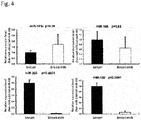
- the miRNA profiles in the breast milk are different from those in the serum.
- miR-223 which is miRNA that controls granulocytes, existed at the highest level in normal human serum and plasma, whereas the expression amount thereof in the breast milk was extremely very lower as compared to that in the serum.
- miR-146b which does not abundantly exist in the serum abundantly existed in the breast milk.
- miR-181 and miR-155 abundantly existed in the breast milk at expression amounts comparable to those observed in the serum. It is interesting that a plurality of kinds of immunity-related miRNAs was highly expressed in the breast milk of post-partum six months, which is a stage before ingestion of baby food.
- miRNAs Intercellular transfer of miRNAs indicates that not only miRNAs control intracellular molecules, but also they are molecules playing a role in communication between cells like cytokines.
- the aforementioned results suggest that miRNAs are "genetic materials" that can be transferred from a mother to a child. It is calculated that about 0.15 pg/L/day (1.3 x 10 7 copies/L/day) of miR-181 is ingested by an infant via breast milk.
- an RNase A/T solution (mixed solution of RNase A (500 U/ml) and RNase T1 (20,000 U/ml), produced by Ambion) was added in a volume of 2% of the breast milk, the mixture was treated at 37°C for 3 hours, and the miRNA level (miR-181a) was measured by TaqMan qRT-PCR before and after the treatment. The results are shown in Fig. 7 .
- primers for TaqMan qRT-PCR those produced by Applied Biosystems and identified by the following Assay IDs were used.
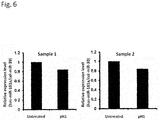
- miRNAs were relatively stable to freeze-thaw, low pH, and RNases.
- Example 3 Identification of diet or substance providing production of milk having immunoregulatory action
- n 3
- PBS was administered everyday in a volume of 1 ml per rat.
- the B . longum ATCC BAA-999 strain can be purchased from American Type Culture Collection (Address: 12301 Parklawn Drive, Rockville, Maryland 20852, United States of America).
- RNA samples were detected in a conventional manner using a microarray analysis system (produced by Agilent Technologies). The results were analyzed by using GeneSpring GX11.0 (produced by Agilent Technologies).
- microRNAs are as follows. In addition, miR-150 was not detected.
- the miRNAs listed with parenthesized indications following the miR-No. have subtypes, and subtypes indicated in the parentheses actually expressed.
- the Bifidobacterium bacteria BB536 strain could be screened for as a diet or a substance providing production of milk having an immunoregulatory action on the basis of detection of these 52 types of microRNAs.
- F344 rats on pregnancy day 14 were purchased. All the purchased rats gave birth on pregrancy day 21, and they were milked under anesthesia with ether on the second day after the birth to collect colostrum.
- Each colostrum sample was centrifuged twice at 1,200 x g and 4°C for 10 minutes to remove the lipid layer and cell debris.
- the supernatant was centrifuged at 21,500 x g and 4°C for 40 minutes, and further centrifuged for 1 hour under the same conditions to remove the casein fraction and thereby obtain milk serum.
- RNA sample in an amount of 100 ng was used in an experiment on a microarray (produced by Agilent Technologies) in a conventional manner.
- the results of the microarray experiment were analyzed by using GeneSpring GX11.0 (produced by Agilent Technologies).
- microRNAs (miR-193*, miR-409-3p, miR-664, miR-877) were expressed in addition to the 155 kinds of microRNAs confirmed in Example 3.
- Each of the milk samples (colostrum and normal milk) was centrifuged twice at 1,200 x g and 4°C for 10 minutes to remove the lipid layer and cell debris.
- the supernatant was centrifuged at 21,500 x g and 4°C for 40 minutes, and further centrifuged for 1 hour under the same conditions to remove the casein fraction and thereby obtain milk serum.
- RNA sample in an amount of 20 ng was used in an experiment on a microarray (produced by Agilent Technologies) in a conventional manner.
- the results of the microarray experiment were analyzed by using GeneSpring GX11.0 (produced by Agilent Technologies).
- a diet or a substance contained therein providing production of milk having an immunoregulatory action can be screened for.
- the present invention also provides a method for producing dairy products having an immunoregulatory action.
Landscapes
- Life Sciences & Earth Sciences (AREA)
- Health & Medical Sciences (AREA)
- Chemical & Material Sciences (AREA)
- Engineering & Computer Science (AREA)
- Genetics & Genomics (AREA)
- Organic Chemistry (AREA)
- Zoology (AREA)
- Wood Science & Technology (AREA)
- Biomedical Technology (AREA)
- Molecular Biology (AREA)
- Bioinformatics & Cheminformatics (AREA)
- Biotechnology (AREA)
- General Engineering & Computer Science (AREA)
- Polymers & Plastics (AREA)
- General Health & Medical Sciences (AREA)
- Food Science & Technology (AREA)
- Biochemistry (AREA)
- Biophysics (AREA)
- Microbiology (AREA)
- Physics & Mathematics (AREA)
- Nutrition Science (AREA)
- Proteomics, Peptides & Aminoacids (AREA)
- Plant Pathology (AREA)
- Immunology (AREA)
- Analytical Chemistry (AREA)
- Mycology (AREA)
- Veterinary Medicine (AREA)
- Public Health (AREA)
- Pharmacology & Pharmacy (AREA)
- Animal Behavior & Ethology (AREA)
- Medicinal Chemistry (AREA)
- Animal Husbandry (AREA)
- Birds (AREA)
- Epidemiology (AREA)
- Pediatric Medicine (AREA)
- Chemical Kinetics & Catalysis (AREA)
- General Chemical & Material Sciences (AREA)
- Nuclear Medicine, Radiotherapy & Molecular Imaging (AREA)
- Pharmaceuticals Containing Other Organic And Inorganic Compounds (AREA)
- Measuring Or Testing Involving Enzymes Or Micro-Organisms (AREA)
Description
- The present invention relates to a method for screening for a diet providing production of milk having an immunoregulatory action, which is useful in the fields of foodstuff, animal feed, and so forth.
- Immunity of living organisms essentially functions for the purpose of "defense" against external attacks. For example, phylaxis and elimination of cancer cells correspond to the "defense", and enhancement of the immunity effectively operates in such a case.
- On the other hand, overresponse of the immunity, i.e., "hyperimmunity", may adversely affect living organisms. Examples thereof include allergic responses, autoimmune diseases, chronic inflammations, and so forth. It is known that, in such a case, symptoms are improved by suppressing production of inflammatory cytokines such as IL-6, TNF-α and IL-1.
- Further, it is becoming clear that immunostimulating actions functioning for the purpose of "defense" against external attacks, and immunosuppressive actions functioning for suppressing allergic responses, autoimmune diseases, chronic inflammations etc. induced by hyperimmunoreaction are regulated by microRNA (henceforth also referred to as "miRNA").
- After a miRNA is transcribed from genome, it undergoes two times of cleavage and becomes a non-coding small RNA of about 22 bases. It is known that, as a function thereof, it binds to a 3'-untranslated region of target mRNAs in a sequence-complementary manner to suppress translation of the target mRNAs. One kind of miRNA inhibits translation of a plurality of kinds of mRNAs in a cell to regulate various functions of the cell. Many reports have been made especially on relations thereof with development and evolution of cancers, and relation between miRNA and diseases attracts attention.
- For example, as for miR-181, it has been reported that it is involved in development of B cells, activation of T cells, and development of immunity (Non-patent
documents 1 to 3). - As for miR-155, it is known that it is involved in development of immunity through activation of the innate immunity (
Non-patent documents 1 and 4) and regulation of differentiation and functions of T cells and B cells (Non-patentdocuments 1 and 5), and it is involved in antiallergy and anti-inflammation through regulation of Th1/Th2 balance (Non-patentdocuments 1 and 6) and maintenance of the functions of regulatory T cells, which suppress hyperimmunoreactions (Non-patent document 7). - miR-17 and miR-92 cooperate to regulate differentiation and development of B cells and T cells and thereby participate in development of immunity (Non-patent
documents 1, 8 and 9). - It is known that miR-223 participates in phylaxis by controlling proliferation and activation of neutrophils (Non-patent
documents 1 and 10), miR-150 participates in phylaxis by suppressing differentiation of B cells (Non-patentdocument 1 and 11), and let-7i participates in phylaxis by controlling TLR4 expression in cholangiocytes (Non-patent document 12). - It is known that miR-125 participates in anti-inflammation by suppressing production of TNF-α (
Non-patent documents 1 and 13). - It is known that miR-146 participates in phylaxis by negatively regulating the innate immunity (Non-patent
documents 1 and 14), and participates in antiallergy by controlling Th1/Th2 balance (Non-patent document 15). - It has recently been reported that miRNAs which function in cells as translation regulatory molecules are present in a lipid bilayer called exosome, and are secreted out of the cells (Non-patent document 16).
Since it has also been confirmed that secreted miRNAs are incorporated into other cells, presence of intercellular actions by means of miRNA has been presented. Further, exosomes are known to be present in various kinds of human body fluids. In particular, presence of miRNAs in human plasma and serum has already been reported, and a possibility of use thereof as a biomarker of prostate cancer or uterine cancer has been suggested (Non-patent document 17). - Body fluids containing exosomes include, besides plasma and serum, saliva, urine, amniotic fluid and breast milk (Non-patent document 17). Among these, breast milk is a body fluid produced by mammals in a specific period, and responsible for transfer of substances between individuals, i.e., from a mother to a child. Moreover, breast milk not only supplements nutrients to a child, but also gives immune substances acquired by a mother to a child.
- Admyre et al. (non-patent document 18) is concerned with methods investigating immunoactivity of breastmilk and discloses a method of isolating exosomes from colostrum and mature breast milk, and association with immune responses.
- Breast milk contains secretory IgA, lactoferrin, lysozyme, cytokines, and so forth, and it is considered that it protects infants from infection, and promotes development of infant's immunity (Non-patent document 19). Actually, it is known that children grown up on breast milk involve a lower risk of infection in the bronchi or intestinal tract as compared to children not grown in such a manner. Breast milk contains IgA, lactoferrin, glycoproteins, glycolipids etc. which show antibacterial activities, as well as cytokines which regulate immunocytes. However, the objects analyzed in the researches to date are mainly proteins contained in breast milk, and although there are reports on nucleic acids contained in breast milk, researches on nucleic acids contained in breast milk and having specific sequences have not been deported.
- Moreover, it is also known that development of mammary glandular cells controlled by expression of
cyclooxygenase 2 is regulated by miR-101a (Non-patent document 20). However, it is not suggested that miRNAs exist in milk. - In addition, after the priority date of this application, it has been reported that microRNAs are present in microvesicles derived from bovine milk (Non-patent document 21), and microRNAs are identified in fresh milk of bovines of different lactation periods, commercial liquid milk and dried milk (Non-patent document 22).
-
- Non-patent document 1: Lindsay, M.A., Trends Immunol, 29:343-351, 2008
- Non-patent document 2: Li, Qi-Jing et al., Cell, 129:147-161, 2007
- Non-patent document 3: Chen, Chang-zheng et al., Science, 303:83-86, 2004
- Non-patent document 4: O'Connel, R.M. et al., PNAS, 104 (5):1604-1609, 2007
- Non-patent document 5: Vigorito, E. et al., Immunity, 27:847-859, 2007
- Non-patent document 6: Rodriguez, A. et al., Science, 316:608-611, 2007
- Non-patent document 7: Kohlhaas, S. et al., J. Immunol., 182:2578-2582, 2009
- Non-patent document 8: Koralov, S.B. et al., Cell, 132:860-874, 2008
- Non-patent document 9: Xiao, C. et al., Nat. Immunol., 9:405-414, 2008
- Non-patent document 10: Jonathan, B. et al., Nature, 451:1125-1129, 2008
- Non-patent document 11: Zhou, B. et al., PNAS, 104 (17):7080-7085, 2007
- Non-patent document 12: Chen, Xian-Ming et al., J. Biol. Chem., 282 (39):28929-28938, 2007
- Non-patent document 13: Tili, E. et al., J. Immunol., 179:5082-5089, 2007
- Non-patent document 14: Taganov, K.D. et al., PNAS, 103 (33):12481-12486, 2006
- Non-patent document 15: Monticelli, S. et al., Genome Biol., 6, R71, 2005
- Non-patent document 16: Valadi, H. et al., Nat. Cell Biol., 9:654-659, 2007
- Non-patent document 17: Gilad, S. et al., PLoS One, 3 (9):e3148, 2008
- Non-patent document 18: Admyre, C., J. Immunol., 179:1969-1978, 2007
- Non-patent document 19: Goldman, A.S., Breastfeed Med., 2 (4):195-204, 2007
- Non-patent document 20: Tanaka, T. et al., Differentiation, 77:181-187, 2009
- Non-patent document 21: Hata, T. et al., Biochem. Biophys. Res. Commun., 396 (2):528-533, 2010
- Non-patent document 22: Chen, X. et al., Cell Research, (2010):1-10
- An object of the present invention is to provide a method for screening for a diet providing production of milk having an immunoregulatory action, a novel foodstuff having an immunoregulatory action, and a method for producing it.
- The inventors of the present invention conducted researches with paying attention to the fact that breast milk affected maturation of infant's immune system. As a result, they found that immunity-related miRNAs are highly expressed in breast milk, and accomplished the present invention.
- The present invention thus provides a method for screening for a diet or a substance providing production of breast milk having an immunostimulating action, which comprises:
- comparing microRNA profiles in milk of rat observed before and after ingestion of a diet or a substance, and when amount of one or more kinds of microRNA in the milk observed after the ingestion of the diet or the substance is higher than that observed before the ingestion, judging that the diet or the substance increases the amount of the microRNA in the milk,
- wherein the microRNA is selected from the group consisting of miR-16, miR-17-5p, miR-18 (miR-18a), miR-19 (miR-19b), miR-20 (miR-20a), miR-21, miR-23 (miR-23a), miR-27 (miR-27a, miR-27b), miR-29 (miR-29a, miR-29b, miR-29c, miR-29c*), miR-30 (miR-30a, miR-30c, miR-30d, miR-30e*), miR-33, miR-34b, miR-92a, miR-93, miR-100, miR-101 (miR-101a, miR-101b), miR-106b, miR-130b, miR-140*, miR-141, miR-143, miR-146a, miR-185, miR-186, miR-192, miR-193, miR-195, miR-200a, miR-205, miR-218, miR-219-5p, miR-221, miR-301a, miR-322, miR-340-5p, miR-361, miR-429, miR-455, miR-466b, miR-497, miR-500, miR-503, miR-532-5p and miR-542-3p.
- In a preferred embodiment the aforementioned method, comprises comparing microRNA profiles in the milk of the rat observed before and after ingestion of the diet or the substance with microRNA profiles in serum or plasma of the rat observed before and after ingestion of the diet or the substance, respectively, and
when the amount of microRNA contained in both the milk and the serum or plasma is increased by ingestion of the diet or substance, judging that the diet or the substance increases the amount of the microRNA in the milk. - In another embodiment of the aforementioned method, the present invention provides a method for screening for a diet or a substance providing production of breast milk having an immunostimulating action, which comprises:
- comparing microRNA profiles in milk of bovine observed before and after ingestion of a diet or a substance, and when amount of one or more kinds of microRNA in the milk observed after the ingestion of the diet or the substance is higher than that observed before the ingestion, judging that the diet or the substance increases the amount of the microRNA in the milk,
- wherein the microRNA is selected from the group consisting of miR-15, miR-16, miR-19, miR-21, miR-23, miR-24, miR-26, miR-27, miR-30, miR-34, miR-99, miR-106, miR-107, miR-125, miR-130, miR-140, miR-181, miR-193, miR-210, miR-222, miR-223, miR-361, miR-370, miR-429, miR-500, miR-532, let-7d and let-7i.
- A preferred embodiment of the aforementioned method comprises comparing microRNA profiles in the milk of the bovine observed before and after ingestion of the diet or the substance with microRNA profiles in serum or plasma of the bovine observed before and after ingestion of the diet or the substance, respectively, and
when the amount of microRNA contained in both the milk and the serum or plasma is increased by ingestion of the diet or substance, judging that the diet or the substance increases the amount of the microRNA in the milk. - The present invention also provides a method for producing milk or dairy products having an immunostimulating action, which comprises:
- the step of giving Bifidobacterium bacteria to rat, and
- the step of collecting milk from the rat, wherein the collected milk comprises microRNA selected from the group consisting of miR-16, miR-17-5p, miR-18 (miR-18a), miR-19 (miR-19b), miR-20 (miR-20a), miR-21, miR-23 (miR-23a), miR-27 (miR-27a, miR-27b), miR-29 (miR-29a, miR-29b, miR-29c, miR-29c*), miR-30 (miR-30a, miR-30c, miR-30d, miR-30e*), miR-33, miR-34b, miR-92a, miR-93, miR-100, miR-101 (miR-101a, miR-101b), miR-106b, miR-130b, miR-140*, miR-141, miR-143, miR-146a, miR-185, miR-186, miR-192, miR-193, miR-195, miR-200a, miR-205, miR-218, miR-219-5p, miR-221, miR-301a, miR-322, miR-340-5p, miR-361, miR-429, miR-455, miR-466b, miR-497, miR-500, miR-503, miR-532-5p and miR-542-3p.
-
-
Fig. 1 shows results of detection of miRNAs in human breast milk obtained by microarray analysis. -
Fig. 2 shows comparison of miR-181a levels in breast milk for first six months after birth and six months thereafter. hsa represents human, and cel represents a nematode (Caenorhabditis elegans) (the same shall apply to the following drawings). -
Fig. 3 shows comparison of miR-155, miR-17, and miR-92 levels in breast milk for first six months after birth and six months thereafter. -
Fig. 4 shows comparison of immunity-related miRNA levels in human breast milk and serum. -
Fig. 5 shows comparison of miRNA levels observed before and after freeze-thaw. -
Fig. 6 shows comparison of miRNA levels observed before and after storage at low pH (pH 1). -
Fig. 7 shows comparison of miRNA levels observed after RNases treatment and without RNases treatment. - The method of the present invention is a method for screening for a diet or a substance providing production of breast milk having an immunostimulatory action, which comprises identifying a diet or a substance that increases amount of microRNA present in milk of a mammal on the basis of correlation of microRNA profiles in the milk and a diet ingested by the mammal or a substance contained in the diet.
- The immunoregulatory action is an immunostimulating action, and when the amount of the microRNA increases, it is judged that the diet or substance provides production of breast milk having an immunostimulating action.
- The present invention is based on a concept that an immunoregulatory action is expected to be obtained by oral administration of miRNA, because of the novel finding that miRNAs are contained in milk, and the fact that miRNAs can stably exist even under acidic conditions in the stomach, and breast milk promotes development of immunity in infants ingesting the breast milk (for example, Breastfeed Med., 2(4):195-204, 2007). And, on the basis of a prediction that a miRNA profile in milk is affected by diet, it was thought to identify a diet or an active ingredient contained in it that could increase or decrease amount of miRNA present in milk.
- The immunoregulatory action defined for the screening method, milk, dairy product, and so forth of the present invention is an action of enhancing immunopotentiating action, which functions for the purpose of "defense" against external attacks (immunostimulating action).
- The terms "immunostimulating action" and "immunosuppressive action" are used in a relative meaning.
- When an immunopotentiating action usually observed for breast milk of a certain mammal is enhanced after ingestion of the diet or substance, the breast milk has an immunostimulating action. When the immunopotentiating action observed after ingestion of the diet or substance by a mammal is enhanced as compared to that observed before the ingestion, the breast milk of the mammal has an immunostimulating action.
- The correlation of miRNA profiles in milk of a mammal and a diet ingested by the mammal or a substance contained in the diet can be investigated, for example, as follows.
- Milk is collected from a mammal that ingested a diet, and a miRNA profile in the milk is examined.
- The mammal is bovine or rat.
- In the present invention, the miRNA profile consists of type and amount of miRNA. The miRNA may consist of one kind of miRNA, or two or more kinds of miRNAs. As described above, it
is known that breast milk promotes development of immunity in infants who ingest it (for example, Breastfeed Med., 2(4):195-204, 2007). Moreover, it has been reported that many components considered to be important to the immune system of infants (including animal infants) are generally contained in colostrum (J. Anim. Sci., 2009, 87:(Suppl.1): 3-9). Therefore, it is suggested that the aforementioned miRNAs of which presence in milk is confirmed are involved in immune functions. - Moreover, among the miRNAs mentioned above, particularly preferred are miRNAs of which presence was confirmed in colostrum of both rat and bovine.
- Certain miRNAs have subtypes, and for example, 2 to 4 kinds of subtypes are known for each of miR-181, miR-92, miR-125, miR-146, and so forth, such as miR-181a, miR-181b, miR-181c, miR-181d, miR-92a, miR-92b, miR-125a, miR-125a-3P, miR-125a-5P, miR-125b, miR-146a, miR-146b, miR-146b-3P and miR-146b-5P, respectively. Certain other miRNAs also have subtypes, and in the present invention, the miRNA may be any of such subtypes. Examples of the subtypes include those of which presence in milk was confirmed in the examples described later (refer to Examples 1, 3, 4 and 5).
- The nucleotide sequences of human miR-155 precursor, hsa-mir-155 (MI0000681), and the active site thereof, hsa-miR-155 (MIMAT0009241), are shown in SEQ ID NOS: 1 and 2, respectively. Shown in the parentheses are accession numbers in a miRNA database (miRBase::Sequences, http://microrna.sanger.ac.uk/sequences/index.shtml) (the same shall apply to the following descriptions).
- The nucleotide sequences of bovine miR-155 precursor, bta-miR-155 (MI0009752), and the active site thereof, bta-miR-155 (MIMAT0000646), are shown in SEQ ID NOS: 3 and 4, respectively.
- The nucleotide sequences of human miR-181a precursors, hsa-mir-181a-1 (MI0000289), and hsa-mir-181a-2 (MI0000269), and the active site thereof, hsa-miR-181a (MIMAT0000256), are shown in SEQ ID NOS: 5, 6 and 7, respectively.
- The nucleotide sequences of human miR-181b precursors, hsa-mir-181b-1 (MI0000270), and hsa-mir-181b-2 (MI0000683), and the active site thereof, hsa-miR-181b (MIMAT0000257), are shown in SEQ ID NOS: 8, 9 and 10, respectively.
- The nucleotide sequences of bovine miR-181a precursors, bta-mir-181a (MI0004757), and bta-mir-181a-1 (MI0010484), and the active site thereof, bta-miR-181a (MIMAT0003543), are shown in SEQ ID NOS: 11, 12 and 13, respectively.
- The nucleotide sequences of bovine miR-181b precursors, bta-mir-181b-1 (MI0010485), and bta-mir-181b-2 (MI0005013), and the active site thereof, bta-miR-181b (MIMAT0003793), are shown in SEQ ID NOS: 14, 15 and 16, respectively.
- The nucleotide sequences of human miR-223 precursor, hsa-mir-223 (MI0000300), and the active site thereof, hsa-miR-223 (MIMAT0000280), are shown in SEQ ID NOS: 17 and 18, respectively.
- The nucleotide sequences of bovine miR-223 precursor, bta-mir-223 (MI0009782), and the active site thereof, bta-miR-223 (MIMAT0009270), are shown in SEQ ID NOS: 19 and 20, respectively.
- The nucleotide sequences of human miR-17 precursor, hsa-mir-17 (MI0000071), and the active site thereof, hsa-miR-17 (MIMAT0000070) (also called hsa-miR-17-5p), are shown in SEQ ID NOS: 21 and 22, respectively.
- The nucleotide sequences of bovine miR-17 precursor, bta-mir-17 (MI0005031), the active sites thereof, bta-miR-17-5p (MIMAT0003815) and bta-miR-17-3p (MIMAT0003816), are shown in SEQ ID NOS: 23, 24 and 25, respectively.
- The nucleotide sequences of human miR-92a precursors, hsa-mir-92a-1 (MI0000093), and hsa-mir-92a-2 (MI0000094), and the active site thereof, hsa-miR-92a (MIMAT0000092), are shown in SEQ ID NOS: 26, 27 and 28, respectively.
- The nucleotide sequences of human miR-92b precursor, hsa-mir-92b (MI0003560), and the active site thereof, hsa-miR-92b (MIMAT0003218), are shown in SEQ ID NOS: 29 and 30, respectively.
- The nucleotide sequences of bovine miR-92 precursor, bta-mir-92 (MI0005024), and the active site thereof, bta-miR-92 (MIMAT0003808), are shown in SEQ ID NOS: 31 and 32, respectively.
- The nucleotide sequences of bovine miR-92a precursor, bta-mir-92a (MI0009905), and the active site thereof, bta-miR-92a (MIMAT0009383), are shown in SEQ ID NOS: 33 and 34, respectively.
- The nucleotide sequences of bovine miR-92b precursor, bta-mir-92b (MI0009906), and the active site thereof, bta-miR-92b (MIMAT0009384), are shown in SEQ ID NOS: 35 and 36, respectively.
- The nucleotide sequences of human let-7i precursor, hsa-let-7i (MI0000434), and the active site thereof, hsa-let-7i (MIMAT0000415), are shown in SEQ ID NOS: 37 and 38, respectively.
- The nucleotide sequences of bovine let-7i precursor, bta-let-7i (MI0005065), and the active site thereof, bta-let-7i (MIMAT0003851), are shown in SEQ ID NOS: 39 and 40, respectively.
- The nucleotide sequences of human miR-125a precursor, hsa-mir-125a (MI0000469), and the active sites thereof, hsa-miR-125a-5p (MIMAT0000443) and hsa-miR-125a-3p (MIMAT0004602), are shown in SEQ ID NOS: 41, 42 and 43, respectively.
- The nucleotide sequences of human miR-125b precursors, hsa-mir-125b-1 (MI0000446), and hsa-mir-125b-2 (MI0000470), and the active site thereof, hsa-miR-125b (MIMAT0000423), are shown in SEQ ID NOS: 44, 45 and 46, respectively.
- The nucleotide sequences of bovine miR-125a precursor, bta-mir-125a (MI0004752), and the active site thereof, bta-miR-125a (MIMAT0003538), are shown in SEQ ID NOS: 47 and 48, respectively.
- The nucleotide sequences of bovine miR-125b precursors, bta-mir-125b-1 (MI0004753), and bta-mir-125b-2 (MI0005457), and the active site thereof, bta-miR-125b (MIMAT0003539), are shown in SEQ ID NOS: 49, 50 and 51, respectively.
- The nucleotide sequences of human miR-146a precursor, hsa-mir-146a (MI0000477), and the active site thereof, hsa-miR-146a (MIMAT0000449), are shown in SEQ ID NOS: 52 and 53, respectively.
- The nucleotide sequences of human miR-146b precursor, hsa-mir-146b (MI0003129), and the active sites thereof, hsa-miR-146b-5p (MIMAT0002809) (also referred to as hsa-miR-146b) and hsa-miR-146b-3p (MIMAT0004766), are shown in SEQ ID NOS: 54, 55 and 56, respectively.
- The nucleotide sequences of bovine miR-146a precursor, bta-mir-146a (MI0009746), and the active site thereof, bta-miR-146a (MIMAT0009236), are shown in SEQ ID NOS: 57 and 58, respectively.
- The nucleotide sequences of bovine miR-146b precursor, bta-mir-146b (MI0009745), and the active site thereof, bta-miR-146b (MIMAT0009235), are shown in SEQ ID NOS: 59 and 60, respectively.
- The nucleotide sequences of human miR-150 precursor, hsa-mir-150 (MI0000479), and the active site thereof, hsa-miR-150 (MIMAT0000451), are shown in SEQ ID NOS: 61 and 62, respectively.
- The nucleotide sequences of bovine miR-150 precursor, bta-mir-150 (MI0005058), and the active site thereof, bta-miR-150 (MIMAT0003845), are shown in SEQ ID NOS: 63 and 64, respectively.
- In addition to the aforementioned miRNAs, miRNAs of which presence in milk of rat or bovine was confirmed, and miRNAs of other animals corresponding to those miRNAs are shown as Tables 1 to 10.
Table 1 miRNA Human or animal Sequence SEQ ID NO miR-155 human uuaaugcuaaucgugauaggggu 1 bovine uuaaugcuaaucgugauaggggu 4 miR-17-3p bovine acugcagugaaggcacuugu 25 miR-92 bovine uauugcacuugucccggccugu 32 miR-92b human uauugcacucgucccggccucc 30 bovine uauugcacucgucccggccucc 36 miR-146b-3p human ugagaacugaauuccauaggcu 55 miR-150 human ucucccaacccuuguaccagug 62 bovine ucucccaacccuuguaccagugu 64 miR-17-5p human caaagugcuuacagugcagguag 22 bovine caaagugcuuacagugcagguagu 24 rat caaagugcuuacagugcagguag 65 miR-92a human uauugcacuugucccggccugu 28 bovine uauugcacuugucccggccugu 34 rat uauugcacuugucccggccug 66 miR-146a human ugagaacugaauuccauggguu 53 bovine ugagaacugaauuccauagguugu 58 rat ugagaacugaauuccauggguu 67 miR-16 human uagcagcacguaaauauuggcg 68 rat uagcagcacguaaauauuggcg 69 miR-16a bovine uagcagcacguaaauauuggug 70 miR-18a human uaaggugcaucuagugcagauag 71 bovine uaaggugcaucuagugcagaua 72 rat uaaggugcaucuagugcagauag 73 miR-19b human ugugcaaauccaugcaaaacuga 74 bovine ugugcaaauccaugcaaaacuga 75 rat ugugcaaauccaugcaaaacuga 76 miR-20a human uaaagugcuuauagugcagguag 77 bovine uaaagugcuuauagugcagguag 78 rat uaaagugcuuauagugcagguag 79 miR-21 human uagcuuaucagacugauguuga 80 bovine uagcuuaucagacugauguugacu 81 rat uagcuuaucagacugauguuga 82 miR-23a human aucacauugccagggauuucc 83 bovine aucacauugccagggauuucca 84 rat aucacauugccagggauuucc 85 miR-27a human uucacaguggcuaaguuccgc 86 rat uucacaguggcuaaguuccgc 87 miR-27a-3p bovine uucacaguggcuaaguuccg 88 miR-27a-5p bovine agggcuuagcugcuugugagca 89 miR-27b human uucacaguggcuaaguucugc 90 bovine uucacaguggcuaaguucugc 91 rat uucacaguggcuaaguucugc 92 miR-29a human uagcaccaucugaaaucgguua 93 bovine cuagcaccaucugaaaucgguua 94 rat uagcaccaucugaaaucgguua 95 Table 2 miRNA Human or animal Sequence SEQ ID NO miR-29b human uagcaccauuugaaaucaguguu 96 bovine uagcaccauuugaaaucaguguu 97 rat uagcaccauuugaaaucaguguu 98 miR-29c human uagcaccauuugaaaucgguua 99 bovine uagcaccauuugaaaucgguua 100 rat uagcaccauuugaaaucgguua 101 miR-29c* human ugaccgauuucuccugguguuc 102 rat ugaccgauuucuccugguguuc 103 miR-30a human uguaaacauccucgacuggaag 104 bovine uguaaacauccucgacuggaagcu 105 rat uguaaacauccucgacuggaag 106 miR-30c human uguaaacauccuacacucucagc 107 bovine uguaaacauccuacacucucagc 108 rat uguaaacauccuacacucucagc 109 miR-30d human uguaaacauccccgacuggaag 110 bovine uguaaacauccccgacuggaagcu 111 rat uguaaacauccccgacuggaag 112 miR-30e* human cuuucagucggauguuuacagc 113 rat cuuucagucggauguuuacagc 114 miR-33a human gugcauuguaguugcauugca 115 bovine gugcauuguaguugcauugca 116 miR-33 rat gugcauuguaguugcauugca 117 miR-34b human caaucacuaacuccacugccau 118 bovine aggcaguguaauuagcugauug 119 rat uaggcaguguaauuagcugauug 120 miR-93 human caaagugcuguucgugcagguag 121 bovine caaagugcuguucgugcaggua 122 rat caaagugcuguucgugcagguag 123 miR-100 human aacccguagauccgaacuugug 124 bovine aacccguagauccgaacuugug 125 rat aacccguagauccgaacuugug 126 miR-101 human uacaguacugugauaacugaa 127 miR-101a bovine uacaguacugugauaacugaa 128 rat uacaguacugugauaacugaa 129 miR-101b rat uacaguacugugauagcugaa 130 miR-106b bovine uaaagugcugacagugcagau 131 rat uaaagugcugacagugcagau 132 miR-130b human cagugcaaugaugaaagggcau 133 bovine cagugcaaugaugaaagggcau 134 rat cagugcaaugaugaaagggcau 135 miR-140-3p human uaccacaggguagaaccacgg 136 miR-140* rat uaccacaggguagaaccacgg 137 miR-141 human uaacacugucugguaaagaugg 138 bovine uaacacugucugguaaagaugg 139 rat uaacacugucugguaaagaugg 140 miR-143 human ugagaugaagcacuguagcuc 141 bovine ugagaugaagcacuguagcucg 142 rat ugagaugaagcacuguagcuca 143 Table 3 miRNA Human or animal Sequence SEQ ID NO miR-185 human uggagagaaaggcaguuccuga 144 bovine uggagagaaaggcaguuccuga 145 rat uggagagaaaggcaguuccuga 146 miR-186 human caaagaauucuccuuuugggcu 147 bovine caaagaauucuccuuuugggcu 148 rat caaagaauucuccuuuugggcu 149 miR-192 human cugaccuaugaauugacagcc 150 bovine cugaccuaugaauugacagccag 151 rat cugaccuaugaauugacagcc 152 miR-193a-3p human aacuggccuacaaagucccagu 153 bovine aacuggccuacaaagucccagu 154 miR-193 rat aacuggccuacaaagucccagu 155 miR-195 human uagcagcacagaaauauuggc 156 bovine uagcagcacagaaauauuggca 157 rat uagcagcacagaaauauuggc 158 miR-200a human uaacacugucugguaacgaugu 159 bovine uaacacugucugguaacgauguu 160 rat uaacacugucugguaacgaugu 161 miR-205 human uccuucauuccaccggagucug 162 bovine uccuucauuccaccggagucug 163 rat uccuucauuccaccggagucug 164 miR-218 human uugugcuugaucuaaccaugu 165 rat uugugcuugaucuaaccaugu 166 miR-219-5p human ugauuguccaaacgcaauucu 167 rat ugauuguccaaacgcaauucu 168 miR-221 human agcuacauugucugcuggguuuc 169 bovine agcuacauugucugcuggguuu 170 rat agcuacauugucugcuggguuuc 171 miR-301a human cagugcaauaguauugucaaagc 172 bovine cagugcaauaguauugucaaagcau 173 rat cagugcaauaguauugucaaagc 174 miR-322 rat cagcagcaauucauguuuugga 175 miR-340 human uuauaaagcaaugagacugauu 176 bovine uccgucucaguuacuuuauagcc 177 miR-340-5p rat uuauaaagcaaugagacugauu 178 miR-361 human uuaucagaaucuccagggguac 179 bovine uuaucagaaucuccagggguac 180 rat uuaucagaaucuccagggguac 181 miR-429 human uaauacugucugguaaaaccgu 182 bovine uaauacugucugguaaugccgu 183 rat uaauacugucugguaaugccgu 184 miR-455 human uaugugccuuuggacuacaucg 185 bovine uaugugccuuuggacuacauc 186 rat uaugugccuuuggacuacaucg 187 miR-466b rat uauguguguguguauguccaug 188 miR-497 human cagcagcacacugugguuugu 189 bovine cagcagcacacugugguuugua 190 rat cagcagcacacugugguuugua 191 Table 4 miRNA Human or animal Sequence SEQ ID NO miR-500 human uaauccuugcuaccugggugaga 192 bovine uaauccuugcuaccugggugaga 193 rat aaugcaccugggcaaggguuca 194 miR-503 human uagcagcgggaacaguucugcag 195 rat uagcagcgggaacaguacugcag 196 miR-532 bovine caugccuugaguguaggaccgu 198 miR-532-5p human caugccuugaguguaggaccgu 197 rat caugccuugaguguaggacugu 199 miR-542-3p human ugugacagauugauaacugaaa 200 rat ugugacagauugauaacugaaa 201 I et-7a human ugagguaguagguuguauaguu 202 bovine ugagguaguagguuguauaguu 203 rat ugagguaguagguuguauaguu 204 I et-7a* human cuauacaaucuacugucuuuc 205 bovine cuauacaaucuacugucuuuc 206 rat ugagguaguagguuguauaguu 207 I et-7b human ugagguaguagguugugugguu 208 bovine ugagguaguagguugugugguu 209 rat ugagguaguagguugugugguu 210 I et-7c human ugagguaguagguuguaugguu 211 bovine ugagguaguagguuguaugguu 212 rat ugagguaguagguuguaugguu 213 I et-7d human agagguaguagguugcauaguu 214 bovine agagguaguagguugcauaguu 215 rat agagguaguagguugcauaguu 216 I et-7e human ugagguaggagguuguauaguu 217 bovine ugagguaggagguuguauagu 218 rat ugagguaggagguuguauaguu 219 let-7f human ugagguaguagauuguauaguu 220 bovine ugagguaguagauuguauaguu 221 rat ugagguaguagauuguauaguu 222 let-7i human ugagguaguaguuugugcuguu 38 bovine ugagguaguaguuugugcuguu 40 rat ugagguaguaguuugugcuguu 223 miR-10a human uacccuguagauccgaauuugug 224 bovine uacccuguagauccgaauuugug 225 miR-10a-5p rat uacccuguagauccgaauuugug 226 miR-10b human uacccuguagaaccgaauuugug 227 bovine uacccuguagaaccgaauuugug 228 rat cccuguagaaccgaauuugugu 229 miR-15b human uagcagcacaucaugguuuaca 230 bovine uagcagcacaucaugguuuaca 231 rat uagcagcacaucaugguuuaca 232 miR-19a human ugugcaaaucuaugcaaaacuga 233 bovine ugugcaaaucuaugcaaaacuga 234 rat ugugcaaaucuaugcaaaacuga 235 miR-20a* human acugcauuaugagcacuuaaag 236 rat acugcauuacgagcacuuaca 237 miR-22 human aagcugccaguugaagaacugu 238 Table 5 miRNA Human or animal Sequence SEQ ID NO miR-22-3p bovine aagcugccaguugaagaacug 239 miR-22 rat aagcugccaguugaagaacugu 240 miR-23b human aucacauugccagggauuacc 241 rat aucacauugccagggauuacc 242 miR-23b-5p bovine ggguuccuggcaugcugauuu 243 miR-23b-3p bovine aucacauugccagggauuaccac 244 miR-24 human uggcucaguucagcaggaacag 245 bovine gugccuacugagcugauaucagu 246 rat uggcucaguucagcaggaacag 247 miR-25 human cauugcacuugucucggucuga 248 bovine cauugcacuugucucggucuga 249 rat cauugcacuugucucggucuga 250 miR-26a human uucaaguaauccaggauaggcu 251 bovine uucaaguaauccaggauaggcu 252 rat uucaaguaauccaggauaggcu 253 miR-26b human uucaaguaauucaggauaggu 254 bovine uucaaguaauucaggauagguu 472 rat uucaaguaauucaggauaggu 255 miR-28 human aaggagcucacagucuauugag 256 bovine aaggagcucacagucuauugag 257 rat aaggagcucacagucuauugag 258 miR-30a* human cuuucagucggauguuugcagc 259 rat cuuucagucggauguuugcagc 260 miR-30b human uguaaacauccuacacucagcu 261 miR-30b-5p bovine uguaaacauccuacacucagcu 262 rat uguaaacauccuacacucagcu 263 miR-30c-1* human cugggagaggguuguuuacucc 264 rat cugggagaggguuguuuacucc 265 miR-30c-2* human cugggagaaggcuguuuacucu 266 rat cugggagaaggcuguuuacucu 267 miR-30e human uguaaacauccuugacuggaag 268 rat uguaaacauccuugacuggaag 270 miR-30e-5p bovine uguaaacauccuugacuggaagcu 269 miR-31 human aggcaagaugcuggcauagcu 271 bovine aggcaagaugcuggcauagcu 272 rat aggcaagaugcuggcauagcug 273 miR-34a human uggcagugucuuagcugguugu 274 bovine uggcagugucuuagcugguugu 275 rat uggcagugucuuagcugguugu 276 miR-96 human uuuggcacuagcacauuuuugcu 277 bovine uuuggcacuagcacauuuuugcu 278 rat uuuggcacuagcacauuuuugcu 279 miR-98 human ugagguaguaaguuguauuguu 280 bovine ugagguaguaaguuguauuguu 281 rat ugagguaguaaguuguauuguu 282 miR-99a human aacccguagauccgaucuugug 283 bovine aacccguagauccgaucuugu 284 rat aacccguagauccgaucuugug 285 Table 6 miRNA Human or animal Sequence SEQ ID NO miR-99b human cacccguagaaccgaccuugcg 286 bovine cacccguagaaccgaccuugcg 287 rat cacccguagaaccgaccuugcg 288 miR-103 human agcagcauuguacagggcuauga 289 bovine agcagcauuguacagggcuauga 290 rat agcagcauuguacagggcuauga 291 miR-107 human agcagcauuguacagggcuauca 292 bovine agcagcauuguacagggcuauc 293 rat agcagcauuguacagggcuauca 294 miR-125a-3p human acaggugagguucuugggagcc 43 rat acaggugagguucuugggagcc 295 miR-125a-5p human ucccugagacccuuuaaccuguga 42 rat ucccugagacccuuuaaccuguga 296 miR-125a bovine ucccugagacccuuuaaccugug 48 miR-125b human ucccugagacccuaacuuguga 46 bovine ucccugagacccuaacuuguga 51 miR-125b-5p rat ucccugagacccuaacuuguga 297 miR-125b-1* human acggguuaggcucuugggagcu 298 miR-125b-3p rat acggguuaggcucuugggagcu 299 miR-128 human ucacagugaaccggucucuuu 300 bovine ucacagugaaccggucucuuu 301 rat ucacagugaaccggucucuuu 302 miR-130a human cagugcaauguuaaaagggcau 303 bovine cagugcaauguuaaaagggcau 304 rat cagugcaauguuaaaagggcau 305 miR-133a human uuugguccccuucaaccagcug 306 bovine uuugguccccuucaaccagcug 307 rat uuugguccccuucaaccagcug 308 miR-133b human uuugguccccuucaaccagcua 309 bovine uuugguccccuucaaccagcua 310 rat uuugguccccuucaaccagcua 311 miR-134 human ugugacugguugaccagagggg 312 bovine ugugacugguugaccagagugg 313 rat ugugacugguugaccagagggg 314 miR-139-3p human ggagacgcggcccuguuggagu 315 rat uggagacgcggcccuguuggag 316 miR-140 human cagugguuuuacccuaugguag 317 bovine uaccacaggguagaaccacgga 318 rat cagugguuuuacccuaugguag 319 miR-146b human ugagaacugaauuccauaggcu 55 bovine ugagaacugaauuccauaggcugu 60 rat ugagaacugaauuccauaggcugu 320 miR-148b human ucagugcaucacagaacuuugu 321 bovine ucagugcaucacagaacuuugu 322 miR-148b-3p rat ucagugcaucacagaacuuugu 323 miR-151 human ucgaggagcucacagucuagu 324 bovine cuagacugaagcuccuugagg 325 rat cuagacugaagcuccuugagg 326 Table 7 miRNA Human or animal Sequence SEQ ID NO miR-152 human ucagugcaugacagaacuugg 327 bovine ucagugcaugacagaacuuggg 328 rat ucagugcaugacagaacuugg 329 miR-181a human aacauucaacgcugucggugagu 7 bovine aacauucaacgcugucggugaguu 13 rat aacauucaacgcugucggugagu 330 miR-181a* human accaucgaccguugauuguacc 331 rat accaucgaccguugauuguacc 332 miR-181b human aacauucauugcugucggugggu 10 bovine aacauucauugcugucgguggguu 16 rat aacauucauugcugucggugggu 333 miR-181c human aacauucaaccugucggugagu 334 bovine aacauucaaccugucggugaguuu 335 rat aacauucaaccugucggugagu 336 miR-181d human aacauucauuguugucggugggu 337 bovine aacauucauuguugucggugggu 338 rat aacauucauuguugucggugggu 339 miR-182 human uuuggcaaugguagaacucacacu 340 bovine uuuggcaaugguagaacucacacu 341 rat uuuggcaaugguagaacucacaccg 342 miR-183 human uauggcacugguagaauucacu 343 bovine uauggcacugguagaauucacug 344 rat uauggcacugguagaauucacu 345 miR-188 human caucccuugcaugguggaggg 346 bovine caucccuugcaugguggagggu 347 rat caucccuugcaugguggaggg 348 miR-196c rat uagguaguuucguguuguuggg 349 miR-199a-3p human acaguagucugcacauugguua 350 bovine acaguagucugcacauugguua 351 rat acaguagucugcacauugguua 352 miR-200b human uaauacugccugguaaugauga 353 bovine uaauacugccugguaaugaug 354 rat uaauacugccugguaaugaugac 355 miR-200c human uaauacugccggguaaugaugga 356 bovine uaauacugccggguaaugaugga 357 rat uaauacugccggguaaugaugg 358 miR-203 human gugaaauguuuaggaccacuag 359 rat gugaaauguuuaggaccacuag 360 miR-204 human uucccuuugucauccuaugccu 361 bovine uucccuuugucauccuaugccu 362 rat uucccuuugucauccuaugccu 363 miR-206 human uggaauguaaggaagugugugg 364 bovine uggaauguaaggaagugugugg 365 rat uggaauguaaggaagugugugg 366 miR-210 human cugugcgugugacagcggcuga 367 bovine acugugcgugugacagcggcuga 368 rat cugugcgugugacagcggcuga 369 Table 8 miRNA Human or animal Sequence SEQ ID NO miR-212 human uaacagucuccagucacggcc 370 bovine accuuggcucuagacugcuuacu 371 rat uaacagucuccagucacggcca 372 miR-214 human acagcaggcacagacaggcagu 373 bovine acagcaggcacagacaggcagu 374 rat acagcaggcacagacaggcag 375 miR-222 human agcuacaucuggcuacugggu 376 bovine agcuacaucuggcuacugggu 377 rat agcuacaucuggcuacugggu 378 miR-223 human ugucaguuugucaaauacccca 18 bovine ugucaguuugucaaauacccca 20 rat ugucaguuugucaaauacccc 379 miR-290 rat cucaaacuaugggggcacuuuuu 380 miR-291a-5p rat caucaaaguggaggcccucucu 381 miR-292-5p rat acucaaacugggggcucuuuug 382 miR-294 rat cucaaaauggaggcccuaucu 383 miR-296-5p human agggcccccccucaauccugu 384 miR-296* rat agggcccccccucaauccugu 385 miR-320a human aaaagcuggguugagagggcga 386 miR-320 bovine aaaagcuggguugagagggcga 387 rat aaaagcuggguugagagggcga 388 miR-324-3p human acugccccaggugcugcugg 389 rat ccacugccccaggugcugcugg 390 miR-324 bovine cgcauccccuagggcauuggugu 392 miR-324-5p human cgcauccccuagggcauuggugu 391 rat cgcauccccuagggcauuggugu 393 miR-327 rat ccuugaggggcaugagggu 394 miR-328 human cuggcccucucugcccuuccgu 395 bovine cuggcccucucugcccuuccgu 396 rat cuggcccucucugcccuuccgu 397 miR-331 human gccccugggccuauccuagaa 398 bovine gccccugggccuauccuagaa 399 rat gccccugggccuauccuagaa 400 miR-340-3p rat uccgucucaguuacuuuauagcc 403 miR-341 rat ucggucgaucggucggucggu 404 miR-342 bovine ucucacacagaaaucgcacccaucu 406 miR-342-3p human ucucacacagaaaucgcacccgu 405 rat ucucacacagaaaucgcacccgu 407 miR-345 human gcugacuccuaguccagggcuc 408 miR-345-5p bovine gcugacuccuaguccagugcu 409 rat ugcugaccccuaguccagugc 410 miR-347 rat ugucccucugggucgccca 411 miR-352 rat agaguaguagguugcauagua 412 miR-365 human uaaugccccuaaaaauccuuau 413 rat uaaugccccuaaaaauccuuau 415 miR-365-3p bovine uaaugccccuaaaaauccuuau 414 Table 9 miRNA Human or animal Sequence SEQ ID NO miR-370 human gccugcugggguggaaccuggu 416 bovine gccugcugggguggaaccuggu 417 rat gccugcugggguggaaccugguu 418 miR-375 human uuuguucguucggcucgcguga 419 bovine uuuuguucguucggcucgcguga 420 rat uuuguucguucggcucgcguga 421 miR-378 human acuggacuuggagucagaagg 422 bovine acuggacuuggagucagaaggc 423 rat acuggacuuggagucagaagg 424 miR-378* human cuccugacuccagguccugugu 425 rat cuccugacuccagguccugugu 426 miR-425 human aaugacacgaucacucccguuga 427 bovine augacacgaucacucccguuga 428 rat aaugacacgaucacucccguuga 429 miR-465 rat uauuuagaacggugcuggugug 430 miR-483 human ucacuccucuccucccgucuu 431 bovine ucacuccucuccucccgucuu 432 rat ucacuccuccccucccgucuugu 433 miR-484 human ucaggcucaguccccucccgau 434 bovine ucaggcucaguccccucccgau 435 rat ucaggcucaguccccucccgau 436 miR-494 human ugaaacauacacgggaaaccuc 437 bovine ugaaacauacacgggaaaccuc 438 rat ugaaacauacacgggaaaccu 439 miR-542-5p human ucggggaucaucaugucacgaga 440 bovine ucggggaucaucaugucacgag 441 rat cucggggaucaucaugucacga 442 miR-652 human aauggcgccacuaggguugug 443 rat aauggcgccacuaggguugug 444 miR-672 human ugagguugguguacuguguguga 445 rat ugagguugguguacuguguguga 446 miR-685 bovine ucaauggcugaggugagguac 447 rat ucaauggcugaggugaggcac 448 miR-760 human cggcucugggucugugggga 449 bovine ccccucaguccaccagagcccg 450 miR-760-3p rat cggcucugggucugugggga 451 miR-872 human aagguuacuuguuaguucagg 452 rat aagguuacuuguuaguucagg 453 miR-874 human cugcccuggcccgagggaccga 454 bovine cugcccuggcccgagggaccga 455 rat cugcccuggcccgagggaccga 456 miR-1224-5p human gugaggacucgggaggugg 457 miR-1224 bovine gugaggacucgggagguggag 458 rat gugaggacuggggagguggag 459 miR-193* rat ugggucuuugcgggcaagauga 460 miR-193a-5p human ugggucuuugcgggcgagauga 461 bovine ugggucuuugcgggcgagauga 462 miR-409-3p human gaauguugcucggugaaccccu 463 rat aauguugcucggugaacccc 464 Table 10 miRNA Human or animal Sequence SEQ ID NO miR-409 bovine agguuacccgagcaacuuugcau 465 miR-664 human uauucauuuauccccagccuaca 466 bovine caggcugggguguguguggaug 467 rat uauucauuuacuccccagccua 468 miR-877 human guagaggagauggcgcaggg 469 bovine guagaggagauggcgcaggg 470 rat guagaggagauggcgcaggg 471 miR-15a human uagcagcacauaaugguuugug 473 bovine uagcagcacauaaugguuugu 474 miR-16b bovine uagcagcacguaaauauuggc 475 miR-30f bovine uguaaacacccuacacucucagcu 476 miR-106 bovine aaaagugcuuacagugcaggua 477 miR-126 human ucguaccgugaguaauaaugcg 478 bovine cguaccgugaguaauaaugcg 479 rat ucguaccgugaguaauaaugcg 480 miR-129-3p human aagcccuuaccccaaaaagcau 481 bovine aagcccuuaccccaaaaagcau 482 miR-184 human uggacggagaacugauaagggu 483 bovine uggacggagaacugauaagggu 484 rat uggacggagaacugauaagggu 485 miR-196a human uagguaguuucauguuguuggg 486 bovine uagguaguuucauguuguuggg 487 rat uagguaguuucauguuguuggg 488 miR-338 human uccagcaucagugauuuuguug 489 bovine uccagcaucagugauuuuguuga 490 rat uccagcaucagugauuuuguuga 491 miR-362-5p human aauccuuggaaccuaggugugagu 492 bovine aauccuuggaaccuaggugugagu 493 miR-362 rat aauccuuggaaccuaggugugaau 494 miR-452 human aacuguuugcagaggaaacuga 495 bovine uguuugcagaggaaacugagac 496 miR-486 human uccuguacugagcugccccgag 497 bovine uccuguacugagcugccccgag 498 miR-584 human uuaugguuugccugggacugag 499 bovine ugguuugccugggacugag 500 miR-708 human aaggagcuuacaaucuagcuggg 501 bovine aaggagcuuacaaucuagcuggg 502 rat aaggagcuuacaaucuagcuggg 503 miR-1300b bovine ucgagaaggaggcugcug 504 miR-1307 human acucggcguggcgucggucgug 401 bovine acucggcguggcgucggucgug 402 - The miRNA is not limited to those having the aforementioned sequences, the miRNA may include substitutions, deletions, insertions, additions or inversions of one or several nucleotides, so long as the miRNA has the function as the miRNA, i.e., the miRNA can regulate expression of target genes. Specifically, examples of such a miRNA include RNAs having a nucleotide sequence showing a homology of 80% or more, preferably 90% or more, more preferably 95% or more, to any of the aforementioned sequences.
- The amount of miRNA may be an absolute amount or a relative amount. The relative amount may be a relative amount based on an average amount in animals, or may be a relative amount observed after ingestion of a diet based on the amount observed before the ingestion. For the measurement of the amount of nucleic acid, methods usually used for measurement of miRNA amount such as quantitative reverse transcription PCR (qRT-PCR) can be employed. The amount of miRNA can also be measured by the microarray method. As for extraction of miRNA from milk, methods usually used for extraction of miRNA can be employed, and a commercially available miRNA isolation kit can also be used.
- Further, amount of miRNA present in milk can also be indirectly measured by measuring expression amount of the miRNA in mammary glandular cells.
- Correlation of miRNA profiles in milk of a mammal and a diet ingested by the mammal or a substance contained in the diet is examined. The correlation of the miRNA profiles in milk of a mammal and a diet ingested by the mammal or a substance contained in the diet refers to correlation of the miRNA profile and presence or absense of the substance or amount of the substance. For example, if amounts of one or more kinds of miRNAs in milk of an animal which has ingested a certain substance are larger or smaller than those observed in the animal which has not ingested the substance, the substance and the miRNA profiles have positive or negative correlation, respectively. Further, if ingestion of a certain substance does not affect miRNA profiles, the substance and the miRNA profiles do not correlate with eath other.
- Specifically, for example, when miRNA profiles in milk observed before and after ingestion of a diet are compared, amount or amounts of one kind, preferably two kinds or more, more preferably five kinds or more, of miRNAs observed after the ingestion are larger than those observed before the ingestion, it is judged that the diet increases amounts of miRNAs existing in milk.
- In another embodiment, miRNA profiles in milk and miRNA profiles in serum or plasma are compared, and if amount of miRNA contained in both of milk and serum or plasma is increased by ingestion of the diet at a higher degree in milk as compared to that observed in serum or plasma, it is judged that the diet increases amount of the miRNA present in milk. The degree of increase in amount of miRNA in milk is, for example, 1.2 times or more, preferably 2 times or more, more preferably 5 times or more, still more preferably 10 times or more, of that observed in serum or plasma.
- The diet may consist of a single substance or may be a composition, so long as it can be orally ingested.
- Further, "before ingestion" and "after ingestion" may mean "before and after one time of ingestion of diet", or "before and after two or more times of ingestion of diet".
- Further, two or more times of ingestion of diet may be two or more times of ingestion of the same diet, or ingestion of two or more kinds of diets.
- The diet may be ingested according to a planned scheme or freely ingested. In the latter case, correlation of the diet and miRNA profiles in milk can be examined by hearing content of ingested diet in the case of human. When the diet is ingested or administered according to a planned scheme, the diet can be considered as a "test sample". The diet may be a usual diet or a usual diet containing a test substance. Amount of diet to be ingested, time of ingestion, and number of times of ingestion are not particularly limited.
- If a diet that increases amount of miRNA in milk is chosen, a substance that is contained in the diet and increases amount of the miRNA in milk can be identified in the same manner as that mentioned above. Further, if a diet that decreases amount of miRNA in milk is chosen, a substance that is contained in the diet and decreases amount of the miRNA in milk can be identified in the same manner as that mentioned above.
- If a diet or a substance that increases or decreases amount of miRNA in milk is identified, a diet that increases or decreases amount of the miRNA in milk can be designed. That is, it is thought that a diet that increases amount of miRNA in milk or a substance contained therein is preferred for production of milk having an immunostimulating action.
- Screening for a diet or a substance providing production of breast milk having an immunoregulatory action, or a diet or a substance unsuitable for production of breast milk having an immunoregulatory action can be performed as described above. As shown in the examples described later, presence of various kinds of miRNAs was confirmed in colostrum of rat and bovine. This supports the concept of the present invention that it is expected that oral administration of miRNA provides an immunoregulatory action. Further, as shown in the examples described later, when Bifidobacterium bacteria (Bifidobacterium longum) were orally administered to rats, amounts of 52 kinds of miRNAs increased.
- It is known that Bifidobacterium bacteria function as probiotics, and have, in particular, an immunoregulatory action. Therefore, the fact that the administration of the Bifidobacterium bacteria increased amounts of miRNAs in milk also supports the involvement of miRNAs in milk in immunoregulation. Demonstration of increase in amounts of miRNAs in milk induced by administration of the Bifidobacterium bacteria, i.e., correlation of the Bifidobacterium bacteria and miRNA profiles, shows that the screening method of the present invention is feasible. Further, although there were also miRNAs of which amounts in milk were not changed by administration of the Bifidobacterium bacteria, a possibility that amounts of those miRNAs may be increased by another kind of diet or a substance contained therein is not denied.
- As probiotic functions of Bifidobacterium bacteria, there are known prophylaxis or amelioration of respiratory tract infection, acute infectious diarrhea, antibiotic-associated diarrhea, Clostridium dificile-associated diarrhea, necrotising enterocolitis, traveler's diarrhea, Helicobacter pylori infection, and so forth (The Journal of Nutrition, 2010 Mar;140(3):698S-712S. Epub 2010 Jan 27). It is suggested that miRNA of which amount in milk is increased by administration of Bifidobacterium bacteria not only regulates immunity, but also exhibits functions similar to the aforementioned probiotic functions in animals that ingested them.
- By giving a diet or a substance that increases amount of miRNA in milk chosen as described above to a mammal, and collecting milk from the animal, milk having an immunostimulating action or milk of which immunostimulating action is enhanced can be obtained. Further, by reducing or avoiding ingestion by a mammal of a diet or a substance that decreases amount of miRNA in milk chosen as described above, an immunostimulating action of milk can be enhanced, or decrease of an immunostimulating action can be prevented.
- Further, ingestion of a diet or a substance that increases amount of miRNA in milk and reduction or avoidance of ingestion of a diet or a substance that decreases amount of miRNA in milk may be combined. Further, by giving a diet or a substance that decreases amount of miRNA in milk chosen as described above to a mammal, and collecting milk from the animal, milk having an immunosuppressive action or milk of which immunostimulating action is decreased can be obtained. Further, by reducing or avoiding ingestion by a mammal of a diet or a substance that increases amount of miRNA in milk chosen as described above, an immunosuppressive action of milk can be enhanced, or an immunostimulating action of milk can be decreased. Further, ingestion of a diet or a substance that decreases amount of miRNA in milk and reduction or avoidance of ingestion of a diet or a substance that increases amount of miRNA in milk may be combined.
- By processing milk having an immunoregulatory action obtained as described above, dairy products having an immunoregulatory action can be produced.
- Type of the dairy products is not particularly limited, so long as miRNAs can exist in it with maintaining the functions thereof, and examples include processed milk, infant formula, milk beverages, powdered infant formula, fermented milk, cream, butter, cheese, ice cream, and so forth. As the dairy product, a dairy product for infants or little children is preferred.
- According to the present invention, there was demonstrated presence in milk of miRNAs, especially miRNAs which have been known to participate in enhancement of immunity, such as development of immunity, antiallergy, anti-inflammation, and defense against infection. In addition, it is well known that breast milk gives an immunostimulating action to an infant who ingested it. Therefore, it is rationally predicted that the miRNA participating in immunoregulation can regulate immunity of organism such as human who ingested it. Since miRNA is a substance that regulates expression of various genes, it is considered that transfer of such regulatory molecules from a mother to an infant is extremely significant for, in particular, infants having an underdeveloped immune system.
- A composition for oral ingestion having an immunostimulating action, which may be prepared by adding miRNA to a base for composition for oral ingestion.
- Examples of miRNA include miR-10, miR-15, miR-16, miR-17, miR-18, miR-19, miR-20, miR-21, miR-22, miR-23, miR-24, miR-25, miR-26, miR-27, miR-28, miR-29, miR-30, miR-31, miR-33, miR-34, miR-92, miR-93, miR-96, miR-98, miR-99, miR-100, miR-101, miR-103, miR-106, miR-107, miR-125, miR-126, miR-128, miR-129, miR-130, miR-133, miR-134, miR-139, miR-140, miR-141, miR-143, miR-146, miR-148, miR-151, miR-152, miR-155, miR-181, miR-182, miR-183, miR-184, miR-185, miR-186, miR-188, miR-192, miR-193, miR-195, miR-196, miR-199, miR-200, miR-203, miR-204, miR-205, miR-206, miR-210, miR-212, miR-214, miR-218, miR-219, miR-221, miR-222, miR-223, miR-290, miR-291, miR-292, miR-294, miR-296, miR-301, miR-320, miR-322, miR-324, miR-327, miR-328, miR-331, miR-338, miR-340, miR-341, miR-342, miR-345, miR-347, miR-352, miR-361, miR-362, miR-365, miR-370, miR-375, miR-378, miR-409, miR-425, miR-429, miR-452, miR-455, miR-465, miR-466, miR-483, miR-484, miR-486, miR-494, miR-497, miR-500, miR-503, miR-532, miR-542, miR-584, miR-652, miR-664, miR-672, miR-685, miR-708, miR-760, miR-872, miR-874, miR-877, miR-1224, miR-1300, miR-1307, let-7a, let-7b, let-7c, let-7d, let-7e, let-7f, let-7i, and so forth.
- Among the aforementioned miRNAs, miR-15, miR-16, miR-17, miR-18, miR-19, miR-20, miR-21, miR-23, miR-24, miR-26, miR-27, miR-29, miR-30, miR-33, miR-34, miR-92, miR-93, miR-99, miR-100, miR-101, miR-106, miR-107, miR-125, miR-130, miR-140, miR-141, miR-143, miR-146, miR-155, miR-181, miR-185, miR-186, miR-192, miR-193, miR-195, miR-200, miR-205, miR-210, miR-218, miR-219, miR-221, miR-222, miR-223, miR-301, miR-322, miR-340, miR-361, miR-370, miR-429, miR-455, miR-466, miR-497, miR-500, miR-503, miR-532, miR-542, let-7d, and let-7i are preferred, and miR-15, miR-16, miR-19, miR-21, miR-23, miR-24, miR-26, miR-27, miR-30, miR-34, miR-99, miR-106, miR-107, miR-125, miR-130, miR-140, miR-181, miR-193, miR-210, miR-222, miR-223, miR-361, miR-370, miR-429, miR-500, miR-532, let-7d, and let-7i are more preferred.
- The miRNA may consist of a single kind of miRNA or arbitrary two or more kinds of miRNAs.
- The base for composition for oral ingestion is not particularly limited so long as an orally ingestible or administrable base in which miRNA can exist with maintaining functions thereof is chosen, and examples include foodstuffs, drinks, drug bases, animal feeds, and so forth.
- Foodstuffs may be in any form, and include drinks. Foodstuffs include foodstuffs for adults, foodstuffs for infants, foodstuffs for little children, and so forth.
- Examples of the foodstuffs for adults include enteral nutrients, fluid diets such as concentrated fluid diets, nutritional supplementary foods, and so forth.
- Examples of the foodstuffs for infants or the foodstuffs for little children include, for example, modified milks (for example, infant formula, infant formula for low birth weight infants, follow-up formula, etc. as well as infant formula for allergic infants, non-lactose milk, special milk for inborn errors of metabolism infants, etc., and dried milk prepared from these), powders for supplement of breast milk or powdered infant formula, baby food, and so forth.
- The infant formula referred to here are foodstuffs produced by using milk or dairy products as main raw materials, and adding nutrients required for infants, and are mainly used as alternative food for breast milk in infancy, and as alternative food for breast milk or nutritional complementary food in childhood. Other examples thereof include foodstuffs produced for the purpose of contributing to nutritional ingestion suitable for infants with a specific inherent or acquired disease.
- miRNA is relatively resistant to freeze-thaw, low pH such as acidic conditiond of
pH 1, and RNases such as RNase A and RNase T, and thus is suitable as an active ingredient to be added to foodstuffs. The stability at a low pH suggests that miRNA molecules are resistant to the infant's intragastric environment, and can be absorbed by the intestinal tract, which is one of the main immune organs of infants, and thus they can affect the immune system of infants. Further, storage and freeze-thaw of breast milk do not denature miRNA, and this is nutritionally important for low birth weight infants and hospitalized infants, who are usually given cryopreserved breast milk. Furthermore, the resistance of miRNA to RNases suggests that miRNA may exist in a complex such as exosome and microvesicle in breast milk. - From the aforementioned findings, it sounds that mothers give to infants such custom-made breast milk that the infants can adapt to the environment. There is a report suggesting that breast milk-derived exosomes increase the number of Foxp3+ CD4+ CD25+ regulatory T cells. If immunity-related miRNAs are contained in breast milk exosomes, they may possibly contribute to the increase in Foxp3+ CD4+ CD25+ regulatory T cells in the alimentary canal of infants. This is because the immunity-related miRNAs detected in breast milk such as miR-181a and miR-181b are highly expressed, and they are involved in T cell differentiation. Furthermore, since it is known that miR-181 and miR-155 abundantly contained in breast milk induce B cell differentiation, and there is almost no miR-150, which suppresses B cell differentiation, in breast milk, miRNAs in breast milk may induce differentiation of B cells.
- Although content of miRNA in the composition is not particularly limited, and may be appropriately chosen, it is, for example, 10 to 10,000 ng/ml, preferably 20 to 10,000 ng/ml, more preferably 50 to 10,000 ng/ml, in total. Further, amount of miRNA to be ingested is, for example, 5 µg to 120 mg/day, preferably 10 µg to 120 mg/day, more preferably 25 µg to 120 mg/day, in total.
- miRNA can be obtained by preparing a partially double-stranded RNA as a precursor of miRNA (pri-miRNA), and digesting it with a Dicer enzyme. As the Dicer enzyme, commercially available enzymes can be used. The double-stranded RNA can be prepared by, for example, a RNA polymerase reaction using a double-stranded DNA having a complementary sequence as a template. The double-stranded DNA can be prepared by amplification based on PCR using a chromosomal DNA of mammal as a template and primers designed so as to be able to amplify the sequence of miRNA.
- miRNA can be obtained by digesting the double-stranded RNA obtained as described above with a Dicer enzyme or the like.
- Further, miRNA can also be prepared by chemical synthesis. That is, miRNA can be obtained by synthesizing a sense strand and an antisense strand and annealing them.
- Further, a double-stranded RNA that allows generation of a target miRNA by means of an endogenous Dicer enzyme of mammal may be added to the composition for oral ingestion.
- When the composition for oral ingestion is a pharmaceutical agent, the composition can be prepared by combining a miRNA with pharmaceutically acceptable carriers for oral
administration. The form of the pharmaceutical preparation is not particularly limited, and examples include tablet, pill, powder, solution, suspension, emulsion, granule, capsule, syrup, and so forth. For the formulation, additives widely used for usual pharmaceutical agents as pharmaceutical carriers for oral administration such as excipients, binders, disintegrating agents, lubricants, stabilizers, corrigents, diluents, and surfactants can be used. Further, unless the effect of the present invention is degraded, miRNA may be used together with another drug having an immunoregulatory action. - Although amount of miRNA contained in the pharmaceutical agent is not particularly limited, it is, for example, 2 µg/kg to 2 mg/kg, preferably 4 µg/kg to 2 mg/kg, more preferably 10 µg/kg to 2 mg/kg, in total.
- When the composition for oral ingestion is a foodstuff, it may be for any of various uses utilizing an immunostimulating action. Examples of the use include, for example, uses as foodstuffs suitable for persons showing reduced resistance, uses as foodstuffs or drinks useful for reduction and elimination of risk factors of various diseases caused by immune depression, and so forth.
- The foodstuffs or drinks can be marketed as foodstuffs attached with an indication describing that the foodstuffs are used for immunoregulation.
- The aforementioned term "indication" includes all actions for informing consumers the aforementioned use, and any indications reminding or analogizing the aforementioned use fall within the scope of the "indication" of the present invention regardless of purpose, content, objective article, medium etc. of the indication. However, the indication is preferably made with an expression that allows consumers to directly recognize the aforementioned use. Specific examples include actions of indicating the aforementioned use on goods or packages of goods relating to the foodstuff of the present invention, actions of assigning, delivering, displaying for the purpose of assigning or delivering or importing such goods or packages of goods on which the aforementioned use is indicated, displaying or distributing advertisements, price lists or business papers relating the goods, or providing information including those as contents with indicating the aforementioned use by an electromagnetic method (Internet etc.) and so forth.
- The indication is preferably an indication approved by the administration etc. (for example, an indication in a form based on an approval, which is qualified on the basis of any of various legal systems provided by the administration), and it is particularly preferably an indication on advertisement materials at the sales spots such as packages, containers, catalogs, pamphlets and POPs, others documents and so forth.
- Examples of the indication further include, for example, indications as health food, functional food, enteric nutritive food, food for special dietary uses, food with nutrient function claims, quasi-drug and so forth as well as indications approved by the Ministry of Health, Labor and Welfare, for example, indications approved on the basis of the system of food for specified health uses and similar systems. Examples of the latter include indications as food for specified health uses, indications as food for specified health uses with qualified health claims, indications of influence on body structures and functions, indications of reduction of disease risk claims and so forth, and more precisely, typical examples include indications as food for specified health uses (especially indications of use for health) provided in the enforcement regulations of Health Promotion Law (Japan Ministry of Health, Labor and Welfare, Ministerial ordinance No. 86, April 30, 2003) and similar indications.
- Hereafter, the present invention will be further specifically explained with reference to examples.
- Human breast milk was centrifuged at 2,000 x g for 10 minutes to remove cells and large precipitates, and the supernatant except for the lipids constituting a surface layer was further centrifuged at 12,000 x g for 30 minutes to remove cell debris and small dusts. Total RNA was extracted from the supernatant using the mirVana miRNA isolation kit according to the manufacturer's protocol. Extraction of RNAs from serum was performed in the same manner as that used for the breast milk.
- The extracted RNAs were analyzed by using a bioanalyzer. Although a considerable amount of RNAs were contained in breast milk, ribosomal RNAs (18S rRNA, 28S rRNA) were scarsely contained, or were not contained at all.
- miRNAs were detected by using a microarray analysis system (one produced by Agilent Technologies was used). Expression level of miRNAs was analyzed by using GeneSpring GX11.0 (produced by Agilent Technologies). The results are shown in
Fig. 1 . As a result, miR-181a, miR-181b, miR-155, miR-125b, miR-146b, miR-223, and let-7i were detected in marked level. miR-150, which controls T cells and B cells, could not be detected. Further, a plurality of organ-specific miRNAs such as miR-122 (liver), miR-216, miR-217 (pancreas), miR-142-5p, and miR-142-3p (hematopoietic cell) could hardly be detected. Furthermore, miR-124 (brain) was detected in a small amount. - The results of comparison of miR-181a levels analyzed by quatitative RT-PCR in breast milk for first six months after the birth (n = 5) and next six months (n = 13) are shown as
Fig. 2 . The results of similar analyses conducted for miR-155, miR-17 and miR-92a are also shown inFig. 3 . In order to normalize the variations among the samples induced by the RNA isolation process, denatured cel-miR-39 (synthesized by Qiagen), which is a synthesized miRNA of a nematode (Caenorhabditis elegans), was added to the samples (at an oligonucleotide amount of 25 fmol in the total volume of 5 ml), and the amounts of miRNAs are shown as relative amounts based on the cel-miR-39 amount (the same shall apply to the following experiments). - As a result, the amount of miR-181a was larger in the milk of the first six months after the birth as compared to that in the milk of the six months thereafter (
Fig. 2 ). Similar tendencies were also observed for miR-155, miR-17, and miR-92a (Fig. 3 ). - As the primers for RT-PCR, those produced by Applied Biosystems and identified by the following Assay IDs were used.
- miR-181a: 000480
- miR-155: 002623
- miR-17: 002308
- miR-92a: 000431
- Cel-miR-39: 000200
- The results of comparison of immunity-related miRNA levels in breast milk and serum of seven healthy humans within 6 months post-partum are shown in
Fig. 4 (breast milk: n = 5, serum: n = 6). The miRNA profiles in the breast milk are different from those in the serum. For example, miR-223, which is miRNA that controls granulocytes, existed at the highest level in normal human serum and plasma, whereas the expression amount thereof in the breast milk was extremely very lower as compared to that in the serum. Further, miR-146b which does not abundantly exist in the serum abundantly existed in the breast milk. - On the other hand, miR-181 and miR-155 abundantly existed in the breast milk at expression amounts comparable to those observed in the serum. It is interesting that a plurality of kinds of immunity-related miRNAs was highly expressed in the breast milk of post-partum six months, which is a stage before ingestion of baby food.
- Intercellular transfer of miRNAs indicates that not only miRNAs control intracellular molecules, but also they are molecules playing a role in communication between cells like cytokines. The aforementioned results suggest that miRNAs are "genetic materials" that can be transferred from a mother to a child. It is calculated that about 0.15 pg/L/day (1.3 x 10⁷ copies/L/day) of miR-181 is ingested by an infant via breast milk.
- In addition, it was found that miRNA profiles in breast milks of different mothers were similar, as a result of a cluster analysis.
- Breast milk was left standing at room temperature for 24 hours, or repeatedly subjected to freezing (-20°C) and thawing up to 3 times. The levels of miRNAs (miR-21, miR-181a) were measured by TaqMan qRT-PCR. The results are shown in
Fig. 5 . Further, breast milk was treated in a low pH solution (pH 1) for 3 hours, and the miRNA level (miR-181a) was measured by TaqMan qRT-PCR before and after the treatment. The results are shown inFig. 6 . - Further, to breast milk, an RNase A/T solution (mixed solution of RNase A (500 U/ml) and RNase T1 (20,000 U/ml), produced by Ambion) was added in a volume of 2% of the breast milk, the mixture was treated at 37°C for 3 hours, and the miRNA level (miR-181a) was measured by TaqMan qRT-PCR before and after the treatment. The results are shown in
Fig. 7 . - As the primers for TaqMan qRT-PCR, those produced by Applied Biosystems and identified by the following Assay IDs were used.
- miR-181a: 000480
- miR-21: 000397
- Cel-miR-39: 000200
- It was demonstrated that miRNAs were relatively stable to freeze-thaw, low pH, and RNases.
- SD rats at pregnancy day 9 to 10 were purchased, and a suspension of a Bifidobacterium bacteria, Bifidobacterium longum BB536 (ATCC BAA-999) in PBS (phosphate buffered saline) (1 x 10⁹ cfu/ml) was orally administered to the rats in a test group (n = 3) everyday in a volume of 1 ml/day per rat in the period of pregnancy days 13 to 20.
- Further, as a control group (n = 3), PBS was administered everyday in a volume of 1 ml per rat. The B. longum ATCC BAA-999 strain can be purchased from American Type Culture Collection (Address: 12301 Parklawn Drive, Rockville, Maryland 20852, United States of America).
- All the rats gave birth on
pregrancy day 21, and they were milked under anesthesia with ether on the first day after the birth. The obtained colostrum sample was centrifuged twice at 1,200 x g and 4°C for 10 minutes to remove the lipid layer and cell debris. - Then, the supernatant was centrifuged at 21,500 x g and 4°C for 40 minutes, and further centrifuged for 1 hour under the same conditions to remove the casein fraction and thereby obtain milk serum. Total RNA was obtained from the obtained milk serum sample by using miRNeasy Mini Kit (produced by Qiagen).
- By using 100 ng of the obtained RNA sample, miRNAs were detected in a conventional manner using a microarray analysis system (produced by Agilent Technologies). The results were analyzed by using GeneSpring GX11.0 (produced by Agilent Technologies).
- When statistical analysis of the microarray data was conducted by using GeneSpring GX11.0, it was found that the number of types of the microRNAs of which expression was confirmed in the test group and the control group in which they were detected was 155 in total. Such microRNAs are as follows. In addition, miR-150 was not detected.
- MicroRNAs of which expression was confirmed in the test group and the control group, 155 types:
- miR-16, miR-17-5p, miR-18 (miR-18a), miR-19 (miR-19b), miR-20 (miR-20a), miR-21, miR-23 (miR-23a), miR-27 (miR-27a, miR-27b), miR-29 (miR-29a, miR-29b, miR-29c, miR-29c*), miR-30 (miR-30a, miR-30c, miR-30d, miR-30e*), miR-33, miR-34b, miR-92a, miR-93, miR-100, miR-101 (miR-101a, miR-101b), miR-106b, miR-130b, miR-140*, miR-141, miR-143, miR-146a, miR-185, miR-186, miR-192, emir-193, miR-195, miR-200a, miR-205, miR-218, miR-219-5p, miR-221, miR-301a, miR-322, miR-340-5p, miR-361, miR-429, miR-455, miR-466b, miR-497, miR-500, miR-503, miR-532-5p, miR-542-3p
- let-7a, let-7a*, let-7b, let-7c, let-7d, let-7e, let-7f, let-7i, miR-10 (miR-10a-5p, miR-10b), miR-15 (miR-15b), miR-19 (miR-19a), miR-20 (miR-20a*), miR-22, miR-23 (miR-23b), miR-24, miR-25, miR-26 (miR-26a, miR-26b), miR-28, miR-30 (miR-30a*, miR-30b-5p, miR-30c-1*, miR-30c-2*, miR-30e), miR-31, miR-34 (miR-34a), miR-96, miR-98, miR-99 (miR-99a, miR-99b), miR-103, miR-107, miR-125 (miR-125a-3p, miR-125a-5p, miR-125b-3p, miR-125b-5p), miR-128, miR-130 (miR-130a), miR-133 (miR-133a, miR-133b), miR-134, miR-139 (miR-139-3p), miR-140, miR-146 (miR-146b), miR-148 (miR-148b-3p), miR-151, miR-152, miR-181 (miR-181a, miR-181a*, miR-181b, miR-181c, miR-181d), miR-182, miR-183, miR-188, miR-196 (miR-196c), miR-199 (miR-199a-3p), miR-200 (miR-200b, miR-200c), miR-203, miR-204, miR-206, miR-210, miR-212, miR-214, miR-222, miR-223, miR-290, miR-291 (miR-291a-5p), miR-292 (miR-292-5p), miR-294, miR-296 (miR-296*), miR-320, miR-324 (miR-324-3p, miR-324-5p), miR-327, miR-328, miR-331, miR-340 (miR-340-3p), miR-341, miR-342 (miR-342-3p), miR-345 (miR-345-5p), miR-347, miR-352, miR-365, miR-370, miR-375, miR-378 (miR-378, miR-378*), miR-425, miR-465, miR-483, miR-484, miR-494, miR-542 (miR-542-5p), miR-652, miR-672, miR-685, miR-760 (miR-760-3p), miR-872, miR-874, miR-1224
- The miRNAs listed with parenthesized indications following the miR-No. have subtypes, and subtypes indicated in the parentheses actually expressed.
- Further, when expression amounts of the aforementioned microRNAs in the Bifidobacterium bacteria BB 536-administered group and the control group were statistically compared by using the Mann-Whitney U-test, it was found that the following 52 types of microRNAs increased in the Bifidobacterium bacteria BB 536-administered group at a probability level of less than 5%. Magnitudes of variation in expression of the miRNAs are shown in Table 11.
- MicroRNAs of which increase was confirmed in the Bifidobacterium bacteria BB 536-administered group, 52 types:
- miR-16, miR-17-5p, miR-18 (miR-18a), miR-19 (miR-19b), miR-20 (miR-20a), miR-21, miR-23 (miR-23a), miR-27 (miR-27a, miR-27b), miR-29 (miR-29a, miR-29b, miR-29c, miR-29c*), miR-30 (miR-30a, miR-30c, miR-30d, miR-30e*), miR-33, miR-34b, miR-92a, miR-93, miR-100, miR-101 (miR-101a, miR-101b), miR-106b, miR-130b, miR-140*, miR-141, miR-143, miR-146a, miR-185, miR-186, miR-192, miR-193, miR-195, miR-200a, miR-205, miR-218, miR-219-5p, miR-221, miR-301a, miR-322, miR-340-5p, miR-361, miR-429, miR-455, miR-466b, miR-497, miR-500, miR-503, miR-532-5p, miR-542-3p.
- As seen from the results shown in Table 11, it was found that the magnitudes of the variation observed for all the 52 types of the microRNAs of which increases were confirmed were 1.2 times or larger.
- That is, it was found that the Bifidobacterium bacteria BB536 strain could be screened for as a diet or a substance providing production of milk having an immunoregulatory action on the basis of detection of these 52 types of microRNAs.
- Three F344 rats on pregnancy day 14 were purchased. All the purchased rats gave birth on
pregrancy day 21, and they were milked under anesthesia with ether on the second day after the birth to collect colostrum. - Each colostrum sample was centrifuged twice at 1,200 x g and 4°C for 10 minutes to remove the lipid layer and cell debris.
- Then, the supernatant was centrifuged at 21,500 x g and 4°C for 40 minutes, and further centrifuged for 1 hour under the same conditions to remove the casein fraction and thereby obtain milk serum.
- Total RNA was obtained from the obtained milk serum sample by using miRNeasy Mini Kit (produced by Qiagen).
- The obtained RNA sample in an amount of 100 ng was used in an experiment on a microarray (produced by Agilent Technologies) in a conventional manner. The results of the microarray experiment were analyzed by using GeneSpring GX11.0 (produced by Agilent Technologies).
- As a result, it was confirmed that four kinds of microRNAs (miR-193*, miR-409-3p, miR-664, miR-877) were expressed in addition to the 155 kinds of microRNAs confirmed in Example 3.
- Five samples of milk of Holstein cows in the period of the
post-partum days 1 to 3 were prepared as colostrum samples. Further, five samples of milk of Holstein cows in the period from the post-partum day 8 to 8 months were prepared as normal milk samples. - Each of the milk samples (colostrum and normal milk) was centrifuged twice at 1,200 x g and 4°C for 10 minutes to remove the lipid layer and cell debris.
- Then, the supernatant was centrifuged at 21,500 x g and 4°C for 40 minutes, and further centrifuged for 1 hour under the same conditions to remove the casein fraction and thereby obtain milk serum.
- Total RNA was obtained from the obtained milk serum sample by using miRNeasy Mini Kit (produced by Qiagen).
- The obtained RNA sample in an amount of 20 ng was used in an experiment on a microarray (produced by Agilent Technologies) in a conventional manner. The results of the microarray experiment were analyzed by using GeneSpring GX11.0 (produced by Agilent Technologies).
- As a result, expression of 102 kinds in total of miRNAs was confirmed in the colostrum samples and the normal milk samples. In particular, among the 102 kinds of miRNAs, expression of 49 kinds of miRNAs was confirmed only in the colostrum.
- The 49 kinds of microRNAs of which expression was confirmed only in the colostrum samples are mentioned below.
- MicroRNAs of which expression was confirmed only in the colostrums, 49 types:
- let-7d, let-7i, miR-15a, miR-15b, miR-16b, miR-17-3p, miR-19b, miR-21, miR-23b-3p, miR-24-3p, miR-26b, miR-27b, miR-30a-5p, miR-30c, miR-30f, miR-34a, miR-99a, miR-106, miR-106b, miR-107, miR-125b, miR-126, miR-129-3p, miR-130a, miR-130b, miR-140, miR-155, miR-181b, miR-184, miR-193a-3p, miR-193a-5p, miR-196a, miR-210, miR-222, miR-223, miR-338, miR-361, miR-362-5p, miR-370, miR-429, miR-452, miR-486, miR-500, miR-532, miR-584, miR-708, miR-877, miR-1300b, miR-1307
- According to the present invention, a diet or a substance contained therein providing production of milk having an immunoregulatory action can be screened for. The present invention also provides a method for producing dairy products having an immunoregulatory action.
- <110> Morinaga Milk Industry Co., Ltd.
- <120> Method for screening for diet providing production of milk having immunoregulatory action
- <130> FP207-10120
- <150>
JP2009-165991
<151> 2009-07-14 - <160> 504
- <170> PatentIn version 3.5
- <210> 1
<211> 65
<212> RNA
<213> Homo sapiens - <400> 1

- <210> 2
<211> 23
<212> RNA
<213> Homo sapiens - <400> 2
uuaaugcuaa ucgugauagg ggu 23 - <210> 3
<211> 63
<212> RNA
<213> Bos taurus - <400> 3

- <210> 4
<211> 23
<212> RNA
<213> Bos taurus - <400> 4
uuaaugcuaa ucgugauagg ggu 23 - <210> 5
<211> 110
<212> RNA
<213> Homo sapiens - <400> 5

- <210> 6
<211> 110
<212> RNA
<213> Homo sapiens - <400> 6

- <210> 7
<211> 23
<212> RNA
<213> Homo sapiens - <400> 7
aacauucaac gcugucggug agu 23 - <210> 8
<211> 110
<212> RNA
<213> Homo sapiens - <400> 8

- <210> 9
<211> 89
<212> RNA
<213> Homo sapiens - <400> 9

- <210> 10
<211> 23
<212> RNA
<213> Homo sapiens - <400> 10
aacauucauu gcugucggug ggu 23 - <210> 11
<211> 110
<212> RNA
<213> Bos taurus - <400> 11

- <210> 12
<211> 110
<212> RNA
<213> Bos taurus - <400> 12


- <210> 13
<211> 24
<212> RNA
<213> Bos taurus - <400> 13
aacauucaac gcugucggug aguu 24 - <210> 14
<211> 110
<212> RNA
<213> Bos taurus - <400> 14

- <210> 15
<211> 89
<212> RNA
<213> Bos taurus - <400> 15

- <210> 16
<211> 24
<212> RNA
<213> Bos taurus - <400> 16
aacauucauu gcugucggug gguu 24 - <210> 17
<211> 110
<212> RNA
<213> Homo sapiens - <400> 17

- <210> 18
<211> 22
<212> RNA
<213> Homo sapiens - <400> 18
ugucaguuug ucaaauaccc ca 22 - <210> 19
<211> 108
<212> RNA
<213> Bos taurus - <400> 19

- <210> 20
<211> 22
<212> RNA
<213> Bos taurus - <400> 20
ugucaguuug ucaaauaccc ca 22 - <210> 21
<211> 84
<212> RNA
<213> Homo sapiens - <400> 21

- <210> 22
<211> 23
<212> RNA
<213> Homo sapiens - <400> 22
caaagugcuu acagugcagg uag 23 - <210> 23
<211> 84
<212> RNA
<213> Bos taurus - <400> 23

- <210> 24
<211> 24
<212> RNA
<213> Bos taurus - <400> 24
caaagugcuu acagugcagg uagu 24 - <210> 25
<211> 20
<212> RNA
<213> Bos taurus - <400> 25
acugcaguga aggcacuugu 20 - <210> 26
<211> 78
<212> RNA
<213> Homo sapiens - <400> 26

- <210> 27
<211> 75
<212> RNA
<213> Homo sapiens - <400> 27

- <210> 28
<211> 22
<212> RNA
<213> Homo sapiens - <400> 28
uauugcacuu gucccggccu gu 22 - <210> 29
<211> 96
<212> RNA
<213> Homo sapiens - <400> 29

- <210> 30
<211> 22
<212> RNA
<213> Homo sapiens - <400> 30
uauugcacuc gucccggccu cc 22 - <210> 31
<211> 68
<212> RNA
<213> Bos taurus - <400> 31

- <210> 32
<211> 22
<212> RNA
<213> Bos taurus - <400> 32
uauugcacuu gucccggccu gu 22 - <210> 33
<211> 78
<212> RNA
<213> Bos taurus - <400> 33

- <210> 34
<211> 22
<212> RNA
<213> Bos taurus - <400> 34
uauugcacuu gucccggccu gu 22 - <210> 35
<211> 96
<212> RNA
<213> Bos taurus - <400> 35

- <210> 36
<211> 22
<212> RNA
<213> Bos taurus - <400> 36
uauugcacuc gucccggccu cc 22 - <210> 37
<211> 84
<212> RNA
<213> Homo sapiens - <400> 37

- <210> 38
<211> 22
<212> RNA
<213> Homo sapiens - <400> 38
ugagguagua guuugugcug uu 22 - <210> 39
<211> 84
<212> RNA
<213> Bos taurus - <400> 39

- <210> 40
<211> 22
<212> RNA
<213> Bos taurus - <400> 40
ugagguagua guuugugcug uu 22 - <210> 41
<211> 86
<212> RNA
<213> Homo sapiens - <400> 41

- <210> 42
<211> 24
<212> RNA
<213> Homo sapiens - <400> 42
ucccugagac ccuuuaaccu guga 24 - <210> 43
<211> 22
<212> RNA
<213> Homo sapiens - <400> 43
acaggugagg uucuugggag cc 22 - <210> 44
<211> 88
<212> RNA
<213> Homo sapiens - <400> 44

- <210> 45
<211> 89
<212> RNA
<213> Homo sapiens - <400> 45

- <210> 46
<211> 22
<212> RNA
<213> Homo sapiens - <400> 46
ucccugagac ccuaacuugu ga 22 - <210> 47
<211> 86
<212> RNA
<213> Bos taurus - <400> 47

- <210> 48
<211> 23
<212> RNA
<213> Bos taurus - <400> 48
ucccugagac ccuuuaaccu gug 23 - <210> 49
<211> 88
<212> RNA
<213> Bos taurus - <400> 49

- <210> 50
<211> 85
<212> RNA
<213> Bos taurus - <400> 50

- <210> 51
<211> 22
<212> RNA
<213> Bos taurus - <400> 51
ucccugagac ccuaacuugu ga 22 - <210> 52
<211> 99
<212> RNA
<213> Homo sapiens - <400> 52

- <210> 53
<211> 22
<212> RNA
<213> Homo sapiens - <400> 53
ugagaacuga auuccauggg uu 22 - <210> 54
<211> 73
<212> RNA
<213> Homo sapiens - <400> 54

- <210> 55
<211> 22
<212> RNA
<213> Homo sapiens - <400> 55
ugagaacuga auuccauagg cu 22 - <210> 56
<211> 22
<212> RNA
<213> Homo sapiens - <400> 56
ugcccugugg acucaguucu gg 22 - <210> 57
<211> 99
<212> RNA
<213> Bos taurus - <400> 57

- <210> 58
<211> 24
<212> RNA
<213> Bos taurus - <400> 58
ugagaacuga auuccauagg uugu 24 - <210> 59
<211> 106
<212> RNA
<213> Bos taurus - <400> 59

- <210> 60
<211> 24
<212> RNA
<213> Bos taurus - <400> 60
ugagaacuga auuccauagg cugu 24 - <210> 61
<211> 84
<212> RNA
<213> Homo sapiens - <400> 61

- <210> 62
<211> 22
<212> RNA
<213> Homo sapiens - <400> 62
ucucccaacc cuuguaccag ug 22 - <210> 63
<211> 100
<212> RNA
<213> Bos taurus - <400> 63

- <210> 64
<211> 23
<212> RNA
<213> Bos taurus - <400> 64
ucucccaacc cuuguaccag ugu 23 - <210> 65
<211> 23
<212> RNA
<213> Rattus norvegicus - <400> 65
caaagugcuu acagugcagg uag 23 - <210> 66
<211> 21
<212> RNA
<213> Rattus norvegicus - <400> 66
uauugcacuu gucccggccug 21 - <210> 67
<211> 22
<212> RNA
<213> Rattus norvegicus - <400> 67
ugagaacuga auuccauggg uu 22 - <210> 68
<211> 22
<212> RNA
<213> Homo sapiens - <400> 68
uagcagcacg uaaauauugg cg 22 - <210> 69
<211> 22
<212> RNA
<213> Rattus norvegicus - <400> 69
uagcagcacg uaaauauugg cg 22 - <210> 70
<211> 22
<212> RNA
<213> Bos taurus - <400> 70
uagcagcacg uaaauauugg ug 22 - <210> 71
<211> 23
<212> RNA
<213> Homo sapiens - <400> 71
uaaggugcau cuagugcaga uag 23 - <210> 72
<211> 22
<212> RNA
<213> Bos taurus - <400> 72
uaaggugcau cuagugcaga ua 22 - <210> 73
<211> 23
<212> RNA
<213> Rattus norvegicus - <400> 73
uaaggugcau cuagugcaga uag 23 - <210> 74
<211> 23
<212> RNA
<213> Homo sapiens - <400> 74
ugugcaaauc caugcaaaac uga 23 - <210> 75
<211> 23
<212> RNA
<213> Bos taurus - <400> 75
ugugcaaauc caugcaaaac uga 23 - <210> 76
<211> 23
<212> RNA
<213> Rattus norvegicus - <400> 76
ugugcaaauc caugcaaaac uga 23 - <210> 77
<211> 23
<212> RNA
<213> Homo sapiens - <400> 77
uaaagugcuu auagugcagg uag 23 - <210> 78
<211> 23
<212> RNA
<213> Bos taurus - <400> 78
uaaagugcuu auagugcagg uag 23 - <210> 79
<211> 23
<212> RNA
<213> Rattus norvegicus - <400> 79
uaaagugcuu auagugcagg uag 23 - <210> 80
<211> 22
<212> RNA
<213> Homo sapiens - <400> 80
uagcuuauca gacugauguu ga 22 - <210> 81
<211> 24
<212> RNA
<213> Bos taurus - <400> 81
uagcuuauca gacugauguu gacu 24 - <210> 82
<211> 22
<212> RNA
<213> Rattus norvegicus - <400> 82
uagcuuauca gacugauguu ga 22 - <210> 83
<211> 21
<212> RNA
<213> Homo sapiens - <400> 83
aucacauugc cagggauuucc 21 - <210> 84
<211> 22
<212> RNA
<213> Bos taurus - <400> 84
aucacauugc cagggauuuc ca 22 - <210> 85
<211> 21
<212> RNA
<213> Rattus norvegicus - <400> 85
aucacauugc cagggauuucc 21 - <210> 86
<211> 21
<212> RNA
<213> Homo sapiens - <400> 86
uucacagugg cuaaguuccgc 21 - <210> 87
<211> 21
<212> RNA
<213> Rattus norvegicus - <400> 87
uucacagugg cuaaguuccgc 21 - <210> 88
<211> 20
<212> RNA
<213> Bos taurus - <400> 88
uucacagugg cuaaguuccg 20 - <210> 89
<211> 22
<212> RNA
<213> Bos taurus - <400> 89
agggcuuagc ugcuugugag ca 22 - <210> 90
<211> 21
<212> RNA
<213> Homo sapiens - <400> 90
uucacagugg cuaaguucugc 21 - <210> 91
<211> 21
<212> RNA
<213> Bos taurus - <400> 91
uucacagugg cuaaguucugc 21 - <210> 92
<211> 21
<212> RNA
<213> Rattus norvegicus - <400> 92
uucacagugg cuaaguucugc 21 - <210> 93
<211> 22
<212> RNA
<213> Homo sapiens - <400> 93
uagcaccauc ugaaaucggu ua 22 - <210> 94
<211> 23
<212> RNA
<213> Bos taurus - <400> 94
cuagcaccau cugaaaucgg uua 23 - <210> 95
<211> 22
<212> RNA
<213> Rattus norvegicus - <400> 95
uagcaccauc ugaaaucggu ua 22 - <210> 96
<211> 23
<212> RNA
<213> Homo sapiens - <400> 96
uagcaccauu ugaaaucagu guu 23 - <210> 97
<211> 23
<212> RNA
<213> Bos taurus - <400> 97
uagcaccauu ugaaaucagu guu 23 - <210> 98
<211> 23
<212> RNA
<213> Rattus norvegicus - <400> 98
uagcaccauu ugaaaucagu guu 23 - <210> 99
<211> 22
<212> RNA
<213> Homo sapiens - <400> 99
uagcaccauu ugaaaucggu ua 22 - <210> 100
<211> 22
<212> RNA
<213> Bos taurus - <400> 100
uagcaccauu ugaaaucggu ua 22 - <210> 101
<211> 22
<212> RNA
<213> Rattus norvegicus - <400> 101
uagcaccauu ugaaaucggu ua 22 - <210> 102
<211> 22
<212> RNA
<213> Homo sapiens - <400> 102
ugaccgauuu cuccuggugu uc 22 - <210> 103
<211> 22
<212> RNA
<213> Rattus norvegicus - <400> 103
ugaccgauuu cuccuggugu uc 22 - <210> 104
<211> 22
<212> RNA
<213> Homo sapiens - <400> 104
uguaaacauc cucgacugga ag 22 - <210> 105
<211> 24
<212> RNA
<213> Bos taurus - <400> 105
uguaaacauc cucgacugga agcu 24 - <210> 106
<211> 22
<212> RNA
<213> Rattus norvegicus - <400> 106
uguaaacauc cucgacugga ag 22 - <210> 107
<211> 23
<212> RNA
<213> Homo sapiens - <400> 107
uguaaacauc cuacacucuc agc 23 - <210> 108
<211> 23
<212> RNA
<213> Bos taurus - <400> 108
uguaaacauc cuacacucuc agc 23 - <210> 109
<211> 23
<212> RNA
<213> Rattus norvegicus - <400> 109
uguaaacauc cuacacucuc agc 23 - <210> 110
<211> 22
<212> RNA
<213> Homo sapiens - <400> 110
uguaaacauc cccgacugga ag 22 - <210> 111
<211> 24
<212> RNA
<213> Bos taurus - <400> 111
uguaaacauc cccgacugga agcu 24 - <210> 112
<211> 22
<212> RNA
<213> Rattus norvegicus - <400> 112
uguaaacauc cccgacugga ag 22 - <210> 113
<211> 22
<212> RNA
<213> Homo sapiens - <400> 113
cuuucagucg gauguuuaca gc 22 - <210> 114
<211> 22
<212> RNA
<213> Rattus norvegicus - <400> 114
cuuucagucg gauguuuaca gc 22 - <210> 115
<211> 21
<212> RNA
<213> Homo sapiens - <400> 115
gugcauugua guugcauugc a 21 - <210> 116
<211> 21
<212> RNA
<213> Bos taurus - <400> 116
gugcauugua guugcauugc a 21 - <210> 117
<211> 21
<212> RNA
<213> Rattus norvegicus - <400> 117
gugcauugua guugcauugc a 21 - <210> 118
<211> 22
<212> RNA
<213> Homo sapiens - <400> 118
caaucacuaa cuccacugcc au 22 - <210> 119
<211> 22
<212> RNA
<213> Bos taurus - <400> 119
aggcagugua auuagcugau ug 22 - <210> 120
<211> 23
<212> RNA
<213> Rattus norvegicus - <400> 120
uaggcagugu aauuagcuga uug 23 - <210> 121
<211> 23
<212> RNA
<213> Homo sapiens - <400> 121
caaagugcug uucgugcagg uag 23 - <210> 122
<211> 22
<212> RNA
<213> Bos taurus - <400> 122
caaagugcug uucgugcagg ua 22 - <210> 123
<211> 23
<212> RNA
<213> Rattus norvegicus - <400> 123
caaagugcug uucgugcagg uag 23 - <210> 124
<211> 22
<212> RNA
<213> Homo sapiens - <400> 124
aacccguaga uccgaacuug ug 22 - <210> 125
<211> 22
<212> RNA
<213> Bos taurus - <400> 125
aacccguaga uccgaacuug ug 22 - <210> 126
<211> 22
<212> RNA
<213> Rattus norvegicus - <400> 126
aacccguaga uccgaacuug ug 22 - <210> 127
<211> 21
<212> RNA
<213> Homo sapiens - <400> 127
uacaguacug ugauaacuga a 21 - <210> 128
<211> 21
<212> RNA
<213> Bos taurus - <400> 128
uacaguacug ugauaacuga a 21 - <210> 129
<211> 21
<212> RNA
<213> Rattus norvegicus - <400> 129
uacaguacug ugauaacuga a 21 - <210> 130
<211> 21
<212> RNA
<213> Rattus norvegicus - <400> 130
uacaguacug ugauagcuga a 21 - <210> 131
<211> 21
<212> RNA
<213> Bos taurus - <400> 131
uaaagugcug acagugcaga u 21 - <210> 132
<211> 21
<212> RNA
<213> Rattus norvegicus - <400> 132
uaaagugcug acagugcaga u 21 - <210> 133
<211> 22
<212> RNA
<213> Homo sapiens - <400> 133
cagugcaaug augaaagggc au 22 - <210> 134
<211> 22
<212> RNA
<213> Bos taurus - <400> 134
cagugcaaug augaaaggg cau 22 - <210> 135
<211> 22
<212> RNA
<213> Rattus norvegicus - <400> 135
cagugcaaug augaaagggc au 22 - <210> 136
<211> 21
<212> RNA
<213> Homo sapiens - <400> 136
uaccacaggg uagaaccacgg 21 - <210> 137
<211> 21
<212> RNA
<213> Rattus norvegicus - <400> 137
uaccacaggg uagaaccacgg 21 - <210> 138
<211> 22
<212> RNA
<213> Homo sapiens - <400> 138
uaacacuguc ugguaaagau gg 22 - <210> 139
<211> 22
<212> RNA
<213> Bos taurus - <400> 139
uaacacuguc ugguaaagau gg 22 - <210> 140
<211> 22
<212> RNA
<213> Rattus norvegicus - <400> 140
uaacacuguc ugguaaagau gg 22 - <210> 141
<211> 21
<212> RNA
<213> Homo sapiens - <400> 141
ugagaugaag cacuguagcuc 21 - <210> 142
<211> 22
<212> RNA
<213> Bos taurus - <400> 142
ugagaugaag cacuguagcu cg 22 - <210> 143
<211> 22
<212> RNA
<213> Rattus norvegicus - <400> 143
ugagaugaag cacuguagcu ca 22 - <210> 144
<211> 22
<212> RNA
<213> Homo sapiens - <400> 144
uggagagaaa ggcaguuccu ga 22 - <210> 145
<211> 22
<212> RNA
<213> Bos taurus - <400> 145
uggagagaaa ggcaguuccu ga 22 - <210> 146
<211> 22
<212> RNA
<213> Rattus norvegicus - <400> 146
uggagagaaa ggcaguuccu ga 22 - <210> 147
<211> 22
<212> RNA
<213> Homo sapiens - <400> 147
caaagaauuc uccuuuuggg cu 22 - <210> 148
<211> 22
<212> RNA
<213> Bos taurus - <400> 148
caaagaauuc uccuuuuggg cu 22 - <210> 149
<211> 22
<212> RNA
<213> Rattus norvegicus - <400> 149
caaagaauuc uccuuuuggg cu 22 - <210> 150
<211> 21
<212> RNA
<213> Homo sapiens - <400> 150
cugaccuaug aauugacagcc 21 - <210> 151
<211> 23
<212> RNA
<213> Bos taurus - <400> 151
cugaccuaug aauugacagc cag 23 - <210> 152
<211> 21
<212> RNA
<213> Rattus norvegicus - <400> 152
cugaccuaug aauugacagcc 21 - <210> 153
<211> 22
<212> RNA
<213> Homo sapiens - <400> 153
aacuggccua caaaguccca gu 22 - <210> 154
<211> 22
<212> RNA
<213> Bos taurus - <400> 154
aacuggccua caaaguccca gu 22 - <210> 155
<211> 22
<212> RNA
<213> Rattus norvegicus - <400> 155
aacuggccua caaaguccca gu 22 - <210> 156
<211> 21
<212> RNA
<213> Homo sapiens - <400> 156
uagcagcaca gaaauauuggc 21 - <210> 157
<211> 22
<212> RNA
<213> Bos taurus - <400> 157
uagcagcaca gaaauauugg ca 22 - <210> 158
<211> 21
<212> RNA
<213> Rattus norvegicus - <400> 158
uagcagcaca gaaauauuggc 21 - <210> 159
<211> 22
<212> RNA
<213> Homo sapiens - <400> 159
uaacacuguc ugguaacgau gu 22 - <210> 160
<211> 23
<212> RNA
<213> Bos taurus - <400> 160
uaacacuguc ugguaacgau guu 23 - <210> 161
<211> 22
<212> RNA
<213> Rattus norvegicus - <400> 161
uaacacuguc ugguaacgau gu 22 - <210> 162
<211> 22
<212> RNA
<213> Homo sapiens - <400> 162
uccuucauuc caccggaguc ug 22 - <210> 163
<211> 22
<212> RNA
<213> Bos taurus - <400> 163
uccuucauuc caccggaguc ug 22 - <210> 164
<211> 22
<212> RNA
<213> Rattus norvegicus - <400> 164
uccuucauuc caccggaguc ug 22 - <210> 165
<211> 21
<212> RNA
<213> Homo sapiens - <400> 165
uugugcuuga ucuaaccaug u 21 - <210> 166
<211> 21
<212> RNA
<213> Rattus norvegicus - <400> 166
uugugcuuga ucuaaccaug u 21 - <210> 167
<211> 21
<212> RNA
<213> Homo sapiens - <400> 167
ugauugucca aacgcaauucu 21 - <210> 168
<211> 21
<212> RNA
<213> Rattus norvegicus - <400> 168
ugauugucca aacgcaauucu 21 - <210> 169
<211> 23
<212> RNA
<213> Homo sapiens - <400> 169
agcuacauug ucugcugggu uuc 23 - <210> 170
<211> 22
<212> RNA
<213> Bos taurus - <400> 170
agcuacauug ucugcugggu uu 22 - <210> 171
<211> 23
<212> RNA
<213> Rattus norvegicus - <400> 171
agcuacauug ucugcugggu uuc 23 - <210> 172
<211> 23
<212> RNA
<213> Homo sapiens - <400> 172
cagugcaaua guauugucaa agc 23 - <210> 173
<211> 25
<212> RNA
<213> Bos taurus - <400> 173
cagugcaaua guauugucaa agcau 25 - <210> 174
<211> 23
<212> RNA
<213> Rattus norvegicus - <400> 174
cagugcaaua guauugucaa agc 23 - <210> 175
<211> 22
<212> RNA
<213> Rattus norvegicus - <400> 175
cagcagcaau ucauguuuug ga 22 - <210> 176
<211> 22
<212> RNA
<213> Homo sapiens - <400> 176
uuauaaagca augagacuga uu 22 - <210> 177
<211> 23
<212> RNA
<213> Bos taurus - <400> 177
uccgucucag uuacuuuaua gcc 23 - <210> 178
<211> 22
<212> RNA
<213> Rattus norvegicus - <400> 178
uuauaaagca augagacuga uu 22 - <210> 179
<211> 22
<212> RNA
<213> Homo sapiens - <400> 179
uuaucagaau cuccaggggu ac 22 - <210> 180
<211> 22
<212> RNA
<213> Bos taurus - <400> 180
uuaucagaau cuccaggggu ac 22 - <210> 181
<211> 22
<212> RNA
<213> Rattus norvegicus - <400> 181
uuaucagaau cuccaggggu ac 22 - <210> 182
<211> 22
<212> RNA
<213> Homo sapiens - <400> 182
uaauacuguc ugguaaaacc gu 22 - <210> 183
<211> 22
<212> RNA
<213> Bos taurus - <400> 183
uaauacuguc ugguaaugcc gu 22 - <210> 184
<211> 22
<212> RNA
<213> Rattus norvegicus - <400> 184
uaauacuguc ugguaaugcc gu 22 - <210> 185
<211> 22
<212> RNA
<213> Homo sapiens - <400> 185
uaugugccuu uggacuacau cg 22 - <210> 186
<211> 21
<212> RNA
<213> Bos taurus - <400> 186
uaugugccuu uggacuacauc 21 - <210> 187
<211> 22
<212> RNA
<213> Rattus norvegicus - <400> 187
uaugugccuu uggacuacau cg 22 - <210> 188
<211> 22
<212> RNA
<213> Rattus norvegicus - <400> 188
uaugugugug uguaugucca ug 22 - <210> 189
<211> 21
<212> RNA
<213> Homo sapiens - <400> 189
cagcagcaca cugugguuugu 21 - <210> 190
<211> 22
<212> RNA
<213> Bos taurus - <400> 190
cagcagcaca cugugguuug ua 22 - <210> 191
<211> 22
<212> RNA
<213> Rattus norvegicus - <400> 191
cagcagcaca cugugguuug ua 22 - <210> 192
<211> 23
<212> RNA
<213> Homo sapiens - <400> 192
uaauccuugc uaccugggug aga 23 - <210> 193
<211> 23
<212> RNA
<213> Bos taurus - <400> 193
uaauccuugc uaccugggug aga 23 - <210> 194
<211> 22
<212> RNA
<213> Rattus norvegicus - <400> 194
aaugcaccug ggcaaggguu ca 22 - <210> 195
<211> 23
<212> RNA
<213> Homo sapiens - <400> 195
uagcagcggg aacaguucug cag 23 - <210> 196
<211> 23
<212> RNA
<213> Rattus norvegicus - <400> 196
uagcagcggg aacaguacug cag 23 - <210> 197
<211> 22
<212> RNA
<213> Homo sapiens - <400> 197
caugccuuga guguaggacc gu 22 - <210> 198
<211> 22
<212> RNA
<213> Bos taurus - <400> 198
caugccuuga guguaggacc gu 22 - <210> 199
<211> 22
<212> RNA
<213> Rattus norvegicus - <400> 199
caugccuuga guguaggacu gu 22 - <210> 200
<211> 22
<212> RNA
<213> Homo sapiens - <400> 200
ugugacagau ugauaacuga aa 22 - <210> 201
<211> 22
<212> RNA
<213> Rattus norvegicus - <400> 201
ugugacagau ugauaacuga aa 22 - <210> 202
<211> 22
<212> RNA
<213> Homo sapiens - <400> 202
ugagguagua gguuguauag uu 22 - <210> 203
<211> 22
<212> RNA
<213> Bos taurus - <400> 203
ugagguagua gguuguauag uu 22 - <210> 204
<211> 22
<212> RNA
<213> Rattus norvegicus - <400> 204
ugagguagua gguuguauag uu 22 - <210> 205
<211> 21
<212> RNA
<213> Homo sapiens - <400> 205
cuauacaauc uacugucuuuc 21 - <210> 206
<211> 21
<212> RNA
<213> Bos taurus - <400> 206
cuauacaauc uacugucuuuc 21 - <210> 207
<211> 22
<212> RNA
<213> Rattus norvegicus - <400> 207
ugagguagua gguuguauag uu 22 - <210> 208
<211> 22
<212> RNA
<213> Homo sapiens - <400> 208
ugagguagua gguugugugg uu 22 - <210> 209
<211> 22
<212> RNA
<213> Bos taurus - <400> 209
ugagguagua gguugugugg uu 22 - <210> 210
<211> 22
<212> RNA
<213> Rattus norvegicus - <400> 210
ugagguagua gguugugugg uu 22 - <210> 211
<211> 22
<212> RNA
<213> Homo sapiens - <400> 211
ugagguagua gguuguaugg uu 22 - <210> 212
<211> 22
<212> RNA
<213> Bos taurus - <400> 212
ugagguagua gguuguaugg uu 22 - <210> 213
<211> 22
<212> RNA
<213> Rattus norvegicus - <400> 213
ugagguagua gguuguaugg uu 22 - <210> 214
<211> 22
<212> RNA
<213> Homo sapiens - <400> 214
agagguagua gguugcauag uu 22 - <210> 215
<211> 22
<212> RNA
<213> Bos taurus - <400> 215
agagguagua gguugcauag uu 22 - <210> 216
<211> 22
<212> RNA
<213> Rattus norvegicus - <400> 216
agagguagua gguugcauag uu 22 - <210> 217
<211> 22
<212> RNA
<213> Homo sapiens - <400> 217
ugagguagga gguuguauag uu 22 - <210> 218
<211> 21
<212> RNA
<213> Bos taurus - <400> 218
ugagguagga gguuguauag u 21 - <210> 219
<211> 22
<212> RNA
<213> Rattus norvegicus - <400> 219
ugagguagga gguuguauag uu 22 - <210> 220
<211> 22
<212> RNA
<213> Homo sapiens - <400> 220
ugagguagua gauuguauag uu 22 - <210> 221
<211> 22
<212> RNA
<213> Bos taurus - <400> 221
ugagguagua gauuguauag uu 22 - <210> 222
<211> 22
<212> RNA
<213> Rattus norvegicus - <400> 222
ugagguagua gauuguauag uu 22 - <210> 223
<211> 22
<212> RNA
<213> Rattus norvegicus - <400> 223
ugagguagua guuugugcug uu 22 - <210> 224
<211> 23
<212> RNA
<213> Homo sapiens - <400> 224
uacccuguag auccgaauuu gug 23 - <210> 225
<211> 23
<212> RNA
<213> Bos taurus - <400> 225
uacccuguag auccgaauuu gug 23 - <210> 226
<211> 23
<212> RNA
<213> Rattus norvegicus - <400> 226
uacccuguag auccgaauuu gug 23 - <210> 227
<211> 23
<212> RNA
<213> Homo sapiens - <400> 227
uacccuguag aaccgaauuu gug 23 - <210> 228
<211> 23
<212> RNA
<213> Bos taurus - <400> 228
uacccuguag aaccgaauuu gug 23 - <210> 229
<211> 22
<212> RNA
<213> Rattus norvegicus - <400> 229
cccuguagaa ccgaauuugu gu 22 - <210> 230
<211> 22
<212> RNA
<213> Homo sapiens - <400> 230
uagcagcaca ucaugguuua ca 22 - <210> 231
<211> 22
<212> RNA
<213> Bos taurus - <400> 231
uagcagcaca ucaugguuua ca 22 - <210> 232
<211> 22
<212> RNA
<213> Rattus norvegicus - <400> 232
uagcagcaca ucaugguuua ca 22 - <210> 233
<211> 23
<212> RNA
<213> Homo sapiens - <400> 233
ugugcaaauc uaugcaaaac uga 23 - <210> 234
<211> 23
<212> RNA
<213> Bos taurus - <400> 234
ugugcaaauc uaugcaaaac uga 23 - <210> 235
<211> 23
<212> RNA
<213> Rattus norvegicus - <400> 235
ugugcaaauc uaugcaaaac uga 23 - <210> 236
<211> 22
<212> RNA
<213> Homo sapiens - <400> 236
acugcauuau gagcacuuaa ag 22 - <210> 237
<211> 21
<212> RNA
<213> Rattus norvegicus - <400> 237
acugcauuac gagcacuuac a 21 - <210> 238
<211> 22
<212> RNA
<213> Homo sapiens - <400> 238
aagcugccag uugaagaacu gu 22 - <210> 239
<211> 21
<212> RNA
<213> Bos taurus - <400> 239
aagcugccag uugaagaacug 21 - <210> 240
<211> 22
<212> RNA
<213> Rattus norvegicus - <400> 240
aagcugccag uugaagaacu gu 22 - <210> 241
<211> 21
<212> RNA
<213> Homo sapiens - <400> 241
aucacauugc cagggauuacc 21 - <210> 242
<211> 21
<212> RNA
<213> Rattus norvegicus - <400> 242
aucacauugc cagggauuacc 21 - <210> 243
<211> 21
<212> RNA
<213> Bos taurus - <400> 243
ggguuccugg caugcugauuu 21 - <210> 244
<211> 23
<212> RNA
<213> Bos taurus - <400> 244
aucacauugc cagggauuac cac 23 - <210> 245
<211> 22
<212> RNA
<213> Homo sapiens - <400> 245
uggcucaguu cagcaggaac ag 22 - <210> 246
<211> 23
<212> RNA
<213> Bos taurus - <400> 246
gugccuacug agcugauauc agu 23 - <210> 247
<211> 22
<212> RNA
<213> Rattus norvegicus - <400> 247
uggcucaguu cagcaggaac ag 22 - <210> 248
<211> 22
<212> RNA
<213> Homo sapiens - <400> 248
cauugcacuu gucucggucu ga 22 - <210> 249
<211> 22
<212> RNA
<213> Bos taurus - <400> 249
cauugcacuu gucucggucu ga 22 - <210> 250
<211> 22
<212> RNA
<213> Rattus norvegicus - <400> 250
cauugcacuu gucucggucu ga 22 - <210> 251
<211> 22
<212> RNA
<213> Homo sapiens - <400> 251
uucaaguaau ccaggauagg cu 22 - <210> 252
<211> 22
<212> RNA
<213> Bos taurus - <400> 252
uucaaguaau ccaggauagg cu 22 - <210> 253
<211> 22
<212> RNA
<213> Rattus norvegicus - <400> 253
uucaaguaau ccaggauagg cu 22 - <210> 254
<211> 21
<212> RNA
<213> Homo sapiens - <400> 254
uucaaguaau ucaggauaggu 21 - <210> 255
<211> 21
<212> RNA
<213> Rattus norvegicus - <400> 255
uucaaguaau ucaggauaggu 21 - <210> 256
<211> 22
<212> RNA
<213> Homo sapiens - <400> 256
aaggagcuca cagucuauug ag 22 - <210> 257
<211> 22
<212> RNA
<213> Bos taurus - <400> 257
aaggagcuca cagucuauug ag 22 - <210> 258
<211> 22
<212> RNA
<213> Rattus norvegicus - <400> 258
aaggagcuca cagucuauug ag 22 - <210> 259
<211> 22
<212> RNA
<213> Homo sapiens - <400> 259
cuuucagucg gauguuugca gc 22 - <210> 260
<211> 22
<212> RNA
<213> Rattus norvegicus - <400> 260
cuuucagucg gauguuugca gc 22 - <210> 261
<211> 22
<212> RNA
<213> Homo sapiens - <400> 261
uguaaacauc cuacacucag cu 22 - <210> 262
<211> 22
<212> RNA
<213> Bos taurus - <400> 262
uguaaacauc cuacacucag cu 22 - <210> 263
<211> 22
<212> RNA
<213> Rattus norvegicus - <400> 263
uguaaacauc cuacacucag cu 22 - <210> 264
<211> 22
<212> RNA
<213> Homo sapiens - <400> 264
cugggagagg guuguuuacu cc 22 - <210> 265
<211> 22
<212> RNA
<213> Rattus norvegicus - <400> 265
cugggagagg guuguuuacu cc 22 - <210> 266
<211> 22
<212> RNA
<213> Homo sapiens - <400> 266
cugggagaag gcuguuuacu cu 22 - <210> 267
<211> 22
<212> RNA
<213> Rattus norvegicus - <400> 267
cugggagaag gcuguuuacu cu 22 - <210> 268
<211> 22
<212> RNA
<213> Homo sapiens - <400> 268
uguaaacauc cuugacugga ag 22 - <210> 269
<211> 24
<212> RNA
<213> Bos taurus - <400> 269
uguaaacauc cuugacugga agcu 24 - <210> 270
<211> 22
<212> RNA
<213> Rattus norvegicus - <400> 270
uguaaacauc cuugacugga ag 22 - <210> 271
<211> 21
<212> RNA
<213> Homo sapiens - <400> 271
aggcaagaug cuggcauagcu 21 - <210> 272
<211> 21
<212> RNA
<213> Bos taurus - <400> 272
aggcaagaug cuggcauagcu 21 - <210> 273
<211> 22
<212> RNA
<213> Rattus norvegicus - <400> 273
aggcaagaug cuggcauagc ug 22 - <210> 274
<211> 22
<212> RNA
<213> Homo sapiens - <400> 274
uggcaguguc uuagcugguu gu 22 - <210> 275
<211> 22
<212> RNA
<213> Bos taurus - <400> 275
uggcaguguc uuagcugguu gu 22 - <210> 276
<211> 22
<212> RNA
<213> Rattus norvegicus - <400> 276
uggcaguguc uuagcugguu gu 22 - <210> 277
<211> 23
<212> RNA
<213> Homo sapiens - <400> 277
uuuggcacua gcacauuuuu gcu 23 - <210> 278
<211> 23
<212> RNA
<213> Bos taurus - <400> 278
uuuggcacua gcacauuuuu gcu 23 - <210> 279
<211> 23
<212> RNA
<213> Rattus norvegicus - <400> 279
uuuggcacua gcacauuuuu gcu 23 - <210> 280
<211> 22
<212> RNA
<213> Homo sapiens - <400> 280
ugagguagua aguuguauug uu 22 - <210> 281
<211> 22
<212> RNA
<213> Bos taurus - <400> 281
ugagguagua aguuguauug uu 22 - <210> 282
<211> 22
<212> RNA
<213> Rattus norvegicus - <400> 282
ugagguagua aguuguauug uu 22 - <210> 283
<211> 22
<212> RNA
<213> Homo sapiens - <400> 283
aacccguaga uccgaucuug ug 22 - <210> 284
<211> 21
<212> RNA
<213> Bos taurus - <400> 284
aacccguaga uccgaucuug u 21 - <210> 285
<211> 22
<212> RNA
<213> Rattus norvegicus - <400> 285
aacccguaga uccgaucuug ug 22 - <210> 286
<211> 22
<212> RNA
<213> Homo sapiens - <400> 286
cacccguaga accgaccuug cg 22 - <210> 287
<211> 22
<212> RNA
<213> Bos taurus - <400> 287
cacccguaga accgaccuug cg 22 - <210> 288
<211> 22
<212> RNA
<213> Rattus norvegicus - <400> 288
cacccguaga accgaccuug cg 22 - <210> 289
<211> 23
<212> RNA
<213> Homo sapiens - <400> 289
agcagcauug uacagggcua uga 23 - <210> 290
<211> 23
<212> RNA
<213> Bos taurus - <400> 290
agcagcauug uacagggcua uga 23 - <210> 291
<211> 23
<212> RNA
<213> Rattus norvegicus - <400> 291
agcagcauug uacagggcua uga 23 - <210> 292
<211> 23
<212> RNA
<213> Homo sapiens - <400> 292
agcagcauug uacagggcua uca 23 - <210> 293
<211> 22
<212> RNA
<213> Bos taurus - <400> 293
agcagcauug uacagggcua uc 22 - <210> 294
<211> 23
<212> RNA
<213> Rattus norvegicus - <400> 294
agcagcauug uacagggcua uca 23 - <210> 295
<211> 22
<212> RNA
<213> Rattus norvegicus - <400> 295
acaggugagg uucuugggag cc 22 - <210> 296
<211> 24
<212> RNA
<213> Rattus norvegicus - <400> 296
ucccugagac ccuuuaaccu guga 24 - <210> 297
<211> 22
<212> RNA
<213> Rattus norvegicus - <400> 297
ucccugagac ccuaacuugu ga 22 - <210> 298
<211> 22
<212> RNA
<213> Homo sapiens - <400> 298
acggguuagg cucuugggag cu 22 - <210> 299
<211> 22
<212> RNA
<213> Rattus norvegicus - <400> 299
acggguuagg cucuugggag cu 22 - <210> 300
<211> 21
<212> RNA
<213> Homo sapiens - <400> 300
ucacagugaa ccggucucuuu 21 - <210> 301
<211> 21
<212> RNA
<213> Bos taurus - <400> 301
ucacagugaa ccggucucuuu 21 - <210> 302
<211> 21
<212> RNA
<213> Rattus norvegicus - <400> 302
ucacagugaa ccggucucuuu 21 - <210> 303
<211> 22
<212> RNA
<213> Homo sapiens - <400> 303
cagugcaaug uuaaaagggc au 22 - <210> 304
<211> 22
<212> RNA
<213> Bos taurus - <400> 304
cagugcaaug uuaaaagggc au 22 - <210> 305
<211> 22
<212> RNA
<213> Rattus norvegicus - <400> 305
cagugcaaug uuaaaagggc au 22 - <210> 306
<211> 22
<212> RNA
<213> Homo sapiens - <400> 306
uuuggucccc uucaaccagc ug 22 - <210> 307
<211> 22
<212> RNA
<213> Bos taurus - <400> 307
uuuggucccc uucaaccagc ug 22 - <210> 308
<211> 22
<212> RNA
<213> Rattus norvegicus - <400> 308
uuuggucccc uucaaccagc ug 22 - <210> 309
<211> 22
<212> RNA
<213> Homo sapiens - <400> 309
uuuggucccc uucaaccagc ua 22 - <210> 310
<211> 22
<212> RNA
<213> Bos taurus - <400> 310
uuuggucccc uucaaccagc ua 22 - <210> 311
<211> 22
<212> RNA
<213> Rattus norvegicus - <400> 311
uuuggucccc uucaaccagc ua 22 - <210> 312
<211> 22
<212> RNA
<213> Homo sapiens - <400> 312
ugugacuggu ugaccagagg gg 22 - <210> 313
<211> 22
<212> RNA
<213> Bos taurus - <400> 313
ugugacuggu ugaccagagu gg 22 - <210> 314
<211> 22
<212> RNA
<213> Rattus norvegicus - <400> 314
ugugacuggu ugaccagagg gg 22 - <210> 315
<211> 22
<212> RNA
<213> Homo sapiens - <400> 315
ggagacgcgg cccuguugga gu 22 - <210> 316
<211> 22
<212> RNA
<213> Rattus norvegicus - <400> 316
uggagacgcg gcccuguugg ag 22 - <210> 317
<211> 22
<212> RNA
<213> Homo sapiens - <400> 317
cagugguuuu acccuauggu ag 22 - <210> 318
<211> 22
<212> RNA
<213> Bos taurus - <400> 318
uaccacaggg uagaaccacg ga 22 - <210> 319
<211> 22
<212> RNA
<213> Rattus norvegicus - <400> 319
cagugguuuu acccuauggu ag 22 - <210> 320
<211> 24
<212> RNA
<213> Rattus norvegicus - <400> 320
ugagaacuga auuccauagg cugu 24 - <210> 321
<211> 22
<212> RNA
<213> Homo sapiens - <400> 321
ucagugcauc acagaacuuu gu 22 - <210> 322
<211> 22
<212> RNA
<213> Bos taurus - <400> 322
ucagugcauc acagaacuuu gu 22 - <210> 323
<211> 22
<212> RNA
<213> Rattus norvegicus - <400> 323
ucagugcauc acagaacuuu gu 22 - <210> 324
<211> 21
<212> RNA
<213> Homo sapiens - <400> 324
ucgaggagcu cacagucuag u 21 - <210> 325
<211> 21
<212> RNA
<213> Bos taurus - <400> 325
cuagacugaa gcuccuugagg 21 - <210> 326
<211> 21
<212> RNA
<213> Rattus norvegicus - <400> 326
cuagacugaa gcuccuugagg 21 - <210> 327
<211> 21
<212> RNA
<213> Homo sapiens - <400> 327
ucagugcaug acagaacuugg 21 - <210> 328
<211> 22
<212> RNA
<213> Bos taurus - <400> 328
ucagugcaug acagaacuug gg 22 - <210> 329
<211> 21
<212> RNA
<213> Rattus norvegicus - <400> 329
ucagugcaug acagaacuugg 21 - <210> 330
<211> 23
<212> RNA
<213> Rattus norvegicus - <400> 330
aacauucaac gcugucggug agu 23 - <210> 331
<211> 22
<212> RNA
<213> Homo sapiens - <400> 331
accaucgacc guugauugua cc 22 - <210> 332
<211> 22
<212> RNA
<213> Rattus norvegicus - <400> 332
accaucgacc guugauugua cc 22 - <210> 333
<211> 23
<212> RNA
<213> Rattus norvegicus - <400> 333
aacauucauu gcugucggug ggu 23 - <210> 334
<211> 22
<212> RNA
<213> Homo sapiens - <400> 334
aacauucaac cugucgguga gu 22 - <210> 335
<211> 24
<212> RNA
<213> Bos taurus - <400> 335
aacauucaac cugucgguga guuu 24 - <210> 336
<211> 22
<212> RNA
<213> Rattus norvegicus - <400> 336
aacauucaac cugucgguga gu 22 - <210> 337
<211> 23
<212> RNA
<213> Homo sapiens - <400> 337
aacauucauu guugucggug ggu 23 - <210> 338
<211> 23
<212> RNA
<213> Bos taurus - <400> 338
aacauucauu guugucggug ggu 23 - <210> 339
<211> 23
<212> RNA
<213> Rattus norvegicus - <400> 339
aacauucauu guugucggug ggu 23 - <210> 340
<211> 24
<212> RNA
<213> Homo sapiens - <400> 340
uuuggcaaug guagaacuca cacu 24 - <210> 341
<211> 24
<212> RNA
<213> Bos taurus - <400> 341
uuuggcaaug guagaacuca cacu 24 - <210> 342
<211> 25
<212> RNA
<213> Rattus norvegicus - <400> 342
uuuggcaaug guagaacuca caccg 25 - <210> 343
<211> 22
<212> RNA
<213> Homo sapiens - <400> 343
uauggcacug guagaauuca cu 22 - <210> 344
<211> 23
<212> RNA
<213> Bos taurus - <400> 344
uauggcacug guagaauuca cug 23 - <210> 345
<211> 22
<212> RNA
<213> Rattus norvegicus - <400> 345
uauggcacug guagaauuca cu 22 - <210> 346
<211> 21
<212> RNA
<213> Homo sapiens - <400> 346
caucccuugc augguggaggg 21 - <210> 347
<211> 22
<212> RNA
<213> Bos taurus - <400> 347
caucccuugc augguggagg gu 22 - <210> 348
<211> 21
<212> RNA
<213> Rattus norvegicus - <400> 348
caucccuugc augguggaggg 21 - <210> 349
<211> 22
<212> RNA
<213> Rattus norvegicus - <400> 349
uagguaguuu cguguuguug gg 22 - <210> 350
<211> 22
<212> RNA
<213> Homo sapiens - <400> 350
acaguagucu gcacauuggu ua 22 - <210> 351
<211> 22
<212> RNA
<213> Bos taurus - <400> 351
acaguagucu gcacauuggu ua 22 - <210> 352
<211> 22
<212> RNA
<213> Rattus norvegicus - <400> 352
acaguagucu gcacauuggu ua 22 - <210> 353
<211> 22
<212> RNA
<213> Homo sapiens - <400> 353
uaauacugcc ugguaaugau ga 22 - <210> 354
<211> 21
<212> RNA
<213> Bos taurus - <400> 354
uaauacugcc ugguaaugaug 21 - <210> 355
<211> 23
<212> RNA
<213> Rattus norvegicus - <400> 355
uaauacugcc ugguaaugau gac 23 - <210> 356
<211> 23
<212> RNA
<213> Homo sapiens - <400> 356
uaauacugcc ggguaaugau gga 23 - <210> 357
<211> 23
<212> RNA
<213> Bos taurus - <400> 357
uaauacugcc ggguaaugau gga 23 - <210> 358
<211> 22
<212> RNA
<213> Rattus norvegicus - <400> 358
uaauacugcc ggguaaugau gg 22 - <210> 359
<211> 22
<212> RNA
<213> Homo sapiens - <400> 359
gugaaauguu uaggaccacu ag 22 - <210> 360
<211> 22
<212> RNA
<213> Rattus norvegicus - <400> 360
gugaaauguu uaggaccacu ag 22 - <210> 361
<211> 22
<212> RNA
<213> Homo sapiens - <400> 361
uucccuuugu cauccuaugc cu 22 - <210> 362
<211> 22
<212> RNA
<213> Bos taurus - <400> 362
uucccuuugu cauccuaugc cu 22 - <210> 363
<211> 22
<212> RNA
<213> Rattus norvegicus - <400> 363
uucccuuugu cauccuaugc cu 22 - <210> 364
<211> 22
<212> RNA
<213> Homo sapiens - <400> 364
uggaauguaa ggaagugugu gg 22 - <210> 365
<211> 22
<212> RNA
<213> Bos taurus - <400> 365
uggaauguaa ggaagugugu gg 22 - <210> 366
<211> 22
<212> RNA
<213> Rattus norvegicus - <400> 366
uggaauguaa ggaagugugu gg 22 - <210> 367
<211> 22
<212> RNA
<213> Homo sapiens - <400> 367
cugugcgugu gacagcggcu ga 22 - <210> 368
<211> 23
<212> RNA
<213> Bos taurus - <400> 368
acugugcgug ugacagcggc uga 23 - <210> 369
<211> 22
<212> RNA
<213> Rattus norvegicus - <400> 369
cugugcgugu gacagcggcu ga 22 - <210> 370
<211> 21
<212> RNA
<213> Homo sapiens - <400> 370
uaacagucuc cagucacggcc 21 - <210> 371
<211> 23
<212> RNA
<213> Bos taurus - <400> 371
accuuggcuc uagacugcuu acu 23 - <210> 372
<211> 22
<212> RNA
<213> Rattus norvegicus - <400> 372
uaacagucuc cagucacggc ca 22 - <210> 373
<211> 22
<212> RNA
<213> Homo sapiens - <400> 373
acagcaggca cagacaggca gu 22 - <210> 374
<211> 22
<212> RNA
<213> Bos taurus - <400> 374
acagcaggca cagacaggca gu 22 - <210> 375
<211> 21
<212> RNA
<213> Rattus norvegicus - <400> 375
acagcaggca cagacaggcag 21 - <210> 376
<211> 21
<212> RNA
<213> Homo sapiens - <400> 376
agcuacaucu ggcuacugggu 21 - <210> 377
<211> 21
<212> RNA
<213> Bos taurus - <400> 377
agcuacaucu ggcuacugggu 21 - <210> 378
<211> 21
<212> RNA
<213> Rattus norvegicus - <400> 378
agcuacaucu ggcuacugggu 21 - <210> 379
<211> 21
<212> RNA
<213> Rattus norvegicus - <400> 379
ugucaguuug ucaaauacccc 21 - <210> 380
<211> 23
<212> RNA
<213> Rattus norvegicus - <400> 380
cucaaacuau gggggcacuu uuu 23 - <210> 381
<211> 22
<212> RNA
<213> Rattus norvegicus - <400> 381
caucaaagug gaggcccucu cu 22 - <210> 382
<211> 22
<212> RNA
<213> Rattus norvegicus - <400> 382
acucaaacug ggggcucuuu ug 22 - <210> 383
<211> 21
<212> RNA
<213> Rattus norvegicus - <400> 383
cucaaaaugg aggcccuaucu 21 - <210> 384
<211> 21
<212> RNA
<213> Homo sapiens - <400> 384
agggcccccc cucaauccugu 21 - <210> 385
<211> 21
<212> RNA
<213> Rattus norvegicus - <400> 385
agggcccccc cucaauccugu 21 - <210> 386
<211> 22
<212> RNA
<213> Homo sapiens - <400> 386
aaaagcuggg uugagagggc ga 22 - <210> 387
<211> 22
<212> RNA
<213> Bos taurus - <400> 387
aaaagcuggg uugagagggc ga 22 - <210> 388
<211> 22
<212> RNA
<213> Rattus norvegicus - <400> 388
aaaagcuggg uugagagggc ga 22 - <210> 389
<211> 20
<212> RNA
<213> Homo sapiens - <400> 389
acugccccag gugcugcugg 20 - <210> 390
<211> 22
<212> RNA
<213> Rattus norvegicus - <400> 390
ccacugcccc aggugcugcu gg 22 - <210> 391
<211> 23
<212> RNA
<213> Homo sapiens - <400> 391
cgcauccccu agggcauugg ugu 23 - <210> 392
<211> 23
<212> RNA
<213> Bos taurus - <400> 392
cgcauccccu agggcauugg ugu 23 - <210> 393
<211> 23
<212> RNA
<213> Rattus norvegicus - <400> 393
cgcauccccu agggcauugg ugu 23 - <210> 394
<211> 19
<212> RNA
<213> Rattus norvegicus - <400> 394
ccuugagggg caugagggu 19 - <210> 395
<211> 22
<212> RNA
<213> Homo sapiens - <400> 395
cuggcccucu cugcccuucc gu 22 - <210> 396
<211> 22
<212> RNA
<213> Bos taurus - <400> 396
cuggcccucu cugcccuucc gu 22 - <210> 397
<211> 22
<212> RNA
<213> Rattus norvegicus - <400> 397
cuggcccucu cugcccuucc gu 22 - <210> 398
<211> 21
<212> RNA
<213> Homo sapiens - <400> 398
gccccugggc cuauccuaga a 21 - <210> 399
<211> 21
<212> RNA
<213> Bos taurus - <400> 399
gccccugggc cuauccuaga a 21 - <210> 400
<211> 21
<212> RNA
<213> Rattus norvegicus - <400> 400
gccccugggc cuauccuaga a 21 - <210> 401
<211> 22
<212> RNA
<213> Homo sapiens - <400> 401
acucggcgug gcgucggucg ug 22 - <210> 402
<211> 22
<212> RNA
<213> Bos taurus - <400> 402
acucggcgug gcgucggucg ug 22 - <210> 403
<211> 23
<212> RNA
<213> Rattus norvegicus - <400> 403
uccgucucag uuacuuuaua gcc 23 - <210> 404
<211> 21
<212> RNA
<213> Rattus norvegicus - <400> 404
ucggucgauc ggucggucggu 21 - <210> 405
<211> 23
<212> RNA
<213> Homo sapiens - <400> 405
ucucacacag aaaucgcacc cgu 23 - <210> 406
<211> 25
<212> RNA
<213> Bos taurus - <400> 406
ucucacacag aaaucgcacc caucu 25 - <210> 407
<211> 23
<212> RNA
<213> Rattus norvegicus - <400> 407
ucucacacag aaaucgcacc cgu 23 - <210> 408
<211> 22
<212> RNA
<213> Homo sapiens - <400> 408
gcugacuccu aguccagggc uc 22 - <210> 409
<211> 21
<212> RNA
<213> Bos taurus - <400> 409
gcugacuccu aguccagugcu 21 - <210> 410
<211> 21
<212> RNA
<213> Rattus norvegicus - <400> 410
ugcugacccc uaguccagugc 21 - <210> 411
<211> 19
<212> RNA
<213> Rattus norvegicus - <400> 411
ugucccucug ggucgccca 19 - <210> 412
<211> 21
<212> RNA
<213> Rattus norvegicus - <400> 412
agaguaguag guugcauagu a 21 - <210> 413
<211> 22
<212> RNA
<213> Homo sapiens - <400> 413
uaaugccccu aaaaauccuu au 22 - <210> 414
<211> 22
<212> RNA
<213> Bos taurus - <400> 414
uaaugccccu aaaaauccuu au 22 - <210> 415
<211> 22
<212> RNA
<213> Rattus norvegicus - <400> 415
uaaugccccu aaaaauccuu au 22 - <210> 416
<211> 22
<212> RNA
<213> Homo sapiens - <400> 416
gccugcuggg guggaaccug gu 22 - <210> 417
<211> 22
<212> RNA
<213> Bos taurus - <400> 417
gccugcuggg guggaaccug gu 22 - <210> 418
<211> 23
<212> RNA
<213> Rattus norvegicus - <400> 418
gccugcuggg guggaaccug guu 23 - <210> 419
<211> 22
<212> RNA
<213> Homo sapiens - <400> 419
uuuguucguu cggcucgcgu ga 22 - <210> 420
<211> 23
<212> RNA
<213> Bos taurus - <400> 420
uuuuguucgu ucggcucgcg uga 23 - <210> 421
<211> 22
<212> RNA
<213> Rattus norvegicus - <400> 421
uuuguucguu cggcucgcgu ga 22 - <210> 422
<211> 21
<212> RNA
<213> Homo sapiens - <400> 422
acuggacuug gagucagaagg 21 - <210> 423
<211> 22
<212> RNA
<213> Bos taurus - <400> 423
acuggacuug gagucagaag gc 22 - <210> 424
<211> 21
<212> RNA
<213> Rattus norvegicus - <400> 424
acuggacuug gagucagaagg 21 - <210> 425
<211> 22
<212> RNA
<213> Homo sapiens - <400> 425
cuccugacuc cagguccugu gu 22 - <210> 426
<211> 22
<212> RNA
<213> Rattus norvegicus - <400> 426
cuccugacuc cagguccugu gu 22 - <210> 427
<211> 23
<212> RNA
<213> Homo sapiens - <400> 427
aaugacacga ucacucccgu uga 23 - <210> 428
<211> 22
<212> RNA
<213> Bos taurus - <400> 428
augacacgau cacucccguu ga 22 - <210> 429
<211> 23
<212> RNA
<213> Rattus norvegicus - <400> 429
aaugacacga ucacucccgu uga 23 - <210> 430
<211> 22
<212> RNA
<213> Rattus norvegicus - <400> 430
uauuuagaac ggugcuggug ug 22 - <210> 431
<211> 21
<212> RNA
<213> Homo sapiens - <400> 431
ucacuccucu ccucccgucuu 21 - <210> 432
<211> 21
<212> RNA
<213> Bos taurus - <400> 432
ucacuccucu ccucccgucuu 21 - <210> 433
<211> 23
<212> RNA
<213> Rattus norvegicus - <400> 433
ucacuccucc ccucccgucu ugu 23 - <210> 434
<211> 22
<212> RNA
<213> Homo sapiens - <400> 434
ucaggcucag uccccucccg au 22 - <210> 435
<211> 22
<212> RNA
<213> Bos taurus - <400> 435
ucaggcucag uccccucccg au 22 - <210> 436
<211> 22
<212> RNA
<213> Rattus norvegicus - <400> 436
ucaggcucag uccccucccg au 22 - <210> 437
<211> 22
<212> RNA
<213> Homo sapiens - <400> 437
ugaaacauac acgggaaacc uc 22 - <210> 438
<211> 22
<212> RNA
<213> Bos taurus - <400> 438
ugaaacauac acgggaaacc uc 22 - <210> 439
<211> 21
<212> RNA
<213> Rattus norvegicus - <400> 439
ugaaacauac acgggaaaccu 21 - <210> 440
<211> 23
<212> RNA
<213> Homo sapiens - <400> 440
ucggggauca ucaugucacg aga 23 - <210> 441
<211> 22
<212> RNA
<213> Bos taurus - <400> 441
ucggggauca ucaugucacg ag 22 - <210> 442
<211> 22
<212> RNA
<213> Rattus norvegicus - <400> 442
cucggggauc aucaugucac ga 22 - <210> 443
<211> 21
<212> RNA
<213> Homo sapiens - <400> 443
aauggcgcca cuaggguugug 21 - <210> 444
<211> 21
<212> RNA
<213> Rattus norvegicus - <400> 444
aauggcgcca cuaggguugug 21 - <210> 445
<211> 23
<212> RNA
<213> Homo sapiens - <400> 445
ugagguuggu guacugugug uga 23 - <210> 446
<211> 23
<212> RNA
<213> Rattus norvegicus - <400> 446
ugagguuggu guacugugug uga 23 - <210> 447
<211> 21
<212> RNA
<213> Bos taurus - <400> 447
ucaauggcug aggugagguac 21 - <210> 448
<211> 21
<212> RNA
<213> Rattus norvegicus - <400> 448
ucaauggcug aggugaggcac 21 - <210> 449
<211> 20
<212> RNA
<213> Homo sapiens - <400> 449
cggcucuggg ucugugggga 20 - <210> 450
<211> 22
<212> RNA
<213> Bos taurus - <400> 450
ccccucaguc caccagagcc cg 22 - <210> 451
<211> 20
<212> RNA
<213> Rattus norvegicus - <400> 451
cggcucuggg ucugugggga 20 - <210> 452
<211> 21
<212> RNA
<213> Homo sapiens - <400> 452
aagguuacuu guuaguucagg 21 - <210> 453
<211> 21
<212> RNA
<213> Rattus norvegicus - <400> 453
aagguuacuu guuaguucagg 21 - <210> 454
<211> 22
<212> RNA
<213> Homo sapiens - <400> 454
cugcccuggc ccgagggacc ga 22 - <210> 455
<211> 22
<212> RNA
<213> Bos taurus - <400> 455
cugcccuggc ccgagggacc ga 22 - <210> 456
<211> 22
<212> RNA
<213> Rattus norvegicus - <400> 456
cugcccuggc ccgagggacc ga 22 - <210> 457
<211> 19
<212> RNA
<213> Homo sapiens - <400> 457
gugaggacuc gggaggugg 19 - <210> 458
<211> 21
<212> RNA
<213> Bos taurus - <400> 458
gugaggacuc gggagguggag 21 - <210> 459
<211> 21
<212> RNA
<213> Rattus norvegicus - <400> 459
gugaggacug gggagguggag 21 - <210> 460
<211> 22
<212> RNA
<213> Rattus norvegicus - <400> 460
ugggucuuug cgggcaagau ga 22 - <210> 461
<211> 22
<212> RNA
<213> Homo sapiens - <400> 461
ugggucuuug cgggcgagau ga 22 - <210> 462
<211> 22
<212> RNA
<213> Bos taurus - <400> 462
ugggucuuug cgggcgagau ga 22 - <210> 463
<211> 22
<212> RNA
<213> Homo sapiens - <400> 463
gaauguugcu cggugaaccc cu 22 - <210> 464
<211> 20
<212> RNA
<213> Rattus norvegicus - <400> 464
aauguugcuc ggugaacccc 20 - <210> 465
<211> 23
<212> RNA
<213> Bos taurus - <400> 465
agguuacccg agcaacuuug cau 23 - <210> 466
<211> 23
<212> RNA
<213> Homo sapiens - <400> 466
uauucauuua uccccagccu aca 23 - <210> 467
<211> 22
<212> RNA
<213> Bos taurus - <400> 467
caggcugggg ugugugugga ug 22 - <210> 468
<211> 22
<212> RNA
<213> Rattus norvegicus - <400> 468
uauucauuua cuccccagcc ua 22 - <210> 469
<211> 20
<212> RNA
<213> Homo sapiens - <400> 469
guagaggaga uggcgcaggg 20 - <210> 470
<211> 20
<212> RNA
<213> Bos taurus - <400> 470
guagaggaga uggcgcaggg 20 - <210> 471
<211> 20
<212> RNA
<213> Rattus norvegicus - <400> 471
guagaggaga uggcgcaggg 20 - <210> 472
<211> 22
<212> RNA
<213> Bos taurus - <400> 472
uucaaguaau ucaggauagg uu 22 - <210> 473
<211> 22
<212> RNA
<213> Homo sapiens - <400> 473
uagcagcaca uaaugguuug ug 22 - <210> 474
<211> 21
<212> RNA
<213> Bos taurus - <400> 474
uagcagcaca uaaugguuugu 21 - <210> 475
<211> 21
<212> RNA
<213> Bos taurus - <400> 475
uagcagcacg uaaauauuggc 21 - <210> 476
<211> 24
<212> RNA
<213> Bos taurus - <400> 476
uguaaacacc cuacacucuc agcu 24 - <210> 477
<211> 22
<212> RNA
<213> Bos taurus - <400> 477
aaaagugcuu acagugcagg ua 22 - <210> 478
<211> 22
<212> RNA
<213> Homo sapiens - <400> 478
ucguaccgug aguaauaaug cg 22 - <210> 479
<211> 21
<212> RNA
<213> Bos taurus - <400> 479
cguaccguga guaauaaugcg 21 - <210> 480
<211> 22
<212> RNA
<213> Rattus norvegicus - <400> 480
ucguaccgug aguaauaaug cg 22 - <210> 481
<211> 22
<212> RNA
<213> Homo sapiens - <400> 481
aagcccuuac cccaaaaagc au 22 - <210> 482
<211> 22
<212> RNA
<213> Bos taurus - <400> 482
aagcccuuac cccaaaaagc au 22 - <210> 483
<211> 22
<212> RNA
<213> Homo sapiens - <400> 483
uggacggaga acugauaagg gu 22 - <210> 484
<211> 22
<212> RNA
<213> Bos taurus - <400> 484
uggacggaga acugauaagg gu 22 - <210> 485
<211> 22
<212> RNA
<213> Rattus norvegicus - <400> 485
uggacggaga acugauaagg gu 22 - <210> 486
<211> 22
<212> RNA
<213> Homo sapiens - <400> 486
uagguaguuu cauguuguug gg 22 - <210> 487
<211> 22
<212> RNA
<213> Bos taurus - <400> 487
uagguaguuu cauguuguug gg 22 - <210> 488
<211> 22
<212> RNA
<213> Rattus norvegicus - <400> 488
uagguaguuu cauguuguug gg 22 - <210> 489
<211> 22
<212> RNA
<213> Homo sapiens - <400> 489
uccagcauca gugauuuugu ug 22 - <210> 490
<211> 23
<212> RNA
<213> Bos taurus - <400> 490
uccagcauca gugauuuugu uga 23 - <210> 491
<211> 23
<212> RNA
<213> Rattus norvegicus - <400> 491
uccagcauca gugauuuugu uga 23 - <210> 492
<211> 24
<212> RNA
<213> Homo sapiens - <400> 492
aauccuugga accuaggugu gagu 24 - <210> 493
<211> 24
<212> RNA
<213> Bos taurus - <400> 493
aauccuugga accuaggugu gagu 24 - <210> 494
<211> 24
<212> RNA
<213> Rattus norvegicus - <400> 494
aauccuugga accuaggugu gaau 24 - <210> 495
<211> 22
<212> RNA
<213> Homo sapiens - <400> 495
aacuguuugc agaggaaacu ga 22 - <210> 496
<211> 22
<212> RNA
<213> Bos taurus - <400> 496
uguuugcaga ggaaacugag ac 22 - <210> 497
<211> 22
<212> RNA
<213> Homo sapiens - <400> 497
uccuguacug agcugccccg ag 22 - <210> 498
<211> 22
<212> RNA
<213> Bos taurus - <400> 498
uccuguacug agcugccccg ag 22 - <210> 499
<211> 22
<212> RNA
<213> Homo sapiens - <400> 499
uuaugguuug ccugggacug ag 22 - <210> 500
<211> 19
<212> RNA
<213> Bos taurus - <400> 500
ugguuugccu gggacugag 19 - <210> 501
<211> 23
<212> RNA
<213> Homo sapiens - <400> 501
aaggagcuua caaucuagcu ggg 23 - <210> 502
<211> 23
<212> RNA
<213> Bos taurus - <400> 502
aaggagcuua caaucuagcu ggg 23 - <210> 503
<211> 23
<212> RNA
<213> Rattus norvegicus - <400> 503
aaggagcuua caaucuagcu ggg 23 - <210> 504
<211> 18
<212> RNA
<213> Bos taurus - <400> 504
ucgagaagga ggcugcug 18
| Mann-Whitney U test | ||||
| Systematic name | p-Value | Regulation | Magnitude of variation | |
| 1 | rno-miR-16 | 0.049535 | up | 1.67 |
| 2 | rno-miR-17-5p | 0.049535 | up | 1.83 |
| 3 | rno-miR-18a | 0.049535 | up | 2.03 |
| 4 | rno-miR-19b | 0.049535 | up | 1.64 |
| 5 | rno-miR-20a | 0.049535 | up | 2.04 |
| 6 | rno-miR-21 | 0.049535 | up | 1.92 |
| 7 | rno-miR-23a | 0.049535 | up | 1.68 |
| 8 | rno-miR-27a | 0.049535 | up | 1.64 |
| 9 | rno-miR-27b | 0.049535 | up | 1.98 |
| 10 | rno-miR-29a | 0.049535 | up | 1.53 |
| 11 | rno-miR-29b | 0.049535 | up | 1.92 |
| 12 | rno-miR-29c | 0.049535 | up | 1.64 |
| 13 | rno-miR-29c* | 0.049535 | up | 1.72 |
| 14 | rno-miR-30a | 0.049535 | up | 1.70 |
| 15 | rno-miR-30c | 0.049535 | up | 1.94 |
| 16 | rno-miR-30d | 0.049535 | up | 1.50 |
| 17 | rno-miR-30e* | 0.049535 | up | 2.01 |
| 18 | rno-miR-33 | 0.036904 | up | 2.53 |
| 19 | rno-miR-34b | 0.049535 | up | 3.02 |
| 20 | rno-miR-92a | 0.049535 | up | 2.09 |
| 21 | rno-miR-93 | 0.049535 | up | 1.70 |
| 22 | rno-miR-100 | 0.049535 | up | 2.08 |
| 23 | rno-miR-101a | 0.049535 | up | 2.81 |
| 24 | rno-miR-101b | 0.049535 | up | 1.97 |
| 25 | rno-miR-106b | 0.049535 | up | 1.74 |
| 26 | rno-miR-130b | 0.046302 | up | 4.83 |
| 27 | rno-miR-140* | 0.049535 | up | 1.83 |
| 28 | rno-miR-141 | 0.049535 | up | 1.76 |
| 29 | rno-miR-143 | 0.049535 | up | 2.16 |
| 30 | rno-miR-146a | 0.049535 | up | 1.95 |
| 31 | rno-miR-185 | 0.049535 | up | 1.74 |
| 32 | rno-miR-186 | 0.049535 | up | 1.70 |
| 33 | rno-miR-192 | 0.049535 | up | 2.37 |
| 34 | rno-miR-193 | 0.049535 | up | 2.10 |
| 35 | rno-miR-195 | 0.049535 | up | 2.37 |
| 36 | rno-miR-200a | 0.049535 | up | 1.88 |
| 37 | rno-miR-205 | 0.049535 | up | 1.47 |
| 38 | rno-miR-218 | 0.049535 | up | 1.91 |
| 39 | rno-miR-219-5p | 0.049535 | up | 1.73 |
| 40 | rno-miR-221 | 0.049535 | up | 2.02 |
| 41 | rno-miR-301a | 0.049535 | up | 1.59 |
| 42 | rno-miR-322 | 0.049535 | up | 1.72 |
| 43 | rno-miR-340-5p | 0.049535 | up | 3.12 |
| 44 | rno-miR-361 | 0.049535 | up | 1.83 |
| 45 | rno-miR-429 | 0.049535 | up | 1.52 |
| 46 | rno-miR-455 | 0.049535 | up | 2.33 |
| 47 | rno-miR-466b | 0.049535 | up | 1.55 |
| 48 | rno-miR-497 | 0.049535 | up | 2.41 |
| 49 | rno-miR-500 | 0.049535 | up | 1.91 |
| 50 | rno-miR-503 | 0.049535 | up | 6.91 |
| 51 | rno-miR-532-5p | 0.049535 | up | 2.78 |
| 52 | rno-miR-542-3p | 0.049535 | up | 3.13 |
Claims (6)
- A method for screening for a diet or a substance providing production of breast milk having an immunostimulating action, which comprises:comparing microRNA profiles in milk of rat observed before and after ingestion of a diet or a substance, and when amount of one or more kinds of microRNA in the milk observed after the ingestion of the diet or the substance is higher than that observed before the ingestion, judging that the diet or the substance increases the amount of the microRNA in the milk,wherein the microRNA is selected from the group consisting of miR-16, miR-17-5p, miR-18 (miR-18a), miR-19 (miR-19b), miR-20 (miR-20a), miR-21, miR-23 (miR-23a), miR-27 (miR-27a, miR-27b), miR-29 (miR-29a, miR-29b, miR-29c, miR-29c*), miR-30 (miR-30a, miR-30c, miR-30d, miR-30e*), miR-33, miR-34b, miR-92a, miR-93, miR-100, miR-101 (miR-101a, miR-101b), miR-106b, miR-130b, miR-140*, miR-141, miR-143, miR-146a, miR-185, miR-186, miR-192, miR-193, miR-195, miR-200a, miR-205, miR-218, miR-219-5p, miR-221, miR-301a, miR-322, miR-340-5p, miR-361, miR-429, miR-455, miR-466b, miR-497, miR-500, miR-503, miR-532-5p and miR-542-3p.
- A method for screening for a diet or a substance providing production of breast milk having an immunostimulating action, which comprises:comparing microRNA profiles in milk of bovine observed before and after ingestion of a diet or a substance, and when amount of one or more kinds of microRNA in the milk observed after the ingestion of the diet or the substance is higher than that observed before the ingestion, judging that the diet or the substance increases the amount of the microRNA in the milk,wherein the microRNA is selected from the group consisting of miR-15, miR-16, miR-19, miR-21, miR-23, miR-24, miR-26, miR-27, miR-30, miR-34, miR-99, miR-106, miR-107, miR-125, miR-130, miR-140, miR-181, miR-193, miR-210, miR-222, miR-223, miR-361, miR-370, miR-429, miR-500, miR-532, let-7d and let-7i.
- The method according to claim 1, which further comprises:comparing microRNA profiles in the milk of the rat observed before and after ingestion of the diet or the substance with microRNA profiles in serum or plasma of the rat observed before and after ingestion of the diet or the substance, respectively, andwhen the amount of microRNA contained in both the milk and the serum or plasma is increased by ingestion of the diet or substance, judging that the diet or the substance increases the amount of the microRNA in the milk.
- The method according to claim 2, which further comprises:comparing microRNA profiles in the milk of the bovine observed before and after ingestion of the diet or the substance with microRNA profiles in serum or plasma of the bovine observed before and after ingestion of the diet or the substance, respectively, andwhen the amount of microRNA contained in both the milk and the serum or plasma is increased by ingestion of the diet or substance, judging that the diet or the substance increases the amount of the microRNA in the milk.
- A method for producing milk or dairy products having an immunostimulating action, which comprises:the step of giving Bifidobacterium bacteria to bovine, andthe step of collecting milk from the bovine, wherein the collected milk has, compared to untreated animals, an increased amount of microRNA selected from the group consisting of miR-15, miR-16, miR-19, miR-21, miR-23, miR-24, miR-26, miR-27, miR-30, miR-34, miR-99, miR-106, miR-107, miR-125, miR-130, miR-140, miR-181, miR-193, miR-210, miR-222, miR-223, miR-361, miR-370, miR-429, miR-500, miR-532, let-7d and let-7i.
- A method for producing milk or dairy products having an immunostimulating action, which comprises:the step of giving Bifidobacterium bacteria to rat, andthe step of collecting milk from the rat, wherein the collected milk has, compared to untreated animals, an increased amount of microRNA selected from the group consisting of miR-16, miR-17-5p, miR-18 (miR-18a), miR-19 (miR-19b), miR-20 (miR-20a), miR-21, miR-23 (miR-23a), miR-27 (miR-27a, miR-27b), miR-29 (miR-29a, miR-29b, miR-29c, miR-29c*), miR-30 (miR-30a, miR-30c, miR-30d, miR-30e*), miR-33, miR-34b, miR-92a, miR-93, miR-100, miR-101 (miR-101a, miR-101b), miR-106b, miR-130b, miR-140*, miR-141, miR-143, miR-146a, miR-185, miR-186, miR-192, miR-193, miR-195, miR-200a, miR-205, miR-218, miR-219-5p, miR-221, miR-301a, miR-322, miR-340-5p, miR-361, miR-429, miR-455, miR-466b, miR-497, miR-500, miR-503, miR-532-5p and miR-542-3p.
Applications Claiming Priority (2)
| Application Number | Priority Date | Filing Date | Title |
|---|---|---|---|
| JP2009165991 | 2009-07-14 | ||
| PCT/JP2010/061926 WO2011007815A1 (en) | 2009-07-14 | 2010-07-14 | Method for screening feed enabling the production of milk having immunomodulating effect |
Publications (3)
| Publication Number | Publication Date |
|---|---|
| EP2455486A1 EP2455486A1 (en) | 2012-05-23 |
| EP2455486A4 EP2455486A4 (en) | 2014-01-01 |
| EP2455486B1 true EP2455486B1 (en) | 2017-01-11 |
Family
ID=43449424
Family Applications (1)
| Application Number | Title | Priority Date | Filing Date |
|---|---|---|---|
| EP10799873.4A Not-in-force EP2455486B1 (en) | 2009-07-14 | 2010-07-14 | Method for screening for diet providing production of milk having immunoregulatory action |
Country Status (12)
| Country | Link |
|---|---|
| US (2) | US20120093874A1 (en) |
| EP (1) | EP2455486B1 (en) |
| JP (2) | JP4774128B2 (en) |
| KR (2) | KR20130119521A (en) |
| CN (1) | CN102471803B (en) |
| AU (1) | AU2010271781B2 (en) |
| BR (1) | BRPI1013423A2 (en) |
| CA (1) | CA2759493A1 (en) |
| MY (1) | MY152301A (en) |
| NZ (1) | NZ595800A (en) |
| RU (2) | RU2545377C2 (en) |
| WO (1) | WO2011007815A1 (en) |
Families Citing this family (27)
| Publication number | Priority date | Publication date | Assignee | Title |
|---|---|---|---|---|
| CN101798594A (en) * | 2009-11-13 | 2010-08-11 | 北京命码生科科技有限公司 | Marker, detection method, biological chip and test box for detecting milk quality |
| EP2653554A1 (en) * | 2012-04-17 | 2013-10-23 | Istituto Nazionale Di Genetica Molecolare-INGM | Immune response biomarkers |
| WO2013155980A1 (en) * | 2012-04-19 | 2013-10-24 | 中国科学院上海生命科学研究院 | Auto-immune disease-related microrna and use thereof |
| KR101662868B1 (en) * | 2012-06-08 | 2016-10-05 | 가톨릭대학교 산학협력단 | Composition for preventing or treating immune disease comprising miR-29 |
| CN102776191A (en) * | 2012-07-20 | 2012-11-14 | 苏州大学 | MicroRNA (micro ribonucleic acid) for regulating gene expression of CD86 (cluster of differentiation 86) |
| CN103667283A (en) * | 2012-08-30 | 2014-03-26 | 苏州博泰安生物科技有限公司 | Molecular marker miR-340-5P for prostatic cancer and application of molecular marker miR-340-5P |
| CN103651811A (en) * | 2012-09-07 | 2014-03-26 | 北京命码生科科技有限公司 | Human milk micro ribonucleic acids and application thereof |
| AU2012389380A1 (en) * | 2012-09-07 | 2015-05-28 | Micromedmark Biotech Co., Ltd. | MicroRNA in human milk and use thereof |
| JP2014128249A (en) * | 2012-12-28 | 2014-07-10 | Hokkaido Univ | USE OF miRNA OR TARGET GENE THEREOF IN INSPECTION AND THERAPY OF NEURODEGENERATIVE DISEASE |
| CN103160509B (en) * | 2013-03-07 | 2015-02-18 | 新乡医学院第一附属医院 | miRNA marker relative to esophagus cancer postoperative early relapse and prognosis and application |
| CN103480004A (en) * | 2013-09-30 | 2014-01-01 | 武汉大学 | Application of Hsa-miR-503 in preparation of drug for treating glioma |
| KR101644745B1 (en) * | 2014-04-22 | 2016-08-01 | 가톨릭대학교 산학협력단 | Composition for preventing or treating immune disease comprising miR33 as an active ingredient |
| WO2017004381A1 (en) * | 2015-06-30 | 2017-01-05 | St. Jude Children's Research Hospital, Inc. | Method for treating schizophrenia |
| WO2017090049A1 (en) * | 2015-11-29 | 2017-06-01 | Hadasit Medical Research Services And Development Ltd. | Supplementation of milk formulas with microvesicles isolated from milk |
| WO2019059312A1 (en) * | 2017-09-21 | 2019-03-28 | 国立研究開発法人医薬基盤・健康・栄養研究所 | Method for predicting allergic disease using microrna |
| JP7436358B2 (en) | 2018-03-23 | 2024-02-21 | 森永乳業株式会社 | Composition for enhancing breast milk components |
| CN108823304A (en) * | 2018-07-16 | 2018-11-16 | 辽宁中医药大学 | A kind of kit of auxiliary diagnosis hyperlipidemia and atherosclerosis |
| CN109554481B (en) * | 2018-09-30 | 2021-11-23 | 中山大学 | Application of miR-101b-3p in diagnosis and adjuvant therapy of angiostrongylus cantonensis |
| CN109593723B (en) * | 2018-12-18 | 2022-03-01 | 中国人民解放军军事科学院军事医学研究院 | Mesenchymal stem cell for inhibiting immune reaction and preparation method and application thereof |
| EP3969019A4 (en) | 2019-05-14 | 2023-06-07 | Hadasit Medical Research Services and Development Ltd. | Milk derived extracellular vesicles for use in treating inflammatory bowel disease |
| CN110643607B (en) * | 2019-10-28 | 2023-08-18 | 沈阳农业大学 | MicroRNA related to reproductive function of Liaoyu white cattle and its obtaining method |
| CN111455044B (en) * | 2020-06-10 | 2023-05-23 | 新疆农垦科学院 | An exosomal miRNA marker for the diagnosis of early pregnancy in ewes and its application |
| PH12022553529A1 (en) * | 2020-07-10 | 2024-06-24 | SociaTa Des Produits Nestla S A | Nutritional composition comprising mir-3141 |
| KR102497647B1 (en) * | 2020-07-16 | 2023-02-08 | 중앙대학교 산학협력단 | A composition for modulating the innate immune response of chickens comprising gga-miR-200a-3p, mimics thereof or inhibitors of gga-miR-200a-3p |
| CN111979270A (en) * | 2020-07-28 | 2020-11-24 | 扬州大学 | Construction method and application of miRNA overexpression model in mouse breast tissue |
| CN114622009A (en) * | 2022-02-28 | 2022-06-14 | 广州天源高新科技有限公司 | miRNA molecular marker for early diagnosis of gestational diabetes and application thereof |
| WO2023192161A2 (en) * | 2022-03-28 | 2023-10-05 | Intrinsic Medicine, Inc. | Methods and compositions for attenuating immune response associated with rna therapeutics |
Citations (1)
| Publication number | Priority date | Publication date | Assignee | Title |
|---|---|---|---|---|
| WO2008147974A1 (en) * | 2007-05-23 | 2008-12-04 | University Of South Florida | Micro-rnas modulating immunity and inflammation |
Family Cites Families (9)
| Publication number | Priority date | Publication date | Assignee | Title |
|---|---|---|---|---|
| US7115297B2 (en) * | 2000-02-22 | 2006-10-03 | Suzanne Jaffe Stillman | Nutritionally fortified liquid composition with added value delivery systems/elements/additives |
| GB0502042D0 (en) * | 2005-02-01 | 2005-03-09 | Univ Glasgow | Materials and methods for diagnosis and treatment of chronic fatigue syndrome |
| US20070077238A1 (en) * | 2005-10-04 | 2007-04-05 | Teo Alex Y | Production of organic and inorganic selenium compounds by lactic acid bacteria |
| US9096906B2 (en) * | 2007-03-27 | 2015-08-04 | Rosetta Genomics Ltd. | Gene expression signature for classification of tissue of origin of tumor samples |
| US8283331B2 (en) * | 2007-10-09 | 2012-10-09 | Children's Medical Center Corporation | Methods to regulate miRNA processing by targeting Lin-28 |
| MX2010005166A (en) * | 2007-11-09 | 2010-10-07 | Univ Texas | Micro-rnas of the mir-15 family modulate cardiomyocyte survival and cardiac repair. |
| WO2009086156A2 (en) * | 2007-12-21 | 2009-07-09 | Asuragen, Inc. | Mir-10 regulated genes and pathways as targets for therapeutic intervention |
| WO2012115885A1 (en) * | 2011-02-22 | 2012-08-30 | Caris Life Sciences Luxembourg Holdings, S.A.R.L. | Circulating biomarkers |
| WO2012135091A2 (en) * | 2011-03-28 | 2012-10-04 | The Johns Hopkins University | Serum-based mirna microarray and its use in diagnosis and treatment of barrett's esophagus (be) and esophageal adenocarcinoma (eac) |
-
2010
- 2010-07-14 CA CA2759493A patent/CA2759493A1/en not_active Abandoned
- 2010-07-14 CN CN201080031747.3A patent/CN102471803B/en active Active
- 2010-07-14 BR BRPI1013423A patent/BRPI1013423A2/en not_active Application Discontinuation
- 2010-07-14 RU RU2012105021/10A patent/RU2545377C2/en active
- 2010-07-14 WO PCT/JP2010/061926 patent/WO2011007815A1/en not_active Ceased
- 2010-07-14 NZ NZ595800A patent/NZ595800A/en unknown
- 2010-07-14 AU AU2010271781A patent/AU2010271781B2/en not_active Ceased
- 2010-07-14 JP JP2010543731A patent/JP4774128B2/en active Active
- 2010-07-14 KR KR1020137027705A patent/KR20130119521A/en not_active Ceased
- 2010-07-14 US US13/322,127 patent/US20120093874A1/en not_active Abandoned
- 2010-07-14 EP EP10799873.4A patent/EP2455486B1/en not_active Not-in-force
- 2010-07-14 KR KR1020127001045A patent/KR20120032003A/en not_active Ceased
- 2010-07-14 MY MYPI2012000085 patent/MY152301A/en unknown
-
2011
- 2011-04-01 JP JP2011081987A patent/JP2011140513A/en active Pending
-
2013
- 2013-09-27 RU RU2013143797/10A patent/RU2013143797A/en unknown
- 2013-10-29 US US14/066,456 patent/US20140086959A1/en not_active Abandoned
Patent Citations (1)
| Publication number | Priority date | Publication date | Assignee | Title |
|---|---|---|---|---|
| WO2008147974A1 (en) * | 2007-05-23 | 2008-12-04 | University Of South Florida | Micro-rnas modulating immunity and inflammation |
Non-Patent Citations (5)
| Title |
|---|
| HENK K A VISSER: "Influence of Diet on Infection and Allergy in Infants Dietary Influences on Infection and Allergy in Infants: Introduction", THE JOURNAL OF NUTRITION, vol. 138, 1 January 2008 (2008-01-01), pages 1768S - 1769S, XP055131342 * |
| LAKKARAJU A ET AL: "Itinerant exosomes: emerging roles in cell and tissue polarity", TRENDS IN CELL BIOLOGY, ELSEVIER SCIENCE LTD, XX, vol. 18, no. 5, 1 May 2008 (2008-05-01), pages 199 - 209, XP022636891, ISSN: 0962-8924, [retrieved on 20080407], DOI: 10.1016/J.TCB.2008.03.002 * |
| LAURA M'RABET ET AL: "Breast-Feeding and Its Role in Early Development of the Immune System in Infants: Consequences for Health Later in Life", THE JOURNAL OF NUTRITION, vol. 138, 1 January 2008 (2008-01-01), pages 1782S - 1790S, XP055131328 * |
| VALADI, H. ET AL., NAT. CELL BIOL., vol. 9, 2007, pages 654 - 659 * |
| XI CHEN1 ET AL: "Identification and characterization of microRNAs in raw milk during different periods of lactation, commercial fluid, and powdered milk products", CELL RESEARCH - XIBAO YANJIU, NATURE PUBLISHING GROUP, GB, CN, vol. 20, no. 10, 1 October 2010 (2010-10-01), pages 1128 - 1137, XP002680648, ISSN: 1001-0602, [retrieved on 20100615], DOI: 10.1038/CR.2010.80 * |
Also Published As
| Publication number | Publication date |
|---|---|
| MY152301A (en) | 2014-09-15 |
| KR20130119521A (en) | 2013-10-31 |
| RU2545377C2 (en) | 2015-03-27 |
| US20120093874A1 (en) | 2012-04-19 |
| JPWO2011007815A1 (en) | 2012-12-27 |
| JP4774128B2 (en) | 2011-09-14 |
| RU2012105021A (en) | 2013-08-20 |
| BRPI1013423A2 (en) | 2016-08-02 |
| CA2759493A1 (en) | 2011-01-20 |
| RU2013143797A (en) | 2015-04-10 |
| NZ595800A (en) | 2013-04-26 |
| EP2455486A4 (en) | 2014-01-01 |
| JP2011140513A (en) | 2011-07-21 |
| AU2010271781B2 (en) | 2013-02-14 |
| CN102471803B (en) | 2015-11-25 |
| WO2011007815A1 (en) | 2011-01-20 |
| EP2455486A1 (en) | 2012-05-23 |
| AU2010271781A1 (en) | 2011-11-10 |
| US20140086959A1 (en) | 2014-03-27 |
| CN102471803A (en) | 2012-05-23 |
| KR20120032003A (en) | 2012-04-04 |
Similar Documents
| Publication | Publication Date | Title |
|---|---|---|
| AU2010271781B2 (en) | Method for screening for diet providing production of milk having immunoregulatory action | |
| del Pozo‐Acebo et al. | Eating microRNAs: pharmacological opportunities for cross‐kingdom regulation and implications in host gene and gut microbiota modulation | |
| EP2190992B1 (en) | Mirna expression in human peripheral blood microvesicles and uses thereof | |
| Chen et al. | Horizontal transfer of microRNAs: molecular mechanisms and clinical applications | |
| Sun et al. | Immune modulatory function of abundant immune-related microRNAs in microvesicles from bovine colostrum | |
| JP5778655B2 (en) | MicroRNA fingerprints during human megakaryocyte formation | |
| Kagiya et al. | Expression profiling of micro RNA s in RAW 264.7 cells treated with a combination of tumor necrosis factor alpha and RANKL during osteoclast differentiation | |
| Hoekstra et al. | Nonalcoholic fatty liver disease is associated with an altered hepatocyte microRNA profile in LDL receptor knockout mice | |
| Alexandri et al. | The role of microRNAs in ovarian function and the transition toward novel therapeutic strategies in fertility preservation: from bench to future clinical application | |
| Li et al. | Comparison of miRNA profiles in milk-derived extracellular vesicles and bovine mammary glands | |
| EP2896294A1 (en) | Microrna in human milk and use thereof | |
| Zhang et al. | Advances in the protection of intestinal mucosal barrier function by milk-derived miRNAs | |
| CN103651811A (en) | Human milk micro ribonucleic acids and application thereof | |
| Kumar et al. | The emerging role of micro-RNAs in the lactation process | |
| WO2013155085A1 (en) | Methods and biomarkers for osteoporosis | |
| KUMAR | UNDERSTANDING THE ROLE OF BOVINE MILK EXOSOMAL miR-326 ON | |
| Sultan | Altering the biological functions of microRNAs by the miRNA-masking approach as a possible therapeutic strategy for rare diseases | |
| Wang et al. | 1Scientific Reports| 6: 21194| DOI: 10.1038/srep21194 | |
| Abd El-Salam | ROLE OF MicroRNAS IN MILK PRODUCTION AND THEIR IMPACTS ON THE NUTRITIONAL AND HEALTH PROPERTIES OF MILK.* A REVIEW. | |
| AU2014271293A1 (en) | MiRNA expression in human peripheral blood microvesicles and uses thereof | |
| HK1132302B (en) | Micrornarna-based methods and compositions for the diagnosis and treatment of solid cancers | |
| HK1132302A1 (en) | Micrornarna-based methods and compositions for the diagnosis and treatment of solid cancers |
Legal Events
| Date | Code | Title | Description |
|---|---|---|---|
| PUAI | Public reference made under article 153(3) epc to a published international application that has entered the european phase |
Free format text: ORIGINAL CODE: 0009012 |
|
| 17P | Request for examination filed |
Effective date: 20111117 |
|
| AK | Designated contracting states |
Kind code of ref document: A1 Designated state(s): AL AT BE BG CH CY CZ DE DK EE ES FI FR GB GR HR HU IE IS IT LI LT LU LV MC MK MT NL NO PL PT RO SE SI SK SM TR |
|
| DAX | Request for extension of the european patent (deleted) | ||
| A4 | Supplementary search report drawn up and despatched |
Effective date: 20131128 |
|
| RIC1 | Information provided on ipc code assigned before grant |
Ipc: A23L 1/30 20060101ALI20131122BHEP Ipc: C12Q 1/68 20060101AFI20131122BHEP Ipc: C12N 15/09 20060101ALI20131122BHEP |
|
| 17Q | First examination report despatched |
Effective date: 20140908 |
|
| GRAP | Despatch of communication of intention to grant a patent |
Free format text: ORIGINAL CODE: EPIDOSNIGR1 |
|
| RIC1 | Information provided on ipc code assigned before grant |
Ipc: C12Q 1/68 20060101AFI20160616BHEP Ipc: C12N 15/09 20060101ALI20160616BHEP |
|
| INTG | Intention to grant announced |
Effective date: 20160714 |
|
| GRAS | Grant fee paid |
Free format text: ORIGINAL CODE: EPIDOSNIGR3 |
|
| STAA | Information on the status of an ep patent application or granted ep patent |
Free format text: STATUS: GRANT OF PATENT IS INTENDED |
|
| GRAA | (expected) grant |
Free format text: ORIGINAL CODE: 0009210 |
|
| STAA | Information on the status of an ep patent application or granted ep patent |
Free format text: STATUS: THE PATENT HAS BEEN GRANTED |
|
| RIN1 | Information on inventor provided before grant (corrected) |
Inventor name: KOSAKA, NOBUYOSHI Inventor name: IZUMI, HIROHISA Inventor name: OCHIYA, TAKAHIRO Inventor name: SEKINE, KAZUNORI |
|
| AK | Designated contracting states |
Kind code of ref document: B1 Designated state(s): AL AT BE BG CH CY CZ DE DK EE ES FI FR GB GR HR HU IE IS IT LI LT LU LV MC MK MT NL NO PL PT RO SE SI SK SM TR |
|
| RAP1 | Party data changed (applicant data changed or rights of an application transferred) |
Owner name: MORINAGA MILK INDUSTRY CO., LTD. |
|
| REG | Reference to a national code |
Ref country code: GB Ref legal event code: FG4D |
|
| RIN1 | Information on inventor provided before grant (corrected) |
Inventor name: SEKINE, KAZUNORI Inventor name: OCHIYA, TAKAHIRO Inventor name: IZUMI, HIROHISA Inventor name: KOSAKA, NOBUYOSHI |
|
| REG | Reference to a national code |
Ref country code: CH Ref legal event code: EP |
|
| REG | Reference to a national code |
Ref country code: AT Ref legal event code: REF Ref document number: 861320 Country of ref document: AT Kind code of ref document: T Effective date: 20170115 |
|
| REG | Reference to a national code |
Ref country code: IE Ref legal event code: FG4D |
|
| REG | Reference to a national code |
Ref country code: DE Ref legal event code: R096 Ref document number: 602010039585 Country of ref document: DE |
|
| REG | Reference to a national code |
Ref country code: NL Ref legal event code: FP |
|
| REG | Reference to a national code |
Ref country code: LT Ref legal event code: MG4D |
|
| REG | Reference to a national code |
Ref country code: AT Ref legal event code: MK05 Ref document number: 861320 Country of ref document: AT Kind code of ref document: T Effective date: 20170111 |
|
| REG | Reference to a national code |
Ref country code: FR Ref legal event code: PLFP Year of fee payment: 8 |
|
| PG25 | Lapsed in a contracting state [announced via postgrant information from national office to epo] |
Ref country code: FI Free format text: LAPSE BECAUSE OF FAILURE TO SUBMIT A TRANSLATION OF THE DESCRIPTION OR TO PAY THE FEE WITHIN THE PRESCRIBED TIME-LIMIT Effective date: 20170111 Ref country code: GR Free format text: LAPSE BECAUSE OF FAILURE TO SUBMIT A TRANSLATION OF THE DESCRIPTION OR TO PAY THE FEE WITHIN THE PRESCRIBED TIME-LIMIT Effective date: 20170412 Ref country code: HR Free format text: LAPSE BECAUSE OF FAILURE TO SUBMIT A TRANSLATION OF THE DESCRIPTION OR TO PAY THE FEE WITHIN THE PRESCRIBED TIME-LIMIT Effective date: 20170111 Ref country code: NO Free format text: LAPSE BECAUSE OF FAILURE TO SUBMIT A TRANSLATION OF THE DESCRIPTION OR TO PAY THE FEE WITHIN THE PRESCRIBED TIME-LIMIT Effective date: 20170411 Ref country code: LT Free format text: LAPSE BECAUSE OF FAILURE TO SUBMIT A TRANSLATION OF THE DESCRIPTION OR TO PAY THE FEE WITHIN THE PRESCRIBED TIME-LIMIT Effective date: 20170111 Ref country code: IS Free format text: LAPSE BECAUSE OF FAILURE TO SUBMIT A TRANSLATION OF THE DESCRIPTION OR TO PAY THE FEE WITHIN THE PRESCRIBED TIME-LIMIT Effective date: 20170511 |
|
| PG25 | Lapsed in a contracting state [announced via postgrant information from national office to epo] |
Ref country code: BG Free format text: LAPSE BECAUSE OF FAILURE TO SUBMIT A TRANSLATION OF THE DESCRIPTION OR TO PAY THE FEE WITHIN THE PRESCRIBED TIME-LIMIT Effective date: 20170411 Ref country code: PT Free format text: LAPSE BECAUSE OF FAILURE TO SUBMIT A TRANSLATION OF THE DESCRIPTION OR TO PAY THE FEE WITHIN THE PRESCRIBED TIME-LIMIT Effective date: 20170511 Ref country code: ES Free format text: LAPSE BECAUSE OF FAILURE TO SUBMIT A TRANSLATION OF THE DESCRIPTION OR TO PAY THE FEE WITHIN THE PRESCRIBED TIME-LIMIT Effective date: 20170111 Ref country code: AT Free format text: LAPSE BECAUSE OF FAILURE TO SUBMIT A TRANSLATION OF THE DESCRIPTION OR TO PAY THE FEE WITHIN THE PRESCRIBED TIME-LIMIT Effective date: 20170111 Ref country code: LV Free format text: LAPSE BECAUSE OF FAILURE TO SUBMIT A TRANSLATION OF THE DESCRIPTION OR TO PAY THE FEE WITHIN THE PRESCRIBED TIME-LIMIT Effective date: 20170111 Ref country code: PL Free format text: LAPSE BECAUSE OF FAILURE TO SUBMIT A TRANSLATION OF THE DESCRIPTION OR TO PAY THE FEE WITHIN THE PRESCRIBED TIME-LIMIT Effective date: 20170111 Ref country code: SE Free format text: LAPSE BECAUSE OF FAILURE TO SUBMIT A TRANSLATION OF THE DESCRIPTION OR TO PAY THE FEE WITHIN THE PRESCRIBED TIME-LIMIT Effective date: 20170111 |
|
| REG | Reference to a national code |
Ref country code: DE Ref legal event code: R097 Ref document number: 602010039585 Country of ref document: DE |
|
| PG25 | Lapsed in a contracting state [announced via postgrant information from national office to epo] |
Ref country code: RO Free format text: LAPSE BECAUSE OF FAILURE TO SUBMIT A TRANSLATION OF THE DESCRIPTION OR TO PAY THE FEE WITHIN THE PRESCRIBED TIME-LIMIT Effective date: 20170111 Ref country code: SK Free format text: LAPSE BECAUSE OF FAILURE TO SUBMIT A TRANSLATION OF THE DESCRIPTION OR TO PAY THE FEE WITHIN THE PRESCRIBED TIME-LIMIT Effective date: 20170111 Ref country code: IT Free format text: LAPSE BECAUSE OF FAILURE TO SUBMIT A TRANSLATION OF THE DESCRIPTION OR TO PAY THE FEE WITHIN THE PRESCRIBED TIME-LIMIT Effective date: 20170111 Ref country code: EE Free format text: LAPSE BECAUSE OF FAILURE TO SUBMIT A TRANSLATION OF THE DESCRIPTION OR TO PAY THE FEE WITHIN THE PRESCRIBED TIME-LIMIT Effective date: 20170111 Ref country code: CZ Free format text: LAPSE BECAUSE OF FAILURE TO SUBMIT A TRANSLATION OF THE DESCRIPTION OR TO PAY THE FEE WITHIN THE PRESCRIBED TIME-LIMIT Effective date: 20170111 |
|
| PLBE | No opposition filed within time limit |
Free format text: ORIGINAL CODE: 0009261 |
|
| STAA | Information on the status of an ep patent application or granted ep patent |
Free format text: STATUS: NO OPPOSITION FILED WITHIN TIME LIMIT |
|
| PG25 | Lapsed in a contracting state [announced via postgrant information from national office to epo] |
Ref country code: DK Free format text: LAPSE BECAUSE OF FAILURE TO SUBMIT A TRANSLATION OF THE DESCRIPTION OR TO PAY THE FEE WITHIN THE PRESCRIBED TIME-LIMIT Effective date: 20170111 Ref country code: SM Free format text: LAPSE BECAUSE OF FAILURE TO SUBMIT A TRANSLATION OF THE DESCRIPTION OR TO PAY THE FEE WITHIN THE PRESCRIBED TIME-LIMIT Effective date: 20170111 |
|
| 26N | No opposition filed |
Effective date: 20171012 |
|
| PG25 | Lapsed in a contracting state [announced via postgrant information from national office to epo] |
Ref country code: SI Free format text: LAPSE BECAUSE OF FAILURE TO SUBMIT A TRANSLATION OF THE DESCRIPTION OR TO PAY THE FEE WITHIN THE PRESCRIBED TIME-LIMIT Effective date: 20170111 |
|
| REG | Reference to a national code |
Ref country code: CH Ref legal event code: PL |
|
| GBPC | Gb: european patent ceased through non-payment of renewal fee |
Effective date: 20170714 |
|
| PG25 | Lapsed in a contracting state [announced via postgrant information from national office to epo] |
Ref country code: CH Free format text: LAPSE BECAUSE OF NON-PAYMENT OF DUE FEES Effective date: 20170731 Ref country code: GB Free format text: LAPSE BECAUSE OF NON-PAYMENT OF DUE FEES Effective date: 20170714 Ref country code: LI Free format text: LAPSE BECAUSE OF NON-PAYMENT OF DUE FEES Effective date: 20170731 |
|
| REG | Reference to a national code |
Ref country code: BE Ref legal event code: MM Effective date: 20170731 |
|
| PG25 | Lapsed in a contracting state [announced via postgrant information from national office to epo] |
Ref country code: LU Free format text: LAPSE BECAUSE OF NON-PAYMENT OF DUE FEES Effective date: 20170714 |
|
| REG | Reference to a national code |
Ref country code: FR Ref legal event code: PLFP Year of fee payment: 9 |
|
| PG25 | Lapsed in a contracting state [announced via postgrant information from national office to epo] |
Ref country code: BE Free format text: LAPSE BECAUSE OF NON-PAYMENT OF DUE FEES Effective date: 20170731 |
|
| PG25 | Lapsed in a contracting state [announced via postgrant information from national office to epo] |
Ref country code: MT Free format text: LAPSE BECAUSE OF NON-PAYMENT OF DUE FEES Effective date: 20170714 |
|
| PG25 | Lapsed in a contracting state [announced via postgrant information from national office to epo] |
Ref country code: HU Free format text: LAPSE BECAUSE OF FAILURE TO SUBMIT A TRANSLATION OF THE DESCRIPTION OR TO PAY THE FEE WITHIN THE PRESCRIBED TIME-LIMIT; INVALID AB INITIO Effective date: 20100714 Ref country code: MC Free format text: LAPSE BECAUSE OF FAILURE TO SUBMIT A TRANSLATION OF THE DESCRIPTION OR TO PAY THE FEE WITHIN THE PRESCRIBED TIME-LIMIT Effective date: 20170111 |
|
| PG25 | Lapsed in a contracting state [announced via postgrant information from national office to epo] |
Ref country code: CY Free format text: LAPSE BECAUSE OF NON-PAYMENT OF DUE FEES Effective date: 20170111 |
|
| PG25 | Lapsed in a contracting state [announced via postgrant information from national office to epo] |
Ref country code: MK Free format text: LAPSE BECAUSE OF FAILURE TO SUBMIT A TRANSLATION OF THE DESCRIPTION OR TO PAY THE FEE WITHIN THE PRESCRIBED TIME-LIMIT Effective date: 20170111 |
|
| PG25 | Lapsed in a contracting state [announced via postgrant information from national office to epo] |
Ref country code: TR Free format text: LAPSE BECAUSE OF FAILURE TO SUBMIT A TRANSLATION OF THE DESCRIPTION OR TO PAY THE FEE WITHIN THE PRESCRIBED TIME-LIMIT Effective date: 20170111 |
|
| PG25 | Lapsed in a contracting state [announced via postgrant information from national office to epo] |
Ref country code: AL Free format text: LAPSE BECAUSE OF FAILURE TO SUBMIT A TRANSLATION OF THE DESCRIPTION OR TO PAY THE FEE WITHIN THE PRESCRIBED TIME-LIMIT Effective date: 20170111 |
|
| PGFP | Annual fee paid to national office [announced via postgrant information from national office to epo] |
Ref country code: FR Payment date: 20200611 Year of fee payment: 11 |
|
| PGFP | Annual fee paid to national office [announced via postgrant information from national office to epo] |
Ref country code: IE Payment date: 20200709 Year of fee payment: 11 |
|
| PG25 | Lapsed in a contracting state [announced via postgrant information from national office to epo] |
Ref country code: FR Free format text: LAPSE BECAUSE OF NON-PAYMENT OF DUE FEES Effective date: 20210731 |
|
| PG25 | Lapsed in a contracting state [announced via postgrant information from national office to epo] |
Ref country code: IE Free format text: LAPSE BECAUSE OF NON-PAYMENT OF DUE FEES Effective date: 20210714 |
|
| P01 | Opt-out of the competence of the unified patent court (upc) registered |
Effective date: 20230517 |
|
| PGFP | Annual fee paid to national office [announced via postgrant information from national office to epo] |
Ref country code: NL Payment date: 20240613 Year of fee payment: 15 |
|
| PGFP | Annual fee paid to national office [announced via postgrant information from national office to epo] |
Ref country code: DE Payment date: 20240529 Year of fee payment: 15 |
|
| REG | Reference to a national code |
Ref country code: DE Ref legal event code: R119 Ref document number: 602010039585 Country of ref document: DE |
|
| REG | Reference to a national code |
Ref country code: NL Ref legal event code: MM Effective date: 20250801 |
|
| PG25 | Lapsed in a contracting state [announced via postgrant information from national office to epo] |
Ref country code: DE Free format text: LAPSE BECAUSE OF NON-PAYMENT OF DUE FEES Effective date: 20260203 |
|
| PG25 | Lapsed in a contracting state [announced via postgrant information from national office to epo] |
Ref country code: NL Free format text: LAPSE BECAUSE OF NON-PAYMENT OF DUE FEES Effective date: 20250801 |