EP2455025A2 - Port device including retractable endoscope cleaner - Google Patents
Port device including retractable endoscope cleaner Download PDFInfo
- Publication number
- EP2455025A2 EP2455025A2 EP20110250794 EP11250794A EP2455025A2 EP 2455025 A2 EP2455025 A2 EP 2455025A2 EP 20110250794 EP20110250794 EP 20110250794 EP 11250794 A EP11250794 A EP 11250794A EP 2455025 A2 EP2455025 A2 EP 2455025A2
- Authority
- EP
- European Patent Office
- Prior art keywords
- cleaning
- surgical
- portal apparatus
- housing member
- cleaning device
- Prior art date
- Legal status (The legal status is an assumption and is not a legal conclusion. Google has not performed a legal analysis and makes no representation as to the accuracy of the status listed.)
- Withdrawn
Links
- 238000004140 cleaning Methods 0.000 claims abstract description 163
- 239000000463 material Substances 0.000 claims description 13
- 229920000249 biocompatible polymer Polymers 0.000 claims description 6
- 238000003780 insertion Methods 0.000 claims description 6
- 230000037431 insertion Effects 0.000 claims description 6
- 230000007704 transition Effects 0.000 claims description 5
- 239000013536 elastomeric material Substances 0.000 claims description 3
- 238000007789 sealing Methods 0.000 claims description 3
- 239000012530 fluid Substances 0.000 description 12
- 238000000034 method Methods 0.000 description 7
- 230000000694 effects Effects 0.000 description 5
- 239000004744 fabric Substances 0.000 description 4
- -1 polypropylene Polymers 0.000 description 4
- 229920001343 polytetrafluoroethylene Polymers 0.000 description 4
- 238000001356 surgical procedure Methods 0.000 description 4
- 229920000728 polyester Polymers 0.000 description 3
- 229920001661 Chitosan Polymers 0.000 description 2
- 239000004677 Nylon Substances 0.000 description 2
- 229920000954 Polyglycolide Polymers 0.000 description 2
- 239000004743 Polypropylene Substances 0.000 description 2
- 210000000683 abdominal cavity Anatomy 0.000 description 2
- 238000004873 anchoring Methods 0.000 description 2
- 239000000560 biocompatible material Substances 0.000 description 2
- 239000006260 foam Substances 0.000 description 2
- 238000011065 in-situ storage Methods 0.000 description 2
- 238000012423 maintenance Methods 0.000 description 2
- 229920001778 nylon Polymers 0.000 description 2
- 239000004633 polyglycolic acid Substances 0.000 description 2
- 229920001155 polypropylene Polymers 0.000 description 2
- 229920000431 shape-memory polymer Polymers 0.000 description 2
- 229920002554 vinyl polymer Polymers 0.000 description 2
- 229920000049 Carbon (fiber) Polymers 0.000 description 1
- 102000008186 Collagen Human genes 0.000 description 1
- 108010035532 Collagen Proteins 0.000 description 1
- 229920004934 Dacron® Polymers 0.000 description 1
- 229920002201 Oxidized cellulose Polymers 0.000 description 1
- 210000001015 abdomen Anatomy 0.000 description 1
- 210000003815 abdominal wall Anatomy 0.000 description 1
- NIXOWILDQLNWCW-UHFFFAOYSA-N acrylic acid group Chemical group C(C=C)(=O)O NIXOWILDQLNWCW-UHFFFAOYSA-N 0.000 description 1
- 210000000436 anus Anatomy 0.000 description 1
- 230000000712 assembly Effects 0.000 description 1
- 238000000429 assembly Methods 0.000 description 1
- 239000004917 carbon fiber Substances 0.000 description 1
- 229920001436 collagen Polymers 0.000 description 1
- 238000010276 construction Methods 0.000 description 1
- 239000000835 fiber Substances 0.000 description 1
- 238000004108 freeze drying Methods 0.000 description 1
- 230000006870 function Effects 0.000 description 1
- 239000011521 glass Substances 0.000 description 1
- 208000014674 injury Diseases 0.000 description 1
- 238000009940 knitting Methods 0.000 description 1
- VNWKTOKETHGBQD-UHFFFAOYSA-N methane Chemical compound C VNWKTOKETHGBQD-UHFFFAOYSA-N 0.000 description 1
- 238000002324 minimally invasive surgery Methods 0.000 description 1
- 238000012978 minimally invasive surgical procedure Methods 0.000 description 1
- 238000012986 modification Methods 0.000 description 1
- 230000004048 modification Effects 0.000 description 1
- 210000000214 mouth Anatomy 0.000 description 1
- 239000005416 organic matter Substances 0.000 description 1
- 229940107304 oxidized cellulose Drugs 0.000 description 1
- 229920000747 poly(lactic acid) Polymers 0.000 description 1
- 229920001610 polycaprolactone Polymers 0.000 description 1
- 239000004632 polycaprolactone Substances 0.000 description 1
- 239000005020 polyethylene terephthalate Substances 0.000 description 1
- 229920001195 polyisoprene Polymers 0.000 description 1
- 239000004626 polylactic acid Substances 0.000 description 1
- 229920000642 polymer Polymers 0.000 description 1
- 239000004810 polytetrafluoroethylene Substances 0.000 description 1
- 229920000915 polyvinyl chloride Polymers 0.000 description 1
- 239000004800 polyvinyl chloride Substances 0.000 description 1
- 238000011084 recovery Methods 0.000 description 1
- 238000000807 solvent casting Methods 0.000 description 1
- 230000006641 stabilisation Effects 0.000 description 1
- 238000011105 stabilization Methods 0.000 description 1
- 239000000126 substance Substances 0.000 description 1
- 238000009965 tatting Methods 0.000 description 1
- 238000013519 translation Methods 0.000 description 1
- 230000008733 trauma Effects 0.000 description 1
- 210000001215 vagina Anatomy 0.000 description 1
- 238000012800 visualization Methods 0.000 description 1
- 238000009941 weaving Methods 0.000 description 1
Images


Classifications
-
- A—HUMAN NECESSITIES
- A61—MEDICAL OR VETERINARY SCIENCE; HYGIENE
- A61B—DIAGNOSIS; SURGERY; IDENTIFICATION
- A61B17/00—Surgical instruments, devices or methods
- A61B17/34—Trocars; Puncturing needles
- A61B17/3417—Details of tips or shafts, e.g. grooves, expandable, bendable; Multiple coaxial sliding cannulas, e.g. for dilating
- A61B17/3421—Cannulas
- A61B17/3423—Access ports, e.g. toroid shape introducers for instruments or hands
-
- A—HUMAN NECESSITIES
- A61—MEDICAL OR VETERINARY SCIENCE; HYGIENE
- A61M—DEVICES FOR INTRODUCING MEDIA INTO, OR ONTO, THE BODY; DEVICES FOR TRANSDUCING BODY MEDIA OR FOR TAKING MEDIA FROM THE BODY; DEVICES FOR PRODUCING OR ENDING SLEEP OR STUPOR
- A61M13/00—Insufflators for therapeutic or disinfectant purposes, i.e. devices for blowing a gas, powder or vapour into the body
- A61M13/003—Blowing gases other than for carrying powders, e.g. for inflating, dilating or rinsing
-
- A—HUMAN NECESSITIES
- A61—MEDICAL OR VETERINARY SCIENCE; HYGIENE
- A61B—DIAGNOSIS; SURGERY; IDENTIFICATION
- A61B1/00—Instruments for performing medical examinations of the interior of cavities or tubes of the body by visual or photographical inspection, e.g. endoscopes; Illuminating arrangements therefor
- A61B1/12—Instruments for performing medical examinations of the interior of cavities or tubes of the body by visual or photographical inspection, e.g. endoscopes; Illuminating arrangements therefor with cooling or rinsing arrangements
- A61B1/126—Instruments for performing medical examinations of the interior of cavities or tubes of the body by visual or photographical inspection, e.g. endoscopes; Illuminating arrangements therefor with cooling or rinsing arrangements provided with means for cleaning in-use
-
- A—HUMAN NECESSITIES
- A61—MEDICAL OR VETERINARY SCIENCE; HYGIENE
- A61B—DIAGNOSIS; SURGERY; IDENTIFICATION
- A61B17/00—Surgical instruments, devices or methods
- A61B17/02—Surgical instruments, devices or methods for holding wounds open, e.g. retractors; Tractors
- A61B17/0218—Surgical instruments, devices or methods for holding wounds open, e.g. retractors; Tractors for minimally invasive surgery
-
- A—HUMAN NECESSITIES
- A61—MEDICAL OR VETERINARY SCIENCE; HYGIENE
- A61B—DIAGNOSIS; SURGERY; IDENTIFICATION
- A61B17/00—Surgical instruments, devices or methods
- A61B17/34—Trocars; Puncturing needles
- A61B17/3417—Details of tips or shafts, e.g. grooves, expandable, bendable; Multiple coaxial sliding cannulas, e.g. for dilating
- A61B17/3421—Cannulas
- A61B17/3439—Cannulas with means for changing the inner diameter of the cannula, e.g. expandable
-
- A—HUMAN NECESSITIES
- A61—MEDICAL OR VETERINARY SCIENCE; HYGIENE
- A61B—DIAGNOSIS; SURGERY; IDENTIFICATION
- A61B90/00—Instruments, implements or accessories specially adapted for surgery or diagnosis and not covered by any of the groups A61B1/00 - A61B50/00, e.g. for luxation treatment or for protecting wound edges
- A61B90/70—Cleaning devices specially adapted for surgical instruments
-
- A—HUMAN NECESSITIES
- A61—MEDICAL OR VETERINARY SCIENCE; HYGIENE
- A61B—DIAGNOSIS; SURGERY; IDENTIFICATION
- A61B17/00—Surgical instruments, devices or methods
- A61B17/34—Trocars; Puncturing needles
- A61B17/3417—Details of tips or shafts, e.g. grooves, expandable, bendable; Multiple coaxial sliding cannulas, e.g. for dilating
- A61B17/3421—Cannulas
- A61B17/3431—Cannulas being collapsible, e.g. made of thin flexible material
-
- A—HUMAN NECESSITIES
- A61—MEDICAL OR VETERINARY SCIENCE; HYGIENE
- A61B—DIAGNOSIS; SURGERY; IDENTIFICATION
- A61B17/00—Surgical instruments, devices or methods
- A61B17/34—Trocars; Puncturing needles
- A61B17/3417—Details of tips or shafts, e.g. grooves, expandable, bendable; Multiple coaxial sliding cannulas, e.g. for dilating
- A61B17/3421—Cannulas
- A61B17/3423—Access ports, e.g. toroid shape introducers for instruments or hands
- A61B2017/3429—Access ports, e.g. toroid shape introducers for instruments or hands having a unitary compressible body, e.g. made of silicone or foam
-
- A—HUMAN NECESSITIES
- A61—MEDICAL OR VETERINARY SCIENCE; HYGIENE
- A61B—DIAGNOSIS; SURGERY; IDENTIFICATION
- A61B17/00—Surgical instruments, devices or methods
- A61B17/34—Trocars; Puncturing needles
- A61B17/3417—Details of tips or shafts, e.g. grooves, expandable, bendable; Multiple coaxial sliding cannulas, e.g. for dilating
- A61B17/3421—Cannulas
- A61B2017/3433—Cannulas with different outer diameters of the cannula
-
- A—HUMAN NECESSITIES
- A61—MEDICAL OR VETERINARY SCIENCE; HYGIENE
- A61B—DIAGNOSIS; SURGERY; IDENTIFICATION
- A61B17/00—Surgical instruments, devices or methods
- A61B17/34—Trocars; Puncturing needles
- A61B17/3417—Details of tips or shafts, e.g. grooves, expandable, bendable; Multiple coaxial sliding cannulas, e.g. for dilating
- A61B17/3421—Cannulas
- A61B2017/3437—Cannulas with means for removing or absorbing fluid, e.g. wicks or absorbent pads
-
- A—HUMAN NECESSITIES
- A61—MEDICAL OR VETERINARY SCIENCE; HYGIENE
- A61B—DIAGNOSIS; SURGERY; IDENTIFICATION
- A61B17/00—Surgical instruments, devices or methods
- A61B17/34—Trocars; Puncturing needles
- A61B17/3417—Details of tips or shafts, e.g. grooves, expandable, bendable; Multiple coaxial sliding cannulas, e.g. for dilating
- A61B17/3421—Cannulas
- A61B17/3439—Cannulas with means for changing the inner diameter of the cannula, e.g. expandable
- A61B2017/3441—Cannulas with means for changing the inner diameter of the cannula, e.g. expandable with distal sealing means
-
- A—HUMAN NECESSITIES
- A61—MEDICAL OR VETERINARY SCIENCE; HYGIENE
- A61B—DIAGNOSIS; SURGERY; IDENTIFICATION
- A61B17/00—Surgical instruments, devices or methods
- A61B17/34—Trocars; Puncturing needles
- A61B17/3417—Details of tips or shafts, e.g. grooves, expandable, bendable; Multiple coaxial sliding cannulas, e.g. for dilating
- A61B17/3421—Cannulas
- A61B2017/345—Cannulas for introduction into a natural body opening
-
- A—HUMAN NECESSITIES
- A61—MEDICAL OR VETERINARY SCIENCE; HYGIENE
- A61B—DIAGNOSIS; SURGERY; IDENTIFICATION
- A61B17/00—Surgical instruments, devices or methods
- A61B17/34—Trocars; Puncturing needles
- A61B17/3462—Trocars; Puncturing needles with means for changing the diameter or the orientation of the entrance port of the cannula, e.g. for use with different-sized instruments, reduction ports, adapter seals
- A61B2017/3466—Trocars; Puncturing needles with means for changing the diameter or the orientation of the entrance port of the cannula, e.g. for use with different-sized instruments, reduction ports, adapter seals for simultaneous sealing of multiple instruments
-
- A—HUMAN NECESSITIES
- A61—MEDICAL OR VETERINARY SCIENCE; HYGIENE
- A61B—DIAGNOSIS; SURGERY; IDENTIFICATION
- A61B90/00—Instruments, implements or accessories specially adapted for surgery or diagnosis and not covered by any of the groups A61B1/00 - A61B50/00, e.g. for luxation treatment or for protecting wound edges
- A61B90/70—Cleaning devices specially adapted for surgical instruments
- A61B2090/701—Cleaning devices specially adapted for surgical instruments for flexible tubular instruments, e.g. endoscopes
Definitions
- the present disclosure relates generally to a surgical portal apparatus for use in a minimally invasive surgical procedure. More particularly, the surgical portal apparatus includes a cleaning device to facilitate in situ cleaning of surgical instruments placed within the surgical portal apparatus.
- a typical surgical object such as a laparoscope includes: a housing, an elongated viewing portion shaft extends from one end of the housing, and a viewing portion that is provided in the distal end of the viewing portion shaft.
- a camera viewfinder extends from the other end of the housing.
- a camera is connected to the housing and transmits images sighted through the viewing portion to a television monitor on which the images are displayed.
- the distal end portion of the viewing portion shaft is extended into an incision in the patient's abdominal wall, while the proximal end portion of the viewing portion shaft, the housing and the camera viewfinder remain outside the patient.
- debris e.g., organic matter and moisture may be deposited on the viewing portion of the endoscope.
- the buildup of debris and/or moisture on the viewing portion impairs visualization of the surgical site, and often necessitates cleaning of the viewing portion. Cleaning of the instruments often necessitates removal of the instruments from the surgical site, thereby increasing the time required to perform the surgical procedure.
- the surgical portal apparatus includes a cleaning device and a housing member.
- the housing member includes a leading portion, a trailing portion, and an intermediate portion. The intermediate portion is disposed between the leading and the trailing portions.
- One or more ports extend longitudinally between the leading and the trailing portions. The one or more ports are configured and adapted to receive a surgical instrument.
- At least one cleaning port extends between the leading and trailing portions. The at least one cleaning port is configured and adapted to receive, e.g., hold or store, a cleaning device.
- the cleaning device is configured and adapted to clean, e.g., remove debris and/or moisture, the surgical instrument.
- the cleaning device may include an elongated shaft having proximal and distal ends and a cleaning element.
- the cleaning element is coupled to the distal end of the elongated shaft.
- the at least one cleaning port is configured and adapted to receive the elongated shaft therein.
- the at least one cleaning port defines a longitudinal axis, and the cleaning device may be translatable along the longitudinal axis and/or rotatable about the longitudinal axis.
- the cleaning element of the cleaning device may be transitionable between compressed and expanded conditions.
- the cleaning elements may be biased toward the expanded condition.
- the cleaning element may define a longitudinal axis and include one or more wings.
- the wings may be transitionable between a first condition in which the wings are folded toward the longitudinal axis, and a second condition in which the wings are substantially orthogonal to the longitudinal axis. In the second condition, in which the wings are substantially orthogonal to the longitudinal axis, the wings are in greater proximity to the surgical instrument. For example, where the surgical instrument is a viewing instrument, the wings may contact the viewing portion of the viewing instrument.
- a surgical portal apparatus in an embodiment, includes a housing member and an inner member.
- the housing member includes an expandable material that is adapted to transition between a compressed condition and an expanded condition. In the expanded condition, an outer surface of the housing member is adapted for a substantial sealing relationship with tissue upon insertion of the housing member within the tissue for accessing an underlying tissue site.
- the housing member has leading and trailing ends that define a longitudinal axis.
- the housing member defines a longitudinal passage for accommodating the inner member therein.
- the inner member is operably associated with the housing member and includes one or more longitudinal ports extending therethrough adapted for substantially sealed reception of a surgical object.
- the inner member further includes a longitudinal cleaning port adapted to store a cleaning device.
- the cleaning device is configured to remove debris from the surgical object such as an endoscope viewing portion.
- the cleaning device may rotate about the longitudinal axis of the housing member.
- the cleaning device may include an elongated shaft having a first end and a second end. The first end is coupled to a handle and the second end is coupled to a cleaning element.
- the inner member and the housing member may be disposed in substantially sealed relationship.
- One or both of the inner member and the housing member may be comprised of an elastomeric material.
- Fig. 9 is a perspective view of the inner member of the surgical portal apparatus of Fig. 1 in accordance with the present disclosure.
- proximal or “trailing” refers to the end of the apparatus that is closer to the user and the term “distal” or “leading” refers to the end of the apparatus that is farther from the user.
- distal or “leading” refers to the end of the apparatus that is farther from the user.
- like reference numerals identify similar or identical elements.
- well-known functions or constructions are not described in detail to avoid obscuring the present disclosure in unnecessary detail.
- FIG. 1-2B An example of a housing member is disclosed in commonly assigned U.S. Patent Application Serial No. 12/244,024, filed October 2, 2008 , the entire contents of which is hereby incorporated herein by reference.
- the surgical portal apparatus 100 includes a housing member 102, which includes a plurality of longitudinally extending ports 106a-c and a longitudinally extending cleaning port 130.
- the surgical portal apparatus 100 is configured and adapted to be placed within an opening "W", e.g., an incision or a naturally occurring bodily orifice (e.g., mouth, anus, or vagina), within tissue "T".
- an opening "W" e.g., an incision or a naturally occurring bodily orifice (e.g., mouth, anus, or vagina)
- the housing member 102 may define a substantially hourglass configuration.
- trailing and leading sections 108, 110 may be flanged such that the trailing and leading sections have radial dimensions greater than the radial dimension of opening "W”.
- the housing member 102 is adapted to establish a substantially sealed relationship within the opening "W" within tissue "T".
- the housing member 102 may be formed from a compressible and/or flexible material, e.g., a suitable foam or gel, having sufficient compliance to form a seal about one or more surgical instruments 180 ( Figs. 2A and 2B ) placed within ports 106a-c, and a cleaning device 135 placed within the cleaning port 130.
- the compressible and/or flexible material may also be sufficiently compliant to facilitate off-axis movement of surgical instruments 180 placed within respective ports 106a-c.
- the compressible and/or flexible material facilitates establishing a substantial seal between the housing member 102 and the opening "W".
- the housing member 102 may be compressed to a compressed state during or prior to insertion of the housing member 102 into the opening "W".
- the housing member 102 may have a radial dimension less than that of the opening "W”.
- the natural biasing force of the material of the housing member 102 will transition the housing member 102 toward the initial, larger radial dimension. This biasing force facilitates the sealed relation between the housing member 102 and the opening "W".
- compressible and/or flexible materials suitable for such applications include, but are not limited to, polyisoprene and elastomeric materials.
- a method of introducing the surgical portal apparatus 100 within the opening "W” within tissue “T” includes positioning the leading end 110 of housing member 102 within opening “W” and advancing the leading end 110 to a predetermined depth ( Fig. 1 ). Once the housing member 102 is positioned within the opening "W", e.g., with trailing and leading ends 108, 110 of the housing member 102 on opposed sides of the body wall, e.g., the abdominal cavity wall, housing member 102 expands toward its initial, expanded condition in sealed engagement with the tissue defining the opening "W". Surgical instruments 180 are inserted into respective ports 106a-c and the cleaning device 135 is placed within the cleaning port 130.
- the housing member 102 may also include an insufflation conduit 107 that is operatively coupled to a source of insufflation fluid, e.g., CO 2 , that communicates insufflation fluid to an underlying tissue site "TS", through an outlet 114, to facilitate maintenance of the enlarged surgical work space.
- a source of insufflation fluid e.g., CO 2
- Each lumen 106a-c of the housing member 102 may be configured and adapted to receive a surgical instrument 180, e.g., a viewing instrument, ( Figs. 2A-2B ) in a substantially sealed relationship.
- a surgical instrument 180 e.g., a viewing instrument, ( Figs. 2A-2B ) in a substantially sealed relationship.
- the housing member 102 may include a greater or lesser number of lumens that are adapted and configured to receive surgical instruments.
- the ports 106a-c may define a plurality of differently sized diameters.
- the ports 106a-c may be sized from about 5 mm to about 15 mm.
- a cleaning device 135 ( Fig. 3 ) is configured and adapted to be received within cleaning port 130 of the housing member 102.
- the cleaning device 135 is configured and adapted to remove debris and/or moisture from the surgical instrument 180, e.g., a viewing instrument.
- the cleaning device 135 may remove debris and/or moisture from a viewing portion, e.g., a lens, of surgical instrument 180.
- the cleaning device 135 includes an elongated shaft 145, a handle 140 positioned at a first end 146 of the elongated shaft 145, and a cleaning element 150 positioned at a second end 147 of the elongated shaft 145.
- the cleaning element 150 may be formed from a biocompatible polymer. In other embodiments, the cleaning element 150 may be formed from an absorbable sponge or an absorbable shape memory polymer. In an embodiment, the cleaning element 150 may be impregnated with a cleaning substance or solution.
- a cleaning device 135B may include elongated shaft 145 including first end 146 and second end 147.
- the cleaning device 135B may be substituted for the cleaning device 135 of surgical portal apparatus 100.
- the use and operation of the cleaning device 135B is substantially similar to that of cleaning device 135, except in the following respects that will now be described.
- the cleaning device 135 includes handle 140 that is coupled to the elongated shaft 145 at the first end 146.
- a cleaning element 150a is coupled to the elongated handle 145 at the second end 147.
- the cleaning device 135B may include a fluid "F", e.g., a cleaning fluid, that is contained within a reservoir defined within the elongated shaft 145.
- An actuator 141 operatively coupled to the handle 140 may effect a discharge of the fluid "F” through one or more fluid outlets 143 included in the cleaning element 150a.
- the actuator 141 may effect the discharge of the fluid "F” through the one or more fluid outlets 143 by increasing the pressure within the reservoir defined by the elongated shaft 145.
- the fluid "F” may be selectively discharged from the fluid outlets 143 to facilitate cleaning of the surgical instrument 180 positioned in a port 106a-c.
- the cleaning element 150, 150a may be a patch or mesh produced from fibers of any biocompatible polymer using any techniques known to those skilled in the art, such as knitting, weaving, tatting, employing non-woven techniques, freeze drying, solvent casting, and the like. It is envisioned that the cleaning element 150 may be formed from any permanent biocompatible materials (e.g., polyesters, polypropylene), biodegradable biocompatible materials (e.g., polylactic acid, polyglycolic acid, oxidized cellulose, and chitosan) or with a combination of both permanent and biodegradable materials, as well as biocompatible polymers listed above.
- any permanent biocompatible materials e.g., polyesters, polypropylene
- biodegradable biocompatible materials e.g., polylactic acid, polyglycolic acid, oxidized cellulose, and chitosan
- polymeric cleaning element 150, 150a may further include nonabsorbable polyester cloth, polyester sheeting, acrylic cloth, polyvinyl sponge or foam, polytetrafluroethylene (PTFE), expanded PTFE, and polyvinyl cloth.
- the cleaning element 150 is a mesh, e.g., polypropylene mesh, nylon mesh, and DACRON mesh.
- Exemplary absorbable meshes include collagen, polyglycolic acid, polyglactin, polycaprolactone, chitosan, and carbon fiber mesh. It should be understood that any of the above-mentioned biocompatible polymers may be suitable for use herein.
- the cleaning element 150, 150a may, for example, have an openwork three-dimensional ("3D") structure, e.g., a "honeycomb” structure, and thus a certain thickness separating the two surfaces of the fabric.
- the shape of the cleaning element 150 may be circular, rectangular, oval-shaped, hook-style, or with any combination thereof.
- the elongated shaft 145 and handle 140 may be formed, for example, from a polymer selected from a group consisting of nylon, polyvinyl chloride, polytetrafluoroethylene, and combinations thereof.
- the cleaning device 135 is positioned within cleaning port 130.
- the longitudinally extending cleaning port 130 may include a first section 131 defining a first diameter and a second section 133 defining a second diameter.
- the first diameter 133 may be dimensioned to substantially approximate the diameter of the elongated shaft 145 of the cleaning device 135 to provide stabilization of the elongated shaft 145 and to maintain an insufflated workspace.
- the elongated shaft 145 is axially translatable through the cleaning port 130 and is rotatable about longitudinal axis A of the cleaning port 130.
- the cleaning port 130 may also include a second section 133 defining a second diameter 133 dimensioned to substantially approximating the diameter of the cleaning element 150.
- the surgical instrument 180 includes a viewing portion 185.
- the surgical instrument 180 may be positioned within any of the ports 106a-c.
- the surgical instrument 180 is positioned within port 106c.
- the use and operation of the cleaning device 135 to facilitate removal of debris and/or moisture from the viewing portion 185 of the surgical instrument 180 positioned within one of the ports 106a-c will now be described.
- the cleaning device 135 is positioned within cleaning port 130 such that the cleaning element 150 is fully or substantially retracted within the second section 133 of the cleaning port 130.
- the distal advancement of the cleaning device 135 through cleaning port 130 distally slides the cleaning element 150 through the second section 133.
- the cleaning element 150 may be transitionable between a compressed diameter and an expanded diameter, and may be biased toward the expanded diameter. Accordingly, upon distal translation through and out from the cleaning port 130, the cleaning element 150 may transition toward the expanded diameter, thereby coming into contact with instrument 180 positioned within one of ports 106a-c.
- the instrument 180 may be rotated or positioned such that the viewing portion 185 of the instrument 180 comes into contact with the cleaning element 180.
- the cleaning device 135 may be rotated to effect sliding of the cleaning element 150 across the viewing portion 185.
- the cleaning device 135 may also be alternatively proximally withdrawn and distally translated within the cleaning port 130 to effect sliding of the cleaning element 150 across the viewing portion 185.
- the frictional contact between the cleaning element 150 and the viewing portion 185 facilitates cleaning, e.g., removal of debris and/or moisture, of the viewing portion 185 of the instrument 180.
- the cleaning device 135 may be retracted by proximally translating the cleaning device 135 through the cleaning port 130.
- the surgical portal apparatus 100A shown in Figs. 4-6 , is substantially similar to the surgical portal apparatus 100 except in the following ways, which will now be described.
- the surgical portal apparatus 100A includes a cleaning device 135A that is substantially similar to the cleaning device 135, except in the following respects which will now be described.
- the cleaning device 135A may include a cleaning element 160 disposed at the distal end 147 of the elongated shaft 145.
- the cleaning element 160 includes one or more deployable wings 161, 163.
- the one or more wings 161, 163 of the cleaning element 160 are biased toward a deployed condition, as shown in Fig. 5 .
- the wings 161, 163 are substantially orthogonal to longitudinal axis A and are positioned distal to the distal end of at least one port 106a-c. With the wings 161, 163 deployed, as shown in Fig. 5 , the wings 161, 163 are positioned to contact the viewing portion 185 of the instrument 180.
- the cleaning device 135A may include a greater or lesser number of wings.
- the cleaning device 135A may be rotated about longitudinal axis A to bring the cleaning element 160 into contact with the viewing portion 185 of instrument 180, and to effect a sliding engagement between the wings 161, 163 and the viewing portion 185 to thereby facilitate removal of debris and/or moisture from the viewing portion 185.
- the wings 161, 163 are folded and compressed within the second section 133.
- the wings 161, 163 may be folded in a proximal direction.
- the wings 161, 163 may be folded in a distal direction.
- the wings 161, 163 may be folded in the proximal direction ( Fig. 4 ) to facilitate initial deployment of the wings 161, 163.
- the wings 161, 163 may fold distally ( Fig. 6 ).
- the cleaning device 135A may be repeatedly deployed ( Fig. 5 ) and retracted as shown in Fig. 6 , as desired.
- the wings 161, 163 of the cleaning element 160 may be bent at an angle between about zero degrees (0°) to about ninety degrees (90°) to make it easier to clean surgical object's components, such as viewing portion 185 of instrument 180.
- the cleaning element and/or its wings 161, 163 may be formed from a shape memory polymer, e.g., a material that is capable of being temporarily deformed by mechanical force and then caused to revert back to an original shape when stimulated by energy.
- FIG. 7-9 Another embodiment of a surgical portal apparatus will now be described with reference to Figs. 7-9 .
- the surgical portal apparatus 200 illustrated in Figs. 7-9 , is substantially similar to the surgical portal apparatus 100 described above, except in the following respects which will now be described.
- the surgical portal apparatus 200 includes a housing member 202 and an inner member 204.
- the inner member 204 includes a cleaning port 230 that is substantially similar to cleaning port 130 described above and is configured and adapted to receive a cleaning device 135, 135A therethrough.
- the inner member includes one or more longitudinally extending ports 206a-c that are adapted and configured to receive instruments therethrough, e.g., instrument 180.
- the ports 206a-c may form a substantial seal about the instruments inserted within the ports 206a-c.
- the housing member 202 includes trailing and leading ends 208, 210, respectively, and an intermediate section 212 disposed therebetween. Additionally, as described above with respect to surgical portal apparatus 100, the housing member 202 may also include insufflation conduit 107, which is operatively coupled to source S of insufflation fluid, e.g., CO 2 , that provides and maintains a flow of insufflation fluid through outlet 114 into the underlying tissue site "TS" ( Fig. 7 ).
- source S of insufflation fluid e.g., CO 2
- the housing member 202 may define an hour-glass configuration, as shown, to facilitate anchoring of the housing member within opening "W" within tissue "T".
- the housing member 202 includes a longitudinally extending passage 220 adapted and configured for the reception of the inner member 204 ( Fig. 9 ) therein. Upon insertion of the inner member 204 within the passage 220, the inner member 204 compresses to fit within the passage 220 in a substantially sealed relation.
- inner member 204 When inner member 204 is located within the longitudinal passage 120 of housing member 102, e.g., with leading and trailing ends 218, 216 of the inner member 204 on opposed sides of the body wall (e.g., the abdominal cavity wall), inner member 204 expands toward its normal expanded condition (which it naturally biases towards regardless of its position relative to the longitudinal passage 220) in sealed engagement with the inner boundary of longitudinal passage 220 of housing member 202. In an embodiment, the inner member 204 may be rotated relative to longitudinal axis A of the housing member 202 when the inner member 204 is positioned within the housing member 202 ( Fig. 7 ).
- cleaning element 150, 150a, 160 is described as cleaning the viewing portion 185 of instrument 180, it should be understood that the cleaning element 150 may clean other surgical instruments or parts of surgical instruments, e.g., a light source (not shown).
Landscapes
- Health & Medical Sciences (AREA)
- Life Sciences & Earth Sciences (AREA)
- Surgery (AREA)
- Public Health (AREA)
- Engineering & Computer Science (AREA)
- Biomedical Technology (AREA)
- Heart & Thoracic Surgery (AREA)
- Animal Behavior & Ethology (AREA)
- General Health & Medical Sciences (AREA)
- Veterinary Medicine (AREA)
- Medical Informatics (AREA)
- Molecular Biology (AREA)
- Nuclear Medicine, Radiotherapy & Molecular Imaging (AREA)
- Pathology (AREA)
- Oral & Maxillofacial Surgery (AREA)
- Physics & Mathematics (AREA)
- Optics & Photonics (AREA)
- Radiology & Medical Imaging (AREA)
- Biophysics (AREA)
- Anesthesiology (AREA)
- Hematology (AREA)
- Surgical Instruments (AREA)
- Endoscopes (AREA)
- Instruments For Viewing The Inside Of Hollow Bodies (AREA)
Abstract
Description
- The present application claims the benefit of and priority to
U.S. Provisional Application Serial No. 61/416,497 filed on November 23, 2010 - The present disclosure relates generally to a surgical portal apparatus for use in a minimally invasive surgical procedure. More particularly, the surgical portal apparatus includes a cleaning device to facilitate in situ cleaning of surgical instruments placed within the surgical portal apparatus.
- Today, many surgical procedures are performed through small incisions in the skin, as compared to the larger incisions typically required in traditional procedures, in an effort to reduce both trauma to the patient and recovery time. Generally, such procedures are referred to as "endoscopic", unless performed on the patient's abdomen, in which case the procedure is referred to as "laparoscopic". Throughout the present disclosure, the term "minimally invasive" should be understood to encompass both endoscopic and laparoscopic procedures.
- During a typical minimally invasive procedure, surgical objects, such as surgical access devices, e.g., trocar and cannula assemblies, or endoscopes, are inserted into the patient's body through the incision in tissue. A typical surgical object, such as a laparoscope includes: a housing, an elongated viewing portion shaft extends from one end of the housing, and a viewing portion that is provided in the distal end of the viewing portion shaft. A camera viewfinder extends from the other end of the housing. A camera is connected to the housing and transmits images sighted through the viewing portion to a television monitor on which the images are displayed. During a surgical procedure, the distal end portion of the viewing portion shaft is extended into an incision in the patient's abdominal wall, while the proximal end portion of the viewing portion shaft, the housing and the camera viewfinder remain outside the patient.
- During insertion of an endoscope or a laparoscope into the body and during the surgical procedure, debris, e.g., organic matter and moisture may be deposited on the viewing portion of the endoscope. The buildup of debris and/or moisture on the viewing portion impairs visualization of the surgical site, and often necessitates cleaning of the viewing portion. Cleaning of the instruments often necessitates removal of the instruments from the surgical site, thereby increasing the time required to perform the surgical procedure.
- Disclosed herein is a surgical portal apparatus that facilitates in situ cleaning of surgical instruments introduced within a surgical site through the surgical portal apparatus. The surgical portal apparatus includes a cleaning device and a housing member. The housing member includes a leading portion, a trailing portion, and an intermediate portion. The intermediate portion is disposed between the leading and the trailing portions. One or more ports extend longitudinally between the leading and the trailing portions. The one or more ports are configured and adapted to receive a surgical instrument. At least one cleaning port extends between the leading and trailing portions. The at least one cleaning port is configured and adapted to receive, e.g., hold or store, a cleaning device. The cleaning device is configured and adapted to clean, e.g., remove debris and/or moisture, the surgical instrument.
- The cleaning device may include an elongated shaft having proximal and distal ends and a cleaning element. The cleaning element is coupled to the distal end of the elongated shaft. The at least one cleaning port is configured and adapted to receive the elongated shaft therein. The at least one cleaning port defines a longitudinal axis, and the cleaning device may be translatable along the longitudinal axis and/or rotatable about the longitudinal axis.
- The cleaning element of the cleaning device may be transitionable between compressed and expanded conditions. The cleaning elements may be biased toward the expanded condition. In an embodiment, the cleaning element may define a longitudinal axis and include one or more wings. The wings may be transitionable between a first condition in which the wings are folded toward the longitudinal axis, and a second condition in which the wings are substantially orthogonal to the longitudinal axis. In the second condition, in which the wings are substantially orthogonal to the longitudinal axis, the wings are in greater proximity to the surgical instrument. For example, where the surgical instrument is a viewing instrument, the wings may contact the viewing portion of the viewing instrument.
- In an embodiment, a surgical portal apparatus includes a housing member and an inner member. The housing member includes an expandable material that is adapted to transition between a compressed condition and an expanded condition. In the expanded condition, an outer surface of the housing member is adapted for a substantial sealing relationship with tissue upon insertion of the housing member within the tissue for accessing an underlying tissue site. The housing member has leading and trailing ends that define a longitudinal axis. The housing member defines a longitudinal passage for accommodating the inner member therein.
- The inner member is operably associated with the housing member and includes one or more longitudinal ports extending therethrough adapted for substantially sealed reception of a surgical object. The inner member further includes a longitudinal cleaning port adapted to store a cleaning device. The cleaning device is configured to remove debris from the surgical object such as an endoscope viewing portion. The cleaning device may rotate about the longitudinal axis of the housing member. In embodiments, the cleaning device may include an elongated shaft having a first end and a second end. The first end is coupled to a handle and the second end is coupled to a cleaning element.
- In embodiments, the inner member and the housing member may be disposed in substantially sealed relationship. One or both of the inner member and the housing member may be comprised of an elastomeric material.
- These and other embodiments of the present disclosure will be now be described with reference to the accompanying figures.
- Various embodiments of the present disclosure are described hereinbelow with reference to the drawings, wherein:
-
Fig. 1 is a perspective view of a surgical portal apparatus including a cleaning device; -
Fig. 2A is a cross-sectional view of the surgical portal apparatus ofFig. 1 including the cleaning device ofFig. 1 , taken alongsection line 2A-2A, shown in a first condition; -
Fig. 2B is a cross-sectional view of the surgical portal apparatus ofFig. 1 including the cleaning device ofFig. 1 , taken alongsection line 2A-2A, shown in a second condition; -
Fig. 3 is a side view of the cleaning device ofFig. 1 ; -
Fig. 3A is a side view of another embodiment of a cleaning device; -
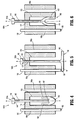
Fig. 4 is a cross-sectional view of another embodiment of a surgical portal apparatus including another embodiment of a cleaning device inserted therein and shown in a first retracted condition; -
Fig. 5 is a cross-sectional view of the surgical portal apparatus ofFig. 4 including the cleaning device ofFig. 4 shown in a deployed condition; -
Fig. 6 is a cross-sectional view of the surgical portal apparatus ofFig. 4 including the cleaning device ofFig. 4 shown in a second retracted condition; -
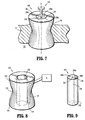
Fig. 7 is a perspective view of a surgical portal apparatus having a housing member and an inner member in accordance with an embodiment of the present disclosure; -
Fig. 8 is a perspective view of the housing member of the surgical portal apparatus ofFig. 4 with the inner member removed; and -
Fig. 9 is a perspective view of the inner member of the surgical portal apparatus ofFig. 1 in accordance with the present disclosure. - Particular embodiments of the present disclosure will be described herein with reference to the accompanying drawings. As shown in the drawings and as described throughout the following description, and as is traditional when referring to relative positioning on an object, the term "proximal" or "trailing" refers to the end of the apparatus that is closer to the user and the term "distal" or "leading" refers to the end of the apparatus that is farther from the user. In the figures and in the description that follows, like reference numerals identify similar or identical elements. In the following description, well-known functions or constructions are not described in detail to avoid obscuring the present disclosure in unnecessary detail.
- A surgical
portal apparatus 100 will now be described with reference toFigs. 1-2B . An example of a housing member is disclosed in commonly assignedU.S. Patent Application Serial No. 12/244,024, filed October 2, 2008 - The surgical
portal apparatus 100 includes ahousing member 102, which includes a plurality of longitudinally extendingports 106a-c and a longitudinally extending cleaningport 130. The surgicalportal apparatus 100 is configured and adapted to be placed within an opening "W", e.g., an incision or a naturally occurring bodily orifice (e.g., mouth, anus, or vagina), within tissue "T". To facilitate anchoring of thehousing member 102 within opening "W" of tissue "T", thehousing member 102 may define a substantially hourglass configuration. In particular, trailing and leadingsections - The
housing member 102 is adapted to establish a substantially sealed relationship within the opening "W" within tissue "T". Thehousing member 102 may be formed from a compressible and/or flexible material, e.g., a suitable foam or gel, having sufficient compliance to form a seal about one or more surgical instruments 180 (Figs. 2A and 2B ) placed withinports 106a-c, and acleaning device 135 placed within the cleaningport 130. The compressible and/or flexible material may also be sufficiently compliant to facilitate off-axis movement ofsurgical instruments 180 placed withinrespective ports 106a-c. In addition, the compressible and/or flexible material facilitates establishing a substantial seal between thehousing member 102 and the opening "W". In particular, thehousing member 102 may be compressed to a compressed state during or prior to insertion of thehousing member 102 into the opening "W". In the compressed state, thehousing member 102 may have a radial dimension less than that of the opening "W". Once placed within the opening "W", the natural biasing force of the material of thehousing member 102 will transition thehousing member 102 toward the initial, larger radial dimension. This biasing force facilitates the sealed relation between thehousing member 102 and the opening "W". Examples of compressible and/or flexible materials suitable for such applications include, but are not limited to, polyisoprene and elastomeric materials. - A method of introducing the surgical
portal apparatus 100 within the opening "W" within tissue "T" includes positioning theleading end 110 ofhousing member 102 within opening "W" and advancing theleading end 110 to a predetermined depth (Fig. 1 ). Once thehousing member 102 is positioned within the opening "W", e.g., with trailing and leading ends 108, 110 of thehousing member 102 on opposed sides of the body wall, e.g., the abdominal cavity wall,housing member 102 expands toward its initial, expanded condition in sealed engagement with the tissue defining the opening "W".Surgical instruments 180 are inserted intorespective ports 106a-c and thecleaning device 135 is placed within the cleaningport 130. - Once the
housing member 102 is placed within the opening "W" of tissue "T", it may be desirable to maintain an enlarged surgical work space. To facilitate maintenance of an enlarged surgical work space, thehousing member 102 may also include aninsufflation conduit 107 that is operatively coupled to a source of insufflation fluid, e.g., CO2, that communicates insufflation fluid to an underlying tissue site "TS", through anoutlet 114, to facilitate maintenance of the enlarged surgical work space. - Each
lumen 106a-c of thehousing member 102 may be configured and adapted to receive asurgical instrument 180, e.g., a viewing instrument, (Figs. 2A-2B ) in a substantially sealed relationship. Although depicted as including threeports 106a-c configured and adapted to receivesurgical instruments 180 therein, thehousing member 102 may include a greater or lesser number of lumens that are adapted and configured to receive surgical instruments. Moreover, theports 106a-c may define a plurality of differently sized diameters. For example, theports 106a-c may be sized from about 5 mm to about 15 mm. Upon introduction of thesurgical instrument 180 through one of theports 106a-c, the inner surface portions defining the one of theports 106a-c establishes and maintains a substantial sealed relation about thesurgical instrument 180. - A cleaning device 135 (
Fig. 3 ) is configured and adapted to be received within cleaningport 130 of thehousing member 102. Thecleaning device 135 is configured and adapted to remove debris and/or moisture from thesurgical instrument 180, e.g., a viewing instrument. For example, thecleaning device 135 may remove debris and/or moisture from a viewing portion, e.g., a lens, ofsurgical instrument 180. - As shown in
Fig. 3 , thecleaning device 135 includes anelongated shaft 145, ahandle 140 positioned at afirst end 146 of theelongated shaft 145, and acleaning element 150 positioned at asecond end 147 of theelongated shaft 145. Thecleaning element 150 may be formed from a biocompatible polymer. In other embodiments, thecleaning element 150 may be formed from an absorbable sponge or an absorbable shape memory polymer. In an embodiment, thecleaning element 150 may be impregnated with a cleaning substance or solution. - In an embodiment, as shown in
Fig. 3A , acleaning device 135B may includeelongated shaft 145 includingfirst end 146 andsecond end 147. Thecleaning device 135B may be substituted for thecleaning device 135 of surgicalportal apparatus 100. The use and operation of thecleaning device 135B is substantially similar to that of cleaningdevice 135, except in the following respects that will now be described. Thecleaning device 135 includes handle 140 that is coupled to theelongated shaft 145 at thefirst end 146. In addition, acleaning element 150a is coupled to theelongated handle 145 at thesecond end 147. Unlike thecleaning device 135, thecleaning device 135B may include a fluid "F", e.g., a cleaning fluid, that is contained within a reservoir defined within theelongated shaft 145. Anactuator 141 operatively coupled to thehandle 140 may effect a discharge of the fluid "F" through one or morefluid outlets 143 included in thecleaning element 150a. Theactuator 141 may effect the discharge of the fluid "F" through the one or morefluid outlets 143 by increasing the pressure within the reservoir defined by theelongated shaft 145. The fluid "F" may be selectively discharged from thefluid outlets 143 to facilitate cleaning of thesurgical instrument 180 positioned in aport 106a-c. - The
cleaning element cleaning element 150 may be formed from any permanent biocompatible materials (e.g., polyesters, polypropylene), biodegradable biocompatible materials (e.g., polylactic acid, polyglycolic acid, oxidized cellulose, and chitosan) or with a combination of both permanent and biodegradable materials, as well as biocompatible polymers listed above. - Examples of
polymeric cleaning element cleaning element 150 is a mesh, e.g., polypropylene mesh, nylon mesh, and DACRON mesh. Exemplary absorbable meshes include collagen, polyglycolic acid, polyglactin, polycaprolactone, chitosan, and carbon fiber mesh. It should be understood that any of the above-mentioned biocompatible polymers may be suitable for use herein. - The
cleaning element cleaning element 150 may be circular, rectangular, oval-shaped, hook-style, or with any combination thereof. Theelongated shaft 145 and handle 140 may be formed, for example, from a polymer selected from a group consisting of nylon, polyvinyl chloride, polytetrafluoroethylene, and combinations thereof. - As shown best in
Figs. 2A and 2B , thecleaning device 135 is positioned within cleaningport 130. The longitudinally extending cleaningport 130 may include afirst section 131 defining a first diameter and asecond section 133 defining a second diameter. Thefirst diameter 133 may be dimensioned to substantially approximate the diameter of theelongated shaft 145 of thecleaning device 135 to provide stabilization of theelongated shaft 145 and to maintain an insufflated workspace. Theelongated shaft 145 is axially translatable through the cleaningport 130 and is rotatable about longitudinal axis A of the cleaningport 130. The cleaningport 130 may also include asecond section 133 defining asecond diameter 133 dimensioned to substantially approximating the diameter of thecleaning element 150. - As shown in
Figs. 2A and 2B , thesurgical instrument 180 includes aviewing portion 185. Thesurgical instrument 180 may be positioned within any of theports 106a-c. As shown inFigs. 2A and 2B , thesurgical instrument 180 is positioned withinport 106c. The use and operation of thecleaning device 135 to facilitate removal of debris and/or moisture from theviewing portion 185 of thesurgical instrument 180 positioned within one of theports 106a-c will now be described. - As shown in
Fig. 2A , thecleaning device 135 is positioned within cleaningport 130 such that thecleaning element 150 is fully or substantially retracted within thesecond section 133 of the cleaningport 130. The distal advancement of thecleaning device 135 through cleaningport 130 distally slides thecleaning element 150 through thesecond section 133. Thecleaning element 150 may be transitionable between a compressed diameter and an expanded diameter, and may be biased toward the expanded diameter. Accordingly, upon distal translation through and out from the cleaningport 130, thecleaning element 150 may transition toward the expanded diameter, thereby coming into contact withinstrument 180 positioned within one ofports 106a-c. - Furthermore, the
instrument 180 may be rotated or positioned such that theviewing portion 185 of theinstrument 180 comes into contact with thecleaning element 180. Once contact between theviewing portion 185 and thecleaning element 150 has been made, thecleaning device 135 may be rotated to effect sliding of thecleaning element 150 across theviewing portion 185. Thecleaning device 135 may also be alternatively proximally withdrawn and distally translated within the cleaningport 130 to effect sliding of thecleaning element 150 across theviewing portion 185. The frictional contact between the cleaningelement 150 and theviewing portion 185 facilitates cleaning, e.g., removal of debris and/or moisture, of theviewing portion 185 of theinstrument 180. Once theinstrument 180, and inparticular viewing portion 185, has been cleaned, thecleaning device 135 may be retracted by proximally translating thecleaning device 135 through the cleaningport 130. - Another embodiment of a surgical portal apparatus will now be described with reference to
Figs. 4-6 . The surgicalportal apparatus 100A, shown inFigs. 4-6 , is substantially similar to the surgicalportal apparatus 100 except in the following ways, which will now be described. In particular, the surgicalportal apparatus 100A includes acleaning device 135A that is substantially similar to thecleaning device 135, except in the following respects which will now be described. - In particular, the
cleaning device 135A may include acleaning element 160 disposed at thedistal end 147 of theelongated shaft 145. Thecleaning element 160 includes one or moredeployable wings more wings cleaning element 160 are biased toward a deployed condition, as shown inFig. 5 . In the deployed condition, thewings port 106a-c. With thewings Fig. 5 , thewings viewing portion 185 of theinstrument 180. Although shown as including twowings cleaning device 135A may include a greater or lesser number of wings. Thecleaning device 135A may be rotated about longitudinal axis A to bring thecleaning element 160 into contact with theviewing portion 185 ofinstrument 180, and to effect a sliding engagement between thewings viewing portion 185 to thereby facilitate removal of debris and/or moisture from theviewing portion 185. - As shown in
Figs. 4 and 6 , when thecleaning device 135A is retracted within thesecond section 133 of the cleaningport 130, thewings second section 133. In particular, as shown inFig. 4 , thewings Fig. 6 , thewings wings wings Fig. 4 ) to facilitate initial deployment of thewings wings Fig. 6 ). Thereafter, thecleaning device 135A may be repeatedly deployed (Fig. 5 ) and retracted as shown inFig. 6 , as desired. - Moreover, the
wings cleaning element 160 may be bent at an angle between about zero degrees (0°) to about ninety degrees (90°) to make it easier to clean surgical object's components, such asviewing portion 185 ofinstrument 180. In an embodiment, the cleaning element and/or itswings - Another embodiment of a surgical portal apparatus will now be described with reference to
Figs. 7-9 . The surgicalportal apparatus 200, illustrated inFigs. 7-9 , is substantially similar to the surgicalportal apparatus 100 described above, except in the following respects which will now be described. - The surgical
portal apparatus 200 includes ahousing member 202 and aninner member 204. Theinner member 204 includes a cleaningport 230 that is substantially similar to cleaningport 130 described above and is configured and adapted to receive acleaning device ports 206a-c that are adapted and configured to receive instruments therethrough, e.g.,instrument 180. Theports 206a-c may form a substantial seal about the instruments inserted within theports 206a-c. - As shown in
Figs. 8-9 , thehousing member 202 includes trailing and leading ends 208, 210, respectively, and anintermediate section 212 disposed therebetween. Additionally, as described above with respect to surgicalportal apparatus 100, thehousing member 202 may also includeinsufflation conduit 107, which is operatively coupled to source S of insufflation fluid, e.g., CO2, that provides and maintains a flow of insufflation fluid throughoutlet 114 into the underlying tissue site "TS" (Fig. 7 ). - The housing member 202 (
Fig. 8 ) may define an hour-glass configuration, as shown, to facilitate anchoring of the housing member within opening "W" within tissue "T". Thehousing member 202 includes alongitudinally extending passage 220 adapted and configured for the reception of the inner member 204 (Fig. 9 ) therein. Upon insertion of theinner member 204 within thepassage 220, theinner member 204 compresses to fit within thepassage 220 in a substantially sealed relation. Wheninner member 204 is located within the longitudinal passage 120 ofhousing member 102, e.g., with leading and trailing ends 218, 216 of theinner member 204 on opposed sides of the body wall (e.g., the abdominal cavity wall),inner member 204 expands toward its normal expanded condition (which it naturally biases towards regardless of its position relative to the longitudinal passage 220) in sealed engagement with the inner boundary oflongitudinal passage 220 ofhousing member 202. In an embodiment, theinner member 204 may be rotated relative to longitudinal axis A of thehousing member 202 when theinner member 204 is positioned within the housing member 202 (Fig. 7 ). - Although the
cleaning element viewing portion 185 ofinstrument 180, it should be understood that thecleaning element 150 may clean other surgical instruments or parts of surgical instruments, e.g., a light source (not shown). - Although the illustrative embodiments of the present disclosure have been described herein with reference to the accompanying drawings, the above description, disclosure, and figures should not be construed as limiting, but merely as exemplifications of particular embodiments. It is to be understood, therefore, that the disclosure is not limited to those precise embodiments, and that various other changes and modifications may be effected therein by one skilled in the art without departing from the scope or spirit of the disclosure.
- The invention may be described by reference to the following numbered paragraphs:-
- 1. A surgical portal apparatus, comprising: a cleaning device; and a housing member including: a leading portion; a trailing portion; and an intermediate portion disposed between the leading and trailing portions, and one or more ports longitudinally extending between the leading and trailing portions, the one or more ports configured and adapted to receive a surgical instrument therein, and at least one cleaning port extending between the leading and trailing portions, the at least one cleaning port configured and adapted to receive the cleaning device therein, the cleaning device configured and adapted to clean the surgical instrument.
- 2. The surgical portal apparatus of paragraph 1, wherein the cleaning device includes an elongated shaft having proximal and distal ends, and a cleaning element, the cleaning element coupled to the distal end of the elongated shaft.
- 3. The surgical portal apparatus of paragraph 1, wherein the at least one cleaning port defines a longitudinal axis, the cleaning device translatable along the longitudinal axis.
- 4. The surgical portal apparatus of paragraph 1, wherein the at least one cleaning port defines a longitudinal axis, the cleaning device rotatable about the longitudinal axis.
- 5. The surgical portal apparatus of paragraph 2, wherein the cleaning element is transitionable between compressed and expanded conditions.
- 6. The surgical portal apparatus of paragraph 5, wherein the cleaning element is biased toward the expanded condition.
- 7. The surgical portal apparatus of paragraph 2, wherein the cleaning element defines a longitudinal axis and includes one or more wings, the wings transitionable between a first condition in which the wings are folded toward the longitudinal axis and a second condition in which the wings are substantially orthogonal to the longitudinal axis.
- 8. The surgical portal apparatus of paragraph 7, wherein the wings are biased toward the second condition in which the wings are substantially orthogonal to the longitudinal axis.
- 9. The surgical portal apparatus according to paragraph 2, wherein the cleaning element is formed from an absorbable material.
- 10. The surgical portal apparatus according to paragraph 2, wherein the cleaning element is formed from a biocompatible polymer.
- 11. A surgical portal apparatus, comprising: a housing member comprising an expandable material being adapted to transition between a compressed condition and an expanded condition in which an outer surface of the housing member is adapted for a substantial sealing relationship with tissue upon insertion of the housing member into the tissue for accessing an underlying tissue site, the housing member defining a longitudinal axis and having leading and trailing ends; and an inner member operably associated with the housing member and including: at least one longitudinal port extending therethrough that is adapted for substantially sealed reception of a surgical object; and a longitudinal cleaning port adapted to store a cleaning device, the cleaning device is configured to remove debris from the surgical object.
- 12. The surgical port apparatus according to paragraph 11, wherein the longitudinal cleaning port has a first diameter and a second diameter, the first diameter is smaller than the second diameter.
- 13. The surgical portal apparatus according to paragraph 10, wherein the inner member is rotatable about the longitudinal axis.
- 14. The surgical portal apparatus according to paragraph 10, wherein the inner member is separable from the housing member.
- 15. The surgical portal apparatus according to paragraph 10, wherein at least one of the inner member and the housing member is comprised of an elastomeric material.
Claims (15)
- A surgical portal apparatus, comprising:a cleaning device; anda housing member including:a leading portion;a trailing portion; andan intermediate portion disposed between the leading and trailing portions, and one or more ports longitudinally extending between the leading and trailing portions, the one or more ports configured and adapted to receive a surgical instrument therein, and at least one cleaning port extending between the leading and trailing portions, the at least one cleaning port configured and adapted to receive the cleaning device therein, the cleaning device configured and adapted to clean the surgical instrument.
- The surgical portal apparatus of claim 1, wherein the cleaning device includes an elongated shaft having proximal and distal ends, and a cleaning element, the cleaning element coupled to the distal end of the elongated shaft.
- The surgical portal apparatus of claim 1 or claim 2, wherein the at least one cleaning port defines a longitudinal axis, the cleaning device translatable along the longitudinal axis.
- The surgical portal apparatus of any preceding claim, wherein the at least one cleaning port defines a longitudinal axis, the cleaning device rotatable about the longitudinal axis.
- The surgical portal apparatus of claim 1 or 2, wherein the cleaning element is transitionable between compressed and expanded conditions.
- The surgical portal apparatus of claim 5, wherein the cleaning element is biased toward the expanded condition.
- The surgical portal apparatus of claim 1 or claim 2, wherein the cleaning element defines a longitudinal axis and includes one or more wings, the wings transitionable between a first condition in which the wings are folded toward the longitudinal axis and a second condition in which the wings are substantially orthogonal to the longitudinal axis.
- The surgical portal apparatus of claim 7, wherein the wings are biased toward the second condition in which the wings are substantially orthogonal to the longitudinal axis.
- The surgical portal apparatus according to claim 1 or claim 2, wherein the cleaning element is formed from an absorbable material.
- The surgical portal apparatus according to claim 1 or claim 2, wherein the cleaning element is formed from a biocompatible polymer.
- A surgical portal apparatus, comprising:a housing member comprising an expandable material being adapted to transition between a compressed condition and an expanded condition in which an outer surface of the housing member is adapted for a substantial sealing relationship with tissue upon insertion of the housing member into the tissue for accessing an underlying tissue site, the housing member defining a longitudinal axis and having leading and trailing ends; andan inner member operably associated with the housing member and including:at least one longitudinal port extending therethrough that is adapted forsubstantially sealed reception of a surgical object; anda longitudinal cleaning port adapted to store a cleaning device, the cleaning device is configured to remove debris from the surgical object.
- The surgical port apparatus according to claim 11, wherein the longitudinal cleaning port has a first diameter and a second diameter, the first diameter is smaller than the second diameter.
- The surgical portal apparatus according to claim 10 or claim 11, wherein the inner member is rotatable about the longitudinal axis.
- The surgical portal apparatus according to claim 10 or claim 11, wherein the inner member is separable from the housing member.
- The surgical portal apparatus according to claim 10 or claim 11, wherein at least one of the inner member and the housing member is comprised of an elastomeric material.
Applications Claiming Priority (2)
| Application Number | Priority Date | Filing Date | Title |
|---|---|---|---|
| US41649710P | 2010-11-23 | 2010-11-23 | |
| US13/223,332 US8668642B2 (en) | 2010-11-23 | 2011-09-01 | Port device including retractable endoscope cleaner |
Publications (2)
| Publication Number | Publication Date |
|---|---|
| EP2455025A2 true EP2455025A2 (en) | 2012-05-23 |
| EP2455025A3 EP2455025A3 (en) | 2013-10-30 |
Family
ID=45390048
Family Applications (1)
| Application Number | Title | Priority Date | Filing Date |
|---|---|---|---|
| EP20110250794 Withdrawn EP2455025A3 (en) | 2010-11-23 | 2011-09-14 | Port device including retractable endoscope cleaner |
Country Status (5)
| Country | Link |
|---|---|
| US (4) | US8668642B2 (en) |
| EP (1) | EP2455025A3 (en) |
| JP (1) | JP2012110681A (en) |
| AU (1) | AU2011221398A1 (en) |
| CA (1) | CA2751929A1 (en) |
Cited By (1)
| Publication number | Priority date | Publication date | Assignee | Title |
|---|---|---|---|---|
| WO2017132453A1 (en) * | 2016-01-28 | 2017-08-03 | Brody Fredrick | Surgical accessory and methods of using the same |
Families Citing this family (9)
| Publication number | Priority date | Publication date | Assignee | Title |
|---|---|---|---|---|
| US8668642B2 (en) * | 2010-11-23 | 2014-03-11 | Covidien Lp | Port device including retractable endoscope cleaner |
| US9549758B2 (en) * | 2011-03-23 | 2017-01-24 | Covidien Lp | Surgical access assembly with adapter |
| US10114216B2 (en) * | 2014-07-24 | 2018-10-30 | C-Clear Llc | Minimally invasive lens cleaner |
| US11490800B2 (en) * | 2015-06-11 | 2022-11-08 | Stelian Valeriu GEORGIAN | Laparoscopic eye wiper |
| WO2017006684A1 (en) * | 2015-07-07 | 2017-01-12 | 株式会社カネカ | Lens cleaner for endoscope |
| USD800981S1 (en) * | 2015-10-01 | 2017-10-24 | Foamtec International Co., Ltd. | Cleaning device with tail swab |
| WO2018222767A1 (en) * | 2017-05-31 | 2018-12-06 | Carefusion 2200, Inc. | Trocar assembly with a cleanning element for use during a laparoscopic procedure |
| WO2019226855A1 (en) * | 2018-05-23 | 2019-11-28 | Board Of Regents, The University Of Texas System | Devices, systems and methods for cleaning of elongated instrument surface |
| US11154187B2 (en) | 2019-05-29 | 2021-10-26 | Peter H. Kwon | Apparatus and method for in vivo cleaning of an optical lens of a surgical visualization device |
Family Cites Families (182)
| Publication number | Priority date | Publication date | Assignee | Title |
|---|---|---|---|---|
| US16680A (en) | 1857-02-24 | Cauterizing-syringe | ||
| US387410A (en) | 1888-08-07 | Gun-cleaner | ||
| US449080A (en) | 1891-03-24 | James t | ||
| US363951A (en) | 1887-05-31 | Gun gleaner | ||
| US685088A (en) | 1901-01-10 | 1901-10-22 | Ashbel P Barlow | Surgical appliance. |
| US1131349A (en) | 1914-05-25 | 1915-03-09 | American Tampon And Applicator Company | Applicator. |
| US1256831A (en) * | 1915-06-28 | 1918-02-19 | Eugene Rogers | Applicator. |
| US1908403A (en) * | 1932-04-04 | 1933-05-09 | Carrie L Budde | Surgical instrument |
| US2932837A (en) | 1953-12-01 | 1960-04-19 | Williamson Inc T | Conduit cleaning device |
| GB1289087A (en) | 1970-04-06 | 1972-09-13 | ||
| US3939519A (en) | 1974-01-16 | 1976-02-24 | Muirhead Walter B | Condenser tube cleaning plug |
| US4031590A (en) | 1974-12-20 | 1977-06-28 | Midcon Pipeline Equipment Co. | Pipe scraper |
| US4021265A (en) | 1975-12-04 | 1977-05-03 | Bell Telephone Laboratories, Incorporated | Method and apparatus for cleaning tubular structures |
| IT8460436U1 (en) | 1984-09-03 | 1986-03-03 | Cosatto Spa | Toilet brush |
| US4842578A (en) | 1986-03-12 | 1989-06-27 | Dyonics, Inc. | Surgical abrading instrument |
| US4715747A (en) | 1986-06-20 | 1987-12-29 | Behrens Robert N | Air motivated conduit prover apparatus |
| NZ218348A (en) | 1986-11-20 | 1991-07-26 | Raymond Andrew Simpson | Chimney flue cleaner having radial arms with swivel mounted scrapers having scraping surfaces |
| US4798246A (en) | 1987-04-22 | 1989-01-17 | Best David M | Pipe scraper |
| JPH0354728Y2 (en) | 1987-11-13 | 1991-12-04 | ||
| US5074840A (en) | 1990-07-24 | 1991-12-24 | Inbae Yoon | Packing device and method of packing for endoscopic procedures |
| US5374261A (en) * | 1990-07-24 | 1994-12-20 | Yoon; Inbae | Multifunctional devices for use in endoscopic surgical procedures and methods-therefor |
| US4873778A (en) | 1988-12-12 | 1989-10-17 | Stipp M R | Gun bore cleaning apparatus |
| US4962607A (en) | 1989-09-07 | 1990-10-16 | Baldwin Leon M | Bore cleaning tool |
| WO1991017843A1 (en) | 1990-05-18 | 1991-11-28 | Graham Hubert Smith | Tube cleaner |
| FR2668696B1 (en) * | 1990-11-06 | 1993-02-19 | Ethnor | ENDOSCOPIC SURGICAL INSTRUMENT FOR TISSUE ENTRY. |
| US5188630A (en) | 1991-03-25 | 1993-02-23 | Christoudias George C | Christoudias endospongestick probe |
| US5295952A (en) * | 1991-06-19 | 1994-03-22 | Surgical Innovations, Inc. | Swab for laparoscopy |
| JPH05207962A (en) * | 1992-01-31 | 1993-08-20 | Olympus Optical Co Ltd | Rigid endoscope |
| US5337730A (en) | 1992-06-18 | 1994-08-16 | The United States Of America As Represented By The Secretary Of The Air Force | Endoscope cleansing catheter and method of use |
| US5419310A (en) | 1992-11-03 | 1995-05-30 | Vision Sciences, Inc. | Partially inflated protective endoscope sheath |
| US5308316A (en) | 1992-12-28 | 1994-05-03 | Edward Weck Incorporated | Encoscopic kitner |
| US5522795A (en) | 1993-01-25 | 1996-06-04 | United States Surgical Corporation | Endoscopic swab device |
| DE4305118C1 (en) | 1993-02-19 | 1994-03-31 | Viesehon Karl Heinz | Wind-instrument internal cleaning tool with pull-through - has domed portion attached to pull-through on surface of plate-type body. |
| US5407807A (en) * | 1993-04-23 | 1995-04-18 | Daymark Medical Industries, Inc. | Method and apparatus for detecting sepsis causation in a catheter |
| US5320617A (en) * | 1993-06-25 | 1994-06-14 | Leach Gary E | Method of laser-assisted prostatectomy and apparatus for carrying out the method |
| EP0668739A1 (en) | 1993-07-22 | 1995-08-30 | Xomed-Treace, Inc. | Disposable endoscope sheath |
| US5366478A (en) * | 1993-07-27 | 1994-11-22 | Ethicon, Inc. | Endoscopic surgical sealing device |
| US5392766A (en) | 1993-10-06 | 1995-02-28 | Innerdyne Medical, Inc. | System and method for cleaning viewing scope lenses |
| US5458633A (en) | 1994-05-24 | 1995-10-17 | Bailey; Robert W. | Irrigating laparoscopic cannula or trocar |
| US6017333A (en) | 1995-04-13 | 2000-01-25 | Bailey; Robert W. | Irrigating laparoscopic cannula |
| US5514084A (en) | 1994-07-26 | 1996-05-07 | Fisher; Yale | Retractable wipe for cleaning endoscopic surgical devices |
| US5514133A (en) * | 1994-08-26 | 1996-05-07 | Golub; Robert | Access device for endoscopic surgery |
| US5653705A (en) * | 1994-10-07 | 1997-08-05 | General Surgical Innovations, Inc. | Laparoscopic access port for surgical instruments or the hand |
| FR2727334A1 (en) | 1994-11-30 | 1996-05-31 | Technologie Avancee Medicale | DEVICE FOR CLEANING MEDICAL DEVICE CONDUITS |
| US6010495A (en) * | 1995-03-17 | 2000-01-04 | Tilton, Jr.; Eugene B. | Instrumentation for endoscopic surgical insertion and application of liquid, gel and like material |
| US5997515A (en) * | 1995-05-19 | 1999-12-07 | General Surgical Innovations, Inc. | Screw-type skin seal with inflatable membrane |
| US5634937A (en) * | 1995-05-19 | 1997-06-03 | General Surgical Innovations, Inc. | Skin seal with inflatable membrane |
| US5545179A (en) * | 1995-07-21 | 1996-08-13 | Ethicon Endo-Surgery, Inc. | Endoscopic access assembly |
| US6494208B1 (en) | 1996-03-11 | 2002-12-17 | Orlando Morejon | Endotracheal tube cleaning apparatus |
| US7060135B2 (en) | 1996-03-11 | 2006-06-13 | Orlando Morejon | Endotracheal tube cleaning apparatus and method |
| US7669600B2 (en) | 1996-03-11 | 2010-03-02 | Orlando Morejon | Endotracheal tube cleaning apparatus |
| US5709691A (en) | 1996-03-11 | 1998-01-20 | Morejon; Orlando | Endotracheal tube cleaning device |
| US5938587A (en) | 1996-04-25 | 1999-08-17 | Modified Polymer Components, Inc. | Flexible inner liner for the working channel of an endoscope |
| US5964004A (en) | 1996-09-24 | 1999-10-12 | Bean; Douglas Colin | Device for cleaning medical endoscopic tubes |
| US6276661B1 (en) * | 1996-11-06 | 2001-08-21 | Medtronic, Inc. | Pressure actuated introducer valve |
| US5814160A (en) | 1996-11-26 | 1998-09-29 | Mcdonnell Douglas Corp. | Method and apparatus for maintaining clean tubing |
| US5913867A (en) | 1996-12-23 | 1999-06-22 | Smith & Nephew, Inc. | Surgical instrument |
| US6045623A (en) | 1997-04-24 | 2000-04-04 | Cannon; Bradley Jay | Method and apparatus for cleaning catheter lumens |
| US5779697A (en) * | 1997-05-28 | 1998-07-14 | Linvatec Corporation | Arthroscopic cannula with fluid seals |
| US6042573A (en) * | 1997-12-11 | 2000-03-28 | Smith & Nephew, Inc. | Surgical valve |
| US20030109837A1 (en) * | 1998-03-13 | 2003-06-12 | Mcbride-Sakal Marcia | Brush to clear occluded stents |
| BR9801690A (en) | 1998-05-26 | 2001-06-19 | Petroleo Brasileiro Sa | Bidirectional multidimensional scraper device |
| US6406425B1 (en) | 1998-06-22 | 2002-06-18 | Origin Medasystems | Cannula-based irrigation system and method |
| US6176825B1 (en) | 1998-06-22 | 2001-01-23 | Origin Medsystems, Inc. | Cannula-based irrigation system and method |
| US6976957B1 (en) | 1998-06-22 | 2005-12-20 | Origin Medsystems, Inc. | Cannula-based surgical instrument and method |
| AUPP537098A0 (en) | 1998-08-20 | 1998-09-10 | Novapharm Research (Australia) Pty Ltd | Endoscope cleaning device |
| US6126592A (en) | 1998-09-12 | 2000-10-03 | Smith & Nephew, Inc. | Endoscope cleaning and irrigation sheath |
| US7344547B2 (en) * | 1998-09-15 | 2008-03-18 | Phavel Systems, Inc. | Laparoscopic instruments and trocar systems and related surgical method |
| US6007523A (en) * | 1998-09-28 | 1999-12-28 | Embol-X, Inc. | Suction support and method of use |
| GB9825714D0 (en) | 1998-11-24 | 1999-01-20 | Hamdeen Limited | Improved pipeline pig and applications for use thereof |
| US6725492B2 (en) | 1998-11-25 | 2004-04-27 | Neosci Medical, Inc. | Cleaning brush for medical devices |
| US6464632B1 (en) | 1999-02-13 | 2002-10-15 | James M. Taylor | Flexible inner liner for the working channel of an endoscope |
| JP4638051B2 (en) | 1999-03-19 | 2011-02-23 | ヴァイダケア、コーパレイシャン | Biopsy needle |
| US6183450B1 (en) | 1999-06-04 | 2001-02-06 | William A Lois | Catheter de-clogging device |
| US6811546B1 (en) * | 2000-08-25 | 2004-11-02 | Origin Medsystems, Inc. | Endoscopic surgical access port and method |
| US6679886B2 (en) | 2000-09-01 | 2004-01-20 | Synthes (Usa) | Tools and methods for creating cavities in bone |
| JP3845296B2 (en) * | 2000-11-29 | 2006-11-15 | オリンパス株式会社 | Endoscope dirt remover |
| US6800083B2 (en) | 2001-04-09 | 2004-10-05 | Scimed Life Systems, Inc. | Compressible atherectomy burr |
| US20060178556A1 (en) | 2001-06-29 | 2006-08-10 | Intuitive Surgical, Inc. | Articulate and swapable endoscope for a surgical robot |
| US20030055404A1 (en) | 2001-09-17 | 2003-03-20 | Moutafis Timothy E. | Endoscopic rotary abraders |
| JP3671002B2 (en) | 2001-12-28 | 2005-07-13 | オリンパス株式会社 | Endoscope sheath |
| TWI258356B (en) | 2002-03-28 | 2006-07-21 | Onestep Co Ltd | Cleaning member for medical tubes, porous member for cleaning treatment appliance insertion lumen of endoscope, and cleaning apparatus for cleaning treatment appliance insertion lumen of endoscope |
| GB0303862D0 (en) | 2003-02-20 | 2003-03-26 | Hamdeen Inc Ltd | Downhole tool |
| US7077845B2 (en) | 2003-03-11 | 2006-07-18 | Arthrex, Inc. | Surgical abrader with suction port proximal to bearing |
| US20040181194A1 (en) | 2003-03-14 | 2004-09-16 | Perkins Kathy S. | Instrument for cleaning and relieving obstructions in feeding tubes |
| US7578786B2 (en) | 2003-04-01 | 2009-08-25 | Boston Scientific Scimed, Inc. | Video endoscope |
| US20040199052A1 (en) | 2003-04-01 | 2004-10-07 | Scimed Life Systems, Inc. | Endoscopic imaging system |
| US20050154262A1 (en) | 2003-04-01 | 2005-07-14 | Banik Michael S. | Imaging system for video endoscope |
| US7591783B2 (en) | 2003-04-01 | 2009-09-22 | Boston Scientific Scimed, Inc. | Articulation joint for video endoscope |
| US6929601B2 (en) | 2003-04-16 | 2005-08-16 | Granit Medical Innovation Llc | Endoscopic sheath assembly and associated method |
| US7771384B2 (en) | 2003-08-20 | 2010-08-10 | Biagio Ravo | Trocar with integral irrigation and suction tube |
| GB0402249D0 (en) * | 2004-02-02 | 2004-03-03 | Idi Technologies Ltd | Brush |
| US7051737B2 (en) | 2004-02-05 | 2006-05-30 | The United States Of America As Represented By The Department Of Health And Human Sevices | Mucus shaving apparatus for endotracheal tubes |
| US20060264995A1 (en) | 2004-02-18 | 2006-11-23 | Fanton Gary S | Apparatus and methods for clearing obstructions from surgical cutting instruments |
| US7462175B2 (en) * | 2004-04-21 | 2008-12-09 | Acclarent, Inc. | Devices, systems and methods for treating disorders of the ear, nose and throat |
| US20070167682A1 (en) | 2004-04-21 | 2007-07-19 | Acclarent, Inc. | Endoscopic methods and devices for transnasal procedures |
| US7951117B2 (en) * | 2008-06-25 | 2011-05-31 | Tyco Healthcare Group Lp | Multi-lumen access port |
| US7276023B2 (en) | 2004-08-25 | 2007-10-02 | Bht Hygienetechnik Gmbh | Device for checking endoscope channels |
| EP2260777A1 (en) * | 2004-10-11 | 2010-12-15 | Atropos Limited | An instrument access device |
| US20060102200A1 (en) * | 2004-11-18 | 2006-05-18 | Bernard Esquenet | Cannula cleaning device |
| US20060217665A1 (en) * | 2004-11-18 | 2006-09-28 | Laparoscopic Partners Llc | Surgical instrument seal assembly and triple lead thread |
| US20060116551A1 (en) | 2004-11-30 | 2006-06-01 | Lovett Barbara J | Single-use system and method for endoscopy pre-cleaning |
| US20060247586A1 (en) * | 2005-04-08 | 2006-11-02 | Voegele James W | Intra-abdominal storage device |
| JP2008540026A (en) | 2005-05-17 | 2008-11-20 | タック,フランシス ホートン | Endoscope pull-in tool |
| US20070060884A1 (en) * | 2005-09-13 | 2007-03-15 | The Cleveland Clinic Foundation | Apparatus for insertion between a medical tube and a body tissue opening |
| GB0519506D0 (en) | 2005-09-24 | 2005-11-02 | Imp College Innovations Ltd | A device |
| WO2007097985A2 (en) | 2006-02-17 | 2007-08-30 | Buchman Alan L | Catheter cleaning devices |
| US9820771B2 (en) * | 2006-03-03 | 2017-11-21 | Axcess Instruments Inc. | Apparatus and method for minimally invasive surgery |
| US8357085B2 (en) * | 2009-03-31 | 2013-01-22 | Ethicon Endo-Surgery, Inc. | Devices and methods for providing access into a body cavity |
| US8251900B2 (en) * | 2009-03-06 | 2012-08-28 | Ethicon Endo-Surgery, Inc. | Surgical access devices and methods providing seal movement in predefined paths |
| US8915842B2 (en) | 2008-07-14 | 2014-12-23 | Ethicon Endo-Surgery, Inc. | Methods and devices for maintaining visibility and providing irrigation and/or suction during surgical procedures |
| US20090275972A1 (en) | 2006-04-19 | 2009-11-05 | Shuji Uemura | Minimally-invasive methods for implanting obesity treatment devices |
| US20090272388A1 (en) | 2006-04-19 | 2009-11-05 | Shuji Uemura | Minimally-invasive methods for implanting obesity treatment devices |
| US8001984B2 (en) | 2006-06-06 | 2011-08-23 | Sasaki Larry S | Laparoscopic lens cleaner |
| US8182458B2 (en) | 2006-10-04 | 2012-05-22 | First Quality Products, Inc. | Fastener with adhesive blocker |
| JP4981403B2 (en) | 2006-10-11 | 2012-07-18 | オリンパスメディカルシステムズ株式会社 | Endoscope cleaning sheath and endoscope apparatus including the same |
| US20080172033A1 (en) | 2007-01-16 | 2008-07-17 | Entellus Medical, Inc. | Apparatus and method for treatment of sinusitis |
| US8535220B2 (en) | 2007-02-16 | 2013-09-17 | Robert MONDSCHEIN | Laparoscope cleaning system |
| EP2139377B1 (en) * | 2007-03-30 | 2017-08-09 | Covidien LP | Laparoscopic port assembly |
| US20100217087A1 (en) * | 2007-06-05 | 2010-08-26 | Frank Bonadio | Instrument access system |
| US8187178B2 (en) * | 2007-06-05 | 2012-05-29 | Atropos Limited | Instrument access device |
| US9050036B2 (en) | 2007-06-19 | 2015-06-09 | Minimally Invasive Devices, Inc. | Device for maintaining visualization with surgical scopes |
| US20090064999A1 (en) | 2007-09-12 | 2009-03-12 | E. Benson Hood Laboratories | Tracheostomy tube with inner cannula and obturator for regular and extra-long stomas |
| WO2009046164A1 (en) | 2007-10-05 | 2009-04-09 | Tyco Healthcare Group Lp | Seal anchor for use in surgical procedures |
| US8795326B2 (en) * | 2007-10-05 | 2014-08-05 | Covidien Lp | Expanding seal anchor for single incision surgery |
| US20090105543A1 (en) | 2007-10-19 | 2009-04-23 | Miller Eric C | Endoscope Lens Cleaner |
| US20090118586A1 (en) | 2007-11-01 | 2009-05-07 | Griffin Glenn A | Surgery accessory and method of use |
| JP5117842B2 (en) | 2007-12-27 | 2013-01-16 | 日本コヴィディエン株式会社 | Endoscope bending tool and endoscope set |
| JP5097931B2 (en) | 2008-02-18 | 2012-12-12 | 富士フイルム株式会社 | Automatic return syringe for endoscope |
| US8550988B2 (en) | 2008-04-21 | 2013-10-08 | Covidien Lp | Endoscopic cleaner |
| US8679003B2 (en) | 2008-05-30 | 2014-03-25 | Ethicon Endo-Surgery, Inc. | Surgical device and endoscope including same |
| US20100198018A1 (en) * | 2009-01-30 | 2010-08-05 | Tyco Healthcare Group Lp | Suture management system for surgical portal apparatus including internal tubes |
| US8574153B2 (en) * | 2009-03-20 | 2013-11-05 | Covidien Lp | Flexible port seal |
| US8317690B2 (en) * | 2009-03-31 | 2012-11-27 | Covidien Lp | Foam port and introducer assembly |
| US20100249521A1 (en) * | 2009-03-31 | 2010-09-30 | Shelton Iv Frederick E | Access Device Including Retractor And Insert |
| US8353824B2 (en) * | 2009-03-31 | 2013-01-15 | Ethicon Endo-Surgery, Inc. | Access method with insert |
| US8419635B2 (en) * | 2009-04-08 | 2013-04-16 | Ethicon Endo-Surgery, Inc. | Surgical access device having removable and replaceable components |
| US20100274093A1 (en) * | 2009-04-22 | 2010-10-28 | Ethicon Endo-Surgery, Inc. | Methods and devices for identifying sealing port size |
| US8968189B2 (en) * | 2009-05-07 | 2015-03-03 | Covidien Lp | Flexible access assembly with multiple ports |
| US20100298646A1 (en) * | 2009-05-19 | 2010-11-25 | Tyco Healthcare Group Lp | Flexible access assembly with reinforced lumen |
| US9078695B2 (en) * | 2009-06-05 | 2015-07-14 | Ethicon Endo-Surgery, Inc. | Methods and devices for accessing a body cavity using a surgical access device with modular seal components |
| US8241209B2 (en) * | 2009-06-05 | 2012-08-14 | Ethicon Endo-Surgery, Inc. | Active seal components |
| US8795163B2 (en) * | 2009-06-05 | 2014-08-05 | Ethicon Endo-Surgery, Inc. | Interlocking seal components |
| US8398667B2 (en) * | 2009-08-06 | 2013-03-19 | Covidien Lp | Surgical device having indicia for cutting to size |
| US8845528B2 (en) * | 2009-08-06 | 2014-09-30 | Covidien Lp | Surgical device having non-circular cross-section |
| US8454502B2 (en) * | 2009-08-06 | 2013-06-04 | Covidien Lp | Surgical device having a port with an undercut |
| US8968190B2 (en) * | 2009-08-25 | 2015-03-03 | Covidien Lp | Single incision surgical portal apparatus including inner member |
| US8684918B2 (en) * | 2009-10-02 | 2014-04-01 | Covidien Lp | Single port device including selectively closeable openings |
| US8920314B2 (en) * | 2009-10-07 | 2014-12-30 | Covidien Lp | Universal height foam port |
| US20110118553A1 (en) * | 2009-11-19 | 2011-05-19 | Tyco Healthcare Group Lp | Access device including an integrated light source |
| US8764647B2 (en) * | 2009-11-24 | 2014-07-01 | Covidien Lp | Foam port device having closed-end lumens |
| US8740904B2 (en) * | 2009-11-24 | 2014-06-03 | Covidien Lp | Seal anchor introducer including biasing member |
| US20110124968A1 (en) * | 2009-11-24 | 2011-05-26 | Tyco Healthcare Group Lp | Surgical portal and introducer assembly |
| US20110166423A1 (en) * | 2010-01-07 | 2011-07-07 | Tyco Healthcare Group Lp | Foam port introduction system including dilator |
| US20110251465A1 (en) * | 2010-04-12 | 2011-10-13 | Tyco Healthcare Group Lp | Hollow multi-lumen access port |
| US8821390B2 (en) * | 2010-04-12 | 2014-09-02 | Covidien Lp | Surgical access method and assembly including sleeve and port |
| US20110251463A1 (en) * | 2010-04-12 | 2011-10-13 | Tyco Healthcare Group Lp | Bariatric foam port |
| US9017252B2 (en) * | 2010-04-12 | 2015-04-28 | Covidien Lp | Access assembly with flexible cannulas |
| US20110301419A1 (en) * | 2010-06-07 | 2011-12-08 | Brandon Wesley Craft | Pressure feedback access ports for minimally invasive surgery |
| US9421032B2 (en) * | 2010-06-16 | 2016-08-23 | Covidien Lp | Seal port with blood collector |
| US8926504B2 (en) * | 2010-10-01 | 2015-01-06 | Covidien Lp | Access assembly |
| US8668642B2 (en) | 2010-11-23 | 2014-03-11 | Covidien Lp | Port device including retractable endoscope cleaner |
| US20120130186A1 (en) * | 2010-11-23 | 2012-05-24 | Tyco Healthcare Group Lp | Adjustable surgical portal |
| US8679151B2 (en) * | 2010-11-24 | 2014-03-25 | Covidien Lp | Access device including shape memory deployment mechanism |
| US8968191B2 (en) * | 2010-11-24 | 2015-03-03 | Covidien Lp | Expandable access assembly including an internal thread mechanism |
| US9011324B2 (en) * | 2010-11-24 | 2015-04-21 | Covidien Lp | Access assembly including one or more foldable caps |
| US8602983B2 (en) * | 2010-12-20 | 2013-12-10 | Covidien Lp | Access assembly having undercut structure |
| US9119664B2 (en) * | 2010-12-20 | 2015-09-01 | Covidien Lp | Integral foam port |
| US8550992B2 (en) * | 2010-12-20 | 2013-10-08 | Covidien Lp | Two-part access assembly |
| US20120190933A1 (en) * | 2011-01-24 | 2012-07-26 | Tyco Healthcare Group Lp | Inflatable access assembly |
| US8753267B2 (en) * | 2011-01-24 | 2014-06-17 | Covidien Lp | Access assembly insertion device |
| US9022928B2 (en) * | 2011-03-18 | 2015-05-05 | Covidien Lp | Wound protector including balloon within incision |
| US20120245429A1 (en) * | 2011-03-23 | 2012-09-27 | Tyco Healthcare Group Lp | Wound protector including pocket for reusable distal ring |
| US9549758B2 (en) * | 2011-03-23 | 2017-01-24 | Covidien Lp | Surgical access assembly with adapter |
| US9119666B2 (en) * | 2011-03-25 | 2015-09-01 | Covidien Lp | Access port with integrated flexible sleeve |
| US8900135B2 (en) * | 2011-03-29 | 2014-12-02 | Covidien Lp | Single incision deployable platform |
| US8668641B2 (en) * | 2011-03-30 | 2014-03-11 | Covidien, LP | Surgical access assembly with sleeve and adjustable fastener |
| US20120253136A1 (en) * | 2011-03-30 | 2012-10-04 | Rodrigues Jr Anibal | Access port and flexible sleeve with attached cord |
| US9232935B2 (en) * | 2011-08-01 | 2016-01-12 | Misder, Llc | Handle for actuating a device |
| US8752230B2 (en) * | 2011-08-01 | 2014-06-17 | Misder, Llc | Device with handle actuated element |
| US20130225932A1 (en) * | 2012-02-23 | 2013-08-29 | Covidien Lp | Multi-portion wound protector |
| US8764645B2 (en) * | 2012-03-26 | 2014-07-01 | Covidien Lp | Surgical access device and wound protector |
-
2011
- 2011-09-01 US US13/223,332 patent/US8668642B2/en not_active Expired - Fee Related
- 2011-09-08 AU AU2011221398A patent/AU2011221398A1/en not_active Abandoned
- 2011-09-12 CA CA 2751929 patent/CA2751929A1/en not_active Abandoned
- 2011-09-13 JP JP2011199718A patent/JP2012110681A/en not_active Ceased
- 2011-09-14 EP EP20110250794 patent/EP2455025A3/en not_active Withdrawn
-
2014
- 2014-02-20 US US14/185,319 patent/US8926507B2/en not_active Expired - Fee Related
- 2014-12-12 US US14/568,269 patent/US9113947B2/en not_active Expired - Fee Related
- 2014-12-17 US US14/573,726 patent/US9113948B2/en not_active Expired - Fee Related
Cited By (1)
| Publication number | Priority date | Publication date | Assignee | Title |
|---|---|---|---|---|
| WO2017132453A1 (en) * | 2016-01-28 | 2017-08-03 | Brody Fredrick | Surgical accessory and methods of using the same |
Also Published As
| Publication number | Publication date |
|---|---|
| US9113948B2 (en) | 2015-08-25 |
| AU2011221398A1 (en) | 2012-06-07 |
| US8926507B2 (en) | 2015-01-06 |
| US20120130189A1 (en) | 2012-05-24 |
| CA2751929A1 (en) | 2012-05-23 |
| US20140171746A1 (en) | 2014-06-19 |
| EP2455025A3 (en) | 2013-10-30 |
| US9113947B2 (en) | 2015-08-25 |
| US20150105626A1 (en) | 2015-04-16 |
| US8668642B2 (en) | 2014-03-11 |
| US20150094542A1 (en) | 2015-04-02 |
| JP2012110681A (en) | 2012-06-14 |
Similar Documents
| Publication | Publication Date | Title |
|---|---|---|
| US8668642B2 (en) | Port device including retractable endoscope cleaner | |
| US8361109B2 (en) | Multi-planar obturator with foldable retractor | |
| EP2455023B1 (en) | Seal port with adjustable height | |
| US9226772B2 (en) | Surgical device | |
| JP6298836B2 (en) | Arthroscopic flexible portal cannula device and feeding system | |
| EP3509501B1 (en) | Laparoscopic workspace device | |
| EP2465450A1 (en) | Self Deploying Bodily Opening Protector | |
| EP2289438A1 (en) | Single incision surgical portal apparatus including inner member | |
| EP2113190A1 (en) | Methods and devices for maintaining visibility during surgical procedures | |
| EP2277464A1 (en) | Surgical port and frangible introducer assembly | |
| EP2166955B1 (en) | Devices for traversing an anatomic wall | |
| EP2505152B1 (en) | Access port and flexible sleeve with attached cord | |
| AU2014229033B2 (en) | Trocar surgical seal | |
| JP2009509669A (en) | Transgastric surgery device and procedure | |
| WO2010088241A1 (en) | Surgical access device | |
| AU2010237092A1 (en) | Surgical portal and introducer assembly | |
| EP2617373A1 (en) | Access port having rollable proximal end | |
| EP2644137A2 (en) | Surgical access assembly | |
| US20130178708A1 (en) | Articulating Method Including A Pre-Bent Tube | |
| JP2010527640A (en) | Flexible outer cannula sheath | |
| US20200038043A1 (en) | Medical system | |
| US20070161864A1 (en) | Laparoscopic Tissue Retractor | |
| WO2023212099A1 (en) | Laparoscopic trocar devices and methods for peritoneal access |
Legal Events
| Date | Code | Title | Description |
|---|---|---|---|
| PUAI | Public reference made under article 153(3) epc to a published international application that has entered the european phase |
Free format text: ORIGINAL CODE: 0009012 |
|
| AK | Designated contracting states |
Kind code of ref document: A2 Designated state(s): AL AT BE BG CH CY CZ DE DK EE ES FI FR GB GR HR HU IE IS IT LI LT LU LV MC MK MT NL NO PL PT RO RS SE SI SK SM TR |
|
| AX | Request for extension of the european patent |
Extension state: BA ME |
|
| RAP1 | Party data changed (applicant data changed or rights of an application transferred) |
Owner name: COVIDIEN LP |
|
| PUAL | Search report despatched |
Free format text: ORIGINAL CODE: 0009013 |
|
| AK | Designated contracting states |
Kind code of ref document: A3 Designated state(s): AL AT BE BG CH CY CZ DE DK EE ES FI FR GB GR HR HU IE IS IT LI LT LU LV MC MK MT NL NO PL PT RO RS SE SI SK SM TR |
|
| AX | Request for extension of the european patent |
Extension state: BA ME |
|
| RIC1 | Information provided on ipc code assigned before grant |
Ipc: A61B 17/34 20060101AFI20130923BHEP Ipc: A61B 19/00 20060101ALI20130923BHEP |
|
| 17P | Request for examination filed |
Effective date: 20140430 |
|
| RBV | Designated contracting states (corrected) |
Designated state(s): AL AT BE BG CH CY CZ DE DK EE ES FI FR GB GR HR HU IE IS IT LI LT LU LV MC MK MT NL NO PL PT RO RS SE SI SK SM TR |
|
| GRAP | Despatch of communication of intention to grant a patent |
Free format text: ORIGINAL CODE: EPIDOSNIGR1 |
|
| RIC1 | Information provided on ipc code assigned before grant |
Ipc: A61B 17/34 20060101ALI20170306BHEP Ipc: A61B 90/70 20160101AFI20170306BHEP |
|
| INTG | Intention to grant announced |
Effective date: 20170323 |
|
| STAA | Information on the status of an ep patent application or granted ep patent |
Free format text: STATUS: THE APPLICATION IS DEEMED TO BE WITHDRAWN |
|
| 18D | Application deemed to be withdrawn |
Effective date: 20170803 |
|
| RIC1 | Information provided on ipc code assigned before grant |
Ipc: A61B 17/34 20060101ALI20170306BHEP Ipc: A61B 90/70 20160101AFI20170306BHEP |
|
| RIC1 | Information provided on ipc code assigned before grant |
Ipc: A61B 17/34 20060101ALI20170306BHEP Ipc: A61B 90/70 20160101AFI20170306BHEP |