EP2448964B1 - Extrazelluläre allosterische Inhibitorbindungsdomäne aus einem Tyrosinkinaserezeptor - Google Patents
Extrazelluläre allosterische Inhibitorbindungsdomäne aus einem Tyrosinkinaserezeptor Download PDFInfo
- Publication number
- EP2448964B1 EP2448964B1 EP10734333.7A EP10734333A EP2448964B1 EP 2448964 B1 EP2448964 B1 EP 2448964B1 EP 10734333 A EP10734333 A EP 10734333A EP 2448964 B1 EP2448964 B1 EP 2448964B1
- Authority
- EP
- European Patent Office
- Prior art keywords
- ssr
- allosteric
- fgfr
- binding
- cells
- Prior art date
- Legal status (The legal status is an assumption and is not a legal conclusion. Google has not performed a legal analysis and makes no representation as to the accuracy of the status listed.)
- Active
Links
Images












Classifications
-
- A—HUMAN NECESSITIES
- A61—MEDICAL OR VETERINARY SCIENCE; HYGIENE
- A61K—PREPARATIONS FOR MEDICAL, DENTAL OR TOILETRY PURPOSES
- A61K31/00—Medicinal preparations containing organic active ingredients
- A61K31/33—Heterocyclic compounds
- A61K31/395—Heterocyclic compounds having nitrogen as a ring hetero atom, e.g. guanethidine or rifamycins
- A61K31/435—Heterocyclic compounds having nitrogen as a ring hetero atom, e.g. guanethidine or rifamycins having six-membered rings with one nitrogen as the only ring hetero atom
- A61K31/47—Quinolines; Isoquinolines
- A61K31/473—Quinolines; Isoquinolines ortho- or peri-condensed with carbocyclic ring systems, e.g. acridines, phenanthridines
-
- A—HUMAN NECESSITIES
- A61—MEDICAL OR VETERINARY SCIENCE; HYGIENE
- A61K—PREPARATIONS FOR MEDICAL, DENTAL OR TOILETRY PURPOSES
- A61K31/00—Medicinal preparations containing organic active ingredients
- A61K31/33—Heterocyclic compounds
- A61K31/395—Heterocyclic compounds having nitrogen as a ring hetero atom, e.g. guanethidine or rifamycins
- A61K31/435—Heterocyclic compounds having nitrogen as a ring hetero atom, e.g. guanethidine or rifamycins having six-membered rings with one nitrogen as the only ring hetero atom
- A61K31/4353—Heterocyclic compounds having nitrogen as a ring hetero atom, e.g. guanethidine or rifamycins having six-membered rings with one nitrogen as the only ring hetero atom ortho- or peri-condensed with heterocyclic ring systems
- A61K31/437—Heterocyclic compounds having nitrogen as a ring hetero atom, e.g. guanethidine or rifamycins having six-membered rings with one nitrogen as the only ring hetero atom ortho- or peri-condensed with heterocyclic ring systems the heterocyclic ring system containing a five-membered ring having nitrogen as a ring hetero atom, e.g. indolizine, beta-carboline
-
- C—CHEMISTRY; METALLURGY
- C07—ORGANIC CHEMISTRY
- C07K—PEPTIDES
- C07K14/00—Peptides having more than 20 amino acids; Gastrins; Somatostatins; Melanotropins; Derivatives thereof
- C07K14/435—Peptides having more than 20 amino acids; Gastrins; Somatostatins; Melanotropins; Derivatives thereof from animals; from humans
- C07K14/705—Receptors; Cell surface antigens; Cell surface determinants
- C07K14/71—Receptors; Cell surface antigens; Cell surface determinants for growth factors; for growth regulators
-
- G—PHYSICS
- G01—MEASURING; TESTING
- G01N—INVESTIGATING OR ANALYSING MATERIALS BY DETERMINING THEIR CHEMICAL OR PHYSICAL PROPERTIES
- G01N2500/00—Screening for compounds of potential therapeutic value
- G01N2500/02—Screening involving studying the effect of compounds C on the interaction between interacting molecules A and B (e.g. A = enzyme and B = substrate for A, or A = receptor and B = ligand for the receptor)
Definitions
- the present invention relates to methods for using an extracellular binding domain for an allosteric inhibitor, whereby said binding domain is derived from a single membrane span tyrosine kinase receptor. More specifically, the invention relates to the use of an extracellular domain derived from a Tyrosine kinase receptor, i.e. Fibroblast Growth Factor Receptor (FGFR), Vascular Endothelial Growth Factor Receptor (VEGFR) or Platelet Derived Growth Factor Receptor (PDGFR). It further relates to the use of this domain for the identification of similar domains in the extracellular part of other tyrosine kinase receptors, and to a screening method for identification of an allosteric inhibitor.
- FGFR Fibroblast Growth Factor Receptor
- VEGFR Vascular Endothelial Growth Factor Receptor
- PDGFR Platelet Derived Growth Factor Receptor
- Cell-surface receptors represent the targets for the majority of all drugs (Overington, et al., 2006). Historically, drug discovery programs have been dominated by efforts to develop antagonists that compete for binding with endogenous ligands at orthosteric sites. In contrast, drugs that bind to allosteric sites, i.e., topographically distinct domains from those utlized by orthosteric ligands (if the target is a receptor) or substrates (if the target is an enzyme), and modulate a protein's activity have been more difficult to identify.
- VEGF-targeted anti-angiogenic agents prolong the survival of cancer patients, but their overall success is restricted by intrinsic refractoriness, escape via acquired resistance and, at least in preclinical models, stimulation of metastasis. It has been postulated that combination therapy with additional anti-angiogenic agents may help to overcome these challenges.
- Fibroblast growth factor (FGF)-2 the first identified angiogenic factor, is an attractive drug candidate.
- FGFR signaling has been implicated in cancer and inflammatory disease (Shin et al., 2006; Eswarakumar et al., 2005; Malemud et al., 2007; Carmeliet, 2005), contributes to the tumor angiogenic switch (Presta et al., 2005; Kubo et al., 2002; Shine et al., 2006; Lavine et al., 2006), and rescues tumor vascularization and relapse upon VEGF inhibitor treatment (Casanovas et al., 2005).
- the FGF family has not received substantial attention for anti-angiogenic drug development, in part because of the redundancy amongst the members of this superfamily of 18 ligands and 4 FGFRs (Eswarakumar et al., 2005; Beenken and Mohammadi, 2009; Cenni et al., 2005; Bossard et al., 2004; Compagni et al., 2000). Also, selective inhibitors of the FGFR tyrosine kinase have not been approved for clinical use (Dimitroff et al., 1999; McDermott et al., 2005).
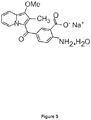
- SSR128129 (abbreviated "SSR") ( Figure 3 ).
- SSR has the ability to inhibit all the members of a same family, presently the FGFRs family.
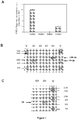
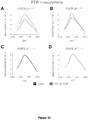
- SSR is able to inhibit FGFR1 activity ( figures 4 and 6 ), FGFR2 activity ( figure 8 ), FGFR3 activitiy ( figure 9 ) and FGFR4 activity ( figure 7 ).
- this allosteric inhibitor binds to an evolutionarily conserved FGFR allosteric site, situated in the extracellular domain of the receptor which is shared by different members of TKRs. This conserved site is located in the domain III of the FGFR ( figure 11 ). The binding of SSR to its binding site induces "biased antagonism".
- SSR is the first example of an allosteric inhibitor of a RTK.
- an allosteric binding site derived from the extracellular domain of a tyrosine kinase receptor.
- An allosteric binding site means a site where an inhibitor, preferably a small compound, can bind, without causing a competitive inhibition of the binding of the ligand to the ligand binding site of the receptor.
- the allosteric binding site consists of a part of the extracellular domain, but does not include the complete extracellular domain.
- the allosteric binding site is between 10 and 200 amino acids in length, more preferably between 10 and 100 amino acids, even more preferably between 20 and 50 amino acids, whereby said amino acids are part of the extracellular domain of the receptor.
- a small compound is a compound of non-polymeric nature, preferably with a molecular weight of less than 1000 D, more preferably less than 900 D, more preferably less than 800 D, more preferably less than 700 D, more preferably less than 600 D, even more preferably of less than 500 D
- Tyrosine kinase receptor and receptor tyrosine kinase are, in the scope of this patent, application equivalent terms.
- Tyrosine kinase receptor is used to indicate the receptor, whereas “receptor tyrosine kinase” is used to indicate more specifically the kinase activity of the receptor.
- Tyrosine kinase receptors are known to the person skilled in the art and include, but are not limited to receptors of the EGF, insulin-like growth factor, PDGF, FGF, VEGF, HGF, Trk, AXL, LTK, TIE, ROR, DDR, PKT7, RYK, CCK4, Eph and MuSK receptor families .
- said allosteric binding site is derived from the extracellular domain of a TKR with Ig domain, including AXL, FGFR, MuSK, PDGFR, PTK7, ROR, TIE and VEGFR... ; even more preferably said allosteric binding site is derived from a TKR with a split kinase domain in the cytoplasmic domain; an preferred embodiment of TKRs according to the invention are the Fibroblast Growth Factor receptors (FGFRs), or an homolog, ortholog or paralog thereof.
- FGFRs Fibroblast Growth Factor receptors
- “Homologs” of a protein encompass peptides, oligopeptides, polypeptides, proteins and enzymes having amino acid substitutions, deletions and/or insertions relative to the unmodified protein in question and having similar biological and functional activity as the unmodified protein from which they are derived.
- "Orthologs and paralogs” encompass evolutionary concepts used to describe the ancestral relationships of genes. Paralogs are genes within the same species that have originated through duplication of an ancestral gene; orthologs are genes from different organisms that have originated through speciation, and are also derived from a common ancestral gene.
- Such allosteric binding comprising SEQ ID NO.1 belongs to the FGFRs family, more specifically to the FGFR2.
- said allosteric inhibitor site comprises SEQ ID N°1, even more preferably it consists of SEQ ID N° 1.
- the invention relates to the use of and methods for using of a homolog, a paralog or an ortholog of an allosteric binding site.
- the polypeptidic sequence of these homologs, paralogs or orthologs shares at least 70%, 80%, 90%, 95 % or more of homology with SEQ ID NO.1.
- the allosteric binding site according to the invention is located in the domain III of the FGFRs.
- an allosteric binding site for VEGFR2 is located in Ig domain 6 of the receptor, in a region including Lysine 609 and Lysine 648.
- An allosteric binding site is also present in PDGFR ⁇ and located in the region located near the transmembrane region, especially in Ig domain 3., in a region including Leucine 383 ans Lysine 387.
- binding of an allosteric inhibitor to the allosteric binding site is inducing a biased antagonism.
- a “biased antagonism”, as used here, means that, for a receptor with several downstream pathways, not all the pathways are affected, or not all the pathways are affected to the same extent upon binding of the allosteric inhibitor to the allosteric inhibitor binding site.
- at least one downstream pathway is inhibited, whereas at least one other downstream pathway is unaffected.
- the allosteric binding site according to the invention comprises, preferably essentially consists, even more preferably consists of a frustrated domain.
- a “frustrated domain” means a protein domain or a fragment thereof that is not unambiguously directed towards one structural conformation; frustrated domains are known to the person skilled in the art, and the presence of frustrated domains is detected either by an ambiguous answer in one protein secondary structure prediction program; or by a contradiction in the prediction between two different protein secondary structure prediction programs. Preferentially, it is detected by the contradiction in the prediction from a protein secondary structure prediction program and the real structure as determined by protein structure detection method such as crystallization and X-ray diffraction. As a non-limiting example, a contradiction can be the indication of an ⁇ -helix with one method, and a ⁇ -sheet with another method. Proteins are minimally frustrated; however, some domains are inducing some frustration (called here "frustrated domain”) and those domains are prone to induce conformational changes of the protein.
- said frustrated domain comprises SEQ ID N° 2, preferably it consists of SEQ ID N° 2.
- This frustrated domain belongs to FGFRs family, especially to FGFR2.
- an allosteric binding site according to the invention to induce a biased antagonism upon binding of a ligand to the binding site of the tyrosine kinase receptor in which the allosteric binding site is located.
- Still another aspect of the invention is the use of an allosteric binding site according to the invention to screen small compound inhibitors coming from a random library, binding to said site.
- Still another aspect of the invention is a method for identification of an allosteric inhibitor binding site in the extracellular domain of a tyrosine kinase receptor, comprising the screening for the presence of frustrated domains in said extracellular domain.
- Methods to screen frustrated domains are known to the person skilled in the art and an example of such method is described in example 8.
- frustrated domains are detected by an ambiguous answer in one protein secondary structure prediction program; preferably by a contradiction in prediction between two different protein secondary structure prediction programs, even more preferably by the contradiction in the the prediction from a protein secondary structure prediction program and the real structure as determined by protein structure detection method such as crystallization and X-ray diffraction.
- said frustrated domain is situated in the neighborhood of said allosteric binding site; more preferably it is located not more than 20 amino acids from the border of the binding site, even more preferably not more than 10 amino acids, even more preferably it is adjacent to said binding site, even more preferably it is overlapping with the binding site, most preferably it is comprised in the binding site.
- the screening may be completed by confirmation of the function of the possible inhibitor site, by designing compounds such as small molecules, small peptides, peptidomimetics, antibodies or nanobodies that bind to the site and of which the allosteric inhibitory function can be tested.
- Another aspect of the invention is a method for identification of a non-polymeric small compound allosteric inhibitor binding to an allosteric inhibitor site in the extra cellular domain of a tyrosine kinase receptor according to the invention comprising the comparison of two different reporters induced by two different downstream pathways dependent upon the activation of said tyrosine kinase receptor.
- a reporter is any gene, protein of compound that leads to a detectable signal and can be, as a non-limiting example, an antibiotic resistance gene, a toxin gene resulting in cell death, a gene encoding a fluorescent protein such as GFP, or a gene encoding an enzyme activity such as beta-galactosidase, or a protein that is phosporylated or dephosphorylated, acetylated or deacetylated or changing in conformation.
- the coding sequence is placed under control of a suitable promoter, i.e.
- a promoter that is induced by binding of a ligand to the receptor and consequent induction of the reporter pathway; in case of a double pathway, two different promoters are needed.
- comparing the phosphorylation of proteins in the presence or absence of the allosteric inhibitor will yield differences in phosphorylation due to the biased antagonism, and these differences in phosphorylation can be used as reporter.
- identification of an allosteric inhibitor of a RTK can be carried out by performing a screening test comprising the following the steps:
- the changes in the downstream pathways are performed by the measurement of the changes in the phospho-signalling pathways, including the ERK1/2 et PLC ⁇ signalling pathways
- an allosteric modulator of FGF-Rs can be identified using an affinity screening based on SEC-LC/MS as described below:
- the method is based on the capacity of some compounds to interact with soluble polypeptides (including peptides, protein domains, or full length proteins).
- soluble polypeptides including peptides, protein domains, or full length proteins.
- the peptide-ligand complex induces a mass shift allowing the separation of unbound and bound small compounds by size exclusion chromatography.
- complex is dissociated and binders are separated from the peptide and detected using a high resolution LC/ESI-TOF for accurate mass measurement (for example with a Waters LCT Premier Mass Spectrometer).
- a data deconvolution algorithm allows the identification of bound molecules from the mass detection analysis.
- this technology can be applied to the extracellular domain of different FGF-Rs, either native or mutated.
- the native form allows the detection of all the binders to the extracellular domain.
- Alternativelyr allosteric modulators can ber screened by using an "open" form of the FGF-R2 helix close to the SSR binding site. Said "open” form can be obtained by the mutations Tyr328Arg-IIe329Lys that stabilizes an alpha-helix, thereby allowing sensitization to SSR binding.
- the mutated FGF-R2 is then used in the screening, instead of WT FGF-R2.
- a similar strategy can be used for screening FGF-R1, -R3 or - R4 with mutations on amino acids corresponding to Tyr328 and Ile329 in FGF-R2.
- the mutated form at Tyr328Asp (FGF-R2) or other FGF-Rs with a mutation at the corresponding positions can be used as control.
- SSR fails to bind on the FGF-R2 that is mutated at Tyr328Asp near a hydrophobic pocket. Therefore this mutated form can be used to discard part of compounds that don't interact with targeted pocket on FGF-R2.
- a similar approach can be followed for other RTKs: after identification of one or more frustrated domains in the extracellular domain of the receptor, said frustrated domain can be used in a SEC-LC/MS approach to identify binders in the region of the frustrated domain.
- the effect of the binder on the signalling pathway can then be tested using the phosphomap approach, as described above, or any other reporter system of the pathway.
- Described herein is a small compound compound binding to an allosteric binding site, also called “allosteric inhibitor” according to the invention, and/or identified with a method according to the invention.
- Compound means any chemical or biological compound, including simple or complex organic and inorganic molecules, peptides, peptido-mimetics, proteins, antibodies, carbohydrates, nucleic acids or derivatives thereof.
- ECD extracellular domain
- P11362 The extracellular domain (ECD; amino acids: 39-358) of the human FGFR1 gene (P11362) was PCR amplified and cloned into E . coli vector pETTEV (with a N-terminal His-tag followed by a TEV protease cleavage site), using Nde I and Bam HI restriction sites.
- E. coli vector pETTEV with a N-terminal His-tag followed by a TEV protease cleavage site
- Nde I and Bam HI restriction sites for protein production, the resulting plasmid (pET FGFR1 D1 D2D3) was transformed into E. coli BL21(DE3) (Novagene).
- Cells were grown at 37 °C until the OD 600 reached 0.6 and recombinant protein production was induced by adding 1 mM IPTG (isopropyl-b-D-thiogalactopyranoside).
- cells were harvested and stored at -80 °C until usage.
- the cell pellet (1 L culture) was thawed and resuspended in 50 ml buffer 1 (20 mM Tris/HCl, pH 7.5, 200 mM NaCl) containing lysozyme (2 mg), and 40 U benzonase (Merck).
- Cells were broken by sonification, the inclusion bodies (IB) were sedimented by centrifugation (15,000 g , 20 min, 4°C), and the resulting pellet was washed twice with buffer 1.
- the IB pellet was dissolved in 20 ml denaturation buffer (6 M guanidine-HCl, 20 mM Tris/HCl, pH 8.0, 200 mM NaCl) for 40 minutes at room temperature. Insoluble debris was removed by centrifugation (30,000 g, 30 min) and the supernatant was loaded on a Ni-NTA column (Qiagen) pre-equilibrated with buffer A following the manufacturer's recommendations. The FGFR1 ECD was eluted from the column using denaturation buffer with 500 mM imidazol.
- Fractions containing the ECD were pooled and refolded by flash-diluting of the solubilised protein (dilution factor 1:30) into 50 mM Tris/HCl, pH 8.0, 250 mM NaCl, 0.5 M L-arginine, 2 mM EDTA, 0.02% azide followed by incubation with gentle stirring for 24 h at 4°C.
- the refolding mixture was centrifuged at 30,000 g for 20 min, concentrated through a YM10 membrane (final protein concentration 1 mg/ml) in an Amicon stirred cell, dialysed against 25 mM Tris/HCl, pH 8.0, 2 mM EDTA, 0.02% azide, applied to a HiTrap Heparin HP 5ml (GE Healthcare) and eluted with a linear gradient from 0 to 2 M NaCl.
- NMR samples contained 0.5 ml of protein (20-300 mM) in 25 mM Tris/HCl, pH 8.0, 200 mM NaCl, 25 mM L-arginine, 2 mM EDTA, 0.02% azide (in 95% H 2 O/5% D 2 O).
- ITC Isothermal titration calorimetric
- HEK293 cells were either transiently of stably transfected (using FuGENE 6, Roche) with hFGFR2IIIca or hFGFR2IIIca-Y328D cloned in pcDNA3 (Invitrogen). Stably transfected cells were grown in G418 (400 ⁇ g/ml) containing medium. Before stimulation, the cells were starved overnight in DMEM (0% serum), and pre-incubated with SSR128128E at the required concentration. The cells were subsequently stimulated with FGF2 (concentration between 0.5-10ng/ml) for 5 min at 37°C with or without SSR or SU5402 at 1 ⁇ M.
- FGF2 concentration between 0.5-10ng/ml
- the membranes were incubated overnight at 4°C with the following antibodies: phospho-ERK1/2 (CST:9101), phospho-FRS2 (CST:3861), phospho-PLC ⁇ (CST:2821) and FGFR2 (F0300, Sigma).
- Primer-sets and FAMTM dye-labeled TaqMan® MGB probes were designed for human FGFR1, FGFR2, FGFR3, FGFR4, and TBP, and PCR reactions were carried out on a 7500 Fast Real-time PCR system (ABI, Germany). Each sample was analysed in triplicate along with specific standards and no template controls.
- Amplifications were carried out using 2X TaqMan® Universal PCR Master Mix, 20X Assays-on-demandTM Gene Expression Assay Mix. Calculations of the initial mRNA copy numbers in each sample were made according to the cycle threshold (CT) method. The copy numbers of FGFR1, FGFR2, FGFR3, FGFR4, mRNA were normalized using TBP mRNA levels.
- CT cycle threshold
- Rat fat-pad endothelial cells stably transfected with hFGFR1IIIc ⁇ -Hemagluttinin, were grown to 80-90% confluency and serum starved (0.5% FBS) for 24h. Stimulation was performed during 5 minutes with FGF2 at 2 ng/ml in combination with SSR or DMSO (as control). Cell lysates were centrifuged at 12,000 g for 10 min, and the supernatants were collected. HA-tagged proteins were immunoprecipitated by incubation of cell lysates overnight at 4°C in the presence of agarose conjugated anti-HA antibodies.
- Immune complexes were washed three times with 1 ml of lysis buffer; proteins were eluted via incubation with 50 ⁇ l of 2x SDS sample buffer and boiling. Proteins were separated on Novex polyacrylamide gels (Invitrogen, Carlsbad, CA) and subsequently transferred onto Hybond ECL nitrocellulose membranes (Amersham Pharmacia). Following incubation with 5% non-fat milk powder in PBS, the membranes were incubated overnight at 4°C with the following antibodies: pFGFR (CST: 3471) and FGFR1 (CST: 3472).
- Confluent HUVEC cells are harvested and 5 10 4 cells in 100 ⁇ l RPMI 1640 (Invitrogen, 32404-014) with 0.5% FCS (Hyclone, SH30070.03), 2mM glutamine, MEM non-essential amino-acid 1x (Gibco, 11140-035), MEM sodium pyruvate 1x (Gibco, 11360-039) are seeded per well in 96-well collagen I-coated plates (Beckton Dickinson, 354650) overnight.
- medium is removed and replace by 50 ⁇ l of medium that contains 2x FGF2 (R&D, 234-FSE-025), FGF4 (R&D, 235-F4-025) or FGF-19 (in house produced) and 50 ⁇ l of 2x SSR (200 or 600nM).
- Cells were incubated in CO 2 chamber at 37°C for 3 days and proliferation is evaluated by quantifying ATP content with 100 ⁇ l of "Cell Titer Glo Luminescent cell viability" kit (Promega, G7571).
- Confluent HUVEC cells are harvested and resuspended in RPMI 1640 (Invitrogen, 32404-014) without FCS, 2mM glutamine, MEM non-essential amino-acid 1x (Gibco, 11140-035), MEM sodium pyruvate 1x (Gibco, 11360-039) at 0.8 10 6 cells/ml.
- 250 ⁇ l of cell solution is distributed with 4x SSR in the upper chamber of 24-wells BD Biocoat Angiogenesis System for endothelial cell migration (BD Biocoat, 354144) and 750 ⁇ l of medium in the lower chamber with FGF2 (R&D, 234-FSE-025), FGF4 (R&D, 235-F4-025) or FGF-19 (in house produced) at 67 ng/ml. Plates are incubated 22h at 37°C in a CO 2 chamber. Then, plate insert is removed, and placed in a new 24-wells plate (Falcon, 353504) that contains 500 ⁇ L of calcein (Molecular probes, C-3100) for 90 min. Then migrated cells are fluorescent and migration is measured by a luminometer with downstairs reading following 485nm excitation and 535nm emission.
- Collagen/matrigel gels are prepared by distributing in each well of a chamberslide (Biocoat Cellware collagen, Type I, 8-well culturesides: Becton dickinson 354630), 160 ⁇ l of 1/6 diluted matrigel (Growth factor reduced Matrigel: Becton dickinson 356230) in collagen I (rat Tail collagene, type I: Becton dickinson 354236). Polymerisation occurs at 37°C for 1h. Then, 15.10 3 HUVEC are added per well in 400 ⁇ l EBM medium (Clonetics C3121) + 2 % FCS + hEGF 10 ⁇ g/ml.
- Endothelial cells are stimulated with 10 ng/ml of FGF2 (R&D, 133-FB-025), FGF4 (R&D, 235-F4-025) or FGF19 (R&D, 969-FG-025) for 24h at 37°C in a CO 2 chamber. Then, total length of pseudotubules is quantified using a bioimaging system (Imagenia Biocom, Courtaboeuf, France).
- HUVE Cells (Promocell, C-12200) are seeded in 35 mm collagen I coated disk (BD Biocoat, 354456) at 0.5.10 6 cells in 2 ml of EBM medium (Clonetics, CC-3121) containing 2% FBS (Clonetics, CC-4101), 10 ⁇ g/ml hEGF (Clonetics, CC-4017) from the EGM singlequots kit (Clonetics, CC-4133), 1250 ng/ml heparin (Sigma, H3149) and 375 ng/ml ECGS (BD Biosciences, 356006).
- EBM medium Clonetics, CC-3121
- FBS Clonetics, CC-4101
- 10 ⁇ g/ml hEGF Clonetics, CC-4017
- cells are starved overernight in 1.8 ml of RPMI 1640 (Invitrogen, 32404-014), 0.5% FCS, 2mM glutamine, 1 mM non-essential amino acids (Invitrogen, 11140-050), sodium pyruvate (Invitrogen, 11360-070).
- RPMI 1640 Invitrogen, 32404-014
- FCS 2mM glutamine
- 1 mM non-essential amino acids Invitrogen, 11140-050
- sodium pyruvate Invitrogen, 11360-070.
- the day after, cells are stimulated 10 min by 200 ⁇ l of equilibrated starvation medium that contains 10x FGF-4 (30 ng/ml; R&D, 235-F4-025) with or without 10x SSR (3 ⁇ M).
- cells are rinsed with cold PBS and cell lysed with 75 ⁇ l RIPA that contains 2.5 mM orthovanadate and protease inhibitors cocktail (Sigma, P8340).
- Cell lysates were centrifuged at 12,000 g for 10 min, and the supernatants were collected. Proteins were separated on 4-20% Novex Tris-Glycine polyacrylamide gels (Invitrogen) and subsequently transferred onto nitrocellulose membranes (Invitrogen, IB3010-01).
- Confluent HUVEC cells are harvested and 5 10 4 cells in 50 ⁇ l RPMI 1640 (Invitrogen, 32404-014) with 0.5% FCS (Hyclone, SH30070.03), 2mM glutamine, MEM non-essential amino-acid 1x (Gibco, 11140-035), MEM sodium pyruvate 1x (Gibco, 11360-039) are seeded per well in 96-well collagen I-coated plates (Beckton Dickinson, 354650) overnight. Cells are stimulated 5 min with 100 ⁇ l equilibrated staved medium without FCS containing 20 ng/ml FGF4 and 600nM SSR.
- HRP-conjugated anti-rabbit secondary antibody (CST, 7074) is used to detect AKT phosphorylation following 1/2000 dilution in PBS, 0.3% triton for 2h at room temperature. Then, cells are rinsed with PBS and 100 ⁇ l of HRP substrate (Uptima, UP664781) is added for 20 min in a dark room. Enzymatic reaction is stopped with 100 ⁇ l of stop buffer (Uptima, UPS29590) and OD was measured at 450nm.
- HRP substrate Uptima, UP664781
- FGF2 was labeled with Alexa Fluor 488 C5-maleimide (Invitrogen, A10254) following purchaser recommendations.
- This AF488-FGF2 was used at 10ng/ml in binding experiments on murine pre-B 300-19 cells transfected with FGFR1 or FGFR4 constructs in pEF6-V5/His Topo plasmids (Invitrogen).
- SSR 300nM final was pre-incubating 20 min with cells in RPMI 1640 (Invitrogen, 32404-014) with 10% FCS (Hyclone, SH30070.03), 2mM glutamine, MEM non-essential amino-acid 1x (Gibco, 11140-035), MEM sodium pyruvate 1x (Gibco, 11360-039) and 150mM monothioglycerol (Sigma, M6145) at 4°C under 150 rpm agitation. Then, FGF2 (10 ng/ml final) is added for 30min and binding is measured using a FACS Calibur flow cytometer (Beckton Dickinson). Fluorescence median for each condition is also analysed.
- Cell migration was assessed by a modified Boyden chamber assay, by using 24-well inserts containing 8 ⁇ m pore size transwell permeable supports with a polycarbonate membrane (Costar, Corning Inc.). Exponentially growing cells were starved in 0.2% FBS containing medium for 16 hours and resuspended at 5 x 10 5 cells/ ml in the same low serum medium. 100 ⁇ l of the cell suspension were seeded in the upper chamber, while chemoattractants and/or SSR were placed in the lower chamber. Chemoattractants tested include: human PDGF-BB, IGF-I, PIGF, EGF, all at 100ng/ml, in the presence or absence of SSR (1 ⁇ M).
- FBS containing medium 10% FBS containing medium was used a positive control. After 6 hours incubation at 37°C, cells on the upper side of the membrane were scraped using a cotton swab, while migrated cells on the lower surface were fixed with 1% paraformaldehyde in PBS and nuclei stained with DAPI for quantification using a fluorescent microsope. Quanitifcation is performed by making 5 random images at a magnification of 10x and by counting the number of nuclei.
- Cell proliferation was analysed on exponentially growing cells that were starved for 16 hours in 100 ⁇ l RPMI 1640 (Invitrogen, 32404-014) with 0.2% FBS (Hyclone, SH30070.03), 2mM glutamine, MEM non-essential amino-acid 1x (Gibco, 11140-035), MEM sodium pyruvate 1x (Gibco, 11360-039) and seeded at 4,000 cells/well in 96-well microplates. After exposure to mitogens and/or SSR for 72 hours, cell proliferation was assessed with the use of the CellTiter 96 AQueous One Solution Cell Proliferation Assay (Promega, Madison, Wisconsin, USA) according to manufacturer's instructions.
- Cell migration was assessed by a modified Boyden chamber assay, by using 24-well inserts containing 8 ⁇ m pore size transwell permeable supports with a polycarbonate membrane (Costar, Corning Inc.). Exponentially growing cells were starved in 0.2% FBS containing medium for 16 hours and resuspended at 5 x 10 5 cells/ml in the same low serum medium. 100 ⁇ l of the cell suspension were seeded in the upper chamber, while chemoattractants and/or SSR were placed in the lower chamber. 10% FBS containing medium was used a positive control.
- Cell proliferation was analysed on exponentially growing cells that were starved for 16 hours in IMDM (Invitrogen, 31980048), 0.2% FBS, 2mM glutamine containing medium and seeded at 4,000 cells/well in 96-well microplates. After exposure to mitogens and/or SSR for 72 hours, cell proliferation was assessed with the use of the CellTiter 96 AQueous One Solution Cell Proliferation Assay (Promega, Madison, Wisconsin, USA) according to manufacturer's instructions.
- the objective of this study was to develop low molecular weight chemical compounds that bind to the FGFR extracellular domain (ECD) and inhibit FGFR signaling.
- ECD extracellular domain
- FGF polypeptide
- SPA scintillation proximity binding assay
- SSR acted as a multi-FGFR inhibitor, blocking the binding of different FGF ligands to various FGFRs while not inhibiting the binding of >100 distinct ligands with related structural homology or entirely different chemical composition to their cognate receptor; this finding was suggestive either of a competitive (orthosteric) mechanism, or else an allosteric interaction characterized by high negative cooperativity (Christopoulos and Kenakin, 2002).
- the FGFR1 ⁇ 123 /Fc exists in a conformation that allows the transmission of a negative allosteric effect on the affinity of 125 I-FGF2 by the binding of SSR, whereas the absence of the Fc tag, or the expression of the entire intact receptor in its native environment, do not.
- SSR is an allosteric and multi-FGFR inhibitor
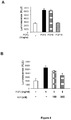
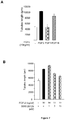
- HUVEC proliferation is stimulated with FGF2 and FGF4 but not with FGF19 ( Figure 4A ) suggesting that HUVEC proliferation is under the control of FGFR1.
- SSR is able to inhibit FGF2-induced HUVEC proliferation indicating that SSR inhibits FGFR1 ⁇ 3c receptor ( Figure 4B ).
- Binding assays with I 125 -FGF2 on human umbilical vein endothelial cells (HUVECs) or porcine aortic endothelial cells overexpressing FGFR1 (PAE-FGFR1) further revealed that SSR (even at high ⁇ M concentrations) was unable to inhibit I 125 -FGF2 binding to its receptor.
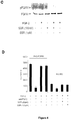
- a neutralizing ⁇ FGF2 antibody was effective ( Figure 4D ).
- B9-FGFR3 WT cell line could be induced by FGF1 and inhibited by 0.1 ⁇ M of SSR ( Figure 9 )
- B9-FGFR3 TD cell line was insensitve to SSR ( Figure 9 ) indicating that SSR can inhibit FGFR3 receptor and confirming that SSR doesn't act on kinase domain of FGFR.
- Example 3 SSR is not able to inhibit cell responses induced by other growth factors
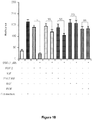
- SSR did not affect cellular responses induced by PIGF, EGF, PDGF-BB and IGF, which are all known to activate members of the tyrosine kinase receptor family ( Figure 10 ).
- SSR128129E binds to an allosteric site in the Ig-like domain D3 of extracellular region of FGFRs:
- SSR was a multi-FGFR inhibitor
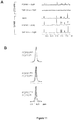
- polypeptide fragments of the various (human) FGFR subtypes Saturation transfer difference NMR (STD-NMR) spectra of SSR revealed that SSR bound to the ECD of FGFR1 (FGFR1 ⁇ 123 ) ( Figure 11A ). This was confirmed by analysis of the one-dimensional (1 D)-NMR profile, which revealed peak broadening of the FGFR1 ⁇ 123 signal upon addition of SSR ( Figure 11A ). This binding is specific because no binding is observed with TNF-R1 extracellular protein ( Figure 11A ).
- ECD fragments of FGFRs to map the binding site of SSR to one of the three Ig-domains.
- Example 7 SSR is a "biased" inhibitor of FGFR-dependent phospho-signaling
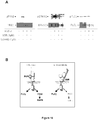
- HEK293 cells have been transfected with FGFR2 and the two main pathways following FGFR autophosphorylation, PLC ⁇ and FRS2, have been studied by western blot in comparison with a published FGFR tyrosine kinase inhibitor SU5402 described to inhibit FGFR-dependent FRS2 and PLC ⁇ cascades ( Zhen et al., Oncogene 2007 ).
- FGF induces FRS2, Erk1/2 and PLC ⁇ phosphorylation.
- SU5402 blocks all these inductions while SSR only inhibits FRS2 pathway ( Figure 16A and 16B ) illustrating the biased antagonism obtained with SSR. More generally, these differences in phosphorylation can be used as reporter to evaluate allosteric modulators.
- Example 8 Methodology to search for frustrated domain in extracellular domain of tyrosine kinase receptors
- Example 9 Affinity screening of FGF-Rs allosteric modulators by SEC-LC/MS and activity evaluation of identified compounds
- the SEC-LC/MS method is an analytical technique used for the affinity screening dependent on a 2-dimensional system coupled on-line: a size exclusion chromatography associated with a high performance liquid chromatography followed by an electrospray ionisation - time of flight mass spectrometry for detection.
- FGF-Rs allosteric modulators For the identification of FGF-Rs allosteric modulators, this technology can be applied to the extracellular domain of different FGF-Rs, native or mutated.
- the native form allows the detection of all the extracellular domain binders.
- Another way to realize screening for allosteric modulators could be done by using "open" form of FGF-R2 helix close to the SSR128129 binding site obtained with mutations Tyr328Arg-IIe329Lys that stabilize alpha-helix allowing sensitization to SSR128129 binding. In this case, this mutated FGF-R2 can replace WT FGF-R2.
- a similar strategy can be used to carry out a screening on the FGF-R1, -R3 or -R4 with mutations at the amino acids corresponding to Tyr328 and Ile329 in FGF-R2.
- the mutated form at Tyr328 (FGF-R2) or corresponding mutated amino acids in others FGF-Rs can be used to make a counterscreen. Because, SSR128129 fails to bind on the FGF-R2, mutated at Tyr328Asp near a hydrophobic pocket, this mutated form can be used to discard part of compounds that don't interact with targeted pocket on FGF-R2.
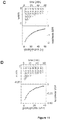
- the selected compounds have to inhibit an FGF-induced induced pathway, such as AKT phosphorylation in HUVEC cells, as observed with SSR in western-blot experiments ( Figure 17A and 17B ).
- the phosphorylation state of AKT in HUVEC cells can be measured by an on-cell ELISA methodology. This assay format has been developed in house for the direct detection of AKT phosphorylation in various cells such as HUVEC and allows the detection of SSR effect on FGF4-stimulated HUVEC ( Figure 17C ).
- a typical feature of FGFR allosteric modulators is their inability to compete with FGF binding.
- AlexaFluor488-labelled FGF2 at 10 ng/ml binds to FGFR1 or FGFR4 expressed on 300-19 cells that naturally don't express any FGFR, and SSR at 300nM is not able to compete this binding on FGFR1 or FGFR4 by flow cytometry analysis ( Figure 17D ).
- Example 10 identification of putative frustrated zones in the VEGF-R2 receptor and mutation analysis of the putative frustrated zones
- Example 11 identification of putative frustrated zones in the PDGF-R ⁇ receptor and mutation analysis of the putative frustrated zones
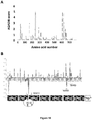
- AGADIR 1 As an initial approach to identify regions that could harbor putative allosteric target sites, we utilized the software program AGADIR 1 to identify regions that are prone to undergo structural changes (e.g. ß-sheet to ⁇ -helix transitions), employing available primary amino acid sequences from the human PDGFRß receptor (Entrez accession NP_002600.1). This resulted in several regions with a higher helical propensity, though in the Ig-domain structure mainly ß-sheet structures should be expected ( Figure 19 ).
- Example 12 Screening method to identify compounds inducing a "biased" signaling
- Binding of VEGF or PDGF-BB induces dimerization of the respective cognate receptors, which, on its turn, induces phosphorylation of the intracellular kinase domains.
- two major pathways are activated including the ERK1/2 pathway ( Figures 21A and 21C ) and the PLC ⁇ pathway (schematically represented in Figure 20 ). Measuring the activation of each of the pathways, in presence or absence of a possible inhibitor, leads to the indentification of compounds inducing a "biased" signaling, by inhibition of only one of the signaling pathways.
- VEGFR2 K609D and VEGFR2 K648D were stably expressed in HEK293 cells.
- the VEGFR2 WT receptor clearly responds by activating ERK1/2 phosphorylation. While the VEGFR2 K609D mutant has a reduced signaling capability through ERK1/2 (but sufiscient for a counterscreening assay), the VEGFR2 K648D mutant lost it.
- the results are summarized in figure 21A .
- the HEK293 cells overexpressing hPDGFRß cells were stimulated either with medium containing no additives ("0"), 10% fetal bovine serum (10% FBS), 50ng/ml PDGF-BB (50ng/ml) or 1ng/ml PDGF-BB (1ng/ml) according to the alphascreen surfire procedure ( Figure 21 B) .
- the left panel denotes again the schematic representation of the mixtures to detect the activated or total ERK1/2 proteins upon stimulation.
- the right panels denote the detected measurements following PDGF-BB stimulation of the cells as measured through the alphascreen surefire detection method.
- a screening method for identifying compounds inducing a "biased" signaling on VEGF-R2 or PDGF-R ⁇ can be based on Erk1/2 and PLC ⁇ answer. Comparing the ERK1/2 and the PLC ⁇ response in presence and absence of candidate allosteric inhibitors allows the identification of compounds that act as a biased inhibitor: inhibiton only one of the two signaling pathways.
- the mutated constructs of VEGF-R2 or PDGF-R ⁇ may serve for a counterscreening assay to verify the mechanism of action of identified allosteric modulators. On the mutated receptors, compounds have to lose their receptor modulation capability.
Landscapes
- Health & Medical Sciences (AREA)
- Life Sciences & Earth Sciences (AREA)
- Chemical & Material Sciences (AREA)
- Organic Chemistry (AREA)
- Medicinal Chemistry (AREA)
- General Health & Medical Sciences (AREA)
- Gastroenterology & Hepatology (AREA)
- Cell Biology (AREA)
- Biochemistry (AREA)
- Biophysics (AREA)
- Toxicology (AREA)
- Genetics & Genomics (AREA)
- Immunology (AREA)
- Molecular Biology (AREA)
- Proteomics, Peptides & Aminoacids (AREA)
- Zoology (AREA)
- Pharmacology & Pharmacy (AREA)
- Epidemiology (AREA)
- Animal Behavior & Ethology (AREA)
- Public Health (AREA)
- Veterinary Medicine (AREA)
- Medicines That Contain Protein Lipid Enzymes And Other Medicines (AREA)
- Measuring Or Testing Involving Enzymes Or Micro-Organisms (AREA)
- Investigating Or Analysing Biological Materials (AREA)
- Peptides Or Proteins (AREA)
- Preparation Of Compounds By Using Micro-Organisms (AREA)
Claims (8)
- Verwendung einer allosterischen Inhibitorbindungsstelle, die entweder aus SEQ ID NO. 1 oder einer eine Homologie von wenigstens 70%, 80%, 90% oder 95% mit SEQ ID NO. 1 zeigenden Sequenz besteht, zur Suche nach FGFR-Inhibitoren in Form nicht polymerer kleiner Verbindungen, wobei die Inhibitoren ein Molekulargewicht von weniger als 1000 D aufweisen.
- Verfahren zur Identifizierung einer mutmaßlichen allosterischen Inhibitorbindungsstelle in der extrazellulären Domäne eines FGFR, umfassend das Screening auf das Vorliegen frustrierter Domänen in der extrazellulären Domäne unter Verwendung eines Vorhersageprogramms für Protein-Sekundär-strukturen, so dass solche Domänen, oder Fragmente davon, in der extrazellulären Domäne identifiziert werden, bei denen eine Neigung zu β-Faltblatt-zu-α-Helix-Übergängen besteht oder die eine von dem Vorhersageprogramm für Protein-Sekundärstrukturen vorhergesagte Struktur aufweisen, die der tatsächlichen Struktur, wie sie durch Kristallisation und Röntgenbeugung bestimmt ist, widerspricht, und Auswählen der so identifizierten Domänen bzw.
Fragmente für weiteres Screening zur Bestätigung der Funktion der mutmaßlichen Inhibitorstelle, indem Verbindungen wie etwa kleine Moleküle, kleine Peptide, Peptide imitierende Moleküle, Antikörper oder Nanobodies, die an die Stelle binden und deren allosterische Inhibitorfunktion getestet werden kann, konstruiert werden. - Verfahren nach Anspruch 2, wobei es sich bei der Inhibitorfunktion der allosterischen Bindungsstelle um eine selektive Hemmung nachgeschalteter Signalwege handelt.
- Verfahren zur Identifizierung eines allosterischen Inhibitors eines RTK in Form einer nicht polymeren kleinen Verbindung, der an eine allosterische Inhibitorstelle in der extrazellulären Domäne eines Tyrosinkinaserezeptors bindet, umfassend• Inkontaktbringen einer allosterischen Bindungsstelle eines RTK mit der Kandidatenverbindung für einen allosterischen Inhibitor in Form einer kleinen Verbindung und• Vergleichen der Änderungen des Zustands von wenigstens zwei unterschiedlichen Reportern, die durch zwei unterschiedliche nachgeschaltete Wege induziert werden, die von der Aktivierung/Hemmung des Tyrosinkinaserezeptors abhängen,wobei der Inhibitor in Form einer nicht polymeren kleinen Verbindung ein Molekulargewicht von weniger als 1000 D aufweist.
- Verfahren gemäß Anspruch 4, wobei ein allosterischer Inhibitor identifiziert wird, wenn in Gegenwart eines an die Ligandenbindungsdomäne des Rezeptors bindenden Liganden wenigstens ein nachgeschalteter Weg gehemmt wird, wohingegen wenigstens ein weiterer nachgeschalteter Weg unbeeinflusst ist.
- Verfahren gemäß Anspruch 4 oder 5, wobei es sich bei der Tyrosinkinase um einen FGFR handelt.
- Verfahren gemäß Anspruch 6, wobei der FGFR aus FGFR-1, FGFR-2, FGFR-3 oder FGFR-4 gewählt ist.
- Verfahren zur Identifizierung eines allosterischen Inhibitors eines RTK gemäß einem der Ansprüche 4 bis 7, wobei die beiden unterschiedlichen nachgeschalteten Wege dem ERK1/2-Signalweg und dem PLCγ-Signalweg entsprechen.
Priority Applications (1)
| Application Number | Priority Date | Filing Date | Title |
|---|---|---|---|
| EP10734333.7A EP2448964B1 (de) | 2009-07-03 | 2010-07-02 | Extrazelluläre allosterische Inhibitorbindungsdomäne aus einem Tyrosinkinaserezeptor |
Applications Claiming Priority (3)
| Application Number | Priority Date | Filing Date | Title |
|---|---|---|---|
| EP09290537A EP2270043A1 (de) | 2009-07-03 | 2009-07-03 | Extrazelluläre allosterische Inhibitorbindungsdomäne aus einem Tyrosinkinaserezeptor |
| EP10734333.7A EP2448964B1 (de) | 2009-07-03 | 2010-07-02 | Extrazelluläre allosterische Inhibitorbindungsdomäne aus einem Tyrosinkinaserezeptor |
| PCT/IB2010/053054 WO2011001413A1 (en) | 2009-07-03 | 2010-07-02 | Extracellular allosteric inhibitor binding domain from a tyrosine kinase receptor |
Publications (2)
| Publication Number | Publication Date |
|---|---|
| EP2448964A1 EP2448964A1 (de) | 2012-05-09 |
| EP2448964B1 true EP2448964B1 (de) | 2017-04-12 |
Family
ID=41137351
Family Applications (2)
| Application Number | Title | Priority Date | Filing Date |
|---|---|---|---|
| EP09290537A Withdrawn EP2270043A1 (de) | 2009-07-03 | 2009-07-03 | Extrazelluläre allosterische Inhibitorbindungsdomäne aus einem Tyrosinkinaserezeptor |
| EP10734333.7A Active EP2448964B1 (de) | 2009-07-03 | 2010-07-02 | Extrazelluläre allosterische Inhibitorbindungsdomäne aus einem Tyrosinkinaserezeptor |
Family Applications Before (1)
| Application Number | Title | Priority Date | Filing Date |
|---|---|---|---|
| EP09290537A Withdrawn EP2270043A1 (de) | 2009-07-03 | 2009-07-03 | Extrazelluläre allosterische Inhibitorbindungsdomäne aus einem Tyrosinkinaserezeptor |
Country Status (17)
| Country | Link |
|---|---|
| US (2) | US9234025B2 (de) |
| EP (2) | EP2270043A1 (de) |
| JP (2) | JP6255156B2 (de) |
| KR (1) | KR101828092B1 (de) |
| CN (1) | CN102596991B (de) |
| AU (1) | AU2010267590B2 (de) |
| BR (1) | BR112012000029B8 (de) |
| CA (1) | CA2766972C (de) |
| DK (1) | DK2448964T3 (de) |
| ES (1) | ES2631452T3 (de) |
| HU (1) | HUE035052T2 (de) |
| IL (1) | IL217155B (de) |
| MX (1) | MX345715B (de) |
| MY (1) | MY158993A (de) |
| RU (1) | RU2604805C2 (de) |
| SG (2) | SG177427A1 (de) |
| WO (1) | WO2011001413A1 (de) |
Families Citing this family (11)
| Publication number | Priority date | Publication date | Assignee | Title |
|---|---|---|---|---|
| FR2985258A1 (fr) * | 2011-12-28 | 2013-07-05 | Sanofi Sa | Composes dimeres agonistes des recepteurs des fgfs (fgfrs), leur procede de preparation et leur application en therapeutique |
| AR094812A1 (es) | 2013-02-20 | 2015-08-26 | Eisai R&D Man Co Ltd | Derivado de piridina monocíclico como inhibidor del fgfr |
| KR102328069B1 (ko) | 2014-02-21 | 2021-11-17 | 프레지던트 앤드 펠로우즈 오브 하바드 칼리지 | 알로스테릭 단백질의 신생 설계 |
| MX369646B (es) | 2014-08-18 | 2019-11-15 | Eisai R&D Man Co Ltd | Sal de derivado de piridina monociclico y su cristal. |
| AU2016237222B2 (en) | 2015-03-25 | 2021-04-29 | Eisai R&D Management Co., Ltd. | Therapeutic agent for bile duct cancer |
| CA3001969C (en) | 2015-12-17 | 2023-10-03 | Eisai R&D Management Co., Ltd. | Therapeutic agent for breast cancer |
| WO2018081534A1 (en) * | 2016-10-28 | 2018-05-03 | President And Fellows Of Harvard College | Assay for exo-site binding molecules |
| CN111107881A (zh) * | 2017-06-22 | 2020-05-05 | 密执安州立大学董事会 | 成纤维细胞生长因子受体2特异性肽试剂和方法 |
| EP3710483A4 (de) | 2017-11-16 | 2021-10-20 | XL-protein GmbH | Pasylierte vegfr/pdgfr-fusionsproteine und deren verwendung in der therapie |
| JPWO2019189241A1 (ja) | 2018-03-28 | 2021-03-18 | エーザイ・アール・アンド・ディー・マネジメント株式会社 | 肝細胞癌治療剤 |
| CN113651662B (zh) * | 2020-12-31 | 2023-10-27 | 复旦大学附属华山医院 | 一种靶向fgfr的新型肿瘤pet分子探针及其制备方法 |
Family Cites Families (10)
| Publication number | Priority date | Publication date | Assignee | Title |
|---|---|---|---|---|
| BR0110742A (pt) * | 2000-05-11 | 2003-02-04 | Wyeth Corp | Estrutura de um regulador livre de sinalização da proteìna g (rgs4) e métodos para identificar agonistas e antagonistas usando a mesma |
| US7393656B2 (en) * | 2001-07-10 | 2008-07-01 | The Board Of Trustees Of The Leland Stanford Junior University | Methods and compositions for risk stratification |
| FR2838123B1 (fr) * | 2002-04-04 | 2005-06-10 | Sanofi Synthelabo | Nouveaux derives d'indolozine-1,2,3 substituee, inhibiteurs selectifs du b-fgf |
| US7083933B1 (en) * | 2003-05-09 | 2006-08-01 | Prosidion Limited | Methods for identification of modulators of OSGPR116 activity |
| WO2005066211A2 (en) * | 2003-12-19 | 2005-07-21 | Five Prime Therapeutics, Inc. | Fibroblast growth factor receptors 1, 2, 3, and 4 as targets for therapeutic intervention |
| FR2865934B1 (fr) * | 2004-02-05 | 2006-05-05 | Sanofi Synthelabo | Utilisation de derives d'indolizine 1,2,3 substitues, inhibiteurs des fgfs, pour la preparation de medicaments utiles pour le traitement de maladies liees a une angiogenese pathologique choroidienne |
| GB2414995B (en) * | 2004-06-09 | 2006-11-15 | Univ Edinburgh | Neural stem cells |
| US20090156581A1 (en) * | 2005-04-15 | 2009-06-18 | Board Of Trustrees Of Michigan State University | Aminergic pharmaceutical compositions and methods |
| FR2896247B1 (fr) | 2006-01-13 | 2008-02-29 | Sanofi Aventis Sa | Composes dimeres agonistes des recepteurs des fgfs (fgfrs), leur procede de preparation et leur application en therapeutique |
| EP1891955A1 (de) * | 2006-07-24 | 2008-02-27 | Sanofi-Aventis | Verwendung von 1,2,3-subsituierte Indolizine, Hemmer von FGF, zur Herstellung eines Arzneimittels für die Behandlung von degenerativen Gelenkerkrankungen |
-
2009
- 2009-07-03 EP EP09290537A patent/EP2270043A1/de not_active Withdrawn
-
2010
- 2010-07-02 JP JP2012518145A patent/JP6255156B2/ja active Active
- 2010-07-02 AU AU2010267590A patent/AU2010267590B2/en active Active
- 2010-07-02 EP EP10734333.7A patent/EP2448964B1/de active Active
- 2010-07-02 SG SG2011097284A patent/SG177427A1/en unknown
- 2010-07-02 US US13/379,822 patent/US9234025B2/en active Active
- 2010-07-02 DK DK10734333.7T patent/DK2448964T3/en active
- 2010-07-02 HU HUE10734333A patent/HUE035052T2/en unknown
- 2010-07-02 BR BR112012000029A patent/BR112012000029B8/pt active IP Right Grant
- 2010-07-02 MY MYPI2011006390A patent/MY158993A/en unknown
- 2010-07-02 MX MX2012000298A patent/MX345715B/es active IP Right Grant
- 2010-07-02 CA CA2766972A patent/CA2766972C/en active Active
- 2010-07-02 KR KR1020127002920A patent/KR101828092B1/ko active Active
- 2010-07-02 WO PCT/IB2010/053054 patent/WO2011001413A1/en not_active Ceased
- 2010-07-02 CN CN201080039710.5A patent/CN102596991B/zh active Active
- 2010-07-02 SG SG10201403778TA patent/SG10201403778TA/en unknown
- 2010-07-02 RU RU2012103542/10A patent/RU2604805C2/ru active
- 2010-07-02 ES ES10734333.7T patent/ES2631452T3/es active Active
-
2011
- 2011-12-22 IL IL217155A patent/IL217155B/en active IP Right Grant
-
2015
- 2015-11-30 US US14/954,301 patent/US20160193192A1/en not_active Abandoned
-
2016
- 2016-10-07 JP JP2016198682A patent/JP2017036305A/ja active Pending
Non-Patent Citations (5)
| Title |
|---|
| A. I. JEWETT ET AL: "Accelerated folding in the weak hydrophobic environment of a chaperonin cavity: Creation of an alternate fast folding pathway", PROCEEDINGS OF THE NATIONAL ACADEMY OF SCIENCES, vol. 101, no. 36, 7 September 2004 (2004-09-07), pages 13192 - 13197, XP055142178, ISSN: 0027-8424, DOI: 10.1073/pnas.0400720101 * |
| BRYAN T. GLASER ET AL: "LRET-Based HTS of a Small-Compound Library for Inhibitors of Bacterial RNA Polymerase", ASSAY AND DRUG DEVELOPMENT TECHNOLOGIES, vol. 5, no. 6, 1 December 2007 (2007-12-01), pages 759 - 768, XP055142193, ISSN: 1540-658X, DOI: 10.1089/adt.2007.095 * |
| PETRA KAPKOVÁ ET AL: "Random Chemistry as a New Tool for the Generation of Small-Compound Libraries", ARCHIV DER PHARMAZIE, vol. 339, no. 9, 1 September 2006 (2006-09-01), pages 489 - 497, XP055142181, ISSN: 0365-6233, DOI: 10.1002/ardp.200600084 * |
| S. YANG ET AL: "Domain swapping is a consequence of minimal frustration", PROCEEDINGS OF THE NATIONAL ACADEMY OF SCIENCES, vol. 101, no. 38, 21 September 2004 (2004-09-21), pages 13786 - 13791, XP055142189, ISSN: 0027-8424, DOI: 10.1073/pnas.0403724101 * |
| SHVADCHAK V ET AL: "Identification by high throughput screening of small compounds inhibiting the nucleic acid destabilization activity of the HIV-1 nucleocapsid protein", BIOCHIMIE, MASSON, PARIS, FR, vol. 91, no. 7, 1 July 2009 (2009-07-01), pages 916 - 923, XP026143832, ISSN: 0300-9084, [retrieved on 20090504], DOI: 10.1016/J.BIOCHI.2009.04.014 * |
Also Published As
| Publication number | Publication date |
|---|---|
| AU2010267590A1 (en) | 2012-02-02 |
| JP6255156B2 (ja) | 2017-12-27 |
| ES2631452T3 (es) | 2017-08-31 |
| EP2448964A1 (de) | 2012-05-09 |
| HUE035052T2 (en) | 2018-05-02 |
| KR101828092B1 (ko) | 2018-02-09 |
| MY158993A (en) | 2016-11-30 |
| RU2012103542A (ru) | 2013-08-10 |
| BR112012000029B8 (pt) | 2021-05-25 |
| IL217155B (en) | 2019-01-31 |
| KR20120093146A (ko) | 2012-08-22 |
| CA2766972A1 (en) | 2011-01-06 |
| US20160193192A1 (en) | 2016-07-07 |
| SG10201403778TA (en) | 2014-10-30 |
| MX2012000298A (es) | 2013-05-30 |
| SG177427A1 (en) | 2012-02-28 |
| BR112012000029A2 (pt) | 2016-11-08 |
| JP2012532121A (ja) | 2012-12-13 |
| MX345715B (es) | 2017-02-13 |
| AU2010267590B2 (en) | 2016-08-04 |
| RU2604805C2 (ru) | 2016-12-10 |
| WO2011001413A1 (en) | 2011-01-06 |
| US20120094864A1 (en) | 2012-04-19 |
| BR112012000029B1 (pt) | 2020-12-08 |
| CN102596991B (zh) | 2016-06-08 |
| CA2766972C (en) | 2019-03-05 |
| CN102596991A (zh) | 2012-07-18 |
| IL217155A0 (en) | 2012-02-29 |
| DK2448964T3 (en) | 2017-07-24 |
| US9234025B2 (en) | 2016-01-12 |
| EP2270043A1 (de) | 2011-01-05 |
| JP2017036305A (ja) | 2017-02-16 |
Similar Documents
| Publication | Publication Date | Title |
|---|---|---|
| AU2010267590B2 (en) | Extracellular allosteric inhibitor binding domain from a tyrosine kinase receptor | |
| Siljander et al. | Integrin activation state determines selectivity for novel recognition sites in fibrillar collagens | |
| Xu et al. | Collagen binding specificity of the discoidin domain receptors: binding sites on collagens II and III and molecular determinants for collagen IV recognition by DDR1 | |
| Tunaru et al. | Characterization of determinants of ligand binding to the nicotinic acid receptor GPR109A (HM74A/PUMA-G) | |
| Saegusa et al. | The direct binding of insulin-like growth factor-1 (IGF-1) to integrin αvβ3 is involved in IGF-1 signaling | |
| Roth et al. | Transmembrane domain interactions control biological functions of neuropilin-1 | |
| Anisimov et al. | The basis for the distinct biological activities of vascular endothelial growth factor receptor–1 ligands | |
| CN102460175B (zh) | 胰岛素受体α-链以及胰岛素样生长因子受体α-链的C末端区域的结构 | |
| Fu et al. | Glycosylation at Asn211 regulates the activation state of the discoidin domain receptor 1 (DDR1) | |
| Bledzka et al. | Tyrosine phosphorylation of integrin β3 regulates kindlin-2 binding and integrin activation | |
| Makanji et al. | Suppression of inhibin A biological activity by alterations in the binding site for betaglycan | |
| Dhruv et al. | Structural basis and targeting of the interaction between fibroblast growth factor-inducible 14 and tumor necrosis factor-like weak inducer of apoptosis | |
| Stitham et al. | The critical role of transmembrane prolines in human prostacyclin receptor activation | |
| Zhang et al. | Molecular basis of distinct interactions between Dok1 PTB domain and tyrosine-phosphorylated EGF receptor | |
| Song et al. | The allosteric modulation effects of doxycycline, minocycline, and their derivatives on the neuropeptide receptor PAC1-R | |
| HK1164890A (en) | Extracellular allosteric inhibitor binding domain from a tyrosine kinase receptor | |
| HK1164890B (en) | Extracellular allosteric inhibitor binding domain from a tyrosine kinase receptor | |
| Tan et al. | The crystal structure of the heparin-binding reelin-N domain of f-spondin | |
| Gkountelias et al. | Exploring the binding site crevice of a family BG protein-coupled receptor, the type 1 corticotropin releasing factor receptor | |
| Vestal et al. | Activin E is a TGFβ ligand that signals specifically through activin receptor-like kinase 7 | |
| Just et al. | Understanding amylin receptors | |
| Murray | J. Biol. Chem.-2019-McCoy-jbc. RA118. 005831. pdf | |
| Juskaite | Novel insights into discoidin domain receptor 1 activation and regulation | |
| Simons | Syndecan-4 Clustering Induces Cell Migration in a PDZ-Dependent Manner | |
| Garbay | Grb14 inhibits FGF receptor signaling through the regulation of PLCγ recruitment and activation |
Legal Events
| Date | Code | Title | Description |
|---|---|---|---|
| PUAI | Public reference made under article 153(3) epc to a published international application that has entered the european phase |
Free format text: ORIGINAL CODE: 0009012 |
|
| 17P | Request for examination filed |
Effective date: 20120120 |
|
| AK | Designated contracting states |
Kind code of ref document: A1 Designated state(s): AL AT BE BG CH CY CZ DE DK EE ES FI FR GB GR HR HU IE IS IT LI LT LU LV MC MK MT NL NO PL PT RO SE SI SK SM TR |
|
| AX | Request for extension of the european patent |
Extension state: BA ME RS |
|
| REG | Reference to a national code |
Ref country code: HK Ref legal event code: DE Ref document number: 1164890 Country of ref document: HK |
|
| 17Q | First examination report despatched |
Effective date: 20130304 |
|
| GRAP | Despatch of communication of intention to grant a patent |
Free format text: ORIGINAL CODE: EPIDOSNIGR1 |
|
| INTG | Intention to grant announced |
Effective date: 20161011 |
|
| RIN1 | Information on inventor provided before grant (corrected) |
Inventor name: ROUSSEAU, FREDERIC Inventor name: HERBERT, CORENTIN Inventor name: SCHYMKOWITZ, JOOST Inventor name: DE SMET, FREDERIK Inventor name: CARMELIET, PETER |
|
| GRAS | Grant fee paid |
Free format text: ORIGINAL CODE: EPIDOSNIGR3 |
|
| STAA | Information on the status of an ep patent application or granted ep patent |
Free format text: STATUS: GRANT OF PATENT IS INTENDED |
|
| GRAJ | Information related to disapproval of communication of intention to grant by the applicant or resumption of examination proceedings by the epo deleted |
Free format text: ORIGINAL CODE: EPIDOSDIGR1 |
|
| GRAL | Information related to payment of fee for publishing/printing deleted |
Free format text: ORIGINAL CODE: EPIDOSDIGR3 |
|
| STAA | Information on the status of an ep patent application or granted ep patent |
Free format text: STATUS: EXAMINATION IS IN PROGRESS |
|
| GRAR | Information related to intention to grant a patent recorded |
Free format text: ORIGINAL CODE: EPIDOSNIGR71 |
|
| STAA | Information on the status of an ep patent application or granted ep patent |
Free format text: STATUS: GRANT OF PATENT IS INTENDED |
|
| GRAA | (expected) grant |
Free format text: ORIGINAL CODE: 0009210 |
|
| STAA | Information on the status of an ep patent application or granted ep patent |
Free format text: STATUS: THE PATENT HAS BEEN GRANTED |
|
| INTC | Intention to grant announced (deleted) | ||
| INTG | Intention to grant announced |
Effective date: 20170301 |
|
| AK | Designated contracting states |
Kind code of ref document: B1 Designated state(s): AL AT BE BG CH CY CZ DE DK EE ES FI FR GB GR HR HU IE IS IT LI LT LU LV MC MK MT NL NO PL PT RO SE SI SK SM TR |
|
| AX | Request for extension of the european patent |
Extension state: BA ME RS |
|
| REG | Reference to a national code |
Ref country code: GB Ref legal event code: FG4D |
|
| REG | Reference to a national code |
Ref country code: CH Ref legal event code: EP |
|
| REG | Reference to a national code |
Ref country code: IE Ref legal event code: FG4D |
|
| REG | Reference to a national code |
Ref country code: AT Ref legal event code: REF Ref document number: 883772 Country of ref document: AT Kind code of ref document: T Effective date: 20170515 |
|
| REG | Reference to a national code |
Ref country code: DE Ref legal event code: R096 Ref document number: 602010041480 Country of ref document: DE |
|
| REG | Reference to a national code |
Ref country code: FR Ref legal event code: PLFP Year of fee payment: 8 |
|
| REG | Reference to a national code |
Ref country code: NL Ref legal event code: FP |
|
| REG | Reference to a national code |
Ref country code: DK Ref legal event code: T3 Effective date: 20170711 |
|
| REG | Reference to a national code |
Ref country code: LT Ref legal event code: MG4D |
|
| REG | Reference to a national code |
Ref country code: ES Ref legal event code: FG2A Ref document number: 2631452 Country of ref document: ES Kind code of ref document: T3 Effective date: 20170831 |
|
| REG | Reference to a national code |
Ref country code: AT Ref legal event code: MK05 Ref document number: 883772 Country of ref document: AT Kind code of ref document: T Effective date: 20170412 |
|
| PG25 | Lapsed in a contracting state [announced via postgrant information from national office to epo] |
Ref country code: NO Free format text: LAPSE BECAUSE OF FAILURE TO SUBMIT A TRANSLATION OF THE DESCRIPTION OR TO PAY THE FEE WITHIN THE PRESCRIBED TIME-LIMIT Effective date: 20170712 Ref country code: HR Free format text: LAPSE BECAUSE OF FAILURE TO SUBMIT A TRANSLATION OF THE DESCRIPTION OR TO PAY THE FEE WITHIN THE PRESCRIBED TIME-LIMIT Effective date: 20170412 Ref country code: GR Free format text: LAPSE BECAUSE OF FAILURE TO SUBMIT A TRANSLATION OF THE DESCRIPTION OR TO PAY THE FEE WITHIN THE PRESCRIBED TIME-LIMIT Effective date: 20170713 Ref country code: AT Free format text: LAPSE BECAUSE OF FAILURE TO SUBMIT A TRANSLATION OF THE DESCRIPTION OR TO PAY THE FEE WITHIN THE PRESCRIBED TIME-LIMIT Effective date: 20170412 Ref country code: LT Free format text: LAPSE BECAUSE OF FAILURE TO SUBMIT A TRANSLATION OF THE DESCRIPTION OR TO PAY THE FEE WITHIN THE PRESCRIBED TIME-LIMIT Effective date: 20170412 |
|
| PG25 | Lapsed in a contracting state [announced via postgrant information from national office to epo] |
Ref country code: PL Free format text: LAPSE BECAUSE OF FAILURE TO SUBMIT A TRANSLATION OF THE DESCRIPTION OR TO PAY THE FEE WITHIN THE PRESCRIBED TIME-LIMIT Effective date: 20170412 Ref country code: LV Free format text: LAPSE BECAUSE OF FAILURE TO SUBMIT A TRANSLATION OF THE DESCRIPTION OR TO PAY THE FEE WITHIN THE PRESCRIBED TIME-LIMIT Effective date: 20170412 Ref country code: BG Free format text: LAPSE BECAUSE OF FAILURE TO SUBMIT A TRANSLATION OF THE DESCRIPTION OR TO PAY THE FEE WITHIN THE PRESCRIBED TIME-LIMIT Effective date: 20170712 Ref country code: IS Free format text: LAPSE BECAUSE OF FAILURE TO SUBMIT A TRANSLATION OF THE DESCRIPTION OR TO PAY THE FEE WITHIN THE PRESCRIBED TIME-LIMIT Effective date: 20170812 Ref country code: SE Free format text: LAPSE BECAUSE OF FAILURE TO SUBMIT A TRANSLATION OF THE DESCRIPTION OR TO PAY THE FEE WITHIN THE PRESCRIBED TIME-LIMIT Effective date: 20170412 |
|
| REG | Reference to a national code |
Ref country code: DE Ref legal event code: R097 Ref document number: 602010041480 Country of ref document: DE |
|
| PG25 | Lapsed in a contracting state [announced via postgrant information from national office to epo] |
Ref country code: SK Free format text: LAPSE BECAUSE OF FAILURE TO SUBMIT A TRANSLATION OF THE DESCRIPTION OR TO PAY THE FEE WITHIN THE PRESCRIBED TIME-LIMIT Effective date: 20170412 Ref country code: EE Free format text: LAPSE BECAUSE OF FAILURE TO SUBMIT A TRANSLATION OF THE DESCRIPTION OR TO PAY THE FEE WITHIN THE PRESCRIBED TIME-LIMIT Effective date: 20170412 Ref country code: RO Free format text: LAPSE BECAUSE OF FAILURE TO SUBMIT A TRANSLATION OF THE DESCRIPTION OR TO PAY THE FEE WITHIN THE PRESCRIBED TIME-LIMIT Effective date: 20170412 |
|
| PLBE | No opposition filed within time limit |
Free format text: ORIGINAL CODE: 0009261 |
|
| STAA | Information on the status of an ep patent application or granted ep patent |
Free format text: STATUS: NO OPPOSITION FILED WITHIN TIME LIMIT |
|
| PG25 | Lapsed in a contracting state [announced via postgrant information from national office to epo] |
Ref country code: SM Free format text: LAPSE BECAUSE OF FAILURE TO SUBMIT A TRANSLATION OF THE DESCRIPTION OR TO PAY THE FEE WITHIN THE PRESCRIBED TIME-LIMIT Effective date: 20170412 |
|
| 26N | No opposition filed |
Effective date: 20180115 |
|
| REG | Reference to a national code |
Ref country code: HK Ref legal event code: GR Ref document number: 1164890 Country of ref document: HK |
|
| REG | Reference to a national code |
Ref country code: HU Ref legal event code: AG4A Ref document number: E035052 Country of ref document: HU |
|
| PG25 | Lapsed in a contracting state [announced via postgrant information from national office to epo] |
Ref country code: SI Free format text: LAPSE BECAUSE OF FAILURE TO SUBMIT A TRANSLATION OF THE DESCRIPTION OR TO PAY THE FEE WITHIN THE PRESCRIBED TIME-LIMIT Effective date: 20170412 |
|
| REG | Reference to a national code |
Ref country code: FR Ref legal event code: PLFP Year of fee payment: 9 |
|
| PG25 | Lapsed in a contracting state [announced via postgrant information from national office to epo] |
Ref country code: LU Free format text: LAPSE BECAUSE OF NON-PAYMENT OF DUE FEES Effective date: 20170702 |
|
| PG25 | Lapsed in a contracting state [announced via postgrant information from national office to epo] |
Ref country code: MT Free format text: LAPSE BECAUSE OF NON-PAYMENT OF DUE FEES Effective date: 20170702 |
|
| PG25 | Lapsed in a contracting state [announced via postgrant information from national office to epo] |
Ref country code: MC Free format text: LAPSE BECAUSE OF FAILURE TO SUBMIT A TRANSLATION OF THE DESCRIPTION OR TO PAY THE FEE WITHIN THE PRESCRIBED TIME-LIMIT Effective date: 20170412 |
|
| PG25 | Lapsed in a contracting state [announced via postgrant information from national office to epo] |
Ref country code: CY Free format text: LAPSE BECAUSE OF NON-PAYMENT OF DUE FEES Effective date: 20170412 |
|
| PGFP | Annual fee paid to national office [announced via postgrant information from national office to epo] |
Ref country code: FI Payment date: 20190709 Year of fee payment: 10 |
|
| PG25 | Lapsed in a contracting state [announced via postgrant information from national office to epo] |
Ref country code: MK Free format text: LAPSE BECAUSE OF FAILURE TO SUBMIT A TRANSLATION OF THE DESCRIPTION OR TO PAY THE FEE WITHIN THE PRESCRIBED TIME-LIMIT Effective date: 20170412 |
|
| PG25 | Lapsed in a contracting state [announced via postgrant information from national office to epo] |
Ref country code: TR Free format text: LAPSE BECAUSE OF FAILURE TO SUBMIT A TRANSLATION OF THE DESCRIPTION OR TO PAY THE FEE WITHIN THE PRESCRIBED TIME-LIMIT Effective date: 20170412 |
|
| PG25 | Lapsed in a contracting state [announced via postgrant information from national office to epo] |
Ref country code: PT Free format text: LAPSE BECAUSE OF FAILURE TO SUBMIT A TRANSLATION OF THE DESCRIPTION OR TO PAY THE FEE WITHIN THE PRESCRIBED TIME-LIMIT Effective date: 20170412 |
|
| PG25 | Lapsed in a contracting state [announced via postgrant information from national office to epo] |
Ref country code: AL Free format text: LAPSE BECAUSE OF FAILURE TO SUBMIT A TRANSLATION OF THE DESCRIPTION OR TO PAY THE FEE WITHIN THE PRESCRIBED TIME-LIMIT Effective date: 20170412 |
|
| REG | Reference to a national code |
Ref country code: FI Ref legal event code: MAE |
|
| PG25 | Lapsed in a contracting state [announced via postgrant information from national office to epo] |
Ref country code: FI Free format text: LAPSE BECAUSE OF NON-PAYMENT OF DUE FEES Effective date: 20200702 |
|
| PGFP | Annual fee paid to national office [announced via postgrant information from national office to epo] |
Ref country code: GB Payment date: 20250529 Year of fee payment: 16 |
|
| PGFP | Annual fee paid to national office [announced via postgrant information from national office to epo] |
Ref country code: NL Payment date: 20250613 Year of fee payment: 16 Ref country code: BE Payment date: 20250619 Year of fee payment: 16 |
|
| PGFP | Annual fee paid to national office [announced via postgrant information from national office to epo] |
Ref country code: FR Payment date: 20250610 Year of fee payment: 16 |
|
| PGFP | Annual fee paid to national office [announced via postgrant information from national office to epo] |
Ref country code: CZ Payment date: 20250618 Year of fee payment: 16 |
|
| PGFP | Annual fee paid to national office [announced via postgrant information from national office to epo] |
Ref country code: IE Payment date: 20250610 Year of fee payment: 16 |
|
| PGFP | Annual fee paid to national office [announced via postgrant information from national office to epo] |
Ref country code: HU Payment date: 20250630 Year of fee payment: 16 |
|
| PGFP | Annual fee paid to national office [announced via postgrant information from national office to epo] |
Ref country code: ES Payment date: 20250806 Year of fee payment: 16 |
|
| PGFP | Annual fee paid to national office [announced via postgrant information from national office to epo] |
Ref country code: DK Payment date: 20250714 Year of fee payment: 16 Ref country code: DE Payment date: 20250604 Year of fee payment: 16 |
|
| PGFP | Annual fee paid to national office [announced via postgrant information from national office to epo] |
Ref country code: IT Payment date: 20250623 Year of fee payment: 16 |
|
| PGFP | Annual fee paid to national office [announced via postgrant information from national office to epo] |
Ref country code: CH Payment date: 20250801 Year of fee payment: 16 |