EP2447515A1 - Control method and controller of marine engine - Google Patents
Control method and controller of marine engine Download PDFInfo
- Publication number
- EP2447515A1 EP2447515A1 EP09846482A EP09846482A EP2447515A1 EP 2447515 A1 EP2447515 A1 EP 2447515A1 EP 09846482 A EP09846482 A EP 09846482A EP 09846482 A EP09846482 A EP 09846482A EP 2447515 A1 EP2447515 A1 EP 2447515A1
- Authority
- EP
- European Patent Office
- Prior art keywords
- rotation rate
- saving mode
- mode
- fuel saving
- output value
- Prior art date
- Legal status (The legal status is an assumption and is not a legal conclusion. Google has not performed a legal analysis and makes no representation as to the accuracy of the status listed.)
- Granted
Links
Images
Classifications
-
- F—MECHANICAL ENGINEERING; LIGHTING; HEATING; WEAPONS; BLASTING
- F02—COMBUSTION ENGINES; HOT-GAS OR COMBUSTION-PRODUCT ENGINE PLANTS
- F02D—CONTROLLING COMBUSTION ENGINES
- F02D31/00—Use of speed-sensing governors to control combustion engines, not otherwise provided for
- F02D31/001—Electric control of rotation speed
- F02D31/007—Electric control of rotation speed controlling fuel supply
-
- F—MECHANICAL ENGINEERING; LIGHTING; HEATING; WEAPONS; BLASTING
- F02—COMBUSTION ENGINES; HOT-GAS OR COMBUSTION-PRODUCT ENGINE PLANTS
- F02D—CONTROLLING COMBUSTION ENGINES
- F02D41/00—Electrical control of supply of combustible mixture or its constituents
- F02D41/02—Circuit arrangements for generating control signals
- F02D41/14—Introducing closed-loop corrections
-
- F—MECHANICAL ENGINEERING; LIGHTING; HEATING; WEAPONS; BLASTING
- F02—COMBUSTION ENGINES; HOT-GAS OR COMBUSTION-PRODUCT ENGINE PLANTS
- F02D—CONTROLLING COMBUSTION ENGINES
- F02D29/00—Controlling engines, such controlling being peculiar to the devices driven thereby, the devices being other than parts or accessories essential to engine operation, e.g. controlling of engines by signals external thereto
-
- F—MECHANICAL ENGINEERING; LIGHTING; HEATING; WEAPONS; BLASTING
- F02—COMBUSTION ENGINES; HOT-GAS OR COMBUSTION-PRODUCT ENGINE PLANTS
- F02D—CONTROLLING COMBUSTION ENGINES
- F02D41/00—Electrical control of supply of combustible mixture or its constituents
- F02D41/02—Circuit arrangements for generating control signals
- F02D41/14—Introducing closed-loop corrections
- F02D41/1401—Introducing closed-loop corrections characterised by the control or regulation method
-
- F—MECHANICAL ENGINEERING; LIGHTING; HEATING; WEAPONS; BLASTING
- F02—COMBUSTION ENGINES; HOT-GAS OR COMBUSTION-PRODUCT ENGINE PLANTS
- F02D—CONTROLLING COMBUSTION ENGINES
- F02D45/00—Electrical control not provided for in groups F02D41/00 - F02D43/00
-
- F—MECHANICAL ENGINEERING; LIGHTING; HEATING; WEAPONS; BLASTING
- F02—COMBUSTION ENGINES; HOT-GAS OR COMBUSTION-PRODUCT ENGINE PLANTS
- F02D—CONTROLLING COMBUSTION ENGINES
- F02D41/00—Electrical control of supply of combustible mixture or its constituents
- F02D41/02—Circuit arrangements for generating control signals
- F02D41/14—Introducing closed-loop corrections
- F02D41/1401—Introducing closed-loop corrections characterised by the control or regulation method
- F02D2041/1409—Introducing closed-loop corrections characterised by the control or regulation method using at least a proportional, integral or derivative controller
-
- F—MECHANICAL ENGINEERING; LIGHTING; HEATING; WEAPONS; BLASTING
- F02—COMBUSTION ENGINES; HOT-GAS OR COMBUSTION-PRODUCT ENGINE PLANTS
- F02D—CONTROLLING COMBUSTION ENGINES
- F02D41/00—Electrical control of supply of combustible mixture or its constituents
- F02D41/02—Circuit arrangements for generating control signals
- F02D41/14—Introducing closed-loop corrections
- F02D41/1401—Introducing closed-loop corrections characterised by the control or regulation method
- F02D2041/1413—Controller structures or design
- F02D2041/1422—Variable gain or coefficients
-
- F—MECHANICAL ENGINEERING; LIGHTING; HEATING; WEAPONS; BLASTING
- F02—COMBUSTION ENGINES; HOT-GAS OR COMBUSTION-PRODUCT ENGINE PLANTS
- F02D—CONTROLLING COMBUSTION ENGINES
- F02D41/00—Electrical control of supply of combustible mixture or its constituents
- F02D41/02—Circuit arrangements for generating control signals
- F02D41/14—Introducing closed-loop corrections
- F02D41/1401—Introducing closed-loop corrections characterised by the control or regulation method
- F02D2041/1413—Controller structures or design
- F02D2041/1432—Controller structures or design the system including a filter, e.g. a low pass or high pass filter
-
- F—MECHANICAL ENGINEERING; LIGHTING; HEATING; WEAPONS; BLASTING
- F02—COMBUSTION ENGINES; HOT-GAS OR COMBUSTION-PRODUCT ENGINE PLANTS
- F02D—CONTROLLING COMBUSTION ENGINES
- F02D2200/00—Input parameters for engine control
- F02D2200/02—Input parameters for engine control the parameters being related to the engine
- F02D2200/10—Parameters related to the engine output, e.g. engine torque or engine speed
- F02D2200/101—Engine speed
-
- F—MECHANICAL ENGINEERING; LIGHTING; HEATING; WEAPONS; BLASTING
- F02—COMBUSTION ENGINES; HOT-GAS OR COMBUSTION-PRODUCT ENGINE PLANTS
- F02D—CONTROLLING COMBUSTION ENGINES
- F02D2200/00—Input parameters for engine control
- F02D2200/02—Input parameters for engine control the parameters being related to the engine
- F02D2200/10—Parameters related to the engine output, e.g. engine torque or engine speed
- F02D2200/1012—Engine speed gradient
-
- F—MECHANICAL ENGINEERING; LIGHTING; HEATING; WEAPONS; BLASTING
- F02—COMBUSTION ENGINES; HOT-GAS OR COMBUSTION-PRODUCT ENGINE PLANTS
- F02D—CONTROLLING COMBUSTION ENGINES
- F02D31/00—Use of speed-sensing governors to control combustion engines, not otherwise provided for
- F02D31/001—Electric control of rotation speed
- F02D31/007—Electric control of rotation speed controlling fuel supply
- F02D31/009—Electric control of rotation speed controlling fuel supply for maximum speed control
Definitions
- This invention relates to a method of controlling a ship engine equipped with a governor, and a control system for use therefor.
- An engine of a ship is equipped with a governor for controlling fuel regulation parameters, such as an amount of fuel to be injected, in order to make the rotation rate of the engine be the rate set by a helmsman, or ship operator.
- a governor is disclosed, for example, in Patent Literature 1.
- the governor disclosed in Patent Literature 1 is such that comparison operations are performed on an actual rotation rate and a set rotation rate of a ship engine, and a rack position of a fuel pump of the ship engine is adjusted according to the result of the comparison operations.
- Another example of governors is disclosed in Patent Literature 2, according to which an amount of fuel supplied to a main engine is controlled in accordance with a difference between an actual rotation rate and a set rotation rate of the main engine.
- the rack position of the fuel pump is successively adjusted in accordance with the results of the comparison operations, whereby the amount of fuel to be supplied is successively regulated in accordance with the difference between the actual rotation rate and the set rotation rate.
- the rotation rate of the ship engine can be regulated to be constant, but there is a possibility that the fuel may be wasted.
- the rotation rate of the engine varies, but the amount of fuel consumed can be kept small. Then, it is desired to switch, as the occasion demands, the system to or from a state in which the rotation rate is successively regulated to be constant from or to a state in which the successive control is stopped.
- An object of this invention is to provide a method and a system for controlling an engine for a ship, that can improve the fuel efficiency of the ship by efficiently switching the engine to a mode in which changing of an output value to be applied to fuel supply means is inhibited or change of the amount of fuel supplied is reduced, while maintaining the ship maneuverability.
- a ship engine controlling method includes an ordinary mode in which an output value to be applied to fuel supply means is changed in accordance with the difference between the rotation rate set by the ship operator and the actual rotation rate of the ship engine, and a fuel saving mode in which the changing of the output value is inhibited or the amount of change of the output value per unit time is reduced relative to the one in the ordinary mode.
- the fuel supply means may be an actuator in case of mechanically controlling a fuel pump, or a solenoid valve when controlling electronically.
- the ship control system is switched from the fuel saving mode to the ordinary mode when a predetermined condition is fulfilled.
- a control system for use in the controlling method.
- the control system includes arithmetic and logic operation means for computing the output values to be applied to the fuel supply means in the ordinary mode and the fuel saving mode.
- the system further includes monitoring means for monitoring variations in the set rotation rate or the actual rotation rate.
- the monitoring means provides a release command when the set rotation rate or the actual rotation rate goes out of a predetermined range, and the arithmetic and logic operation means is supplied with the release command and is switched to the ordinary mode in response thereto.
- the switching between the ordinary mode and the fuel saving mode makes it possible to secure the ship maneuverability in the ordinary mode and to improve the fuel efficiency in the fuel saving mode.
- the predetermined condition may be deviation of the actual rotation rate from a range of rotation rates set for safe navigation which is determined with oceanographic phenomena and disturbances taken into account.
- the monitoring means of the control system according to the above-mentioned embodiment may be arranged to provide a release command when the actual rotation rate decreases below a rotation rate set for securing the ship maneuverability.
- the engine can be switched to the ordinary mode when it is expected that safe navigation of the ship is endangered due to, for example, changes in environmental disturbances. This can improve the ship maneuverability. Also, when safe navigation is possible, the fuel consumption can be reduced by operating the ship in the fuel saving mode.
- the predetermined condition may be the actual rotation rate decreased to a value equal to or below the rotation rate employed when the ship is on the open sea.
- the monitoring means may be arranged to provide a release command when the actual rotation rate becomes equal to or lower than the rotation rate employed when the ship is on the open sea.
- the operating mode can be switched to the ordinary operating mode from the fuel saving mode in which the fuel consumption can be suppressed.
- the fuel saving mode in which the fuel consumption can be suppressed.
- the predetermined condition may be the actual rotation rate increased to a value equal to or higher than the rotation rate set for preventing overspeed.
- the monitoring means of the control system of the above-described embodiment may be arranged to provide a release command when the actual rotation rate becomes equal to or above the rotation rate set for preventing overspeed.
- the operation mode of the system is switched to the ordinary mode from the fuel saving mode when it is expected that the actual rotation rate can become a rotation rate causing over speed, whereby the actual rotation rate is prevented from becoming the over speed causing rotation rate.
- the predetermined condition in the above-described controlling method may be changing of the set rotation rate by the ship operator.
- the monitoring means of the control system provides a release command when the ship operator changes the set rotation rate.
- the system when the ship operator changes the set rotation rate, the system is switched to the ordinary mode, so that the ship engine can be operated to rotate at the actual rotation rate corresponding to the set rotation rate.
- the ship By switching to the fuel saving mode after that, the ship can be continuously operated with the fuel consumption efficiency improved.
- the fuel saving mode may be maintained, or the monitoring means may be arranged to maintain the fuel saving mode.
- the amount of fine adjustment may be 2 rpm/ second or less.
- the ship engine may be switched to the fuel saving mode when the difference between the actual rotation rate and the set rotation rate in the ordinary mode of operation is within a first range, and is switched to the ordinary mode of operation when the difference between the actual rotation rate and the set rotation rate is greater than a second range, where the second range is greater than the first range.
- the monitoring means of the control system of the above-described embodiment may be arranged to inhibit a release command when the difference between the actual rotation rate and the set rotation rate in the ordinary mode is within a first range, and to provide a release command when the difference between the actual rotation rate and the set rotation rate is greater than a second range. In this case, too, the second range is greater than the first range.
- the output value may be changed to an average value.
- average value computing means for computing an average value of the output values to be supplied to the fuel supply means and switching means for switching the output value to an average value over a predetermined time period supplied from the average computing means.
- a saving mode upper limit of the output value to be supplied to the fuel supply means may be defined in the fuel saving mode.
- the arithmetic and logic operation means of the control system may be arranged to define the saving mode upper limit of the output value to be supplied to the fuel supply means when the fuel saving mode is to reduce the width of changes in the output value, and to provide, as an output, the saving mode upper limit when the computed output value exceeds the saving mode upper limit.
- proportional-integral-derivative control may be used to compute the output value to be supplied to the fuel supply means.
- a proportional gain constant used in the proportional control of the proportional-integral-derivative control is multiplied by a proportion multiplier
- the integration time used in the integral control of the proportional-integral-derivative control is multiplied by an integration multiplier
- the differentiation time used in the derivative control of the proportional-integral-derivative control is multiplied by a differentiation multiplier, to thereby prohibit the output value to be supplied to the fuel supply means from changing or to reduce the width of variation per unit time of the output value per unit time relative to the one in the ordinary mode.
- the respective multipliers are settable to desired values.
- the arithmetic and logic operation means of the control system may include proportional-integral-derivative control means.
- a proportional gain constant to be used in the proportional control in the proportional-integral-derivative control means is multiplied by a proportion multiplier
- an integration time used in the integral control of the proportional-integral-derivative control means is multiplied by an integration multiplier
- the differentiation time used in the derivative control of the proportional-integral-derivative control means is multiplied by a differentiation multiplier, to thereby prohibit the output value to be supplied to the fuel supply means from changing or to reduce the width of variation per unit time of the output value per unit time relative to the in the ordinary mode.
- the respective multipliers are settable to desired values.
- Troublesome processing is required to change a proportional gain constant, an integration time and a differentiation time in the fuel saving mode. It includes grasping the values of these parameters in the ordinary mode, and setting new proportional gain constant, integration time and differentiation time with these grasped values. In contrast, processing including multiplication of a proportional gain constant, an integration time and a differentiation time by respective multipliers does not require grasping the proportional gain constant, the integration time and the differentiation time in the ordinary mode, so the setting is easy.
- a ship engine control system is for controlling a ship engine, e.g. an internal combustion engine 2 for a ship, as shown in Fig. 2 .
- the ship internal combustion engine 2 may be a multiple-cylinder diesel engine.
- Each cylinder is provided with a fuel injection valve, and fuel supply means, e.g. fuel injection pump, although not shown.
- the fuel injection valve is arranged to supply fuel supplied thereto to the cylinder when the pressure of the fuel supplied from the fuel injection pump exceeds a predetermined value.
- Each fuel injection pump supplies an amount of fuel corresponding to an output value supplied thereto from a control apparatus, e.g. a controller 4 described later, to an associated fuel injection valve.
- the ship internal combustion engine 2 may be an engine with fuel supply to each cylinder controlled by a solenoid valve, e.g. an engine with a common-rail fuel injection system or an engine with a pressure-intensifier-cylinder fuel injection system.
- the internal combustion engine 2 may be an engine with cylinders each provided with fuel supply means, e.g. an injector acting as the fuel injection valve.
- the injector is arranged such that a valve is moved by exciting or de-exciting an electromagnet disposed within the injector to thereby control the fuel injection into an associated cylinder.
- the operation of the injector is controlled in accordance with the output value from the controller 4.
- the controller 4 is provided with arithmetic and logic operation means, e.g. a microprocessor, and memory means, e.g. a ROM and a RAM.
- the controller 4 receives, from a rotation rate detector 6, an actual rotation rate representative signal representing an actual rotation rate of the ship internal combustion engine 2. Also, the controller 4 receives, from a steering apparatus 8, a set rotation rate representative signal representative of a rotation rate set for the ship internal combustion engine 2.
- the controller 4 functions as adding means for computing a difference between the set rotation rate representative signal and the actual rotation representative signal, e.g. an adder 10 as shown in FIG. 2 , and also as PID control means, e.g. a PID controlling apparatus 12, to which the computed difference is supplied.
- the PID controlling apparatus 12 performs proportional control by multiplying the supplied difference by a proportional gain constant, performs integral control by integrating the supplied difference and multiplying the integration result by the reciprocal of an integration time, performs derivative control by differentiating the supplied difference and multiplying the result of the differentiation by an differentiation time, and outputs, as the output value, a value obtained by adding the results of the proportional control, the integral control and the derivative control.
- the PID controlling apparatus 12 is provided with a limiter 14 and is arranged such that, when the computed output value exceeds a limiter upper limit value set in the limiter 14, the limiter upper limit value is outputted.
- the PID controlling apparatus 12 is arranged to operate in a selected one of the ordinary and fuel saving modes.
- the proportional gain constant, the integration time and the differentiation time are set such that, even when the set rotation rate representative signal changes, no offset occurs and the actual rotation rate representative signal can become equal to the set rotation rate representative signal without delay.
- the integration time and the differentiation time are set such that the integral control dominates more than in the ordinary mode and the derivative control hardly is effective.
- the proportional gain constant is set such that the proportional control is less effective than in the ordinary mode.
- the proportional gain constant, the integration time and the differentiation time for the fuel saving mode are not directly changed, but they are changed by multiplying the initial values, e.g. the proportional gain constant, the integration time and the differentiation time for the ordinary mode, by a multiplier for the proportional gain constant, a multiplier for the integration time and a multiplier for the differentiation time, respectively. Accordingly, it is not necessary to know the proportional gain constant, the integration time and the differentiation time for the ordinary mode, but it is sufficient only to determine, for each of the proportional gain constant, the integration time and the differentiation time for the ordinary mode, how many times it should be increased by. Thus, the setting is easy.
- the multiplier by which the proportional gain constant should be multiplied, the multiplier by which the integration time should be multiplied, and the multiplier by which the differentiation time should be multiplied can be set by the ship operator to values which he or she desires.
- the controller 4 acts also as a filter 16, e.g. a low-pass filter, which averages the output of the PID controlling apparatus 12. Further, the controller 4 functions also as switching means, e.g. a changeover switch 18, for selecting one of the outputs from the filter 16 and the PID controlling apparatus 12 for application to the fuel injection pump or the injector within the ship internal combustion engine 2.
- a filter 16 e.g. a low-pass filter
- switching means e.g. a changeover switch 18 for selecting one of the outputs from the filter 16 and the PID controlling apparatus 12 for application to the fuel injection pump or the injector within the ship internal combustion engine 2.
- the changeover switch 18 couples the output of the PID controlling apparatus 12 directly to the fuel injection pump or the injector in the ordinary mode, but it couples the output of the filter 16 to the fuel injection pump or the injector for a predetermined time period or for one loop period of a control program, when it is switched, for example, from the ordinary mode to the fuel saving mode by a switching control unit 19 of which function is provided by the controller 4 as described later.
- the controller 4 functions also as monitoring means, e.g. five detecting units, for determining the switching between the above-described ordinary mode and the fuel saving mode.
- monitoring means e.g. five detecting units, for determining the switching between the above-described ordinary mode and the fuel saving mode.
- the five detecting units an over speed causing actual rotation rate detecting unit 20, an actual rotation rate level detecting unit 22, a set rotation rate level detecting unit 24, a rate-of-change-in-set-rotation-rate detecting unit 26, and an amount-of-change-in-rotation-rate detecting unit 28.
- the over speed causing actual rotation rate detecting unit 20 receives the actual rotation rate representative signal to determine whether the actual rotation rate representative signal is equal to or above a predetermined overspeed indicative level, outputs an OFF signal to switch the system to the ordinary mode when the actual rotation rate representative signal is equal to or above the over speed indicative level, and outputs an ON signal to switch the system to the fuel saving mode when the actual rotation rate representative signal is below the over speed indicative level.
- the over speed indicative level is set to a level from which it can be determined that the ship internal combustion engine 2 is rotating at an excessive rotation rate.
- the engine 2 when the ship internal combustion engine 2 is rotating at an excessive rotation rate in the fuel saving mode, the engine 2 can be switched to the ordinary mode, whereas, when the ship internal combustion engine 2 in the ordinary mode is not rotating at an excessive rotation rate, the engine 2 can be switched to the fuel saving mode.
- the actual rotation rate level detecting unit 22 receives the actual rotation rate representative signal, and judges whether the actual rotation rate is equal to or above a NAVI-FULL rotation rate. If the actual rotation rate is equal to or above the NAVI-FULL rotation rate, the actual rotation rate level detecting unit 22 develops an OFF signal, whereas, if the actual rotation rate is below the NAVI-FULL rotation rate, the detecting unit 22 develops an ON signal.
- the NAVI-FULL rotation rate is the rotation rate of the ship internal combustion engine 2 when the ship is running on the open sea. Accordingly, when the actual rotation rate is equal to or above the NAVI-FULL rotation rate in the fuel saving mode, the engine 2 can be switched to the ordinary mode.
- the engine 2 can be switched to the fuel saving mode.
- the NAVI-FULL rotation rate is the rotation rate adoptable on the open sea which is pre-computed for the shape, size etc. of the ship.
- the rotation rate at which the ship can be moved in safety within a bay is also pre-computed with oceanographic phenomena and environmental disturbances taken into account. If the actual rotation rate is equal to or above this pre-computed rotation rate when the ship is navigating within a bay, the actual rotation rate level detecting unit 22 develops the OFF signal, and if the actual rotation rate is below the pre-computed rotation rate, it develops the ON signal.
- the set rotation level detecting unit 24 receives the set rotation rate representative signal and judges whether the set rotation rate is equal to or above the NAVI-FULL rotation rate.
- the detecting unit 24 develops the OFF signal if the set rotation rate is equal to or above the NAVI-FULL rotation rate, and develops the ON signal if the set rotation rate is below the NAVI-FULL rotation rate. Accordingly, if the set rotation rate is equal to or above the NAVI-FULL rotation rate in the fuel saving mode, the engine 2 can be switched to the ordinary mode. Also, if the set rotation rate is below the NAVI-FULL rotation rate in the ordinary mode, the engine 2 can be switched to the fuel saving mode.
- the detecting unit 26 for detecting the rate of change of the set rotation rate receives the set rotation rate representative signal, computes the rate of change per unit time, e.g. one second, judges whether the rate of change is equal to or larger than a predetermined value, e.g. 2 rpm/second, and develops an OFF signal when the rate of change is equal to or larger than 2 rpm/second or an ON signal when the rate of change is smaller than 2 rpm/second.
- the predetermined value for the rate of change is such a value that the rate of change can be considered to be within a range of fine adjustment.
- the fuel saving mode can be switched to the ordinary mode, and, when the rate of change in the set rotation rate in the ordinary mode is within the range of fine adjustment, the ordinary mode can be switched to the fuel saving mode.
- the amount-of-change-in-rotation-rate detecting unit 28 receives a difference representative signal from the adder 10 (a signal representative of the difference between the set rotation rate and the actual rotation rate).
- the difference representative signal represents the amount of change of the actual rotation rate from the set rotation rate, and, if the amount of change is within a first predetermined range, e.g. ⁇ 3 rpm, the amount-of-change-in-rotation-rate detecting unit 28 develops an ON signal. If the amount of change is within a second predetermined range, e.g. equal to or larger than +5 rpm or equal to or smaller than -5 rpm, the amount-of-change-in-rotation-rate detecting unit 28 develops an OFF signal.
- the fuel saving mode can be switched to the ordinary mode.
- the amount of change of the rotation rate in the ordinary mode is within the range of ⁇ 3 rpm, the operation mode can be changed to the fuel saving mode.
- the output signals from the respective detecting units 20, 22, 24, 26 and 28 are coupled to a logic gate, e.g. an AND gate 30, provided by the controller 4.
- the AND gate 30 develops an output when the output signals of the detecting units 20, 22, 24, 26 and 28 are all ON signals.
- the output of the AND gate 30 is applied to a timer 32 provided by the controller 4.
- the timer 32 develops an output when the output of the AND gate 30 continues for a predetermined time period. In other words, when all of the detecting units 20, 22, 24, 26 and 28 output the ON signals for a short time period, the timer 32 does not develop an output. Only when all the detecting units 20, 22, 24, 26 and 28 develop the ON signals for a predetermined time period, the timer 32 develops an output.
- the output of the timer 32 is supplied to a fuel saving mode ready indicator 36 in a display 34 shown in Fig. 1 to activate the indicator 36 to indicate that the fuel saving mode is at the ready.
- the output of the timer 32 is supplied to a logic gate, e.g. an AND gate 38, provided by the controller 4.
- the AND gate 38 receives also a fuel saving mode selecting signal developed when a fuel saving mode selecting button 40 on the steering apparatus 8 is closed.
- the AND gate 38 develops an output only when the timer 32 supplies an output thereto with the fuel saving mode selecting button 40 closed to supply the fuel saving mode selecting signal to the AND gate 38. Accordingly, even when the timer 32 is developing an output, or, in other words, even when all the detecting units 20, 22, 24, 26 and 28 are developing the ON signals for the predetermined time period, the AND gate 38 does not develop an output unless the fuel saving mode selecting signal is supplied to the AND gate 38.
- the output of the AND gate 38 is supplied to the PID controlling apparatus 12.
- the PID controlling apparatus 12 is switched from the ordinary mode to the fuel saving mode in response to reception of the output of the AND gate 38, and carries out PID control in the fuel saving mode.
- the output of the AND gate 38 is also coupled to a fuel saving mode indicator 42 on the display 34 to indicate that the operating mode is shifted to the fuel saving mode.
- the PID controlling apparatus is switched from the fuel saving mode to the ordinary mode.
- the output of the AND gate 38 is also coupled to the switching control unit 19, which switches the changeover switch 18 to cause the output of the filter 16 to be coupled to the fuel injection pump or the injector.
- the switching from the ordinary mode to the fuel saving mode causes a change in the output value of the PID controlling apparatus 12.
- the change in the output of the PID controlling apparatus 12 is alleviated by the filter 16 before it is applied to the fuel injection pump or the injector.
- a predetermined time period after the mode switching the output of the PID controlling apparatus 12 is coupled, as it is, to the fuel injection pump or the injector.
- the PID controlling apparatus 12 when, in the ordinary mode, all of the detecting units 20, 22, 24, 26 and 28 develop the ON signals for a predetermined time period, the PID controlling apparatus 12 is switched to the fuel saving mode to output an output value for controlling the fuel injection pump or the injector in the fuel saving mode.
- the PID controlling apparatus 12 is switched to the ordinary mode and provides an output value for controlling the fuel injection pump or the injector in the ordinary mode.
- the ship which has been being controlled in the fuel saving mode, is switched to the ordinary mode control. Therefore the safe navigation can be maintained, and the ship maneuverability is improved. Further, in the fuel saving mode, the fuel consumption can be reduced.
- the output of the PID controlling apparatus 12 is outputted being averaged in the filter 16 for the predetermined time period after the switching of the mode to the fuel saving mode, and, therefore it never happens that the output value supplied to the fuel injection pump or the injector abruptly changes greatly. As a result, the amount of change in the rotation rate of the ship engine 2 does not change greatly, so that the engine 2 is prevented from being switched back to the ordinary mode immediately after the switching to the fuel saving mode.
- the PID controlling apparatus 12 Since the PID controlling apparatus 12 is provided with the limiter 14, the output value of the PID controlling apparatus 12 does not exceed the limiter upper limit, and, therefore the amount of change of the fuel does not become too large, which prevents the over speed of the engine.
- the amount of control of the actuator and the injector In the fuel saving mode, the amount of control of the actuator and the injector is extremely small, and, therefore, after the mode is switched to the fuel saving mode, there is a possibility that the change in rotation rate becomes larger than in the ordinary mode.
- the limiter 14 is used to prevent it.
- the limit set in the limiter 14 is lower, preferably by 5 % to 10 % of the upper limit of the output of the PID controlling apparatus 12 in the ordinary mode, than the upper limit of the PID controlling apparatus output in the ordinary mode.
- the five detecting units 20, 22, 24, 26 and 28 are used, but, depending on the situation, desired one or more of the five detecting units may be used.
- the AND gate 30 need not be used.
- the fuel saving mode selecting button 40 is used to supply the fuel saving mode selecting signal to the AND gate 38, the fuel saving mode selecting button 40 together with the AND gate 38 may be eliminated, but the output of the timer 32 may be supplied directly to the PID controlling apparatus 12, the switching control unit 19, and the fuel saving mode indicator 42.
- the timer 32, the filter 16, the changeover switch 18 and the switching control unit 19 can be eliminated.
- the PID controlling apparatus 12 has been described to continue the PID control in the fuel saving mode with the proportional gain constant, the integration time and the differentiation time set to values different from the respective ones in the ordinary mode.
- the fuel saving mode may be such that the PID control by the PID controlling apparatus 12 is interrupted and the output value of the PID controlling apparatus 12 developed immediately before the interruption of the PID control is used as it is.
Landscapes
- Engineering & Computer Science (AREA)
- Chemical & Material Sciences (AREA)
- Combustion & Propulsion (AREA)
- Mechanical Engineering (AREA)
- General Engineering & Computer Science (AREA)
- Combined Controls Of Internal Combustion Engines (AREA)
- Control Of Vehicle Engines Or Engines For Specific Uses (AREA)
- Electrical Control Of Air Or Fuel Supplied To Internal-Combustion Engine (AREA)
Abstract
Description
- This invention relates to a method of controlling a ship engine equipped with a governor, and a control system for use therefor.
- An engine of a ship is equipped with a governor for controlling fuel regulation parameters, such as an amount of fuel to be injected, in order to make the rotation rate of the engine be the rate set by a helmsman, or ship operator. Such a governor is disclosed, for example, in Patent Literature 1. The governor disclosed in Patent Literature 1 is such that comparison operations are performed on an actual rotation rate and a set rotation rate of a ship engine, and a rack position of a fuel pump of the ship engine is adjusted according to the result of the comparison operations. Another example of governors is disclosed in
Patent Literature 2, according to which an amount of fuel supplied to a main engine is controlled in accordance with a difference between an actual rotation rate and a set rotation rate of the main engine. -
- Patent Literature 1:
JP 1995-279738A - Patent Literature 2:
JP 1996-200131A - According to the technologies disclosed in
Patent Literatures 1 and 2, the rack position of the fuel pump is successively adjusted in accordance with the results of the comparison operations, whereby the amount of fuel to be supplied is successively regulated in accordance with the difference between the actual rotation rate and the set rotation rate. When the rack position and the fuel supply amount are successively controlled, the rotation rate of the ship engine can be regulated to be constant, but there is a possibility that the fuel may be wasted. On the other hand, if such successive control is interrupted, the rotation rate of the engine varies, but the amount of fuel consumed can be kept small. Then, it is desired to switch, as the occasion demands, the system to or from a state in which the rotation rate is successively regulated to be constant from or to a state in which the successive control is stopped. - In place of the successive control, it may be possible to perform control to make the rate of change of the parameters for use in control smaller to thereby reduce variations in the amount of the fuel to be supplied. However, according to this technology, it is difficult to maneuver the ship well because the actual rotation rate can hardly become equal to the rotation rate set by the ship operator.
- An object of this invention is to provide a method and a system for controlling an engine for a ship, that can improve the fuel efficiency of the ship by efficiently switching the engine to a mode in which changing of an output value to be applied to fuel supply means is inhibited or change of the amount of fuel supplied is reduced, while maintaining the ship maneuverability.
- According to an aspect of the present invention, a ship engine controlling method is provided. The ship engine controlling method includes an ordinary mode in which an output value to be applied to fuel supply means is changed in accordance with the difference between the rotation rate set by the ship operator and the actual rotation rate of the ship engine, and a fuel saving mode in which the changing of the output value is inhibited or the amount of change of the output value per unit time is reduced relative to the one in the ordinary mode. The fuel supply means may be an actuator in case of mechanically controlling a fuel pump, or a solenoid valve when controlling electronically. The ship control system is switched from the fuel saving mode to the ordinary mode when a predetermined condition is fulfilled.
- According to an embodiment of the invention, a control system for use in the controlling method is provided. The control system includes arithmetic and logic operation means for computing the output values to be applied to the fuel supply means in the ordinary mode and the fuel saving mode. The system further includes monitoring means for monitoring variations in the set rotation rate or the actual rotation rate. The monitoring means provides a release command when the set rotation rate or the actual rotation rate goes out of a predetermined range, and the arithmetic and logic operation means is supplied with the release command and is switched to the ordinary mode in response thereto.
- The switching between the ordinary mode and the fuel saving mode makes it possible to secure the ship maneuverability in the ordinary mode and to improve the fuel efficiency in the fuel saving mode.
- In the controlling method according to the above-described embodiment, the predetermined condition may be deviation of the actual rotation rate from a range of rotation rates set for safe navigation which is determined with oceanographic phenomena and disturbances taken into account. The monitoring means of the control system according to the above-mentioned embodiment may be arranged to provide a release command when the actual rotation rate decreases below a rotation rate set for securing the ship maneuverability.
- With the above-described arrangements, the engine can be switched to the ordinary mode when it is expected that safe navigation of the ship is endangered due to, for example, changes in environmental disturbances. This can improve the ship maneuverability. Also, when safe navigation is possible, the fuel consumption can be reduced by operating the ship in the fuel saving mode.
- In the above-described controlling method, the predetermined condition may be the actual rotation rate decreased to a value equal to or below the rotation rate employed when the ship is on the open sea. In the above-described control system, the monitoring means may be arranged to provide a release command when the actual rotation rate becomes equal to or lower than the rotation rate employed when the ship is on the open sea.
- . With the above-described arrangements, when, for example, the actual rotation rate of the engine decreases to a value equal to or below the rotation rate employed on the open sea, which may make it difficult to navigate the ship safely, the operating mode can be switched to the ordinary operating mode from the fuel saving mode in which the fuel consumption can be suppressed. Thus, such arrangements can improve the ship maneuverability.
- In the above-described controlling method, the predetermined condition may be the actual rotation rate increased to a value equal to or higher than the rotation rate set for preventing overspeed. The monitoring means of the control system of the above-described embodiment may be arranged to provide a release command when the actual rotation rate becomes equal to or above the rotation rate set for preventing overspeed.
- With such arrangement, the operation mode of the system is switched to the ordinary mode from the fuel saving mode when it is expected that the actual rotation rate can become a rotation rate causing over speed, whereby the actual rotation rate is prevented from becoming the over speed causing rotation rate.
- The predetermined condition in the above-described controlling method may be changing of the set rotation rate by the ship operator. In such embodiment, the monitoring means of the control system provides a release command when the ship operator changes the set rotation rate.
- With such arrangement, when the ship operator changes the set rotation rate, the system is switched to the ordinary mode, so that the ship engine can be operated to rotate at the actual rotation rate corresponding to the set rotation rate. By switching to the fuel saving mode after that, the ship can be continuously operated with the fuel consumption efficiency improved.
- If the amount of change of the set rotation rate is within a range of fine adjustment, the fuel saving mode may be maintained, or the monitoring means may be arranged to maintain the fuel saving mode. The amount of fine adjustment may be 2 rpm/ second or less. With this arrangement, the fuel saving mode is maintained if the set rotation rate is changed within the fine adjustment range, whereby the fuel consumption efficiency is improved.
- In the controlling method of the above-described embodiment, the ship engine may be switched to the fuel saving mode when the difference between the actual rotation rate and the set rotation rate in the ordinary mode of operation is within a first range, and is switched to the ordinary mode of operation when the difference between the actual rotation rate and the set rotation rate is greater than a second range, where the second range is greater than the first range. The monitoring means of the control system of the above-described embodiment may be arranged to inhibit a release command when the difference between the actual rotation rate and the set rotation rate in the ordinary mode is within a first range, and to provide a release command when the difference between the actual rotation rate and the set rotation rate is greater than a second range. In this case, too, the second range is greater than the first range.
- With such arrangement, since the second range is greater than the first range, it is not often that the fuel saving mode is switched to the ordinary mode. This means that the ship run for a longer time in the fuel saving mode and, therefore, the fuel consumption efficiency is improved.
- When the ordinary mode is switched to the fuel saving mode in the controlling method of the above-described embodiment, the output value may be changed to an average value. In the control system of the above-described embodiment, there may be provided average value computing means for computing an average value of the output values to be supplied to the fuel supply means and switching means for switching the output value to an average value over a predetermined time period supplied from the average computing means.
- With such arrangement, variations in rotation rate of the ship engine in the fuel saving mode can be made small, enabling the numbers of the switching to the ordinary mode can be reduced, resulting in improvement of the fuel consumption efficiency.
- In the above-described controlling method, a saving mode upper limit of the output value to be supplied to the fuel supply means may be defined in the fuel saving mode. The arithmetic and logic operation means of the control system may be arranged to define the saving mode upper limit of the output value to be supplied to the fuel supply means when the fuel saving mode is to reduce the width of changes in the output value, and to provide, as an output, the saving mode upper limit when the computed output value exceeds the saving mode upper limit.
- With such arrangements, although variations in the actual rotation rate in stormy weather become large in the fuel saving mode, changes in amount of fuel supply does not become too large because of the upper limit set to the output value to be applied to the fuel supply mean, whereby overspeed of the engine can be prevented. Also, variations in the actual rotation rate can be prevented from becoming large.
- In the above-described embodiments, proportional-integral-derivative control may be used to compute the output value to be supplied to the fuel supply means. In such case, for the fuel saving mode, a proportional gain constant used in the proportional control of the proportional-integral-derivative control is multiplied by a proportion multiplier, the integration time used in the integral control of the proportional-integral-derivative control is multiplied by an integration multiplier, and the differentiation time used in the derivative control of the proportional-integral-derivative control is multiplied by a differentiation multiplier, to thereby prohibit the output value to be supplied to the fuel supply means from changing or to reduce the width of variation per unit time of the output value per unit time relative to the one in the ordinary mode. Further, the respective multipliers are settable to desired values.
- The arithmetic and logic operation means of the control system according to the above-described embodiments may include proportional-integral-derivative control means. In such case, for the fuel saving mode, a proportional gain constant to be used in the proportional control in the proportional-integral-derivative control means is multiplied by a proportion multiplier, an integration time used in the integral control of the proportional-integral-derivative control means is multiplied by an integration multiplier, and the differentiation time used in the derivative control of the proportional-integral-derivative control means is multiplied by a differentiation multiplier, to thereby prohibit the output value to be supplied to the fuel supply means from changing or to reduce the width of variation per unit time of the output value per unit time relative to the in the ordinary mode. Further, the respective multipliers are settable to desired values.
- Troublesome processing is required to change a proportional gain constant, an integration time and a differentiation time in the fuel saving mode. It includes grasping the values of these parameters in the ordinary mode, and setting new proportional gain constant, integration time and differentiation time with these grasped values. In contrast, processing including multiplication of a proportional gain constant, an integration time and a differentiation time by respective multipliers does not require grasping the proportional gain constant, the integration time and the differentiation time in the ordinary mode, so the setting is easy.
-
-
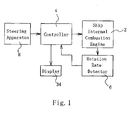
Fig. 1 is a block diagram of a ship engine control system according to an embodiment of the present invention. -
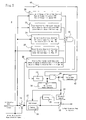
Fig. 2 is a block diagram showing functions achieved by a controller shown inFig. 1 . - A ship engine control system according to an embodiment of the present invention is for controlling a ship engine, e.g. an
internal combustion engine 2 for a ship, as shown inFig. 2 . The shipinternal combustion engine 2 may be a multiple-cylinder diesel engine. Each cylinder is provided with a fuel injection valve, and fuel supply means, e.g. fuel injection pump, although not shown. The fuel injection valve is arranged to supply fuel supplied thereto to the cylinder when the pressure of the fuel supplied from the fuel injection pump exceeds a predetermined value. Each fuel injection pump supplies an amount of fuel corresponding to an output value supplied thereto from a control apparatus, e.g. acontroller 4 described later, to an associated fuel injection valve. Other than an engine with a fuel injection valve and a fuel injection pump, the shipinternal combustion engine 2 may be an engine with fuel supply to each cylinder controlled by a solenoid valve, e.g. an engine with a common-rail fuel injection system or an engine with a pressure-intensifier-cylinder fuel injection system. Alternatively, theinternal combustion engine 2 may be an engine with cylinders each provided with fuel supply means, e.g. an injector acting as the fuel injection valve. The injector is arranged such that a valve is moved by exciting or de-exciting an electromagnet disposed within the injector to thereby control the fuel injection into an associated cylinder. The operation of the injector is controlled in accordance with the output value from thecontroller 4. - The
controller 4 is provided with arithmetic and logic operation means, e.g. a microprocessor, and memory means, e.g. a ROM and a RAM. Thecontroller 4 receives, from arotation rate detector 6, an actual rotation rate representative signal representing an actual rotation rate of the shipinternal combustion engine 2. Also, thecontroller 4 receives, from a steering apparatus 8, a set rotation rate representative signal representative of a rotation rate set for the shipinternal combustion engine 2. - In this embodiment, the
controller 4 functions as adding means for computing a difference between the set rotation rate representative signal and the actual rotation representative signal, e.g. anadder 10 as shown inFIG. 2 , and also as PID control means, e.g. aPID controlling apparatus 12, to which the computed difference is supplied. In other words, thePID controlling apparatus 12 performs proportional control by multiplying the supplied difference by a proportional gain constant, performs integral control by integrating the supplied difference and multiplying the integration result by the reciprocal of an integration time, performs derivative control by differentiating the supplied difference and multiplying the result of the differentiation by an differentiation time, and outputs, as the output value, a value obtained by adding the results of the proportional control, the integral control and the derivative control. - The
PID controlling apparatus 12 is provided with alimiter 14 and is arranged such that, when the computed output value exceeds a limiter upper limit value set in thelimiter 14, the limiter upper limit value is outputted. - The
PID controlling apparatus 12 is arranged to operate in a selected one of the ordinary and fuel saving modes. - For the ordinary mode, the proportional gain constant, the integration time and the differentiation time are set such that, even when the set rotation rate representative signal changes, no offset occurs and the actual rotation rate representative signal can become equal to the set rotation rate representative signal without delay.
- For the fuel saving mode, the integration time and the differentiation time are set such that the integral control dominates more than in the ordinary mode and the derivative control hardly is effective. Also, the proportional gain constant is set such that the proportional control is less effective than in the ordinary mode. With such setting, the width over which the output value from the
PID controlling apparatus 12 changes for a unit time is small relative to the one in the ordinary mode. - The proportional gain constant, the integration time and the differentiation time for the fuel saving mode are not directly changed, but they are changed by multiplying the initial values, e.g. the proportional gain constant, the integration time and the differentiation time for the ordinary mode, by a multiplier for the proportional gain constant, a multiplier for the integration time and a multiplier for the differentiation time, respectively. Accordingly, it is not necessary to know the proportional gain constant, the integration time and the differentiation time for the ordinary mode, but it is sufficient only to determine, for each of the proportional gain constant, the integration time and the differentiation time for the ordinary mode, how many times it should be increased by. Thus, the setting is easy. The multiplier by which the proportional gain constant should be multiplied, the multiplier by which the integration time should be multiplied, and the multiplier by which the differentiation time should be multiplied can be set by the ship operator to values which he or she desires.
- Switching between the fuel saving mode and the ordinary mode is described later.
- The
controller 4 acts also as afilter 16, e.g. a low-pass filter, which averages the output of thePID controlling apparatus 12. Further, thecontroller 4 functions also as switching means, e.g. achangeover switch 18, for selecting one of the outputs from thefilter 16 and thePID controlling apparatus 12 for application to the fuel injection pump or the injector within the shipinternal combustion engine 2. The changeover switch 18 couples the output of thePID controlling apparatus 12 directly to the fuel injection pump or the injector in the ordinary mode, but it couples the output of thefilter 16 to the fuel injection pump or the injector for a predetermined time period or for one loop period of a control program, when it is switched, for example, from the ordinary mode to the fuel saving mode by a switchingcontrol unit 19 of which function is provided by thecontroller 4 as described later. - The
controller 4 functions also as monitoring means, e.g. five detecting units, for determining the switching between the above-described ordinary mode and the fuel saving mode. There are provided, as the five detecting units, an over speed causing actual rotationrate detecting unit 20, an actual rotation ratelevel detecting unit 22, a set rotation ratelevel detecting unit 24, a rate-of-change-in-set-rotation-rate detecting unit 26, and an amount-of-change-in-rotation-rate detecting unit 28. - The over speed causing actual rotation
rate detecting unit 20 receives the actual rotation rate representative signal to determine whether the actual rotation rate representative signal is equal to or above a predetermined overspeed indicative level, outputs an OFF signal to switch the system to the ordinary mode when the actual rotation rate representative signal is equal to or above the over speed indicative level, and outputs an ON signal to switch the system to the fuel saving mode when the actual rotation rate representative signal is below the over speed indicative level. The over speed indicative level is set to a level from which it can be determined that the shipinternal combustion engine 2 is rotating at an excessive rotation rate. Thus, when the shipinternal combustion engine 2 is rotating at an excessive rotation rate in the fuel saving mode, theengine 2 can be switched to the ordinary mode, whereas, when the shipinternal combustion engine 2 in the ordinary mode is not rotating at an excessive rotation rate, theengine 2 can be switched to the fuel saving mode. - The actual rotation rate
level detecting unit 22 receives the actual rotation rate representative signal, and judges whether the actual rotation rate is equal to or above a NAVI-FULL rotation rate. If the actual rotation rate is equal to or above the NAVI-FULL rotation rate, the actual rotation ratelevel detecting unit 22 develops an OFF signal, whereas, if the actual rotation rate is below the NAVI-FULL rotation rate, the detectingunit 22 develops an ON signal. The NAVI-FULL rotation rate is the rotation rate of the shipinternal combustion engine 2 when the ship is running on the open sea. Accordingly, when the actual rotation rate is equal to or above the NAVI-FULL rotation rate in the fuel saving mode, theengine 2 can be switched to the ordinary mode. On the other hand, if the actual rotation rate is below the NAVI-FULL rotation rate in the ordinary mode, theengine 2 can be switched to the fuel saving mode. The NAVI-FULL rotation rate is the rotation rate adoptable on the open sea which is pre-computed for the shape, size etc. of the ship. In addition, the rotation rate at which the ship can be moved in safety within a bay is also pre-computed with oceanographic phenomena and environmental disturbances taken into account. If the actual rotation rate is equal to or above this pre-computed rotation rate when the ship is navigating within a bay, the actual rotation ratelevel detecting unit 22 develops the OFF signal, and if the actual rotation rate is below the pre-computed rotation rate, it develops the ON signal. - The set rotation
level detecting unit 24 receives the set rotation rate representative signal and judges whether the set rotation rate is equal to or above the NAVI-FULL rotation rate. The detectingunit 24 develops the OFF signal if the set rotation rate is equal to or above the NAVI-FULL rotation rate, and develops the ON signal if the set rotation rate is below the NAVI-FULL rotation rate. Accordingly, if the set rotation rate is equal to or above the NAVI-FULL rotation rate in the fuel saving mode, theengine 2 can be switched to the ordinary mode. Also, if the set rotation rate is below the NAVI-FULL rotation rate in the ordinary mode, theengine 2 can be switched to the fuel saving mode. - The detecting
unit 26 for detecting the rate of change of the set rotation rate receives the set rotation rate representative signal, computes the rate of change per unit time, e.g. one second, judges whether the rate of change is equal to or larger than a predetermined value, e.g. 2 rpm/second, and develops an OFF signal when the rate of change is equal to or larger than 2 rpm/second or an ON signal when the rate of change is smaller than 2 rpm/second. The predetermined value for the rate of change is such a value that the rate of change can be considered to be within a range of fine adjustment. Accordingly, when the rate of change in the set rotation rate in the fuel saving mode is out of the range of fine adjustment, the fuel saving mode can be switched to the ordinary mode, and, when the rate of change in the set rotation rate in the ordinary mode is within the range of fine adjustment, the ordinary mode can be switched to the fuel saving mode. - The amount-of-change-in-rotation-
rate detecting unit 28 receives a difference representative signal from the adder 10 (a signal representative of the difference between the set rotation rate and the actual rotation rate). The difference representative signal represents the amount of change of the actual rotation rate from the set rotation rate, and, if the amount of change is within a first predetermined range, e.g. ±3 rpm, the amount-of-change-in-rotation-rate detecting unit 28 develops an ON signal. If the amount of change is within a second predetermined range, e.g. equal to or larger than +5 rpm or equal to or smaller than -5 rpm, the amount-of-change-in-rotation-rate detecting unit 28 develops an OFF signal. Accordingly, if the amount of change of the rotation rate, which is the difference between the set rotation rate and the actual rotation rate, increases or decreases by 5 rpm or more in the fuel saving mode, the fuel saving mode can be switched to the ordinary mode. On the other hand, if the amount of change of the rotation rate in the ordinary mode is within the range of ±3 rpm, the operation mode can be changed to the fuel saving mode. - The output signals from the respective detecting
units gate 30, provided by thecontroller 4. The ANDgate 30 develops an output when the output signals of the detectingunits gate 30 is applied to atimer 32 provided by thecontroller 4. Thetimer 32 develops an output when the output of the ANDgate 30 continues for a predetermined time period. In other words, when all of the detectingunits timer 32 does not develop an output. Only when all the detectingunits timer 32 develops an output. The output of thetimer 32 is supplied to a fuel saving modeready indicator 36 in adisplay 34 shown inFig. 1 to activate theindicator 36 to indicate that the fuel saving mode is at the ready. - The output of the
timer 32 is supplied to a logic gate, e.g. an ANDgate 38, provided by thecontroller 4. The ANDgate 38 receives also a fuel saving mode selecting signal developed when a fuel savingmode selecting button 40 on the steering apparatus 8 is closed. The ANDgate 38 develops an output only when thetimer 32 supplies an output thereto with the fuel savingmode selecting button 40 closed to supply the fuel saving mode selecting signal to the ANDgate 38. Accordingly, even when thetimer 32 is developing an output, or, in other words, even when all the detectingunits gate 38 does not develop an output unless the fuel saving mode selecting signal is supplied to the ANDgate 38. - The output of the AND
gate 38 is supplied to thePID controlling apparatus 12. ThePID controlling apparatus 12 is switched from the ordinary mode to the fuel saving mode in response to reception of the output of the ANDgate 38, and carries out PID control in the fuel saving mode. The output of the ANDgate 38 is also coupled to a fuel savingmode indicator 42 on thedisplay 34 to indicate that the operating mode is shifted to the fuel saving mode. When the output of the ANDgate 38 is decoupled from thePID controlling apparatus 12, the PID controlling apparatus is switched from the fuel saving mode to the ordinary mode. - The output of the AND
gate 38 is also coupled to the switchingcontrol unit 19, which switches thechangeover switch 18 to cause the output of thefilter 16 to be coupled to the fuel injection pump or the injector. The switching from the ordinary mode to the fuel saving mode causes a change in the output value of thePID controlling apparatus 12. In the initial stage of the mode switching, the change in the output of thePID controlling apparatus 12 is alleviated by thefilter 16 before it is applied to the fuel injection pump or the injector. A predetermined time period after the mode switching, the output of thePID controlling apparatus 12 is coupled, as it is, to the fuel injection pump or the injector. - As described, when, in the ordinary mode, all of the detecting
units PID controlling apparatus 12 is switched to the fuel saving mode to output an output value for controlling the fuel injection pump or the injector in the fuel saving mode. When any one of the detectingunits PID controlling apparatus 12 is switched to the ordinary mode and provides an output value for controlling the fuel injection pump or the injector in the ordinary mode. - Thus, when the actual rotation rate increases to or above the over speed level, or when the actual rotation rate increases to or above the NAVI-FULL rotation rate, or when the set rotation rate increases by 2 rpm or more, or when the set rotation rate increases to or above the NAVI-FULL rotation rate, or when the rate of change of the rotation rate changes by ±5 rpm, the ship, which has been being controlled in the fuel saving mode, is switched to the ordinary mode control. Therefore the safe navigation can be maintained, and the ship maneuverability is improved. Further, in the fuel saving mode, the fuel consumption can be reduced.
- The output of the
PID controlling apparatus 12 is outputted being averaged in thefilter 16 for the predetermined time period after the switching of the mode to the fuel saving mode, and, therefore it never happens that the output value supplied to the fuel injection pump or the injector abruptly changes greatly. As a result, the amount of change in the rotation rate of theship engine 2 does not change greatly, so that theengine 2 is prevented from being switched back to the ordinary mode immediately after the switching to the fuel saving mode. - Since the
PID controlling apparatus 12 is provided with thelimiter 14, the output value of thePID controlling apparatus 12 does not exceed the limiter upper limit, and, therefore the amount of change of the fuel does not become too large, which prevents the over speed of the engine. In the fuel saving mode, the amount of control of the actuator and the injector is extremely small, and, therefore, after the mode is switched to the fuel saving mode, there is a possibility that the change in rotation rate becomes larger than in the ordinary mode. Thelimiter 14 is used to prevent it. The limit set in thelimiter 14 is lower, preferably by 5 % to 10 % of the upper limit of the output of thePID controlling apparatus 12 in the ordinary mode, than the upper limit of the PID controlling apparatus output in the ordinary mode. - In the above-described embodiment, the five detecting
units gate 30 need not be used. Although the fuel savingmode selecting button 40 is used to supply the fuel saving mode selecting signal to the ANDgate 38, the fuel savingmode selecting button 40 together with the ANDgate 38 may be eliminated, but the output of thetimer 32 may be supplied directly to thePID controlling apparatus 12, the switchingcontrol unit 19, and the fuel savingmode indicator 42. Depending on the situation, thetimer 32, thefilter 16, thechangeover switch 18 and the switchingcontrol unit 19 can be eliminated. - In the above-described embodiment, the
PID controlling apparatus 12 has been described to continue the PID control in the fuel saving mode with the proportional gain constant, the integration time and the differentiation time set to values different from the respective ones in the ordinary mode. The fuel saving mode may be such that the PID control by thePID controlling apparatus 12 is interrupted and the output value of thePID controlling apparatus 12 developed immediately before the interruption of the PID control is used as it is.
Claims (20)
- A method for controlling a ship engine, including an ordinary mode in which an output value to be supplied to fuel supply means is changed in accordance with a difference between a set rotation rate set by a ship operator and an actual rotation rate of the ship engine, and a fuel saving mode in which said output value is prevented from being changed or a width of change per unit time of said output value is smaller than in said ordinary mode, said fuel saving mode being switched to said ordinary mode on a predetermined condition.
- The method for controlling a ship engine according to Claim 1, wherein said predetermined condition is that said actual rotation rate goes out of a range of rotation rates set for safe navigation with oceanographic phenomena and disturbances taken into account.
- The method for controlling a ship engine according to Claim 1, wherein said predetermined condition is that the actual rotation rate decreases to or below a rotation rate employed for operation on the open sea.
- The method for controlling a ship engine according to Claim 1, wherein said predetermined condition is that said actual rotation rate increases to or above a rotation rate set for preventing overspeed.
- The method for controlling a ship engine according to Claim 1, wherein said predetermined condition is that said set rotation rate is changed by a ship operator.
- The method for controlling a ship engine according to Claim 5, wherein said fuel saving mode is maintained when the amount of change of said set rotation rate is within a range of fine adjustment.
- The method for controlling a ship engine according to Claim 1, wherein, when the difference between said set rotation rate and the actual rotation rate in the ordinary mode is within a first range, said ordinary mode is switched to said fuel saving mode, and, when the difference between said set rotation rate and the actual rotation rate in the fuel saving mode is greater than a second range, said fuel saving mode is switched to said ordinary mode, said second range being greater than said first range.
- The method for controlling a ship engine according to Claim 1, wherein, when said ordinary mode is switched to said fuel saving mode, said output value is changed to an average value.
- The method for controlling a ship engine according to Claim 1, wherein a saving mode upper limit of said output value is defined in said fuel saving mode.
- The method for controlling a ship engine according to any one of Claims 1 through 8, wherein proportional-integral-derivative control is used in computing said output value, and, for said fuel saving mode, a proportional gain constant used in the proportional control of said proportional-integral-derivative control is multiplied by a proportion multiplier, an integration time used in the integral control of said proportional-integral-derivative control is multiplied by an integration multiplier, a differentiation time used in the derivative control of the proportional-integral-derivative control is multiplied by a differentiation multiplier, to thereby prevent said output value from being changed, or reduce the width of change per unit time of said output value relative to the width of change per unit time in the ordinary mode; and
wherein said respective multipliers are settable to desired values. - A ship engine control system for use in said method for controlling a ship engine according to Claim 1, comprising:arithmetic and logic operation means to which a set rotation rate and an actual rotation rate are inputted, said arithmetic and logic operation means having an ordinary mode for computing, from the difference between said set rotation rate and said actual rotation rate, an output value to be supplied to fuel supply means of said ship engine;said arithmetic and logic operation means having a fuel saving mode in which said output value is prevented from being changed, or the width of change per unit time of said output value is reduced relative to the width of change per unit time in the ordinary mode, said arithmetic and logic control means being switchable between said ordinary mode and said fuel saving mode;said control system further comprising monitoring means for monitoring variations in said set rotation rate or said actual rotation rate, and for providing a release command when said set rotation rate or said actual rotation rate goes out of a predetermined range;said arithmetic and logic control means being switched to said ordinary mode in response to said release command.
- The ship engine control system according to Claim 11, wherein said monitoring means provides said release command when said actual rotation rate decreases to or below a rotation rate set for securing the ship maneuverability.
- The ship engine control system according to Claim 11, wherein said monitoring means provides said release command when said actual rotation rate decreases to or below a rotation rate employed for operation on the open sea.
- The ship engine control system according to Claim 11, wherein said monitoring means provides said release command when said actual rotation rate decreases to or below a rotation rate set for preventing over speed.
- The ship engine control system according to Claim 11, wherein said monitoring means provides said release command when said set rotation rate is changed by a ship operator,
- The ship engine control system according to Claim 11, wherein said monitoring means operates to maintain said fuel saving mode when an amount of change in said set rotation rate is within a range of fine adjustment.
- The ship engine control system according to Claim 11, wherein said monitoring means interrupts said release command when the difference between said set rotation rate and the actual rotation rate in the ordinary mode is within a first range, said monitoring means provides said release command when the difference between said set rotation rate and the actual rotation rate in the fuel saving mode is greater than a second range, said second range being greater than said first range.
- The ship engine control system according to Claim 11, further comprising average value computing means, and switching means for switching said output value to said average value when said ordinary mode is switched to said fuel saving mode.
- The ship engine control system according to Claim 11, wherein said arithmetic and logic operation means defines a saving mode upper limit for said output value when the width of change of said output value is made smaller in said fuel saving mode than in said ordinary mode, and outputs said save mode upper value when the computed output value exceeds said saving mode upper limit.
- The ship engine control system according to Claim 11, wherein said arithmetic and logic operation means comprises proportional-integral-derivative control means for performing proportional-integral-derivative control; for said fuel saving mode, a proportional gain constant used in the proportional control of said proportional-integral-derivative control is multiplied by a proportion multiplier, an integration time used in the integral control of said proportional-integral-derivative control is multiplied by an integration multiplier, a differentiation time used in the derivative control of the proportional-integral-derivative control is multiplied by a differentiation multiplier, to thereby prevent said output value from being changed, or reduce the width of change per unit time of said output value relative to the width of change per unit time in the ordinary mode; and
wherein said respective multipliers are settable to desired values.
Applications Claiming Priority (1)
| Application Number | Priority Date | Filing Date | Title |
|---|---|---|---|
| PCT/JP2009/061381 WO2010150349A1 (en) | 2009-06-23 | 2009-06-23 | Control method and controller of marine engine |
Publications (3)
| Publication Number | Publication Date |
|---|---|
| EP2447515A1 true EP2447515A1 (en) | 2012-05-02 |
| EP2447515A4 EP2447515A4 (en) | 2013-08-21 |
| EP2447515B1 EP2447515B1 (en) | 2016-05-04 |
Family
ID=43386144
Family Applications (1)
| Application Number | Title | Priority Date | Filing Date |
|---|---|---|---|
| EP09846482.9A Active EP2447515B1 (en) | 2009-06-23 | 2009-06-23 | Control method and controller of marine engine |
Country Status (5)
| Country | Link |
|---|---|
| EP (1) | EP2447515B1 (en) |
| KR (2) | KR20120018310A (en) |
| CN (1) | CN102449291B (en) |
| DK (1) | DK2447515T3 (en) |
| WO (1) | WO2010150349A1 (en) |
Families Citing this family (6)
| Publication number | Priority date | Publication date | Assignee | Title |
|---|---|---|---|---|
| JP2015078884A (en) * | 2013-10-16 | 2015-04-23 | 富士通株式会社 | Monitoring device, monitoring program, and monitoring method |
| CN104149779B (en) * | 2014-07-08 | 2016-07-06 | 江苏大学 | Vehicle power matching system with hydraulic mechanical stepless gearbox |
| DE102017219785A1 (en) * | 2017-11-07 | 2019-05-09 | Robert Bosch Gmbh | Method for controlling a speed of an internal combustion engine with compensation of a dead time |
| CN108104960B (en) * | 2017-12-15 | 2019-12-03 | 潍柴西港新能源动力有限公司 | Hybrid engine speed communication strategy |
| JP2022015997A (en) * | 2020-07-10 | 2022-01-21 | ナブテスコ株式会社 | Engine characteristic estimation device, engine characteristic estimation method, engine characteristic estimation program, and engine state estimation device |
| CN115045773B (en) * | 2022-06-21 | 2024-05-17 | 无锡威孚高科技集团股份有限公司 | Marine electric control engine control method, electronic controller and control system |
Family Cites Families (9)
| Publication number | Priority date | Publication date | Assignee | Title |
|---|---|---|---|---|
| JPS5932630A (en) * | 1982-08-17 | 1984-02-22 | Mitsubishi Heavy Ind Ltd | Control apparatus for main engine of ship |
| JPS60195357A (en) * | 1984-03-19 | 1985-10-03 | Ishikawajima Harima Heavy Ind Co Ltd | Method of controlling speed of main diesel-engine |
| DE4333351C2 (en) * | 1993-09-30 | 2003-10-09 | Motoren Werke Mannheim Ag | Seegangabhängige speed regulation for an internal combustion engine |
| JP2741341B2 (en) | 1994-04-13 | 1998-04-15 | 株式会社ナブコ | Engine speed control device |
| JPH08200131A (en) | 1995-01-26 | 1996-08-06 | Mitsubishi Heavy Ind Ltd | Load fluctuation control unit of electronic governor for marine use |
| DE102005060540B3 (en) * | 2005-12-17 | 2007-04-26 | Mtu Friedrichshafen Gmbh | Moment-orientated control process for internal combustion engine involves calculating intended moment value by revs regulator |
| JP2007168495A (en) * | 2005-12-19 | 2007-07-05 | Toyota Motor Corp | POWER OUTPUT DEVICE, ITS CONTROL METHOD, AND VEHICLE |
| JP2008045484A (en) * | 2006-08-16 | 2008-02-28 | Japan Marine Science Inc | Method and apparatus for controlling marine internal combustion engine |
| JP2009036180A (en) * | 2007-08-03 | 2009-02-19 | Yanmar Co Ltd | Engine rotation speed control device |
-
2009
- 2009-06-23 EP EP09846482.9A patent/EP2447515B1/en active Active
- 2009-06-23 DK DK09846482.9T patent/DK2447515T3/en active
- 2009-06-23 KR KR1020117026621A patent/KR20120018310A/en not_active Ceased
- 2009-06-23 KR KR1020137027980A patent/KR101438018B1/en active Active
- 2009-06-23 WO PCT/JP2009/061381 patent/WO2010150349A1/en not_active Ceased
- 2009-06-23 CN CN200980159618.XA patent/CN102449291B/en active Active
Also Published As
| Publication number | Publication date |
|---|---|
| KR20120018310A (en) | 2012-03-02 |
| EP2447515B1 (en) | 2016-05-04 |
| KR20140013042A (en) | 2014-02-04 |
| KR101438018B1 (en) | 2014-09-04 |
| WO2010150349A1 (en) | 2010-12-29 |
| EP2447515A4 (en) | 2013-08-21 |
| CN102449291A (en) | 2012-05-09 |
| DK2447515T3 (en) | 2016-08-01 |
| CN102449291B (en) | 2015-01-28 |
Similar Documents
| Publication | Publication Date | Title |
|---|---|---|
| EP2447515B1 (en) | Control method and controller of marine engine | |
| EP2386482B1 (en) | Control of a waterjet propelled vessel | |
| US8560185B2 (en) | Control unit for construction machine | |
| US20130036958A1 (en) | Fault tolerant vessel stabiliser control system | |
| EP3176413B1 (en) | Shovel | |
| JP6214075B1 (en) | Ship propulsion method and ship propulsion device | |
| JP5680716B2 (en) | Marine engine control method and control device thereof | |
| JP5090957B2 (en) | Marine engine control method and control device thereof | |
| JP2000154803A (en) | Engine lag-down prevention device for hydraulic construction machine | |
| JP5280553B2 (en) | Marine engine control method and control device thereof | |
| JP2008045484A (en) | Method and apparatus for controlling marine internal combustion engine | |
| JP5551723B2 (en) | Marine engine control method and control device thereof | |
| JPH07127605A (en) | Drive controller for hydraulic construction machine | |
| JP2012077758A (en) | Method and device for controlling ship engine | |
| JP2012077758A5 (en) | ||
| US12018460B2 (en) | Excavator | |
| JPS62265481A (en) | Variable delivery pump and control device for engine | |
| JP2012077759A (en) | Method and device for controlling ship engine | |
| JP2016108943A (en) | Engine control device and engine | |
| WO2012169382A1 (en) | Fuel-injection-control device | |
| JPH11125206A (en) | Hydraulic control device for construction machinery |
Legal Events
| Date | Code | Title | Description |
|---|---|---|---|
| PUAI | Public reference made under article 153(3) epc to a published international application that has entered the european phase |
Free format text: ORIGINAL CODE: 0009012 |
|
| 17P | Request for examination filed |
Effective date: 20111205 |
|
| AK | Designated contracting states |
Kind code of ref document: A1 Designated state(s): AT BE BG CH CY CZ DE DK EE ES FI FR GB GR HR HU IE IS IT LI LT LU LV MC MK MT NL NO PL PT RO SE SI SK TR |
|
| DAX | Request for extension of the european patent (deleted) | ||
| A4 | Supplementary search report drawn up and despatched |
Effective date: 20130723 |
|
| RIC1 | Information provided on ipc code assigned before grant |
Ipc: F02D 41/14 20060101AFI20130717BHEP Ipc: F02D 31/00 20060101ALI20130717BHEP Ipc: F02D 45/00 20060101ALI20130717BHEP |
|
| GRAP | Despatch of communication of intention to grant a patent |
Free format text: ORIGINAL CODE: EPIDOSNIGR1 |
|
| INTG | Intention to grant announced |
Effective date: 20151208 |
|
| GRAS | Grant fee paid |
Free format text: ORIGINAL CODE: EPIDOSNIGR3 |
|
| GRAA | (expected) grant |
Free format text: ORIGINAL CODE: 0009210 |
|
| AK | Designated contracting states |
Kind code of ref document: B1 Designated state(s): AT BE BG CH CY CZ DE DK EE ES FI FR GB GR HR HU IE IS IT LI LT LU LV MC MK MT NL NO PL PT RO SE SI SK TR |
|
| REG | Reference to a national code |
Ref country code: GB Ref legal event code: FG4D |
|
| REG | Reference to a national code |
Ref country code: CH Ref legal event code: NV Representative=s name: ISLER AND PEDRAZZINI AG, CH Ref country code: CH Ref legal event code: EP |
|
| REG | Reference to a national code |
Ref country code: AT Ref legal event code: REF Ref document number: 797122 Country of ref document: AT Kind code of ref document: T Effective date: 20160515 |
|
| REG | Reference to a national code |
Ref country code: IE Ref legal event code: FG4D |
|
| REG | Reference to a national code |
Ref country code: DE Ref legal event code: R096 Ref document number: 602009038526 Country of ref document: DE |
|
| REG | Reference to a national code |
Ref country code: NO Ref legal event code: T2 Effective date: 20160504 |
|
| REG | Reference to a national code |
Ref country code: DK Ref legal event code: T3 Effective date: 20160725 |
|
| REG | Reference to a national code |
Ref country code: NL Ref legal event code: MP Effective date: 20160504 |
|
| REG | Reference to a national code |
Ref country code: LT Ref legal event code: MG4D |
|
| PG25 | Lapsed in a contracting state [announced via postgrant information from national office to epo] |
Ref country code: FI Free format text: LAPSE BECAUSE OF FAILURE TO SUBMIT A TRANSLATION OF THE DESCRIPTION OR TO PAY THE FEE WITHIN THE PRESCRIBED TIME-LIMIT Effective date: 20160504 Ref country code: NL Free format text: LAPSE BECAUSE OF FAILURE TO SUBMIT A TRANSLATION OF THE DESCRIPTION OR TO PAY THE FEE WITHIN THE PRESCRIBED TIME-LIMIT Effective date: 20160504 Ref country code: LT Free format text: LAPSE BECAUSE OF FAILURE TO SUBMIT A TRANSLATION OF THE DESCRIPTION OR TO PAY THE FEE WITHIN THE PRESCRIBED TIME-LIMIT Effective date: 20160504 |
|
| REG | Reference to a national code |
Ref country code: AT Ref legal event code: MK05 Ref document number: 797122 Country of ref document: AT Kind code of ref document: T Effective date: 20160504 |
|
| PG25 | Lapsed in a contracting state [announced via postgrant information from national office to epo] |
Ref country code: ES Free format text: LAPSE BECAUSE OF FAILURE TO SUBMIT A TRANSLATION OF THE DESCRIPTION OR TO PAY THE FEE WITHIN THE PRESCRIBED TIME-LIMIT Effective date: 20160504 Ref country code: LV Free format text: LAPSE BECAUSE OF FAILURE TO SUBMIT A TRANSLATION OF THE DESCRIPTION OR TO PAY THE FEE WITHIN THE PRESCRIBED TIME-LIMIT Effective date: 20160504 Ref country code: HR Free format text: LAPSE BECAUSE OF FAILURE TO SUBMIT A TRANSLATION OF THE DESCRIPTION OR TO PAY THE FEE WITHIN THE PRESCRIBED TIME-LIMIT Effective date: 20160504 Ref country code: SE Free format text: LAPSE BECAUSE OF FAILURE TO SUBMIT A TRANSLATION OF THE DESCRIPTION OR TO PAY THE FEE WITHIN THE PRESCRIBED TIME-LIMIT Effective date: 20160504 Ref country code: PT Free format text: LAPSE BECAUSE OF FAILURE TO SUBMIT A TRANSLATION OF THE DESCRIPTION OR TO PAY THE FEE WITHIN THE PRESCRIBED TIME-LIMIT Effective date: 20160905 Ref country code: GR Free format text: LAPSE BECAUSE OF FAILURE TO SUBMIT A TRANSLATION OF THE DESCRIPTION OR TO PAY THE FEE WITHIN THE PRESCRIBED TIME-LIMIT Effective date: 20160805 |
|
| PG25 | Lapsed in a contracting state [announced via postgrant information from national office to epo] |
Ref country code: BE Free format text: LAPSE BECAUSE OF NON-PAYMENT OF DUE FEES Effective date: 20160630 Ref country code: IT Free format text: LAPSE BECAUSE OF FAILURE TO SUBMIT A TRANSLATION OF THE DESCRIPTION OR TO PAY THE FEE WITHIN THE PRESCRIBED TIME-LIMIT Effective date: 20160504 |
|
| REG | Reference to a national code |
Ref country code: DE Ref legal event code: R119 Ref document number: 602009038526 Country of ref document: DE |
|
| PG25 | Lapsed in a contracting state [announced via postgrant information from national office to epo] |
Ref country code: SK Free format text: LAPSE BECAUSE OF FAILURE TO SUBMIT A TRANSLATION OF THE DESCRIPTION OR TO PAY THE FEE WITHIN THE PRESCRIBED TIME-LIMIT Effective date: 20160504 Ref country code: RO Free format text: LAPSE BECAUSE OF FAILURE TO SUBMIT A TRANSLATION OF THE DESCRIPTION OR TO PAY THE FEE WITHIN THE PRESCRIBED TIME-LIMIT Effective date: 20160504 Ref country code: CZ Free format text: LAPSE BECAUSE OF FAILURE TO SUBMIT A TRANSLATION OF THE DESCRIPTION OR TO PAY THE FEE WITHIN THE PRESCRIBED TIME-LIMIT Effective date: 20160504 Ref country code: EE Free format text: LAPSE BECAUSE OF FAILURE TO SUBMIT A TRANSLATION OF THE DESCRIPTION OR TO PAY THE FEE WITHIN THE PRESCRIBED TIME-LIMIT Effective date: 20160504 |
|
| PG25 | Lapsed in a contracting state [announced via postgrant information from national office to epo] |
Ref country code: AT Free format text: LAPSE BECAUSE OF FAILURE TO SUBMIT A TRANSLATION OF THE DESCRIPTION OR TO PAY THE FEE WITHIN THE PRESCRIBED TIME-LIMIT Effective date: 20160504 Ref country code: BE Free format text: LAPSE BECAUSE OF FAILURE TO SUBMIT A TRANSLATION OF THE DESCRIPTION OR TO PAY THE FEE WITHIN THE PRESCRIBED TIME-LIMIT Effective date: 20160504 Ref country code: PL Free format text: LAPSE BECAUSE OF FAILURE TO SUBMIT A TRANSLATION OF THE DESCRIPTION OR TO PAY THE FEE WITHIN THE PRESCRIBED TIME-LIMIT Effective date: 20160504 |
|
| PLBE | No opposition filed within time limit |
Free format text: ORIGINAL CODE: 0009261 |
|
| STAA | Information on the status of an ep patent application or granted ep patent |
Free format text: STATUS: NO OPPOSITION FILED WITHIN TIME LIMIT |
|
| REG | Reference to a national code |
Ref country code: IE Ref legal event code: MM4A |
|
| PG25 | Lapsed in a contracting state [announced via postgrant information from national office to epo] |
Ref country code: MC Free format text: LAPSE BECAUSE OF FAILURE TO SUBMIT A TRANSLATION OF THE DESCRIPTION OR TO PAY THE FEE WITHIN THE PRESCRIBED TIME-LIMIT Effective date: 20160504 |
|
| REG | Reference to a national code |
Ref country code: FR Ref legal event code: ST Effective date: 20170228 |
|
| 26N | No opposition filed |
Effective date: 20170207 |
|
| GBPC | Gb: european patent ceased through non-payment of renewal fee |
Effective date: 20160804 |
|
| PG25 | Lapsed in a contracting state [announced via postgrant information from national office to epo] |
Ref country code: FR Free format text: LAPSE BECAUSE OF NON-PAYMENT OF DUE FEES Effective date: 20160704 Ref country code: DE Free format text: LAPSE BECAUSE OF NON-PAYMENT OF DUE FEES Effective date: 20170103 |
|
| PG25 | Lapsed in a contracting state [announced via postgrant information from national office to epo] |
Ref country code: SI Free format text: LAPSE BECAUSE OF FAILURE TO SUBMIT A TRANSLATION OF THE DESCRIPTION OR TO PAY THE FEE WITHIN THE PRESCRIBED TIME-LIMIT Effective date: 20160504 Ref country code: IE Free format text: LAPSE BECAUSE OF NON-PAYMENT OF DUE FEES Effective date: 20160623 |
|
| PG25 | Lapsed in a contracting state [announced via postgrant information from national office to epo] |
Ref country code: GB Free format text: LAPSE BECAUSE OF NON-PAYMENT OF DUE FEES Effective date: 20160804 |
|
| PG25 | Lapsed in a contracting state [announced via postgrant information from national office to epo] |
Ref country code: HU Free format text: LAPSE BECAUSE OF FAILURE TO SUBMIT A TRANSLATION OF THE DESCRIPTION OR TO PAY THE FEE WITHIN THE PRESCRIBED TIME-LIMIT; INVALID AB INITIO Effective date: 20090623 Ref country code: CY Free format text: LAPSE BECAUSE OF FAILURE TO SUBMIT A TRANSLATION OF THE DESCRIPTION OR TO PAY THE FEE WITHIN THE PRESCRIBED TIME-LIMIT Effective date: 20160504 |
|
| PG25 | Lapsed in a contracting state [announced via postgrant information from national office to epo] |
Ref country code: MT Free format text: LAPSE BECAUSE OF NON-PAYMENT OF DUE FEES Effective date: 20160630 Ref country code: MK Free format text: LAPSE BECAUSE OF FAILURE TO SUBMIT A TRANSLATION OF THE DESCRIPTION OR TO PAY THE FEE WITHIN THE PRESCRIBED TIME-LIMIT Effective date: 20160504 Ref country code: IS Free format text: LAPSE BECAUSE OF FAILURE TO SUBMIT A TRANSLATION OF THE DESCRIPTION OR TO PAY THE FEE WITHIN THE PRESCRIBED TIME-LIMIT Effective date: 20160504 Ref country code: TR Free format text: LAPSE BECAUSE OF FAILURE TO SUBMIT A TRANSLATION OF THE DESCRIPTION OR TO PAY THE FEE WITHIN THE PRESCRIBED TIME-LIMIT Effective date: 20160504 Ref country code: LU Free format text: LAPSE BECAUSE OF NON-PAYMENT OF DUE FEES Effective date: 20160623 |
|
| PG25 | Lapsed in a contracting state [announced via postgrant information from national office to epo] |
Ref country code: BG Free format text: LAPSE BECAUSE OF FAILURE TO SUBMIT A TRANSLATION OF THE DESCRIPTION OR TO PAY THE FEE WITHIN THE PRESCRIBED TIME-LIMIT Effective date: 20160504 |
|
| PGFP | Annual fee paid to national office [announced via postgrant information from national office to epo] |
Ref country code: DK Payment date: 20250618 Year of fee payment: 17 |
|
| PGFP | Annual fee paid to national office [announced via postgrant information from national office to epo] |
Ref country code: NO Payment date: 20250610 Year of fee payment: 17 |
|
| PGFP | Annual fee paid to national office [announced via postgrant information from national office to epo] |
Ref country code: CH Payment date: 20250701 Year of fee payment: 17 |