EP2440672B1 - Compositions and methods for dehydrated storage of on-board reagents in microfluidic devices - Google Patents
Compositions and methods for dehydrated storage of on-board reagents in microfluidic devices Download PDFInfo
- Publication number
- EP2440672B1 EP2440672B1 EP10724663.9A EP10724663A EP2440672B1 EP 2440672 B1 EP2440672 B1 EP 2440672B1 EP 10724663 A EP10724663 A EP 10724663A EP 2440672 B1 EP2440672 B1 EP 2440672B1
- Authority
- EP
- European Patent Office
- Prior art keywords
- microfluidic
- spot
- microfluidic cartridge
- cartridge
- gel reagent
- Prior art date
- Legal status (The legal status is an assumption and is not a legal conclusion. Google has not performed a legal analysis and makes no representation as to the accuracy of the status listed.)
- Active
Links
Images




Classifications
-
- C—CHEMISTRY; METALLURGY
- C12—BIOCHEMISTRY; BEER; SPIRITS; WINE; VINEGAR; MICROBIOLOGY; ENZYMOLOGY; MUTATION OR GENETIC ENGINEERING
- C12Q—MEASURING OR TESTING PROCESSES INVOLVING ENZYMES, NUCLEIC ACIDS OR MICROORGANISMS; COMPOSITIONS OR TEST PAPERS THEREFOR; PROCESSES OF PREPARING SUCH COMPOSITIONS; CONDITION-RESPONSIVE CONTROL IN MICROBIOLOGICAL OR ENZYMOLOGICAL PROCESSES
- C12Q1/00—Measuring or testing processes involving enzymes, nucleic acids or microorganisms; Compositions therefor; Processes of preparing such compositions
- C12Q1/68—Measuring or testing processes involving enzymes, nucleic acids or microorganisms; Compositions therefor; Processes of preparing such compositions involving nucleic acids
- C12Q1/6844—Nucleic acid amplification reactions
- C12Q1/686—Polymerase chain reaction [PCR]
-
- C—CHEMISTRY; METALLURGY
- C12—BIOCHEMISTRY; BEER; SPIRITS; WINE; VINEGAR; MICROBIOLOGY; ENZYMOLOGY; MUTATION OR GENETIC ENGINEERING
- C12Q—MEASURING OR TESTING PROCESSES INVOLVING ENZYMES, NUCLEIC ACIDS OR MICROORGANISMS; COMPOSITIONS OR TEST PAPERS THEREFOR; PROCESSES OF PREPARING SUCH COMPOSITIONS; CONDITION-RESPONSIVE CONTROL IN MICROBIOLOGICAL OR ENZYMOLOGICAL PROCESSES
- C12Q1/00—Measuring or testing processes involving enzymes, nucleic acids or microorganisms; Compositions therefor; Processes of preparing such compositions
- C12Q1/68—Measuring or testing processes involving enzymes, nucleic acids or microorganisms; Compositions therefor; Processes of preparing such compositions involving nucleic acids
- C12Q1/6806—Preparing nucleic acids for analysis, e.g. for polymerase chain reaction [PCR] assay
Definitions
- the invention relates generally to the field of molecular diagnostic assays in microfluidic cartridges having on-board dehydrated reagents, where the reagents are stabilized by dehydration without lyophilization, and to methods of manufacture of microfluidic cartridges having same.
- Microfluidic cartridges are well suited for diagnostic molecular biology due to their convenience, operability by unskilled workers, and ready disposability. Each cartridge contains all reagents for a particular assay, so that only sample need be added. The cartridge is then simply inserted into an automated apparatus for performing the assay. However, since first conceived in the early 1990's, the road to development of these cartridges has taken two decades and obstacles to commercialization continue. Shelf-life of the cartridges is a particular concern, because most intended users lack access to frozen storage facilities.
- WO 2007/106579 A2 discloses integrated microfluidic cartridges for nucleic acid extraction, amplification and detection from clinical samples.
- microfluidic cartridges While “freeze drying” has been successfully employed for extended storage of moisture-sensitive reagents at room temperature, the manufacturing of microfluidic cartridges does not readily permit use of freeze drying as part of the process. Additional assembly is required after the reagents are placed within wells or channels of the partially assembled device. Powders or loose spheres can become dislodged or fail to seat in the correct positions, and interfere with high speed assembly of cartridges formed from sheets or rolls. Dry reagents can also interfere with the use of adhesives. The final assembly of a microfluidic cartridge involves procedures for demasking, lamination, gluing and/or ultrasonic welding not readily compatible with freeze-drying technology on a commercial scale. Also, the moist or hot environments encountered in the assembly of microfluidic cartridges can inactivate freeze-dried reagents even before the product is fully assembled.
- dehydration in glass form is known to preserve the function of enzymes or reagents during storage above freezing, but the art is highly unpredictable, and methods and compositions must be varied for each reagent studied-with no particular expectation of success.
- Other reagents likely to have sensitivity to light, moisture or heat include nucleotide triphosphates, deoxynucleotide triphosphates, primers and probes.
- PCR forms the basis of a large family of molecular biological assays, and is currently the gold standard for many molecular diagnostics not available in a microfluidic cartridge format.
- Adapting PCR to a microfluidic format will involve developing methods for stable on-board storage of reagents including TAQ polymerase, reverse transcriptase, deoxyribonucleotide triphosphates, primers and probes.
- TAQ polymerase thermophilic organisms used in PCR
- TAQ polymerases by virtue of their first discovery in Thermus aquaticus, have proven particularly difficult to stabilize for room temperature storage. Nonetheless, the development of PCR products with a commercially useful shelf life at room temperature in a microfluidic device depends on a solution to this problem.
- TAQ has 5'-3' polymerase and exonuclease activity, but not the 3'-5' proofreading capacity of other polymerases.
- the enzyme structure is shared with other DNA polymerases and contains an opposable thumb-palm domain split by a deep cleft associated with DNA template binding.
- Additional features associated with thermostability of TAQ polymerases include increased ratios of Arg to Lys, Glu to Asp, Ala to Gly, Thr to Ser, and an absence of cysteine. Folding at elevated temperature is established and maintained by hydrophobic, hydrogen bonding, electrostatic and van der Waal's interactions.
- Enzymes are complex folded nanomachines, having cooperative motions and flexibility related to their catalytic function and folding. Certain structural sub-domains are relatively fixed in structure and others are more fluid and dynamic. Ideally, the native state is preserved during storage by dehydration, but dehydration most commonly results in some level of destabilization of folding. Denaturation and loss of activity results from enzyme unfolding; changes in structure following dehydration (or freezing) can be so severe that refolding into an active "native state" form does not occur following rehydration.
- the role of water in enzyme structure is firmly established.
- the degree of hydration of a protein may be expressed by "Dh", where Dh ⁇ 0.4 (g H 2 O/g protein) indicates a full hydration shell or monolayer of water surrounding the protein. Intermediate levels of hydration are also known. At Dh ⁇ 0.15 - 0.2 water is sufficient only to associate with more polar and ionic surfaces and enzymatic activity is lost. Most lyophilization processes result in Dh ⁇ 0.02. In the absence of the dielectric shielding of water, electrostatic interactions can result in denaturation.
- Amorphous solids are preferred for "dry" storage of reagents because rehydration proceeds more rapidly than for the corresponding crystalline state.
- the protein is stabilized in a solid, non-hygroscopic, glassy matrix, which undergoes a controlled devitrification when rehydrated with excess water.
- the preferred state has much in common with the glassy state formed by supercooling a liquid.
- protein domains can be frozen in an amorphous "glassy” or gel-like state at or below a temperature T d (dynamical transition temperature), which is analogous to the T g (glass transition temperature) for formation of a glassy state in small molecules and polymers. Below T d , protein unfolding is effectively inhibited.
- dehydration to a critical level can be associated with inhibition of protein unfolding: at Dh ⁇ 0.2 the hydration shell is patchy, and there are insufficient water molecules to execute the hydrogen bond rearrangements associated with unfolding of protein domains, even though the thermal energy available at room temperature is sufficient to denature the protein.
- lyoprotectants molecules that protect, the protein from denaturation during dry storage.
- Activity of lyoprotectants is perhaps best explained by a "water replacement model" in which the lyoprotectant is thought to interact directly with the protein through hydrogen and hydrophobic bonding, somehow offsetting the denaturing effect of removal of water.
- Glycerol for example is thought to substitute for water in the protein's hydration shell and to effectively plasticize the dehydrated protein in a rehydratable form, albeit without the conformational instability of water.
- a common framework may be used to consider the amorphous glassy state formed by cooling a protein in an intimate mixture with a glass-forming molecule and the amorphous glassy state formed by dehydration of that mixture.
- the solid product in both cases is composed of protein conformers having varying degrees of native state which are "solvated” and molecularly dispersed in an amorphous glass such as a sugar.
- Protein and sugar mixtures for example have been found calorimetrically to have a bulk Tg intermediate between the Tg of the sugar and the T d of the protein in proportion to the composition of the mixture.
- the T d of a protein may be modulated by intimate association of the protein with a suitable lyoprotectant, although the mechanism is not fully understood.
- the conformation of the dewatered protein is believed to be somehow coupled to the molecular structure of the glass.
- Candidate lyoprotectants include polyhydroxy compounds (PHCs) generally, particularly a variety of sugars (including monosaccharides, disaccharides, trisaccharides, and oligosaccharides), sugar alcohols, and a variety of polyhydoxy small molecules and polymers. Lactitol, mannitol, maltitol, xylitol, erythritol, myoinositol, threitol, sorbitol (glucitol), and glycerol are examples of sugar alcohols.
- Non-reducing sugars include sucrose, trehalose, sorbose, stachyose, gentianose, melezitose and raffinose.
- sugars that are lyoprotectants include methylglucoside and 2'-deoxyglucose, among others.
- Sugar acids include L-gluconate and metallic salts thereof.
- Less preferred for most applications include reducing sugars such as fructose, apiose, mannose, maltose, isomaltulose, lactose, lactulose, arabinose, xylose, lyxose, digitoxose, fucose, quercitol, allose, altrose, primeverose, ribose, rhamnose, galactose, glyceraldehyde, allose, apiose, altrose, tagatose, turanose, sophorose, maltotriose, manninotriose, rutinose, scillabiose, cellobiose, gentiobiose, and glucose.
- polyvinylpyrrolidones polyacrylamide, polyethylimine, pectin, cellulose, derivatized celluloses such as hydroxymethylcellulose, hydroxyethylcellulose, and hydroxypropylmethylcellulose, hydroxyethylstarch, soluble starches, dextrans, highly branched, high-mass, hydrophilic polysaccharides such as Ficoll®. Glass-forming albumins, gelatins and amino acids have also found use. By trial and error, useful mixtures of the above have also been discovered, typically differing for each target protein.
- Rosen as disclosed in expired US Pat. No. 4891319 , discovered that trehalose, which has a higher T g than lactose or sucrose, is lyoprotective when proteins are dried at room temperature, avoiding the rigorous conditions of freeze drying and spray drying, and reported that fluorescence markers may also be dehydrated in this way. Rosen suggested sugar:protein ratios of 1.4:1 to 10:1. Trehalose was proposed to act as a dry scaffold maintaining the structural integrity of the macromolecule when water was removed. These findings were further extending elsewhere ( Colaco C et al, 1992, Extraordinary stability of enzymes dried in trehalose: simplified molecular biology, Bio/Technology 10:1007-11 ) and in US Pat. No.
- Trehalose has been reported as unusual or even extraordinary in that addition of small amounts of water does not depress T g , as in other sugars ( Crowe JH et al, 1998, The role of vitrification in anhydrobiosis. Ann Rev Physiol 60:73-103 ). Instead, a dihydrate crystal of trehalose forms, thereby shielding the remaining glassy trehalose from effects of the added water.
- Franks, however, in US Pat. No. 6071428 shows that this effect is not remarkable, and that raffinose pentahydrate is also useful in storing enzymes in a dry state.
- the crystalline pentahydrate is reported to coexist with a surrounding glassy state of anhydrous material.
- Arieli proposes stabilization of TAQ with stabilizing agents such as sucrose, trehalose, melezitose, sugar alcohols, and reducing sugars in combination with BSA by drying above freezing, typically by drying at 55 °C for 1 - 3 hrs.
- stabilizing agents such as sucrose, trehalose, melezitose, sugar alcohols, and reducing sugars in combination with BSA by drying above freezing, typically by drying at 55 °C for 1 - 3 hrs.
- Qualitative data illustrated in the application demonstrate activity of TAQ after overnight or short term storage. However, no indication is given as to the degree of hydration (Dh) achieved in the drying process, and as is already known, TAQ retains full activity overnight in aqueous solution at room temperature ( FIG.
- Klatser PR et al describe a lyophilized PCR Mix using trehalose as cryoprotectant and Triton X-100. Klatser found TAQ activity of their lyophilized mixture when rehydrated at up to 1 year post preparation.
- Commercially available lyophilized beads containing TAQ with excipients are also available (Ready-to-Go PCR beads, Amersham Biosciences; SprintTM Advantage®, Clontech, Mt View CA).
- the products are hygroscopic and sensitive to humidity and must be immediately sealed. The products apparently must also be held on ice during the rehydration process with ultra-pure water and subsequently prior to use, rendering their use in next-generation reagents-on-board microfluidic devices difficult if not impossible.
- next-generation microfluidic devices are configured so that use of ice or pure water during rehydration of reagents is not possible.
- the device reagents are typically rehydrated by sample or by an eluate prepared from the sample, for example by the method of Boom (US Pat. No. 5234809 ).
- Boom US Pat. No. 5234809
- the present invention suggests a microfluidic cartridge having the features of claim 1.
- the dependent claims relate to advantageous features and embodiments of the invention.
- reagents are printed in liquid form in a matrix containing lyoprotectants.
- Automated printing devices print microliter droplets of the matrix with biologicals in the microfluidic channels of the card without a freezing or lyophilization step which would disrupt the fabrication of the card device. After the droplet matrix has gelled, typically by drying at controlled room temperature for about 10 minutes, the assembly of the cartridge is then completed. Happily, storage stability periods of six months or more are achieved by this process, sufficient for commercialization.
- TAQ polymerase With reference to TAQ polymerase, we reasoned that an enzyme adapted for activity in a high temperature environment is likely to have a high T d , as evidenced by a V max for many TAQ polymerases around 75 °C, and to best preserve that native state, should be coupled in the vitrified state with a glass having a relatively high Tg.
- excipients such as surfactants may be needed to stabilize the highly folded-structure of TAQ during dry storage, particularly in microfluidic devices, because the reagent material is preferably printed on a low surface activity surface such as polyethylene terephthalate (PET) and is subjected to interfacial adsorption and denaturation during drying and rehydration. Passivation methods were also adopted.
- PET polyethylene terephthalate
- microfluidic devices are then further processed by lamination or ultrasonic welding to form the completed cartridge body.
- Use of automated printers for dispensing reagents followed by gel vitrification permits roll-to-roll and sheet-by-sheet manufacture, processes that are not compatible with a lyophilization step due to the technical difficulties of freezing and vacuum processing a compound plastic sheet or roll containing sealed reagents.
- the method relies on the use of a gel dessicant in sealed moisture-proof bags to complete the vitrification of the enzyme inside the cartridge body.
- a sample inlet port and waste vent provide the openings in the cartridge body through which the slow process of dehydration below Dh ⁇ 0.2 continues.
- the enzyme thus passes through a partially hydrated state over a period of a few weeks during dehydration. While not bound by theory, we believe that the extended progressive time-dehydration curve is essential for the enzyme to stabilize in native state during the gradual substitution of a sugar or other polyol for water as hydrogen-bond donor. Surprisingly, we find that TAQ activity actually increases sharply during this drying process.
- co-lyoprotectants including high molecular weight polyethylene glycol (PEG), cellulose gums, albumin or gelatin, enhancers, amino acids and optionally selected fluorosurfactants are useful in this process and contribute to the composite Tg. While not bound by theory, it is thought that co-lyoprotectants may selectively associate with the protein shell while not disrupting the bulk gel glass formed by the sugar.
- PEG polyethylene glycol
- the method described is optimized for TAQ polymerase, but can be adapted if necessary and is effective in stabilizing other biological reagents such as dNTPs, DNA polymerases in general, RNA polymerases in general, reverse transcriptase, proteinase K, RNAase H, primers and probes as required, without incompatibility with a roll-to-roll or sheet-by-sheet process of producing the microfluidic cartridges.
- lyophilization and frozen storage conditions are not required. While not limited thereto, the general method finds broad use in manufacture of microfluidic devices and kits for diagnostic nucleic acid assays. Currently, microfluidic cartridges mass produced according to these methods have a storage shelf life of greater than 6 months.
- Lyoprotectant a molecule that protects a protein, primer or probe, for example a TAQ polymerase, from denaturation and loss of biological activity during dry storage.
- Many lyoprotectants are polyols, but the class may also include amino acids, peptides, proteins, as well as PHCs, sugars, polyvinylpyrrolidinones, PEGs, and the like. It should be understood that the definition also includes co-lyoprotectants, where a first substance and a second substance having a synergic protective effect with the first are used in a mixture.
- Tg is a glass transition temperature, the temperature above which the viscosity of an amorphous glassy material drops rapidly, progressing from a gel to a deformable plastic to a liquid, and conversely the temperature below which an amorphous non-crystalline solid forms. It has been thought that a T g of 40 °C or greater will ensure stability of a reagent at room temperature but this is unknown for TAQ polymerases. Generally T g is determined using differential scanning calorimetry (DSC) and can be defined as the onset, midpoint or endpoint of the transition. Technical details are provided in " Differential Scanning Calorimetry Analysis of Glass Transitions" by Jan P.
- Glasses of value in the method are generally not formed from a pure glass precursor, but are instead formed from a lyoprotectant and a co-lyoprotectant, co-solvent, co-surfactant or added excipient as a mixture, and are thus termed "composite glasses". These composite glasses may have intermediate glass and "gel-like" properties and have hydration values ranging from about 0.01 ⁇ Dh ⁇ 0.4, more preferably 0.022 ⁇ Dh ⁇ 0.2.
- the Tg of composite materials is generally dependent on the Tg values of the individual constituents ( Franks, F, 1994, Long term stabilization of biologicals, Bio/Technology 12:253-56 ).
- a preferred T g is greater than 20 degrees above the intended temperature of storage.
- Probe is a nucleic acid capable of binding to a target nucleic acid by complementary base paring with sufficient complementarity to form a stable double 5 helix at room temperature. Probes may be labeled. Suitable labels that can be attached to probes include, but not limited to, radioisotopes, fluorophores, chromophores, mass labels, electron dense particles, magnetic particles, spin labels, molecules that emit chemiluminescence, electrochemically active molecules, enzymes, cofactors, and enzyme substrates.
- Fluorescent probes include intercalating probes, such as Syber Green® (Molecular Probes), ethidium bromide, or thiazole orange, FRET probes, TaqMan® probes (Roche Molecular Systems), molecular beacon probes, Black Hole QuencherTM (Biosearch Technologies), MGB-Eclipse® probes (Nanogen), ScorpionsTM (DxS Ltd) probes, LUXTM primer-probes (Invitrogen), SunriseTM probes (Oncor), MGB-Pleiades (Nanogen), and so forth. Recent advances in probe technologies are reviewed by Lukhtanov EA et al, 2007, Novel DNA probes with low background and high hybridization-triggered fluorescence, Nucl Acids Res 35:e30 , for example.
- intercalating probes such as Syber Green® (Molecular Probes), ethidium bromide, or thiazole orange, FRET probes, TaqMan® probes (Roche Molecular Systems), molecular beacon probes,
- Storage stability period refers to a period of time, e.g. "shelf life", where a dry reagent mixture is stored in a microfluidic card under controlled conditions while retaining biological activity.
- a TAQ polymerase "retains its biological activity” in a reagent composition, if the biological activity of the biologically active material is efficacious at any given time in performing a PCR amplification.
- a preferred composition has a shelf life of greater than 6 months.
- Microfluidic cartridge a “device”, “card”, or “chip” with internal fluid-handling mesostructures by convention having at least one dimension less than 500 um.
- These fluidic structures may include microfluidic channels, chambers, valves, vents, vias, pumps, inlets, nipples, and detection means, for example.
- Microfluidic channels are enclosed conduits or passages for a fluid having a z-dimension (height or depth) of less than 500 um, more preferably about or less than 150 um (about 4 mils), and a cross-sectional area that is generally broader than deep.
- the most narrow dimension of a channel has the most profound effect on flow, Reynolds Number, pressure drop, and in the devices described here, the most narrow dimension is typically the z-dimension or diameter.
- the channel roof and walls are typically joined by a radius.
- Some microfluidic channels have a circular cross-section and are characterized by a diameter. Other shapes are also possible.
- top, bottom, “upper”, “lower”, “side”, “roof”, “floor”, and “base” as used here are relative terms and do not necessarily describe the orientation of the device or device components in relation to the plane of the earth's surface unless explicitly stated to be so.
- the preferred use of the devices flat on the surface of a table is not intended to be limiting and the z-axis is generally chosen to be perpendicular to the major plane of the device body only as a matter of convenience in explanation and manufacture.
- microfluidic devices of the invention are small chemical reactors, preferredly mass produced from a plastic, having miniature channels and chambers containing pre-printed assay reagents.
- all reagents required for performing a diagnostic assay are pre-positioned within the device so that the device is a self-contained disposable apparatus for performing a nucleic acid diagnostic assay.
- the device also contains on-board diluents, wash solutions, and a waste trap of volume sufficient to contain all liquid wastes generated in the assay.
- microfluidic PCR may be performed in four configurations of PCR thermocycling reactors: a) serpentine, b) circular, c) reciprocating, and d) single chamber with localized heating and cooling.
- Serpentine reactors contain extended channels lopping back and forth between two or three temperature zones
- circular reactors are single loops crossing two or three temperature zones
- reciprocating reactors contain two or three chambers at different temperatures, each chamber interconnected for exchange of the reaction mixture
- single chamber-based contain the reaction mixture with provision for localized heating and cooling, such as by Peltier thermoelectronics.
- Serpentine, circular and reciprocating reactors all require a pump or pumps to circulate the reaction mixture through or between temperature zones. Architecture of the microfluidic devices is varied to reflect these configurations.
- Assays may include end-point or kinetic (also termed “real time”) detection. Where an indicator reagent such as a probe is used, it may be added during the amplification or after the amplification. Preferred are fluorescent, fluorescence quenching, and "up-converting" fluorescent probes as are known in the art.
- a biological sample containing a nucleic acid is pipetted into a port in a microfluidic card, which is then sealed for the remainder of the assay.
- a pneumatic controller is used to direct the sample and liquid reagents as required to complete the assay.
- the nucleic acid of the sample is optionally extracted on a solid phase matrix and rehydrated in a PCR buffer before being contacted with a dried PCR reagent containing primers.
- a dry reagent containing TAQ polymerase is provided separately. Thermocycling is then performed on card and positive detection of amplicon is made by a variety of methods, including use of fluorescent probes that are supplied on the microfluidic device.
- surfactants and co-surfactants such as PEG or albumin are sometimes used to reduce adsorption of biologicals to the plastic surfaces of the microfluidic device.
- Surface active agents known of value in reducing adsorptive losses include Tween-20, Triton X-100, Nonidet P40, PEG-8000 and bovine-serum albumin. These substances also are thought to reduce aggregation of TAQ polymerase and are frequently used to increase polymerase activity.
- Also useful in our hands have been techniques for passivating the plastic surfaces where contacted biologicals. These techniques involve passive and covalent modification of the plastic with hydrophilic molecules such as polyethylene glycol diacrylate, where the plastic is activated with a free radical initiator. Surfaces not to be modified, such as those which will be glued together, are masked during the passivation treatment.
- dNTPs magnesium salt, potassium chloride, sodium chloride, buffers, probe species, optionally primers, and non-specific wetting agents or surfactants are optionally combined in a "master-mix" that is aliquoted and dried on-board the microfluidic device.
- Primers are best printed separately and at a distance from the TAQ polymerase reagent. Reasons for this are not fully understood but yields in our hands were consistently enhanced with this modification. Primers store well in the dry state and may be stabilized for extended room temperature storage by gel-to-glass vitrification from solutions in 1.6% trehalose in water in the presence of dessicant in a sealed pouch, for example.
- solutions containing glasses, excipients, and biological reagents are typically printed in the channels or chambers of the microfluidic devices using a variety of automated droplet dispenser equipment. A cover layer or lid is then applied to the device and the device is sealed. After assembly and inspection, the completed microfluidic devices are inserted into foil bags. A dessicant is placed in the bag with each device.
- dessicants examples include silica gel, bentonite, borax, Anhydrone®, magnesium perchlorate, barium oxide, activated alumina, anhydrous calcium chloride, anhydrous calcium sulfate, titanium silicate, anhydrous calcium oxide, and anhydrous magnesium oxide, magnesium sulfate, and Dryrite®, among others, with or without indicator.
- the bags are then sealed using a thermal press sealer under a dry gas atmosphere, preferably without oxygen, and stored for a designated shelf life.
- Microfluidic cartridges are made with plastic bodies by a process of building up layers.
- Each cartridge can be formed of a pair of members or layers glued or fused together, or of a plurality of layers glued or fused together.
- layer refers to any of one or more generally planar solid substrate members or glue layers comprising a cartridge; "layers” also includes individual sheets, roll stock, and any molded body members formed as generally planar members. Layers may be joined with pressure sensitive adhesive (PSA) or thermal adhesive. Alternatively, they may be fused-under pressure with heat, solvent, or by ultrasonic welding. The number of layers in the device will be dependent on the required functionalities and the fabrication process is chosen.
- PSA pressure sensitive adhesive
- thermal adhesive thermal adhesive
- the number of layers in the device will be dependent on the required functionalities and the fabrication process is chosen.
- Channels and chambers formed in the layers become conduits for liquid when enclosed by subsequent layers joined as a stack.
- These cartridges thus lend themselves to manufacture by stacking of sheets or from multiple rolls laid upon each other as they are fed from multiple feed reels, such as in a roll-to-roll process.
- the individual channels and chambers are cut, embossed or molded in the layers by one of a variety of processes. Fabrication methods include laser stenciling, lamination, embossing, stamping, injection molding, masking, etching, photocatalyzed stereolithography, soft lithography, and so forth, or any combination of the above.
- Plastic is a preferred material for building microfluidic devices of the present invention.
- Plastics which may be used include olefins, cyclic polyolefins, cyclic olefin copolymers, polyesters, polyethylene terephthalate, polybutylene terephthalate, polystyrenes, polycarbonates, polypropylene, polyethylene, polyurethane, polyether suifone, polyvinyl chloride, polyvinyl acetate, polyamides, polyimides, polyacrylate, polymethylmethacrylate (PMMA), polytetrafluoroethylenes, polydimethylsiloxane (PDMS), polysilane, cellulose triacetate, thermoplastics in general, and so forth. Composites and copolymers are also frequently used. The knowledge to select plastics or other solid substrates and conventional adhesives is widely known in related arts.
- Design of the microfluidic works of the cartridge where the works are hydraulic networks of channels, chambers, valves, pumps and other microfluidic features, optionally controlled by an overlay of a pneumatic network operatively connected to the hydraulic network through elastic diaphragms, may be simple or complex, but includes provision for insertion of a sample into a sample inlet port and provision for venting as liquid moves through the works.
- the sample inlet port and vent are fluidly connected by a system of channels and chambers in series or in parallel, where the chambers or channels have an upstream fluid path joined to the sample inlet port and a downstream fluid path joined to the vent.
- At least one vitrified gel reagent spot assembled therein by:
- sheets of microfluidic cartridges can be made in a continuous or semi-continuous process from roll stock, as illustrated in FIG. 1 .
- eight individually detachable microfluidic cartridges are shown formed as a single production unit (1). The precise number is immaterial, and 48 or 60 or 200 cartridges may be made simultaneously.
- the individual cartridges (2) are separated from each other and packaged in foil pouches with dessicant as described above.
- FIG. 2 the printing process is described in more detail.
- a plastic underlayer (20) with cutouts for the bottom wells of channels and chambers forming a PCR amplification subcircuit is shown.
- the wells of the channels and chambers at this stage are often discontinuous to allow for the placement of vias and valves in subsequent layers.
- four chambers are shown as receiving four reagent spots (black circles), each applied as a liquid that rapidly gels under ambient conditions.
- Spot 1 (21) contains a fluorescent probe used to detect amplicon products of the amplification.
- Spot 2 contains an amount of TAQ polymerase, dNTPs, buffer and magnesium salt effective in amplifying the target in a stabilizing gel matrix.
- Spot 3 contains a primer pair in a liquid droplet.
- Spot 4 is optional and contains reverse transcriptase, dNTPs, and buffer in a formulation effective in synthesizing a cDNA from an RNA template.
- Each spot is formulated in a printable matrix that sets to a gel quickly after spotting, and then will dry to a composite gel or glass for stabilizing the reagents over the shelf life of the cartridge.
- the final dying process which removes excess hydration water from each spot, takes place in a foil pouch where is provided a quantity of dessicant.
- Each spot is formulated to rapidly rehydrate when fluid, generally a biological sample, or an eluate, extract or filtrate of a biological sample-is introduced at the sample inlet (bottom).
- FIG. 2B all four reagent spots (open circles) are in a vitrified gel state.
- the cartridge body (25) is fully assembled by addition of a stack of overlayers onto the underlayer where the spots were printed. Pneumatic diaphragms have also been placed over the valves and over the annealing chamber as required, along with pneumatic control lines extending to an external interface (not shown).
- a nucleic acid extract entering at the bottom of the cartridge is admitted through a first valve (26) and enters the chamber containing reverse transcriptase and dNTPs in a rapid hydration matrix (spot 24). The channel is vented (29).
- RNA target is converted to a double stranded duplex which is then suitable for PCR.
- a second valve (27) is opened and the sample fluid is advanced into the annealing chamber (15).
- a pair of primers specific for the target nucleic acid sequence have been printed in a vitreous matrix (spot 23) which dissolves into the sample rapidly.
- the sample is then advanced into the melting chamber (16) and contacted with TAQ polymerase and a modified "master mix" vitrified in a gel matrix (spot 22) at a temperature above the melting temperature of a DNA duplex having the target sequence.
- thermocycle resulting in amplification of the target sequence and progressive doubling of the amount of an amplicon product.
- any amplicon is then detected by flowing the product through a third valve (28) and into the detection chamber (19) and contacted with Spot 1 (21), which contains a fluorescent probe in a glassy or gel matrix.
- Spot 1 which contains a fluorescent probe in a glassy or gel matrix.
- the sample can be interrogated for the presence of amplicon by fluorescence spectroscopy.
- An optical window is provided over the detection chamber for this purpose. After the assay result has been read and recorded, the microfluidic cartridge may be removed and discarded.
- the cartridges of this construction are not limited to PCR and thermocycling with reciprocating flow as shown, the above example provides a clear and concise picture of the need for an intermediate step in the manufacturing process of the cartridges prior to final assembly.
- the gel spots are sealed within a plastic body by subsequent lamination, welding or gluing steps, and have no communication with the outside of the body except via the small vent hole (29) and sample inlet. Subsequent freezing of the plastic body and application of vacuum, as required for lyophilization, is likely to disrupt or thermally strain the laminated structure and could also occlude the optical viewing window.
- dusts and fines formed during lyophization are likely to redistribute through the microfluidic workings during release of vacuum, thus contaminating, for example, a first assay pathway specific for a particular target with a primer specific for a second target.
- a positive control template in one channel could be inadvertently introduced into an assay channel intended for a sample or a negative control, resulting in a quality control problem of major proportions.
- Application of high vacuum after the manufacturing process will also damage elastic diaphragms put in place in the cartridge body.
- lyophilization could be adapted to a manufacturing process for microfluidic cards having on-board reagents enclosed within the internal channels and chambers, like putting a ship in a bottle.
- Gel spots of the inventive compositions and methods are much more elegant and reliable than coating all the reagents with paraffin and melting the paraffin to start the reaction, as has been proposed by Barlag ( WO 2006/042838 ).
- Gel spots reliably avoid the problems of dust and fines associated with lyophilized, tabletted, or reagent spheres as proposed by others.
- precision dispensing of dust, tablets or the lyophilized reagent spheres of the prior art is technically difficult or impossible given the fine dimensions of the target chambers or channels on the card sheets, and the handling required during subsequent processing assuredly would disturb and redistribute those contents, again compounding problems of quality control.
- TAQ polymerase is one such example. No method for mere drying of TAQ polymerase has ever resulted in a rehydratable solid having activity 6, 3, 2 or even 1 month following drying.
- liquid reagent with TAQ polymerase in a gellable matrix is first dispensed onto various surfaces of the microfluidic cartridges, where it is gelled so as to not interfere with subsequent steps of assembly.
- the gellable matrix is a glass-precursor and subsequent to manufacture of the cartridge is then dewatered further over a period of several days or weeks. Any layer of the cartridge forming a surface accessible to the printing head is a candidate for spotting.
- the roof and floor of a chamber or channel may be spotted with vitrified gel reagent spots (31 a-e) in various configurations.
- the spot may be permitted to spread from wall to wall in the chamber, or may be confined to a more discrete spot on either the roof or the floor of the chamber.
- a spot applied on one layer and a spot applied on another layer may be brought into proximity if desired by mating the one spot on the roof of a chamber with the other spot on the floor of the chamber as the layers are stacked.
- the method of assembly relies on formulation of the reagents to achieve the desired ends: stability of storage for a commercially acceptable shelf life, precision handling with automated dispensers, rapid gellification to prevent inadvertent mobilization of the reagent on the cartridge during final assembly, slow vitrification in situ under the influence of a dessicant sealed in a gas tight packet or pouch with the microfluidic cartridge, and finally, rapid rehydration and reagent activation in a biological sample or derivative fluid thereof.
- Formulation is thus an important consideration in adapting a reagent to the microfluidic cartridges having enclosed vitrified gel reagent spots of the invention.
- the configuration and spotting of reagents may be adapted for Peltier-type PCR or for isothermal amplification.
- a Peltier amplification protocol a single chamber is contacted with a reversible heating and cooling source and a heat exchange membrane (for example as described in US Pat Appl 10/862826 , co-assigned) so that the temperature in the chamber may be thermally cycled between a denaturing temperate and an annealing temperature, with an optional dwell time for strand extension in between. This arrangement eliminates the need for moving the amplification mixture during thermocycling.
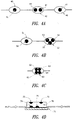
- FIG. 4A a Peltier-driven PCR configuration for a microfluidic cartridge with on-board printed reagents is shown. It is assumed (leftmost chamber 40) that reverse transcriptase is provided as a vitrified gel reagent spot (41) and that a target RNA extract is first treated to form a cDNA copy. dNTPs and necessary primers are also provided if needed.
- a "Peltier amplification chamber" the sample material is first used to dissolve two reagents spots, a TAQ polymerase reagent spot (43) and a spot containing primers (44).
- the TAQ polymerase spot may contain necessary cofactors such as added magnesium salt, dNTPs, KCl and a dry buffer. Thermocycling is then conducted in the single chamber while the sample remains stationary. After a requisite number of cycles, the products of the amplification reaction are moved to a detection chamber (46) where the liquid dissolves a vitrified probe in a reagent spot (47). After hybridization, any amplicons in the reaction mixture are detected, for example by fluoroscopy through an optical window mounted above the detection chamber.
- the detection chamber may include a separate heating block useful for ramping temperature in order to determining melting curves for FRET detection complexes, for example.
- a reagent spot (50) containing a reverse transcriptase optionally is again used (in reverse transcriptase chamber 51) to convert any RNA to DNA template suitable for PCR.
- RNA is of interest for example in a variety of microbiological or virological diagnostic assays.
- the sample is then propelled to the rightmost chamber (52), a combined Peltier amplification and detection chamber, which contains three vitrified gel reagent spots.
- the spots dissolve almost instantaneously and consist of a TAQ polymerase vitrified gel reagent spot (53) with cofactors, a primer reagent spot (54), and a probe reagent spot (55).
- the probe is necessarily in the amplification chamber. This is the case whether either Peltier or separate heating zones previously discussed ( FIG. 2 ) for amplification are physically separated.
- the amplification and detection chamber may thus be a dual use chamber and is optionally fitted both with a heating means for cycling temperature and a detection means for monitoring fluorescence, as illustrated here.
- FIG. 4C shows that the assembly of vitrified gel reagent spots in microfluidic chambers can be compacted, for example where all reagents for PCR and detection of an RNA target are printed in a single chamber. Shown are a reverse transcriptase reagent spot (61), a TAQ polymerase reagent spot (62), a primers reagent spot (63), and a probe reagent spot (64) in a PCR detection chamber (60). Clearly DNA targets may be detected without the use of reverse transcriptase.
- FIG. 4D The configuration of gel spots is shown in more detail in FIG. 4D , where a cross-sectional view is shown.
- the enzymes TAQ polymerase and reverse transcriptase are spotted (72,73) on the roof of the chamber (70), out of direct contact with the heating block (71), which may be activated before sample is introduced through the inlet at the left.
- Primers (74) and probes (75) are spotted on the floor of the chamber.
- the roof and floor substrate layers Prior to assembly, the roof and floor substrate layers are open and accessible for printing, so that the final assembly product contains the reagents inside the chamber.
- amorphous vitrified gel composites in the spotting matrix rapid dissolution is achieved in total reaction volumes typically less than 20 uL, where buffer and salt concentrations are adjusted to be optimal for each reaction.
- the heating block contacts the amplification chamber through a thin heat exchange membrane and quietly, promotes reagent mixing.
- reagents can be spotted in a single chamber or in multiple chambers.
- spot configurations may be employed. Spots may be placed side by side or separated so that some spots are on one substrate layer facing the chamber and other spots are on another substrate layer facing the chamber, mutatis mutandi.
- a separate detection chamber may be provided, and probe or probes spotted in the detection chamber.
- Both simplex and multiplex reactions may be performed.
- the probes are provided in asymmetric proportions, as is useful in asymmetric PCR.
- the forward and reverse probes may be mixed together and spotted individually, or they may be spotted separately. Because the spots gel rapidly, in some cases the spots may be stacked on each other or allowed to touch. Configurations for nested PCR are also contemplated using the flexibility inherent in the system. Both spotting geometries as illustrated in FIG. 3 and channel or chamber geometries as illustrated in FIG. 2 may be varied to meet application requirements.
- TAQ activity In order amplify a target nucleic acid sequence by PCR months after manufacture of a microfluidic device with on-board with reagents, an efficacious level of TAQ activity must be preserved during storage. Conditions for room temperature storage may be modified to prevent fluctuations in humidity by packaging the devices in sealed foil-lined bags with dessicant. After spotting the TAQ reagent in a buffered mixture with a glass lyoprotectant precursor and excipients onto the devices, the devices are sealed in the bags before full drying is achieved. At this stage the spots are gel-like in consistency. Following sealing in the bag, vitrification continues by a transfer of bound water from the reagent spot to the dessicant. By selection of a compatible glass/excipient composition, this method yields storage stable TAQ assembled in a self-contained microfluidic device which requires only addition of sample to run an assay.
- Trehalose is a disaccharide composed of two glucose molecules bound by an ⁇ , ⁇ -1,1 linkage. Since the reducing end of the glucosyl residues are connected with each other, trehalose has no reducing power. Trehalose is widely distributed in nature and protects organisms against various stresses, such as dryness, freezing, and osmopressure. Anhydrobiotic organisms such as brine shrimp and certain nematodes, which resist dessication, are able to tolerate the lack of water because of their high trehalose content; the trehalose playing a key role in stabilizing membranes and other macromolecular assemblies under extreme environmental conditions.
- Trehalose also has a higher glass transition temperature compared to other disaccharides and has a long history as a stabilizer in dessicated products (see for example Crowe JH et al, 1984, Preservation of membranes in anhydrobiotic organisms the role of trehalose, Science 223:701-703 ; US Pat. Nos. 4457916 , 4206200 , and 4762857 , and UK Patent GB 2009198 ), for which is believed to be superior to sucrose.
- Trehalose is widely believed to be superior to all other lyoprotectants ( Colaco C et al, 1992, Extraordinary stability of enzymes dried in trehalose: simplified molecular biology, Bio/Technology 10:1007-11 ).
- Melezitose ( ⁇ -D-Glucopyranosyl-[1 ⁇ 3]- ⁇ -D-Fructofuranosyl-[2 ⁇ 1]- ⁇ -D-Glucopyranoside) hydrate is trisaccharide comprised of 2 glucose molecules and 1 fructose molecule with a molecular weight of 504.44 Da in the dry state. It is produced by many plant sap eating insects, including aphids and whiteflies. Melezitose is beneficial to the insects, as it reduces osmotic stress by reducing intracellular water potential as a storage carbohydrate. It is also widely known to function as a cryoprotectant and is used for frozen storage of a wide variety of mammalian cells because of its low osmolarity. Hydrolysis releases glucose and turanose, but the trisaccharide itself is non-reducing and is relatively resistant to Maillard browning. The glass transition-temperature of melezitose is higher than that of disaccharides.
- T g of melezitose was obtained from " Mollmann, SH et al, 2006, The stability of insulin in solid formulations containing melezitose and starch. Drug Dev Indust Pharmacy 32:765-778 .
- Other values were obtained from Green JL and CA Angell, 1989, Phase relations and vitrification in saccharide-water solutions and the trehalose anomaly, J Phys Chem 93:2880-82 ; Kajiwara K and F Franks, 1997, Crystalline and amorphous phases in the binary system water-raffinose, J Chem Soc Faraday Trans 93:1779-1783 ; Slade L and H Levine. 1988.
- T g is initially low and the formulation is a liquid, but upon dessication, T g will increase and will approach a value where room temperature storage is in the form of an amorphous glass. During this process, it is desirable that crystallization of anhydrous sugar not occur.
- Co-solvent excipients are useful to prevent undesirable crystallization and to more selectively associate with the TAQ polymerase, as is determined by a process of trial and error.
- Formulation 1 consists of (as final concentrations in water) 1.5% melezitose hydrate, 0.005% Polyox WSR-301 (Amerchol Corp, Piscataway NY), 0.1 mg/mL BSA and 10 Units TAQ polymerase in an aqueous solution. Following preparation of the TAQ solution stock with stabilizers, the clear gel precursor solution was applied in 3 uL spots to the internal surfaces of a plastic microfluidic device or card. Primers and probes were stored separately. The spots were allowed to dry for about 10 minutes or less at controlled room temperature and the plastic devices were then sealed in air-tight pouches with dessicant sachets and stored at controlled room temperature.
- Polyox WSR-301 is a long-chain polyoxyethylene glycol (4 MDa molecular weight, also termed "PEG-90M"). Molecular biology grade water was used for all formulations. While bovine serum albumin is a preferred protein carrier, fish gelatin may also be used in the method. Betaine or lysine may also be used.
- Formulation 2 was compounded as 1.5% trehalose, 0.005% Polyol WSR-301, 0.1 mg/mL BSA and 10 Units TAQ polymerase.
- Formulation 3 contained 1.5% melezitose hydrate, 0.1% Ficoll® 400, 0.1 mg/mL BSA.
- Formulation 4 contained 1.5% trehalose, 0.1% Fluorosurfactant FC4430 (3M Corp), and 0.1 mg/mL BSA.
- Formulation 5 contained 1.5% trehalose, 0.1 % PEG8000, and 0.1 mg/mL BSA.
- Formulation 6 contained 1.5% trehalose, 0.1% Cellulose Gum 7LF, and 0.1 mg/mL BSA.
- Formulation 7 contained 1.5% lactitol, 0.005% Polyox WSR-301, and 0.1 mg/mL BSA. TAQ used in these experiments was EconoTaq® Plus (Lucigen Corp, Middleton WI) formulated at 10 U/uL.
- FIG. 8 A sample real time PCR amplification curve, comparing melezitose formulation 1 after extended dry storage and a fresh wet reaction is shown in FIG. 8 .
- the solid curve (81) is the activity of the dried TAQ reagent
- the dotted line curve (82) is the activity of the standard wet TAQ reaction mixture.
- FIG. 10 compares three formulations in amplifications with a different primer system.
- Formulations 10A, 10B and 10C are compared, where 10A is equivalent to Formulation 3 above, 10B is equivalent to Formulation 1 above, and 10C is equivalent to formulation 5 above.
- the formulation containing melezitose 1.5%/0.005% Polyox WSR-301/0.1 mg/mL BSA is again superior after dry storage by the method of sealing gel spots in gas-tight pouches with dessicant so that a gradual, progressive dewatering of the enzyme is achieved.
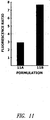
- FIG. 11 compares a formulation 11A containing trehalose with 0.1% PEG8000 with a formulation 11B containing trehalose with 0.1% Fluorosurfactant FC4430. Surprisingly, the fluorosurfactant had a remarkable effect on fluorescence yield in this 2 week dry storage data. It has further been found that dry PCR enhancers are of value in microfluidic PCR. Enhancers serve multiple functions, including improving performance of GC-rich DNA substrates as templates and increasing specificity and yield. Various amides, sulfoxides, sulfones, and diols are known to improve PCR yield and specificity, often dramatically better than betaine.
- DMSO tetramethylene sulfoxide
- formamide 2-pyrrolidone
- Some enhancers, such as n,n-dimethyformamide and DMSO have been used to reduce the temperatures required for thermocycling, which in saline may require heating the solution to near-boiling, with attendant issues of pressure and outgassing.
- enhancers that can be stored in dry form as a composite as a gel or glass are required here.
- Enhancers include glass formers of value as co-lyoprotectants. These enhancers include n-formyl morpholine (melting point 23 °C), ⁇ -valerolactam (2-piperidone, melting point 38-40°C) , ⁇ -caprolactam (melting point 69 - 70 °C), and 1,2-cyclopentanediol (melting point of 54-56 °C). PVP-10 is reported to have a glass transition temperature of 66 °C and PVP-40 a T g of 99 °C. Other glass formers of function in improving PCR include amino acids such as lysine, low molecular weight amides, carbohydrates such as glycogen and inulin, albumins (both HSA and BSA), and a range of sugars as earlier discussed.
- the reaction mixture was thermocycled using a Rotor Gene® Q (Qiagen Carlsbad CA) thermocycler with rtPCR monitoring. Real time PCR was monitored to obtain crossing threshold (Ct); i.e., the measurement the cycle number at which the increase in fluorescence (and therefore DNA) is exponential and the fluorescence yield (F STD ).
- Ct crossing threshold
- F STD fluorescence yield
- a melt curve was run on all successful amplifications to verify correct amplification of the target amplicon. Endpoint detection may also be used.
- a FRET melting curve may be included to verify the identity of the amplicon.
- the spots were allowed to gel at room temperature for about 10 min or less, and then placed in foil bags supplied by Vaporflex Preservation Packaging (LPS Industries, Moonachie, NJ).
- a volume of 15 uL containing target DNA and primers was used.
- the reconstituted volume was then amplified in the presence of primers and template in a Rotor Gene®.
- Ct and fluorescence yield (F X ) were measured and compared to the standard, wet mix (above). A fluorescence ratio was calculated (F X /F STD ) ⁇
- Polyol WRS301 also known as "PEG 90M", 1% viscosity 1650-550 cps, 4 MDa MW
- Fluorosurfactant FC-4430 was obtained from 3M Corp. Reagents were molecular biology grade where possible.
- a formulation for ambient dry storage of TAQ polymerase in a microfluidic device was prepared per Table III. Sugar was added from a 25% solution of melezitose hydrate in water. A stock containing 0.01% Polyol WRS301 as excipient was used in this example.
- the resulting clear gel composite precursor solution was spotted with a pipet onto a passivated plastic surface (PET) of a microfluidic device. Spots were allowed to set for about 10 min and then sealed in foil bags with dessicant. A chromogenic indicator was used to verify the integrity of the sealed bags during storage. The pouches were heat sealed before storage.
- PET passivated plastic surface
Landscapes
- Chemical & Material Sciences (AREA)
- Life Sciences & Earth Sciences (AREA)
- Organic Chemistry (AREA)
- Zoology (AREA)
- Wood Science & Technology (AREA)
- Proteomics, Peptides & Aminoacids (AREA)
- Health & Medical Sciences (AREA)
- Engineering & Computer Science (AREA)
- Analytical Chemistry (AREA)
- Chemical Kinetics & Catalysis (AREA)
- Molecular Biology (AREA)
- Bioinformatics & Cheminformatics (AREA)
- Immunology (AREA)
- Biotechnology (AREA)
- Biophysics (AREA)
- Physics & Mathematics (AREA)
- Biochemistry (AREA)
- Microbiology (AREA)
- General Engineering & Computer Science (AREA)
- General Health & Medical Sciences (AREA)
- Genetics & Genomics (AREA)
- Apparatus Associated With Microorganisms And Enzymes (AREA)
- Measuring Or Testing Involving Enzymes Or Micro-Organisms (AREA)
- Manufacture Of Macromolecular Shaped Articles (AREA)
Applications Claiming Priority (2)
| Application Number | Priority Date | Filing Date | Title |
|---|---|---|---|
| US18644209P | 2009-06-12 | 2009-06-12 | |
| PCT/US2010/038141 WO2010144683A2 (en) | 2009-06-12 | 2010-06-10 | Compositions and methods for dehydrated storage of on-board reagents in microfluidic devices |
Publications (2)
| Publication Number | Publication Date |
|---|---|
| EP2440672A2 EP2440672A2 (en) | 2012-04-18 |
| EP2440672B1 true EP2440672B1 (en) | 2016-03-30 |
Family
ID=42734808
Family Applications (1)
| Application Number | Title | Priority Date | Filing Date |
|---|---|---|---|
| EP10724663.9A Active EP2440672B1 (en) | 2009-06-12 | 2010-06-10 | Compositions and methods for dehydrated storage of on-board reagents in microfluidic devices |
Country Status (6)
| Country | Link |
|---|---|
| US (2) | US8921085B2 (https=) |
| EP (1) | EP2440672B1 (https=) |
| JP (2) | JP5953229B2 (https=) |
| CN (1) | CN102803507B (https=) |
| AU (1) | AU2010258716B2 (https=) |
| WO (1) | WO2010144683A2 (https=) |
Families Citing this family (41)
| Publication number | Priority date | Publication date | Assignee | Title |
|---|---|---|---|---|
| WO2010144683A2 (en) | 2009-06-12 | 2010-12-16 | Micronics, Inc. | Compositions and methods for dehydrated storage of on-board reagents in microfluidic devices |
| CA2786569C (en) | 2010-01-29 | 2019-04-09 | Perkinelmer Health Sciences, Inc. | Sample-to-answer microfluidic cartridge |
| WO2011116256A2 (en) * | 2010-03-18 | 2011-09-22 | The Regents Of The University Of Michigan | Multiphase microarrays and uses thereof |
| EP2582850B1 (en) | 2010-06-21 | 2016-11-09 | Life Technologies Corporation | Compositions, kits, and methods for synthesis and/or detection of nucleic acids |
| CA2824404C (en) * | 2011-01-06 | 2023-01-03 | Meso Scale Technologies, Llc | Assay cartridges for pcr analysis and methods of use thereof |
| US9075042B2 (en) * | 2012-05-15 | 2015-07-07 | Wellstat Diagnostics, Llc | Diagnostic systems and cartridges |
| AU2013334189B2 (en) | 2012-10-24 | 2018-08-02 | Genmark Diagnostics, Inc. | Integrated multiplex target analysis |
| US20140322706A1 (en) | 2012-10-24 | 2014-10-30 | Jon Faiz Kayyem | Integrated multipelx target analysis |
| JP6349327B2 (ja) * | 2012-12-17 | 2018-06-27 | レウコドゥックス,リミテッド | 化学的状態を判定するためのシステムおよび方法 |
| KR20150096788A (ko) | 2012-12-21 | 2015-08-25 | 마이크로닉스 인코포레이티드. | 마이크로 유체공학 용도를 위한 저탄성 막 |
| JP6498125B2 (ja) | 2012-12-21 | 2019-04-10 | マイクロニクス, インコーポレイテッド | 流体回路および関連する製造方法 |
| CN104919035B (zh) | 2012-12-21 | 2017-08-11 | 精密公司 | 便携式荧光检测系统和微测定盒 |
| KR101632886B1 (ko) | 2013-03-14 | 2016-06-23 | 지멘스 헬쓰케어 다이아그노스틱스 인크. | 밀봉된 온-보드 시약을 갖는 미세유체 칩 |
| JP6351702B2 (ja) | 2013-03-15 | 2018-07-04 | ジェンマーク ダイアグノスティクス, インコーポレイテッド | 変形可能流体容器を操作するためのシステム、方法、および装置 |
| WO2014182844A1 (en) | 2013-05-07 | 2014-11-13 | Micronics, Inc. | Microfluidic devices and methods for performing serum separation and blood cross-matching |
| EP2994543B1 (en) | 2013-05-07 | 2018-08-15 | Micronics, Inc. | Device for preparation and analysis of nucleic acids |
| CA2911303C (en) | 2013-05-07 | 2021-02-16 | Micronics, Inc. | Methods for preparation of nucleic acid-containing samples using clay minerals and alkaline solutions |
| GB2516669B (en) * | 2013-07-29 | 2015-09-09 | Atlas Genetics Ltd | A method for processing a liquid sample in a fluidic cartridge |
| USD881409S1 (en) | 2013-10-24 | 2020-04-14 | Genmark Diagnostics, Inc. | Biochip cartridge |
| US9498778B2 (en) | 2014-11-11 | 2016-11-22 | Genmark Diagnostics, Inc. | Instrument for processing cartridge for performing assays in a closed sample preparation and reaction system |
| US9937239B2 (en) * | 2014-05-21 | 2018-04-10 | The Johns Hopkins University | Preservation and reconstitution of cell-free protein expression systems |
| DK3152291T3 (da) * | 2014-06-09 | 2021-10-18 | Somnio Global Holdings Llc | Fremgangsmåder og indretninger til kapillar-understøttet vitrificering |
| KR20170016915A (ko) | 2014-06-11 | 2017-02-14 | 마이크로닉스 인코포레이티드. | 핵산의 분석을 위한 통합 검정 대조군을 갖는 마이크로 유체 공학적 카트리지 및 장치 |
| EP3015553A1 (de) * | 2014-10-30 | 2016-05-04 | Biotecon Diagnostics GmbH | Stabilisierte Reaktionsmischung |
| US10005080B2 (en) | 2014-11-11 | 2018-06-26 | Genmark Diagnostics, Inc. | Instrument and cartridge for performing assays in a closed sample preparation and reaction system employing electrowetting fluid manipulation |
| US9598722B2 (en) | 2014-11-11 | 2017-03-21 | Genmark Diagnostics, Inc. | Cartridge for performing assays in a closed sample preparation and reaction system |
| US10227634B2 (en) * | 2015-04-15 | 2019-03-12 | University Of Washington | Isotachophoresis enhanced isothermal nucleic acid amplification |
| JP6820865B2 (ja) | 2015-04-29 | 2021-01-27 | ペルキネルマー ヘルス サイエンシーズ, インコーポレイテッド | 試料収集および送達装置 |
| US10124340B2 (en) | 2015-12-08 | 2018-11-13 | Electronics And Telecommunications Research Institute | Reagent storage device and bio-reaction apparatus including the same |
| JP6631420B2 (ja) | 2016-06-28 | 2020-01-15 | 株式会社デンソー | 光センサ |
| NZ751531A (en) * | 2016-09-30 | 2023-02-24 | Tel Array Diagnostics Inc | Microfluidic device |
| GB201704760D0 (en) | 2017-01-05 | 2017-05-10 | Illumina Inc | Reagent nozzle sipper mixing system and method |
| CN112041659A (zh) * | 2018-02-06 | 2020-12-04 | 瓦罗贝克两合公司 | 微流体装置、系统、基础设施、其用途以及使用其用于基因工程改造的方法 |
| CN109673515A (zh) * | 2019-02-13 | 2019-04-26 | 广西壮族自治区药用植物园 | 羊齿天门冬超低温培养方法 |
| CN109792954A (zh) * | 2019-02-13 | 2019-05-24 | 广西壮族自治区药用植物园 | 石刁柏超低温保存培养方法 |
| CN109644874A (zh) * | 2019-02-13 | 2019-04-19 | 广西壮族自治区药用植物园 | 绣线菊超低温保存培养方法 |
| US20220193678A1 (en) * | 2019-04-08 | 2022-06-23 | Technion Research And Development Foundation, Ltd. | Multiplexed array of nanoliter droplet array device |
| US11856947B2 (en) | 2020-02-17 | 2024-01-02 | Cook Medical Technologies Llc | System for automated permeation of a biological material and method of using same |
| JP2022060807A (ja) * | 2020-10-05 | 2022-04-15 | キヤノンメディカルシステムズ株式会社 | 乾燥試薬、試薬キット、乾燥試薬の製造方法、分析方法及び核酸増幅方法 |
| WO2023113787A1 (en) * | 2021-12-15 | 2023-06-22 | Hewlett-Packard Development Company, L.P. | Microfluidic devices with dehydrated reagents |
| WO2025137109A1 (en) * | 2023-12-20 | 2025-06-26 | Abbott Point Of Care Inc. | Whole blood cmp in a dmf device without dilution |
Family Cites Families (41)
| Publication number | Priority date | Publication date | Assignee | Title |
|---|---|---|---|---|
| DE2748132A1 (de) | 1977-10-27 | 1979-05-03 | Behringwerke Ag | Stabilisator fuer polysaccharid |
| US4457916A (en) | 1982-08-31 | 1984-07-03 | Asahi Kasei Kogyo Kabushiki Kaisha | Method for stabilizing Tumor Necrosis Factor and a stable aqueous solution or powder containing the same |
| JPH0779694B2 (ja) | 1985-07-09 | 1995-08-30 | カドラント バイオリソ−シズ リミテツド | 蛋白質および同類品の保護 |
| US4762857A (en) | 1986-05-30 | 1988-08-09 | E. I. Du Pont De Nemours And Company | Trehalose as stabilizer and tableting excipient |
| US6127155A (en) | 1986-08-22 | 2000-10-03 | Roche Molecular Systems, Inc. | Stabilized thermostable nucleic acid polymerase compositions containing non-ionic polymeric detergents |
| GB8903593D0 (en) | 1989-02-16 | 1989-04-05 | Pafra Ltd | Storage of materials |
| US5234809A (en) | 1989-03-23 | 1993-08-10 | Akzo N.V. | Process for isolating nucleic acid |
| GB9010742D0 (en) * | 1990-05-14 | 1990-07-04 | Quadrant Bioresources Ltd | Stabilization of biological macromolecular substances |
| US5200399A (en) | 1990-09-14 | 1993-04-06 | Boyce Thompson Institute For Plant Research, Inc. | Method of protecting biological materials from destructive reactions in the dry state |
| US5955448A (en) | 1994-08-19 | 1999-09-21 | Quadrant Holdings Cambridge Limited | Method for stabilization of biological substances during drying and subsequent storage and compositions thereof |
| US5565318A (en) | 1994-09-02 | 1996-10-15 | Pharmacia Biotech, Inc. | Room temperature stable reagent semi-spheres |
| US5593824A (en) | 1994-09-02 | 1997-01-14 | Pharmacia Biotech, Inc. | Biological reagent spheres |
| GB9508691D0 (en) | 1995-04-28 | 1995-06-14 | Pafra Ltd | Stable compositions |
| US6825047B1 (en) * | 1996-04-03 | 2004-11-30 | Applera Corporation | Device and method for multiple analyte detection |
| US5876992A (en) | 1996-07-03 | 1999-03-02 | Molecular Biology Resources, Inc. | Method and formulation for stabilization of enzymes |
| US5861251A (en) | 1996-10-15 | 1999-01-19 | Bioneer Corporation | Lyophilized reagent for polymerase chain reaction |
| US6021533A (en) * | 1997-08-25 | 2000-02-08 | Hill-Rom, Inc. | Mattress apparatus having a siderail down sensor |
| US6153412A (en) | 1998-12-07 | 2000-11-28 | Bioneer Corporation | Lyophilized reagent for polymerase chain reaction |
| ES2180416B1 (es) * | 2001-03-12 | 2004-06-01 | BIOTOOLS BIOTECHNOLOGICAL & MEDICAL LABORATORIES, S.A. | Procedimiento para la preparacion de mezclas de reaccion estabilizadas, total o parcialmente desecadas, que comprenden, al menos, una enzima, mezclas de reaccion y kits que las contienen. |
| US20020173016A1 (en) | 2001-03-27 | 2002-11-21 | Helmut Wurst | High-throughput nucleic acid polymerase devices and methods for their use |
| US20030017567A1 (en) * | 2001-04-24 | 2003-01-23 | 3M Innovative Properties Company | Biological sample processing methods and compositions that include surfactants |
| US6830535B2 (en) | 2002-09-11 | 2004-12-14 | Daimlerchrysler Corporation | Fluid lock double displacement engine |
| US7435381B2 (en) * | 2003-05-29 | 2008-10-14 | Siemens Healthcare Diagnostics Inc. | Packaging of microfluidic devices |
| JP4758891B2 (ja) | 2003-06-06 | 2011-08-31 | マイクロニクス, インコーポレイテッド | 微小流体デバイス上の加熱、冷却および熱サイクリングのためのシステムおよび方法 |
| GB0327094D0 (en) * | 2003-11-21 | 2003-12-24 | Inverness Medical Switzerland | Laminated device |
| US20050142571A1 (en) | 2003-12-24 | 2005-06-30 | 3M Innovative Properties Company | Methods for nucleic acid isolation and kits using solid phase material |
| US7727710B2 (en) * | 2003-12-24 | 2010-06-01 | 3M Innovative Properties Company | Materials, methods, and kits for reducing nonspecific binding of molecules to a surface |
| FI20040768A0 (fi) * | 2004-06-04 | 2004-06-04 | Teemu Korpimaeki | Menetelmä määritysreagenssien stabiloimiseksi, stabilisoituja määritysreagensseja sisältävä reagenssisäiliö ja sen käyttö |
| EP1796838B1 (de) | 2004-10-15 | 2014-10-08 | Boehringer Ingelheim Vetmedica GmbH | Verfahren zur durchführung einer elektrochemischen messung an einer flüssigen messprobe in einer über leitungen zugänglichen messkammer |
| US7618777B2 (en) | 2005-03-16 | 2009-11-17 | Agilent Technologies, Inc. | Composition and method for array hybridization |
| US7763453B2 (en) | 2005-11-30 | 2010-07-27 | Micronics, Inc. | Microfluidic mixing and analytic apparatus |
| US7807354B2 (en) * | 2005-12-28 | 2010-10-05 | Agilent Technologies, Inc. | Low volume hybridization |
| ES2393758T3 (es) * | 2006-03-15 | 2012-12-27 | Micronics, Inc. | Ensayos integrados de ácidos nucleicos |
| EP2210955A3 (en) * | 2006-05-23 | 2010-09-15 | Molecular Detection, Inc. | Ambient temperature stable kits for molecular diagnostics |
| JP5479895B2 (ja) * | 2006-07-25 | 2014-04-23 | アジレント・テクノロジーズ・インク | Dnaポリメラーゼの保存及び使用のための両性イオン洗剤 |
| JP5989957B2 (ja) * | 2006-09-18 | 2016-09-07 | ジーイー・ヘルスケア・バイオサイエンス・コーポレイション | ガラス化生物試薬の調製 |
| WO2008147382A1 (en) * | 2006-09-27 | 2008-12-04 | Micronics, Inc. | Integrated microfluidic assay devices and methods |
| US20080155524A1 (en) | 2006-12-26 | 2008-06-26 | Fuja Shone | Firmware Updating and Extending Method for Application Specific Integrated Circuit |
| GB0711683D0 (en) * | 2007-06-16 | 2007-07-25 | Enigma Diagnostics Ltd | Compositions |
| JP5721704B2 (ja) | 2009-06-12 | 2015-05-20 | マイクロニクス, インコーポレイテッド | マイクロ流体デバイス内のtaqポリメラーゼを乾燥保存するための再水和可能なマトリックス |
| WO2010144683A2 (en) | 2009-06-12 | 2010-12-16 | Micronics, Inc. | Compositions and methods for dehydrated storage of on-board reagents in microfluidic devices |
-
2010
- 2010-06-10 WO PCT/US2010/038141 patent/WO2010144683A2/en not_active Ceased
- 2010-06-10 EP EP10724663.9A patent/EP2440672B1/en active Active
- 2010-06-10 AU AU2010258716A patent/AU2010258716B2/en active Active
- 2010-06-10 CN CN201080029480.4A patent/CN102803507B/zh active Active
- 2010-06-10 JP JP2012515132A patent/JP5953229B2/ja active Active
-
2011
- 2011-12-12 US US13/323,684 patent/US8921085B2/en active Active
-
2014
- 2014-11-26 US US14/554,720 patent/US9938571B2/en active Active
-
2016
- 2016-04-12 JP JP2016079321A patent/JP6097862B2/ja active Active
Also Published As
| Publication number | Publication date |
|---|---|
| US8921085B2 (en) | 2014-12-30 |
| WO2010144683A3 (en) | 2011-02-03 |
| JP2016127869A (ja) | 2016-07-14 |
| JP6097862B2 (ja) | 2017-03-15 |
| CN102803507A (zh) | 2012-11-28 |
| CN102803507B (zh) | 2016-05-25 |
| US20120156750A1 (en) | 2012-06-21 |
| JP5953229B2 (ja) | 2016-07-20 |
| AU2010258716B2 (en) | 2015-11-12 |
| US20150152481A1 (en) | 2015-06-04 |
| JP2012529888A (ja) | 2012-11-29 |
| US9938571B2 (en) | 2018-04-10 |
| WO2010144683A2 (en) | 2010-12-16 |
| AU2010258716A1 (en) | 2012-01-12 |
| EP2440672A2 (en) | 2012-04-18 |
Similar Documents
| Publication | Publication Date | Title |
|---|---|---|
| EP2440672B1 (en) | Compositions and methods for dehydrated storage of on-board reagents in microfluidic devices | |
| AU2010258715B2 (en) | Rehydratable matrices for dry storage of TAQ polymerase in a microfluidic device | |
| JP5989957B2 (ja) | ガラス化生物試薬の調製 | |
| US10907201B2 (en) | Direct nucleic acid amplification kit, reagent and method | |
| US8911938B2 (en) | Reaction chamber having pre-stored reagents | |
| AU2005258951B2 (en) | Method for stabilising reagents which are useful for nucleic acid amplification | |
| US20100015628A1 (en) | Ambient temperature stable chemical/biological reagents on membranes or filters | |
| US20130280695A1 (en) | Method, device and test kit for molecular-biological reactions | |
| EP3342851B1 (en) | Nucleic acid detection device and nucleic acid detection method | |
| CN101516337A (zh) | 用玻璃覆盖的生物学试剂的制备 |
Legal Events
| Date | Code | Title | Description |
|---|---|---|---|
| PUAI | Public reference made under article 153(3) epc to a published international application that has entered the european phase |
Free format text: ORIGINAL CODE: 0009012 |
|
| 17P | Request for examination filed |
Effective date: 20120110 |
|
| AK | Designated contracting states |
Kind code of ref document: A2 Designated state(s): AL AT BE BG CH CY CZ DE DK EE ES FI FR GB GR HR HU IE IS IT LI LT LU LV MC MK MT NL NO PL PT RO SE SI SK SM TR |
|
| DAX | Request for extension of the european patent (deleted) | ||
| 17Q | First examination report despatched |
Effective date: 20130124 |
|
| GRAP | Despatch of communication of intention to grant a patent |
Free format text: ORIGINAL CODE: EPIDOSNIGR1 |
|
| INTG | Intention to grant announced |
Effective date: 20150914 |
|
| GRAS | Grant fee paid |
Free format text: ORIGINAL CODE: EPIDOSNIGR3 |
|
| GRAA | (expected) grant |
Free format text: ORIGINAL CODE: 0009210 |
|
| AK | Designated contracting states |
Kind code of ref document: B1 Designated state(s): AL AT BE BG CH CY CZ DE DK EE ES FI FR GB GR HR HU IE IS IT LI LT LU LV MC MK MT NL NO PL PT RO SE SI SK SM TR |
|
| REG | Reference to a national code |
Ref country code: GB Ref legal event code: FG4D |
|
| REG | Reference to a national code |
Ref country code: CH Ref legal event code: EP |
|
| REG | Reference to a national code |
Ref country code: AT Ref legal event code: REF Ref document number: 785459 Country of ref document: AT Kind code of ref document: T Effective date: 20160415 |
|
| REG | Reference to a national code |
Ref country code: IE Ref legal event code: FG4D |
|
| REG | Reference to a national code |
Ref country code: DE Ref legal event code: R096 Ref document number: 602010031704 Country of ref document: DE |
|
| REG | Reference to a national code |
Ref country code: FR Ref legal event code: PLFP Year of fee payment: 7 |
|
| REG | Reference to a national code |
Ref country code: NL Ref legal event code: FP |
|
| REG | Reference to a national code |
Ref country code: LT Ref legal event code: MG4D |
|
| PG25 | Lapsed in a contracting state [announced via postgrant information from national office to epo] |
Ref country code: GR Free format text: LAPSE BECAUSE OF FAILURE TO SUBMIT A TRANSLATION OF THE DESCRIPTION OR TO PAY THE FEE WITHIN THE PRESCRIBED TIME-LIMIT Effective date: 20160701 Ref country code: FI Free format text: LAPSE BECAUSE OF FAILURE TO SUBMIT A TRANSLATION OF THE DESCRIPTION OR TO PAY THE FEE WITHIN THE PRESCRIBED TIME-LIMIT Effective date: 20160330 Ref country code: HR Free format text: LAPSE BECAUSE OF FAILURE TO SUBMIT A TRANSLATION OF THE DESCRIPTION OR TO PAY THE FEE WITHIN THE PRESCRIBED TIME-LIMIT Effective date: 20160330 Ref country code: NO Free format text: LAPSE BECAUSE OF FAILURE TO SUBMIT A TRANSLATION OF THE DESCRIPTION OR TO PAY THE FEE WITHIN THE PRESCRIBED TIME-LIMIT Effective date: 20160630 |
|
| REG | Reference to a national code |
Ref country code: AT Ref legal event code: MK05 Ref document number: 785459 Country of ref document: AT Kind code of ref document: T Effective date: 20160330 |
|
| PG25 | Lapsed in a contracting state [announced via postgrant information from national office to epo] |
Ref country code: SE Free format text: LAPSE BECAUSE OF FAILURE TO SUBMIT A TRANSLATION OF THE DESCRIPTION OR TO PAY THE FEE WITHIN THE PRESCRIBED TIME-LIMIT Effective date: 20160330 Ref country code: LV Free format text: LAPSE BECAUSE OF FAILURE TO SUBMIT A TRANSLATION OF THE DESCRIPTION OR TO PAY THE FEE WITHIN THE PRESCRIBED TIME-LIMIT Effective date: 20160330 Ref country code: LT Free format text: LAPSE BECAUSE OF FAILURE TO SUBMIT A TRANSLATION OF THE DESCRIPTION OR TO PAY THE FEE WITHIN THE PRESCRIBED TIME-LIMIT Effective date: 20160330 |
|
| PG25 | Lapsed in a contracting state [announced via postgrant information from national office to epo] |
Ref country code: PL Free format text: LAPSE BECAUSE OF FAILURE TO SUBMIT A TRANSLATION OF THE DESCRIPTION OR TO PAY THE FEE WITHIN THE PRESCRIBED TIME-LIMIT Effective date: 20160330 Ref country code: EE Free format text: LAPSE BECAUSE OF FAILURE TO SUBMIT A TRANSLATION OF THE DESCRIPTION OR TO PAY THE FEE WITHIN THE PRESCRIBED TIME-LIMIT Effective date: 20160330 Ref country code: IS Free format text: LAPSE BECAUSE OF FAILURE TO SUBMIT A TRANSLATION OF THE DESCRIPTION OR TO PAY THE FEE WITHIN THE PRESCRIBED TIME-LIMIT Effective date: 20160730 |
|
| PG25 | Lapsed in a contracting state [announced via postgrant information from national office to epo] |
Ref country code: AT Free format text: LAPSE BECAUSE OF FAILURE TO SUBMIT A TRANSLATION OF THE DESCRIPTION OR TO PAY THE FEE WITHIN THE PRESCRIBED TIME-LIMIT Effective date: 20160330 Ref country code: SM Free format text: LAPSE BECAUSE OF FAILURE TO SUBMIT A TRANSLATION OF THE DESCRIPTION OR TO PAY THE FEE WITHIN THE PRESCRIBED TIME-LIMIT Effective date: 20160330 Ref country code: CZ Free format text: LAPSE BECAUSE OF FAILURE TO SUBMIT A TRANSLATION OF THE DESCRIPTION OR TO PAY THE FEE WITHIN THE PRESCRIBED TIME-LIMIT Effective date: 20160330 Ref country code: SK Free format text: LAPSE BECAUSE OF FAILURE TO SUBMIT A TRANSLATION OF THE DESCRIPTION OR TO PAY THE FEE WITHIN THE PRESCRIBED TIME-LIMIT Effective date: 20160330 Ref country code: PT Free format text: LAPSE BECAUSE OF FAILURE TO SUBMIT A TRANSLATION OF THE DESCRIPTION OR TO PAY THE FEE WITHIN THE PRESCRIBED TIME-LIMIT Effective date: 20160801 Ref country code: RO Free format text: LAPSE BECAUSE OF FAILURE TO SUBMIT A TRANSLATION OF THE DESCRIPTION OR TO PAY THE FEE WITHIN THE PRESCRIBED TIME-LIMIT Effective date: 20160330 Ref country code: ES Free format text: LAPSE BECAUSE OF FAILURE TO SUBMIT A TRANSLATION OF THE DESCRIPTION OR TO PAY THE FEE WITHIN THE PRESCRIBED TIME-LIMIT Effective date: 20160330 |
|
| PG25 | Lapsed in a contracting state [announced via postgrant information from national office to epo] |
Ref country code: BE Free format text: LAPSE BECAUSE OF FAILURE TO SUBMIT A TRANSLATION OF THE DESCRIPTION OR TO PAY THE FEE WITHIN THE PRESCRIBED TIME-LIMIT Effective date: 20160330 Ref country code: IT Free format text: LAPSE BECAUSE OF FAILURE TO SUBMIT A TRANSLATION OF THE DESCRIPTION OR TO PAY THE FEE WITHIN THE PRESCRIBED TIME-LIMIT Effective date: 20160330 |
|
| REG | Reference to a national code |
Ref country code: DE Ref legal event code: R097 Ref document number: 602010031704 Country of ref document: DE |
|
| PG25 | Lapsed in a contracting state [announced via postgrant information from national office to epo] |
Ref country code: DK Free format text: LAPSE BECAUSE OF FAILURE TO SUBMIT A TRANSLATION OF THE DESCRIPTION OR TO PAY THE FEE WITHIN THE PRESCRIBED TIME-LIMIT Effective date: 20160330 Ref country code: MC Free format text: LAPSE BECAUSE OF FAILURE TO SUBMIT A TRANSLATION OF THE DESCRIPTION OR TO PAY THE FEE WITHIN THE PRESCRIBED TIME-LIMIT Effective date: 20160330 |
|
| REG | Reference to a national code |
Ref country code: CH Ref legal event code: PL |
|
| PLBE | No opposition filed within time limit |
Free format text: ORIGINAL CODE: 0009261 |
|
| STAA | Information on the status of an ep patent application or granted ep patent |
Free format text: STATUS: NO OPPOSITION FILED WITHIN TIME LIMIT |
|
| 26N | No opposition filed |
Effective date: 20170103 |
|
| REG | Reference to a national code |
Ref country code: IE Ref legal event code: MM4A |
|
| PG25 | Lapsed in a contracting state [announced via postgrant information from national office to epo] |
Ref country code: CH Free format text: LAPSE BECAUSE OF NON-PAYMENT OF DUE FEES Effective date: 20160630 Ref country code: LI Free format text: LAPSE BECAUSE OF NON-PAYMENT OF DUE FEES Effective date: 20160630 |
|
| PG25 | Lapsed in a contracting state [announced via postgrant information from national office to epo] |
Ref country code: IE Free format text: LAPSE BECAUSE OF NON-PAYMENT OF DUE FEES Effective date: 20160610 Ref country code: SI Free format text: LAPSE BECAUSE OF FAILURE TO SUBMIT A TRANSLATION OF THE DESCRIPTION OR TO PAY THE FEE WITHIN THE PRESCRIBED TIME-LIMIT Effective date: 20160330 |
|
| REG | Reference to a national code |
Ref country code: FR Ref legal event code: PLFP Year of fee payment: 8 |
|
| PG25 | Lapsed in a contracting state [announced via postgrant information from national office to epo] |
Ref country code: CY Free format text: LAPSE BECAUSE OF FAILURE TO SUBMIT A TRANSLATION OF THE DESCRIPTION OR TO PAY THE FEE WITHIN THE PRESCRIBED TIME-LIMIT Effective date: 20160330 Ref country code: HU Free format text: LAPSE BECAUSE OF FAILURE TO SUBMIT A TRANSLATION OF THE DESCRIPTION OR TO PAY THE FEE WITHIN THE PRESCRIBED TIME-LIMIT; INVALID AB INITIO Effective date: 20100610 |
|
| REG | Reference to a national code |
Ref country code: FR Ref legal event code: PLFP Year of fee payment: 9 |
|
| PG25 | Lapsed in a contracting state [announced via postgrant information from national office to epo] |
Ref country code: MK Free format text: LAPSE BECAUSE OF FAILURE TO SUBMIT A TRANSLATION OF THE DESCRIPTION OR TO PAY THE FEE WITHIN THE PRESCRIBED TIME-LIMIT Effective date: 20160330 Ref country code: MT Free format text: LAPSE BECAUSE OF NON-PAYMENT OF DUE FEES Effective date: 20160630 Ref country code: LU Free format text: LAPSE BECAUSE OF NON-PAYMENT OF DUE FEES Effective date: 20160610 Ref country code: TR Free format text: LAPSE BECAUSE OF FAILURE TO SUBMIT A TRANSLATION OF THE DESCRIPTION OR TO PAY THE FEE WITHIN THE PRESCRIBED TIME-LIMIT Effective date: 20160330 |
|
| PG25 | Lapsed in a contracting state [announced via postgrant information from national office to epo] |
Ref country code: BG Free format text: LAPSE BECAUSE OF FAILURE TO SUBMIT A TRANSLATION OF THE DESCRIPTION OR TO PAY THE FEE WITHIN THE PRESCRIBED TIME-LIMIT Effective date: 20160330 |
|
| PG25 | Lapsed in a contracting state [announced via postgrant information from national office to epo] |
Ref country code: AL Free format text: LAPSE BECAUSE OF FAILURE TO SUBMIT A TRANSLATION OF THE DESCRIPTION OR TO PAY THE FEE WITHIN THE PRESCRIBED TIME-LIMIT Effective date: 20160330 |
|
| REG | Reference to a national code |
Ref country code: DE Ref legal event code: R082 Ref document number: 602010031704 Country of ref document: DE Representative=s name: GRUENECKER PATENT- UND RECHTSANWAELTE PARTG MB, DE Ref country code: DE Ref legal event code: R081 Ref document number: 602010031704 Country of ref document: DE Owner name: PERKINELMER HEALTH SCIENCES, INC. (N. D. GES. , US Free format text: FORMER OWNER: MICRONICS, INC., REDMOND, WASH., US |
|
| REG | Reference to a national code |
Ref country code: NL Ref legal event code: PD Owner name: PERKINELMER HEALTH SCIENCES, INC.; US Free format text: DETAILS ASSIGNMENT: CHANGE OF OWNER(S), ASSIGNMENT; FORMER OWNER NAME: MICRONICS, INC. Effective date: 20190715 |
|
| PGFP | Annual fee paid to national office [announced via postgrant information from national office to epo] |
Ref country code: DE Payment date: 20250627 Year of fee payment: 16 |
|
| PGFP | Annual fee paid to national office [announced via postgrant information from national office to epo] |
Ref country code: GB Payment date: 20250627 Year of fee payment: 16 |
|
| PGFP | Annual fee paid to national office [announced via postgrant information from national office to epo] |
Ref country code: NL Payment date: 20250626 Year of fee payment: 16 |
|
| PGFP | Annual fee paid to national office [announced via postgrant information from national office to epo] |
Ref country code: FR Payment date: 20250625 Year of fee payment: 16 |