EP2433439B1 - Gleichzeitiges zugreifen und erfassen bei drahtlosen lokalen netzwerken - Google Patents
Gleichzeitiges zugreifen und erfassen bei drahtlosen lokalen netzwerken Download PDFInfo
- Publication number
- EP2433439B1 EP2433439B1 EP10717998.8A EP10717998A EP2433439B1 EP 2433439 B1 EP2433439 B1 EP 2433439B1 EP 10717998 A EP10717998 A EP 10717998A EP 2433439 B1 EP2433439 B1 EP 2433439B1
- Authority
- EP
- European Patent Office
- Prior art keywords
- wireless
- sensor
- functionality
- local area
- area network
- Prior art date
- Legal status (The legal status is an assumption and is not a legal conclusion. Google has not performed a legal analysis and makes no representation as to the accuracy of the status listed.)
- Active
Links
Images




Classifications
-
- H—ELECTRICITY
- H04—ELECTRIC COMMUNICATION TECHNIQUE
- H04W—WIRELESS COMMUNICATION NETWORKS
- H04W12/00—Security arrangements; Authentication; Protecting privacy or anonymity
- H04W12/12—Detection or prevention of fraud
-
- H—ELECTRICITY
- H04—ELECTRIC COMMUNICATION TECHNIQUE
- H04W—WIRELESS COMMUNICATION NETWORKS
- H04W12/00—Security arrangements; Authentication; Protecting privacy or anonymity
- H04W12/12—Detection or prevention of fraud
- H04W12/121—Wireless intrusion detection systems [WIDS]; Wireless intrusion prevention systems [WIPS]
- H04W12/122—Counter-measures against attacks; Protection against rogue devices
-
- H—ELECTRICITY
- H04—ELECTRIC COMMUNICATION TECHNIQUE
- H04L—TRANSMISSION OF DIGITAL INFORMATION, e.g. TELEGRAPHIC COMMUNICATION
- H04L63/00—Network architectures or network communication protocols for network security
- H04L63/14—Network architectures or network communication protocols for network security for detecting or protecting against malicious traffic
-
- H—ELECTRICITY
- H04—ELECTRIC COMMUNICATION TECHNIQUE
- H04L—TRANSMISSION OF DIGITAL INFORMATION, e.g. TELEGRAPHIC COMMUNICATION
- H04L63/00—Network architectures or network communication protocols for network security
- H04L63/14—Network architectures or network communication protocols for network security for detecting or protecting against malicious traffic
- H04L63/1408—Network architectures or network communication protocols for network security for detecting or protecting against malicious traffic by monitoring network traffic
-
- H—ELECTRICITY
- H04—ELECTRIC COMMUNICATION TECHNIQUE
- H04W—WIRELESS COMMUNICATION NETWORKS
- H04W12/00—Security arrangements; Authentication; Protecting privacy or anonymity
- H04W12/60—Context-dependent security
- H04W12/63—Location-dependent; Proximity-dependent
Definitions
- the present invention relates generally to wireless networking. More particularly, the present invention relates to systems and methods for concurrent wireless local area network (WLAN) access and sensing, such as, for example combining functionality of wireless access points (APs) and wireless intrusion prevention/detection in a single device.
- WLAN wireless local area network
- WLAN networks are defined by various IEEE specifications, such as IEEE 802.11 protocols. Because WLAN networks are open through radio frequency (RF) transmission, there is a recognized need for wireless security and for an associated system to provide security, such as a Wireless Intrusion Prevention System (WIPS), a Wireless Intrusion Detection Systems (WIDS), and the like.
- RF radio frequency
- a dedicated wireless security system typically includes distributed wireless sensors that scan channels passively and report their events and statistics to a central server.
- the server analyzes information from the sensors and generates alarms in response to attacks, events, and policy violations.
- the server also provides a centralized mechanism to administer and configure the remote sensors as well as provide a central repository for historical wireless data.
- an overlaid wireless security system that it provides superior visibility across the RF band as well as enhanced security due to the fact that it is scanning for and responding to threats on a 24x7 basis. Further, decoupling the WIPS from the WLAN infrastructure allows for a WLAN vendor agnostic monitoring solution. Relying on infrastructure Access Points (AP) for wireless sensor data typically results in reduced visibility on channels that the AP is not operating on. Security performance degrades as the load on the AP is increased.
- AP infrastructure Access Points
- the disadvantage of the overlaid model is a higher cost associated with deploying and managing two separate systems - the WLAN infrastructure and an overlaid security system. It would be advantageous to combine wireless security functionality with WLAN infrastructure while avoiding the performance issues and limitations with the integrated solution.
- the present invention relates to systems and methods for concurrent wireless local area network (WLAN) access and sensing, such as, for example combining functionality of wireless access points (APs) and wireless intrusion prevention/detection in a single device.
- WLAN wireless local area network
- the present invention combines WLAN infrastructure and wireless security without sacrificing the 24x7 dedicated security and performance monitoring available from the overlaid systems while reducing the deployment cost by sharing common hardware platforms for APs and sensors.
- the present invention includes a common radio platform equipped with more than one WLAN radio and a unified management system.
- the present invention relates to systems and methods for concurrent wireless local area network (WLAN) access and sensing according to the independent claims. Preferred embodiments may be taken from the dependent claims.
- WLAN wireless local area network
- the present invention relates to systems and methods for concurrent wireless local area network (WLAN) access and sensing, such as, for example combining functionality of wireless access points (APs) and wireless intrusion prevention/detection in a single device.
- WLAN wireless local area network
- the present invention combines WLAN infrastructure and wireless security without sacrificing the 24x7 dedicated security and performance monitoring available from the overlaid systems while reducing the deployment cost by sharing common hardware platforms for APs and sensors.
- the present invention includes a common radio platform equipped with more than one WLAN radio and a unified management system.
- IDS intrusion detection system
- packets pass through four detections systems: signature-based testing, protocol-based testing, anomaly-based testing, and policy deviation-based testing; other embodiments can use one or more of these tests, or other tests, in varying combinations.
- a network diagram illustrates a typical model for an overlaid wireless security system on top of existing WLAN infrastructure.
- the existing WLAN infrastructure includes wireless access points 602 distributed throughout a diverse geography.
- the access points 602 can be interconnected through a network 604, e.g. the access points 602 can connect to the network 604 through a wired connection (i.e., Ethernet) or through a wireless backhaul connection.
- client devices 606 associate and communicate with and through the access points 602.
- the existing WLAN infrastructure can include a WLAN management system 608 connected through the network 604 to the various access points 602.
- the WLAN management system 608 can provide management and control of the wireless network including setup, monitoring, troubleshooting, and the like.
- the overlaid wireless security system can include a WIDS and/or WIPS system with distributed sensors 610 deployed in proximity of the distributed access points 602.
- the sensors 610 communicate with a WIPS/WIDS server 612 using the network 604 similar to the APs 602 communicating with wireless switches, controllers and the WLAN management system 608. Note that there is no requirement for common hardware between the AP 602 and the sensor 610 in this overlaid architecture. As long as the sensors 610 and APs 602 are IEEE 802.11 standards-based, the system is interoperable.
- the sensors 610 are configured to monitor, detect, and prevent a rogue wireless device 614 from accessing the wireless network.
- a network diagram illustrates a deployment of AP/sensor devices 700 in a combined wireless security/WLAN infrastructure system according to an exemplary embodiment of the present invention.
- the AP/sensor devices 700 include both access functionality (i.e., AP) and sensing functionality (i.e., sensor), and generally include two or more wireless radio units configured to provide the access and sensing functionality.
- the AP/sensor devices 700 are deployed based on cover and capacity requirements for a given area, and they remove the requirement to deploy overlaid sensor devices. Additionally, the AP/sensor devices 700 can also be deployed in conjunction with access points 602 and overlaid sensors 604 if required.
- the present invention includes a single management platform 702 configured to provide the functionality of the WLAN management system 608 and the WIPS/WIDS server 612.
- the AP/sensor devices 700 are configured and controlled by the single management platform 702.
- the single management platform 702 can include one or more servers configured to provide a single interface to manage the WLAN infrastructure and the WIDS/WIPS functionality in the WLAN infrastructure.
- the AP/sensor devices 700 include a cooperation algorithm that enables combined access and sensing functionality in collocated radios thereby avoiding performance issues associated with collocated radio units.
- each AP/sensor device 700 can be configured with an allocation of AP functionality and sensing functionality that is either fixed, on-demand, or adaptive. For example, more of the AP/sensor devices 700 can be dedicated to the access function during periods of high usage or load and more AP/sensor devices 700 can be dedicated to security when the data usage or load is low (e.g., off hours) when security monitoring is more important.
- radios in the AP/sensor device 700 associated with the sensor and AP functions are coordinated to minimize the impact of mutual radio desensitization when one radio is transmitting and the other is receiving a frame on a channel that is in close frequency proximity.
- APs typically transmit much more frequently than sensors.
- the sensor radio can be desensitized by the high powered transit signal emanating in close proximity to the sensors radio. The desensitization progressively reduces as the frequency separation between the two radios is increased.
- the AP may attempt to synchronize its transmissions at the same time as the sensor to avoid transmit-receive desensitization.
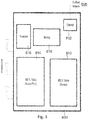
- AP/sensor devices 800, 802, 804 are illustrated with combined access and sensing functionality according to an exemplary embodiment of the present invention.
- the AP/sensor device 800 of FIG. 3 is configured for a wired backhaul through a wired network 806.
- the AP/sensor device 802 of FIG. 4 is configured for a wireless backhaul through a wireless network 808.
- the AP/sensor device 804 of FIG. 5 can include either type of backhaul and includes more than two radios 810.
- the AP/sensor devices 800, 802, 804 are configured to communicate with the management platform 702 of FIG. 2 for WLAN infrastructure management and WIDS/WIPS functionality. Further, each of the AP/sensor devices 800, 802, 804 is configured to enable wireless devices (e.g., client device 606) access capability through the backhaul.
- the AP/sensor devices 800, 802, 804 include two or more wireless radios 810 configured as access points or sensors.
- the antennas on the wireless radios 810 are configured to receive and transmit wireless signals according to a predetermined protocol such as a variant of IEEE 802.11.
- the radios 810 can be configured as APs or as sensors.
- the wireless radios 810 operate to transmit and receive wireless traffic as a wireless AP, and other wireless devices can connect to the wireless radios 810 and communicate through either an Ethernet 812 or wireless 814 backhaul connection to the wired network 806 or to a wireless network 808.
- the AP/sensor devices 800, 802, 804 can utilize either type of backhaul connection 812, 814.
- the wireless radios 810 monitor the wireless network only acting as a sensor device.
- the wireless radios 810 can be operated as APs in promiscuous mode in order to be undetectable from the airwaves and still read all IEEE 802.11 network traffic.
- the AP/sensor devices 800, 802, 804 also include a processor 816 coupled to memory 818, the wireless radios 810, and the backhaul connection 812, 814.
- the processor 816 supports management, security collection, and security analysis functionality associated with the AP/sensor devices 800, 802, 804.
- the processor 816 can be any custom made or commercially available processor, a central processing unit (CPU), an auxiliary processor among several processors, a semiconductor-based microprocessor (in the form of a microchip or chip set), an application specific integrated circuit (ASIC), a field programmable gate array (FPGA), or generally any device for executing software instructions.
- the processor 816 is configured to execute software stored within the memory 818, to communicate data to and from the memory 818, and to generally control operations of the AP/sensor devices 800, 802, 804 pursuant to the software instructions.
- the processor 816 is configured to perform functionality related to both access and sensing.
- the memory 818 is used to store data, such as configuration data, monitored data from the wireless radios 810, and the like.
- the memory 818 can include any of volatile memory elements (e.g., random access memory (RAM, such as DRAM, SRAM, SDRAM, etc.)), nonvolatile memory elements (e.g., ROM, hard drive, tape, CDROM, etc.), and combinations thereof.
- RAM random access memory
- nonvolatile memory elements e.g., ROM, hard drive, tape, CDROM, etc.
- the memory 818 can incorporate electronic, magnetic, optical, and/or other types of storage media. Note that the memory 818 can have a distributed architecture, where various components are situated remotely from one another, but can be accessed by the processor 816.
- the backhaul connections 812, 814 are used to enable the AP/sensor devices 800, 802, 804 to communicate on a network, such as the wired network 806 or the wireless network 808.
- the backhaul connections 812, 814 can include, for example, an Ethernet card (e.g., 10BaseT, Fast Ethernet, Gigabit Ethernet) or a wireless local area network (WLAN) card (e.g., 802.1 la/b/g/n or proprietary wireless protocol based mesh network) or a cellular data network (e.g., 3G or EvDO) access card.
- the backhaul connections 812, 814 can include address, control, and/or data connections to enable appropriate communications on the network.
- the backhaul connections 812, 814 are configured to perform functionality related to both access and sensing, i.e. communication to/from clients accessing the AP radios and communication to/from the management server for sensing.
- the AP/sensor devices 802 can be part of a wireless mesh network.
- Wireless backhaul connectivity can be provided through a separate radio, i.e. the wireless backhaul connection 812, which can leverage 802.11, 802.16, or other longer range wireless access protocols (e.g., cellular or point to point wireless links).
- the AP radio itself may be multiplexed for wireless backhaul.
- the AP/sensor devices 800, 802, 804 include a connection to a power source such as an alternating current (AC) interface, direct current (DC) interface, power over Ethernet (PoE) compatible interface, or a repository for one or more disposable and/or rechargeable batteries.
- a power source such as an alternating current (AC) interface, direct current (DC) interface, power over Ethernet (PoE) compatible interface, or a repository for one or more disposable and/or rechargeable batteries.
- the various components in the AP/sensor devices 800, 802, 804 are housed in a single mechanical enclosure sharing the same power connection and backhaul connections 812, 814.
- the AP/sensor devices 800, 802, 804 include software and/or firmware for operating as both an AP and a sensor.
- the sensor software embedded on the AP/sensor devices 800, 802, 804 is configured to read IEEE 802.11 frames from the wireless network and interrogate them to strip the management and control frames from the data frames, collect the data, store it in the memory 818, process the data frames, and communicate with a management server.
- the processor 816 can be configured to perform data processing on collected data prior to sending it to the management server to minimize network communications by performing distributed data analysis.
- the AP software embedded on the AP/sensor devices 800, 802, 804 is configured to operate the wireless radios 810 to provide access to wireless clients.
- the AP/sensor devices 800, 802, 804 also include software embedded on the AP/sensor devices 800, 802, 804 for operating the cooperation algorithm between the AP and sensor wireless radios 810.
- This cooperation algorithm provides intelligent scanning between the wireless radios minimizing interference and the like.
- the wireless radios 810 are not locked to any band, i.e. each can individually and concurrently operate on any channel in the 2.4 GHz or 5 GHz frequency band.
- the cooperation algorithm enables combined access and sensing functionality in the collocated wireless radios 810 by monitoring channel usage, adjusting transmission power, sensor radio frequency scanning patterns and the like based on the operating characteristics and scanning requirements of each of the wireless radios 810.
- the AP/sensor device 804 of FIG. 5 illustrates a plurality of the wireless radios 810 in a single device.
- the AP/sensor device 804 can include a plurality of wireless radios 810 and each can be individually programmed to operate as either an AP or a wireless sensor. This can be done remotely, such as through the management server, and the functionality can change as needed. For example, during high usage periods, more of the wireless radios 810 can be configured to operate as APs. Conversely, during low usage periods, more of the wireless radios 810 can be configured to operate as sensors.
- the wireless radios 810 can switch from AP to sensor based on a condition, such as detecting an intrusion or the like.
- the wireless radios 810 are controlled by the processor 816 and the associated software, such as the cooperation algorithm. Further, this control can be provided from the management server as well through the backhaul connections 812, 814.
- the wireless radios 810 can be configured to operate on a channel, such as channels defined in IEEE 802.11. Multiple wireless radios 810, i.e. acting as either a sensor or AP, can be on the same channel.
- the cooperation algorithm is configured to provide the desensitization only when the sensor is trying to receive on a channel that is adjacent to the APs transmission.
- the wireless radios 810 can perform a variety of functions in addition to monitoring transmitted frames.
- the sensor can request an in-service AP to send wireless termination packets to a rogue device that is operating on the same channel as the AP. This allows the sensor to continue scanning across frequencies to search for other threats and issues.
- the sensor can request that the AP block the wired network access of a suspicious device connected to the AP. Further, the sensor can transmit the wireless termination packets itself.
- the sensor can provide remote testing capability of remote APs.
- remote testing of APs is described in commonly assigned U. S. Patent App. No. 12/410,967 filed March 25, 2009 and entitled "SYSTEMS AND METHODS FOR REMOTE TESTING OF WIRELESS LAN ACCESS POINTS".
- the remote testing can include a distributed network of WLAN sensors that typically operate to monitor the WLAN, and as needed, the WLAN sensors are converted to WLAN clients capable to connecting and remotely testing one or more WLAN APs.
- the testing can include layer two and layer three related connectivity tests.
- a plurality of thin AP/sensors 1100 are illustrates where packet level processing has been migrated to a switch 1102 according to an exemplary embodiment of the present invention.
- the thin AP/sensors 1100 can include a similar architecture as the AP/sensor devices 800, 802, 804.
- the thin AP/sensors 1100 are referred to as "thin" because the associated wireless radios 810 on the thin AP/sensors 1100 do minimal frame processing. Instead, the thin AP/sensors 1100 simply behave as a wireless antenna port, forwarding received frames to the switch 1102 over a network interface 1104 (such as an Ethernet network).
- the switch 1102 includes an Ethernet interface 1106 that connects to each of the thin AP/sensors 1100.
- the switch 1102 can be co-located with the thin AP/sensors 1100 in a building or campus. Alternatively, the switch 1102 can be geographically diverse. The switch 1102 handles the bulk of the frame processing.
- the switch 1102 includes a sensor module 1108, a wireless access module 1110, a management interface 1112, and a wired or wireless backhaul interface 1114. Collectively, these components 1108, 1110, 1112, 1114 provide similar functionality as described herein with respect to the AP/sensor devices 800, 802, 804.
- the Ethernet interface 1106 includes multiple Ethernet ports, i.e. at least enough ports to support all of the plurality of thin AP/sensors 1100. These ports can include 10BaseT, Fast Ethernet, Gigabit Ethernet, and the like.
- the Ethernet interface 1106 is connected to the sensor module 1108 and the wireless access module 1110 to provide frames from the plurality of thin AP/sensor devices to these modules 1108, 1110 for processing of the frames.
- the wireless access module 1110 is configured to process frames for the Ethernet interface 1106 and to communicate the frames with the management interface 1112 and the backhaul 1114. This processing by the wireless access module 1110 relates to the access point functionality.
- the sensor module 1108 is configured to process frames for the Ethernet interface 1106 and to communicate processed data with the management interface 1112 and the backhaul 1114. This processing by the sensor module 1108 relates to the WIDS/WIPS functionality.
- the management interface 1112 provides overall control of the wireless switch 1102 and communication to/from the sensor module 1108 and the wireless access module 1110.
- the management interface 1112 further communicates with the wired or wireless backhaul 1114.
- the backhaul 1114 provides similar functionality as the backhaul connections 812, 814.
- the AP and sensor software is resident on the wireless switch 1102.
- the sensor module 1108 gets a "feed" from the wireless access module 1110, i.e. the feed includes a stream of data of some or all of the data from the Ethernet interface 1106 to the wireless access module 1110.
- the wireless access module 1110 can provide a copy of every frame it receives to the sensor module 1108.
- the two modules 1108, 1110 can have an interface to exchange frame summary information and statistics.
- the wireless access module 1110 can perform some processing on the frames to determine relevancy related to WIDS/WIPS, and if so, transmit them to the sensor module 1108.
- the sensor module 1108 interacts with the wireless access module 1110 to initiate sensor wireless transmission (e.g.
- the sensor module 1108 also communicates to the management server via the management interface 1112 and the wired or wireless connection backhaul 1114 to the rest of the network.
- the sensor module 1108 can request an in-service AP to send wireless termination packets to a rogue device that is operating on the same channel as the AP.
- the management server in conjunction with the AP/sensor devices 800, 802, 804, the switch 1102, and the like can be utilized to provide enhanced visibility of the WLAN infrastructure.
- the accuracy of physical location tracking of wireless devices that rely on signal strength triangulation or fingerprinting can be improved by aggregating data from AP and sensor wireless radios 1110.
- This location tracking mechanism can use the sensor-based monitoring infrastructure in the wireless radios 1110 along with the AP WLAN infrastructure in the wireless radios 1110 to derive estimates of position based upon received signal characteristics.
- the list of devices can be dynamically developed from an empty list or from a pre-configured static list.
- a pre-configured static list can be provided that cannot be altered in adaptive mode; while in others, the objects in a pre-configured static list can be removed and/or modified just as objects dynamically added to the list of objects to be tracked.
- the scanning pattern determines how each sensor monitors a wireless network, i.e. which channels and for how long on each channel.
- the scanning pattern can be determined based on channel usage, risk assessment.
- the scanning pattern is adapted based on the other collocated radios. This adaptation ensures that sensor and AP functions are coordinated to minimize the impact of mutual radio desensitization when one radio is transmitting and the other is receiving a frame on a channel that is in close frequency proximity.
- APs typically transmit much more frequently than sensors.
- the sensor radio can be desensitized by the high powered transit signal emanating in close proximity to the sensors radio. The desensitization progressively reduces as the frequency separation between the two radios is increased.
- the AP may attempt to synchronize its transmissions at the same time as the sensor to avoid transmit-receive desensitization.
- this adaptation can include changing the predetermined scanning pattern responsive to emerging risks and recent channel usage.
- the various radio types can be adjusted as needed as shown in step 1450. For example, more radios can be used as access points during high bandwidth periods and changed to sensors during low bandwidth periods. If the radios are changed, then a new designation is provided as shown in step 1420. If not, the radios continue to operate as shown in step 1460.
Landscapes
- Engineering & Computer Science (AREA)
- Computer Security & Cryptography (AREA)
- Computer Networks & Wireless Communication (AREA)
- Signal Processing (AREA)
- Mobile Radio Communication Systems (AREA)
Claims (8)
- Drahtloses lokales Netzwerk-System, umfassend mindestens zwei Funkgeräte, wobei das drahtlose lokale Netzwerk-System umfasst:- mindestens ein erstes Funkgerät (810), operabel als ein Zugangspunkt in einer drahtlosen Vorrichtung (606), und einen mit der drahtlosen Vorrichtung und einem Speicher (818) verbundenen Prozessor (816),gekennzeichnet durch:- mindestens ein zweites Funkgerät (810), zusammen angeordnet in der drahtlosen Vorrichtung und operabel als drahtloser Sensor zum Erfassen eines Netzwerk-Eindringlings; und- ein Frequenzabtastmuster, gespeichert im Speicher (818) für Anwenden durch den Prozessor (816) zum Bestimmen, welcher drahtlose Kanal vom zweiten Funkgerät (810) für Sensorfunktionalität zu benutzen ist, und welcher drahtlose Kanal vom ersten Funkgerät (810) für Zugangspunktfunktionalität zu benutzen ist, und wobei der Prozessor (816) konfiguriert ist für Justieren des Frequenzabtastmusters des zweiten Funkgeräts (810) zum Vermeiden von Nähe zu einem drahtlosen Kanal, der für Zugangspunktfunktionalität benutzt wird, wenn das erste Funkgerät (810) sendet,wobei die Funkgeräte (810) die Funktionalität zwischen Zugangspunkt und drahtlosem Sensor wechseln können.
- Drahtloses lokales Netzwerk-System nach Anspruch 1, wobei mehrere der Funkgeräte (810) so konfiguriert werden können, dass sie während höherer Netzwerknutzung als Zugangspunkte anstatt als Sensoren arbeiten, und wobei mehrere der Funkgeräte so konfiguriert werden können, dass sie während niedrigerer Netzwerknutzung als Sensoren anstatt als Zugangspunkte arbeiten.
- Drahtloses lokales Netzwerk-System nach Anspruch 1, wobei nach Erfassen eines Eindringens einige der mindestens ersten Funkgeräte (810) auf Sensorfunktionalität umgestellt werden.
- Drahtloses lokales Netzwerk-System nach Anspruch 1, wobei der Prozessor (816) konfiguriert ist, um, auf Basis von einem von Kanalnutzung und Risikobewertung, zu bestimmen, ob und wie lange die Sensorfunktionalität jeden drahtlosen Kanal überwacht.
- Drahtloses lokales Netzwerk-System nach Anspruch 1, wobei der Prozessor konfiguriert ist zum adaptiven Synchronisieren von Zugangspunktfunktionalität-Übertragungen zu einer gleichen Zeit wie die Sensorfunktionalität, um eine Senden-Empfangen-Desensibilisierung zu vermeiden.
- Drahtloses lokales Netzwerk-System nach Anspruch 1, wobei nach Erfassen eines Netzwerk-Eindringlings der drahtlose Sensor arbeitet, um zu verhindern, dass der Netzwerk-Eindringling auf das drahtlose lokale Netzwerk zugreift.
- Drahtloses lokales Netzwerk-System nach Anspruch 1, wobei der Prozessor operabel ist für Anwenden mehrfacher Eindringerfassungstests auf Daten, die vom drahtlosen Sensor empfangen worden sind, wobei die Tests signaturbasiertes Testen, protokollbasiertes Testen, anomaliebasiertes Testen und strategieabweichungsbasiertes Testen umfassen.
- Verfahren für gleichzeitiges Zugreifen und Erfassen bei drahtlosen lokalen Netzwerken, umfassend die folgenden Schritte:- Betreiben von mindestens zwei zusammen angeordneten Funkgeräten (810), die in einem drahtlosen lokalen Netzwerk operabel sind, wobei mindestens ein erstes Funkgerät (810) als ein Zugangspunkt operabel ist und mindestens ein zweites Funkgerät (810) als ein drahtloser Sensor zum Erfassen eines Netzwerk-Eindringling operabel ist,- Bestimmen, welcher drahtlose Kanal vom zweiten Funkgerät (810) für Sensorfunktionalität zu benutzen ist, und welcher drahtlose Kanal vom ersten Funkgerät (810) für Zugangspunktfunktionalität zu benutzen ist,- Justieren des Frequenzabtastmusters des zweiten Funkgeräts (810) zum Vermeiden von Nähe zu einem drahtlosen Kanal, der für Zugangspunktfunktionalität benutzt wird, wenn das erste Funkgerät (810) sendet,wobei die Funkgeräte (810) die Funktionalität zwischen Zugangspunkt und drahtlosem Sensor wechseln können.
Applications Claiming Priority (2)
| Application Number | Priority Date | Filing Date | Title |
|---|---|---|---|
| US12/468,164 US8694624B2 (en) | 2009-05-19 | 2009-05-19 | Systems and methods for concurrent wireless local area network access and sensing |
| PCT/US2010/033812 WO2010135085A1 (en) | 2009-05-19 | 2010-05-06 | Systems and methods for concurrent wireless local area network access and sensing |
Publications (2)
| Publication Number | Publication Date |
|---|---|
| EP2433439A1 EP2433439A1 (de) | 2012-03-28 |
| EP2433439B1 true EP2433439B1 (de) | 2018-07-11 |
Family
ID=42262679
Family Applications (1)
| Application Number | Title | Priority Date | Filing Date |
|---|---|---|---|
| EP10717998.8A Active EP2433439B1 (de) | 2009-05-19 | 2010-05-06 | Gleichzeitiges zugreifen und erfassen bei drahtlosen lokalen netzwerken |
Country Status (3)
| Country | Link |
|---|---|
| US (1) | US8694624B2 (de) |
| EP (1) | EP2433439B1 (de) |
| WO (1) | WO2010135085A1 (de) |
Families Citing this family (57)
| Publication number | Priority date | Publication date | Assignee | Title |
|---|---|---|---|---|
| US20110107417A1 (en) * | 2009-10-30 | 2011-05-05 | Balay Rajini I | Detecting AP MAC Spoofing |
| US20110131651A1 (en) * | 2009-12-01 | 2011-06-02 | Senthilraj Shanmugavadivel | Method and device for detecting a spoofing attack in a wireless communication network |
| US8782790B1 (en) * | 2010-02-19 | 2014-07-15 | Symantec Corporation | Signature creation for malicious network traffic |
| EP2643985B1 (de) * | 2010-11-25 | 2017-02-22 | Thomson Licensing | Verfahren und vorrichtung für fingerprinting von drahtlosen kommunikationsvorrichtungen |
| DE112011104792B4 (de) * | 2011-01-28 | 2014-06-26 | Mitsubishi Electric Corporation | Drahtloskommunikationsvorrichtung und Drahtloskommunikationssystem |
| FR2974965A1 (fr) * | 2011-05-06 | 2012-11-09 | France Telecom | Procede de detection d'intrusions |
| US9474100B2 (en) * | 2011-10-28 | 2016-10-18 | P2 Mobile Technologies Limited | Relaying devices for wireless mesh network |
| KR101279909B1 (ko) * | 2011-12-16 | 2013-07-30 | (주)시큐리티존 | 일체형 침입차단 시스템 |
| KR101192446B1 (ko) * | 2011-12-28 | 2012-10-18 | 주식회사 정보보호기술 | 클라우드 센서 네트워크를 이용한 지능형 무선침입방지 시스템 및 센서 |
| US9324034B2 (en) | 2012-05-14 | 2016-04-26 | Qualcomm Incorporated | On-device real-time behavior analyzer |
| US9202047B2 (en) | 2012-05-14 | 2015-12-01 | Qualcomm Incorporated | System, apparatus, and method for adaptive observation of mobile device behavior |
| US20130304677A1 (en) * | 2012-05-14 | 2013-11-14 | Qualcomm Incorporated | Architecture for Client-Cloud Behavior Analyzer |
| US9609456B2 (en) | 2012-05-14 | 2017-03-28 | Qualcomm Incorporated | Methods, devices, and systems for communicating behavioral analysis information |
| US9690635B2 (en) | 2012-05-14 | 2017-06-27 | Qualcomm Incorporated | Communicating behavior information in a mobile computing device |
| US9298494B2 (en) | 2012-05-14 | 2016-03-29 | Qualcomm Incorporated | Collaborative learning for efficient behavioral analysis in networked mobile device |
| US9319897B2 (en) | 2012-08-15 | 2016-04-19 | Qualcomm Incorporated | Secure behavior analysis over trusted execution environment |
| US9747440B2 (en) | 2012-08-15 | 2017-08-29 | Qualcomm Incorporated | On-line behavioral analysis engine in mobile device with multiple analyzer model providers |
| US9330257B2 (en) | 2012-08-15 | 2016-05-03 | Qualcomm Incorporated | Adaptive observation of behavioral features on a mobile device |
| US9495537B2 (en) | 2012-08-15 | 2016-11-15 | Qualcomm Incorporated | Adaptive observation of behavioral features on a mobile device |
| KR20140035600A (ko) * | 2012-09-14 | 2014-03-24 | 한국전자통신연구원 | 무선 침입방지 동글 장치 |
| US9684870B2 (en) | 2013-01-02 | 2017-06-20 | Qualcomm Incorporated | Methods and systems of using boosted decision stumps and joint feature selection and culling algorithms for the efficient classification of mobile device behaviors |
| US9686023B2 (en) | 2013-01-02 | 2017-06-20 | Qualcomm Incorporated | Methods and systems of dynamically generating and using device-specific and device-state-specific classifier models for the efficient classification of mobile device behaviors |
| US10089582B2 (en) | 2013-01-02 | 2018-10-02 | Qualcomm Incorporated | Using normalized confidence values for classifying mobile device behaviors |
| US9742559B2 (en) | 2013-01-22 | 2017-08-22 | Qualcomm Incorporated | Inter-module authentication for securing application execution integrity within a computing device |
| US9491187B2 (en) | 2013-02-15 | 2016-11-08 | Qualcomm Incorporated | APIs for obtaining device-specific behavior classifier models from the cloud |
| US9331900B2 (en) * | 2013-07-03 | 2016-05-03 | Fortinet, Inc. | Centralized management of access points |
| US9088894B1 (en) * | 2013-09-25 | 2015-07-21 | Juniper Networks, Inc. | Systems and methods for detecting rogue client devices connected to wireless hotspots |
| KR101557855B1 (ko) * | 2014-03-21 | 2015-10-06 | 유넷시스템주식회사 | 무선침입방지시스템의 센서 |
| KR101575341B1 (ko) * | 2014-04-18 | 2015-12-04 | 유넷시스템주식회사 | 무선침입방지시스템 센서 및 채널 모니터링 방법 |
| KR20160099182A (ko) * | 2015-02-11 | 2016-08-22 | 한국전자통신연구원 | 무선 디바이스에 대한 보안 서비스 제공 방법 및 장치 |
| US9913159B2 (en) | 2015-04-01 | 2018-03-06 | Gainspan Corporation | Adjusting operating windows of a dual-mode device operating as an access point and a wireless station in time division multiplexed manner |
| US9350759B1 (en) * | 2015-06-18 | 2016-05-24 | Hak5 Llc | Network security appliance to imitate a wireless access point of a local area network through coordination of multiple radios |
| DE102015121488A1 (de) * | 2015-12-10 | 2017-06-14 | Universität Rostock | Vorrichtung zur Erzeugung einer Datenbasis |
| US10075850B2 (en) * | 2015-12-15 | 2018-09-11 | The Boeing Company | Method and system for wireless attack detection and mitigation |
| WO2017146727A1 (en) * | 2016-02-26 | 2017-08-31 | Hewlett Packard Enterprise Development Lp | Device privacy protection |
| DE102016117516B4 (de) | 2016-09-16 | 2022-12-29 | Deutsche Telekom Ag | WLAN Messverfahren |
| US10490058B2 (en) * | 2016-09-19 | 2019-11-26 | Siemens Industry, Inc. | Internet-of-things-based safety system |
| CN106412884B (zh) * | 2016-11-24 | 2020-02-04 | 北京小米移动软件有限公司 | Wifi连接的管理方法及装置 |
| CN106412911B (zh) * | 2016-11-25 | 2019-07-30 | 宇龙计算机通信科技(深圳)有限公司 | 无线接入点监控方法、装置及电子设备 |
| US10979906B2 (en) | 2017-04-11 | 2021-04-13 | Qualcomm Incorporated | Detecting media access control (MAC) address spoofing in a wi-fi network using channel correlation |
| US10652280B2 (en) * | 2017-04-24 | 2020-05-12 | Unisys Corporation | User interface features for enterprise security management |
| US11304048B2 (en) | 2017-06-09 | 2022-04-12 | Hewlett Packard Enterprise Development Lp | Partition a radio into a service chain and a scan chain to scan channels |
| CN107770841B (zh) * | 2017-09-29 | 2020-10-27 | 珠海大横琴科技发展有限公司 | 热点连接方法、移动终端和计算机可读存储介质 |
| US11122071B2 (en) | 2018-06-29 | 2021-09-14 | Forescout Technologies, Inc. | Visibility and scanning of a variety of entities |
| CN109067764B (zh) * | 2018-08-29 | 2020-09-04 | 新华三技术有限公司 | 一种建立设备表项的方法及装置 |
| US10827411B2 (en) | 2018-09-13 | 2020-11-03 | Rosemount Aerospace, Inc | Deployment of a wireless aircraft network |
| KR102423126B1 (ko) * | 2018-10-26 | 2022-07-21 | 삼성전자주식회사 | 전자 장치 및 그 제어 방법 |
| US10447879B1 (en) * | 2018-11-23 | 2019-10-15 | Toshiba Tec Kabushiki Kaisha | Image forming apparatus and image forming method |
| JP7045124B2 (ja) * | 2020-04-10 | 2022-03-31 | 株式会社スプラインネットワーク | 無線ネットワークセキュリティ診断システム、セキュリティ診断サーバ、及びプログラム |
| US11601457B2 (en) * | 2020-08-26 | 2023-03-07 | Bank Of America Corporation | Network traffic correlation engine |
| CN113115341B (zh) * | 2021-04-15 | 2022-06-21 | 成都极米科技股份有限公司 | 一种协商无线感知进程的方法、装置、设备及存储介质 |
| KR102359805B1 (ko) * | 2021-08-10 | 2022-02-09 | 주식회사 시큐아이 | 센싱 장치, 센싱 장치를 포함하는 무선 침입 방지 시스템 및 그것의 동작 방법 |
| US12267313B2 (en) | 2022-12-31 | 2025-04-01 | Lilly R. Talavera | Intelligent synchronization of computing users, and associated timing data, based on parameters or data received from disparate computing systems |
| US12487861B2 (en) | 2022-12-31 | 2025-12-02 | Lilly R. Talavera | Complex computing network for controlling computing operations based on a computing load |
| US12124881B2 (en) * | 2022-12-31 | 2024-10-22 | Lilly R. Talavera | Complex computing network for controlling computing operations based on a computing load |
| US12317083B2 (en) * | 2023-02-22 | 2025-05-27 | Arista Networks, Inc. | Wireless intrusion prevention using channel switch announcement |
| US20250202615A1 (en) * | 2023-12-15 | 2025-06-19 | Fortinet, Inc. | Disrupting connections between rogue access points and rogue stations with spoofed bss transition management request frames |
Family Cites Families (96)
| Publication number | Priority date | Publication date | Assignee | Title |
|---|---|---|---|---|
| US5231634B1 (en) * | 1991-12-18 | 1996-04-02 | Proxim Inc | Medium access protocol for wireless lans |
| GB9223890D0 (en) * | 1992-11-13 | 1993-01-06 | Ncr Int Inc | Wireless local area network system |
| US6292508B1 (en) * | 1994-03-03 | 2001-09-18 | Proxim, Inc. | Method and apparatus for managing power in a frequency hopping medium access control protocol |
| EP0748540A4 (de) * | 1994-03-03 | 1997-10-29 | Proxim Inc | Protokoll zur mediumzugriffssteuerung im frequenzsprungverfahren |
| JP3043958B2 (ja) * | 1994-09-29 | 2000-05-22 | 株式会社リコー | 無線通信によるネットワーク通信方式 |
| JPH08265358A (ja) * | 1995-03-20 | 1996-10-11 | Hitachi Ltd | 無線lanシステム及びその基地局装置、無線端末装置及び情報フレームの中継方法 |
| US6067297A (en) * | 1996-06-28 | 2000-05-23 | Symbol Technologies, Inc. | Embedded access point supporting communication with mobile unit operating in power-saving mode |
| JP3617884B2 (ja) * | 1996-09-18 | 2005-02-09 | 株式会社東芝 | 携帯型情報機器 |
| US5875179A (en) * | 1996-10-29 | 1999-02-23 | Proxim, Inc. | Method and apparatus for synchronized communication over wireless backbone architecture |
| US6453345B2 (en) * | 1996-11-06 | 2002-09-17 | Datadirect Networks, Inc. | Network security and surveillance system |
| US6067313A (en) | 1997-06-23 | 2000-05-23 | Micrilor, Inc. | Wireless communications system for transmitting and receiving data with increased data rates and robustness |
| US6345043B1 (en) * | 1998-07-06 | 2002-02-05 | National Datacomm Corporation | Access scheme for a wireless LAN station to connect an access point |
| US6487666B1 (en) * | 1999-01-15 | 2002-11-26 | Cisco Technology, Inc. | Intrusion detection signature analysis using regular expressions and logical operators |
| US6910135B1 (en) * | 1999-07-07 | 2005-06-21 | Verizon Corporate Services Group Inc. | Method and apparatus for an intruder detection reporting and response system |
| EP2066146B1 (de) | 1999-12-08 | 2013-11-06 | Symbol Technologies, Inc. | Architektur für ein flexibles drahtloses LAN, basierend auf einen Kommunikationsserver |
| US7159237B2 (en) * | 2000-03-16 | 2007-01-02 | Counterpane Internet Security, Inc. | Method and system for dynamic network intrusion monitoring, detection and response |
| US6539207B1 (en) * | 2000-06-27 | 2003-03-25 | Symbol Technologies, Inc. | Component for a wireless communications equipment card |
| US6985465B2 (en) * | 2000-07-07 | 2006-01-10 | Koninklijke Philips Electronics N.V. | Dynamic channel selection scheme for IEEE 802.11 WLANs |
| US6411608B2 (en) * | 2000-07-12 | 2002-06-25 | Symbol Technologies, Inc. | Method and apparatus for variable power control in wireless communications systems |
| JP4059620B2 (ja) * | 2000-09-20 | 2008-03-12 | 株式会社リコー | 座標検出方法、座標入力/検出装置及び記憶媒体 |
| AU2002211436B2 (en) * | 2000-10-06 | 2006-03-16 | Cognio, Inc. | Systems and methods for interference mitigation among multiple WLAN protocols |
| US20020066034A1 (en) * | 2000-10-24 | 2002-05-30 | Schlossberg Barry J. | Distributed network security deception system |
| DE60108225T2 (de) * | 2001-05-08 | 2005-12-08 | Agere Systems Guardian Corp., Orlando | Dynamische Frequenzwahl in einem drahtlosen lokalen Netz mit Kanaltausch zwischen Zugriffspunkten |
| JPWO2002091683A1 (ja) * | 2001-05-08 | 2004-08-26 | ソニー株式会社 | 無線通信システム、制御局、通信装置、通信制御方法、無線通信方法、並びに通信制御プログラム |
| EP1257090B1 (de) * | 2001-05-08 | 2004-11-17 | Lucent Technologies Inc. | Drahtloses lokales Netz mit dynamischer Frequenzwahl |
| US7020784B2 (en) * | 2001-08-20 | 2006-03-28 | Yitran Communications Ltd. | Mechanism for detecting intrusion and jamming attempts in a shared media based communications network |
| US6674738B1 (en) * | 2001-09-17 | 2004-01-06 | Networks Associates Technology, Inc. | Decoding and detailed analysis of captured frames in an IEEE 802.11 wireless LAN |
| JP3600568B2 (ja) * | 2001-09-28 | 2004-12-15 | 株式会社東芝 | 無線lanアクセスポイント |
| US20030084323A1 (en) * | 2001-10-31 | 2003-05-01 | Gales George S. | Network intrusion detection system and method |
| US20030084319A1 (en) * | 2001-10-31 | 2003-05-01 | Tarquini Richard Paul | Node, method and computer readable medium for inserting an intrusion prevention system into a network stack |
| US7453839B2 (en) * | 2001-12-21 | 2008-11-18 | Broadcom Corporation | Wireless local area network channel resource management |
| JP3792154B2 (ja) * | 2001-12-26 | 2006-07-05 | インターナショナル・ビジネス・マシーンズ・コーポレーション | ネットワークセキュリティシステム、コンピュータ装置、アクセスポイントの認識処理方法、アクセスポイントのチェック方法、プログラムおよび記憶媒体 |
| CA2414789A1 (en) * | 2002-01-09 | 2003-07-09 | Peel Wireless Inc. | Wireless networks security system |
| US7194004B1 (en) * | 2002-01-28 | 2007-03-20 | 3Com Corporation | Method for managing network access |
| US7174566B2 (en) * | 2002-02-01 | 2007-02-06 | Intel Corporation | Integrated network intrusion detection |
| US7009957B2 (en) * | 2002-02-28 | 2006-03-07 | Airmagnet, Inc. | Measuring the throughput of transmissions over wireless local area networks |
| US6754488B1 (en) * | 2002-03-01 | 2004-06-22 | Networks Associates Technologies, Inc. | System and method for detecting and locating access points in a wireless network |
| US7130289B2 (en) * | 2002-03-14 | 2006-10-31 | Airmagnet, Inc. | Detecting a hidden node in a wireless local area network |
| US7236460B2 (en) | 2002-03-29 | 2007-06-26 | Airmagnet, Inc. | Detecting a counterfeit access point in a wireless local area network |
| JP3964248B2 (ja) * | 2002-04-03 | 2007-08-22 | シャープ株式会社 | アクセスポイントおよび無線通信システム |
| US7711809B2 (en) * | 2002-04-04 | 2010-05-04 | Airmagnet, Inc. | Detecting an unauthorized station in a wireless local area network |
| CN1659898B (zh) * | 2002-04-08 | 2010-05-12 | 空气磁体公司 | 确定在无线局域网中站点的状态 |
| EP1493240B1 (de) | 2002-04-08 | 2009-02-25 | AirMagnet, Inc. | Überwachung eines lokalen netzwerks |
| WO2003088532A1 (en) * | 2002-04-11 | 2003-10-23 | The Johns Hopkins University | Intrusion detection system for wireless networks |
| US20030200455A1 (en) * | 2002-04-18 | 2003-10-23 | Chi-Kai Wu | Method applicable to wireless lan for security control and attack detection |
| US7140040B2 (en) * | 2002-04-25 | 2006-11-21 | International Business Machines Corporation | Protecting wireless local area networks from intrusion by eavesdropping on the eavesdroppers and dynamically reconfiguring encryption upon detection of intrusion |
| US7359962B2 (en) * | 2002-04-30 | 2008-04-15 | 3Com Corporation | Network security system integration |
| US7778606B2 (en) * | 2002-05-17 | 2010-08-17 | Network Security Technologies, Inc. | Method and system for wireless intrusion detection |
| US7086089B2 (en) * | 2002-05-20 | 2006-08-01 | Airdefense, Inc. | Systems and methods for network security |
| US7383577B2 (en) | 2002-05-20 | 2008-06-03 | Airdefense, Inc. | Method and system for encrypted network management and intrusion detection |
| US7277404B2 (en) * | 2002-05-20 | 2007-10-02 | Airdefense, Inc. | System and method for sensing wireless LAN activity |
| US7058796B2 (en) * | 2002-05-20 | 2006-06-06 | Airdefense, Inc. | Method and system for actively defending a wireless LAN against attacks |
| US7042852B2 (en) * | 2002-05-20 | 2006-05-09 | Airdefense, Inc. | System and method for wireless LAN dynamic channel change with honeypot trap |
| US7322044B2 (en) * | 2002-06-03 | 2008-01-22 | Airdefense, Inc. | Systems and methods for automated network policy exception detection and correction |
| US7327697B1 (en) * | 2002-06-25 | 2008-02-05 | Airespace, Inc. | Method and system for dynamically assigning channels across multiple radios in a wireless LAN |
| US7965842B2 (en) * | 2002-06-28 | 2011-06-21 | Wavelink Corporation | System and method for detecting unauthorized wireless access points |
| US7017186B2 (en) * | 2002-07-30 | 2006-03-21 | Steelcloud, Inc. | Intrusion detection system using self-organizing clusters |
| US7224678B2 (en) * | 2002-08-12 | 2007-05-29 | Harris Corporation | Wireless local or metropolitan area network with intrusion detection features and related methods |
| US7327690B2 (en) * | 2002-08-12 | 2008-02-05 | Harris Corporation | Wireless local or metropolitan area network with intrusion detection features and related methods |
| US7340768B2 (en) * | 2002-09-23 | 2008-03-04 | Wimetrics Corporation | System and method for wireless local area network monitoring and intrusion detection |
| US6957067B1 (en) * | 2002-09-24 | 2005-10-18 | Aruba Networks | System and method for monitoring and enforcing policy within a wireless network |
| US6934298B2 (en) * | 2003-01-09 | 2005-08-23 | Modular Mining Systems, Inc. | Hot standby access point |
| US7295524B1 (en) * | 2003-02-18 | 2007-11-13 | Airwave Wireless, Inc | Methods, apparatuses and systems facilitating management of airspace in wireless computer network environments |
| US7385948B2 (en) | 2003-04-03 | 2008-06-10 | Airmagnet, Inc. | Determining the state of a station in a local area network |
| US7346338B1 (en) | 2003-04-04 | 2008-03-18 | Airespace, Inc. | Wireless network system including integrated rogue access point detection |
| US7342906B1 (en) | 2003-04-04 | 2008-03-11 | Airespace, Inc. | Distributed wireless network security system |
| US7359676B2 (en) * | 2003-04-21 | 2008-04-15 | Airdefense, Inc. | Systems and methods for adaptively scanning for wireless communications |
| US7355996B2 (en) | 2004-02-06 | 2008-04-08 | Airdefense, Inc. | Systems and methods for adaptive monitoring with bandwidth constraints |
| US7324804B2 (en) * | 2003-04-21 | 2008-01-29 | Airdefense, Inc. | Systems and methods for dynamic sensor discovery and selection |
| US7340247B1 (en) | 2003-05-29 | 2008-03-04 | Airespace, Inc. | Wireless network infrastructure including wireless discovery and communication mechanism |
| US7453840B1 (en) * | 2003-06-30 | 2008-11-18 | Cisco Systems, Inc. | Containment of rogue systems in wireless network environments |
| US7257107B2 (en) * | 2003-07-15 | 2007-08-14 | Highwall Technologies, Llc | Device and method for detecting unauthorized, “rogue” wireless LAN access points |
| JP3817531B2 (ja) * | 2003-07-22 | 2006-09-06 | キヤノン株式会社 | 無線通信装置の制御部、無線通信装置、及び制御方法 |
| US7286515B2 (en) * | 2003-07-28 | 2007-10-23 | Cisco Technology, Inc. | Method, apparatus, and software product for detecting rogue access points in a wireless network |
| US7295831B2 (en) * | 2003-08-12 | 2007-11-13 | 3E Technologies International, Inc. | Method and system for wireless intrusion detection prevention and security management |
| US7237267B2 (en) * | 2003-10-16 | 2007-06-26 | Cisco Technology, Inc. | Policy-based network security management |
| US7069024B2 (en) * | 2003-10-31 | 2006-06-27 | Symbol Technologies, Inc. | System and method for determining location of rogue wireless access point |
| US7002943B2 (en) * | 2003-12-08 | 2006-02-21 | Airtight Networks, Inc. | Method and system for monitoring a selected region of an airspace associated with local area networks of computing devices |
| US7440434B2 (en) * | 2004-02-11 | 2008-10-21 | Airtight Networks, Inc. | Method and system for detecting wireless access devices operably coupled to computer local area networks and related methods |
| US7216365B2 (en) * | 2004-02-11 | 2007-05-08 | Airtight Networks, Inc. | Automated sniffer apparatus and method for wireless local area network security |
| US7536723B1 (en) * | 2004-02-11 | 2009-05-19 | Airtight Networks, Inc. | Automated method and system for monitoring local area computer networks for unauthorized wireless access |
| US7248856B2 (en) * | 2004-03-15 | 2007-07-24 | Symbol Technologies, Inc. | System and method for client-server-based wireless intrusion detection |
| US20050213553A1 (en) * | 2004-03-25 | 2005-09-29 | Wang Huayan A | Method for wireless LAN intrusion detection based on protocol anomaly analysis |
| US7447184B1 (en) * | 2004-09-08 | 2008-11-04 | Airtight Networks, Inc. | Method and system for detecting masquerading wireless devices in local area computer networks |
| US7333800B1 (en) * | 2004-09-08 | 2008-02-19 | Airtight Networks, Inc. | Method and system for scheduling of sensor functions for monitoring of wireless communication activity |
| US20060193300A1 (en) * | 2004-09-16 | 2006-08-31 | Airtight Networks, Inc. (F/K/A Wibhu Technologies, Inc.) | Method and apparatus for monitoring multiple network segments in local area networks for compliance with wireless security policy |
| US7317914B2 (en) * | 2004-09-24 | 2008-01-08 | Microsoft Corporation | Collaboratively locating disconnected clients and rogue access points in a wireless network |
| US20060123133A1 (en) * | 2004-10-19 | 2006-06-08 | Hrastar Scott E | Detecting unauthorized wireless devices on a wired network |
| KR100628325B1 (ko) * | 2004-12-20 | 2006-09-27 | 한국전자통신연구원 | 무선 네트워크에 대한 공격을 탐지하기 위한 침입 탐지센서 및 무선 네트워크 침입 탐지 시스템 및 방법 |
| US7370362B2 (en) | 2005-03-03 | 2008-05-06 | Cisco Technology, Inc. | Method and apparatus for locating rogue access point switch ports in a wireless network |
| US7814322B2 (en) * | 2005-05-03 | 2010-10-12 | Sri International | Discovery and authentication scheme for wireless mesh networks |
| US20070002736A1 (en) * | 2005-06-16 | 2007-01-04 | Cisco Technology, Inc. | System and method for improving network resource utilization |
| US7333481B1 (en) | 2005-10-11 | 2008-02-19 | Airtight Networks, Inc. | Method and system for disrupting undesirable wireless communication of devices in computer networks |
| US7971251B2 (en) * | 2006-03-17 | 2011-06-28 | Airdefense, Inc. | Systems and methods for wireless security using distributed collaboration of wireless clients |
| US7783300B2 (en) | 2006-11-22 | 2010-08-24 | Airdefense, Inc. | Systems and methods for proactively enforcing a wireless free zone |
| JP2008153783A (ja) * | 2006-12-14 | 2008-07-03 | Hitachi Ltd | 無線通信システムおよび無線端末装置 |
-
2009
- 2009-05-19 US US12/468,164 patent/US8694624B2/en active Active
-
2010
- 2010-05-06 EP EP10717998.8A patent/EP2433439B1/de active Active
- 2010-05-06 WO PCT/US2010/033812 patent/WO2010135085A1/en not_active Ceased
Non-Patent Citations (1)
| Title |
|---|
| JOSH WRIGHT: "A closer look at Wireless Intrusion Detection", INTERNET CITATION, February 2007 (2007-02-01), pages 1 - 11, XP002589195, Retrieved from the Internet <URL:http://www.arubanetworks.com/pdf/technology/whitepapers/wp_Hybrid_WIDS.pdf> [retrieved on 20100628] * |
Also Published As
| Publication number | Publication date |
|---|---|
| US8694624B2 (en) | 2014-04-08 |
| US20100296496A1 (en) | 2010-11-25 |
| EP2433439A1 (de) | 2012-03-28 |
| WO2010135085A1 (en) | 2010-11-25 |
Similar Documents
| Publication | Publication Date | Title |
|---|---|---|
| US8694624B2 (en) | Systems and methods for concurrent wireless local area network access and sensing | |
| JP6423390B2 (ja) | ワイヤレスネットワークにおける動的チャネル選択の直接的な適応制御に関する方法および装置 | |
| EP2078245B1 (de) | Koordination von funkfrequenz-firewalls | |
| US7444145B2 (en) | Automated real-time site survey in a shared frequency band environment | |
| US9792129B2 (en) | Network range extender with multi-RF radio support for plurality of network interfaces | |
| US8116275B2 (en) | System and network for wireless network monitoring | |
| US8576812B2 (en) | Methods, apparatuses and systems facilitating management of airspace in wireless computer network environments | |
| US7039017B2 (en) | System and method for detecting and locating interferers in a wireless communication system | |
| US7236470B1 (en) | Tracking multiple interface connections by mobile stations | |
| US9565627B2 (en) | Distributed radio management | |
| US20100246416A1 (en) | Systems and methods for remote testing of wireless lan access points | |
| US7558253B1 (en) | Method and system for disrupting undesirable wireless communication of devices in computer networks | |
| US20170123049A1 (en) | Methods and apparatuses for use of simultaneous multiple channels in the dynamic frequency selection band in wireless networks | |
| JP2015122810A (ja) | コンバージドコーディネータを備えた構成可能なアーキテクチャ | |
| US20170048728A1 (en) | Method and apparatus for directed adaptive control of access point-to-client interaction in wireless networks | |
| WO2004051868A2 (en) | Server and multiple sensor system for monitoring activity in a shared radio frequency band | |
| Ergul et al. | Adaptive and cognitive communication architecture for next-generation PPDR systems | |
| US20050124359A1 (en) | Multi-port interface for a switched wireless network | |
| Li et al. | Design and implementation of a sensor-based wireless camera system for continuous monitoring in assistive environments | |
| WO2012155383A1 (zh) | 通过wlan对终端进行监控的方法及服务器 |
Legal Events
| Date | Code | Title | Description |
|---|---|---|---|
| PUAI | Public reference made under article 153(3) epc to a published international application that has entered the european phase |
Free format text: ORIGINAL CODE: 0009012 |
|
| 17P | Request for examination filed |
Effective date: 20111110 |
|
| AK | Designated contracting states |
Kind code of ref document: A1 Designated state(s): AL AT BE BG CH CY CZ DE DK EE ES FI FR GB GR HR HU IE IS IT LI LT LU LV MC MK MT NL NO PL PT RO SE SI SK SM TR |
|
| DAX | Request for extension of the european patent (deleted) | ||
| 17Q | First examination report despatched |
Effective date: 20150907 |
|
| RAP1 | Party data changed (applicant data changed or rights of an application transferred) |
Owner name: SYMBOL TECHNOLOGIES, LLC |
|
| RAP1 | Party data changed (applicant data changed or rights of an application transferred) |
Owner name: EXTREME NETWORKS, INC. |
|
| STAA | Information on the status of an ep patent application or granted ep patent |
Free format text: STATUS: EXAMINATION IS IN PROGRESS |
|
| GRAP | Despatch of communication of intention to grant a patent |
Free format text: ORIGINAL CODE: EPIDOSNIGR1 |
|
| STAA | Information on the status of an ep patent application or granted ep patent |
Free format text: STATUS: GRANT OF PATENT IS INTENDED |
|
| INTG | Intention to grant announced |
Effective date: 20180122 |
|
| RAP1 | Party data changed (applicant data changed or rights of an application transferred) |
Owner name: EXTREME NETWORKS, INC. |
|
| GRAS | Grant fee paid |
Free format text: ORIGINAL CODE: EPIDOSNIGR3 |
|
| GRAA | (expected) grant |
Free format text: ORIGINAL CODE: 0009210 |
|
| STAA | Information on the status of an ep patent application or granted ep patent |
Free format text: STATUS: THE PATENT HAS BEEN GRANTED |
|
| AK | Designated contracting states |
Kind code of ref document: B1 Designated state(s): AL AT BE BG CH CY CZ DE DK EE ES FI FR GB GR HR HU IE IS IT LI LT LU LV MC MK MT NL NO PL PT RO SE SI SK SM TR |
|
| REG | Reference to a national code |
Ref country code: GB Ref legal event code: FG4D |
|
| REG | Reference to a national code |
Ref country code: CH Ref legal event code: EP |
|
| REG | Reference to a national code |
Ref country code: AT Ref legal event code: REF Ref document number: 1018227 Country of ref document: AT Kind code of ref document: T Effective date: 20180715 |
|
| REG | Reference to a national code |
Ref country code: IE Ref legal event code: FG4D |
|
| REG | Reference to a national code |
Ref country code: DE Ref legal event code: R096 Ref document number: 602010051809 Country of ref document: DE |
|
| REG | Reference to a national code |
Ref country code: NL Ref legal event code: MP Effective date: 20180711 |
|
| REG | Reference to a national code |
Ref country code: LT Ref legal event code: MG4D |
|
| REG | Reference to a national code |
Ref country code: AT Ref legal event code: MK05 Ref document number: 1018227 Country of ref document: AT Kind code of ref document: T Effective date: 20180711 |
|
| PG25 | Lapsed in a contracting state [announced via postgrant information from national office to epo] |
Ref country code: NL Free format text: LAPSE BECAUSE OF FAILURE TO SUBMIT A TRANSLATION OF THE DESCRIPTION OR TO PAY THE FEE WITHIN THE PRESCRIBED TIME-LIMIT Effective date: 20180711 |
|
| PG25 | Lapsed in a contracting state [announced via postgrant information from national office to epo] |
Ref country code: LT Free format text: LAPSE BECAUSE OF FAILURE TO SUBMIT A TRANSLATION OF THE DESCRIPTION OR TO PAY THE FEE WITHIN THE PRESCRIBED TIME-LIMIT Effective date: 20180711 Ref country code: FI Free format text: LAPSE BECAUSE OF FAILURE TO SUBMIT A TRANSLATION OF THE DESCRIPTION OR TO PAY THE FEE WITHIN THE PRESCRIBED TIME-LIMIT Effective date: 20180711 Ref country code: BG Free format text: LAPSE BECAUSE OF FAILURE TO SUBMIT A TRANSLATION OF THE DESCRIPTION OR TO PAY THE FEE WITHIN THE PRESCRIBED TIME-LIMIT Effective date: 20181011 Ref country code: NO Free format text: LAPSE BECAUSE OF FAILURE TO SUBMIT A TRANSLATION OF THE DESCRIPTION OR TO PAY THE FEE WITHIN THE PRESCRIBED TIME-LIMIT Effective date: 20181011 Ref country code: IS Free format text: LAPSE BECAUSE OF FAILURE TO SUBMIT A TRANSLATION OF THE DESCRIPTION OR TO PAY THE FEE WITHIN THE PRESCRIBED TIME-LIMIT Effective date: 20181111 Ref country code: AT Free format text: LAPSE BECAUSE OF FAILURE TO SUBMIT A TRANSLATION OF THE DESCRIPTION OR TO PAY THE FEE WITHIN THE PRESCRIBED TIME-LIMIT Effective date: 20180711 Ref country code: GR Free format text: LAPSE BECAUSE OF FAILURE TO SUBMIT A TRANSLATION OF THE DESCRIPTION OR TO PAY THE FEE WITHIN THE PRESCRIBED TIME-LIMIT Effective date: 20181012 Ref country code: SE Free format text: LAPSE BECAUSE OF FAILURE TO SUBMIT A TRANSLATION OF THE DESCRIPTION OR TO PAY THE FEE WITHIN THE PRESCRIBED TIME-LIMIT Effective date: 20180711 Ref country code: PL Free format text: LAPSE BECAUSE OF FAILURE TO SUBMIT A TRANSLATION OF THE DESCRIPTION OR TO PAY THE FEE WITHIN THE PRESCRIBED TIME-LIMIT Effective date: 20180711 |
|
| PG25 | Lapsed in a contracting state [announced via postgrant information from national office to epo] |
Ref country code: HR Free format text: LAPSE BECAUSE OF FAILURE TO SUBMIT A TRANSLATION OF THE DESCRIPTION OR TO PAY THE FEE WITHIN THE PRESCRIBED TIME-LIMIT Effective date: 20180711 Ref country code: LV Free format text: LAPSE BECAUSE OF FAILURE TO SUBMIT A TRANSLATION OF THE DESCRIPTION OR TO PAY THE FEE WITHIN THE PRESCRIBED TIME-LIMIT Effective date: 20180711 Ref country code: AL Free format text: LAPSE BECAUSE OF FAILURE TO SUBMIT A TRANSLATION OF THE DESCRIPTION OR TO PAY THE FEE WITHIN THE PRESCRIBED TIME-LIMIT Effective date: 20180711 Ref country code: ES Free format text: LAPSE BECAUSE OF FAILURE TO SUBMIT A TRANSLATION OF THE DESCRIPTION OR TO PAY THE FEE WITHIN THE PRESCRIBED TIME-LIMIT Effective date: 20180711 |
|
| REG | Reference to a national code |
Ref country code: DE Ref legal event code: R097 Ref document number: 602010051809 Country of ref document: DE |
|
| PG25 | Lapsed in a contracting state [announced via postgrant information from national office to epo] |
Ref country code: CZ Free format text: LAPSE BECAUSE OF FAILURE TO SUBMIT A TRANSLATION OF THE DESCRIPTION OR TO PAY THE FEE WITHIN THE PRESCRIBED TIME-LIMIT Effective date: 20180711 Ref country code: IT Free format text: LAPSE BECAUSE OF FAILURE TO SUBMIT A TRANSLATION OF THE DESCRIPTION OR TO PAY THE FEE WITHIN THE PRESCRIBED TIME-LIMIT Effective date: 20180711 Ref country code: EE Free format text: LAPSE BECAUSE OF FAILURE TO SUBMIT A TRANSLATION OF THE DESCRIPTION OR TO PAY THE FEE WITHIN THE PRESCRIBED TIME-LIMIT Effective date: 20180711 Ref country code: RO Free format text: LAPSE BECAUSE OF FAILURE TO SUBMIT A TRANSLATION OF THE DESCRIPTION OR TO PAY THE FEE WITHIN THE PRESCRIBED TIME-LIMIT Effective date: 20180711 |
|
| PLBE | No opposition filed within time limit |
Free format text: ORIGINAL CODE: 0009261 |
|
| STAA | Information on the status of an ep patent application or granted ep patent |
Free format text: STATUS: NO OPPOSITION FILED WITHIN TIME LIMIT |
|
| PG25 | Lapsed in a contracting state [announced via postgrant information from national office to epo] |
Ref country code: DK Free format text: LAPSE BECAUSE OF FAILURE TO SUBMIT A TRANSLATION OF THE DESCRIPTION OR TO PAY THE FEE WITHIN THE PRESCRIBED TIME-LIMIT Effective date: 20180711 Ref country code: SM Free format text: LAPSE BECAUSE OF FAILURE TO SUBMIT A TRANSLATION OF THE DESCRIPTION OR TO PAY THE FEE WITHIN THE PRESCRIBED TIME-LIMIT Effective date: 20180711 Ref country code: SK Free format text: LAPSE BECAUSE OF FAILURE TO SUBMIT A TRANSLATION OF THE DESCRIPTION OR TO PAY THE FEE WITHIN THE PRESCRIBED TIME-LIMIT Effective date: 20180711 |
|
| 26N | No opposition filed |
Effective date: 20190412 |
|
| PG25 | Lapsed in a contracting state [announced via postgrant information from national office to epo] |
Ref country code: SI Free format text: LAPSE BECAUSE OF FAILURE TO SUBMIT A TRANSLATION OF THE DESCRIPTION OR TO PAY THE FEE WITHIN THE PRESCRIBED TIME-LIMIT Effective date: 20180711 |
|
| REG | Reference to a national code |
Ref country code: CH Ref legal event code: PL |
|
| PG25 | Lapsed in a contracting state [announced via postgrant information from national office to epo] |
Ref country code: LI Free format text: LAPSE BECAUSE OF NON-PAYMENT OF DUE FEES Effective date: 20190531 Ref country code: MC Free format text: LAPSE BECAUSE OF FAILURE TO SUBMIT A TRANSLATION OF THE DESCRIPTION OR TO PAY THE FEE WITHIN THE PRESCRIBED TIME-LIMIT Effective date: 20180711 Ref country code: CH Free format text: LAPSE BECAUSE OF NON-PAYMENT OF DUE FEES Effective date: 20190531 |
|
| REG | Reference to a national code |
Ref country code: BE Ref legal event code: MM Effective date: 20190531 |
|
| PG25 | Lapsed in a contracting state [announced via postgrant information from national office to epo] |
Ref country code: LU Free format text: LAPSE BECAUSE OF NON-PAYMENT OF DUE FEES Effective date: 20190506 |
|
| PG25 | Lapsed in a contracting state [announced via postgrant information from national office to epo] |
Ref country code: TR Free format text: LAPSE BECAUSE OF FAILURE TO SUBMIT A TRANSLATION OF THE DESCRIPTION OR TO PAY THE FEE WITHIN THE PRESCRIBED TIME-LIMIT Effective date: 20180711 |
|
| PG25 | Lapsed in a contracting state [announced via postgrant information from national office to epo] |
Ref country code: IE Free format text: LAPSE BECAUSE OF NON-PAYMENT OF DUE FEES Effective date: 20190506 |
|
| PG25 | Lapsed in a contracting state [announced via postgrant information from national office to epo] |
Ref country code: BE Free format text: LAPSE BECAUSE OF NON-PAYMENT OF DUE FEES Effective date: 20190531 |
|
| PG25 | Lapsed in a contracting state [announced via postgrant information from national office to epo] |
Ref country code: PT Free format text: LAPSE BECAUSE OF FAILURE TO SUBMIT A TRANSLATION OF THE DESCRIPTION OR TO PAY THE FEE WITHIN THE PRESCRIBED TIME-LIMIT Effective date: 20181111 |
|
| PG25 | Lapsed in a contracting state [announced via postgrant information from national office to epo] |
Ref country code: CY Free format text: LAPSE BECAUSE OF FAILURE TO SUBMIT A TRANSLATION OF THE DESCRIPTION OR TO PAY THE FEE WITHIN THE PRESCRIBED TIME-LIMIT Effective date: 20180711 |
|
| PG25 | Lapsed in a contracting state [announced via postgrant information from national office to epo] |
Ref country code: HU Free format text: LAPSE BECAUSE OF FAILURE TO SUBMIT A TRANSLATION OF THE DESCRIPTION OR TO PAY THE FEE WITHIN THE PRESCRIBED TIME-LIMIT; INVALID AB INITIO Effective date: 20100506 Ref country code: MT Free format text: LAPSE BECAUSE OF FAILURE TO SUBMIT A TRANSLATION OF THE DESCRIPTION OR TO PAY THE FEE WITHIN THE PRESCRIBED TIME-LIMIT Effective date: 20180711 |
|
| PG25 | Lapsed in a contracting state [announced via postgrant information from national office to epo] |
Ref country code: MK Free format text: LAPSE BECAUSE OF FAILURE TO SUBMIT A TRANSLATION OF THE DESCRIPTION OR TO PAY THE FEE WITHIN THE PRESCRIBED TIME-LIMIT Effective date: 20180711 |
|
| P01 | Opt-out of the competence of the unified patent court (upc) registered |
Effective date: 20230522 |
|
| PGFP | Annual fee paid to national office [announced via postgrant information from national office to epo] |
Ref country code: DE Payment date: 20250529 Year of fee payment: 16 |
|
| PGFP | Annual fee paid to national office [announced via postgrant information from national office to epo] |
Ref country code: GB Payment date: 20250527 Year of fee payment: 16 |
|
| PGFP | Annual fee paid to national office [announced via postgrant information from national office to epo] |
Ref country code: FR Payment date: 20250526 Year of fee payment: 16 |