EP2425357B1 - Aufrechterhaltung von rückgängigmachungs- und wiederholungsfunktionen zwischen metadaten - Google Patents
Aufrechterhaltung von rückgängigmachungs- und wiederholungsfunktionen zwischen metadaten Download PDFInfo
- Publication number
- EP2425357B1 EP2425357B1 EP10770140.1A EP10770140A EP2425357B1 EP 2425357 B1 EP2425357 B1 EP 2425357B1 EP 10770140 A EP10770140 A EP 10770140A EP 2425357 B1 EP2425357 B1 EP 2425357B1
- Authority
- EP
- European Patent Office
- Prior art keywords
- document
- lock
- undo
- client computer
- section
- Prior art date
- Legal status (The legal status is an assumption and is not a legal conclusion. Google has not performed a legal analysis and makes no representation as to the accuracy of the status listed.)
- Not-in-force
Links
Images


Classifications
-
- G—PHYSICS
- G06—COMPUTING OR CALCULATING; COUNTING
- G06F—ELECTRIC DIGITAL DATA PROCESSING
- G06F16/00—Information retrieval; Database structures therefor; File system structures therefor
- G06F16/20—Information retrieval; Database structures therefor; File system structures therefor of structured data, e.g. relational data
- G06F16/23—Updating
- G06F16/2308—Concurrency control
-
- G—PHYSICS
- G06—COMPUTING OR CALCULATING; COUNTING
- G06F—ELECTRIC DIGITAL DATA PROCESSING
- G06F40/00—Handling natural language data
- G06F40/10—Text processing
- G06F40/166—Editing, e.g. inserting or deleting
-
- G—PHYSICS
- G06—COMPUTING OR CALCULATING; COUNTING
- G06F—ELECTRIC DIGITAL DATA PROCESSING
- G06F16/00—Information retrieval; Database structures therefor; File system structures therefor
-
- G—PHYSICS
- G06—COMPUTING OR CALCULATING; COUNTING
- G06F—ELECTRIC DIGITAL DATA PROCESSING
- G06F16/00—Information retrieval; Database structures therefor; File system structures therefor
- G06F16/10—File systems; File servers
-
- G—PHYSICS
- G06—COMPUTING OR CALCULATING; COUNTING
- G06F—ELECTRIC DIGITAL DATA PROCESSING
- G06F16/00—Information retrieval; Database structures therefor; File system structures therefor
- G06F16/20—Information retrieval; Database structures therefor; File system structures therefor of structured data, e.g. relational data
-
- G—PHYSICS
- G06—COMPUTING OR CALCULATING; COUNTING
- G06F—ELECTRIC DIGITAL DATA PROCESSING
- G06F17/00—Digital computing or data processing equipment or methods, specially adapted for specific functions
- G06F17/40—Data acquisition and logging
-
- G—PHYSICS
- G06—COMPUTING OR CALCULATING; COUNTING
- G06F—ELECTRIC DIGITAL DATA PROCESSING
- G06F21/00—Security arrangements for protecting computers, components thereof, programs or data against unauthorised activity
- G06F21/10—Protecting distributed programs or content, e.g. vending or licensing of copyrighted material ; Digital rights management [DRM]
- G06F21/107—License processing; Key processing
- G06F21/1078—Logging; Metering
-
- G—PHYSICS
- G06—COMPUTING OR CALCULATING; COUNTING
- G06F—ELECTRIC DIGITAL DATA PROCESSING
- G06F3/00—Input arrangements for transferring data to be processed into a form capable of being handled by the computer; Output arrangements for transferring data from processing unit to output unit, e.g. interface arrangements
- G06F3/12—Digital output to print unit, e.g. line printer, chain printer
- G06F3/1201—Dedicated interfaces to print systems
- G06F3/1223—Dedicated interfaces to print systems specifically adapted to use a particular technique
- G06F3/1237—Print job management
- G06F3/1273—Print job history, e.g. logging, accounting, tracking
-
- G—PHYSICS
- G06—COMPUTING OR CALCULATING; COUNTING
- G06F—ELECTRIC DIGITAL DATA PROCESSING
- G06F40/00—Handling natural language data
- G06F40/10—Text processing
-
- G—PHYSICS
- G06—COMPUTING OR CALCULATING; COUNTING
- G06F—ELECTRIC DIGITAL DATA PROCESSING
- G06F2211/00—Indexing scheme relating to details of data-processing equipment not covered by groups G06F3/00 - G06F13/00
- G06F2211/10—Indexing scheme relating to G06F11/10
- G06F2211/1002—Indexing scheme relating to G06F11/1076
- G06F2211/1038—LFS, i.e. Log Structured File System used in RAID systems with parity
Definitions
- Online document collaboration systems can support coauthoring of documents. Coauthoring permits multiple users to access the same document, make changes in the document and merge the changes at the document collaboration system. Difficulties can arise when different users are editing the same part of a document.
- two users may make changes to the same part of a document, and the system must reconcile these changes when merging the modifications into a single document.
- variances can occur when a user attempts to revert to a previous state of a document when other users have modified the document in the interim. This can result in unexpected behaviors when, for example, a user attempts to undo changes that the user has made to a coauthored document.
- 5,966,512 discloses a collaborative-processing system editor that associates changes made to a shared object with the user who made them, such that the user can save and discard just those changes without affecting the changes made by others while still allowing all users to simultaneously view the changes that others make.
- US Patent No. 6,192,378 discloses a method for combining undo and redo contexts in a distributed access environment.
- US 2002/065848 A1 discloses a method for simultaneous editing of one or more documents by two or more distinct users. Each document is divided into a number of mutually exclusive sections, which together contain the entire document. Each section is stored in a separate data container.
- Embodiments of the disclosure are directed to preserving metadata during an undo operation at a client computer.
- a first section of a document is modified on a word processing application on a client computer. Modifying the first section of the document comprises performing one or more user actions in the first section of the document.
- metadata is received at the client computer for a second section of the document. The second section of the document is different than the first section of the document. After receiving the metadata for the second section of the document, the metadata is inserted into the second section of the document.
- the undo operation includes the steps of removing the metadata from the second section of the document, undoing the last user action of the one or more user actions in the first section of the document and restoring the metadata for the second section of the document.
- the present disclosure is directed to systems and methods for maintaining undo/redo capability across metadata merges in a document that is coauthored.
- a coauthored document is a document that multiple users can access and modify at the same time.
- the undo/redo capability is maintained across metadata merges.
- a metadata merge occurs when metadata, typically a paragraph lock from another coauthoring user, is inserted into the document.
- the systems and methods disclose the use of a state-based undo/redo stack that stores user actions and that also stores metadata. The systems and methods effectively permit the metadata stored on the stack to be skipped so that the undo/redo capability is not affected by a metadata merge.
- Figure 1 shows an example system 100 for maintaining undo/redo capability in a document across metadata merges.
- the example system 100 includes clients 102 and 104, network 106 and server 108. Greater or fewer clients, servers, and networks can be used.
- client and client computer are used interchangeably, and the terms server and server computer are used interchangeably.
- clients 102 and 104 are computing devices, as described further below.
- the client OS is a program that manages the hardware and software resources of the client system.
- the client applications utilize the resources of the clients 102, 104 to directly perform tasks specified by the user.
- the clients 102, 104 include one or more software applications, such as word processing programs, that are used to create and edit document files.
- word processing programs such as word processing programs
- One example of such an application is the Microsoft Word word processing application from Microsoft Corporation of Redmond, Washington. Other examples of such applications are also applicable.
- network 106 is a Local Area Network (LAN), a Wide Area Network (WAN) or the Internet.
- Clients 102 and 104 can access server 108 and resources connected to server 108 remotely.
- Example server 108 typically includes an operating system suitable for controlling the operation of a networked computer, such as the WINDOWS® operating systems from Microsoft Corporation of Redmond, Washington or a server, such as Windows Server 2008, also from Microsoft Corporation of Redmond, Washington.
- a networked computer such as the WINDOWS® operating systems from Microsoft Corporation of Redmond, Washington or a server, such as Windows Server 2008, also from Microsoft Corporation of Redmond, Washington.
- the example system 100 is an online, browser-based document collaboration system.
- An example of an online, browser-based document collaboration system is the SHAREPOINT® team services software from Microsoft Corporation of Redmond, Washington.
- server 108 is a Microsoft SharePoint server, for example Microsoft Office SharePoint Server 2007 from Microsoft Corporation of Redmond, Washington.
- clients 102 and 104 may coauthor a document stored on server 108.
- An example document includes one or more sections. Each section of the document is typically a paragraph. However, the section can be any subpart of a document, for example sentences, paragraphs, headings, drawings, tables, etc.
- a document may contain only one section, for example a single table, sentence, or multiple sections, such as multiple tables, sentences, or paragraphs.
- a document section is a paragraph of the document.
- example client 102 When a coauthoring user at client 102 types in a paragraph of the document, example client 102 sends metadata regarding the paragraph to server 108.
- the metadata is typically in the form of a paragraph lock, indicating that client 102 has locked the paragraph being edited.
- the paragraph is identified as being edited when the user make a modification to the paragraph.
- the paragraph is identified as being edited when the user places the cursor in the paragraph.
- the example client locks the paragraph being edited because only one coauthoring user is permitted to edit a specific paragraph of a document at the same time.
- server 108 When the server 108 receives the metadata from client 102, server 108 identifies all other coauthoring users that may have the document open. Server 108 transmits the metadata to the identified coauthoring users. For example, if a coauthoring user on example client 104 has the document opened, server 108 inserts the metadata into the document opened by the coauthoring user on client 104.
- server 108 inserts a paragraph lock into the paragraph of the document opened by the coauthoring user on client 104 that corresponds to the paragraph being edited by the coauthoring user on client 102.
- the lock prevents the coauthoring user on client 104 from editing the paragraph in which the lock is inserted.
- the coauthoring user on client 104 may edit any other paragraph in the document that has not been locked.
- the coauthoring user on client 104 may also create one or more new paragraphs in the document opened on client 104 and edit those paragraphs.
- the coauthoring user may wish to undo a user action.
- the coauthoring user may have typed an incorrect key or may have made a formatting change that the coauthoring user may wish to undo or the coauthoring user may have performed a cut and paste operation that the coauthoring user may wish to undo.
- Other user actions that a coauthoring user may wish to undo are possible.
- One way for the coauthoring user on example client 104 to undo a user action is to perform an undo operation, for example by pressing an example undo key on client 104.
- an undo operation undoes the last action and reverts the document to the previous action. For example, if the coauthoring user types the letters "t" "h” and "e” in the document, pressing an example undo key on example 104 deletes the last action (for example the typing of the letter "e") so that the document contains the letters "t" and "h” after the undo operation.
- User actions are typically saved on a program stack, for example an undo/redo stack, in order to permit the user actions to be undone. For example, if a user typed the letter "t” the letter “t” would be stored on the undo/redo stack. Then when the letter “h” is typed, the letter “h” is stored on the undo/redo stack and when the letter “e” is typed, the letter “e” is stored on the undo/redo stack.
- the actual letter may not be stored on a stack. Instead a pointer to an area in memory may be stored. The area in memory may contain the actual letter.
- Program stacks for example the undo/redo stack, operate in a last in / first out basis.
- the letter “e” is first off the stack because the letter "e” was the last of the three letters stored on the stack.
- the letter "e” is popped off the stack, leaving the letter "h” on the top of the stack.
- Metadata locks are also stored on the example undo/redo stack. If a user is typing in a paragraph, each letter that the user types is sequentially stored on the undo/redo stack. However, if a metadata lock is received while a user is typing, the lock is also stored on the undo/redo stack. The reason the lock is stored on the undo/redo stack is because in word processing applications like Microsoft Word, the undo/redo stack typically stores every action, including locks. It is therefore desirable that, when the user performs an undo operation, the lock is typically is preserved instead of being discarded since the lock is located at the top of the undo/redo stack. This results in undo/redo behavior that is expected by the user. That is, the user typically expects the undo operation to undo the last user action and not to remove any locks in the document.
- the paragraph lock is removed from the undo/redo stack and temporarily stored in memory on the client computer. Then the user action stored at the top of the undo/redo stack is undone. After the user action stored at the top of the undo/redo stack is undone, the paragraph lock is obtained from memory and stored back onto the stack. In this manner, from a user perspective, the undo operation proceeds as expected and the lock is maintained in the document.
- Figure 2 shows example modules on example client 102.
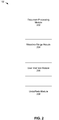
- the example client 102 includes example data processing module 202, example metadata merge module 204, example user interface module 206 and example undo/redo module 208.
- the example data processing module 202 comprises a word processing program such as the Microsoft Word word processing application from Microsoft Corporation of Redmond, Washington.
- the example metadata merge module 204 processes metadata received from example server 108 and inserts the metadata into appropriate sections of documents open on client computer 102.
- the metadata represents locks on sections of a document being edited by other coauthoring users.
- the example metadata merge module 204 receives a lock from server 108 for a specific section of the document, the example metadata merge module 204 inserts the lock into the corresponding section of the document open on client computer 102.
- the lock prevents the coauthoring user on client 102 from editing the section of the document for which the lock is directed.
- a section of a document corresponds to a paragraph of the document.
- the granularity of document sections may vary, as described above.
- the example user interface module 206 receives the lock from the example metadata merge module 204 and displays the lock in the appropriate section of the document. For example, the example user interface module 206 may put a bracket around a paragraph to indicate that the paragraph is locked. As another example, the example user interface module may insert an icon representing a lock next to the paragraph to be locked. Additionally, the example user interface module may display the name of the user that is coauthoring the paragraph. Other examples are possible. When a user sees a graphical indication that a paragraph is locked, the user is informed that editing in that paragraph is disabled until such time that the lock is removed.
- the example undo/redo module 208 processes undo and redo requests and performs undo and redo operations in a document while maintaining the integrity of any metadata locks in the document.
- the example undo/redo module 208 includes an example undo/redo stack.
- the example undo/redo stack includes an undo section and a redo section.
- traditional program stacks push entries onto the stack and pop entries off the stack
- the example undo/redo stack provides a marker to a specific portion of the undo/redo stack.
- User actions and metadata locks are stored or removed from the undo/redo stack in relation to where the marker is pointing in the undo/redo stack.
- the example undo/stack may store pointers to user actions and pointers to metadata locks.
- the example undo/redo module 208 checks the undo/redo stack on client computer 102 and removes any metadata locks from the undo portion of the undo/redo stack. All metadata locks removed from the undo portion of the undo/redo stack are then temporarily stored in memory on client computer 102. The last user action is then removed from the undo/redo stack and the last user action is reverted. For example if the last user action was to bold a character, the undo operation removes the holding from the character.
- the example undo/redo module 208 retrieves the locks temporarily stored in memory and restores the locks to the undo/redo stack.
- the example undo/redo module restores the locks in the reverse order to which the locks were removed from the undo/redo stack. For example, if there two locks were removed from the undo/redo stack, the second lock removed is restored to the stack first and the first lock removed is restored to the stack next. The locks on the stack are then in the same order as before the last user action was removed from the undo/redo stack. Thus, the locks are restored while minimizing any negative impact to the user experience, such as non-responsiveness or erratic user interface behavior.
- the undo/redo stack also permits undo operations to be redone. For example, if a user action is removed from undo section of the undo/redo stack as a result of an undo operation, the user action is stored in the redo portion of the undo/redo stack. If it is determined that an undo operation is to be reversed, for example by pressing an example redo button on the example client computer 102, the user action is removed from the redo portion of the undo/redo stack and restored to the document and to the undo portion of the undo/redo stack. For example, if the undo operation removed the letter "e" from the document, the redo operation restores the letter "e.” In addition, the redo operation restores the letter "e" to the undo portion of the undo/redo stack.
- Figure 3 shows an example undo/redo stack and an example document at time snapshots of a user editing session.
- each letter represents the content of a specific paragraph, for example paragraphs A, B, C and D.
- the example undo/redo stack shows a horizontal line 314 that shows a demarcation between the redo portion of the example undo/redo stack and the undo portion of the example undo/redo stack.
- the undo portion of the example undo/redo stack is the bottom portion 316.
- the bottom portion 316 of the example undo/redo stack shows "-B.”
- the "-B" represents undo actions for paragraph B.
- Each user action made in example paragraph B is represented by the symbol "-B.”
- each character is inserted into the undo/redo stack in the order typed, first "T” then "h” and then "e.” For simplicity all these actions are represented by the symbol "-B.”
- the user creates content for paragraph C. Accordingly, the document section of snapshot 306 shows that the document now has content in paragraphs A, B and C. In addition, the symbol "-C" is added to the bottom portion of the undo/redo stack 318.
- a lock is received at example client computer 102 for paragraph A as a result of a metadata merge.
- the lock is represented by lock symbol 320 around paragraph A.
- the lock is metadata representing that a coauthoring user on a client system, for example client computer 104, is editing paragraph A.
- the lock is also added to the undo section of the undo/redo stack. This is represented by example lock symbol 322.
- the lock 322 is also shown bracketed, via bracket 324, around the previous entry "-C" in the undo portion of the undo/redo stack. The reason the lock is shown bracketed around the previous entry "-C" is to emphasize the state of the document before the metadata merge.
- a user at example client computer 102 decides to perform an undo operation to undo the last entry made in paragraph C.
- the example undo/redo module 208 temporarily removes the lock in the example document 330, performs the undo operation for the last entry made in paragraph C and then reinserts the lock in the example document 330.
- These actions are added to the redo portion 326 of the example undo/redo stack.
- the actions are added to the redo portion 326 of the example undo/redo stack so that the actions can be reverted, if necessary, by a redo operation.
- the example redo portion 326 of the example undo/redo stack shows that to redo the undo action for the last entry made to paragraph C, going from bottom to top of the example redo portion 326 of the example undo/redo stack, first the current lock is removed (indicated by the symbol "-L"), then the last entry to paragraph C is reinserted into paragraph C and then the lock is reinserted in the document (indicated by the symbol "L").
- Time snapshot 310 also shows that after the undo operation for paragraph C, the example document 330 includes paragraphs A and B. This assumes, for simplicity that the undo operation for paragraph C removes all the text in paragraph C.
- Time snapshot 310 also shows that after the last user action in paragraph C is undone, the redo portion of the example undo/redo stack 328 shows a lock and the last user action of paragraph B. This indicates that the next undo operation is setup to temporarily remove the lock and undo the last user action of paragraph B.
- the user at example client computer 102 starts typing in a new paragraph D.
- the redo portion of the undo/redo stack is cleared. This is because, once a new action is initiated, the previous undo operation can no longer be reverted. For example, if a user typed "t" "h” and “s,” then did an undo operation for the "s" and then typed “e,” if the redo stack isn't cleared when the "e” is typed, a redo operation would restore the "s,” resulting in “t” "h” "e” "s,” clearly not what was intended.
- the example document portion 330 of time snapshot 312 shows that paragraph D has been added to the document.
- the example undo portion 332 of the example undo/redo stack for time snapshot 312 shows the symbol "-D" being added. Because paragraph D is created after the lock on paragraph A is received, the last user action for paragraph D can be undone without first removing the lock. However, if the last user action for paragraph D is redone, in order for the last user action for paragraph A to be undone, the lock on the example document 330 must be temporarily removed, as discussed.
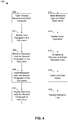
- FIG. 4 shows a flowchart illustrating an example operation 400 performed by example client computer 102.
- a shared document is opened at example client computer 102.
- the shared document is one that is stored on an online browser-based document collaboration server, for example Microsoft SharePoint Server 2007.
- the shared document is also available for coauthoring by other users, for example a user on example client computer 104.
- the shared document is opened and processed using the example document processing module 202.
- a coauthoring user on client computer 102 modifies a first paragraph of the document.
- the user can modify the first paragraph by typing in the first paragraph, deleting part of the first paragraph or making formatting changes in the first paragraph.
- Typing in the first paragraph includes creating the first paragraph and editing text in the first paragraph.
- the example metadata merge module 204 on client computer 102 receives a metadata lock for a second paragraph of the document.
- the example metadata merge module 204 inserts the metadata lock in the second paragraph of the document.
- the metadata lock indicates that a coauthoring user on another client system, for client computer 104, is modifying the second paragraph of the document.
- the metadata lock prevents the user on client computer 102 from modifying the second paragraph of the document.
- the example user interface module 206 displays the metadata lock in graphical form on the document so the coauthoring user on client 102 can quickly see what paragraphs of the document are locked.
- the example metadata merge module 204 stores the metadata lock on the undo/redo stack on client computer 102.
- the coauthoring user on client computer 102 initiates an undo operation.
- the coauthoring user on client computer 102 may wish to undo the last user action in the first paragraph of the document.
- the undo operation is processed by example undo/redo module 208.
- the last user action is an editing action that may include typing a character, deleting part of the first paragraph and making formatting changes in the first paragraph.
- the user typically initiates the undo operation by pressing a key on client computer 102 associated with the undo operation, for example by pressing an undo key.
- the example metadata merge module 204 removes the metadata lock on the undo/redo stack and temporarily stores the metadata lock in memory, in an area other than the undo/redo stack, on the example client computer 102.
- the last user action is undone and at operation 420, the example metadata merge module 204 restores the metadata lock on the undo/redo stack.
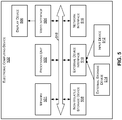
- Figure 5 is a block diagram illustrating example physical components on client 102.
- Client computer 104 and server computer 108 and /or electronic computing devices within client computers 102 and 104 and/or server computer 108 may be implemented in a manner similar to that of client 102.
- client 102 is an electronic computing device such as a desktop computer, laptop computer, terminal computer, personal data assistant, or cellular telephone device.
- Memory unit 501 is a computer-readable data storage medium that is capable of storing data and instructions.
- Memory unit 501 may be a variety of different types of computer-readable data storage media including, but not limited to, dynamic random access memory (DRAM), double data rate synchronous dynamic random access memory (DDR SDRAM), reduced latency DRAM, DDR SDRAM, DDR3 SDRAM, Rambus RAM, or other types of computer-readable data storage media.
- DRAM dynamic random access memory
- DDR SDRAM double data rate synchronous dynamic random access memory
- DDR SDRAM double data rate synchronous dynamic random access memory
- reduced latency DRAM DDR SDRAM
- DDR3 SDRAM DDR3 SDRAM
- Rambus RAM Rambus RAM
- Client 102 can also include communication media.
- Communication media may typically be embodied by computer readable instructions, data structures, program modules, or other data in a modulated data signal, such as a carrier wave or other transport mechanism, and includes any information delivery media.
- modulated data signal means a signal that has one or more of its characteristics set or changed in such a manner as to encode information in the signal.
- communication media includes wired media such as a wired network or direct-wired connection, and wireless media such as acoustic, RF, infrared and other wireless media.
- client 102 includes a processing unit 502.
- processing unit 502 may execute software instructions that cause processing unit 502 to provide specific functionality.
- processing unit 502 may be implemented as one or more processing cores and/or as one or more separate microprocessors.
- processing unit 502 may be implemented as one or more Intel Core2 microprocessors.
- Processing unit 502 may be capable of executing instructions in an instruction set, such as the x86 instruction set, the POWER instruction set, a RISC instruction set, the SPARC instruction set, the IA-64 instruction set, the MIPS instruction set, or another instruction set.
- processing unit 502 may be implemented as an application specific integrated circuit (ASIC) that provides specific functionality.
- ASIC application specific integrated circuit
- processing unit 502 may provide specific functionality by using an ASIC and by executing software instructions.
- Client 102 also comprises a video interface 504 that enables a client computer (102 and 104) or a server computer 108 to output video information to display device 506.
- Display device 506 may be a variety of different types of display devices. For instance, display device 506 may be a cathode-ray tube display, an LCD display panel, a plasma screen display panel, a touch-sensitive display panel, a LED array, or another type of display device.
- Non-volatile storage device 508 is a computer-readable data storage medium that is capable of storage data and/or instructions.
- Non-volatile storage device 508 may be a variety of different types of different non-volatile storage devices.
- non-volatile storage device 508 may be one or more hard disk drives, magnetic tape drives, CD-ROM drives, DVD-ROM drives, Blu-Ray disc drives, or other types on non-volatile storage devices.
- Client 102 also includes an external component interface 510 that enables client computers 102 and 104 and server computer 108 to communicate with external components. As illustrated in the example of Figure 5 , external component interface 510 communicates with an input device 512 and an external storage device 514. In one implementation of client 102, external component interface 510 is a Universal Serial Bus (USB) interface. In other implementations of client 102, client 102 may include another type of interface that enables client 102 to communicate with input device and/or output devices. For instance, client 102 may include a PS/2 interface.
- USB Universal Serial Bus
- Input device 512 may be a variety of different types of devices including, but not limited to keyboards, mice, trackballs, stylus input devices, touch pads, touch-sensitive display devices, touch-sensitive display screens, or other types of input devices.
- External storage device 514 may be a variety of different types of computer-readable data storage media including magnetic tape, flash memory modules, magnetic disk drives, optical disc drives, and other computer-readable data storage media.
- client 102 includes a network interface 516 that enables client 102 to send data to and receive data from network 106.
- Network interface 516 may be a variety of different types of network interface.
- network interface 516 may be an Ethernet interface, a token-ring interface, a fiber optic interface, a wireless network interface (e.g., WiFi, WiMax, etc.), or another type of network interface.
- Client 102 also includes a communications medium 518 that facilitates communication among the various components of client 102.
- Communications medium 518 may comprise one or more different types of communication media including, but not limited to, a PCI bus, a PCI Express bus, an accelerated graphics port (AGP) bus, an Infiniband interconnect, a serial Advanced Attachment (ATA) interconnect, a parallel ATA interconnect, a Fiber Channel interconnect, a USB bus, a Small Computer System Interface (SCSI) interface, or another type of communications medium.
- FIG. 5 Several computer-readable data storage media are illustrated in the example of Figure 5 (i.e., memory unit 501, non-volatile storage device 508, and external storage device 514). Together, these computer-readable data storage media may constitute a single logical computer-readable data storage medium.
- This single logical computer-readable data storage medium may store instructions executable by processing unit 502. Actions described in the above description may result from the execution of the instructions stored on this single logical computer-readable data storage medium. Thus, when this description says that a particular logical module performs a particular action, such a statement may be interpreted to mean that instructions of the software module cause a processing unit, such as processing unit 502, to perform the action.
Landscapes
- Engineering & Computer Science (AREA)
- Theoretical Computer Science (AREA)
- General Engineering & Computer Science (AREA)
- Physics & Mathematics (AREA)
- General Physics & Mathematics (AREA)
- Databases & Information Systems (AREA)
- Data Mining & Analysis (AREA)
- General Health & Medical Sciences (AREA)
- Health & Medical Sciences (AREA)
- Computational Linguistics (AREA)
- Audiology, Speech & Language Pathology (AREA)
- Artificial Intelligence (AREA)
- Software Systems (AREA)
- Computer Hardware Design (AREA)
- Mathematical Physics (AREA)
- Human Computer Interaction (AREA)
- Multimedia (AREA)
- Technology Law (AREA)
- Computer Security & Cryptography (AREA)
- Document Processing Apparatus (AREA)
- Information Retrieval, Db Structures And Fs Structures Therefor (AREA)
Claims (10)
- Verfahren (400) der Aufrechterhaltung von Rückgängigmachungs-/Wiederholungsfunktionen über Metadaten-Zusammenführungen (metadata merges) hinweg in einem Dokument, das auf einem Client-Computer (102) mitverfasst wird, wobei das Verfahren umfasst:Modifizieren (404), auf dem Client-Computer (102), eines ersten Abschnitts eines Dokuments in einer Textverarbeitungsanwendung auf dem Client-Computer (102), wobei das Modifizieren eines ersten Abschnitts eines Dokuments die Durchführung einer oder mehrerer Benutzeraktionen in dem ersten Abschnitt des Dokuments umfasst;während des Modifizierens des ersten Abschnitts des Dokuments, Empfangen (406) einer Metadaten-Sperre, auf dem Client-Computer (102), für einen zweiten Abschnitt des Dokuments, wobei sich der zweite Abschnitt des Dokuments von dem ersten Abschnitt des Dokuments unterscheidet;nach dem Empfangen der Metadaten-Sperre für den zweiten Abschnitt des Dokuments, Einfügen (408) der Metadaten-Sperre in den zweiten Abschnitt des Dokuments, wobei die Metadaten-Sperre einen mitverfassenden Benutzer auf dem Client-Computer daran hindert, den zweiten Abschnitt des Dokuments zu editieren;Speichern (412) der Metadaten-Sperre in einem Programmstack auf dem Client-Computer; undnachdem die Metadaten in den zweiten Abschnitt des Dokuments eingefügt wurden, Durchführen (414) einer Rückgängigmachungsoperation in der Textverarbeitungsanwendung, wobei die Rückgängigmachungsoperation die nachstehenden Schritte einschließt:Entfernen (416) der Metadaten-Sperre, auf dem Client-Computer (102), für den zweiten Abschnitt des Dokuments von dem Programmstack und Speichern der Metadaten-Sperre in einem Speicherbereich des Client-Computers, der sich von dem Programmstack unterscheidet;Rückgängigmachen (418) der letzten Benutzeraktion der einen oder der mehreren Benutzeraktionen in dem ersten Abschnitt des Dokuments durch Entfernen der letzen Benutzeraktion von dem Programmstack; undWiederherstellen (420) der Metadaten-Sperre auf dem Programmstack.
- Verfahren nach Anspruch 1, wobei der erste Abschnitt des Dokuments einem Absatz (paragraph) in dem Dokument entspricht.
- Verfahren nach Anspruch 1, wobei der Programmstack ein Rückgängigmachungs-/Wiederholungsstack ist.
- Verfahren nach Anspruch 1, wobei das Rückgängigmachen der letzten Benutzeraktion das Entfernen der letzten Benutzeraktion von dem Programmstack umfasst.
- Verfahren nach Anspruch 1, wobei der erste Abschnitt des Dokuments einem ersten Absatz in dem Dokument entspricht, den ein erster Benutzer editiert, und der zweite Abschnitt des Dokuments einem zweiten Absatz entspricht, den ein zweiter Benutzer editiert.
- Rechenvorrichtung (102), daran angepasst, Rückgängigmachungs-/Wiederholungsfunktionen über Metadaten-Zusammenführungen hinweg in einem Dokument aufrechtzuerhalten, das mitverfasst wird, umfassend:eine Verarbeitungseinheit (502);einen Systemspeicher (501), verbunden mit der Verarbeitungseinheit (502), wobei der Systemspeicher (501) Anweisungen umfasst, die, wenn sie von der Verarbeitungseinheit (502) ausgeführt werden, die Verarbeitungseinheit veranlassen, zum:Modifizieren (404), auf der Rechenvorrichtung, eines ersten Abschnitts eines Dokuments in einer Textverarbeitungsanwendung auf der Rechenvorrichtung, wobei das Modifizieren eines ersten Abschnitts eines Dokuments die Durchführung einer oder mehrerer Benutzeraktionen in dem ersten Abschnitt des Dokuments umfasst;während des Modifizierens des ersten Abschnitts des Dokuments, Empfangen (406) einer Metadaten-Sperre, auf der Rechenvorrichtung, für einen zweiten Abschnitt des Dokuments, wobei sich der zweite Abschnitt des Dokuments von dem ersten Abschnitt des Dokuments unterscheidet;nach dem Empfangen der Metadaten-Sperre für den zweiten Abschnitt des Dokuments, Einfügen (408) der Metadaten-Sperre in den zweiten Abschnitt des Dokuments, wobei die Metadaten-Sperre einen mitverfassenden Benutzer auf dem Client-Computer daran hindert, den zweiten Abschnitt des Dokuments zu editieren;Speichern (412) der Metadaten-Sperre in einem Programmstack auf der Rechenvorrichtung; undnachdem die Metadaten in den zweiten Abschnitt des Dokuments eingefügt wurden, Durchführen (414) einer Rückgängigmachungsoperation in der Textverarbeitungsanwendung, wobei die Rückgängigmachungsoperation die nachstehenden Schritte einschließt:Entfernen (416) der Metadaten-Sperre, auf dem Client-Computer, für den zweiten Abschnitt des Dokuments von dem Programmstack und Speichern der Metadaten-Sperre in einem Speicherbereich der Rechenvorrichtung, der sich von dem Programmstack unterscheidet;Rückgängigmachen (418) der letzten Benutzeraktion der einen oder der mehreren Benutzeraktionen in dem ersten Abschnitt des Dokuments durch Entfernen der letzen Benutzeraktion von dem Programmstack; undWiederherstellen (420) der Metadaten-Sperre auf dem Programmstack.
- Rechenvorrichtung nach Anspruch 6, wobei der eine oder die mehreren Abschnitte eines Dokuments Absätze sind.
- Rechenvorrichtung nach Anspruch 6 oder 7, wobei die Metadaten-Sperre einen Benutzer daran hindert, in den einen oder die mehreren Abschnitte des Dokuments, in das die Metadaten-Sperren eingefügt sind, zu schreiben.
- Rechenvorrichtung nach Anspruch 6, wobei der Programmstack ein Rückgängigmachungs-/Wiederholungsstack ist.
- Computerlesbares Speichermedium (508), das Anweisungen umfasst, die, wenn sie von einer Verarbeitungseinheit eines ersten Client-Computers (102) ausgeführt werden, die Verarbeitungseinheit (502) des ersten Client-Computers (102) veranlassen, zum:Editieren (404) eines ersten Absatzes eines Dokuments auf dem ersten Client-Computer (102), wobei der erste Absatz von einem Benutzer auf dem ersten Client-Computer (102) editiert wird, wobei das Editieren des ersten Absatzes des Dokuments eine oder mehrere Benutzeraktionen in dem ersten Absatz des Dokuments umfasst, wobei die eine oder die mehreren Benutzeraktionen das Eintippen in den ersten Absatz, das Löschen von Text in dem ersten Absatz, das Vornehmen von Stiländerungen in dem ersten Absatz und das Formatieren des ersten Absatzes einschließen, wobei die eine oder die mehreren Benutzeraktionen in dem ersten Absatz des Dokuments in einem Rückgängigmachungs-/Wiederholungsstack auf dem ersten Client-Computer (102) gespeichert werden;während des Editierens des ersten Absatzes des Dokuments, Empfangen (406) einer Sperre auf dem ersten Client-Computer (102) für einen zweiten Absatz des Dokuments, wobei die Sperre von einem Server-Computer (108) empfangen wird, wobei die Sperre angibt, dass ein Benutzer auf einem zweiten Client-Computer (104) gerade den zweiten Absatz des Dokuments editiert, und die Sperre den Benutzer daran hindert, den zweiten Absatz zu editieren;nach dem Empfangen der Sperre für den zweiten Absatz des Dokuments, Veranlassen der Verarbeitungseinheit (502) des ersten Client-Computers (102) zum:
Einfügen (408) der Sperre in den zweiten Absatz des Dokuments, wobei die Sperre den Benutzer auf dem ersten Client-Computer (102) daran hindert, den zweiten Absatz auf dem ersten Client-Computer (102) zu editieren;Speichern (412) der Sperre auf dem Rückgängigmachungs-/Wiederholungsstack des ersten Client-Computers (102); undnach dem Speichern der Sperre auf dem Rückgängigmachungs-/Wiederholungsstack des ersten Client-Computers (102), Durchführen (414) einer Rückgängigmachungsoperation auf dem ersten Client-Computer (102), wobei die Rückgängigmachungsoperation die Verarbeitungseinheit auf dem ersten Client-Computer (102) veranlasst zum:Entfernen (416) der Sperre für den zweiten Absatz des Dokuments von dem Rückgängigmachungs-/Wiederholungsstack auf dem ersten Client-Computer (102);wenn die Sperre von dem Rückgängigmachungs-/Wiederholungsstack auf dem ersten Client-Computers (102) entfernt wird, vorübergehendes Speichern der Sperre im Speicher (501) auf dem ersten Client-Computer (102), wobei die Sperre in einem Bereich des Speichers (501) des ersten Client-Computers gespeichert wird, der sich von dem Rückgängigmachungs-/Wiederholungsstack unterscheidet;wenn die Sperre von dem Rückgängigmachungs-/Wiederholungsstack auf dem ersten Client-Computer (102) entfernt wird, Rückgängigmachen (418) der letzen der einen oder der mehreren Benutzeraktionen auf dem ersten Client-Computer (102), wobei die letzte der einen oder der mehreren Benutzeraktionen von dem Rückgängigmachungs-/Wiederholungsstack entfernt wird; undnachdem die letzte der einen oder der mehreren Benutzeraktionen auf dem ersten Client-Computer (102) rückgängig gemacht wurde, Entfernen der Sperre von dem Bereich des Speichers (501) auf dem ersten Client-Computer (102), auf dem die Sperre vorübergehend gespeichert wird, und Wiederherstellen (420) der Sperre in dem Rückgängigmachungs-/Wiederherstellungsstack.
Applications Claiming Priority (2)
| Application Number | Priority Date | Filing Date | Title |
|---|---|---|---|
| US12/431,883 US8209603B2 (en) | 2009-04-29 | 2009-04-29 | Maintaining undo and redo capability across metadata merges |
| PCT/US2010/031951 WO2010126763A2 (en) | 2009-04-29 | 2010-04-21 | Maintaining undo and redo capability across metadata merges |
Publications (3)
| Publication Number | Publication Date |
|---|---|
| EP2425357A2 EP2425357A2 (de) | 2012-03-07 |
| EP2425357A4 EP2425357A4 (de) | 2018-01-10 |
| EP2425357B1 true EP2425357B1 (de) | 2020-10-14 |
Family
ID=43031324
Family Applications (1)
| Application Number | Title | Priority Date | Filing Date |
|---|---|---|---|
| EP10770140.1A Not-in-force EP2425357B1 (de) | 2009-04-29 | 2010-04-21 | Aufrechterhaltung von rückgängigmachungs- und wiederholungsfunktionen zwischen metadaten |
Country Status (14)
| Country | Link |
|---|---|
| US (1) | US8209603B2 (de) |
| EP (1) | EP2425357B1 (de) |
| JP (1) | JP5684236B2 (de) |
| KR (1) | KR101683322B1 (de) |
| CN (1) | CN102414679B (de) |
| AU (1) | AU2010241861B2 (de) |
| BR (1) | BRPI1012014A8 (de) |
| CA (1) | CA2756687C (de) |
| IL (1) | IL215273A0 (de) |
| MX (1) | MX2011011350A (de) |
| RU (1) | RU2554785C2 (de) |
| TW (1) | TWI412942B (de) |
| WO (1) | WO2010126763A2 (de) |
| ZA (1) | ZA201106939B (de) |
Families Citing this family (33)
| Publication number | Priority date | Publication date | Assignee | Title |
|---|---|---|---|---|
| US9591086B2 (en) * | 2007-07-25 | 2017-03-07 | Yahoo! Inc. | Display of information in electronic communications |
| US20110010638A1 (en) * | 2009-07-10 | 2011-01-13 | Novell, Inc. | Presence-enabled inbox |
| US9208137B2 (en) * | 2010-08-19 | 2015-12-08 | Cadence Design Systems, Inc. | Method to preview an undo/redo list |
| US20120101980A1 (en) * | 2010-10-26 | 2012-04-26 | Microsoft Corporation | Synchronizing online document edits |
| CN102262620B (zh) * | 2011-08-04 | 2014-11-26 | 无锡永中软件有限公司 | 一种文档协作方法 |
| US9948988B2 (en) | 2011-10-04 | 2018-04-17 | Ricoh Company, Ltd. | Meeting system that interconnects group and personal devices across a network |
| US10733151B2 (en) | 2011-10-27 | 2020-08-04 | Microsoft Technology Licensing, Llc | Techniques to share media files |
| US8949352B2 (en) | 2011-10-28 | 2015-02-03 | Microsoft Corporation | Document sharing through browser |
| US8484166B2 (en) * | 2011-11-03 | 2013-07-09 | Oracle International Corporation | Oracle rewind: metadata-driven undo |
| US9053079B2 (en) | 2011-12-12 | 2015-06-09 | Microsoft Technology Licensing, Llc | Techniques to manage collaborative documents |
| US11392601B2 (en) | 2012-01-18 | 2022-07-19 | Google Llc | Search-based document user interfaces |
| US11514230B2 (en) * | 2012-01-18 | 2022-11-29 | Google Llc | Methods and systems for searching document operation labels |
| US9262180B2 (en) * | 2012-04-26 | 2016-02-16 | Adobe Systems Incorporated | Method and apparatus for recommending product features in a software application in real time |
| US20150199307A1 (en) * | 2012-08-08 | 2015-07-16 | Google Inc. | Pluggable Architecture For Optimizing Versioned Rendering of Collaborative Documents |
| US9336234B2 (en) | 2013-02-22 | 2016-05-10 | Adobe Systems Incorporated | Online content management system with undo and redo operations |
| CN104238865A (zh) * | 2013-06-08 | 2014-12-24 | 深圳联友科技有限公司 | 一种在电子设备中撤消和重做界面操作的方法及系统 |
| CN103501339B (zh) * | 2013-09-30 | 2017-06-20 | 华为技术有限公司 | 元数据处理方法及元数据服务器 |
| US9530233B2 (en) * | 2013-10-10 | 2016-12-27 | Adobe Systems Incorporated | Action records associated with editable content objects |
| US9817805B1 (en) | 2014-06-24 | 2017-11-14 | Google Inc. | Systems and methods for providing a collaborative document environment |
| JP6512763B2 (ja) * | 2014-07-16 | 2019-05-15 | キヤノン株式会社 | 情報処理装置、情報処理方法、プログラム |
| CN104156344B (zh) * | 2014-07-21 | 2016-09-28 | 小米科技有限责任公司 | 文本编辑方法和装置 |
| US10491695B2 (en) * | 2014-08-22 | 2019-11-26 | Oracle International Corporation | Autosave with across user session undo support |
| KR101683448B1 (ko) * | 2014-12-02 | 2016-12-07 | 주식회사 인프라웨어 | 복합 명령에 대한 실행 취소 방법 |
| US10063603B2 (en) * | 2014-12-11 | 2018-08-28 | Liveloop, Inc | Method and system for concurrent collaborative undo operations in computer application software |
| US20160321226A1 (en) * | 2015-05-01 | 2016-11-03 | Microsoft Technology Licensing, Llc | Insertion of unsaved content via content channel |
| US9972109B2 (en) * | 2015-07-30 | 2018-05-15 | Adobe Systems Incorporated | Implementing out of order access to reversal operations in images |
| CN106250221B (zh) * | 2016-07-28 | 2019-06-11 | 福建天泉教育科技有限公司 | 基于PowerPoint应用对象的插入方法及其系统 |
| CA3110732C (en) * | 2020-05-07 | 2022-03-15 | Citrix Systems, Inc. | Dynamic region based application operations |
| CN113836875B (zh) * | 2021-09-16 | 2023-08-22 | 网易(杭州)网络有限公司 | 文本处理方法、系统、装置、存储介质 |
| CN114690997B (zh) * | 2022-04-15 | 2023-07-25 | 北京百度网讯科技有限公司 | 文本显示方法及装置、设备、介质和产品 |
| CN114816593A (zh) * | 2022-06-27 | 2022-07-29 | 天津联想协同科技有限公司 | 一种命令的执行方法、装置及可读存储介质 |
| CN115510278A (zh) * | 2022-09-14 | 2022-12-23 | 之江实验室 | 一种前端操作记录缓存和撤销重做的数据管理系统和方法 |
| CN118819502B (zh) * | 2024-08-02 | 2025-03-25 | 广东保伦电子股份有限公司 | 一种操作控制方法、装置及存储介质 |
Family Cites Families (24)
| Publication number | Priority date | Publication date | Assignee | Title |
|---|---|---|---|---|
| JP2920393B2 (ja) * | 1989-12-14 | 1999-07-19 | 株式会社日立製作所 | 文書編集方法 |
| DE69126066T2 (de) | 1990-06-29 | 1997-09-25 | Oracle Corp | Verfahren und Gerät zur Optimierung des Logbuchaufhebungsgebrauchs |
| JP3793226B2 (ja) | 1992-12-23 | 2006-07-05 | オブジェクト テクノロジー ライセンシング コーポレイション | アトミック・コマンド・システム |
| US5890181A (en) * | 1996-11-14 | 1999-03-30 | Kurzwell Applied Intelligence, Inc. | System and method for remotely grouping contents of an action history stack |
| US5966512A (en) * | 1997-06-05 | 1999-10-12 | International Business Machines Corporation | Groupware save operation |
| US6067551A (en) | 1997-11-14 | 2000-05-23 | Microsoft Corporation | Computer implemented method for simultaneous multi-user editing of a document |
| US6192378B1 (en) | 1998-05-13 | 2001-02-20 | International Business Machines Corporation | Method and apparatus for combining undo and redo contexts in a distributed access environment |
| US7096465B1 (en) | 1999-05-17 | 2006-08-22 | Invensys Systems, Inc. | Process control configuration system with parameterized objects |
| US7249314B2 (en) * | 2000-08-21 | 2007-07-24 | Thoughtslinger Corporation | Simultaneous multi-user document editing system |
| EP1204048A1 (de) * | 2000-11-03 | 2002-05-08 | Sun Microsystems, Inc. | Verfahren und Vorrichtung zur Szenarien-Handhabung in einen Kalkulationsblatt |
| US7823060B2 (en) * | 2002-06-07 | 2010-10-26 | Microsoft Corporation | Undo/redo architecture across multiple files |
| US6981004B2 (en) * | 2002-09-16 | 2005-12-27 | Oracle International Corporation | Method and mechanism for implementing in-memory transaction logging records |
| US6976022B2 (en) * | 2002-09-16 | 2005-12-13 | Oracle International Corporation | Method and mechanism for batch processing transaction logging records |
| US20080177994A1 (en) | 2003-01-12 | 2008-07-24 | Yaron Mayer | System and method for improving the efficiency, comfort, and/or reliability in Operating Systems, such as for example Windows |
| US8719325B2 (en) * | 2003-02-28 | 2014-05-06 | Microsoft Corporation | Method to initiate server based collaboration on e-mail attachments |
| CA2422176C (en) * | 2003-03-14 | 2009-07-21 | Ibm Canada Limited - Ibm Canada Limitee | Method and apparatus for interrupting updates to a database to provide read-only access |
| US7818679B2 (en) * | 2004-04-20 | 2010-10-19 | Microsoft Corporation | Method, system, and apparatus for enabling near real time collaboration on an electronic document through a plurality of computer systems |
| JP4069905B2 (ja) * | 2004-06-28 | 2008-04-02 | コニカミノルタビジネステクノロジーズ株式会社 | 共有ファイル管理システムおよびサーバー |
| US7499955B2 (en) * | 2005-03-30 | 2009-03-03 | Microsoft Corporation | System and method for undoing application actions using inverse actions with atomic rollback |
| US8127278B2 (en) * | 2006-09-28 | 2012-02-28 | Sap Ag | System and method for extending legacy applications with undo/redo functionality |
| US7865872B2 (en) | 2006-12-01 | 2011-01-04 | Murex S.A.S. | Producer graph oriented programming framework with undo, redo, and abort execution support |
| US7900142B2 (en) | 2007-01-15 | 2011-03-01 | Microsoft Corporation | Selective undo of editing operations performed on data objects |
| KR100819005B1 (ko) * | 2007-02-16 | 2008-04-03 | 삼성전자주식회사 | 저항체를 이용한 비휘발성 메모리 장치 |
| US8239760B2 (en) | 2007-06-26 | 2012-08-07 | Sap Ag | Multi-user document editing system and method |
-
2009
- 2009-04-29 US US12/431,883 patent/US8209603B2/en not_active Expired - Fee Related
-
2010
- 2010-03-29 TW TW099109446A patent/TWI412942B/zh not_active IP Right Cessation
- 2010-04-21 WO PCT/US2010/031951 patent/WO2010126763A2/en not_active Ceased
- 2010-04-21 CN CN2010800200101A patent/CN102414679B/zh not_active Expired - Fee Related
- 2010-04-21 RU RU2011143848/08A patent/RU2554785C2/ru not_active IP Right Cessation
- 2010-04-21 MX MX2011011350A patent/MX2011011350A/es active IP Right Grant
- 2010-04-21 JP JP2012508536A patent/JP5684236B2/ja not_active Expired - Fee Related
- 2010-04-21 BR BRPI1012014A patent/BRPI1012014A8/pt not_active Application Discontinuation
- 2010-04-21 KR KR1020117025468A patent/KR101683322B1/ko not_active Expired - Fee Related
- 2010-04-21 EP EP10770140.1A patent/EP2425357B1/de not_active Not-in-force
- 2010-04-21 AU AU2010241861A patent/AU2010241861B2/en not_active Ceased
- 2010-04-21 CA CA2756687A patent/CA2756687C/en active Active
-
2011
- 2011-09-21 IL IL215273A patent/IL215273A0/en unknown
- 2011-09-22 ZA ZA2011/06939A patent/ZA201106939B/en unknown
Non-Patent Citations (1)
| Title |
|---|
| None * |
Also Published As
| Publication number | Publication date |
|---|---|
| CA2756687A1 (en) | 2010-11-04 |
| BRPI1012014A2 (pt) | 2016-05-10 |
| TWI412942B (zh) | 2013-10-21 |
| US8209603B2 (en) | 2012-06-26 |
| TW201039148A (en) | 2010-11-01 |
| IL215273A0 (en) | 2011-11-30 |
| RU2011143848A (ru) | 2013-05-10 |
| EP2425357A2 (de) | 2012-03-07 |
| EP2425357A4 (de) | 2018-01-10 |
| WO2010126763A2 (en) | 2010-11-04 |
| KR101683322B1 (ko) | 2016-12-06 |
| JP5684236B2 (ja) | 2015-03-11 |
| WO2010126763A3 (en) | 2011-01-13 |
| ZA201106939B (en) | 2012-11-29 |
| RU2554785C2 (ru) | 2015-06-27 |
| CA2756687C (en) | 2016-06-21 |
| CN102414679A (zh) | 2012-04-11 |
| JP2012525635A (ja) | 2012-10-22 |
| US20100281362A1 (en) | 2010-11-04 |
| BRPI1012014A8 (pt) | 2017-10-03 |
| CN102414679B (zh) | 2013-07-17 |
| KR20120011332A (ko) | 2012-02-07 |
| AU2010241861B2 (en) | 2014-07-10 |
| MX2011011350A (es) | 2011-11-18 |
| AU2010241861A1 (en) | 2011-10-20 |
Similar Documents
| Publication | Publication Date | Title |
|---|---|---|
| CA2756687C (en) | Maintaining undo and redo capability across metadata merges | |
| JP2012525635A5 (de) | ||
| EP3686748B1 (de) | Synchronisierung von inhaltsblöcken zwischen mehreren elektronischen dokumenten | |
| US9652440B2 (en) | Concurrent utilization of a document by multiple threads | |
| CN106471487B (zh) | 用于使用应用引擎来编辑非本原应用中的文件的系统和方法 | |
| US8341224B2 (en) | Multi-master text synchronization using deltas | |
| US8555161B2 (en) | Concurrent editing of a document by multiple clients | |
| CN102262620B (zh) | 一种文档协作方法 | |
| RU2586872C2 (ru) | Удаление поврежденных стилей из документов расширяемого языка разметки | |
| US10867118B2 (en) | Method and system for implementing a collaboration platform for structured objects in a document | |
| US20140258228A1 (en) | Performing persistent undo and redo operation within computer software | |
| CN112052655B (zh) | 一种页面处理的方法、装置、计算机存储介质及终端 | |
| US20120324345A1 (en) | Transitioning between an Editing View and a Backstage View of an Electronic Document | |
| EP4195082A1 (de) | Dokumentendesinfizierer | |
| AU2012271066A1 (en) | Transitioning between an editing view and a backstage view of an electronic document | |
| HK1177010B (en) | Techniques to create structured document templates using enhanced content controls |
Legal Events
| Date | Code | Title | Description |
|---|---|---|---|
| PUAI | Public reference made under article 153(3) epc to a published international application that has entered the european phase |
Free format text: ORIGINAL CODE: 0009012 |
|
| 17P | Request for examination filed |
Effective date: 20111019 |
|
| AK | Designated contracting states |
Kind code of ref document: A2 Designated state(s): AT BE BG CH CY CZ DE DK EE ES FI FR GB GR HR HU IE IS IT LI LT LU LV MC MK MT NL NO PL PT RO SE SI SK SM TR |
|
| DAX | Request for extension of the european patent (deleted) | ||
| REG | Reference to a national code |
Ref country code: HK Ref legal event code: DE Ref document number: 1167725 Country of ref document: HK |
|
| RAP1 | Party data changed (applicant data changed or rights of an application transferred) |
Owner name: MICROSOFT TECHNOLOGY LICENSING, LLC |
|
| A4 | Supplementary search report drawn up and despatched |
Effective date: 20171212 |
|
| RIC1 | Information provided on ipc code assigned before grant |
Ipc: G06F 17/24 20060101AFI20171206BHEP |
|
| REG | Reference to a national code |
Ref country code: HK Ref legal event code: WD Ref document number: 1167725 Country of ref document: HK |
|
| REG | Reference to a national code |
Ref country code: DE Ref legal event code: R079 Ref document number: 602010065683 Country of ref document: DE Free format text: PREVIOUS MAIN CLASS: G06F0017210000 Ipc: G06F0040166000 |
|
| GRAP | Despatch of communication of intention to grant a patent |
Free format text: ORIGINAL CODE: EPIDOSNIGR1 |
|
| STAA | Information on the status of an ep patent application or granted ep patent |
Free format text: STATUS: GRANT OF PATENT IS INTENDED |
|
| RIC1 | Information provided on ipc code assigned before grant |
Ipc: G06F 40/166 20200101AFI20200428BHEP |
|
| INTG | Intention to grant announced |
Effective date: 20200518 |
|
| GRAS | Grant fee paid |
Free format text: ORIGINAL CODE: EPIDOSNIGR3 |
|
| GRAA | (expected) grant |
Free format text: ORIGINAL CODE: 0009210 |
|
| STAA | Information on the status of an ep patent application or granted ep patent |
Free format text: STATUS: THE PATENT HAS BEEN GRANTED |
|
| AK | Designated contracting states |
Kind code of ref document: B1 Designated state(s): AT BE BG CH CY CZ DE DK EE ES FI FR GB GR HR HU IE IS IT LI LT LU LV MC MK MT NL NO PL PT RO SE SI SK SM TR |
|
| REG | Reference to a national code |
Ref country code: GB Ref legal event code: FG4D |
|
| REG | Reference to a national code |
Ref country code: AT Ref legal event code: REF Ref document number: 1324288 Country of ref document: AT Kind code of ref document: T Effective date: 20201015 Ref country code: CH Ref legal event code: EP |
|
| REG | Reference to a national code |
Ref country code: DE Ref legal event code: R096 Ref document number: 602010065683 Country of ref document: DE |
|
| REG | Reference to a national code |
Ref country code: IE Ref legal event code: FG4D |
|
| REG | Reference to a national code |
Ref country code: AT Ref legal event code: MK05 Ref document number: 1324288 Country of ref document: AT Kind code of ref document: T Effective date: 20201014 |
|
| REG | Reference to a national code |
Ref country code: NL Ref legal event code: MP Effective date: 20201014 |
|
| PG25 | Lapsed in a contracting state [announced via postgrant information from national office to epo] |
Ref country code: GR Free format text: LAPSE BECAUSE OF FAILURE TO SUBMIT A TRANSLATION OF THE DESCRIPTION OR TO PAY THE FEE WITHIN THE PRESCRIBED TIME-LIMIT Effective date: 20210115 Ref country code: FI Free format text: LAPSE BECAUSE OF FAILURE TO SUBMIT A TRANSLATION OF THE DESCRIPTION OR TO PAY THE FEE WITHIN THE PRESCRIBED TIME-LIMIT Effective date: 20201014 Ref country code: PT Free format text: LAPSE BECAUSE OF FAILURE TO SUBMIT A TRANSLATION OF THE DESCRIPTION OR TO PAY THE FEE WITHIN THE PRESCRIBED TIME-LIMIT Effective date: 20210215 Ref country code: NO Free format text: LAPSE BECAUSE OF FAILURE TO SUBMIT A TRANSLATION OF THE DESCRIPTION OR TO PAY THE FEE WITHIN THE PRESCRIBED TIME-LIMIT Effective date: 20210114 Ref country code: NL Free format text: LAPSE BECAUSE OF FAILURE TO SUBMIT A TRANSLATION OF THE DESCRIPTION OR TO PAY THE FEE WITHIN THE PRESCRIBED TIME-LIMIT Effective date: 20201014 |
|
| REG | Reference to a national code |
Ref country code: LT Ref legal event code: MG4D |
|
| PG25 | Lapsed in a contracting state [announced via postgrant information from national office to epo] |
Ref country code: SE Free format text: LAPSE BECAUSE OF FAILURE TO SUBMIT A TRANSLATION OF THE DESCRIPTION OR TO PAY THE FEE WITHIN THE PRESCRIBED TIME-LIMIT Effective date: 20201014 Ref country code: PL Free format text: LAPSE BECAUSE OF FAILURE TO SUBMIT A TRANSLATION OF THE DESCRIPTION OR TO PAY THE FEE WITHIN THE PRESCRIBED TIME-LIMIT Effective date: 20201014 Ref country code: LV Free format text: LAPSE BECAUSE OF FAILURE TO SUBMIT A TRANSLATION OF THE DESCRIPTION OR TO PAY THE FEE WITHIN THE PRESCRIBED TIME-LIMIT Effective date: 20201014 Ref country code: IS Free format text: LAPSE BECAUSE OF FAILURE TO SUBMIT A TRANSLATION OF THE DESCRIPTION OR TO PAY THE FEE WITHIN THE PRESCRIBED TIME-LIMIT Effective date: 20210214 Ref country code: ES Free format text: LAPSE BECAUSE OF FAILURE TO SUBMIT A TRANSLATION OF THE DESCRIPTION OR TO PAY THE FEE WITHIN THE PRESCRIBED TIME-LIMIT Effective date: 20201014 Ref country code: AT Free format text: LAPSE BECAUSE OF FAILURE TO SUBMIT A TRANSLATION OF THE DESCRIPTION OR TO PAY THE FEE WITHIN THE PRESCRIBED TIME-LIMIT Effective date: 20201014 Ref country code: BG Free format text: LAPSE BECAUSE OF FAILURE TO SUBMIT A TRANSLATION OF THE DESCRIPTION OR TO PAY THE FEE WITHIN THE PRESCRIBED TIME-LIMIT Effective date: 20210114 |
|
| PG25 | Lapsed in a contracting state [announced via postgrant information from national office to epo] |
Ref country code: HR Free format text: LAPSE BECAUSE OF FAILURE TO SUBMIT A TRANSLATION OF THE DESCRIPTION OR TO PAY THE FEE WITHIN THE PRESCRIBED TIME-LIMIT Effective date: 20201014 |
|
| REG | Reference to a national code |
Ref country code: DE Ref legal event code: R097 Ref document number: 602010065683 Country of ref document: DE |
|
| PG25 | Lapsed in a contracting state [announced via postgrant information from national office to epo] |
Ref country code: LT Free format text: LAPSE BECAUSE OF FAILURE TO SUBMIT A TRANSLATION OF THE DESCRIPTION OR TO PAY THE FEE WITHIN THE PRESCRIBED TIME-LIMIT Effective date: 20201014 Ref country code: EE Free format text: LAPSE BECAUSE OF FAILURE TO SUBMIT A TRANSLATION OF THE DESCRIPTION OR TO PAY THE FEE WITHIN THE PRESCRIBED TIME-LIMIT Effective date: 20201014 Ref country code: CZ Free format text: LAPSE BECAUSE OF FAILURE TO SUBMIT A TRANSLATION OF THE DESCRIPTION OR TO PAY THE FEE WITHIN THE PRESCRIBED TIME-LIMIT Effective date: 20201014 Ref country code: SM Free format text: LAPSE BECAUSE OF FAILURE TO SUBMIT A TRANSLATION OF THE DESCRIPTION OR TO PAY THE FEE WITHIN THE PRESCRIBED TIME-LIMIT Effective date: 20201014 Ref country code: RO Free format text: LAPSE BECAUSE OF FAILURE TO SUBMIT A TRANSLATION OF THE DESCRIPTION OR TO PAY THE FEE WITHIN THE PRESCRIBED TIME-LIMIT Effective date: 20201014 Ref country code: SK Free format text: LAPSE BECAUSE OF FAILURE TO SUBMIT A TRANSLATION OF THE DESCRIPTION OR TO PAY THE FEE WITHIN THE PRESCRIBED TIME-LIMIT Effective date: 20201014 |
|
| PLBE | No opposition filed within time limit |
Free format text: ORIGINAL CODE: 0009261 |
|
| STAA | Information on the status of an ep patent application or granted ep patent |
Free format text: STATUS: NO OPPOSITION FILED WITHIN TIME LIMIT |
|
| PG25 | Lapsed in a contracting state [announced via postgrant information from national office to epo] |
Ref country code: DK Free format text: LAPSE BECAUSE OF FAILURE TO SUBMIT A TRANSLATION OF THE DESCRIPTION OR TO PAY THE FEE WITHIN THE PRESCRIBED TIME-LIMIT Effective date: 20201014 |
|
| 26N | No opposition filed |
Effective date: 20210715 |
|
| PG25 | Lapsed in a contracting state [announced via postgrant information from national office to epo] |
Ref country code: IT Free format text: LAPSE BECAUSE OF FAILURE TO SUBMIT A TRANSLATION OF THE DESCRIPTION OR TO PAY THE FEE WITHIN THE PRESCRIBED TIME-LIMIT Effective date: 20201014 |
|
| PG25 | Lapsed in a contracting state [announced via postgrant information from national office to epo] |
Ref country code: SI Free format text: LAPSE BECAUSE OF FAILURE TO SUBMIT A TRANSLATION OF THE DESCRIPTION OR TO PAY THE FEE WITHIN THE PRESCRIBED TIME-LIMIT Effective date: 20201014 Ref country code: MC Free format text: LAPSE BECAUSE OF FAILURE TO SUBMIT A TRANSLATION OF THE DESCRIPTION OR TO PAY THE FEE WITHIN THE PRESCRIBED TIME-LIMIT Effective date: 20201014 |
|
| PG25 | Lapsed in a contracting state [announced via postgrant information from national office to epo] |
Ref country code: LU Free format text: LAPSE BECAUSE OF NON-PAYMENT OF DUE FEES Effective date: 20210421 |
|
| REG | Reference to a national code |
Ref country code: BE Ref legal event code: MM Effective date: 20210430 |
|
| PG25 | Lapsed in a contracting state [announced via postgrant information from national office to epo] |
Ref country code: CH Free format text: LAPSE BECAUSE OF NON-PAYMENT OF DUE FEES Effective date: 20210430 Ref country code: LI Free format text: LAPSE BECAUSE OF NON-PAYMENT OF DUE FEES Effective date: 20210430 |
|
| PG25 | Lapsed in a contracting state [announced via postgrant information from national office to epo] |
Ref country code: IE Free format text: LAPSE BECAUSE OF NON-PAYMENT OF DUE FEES Effective date: 20210421 |
|
| PG25 | Lapsed in a contracting state [announced via postgrant information from national office to epo] |
Ref country code: IS Free format text: LAPSE BECAUSE OF FAILURE TO SUBMIT A TRANSLATION OF THE DESCRIPTION OR TO PAY THE FEE WITHIN THE PRESCRIBED TIME-LIMIT Effective date: 20210214 |
|
| PG25 | Lapsed in a contracting state [announced via postgrant information from national office to epo] |
Ref country code: BE Free format text: LAPSE BECAUSE OF NON-PAYMENT OF DUE FEES Effective date: 20210430 |
|
| PGFP | Annual fee paid to national office [announced via postgrant information from national office to epo] |
Ref country code: FR Payment date: 20230309 Year of fee payment: 14 |
|
| PG25 | Lapsed in a contracting state [announced via postgrant information from national office to epo] |
Ref country code: HU Free format text: LAPSE BECAUSE OF FAILURE TO SUBMIT A TRANSLATION OF THE DESCRIPTION OR TO PAY THE FEE WITHIN THE PRESCRIBED TIME-LIMIT; INVALID AB INITIO Effective date: 20100421 Ref country code: CY Free format text: LAPSE BECAUSE OF FAILURE TO SUBMIT A TRANSLATION OF THE DESCRIPTION OR TO PAY THE FEE WITHIN THE PRESCRIBED TIME-LIMIT Effective date: 20201014 |
|
| PGFP | Annual fee paid to national office [announced via postgrant information from national office to epo] |
Ref country code: GB Payment date: 20230302 Year of fee payment: 14 |
|
| P01 | Opt-out of the competence of the unified patent court (upc) registered |
Effective date: 20230505 |
|
| PGFP | Annual fee paid to national office [announced via postgrant information from national office to epo] |
Ref country code: DE Payment date: 20230307 Year of fee payment: 14 |
|
| PG25 | Lapsed in a contracting state [announced via postgrant information from national office to epo] |
Ref country code: MK Free format text: LAPSE BECAUSE OF FAILURE TO SUBMIT A TRANSLATION OF THE DESCRIPTION OR TO PAY THE FEE WITHIN THE PRESCRIBED TIME-LIMIT Effective date: 20201014 |
|
| PG25 | Lapsed in a contracting state [announced via postgrant information from national office to epo] |
Ref country code: TR Free format text: LAPSE BECAUSE OF FAILURE TO SUBMIT A TRANSLATION OF THE DESCRIPTION OR TO PAY THE FEE WITHIN THE PRESCRIBED TIME-LIMIT Effective date: 20201014 |
|
| PG25 | Lapsed in a contracting state [announced via postgrant information from national office to epo] |
Ref country code: MT Free format text: LAPSE BECAUSE OF FAILURE TO SUBMIT A TRANSLATION OF THE DESCRIPTION OR TO PAY THE FEE WITHIN THE PRESCRIBED TIME-LIMIT Effective date: 20201014 |
|
| REG | Reference to a national code |
Ref country code: DE Ref legal event code: R119 Ref document number: 602010065683 Country of ref document: DE |
|
| GBPC | Gb: european patent ceased through non-payment of renewal fee |
Effective date: 20240421 |
|
| PG25 | Lapsed in a contracting state [announced via postgrant information from national office to epo] |
Ref country code: DE Free format text: LAPSE BECAUSE OF NON-PAYMENT OF DUE FEES Effective date: 20241105 |
|
| PG25 | Lapsed in a contracting state [announced via postgrant information from national office to epo] |
Ref country code: GB Free format text: LAPSE BECAUSE OF NON-PAYMENT OF DUE FEES Effective date: 20240421 |
|
| PG25 | Lapsed in a contracting state [announced via postgrant information from national office to epo] |
Ref country code: FR Free format text: LAPSE BECAUSE OF NON-PAYMENT OF DUE FEES Effective date: 20240430 |
|
| PG25 | Lapsed in a contracting state [announced via postgrant information from national office to epo] |
Ref country code: GB Free format text: LAPSE BECAUSE OF NON-PAYMENT OF DUE FEES Effective date: 20240421 Ref country code: FR Free format text: LAPSE BECAUSE OF NON-PAYMENT OF DUE FEES Effective date: 20240430 Ref country code: DE Free format text: LAPSE BECAUSE OF NON-PAYMENT OF DUE FEES Effective date: 20241105 |