EP2425137B1 - Vacuum pump - Google Patents
Vacuum pump Download PDFInfo
- Publication number
- EP2425137B1 EP2425137B1 EP10712149.3A EP10712149A EP2425137B1 EP 2425137 B1 EP2425137 B1 EP 2425137B1 EP 10712149 A EP10712149 A EP 10712149A EP 2425137 B1 EP2425137 B1 EP 2425137B1
- Authority
- EP
- European Patent Office
- Prior art keywords
- section
- pumping
- stage
- pump
- build
- Prior art date
- Legal status (The legal status is an assumption and is not a legal conclusion. Google has not performed a legal analysis and makes no representation as to the accuracy of the status listed.)
- Active
Links
Images




Classifications
-
- F—MECHANICAL ENGINEERING; LIGHTING; HEATING; WEAPONS; BLASTING
- F04—POSITIVE - DISPLACEMENT MACHINES FOR LIQUIDS; PUMPS FOR LIQUIDS OR ELASTIC FLUIDS
- F04C—ROTARY-PISTON, OR OSCILLATING-PISTON, POSITIVE-DISPLACEMENT MACHINES FOR LIQUIDS; ROTARY-PISTON, OR OSCILLATING-PISTON, POSITIVE-DISPLACEMENT PUMPS
- F04C25/00—Adaptations of pumps for special use of pumps for elastic fluids
- F04C25/02—Adaptations of pumps for special use of pumps for elastic fluids for producing high vacuum
-
- F—MECHANICAL ENGINEERING; LIGHTING; HEATING; WEAPONS; BLASTING
- F04—POSITIVE - DISPLACEMENT MACHINES FOR LIQUIDS; PUMPS FOR LIQUIDS OR ELASTIC FLUIDS
- F04C—ROTARY-PISTON, OR OSCILLATING-PISTON, POSITIVE-DISPLACEMENT MACHINES FOR LIQUIDS; ROTARY-PISTON, OR OSCILLATING-PISTON, POSITIVE-DISPLACEMENT PUMPS
- F04C23/00—Combinations of two or more pumps, each being of rotary-piston or oscillating-piston type, specially adapted for elastic fluids; Pumping installations specially adapted for elastic fluids; Multi-stage pumps specially adapted for elastic fluids
- F04C23/001—Combinations of two or more pumps, each being of rotary-piston or oscillating-piston type, specially adapted for elastic fluids; Pumping installations specially adapted for elastic fluids; Multi-stage pumps specially adapted for elastic fluids of similar working principle
-
- F—MECHANICAL ENGINEERING; LIGHTING; HEATING; WEAPONS; BLASTING
- F04—POSITIVE - DISPLACEMENT MACHINES FOR LIQUIDS; PUMPS FOR LIQUIDS OR ELASTIC FLUIDS
- F04C—ROTARY-PISTON, OR OSCILLATING-PISTON, POSITIVE-DISPLACEMENT MACHINES FOR LIQUIDS; ROTARY-PISTON, OR OSCILLATING-PISTON, POSITIVE-DISPLACEMENT PUMPS
- F04C18/00—Rotary-piston pumps specially adapted for elastic fluids
- F04C18/08—Rotary-piston pumps specially adapted for elastic fluids of intermeshing-engagement type, i.e. with engagement of co-operating members similar to that of toothed gearing
- F04C18/12—Rotary-piston pumps specially adapted for elastic fluids of intermeshing-engagement type, i.e. with engagement of co-operating members similar to that of toothed gearing of other than internal-axis type
- F04C18/123—Rotary-piston pumps specially adapted for elastic fluids of intermeshing-engagement type, i.e. with engagement of co-operating members similar to that of toothed gearing of other than internal-axis type with radially or approximately radially from the rotor body extending tooth-like elements, co-operating with recesses in the other rotor, e.g. one tooth
-
- F—MECHANICAL ENGINEERING; LIGHTING; HEATING; WEAPONS; BLASTING
- F04—POSITIVE - DISPLACEMENT MACHINES FOR LIQUIDS; PUMPS FOR LIQUIDS OR ELASTIC FLUIDS
- F04C—ROTARY-PISTON, OR OSCILLATING-PISTON, POSITIVE-DISPLACEMENT MACHINES FOR LIQUIDS; ROTARY-PISTON, OR OSCILLATING-PISTON, POSITIVE-DISPLACEMENT PUMPS
- F04C18/00—Rotary-piston pumps specially adapted for elastic fluids
- F04C18/08—Rotary-piston pumps specially adapted for elastic fluids of intermeshing-engagement type, i.e. with engagement of co-operating members similar to that of toothed gearing
- F04C18/12—Rotary-piston pumps specially adapted for elastic fluids of intermeshing-engagement type, i.e. with engagement of co-operating members similar to that of toothed gearing of other than internal-axis type
- F04C18/126—Rotary-piston pumps specially adapted for elastic fluids of intermeshing-engagement type, i.e. with engagement of co-operating members similar to that of toothed gearing of other than internal-axis type with radially from the rotor body extending elements, not necessarily co-operating with corresponding recesses in the other rotor, e.g. lobes, Roots type
-
- F—MECHANICAL ENGINEERING; LIGHTING; HEATING; WEAPONS; BLASTING
- F04—POSITIVE - DISPLACEMENT MACHINES FOR LIQUIDS; PUMPS FOR LIQUIDS OR ELASTIC FLUIDS
- F04C—ROTARY-PISTON, OR OSCILLATING-PISTON, POSITIVE-DISPLACEMENT MACHINES FOR LIQUIDS; ROTARY-PISTON, OR OSCILLATING-PISTON, POSITIVE-DISPLACEMENT PUMPS
- F04C2210/00—Fluid
- F04C2210/10—Fluid working
-
- F—MECHANICAL ENGINEERING; LIGHTING; HEATING; WEAPONS; BLASTING
- F04—POSITIVE - DISPLACEMENT MACHINES FOR LIQUIDS; PUMPS FOR LIQUIDS OR ELASTIC FLUIDS
- F04C—ROTARY-PISTON, OR OSCILLATING-PISTON, POSITIVE-DISPLACEMENT MACHINES FOR LIQUIDS; ROTARY-PISTON, OR OSCILLATING-PISTON, POSITIVE-DISPLACEMENT PUMPS
- F04C2220/00—Application
- F04C2220/10—Vacuum
- F04C2220/12—Dry running
-
- F—MECHANICAL ENGINEERING; LIGHTING; HEATING; WEAPONS; BLASTING
- F04—POSITIVE - DISPLACEMENT MACHINES FOR LIQUIDS; PUMPS FOR LIQUIDS OR ELASTIC FLUIDS
- F04C—ROTARY-PISTON, OR OSCILLATING-PISTON, POSITIVE-DISPLACEMENT MACHINES FOR LIQUIDS; ROTARY-PISTON, OR OSCILLATING-PISTON, POSITIVE-DISPLACEMENT PUMPS
- F04C2220/00—Application
- F04C2220/30—Use in a chemical vapor deposition [CVD] process or in a similar process
-
- F—MECHANICAL ENGINEERING; LIGHTING; HEATING; WEAPONS; BLASTING
- F05—INDEXING SCHEMES RELATING TO ENGINES OR PUMPS IN VARIOUS SUBCLASSES OF CLASSES F01-F04
- F05C—INDEXING SCHEME RELATING TO MATERIALS, MATERIAL PROPERTIES OR MATERIAL CHARACTERISTICS FOR MACHINES, ENGINES OR PUMPS OTHER THAN NON-POSITIVE-DISPLACEMENT MACHINES OR ENGINES
- F05C2201/00—Metals
- F05C2201/04—Heavy metals
- F05C2201/0433—Iron group; Ferrous alloys, e.g. steel
- F05C2201/0436—Iron
- F05C2201/0439—Cast iron
- F05C2201/0442—Spheroidal graphite cast iron, e.g. nodular iron, ductile iron
Definitions
- the present invention relates to a vacuum pump, and particular to a vacuum pump suitable for pumping corrosive fluids.
- a known vacuum pump 50 is shown in Figure 7 which comprises a pumping mechanism 52.
- the pumping mechanism comprises a plurality of pumping stages 54 for pumping fluid along a fluid flow path 56 between an inlet 58 for fluid at high vacuum and an outlet 60 for fluid at low vacuum to atmospheric pressure.
- Five pumping stages 54 are shown.
- a motor 62 drives rotation of the rotors R relative to the stators S in each of the pumping stages 54.
- the fluid being pumped comprises a corrosive agent, such as fluorine
- corrosion is caused to the pumping mechanism 52. Over time, corrosion causes build up of deposits on the surface of components of the pumping mechanism which causes a reduction in the running clearances between the rotors R and the stators S of the pumping stages 54. After continued operation of the pump over many hours the corrosion can bring the rotors and stators of the pumping stages into contact causing pump failure.
- the present invention provides a dry vacuum pump for pumping corrosive fluid, the pump comprising the features as defined in independent claim 1, having a first and second section and a first and second material as defined therein.
- the first material may be spheroidal graphite iron.
- the second material may be one of the group of Nickel rich spheroidal graphite iron, cast stainless steel, Nickel alloy and Ni-res D5S.
- the respective materials of the first section and the second section may be such that build-up of corrosive deposits at the first section is less than or equal to build-up of corrosive deposits at the second section.
- the first section and the second section may be defined by a respective plurality of said pumping stages.
- the first section may be adjacent to the second section along said fluid flow path.
- The, or each, pumping stage of the second section may comprise components made from a Nickel rich iron.
- The, or each, pumping stage of the first section may comprise components made from Spheroidal graphite iron.
- the components of said pumping stages are fabricated from selected materials such that the build-up of corrosion deposits in each stage during pumping of corrosive gas is generally equal one stage to another stage.
- a multi-stage vacuum pump 10 for pumping corrosive fluid.
- a pumping mechanism 12 comprises a plurality of pumping stages 14 for pumping fluid along a fluid flow path 16 between an inlet 18 for fluid at high vacuum and an outlet 20 for fluid at low vacuum to atmospheric pressure. Five pumping stages 14 are shown in this example.
- a motor 22 drives rotation of a rotor R relative to a stator S in each of the pumping stages 14.
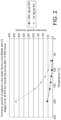
- Figure 2 shows a graph in which corrosion build-up over time (10,000 hours in this example) is plotted against pump reference temperature for the prior art pump.
- a first line shows build-up at the faces of the rotor and stator of a middle pumping stage along the flow path 56 and a second line shows build-up at the faces of the rotor and stator of a final pumping stage along the flow path 56.
- the middle pumping stage in this example is the 3 rd stage.
- Corrosive build-up is measured in microns and temperature is measured in degrees centigrade.
- the temperature used in the graph is a pump reference temperature taken at the final pumping stage.
- the temperature of the middle pumping stage is less than that shown in the graph but for simplicity has not been shown.
- the pump reference temperature increases during operation and the increase is dependent on a number of factors such as the type of fluid which is pumped and the work exerted by the pump.
- the material from which the pumping mechanism is made is relatively non-corrosion resistant.
- An example of such a material is SG iron. It will be seen from Figure 2 that corrosive build-up of the final stage is considerably greater than that of the middle pumping stage, particularly when the pump reference temperature is at 200°C. At this reference temperature, corrosive build-up at the final stage is just lower than 400 ⁇ m, whereas at the middle stage, build-up is only just higher than 50 ⁇ m.
- Figure 3 shows an equivalent graph as shown in Figure 2 , except in this analysis the material from which the pump is made is relatively corrosion resistant.
- An example of such a material is Ni-rich SG iron.
- corrosive build-up at both the middle and final pumping stages is reduced, but build-up at the final pumping stage has been reduced by around 300 ⁇ m to just lower than 100 ⁇ m whereas build-up at the middle pumping stage has been reduced by only around 30 ⁇ m to around 20 ⁇ m.
- the pressure of fluid along the flow path 56 increases from the inlet 58 to the outlet 60 as fluid is compressed by each pumping stage 54, typically with the compression ratio increasing from one pumping stage to the next pumping stage along the flow path.
- the temperature of the fluid and the pumping mechanism also increases along the flow path.
- the fluid being pumped comprises a corrosive agent, such as fluorine
- a corrosive agent such as fluorine
- the amount of corrosion caused to the pumping mechanism 52 increases along the flow path 56 as temperature and pressure increase.
- Increased pressure increases the amount of corrosive molecules available for corroding the pumping mechanism and increased temperature increases corrosive reaction. Therefore, corrosive build-up is greater at the final pumping stage than at the middle pumping stage. Accordingly, pump failure occurs because of the reduction in running clearance at the final stage of the pumping mechanism where build-up is greatest. Whilst corrosion resistance can be increased as shown in Figure 3 , pump failure often occurs at the final stage of the pumping mechanism.
- the pumping mechanism comprises a first section 24 and a second section 26.
- the second section 26 is downstream of the first section 24.
- the temperature and pressure of the downstream section 26 is greater than the temperature and pressure of the upstream section 24. Therefore, when pumping a corrosive fluid, corrosion of section 24 is less than corrosion of section 26.
- the first section 24 is required to be less resistant to corrosion than the second section 26.
- the first section 24 can therefore be made from a material which is relatively less expensive than the material of the second section.
- the first section 24 and the second section 26 comprise a respective plurality of pumping stages 14.
- the first section is adjacent to the second section along the fluid flow path.
- the first section comprises 1 st , 2 nd and 3 rd pumping stages whilst the second section 26 comprises 4 th and 5 th pumping stages.
- one of the first and the second sections may comprise a single pumping stage.
- the first section may comprise 1 st to 4 th pumping stages whilst the second section may comprise the 5 th pumping stage.
- stages 1 to 4 may be manufactured from a material which is less corrosion resistant.
- the first section may comprise the 1 st pumping stage and the second section may comprise the 2 nd to 5 th pumping stages.
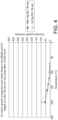
- Figure 4 A graph equivalent to the graphs shown in Figures 2 and 3 is shown in Figure 4 , which plots corrosive build-up against pump reference temperature for the pump shown in Figure 1 .
- Figure 4 shows at 200°C that corrosive build-up at the final stage of the pumping mechanism has been reduced from around 400 ⁇ m as shown in Figure 2 to just lower than 100 ⁇ m as is the case with a corrosion resistant pump according to Figure 3 .
- corrosive build-up at the middle, or 3 rd , stage is the same as that shown in Figure 2 for a non-corrosion resistant pump.
- the corrosive build-up of the middle stage is around 50 ⁇ m which is less than that of the final stage even though the middle stage is made from a non-corrosion resistant material (e.g. SG iron) and the final stage is made from a corrosion resistant material (e.g. Ni-rich iron). Therefore, there is no benefit to be gained from making both the first section and the second section of a pumping mechanism from a corrosion resistant material and doing so would unnecessarily add to the cost of a pump.
- a non-corrosion resistant material e.g. SG iron
- a corrosion resistant material e.g. Ni-rich iron
- Materials should be selected for the first and second sections so that the build-up of corrosive deposits at the first section is less than or equal to the build-up of corrosive deposits at the second section.
- the components of said pumping stages are fabricated from selected materials such that the build-up of corrosion deposits in each stage during pumping of corrosive gas is generally equal one stage to another stage. In this way, the materials for the various pumping stages can be selected in a cost efficient manner whilst maintaining acceptable resistance to corrosion.
- the rotor R and stator S of each pumping stage 14 of the second section 26 is made from a Nickel rich iron, whilst the rotor R and stator S of each pumping stage 14 of the first section 24 is made from an SG (spheroidal graphite) iron.
- Nickel is resistant to fluorine but if the fluid being pumped contains other corrosive agents it would be desirable to select an appropriately resistant material.
- the first section of the pumping mechanism may be made from materials other than SG iron.
- the first section may be made from a corrosion resistant material for instance NI-rich SG iron, whilst the second section may be made from a more corrosion resistant material such as cast stainless steel or nickel alloy.
- Figure 5 shows three examples of both SG iron and Ni-rich SG iron. It is preferable to select materials for the first and second section with similar linear expansion coefficients.
- Ni-res D-5S is a preferred corrosion resistant material as its linear expansion coefficient is 12.6 m/mK which is similar to the coefficient of SG iron of 12.5 m/mK.
- Ni-rich SG iron material which exhibits good corrosion resistant properties and also good strength and stiffness in high temperature conditions are shown in Figure 6 .
- the Nickel content is relatively high between 24 % and 32 % by weight.
- the same or similar material is used for the rotor R and stator S in each section to avoid problems associated with having components of different thermal expansion coefficients.
- the vacuum pump 10 is shown in simplified form in Figure 1 .
- the vacuum pump comprises a claw type pumping mechanism or roots type pumping mechanism, particular in which running clearance between components of the pumping mechanism is required to be small to increase efficiency.
Landscapes
- Engineering & Computer Science (AREA)
- Mechanical Engineering (AREA)
- General Engineering & Computer Science (AREA)
- Applications Or Details Of Rotary Compressors (AREA)
- Structures Of Non-Positive Displacement Pumps (AREA)
- Compressors, Vaccum Pumps And Other Relevant Systems (AREA)
Description
- The present invention relates to a vacuum pump, and particular to a vacuum pump suitable for pumping corrosive fluids.
- A known
vacuum pump 50 is shown inFigure 7 which comprises apumping mechanism 52. The pumping mechanism comprises a plurality ofpumping stages 54 for pumping fluid along afluid flow path 56 between aninlet 58 for fluid at high vacuum and an outlet 60 for fluid at low vacuum to atmospheric pressure. Fivepumping stages 54 are shown. Amotor 62 drives rotation of the rotors R relative to the stators S in each of thepumping stages 54. - If the fluid being pumped comprises a corrosive agent, such as fluorine, corrosion is caused to the
pumping mechanism 52. Over time, corrosion causes build up of deposits on the surface of components of the pumping mechanism which causes a reduction in the running clearances between the rotors R and the stators S of thepumping stages 54. After continued operation of the pump over many hours the corrosion can bring the rotors and stators of the pumping stages into contact causing pump failure. - It is possible to reduce corrosion in vacuum pumps by manufacturing the pumping mechanism from a corrosion resistant material, as disclosed in
WO 2007/132259 , but typically such materials are expensive. - The present invention provides a dry vacuum pump for pumping corrosive fluid, the pump comprising the features as defined in
independent claim 1, having a first and second section and a first and second material as defined therein. - The first material may be spheroidal graphite iron. The second material may be one of the group of Nickel rich spheroidal graphite iron, cast stainless steel, Nickel alloy and Ni-res D5S.
- The respective materials of the first section and the second section may be such that build-up of corrosive deposits at the first section is less than or equal to build-up of corrosive deposits at the second section. The first section and the second section may be defined by a respective plurality of said pumping stages. The first section may be adjacent to the second section along said fluid flow path.
- The, or each, pumping stage of the second section may comprise components made from a Nickel rich iron. The, or each, pumping stage of the first section may comprise components made from Spheroidal graphite iron.
- The components of said pumping stages are fabricated from selected materials such that the build-up of corrosion deposits in each stage during pumping of corrosive gas is generally equal one stage to another stage.
- Other preferred and optional aspects of the invention are defined in the accompanying claims.
- In order that the present invention may be well understood, an embodiment thereof, which is given by way of example only, will now be described with reference to the accompanying drawings, in which:
-
Figure 1 shows a simplified section through a vacuum pump; -
Figure 2 is a graph showing corrosive build-up over time against pump reference temperature for a pump having a pumping mechanism made from a material which is relatively non-corrosion resistant. This pump is not within the scope of the claims; -
Figure 3 is a graph showing corrosive build-up over time against pump reference temperature for a pump having a pumping mechanism made from a material which is relatively corrosion resistant. This pump is not within the scope of the claims; -
Figure 4 is a graph showing corrosive build-up over time against pump reference temperature for a pump having a pumping mechanism made from a material which is relatively non-corrosion resistant and a material which is relatively corrosion resistant; -
Figure 5 is a table showing properties of corrosion and non-corrosion resistant materials; -
Figure 6 is a table showing an example of the constituents of a corrosion resistant material; and -
Figure 7 is a simplified section through a prior art vacuum pump. - Referring to
Figure 1 , amulti-stage vacuum pump 10 is shown for pumping corrosive fluid. Apumping mechanism 12 comprises a plurality ofpumping stages 14 for pumping fluid along afluid flow path 16 between aninlet 18 for fluid at high vacuum and an outlet 20 for fluid at low vacuum to atmospheric pressure. Fivepumping stages 14 are shown in this example. Amotor 22 drives rotation of a rotor R relative to a stator S in each of thepumping stages 14. - In arriving at the present invention, an analysis of the prior art pump shown in
Figure 7 was conducted andFigure 2 shows a graph in which corrosion build-up over time (10,000 hours in this example) is plotted against pump reference temperature for the prior art pump. In the graph a first line shows build-up at the faces of the rotor and stator of a middle pumping stage along theflow path 56 and a second line shows build-up at the faces of the rotor and stator of a final pumping stage along theflow path 56. The middle pumping stage in this example is the 3rd stage. Corrosive build-up is measured in microns and temperature is measured in degrees centigrade. The temperature used in the graph is a pump reference temperature taken at the final pumping stage. It will be appreciated that the temperature of the middle pumping stage is less than that shown in the graph but for simplicity has not been shown. The pump reference temperature increases during operation and the increase is dependent on a number of factors such as the type of fluid which is pumped and the work exerted by the pump. - In
Figure 7 , the material from which the pumping mechanism is made is relatively non-corrosion resistant. An example of such a material is SG iron. It will be seen fromFigure 2 that corrosive build-up of the final stage is considerably greater than that of the middle pumping stage, particularly when the pump reference temperature is at 200°C. At this reference temperature, corrosive build-up at the final stage is just lower than 400µm, whereas at the middle stage, build-up is only just higher than 50µm. -
Figure 3 shows an equivalent graph as shown inFigure 2 , except in this analysis the material from which the pump is made is relatively corrosion resistant. An example of such a material is Ni-rich SG iron. InFigure 3 , corrosive build-up at both the middle and final pumping stages is reduced, but build-up at the final pumping stage has been reduced by around 300µm to just lower than 100µm whereas build-up at the middle pumping stage has been reduced by only around 30µm to around 20µm. - When considering the pump shown in
Figure 7 , the pressure of fluid along theflow path 56 increases from theinlet 58 to the outlet 60 as fluid is compressed by eachpumping stage 54, typically with the compression ratio increasing from one pumping stage to the next pumping stage along the flow path. The temperature of the fluid and the pumping mechanism also increases along the flow path. - Accordingly, if the fluid being pumped comprises a corrosive agent, such as fluorine, the amount of corrosion caused to the
pumping mechanism 52 increases along theflow path 56 as temperature and pressure increase. Increased pressure increases the amount of corrosive molecules available for corroding the pumping mechanism and increased temperature increases corrosive reaction. Therefore, corrosive build-up is greater at the final pumping stage than at the middle pumping stage. Accordingly, pump failure occurs because of the reduction in running clearance at the final stage of the pumping mechanism where build-up is greatest. Whilst corrosion resistance can be increased as shown inFigure 3 , pump failure often occurs at the final stage of the pumping mechanism. - In the pump shown in
Figure 1 , the pumping mechanism comprises afirst section 24 and asecond section 26. Thesecond section 26 is downstream of thefirst section 24. During operation, the temperature and pressure of thedownstream section 26 is greater than the temperature and pressure of theupstream section 24. Therefore, when pumping a corrosive fluid, corrosion ofsection 24 is less than corrosion ofsection 26. As the build-up of corrosion deposits on the rotors and stators insection 24 is less than insection 26, thefirst section 24 is required to be less resistant to corrosion than thesecond section 26. Thefirst section 24 can therefore be made from a material which is relatively less expensive than the material of the second section. - The
first section 24 and thesecond section 26 comprise a respective plurality ofpumping stages 14. The first section is adjacent to the second section along the fluid flow path. InFigure 1 , the first section comprises 1st, 2nd and 3rd pumping stages whilst thesecond section 26 comprises 4th and 5th pumping stages. In another arrangement, one of the first and the second sections may comprise a single pumping stage. For instance, the first section may comprise 1st to 4th pumping stages whilst the second section may comprise the 5th pumping stage. As temperature and pressure increase to the greatest extent at the final downstream pumping stage it may be desirable to manufacture this stage from a corrosion resistant material whereasstages 1 to 4 may be manufactured from a material which is less corrosion resistant. Alternatively, the first section may comprise the 1st pumping stage and the second section may comprise the 2nd to 5th pumping stages. - A graph equivalent to the graphs shown in
Figures 2 and3 is shown inFigure 4 , which plots corrosive build-up against pump reference temperature for the pump shown inFigure 1 .Figure 4 shows at 200°C that corrosive build-up at the final stage of the pumping mechanism has been reduced from around 400µm as shown inFigure 2 to just lower than 100µm as is the case with a corrosion resistant pump according toFigure 3 . However, inFigure 4 , corrosive build-up at the middle, or 3rd, stage is the same as that shown inFigure 2 for a non-corrosion resistant pump. In this regard, the corrosive build-up of the middle stage is around 50µm which is less than that of the final stage even though the middle stage is made from a non-corrosion resistant material (e.g. SG iron) and the final stage is made from a corrosion resistant material (e.g. Ni-rich iron). Therefore, there is no benefit to be gained from making both the first section and the second section of a pumping mechanism from a corrosion resistant material and doing so would unnecessarily add to the cost of a pump. - Materials should be selected for the first and second sections so that the build-up of corrosive deposits at the first section is less than or equal to the build-up of corrosive deposits at the second section. The components of said pumping stages are fabricated from selected materials such that the build-up of corrosion deposits in each stage during pumping of corrosive gas is generally equal one stage to another stage. In this way, the materials for the various pumping stages can be selected in a cost efficient manner whilst maintaining acceptable resistance to corrosion. In
Figure 1 , the rotor R and stator S of each pumpingstage 14 of thesecond section 26 is made from a Nickel rich iron, whilst the rotor R and stator S of each pumpingstage 14 of thefirst section 24 is made from an SG (spheroidal graphite) iron. - Examples of these materials are shown in
Figure 5 , although other materials may be selected according to requirements. For instance, Nickel is resistant to fluorine but if the fluid being pumped contains other corrosive agents it would be desirable to select an appropriately resistant material. Further, the first section of the pumping mechanism may be made from materials other than SG iron. - If the pump is to be used for pumping particularly corrosive fluid, the first section may be made from a corrosion resistant material for instance NI-rich SG iron, whilst the second section may be made from a more corrosion resistant material such as cast stainless steel or nickel alloy.
-
Figure 5 shows three examples of both SG iron and Ni-rich SG iron. It is preferable to select materials for the first and second section with similar linear expansion coefficients. In this regard, Ni-res D-5S is a preferred corrosion resistant material as its linear expansion coefficient is 12.6 m/mK which is similar to the coefficient of SG iron of 12.5 m/mK. - The constituents of an Ni-rich SG iron material, which exhibits good corrosion resistant properties and also good strength and stiffness in high temperature conditions are shown in
Figure 6 . In such a material, it will be seen that the Nickel content is relatively high between 24 % and 32 % by weight. - The same or similar material is used for the rotor R and stator S in each section to avoid problems associated with having components of different thermal expansion coefficients.
- The
vacuum pump 10 is shown in simplified form inFigure 1 . The vacuum pump comprises a claw type pumping mechanism or roots type pumping mechanism, particular in which running clearance between components of the pumping mechanism is required to be small to increase efficiency.
Claims (6)
- A dry vacuum pump (10) for pumping corrosive fluid, the pump comprising: a dry pumping mechanism (12) comprising a plurality of pumping stages (14) along a fluid flow path (16) between an inlet (18) for fluid at high vacuum and an outlet (20) for fluid at low vacuum, each of said pumping stages (14) comprising a stator (S) and a rotor (R), wherein the pumping stages comprise a roots pumping mechanism or a claw pumping mechanism, characterised in that the rotor and the stator of a pumping stage at a first section (24) of said flow path is formed from a first material and the rotor and the stator of a pumping stage at a second section (26) of said flow path, downstream of said first section, is formed from a second material, the first and second materials being configured such that the build-up of corrosion deposits in each respective stage of the pump are generally equal, one stage to the other stage, during operation of the pump.
- A vacuum pump according to Claim 1, wherein the first material is spheroidal graphite iron.
- A vacuum pump according to Claim 1 or Claim 2, wherein the second material is one of the group of Nickel rich spheroidal graphite iron, cast stainless steel, Nickel alloy and Ni-res D5S.
- A vacuum pump as claimed in any preceding claim, wherein the respective materials of the first section (24) and the second section (26) are such that build-up of corrosive deposits at the first section is less than or equal to build-up of corrosive deposits at the second section.
- A vacuum pump as claimed in any preceding claim, wherein said first section (24) and said second section (26) are defined by a respective plurality of said pumping stages.
- A vacuum pump as claimed in any preceding claim, wherein said first section (24) is adjacent to said second section (26) along said fluid flow path.
Applications Claiming Priority (2)
| Application Number | Priority Date | Filing Date | Title |
|---|---|---|---|
| GBGB0907298.4A GB0907298D0 (en) | 2009-04-29 | 2009-04-29 | Vacuum pump |
| PCT/GB2010/050572 WO2010125368A2 (en) | 2009-04-29 | 2010-03-31 | Vacuum pump |
Publications (2)
| Publication Number | Publication Date |
|---|---|
| EP2425137A2 EP2425137A2 (en) | 2012-03-07 |
| EP2425137B1 true EP2425137B1 (en) | 2024-10-23 |
Family
ID=40791933
Family Applications (1)
| Application Number | Title | Priority Date | Filing Date |
|---|---|---|---|
| EP10712149.3A Active EP2425137B1 (en) | 2009-04-29 | 2010-03-31 | Vacuum pump |
Country Status (9)
| Country | Link |
|---|---|
| US (1) | US20120045322A1 (en) |
| EP (1) | EP2425137B1 (en) |
| JP (1) | JP5636042B2 (en) |
| KR (2) | KR20120007014A (en) |
| CN (1) | CN102414449B (en) |
| BR (1) | BRPI1009368A2 (en) |
| GB (1) | GB0907298D0 (en) |
| TW (1) | TWI489043B (en) |
| WO (1) | WO2010125368A2 (en) |
Families Citing this family (2)
| Publication number | Priority date | Publication date | Assignee | Title |
|---|---|---|---|---|
| JP2014001668A (en) * | 2012-06-18 | 2014-01-09 | Toshiba Corp | Roots pump |
| FR3051852B1 (en) * | 2016-05-24 | 2018-06-15 | Pfeiffer Vacuum | STATOR, ROTARY SHAFT, DRY TYPE VACUUM PUMP, AND METHODS OF MANUFACTURING THE SAME |
Family Cites Families (12)
| Publication number | Priority date | Publication date | Assignee | Title |
|---|---|---|---|---|
| DE3710782A1 (en) * | 1987-03-31 | 1988-10-20 | Vacuubrand Gmbh & Co | Method and device for pumping out vapours and/or vaporous mixtures and/or gas-vapour mixtures or similar media |
| GB9604486D0 (en) * | 1996-03-01 | 1996-05-01 | Boc Group Plc | Improvements in vacuum pumps |
| DE19745615A1 (en) * | 1997-10-10 | 1999-04-15 | Leybold Vakuum Gmbh | Screw vacuum pump with rotors |
| US6371744B1 (en) * | 1998-03-23 | 2002-04-16 | Taiko Kikai Industries Co., Ltd. | Dry screw vacuum pump having spheroidal graphite cast iron rotors |
| CN1399074A (en) * | 2001-07-27 | 2003-02-26 | 大晃机械工业株式会社 | Dry vacuum pump |
| JP4007130B2 (en) * | 2002-09-10 | 2007-11-14 | 株式会社豊田自動織機 | Vacuum pump |
| GB0223767D0 (en) * | 2002-10-14 | 2002-11-20 | Boc Group Plc | Pump cleaning |
| TW200506217A (en) * | 2003-03-19 | 2005-02-16 | Ebara Corp | Positive-displacement vacuum pump |
| JP2005098210A (en) * | 2003-09-25 | 2005-04-14 | Aisin Seiki Co Ltd | Multistage dry pump |
| GB0609306D0 (en) * | 2006-05-11 | 2006-06-21 | Boc Group Plc | Vacuum pump |
| GB2440944B (en) * | 2006-08-11 | 2011-10-12 | Itt Mfg Enterprises Inc | Rotary lobe pump |
| GB0705971D0 (en) * | 2007-03-28 | 2007-05-09 | Boc Group Plc | Vacuum pump |
-
2009
- 2009-04-29 GB GBGB0907298.4A patent/GB0907298D0/en not_active Ceased
-
2010
- 2010-03-31 JP JP2012507816A patent/JP5636042B2/en active Active
- 2010-03-31 US US13/263,947 patent/US20120045322A1/en not_active Abandoned
- 2010-03-31 KR KR1020117025564A patent/KR20120007014A/en not_active Ceased
- 2010-03-31 KR KR1020177014638A patent/KR20170063990A/en not_active Ceased
- 2010-03-31 BR BRPI1009368A patent/BRPI1009368A2/en not_active Application Discontinuation
- 2010-03-31 WO PCT/GB2010/050572 patent/WO2010125368A2/en not_active Ceased
- 2010-03-31 EP EP10712149.3A patent/EP2425137B1/en active Active
- 2010-03-31 CN CN201080018922.5A patent/CN102414449B/en active Active
- 2010-04-06 TW TW099110635A patent/TWI489043B/en active
Also Published As
| Publication number | Publication date |
|---|---|
| JP5636042B2 (en) | 2014-12-03 |
| JP2012525534A (en) | 2012-10-22 |
| EP2425137A2 (en) | 2012-03-07 |
| US20120045322A1 (en) | 2012-02-23 |
| BRPI1009368A2 (en) | 2016-03-08 |
| GB0907298D0 (en) | 2009-06-10 |
| CN102414449B (en) | 2015-12-16 |
| CN102414449A (en) | 2012-04-11 |
| WO2010125368A2 (en) | 2010-11-04 |
| WO2010125368A3 (en) | 2010-12-23 |
| KR20120007014A (en) | 2012-01-19 |
| TWI489043B (en) | 2015-06-21 |
| KR20170063990A (en) | 2017-06-08 |
| TW201102518A (en) | 2011-01-16 |
Similar Documents
| Publication | Publication Date | Title |
|---|---|---|
| US7575422B2 (en) | Compressor unit | |
| JP5981691B2 (en) | Jacket impeller using functionally gradient material and manufacturing method thereof | |
| CN101855454B (en) | Multi-stage dry pump | |
| EP2935896B1 (en) | Multistage compressor and method for operating a multistage compressor | |
| CN103717903B (en) | Multistage centrifugal turbomachine | |
| JP2008309123A (en) | Centrifugal compressor casing | |
| JP2005098210A (en) | Multistage dry pump | |
| CN1987165A (en) | Sealing device | |
| US20170218768A1 (en) | Blade of a turbomachine having blade root thermal insulation | |
| JP6705742B2 (en) | Compressor having heat shield and operating method | |
| JP2012137091A (en) | Centrifugal compressor casing | |
| US20120045322A1 (en) | Vacuum pump | |
| CN209604238U (en) | Vacuum pump components and dry vacuum pumps | |
| KR20190039963A (en) | Vacuum pump rotor | |
| JP2008536050A (en) | Steam turbine equipment components, steam turbine equipment, and utilization and manufacturing methods of steam turbine equipment components | |
| WO2021161010A1 (en) | Axial flow vacuum pump with curved rotor and stator blades | |
| JP2010522843A (en) | Vacuum pump | |
| EP3653881B1 (en) | Twin shaft pump | |
| JP2011122506A (en) | Multistage turbine pump | |
| TWM423157U (en) | Titanium alloy blades of turbo molecular vacuum pump motor |
Legal Events
| Date | Code | Title | Description |
|---|---|---|---|
| PUAI | Public reference made under article 153(3) epc to a published international application that has entered the european phase |
Free format text: ORIGINAL CODE: 0009012 |
|
| 17P | Request for examination filed |
Effective date: 20110913 |
|
| AK | Designated contracting states |
Kind code of ref document: A2 Designated state(s): AT BE BG CH CY CZ DE DK EE ES FI FR GB GR HR HU IE IS IT LI LT LU LV MC MK MT NL NO PL PT RO SE SI SK SM TR |
|
| RIN1 | Information on inventor provided before grant (corrected) |
Inventor name: OKOROAFOR, EMMANUEL, UZOMA |
|
| DAX | Request for extension of the european patent (deleted) | ||
| STAA | Information on the status of an ep patent application or granted ep patent |
Free format text: STATUS: EXAMINATION IS IN PROGRESS |
|
| 17Q | First examination report despatched |
Effective date: 20161208 |
|
| RAP1 | Party data changed (applicant data changed or rights of an application transferred) |
Owner name: EDWARDS LIMITED |
|
| GRAP | Despatch of communication of intention to grant a patent |
Free format text: ORIGINAL CODE: EPIDOSNIGR1 |
|
| STAA | Information on the status of an ep patent application or granted ep patent |
Free format text: STATUS: GRANT OF PATENT IS INTENDED |
|
| RIC1 | Information provided on ipc code assigned before grant |
Ipc: F04C 18/12 20060101AFI20190607BHEP Ipc: F04C 23/00 20060101ALI20190607BHEP Ipc: F04C 25/02 20060101ALI20190607BHEP |
|
| INTG | Intention to grant announced |
Effective date: 20190627 |
|
| GRAJ | Information related to disapproval of communication of intention to grant by the applicant or resumption of examination proceedings by the epo deleted |
Free format text: ORIGINAL CODE: EPIDOSDIGR1 |
|
| STAA | Information on the status of an ep patent application or granted ep patent |
Free format text: STATUS: EXAMINATION IS IN PROGRESS |
|
| INTC | Intention to grant announced (deleted) | ||
| GRAP | Despatch of communication of intention to grant a patent |
Free format text: ORIGINAL CODE: EPIDOSNIGR1 |
|
| STAA | Information on the status of an ep patent application or granted ep patent |
Free format text: STATUS: GRANT OF PATENT IS INTENDED |
|
| INTG | Intention to grant announced |
Effective date: 20240531 |
|
| GRAS | Grant fee paid |
Free format text: ORIGINAL CODE: EPIDOSNIGR3 |
|
| GRAA | (expected) grant |
Free format text: ORIGINAL CODE: 0009210 |
|
| STAA | Information on the status of an ep patent application or granted ep patent |
Free format text: STATUS: THE PATENT HAS BEEN GRANTED |
|
| AK | Designated contracting states |
Kind code of ref document: B1 Designated state(s): AT BE BG CH CY CZ DE DK EE ES FI FR GB GR HR HU IE IS IT LI LT LU LV MC MK MT NL NO PL PT RO SE SI SK SM TR |
|
| P01 | Opt-out of the competence of the unified patent court (upc) registered |
Free format text: CASE NUMBER: APP_51919/2024 Effective date: 20240916 |
|
| REG | Reference to a national code |
Ref country code: GB Ref legal event code: FG4D |
|
| REG | Reference to a national code |
Ref country code: CH Ref legal event code: EP |
|
| REG | Reference to a national code |
Ref country code: DE Ref legal event code: R096 Ref document number: 602010069543 Country of ref document: DE |
|
| REG | Reference to a national code |
Ref country code: IE Ref legal event code: FG4D |
|
| REG | Reference to a national code |
Ref country code: LT Ref legal event code: MG9D |
|
| REG | Reference to a national code |
Ref country code: NL Ref legal event code: MP Effective date: 20241023 |
|
| REG | Reference to a national code |
Ref country code: AT Ref legal event code: MK05 Ref document number: 1735033 Country of ref document: AT Kind code of ref document: T Effective date: 20241023 |
|
| PG25 | Lapsed in a contracting state [announced via postgrant information from national office to epo] |
Ref country code: NL Free format text: LAPSE BECAUSE OF FAILURE TO SUBMIT A TRANSLATION OF THE DESCRIPTION OR TO PAY THE FEE WITHIN THE PRESCRIBED TIME-LIMIT Effective date: 20241023 |
|
| PG25 | Lapsed in a contracting state [announced via postgrant information from national office to epo] |
Ref country code: NL Free format text: LAPSE BECAUSE OF FAILURE TO SUBMIT A TRANSLATION OF THE DESCRIPTION OR TO PAY THE FEE WITHIN THE PRESCRIBED TIME-LIMIT Effective date: 20241023 |
|
| PG25 | Lapsed in a contracting state [announced via postgrant information from national office to epo] |
Ref country code: PT Free format text: LAPSE BECAUSE OF FAILURE TO SUBMIT A TRANSLATION OF THE DESCRIPTION OR TO PAY THE FEE WITHIN THE PRESCRIBED TIME-LIMIT Effective date: 20250224 Ref country code: IS Free format text: LAPSE BECAUSE OF FAILURE TO SUBMIT A TRANSLATION OF THE DESCRIPTION OR TO PAY THE FEE WITHIN THE PRESCRIBED TIME-LIMIT Effective date: 20250223 Ref country code: HR Free format text: LAPSE BECAUSE OF FAILURE TO SUBMIT A TRANSLATION OF THE DESCRIPTION OR TO PAY THE FEE WITHIN THE PRESCRIBED TIME-LIMIT Effective date: 20241023 |
|
| PG25 | Lapsed in a contracting state [announced via postgrant information from national office to epo] |
Ref country code: FI Free format text: LAPSE BECAUSE OF FAILURE TO SUBMIT A TRANSLATION OF THE DESCRIPTION OR TO PAY THE FEE WITHIN THE PRESCRIBED TIME-LIMIT Effective date: 20241023 |
|
| PG25 | Lapsed in a contracting state [announced via postgrant information from national office to epo] |
Ref country code: BG Free format text: LAPSE BECAUSE OF FAILURE TO SUBMIT A TRANSLATION OF THE DESCRIPTION OR TO PAY THE FEE WITHIN THE PRESCRIBED TIME-LIMIT Effective date: 20241023 |
|
| PG25 | Lapsed in a contracting state [announced via postgrant information from national office to epo] |
Ref country code: ES Free format text: LAPSE BECAUSE OF FAILURE TO SUBMIT A TRANSLATION OF THE DESCRIPTION OR TO PAY THE FEE WITHIN THE PRESCRIBED TIME-LIMIT Effective date: 20241023 |
|
| PG25 | Lapsed in a contracting state [announced via postgrant information from national office to epo] |
Ref country code: NO Free format text: LAPSE BECAUSE OF FAILURE TO SUBMIT A TRANSLATION OF THE DESCRIPTION OR TO PAY THE FEE WITHIN THE PRESCRIBED TIME-LIMIT Effective date: 20250123 |
|
| PG25 | Lapsed in a contracting state [announced via postgrant information from national office to epo] |
Ref country code: LV Free format text: LAPSE BECAUSE OF FAILURE TO SUBMIT A TRANSLATION OF THE DESCRIPTION OR TO PAY THE FEE WITHIN THE PRESCRIBED TIME-LIMIT Effective date: 20241023 Ref country code: AT Free format text: LAPSE BECAUSE OF FAILURE TO SUBMIT A TRANSLATION OF THE DESCRIPTION OR TO PAY THE FEE WITHIN THE PRESCRIBED TIME-LIMIT Effective date: 20241023 Ref country code: GR Free format text: LAPSE BECAUSE OF FAILURE TO SUBMIT A TRANSLATION OF THE DESCRIPTION OR TO PAY THE FEE WITHIN THE PRESCRIBED TIME-LIMIT Effective date: 20250124 |
|
| PG25 | Lapsed in a contracting state [announced via postgrant information from national office to epo] |
Ref country code: PL Free format text: LAPSE BECAUSE OF FAILURE TO SUBMIT A TRANSLATION OF THE DESCRIPTION OR TO PAY THE FEE WITHIN THE PRESCRIBED TIME-LIMIT Effective date: 20241023 |
|
| PG25 | Lapsed in a contracting state [announced via postgrant information from national office to epo] |
Ref country code: SM Free format text: LAPSE BECAUSE OF FAILURE TO SUBMIT A TRANSLATION OF THE DESCRIPTION OR TO PAY THE FEE WITHIN THE PRESCRIBED TIME-LIMIT Effective date: 20241023 |
|
| PG25 | Lapsed in a contracting state [announced via postgrant information from national office to epo] |
Ref country code: DK Free format text: LAPSE BECAUSE OF FAILURE TO SUBMIT A TRANSLATION OF THE DESCRIPTION OR TO PAY THE FEE WITHIN THE PRESCRIBED TIME-LIMIT Effective date: 20241023 |
|
| PG25 | Lapsed in a contracting state [announced via postgrant information from national office to epo] |
Ref country code: EE Free format text: LAPSE BECAUSE OF FAILURE TO SUBMIT A TRANSLATION OF THE DESCRIPTION OR TO PAY THE FEE WITHIN THE PRESCRIBED TIME-LIMIT Effective date: 20241023 |
|
| PG25 | Lapsed in a contracting state [announced via postgrant information from national office to epo] |
Ref country code: RO Free format text: LAPSE BECAUSE OF FAILURE TO SUBMIT A TRANSLATION OF THE DESCRIPTION OR TO PAY THE FEE WITHIN THE PRESCRIBED TIME-LIMIT Effective date: 20241023 |
|
| REG | Reference to a national code |
Ref country code: DE Ref legal event code: R097 Ref document number: 602010069543 Country of ref document: DE |
|
| PG25 | Lapsed in a contracting state [announced via postgrant information from national office to epo] |
Ref country code: SK Free format text: LAPSE BECAUSE OF FAILURE TO SUBMIT A TRANSLATION OF THE DESCRIPTION OR TO PAY THE FEE WITHIN THE PRESCRIBED TIME-LIMIT Effective date: 20241023 |
|
| PG25 | Lapsed in a contracting state [announced via postgrant information from national office to epo] |
Ref country code: CZ Free format text: LAPSE BECAUSE OF FAILURE TO SUBMIT A TRANSLATION OF THE DESCRIPTION OR TO PAY THE FEE WITHIN THE PRESCRIBED TIME-LIMIT Effective date: 20241023 |
|
| PLBE | No opposition filed within time limit |
Free format text: ORIGINAL CODE: 0009261 |
|
| STAA | Information on the status of an ep patent application or granted ep patent |
Free format text: STATUS: NO OPPOSITION FILED WITHIN TIME LIMIT |
|
| PG25 | Lapsed in a contracting state [announced via postgrant information from national office to epo] |
Ref country code: SE Free format text: LAPSE BECAUSE OF FAILURE TO SUBMIT A TRANSLATION OF THE DESCRIPTION OR TO PAY THE FEE WITHIN THE PRESCRIBED TIME-LIMIT Effective date: 20241023 |
|
| 26N | No opposition filed |
Effective date: 20250724 |
|
| PG25 | Lapsed in a contracting state [announced via postgrant information from national office to epo] |
Ref country code: MC Free format text: LAPSE BECAUSE OF FAILURE TO SUBMIT A TRANSLATION OF THE DESCRIPTION OR TO PAY THE FEE WITHIN THE PRESCRIBED TIME-LIMIT Effective date: 20241023 |
|
| REG | Reference to a national code |
Ref country code: CH Ref legal event code: H13 Free format text: ST27 STATUS EVENT CODE: U-0-0-H10-H13 (AS PROVIDED BY THE NATIONAL OFFICE) Effective date: 20251023 |
|
| PG25 | Lapsed in a contracting state [announced via postgrant information from national office to epo] |
Ref country code: LU Free format text: LAPSE BECAUSE OF NON-PAYMENT OF DUE FEES Effective date: 20250331 |
|
| REG | Reference to a national code |
Ref country code: BE Ref legal event code: MM Effective date: 20250331 |
|
| PG25 | Lapsed in a contracting state [announced via postgrant information from national office to epo] |
Ref country code: BE Free format text: LAPSE BECAUSE OF NON-PAYMENT OF DUE FEES Effective date: 20250331 |
|
| PG25 | Lapsed in a contracting state [announced via postgrant information from national office to epo] |
Ref country code: CH Free format text: LAPSE BECAUSE OF NON-PAYMENT OF DUE FEES Effective date: 20250331 |
|
| PGFP | Annual fee paid to national office [announced via postgrant information from national office to epo] |
Ref country code: GB Payment date: 20260327 Year of fee payment: 17 |
|
| PGFP | Annual fee paid to national office [announced via postgrant information from national office to epo] |
Ref country code: DE Payment date: 20260327 Year of fee payment: 17 Ref country code: IE Payment date: 20260327 Year of fee payment: 17 |
|
| PGFP | Annual fee paid to national office [announced via postgrant information from national office to epo] |
Ref country code: IT Payment date: 20260319 Year of fee payment: 17 |
|
| PGFP | Annual fee paid to national office [announced via postgrant information from national office to epo] |
Ref country code: FR Payment date: 20260325 Year of fee payment: 17 |