EP2415486B1 - Konjugate und Zusammensetzungen zur zellulären Verabreichung - Google Patents
Konjugate und Zusammensetzungen zur zellulären Verabreichung Download PDFInfo
- Publication number
- EP2415486B1 EP2415486B1 EP11184529.3A EP11184529A EP2415486B1 EP 2415486 B1 EP2415486 B1 EP 2415486B1 EP 11184529 A EP11184529 A EP 11184529A EP 2415486 B1 EP2415486 B1 EP 2415486B1
- Authority
- EP
- European Patent Office
- Prior art keywords
- nucleic acid
- rna
- cancer
- molecules
- compound
- Prior art date
- Legal status (The legal status is an assumption and is not a legal conclusion. Google has not performed a legal analysis and makes no representation as to the accuracy of the status listed.)
- Expired - Lifetime
Links
- ULWOJODHECIZAU-UHFFFAOYSA-N CCN(CC)C(C)C Chemical compound CCN(CC)C(C)C ULWOJODHECIZAU-UHFFFAOYSA-N 0.000 description 1
- IVUFBXHGCATYAU-UHFFFAOYSA-N CCSCCC#N Chemical compound CCSCCC#N IVUFBXHGCATYAU-UHFFFAOYSA-N 0.000 description 1
Images









Classifications
-
- B—PERFORMING OPERATIONS; TRANSPORTING
- B82—NANOTECHNOLOGY
- B82Y—SPECIFIC USES OR APPLICATIONS OF NANOSTRUCTURES; MEASUREMENT OR ANALYSIS OF NANOSTRUCTURES; MANUFACTURE OR TREATMENT OF NANOSTRUCTURES
- B82Y5/00—Nanobiotechnology or nanomedicine, e.g. protein engineering or drug delivery
-
- A—HUMAN NECESSITIES
- A61—MEDICAL OR VETERINARY SCIENCE; HYGIENE
- A61K—PREPARATIONS FOR MEDICAL, DENTAL OR TOILETRY PURPOSES
- A61K47/00—Medicinal preparations characterised by the non-active ingredients used, e.g. carriers or inert additives; Targeting or modifying agents chemically bound to the active ingredient
- A61K47/50—Medicinal preparations characterised by the non-active ingredients used, e.g. carriers or inert additives; Targeting or modifying agents chemically bound to the active ingredient the non-active ingredient being chemically bound to the active ingredient, e.g. polymer-drug conjugates
- A61K47/51—Medicinal preparations characterised by the non-active ingredients used, e.g. carriers or inert additives; Targeting or modifying agents chemically bound to the active ingredient the non-active ingredient being chemically bound to the active ingredient, e.g. polymer-drug conjugates the non-active ingredient being a modifying agent
- A61K47/54—Medicinal preparations characterised by the non-active ingredients used, e.g. carriers or inert additives; Targeting or modifying agents chemically bound to the active ingredient the non-active ingredient being chemically bound to the active ingredient, e.g. polymer-drug conjugates the non-active ingredient being a modifying agent the modifying agent being an organic compound
- A61K47/543—Lipids, e.g. triglycerides; Polyamines, e.g. spermine or spermidine
- A61K47/544—Phospholipids
-
- A—HUMAN NECESSITIES
- A61—MEDICAL OR VETERINARY SCIENCE; HYGIENE
- A61K—PREPARATIONS FOR MEDICAL, DENTAL OR TOILETRY PURPOSES
- A61K47/00—Medicinal preparations characterised by the non-active ingredients used, e.g. carriers or inert additives; Targeting or modifying agents chemically bound to the active ingredient
- A61K47/50—Medicinal preparations characterised by the non-active ingredients used, e.g. carriers or inert additives; Targeting or modifying agents chemically bound to the active ingredient the non-active ingredient being chemically bound to the active ingredient, e.g. polymer-drug conjugates
- A61K47/51—Medicinal preparations characterised by the non-active ingredients used, e.g. carriers or inert additives; Targeting or modifying agents chemically bound to the active ingredient the non-active ingredient being chemically bound to the active ingredient, e.g. polymer-drug conjugates the non-active ingredient being a modifying agent
- A61K47/54—Medicinal preparations characterised by the non-active ingredients used, e.g. carriers or inert additives; Targeting or modifying agents chemically bound to the active ingredient the non-active ingredient being chemically bound to the active ingredient, e.g. polymer-drug conjugates the non-active ingredient being a modifying agent the modifying agent being an organic compound
- A61K47/549—Sugars, nucleosides, nucleotides or nucleic acids
-
- A—HUMAN NECESSITIES
- A61—MEDICAL OR VETERINARY SCIENCE; HYGIENE
- A61K—PREPARATIONS FOR MEDICAL, DENTAL OR TOILETRY PURPOSES
- A61K47/00—Medicinal preparations characterised by the non-active ingredients used, e.g. carriers or inert additives; Targeting or modifying agents chemically bound to the active ingredient
- A61K47/50—Medicinal preparations characterised by the non-active ingredients used, e.g. carriers or inert additives; Targeting or modifying agents chemically bound to the active ingredient the non-active ingredient being chemically bound to the active ingredient, e.g. polymer-drug conjugates
- A61K47/51—Medicinal preparations characterised by the non-active ingredients used, e.g. carriers or inert additives; Targeting or modifying agents chemically bound to the active ingredient the non-active ingredient being chemically bound to the active ingredient, e.g. polymer-drug conjugates the non-active ingredient being a modifying agent
- A61K47/54—Medicinal preparations characterised by the non-active ingredients used, e.g. carriers or inert additives; Targeting or modifying agents chemically bound to the active ingredient the non-active ingredient being chemically bound to the active ingredient, e.g. polymer-drug conjugates the non-active ingredient being a modifying agent the modifying agent being an organic compound
- A61K47/55—Medicinal preparations characterised by the non-active ingredients used, e.g. carriers or inert additives; Targeting or modifying agents chemically bound to the active ingredient the non-active ingredient being chemically bound to the active ingredient, e.g. polymer-drug conjugates the non-active ingredient being a modifying agent the modifying agent being an organic compound the modifying agent being also a pharmacologically or therapeutically active agent, i.e. the entire conjugate being a codrug
- A61K47/551—Medicinal preparations characterised by the non-active ingredients used, e.g. carriers or inert additives; Targeting or modifying agents chemically bound to the active ingredient the non-active ingredient being chemically bound to the active ingredient, e.g. polymer-drug conjugates the non-active ingredient being a modifying agent the modifying agent being an organic compound the modifying agent being also a pharmacologically or therapeutically active agent, i.e. the entire conjugate being a codrug one of the codrug's components being a vitamin, e.g. niacinamide, vitamin B3, cobalamin, vitamin B12, folate, vitamin A or retinoic acid
-
- A—HUMAN NECESSITIES
- A61—MEDICAL OR VETERINARY SCIENCE; HYGIENE
- A61K—PREPARATIONS FOR MEDICAL, DENTAL OR TOILETRY PURPOSES
- A61K47/00—Medicinal preparations characterised by the non-active ingredients used, e.g. carriers or inert additives; Targeting or modifying agents chemically bound to the active ingredient
- A61K47/50—Medicinal preparations characterised by the non-active ingredients used, e.g. carriers or inert additives; Targeting or modifying agents chemically bound to the active ingredient the non-active ingredient being chemically bound to the active ingredient, e.g. polymer-drug conjugates
- A61K47/51—Medicinal preparations characterised by the non-active ingredients used, e.g. carriers or inert additives; Targeting or modifying agents chemically bound to the active ingredient the non-active ingredient being chemically bound to the active ingredient, e.g. polymer-drug conjugates the non-active ingredient being a modifying agent
- A61K47/56—Medicinal preparations characterised by the non-active ingredients used, e.g. carriers or inert additives; Targeting or modifying agents chemically bound to the active ingredient the non-active ingredient being chemically bound to the active ingredient, e.g. polymer-drug conjugates the non-active ingredient being a modifying agent the modifying agent being an organic macromolecular compound, e.g. an oligomeric, polymeric or dendrimeric molecule
- A61K47/59—Medicinal preparations characterised by the non-active ingredients used, e.g. carriers or inert additives; Targeting or modifying agents chemically bound to the active ingredient the non-active ingredient being chemically bound to the active ingredient, e.g. polymer-drug conjugates the non-active ingredient being a modifying agent the modifying agent being an organic macromolecular compound, e.g. an oligomeric, polymeric or dendrimeric molecule obtained otherwise than by reactions only involving carbon-to-carbon unsaturated bonds, e.g. polyureas or polyurethanes
- A61K47/60—Medicinal preparations characterised by the non-active ingredients used, e.g. carriers or inert additives; Targeting or modifying agents chemically bound to the active ingredient the non-active ingredient being chemically bound to the active ingredient, e.g. polymer-drug conjugates the non-active ingredient being a modifying agent the modifying agent being an organic macromolecular compound, e.g. an oligomeric, polymeric or dendrimeric molecule obtained otherwise than by reactions only involving carbon-to-carbon unsaturated bonds, e.g. polyureas or polyurethanes the organic macromolecular compound being a polyoxyalkylene oligomer, polymer or dendrimer, e.g. PEG, PPG, PEO or polyglycerol
-
- A—HUMAN NECESSITIES
- A61—MEDICAL OR VETERINARY SCIENCE; HYGIENE
- A61K—PREPARATIONS FOR MEDICAL, DENTAL OR TOILETRY PURPOSES
- A61K47/00—Medicinal preparations characterised by the non-active ingredients used, e.g. carriers or inert additives; Targeting or modifying agents chemically bound to the active ingredient
- A61K47/50—Medicinal preparations characterised by the non-active ingredients used, e.g. carriers or inert additives; Targeting or modifying agents chemically bound to the active ingredient the non-active ingredient being chemically bound to the active ingredient, e.g. polymer-drug conjugates
- A61K47/51—Medicinal preparations characterised by the non-active ingredients used, e.g. carriers or inert additives; Targeting or modifying agents chemically bound to the active ingredient the non-active ingredient being chemically bound to the active ingredient, e.g. polymer-drug conjugates the non-active ingredient being a modifying agent
- A61K47/62—Medicinal preparations characterised by the non-active ingredients used, e.g. carriers or inert additives; Targeting or modifying agents chemically bound to the active ingredient the non-active ingredient being chemically bound to the active ingredient, e.g. polymer-drug conjugates the non-active ingredient being a modifying agent the modifying agent being a protein, peptide or polyamino acid
- A61K47/66—Medicinal preparations characterised by the non-active ingredients used, e.g. carriers or inert additives; Targeting or modifying agents chemically bound to the active ingredient the non-active ingredient being chemically bound to the active ingredient, e.g. polymer-drug conjugates the non-active ingredient being a modifying agent the modifying agent being a protein, peptide or polyamino acid the modifying agent being a pre-targeting system involving a peptide or protein for targeting specific cells
-
- A—HUMAN NECESSITIES
- A61—MEDICAL OR VETERINARY SCIENCE; HYGIENE
- A61P—SPECIFIC THERAPEUTIC ACTIVITY OF CHEMICAL COMPOUNDS OR MEDICINAL PREPARATIONS
- A61P31/00—Antiinfectives, i.e. antibiotics, antiseptics, chemotherapeutics
- A61P31/12—Antivirals
-
- A—HUMAN NECESSITIES
- A61—MEDICAL OR VETERINARY SCIENCE; HYGIENE
- A61P—SPECIFIC THERAPEUTIC ACTIVITY OF CHEMICAL COMPOUNDS OR MEDICINAL PREPARATIONS
- A61P31/00—Antiinfectives, i.e. antibiotics, antiseptics, chemotherapeutics
- A61P31/12—Antivirals
- A61P31/14—Antivirals for RNA viruses
-
- A—HUMAN NECESSITIES
- A61—MEDICAL OR VETERINARY SCIENCE; HYGIENE
- A61P—SPECIFIC THERAPEUTIC ACTIVITY OF CHEMICAL COMPOUNDS OR MEDICINAL PREPARATIONS
- A61P31/00—Antiinfectives, i.e. antibiotics, antiseptics, chemotherapeutics
- A61P31/12—Antivirals
- A61P31/14—Antivirals for RNA viruses
- A61P31/16—Antivirals for RNA viruses for influenza or rhinoviruses
-
- A—HUMAN NECESSITIES
- A61—MEDICAL OR VETERINARY SCIENCE; HYGIENE
- A61P—SPECIFIC THERAPEUTIC ACTIVITY OF CHEMICAL COMPOUNDS OR MEDICINAL PREPARATIONS
- A61P31/00—Antiinfectives, i.e. antibiotics, antiseptics, chemotherapeutics
- A61P31/12—Antivirals
- A61P31/14—Antivirals for RNA viruses
- A61P31/18—Antivirals for RNA viruses for HIV
-
- A—HUMAN NECESSITIES
- A61—MEDICAL OR VETERINARY SCIENCE; HYGIENE
- A61P—SPECIFIC THERAPEUTIC ACTIVITY OF CHEMICAL COMPOUNDS OR MEDICINAL PREPARATIONS
- A61P31/00—Antiinfectives, i.e. antibiotics, antiseptics, chemotherapeutics
- A61P31/12—Antivirals
- A61P31/20—Antivirals for DNA viruses
-
- A—HUMAN NECESSITIES
- A61—MEDICAL OR VETERINARY SCIENCE; HYGIENE
- A61P—SPECIFIC THERAPEUTIC ACTIVITY OF CHEMICAL COMPOUNDS OR MEDICINAL PREPARATIONS
- A61P35/00—Antineoplastic agents
-
- A—HUMAN NECESSITIES
- A61—MEDICAL OR VETERINARY SCIENCE; HYGIENE
- A61P—SPECIFIC THERAPEUTIC ACTIVITY OF CHEMICAL COMPOUNDS OR MEDICINAL PREPARATIONS
- A61P35/00—Antineoplastic agents
- A61P35/02—Antineoplastic agents specific for leukemia
-
- A—HUMAN NECESSITIES
- A61—MEDICAL OR VETERINARY SCIENCE; HYGIENE
- A61P—SPECIFIC THERAPEUTIC ACTIVITY OF CHEMICAL COMPOUNDS OR MEDICINAL PREPARATIONS
- A61P43/00—Drugs for specific purposes, not provided for in groups A61P1/00-A61P41/00
Definitions
- the present invention relates to siRNA conjugates, compositions comprising the same, and applications thereof.
- the discussion is provided only for understanding of the invention that follows. This summary is not an admission that any of the work described below is prior art to the claimed invention.
- chemotherapeutic agents are usually compromised by two limitations.
- Specific transporters allow the selective entry of nutrients or regulatory molecules, while excluding most exogenous molecules such as nucleic acids and proteins.
- Various strategies can be used to improve transport of compounds into cells, including the use of lipid carriers and various conjugate systems. Conjugates are often selected based on the ability of certain molecules to be selectively transported into specific cells, for example via receptor mediated endocytosis.
- molecules that are able to penetrate cellular membranes without active transport mechanisms for example, various lipophilic molecules, can be used to deliver compounds of interest.
- molecules that can be utilized as conjugates include but are not limited to peptides, hormones, fatty acids, vitamins, flavonoids, sugars, reporter molecules, reporter enzymes, chelators, porphyrins, intercalcators, and other molecules that are capable of penetrating cellular membranes, either by active transport or passive transport.
- the delivery of compounds to specific cell types can be accomplished by utilizing receptors associated with specific cell types. Particular receptors are overexpressed in certain cancerous cells, including the high affinity folic acid receptor.
- the high affinity folate receptor is a tumor marker that is overexpressed in a variety of neoplastic tissues, including breast, ovarian, cervical, colorectal, renal, and nasoparyngeal tumors, but is expressed to a very limited extent in normal tissues.
- the use of folic acid based conjugates to transport exogenous compounds across cell membranes can provide a targeted delivery approach to the treatment and diagnosis of disease and can provide a reduction in the required dose of therapeutic compounds.
- bioconjugates including folate bioconjugates.
- Godwin et al., 1972, J. Biol. Chem., 247, 2266-2271 report the synthesis of biologically active pteroyloligo-L-glutamates.
- Habus et al., 1998, Bioconjugate Chem., 9, 283-291 describe a method for the solid phase synthesis of certain oligonucleotide-folate conjugates.
- Cook, US Patent No. 6,721,208 describes certain oligonucleotides modified with specific conjugate groups.
- biotin and folate conjugates to enhance transmembrane transport of exogenous molecules, including specific oligonucleotides has been reported by Low et al., US Patent Nos. 5,416,016 , 5,108,921 , and International PCT publication No. WO 90/12096 .
- Manoharan et al., International PCT publication No. WO 99/66063 describe certain folate conjugates, including specific nucleic acid folate conjugates with a phosphoramidite moiety attached to the nucleic acid component of the conjugate, and methods for the synthesis of these folate conjugates. Nomura et al., 2000, J. Org.
- Chem., 65, 5016-5021 describe the synthesis of an intermediate, alpha-[2-(trimethylsilyl)ethoxycarbonl]folic acid, useful in the synthesis of ceratin types of folate-nucleoside conjugates.
- Guzaev et al., US 6,335,434 describes the synthesis of certain folate oligonucleotide conjugates.
- the delivery of compounds to other cell types can be accomplished by utilizing receptors associated with a certain type of cell, such as hepatocytes.
- receptors associated with a certain type of cell such as hepatocytes.
- drug delivery systems utilizing receptor-mediated endocytosis have been employed to achieve drug targeting as well as drug-uptake enhancement.
- the asialoglycoprotein receptor (ASGPr) (see for example Wu and Wu, 1987, J. Biol. Chem. 262, 4429-4432 ) is unique to hepatocytes and binds branched galactose-terminal glycoproteins, such asialoorosomucoid (ASOR).
- Binding of such glycoproteins or synthetic glycoconjugates to the receptor takes place with an affinity that strongly depends on the degree of branching of the oligosaccharide chain, for example, triatennary structures are bound with greater affinity than biatenarry or monoatennary chains ( Baenziger and Fiete, 1980, Cell, 22, 611-620 ; Connolly et al., 1982, J. Biol. Chem., 257, 939-945 ).
- Lee and Lee, 1987, Glycoconjugate J., 4, 317-328 obtained this high specificity through the use of N-acetyl-D-galactosamine as the carbohydrate moiety, which has higher affinity for the receptor, compared to galactose.
- peptide based cellular transporters have been developed by several research groups. These peptides are capable of crossing cellular membranes in vitro and in vivo with high efficiency. Examples of such fusogenic peptides include a 16-amino acid fragment of the homeodomain of ANTENNAPEDIA, a Drosophila transcription factor ( Wang et al., 1995, PNAS USA., 92, 3318-3322 ); a 17-mer fragment representing the hydrophobic region of the signal sequence of Kaposi fibroblast growth factor with or without NLS domain ( Antopolsky et al., 1999, Bioconj.
- peptides were successfully used as part of an antisense oligonucleotide-peptide conjugate for cell culture transfection without lipids. In a number of cases, such conjugates demonstrated better cell culture efficacy then parent oligonucleotides transfected using lipid delivery. In addition, use of phage display techniques has identified several organ targeting and tumor targeting peptides in vivo ( Ruoslahti, 1996, Ann. Rev. Cell Dev. Biol., 12, 697-715 ).
- WO 00/76554 describes the preparation of specific ligand-conjugated oligodeoxyribonucleotides with certain cellular, serum, or vascular proteins.
- Defrancq and Lingham, 2001, Bioorg Med Chem Lett., 11, 931-933 ; Cebon et al., 2000, Aust. J. Chem., 53, 333-339 ; and Salo et al., 1999, Bioconjugate Chem., 10, 815-823 describe specific aminooxy peptide oligonucleotide conjugates.
- the present invention features compositions and conjugates to facilitate delivery of molecules into a biological system, such as cells.
- the conjugates provided by the instant invention can impart therapeutic activity by transferring therapeutic compounds across cellular membranes.
- Described herein is the design and synthesis of novel agents for the delivery of molecules, including but not limited to small molecules, lipids, nucleosides, nucleotides, nucleic acids, antibodies, toxins, negatively charged polymers and other polymers, for example proteins, peptides, hormones, carbohydrates, or polyamines, across cellular membranes.
- the transporters described are designed to be used either individually or as part of a multi-component system, with or without degradable linkers.
- the compounds of the invention generally shown in the Formulae below are expected to improve delivery of molecules into a number of cell types originating from different tissues, in the presence or absence of serum.
- the present invention features a compound having the Formula 4: wherein each R 3 , R 4 , R 5 , R 6 and R 7 is independently hydrogen, alkyl, substituted alkyl, aryl, substituted aryl, or a protecting group, each "n" is independently an integer from 0 to about 200, R 2 is a siRNA molecule, and R 13 is an amino acid side chain.
- R 13 of a compound of the invention comprises an alkylamino or an alkoxy group, for example, -CH 2 O- or -CH(CH 2 )CH 2 O-.
- R 4 of a compound of the invention comprises a tert- butyl, Fm (fluorenyl-methoxy), or allyl group.
- R 6 of a compound of the invention comprises a TFA (trifluoracetyl) group.
- R 3 , R 5 , and R 7 of a compound of the invention are independently hydrogen.
- R 7 of a compound of the invention is independently isobutyryl, dimethylformamide, or hydrogen.
- the invention features a pharmaceutical composition
- a pharmaceutical composition comprising a compound of the invention and a pharmaceutically acceptable carrier.
- the invention features the compounds of the present invention for use in a method of treating a cancer patient, comprising contacting cells of the patient with a pharmaceutical composition of the invention under conditions suitable for the treatment.
- This treatment can comprise the use of one or more other drug therapies under conditions suitable for the treatment.
- the cancers contemplated by the instant invention include but are not limited to breast cancer, lung cancer, colorectal cancer, brain cancer, esophageal cancer, stomach cancer, bladder cancer, pancreatic cancer, cervical cancer, head and neck cancer, ovarian cancer, melanoma, lymphoma, glioma, or multidrug resistant cancers.
- the invention features the compounds of the present invention for use in a method of treating a patient infected with a virus, comprising contacting cells of the patient with a pharmaceutical composition of the invention, under conditions suitable for the treatment.
- This treatment can comprise the use of one or more other drug therapies under conditions suitable for the treatment.
- the viruses contemplated by the instant invention include but are not limited to HIV, HBV, HCV, CMV, RSV, HSV, poliovirus, influenza, rhinovirus, west nile virus, Ebola virus, foot and mouth virus, and papilloma virus.
- the invention features a compound of the instant invention comprising a modified phosphate group, for example, a phosphoramidite, phosphodiester, phosphoramidate, phosphorothioate, phosphorodithioate, alkylphosphonate, arylphosphonate, monophosphate, diphosphate, triphosphate, or pyrophosphate.
- a modified phosphate group for example, a phosphoramidite, phosphodiester, phosphoramidate, phosphorothioate, phosphorodithioate, alkylphosphonate, arylphosphonate, monophosphate, diphosphate, triphosphate, or pyrophosphate.
- the invention features a compound having Formula 39: wherein "n" is an integer from about 0 to about 20, X is a siRNA molecule, and P is a phosphorus containing group.
- Described herein is a method for synthesizing a compound having Formula 39, comprising:
- the thiol containing linker is a compound having Formula 41: wherein "n" is an integer from about 0 to about 20, P is a phosphorus containing group, for example a phosphine, phosphite, or phosphate, and R 24 is any alkyl, substituted alkyl, alkoxy, aryl, substituted aryl, alkenyl, substituted alkenyl, alkynyl, or substituted alkynyl group with or without additional protecting groups.
- P is a phosphorus containing group, for example a phosphine, phosphite, or phosphate
- R 24 is any alkyl, substituted alkyl, alkoxy, aryl, substituted aryl, alkenyl, substituted alkenyl, alkynyl, or substituted alkynyl group with or without additional protecting groups.
- the conditions suitable to yield a compound having Formula 40 comprises reduction, for example using dithiothreitol (DTT) or any equivalent disulphide reducing agent, of the disulfide bond of a compound having Formula 42: wherein "n" is an integer from about 0 to about 20, X is a nucleic acid, polynucleotide, or oligonucleotide, P is a phosphorus containing group, and R 24 is any alkyl, substituted alkyl, alkoxy, aryl, substituted aryl, alkenyl, substituted alkenyl, alkynyl, or substituted alkynyl group with or without additional protecting groups.
- DTT dithiothreitol
- the nucleic acid conjugates of the instant invention are assembled by solid phase synthesis, for example on an automated oligonucleotide synthesizer such as an ABI 394, 390Z, or Pharmacia OligoProcess, OligoPilot, OligoMax, or AKTA synthesizer.
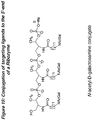
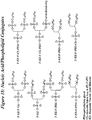
- the nucleic acid conjugates of the invention are assembled post synthetically, for example, following solid phase oligonucleotide synthesis (see for example Figure 15 ).
- nucleic acid conjugates of the instant invention are assembled post synthetically, for example, following solid phase oligonucleotide synthesis.
- nucleic acid molecules The attachment of compounds of the invention to nucleic acid molecules is provided at any position within the molecule, for example, at internucleotide linkages, nucleosidic sugar hydroxyl groups such as 5', 3', and 2'-hydroxyls, and/or at nucleobase positions such as amino and carbonyl groups.
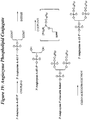
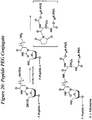
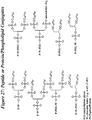
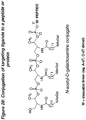
- the exemplary conjugates of the invention are described as compounds of the formulae herein, however, other peptide, protein, phospholipid, and poly-alkyl glycol derivatives are provided by the invention, including various analogs of the compounds of formulae 4 and 39, including but not limited to different isomers of the compounds described herein.
- folate conjugates of the invention are described as compounds shown by formulae herein, however, other folate and antifolate derivatives are provided by the invention, including various folate analogs of the formulae of the invention, including dihydrofolates, tetrahydrofolates, tetrahydorpterins, folinic acid, pteropolyglutamic acid, 1-deza, 3-deaza, 5-deaza, 8-deaza, 10-deaza, 1,5-deaza, 5,10-.dideaza, 8,10-dideaza, and 5,8-dideaza folates, antifolates, and pteroic acids.
- folate is meant to refer to folate and folate derivatives, including pteroic acid derivatives and analogs.
- the present invention features compositions and conjugates to facilitate delivery of molecules into a biological system such as cells.
- the conjugates provided by the instant invention can impart therapeutic activity by transferring therapeutic compounds across cellular membranes.
- the present invention encompasses the design and synthesis of novel agents for the delivery of siRNA molecules.
- the transporters described are designed to be used either individually or as part of a multi-component system.
- the compounds of the invention generally shown in Formulae herein are expected to improve delivery of molecules into a number of cell types originating from different tissues, in the presence or absence of serum.
- the present invention can be used in connection with methods to modulate gene expression, for example, genes involved in the progression and/or maintenance of cancer or in a viral infection.
- the invention can be used in connection with the use of one or more of the nucleic acid-based molecules and methods independently or in combination to inhibit the expression of the gene(s) encoding proteins associated with cancerous conditions, for example breast cancer, lung cancer, colorectal cancer, brain cancer, esophageal cancer, stomach cancer, bladder cancer, pancreatic cancer, cervical cancer, head and neck cancer, ovarian cancer, melanoma, lymphoma, glioma, or multidrug resistant cancer associated genes.
- the invention can be used in connection with the use of one or more of the nucleic acid-based molecules and methods independently or in combination to inhibit the expression of the gene(s) encoding viral proteins, for example HIV, HBV, HCV, CMV, RSV, HSV, poliovirus, influenza, rhinovirus, west nile virus, Ebola virus, foot and mouth virus, and papilloma virus associated genes.
- viral proteins for example HIV, HBV, HCV, CMV, RSV, HSV, poliovirus, influenza, rhinovirus, west nile virus, Ebola virus, foot and mouth virus, and papilloma virus associated genes.
- a nucleic acid molecule component of a conjugate of the instant invention can be between 12 and 100 nucleotides in length.
- Exemplary antisense molecules of the invention are preferably between 15 and 75 nucleotides in length, more preferably between 20 and 35 nucleotides in length, e.g., 25, 26, 27, or 28 nucleotides in length (see, for example, Woolf et al., 1992, PNAS., 89, 7305-7309 ; Milner et al., 1997, Nature Biotechnology, 15, 537-541 ).
- nucleic acid molecule to be of sufficient length and suitable conformation for the nucleic acid molecule to catalyze a reaction contemplated herein.
- the length of the nucleic acid molecules described and exemplified herein are not limiting within the general size ranges stated.
- the conjugates of the invention are added directly, or can be complexed with cationic lipids, packaged within liposomes, or otherwise delivered to target cells or tissues.
- the conjugates and/or conjugate complexes can be locally administered to relevant tissues ex vivo, or in vivo through injection or infusion pump, with or without their incorporation in biopolymers.
- the compositions and conjugates of the instant invention individually, or in combination or in conjunction with other drugs, can be used to treat diseases or conditions discussed above.
- the patient can be treated, or other appropriate cells can be treated, as is evident to those skilled in the art, individually or in combination with one or more drugs under conditions suitable for the treatment.
- the described molecules can be used in combination with other known treatments to treat conditions or diseases discussed above.
- the described molecules can be used in combination with one or more known therapeutic agents to treat breast, lung, prostate, colorectal, brain, esophageal, bladder, pancreatic, cervical, head and neck, and ovarian cancer, melanoma, lymphoma, glioma, multidrug resistant cancers, and/or HIV, HBV, HCV, CMV, RSV, HSV, poliovirus, influenza, rhinovirus, west nile virus, Ebola virus, foot and mouth virus, and papilloma virus infection.
- MCTV multi-domain cellular transport vehicles
- the compounds of the invention are used either alone or in combination with other compounds with a neutral or a negative charge including but not limited to neutral lipid and/or targeting components, to improve the effectiveness of the formulation or conjugate in delivering and targeting the predetermined compound or molecule to cells.
- Another embodiment of the invention encompasses the utility of these compounds for increasing the transport of other impermeable and/or lipophilic compounds into cells.
- Targeting components include ligands for cell surface receptors including, peptides and proteins, glycolipids, lipids, carbohydrates, and their synthetic variants, for example folate receptors.
- the compounds of the invention are provided as a surface component of a lipid aggregate, such as a liposome encapsulated with the predetermined molecule to be delivered.
- a lipid aggregate such as a liposome encapsulated with the predetermined molecule to be delivered.
- Liposomes which can be unilamellar or multilamellar, can introduce encapsulated material into a cell by different mechanisms.
- the liposome can directly introduce its encapsulated material into the cell cytoplasm by fusing with the cell membrane.
- theliposome can be compartmentalized into an acidic vacuole (i.e., an endosome) and its contents released from the liposome and out of the acidic vacuole into the cellular cytoplasm.
- the invention features a lipid aggregate formulation of the compounds described herein, including phosphatidylcholine (of varying chain length; e.g., egg yolk phosphatidylcholine), cholesterol, a cationic lipid, and 1,2-distearoyl-sn-glycero-3-phosphoethanolamine-polythyleneglycol-2000 (DSPE-PEG2000).
- the cationic lipid component of this lipid aggregate can be any cationic lipid known in the art such as dioleoyl 1,2-diacyl-3-trimethylammonium-propane (DOTAP).
- DOTAP dioleoyl 1,2-diacyl-3-trimethylammonium-propane
- this cationic lipid aggregate comprises a covalently bound compound described in any of the Formulae herein.
- polyethylene glycol is covalently attached to the compounds of the present invention.
- the attached PEG can be any molecular weight but is preferably between 2000-50,000 daltons.
- the compounds of the present invention and methods using the same are useful for introducing siRNA molecules into a cell.
- the invention can be used for siRNA molecule delivery where the corresponding target site of action exists intracellularly.
- the compounds of the instant invention provide conjugates of molecules that can interact with cellular receptors, such as high affinity folate receptors and ASGPr receptors, and provide a number of features that allow the efficient delivery and subsequent release of conjugated compounds across biological membranes.
- the compounds utilize chemical linkages between the receptor ligand and the compound to be delivered of length that can interact preferentially with cellular receptors.
- the chemical linkages between the ligand and the compound to be delivered can be designed as degradable linkages, for example by utilizing a phosphate linkage that is proximal to a nucleophile, such as a hydroxyl group.
- Deprotonation of the hydroxyl group or an equivalent group can result in nucleophilic attack of the phosphate resulting in a cyclic phosphate intermediate that can be hydrolyzed.
- This cleavage mechanism is analogous RNA cleavage in the presence of a base or RNA nuclease.
- other degradable linkages can be selected that respond to various factors such as UV irradiation, cellular nucleases, pH, temperature etc. The use of degradable linkages allows the delivered compound to be released in a predetermined system, for example in the cytoplasm of a cell, or in a particular cellular organelle.
- ligand derived phosphoramidites that are readily conjugated to compounds and molecules of interest.
- Phosphoramidite compounds permit the direct attachment of conjugates to molecules of interest without the need for using nucleic acid phosphoramidite species as scaffolds.
- the use of phosphoramidite chemistry can be used directly in coupling compounds to a compound of interest, without the need for other condensation reactions, such as condensation of the ligand to an amino group on the nucleic acid, for example at the N6 position of adenosine or a 2'-deoxy-2'-amino function.
- compounds can be used to introduce non-nucleic acid based conjugated linkages into oligonucleotides that can provide more efficient coupling during oligonucleotide synthesis than the use of nucleic acid-based phosphoramidites.
- This improved coupling can take into account improved steric considerations of abasic or non-nucleosidic scaffolds bearing pendant alkyl linkages.
- biodegradable nucleic acid linker molecule refers to a nucleic acid molecule that is designed as a biodegradable linker to connect one molecule to another molecule, for example, a biologically active molecule.
- the stability of the biodegradable nucleic acid linker molecule can be modulated by using various combinations of ribonucleotides, deoxyribonucleotides, and chemically modified nucleotides, for example 2'-O-methyl, 2'-fluoro, 2'-amino, 2'-O-amino, 2'-C-allyl, 2'-O-allyl, and other 2'-modified or base modified nucleotides.
- the biodegradable nucleic acid linker molecule can be a dimer, trimer, tetramer or longer nucleic acid molecule, for example an oligonucleotide of about 2, 3, 4, 5, 6, 7, 8, 9, 10, 11, 12, 13, 14, 15, 16, 17, 18, 19, or 20 nucleotides in length, or can comprise a single nucleotide with a phosphorus based linkage, for example a phosphoramidate or phosphodiester linkage.
- the biodegradable nucleic acid linker molecule can also comprise nucleic acid backbone, nucleic acid sugar, or nucleic acid base modifications.
- biodegradable refers to degradation in a biological system, for example enzymatic degradation or chemical degradation.
- biologically active molecule refers to compounds or molecules that are capable of eliciting or modifying a biological response in a system.
- biologically active molecules contemplated by the instant invention include therapeutically active molecules such as antibodies, hormones, antivirals, peptides, proteins, chemotherapeutics, small molecules, vitamins, co-factors, nucleosides, nucleotides, oligonucleotides, enzymatic nucleic acids, antisense nucleic acids, triplex forming oligonucleotides, 2,5-A chimeras, siRNA, dsRNA, allozymes, aptamers, decoys and analogs thereof.
- Biologically active molecules of the invention also include molecules capable of modulating the pharmacokinetics and/or pharmacodynamics of other biologically active molecules, for example lipids and polymers such as polyamines, polyamides, polyethylene glycol and other polyethers.
- lipids and polymers such as polyamines, polyamides, polyethylene glycol and other polyethers.
- phospholipid refers to a hydrophobic molecule comprising at least one phosphorus group.
- a phospholipid can comprise a phosphorus containing group and saturated or unsaturated alkyl group, optionally substituted with OH, COOH, oxo, amine, or substituted or unsubstituted aryl groups.
- nitrogen containing group refers to any chemical group or moiety comprising a nitrogen or substituted nitrogen.
- nitrogen containing groups include amines, substituted amines, amides, alkylamines, amino acids such as arginine or lysine, polyamines such as spermine or spermidine, cyclic amines such as pyridines, pyrimidines including uracil, thymine, and cytosine, morpholines, phthalimides, and heterocyclic amines such as purines, including guanine and adenine.
- target molecule refers to nucleic acid molecules, proteins, peptides, antibodies, polysaccharides, lipids, sugars, metals, microbial or cellular metabolites, analytes, pharmaceuticals, and other organic and inorganic molecules that are present in a system.
- inhibit or “down-regulate” it is meant that the expression of the gene, or level of RNAs or equivalent RNAs encoding one or more protein subunits, or activity of one or more protein subunits, such as pathogenic protein, viral protein or cancer related protein subunit(s), is reduced below that observed in the absence of the compounds or combination of compounds of the invention.
- inhibition or down-regulation with an enzymatic nucleic acid molecule preferably is below that level observed in the presence of an enzymatically inactive or attenuated molecule that is able to bind to the same site on the target RNA, but is unable to cleave that RNA.
- inhibition or down-regulation with antisense oligonucleotides is preferably below that level observed in the presence of, for example, an oligonucleotide with scrambled sequence or with mismatches.
- inhibition or down-regulation of viral or oncogenic RNA, protein, or protein subunits with a compound of the instant invention is greater in the presence of the compound than in its absence.
- up-regulate is meant that the expression of the gene, or level of RNAs or equivalent RNAs encoding one or more protein subunits, or activity of one or more protein subunits, such as viral or oncogenic protein subunit(s), is greater than that observed in the absence of the compounds or combination of compounds of the invention.
- the expression of a gene such as a viral or cancer related gene, can be increased in order to treat, prevent, ameliorate, or modulate a pathological condition caused or exacerbated by an absence or low level of gene expression.
- module is meant that the expression of the gene, or level of RNAs or equivalent RNAs encoding one or more protein subunits, or activity of one or more protein subunit(s) of a protein, for example a viral or cancer related protein is up-regulated or down-regulated, such that the expression, level, or activity is greater than or less than that observed in the absence of the compounds or combination of compounds of the invention.
- zymatic nucleic acid molecule refers to a nucleic acid molecule which has complementarity in a substrate binding region to a specified gene target, and also has an enzymatic activity which is active to specifically cleave target RNA. That is, the enzymatic nucleic acid molecule is able to intermolecularly cleave RNA and thereby inactivate a target RNA molecule. These complementary regions allow sufficient hybridization of the enzymatic nucleic acid molecule to the target RNA and thus permit cleavage.
- nucleic acids can be modified at the base, sugar, and/or phosphate groups.
- enzymatic nucleic acid is used interchangeably with phrases such as ribozymes, catalytic RNA, enzymatic RNA, catalytic DNA, aptazyme or aptamer-binding ribozyme, regulatable ribozyme, catalytic oligonucleotides, nucleozyme, DNAzyme, RNA enzyme, endoribonuclease, endonuclease, minizyme, leadzyme, oligozyme or DNA enzyme. All of these terminologies describe nucleic acid molecules with enzymatic activity.
- enzymatic nucleic acid molecules described in the instant application are not limiting in the invention and those skilled in the art will recognize that all that is important in an enzymatic nucleic acid molecule of this invention is that it has a specific substrate binding site which is complementary to one or more of the target nucleic acid regions, and that it have nucleotide sequences within or surrounding that substrate binding site which impart a nucleic acid cleaving and/or ligation activity to the molecule ( Cech et al., U.S. Patent No. 4,987,071 ; Cech et al., 1988, 260 JAMA 3030 ).
- nucleic acid molecule refers to a molecule having nucleotides.
- the nucleic acid can be single, double, or multiple stranded and can comprise modified or unmodified nucleotides or non-nucleotides or various mixtures and combinations thereof.
- enzyme portion or “catalytic domain” as used herein refers to that portion/region of the enzymatic nucleic acid molecule essential for cleavage of a nucleic acid substrate (for example see Figure 1 ).
- substrate binding arm or “substrate binding domain” as used herein refers to that portion/region of a enzymatic nucleic acid which is able to interact, for example via complementarity (i.e., able to base-pair with), with a portion of its substrate.
- complementarity i.e., able to base-pair with
- such complementarity is 100%, but can be less if desired.
- as few as 10 bases out of 14 can be base-paired (see for example Werner and Uhlenbeck, 1995, Nucleic Acids Research, 23, 2092-2096 ; Hammann et al., 1999, Antisense and Nucleic Acid Drug Dev., 9, 25-31 ). Examples of such arms are shown generally in Figures 1-4 .
- these arms contain sequences within a enzymatic nucleic acid which are intended to bring enzymatic nucleic acid and target RNA together through complementary base-pairing interactions.
- the enzymatic nucleic acid of the invention can have binding arms that are contiguous or non-contiguous and can be of varying lengths.
- the length of the binding arm(s) are preferably greater than or equal to four nucleotides and of sufficient length to stably interact with the target RNA; preferably 12-100 nucleotides; more preferably 14-24 nucleotides long (see for example Werner and Uhlenbeck, supra; Hamman et al., supra; Hampel et al., EP0360257 ; Berzal-Herrance et al., 1993, EMBO J., 12, 2567-73 ).
- the design is such that the length of the binding arms are symmetrical (i.e., each of the binding arms is of the same length; e.g., five and five nucleotides, or six and six nucleotides, or seven and seven nucleotides long) or asymmetrical (i.e., the binding arms are of different length; e.g., six and three nucleotides; three and six nucleotides long; four and five nucleotides long; four and six nucleotides long; four and seven nucleotides long; and the like).
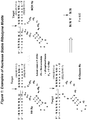
- Inozyme refers to an enzymatic nucleic acid molecule comprising a motif as is generally described as NCH Rz in Figure 1 .
- Inozymes possess endonuclease activity to cleave RNA substrates having a cleavage triplet NCH/, where N is a nucleotide, C is cytidine and H is adenosine, uridine or cytidine, and / represents the cleavage site.
- H is used interchangeably with X.
- Inozymes can also possess endonuclease activity to cleave RNA substrates having a cleavage triplet NCN/, where N is a nucleotide, C is cytidine, and / represents the cleavage site.
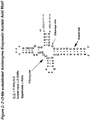
- "I” in Figure 2 represents an Inosine nucleotide, preferably a ribo-Inosine or xylo-Inosine nucleoside.
- G-cleaver refers to an enzymatic nucleic acid molecule comprising a motif as is generally described as G-cleaver Rz in Figure 1 .
- G-cleavers possess endonuclease activity to cleave RNA substrates having a cleavage triplet NYN/, where N is a nucleotide, Y is uridine or cytidine and / represents the cleavage site.
- G-cleavers can be chemically modified as is generally shown in Figure 2 .
- amberzyme motif refers to an enzymatic nucleic acid molecule comprising a motif as is generally described in Figure 2 .
- Amberzymes possess endonuclease activity to cleave RNA substrates having a cleavage triplet NG/N, where N is a nucleotide, G is guanosine, and / represents the cleavage site.
- Amberzymes can be chemically modified to increase nuclease stability through substitutions as are generally shown in Figure 3 .
- differing nucleoside and/or non-nucleoside linkers can be used to substitute the 5'-gaa-3' loops shown in the figure.
- Amberzymes represent a non-limiting example of an enzymatic nucleic acid molecule that does not require a ribonucleotide (2'-OH) group within its own nucleic acid sequence for activity.
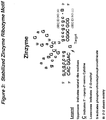
- Zinzyme motif refers to an enzymatic nucleic acid molecule comprising a motif as is generally described in Figure 3 .
- Zinzymes possess endonuclease activity to cleave RNA substrates having a cleavage triplet including but not limited to YG/Y, where Y is uridine or cytidine, and G is guanosine and / represents the cleavage site.
- Zinzymes can be chemically modified to increase nuclease stability through substitutions as are generally shown in Figure 3 , including substituting 2'-O-methyl guanosine nucleotides for guanosine nucleotides.
- Zinzymes represent a non-limiting example of an enzymatic nucleic acid molecule that does not require a ribonucleotide (2'-OH) group within its own nucleic acid sequence for activity.
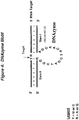
- DNAzyme' refers to an enzymatic nucleic acid molecule that does not require the presence of a 2'-OH group for its activity.
- the enzymatic nucleic acid molecule can have an attached linker(s) or other attached or associated groups, moieties, or chains containing one or more nucleotides with 2'-OH groups.
- DNAzymes can be synthesized chemically or expressed endogenously in vivo, by means of a single stranded DNA vector or equivalent thereof. An example of a DNAzyme is shown in Figure 4 and is generally reviewed in Usman et al., International PCT Publication No.
- sufficient length refers to an oligonucleotide of length great enough to provide the intended function under the expected condition, i.e., greater than or equal to 3 nucleotides.
- sufficient length means that the binding arm sequence is long enough to provide stable binding to a target site under the expected binding conditions. Preferably, the binding arms are not so long as to prevent useful turnover of the nucleic acid molecule.
- stably interact refers to interaction of the oligonucleotides with target nucleic acid (e.g., by forming hydrogen bonds with complementary nucleotides in the target under physiological conditions) that is sufficient to the intended purpose (e.g., cleavage of target RNA by an enzyme).
- antisense nucleic acid refers to a non-enzymatic nucleic acid molecule that binds to target RNA by means of RNA-RNA or RNA-DNA or RNA-PNA (protein nucleic acid; Egholm et al., 1993 Nature 365, 566 ) interactions and alters the activity of the target RNA (for a review, see Stein and Cheng, 1993 Science 261, 1004 and Woolf et al., US patent No. 5,849,902 ).
- antisense molecules are complementary to a target sequence along a single contiguous sequence of the antisense molecule.
- an antisense molecule can bind to substrate such that the substrate molecule forms a loop, and/or an antisense molecule can bind such that the antisense molecule forms a loop.
- the antisense molecule can be complementary to two (or even more) non-contiguous substrate sequences or two (or even more) non-contiguous sequence portions of an antisense molecule can be complementary to a target sequence or both.
- antisense DNA can be used to target RNA by means of DNA-RNA interactions, thereby activating RNase H, which digests the target RNA in the duplex.
- the antisense oligonucleotides can comprise one or more RNAse H activating region, which is capable of activating RNAse H cleavage of a target RNA.
- Antisense DNA can be synthesized chemically or expressed via the use of a single stranded DNA expression vector or equivalent thereof.
- RNase H activating region refers to a region (generally greater than or equal to 4-25 nucleotides in length, preferably from 5-11 nucleotides in length) of a nucleic acid molecule capable of binding to a target RNA to form a noncovalent complex that is recognized by cellular RNase H enzyme (see for example Arrow et al., US 5,849,902 ; Arrow et al., US 5,989,912 ).
- the RNase H enzyme binds to the nucleic acid molecule-target RNA complex and cleaves the target RNA sequence.
- the RNase H activating region comprises, for example, phosphodiester, phosphorothioate (preferably at least four of the nucleotides are phosphorothiote substitutions; more specifically, 4-11 of the nucleotides are phosphorothiote substitutions); phosphorodithioate, 5'-thiophosphate, or methylphosphonate backbone chemistry or a combination thereof.
- the RNase H activating region can also comprise a variety of sugar chemistries.
- the RNase H activating region can comprise deoxyribose, arabino, fluoroarabino or a combination thereof, nucleotide sugar chemistry.
- 2-5A antisense chimera refers to an antisense oligonucleotide containing a 5'-phosphorylated 2'-5'-linked adenylate residue. These chimeras bind to target RNA in a sequence-specific manner and activate a cellular 2-5A-dependent ribonuclease which, in turn, cleaves the target RNA ( Torrence et al., 1993 Proc. Natl. Acad. Sci. USA 90, 1300 ; Silverman et al., 2000, Methods Enzymol., 313, 522-533 ; Player and Torrence, 1998, Pharmacol. Ther., 78, 55-113 ).
- triplex forming oligonucleotides refers to an oligonucleotide that can bind to a double-stranded DNA in a sequence-specific manner to form a triple-strand helix. Formation of such triple helix structure has been shown to inhibit transcription of the targeted gene ( Duval-Valentin et al., 1992 Proc. Natl. Acad. Sci. USA 89, 504 ; Fox, 2000, Curr. Med. Chem., 7, 17-37 ; Praseuth et. al., 2000, Biochim. Biophys. Acta, 1489, 181-206 ).
- RNA refers to a nucleic acid that encodes an RNA, for example, nucleic acid sequences including but not limited to structural genes encoding a polypeptide.
- pathogenic protein refers to endogenous or exongenous proteins that are associated with a disease state or condition, for example a particular cancer or viral infection.
- complementarity refers to the ability of a nucleic acid to form hydrogen bond(s) with another RNA sequence by either traditional Watson-Crick or other non-traditional types.
- the binding free energy for a nucleic acid molecule with its target or complementary sequence is sufficient to allow the relevant function of the nucleic acid to proceed, e.g., enzymatic nucleic acid cleavage, antisense or triple helix inhibition. Determination of binding free energies for nucleic acid molecules is well known in the art (see, e.g., Turner et al., 1987, CSH Symp. Quant. Biol. LII pp.
- a percent complementarity indicates the percentage of contiguous residues in a nucleic acid molecule which can form hydrogen bonds (e.g., Watson-Crick base pairing) with a second nucleic acid sequence (e.g., 5, 6, 7, 8, 9, 10 out of 10 being 50%, 60%, 70%, 80%, 90%, and 100% complementary).
- Perfectly complementary means that all the contiguous residues of a nucleic acid sequence will hydrogen bond with the same number of contiguous residues in a second nucleic acid sequence.
- RNA refers to a molecule comprising at least one ribonucleotide residue.
- ribonucleotide or “2'-OH” is meant a nucleotide with a hydroxyl group at the 2' position of a ⁇ -D-ribo-furanose moiety.
- decoy RNA refers to a RNA molecule or aptamer that is designed to preferentially bind to a predetermined ligand. Such binding can result in the inhibition or activation of a target molecule.
- the decoy RNA or aptamer can compete with a naturally occurring binding target for the binding of a specific ligand. For example, it has been shown that over-expression of HIV trans-activation response (TAR) RNA can act as a "decoy” and efficiently binds HIV tat protein, thereby preventing it from binding to TAR sequences encoded in the HIV RNA ( Sullenger et al., 1990, Cell, 63, 601-608 ).
- TAR HIV trans-activation response
- a decoy RNA can be designed to bind to a receptor and block the binding of an effector molecule or a decoy RNA can be designed to bind to receptor of interest and prevent interaction with the receptor.
- ssRNA single stranded RNA
- mRNA messenger RNA
- tRNA transfer RNA
- rRNA ribosomal RNA
- ssDNA single stranded DNA
- ssDNA single stranded DNA
- a ssDNA can be a sense or antisense gene sequence or EST (Expressed Sequence Tag).
- double stranded RNA or “dsRNA” as used herein refers to a double stranded RNA molecule capable of RNA interference, including short interfering RNA (siRNA).
- siRNA short interfering RNA
- RNA interference refers to a double stranded nucleic acid molecule capable of RNA interference "RNAi”, see for example Bass, 2001, Nature, 411, 428-429 ; Elbashir et al., 2001, Nature, 411, 494-498 ; and Kreutzer et al., International PCT Publication No. WO 00/44895 ; Zernicka-Goetz et al., International PCT Publication No. WO 01/36646 ; Fire, International PCT Publication No. WO 99/32619 ; Plaetinck et al., International PCT Publication No.
- siRNA molecules need not be limited to those molecules containing only RNA, but further encompasses chemically modified nucleotides and non-nucleotides.
- allozyme refers to an allosteric enzymatic nucleic acid molecule, see for example see for example George et al., US Patent Nos. 5,834,186 and 5,741,679 , Shih et al., US Patent No. 5,589,332 , Nathan et al., US Patent No 5,871,914 , Nathan and Ellington, International PCT publication No. WO 00/24931 , Breaker et al., International PCT Publication Nos. WO 00/26226 and 98/27104 , and Sullenger et al., International PCT publication No. WO 99/29842 .
- the cell can, for example, be in vitro, e.g., in cell culture, or present in a multicellular organism, including,, e.g., birds, plants and mammals such as humans, cows, sheep, apes, monkeys, swine, dogs, and cats.
- the cell can be prokaryotic (e.g., bacterial cell) or eukaryotic (e.g., mammalian or plant cell).
- highly conserved sequence region refers to a nucleotide sequence of one or more regions in a target gene does not vary significantly from one generation to the other or from one biological system to the other.
- non-nucleotide refers to any group or compound which can be incorporated into a nucleic acid chain in the place of one or more nucleotide units, including either sugar and/or phosphate substitutions, and allows the remaining bases to exhibit their enzymatic activity.
- the group or compound is abasic in that it does not contain a commonly recognized nucleotide base, such as adenosine, guanine, cytosine, uracil or thymine.
- nucleotide refers to a heterocyclic nitrogenous base in N-glycosidic linkage with a phosphorylated sugar. Nucleotides are recognized in the art to include natural bases (standard), and modified bases well known in the art. Such bases are generally located at the 1' position of a nucleotide sugar moiety. Nucleotides generally comprise a base, sugar and a phosphate group.
- the nucleotides can be unmodified or modified at the sugar, phosphate and/or base moiety, (also referred to interchangeably as nucleotide analogs, modified nucleotides, non-natural nucleotides, non-standard nucleotides and other; see for example, Usman and McSwiggen, supra; Eckstein et al., International PCT Publication No. WO 92/07065 ; Usman et al., International PCT Publication No. WO 93/15187 ; Uhlman & Peyman, supra ).
- modified nucleic acid bases known in the art as summarized by Limbach et al., 1994, Nucleic Acids Res. 22, 2183 .
- nucleic acids include, for example, inosine, purine, pyridin-4-one, pyridin-2-one, phenyl, pseudouracil, 2, 4, 6-trimethoxy benzene, 3-methyl uracil, dihydrouridine, naphthyl, aminophenyl, 5-alkylcytidines (e.g., 5-methylcytidine), 5-alkyluridines (e.g., ribothymidine), 5-halouridine (e.g., 5-bromouridine) or 6-azapyrimidines or 6-alkylpyrimidines (e.g.
- modified bases in this aspect is meant nucleotide bases other than adenine, guanine, cytosine and uracil at 1' position or their equivalents; such bases can be used at any position, for example, within the catalytic core of an enzymatic nucleic acid molecule and/or in the substrate-binding regions of the nucleic acid molecule.
- nucleoside refers to a heterocyclic nitrogenous base in N-glycosidic linkage with a sugar. Nucleosides are recognized in the art to include natural bases (standard), and modified bases well known in the art. Such bases are generally located at the 1' position of a nucleoside sugar moiety. Nucleosides generally comprise a base and sugar group.
- the nucleosides can be unmodified or modified at the sugar, and/or base moiety, (also referred to interchangeably as nucleoside analogs, modified nucleosides, non-natural nucleosides, non-standard nucleosides and other; see for example, Usman and McSwiggen, supra; Eckstein et al., International PCT Publication No. WO 92/07065 ; Usman et al., International PCT Publication No. WO 93/15187 ; Uhlman & Peyman, supra).
- modified nucleic acid bases known in the art as summarized by Limbach et al., 1994, Nucleic Acids Res. 22, 2183 .
- nucleic acids Some of the non-limiting examples of chemically modified and other natural nucleic acid bases that can be introduced into nucleic acids include, inosine, purine, pyridin-4-one, pyridin-2-one, phenyl, pseudouracil, 2, 4, 6-trimethoxy benzene, 3-methyl uracil, dihydrouridine, naphthyl, aminophenyl, 5-alkylcytidines (e.g., 5-methylcytidine), 5-alkyluridines (e.g., ribothymidine), 5-halouridine (e.g., 5-bromouridine) or 6-azapyrimidines or 6-alkylpyrimidines (e.g.
- 6-methyluridine 6-methyluridine
- propyne quesosine, 2-thiouridine, 4-thiouridine, wybutosine, wybutoxosine, 4-acetylcytidine, 5-(carboxyhydroxymethyl)uridine, 5'-carboxymethylaminomethyl-2-thiouridine, 5-carboxymethylaminomethyluridine, beta-D-galactosylqueosine, 1-methyladenosine, 1-methylinosine, 2,2-dimethylguanosine, 3-methylcytidine.
- nucleoside bases other than adenine, guanine, cytosine and uracil at l' position or their equivalents; such bases can be used at any position, for example, within the catalytic core of an enzymatic nucleic acid molecule and/or in the substrate-binding regions of the nucleic acid molecule.
- cap structure refers to chemical modifications, which have been incorporated at either terminus of the oligonucleotide (see for example Wincott et al., WO 97/26270 ). These terminal modifications protect the nucleic acid molecule from exonuclease degradation, and can help in delivery and/or localization within a cell.
- the cap can be present at the 5'-terminus (5'-cap) or at the 3'-terminus (3'-cap) or can be present on both terminus.
- the 5'-cap includes inverted abasic residue (moiety), 4',5'-methylene nucleotide; 1-(beta-D-erythrofuranosyl) nucleotide, 4'-thio nucleotide, carbocyclic nucleotide; 1,5-anhydrohexitol nucleotide; L-nucleotides; alpha-nucleotides; modified base nucleotide; phosphorodithioate linkage; threo -pentofuranosyl nucleotide; acyclic 3',4'-seco nucleotide; acyclic 3,4-dihydroxybutyl nucleotide; acyclic 3,5-dihydroxypentyl nucleotide, 3'-3'-inverted nucleotide moiety; 3'-3'-inverted abasic moiety; 3'-2'-inverted nucleotide moiety; 3'
- abasic refers to sugar moieties lacking a base or having other chemical groups in place of a base at the 1' position, for example a 3',3'-linked or 5',5'-linked deoxyabasic ribose derivative (for more details see Wincott et al., International PCT publication No. WO 97/26270 ).
- unmodified nucleoside refers to one of the bases adenine, cytosine, guanine, thymine, uracil joined to the 1' carbon of ⁇ -D-ribo-furanose.
- modified nucleoside refers to any nucleotide base which contains a modification in the chemical structure of an unmodified nucleotide base, sugar and/or phosphate.
- consists essentially of is meant that the active nucleic acid molecule, for example, an enzymatic nucleic acid molecule, contains an enzymatic center or core equivalent to those in the examples, and binding arms able to bind RNA such that cleavage at the target site occurs. Other sequences can be present which do not interfere with such cleavage.
- a core region can, for example, include one or more loop, stem-loop structure, or linker which does not prevent enzymatic activity.
- a core sequence for a hammerhead enzymatic nucleic acid can comprise a conserved sequence, such as 5'-CUGAUGAG-3' and 5'-CGAA-3' connected by "X", where X is 5'-GCCGUUAGGC-3' (SEQ ID NO 1), or any other Stem II region known in the art, or a nucleotide and/or non-nucleotide linker.
- nucleic acid molecules of the instant invention such as Inozyme, G-cleaver, amberzyme, zinzyme, DNAzyme, antisense, 2-5A antisense, triplex forming nucleic acid, and decoy nucleic acids
- other sequences or non-nucleotide linkers can be present that do not interfere with the function of the nucleic acid molecule.
- Sequence X can be a linker of ⁇ 2 nucleotides in length, preferably 3, 4, 5, 6, 7, 8, 9, 10, 15, 20, 26, 30, where the nucleotides can preferably be internally base-paired to form a stem of preferably ⁇ 2 base pairs.
- the nucleotide linker X can be a nucleic acid aptamer, such as an ATP aptamer, HIV Rev aptamer (RRE), HIV Tat aptamer (TAR) and others (for a review see Gold et al., 1995, Annu. Rev. Biochem., 64, 763 ; and Szostak & Ellington, 1993, in The RNA World, ed. Gesteland and Atkins, pp.
- nucleic acid aptamer as used herein is meant to indicate a nucleic acid sequence capable of interacting with a ligand.
- the ligand can be any natural or a synthetic molecule, including but not limited to a resin, metabolites, nucleosides, nucleotides, drugs, toxins, transition state analogs, peptides, lipids, proteins, amino acids, nucleic acid molecules, hormones, carbohydrates, receptors, cells, viruses, bacteria and others.
- sequence X can be a non-nucleotide linker.
- Non-nucleotides can include abasic nucleotide, polyether, polyamine, polyamide, peptide, carbohydrate, lipid, or polyhydrocarbon compounds. Specific examples include those described by Seela and Kaiser, Nucleic Acids Res. 1990, 18:6353 and Nucleic Acids Res. 1987, 15:3113 ; Cload and Schepartz, J. Am. Chem. Soc. 1991, 113:6324 ; Richardson and Schepartz, J. Am. Chem. Soc. 1991, 113:5109 ; Ma et al., Nucleic Acids Res.
- a "non-nucleotide” further means any group or compound which can be incorporated into a nucleic acid chain in the place of one or more nucleotide units, including either sugar and/or phosphate substitutions, and allows the remaining bases to exhibit their enzymatic activity.
- the group or compound can be abasic in that it does not contain a commonly recognized nucleotide base, such as adenosine, guanine, cytosine, uracil or thymine.
- the invention features an enzymatic nucleic acid molecule having one or more non-nucleotide moieties, and having enzymatic activity to cleave an RNA or DNA molecule.
- a patient refers to an organism, which is a donor or recipient of explanted cells or the cells themselves. "Patient” also refers to an organism to which the nucleic acid molecules of the invention can be administered.
- a patient is a mammal or mammalian cells. More preferably, a patient is a human or human cells.
- enhanced enzymatic activity includes activity measured in cells and/or in vivo where the activity is a reflection of both the catalytic activity and the stability of the nucleic acid molecules of the invention.
- the product of these properties can be increased in vivo compared to an all RNA enzymatic nucleic acid or all DNA enzyme.
- the activity or stability of the nucleic acid molecule can be decreased (i.e., less than ten-fold), but the overall activity of the nucleic acid molecule is enhanced, in vivo.
- negatively charged molecules refers to molecules such as nucleic acid molecules (e.g., RNA, DNA, oligonucleotides, mixed polymers, peptide nucleic acid, and the like), peptides (e.g., polyaminoacids, polypeptides, proteins and the like), nucleotides, pharmaceutical and biological compositions, that have negatively charged groups that can ion-pair with the positively charged head group of the cationic lipids of the invention.
- nucleic acid molecules e.g., RNA, DNA, oligonucleotides, mixed polymers, peptide nucleic acid, and the like
- peptides e.g., polyaminoacids, polypeptides, proteins and the like
- nucleotides e.g., pharmaceutical and biological compositions, that have negatively charged groups that can ion-pair with the positively charged head group of the cationic lipids of the invention.
- Coupled refers to a reaction, either chemical or enzymatic, in which one atom, moiety, group, compound or molecule is joined to another atom, moiety, group, compound or molecule.
- deprotection or “deprotecting” as used herein, refers to the removal of a protecting group.
- alkyl refers to a saturated aliphatic hydrocarbon, including straight-chain, branched-chain “isoalkyl", and cyclic alkyl groups.
- alkyl also comprises alkoxy, alkyl-thio, alkyl-thio-alkyl, alkoxyalkyl, alkylamino, alkenyl, alkynyl, alkoxy, cycloalkenyl, cycloalkyl, cycloalkylalkyl, heterocycloalkyl, heteroaryl, C1-C6 hydrocarbyl, aryl or substituted aryl groups.
- the alkyl group has 1 to 12 carbons.
- the alkyl group can be substituted or unsubstituted.
- the substituted group(s) preferably comprise hydroxy, oxy, thio, amino, nitro, cyano, alkoxy, alkyl-thio, alkyl-thio-alkyl, alkoxyalkyl, alkylamino, silyl, alkenyl, alkynyl, alkoxy, cycloalkenyl, cycloalkyl, cycloalkylalkyl, heterocycloalkyl, heteroaryl, C1-C6 hydrocarbyl, aryl or substituted aryl groups.
- alkyl also includes alkenyl groups containing at least one carbon-carbon double bond, including straight-chain, branched-chain, and cyclic groups.
- the alkenyl group has about 2 to about 12 carbons. More preferably it is a lower alkenyl of from about 2 to about 7 carbons, more preferably about 2 to about 4 carbons.
- the alkenyl group can be substituted or unsubstituted.
- the substituted group(s) When substituted the substituted group(s) preferably comprise hydroxy, oxy, thio, amino, nitro, cyano, alkoxy, alkyl-thio, alkyl-thio-alkyl, alkoxyalkyl, alkylamino, silyl, alkenyl, alkynyl, alkoxy, cycloalkenyl, cycloalkyl, cycloalkylalkyl, heterocycloalkyl, heteroaryl, C1-C6 hydrocarbyl, aryl or substituted aryl groups.
- alkyl also includes alkynyl groups containing at least one carbon-carbon triple bond, including straight-chain, branched-chain, and cyclic groups.
- the alkynyl group has about 2 to about 12 carbons. More preferably it is a lower alkynyl of from about 2 to about 7 carbons, more preferably about 2 to about 4 carbons.
- the alkynyl group can be substituted or unsubstituted.
- the substituted group(s) When substituted the substituted group(s) preferably comprise hydroxy, oxy, thio, amino, nitro, cyano, alkoxy, alkyl-thio, alkyl-thio-alkyl, alkoxyalkyl, alkylamino, silyl, alkenyl, alkynyl, alkoxy, cycloalkenyl, cycloalkyl, cycloalkylalkyl, heterocycloalkyl, heteroaryl, C1-C6 hydrocarbyl, aryl or substituted aryl groups.
- Alkyl groups or moieties of the invention can also include aryl, alkylaryl, carbocyclic aryl, heterocyclic aryl, amide and ester groups.
- aryl groups are halogen, trihalomethyl, hydroxyl, SH, OH, cyano, alkoxy, alkyl, alkenyl, alkynyl, and amino groups.
- An "alkylaryl” group refers to an alkyl group (as described above) covalently joined to an aryl group (as described above).
- Carbocyclic aryl groups are groups wherein the ring atoms on the aromatic ring are all carbon atoms. The carbon atoms are optionally substituted.
- Heterocyclic aryl groups are groups having from about 1 to about 3 heteroatoms as ring atoms in the aromatic ring and the remainder of the ring atoms are carbon atoms.
- Suitable heteroatoms include oxygen, sulfur, and nitrogen, and include furanyl, thienyl, pyridyl, pyrrolyl, N-lower alkyl pyrrolo, pyrimidyl, pyrazinyl, imidazolyl and the like, all optionally substituted.
- An "amide” refers to an -C(O)-NH-R, where R is either alkyl, aryl, alkylaryl or hydrogen.
- An “ester” refers to an -C(O)-OR', where R is either alkyl, aryl, alkylaryl or hydrogen.
- alkoxyalkyl refers to an alkyl-O-alkyl ether, for example, methoxyethyl or ethoxymethyl.
- alkyl-thio-alkyl refers to an alkyl-S-alkyl thioether, for example, methylthiomethyl or methylthioethyl.
- amino refers to a nitrogen containing group as is known in the art derived from ammonia by the replacement of one or more hydrogen radicals by organic radicals.
- aminoacyl and “aminoalkyl” refer to specific N-substituted organic radicals with acyl and alkyl substituent groups respectively.
- amino refers to a process in which an amino group or substituted amine is introduced into an organic molecule.
- exocyclic amine protecting moiety refers to a nucleobase amino protecting group compatible with oligonucleotide synthesis, for example, an acyl or amide group.
- alkenyl refers to a straight or branched hydrocarbon of a designed number of carbon atoms containing at least one carbon-carbon double bond.
- alkenyl include vinyl, allyl, and 2-methyl-3-heptene.
- alkoxy refers to an alkyl group of indicated number of carbon atoms attached to the parent molecular moiety through an oxygen bridge.
- alkoxy groups include, for example, methoxy, ethoxy, propoxy and isopropoxy.
- alkynyl refers to a straight or branched hydrocarbon of a designed number of carbon atoms containing at least one carbon-carbon triple bond.
- alkynyl include propargyl, propyne, and 3-hexyne.
- aryl refers to an aromatic hydrocarbon ring system containing at least one aromatic ring.
- the aromatic ring can optionally be fused or otherwise attached to other aromatic hydrocarbon rings or non-aromatic hydrocarbon rings.
- aryl groups include, for example, phenyl, naphthyl, 1,2,3,4-tetrahydronaphthalene and biphenyl.
- Preferred examples of aryl groups include phenyl and naphthyl.
- cycloalkenyl refers to a C3-C8 cyclic hydrocarbon containing at least one carbon-carbon double bond.
- examples of cycloalkenyl include cyclopropenyl, cyclobutenyl, cyclopentenyl, cyclopentadiene, cyclohexenyl, 1,3-cyclohexadiene, cycloheptenyl, cycloheptatrienyl, and cyclooctenyl.
- cycloalkyl refers to a C3-C8 cyclic hydrocarbon.
- examples of cycloalkyl include cyclopropyl, cyclobutyl, cyclopentyl, cyclohexyl, cycloheptyl and cyclooctyl.
- cycloalkylalkyl refers to a C3-C7 cycloalkyl group attached to the parent molecular moiety through an alkyl group, as defined above.
- alkyl group as defined above.
- examples of cycloalkylalkyl groups include cyclopropylmethyl and cyclopentylethyl.
- halogen or halo as used herein refers to indicate fluorine, chlorine, bromine, and iodine.
- heterocycloalkyl refers to a non-aromatic ring system containing at least one heteroatom selected from nitrogen, oxygen, and sulfur.
- the heterocycloalkyl ring can be optionally fused to or otherwise attached to other heterocycloalkyl rings and/or non-aromatic hydrocarbon rings.
- Preferred heterocycloalkyl groups have from 3 to 7 members. Examples of heterocycloalkyl groups include, for example, piperazine, morpholine, piperidine, tetrahydrofuran, pyrrolidine, and pyrazole.
- Preferred heterocycloalkyl groups include piperidinyl, piperazinyl, morpholinyl, and pyrolidinyl.
- heteroaryl refers to an aromatic ring system containing at least one heteroatom selected from nitrogen, oxygen, and sulfur.
- the heteroaryl ring can be fused or otherwise attached to one or more heteroaryl rings, aromatic or non-aromatic hydrocarbon rings or heterocycloalkyl rings.
- heteroaryl groups include, for example, pyridine, furan, thiophene, 5,6,7,8-tetrahydroisoquinoline and pyrimidine.
- heteroaryl groups include thienyl, benzothienyl, pyridyl, quinolyl, pyrazinyl, pyrimidyl, imidazolyl, benzimidazolyl, furanyl, benzofuranyl, thiazolyl, benzothiazolyl, isoxazolyl, oxadiazolyl, isothiazolyl, benzisothiazolyl, triazolyl, tetrazolyl, pyrrolyl, indolyl, pyrazolyl, and benzopyrazolyl.
- C1-C6 hydrocarbyl refers to straight, branched, or cyclic alkyl groups having 1-6 carbon atoms, optionally containing one or more carbon-carbon double or triple bonds.
- hydrocarbyl groups include, for example, methyl, ethyl, propyl, isopropyl, n-butyl, sec-butyl, tert-butyl, pentyl, 2-pentyl, isopentyl, neopentyl, hexyl, 2-hexyl, 3-hexyl, 3-methylpentyl, vinyl, 2-pentene, cyclopropylmethyl, cyclopropyl, cyclohexylmethyl, cyclohexyl and propargyl.
- C1-C6 hydrocarbyl containing one or two double or triple bonds it is understood that at least two carbons are present in the alkyl for one double or triple bond, and at least four
- protecting group refers to groups known in the art that are readily introduced and removed from an atom, for example O, N, P, or S. Protecting groups are used to prevent undesirable reactions from taking place that can compete with the formation of a specific compound or intermediate of interest. See also “ Protective Groups in Organic Synthesis", 3rd Ed., 1999, Greene, T. W. and related publications.
- nitrogen protecting group refers to groups known in the art that are readily introduced on to and removed from a nitrogen. Examples of nitrogen protecting groups include Boc, Cbz, benzoyl, and benzyl. See also “ Protective Groups in Organic Synthesis", 3rd Ed., 1999, Greene, T. W. and related publications.
- hydroxy protecting group refers to groups known in the art that are readily introduced on to and removed from an oxygen, specifically an -OH group.
- hyroxy protecting groups include trityl or substituted trityl goups, such as monomethoxytrityl and dimethoxytrityl, or substituted silyl groups, such as tert-butyldimethyl, trimethylsilyl, or tert-butyldiphenyl silyl groups. See also “ Protective Groups in Organic Synthesis", 3rd Ed., 1999, Greene, T. W. and related publications.
- acyl refers to -C(O)R groups, wherein R is an alkyl or aryl.
- phosphorus containing group refers to a chemical group containing a phosphorus atom.
- the phosphorus atom can be trivalent or pentavalent, and can be substituted with O, H, N, S, C or halogen atoms.
- Examples of phosphorus containing groups of the instant invention include but are not limited to phosphorus atoms substituted with O, H, N, S, C or halogen atoms, comprising phosphonate, alkylphosphonate, phosphate, diphosphate, triphosphate, pyrophosphate, phosphorothioate, phosphorodithioate, phosphoramidate, phosphoramidite groups, nucleotides and nucleic acid molecules.
- phosphine or "phosphite” as used herein refers to a trivalent phosphorus species, for example compounds having Formula 97: wherein R can include the groups: and wherein S and T independently include the groups:
- phosphate refers to a pentavalent phosphorus species, for example a compound having Formula 98: wherein R includes the groups: and wherein S and T each independently can be a sulfur or oxygen atom or a group which can include: and wherein M comprises a sulfur or oxygen atom.
- the phosphate of the invention can comprise a nucleotide phosphate, wherein any R, S, or T in Formula 98 comprises a linkage to a nucleic acid or nucleoside.
- cationic salt refers to any organic or inorganic salt having a net positive charge, for example a triethylammonium (TEA) salt.
- TAA triethylammonium
- degradable linker refers to linker moieties that are capable of cleavage under various conditions. Conditions suitable for cleavage can include but are not limited to pH, UV irradiation, enzymatic activity, temperature, hydrolysis, elimination, and substitution reactions, and thermodynamic properties of the linkage.
- photolabile linker refers to linker moieties as are known in the art, that are selectively cleaved under particular UV wavelengths.
- Compounds of the invention containing photolabile linkers can be used to deliver compounds to a target cell or tissue of interest, and can be subsequently released in the presence of a UV source.
- nucleic acid conjugates refers to nucleoside, nucleotide and oligonucleotide conjugates.
- frolate refers to analogs and derivatives of folic acid, for example antifolates, dihydrofloates, tetrahydrofolates, tetrahydorpterins, folinic acid, pteropolyglutamic acid, 1-deza, 3-deaza, 5-deaza, 8-deaza, 10-deaza, 1,5-deaza, 5,10 dideaza, 8,10-dideaza, and 5,8-dideaza folates, antifolates, and pteroic acid derivatives.
- compounds with neutral charge refers to compositions which are neutral or uncharged at neutral or physiological pH.
- examples of such compounds are cholesterol and other steroids, cholesteryl hemisuccinate (CHEMS), dioleoyl phosphatidyl choline, distearoylphosphotidyl choline (DSPC), fatty acids such as oleic acid, phosphatidic acid and its derivatives, phosphatidyl serine, polyethylene glycol - conjugated phosphatidylamine, phosphatidylcholine, phosphatidylethanolamine and related variants, prenylated compounds including farnesol, polyprenols, tocopherol, and their modified forms, diacylsuccinyl glycerols, fusogenic or pore forming peptides, dioleoylphosphotidylethanolamine (DOPE), ceramide and the like.
- CHEMS cholesteryl hemisuccinate
- DSPC distea
- lipid aggregate refers to a lipid-containing composition wherein the lipid is in the form of a liposome, micelle (non-lamellar phase) or other aggregates with one or more lipids.
- biological system refers to a eukaryotic system or a prokaryotic system, can be a bacterial cell, plant cell or a mammalian cell, or can be of plant origin, mammalian origin, yeast origin, Drosophila origin, or archebacterial origin.
- systemic administration refers to the in vivo systemic absorption or accumulation of drugs in the blood stream followed by distribution throughout the entire body.
- Administration routes which lead to systemic absorption include, without limitations: intravenous, subcutaneous, intraperitoneal, inhalation, oral, intrapulmonary and intramuscular.
- Each of these administration routes expose the desired negatively charged polymers, e.g., nucleic acids, to an accessible diseased tissue.
- the rate of entry of a drug into the circulation has been shown to be a function of molecular weight or size.
- the use of a liposome or other drug carrier comprising the compounds of the instant invention can potentially localize the drug, for example, in certain tissue types, such as the tissues of the reticular endothelial system (RES).
- RES reticular endothelial system
- a liposome formulation which can facilitate the association of drug with the surface of cells, such as, lymphocytes and macrophages is also useful. This approach can provide enhanced delivery of the drug to target cells by taking advantage of the specificity of macrophage and lymphocyte immune recognition of abnormal cells, such as the cancer cells.
- compositions or pharmaceutical formulation refers to a composition or formulation in a form suitable for administration, for example, systemic administration, into a cell or patient, preferably a human. Suitable forms, in part, depend upon the use or the route of entry, for example oral, transdermal, or by injection. Such forms should not prevent the composition or formulation to reach a target cell (i.e., a cell to which the negatively charged polymer is targeted).
- a target cell i.e., a cell to which the negatively charged polymer is targeted.
- compositions and conjugates of the instant invention can be used to administer pharmaceutical agents.
- Pharmaceutical agents prevent, inhibit the occurrence, or treat (alleviate a symptom to some extent, preferably all of the symptoms) of a disease state in a patient.
- the compounds of the instant invention are introduced by any standard means, with or without stabilizers, buffers, and the like, to form a pharmaceutical composition.
- a liposome delivery mechanism standard protocols for formation of liposomes can be followed.
- the compositions of the present invention can also be formulated and used as tablets, capsules or elixirs for oral administration; suppositories for rectal administration; sterile solutions; suspensions for injectable administration; and the like.
- the present invention also includes pharmaceutically acceptable formulations of the compounds described above, preferably in combination with the molecule(s) to be delivered.
- formulations include salts of the above compounds, e.g., acid addition salts, for example, salts of hydrochloric, hydrobromic, acetic acid, and benzene sulfonic acid.
- the invention features the use of the compounds of the invention in a composition comprising surface-modified liposomes containing poly (ethylene glycol) lipids (PEG-modified, or long-circulating liposomes or stealth liposomes).
- the invention features the use of compounds of the invention covalently attached to polyethylene glycol.
- compositions have been shown to accumulate selectively in tumors, presumably by extravasation and capture in the neovascularized target tissues ( Lasic et al., Science 1995, 267, 1275-1276 ; Oku et a1.,1995, Biochim. Biophys. Acta, 1238, 86-90 ).
- the long-circulating compositions enhance the pharmacokinetics and pharmacodynamics of therapeutic compounds, such as DNA and RNA, particularly compared to conventional cationic liposomes which are known to accumulate in tissues of the MPS ( Liu et al., J. Biol. Chem.
- compositions are also likely to protect drugs from nuclease degradation to a greater extent compared to cationic liposomes, based on their ability to avoid accumulation in metabolically aggressive MPS tissues such as the liver and spleen.
- the present invention also includes a composition(s) prepared for storage or administration that includes a pharmaceutically effective amount of the desired compound(s) in a pharmaceutically acceptable carrier or diluent.
- Acceptable carriers or diluents for therapeutic use are well known in the pharmaceutical art, and are described, for example, in Remington's Pharmaceutical Sciences, Mack Publishing Co. (A. R. Gennaro edit. 1985 ).
- preservatives, stabilizers, dyes and flavoring agents can be included in the composition. Examples of such agents include but are not limited to sodium benzoate, sorbic acid and esters of p-hydroxybenzoic acid.
- antioxidants and suspending agents can be included in the composition.
- a pharmaceutically effective dose is that dose required to prevent, inhibit the occurrence, or treat (alleviate a symptom to some extent, preferably all of the symptoms) of a disease state.
- the pharmaceutically effective dose depends on the type of disease, the composition used, the route of administration, the type of mammal being treated, the physical characteristics of the specific mammal under consideration, concurrent medication, and other factors which those skilled in the medical arts will recognize. Generally, an amount between 0.1 mg/kg and 100 mg/kg body weight/day of active ingredients is administered dependent upon potency of the negatively charged polymer.
- the compounds of the invention and formulations thereof can be administered to a fetus via administration to the mother of a fetus.
- the compounds of the invention and formulations thereof can be administered orally, topically, parenterally, by inhalation or spray or rectally in dosage unit formulations containing conventional non-toxic pharmaceutically acceptable carriers, adjuvants and vehicles.
- parenteral as used herein includes percutaneous, subcutaneous, intravascular (e.g., intravenous), intramuscular, or intrathecal injection or infusion techniques and the like.
- a pharmaceutical formulation comprising a nucleic acid molecule of the invention and a pharmaceutically acceptable carrier.
- One or more nucleic acid molecules of the invention can be present in association with one or more non-toxic pharmaceutically acceptable carriers and/or diluents and/or adjuvants, and if desired other active ingredients.
- compositions containing nucleic acid molecules of the invention can be in a form suitable for oral use, for example, as tablets, troches, lozenges, aqueous or oily suspensions, dispersible powders or granules, emulsion, hard or soft capsules, or syrups or elixirs.
- compositions intended for oral use can be prepared according to any method known to the art for the manufacture of pharmaceutical compositions and such compositions can contain one or more such sweetening agents, flavoring agents, coloring agents or preservative agents in order to provide pharmaceutically elegant and palatable preparations.
- Tablets contain the active ingredient in admixture with non-toxic pharmaceutically acceptable excipients that are suitable for the manufacture of tablets.
- excipients can be, for example, inert diluents, such as calcium carbonate, sodium carbonate, lactose, calcium phosphate or sodium phosphate; granulating and disintegrating agents, for example, corn starch, or alginic acid; binding agents, for example starch, gelatin or acacia, and lubricating agents, for example magnesium stearate, stearic acid or talc.
- the tablets can be uncoated or they can be coated by known techniques. In some cases such coatings can be prepared by known techniques to delay disintegration and absorption in the gastrointestinal tract and thereby provide a sustained action over a longer period.
- a time delay material such as glyceryl monosterate or glyceryl distearate can be employed.
- Formulations for oral use can also be presented as hard gelatin capsules wherein the active ingredient is mixed with an inert solid diluent, for example, calcium carbonate, calcium phosphate or kaolin, or as soft gelatin capsules wherein the active ingredient is mixed with water or an oil medium, for example peanut oil, liquid paraffin or olive oil.
- an inert solid diluent for example, calcium carbonate, calcium phosphate or kaolin
- water or an oil medium for example peanut oil, liquid paraffin or olive oil.
- Aqueous suspensions contain the active materials in admixture with excipients suitable for the manufacture of aqueous suspensions.
- excipients are suspending agents, for example sodium carboxymethylcellulose, methylcellulose, hydropropyl-methylcellulose, sodium alginate, polyvinylpyrrolidone, gum tragacanth and gum acacia; dispersing or wetting agents can be a naturally-occurring phosphatide, for example, lecithin, or condensation products of an alkylene oxide with fatty acids, for example polyoxyethylene stearate, or condensation products of ethylene oxide with long chain aliphatic alcohols, for example heptadecaethyleneoxycetanol, or condensation products of ethylene oxide with partial esters derived from fatty acids and a hexitol such as polyoxyethylene sorbitol monooleate, or condensation products of ethylene oxide with partial esters derived from fatty acids and hexitol anhydrides, for example polyethylene sorbitan monoole
- the aqueous suspensions can also contain one or more preservatives, for example ethyl, or n-propyl p-hydroxybenzoate, one or more coloring agents, one or more flavoring agents, and one or more sweetening agents, such as sucrose or saccharin.
- preservatives for example ethyl, or n-propyl p-hydroxybenzoate
- coloring agents for example ethyl, or n-propyl p-hydroxybenzoate
- flavoring agents for example ethyl, or n-propyl p-hydroxybenzoate
- sweetening agents such as sucrose or saccharin.
- Oily suspensions can be formulated by suspending the active ingredients in a vegetable oil, for example arachis oil, olive oil, sesame oil or coconut oil, or in a mineral oil such as liquid paraffin.
- the oily suspensions can contain a thickening agent, for example beeswax, hard paraffin or cetyl alcohol.
- Sweetening agents and flavoring agents can be added to provide palatable oral preparations.
- These compositions can be preserved by the addition of an anti-oxidant such as ascorbic acid.
- Dispersible powders and granules suitable for preparation of an aqueous suspension by the addition of water provide the active ingredient in admixture with a dispersing or wetting agent, suspending agent and one or more preservatives.
- a dispersing or wetting agent e.g., glycerol, glycerol, glycerol, glycerol, glycerol, glycerol, glycerin, glycerin, glycerin, glycerin, glycerin, sorbitol, sorbitol, sorbitol, sorbitol, sorbitol, sorbitol, sorbitol, sorbitol, sorbitol, sorbitol, glycerol, glycerol, glycerol, glycerol, glycerol, glycerol, glycerol, glycerol, glycerol
- compositions of the invention can also be in the form of oil-in-water emulsions.
- the oily phase can be a vegetable oil or a mineral oil or mixtures of these.
- Suitable emulsifying agents can be naturally-occurring gums, for example gum acacia or gum tragacanth, naturally-occurring phosphatides, for example soy bean, lecithin, and esters or partial esters derived from fatty acids and hexitol, anhydrides, for example, sorbitan monooleate, and condensation products of the said partial esters with ethylene oxide, for example polyoxyethylene sorbitan monooleate.
- the emulsions can also contain sweetening and flavoring agents.
- Syrups and elixirs can be formulated with sweetening agents, for example glycerol, propylene glycol, sorbitol, glucose or sucrose. Such formulations can also contain a demulcent, a preservative and flavoring and coloring agents.
- the pharmaceutical compositions can be in the form of a sterile injectable aqueous or oleaginous suspension. This suspension can be formulated according to the known art using those suitable dispersing or wetting agents and suspending agents that have been mentioned above.
- the sterile injectable preparation can also be a sterile injectable solution or suspension in a non-toxic parentally acceptable diluent or solvent, for example as a solution in 1,3-butanediol.
- Suitable vehicles and solvents that can be employed are water, Ringer's solution and isotonic sodium chloride solution.
- sterile, fixed oils are conventionally employed as a solvent or suspending medium.
- any bland fixed oil can be employed including synthetic mono-or diglycerides.
- fatty acids such as oleic acid find use in the preparation of injectables.
- the compounds of the invention can also be administered in the form of suppositories, e.g., for rectal administration of the drug.
- suppositories e.g., for rectal administration of the drug.
- These compositions can be prepared by mixing the drug with a suitable non-irritating excipient that is solid at ordinary temperatures but liquid at the rectal temperature and will therefore melt in the rectum to release the drug.
- suitable non-irritating excipient that is solid at ordinary temperatures but liquid at the rectal temperature and will therefore melt in the rectum to release the drug.
- Such materials include cocoa butter and polyethylene glycols.
- Compounds of the invention can be administered parenterally in a sterile medium.
- the drug depending on the vehicle and concentration used, can either be suspended or dissolved in the vehicle.
- adjuvants such as local anesthetics, preservatives and buffering agents can be dissolved in the vehicle.
- Dosage levels of the order of from about 0.1 mg to about 140 mg per kilogram of body weight per day are useful in the treatment of the above-indicated conditions (about 0.5 mg to about 7 g per patient per day).
- the amount of active ingredient that can be combined with the carrier materials to produce a single dosage form will vary depending upon the host treated and the particular mode of administration. Dosage unit forms will generally contain between from about 1 mg to about 500 mg of an active ingredient.
- the specific dose level for any particular patient will depend upon a variety of factors including the activity of the specific compound employed, the age, body weight, general health, sex, diet, time of administration, route of administration, and rate of excretion, drug combination and the severity of the particular disease undergoing therapy.
- the composition can also be added to the animal feed or drinking water. It can be convenient to formulate the animal feed and drinking water compositions so that the animal takes in a therapeutically appropriate quantity of the composition along with its diet. It can also be convenient to present the composition as a premix for addition to the feed or drinking water.
- the compounds of the present invention can also be administered to a patient in combination with other therapeutic compounds to increase the overall therapeutic effect.
- the use of multiple compounds to treat an indication can increase the beneficial effects while reducing the presence of side effects.
- nucleic acids greater than 100 nucleotides in length is difficult using automated methods, and the therapeutic cost of such molecules is prohibitive.
- small nucleic acid motifs (“small refers to nucleic acid motifs less than about 100 nucleotides in length, preferably less than about 80 nucleotides in length, and more preferably less than about 50 nucleotides in length; e.g., antisense oligonucleotides, hammerhead or the NCH ribozymes) are preferably used for exogenous delivery.
- the simple structure of these molecules increases the ability of the nucleic acid to invade targeted regions of RNA structure.
- Exemplary molecules of the instant invention are chemically synthesized, and others can similarly be synthesized.
- Oligonucleotides are synthesized using protocols known in the art as described in Caruthers et al., 1992, Methods in Enzymology 211, 3-19 , Thompson et al., International PCT Publication No. WO 99/54459 , Wincott et al., 1995, Nucleic Acids Res. 23, 2677-2684 , Wincott et al., 1997, Methods Mol. Bio., 74, 59 , Brennan et al., 1998, Biotechnol Bioeng., 61, 33-45 , and Brennan, US patent No. 6,001,311 .
- oligonucleotides makes use of common nucleic acid protecting and coupling groups, such as dimethoxytrityl at the 5'-end, and phosphoramidites at the 3'-end.
- small scale syntheses are conducted on a 394 Applied Biosystems, Inc. synthesizer using a 0.2 ⁇ mol scale protocol with a 2.5 min coupling step for 2'-O-methylated nucleotides and a 45 sec coupling step for 2'-deoxy nucleotides.
- Table II outlines the amounts and the contact times of the reagents used in the synthesis cycle.
- syntheses at the 0.2 ⁇ mol scale can be performed on a 96-well plate synthesizer, such as the instrument produced by Protogene (Palo Alto, CA) with minimal modification to the cycle.
- Average coupling yields on the 394 Applied Biosystems, Inc. synthesizer, determined by colorimetric quantitation of the trityl fractions, are typically 97.5-99%.
- synthesizer includebut are not limited to; detritylation solution is 3% TCA in methylene chloride (ABI); capping is performed with 16% N -methyl imidazole in THF (ABI) and 10% acetic anhydride/10% 2,6-lutidine in THF (ABI); and oxidation solution is 16.9 mM I 2 , 49 mM pyridine, 9% water in THF (PERSEPTIVETM). Burdick & Jackson Synthesis Grade acetonitrile is used directly from the reagent bottle. S-Ethyltetrazole solution (0.25 M in acetonitrile) is made up from the solid obtained from American International Chemical, Inc. Alternately, for the introduction of phosphorothioate linkages, Beaucage reagent (3H-1,2-Benzodithiol-3-one 1,1-dioxide, 0.05 M in acetonitrile) is used.
- Deprotection of the antisense oligonucleotides is performed as follows: the polymer-bound trityl-on oligoribonucleotide is transferred to a 4 mL glass screw top vial and suspended in a solution of 40% aq. methylamine (1 mL) at 65 °C for 10 min. After cooling to -20°C, the supernatant is removed from the polymer support. The support is washed three times with 1.0 mL of EtOH:MeCN:H2O/3:1:1, vortexed and the supernatant is then added to the first supernatant. The combined supernatants, containing the oligoribonucleotide, are dried to a white powder. Standard drying or lyophilization methods known to those skilled in the art can be used.
- RNA including certain enzymatic nucleic acid molecules follows the procedure as described in Usman et al., 1987, J. Am. Chem. Soc., 109, 7845 ; Scaringe et al., 1990, Nucleic Acids Res., 18, 5433 ; and Wincott et al., 1995, Nucleic Acids Res. 23, 2677-2684 Wincott et al., 1997, Methods Mol. Bio., 74, 59 , and makes use of common nucleic acid protecting and coupling groups, such as dimethoxytrityl at the 5'-end, and phosphoramidites at the 3'-end.
- common nucleic acid protecting and coupling groups such as dimethoxytrityl at the 5'-end, and phosphoramidites at the 3'-end.
- small scale syntheses are conducted on a 394 Applied Biosystems, Inc. synthesizer using a 0.2 ⁇ mol scale protocol with a 7.5 min coupling step for alkylsilyl protected nucleotides and a 2.5 min coupling step for 2'-O-methylated nucleotides.
- Table II outlines the amounts and the contact times of the reagents used in the synthesis cycle.
- syntheses at the 0.2 ⁇ mol scale can be done on a 96-well plate synthesizer, such as the instrument produced by Protogene (Palo Alto, CA) with minimal modification to the cycle.
- Average coupling yields on the 394 Applied Biosystems, Inc. synthesizer, determined by colorimetric quantitation of the trityl fractions, are typically 97.5-99%.
- synthesizer include; detritylation solution is 3% TCA in methylene chloride (ABI); capping is performed with 16% N- methyl imidazole in THF (ABI) and 10% acetic anhydride/10% 2,6-lutidine in THF (ABI); oxidation solution is 16.9 mM I 2 , 49 mM pyridine, 9% water in THF (PERSEPTIVETM). Burdick & Jackson Synthesis Grade acetonitrile is used directly from the reagent bottle. S-Ethyltetrazole solution (0.25 M in acetonitrile) is made up from the solid obtained from American International Chemical, Inc. Alternately, for the introduction of phosphorothioate linkages, Beaucage reagent (3H-1,2-Benzodithiol-3-one 1,1-dioxide0.05 M in acetonitrile) is used.
- RNA deprotection of the RNA is performed using either a two-pot or one-pot protocol.
- the polymer-bound trityl-on oligoribonucleotide is transferred to a 4 mL glass screw top vial and suspended in a solution of 40% aq. methylamine (1 mL) at 65 °C for 10 min. After cooling to -20°C, the supernatant is removed from the polymer support. The support is washed three times with 1.0 mL of EtOH:MeCN:H2O/3:1:1, vortexed and the supernatant is then added to the first supernatant.
- the combined supernatants, containing the oligoribonucleotide, are dried to a white powder.
- the base deprotected oligoribonucleotide is resuspended in anhydrous TEA/HF/NMP solution (300 ⁇ L of a solution of 1.5 mL N-methylpyrrolidinone, 750 ⁇ L TEA and 1 mL TEA•3HF to provide a 1.4 M HF concentration) and heated to 65 °C. After 1.5 h, the oligomer is quenched with 1.5 M NH 4 HCO 3 .
- the polymer-bound trityl-on oligoribonucleotide is transferred to a 4 mL glass screw top vial and suspended in a solution of 33% ethanolic methylamine/DMSO: 1/1 (0.8 mL) at 65 °C for 15 min.
- the vial is brought to r.t. TEA•3HF (0.1 mL) is added and the vial is heated at 65 °C for 15 min.
- the sample is cooled at -20 °C and then quenched with 1.5 M NH 4 HCO 3 .
- the quenched NH 4 HCO 3 solution is loaded onto a C-18 containing cartridge that had been prewashed with acetonitrile) followed by 50 mM TEAA. After washing the loaded cartridge with water, the RNA is detritylated with 0.5% TFA for 13 min. The cartridge is then washed again with water, salt exchanged with 1 M NaCl and washed with water again. The oligonucleotide is then eluted with 30% acetonitrile.
- Inactive hammerhead ribozymes or binding attenuated control ((BAC) oligonucleotides) are synthesized by substituting a U for G 5 and a U for A 14 (numbering from Hertel, K. J., et al., 1992, Nucleic Acids Res., 20, 3252 ).
- one or more nucleotide substitutions can be introduced in other enzymatic nucleic acid molecules to inactivate the molecule and such molecules can serve as a negative control.
- the average stepwise coupling yields are typically >98% ( Wincott et al., 1995 Nucleic Acids Res. 23, 2677-2684 ).
- the scale of synthesis can be adapted to be larger or smaller than the example described above including, but not limited to, 96 well format, with the ratio of chemicals used in the reaction being adjusted accordingly.
- nucleic acid molecules of the present invention can be synthesized separately and joined together post-synthetically, for example by ligation ( Moore et al., 1992, Science 256, 9923 ; Draper et al., International PCT publication No. WO 93/23569 ; Shabarova et al., 1991, Nucleic Acids Research 19, 4247 ; Bellon et al., 1997, Nucleosides & Nucleotides, 16, 951 ; Bellon et al., 1997, Bioconjugate Chem. 8, 204 ).
- nucleic acid molecules of the present invention are modified extensively to enhance stability by modification with nuclease resistant groups, for example, 2'-amino, 2'- C -allyl, 2'-flouro, 2'- O -methyl, 2'-H (for a review see Usman and Cedergren, 1992, TIBS 17, 34 ; Usman et al., 1994, Nucleic Acids Symp. Ser. 31, 163 ).
- Ribozymes are purified by gel electrophoresis using general methods or are purified by high pressure liquid chromatography (HPLC; See Wincott et al., Supra ) and are re-suspended in water.
- oligonucleotides are modified to enhance stability and/or enhance biological activity by modification with nuclease resistant groups, for example, 2'-amino, 2'-C-allyl, 2'-flouro, 2'- O -methyl, 2'-H, nucleotide base modifications (for a review see Usman and Cedergren, 1992, TIBS. 17, 34 ; Usman et al., 1994, Nucleic Acids Symp. Ser. 31, 163 ; Burgin et al., 1996, Biochemistry, 35, 14090 ).
- nuclease resistant groups for example, 2'-amino, 2'-C-allyl, 2'-flouro, 2'- O -methyl, 2'-H, nucleotide base modifications
- nucleic acid molecules having chemical modifications that maintain or enhance activity are provided. Such nucleic acid is also generally more resistant to nucleases than unmodified nucleic acid. Thus, in a cell and/or in vivo the activity can not be significantly lowered.
- Therapeutic nucleic acid molecules e . g ., enzymatic nucleic acid molecules and antisense nucleic acid molecules
- delivered exogenously are optimally stable within cells until translation of the target RNA has been inhibited long enough to reduce the levels of the undesirable protein. This period of time varies between hours to days depending upon the disease state.
- the nucleic acid molecules should be resistant to nucleases in order to function as effective intracellular therapeutic agents.
- nucleic acid-based molecules of the invention can lead to better treatment of the disease progression by affording the possibility of combination therapies (e . g ., multiple antisense or enzymatic nucleic acid molecules targeted to different genes, nucleic acid molecules coupled with known small molecule inhibitors, or intermittent treatment with combinations of molecules (including different motifs) and/or other chemical or biological molecules).
- combination therapies e . g ., multiple antisense or enzymatic nucleic acid molecules targeted to different genes, nucleic acid molecules coupled with known small molecule inhibitors, or intermittent treatment with combinations of molecules (including different motifs) and/or other chemical or biological molecules).
- the treatment of patients with nucleic acid molecules can also include combinations of different types of nucleic acid molecules.
- nucleic acid catalysts having chemical modifications that maintain or enhance enzymatic activity are provided.
- Such nucleic acids are also generally more resistant to nucleases than unmodified nucleic acid.
- the activity of the nucleic acid can not be significantly lowered.
- enzymatic nucleic acids are useful in a cell and/or in vivo even if activity over all is reduced 10 fold ( Burgin et al., 1996, Biochemistry, 35, 14090 ).
- Such enzymatic nucleic acids herein are said to "maintain” the enzymatic activity of an all RNA ribozyme or all DNA DNAzyme.
- nucleic acid molecules comprise a 5' and/or a 3'- cap structure.
- the 3'-cap includes, for example 4',5'-methylene nucleotide; 1-(beta-D-erythrofuranosyl) nucleotide; 4'-thio nucleotide, carbocyclic nucleotide; 5'-amino-alkyl phosphate; 1,3-diamino-2-propyl phosphate, 3-aminopropyl phosphate; 6-aminohexyl phosphate; 1,2-aminododecyl phosphate; hydroxypropyl phosphate; 1,5-anhydrohexitol nucleotide; L-nucleotide; alpha-nucleotide; modified base nucleotide; phosphorodithioate; threo -pentofuranosyl nucleotide; acyclic 3',4'-seco nucleotide; 3,4-dihydroxybutyl nucleotide; 3,5-dihydroxy
- amino 2'-NH 2 or 2'- O - NH 2 , which can be modified or unmodified.
- modified groups are described, for example, in Eckstein et al., U.S. Patent 5,672,695 and Matulic-Adamic et al., WO 98/28317 , respectively
- nucleic acid e.g., antisense and ribozyme
- modifications to nucleic acid can be made to enhance the utility of these molecules.
- modifications can enhance shelf-life, half-life in vitro, stability, and ease of introduction of such oligonucleotides to the target site, including e.g ., enhancing penetration of cellular membranes and conferring the ability to recognize and bind to targeted cells.
- enzymatic nucleic acid molecules can lead to better treatment of disease progression by affording the possibility of combination therapies (e.g., multiple enzymatic nucleic acid molecules targeted to different genes, enzymatic nucleic acid molecules coupled with known small molecule inhibitors, or intermittent treatment with combinations of enzymatic nucleic acid molecules (including different enzymatic nucleic acid molecule motifs) and/or other chemical or biological molecules).
- the treatment of patients with nucleic acid molecules can also include combinations of different types of nucleic acid molecules.
- Therapies can be devised which include a mixture of enzymatic nucleic acid molecules (including different enzymatic nucleic acid molecule motifs), antisense and/or 2-5A chimera molecules to one or more targets to alleviate symptoms of a disease.
- cancers and cancerous conditions such as breast, lung, prostate, colorectal, brain, esophageal, stomach, bladder, pancreatic, cervical, head and neck, and ovarian cancer, melanoma, lymphoma, glioma, multidrug resistant cancers, and/or viral infections including HIV, HBV, HCV, CMV, RSV, HSV, poliovirus, influenza, rhinovirus, west nile virus, Ebola virus, foot and mouth virus, and papilloma virus infection.
- cancers and cancerous conditions such as breast, lung, prostate, colorectal, brain, esophageal, stomach, bladder, pancreatic, cervical, head and neck, and ovarian cancer, melanoma, lymphoma, glioma, multidrug resistant cancers, and/or viral infections including HIV, HBV, HCV, CMV, RSV, HSV, poliovirus, influenza, rhinovirus, west nile virus, Ebola virus, foot and mouth virus,
- the molecules of the invention can be used in conjunction with other known methods, therapies, or drugs.
- monoclonal antibodies eg; mAb IMC C225, mAB ABX-EGF
- TKIs tyrosine kinase inhibitors
- OSI-774 and ZD1839 tyrosine kinase inhibitors
- chemotherapy and/or radiation therapy
- chemotherapies that can be combined with nucleic acid molecules of the instant invention include various combinations of cytotoxic drugs to kill the cancer cells.
- These drugs include, but are not limited to, paclitaxel (Taxol), docetaxel, cisplatin, methotrexate, cyclophosphamide, doxorubin, fluorouracil carboplatin, edatrexate, gemcitabine, vinorelbine etc.
- paclitaxel Taxol
- docetaxel cisplatin
- methotrexate cyclophosphamide
- doxorubin fluorouracil carboplatin
- edatrexate gemcitabine
- vinorelbine vinorelbine
- the compounds of this invention can be used as diagnostic tools to examine genetic drift and mutations within diseased cells or to detect the presence of a disease related RNA in a cell.
- the close relationship between, for example, enzymatic nucleic acid molecule activity and the structure of the target RNA allows the detection of mutations in any region of the molecule which alters the base-pairing and three-dimensional structure of the target RNA.
- enzymatic nucleic acid molecules conjugates of the invention one can map nucleotide changes which are important to RNA structure and function in vitro, as well as in cells and tissues.
- Cleavage of target RNAs with enzymatic nucleic acid molecules can be used to inhibit gene expression and define the role (essentially) of specified gene products in the progression of disease. In this manner, other genetic targets can be defined as important mediators of the disease. These experiments can lead to better treatment of the disease progression by affording the possibility of combinational therapies (e.g., multiple enzymatic nucleic acid molecules targeted to different genes, enzymatic nucleic acid molecules coupled with known small molecule inhibitors, or intermittent treatment with combinations of enzymatic nucleic acid molecules and/or other chemical or biological molecules).
- Other in vitro uses of enzymatic nucleic acid molecules of this invention are well known in the art, and include detection of the presence of mRNAs associated with a disease-related condition. Such RNA is detected by determining the presence of a cleavage product after treatment with an enzymatic nucleic acid molecule using standard methodology.
- enzymatic nucleic acid molecules that are delivered to cells as conjugates and which cleave only wild-type or mutant forms of the target RNA are used for the assay.
- the first enzymatic nucleic acid molecule is used to identify wild-type RNA present in the sample and the second enzymatic nucleic acid molecule is used to identify mutant RNA in the sample.
- synthetic substrates of both wild-type and mutant RNA are cleaved by both enzymatic nucleic acid molecules to demonstrate the relative enzymatic nucleic acid molecule efficiencies in the reactions and the absence of cleavage of the "non-targeted" RNA species.
- the cleavage products from the synthetic substrates also serve to generate size markers for the analysis of wild-type and mutant RNAs in the sample population.
- each analysis requires two enzymatic nucleic acid molecules, two substrates and one unknown sample which is combined into six reactions.
- the presence of cleavage products is determined using an RNAse protection assay so that full-length and cleavage fragments of each RNA can be analyzed in one lane of a polyacrylamide gel. It is not absolutely required to quantify the results to gain insight into the expression of mutant RNAs and putative risk of the desired phenotypic changes in target cells.
- the expression of mRNA whose protein product is implicated in the development of the phenotype is adequate to establish risk.
- RNA levels are compared qualitatively or quantitatively.
- the use of enzymatic nucleic acid molecules in diagnostic applications contemplated by the instant invention is more fully described in George et al., US Patent Nos. 5,834,186 and 5,741,679 , Shih et al., US Patent No. 5,589,332 , Nathan et al., US Patent No 5,871,914 , Nathan and Ellington, International PCT publication No. WO 00/24931 , Breaker et al., International PCT Publication Nos. WO 00/26226 and 98/27104 , and Sullenger et al., International PCT publication No. WO 99/29842 .
- sequence-specific enzymatic nucleic acid molecules of the instant invention that are delivered to cells as conjugates can have many of the same applications for the study of RNA that DNA restriction endonucleases have for the study of DNA ( Nathans et al., 1975 Ann. Rev. Biochem. 44:273 ).
- the pattern of restriction fragments can be used to establish sequence relationships between two related RNAs, and large RNAs can be specifically cleaved to fragments of a size more useful for study.
- the ability to engineer sequence specificity of the enzymatic nucleic acid molecule is ideal for cleavage of RNAs of unknown sequence.
- Applicant has described the use of nucleic acid molecules to down-regulate gene expression of target genes in bacterial, microbial, fungal, viral, and eukaryotic systems including plant, or mammalian cells.
- Example 1 Synthesis of O 1 -(4-monomethoxytrityl)- N -6-( N -( ⁇ -OFm-L-glutamyl)aminocaproyl))-D-threoninol- N 2 - i Bu- N 10 -TFA-pteroic acid conjugate 3'- O -(2-cyanoethyl- N,N -diisopropylphosphor-amidite) ( 20 ) ( Figure 5 )
- N -( N -Fmoc-6-aminocaproyl)-D-threoninol 13 .
- N -Fmoc-6-aminocaproic acid 10 g, 28.30 mmol
- DMF 50 ml
- N -hydroxysuccinimide 3.26 g, 28.30 mmol
- 1,3-dicyclohexylcarbodiimide 5.84 g, 28.3 mmol
- 1,3-Dicyclohexylurea was filtered off and to the filtrate 15 (2 g, 4.08 mmol) and pyridine (2 ml) were added.
- the reaction mixture was stirred at RT for 3 hours and than concentrated in vacuo.
- the residue was partitioned between ethyl acetate and 5% Na 2 HCO 3 , the organic layer extracted with brine as previously described, dried (Na 2 SO 4 ) and evaporated to a syrup.
- Column chromatography using 2-10% gradient of methanol in dichlotomethane afforded 16 as a white foam (3.4 g, 93%).
- N-(6-(N- ⁇ -OFm-L-glutamyl)aminocaproyl))-D-threoninol- N 2 - i Bu- N 10 -TFA-pteroic acid conjugate ( 18 ).
- N 2 - i Bu- N 10 -TFA-pteroic acid 1 (480 mg, 1 mmol) in DMF (5 ml) 1-hydroxybenzotriazole (203 mg, 1.50 mmol), EDCI (288 mg, 1.50 mmol) and 17 (free base, 631 mg, 1.2 mmol) are added.
- the reaction mixture is stirred at RT for 2 hours, then concentrated to ca 3 ml and loaded on the column of silica gel.
- Example 3 Post synthetic conjugation of enzymatic nucleic acid to form nucleic acid-folate conjugate ( 33 ) ( Figure 10 )
- Oligonucleotide synthesis, deprotection and purification was performed as described herein.
- 5'-Thiol-Modifier C6 (Glen Research, Sterling, Virginia) was coupled as the last phosphoramidite to the 5'-end of a growing oligonucleotide chain.
- the disulfide modified enzymatic nucleic acid molecule 31 ( Fig. 10 ) was purified using ion exchange chromatography.
- the thiol group was unmasked by reduction with dithiothreitol (DTT) to afford 32 which was purified by gel filtration and immediately conjugated with 30.
- DTT dithiothreitol
- the resulting conjugate 33 was separated from the excess folate by gel filtration and then purified by RP HPLC using gradient of acetonitrile in 50 mM triethylammonium acetate (TEAA). Desalting was performed by RP HPLC. Reactions were conducted on 400 mg of disulfide modified enzymatic nucleic acid molecule 31 to afford 200-250 mg (50-60% yield) of conjugate 33.
- MALDI TOF MS confirmed the structure: 13 [M-H] - 12084.74 (calc.12083.82). An alternative approach to this synthesis is shown in Figure 11 .
- a folate-cysteamine adduct can be prepared by a scaleable solution phase synthesis in a good overall yield.
- Disulfide conjugation of this novel targeting ligand to the thiol-modified oligonucleotide is suitable for the multi-gram scale synthesis.
- the 9-atom spacer provides a useful spatial separation between folate and attached oligonucleotide cargo.
- conjugation of folate to the oligonucleotide through a disulfide bond should permit intermolecular separation which was suggested to be required for the functional cytosolic entry of a protein drug.
- Applicant has designed both nucleoside and non-nucleoside-N-acetyl-D-galactosamine conjugates suitable for incorporation at any desired position of an oligonucleotide. Multiple incorporations of these monomers could result in a "glycoside cluster effect".
- N -acetyl-D-galactosamine was purchased from Pfanstiel (Waukegan, IL), folic acid from Sigma (St. Louis, MO), D-threoninol from Aldrich (Milwaukee, WI) and N -Boc- ⁇ -OFm glutamic acid from Bachem.
- 1 H (400.035 MHz) and 31 P (161.947 MHz) NMR spectra were recorded in CDCl 3 , unless stated otherwise, and chemical shifts in ppm refer to TMS and H 3 PO 4 , respectively.
- N -Acetyl-1,4,6-tri- O -acetyl-2-amino-2-deoxy- ⁇ -D-galactospyranose ( 3 ).
- N -Acetyl-D-galac-tosamine (6.77 g, 30.60 mmol) was suspended in acetonitrile (200 ml) and triethylamine (50 ml, 359 mmol) was added. The mixture was cooled in an ice-bath and acetic anhydride (50 ml, 530 mmol)) was added dropwise under cooling. The suspension slowly cleared and was then stirred at rt for 2 hours.
- This compound was prepared from 3 as described by Findeis supra. Benzyl 12-Hydroxydodecanoate ( 5 ). To a cooled (0 °C) and stirred solution of 12-hydroxydodecanoic acid (10.65 g, 49.2 mmol) in DMF (70 ml) DBU (8.2 ml, 54.1 mmol) was added, followed by benzyl bromide (6.44 ml, 54.1 mmol). The mixture was left overnight at rt, than concentrated under reduced pressure and partitioned between 1 N HCl and ether. Organic phase was washed with saturated NaHCO 3 , dried over Na 2 SO 4 and evaporated.
- the reaction mixture was stirred at rt overnight, then filtered through Celite pad and the filtrate concentrated under reduced pressure.
- the crude NHSu ester 8 was dissolved in dry DMF (13 ml) containing diisopropylethylamine (0.67 ml, 3.85 mmol) and to this solution nucleoside 2 (0.64 g, 0.95 mmol was added).
- the reaction mixture was stirred at rt overnight and than concentrated under reduced pressure.
- the residue was partitioned between water and dichloromethane, the aqueous layer extracted with dichloromethane, the organic layers combined, dried (Na 2 SO 4 ) and evaporated to a syrup.
- Conjugate 9 (0.87 g, 0.50 mmol) was dissolved in dry dichloromethane (10 ml) under argon and diisopropylethylamine (0.36 ml, 2.07 mmol) and 1-methylimidazole (21 ⁇ L, 0.26 mmol) were added. The solution was cooled to 0°C and 2-cyanoethyl diisopropylchlorophosphoramidite (0.19 ml, 0.85 mmol) was added. The reaction mixture was stirred at rt for 1 hour, than cooled to 0 °C and quenched with anhydrous ethanol (0.5 ml).
- Phosphoramidites 10, and 13 were used along with standard 2'- O -TBDMS and 2'- O- methyl nucleoside phosphoramidites. Synthesis were conducted on a 394 (ABI) synthesizer using modified 2.5 ⁇ mol scale protocol with a 5 min coupling step for 2'- O- TBDMS protected nucleotides and 2.5 min coupling step for 2'- O -methyl nucleosides. Coupling efficiency for the phosphoramidite 10 was lower than 50% while coupling efficiencies for phosphoramidite 13 was typically greater than 95% based on the measurement of released trityl cations. Once the synthesis was completed, the oligonucleotides were deprotected.
- the 5'-trityl groups were left attached to the oligomers to assist purification. Cleavage from the solid support and the removal of the protecting groups was performed as described herein with the exception of using 20% piperidine in DMF for 15 min for the removal of Fm protection prior methylamine treatment.
- the 5'-tritylated oligomers were separated from shorter (trityl-off) failure sequences using a short column of SEP-PAK C-18 adsorbent.
- the bound, tritylated oligomers were detritylated on the column by treatment with 1% trifluoroacetic acid, neutralized with triethylammonium acetate buffer, and than eluted. Further purification was achieved by reverse-phase HPLC.
- An example of a N-acetyl-D-galactosamine conjugate that can be synthesized using phosphoramidite 13 is shown in Figure 15 . Structures of the ribozyme conjugates were confirmed by MALDI
- a phospholipid enzymatic nucleic acid conjugate (see Figure 19 ) was prepared by coupling a C18H37 phosphoramidite to the 5'-end of an enzymatic nucleic acid molecule (AngiozymeTM, SEQ ID NO: 24) during solid phase oligonucleotide synthesis on an ABI 394 synthesizer using standard synthesis chemistry.
- a 5'-terminal linker comprising 3'-AdT-di-Glycerol-5', where A is Adenosine, dT is 2'-deoxy Thymidine, and di-Glycerol is a di-DMT-Glycerol linker (Chemgenes CAT number CLP-5215), is used to attach two C18H37 phosphoramidites to the enzymatic nucleic acid molecule using standard synthesis chemistry. Additional equivalents of the C18H37 phosphoramidite were used for the bis-coupling. Similarly, other nucleic acid conjugates as shown in Figure 18 can be prepared according to similar methodology.
- a 40K-PEG enzymatic nucleic acid conjugate (see Figure 20 ) was prepared by post synthetic N-hydroxysuccinimide ester coupling of a PEG derivative (Shearwater Polymers Inc, CAT number PEG2-NHS) to the 5'-end of an enzymatic nucleic acid molecule (AngiozymeTM, SEQ ID NO: 24).
- a 5'-terminal linker comprising 3'-AdT-C6-amine-5', where A is Adenosine, dT-C6-amine is 2'-deoxy Thymidine with a C5 linked six carbon amine linker (Glen Research CAT number 10-1039-05), is used to attach the PEG derivative to the enzymatic nucleic acid molecule using NHS coupling chemistry.
- AngiozymeTM with the C6dT-NH2 at the 5' end was synthesized and deprotected using standard oligonucleotide synthesis procedures as described herein.
- the crude sample was subsequently loaded onto a reverse phase column and rinsed with sodium chloride solution (0.5 M).
- the sample was then desalted with water on the column until the concentration of sodium chloride was close to zero.
- Acetonitrile was used to elute the sample from the column.
- the crude product was then concentrated and lyophilized to dryness.
- the crude material (AngiozymeTM) with 5'-amino linker (50 mg) was dissolved in sodium borate buffer (1.0 mL, pH 9.0).
- the AngiozymeTM buffer solution was then added to the PEG NHS ester solution.
- the mixture was immediately vortexed for 5 minutes.
- Sodium acetate buffer solution (5 mL, pH 5.2) was used to quench the reaction. Conjugated material was then purified by ion-exchange and reverse phase chromatography.
- C57B1/6 mice Forty-eight female C57B1/6 mice were given a single subcutaneous (SC) bolus of 30 mg/kg AngiozymeTM and 30 mg/kg AngiozymeTM/40K PEG conjugate. Plasma was collected out to 24 hours post ribozyme injection. Plasma samples were analyzed for full length ribozyme by a hybridization assay.
- SC subcutaneous
- Oligonucleotides complimentary to the 5' and 3' ends of AngiozymeTM were synthesized with biotin at one oligo, and FITC on the other oligo.
- a biotin oligo and FITC labeled oligo pair are incubated at 1 ug/ml with known concentrations of AngiozymeTM at 75degrees C for 5 min. After 10 minutes at RT, the mixture is allowed to bind to streptavidin coated wells of a 96-wll plate for two hours. The plate is washed with Tris-saline and detergent, and peroxidase labeled anti-FITC antibody is added. After one hour, the wells are washed, and the enzymatic reaction is developed, then read on an ELISA plate reader. Results are shown in Figure 21 .
- Oligonucleotides complimentary to the 5' and 3' ends of AngiozymeTM were synthesized with biotin at one oligo, and FITC on the other oligo.
- a biotin oligo and FITC labeled oligo pair are incubated at 1 ug/ml with known concentrations of AngiozymeTM at 75degrees C for 5 min. After 10 minutes at RT, the mixture is allowed to bind to streptavidin coated wells of a 96-wll plate for two hours. The plate is washed with Tris-saline and detergent, and peroxidase labeled anti-FITC antibody is added. After one hr, the wells are washed, and the enzymatic reaction is developed, then read on an ELISA plate reader. Results are shown in Figure 22 .
- Proteins and peptides can be conjugated with various molecules, including PEG, via biodegradable nucleic acid linker molecules of the invention, using oxime and morpholino linkages.
- a therapeutic antibody can be conjugated with PEG to improve the Figure 24 shows a non-limiting example of a synthetic approach for synthesizing peptide or protein conjugates to PEG utilizing a biodegradable linker, the example shown is for a protein conjugate.
- Other conjugates can be synthesized in a similar manner where the protein or peptide is conjugated to molecules other than PEG, such as small molecules, toxins, radioisotopes, peptides or other proteins.
- the protein of interest such as an antibody or interferon, is synthesized with a terminal Serine or Threonine moiety that is oxidized, for example with sodium periodate.
- the oxidized protein is then coupled to a nucleic acid linker molecule that is designed to be biodegradable, for example a cytidine-deoxythymidine, cytidine-deoxyuridine, adenosine-deoxythymidine, or adenosine-deoxyuridine dimer that contains an oxyamino (O-NH 2 ) function.
- Other biodegradable nucleic acid linkers can be similarly used, for example other dimers, trimers, tetramers etc. that are designed to be biodegradable.
- the example shown makes use of a 5'-oxyamino moiety, however, other examples can utilize an oxyamino at other positions within the nucleic acid molecule, for example at the 2'-position, 3'-position, or at a nucleic acid base position.
- the protein/nucleic acid conjugate is then oxidized to generate a dialdehyde function that is coupled to PEG molecule comprising an amino group (H 2 N-PEG), for example a PEG molecule with an amino linker.
- PEG molecule comprising an amino group (H 2 N-PEG), for example a PEG molecule with an amino linker.
- Other amino containing molecules can be conjugated as shown in the figure, for example small molecules, toxins, or radioisotope labeled molecules.
- Proteins and peptides can be conjugated with various molecules, including PEG, via biodegradable nucleic acid linker molecules of the invention, using oxime and phosphoramidate linkages.
- Figure 25 shows a non-limiting example of a synthetic approach for synthesizing peptide or protein conjugates to PEG utilizing a biodegradable linker, the example shown is for a protein conjugate.
- Other conjugates can be synthesized in a similar manner where the protein or peptide is conjugated to molecules other than PEG, such as small molecules, toxins, radioisotopes, peptides or other proteins.
- the protein of interest such as an antibody or interferon, is synthesized with a terminal Serine or Threonine moiety that is oxidized, for example with sodium periodate.
- the oxidized protein is then coupled to a nucleic acid linker molecule that is designed to be biodegradable, for example a cytidine-deoxythymidine, cytidine-deoxyuridine, adenosine-deoxythymidine, or adenosine-deoxyuridine dimer that contains an oxyamino (O-NH 2 ) function and a terminal phosphate group.
- Terminal phosphate groups can be introduced during synthesis of the nucleic acid molecule using chemical phosphorylation reagents, such as Glen Research Cat Nos.
- biodegradable nucleic acid linkers can be similarly used, for example other dimers, trimers, tetramers etc. that are designed to be biodegradable.
- the example shown makes use of a 5'-oxyamino moiety, however, other examples can utilize an oxyamino at other positions within the nucleic acid molecule, for example at the 2'-position, 3'-position, or at a nucleic acid base position.
- the protein/nucleic acid conjugate terminal phosphate group is then activated with an activator reagent, such as NMI and/or tetrazole, and coupled a PEG molecule comprising an amino group (H 2 N-PEG), for example a PEG molecule with an amino linker.
- an activator reagent such as NMI and/or tetrazole
- PEG molecule comprising an amino group (H 2 N-PEG), for example a PEG molecule with an amino linker.
- Other amino containing molecules can be conjugated as shown in the figure, for example small molecules, toxins, or radioisotope labeled molecules.
- Proteins and peptides can be conjugated with various molecules, including PEG, via biodegradable nucleic acid linker molecules of the invention, using phosphoramidate linkages.
- Figure 26 shows a non-limiting example of a synthetic approach for synthesizing peptide or protein conjugates to PEG utilizing a biodegradable linker, the example shown is for a protein conjugate.
- Other conjugates can be synthesized in a similar manner where the protein or peptide is conjugated to molecules other than PEG, such as small molecules, toxins, radioisotopes, peptides or other proteins.
- a nucleic acid linker molecule that is designed to be biodegradable for example a cytidine-deoxythymidine, cytidine-deoxyuridine, adenosine-deoxythymidine, or adenosine-deoxyuridine dimer, is synthesized with a terminal phosphate group.
- Other biodegradable nucleic acid linkers can be similarly used, for example other dimers, trimers, tetramers etc. that are designed to be biodegradable.
- the protein/nucleic acid conjugate terminal phosphate group is then activated with an activator reagent, such as NMI and/or tetrazole, and coupled a PEG molecule comprising an amino group (H 2 N-PEG), for example a PEG molecule with an amino linker.
- an activator reagent such as NMI and/or tetrazole
- PEG molecule comprising an amino group (H 2 N-PEG), for example a PEG molecule with an amino linker.
- Other amino containing molecules can be conjugated as shown in the figure, for example small molecules, toxins, or radioisotope labeled molecules.
- the terminal protecting group for example a dimethoxytrityl group, is removed from the conjugate and a terminal phosphite group is introduced with a phosphitylating reagent, such as N,N-diisopropyl-2-cyanoethyl chlorophosphoramidite.
- the PEG/nucleic acid conjugate is then coupled to a peptide or protein comprising an amino group, such as the amino terminus or amino side chain of a suitably protected peptide or protein or via an amino linker.
- the conjugate is then oxidized and any protecting groups are removed to yield the protein/PEG conjugate comprising a biodegradable linker.
- Proteins and peptides can be conjugated with various molecules, including PEG, via biodegradable nucleic acid linker molecules of the invention, using phosphoramidate linkages from coupling protein-based phosphoramidites.
- Figure 29 shows a non-limiting example of a synthetic approach for synthesizing peptide or protein conjugates to PEG utilizing a biodegradable linker, the example shown is for a protein conjugate.
- Other conjugates can be synthesized in a similar manner where the protein or peptide is conjugated to molecules other than PEG, such as small molecules, toxins, radioisotopes, peptides or other proteins.
- the protein of interest such as an antibody or interferon, is synthesized with a terminal Serine, Threonin, or Tyrosine moiety that is phosphitylated, for example with N,N-diisopropyl-2-cyanoethyl chlorophosphoramidite.
- the phosphitylated protein is then coupled to a nucleic acid linker molecule that is designed to be biodegradable, for example a cytidine-deoxythymidine, cytidine-deoxyuridine, adenosine-deoxythymidine, or adenosine-deoxyuridine dimer that contains conjugated PEG molecule as described in Figure 18 .
- Other biodegradable nucleic acid linkers can be similarly used, for example other dimers, trimers, tetramers etc. that are designed to be biodegradable.
- HepBzymeTM A nuclease-resistance ribozyme directed against the Heptatitis B viral RNA (HBV) (HepBzymeTM) is in early stages of preclinical development. HepBzyme, which targets site 273 of the Hepatitis B viral RNA, has produced statistically significant decreases in serum HBV levels in a HBV transgenic mouse model in a dose-dependent manner (30 and 100 mg/kg/day). In an effort to improve hepatic uptake by targeting the asialoglycoprotein receptor, a series of 5 branched galactosamine residues were attached via phosphate linkages to the 5'-terminus of HepBzyme (Gal-HepBzyme).
- the affect of the galactosamine conjugation on HepBzyme was assessed by quantitation of 32 P-labeled HepBzyme and Gal-HepBzyme in plasma, liver and kidney of mice following a single SC bolus administration of 30 mg/kg.
- the plasma disposition of the intact ribozyme was similar between Gal-HepBzyme and HepBzyme.
- An approximate three-fold increase in the maximum observed concentration of intact ribozyme in liver (C max ) was observed in liver for Gal-HepBzyme (6.1 ⁇ 1.8 ng/mg) vs. HepBzyme (2.2 ⁇ 0.8 ng/mg) (p ⁇ 0.05).
- the area under the curve (AUCall) for Gal-HepBzyme was also increased by approximately two-fold. This was accompanied by a substantial decrease (approximately 40%) in the AUC all for intact ribozyme in kidney.
- C max the area under the curve
- RNAse P RNA M1 RNA
- HDV Hepatitis Delta Virus
Landscapes
- Health & Medical Sciences (AREA)
- Life Sciences & Earth Sciences (AREA)
- Chemical & Material Sciences (AREA)
- General Health & Medical Sciences (AREA)
- Pharmacology & Pharmacy (AREA)
- Medicinal Chemistry (AREA)
- Veterinary Medicine (AREA)
- Public Health (AREA)
- Animal Behavior & Ethology (AREA)
- Engineering & Computer Science (AREA)
- Virology (AREA)
- Molecular Biology (AREA)
- Bioinformatics & Cheminformatics (AREA)
- General Chemical & Material Sciences (AREA)
- Nuclear Medicine, Radiotherapy & Molecular Imaging (AREA)
- Chemical Kinetics & Catalysis (AREA)
- Organic Chemistry (AREA)
- Oncology (AREA)
- Epidemiology (AREA)
- Communicable Diseases (AREA)
- Nanotechnology (AREA)
- Biotechnology (AREA)
- Biophysics (AREA)
- Tropical Medicine & Parasitology (AREA)
- Biochemistry (AREA)
- Proteomics, Peptides & Aminoacids (AREA)
- Hematology (AREA)
- AIDS & HIV (AREA)
- General Engineering & Computer Science (AREA)
- Medical Informatics (AREA)
- Crystallography & Structural Chemistry (AREA)
- Pulmonology (AREA)
- Cell Biology (AREA)
- Saccharide Compounds (AREA)
- Pharmaceuticals Containing Other Organic And Inorganic Compounds (AREA)
- Medicines That Contain Protein Lipid Enzymes And Other Medicines (AREA)
- Measuring Or Testing Involving Enzymes Or Micro-Organisms (AREA)
- Preparation Of Compounds By Using Micro-Organisms (AREA)
- Enzymes And Modification Thereof (AREA)
- Medicinal Preparation (AREA)
Claims (7)
- Verbindung, die Formel 4 aufweist:
 jedes R3, R4, R5, R6 und R7 unabhängig Wasserstoff, Alkyl, substituiertes Alkyl, Aryl, substituiertes Aryl oder eine Schutzgruppe ist,jedes "n" unabhängig eine ganze Zahl von 0 bis etwa 200 ist,R2 ein siRNA Molekül ist undR13 eine Seitenkette einer Aminosäure ist,oder Verbindung, die Formel 39 aufweist:
 "n" eine ganze Zahl von etwa 0 bis etwa 20 ist,X ein siRNA Molekül ist undP eine Phosphor enthaltende Gruppe ist.
 - Pharmazeutische Zusammensetzung, umfassend die Verbindung nach Anspruch 1 in einem pharmazeutisch verträglichen Träger.
- Verbindung nach Anspruch 1 zur Verwendung in der Therapie.
- Verbindung nach Anspruch 1 zur Verwendung in der Behandlung von Krebs oder eines Virus.
- Verbindung zur Verwendung nach Anspruch 4, wobei der Krebs Brustkrebs, Lungenkrebs, kolorektaler Krebs, Hirnkrebs, Speiseröhrenkrebs, Magenkrebs, Blasenkrebs, Pankreaskrebs, Zervixkrebs, Krebs des Kopfes und Halses, Ovarialkrebs, Melanom, Lymphom, Gliom oder Multidrug-resistenter Krebs ist.
- Verbindung zur Verwendung nach Anspruch 4, wobei der Virus HIV, HBV, HCV, CMV, RSV, HSV, Poliovirus, Influenza, Rhinovirus, West-Nil-Virus, Ebola-Virus, Maul- und Klauenseuche-Virus und Papillom-Virus ist.
- Kombination einer Verbindung nach Anspruch 1 und eines oder mehrerer anderer Arzneistoffe.
Priority Applications (1)
| Application Number | Priority Date | Filing Date | Title |
|---|---|---|---|
| EP17000268.7A EP3231445A1 (de) | 2001-05-18 | 2002-05-17 | Konjugate und zusammensetzungen zur zellulären verabreichung |
Applications Claiming Priority (5)
| Application Number | Priority Date | Filing Date | Title |
|---|---|---|---|
| US29221701P | 2001-05-18 | 2001-05-18 | |
| US30688301P | 2001-07-20 | 2001-07-20 | |
| US31186501P | 2001-08-13 | 2001-08-13 | |
| US36201602P | 2002-03-06 | 2002-03-06 | |
| EP02746413A EP1572067A4 (de) | 2001-05-18 | 2002-05-17 | Konjugate und zusammensetzungen für die zelluläre freisetzung |
Related Parent Applications (2)
| Application Number | Title | Priority Date | Filing Date |
|---|---|---|---|
| EP02746413.0 Division | 2002-05-17 | ||
| EP02746413A Division EP1572067A4 (de) | 2001-05-18 | 2002-05-17 | Konjugate und zusammensetzungen für die zelluläre freisetzung |
Related Child Applications (1)
| Application Number | Title | Priority Date | Filing Date |
|---|---|---|---|
| EP17000268.7A Division EP3231445A1 (de) | 2001-05-18 | 2002-05-17 | Konjugate und zusammensetzungen zur zellulären verabreichung |
Publications (3)
| Publication Number | Publication Date |
|---|---|
| EP2415486A2 EP2415486A2 (de) | 2012-02-08 |
| EP2415486A3 EP2415486A3 (de) | 2013-01-09 |
| EP2415486B1 true EP2415486B1 (de) | 2017-02-22 |
Family
ID=27501563
Family Applications (3)
| Application Number | Title | Priority Date | Filing Date |
|---|---|---|---|
| EP02746413A Withdrawn EP1572067A4 (de) | 2001-05-18 | 2002-05-17 | Konjugate und zusammensetzungen für die zelluläre freisetzung |
| EP11184529.3A Expired - Lifetime EP2415486B1 (de) | 2001-05-18 | 2002-05-17 | Konjugate und Zusammensetzungen zur zellulären Verabreichung |
| EP17000268.7A Ceased EP3231445A1 (de) | 2001-05-18 | 2002-05-17 | Konjugate und zusammensetzungen zur zellulären verabreichung |
Family Applications Before (1)
| Application Number | Title | Priority Date | Filing Date |
|---|---|---|---|
| EP02746413A Withdrawn EP1572067A4 (de) | 2001-05-18 | 2002-05-17 | Konjugate und zusammensetzungen für die zelluläre freisetzung |
Family Applications After (1)
| Application Number | Title | Priority Date | Filing Date |
|---|---|---|---|
| EP17000268.7A Ceased EP3231445A1 (de) | 2001-05-18 | 2002-05-17 | Konjugate und zusammensetzungen zur zellulären verabreichung |
Country Status (6)
| Country | Link |
|---|---|
| EP (3) | EP1572067A4 (de) |
| JP (2) | JP4358521B2 (de) |
| AU (2) | AU2002316135B9 (de) |
| CA (1) | CA2447161A1 (de) |
| HK (1) | HK1244675A1 (de) |
| WO (1) | WO2002094185A2 (de) |
Families Citing this family (83)
| Publication number | Priority date | Publication date | Assignee | Title |
|---|---|---|---|---|
| US8202979B2 (en) | 2002-02-20 | 2012-06-19 | Sirna Therapeutics, Inc. | RNA interference mediated inhibition of gene expression using chemically modified short interfering nucleic acid |
| US7109165B2 (en) | 2001-05-18 | 2006-09-19 | Sirna Therapeutics, Inc. | Conjugates and compositions for cellular delivery |
| US7517864B2 (en) | 2001-05-18 | 2009-04-14 | Sirna Therapeutics, Inc. | RNA interference mediated inhibition of vascular endothelial growth factor and vascular endothelial growth factor receptor gene expression using short interfering nucleic acid (siNA) |
| US9994853B2 (en) | 2001-05-18 | 2018-06-12 | Sirna Therapeutics, Inc. | Chemically modified multifunctional short interfering nucleic acid molecules that mediate RNA interference |
| EP1487995A4 (de) * | 2002-02-13 | 2006-08-02 | Medbridge Inc | Proteinträgersystem für therapeutische oligonukleotide |
| US9657294B2 (en) | 2002-02-20 | 2017-05-23 | Sirna Therapeutics, Inc. | RNA interference mediated inhibition of gene expression using chemically modified short interfering nucleic acid (siNA) |
| US9181551B2 (en) | 2002-02-20 | 2015-11-10 | Sirna Therapeutics, Inc. | RNA interference mediated inhibition of gene expression using chemically modified short interfering nucleic acid (siNA) |
| US7655785B1 (en) | 2002-11-14 | 2010-02-02 | Rosetta Genomics Ltd. | Bioinformatically detectable group of novel regulatory oligonucleotides and uses thereof |
| US8163896B1 (en) | 2002-11-14 | 2012-04-24 | Rosetta Genomics Ltd. | Bioinformatically detectable group of novel regulatory genes and uses thereof |
| US7250496B2 (en) | 2002-11-14 | 2007-07-31 | Rosetta Genomics Ltd. | Bioinformatically detectable group of novel regulatory genes and uses thereof |
| US7217807B2 (en) | 2002-11-26 | 2007-05-15 | Rosetta Genomics Ltd | Bioinformatically detectable group of novel HIV regulatory genes and uses thereof |
| US7696334B1 (en) | 2002-12-05 | 2010-04-13 | Rosetta Genomics, Ltd. | Bioinformatically detectable human herpesvirus 5 regulatory gene |
| US20040167090A1 (en) * | 2003-02-21 | 2004-08-26 | Monahan Sean D. | Covalent modification of RNA for in vitro and in vivo delivery |
| US8017762B2 (en) | 2003-04-17 | 2011-09-13 | Alnylam Pharmaceuticals, Inc. | Modified iRNA agents |
| US7723509B2 (en) | 2003-04-17 | 2010-05-25 | Alnylam Pharmaceuticals | IRNA agents with biocleavable tethers |
| US8796436B2 (en) | 2003-04-17 | 2014-08-05 | Alnylam Pharmaceuticals, Inc. | Modified iRNA agents |
| EP2669377A3 (de) | 2003-04-17 | 2015-10-14 | Alnylam Pharmaceuticals Inc. | Modifizierte iRNA-Wirkstoffe |
| AU2012202250B2 (en) * | 2003-04-17 | 2015-06-18 | Alnylam Pharmaceuticals, Inc. | Modified iRNA agents |
| EP1622572B1 (de) * | 2003-04-30 | 2017-12-20 | Sirna Therapeutics, Inc. | Konjugate und zusammensetzungen für die zelluläre abgabe |
| JP4996248B2 (ja) | 2003-07-31 | 2012-08-08 | ハンディーラブ インコーポレイテッド | 粒子含有サンプルの処理 |
| US7888497B2 (en) | 2003-08-13 | 2011-02-15 | Rosetta Genomics Ltd. | Bioinformatically detectable group of novel regulatory oligonucleotides and uses thereof |
| US20050136437A1 (en) * | 2003-08-25 | 2005-06-23 | Nastech Pharmaceutical Company Inc. | Nanoparticles for delivery of nucleic acids and stable double-stranded RNA |
| EP1704228B1 (de) | 2004-01-16 | 2012-04-11 | Fraunhofer-Gesellschaft zur Förderung der angewandten Forschung e.V. | Immunokinasen |
| KR101147147B1 (ko) | 2004-04-01 | 2012-05-25 | 머크 샤프 앤드 돔 코포레이션 | Rna 간섭의 오프 타겟 효과 감소를 위한 변형된폴리뉴클레오타이드 |
| EP3034510A1 (de) * | 2004-04-30 | 2016-06-22 | Alnylam Pharmaceuticals Inc. | Oligonukleotide mit c5-modifiziertem pyrimidin |
| US8852862B2 (en) | 2004-05-03 | 2014-10-07 | Handylab, Inc. | Method for processing polynucleotide-containing samples |
| EP2322650A1 (de) | 2004-05-14 | 2011-05-18 | Rosetta Genomics Ltd | Mikro-RNAs und deren Verwendung |
| US7687616B1 (en) | 2004-05-14 | 2010-03-30 | Rosetta Genomics Ltd | Small molecules modulating activity of micro RNA oligonucleotides and micro RNA targets and uses thereof |
| US10508277B2 (en) | 2004-05-24 | 2019-12-17 | Sirna Therapeutics, Inc. | Chemically modified multifunctional short interfering nucleic acid molecules that mediate RNA interference |
| US7795419B2 (en) | 2004-05-26 | 2010-09-14 | Rosetta Genomics Ltd. | Viral and viral associated miRNAs and uses thereof |
| EP1913141A2 (de) | 2005-06-03 | 2008-04-23 | The CBR Institute for Biomedical Research, Inc. | Sirna-mikrobizide zur vorbeugung und behandlung von viruskrankheiten |
| CA2620182A1 (en) | 2005-08-22 | 2007-03-01 | Dennis A. Carson | Tlr agonists |
| EP1800695A1 (de) | 2005-12-21 | 2007-06-27 | Fraunhofer-Gesellschaft zur Förderung der angewandten Forschung e.V. | Immuno-RNA Konjugate |
| US7998708B2 (en) | 2006-03-24 | 2011-08-16 | Handylab, Inc. | Microfluidic system for amplifying and detecting polynucleotides in parallel |
| US10900066B2 (en) | 2006-03-24 | 2021-01-26 | Handylab, Inc. | Microfluidic system for amplifying and detecting polynucleotides in parallel |
| WO2007112114A2 (en) | 2006-03-24 | 2007-10-04 | Handylab, Inc. | Integrated system for processing microfluidic samples, and method of using same |
| US8883490B2 (en) | 2006-03-24 | 2014-11-11 | Handylab, Inc. | Fluorescence detector for microfluidic diagnostic system |
| US11806718B2 (en) | 2006-03-24 | 2023-11-07 | Handylab, Inc. | Fluorescence detector for microfluidic diagnostic system |
| KR101221589B1 (ko) * | 2006-04-07 | 2013-01-15 | 이데라 파마슈티칼즈, 인코포레이티드 | Tlr7 및 tlr8에 대한 안정화된 면역 조절성 rna〔simra〕 화합물 |
| US8709787B2 (en) | 2006-11-14 | 2014-04-29 | Handylab, Inc. | Microfluidic cartridge and method of using same |
| ES2552471T3 (es) | 2007-02-07 | 2015-11-30 | The Regents Of The University Of California | Conjugados de agonistas de TLR sintéticos y usos de los mismos |
| US9216228B2 (en) | 2007-02-16 | 2015-12-22 | KTB Tumorforschungsgesellschaft MBM | Receptor and antigen targeted prodrug |
| US8877917B2 (en) | 2007-04-23 | 2014-11-04 | Alnylam Pharmaceuticals, Inc. | Glycoconjugates of RNA interference agents |
| US8287820B2 (en) | 2007-07-13 | 2012-10-16 | Handylab, Inc. | Automated pipetting apparatus having a combined liquid pump and pipette head system |
| WO2009012185A1 (en) | 2007-07-13 | 2009-01-22 | Handylab, Inc. | Polynucleotide capture materials, and methods of using same |
| US8182763B2 (en) | 2007-07-13 | 2012-05-22 | Handylab, Inc. | Rack for sample tubes and reagent holders |
| US8105783B2 (en) | 2007-07-13 | 2012-01-31 | Handylab, Inc. | Microfluidic cartridge |
| US9186677B2 (en) | 2007-07-13 | 2015-11-17 | Handylab, Inc. | Integrated apparatus for performing nucleic acid extraction and diagnostic testing on multiple biological samples |
| CA2910760C (en) | 2007-12-04 | 2019-07-09 | Muthiah Manoharan | Targeting lipids |
| WO2009082606A2 (en) | 2007-12-04 | 2009-07-02 | Alnylam Pharmaceuticals, Inc. | Folate conjugates |
| WO2009126933A2 (en) | 2008-04-11 | 2009-10-15 | Alnylam Pharmaceuticals, Inc. | Site-specific delivery of nucleic acids by combining targeting ligands with endosomolytic components |
| US20130079382A1 (en) | 2009-10-12 | 2013-03-28 | Larry J. Smith | Methods and Compositions for Modulating Gene Expression Using Oligonucleotide Based Drugs Administered in vivo or in vitro |
| US20120035362A1 (en) * | 2010-08-03 | 2012-02-09 | Berry And Associates, Inc. | Phosphoramidite derivatives of folic acid |
| WO2012027206A1 (en) | 2010-08-24 | 2012-03-01 | Merck Sharp & Dohme Corp. | SINGLE-STRANDED RNAi AGENTS CONTAINING AN INTERNAL, NON-NUCLEIC ACID SPACER |
| DK2632472T3 (en) | 2010-10-29 | 2018-03-19 | Sirna Therapeutics Inc | RNA INTERFERENCE-MEDIATED INHIBITION OF GENE EXPRESSION USING SHORT INTERFERRING NUCLEIC ACIDS (SINA) |
| AU2012242510B2 (en) | 2011-04-15 | 2015-05-14 | Becton, Dickinson And Company | Scanning real-time microfluidic thermocycler and methods for synchronized thermocycling and scanning optical detection |
| EP2773892B1 (de) | 2011-11-04 | 2020-10-07 | Handylab, Inc. | Vorrichtung zur vorbereitung von polynukleotidproben |
| PT2825156T (pt) | 2012-03-16 | 2017-11-02 | Merck Patent Gmbh | Aminoácidos lipídicos de direcionamento |
| AU2013231819B2 (en) | 2012-03-16 | 2017-07-20 | Merck Patent Gmbh | Aminoacid lipids |
| CN103665043B (zh) | 2012-08-30 | 2017-11-10 | 江苏豪森药业集团有限公司 | 一种替诺福韦前药及其在医药上的应用 |
| CN102875610A (zh) * | 2012-09-19 | 2013-01-16 | 淮海工学院 | 一种制备2-乙酰氨基-2-脱氧-3,4,6-三乙酰-β-D-氯代吡喃葡糖的方法 |
| KR101392973B1 (ko) | 2012-10-15 | 2014-05-09 | (주)바이오니아 | siRNA 접합체 및 그 제조방법 |
| JP6452614B2 (ja) | 2012-11-15 | 2019-01-16 | ロシュ イノベーション センター コペンハーゲン エーエス | オリゴヌクレオチドコンジュゲート |
| CN106795200B (zh) | 2014-10-10 | 2020-06-19 | 豪夫迈·罗氏有限公司 | Galnac亚磷酰胺、其核酸缀合物及其用途 |
| JOP20200092A1 (ar) | 2014-11-10 | 2017-06-16 | Alnylam Pharmaceuticals Inc | تركيبات iRNA لفيروس الكبد B (HBV) وطرق لاستخدامها |
| MX2018009854A (es) | 2016-03-07 | 2018-11-09 | Arrowhead Pharmaceuticals Inc | Ligandos dirigidos para compuestos terapeuticos. |
| CN109153697A (zh) * | 2016-04-14 | 2019-01-04 | 豪夫迈·罗氏有限公司 | 三苯甲基-单-GalNAc化合物及其用途 |
| US11697851B2 (en) | 2016-05-24 | 2023-07-11 | The Regents Of The University Of California | Early ovarian cancer detection diagnostic test based on mRNA isoforms |
| WO2018013999A1 (en) | 2016-07-15 | 2018-01-18 | Am Chemicals Llc | Non-nucleosidic solid supports and phosphoramidite building blocks for oligonucleotide synthesis |
| CN116832169A (zh) | 2016-09-02 | 2023-10-03 | 箭头药业股份有限公司 | 靶向配体 |
| US11324820B2 (en) | 2017-04-18 | 2022-05-10 | Alnylam Pharmaceuticals, Inc. | Methods for the treatment of subjects having a hepatitis b virus (HBV) infection |
| MX2021001056A (es) | 2018-08-13 | 2021-04-12 | Alnylam Pharmaceuticals Inc | Composiciones de agente de acido ribonucleico bicatenario (arnbc) de virus de la hepatitis b (vhb) y metodos de uso de las mismas. |
| US12478684B2 (en) * | 2019-04-11 | 2025-11-25 | Northeastern University | Oligonucleotide-polymer miktoarm conjugates and methods of use |
| CN110070506B (zh) * | 2019-04-15 | 2022-07-19 | 武汉大学 | 一种基于多尺度混合指数模型的视频去雨方法 |
| WO2021101475A1 (en) * | 2019-11-21 | 2021-05-27 | Gaziantep Universitesi Rektorlugu | Synthesis and improvement of a nucleoside analogue as an anti-cancer and anti-viral drug |
| TWI794742B (zh) | 2020-02-18 | 2023-03-01 | 美商基利科學股份有限公司 | 抗病毒化合物 |
| EP4106876B1 (de) | 2020-02-18 | 2025-09-17 | Gilead Sciences, Inc. | Antivirale verbindungen |
| TWI874791B (zh) | 2020-02-18 | 2025-03-01 | 美商基利科學股份有限公司 | 抗病毒化合物 |
| AU2021307452A1 (en) | 2020-07-15 | 2023-02-09 | Biogen Ma Inc. | Implantable cranial medical device |
| KR102923359B1 (ko) | 2021-04-16 | 2026-02-05 | 길리애드 사이언시즈, 인코포레이티드 | 아미드를 사용한 카르바뉴클레오시드를 제조하는 방법 |
| EP4387977A1 (de) | 2021-08-18 | 2024-06-26 | Gilead Sciences, Inc. | Phospholipidverbindungen und verfahren zu ihrer herstellung und verwendung |
| CN114767685B (zh) * | 2022-04-25 | 2023-10-20 | 北京大学第三医院(北京大学第三临床医学院) | 四氢叶酸在抑菌或者预防或治疗眼部疾病中的用途 |
| WO2024240101A1 (zh) * | 2023-05-24 | 2024-11-28 | 北京炫景瑞医药科技有限公司 | GalNAc化合物、缀合物、组合物以及它们的用途 |
Family Cites Families (59)
| Publication number | Priority date | Publication date | Assignee | Title |
|---|---|---|---|---|
| IS1355B6 (is) * | 1984-11-12 | 1989-04-19 | Lister Institute Of Preventive Medicine | Fjölkjarna kannar |
| US4987071A (en) | 1986-12-03 | 1991-01-22 | University Patents, Inc. | RNA ribozyme polymerases, dephosphorylases, restriction endoribonucleases and methods |
| US4904582A (en) | 1987-06-11 | 1990-02-27 | Synthetic Genetics | Novel amphiphilic nucleic acid conjugates |
| PT88550A (pt) | 1987-09-21 | 1989-07-31 | Ml Tecnology Ventures Lp | Processo para a preparacao de reagentes de ligacao nao nucleotidicos para sondas nucleotidicas |
| CA1340323C (en) | 1988-09-20 | 1999-01-19 | Arnold E. Hampel | Rna catalyst for cleaving specific rna sequences |
| US5108921A (en) | 1989-04-03 | 1992-04-28 | Purdue Research Foundation | Method for enhanced transmembrane transport of exogenous molecules |
| EP0451221B1 (de) | 1989-08-31 | 1994-10-12 | City Of Hope | Chimere dns-rns katalytische sequenzen |
| US6168778B1 (en) | 1990-06-11 | 2001-01-02 | Nexstar Pharmaceuticals, Inc. | Vascular endothelial growth factor (VEGF) Nucleic Acid Ligand Complexes |
| JP3257675B2 (ja) | 1990-10-12 | 2002-02-18 | マックス−プランク−ゲゼルシャフト ツール フェルデルング デル ビッセンシャフテン エー.ファウ. | 修飾リボザイム |
| DE4216134A1 (de) | 1991-06-20 | 1992-12-24 | Europ Lab Molekularbiolog | Synthetische katalytische oligonukleotidstrukturen |
| US6335434B1 (en) | 1998-06-16 | 2002-01-01 | Isis Pharmaceuticals, Inc., | Nucleosidic and non-nucleosidic folate conjugates |
| US5652094A (en) | 1992-01-31 | 1997-07-29 | University Of Montreal | Nucleozymes |
| EP0642589A4 (de) | 1992-05-11 | 1997-05-21 | Ribozyme Pharm Inc | Methode und reagenz zur inhibierung der viralen replikation. |
| JPH08507203A (ja) | 1992-12-04 | 1996-08-06 | イノーバー ラボラトリーズ,インコーポレイテッド | 調節可能な核酸治療およびそれらの使用方法 |
| ATE217347T1 (de) | 1992-12-04 | 2002-05-15 | Univ Yale | Diagnose mittels signalverstärkung durch ein ribozym |
| US6046175A (en) * | 1993-05-21 | 2000-04-04 | The United States Of America As Represented By The Department Of Health And Human Services | Procedure to block the replication of reverse transcriptase dependent viruses by the use of inhibitors of deoxynucleotides synthesis |
| US5871914A (en) | 1993-06-03 | 1999-02-16 | Intelligene Ltd. | Method for detecting a nucleic acid involving the production of a triggering RNA and transcription amplification |
| JPH09502092A (ja) | 1993-09-02 | 1997-03-04 | リボザイム・ファーマシューティカルズ・インコーポレイテッド | 非ヌクレオチドを含有する酵素性核酸 |
| US5861288A (en) | 1993-10-18 | 1999-01-19 | Ribozyme Pharmaceuticals, Inc. | Catalytic DNA |
| ATE174600T1 (de) | 1993-10-27 | 1999-01-15 | Ribozyme Pharm Inc | 2'-amido-und 2'-peptido-modifizierte oligonukleotide |
| US6093702A (en) * | 1993-12-20 | 2000-07-25 | The United States Of America As Represented By The Department Of Health And Human Services | Mixtures of dideoxy-nucleosides and hydroxycarbamide for inhibiting retroviral spread |
| US5631359A (en) | 1994-10-11 | 1997-05-20 | Ribozyme Pharmaceuticals, Inc. | Hairpin ribozymes |
| US5627053A (en) | 1994-03-29 | 1997-05-06 | Ribozyme Pharmaceuticals, Inc. | 2'deoxy-2'-alkylnucleotide containing nucleic acid |
| US5633133A (en) | 1994-07-14 | 1997-05-27 | Long; David M. | Ligation with hammerhead ribozymes |
| US5885613A (en) | 1994-09-30 | 1999-03-23 | The University Of British Columbia | Bilayer stabilizing components and their use in forming programmable fusogenic liposomes |
| US5753613A (en) | 1994-09-30 | 1998-05-19 | Inex Pharmaceuticals Corporation | Compositions for the introduction of polyanionic materials into cells |
| US5820873A (en) | 1994-09-30 | 1998-10-13 | The University Of British Columbia | Polyethylene glycol modified ceramide lipids and liposome uses thereof |
| US5716824A (en) | 1995-04-20 | 1998-02-10 | Ribozyme Pharmaceuticals, Inc. | 2'-O-alkylthioalkyl and 2-C-alkylthioalkyl-containing enzymatic nucleic acids (ribozymes) |
| US5872241A (en) | 1995-01-25 | 1999-02-16 | The Trustees Of Columbia University In The City Of New York | Multiple component RNA catalysts and uses thereof |
| DE19524515A1 (de) * | 1995-07-05 | 1997-01-09 | Deutsches Krebsforsch | Saccharid-Konjugate |
| AU1430097A (en) | 1996-01-16 | 1997-08-11 | Ribozyme Pharmaceuticals, Inc. | Synthesis of methoxy nucleosides and enzymatic nucleic acid molecules |
| US5989912A (en) | 1996-11-21 | 1999-11-23 | Oligos Etc. Inc. | Three component chimeric antisense oligonucleotides |
| US5849902A (en) | 1996-09-26 | 1998-12-15 | Oligos Etc. Inc. | Three component chimeric antisense oligonucleotides |
| TW520297B (en) * | 1996-10-11 | 2003-02-11 | Sequus Pharm Inc | Fusogenic liposome composition and method |
| WO1998027104A1 (en) | 1996-12-19 | 1998-06-25 | Yale University | Bioreactive allosteric polynucleotides |
| DE69736840T2 (de) | 1996-12-24 | 2007-08-09 | Sirna Therapeutics, Inc., Boulder | Synthese von nukleosiden und polynukleotiden |
| US6001311A (en) | 1997-02-05 | 1999-12-14 | Protogene Laboratories, Inc. | Apparatus for diverse chemical synthesis using two-dimensional array |
| AU6591798A (en) | 1997-03-31 | 1998-10-22 | Yale University | Nucleic acid catalysts |
| WO1998058058A1 (en) | 1997-06-19 | 1998-12-23 | Ribozyme Pharmaceuticals, Inc. | Hammerhead ribozymes with extended cleavage rule |
| US6395713B1 (en) * | 1997-07-23 | 2002-05-28 | Ribozyme Pharmaceuticals, Inc. | Compositions for the delivery of negatively charged molecules |
| AR013269A1 (es) | 1997-08-04 | 2000-12-13 | Scras | Producto que contiene por lo menos un rna de doble filamento combinado con por lo menos un agente anti-viral, para la utilizacion terapeutica en eltratamiento de una enfermedad viral, en especial de la hepatitis viral |
| JP2001518292A (ja) | 1997-09-22 | 2001-10-16 | マックス−プランク−ゲゼルシャフト・ツア・フェルデルング・デア・ヴィッセンシャフテン・エー・ファオ | エンドヌクレアーゼ活性を有する核酸触媒 |
| WO1999017120A1 (en) | 1997-09-26 | 1999-04-08 | Becton, Dickinson And Company | Preparing conjugates using polyethylene glycol linkers |
| WO1999029842A1 (en) | 1997-12-05 | 1999-06-17 | Duke University | Nucleic acid mediated rna tagging and rna revision |
| US6506559B1 (en) | 1997-12-23 | 2003-01-14 | Carnegie Institute Of Washington | Genetic inhibition by double-stranded RNA |
| AU3751299A (en) | 1998-04-20 | 1999-11-08 | Ribozyme Pharmaceuticals, Inc. | Nucleic acid molecules with novel chemical compositions capable of modulating gene expression |
| CA2330574A1 (en) | 1998-04-29 | 1999-11-04 | Ribozyme Pharmaceuticals, Inc. | Nucleoside triphosphates and their incorporation into ribozymes |
| GB9827152D0 (en) | 1998-07-03 | 1999-02-03 | Devgen Nv | Characterisation of gene function using double stranded rna inhibition |
| IL126731A0 (en) | 1998-10-23 | 1999-08-17 | Intelligene Ltd | A method of detection |
| CA2348779A1 (en) | 1998-11-03 | 2000-05-11 | Yale University | Multidomain polynucleotide molecular sensors |
| EP2314700A1 (de) | 1999-01-28 | 2011-04-27 | Medical College of Georgia Research Institute, Inc | Zusammensetzung und Verfahren zur in vivo und in vitro Abschwächung der Genexpression mittels dobbelsträngiger RNA |
| DE19956568A1 (de) | 1999-01-30 | 2000-08-17 | Roland Kreutzer | Verfahren und Medikament zur Hemmung der Expression eines vorgegebenen Gens |
| US6656730B1 (en) | 1999-06-15 | 2003-12-02 | Isis Pharmaceuticals, Inc. | Oligonucleotides conjugated to protein-binding drugs |
| US6020199A (en) * | 1999-07-21 | 2000-02-01 | Isis Pharmaceuticals Inc. | Antisense modulation of PTEN expression |
| WO2001029058A1 (en) | 1999-10-15 | 2001-04-26 | University Of Massachusetts | Rna interference pathway genes as tools for targeted genetic interference |
| GB9927444D0 (en) | 1999-11-19 | 2000-01-19 | Cancer Res Campaign Tech | Inhibiting gene expression |
| KR20040008526A (ko) | 2002-07-18 | 2004-01-31 | 주식회사 하이닉스반도체 | 플래시 메모리 셀의 소거 방법 |
| US8240498B2 (en) | 2006-10-31 | 2012-08-14 | Crown Packaging Technology, Inc. | Resealable closure |
| US9301511B1 (en) | 2015-05-05 | 2016-04-05 | Harold Edward Clarambeau | Fishing rig with floatation device |
-
2002
- 2002-05-17 AU AU2002316135A patent/AU2002316135B9/en not_active Ceased
- 2002-05-17 EP EP02746413A patent/EP1572067A4/de not_active Withdrawn
- 2002-05-17 JP JP2002590906A patent/JP4358521B2/ja not_active Expired - Fee Related
- 2002-05-17 EP EP11184529.3A patent/EP2415486B1/de not_active Expired - Lifetime
- 2002-05-17 EP EP17000268.7A patent/EP3231445A1/de not_active Ceased
- 2002-05-17 WO PCT/US2002/015876 patent/WO2002094185A2/en not_active Ceased
- 2002-05-20 CA CA002447161A patent/CA2447161A1/en not_active Abandoned
-
2008
- 2008-12-26 JP JP2008332136A patent/JP2009149652A/ja not_active Withdrawn
-
2009
- 2009-02-10 AU AU2009200497A patent/AU2009200497A1/en not_active Abandoned
-
2018
- 2018-03-22 HK HK18103997.7A patent/HK1244675A1/en unknown
Non-Patent Citations (1)
| Title |
|---|
| None * |
Also Published As
| Publication number | Publication date |
|---|---|
| JP2009149652A (ja) | 2009-07-09 |
| EP2415486A3 (de) | 2013-01-09 |
| EP1572067A4 (de) | 2009-05-13 |
| AU2002316135B9 (en) | 2009-05-28 |
| AU2009200497A1 (en) | 2009-02-26 |
| HK1244675A1 (en) | 2018-08-17 |
| EP3231445A1 (de) | 2017-10-18 |
| EP2415486A2 (de) | 2012-02-08 |
| WO2002094185A2 (en) | 2002-11-28 |
| JP4358521B2 (ja) | 2009-11-04 |
| JP2005505504A (ja) | 2005-02-24 |
| WO2002094185A3 (en) | 2007-05-31 |
| CA2447161A1 (en) | 2002-11-28 |
| EP1572067A2 (de) | 2005-09-14 |
| AU2002316135B2 (en) | 2009-01-08 |
Similar Documents
| Publication | Publication Date | Title |
|---|---|---|
| EP2415486B1 (de) | Konjugate und Zusammensetzungen zur zellulären Verabreichung | |
| US7833992B2 (en) | Conjugates and compositions for cellular delivery | |
| US7491805B2 (en) | Conjugates and compositions for cellular delivery | |
| US7858625B2 (en) | Conjugates and compositions for cellular delivery | |
| AU2002316135A1 (en) | Conjugates and compositions for cellular delivery | |
| US20030130186A1 (en) | Conjugates and compositions for cellular delivery | |
| EP1622572B1 (de) | Konjugate und zusammensetzungen für die zelluläre abgabe | |
| US20080033156A1 (en) | Polycationic compositions for cellular delivery of polynucleotides | |
| US20050203044A1 (en) | Small-mer compositions and methods of use | |
| US20030206887A1 (en) | RNA interference mediated inhibition of hepatitis B virus (HBV) using short interfering nucleic acid (siNA) | |
| US20040019001A1 (en) | RNA interference mediated inhibition of protein typrosine phosphatase-1B (PTP-1B) gene expression using short interfering RNA | |
| US20030148928A1 (en) | Enzymatic nucleic acid peptide conjugates | |
| US20070270360A1 (en) | Rna Interference Mediated Inhibition of Severe Acute Respiratory Syndrome (Sars) Gene Expression Using Short Interfering Nucleic Acid | |
| WO2003070912A2 (en) | RNA INTERFERENCE MEDIATED INHIBITION OF EPIDERMAL GROWTH FACTOR RECEPTOR GENE EXPRESSION USING SHORT INTERFERING NUCLEIC ACID (siNA) | |
| US20100305191A1 (en) | Rna interference mediated inhibition of adenosine a1 receptor (adora1) gene expression using short interfering rna | |
| EP1644500A2 (de) | Polykationische zusammensetzungen für die zelluläre freisetzung von polynukleotiden | |
| US20090298914A1 (en) | RNA Interference Mediated Inhibition of Severe Acute Respiratory Syndrome (SARS) Virus Gene Expression Using Short Interfering Nucleic Acid (siNA) | |
| EP1501853A2 (de) | DURCH RNA-INTERFERENZ VERMITTELTE HEMMUNG DER GENEXPRESSION DES REZEPTORS DES EPIDERMALEN WACHSTUMSFAKTORS UNTER VERWENDUNG VON siNA (SHORT INTERFERING NUCLEIC ACID) |
Legal Events
| Date | Code | Title | Description |
|---|---|---|---|
| AC | Divisional application: reference to earlier application |
Ref document number: 1572067 Country of ref document: EP Kind code of ref document: P |
|
| AK | Designated contracting states |
Kind code of ref document: A2 Designated state(s): AT BE CH CY DE DK ES FI FR GB GR IE IT LI LU MC NL PT SE TR |
|
| AX | Request for extension of the european patent |
Extension state: AL LT LV MK RO SI |
|
| PUAI | Public reference made under article 153(3) epc to a published international application that has entered the european phase |
Free format text: ORIGINAL CODE: 0009012 |
|
| RIN1 | Information on inventor provided before grant (corrected) |
Inventor name: VARGEESE, CHANDRA Inventor name: MATULIC-ADAMIC, JASENKA Inventor name: KARPEISKY, ALEXANDER Inventor name: BEIGELMAN, LEONID Inventor name: BLATT, LAWRENCE Inventor name: SHAFFER, CHRISTOPHER |
|
| RIN1 | Information on inventor provided before grant (corrected) |
Inventor name: BLATT, LAWRENCE Inventor name: MATULIC-ADAMIC, JASENKA Inventor name: VARGEESE, CHANDRA Inventor name: SHAFFER, CHRISTOPHER Inventor name: KARPEISKY, ALEXANDER Inventor name: BEIGELMAN, LEONID |
|
| RIN1 | Information on inventor provided before grant (corrected) |
Inventor name: KARPEISKY, ALEXANDER Inventor name: VARGEESE, CHANDRA Inventor name: SHAFFER, CHRISTOPHER Inventor name: MATULIC-ADAMIC, JASENKA Inventor name: BEIGELMAN, LEONID Inventor name: BLATT, LAWRENCE |
|
| RIC1 | Information provided on ipc code assigned before grant |
Ipc: C08G 63/08 20060101ALI20120821BHEP Ipc: A61K 9/14 20060101ALI20120821BHEP Ipc: A61K 47/48 20060101AFI20120821BHEP |
|
| PUAL | Search report despatched |
Free format text: ORIGINAL CODE: 0009013 |
|
| AK | Designated contracting states |
Kind code of ref document: A3 Designated state(s): AT BE CH CY DE DK ES FI FR GB GR IE IT LI LU MC NL PT SE TR |
|
| RIC1 | Information provided on ipc code assigned before grant |
Ipc: C08G 63/08 20060101ALI20121203BHEP Ipc: A61K 9/14 20060101ALI20121203BHEP Ipc: A61K 47/48 20060101AFI20121203BHEP |
|
| 17P | Request for examination filed |
Effective date: 20130709 |
|
| RBV | Designated contracting states (corrected) |
Designated state(s): AT BE CH CY DE DK ES FI FR GB GR IE IT LI LU MC NL PT SE TR |
|
| 17Q | First examination report despatched |
Effective date: 20130826 |
|
| GRAP | Despatch of communication of intention to grant a patent |
Free format text: ORIGINAL CODE: EPIDOSNIGR1 |
|
| INTG | Intention to grant announced |
Effective date: 20160831 |
|
| GRAS | Grant fee paid |
Free format text: ORIGINAL CODE: EPIDOSNIGR3 |
|
| REG | Reference to a national code |
Ref country code: DE Ref legal event code: R079 Ref document number: 60248689 Country of ref document: DE Free format text: PREVIOUS MAIN CLASS: A61K0047480000 Ipc: A61K0047540000 |
|
| GRAA | (expected) grant |
Free format text: ORIGINAL CODE: 0009210 |
|
| AC | Divisional application: reference to earlier application |
Ref document number: 1572067 Country of ref document: EP Kind code of ref document: P |
|
| AK | Designated contracting states |
Kind code of ref document: B1 Designated state(s): AT BE CH CY DE DK ES FI FR GB GR IE IT LI LU MC NL PT SE TR |
|
| RAP1 | Party data changed (applicant data changed or rights of an application transferred) |
Owner name: SIRNA THERAPEUTICS, INC. |
|
| REG | Reference to a national code |
Ref country code: GB Ref legal event code: FG4D |
|
| RIC1 | Information provided on ipc code assigned before grant |
Ipc: A61K 47/60 20170101ALI20170118BHEP Ipc: A61K 9/14 20060101ALI20170118BHEP Ipc: A61K 47/66 20170101ALI20170118BHEP Ipc: C08G 63/08 20060101ALI20170118BHEP Ipc: A61K 47/55 20170101ALI20170118BHEP Ipc: A61K 47/54 20170101AFI20170118BHEP |
|
| REG | Reference to a national code |
Ref country code: CH Ref legal event code: EP |
|
| REG | Reference to a national code |
Ref country code: AT Ref legal event code: REF Ref document number: 868764 Country of ref document: AT Kind code of ref document: T Effective date: 20170315 |
|
| REG | Reference to a national code |
Ref country code: IE Ref legal event code: FG4D |
|
| REG | Reference to a national code |
Ref country code: DE Ref legal event code: R096 Ref document number: 60248689 Country of ref document: DE |
|
| REG | Reference to a national code |
Ref country code: FR Ref legal event code: PLFP Year of fee payment: 16 |
|
| REG | Reference to a national code |
Ref country code: NL Ref legal event code: MP Effective date: 20170222 |
|
| REG | Reference to a national code |
Ref country code: AT Ref legal event code: MK05 Ref document number: 868764 Country of ref document: AT Kind code of ref document: T Effective date: 20170222 |
|
| PG25 | Lapsed in a contracting state [announced via postgrant information from national office to epo] |
Ref country code: GR Free format text: LAPSE BECAUSE OF FAILURE TO SUBMIT A TRANSLATION OF THE DESCRIPTION OR TO PAY THE FEE WITHIN THE PRESCRIBED TIME-LIMIT Effective date: 20170523 Ref country code: FI Free format text: LAPSE BECAUSE OF FAILURE TO SUBMIT A TRANSLATION OF THE DESCRIPTION OR TO PAY THE FEE WITHIN THE PRESCRIBED TIME-LIMIT Effective date: 20170222 |
|
| PG25 | Lapsed in a contracting state [announced via postgrant information from national office to epo] |
Ref country code: LU Free format text: LAPSE BECAUSE OF NON-PAYMENT OF DUE FEES Effective date: 20170531 Ref country code: ES Free format text: LAPSE BECAUSE OF FAILURE TO SUBMIT A TRANSLATION OF THE DESCRIPTION OR TO PAY THE FEE WITHIN THE PRESCRIBED TIME-LIMIT Effective date: 20170222 Ref country code: SE Free format text: LAPSE BECAUSE OF FAILURE TO SUBMIT A TRANSLATION OF THE DESCRIPTION OR TO PAY THE FEE WITHIN THE PRESCRIBED TIME-LIMIT Effective date: 20170222 Ref country code: AT Free format text: LAPSE BECAUSE OF FAILURE TO SUBMIT A TRANSLATION OF THE DESCRIPTION OR TO PAY THE FEE WITHIN THE PRESCRIBED TIME-LIMIT Effective date: 20170222 Ref country code: NL Free format text: LAPSE BECAUSE OF FAILURE TO SUBMIT A TRANSLATION OF THE DESCRIPTION OR TO PAY THE FEE WITHIN THE PRESCRIBED TIME-LIMIT Effective date: 20170222 Ref country code: PT Free format text: LAPSE BECAUSE OF FAILURE TO SUBMIT A TRANSLATION OF THE DESCRIPTION OR TO PAY THE FEE WITHIN THE PRESCRIBED TIME-LIMIT Effective date: 20170622 |
|
| PG25 | Lapsed in a contracting state [announced via postgrant information from national office to epo] |
Ref country code: IT Free format text: LAPSE BECAUSE OF FAILURE TO SUBMIT A TRANSLATION OF THE DESCRIPTION OR TO PAY THE FEE WITHIN THE PRESCRIBED TIME-LIMIT Effective date: 20170222 |
|
| REG | Reference to a national code |
Ref country code: DE Ref legal event code: R097 Ref document number: 60248689 Country of ref document: DE |
|
| PG25 | Lapsed in a contracting state [announced via postgrant information from national office to epo] |
Ref country code: DK Free format text: LAPSE BECAUSE OF FAILURE TO SUBMIT A TRANSLATION OF THE DESCRIPTION OR TO PAY THE FEE WITHIN THE PRESCRIBED TIME-LIMIT Effective date: 20170222 |
|
| PLBE | No opposition filed within time limit |
Free format text: ORIGINAL CODE: 0009261 |
|
| STAA | Information on the status of an ep patent application or granted ep patent |
Free format text: STATUS: NO OPPOSITION FILED WITHIN TIME LIMIT |
|
| 26N | No opposition filed |
Effective date: 20171123 |
|
| PG25 | Lapsed in a contracting state [announced via postgrant information from national office to epo] |
Ref country code: MC Free format text: LAPSE BECAUSE OF FAILURE TO SUBMIT A TRANSLATION OF THE DESCRIPTION OR TO PAY THE FEE WITHIN THE PRESCRIBED TIME-LIMIT Effective date: 20170222 |
|
| PG25 | Lapsed in a contracting state [announced via postgrant information from national office to epo] |
Ref country code: LU Free format text: LAPSE BECAUSE OF NON-PAYMENT OF DUE FEES Effective date: 20170517 |
|
| REG | Reference to a national code |
Ref country code: BE Ref legal event code: MM Effective date: 20170531 |
|
| REG | Reference to a national code |
Ref country code: FR Ref legal event code: PLFP Year of fee payment: 17 |
|
| PG25 | Lapsed in a contracting state [announced via postgrant information from national office to epo] |
Ref country code: BE Free format text: LAPSE BECAUSE OF NON-PAYMENT OF DUE FEES Effective date: 20170531 |
|
| PG25 | Lapsed in a contracting state [announced via postgrant information from national office to epo] |
Ref country code: CY Free format text: LAPSE BECAUSE OF NON-PAYMENT OF DUE FEES Effective date: 20170222 |
|
| PG25 | Lapsed in a contracting state [announced via postgrant information from national office to epo] |
Ref country code: TR Free format text: LAPSE BECAUSE OF FAILURE TO SUBMIT A TRANSLATION OF THE DESCRIPTION OR TO PAY THE FEE WITHIN THE PRESCRIBED TIME-LIMIT Effective date: 20170222 |
|
| PGFP | Annual fee paid to national office [announced via postgrant information from national office to epo] |
Ref country code: FR Payment date: 20210525 Year of fee payment: 20 Ref country code: DE Payment date: 20210527 Year of fee payment: 20 |
|
| PGFP | Annual fee paid to national office [announced via postgrant information from national office to epo] |
Ref country code: IE Payment date: 20210527 Year of fee payment: 20 Ref country code: GB Payment date: 20210527 Year of fee payment: 20 Ref country code: CH Payment date: 20210527 Year of fee payment: 20 |
|
| REG | Reference to a national code |
Ref country code: DE Ref legal event code: R071 Ref document number: 60248689 Country of ref document: DE |
|
| REG | Reference to a national code |
Ref country code: CH Ref legal event code: PL |
|
| REG | Reference to a national code |
Ref country code: GB Ref legal event code: PE20 Expiry date: 20220516 |
|
| REG | Reference to a national code |
Ref country code: IE Ref legal event code: MK9A |
|
| PG25 | Lapsed in a contracting state [announced via postgrant information from national office to epo] |
Ref country code: IE Free format text: LAPSE BECAUSE OF EXPIRATION OF PROTECTION Effective date: 20220517 Ref country code: GB Free format text: LAPSE BECAUSE OF EXPIRATION OF PROTECTION Effective date: 20220516 |