EP2413552B1 - Verfahren und Vorrichtung zur Bestimmung der reibungslosen Fensterlänge bei der Kanalschätzung - Google Patents
Verfahren und Vorrichtung zur Bestimmung der reibungslosen Fensterlänge bei der Kanalschätzung Download PDFInfo
- Publication number
- EP2413552B1 EP2413552B1 EP20110175203 EP11175203A EP2413552B1 EP 2413552 B1 EP2413552 B1 EP 2413552B1 EP 20110175203 EP20110175203 EP 20110175203 EP 11175203 A EP11175203 A EP 11175203A EP 2413552 B1 EP2413552 B1 EP 2413552B1
- Authority
- EP
- European Patent Office
- Prior art keywords
- value
- autocorrelation
- speed range
- length
- values
- Prior art date
- Legal status (The legal status is an assumption and is not a legal conclusion. Google has not performed a legal analysis and makes no representation as to the accuracy of the status listed.)
- Active
Links
Images
Classifications
-
- H—ELECTRICITY
- H04—ELECTRIC COMMUNICATION TECHNIQUE
- H04L—TRANSMISSION OF DIGITAL INFORMATION, e.g. TELEGRAPHIC COMMUNICATION
- H04L25/00—Baseband systems
- H04L25/02—Details ; arrangements for supplying electrical power along data transmission lines
- H04L25/0202—Channel estimation
- H04L25/0224—Channel estimation using sounding signals
- H04L25/0228—Channel estimation using sounding signals with direct estimation from sounding signals
Definitions
- the present invention relates to the field of mobile communications technologies, and in particular, to a method and a device for determining a smooth window length in channel estimation.
- a Wideband Code Division Multiple Access (Wideband Code Division Multiple Access, WCDMA) system adopts a Common Pilot Channel (Common Pilot Channel, CPICH) signal to perform channel estimation.
- CPICH Common Pilot Channel
- a smoothing process is generally required to eliminate the influence of interferences such as noises.
- the principle of determining a smooth window length is that the smooth window length is as long as possible while ensuring correlation between signals within the window. If the smooth window length is too small, the correlation between signals cannot be fully utilized, so that a good noise suppression effect is unable to be achieved. If the smooth window length is too large, the smoothing operation is performed on signals with low correlation, so that the accuracy of channel estimation is decreased and throughput performance is directly affected. Therefore, proper selection of the smooth window length according to the signal correlation is one of the efficient ways to increase the accuracy of the channel estimation and improve system performance.
- a method and a system for Doppler estimation are disclosed in a published patent application, No. 2008/0056390 .
- the published patent application discloses, in the paragraph [0007], that the received pilot symbol estimates are generally noisy, and the Doppler frequency can be used to determine a length of a pilot symbol filter which is used to reduce the noise in channel estimation; and, in the paragraphs [0045] to [0109], that how calculation of the Doppler estimation is performed by using the autocorrelation computing form the preambles or the preambles plus pilots.
- the published patent application briefly describes that the Doppler estimate can be used to determine the length of the appropriate filtering window, and as the
- pilot symbol filtering window length is reduced, as the use velocity decreases, the pilot symbol filtering window length is increased.
- a method and a system for accurately estimating Doppler spread are disclosed in a published international application, No. WO 02/078213 , the published international application discloses using accurate Doppler estimation to adjust the filter bandwidth for channel estimation thereby improving demodulator performance, and that the Doppler estimation referring to Doppler spread is estimated through calculation of the autocorrelation function of a sequence of complex channel estimates determined from the known sequence in a received signal.
- the signal correlation may be measured by a coherence time, which is a statistical average value of time intervals in which a channel impulse response remains the same, and is approximately the reciprocal of a Doppler frequency shift.
- the Doppler frequency shift is mainly caused by a relative speed between a user device and a base station.
- the smooth window lengths in optimal channel estimation corresponding to different speeds are different.
- Embodiments of the present invention provide a method and a device for determining a smooth window length in channel estimation, so as to solve the problem caused by a fixed smooth window length in the prior art.
- An embodiment of the present invention provides a method for determining a smooth window length to eliminate the influence of interferences in channel estimation, where the method includes:
- Another embodiment of the present invention provides a device for determining a smooth window length to eliminate the influence of interferences in channel estimation, where the device includes:
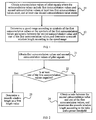
- FIG. 1 is a schematic flow chart of a method according to a first embodiment of the present invention. The method includes the following steps.
- step 11 autocorrelation values of pilot signals are obtained, where the autocorrelation values include first autocorrelation values and second autocorrelation values, at least two first autocorrelation values exist, and at least one second autocorrelation value exists.
- the pilot signal may be a CPICH signal.
- a signal autocorrelation function of the Rayleigh channel presents the characteristic of a zero-order Bessel function.
- the zero-order Bessel function is related to the Doppler frequency shift, and the Doppler frequency shift is related to a relative speed between a mobile device and a transmitting station. Therefore, in this embodiment of the present invention, speed estimation may be performed according to an autocorrelation function of the CPICH signal, so that different smooth window lengths are determined according to different speeds.
- the embodiment of the present invention is also applicable to the Rician channel.
- an antenna separation value of the CPICH signal may be used to represent the CPICH signal at a receiving end.
- a time slot index is t
- a path index is j
- an antenna separation value index is i
- an antenna separation value of the i th pilot signal in the j th path is A i,j ( t ).
- the autocorrelation value may be an autocorrelation value in non-zero correlation intervals, which refers to an autocorrelation value obtained by using the foregoing calculation formula when k ⁇ 0 . Since noise processing needs to be performed on autocorrelation values in the zero correlation interval, in this embodiment, a non-zero autocorrelation value is adopted, so that the noise processing does not need to be performed. Of course, if the autocorrelation values in the zero correlation interval are adopted as the autocorrelation values, the noise processing may be further performed, and then the principle of the embodiment of the present invention is adopted.
- a speed range is determined according to symbols of the first autocorrelation values or the symbols of the first autocorrelation values and a ratio value between the second autocorrelation value and one of the first autocorrelation values, and a smooth window length is determined according to the speed range.
- An autocorrelation function may show a degree of correlation between two signals having a time interval.
- the degree of correlation is higher, and the corresponding speed is lower. Therefore, the corresponding speed range may be determined according to the autocorrelation values. Since at different speeds the channels correspond to different optimal smooth window lengths, the smooth window length may be determined according to the speeds to obtain the optimal performance.
- the applicable speed range may be expanded when the first autocorrelation value is adopted, and the accuracy of the applicable speed range may be increased in a certain speed range when the ratio value between the second autocorrelation value and the one of first autocorrelation values is adopted.
- the autocorrelation function is obtained, the speed range is determined according to the autocorrelation function, and the smooth window length is determined according to the speed range, so that different smooth window lengths may be determined according to different speeds, thereby avoiding the problems caused by a fixed smooth window length.
- the speed range is determined according to the symbols of the autocorrelation values, so that an effective range of the speed estimation is expanded; after the approximate speed range is determined according to the symbols of the autocorrelation values, the speed range is determined according to the ratio value between autocorrelation values, so as to increase the accuracy of the speed estimation in a speed range with a higher accuracy demand.
- FIG. 2 is a schematic flow chart of a method according to a second embodiment of the present invention. The method includes the following steps.
- step 21 first autocorrelation values and second autocorrelation values of pilot signals are obtained, where two first autocorrelation values exist, and only one second autocorrelation value exists.
- An autocorrelation value is R(k).
- R(k) An autocorrelation value for the calculation formula of R(k), reference may be made to the first embodiment.
- the first autocorrelation values may be represented as R(k 1 ) and R( k 2) respectively, and the second autocorrelation value is represented as R( k 3) .
- step 22 it is determined whether at least one of the first autocorrelation values is a negative value, and if yes, step 23 is performed; otherwise, step 24 is performed.
- a smooth window length is determined as a first length value.
- a first speed range is determined, where the first speed range is an extremely high speed range, for example, a speed is higher than 150 kilometers per hour (150 km/h) and generally lower than 800 km/h.
- step 24 a ratio value between the second autocorrelation value and one of the first autocorrelation values is obtained, and the smooth window length is determined according to the ratio value and a preset threshold.
- a second speed range may be determined, where the second speed range is lower than 150 km/h (or higher than 800 km/h). Since the speed higher than 800 km/h hardly occurs in a practical application scenario, the second speed range is lower than 150 km/h by default when both R(k1) and R(k2) are positive values.
- new autocorrelation values may be further introduced, and it is determined whether the speed range is lower than 150 km/h or higher than 800 km/h according to the new autocorrelation values.
- 150 km/h is taken as an example. Under this circumstance, in order to increase the accuracy, this range needs to be further divided.
- a first threshold Threshold _1 and a second threshold Threshold _2 are set (Threshold _1 > Threshold_ 2 ), the specific values of which may be determined according to a practical situation, for example, 0.97 and 0.55 respectively.
- R k ⁇ 3 R k ⁇ 1 is taken as an example for the ratio value between the second autocorrelation value and one of the first autocorrelation values.
- the smooth window length is determined as a second length value, which may be 15. If Threshold_ 2 ⁇ R k ⁇ 3 R k ⁇ 1 ⁇ Threshold_ 1 , a medium speed channel is determined. Under this circumstance, a medium smooth window length needs to be adopted. For example, the smooth window length is determined as a third length value, which may be 10.
- the smooth window length is determined as a fourth length value, which may be 5.
- ⁇ filtering may also be performed on the ratio value, and then the comparison with the threshold is performed.
- standards corresponding to all the types of channels may be unified by using an interference elimination technology.
- the interference elimination technology is adopted so that all the types of channels correspond to approximately unified thresholds.
- symbols of the first autocorrelation values are first compared to divide a wide speed range.
- speed range is an extremely high speed range, it may be directly determined that a small smooth window length is adopted.
- speed division may be further performed to increase the accuracy.
- an effective range of speed estimation may be expanded, so as to ensure that higher accuracy of speed estimation is obtained within a lower speed range, which satisfies system requirements, so as to further increase the accuracy of the channel estimation and improve the system performance.
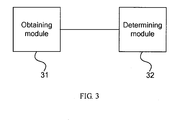
- FIG. 3 is a schematic diagram showing a structure of a device according to a third embodiment of the present invention.
- the device includes an obtaining module 31 and a determining module 32.
- the obtaining module 31 is configured to obtain autocorrelation values of pilot signals, where the autocorrelation values include first autocorrelation values and second autocorrelation values, at least two first autocorrelation values exist, and at least one second autocorrelation value exists.
- the determining module 32 is configured to determine a speed range according to symbols of the first autocorrelation values or the symbols of the first autocorrelation values and a ratio value between the second autocorrelation value and one of the first autocorrelation values and determine a smooth window length according to the speed range.
- the autocorrelation values of the pilot signals are autocorrelation values in non-zero correlation intervals.
- the first autocorrelation values may be R(k1) and R(k2)
- the second autocorrelation value is R(k3) .
- the determining module 32 may be specifically configured to determine a first speed range when either of R(k1) and R ( k 2) is a negative value and determine the smooth window length corresponding to the first speed range as a first length value; or determine a second speed range when R(k1) and R(k2) are both positive values, determine a fine range within the second speed range according to a ratio value between R(k3) and R(k1) and a preset threshold when in the second speed range, and determine the smooth window length according to the fine range, where the first length value is smaller than or equal to the smooth window length within the second speed range.
- the determining module 32 is configured to determine the smooth window length as a second length value when the ratio value between R(k3) and R(k 1 ) is greater than a first preset threshold, determine the smooth window length as a third length value when the ratio value between R(k3) and R(k 1 ) is between the first preset threshold and a second preset threshold, or determine the smooth window length as a fourth length value when the ratio value between R(k3) and R(k1) is smaller than the second preset threshold, where the second length value is greater than the third length value, the third length value is greater than the fourth length value, and the fourth length value is greater than or equal to the first length value.
- symbols of the first autocorrelation values are first compared to divide a large speed range.
- speed is in an extremely high speed range, it may be directly determined that a small smooth window length is adopted.
- speed division may be further performed to increase the accuracy.
- an effective range of speed estimation may be expanded, so as to ensure that higher accuracy of the speed estimation is obtained within a low speed range, which satisfies system requirements, thereby further increasing the accuracy of the channel estimation and improving the system performance.
- the program may be stored in a computer readable storage medium.
- the storage medium may be any medium capable of storing program codes, such as a Read Only Memory (ROM), a Random Access Memory (RAM), a magnetic disk, or an optical disk.
Landscapes
- Engineering & Computer Science (AREA)
- Power Engineering (AREA)
- Computer Networks & Wireless Communication (AREA)
- Signal Processing (AREA)
- Mobile Radio Communication Systems (AREA)
- Radar Systems Or Details Thereof (AREA)
- Synchronisation In Digital Transmission Systems (AREA)
Claims (7)
- Verfahren zum Bestimmen einer Glattfensterlänge zum Beseitigen des Einflusses von Störungen bei der Kanalschätzung, umfassend:Erhalten (11) von Autokorrelationswerten von Pilotsignalen; und dadurch gekennzeichnet, dassdie Autokorrelationswerte mindestens zwei erste Autokorrelationswerte und mindestens einen zweiten Autokorrelationswert umfassen, wobei die Autokorrelationswerte der Pilotsignale Autokorrelationswerte in Nicht-null-Korrelationsintervallen sind und eine Berechnungsformel zum Erhalten der Autokorrelationswerte der Pilotsignale folgendermaßen lautet:
 wobei R(k) der Autokorrelationswert des Pilotsignals, k ein Korrelationsintervall und ungleich 0, M die voreingestellte Anzahl der Mehrwege-Suchperioden und Rf (k) ein Autokorrelationswert eines Pilotsignals in einer Mehrwege-Suchperiode eines Index f ist und die Berechnungsformel für Rf (k) folgendermaßen lautet:
 wobei Lmpsf die Anzahl der Pilotkanal-Zeitschlitze ist, die in der Mehrwege-Suchperiode des Index f enthalten sind, Nf die Anzahl effektiver Wege in der Mehrwege-Suchperiode des Index f ist, Re() eine Operation zum Nehmen des Realteils ist, A*j (t) eine Konjugationsfunktion von Aj (t) ist, Aj (t) ein akkumulierter Wert der Antennentrennungswerte der Pilotsignale in jedem Zeitschlitz ist und eine Berechnungsformel für Aj (t) folgendermaßen lautet:
 wobei N die Anzahl der Pilotsignalsymbole in jedem Zeitschlitz ist, A i,j (t) ein Antennentrennungswert eines Pilotsignals eines Index i ist, der einem Weg eines Index j in einem Zeitschlitz eines Index t entspricht; die ersten Autokorrelationswerte R(k1) und R(k2) sind und der zweite Autokorrelationswert R(k3) ist, mit |k1|<|k2|<|k3|; undBestimmen (12) eines Geschwindigkeitsbereichs gemäß Symbolen der ersten Autokorrelationswerte oder den Symbolen der ersten Autokorrelationswerte und einem Verhältniswert zwischen dem zweiten Autokorrelationswert und einem der ersten Autokorrelationswerte und Bestimmen der Glattfensterlänge gemäß dem Geschwindigkeitsbereich, wobei das Bestimmen des Geschwindigkeitsbereichs gemäß den Symbolen der ersten Autokorrelationswerte oder den Symbolen der ersten Autokorrelationswerte und dem Verhältniswert zwischen dem zweiten Autokorrelationswert und einem der ersten Autokorrelationswerte und das Bestimmen der Glattfensterlänge gemäß dem Geschwindigkeitsbereich Folgendes umfassen:wenn entweder R(k1) oder R(k2) ein negativer Wert ist, Bestimmen eines ersten Geschwindigkeitsbereichs und Bestimmen der Glattfensterlänge, die dem ersten Geschwindigkeitsbereich entspricht, als einen ersten Längenwert, wobei, falls der erste Geschwindigkeitsbereich ein Hochgeschwindigkeitsbereich ist, eine kleinere Glattfensterlänge als der erste Längenwert verwendet wird; undwenn R(k1) und R(k2) beide positive Werte sind, Bestimmen eines zweiten Geschwindigkeitsbereichs, Bestimmen eines Feinbereichs in dem zweiten Geschwindigkeitsbereich gemäß einem Verhältniswert zwischen R(k3) und R(k1) und einer voreingestellten Schwelle, wenn man sich im zweiten Geschwindigkeitsbereich befindet, und Bestimmen der Glattfensterlänge gemäß dem Feinbereich,wobei der erste Längenwert kleiner oder gleich der Glattfensterlänge in dem zweiten Geschwindigkeitsbereich ist und die Einheit des glatten Fensters die Anzahl der Antennentrennungswerte Ai,j(t) von Pilotsignalen ist.
 - Verfahren nach Anspruch 1, wobei das Bestimmen des Feinbereichs in dem zweiten Geschwindigkeitsbereich gemäß dem Verhältniswert zwischen R(k3) und R(k1) und der voreingestellten Schwelle und das Bestimmen der Glattfensterlänge gemäß dem Feinbereich Folgendes umfasst:Bestimmen der Glattfensterlänge als einen zweiten Längenwert, wenn der Verhältniswert zwischen R(k3) und R(k1) größer als eine erste voreingestellte Schwelle ist;Bestimmen der Glattfensterlänge als einen dritten Längenwert, wenn der Verhältniswert zwischen R(k3) und R(k1) zwischen der ersten voreingestellten Schwelle und einer zweiten voreingestellten Schwelle liegt;Bestimmen der Glattfensterlänge als einen vierten Längenwert, wenn der Verhältniswert zwischen R(k3) und R(k1) kleiner als die zweite voreingestellte Schwelle ist,wobei der zweite Längenwert größer als der dritte Längenwert ist, der dritte Längenwert größer als der vierte Längenwert ist und der vierte Längenwert größer oder gleich dem ersten Längenwert ist.
- Verfahren nach Anspruch 2, wobei der Verhältniswert zwischen R(k3) und R(k1) ein α-gefilterter Verhältniswert ist.
- Verfahren nach einem der Ansprüche 1 bis 3, wobei k1=1, k2=2 und k3=4 gilt.
- Einrichtung, die dafür ausgelegt ist, eine Glattfensterlänge zur Beseitigung des Einflusses von Störungen bei der Kanalschätzung zu bestimmen, umfassend:ein Erhaltemodul (31), das dafür ausgelegt ist, Autokorrelationswerte von Pilotsignalen zu erhalten; unddadurch gekennzeichnet, dassdie Autokorrelationswerte mindestens zwei erste Autokorrelationswerte und mindestens einen zweiten Autokorrelationswert umfassen; wobei die Autokorrelationswerte der Pilotsignale Autokorrelationswerte in Nicht-null-Korrelationsintervallen sind und der Autokorrelationswert der Pilotsignale wie folgt ist:
 wobei R(k) der Autokorrelationswert des Pilotsignals, k ein Korrelationsintervall und ungleich 0, M die voreingestellte Anzahl der Mehrwege-Suchperioden und Rf (k) ein Autokorrelationswert eines Pilotsignals in einer Mehrwege-Suchperiode eines Index f ist und die Berechnungsformel für Rf (k) folgendermaßen lautet:
 wobei Lmpsf die Anzahl der Pilotkanal-Zeitschlitze ist, die in der Mehrwege-Suchperiode des Index f enthalten sind, Nf die Anzahl effektiver Wege in der Mehrwege-Suchperiode des Index f ist, Re() eine Operation zum Nehmen des Realteils ist,
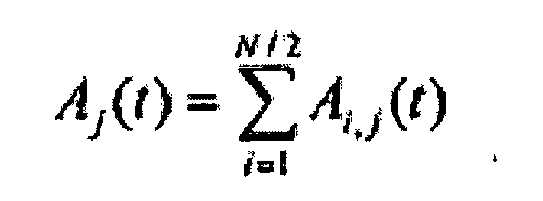 wobei N die Anzahl der Pilotsignalsymbole in jedem Zeitschlitz ist, Ai,j (t) ein Antennentrennungswert eines Pilotsignals eines Index i ist, der einem Weg eines Index j in einem Zeitschlitz eines Index t entspricht; die ersten Autokorrelationswerte R(k1) und R(k2) sind und der zweite Autokorrelationswert R(k3) ist;
undein Bestimmungsmodul (32), das dafür ausgelegt ist, einen Geschwindigkeitsbereich gemäß Symbolen der ersten Autokorrelationswerte oder den Symbolen der ersten Autokorrelationswerte und einem Verhältniswert zwischen dem zweiten Autokorrelationswert und einem der ersten Autokorrelationswerte zu bestimmen und die Glattfensterlänge gemäß dem Geschwindigkeitsbereich zu bestimmen, wobei das Bestimmen des Geschwindigkeitsbereichs gemäß den Symbolen der ersten Autokorrelationswerte oder den Symbolen der ersten Autokorrelationswerte und dem Verhältniswert zwischen dem zweiten Autokorrelationswert und einem der ersten Autokorrelationswerte und das Bestimmen der Glattfensterlänge gemäß dem Geschwindigkeitsbereich ferner Folgendes umfasst: das Bestimmungsmodul ist ferner dafür ausgelegt, einen ersten Geschwindigkeitsbereich zu bestimmen und die Glattfensterlänge, die dem ersten Geschwindigkeitsbereich entspricht, als einen ersten Längenwert zu bestimmen, wenn entweder R(k1) oder R(k2) ein negativer Wert ist, wobei, falls der erste Geschwindigkeitsbereich ein Hochgeschwindigkeitsbereich ist, eine kleinere Glattfensterlänge als der erste Längenwert verwendet wird; oder einen zweiten Geschwindigkeitsbereich zu bestimmen, wenn R(k1) und R(k2) beide positive Werte sind, einen Feinbereich in dem zweiten Geschwindigkeitsbereich gemäß einem Verhältniswert zwischen R(k3) und R(k1) und einer voreingestellten Schwelle zu bestimmen, wenn man sich im zweiten Geschwindigkeitsbereich befindet, und die Glattfensterlänge gemäß dem Feinbereich zu bestimmen, wobei der erste Längenwert kleiner oder gleich der Glattfensterlänge in dem zweiten Geschwindigkeitsbereich ist und |k1|<|k2|<|k3| gilt und die Einheit des Fensters die Anzahl der Antennentrennungswerte Ai,j(t) von Pilotsignalen ist. - Einrichtung nach Anspruch 5, wobei
das Bestimmungsmodul ferner dafür ausgelegt ist, die Glattfensterlänge als einen zweiten Längenwert zu bestimmen, wenn der Verhältniswert zwischen R(k3) und R(k1) größer als eine erste voreingestellte Schwelle ist, die Glattfensterlänge als einen dritten Längenwert zu bestimmen, wenn der Verhältniswert zwischen R(k3) und R(k1) zwischen der ersten voreingestellten Schwelle und einer zweiten voreingestellten Schwelle liegt; oder die Glattfensterlänge als einen vierten Längenwert zu bestimmen, wenn der Verhältniswert zwischen R(k3) und R(k1) kleiner als die zweite voreingestellte Schwelle ist, wobei der zweite Längenwert größer als der dritte Längenwert ist, der dritte Längenwert größer als der vierte Längenwert ist und der vierte Längenwerte größer oder gleich dem ersten Längenwert ist. - Verfahren nach einem der Ansprüche 5 oder 6, wobei k1=1, k2=2 und k3=4 gilt.
Priority Applications (1)
| Application Number | Priority Date | Filing Date | Title |
|---|---|---|---|
| EP13171379.4A EP2640024A1 (de) | 2010-07-26 | 2011-07-25 | Verfahren und Vorrichtung zur Bestimmung der reibungslosen Fensterlänge bei der Kanalschätzung |
Applications Claiming Priority (1)
| Application Number | Priority Date | Filing Date | Title |
|---|---|---|---|
| CN 201010239269 CN101902250B (zh) | 2010-07-26 | 2010-07-26 | 信道估计中平滑窗长度的确定方法及设备 |
Publications (2)
| Publication Number | Publication Date |
|---|---|
| EP2413552A1 EP2413552A1 (de) | 2012-02-01 |
| EP2413552B1 true EP2413552B1 (de) | 2013-07-03 |
Family
ID=43227488
Family Applications (2)
| Application Number | Title | Priority Date | Filing Date |
|---|---|---|---|
| EP13171379.4A Withdrawn EP2640024A1 (de) | 2010-07-26 | 2011-07-25 | Verfahren und Vorrichtung zur Bestimmung der reibungslosen Fensterlänge bei der Kanalschätzung |
| EP20110175203 Active EP2413552B1 (de) | 2010-07-26 | 2011-07-25 | Verfahren und Vorrichtung zur Bestimmung der reibungslosen Fensterlänge bei der Kanalschätzung |
Family Applications Before (1)
| Application Number | Title | Priority Date | Filing Date |
|---|---|---|---|
| EP13171379.4A Withdrawn EP2640024A1 (de) | 2010-07-26 | 2011-07-25 | Verfahren und Vorrichtung zur Bestimmung der reibungslosen Fensterlänge bei der Kanalschätzung |
Country Status (3)
| Country | Link |
|---|---|
| US (1) | US8780956B2 (de) |
| EP (2) | EP2640024A1 (de) |
| CN (1) | CN101902250B (de) |
Families Citing this family (4)
| Publication number | Priority date | Publication date | Assignee | Title |
|---|---|---|---|---|
| CN102571221B (zh) * | 2010-12-20 | 2014-10-22 | 上海贝尔股份有限公司 | 在无线通信系统进行估算多普勒频移的方法与设备 |
| US9081076B2 (en) * | 2012-11-12 | 2015-07-14 | Isolynx, Llc | System and method for object tracking anti-jitter filtering |
| CN110531332B (zh) * | 2019-07-02 | 2023-02-21 | 中国航空工业集团公司雷华电子技术研究所 | 一种基于分段门限的低空慢速小目标检测方法 |
| CN114757855B (zh) * | 2022-06-16 | 2022-09-23 | 广州三七极耀网络科技有限公司 | 动作数据修正方法、装置、设备及存储介质 |
Family Cites Families (5)
| Publication number | Priority date | Publication date | Assignee | Title |
|---|---|---|---|---|
| US6922452B2 (en) * | 2001-03-27 | 2005-07-26 | Telefonaktiebolaget L M Ericsson (Publ) | Method and apparatus for estimating Doppler spread |
| JP2004135247A (ja) * | 2002-10-15 | 2004-04-30 | Oki Electric Ind Co Ltd | 同期位置検出回路 |
| US20080056390A1 (en) * | 2006-08-29 | 2008-03-06 | Motorola, Inc. | method and system for doppler estimation |
| US8199706B2 (en) * | 2006-10-27 | 2012-06-12 | Texas Instruments Incorporated | Random access design for high doppler in wireless networks |
| CN101741487B (zh) * | 2010-01-19 | 2013-04-17 | 西安交通大学 | 认知无线电网络中针对dvb-t信号的导频辅助检测器的实现方法 |
-
2010
- 2010-07-26 CN CN 201010239269 patent/CN101902250B/zh active Active
-
2011
- 2011-07-25 EP EP13171379.4A patent/EP2640024A1/de not_active Withdrawn
- 2011-07-25 EP EP20110175203 patent/EP2413552B1/de active Active
- 2011-07-26 US US13/191,151 patent/US8780956B2/en active Active
Also Published As
| Publication number | Publication date |
|---|---|
| US20120020440A1 (en) | 2012-01-26 |
| EP2413552A1 (de) | 2012-02-01 |
| CN101902250B (zh) | 2013-08-07 |
| EP2640024A1 (de) | 2013-09-18 |
| CN101902250A (zh) | 2010-12-01 |
| US8780956B2 (en) | 2014-07-15 |
Similar Documents
| Publication | Publication Date | Title |
|---|---|---|
| US7860193B2 (en) | Coarse timing estimation system and methodology for wireless symbols | |
| US8259865B2 (en) | Methods and apparatus for adapting channel estimation in a communication system | |
| CN110445733B (zh) | 自适应信道去噪方法及自适应信道去噪装置 | |
| CN101909024B (zh) | 最大多普勒频偏的估计方法和装置 | |
| EP1210803B1 (de) | Auf schätzung der leistungspektraldichte basierte festellung der datenrate | |
| US9294312B2 (en) | Apparatus and method for estimating doppler spread in mobile communication system | |
| US8059753B2 (en) | Adaptive channel estimator and adaptive channel estimation method | |
| CN102647387B (zh) | 同频干扰的消除方法及装置 | |
| US6505053B1 (en) | Method for sinusoidal modeling and prediction of fast fading processes | |
| EP2905986B1 (de) | Verfahren und vorrichtung zum testen der bewegungsgeschwindigkeit eines endgeräts | |
| EP2901639B1 (de) | Adaptive glättung von kanalschätzungen | |
| CN109672635A (zh) | 一种时域相关性估计方法、装置及设备 | |
| KR100689418B1 (ko) | 무선 통신 시스템에서 다중 경로 페이딩 채널의 지연 확산추정 장치 및 방법 | |
| US8780956B2 (en) | Method and device for determining smooth window length in channel estimation | |
| EP2096776B1 (de) | Vorrichtung und Verfahren zur Schätzung der Rauschleistung | |
| US20080056220A1 (en) | System and method for determining a carrier to interference noise ratio | |
| US20050267370A1 (en) | Velocity estimation apparatus and method | |
| CN103916342B (zh) | 一种信噪比估计方法 | |
| KR20090013957A (ko) | 직교 주파수 분할 다중화 시스템에서 채널 임펄스 응답의추정 오류를 보상하기 위한 장치 및 방법 | |
| US20110310945A1 (en) | Radio communication apparatus and radio communication method | |
| CN116708092B (zh) | 适合低信噪比mc-cdma系统的导频参数设计方法 | |
| US8442165B2 (en) | Method and apparatus for estimating Doppler frequency in a mobile terminal | |
| JP2004159077A (ja) | データ受信装置およびデータ受信方法 | |
| KR100870671B1 (ko) | 무선통신 시스템의 신호 대 간섭 잡음비 추정 방법 및 장치 | |
| CN109302360A (zh) | 信道估计方法及装置、计算机可读存储介质、终端 |
Legal Events
| Date | Code | Title | Description |
|---|---|---|---|
| 17P | Request for examination filed |
Effective date: 20110725 |
|
| AK | Designated contracting states |
Kind code of ref document: A1 Designated state(s): AL AT BE BG CH CY CZ DE DK EE ES FI FR GB GR HR HU IE IS IT LI LT LU LV MC MK MT NL NO PL PT RO RS SE SI SK SM TR |
|
| AX | Request for extension of the european patent |
Extension state: BA ME |
|
| PUAI | Public reference made under article 153(3) epc to a published international application that has entered the european phase |
Free format text: ORIGINAL CODE: 0009012 |
|
| 17Q | First examination report despatched |
Effective date: 20120322 |
|
| GRAP | Despatch of communication of intention to grant a patent |
Free format text: ORIGINAL CODE: EPIDOSNIGR1 |
|
| RIN1 | Information on inventor provided before grant (corrected) |
Inventor name: JIAO, SHURONG Inventor name: ZHANG, CHUNLING Inventor name: HUA, MENG Inventor name: WU, GENGSHI Inventor name: SUN, FENGYU |
|
| GRAS | Grant fee paid |
Free format text: ORIGINAL CODE: EPIDOSNIGR3 |
|
| GRAA | (expected) grant |
Free format text: ORIGINAL CODE: 0009210 |
|
| AK | Designated contracting states |
Kind code of ref document: B1 Designated state(s): AL AT BE BG CH CY CZ DE DK EE ES FI FR GB GR HR HU IE IS IT LI LT LU LV MC MK MT NL NO PL PT RO RS SE SI SK SM TR |
|
| REG | Reference to a national code |
Ref country code: GB Ref legal event code: FG4D |
|
| REG | Reference to a national code |
Ref country code: AT Ref legal event code: REF Ref document number: 620294 Country of ref document: AT Kind code of ref document: T Effective date: 20130715 Ref country code: CH Ref legal event code: EP |
|
| REG | Reference to a national code |
Ref country code: IE Ref legal event code: FG4D |
|
| REG | Reference to a national code |
Ref country code: DE Ref legal event code: R096 Ref document number: 602011002193 Country of ref document: DE Effective date: 20130829 |
|
| PG25 | Lapsed in a contracting state [announced via postgrant information from national office to epo] |
Ref country code: SI Free format text: LAPSE BECAUSE OF FAILURE TO SUBMIT A TRANSLATION OF THE DESCRIPTION OR TO PAY THE FEE WITHIN THE PRESCRIBED TIME-LIMIT Effective date: 20130703 |
|
| REG | Reference to a national code |
Ref country code: AT Ref legal event code: MK05 Ref document number: 620294 Country of ref document: AT Kind code of ref document: T Effective date: 20130703 |
|
| REG | Reference to a national code |
Ref country code: NL Ref legal event code: VDEP Effective date: 20130703 |
|
| REG | Reference to a national code |
Ref country code: LT Ref legal event code: MG4D |
|
| PG25 | Lapsed in a contracting state [announced via postgrant information from national office to epo] |
Ref country code: LT Free format text: LAPSE BECAUSE OF FAILURE TO SUBMIT A TRANSLATION OF THE DESCRIPTION OR TO PAY THE FEE WITHIN THE PRESCRIBED TIME-LIMIT Effective date: 20130703 Ref country code: PT Free format text: LAPSE BECAUSE OF FAILURE TO SUBMIT A TRANSLATION OF THE DESCRIPTION OR TO PAY THE FEE WITHIN THE PRESCRIBED TIME-LIMIT Effective date: 20131104 Ref country code: SE Free format text: LAPSE BECAUSE OF FAILURE TO SUBMIT A TRANSLATION OF THE DESCRIPTION OR TO PAY THE FEE WITHIN THE PRESCRIBED TIME-LIMIT Effective date: 20130703 Ref country code: NO Free format text: LAPSE BECAUSE OF FAILURE TO SUBMIT A TRANSLATION OF THE DESCRIPTION OR TO PAY THE FEE WITHIN THE PRESCRIBED TIME-LIMIT Effective date: 20131003 Ref country code: BE Free format text: LAPSE BECAUSE OF FAILURE TO SUBMIT A TRANSLATION OF THE DESCRIPTION OR TO PAY THE FEE WITHIN THE PRESCRIBED TIME-LIMIT Effective date: 20130703 Ref country code: CY Free format text: LAPSE BECAUSE OF FAILURE TO SUBMIT A TRANSLATION OF THE DESCRIPTION OR TO PAY THE FEE WITHIN THE PRESCRIBED TIME-LIMIT Effective date: 20130807 Ref country code: AT Free format text: LAPSE BECAUSE OF FAILURE TO SUBMIT A TRANSLATION OF THE DESCRIPTION OR TO PAY THE FEE WITHIN THE PRESCRIBED TIME-LIMIT Effective date: 20130703 Ref country code: HR Free format text: LAPSE BECAUSE OF FAILURE TO SUBMIT A TRANSLATION OF THE DESCRIPTION OR TO PAY THE FEE WITHIN THE PRESCRIBED TIME-LIMIT Effective date: 20130703 Ref country code: IS Free format text: LAPSE BECAUSE OF FAILURE TO SUBMIT A TRANSLATION OF THE DESCRIPTION OR TO PAY THE FEE WITHIN THE PRESCRIBED TIME-LIMIT Effective date: 20131103 |
|
| PG25 | Lapsed in a contracting state [announced via postgrant information from national office to epo] |
Ref country code: FI Free format text: LAPSE BECAUSE OF FAILURE TO SUBMIT A TRANSLATION OF THE DESCRIPTION OR TO PAY THE FEE WITHIN THE PRESCRIBED TIME-LIMIT Effective date: 20130703 Ref country code: GR Free format text: LAPSE BECAUSE OF FAILURE TO SUBMIT A TRANSLATION OF THE DESCRIPTION OR TO PAY THE FEE WITHIN THE PRESCRIBED TIME-LIMIT Effective date: 20131004 Ref country code: ES Free format text: LAPSE BECAUSE OF FAILURE TO SUBMIT A TRANSLATION OF THE DESCRIPTION OR TO PAY THE FEE WITHIN THE PRESCRIBED TIME-LIMIT Effective date: 20131014 Ref country code: LV Free format text: LAPSE BECAUSE OF FAILURE TO SUBMIT A TRANSLATION OF THE DESCRIPTION OR TO PAY THE FEE WITHIN THE PRESCRIBED TIME-LIMIT Effective date: 20130703 Ref country code: NL Free format text: LAPSE BECAUSE OF FAILURE TO SUBMIT A TRANSLATION OF THE DESCRIPTION OR TO PAY THE FEE WITHIN THE PRESCRIBED TIME-LIMIT Effective date: 20130703 Ref country code: PL Free format text: LAPSE BECAUSE OF FAILURE TO SUBMIT A TRANSLATION OF THE DESCRIPTION OR TO PAY THE FEE WITHIN THE PRESCRIBED TIME-LIMIT Effective date: 20130703 |
|
| PG25 | Lapsed in a contracting state [announced via postgrant information from national office to epo] |
Ref country code: CY Free format text: LAPSE BECAUSE OF FAILURE TO SUBMIT A TRANSLATION OF THE DESCRIPTION OR TO PAY THE FEE WITHIN THE PRESCRIBED TIME-LIMIT Effective date: 20130703 |
|
| REG | Reference to a national code |
Ref country code: IE Ref legal event code: MM4A |
|
| PG25 | Lapsed in a contracting state [announced via postgrant information from national office to epo] |
Ref country code: EE Free format text: LAPSE BECAUSE OF FAILURE TO SUBMIT A TRANSLATION OF THE DESCRIPTION OR TO PAY THE FEE WITHIN THE PRESCRIBED TIME-LIMIT Effective date: 20130703 Ref country code: MC Free format text: LAPSE BECAUSE OF FAILURE TO SUBMIT A TRANSLATION OF THE DESCRIPTION OR TO PAY THE FEE WITHIN THE PRESCRIBED TIME-LIMIT Effective date: 20130703 Ref country code: RO Free format text: LAPSE BECAUSE OF FAILURE TO SUBMIT A TRANSLATION OF THE DESCRIPTION OR TO PAY THE FEE WITHIN THE PRESCRIBED TIME-LIMIT Effective date: 20130703 Ref country code: CZ Free format text: LAPSE BECAUSE OF FAILURE TO SUBMIT A TRANSLATION OF THE DESCRIPTION OR TO PAY THE FEE WITHIN THE PRESCRIBED TIME-LIMIT Effective date: 20130703 Ref country code: DK Free format text: LAPSE BECAUSE OF FAILURE TO SUBMIT A TRANSLATION OF THE DESCRIPTION OR TO PAY THE FEE WITHIN THE PRESCRIBED TIME-LIMIT Effective date: 20130703 Ref country code: SK Free format text: LAPSE BECAUSE OF FAILURE TO SUBMIT A TRANSLATION OF THE DESCRIPTION OR TO PAY THE FEE WITHIN THE PRESCRIBED TIME-LIMIT Effective date: 20130703 |
|
| PLBE | No opposition filed within time limit |
Free format text: ORIGINAL CODE: 0009261 |
|
| STAA | Information on the status of an ep patent application or granted ep patent |
Free format text: STATUS: NO OPPOSITION FILED WITHIN TIME LIMIT |
|
| PG25 | Lapsed in a contracting state [announced via postgrant information from national office to epo] |
Ref country code: IT Free format text: LAPSE BECAUSE OF FAILURE TO SUBMIT A TRANSLATION OF THE DESCRIPTION OR TO PAY THE FEE WITHIN THE PRESCRIBED TIME-LIMIT Effective date: 20130703 |
|
| 26N | No opposition filed |
Effective date: 20140404 |
|
| REG | Reference to a national code |
Ref country code: DE Ref legal event code: R097 Ref document number: 602011002193 Country of ref document: DE Effective date: 20140404 |
|
| PG25 | Lapsed in a contracting state [announced via postgrant information from national office to epo] |
Ref country code: IE Free format text: LAPSE BECAUSE OF NON-PAYMENT OF DUE FEES Effective date: 20130725 |
|
| REG | Reference to a national code |
Ref country code: CH Ref legal event code: PL |
|
| PG25 | Lapsed in a contracting state [announced via postgrant information from national office to epo] |
Ref country code: LI Free format text: LAPSE BECAUSE OF NON-PAYMENT OF DUE FEES Effective date: 20140731 Ref country code: CH Free format text: LAPSE BECAUSE OF NON-PAYMENT OF DUE FEES Effective date: 20140731 |
|
| PG25 | Lapsed in a contracting state [announced via postgrant information from national office to epo] |
Ref country code: SM Free format text: LAPSE BECAUSE OF FAILURE TO SUBMIT A TRANSLATION OF THE DESCRIPTION OR TO PAY THE FEE WITHIN THE PRESCRIBED TIME-LIMIT Effective date: 20130703 |
|
| PG25 | Lapsed in a contracting state [announced via postgrant information from national office to epo] |
Ref country code: MT Free format text: LAPSE BECAUSE OF FAILURE TO SUBMIT A TRANSLATION OF THE DESCRIPTION OR TO PAY THE FEE WITHIN THE PRESCRIBED TIME-LIMIT Effective date: 20130703 Ref country code: TR Free format text: LAPSE BECAUSE OF FAILURE TO SUBMIT A TRANSLATION OF THE DESCRIPTION OR TO PAY THE FEE WITHIN THE PRESCRIBED TIME-LIMIT Effective date: 20130703 |
|
| PG25 | Lapsed in a contracting state [announced via postgrant information from national office to epo] |
Ref country code: HU Free format text: LAPSE BECAUSE OF FAILURE TO SUBMIT A TRANSLATION OF THE DESCRIPTION OR TO PAY THE FEE WITHIN THE PRESCRIBED TIME-LIMIT; INVALID AB INITIO Effective date: 20110725 Ref country code: RS Free format text: LAPSE BECAUSE OF FAILURE TO SUBMIT A TRANSLATION OF THE DESCRIPTION OR TO PAY THE FEE WITHIN THE PRESCRIBED TIME-LIMIT Effective date: 20131003 Ref country code: MK Free format text: LAPSE BECAUSE OF FAILURE TO SUBMIT A TRANSLATION OF THE DESCRIPTION OR TO PAY THE FEE WITHIN THE PRESCRIBED TIME-LIMIT Effective date: 20130703 Ref country code: LU Free format text: LAPSE BECAUSE OF NON-PAYMENT OF DUE FEES Effective date: 20130725 Ref country code: BG Free format text: LAPSE BECAUSE OF FAILURE TO SUBMIT A TRANSLATION OF THE DESCRIPTION OR TO PAY THE FEE WITHIN THE PRESCRIBED TIME-LIMIT Effective date: 20130703 |
|
| REG | Reference to a national code |
Ref country code: FR Ref legal event code: PLFP Year of fee payment: 6 |
|
| REG | Reference to a national code |
Ref country code: FR Ref legal event code: PLFP Year of fee payment: 7 |
|
| REG | Reference to a national code |
Ref country code: FR Ref legal event code: PLFP Year of fee payment: 8 |
|
| PG25 | Lapsed in a contracting state [announced via postgrant information from national office to epo] |
Ref country code: AL Free format text: LAPSE BECAUSE OF FAILURE TO SUBMIT A TRANSLATION OF THE DESCRIPTION OR TO PAY THE FEE WITHIN THE PRESCRIBED TIME-LIMIT Effective date: 20130703 |
|
| REG | Reference to a national code |
Ref country code: DE Ref legal event code: R081 Ref document number: 602011002193 Country of ref document: DE Owner name: HUAWEI DEVICE CO., LTD., DONGGUAN, CN Free format text: FORMER OWNER: HUAWEI DEVICE CO., LTD., SHENZHEN, GUANGDONG, CN Ref country code: DE Ref legal event code: R081 Ref document number: 602011002193 Country of ref document: DE Owner name: HONOR DEVICE CO., LTD., SHENZHEN, CN Free format text: FORMER OWNER: HUAWEI DEVICE CO., LTD., SHENZHEN, GUANGDONG, CN |
|
| REG | Reference to a national code |
Ref country code: GB Ref legal event code: 732E Free format text: REGISTERED BETWEEN 20190124 AND 20190130 |
|
| REG | Reference to a national code |
Ref country code: DE Ref legal event code: R081 Ref document number: 602011002193 Country of ref document: DE Owner name: HONOR DEVICE CO., LTD., SHENZHEN, CN Free format text: FORMER OWNER: HUAWEI DEVICE CO., LTD., DONGGUAN, GUANGDONG, CN |
|
| REG | Reference to a national code |
Ref country code: GB Ref legal event code: 732E Free format text: REGISTERED BETWEEN 20210624 AND 20210630 |
|
| PGFP | Annual fee paid to national office [announced via postgrant information from national office to epo] |
Ref country code: DE Payment date: 20250604 Year of fee payment: 15 |
|
| PGFP | Annual fee paid to national office [announced via postgrant information from national office to epo] |
Ref country code: GB Payment date: 20260608 Year of fee payment: 16 |
|
| PGFP | Annual fee paid to national office [announced via postgrant information from national office to epo] |
Ref country code: FR Payment date: 20260608 Year of fee payment: 16 |