EP2410004B1 - Transparent Polyurethane Protective Coating, Film and Laminate Compositions with Enhanced Electrostatic Dissipation Capability, and Methods for Making Same - Google Patents
Transparent Polyurethane Protective Coating, Film and Laminate Compositions with Enhanced Electrostatic Dissipation Capability, and Methods for Making Same Download PDFInfo
- Publication number
- EP2410004B1 EP2410004B1 EP20110174815 EP11174815A EP2410004B1 EP 2410004 B1 EP2410004 B1 EP 2410004B1 EP 20110174815 EP20110174815 EP 20110174815 EP 11174815 A EP11174815 A EP 11174815A EP 2410004 B1 EP2410004 B1 EP 2410004B1
- Authority
- EP
- European Patent Office
- Prior art keywords
- transparent polyurethane
- coating
- layer
- nanoparticle dispersion
- forming
- Prior art date
- Legal status (The legal status is an assumption and is not a legal conclusion. Google has not performed a legal analysis and makes no representation as to the accuracy of the status listed.)
- Active
Links
Images
Classifications
-
- B—PERFORMING OPERATIONS; TRANSPORTING
- B32—LAYERED PRODUCTS
- B32B—LAYERED PRODUCTS, i.e. PRODUCTS BUILT-UP OF STRATA OF FLAT OR NON-FLAT, e.g. CELLULAR OR HONEYCOMB, FORM
- B32B27/00—Layered products comprising a layer of synthetic resin
- B32B27/06—Layered products comprising a layer of synthetic resin as the main or only constituent of a layer, which is next to another layer of the same or of a different material
-
- C—CHEMISTRY; METALLURGY
- C08—ORGANIC MACROMOLECULAR COMPOUNDS; THEIR PREPARATION OR CHEMICAL WORKING-UP; COMPOSITIONS BASED THEREON
- C08J—WORKING-UP; GENERAL PROCESSES OF COMPOUNDING; AFTER-TREATMENT NOT COVERED BY SUBCLASSES C08B, C08C, C08F, C08G or C08H
- C08J5/00—Manufacture of articles or shaped materials containing macromolecular substances
- C08J5/12—Bonding of a preformed macromolecular material to the same or other solid material such as metal, glass, leather, e.g. using adhesives
-
- B—PERFORMING OPERATIONS; TRANSPORTING
- B32—LAYERED PRODUCTS
- B32B—LAYERED PRODUCTS, i.e. PRODUCTS BUILT-UP OF STRATA OF FLAT OR NON-FLAT, e.g. CELLULAR OR HONEYCOMB, FORM
- B32B27/00—Layered products comprising a layer of synthetic resin
- B32B27/06—Layered products comprising a layer of synthetic resin as the main or only constituent of a layer, which is next to another layer of the same or of a different material
- B32B27/08—Layered products comprising a layer of synthetic resin as the main or only constituent of a layer, which is next to another layer of the same or of a different material of synthetic resin
-
- B—PERFORMING OPERATIONS; TRANSPORTING
- B32—LAYERED PRODUCTS
- B32B—LAYERED PRODUCTS, i.e. PRODUCTS BUILT-UP OF STRATA OF FLAT OR NON-FLAT, e.g. CELLULAR OR HONEYCOMB, FORM
- B32B27/00—Layered products comprising a layer of synthetic resin
- B32B27/36—Layered products comprising a layer of synthetic resin comprising polyesters
- B32B27/365—Layered products comprising a layer of synthetic resin comprising polyesters comprising polycarbonates
-
- B—PERFORMING OPERATIONS; TRANSPORTING
- B32—LAYERED PRODUCTS
- B32B—LAYERED PRODUCTS, i.e. PRODUCTS BUILT-UP OF STRATA OF FLAT OR NON-FLAT, e.g. CELLULAR OR HONEYCOMB, FORM
- B32B27/00—Layered products comprising a layer of synthetic resin
- B32B27/40—Layered products comprising a layer of synthetic resin comprising polyurethanes
-
- B—PERFORMING OPERATIONS; TRANSPORTING
- B32—LAYERED PRODUCTS
- B32B—LAYERED PRODUCTS, i.e. PRODUCTS BUILT-UP OF STRATA OF FLAT OR NON-FLAT, e.g. CELLULAR OR HONEYCOMB, FORM
- B32B5/00—Layered products characterised by the non- homogeneity or physical structure, i.e. comprising a fibrous, filamentary, particulate or foam layer; Layered products characterised by having a layer differing constitutionally or physically in different parts
- B32B5/18—Layered products characterised by the non- homogeneity or physical structure, i.e. comprising a fibrous, filamentary, particulate or foam layer; Layered products characterised by having a layer differing constitutionally or physically in different parts characterised by features of a layer of foamed material
-
- B—PERFORMING OPERATIONS; TRANSPORTING
- B64—AIRCRAFT; AVIATION; COSMONAUTICS
- B64C—AEROPLANES; HELICOPTERS
- B64C1/00—Fuselages; Constructional features common to fuselages, wings, stabilising surfaces or the like
- B64C1/14—Windows; Doors; Hatch covers or access panels; Surrounding frame structures; Canopies; Windscreens accessories therefor, e.g. pressure sensors, water deflectors, hinges, seals, handles, latches, windscreen wipers
- B64C1/1476—Canopies; Windscreens or similar transparent elements
- B64C1/1484—Windows
-
- H—ELECTRICITY
- H01—ELECTRIC ELEMENTS
- H01B—CABLES; CONDUCTORS; INSULATORS; SELECTION OF MATERIALS FOR THEIR CONDUCTIVE, INSULATING OR DIELECTRIC PROPERTIES
- H01B5/00—Non-insulated conductors or conductive bodies characterised by their form
- H01B5/14—Non-insulated conductors or conductive bodies characterised by their form comprising conductive layers or films on insulating-supports
-
- B—PERFORMING OPERATIONS; TRANSPORTING
- B32—LAYERED PRODUCTS
- B32B—LAYERED PRODUCTS, i.e. PRODUCTS BUILT-UP OF STRATA OF FLAT OR NON-FLAT, e.g. CELLULAR OR HONEYCOMB, FORM
- B32B2255/00—Coating on the layer surface
- B32B2255/10—Coating on the layer surface on synthetic resin layer or on natural or synthetic rubber layer
-
- B—PERFORMING OPERATIONS; TRANSPORTING
- B32—LAYERED PRODUCTS
- B32B—LAYERED PRODUCTS, i.e. PRODUCTS BUILT-UP OF STRATA OF FLAT OR NON-FLAT, e.g. CELLULAR OR HONEYCOMB, FORM
- B32B2255/00—Coating on the layer surface
- B32B2255/20—Inorganic coating
-
- B—PERFORMING OPERATIONS; TRANSPORTING
- B32—LAYERED PRODUCTS
- B32B—LAYERED PRODUCTS, i.e. PRODUCTS BUILT-UP OF STRATA OF FLAT OR NON-FLAT, e.g. CELLULAR OR HONEYCOMB, FORM
- B32B2255/00—Coating on the layer surface
- B32B2255/20—Inorganic coating
- B32B2255/205—Metallic coating
-
- B—PERFORMING OPERATIONS; TRANSPORTING
- B32—LAYERED PRODUCTS
- B32B—LAYERED PRODUCTS, i.e. PRODUCTS BUILT-UP OF STRATA OF FLAT OR NON-FLAT, e.g. CELLULAR OR HONEYCOMB, FORM
- B32B2307/00—Properties of the layers or laminate
- B32B2307/20—Properties of the layers or laminate having particular electrical or magnetic properties, e.g. piezoelectric
- B32B2307/202—Conductive
-
- B—PERFORMING OPERATIONS; TRANSPORTING
- B32—LAYERED PRODUCTS
- B32B—LAYERED PRODUCTS, i.e. PRODUCTS BUILT-UP OF STRATA OF FLAT OR NON-FLAT, e.g. CELLULAR OR HONEYCOMB, FORM
- B32B2307/00—Properties of the layers or laminate
- B32B2307/20—Properties of the layers or laminate having particular electrical or magnetic properties, e.g. piezoelectric
- B32B2307/21—Anti-static
-
- B—PERFORMING OPERATIONS; TRANSPORTING
- B32—LAYERED PRODUCTS
- B32B—LAYERED PRODUCTS, i.e. PRODUCTS BUILT-UP OF STRATA OF FLAT OR NON-FLAT, e.g. CELLULAR OR HONEYCOMB, FORM
- B32B2307/00—Properties of the layers or laminate
- B32B2307/40—Properties of the layers or laminate having particular optical properties
- B32B2307/412—Transparent
-
- B—PERFORMING OPERATIONS; TRANSPORTING
- B32—LAYERED PRODUCTS
- B32B—LAYERED PRODUCTS, i.e. PRODUCTS BUILT-UP OF STRATA OF FLAT OR NON-FLAT, e.g. CELLULAR OR HONEYCOMB, FORM
- B32B2605/00—Vehicles
- B32B2605/18—Aircraft
-
- B—PERFORMING OPERATIONS; TRANSPORTING
- B64—AIRCRAFT; AVIATION; COSMONAUTICS
- B64C—AEROPLANES; HELICOPTERS
- B64C1/00—Fuselages; Constructional features common to fuselages, wings, stabilising surfaces or the like
- B64C1/14—Windows; Doors; Hatch covers or access panels; Surrounding frame structures; Canopies; Windscreens accessories therefor, e.g. pressure sensors, water deflectors, hinges, seals, handles, latches, windscreen wipers
- B64C1/1476—Canopies; Windscreens or similar transparent elements
- B64C1/1492—Structure and mounting of the transparent elements in the window or windscreen
-
- C—CHEMISTRY; METALLURGY
- C08—ORGANIC MACROMOLECULAR COMPOUNDS; THEIR PREPARATION OR CHEMICAL WORKING-UP; COMPOSITIONS BASED THEREON
- C08J—WORKING-UP; GENERAL PROCESSES OF COMPOUNDING; AFTER-TREATMENT NOT COVERED BY SUBCLASSES C08B, C08C, C08F, C08G or C08H
- C08J2375/00—Characterised by the use of polyureas or polyurethanes; Derivatives of such polymers
- C08J2375/04—Polyurethanes
-
- Y—GENERAL TAGGING OF NEW TECHNOLOGICAL DEVELOPMENTS; GENERAL TAGGING OF CROSS-SECTIONAL TECHNOLOGIES SPANNING OVER SEVERAL SECTIONS OF THE IPC; TECHNICAL SUBJECTS COVERED BY FORMER USPC CROSS-REFERENCE ART COLLECTIONS [XRACs] AND DIGESTS
- Y10—TECHNICAL SUBJECTS COVERED BY FORMER USPC
- Y10T—TECHNICAL SUBJECTS COVERED BY FORMER US CLASSIFICATION
- Y10T156/00—Adhesive bonding and miscellaneous chemical manufacture
- Y10T156/10—Methods of surface bonding and/or assembly therefor
-
- Y—GENERAL TAGGING OF NEW TECHNOLOGICAL DEVELOPMENTS; GENERAL TAGGING OF CROSS-SECTIONAL TECHNOLOGIES SPANNING OVER SEVERAL SECTIONS OF THE IPC; TECHNICAL SUBJECTS COVERED BY FORMER USPC CROSS-REFERENCE ART COLLECTIONS [XRACs] AND DIGESTS
- Y10—TECHNICAL SUBJECTS COVERED BY FORMER USPC
- Y10T—TECHNICAL SUBJECTS COVERED BY FORMER US CLASSIFICATION
- Y10T428/00—Stock material or miscellaneous articles
- Y10T428/26—Web or sheet containing structurally defined element or component, the element or component having a specified physical dimension
- Y10T428/263—Coating layer not in excess of 5 mils thick or equivalent
- Y10T428/264—Up to 3 mils
- Y10T428/265—1 mil or less
-
- Y—GENERAL TAGGING OF NEW TECHNOLOGICAL DEVELOPMENTS; GENERAL TAGGING OF CROSS-SECTIONAL TECHNOLOGIES SPANNING OVER SEVERAL SECTIONS OF THE IPC; TECHNICAL SUBJECTS COVERED BY FORMER USPC CROSS-REFERENCE ART COLLECTIONS [XRACs] AND DIGESTS
- Y10—TECHNICAL SUBJECTS COVERED BY FORMER USPC
- Y10T—TECHNICAL SUBJECTS COVERED BY FORMER US CLASSIFICATION
- Y10T428/00—Stock material or miscellaneous articles
- Y10T428/31504—Composite [nonstructural laminate]
- Y10T428/31551—Of polyamidoester [polyurethane, polyisocyanate, polycarbamate, etc.]
- Y10T428/31554—Next to second layer of polyamidoester
-
- Y—GENERAL TAGGING OF NEW TECHNOLOGICAL DEVELOPMENTS; GENERAL TAGGING OF CROSS-SECTIONAL TECHNOLOGIES SPANNING OVER SEVERAL SECTIONS OF THE IPC; TECHNICAL SUBJECTS COVERED BY FORMER USPC CROSS-REFERENCE ART COLLECTIONS [XRACs] AND DIGESTS
- Y10—TECHNICAL SUBJECTS COVERED BY FORMER USPC
- Y10T—TECHNICAL SUBJECTS COVERED BY FORMER US CLASSIFICATION
- Y10T428/00—Stock material or miscellaneous articles
- Y10T428/31504—Composite [nonstructural laminate]
- Y10T428/31551—Of polyamidoester [polyurethane, polyisocyanate, polycarbamate, etc.]
- Y10T428/31598—Next to silicon-containing [silicone, cement, etc.] layer
-
- Y—GENERAL TAGGING OF NEW TECHNOLOGICAL DEVELOPMENTS; GENERAL TAGGING OF CROSS-SECTIONAL TECHNOLOGIES SPANNING OVER SEVERAL SECTIONS OF THE IPC; TECHNICAL SUBJECTS COVERED BY FORMER USPC CROSS-REFERENCE ART COLLECTIONS [XRACs] AND DIGESTS
- Y10—TECHNICAL SUBJECTS COVERED BY FORMER USPC
- Y10T—TECHNICAL SUBJECTS COVERED BY FORMER US CLASSIFICATION
- Y10T428/00—Stock material or miscellaneous articles
- Y10T428/31504—Composite [nonstructural laminate]
- Y10T428/31551—Of polyamidoester [polyurethane, polyisocyanate, polycarbamate, etc.]
- Y10T428/31609—Particulate metal or metal compound-containing
Definitions
- the present invention relates generally to transparent polyurethane compositions, and to coated and laminated aircraft transparencies incorporating such compositions, and more particularly to such compositions, coated transparencies, and laminates having antistatic or static dissipative properties.
- Transparencies used for modern military aircraft often require a protective, erosion-resistant coating or film located on the outer surface.
- Such protective outer layers are required to prevent damage to fragile underlying metal or ceramic conductive coatings, such as gold or indium tin oxide (ITO), or to protect a plastic surface having limited environmental durability, such as polycarbonate.
- Transparent polyurethane coatings and films are preferred for these applications due to their superior erosion resistance properties, excellent transparency and good environmental durability.
- the outer surface of an aircraft transparency is subject to electrostatic charging, especially with high performance aircraft.
- This charging is caused by contact with ice crystals and other particles during flight, which results in transfer of a charge to the surface via triboelectric or frictional effects.
- This phenomenon is called precipitation charging, or p-static charging, in the industry.
- P-static charging of a non-conductive (dielectric) outer surface can create several serious problems affecting aircraft performance, transparency service life, and safety. Discharge during flight can result in damage to outer coating layers from dielectric breakdown or can result in electronic interference with instruments. Such charge accumulation can also create shock hazards for flight and ground personnel.
- the outer layer of an aircraft transparency must be sufficiently conductive to allow the charge to drain across the surface to the airframe or through the thickness of the layer to an underlying conductive metallic or metal oxide layer.
- Polyurethanes and other organic polymers generally are poor conductors of electricity. Consequently, these polymers cannot be used satisfactorily without modification in applications where static dissipative properties are required.
- conductive polymers such as polyaniline or polythiophene salts are incorporated into the polyurethane matrix.
- this method is not suitable for use with polyurethanes that are transparent, because the conductive polymer additives form a dispersed phase that reduces transparency.
- polyanilines, polythiophenes and other conductive polymers do not have good environmental stability and generally cause reduction in overall resistance to weathering and environmental degradation.
- hydrophilic additives such as amines and quaternary ammonium salts are used to increase the polyurethane's surface conductivity. These additives function by migrating to the polyurethane's surface, where they attract water and thereby create a conductive film. This method is not suitable for polyurethane coatings and laminates, however, because the additive also migrates to the surface of the polyurethane that interfaces with the underlying substrate, resulting in a loss of adhesion. In addition, such additives can lose their effectiveness over time, because they can leach from the polyurethane under normal use conditions.
- non-ionic additives and polyol modifiers have been found to significantly enhance electrical conductivity only if used at high levels, which can adversely affect other important properties, such as transparency and mechanical strength.
- Ionic additives including quarternary ammonium salts and ionizable metal salts, generally are more effective in enhancing electrical conductivity.
- the most effective known additives of this kind are ionizable metal salts of perfluoroalkylsulfonates.
- none of these ionic additives is considered fully satisfactory for use in transparent polyurethanes used as coatings or in laminates, because they are fugitive and with aging they can cause a loss of transparency and a loss of adhesion.
- the present invention is embodied in a transparent, polyurethane laminate or multi-layer coating comprising a first transparent polyurethane layer, a middle conductive material layer disposed on the first transparent polyurethane layer, and a second transparent polyurethane layer disposed on the conductive layer wherein the conductive layer is formed as a porous network; and wherein the first transparent polyurethane layer bonds with the second transparent polyurethane layer through the porous network; wherein the second transparent polyurethane layer is 5 ⁇ m to 15 ⁇ m thick.
- the subject invention addresses the problem of static charge buildup on aircraft transparencies by allowing charge to drain through the second transparent polyurethane layer to the conductive material layer and then to the edge of the conductive material layer, where it is mated to the airframe.
- laminate herein includes any product made by uniting superposed layers of one or more materials, including multi-layer coatings and films.
- the first polyurethane layer is an inner layer that adheres to a surface or an object that is to be protected.
- the second polyurethane layer is an outer layer that interacts with the environment.
- the conductive material layer lies between the inner and outer polyurethane layers.
- the middle conductive material layer is formed as a mesh or porous network that allows the outer polyurethane layer to interact and bond with the inner polyurethane layer through the porous network.
- the interaction of the inner and outer polyurethane layers allows the transparent polyurethane laminate to behave substantially like a single, thick polyurethane layer with regard to abrasion and erosion resistance.
- the transparent polyurethane laminate is at least 50 ⁇ m (0.0002 inches) thick, and the second transparent polyurethane layer is 5 ⁇ m (0.0002 inches) to 15 ⁇ m (0.0006 inches) thick.
- the conductive layer comprises a nanoparticle dispersion cured with a silicate binder.
- the nanoparticle dispersion may be a colloidal metal oxide nanoparticle dispersion and, more specifically, a colloidal indium tin oxide nanoparticle dispersion.
- the first transparent polyurethane layer and second transparent polyurethane layer may comprise an aliphatic polyesterurethane formed from a diisocyanate, a polycaprolactone diol, and a polycaprolactone triol.
- the present invention is also embodied in a method for forming a transparent polyurethane laminate or multi-layer coating on a transparent substrate.
- the method comprises the steps of forming a first transparent polyurethane layer on the transparent substrate, forming a conductive material layer as a porous network on the first transparent polyurethane layer, forming a second transparent polyurethane layer on the conductive material layer to be 5 ⁇ m to 15 ⁇ m thick; and bonding the first transparent polyurethane layer to the second transparent polyurethane layer through the porous network.
- the step of forming a first transparent polyurethane layer comprises applying 70-percent-solids-content aliphatic polyesterurethane precursor solution to the transparent substrate, followed by evaporation of the solvent and thermal cure of the precursors.
- 70-percent-solids-content means that the solution has 70-percent dissolved components (polyesterurethane precursors in this case) and 30-percent solvent.
- the step of forming a second transparent polyurethane layer comprises applying '45-percent-solids-content aliphatic polyesterurethane precursor solution to the conductive layer, followed by evaporation of the solvent and thermal cure of the precursors.
- 45-percent-solids-content means that the solution has 45-percent dissolved components (polyesterurethane precursors in this case) and 55-percent solvent.
- the second transparent polyurethane layer needs to be 5 ⁇ m (0.0002 inches) to 15 ⁇ m (0.0006 inches) thick.
- the solids content may be adjusted to give the desired layer thickness and will depend upon the properties of the particular polyurethane used.
- the step of forming a conductive layer comprises coating the first transparent polyurethane layer with a nanoparticle dispersion.
- the nanoparticle dispersion may be cured with a silicate binder.
- the nanoparticle dispersion may be a colloidal metal oxide nanoparticle dispersion and, more specifically, a colloidal indium tin oxide nanoparticle dispersion.
- the nanoparticle-plus-silicate coating preferably has a surface resistance of 10 8 ohm per square or lower.
- the step of forming a conductive layer comprises applying five-percent-solids coating solution containing a colloidal indium tin oxide nanoparticle dispersion to the first transparent polyurethane layer to produce a colloidal nanoparticle coating.
- a 0.1-percent-solids silicate coating solution may be applied over the colloidal nanoparticle coating.
- the present invention is further embodied in a method for forming a free-standing laminate.
- the method comprises the steps of forming a conductive layer as a porous network on a transparent polyurethane sheet, forming a thin layer of transparent polyurethane on the conductive layer to be 5 ⁇ m to 15 ⁇ m thick; and bonding the thin layer of transparent polyurethane to the transparent polyurethane sheet through the porous network.
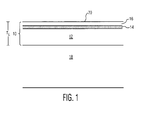
- FIG. 1 there is shown a cross-sectional view of a transparent polyurethane laminate or multi-layer coating 10 in accordance with an embodiment of the present invention.
- the transparent polyurethane laminate or multi-layer coating comprises an inner polyurethane layer 12, a middle conductive material layer 14, and an outer polyurethane layer 16.
- the laminate can be disposed on an aircraft transparency 18.
- the laminate or multi-layer coating 10 is used as an outer protective, erosion-resistant shield for aircraft transparencies.
- the laminate or multi-layer coating efficiently drains static charge from its outer surface 20 at all operational temperatures typically encountered in flight.
- the overall thickness T L of the polyurethane laminate is at least 0.002 inch (50 ⁇ ), and preferably at least 0.003 inch (75 ⁇ ).
- the p-static drain capability is provided by the conductive layer 14, which is located 0.0002 inch to 0.0006 inch (5 ⁇ to 15 ⁇ ) below the outer surface of the laminate.
- Suitable polyurethanes for the inner layer 12 and outer layer 16 are aliphatic polyether or polyester types.
- the polyurethane is a thermoset polyurethane made from aliphatic di- or polyisocyanates and polycaprolactone diols and triols.
- Conductive modification of the polyurethane is not required as the surface charge can trickle through to the embedded conductive layer 14 at a sufficient rate to prevent damaging discharge events. Also, electrostatic discharge performance of such systems has been found to be substantially independent of temperature.
- the embedded conductive layer 14 is a very thin coating made from a colloidal indium tin oxide (ITO) nanoparticle dispersion cured with a silicate binder.
- ITO indium tin oxide
- Surface conductivity is less than 10 8 ohm per square, which is sufficient to drain the charge across the canopy surface.
- Such coatings have been found to be extremely compatible with the polyurethanes disclosed above, allowing the inner layer 12 and outer layer 16 to bond through the conductive ITO layer 14, which is believed to form a porous network in the cured state. This allows the layered polyurethane laminate to have properties similar to single layer polyurethane with respect to abrasion and erosion resistance.
- the thicker inner polyurethane layer 12 may be applied as a coating, or it may be a cast or extruded polyurethane film.
- the film may be free standing or may be laminated or cast onto a glass or plastic substrate, such as the transparency 18.
- the substrate may carry a low-resistance conductive coating layer (not shown) depending on the application.
- the electrostatic discharge layer 14 is applied as a two-part coating. Initially, a colloidal metal oxide nanoparticle dispersion (ITO preferred) is applied from a dilute solution. After drying, a silicate coating is applied over the metal oxide, also from a dilute solution. The system becomes conductive upon cure of the silicate. It is believed that the ITO forms an open conductive network during this step.
- a colloidal metal oxide nanoparticle dispersion ITO preferred
- silicate coating is applied over the metal oxide, also from a dilute solution. The system becomes conductive upon cure of the silicate. It is believed that the ITO forms an open conductive network during this step.
- the thinner outer polyurethane layer 16 may be applied by a coating process.
- the outer layer is the same or very similar to the inner polyurethane layer 12 in chemical composition. It is believed that the top polyurethane layer penetrates through the metal oxide network of the middle conductive layer 14 and co-cures with the lower polyurethane layer, resulting in single layer mechanical performance. The p-static discharge layer 14 maintains conductivity during this co-cure process.
- the conductive coating comprises a 5-percent solids coating solution containing a colloidal ITO nanoparticle dispersion and a 0.1-percent solids silicate coating solution.
- a 5-percent solids coating solution containing a colloidal ITO nanoparticle dispersion may be prepared by mixing the components set forth in Table 1.
- a silicate binder stock solution may be prepared by mixing the components set forth in Table 2.
- TABLE 2 Silicate Binder Stock Solution Anhydrous ethanol (initial) 45.7 g De-ionized water 4.0 g Concentrated nitric acid 0.8 g Tetraethyl orthosilicate 5.6 g Anhydrous ethanol (final) 43.9 g
- a 0.1-percent solids silicate coating solution may be prepared by mixing the components set forth in Table 3. TABLE 3 0.1-percent solids silicate coating solution Silicate binder stock solution prepared as described above 5.0 g 1-Butanol 95.0 g
- the 5-percent ITO coating solution described in Table 1 may be flow coated onto a flat polycarbonate sheet oriented in a near vertical position, The coated sheet is then air dried for thirty minutes. The 0.1-percent silicate coating solution described in Table 3 is then flow coated over the ITO coating and air dried for thirty minutes.
- the antistatic additive was Fluorad HQ115, a lithium trifluoromethanesulfonimide available from 3M, having a weight percentage of 1.0 percent.
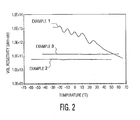
- Each of the polyurethane coatings of Examples 1-3 was applied to a separate polycarbonate panel over a conductive coating prepared per Tables 1-3.
- the coated panels were cured by exposing them to a temperature of 49 °C (120 °F) for 12 hours followed by 82 °C (180 °F) for 24 hours.
- a "control" example prepared per Tables 1-3 with no polyurethane overcoat was also cured under the same conditions.
- the panel having no polyurethane topcoat had a sheet resistance of 10 5 ohms per square after cure.
- the polyurethane coating thicknesses on the three topcoated panels were measured as follows: TABLE 6 Polyurethane Coating Thicknesses of Examples 1-3 Example 1 0.0015 in. (38 ⁇ ) Example 2 0.0005 in. (13 ⁇ ) Example 3 0.00014 in. (3.5 ⁇ )
- Example 1 shows a temperature dependence similar to prior art systems, with a change in resistivity of three orders of magnitude between +21 °C and -40 °C (+70 °F and -40 °F). This large change in resistivity is believed to be caused by reduced molecular mobility as temperature is lowered. Examples 2 and 3 show no such temperature dependence. FIG. 2 indicates that, with thinner coatings, surface change can dissipate by a different mechanism that does not require molecular mobility.
- a polyurethane coating was prepared from the components set forth in Table 7 below.
- Table 7 Aliphatic Polyesterurethane Formulation for Example 4 Raw Material Description Parts (wt. %) Desmodur W 1 Bis(4-isocyanato-cyclohexyl)methane 39.5 CAPA 3050 2 Polycaprolactone triol 33.8 CAPA 2085 2 Polycaprolactone diol 25.7 Tinuvin 328 3 UV stabilizer 0.5 Irganox 1010 3 Antioxidant 0.5 1 Available from Bayer 2 Available from Perstop Specialty Chemicals 3 Available from Ciba-Geigy
- Example 4 The coating solution of Example 4 was prepared by adding dipropylene glycol dimethyl ether to the formulation of Table 7 to give a 90-percent solids solution. The coating was applied over a conductive coated polycarbonate panel prepared per Tables 1-3. The polyurethane coating was cured at 49 °C (120 °F) for 12 hours followed by 121 °C (250 °F) for 18 hours. Polyurethane coating thickness was 0.003 inches (75 ⁇ ).
- Example 5 comprised two coating solutions, an inner coating solution and an outer coating solution, each having the same polyurethane composition as in Example 4.
- the solvents and final solids contents were as shown in Table 8.
- the inner coating was flow coated directly onto a polycarbonate sheet having no conductive coating.
- the coating was cured for 12 hours at 49 °C (120 °F) followed by 18 hours at 121°C (250 °F), The coating thickness was 0.0025 inch (63 ⁇ ).
- a conductive ITO/silicate coating prepared according to Tables 1-3 was applied over the inner polyurethane coating.
- the conductive coating was cured at 121 °C (250 °F) for 1 hour.
- the outer coating of Table 8 was then applied over the ITO/silicate coating and cured at 121 °C (250 °F) for 18 hours.
- the thickness of the outer coating was 0.0005 inch (13 ⁇ ).
- Example 4 and Example 5 coating systems were then characterized for the Example 4 and Example 5 coating systems, applied as described above. Note that the polyurethanes used in Examples 4 and 5 contained no conductive or ionic additives to enhance their ability to drain charge. Results are shown in Table 9. TABLE 9 Comparative Charge Dissipation Performance of Example 4 and Example 5 Coatings Example 5 System Example 4 System Temp. [°C] Voltage Current Charge Density Vol. Resistivity Voltage Current Charge Density Vol. Resistivity (°F) (-kV) (- ⁇ A) (- ⁇ A/sq.
- Example 4 At a temperature of 13 °C (55 °F) and a voltage of 10,000 volts, the Example 4 system produced no measurable current, yielding a volume resistivity of greater than 10 14 ohm-cm. Measurements were taken for Example 5 at increments of ten degrees Fahrenheit from 13 °C (55 °F) to -48 °C (-55 °F). At a voltage of 4,500 volts, the Example 5 system produced 3.0 ⁇ A current, a 108.0 ⁇ m/sq. ft. charge density, and 2x10 12 ohm-cm volume resistivity for all temperatures in the range. For Example 5, flatwise adhesion of the coating system was measured at 9310.10 3 Pa (1350 psi) which indicates that excellent bonding was achieved between the two polyurethane coating layers, through the conductive ITO layer.
- Example 4 an unmodified polyurethane coating having the thickness needed for high erosion resistance, is a good dielectric with no measurable static drain through the coating to the underlying conductive layer.
- Example 5 having two unmodified polyurethane coatings and the same overall thickness as Example 4, shows excellent charge dissipation capability with no temperature dependence.
- the charge current density of 108 ⁇ A/sq. ft. is approximately three times the level observed for aircraft transparencies under worst case conditions.
- the outer polyurethane layer is thick enough to adequately protect the embedded conductive layer and forms a strong bond with the base polyurethane layer to give erosion and abrasion resistance performance comparable to a single-layer thick coating.
- An polyurethane sheet 1mm (0.040-inch) thick was cast using the formulation of Example 4 except with no solvent.
- the sheet was cast between glass plates treated with release agent, with a spacer seal around the perimeter.
- the sheet was cured at 93 °C (200 °F) for 16 hours.
- Example 5 An ITO/silicate coating prepared per Tables 1-3 was applied to one surface of the polyurethane sheet and cured at 93 °C (200 °F) for 1 hour.
- the outer coating of Example 5 (Table 8) was then applied over the ITO/silicate layer and cured at 93 °C (200 °F) for 16 hours.
- the electrostatic drain properties of the coated sheet were then evaluated and found to be comparable to the Example 5 system at ambient temperature and at -40 °C (-40 °F).
- the calculated volume resistivity was 1.4 x 10 12 ohm-cm.
- a stretched acrylic sample was coated with a polysiloxane basecoat, a sputtered metallic stack, and a two-layer polyurethane protective coating system as described in U.S. Patent No. 6,458,875 to Sandlin et al. , Examples 1 and 30, except that the top polyurethane layer was made from the components listed in Table 10 below.
- the sulfonated polyurethane in Table 10 was alloyed with the polyols by mixing at 88 °C- 99 °C (190 °F- 210 °F) for 48 hours before formulating with the isocyanate and other components.
- the top layer was flow coated from a 90-percent solids solution in 2-butoxyethyl acetate solvent.
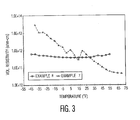
- Example 7 The outer surface of the Example 7 system was cleaned and abraded using a cerium oxide slurry in a 50/50 water/isopropanol mixture and wool felt. After drying, the 5% ITO coating solution from Table 1 was flow coated onto the surface and air dried for thirty minutes. The 0.1% silicate coating solution from Table 3 was flow coated over the ITO coating and then air dried for thirty minutes. The sample was then heated in an air oven at 82 °C (180 °F) for 1 hour. The surface conductivity was measured at 2 x 10 7 ohms/square.
- a polyurethane layer was then applied over the surface using the same composition as the Example 7 topcoat but at 45% solids content in a 2-butoxyethyl acetate solvent.
- the top layer was cured at 54 °C (130 °F) for 12 hours followed by 82 °C (180 °F) for 16 hours.
- Example 7 and 8 samples were then characterized by the methods described in U.S. Patent 6,458,875 the Sandlin et al. using equipment and the general procedure described in ASTM D-257. The results are shown in Table 11 and FIG. 3 . TABLE 11 Comparative Charge Dissipation Performance of Example 7 and Example 8 Coatings Example 8 System
- a 14-inch by 14-inch glass plate was treated with a perfluoroalkylsilane release coating (SurfexTM 100, GKN Aerospace).
- the glass plate was placed in an oven at 93 °C (200 °F) for 2 hours to cure the release coating.
- the excess release coating was then removed by buffing the treated surface with cheesecloth.
- the outer coating of Example 5 (Table 8) was then applied to the treated glass surface by a flow coating process in a near-vertical orientation. After air drying, the polyurethane was then cured at 121 °C (250 °F) for 18 hours.
- a conductive ITO/silicate coating prepared per Tables 1-3 was applied over the polyurethane coating. The coating was cured a 121 °C (250 °F) for 1 hour.
- the 14-inch by 14-inch glass plate with cured coatings was then assembled into a casting cell by mating with a 6.35 mm thick (0.250-inch-thick) polycarbonate sheet of the same size.
- a 25.4mm-wide (1.0-inch-wide), 1.3mm (0.050-inch)-thick silicone rubber sheet spacer/seal was placed around the perimeter,between the glass and polycarbonate plates to create a gap approximately 1.3 mm thick (0.050 inch thick). The plates were held together using spring clamps.
- a polyurethane mix was prepared as described in Example 4 except no solvent was added. After mixing all ingredients at 38 °C (100 °F) under vacuum, the liquid mixture was poured into the gap in the upper corner of the casting cell while oriented at a 20-degree incline from horizontal. Air was allowed to escape through a second gap on the opposite upper corner. After 130 grams of liquid polyurethane precursor had been poured into the cell, it was lowered to near horizontal to allow the remaining air to escape. Both gaps were then sealed with spacer material and clamps to create a closed cell. The cast polyurethane was then cured at 49 °C (120 °F) for 12 hours, followed by 121 °C (250 °F) for 18 hours.
- the cell was separated.
- the glass plate was released from the polyurethane surface to yield a polycarbonate sheet having a bonded thermoset bi-layer polyurethane liner, with the conductive layer embedded at about 0.005 inch (13 ⁇ ) below the outer surface.
- the static drain performance was determined to be comparable to the Example 5 system.
- Example 9 was repeated except a second release-treated glass plate was used in place of the polycarbonate sheet. After cure of the cast polyurethane, both glass plates were released from the polyurethane to yield a free-standing 1.3 mm (0.050-inch) bi-layer thermoset polyurethane sheet, with the conductive layer embedded at about 0.005 inch (13 ⁇ ) below one surface.
- thermoset polyurethane and conductive ITO/silicate layers as described in Example 9.
- a second release-treated glass plate was placed over the thermoplastic polyurethane sheet. This stack of sheets was assembled into a vacuum bag using conventional methods, evacuated for 4 hours under vacuum, and then laminated in an autoclave at 690.10 3 Pa (100-psi) pressure.
- the autoclave temperature was ramped from ambient to 121 °C (250 °F) over 4 hours, held at 121°C (250 °F) for 2 hours, and then ramped down to 49 °C (250 °F) over 2 hours all 690.10 3 Pa (100-psi) pressure.
- the glass plates separated from both polyurethane surfaces, yielding a bi-layer thermoplastic/thermoset polyurethane sheet having a conductive layer embedded 0.005-inch (13 ⁇ ) below the outer thermoset surface.
- This bi-layer sheet can be laminated to acrylic, glass, polycarbonate, or other material by conventional methods.
Landscapes
- Chemical & Material Sciences (AREA)
- Engineering & Computer Science (AREA)
- Manufacturing & Machinery (AREA)
- Materials Engineering (AREA)
- Health & Medical Sciences (AREA)
- Chemical Kinetics & Catalysis (AREA)
- Medicinal Chemistry (AREA)
- Polymers & Plastics (AREA)
- Organic Chemistry (AREA)
- Mechanical Engineering (AREA)
- Aviation & Aerospace Engineering (AREA)
- Laminated Bodies (AREA)
- Application Of Or Painting With Fluid Materials (AREA)
- Paints Or Removers (AREA)
Applications Claiming Priority (1)
| Application Number | Priority Date | Filing Date | Title |
|---|---|---|---|
| US12/841,916 US9580564B2 (en) | 2010-07-22 | 2010-07-22 | Transparent polyurethane protective coating, film and laminate compositions with enhanced electrostatic dissipation capability, and methods for making same |
Publications (2)
| Publication Number | Publication Date |
|---|---|
| EP2410004A1 EP2410004A1 (en) | 2012-01-25 |
| EP2410004B1 true EP2410004B1 (en) | 2014-03-19 |
Family
ID=44582265
Family Applications (1)
| Application Number | Title | Priority Date | Filing Date |
|---|---|---|---|
| EP20110174815 Active EP2410004B1 (en) | 2010-07-22 | 2011-07-21 | Transparent Polyurethane Protective Coating, Film and Laminate Compositions with Enhanced Electrostatic Dissipation Capability, and Methods for Making Same |
Country Status (5)
| Country | Link |
|---|---|
| US (1) | US9580564B2 (enExample) |
| EP (1) | EP2410004B1 (enExample) |
| JP (1) | JP5877970B2 (enExample) |
| KR (1) | KR20120021187A (enExample) |
| CN (1) | CN102431256B (enExample) |
Families Citing this family (12)
| Publication number | Priority date | Publication date | Assignee | Title |
|---|---|---|---|---|
| DE102013212933B3 (de) * | 2013-07-03 | 2014-11-27 | Schaeffler Technologies Gmbh & Co. Kg | Lageranordnung in einem Elektromotor |
| KR20170060001A (ko) * | 2014-09-26 | 2017-05-31 | 코베스트로 도이칠란트 아게 | 무색, 투명 및 내열성 폴리우레탄 필름 및 이를 제조하는 방법 |
| US10005264B2 (en) * | 2015-12-15 | 2018-06-26 | 3M Innovative Properties Company | Thin protective display film |
| US9780318B2 (en) | 2015-12-15 | 2017-10-03 | 3M Innovative Properties Company | Protective display film |
| CN106584932A (zh) * | 2016-11-30 | 2017-04-26 | 中国直升机设计研究所 | 一种具有导热性耐磨蚀保护带 |
| US11118086B2 (en) * | 2017-11-22 | 2021-09-14 | GKN Aerospace Transparency Systems, Inc. | Durable, electrically conductive transparent polyurethane compositions and methods of applying same |
| JP7172102B2 (ja) * | 2018-04-03 | 2022-11-16 | トヨタ自動車株式会社 | 車両 |
| CN109609014A (zh) * | 2018-12-07 | 2019-04-12 | 中昊北方涂料工业研究设计院有限公司 | 一种ito镀膜表面聚氨酯高附着力耐磨涂层及其制备方法 |
| US11702224B2 (en) * | 2019-07-30 | 2023-07-18 | The Boeing Company | Lightning strike protection |
| GB2591099B (en) | 2020-01-14 | 2023-05-24 | Gkn Aerospace Services Ltd | Coating compositions |
| CN111440472A (zh) * | 2020-04-16 | 2020-07-24 | 江苏铁锚玻璃股份有限公司 | 聚氨酯涂层的溶液配方、溶液制备方法及其制备方法 |
| KR102382764B1 (ko) | 2021-03-04 | 2022-04-08 | 한국세라믹기술원 | 투명 적층 구조체 및 그 제조 방법 |
Family Cites Families (16)
| Publication number | Priority date | Publication date | Assignee | Title |
|---|---|---|---|---|
| JPS63308041A (ja) * | 1987-06-09 | 1988-12-15 | Toyo Tire & Rubber Co Ltd | ポリウレタンシ−トの製造方法 |
| US5939188A (en) * | 1991-07-15 | 1999-08-17 | Pilkington Aerospace, Inc. | Transparent coating systems for improving the environmental durability of transparency substrates |
| US6071621A (en) * | 1993-06-11 | 2000-06-06 | 3M Innovative Properties Company | Metallized film and decorative articles made therewith |
| US5853869A (en) * | 1995-08-23 | 1998-12-29 | Sumitomo Metal Mining Co., Ltd. | Transparent conductor film for electric field shielding |
| US5840429A (en) * | 1996-11-05 | 1998-11-24 | Ppg Industries, Inc. | Aircraft transparency |
| CA2214594C (en) | 1996-11-05 | 2002-11-26 | Robert M. Hunia | Improved aircraft transparency |
| US5965853A (en) * | 1997-03-31 | 1999-10-12 | Ppg Industries Ohio, Inc. | Sound absorbing aircraft transparency and method of making same |
| US6093451A (en) * | 1998-01-30 | 2000-07-25 | Pilkington Aerospace Inc. | Coated transparencies and transparent laminates incorporating a transparent polyurethane composition |
| AUPQ326499A0 (en) * | 1999-10-05 | 1999-10-28 | Commonwealth Scientific And Industrial Research Organisation | Nanoparticle films |
| US7566360B2 (en) * | 2002-06-13 | 2009-07-28 | Cima Nanotech Israel Ltd. | Nano-powder-based coating and ink compositions |
| US7041365B2 (en) | 2003-05-12 | 2006-05-09 | 3M Innovative Properties Company | Static dissipative optical construction |
| JP2007530741A (ja) | 2004-03-23 | 2007-11-01 | シエラシン コーポレイション | ナノチューブを含む被覆材及びその適用方法、並びにそれらを組み合わせた透明材料 |
| TWI344018B (en) * | 2005-07-01 | 2011-06-21 | Hon Hai Prec Ind Co Ltd | Optical filter |
| WO2008076473A2 (en) * | 2006-07-31 | 2008-06-26 | Eikos, Inc. | Metal oxide coatings for electrically conductive carbon nanotube films |
| US7767310B2 (en) | 2006-10-23 | 2010-08-03 | Ppg Industries Ohio, Inc. | Primer composition and articles incorporating the primer |
| JP2008139839A (ja) * | 2006-11-02 | 2008-06-19 | Bridgestone Corp | ディスプレイ用光学フィルタ、これを備えたディスプレイ及びプラズマディスプレイパネル |
-
2010
- 2010-07-22 US US12/841,916 patent/US9580564B2/en active Active
-
2011
- 2011-07-21 EP EP20110174815 patent/EP2410004B1/en active Active
- 2011-07-21 JP JP2011159848A patent/JP5877970B2/ja not_active Expired - Fee Related
- 2011-07-22 KR KR20110073079A patent/KR20120021187A/ko not_active Withdrawn
- 2011-07-22 CN CN201110280550.XA patent/CN102431256B/zh active Active
Also Published As
| Publication number | Publication date |
|---|---|
| JP5877970B2 (ja) | 2016-03-08 |
| CN102431256B (zh) | 2016-02-17 |
| CN102431256A (zh) | 2012-05-02 |
| JP2012040870A (ja) | 2012-03-01 |
| US9580564B2 (en) | 2017-02-28 |
| EP2410004A1 (en) | 2012-01-25 |
| US20120021209A1 (en) | 2012-01-26 |
| KR20120021187A (ko) | 2012-03-08 |
Similar Documents
| Publication | Publication Date | Title |
|---|---|---|
| US9580564B2 (en) | Transparent polyurethane protective coating, film and laminate compositions with enhanced electrostatic dissipation capability, and methods for making same | |
| EP3713977B1 (en) | Durable, electrically conductive polyurethane compositions and methods of applying same | |
| EP2862713B1 (en) | Gas barrier film and method for manufacturing same | |
| US6093451A (en) | Coated transparencies and transparent laminates incorporating a transparent polyurethane composition | |
| US9532405B2 (en) | Stack including heater layer and drain layer | |
| US20100025533A1 (en) | Electrically conductive protective liner and method of manufacture | |
| US20090061223A1 (en) | Gas-barrier film, and method for sealing display device with gas-barrier film | |
| KR102672215B1 (ko) | 대전방지제를 포함하는 점착제 조성물 및 표면 보호 필름 | |
| EP2225593B1 (en) | Spd films and light valves incorporating overcoatings | |
| HK1166091A (en) | Transparent polyurethane protective coating, film and laminate compositions with enhanced electrostatic dissipation capability, and methods for making same | |
| CN112534527B (zh) | 薄膜电容器用薄膜的制造方法 | |
| US20220275260A1 (en) | Surface protection film | |
| KR102407857B1 (ko) | 우수한 이형 특성을 갖는 대전방지 실리콘 이형 필름 | |
| KR20230097680A (ko) | 우수한 내블로킹 특성을 갖는 대전방지 실리콘 이형필름 | |
| JP2000319422A (ja) | 積層フィルム及びそれを用いた液晶表示装置 | |
| KR20220051682A (ko) | 표면 보호 필름 및 유기 발광 전자 장치 제조 방법 | |
| JP2008007651A (ja) | 帯電防止ハードコート用組成物 | |
| JP2009076449A (ja) | 透明導電体 | |
| KR20190045016A (ko) | 광학 필름, 및 광학 필름을 이용한 유기발광전자장치의 제조 방법 |
Legal Events
| Date | Code | Title | Description |
|---|---|---|---|
| 17P | Request for examination filed |
Effective date: 20110804 |
|
| AK | Designated contracting states |
Kind code of ref document: A1 Designated state(s): AL AT BE BG CH CY CZ DE DK EE ES FI FR GB GR HR HU IE IS IT LI LT LU LV MC MK MT NL NO PL PT RO RS SE SI SK SM TR |
|
| AX | Request for extension of the european patent |
Extension state: BA ME |
|
| PUAI | Public reference made under article 153(3) epc to a published international application that has entered the european phase |
Free format text: ORIGINAL CODE: 0009012 |
|
| 17Q | First examination report despatched |
Effective date: 20120911 |
|
| REG | Reference to a national code |
Ref country code: HK Ref legal event code: DE Ref document number: 1166091 Country of ref document: HK |
|
| GRAP | Despatch of communication of intention to grant a patent |
Free format text: ORIGINAL CODE: EPIDOSNIGR1 |
|
| INTG | Intention to grant announced |
Effective date: 20131010 |
|
| GRAS | Grant fee paid |
Free format text: ORIGINAL CODE: EPIDOSNIGR3 |
|
| GRAA | (expected) grant |
Free format text: ORIGINAL CODE: 0009210 |
|
| AK | Designated contracting states |
Kind code of ref document: B1 Designated state(s): AL AT BE BG CH CY CZ DE DK EE ES FI FR GB GR HR HU IE IS IT LI LT LU LV MC MK MT NL NO PL PT RO RS SE SI SK SM TR |
|
| REG | Reference to a national code |
Ref country code: GB Ref legal event code: FG4D |
|
| REG | Reference to a national code |
Ref country code: CH Ref legal event code: EP |
|
| REG | Reference to a national code |
Ref country code: IE Ref legal event code: FG4D |
|
| REG | Reference to a national code |
Ref country code: AT Ref legal event code: REF Ref document number: 657667 Country of ref document: AT Kind code of ref document: T Effective date: 20140415 |
|
| REG | Reference to a national code |
Ref country code: DE Ref legal event code: R096 Ref document number: 602011005422 Country of ref document: DE Effective date: 20140508 |
|
| REG | Reference to a national code |
Ref country code: SE Ref legal event code: TRGR |
|
| PG25 | Lapsed in a contracting state [announced via postgrant information from national office to epo] |
Ref country code: LT Free format text: LAPSE BECAUSE OF FAILURE TO SUBMIT A TRANSLATION OF THE DESCRIPTION OR TO PAY THE FEE WITHIN THE PRESCRIBED TIME-LIMIT Effective date: 20140319 Ref country code: NO Free format text: LAPSE BECAUSE OF FAILURE TO SUBMIT A TRANSLATION OF THE DESCRIPTION OR TO PAY THE FEE WITHIN THE PRESCRIBED TIME-LIMIT Effective date: 20140619 |
|
| REG | Reference to a national code |
Ref country code: NL Ref legal event code: VDEP Effective date: 20140319 |
|
| REG | Reference to a national code |
Ref country code: AT Ref legal event code: MK05 Ref document number: 657667 Country of ref document: AT Kind code of ref document: T Effective date: 20140319 |
|
| REG | Reference to a national code |
Ref country code: LT Ref legal event code: MG4D |
|
| PG25 | Lapsed in a contracting state [announced via postgrant information from national office to epo] |
Ref country code: CY Free format text: LAPSE BECAUSE OF FAILURE TO SUBMIT A TRANSLATION OF THE DESCRIPTION OR TO PAY THE FEE WITHIN THE PRESCRIBED TIME-LIMIT Effective date: 20140319 Ref country code: FI Free format text: LAPSE BECAUSE OF FAILURE TO SUBMIT A TRANSLATION OF THE DESCRIPTION OR TO PAY THE FEE WITHIN THE PRESCRIBED TIME-LIMIT Effective date: 20140319 |
|
| PG25 | Lapsed in a contracting state [announced via postgrant information from national office to epo] |
Ref country code: RS Free format text: LAPSE BECAUSE OF FAILURE TO SUBMIT A TRANSLATION OF THE DESCRIPTION OR TO PAY THE FEE WITHIN THE PRESCRIBED TIME-LIMIT Effective date: 20140319 Ref country code: LV Free format text: LAPSE BECAUSE OF FAILURE TO SUBMIT A TRANSLATION OF THE DESCRIPTION OR TO PAY THE FEE WITHIN THE PRESCRIBED TIME-LIMIT Effective date: 20140319 Ref country code: HR Free format text: LAPSE BECAUSE OF FAILURE TO SUBMIT A TRANSLATION OF THE DESCRIPTION OR TO PAY THE FEE WITHIN THE PRESCRIBED TIME-LIMIT Effective date: 20140319 |
|
| PG25 | Lapsed in a contracting state [announced via postgrant information from national office to epo] |
Ref country code: CZ Free format text: LAPSE BECAUSE OF FAILURE TO SUBMIT A TRANSLATION OF THE DESCRIPTION OR TO PAY THE FEE WITHIN THE PRESCRIBED TIME-LIMIT Effective date: 20140319 Ref country code: RO Free format text: LAPSE BECAUSE OF FAILURE TO SUBMIT A TRANSLATION OF THE DESCRIPTION OR TO PAY THE FEE WITHIN THE PRESCRIBED TIME-LIMIT Effective date: 20140319 Ref country code: BE Free format text: LAPSE BECAUSE OF FAILURE TO SUBMIT A TRANSLATION OF THE DESCRIPTION OR TO PAY THE FEE WITHIN THE PRESCRIBED TIME-LIMIT Effective date: 20140319 Ref country code: BG Free format text: LAPSE BECAUSE OF FAILURE TO SUBMIT A TRANSLATION OF THE DESCRIPTION OR TO PAY THE FEE WITHIN THE PRESCRIBED TIME-LIMIT Effective date: 20140619 Ref country code: IS Free format text: LAPSE BECAUSE OF FAILURE TO SUBMIT A TRANSLATION OF THE DESCRIPTION OR TO PAY THE FEE WITHIN THE PRESCRIBED TIME-LIMIT Effective date: 20140719 Ref country code: EE Free format text: LAPSE BECAUSE OF FAILURE TO SUBMIT A TRANSLATION OF THE DESCRIPTION OR TO PAY THE FEE WITHIN THE PRESCRIBED TIME-LIMIT Effective date: 20140319 Ref country code: NL Free format text: LAPSE BECAUSE OF FAILURE TO SUBMIT A TRANSLATION OF THE DESCRIPTION OR TO PAY THE FEE WITHIN THE PRESCRIBED TIME-LIMIT Effective date: 20140319 |
|
| PG25 | Lapsed in a contracting state [announced via postgrant information from national office to epo] |
Ref country code: PL Free format text: LAPSE BECAUSE OF FAILURE TO SUBMIT A TRANSLATION OF THE DESCRIPTION OR TO PAY THE FEE WITHIN THE PRESCRIBED TIME-LIMIT Effective date: 20140319 Ref country code: SK Free format text: LAPSE BECAUSE OF FAILURE TO SUBMIT A TRANSLATION OF THE DESCRIPTION OR TO PAY THE FEE WITHIN THE PRESCRIBED TIME-LIMIT Effective date: 20140319 Ref country code: ES Free format text: LAPSE BECAUSE OF FAILURE TO SUBMIT A TRANSLATION OF THE DESCRIPTION OR TO PAY THE FEE WITHIN THE PRESCRIBED TIME-LIMIT Effective date: 20140319 Ref country code: AT Free format text: LAPSE BECAUSE OF FAILURE TO SUBMIT A TRANSLATION OF THE DESCRIPTION OR TO PAY THE FEE WITHIN THE PRESCRIBED TIME-LIMIT Effective date: 20140319 |
|
| REG | Reference to a national code |
Ref country code: DE Ref legal event code: R097 Ref document number: 602011005422 Country of ref document: DE |
|
| PG25 | Lapsed in a contracting state [announced via postgrant information from national office to epo] |
Ref country code: PT Free format text: LAPSE BECAUSE OF FAILURE TO SUBMIT A TRANSLATION OF THE DESCRIPTION OR TO PAY THE FEE WITHIN THE PRESCRIBED TIME-LIMIT Effective date: 20140721 |
|
| PLBE | No opposition filed within time limit |
Free format text: ORIGINAL CODE: 0009261 |
|
| STAA | Information on the status of an ep patent application or granted ep patent |
Free format text: STATUS: NO OPPOSITION FILED WITHIN TIME LIMIT |
|
| PG25 | Lapsed in a contracting state [announced via postgrant information from national office to epo] |
Ref country code: DK Free format text: LAPSE BECAUSE OF FAILURE TO SUBMIT A TRANSLATION OF THE DESCRIPTION OR TO PAY THE FEE WITHIN THE PRESCRIBED TIME-LIMIT Effective date: 20140319 |
|
| 26N | No opposition filed |
Effective date: 20141222 |
|
| PG25 | Lapsed in a contracting state [announced via postgrant information from national office to epo] |
Ref country code: LU Free format text: LAPSE BECAUSE OF FAILURE TO SUBMIT A TRANSLATION OF THE DESCRIPTION OR TO PAY THE FEE WITHIN THE PRESCRIBED TIME-LIMIT Effective date: 20140721 |
|
| REG | Reference to a national code |
Ref country code: CH Ref legal event code: PL |
|
| REG | Reference to a national code |
Ref country code: DE Ref legal event code: R097 Ref document number: 602011005422 Country of ref document: DE Effective date: 20141222 |
|
| REG | Reference to a national code |
Ref country code: IE Ref legal event code: MM4A |
|
| PG25 | Lapsed in a contracting state [announced via postgrant information from national office to epo] |
Ref country code: CH Free format text: LAPSE BECAUSE OF NON-PAYMENT OF DUE FEES Effective date: 20140731 Ref country code: LI Free format text: LAPSE BECAUSE OF NON-PAYMENT OF DUE FEES Effective date: 20140731 |
|
| PG25 | Lapsed in a contracting state [announced via postgrant information from national office to epo] |
Ref country code: SI Free format text: LAPSE BECAUSE OF FAILURE TO SUBMIT A TRANSLATION OF THE DESCRIPTION OR TO PAY THE FEE WITHIN THE PRESCRIBED TIME-LIMIT Effective date: 20140319 |
|
| PG25 | Lapsed in a contracting state [announced via postgrant information from national office to epo] |
Ref country code: IE Free format text: LAPSE BECAUSE OF NON-PAYMENT OF DUE FEES Effective date: 20140721 |
|
| PG25 | Lapsed in a contracting state [announced via postgrant information from national office to epo] |
Ref country code: SM Free format text: LAPSE BECAUSE OF FAILURE TO SUBMIT A TRANSLATION OF THE DESCRIPTION OR TO PAY THE FEE WITHIN THE PRESCRIBED TIME-LIMIT Effective date: 20140319 Ref country code: MC Free format text: LAPSE BECAUSE OF FAILURE TO SUBMIT A TRANSLATION OF THE DESCRIPTION OR TO PAY THE FEE WITHIN THE PRESCRIBED TIME-LIMIT Effective date: 20140319 |
|
| REG | Reference to a national code |
Ref country code: FR Ref legal event code: PLFP Year of fee payment: 6 |
|
| PG25 | Lapsed in a contracting state [announced via postgrant information from national office to epo] |
Ref country code: MT Free format text: LAPSE BECAUSE OF FAILURE TO SUBMIT A TRANSLATION OF THE DESCRIPTION OR TO PAY THE FEE WITHIN THE PRESCRIBED TIME-LIMIT Effective date: 20140319 Ref country code: GR Free format text: LAPSE BECAUSE OF FAILURE TO SUBMIT A TRANSLATION OF THE DESCRIPTION OR TO PAY THE FEE WITHIN THE PRESCRIBED TIME-LIMIT Effective date: 20140620 |
|
| PG25 | Lapsed in a contracting state [announced via postgrant information from national office to epo] |
Ref country code: HU Free format text: LAPSE BECAUSE OF FAILURE TO SUBMIT A TRANSLATION OF THE DESCRIPTION OR TO PAY THE FEE WITHIN THE PRESCRIBED TIME-LIMIT; INVALID AB INITIO Effective date: 20110721 Ref country code: TR Free format text: LAPSE BECAUSE OF FAILURE TO SUBMIT A TRANSLATION OF THE DESCRIPTION OR TO PAY THE FEE WITHIN THE PRESCRIBED TIME-LIMIT Effective date: 20140319 |
|
| REG | Reference to a national code |
Ref country code: FR Ref legal event code: PLFP Year of fee payment: 7 |
|
| PGFP | Annual fee paid to national office [announced via postgrant information from national office to epo] |
Ref country code: IT Payment date: 20170720 Year of fee payment: 7 |
|
| REG | Reference to a national code |
Ref country code: FR Ref legal event code: PLFP Year of fee payment: 8 |
|
| PG25 | Lapsed in a contracting state [announced via postgrant information from national office to epo] |
Ref country code: MK Free format text: LAPSE BECAUSE OF FAILURE TO SUBMIT A TRANSLATION OF THE DESCRIPTION OR TO PAY THE FEE WITHIN THE PRESCRIBED TIME-LIMIT Effective date: 20140319 |
|
| PG25 | Lapsed in a contracting state [announced via postgrant information from national office to epo] |
Ref country code: AL Free format text: LAPSE BECAUSE OF FAILURE TO SUBMIT A TRANSLATION OF THE DESCRIPTION OR TO PAY THE FEE WITHIN THE PRESCRIBED TIME-LIMIT Effective date: 20140319 |
|
| REG | Reference to a national code |
Ref country code: HK Ref legal event code: WD Ref document number: 1166091 Country of ref document: HK |
|
| PG25 | Lapsed in a contracting state [announced via postgrant information from national office to epo] |
Ref country code: IT Free format text: LAPSE BECAUSE OF NON-PAYMENT OF DUE FEES Effective date: 20180721 |
|
| REG | Reference to a national code |
Ref country code: DE Ref legal event code: R082 Ref document number: 602011005422 Country of ref document: DE Representative=s name: D YOUNG & CO LLP, DE |
|
| P01 | Opt-out of the competence of the unified patent court (upc) registered |
Effective date: 20230526 |
|
| PGFP | Annual fee paid to national office [announced via postgrant information from national office to epo] |
Ref country code: DE Payment date: 20250604 Year of fee payment: 15 |
|
| PGFP | Annual fee paid to national office [announced via postgrant information from national office to epo] |
Ref country code: GB Payment date: 20260601 Year of fee payment: 16 |
|
| PGFP | Annual fee paid to national office [announced via postgrant information from national office to epo] |
Ref country code: SE Payment date: 20260610 Year of fee payment: 16 |
|
| PGFP | Annual fee paid to national office [announced via postgrant information from national office to epo] |
Ref country code: FR Payment date: 20260608 Year of fee payment: 16 |