EP2382196B1 - Imine compounds for combating invertebrate pests - Google Patents
Imine compounds for combating invertebrate pests Download PDFInfo
- Publication number
- EP2382196B1 EP2382196B1 EP09799352.1A EP09799352A EP2382196B1 EP 2382196 B1 EP2382196 B1 EP 2382196B1 EP 09799352 A EP09799352 A EP 09799352A EP 2382196 B1 EP2382196 B1 EP 2382196B1
- Authority
- EP
- European Patent Office
- Prior art keywords
- radicals
- substituted
- alkyl
- combination
- formula
- Prior art date
- Legal status (The legal status is an assumption and is not a legal conclusion. Google has not performed a legal analysis and makes no representation as to the accuracy of the status listed.)
- Not-in-force
Links
- 0 CCc1cc(C(C2)=NOC2(C(F)(F)F)c2cc(*)c(*)c(*)c2)ccc1C(*)=N Chemical compound CCc1cc(C(C2)=NOC2(C(F)(F)F)c2cc(*)c(*)c(*)c2)ccc1C(*)=N 0.000 description 16
Classifications
-
- C—CHEMISTRY; METALLURGY
- C07—ORGANIC CHEMISTRY
- C07D—HETEROCYCLIC COMPOUNDS
- C07D261/00—Heterocyclic compounds containing 1,2-oxazole or hydrogenated 1,2-oxazole rings
- C07D261/02—Heterocyclic compounds containing 1,2-oxazole or hydrogenated 1,2-oxazole rings not condensed with other rings
- C07D261/04—Heterocyclic compounds containing 1,2-oxazole or hydrogenated 1,2-oxazole rings not condensed with other rings having one double bond between ring members or between a ring member and a non-ring member
-
- A—HUMAN NECESSITIES
- A01—AGRICULTURE; FORESTRY; ANIMAL HUSBANDRY; HUNTING; TRAPPING; FISHING
- A01N—PRESERVATION OF BODIES OF HUMANS OR ANIMALS OR PLANTS OR PARTS THEREOF; BIOCIDES, e.g. AS DISINFECTANTS, AS PESTICIDES OR AS HERBICIDES; PEST REPELLANTS OR ATTRACTANTS; PLANT GROWTH REGULATORS
- A01N43/00—Biocides, pest repellants or attractants, or plant growth regulators containing heterocyclic compounds
- A01N43/72—Biocides, pest repellants or attractants, or plant growth regulators containing heterocyclic compounds having rings with nitrogen atoms and oxygen or sulfur atoms as ring hetero atoms
- A01N43/80—Biocides, pest repellants or attractants, or plant growth regulators containing heterocyclic compounds having rings with nitrogen atoms and oxygen or sulfur atoms as ring hetero atoms five-membered rings with one nitrogen atom and either one oxygen atom or one sulfur atom in positions 1,2
-
- A—HUMAN NECESSITIES
- A01—AGRICULTURE; FORESTRY; ANIMAL HUSBANDRY; HUNTING; TRAPPING; FISHING
- A01N—PRESERVATION OF BODIES OF HUMANS OR ANIMALS OR PLANTS OR PARTS THEREOF; BIOCIDES, e.g. AS DISINFECTANTS, AS PESTICIDES OR AS HERBICIDES; PEST REPELLANTS OR ATTRACTANTS; PLANT GROWTH REGULATORS
- A01N47/00—Biocides, pest repellants or attractants, or plant growth regulators containing organic compounds containing a carbon atom not being member of a ring and having no bond to a carbon or hydrogen atom, e.g. derivatives of carbonic acid
- A01N47/08—Biocides, pest repellants or attractants, or plant growth regulators containing organic compounds containing a carbon atom not being member of a ring and having no bond to a carbon or hydrogen atom, e.g. derivatives of carbonic acid the carbon atom having one or more single bonds to nitrogen atoms
- A01N47/10—Carbamic acid derivatives, i.e. containing the group —O—CO—N<; Thio analogues thereof
- A01N47/24—Carbamic acid derivatives, i.e. containing the group —O—CO—N<; Thio analogues thereof containing the groups, or; Thio analogues thereof
-
- A—HUMAN NECESSITIES
- A01—AGRICULTURE; FORESTRY; ANIMAL HUSBANDRY; HUNTING; TRAPPING; FISHING
- A01N—PRESERVATION OF BODIES OF HUMANS OR ANIMALS OR PLANTS OR PARTS THEREOF; BIOCIDES, e.g. AS DISINFECTANTS, AS PESTICIDES OR AS HERBICIDES; PEST REPELLANTS OR ATTRACTANTS; PLANT GROWTH REGULATORS
- A01N47/00—Biocides, pest repellants or attractants, or plant growth regulators containing organic compounds containing a carbon atom not being member of a ring and having no bond to a carbon or hydrogen atom, e.g. derivatives of carbonic acid
- A01N47/08—Biocides, pest repellants or attractants, or plant growth regulators containing organic compounds containing a carbon atom not being member of a ring and having no bond to a carbon or hydrogen atom, e.g. derivatives of carbonic acid the carbon atom having one or more single bonds to nitrogen atoms
- A01N47/28—Ureas or thioureas containing the groups >N—CO—N< or >N—CS—N<
- A01N47/34—Ureas or thioureas containing the groups >N—CO—N< or >N—CS—N< containing the groups, e.g. biuret; Thio analogues thereof; Urea-aldehyde condensation products
-
- A—HUMAN NECESSITIES
- A01—AGRICULTURE; FORESTRY; ANIMAL HUSBANDRY; HUNTING; TRAPPING; FISHING
- A01N—PRESERVATION OF BODIES OF HUMANS OR ANIMALS OR PLANTS OR PARTS THEREOF; BIOCIDES, e.g. AS DISINFECTANTS, AS PESTICIDES OR AS HERBICIDES; PEST REPELLANTS OR ATTRACTANTS; PLANT GROWTH REGULATORS
- A01N47/00—Biocides, pest repellants or attractants, or plant growth regulators containing organic compounds containing a carbon atom not being member of a ring and having no bond to a carbon or hydrogen atom, e.g. derivatives of carbonic acid
- A01N47/40—Biocides, pest repellants or attractants, or plant growth regulators containing organic compounds containing a carbon atom not being member of a ring and having no bond to a carbon or hydrogen atom, e.g. derivatives of carbonic acid the carbon atom having a double or triple bond to nitrogen, e.g. cyanates, cyanamides
- A01N47/42—Biocides, pest repellants or attractants, or plant growth regulators containing organic compounds containing a carbon atom not being member of a ring and having no bond to a carbon or hydrogen atom, e.g. derivatives of carbonic acid the carbon atom having a double or triple bond to nitrogen, e.g. cyanates, cyanamides containing —N=CX2 groups, e.g. isothiourea
- A01N47/44—Guanidine; Derivatives thereof
-
- A—HUMAN NECESSITIES
- A61—MEDICAL OR VETERINARY SCIENCE; HYGIENE
- A61P—SPECIFIC THERAPEUTIC ACTIVITY OF CHEMICAL COMPOUNDS OR MEDICINAL PREPARATIONS
- A61P33/00—Antiparasitic agents
- A61P33/14—Ectoparasiticides, e.g. scabicides
-
- C—CHEMISTRY; METALLURGY
- C07—ORGANIC CHEMISTRY
- C07D—HETEROCYCLIC COMPOUNDS
- C07D401/00—Heterocyclic compounds containing two or more hetero rings, having nitrogen atoms as the only ring hetero atoms, at least one ring being a six-membered ring with only one nitrogen atom
- C07D401/02—Heterocyclic compounds containing two or more hetero rings, having nitrogen atoms as the only ring hetero atoms, at least one ring being a six-membered ring with only one nitrogen atom containing two hetero rings
- C07D401/04—Heterocyclic compounds containing two or more hetero rings, having nitrogen atoms as the only ring hetero atoms, at least one ring being a six-membered ring with only one nitrogen atom containing two hetero rings directly linked by a ring-member-to-ring-member bond
Definitions
- the present invention relates to imine compounds which are useful for combating or controlling invertebrate pests, in particular arthropod pests and nematodes.
- the invention also relates to a method for controlling invertebrate pests by using these compounds and to plant propagation material and to an agricultural and a veterinary composition comprising said compounds.
- Invertebrate pests and in particular arthropods and nematodes destroy growing and harvested crops and attack wooden dwelling and commercial structures, causing large economic loss to the food supply and to property. While a large number of pesticidal agents are known, due to the ability of target pests to develop resistance to said agents, there is an ongoing need for new agents for combating invertebrate pests, in particular insects, arachnids and nematodes.
- WO 2005/085216 describes compounds of the formula wherein, inter alia, A 1 , A 2 and A 3 are independently carbon or nitrogen atoms, G is a benzene ring and W is O or S.
- Substituted imines, oximes and hydrazones used as insecticides are for example described in WO 2008/122375 , WO 2008/070831 , WO 2008/022937 , WO 2008/019760 , WO 2007/105814 , WO 2007/093599 , WO 2007/081019 , US 2007/066617 , JP 2007-016017 , CA 2,547,744 , WO 2006/065659 , WO 2006/021833 , WO 2006/010570 , WO 2005/085216 , WO 2005/036961 , DE 102004010086 , WO 2004/060865 , WO 2004/060371 , US 2004/014801 , WO 2003/067987 , WO 2003/062222 , WO 2003/022808 , Pest Management Science (2002), 58 (12), 1266-1272 , WO 02/068392 , US 6,313,344 , WO
- the invention relates to imine compounds of formula I wherein
- the present invention also provides an agricultural composition comprising at least one compound of the formula I as defined herein and/or an agriculturally acceptable salt thereof and at least one liquid or solid carrier.
- the present invention also provides a veterinary composition
- a veterinary composition comprising at least one compound of the formula I as defined herein and/or a veterinarily acceptable salt thereof and at least one liquid or solid carrier.
- the present invention also provides a method for controlling invertebrate pests which method comprises treating the pests, their food supply, their habitat or their breeding ground or a cultivated plant, plant propagation materials (such as seed), soil, area, material or environment in which the pests are growing or may grow, or the materials, cultivated plants, plant propagation materials (such as seed), soils, surfaces or spaces to be protected from pest attack or infestation with a pesticidally effective amount of a compound of formula I or a salt thereof as defined herein.
- the present invention also relates to plant propagation material, in particular seed, comprising at least one compound of formula I and/or an agriculturally acceptable salt thereof as defined herein.
- the present invention further relates to a method for treating or protecting an animal from infestation or infection by parasites which comprises bringing the animal in contact with a parasiticidally effective amount of a compound of the formula I or a veterinarily acceptable salt thereof as defined herein. Bringing the animal in contact with the compound I, its salt or the veterinary composition of the invention means applying or administering it to the animal.
- steroisomers encompasses both optical isomers, such as enantiomers or diastereomers, the latter existing due to more than one center of chirality in the molecule, as well as geometrical isomers (cis/trans isomers).
- the compounds of the formula I may have one or more centers of chirality, in which case they are present as mixtures of enantiomers or diastereomers.
- One center of chirality is the carbon ring atom of the isoxazoline ring carrying radical X.
- the invention provides both the pure enantiomers or diastereomers and their mixtures and the use according to the invention of the pure enantiomers or diastereomers of the compound I or its mixtures.
- Suitable compounds of the formula I also include all possible geometrical stereoisomers (cis/trans isomers) and mixtures thereof. Cis/trans isomers may be present with respect to the imine group.
- the compounds of the present invention may be amorphous or may exist in one ore more different crystalline states (polymorphs) which may have a different macroscopic properties such as stability or show different biological properties such as activities.
- the present invention includes both amorphous and crystalline compounds of the formula I, mixtures of different crystalline states of the respective compound I, as well as amorphous or crystalline salts thereof.
- Salts of the compounds of the formula I are preferably agriculturally and veterinarily acceptable salts. They can be formed in a customary method, e.g. by reacting the compound with an acid of the anion in question if the compound of formula I has a basic functionality or by reacting an acidic compound of formula I with a suitable base.
- Suitable agriculturally acceptable salts are especially the salts of those cations or the acid addition salts of those acids whose cations and anions, respectively, do not have any adverse effect on the action of the compounds according to the present invention.
- Suitable cations are in particular the ions of the alkali metals, preferably lithium, sodium and potassium, of the alkaline earth metals, preferably calcium, magnesium and barium, and of the transition metals, preferably manganese, copper, zinc and iron, and also ammonium (NH 4+ ) and substituted ammonium in which one to four of the hydrogen atoms are replaced by C 1 -C 4 -alkyl, C 1 -C 4 -hydroxyalkyl, C 1 -C 4 -alkoxy, C 1 -C 4 -alkoxy-C 1 -C 4 -alkyl, hydroxy-C 1 -C 4 -alkoxy-C 1 -C 4 -alkyl, phenyl or benzyl.
- substituted ammonium ions comprise methylammonium, isopropylammonium, dimethylammonium, diisopropylammonium, trimethylammonium, tetramethylammonium, tetraethylammonium, tetrabutylammonium, 2-hydroxyethylammonium, 2-(2-hydroxy-ethoxy)ethylammonium, bis(2-hydroxyethyl)ammonium, benzyltrimethylammonium and benzl-triethylammonium, furthermore phosphonium ions, sulfonium ions, preferably tri(C 1 -C 4 -alkyl)sulfonium, and sulfoxonium ions, preferably tri(C 1 -C 4 -alkyl)sulfoxonium.
- Anions of useful acid addition salts are primarily chloride, bromide, fluoride, hydrogen sulfate, sulfate, dihydrogen phosphate, hydrogen phosphate, phosphate, nitrate, hydrogen carbonate, carbonate, hexafluorosilicate, hexafluorophosphate, benzoate, and the anions of C 1 -C 4 -alkanoic acids, preferably formate, acetate, propionate and butyrate. They can be formed by reacting a compound of formulae I with an acid of the corresponding anion, preferably of hydrochloric acid, hydrobromic acid, sulfuric acid, phosphoric acid or nitric acid.
- Suitable acid addition salts e.g. formed by compounds of formula I containing a basic nitrogen atom, e.g. an amino group, include salts with inorganic acids, for example hy-drochlorids, sulphates, phosphates, and nitrates and salts of organic acids for example acetic acid, maleic acid, dimaleic acid, fumaric acid, difumaric acid, methane sulfenic acid, methane sulfonic acid, and succinic acid.
- inorganic acids for example hy-drochlorids, sulphates, phosphates, and nitrates
- salts of organic acids for example acetic acid, maleic acid, dimaleic acid, fumaric acid, difumaric acid, methane sulfenic acid, methane sulfonic acid, and succinic acid.
- invertebrate pest encompasses animal populations, such as insects, arachnids and nematodes, which may attack plants, thereby causing substantial damage to the plants attacked, as well as ectoparasites which may infest animals, in particular warm blooded animals such as e.g. mammals or birds, or other higher animals such as reptiles, amphibians or fish, thereby causing substantial damage to the animals infested.
- plant propagation material includes all the generative parts of the plant such as seeds and vegetative plant material such as cuttings and tubers (e. g. potatoes), which can be used for the multiplication of the plant. This includes seeds, roots, fruits, tubers, bulbs, rhizomes, shoots, sprouts and other parts of plants. Seedlings and young plants, which are to be transplanted after germination or after emergence from soil, may also be included. These plant propagation materials may be treated prophylactically with a plant protection compound either at or before planting or transplanting.
- plants comprises any types of plants including “non-cultivated plants” and in particular "cultivated plants”.
- non-cultivated plants refers to any wild type species or related species or related genera of a cultivated plant.
- cultiva plants as used herein includes plants which have been modified by breeding, mutagenesis or genetic engineering.
- Genetically modified plants are plants, which genetic material has been so modified by the use of recombinant DNA techniques that under natural circumstances cannot readily be obtained by cross breeding, mutations or natural recombination.
- one or more genes have been integrated into the genetic material of a genetically modified plant in order to improve certain properties of the plant.
- Such genetic modifications also include but are not limited to targeted post-transtional modification of protein(s) (oligo- or polypeptides) poly for example by glycosylation or polymer additions such as prenylated, acetylated or farnesylated moieties or PEG moieties(e.g.
- cultiva plants as used herein further includes plants that have been rendered tolerant to applications of specific classes of herbicides, such as hydroxy-phenylpyruvate dioxygenase (HPPD) inhibitors; acetolactate synthase (ALS) inhibitors, such as sulfonyl ureas (see e. g.
- HPPD hydroxy-phenylpyruvate dioxygenase
- ALS acetolactate synthase
- sulfonyl ureas see e. g.
- EP-A-0242236 , EP-A-242246 ) or oxynil herbicides see e. g. US 5,559,024 ) as a result of conventional methods of breeding or genetic engineering.
- mutagenesis for example Clearfield ® summer rape (Canola) being tolerant to imidazolinones, e. g. imazamox.
- cultiva plants as used herein further includes plants that are by the use of recombinant DNA techniques capable to synthesize one or more insecticidal proteins, especially those known from the bacterial genus bacillus, particularly from bacillus thuringiensis, such as ä-endotoxins, e. g. CryIA(b), CryIA(c), CryIF, CryIF(a2), Cry-IIA(b), CryIIIA, CryIIIB(b1) or Cry9c; vegetative insecticidal proteins (VIP), e. g. VIP1, VIP2, VIP3 or VIP3A; insecticidal proteins of bacteria colonizing nematodes, for example Photorhabdus spp.
- VIP vegetative insecticidal proteins
- toxins produced by animals such as scorpion toxins, arachnid toxins, wasp toxins, or other insect-specific neurotoxins
- toxins produced by fungi such Streptomycetes toxins, plant lectins, such as pea or barley lectins; agglutinins
- proteinase inhibitors such as trypsin inhibitors, serine protease inhibitors, patatin, cystatin or papain inhibitors
- ribosome-inactivating proteins (RIP) such as ricin, maize-RIP, abrin, luffin, saporin or bryodin
- steroid metabolism enzymes such as 3-hydroxysteroid oxidase, ecdysteroid-IDP-glycosyl-transferase, cholesterol oxidases, ecdysone inhibitors or HMG-CoA-reductase
- ion channel blockers such as blockers of sodium or calcium channels
- these insecticidal proteins or toxins are to be understood expressly also as pre-toxins, hybrid proteins, truncated or otherwise modified proteins.
- Hybrid proteins are characterized by a new combination of protein domains, (see, for example WO 02/015701 ).
- Further examples of such toxins or genetically-modified plants capable of synthesizing such toxins are dis-closed, for example, in EP-A 374 753 , WO 93/007278 , WO 95/34656 , EP-A 427 529 , EP-A 451 878 , WO 03/018810 und WO 03/052073 .
- cultivars as used herein further includes plants that are by the use of recombinant DNA techniques capable to synthesize one or more proteins to increase the resistance or tolerance of those plants to bacterial, viral or fungal pathogens.
- proteins are the so-called "pathogenesis-related proteins" (PR proteins, see, for example EP-A 0 392 225 ), plant disease resistance genes (for example potato cultivars, which express resistance genes acting against Phytophthora infestans derived from the mexican wild potato Solanum bulbocastanum) or T4-lyso-zym (e. g. potato cultivars capable of synthesizing these proteins with increased resistance against bacteria such as Erwinia amylvora).
- PR proteins pathogenesis-related proteins
- plant disease resistance genes for example potato cultivars, which express resistance genes acting against Phytophthora infestans derived from the mexican wild potato Solanum bulbocastanum
- T4-lyso-zym e. g. potato cultiv
- cultivadas plants as used herein further includes plants that are by the use of recombinant DNA techniques capable to synthesize one or more proteins to increase the productivity (e. g. bio mass production, grain yield, starch content, oil content or protein content), tolerance to drought, salinity or other growth-limiting environ-mental factors or tolerance to pests and fungal, bacterial or viral pathogens of those plants.
- cultivadas plants as used herein further includes plants that contain by the use of recombinant DNA techniques a modified amount of substances of content or new substances of content, specifically to improve human or animal nutrition, for ex-ample oil crops that produce health-promoting long-chain omega-3 fatty acids or unsaturated omega-9 fatty acids (e. g. Nexera ® rape).
- cultiva plants as used herein further includes plants that contain by the use of recombinant DNA techniques a modified amount of substances of content or new substances of content, specifically to improve raw material production, for example potatoes that produce increased amounts of amylopectin (e. g. Amflora ® potato).
- the organic moieties mentioned in the above definitions of the variables are - like the term halogen - collective terms for individual listings of the individual group members.
- the prefix C n -C m indicates in each case the possible number of carbon atoms in the group.
- halogen denotes in each case fluorine, bromine, chlorine or iodine, in particular fluorine, chlorine or bromine.
- C 1 -C 10 -alkyl as used herein and in the alkyl moieties of alkoxy, alkylthio, alkylsulfinyl, alkylsulfonyl, alkylcarbonyl, alkoxycarbonyl and the like refers to saturated straight-chain or branched hydrocarbon radicals having 1 to 2 ("C 1 -C 2 -alkyl"), 1 to 4 ("C 1 -C 4 -alkyl"), 1 to 6 (“C 1 -C 6 -alkyl”), 1 to 8 (“C 1 -C 8 -alkyl”) or 1 to 10 (“C 1 -C 10 -alkyl”) carbon atoms.
- C 1 -C 2 -Alkyl is methyl or ethyl.
- C 1 -C 4 -Alkyl is additionally propyl, isopropyl, butyl, 1-methylpropyl (sec-butyl), 2-methylpropyl (isobutyl) or 1,1-dimethylethyl (tert-butyl).
- C 1 -C 6 -Alkyl is additionally also, for example, pentyl, 1-methylbutyl, 2-methylbutyl, 3-methylbutyl, 2,2-dimethylpropyl, 1-ethylpropyl, 1,1-dimethylpropyl, 1,2-dimethylpropyl, hexyl, 1-methylpentyl, 2-methylpentyl, 3-methylpentyl, 4-methylpentyl, 1,1-dimethylbutyl, 1,2-dimethylbutyl, 1,3-dimethylbutyl, 2,2-dimethylbutyl, 2,3-dimethylbutyl, 3,3-dimethylbutyl, 1-ethylbutyl, 2-ethylbutyl, 1,1,2-trimethylpropyl, 1,2,2-trimethylpropyl, 1-ethyl-1-methylpropyl, or 1-ethyl-2-methylpropyl.
- C 1 -C 8 -Alkyl is additionally also, for example, heptyl, octyl, 2-ethylhexyl and positional isomers thereof.
- C 1 -C 10 -Alkyl is additionally also, for example, nonyl, decyl and positional isomers thereof.
- C 1 -C 10 -haloalkyl refers to straight-chain or branched alkyl groups having 1 to 2 (“C 1 -C 2 -haloalkyl"), 1 to 4 (“C 1 -C 4 -haloalkyl"), 1 to 6 (“C 1 -C 6 -haloalkyl”), 1 to 8 (“C 1 -C 8 -haloalkyl”) or 1 to 10 (“C 1 -C 10 -haloalkyl”) carbon atoms (as mentioned above), where some or all of the hydrogen atoms in these groups are replaced by halogen atoms as mentioned above: in particular C 1 -C 2 -haloalkyl, such as chloromethyl, bromomethyl, dichloromethyl, trichloromethyl, fluoromethyl, difluoromethyl, trifluoromethyl, chlorofluoro
- Halomethyl is methyl in which 1, 2 or 3 of the hydrogen atoms are replaced by halogen atoms. Examples are bromomethyl, chloromethyl, fluoromethyl, dichloromethyl, trichloromethyl, difluoromethyl, trifluoromethyl, chlorofluoromethyl, dichlorofluoromethyl, chlorodifluoromethyl and the like.
- C 2 -C 10 -alkenyl refers to monounsaturated straight-chain or branched hydrocarbon radicals having 2 to 4 (“C 2 -C 4 -alkenyl"), 2 to 6 (“C 2 -C 6 -alkenyl"), 2 to 8 ("C 2 -C 8 -alkenyl"), 3 to 8 ("C 3 -C 8 -alkenyl”), 2 to 10 (“C 2 -C 10 -alkenyl”) or 3 to 10 (“C 3 -C 10 -alkenyl”) carbon atoms and a double bond in any position, for example C 2 -C 4 -alkenyl, such as ethenyl, 1-propenyl, 2-propenyl, 1-methylethenyl, 1-butenyl, 2-butenyl, 3-butenyl, 1-methyl-1-propenyl, 2-methyl-1-propen
- C 2 -C 10 -haloalkenyl as used herein, which is also expressed as "C 1 -C 10 -alkenyl which is partially or fully halogenated", and the haloalkenyl moieties in haloalkenyloxy, haloalkenylcarbonyl and the like refers to unsaturated straight-chain or branched hydrocarbon radicals having 2 to 4 ("C 2 -C 4 -haloalkenyl”), 2 to 6 (“C 2 -C 6 -haloalkenyl"), 2 to 8 (“C 2 -C 6 -haloalkenyl”) or 2 to 10 (“C 2 -C 10 -haloalkenyl”) carbon atoms and a double bond in any position (as mentioned above), where some or all of the hydrogen atoms in these groups are replaced by halogen atoms as mentioned above, in particular fluorine, chlorine and bromine, for example chlorovinyl, chloroallyl and the like.
- C 2 -C 10 -alkynyl as used herein and the alkynyl moieties in alkynyloxy, alkynylcarbonyl and the like refers to straight-chain or branched hydrocarbon groups having 2 to 4 (“C 2 -C 4 -alkynyl"), 2 to 6 (“C 2 -C 6 -alkynyl”), 2 to 8 ("C 2 -C 8 -alkynyl”), 3 to 8 (“C 3 -C 8 -alkynyl”), 2 to 10 (“C 2 -C 10 -alkynyl”) or 3 to 10 (“C 3 -C 8 -alkynyl”) carbon atoms and one or two triple bonds in any position, for example C 2 -C 4 -alkynyl, such as ethynyl, 1-propynyl, 2-propynyl, 1-butynyl, 2-butynyl, 3-butynyl, 1-methyl-2
- C 2 -C 10 -haloalkynyl as used herein, which is also expressed as "C 1 -C 10 -alkynyl which is partially or fully halogenated", and the haloalkynyl moieties in haloalkynyloxy, haloalkynylcarbonyl and the like refers to unsaturated straight-chain or branched hydrocarbon radicals having 2 to 4 ("C 2 -C 4 -haloalkynyl”), 3 to 4 ("C 3 -C 4 -haloalkynyl"), 2 to 6 ("C 2 -C 6 -haloalkynyl"), 3 to 6 (“C 3 -C 6 -haloalkynyl”), 2 to 8 (“C 2 -C 8 -haloalkynyl”), 3 to 8 (“C 3 -C 8 -haloalkynyl”), 2 to 10 (“C 2 -C 10 -haloalkynyl”)
- Examples of monocyclic radicals having 3 to 6 carbon atoms comprise cyclopropyl, cyclobutyl, cyclopentyl and cyclohexyl.
- Examples of monocyclic radicals having 3 to 8 carbon atoms comprise cyclopropyl, cyclobutyl, cyclopentyl, cyclohexyl, cycloheptyl and cyclooctyl.
- Examples of bicyclic radicals having 7 or 8 carbon atoms comprise bicyclo[2.2.1]heptyl, bicyclo[3.1.1]heptyl, bicyclo[2.2.2]octyl and bicyclo[3.2.1]octyl.
- C 3 -C 8 -halocycloalkyl as used herein, which is also expressed as "C 3 -C 8 -cycloalkyl which is partially or fully halogenated", and the halocycloalkyl moieties in halocycloalkoxy, halocycloalkylcarbonyl and the like refers to mono- or bi- or polycyclic saturated hydrocarbon groups having 3 to 8 ("C 3 -C 8 -halocycloalkyl”) or preferably 3 to 6 (“C 3 -C 6 -halocycloalkyl”) carbon ring members (as mentioned above) in which some or all of the hydrogen atoms are replaced by halogen atoms as mentioned above, in particular fluorine, chlorine and bromine.
- C 3 -C 8 -cycloalkyl-C 1 -C 4 -alkyl refers to a C 3 -C 8 -cycloalkyl group as defined above which is bound to the remainder of the molecule via a C 1 -C 4 -alkyl group, as defined above.
- Examples are cyclopropylmethyl, cyclopropylethyl, cyclopropylpropyl, cyclobutylmethyl, cyclobutylethyl, cyclobutylpropyl, cyclopentylmethyl, cycloppentylethyl, cyclopentylpropyl, cyclohexylmethyl, cyclohexylethyl, cyclohexylpropyl, and the like.
- C 1 -C 2 -alkoxy is a C 1 -C 2 -alkyl group, as defined above, attached via an oxygen atom.
- C 1 -C 4 -alkoxy is a C 1 -C 4 -alkyl group, as defined above, attached via an oxygen atom.
- C 1 -C 6 -alkoxy is a C 1 -C 6 -alkyl group, as defined above, attached via an oxygen atom.
- C 1 -C 10 -alkoxy is a C 1 -C 10 -alkyl group, as defined above, attached via an oxygen atom.
- C 1 -C 2 -Alkoxy is methoxy or ethoxy.
- C 1 -C 4 -Alkoxy is additionally, for example, n-propoxy, 1-methylethoxy (isopropoxy), butoxy, 1-methylpropoxy (sec-butoxy), 2-methylpropoxy (isobutoxy) or 1,1-dimethylethoxy (tert-butoxy).
- C 1 -C 6 -Alkoxy is additionally, for example, pentoxy, 1-methylbutoxy, 2-methylbutoxy, 3-methylbutoxy, 1,1-dimethylpropoxy, 1,2-dimethylpropoxy, 2,2-dimethylpropoxy, 1-ethylpropoxy, hexoxy, 1-methylpentoxy, 2-methylpentoxy, 3-methylpentoxy, 4-methylpentoxy, 1,1-dimethylbutoxy, 1,2-dimethylbutoxy, 1,3-dimethylbutoxy, 2,2-dimethylbutoxy, 2,3-dimethylbutoxy, 3,3-dimethylbutoxy, 1-ethylbutoxy, 2-ethylbutoxy, 1,1,2-trimethylpropoxy, 1,2,2-trimethylpropoxy, 1-ethyl-1-methylpropoxy or 1-ethyl-2-methylpropoxy.
- C 1 -C 8 -Alkoxy is additionally, for example, heptyloxy, octyloxy, 2-ethylhexyloxy and positional isomers thereof.
- C 1 -C 10 -Alkoxy is additionally, for example, nonyloxy, decyloxy and positional isomers thereof.
- C 1 -C 2 -haloalkoxy is a C 1 -C 2 -haloalkyl group, as defined above, attached via an oxygen atom.
- C 1 -C 4 -haloalkoxy is a C 1 -C 4 -haloalkyl group, as defined above, attached via an oxygen atom.
- C 1 -C 6 -haloalkoxy is a C 1 -C 6 -haloalkyl group, as defined above, attached via an oxygen atom.
- C 1 -C 10 -haloalkoxy is a C 1 -C 10 -haloalkyl group, as defined above, attached via an oxygen atom.
- C 1 -C 2 -Haloalkoxy is, for example, OCH 2 F, OCHF 2 , OCF 3 , OCH 2 Cl, OCHCl 2 , OCCl 3 , chlorofluoromethoxy, dichlorofluoromethoxy, chlorodifluoromethoxy, 2-fluoroethoxy, 2-chloroethoxy, 2-bromoethoxy, 2-iodoethoxy, 2,2-difluoroethoxy, 2,2,2-trifluoroethoxy, 2-chloro-2-fluoroethoxy, 2-chloro-2,2-difluoroethoxy, 2,2-dichloro-2-fluoroethoxy, 2,2,2-trichloroethoxy or OC 2 F 5 .
- C 1 -C 4 -Haloalkoxy is additionally, for example, 2-fluoropropoxy, 3-fluoropropoxy, 2,2-difluoropropoxy, 2,3-difluoropropoxy, 2-chloropropoxy, 3-chloropropoxy, 2,3-dichloropropoxy, 2-bromopropoxy, 3-bromopropoxy, 3,3,3-trifluoropropoxy, 3,3,3-trichloropropoxy, OCH 2 -C 2 F 5 , OCF 2 -C 2 F 5 , 1-(CH 2 F)-2-fluoroethoxy, 1-(CH 2 Cl)-2-chloroethoxy, 1-(CH 2 Br)-2-bromoethoxy, 4-fluorobutoxy, 4-chlorobutoxy, 4-bromobutoxy or nonafluorobutoxy.
- C 1 -C 6 -Haloalkoxy is additionally, for example, 5-fluoropentoxy, 5-chloropentoxy, 5-brompentoxy, 5-iodopentoxy, undecafluoropentoxy, 6-fluorohexoxy, 6-chlorohexoxy, 6-bromohexoxy, 6-iodohexoxy or dodecafluorohexoxy.
- C 1 -C 2 -alkylthio is a C 1 -C 2 -alkyl group, as defined above, attached via a sulfur atom.
- C 1 -C 4 -alkylthio is a C 1 -C 4 -alkyl group, as defined above, attached via a sulfur atom.
- C 1 -C 6 -alkylthio is a C 1 -C 6 -alkyl group, as defined above, attached via a sulfur atom.
- C 1 -C 10 -alkylthio is a C 1 -C 10 -alkyl group, as defined above, attached via a sulfur atom.
- C 1 -C 2 -Alkylthio is methylthio or ethylthio.
- C 1 -C 4 -Alkylthio is additionally, for example, n-propylthio, 1-methylethylthio (isopropylthio), butylthio, 1-methylpropylthio (sec-butylthio), 2-methylpropylthio (isobutylthio) or 1,1-dimethylethylthio (tert-butylthio).
- C 1 -C 6 -Alkylthio is additionally, for example, pentylthio, 1-methylbutylthio, 2-methylbutylthio, 3-methylbutylthio, 1,1-dimethylpropylthio, 1,2-dimethylpropylthio, 2,2-dimethylpropylthio, 1-ethylpropylthio, hexylthio, 1-methylpentylthio, 2-methylpentylthio, 3-methylpentylthio, 4-methylpentylthio, 1,1-dimethylbutylthio, 1,2-dimethylbutylthio, 1,3-dimethylbutylthio, 2,2-dimethylbutylthio, 2,3-dimethylbutylthio, 3,3-dimethylbutylthio, 1-ethylbutylthio, 2-ethylbutylthio, 1,1,2-trimethylpropylthio, 1,2,2-trimethylpropylthio,
- C 1 -C 8 -Alkylthio is additionally, for example, heptylthio, octylthio, 2-ethylhexylthio and positional isomers thereof.
- C 1 -C 10 -Alkylthio is additionally, for example, nonylthio, decylthio and positional isomers thereof.
- C 1 -C 2 -haloalkylthio is a C 1 -C 2 -haloalkyl group, as defined above, attached via a sulfur atom.
- C 1 -C 4 -haloalkylthio is a C 1 -C 4 -haloalkyl group, as defined above, attached via a sulfur atom.
- C 1 -C 6 -haloalkylthio is a C 1 -C 6 -haloalkyl group, as defined above, attached via a sulfur atom.
- C 1 -C 10 -haloalkylthio is a C 1 -C 10 -haloalkyl group, as defined above, attached via a sulfur atom.
- C 1 -C 2 -Haloalkylthio is, for example, SCH 2 F, SCHF 2 , SCF 3 , SCH 2 Cl, SCHCl 2 , SCCl 3 , chlorofluoromethylthio, dichlorofluoromethylthio, chlorodifluoromethylthio, 2-fluoroethylthio, 2-chloroethylthio, 2-bromoethylthio, 2-iodoethylthio, 2,2-difluoroethylthio, 2,2,2-trifluoroethylthio, 2-chloro-2-fluoroethylthio, 2-chloro-2,2-difluoroethylthio, 2,2-dichloro-2-fluoroethy
- C 1 -C 4 -Haloalkylthio is additionally, for example, 2-fluoropropylthio, 3-fluoropropylthio, 2,2-difluoropropylthio, 2,3-difluoropropylthio, 2-chloropropylthio, 3-chloropropylthio, 2,3-dichloropropylthio, 2-bromopropylthio, 3-bromopropylthio, 3,3,3-trifluoropropylthio, 3,3,3-trichloropropylthio, SCH 2 -C 2 F 5 , SCF 2 -C 2 F 5 , 1-(CH 2 F)-2-fluoroethylthio, 1-(CH 2 Cl)-2-chloroethylthio, 1-(CH 2 Br)-2-bromoethylthio, 4-fluorobutylthio, 4-chlorobutylthio, 4-bromobutylthi
- C 1 -C 6 -Haloalkylthio is additionally, for example, 5-fluoropentylthio, 5-chloropentylthio, 5-brompentylthio, 5-iodopentylthio, undecafluoropentylthio, 6-fluorohexylthio, 6-chlorohexylthio, 6-bromohexylthio, 6-iodohexylthio or dodecafluorohexylthio.
- C 1 -C 2 -alkylsulfinyl is a C 1 -C 2 -alkyl group, as defined above, attached via a sulfinyl [S(O)] group.
- C 1 -C 4 -alkylsulfinyl is a C 1 -C 4 -alkyl group, as defined above, attached via a sulfinyl [S(O)] group.
- C 1 -C 6 -alkylsulfinyl is a C 1 -C 6 -alkyl group, as defined above, attached via a sulfinyl [S(O)] group.
- C 1 -C 10 -alkylsulfinyl is a C 1 -C 10 -alkyl group, as defined above, attached via a sulfinyl [S(O)] group.
- C 1 -C 2 -Alkylsulfinyl is methylsulfinyl or ethylsulfinyl.
- C 1 -C 4 -Alkylsulfinyl is additionally, for example, n-propylsulfinyl, 1-methylethylsulfinyl (isopropylsulfinyl), butylsulfinyl, 1-methylpropylsulfinyl (sec-butylsulfinyl), 2-methylpropylsulfinyl (isobutylsulfinyl) or 1,1-dimethylethylsulfinyl (tert-butylsulfinyl).
- C 1 -C 6 -Alkylsulfinyl is additionally, for example, pentylsulfinyl, 1-methylbutylsulfinyl, 2-methylbutylsulfinyl, 3-methylbutylsulfinyl, 1,1-dimethylpropylsulfinyl, 1,2-dimethylpropylsulfinyl, 2,2-dimethylpropylsulfinyl, 1-ethylpropylsulfinyl, hexylsulfinyl, 1-methylpentylsulfinyl, 2-methylpentylsulfinyl, 3-methylpentylsulfinyl, 4-methylpentylsulfinyl, 1,1-dimethylbutylsulfinyl, 1,2-dimethylbutylsulfinyl, 1,3-dimethylbutylsulfinyl, 2,2-dimethylbutylsulf
- C 1 -C 8 -Alkylsulfinyl is additionally, for example, heptylsulfinyl, octylsulfinyl, 2-ethylhexylsulfinyl and positional isomers thereof.
- C 1 -C 10 -Alkylsulfinyl is additionally, for example, nonylsulfinyl, decylsulfinyl and positional isomers thereof.
- C 1 -C 2 -haloalkylsulfinyl is a C 1 -C 2 -haloalkyl group, as defined above, attached via a sulfinyl [S(O)] group.
- C 1 -C 4 -haloalkylsulfinyl is a C 1 -C 4 -haloalkyl group, as defined above, attached via a sulfinyl [S(O)] group.
- C 1 -C 6 -haloalkylsulfinyl is a C 1 -C 6 -haloalkyl group, as defined above, attached via a sulfinyl [S(O)] group.
- C 1 -C 10 -haloalkylsulfinyl is a C 1 -C 10 -haloalkyl group, as defined above, attached via a sulfinyl [S(O)] group.
- C 1 -C 2 -Haloalkylsulfinyl is, for example, S(O)CH 2 F, S(O)CHF 2 , S(O)CF 3 , S(O)CH 2 Cl, S(O)CHCl 2 , S(O)CCl 3 , chlorofluoromethylsulfinyl, dichlorofluoromethylsulfinyl, chlorodifluoromethylsulfinyl, 2-fluoroethylsulfinyl, 2-chloroethylsulfinyl, 2-bromoethylsulfinyl, 2-iodoethylsulfinyl, 2,2-difluoroethylsulfinyl, 2,2,2-trifluoroethylsulfinyl, 2-chloro-2-fluoroethylsulfinyl, 2-chloro-2,2-difluoroethylsul
- C 1 -C 4 -Haloalkylsulfinyl is additionally, for example, 2-fluoropropylsulfinyl, 3-fluoropropylsulfinyl, 2,2-difluoropropylsulfinyl, 2,3-difluoropropylsulfinyl, 2-chloropropylsulfinyl, 3-chloropropylsulfinyl, 2,3-dichloropropylsulfinyl, 2-bromopropylsulfinyl, 3-bromopropylsulfinyl, 3,3,3-trifluoropropylsulfinyl, 3,3,3-trichloropropylsulfinyl, S(O)CH 2 -C 2 F 5 , S(O)CF 2 -C 2 F 5 , 1-(CH 2 F)-2-fluoroethylsulfinyl, 1-(CH 2 Cl)
- C 1 -C 6 -Haloalkylsulfinyl is additionally, for example, 5-fluoropentylsulfinyl, 5-chloropentylsulfinyl, 5-brompentylsulfinyl, 5-iodopentylsulfinyl, undecafluoropentylsulfinyl, 6-fluorohexylsulfinyl, 6-chlorohexylsulfinyl, 6-bromohexylsulfinyl, 6-iodohexylsulfinyl or dodecafluorohexylsulfinyl.
- C 1 -C 2 -alkylsulfonyl is a C 1 -C 2 -alkyl group, as defined above, attached via a sulfonyl [S(O) 2 ] group.
- C 1 -C 4 -alkylsulfonyl is a C 1 -C 4 -alkyl group, as defined above, attached via a sulfonyl [S(O) 2 ] group.
- C 1 -C 6 -alkylsulfonyl is a C 1 -C 6 -alkyl group, as defined above, attached via a sulfonyl [S(O) 2 ] group.
- C 1 -C 10 -alkylsulfonyl is a C 1 -C 10 -alkyl group, as defined above, attached via a sulfonyl [S(O) 2 ] group.
- C 1 -C 2 -Alkylsulfonyl is methylsulfonyl or ethylsulfonyl.
- C 1 -C 4 -Alkylsulfonyl is additionally, for example, n-propylsulfonyl, 1-methylethylsulfonyl (isopropylsulfonyl), butylsulfonyl, 1-methylpropylsulfonyl (sec-butylsulfonyl), 2-methylpropylsulfonyl (isobutylsulfonyl) or 1,1-dimethylethylsulfonyl (tert-butylsulfonyl).
- C 1 -C 6 -Alkylsulfonyl is additionally, for example, pentylsulfonyl, 1-methylbutylsulfonyl, 2-methylbutylsulfonyl, 3-methylbutylsulfonyl, 1,1-dimethylpropylsulfonyl, 1,2-dimethylpropylsulfonyl, 2,2-dimethylpropylsulfonyl, 1-ethylpropylsulfonyl, hexylsulfonyl, 1-methylpentylsulfonyl, 2-methylpentylsulfonyl, 3-methylpentylsulfonyl, 4-methylpentylsulfonyl, 1,1-dimethylbutylsulfonyl, 1,2-dimethylbutylsulfonyl, 1,3-dimethylbutylsulfonyl, 2,2-dimethylbutylsulf
- C 1 -C 8 -Alkylsulfonyl is additionally, for example, heptylsulfonyl, octylsulfonyl, 2-ethylhexylsulfonyl and positional isomers thereof.
- C 1 -C 10 -Alkylsulfonyl is additionally, for example, nonylsulfonyl, decylsulfonyl and positional isomers thereof.
- C 1 -C 2 -haloalkylsulfonyl is a C 1 -C 2 -haloalkyl group, as defined above, attached via a sulfonyl [S(O) 2 ] group.
- C 1 -C 4 -haloalkylsulfonyl is a C 1 -C 4 -haloalkyl group, as defined above, attached via a sulfonyl [S(O) 2 ] group.
- C 1 -C 6 -haloalkylsulfonyl is a C 1 -C 6 -haloalkyl group, as defined above, attached via a sulfonyl [S(O) 2 ] group.
- C 1 -C 10 -haloalkylsulfonyl is a C 1 -C 10 -haloalkyl group, as defined above, attached via a sulfonyl [S(O) 2 ] group.
- C 1 -C 2 -Haloalkylsulfonyl is, for example, S(O) 2 CH 2 S(O) 2 CHF 2 , S(O) 2 CF 3 , S(O) 2 CH 2 Cl, S(O) 2 CHCl 2 , S(O) 2 CCl 3 , chlorofluoromethylsulfonyl, dichlorofluoromethylsulfonyl, chlorodifluoromethylsulfonyl, 2-fluoroethylsulfonyl, 2-chloroethylsulfonyl, 2-bromoethylsulfonyl, 2-iodoethylsulfonyl, 2,2-difluoroethylsulfonyl, 2,2,2-trifluoroethylsulfonyl, 2-chloro-2-fluoroethylsulfonyl, 2-chloro-2,2-difluoro
- C 1 -C 4 -Haloalkylsulfonyl is additionally, for example, 2-fluoropropylsulfonyl, 3-fluoropropylsulfonyl, 2,2-difluoropropylsulfonyl, 2,3-difluoropropylsulfonyl, 2-chloropropylsulfonyl, 3-chloropropylsulfonyl, 2,3-dichloropropylsulfonyl, 2-bromopropylsulfonyl, 3-bromopropylsulfonyl, 3,3,3-trifluoropropylsulfonyl, 3,3,3-trichloropropylsulfonyl, S(O) 2 CH 2 -C 2 F 5 , S(O) 2 CF 2 -C 2 F 5 , 1-(CH 2 F)-2-fluoroethylsulfonyl, 1-(CH
- C 1 -C 6 -Haloalkylsulfonyl is additionally, for example, 5-fluoropentylsulfonyl, 5-chloropentylsulfonyl, 5-brompentylsulfonyl, 5-iodopentylsulfonyl, undecafluoropentylsulfonyl, 6-fluorohexylsulfonyl, 6-chlorohexylsulfonyl, 6-bromohexylsulfonyl, 6-iodohexylsulfonyl or dodecafluorohexylsulfonyl.
- heterocyclic ring containing 1, 2 or 3 heteroatoms or heteroatom groups selected from N, O, S, NO, SO and SO 2 , as ring members
- ring members refers to monocyclic radicals, the monocyclic radicals being saturated, partially unsaturated or aromatic.
- the heterocyclic radical may be attached to the remainder of the molecule via a carbon ring member or via a nitrogen ring member.
- Examples of 3-, 4-, 5-, 6- or 7-membered saturated heterocyclyl include: Oxiranyl, aziridinyl, oxetidinyl (radical of trimethylene oxide), thietidinyl (radical of trimethylene sulfide), azetidinyl, 2-tetrahydrofuranyl, 3-tetrahydrofuranyl, 1,3-dioxolane-2-yl, 1,3-dioxolane-4-yl, 2-tetrahydrothienyl, 3-tetrahydrothienyl, 1,3-thiolane-2-yl, 1,3-dithiolane-4-yl, 1-thia-3-oxolan-2-yl, 1-thia-3-oxolan-4-yl, 1-thia-3-oxolan-5-yl, 2-pyrrolidinyl, 3-pyrrolidinyl, 3-pyrazolidinyl, 4-pyrazolidinyl, 5-pyrazolidiny
- Examples of 3-, 4-, 5-, 6- or 7-membered partially unsaturated heterocyclyl include: 2,3-dihydrofur-2-yl, 2,3-dihydrofur-3-yl, 2,4-dihydrofur-2-yl, 2,4-dihydrofur-3-yl, 2,3-dihydrothien-2-yl, 2,3-dihydrothien-3-yl, 2,4-dihydrothien-2-yl, 2,4-dihydrothien-3-yl, 2-pyrrolin-2-yl, 2-pyrrolin-3-yl, 3-pyrrolin-2-yl, 3-pyrrolin-3-yl, 2-isoxazolin-3-yl, 3-isoxazolin-3-yl, 4-isoxazolin-3-yl, 2-isoxazolin-4-yl, 3-isoxazolin-4-yl, 4-isoxazolin-4-yl, 2-isoxazolin-5-yl, 3-
- 3-, 4-, 5-, 6- or 7-membered aromatic heterocyclyl is 5- or 6-membered aromatic heterocyclyl (hetaryl).
- Examples are: 2-furyl, 3-furyl, 2-thienyl, 3-thienyl, 2-pyrrolyl, 3-pyrrolyl, 3-pyrazolyl, 4-pyrazolyl, 5-pyrazolyl, 2-oxazolyl, 4-oxazolyl, 5-oxazolyl, 2-thiazolyl, 4-thiazolyl, 5-thiazolyl, 2-imidazolyl, 4-imidazolyl, 1,3,4-triazol-2-yl, 2-pyridinyl, 3-pyridinyl, 4-pyridinyl, 3-pyridazinyl, 4-pyridazinyl, 2-pyrimidinyl, 4-pyrimidinyl, 5-pyrimidinyl and 2-pyrazinyl.
- C 2 -C 7 -alkylene is divalent branched or preferably unbranched saturated aliphatic chain having 2 to 7 carbon atoms, for example CH 2 CH 2 , -CH(CH 3 )-, CH 2 CH 2 CH 2 , CH(CH 3 )CH 2 , CH 2 CH(CH 3 ), CH 2 CH 2 CH 2 CH 2 , CH 2 CH 2 CH 2 CH 2 CH 2 , CH 2 CH 2 CH 2 CH 2 CH 2 CH 2 , and CH 2 CH 2 CH 2 CH 2 CH 2 CH 2 CH 2 CH 2 CH 2 CH 2 CH 2 CH 2 CH 2
- the q radicals R 5 replace a hydrogen atom on a carbon ring atom.
- B 1 , B 2 or B 3 is defined to be CH and if this position is to be substituted by a radical R 5 , then B 1 , B 2 or B 3 is of course C-R 5 . If there is more than one radical R 5 , these can be the same or different.
- the p radicals R 4 replace a hydrogen atom on a carbon ring atom.
- a 1 , A 2 , A 3 or A 4 is defined to be CH and if this position is to be substituted by a radical R 4 , then A 1 , A 2 , A 3 or A 4 is of course C-R 4 . If there is more than one radical R 4 , these can be the same or different.
- a 1 , A 2 , A 3 and A 4 are N.
- a 1 , A 2 , A 3 and A 4 are CH.
- a 1 , A 3 and A 4 are CH and A 2 is N.
- a 1 and A 4 are CH and A 2 and A 3 are N.
- a 1 and A 2 are CH and A 3 and A 4 are N.
- a 2 and A 4 are CH and A 1 and A 3 are N.
- a 4 is CH.
- a 1 and A 3 are CH.
- a 1 , A 3 and A 4 are CH and A 2 is CH or N and in particular CH.
- the ring comprising the groups A 1 , A 2 , A 3 or A 4 as ring members carries 0, 1 or 2, preferably 0 or 1 and in particular 1 substituent R 4 .
- p is preferably 0, 1 or 2, more preferably 0 or 1 and in particular 1.
- the substituent R 4 is preferably bound on the position of A 2 (or A 3 , which is interchangeable with A 2 in case all of A 1 , A 2 , A 3 and A 4 are CH).
- a 2 is in this case preferably C-R 4 .
- the substituent R 4 is preferably bound on the position of A 3 .
- a 3 is in this case preferably C-R 4 .
- B 1 , B 2 and B 3 are N. More preferably, B 1 , B 2 and B 3 are CH or B 1 and B 2 are CH and B 3 is N.
- q is preferably 0, 1, 2 or 3, more preferably 1, 2 or 3, even more preferably 2 or 3 and in particular 2. If q is 3 and B 1 , B 2 and B 3 are CH, then the three substituents R 5 are preferably bound in the positions of B 1 , B 2 and B 3 ; B 1 , B 2 and B 3 thus being C-R 5 . If q is 2 and B 1 , B 2 and B 3 are CH, then the two substituents R 5 are preferably bound in the positions of B 1 and B 3 ; B 1 and B 3 thus being C-R 5 . B 2 in this case is preferably CH. In case B 1 and B 2 are CH and B 3 is N, q is preferably 1. In this case, R 5 is preferably bound in the position of B 1 , B 1 thus being C-R 5 .
- X is preferably selected from the group consisting of C 1 -C 4 -alkyl, C 1 -C 4 -haloalkyl, C 1 -C 4 -alkoxy-C 1 -C 4 -alkyl, C 1 -C 4 -haloalkoxy-C 1 -C 4 -alkyl, C 3 -C 6 -cycloalkyl and C 3 -C 6 -halocycloalkyl. More preferably, X is selected from the group consisting of C 1 -C 4 -alkyl, C 1 -C 4 -haloalkyl, C 3 -C 6 -cycloalkyl and C 3 -C 6 -halocycloalkyl.
- X is selected from the group consisting of C 1 -C 4 -alkyl and C 1 -C 4 -haloalkyl.
- X is C 1 -C 4 -haloalkyl, specifically C 1 -C 2 -haloalkyl and more specifically halomethyl, in particular fluoromethyl, such as fluoromethyl, difluoromethyl and trifluoromethyl, and is very specifically trifluoromethyl.
- Y is preferably O, NR 3 or a chemical bond.
- Y is O.
- Y is NR 3 .
- R 3 has one of the meanings given above or preferably one of the preferred meanings given below.
- Y is a chemical bond
- Y is O or NR 3 .
- R 3 has one of the meanings given above or preferably one of the preferred meanings given below.
- R 1 is selected from the group consisting of hydrogen; cyano; C 1 -C 10 -alkyl which may be partially or fully halogenated and/or may be substituted by one or more, e.g. 1, 2, 3 or 4, preferably 1 or 2, more preferably 1, radicals R 6 ; C 1 -C 10 -alkoxy; C 1 -C 10 -haloalkoxy; C 3 -C 8 -cycloalkyl which may be partially or fully halogenated and/or may be substituted by one or more, e.g.
- R 1 is selected from the group consisting of hydrogen; cyano; C 1 -C 10 -alkyl which may be partially or fully halogenated and/or may be substituted by one or more, e.g. 1, 2, 3 or 4, preferably 1 or 2, more preferably 1, radicals R 6 ; C 1 -C 10 -alkoxy; C 1 -C 10 -haloalkoxy; C 3 -C 8 -cycloalkyl which may be partially or fully halogenated and/or may be substituted by one or more, e.g.
- R 1 is selected from the group consisting of hydrogen; cyano; C 1 -C 6 -alkyl; cyclopropyl; C 1 -C 4 -alkoxy; and C 1 -C 4 -alkylcarbonyl.
- R 1 is selected from C 1 -C 10 -alkyl, preferably C 1 -C 6 -alkyl, more preferably C 1 -C 4 -alkyl, which is substituted by one or more, e.g. 1, 2, 3 or 4, preferably 1 or 2, more preferably 1, radicals R 6 , R 6 is more preferably selected from C 3 -C 6 -cycloalkyl, C 3 -C 6 -halocycloalkyl, phenyl which may be substituted by 1, 2, 3, 4 or 5 radicals R 10 , and a 3-, 4-, 5-, 6- or 7-membered saturated, partially unsaturated or aromatic heterocyclic ring containing 1, 2 or 3 heteroatoms or heteroatom groups selected from N, O, S, NO, SO and SO 2 , as ring members, where the heterocyclic ring may be substituted by one or more, e.g.
- 1, 2, 3 or 4 preferably 1 or 2, more preferably 1, radicals R 10 , more preferably from a 3-, 4-, 5-, 6- or 7-membered saturated, partially unsaturated or aromatic heterocyclic ring containing 1, 2 or 3 heteroatoms or heteroatom groups selected from N, O, S, NO, SO and SO 2 , as ring members, where the heterocyclic ring may be substituted by one or more, e.g.
- radicals R 10 even more preferably from a 5- or 6-membered saturated, partially unsaturated or aromatic heterocyclic ring containing 1, 2 or 3 heteroatoms selected from N, O and S, as ring members, where the heterocyclic ring may be substituted by one or more, e.g. 1, 2 or 3, preferably 1 or 2, more preferably 1, radicals R 10 , in particular from a 5- or 6-membered heteroaromatic ring containing 1 heteroatom selected from N, O and S and optionally 1 or two further N atoms, as ring members, where the heteroaromatic ring may be substituted by one or more, e.g.
- radicals R 10 1, 2 or 3, preferably 1 or 2, more preferably 1, radicals R 10 , and is specifically 6-membered heteroaromatic ring selected from pyridinyl, pyridazinyl, pyrimidinyl, pyrazinyl and 1,3,5-triazinyl, preferably from pyridyl and pyrimidinyl, where the heteroaromatic ring may be substituted by one or more, e.g. 1, 2 or 3, preferably 1 or 2, more preferably 1, radicals R 10 , where R 10 has one of the meanings given above or in particular one of the preferred meanings given below.
- R 2 is selected from the group consisting of hydrogen; cyano; C 1 -C 10 -alkyl which may be partially or fully halogenated and/or may be substituted by one or more, e.g. 1, 2, 3 or 4, preferably 1 or 2, more preferably 1, radicals R 6 ; C 3 -C 8 -cycloalkyl which may be partially or fully halogenated and/or may be substituted by one or more, e.g. 1, 2, 3 or 4, preferably 1 or 2, more preferably 1, radicals R 6 ; C 2 -C 10 -alkenyl which may be partially or fully halogenated and/or may be substituted by one or more, e.g.
- 1, 2, 3 or 4 preferably 1 or 2, more preferably 1, radicals selected from the group consisting of halogen, C 1 -C 6 -haloalkyl, C 1 -C 6 -alkoxy, C 1 -C 6 -haloalkoxy, C 1 -C 6 -alkylthio, C 1 -C 6 -haloalkylthio, C 3 -C 8 -cycloalkyl, C 3 -C 8 -halocycloalkyl, C 2 -C 6 -alkenyl, C 2 -C 6 -haloalkenyl, C 2 -C 6 -alkynyl, C 2 -C 6 -haloalkynyl, phenyl which may be substituted by 1, 2, 3, 4 or 5 radicals R 10 , and a 3-, 4-, 5-, 6- or 7-membered saturated, partially unsaturated or aromatic heterocyclic ring containing 1, 2 or 3 heteroatoms or heteroatom groups selected from N, O
- R 10 1, 2, 3 or 4, preferably 1 or 2, more preferably 1, radicals R 10 , where R 7 , R 8 , R 9 , R 10 , R 11 R 12 , R 13 , R 14 and R 18 have one of the meanings given above or in particular one of the preferred meanings given below.
- a heteroatom such as
- R 2 is more preferably selected from the group consisting of hydrogen; C 1 -C 10 -alkyl which may be partially or fully halogenated and/or may be substituted by one or more, e.g. 1, 2, 3 or 4, preferably 1 or 2, more preferably 1, radicals R 6 ; C 3 -C 8 -cycloalkyl which may be partially or fully halogenated and/or may be substituted by one or more, e.g. 1, 2, 3 or 4, preferably 1 or 2, more preferably 1, radicals R 6 ; C 2 -C 10 -alkenyl which may be partially or fully halogenated and/or may be substituted by one or more, e.g.
- R 2 is even more preferably selected from the group consisting of hydrogen; C 1 -C 10 -alkyl which may be partially or fully halogenated and/or may be substituted by one or more, e.g. 1, 2, 3 or 4, preferably 1 or 2, more preferably 1, radicals R 6 ; C 3 -C 8 -cycloalkyl which may be partially or fully halogenated and/or may be substituted by one or more, e.g.
- R 2 is in particular selected from the group consisting of hydrogen; C 1 -C 10 -alkyl which may be partially or fully halogenated and/or may be substituted by one or more, e.g. 1, 2, 3 or 4, preferably 1 or 2, more preferably 1, radicals R 6 ; C 3 -C 8 -cycloalkyl which may be partially or fully halogenated and/or may be substituted by one or more, e.g.
- R 8a and R 9a together with the nitrogen atom to which they are bound, form a 3-, 4-, 5-, 6- or 7-membered saturated, partially unsaturated or aromatic heterocyclic ring which may additionally containing 1 or 2 further heteroatoms or heteroatom groups selected from N, O, S, NO, SO and SO 2 , as ring members, this is preferably a 3, 5 or 6-membered saturated heterocyclic ring which may additionally containing 1 further heteroatom or heteroatom group selected from N, O, S, NO, SO and SO 2 , as ring member.
- the combination of Y and R 2 is NR 3 -CO-N(R 8 )R 9 .
- R 3 is preferably selected from hydrogen, C 1 -C 4 -alkyl, C 1 -C 4 -haloalkyl, C 1 -C 4 -alkylcarbonyl, C 1 -C 4 -haloalkylcarbonyl, C 1 -C 4 -alkoxycarbonyl and C 1 -C 4 -haloalkoxycarbonyl and is more preferably H or C 1 -C 4 -alkyl, and R 8 and R 9 have preferably one of the preferred meanings given below for R 8 and R 9 or have more preferably one of the general or preferred meanings given above for R 8a and R 9a .
- R 3 is selected from the group consisting of hydrogen; cyano; C 1 -C 10 -alkyl which may be partially or fully halogenated and/or may be substituted by one or more, e.g. 1, 2, 3 or 4, preferably 1 or 2, more preferably 1, radicals R 6 ; C 3 -C 8 -cycloalkyl which may be partially or fully halogenated and/or may be substituted by one or more, e.g. 1, 2, 3 or 4, preferably 1 or 2, more preferably 1, radicals R 6 ; C 2 -C 10 -alkenyl which may be partially or fully halogenated and/or may be substituted by one or more, e.g.
- 1, 2, 3 or 4 preferably 1 or 2, more preferably 1, radicals selected from the group consisting of halogen, C 1 -C 6 -haloalkyl, C 1 -C 6 -alkoxy, C 1 -C 6 -haloalkoxy, C 1 -C 6 -alkylthio, C 1 -C 6 -haloalkylthio, C 3 -C 8 -cycloalkyl, C 3 -C 8 -halocycloalkyl, C 2 -C 6 -alkenyl, C 2 -C 6 -haloalkenyl, C 2 -C 6 -alkynyl, C 2 -C 6 -haloalkynyl, phenyl which may be substituted by 1, 2, 3, 4 or 5 radicals R 10 , and a 3-, 4-, 5-, 6- or 7-membered saturated, partially unsaturated or aromatic heterocyclic ring containing 1, 2 or 3 heteroatoms or heteroatom groups selected from N, O
- R 10 1, 2, 3 or 4, preferably 1 or 2, more preferably 1, radicals R 10 , where R 6 , R 7 , R 8 , R 9 , R 10 , R 11 , R 12 , R 13 , R 14 and R 18 have one of the meanings given above or in particular one of the preferred meanings given below.
- R 3 is selected from the group consisting of hydrogen; C 1 -C 10 -alkyl which may be partially or fully halogenated and/or may be substituted by one or more, e.g. 1, 2, 3 or 4, preferably 1 or 2, more preferably 1, radicals R 6 ; C 3 -C 8 -cycloalkyl which may be partially or fully halogenated and/or may be substituted by one or more, e.g. 1, 2, 3 or 4, preferably 1 or 2, more preferably 1, radicals R 6 ; C 2 -C 10 -alkenyl which may be partially or fully halogenated and/or may be substituted by one or more, e.g.
- R 6 as a C 1 -C 6 -alkyl substituent is selected from CN, C 3 -C 6 -cycloalkyl, C 3 -C 6 -halocycloalkyl, C 1 -C 6 -alkoxy, C 1 -C 6 -haloalkoxy, C 1 -C 6 -alkylthio, C 1 -C 6 -haloalkylthio and a 5- or 6-membered hetaryl ring containing 1, 2 or 3 heteroatoms selected from N, O and S as ring members and being optionally substituted by 1, 2 or 3 radicals R 10 .
- R 6 as a CO substituent is preferably selected from C 1 -C 6 -alkyl, C 1 -C 6 -haloalkyl, C 1 -C 6 -alkoxy and C 1 -C 6 -haloalkoxy.
- R 8 and R 9 are preferably selected from hydrogen and C 1 -C 6 -alkyl.
- each R 4 is independently selected from halogen; cyano; nitro; -SCN; SF 5 ; C 1 -C 6 -alkyl which may be partially or fully halogenated and/or may be substituted by one or more, e.g. 1, 2, 3 or 4, preferably 1 or 2, more preferably 1, radicals R 6 ; C 3 -C 8 -cycloalkyl which may be partially or fully halogenated and/or may be substituted by one or more, e.g. 1, 2, 3 or 4, preferably 1 or 2, more preferably 1, radicals R 6 ; C 2 -C 6 -alkenyl which may be partially or fully halogenated and/or may be substituted by one or more, e.g.
- each R 4 is independently selected from halogen; cyano; nitro; -SCN; C 1 -C 6 -alkyl which may be partially or fully halogenated and/or may be substituted by one or more, e.g. 1, 2, 3 or 4, preferably 1 or 2, more preferably 1, radicals R 6 ; C 3 -C 8 -cycloalkyl which may be partially or fully halogenated and/or may be substituted by one or more, e.g.
- each R 4 is independently selected from halogen; cyano; nitro; -SCN; C 1 -C 6 -alkyl which may be partially or fully halogenated and/or may be substituted by one or more, e.g. 1, 2, 3 or 4, preferably 1 or 2, more preferably 1, radicals R 6 ; C 3 -C 8 -cycloalkyl which may be partially or fully halogenated and/or may be substituted by one or more, e.g.
- each R 4 is independently selected from halogen, cyano, C 1 -C 6 -alkyl, preferably C 1 -C 4 -alkyl, more preferably methyl, and and C 1 -C 4 -haloalkyl, preferably C 1 -C 2 -haloalkyl.
- each R 5 is independently selected from the group consisting of halogen, cyano, nitro, -SCN, SF 5 , C 1 -C 6 -alkyl, C 1 -C 6 -alkyl which may be partially or fully halogenated and/or may be substituted by one or more, e.g. 1, 2, 3 or 4, preferably 1 or 2, more preferably 1, radicals R 6 , C 3 -C 8 -cycloalkyl which may be partially or fully halogenated and/or may be substituted by one or more, e.g.
- R 10 1, 2, 3 or 4, preferably 1 or 2, more preferably 1, radicals R 10 , where R 6 , R 7 , R 8 , R 9 , R 10 , R 13 and R 14 have one of the meanings given above or in particular one of the preferred meanings given below.
- each R 5 is independently selected from the group consisting of halogen, cyano, nitro, C 1 -C 6 -alkyl, C 1 -C 6 -alkyl which may be partially or fully halogenated and/or may be substituted by one or more, e.g.
- each R 5 is independently selected from the group consisting of halogen, C 1 -C 6 -alkyl, C 1 -C 6 -haloalkyl, C 1 -C 6 -alkoxy and C 1 -C 6 -haloalkoxy, in particular from halogen, C 1 -C 4 -alkyl and C 1 -C 2 -haloalkyl and is specifically halogen, more specifically chlorine, or C 1 -C 2 -haloalkyl, specifically CF 3 .
- R 6 is a substituent on a cycloalkyl group, it is preferably selected from the group consisting of cyano, azido, nitro, -SCN, SF 5 , C 1 -C 6 -alkyl, C 1 -C 6 -haloalkyl, C 1 -C 6 -alkoxy-C 1 -C 6 -alkyl, C 3 -C 8 -cycloalkyl, C 3 -C 8 -halocycloalkyl, C 2 -C 6 -alkenyl, C 2 -C 6 -haloalkenyl, C 2 -C 6 -alkynyl, C 2 -C 6 -haloalkynyl, -Si(R 14 ) 2 R 13 , -OR 7 , -OSO 2 R 7 , -SR 7 , -S(O) m R 7 , -S(O) n N(R 8 )R 9 ,
- R 6 is a substituent on a cycloalkyl group, it is even more preferably selected from the group consisting of halogen, C 1 -C 4 -alkyl, C 1 -C 3 -haloalkyl, C 1 -C 4 -alkoxy and C 1 -C 3 -haloalkoxy.
- R 6 as a substituent on a cycloalkyl group is selected from halogen, C 1 -C 4 -alkyl and C 1 -C 3 -haloalkyl.
- each R 7 is independently selected from the group consisting of hydrogen, C 1 -C 6 -alkyl, C 1 -C 6 -haloalkyl, C 3 -C 8 -cycloalkyl, C 3 -C 8 -halocycloalkyl, C 3 -C 8 -cycloalkyl-C 1 -C 4 -alkyl, phenyl which may be substituted by 1, 2, 3, 4 or 5 radicals R 10 ; and a 3-, 4-, 5-, 6- or 7-membered saturated, partially unsaturated or aromatic heterocyclic ring containing 1, 2 or 3 heteroatoms or heteroatom groups selected from N, O, S, NO, SO and SO 2 , as ring members, where the heterocyclic ring may be substituted by one or more, e.g. 1, 2, 3 or 4, preferably 1 or 2, more preferably 1, radicals R 10 , where R 10 has one of the meanings given above or in particular one of the preferred meanings given below.
- each R 7 is independently selected from the group consisting of hydrogen, C 1 -C 6 -alkyl, C 1 -C 6 -haloalkyl, phenyl which may be substituted by 1, 2, 3, 4 or 5 radicals R 10 ; and a 5- or 6-membered heteroaromatic ring containing 1, 2 or 3 heteroatoms selected from N, O and S, as ring members, where the heteroaromatic ring may be substituted by one or more radicals R 10 ; where R 10 has one of the meanings given above or in particular one of the preferred meanings given below.
- R 8 and R 9 are independently of each other and independently of each occurrence preferably selected from the group consisting of hydrogen, cyano, C 1 -C 6 -alkyl which may be partially or fully halogenated and/or may be substituted by one or more radicals R 19 , C 2 -C 6 -alkenyl which may be partially or fully halogenated and/or may be substituted by one or more radicals R 19 , C 2 -C 6 -alkynyl which may be partially or fully halogenated and/or may be substituted by one or more radicals R 19 , C 3 -C 8 -cycloalkyl, C 3 -C 8 -halocycloalkyl, C 3 -C 8 -cycloalkyl-C 1 -C 6 -alkyl, S(O) m R 20 , S(O) n NR 21 R 22 , phenyl which may be substituted by 1, 2, 3, 4 or 5 radicals R 10 , benzyl where
- R 8 and R 9 together with the nitrogen atom to which they are bound, form a 3-, 4-, 5-, 6- or 7-membered saturated, partially unsaturated or aromatic heterocyclic ring which may additionally containing 1 or 2 further heteroatoms or heteroatom groups selected from N, O, S, NO, SO and SO 2 , as ring members, this is preferably a 3, 5 or 6-membered saturated heterocyclic ring which may additionally containing 1 further heteroatom or heteroatom group selected from N, O, S, NO, SO and SO 2 , as ring member.
- R 8 and R 9 are independently of each other and independently of each occurrence selected from the group consisting of hydrogen, C 1 -C 6 -alkyl, C 1 -C 6 -haloalkyl, C 2 -C 6 -alkynyl, C 3 -C 8 -cycloalkyl-C 1 -C 6 -alkyl, benzyl wherein the phenyl moiety may be substituted by 1, 2, 3, 4 or 5 radicals R 10 , and a 5- or 6-membered heterocyclic ring containing 1, 2 or 3 heteroatoms or heteroatom groups selected from N, O, S, NO, SO and SO 2 , as ring members, where the heterocyclic ring may be substituted by one or more radicals R 10 . More specifically, R 9 is hydrogen or C 1 -C 4 -alkyl and R 8 has one of the meanings specified above.
- each R 10 is independently selected from the group consisting of halogen, C 1 -C 4 -alkyl, C 1 -C 4 -haloalkyl, C 1 -C 4 -alkoxy and C 1 -C 4 -haloalkoxy.
- each R 10 is independently selected from the group consisting of halogen, C 1 -C 4 -alkyl and C 1 -C 4 -haloalkyl and is specifically halogen, more specifically chlorine.
- R 11 and R 12 are, independently of each other and independently of each occurrence, selected from the group consisting of hydrogen, halogen, C 1 -C 6 -alkyl and C 1 -C 6 -haloalkyl. More preferably, R 11 and R 12 are, independently of each other and independently of each occurrence, selected from the group consisting of hydrogen, halogen and C 1 -C 6 -alkyl and in particular from the group consisting of hydrogen and halogen. Specifically, they are hydrogen.
- R 13 and R 14 are, independently of each other and independently of each occurrence, selected from C 1 -C 4 -alkyl and are in particular methyl.
- R 15 and R 16 are, independently of each other and independently of each occurrence, selected from the group consisting of C 1 -C 6 -alkyl, C 1 -C 6 -haloalkyl and phenyl which may be substituted by 1, 2, 3, 4, or 5 radicals R 10 ; where R 10 has one of the general or in particular one of the preferred meanings given above.
- each R 17 is independently selected from the group consisting of C 1 -C 6 -alkyl, C 1 -C 6 -haloalkyl, C 3 -C 8 -cycloalkyl, C 3 -C 8 -halocycloalkyl, phenyl and benzyl. More preferably, each R 17 is independently selected from the group consisting of C 1 -C 6 -alkyl, C 1 -C 6 -haloalkyl and phenyl and is in particular C 1 -C 4 -alkyl or C 1 -C 3 -haloalkyl.
- R 6 as a C 1 -C 6 -alkyl substituent is selected from CN, C 3 -C 6 -cycloalkyl, C 3 -C 6 -halocycloalkyl, C 1 -C 6 -alkoxy, C 1 -C 6 -haloalkoxy, C 1 -C 6 -alkylthio, C 1 -C 6 -haloalkylthio and a 5- or 6-membered hetaryl ring containing 1, 2 or 3 heteroatoms selected from N, O and S as ring members and being optionally substituted by 1, 2 or 3 radicals R 10 .
- R 6 as a CO substituent is preferably selected from C 1 -C 6 -alkyl, C 1 -C 6 -haloalkyl, C 1 -C 6 -alkoxy and C 1 -C 6 -haloalkoxy.
- R 8 and R 9 are preferably selected from hydrogen and C 1 -C 6 -alkyl.
- R 20 is preferably selected from the group consisting of hydrogen, C 1 -C 4 -alkyl, C 1 -C 4 -haloalkyl, C 2 -C 4 -alkenyl, C 2 -C 4 -haloalkenyl, C 2 -C 4 -alkynyl, C 2 -C 4 -haloalkynyl, C 3 -C 6 -cycloalkyl, C 3 -C 6 -halocycloalkyl, C 3 -C 6 -cycloalkyl-C 1 -C 4 -alkyl, phenyl which may be substituted by 1, 2, 3, 4 or 5 radicals R 10 , benzyl which may be substituted by 1, 2, 3, 4 or 5 radicals R 10 , and a 5- or 6-membered heterocyclic ring containing 1, 2 or 3 heteroatoms or heteroatom groups selected from N, O, S, NO, SO and SO 2 , as ring members, where the rings in the three last-
- R 21 and R 22 are preferabyl selected from the group consisting of hydrogen, C 1 -C 6 -alkyl, C 1 -C 6 -haloalkyl, C 3 -C 8 -cycloalkyl, C 3 -C 8 -halocycloalkyl, C 3 -C 8 -cycloalkyl-C 1 -C 4 -alkyl, C 2 -C 6 -alkenyl, C 2 -C 6 -haloalkenyl, C 2 -C 6 -alkynyl, C 2 -C 6 -haloalkynyl, phenyl which may be substituted by 1, 2, 3, 4 or 5 radicals R 10 , benzyl which may be substituted by 1, 2, 3, 4 or 5 radicals R 10 , and a 5- or 6-membered heterocyclic ring containing 1, 2 or 3 heteroatoms or heteroatom groups selected from N, O, S, NO, SO and
- R 21 and R 22 together with the nitrogen atom to which they are bound, may form a 5-or 6-membered saturated, partially unsaturated or aromatic heterocyclic ring which may additionally containing 1 or 2 further heteroatoms or heteroatom groups selected from N, O, S, NO, SO and SO 2 , as ring members, where the heterocyclic ring may be substituted by one or more radicals selected from halogen, C 1 -C 6 -alkyl, C 1 -C 6 -haloalkyl, C 1 -C 6 -alkoxy and C 1 -C 6 -haloalkoxy.
- One particularly preferred embodiment of the invention refers to compounds of the formula I-1 wherein
- Preferred compounds I-1 are compounds of the formula I-1.1 wherein
- Preferred compounds I-1.1 are compounds of the formula I-1.1.1 wherein
- Examples of preferred compounds are compounds of the following formulae I-a to I-z, I-aa to I-zz and I- ⁇ to I- ⁇ , where the variables have one of the general or preferred meanings given above.
- Examples of preferred compounds which are represented by the formulae Ia, Ib and Ic are the individual compounds compiled in the tables 1 to 53850below, where the variables Y and R 2 have the meanings given in one row of table A.
- the meanings mentioned for the individual variables in the tables are per se, independently of the combination in which they are mentioned, a particularly preferred embodiment of the substituents in question.
- compounds I-a to I-zz and I- ⁇ and I- ⁇ compounds I-a and I-b and especially I-b are particularly preferred.
- Compounds of formula I can be prepared by cycloaddition of styrene compounds of formula 2 with nitrile oxides derived from oximes of formula 3 as outlined in scheme 1.
- the reaction typically proceeds through the intermediacy of an in situ generated hydroxamic acid chloride by reaction with chlorine, hypochloride, N-succinimide, or chloramine-T.
- the hydroxamic acid chloride is combined with the oxime in the presence of the styrene 2.
- amine bases such as pyridine or triethylamine may be necessary.
- the reaction can be run in a wide variety of solvents including DMF, toluene, dichloromethane, chlorobenzene, acetonitrile or the like.
- Compounds of formula I can also be prepared as outlined in scheme 4 by condensation of an hydroxamic acid derivative 6 with a Grignard reagent or an organolithium compound as for example described by Reutrakul et al, e-EROS Encyclopedia of Reagents for Organic Synthesis, 2001, Wiley, Chichester, UK for the oximes and by Danko et al, Pest Management Science, 2006, 62, 229-236 for the hydrazones (Z may be a leaving group like halogen, OR" or SR").
- the derived ketoxime 7 is then converted into compounds of formula 1 by reaction with an alkylating agent as for example described by Huang et al, J. Org. Chem. 2008, 73, 4017-4026 .
- Compounds of formula I can also be prepared as outlined in scheme 6 by reaction of an aldehyde or ketone 10 with a hydroxylamine derivative as for example described by Stivers et al, WO 2006135763 .
- compounds of formula 1 can also be prepared by reaction of an aldehyde or ketone 10 with a hydrazine derivative as for example described by Fattorusso et al, J. Med. Chem. 2008, 51, 1333-1343 .
- Compounds of formula 10 can be prepared as described for example by Mihara et al, WO 2008/122375 .
- Compounds of formula I can also be prepared as outlined in scheme 7 by reaction of an organo lithium reagent or a Grignard reagent 11 with an electrophile as for example described by Fujisawa et al, Chem. Lett. 1983, 51, 1537-1540 for nitro compounds as electrophile or by Ziegler et al, WO 9520569 for hydroxamic acid derivatives.
- Hydrazone compounds of formula 1 can also be prepared as for example described by Benomar et al, J. Fluorine Chem. 1990, 50, 207-215 (J may be a metal, as for example Li, Na, K or MgX, SnX 3 ; Z may be a leaving group like halogen, OR" or SR”)
- Compounds of formula I can also be prepared as outlined in scheme 8 by reaction of a boronic acid 12 with an electrophile (e.g. a hydroxamic acid chloride) as for example described by Dolliver et al, Can. J. Chem. 2007, 85, 913-922 .
- an electrophile e.g. a hydroxamic acid chloride
- M is a boronic acid derivative; Z may be a leaving group like halogen, OR" or SR"
- Compounds of formula 11 can be prepared as for example in WO 2005/085216 .
- Compounds of formula 3 can be prepared as outlined in scheme 10 by reaction of an aldehyde of formula 15 with hydroxylamine as for example described in WO 2005085216 .
- Compounds of formula 15 can be prepared by metalation of a halogenate of formula 14 (J may be a halogen as for example Cl, Br, I) and reaction with a formylation reagent, or alternatively, palladium catalyzed carbon monoxide insertion as for example described in WO 2005085216 .
- Compounds of formula 14 can be prepared as for example described in WO 2005085216 for the oximes or as for example described by Liu et al, Bioorg. Med. Chem. Lett. 2008, 16, 1096-1102 for the hydrazones.
- reaction mixtures are worked up in the customary manner, for example by mixing with water, separating the phases, and, if appropriate, purifying the crude products by chromatography, for example on alumina or silica gel.
- Some of the intermediates and end products may be obtained in the form of colorless or pale brown viscous oils, which are freed or purified from volatile components under reduced pressure and at moderately elevated temperature. If the intermediates and end products are obtained as solids, they may be purified by recrystallization or digestion.
- the invention further relates to compounds of formula II which serve as intermediates in the synthesis of compounds I wherein A2, R 1 , R 2 , R 3 , R 4a , R 5a , R 5b and R 5c have one of the above general or in particular preferred meanings.
- the invention further relates to compounds of formula III which also serve as intermediates in the synthesis of compounds I wherein
- the compounds of formula I may be used for controlling invertebrate pests.
- the present invention also provides an agricultural composition
- an agricultural composition comprising at least one compound of the formula I, as defined above, a stereoisomer thereof and/or at least one agriculturally acceptable salt thereof, and at least one inert liquid and/or solid agriculturally acceptable carrier.
- the present invention also provides a veterinary composition
- a veterinary composition comprising at least one compound of the formula I, as defined above, a stereoisomer thereof and/or at least one veterinarily acceptable salt thereof, and at least one inert liquid and/or solid veterinarily acceptable carrier.
- compositions may contain a single active compound of formula I or a salt thereof or a mixture of several active compounds of formula I or their salts according to the present invention.
- the composition according to the present invention may comprise an individual isomer or mixtures of isomers as well as individual tautomers or mixtures of tautomers.
- the present invention further relates to the use of a compound as defined above, of a stereoisomer and/or of an agriculturally or veterinarily acceptable salt thereof for combating invertebrate pests.
- the present invention further relates to the use of a compound as defined above, of a stereoisomer and/or of a veterinarily acceptable salt thereof, for treating or protecting an animal from infestation or infection by invertebrate pests.
- the present invention also provides a method for controlling invertebrate pests which method comprises treating the pests, their food supply, their habitat or their breeding ground or a plant, plant propagation material, soil, area, material or environment in which the pests are growing or may grow, or the materials, plants, plant propagation material, soils, surfaces or spaces to be protected from invertebrate pest attack or infestation with a pesticidally effective amount of at least one imine compound of the formula I as defined above, a stereoisomer thereof and/or at least one agriculturally acceptable salt thereof.
- the method of the invention serves for protecting plants or plant propagation material (such as seed) and the plant which grows therefrom from animal pest attack or infestation and comprises treating the plants or the plant propagation material (such as seed) with a pesticidally effective amount of a compound of the formula I or an agriculturally acceptable salt thereof as defined above or with a pesticidally effective amount of an agricultural composition as defined above and below.
- the method of the invention is not limited to the protection of the "substrate" (plant, plant propagation materials, soil material etc.) which has been treated according to the invention, but also has a preventive effect, thus, for example, according protection to a plant which grows from a treated plant propagation materials (such as seed), the plant itself not having been treated.
- the invention furthermore relates to plant propagation material (such as seeds), comprising at least one compound of the formula I as defined above, a stereoisomer thereof and/or at least one agriculturally acceptable salt thereof.
- the invention also provides a method for treating or protecting an animal from infestation or infection by invertebrate pests which comprises bringing the animal in contact with a pesticidally effective amount of at least one compound of the formula I as defined above, a stereoisomer thereof and/or at least one veterinarily acceptable salt thereof.
- the compounds of the formula I and the pestidicidal compositions comprising them are effective agents for controlling arthropod pests and nematodes.
- Invertebrate pests controlled by the compounds of formula I include for example:
- compositions and compounds of formula I are useful for the control of nematodes, especially plant parasitic nematodes such as root knot nematodes, Meloidogyne hapla,Meloidogyne incognita, Meloidogyne javanica, and other Meloidogyne species; cyst-forming nematodes, Globodera rostochiensis and other Globodera species; Heterodera avenae, Heterodera glycines, Heterodera schachtii, Heterodera trifolii, and other Heterodera species; Seed gall nematodes, Anguina species; Stem and foliar nematodes, Aphelenchoides species; Sting nematodes, Belonolaimus longicaudatus and other Belonolaimus species; Pine nematodes, Bursaphelenchus xylophilus and other Bursaphelenchus species; Ring
- the compounds of formula I are used for controlling insects or arachnids, in particular insects of the orders Lepidoptera, Coleoptera, Thysanoptera and Homoptera and arachnids of the order Acarina.
- the compounds of the formula I according to the present invention are particularly useful for controlling insects of the order Thysanoptera and Homoptera.
- the compounds of formula I or the pesticidal compositions comprising them may be used to protect growing plants and crops from attack or infestation by invertebrate pests, especially insects, acaridae or arachnids by contacting the plant/crop with a pesticidally effective amount of compounds of formula I.
- crop refers both to growing and harvested crops.
- the compounds of formula I can be converted into the customary formulations, for example solutions, emulsions, suspensions, dusts, powders, pastes and granules.
- the use form depends on the particular intended purpose; in each case, it should ensure a fine and even distribution of the compound according to the invention.
- the formulations are prepared in a known manner (see e.g. for review US 3,060,084 , EP-A 707 445 (for liquid concentrates), Browning, "Agglomeration”, Chemical Engineering, Dec. 4, 1967, 147-48 , Perry's Chemical Engineer's Handbook, 4th Ed., McGraw-Hill, New York, 1963, pages 8-57 and et seq.
- auxiliaries suitable for the formulation of agrochemicals such as solvents and/or carriers, if desired emulsifiers, surfactants and dispersants, preservatives, antifoaming agents, anti-freezing agents, for seed treatment formulation also optionally colorants and/or binders and/or gelling agents.
- solvents examples include water, aromatic solvents (for example Solvesso products, xylene), paraffins (for example mineral oil fractions), alcohols (for example methanol, butanol, pentanol, benzyl alcohol), ketones (for example cyclohexanone, gamma-butyrolactone), pyrrolidones (N-methylpyrrolidone [NMP], N-octylpyrrolidone [NOP]), acetates (glycol diacetate), glycols, fatty acid dimethylamides, fatty acids and fatty acid esters. In principle, solvent mixtures may also be used.
- aromatic solvents for example Solvesso products, xylene
- paraffins for example mineral oil fractions
- alcohols for example methanol, butanol, pentanol, benzyl alcohol
- ketones for example cyclohexanone, gamma-butyrolactone
- pyrrolidones N
- Suitable emulsifiers are non-ionic and anionic emulsifiers (for example polyoxyethylene fatty alcohol ethers, alkylsulfonates and arylsulfonates).
- dispersants examples include lignin-sulfite waste liquors and methylcellulose.
- Suitable surfactants used are alkali metal, alkaline earth metal and ammonium salts of lignosulfonic acid, naphthalenesulfonic acid, phenolsulfonic acid, dibutylnaphthalenesulfonic acid, alkylarylsulfonates, alkyl sulfates, alkylsulfonates, fatty alcohol sulfates, fatty acids and sulfated fatty alcohol glycol ethers, furthermore condensates of sulfonated naphthalene and naphthalene derivatives with formaldehyde, condensates of naphthalene or of naphthalenesulfonic acid with phenol and formaldehyde, polyoxyethylene octylphenol ether, ethoxylated isooctylphenol, octylphenol, nonylphenol, alkylphenol polyglycol ethers, tributylphenyl polyg
- Substances which are suitable for the preparation of directly sprayable solutions, emulsions, pastes or oil dispersions are mineral oil fractions of medium to high boiling point, such as kerosene or diesel oil, furthermore coal tar oils and oils of vegetable or animal origin, aliphatic, cyclic and aromatic hydrocarbons, for example toluene, xylene, paraffin, tetrahydronaphthalene, alkylated naphthalenes or their derivatives, methanol, ethanol, propanol, butanol, cyclohexanol, cyclohexanone, isophorone, highly polar solvents, for example dimethyl sulfoxide, N-methylpyrrolidone or water.
- mineral oil fractions of medium to high boiling point such as kerosene or diesel oil, furthermore coal tar oils and oils of vegetable or animal origin, aliphatic, cyclic and aromatic hydrocarbons, for example toluene, xylene, paraffin
- anti-freezing agents such as glycerin, ethylene glycol, propylene glycol and bactericides such as can be added to the formulation.
- Suitable antifoaming agents are for example antifoaming agents based on silicon or magnesium stearate.
- a suitable preservative is e.g. dichlorophen.
- Seed treatment formulations may additionally comprise binders and optionally colorants.
- Binders can be added to improve the adhesion of the active materials on the seeds after treatment.
- Suitable binders are block copolymers EO/PO surfactants but also polyvinylalcoholsl, polyvinylpyrrolidones, polyacrylates, polymethacrylates, polybutenes, polyisobutylenes, polystyrene, polyethyleneamines, polyethyleneamides, polyethyleneimines (Lupasol ® , Polymin ® ), polyethers, polyurethans, polyvinylacetate, tylose and copolymers derived from these polymers.
- colorants can be included in the formulation.
- Suitable colorants or dyes for seed treatment formulations are Rhodamin B, C.I. Pigment Red 112, C.I. Solvent Red 1, pigment blue 15:4, pigment blue 15:3, pigment blue 15:2, pigment blue 15:1, pigment blue 80, pigment yellow 1, pigment yellow 13, pigment red 112, pigment red 48:2, pigment red 48:1, pigment red 57:1, pigment red 53:1, pigment orange 43, pigment orange 34, pigment orange 5, pigment green 36, pigment green 7, pigment white 6, pigment brown 25, basic violet 10, basic violet 49, acid red 51, acid red 52, acid red 14, acid blue 9, acid yellow 23, basic red 10, basic red 108.
- Examples of a gelling agent is carrageen (Satiagel ® ).
- Powders, materials for spreading and dustable products can be prepared by mixing or concomitantly grinding the active substances with a solid carrier.
- Granules for example coated granules, impregnated granules and homogeneous granules, can be prepared by binding the active compounds to solid carriers.
- solid carriers examples include mineral earths such as silica gels, silicates, talc, kaolin, attaclay, limestone, lime, chalk, bole, loess, clay, dolomite, diatomaceous earth, calcium sulfate, magnesium sulfate, magnesium oxide, ground synthetic materials, fertilizers, such as, for example, ammonium sulfate, ammonium phosphate, ammonium nitrate, ureas, and products of vegetable origin, such as cereal meal, tree bark meal, wood meal and nutshell meal, cellulose powders and other solid carriers.
- mineral earths such as silica gels, silicates, talc, kaolin, attaclay, limestone, lime, chalk, bole, loess, clay, dolomite, diatomaceous earth, calcium sulfate, magnesium sulfate, magnesium oxide, ground synthetic materials, fertilizers, such as, for example, ammonium sulfate, ammonium phosphate
- the formulations comprise from 0.01 to 95% by weight, preferably from 0.1 to 90% by weight, of the active compound(s).
- the active compound(s) are employed in a purity of from 90% to 100% by weight, preferably 95% to 100% by weight (according to NMR spectrum).
- respective formulations can be diluted 2-10 fold leading to concentrations in the ready to use preparations of 0.01 to 60% by weight active compound by weight, preferably 0.1 to 40% by weight.
- the compounds of formula I can be used as such, in the form of their formulations or the use forms prepared therefrom, for example in the form of directly sprayable solutions, powders, suspensions or dispersions, emulsions, oil dispersions, pastes, dustable products, materials for spreading, or granules, by means of spraying, atomizing, dusting, spreading or pouring.
- the use forms depend entirely on the intended purposes; they are intended to ensure in each case the finest possible distribution of the active compound(s) according to the invention.
- Aqueous use forms can be prepared from emulsion concentrates, pastes or wettable powders (sprayable powders, oil dispersions) by adding water.
- emulsions, pastes or oil dispersions the substances, as such or dissolved in an oil or solvent, can be homogenized in water by means of a wetter, tackifier, dispersant or emulsifier.
- concentrates composed of active substance, wetter, tackifier, dispersant or emulsifier and, if appropriate, solvent or oil and such concentrates are suitable for dilution with water.
- the active compound concentrations in the ready-to-use preparations can be varied within relatively wide ranges. In general, they are from 0.0001 to 10%, preferably from 0.01 to 1% per weight.
- the active compound(s) may also be used successfully in the ultra-low-volume process (ULV), it being possible to apply formulations comprising over 95% by weight of active compound, or even to apply the active compound without additives.
- UUV ultra-low-volume process
- the compounds of formula I are also suitable for the treatment of plant propagation materials (such as seed).
- Conventional seed treatment formulations include for example flowable concentrates FS, solutions LS, powders for dry treatment DS, water dispersible powders for slurry treatment WS, water-soluble powders SS and emulsion ES and EC and gel formulation GF. These formulations can be applied to the seed diluted or undiluted. Application to the seeds is carried out before sowing, either directly on the seeds or after having preger-minated the latter
- a FS formulation is used for seed treatment.
- a FS formulation may comprise 1-800 g/l of active ingredient, 1-200 g/l Surfactant, 0 to 200 g/l antifreezing agent, 0 to 400 g/l of binder, 0 to 200 g/l of a pigment and up to 1 liter of a solvent, preferably water.
- compositions of compounds of formula I for seed treatment comprise from 0.5 to 80 wt% of the active ingredient, from 0,05 to 5 wt% of a wetter, from 0.5 to 15 wt% of a dispersing agent, from 0,1 to 5 wt% of a thickener, from 5 to 20 wt% of an anti-freeze agent, from 0,1 to 2 wt% of an anti-foam agent, from 1 to 20 wt% of a pigment and/or a dye, from 0 to 15 wt% of a sticker /adhesion agent, from 0 to 75 wt% of a filler/vehicle, and from 0,01 to 1 wt% of a preservative.
- oils, wetters, adjuvants, herbicides, fungicides, other pesticides, or bactericides may be added to the active ingredients, if appropriate just immediately prior to use (tank mix). These agents usually are admixed with the agents according to the invention in a weight ratio of 1:10 to 10:1.
- the compounds of formula I are effective through both contact (via soil, glass, wall, bed net, carpet, plant parts or animal parts), and ingestion (bait, or plant part).
- compounds of formula I are preferably used in a bait composition.
- the bait can be a liquid, a solid or a semisolid preparation (e.g. a gel).
- Solid baits can be formed into various shapes and forms suitable to the respective application e.g. granules, blocks, sticks, disks.
- Liquid baits can be filled into various devices to ensure proper application, e.g. open containers, spray devices, droplet sources, or evaporation sources.
- Gels can be based on aqueous or oily matrices and can be formulated to particular necessities in terms of stickyness, moisture retention or aging characteristics.
- the bait employed in the composition is a product, which is sufficiently attractive to incite insects such as ants, termites, wasps, flies, mosquitos, crickets etc. or cockroaches to eat it.
- the attractiveness can be manipulated by using feeding stimulants or sex pheromones.
- Food stimulants are chosen, for example, but not exclusively, from animal and/or plant proteins (meat-, fish- or blood meal, insect parts, egg yolk), from fats and oils of animal and/or plant origin, or mono-, oligo- or polyorganosaccharides, especially from sucrose, lactose, fructose, dextrose, glucose, starch, pectin or even molasses or honey.
- Fresh or decaying parts of fruits, crops, plants, animals, insects or specific parts thereof can also serve as a feeding stimulant.
- Sex pheromones are known to be more insect specific. Specific pheromones are described in the literature and are known to those skilled in the art.
- Formulations of compounds of formula I as aerosols are highly suitable for the non-professional user for controlling pests such as flies, fleas, ticks, mosquitos or cockroaches.
- Aerosol recipes are preferably composed of the active compound, solvents such as lower alcohols (e.g. methanol, ethanol, propanol, butanol), ketones (e.g. acetone, methyl ethyl ketone), paraffin hydrocarbons (e.g.
- kerosenes having boiling ranges of approximately 50 to 250°C, dimethylfomaamide, N methylpyrrolidone, dimethyl sulphoxide, aromatic hydrocarbons such as toluene, xylene, water, furthermore auxiliaries such as emulsifiers such as sorbitol monooleate, oleyl ethoxylate having 3-7 mol of ethylene oxide, fatty alcohol ethoxylate, perfume oils such as ethereal oils, esters of medium fatty acids with lower alcohols, aromatic carbonyl compounds, if appropriate stabilizers such as sodium benzoate, amphoteric surfactants, lower epoxides, triethyl orthoformate and, if required, propellants such as propane, butane, nitrogen, compressed air, dimethyl ether, carbon dioxide, nitrous oxide, or mixtures of these gases.
- emulsifiers such as sorbitol monooleate, oleyl ethoxylate having 3-7 mol
- the oil spray formulations differ from the aerosol recipes in that no propellants are used.
- the compounds of formula I and their respective compositions can also be used in mosquito and fumigating coils, smoke cartridges, vaporizer plates or long-term vaporizers and also in moth papers, moth pads or other heat-independent vaporizer systems.
- Methods to control infectious diseases transmitted by insects with compounds of formula I and their respective compositions also comprise treating surfaces of huts and houses, air spraying and impregnation of curtains, tents, clothing items, bed nets, tsetse-fly trap or the like.
- Insecticidal compositions for application to fibers, fabric, knitgoods, nonwovens, netting material or foils and tarpaulins preferably comprise a mixture including the insecticide, optionally a repellent and at least one binder.
- Suitable repellents for example are N,N-diethyl-meta-toluamide (DEET), N,N-diethylphenylacetamide (DEPA), 1-(3-cyclohexan-1-yl-carbonyl)-2-methylpiperine, (2-hydroxymethylcyclohexyl) acetic acid lactone, 2-ethyl-1,3-hexandiol, indalone, Methylneodecanamide (MNDA), a pyrethroid not used for insect control such as ⁇ (+/-)-3-allyl-2-methyl-4-oxocyclopent-2-(+)-enyl-(+)-trans-chrysantemate (Esbiothrin), a repellent derived from or identical with plant extracts like limonene, eugenol, (+)-Eucamalol (1), (-)-1-epi-eucamalol or crude plant extracts from plants like Eucalyptus mac
- Suitable binders are selected for example from polymers and copolymers of vinyl esters of aliphatic acids (such as such as vinyl acetate and vinyl versatate), acrylic and methacrylic esters of alcohols, such as butyl acrylate, 2-ethylhexylacrylate, and methyl acrylate, mono- and diethylenically unsaturated hydrocarbons, such as styrene, and aliphatic diens, such as butadiene.
- vinyl esters of aliphatic acids such as such as vinyl acetate and vinyl versatate
- acrylic and methacrylic esters of alcohols such as butyl acrylate, 2-ethylhexylacrylate, and methyl acrylate
- mono- and diethylenically unsaturated hydrocarbons such as styrene
- aliphatic diens such as butadiene.
- the impregnation of curtains and bednets is done in general by dipping the textile material into emulsions or dispersions of the active compounds of formula I or spraying them onto the nets.
- seed treatment refers to all methods that bring seeds and the compounds of formula I into contact with each other
- seed dressing to methods of seed treatment which provide the seeds with an amount of the compounds of formula I, i.e. which generate a seed comprising the compound of formula I.
- the treatment can be applied to the seed at any time from the harvest of the seed to the sowing of the seed.
- the seed can be treated immediately before, or during, the planting of the seed, for example using the "planter's box” method.
- the treatment may also be carried out several weeks or months, for example up to 12 months, before planting the seed, for example in the form of a seed dressing treatment, without a substantially reduced efficacy being observed.
- the treatment is applied to unsown seed.
- the term "unsown seed” is meant to include seed at any period from the harvest of the seed to the sowing of the seed in the ground for the purpose of germination and growth of the plant.
- a procedure is followed in the treatment in which the seed is mixed, in a suitable device, for example a mixing device for solid or solid/liquid mixing partners, with the desired amount of seed treatment formulations, either as such or after previous dilution with water, until the composition is distributed uniformly on the seed. If appropriate, this is followed by a drying step.
- a suitable device for example a mixing device for solid or solid/liquid mixing partners
- the compounds of formula I or veterinarily acceptable salts thereof are in particular also suitable for being used for combating parasites in and on animals.
- a further object of the present invention is therefore to provide new methods for controlling parasites in and on animals. Another object of the invention is to provide safer pesticides for animals. Another object of the invention is further to provide pesticides for animals that may be used in lower doses than existing pesticides. And another object of the invention is to provide pesticides for animals, which provide a long residual control of the parasites.
- the invention also relates to compositions containing a parasiticidally effective amount of compounds of formula I or veterinarily acceptable salts thereof and an acceptable carrier, for combating parasites in and on animals.
- the present invention also provides a method for treating, controlling, preventing and protecting animals against infestation and infection by parasites, which comprises orally, topically or parenterally administering or applying to the animals a parasiticidally effective amount of a compound of formula I or veterinarily ac-ceptable salts thereof or a composition comprising it.
- the present invention also provides a non-therapeutic method for treating, controlling, preventing and protecting animals against infestation and infection by parasites, which comprises applying to a locus a parasiticidally effective amount of a compound of formula I or the enantiomers or veterinarily acceptable salts thereof or a composition comprising it.
- the invention also provides a process for the preparation of a composition for treating, controlling, preventing or protecting animals against infestation or infection by parasites which comprises including a parasiticidally effective amount of a compound of formula I or the veterinarily acceptable salts thereof or a composition comprising it.
- the invention relates further to the use of compounds of formula I for treating, controlling, preventing or protecting animals against infestation or infection by parasites.
- the invention relates also to the use of a compound of formula I, or a composition comprising it, for the manufacture of a medicament for the therapeutic treatment of animals against infections or infestions by parasites.
- Compounds of formula I or veterinarily acceptable salts thereof and compositions comprising them are preferably used for controlling and preventing infestations and infections animals including warm-blooded animals (including humans) and fish. They are for example suitable for controlling and preventing infestations and infections in mammals such as cattle, sheep, swine, camels, deer, horses, pigs, poultry, rabbits, goats, dogs and cats, water buffalo, donkeys, fallow deer and reindeer, and also in fur-bearing animals such as mink, chinchilla and raccoon, birds such as hens, geese, turkeys and ducks and fish such as fresh- and salt-water fish such as trout, carp and eels.
- mammals such as cattle, sheep, swine, camels, deer, horses, pigs, poultry, rabbits, goats, dogs and cats, water buffalo, donkeys, fallow deer and reindeer
- fur-bearing animals such as mink, chinchilla
- Compounds of formula I or veterinarily acceptable salts thereof and compositions comprising them are preferably used for controlling and preventing infestations and infections in domestic animals, such as dogs or cats.
- Infestations in warm-blooded animals and fish include, but are not limited to, lice, biting lice, ticks, nasal bots, keds, biting flies, muscoid flies, flies, myiasitic fly larvae, chiggers, gnats, mosquitoes and fleas.
- the compounds of formula I or veterinarily acceptable salts thereof and compositions comprising them are suitable for systemic and/or non-systemic control of ecto- and/or endoparasites. They are active against all or some stages of development.
- the compounds of formula I are especially useful for combating ectoparasites.
- the compounds of formula I are especially useful for combating endoparasites.
- the compounds of formula I are especially useful for combating parasites of the following orders and species, respectively:
- the compounds of formula I and compositions containing them are particularly useful for the control of pests from the orders Diptera, Siphonaptera and Ixodida.
- the compounds of formula I also are especially useful for combating endoparasites (roundworms nematoda, thorny headed worms and planarians).
- the compounds of formula I can be effective through both contact (via soil, glass, wall, bed net, carpet, blankets or animal parts) and ingestion (e.g. baits).
- the present invention relates to the therapeutic and the non-therapeutic use of compounds of formula I for controlling and/or combating parasites in and/or on animals.
- the compounds of formula I may be used to protect the animals from attack or infestation by parasites by contacting them with a parasitically effective amount of compounds of formula I.
- "contacting” includes both direct contact (applying the compounds/compositions directly on the parasite, e.g. also at it's locus, and optionally also administrating the compounds/composition directly on the animal) and indirect contact (applying the compounds/compositions to the locus of the parasite).
- the contact of the parasite through application to its locus is an example of a non-therapeutic use of compounds of formula I.
- “Locus” as defined above means the habitat, food supply, breeding ground, area, material or environment in which a parasite is growing or may grow outside of the animal.
- the compounds of the invention can also be applied preventively to places at which occurrence of the pests or parasites is expected.
- Administration to the animal can be carried out both prophylactically and therapeutically.
- Administration of the active compounds is carried out directly or in the form of suitable preparations, orally, topically/dermally or parenterally.
- the compounds of formula I may be formulated as animal feeds, animal feed premixes, animal feed concentrates, pills, solutions, pastes, suspensions, drenches, gels, tablets, boluses and capsules.
- the compounds of formulae I may be administered to the animals in their drinking water.
- the dosage form chosen should provide the animal with 0.01 mg/kg to 100 mg/kg of animal body weight per day of the compounds of formula I, preferably with 0.5 mg/kg to 100 mg/kg of animal body weight per day.
- the compounds of formula I may be administered to animals parenterally, for example, by intraruminal, intramuscular, intravenous or subcutaneous injection.
- the compounds of formula I may be dispersed or dissolved in a physiologically acceptable carrier for subcutaneous injection.
- the compounds of formula I may be formulated into an implant for subcutaneous administration.
- the compounds of formula I may be transdermally administered to animals.
- the dosage form chosen should provide the animal with 0.01 mg/kg to 100 mg/kg of animal body weight per day of the compounds of formula I.
- the compounds of formula I may also be applied topically to the animals in the form of dips, dusts, powders, collars, medallions, sprays, shampoos, spot-on and pour-on formulations and in ointments or oil-in-water or water-in-oil emulsions.
- dips and sprays usually contain 0.5 ppm to 5,000 ppm and preferably 1 ppm to 3,000 ppm of the compounds of formula I.
- the compounds of formula I may be formulated as ear tags for animals, particularly quadrupeds such as cattle and sheep.
- Suitable preparations are:
- compositions suitable for injection are prepared by dissolving the active ingredient in a suitable solvent and optionally adding further ingredients such as acids, bases, buffer salts, preservatives, and solubilizers.
- the solutions are filtered and filled sterile.
- Suitable solvents are physiologically tolerable solvents such as water, alkanols such as ethanol, butanol, benzyl alcohol, glycerol, propylene glycol, polyethylene glycols, N-methylpyrrolidone, 2-pyrrolidone, and mixtures thereof.
- the active compounds can optionally be dissolved in physiologically tolerable vegetable or synthetic oils which are suitable for injection.
- Suitable solubilizers are solvents which promote the dissolution of the active compound in the main solvent or prevent its precipitation.
- examples are polyvinylpyrrolidone, polyvinyl alcohol, polyoxyethylated castor oil, and polyoxyethylated sorbitan ester.
- Suitable preservatives are benzyl alcohol, trichlorobutanol, p-hydroxybenzoic acid esters, and n-butanol.
- Oral solutions are administered directly. Concentrates are administered orally after prior dilution to the use concentration. Oral solutions and concentrates are prepared according to the state of the art and as described above for injection solutions, sterile procedures not being necessary.
- Solutions for use on the skin are trickled on, spread on, rubbed in, sprinkled on or sprayed on.
- Solutions for use on the skin are prepared according to the state of the art and according to what is described above for injection solutions, sterile procedures not being necessary.
- solvents are polypropylene glycol, phenyl ethanol, phenoxy ethanol, ester such as ethyl or butyl acetate, benzyl benzoate, ethers such as alkyleneglycol alkylether, e.g. dipropylenglycol monomethylether, ketons such as acetone, methylethylketone, aromatic hydrocarbons, vegetable and synthetic oils, dimethylformamide, dimethylacetamide, transcutol, solketal, propylencarbonate, and mixtures thereof.
- alkyleneglycol alkylether e.g. dipropylenglycol monomethylether
- ketons such as acetone, methylethylketone
- aromatic hydrocarbons such as acetone, methylethylketone
- vegetable and synthetic oils dimethylformamide, dimethylacetamide, transcutol, solketal, propylencarbonate, and mixtures thereof.
- thickeners are inorganic thickeners such as bentonites, colloidal silicic acid, aluminium monostearate, organic thickeners such as cellulose derivatives, polyvinyl alcohols and their copolymers, acrylates and methacrylates.
- Gels are applied to or spread on the skin or introduced into body cavities. Gels are prepared by treating solutions which have been prepared as described in the case of the injection solutions with sufficient thickener that a clear material having an ointmentlike consistency results.
- the thickeners employed are the thickeners given above.
- Pour-on formulations are poured or sprayed onto limited areas of the skin, the active compound penetrating the skin and acting systemically.
- pour-on formulations are prepared by dissolving, suspending or emulsifying the active compound in suitable skin-compatible solvents or solvent mixtures. If appropriate, other auxiliaries such as colorants, bioabsorption-promoting substances, antioxidants, light stabilizers, adhesives are added.
- Suitable solvents are water, alkanols, glycols, polyethylene glycols, polypropylene glycols, glycerol, aromatic alcohols such as benzyl alcohol, phenylethanol, phenoxyethanol, esters such as ethyl acetate, butyl acetate, benzyl benzoate, ethers such as alkylene glycol alkyl ethers such as dipropylene glycol monomethyl ether, diethylene glycol mono-butyl ether, ketones such as acetone, methyl ethyl ketone, cyclic carbonates such as propylene carbonate, ethylene carbonate, aromatic and/or aliphatic hydrocarbons, vegetable or synthetic oils, DMF, dimethylacetamide, n-alkylpyrrolidones such as methylpyrrolidone, n-butylpyrrolidone or n-octylpyrrolidone, N methylpyrrolidone, 2-pyrrolidone
- Suitable colorants are all colorants permitted for use on animals and which can be dissolved or suspended.
- Suitable absorption-promoting substances are, for example, DMSO, spreading oils such as isopropyl myristate, dipropylene glycol pelargonate, silicone oils and copolymers thereof with polyethers, fatty acid esters, triglycerides, fatty alcohols.
- Suitable antioxidants are sulfites or metabisulfites such as potassium metabisulfite, ascorbic acid, butylhydroxytoluene, butylhydroxyanisole, tocopherol.
- Suitable light stabilizers are, for example, novantisolic acid.
- Suitable adhesives are, for example, cellulose derivatives, starch derivatives, polyacrylates, natural polymers such as alginates, gelatin.
- Emulsions can be administered orally, dermally or as injections.
- Emulsions are either of the water-in-oil type or of the oil-in-water type.
- Suitable hydrophobic phases (oils) are:
- Suitable hydrophilic phases are: water, alcohols such as propylene glycol, glycerol, sorbitol and mixtures thereof.
- Suitable emulsifiers are:
- Suitable further auxiliaries are: substances which enhance the viscosity and stabilize the emulsion, such as carboxymethylcellulose, methylcellulose and other cellulose and starch derivatives, polyacrylates, alginates, gelatin, gum arabic, polyvinylpyrrolidone, polyvinyl alcohol, copolymers of methyl vinyl ether and maleic anhydride, polyethylene glycols, waxes, colloidal silicic acid or mixtures of the substances mentioned.
- Suspensions can be administered orally or topically/dermally. They are prepared by suspending the active compound in a suspending agent, if appropriate with addition of other auxiliaries such as wetting agents, colorants, bioabsorption-promoting substances, preservatives, antioxidants, light stabilizers.
- auxiliaries such as wetting agents, colorants, bioabsorption-promoting substances, preservatives, antioxidants, light stabilizers.
- Liquid suspending agents are all homogeneous solvents and solvent mixtures.
- Suitable wetting agents are the emulsifiers given above.
- Semi-solid preparations can be administered orally or topically/dermally. They differ from the suspensions and emulsions described above only by their higher viscosity.
- the active compound is mixed with suitable excipients, if appropriate with addition of auxiliaries, and brought into the desired form.
- Suitable excipients are all physiologically tolerable solid inert substances. Those used are inorganic and organic substances. Inorganic substances are, for example, sodium chloride, carbonates such as calcium carbonate, hydrogencarbonates, aluminium oxides, titanium oxide, silicic acids, argillaceous earths, precipitated or colloidal silica, or phosphates. Organic substances are, for example, sugar, cellulose, foodstuffs and feeds such as milk powder, animal meal, grain meals and shreds, starches.
- Suitable auxiliaries are preservatives, antioxidants, and/or colorants which have been mentioned above.
- auxiliaries are lubricants and glidants such as magnesium stearate, stearic acid, talc, bentonites, disintegration-promoting substances such as starch or crosslinked polyvinylpyrrolidone, binders such as starch, gelatin or linear polyvinylpyrrolidone, and dry binders such as microcrystalline cellulose.
- lubricants and glidants such as magnesium stearate, stearic acid, talc, bentonites, disintegration-promoting substances such as starch or crosslinked polyvinylpyrrolidone, binders such as starch, gelatin or linear polyvinylpyrrolidone, and dry binders such as microcrystalline cellulose.
- parasiticidally effective amount means the amount of active ingredient needed to achieve an observable effect on growth, including the effects of necrosis, death, retardation, prevention, and removal, destruction, or otherwise diminishing the occurrence and activity of the target organism.
- the parasiticidally effective amount can vary for the various compounds/compositions used in the invention.
- a parasiticidally effective amount of the compositions will also vary according to the prevailing conditions such as desired parasiticidal effect and duration, target species, mode of application, and the like.
- compositions which can be used in the invention can comprise generally from about 0.001 to 95% of the compounds of formula I.
- the compounds of formula I in total amounts of 0.5 mg/kg to 100 mg/kg per day, preferably 1 mg/kg to 50 mg/kg per day.
- Ready-to-use preparations contain the compounds acting against parasites, preferably ectoparasites, in concentrations of 10 ppm to 80 percent by weight, preferably from 0.1 to 65 percent by weight, more preferably from 1 to 50 percent by weight, most preferably from 5 to 40 percent by weight.
- Preparations which are diluted before use contain the compounds acting against ectoparasites in concentrations of 0.5 to 90 percent by weight, preferably of 1 to 50 percent by weight.
- the preparations comprise the compounds of formula I against endoparasites in concentrations of 10 ppm to 2 per cent by weight, preferably of 0.05 to 0.9 percent by weight, very particularly preferably of 0.005 to 0.25 percent by weight.
- compositions comprising the compounds of formula I are applied dermally / topically.
- the topical application is conducted in the form of compound-containing shaped articles such as collars, medallions, ear tags, bands for fixing at body parts, and adhesive strips and foils.
- solid formulations which release compounds of formula I in total amounts of 10 mg/kg to 300 mg/kg, preferably 20 mg/kg to 200 mg/kg, most preferably 25 mg/kg to 160 mg/kg body weight of the treated animal in the course of three weeks.
- thermoplastic and flexible plastics as well as elastomers and thermoplastic elastomers are used.
- Suitable plastics and elastomers are polyvinyl resins, polyurethane, polyacrylate, epoxy resins, cellulose, cellulose derivatives, polyamides and polyester which are sufficiently compatible with the compounds of formula I.
- a detailed list of plastics and elastomers as well as preparation procedures for the shaped articles is given e.g. in WO 03/086075 .
- compositions to be used according to this invention may also contain other active ingredients, for example other pesticides, insecticides, herbicides, fungicides, other pesticides, or bactericides, fertilizers such as ammonium nitrate, urea, potash, and superphosphate, phytotoxicants and plant growth regulators, safeners and nematicides.
- additional ingredients may be used sequentially or in combination with the above-described compositions, if appropriate also added only immediately prior to use (tank mix).
- the plant(s) may be sprayed with a composition of this invention either before or after being treated with other active ingredients.
- agents can be admixed with the agents used according to the invention in a weight ratio of 1:10 to 10:1. Mixing the compounds of formula I or the compositions comprising them in the use form as pesticides with other pesticides frequently results in a broader pesticidal spectrum of action.
- the isoxazoline compounds M 22.1 to M 22.8 have been described in e.g. WO2005/085216 , WO 2007/079162 , WO 2007/026965 , WO 2009/126668 and WO2009/051956 .
- the aminofuranone compounds M 26.1 to M 26.10 have been described eg. in WO 2007/115644 .
- the pyripyropene derivative M 27.2 has been described in WO 2008/66153 and WO 2008/108491 .
- the pyridazin compound M 27.3 has been described in JP 2008/115155 .
- Fungicidal mixing partners are those selected from the group consisting of acylalanines such as benalaxyl, metalaxyl, ofurace, oxadixyl, amine derivatives such as aldimorph, dodine, dodemorph, fenpropimorph, fenpropidin, guazatine, iminoctadine, spiroxamin, tridemorph, anilinopyrimidines such as pyrimethanil, mepanipyrim or cyrodinyl, antibiotics such as cycloheximid, griseofulvin, kasugamycin, natamycin, polyoxin or streptomycin, azoles such as bitertanol, bromoconazole, cyproconazole, difenoconazole, diniconazole, epoxiconazole, fenbuconazole, fluquiconazole, flusilazole, hexaconazole, imaza
- the invertebrate pest i.e. arthropodes and nematodes, the plant, soil or water in which the plant is growing can be contacted with the present compound(s) of formula I or composition(s) containing them by any application method known in the art.
- "contacting” includes both direct contact (applying the compounds/compositions directly on the animal pest or plant - typically to the foliage, stem or roots of the plant) and indirect contact (applying the compounds/compositions to the locus of the animal pest or plant).
- invertebrate pests may be controlled by contacting the target pest, its food supply, habitat, breeding ground or its locus with a pesticidally effective amount of compounds of formula I.
- the application may be carried out before or after the infection of the locus, growing crops, or harvested crops by the pest.
- “Locus” means a habitat, breeding ground, cultivated plants, plant propagation material (such as seed), soil, area, material or environ-ment in which a pest or parasite is growing or may grow.
- pesticidally effective amount means the amount of active ingredient needed to achieve an observable effect on growth, including the effects of necrosis, death, retardation, prevention, and removal, destruction, or otherwise diminishing the occurrence and activity of the target organism.
- the pesticidally effective amount can vary for the various compounds/compositions used in the invention.
- a pesticidally effective amount of the compositions will also vary according to the prevailing conditions such as desired pesticidal effect and duration, weather, target species, locus, mode of application, and the like.
- the compounds of formula I and their compositions can be used for protecting wooden materials such as trees, board fences, sleepers, etc. and buildings such as houses, outhouses, factories, but also construction materials, furniture, leathers, fibers, vinyl articles, electric wires and cables etc. from ants and/or termites, and for controlling ants and termites from doing harm to crops or human being (e.g. when the pests invade into houses and public facilities).
- the compounds of are applied not only to the surrounding soil surface or into the under-floor soil in order to protect wooden materials but it can also be applied to lumbered articles such as surfaces of the under-floor concrete, alcove posts, beams, plywood, furniture, etc., wooden articles such as particle boards, half boards, etc.
- the ant controller of the present invention is applied to the crops or the surrounding soil, or is directly applied to the nest of ants or the like.
- the compounds of formula I can also be applied preventively to places at which occurrence of the pests is expected.
- the compounds of formula I may be also used to protect growing plants from attack or infestation by pests by contacting the plant with a pesticidally effective amount of compounds of formula I.
- "contacting” includes both direct contact (applying the compounds/compositions directly on the pest and/or plant - typically to the foliage, stem or roots of the plant) and indirect contact (applying the compounds/compositions to the locus of the pest and/or plant).
- the quantity of active ingredient ranges from 0.0001 to 500 g per 100 m 2 , preferably from 0.001 to 20 g per 100 m 2 .
- Customary application rates in the protection of materials are, for example, from 0.01 g to 1000 g of active compound per m 2 treated material, desirably from 0.1 g to 50 g per m 2 .
- Insecticidal compositions for use in the impregnation of materials typically contain from 0.001 to 95 % by weight, preferably from 0.1 to 45 % by weight, and more preferably from 1 to 25 % by weight of at least one repellent and/or insecticide.
- the typical content of active ingredient is from 0.001 % by weight to 15 % by weight, desirably from 0.001 % by weight to 5 % by weight of active compound.
- the content of active ingredient is from 0.001 to 80 % by weight, preferably from 0.01 to 50 % by weight and most preferably from 0.01 to 15 % by weight.
- the rate of application of the active ingredients of this invention may be in the range of 0.1 g to 4000 g per hectare, desirably from 25 g to 600 g per hectare, more desirably from 50 g to 500 g per hectare.
- the application rates of the active ingredients are generally from 0.1 g to 10 kg per 100 kg of seed, preferably from 1 g to 5 kg per 100 kg of seed, in particular from 1 g to 200 g per 100 kg of seed.
- Step 1 Synthesis of 4-[5-(3,5-Dichloro-phenyl)-5-trifluoromethyl-4,5-dihydro-isoxazol-3-yl]-2-methyl-benzaldehyde
- Step 2 Synthesis of 4-[5-(3,5-Dichloro-phenyl)-5-trifluoromethyl-4,5-dihydro-isoxazol-3yl]-2-methyl-benzaldehyde oxime
- Step 1 Synthesis of 2-Chloro-4-[5-(3,5-dichloro-phenyl)-5-trifluoromethyl-4,5-dihydro-isoxazol-3-yl]-benzoic acid methyl ester
- Step 3 Synthesis of 2-Chloro-4-[5-(3,5-dichloro-phenyl)-5-trifluoromethyl-4,5-dihydro-isoxazol-3-yl]-benzaldehyde oxime
- Step 1 Synthesis of [1- ⁇ 4-[5-(3,5-Dichloro-phenyl)-5-trifluoromethyl-4,5-dihydro-isoxazol-3-yl]-2-methyl-phenyl ⁇ -meth-( E )-ylideneaminooxy]-acetic acid tert-butyl ester (Compound 1-13 of table C.1)
- Step 2 Synthesis of [1- ⁇ 4-[5-(3,5-Dichloro-phenyl)-5-trifluoromethyl-4,5-dihydro-isoxazol-3-yl]-2-methyl-phenyl ⁇ -meth-( E )-ylideneaminooxy]-acetic acid (Compound 1-12 of table C.1)
- Step 3 Synthesis of 2-[1- ⁇ 4-[5-(3,5-Dichloro-phenyl)-5-trifluoromethyl-4,5-dihydro-isoxazol-3-yl]-2-methyl-phenyl ⁇ -meth-( E )-ylideneaminooxy]-N-(2,2,2-trifluoroethyl)-acetamide
- Step 1 Synthesis of 1- ⁇ 4-[5-(3,5-Dichloro-phenyl)-5-trifluoromethyl-4,5-dihydro-isoxazol-3-yl]-2-methyl-phenyl ⁇ -ethanone
- Step 2 Synthesis of 1- ⁇ 4-[5-(3,5-Dichloro-phenyl)-5-trifluoromethyl-4,5-dihydro-isoxazol-3-yl]-2-methyl-phenyl ⁇ -ethanone oxime
- Step 1 Synthesis of 4-[5-(3,5-Dichloro-phenyl)-5-trifluoromethyl-4,5-dihydro-isoxazol-3-I]-2-methyl-benzoic acid methyl ester
- Step 2 Synthesis of 4-[5-(3,5-Dichloro-phenyl)-5-trifluoromethyl-4,5-dihydro-isoxazol-3-yl]-2-methyl-thiobenzoic acid O -methyl ester
- Step 3 Synthesis of 4-[5-(3,5-Dichloro-phenyl)-5-trifluoromethyl-4,5-dihydro-isoxazol-3-yl]-N-hydroxy-2-methyl-benzimidic acid methyl ester
- Step 1 Synthesis of 1- ⁇ 4-[5-(3,5-Dichloro-phenyl)-5-trifluoromethyl-4,5-dihydro-isoxazol-3-yl]-2-methyl-phenyl ⁇ -3-methyl-butan-1-ol
- Step 2 Synthesis of 1- ⁇ 4-[5-(3,5-Dichloro-phenyl)-5-trifluoromethyl-4,5-dihydro-isoxazol-3-yl]-2-methyl-phenyl ⁇ -3-methyl-butan-1-one
- Step 3 Synthesis of 1- ⁇ 4-[5-(3,5-Dichloro-phenyl)-5-trifluoromethyl-4,5-dihydro-isoxazol-3-yl]-2-methyl-phenyl ⁇ -3-methyl-butan-1-one-oxime
- Step 1 Synthesis of ⁇ 4-[5-(3,5-Dichloro-phenyl)-5-trifluoromethyl-4,5-dihydro-isoxazol-3-yl]-2-methyl-phenyl ⁇ -oxo-acetic acid methyl ester
- Step 2 Synthesis of ( Z )- and ( E )- ⁇ 4-[5-(3,5-Dichloro-phenyl)-5-trifluoromethyl-4,5-dihydro-isoxazol-3-yl]-2-methyl-phenyl ⁇ -[hydroxyimino]-acetic acid methyl ester
- Step 1 Synthesis of 2-Chloro-4-[5-(3,5-dichloro-phenyl)-5-trifluoromethyl-4,5-dihydro-isoxazol-3-yl]-benzoic acid methyl ester
- Step 3 Synthesis of 2-Chloro-4-[5-(3,5-dichloro-phenyl)-5-trifluoromethyl-4,5-dihydro-isoxazol-3-yl]-benzaldehyde oxime
- Compound examples 1-1 to 1-60 correspond to compounds of formula C.1: wherein R 1 , R 2 and Y of each synthesized compound is defined in one row of table C.1 below.
- Compound example 2-1 corresponds to compound formula C.2: wherein R 1 , R 2 , and Y of each synthesized compound is defined in one row of table C.2 below.
- Table C.2 Compound Ex. R 1 R 2 Y R t (min) [M + H] 2-1 H H O 3.653 383.05
- Compound example 3-1 corresponds to compound formula C.3: wherein R 1 , R 2 and Y of each synthesized compound is defined in one row of table C.3 below.
- Table C.3 Compound Ex. R 1 R 2 Y R t (min) [M + H] 3-1 H H O 3.704 417.05
- Compound example 4-1 corresponds to compound formula C.4: wherein R 1 , R 2 and Y of each synthesized compound is defined in one row of table C.4 below.
- Table C.4 Compound Ex. R 1 R 2 Y R t (min) [M + H] 4-1 H H O 4.113 485.10
- Compound examples 7-1 and 7-48 correspond to compound formula C.7: wherein R 1 , R 2 and Y of each synthesized compound is defined in one row of table C.7 below.
- Compound example 8-1 corresponds to compound formula C.8: wherein R 1 , R 2 and Y of each synthesized compound is defined in one row of table C.8 below.
- Table C.8 Compound Ex. R 1 R 2 Y R t (min) [M + H] 8-1 H H O 3.272 384.05
- test solutions were prepared as follow:
- the active compounds were formulated in cyclohexanone as a 10,000 ppm solution supplied in tubes.
- the tubes were inserted into an automated electrostatic sprayer equipped with an atomizing nozzle and served as stock solutions for which lower dilutions were made in 50% acetone:50% water (v/v).
- a nonionic surfactant (Kinetic®) was included in the solution at a volume of 0.01 % (v/v).
- Cotton plants at the cotyledon stage were infested with aphids prior to treatment by placing a heavily infested leaf from the main aphid colony on top of each cotyledon. Aphids were allowed to transfer overnight to accomplish an infestation of 80-100 aphids per plant and the host leaf was removed. The infested plants were then sprayed by an automated electrostatic plant sprayer equipped with an atomizing spray nozzle. The plants were dried in the sprayer fume hood, removed from the sprayer, and then maintained in a growth room under fluorescent lighting in a 24-hr photoperiod at 25°C and 20-40% relative humidity. Aphid mortality on the treated plants, relative to mortality on untreated control plants, was determined after 5 days.
- Potted cowpea plants colonized with approximately 100 - 150 aphids of various stages were sprayed after the pest population had been recorded. Population reduction was assessed after 24, 72, and 120 hours.
- the compound 1-16 at 500 ppm showed a mortality of at least 75% in comparison with untreated controls.
- Leaves of Chinese cabbage were dipped in test solution and air-dried. Treated leaves were placed in petri dished lined with moist filter paper. Mortality was recorded 24, 72, and 120 hours after treatment.
- the test unit consisted of microtiter plates containing an insect diet and 50-80 C. capitata eggs.
- the compounds were formulated using a solution containing 75% v/v water and 25% v/v DMSO. Different concentrations of formulated compounds were sprayed onto the insect diet at 5 ⁇ l, using a custom built micro atomizer, at two replications. After application, microtiter plates were incubated at about 28 ⁇ 1°C and about 80 ⁇ 5 % relative humidity for 5 days. Egg and larval mortality was then visually assessed.
- Dichromothrips corbetti adults used for bioassay were obtained from a colony maintained continuously under laboratory conditions.
- the test compound was diluted to a concentration of 300 ppm (wt compound: vol diluent) in a 1:1 mixture of acetone:water (vol:vol), plus 0.01% vol/vol Kinetic ® surfactant.
- Thrips potency of each compound was evaluated by using a floral-immersion technique.
- Plastic petri dishes were used as test arenas. All petals of individual, intact orchid flowers were dipped into treatment solution and allowed to dry. Treated flowers were placed into individual petri dishes along with 10 - 15 adult thrips. The petri dishes were then covered with lids. All test arenas were held under continuous light and a temperature of about 28°C for duration of the assay. After 4 days, the numbers of live thrips was counted on each flower, and along inner walls of each petri dish. The level of thrips mortality was extrapolated from pre-treatment thrips numbers.
- Rice seedlings were cleaned and washed 24 hours before spraying.
- the active compounds were formulated in 50:50 acetone:water (vol:vol), and 0.1 % vol/vol surfactant (EL 620) was added.
- Potted rice seedlings were sprayed with 5 ml test solution, air dried, placed in cages and inoculated with 10 adults. Treated rice plants were kept at about 28-29°C and relative humidity of about 50-60%. Percent mortality was recorded after 72 hours.
- Rice seedlings were cleaned and washed 24 hours before spraying.
- the active compounds were formulated in 50:50 acetone:water (vol:vol) and 0.1 % vol/vol surfactant (EL 620) is added.
- Potted rice seedlings were sprayed with 5 ml test solution, air dried, placed in cages and inoculated with 10 adults. Treated rice plants were kept at about 28-29°C and relative humidity of about 50-60%. Percent mortality was recorded after 72 hours.
- the active compounds were formulated in cyclohexanone as a 10,000 ppm solution supplied in tubes.
- the tubes were inserted into an automated electrostatic sprayer equipped with an atomizing nozzle and served as stock solutions for which lower dilutions were made in 50% acetone:50% water (v/v).
- a nonionic surfactant (Kinetic®) was included in the solution at a volume of 0.01 % (v/v).
- Cotton plants at the cotyledon stage were sprayed by an automated electrostatic plant sprayer equipped with an atomizing spray nozzle. The plants were dried in the sprayer fume hood and then removed from the sprayer. Each pot was placed into a plastic cup and about 10 to 12 whitefly adults (approximately 3-5 days old) were introduced. The insects were collected using an aspirator and a nontoxic Tygon® tubing connected to a barrier pipette tip. The tip, containing the collected insects, was then gently inserted into the soil containing the treated plant, allowing insects to crawl out of the tip to reach the foliage for feeding. Cups were covered with a reusable screened lid.
- Test plants were maintained in a growth room at about 25°C and about 20-40% relative humidity for 3 days, avoiding direct exposure to fluorescent light (24 hour photoperiod) to prevent trapping of heat inside the cup. Mortality was assessed 3 days after treatment, compared to untreated control plants.
- the active compounds were formulated in cyclohexanone as a 10,000 ppm solution supplied in tubes.
- the tubes were inserted into an automated electrostatic sprayer equipped with an atomizing nozzle and served as stock solutions for which lower dilutions are made in 50% acetone:50% water (v/v).
- a nonionic surfactant (Kinetic@) was included in the solution at a volume of 0.01 % (v/v).
- Lima bean plants (variety Sieva) were grown 2 plants to a pot and selected for treatment at the 1 st true leaf stage. Test solutions were sprayed onto the foliage by an automated electrostatic plant sprayer equipped with an atomizing spray nozzle. The plants were dried in the sprayer fume hood and then removed from the sprayer. Each pot was placed into perforated plastic bags with a zip closure. About 10 to 11 armyworm larvae were placed into the bag and the bags zipped closed. Test plants were maintained in a growth room at about 25°C and about 20-40% relative humidity for 4 days, avoiding direct exposure to fluorescent light (24 hour photoperiod) to prevent trapping of heat inside the bags. Mortality and reduced feeding were assessed 4 days after treatment, compared to untreated control plants.
- the active compound was dissolved at the desired concentration in a mixture of 1:1 (v/v) distilled water: acetone.
- Surfactant Alkamuls® EL 620
- the test solution was prepared the day it was used.
- Potted cowpea beans of 7-10 days of age were cleaned with tap water and sprayed with 5 ml of the test solution using air driven hand atomizer.
- the treated plants were allowed to air dry and afterwards inoculated with 20 or more mites by clipping a cassava leaf section with known mite population.
- Treated plants were placed inside a holding room at about 25-27°C and about 50-60% relative humidity. Mortality was assessed by counting the live mites 72 HAT. Percent mortality was assessed after 72 h.
- the active compounds were dissolved at the desired concentration in a mixture of 1 : 1 (v/v) acetone : water.
- the test solutions were prepared the day they were used.
- test unit consisted of 24-well-microtiter plates containing broad bean leaf disks.
- the compounds were formulated using a solution containing 75% v/v water and 25% v/v DMSO. Different concentrations of formulated compounds were sprayed onto the leaf disks at 2.5 ⁇ l, using a custom built micro atomizer, at two replications. After application, the leaf disks were air-dried and 5 - 8 adult aphids were placed on the leaf disks inside the microtiter plate wells. The aphids were then allowed to suck on the treated leaf disks and incubated at about 23 ⁇ 1°C and about 50 ⁇ 5 % relative humidity for 5 days. Aphid mortality and fecundity was then visually assessed.
- test unit For evaluating control of tobacco budworm ( Heliothis virescens ) the test unit consisted of 96-well-microtiter plates containing an insect diet and 15-25 H. virescens eggs. The compounds were formulated using a solution containing 75% v/v water and 25% v/v DMSO. Different concentrations of formulated compounds were sprayed onto the insect diet at 10 ⁇ l, using a custom built micro atomizer, at two replications. After application, microtiter plates are incubated at about 28 ⁇ 1°C and about 80 ⁇ 5 % relative humidity for 5 days. Egg and larval mortality is then visually assessed.
- test unit For evaluating control of boll weevil ( Anthonomus grandis ) the test unit consisted of 24-well-microtiter plates containing an insect diet and 20-30 A. grandis eggs. The compounds were formulated using a solution containing 75% v/v water and 25% v/v DMSO. Different concentrations of formulated compounds were sprayed onto the insect diet at 20 ⁇ l, using a custom built micro atomizer, at two replications. After application, microtiter plates were incubated at about 23 ⁇ 1°C and about 50 ⁇ 5 % relative humidity for 5 days. Egg and larval mortality was then visually assessed.
- the compound 1-48 at 300 ppm showed a mortality of at least 75% in comparison with untreated controls.
- the tests were conducted as glass vial contact assays. Glass vials (20 ml scintillation vials) were used. Treatment solutions were mixed with technical grade chemicals diluted in acetone. Treatment solutions needed for the assays included generally 1 and 10 ppm (0.01 and 0.1 ⁇ g / cm 2 , respectively), but optionally also 100 and/or 1000 ppm for first tier vials. As commercial standard, alphacypermethrin was run at 1 ppm. As solvent control, acetone was used for the assay. Treatment solution was pipetted into the bottom of each vial. Each vial was turned on its side and placed onto a commercial grade hot dog roller without applying heat.
- the uncapped vials were allowed to roll to allow for the acetone treatment to vent off. After drying, the vials were placed into the compartmented vial shipping boxes.
- the workstation was prepared by chilling the table and plastic Petri dishes with the inside wall coated with Fluon. A weigh boat of 10% sugar water saturated cotton dental pellets was also prepared.
- the animal pests were collected into a tube with a rechargeable insect vacuum. The tube of animal pests was placed in a laboratory refrigerator until the animal pests were incapacitated. The animal pests were emptied into chilled Petri dish. A small cotton dental pellet was soaked in water or in 10 wt% sugar water, whereas the excess solution was gently squeezed out. The cotton dental pellet was placed into the bottom of each vial.
- the animal pests were added to each vial and then the cap was loosely put on the vial to allow for ventilation.
- the test vials were hold at ambient room temperature in compartmented boxes.
- the animal pests were observed for incapacitation at least at 4, 24, and 48 hours after infestation, or for a longer period if required.
- Mortality was defined as an insect incapable of coordinated movement when agitated.
- Treatment solutions were mixed with test compound diluted in acetone at concentrations of 10 and 100 ppm. Collected ants for placement in the vials were typically not chilled prior to infesting vials. Data were collected at 1, 2, and 4 days after infestation.
- the compound 1-48 at 100 ppm showed 48 h after treatmen a mortality of at least 75% in comparison with untreated controls.
- Treatment solutions were mixed with test compound diluted in acetone at concentrations of 10 and 100 ppm. No food or water source was provided in the vials. Data were collected out to 5 days after infestation. Ticks were evaluated by rolling the vials on a preheated hotdog roller. Tick activity was stimulated within approx. 1-2 minutes.
- the compound 1-48 at 100 ppm showed 3 DAT (days after treatment) a mortality of at least 75% in comparison with untreated controls.
- the assay was conducted in 6-well polystyrene plates using one plate per treatment rate. Stock solutions were prepared at 100 and 1000 ppm. Screen rates were at 1 and 10 ppm. Distilled water was added to each well, control wells were treated with acetone. Temephos (Abate technical) was used as the standard at 0.1 ppm. Ten early 4th-instar yellowfever mosquito larvae (Aedes aegypti) in water were added to each well. One drop of liver powder solution (6 g in 100 ml distilled water) was added to each well as a food source daily. Plates were maintained at 22-25°C and 25-50% RH (relative humidity) and observed daily for dead larvae and pupae at 1, 2, 3, and 5 days after treatment. Dead larvae and all pupae were removed daily. Mortality was defined as an insect incapable of coordinated movement when agitated.
Landscapes
- Life Sciences & Earth Sciences (AREA)
- Organic Chemistry (AREA)
- Chemical & Material Sciences (AREA)
- Health & Medical Sciences (AREA)
- General Health & Medical Sciences (AREA)
- Dentistry (AREA)
- Environmental Sciences (AREA)
- Zoology (AREA)
- Wood Science & Technology (AREA)
- Engineering & Computer Science (AREA)
- Plant Pathology (AREA)
- Pest Control & Pesticides (AREA)
- Agronomy & Crop Science (AREA)
- Veterinary Medicine (AREA)
- General Chemical & Material Sciences (AREA)
- Animal Behavior & Ethology (AREA)
- Chemical Kinetics & Catalysis (AREA)
- Pharmacology & Pharmacy (AREA)
- Tropical Medicine & Parasitology (AREA)
- Public Health (AREA)
- Nuclear Medicine, Radiotherapy & Molecular Imaging (AREA)
- Medicinal Chemistry (AREA)
- Pharmaceuticals Containing Other Organic And Inorganic Compounds (AREA)
- Agricultural Chemicals And Associated Chemicals (AREA)
- Plural Heterocyclic Compounds (AREA)
- Heterocyclic Carbon Compounds Containing A Hetero Ring Having Nitrogen And Oxygen As The Only Ring Hetero Atoms (AREA)
Description
- The present invention relates to imine compounds which are useful for combating or controlling invertebrate pests, in particular arthropod pests and nematodes. The invention also relates to a method for controlling invertebrate pests by using these compounds and to plant propagation material and to an agricultural and a veterinary composition comprising said compounds.
- Invertebrate pests and in particular arthropods and nematodes destroy growing and harvested crops and attack wooden dwelling and commercial structures, causing large economic loss to the food supply and to property. While a large number of pesticidal agents are known, due to the ability of target pests to develop resistance to said agents, there is an ongoing need for new agents for combating invertebrate pests, in particular insects, arachnids and nematodes.
-
WO 2005/085216 describes compounds of the formula
- Related insecticidal aryl isoxazolines are further described in
JP 2007-016017 WO 2007/026965 ,JP 2007-106756 WO 2007/070606 ,WO 2007/075459 ,WO 2007/079162 ,WO 2007/105814 ,WO 2007/125984 ,WO 2008/012027 ,WO 2008/019760 ,WO 2008/108448 ,JP 2008-239611 WO 2008/122375 ,WO 2008/130651 . None of these documents discloses isoxazolines incorporating a substituted aryl imine group according to the present invention. - Substituted imines, oximes and hydrazones used as insecticides are for example described in
WO 2008/122375 ,WO 2008/070831 ,WO 2008/022937 ,WO 2008/019760 ,WO 2007/105814 ,WO 2007/093599 ,WO 2007/081019 ,US 2007/066617 ,JP 2007-016017 CA 2,547,744 ,WO 2006/065659 ,WO 2006/021833 ,WO 2006/010570 ,WO 2005/085216 ,WO 2005/036961 ,DE 102004010086 ,WO 2004/060865 ,WO 2004/060371 ,US 2004/014801 ,WO 2003/067987 ,WO 2003/062222 ,WO 2003/022808 , Pest Management Science (2002), 58 (12), 1266-1272,WO 02/068392 US 6,313,344 ,WO 01/017964 WO 00/078739 WO 00/031034 WO 99/55668 WO 99/37603 WO 98/55448 WO 98/54125 WO 97/47592 WO 96/36228 WO 96/33168 US 5,569,664 ,WO 96/22283 JP 08-092224 CH 608011 CH 595365 CH 577487 DE 2329295 . However, these documents do not describe compounds having the characteristic substituents' arrangement as claimed in the present invention. - Therefore it is an object of the present invention to provide compounds that have a good pesticidal activity, in particular insecticidal activity, and show a broad activity spectrum against a large number of different invertebrate pests, especially against difficult to control arthropod pests and/or nematodes.
- It has been found that these objectives can be achieved by imine compounds of the formula I below, by their steroisomers and by their salts, in particular their agriculturally or veterinarily acceptable salts.
- Therefore, in a first aspect, the invention relates to imine compounds of formula I
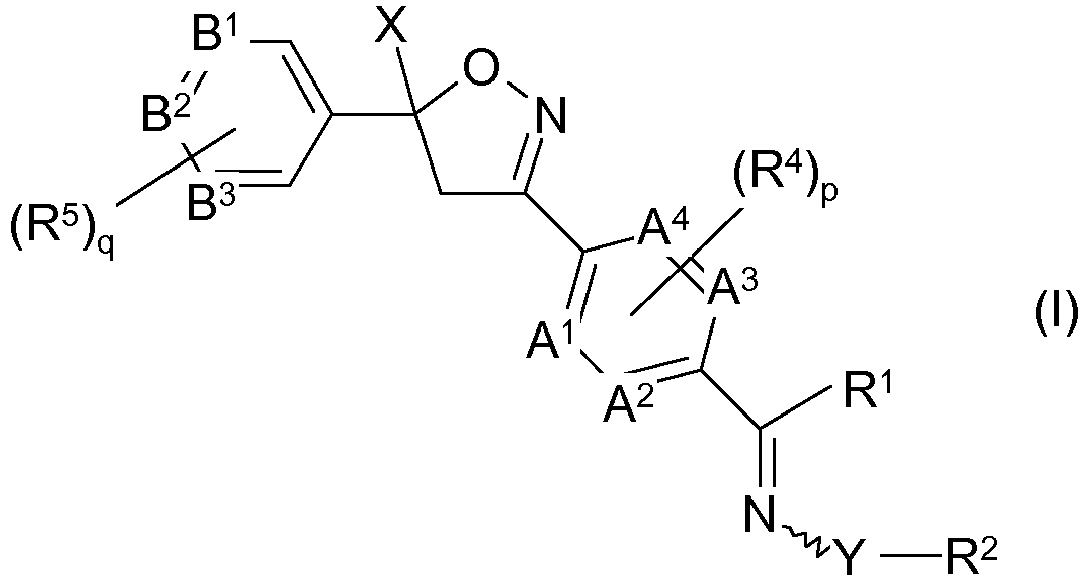
- A1, A2, A3 and A4 are N or CH, with the proviso that at most three of A1, A2, A3 and A4 are N;
- B1, B2 and B3 are N or CH, with the proviso that at most two of B1, B2 and B3 are N;
- X is selected from the group consisting of C1-C4-alkyl, C1-C4-haloalkyl, C1-C4-alkoxy-C1-C4-alkyl, C1-C4-haloalkoxy-C1-C4-alkyl, C2-C4-alkenyl, C2-C4-haloalkenyl, C2-C4-alkynyl, C2-C4-haloalkynyl, C3-C6-cycloalkyl and C3-C6-halocycloalkyl;
- Y is O, N-R3, S(O)n or a chemical bond;
- R1 is selected from the group consisting of hydrogen; cyano; C1-C10-alkyl which may be partially or fully halogenated and/or may be substituted by one or more, e.g. 1, 2, 3 or 4, radicals R6; C1-C10-alkoxy; C1-C10-haloalkoxy; C1-C10-alkylthio; C1-C10-haloalkylthio; C1-C10-alkylsulfinyl; C1-C10-haloalkylsulfinyl; C1-C10-alkylsulfonyl; C1-C10-haloalkylsulfonyl; C3-C8-cycloalkyl which may be partially or fully halogenated and/or may be substituted by one or more, e.g. 1, 2, 3 or 4, radicals R6; C2-C10-alkenyl which may be partially or fully halogenated and/or may be substituted by one or more, e.g. 1, 2, 3 or 4, radicals R6; C2-C10-alkynyl which may be partially or fully halogenated and/or may be substituted by one or more, e.g. 1, 2, 3 or 4, radicals R6; -C(=O)R6; -C(=O)OR7; -C(=O)N(R8)R9; -C(=S)R6; -C(=S)OR7; -C(=S)N(R8)R9; phenyl which may be substituted by 1, 2, 3, 4 or 5 radicals R10; and a C-bound 3-, 4-, 5-, 6- or 7-membered saturated, partially unsaturated or aromatic heterocyclic ring containing 1, 2 or 3 heteroatoms or heteroatom groups selected from N, O, S, NO, SO and SO2, as ring members, where the heterocyclic ring may be substituted by one or more, e.g. 1, 2, 3 or 4, radicals R10;
- R2 is selected from the group consisting of hydrogen; cyano; C1-C10-alkyl which may be partially or fully halogenated and/or may be substituted by one or more, e.g. 1, 2, 3 or 4, radicals R6; C3-C8-cycloalkyl which may be partially or fully halogenated and/or may be substituted by one or more, e.g. 1, 2, 3 or 4, radicals R6; C2-C10-alkenyl which may be partially or fully halogenated and/or may be substituted by one or more, e.g. 1, 2, 3 or 4, radicals R6; C2-C10-alkynyl which may be partially or fully halogenated and/or may be substituted by one or more, e.g. 1, 2, 3 or 4, radicals R6; -N(R8)R9; -N(R8)C(=O)R6; -Si(R14)2R13; -OR7; -SR7; -S(O)mR7; -S(O)nN(R8)R9; -C(=O)R6; -C(=O)OR7; -C(=O)N(R8)R9; -C(=S)R6; -C(=S)OR7, -C(=S)N(R8)R9; -C(=NR8)R6; phenyl which may be substituted by 1, 2, 3, 4 or 5 radicals R10; and a 3-, 4-, 5-, 6- or 7-membered saturated, partially unsaturated or aromatic heterocyclic ring containing 1, 2 or 3 heteroatoms or heteroatom groups selected from N, O, S, NO, SO and SO2, as ring members, where the heterocyclic ring may be substituted by one or more, e.g. 1, 2, 3 or 4, radicals R10;
with the proviso that R2 is not -OR7 if Y is O; - R3 is selected from the group consisting of hydrogen; cyano; C1-C10-alkyl which may be partially or fully halogenated and/or may be substituted by one or more, e.g. 1, 2, 3 or 4, radicals R6; C3-C8-cycloalkyl which may be partially or fully halogenated and/or may be substituted by one or more, e.g. 1, 2, 3 or 4, radicals R6; C2-C10-alkenyl which may be partially or fully halogenated and/or may be substituted by one or more, e.g. 1, 2, 3 or 4, radicals R6; C2-C10-alkynyl which may be partially or fully halogenated and/or may be substituted by one or more, e.g. 1, 2, 3 or 4, radicals R6; -N(R8)R9; -Si(R14)2R13; -OR7; -SR7; -S(O)mR7; -S(O)nN(R8)R9; -C(=O)R6; -C(=O)OR7; -C(=O)N(R8)R9; -C(=S)R6; -C(=S)OR7; -C(=S)N(R8)R9; -C(=NR8)R6; phenyl which may be substituted by 1, 2, 3, 4 or 5 radicals R10; and a 3-, 4-, 5-, 6- or 7-membered saturated, partially unsaturated or aromatic heterocyclic ring containing 1, 2 or 3 heteroatoms or heteroatom groups selected from N, O, S, NO, SO and SO2, as ring members, where the heterocyclic ring may be substituted by one or more, e.g. 1, 2, 3 or 4, radicals R10;
or R2 and R3 together form a group =CR11R12; =S(O)mR7; =S(O)mN(R8)R9; =NR8; or =NOR7;
or R2 and R3 together form a C2-C7 alkylene chain, thus forming, together with the nitrogen atom to which they are bound, a 3-, 4-, 5-, 6-, 7- or 8-membered ring, where the alkylene chain may be interrupted by 1 or 2 O, S and/or NR18 and/or 1 or 2 of the CH2 groups of the alkylene chain may be replaced by a group C=O, C=S and/or C=NR18; and/or the alkylene chain may be substituted by one or more, e.g. 1, 2, 3 or 4, radicals selected from the group consisting of halogen, C1-C6-haloalkyl, C1-C6-alkoxy, C1-C6-haloalkoxy, C1-C6-alkylthio, C1-C6-haloalkylthio, C3-C8-cycloalkyl, C3-C8-halocycloalkyl, C2-C6-alkenyl, C2-C6-haloalkenyl, C2-C6-alkynyl, C2-C6-haloalkynyl, phenyl which may be substituted by 1, 2, 3, 4 or 5 radicals R10, and a 3-, 4-, 5-, 6- or 7-membered saturated, partially unsaturated or aromatic heterocyclic ring containing 1, 2 or 3 heteroatoms or heteroatom groups selected from N, O, S, NO, SO and SO2, as ring members, where the heterocyclic ring may be substituted by one or more, e.g. 1, 2, 3 or 4, radicals R10; - each R4 is independently selected from the group consisting of halogen; cyano; azido; nitro; -SCN; SF5; C1-C6-alkyl which may be partially or fully halogenated and/or may be substituted by one or more, e.g. 1, 2, 3 or 4, radicals R6; C3-C8-cycloalkyl
which may be partially or fully halogenated and/or may be substituted by one or more, e.g. 1, 2, 3 or 4, radicals R6; C2-C6-alkenyl which may be partially or fully halogenated and/or may be substituted by one or more, e.g. 1, 2, 3 or 4, radicals R6; C2-C6-alkynyl which may be partially or fully halogenated and/or may be substituted by one or more, e.g. 1, 2, 3 or 4, radicals R6; -Si(R14)2R13; -OR7; -OS(O)nR7; -SR7; -S(O)mR7; -S(O)nN(R8)R9; -N(R8)R9; -N(R8)C(=O)R6; C(=O)R6; -C(=O)OR7;-C(=NR8)H;-C(=NR8)R6; -C(=O)N(R8)R9; C(=S)N(R8)R9; phenyl which may be substituted by 1, 2, 3, 4 or 5 radicals R10; and a 3-, 4-, 5-, 6- or 7-membered saturated, partially unsaturated or aromatic heterocyclic ring containing 1, 2 or 3 heteroatoms or heteroatom groups selected from N, O, S, NO, SO and SO2, as ring members, where the heterocyclic ring may be substituted by one or more, e.g. 1, 2, 3 or 4, radicals R10;
or two radicals R4 bound on adjacent carbon atoms may be together a group selected from -CH2CH2CH2CH2-, -CH=CH-CH=CH-, -N=CH-CH=CH-, -CH=N-CH=CH-, -N=CH-N=CH-, -OCH2CH2CH2-, -OCH=CHCH2-, -CH2OCH2CH2-, -OCH2CH2O-, -OCH2OCH2-, -CH2CH2CH2-, -CH=CHCH2-, -CH2CH2O-, -CH=CHO-, -CH2OCH2-, -CH2C(=O)O-, -C(=O)OCH2-, -O(CH2)O-, -SCH2CH2CH2-, -SCH=CHCH2-, -CH2SCH2CH2-, -SCH2CH2S-, -SCH2SCH2-, -CH2CH2S-, -CH=CHS-, -CH2SCH2-, -CH2C(=S)S-, -C(=S)SCH2-, -S(CH2)S-, -CH2CH2NR8-,-CH2CH=N-, -CH=CH-NR8-, -OCH=N- and -SCH=N-, thus forming, together with the carbon atoms to which they are bound, a 5- or 6-membered ring, where the hydrogen atoms of the above groups may be replaced by one or more, e.g. 1, 2, 3 or 4, substituents selected from halogen, methyl, halomethyl, hydroxyl, methoxy and halomethoxy or one or more, e.g. 1 or 2, CH2 groups of the above groups may be replaced by a C=O group; - each R5 is independently selected from the group consisting of halogen, cyano, azido, nitro, -SCN, SF5, C1-C6-alkyl which may be partially or fully halogenated and/or may be substituted by one or more, e.g. 1, 2, 3 or 4, radicals R6, C3-C8-cycloalkyl which may be partially or fully halogenated and/or may be substituted by one or more, e.g. 1, 2, 3 or 4, radicals R6, C2-C6-alkenyl which may be partially or fully halogenated and/or may be substituted by one or more, e.g. 1, 2, 3 or 4, radicals R6, C2-C6-alkynyl which may be partially or fully halogenated and/or may be substituted by one or more, e.g. 1, 2, 3 or 4, radicals R6, -Si(R14)2R13, -OR7, -OS(O)nR7, -SR7, -S(O)mR7, -S(O)nN(R8)R9, -N(R8)R9, N(R8)C(=O)R6, -C(=O)R6, -C(=O)OR7, -C(=S)R6, -C(=S)OR7, -C(=NR8)R6, -C(=O)N(R8)R9, -C(=S)N(R8)R9, phenyl which may be substituted by 1, 2, 3, 4 or 5 radicals R10, and a 3-, 4-, 5-, 6-or 7-membered saturated, partially unsaturated or aromatic heterocyclic ring containing 1, 2 or 3 heteroatoms or heteroatom groups selected from N, O, S, NO, SO and SO2, as ring members, where the heterocyclic ring may be substituted by one or more, e.g. 1, 2, 3 or 4, radicals R10;
- each R6 is independently selected from the group consisting of cyano, azido, nitro, - SCN, SF5, C3-C8-cycloalkyl, C3-C8-halocycloalkyl, -Si(R14)2R13, -OR7, -OSO2R7,-SR7, -S(O)mR7, -S(O)nN(R8)R9, -N(R8)R9, -C(=O)N(R8)R9, -C(=S)N(R8)R9, -C(=O)OR7, -C(=O)R19, phenyl which may be substituted by 1, 2, 3, 4 or 5 radicals R10, and a 3-, 4-, 5-, 6-or 7-membered saturated, partially unsaturated or aromatic heterocyclic ring containing 1, 2 or 3 heteroatoms or heteroatom groups selected from N, O, S, NO, SO and SO2, as ring members, where the heterocyclic ring may be substituted by one or more, e.g. 1, 2, 3 or 4, radicals R10;
and, in case R6 is bound to a cycloalkyl group or to a heterocyclic ring formed by R1 and R2 together with the atoms to which they are bound, R6 may additionally be selected from the group consisting of C1-C6-alkyl, C1-C6-haloalkyl, C1-C6-alkoxy-C1-C6-alkyl, C2-C6-alkenyl, C2-C6-haloalkenyl, C2-C6-alkynyl, C2-C6-haloalkynyl and benzyl which may be substituted by 1, 2, 3, 4 or 5 radicals R10;
and in groups -C(=O)R6, -C(=S)R6, -C(=NR8)R6 and -N(R8)C(=O)R6, R6 may additionally be selected from hydrogen, halogen, C1-C6-alkyl, C1-C6-haloalkyl, C1-C6-alkoxy-C1-C6-alkyl, C2-C6-alkenyl, C2-C6-haloalkenyl, C2-C6-alkynyl, C2-C6-haloalkynyl and benzyl which may be substituted by 1, 2, 3, 4 or 5 radicals R10,;
or two geminally bound radicals R6 together form a group selected from =CR11R12, =S(O)mR7, =S(O)mN(R8)R9, =NR8, =NOR7 and =NNR8;
or two radicals R6, together with the carbon atoms to which they are bound, form a 3-, 4-, 5-, 6-, 7- or 8-membered saturated or partially unsaturated carbocyclic or heterocyclic ring containing 1, 2 or 3 heteroatoms or heteroatom groups selected from N, O, S, NO, SO and SO2, as ring members; - each R7 is independently selected from the group consisting of hydrogen, cyano, C1-C6-alkyl, C1-C6-haloalkyl, C1-C6-alkoxy, C1-C6-haloalkoxy, C1-C6-alkylthio, C1-C6-haloalkylthio, C1-C6-alkylsulfinyl, C1-C6-haloalkylsulfinyl, C1-C6-alkylsulfonyl, C1-C6-haloalkylsulfonyl, C3-C8-cycloalkyl, C3-C8-cycloalkyl-C1-C4-alkyl, C3-C8-halocycloalkyl, C2-C6-alkenyl, C2-C6-haloalkenyl, C2-C6-alkynyl, C2-C6-haloalkynyl, -Si(R14)2R13, -SR8, -S(O)mR7, -S(O)nN(R8)R9, -N(R8)R9, -N=CR15R16, -C(=O)R17, -C(=O)N(R8)R9, -C(=S)N(R8)R9, -C(=O)OR17, phenyl which may be substituted by 1, 2, 3, 4 or 5 radicals R10, and a 3-, 4-, 5-, 6- or 7-membered saturated, partially unsaturated or aromatic heterocyclic ring containing 1, 2 or 3 heteroatoms or heteroatom groups selected from N, O, S, NO, SO and SO2, as ring members, where the heterocyclic ring may be substituted by one or more, e.g. 1, 2, 3 or 4, radicals R10;
with the proviso that R7 is not C1-C6-alkoxy or C1-C6-haloalkoxy if it is bound to an oxygen atom (like in a group OR7); - each R8 is independently selected from the group consisting of hydrogen, cyano, C1-C6-alkyl which may be partially or fully halogenated and/or may be substituted by one or more radicals R19, C1-C6-alkoxy, C1-C6-haloalkoxy, C1-C6-alkylthio, C1-C6-haloalkylthio, where the alkyl moiety in the four last-mentioned radicals may be substituted by one or more radicals R19, C3-C8-cycloalkyl which may be partially or fully halogenated and/or may be substituted by one or more radicals R19, C3-C8-cycloalkyl-C1-C4-alkyl where the cycloalkyl moiety may be partially or fully halogenated and/or may be substituted by one or more radicals R19, C2-C6-alkenyl which may be partially or fully halogenated and/or may be substituted by one or more radicals R19, C2-C6-alkynyl which may be partially or fully halogenated and/or may be substituted by one or more radicals R19, -S(O)mR20, - S(O)nN(R21)R22, phenyl which may be substituted by 1, 2, 3, 4 or 5 radicals R10, benzyl which may be substituted by 1, 2, 3, 4 or 5 radicals R10, and a 3-, 4-, 5-, 6-or 7-membered saturated, partially unsaturated or aromatic heterocyclic ring containing 1, 2 or 3 heteroatoms or heteroatom groups selected from N, O, S, NO, SO and SO2, as ring members, where the heterocyclic ring may be substituted by one or more, e.g. 1, 2, 3 or 4, radicals R10;
- each R9 is independently selected from the group consisting of hydrogen, cyano, C1-C6-alkyl which may be partially or fully halogenated and/or may be substituted by one or more radicals R19, C1-C6-alkoxy, C1-C6-haloalkoxy, C1-C6-alkylthio, C1-C6-haloalkylthio, where the alkyl moiety in the four last-mentioned radicals may be substituted by one or more radicals R19, C3-C8-cycloalkyl which may be partially or fully halogenated and/or may be substituted by one or more radicals R19, C3-C8-cycloalkyl-C1-C4-alkyl where the cycloalkyl moiety may be partially or fully halogenated and/or may be substituted by one or more radicals R19, C2-C6-alkenyl which may be partially or fully halogenated and/or may be substituted by one or more radicals R19, C2-C6-alkynyl which may be partially or fully halogenated and/or may be substituted by one or more radicals R19, -S(O)mR20, - S(O)nN(R21)R22, phenyl which may be substituted by 1, 2, 3, 4 or 5 radicals R10, and a 3-, 4-, 5-, 6- or 7-membered saturated, partially unsaturated or aromatic heterocyclic ring containing 1, 2 or 3 heteroatoms or heteroatom groups selected from N, O, S, NO, SO and SO2, as ring members, where the heterocyclic ring may be substituted by one or more, e.g. 1, 2, 3 or 4, radicals R10;
or R8 and R9 together form a group =CR11R12;
or R8 and R9, together with the nitrogen atom to which they are bound, may form a 3-, 4-, 5-, 6- or 7-membered saturated, partially unsaturated or aromatic heterocyclic ring which may additionally containing 1 or 2 further heteroatoms or heteroatom groups selected from N, O, S, NO, SO and SO2, as ring members, where the heterocyclic ring may be substituted by one or more radicals R10; - each R10 is independently selected from the group consisting of halogen, cyano, azido, nitro, -SCN, SF5, C1-C10-alkyl which may be partially or fully halogenated and/or may be substituted by one or more, e.g. 1, 2, 3 or 4, radicals R19, C3-C8-cycloalkyl which may be partially or fully halogenated and/or may be substituted by one or more, e.g. 1, 2, 3 or 4, radicals R19, C2-C10-alkenyl which may be partially or fully halogenated and/or may be substituted by one or more, e.g. 1, 2, 3 or 4, radicals R19, C2-C10-alkynyl which may be partially or fully halogenated and/or may be substituted by one or more, e.g. 1, 2, 3 or 4, radicals R19, -Si(R14)2R13, -OR20, -OS(O)nR20, -SR20, -S(O)mR20, -S(O)nN(R21)R22, -N(R21)R22, C(=O)R19, - C(=O)OR20, -C(=NR21)R19, -C(=O)N(R21)R22, -C(=S)N(R21)R22, phenyl which may be substituted by 1, 2, 3, 4 or 5 radicals independently selected from halogen, cyano, nitro, C1-C6-alkyl, C1-C6-haloalkyl, C1-C6-alkoxy and C1-C6-haloalkoxy; and a 3-, 4-, 5-, 6- or 7-membered saturated or unsaturated heterocyclic ring containing 1, 2 or 3 heteroatoms or heteroatom groups selected from N, O, S, NO, SO and SO2, as ring members, which may be substituted by one or more, e.g. 1, 2, 3 or 4, radicals independently selected from halogen, cyano, nitro, C1-C6-alkyl, C1-C6-haloalkyl, C1-C6-alkoxy and C1-C6-haloalkoxy;
or two radicals R10 bound on adjacent atoms together form a group selected from -CH2CH2CH2CH2-, -CH=CH-CH=CH-, -N=CH-CH=CH-, -CH=N-CH=CH-, -N=CH-N=CH-, -OCH2CH2CH2-, -OCH=CHCH2-, -CH2OCH2CH2-, -OCH2CH2O-, -OCH2OCH2-,-CH2CH2CH2-, -CH=CHCH2-, -CH2CH2O-, -CH=CHO-, -CH2OCH2-, -CH2C(=O)O-, -C(=O)OCH2-, -O(CH2)O-, -SCH2CH2CH2-, -SCH=CHCH2-, -CH2SCH2CH2-, -SCH2CH2S-, -SCH2SCH2-, -CH2CH2S-, -CH=CHS-, -CH2SCH2-, -CH2C(=S)S-, -C(=S)SCH2-, -S(CH2)S-, -CH2CH2NR21-, -CH2CH=N-, -CH=CH-NR21-, -OCH=N- and -SCH=N-, thus forming, together with the atoms to which they are bound, a 5- or 6-membered ring, where the hydrogen atoms of the above groups may be replaced by one or more, e.g. 1, 2, 3 or 4, substituents selected from halogen, methyl, halomethyl, hydroxyl, methoxy and halomethoxy or one or more, e.g. 1 or 2, CH2 groups of the above groups may be replaced by a C=O group; - R11, R12 are, independently of each other and independently of each occurrence, selected from the group consisting of hydrogen, halogen, C1-C6-alkyl, C1-C6-haloalkyl, C2-C6-alkenyl, C2-C6-haloalkenyl, C2-C6-alkynyl, C2-C6-haloalkynyl, C3-C8-cycloalkyl, C3-C8-halocycloalkyl, C1-C6-alkoxy-C1-C6-alkyl, C1-C6-haloalkoxy-C1-C6-alkyl, C1-C6-alkoxy, C1-C6-haloalkoxy, -C(=O)R19, -C(=O)OR20, -C(=NR21)R22, -C(=O)N(R21)R22, -C(=S)N(R21)R22, phenyl which may be substituted by 1, 2, 3, 4, or 5 radicals R10; and a 3-, 4-, 5-, 6- or 7-membered saturated, partially unsaturated or aromatic heterocyclic ring containing 1, 2 or 3 heteroatoms or heteroatom groups selected from N, O, S, NO, SO and SO2, as ring members, which may be substituted by one or more, e.g. 1, 2, 3 or 4, radicals R10.
- R13, R14 are, independently of each other and independently of each occurrence, selected from the group consisting of C1-C4-alkyl, C3-C6-cycloalkyl, C1-C4-alkoxy-C1-C4-alkyl, phenyl and benzyl;
- R15, R16 are, independently of each other and independently of each occurrence, selected from the group consisting of C1-C6-alkyl, C1-C6-haloalkyl, C2-C6-alkenyl, C2-C6-haloalkenyl, C2-C6-alkynyl, C2-C6-haloalkynyl, C3-C8-cycloalkyl, C3-C8-halocycloalkyl, C1-C6-alkoxy-C1-C6-alkyl, C1-C6-haloalkoxy-C1-C6-alkyl, phenyl which may be substituted by 1, 2, 3, 4, or 5 radicals R10; and a 3-, 4-, 5-, 6- or 7-membered saturated, partially unsaturated or aromatic heterocyclic ring containing 1, 2 or 3 heteroatoms or heteroatom groups selected from N, O, S, NO, SO and SO2, as ring members, which may be substituted by one or more, e.g. 1, 2, 3 or 4, radicals R10;
- each R17 is independently selected from the group consisting of C1-C6-alkyl, C1-C6-haloalkyl, C2-C6-alkenyl, C2-C6-haloalkenyl, C2-C6-alkynyl, C2-C6-haloalkynyl, C3-C8-cycloalkyl, C3-C8-halocycloalkyl, C1-C6-alkoxy-C1-C6-alkyl, C1-C6-haloalkoxy-C1-C6-alkyl, phenyl and benzyl;
- each R18 is independently defined like R3;
- each R19 is independently selected from the group consisting of cyano, azido, nitro, - SCN, SF5, C3-C8-cycloalkyl, C3-C8-halocycloalkyl, -Si(R14)2R13, -OR20, -OSO2R20, -SR20, -S(O)mR20, -S(O)nN(R21)R22, -N(R21)R22, -C(=O)N(R21)R22, -C(=S)N(R21)R22, -C(=O)OR20, -C(=O)R20, phenyl which may be substituted by 1, 2, 3, 4 or 5 radicals independently selected from halogen, cyano, nitro, C1-C6-alkyl, C1-C6-haloalkyl, C1-C6-alkoxy and C1-C6-haloalkoxy, and a 3-, 4-, 5-, 6- or 7-membered saturated, partially unsaturated or aromatic heterocyclic ring containing 1, 2 or 3 heteroatoms or heteroatom groups selected from N, O, S, NO, SO and SO2, as ring members, where the heterocyclic ring may be substituted by one or more radicals independently selected from halogen, cyano, nitro, C1-C6-alkyl, C1-C6-haloalkyl, C1-C6-alkoxy and C1-C6-haloalkoxy;
and, in case R19 is bound to a cycloalkyl group, R19 may additionally be selected from the group consisting of C1-C6-alkyl, C1-C6-haloalkyl, C1-C6-alkoxy-C1-C6-alkyl, C2-C6-alkenyl, C2-C6-haloalkenyl, C2-C6-alkynyl and C2-C6-haloalkynyl;
and in groups -C(=O)R19, R19 may additionally be selected from hydrogen, halogen, C1-C6-alkyl, C1-C6-haloalkyl, C1-C6-alkoxy-C1-C6-alkyl, C2-C6-alkenyl, C2-C6-haloalkenyl, C2-C6-alkynyl, and C2-C6-haloalkynyl;
or two geminally bound radicals R19 together form a group selected from =CR11R12, =S(O)mR20, =S(O)mN(R21)R22, =NMR21, =NOR20 and =NNR21;
or two radicals R19, together with the carbon atoms to which they are bound, form a 3-, 4-, 5-, 6-, 7- or 8-membered saturated or partially unsaturated carbocyclic or heterocyclic ring containing 1, 2 or 3 heteroatoms or heteroatom groups selected from N, O, S, NO, SO and SO2, as ring members; - each R20 is independently selected from the group consisting of hydrogen, cyano, C1-C6-alkyl, C1-C6-haloalkyl, C1-C6-alkoxy, C1-C6-haloalkoxy, C1-C6-alkylthio, C1-C6-haloalkylthio, C1-C6-alkylsulfinyl, C1-C6-haloalkylsulfinyl, C1-C6-alkylsulfonyl, C1-C6-haloalkylsulfonyl, C3-C8-cycloalkyl, C3-C8-cycloalkyl-C1-C4-alkyl, C3-C8-halocycloalkyl, C2-C6-alkenyl, C2-C6-haloalkenyl, C2-C6-alkynyl, C2-C6-haloalkynyl, -Si(R14)2R13, C1-C6-alkylaminosulfonyl, amino, C1-C6-alkylamino, di-(C1-C6-alkyl)-amino, C1-C6-alkylcarbonyl, C1-C6-haloalkylcarbonyl, aminocarbonyl, C1-C6-alkylaminocarbonyl, di-(C1-C6-alkyl)-aminocarbonyl, C1-C6-alkoxycarbonyl, C1-C6-haloalkoxycarbonyl, phenyl which may be substituted by 1, 2, 3, 4 or 5 radicals independently selected from halogen, cyano, nitro, C1-C6-alkyl, C1-C6-haloalkyl, C1-C6-alkoxy and C1-C6-haloalkoxy, benzyl which may be substituted by 1, 2, 3, 4 or 5 radicals independently selected from halogen, cyano, nitro, C1-C6-alkyl, C1-C6-haloalkyl, C1-C6-alkoxy and C1-C6-haloalkoxy, and a 3-, 4-, 5-, 6- or 7-membered saturated, partially unsaturated or aromatic heterocyclic ring containing 1, 2 or 3 heteroatoms or heteroatom groups selected from N, O, S, NO, SO and SO2, as ring members, where the heterocyclic ring may be substituted by one or more radicals independently selected from halogen, cyano, nitro, C1-C6-alkyl, C1-C6-haloalkyl, C1-C6-alkoxy and C1-C6-haloalkoxy;
with the proviso that R20 is not C1-C6-alkoxy or C1-C6-haloalkoxy if it is bound to an oxygen atom; - R21 and R22 are independently of each other and independently of each occurence selected from the group consisting of hydrogen, C1-C6-alkyl, C1-C6-haloalkyl, C1-C6-alkoxy, C1-C6-haloalkoxy, C1-C6-alkylthio, C1-C6-haloalkylthio, C3-C8-cycloalkyl, C3-C8-halocycloalkyl, C3-C8-cycloalkyl-Ci-C4-alkyl, C2-C6-alkenyl, C2-C6-haloalkenyl, C2-C6-alkynyl, C2-C6-haloalkynyl, phenyl which may be substituted by 1, 2, 3, 4 or 5 radicals independently selected from halogen, cyano, nitro, C1-C6-alkyl, C1-C6-haloalkyl, C1-C6-alkoxy and C1-C6-haloalkoxy, benzyl which may be substituted by 1, 2, 3, 4 or 5 radicals independently selected from halogen, cyano, nitro, C1-C6-alkyl, C1-C6-haloalkyl, C1-C6-alkoxy and C1-C6-haloalkoxy, and a 3-, 4-, 5-, 6- or 7-membered saturated, partially unsaturated or aromatic heterocyclic ring containing 1, 2 or 3 heteroatoms or heteroatom groups selected from N, O, S, NO, SO and SO2, as ring members, where the heterocyclic ring may be substituted by one or more radicals independently selected from halogen, cyano, nitro, C1-C6-alkyl, C1-C6-haloalkyl, C1-C6-alkoxy and C1-C6-haloalkoxy;
or R21 and R22, together with the nitrogen atom to which they are bound, may form a 3-, 4-, 5-, 6- or 7-membered saturated, partially unsaturated or aromatic heterocyclic ring which may additionally containing 1 or 2 further heteroatoms or heteroatom groups selected from N, O, S, NO, SO and SO2, as ring members, where the heterocyclic ring may be substituted by one or more radicals selected from halogen, C1-C6-alkyl, C1-C6-haloalkyl, C1-C6-alkoxy and C1-C6-haloalkoxy; - each m is independently 1 or 2;
- each n is independently 0, 1 or 2;
- p is 0, 1, 2, 3 or 4; and
- q is 0,1 2, 3, 4 or 5;
- The present invention also provides an agricultural composition comprising at least one compound of the formula I as defined herein and/or an agriculturally acceptable salt thereof and at least one liquid or solid carrier.
- The present invention also provides a veterinary composition comprising at least one compound of the formula I as defined herein and/or a veterinarily acceptable salt thereof and at least one liquid or solid carrier.
- The present invention also provides a method for controlling invertebrate pests which method comprises treating the pests, their food supply, their habitat or their breeding ground or a cultivated plant, plant propagation materials (such as seed), soil, area, material or environment in which the pests are growing or may grow, or the materials, cultivated plants, plant propagation materials (such as seed), soils, surfaces or spaces to be protected from pest attack or infestation with a pesticidally effective amount of a compound of formula I or a salt thereof as defined herein.
- The present invention also relates to plant propagation material, in particular seed, comprising at least one compound of formula I and/or an agriculturally acceptable salt thereof as defined herein.
- The present invention further relates to a method for treating or protecting an animal from infestation or infection by parasites which comprises bringing the animal in contact with a parasiticidally effective amount of a compound of the formula I or a veterinarily acceptable salt thereof as defined herein. Bringing the animal in contact with the compound I, its salt or the veterinary composition of the invention means applying or administering it to the animal.
- The term "steroisomers" encompasses both optical isomers, such as enantiomers or diastereomers, the latter existing due to more than one center of chirality in the molecule, as well as geometrical isomers (cis/trans isomers).
- Depending on the substitution pattern, the compounds of the formula I may have one or more centers of chirality, in which case they are present as mixtures of enantiomers or diastereomers. One center of chirality is the carbon ring atom of the isoxazoline ring carrying radical X. The invention provides both the pure enantiomers or diastereomers and their mixtures and the use according to the invention of the pure enantiomers or diastereomers of the compound I or its mixtures. Suitable compounds of the formula I also include all possible geometrical stereoisomers (cis/trans isomers) and mixtures thereof. Cis/trans isomers may be present with respect to the imine group.
- The compounds of the present invention may be amorphous or may exist in one ore more different crystalline states (polymorphs) which may have a different macroscopic properties such as stability or show different biological properties such as activities. The present invention includes both amorphous and crystalline compounds of the formula I, mixtures of different crystalline states of the respective compound I, as well as amorphous or crystalline salts thereof.
- Salts of the compounds of the formula I are preferably agriculturally and veterinarily acceptable salts. They can be formed in a customary method, e.g. by reacting the compound with an acid of the anion in question if the compound of formula I has a basic functionality or by reacting an acidic compound of formula I with a suitable base.
- Suitable agriculturally acceptable salts are especially the salts of those cations or the acid addition salts of those acids whose cations and anions, respectively, do not have any adverse effect on the action of the compounds according to the present invention. Suitable cations are in particular the ions of the alkali metals, preferably lithium, sodium and potassium, of the alkaline earth metals, preferably calcium, magnesium and barium, and of the transition metals, preferably manganese, copper, zinc and iron, and also ammonium (NH4+) and substituted ammonium in which one to four of the hydrogen atoms are replaced by C1-C4-alkyl, C1-C4-hydroxyalkyl, C1-C4-alkoxy, C1-C4-alkoxy-C1-C4-alkyl, hydroxy-C1-C4-alkoxy-C1-C4-alkyl, phenyl or benzyl. Examples of substituted ammonium ions comprise methylammonium, isopropylammonium, dimethylammonium, diisopropylammonium, trimethylammonium, tetramethylammonium, tetraethylammonium, tetrabutylammonium, 2-hydroxyethylammonium, 2-(2-hydroxy-ethoxy)ethylammonium, bis(2-hydroxyethyl)ammonium, benzyltrimethylammonium and benzl-triethylammonium, furthermore phosphonium ions, sulfonium ions, preferably tri(C1-C4-alkyl)sulfonium, and sulfoxonium ions, preferably tri(C1-C4-alkyl)sulfoxonium.
- Anions of useful acid addition salts are primarily chloride, bromide, fluoride, hydrogen sulfate, sulfate, dihydrogen phosphate, hydrogen phosphate, phosphate, nitrate, hydrogen carbonate, carbonate, hexafluorosilicate, hexafluorophosphate, benzoate, and the anions of C1-C4-alkanoic acids, preferably formate, acetate, propionate and butyrate. They can be formed by reacting a compound of formulae I with an acid of the corresponding anion, preferably of hydrochloric acid, hydrobromic acid, sulfuric acid, phosphoric acid or nitric acid.
- By the term "veterinarily acceptable salts" is meant salts of those cations or anions which are known and accepted in the art for the formation of salts for veterinary use. Suitable acid addition salts, e.g. formed by compounds of formula I containing a basic nitrogen atom, e.g. an amino group, include salts with inorganic acids, for example hy-drochlorids, sulphates, phosphates, and nitrates and salts of organic acids for example acetic acid, maleic acid, dimaleic acid, fumaric acid, difumaric acid, methane sulfenic acid, methane sulfonic acid, and succinic acid.
- The term "invertebrate pest" as used herein encompasses animal populations, such as insects, arachnids and nematodes, which may attack plants, thereby causing substantial damage to the plants attacked, as well as ectoparasites which may infest animals, in particular warm blooded animals such as e.g. mammals or birds, or other higher animals such as reptiles, amphibians or fish, thereby causing substantial damage to the animals infested.
- The term "plant propagation material" as used herein includes all the generative parts of the plant such as seeds and vegetative plant material such as cuttings and tubers (e. g. potatoes), which can be used for the multiplication of the plant. This includes seeds, roots, fruits, tubers, bulbs, rhizomes, shoots, sprouts and other parts of plants. Seedlings and young plants, which are to be transplanted after germination or after emergence from soil, may also be included. These plant propagation materials may be treated prophylactically with a plant protection compound either at or before planting or transplanting.
- The term "plants" comprises any types of plants including "non-cultivated plants" and in particular "cultivated plants".
- The term "non-cultivated plants" refers to any wild type species or related species or related genera of a cultivated plant.
- The term "cultivated plants" as used herein includes plants which have been modified by breeding, mutagenesis or genetic engineering. Genetically modified plants are plants, which genetic material has been so modified by the use of recombinant DNA techniques that under natural circumstances cannot readily be obtained by cross breeding, mutations or natural recombination. Typically, one or more genes have been integrated into the genetic material of a genetically modified plant in order to improve certain properties of the plant. Such genetic modifications also include but are not limited to targeted post-transtional modification of protein(s) (oligo- or polypeptides) poly for example by glycosylation or polymer additions such as prenylated, acetylated or farnesylated moieties or PEG moieties(e.g. as disclosed in Biotechnol Prog. 2001 Jul-Aug;17(4):720-8., Protein Eng Des Sel. 2004 Jan;17(1):57-66, Nat. Protoc. 2007;2(5):1225-35., Curr. Opin. Chem. Biol. 2006 Oct; 10(5):487-91. Epub 2006 Aug 28., Biomaterials. 2001 Mar; 22(5):405-17, Bioconjug Chem. 2005 Jan-Feb;16(1):113-21).
- The term "cultivated plants" as used herein further includes plants that have been rendered tolerant to applications of specific classes of herbicides, such as hydroxy-phenylpyruvate dioxygenase (HPPD) inhibitors; acetolactate synthase (ALS) inhibitors, such as sulfonyl ureas (see e. g.
US 6,222,100 ,WO 01/82685 WO 00/26390 WO 97/41218 WO 98/02526 WO 98/02527 WO 04/106529 WO 05/20673 WO 03/14357 WO 03/13225 WO 03/14356 WO 04/16073 US 6,222,100 ,WO 01/82685 WO 00/26390 WO 97/41218 WO 98/02526 WO 98/02527 WO 04/106529 WO 05/20673 WO 03/14357 WO 03/13225 WO 03/14356 WO 04/16073 WO 92/00377 EP-A-0242236 ,EP-A-242246 US 5,559,024 ) as a result of conventional methods of breeding or genetic engineering. Several cultivated plants have been rendered tolerant to herbicides by conventional methods of breeding (mutagenesis), for example Clearfield® summer rape (Canola) being tolerant to imidazolinones, e. g. imazamox. Genetic engineering methods have been used to render cultivated plants, such as soybean, cotton, corn, beets and rape, tolerant to herbicides, such as glyphosate and glufosinate, some of which are commercially available under the trade names RoundupReady® (glyphosate) and LibertyLink® (glufosinate). - The term "cultivated plants" as used herein further includes plants that are by the use of recombinant DNA techniques capable to synthesize one or more insecticidal proteins, especially those known from the bacterial genus bacillus, particularly from bacillus thuringiensis, such as ä-endotoxins, e. g. CryIA(b), CryIA(c), CryIF, CryIF(a2), Cry-IIA(b), CryIIIA, CryIIIB(b1) or Cry9c; vegetative insecticidal proteins (VIP), e. g. VIP1, VIP2, VIP3 or VIP3A; insecticidal proteins of bacteria colonizing nematodes, for example Photorhabdus spp. or Xenorhabdus spp.; toxins produced by animals, such as scorpion toxins, arachnid toxins, wasp toxins, or other insect-specific neurotoxins; toxins produced by fungi, such Streptomycetes toxins, plant lectins, such as pea or barley lectins; agglutinins; proteinase inhibitors, such as trypsin inhibitors, serine protease inhibitors, patatin, cystatin or papain inhibitors; ribosome-inactivating proteins (RIP), such as ricin, maize-RIP, abrin, luffin, saporin or bryodin; steroid metabolism enzymes, such as 3-hydroxysteroid oxidase, ecdysteroid-IDP-glycosyl-transferase, cholesterol oxidases, ecdysone inhibitors or HMG-CoA-reductase; ion channel blockers, such as blockers of sodium or calcium channels; juvenile hormone esterase; diuretic hormone receptors (helicokinin receptors); stilben synthase, bibenzyl synthase, chitinases or glucanases. In the context of the present invention these insecticidal proteins or toxins are to be understood expressly also as pre-toxins, hybrid proteins, truncated or otherwise modified proteins. Hybrid proteins are characterized by a new combination of protein domains, (see, for example
WO 02/015701 EP-A 374 753 WO 93/007278 WO 95/34656 EP-A 427 529 EP-A 451 878 WO 03/018810 WO 03/052073 - The term "cultivated plants" as used herein further includes plants that are by the use of recombinant DNA techniques capable to synthesize one or more proteins to increase the resistance or tolerance of those plants to bacterial, viral or fungal pathogens. Examples of such proteins are the so-called "pathogenesis-related proteins" (PR proteins, see, for example
EP-A 0 392 225 ), plant disease resistance genes (for example potato cultivars, which express resistance genes acting against Phytophthora infestans derived from the mexican wild potato Solanum bulbocastanum) or T4-lyso-zym (e. g. potato cultivars capable of synthesizing these proteins with increased resistance against bacteria such as Erwinia amylvora). The methods for producing such genetically modified plants are generally known to the person skilled in the art and are described, for example, in the publications mentioned above. - The term "cultivated plants" as used herein further includes plants that are by the use of recombinant DNA techniques capable to synthesize one or more proteins to increase the productivity (e. g. bio mass production, grain yield, starch content, oil content or protein content), tolerance to drought, salinity or other growth-limiting environ-mental factors or tolerance to pests and fungal, bacterial or viral pathogens of those plants.
- The term "cultivated plants" as used herein further includes plants that contain by the use of recombinant DNA techniques a modified amount of substances of content or new substances of content, specifically to improve human or animal nutrition, for ex-ample oil crops that produce health-promoting long-chain omega-3 fatty acids or unsaturated omega-9 fatty acids (e. g. Nexera® rape).
- The term "cultivated plants" as used herein further includes plants that contain by the use of recombinant DNA techniques a modified amount of substances of content or new substances of content, specifically to improve raw material production, for example potatoes that produce increased amounts of amylopectin (e. g. Amflora® potato).
- The organic moieties mentioned in the above definitions of the variables are - like the term halogen - collective terms for individual listings of the individual group members. The prefix Cn-Cm indicates in each case the possible number of carbon atoms in the group.
- The term halogen denotes in each case fluorine, bromine, chlorine or iodine, in particular fluorine, chlorine or bromine.
- The term "C1-C10-alkyl" as used herein and in the alkyl moieties of alkoxy, alkylthio, alkylsulfinyl, alkylsulfonyl, alkylcarbonyl, alkoxycarbonyl and the like refers to saturated straight-chain or branched hydrocarbon radicals having 1 to 2 ("C1-C2-alkyl"), 1 to 4 ("C1-C4-alkyl"), 1 to 6 ("C1-C6-alkyl"), 1 to 8 ("C1-C8-alkyl") or 1 to 10 ("C1-C10-alkyl") carbon atoms. C1-C2-Alkyl is methyl or ethyl. C1-C4-Alkyl is additionally propyl, isopropyl, butyl, 1-methylpropyl (sec-butyl), 2-methylpropyl (isobutyl) or 1,1-dimethylethyl (tert-butyl). C1-C6-Alkyl is additionally also, for example, pentyl, 1-methylbutyl, 2-methylbutyl, 3-methylbutyl, 2,2-dimethylpropyl, 1-ethylpropyl, 1,1-dimethylpropyl, 1,2-dimethylpropyl, hexyl, 1-methylpentyl, 2-methylpentyl, 3-methylpentyl, 4-methylpentyl, 1,1-dimethylbutyl, 1,2-dimethylbutyl, 1,3-dimethylbutyl, 2,2-dimethylbutyl, 2,3-dimethylbutyl, 3,3-dimethylbutyl, 1-ethylbutyl, 2-ethylbutyl, 1,1,2-trimethylpropyl, 1,2,2-trimethylpropyl, 1-ethyl-1-methylpropyl, or 1-ethyl-2-methylpropyl. C1-C8-Alkyl is additionally also, for example, heptyl, octyl, 2-ethylhexyl and positional isomers thereof. C1-C10-Alkyl is additionally also, for example, nonyl, decyl and positional isomers thereof.
- The term "C1-C10-haloalkyl" as used herein, which is also expressed as "C1-C10-alkyl which is partially or fully halogenated", refers to straight-chain or branched alkyl groups having 1 to 2 ("C1-C2-haloalkyl"), 1 to 4 ("C1-C4-haloalkyl"), 1 to 6 ("C1-C6-haloalkyl"), 1 to 8 ("C1-C8-haloalkyl") or 1 to 10 ("C1-C10-haloalkyl") carbon atoms (as mentioned above), where some or all of the hydrogen atoms in these groups are replaced by halogen atoms as mentioned above: in particular C1-C2-haloalkyl, such as chloromethyl, bromomethyl, dichloromethyl, trichloromethyl, fluoromethyl, difluoromethyl, trifluoromethyl, chlorofluoromethyl, dichlorofluoromethyl, chlorodifluoromethyl, 1-chloroethyl, 1-bromoethyl, 1-fluoroethyl, 2-fluoroethyl, 2,2-difluoroethyl, 2,2,2-trifluoroethyl, 2-chloro-2-fluoroethyl, 2-chloro-2,2-difluoroethyl, 2,2-dichloro-2-fluoroethyl, 2,2,2-trichloroethyl, pentafluoroethyl or 1,1,1-trifluoroprop-2-yl.
- "Halomethyl" is methyl in which 1, 2 or 3 of the hydrogen atoms are replaced by halogen atoms. Examples are bromomethyl, chloromethyl, fluoromethyl, dichloromethyl, trichloromethyl, difluoromethyl, trifluoromethyl, chlorofluoromethyl, dichlorofluoromethyl, chlorodifluoromethyl and the like.
- The term "C2-C10-alkenyl" as used herein and in the alkenyl moiety of alkenyloxy and the like refers to monounsaturated straight-chain or branched hydrocarbon radicals having 2 to 4 ("C2-C4-alkenyl"), 2 to 6 ("C2-C6-alkenyl"), 2 to 8 ("C2-C8-alkenyl"), 3 to 8 ("C3-C8-alkenyl"), 2 to 10 ("C2-C10-alkenyl") or 3 to 10 ("C3-C10-alkenyl") carbon atoms and a double bond in any position, for example C2-C4-alkenyl, such as ethenyl, 1-propenyl, 2-propenyl, 1-methylethenyl, 1-butenyl, 2-butenyl, 3-butenyl, 1-methyl-1-propenyl, 2-methyl-1-propenyl, 1-methyl-2-propenyl or 2-methyl-2-propenyl; C2-C6-alkenyl, such as ethenyl, 1-propenyl, 2-propenyl, 1-methylethenyl, 1-butenyl, 2-butenyl, 3-butenyl, 1-methyl-1-propenyl, 2-methyl-1-propenyl, 1-methyl-2-propenyl, 2-methyl-2-propenyl, 1-pentenyl, 2-pentenyl, 3-pentenyl, 4-pentenyl, 1-methyl-1-butenyl, 2-methyl-1-butenyl, 3-methyl-1-butenyl, 1-methyl-2-butenyl, 2-methyl-2-butenyl, 3-methyl-2-butenyl, 1-methyl-3-butenyl, 2-methyl-3-butenyl, 3-methyl-3-butenyl, 1,1-dimethyl-2-propenyl, 1,2-dimethyl-1-propenyl, 1,2-dimethyl-2-propenyl, 1-ethyl-1-propenyl, 1-ethyl-2-propenyl, 1-hexenyl, 2-hexenyl, 3-hexenyl, 4-hexenyl, 5-hexenyl, 1-methyl-1-pentenyl, 2-methyl-1-pentenyl, 3-methyl-1-pentenyl, 4-methyl-1-pentenyl, 1-methyl-2-pentenyl, 2-methyl-2-pentenyl, 3-methyl-2-pentenyl, 4-methyl-2-pentenyl, 1-methyl-3-pentenyl, 2-methyl-3-pentenyl, 3-methyl-3-pentenyl, 4-methyl-3-pentenyl, 1-methyl-4-pentenyl, 2-methyl-4-pentenyl, 3-methyl-4-pentenyl, 4-methyl-4-pentenyl, 1,1-dimethyl-2-butenyl, 1,1-dimethyl-3-butenyl, 1,2-dimethyl-1-butenyl, 1,2-dimethyl-2-butenyl, 1,2-dimethyl-3-butenyl, 1,3-dimethyl-1-butenyl, 1,3-dimethyl-2-butenyl, 1,3-dimethyl-3-butenyl, 2,2-dimethyl-3-butenyl, 2,3-dimethyl-1-butenyl, 2,3-dimethyl-2-butenyl, 2,3-dimethyl-3-butenyl, 3,3-dimethyl-1-butenyl, 3,3-dimethyl-2-butenyl, 1-ethyl-1-butenyl, 1-ethyl-2-butenyl, 1-ethyl-3-butenyl, 2-ethyl-1-butenyl, 2-ethyl-2-butenyl, 2-ethyl-3-butenyl, 1,1,2-trimethyl-2-propenyl, 1-ethyl-1-methyl-2-propenyl, 1-ethyl-2-methyl-1-propenyl, 1-ethyl-2-methyl-2-propenyl and the like, or C2-C10-alkenyl, such as the radicals mentioned for C2-C6-alkenyl and additionally 1-heptenyl, 2-heptenyl, 3-heptenyl, 1-octenyl, 2-octenyl, 3-octenyl, 4-octenyl, 1-nonenyl, 2-nonenyl, 3-nonenyl, 4-nonenyl, 1-decenyl, 2-decenyl, 3-decenyl, 4-decenyl, 5-decenyl and the positional isomers thereof.
- The term "C2-C10-haloalkenyl" as used herein, which is also expressed as "C1-C10-alkenyl which is partially or fully halogenated", and the haloalkenyl moieties in haloalkenyloxy, haloalkenylcarbonyl and the like refers to unsaturated straight-chain or branched hydrocarbon radicals having 2 to 4 ("C2-C4-haloalkenyl"), 2 to 6 ("C2-C6-haloalkenyl"), 2 to 8 ("C2-C6-haloalkenyl") or 2 to 10 ("C2-C10-haloalkenyl") carbon atoms and a double bond in any position (as mentioned above), where some or all of the hydrogen atoms in these groups are replaced by halogen atoms as mentioned above, in particular fluorine, chlorine and bromine, for example chlorovinyl, chloroallyl and the like.
- The term "C2-C10-alkynyl" as used herein and the alkynyl moieties in alkynyloxy, alkynylcarbonyl and the like refers to straight-chain or branched hydrocarbon groups having 2 to 4 ("C2-C4-alkynyl"), 2 to 6 ("C2-C6-alkynyl"), 2 to 8 ("C2-C8-alkynyl"), 3 to 8 ("C3-C8-alkynyl"), 2 to 10 ("C2-C10-alkynyl") or 3 to 10 ("C3-C8-alkynyl") carbon atoms and one or two triple bonds in any position, for example C2-C4-alkynyl, such as ethynyl, 1-propynyl, 2-propynyl, 1-butynyl, 2-butynyl, 3-butynyl, 1-methyl-2-propynyl and the like, C2-C6-alkynyl, such as ethynyl, 1-propynyl, 2-propynyl, 1-butynyl, 2-butynyl, 3-butynyl, 1-methyl-2-propynyl, 1-pentynyl, 2-pentynyl, 3-pentynyl, 4-pentynyl, 1-methyl-2-butynyl, 1-methyl-3-butynyl, 2-methyl-3-butynyl, 3-methyl-1-butynyl, 1,1-dimethyl-2-propynyl, 1-ethyl-2-propynyl, 1-hexynyl, 2-hexynyl, 3-hexynyl, 4-hexynyl, 5-hexynyl, 1-methyl-2-pentynyl, 1-methyl-3-pentynyl, 1-methyl-4-pentynyl, 2-methyl-3-pentynyl, 2-methyl-4-pentynyl, 3-methyl-1-pentynyl, 3-methyl-4-pentynyl, 4-methyl-1-pentynyl, 4-methyl-2-pentynyl, 1,1-dimethyl-2-butynyl, 1,1-dimethyl-3-butynyl, 1,2-dimethyl-3-butynyl, 2,2-dimethyl-3-butynyl, 3,3-dimethyl-1-butynyl, 1-ethyl-2-butynyl, 1-ethyl-3-butynyl, 2-ethyl-3-butynyl, 1-ethyl-1-methyl-2-propynyl and the like;
- The term "C2-C10-haloalkynyl" as used herein, which is also expressed as "C1-C10-alkynyl which is partially or fully halogenated", and the haloalkynyl moieties in haloalkynyloxy, haloalkynylcarbonyl and the like refers to unsaturated straight-chain or branched hydrocarbon radicals having 2 to 4 ("C2-C4-haloalkynyl"), 3 to 4 ("C3-C4-haloalkynyl"), 2 to 6 ("C2-C6-haloalkynyl"), 3 to 6 ("C3-C6-haloalkynyl"), 2 to 8 ("C2-C8-haloalkynyl"), 3 to 8 ("C3-C8-haloalkynyl"), 2 to 10 ("C2-C10-haloalkynyl") or 3 to 10 ("C3-C10-haloalkynyl") carbon atoms and one or two triple bonds in any position (as mentioned above), where some or all of the hydrogen atoms in these groups are replaced by halogen atoms as mentioned above, in particular fluorine, chlorine and bromine; The term "C3-C8-cycloalkyl" as used herein refers to mono- or bi- or polycyclic saturated hydrocarbon radicals having 3 to 8, in particular 3 to 6 carbon atoms ("C3-C6-cycloalkyl"). Examples of monocyclic radicals having 3 to 6 carbon atoms comprise cyclopropyl, cyclobutyl, cyclopentyl and cyclohexyl. Examples of monocyclic radicals having 3 to 8 carbon atoms comprise cyclopropyl, cyclobutyl, cyclopentyl, cyclohexyl, cycloheptyl and cyclooctyl. Examples of bicyclic radicals having 7 or 8 carbon atoms comprise bicyclo[2.2.1]heptyl, bicyclo[3.1.1]heptyl, bicyclo[2.2.2]octyl and bicyclo[3.2.1]octyl.
- The term "C3-C8-halocycloalkyl" as used herein, which is also expressed as "C3-C8-cycloalkyl which is partially or fully halogenated", and the halocycloalkyl moieties in halocycloalkoxy, halocycloalkylcarbonyl and the like refers to mono- or bi- or polycyclic saturated hydrocarbon groups having 3 to 8 ("C3-C8-halocycloalkyl") or preferably 3 to 6 ("C3-C6-halocycloalkyl") carbon ring members (as mentioned above) in which some or all of the hydrogen atoms are replaced by halogen atoms as mentioned above, in particular fluorine, chlorine and bromine.
- The term "C3-C8-cycloalkyl-C1-C4-alkyl" refers to a C3-C8-cycloalkyl group as defined above which is bound to the remainder of the molecule via a C1-C4-alkyl group, as defined above. Examples are cyclopropylmethyl, cyclopropylethyl, cyclopropylpropyl, cyclobutylmethyl, cyclobutylethyl, cyclobutylpropyl, cyclopentylmethyl, cycloppentylethyl, cyclopentylpropyl, cyclohexylmethyl, cyclohexylethyl, cyclohexylpropyl, and the like.
- The term "C1-C2-alkoxy" is a C1-C2-alkyl group, as defined above, attached via an oxygen atom. The term "C1-C4-alkoxy" is a C1-C4-alkyl group, as defined above, attached via an oxygen atom. The term "C1-C6-alkoxy" is a C1-C6-alkyl group, as defined above, attached via an oxygen atom. The term "C1-C10-alkoxy" is a C1-C10-alkyl group, as defined above, attached via an oxygen atom. C1-C2-Alkoxy is methoxy or ethoxy. C1-C4-Alkoxy is additionally, for example, n-propoxy, 1-methylethoxy (isopropoxy), butoxy, 1-methylpropoxy (sec-butoxy), 2-methylpropoxy (isobutoxy) or 1,1-dimethylethoxy (tert-butoxy). C1-C6-Alkoxy is additionally, for example, pentoxy, 1-methylbutoxy, 2-methylbutoxy, 3-methylbutoxy, 1,1-dimethylpropoxy, 1,2-dimethylpropoxy, 2,2-dimethylpropoxy, 1-ethylpropoxy, hexoxy, 1-methylpentoxy, 2-methylpentoxy, 3-methylpentoxy, 4-methylpentoxy, 1,1-dimethylbutoxy, 1,2-dimethylbutoxy, 1,3-dimethylbutoxy, 2,2-dimethylbutoxy, 2,3-dimethylbutoxy, 3,3-dimethylbutoxy, 1-ethylbutoxy, 2-ethylbutoxy, 1,1,2-trimethylpropoxy, 1,2,2-trimethylpropoxy, 1-ethyl-1-methylpropoxy or 1-ethyl-2-methylpropoxy. C1-C8-Alkoxy is additionally, for example, heptyloxy, octyloxy, 2-ethylhexyloxy and positional isomers thereof. C1-C10-Alkoxy is additionally, for example, nonyloxy, decyloxy and positional isomers thereof.
- The term "C1-C2-haloalkoxy" is a C1-C2-haloalkyl group, as defined above, attached via an oxygen atom. The term "C1-C4-haloalkoxy" is a C1-C4-haloalkyl group, as defined above, attached via an oxygen atom. The term "C1-C6-haloalkoxy" is a C1-C6-haloalkyl group, as defined above, attached via an oxygen atom. The term "C1-C10-haloalkoxy" is a C1-C10-haloalkyl group, as defined above, attached via an oxygen atom. C1-C2-Haloalkoxy is, for example, OCH2F, OCHF2, OCF3, OCH2Cl, OCHCl2, OCCl3, chlorofluoromethoxy, dichlorofluoromethoxy, chlorodifluoromethoxy, 2-fluoroethoxy, 2-chloroethoxy, 2-bromoethoxy, 2-iodoethoxy, 2,2-difluoroethoxy, 2,2,2-trifluoroethoxy, 2-chloro-2-fluoroethoxy, 2-chloro-2,2-difluoroethoxy, 2,2-dichloro-2-fluoroethoxy, 2,2,2-trichloroethoxy or OC2F5. C1-C4-Haloalkoxy is additionally, for example, 2-fluoropropoxy, 3-fluoropropoxy, 2,2-difluoropropoxy, 2,3-difluoropropoxy, 2-chloropropoxy, 3-chloropropoxy, 2,3-dichloropropoxy, 2-bromopropoxy, 3-bromopropoxy, 3,3,3-trifluoropropoxy, 3,3,3-trichloropropoxy, OCH2-C2F5, OCF2-C2F5, 1-(CH2F)-2-fluoroethoxy, 1-(CH2Cl)-2-chloroethoxy, 1-(CH2Br)-2-bromoethoxy, 4-fluorobutoxy, 4-chlorobutoxy, 4-bromobutoxy or nonafluorobutoxy. C1-C6-Haloalkoxy is additionally, for example, 5-fluoropentoxy, 5-chloropentoxy, 5-brompentoxy, 5-iodopentoxy, undecafluoropentoxy, 6-fluorohexoxy, 6-chlorohexoxy, 6-bromohexoxy, 6-iodohexoxy or dodecafluorohexoxy.
- The term "C1-C2-alkylthio" is a C1-C2-alkyl group, as defined above, attached via a sulfur atom. The term "C1-C4-alkylthio" is a C1-C4-alkyl group, as defined above, attached via a sulfur atom. The term "C1-C6-alkylthio" is a C1-C6-alkyl group, as defined above, attached via a sulfur atom. The term "C1-C10-alkylthio" is a C1-C10-alkyl group, as defined above, attached via a sulfur atom. C1-C2-Alkylthio is methylthio or ethylthio. C1-C4-Alkylthio is additionally, for example, n-propylthio, 1-methylethylthio (isopropylthio), butylthio, 1-methylpropylthio (sec-butylthio), 2-methylpropylthio (isobutylthio) or 1,1-dimethylethylthio (tert-butylthio). C1-C6-Alkylthio is additionally, for example, pentylthio, 1-methylbutylthio, 2-methylbutylthio, 3-methylbutylthio, 1,1-dimethylpropylthio, 1,2-dimethylpropylthio, 2,2-dimethylpropylthio, 1-ethylpropylthio, hexylthio, 1-methylpentylthio, 2-methylpentylthio, 3-methylpentylthio, 4-methylpentylthio, 1,1-dimethylbutylthio, 1,2-dimethylbutylthio, 1,3-dimethylbutylthio, 2,2-dimethylbutylthio, 2,3-dimethylbutylthio, 3,3-dimethylbutylthio, 1-ethylbutylthio, 2-ethylbutylthio, 1,1,2-trimethylpropylthio, 1,2,2-trimethylpropylthio, 1-ethyl-1-methylpropylthio or 1-ethyl-2-methylpropylthio. C1-C8-Alkylthio is additionally, for example, heptylthio, octylthio, 2-ethylhexylthio and positional isomers thereof. C1-C10-Alkylthio is additionally, for example, nonylthio, decylthio and positional isomers thereof.
- The term "C1-C2-haloalkylthio" is a C1-C2-haloalkyl group, as defined above, attached via a sulfur atom. The term "C1-C4-haloalkylthio" is a C1-C4-haloalkyl group, as defined above, attached via a sulfur atom. The term "C1-C6-haloalkylthio" is a C1-C6-haloalkyl group, as defined above, attached via a sulfur atom. The term "C1-C10-haloalkylthio" is a C1-C10-haloalkyl group, as defined above, attached via a sulfur atom. C1-C2-Haloalkylthio is, for example, SCH2F, SCHF2, SCF3, SCH2Cl, SCHCl2, SCCl3, chlorofluoromethylthio, dichlorofluoromethylthio, chlorodifluoromethylthio, 2-fluoroethylthio, 2-chloroethylthio, 2-bromoethylthio, 2-iodoethylthio, 2,2-difluoroethylthio, 2,2,2-trifluoroethylthio, 2-chloro-2-fluoroethylthio, 2-chloro-2,2-difluoroethylthio, 2,2-dichloro-2-fluoroethylthio, 2,2,2-trichloroethylthio or SC2F5. C1-C4-Haloalkylthio is additionally, for example, 2-fluoropropylthio, 3-fluoropropylthio, 2,2-difluoropropylthio, 2,3-difluoropropylthio, 2-chloropropylthio, 3-chloropropylthio, 2,3-dichloropropylthio, 2-bromopropylthio, 3-bromopropylthio, 3,3,3-trifluoropropylthio, 3,3,3-trichloropropylthio, SCH2-C2F5, SCF2-C2F5, 1-(CH2F)-2-fluoroethylthio, 1-(CH2Cl)-2-chloroethylthio, 1-(CH2Br)-2-bromoethylthio, 4-fluorobutylthio, 4-chlorobutylthio, 4-bromobutylthio or nonafluorobutylthio. C1-C6-Haloalkylthio is additionally, for example, 5-fluoropentylthio, 5-chloropentylthio, 5-brompentylthio, 5-iodopentylthio, undecafluoropentylthio, 6-fluorohexylthio, 6-chlorohexylthio, 6-bromohexylthio, 6-iodohexylthio or dodecafluorohexylthio.
- The term "C1-C2-alkylsulfinyl" is a C1-C2-alkyl group, as defined above, attached via a sulfinyl [S(O)] group. The term "C1-C4-alkylsulfinyl" is a C1-C4-alkyl group, as defined above, attached via a sulfinyl [S(O)] group. The term "C1-C6-alkylsulfinyl" is a C1-C6-alkyl group, as defined above, attached via a sulfinyl [S(O)] group. The term "C1-C10-alkylsulfinyl" is a C1-C10-alkyl group, as defined above, attached via a sulfinyl [S(O)] group. C1-C2-Alkylsulfinyl is methylsulfinyl or ethylsulfinyl. C1-C4-Alkylsulfinyl is additionally, for example, n-propylsulfinyl, 1-methylethylsulfinyl (isopropylsulfinyl), butylsulfinyl, 1-methylpropylsulfinyl (sec-butylsulfinyl), 2-methylpropylsulfinyl (isobutylsulfinyl) or 1,1-dimethylethylsulfinyl (tert-butylsulfinyl). C1-C6-Alkylsulfinyl is additionally, for example, pentylsulfinyl, 1-methylbutylsulfinyl, 2-methylbutylsulfinyl, 3-methylbutylsulfinyl, 1,1-dimethylpropylsulfinyl, 1,2-dimethylpropylsulfinyl, 2,2-dimethylpropylsulfinyl, 1-ethylpropylsulfinyl, hexylsulfinyl, 1-methylpentylsulfinyl, 2-methylpentylsulfinyl, 3-methylpentylsulfinyl, 4-methylpentylsulfinyl, 1,1-dimethylbutylsulfinyl, 1,2-dimethylbutylsulfinyl, 1,3-dimethylbutylsulfinyl, 2,2-dimethylbutylsulfinyl, 2,3-dimethylbutylsulfinyl, 3,3-dimethylbutylsulfinyl, 1-ethylbutylsulfinyl, 2-ethylbutylsulfinyl, 1,1,2-trimethylpropylsulfinyl, 1,2,2-trimethylpropylsulfinyl, 1-ethyl-1-methylpropylsulfinyl or 1-ethyl-2-methylpropylsulfinyl. C1-C8-Alkylsulfinyl is additionally, for example, heptylsulfinyl, octylsulfinyl, 2-ethylhexylsulfinyl and positional isomers thereof. C1-C10-Alkylsulfinyl is additionally, for example, nonylsulfinyl, decylsulfinyl and positional isomers thereof.
- The term "C1-C2-haloalkylsulfinyl" is a C1-C2-haloalkyl group, as defined above, attached via a sulfinyl [S(O)] group. The term "C1-C4-haloalkylsulfinyl" is a C1-C4-haloalkyl group, as defined above, attached via a sulfinyl [S(O)] group. The term "C1-C6-haloalkylsulfinyl" is a C1-C6-haloalkyl group, as defined above, attached via a sulfinyl [S(O)] group. The term "C1-C10-haloalkylsulfinyl" is a C1-C10-haloalkyl group, as defined above, attached via a sulfinyl [S(O)] group. C1-C2-Haloalkylsulfinyl is, for example, S(O)CH2F, S(O)CHF2, S(O)CF3, S(O)CH2Cl, S(O)CHCl2, S(O)CCl3, chlorofluoromethylsulfinyl, dichlorofluoromethylsulfinyl, chlorodifluoromethylsulfinyl, 2-fluoroethylsulfinyl, 2-chloroethylsulfinyl, 2-bromoethylsulfinyl, 2-iodoethylsulfinyl, 2,2-difluoroethylsulfinyl, 2,2,2-trifluoroethylsulfinyl, 2-chloro-2-fluoroethylsulfinyl, 2-chloro-2,2-difluoroethylsulfinyl, 2,2-dichloro-2-fluoroethylsulfinyl, 2,2,2-trichloroethylsulfinyl or S(O)C2F5. C1-C4-Haloalkylsulfinyl is additionally, for example, 2-fluoropropylsulfinyl, 3-fluoropropylsulfinyl, 2,2-difluoropropylsulfinyl, 2,3-difluoropropylsulfinyl, 2-chloropropylsulfinyl, 3-chloropropylsulfinyl, 2,3-dichloropropylsulfinyl, 2-bromopropylsulfinyl, 3-bromopropylsulfinyl, 3,3,3-trifluoropropylsulfinyl, 3,3,3-trichloropropylsulfinyl, S(O)CH2-C2F5, S(O)CF2-C2F5, 1-(CH2F)-2-fluoroethylsulfinyl, 1-(CH2Cl)-2-chloroethylsulfinyl, 1-(CH2Br)-2-bromoethylsulfinyl, 4-fluorobutylsulfinyl, 4-chlorobutylsulfinyl, 4-bromobutylsulfinyl or nonafluorobutylsulfinyl. C1-C6-Haloalkylsulfinyl is additionally, for example, 5-fluoropentylsulfinyl, 5-chloropentylsulfinyl, 5-brompentylsulfinyl, 5-iodopentylsulfinyl, undecafluoropentylsulfinyl, 6-fluorohexylsulfinyl, 6-chlorohexylsulfinyl, 6-bromohexylsulfinyl, 6-iodohexylsulfinyl or dodecafluorohexylsulfinyl.
- The term "C1-C2-alkylsulfonyl" is a C1-C2-alkyl group, as defined above, attached via a sulfonyl [S(O)2] group. The term "C1-C4-alkylsulfonyl" is a C1-C4-alkyl group, as defined above, attached via a sulfonyl [S(O)2] group. The term "C1-C6-alkylsulfonyl" is a C1-C6-alkyl group, as defined above, attached via a sulfonyl [S(O)2] group. The term "C1-C10-alkylsulfonyl" is a C1-C10-alkyl group, as defined above, attached via a sulfonyl [S(O)2] group. C1-C2-Alkylsulfonyl is methylsulfonyl or ethylsulfonyl. C1-C4-Alkylsulfonyl is additionally, for example, n-propylsulfonyl, 1-methylethylsulfonyl (isopropylsulfonyl), butylsulfonyl, 1-methylpropylsulfonyl (sec-butylsulfonyl), 2-methylpropylsulfonyl (isobutylsulfonyl) or 1,1-dimethylethylsulfonyl (tert-butylsulfonyl). C1-C6-Alkylsulfonyl is additionally, for example, pentylsulfonyl, 1-methylbutylsulfonyl, 2-methylbutylsulfonyl, 3-methylbutylsulfonyl, 1,1-dimethylpropylsulfonyl, 1,2-dimethylpropylsulfonyl, 2,2-dimethylpropylsulfonyl, 1-ethylpropylsulfonyl, hexylsulfonyl, 1-methylpentylsulfonyl, 2-methylpentylsulfonyl, 3-methylpentylsulfonyl, 4-methylpentylsulfonyl, 1,1-dimethylbutylsulfonyl, 1,2-dimethylbutylsulfonyl, 1,3-dimethylbutylsulfonyl, 2,2-dimethylbutylsulfonyl, 2,3-dimethylbutylsulfonyl, 3,3-dimethylbutylsulfonyl, 1-ethylbutylsulfonyl, 2-ethylbutylsulfonyl, 1,1,2-trimethylpropylsulfonyl, 1,2,2-trimethylpropylsulfonyl, 1-ethyl-1-methylpropylsulfonyl or 1-ethyl-2-methylpropylsulfonyl. C1-C8-Alkylsulfonyl is additionally, for example, heptylsulfonyl, octylsulfonyl, 2-ethylhexylsulfonyl and positional isomers thereof. C1-C10-Alkylsulfonyl is additionally, for example, nonylsulfonyl, decylsulfonyl and positional isomers thereof.
- The term "C1-C2-haloalkylsulfonyl" is a C1-C2-haloalkyl group, as defined above, attached via a sulfonyl [S(O)2] group. The term "C1-C4-haloalkylsulfonyl" is a C1-C4-haloalkyl group, as defined above, attached via a sulfonyl [S(O)2] group. The term "C1-C6-haloalkylsulfonyl" is a C1-C6-haloalkyl group, as defined above, attached via a sulfonyl [S(O)2] group. The term "C1-C10-haloalkylsulfonyl" is a C1-C10-haloalkyl group, as defined above, attached via a sulfonyl [S(O)2] group. C1-C2-Haloalkylsulfonyl is, for example, S(O)2CH2 S(O)2CHF2, S(O)2CF3, S(O)2CH2Cl, S(O)2CHCl2, S(O)2CCl3, chlorofluoromethylsulfonyl, dichlorofluoromethylsulfonyl, chlorodifluoromethylsulfonyl, 2-fluoroethylsulfonyl, 2-chloroethylsulfonyl, 2-bromoethylsulfonyl, 2-iodoethylsulfonyl, 2,2-difluoroethylsulfonyl, 2,2,2-trifluoroethylsulfonyl, 2-chloro-2-fluoroethylsulfonyl, 2-chloro-2,2-difluoroethylsulfonyl, 2,2-dichloro-2-fluoroethylsulfonyl, 2,2,2-trichloroethylsulfonyl or S(O)2C2F5. C1-C4-Haloalkylsulfonyl is additionally, for example, 2-fluoropropylsulfonyl, 3-fluoropropylsulfonyl, 2,2-difluoropropylsulfonyl, 2,3-difluoropropylsulfonyl, 2-chloropropylsulfonyl, 3-chloropropylsulfonyl, 2,3-dichloropropylsulfonyl, 2-bromopropylsulfonyl, 3-bromopropylsulfonyl, 3,3,3-trifluoropropylsulfonyl, 3,3,3-trichloropropylsulfonyl, S(O)2CH2-C2F5, S(O)2CF2-C2F5, 1-(CH2F)-2-fluoroethylsulfonyl, 1-(CH2Cl)-2-chloroethylsulfonyl, 1-(CH2Br)-2-bromoethylsulfonyl, 4-fluorobutylsulfonyl, 4-chlorobutylsulfonyl, 4-bromobutylsulfonyl or nonafluorobutylsulfonyl. C1-C6-Haloalkylsulfonyl is additionally, for example, 5-fluoropentylsulfonyl, 5-chloropentylsulfonyl, 5-brompentylsulfonyl, 5-iodopentylsulfonyl, undecafluoropentylsulfonyl, 6-fluorohexylsulfonyl, 6-chlorohexylsulfonyl, 6-bromohexylsulfonyl, 6-iodohexylsulfonyl or dodecafluorohexylsulfonyl.
- The term "3-, 4-, 5-, 6- or 7-membered saturated, partially unsaturated or aromatic heterocyclic ring containing 1, 2 or 3 heteroatoms or heteroatom groups selected from N, O, S, NO, SO and SO2, as ring members" as used herein refers to monocyclic radicals, the monocyclic radicals being saturated, partially unsaturated or aromatic. The heterocyclic radical may be attached to the remainder of the molecule via a carbon ring member or via a nitrogen ring member.
- Examples of 3-, 4-, 5-, 6- or 7-membered saturated heterocyclyl include: Oxiranyl, aziridinyl, oxetidinyl (radical of trimethylene oxide), thietidinyl (radical of trimethylene sulfide), azetidinyl, 2-tetrahydrofuranyl, 3-tetrahydrofuranyl, 1,3-dioxolane-2-yl, 1,3-dioxolane-4-yl, 2-tetrahydrothienyl, 3-tetrahydrothienyl, 1,3-thiolane-2-yl, 1,3-dithiolane-4-yl, 1-thia-3-oxolan-2-yl, 1-thia-3-oxolan-4-yl, 1-thia-3-oxolan-5-yl, 2-pyrrolidinyl, 3-pyrrolidinyl, 3-pyrazolidinyl, 4-pyrazolidinyl, 5-pyrazolidinyl, 2-imidazolidinyl, 4-imidazolidinyl, 2-oxazolidinyl, 4-oxazolidinyl, 5-oxazolidinyl, 3-isoxazolidinyl, 4-isoxazolidinyl, 5-isoxazolidinyl, 2-thiazolidinyl, 4-thiazolidinyl, 5-thiazolidinyl, 3-isothiazolidinyl, 4-isothiazolidinyl, 5-isothiazolidinyl, 1,2,4-oxadiazolidin-3-yl, 1,2,4-oxadiazolidin-5-yl, 1,2,4-thiadiazolidin-3-yl, 1,2,4-thiadiazolidin-5-yl, 1,2,4-triazolidin-3-yl, 1,3,4-oxadiazolidin-2-yl, 1,3,4-thiadiazolidin-2-yl, 1,3,4-triazolidin-2-yl, 2-tetrahydropyranyl, 3-tetrahydropyranyl, 4-tetrahydropyranyl, 1,3-dioxan-2-yl, 1,3-dioxan-4-yl, 1,3-dioxan-5-yl, 1,4-dioxan-2-yl, 2-thianyl, 3-thianyl, 4-thianyl, 1,3-dithian-2-yl, 1,3-dithian-4-yl, 1,3-dithian-5-yl, 1,4-dithian-2-yl, 1-oxa-3-thian-2-yl, 1-oxa-3-thian-4-yl, 1-oxa-3-thian-5-yl, 1-oxa-3-thian-6-yl, 1-oxa-4-thian-2-yl, 1-oxa-4-thian-3-yl, 2-piperidinyl, 3-piperidinyl, 4-piperidinyl, 3-hexahydropyridazinyl, 4-hexahydropyridazinyl, 2-hexahydropyrimidinyl, 4-hexahydropyrimidinyl, 5-hexahydropyrimidinyl, 2-piperazinyl, 1,3,5-hexahydrotriazin-2-yl and 1,2,4-hexahydrotriazin-3-yl, 2-morpholinyl, 3-morpholinyl, 2-thiomorpholinyl, 3-thiomorpholinyl, 1-oxothiomorpholin-2-yl, 1-oxothiomorpholin-3-yl, 1,1-dioxothiomorpholin-2-yl, 1,1-dioxothiomorpholin-3-yl, hexahydroazepin-1-, -2-, -3- or-4-yl, hexahydrooxepinyl, hexahydro-1,3-diazepinyl, hexahydro-1,4-diazepinyl, hexahydro-1,3-oxazepinyl, hexahydro-1,4-oxazepinyl, hexahydro-1,3-dioxepinyl, hexahydro-1,4-dioxepinyl and the like.
- Examples of 3-, 4-, 5-, 6- or 7-membered partially unsaturated heterocyclyl include: 2,3-dihydrofur-2-yl, 2,3-dihydrofur-3-yl, 2,4-dihydrofur-2-yl, 2,4-dihydrofur-3-yl, 2,3-dihydrothien-2-yl, 2,3-dihydrothien-3-yl, 2,4-dihydrothien-2-yl, 2,4-dihydrothien-3-yl, 2-pyrrolin-2-yl, 2-pyrrolin-3-yl, 3-pyrrolin-2-yl, 3-pyrrolin-3-yl, 2-isoxazolin-3-yl, 3-isoxazolin-3-yl, 4-isoxazolin-3-yl, 2-isoxazolin-4-yl, 3-isoxazolin-4-yl, 4-isoxazolin-4-yl, 2-isoxazolin-5-yl, 3-isoxazolin-5-yl, 4-isoxazolin-5-yl, 2-isothiazolin-3-yl, 3-isothiazolin-3-yl, 4-isothiazolin-3-yl, 2-isothiazolin-4-yl, 3-isothiazolin-4-yl, 4-isothiazolin-4-yl, 2-isothiazolin-5-yl, 3-isothiazolin-5-yl, 4-isothiazolin-5-yl, 2,3-dihydropyrazol-1-yl, 2,3-dihydropyrazol-2-yl, 2,3-dihydropyrazol-3-yl, 2,3-dihydropyrazol-4-yl, 2,3-dihydropyrazol-5-yl, 3,4-dihydropyrazol-1-yl, 3,4-dihydropyrazol-3-yl, 3,4-dihydropyrazol-4-yl, 3,4-dihydropyrazol-5-yl, 4,5-dihydropyrazol-1-yl, 4,5-dihydropyrazol-3-yl, 4,5-dihydropyrazol-4-yl, 4,5-dihydropyrazol-5-yl, 2,3-dihydrooxazol-2-yl, 2,3-dihydrooxazol-3-yl, 2,3-dihydrooxazol-4-yl, 2,3-dihydrooxazol-5-yl, 3,4-dihydrooxazol-2-yl, 3,4-dihydrooxazol-3-yl, 3,4-dihydrooxazol-4-yl, 3,4-dihydrooxazol-5-yl, 3,4-dihydrooxazol-2-yl, 3,4-dihydrooxazol-3-yl, 3,4-dihydrooxazol-4-yl, 2-, 3-, 4-, 5- or 6-di- or tetrahydropyridinyl, 3-di- or tetrahydropyridazinyl, 4-di- or tetrahydropyridazinyl, 2-di- or tetrahydropyrimidinyl, 4-di- or tetrahydropyrimidinyl, 5-di-or tetrahydropyrimidinyl, di- or tetrahydropyrazinyl, 1,3,5-di- or tetrahydrotriazin-2-yl, 1,2,4-di- or tetrahydrotriazin-3-yl, 2,3,4,5-tetrahydro[1 H]azepin-1-, -2-, -3-, -4-, -5-, -6-or -7-yl, 3,4,5,6-tetrahydro[2H]azepin-2-, -3-, -4-, -5-, -6- or -7-yl, 2,3,4,7-tetrahydro[1 H]azepin-1-, -2-, -3-, -4-, -5-, -6- or -7-yl, 2,3,6,7-tetrahydro[1 H]azepin-1-, -2-, -3-, -4-, -5-, -6- or -7-yl, tetrahydrooxepinyl, such as 2,3,4,5-tetrahydro[1 H]oxepin-2-, -3-, -4-, -5-, -6- or -7-yl, 2,3,4,7-tetrahydro[1 H]oxepin-2-, -3-, -4-, -5-, -6- or -7-yl, 2,3,6,7-tetrahydro[1 H]oxepin-2-, -3-, -4-, -5-, -6- or -7-yl, tetrahydro-1,3-diazepinyl, tetrahydro-1,4-diazepinyl, tetrahydro-1,3-oxazepinyl, tetrahydro-1,4-oxazepinyl, tetrahydro-1,3-dioxepinyl and tetrahydro-1,4-dioxepinyl.
- 3-, 4-, 5-, 6- or 7-membered aromatic heterocyclyl is 5- or 6-membered aromatic heterocyclyl (hetaryl). Examples are: 2-furyl, 3-furyl, 2-thienyl, 3-thienyl, 2-pyrrolyl, 3-pyrrolyl, 3-pyrazolyl, 4-pyrazolyl, 5-pyrazolyl, 2-oxazolyl, 4-oxazolyl, 5-oxazolyl, 2-thiazolyl, 4-thiazolyl, 5-thiazolyl, 2-imidazolyl, 4-imidazolyl, 1,3,4-triazol-2-yl, 2-pyridinyl, 3-pyridinyl, 4-pyridinyl, 3-pyridazinyl, 4-pyridazinyl, 2-pyrimidinyl, 4-pyrimidinyl, 5-pyrimidinyl and 2-pyrazinyl.
- C2-C7-alkylene is divalent branched or preferably unbranched saturated aliphatic chain having 2 to 7 carbon atoms, for example CH2CH2, -CH(CH3)-, CH2CH2CH2, CH(CH3)CH2, CH2CH(CH3), CH2CH2CH2CH2, CH2CH2CH2CH2CH2, CH2CH2CH2CH2CH2CH2, and CH2CH2CH2CH2CH2CH2CH2
- The remarks made below concerning preferred embodiments of the variables of the compounds of formula I, especially with respect to their substituents X, Y, A1, A2, A3, A4, B1 B2, B3 R1 R2, R3 R4, R5, R6, R7 R8 R9 R10, R11, R12, R13, R14, R15, R16, R17, R18, m, n, p and q, the features of the use and method according to the invention and of the composition of the invention are valid both on their own and, in particular, in every possible combination with each other.
- As a matter of course, the q radicals R5 replace a hydrogen atom on a carbon ring atom. For instance, if B1, B2 or B3 is defined to be CH and if this position is to be substituted by a radical R5, then B1, B2 or B3 is of course C-R5. If there is more than one radical R5, these can be the same or different.
- As a matter of course, the p radicals R4 replace a hydrogen atom on a carbon ring atom. For instance, if A1, A2, A3 or A4 is defined to be CH and if this position is to be substituted by a radical R4, then A1, A2, A3 or A4 is of course C-R4. If there is more than one radical R4, these can be the same or different.
- Preferably, at most two of A1, A2, A3 and A4 are N. In one embodiment, A1, A2, A3 and A4 are CH. In an alternative embodiment, A1, A3 and A4 are CH and A2 is N. In an alternative embodiment, A1 and A4 are CH and A2 and A3 are N. In an alternative embodiment, A1 and A2 are CH and A3 and A4 are N. In an alternative embodiment, A2 and A4 are CH and A1 and A3 are N.
- More preferably, A4 is CH.
- More preferably, A1 and A3 are CH.
- Even more preferably, A1, A3 and A4 are CH and A2 is CH or N and in particular CH.
- In a preferred embodiment, the ring comprising the groups A1, A2, A3 or A4 as ring members carries 0, 1 or 2, preferably 0 or 1 and in particular 1 substituent R4. In other words, p is preferably 0, 1 or 2, more preferably 0 or 1 and in particular 1. In case A2 is CH and p is 1, the substituent R4 is preferably bound on the position of A2 (or A3, which is interchangeable with A2 in case all of A1, A2, A3 and A4 are CH). In other words, A2 is in this case preferably C-R4. In case A2 is N and p is 1, the substituent R4 is preferably bound on the position of A3. In other words, A3 is in this case preferably C-R4.
- In case p is 2, two substituents R4 bound on adjacent carbon atoms preferably form together a group selected from -CH2CH2CH2CH2- and -CH=CH-CH=CH- and more preferably -CH=CH-CH=CH-, thus yielding a fused phenyl ring.
- Preferably, at most one of B1, B2 and B3 is N. More preferably, B1, B2 and B3 are CH or B1 and B2 are CH and B3 is N.
- q is preferably 0, 1, 2 or 3, more preferably 1, 2 or 3, even more preferably 2 or 3 and in particular 2. If q is 3 and B1, B2 and B3 are CH, then the three substituents R5 are preferably bound in the positions of B1, B2 and B3; B1, B2 and B3 thus being C-R5. If q is 2 and B1, B2 and B3 are CH, then the two substituents R5 are preferably bound in the positions of B1 and B3; B1 and B3 thus being C-R5. B2 in this case is preferably CH. In case B1 and B2 are CH and B3 is N, q is preferably 1. In this case, R5 is preferably bound in the position of B1, B1 thus being C-R5.
- X is preferably selected from the group consisting of C1-C4-alkyl, C1-C4-haloalkyl, C1-C4-alkoxy-C1-C4-alkyl, C1-C4-haloalkoxy-C1-C4-alkyl, C3-C6-cycloalkyl and C3-C6-halocycloalkyl. More preferably, X is selected from the group consisting of C1-C4-alkyl, C1-C4-haloalkyl, C3-C6-cycloalkyl and C3-C6-halocycloalkyl. Even more preferably, X is selected from the group consisting of C1-C4-alkyl and C1-C4-haloalkyl. In particular, X is C1-C4-haloalkyl, specifically C1-C2-haloalkyl and more specifically halomethyl, in particular fluoromethyl, such as fluoromethyl, difluoromethyl and trifluoromethyl, and is very specifically trifluoromethyl.
- Y is preferably O, NR3 or a chemical bond.
- In one preferred embodiment, Y is O.
- In an alternatively preferred embodiment, Y is NR3. R3 has one of the meanings given above or preferably one of the preferred meanings given below.
- In an alternatively preferred embodiment, Y is a chemical bond.
- More preferably, Y is O or NR3. R3 has one of the meanings given above or preferably one of the preferred meanings given below.
- Preferably, R1 is selected from the group consisting of hydrogen; cyano; C1-C10-alkyl which may be partially or fully halogenated and/or may be substituted by one or more, e.g. 1, 2, 3 or 4, preferably 1 or 2, more preferably 1, radicals R6; C1-C10-alkoxy; C1-C10-haloalkoxy; C3-C8-cycloalkyl which may be partially or fully halogenated and/or may be substituted by one or more, e.g. 1, 2, 3 or 4, preferably 1 or 2, more preferably 1, radicals R6; C2-C10-alkenyl which may be partially or fully halogenated and/or may be substituted by one or more, e.g. 1, 2, 3 or 4, preferably 1 or 2, more preferably 1, radicals R6; C2-C10-alkynyl which may be partially or fully halogenated and/or may be substituted by one or more, e.g. 1, 2, 3 or 4, preferably 1 or 2, more preferably 1, radicals R6; -C(=O)R6; -C(=O)OR7;
-C(=O)N(R8)R9; -C(=S)R6; -C(=S)OR7; -C(=S)N(R8)R9; phenyl which may be substituted by 1, 2, 3, 4 or 5 radicals R10; and a 3-, 4-, 5-, 6- or 7-membered saturated, partially unsaturated or aromatic heterocyclic ring containing 1, 2 or 3 heteroatoms or heteroatom groups selected from N, O, S, NO, SO and SO2, as ring members, where the heterocyclic ring may be substituted by one or more, e.g. 1, 2, 3 or 4, preferably 1 or 2, more preferably 1, radicals R10;
where R7, R8, R9 and R10 have one of the meanings given above or in particular one of the preferred meanings given below. - More preferably, R1 is selected from the group consisting of hydrogen; cyano; C1-C10-alkyl which may be partially or fully halogenated and/or may be substituted by one or more, e.g. 1, 2, 3 or 4, preferably 1 or 2, more preferably 1, radicals R6; C1-C10-alkoxy; C1-C10-haloalkoxy; C3-C8-cycloalkyl which may be partially or fully halogenated and/or may be substituted by one or more, e.g. 1, 2, 3 or 4, preferably 1 or 2, more preferably 1, radicals R6; C2-C10-alkenyl which may be partially or fully halogenated and/or may be substituted by one or more, e.g. 1, 2, 3 or 4, preferably 1 or 2, more preferably 1, radicals R6; C2-C10-alkynyl which may be partially or fully halogenated and/or may be substituted by one or more, e.g. 1, 2, 3 or 4, preferably 1 or 2, more preferably 1, radicals R6; -C(=O)R6; phenyl which may be substituted by 1, 2, 3, 4 or 5 radicals R10; and a 3-, 4-, 5-, 6- or 7-membered saturated, partially unsaturated or aromatic heterocyclic ring containing 1, 2 or 3 heteroatoms or heteroatom groups selected from N, O, S, NO, SO and SO2, as ring members, where the heterocyclic ring may be substituted by one or more, e.g. 1, 2, 3 or 4, preferably 1 or 2, more preferably 1, radicals R10,
where R6 and R10 have one of the meanings given above or in particular one of the preferred meanings given below. - Even more preferably, R1 is selected from the group consisting of hydrogen; cyano; C1-C10-alkyl which may be partially or fully halogenated and/or may be substituted by one or more, e.g. 1, 2, 3 or 4, preferably 1 or 2, more preferably 1, radicals R6; C1-C10-alkoxy; C1-C10-haloalkoxy; C3-C8-cycloalkyl which may be partially or fully halogenated and/or may be substituted by one or more, e.g. 1, 2, 3 or 4, preferably 1 or 2, more preferably 1, radicals R6, and -C(=O)R6; where R6 has one of the meanings given above or in particular one of the preferred meanings given below.
- In particular, R1 is selected from the group consisting of hydrogen, cyano, C1-C10-alkyl, preferably C1-C6-alkyl, more preferably C1-C4-alkyl, which may be partially or fully halogenated and/or may be substituted by one or more, e.g. 1, 2, 3 or 4, preferably 1 or 2, more preferably 1, radicals R6; cyclopropyl; C1-C4-alkoxy; C1-C4-haloalkoxy, and - C(=O)R6; where R6 has one of the meanings given above or in particular one of the preferred meanings given below.
- Specifically, R1 is selected from the group consisting of hydrogen; cyano; C1-C6-alkyl; C1-C4-haloalkyl, specifically C1-C4-fluoroalkyl; C1-C4-alkyl which is substituted by one radical R6; cyclopropyl; C1-C4-alkoxy; C1-C4-haloalkoxy, specifically C1-C4-fluoroalkoxy; and -C(=O)R6; where R6 has one of the meanings given above or preferably one of the preferred meanings given below. More specifically, R1 is selected from the group consisting of hydrogen; cyano; C1-C6-alkyl; cyclopropyl; C1-C4-alkoxy; and C1-C4-alkylcarbonyl.
- In case R1 is selected from C1-C10-alkyl, preferably C1-C6-alkyl, more preferably C1-C4-alkyl, which is substituted by one or more, e.g. 1, 2, 3 or 4, preferably 1 or 2, more preferably 1, radicals R6, R6 is more preferably selected from C3-C6-cycloalkyl, C3-C6-halocycloalkyl, phenyl which may be substituted by 1, 2, 3, 4 or 5 radicals R10, and a 3-, 4-, 5-, 6- or 7-membered saturated, partially unsaturated or aromatic heterocyclic ring containing 1, 2 or 3 heteroatoms or heteroatom groups selected from N, O, S, NO, SO and SO2, as ring members, where the heterocyclic ring may be substituted by one or more, e.g. 1, 2, 3 or 4, preferably 1 or 2, more preferably 1, radicals R10, more preferably from a 3-, 4-, 5-, 6- or 7-membered saturated, partially unsaturated or aromatic heterocyclic ring containing 1, 2 or 3 heteroatoms or heteroatom groups selected from N, O, S, NO, SO and SO2, as ring members, where the heterocyclic ring may be substituted by one or more, e.g. 1, 2, 3 or 4, preferably 1 or 2, more preferably 1, radicals R10, even more preferably from a 5- or 6-membered saturated, partially unsaturated or aromatic heterocyclic ring containing 1, 2 or 3 heteroatoms selected from N, O and S, as ring members, where the heterocyclic ring may be substituted by one or more, e.g. 1, 2 or 3, preferably 1 or 2, more preferably 1, radicals R10, in particular from a 5- or 6-membered heteroaromatic ring containing 1 heteroatom selected from N, O and S and optionally 1 or two further N atoms, as ring members, where the heteroaromatic ring may be substituted by one or more, e.g. 1, 2 or 3, preferably 1 or 2, more preferably 1, radicals R10, and is specifically 6-membered heteroaromatic ring selected from pyridinyl, pyridazinyl, pyrimidinyl, pyrazinyl and 1,3,5-triazinyl, preferably from pyridyl and pyrimidinyl, where the heteroaromatic ring may be substituted by one or more, e.g. 1, 2 or 3, preferably 1 or 2, more preferably 1, radicals R10,
where R10 has one of the meanings given above or in particular one of the preferred meanings given below. - Preferably, R2 is selected from the group consisting of hydrogen; cyano; C1-C10-alkyl which may be partially or fully halogenated and/or may be substituted by one or more, e.g. 1, 2, 3 or 4, preferably 1 or 2, more preferably 1, radicals R6; C3-C8-cycloalkyl which may be partially or fully halogenated and/or may be substituted by one or more, e.g. 1, 2, 3 or 4, preferably 1 or 2, more preferably 1, radicals R6; C2-C10-alkenyl which may be partially or fully halogenated and/or may be substituted by one or more, e.g. 1, 2, 3 or 4, preferably 1 or 2, more preferably 1, radicals R6; C2-C10-alkynyl which may be partially or fully halogenated and/or may be substituted by one or more, e.g. 1, 2, 3 or 4, preferably 1 or 2, more preferably 1, radicals R6; -N(R8)R9; -N(R8)C(=O)R6; -Si(R14)2R13; -OR7; -SR7; -S(O)mR7; -S(O)nN(R8)R9; -C(=O)R6; -C(=O)OR7; -C(=O)N(R8)R9; -C(=S)R6; -C(=S)OR7, -C(=S)N(R8)R9; -C(=NR8)R6, phenyl which may be substituted by 1, 2, 3, 4 or 5 radicals R10; and a 3-, 4-, 5-, 6- or 7-membered saturated, partially unsaturated or aromatic heterocyclic ring containing 1, 2 or 3 heteroatoms or heteroatom groups selected from N, O, S, NO, SO and SO2, as ring members, where the heterocyclic ring may be substituted by one or more, e.g. 1, 2, 3 or 4, preferably 1 or 2, more preferably 1, radicals R10;
with the proviso that R2 is not -OR7 if Y is O;
or R2 and R3 together form a group =CR11R12; =S(O)mR7; =S(O)mN(R8)R9; =NR8; or =NOR7;
or R2 and R3 together form a C2-C7 alkylene chain, thus forming, together with the nitrogen atom to which they are bound, a 3-, 4-, 5-, 6-, 7- or 8-membered ring, where the alkylene chain may be interrupted by 1 or two O, S and/or NR18 and/or 1 or 2 of the CH2 groups of the alkylene chain may be replaced by a group C=O, C=S and/or C=NR18; and/or the alkylene chain may be substituted by one or more, e.g. 1, 2, 3 or 4, preferably 1 or 2, more preferably 1, radicals selected from the group consisting of halogen, C1-C6-haloalkyl, C1-C6-alkoxy, C1-C6-haloalkoxy, C1-C6-alkylthio, C1-C6-haloalkylthio, C3-C8-cycloalkyl, C3-C8-halocycloalkyl, C2-C6-alkenyl, C2-C6-haloalkenyl, C2-C6-alkynyl, C2-C6-haloalkynyl, phenyl which may be substituted by 1, 2, 3, 4 or 5 radicals R10, and a 3-, 4-, 5-, 6- or 7-membered saturated, partially unsaturated or aromatic heterocyclic ring containing 1, 2 or 3 heteroatoms or heteroatom groups selected from N, O, S, NO, SO and SO2, as ring members, where the heterocyclic ring may be substituted by one or more, e.g. 1, 2, 3 or 4, preferably 1 or 2, more preferably 1, radicals R10,
where R7, R8, R9, R10, R11 R12, R13, R14 and R18 have one of the meanings given above or in particular one of the preferred meanings given below. - In case Y is a chemical bond, R2 is more preferably selected from a substituent bound via a heteroatom, such as -N(R8)R9; -N(R8)C(=O)R6; -OR7; -SR7; -S(O)mR7; -S(O)nN(R8)R9 and an N-bound 3-, 4-, 5-, 6- or 7-membered saturated, partially unsaturated or aromatic heterocyclic ring containing 1 N atom as ring member and optionally 1 or 2 further heteroatoms or heteroatom groups selected from N, O, S, NO, SO and SO2, as ring members, where the heterocyclic ring may be substituted by one or more, e.g. 1, 2, 3 or 4, preferably 1 or 2, more preferably 1, radicals R10, where R6, R7, R8, R9 and R10 have one of the meanings given above or in particular one of the preferred meanings given below.
- In case Y is a chemical bond, R2 is even more preferably selected from -N(R8)R9; -N(R8)C(=O)R6; -OR7; -SR7; -S(O)mR7 and S(O)nN(R8)R9, in particular from -N(R8)R9; -N(R8)C(=O)R6; -OR7 and -SR7, and specifically from -N(R8)R9; -N(R8)C(=O)R6 and -OR7, where R6, R7, R8 and R9 have one of the meanings given above or in particular one of the preferred meanings given below.
- In case Y is not a chemical bond, R2 is more preferably selected from the group consisting of hydrogen; C1-C10-alkyl which may be partially or fully halogenated and/or may be substituted by one or more, e.g. 1, 2, 3 or 4, preferably 1 or 2, more preferably 1, radicals R6; C3-C8-cycloalkyl which may be partially or fully halogenated and/or may be substituted by one or more, e.g. 1, 2, 3 or 4, preferably 1 or 2, more preferably 1, radicals R6; C2-C10-alkenyl which may be partially or fully halogenated and/or may be substituted by one or more, e.g. 1, 2, 3 or 4, preferably 1 or 2, more preferably 1, radicals R6; C2-C10-alkynyl which may be partially or fully halogenated and/or may be substituted by one or more, e.g. 1, 2, 3 or 4, preferably 1 or 2, more preferably 1, radicals R6; -C(=O)R6; -C(=O)OR7; -C(=O)N(R8)R9; -C(=S)R6; -C(=S)OR7, - C(=S)N(R8)R9; -C(=NR8)R6, phenyl which may be substituted by 1, 2, 3, 4 or 5 radicals R10; and a 3-, 4-, 5-, 6- or 7-membered saturated, partially unsaturated or aromatic heterocyclic ring containing 1, 2 or 3 heteroatoms or heteroatom groups selected from N, O, S, NO, SO and SO2, as ring members, where the heterocyclic ring may be substituted by one or more, e.g. 1, 2, 3 or 4, preferably 1 or 2, more preferably 1, radicals R10,
where R6, R7, R8, R9 and R10 have one of the meanings given above or in particular one of the preferred meanings given below. - In case Y is not a chemical bond, R2 is even more preferably selected from the group consisting of hydrogen; C1-C10-alkyl which may be partially or fully halogenated and/or may be substituted by one or more, e.g. 1, 2, 3 or 4, preferably 1 or 2, more preferably 1, radicals R6; C3-C8-cycloalkyl which may be partially or fully halogenated and/or may be substituted by one or more, e.g. 1, 2, 3 or 4, preferably 1 or 2, more preferably 1, radicals R6; -C(=O)R6; -C(=O)OR7; -C(=O)N(R8)R9; -C(=S)R6; -C(=S)OR7, - C(=S)N(R8)R9; -C(=NR8)R6, phenyl which may be substituted by 1, 2, 3, 4 or 5 radicals R10; and a 3-, 4-, 5-, 6- or 7-membered saturated, partially unsaturated or aromatic heterocyclic ring containing 1, 2 or 3 heteroatoms or heteroatom groups selected from N, O, S, NO, SO and SO2, as ring members, where the heterocyclic ring may be substituted by one or more, e.g. 1, 2, 3 or 4, preferably 1 or 2, more preferably 1, radicals R10,
where R6, R7, R8, R9 and R10 have one of the meanings given above or in particular one of the preferred meanings given below. - In case Y is not a chemical bond, R2 is in particular selected from the group consisting of hydrogen; C1-C10-alkyl which may be partially or fully halogenated and/or may be substituted by one or more, e.g. 1, 2, 3 or 4, preferably 1 or 2, more preferably 1, radicals R6; C3-C8-cycloalkyl which may be partially or fully halogenated and/or may be substituted by one or more, e.g. 1, 2, 3 or 4, preferably 1 or 2, more preferably 1, radicals R6; -C(=O)R6; -C(=O)OR7; -C(=O)N(R8)R9; -C(=NR8)R6, phenyl which may be substituted by 1, 2, 3, 4 or 5, preferably 1 or 2 and in particular 1, radicals R10; and a 3-, 4-, 5-, 6- or 7-membered saturated, partially unsaturated or aromatic heterocyclic ring containing 1, 2 or 3 heteroatoms or heteroatom groups selected from N, O, S, NO, SO and SO2, as ring members, where the heterocyclic ring may be substituted by one or more, e.g. 1, 2, 3 or 4, preferably 1 or 2, more preferably 1, radicals R10,
where R6, R7, R8, R9 and R10 have one of the meanings given above or in particular one of the preferred meanings given below. - In case Y is not a chemical bond, R2 is more particularly selected from the group consisting of hydrogen; C1-C10-alkyl, preferably C1-C4-alkyl, which may be partially or fully halogenated and/or may be substituted by one or more, e.g. 1, 2, 3 or 4, preferably 1 or 2, more preferably 1, radicals R6; -C(=O)R6, -C(=O)OR7; -C(=O)N(R8)R9; and-C(=NR8)R6, where R6, R7, R8 and R9 have one of the meanings given above or in particular one of the preferred meanings given below.
- In case Y is not a chemical bond, R2 is specifically selected from the group consisting of hydrogen; C1-C4-alkyl, C1-C4-haloalkyl, in particular C1-C4-fluoroalkyl, C1-C4-alkyl which is substituted by one or more, e.g. 1, 2, 3 or 4, preferably 1 or 2, more preferably 1, radicals R6a; -C(=O)R6b, -C(=O)OR7, -C(=O)N(R8)R9 and -C(=NR8)R6, where
- R6a is selected from CN, -C(=O)R6b; -C(=O)N(R8)R9, -C(=O)OR7; phenyl which may be substituted by 1, 2, 3, 4 or 5 radicals R10, a 3-, 4-, 5-, 6- or 7-membered saturated, partially unsaturated or aromatic heterocyclic ring containing 1, 2 or 3 heteroatoms or heteroatom groups selected from N, O, S, NO, SO and SO2, as ring members, where the heterocyclic ring may be substituted by one or more, e.g. 1, 2, 3 or 4, preferably 1 or 2, more preferably 1, radicals R10, preferably from a 3-, 4-, 5-, 6- or 7-membered saturated, partially unsaturated or aromatic heterocyclic ring containing 1, 2 or 3 heteroatoms or heteroatom groups selected from N, O, S, NO, SO and SO2, as ring members, where the heterocyclic ring may be substituted by one or more, e.g. 1, 2, 3 or 4, preferably 1 or 2, more preferably 1, radicals R10, more preferably from a 5- or 6-membered saturated, partially unsaturated or aromatic heterocyclic ring containing 1, 2 or 3 heteroatoms selected from N, O and S, as ring members, where the heterocyclic ring may be substituted by one or more, e.g. 1, 2 or 3, preferably 1 or 2, more preferably 1, radicals R10, in particular from a 5- or 6-membered heteroaromatic ring containing 1 heteroatom selected from N, O and S and optionally 1 or two further N atoms, as ring members, where the heteroaromatic ring may be substituted by one or more, e.g. 1, 2 or 3, preferably 1 or 2, more preferably 1, radicals R10, and is specifically 6-membered heteroaromatic ring selected from pyridinyl, pyridazinyl, pyrimidinyl, pyrazinyl and 1,3,5-triazinyl, preferably from pyridyl and pyrimidinyl, where the heteroaromatic ring may be substituted by one or more, e.g. 1, 2 or 3, preferably 1 or 2, more preferably 1, radicals R10, where R10 has one of the meanings given above or in particular one of the preferred meanings given below; and
- R6b is selected from hydrogen, C1-C6-alkyl, C1-C6-haloalkyl or has one of the meanings given for R6a; where R6, R7, R8 and R9 have one of the meanings given above or in particular one of the preferred meanings given below.
- More specifically, R2 is selected from the group consisting of hydrogen; C1-C4-alkyl; C1-C4-haloalkyl; a methyl group substituted by a radical R6a selected from CN, phenyl, which may carry 1, 2 or 3 substituents R10a, -C(=O)R6b; -C(=O)N(R8a)R9a and -C(=O)OR7a; -C(=O)R6c; -C(=O)N(R8a)R9a; and -C(=NR8a)R9d,
where - R6b and R6c are independently selected from C1-C4-alkyl, C1-C4-haloalkyl, phenyl, benzyl and a 5- or 6-membered saturated, partially unsaturated or aromatic heterocyclic ring containing 1, 2 or 3 heteroatoms or heteroatom groups selected from N, O, S, NO, SO and SO2, as ring members, where the phenyl or heterocyclyl rings in the three last-mentioned radicals may carry 1, 2 or 3 substituents selected from halogen, CN, C1-C4-alkyl, C1-C4-haloalkyl, C1-C4-alkoxy and C1-C4-haloalkoxy;
- R6d is selected from N(R8a)R9a;
- R7a is selected from hydrogen, C1-C4-alkyl, C1-C4-haloalkyl, phenyl, benzyl and a 5-or 6-membered saturated, partially unsaturated or aromatic heterocyclic ring containing 1, 2 or 3 heteroatoms or heteroatom groups selected from N, O, S, NO, SO and SO2, as ring members, where the phenyl or heterocyclyl rings in the three last-mentioned radicals may carry 1, 2 or 3 substituents selected from halogen, CN, C1-C4-alkyl, C1-C4-haloalkyl, C1-C4-alkoxy and C1-C4-haloalkoxy;
- each R8a is independently selected from hydrogen, cyano, C1-C6-alkyl which may be partially or fully halogenated and/or may be substituted by one or more radicals R19, C2-C4-alkenyl which may be partially or fully halogenated and/or may be substituted by one or more radicals R19, C3-C6-cycloalkyl, C3-C6-halocycloalkyl, C3-C6-cycloalkyl-C1-C4-alkyl, C3-C6-halocycloalkyl-C1-C4-alkyl, -S(O)mR20, - S(O)nN(R21)R22, phenyl, benzyl and a 5- or 6-membered saturated, partially unsaturated or aromatic heterocyclic ring containing 1, 2 or 3 heteroatoms or heteroatom groups selected from N, O, S, NO, SO and SO2, as ring members, where the phenyl or heterocyclyl rings in the three last-mentioned radicals may carry 1, 2 or 3 substituents selected from halogen, CN, C1-C4-alkyl, C1-C4-haloalkyl, C1-C4-alkoxy and C1-C4-haloalkoxy;
- each R9a is independently selected from hydrogen, cyano, C1-C6-alkyl which may be partially or fully halogenated and/or may be substituted by one or more radicals R19, C3-C6-cycloalkyl, C3-C6-halocycloalkyl, C3-C6-cycloalkyl-C1-C4-alkyl, C3-C6-halocycloalkyl-C1-C4-alkyl, -S(O)mR20, -S(O)nN(R21)R22, phenyl, benzyl and a 5- or 6-membered saturated, partially unsaturated or aromatic heterocyclic ring containing 1, 2 or 3 heteroatoms or heteroatom groups selected from N, O, S, NO, SO and SO2, as ring members, where the phenyl or heterocyclyl rings in the three last-mentioned radicals may carry 1, 2 or 3 substituents selected from halogen, CN, C1-C4-alkyl, C1-C4-haloalkyl, C1-C4-alkoxy and C1-C4-haloalkoxy; or R8a and R9a together form a group =CR11R12; or
R8a and R9a, together with the nitrogen atom to which they are bound, form a 3-, 4-, 5-, 6- or 7-membered saturated, partially unsaturated or aromatic heterocyclic ring which may additionally containing 1 or 2 further heteroatoms or heteroatom groups selected from N, O, S, NO, SO and SO2, as ring members, where the heterocyclic ring may be substituted by one or more radicals R10; and - R10a is selected from halogen, CN, C1-C4-alkyl, C1-C4-haloalkyl, C1-C4-alkoxy and C1-C4-haloalkoxy;
- In the above preferred embodiment of R2, R11 is preferably hydrogen or methyl and R12 is preferably C1-C6-alkoxy, C1-C6-haloalkoxy, -C(=O)R19, -C(=O)OR20, or - C(=O)N(R21)R22.
- In the above preferred embodiment of R2, R9a, if it does not form together with R8a a group =CR11R12 or together with R8a and the N atom to which they are bound a heterocyclic ring, is preferably selected from hydrogen, cyano, C1-C4-alkyl, C1-C4-haloalkyl, cyclopropyl, C1-C4-alkylcarbonyl, C1-C4-haloalkylcarbonyl, C1-C4-alkoxycarbonyl and C1-C4-haloalkoxycarbonyl and is more preferably hydrogen or C1-C4-alkyl.
- In the above preferred embodiment of R2, R8a, if it does not form together with R9a a group =CR11R12 or together with R9a and the N atom to which they are bound a heterocyclic ring, is preferably selected from CN, C1-C6-alkyl; C1-C6-haloalkyl; C1-C4-alkyl which carries one radical R19; C2-C6-alkenyl; C2-C6-haloalkenyl; C2-C4-alkenyl which is substituted by one radical R19; C3-C6-cycloalkyl; C3-C6-halocycloalkyl; C3-C6-cycloalkyl-C1-C4-alkyl; C3-C6-halocycloalkyl-C1-C4-alkyl; -S(O)mR20; -S(O)nN(R21)R22; phenyl; benzyl and a 5- or 6-membered saturated, partially unsaturated or aromatic heterocyclic ring containing 1, 2 or 3 heteroatoms or heteroatom groups selected from N, O, S, NO, SO and SO2, as ring members, where the phenyl or heterocyclyl rings in the three last-mentioned radicals may carry 1, 2 or 3 substituents selected from halogen, CN, C1-C4-alkyl, C1-C4-haloalkyl, C1-C4-alkoxy and C1-C4-haloalkoxy.
- If R8a and R9a, together with the nitrogen atom to which they are bound, form a 3-, 4-, 5-, 6- or 7-membered saturated, partially unsaturated or aromatic heterocyclic ring which may additionally containing 1 or 2 further heteroatoms or heteroatom groups selected from N, O, S, NO, SO and SO2, as ring members, this is preferably a 3, 5 or 6-membered saturated heterocyclic ring which may additionally containing 1 further heteroatom or heteroatom group selected from N, O, S, NO, SO and SO2, as ring member.
- In a particularly preferred embodiment of the invention, the combination of Y and R2 is NR3-CO-N(R8)R9. In this case, R3 is preferably selected from hydrogen, C1-C4-alkyl, C1-C4-haloalkyl, C1-C4-alkylcarbonyl, C1-C4-haloalkylcarbonyl, C1-C4-alkoxycarbonyl and C1-C4-haloalkoxycarbonyl and is more preferably H or C1-C4-alkyl, and R8 and R9 have preferably one of the preferred meanings given below for R8 and R9 or have more preferably one of the general or preferred meanings given above for R8a and R9a. Preferably R3 is selected from the group consisting of hydrogen; cyano; C1-C10-alkyl which may be partially or fully halogenated and/or may be substituted by one or more, e.g. 1, 2, 3 or 4, preferably 1 or 2, more preferably 1, radicals R6; C3-C8-cycloalkyl which may be partially or fully halogenated and/or may be substituted by one or more, e.g. 1, 2, 3 or 4, preferably 1 or 2, more preferably 1, radicals R6; C2-C10-alkenyl which may be partially or fully halogenated and/or may be substituted by one or more, e.g. 1, 2, 3 or 4, preferably 1 or 2, more preferably 1, radicals R6; C2-C10-alkynyl which may be partially or fully halogenated and/or may be substituted by one or more, e.g. 1, 2, 3 or 4, preferably 1 or 2, more preferably 1, radicals R6; -N(R8)R9; -Si(R14)2R13; -OR7; -SR7; -S(O)mR7; -S(O)nN(R8)R9; -C(=O)R6; -C(=O)OR7; -C(=O)N(R8)R9; -C(=S)R6; -C(=S)OR7; -C(=S)N(R8)R9; -C(=NR8)R6; phenyl which may be substituted by 1, 2, 3, 4 or 5 radicals R10; and a 3-, 4-, 5-, 6- or 7-membered saturated, partially unsaturated or aromatic heterocyclic ring containing 1, 2 or 3 heteroatoms or heteroatom groups selected from N, O, S, NO, SO and SO2, as ring members, where the heterocyclic ring may be substituted by one or more, e.g. 1, 2, 3 or 4, preferably 1 or 2, more preferably 1, radicals R10,
or R2 and R3 together form a group =CR11R12; =S(O)mR7; =S(O)mN(R8)R9; =NR8; or =NOR7;
or R2 and R3 together form a C2-C7 alkylene chain, thus forming, together with the nitrogen atom to which they are bound, a 3-, 4-, 5-, 6-, 7- or 8-membered ring, where the alkylene chain may be interrupted by 1 or two O, S and/or NR18 and/or 1 or 2 of the CH2 groups of the alkylene chain may be replaced by a group C=O, C=S and/or C=NR18; and/or the alkylene chain may be substituted by one or more, e.g. 1, 2, 3 or 4, preferably 1 or 2, more preferably 1, radicals selected from the group consisting of halogen, C1-C6-haloalkyl, C1-C6-alkoxy, C1-C6-haloalkoxy, C1-C6-alkylthio, C1-C6-haloalkylthio, C3-C8-cycloalkyl, C3-C8-halocycloalkyl, C2-C6-alkenyl, C2-C6-haloalkenyl, C2-C6-alkynyl, C2-C6-haloalkynyl, phenyl which may be substituted by 1, 2, 3, 4 or 5 radicals R10, and a 3-, 4-, 5-, 6- or 7-membered saturated, partially unsaturated or aromatic heterocyclic ring containing 1, 2 or 3 heteroatoms or heteroatom groups selected from N, O, S, NO, SO and SO2, as ring members, where the heterocyclic ring may be substituted by one or more, e.g. 1, 2, 3 or 4, preferably 1 or 2, more preferably 1, radicals R10,
where R6, R7, R8, R9, R10, R11, R12, R13, R14 and R18 have one of the meanings given above or in particular one of the preferred meanings given below. - More preferably, R3 is selected from the group consisting of hydrogen; C1-C10-alkyl which may be partially or fully halogenated and/or may be substituted by one or more, e.g. 1, 2, 3 or 4, preferably 1 or 2, more preferably 1, radicals R6; C3-C8-cycloalkyl which may be partially or fully halogenated and/or may be substituted by one or more, e.g. 1, 2, 3 or 4, preferably 1 or 2, more preferably 1, radicals R6; C2-C10-alkenyl which may be partially or fully halogenated and/or may be substituted by one or more, e.g. 1, 2, 3 or 4, preferably 1 or 2, more preferably 1, radicals R6; C2-C10-alkynyl which may be partially or fully halogenated and/or may be substituted by one or more, e.g. 1, 2, 3 or 4, preferably 1 or 2, more preferably 1, radicals R6; -C(=O)R6; -C(=O)OR7; -C(=O)N(R8)R9; -C(=S)R6; -C(=S)OR7; -C(=S)N(R8)R9; -C(=NR8)R6; phenyl which may be substituted by 1, 2, 3, 4 or 5 radicals R10; and a 3-, 4-, 5-, 6- or 7-membered saturated, partially unsaturated or aromatic heterocyclic ring containing 1, 2 or 3 heteroatoms or heteroatom groups selected from N, O, S, NO, SO and SO2, as ring members, where the heterocyclic ring may be substituted by one or more, e.g. 1, 2, 3 or 4, preferably 1 or 2, more preferably 1, radicals R10,
where R6, R7, R8, R9 and R10 have one of the meanings given above or in particular one of the preferred meanings given below. - Even more preferably, R3 is selected from the group consisting of hydrogen; C1-C10-alkyl which may be partially or fully halogenated and/or may be substituted by one or more, e.g. 1, 2, 3 or 4, preferably 1 or 2, more preferably 1, radicals R6; -C(=O)R6; -C(=O)OR7; -C(=O)N(R8)R9; -C(=S)R6; -C(=S)OR7; -C(=S)N(R8)R9 and -C(=NR8)R6; where R6, R7, R8 and R9 have one of the meanings given above and in particular one of the preferred meanings given below.
- In particular, R3 is selected from the group consisting of hydrogen; C1-C6-alkyl which may be partially or fully halogenated and/or may be substituted by one or more, e.g. 1, 2, 3 or 4, preferably 1 or 2, more preferably 1, radicals R6; -C(=O)R6 and -C(=O)N(R8)R9; where R6, R8 and R9 have one of the meanings given above and in particular one of the preferred meanings given below. Preferably, in this case, R6 as a C1-C6-alkyl substituent, is selected from CN, C3-C6-cycloalkyl, C3-C6-halocycloalkyl, C1-C6-alkoxy, C1-C6-haloalkoxy, C1-C6-alkylthio, C1-C6-haloalkylthio and a 5- or 6-membered hetaryl ring containing 1, 2 or 3 heteroatoms selected from N, O and S as ring members and being optionally substituted by 1, 2 or 3 radicals R10. In this case, R6 as a CO substituent, is preferably selected from C1-C6-alkyl, C1-C6-haloalkyl, C1-C6-alkoxy and C1-C6-haloalkoxy. In this case, R8 and R9 are preferably selected from hydrogen and C1-C6-alkyl.
- More particularly, R3 is selected from the group consisting of hydrogen, C1-C4-alkyl, C1-C4-haloalkyl and -C(=O)R6, and is specifically selected from the group consisting of hydrogen, C1-C4-alkyl and C1-C4-haloalkyl, where R6 has one of the meanings given above or in particular one of the preferred meanings given below and is specifically C1-C4-alkyl. Preferably, each R4 is independently selected from halogen; cyano; nitro; -SCN; SF5; C1-C6-alkyl which may be partially or fully halogenated and/or may be substituted by one or more, e.g. 1, 2, 3 or 4, preferably 1 or 2, more preferably 1, radicals R6; C3-C8-cycloalkyl which may be partially or fully halogenated and/or may be substituted by one or more, e.g. 1, 2, 3 or 4, preferably 1 or 2, more preferably 1, radicals R6; C2-C6-alkenyl which may be partially or fully halogenated and/or may be substituted by one or more, e.g. 1, 2, 3 or 4, preferably 1 or 2, more preferably 1, radicals R6; C2-C6-alkynyl which may be partially or fully halogenated and/or may be substituted by one or more, e.g. 1, 2, 3 or 4, preferably 1 or 2, more preferably 1, radicals R6; -Si(R14)2R13; -OR7; -OS(O)nR7; -SR7; -S(O)mR7; -S(O)nN(R8)R9; -N(R8)R9; -N(R8)C(=O)R6; C(=O)R6; -C(=O)OR7;-C(=NR8)H; -C(=NR8)R6; -C(=O)N(R8)R9; C(=S)N(R8)R9; phenyl which may be substituted by 1, 2, 3, 4 or 5 radicals R10; and a 3-, 4-, 5-, 6- or 7-membered saturated, partially unsaturated or aromatic heterocyclic ring containing 1, 2 or 3 heteroatoms or heteroatom groups selected from N, O, S, NO, SO and SO2, as ring members, where the heterocyclic ring may be substituted by one or more, e.g. 1, 2, 3 or 4, preferably 1 or 2, more preferably 1, radicals R10;
or two radicals R4 bound on adjacent carbon atoms may be together a group selected from -CH2CH2CH2CH2-, -CH=CH-CH=CH-, -N=CH-CH=CH-, -CH=N-CH=CH-, -N=CH-N=CH-, -OCH2CH2CH2-, -OCH=CHCH2-, -CH2OCH2CH2-, -OCH2CH2O-, -OCH2OCH2-, -CH2CH2CH2-, -CH=CHCH2-, -CH2CH2O-, -CH=CHO-, -CH2OCH2-, -CH2C(=O)O-, -C(=O)OCH2-, -O(CH2)O-, -SCH2CH2CH2-, -SCH=CHCH2-, -CH2SCH2CH2-, -SCH2CH2S-, -SCH2SCH2-, -CH2CH2S-, -CH=CHS-, -CH2SCH2-, -CH2C(=S)S-, -C(=S)SCH2-, -S(CH2)S-, - CH2CH2NR8-,-CH2CH=N-, -CH=CH-NR8-, -OCH=N-, and -SCH=N-, thus forming, together with the carbon atoms to which they are bound, a 5- or 6-membered ring, where the hydrogen atoms of the above groups may be replaced by one or more, e.g. 1, 2, 3 or 4, preferably 1 or 2, more preferably 1, substituents selected from halogen, methyl, halomethyl, hydroxyl, methoxy and halomethoxy or one or more, e.g. 1 or 2, CH2 groups of the above groups may be replaced by a C=O group,
where R6, R7, R8, R9, R10, R13 and R14 have one of the meanings given above or in particular one of the preferred meanings given below. - More preferably, each R4 is independently selected from halogen; cyano; nitro; -SCN; C1-C6-alkyl which may be partially or fully halogenated and/or may be substituted by one or more, e.g. 1, 2, 3 or 4, preferably 1 or 2, more preferably 1, radicals R6; C3-C8-cycloalkyl which may be partially or fully halogenated and/or may be substituted by one or more, e.g. 1, 2, 3 or 4, preferably 1 or 2, more preferably 1, radicals R6; -OR7; -OS(O)nR7; -SR7; -S(O)nR7; -S(O)nN(R8)R9; -N(R8)R9; -N(R8)C(=O)R6; C(=O)R6; -C(=O)OR7; -C(=NR8)R6; -C(=O)N(R8)R9; -C(=S)N(R8)R9; phenyl which may be substituted by 1, 2, 3, 4 or 5 radicals R10; and a 3-, 4-, 5-, 6- or 7-membered saturated, partially unsaturated or aromatic heterocyclic ring containing 1, 2 or 3 heteroatoms or heteroatom groups selected from N, O, S, NO, SO and SO2, as ring members, where the heterocyclic ring may be substituted by one or more, e.g. 1, 2, 3 or 4, preferably 1 or 2, more preferably 1, radicals R10;
or two radicals R4 bound on adjacent carbon atoms may be together a group selected from -CH2CH2CH2CH2-, -CH=CH-CH=CH-, -N=CH-CH=CH-, -CH=N-CH=CH-, -N=CH-N=CH-, -OCH2CH2CH2-, -OCH=CHCH2-, -CH2OCH2CH2-, -OCH2CH2O-, -OCH2OCH2-, -CH2CH2CH2-, -CH=CHCH2-, -CH2CH2O-, -CH=CHO-, -CH2OCH2-, -CH2C(=O)O-, -C(=O)OCH2-, -O(CH2)O-, -SCH2CH2CH2-, -SCH=CHCH2-, -CH2SCH2CH2-, -CH2CH2S-, -CH=CHS-, -CH2SCH2-, -CH2CH2NR8-,-CH2CH=N-, -OCH=N-, and -SCH=N-, thus forming, together with the carbon atoms to which they are bound, a 5- or 6-membered ring, where the hydrogen atoms of the above groups may be replaced by one or more, e.g. 1, 2, 3 or 4, preferably 1 or 2, more preferably 1, substituents selected from halogen, methyl, halomethyl, hydroxyl, methoxy and halomethoxy or one or more, e.g. 1 or 2, CH2 groups of the above groups may be replaced by a C=O group,
where R6, R7, R8, R9 and R10 have one of the meanings given above or in particular one of the preferred meanings given below. - Even more preferably, each R4 is independently selected from halogen; cyano; nitro; -SCN; C1-C6-alkyl which may be partially or fully halogenated and/or may be substituted by one or more, e.g. 1, 2, 3 or 4, preferably 1 or 2, more preferably 1, radicals R6; C3-C8-cycloalkyl which may be partially or fully halogenated and/or may be substituted by one or more, e.g. 1, 2, 3 or 4, preferably 1 or 2, more preferably 1, radicals R6; -OR7; -OS(O)nR7; -SR7; -S(O)mR7; -S(O)nN(R8)R9; -N(R8)R9; C(=O)R6;-C(=O)OR7; - C(=NR8)R6; -C(=O)N(R8)R9; -C(=S)N(R8)R9 and phenyl which may be substituted by 1, 2, 3, 4 or 5 radicals R10
where R6, R7, R8, R9 and R10 have one of the meanings given above or in particular one of the preferred meanings given below. - In particular, each R4 is independently selected from halogen; cyano; nitro; C1-C6-alkyl; C1-C6-haloalkyl; C1-C6-alkoxy; C1-C6-haloalkoxy; and phenyl which may be substituted by 1, 2, 3, 4 or 5 radicals R10;
or two radicals R4 bound on adjacent carbon atoms may be together a group selected from -CH2CH2CH2CH2- and -CH=CH-CH=CH- and preferably -CH=CH-CH=CH-,
where R10 has one of the meanings given above or in particular one of the preferred meanings given below. - More particularly, each R4 is independently selected from halogen, cyano, C1-C6-alkyl, preferably C1-C4-alkyl, more preferably methyl, and and C1-C4-haloalkyl, preferably C1-C2-haloalkyl.
- Preferably, each R5 is independently selected from the group consisting of halogen, cyano, nitro, -SCN, SF5, C1-C6-alkyl, C1-C6-alkyl which may be partially or fully halogenated and/or may be substituted by one or more, e.g. 1, 2, 3 or 4, preferably 1 or 2, more preferably 1, radicals R6, C3-C8-cycloalkyl which may be partially or fully halogenated and/or may be substituted by one or more, e.g. 1, 2, 3 or 4, preferably 1 or 2, more preferably 1, radicals R6, C2-C6-alkenyl which may be partially or fully halogenated and/or may be substituted by one or more, e.g. 1, 2, 3 or 4, preferably 1 or 2, more preferably 1, radicals R6, C2-C6-alkynyl which may be partially or fully halogenated and/or may be substituted by one or more, e.g. 1, 2, 3 or 4, preferably 1 or 2, more preferably 1, radicals R6, Si(R14)2R13, OR7, OS(O)nR7, S(O)mR7, NR8R9, N(R8)C(=O)R6, C(=O)R6, C(=O)OR7, C(=NR8)R6, C(=S)NR6, phenyl which may be substituted by 1, 2, 3, 4 or 5 radicals R10; and a 3-, 4-, 5-, 6- or 7-membered saturated, partially unsaturated or aromatic heterocyclic ring containing 1, 2 or 3 heteroatoms or heteroatom groups selected from N, O, S, NO, SO and SO2, as ring members, where the heterocyclic ring may be substituted by one or more, e.g. 1, 2, 3 or 4, preferably 1 or 2, more preferably 1, radicals R10,
where R6, R7, R8, R9, R10, R13 and R14 have one of the meanings given above or in particular one of the preferred meanings given below. - More preferably, each R5 is independently selected from the group consisting of halogen, cyano, nitro, C1-C6-alkyl, C1-C6-alkyl which may be partially or fully halogenated and/or may be substituted by one or more, e.g. 1, 2, 3 or 4, preferably 1 or 2, more preferably 1, radicals R6, OR7, phenyl which may be substituted by 1, 2, 3, 4 or 5 radicals R10; and a 3-, 4-, 5-, 6- or 7-membered saturated, partially unsaturated or aromatic heterocyclic ring containing 1, 2 or 3 heteroatoms or heteroatom groups selected from N, O, S, NO, SO and SO2, as ring members, where the heterocyclic ring may be substituted by one or more, e.g. 1, 2, 3 or 4, preferably 1 or 2, more preferably 1, radicals R10,
where R6, R7 and R10 have one of the meanings given above or in particular one of the preferred meanings given below. - Even more preferably, each R5 is independently selected from the group consisting of halogen, C1-C6-alkyl, C1-C6-haloalkyl, C1-C6-alkoxy and C1-C6-haloalkoxy, in particular from halogen, C1-C4-alkyl and C1-C2-haloalkyl and is specifically halogen, more specifically chlorine, or C1-C2-haloalkyl, specifically CF3.
- In case R6 is a substituent on an alkyl, alkenyl or alkynyl group, it is preferably selected from the group consisting of cyano, azido, nitro, -SCN, SF5, C3-C8-cycloalkyl, C3-C8-halocycloalkyl, -Si(R14)2R13, -OR7, -OSO2R7, -SR7, -S(O)mR7, -S(O)nN(R8)R9, -N(R8)R9, - C(=O)N(R8)R9, -C(=S)N(R8)R9, -C(=O)OR7, -C(=O)R19, phenyl which may be substituted by 1, 2, 3, 4 or 5 radicals R10, and a 3-, 4-, 5-, 6- or 7-membered saturated, partially unsaturated or aromatic heterocyclic ring containing 1, 2 or 3 heteroatoms or heteroatom groups selected from N, O, S, NO, SO and SO2, as ring members, where the heterocyclic ring may be substituted by one or more radicals R10; or two geminally bound radicals R6 together form a group selected from =CR11R12, =S(O)mR7, =S(O)mN(R8)R9, =NR8, =NOR7 and =NNR8; or two radicals R6, together with the carbon atoms to which they are bound, form a 3-, 4-, 5-, 6-, 7- or 8-membered saturated or partially unsaturated carbocyclic or heterocyclic ring containing 1, 2 or 3 heteroatoms or heteroatom groups selected from N, O, S, NO, SO and SO2, as ring members,
where R7, R8, R9, R10, R11, R12, R13, R14 and R19 have one of the meanings given above or in particular one of the preferred meanings given below. - In case R6 is a substituent on an alkyl, alkenyl or alkynyl group, it is more preferably selected from the group consisting of cyano, C3-C8-cycloalkyl, C3-C8-halocycloalkyl, - OR7, -SR7, -C(=O)N(R8)R9, -C(=S)N(R8)R9, -C(=O)OR7, -C(=O)R19, phenyl which may be substituted by 1, 2, 3, 4 or 5 radicals R10, and a 3-, 4-, 5-, 6- or 7-membered saturated, partially unsaturated or aromatic heterocyclic ring containing 1, 2 or 3 heteroatoms or heteroatom groups selected from N, O, S, NO, SO and SO2, as ring members, where the heterocyclic ring may be substituted by one or more radicals R10;
where R7, R8, R9 and R10 have one of the meanings given above or in particular one of the preferred meanings given below. - In case R6 is a substituent on an alkyl, alkenyl or alkynyl group, it is even more preferably selected from the group consisting of cyano, C3-C6-cycloalkyl, C3-C6-halocycloalkyl, C1-C4-alkoxy, C1-C4-haloalkoxy, C1-C4-alkylthio, C1-C4-haloalkylthio, -C(=O)N(R8)R9, - C(=S)N(R8)R9, -C(=O)OR7, -C(=O)R19, phenyl which may be substituted by 1, 2, 3, 4 or 5 radicals R10, and a 5- or 6-membered heteroaromatic ring containing 1, 2 or 3 heteroatoms selected from N, O and S, as ring members, where the heteroaromatic ring may be substituted by one or more radicals R10;
where R10 has one of the meanings given above or in particular one of the preferred meanings given below. - In case R6 is a substituent on an alkyl, alkenyl or alkynyl group, it is in particular selected from the group consisting of cyano, C3-C6-cycloalkyl, C3-C6-halocycloalkyl, - C(=O)N(R8)R9, -C(=S)N(R8)R9, -C(=O)OR7, -C(=O)R19, phenyl which may be substituted by 1, 2, 3, 4 or 5 radicals R10, and a 5- or 6-membered heteroaromatic ring containing 1, 2 or 3 heteroatoms selected from N, O and S, as ring members, where the heteroaromatic ring may be substituted by one or more radicals R10;
where R10 has one of the meanings given above or in particular one of the preferred meanings given below. - In case R6 is a substituent on a cycloalkyl group, it is preferably selected from the group consisting of cyano, azido, nitro, -SCN, SF5, C1-C6-alkyl, C1-C6-haloalkyl, C1-C6-alkoxy-C1-C6-alkyl, C3-C8-cycloalkyl, C3-C8-halocycloalkyl, C2-C6-alkenyl, C2-C6-haloalkenyl, C2-C6-alkynyl, C2-C6-haloalkynyl, -Si(R14)2R13, -OR7, -OSO2R7, -SR7, -S(O)mR7, -S(O)nN(R8)R9, -N(R8)R9, -C(=O)N(R8)R9, -C(=S)N(R8)R9, -C(=O)OR7, phenyl which may be substituted by 1, 2, 3, 4 or 5 radicals R10, and a 3-, 4-, 5-, 6- or 7-membered saturated, partially unsaturated or aromatic heterocyclic ring containing 1, 2 or 3 heteroatoms or heteroatom groups selected from N, O, S, NO, SO and SO2, as ring members, where the heterocyclic ring may be substituted by one or more radicals R10;
or two geminally bound radicals R6 together form a group selected from =CR11R12, =S(O)mR7, =S(O)mN(R8)R9, =NR8, =NOR7 and =NNR8;
or two radicals R6, together with the carbon atoms to which they are bound, form a 3-, 4-, 5-, 6-, 7- or 8-membered saturated or partially unsaturated carbocyclic or heterocyclic ring containing 1, 2 or 3 heteroatoms or heteroatom groups selected from N, O, S, NO, SO and SO2, as ring members,
where R7, R8, R9, R10, R11, R12, R13 and R14 have one of the meanings given above or in particular one of the preferred meanings given below. - In case R6 is a substituent on a cycloalkyl group, it is more preferably selected from the group consisting of halogen, cyano, C1-C6-alkyl, C1-C6-haloalkyl, C1-C6-alkoxy-C1-C6-alkyl, -OR7, -OSO2R7, -SR7, -S(O)mR7, -S(O)nN(R8)R9, -N(R8)R9, -C(=O)N(R8)R9, -C(=S)N(R8)R9, -C(=O)OR7, phenyl which may be substituted by 1, 2, 3, 4 or 5 radicals R10, and a 3-, 4-, 5-, 6- or 7-membered saturated, partially unsaturated or aromatic heterocyclic ring containing 1, 2 or 3 heteroatoms or heteroatom groups selected from N, O, S, NO, SO and SO2, as ring members, where the heterocyclic ring may be substituted by one or more radicals R10;
where R7, R8, R9 and R10 have one of the meanings given above or in particular one of the preferred meanings given below. - In case R6 is a substituent on a cycloalkyl group, it is even more preferably selected from the group consisting of halogen, C1-C4-alkyl, C1-C3-haloalkyl, C1-C4-alkoxy and C1-C3-haloalkoxy. In particular, R6 as a substituent on a cycloalkyl group is selected from halogen, C1-C4-alkyl and C1-C3-haloalkyl.
- In case R6 is a substituent on C(=O), C(=S) or C(=NR8), it is preferably selected from the group consisting of hydrogen, C1-C6-alkyl, C1-C6-haloalkyl, C1-C6-alkoxy-C1-C6-alkyl, C3-C8-cycloalkyl, C3-C8-halocycloalkyl, C2-C6-alkenyl, C2-C6-haloalkenyl, C2-C6-alkynyl, C2-C6-haloalkynyl, -OR7, -SR7, -N(R8)R9, phenyl which may be substituted by 1, 2, 3, 4 or 5 radicals R10, and a 3-, 4-, 5-, 6- or 7-membered saturated, partially unsaturated or aromatic heterocyclic ring containing 1, 2 or 3 heteroatoms or heteroatom groups selected from N, O, S, NO, SO and SO2, as ring members, where the heterocyclic ring may be substituted by one or more radicals R10;
where R7, R8, R9 and R10 have one of the meanings given above or in particular one of the preferred meanings given below. - In case R6 is a substituent on C(=O), C(=S) or C(=NR8), it is more preferably selected from the group consisting of C1-C6-alkyl, C1-C6-haloalkyl, C3-C8-cycloalkyl, C3-C8-halocycloalkyl, C1-C6-alkoxy, C1-C6-haloalkoxy, phenyl which may be substituted by 1, 2, 3, 4 or 5 radicals R10, and a 3-, 4-, 5-, 6- or 7-membered saturated, partially unsaturated or aromatic heterocyclic ring containing 1, 2 or 3 heteroatoms or heteroatom groups selected from N, O, S, NO, SO and SO2, as ring members, where the heterocyclic ring may be substituted by one or more radicals R10;
where R10 has one of the meanings given above or in particular one of the preferred meanings given below. - In case R6 is a substituent on C(=O), C(=S) or C(=NR8), it is more preferably selected from the group consisting of C1-C6-alkyl, C1-C6-haloalkyl, C3-C8-cycloalkyl, C3-C8-halocycloalkyl, C1-C6-alkoxy, C1-C6-haloalkoxy, phenyl which may be substituted by 1, 2, 3, 4 or 5 radicals R10, and a 3-, 4-, 5-, 6- or 7-membered saturated, partially unsaturated or aromatic heterocyclic ring containing 1, 2 or 3 heteroatoms or heteroatom groups selected from N, O, S, NO, SO and SO2, as ring members, where the heterocyclic ring may be substituted by one or more radicals R10;
where R10 has one of the meanings given above or in particular one of the preferred meanings given below. - In case R6 is a substituent on C(=O), C(=S) or C(=NR8), it is even more preferably selected from the group consisting of C1-C4-alkyl, C1-C3-haloalkyl, C3-C6-cycloalkyl, C3-C6-halocycloalkyl, C1-C4-alkoxy, C1-C3-haloalkoxy, phenyl which may be substituted by 1, 2, 3, 4 or 5 radicals R10, and a 5- or 6-membered heteroaromatic ring containing 1, 2 or 3 heteroatoms selected from N, O and S, as ring members, where the heteroaromatic ring may be substituted by one or more radicals R10;
where R10 has one of the meanings given above or in particular one of the preferred meanings given below. - Preferably, each R7 is independently selected from the group consisting of hydrogen, C1-C6-alkyl, C1-C6-haloalkyl, C3-C8-cycloalkyl, C3-C8-halocycloalkyl, C3-C8-cycloalkyl-C1-C4-alkyl, phenyl which may be substituted by 1, 2, 3, 4 or 5 radicals R10; and a 3-, 4-, 5-, 6- or 7-membered saturated, partially unsaturated or aromatic heterocyclic ring containing 1, 2 or 3 heteroatoms or heteroatom groups selected from N, O, S, NO, SO and SO2, as ring members, where the heterocyclic ring may be substituted by one or more, e.g. 1, 2, 3 or 4, preferably 1 or 2, more preferably 1, radicals R10, where R10 has one of the meanings given above or in particular one of the preferred meanings given below.
- More preferably, each R7 is independently selected from the group consisting of hydrogen, C1-C6-alkyl, C1-C6-haloalkyl, phenyl which may be substituted by 1, 2, 3, 4 or 5 radicals R10; and a 5- or 6-membered heteroaromatic ring containing 1, 2 or 3 heteroatoms selected from N, O and S, as ring members, where the heteroaromatic ring may be substituted by one or more radicals R10; where R10 has one of the meanings given above or in particular one of the preferred meanings given below.
- R8 and R9 are independently of each other and independently of each occurrence preferably selected from the group consisting of hydrogen, cyano, C1-C6-alkyl which may be partially or fully halogenated and/or may be substituted by one or more radicals R19, C2-C6-alkenyl which may be partially or fully halogenated and/or may be substituted by one or more radicals R19, C2-C6-alkynyl which may be partially or fully halogenated and/or may be substituted by one or more radicals R19, C3-C8-cycloalkyl, C3-C8-halocycloalkyl, C3-C8-cycloalkyl-C1-C6-alkyl, S(O)mR20, S(O)nNR21R22, phenyl which may be substituted by 1, 2, 3, 4 or 5 radicals R10, benzyl wherein the phenyl moiety may be substituted by 1, 2, 3, 4 or 5 radicals R10, and a 5- or 6-membered heterocyclic ring containing 1, 2 or 3 heteroatoms or heteroatom groups selected from N, O, S, NO, SO and SO2, as ring members, where the heterocyclic ring may be substituted by one or more radicals R10; where R10 has one of the meanings given above or in particular one of the preferred meanings given below; or
- R8 and R9 together form a group =CR11R12; or
- R8 and R9, together with the nitrogen atom to which they are bound, form a 3-, 4-, 5-, 6-or 7-membered saturated, partially unsaturated or aromatic, preferably a saturated, heterocyclic ring which may additionally containing 1 or 2 further heteroatoms or heteroatom groups selected from N, O, S, NO, SO and SO2, as ring members, where the heterocyclic ring may be substituted by one or more radicals R10.
- In the above preferred embodiment of R8 and R8, R11 is preferably hydrogen or methyl and R12 is preferably C1-C6-alkoxy, C1-C6-haloalkoxy, -C(=O)R19, -C(=O)OR20, or - C(=O)N(R21)R22.
- In the above preferred embodiment of R8 and R8, R9, if it does not form together with R8 a group =CR11R12 or together with R8 and the N atom to which they are bound a heterocyclic ring, is preferably selected from hydrogen, cyano, C1-C4-alkyl, C1-C4-haloalkyl, cyclopropyl, C1-C4-alkylcarbonyl, C1-C4-haloalkylcarbonyl, C1-C4-alkoxycarbonyl and C1-C4-haloalkoxycarbonyl and is more preferably hydrogen or C1-C4-alkyl.
- In the above preferred embodiment of R8 and R8, R8, if it does not form together with R9 a group =CR11R12 or together with R9 and the N atom to which they are bound a heterocyclic ring, is preferably selected from CN, C1-C6-alkyl; C1-C6-haloalkyl; C1-C4-alkyl which carries one radical R19; C2-C6-alkenyl; C2-C6-haloalkenyl; C2-C4-alkenyl which is substituted by one radical R19; C3-C6-cycloalkyl; C3-C6-halocycloalkyl; C3-C6-cycloalkyl-C1-C4-alkyl; C3-C6-halocycloalkyl-C1-C4-alkyl; -S(O)mR20; -S(O)nN(R21)R22; phenyl; benzyl and a 5- or 6-membered saturated, partially unsaturated or aromatic heterocyclic ring containing 1, 2 or 3 heteroatoms or heteroatom groups selected from N, O, S, NO, SO and SO2, as ring members, where the phenyl or heterocyclyl rings in the three last-mentioned radicals may carry 1, 2 or 3 substituents selected from halogen, CN, C1-C4-alkyl, C1-C4-haloalkyl, C1-C4-alkoxy and C1-C4-haloalkoxy.
- If R8 and R9, together with the nitrogen atom to which they are bound, form a 3-, 4-, 5-, 6- or 7-membered saturated, partially unsaturated or aromatic heterocyclic ring which may additionally containing 1 or 2 further heteroatoms or heteroatom groups selected from N, O, S, NO, SO and SO2, as ring members, this is preferably a 3, 5 or 6-membered saturated heterocyclic ring which may additionally containing 1 further heteroatom or heteroatom group selected from N, O, S, NO, SO and SO2, as ring member.
- Specifically, R8 and R9 are independently of each other and independently of each occurrence selected from the group consisting of hydrogen, C1-C6-alkyl, C1-C6-haloalkyl, C2-C6-alkynyl, C3-C8-cycloalkyl-C1-C6-alkyl, benzyl wherein the phenyl moiety may be substituted by 1, 2, 3, 4 or 5 radicals R10, and a 5- or 6-membered heterocyclic ring containing 1, 2 or 3 heteroatoms or heteroatom groups selected from N, O, S, NO, SO and SO2, as ring members, where the heterocyclic ring may be substituted by one or more radicals R10. More specifically, R9 is hydrogen or C1-C4-alkyl and R8 has one of the meanings specified above.
- Preferably, each R10 is independently selected from the group consisting of halogen, cyano, C1-C10-alkyl which may be partially or fully halogenated and/or may be substituted by one or more radicals R6, C3-C8-cycloalkyl which may be partially or fully halogenated and/or may be substituted by one or more radicals R6, -OR7, -OS(O)nR7, -SR7, -S(O)mR7, -S(O)nN(R8)R9, -N(R8)R9, C(=O)R6, -C(=O)OR7, -C(=O)N(R8)R9, phenyl which may be substituted by 1, 2, 3, 4 or 5 radicals independently selected from halogen, cyano, nitro, C1-C6-alkyl, C1-C6-haloalkyl, C1-C6-alkoxy and C1-C6-haloalkoxy; and a 3-, 4-, 5-, 6- or 7-membered saturated or unsaturated heterocyclic ring containing 1, 2 or 3 heteroatoms or heteroatom groups selected from N, O, S, NO, SO and SO2, as ring members, which may be substituted by one or more radicals independently selected from halogen, cyano, nitro, C1-C6-alkyl, C1-C6-haloalkyl, C1-C6-alkoxy and C1-C6-haloalkoxy;
or two radicals R10 bound on adjacent atoms together form a group selected from -CH2CH2CH2CH2-, -CH=CH-CH=CH-, -N=CH-CH=CH-, -CH=N-CH=CH-, -N=CH-N=CH-, -OCH2CH2CH2-, -OCH=CHCH2-, -CH2OCH2CH2-, -OCH2CH2O-, -OCH2OCH2-,-CH2CH2CH2-, -CH=CHCH2-, -CH2CH2O-, -CH=CHO-, -CH2OCH2-, -CH2C(=O)O-, -C(=O)OCH2-, and -O(CH2)O-, thus forming, together with the atoms to which they are bound, a 5- or 6-membered ring, where the hydrogen atoms of the above groups may be replaced by one or more substituents selected from halogen, methyl, halomethyl, hydroxyl, methoxy and halomethoxy or one or more CH2 groups of the above groups may be replaced by a C=O group,
where R6, R7, R8 and R9 have one of the general or in particular one of the preferred meanings given above. - More preferably, each R10 is independently selected from the group consisting of halogen, cyano, C1-C10-alkyl which may be partially or fully halogenated and/or may be substituted by one or more radicals R6, -OR7, -N(R8)R9, C(=O)R6, -C(=O)OR7, -C(=O)N(R8)R9, phenyl which may be substituted by 1, 2, 3, 4 or 5 radicals independently selected from halogen, cyano, nitro, C1-C6-alkyl, C1-C6-haloalkyl, C1-C6-alkoxy and C1-C6-haloalkoxy; and a 3-, 4-, 5-, 6- or 7-membered saturated or unsaturated heterocyclic ring containing 1, 2 or 3 heteroatoms or heteroatom groups selected from N, O, S, NO, SO and SO2, as ring members, which may be substituted by one or more radicals independently selected from halogen, cyano, nitro, C1-C6-alkyl, C1-C6-haloalkyl, C1-C6-alkoxy and C1-C6-haloalkoxy;
where R6, R7, R8 and R9 have one of the general or in particular one of the preferred meanings given above. - Even more preferably, each R10 is independently selected from the group consisting of halogen, C1-C4-alkyl, C1-C4-haloalkyl, C1-C4-alkoxy and C1-C4-haloalkoxy. In particular, each R10 is independently selected from the group consisting of halogen, C1-C4-alkyl and C1-C4-haloalkyl and is specifically halogen, more specifically chlorine.
- Preferably, R11 and R12 are, independently of each other and independently of each occurrence, selected from the group consisting of hydrogen, halogen, C1-C6-alkyl and C1-C6-haloalkyl. More preferably, R11 and R12 are, independently of each other and independently of each occurrence, selected from the group consisting of hydrogen, halogen and C1-C6-alkyl and in particular from the group consisting of hydrogen and halogen. Specifically, they are hydrogen.
- Preferably, R13 and R14 are, independently of each other and independently of each occurrence, selected from C1-C4-alkyl and are in particular methyl.
- Preferably, R15 and R16 are, independently of each other and independently of each occurrence, selected from the group consisting of C1-C6-alkyl, C1-C6-haloalkyl and phenyl which may be substituted by 1, 2, 3, 4, or 5 radicals R10; where R10 has one of the general or in particular one of the preferred meanings given above.
- Preferably, each R17 is independently selected from the group consisting of C1-C6-alkyl, C1-C6-haloalkyl, C3-C8-cycloalkyl, C3-C8-halocycloalkyl, phenyl and benzyl. More preferably, each R17 is independently selected from the group consisting of C1-C6-alkyl, C1-C6-haloalkyl and phenyl and is in particular C1-C4-alkyl or C1-C3-haloalkyl.
- Preferably, each R18 is independently selected from the group consisting of hydrogen; C1-C10-alkyl which may be partially or fully halogenated and/or may be substituted by one or more, e.g. 1, 2, 3 or 4, preferably 1 or 2, more preferably 1, radicals R6; -C(=O)R6; -C(=O)OR7; -C(=O)N(R8)R9; -C(=S)R6; -C(=S)OR7; -C(=S)N(R8)R9 and -C(=NR8)R6; where R6, R7, R8 and R9 have one of the general or in particular one of the preferred meanings given above.
- More preferably, each R18 is selected from the group consisting of hydrogen; C1-C6-alkyl which may be partially or fully halogenated and/or may be substituted by one or more, e.g. 1, 2, 3 or 4, preferably 1 or 2, more preferably 1, radicals R6; -C(=O)R6 and -C(=O)N(R8)R9; where R6, R8 and R9 have one of the general or in particular one of the preferred meanings given above. Preferably, in this case, R6 as a C1-C6-alkyl substituent, is selected from CN, C3-C6-cycloalkyl, C3-C6-halocycloalkyl, C1-C6-alkoxy, C1-C6-haloalkoxy, C1-C6-alkylthio, C1-C6-haloalkylthio and a 5- or 6-membered hetaryl ring containing 1, 2 or 3 heteroatoms selected from N, O and S as ring members and being optionally substituted by 1, 2 or 3 radicals R10. In this case, R6 as a CO substituent, is preferably selected from C1-C6-alkyl, C1-C6-haloalkyl, C1-C6-alkoxy and C1-C6-haloalkoxy. In this case, R8 and R9 are preferably selected from hydrogen and C1-C6-alkyl.
- In particular, each R18 is selected from the group consisting of hydrogen, C1-C4-alkyl, C1-C4-haloalkyl and -C(=O)R6, and is specifically selected from the group consisting of hydrogen, C1-C4-alkyl and -C(=O)R6, where R6 has one of the general or in particular one of the preferred meanings given above and is specifically C1-C4-alkyl.
- In case R19 is a substituent on an alkyl, alkenyl or alkynyl group, it is preferably selected from the group consisting of cyano, C3-C6-cycloalkyl, C3-C6-halocycloalkyl, - OR20, -C(=O)N(R21)R22, -C(=S)N(R21)R22, -C(=O)OR20, -C(=O)R20, phenyl which may be substituted by 1, 2, 3, 4 or 5 radicals R10, and a 5- or 6-membered heterocyclic ring containing 1, 2 or 3 heteroatoms or heteroatom groups selected from N, O, S, NO, SO and SO2, as ring members, where the rings in the three last-mentioned radicals may be substituted by one or more radicals R10;
where - R10 is selected from halogen, cyano, C1-C4-alkyl, C1-C4-haloalkyl, C1-C4-alkoxy and C1-C4-haloalkoxy;
- R20 is selected from hydrogen, C1-C4-alkyl, C1-C4-haloalkyl, phenyl, benzyl, and a 5-or 6-membered heterocyclic ring containing 1, 2 or 3 heteroatoms or heteroatom groups selected from N, O, S, NO, SO and SO2, as ring members, where the rings in the three last-mentioned radicals may be substituted by one or more radicals R10; and
- R21 and R22, independently of each other and independently of each occurrence, are selected from hydrogen, C1-C4-alkyl, C1-C4-haloalkyl, phenyl, benzyl, and a 5- or 6-membered heterocyclic ring containing 1, 2 or 3 heteroatoms or heteroatom groups selected from N, O, S, NO, SO and SO2, as ring members, where the rings in the three last-mentioned radicals may be substituted by one or more radicals R10.
- In case R19 is a substituent on a cycloalkyl group, it is preferably selected from the group consisting of cyano, C1-C4-alkyl, C1-C4-haloalkyl, C3-C6-cycloalkyl, C3-C6-halocycloalkyl, -C(=O)N(R21)R22, -C(=S)N(R21)R22, -C(=O)OR20, -C(=O)R20, phenyl which may be substituted by 1, 2, 3, 4 or 5 radicals R10, and a 5- or 6-membered heterocyclic ring containing 1, 2 or 3 heteroatoms or heteroatom groups selected from N, O, S, NO, SO and SO2, as ring members, where the rings in the three last-mentioned radicals may be substituted by one or more radicals R10;
where - R10 is selected from halogen, cyano, C1-C4-alkyl, C1-C4-haloalkyl, C1-C4-alkoxy and C1-C4-haloalkoxy;
- R20 is selected from hydrogen, C1-C4-alkyl, C1-C4-haloalkyl, phenyl, benzyl, and a 5-or 6-membered heterocyclic ring containing 1, 2 or 3 heteroatoms or heteroatom groups selected from N, O, S, NO, SO and SO2, as ring members, where the rings in the three last-mentioned radicals may be substituted by one or more radicals R10; and
- R21 and R22, independently of each other and independently of each occurrence, are selected from hydrogen, C1-C4-alkyl, C1-C4-haloalkyl, phenyl, benzyl, and a 5- or 6-membered heterocyclic ring containing 1, 2 or 3 heteroatoms or heteroatom groups selected from N, O, S, NO, SO and SO2, as ring members, where the rings in the three last-mentioned radicals may be substituted by one or more radicals R10.
- In case R19 is a substituent on a C(=O) group, it is preferably selected from the group consisting of hydrogen, C1-C4-alkyl, C1-C4-haloalkyl, C3-C6-cycloalkyl, C3-C6-halocycloalkyl, C3-C6-cycloalkyl-C1-C4-alkyl, phenyl which may be substituted by 1, 2, 3, 4 or 5 radicals R10, benzyl which may be substituted by 1, 2, 3, 4 or 5 radicals R10, and a 5- or 6-membered heterocyclic ring containing 1, 2 or 3 heteroatoms or heteroatom groups selected from N, O, S, NO, SO and SO2, as ring members, where the rings in the three last-mentioned radicals may be substituted by one or more radicals R10; where R10 is selected from halogen, cyano, C1-C4-alkyl, C1-C4-haloalkyl, C1-C4-alkoxy and C1-C4-haloalkoxy.
- R20 is preferably selected from the group consisting of hydrogen, C1-C4-alkyl, C1-C4-haloalkyl, C2-C4-alkenyl, C2-C4-haloalkenyl, C2-C4-alkynyl, C2-C4-haloalkynyl, C3-C6-cycloalkyl, C3-C6-halocycloalkyl, C3-C6-cycloalkyl-C1-C4-alkyl, phenyl which may be substituted by 1, 2, 3, 4 or 5 radicals R10, benzyl which may be substituted by 1, 2, 3, 4 or 5 radicals R10, and a 5- or 6-membered heterocyclic ring containing 1, 2 or 3 heteroatoms or heteroatom groups selected from N, O, S, NO, SO and SO2, as ring members, where the rings in the three last-mentioned radicals may be substituted by one or more radicals R10; where R10 is selected from halogen, cyano, C1-C4-alkyl, C1-C4-haloalkyl, C1-C4-alkoxy and C1-C4-haloalkoxy.
- R21 and R22, independently of each other and independently of each occurrence, are preferabyl selected from the group consisting of hydrogen, C1-C6-alkyl, C1-C6-haloalkyl, C3-C8-cycloalkyl, C3-C8-halocycloalkyl, C3-C8-cycloalkyl-C1-C4-alkyl, C2-C6-alkenyl, C2-C6-haloalkenyl, C2-C6-alkynyl, C2-C6-haloalkynyl, phenyl which may be substituted by 1, 2, 3, 4 or 5 radicals R10, benzyl which may be substituted by 1, 2, 3, 4 or 5 radicals R10, and a 5- or 6-membered heterocyclic ring containing 1, 2 or 3 heteroatoms or heteroatom groups selected from N, O, S, NO, SO and SO2, as ring members, where the rings in the three last-mentioned radicals may be substituted by one or more radicals R10; where R10 is selected from halogen, cyano, C1-C4-alkyl, C1-C4-haloalkyl, C1-C4-alkoxy and C1-C4-haloalkoxy;
- or R21 and R22, together with the nitrogen atom to which they are bound, may form a 5-or 6-membered saturated, partially unsaturated or aromatic heterocyclic ring which may additionally containing 1 or 2 further heteroatoms or heteroatom groups selected from N, O, S, NO, SO and SO2, as ring members, where the heterocyclic ring may be substituted by one or more radicals selected from halogen, C1-C6-alkyl, C1-C6-haloalkyl, C1-C6-alkoxy and C1-C6-haloalkoxy.
- One particularly preferred embodiment of the invention refers to compounds of the formula I-1

- B3 is CR5c or N;
- X, Y, R1, R2, R4, A2 and p have one of the general or in particular one of the preferred meanings given above; and R5a, R5b, R5c are hydrogen or have one of the general or in particular one of the preferred meanings given above for R5.
- Preferably, in compounds I-1,
- R5a, R5c are, independently of each other, selected from the group consisting of hydrogen, halogen, cyano, nitro, SCN, SF5, C1-C6-alkyl which may be partially or fully halogenated and/or may be substituted by one or more, e.g. 1, 2, 3 or 4, preferably 1 or 2, more preferably 1, radicals R6, C3-C8-cycloalkyl which may be partially or fully halogenated and/or may be substituted by one or more, e.g. 1, 2, 3 or 4, preferably 1 or 2, more preferably 1, radicals R6, OR7, SR7, S(O)mR7, NR8R9, C(=O)R6, -C(=O)OR7, C(=NR8)R6, C(=S)NR6; and
- R5b is selected from the group consisting of hydrogen, halogen, cyano, nitro, -SCN, SF5, C1-C6-alkyl which may be partially or fully halogenated and/or may be substituted by one or more, e.g. 1, 2, 3 or 4, preferably 1 or 2, more preferably 1, radicals R6, C3-C8-cycloalkyl which may be partially or fully halogenated and/or may be substituted by one or more, e.g. 1, 2, 3 or 4, preferably 1 or 2, more preferably 1, radicals R6, C2-C6-alkenyl which may be partially or fully halogenated and/or may be substituted by one or more, e.g. 1, 2, 3 or 4, preferably 1 or 2, more preferably 1, radicals R6, C2-C6-alkynyl which may be partially or fully halogenated and/or may be substituted by one or more, e.g. 1, 2, 3 or 4, preferably 1 or 2, more preferably 1, radicals R6, Si(R14)2R13, OR7, SR7, OS(O)nR7, S(O)mR7, NR8R9, N(R8)C(=O)R6, C(=O)R6, C(=O)OR7, C(=NR8)R6, C(=S)NR6, phenyl which may be substituted by 1, 2, 3, 4 or 5 radicals R10; and a 3-, 4-, 5-, 6- or 7-membered saturated, partially unsaturated or aromatic heterocyclic ring containing 1, 2 or 3 heteroatoms or heteroatom groups selected from N, O, S, NO, SO and SO2, as ring members, where the heterocyclic ring may be substituted by one or more, e.g. 1, 2, 3 or 4, preferably 1 or 2, more preferably 1, radicals R10,
where R6, R7, R8, R9, R10, R13 and R14 have one of the general or in particular one of the preferred meanings given above. - More preferably, in compounds I-1,
- R5a, R5b and R5c are, independently of each other, selected from the group consisting of hydrogen, halogen, cyano, C1-C4-alkyl, C1-C4-haloalkyl, C3-C8-cycloalkyl, C3-C8-halocycloalkyl, C1-C4-alkoxy and C1-C4-haloalkoxy.
- Preferred compounds I-1 are compounds of the formula I-1.1

- B3 is CR5c or N;
- Y, R1, R2 and A2 have one of the general or in particular one of the preferred meanings given above R5a, R5b and R5c have one of the general or in particular one of the preferred meanings given above; and
- R4a is selected from the group consisting of hydrogen, halogen, cyano, nitro, -SCN, C1-C6-alkyl which may be partially or fully halogenated and/or may be substituted by one or more, e.g. 1, 2, 3 or 4, preferably 1 or 2, more preferably 1, radicals R6, C3-C8-cycloalkyl which may be partially or fully halogenated and/or may be substituted by one or more, e.g. 1, 2, 3 or 4, preferably 1 or 2, more preferably 1, radicals R6, -OR7, -OS(O)nR7, -SR7, -S(O)mR7, -S(O)nN(R8)R9, -N(R8)R9, -N(R8)C(=O)R6, C(=O)R6, -C(=O)OR7, -C(=NR8)R6, -C(=O)N(R8)R9, - C(=S)N(R8)R9, phenyl which may be substituted by 1, 2, 3, 4 or 5 radicals R10; and a 3-, 4-, 5-, 6- or 7-membered saturated, partially unsaturated or aromatic heterocyclic ring containing 1, 2 or 3 heteroatoms or heteroatom groups selected from N, O, S, NO, SO and SO2, as ring members, where the heterocyclic ring may be substituted by one or more, e.g. 1, 2, 3 or 4, preferably 1 or 2, more preferably 1, radicals R10,
preferably from hydrogen, halogen; cyano; nitro; -SCN; C1-C6-alkyl which may be partially or fully halogenated and/or may be substituted by one or more, e.g. 1, 2, 3 or 4, preferably 1 or 2, more preferably 1, radicals R6; C3-C8-cycloalkyl which may be partially or fully halogenated and/or may be substituted by one or more, e.g. 1, 2, 3 or 4, preferably 1 or 2, more preferably 1, radicals R6; -OR7; - OS(O)nR7; -SR7; -S(O)mR7; -S(O)nN(R8)R9; -N(R8)R9; C(=O)R6;-C(=O)OR7; - C(=NR8)R6; -C(=O)N(R8)R9; -C(=S)N(R8)R9 and phenyl which may be substituted by 1, 2, 3, 4 or 5 radicals R10,
more preferably from hydrogen, halogen; cyano; nitro; C1-C6-alkyl; C1-C6-haloalkyl; C1-C6-alkoxy; C1-C6-haloalkoxy; and phenyl which may be substituted by 1, 2, 3, 4 or 5 radicals R10,
even more preferably from hydrogen, halogen, cyano, C1-C4-alkyl, C1-C4-haloalkyl, C3-C8-cycloalkyl, C3-C8-halocycloalkyl, C1-C4-alkoxy and C1-C4-haloalkoxy,
in particular from hydrogen and C1-C6-alkyl, preferably C1-C4-alkyl, and is specifically methyl,
where R6, R7, R8, R9 and R10 have one of the general or in particular one of the preferred meanings given above. - Preferably, in compounds I-1.1,
- R5a, R5c are, independently of each other, selected from the group consisting of hydrogen, halogen, cyano, nitro, SCN, SF5, C1-C6-alkyl which may be partially or fully halogenated and/or may be substituted by one or more, e.g. 1, 2, 3 or 4, preferably 1 or 2, more preferably 1, radicals R6, C3-C8-cycloalkyl which may be partially or fully halogenated and/or may be substituted by one or more, e.g. 1, 2, 3 or 4, preferably 1 or 2, more preferably 1, radicals R6, OR7, SR7, S(O)mR7, NR8R9, C(=O)R6, -C(=O)OR7, C(=NR8)R6, C(=S)NR6; and
- R5b is selected from the group consisting of hydrogen, halogen, cyano, nitro, -SCN, SF5, C1-C6-alkyl which may be partially or fully halogenated and/or may be substituted by one or more, e.g. 1, 2, 3 or 4, preferably 1 or 2, more preferably 1, radicals R6, C3-C8-cycloalkyl which may be partially or fully halogenated and/or may be substituted by one or more, e.g. 1, 2, 3 or 4, preferably 1 or 2, more preferably 1, radicals R6, C2-C6-alkenyl which may be partially or fully halogenated and/or may be substituted by one or more, e.g. 1, 2, 3 or 4, preferably 1 or 2, more preferably 1, radicals R6, C2-C6-alkynyl which may be partially or fully halogenated and/or may be substituted by one or more, e.g. 1, 2, 3 or 4, preferably 1 or 2, more preferably 1, radicals R6, Si(R14)2R13, OR7, SR7, OS(O)nR7, S(O)mR7, NR8R9, N(R8)C(=O)R6, C(=O)R6, C(=O)OR7, C(=NR8)R6, C(=S)NR6, phenyl which may be substituted by 1, 2, 3, 4 or 5 radicals R10; and a 3-, 4-, 5-, 6- or 7-membered saturated, partially unsaturated or aromatic heterocyclic ring containing 1, 2 or 3 heteroatoms or heteroatom groups selected from N, O, S, NO, SO and SO2, as ring members, where the heterocyclic ring may be substituted by one or more, e.g. 1, 2, 3 or 4, preferably 1 or 2, more preferably 1, radicals R10, where R6, R7, R8, R9, R10, R13 and R14 have one of the general or in particular one of the preferred meanings given above.
- More preferably, in compounds I-1.1,
- R5a, R5b and R5c are, independently of each other, selected from the group consisting of hydrogen, halogen, cyano, C1-C4-alkyl, C1-C4-haloalkyl, C3-C8-cycloalkyl, C3-C8-halocycloalkyl, C1-C4-alkoxy and C1-C4-haloalkoxy, even more preferably from hydrogen, halogen, C1-C4-alkyl and C1-C4-haloalkyl, in particular from hydrogen, halogen, and C1-C3-haloalkyl, and, specifically hydrogen, chlorine and CF3.
- Preferred compounds I-1.1 are compounds of the formula I-1.1.1

- B3 is CR5c or N;
- Y, R1 and R2 have one of the general or in particular one of the preferred meanings given above;
- R5a and R5c have one of the general or in particular one of the preferred meanings given above; and
- R4a is selected from the group consisting of hydrogen, halogen, cyano, nitro, -SCN, C1-C6-alkyl which may be partially or fully halogenated and/or may be substituted by one or more, e.g. 1, 2, 3 or 4, preferably 1 or 2, more preferably 1, radicals R6, C3-C8-cycloalkyl which may be partially or fully halogenated and/or may be substituted by one or more, e.g. 1, 2, 3 or 4, preferably 1 or 2, more preferably 1, radicals R6, -OR7, -OS(O)nR7, -SR7, -S(O)mR7, -S(O)nN(R8)R9, -N(R8)R9, -N(R8)C(=O)R6, C(=O)R6, -C(=O)OR7, -C(=NR8)R6, -C(=O)N(R8)R9, - C(=S)N(R8)R9, phenyl which may be substituted by 1, 2, 3, 4 or 5 radicals R10; and a 3-, 4-, 5-, 6- or 7-membered saturated, partially unsaturated or aromatic heterocyclic ring containing 1, 2 or 3 heteroatoms or heteroatom groups selected from N, O, S, NO, SO and SO2, as ring members, where the heterocyclic ring may be substituted by one or more, e.g. 1, 2, 3 or 4, preferably 1 or 2, more preferably 1, radicals R10,
preferably from hydrogen, halogen; cyano; nitro; -SCN; C1-C6-alkyl which may be partially or fully halogenated and/or may be substituted by one or more, e.g. 1, 2, 3 or 4, preferably 1 or 2, more preferably 1, radicals R6; C3-C8-cycloalkyl which may be partially or fully halogenated and/or may be substituted by one or more, e.g. 1, 2, 3 or 4, preferably 1 or 2, more preferably 1, radicals R6; -OR7; - OS(O)nR7; -SR7; -S(O)mR7; -S(O)nN(R8)R9; -N(R8)R9; C(=O)R6;-C(=O)OR7; - C(=NR8)R6; -C(=O)N(R8)R9; -C(=S)N(R8)R9 and phenyl which may be substituted by 1, 2, 3, 4 or 5 radicals R10,
more preferably from hydrogen, halogen; cyano; nitro; C1-C6-alkyl; C1-C6-haloalkyl; C1-C6-alkoxy; C1-C6-haloalkoxy; and phenyl which may be substituted by 1, 2, 3, 4 or 5 radicals R10,
even more preferably from hydrogen, halogen, cyano, C1-C4-alkyl, C1-C4-haloalkyl, C3-C8-cycloalkyl, C3-C8-halocycloalkyl, C1-C4-alkoxy and C1-C4-haloalkoxy,
in particular from hydrogen and C1-C6-alkyl, preferably C1-C4-alkyl, and is specifically methyl,
where R6, R7, R8, R9 and R10 have one of the general or in particular one of the preferred meanings given above. - Preferably, in compounds I-1.1.1,
- R5a and R5c are, independently of each other, selected from the group consisting of hydrogen, halogen, cyano, nitro, SCN, SF5, C1-C6-alkyl which may be partially or fully halogenated and/or may be substituted by one or more, e.g. 1, 2, 3 or 4, preferably 1 or 2, more preferably 1, radicals R6, C3-C8-cycloalkyl which may be partially or fully halogenated and/or may be substituted by one or more, e.g. 1, 2, 3 or 4, preferably 1 or 2, more preferably 1, radicals R6, OR7, SR7, S(O)mR7, NR8R9, C(=O)R6, -C(=O)OR7, C(=NR8)R6, C(=S)NR6; and
where R6, R7, R8 and R9 have one of the general or in particular one of the preferred meanings given above. - More preferably, in compounds I-1.1.1,
- R5a and R5c are, independently of each other, selected from the group consisting of hydrogen, halogen, cyano, C1-C4-alkyl, C1-C4-haloalkyl, C3-C8-cycloalkyl, C3-C8-halocycloalkyl, C1-C4-alkoxy and C1-C4-haloalkoxy, even more preferably from hydrogen, halogen, C1-C4-alkyl and C1-C4-haloalkyl, in particular from hydrogen, halogen, and C1-C3-haloalkyl, and more particularly from halogen and C1-C2-haloalkyl and , specifically chlorine and CF3.
- Specifically, in compounds I-1, I-1.1 and I-1.1.1,
- A2 is N or (in compounds I-1 and I-1.1) preferably CH;
- R1 is selected from the group consisting of hydrogen; cyano, C1-C4-alkyl, C1-C4-haloalkyl, specifically C1-C4-fluoroalkyl, C1-C4-alkyl which is substituted by one radical R6; where R6 has one of the meanings given above or preferably one of the preferred meanings given above, C1-C4-oxy C1-C4-haloalkoxy, C1-C4-alkylcarbonyl, and C1-C4-haloalkylcarbonyl ;
- Y is O or NR3;
- R2 is selected from hydrogen; C1-C4-alkyl; C1-C4-haloalkyl; a methyl group substituted by a radical R6a selected from CN, phenyl which may carry 1, 2 or 3 substituents R10a, -C(=O)R6b; -C(=O)N(R8a)R9a and -C(=O)OR7a; -C(=O)R6c; -C(=O)N(R8a)R9a; and -C(=NR8a)R6d,
where- R6b and R6c are independently selected from C1-C4-alkyl, C1-C4-haloalkyl, phenyl, benzyl and a 5- or 6-membered saturated, partially unsaturated or aromatic heterocyclic ring containing 1, 2 or 3 heteroatoms or heteroatom groups selected from N, O, S, NO, SO and SO2, as ring members, where the phenyl or heterocyclyl rings in the three last-mentioned radicals may carry 1, 2 or 3 substituents selected from halogen, CN, C1-C4-alkyl, C1-C4-haloalkyl, C1-C4-alkoxy and C1-C4-haloalkoxy;
- R6d is selected from N(R8a)R9a;
- R7a is selected from hydrogen, C1-C4-alkyl, C1-C4-haloalkyl, phenyl, benzyl and a 5- or 6-membered saturated, partially unsaturated or aromatic heterocyclic ring containing 1, 2 or 3 heteroatoms or heteroatom groups selected from N, O, S, NO, SO and SO2, as ring members, where the phenyl or heterocyclyl rings in the three last-mentioned radicals may carry 1, 2 or 3 substituents selected from halogen, CN, C1-C4-alkyl, C1-C4-haloalkyl, C1-C4-alkoxy and C1-C4-haloalkoxy;
- each R8a is independently selected from hydrogen, C1-C4-alkyl, C1-C4-haloalkyl, phenyl and benzyl;
- each R9a is independently selected from hydrogen, C1-C4-alkyl, C1-C4-haloalkyl, C3-C6-cycloalkyl, C3-C6-halocycloalkyl, C3-C6-cycloalkyl-C1-C4-alkyl, phenyl, benzyl and a 5- or 6-membered saturated, partially unsaturated or aromatic heterocyclic ring containing 1, 2 or 3 heteroatoms or heteroatom groups selected from N, O, S, NO, SO and SO2, as ring members, where the phenyl or heterocyclyl rings in the three last-mentioned radicals may carry 1, 2 or 3 substituents selected from halogen, CN, C1-C4-alkyl, C1-C4-haloalkyl, C1-C4-alkoxy and C1-C4-haloalkoxy; and
- R10a is selected from halogen, CN, C1-C4-alkyl, C1-C4-haloalkyl, C1-C4-alkoxy and C1-C4-haloalkoxy;
- R3 is selected from the group consisting of hydrogen, C1-C4-alkyl, C1-C4-haloalkyl, and -C(=O)R6, where R6 has one of the meanings given above or in particular one of the preferred meanings given above and is specifically C1-C4-alkyl;
- R4(a) is selected from the group consisting of hydrogen, halogen, cyano, C1-C4-alkyl, C1-C4-haloalkyl, C3-C8-cycloalkyl, C3-C8-halocycloalkyl, C1-C4-alkoxy and C1-C4-haloalkoxy, in particular from hydrogen, halogen, cyano and C1-C4-alkyl, and is specifically halogen, cyano or methyl;
- p in formula I-1 is 0 or 1, preferably 1;
- R5a, R5b and R5c are, independently of each other, selected from the group consisting of hydrogen, halogen, cyano, C1-C4-alkyl, C1-C4-haloalkyl, C3-C8-cycloalkyl, C3-C8-halocycloalkyl, C1-C4-alkoxy and C1-C4-haloalkoxy, even more preferably from hydrogen, halogen, C1-C4-alkyl and C1-C4-haloalkyl, in particular from hydrogen, halogen, and C1-C3-haloalkyl, and specifically hydrogen, chlorine and CF3; and
- X in formula I-1 is C1-C2-haloalkyl and preferably halomethyl, specifically CF3.
- Examples of preferred compounds are compounds of the following formulae I-a to I-z, I-aa to I-zz and I-α to I-β, where the variables have one of the general or preferred meanings given above. Examples of preferred compounds which are represented by the formulae Ia, Ib and Ic are the individual compounds compiled in the tables 1 to 53850below, where the variables Y and R2 have the meanings given in one row of table A. Moreover, the meanings mentioned for the individual variables in the tables are per se, independently of the combination in which they are mentioned, a particularly preferred embodiment of the substituents in question.


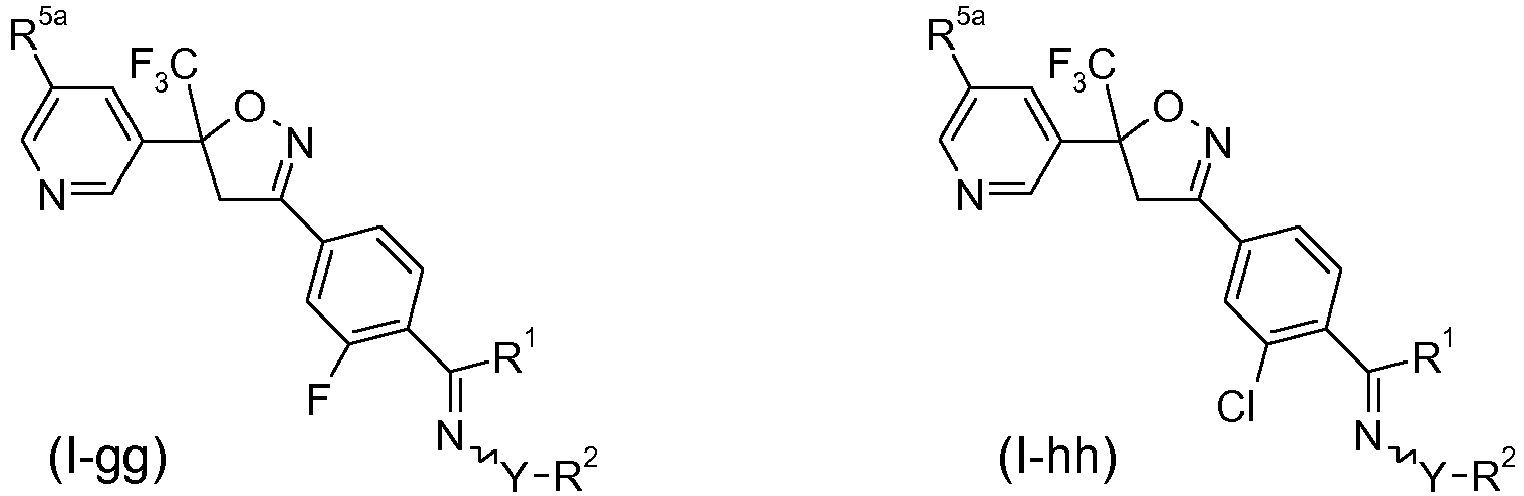


- Table 1
Compounds of the formula I-a in which R5a and R5c are chlorine, R5b is H, R1 is H and the combination of Y and R2 for a compound corresponds in each case to one row of Table A. - Table 2
Compounds of the formula I-a in which R5a and R5c are bromine, R5b is H, R1 is H and the combination of Y and R2 for a compound corresponds in each case to one row of Table A. - Table 3
Compounds of the formula I-a in which R5a and R5c are fluorine, R5b is H, R1 is H and the combination of Y and R2 for a compound corresponds in each case to one row of Table A. - Table 4
Compounds of the formula I-a in which R5a and R5c are methyl, R5b is H, R1 is H and the combination of Y and R2 for a compound corresponds in each case to one row of Table A. - Table 5
Compounds of the formula I-a in which R5a and R5c are CF3, R5b is H, R1 is H and the combination of Y and R2 for a compound corresponds in each case to one row of Table A. - Table 6
Compounds of the formula I-a in which R5a is chlorine and R5b and R5c are H, R1 is H and the combination of Y and R2 for a compound corresponds in each case to one row of Table A. - Table 7
Compounds of the formula I-a in which R5a is CF3 and R5b and R5c are H, R1 is H and the combination of Y and R2 for a compound corresponds in each case to one row of Table A. - Table 8
Compounds of the formula I-a in which R5a, R5b and R5c are chlorine, R1 is H and the combination of Y and R2 for a compound corresponds in each case to one row of Table A. - Table 9
Compounds of the formula I-a in which R5a, R5b and R5c are fluorine, R1 is H and the combination of Y and R2 for a compound corresponds in each case to one row of Table A. - Table 10
Compounds of the formula I-a in which R5a, R5b and R5c are methyl, R1 is H and the combination of Y and R2 for a compound corresponds in each case to one row of Table A. - Table 11
Compounds of the formula I-b in which R5a and R5c are chlorine, R5b is H, R1 is H and the combination of Y and R2 for a compound corresponds in each case to one row of Table A. - Table 12
Compounds of the formula I-b in which R5a and R5c are bromine, R5b is H, R1 is H and the combination of Y and R2 for a compound corresponds in each case to one row of Table A. - Table 13
Compounds of the formula I-b in which R5a and R5c are fluorine, R5b is H, R1 is H and the combination of Y and R2 for a compound corresponds in each case to one row of Table A. - Table 14
Compounds of the formula I-b in which R5a and R5c are methyl, R5b is H, R1 is H and the combination of Y and R2 for a compound corresponds in each case to one row of Table A. - Table 15
Compounds of the formula I-b in which R5a and R5c are CF3, R5b is H, R1 is H and the combination of Y and R2 for a compound corresponds in each case to one row of Table A. - Table 16
Compounds of the formula I-b in which R5a is chlorine and R5b and R5c are H, R1 is H and the combination of Y and R2 for a compound corresponds in each case to one row of Table A. - Table 17
Compounds of the formula I-b in which R5a is CF3 and R5b and R5c are H, R1 is H and the combination of Y and R2 for a compound corresponds in each case to one row of Table A. - Table 18
Compounds of the formula I-b in which R5a, R5b and R5c are chlorine, R1 is H and the combination of Y and R2 for a compound corresponds in each case to one row of Table A. - Table 19
Compounds of the formula I-b in which R5a, R5b and R5c are fluorine, R1 is H and the combination of Y and R2 for a compound corresponds in each case to one row of Table A. - Table 20
Compounds of the formula I-b in which R5a, R5b and R5c are methyl, R1 is H and the combination of Y and R2 for a compound corresponds in each case to one row of Table A. - Table 21
Compounds of the formula I-c in which R5a and R5c are chlorine, R5b is H, R1 is H and the combination of Y and R2 for a compound corresponds in each case to one row of Table A. - Table 22
Compounds of the formula I-c in which R5a and R5c are bromine, R5b is H, R1 is H and the combination of Y and R2 for a compound corresponds in each case to one row of Table A. - Table 23
Compounds of the formula I-c in which R5a and R5c are fluorine, R5b is H, R1 is H and the combination of Y and R2 for a compound corresponds in each case to one row of Table A. - Table 24
Compounds of the formula I-c in which R5a and R5c are methyl, R5b is H, R1 is H and the combination of Y and R2 for a compound corresponds in each case to one row of Table A. - Table 25
Compounds of the formula I-c in which R5a and R5c are CF3, R5b is H, R1 is H and the combination of Y and R2 for a compound corresponds in each case to one row of Table A. - Table 26
Compounds of the formula I-c in which R5a is chlorine and R5b and R5c are H, R1 is H and the combination of Y and R2 for a compound corresponds in each case to one row of Table A. - Table 27
Compounds of the formula I-c in which R5a is CF3 and R5b and R5c are H, R1 is H and the combination of Y and R2 for a compound corresponds in each case to one row of Table A. - Table 28
Compounds of the formula I-c in which R5a, R5b and R5c are chlorine, R1 is H and the combination of Y and R2 for a compound corresponds in each case to one row of Table A. - Table 29
Compounds of the formula I-c in which R5a, R5b and R5c are fluorine, R1 is H and the combination of Y and R2 for a compound corresponds in each case to one row of Table A. - Table 30
Compounds of the formula I-c in which R5a, R5b and R5c are methyl, R1 is H and the combination of Y and R2 for a compound corresponds in each case to one row of Table A. - Table 31
Compounds of the formula I-d in which R5a and R5c are chlorine, R5b is H, R1 is H and the combination of Y and R2 for a compound corresponds in each case to one row of Table A. - Table 32
Compounds of the formula I-d in which R5a and R5c are bromine, R5b is H, R1 is H and the combination of Y and R2 for a compound corresponds in each case to one row of Table A. - Table 33
Compounds of the formula I-d in which R5a and R5c are fluorine, R5b is H, R1 is H and the combination of Y and R2 for a compound corresponds in each case to one row of Table A. - Table 34
Compounds of the formula I-d in which R5a and R5c are methyl, R5b is H, R1 is H and the combination of Y and R2 for a compound corresponds in each case to one row of Table A. - Table 35
Compounds of the formula I-d in which R5a and R5c are CF3, R5b is H, R1 is H and the combination of Y and R2 for a compound corresponds in each case to one row of Table A. - Table 36
Compounds of the formula I-d in which R5a is chlorine and R5b and R5c are H, R1 is H and the combination of Y and R2 for a compound corresponds in each case to one row of Table A. - Table 37
Compounds of the formula I-d in which R5a is CF3 and R5b and R5c are H, R1 is H and the combination of Y and R2 for a compound corresponds in each case to one row of Table A. - Table 38
Compounds of the formula I-d in which R5a, R5b and R5c are chlorine, R1 is H and the combination of Y and R2 for a compound corresponds in each case to one row of Table A. - Table 39
Compounds of the formula I-d in which R5a, R5b and R5c are fluorine, R1 is H and the combination of Y and R2 for a compound corresponds in each case to one row of Table A. - Table 40
Compounds of the formula I-d in which R5a, R5b and R5c are methyl, R1 is H and the combination of Y and R2 for a compound corresponds in each case to one row of Table A. - Table 41
Compounds of the formula I-e in which R5a and R5c are chlorine, R5b is H, R1 is H and the combination of Y and R2 for a compound corresponds in each case to one row of Table A. - Table 42
Compounds of the formula I-e in which R5a and R5c are bromine, R5b is H, R1 is H and the combination of Y and R2 for a compound corresponds in each case to one row of Table A. - Table 43
Compounds of the formula I-e in which R5a and R5c are fluorine, R5b is H, R1 is H and the combination of Y and R2 for a compound corresponds in each case to one row of Table A. - Table 44
Compounds of the formula I-e in which R5a and R5c are methyl, R5b is H, R1 is H and the combination of Y and R2 for a compound corresponds in each case to one row of Table A. - Table 45
Compounds of the formula I-e in which R5a and R5c are CF3, R5b is H, R1 is H and the combination of Y and R2 for a compound corresponds in each case to one row of Table A. - Table 46
Compounds of the formula I-e in which R5a is chlorine and R5b and R5c are H, R1 is H and the combination of Y and R2 for a compound corresponds in each case to one row of Table A. - Table 47
Compounds of the formula I-e in which R5a is CF3 and R5b and R5c are H, R1 is H and the combination of Y and R2 for a compound corresponds in each case to one row of Table A. - Table 48
Compounds of the formula I-e in which R5a, R5b and R5c are chlorine, R1 is H and the combination of Y and R2 for a compound corresponds in each case to one row of Table A. - Table 49
Compounds of the formula I-e in which R5a, R5b and R5c are fluorine, R1 is H and the combination of Y and R2 for a compound corresponds in each case to one row of Table A. - Table 50
Compounds of the formula I-e in which R5a, R5b and R5c are methyl, R1 is H and the combination of Y and R2 for a compound corresponds in each case to one row of Table A. - Table 51
Compounds of the formula I-f in which R5a and R5c are chlorine, R5b is H, R1 is H and the combination of Y and R2 for a compound corresponds in each case to one row of Table A. - Table 52
Compounds of the formula I-f in which R5a and R5c are bromine, R5b is H, R1 is H and the combination of Y and R2 for a compound corresponds in each case to one row of Table A. - Table 53
Compounds of the formula I-f in which R5a and R5c are fluorine, R5b is H, R1 is H and the combination of Y and R2 for a compound corresponds in each case to one row of Table A. - Table 54
Compounds of the formula I-f in which R5a and R5c are methyl, R5b is H, R1 is H and the combination of Y and R2 for a compound corresponds in each case to one row of Table A. - Table 55
Compounds of the formula I-f in which R5a and R5c are CF3, R5b is H, R1 is H and the combination of Y and R2 for a compound corresponds in each case to one row of Table A. - Table 56
Compounds of the formula I-f in which R5a is chlorine and R5b and R5c are H, R1 is H and the combination of Y and R2 for a compound corresponds in each case to one row of Table A. - Table 57
Compounds of the formula I-f in which R5a is CF3 and R5b and R5c are H, R1 is H and the combination of Y and R2 for a compound corresponds in each case to one row of Table A. - Table 58
Compounds of the formula I-f in which R5a, R5b and R5c are chlorine, R1 is H and the combination of Y and R2 for a compound corresponds in each case to one row of Table A. - Table 59
Compounds of the formula I-f in which R5a, R5b and R5c are fluorine, R1 is H and the combination of Y and R2 for a compound corresponds in each case to one row of Table A. - Table 60
Compounds of the formula I-f in which R5a, R5b and R5c are methyl, R1 is H and the combination of Y and R2 for a compound corresponds in each case to one row of Table A. - Table 61
Compounds of the formula I-g in which R5a and R5c are chlorine, R5b is H, R1 is H and the combination of Y and R2 for a compound corresponds in each case to one row of Table A. - Table 62
Compounds of the formula I-g in which R5a and R5c are bromine, R5b is H, R1 is H and the combination of Y and R2 for a compound corresponds in each case to one row of Table A. - Table 63
Compounds of the formula I-g in which R5a and R5c are fluorine, R5b is H, R1 is H and the combination of Y and R2 for a compound corresponds in each case to one row of Table A. - Table 64
Compounds of the formula I-g in which R5a and R5c are methyl, R5b is H, R1 is H and the combination of Y and R2 for a compound corresponds in each case to one row of Table A. - Table 65
Compounds of the formula I-g in which R5 a and R5 c are CF3, R5b is H, R1 is H and the combination of Y and R2 for a compound corresponds in each case to one row of Table A. - Table 66
Compounds of the formula I-g in which R5a is chlorine and R5b and R5c are H, R1 is H and the combination of Y and R2 for a compound corresponds in each case to one row of Table A. - Table 67
Compounds of the formula I-g in which R5a is CF3 and R5b and R5c are H, R1 is H and the combination of Y and R2 for a compound corresponds in each case to one row of Table A. - Table 68
Compounds of the formula I-g in which R5a, R5b and R5c are chlorine, R1 is H and the combination of Y and R2 for a compound corresponds in each case to one row of Table A. - Table 69
Compounds of the formula I-g in which R5a , R5b and R5c are fluorine, R1 is H and the combination of Y and R2 for a compound corresponds in each case to one row of Table A. - Table 70
Compounds of the formula I-g in which R5a, R5b and R5c are methyl, R1 is H and the combination of Y and R2 for a compound corresponds in each case to one row of Table A. - Table 71
Compounds of the formula I-h in which R5a and R5c are chlorine, R5b is H, R1 is H and the combination of Y and R2 for a compound corresponds in each case to one row of Table A. - Table 72
Compounds of the formula I-h in which R5a and R5c are bromine, R5b is H, R1 is H and the combination of Y and R2 for a compound corresponds in each case to one row of Table A. - Table 73
Compounds of the formula I-h in which R5a and R5c are fluorine, R5b is H, R1 is H and the combination of Y and R2 for a compound corresponds in each case to one row of Table A. - Table 74
Compounds of the formula I-h in which R5a and R5c are methyl, R5b is H, R1 is H and the combination of Y and R2 for a compound corresponds in each case to one row of Table A. - Table 75
Compounds of the formula I-h in which R5a and R5c are CF3, R5b is H, R1 is H and the combination of Y and R2 for a compound corresponds in each case to one row of Table A. - Table 76
Compounds of the formula I-h in which R5a is chlorine and R5b and R5c are H, R1 is H and the combination of Y and R2 for a compound corresponds in each case to one row of Table A. - Table 77
Compounds of the formula I-h in which R5a is CF3 and R5b and R5c are H, R1 is H and the combination of Y and R2 for a compound corresponds in each case to one row of Table A. - Table 78
Compounds of the formula 1-h in which R5a, R5b and R5c are chlorine, R1 is H and the combination of Y and R2 for a compound corresponds in each case to one row of Table A. - Table 79
Compounds of the formula I-h in which R5a, R5b and R5c are fluorine, R1 is H and the combination of Y and R2 for a compound corresponds in each case to one row of Table A. - Table 80
Compounds of the formula I-h in which R5a, R5b and R5c are methyl, R1 is H and the combination of Y and R2 for a compound corresponds in each case to one row of Table A. - Table 81
Compounds of the formula I-i in which R5a and R5c are chlorine, R5b is H, R1 is H and the combination of Y and R2 for a compound corresponds in each case to one row of Table A. - Table 82
Compounds of the formula I-i in which R5a and R5c are bromine, R5b is H, R1 is H and the combination of Y and R2 for a compound corresponds in each case to one row of Table A. - Table 83
Compounds of the formula I-i in which R5a and R5c are fluorine, R5b is H, R1 is H and the combination of Y and R2 for a compound corresponds in each case to one row of Table A. - Table 84
Compounds of the formula I-i in which R5a and R5c are methyl, R5b is H, R1 is H and the combination of Y and R2 for a compound corresponds in each case to one row of Table A. - Table 85
Compounds of the formula I-i in which R5a and R5c are CF3, R5b is H, R1 is H and the combination of Y and R2 for a compound corresponds in each case to one row of Table A. - Table 86
Compounds of the formula I-i in which R5a is chlorine and R5b and R5c are H, R1 is H and the combination of Y and R2 for a compound corresponds in each case to one row of Table A. - Table 87
Compounds of the formula I-i in which R5a is CF3 and R5b and R5c are H, R1 is H and the combination of Y and R2 for a compound corresponds in each case to one row of Table A. - Table 88
Compounds of the formula I-i in which R5a, R5b and R5c are chlorine, R1 is H and the combination of Y and R2 for a compound corresponds in each case to one row of Table A. - Table 89
Compounds of the formula I-i in which R5a, R5b and R5c are fluorine, R1 is H and the combination of Y and R2 for a compound corresponds in each case to one row of Table A. - Table 90
Compounds of the formula I-i in which R5a, R5b and R5c are methyl, R1 is H and the combination of Y and R2 for a compound corresponds in each case to one row of Table A. - Table 91
Compounds of the formula I-j in which R5a and R5c are chlorine, R5b is H, R1 is H and the combination of Y and R2 for a compound corresponds in each case to one row of Table A. - Table 92
Compounds of the formula I-j in which R5a and R5c are bromine, R5b is H, R1 is H and the combination of Y and R2 for a compound corresponds in each case to one row of Table A. - Table 93
Compounds of the formula I-j in which R5a and R5c are fluorine, R5b is H, R1 is H and the combination of Y and R2 for a compound corresponds in each case to one row of Table A. - Table 94
Compounds of the formula I-j in which R5a and R5c are methyl, R5b is H, R1 is H and the combination of Y and R2 for a compound corresponds in each case to one row of Table A. - Table 95
Compounds of the formula I-j in which R5a and R5c are CF3, R5b is H, R1 is H and the combination of Y and R2 for a compound corresponds in each case to one row of Table A. - Table 96
Compounds of the formula I-j in which R5a is chlorine and R5b and R5c are H, R1 is H and the combination of Y and R2 for a compound corresponds in each case to one row of Table A. - Table 97
Compounds of the formula I-j in which R5a is CF3 and R5b and R5c are H, R1 is H and the combination of Y and R2 for a compound corresponds in each case to one row of Table A. - Table 98
Compounds of the formula I-j in which R5a, R5b and R5c are chlorine, R1 is H and the combination of Y and R2 for a compound corresponds in each case to one row of Table A. - Table 99
Compounds of the formula I-j in which R5a, R5b and R5c are fluorine, R1 is H and the combination of Y and R2 for a compound corresponds in each case to one row of Table A. - Table 100
Compounds of the formula I-j in which R5a, R5b and R5c are methyl, R1 is H and the combination of Y and R2 for a compound corresponds in each case to one row of Table A. - Table 101
Compounds of the formula I-k in which R5a and R5c are chlorine, R5b is H, R1 is H and the combination of Y and R2 for a compound corresponds in each case to one row of Table A. - Table 102
Compounds of the formula I-k in which R5a and R5c are bromine, R5b is H, R1 is H and the combination of Y and R2 for a compound corresponds in each case to one row of Table A. - Table 103
Compounds of the formula I-k in which R5a and R5c are fluorine, R5b is H, R1 is H and the combination of Y and R2 for a compound corresponds in each case to one row of Table A. - Table 104
Compounds of the formula I-k in which R5a and R5c are methyl, R5b is H, R1 is H and the combination of Y and R2 for a compound corresponds in each case to one row of Table A. - Table 105
Compounds of the formula I-k in which R5a and R5c are CF3, R5b is H, R1 is H and the combination of Y and R2 for a compound corresponds in each case to one row of Table A. - Table 106
Compounds of the formula I-k in which R5a is chlorine and R5b and R5c are H, R1 is H and the combination of Y and R2 for a compound corresponds in each case to one row of Table A. - Table 107
Compounds of the formula I-k in which R5a is CF3 and R5b and R5c are H, R1 is H and the combination of Y and R2 for a compound corresponds in each case to one row of Table A. - Table 108
Compounds of the formula I-k in which R5a, R5b and R5c are chlorine, R1 is H and the combination of Y and R2 for a compound corresponds in each case to one row of Table A. - Table 109
Compounds of the formula I-k in which R5a, R5b and R5c are fluorine, R1 is H and the combination of Y and R2 for a compound corresponds in each case to one row of Table A. - Table 110
Compounds of the formula I-k in which R5a, R5b and R5c are methyl, R1 is H and the combination of Y and R2 for a compound corresponds in each case to one row of Table A. - Table 111
Compounds of the formula I-I in which R5a and R5c are chlorine, R5b is H, R1 is H and the combination of Y and R2 for a compound corresponds in each case to one row of Table A. - Table 112
Compounds of the formula I-I in which R5a and R5c are bromine, R5b is H, R1 is H and the combination of Y and R2 for a compound corresponds in each case to one row of Table A. - Table 113
Compounds of the formula I-I in which R5a and R5c are fluorine, R5b is H, R1 is H and the combination of Y and R2 for a compound corresponds in each case to one row of Table A. - Table 114
Compounds of the formula I-I in which R5a and R5c are methyl, R5b is H, R1 is H and the combination of Y and R2 for a compound corresponds in each case to one row of Table A. - Table 115
Compounds of the formula I-I in which R5a and R5c are CF3, R5b is H, R1 is H and the combination of Y and R2 for a compound corresponds in each case to one row of Table A. - Table 116
Compounds of the formula I-I in which R5a is chlorine and R5b and R5c are H, R1 is H and the combination of Y and R2 for a compound corresponds in each case to one row of Table A. - Table 117
Compounds of the formula I-I in which R5a is CF3 and R5b and R5c are H, R1 is H and the combination of Y and R2 for a compound corresponds in each case to one row of Table A. - Table 118
Compounds of the formula I-I in which R5a, R5b and R5c are chlorine, R1 is H and the combination of Y and R2 for a compound corresponds in each case to one row of Table A. - Table 119
Compounds of the formula I-I in which R5a, R5b and R5c are fluorine, R1 is H and the combination of Y and R2 for a compound corresponds in each case to one row of Table A. - Table 120
Compounds of the formula I-I in which R5a, R5b and R5c are methyl, R1 is H and the combination of Y and R2 for a compound corresponds in each case to one row of Table A. - Table 121
Compounds of the formula I-m in which R5a and R5c are chlorine, R5b is H, R1 is H and the combination of Y and R2 for a compound corresponds in each case to one row of Table A. - Table 122
Compounds of the formula I-m in which R5a and R5c are bromine, R5b is H, R1 is H and the combination of Y and R2 for a compound corresponds in each case to one row of Table A. - Table 123
Compounds of the formula I-m in which R5a and R5c are fluorine, R5b is H, R1 is H and the combination of Y and R2 for a compound corresponds in each case to one row of Table A. - Table 124
Compounds of the formula I-m in which R5a and R5c are methyl, R5b is H, R1 is H and the combination of Y and R2 for a compound corresponds in each case to one row of Table A. - Table 125
Compounds of the formula I-m in which R5a and R5c are CF3, R5b is H, R1 is H and the combination of Y and R2 for a compound corresponds in each case to one row of Table A. - Table 126
Compounds of the formula I-m in which R5a is chlorine and R5b and R5c are H, R1 is H and the combination of Y and R2 for a compound corresponds in each case to one row of Table A. - Table 127
Compounds of the formula I-m in which R5a is CF3 and R5b and R5c are H, R1 is H and the combination of Y and R2 for a compound corresponds in each case to one row of Table A. - Table 128
Compounds of the formula I-m in which R5a, R5b and R5c are chlorine, R1 is H and the combination of Y and R2 for a compound corresponds in each case to one row of Table A. - Table 129
Compounds of the formula I-m in which R5a, R5b and R5c are fluorine, R1 is H and the combination of Y and R2 for a compound corresponds in each case to one row of Table A. - Table 130
Compounds of the formula I-m in which R5a, R5b and R5c are methyl, R1 is H and the combination of Y and R2 for a compound corresponds in each case to one row of Table A. - Table 131
Compounds of the formula I-n in which R5a and R5c are chlorine, R5b is H, R1 is H and the combination of Y and R2 for a compound corresponds in each case to one row of Table A. - Table 132
Compounds of the formula I-n in which R5a and R5c are bromine, R5b is H, R1 is H and the combination of Y and R2 for a compound corresponds in each case to one row of Table A. - Table 133
Compounds of the formula I-n in which R5a and R5c are fluorine, R5b is H, R1 is H and the combination of Y and R2 for a compound corresponds in each case to one row of Table A. - Table 134
Compounds of the formula I-n in which R5a and R5c are methyl, R5b is H, R1 is H and the combination of Y and R2 for a compound corresponds in each case to one row of Table A. - Table 135
Compounds of the formula I-n in which R5a and R5c are CF3, R5b is H, R1 is H and the combination of Y and R2 for a compound corresponds in each case to one row of Table A. - Table 136
Compounds of the formula I-n in which R5a is chlorine and R5b and R5c are H, R1 is H and the combination of Y and R2 for a compound corresponds in each case to one row of Table A. - Table 137
Compounds of the formula I-n in which R5a is CF3 and R5b and R5c are H, R1 is H and the combination of Y and R2 for a compound corresponds in each case to one row of Table A. - Table 138
Compounds of the formula I-n in which R5a, R5b and R5c are chlorine, R1 is H and the combination of Y and R2 for a compound corresponds in each case to one row of Table A. - Table 139
Compounds of the formula I-n in which R5a, R5b and R5c are fluorine, R1 is H and the combination of Y and R2 for a compound corresponds in each case to one row of Table A. - Table 140
Compounds of the formula I-n in which R5a, R5b and R5c are methyl, R1 is H and the combination of Y and R2 for a compound corresponds in each case to one row of Table A. - Table 141
Compounds of the formula I-o in which R5a and R5c are chlorine, R5b is H, R1 is H and the combination of Y and R2 for a compound corresponds in each case to one row of Table A. - Table 142
Compounds of the formula I-o in which R5a and R5c are bromine, R5b is H, R1 is H and the combination of Y and R2 for a compound corresponds in each case to one row of Table A. - Table 143
Compounds of the formula I-o in which R5a and R5c are fluorine, R5b is H, R1 is H and the combination of Y and R2 for a compound corresponds in each case to one row of Table A. - Table 144
Compounds of the formula I-o in which R5a and R5c are methyl, R5b is H, R1 is H and the combination of Y and R2 for a compound corresponds in each case to one row of Table A. - Table 145
Compounds of the formula I-o in which R5a and R5c are CF3, R5b is H, R1 is H and the combination of Y and R2 for a compound corresponds in each case to one row of Table A. - Table 146
Compounds of the formula I-o in which R5a is chlorine and R5b and R5c are H, R1 is H and the combination of Y and R2 for a compound corresponds in each case to one row of Table A. - Table 147
Compounds of the formula I-o in which R5a is CF3 and R5b and R5c are H, R1 is H and the combination of Y and R2 for a compound corresponds in each case to one row of Table A. - Table 148
Compounds of the formula I-o in which R5a, R5b and R5c are chlorine, R1 is H and the combination of Y and R2 for a compound corresponds in each case to one row of Table A. - Table 149
Compounds of the formula I-o in which R5a, R5b and R5c are fluorine, R1 is H and the combination of Y and R2 for a compound corresponds in each case to one row of Table A. - Table 150
Compounds of the formula I-o in which R5a, R5b and R5c are methyl, R1 is H and the combination of Y and R2 for a compound corresponds in each case to one row of Table A. - Table 151
Compounds of the formula I-p in which R5a and R5c are chlorine, R5b is H, R1 is H and the combination of Y and R2 for a compound corresponds in each case to one row of Table A. - Table 152
Compounds of the formula I-p in which R5a and R5c are bromine, R5b is H, R1 is H and the combination of Y and R2 for a compound corresponds in each case to one row of Table A. - Table 153
Compounds of the formula I-p in which R5a and R5c are fluorine, R5b is H, R1 is H and the combination of Y and R2 for a compound corresponds in each case to one row of Table A. - Table 154
Compounds of the formula I-p in which R5a and R5c are methyl, R5b is H, R1 is H and the combination of Y and R2 for a compound corresponds in each case to one row of Table A. - Table 155
Compounds of the formula I-p in which R5a and R5c are CF3, R5b is H, R1 is H and the combination of Y and R2 for a compound corresponds in each case to one row of Table A. - Table 156
Compounds of the formula I-p in which R5a is chlorine and R5b and R5c are H, R1 is H and the combination of Y and R2 for a compound corresponds in each case to one row of Table A. - Table 157
Compounds of the formula I-p in which R5a is CF3 and R5b and R5c are H, R1 is H and the combination of Y and R2 for a compound corresponds in each case to one row of Table A. - Table 158
Compounds of the formula I-p in which R5a, R5b and R5c are chlorine, R1 is H and the combination of Y and R2 for a compound corresponds in each case to one row of Table A. - Table 159
Compounds of the formula I-p in which R5a, R5b and R5c are fluorine, R1 is H and the combination of Y and R2 for a compound corresponds in each case to one row of Table A. - Table 160
Compounds of the formula I-p in which R5a, R5b and R5c are methyl, R1 is H and the combination of Y and R2 for a compound corresponds in each case to one row of Table A. - Table 161
Compounds of the formula I-q in which R5a and R5c are chlorine, R5b is H, R1 is H and the combination of Y and R2 for a compound corresponds in each case to one row of Table A. - Table 162
Compounds of the formula I-q in which R5a and R5c are bromine, R5b is H, R1 is H and the combination of Y and R2 for a compound corresponds in each case to one row of Table A. - Table 163
Compounds of the formula I-q in which R5a and R5c are fluorine, R5b is H, R1 is H and the combination of Y and R2 for a compound corresponds in each case to one row of Table A. - Table 164
Compounds of the formula I-q in which R5a and R5c are methyl, R5b is H, R1 is H and the combination of Y and R2 for a compound corresponds in each case to one row of Table A. - Table 165
Compounds of the formula I-q in which R5a and R5c are CF3, R5b is H, R1 is H and the combination of Y and R2 for a compound corresponds in each case to one row of Table A. - Table 166
Compounds of the formula I-q in which R5a is chlorine and R5b and R5c are H, R1 is H and the combination of Y and R2 for a compound corresponds in each case to one row of Table A. - Table 167
Compounds of the formula I-q in which R5a is CF3 and R5b and R5c are H, R1 is H and the combination of Y and R2 for a compound corresponds in each case to one row of Table A. - Table 168
Compounds of the formula I-q in which R5a, R5b and R5c are chlorine, R1 is H and the combination of Y and R2 for a compound corresponds in each case to one row of Table A. - Table 169
Compounds of the formula I-q in which R5a, R5b and R5c are fluorine, R1 is H and the combination of Y and R2 for a compound corresponds in each case to one row of Table A. - Table 170
Compounds of the formula I-q in which R5a, R5b and R5c are methyl, R1 is H and the combination of Y and R2 for a compound corresponds in each case to one row of Table A. - Table 171
Compounds of the formula I-r in which R5a and R5c are chlorine, R5b is H, R1 is H and the combination of Y and R2 for a compound corresponds in each case to one row of Table A. - Table 172
Compounds of the formula I-r in which R5a and R5c are bromine, R5b is H, R1 is H and the combination of Y and R2 for a compound corresponds in each case to one row of Table A. - Table 173
Compounds of the formula I-r in which R5a and R5c are fluorine, R5b is H, R1 is H and the combination of Y and R2 for a compound corresponds in each case to one row of Table A. - Table 174
Compounds of the formula I-r in which R5a and R5c are methyl, R5b is H, R1 is H and the combination of Y and R2 for a compound corresponds in each case to one row of Table A. - Table 175
Compounds of the formula I-r in which R5a and R5c are CF3, R5b is H, R1 is H and the combination of Y and R2 for a compound corresponds in each case to one row of Table A. - Table 176
Compounds of the formula I-r in which R5a is chlorine and R5b and R5c are H, R1 is H and the combination of Y and R2 for a compound corresponds in each case to one row of Table A. - Table 177
Compounds of the formula I-r in which R5a is CF3 and R5b and R5c are H, R1 is H and the combination of Y and R2 for a compound corresponds in each case to one row of Table A. - Table 178
Compounds of the formula I-r in which R5a, R5b and R5c are chlorine, R1 is H and the combination of Y and R2 for a compound corresponds in each case to one row of Table A. - Table 179
Compounds of the formula I-r in which R5a, R5b and R5c are fluorine, R1 is H and the combination of Y and R2 for a compound corresponds in each case to one row of Table A. - Table 180
Compounds of the formula I-r in which R5a, R5b and R5c are methyl, R1 is H and the combination of Y and R2 for a compound corresponds in each case to one row of Table A. - Table 181
Compounds of the formula I-s in which R5a and R5c are chlorine, R5b is H, R1 is H and the combination of Y and R2 for a compound corresponds in each case to one row of Table A. - Table 182
Compounds of the formula I-s in which R5a and R5c are bromine, R5b is H, R1 is H and the combination of Y and R2 for a compound corresponds in each case to one row of Table A. - Table 183
Compounds of the formula I-s in which R5a and R5c are fluorine, R5b is H, R1 is H and the combination of Y and R2 for a compound corresponds in each case to one row of Table A. - Table 184
Compounds of the formula I-s in which R5a and R5c are methyl, R5b is H, R1 is H and the combination of Y and R2 for a compound corresponds in each case to one row of Table A. - Table 185 Compounds of the formula I-s in which R5a and R5c are CF3, R5b is H, R1 is H and the combination of Y and R2 for a compound corresponds in each case to one row of Table A.
- Table 186
Compounds of the formula I-s in which R5a is chlorine and R5b and R5c are H, R1 is H and the combination of Y and R2 for a compound corresponds in each case to one row of Table A. - Table 187
Compounds of the formula I-s in which R5a is CF3 and R5b and R5c are H, R1 is H and the combination of Y and R2 for a compound corresponds in each case to one row of Table A. - Table 188
Compounds of the formula I-s in which R5a, R5b and R5c are chlorine, R1 is H and the combination of Y and R2 for a compound corresponds in each case to one row of Table A. - Table 189
Compounds of the formula I-s in which R5a, R5b and R5c are fluorine, R1 is H and the combination of Y and R2 for a compound corresponds in each case to one row of Table A. - Table 190
Compounds of the formula I-s in which R5a, R5b and R5c are methyl, R1 is H and the combination of Y and R2 for a compound corresponds in each case to one row of Table A. - Table 191
Compounds of the formula I-t in which R5a and R5c are chlorine, R5b is H, R1 is H and the combination of Y and R2 for a compound corresponds in each case to one row of Table A. - Table 192
Compounds of the formula I-t in which R5a and R5c are bromine, R5b is H, R1 is H and the combination of Y and R2 for a compound corresponds in each case to one row of Table A. - Table 193, R1 is H
Compounds of the formula I-t in which R5a and R5c are fluorine, R5b is H, R1 is H and the combination of Y and R2 for a compound corresponds in each case to one row of Table A. - Table 194
Compounds of the formula I-t in which R5a and R5c are methyl, R5b is H, R1 is H and the combination of Y and R2 for a compound corresponds in each case to one row of Table A. - Table 195
Compounds of the formula I-t in which R5a and R5c are CF3, R5b is H, R1 is H and the combination of Y and R2 for a compound corresponds in each case to one row of Table A. - Table 196
Compounds of the formula I-t in which R5a is chlorine and R5b and R5c are H, R1 is H and the combination of Y and R2 for a compound corresponds in each case to one row of Table A. - Table 197
Compounds of the formula I-t in which R5a is CF3 and R5b and R5c are H, R1 is H and the combination of Y and R2 for a compound corresponds in each case to one row of Table A. - Table 198
Compounds of the formula I-t in which R5a, R5b and R5c are chlorine, R1 is H and the combination of Y and R2 for a compound corresponds in each case to one row of Table A. - Table 199
Compounds of the formula I-t in which R5a, R5b and R5c are fluorine, R1 is H and the combination of Y and R2 for a compound corresponds in each case to one row of Table A. - Table 200
Compounds of the formula I-t in which R5a, R5b and R5c are methyl, R1 is H and the combination of Y and R2 for a compound corresponds in each case to one row of Table A. - Table 201
Compounds of the formula I-u in which R5a and R5c are chlorine, R5b is H, R1 is H and the combination of Y and R2 for a compound corresponds in each case to one row of Table A. - Table 202
Compounds of the formula I-u in which R5a and R5c are bromine, R5b is H, R1 is H and the combination of Y and R2 for a compound corresponds in each case to one row of Table A. - Table 203
Compounds of the formula I-u in which R5a and R5c are fluorine, R5b is H, R1 is H and the combination of Y and R2 for a compound corresponds in each case to one row of Table A. - Table 204
Compounds of the formula I-u in which R5a and R5c are methyl, R5b is H, R1 is H and the combination of Y and R2 for a compound corresponds in each case to one row of Table A. - Table 205
Compounds of the formula I-u in which R5a and R5c are CF3, R5b is H, R1 is H and the combination of Y and R2 for a compound corresponds in each case to one row of Table A. - Table 206
Compounds of the formula I-u in which R5a is chlorine and R5b and R5c are H, R1 is H and the combination of Y and R2 for a compound corresponds in each case to one row of Table A. - Table 207
Compounds of the formula I-u in which R5a is CF3 and R5b and R5c are H, R1 is H and the combination of Y and R2 for a compound corresponds in each case to one row of Table A. - Table 208
Compounds of the formula I-u in which R5a, R5b and R5c are chlorine, R1 is H and the combination of Y and R2 for a compound corresponds in each case to one row of Table A. - Table 209
Compounds of the formula I-u in which R5a, R5b and R5c are fluorine, R1 is H and the combination of Y and R2 for a compound corresponds in each case to one row of Table A. - Table 210
Compounds of the formula I-u in which R5a, R5b and R5c are methyl, R1 is H and the combination of Y and R2 for a compound corresponds in each case to one row of Table A. - Table 211
Compounds of the formula I-v in which R5a and R5c are chlorine, R5b is H, R1 is H and the combination of Y and R2 for a compound corresponds in each case to one row of Table A. - Table 212
Compounds of the formula I-v in which R5a and R5c are bromine, R5b is H, R1 is H and the combination of Y and R2 for a compound corresponds in each case to one row of Table A. - Table 213
Compounds of the formula I-v in which R5a and R5c are fluorine, R5b is H, R1 is H and the combination of Y and R2 for a compound corresponds in each case to one row of Table A. - Table 214
Compounds of the formula I-v in which R5a and R5c are methyl, R5b is H, R1 is H and the combination of Y and R2 for a compound corresponds in each case to one row of Table A. - Table 215
Compounds of the formula I-v in which R5a and R5c are CF3, R5b is H, R1 is H and the combination of Y and R2 for a compound corresponds in each case to one row of Table A. - Table 216
Compounds of the formula I-v in which R5a is chlorine and R5b and R5c are H, R1 is H and the combination of Y and R2 for a compound corresponds in each case to one row of Table A. - Table 217
Compounds of the formula I-v in which R5a is CF3 and R5b and R5c are H, R1 is H and the combination of Y and R2 for a compound corresponds in each case to one row of Table A. - Table 218
Compounds of the formula I-v in which R5a, R5b and R5c are chlorine, R1 is H and the combination of Y and R2 for a compound corresponds in each case to one row of Table A. - Table 219
Compounds of the formula I-v in which R5a, R5b and R5c are fluorine, R1 is H and the combination of Y and R2 for a compound corresponds in each case to one row of Table A. - Table 220
Compounds of the formula I-v in which R5a, R5b and R5c are methyl, R1 is H and the combination of Y and R2 for a compound corresponds in each case to one row of Table A. - Table 221
Compounds of the formula I-w in which R5a and R5c are chlorine, R5b is H, R1 is H and the combination of Y and R2 for a compound corresponds in each case to one row of Table A. - Table 222
Compounds of the formula I-w in which R5a and R5c are bromine, R5b is H, R1 is H and the combination of Y and R2 for a compound corresponds in each case to one row of Table A. - Table 223
Compounds of the formula I-w in which R5a and R5c are fluorine, R5b is H, R1 is H and the combination of Y and R2 for a compound corresponds in each case to one row of Table A. - Table 224
Compounds of the formula I-w in which R5a and R5c are methyl, R5b is H, R1 is H and the combination of Y and R2 for a compound corresponds in each case to one row of Table A. - Table 225
Compounds of the formula I-w in which R5a and R5c are CF3, R5b is H, R1 is H and the combination of Y and R2 for a compound corresponds in each case to one row of Table A. - Table 226
Compounds of the formula I-w in which R5a is chlorine and R5b and R5c are H, R1 is H and the combination of Y and R2 for a compound corresponds in each case to one row of Table A. - Table 227
Compounds of the formula I-w in which R5a is CF3 and R5b and R5c are H, R1 is H and the combination of Y and R2 for a compound corresponds in each case to one row of Table A. - Table 228
Compounds of the formula I-w in which R5a, R5b and R5c are chlorine, R1 is H and the combination of Y and R2 for a compound corresponds in each case to one row of Table A. - Table 229
Compounds of the formula I-w in which R5a, R5b and R5c are fluorine, R1 is H and the combination of Y and R2 for a compound corresponds in each case to one row of Table A. - Table 230
Compounds of the formula I-w in which R5a, R5b and R5c are methyl, R1 is H and the combination of Y and R2 for a compound corresponds in each case to one row of Table A. - Table 231
Compounds of the formula I-x in which R5a and R5c are chlorine, R5b is H, R1 is H and the combination of Y and R2 for a compound corresponds in each case to one row of Table A. - Table 232
Compounds of the formula I-x in which R5a and R5c are bromine, R5b is H, R1 is H and the combination of Y and R2 for a compound corresponds in each case to one row of Table A. - Table 233
Compounds of the formula I-x in which R5a and R5c are fluorine, R5b is H, R1 is H and the combination of Y and R2 for a compound corresponds in each case to one row of Table A. - Table 234
Compounds of the formula I-x in which R5a and R5c are methyl, R5b is H, R1 is H and the combination of Y and R2 for a compound corresponds in each case to one row of Table A. - Table 235
Compounds of the formula I-x in which R5a and R5c are CF3, R5b is H, R1 is H and the combination of Y and R2 for a compound corresponds in each case to one row of Table A. - Table 236
Compounds of the formula I-x in which R5a is chlorine and R5b and R5c are H, R1 is H and the combination of Y and R2 for a compound corresponds in each case to one row of Table A. - Table 237
Compounds of the formula I-x in which R5a is CF3 and R5b and R5c are H, R1 is H and the combination of Y and R2 for a compound corresponds in each case to one row of Table A. - Table 238
Compounds of the formula I-x in which R5a, R5b and R5c are chlorine, R1 is H and the combination of Y and R2 for a compound corresponds in each case to one row of Table A. - Table 239
Compounds of the formula I-x in which R5a, R5b and R5c are fluorine, R1 is H and the combination of Y and R2 for a compound corresponds in each case to one row of Table A. - Table 240
Compounds of the formula I-x in which R5a, R5b and R5c are methyl, R1 is H and the combination of Y and R2 for a compound corresponds in each case to one row of Table A. - Table 241
Compounds of the formula I-y in which R5a and R5c are chlorine, R5b is H, R1 is H and the combination of Y and R2 for a compound corresponds in each case to one row of Table A. - Table 242
Compounds of the formula I-y in which R5a and R5c are bromine, R5b is H, R1 is H and the combination of Y and R2 for a compound corresponds in each case to one row of Table A. - Table 243
Compounds of the formula I-y in which R5a and R5c are fluorine, R5b is H, R1 is H and the combination of Y and R2 for a compound corresponds in each case to one row of Table A. - Table 244
Compounds of the formula I-y in which R5a and R5c are methyl, R5b is H, R1 is H and the combination of Y and R2 for a compound corresponds in each case to one row of Table A. - Table 245
Compounds of the formula I-y in which R5a and R5c are CF3, R5b is H, R1 is H and the combination of Y and R2 for a compound corresponds in each case to one row of Table A. - Table 246
Compounds of the formula I-y in which R5a is chlorine and R5b and R5c are H, R1 is H and the combination of Y and R2 for a compound corresponds in each case to one row of Table A. - Table 247
Compounds of the formula I-y in which R5a is CF3 and R5b and R5c are H, R1 is H and the combination of Y and R2 for a compound corresponds in each case to one row of Table A. - Table 248
Compounds of the formula I-y in which R5a, R5b and R5c are chlorine, R1 is H and the combination of Y and R2 for a compound corresponds in each case to one row of Table A. - Table 249
Compounds of the formula I-y in which R5a, R5b and R5c are fluorine, R1 is H and the combination of Y and R2 for a compound corresponds in each case to one row of Table A. - Table 250
Compounds of the formula I-y in which R5a, R5b and R5c are methyl, R1 is H and the combination of Y and R2 for a compound corresponds in each case to one row of Table A. - Table 251
Compounds of the formula I-z in which R5a and R5c are chlorine, R5b is H, R1 is H and the combination of Y and R2 for a compound corresponds in each case to one row of Table A. - Table 252
Compounds of the formula I-z in which R5a and R5c are bromine, R5b is H, R1 is H and the combination of Y and R2 for a compound corresponds in each case to one row of Table A. - Table 253
Compounds of the formula I-z in which R5a and R5c are fluorine, R5b is H, R1 is H and the combination of Y and R2 for a compound corresponds in each case to one row of Table A. - Table 254
Compounds of the formula I-z in which R5a and R5c are methyl, R5b is H, R1 is H and the combination of Y and R2 for a compound corresponds in each case to one row of Table A. - Table 255
Compounds of the formula I-z in which R5a and R5c are CF3, R5b is H, R1 is H and the combination of Y and R2 for a compound corresponds in each case to one row of Table A. - Table 256
Compounds of the formula I-z in which R5a is chlorine and R5b and R5c are H, R1 is H and the combination of Y and R2 for a compound corresponds in each case to one row of Table A. - Table 257
Compounds of the formula I-z in which R5a is CF3 and R5b and R5c are H, R1 is H and the combination of Y and R2 for a compound corresponds in each case to one row of Table A. - Table 258
Compounds of the formula I-z in which R5a, R5b and R5c are chlorine, R1 is H and the combination of Y and R2 for a compound corresponds in each case to one row of Table A. - Table 259
Compounds of the formula I-z in which R5a, R5b and R5c are fluorine, R1 is H and the combination of Y and R2 for a compound corresponds in each case to one row of Table A. - Table 260
Compounds of the formula I-z in which R5a, R5b and R5c are methyl, R1 is H and the combination of Y and R2 for a compound corresponds in each case to one row of Table A. - Table 261
Compounds of the formula I-aa in which R5a is chlorine, R1 is H and the combination of Y and R2 for a compound corresponds in each case to one row of Table A. - Table 262
Compounds of the formula I-aa in which R5a is bromine, R1 is H and the combination of Y and R2 for a compound corresponds in each case to one row of Table A. - Table 263
Compounds of the formula I-aa in which R5a is fluorine, R1 is H and the combination of Y and R2 for a compound corresponds in each case to one row of Table A. - Table 264
Compounds of the formula I-aa in which R5a is methyl, R1 is H and the combination of Y and R2 for a compound corresponds in each case to one row of Table A. - Table 265
Compounds of the formula I-aa in which R5a is CF3, R1 is H and the combination of Y and R2 for a compound corresponds in each case to one row of Table A. - Table 266
Compounds of the formula I-bb in which R5a is chlorine, R1 is H and the combination of Y and R2 for a compound corresponds in each case to one row of Table A. - Table 267
Compounds of the formula I-bb in which R5a is bromine, R1 is H and the combination of Y and R2 for a compound corresponds in each case to one row of Table A. - Table 268
Compounds of the formula I-bb in which R5a is fluorine, R1 is H and the combination of Y and R2 for a compound corresponds in each case to one row of Table A. - Table 269
Compounds of the formula I-bb in which R5a is methyl, R1 is H and the combination of Y and R2 for a compound corresponds in each case to one row of Table A. - Table 270
Compounds of the formula I-bb in which R5a is CF3, R1 is H and the combination of Y and R2 for a compound corresponds in each case to one row of Table A. - Table 271
Compounds of the formula I-cc in which R5a is chlorine, R1 is H and the combination of Y and R2 for a compound corresponds in each case to one row of Table A. - Table 272
Compounds of the formula I-cc in which R5a is bromine, R1 is H and the combination of Y and R2 for a compound corresponds in each case to one row of Table A. - Table 273
Compounds of the formula I-cc in which R5a is fluorine, R1 is H and the combination of Y and R2 for a compound corresponds in each case to one row of Table A. - Table 274
Compounds of the formula I-cc in which R5a is methyl, R1 is H and the combination of Y and R2 for a compound corresponds in each case to one row of Table A. - Table 275
Compounds of the formula I-cc in which R5a is CF3, R1 is H and the combination of Y and R2 for a compound corresponds in each case to one row of Table A. - Table 276
Compounds of the formula I-dd in which R5a is chlorine, R1 is H and the combination of Y and R2 for a compound corresponds in each case to one row of Table A. - Table 277
Compounds of the formula I-dd in which R5a is bromine, R1 is H and the combination of Y and R2 for a compound corresponds in each case to one row of Table A. - Table 278
Compounds of the formula I-dd in which R5a is fluorine, R1 is H and the combination of Y and R2 for a compound corresponds in each case to one row of Table A. - Table 279
Compounds of the formula I-dd in which R5a is methyl, R1 is H and the combination of Y and R2 for a compound corresponds in each case to one row of Table A. - Table 280
Compounds of the formula I-dd in which R5a is CF3, R1 is H and the combination of Y and R2 for a compound corresponds in each case to one row of Table A. - Table 281
Compounds of the formula I-ee in which R5a is chlorine, R1 is H and the combination of Y and R2 for a compound corresponds in each case to one row of Table A. - Table 282
Compounds of the formula I-ee in which R5a is bromine, R1 is H and the combination of Y and R2 for a compound corresponds in each case to one row of Table A. - Table 283
Compounds of the formula I-ee in which R5a is fluorine, R1 is H and the combination of Y and R2 for a compound corresponds in each case to one row of Table A. - Table 284
Compounds of the formula I-ee in which R5a is methyl, R1 is H and the combination of Y and R2 for a compound corresponds in each case to one row of Table A. - Table 285
Compounds of the formula I-ee in which R5a is CF3, R1 is H and the combination of Y and R2 for a compound corresponds in each case to one row of Table A. - Table 286
Compounds of the formula I-ff in which R5a is chlorine, R1 is H and the combination of Y and R2 for a compound corresponds in each case to one row of Table A. - Table 287
Compounds of the formula I-ff in which R5a is bromine, R1 is H and the combination of Y and R2 for a compound corresponds in each case to one row of Table A. - Table 288
Compounds of the formula I-ff in which R5a is fluorine, R1 is H and the combination of Y and R2 for a compound corresponds in each case to one row of Table A. - Table 289
Compounds of the formula I-ff in which R5a is methyl, R1 is H and the combination of Y and R2 for a compound corresponds in each case to one row of Table A. - Table 290
Compounds of the formula I-ff in which R5a is CF3, R1 is H and the combination of Y and R2 for a compound corresponds in each case to one row of Table A. - Table 291
Compounds of the formula I-gg in which R5a is chlorine, R1 is H and the combination of Y and R2 for a compound corresponds in each case to one row of Table A. - Table 292
Compounds of the formula I-gg in which R5a is bromine, R1 is H and the combination of Y and R2 for a compound corresponds in each case to one row of Table A. - Table 293
Compounds of the formula I-gg in which R5a is fluorine, R1 is H and the combination of Y and R2 for a compound corresponds in each case to one row of Table A. - Table 294
Compounds of the formula I-gg in which R5a is methyl, R1 is H and the combination of Y and R2 for a compound corresponds in each case to one row of Table A. - Table 295
Compounds of the formula I-gg in which R5a is CF3, R1 is H and the combination of Y and R2 for a compound corresponds in each case to one row of Table A. - Table 296
Compounds of the formula I-hh in which R5a is chlorine, R1 is H and the combination of Y and R2 for a compound corresponds in each case to one row of Table A. - Table 297
Compounds of the formula I-hh in which R5a is bromine, R1 is H and the combination of Y and R2 for a compound corresponds in each case to one row of Table A. - Table 298
Compounds of the formula I-hh in which R5a is fluorine, R1 is H and the combination of Y and R2 for a compound corresponds in each case to one row of Table A. - Table 299
Compounds of the formula I-hh in which R5a is methyl, R1 is H and the combination of Y and R2 for a compound corresponds in each case to one row of Table A. - Table 300
Compounds of the formula I-hh in which R5a is CF3, R1 is H and the combination of Y and R2 for a compound corresponds in each case to one row of Table A. - Table 301
Compounds of the formula I-ii in which R5a is chlorine, R1 is H and the combination of Y and R2 for a compound corresponds in each case to one row of Table A. - Table 302
Compounds of the formula I-ii in which R5a is bromine, R1 is H and the combination of Y and R2 for a compound corresponds in each case to one row of Table A. - Table 303
Compounds of the formula I-ii in which R5a is fluorine, R1 is H and the combination of Y and R2 for a compound corresponds in each case to one row of Table A. - Table 304
Compounds of the formula I-ii in which R5a is methyl, R1 is H and the combination of Y and R2 for a compound corresponds in each case to one row of Table A. - Table 305
Compounds of the formula I-ii in which R5a is CF3, R1 is H and the combination of Y and R2 for a compound corresponds in each case to one row of Table A. - Table 306
Compounds of the formula 1-jj in which R5a is chlorine, R1 is H and the combination of Y and R2 for a compound corresponds in each case to one row of Table A. - Table 307
Compounds of the formula I-jj in which R5a is bromine, R1 is H and the combination of Y and R2 for a compound corresponds in each case to one row of Table A. - Table 308
Compounds of the formula I-jj in which R5a is fluorine, R1 is H and the combination of Y and R2 for a compound corresponds in each case to one row of Table A. - Table 309
Compounds of the formula I-jj in which R5a is methyl, R1 is H and the combination of Y and R2 for a compound corresponds in each case to one row of Table A. - Table 310
Compounds of the formula I-jj in which R5a is CF3, R1 is H and the combination of Y and R2 for a compound corresponds in each case to one row of Table A. - Table 311
Compounds of the formula I-kk in which R5a is chlorine, R1 is H and the combination of Y and R2 for a compound corresponds in each case to one row of Table A. - Table 312
Compounds of the formula I-kk in which R5a is bromine, R1 is H and the combination of Y and R2 for a compound corresponds in each case to one row of Table A. - Table 313
Compounds of the formula I-kk in which R5a is fluorine, R1 is H and the combination of Y and R2 for a compound corresponds in each case to one row of Table A. - Table 314
Compounds of the formula I-kk in which R5a is methyl, R1 is H and the combination of Y and R2 for a compound corresponds in each case to one row of Table A. - Table 315
Compounds of the formula I-kk in which R5a is CF3, R1 is H and the combination of Y and R2 for a compound corresponds in each case to one row of Table A. - Table 316
Compounds of the formula I-II in which R5a is chlorine, R1 is H and the combination of Y and R2 for a compound corresponds in each case to one row of Table A. - Table 317
Compounds of the formula I-II in which R5a is bromine, R1 is H and the combination of Y and R2 for a compound corresponds in each case to one row of Table A. - Table 318
Compounds of the formula I-II in which R5a is fluorine, R1 is H and the combination of Y and R2 for a compound corresponds in each case to one row of Table A. - Table 319
Compounds of the formula I-II in which R5a is methyl, R1 is H and the combination of Y and R2 for a compound corresponds in each case to one row of Table A. - Table 320
Compounds of the formula I-II in which R5a is CF3, R1 is H and the combination of Y and R2 for a compound corresponds in each case to one row of Table A. - Table 321
Compounds of the formula I-mm in which R5a is chlorine, R1 is H and the combination of Y and R2 for a compound corresponds in each case to one row of Table A. - Table 322
Compounds of the formula I-mm in which R5a is bromine, R1 is H and the combination of Y and R2 for a compound corresponds in each case to one row of Table A. - Table 323
Compounds of the formula I-mm in which R5a is fluorine, R1 is H and the combination of Y and R2 for a compound corresponds in each case to one row of Table A. - Table 324
Compounds of the formula I-mm in which R5a is methyl, R1 is H and the combination of Y and R2 for a compound corresponds in each case to one row of Table A. - Table 325
Compounds of the formula I-mm in which R5a is CF3, R1 is H and the combination of Y and R2 for a compound corresponds in each case to one row of Table A. - Table 326
Compounds of the formula I-nn in which R5a is chlorine, R1 is H and the combination of Y and R2 for a compound corresponds in each case to one row of Table A. - Table 327
Compounds of the formula I-nn in which R5a is bromine, R1 is H and the combination of Y and R2 for a compound corresponds in each case to one row of Table A. - Table 328
Compounds of the formula I-nn in which R5a is fluorine, R1 is H and the combination of Y and R2 for a compound corresponds in each case to one row of Table A. - Table 329
Compounds of the formula I-nn in which R5a is methyl, R1 is H and the combination of Y and R2 for a compound corresponds in each case to one row of Table A. - Table 330
Compounds of the formula I-nn in which R5a is CF3, R1 is H and the combination of Y and R2 for a compound corresponds in each case to one row of Table A. - Table 331
Compounds of the formula I-oo in which R5a is chlorine, R1 is H and the combination of Y and R2 for a compound corresponds in each case to one row of Table A. - Table 332
Compounds of the formula I-oo in which R5a is bromine, R1 is H and the combination of Y and R2 for a compound corresponds in each case to one row of Table A. - Table 333
Compounds of the formula I-oo in which R5a is fluorine, R1 is H and the combination of Y and R2 for a compound corresponds in each case to one row of Table A. - Table 334
Compounds of the formula I-oo in which R5a is methyl, R1 is H and the combination of Y and R2 for a compound corresponds in each case to one row of Table A. - Table 335
Compounds of the formula I-oo in which R5a is CF3, R1 is H and the combination of Y and R2 for a compound corresponds in each case to one row of Table A. - Table 336
Compounds of the formula I-pp in which R5a is chlorine, R1 is H and the combination of Y and R2 for a compound corresponds in each case to one row of Table A. - Table 337
Compounds of the formula I-pp in which R5a is bromine, R1 is H and the combination of Y and R2 for a compound corresponds in each case to one row of Table A. - Table 338
Compounds of the formula I-pp in which R5a is fluorine, R1 is H and the combination of Y and R2 for a compound corresponds in each case to one row of Table A. - Table 339
Compounds of the formula I-pp in which R5a is methyl, R1 is H and the combination of Y and R2 for a compound corresponds in each case to one row of Table A. - Table 340
Compounds of the formula I-pp in which R5a is CF3, R1 is H and the combination of Y and R2 for a compound corresponds in each case to one row of Table A. - Table 341
Compounds of the formula I-qq in which R5a is chlorine, R1 is H and the combination of Y and R2 for a compound corresponds in each case to one row of Table A. - Table 342
Compounds of the formula I-qq in which R5a is bromine, R1 is H and the combination of Y and R2 for a compound corresponds in each case to one row of Table A. - Table 343
Compounds of the formula I-qq in which R5a is fluorine, R1 is H and the combination of Y and R2 for a compound corresponds in each case to one row of Table A. - Table 344
Compounds of the formula I-qq in which R5a is methyl, R1 is H and the combination of Y and R2 for a compound corresponds in each case to one row of Table A. - Table 345
Compounds of the formula I-qq in which R5a is CF3, R1 is H and the combination of Y and R2 for a compound corresponds in each case to one row of Table A. - Table 346
Compounds of the formula I-rr in which R5a is chlorine, R1 is H and the combination of Y and R2 for a compound corresponds in each case to one row of Table A. - Table 347
Compounds of the formula I-rr in which R5a is bromine, R1 is H and the combination of Y and R2 for a compound corresponds in each case to one row of Table A. - Table 348
Compounds of the formula I-rr in which R5a is fluorine, R1 is H and the combination of Y and R2 for a compound corresponds in each case to one row of Table A. - Table 349
Compounds of the formula I-rr in which R5a is methyl, R1 is H and the combination of Y and R2 for a compound corresponds in each case to one row of Table A. - Table 350
Compounds of the formula I-rr in which R5a is CF3, R1 is H and the combination of Y and R2 for a compound corresponds in each case to one row of Table A. - Table 351
Compounds of the formula I-ss in which R5a is chlorine, R1 is H and the combination of Y and R2 for a compound corresponds in each case to one row of Table A. - Table 352
Compounds of the formula I-ss in which R5a is bromine, R1 is H and the combination of Y and R2 for a compound corresponds in each case to one row of Table A. - Table 353
Compounds of the formula I-ss in which R5a is fluorine, R1 is H and the combination of Y and R2 for a compound corresponds in each case to one row of Table A. - Table 354
Compounds of the formula I-ss in which R5a is methyl, R1 is H and the combination of Y and R2 for a compound corresponds in each case to one row of Table A. - Table 355
Compounds of the formula I-ss in which R5a is CF3, R1 is H and the combination of Y and R2 for a compound corresponds in each case to one row of Table A. - Table 356
Compounds of the formula I-tt in which R5a is chlorine, R1 is H and the combination of Y and R2 for a compound corresponds in each case to one row of Table A. - Table 357
Compounds of the formula I-tt in which R5a is bromine, R1 is H and the combination of Y and R2 for a compound corresponds in each case to one row of Table A. - Table 358
Compounds of the formula I-tt in which R5a is fluorine, R1 is H and the combination of Y and R2 for a compound corresponds in each case to one row of Table A. - Table 359
Compounds of the formula I-tt in which R5a is methyl, R1 is H and the combination of Y and R2 for a compound corresponds in each case to one row of Table A. - Table 360
Compounds of the formula I-tt in which R5a is CF3, R1 is H and the combination of Y and R2 for a compound corresponds in each case to one row of Table A. - Table 361
Compounds of the formula I-uu in which R5a is chlorine, R1 is H and the combination of Y and R2 for a compound corresponds in each case to one row of Table A. - Table 362
Compounds of the formula I-uu in which R5a is bromine, R1 is H and the combination of Y and R2 for a compound corresponds in each case to one row of Table A. - Table 363
Compounds of the formula I-uu in which R5a is fluorine, R1 is H and the combination of Y and R2 for a compound corresponds in each case to one row of Table A. - Table 364
Compounds of the formula I-uu in which R5a is methyl, R1 is H and the combination of Y and R2 for a compound corresponds in each case to one row of Table A. - Table 365
Compounds of the formula I-uu in which R5a is CF3, R1 is H and the combination of Y and R2 for a compound corresponds in each case to one row of Table A. - Table 366
Compounds of the formula I-vv in which R5a is chlorine, R1 is H and the combination of Y and R2 for a compound corresponds in each case to one row of Table A. - Table 367
Compounds of the formula I-vv in which R5a is bromine, R1 is H and the combination of Y and R2 for a compound corresponds in each case to one row of Table A. - Table 368
Compounds of the formula I-vv in which R5a is fluorine, R1 is H and the combination of Y and R2 for a compound corresponds in each case to one row of Table A. - Table 369
Compounds of the formula I-vv in which R5a is methyl, R1 is H and the combination of Y and R2 for a compound corresponds in each case to one row of Table A. - Table 370
Compounds of the formula I-vv in which R5a is CF3, R1 is H and the combination of Y and R2 for a compound corresponds in each case to one row of Table A. - Table 371
Compounds of the formula I-ww in which R5a is chlorine, R1 is H and the combination of Y and R2 for a compound corresponds in each case to one row of Table A. - Table 372
Compounds of the formula I-ww in which R5a is bromine, R1 is H and the combination of Y and R2 for a compound corresponds in each case to one row of Table A. - Table 373
Compounds of the formula I-ww in which R5a is fluorine, R1 is H and the combination of Y and R2 for a compound corresponds in each case to one row of Table A. - Table 374
Compounds of the formula I-ww in which R5a is methyl, R1 is H and the combination of Y and R2 for a compound corresponds in each case to one row of Table A. - Table 375
Compounds of the formula I-ww in which R5a is CF3, R1 is H and the combination of Y and R2 for a compound corresponds in each case to one row of Table A. - Table 376
Compounds of the formula I-xx in which R5a is chlorine, R1 is H and the combination of Y and R2 for a compound corresponds in each case to one row of Table A. - Table 377
Compounds of the formula I-xx in which R5a is bromine, R1 is H and the combination of Y and R2 for a compound corresponds in each case to one row of Table A. - Table 378
Compounds of the formula I-xx in which R5a is fluorine, R1 is H and the combination of Y and R2 for a compound corresponds in each case to one row of Table A. - Table 379
Compounds of the formula I-xx in which R5a is methyl, R1 is H and the combination of Y and R2 for a compound corresponds in each case to one row of Table A. - Table 380
Compounds of the formula I-xx in which R5a is CF3, R1 is H and the combination of Y and R2 for a compound corresponds in each case to one row of Table A. - Table 381
Compounds of the formula I-yy in which R5a is chlorine, R1 is H and the combination of Y and R2 for a compound corresponds in each case to one row of Table A. - Table 382
Compounds of the formula I-yy in which R5a is bromine, R1 is H and the combination of Y and R2 for a compound corresponds in each case to one row of Table A. - Table 383
Compounds of the formula I-yy in which R5a is fluorine, R1 is H and the combination of Y and R2 for a compound corresponds in each case to one row of Table A. - Table 384
Compounds of the formula I-yy in which R5a is methyl, R1 is H and the combination of Y and R2 for a compound corresponds in each case to one row of Table A. - Table 385
Compounds of the formula I-yy in which R5a is CF3, R1 is H and the combination of Y and R2 for a compound corresponds in each case to one row of Table A. - Table 386
Compounds of the formula I-zz in which R5a is chlorine, R1 is H and the combination of Y and R2 for a compound corresponds in each case to one row of Table A. - Table 387
Compounds of the formula I-zz in which R5a is bromine, R1 is H and the combination of Y and R2 for a compound corresponds in each case to one row of Table A. - Table 388
Compounds of the formula I-zz in which R5a is fluorine, R1 is H and the combination of Y and R2 for a compound corresponds in each case to one row of Table A. - Table 389
Compounds of the formula I-zz in which R5a is methyl, R1 is H and the combination of Y and R2 for a compound corresponds in each case to one row of Table A. - Table 390
Compounds of the formula I-zz in which R5a is CF3, R1 is H and the combination of Y and R2 for a compound corresponds in each case to one row of Table A. - Tables 391 to 400
Compounds of the formula I-a in which the combination of R5a, R5b and R5c is as defined in any of Tables 1 to 10, the combination of Y and R2 for a compound corresponds in each case to one row of Table A and R1 is methyl instead of H. - Tables 401 to 410
Compounds of the formula I-a in which the combination of R5a, R5b and R5 ° is as defined in any of Tables 1 to 10, the combination of Y and R2 for a compound corresponds in each case to one row of Table A and R1 is CF3 instead of H. - Tables 411 to 420
Compounds of the formula I-a in which the combination of R5a, R5b and R5c is as defined in any of Tables 1 to 10, the combination of Y and R2 for a compound corresponds in each case to one row of Table A and R1 is ethyl instead of H. - Tables 421 to 430
Compounds of the formula I-a in which the combination of R5a, R5b and R5c is as defined in any of Tables 1 to 10, the combination of Y and R2 for a compound corresponds in each case to one row of Table A and R1 is CH2CF3 instead of H. - Tables 431 to 440
Compounds of the formula I-a in which the combination of R5a, R5b and R5c is as defined in any of Tables 1 to 10, the combination of Y and R2 for a compound corresponds in each case to one row of Table A and R1 is n-propyl instead of H. - Tables 441 to 450
Compounds of the formula I-a in which the combination of R5a, R5b and R5c is as defined in any of Tables 1 to 10, the combination of Y and R2 for a compound corresponds in each case to one row of Table A and R1 is isopropyl instead of H. - Tables 451 to 460
Compounds of the formula I-a in which the combination of R5a, R5b and R5c is as defined in any of Tables 1 to 10, the combination of Y and R2 for a compound corresponds in each case to one row of Table A and R1 is n-butyl instead of H. - Tables 461 to 470
Compounds of the formula I-a in which the combination of R5a, R5b and R5c is as defined in any of Tables 1 to 10, the combination of Y and R2 for a compound corresponds in each case to one row of Table A and R1 is isobutyl instead of H. - Tables 471 to 480
Compounds of the formula I-a in which the combination of R5a, R5b and R5c is as defined in any of Tables 1 to 10, the combination of Y and R2 for a compound corresponds in each case to one row of Table A and R1 is tert-butyl instead of H. - Tables 481 to 490
Compounds of the formula I-a in which the combination of R5a, R5b and R5c is as defined in any of Tables 1 to 10, the combination of Y and R2 for a compound corresponds in each case to one row of Table A and R1 is CN instead of H. - Tables 491 to 500
Compounds of the formula I-a in which the combination of R5a, R5b and R5c is as defined in any of Tables 1 to 10, the combination of Y and R2 for a compound corresponds in each case to one row of Table A and R1 is methoxy instead of H. - Tables 501 to 510
Compounds of the formula I-a in which the combination of R5a, R5b and R5c is as defined in any of Tables 1 to 10, the combination of Y and R2 for a compound corresponds in each case to one row of Table A and R1 is methylcarbonyl instead of H. - Tables 511 to 520
Compounds of the formula I-a in which the combination of R5a, R5b and R5c is as defined in any of Tables 1 to 10, the combination of Y and R2 for a compound corresponds in each case to one row of Table A and R1 is phenyl instead of H. - Tables 521 to 530
Compounds of the formula I-a in which the combination of R5a, R5b and R5c is as defined in any of Tables 1 to 10, the combination of Y and R2 for a compound corresponds in each case to one row of Table A and R1 is 2-fluorophenyl instead of H. - Tables 531 to 540
Compounds of the formula I-a in which the combination of R5a, R5b and R5c is as defined in any of Tables 1 to 10, the combination of Y and R2 for a compound corresponds in each case to one row of Table A and R1 is 3-fluorophenyl instead of H. - Tables 541 to 550
Compounds of the formula I-a in which the combination of R5a, R5b and R5c is as defined in any of Tables 1 to 10, the combination of Y and R2 for a compound corresponds in each case to one row of Table A and R1 is 4-fluorophenyl instead of H. - Tables 551 to 560
Compounds of the formula I-a in which the combination of R5a, R5b and R5c is as defined in any of Tables 1 to 10, the combination of Y and R2 for a compound corresponds in each case to one row of Table A and R1 is 2-chlorophenyl instead of H. - Tables 561 to 570
Compounds of the formula I-a in which the combination of R5a, R5b and R5c is as defined in any of Tables 1 to 10, the combination of Y and R2 for a compound corresponds in each case to one row of Table A and R1 is 3-chlorophenyl instead of H. - Tables 571 to 580
Compounds of the formula I-a in which the combination of R5a, R5b and R5c is as defined in any of Tables 1 to 10, the combination of Y and R2 for a compound corresponds in each case to one row of Table A and R1 is 4-chlorophenyl instead of H. - Tables 581 to 590
Compounds of the formula I-a in which the combination of R5a, R5b and R5c is as defined in any of Tables 1 to 10, the combination of Y and R2 for a compound corresponds in each case to one row of Table A and R1 is cyclopropyl instead of H. - Tables 591 to 600
Compounds of the formula I-a in which the combination of R5a, R5b and R5c is as defined in any of Tables 1 to 10, the combination of Y and R2 for a compound corresponds in each case to one row of Table A and R1 is 3-bromophenyl instead of H. - Tables 601 to 610
Compounds of the formula I-a in which the combination of R5a, R5b and R5c is as defined in any of Tables 1 to 10, the combination of Y and R2 for a compound corresponds in each case to one row of Table A and R1 is 4-bromophenyl instead of H. - Tables 611 to 620
Compounds of the formula I-a in which the combination of R5a, R5b and R5c is as defined in any of Tables 1 to 10, the combination of Y and R2 for a compound corresponds in each case to one row of Table A and R1 is benzyl instead of H. - Tables 621 to 630
Compounds of the formula I-a in which the combination of R5a, R5b and R5c is as defined in any of Tables 1 to 10, the combination of Y and R2 for a compound corresponds in each case to one row of Table A and R1 is 2-phenylethyl instead of H. - Tables 631 to 640
Compounds of the formula I-a in which the combination of R5a, R5b and R5c is as defined in any of Tables 1 to 10, the combination of Y and R2 for a compound corresponds in each case to one row of Table A and R1 is CH2-2-F-C6H4 instead of H. - Tables 641 to 650
Compounds of the formula I-a in which the combination of R5a, R5b and R5c is as defined in any of Tables 1 to 10, the combination of Y and R2 for a compound corresponds in each case to one row of Table A and R1 is CH2-3-F-C6H4 instead of H. - Tables 651 to 660
Compounds of the formula I-a in which the combination of R5a, R5b and R5c is as defined in any of Tables 1 to 10, the combination of Y and R2 for a compound corresponds in each case to one row of Table A and R1 is CH2-4-F-C6H4 instead of H. - Tables 661 to 670
Compounds of the formula I-a in which the combination of R5a, R5b and R5c is as defined in any of Tables 1 to 10, the combination of Y and R2 for a compound corresponds in each case to one row of Table A and R1 is CH2-2-Cl-C6H4 instead of H. - Tables 671 to 680
Compounds of the formula I-a in which the combination of R5a, R5b and R5c is as defined in any of Tables 1 to 10, the combination of Y and R2 for a compound corresponds in each case to one row of Table A and R1 is CH2-3-Cl-C6H4 instead of H. - Tables 681 to 690
Compounds of the formula I-a in which the combination of R5a, R5b and R5c is as defined in any of Tables 1 to 10, the combination of Y and R2 for a compound corresponds in each case to one row of Table A and R1 is CH2-4-Cl-C6H4 instead of H. - Tables 691 to 700
Compounds of the formula I-a in which the combination of R5a, R5b and R5c is as defined in any of Tables 1 to 10, the combination of Y and R2 for a compound corresponds in each case to one row of Table A and R1 is CH2-cycloproypl instead of H. - Tables 701 to 710
Compounds of the formula I-a in which the combination of R5a, R5b and R5c is as defined in any of Tables 1 to 10, the combination of Y and R2 for a compound corresponds in each case to one row of Table A and R1 is CH2-3-Br-C6H4 instead of H. - Tables 711 to 720
Compounds of the formula I-a in which the combination of R5a, R5b and R5c is as defined in any of Tables 1 to 10, the combination of Y and R2 for a compound corresponds in each case to one row of Table A and R1 is CH2-4-Br-C6H4 instead of H. - Tables 721 to 730
Compounds of the formula I-a in which the combination of R5a, R5b and R5c is as defined in any of Tables 1 to 10, the combination of Y and R2 for a compound corresponds in each case to one row of Table A and R1 is CH2-2-MeO-C6H4 instead of H. - Tables 731 to 740
Compounds of the formula I-a in which the combination of R5a, R5b and R5c is as defined in any of Tables 1 to 10, the combination of Y and R2 for a compound corresponds in each case to one row of Table A and R1 is CH2-3-MeO-C6H4 instead of H. - Tables 741 to 750
Compounds of the formula I-a in which the combination of R5a, R5b and R5 ° is as defined in any of Tables 1 to 10, the combination of Y and R2 for a compound corresponds in each case to one row of Table A and R1 is CH2-4-MeO-C6H4 instead of H. - Tables 751 to 760
Compounds of the formula I-a in which the combination of R5a, R5b and R5c is as defined in any of Tables 1 to 10, the combination of Y and R2 for a compound corresponds in each case to one row of Table A and R1 is CH2CH2-2-F-C6H4 instead of H. - Tables 761 to 770
Compounds of the formula I-a in which the combination of R5a, R5b and R5c is as defined in any of Tables 1 to 10, the combination of Y and R2 for a compound corresponds in each case to one row of Table A and R1 is CH2CH2-3-F-C6H4 instead of H. - Tables 771 to 780
Compounds of the formula I-a in which the combination of R5a, R5b and R5c is as defined in any of Tables 1 to 10, the combination of Y and R2 for a compound corresponds in each case to one row of Table A and R1 is CH2CH2-4-F-C6H4 instead of H. - Tables 781 to 790
Compounds of the formula I-a in which the combination of R5a, R5b and R5c is as defined in any of Tables 1 to 10, the combination of Y and R2 for a compound corresponds in each case to one row of Table A and R1 is CH2CH2-2-Cl-C6H4 instead of H. - Tables 791 to 800
Compounds of the formula I-a in which the combination of R5a, R5b and R5c is as defined in any of Tables 1 to 10, the combination of Y and R2 for a compound corresponds in each case to one row of Table A and R1 is CH2CH2-3-Cl-C6H4 instead of H. - Tables 801 to 810
Compounds of the formula I-a in which the combination of R5a, R5b and R5c is as defined in any of Tables 1 to 10, the combination of Y and R2 for a compound corresponds in each case to one row of Table A and R1 is CH2CH2-4-Cl-C6H4 instead of H. - Tables 811 to 820
Compounds of the formula I-a in which the combination of R5a, R5b and R5c is as defined in any of Tables 1 to 10, the combination of Y and R2 for a compound corresponds in each case to one row of Table A and R1 is CH2CH2-2-Br-C6H4 instead of H. - Tables 821 to 830
Compounds of the formula I-a in which the combination of R5a, R5b and R5c is as defined in any of Tables 1 to 10, the combination of Y and R2 for a compound corresponds in each case to one row of Table A and R1 is CH2CH2-3-Br-C6H4 instead of H. - Tables 831 to 840
Compounds of the formula I-a in which the combination of R5a, R5b and R5c is as defined in any of Tables 1 to 10, the combination of Y and R2 for a compound corresponds in each case to one row of Table A and R1 is CH2CH2-4-Br-C6H4 instead of H. - Tables 841 to 850
Compounds of the formula I-a in which the combination of R5a, R5b and R5c is as defined in any of Tables 1 to 10, the combination of Y and R2 for a compound corresponds in each case to one row of Table A and R1 is CH2CH2-2-MeO-C6H4 instead of H. - Tables 851 to 860
Compounds of the formula I-a in which the combination of R5a, R5b and R5c is as defined in any of Tables 1 to 10, the combination of Y and R2 for a compound corresponds in each case to one row of Table A and R1 is CH2CH2-3-MeO-C6H4 instead of H. - Tables 861 to 870
Compounds of the formula I-a in which the combination of R5a, R5b and R5c is as defined in any of Tables 1 to 10, the combination of Y and R2 for a compound corresponds in each case to one row of Table A and R1 is CH2CH2-4-MeO-C6H4 instead of H. - Tables 871 to 880
Compounds of the formula I-a in which the combination of R5a, R5b and R5c is as defined in any of Tables 1 to 10, the combination of Y and R2 for a compound corresponds in each case to one row of Table A and R1 is a ring A-1 instead of H. - Tables 881 to 890
Compounds of the formula I-a in which the combination of R5a, R5b and R5c is as defined in any of Tables 1 to 10, the combination of Y and R2 for a compound corresponds in each case to one row of Table A and R1 is a ring A-2 instead of H. - Tables 891 to 900
Compounds of the formula I-a in which the combination of R5a, R5b and R5c is as defined in any of Tables 1 to 10, the combination of Y and R2 for a compound corresponds in each case to one row of Table A and R1 is a ring A-3 instead of H. - Tables 901 to 910
Compounds of the formula I-a in which the combination of R5a, R5b and R5c is as defined in any of Tables 1 to 10, the combination of Y and R2 for a compound corresponds in each case to one row of Table A and R1 is a ring A-4 instead of H. - Tables 911 to 920
Compounds of the formula I-a in which the combination of R5a, R5b and R5c is as defined in any of Tables 1 to 10, the combination of Y and R2 for a compound corresponds in each case to one row of Table A and R1 is a ring A-5 instead of H. - Tables 921 to 930
Compounds of the formula I-a in which the combination of R5a, R5b and R5c is as defined in any of Tables 1 to 10, the combination of Y and R2 for a compound corresponds in each case to one row of Table A and R1 is a ring A-6 instead of H. - Tables 931 to 940
Compounds of the formula I-a in which the combination of R5a, R5b and R5c is as defined in any of Tables 1 to 10, the combination of Y and R2 for a compound corresponds in each case to one row of Table A and R1 is a ring A-7 instead of H. - Tables 941 to 950
Compounds of the formula I-a in which the combination of R5a, R5b and R5c is as defined in any of Tables 1 to 10, the combination of Y and R2 for a compound corresponds in each case to one row of Table A and R1 is a ring A-8 instead of H. - Tables 951 to 960
Compounds of the formula I-a in which the combination of R5a, R5b and R5c is as defined in any of Tables 1 to 10, the combination of Y and R2 for a compound corresponds in each case to one row of Table A and R1 is a ring A-9 instead of H. - Tables 961 to 970
Compounds of the formula I-a in which the combination of R5a, R5b and R5c is as defined in any of Tables 1 to 10, the combination of Y and R2 for a compound corresponds in each case to one row of Table A and R1 is a ring A-10 instead of H. - Tables 971 to 980
Compounds of the formula I-a in which the combination of R5a, R5b and R5c is as defined in any of Tables 1 to 10, the combination of Y and R2 for a compound corresponds in each case to one row of Table A and R1 is a ring A-11 instead of H. - Tables 981 to 990
Compounds of the formula I-a in which the combination of R5a, R5b and R5c is as defined in any of Tables 1 to 10, the combination of Y and R2 for a compound corresponds in each case to one row of Table A and R1 is a ring A-12 instead of H. - Tables 991 to 1000
Compounds of the formula I-a in which the combination of R5a, R5b and R5c is as defined in any of Tables 1 to 10, the combination of Y and R2 for a compound corresponds in each case to one row of Table A and R1 is a ring A-13 instead of H. - Tables 1001 to 1010
Compounds of the formula I-a in which the combination of R5a, R5b and R5c is as defined in any of Tables 1 to 10, the combination of Y and R2 for a compound corresponds in each case to one row of Table A and R1 is a ring A-14 instead of H. - Tables 1011 to 1020
Compounds of the formula I-a in which the combination of R5a, R5b and R5c is as defined in any of Tables 1 to 10, the combination of Y and R2 for a compound corresponds in each case to one row of Table A and R1 is a ring A-15 instead of H. - Tables 1021 to 1030
Compounds of the formula I-a in which the combination of R5a, R5b and R5c is as defined in any of Tables 1 to 10, the combination of Y and R2 for a compound corresponds in each case to one row of Table A and R1 is a ring A-16 instead of H. - Tables 1031 to 1040
Compounds of the formula I-a in which the combination of R5a, R5b and R5c is as defined in any of Tables 1 to 10, the combination of Y and R2 for a compound corresponds in each case to one row of Table A and R1 is a ring A-17 instead of H. - Tables 1041 to 1050
Compounds of the formula I-a in which the combination of R5a, R5b and R5c is as defined in any of Tables 1 to 10, the combination of Y and R2 for a compound corresponds in each case to one row of Table A and R1 is a ring A-18 instead of H. - Tables 1051 to 1060
Compounds of the formula I-a in which the combination of R5a, R5b and R5c is as defined in any of Tables 1 to 10, the combination of Y and R2 for a compound corresponds in each case to one row of Table A and R1 is a ring A-19 instead of H. - Tables 1061 to 1070
Compounds of the formula I-a in which the combination of R5a, R5b and R5c is as defined in any of Tables 1 to 10, the combination of Y and R2 for a compound corresponds in each case to one row of Table A and R1 is a ring A-20 instead of H. - Tables 1071 to 1080
Compounds of the formula I-a in which the combination of R5a, R5b and R5c is as defined in any of Tables 1 to 10, the combination of Y and R2 for a compound corresponds in each case to one row of Table A and R1 is a ring A-21 instead of H. - Tables 1081 to 1090
Compounds of the formula I-a in which the combination of R5a, R5b and R5c is as defined in any of Tables 1 to 10, the combination of Y and R2 for a compound corresponds in each case to one row of Table A and R1 is a ring A-22 instead of H. - Tables 1091 to 1100
Compounds of the formula I-a in which the combination of R5a, R5b and R5c is as defined in any of Tables 1 to 10, the combination of Y and R2 for a compound corresponds in each case to one row of Table A and R1 is a ring A-23 instead of H. - Tables 1101 to 1110
Compounds of the formula I-a in which the combination of R5a, R5b and R5c is as defined in any of Tables 1 to 10, the combination of Y and R2 for a compound corresponds in each case to one row of Table A and R1 is a ring A-24 instead of H. - Tables 1111 to 1120
Compounds of the formula I-a in which the combination of R5a, R5b and R5c is as defined in any of Tables 1 to 10, the combination of Y and R2 for a compound corresponds in each case to one row of Table A and R1 is a ring A-25 instead of H. - Tables 1121 to 1130
Compounds of the formula I-a in which the combination of R5a, R5b and R5c is as defined in any of Tables 1 to 10, the combination of Y and R2 for a compound corresponds in each case to one row of Table A and R1 is a ring A-26 instead of H. - Tables 1131 to 1140
Compounds of the formula I-a in which the combination of R5a, R5b and R5c is as defined in any of Tables 1 to 10, the combination of Y and R2 for a compound corresponds in each case to one row of Table A and R1 is a ring A-27 instead of H. - Tables 1141 to 1150
Compounds of the formula I-a in which the combination of R5a, R5b and R5c is as defined in any of Tables 1 to 10, the combination of Y and R2 for a compound corresponds in each case to one row of Table A and R1 is a ring A-28 instead of H. - Tables 1151 to 1160
Compounds of the formula I-a in which the combination of R5a, R5b and R5c is as defined in any of Tables 1 to 10, the combination of Y and R2 for a compound corresponds in each case to one row of Table A and R1 is a group CH2-A-1 instead of H. - Tables 1161 to 1170
Compounds of the formula I-a in which the combination of R5a, R5b and R5c is as defined in any of Tables 1 to 10, the combination of Y and R2 for a compound corresponds in each case to one row of Table A and R1 is a group CH2-A-2 instead of H. - Tables 1171 to 1180
Compounds of the formula I-a in which the combination of R5a, R5b and R5c is as defined in any of Tables 1 to 10, the combination of Y and R2 for a compound corresponds in each case to one row of Table A and R1 is a group CH2-A-3 instead of H. - Tables 1181 to 1190
Compounds of the formula I-a in which the combination of R5a, R5b and R5c is as defined in any of Tables 1 to 10, the combination of Y and R2 for a compound corresponds in each case to one row of Table A and R1 is a group CH2-A-4 instead of H. - Tables 1191 to 1200
Compounds of the formula I-a in which the combination of R5a, R5b and R5c is as defined in any of Tables 1 to 10, the combination of Y and R2 for a compound corresponds in each case to one row of Table A and R1 is a group CH2-A-5 instead of H. - Tables 1201 to 1210
Compounds of the formula I-a in which the combination of R5a, R5b and R5c is as defined in any of Tables 1 to 10, the combination of Y and R2 for a compound corresponds in each case to one row of Table A and R1 is a group CH2-A-6 instead of H. - Tables 1211 to 1220
Compounds of the formula I-a in which the combination of R5a, R5b and R5c is as defined in any of Tables 1 to 10, the combination of Y and R2 for a compound corresponds in each case to one row of Table A and R1 is a group CH2-A-7 instead of H. - Tables 1221 to 1230
Compounds of the formula I-a in which the combination of R5a, R5b and R5c is as defined in any of Tables 1 to 10, the combination of Y and R2 for a compound corresponds in each case to one row of Table A and R1 is a group CH2-A-8 instead of H. - Tables 1231 to 1240
Compounds of the formula I-a in which the combination of R5a, R5b and R5c is as defined in any of Tables 1 to 10, the combination of Y and R2 for a compound corresponds in each case to one row of Table A and R1 is a group CH2-A-9 instead of H. - Tables 1241 to 1250
Compounds of the formula I-a in which the combination of R5a, R5b and R5c is as defined in any of Tables 1 to 10, the combination of Y and R2 for a compound corresponds in each case to one row of Table A and R1 is a group CH2-A-10 instead of H. - Tables 1251 to 1260
Compounds of the formula I-a in which the combination of R5a, R5b and R5c is as defined in any of Tables 1 to 10, the combination of Y and R2 for a compound corresponds in each case to one row of Table A and R1 is a group CH2-A-11 instead of H. - Tables 1261 to 1270
Compounds of the formula I-a in which the combination of R5a, R5b and R5c is as defined in any of Tables 1 to 10, the combination of Y and R2 for a compound corresponds in each case to one row of Table A and R1 is a group CH2-A-12 instead of H. - Tables 1271 to 1280
Compounds of the formula I-a in which the combination of R5a, R5b and R5c is as defined in any of Tables 1 to 10, the combination of Y and R2 for a compound corresponds in each case to one row of Table A and R1 is a group CH2-A-13 instead of H. - Tables 1281 to 1290
Compounds of the formula I-a in which the combination of R5a, R5b and R5c is as defined in any of Tables 1 to 10, the combination of Y and R2 for a compound corresponds in each case to one row of Table A and R1 is a group CH2-A-14 instead of H. - Tables 1291 to 1300
Compounds of the formula I-a in which the combination of R5a, R5b and R5c is as defined in any of Tables 1 to 10, the combination of Y and R2 for a compound corresponds in each case to one row of Table A and R1 is a group CH2-A-15 instead of H. - Tables 1301 to 1310
Compounds of the formula I-a in which the combination of R5a, R5b and R5c is as defined in any of Tables 1 to 10, the combination of Y and R2 for a compound corresponds in each case to one row of Table A and R1 is a group CH2-A-16 instead of H. - Tables 1311 to 1320
Compounds of the formula I-a in which the combination of R5a, R5b and R5c is as defined in any of Tables 1 to 10, the combination of Y and R2 for a compound corresponds in each case to one row of Table A and R1 is a group CH2-A-17 instead of H. - Tables 1321 to 1330
Compounds of the formula I-a in which the combination of R5a, R5b and R5c is as defined in any of Tables 1 to 10, the combination of Y and R2 for a compound corresponds in each case to one row of Table A and R1 is a group CH2-A-18 instead of H. - Tables 1331 to 1340
Compounds of the formula I-a in which the combination of R5a, R5b and R5c is as defined in any of Tables 1 to 10, the combination of Y and R2 for a compound corresponds in each case to one row of Table A and R1 is a group CH2-A-19 instead of H. - Tables 1341 to 1350
Compounds of the formula I-a in which the combination of R5a, R5b and R5c is as defined in any of Tables 1 to 10, the combination of Y and R2 for a compound corresponds in each case to one row of Table A and R1 is a group CH2-A-20 instead of H. - Tables 1351 to 1360
Compounds of the formula I-a in which the combination of R5a, R5b and R5c is as defined in any of Tables 1 to 10, the combination of Y and R2 for a compound corresponds in each case to one row of Table A and R1 is a group CH2-A-21 instead of H. - Tables 1361 to 1370
Compounds of the formula I-a in which the combination of R5a, R5b and R5c is as defined in any of Tables 1 to 10, the combination of Y and R2 for a compound corresponds in each case to one row of Table A and R1 is a group CH2-A-22 instead of H. - Tables 1371 to 1380
Compounds of the formula I-a in which the combination of R5a, R5b and R5c is as defined in any of Tables 1 to 10, the combination of Y and R2 for a compound corresponds in each case to one row of Table A and R1 is a group CH2-A-23 instead of H. - Tables 1381 to 1390
Compounds of the formula I-a in which the combination of R5a, R5b and R5c is as defined in any of Tables 1 to 10, the combination of Y and R2 for a compound corresponds in each case to one row of Table A and R1 is a group CH2-A-24 instead of H. - Tables 1391 to 1400
Compounds of the formula I-a in which the combination of R5a, R5b and R5c is as defined in any of Tables 1 to 10, the combination of Y and R2 for a compound corresponds in each case to one row of Table A and R1 is a group CH2-A-25 instead of H. - Tables 1401 to 1410
Compounds of the formula I-a in which the combination of R5a, R5b and R5c is as defined in any of Tables 1 to 10, the combination of Y and R2 for a compound corresponds in each case to one row of Table A and R1 is a group CH2-A-26 instead of H. - Tables 1411 to 1420
Compounds of the formula I-a in which the combination of R5a, R5b and R5c is as defined in any of Tables 1 to 10, the combination of Y and R2 for a compound corresponds in each case to one row of Table A and R1 is a group CH2-A-27 instead of H. - Tables 1421 to 1430
Compounds of the formula I-a in which the combination of R5a, R5b and R5c is as defined in any of Tables 1 to 10, the combination of Y and R2 for a compound corresponds in each case to one row of Table A and R1 is a group CH2-A-28 instead of H. - Tables 1431 to 1440
Compounds of the formula I-a in which the combination of R5a, R5b and R5c is as defined in any of Tables 1 to 10, the combination of Y and R2 for a compound corresponds in each case to one row of Table A and R1 is a group CH2CH2-A-1 instead of H. - Tables 14441 to 1450
Compounds of the formula I-a in which the combination of R5a, R5b and R5c is as defined in any of Tables 1 to 10, the combination of Y and R1 for a compound corresponds in each case to one row of Table A and R1 is a group CH2CH2-A-2 instead of H. - Tables 1451 to 1460
Compounds of the formula I-a in which the combination of R5a, R5b and R5c is as defined in any of Tables 1 to 10, the combination of Y and R2 for a compound corresponds in each case to one row of Table A and R1 is a group CH2CH2-A-3 instead of H. - Tables 1461 to 1470
Compounds of the formula I-a in which the combination of R5a, R5b and R5c is as defined in any of Tables 1 to 10, the combination of Y and R2 for a compound corresponds in each case to one row of Table A and R1 is a group CH2CH2-A-4 instead of H. - Tables 1471 to 1480
Compounds of the formula I-a in which the combination of R5a, R5b and R5c is as defined in any of Tables 1 to 10, the combination of Y and R2 for a compound corresponds in each case to one row of Table A and R1 is a group CH2CH2-A-5 instead of H. - Tables 1481 to 1490
Compounds of the formula I-a in which the combination of R5a, R5b and R5c is as defined in any of Tables 1 to 10, the combination of Y and R2 for a compound corresponds in each case to one row of Table A and R1 is a group CH2CH2-A-6 instead of H. - Tables 1491 to 1500
Compounds of the formula I-a in which the combination of R5a, R5b and R5c is as defined in any of Tables 1 to 10, the combination of Y and R2 for a compound corresponds in each case to one row of Table A and R1 is a group CH2CH2-A-7 instead of H. - Tables 1501 to 1510
Compounds of the formula I-a in which the combination of R5a, R5b and R5c is as defined in any of Tables 1 to 10, the combination of Y and R1 for a compound corresponds in each case to one row of Table A and R1 is a group CH2CH2-A-8 instead of H. - Tables 1511 to 1520
Compounds of the formula I-a in which the combination of R5a, R5b and R5c is as defined in any of Tables 1 to 10, the combination of Y and R2 for a compound corresponds in each case to one row of Table A and R1 is a group CH2CH2-A-9 instead of H. - Tables 1521 to 1530
Compounds of the formula I-a in which the combination of R5a, R5b and R5c is as defined in any of Tables 1 to 10, the combination of Y and R2 for a compound corresponds in each case to one row of Table A and R1 is a group CH2CH2-A-10 instead of H. - Tables 1531 to 1540
Compounds of the formula I-a in which the combination of R5a, R5b and R5c is as defined in any of Tables 1 to 10, the combination of Y and R2 for a compound corresponds in each case to one row of Table A and R1 is a group CH2CH2-A-11 instead of H. - Tables 1541 to 1550
Compounds of the formula I-a in which the combination of R5a, R5b and R5c is as defined in any of Tables 1 to 10, the combination of Y and R2 for a compound corresponds in each case to one row of Table A and R1 is a group CH2CH2-A-12 instead of H. - Tables 1551 to 1560
Compounds of the formula I-a in which the combination of R5a, R5b and R5c is as defined in any of Tables 1 to 10, the combination of Y and R2 for a compound corresponds in each case to one row of Table A and R1 is a group CH2CH2-A-13 instead of H. - Tables 1561 to 1570
Compounds of the formula I-a in which the combination of R5a, R5b and R5c is as defined in any of Tables 1 to 10, the combination of Y and R2 for a compound corresponds in each case to one row of Table A and R1 is a group CH2CH2-A-14 instead of H. - Tables 1571 to 1580
Compounds of the formula I-a in which the combination of R5a, R5b and R5c is as defined in any of Tables 1 to 10, the combination of Y and R2 for a compound corresponds in each case to one row of Table A and R1 is a group CH2CH2-A-15 instead of H. - Tables 1581 to 1590
Compounds of the formula I-a in which the combination of R5a, R5b and R5c is as defined in any of Tables 1 to 10, the combination of Y and R2 for a compound corresponds in each case to one row of Table A and R1 is a group CH2CH2-A-16 instead of H. - Tables 1591 to 1600
Compounds of the formula I-a in which the combination of R5a, R5b and R5c is as defined in any of Tables 1 to 10, the combination of Y and R2 for a compound corresponds in each case to one row of Table A and R1 is a group CH2CH2-A-17 instead of H. - Tables 1601 to 1610
Compounds of the formula I-a in which the combination of R5a, R5b and R5c is as defined in any of Tables 1 to 10, the combination of Y and R2 for a compound corresponds in each case to one row of Table A and R1 is a group CH2CH2-A-18 instead of H. - Tables 1611 to 1620
Compounds of the formula I-a in which the combination of R5a, R5b and R5c is as defined in any of Tables 1 to 10, the combination of Y and R2 for a compound corresponds in each case to one row of Table A and R1 is a group CH2CH2-A-19 instead of H. - Tables 1621 to 1630
Compounds of the formula I-a in which the combination of R5a, R5b and R5c is as defined in any of Tables 1 to 10, the combination of Y and R2 for a compound corresponds in each case to one row of Table A and R1 is a group CH2CH2-A-20 instead of H. - Tables 1631 to 1640
Compounds of the formula I-a in which the combination of R5a, R5b and R5c is as defined in any of Tables 1 to 10, the combination of Y and R2 for a compound corresponds in each case to one row of Table A and R1 is a group CH2CH2-A-21 instead of H. - Tables 1641 to 1650
Compounds of the formula I-a in which the combination of R5a, R5b and R5c is as defined in any of Tables 1 to 10, the combination of Y and R2 for a compound corresponds in each case to one row of Table A and R1 is a group CH2CH2-A-22 instead of H. - Tables 1651 to 1660
Compounds of the formula I-a in which the combination of R5a, R5b and R5c is as defined in any of Tables 1 to 10, the combination of Y and R2 for a compound corresponds in each case to one row of Table A and R1 is a group CH2CH2-A-23 instead of H. - Tables 1661 to 1670
Compounds of the formula I-a in which the combination of R5a, R5b and R5c is as defined in any of Tables 1 to 10, the combination of Y and R2 for a compound corresponds in each case to one row of Table A and R1 is a group CH2CH2-A-24 instead of H. - Tables 1671 to 1680
Compounds of the formula I-a in which the combination of R5a, R5b and R5c is as defined in any of Tables 1 to 10, the combination of Y and R2 for a compound corresponds in each case to one row of Table A and R1 is a group CH2CH2-A-25 instead of H. - Tables 1681 to 1690
Compounds of the formula I-a in which the combination of R5a, R5b and R5c is as defined in any of Tables 1 to 10, the combination of Y and R2 for a compound corresponds in each case to one row of Table A and R1 is a group CH2CH2-A-26 instead of H. - Tables 1691 to 1700
Compounds of the formula I-a in which the combination of R5a, R5b and R5c is as defined in any of Tables 1 to 10, the combination of Y and R2 for a compound corresponds in each case to one row of Table A and R1 is a group CH2CH2-A-27 instead of H. - Tables 1701 to 1710
Compounds of the formula I-a in which the combination of R5a, R5b and R5c is as defined in any of Tables 1 to 10, the combination of Y and R2 for a compound corresponds in each case to one row of Table A and R1 is a group CH2CH2-A-28 instead of H. - Tables 1711 to 3030
Compounds of the formula I-b in which the combination of R5a, R5b and R5c is as defined in any of Tables 11 to 20, the combination of Y and R2 for a compound corresponds in each case to one row of Table A and R1 is as defined in any of Tables 391 to 1710. - Tables 3031 to 4350
Compounds of the formula I-c in which the combination of R5a, R5b and R5c is as defined in any of Tables 21 to 30, the combination of Y and R2 for a compound corresponds in each case to one row of Table A and R1 is as defined in any of Tables 391 to 1710. - Tables 4351 to 5670
Compounds of the formula I-d in which the combination of R5a, R5b and R5c is as defined in any of Tables 31 to 40, the combination of Y and R2 for a compound corresponds in each case to one row of Table A and R1 is as defined in any of Tables 391 to 1710. - Tables 5671 to 6990
Compounds of the formula I-e in which the combination of R5a, R5b and R5c is as defined in any of Tables 41 to 50, the combination of Y and R2 for a compound corresponds in each case to one row of Table A and R1 is as defined in any of Tables 391 to 1710. - Tables 6991 to 8310
Compounds of the formula I-f in which the combination of R5a, R5b and R5c is as defined in any of Tables 51 to 60, the combination of Y and R2 for a compound corresponds in each case to one row of Table A and R1 is as defined in any of Tables 391 to 1710. - Tables 8311 to 9630
Compounds of the formula I-g in which the combination of R5a, R5b and R5c is as defined in any of Tables 61 to 70, the combination of Y and R2 for a compound corresponds in each case to one row of Table A and R1 is as defined in any of Tables 391 to 1710. - Tables 9631 to 10950
Compounds of the formula I-h in which the combination of R5a, R5b and R5c is as defined in any of Tables 71 to 80, the combination of Y and R2 for a compound corresponds in each case to one row of Table A and R1 is as defined in any of Tables 391 to 1710. - Tables 10951 to 12270
Compounds of the formula I-i in which the combination of R5a, R5b and R5c is as defined in any of Tables 81 to 90, the combination of Y and R2 for a compound corresponds in each case to one row of Table A and R1 is as defined in any of Tables 391 to 1710. - Tables 12271 to 13590
Compounds of the formula I-j in which the combination of R5a, R5b and R5c is as defined in any of Tables 91 to 100, the combination of Y and R2 for a compound corresponds in each case to one row of Table A and R1 is as defined in any of Tables 391 to 1710. - Tables 13591 to 14910
Compounds of the formula I-k in which the combination of R5a, R5b and R5c is as defined in any of Tables 101 to 110, the combination of Y and R2 for a compound corresponds in each case to one row of Table A and R1 is as defined in any of Tables 391 to 1710. - Tables 14911 to 16230
Compounds of the formula I-I in which the combination of R5a, R5b and R5c is as defined in any of Tables 111 to 120, the combination of Y and R2 for a compound corresponds in each case to one row of Table A and R1 is as defined in any of Tables 391 to 1710. - Tables 16231 to 17550
Compounds of the formula I-m in which the combination of R5a, R5b and R5c is as defined in any of Tables 121 to 130, the combination of Y and R2 for a compound corresponds in each case to one row of Table A and R1 is as defined in any of Tables 391 to 1710. - Tables 17551 to 18870
Compounds of the formula I-n in which the combination of R5a, R5b and R5c is as defined in any of Tables 131 to 140, the combination of Y and R2 for a compound corresponds in each case to one row of Table A and R1 is as defined in any of Tables 391 to 1710. - Tables 18871 to 20190
Compounds of the formula I-o in which the combination of R5a, R5b and R5c is as defined in any of Tables 141 to 150, the combination of Y and R2 for a compound corresponds in each case to one row of Table A and R1 is as defined in any of Tables 391 to 1710. - Tables 20191 to 21510
Compounds of the formula I-p in which the combination of R5a, R5b and R5c is as defined in any of Tables 151 to 160, the combination of Y and R2 for a compound corresponds in each case to one row of Table A and R1 is as defined in any of Tables 391 to 1710. - Tables 21511 to 22830
Compounds of the formula I-q in which the combination of R5a, R5b and R5c is as defined in any of Tables 161 to 170, the combination of Y and R2 for a compound corresponds in each case to one row of Table A and R1 is as defined in any of Tables 391 to 1710. - Tables 22831 to 24150
Compounds of the formula I-r in which the combination of R5a, R5b and R5c is as defined in any of Tables 171 to 180, the combination of Y and R2 for a compound corresponds in each case to one row of Table A and R1 is as defined in any of Tables 391 to 1710. - Tables 24151 to 25470
Compounds of the formula I-s in which the combination of R5a, R5b and R5c is as defined in any of Tables 181 to 190, the combination of Y and R2 for a compound corresponds in each case to one row of Table A and R1 is as defined in any of Tables 391 to 1710. - Tables 25471 to 26790
Compounds of the formula I-t in which the combination of R5a, R5b and R5c is as defined in any of Tables 191 to 200, the combination of Y and R2 for a compound corresponds in each case to one row of Table A and R1 is as defined in any of Tables 391 to 1710. - Tables 26791 to 28110
Compounds of the formula I-u in which the combination of R5a, R5b and R5c is as defined in any of Tables 201 to 210, the combination of Y and R2 for a compound corresponds in each case to one row of Table A and R1 is as defined in any of Tables 391 to 1710. - Tables 28111 to 29430
Compounds of the formula I-v in which the combination of R5a, R5b and R5c is as defined in any of Tables 211 to 220, the combination of Y and R2 for a compound corresponds in each case to one row of Table A and R1 is as defined in any of Tables 391 to 1710. - Tables 29431 to 30750
Compounds of the formula I-w in which the combination of R5a, R5b and R5c is as defined in any of Tables 221 to 230, the combination of Y and R2 for a compound corresponds in each case to one row of Table A and R1 is as defined in any of Tables 391 to 1710. - Tables 30751 to 32070
Compounds of the formula I-x in which the combination of R5a, R5b and R5c is as defined in any of Tables 231 to 240, the combination of Y and R2 for a compound corresponds in each case to one row of Table A and R1 is as defined in any of Tables 391 to 1710. - Tables 32071 to 33390
Compounds of the formula I-y in which the combination of R5a, R5b and R5c is as defined in any of Tables 241 to 250, the combination of Y and R2 for a compound corresponds in each case to one row of Table A and R1 is as defined in any of Tables 391 to 1710. - Tables 33391 to 34710
Compounds of the formula I-z in which the combination of R5a, R5b and R5c is as defined in any of Tables 251 to 260, the combination of Y and R2 for a compound corresponds in each case to one row of Table A and R1 is as defined in any of Tables 391 to 1710. - Tables 34711 to 34715
Compounds of the formula I-aa in which R5a is as defined in any of Tables 261 to 265, the combination of Y and R2 for a compound corresponds in each case to one row of Table A and R1 is methyl instead of H. - Tables 34716 to 34720
Compounds of the formula I-aa in which R5a is as defined in any of Tables 261 to 265, the combination of Y and R2 for a compound corresponds in each case to one row of Table A and R1 is CF3 instead of H. - Tables 34721 to 34725
Compounds of the formula I-aa in which R5a is as defined in any of Tables 261 to 265, the combination of Y and R2 for a compound corresponds in each case to one row of Table A and R1 is ethyl instead of H. - Tables 34726 to 34730
Compounds of the formula I-aa in which R5a is as defined in any of Tables 261 to 265, the combination of Y and R2 for a compound corresponds in each case to one row of Table A and R1 is CH2CF3 instead of H. - Tables 34731 to 34735
Compounds of the formula I-aa in which R5a is as defined in any of Tables 261 to 265, the combination of Y and R2 for a compound corresponds in each case to one row of Table A and R1 is n-propyl instead of H. - Tables 34736 to 34740
Compounds of the formula I-aa in which R5a is as defined in any of Tables 261 to 265, the combination of Y and R2 for a compound corresponds in each case to one row of Table A and R1 is CH2CH2CF3 instead of H. - Tables 34741 to 34745
Compounds of the formula I-aa in which R5a is as defined in any of Tables 261 to 265, the combination of Y and R2 for a compound corresponds in each case to one row of Table A and R1 is CH2CF2CF3 instead of H. - Tables 34746 to 34750
Compounds of the formula I-aa in which R5a is as defined in any of Tables 261 to 265, the combination of Y and R2 for a compound corresponds in each case to one row of Table A and R1 is isopropyl instead of H. - Tables 34751 to 34755
Compounds of the formula I-aa in which R5a is as defined in any of Tables 261 to 265, the combination of Y and R2 for a compound corresponds in each case to one row of Table A and R1 is n-butyl instead of H. - Tables 34756 to 34760
Compounds of the formula I-aa in which R5a is as defined in any of Tables 261 to 265, the combination of Y and R2 for a compound corresponds in each case to one row of Table A and R1 is (CH2)3CF3 instead of H. - Tables 34761 to 34765
Compounds of the formula I-aa in which R5a is as defined in any of Tables 261 to 265, the combination of Y and R2 for a compound corresponds in each case to one row of Table A and R1 is CH2-cyclopropyl instead of H. - Tables 34766 to 34770
Compounds of the formula I-aa in which R5a is as defined in any of Tables 261 to 265, the combination of Y and R2 for a compound corresponds in each case to one row of Table A and R1 is CH(CH3)-cyclopropyl instead of H. - Tables 34771 to 34775
Compounds of the formula I-aa in which R5a is as defined in any of Tables 261 to 265, the combination of Y and R2 for a compound corresponds in each case to one row of Table A and R1 is phenyl instead of H. - Tables 34776 to 34780
Compounds of the formula I-aa in which R5a is as defined in any of Tables 261 to 265, the combination of Y and R2 for a compound corresponds in each case to one row of Table A and R1 is 2-fluorophenyl instead of H. - Tables 34781 to 34785
Compounds of the formula I-aa in which R5a is as defined in any of Tables 261 to 265, the combination of Y and R2 for a compound corresponds in each case to one row of Table A and R1 is 3-fluorophenyl instead of H. - Tables 34786 to 34790
Compounds of the formula I-aa in which R5a is as defined in any of Tables 261 to 265, the combination of Y and R2 for a compound corresponds in each case to one row of Table A and R1 is 4-fluorophenyl instead of H. - Tables 34791 to 34795
Compounds of the formula I-aa in which R5a is as defined in any of Tables 261 to 265, the combination of Y and R2 for a compound corresponds in each case to one row of Table A and R1 is 2-chlorophenyl instead of H. - Tables 34796 to 34800
Compounds of the formula I-aa in which R5a is as defined in any of Tables 261 to 265, the combination of Y and R2 for a compound corresponds in each case to one row of Table A and R1 is 3-chlorophenyl instead of H. - Tables 34801 to 34805
Compounds of the formula I-aa in which R5a is as defined in any of Tables 261 to 265, the combination of Y and R2 for a compound corresponds in each case to one row of Table A and R1 is 4-chlorophenyl instead of H. - Tables 34806 to 34810
Compounds of the formula I-aa in which R5a is as defined in any of Tables 261 to 265, the combination of Y and R2 for a compound corresponds in each case to one row of Table A and R1 is 2-bromophenyl instead of H. - Tables 34811 to 34815
Compounds of the formula I-aa in which R5a is as defined in any of Tables 261 to 265, the combination of Y and R2 for a compound corresponds in each case to one row of Table A and R1 is 3-bromophenyl instead of H. - Tables 34816 to 34820
Compounds of the formula I-aa in which R5a is as defined in any of Tables 261 to 265, the combination of Y and R2 for a compound corresponds in each case to one row of Table A and R1 is 4-bromophenyl instead of H. - Tables 34821 to 34825
Compounds of the formula I-aa in which R5a is as defined in any of Tables 261 to 265, the combination of Y and R2 for a compound corresponds in each case to one row of Table A and R1 is benzyl instead of H. - Tables 34826 to 34830
Compounds of the formula I-aa in which R5a is as defined in any of Tables 261 to 265, the combination of Y and R2 for a compound corresponds in each case to one row of Table A and R1 is 2-phenylethyl instead of H. - Tables 34831 to 34835
Compounds of the formula I-aa in which R5a is as defined in any of Tables 261 to 265, the combination of Y and R2 for a compound corresponds in each case to one row of Table A and R1 is CH2-2-F-C6H4 instead of H. - Tables 34836 to 34840
Compounds of the formula I-aa in which R5a is as defined in any of Tables 261 to 265, the combination of Y and R2 for a compound corresponds in each case to one row of Table A and R1 is CH2-3-F-C6H4 instead of H. - Tables 34841 to 34845
Compounds of the formula I-aa in which R5a is as defined in any of Tables 261 to 265, the combination of Y and R2 for a compound corresponds in each case to one row of Table A and R1 is CH2-4-F-C6H4 instead of H. - Tables 34846 to 34850
Compounds of the formula I-aa in which R5a is as defined in any of Tables 261 to 265, the combination of Y and R2 for a compound corresponds in each case to one row of Table A and R1 is CH2-2-Cl-C6H4 instead of H. - Tables 34851 to 34855
Compounds of the formula I-aa in which R5a is as defined in any of Tables 261 to 265, the combination of Y and R2 for a compound corresponds in each case to one row of Table A and R1 is CH2-3-Cl-C6H4 instead of H. - Tables 34856 to 34860
Compounds of the formula I-aa in which R5a is as defined in any of Tables 261 to 265, the combination of Y and R2 for a compound corresponds in each case to one row of Table A and R1 is CH2-4-Cl-C6H4 instead of H. - Tables 34861 to 34865
Compounds of the formula I-aa in which R5a is as defined in any of Tables 261 to 265, the combination of Y and R2 for a compound corresponds in each case to one row of Table A and R1 is CH2-2-Br-C6H4 instead of H. - Tables 348661 to 34870
Compounds of the formula I-aa in which R5a is as defined in any of Tables 261 to 265, the combination of Y and R2 for a compound corresponds in each case to one row of Table A and R1 is CH2-3-Br-C6H4 instead of H. - Tables 34871 to 34875
Compounds of the formula I-aa in which R5a is as defined in any of Tables 261 to 265, the combination of Y and R2 for a compound corresponds in each case to one row of Table A and R1 is CH2-4-Br-C6H4 instead of H. - Tables 34876 to 34880
Compounds of the formula I-aa in which R5a is as defined in any of Tables 261 to 265, the combination of Y and R2 for a compound corresponds in each case to one row of Table A and R1 is CH2-2-MeO-C6H4 instead of H. - Tables 34881 to 34885
Compounds of the formula I-aa in which R5a is as defined in any of Tables 261 to 265, the combination of Y and R2 for a compound corresponds in each case to one row of Table A and R1 is CH2-3-MeO-C6H4 instead of H. - Tables 34886 to 34890
Compounds of the formula I-aa in which R5a is as defined in any of Tables 261 to 265, the combination of Y and R2 for a compound corresponds in each case to one row of Table A and R1 is CH2-4-MeO-C6H4 instead of H. - Tables 34891 to 34895
Compounds of the formula I-aa in which R5a is as defined in any of Tables 261 to 265, the combination of Y and R2 for a compound corresponds in each case to one row of Table A and R1 is CH2CH2-2-F-C6H4 instead of H. - Tables 34896 to 34900
Compounds of the formula I-aa in which R5a is as defined in any of Tables 261 to 265, the combination of Y and R2 for a compound corresponds in each case to one row of Table A and R1 is CH2CH2-3-F-C6H4 instead of H. - Tables 34901 to 34905
Compounds of the formula I-aa in which R5a is as defined in any of Tables 261 to 265, the combination of Y and R2 for a compound corresponds in each case to one row of Table A and R1 is CH2CH2-4-F-C6H4 instead of H. - Tables 34906 to 34910
Compounds of the formula I-aa in which R5a is as defined in any of Tables 261 to 265, the combination of Y and R2 for a compound corresponds in each case to one row of Table A and R1 is CH2CH2-2-Cl-C6H4 instead of H. - Tables 34911 to 34915
Compounds of the formula I-aa in which R5a is as defined in any of Tables 261 to 265, the combination of Y and R2 for a compound corresponds in each case to one row of Table A and R1 is CH2CH2-3-Cl-C6H4 instead of H. - Tables 34916 to 34920
Compounds of the formula I-aa in which R5a is as defined in any of Tables 261 to 265, the combination of Y and R2 for a compound corresponds in each case to one row of Table A and R1 is CH2CH2-4-Cl-C6H4 instead of H. - Tables 34921 to 34925
Compounds of the formula I-aa in which R5a is as defined in any of Tables 261 to 265, the combination of Y and R2 for a compound corresponds in each case to one row of Table A and R1 is CH2CH2-2-Br-C6H4 instead of H. - Tables 34926 to 34930
Compounds of the formula I-aa in which R5a is as defined in any of Tables 261 to 265, the combination of Y and R2 for a compound corresponds in each case to one row of Table A and R1 is CH2CH2-3-Br-C6H4 instead of H. - Tables 34931 to 34935
Compounds of the formula I-aa in which R5a is as defined in any of Tables 261 to 265, the combination of Y and R2 for a compound corresponds in each case to one row of Table A and R1 is CH2CH2-4-Br-C6H4 instead of H. - Tables 34936 to 34940
Compounds of the formula I-aa in which R5a is as defined in any of Tables 261 to 265, the combination of Y and R2 for a compound corresponds in each case to one row of Table A and R1 is CH2CH2-2-MeO-C6H4 instead of H. - Tables 34941 to 34945
Compounds of the formula I-aa in which R5a is as defined in any of Tables 261 to 265, the combination of Y and R2 for a compound corresponds in each case to one row of Table A and R1 is CH2CH2-3-MeO-C6H4 instead of H. - Tables 34946 to 34950
Compounds of the formula I-aa in which R5a is as defined in any of Tables 261 to 265, the combination of Y and R2 for a compound corresponds in each case to one row of Table A and R1 is CH2CH2-4-MeO-C6H4 instead of H. - Tables 34951 to 34955
Compounds of the formula I-aa in which R5a is as defined in any of Tables 261 to 265, the combination of Y and R2 for a compound corresponds in each case to one row of Table A and R1 is a ring A-1 instead of H. - Tables 34956 to 34960
Compounds of the formula I-aa in which R5a is as defined in any of Tables 261 to 265, the combination of Y and R2 for a compound corresponds in each case to one row of Table A and R1 is a ring A-2 instead of H. - Tables 34961 to 34965
Compounds of the formula I-aa in which R5a is as defined in any of Tables 261 to 265, the combination of Y and R2 for a compound corresponds in each case to one row of Table A and R1 is a ring A-3 instead of H. - Tables 34966 to 34970
Compounds of the formula I-aa in which R5a is as defined in any of Tables 261 to 265, the combination of Y and R2 for a compound corresponds in each case to one row of Table A and R1 is a ring A-4 instead of H. - Tables 34971 to 34975
Compounds of the formula I-aa in which R5a is as defined in any of Tables 261 to 265, the combination of Y and R2 for a compound corresponds in each case to one row of Table A and R1 is a ring A-5 instead of H. - Tables 34976 to 34980
Compounds of the formula I-aa in which R5a is as defined in any of Tables 261 to 265, the combination of Y and R2 for a compound corresponds in each case to one row of Table A and R1 is a ring A-6 instead of H. - Tables 34981 to 34985
Compounds of the formula I-aa in which R5a is as defined in any of Tables 261 to 265, the combination of Y and R2 for a compound corresponds in each case to one row of Table A and R1 is a ring A-7 instead of H. - Tables 34986 to 34990
Compounds of the formula I-aa in which R5a is as defined in any of Tables 261 to 265, the combination of Y and R2 for a compound corresponds in each case to one row of Table A and R1 is a ring A-8 instead of H. - Tables 34991 to 34995
Compounds of the formula I-aa in which R5a is as defined in any of Tables 261 to 265, the combination of Y and R2 for a compound corresponds in each case to one row of Table A and R1 is a ring A-9 instead of H. - Tables 34996 to 35000
Compounds of the formula I-aa in which R5a is as defined in any of Tables 261 to 265, the combination of Y and R2 for a compound corresponds in each case to one row of Table A and R1 is a ring A-10 instead of H. - Tables 35001 to 35005
Compounds of the formula I-aa in which R5a is as defined in any of Tables 261 to 265, the combination of Y and R2 for a compound corresponds in each case to one row of Table A and R1 is a ring A-11 instead of H. - Tables 35006 to 35010
Compounds of the formula I-aa in which R5a is as defined in any of Tables 261 to 265, the combination of Y and R2 for a compound corresponds in each case to one row of Table A and R1 is a ring A-12 instead of H. - Tables 35011 to 35015
Compounds of the formula I-aa in which R5a is as defined in any of Tables 261 to 265, the combination of Y and R2 for a compound corresponds in each case to one row of Table A and R1 is a ring A-13 instead of H. - Tables 35016 to 35020
Compounds of the formula I-aa in which R5a is as defined in any of Tables 261 to 265, the combination of Y and R2 for a compound corresponds in each case to one row of Table A and R1 is a ring A-14 instead of H. - Tables 35021 to 35025
Compounds of the formula I-aa in which R5a is as defined in any of Tables 261 to 265, the combination of Y and R2 for a compound corresponds in each case to one row of Table A and R1 is a ring A-15 instead of H. - Tables 35026 to 35030
Compounds of the formula I-aa in which R5a is as defined in any of Tables 261 to 265, the combination of Y and R2 for a compound corresponds in each case to one row of Table A and R1 is a ring A-16 instead of H. - Tables 35031 to 35035
Compounds of the formula I-aa in which R5a is as defined in any of Tables 261 to 265, the combination of Y and R2 for a compound corresponds in each case to one row of Table A and R1 is a ring A-17 instead of H. - Tables 35036 to 35040
Compounds of the formula I-aa in which R5a is as defined in any of Tables 261 to 265, the combination of Y and R2 for a compound corresponds in each case to one row of Table A and R1 is a ring A-18 instead of H. - Tables 35041 to 35045
Compounds of the formula I-aa in which R5a is as defined in any of Tables 261 to 265, the combination of Y and R2 for a compound corresponds in each case to one row of Table A and R1 is a ring A-19 instead of H. - Tables 35046 to 35050
Compounds of the formula I-aa in which R5a is as defined in any of Tables 261 to 265, the combination of Y and R2 for a compound corresponds in each case to one row of Table A and R1 is a ring A-20 instead of H. - Tables 35051 to 35055
Compounds of the formula I-aa in which R5a is as defined in any of Tables 261 to 265, the combination of Y and R2 for a compound corresponds in each case to one row of Table A and R1 is a ring A-21 instead of H. - Tables 35056 to 35060
Compounds of the formula I-aa in which R5a is as defined in any of Tables 261 to 265, the combination of Y and R2 for a compound corresponds in each case to one row of Table A and R1 is a ring A-22 instead of H. - Tables 35061 to 35065
Compounds of the formula I-aa in which R5a is as defined in any of Tables 261 to 265, the combination of Y and R2 for a compound corresponds in each case to one row of Table A and R1 is a ring A-23 instead of H. - Tables 35066 to 35070
Compounds of the formula I-aa in which R5a is as defined in any of Tables 261 to 265, the combination of Y and R2 for a compound corresponds in each case to one row of Table A and R1 is a ring A-24 instead of H. - Tables 35071 to 35075
Compounds of the formula I-aa in which R5a is as defined in any of Tables 261 to 265, the combination of Y and R2 for a compound corresponds in each case to one row of Table A and R1 is a ring A-25 instead of H. - Tables 35076 to 35080
Compounds of the formula I-aa in which R5a is as defined in any of Tables 261 to 265, the combination of Y and R2 for a compound corresponds in each case to one row of Table A and R1 is a ring A-26 instead of H. - Tables 35081 to 35085
Compounds of the formula I-aa in which R5a is as defined in any of Tables 261 to 265, the combination of Y and R2 for a compound corresponds in each case to one row of Table A and R1 is a ring A-27 instead of H. - Tables 35086 to 35090
Compounds of the formula I-aa in which R5a is as defined in any of Tables 261 to 265, the combination of Y and R2 for a compound corresponds in each case to one row of Table A and R1 is a ring A-28 instead of H. - Tables 35091 to 35095
Compounds of the formula I-aa in which R5a is as defined in any of Tables 261 to 265, the combination of Y and R2 for a compound corresponds in each case to one row of Table A and R1 is a group CH2-A-1 instead of H. - Tables 35096 to 35100
Compounds of the formula I-aa in which R5a is as defined in any of Tables 261 to 265, the combination of Y and R2 for a compound corresponds in each case to one row of Table A and R1 is a group CH2-A-2 instead of H. - Tables 35101 to 35105
Compounds of the formula I-aa in which R5a is as defined in any of Tables 261 to 265, the combination of Y and R2 for a compound corresponds in each case to one row of Table A and R1 is a group CH2-A-3 instead of H. - Tables 35106 to 35110
Compounds of the formula I-aa in which R5a is as defined in any of Tables 261 to 265, the combination of Y and R2 for a compound corresponds in each case to one row of Table A and R1 is a group CH2-A-4 instead of H. - Tables 35111 to 35115
Compounds of the formula I-aa in which R5a is as defined in any of Tables 261 to 265, the combination of Y and R2 for a compound corresponds in each case to one row of Table A and R1 is a group CH2-A-5 instead of H. - Tables 35116 to 35120
Compounds of the formula I-aa in which R5a is as defined in any of Tables 261 to 265, the combination of Y and R2 for a compound corresponds in each case to one row of Table A and R1 is a group CH2-A-6 instead of H. - Tables 35121 to 35125
Compounds of the formula I-aa in which R5a is as defined in any of Tables 261 to 265, the combination of Y and R2 for a compound corresponds in each case to one row of Table A and R1 is a group CH2-A-7 instead of H. - Tables 35126 to 35130
Compounds of the formula I-aa in which R5a is as defined in any of Tables 261 to 265, the combination of Y and R2 for a compound corresponds in each case to one row of Table A and R1 is a group CH2-A-8 instead of H. - Tables 35131 to 35135
Compounds of the formula I-aa in which R5a is as defined in any of Tables 261 to 265, the combination of Y and R2 for a compound corresponds in each case to one row of Table A and R1 is a group CH2-A-9 instead of H. - Tables 35136 to 35140
Compounds of the formula I-aa in which R5a is as defined in any of Tables 261 to 265, the combination of Y and R2 for a compound corresponds in each case to one row of Table A and R1 is a group CH2-A-10 instead of H. - Tables 35141 to 35145
Compounds of the formula I-aa in which R5a is as defined in any of Tables 261 to 265, the combination of Y and R2 for a compound corresponds in each case to one row of Table A and R1 is a group CH2-A-11 instead of H. - Tables 35146 to 35150
Compounds of the formula I-aa in which R5a is as defined in any of Tables 261 to 265, the combination of Y and R2 for a compound corresponds in each case to one row of Table A and R1 is a group CH2-A-12 instead of H. - Tables 35151 to 35155
Compounds of the formula I-aa in which R5a is as defined in any of Tables 261 to 265, the combination of Y and R2 for a compound corresponds in each case to one row of Table A and R1 is a group CH2-A-13 instead of H. - Tables 35156 to 35160
Compounds of the formula I-aa in which R5a is as defined in any of Tables 261 to 265, the combination of Y and R2 for a compound corresponds in each case to one row of Table A and R1 is a group CH2-A-14 instead of H. - Tables 35161 to 35165
Compounds of the formula I-aa in which R5a is as defined in any of Tables 261 to 265, the combination of Y and R2 for a compound corresponds in each case to one row of Table A and R1 is a group CH2-A-15 instead of H. - Tables 35166 to 35170
Compounds of the formula I-aa in which R5a is as defined in any of Tables 261 to 265, the combination of Y and R2 for a compound corresponds in each case to one row of Table A and R1 is a group CH2-A-16 instead of H. - Tables 35171 to 35175
Compounds of the formula I-aa in which R5a is as defined in any of Tables 261 to 265, the combination of Y and R2 for a compound corresponds in each case to one row of Table A and R1 is a group CH2-A-17 instead of H. - Tables 35176 to 35180
Compounds of the formula I-aa in which R5a is as defined in any of Tables 261 to 265, the combination of Y and R2 for a compound corresponds in each case to one row of Table A and R1 is a group CH2-A-18 instead of H. - Tables 35181 to 35185
Compounds of the formula I-aa in which R5a is as defined in any of Tables 261 to 265, the combination of Y and R2 for a compound corresponds in each case to one row of Table A and R1 is a group CH2-A-19 instead of H. - Tables 35186 to 35190
Compounds of the formula I-aa in which R5a is as defined in any of Tables 261 to 265, the combination of Y and R2 for a compound corresponds in each case to one row of Table A and R1 is a group CH2-A-20 instead of H. - Tables 35191 to 35195
Compounds of the formula I-aa in which R5a is as defined in any of Tables 261 to 265, the combination of Y and R2 for a compound corresponds in each case to one row of Table A and R1 is a group CH2-A-21 instead of H. - Tables 35196 to 35200
Compounds of the formula I-aa in which R5a is as defined in any of Tables 261 to 265, the combination of Y and R2 for a compound corresponds in each case to one row of Table A and R1 is a group CH2-A-22 instead of H. - Tables 35201 to 35205
Compounds of the formula I-aa in which R5a is as defined in any of Tables 261 to 265, the combination of Y and R2 for a compound corresponds in each case to one row of Table A and R1 is a group CH2-A-23 instead of H. - Tables 35206 to 35210
Compounds of the formula I-aa in which R5a is as defined in any of Tables 261 to 265, the combination of Y and R2 for a compound corresponds in each case to one row of Table A and R1 is a group CH2-A-24 instead of H. - Tables 35211 to 35215
Compounds of the formula I-aa in which R5a is as defined in any of Tables 261 to 265, the combination of Y and R2 for a compound corresponds in each case to one row of Table A and R1 is a group CH2-A-25 instead of H. - Tables 35216 to 35220
Compounds of the formula I-aa in which R5a is as defined in any of Tables 261 to 265, the combination of Y and R2 for a compound corresponds in each case to one row of Table A and R1 is a group CH2-A-26 instead of H. - Tables 35221 to 35225
Compounds of the formula I-aa in which R5a is as defined in any of Tables 261 to 265, the combination of Y and R2 for a compound corresponds in each case to one row of Table A and R1 is a group CH2-A-27 instead of H. - Tables 35226 to 35230
Compounds of the formula I-aa in which R5a is as defined in any of Tables 261 to 265, the combination of Y and R2 for a compound corresponds in each case to one row of Table A and R1 is a group CH2-A-28 instead of H. - Tables 35231 to 35235
Compounds of the formula I-aa in which R5a is as defined in any of Tables 261 to 265, the combination of Y and R2 for a compound corresponds in each case to one row of Table A and R1 is a group CH2CH2-A-1 instead of H. - Tables 35236 to 35240
Compounds of the formula I-aa in which R5a is as defined in any of Tables 261 to 265, the combination of Y and R1 for a compound corresponds in each case to one row of Table A and R1 is a group CH2CH2-A-2 instead of H. - Tables 35241 to 35245
Compounds of the formula I-aa in which R5a is as defined in any of Tables 261 to 265, the combination of Y and R2 for a compound corresponds in each case to one row of Table A and R1 is a group CH2CH2-A-3 instead of H. - Tables 35246 to 35250
Compounds of the formula I-aa in which R5a is as defined in any of Tables 261 to 265, the combination of Y and R2 for a compound corresponds in each case to one row of Table A and R1 is a group CH2CH2-A-4 instead of H. - Tables 35251 to 35255
Compounds of the formula I-aa in which R5a is as defined in any of Tables 261 to 265, the combination of Y and R2 for a compound corresponds in each case to one row of Table A and R1 is a group CH2CH2-A-5 instead of H. - Tables 35256 to 35260
Compounds of the formula I-aa in which R5a is as defined in any of Tables 261 to 265, the combination of Y and R2 for a compound corresponds in each case to one row of Table A and R1 is a group CH2CH2-A-6 instead of H. - Tables 35261 to 35265
Compounds of the formula I-aa in which R5a is as defined in any of Tables 261 to 265, the combination of Y and R2 for a compound corresponds in each case to one row of Table A and R1 is a group CH2CH2-A-7 instead of H. - Tables 35266 to 35270
Compounds of the formula I-aa in which R5a is as defined in any of Tables 261 to 265, the combination of Y and R1 for a compound corresponds in each case to one row of Table A and R1 is a group CH2CH2-A-8 instead of H. - Tables 35271 to 35275
Compounds of the formula I-aa in which R5a is as defined in any of Tables 261 to 265, the combination of Y and R2 for a compound corresponds in each case to one row of Table A and R1 is a group CH2CH2-A-9 instead of H. - Tables 35276 to 35280
Compounds of the formula I-aa in which R5a is as defined in any of Tables 261 to 265, the combination of Y and R2 for a compound corresponds in each case to one row of Table A and R1 is a group CH2CH2-A-10 instead of H. - Tables 35281 to 35285
Compounds of the formula I-aa in which R5a is as defined in any of Tables 261 to 265, the combination of Y and R2 for a compound corresponds in each case to one row of Table A and R1 is a group CH2CH2-A-11 instead of H. - Tables 35286 to 35290
Compounds of the formula I-aa in which R5a is as defined in any of Tables 261 to 265, the combination of Y and R2 for a compound corresponds in each case to one row of Table A and R1 is a group CH2CH2-A-12 instead of H. - Tables 35291 to 35295
Compounds of the formula I-aa in which R5a is as defined in any of Tables 261 to 265, the combination of Y and R2 for a compound corresponds in each case to one row of Table A and R1 is a group CH2CH2-A-13 instead of H. - Tables 35296 to 35300
Compounds of the formula I-aa in which R5a is as defined in any of Tables 261 to 265, the combination of Y and R2 for a compound corresponds in each case to one row of Table A and R1 is a group CH2CH2-A-14 instead of H. - Tables 35301 to 35305
Compounds of the formula I-aa in which R5a is as defined in any of Tables 261 to 265, the combination of Y and R2 for a compound corresponds in each case to one row of Table A and R1 is a group CH2CH2-A-15 instead of H. - Tables 35306 to 35310
Compounds of the formula I-aa in which R5a is as defined in any of Tables 261 to 265, the combination of Y and R2 for a compound corresponds in each case to one row of Table A and R1 is a group CH2CH2-A-16 instead of H. - Tables 35311 to 35315
Compounds of the formula I-aa in which R5a is as defined in any of Tables 261 to 265, the combination of Y and R2 for a compound corresponds in each case to one row of Table A and R1 is a group CH2CH2-A-17 instead of H. - Tables 35316 to 35320
Compounds of the formula I-aa in which R5a is as defined in any of Tables 261 to 265, the combination of Y and R2 for a compound corresponds in each case to one row of Table A and R1 is a group CH2CH2-A-18 instead of H. - Tables 35321 to 35325
Compounds of the formula I-aa in which R5a is as defined in any of Tables 261 to 265, the combination of Y and R2 for a compound corresponds in each case to one row of Table A and R1 is a group CH2CH2-A-19 instead of H. - Tables 35326 to 35330
Compounds of the formula I-aa in which R5a is as defined in any of Tables 261 to 265, the combination of Y and R2 for a compound corresponds in each case to one row of Table A and R1 is a group CH2CH2-A-20 instead of H. - Tables 35331 to 35335
Compounds of the formula I-aa in which R5a is as defined in any of Tables 261 to 265, the combination of Y and R2 for a compound corresponds in each case to one row of Table A and R1 is a group CH2CH2-A-21 instead of H. - Tables 35336 to 35340
Compounds of the formula I-aa in which R5a is as defined in any of Tables 261 to 265, the combination of Y and R2 for a compound corresponds in each case to one row of Table A and R1 is a group CH2CH2-A-22 instead of H. - Tables 35341 to 35345
Compounds of the formula I-aa in which R5a is as defined in any of Tables 261 to 265, the combination of Y and R2 for a compound corresponds in each case to one row of Table A and R1 is a group CH2CH2-A-23 instead of H. - Tables 35346 to 35350
Compounds of the formula I-aa in which R5a is as defined in any of Tables 261 to 265, the combination of Y and R2 for a compound corresponds in each case to one row of Table A and R1 is a group CH2CH2-A-24 instead of H. - Tables 35351 to 35355
Compounds of the formula I-aa in which R5a is as defined in any of Tables 261 to 265, the combination of Y and R2 for a compound corresponds in each case to one row of Table A and R1 is a group CH2CH2-A-25 instead of H. - Tables 35356 to 35360
Compounds of the formula I-aa in which R5a is as defined in any of Tables 261 to 265, the combination of Y and R2 for a compound corresponds in each case to one row of Table A and R1 is a group CH2CH2-A-26 instead of H. - Tables 35361 to 35365
Compounds of the formula I-aa in which R5a is as defined in any of Tables 261 to 265, the combination of Y and R2 for a compound corresponds in each case to one row of Table A and R1 is a group CH2CH2-A-27 instead of H. - Tables 35366 to 35370
Compounds of the formula I-aa in which R5a is as defined in any of Tables 261 to 265, the combination of Y and R2 for a compound corresponds in each case to one row of Table A and R1 is a group CH2CH2-A-28 instead of H. - Tables 35371 to 36030
Compounds of the formula I-bb in which R5a is as defined in any of Tables 266 to 270, the combination of Y and R2 for a compound corresponds in each case to one row of Table A and R1 is as defined in any of Tables 34711 to 35370. - Tables 36031 to 36690
Compounds of the formula I-cc in which R5a is as defined in any of Tables 271 to 275, the combination of Y and R2 for a compound corresponds in each case to one row of Table A and R1 is as defined in any of Tables 34711 to 35370. - Tables 36691 to 37350
Compounds of the formula I-dd in which R5a is as defined in any of Tables 276 to 280, the combination of Y and R2 for a compound corresponds in each case to one row of Table A and R1 is as defined in any of Tables 34711 to 35370. - Tables 37351 to 38010
Compounds of the formula I-ee in which R5a is as defined in any of Tables 281 to 285, the combination of Y and R2 for a compound corresponds in each case to one row of Table A and R1 is as defined in any of Tables 34711 to 35370. - Tables 38011 to 38670
Compounds of the formula I-ff in which R5a is as defined in any of Tables 286 to 290, the combination of Y and R2 for a compound corresponds in each case to one row of Table A and R1 is as defined in any of Tables 34711 to 35370. - Tables 38671 to 39330
Compounds of the formula I-gg in which R5a is as defined in any of Tables 291 to 295, the combination of Y and R2 for a compound corresponds in each case to one row of Table A and R1 is as defined in any of Tables 34711 to 35370. - Tables 39331 to 39990
Compounds of the formula I-hh in which R5a is as defined in any of Tables 296 to 300, the combination of Y and R2 for a compound corresponds in each case to one row of Table A and R1 is as defined in any of Tables 34711 to 35370. - Tables 39991 to 40650
Compounds of the formula I-ii in which R5a is as defined in any of Tables 301 to 305, the combination of Y and R2 for a compound corresponds in each case to one row of Table A and R1 is as defined in any of Tables 34711 to 35370. - Tables 40651 to 41310
Compounds of the formula I-jj in which R5a is as defined in any of Tables 306 to 310, the combination of Y and R2 for a compound corresponds in each case to one row of Table A and R1 is as defined in any of Tables 34711 to 35370. - Tables 41311 to 41970
Compounds of the formula I-kk in which R5a is as defined in any of Tables 311 to 315, the combination of Y and R2 for a compound corresponds in each case to one row of Table A and R1 is as defined in any of Tables 34711 to 35370. - Tables 41971 to 42630
Compounds of the formula I-II in which R5a is as defined in any of Tables 316 to 320, the combination of Y and R2 for a compound corresponds in each case to one row of Table A and R1 is as defined in any of Tables 34711 to 35370. - Tables 42631 to 43290
Compounds of the formula I-mm in which R5a is as defined in any of Tables 321 to 325, the combination of Y and R2 for a compound corresponds in each case to one row of Table A and R1 is as defined in any of Tables 34711 to 35370. - Tables 43291 to 43950
Compounds of the formula I-nn in which R5a is as defined in any of Tables 326 to 330, the combination of Y and R2 for a compound corresponds in each case to one row of Table A and R1 is as defined in any of Tables 34711 to 35370. - Tables 43951 to 44610
Compounds of the formula I-oo in which R5a is as defined in any of Tables 331 to 335, the combination of Y and R2 for a compound corresponds in each case to one row of Table A and R1 is as defined in any of Tables 34711 to 35370. - Tables 44611 to 45270
Compounds of the formula I-pp in which R5a is as defined in any of Tables 336 to 340, the combination of Y and R2 for a compound corresponds in each case to one row of Table A and R1 is as defined in any of Tables 34711 to 35370. - Tables 45271 to 45930
Compounds of the formula I-qq in which R5a is as defined in any of Tables 341 to 345, the combination of Y and R2 for a compound corresponds in each case to one row of Table A and R1 is as defined in any of Tables 34711 to 35370. - Tables 45931 to 46590
Compounds of the formula I-rr in which R5a is as defined in any of Tables 346 to 350, the combination of Y and R2 for a compound corresponds in each case to one row of Table A and R1 is as defined in any of Tables 34711 to 35370. - Tables 46591 to 47250
Compounds of the formula I-ss in which R5a is as defined in any of Tables 351 to 355, the combination of Y and R2 for a compound corresponds in each case to one row of Table A and R1 is as defined in any of Tables 34711 to 35370. - Tables 47251 to 47910
Compounds of the formula I-tt in which R5a is as defined in any of Tables 356 to 360, the combination of Y and R2 for a compound corresponds in each case to one row of Table A and R1 is as defined in any of Tables 34711 to 35370. - Tables 47911 to 48570
Compounds of the formula I-uu in which R5a is as defined in any of Tables 361 to 365, the combination of Y and R2 for a compound corresponds in each case to one row of Table A and R1 is as defined in any of Tables 34711 to 35370. - Tables 48571 to 49230
Compounds of the formula I-vv in which R5a is as defined in any of Tables 366 to 370, the combination of Y and R2 for a compound corresponds in each case to one row of Table A and R1 is as defined in any of Tables 34711 to 35370. - Tables 49231 to 49890
Compounds of the formula I-ww in which R5a is as defined in any of Tables 371 to 375, the combination of Y and R2 for a compound corresponds in each case to one row of Table A and R1 is as defined in any of Tables 34711 to 35370. - Tables 49891 to 50550
Compounds of the formula I-xx in which R5a is as defined in any of Tables 376 to 380, the combination of Y and R2 for a compound corresponds in each case to one row of Table A and R1 is as defined in any of Tables 34711 to 35370. - Tables 50551 to 51210
Compounds of the formula I-yy in which R5a is as defined in any of Tables 381 to 385, the combination of Y and R2 for a compound corresponds in each case to one row of Table A and R1 is as defined in any of Tables 34711 to 35370. - Tables 51211 to 51870
Compounds of the formula I-zz in which R5a is as defined in any of Tables 386 to 390, the combination of Y and R2 for a compound corresponds in each case to one row of Table A and R1 is as defined in any of Tables 34711 to 35370. - Tables 51871 to 53190
Compounds of the formula I-α in which the combination of R5a, R5b and R5c is as defined in any of Tables 1 to 10, the combination of Y and R2 for a compound corresponds in each case to one row of Table A and R1 is as defined in any of Tables 391 to 1710. - Tables 53190 to 53850
Compounds of the formula I-β in which R5a is as defined in any of Tables 261 to 265, the combination of Y and R2 for a compound corresponds in each case to one row of Table A and R1 is as defined in any of Tables 34711 to 35370. - Among the above compounds I-a to I-zz and I-α and I-β, compounds I-a and I-b and especially I-b are particularly preferred.
- Compounds of formula I can be prepared by one or more of the following methods and variations as described in schemes 1 to 10. The variables A1, A2, A3, A4, B1, B3, B3, X, Y, R1, R2, R4, R5, p and q are as defined above for formula I.
- Compounds of formula I can be prepared by cycloaddition of styrene compounds of formula 2 with nitrile oxides derived from oximes of formula 3 as outlined in scheme 1. The reaction typically proceeds through the intermediacy of an in situ generated hydroxamic acid chloride by reaction with chlorine, hypochloride, N-succinimide, or chloramine-T. The hydroxamic acid chloride is combined with the oxime in the presence of the styrene 2. Depending on the conditions, amine bases such as pyridine or triethylamine may be necessary. The reaction can be run in a wide variety of solvents including DMF, toluene, dichloromethane, chlorobenzene, acetonitrile or the like.

- Compounds of formula I can also be prepared as outlined in scheme 2 by reacting enones of formula 4 with hydroxylamine. The preparation of compounds of type 4 is, for example, described in
WO 2007/074789 .

- Compounds of formula I can also be prepared as outlined in scheme 3 by reacting ketones or thioketones of formula 5 with hydroxylamine. The preparation of compounds of type 5 is, for example, described in
WO 2007/074789 .
- Compounds of formula I can also be prepared as outlined in scheme 4 by condensation of an hydroxamic acid derivative 6 with a Grignard reagent or an organolithium compound as for example described by Reutrakul et al, e-EROS Encyclopedia of Reagents for Organic Synthesis, 2001, Wiley, Chichester, UK for the oximes and by Danko et al, Pest Management Science, 2006, 62, 229-236 for the hydrazones (Z may be a leaving group like halogen, OR" or SR"). The derived ketoxime 7 is then converted into compounds of formula 1 by reaction with an alkylating agent as for example described by Huang et al, J. Org. Chem. 2008, 73, 4017-4026.

- Compounds of formula I can also be prepared as outlined in scheme 5 by reaction of an hydrazone 8 with a formylating agent to yield hydrazone 9 as for example described by Brehme et al, Zeitschrift f. Chemie, 1968, 8, 226-227.
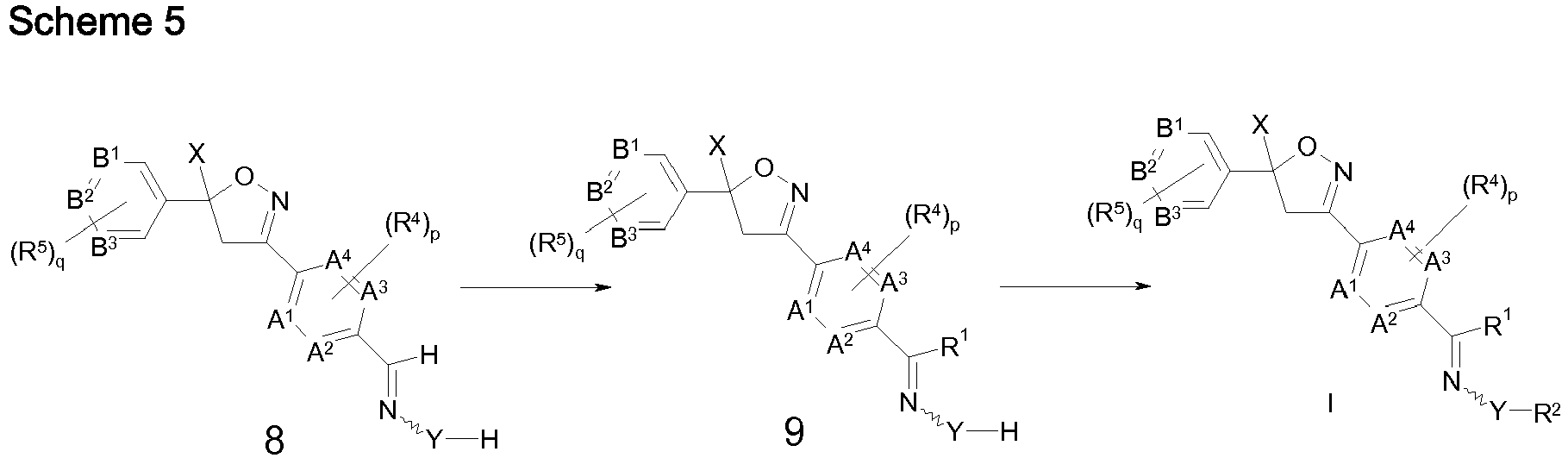
- Compounds of formula I can also be prepared as outlined in scheme 6 by reaction of an aldehyde or ketone 10 with a hydroxylamine derivative as for example described by
Stivers et al, WO 2006135763 . Alternatively, compounds of formula 1 can also be prepared by reaction of an aldehyde or ketone 10 with a hydrazine derivative as for example described by Fattorusso et al, J. Med. Chem. 2008, 51, 1333-1343. Compounds of formula 10 can be prepared as described for example byMihara et al, WO 2008/122375 .
- Compounds of formula I can also be prepared as outlined in scheme 7 by reaction of an organo lithium reagent or a Grignard reagent 11 with an electrophile as for example described by Fujisawa et al, Chem. Lett. 1983, 51, 1537-1540 for nitro compounds as electrophile or by
Ziegler et al, WO 9520569 

- Compounds of formula I can also be prepared as outlined in scheme 8 by reaction of a boronic acid 12 with an electrophile (e.g. a hydroxamic acid chloride) as for example described by Dolliver et al, Can. J. Chem. 2007, 85, 913-922. (M is a boronic acid derivative; Z may be a leaving group like halogen, OR" or SR"). Compounds of formula 11 can be prepared as for example in
WO 2005/085216 .
- Compounds of formula I can also be prepared as outlined in scheme 9 by reaction of an olefin of formula 13 with a nitrite as for example described by Sugamoto et al, Synlett, 1998, 1270-1272.

- Compounds of formula 3 can be prepared as outlined in scheme 10 by reaction of an aldehyde of formula 15 with hydroxylamine as for example described in
WO 2005085216 . Compounds of formula 15 can be prepared by metalation of a halogenate of formula 14 (J may be a halogen as for example Cl, Br, I) and reaction with a formylation reagent, or alternatively, palladium catalyzed carbon monoxide insertion as for example described inWO 2005085216 . Compounds of formula 14 can be prepared as for example described inWO 2005085216 for the oximes or as for example described by Liu et al, Bioorg. Med. Chem. Lett. 2008, 16, 1096-1102 for the hydrazones.
- If individual compounds cannot be prepared via the above-described routes, they can be prepared by derivatization of other compounds I or by customary modifications of the synthesis routes described.
- The reaction mixtures are worked up in the customary manner, for example by mixing with water, separating the phases, and, if appropriate, purifying the crude products by chromatography, for example on alumina or silica gel. Some of the intermediates and end products may be obtained in the form of colorless or pale brown viscous oils, which are freed or purified from volatile components under reduced pressure and at moderately elevated temperature. If the intermediates and end products are obtained as solids, they may be purified by recrystallization or digestion.
- The invention further relates to compounds of formula II which serve as intermediates in the synthesis of compounds I

- The invention further relates to compounds of formula III which also serve as intermediates in the synthesis of compounds I

- A2, Y, R1, R2, R4 and p have one of the above general or in particular preferred meanings; and
- J is hydrogen or halogen.
- Due to their excellent activity, the compounds of formula I may be used for controlling invertebrate pests.
- Accordingly, the present invention also provides an agricultural composition comprising at least one compound of the formula I, as defined above, a stereoisomer thereof and/or at least one agriculturally acceptable salt thereof, and at least one inert liquid and/or solid agriculturally acceptable carrier.
- The present invention also provides a veterinary composition comprising at least one compound of the formula I, as defined above, a stereoisomer thereof and/or at least one veterinarily acceptable salt thereof, and at least one inert liquid and/or solid veterinarily acceptable carrier.
- Such compositions may contain a single active compound of formula I or a salt thereof or a mixture of several active compounds of formula I or their salts according to the present invention. The composition according to the present invention may comprise an individual isomer or mixtures of isomers as well as individual tautomers or mixtures of tautomers.
- The present invention further relates to the use of a compound as defined above, of a stereoisomer and/or of an agriculturally or veterinarily acceptable salt thereof for combating invertebrate pests.
- The present invention further relates to the use of a compound as defined above, of a stereoisomer and/or of a veterinarily acceptable salt thereof, for treating or protecting an animal from infestation or infection by invertebrate pests.
Moreover the present invention also provides a method for controlling invertebrate pests which method comprises treating the pests, their food supply, their habitat or their breeding ground or a plant, plant propagation material, soil, area, material or environment in which the pests are growing or may grow, or the materials, plants, plant propagation material, soils, surfaces or spaces to be protected from invertebrate pest attack or infestation with a pesticidally effective amount of at least one imine compound of the formula I as defined above, a stereoisomer thereof and/or at least one agriculturally acceptable salt thereof. - Preferably, the method of the invention serves for protecting plants or plant propagation material (such as seed) and the plant which grows therefrom from animal pest attack or infestation and comprises treating the plants or the plant propagation material (such as seed) with a pesticidally effective amount of a compound of the formula I or an agriculturally acceptable salt thereof as defined above or with a pesticidally effective amount of an agricultural composition as defined above and below. The method of the invention is not limited to the protection of the "substrate" (plant, plant propagation materials, soil material etc.) which has been treated according to the invention, but also has a preventive effect, thus, for example, according protection to a plant which grows from a treated plant propagation materials (such as seed), the plant itself not having been treated.
- The invention furthermore relates to plant propagation material (such as seeds), comprising at least one compound of the formula I as defined above, a stereoisomer thereof and/or at least one agriculturally acceptable salt thereof.
- The invention also provides a method for treating or protecting an animal from infestation or infection by invertebrate pests which comprises bringing the animal in contact with a pesticidally effective amount of at least one compound of the formula I as defined above, a stereoisomer thereof and/or at least one veterinarily acceptable salt thereof.
- The compounds of the formula I and the pestidicidal compositions comprising them are effective agents for controlling arthropod pests and nematodes. Invertebrate pests controlled by the compounds of formula I include for example:
- insects from the order of the lepidopterans (Lepidoptera), for example Agrotis ypsilon, Agrotis segetum, Alabama argillacea, Anticarsia gemmatalis, Argyresthia conjugella, Autographa gamma, Bupalus piniarius, Cacoecia murinana, Capua reticulana, Cheimatobia brumata, Choristoneura fumiferana, Choristoneura occidentalis, Cirphis unipuncta, Cydia pomonella, Dendrolimus pini, Diaphania nitidalis, Diatraea grandiosella, Earias insulana, Elasmopalpus lignosellus, Eupoecilia ambiguella, Evetria bouliana, Feltia subterranea, Galleria mellonella, Grapholitha funebrana, Grapholitha molesta, Heliothis armigera, Heliothis virescens, Heliothis zea, Hellula undalis, Hibernia defoliaria, Hyphantria cunea, Hyponomeuta malinellus, Keiferia lycopersicella, Lambdina fiscellaria, Laphygma exigua, Leucoptera coffeella, Leucoptera scitella, Lithocolletis blancardella, Lobesia botrana, Loxostege sticticalis, Lymantria dispar, Lymantria monacha, Lyonetia clerkella, Malacosoma neustria, Mamestra brassicae, Orgyia pseudotsugata, Ostrinia nubilalis, Panolis flammea, Pectinophora gossypiella, Peridroma saucia, Phalera bucephala, Phthorimaea operculella, Phyllocnistis citrella, Pieris brassicae, Plathypena scabra, Plutella xylostella, Pseudoplusia includens, Rhyacionia frustrana, Scrobipalpula absoluta, Sitotroga cerealella, Sparganothis pilleriana, Spodoptera frugiperda, Spodoptera littoralis, Spodoptera litura, Thaumatopoea pityocampa, Tortrix viridana, Trichoplusia ni and Zeiraphera canadensis;
- beetles (Coleoptera), for example Agrilus sinuatus, Agriotes lineatus, Agriotes obscurus, Amphimallus solstitialis, Anisandrus dispar, Anthonomus grandis, Anthonomus pomorum, Atomaria linearis, Blastophagus piniperda, Blitophaga undata, Bruchus rufimanus, Bruchus pisorum, Bruchus lentis, Byctiscus betulae, Cassida nebulosa, Cerotoma trifurcata, Ceuthorrhynchus assimilis, Ceuthorrhynchus napi, Chaetocnema tibialis, Conoderus vespertinus, Crioceris asparagi, Diabrotica longicornis, Diabrotica 12 punctata, Diabrotica virgifera, Epilachna varivestis, Epitrix hirtipennis, Eutinobothrus brasiliensis, Hylobius abietis, Hypera brunneipennis, Hypera postica, lps typographus, Lema bilineata, Lema melanopus, Leptinotarsa decemlineata, Limonius californicus, Lissorhoptrus oryzophilus, Melanotus communis, Meligethes aeneus, Melolontha hippocastani, Melolontha melolontha, Oulema oryzae, Ortiorrhynchus sulcatus, Otiorrhynchus ovatus, Phaedon cochleariae, Phyllotreta chrysocephala, Phyllophaga sp., Phyllopertha horticola, Phyllotreta nemorum, Phyllotreta striolata, Popillia japonica, Sitona lineatus and Sitophilus granaria;
- dipterans (Diptera), for example Aedes aegypti, Aedes vexans, Anastrepha ludens, Anopheles maculipennis, Ceratitis capitata, Chrysomya bezziana, Chrysomya hominivorax, Chrysomya macellaria, Contarinia sorghicola, Cordylobia anthropophaga, Culex pipiens, Dacus cucurbitae, Dacus oleae, Dasineura brassicae, Fannia canicularis, Gasterophilus intestinalis, Glossina morsitans, Haematobia irritans, Haplodiplosis equestris, Hylemyia platura, Hypoderma lineata, Liriomyza sativae, Liriomyza trifolii, Lucilia caprina, Lucilia cuprina, Lucilia sericata, Lycoria pectoralis, Mayetiola destructor, Musca domestica, Muscina stabulans, Oestrus ovis, Oscinella frit, Pegomya hysocyami, Phorbia antiqua, Phorbia brassicae, Phorbia coarctata, Rhagoletis cerasi, Rhagoletis pomonella, Tabanus bovinus, Tipula oleracea and Tipula paludosa;
- thrips (Thysanoptera), e.g. Dichromothrips corbetti, Frankliniella fusca, Frankliniella occidentalis, Frankliniella tritici, Scirtothrips citri, Thrips oryzae, Thrips palmi and Thrips tabaci;
- hymenopterans (Hymenoptera), e.g. Athalia rosae, Atta cephalotes, Atta sexdens, Atta texana, Hoplocampa minuta, Hoplocampa testudinea, Monomorium pharaonis, Solenopsis geminata and Solenopsis invicta;
- heteropterans (Heteroptera), e.g. Acrosternum hilare, Blissus leucopterus, Cyrtopeltis notatus, Dysdercus cingulatus, Dysdercus intermedius, Eurygaster integriceps, Euschistus impictiventris, Leptoglossus phyllopus, Lygus lineolaris, Lygus pratensis, Nezara viridula, Piesma quadrata, Solubea insularis and Thyanta perditor;
- homopterans (Homoptera), e.g. Acyrthosiphon onobrychis, Adelges laricis, Aphidula nasturtii, Aphis fabae, Aphis forbesi, Aphis pomi, Aphis gossypii, Aphis grossulariae, Aphis schneideri, Aphis spiraecola, Aphis sambuci, Acyrthosiphon pisum, Aulacorthum solani, Bemisia argentifolii, Brachycaudus cardui, Brachycaudus helichrysi, Brachycaudus persicae, Brachycaudus prunicola, Brevicoryne brassicae, Capitophorus horni, Cerosipha gossypii, Chaetosiphon fragaefolii, Cryptomyzus ribis, Dreyfusia nordmannianae, Dreyfusia piceae, Dysaphis radicola, Dysaulacorthum pseudosolani, Dysaphis plantaginea, Dysaphis pyri, Empoasca fabae, Hyalopterus pruni, Hyperomyzus lactucae, Macrosiphum avenae, Macrosiphum euphorbiae, Macrosiphon rosae, Megoura viciae, Melanaphis pyrarius, Metopolophium dirhodum, Myzodes persicae, Myzus ascalonicus, Myzus cerasi, Myzus persicae, Myzus varians, Nasonovia ribis-nigri, Nilaparvata lugens, Pemphigus bursarius, Perkinsiella saccharicida, Phorodon humuli, Psylla mali, Psylla piri, Rhopalomyzus ascalonicus, Rhopalosiphum maidis, Rhopalosiphum padi, Rhopalosiphum insertum, Sappaphis mala, Sappaphis mali, Schizaphis graminum, Schizoneura lanuginosa, Sitobion avenae, Sogatella furcifera Trialeurodes vaporariorum, Toxoptera aurantiiand, and Viteus vitifolii;
- termites (Isoptera), e.g. Calotermes flavicollis, Leucotermes flavipes, Reticulitermes flavipes, Reticulitermes lucifugus und Termes natalensis;
- orthopterans (Orthoptera), e.g. Acheta domestica, Blatta orientalis, Blattella germanica, Forficula auricularia, Gryllotalpa gryllotalpa, Locusta migratoria, Melanoplus bivittatus, Melanoplus femur-rubrum, Melanoplus mexicanus, Melanoplus sanguinipes, Melanoplus spretus, Nomadacris septemfasciata, Periplaneta americana, Schistocerca americana, Schistocerca peregrina, Stauronotus maroccanus and Tachycines asynamorus;
- Arachnoidea, such as arachnids (Acarina), e.g. of the families Argasidae, Ixodidae and Sarcoptidae, such as Amblyomma americanum, Amblyomma variegatum, Argas persicus, Boophilus annulatus, Boophilus decoloratus, Boophilus microplus, Dermacentor silvarum, Hyalomma truncatum, Ixodes ricinus, Ixodes rubicundus, Ornithodorus moubata, Otobius megnini, Dermanyssus gallinae, Psoroptes ovis, Rhipicephalus appendiculatus, Rhipicephalus evertsi, Sarcoptes scabiei, and Eriophyidae spp. such as Aculus schlechtendali, Phyllocoptrata oleivora and Eriophyes sheldoni; Tarsonemidae spp. such as Phytonemus pallidus and Polyphagotarsonemus latus; Tenuipalpidae spp. such as Brevipalpus phoenicis; Tetranychidae spp. such as Tetranychus cinnabarinus, Tetranychus kanzawai, Tetranychus pacificus, Tetranychus telarius and Tetranychus urticae, Panonychus ulmi, Panonychus citri, and oligonychus pratensis;
- Siphonatera, e.g. Xenopsylla cheopsis, Ceratophyllus spp ;
- The compositions and compounds of formula I are useful for the control of nematodes, especially plant parasitic nematodes such as root knot nematodes, Meloidogyne hapla,Meloidogyne incognita, Meloidogyne javanica, and other Meloidogyne species;
cyst-forming nematodes, Globodera rostochiensis and other Globodera species; Heterodera avenae, Heterodera glycines, Heterodera schachtii, Heterodera trifolii, and other Heterodera species; Seed gall nematodes, Anguina species; Stem and foliar nematodes, Aphelenchoides species; Sting nematodes, Belonolaimus longicaudatus and other Belonolaimus species; Pine nematodes, Bursaphelenchus xylophilus and other Bursaphelenchus species; Ring nematodes, Criconema species, Criconemella species, Criconemoides species, Mesocriconema species; Stem and bulb nematodes, Ditylenchus destructor, Ditylenchus dipsaci and other Ditylenchus species; Awl nematodes, Dolichodorus species; Spiral nematodes, Heliocotylenchus multicinctus and other Helicotylenchus species; Sheath and sheathoid nematodes, Hemicycliophora species and Hemicriconemoides species; Hirshmanniella species; Lance nematodes, Hoploaimus species; false rootknot nematodes, Nacobbus species; Needle nematodes, Longidorus elongatus and other Longidorus species; Pin nematodes, Paratylenchus species; Lesion nematodes, Pratylenchus neglectus, Pratylenchus penetrans, Pratylenchus curvitatus, Pratylenchus goodeyi and other Pratylenchus species; Burrowing nematodes, Radopholus similis and other Radopholus species; Reniform nematodes, Rotylenchus robustus and other Rotylenchus species; Scutellonema species; Stubby root nematodes, Trichodorus primitivus and other Trichodorus species, Paratrichodorus species; Stunt nematodes, Tylenchorhynchus claytoni, Tylenchorhynchus dubius and other Tylenchorhynchus species; Citrus nematodes, Tylenchulus species; Dagger nematodes, Xiphinema species; and other plant parasitic nematode species. - In a preferred embodiment of the invention the compounds of formula I are used for controlling insects or arachnids, in particular insects of the orders Lepidoptera, Coleoptera, Thysanoptera and Homoptera and arachnids of the order Acarina. The compounds of the formula I according to the present invention are particularly useful for controlling insects of the order Thysanoptera and Homoptera.
- The compounds of formula I or the pesticidal compositions comprising them may be used to protect growing plants and crops from attack or infestation by invertebrate pests, especially insects, acaridae or arachnids by contacting the plant/crop with a pesticidally effective amount of compounds of formula I. The term "crop" refers both to growing and harvested crops.
- The compounds of formula I can be converted into the customary formulations, for example solutions, emulsions, suspensions, dusts, powders, pastes and granules. The use form depends on the particular intended purpose; in each case, it should ensure a fine and even distribution of the compound according to the invention.
- The formulations are prepared in a known manner (see e.g. for review
US 3,060,084 ,EP-A 707 445 WO 91/13546 US 4,172,714 ,US 4,144,050 ,US 3,920,442 ,US 5,180,587 ,US 5,232,701 ,US 5,208,030 ,GB 2,095,558 US 3,299,566 , Klingman, Weed Control as a Science, John Wiley and Sons, Inc., New York, 1961, Hance et al., Weed Control Handbook, 8th Ed., Blackwell Scientific Publications, Oxford, 1989 and Mollet, H., Grubemann, A., Formulation technology, Wiley VCH Verlag GmbH, Weinheim (Germany), 2001, 2. D. A. Knowles, Chemistry and Technology of Agrochemical Formulations, Kluwer Academic Publishers, Dordrecht, 1998 (ISBN 0-7514-0443-8), for example by extending the active compound with auxiliaries suitable for the formulation of agrochemicals, such as solvents and/or carriers, if desired emulsifiers, surfactants and dispersants, preservatives, antifoaming agents, anti-freezing agents, for seed treatment formulation also optionally colorants and/or binders and/or gelling agents. - Examples of suitable solvents are water, aromatic solvents (for example Solvesso products, xylene), paraffins (for example mineral oil fractions), alcohols (for example methanol, butanol, pentanol, benzyl alcohol), ketones (for example cyclohexanone, gamma-butyrolactone), pyrrolidones (N-methylpyrrolidone [NMP], N-octylpyrrolidone [NOP]), acetates (glycol diacetate), glycols, fatty acid dimethylamides, fatty acids and fatty acid esters. In principle, solvent mixtures may also be used.
- Suitable emulsifiers are non-ionic and anionic emulsifiers (for example polyoxyethylene fatty alcohol ethers, alkylsulfonates and arylsulfonates).
- Examples of dispersants are lignin-sulfite waste liquors and methylcellulose.
- Suitable surfactants used are alkali metal, alkaline earth metal and ammonium salts of lignosulfonic acid, naphthalenesulfonic acid, phenolsulfonic acid, dibutylnaphthalenesulfonic acid, alkylarylsulfonates, alkyl sulfates, alkylsulfonates, fatty alcohol sulfates, fatty acids and sulfated fatty alcohol glycol ethers, furthermore condensates of sulfonated naphthalene and naphthalene derivatives with formaldehyde, condensates of naphthalene or of naphthalenesulfonic acid with phenol and formaldehyde, polyoxyethylene octylphenol ether, ethoxylated isooctylphenol, octylphenol, nonylphenol, alkylphenol polyglycol ethers, tributylphenyl polyglycol ether, tristearylphenyl polyglycol ether, alkylaryl polyether alcohols, alcohol and fatty alcohol ethylene oxide condensates, ethoxylated castor oil, polyoxyethylene alkyl ethers, ethoxylated polyoxypropylene, lauryl alcohol polyglycol ether acetal, sorbitol esters, lignosulfite waste liquors and methylcellulose.
- Substances which are suitable for the preparation of directly sprayable solutions, emulsions, pastes or oil dispersions are mineral oil fractions of medium to high boiling point, such as kerosene or diesel oil, furthermore coal tar oils and oils of vegetable or animal origin, aliphatic, cyclic and aromatic hydrocarbons, for example toluene, xylene, paraffin, tetrahydronaphthalene, alkylated naphthalenes or their derivatives, methanol, ethanol, propanol, butanol, cyclohexanol, cyclohexanone, isophorone, highly polar solvents, for example dimethyl sulfoxide, N-methylpyrrolidone or water.
- Also anti-freezing agents such as glycerin, ethylene glycol, propylene glycol and bactericides such as can be added to the formulation.
- Suitable antifoaming agents are for example antifoaming agents based on silicon or magnesium stearate.
- A suitable preservative is e.g. dichlorophen.
- Seed treatment formulations may additionally comprise binders and optionally colorants.
- Binders can be added to improve the adhesion of the active materials on the seeds after treatment. Suitable binders are block copolymers EO/PO surfactants but also polyvinylalcoholsl, polyvinylpyrrolidones, polyacrylates, polymethacrylates, polybutenes, polyisobutylenes, polystyrene, polyethyleneamines, polyethyleneamides, polyethyleneimines (Lupasol®, Polymin®), polyethers, polyurethans, polyvinylacetate, tylose and copolymers derived from these polymers.
- Optionally, also colorants can be included in the formulation. Suitable colorants or dyes for seed treatment formulations are Rhodamin B, C.I. Pigment Red 112, C.I. Solvent Red 1, pigment blue 15:4, pigment blue 15:3, pigment blue 15:2, pigment blue 15:1, pigment blue 80, pigment yellow 1, pigment yellow 13, pigment red 112, pigment red 48:2, pigment red 48:1, pigment red 57:1, pigment red 53:1, pigment orange 43, pigment orange 34, pigment orange 5, pigment green 36, pigment green 7, pigment white 6, pigment brown 25, basic violet 10, basic violet 49, acid red 51, acid red 52, acid red 14, acid blue 9, acid yellow 23, basic red 10, basic red 108.
- Examples of a gelling agent is carrageen (Satiagel®).
- Powders, materials for spreading and dustable products can be prepared by mixing or concomitantly grinding the active substances with a solid carrier.
- Granules, for example coated granules, impregnated granules and homogeneous granules, can be prepared by binding the active compounds to solid carriers.
- Examples of solid carriers are mineral earths such as silica gels, silicates, talc, kaolin, attaclay, limestone, lime, chalk, bole, loess, clay, dolomite, diatomaceous earth, calcium sulfate, magnesium sulfate, magnesium oxide, ground synthetic materials, fertilizers, such as, for example, ammonium sulfate, ammonium phosphate, ammonium nitrate, ureas, and products of vegetable origin, such as cereal meal, tree bark meal, wood meal and nutshell meal, cellulose powders and other solid carriers.
- In general, the formulations comprise from 0.01 to 95% by weight, preferably from 0.1 to 90% by weight, of the active compound(s). In this case, the active compound(s) are employed in a purity of from 90% to 100% by weight, preferably 95% to 100% by weight (according to NMR spectrum).
- For seed treatment purposes, respective formulations can be diluted 2-10 fold leading to concentrations in the ready to use preparations of 0.01 to 60% by weight active compound by weight, preferably 0.1 to 40% by weight.
- The compounds of formula I can be used as such, in the form of their formulations or the use forms prepared therefrom, for example in the form of directly sprayable solutions, powders, suspensions or dispersions, emulsions, oil dispersions, pastes, dustable products, materials for spreading, or granules, by means of spraying, atomizing, dusting, spreading or pouring. The use forms depend entirely on the intended purposes; they are intended to ensure in each case the finest possible distribution of the active compound(s) according to the invention.
- Aqueous use forms can be prepared from emulsion concentrates, pastes or wettable powders (sprayable powders, oil dispersions) by adding water. To prepare emulsions, pastes or oil dispersions, the substances, as such or dissolved in an oil or solvent, can be homogenized in water by means of a wetter, tackifier, dispersant or emulsifier. However, it is also possible to prepare concentrates composed of active substance, wetter, tackifier, dispersant or emulsifier and, if appropriate, solvent or oil, and such concentrates are suitable for dilution with water.
- The active compound concentrations in the ready-to-use preparations can be varied within relatively wide ranges. In general, they are from 0.0001 to 10%, preferably from 0.01 to 1% per weight.
- The active compound(s) may also be used successfully in the ultra-low-volume process (ULV), it being possible to apply formulations comprising over 95% by weight of active compound, or even to apply the active compound without additives.
- The following are examples of formulations:
- 1. Products for dilution with water for foliar applications. For seed treatment purposes, such products may be applied to the seed diluted or undiluted.
- A) Water-soluble concentrates (SL, LS)
10 parts by weight of the active compound(s) are dissolved in 90 parts by weight of water or a water-soluble solvent. As an alternative, wetters or other auxiliaries are added. The active compound(s) dissolves upon dilution with water, whereby a formulation with 10 % (w/w) of active compound(s) is obtained. - B) Dispersible concentrates (DC)
20 parts by weight of the active compound(s) are dissolved in 70 parts by weight of cyclohexanone with addition of 10 parts by weight of a dispersant, for example polyvinylpyrrolidone. Dilution with water gives a dispersion, whereby a formulation with 20% (w/w) of active compound(s) is obtained. - C) Emulsifiable concentrates (EC)
15 parts by weight of the active compound(s) are dissolved in 7 parts by weight of xylene with addition of calcium dodecylbenzenesulfonate and castor oil ethoxylate (in each case 5 parts by weight). Dilution with water gives an emulsion, whereby a formulation with 15% (w/w) of active compound(s) is obtained. - D) Emulsions (EW, EO, ES)
25 parts by weight of the active compound(s) are dissolved in 35 parts by weight of xylene with addition of calcium dodecylbenzenesulfonate and castor oil ethoxylate (in each case 5 parts by weight). This mixture is introduced into 30 parts by weight of water by means of an emulsifier machine (e.g. Ultraturrax) and made into a homogeneous emulsion. Dilution with water gives an emulsion, whereby a formulation with 25% (w/w) of active compound(s) is obtained. - E) Suspensions (SC, OD, FS)
In an agitated ball mill, 20 parts by weight of the active compound(s) are comminuted with addition of 10 parts by weight of dispersants, wetters and 70 parts by weight of water or of an organic solvent to give a fine active compound(s) suspension. Dilution with water gives a stable suspension of the active compound(s), whereby a formulation with 20% (w/w) of active compound(s) is obtained. - F) Water-dispersible granules and water-soluble granules (WG, SG)
50 parts by weight of the active compound(s) are ground finely with addition of 50 parts by weight of dispersants and wetters and made as water-dispersible or water-soluble granules by means of technical appliances (for example extrusion, spray tower, fluidized bed). Dilution with water gives a stable dispersion or solution of the active compound(s), whereby a formulation with 50% (w/w) of active compound(s) is obtained. - G) Water-dispersible powders and water-soluble powders (WP, SP, SS, WS)
75 parts by weight of the active compound(s) are ground in a rotor-stator mill with addition of 25 parts by weight of dispersants, wetters and silica gel. Dilution with water gives a stable dispersion or solution of the active compound(s), whereby a formulation with 75% (w/w) of active compound(s) is obtained. - H) Gel-Formulation (GF)
In an agitated ball mill, 20 parts by weight of the active compound(s) are comminuted with addition of 10 parts by weight of dispersants, 1 part by weight of a gelling agent wetters and 70 parts by weight of water or of an organic solvent to give a fine active compound(s) suspension. Dilution with water gives a stable suspension of the active compound(s), whereby a formulation with 20% (w/w) of active compound(s) is obtained.
- A) Water-soluble concentrates (SL, LS)
- 2. Products to be applied undiluted for foliar applications. For seed treatment purposes, such products may be applied to the seed diluted or undiluted.
- I) Dustable powders (DP, DS)
5 parts by weight of the active compound(s) are ground finely and mixed intimately with 95 parts by weight of finely divided kaolin. This gives a dustable product having 5% (w/w) of active compound(s) - J) Granules (GR, FG, GG, MG)
0.5 parts by weight of the active compound(s) is ground finely and associated with 95.5 parts by weightof carriers, whereby a formulation with 0.5% (w/w) of active compound(s) is obtained. Current methods are extrusion, spray-drying or the fluidized bed. This gives granules to be applied undiluted for foliar use. - K) ULV solutions (UL)
10 parts by weight of the active compound(s) are dissolved in 90 parts by weight of an organic solvent, for example xylene. This gives a product having 10% (w/w) of active compound(s), which is applied undiluted for foliar use.
- I) Dustable powders (DP, DS)
- The compounds of formula I are also suitable for the treatment of plant propagation materials (such as seed). Conventional seed treatment formulations include for example flowable concentrates FS, solutions LS, powders for dry treatment DS, water dispersible powders for slurry treatment WS, water-soluble powders SS and emulsion ES and EC and gel formulation GF. These formulations can be applied to the seed diluted or undiluted. Application to the seeds is carried out before sowing, either directly on the seeds or after having preger-minated the latter
- In a preferred embodiment a FS formulation is used for seed treatment. Typcially, a FS formulation may comprise 1-800 g/l of active ingredient, 1-200 g/l Surfactant, 0 to 200 g/l antifreezing agent, 0 to 400 g/l of binder, 0 to 200 g/l of a pigment and up to 1 liter of a solvent, preferably water.
- Other preferred FS formulations of compounds of formula I for seed treatment comprise from 0.5 to 80 wt% of the active ingredient, from 0,05 to 5 wt% of a wetter, from 0.5 to 15 wt% of a dispersing agent, from 0,1 to 5 wt% of a thickener, from 5 to 20 wt% of an anti-freeze agent, from 0,1 to 2 wt% of an anti-foam agent, from 1 to 20 wt% of a pigment and/or a dye, from 0 to 15 wt% of a sticker /adhesion agent, from 0 to 75 wt% of a filler/vehicle, and from 0,01 to 1 wt% of a preservative.
- Various types of oils, wetters, adjuvants, herbicides, fungicides, other pesticides, or bactericides may be added to the active ingredients, if appropriate just immediately prior to use (tank mix). These agents usually are admixed with the agents according to the invention in a weight ratio of 1:10 to 10:1.
- The compounds of formula I are effective through both contact (via soil, glass, wall, bed net, carpet, plant parts or animal parts), and ingestion (bait, or plant part).
- For use against ants, termites, wasps, flies, mosquitos, crickets, or cockroaches, compounds of formula I are preferably used in a bait composition.
- The bait can be a liquid, a solid or a semisolid preparation (e.g. a gel). Solid baits can be formed into various shapes and forms suitable to the respective application e.g. granules, blocks, sticks, disks. Liquid baits can be filled into various devices to ensure proper application, e.g. open containers, spray devices, droplet sources, or evaporation sources. Gels can be based on aqueous or oily matrices and can be formulated to particular necessities in terms of stickyness, moisture retention or aging characteristics.
- The bait employed in the composition is a product, which is sufficiently attractive to incite insects such as ants, termites, wasps, flies, mosquitos, crickets etc. or cockroaches to eat it. The attractiveness can be manipulated by using feeding stimulants or sex pheromones. Food stimulants are chosen, for example, but not exclusively, from animal and/or plant proteins (meat-, fish- or blood meal, insect parts, egg yolk), from fats and oils of animal and/or plant origin, or mono-, oligo- or polyorganosaccharides, especially from sucrose, lactose, fructose, dextrose, glucose, starch, pectin or even molasses or honey. Fresh or decaying parts of fruits, crops, plants, animals, insects or specific parts thereof can also serve as a feeding stimulant. Sex pheromones are known to be more insect specific. Specific pheromones are described in the literature and are known to those skilled in the art.
- Formulations of compounds of formula I as aerosols (e.g in spray cans), oil sprays or pump sprays are highly suitable for the non-professional user for controlling pests such as flies, fleas, ticks, mosquitos or cockroaches. Aerosol recipes are preferably composed of the active compound, solvents such as lower alcohols (e.g. methanol, ethanol, propanol, butanol), ketones (e.g. acetone, methyl ethyl ketone), paraffin hydrocarbons (e.g. kerosenes) having boiling ranges of approximately 50 to 250°C, dimethylfomaamide, N methylpyrrolidone, dimethyl sulphoxide, aromatic hydrocarbons such as toluene, xylene, water, furthermore auxiliaries such as emulsifiers such as sorbitol monooleate, oleyl ethoxylate having 3-7 mol of ethylene oxide, fatty alcohol ethoxylate, perfume oils such as ethereal oils, esters of medium fatty acids with lower alcohols, aromatic carbonyl compounds, if appropriate stabilizers such as sodium benzoate, amphoteric surfactants, lower epoxides, triethyl orthoformate and, if required, propellants such as propane, butane, nitrogen, compressed air, dimethyl ether, carbon dioxide, nitrous oxide, or mixtures of these gases.
- The oil spray formulations differ from the aerosol recipes in that no propellants are used.
- The compounds of formula I and their respective compositions can also be used in mosquito and fumigating coils, smoke cartridges, vaporizer plates or long-term vaporizers and also in moth papers, moth pads or other heat-independent vaporizer systems.
- Methods to control infectious diseases transmitted by insects (e.g. malaria, dengue and yellow fever, lymphatic filariasis, and leishmaniasis) with compounds of formula I and their respective compositions also comprise treating surfaces of huts and houses, air spraying and impregnation of curtains, tents, clothing items, bed nets, tsetse-fly trap or the like. Insecticidal compositions for application to fibers, fabric, knitgoods, nonwovens, netting material or foils and tarpaulins preferably comprise a mixture including the insecticide, optionally a repellent and at least one binder. Suitable repellents for example are N,N-diethyl-meta-toluamide (DEET), N,N-diethylphenylacetamide (DEPA), 1-(3-cyclohexan-1-yl-carbonyl)-2-methylpiperine, (2-hydroxymethylcyclohexyl) acetic acid lactone, 2-ethyl-1,3-hexandiol, indalone, Methylneodecanamide (MNDA), a pyrethroid not used for insect control such as {(+/-)-3-allyl-2-methyl-4-oxocyclopent-2-(+)-enyl-(+)-trans-chrysantemate (Esbiothrin), a repellent derived from or identical with plant extracts like limonene, eugenol, (+)-Eucamalol (1), (-)-1-epi-eucamalol or crude plant extracts from plants like Eucalyptus maculata, Vitex rotundifolia, Cymbopogan martinii, Cymbopogan citratus (lemon grass), Cymopogan nartdus (citronella). Suitable binders are selected for example from polymers and copolymers of vinyl esters of aliphatic acids (such as such as vinyl acetate and vinyl versatate), acrylic and methacrylic esters of alcohols, such as butyl acrylate, 2-ethylhexylacrylate, and methyl acrylate, mono- and diethylenically unsaturated hydrocarbons, such as styrene, and aliphatic diens, such as butadiene.
- The impregnation of curtains and bednets is done in general by dipping the textile material into emulsions or dispersions of the active compounds of formula I or spraying them onto the nets.
- Methods which can be employed for treating the seed are, in principle, all suitable seed treatment and especially seed dressing techniques known in the art, such as seed coating (e.g. seed pelleting), seed dusting and seed imbibition (e.g. seed soaking). Here, "seed treatment" refers to all methods that bring seeds and the compounds of formula I into contact with each other, and "seed dressing" to methods of seed treatment which provide the seeds with an amount of the compounds of formula I, i.e. which generate a seed comprising the compound of formula I. In principle, the treatment can be applied to the seed at any time from the harvest of the seed to the sowing of the seed. The seed can be treated immediately before, or during, the planting of the seed, for example using the "planter's box" method. However, the treatment may also be carried out several weeks or months, for example up to 12 months, before planting the seed, for example in the form of a seed dressing treatment, without a substantially reduced efficacy being observed.
- Expediently, the treatment is applied to unsown seed. As used herein, the term "unsown seed" is meant to include seed at any period from the harvest of the seed to the sowing of the seed in the ground for the purpose of germination and growth of the plant.
- Specifically, a procedure is followed in the treatment in which the seed is mixed, in a suitable device, for example a mixing device for solid or solid/liquid mixing partners, with the desired amount of seed treatment formulations, either as such or after previous dilution with water, until the composition is distributed uniformly on the seed. If appropriate, this is followed by a drying step.
- The compounds of formula I or veterinarily acceptable salts thereof are in particular also suitable for being used for combating parasites in and on animals.
- A further object of the present invention is therefore to provide new methods for controlling parasites in and on animals. Another object of the invention is to provide safer pesticides for animals. Another object of the invention is further to provide pesticides for animals that may be used in lower doses than existing pesticides. And another object of the invention is to provide pesticides for animals, which provide a long residual control of the parasites.
- The invention also relates to compositions containing a parasiticidally effective amount of compounds of formula I or veterinarily acceptable salts thereof and an acceptable carrier, for combating parasites in and on animals.
- The present invention also provides a method for treating, controlling, preventing and protecting animals against infestation and infection by parasites, which comprises orally, topically or parenterally administering or applying to the animals a parasiticidally effective amount of a compound of formula I or veterinarily ac-ceptable salts thereof or a composition comprising it.
- The present invention also provides a non-therapeutic method for treating, controlling, preventing and protecting animals against infestation and infection by parasites, which comprises applying to a locus a parasiticidally effective amount of a compound of formula I or the enantiomers or veterinarily acceptable salts thereof or a composition comprising it.
- The invention also provides a process for the preparation of a composition for treating, controlling, preventing or protecting animals against infestation or infection by parasites which comprises including a parasiticidally effective amount of a compound of formula I or the veterinarily acceptable salts thereof or a composition comprising it.
- The invention relates further to the use of compounds of formula I for treating, controlling, preventing or protecting animals against infestation or infection by parasites. The invention relates also to the use of a compound of formula I, or a composition comprising it, for the manufacture of a medicament for the therapeutic treatment of animals against infections or infestions by parasites.
- Activity of compounds against agricultural pests does not suggest their suitability for control of endo- and ectoparasites in and on animals which requires, for example, low, nonemetic dosages in the case of oral application, metabolic compatibility with the animal, low toxicity, and a safe handling.
- Surprisingly, it has been found that compounds of formula I are suitable for com-bating endo- and ectoparasites in and on animals.
- Compounds of formula I or veterinarily acceptable salts thereof and compositions comprising them are preferably used for controlling and preventing infestations and infections animals including warm-blooded animals (including humans) and fish. They are for example suitable for controlling and preventing infestations and infections in mammals such as cattle, sheep, swine, camels, deer, horses, pigs, poultry, rabbits, goats, dogs and cats, water buffalo, donkeys, fallow deer and reindeer, and also in fur-bearing animals such as mink, chinchilla and raccoon, birds such as hens, geese, turkeys and ducks and fish such as fresh- and salt-water fish such as trout, carp and eels.
- Compounds of formula I or veterinarily acceptable salts thereof and compositions comprising them are preferably used for controlling and preventing infestations and infections in domestic animals, such as dogs or cats.
- Infestations in warm-blooded animals and fish include, but are not limited to, lice, biting lice, ticks, nasal bots, keds, biting flies, muscoid flies, flies, myiasitic fly larvae, chiggers, gnats, mosquitoes and fleas.
- The compounds of formula I or veterinarily acceptable salts thereof and compositions comprising them are suitable for systemic and/or non-systemic control of ecto- and/or endoparasites. They are active against all or some stages of development.
- The compounds of formula I are especially useful for combating ectoparasites.
- The compounds of formula I are especially useful for combating endoparasites.
- The compounds of formula I are especially useful for combating parasites of the following orders and species, respectively:
- fleas (Siphonaptera), e.g. Ctenocephalides felis, Ctenocephalides canis, Xenopsylla cheopis, Pulex irritans, Tunga penetrans, and Nosopsyllus fasciatus,
- cockroaches (Blattaria - Blattodea), e.g. Blattella germanica, Blattella asahinae, Periplaneta americana, Periplaneta japonica, Periplaneta brunnea, Periplaneta fuligginosa, Periplaneta australasiae, and Blatta orientalis,
- flies, mosquitoes (Diptera), e.g. Aedes aegypti, Aedes albopictus, Aedes vexans, Anastrepha ludens, Anopheles maculipennis, Anopheles crucians, Anopheles albimanus, Anopheles gambiae, Anopheles freeborni, Anopheles leucosphyrus, Anopheles minimus, Anopheles quadrimaculatus, Calliphora vicina, Chrysomya bezziana, Chrysomya hominivorax, Chrysomya macellaria, Chrysops discalis, Chrysops silacea, Chrysops atlanticus, Cochliomyia hominivorax, Cordylobia anthropophaga, Culicoides furens, Culex pipiens, Culex nigripalpus, Culex quinquefasciatus, Culex tarsalis, Culiseta inornata, Culiseta melanura, Dermatobia hominis, Fannia canicularis, Gasterophilus intestinalis, Glossina morsitans, Glossina palpalis, Glossina fuscipes, Glossina tachinoides, Haematobia irritans, Haplodiplosis equestris, Hippelates spp., Hypoderma lineata, Leptoconops torrens, Lucilia caprina, Lucilia cuprina, Lucilia sericata, Lycoria pectoralis, Mansonia spp., Musca domestica, Muscina stabulans, Oestrus ovis, Phlebotomus argentipes, Psorophora columbiae, Psorophora discolor, Prosimulium mixtum, Sarcophaga haemorrhoidalis, Sarcophaga sp., Simulium vittatum, Stomoxys calcitrans, Tabanus bovinus, Tabanus atratus, Tabanus lineola, and Tabanus similis,
- lice (Phthiraptera), e.g. Pediculus humanus capitis, Pediculus humanus corporis, Pthirus pubis, Haematopinus eurysternus, Haematopinus suis, Linognathus vituli, Bovicola bovis, Menopon gallinae, Menacanthus stramineus and Solenopotes capillatus.
- ticks and parasitic mites (Parasitiformes): ticks (Ixodida), e.g. Ixodes scapularis, Ixodes holocyclus, Ixodes pacificus, Rhiphicephalus sanguineus, Dermacentor andersoni, Dermacentor variabilis, Amblyomma americanum, Ambryomma maculatum, Ornithodorus hermsi, Ornithodorus turicata and parasitic mites (Mesostigmata), e.g. Ornithonyssus bacoti and Dermanyssus gallinae,
- actinedida (Prostigmata) and Acaridida (Astigmata) e.g. Acarapis spp., Cheyletiella spp., Ornithocheyletia spp., Myobia spp., Psorergates spp., Demodex spp., Trombicula spp., Listrophorus spp., Acarus spp., Tyrophagus spp., Caloglyphus spp., Hypodectes spp., Pterolichus spp., Psoroptes spp., Chorioptes spp., Otodectes spp., Sarcoptes spp., Notoedres spp.,Knemidocoptes spp., Cytodites spp., and Laminosioptes spp,
- bugs (Heteropterida): Cimex lectularius, Cimex hemipterus, Reduvius senilis, Triatoma spp., Rhodnius ssp., Panstrongylus ssp. and Arilus critatus,
- Anoplurida, e.g. Haematopinus spp., Linognathus spp., Pediculus spp., Phtirus spp., and Solenopotes spp,
- Mallophagida (suborders Arnblycerina and Ischnocerina), e.g. Trimenopon spp., Menopon spp., Trinoton spp., Bovicola spp., Werneckiella spp., Lepikentron spp., Trichodectes spp., and Felicola spp,
- Roundworms Nematoda:
- Wipeworms and Trichinosis (Trichosyringida), e.g. Trichinellidae (Trichinella spp.), (Trichuridae) Trichuris spp., Capillaria spp,
- Rhabditida, e.g. Rhabditis spp, Strongyloides spp., Helicephalobus spp,
- Strongylida, e.g. Strongylus spp., Ancylostoma spp., Necator americanus, Bunostomum spp. (Hookworm), Trichostrongylus spp., Haemonchus contortus., Ostertagia spp., Cooperia spp., Nematodirus spp., Dictyocaulus spp., Cyathostoma spp., Oesophagostomum spp., Stephanurus dentatus, Ollulanus spp., Chabertia spp., Stephanurus dentatus , Syngamus trachea, Ancylostoma spp., Uncinaria spp., Globocephalus spp., Necator spp., Metastrongylus spp., Muellerius capillaris, Protostrongylus spp., Angiostrongylus spp., Parelaphostrongylus spp. Aleurostrongylus abstrusus, and Dioctophyma renale,
- Intestinal roundworms (Ascaridida), e.g. Ascaris lumbricoides, Ascaris suum, Ascaridia galli, Parascaris equorum, Enterobius vermicularis (Threadworm), Toxocara canis, Toxascaris leonine, Skrjabinema spp., and Oxyuris equi,
- Camallanida, e.g. Dracunculus medinensis (guinea worm)
- Spirurida, e.g. Thelazia spp. Wuchereria spp., Brugia spp., Onchocerca spp., Dirofilari spp.a, Dipetalonema spp., Setaria spp., Elaeophora spp., Spirocerca lupi, and Habronema spp.,
- Thorny headed worms (Acanthocephala), e.g. Acanthocephalus spp., Macracanthorhynchus hirudinaceus and Oncicola spp,
- Planarians (Plathelminthes):
- Flukes (Trematoda), e.g. Faciola spp., Fascioloides magna, Paragonimus spp., Dicrocoelium spp., Fasciolopsis buski, Clonorchis sinensis, Schistosoma spp., Trichobilharzia spp., Alaria alata, Paragonimus spp., and Nanocyetes spp,
- Cercomeromorpha, in particular Cestoda (Tapeworms), e.g. Diphyllobothrium spp., Tenia spp., Echinococcus spp., Dipylidium caninum, Multiceps spp., Hymenolepis spp., Mesocestoides spp., Vampirolepis spp., Moniezia spp., Anoplocephala spp., Sirometra spp., Anoplocephala spp., and Hymenolepis spp.
- The compounds of formula I and compositions containing them are particularly useful for the control of pests from the orders Diptera, Siphonaptera and Ixodida.
- Moreover, the use of compounds of formula I and compositions containing them for combating mosquitoes is especially preferred.
- The use of the compounds of formula I and compositions containing them for combating flies is a further preferred embodiment of the present invention.
- Furthermore, the use of the compounds of formula I and compositions containing them for combating fleas is especially preferred.
- The use of the compounds of formula I and of the compositions containing them for combating ticks is a further preferred embodiment of the present invention.
- The compounds of formula I also are especially useful for combating endoparasites (roundworms nematoda, thorny headed worms and planarians).
- The compounds of formula I can be effective through both contact (via soil, glass, wall, bed net, carpet, blankets or animal parts) and ingestion (e.g. baits).
- The present invention relates to the therapeutic and the non-therapeutic use of compounds of formula I for controlling and/or combating parasites in and/or on animals.
- The compounds of formula I may be used to protect the animals from attack or infestation by parasites by contacting them with a parasitically effective amount of compounds of formula I. As such, "contacting" includes both direct contact (applying the compounds/compositions directly on the parasite, e.g. also at it's locus, and optionally also administrating the compounds/composition directly on the animal) and indirect contact (applying the compounds/compositions to the locus of the parasite). The contact of the parasite through application to its locus is an example of a non-therapeutic use of compounds of formula I.
- "Locus" as defined above means the habitat, food supply, breeding ground, area, material or environment in which a parasite is growing or may grow outside of the animal. The compounds of the invention can also be applied preventively to places at which occurrence of the pests or parasites is expected.
- Administration to the animal can be carried out both prophylactically and therapeutically.
- Administration of the active compounds is carried out directly or in the form of suitable preparations, orally, topically/dermally or parenterally.
- For oral administration to warm-blooded animals, the compounds of formula I may be formulated as animal feeds, animal feed premixes, animal feed concentrates, pills, solutions, pastes, suspensions, drenches, gels, tablets, boluses and capsules. In addition, the compounds of formulae I may be administered to the animals in their drinking water. For oral administration, the dosage form chosen should provide the animal with 0.01 mg/kg to 100 mg/kg of animal body weight per day of the compounds of formula I, preferably with 0.5 mg/kg to 100 mg/kg of animal body weight per day.
- Alternatively, the compounds of formula I may be administered to animals parenterally, for example, by intraruminal, intramuscular, intravenous or subcutaneous injection. The compounds of formula I may be dispersed or dissolved in a physiologically acceptable carrier for subcutaneous injection. Alternatively, the compounds of formula I may be formulated into an implant for subcutaneous administration. In addition the compounds of formula I may be transdermally administered to animals. For parenteral administration, the dosage form chosen should provide the animal with 0.01 mg/kg to 100 mg/kg of animal body weight per day of the compounds of formula I.
- The compounds of formula I may also be applied topically to the animals in the form of dips, dusts, powders, collars, medallions, sprays, shampoos, spot-on and pour-on formulations and in ointments or oil-in-water or water-in-oil emulsions. For topical application, dips and sprays usually contain 0.5 ppm to 5,000 ppm and preferably 1 ppm to 3,000 ppm of the compounds of formula I. In addition, the compounds of formula I may be formulated as ear tags for animals, particularly quadrupeds such as cattle and sheep.
- Suitable preparations are:
- Solutions such as oral solutions, concentrates for oral administration after dilution, solutions for use on the skin or in body cavities, pouring-on formulations, gels;
- Emulsions and suspensions for oral or dermal administration; semi-solid preparations;
- Formulations in which the active compound is processed in an ointment base or in an oil-in-water or water-in-oil emulsion base;
- Solid preparations such as powders, premixes or concentrates, granules, pellets, tablets, boluses, capsules; aerosols and inhalants, and active compound-containing shaped articles.
- Compositions suitable for injection are prepared by dissolving the active ingredient in a suitable solvent and optionally adding further ingredients such as acids, bases, buffer salts, preservatives, and solubilizers. The solutions are filtered and filled sterile.
- Suitable solvents are physiologically tolerable solvents such as water, alkanols such as ethanol, butanol, benzyl alcohol, glycerol, propylene glycol, polyethylene glycols, N-methylpyrrolidone, 2-pyrrolidone, and mixtures thereof.
- The active compounds can optionally be dissolved in physiologically tolerable vegetable or synthetic oils which are suitable for injection.
- Suitable solubilizers are solvents which promote the dissolution of the active compound in the main solvent or prevent its precipitation. Examples are polyvinylpyrrolidone, polyvinyl alcohol, polyoxyethylated castor oil, and polyoxyethylated sorbitan ester.
- Suitable preservatives are benzyl alcohol, trichlorobutanol, p-hydroxybenzoic acid esters, and n-butanol.
- Oral solutions are administered directly. Concentrates are administered orally after prior dilution to the use concentration. Oral solutions and concentrates are prepared according to the state of the art and as described above for injection solutions, sterile procedures not being necessary.
- Solutions for use on the skin are trickled on, spread on, rubbed in, sprinkled on or sprayed on.
- Solutions for use on the skin are prepared according to the state of the art and according to what is described above for injection solutions, sterile procedures not being necessary.
- Further suitable solvents are polypropylene glycol, phenyl ethanol, phenoxy ethanol, ester such as ethyl or butyl acetate, benzyl benzoate, ethers such as alkyleneglycol alkylether, e.g. dipropylenglycol monomethylether, ketons such as acetone, methylethylketone, aromatic hydrocarbons, vegetable and synthetic oils, dimethylformamide, dimethylacetamide, transcutol, solketal, propylencarbonate, and mixtures thereof.
- It may be advantageous to add thickeners during preparation. Suitable thickeners are inorganic thickeners such as bentonites, colloidal silicic acid, aluminium monostearate, organic thickeners such as cellulose derivatives, polyvinyl alcohols and their copolymers, acrylates and methacrylates.
- Gels are applied to or spread on the skin or introduced into body cavities. Gels are prepared by treating solutions which have been prepared as described in the case of the injection solutions with sufficient thickener that a clear material having an ointmentlike consistency results. The thickeners employed are the thickeners given above.
- Pour-on formulations are poured or sprayed onto limited areas of the skin, the active compound penetrating the skin and acting systemically.
- Pour-on formulations are prepared by dissolving, suspending or emulsifying the active compound in suitable skin-compatible solvents or solvent mixtures. If appropriate, other auxiliaries such as colorants, bioabsorption-promoting substances, antioxidants, light stabilizers, adhesives are added.
- Suitable solvents are water, alkanols, glycols, polyethylene glycols, polypropylene glycols, glycerol, aromatic alcohols such as benzyl alcohol, phenylethanol, phenoxyethanol, esters such as ethyl acetate, butyl acetate, benzyl benzoate, ethers such as alkylene glycol alkyl ethers such as dipropylene glycol monomethyl ether, diethylene glycol mono-butyl ether, ketones such as acetone, methyl ethyl ketone, cyclic carbonates such as propylene carbonate, ethylene carbonate, aromatic and/or aliphatic hydrocarbons, vegetable or synthetic oils, DMF, dimethylacetamide, n-alkylpyrrolidones such as methylpyrrolidone, n-butylpyrrolidone or n-octylpyrrolidone, N methylpyrrolidone, 2-pyrrolidone, 2,2-dimethyl-4-oxy-methylene-1,3-diox- olane and glycerol formal.
- Suitable colorants are all colorants permitted for use on animals and which can be dissolved or suspended.
- Suitable absorption-promoting substances are, for example, DMSO, spreading oils such as isopropyl myristate, dipropylene glycol pelargonate, silicone oils and copolymers thereof with polyethers, fatty acid esters, triglycerides, fatty alcohols.
- Suitable antioxidants are sulfites or metabisulfites such as potassium metabisulfite, ascorbic acid, butylhydroxytoluene, butylhydroxyanisole, tocopherol.
- Suitable light stabilizers are, for example, novantisolic acid.
- Suitable adhesives are, for example, cellulose derivatives, starch derivatives, polyacrylates, natural polymers such as alginates, gelatin.
- Emulsions can be administered orally, dermally or as injections.
- Emulsions are either of the water-in-oil type or of the oil-in-water type.
- They are prepared by dissolving the active compound either in the hydrophobic or in the hydrophilic phase and homogenizing this with the solvent of the other phase with the aid of suitable emulsifiers and, if appropriate, other auxiliaries such as colorants, absorption-promoting substances, preservatives, antioxidants, light stabilizers, viscosity-enhancing substances.
- Suitable hydrophobic phases (oils) are:
- liquid paraffins, silicone oils, natural vegetable oils such as sesame oil, almond oil, castor oil, synthetic triglycerides such as caprylic/capric biglyceride, triglyceride mixture with vegetable fatty acids of the chain length C8-C12 or other specially selected natural fatty acids, partial glyceride mixtures of saturated or unsaturated fatty acids possibly also containing hydroxyl groups, mono- and diglycerides of the C8-C10 fatty acids, fatty acid esters such as ethyl stearate, di-n-butyryl adipate, hexyl laurate, dipropylene glycol perlargonate, esters of a branched fatty acid of medium chain length with saturated fatty alcohols of chain length C16-C18, isopropyl myristate, isopropyl palmitate, caprylic/capric acid esters of saturated fatty alcohols of chain length C12-C18, isopropyl stearate, oleyl oleate, decyl oleate, ethyl oleate, ethyl lactate, waxy fatty acid esters such as synthetic duck coccygeal gland fat, dibutyl phthalate, diisopropyl adipate, and ester mixtures related to the latter, fatty alcohols such as isotridecyl alcohol, 2-octyldodecanol, cetylstearyl alcohol, oleyl alcohol, and fatty acids such as oleic acid and mixtures thereof.
- Suitable hydrophilic phases are: water, alcohols such as propylene glycol, glycerol, sorbitol and mixtures thereof.
- Suitable emulsifiers are:
- non-ionic surfactants, e.g. polyethoxylated castor oil, polyethoxylated sorbitan monooleate, sorbitan monostearate, glycerol monostearate, polyoxyethyl stearate, alkylphenol polyglycol ether;
- ampholytic surfactants such as di-sodium N-lauryl-p-iminodipropionate or lecithin; anionic surfactants, such as sodium lauryl sulfate, fatty alcohol ether sulfates, mono/dialkyl polyglycol ether orthophosphoric acid ester monoethanolamine salt; cation-active surfactants, such as cetyltrimethylammonium chloride.
- Suitable further auxiliaries are: substances which enhance the viscosity and stabilize the emulsion, such as carboxymethylcellulose, methylcellulose and other cellulose and starch derivatives, polyacrylates, alginates, gelatin, gum arabic, polyvinylpyrrolidone, polyvinyl alcohol, copolymers of methyl vinyl ether and maleic anhydride, polyethylene glycols, waxes, colloidal silicic acid or mixtures of the substances mentioned.
- Suspensions can be administered orally or topically/dermally. They are prepared by suspending the active compound in a suspending agent, if appropriate with addition of other auxiliaries such as wetting agents, colorants, bioabsorption-promoting substances, preservatives, antioxidants, light stabilizers.
- Liquid suspending agents are all homogeneous solvents and solvent mixtures.
- Suitable wetting agents (dispersants) are the emulsifiers given above.
- Other auxiliaries which may be mentioned are those given above.
- Semi-solid preparations can be administered orally or topically/dermally. They differ from the suspensions and emulsions described above only by their higher viscosity.
- For the production of solid preparations, the active compound is mixed with suitable excipients, if appropriate with addition of auxiliaries, and brought into the desired form.
- Suitable excipients are all physiologically tolerable solid inert substances. Those used are inorganic and organic substances. Inorganic substances are, for example, sodium chloride, carbonates such as calcium carbonate, hydrogencarbonates, aluminium oxides, titanium oxide, silicic acids, argillaceous earths, precipitated or colloidal silica, or phosphates. Organic substances are, for example, sugar, cellulose, foodstuffs and feeds such as milk powder, animal meal, grain meals and shreds, starches.
- Suitable auxiliaries are preservatives, antioxidants, and/or colorants which have been mentioned above.
- Other suitable auxiliaries are lubricants and glidants such as magnesium stearate, stearic acid, talc, bentonites, disintegration-promoting substances such as starch or crosslinked polyvinylpyrrolidone, binders such as starch, gelatin or linear polyvinylpyrrolidone, and dry binders such as microcrystalline cellulose.
- In general, "parasiticidally effective amount" means the amount of active ingredient needed to achieve an observable effect on growth, including the effects of necrosis, death, retardation, prevention, and removal, destruction, or otherwise diminishing the occurrence and activity of the target organism. The parasiticidally effective amount can vary for the various compounds/compositions used in the invention. A parasiticidally effective amount of the compositions will also vary according to the prevailing conditions such as desired parasiticidal effect and duration, target species, mode of application, and the like.
- The compositions which can be used in the invention can comprise generally from about 0.001 to 95% of the compounds of formula I.
- Generally, it is favorable to apply the compounds of formula I in total amounts of 0.5 mg/kg to 100 mg/kg per day, preferably 1 mg/kg to 50 mg/kg per day.
- Ready-to-use preparations contain the compounds acting against parasites, preferably ectoparasites, in concentrations of 10 ppm to 80 percent by weight, preferably from 0.1 to 65 percent by weight, more preferably from 1 to 50 percent by weight, most preferably from 5 to 40 percent by weight.
- Preparations which are diluted before use contain the compounds acting against ectoparasites in concentrations of 0.5 to 90 percent by weight, preferably of 1 to 50 percent by weight.
- Furthermore, the preparations comprise the compounds of formula I against endoparasites in concentrations of 10 ppm to 2 per cent by weight, preferably of 0.05 to 0.9 percent by weight, very particularly preferably of 0.005 to 0.25 percent by weight.
- In a preferred embodiment of the present invention, the compositions comprising the compounds of formula I are applied dermally / topically.
- In a further preferred embodiment, the topical application is conducted in the form of compound-containing shaped articles such as collars, medallions, ear tags, bands for fixing at body parts, and adhesive strips and foils.
- Generally, it is favorable to apply solid formulations which release compounds of formula I in total amounts of 10 mg/kg to 300 mg/kg, preferably 20 mg/kg to 200 mg/kg, most preferably 25 mg/kg to 160 mg/kg body weight of the treated animal in the course of three weeks.
- For the preparation of the shaped articles, thermoplastic and flexible plastics as well as elastomers and thermoplastic elastomers are used. Suitable plastics and elastomers are polyvinyl resins, polyurethane, polyacrylate, epoxy resins, cellulose, cellulose derivatives, polyamides and polyester which are sufficiently compatible with the compounds of formula I. A detailed list of plastics and elastomers as well as preparation procedures for the shaped articles is given e.g. in
WO 03/086075 - Compositions to be used according to this invention may also contain other active ingredients, for example other pesticides, insecticides, herbicides, fungicides, other pesticides, or bactericides, fertilizers such as ammonium nitrate, urea, potash, and superphosphate, phytotoxicants and plant growth regulators, safeners and nematicides. These additional ingredients may be used sequentially or in combination with the above-described compositions, if appropriate also added only immediately prior to use (tank mix). For example, the plant(s) may be sprayed with a composition of this invention either before or after being treated with other active ingredients.
- These agents can be admixed with the agents used according to the invention in a weight ratio of 1:10 to 10:1. Mixing the compounds of formula I or the compositions comprising them in the use form as pesticides with other pesticides frequently results in a broader pesticidal spectrum of action.
- The following list M of pesticides together with which the compounds according to the invention can be used and with which potential synergistic effects might be produced, is intended to illustrate the possible combinations, but not to impose any limitation:
- M.1. Organo(thio)phosphates: acephate, azamethiphos, azinphos-ethyl, azinphosmethyl, chlorethoxyfos, chlorfenvinphos, chlormephos, chlorpyrifos, chlorpyrifosmethyl, coumaphos, cyanophos, demeton-S-methyl, diazinon, dichlorvos/ DDVP, dicrotophos, dimethoate, dimethylvinphos, disulfoton, EPN, ethion, ethoprophos, famphur, fenamiphos, fenitrothion, fenthion, flupyrazophos, fosthiazate, heptenophos, isoxathion, malathion, mecarbam, methamidophos, methidathion, mevinphos, monocrotophos, naled, omethoate, oxydemeton-methyl, parathion, parathion-methyl, phenthoate, phorate, phosalone, phosmet, phosphamidon, phoxim, pirimiphos-methyl, profenofos, propetamphos, prothiofos, pyraclofos, pyridaphenthion, quinalphos, sulfotep, tebupirimfos, temephos, terbufos, tetrachlorvinphos, thiometon, triazophos, trichlorfon, vamidothion;
- M.2. Carbamates: aldicarb, alanycarb, bendiocarb, benfuracarb, butocarboxim, butoxycarboxim, carbaryl, carbofuran, carbosulfan, ethiofencarb, fenobucarb, formetanate, furathiocarb, isoprocarb, methiocarb, methomyl, metolcarb, oxamyl, pirimicarb, propoxur, thiodicarb, thiofanox, trimethacarb, XMC, xylylcarb, triazamate;
- M.3. Pyrethroids: acrinathrin, allethrin, d-cis-trans allethrin, d-trans allethrin, bifenthrin, bioallethrin, bioallethrin S-cylclopentenyl, bioresmethrin, cycloprothrin, cyfluthrin, betacyfluthrin, cyhalothrin, lambda-cyhalothrin, gamma-cyhalothrin, cypermethrin, alphacypermethrin, beta-cypermethrin, theta-cypermethrin, zeta-cypermethrin, cyphenothrin, deltamethrin, empenthrin, esfenvalerate, etofenprox, fenpropathrin, fenvalerate, flucythrinate, flumethrin, tau-fluvalinate, halfenprox, imiprothrin, metofluthrin, permethrin, phenothrin, prallethrin, profluthrin, pyrethrin (pyrethrum), resmethrin, silafluofen, tefluthrin, tetramethrin, tralomethrin, transfluthrin;
- M.4. Juvenile hormone mimics: hydroprene, kinoprene, methoprene, fenoxycarb, pyriproxyfen;
- M.5. Nicotinic receptor agonists/antagonists compounds: acetamiprid, bensultap, cartap hydrochloride, clothianidin, dinotefuran, imidacloprid, thiamethoxam, nitenpyram, nicotine, spinosad (allosteric agonist), spinetoram (allosteric agonist), thiacloprid, thiocyclam, thiosultap-sodium and AKD1022.
- M.6. GABA gated chloride channel antagonist compounds: chlordane, endosulfan, gamma-HCH (lindane); ethiprole, fipronil, pyrafluprole, pyriprole
- M.7. Chloride channel activators: abamectin, emamectin benzoate, milbemectin, lepimectin;
- M.8. METI I compounds: fenazaquin, fenpyroximate, pyrimidifen, pyridaben, tebufenpyrad, tolfenpyrad, flufenerim, rotenone;
- M.9. METI II and III compounds: acequinocyl, fluacyprim, hydramethylnon;
- M.10. Uncouplers of oxidative phosphorylation: chlorfenapyr, DNOC;
- M.11. Inhibitors of oxidative phosphorylation: azocyclotin, cyhexatin, diafenthiuron, fenbutatin oxide, propargite, tetradifon;
- M.12. Moulting disruptors: cyromazine, chromafenozide, halofenozide, methoxyfenozide, tebufenozide;
- M.13. Synergists: piperonyl butoxide, tribufos;
- M.14. Sodium channel blocker compounds: indoxacarb, metaflumizone;
- M.15. Fumigants: methyl bromide, chloropicrin sulfuryl fluoride;
- M.16. Selective feeding blockers: crylotie, pymetrozine, flonicamid;
- M.17. Mite growth inhibitors: clofentezine, hexythiazox, etoxazole;
- M.18. Chitin synthesis inhibitors: buprofezin, bistrifluron, chlorfluazuron, diflubenzuron, flucycloxuron, flufenoxuron, hexaflumuron, lufenuron, novaluron, noviflumuron, teflubenzuron, triflumuron;
- M.19. Lipid biosynthesis inhibitors: spirodiclofen, spiromesifen, spirotetramat;
- M.20. Octapaminergic agonsits: amitraz;
- M.21. Ryanodine receptor modulators: flubendiamide; (R)-, (S)- 3- Chlor-N1-{2-methyl-4-[1,2,2,2-tetrafluor-1-(trifluormethyl)ethyl]phenyl}-N2-(1-methyl-2-methylsulfonylethyl)phthalamid (M21.1)
- M.22. Isoxazoline compounds: 4-[5-(3,5-Dichloro-phenyl)-5-trifluoromethyl-4,5-dihydro-isoxazol-3-yl]-2-methyl-N-pyridin-2-ylmethyl-benzamide (M22.1), 4-[5-(3,5-Dichloro-phenyl)-5-trifluoromethyl-4,5-dihydro-isoxazol-3-yl]-2-methyl-N-(2,2,2-trifluoro-ethyl)-benzamide (M22.2), 4-[5-(3,5-Dichloro-phenyl)-5-trifluoromethyl-4,5-dihydro-isoxazol-3-yl]-2-methyl-N-[(2,2,2-trifluoro-ethylcarbamoyl)-methyl]-benzamide (M22.3), 4-[5-(3,5-Dichloro-phenyl)-5-trifluoromethyl-4,5-dihydro-isoxazol-3-yl]-naphthalene-1-carboxylic acid [(2,2,2-trifluoro-ethylcarbamoyl)-methyl]-amide (M22.4)4-[5-(3,5-Dichlorophenyl)-5-trifluoromethyl-4,5-dihydro-isoxazol-3-yl]-N-[(methoxyimino)methyl]-2-methylbenzamide (M22.5), 4-[5-(3-Chloro-5-trifluoromethyl-phenyl)-5-trifluoromethyl-4,5-dihydro-isoxazol-3-yl]-2-methyl-N-[(2,2,2-trifluoro-ethylcarbamoyl)-methyl]-benzamide (M22.6), 4-[5-(3-Chloro-5-trifluoromethyl-phenyl)-5-trifluoromethyl-4,5-dihydro-isoxazol-3-yl]-naphthalene-1-carboxylic acid [(2,2,2-trifluoro-ethylcarbamoyl)-methyl]-amide (M22.7) and 5-[5-(3,5-Dichloro-4-fluoro-phenyl)-5-trifluoromethyl-4,5-dihydro-isoxazol-3-yl]-2-[1,2,4]triazol-1-yl-benzonitrile (M22.8);
- M.23. Anthranilamide compounds: chloranthraniliprole, cyantraniliprole, 5-Bromo-2-(3-chloro-pyridin-2-yl)-2H-pyrazole-3-carboxylic acid [4-cyano-2-(1-cyclopropyl-ethylcarbamoyl)-6-methyl-phenyl]-amide (M23.1), 5-Bromo-2-(3-chloro-pyridin-2-yl)-2H-pyrazole-3-carboxylic acid [2-chloro-4-cyano-6-(1-cyclopropyl-ethylcarbamoyl)-phenyl]-amide (M23.2), 5-Bromo-2-(3-chloro-pyridin-2-yl)-2H-pyrazole-3-carboxylic acid [2-bromo-4-cyano-6-(1-cyclopropyl-ethylcarbamoyl)-phenyl]-amide(M23.3), 5-Bromo-2-(3-chloro-pyridin-2-yl)-2H-pyrazole-3-carboxylic acid [2-bromo-4-chloro-6-(1-cyclopropyl-ethylcarbamoyl)-phenyl]-amide(M23.4), 5-Bromo-2-(3-chloro-pyridin-2-yl)-2H-pyrazole-3-carboxylic acid [2,4-dichloro-6-(1-cyclopropyl-ethylcarbamoyl)-phenyl]-amide (M23.5), 5-Bromo-2-(3-chloro-pyridin-2-yl)-2H-pyrazole-3-carboxylic acid [4-chloro-2-(1-cyclopropyl-ethylcarbamoyl)-6-methyl-phenyl]-amide (M23.6), N'-(2-{[5-Bromo-2-(3-chloro-pyridin-2-yl)-2H-pyrazole-3-carbonyl]-amino}-5-chloro-3-methyl-benzoyl)-hydrazinecarboxylic acid methyl ester (M23.7), N'-(2-{[5-Bromo-2-(3-chloro-pyridin-2-yl)-2H-pyrazole-3-carbonyl]-amino}-5-chloro-3-methyl-benzoyl)-N'-methyl-hydrazinecarboxylic acid methyl ester (M23.8), N'-(2-{[5-Bromo-2-(3-chloro-pyridin-2-yl)-2H-pyrazole-3-carbonyl]-amino}-5-chloro-3-methyl-benzoyl)-N,N'-dimethyl-hydrazinecarboxylic acid methyl ester (M23.9), N'-(3,5-Dibromo-2-{[5-bromo-2-(3-chloro-pyridin-2-yl)-2H-pyrazole-3-carbonyl]-amino}-benzoyl)-hydrazinecarboxylic acid methyl ester (M23.10), N'-(3,5-Dibromo-2-{[5-bromo-2-(3-chloro-pyridin-2-yl)-2H-pyrazole-3-carbonyl]-amino}-benzoyl)-N'-methyl-hydrazinecarboxylic acid methyl ester (M23.11) and N'-(3,5-Dibromo-2-{[5-bromo-2-(3-chloro-pyridin-2-yl)-2H-pyrazole-3-carbonyl]-amino}-benzoyl)-N,N'-dimethyl-hydrazinecarboxylic acid methyl ester (M23.12);
- M.24. Malononitrile compounds: 2-(2,2,3,3,4,4,5,5-octafluoropentyl)-2-(3,3,3-trifluoro-propyl)malononitrile (CF2H-CF2-CF2-CF2-CH2-C(CN)2-CH2-CH2-CF3) (M24.1) and 2-(2,2,3,3,4,4,5,5-octafluoropentyl)-2-(3,3,4,4,4-pentafluorobutyl)-malonodinitrile (CF2H-CF2-CF2-CF2-CH2-C(CN)2-CH2-CH2-CF2-CF3) (M24.2);
- M.25. Microbial disruptors: Bacillus thuringiensis subsp. Israelensi, Bacillus sphaericus, Bacillus thuringiensis subsp. Aizawai, Bacillus thuringiensis subsp. Kurstaki, Bacillus thuringiensis subsp. Tenebrionis;
- M.26. Aminofuranone compounds:
- 4-{[(6-Bromopyrid-3-yl)methyl](2-fluoroethyl)amino}furan-2(5H)-on (M26.1),
- 4-{[(6-Fluoropyrid-3-yl)methyl](2,2-difluoroethyl)amino}furan-2(5H)-on (M26.2),
- 4-{[(2-Chloro1,3-thiazolo-5-yl)methyl](2-fluoroethyl)amino}furan-2(5H)-on (M26.3),
- 4-{[(6-Chloropyrid-3-yl)methyl](2-fluoroethyl)amino}furan-2(5H)-on (M26.4),
- 4-{[(6-Chloropyrid-3-yl)methyl](2,2-difluoroethyl)amino}furan-2(5H)-on (M26.5),
- 4-{[(6-Chloro-5-fluoropyrid-3-yl)methyl](methyl)amino}furan-2(5H)-on (M26.6),
- 4-{[(5,6-Dichloropyrid-3-yl)methyl](2-fluoroethyl)amino}furan-2(5H)-on (M26.7),
- 4-{[(6-Chloro-5-fluoropyrid-3-yl)methyl](cyclopropyl)amino}furan-2(5H)-on (M26.8),
- 4-{[(6-Chloropyrid-3-yl)methyl](cyclopropyl)amino}furan-2(5H)-on (M26.9) and
- 4-{[(6-Chloropyrid-3-yl)methyl](methyl)amino}furan-2(5H)-on (M26.10);
- M.27. Various compounds: aluminium phosphide, amidoflumet, benclothiaz, benzoximate, bifenazate, borax, bromopropylate, cyanide, cyenopyrafen, cyflumetofen, chinomethionate, dicofol, fluoroacetate, phosphine, pyridalyl, pyrifluquinazon, sulfur, organic sulfur compounds, tartar emetic, sulfoxaflor, N-R'-2,2-dihalo-1-R"cyclopropanecarboxamide-2-(2,6-dichloro-α,α,α -trifluoro-p-tolyl)hydrazone or N-R'-2,2-di(R"')propionamide-2-(2,6-dichloro-α,α,α-trifluoro-p-tolyl)-hydrazone, wherein R' is methyl or ethyl, halo is chloro or bromo, R" is hydrogen or methyl and R"' is methyl or ethyl, 4-But-2-ynyloxy-6-(3,5-dimethyl-piperidin-1-yl)-2-fluoro-pyrimidine (M27.1), Cyclopropaneacetic acid, 1,1'-[(3S,4R,4aR,6S,6aS,12R,12aS,12bS)-4-[[(2-cyclopropylacetyl)oxy]methyl]-1,3,4,4a,5,6,6a,12,12a,12b-decahydro-12-hydroxy-4,6a,12b-trimethyl-11-oxo-9-(3-pyridinyl)-2H,11H-naphtho[2,1-b]pyrano[3,4-e]pyran-3,6-diyl] ester(M27.2) and 8-(2-Cyclopropylmethoxy-4-trifluoromethyl-phenoxy)-3-(6-trifluoromethyl-pyridazin-3-yl)-3-aza-bicyclo[3.2.1]octane(M27.3).
- The commercially available compounds of the group M may be found in The Pesticide Manual, 13th Edition, British Crop Protection Council (2003) among other publications.
- Paraoxon and their preparation have been described in Farm Chemicals Handbook, Volume 88, Meister Publishing Company, 2001. Flupyrazofos has been described in Pesticide Science 54, 1988, p.237-243 and in
US 4822779 . AKD 1022 and its preparation have been described inUS 6300348 . The anthranilamides M23.1 to M23.6 have been described inWO 2008/72743 WO 200872783 WO2007/043677 . The phthalamide M 21.1 is known fromWO 2007/101540 .-The alkynylether compound M27.1 is described e.g. inJP 2006131529 WO 2007060839 . The isoxazoline compounds M 22.1 to M 22.8 have been described in e.g.WO2005/085216 ,WO 2007/079162 ,WO 2007/026965 ,WO 2009/126668 andWO2009/051956 . The aminofuranone compounds M 26.1 to M 26.10 have been described eg. inWO 2007/115644 . The pyripyropene derivative M 27.2 has been described inWO 2008/66153 WO 2008/108491 . The pyridazin compound M 27.3 has been described inJP 2008/115155 WO 02/089579 WO 02/090320 WO 02/090321 WO 04/006677 WO 05/068423 WO 05/068432 WO 05/063694 - Fungicidal mixing partners are those selected from the group consisting of acylalanines such as benalaxyl, metalaxyl, ofurace, oxadixyl,
amine derivatives such as aldimorph, dodine, dodemorph, fenpropimorph, fenpropidin, guazatine, iminoctadine, spiroxamin, tridemorph,
anilinopyrimidines such as pyrimethanil, mepanipyrim or cyrodinyl,
antibiotics such as cycloheximid, griseofulvin, kasugamycin, natamycin, polyoxin or streptomycin,
azoles such as bitertanol, bromoconazole, cyproconazole, difenoconazole, diniconazole, epoxiconazole, fenbuconazole, fluquiconazole, flusilazole, hexaconazole, imazalil, metconazole, myclobutanil, penconazole, propiconazole, prochloraz, prothioconazole, tebuconazole, triadimefon, triadimenol, triflumizol, triticonazole, flutriafol, dicarboximides such as iprodion, myclozolin, procymidon, vinclozolin, dithiocarbamates such as ferbam, nabam, maneb, mancozeb, metam, metiram, propineb, polycarbamate, thiram, ziram, zineb,
heterocyclic compounds such as anilazine, benomyl, boscalid, carbendazim, carboxin, oxycarboxin, cyazofamid, dazomet, dithianon, famoxadon, fenamidon, fenarimol, fuberidazole, flutolanil, furametpyr, isoprothiolane, mepronil, nuarimol, probenazole, proquinazid, pyrifenox, pyroquilon, quinoxyfen, silthiofam, thiabendazole, thifluzamid, thiophanate-methyl, tiadinil, tricyclazole, triforine,
copper fungicides such as Bordeaux mixture, copper acetate, copper oxychloride, basic copper sulfate,
nitrophenyl derivatives such as binapacryl, dinocap, dinobuton, nitrophthalisopropyl, phenylpyrroles such as fenpiclonil or fludioxonil,
sulfur,
other fungicides such as acibenzolar-S-methyl, benthiavalicarb, carpropamid, chlorothalonil, cyflufenamid, cymoxanil, diclomezin, diclocymet, diethofencarb, edifenphos, ethaboxam, fenhexamid, fentin-acetate, fenoxanil, ferimzone, fluazinam, fosetyl, fosetyl-aluminum, iprovalicarb, hexachlorobenzene, metrafenon, pencycuron, propamocarb, phthalide, toloclofos-methyl, quintozene, zoxamid,
strobilurins such as azoxystrobin, dimoxystrobin, fluoxastrobin, kresoxim-methyl, metominostrobin, orysastrobin, picoxystrobin or trifloxystrobin,
sulfenic acid derivatives such as captafol, captan, dichlofluanid, folpet, tolylfluanid, cinnemamides and analogs such as dimethomorph, flumetover or flumorph. - The invertebrate pest, i.e. arthropodes and nematodes, the plant, soil or water in which the plant is growing can be contacted with the present compound(s) of formula I or composition(s) containing them by any application method known in the art. As such, "contacting" includes both direct contact (applying the compounds/compositions directly on the animal pest or plant - typically to the foliage, stem or roots of the plant) and indirect contact (applying the compounds/compositions to the locus of the animal pest or plant).
- Moreover, invertebrate pests may be controlled by contacting the target pest, its food supply, habitat, breeding ground or its locus with a pesticidally effective amount of compounds of formula I. As such, the application may be carried out before or after the infection of the locus, growing crops, or harvested crops by the pest.
- "Locus" means a habitat, breeding ground, cultivated plants, plant propagation material (such as seed), soil, area, material or environ-ment in which a pest or parasite is growing or may grow.
- In general "pesticidally effective amount" means the amount of active ingredient needed to achieve an observable effect on growth, including the effects of necrosis, death, retardation, prevention, and removal, destruction, or otherwise diminishing the occurrence and activity of the target organism. The pesticidally effective amount can vary for the various compounds/compositions used in the invention. A pesticidally effective amount of the compositions will also vary according to the prevailing conditions such as desired pesticidal effect and duration, weather, target species, locus, mode of application, and the like.
- The compounds of formula I and their compositions can be used for protecting wooden materials such as trees, board fences, sleepers, etc. and buildings such as houses, outhouses, factories, but also construction materials, furniture, leathers, fibers, vinyl articles, electric wires and cables etc. from ants and/or termites, and for controlling ants and termites from doing harm to crops or human being (e.g. when the pests invade into houses and public facilities). The compounds of are applied not only to the surrounding soil surface or into the under-floor soil in order to protect wooden materials but it can also be applied to lumbered articles such as surfaces of the under-floor concrete, alcove posts, beams, plywood, furniture, etc., wooden articles such as particle boards, half boards, etc. and vinyl articles such as coated electric wires, vinyl sheets, heat insulating material such as styrene foams, etc. In case of application against ants doing harm to crops or human beings, the ant controller of the present invention is applied to the crops or the surrounding soil, or is directly applied to the nest of ants or the like.
- The compounds of formula I can also be applied preventively to places at which occurrence of the pests is expected.
- The compounds of formula I may be also used to protect growing plants from attack or infestation by pests by contacting the plant with a pesticidally effective amount of compounds of formula I. As such, "contacting" includes both direct contact (applying the compounds/compositions directly on the pest and/or plant - typically to the foliage, stem or roots of the plant) and indirect contact (applying the compounds/compositions to the locus of the pest and/or plant).
- In the case of soil treatment or of application to the pests dwelling place or nest, the quantity of active ingredient ranges from 0.0001 to 500 g per 100 m2, preferably from 0.001 to 20 g per 100 m2.
- Customary application rates in the protection of materials are, for example, from 0.01 g to 1000 g of active compound per m2 treated material, desirably from 0.1 g to 50 g per m2.
- Insecticidal compositions for use in the impregnation of materials typically contain from 0.001 to 95 % by weight, preferably from 0.1 to 45 % by weight, and more preferably from 1 to 25 % by weight of at least one repellent and/or insecticide.
- For use in bait compositions, the typical content of active ingredient is from 0.001 % by weight to 15 % by weight, desirably from 0.001 % by weight to 5 % by weight of active compound.
- For use in spray compositions, the content of active ingredient is from 0.001 to 80 % by weight, preferably from 0.01 to 50 % by weight and most preferably from 0.01 to 15 % by weight.
- For use in treating crop plants, the rate of application of the active ingredients of this invention may be in the range of 0.1 g to 4000 g per hectare, desirably from 25 g to 600 g per hectare, more desirably from 50 g to 500 g per hectare.
- In the treatment of seed, the application rates of the active ingredients are generally from 0.1 g to 10 kg per 100 kg of seed, preferably from 1 g to 5 kg per 100 kg of seed, in particular from 1 g to 200 g per 100 kg of seed.
- The present invention is now illustrated in further detail by the following examples.
- A mixture of 3-(4-bromo-3-methyl-phenyl)-5-(3,5-dichloro-phenyl)-5-trifluoromethyl-4,5-dihydro-isoxazole (14.20 g, 31.34 mmol), triethyl silane (10.3 mL, 7.53 g, 62.8 mmol), sodium carbonate (5.43 g, 39.3 mmol), palladium bis(diphenylphosphine)-ferrocene dichloride CH2Cl2-complex (1.28 g, 1.57 mmol) and DMF (250 mL) were stirred under an atmosphere of carbon monoxide at 65°C over night. After cooling to room temperature, the solvent was evaporated and the residue taken up in MTBE (methyl-tert-butyl ether), filtered and the filtrate was concentrated in vacuum. Purification of the residue on silica gel afforded the title compound (9.60 g, 76%).
- HPLC-MS: 4.971 min, M = 402.0
- A solution of 4-[5-(3,5-dichloro-phenyl)-5-trifluoromethyl-4,5-dihydro-isoxazol-3-yl]-2methyl-benzaldehyde (i.e. the product of Step 1, 5.00 g), hydroxylamine hydrochloride (1.30 g) and concentrated hydrochloric acid (1 mL, 1.05 g) in MeOH (methanol) (37.5 mL) was stirred at 70°C for 4 h. After cooling, the mixture was freed from all volatiles by evaporation and partitioned between MTBE and water. The organic layer was separated and dried. Chromatography over silica gel yielded the title compound (4.70 g, 91%).
- HPLC-MS: 4.187 min, M = 417.1
1H-NMR (400 MHz, CDCl3): δ = 2.44 (s, 3H), 2.90 (br. s, 1 H), 3.81 (d, 1 H), 4.15 (d, 1 H), 7.47-7.58 (m, 4H), 7.80 (d, 1 H), 8.35 (s, 1 H), 11.10 (br. s, 1 H) ppm. - A mixture of 3-(4-bromo-3-chloro-phenyl)-5-(3,5-dichloro-phenyl)-5-trifluoromethyl-4,5-dihydro-isoxazole (4.00 g), palladium bis(diphenylphosphine) dichloride CH2Cl2-complex (0.69 g), palladium acetate (0.14 g), sodium acetate (1.03 g), and methanol (50 mL) was placed in an autoclave, charged with 5 bar of carbon monoxide and stirred at 100°C for 16 h. After cooling, the autoclave was opened and the reaction mixture was filtered. The filtrate was concentrated in vacuum and the residue was purified by flash chromatography on silica gel to obtain the title compound (2.2 g, 58%).
- HPLC-MS: 4.285 min, M = 451.95
- To a solution of 2-chloro-4-[5-(3,5-dichloro-phenyl)-5-trifluoromethyl-4,5-dihydro-isoxazol-3-yl]-benzoic acid methyl ester (i.e. the product of Step 1, 2.20 g) in CH2Cl2 was added a solution of diisobutyl aluminium hydride (1 M in CH2Cl2, 10.7 mL) at -78°C and kept at this temperature for 30 min. MeOH (25 mL) was added carefully and the mixture was allowed to warm to room temp, when aqueous K-Na-tartrate solution was added. The layers were separated and the aqueous phase was extracted with CH2Cl2, combined organic layers were washed with water, dried (Na2SO4) and evaporated. The residue was purified by flash chromatography on silica gel to obtain the title compound (1.35 g, 66%) and 2-chloro-4-[5-(3,5-dichloro-phenyl)-5-trifluoromethyl-4,5-dihydroisoxazol-3-yl]-benzyl alcohol (0.49 g, 24%).
- HPLC-MS: 4.238 min, M = 421.85
1H-NMR (400 MHz, CDCl3): δ = 3.73 (d, 1 H), 4.10 (d, 1 H), 7.43 (m, 1 H), 7.50 (s, 2H), 7.62 (d, 1 H), 7.76 (s, 1 H), 7.98 (d, 1 H), 10.48 (s, 1 H) ppm. - To a solution of 2-chloro-4-[5-(3,5-dichloro-phenyl)-5-trifluoromethyl-4,5-dihydro-isoxazol-3-yl]-benzaldehyde (i.e. the product of Step 2, 1.20 g) in methanol (5 mL) was added hydroxylamine hydrochloride (296 mg) and a catalytic amount of concentrated hydrochloric acid. The mixture was stirred at 70°C for 3 h and concentrated in vacuum. Water was added and the mixture was extracted with ethyl acetate. Combined organic layers were dried (Na2SO4) and evaporated to obtain the title compound (1.2 g, 97%).
- HPLC-MS: 4.090 min, M = 436.95
- To a solution of 4-[5-(3,5-dichloro-phenyl)-5-trifluoromethyl-4,5-dihydro-isoxazol-3-yl]-2-methyl-benzaldehyde oxime (i.e. the product of Step 2, Example 1, 200 mg) and triethylamine (73 µL, 53 mg) in THF (tetrahydrofuran) (10 mL) was added acetyl chloride (36 µL, 40 mg) via syringe at room temperature. The mixture was stirred over night, concentrated in vacuum and purified by flash chromatography on silica gel to yield the title compound (177 mg, 80%).
- 1H-NMR (400 MHz, CDCl3): δ = 2.25 (s, 3H), 2.51 (s, 3H), 3.71 (d, 1H), 4.10 (d, 1H), 7.43 (m, 1 H), 7.51 (m, 3H), 7.58 (d, 1 H), 7.94 (d, 1 H), 8.62 (s, 1 H) ppm.
- To a solution of 4-[5-(3,5-dichloro-phenyl)-5-trifluoromethyl-4,5-dihydro-isoxazol-3-yl]-2-methyl-benzaldehyde oxime (i.e. the product of Step 2, Example 1, 200 mg) and triethylamine (73 µL, 53 mg) in THF (10 mL) was added propionyl chloride (44 µL, 47 mg) via syringe at room temperature. The mixture was stirred over night, concentrated in vacuum and purified by flash chromatography on silica gel to yield the title compound (80 mg, 37%).
- 1H-NMR (400 MHz, CDCl3): δ = 1.26 (t, 3H), 2.45-2.59 (m, 5H), 3.70 (d, 1 H), 4.10 (d, 1 H), 7.43 (m, 1 H), 7.51 (m, 3H), 7.59 (d, 1 H), 7.93 (d, 1 H), 8.61 (s, 1 H) ppm.
- A mixture of 4-[5-(3,5-dichloro-phenyl)-5-trifluoromethyl-4,5-dihydro-isoxazol-3-yl]-2-methyl-benzaldehyde (i.e. the product of Step 1, Example 1, 1.00 g), amino-oxyacetic-acid-tert-butyl-ester (403 mg), p-toluene sulfonic acid (43 mg) and toluene (20 mL) were heated to reflux for 30 min. After cooling, the mixture was washed with water, and the organic layer was dried over Na2SO4. After evaporation the residue was purified by flash chromatography on silica gel to yield the title compound (745 mg, 56%)
- HPLC-MS: 4.873 min, m/z = 531.05
1H-NMR (400 MHz, CDCl3): δ = 1.50 (s, 9H), 2.44 (s, 3H), 3.69 (d, 1 H), 4.09 (d, 1 H), 7.42 (m, 1 H), 7.44-7.53 (m, 4H), 7.74 (d, 1 H), 8.44 (s, 1 H) ppm. - A solution of [1-{4-[5-(3,5-dichloro-phenyl)-5-trifluoromethyl-4,5-dihydro-isoxazol-3-yl]-2-methyl-phenyl}-meth-(E)-ylideneaminooxy]-acetic acid tert-butyl ester (i.e the product of Step 1, 531 mg) in CH2Cl2 (20 mL) was treated with formic acid (0.25 mL, 0.30 g) and stirred at room temperature over night. Trifluoroacetic acid (0.50 g) was added and the mixture stirred until tlc (thin layer chromatography) indicated completion of the reaction. The organic layer was washed with water three times, dried (Na2SO4) and evaporated to give the title compound (502 mg, 80%) that was used in the next step without further purification. NMR indicated the absence of the tert butyl ester.
- To a solution of [1-{4-[5-(3,5-dichloro-phenyl)-5-trifluoromethyl-4,5-dihydro-isoxazol-3-yl]-2-methyl-phenyl}-meth-(E)-ylideneaminooxy]-acetic acid (i.e. the product of Step 2, 200 mg) in CH2Cl2 (12 mL) was added 1-(3-dimethylaminopropyl)-3-ethyl carbodiimide hydrochloride (130 mg). After 15 min, 2,2,2-trifluoroethyl amine (64 µL, 80 mg) and N,N-4-dimethylaminopyridine (80 mg) was added and the mixture was stirred at room temperature over night. After concentration in vacuum, the residue was purified by flash chromatography on silica gel to obtain the title compound (100 mg, 43%).
- HPLC-MS: 4.328, m/z = 556.05
1H-NMR (400 MHz, CDCl3): δ = 2.44 (s, 3H), 3.69 (d, 1 H), 4.01 (m, 2H), 4.10 (d, 1 H), 6.61 (br t, 1 H), 7.42 (m, 1 H), 7.44-7.58 (m, 4H), 7.73 (d, 1 H), 8.46 (s, 1 H) ppm. - A mixture of 3-(4-bromo-3-methyl-phenyl)-5-(3,5-dichloro-phenyl)-5-trifluoromethyl-4,5-dihydro-isoxazole (500 mg), 1,4-butandiol-monovinyl-ether (385 mg), palladium on charcoal (10%, 23 mg), 1,3-bis(diphenylphosphino)propane (9 mg), dicyclohexylamine (259 mg) and n-butanol (3 mL) were refluxed over night. Ethyl acetate (30 mL) and aqueous acetic acid (1 M, 20 mL) were added, and left at room temperature for 1 h. After separation of the layers, the organic layer was washed with HCl (1 M, 10 mL), dried (Na2SO4) and concentrated in vacuum. The residue was purified by flash chromatography on silica gel to yield the title compound (270 mg, 60%).
- HPLC-MS: 4.224, m/z = 415.60
1H-NMR (500 MHz, CDCl3): δ = 2.54 (s, 3H), 2.60 (s, 3H), 3.70 (d, 1 H), 4.11 (d, 1 H), 7.41 (m, 1H), 7.51 (m, 3H), 7.59 (m, 1H), 7.73 (s, 1H) ppm. - To a solution of 1-{4-[5-(3,5-Dichloro-phenyl)-5-trifluoromethyl-4,5-dihydro-isoxazol-3-yl]-2-methyl-phenyl}-ethanone (i.e the product of Step 1, 250 mg) in methanol (10 mL) was added acetic acid (1 drop) and hydroxylamine hydrochloride (44 mg) and the mixture was stirred at room temperature over night. After concentration in vacuum, the residue was taken up in ethyl acetate and washed with water. The organic layer was separated, dried (Na2SO4) and concentrated in vacuum. The residue was purified by flash chromatography on silica gel to yield the title compound (37 mg, 14%).
- HPLC-MS: 4.191, m/z = 431.05
- A mixture of 3-(4-bromo-3-methyl-phenyl)-5-(3,5-dichloro-phenyl)-5-trifluoromethyl-4,5-dihydro-isoxazole (5.00 g), palladium bis(diphenylphosphine) dichloride CH2Cl2-complex (0.80 g), palladium acetate (0.20 g), sodium acetate (1.35 g), and methanol (50 mL) was placed in an autoclave, charged with 5 bar of carbon monoxide and stirred at 100°C for 16 h. After cooling, the autoclave was opened and the reaction mixture was filtered. The filtrate was concentrated in vacuum and the residue was purified by flash chromatography on silica gel to obtain the title compound (3.46 g, 73%).
- HPLC-MS: 4.523 min, M = 432.05
- A solution of 4-[5-(3,5-dichloro-phenyl)-5-trifluoromethyl-4,5-dihydro-isoxazol-3-I]-2-methyl-benzoic acid methyl ester (i.e. the product of Step 1, 3.40 g) and P4S10 (3.497 g) in xylenes (100 mL) was heated to reflux for 16 h. Then P4S10 (1 g) was added and heated for another 4 h. After cooling, the mixture was concentrated in vacuum and the residue was purified by flash chromatography on silica gel to provide the title compound (3.28 g, 93%).
- HPLC-MS: 4.770 min, M = 447.95
- To a solution of 4-[5-(3,5-dichloro-phenyl)-5-trifluoromethyl-4,5-dihydro-isoxazol-3-yl]-2-methyl-thiobenzoic acid O-methyl ester (i.e. the product of Step 2, 300 mg) in ethanol (10 mL) was added hydroxylammonium chloride (51 mg) and triethyl amine (0.23 mL, 0.17 g) and stirred at room temperature over night. Water was added and the mixture was extracted with CH2Cl2 three times. Combined organic layers were dried (Na2SO4) and concentrated in vacuum. The residue was purified by flash chromatography on silica gel to yield the title compounds (94 mg of 1-30 and 124 mg of 1-31, together 73%).
- Isomer 1-30:
- HPLC-MS: 4.163, m/z = 447.05
- 1H-NMR (400 MHz, CDCls): δ = 2.35 (s, 3H), 3.69 (d, 1 H), 3.87 (s, 3H), 4.08 (d, 1 H), 7.33 (d, 1 H), 7.42 (m, 1 H), 7.50-7.60 (m, 4H) ppm.
- Isomer 1-31:
- HPLC-MS: 3.901, m/z = 447.05
- 1H-NMR (400 MHz, CDCl3): δ = 2.63 (s, 3H), 3.71 (d, 1 H), 3.92 (s, 3H), 4.10 (d, 1 H), 7.44 (m, 1 H), 7.50-7.58 (m, 4H), 7.97 (d, 1 H) ppm.
- A solution of 4-[5-(3,5-dichloro-phenyl)-5-trifluoromethyl-4,5-dihydro-isoxazol-3-yl]-2-methyl-benzaldehyde (i.e. the product of Step 1, 500 mg), concentrated hydrochloric acid (5 drops) and 2-picolyl hydrazine (188 mg) in methanol (20 mL) were heated at reflux for 5 h. The mixture was concentrated and the residue was triturated with water. Filtration yielded the title compound (289 mg, 45%).
- HPLC-MS: 4.104, m/z = 521.00
- To a solution of 3-(4-bromo-3-methyl-phenyl)-5-(3,5-dichloro-phenyl)-5-trifluoromethyl-4,5-dihydro-isoxazole (500 mg) in ether (20 mL) was added tert-butyllithium (1.5 mL of a 1.6 M solution in pentane) at -78°C. After 10 min at this temperature, MgBr2 (0.15 M in THF, 10.3 mL) was added dropwise and left for another 15 min. Valeraldehyde (141 µL, 114 mg) was added and the mixture was stirred at -78°C for 1 h before it was allowed to warm to room temperature over night. Saturated aqueous NH4Cl solution was added and the mixture was extracted with MTBE. The organic layer was separated, dried (Na2SO4) and concentrated in vacuum. The residue was purified by flash chromatography on silica gel to yield the title compound (230 mg, 45%).
- HPLC-MS: 3.935, m/z = 460.00
- To a solution of 1-{4-[5-(3,5-Dichloro-phenyl)-5-trifluoromethyl-4,5-dihydro-isoxazol-3-yl]-2-methyl-phenyl}-3-methyl-butan-1-ol (i.e. the product of Step 1, 1.20 g) in CH2Cl2 (50 mL) was added Dess-Martin-Periodinan (CAS [87413-09-0], 1.216 g) in small portions. After 30 min at room temperature, saturated aqueous NaHCO3 and Na2S2O4 solutions were added and the mixture was extracted with CH2Cl2. The organic layer was washed with water, dried (Na2SO4) and concentrated in vacuum. The residue was purified by flash chromatography on silica gel to yield the title compound (1.05 g, 88%).
- HPLC-MS: 4.220, m/z = 458.05
- To a solution of 1-{4-[5-(3,5-dichloro-phenyl)-5-trifluoromethyl-4,5-dihydro-isoxazol-3-yl]-2-methyl-phenyl}-3-methyl-butan-1-one (i.e. the product of Step 2, 228 mg) in methanol (14.3 mL) was added hydroxylamine hydrochloride (38 mg) and a catalytic amount of concentrated hydrochloric acid. The mixture was stirred at 70°C for 4 h and concentrated in vacuum. Water was added and the mixture was extracted with ethyl acetate. Combined organic layers were dried (Na2SO4) and evaporated. Flash chromatography of the residue on silica gel obtained the title compound (94 mg, 40%).
- HPLC-MS: 4.663, m/z = 473.10
- To a solution of 3-(4-bromo-3-methyl-phenyl)-5-(3,5-dichloro-phenyl)-5-trifluoromethyl-4,5-dihydro-isoxazole (1.00 g) in THF (40 mL) was added tert-butyllithium (16.2 mL of a 1.6 M solution in pentane) at -78°C. After 10 min at this temperature, MgBr2 (0.15 M in THF, 10.3 mL) was added dropwise and left for another 15 min. Oxalic acid methylester chloride (284 mg) was added and the mixture was stirred at -78°C for 1 h before it was allowed to warm to room temperature over night. Saturated aqueous NH4Cl solution was added and the mixture was extracted with MTBE. The organic layer was separated, dried (Na2SO4) and concentrated in vacuum. The residue was purified by flash chromatography on silica gel to yield the title compound (167 mg, 16%).
- HPLC-MS: 4.467, m/z = 460.05
- To a solution of {4-[5-(3,5-dichloro-phenyl)-5-trifluoromethyl-4,5-dihydro-isoxazol-3-yl]-2-methyl-phenyl}-oxo-acetic acid methyl ester (i.e. the product of Step 1, 140 mg) in methanol (14.3 mL) was added hydroxylamine hydrochloride (32 mg) and a catalytic amount of concentrated hydrochloric acid. The mixture was stirred at 70°C for 4 h and concentrated in vacuum. Water was added and the mixture was extracted with ethyl acetate. Combined organic layers were dried (Na2SO4) and evaporated. Flash chromatography of the residue on silica gel obtained the title compounds (19 mg of 1-42 and 43 mg of 1-43, together 43%).
- Isomer 1-42
- HPLC-MS: 3.987, m/z = 475.00
- 1H-NMR (500 MHz, CDCl3): δ = 2.18 (s, 3H), 3.69 (d, 1H), 3.88 (s, 3H), 4.10 (d, 1H), 7.38 (m, 1 H), 7.43 (s, 1 H), 7.47-7.60 (m, 4H), 10.50 (br. s, 1 H) ppm.
- Isomer 1-43
- HPLC-MS: 3.856, m/z = 475.00
- 1H-NMR (500 MHz, CDCl3): δ=2.22 (s, 3H), 3.70 (d, 1 H), 3.84 (s, 3H), 4.10 (d, 1 H), 7.21 (d, 1 H), 7.38 (m, 1 H), 7.43 (s, 1 H), 7.51 (s, 2H), 7.53 (d, 1 H), 7.59 (s, 1 H), 9.95 (br. s, 1H) ppm.
- A solution of 4-[5-(3,5-dichloro-phenyl)-5-trifluoromethyl-4,5-dihydro-isoxazol-3-yl]-2-methyl-benzaldehyde (i.e. the product of Step 1, Example 1, 500 mg), concentrated hydrochloric acid (5 drops) and hydrazine hydrate (86 mg) in methanol (20 mL) were heated at reflux for 5 h. The mixture was concentrated and the residue was triturated with water. Filtration yielded the title compound (317 mg, 61 %).
- 1H-NMR (360 MHz, CDCl3): δ = 2.59 (s, 3H), 3.72 (d, 1 H), 4.11 (d, 1 H), 7.44 (m, 1 H), 7.50-7.62 (m, 4H), 8.14 (d, 1 H), 8.98 (s, 1 H) ppm.
- A mixture of 3-(4-bromo-3-chloro-phenyl)-5-(3,5-dichloro-phenyl)-5-trifluoromethyl-4,5-dihydro-isoxazole (4.00 g), palladium bis(diphenylphosphine) dichloride CH2Cl2-complex (0.69 g), palladium acetate (0.14 g), sodium acetate (1.03 g), and methanol (50 mL) was placed in an autoclave, charged with 5 bar of carbon monoxide and stirred at 100°C for 16 h. After cooling, the autoclave was opened and the reaction mixture was filtered. The filtrate was concentrated in vacuum and the residue was purified by flash chromatography on silica gel to obtain the title compound (2.2 g, 58%).
- HPLC-MS: 4.285 min, M = 451.95
- To a solution of 2-chloro-4-[5-(3,5-dichloro-phenyl)-5-trifluoromethyl-4,5-dihydro-isoxazol-3-yl]-benzoic acid methyl ester (i.e. the product of Step 1, 2.20 g) in CH2Cl2 was added a solution of diisobutyl aluminium hydride (1 M in CH2Cl2, 10.7 mL) at -78°C and kept at this temperature for 30 min. MeOH (25 mL) was added carefully and the mixture was allowed to warm to room temp, when aqueous K-Na-tartrate solution was added. The layers were separated and the aqueous phase was extracted with CH2Cl2, combined organic layers were washed with water, dried (Na2SO4) and evaporated. The residue was purified by flash chromatography on silica gel to obtain the title compound (1.35 g, 66%) and 2-chloro-4-[5-(3,5-dichloro-phenyl)-5-trifluoromethyl-4,5-dihydro-isoxazol-3-yl]-benzyl alcohol (0.49 g, 24%).
- HPLC-MS: 4.238 min, M = 421.85
1H-NMR (400 MHz, CDCl3): δ = 3.73 (d, 1 H), 4.10 (d, 1 H), 7.43 (m, 1 H), 7.50 (s, 2H), 7.62 (d, 1 H), 7.76 (s, 1 H), 7.98 (d, 1 H), 10.48 (s, 1 H) ppm. - To a solution of 2-chloro-4-[5-(3,5-dichloro-phenyl)-5-trifluoromethyl-4,5-dihydro-isoxazol-3-yl]-benzaldehyde (i.e. the product of Step 2, 1.20 g) in methanol (5 mL) was added hydroxylamine hydrochloride (296 mg) and a catalytic amount of concentrated hydrochloric acid. The mixture was stirred at 70°C for 3 h and concentrated in vacuum. Water was added and the mixture was extracted with ethyl acetate. Combined organic layers were dried (Na2SO4) and evaporated to obtain the title compound (1.2 g, 97%).
- HPLC-MS: 4.053 min, M = 436.95
- The following examples were synthesized analogously.
- Compound examples 1-1 to 1-60 correspond to compounds of formula C.1:

Table C.1 Compound Ex. R1 R2 Y Rt (min) [M + H] 1-1 H H O 4.007 417.00 1-2 H CH3 O 3.941 431.00 1-3 H C(=O)CH3 O see example 3 1-4 H C(=O)CH2CH3 O see example 4 1-5 H CH2CN O 4.459 455.95 1-6 H CH2CF3 O 4.514 484.05 1-7 H CH2-C(=O)NH-CH2CH3 O 4.062 502.00 1-8 H CH2-C(=O)NH-CH(CH3)2 O 4.325 516.05 1-9 H CH2-C(=O)NH-CH2CF3 O 4.328 556.05 1-10 H CH2-C(=O)NH-CH2 cyclo C3H5 O 4.334 528.05 1-11 H CH2-C(=O)NH-CH2C≡ CH O 4.178 512.05 1-12 H CH2-C(=O)OH O 3.953 475.00 1-13 H CH2-C(=O)O-C(CH3)3 O 4.873 531.05 1-14 H CH2-C(=O)NH-CH3 O 4.091 488.05 1-15 H CH2C(=O)NH-CH2-4-Cl-C6H4 O 4.411 698.00 1-16 H CH2C(=O)N-morpholine O 4.162 544.05 1-17 CH3 H O 4.191 431.05 1-18 CH3 CH3 Z-Isomer O 4.436 445.00 1-19 CH3 CH3 E-Isomer O 4.299 445.00 1-20 CH3 CH2CF3 O 4.806 498.95 1-21 CH3 CH2-C(=O)NH-CH2CH3 Z-Iso O 4.075 516.00 1-22 CH3 CH2-C(=O)NH-CH2CH3 E-Iso O 4.983 516.00 1-23 CH3 CH2-C(=O)NH-CH2CF3 Z-Iso O 4.216 570.00 1-24 CH3 CH2-C(=O)NH-CH2CF3 E-Iso O 4.221 570.00 1-25 CH3 CH2-C(=O)NH-CH2 cyclo C3H5 O 4.358 542.00 1-26 CH3 CH2-C(=O)OH O 4.952 489.00 1-27 CH3 CH2-C(=O)NH-CH3 Z-Isomer O 3.932 502.00 1-28 CH3 CH2-C(=O)NH-CH3 E-Isomer O 3.953 502.00 1-29 CN H O 4.083 442.00 1-30 OCH3 H Z-Isomer O 4.163 447.05 1-31 OCH3 H E-Isomer O 3.901 447.05 1-32 OCH3 CH3 Z-Isomer O 4.525 461.05 1-33 OCH3 CH3 E-Isomer O 4.227 461.05 1-34 OCH3 CH2CH3 Z-Isomer O 4.786 475.10 1-35 OCH3 CH2CH3 E-Isomer O 4.470 475.10 1-36 OCH3 CH2CH2CH3 O 4.657 489.10 1-37 OCH3 CH2-C6H5 Z-Isomer O 4.726 537.05 1-38 OCH3 CH2-C6HS E-Isomer O 4.507 537.05 1-39 OCH3 CH2CF3 O 4.357 526.00 1-40 OCH3 CH(CH3)2 Z-Isomer O 4.815 489.10 1-41 OCH3 CH(CH3)2 E-Isomer O 4.636 489.10 1-42 C(=O)CH3 H Isomer A O 3.987 475.00 1-43 C(=O)CH3 H Isomer B O 3.856 475.00 1-44 H C(=NH)-NH2 NH 3.545 458.00 1-45 H C(=O)-2-pyridyl Z-Isomer NH 4.104 521.00 1-46 H H NH see example 11 1-47 H CH2CF3 NH 4.483 484.05 1-48 H C(=O)NH-CH2CF3 NH 4.281 541.00 1-49 H C(=NH)-N(CH3)2 NH 3.603 486.00 1-50 CH3 C(=O)-2-pyridyl Z-Isomer NH 3.754 535.05 1-51 CH3 C(=O)-2-pyridyl E-Isomer NH 3.782 535.05 1-52 CH3 H NH 3.186 430.05 1-53 H C(=NH)-NH2 NCH3 3.557 472.00 1-54 CH2CH(CH3)2 C(=O)-CF3 NH 4.635 568.00 1-55 CH2CH(CH3)2 H O 4.663 473.10 1-56 CH2CH(CH3)2 CH3 O 4.261 487.00 1-57 H C(=NH)-NH-C5H11 NH 4.169 528.15 1-58 H C(=NH)-NH-CH3 NH 3.707 472.05 1-59 H C(=O)NH-3-thiolyl-1,1-dioxide NH 4.092 577.05 1-60 H C(=O)-NH-CH3 NH 4.193 473.05 - Compound example 2-1 corresponds to compound formula C.2:

Table C.2 Compound Ex. R1 R2 Y Rt (min) [M + H] 2-1 H H O 3.653 383.05 - Compound example 3-1 corresponds to compound formula C.3:

Table C.3 Compound Ex. R1 R2 Y Rt (min) [M + H] 3-1 H H O 3.704 417.05 - Compound example 4-1 corresponds to compound formula C.4:

Table C.4 Compound Ex. R1 R2 Y Rt (min) [M + H] 4-1 H H O 4.113 485.10 - Compound examples 5-1, 5-8, 5-10, 5-12 and 5-48 correspond to compound formula C.5:

Table C.5 Compound Ex. R1 R2 Y Rt (min) [M + H] 5-1 H H O 4.090 436.95 5-8 H CH2-C(=O)NH-CH(CH3)2 O 4.650 536.05 5-10 H CH2-C(=O)NH-CH2 cyclo C3H5 O 4.522 533.95 5-12 H CH2-C(=O)OH O 4.418 494.95 5-48 H C(=O)NH-CH2CF3 NH 4.167 560.95 - Compound examples 6-1 and 6-48 correspond to compound formula C.6:

Table C.6 Compound Ex. R1 R2 Y Rt (min) [M + H] 6-1 H H O 3.778 428.20 6-48 H C(=O)NH-CH2CF3 NH 4.394 552.00 - Compound examples 7-1 and 7-48 correspond to compound formula C.7:

Table C.7 Compound Ex. R1 R2 Y Rt (min) [M + H] 7-1 H H O 4.455 430.95 7-48 H C(=O)NH-CH2CF3 NH 4.563 555.05 - Compound example 8-1 corresponds to compound formula C.8:
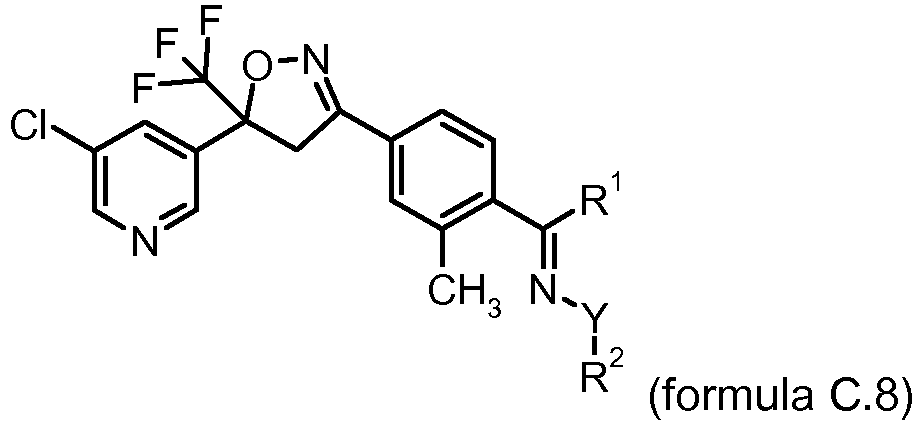
Table C.8 Compound Ex. R1 R2 Y Rt (min) [M + H] 8-1 H H O 3.272 384.05 - The activity of the compounds of formula I of the present invention could be demonstrated and evaluated by the following biological test.
- If not otherwise specified the test solutions were prepared as follow:
- The active compound was dissolved at the desired concentration in a mixture of 1:1 (vol:vol) distilled water: acteon. The test solution was prepared the day it was used and in general at concentrations of ppm (wt/vol).
- The active compounds were formulated in cyclohexanone as a 10,000 ppm solution supplied in tubes. The tubes were inserted into an automated electrostatic sprayer equipped with an atomizing nozzle and served as stock solutions for which lower dilutions were made in 50% acetone:50% water (v/v). A nonionic surfactant (Kinetic®) was included in the solution at a volume of 0.01 % (v/v).
- Cotton plants at the cotyledon stage were infested with aphids prior to treatment by placing a heavily infested leaf from the main aphid colony on top of each cotyledon. Aphids were allowed to transfer overnight to accomplish an infestation of 80-100 aphids per plant and the host leaf was removed. The infested plants were then sprayed by an automated electrostatic plant sprayer equipped with an atomizing spray nozzle. The plants were dried in the sprayer fume hood, removed from the sprayer, and then maintained in a growth room under fluorescent lighting in a 24-hr photoperiod at 25°C and 20-40% relative humidity. Aphid mortality on the treated plants, relative to mortality on untreated control plants, was determined after 5 days.
- In this test, the compounds 1-16 and 1-44 at 300 ppm, respectively, showed a mortality of at least 75% in comparison with untreated controls.
- Potted cowpea plants colonized with approximately 100 - 150 aphids of various stages were sprayed after the pest population had been recorded. Population reduction was assessed after 24, 72, and 120 hours.
- In this test, the compound 1-16 at 500 ppm showed a mortality of at least 75% in comparison with untreated controls.
- Leaves of Chinese cabbage were dipped in test solution and air-dried. Treated leaves were placed in petri dished lined with moist filter paper. Mortality was recorded 24, 72, and 120 hours after treatment.
- In this test, the compounds 1-2, 1-4, 1-5, 1-6, 1-7, 1-8, 1-9, 1-10, 1-11, 1-13, 1-14, 1-16, 1-17, 1-18, 1-21, 1-23, 1-24, 1-29, 1-30, 1-31, 1-32, 1-33, 1-34, 1-35, 1-36, 1-38, 1-39, 1-41, 1-43, 1-47, 1-48, 1-49, 1-51, 1-52, 1-53, 1-54 and 1-55 at 300 ppm, respectively, showed a mortality of at least 75% in comparison with untreated controls.
- For evaluating control of Mediterranean fruitfly (Ceratitis capitata) the test unit consisted of microtiter plates containing an insect diet and 50-80 C. capitata eggs.
The compounds were formulated using a solution containing 75% v/v water and 25% v/v DMSO. Different concentrations of formulated compounds were sprayed onto the insect diet at 5 µl, using a custom built micro atomizer, at two replications.
After application, microtiter plates were incubated at about 28 ± 1°C and about 80 ± 5 % relative humidity for 5 days. Egg and larval mortality was then visually assessed. - In this test, the compounds 1-3, 1-5, 1-7, 1-10, 1-11, 1-14, 1-15, 1-16, 1-18, 1-22, 1-23, 1-29, 1-30, 1-31, 1-33, 1-35, 1-36, 1-39, 1-41, 1-44, 1-47, 1-48, 1-49, 1-52, 1-53 and 1-56 at 2500 ppm, respectively, showed a mortality of at least 75% in comparison with untreated controls.
- Dichromothrips corbetti adults used for bioassay were obtained from a colony maintained continuously under laboratory conditions. For testing purposes, the test compound was diluted to a concentration of 300 ppm (wt compound: vol diluent) in a 1:1 mixture of acetone:water (vol:vol), plus 0.01% vol/vol Kinetic® surfactant.
- Thrips potency of each compound was evaluated by using a floral-immersion technique. Plastic petri dishes were used as test arenas. All petals of individual, intact orchid flowers were dipped into treatment solution and allowed to dry. Treated flowers were placed into individual petri dishes along with 10 - 15 adult thrips. The petri dishes were then covered with lids. All test arenas were held under continuous light and a temperature of about 28°C for duration of the assay. After 4 days, the numbers of live thrips was counted on each flower, and along inner walls of each petri dish. The level of thrips mortality was extrapolated from pre-treatment thrips numbers.
- In this test, the compounds 1-17, 1-29, 1-33, 1-35, 1-36, 1-39 and 1-48 at 300 ppm, respectively, showed a mortality of at least 75% in comparison with untreated controls.
- Rice seedlings were cleaned and washed 24 hours before spraying. The active compounds were formulated in 50:50 acetone:water (vol:vol), and 0.1 % vol/vol surfactant (EL 620) was added. Potted rice seedlings were sprayed with 5 ml test solution, air dried, placed in cages and inoculated with 10 adults. Treated rice plants were kept at about 28-29°C and relative humidity of about 50-60%. Percent mortality was recorded after 72 hours.
- In this test, the compounds 1-4 and 1-48 at 500 ppm, respectively, showed a mortality of at least 75% in comparison with untreated controls.
- Rice seedlings were cleaned and washed 24 hours before spraying. The active compounds were formulated in 50:50 acetone:water (vol:vol) and 0.1 % vol/vol surfactant (EL 620) is added. Potted rice seedlings were sprayed with 5 ml test solution, air dried, placed in cages and inoculated with 10 adults. Treated rice plants were kept at about 28-29°C and relative humidity of about 50-60%. Percent mortality was recorded after 72 hours.
- In this test, the compounds 1-4, 1-35 and 1-39 at 500 ppm, respectively, showed a mortality of at least 75% in comparison with untreated controls.
- The active compounds were formulated in cyclohexanone as a 10,000 ppm solution supplied in tubes. The tubes were inserted into an automated electrostatic sprayer equipped with an atomizing nozzle and served as stock solutions for which lower dilutions were made in 50% acetone:50% water (v/v). A nonionic surfactant (Kinetic®) was included in the solution at a volume of 0.01 % (v/v).
- Cotton plants at the cotyledon stage (one plant per pot) were sprayed by an automated electrostatic plant sprayer equipped with an atomizing spray nozzle. The plants were dried in the sprayer fume hood and then removed from the sprayer. Each pot was placed into a plastic cup and about 10 to 12 whitefly adults (approximately 3-5 days old) were introduced. The insects were collected using an aspirator and a nontoxic Tygon® tubing connected to a barrier pipette tip. The tip, containing the collected insects, was then gently inserted into the soil containing the treated plant, allowing insects to crawl out of the tip to reach the foliage for feeding. Cups were covered with a reusable screened lid. Test plants were maintained in a growth room at about 25°C and about 20-40% relative humidity for 3 days, avoiding direct exposure to fluorescent light (24 hour photoperiod) to prevent trapping of heat inside the cup. Mortality was assessed 3 days after treatment, compared to untreated control plants.
- In this test, the compounds 1-12, 1-14, 1-15, 1-41 and 1-48 at 300 ppm, respectively, showed a mortality of at least 75% in comparison with untreated controls.
- The active compounds were formulated in cyclohexanone as a 10,000 ppm solution supplied in tubes. The tubes were inserted into an automated electrostatic sprayer equipped with an atomizing nozzle and served as stock solutions for which lower dilutions are made in 50% acetone:50% water (v/v). A nonionic surfactant (Kinetic@) was included in the solution at a volume of 0.01 % (v/v).
- Lima bean plants (variety Sieva) were grown 2 plants to a pot and selected for treatment at the 1st true leaf stage. Test solutions were sprayed onto the foliage by an automated electrostatic plant sprayer equipped with an atomizing spray nozzle. The plants were dried in the sprayer fume hood and then removed from the sprayer. Each pot was placed into perforated plastic bags with a zip closure. About 10 to 11 armyworm larvae were placed into the bag and the bags zipped closed. Test plants were maintained in a growth room at about 25°C and about 20-40% relative humidity for 4 days, avoiding direct exposure to fluorescent light (24 hour photoperiod) to prevent trapping of heat inside the bags. Mortality and reduced feeding were assessed 4 days after treatment, compared to untreated control plants.
- In this test, the compounds 1-2, 1-3, 1-4, 1-5, 1-6, 1-7, 1-8, 1-9, 1-10, 1-11, 1-13, 1-14, 1-15, 1-16, 1-29, 1-30, 1-31, 1-32, 1-33, 1-34, 1-35, 1-36, 1-37, 1-38, 1-39, 1-41, 1-48 and 1-49 at 300 ppm, respectively, showed a mortality of at least 75% in comparison with untreated controls.
- The active compound was dissolved at the desired concentration in a mixture of 1:1 (v/v) distilled water: acetone. Surfactant (Alkamuls® EL 620) at the rate of 0.1 % (v/v) was added.The test solution was prepared the day it was used.
- Potted cowpea beans of 7-10 days of age were cleaned with tap water and sprayed with 5 ml of the test solution using air driven hand atomizer. The treated plants were allowed to air dry and afterwards inoculated with 20 or more mites by clipping a cassava leaf section with known mite population. Treated plants were placed inside a holding room at about 25-27°C and about 50-60% relative humidity. Mortality was assessed by counting the live mites 72 HAT. Percent mortality was assessed after 72 h.
- The active compounds were dissolved at the desired concentration in a mixture of 1 : 1 (v/v) acetone : water. The test solutions were prepared the day they were used.
- In this test, the compounds 1-8, 1-14, 1-37 and 1-48 at 500 ppm, respectively, showed a mortality of at least 75% in comparison with untreated controls.
- For evaluating control of vetch aphid (Megoura viciae) through contact or systemic means the test unit consisted of 24-well-microtiter plates containing broad bean leaf disks. The compounds were formulated using a solution containing 75% v/v water and 25% v/v DMSO. Different concentrations of formulated compounds were sprayed onto the leaf disks at 2.5 µl, using a custom built micro atomizer, at two replications. After application, the leaf disks were air-dried and 5 - 8 adult aphids were placed on the leaf disks inside the microtiter plate wells. The aphids were then allowed to suck on the treated leaf disks and incubated at about 23 ± 1°C and about 50 ± 5 % relative humidity for 5 days. Aphid mortality and fecundity was then visually assessed.
- In this test, the compounds 1-3, 1-5, 1-8, 1-12, 1-29, 1-31, 1-39 and 1-48 at 2500 ppm, respectively, showed a mortality of at least 75% in comparison with untreated controls.
- For evaluating control of tobacco budworm (Heliothis virescens) the test unit consisted of 96-well-microtiter plates containing an insect diet and 15-25 H. virescens eggs.
The compounds were formulated using a solution containing 75% v/v water and 25% v/v DMSO. Different concentrations of formulated compounds were sprayed onto the insect diet at 10 µl, using a custom built micro atomizer, at two replications. After application, microtiter plates are incubated at about 28 ± 1°C and about 80 ± 5 % relative humidity for 5 days. Egg and larval mortality is then visually assessed. - In this test, the compounds 1-2, 1-3, 1-4, 1-5, 1-6, 1-7, 1-8, 1-9, 1-10, 1-11, 1-12, 1-13, 1-14, 1-15, 1-16, 1-17, 1-18, 1-19, 1-20, 1-21, 1-22, 1-23, 1-26, 1-27, 1-28, 1-29, 1-30, 1-31, 1-32, 1-33, 1-34, 1-35, 1-36, 1-39, 1-40, 1-41, 1-42, 1-43, 1-44, 1-45, 1-47, 1-48, 1-49, 1-51, 1-52, 1-53, 1-54, 1-55 and 1-56, at 2500 ppm, respectively showed a mortality of at least 75% in comparison with untreated controls.
- For evaluating control of boll weevil (Anthonomus grandis) the test unit consisted of 24-well-microtiter plates containing an insect diet and 20-30 A. grandis eggs. The compounds were formulated using a solution containing 75% v/v water and 25% v/v DMSO. Different concentrations of formulated compounds were sprayed onto the insect diet at 20 µl, using a custom built micro atomizer, at two replications. After application, microtiter plates were incubated at about 23 ± 1°C and about 50 ± 5 % relative humidity for 5 days. Egg and larval mortality was then visually assessed.
- In this test, the compounds 1-3, 1-4, 1-7, 1-8, 1-9, 1-10, 1-11, 1-14, 1-16, 1-17, 1-18, 1-29, 1-30, 1-31, 1-32, 1-33, 1-34, 1-35, 1-36, 1-39, 1-41, 1-43, 1-45, 1-47, 1-48, 1-52, 1-53, 1-54, 1-55 and 1-56 at 2500 ppm, respectively, showed a mortality of at least 75% in comparison with untreated controls.
- Serial dilutions of each technical grade Al were made in pure acetone. 0.5 ml of the treatment solution was deposited into the bottom of a glass vial (scintillation vial). The cap was screwed back onto the vial and inverted for about five seconds. The cap was subsequently removed and the vial laid on its side and rolled constantly, on a hot dog roller, until all the acetone had flashed off and the inner surface of the vial was dry. Cotton leave discs were also dipped simultaneously into the treatment solutions and allowed to dry. After the vials were dried, the leave discs were placed into the vials to serve as a food/water source for the thrips. Each treatment was replicated 5-fold. Western flower thrips were aspirated into the vials, approximately 5 larvae or adults / vial. Following treatment application the vials were held in a holding room under fluorescent light and constant 26°C.Thrips mortality was assessed at 2 DAT (days after treatment), counting all thrips both dead and alive.
- In this test, the compound 1-48 at 300 ppm showed a mortality of at least 75% in comparison with untreated controls.
- If not otherwise specified, the tests were conducted as glass vial contact assays. Glass vials (20 ml scintillation vials) were used. Treatment solutions were mixed with technical grade chemicals diluted in acetone. Treatment solutions needed for the assays included generally 1 and 10 ppm (0.01 and 0.1 µg / cm2, respectively), but optionally also 100 and/or 1000 ppm for first tier vials. As commercial standard, alphacypermethrin was run at 1 ppm. As solvent control, acetone was used for the assay. Treatment solution was pipetted into the bottom of each vial. Each vial was turned on its side and placed onto a commercial grade hot dog roller without applying heat. The uncapped vials were allowed to roll to allow for the acetone treatment to vent off. After drying, the vials were placed into the compartmented vial shipping boxes. The workstation was prepared by chilling the table and plastic Petri dishes with the inside wall coated with Fluon. A weigh boat of 10% sugar water saturated cotton dental pellets was also prepared. The animal pests were collected into a tube with a rechargeable insect vacuum. The tube of animal pests was placed in a laboratory refrigerator until the animal pests were incapacitated. The animal pests were emptied into chilled Petri dish. A small cotton dental pellet was soaked in water or in 10 wt% sugar water, whereas the excess solution was gently squeezed out. The cotton dental pellet was placed into the bottom of each vial. For the test, the animal pests were added to each vial and then the cap was loosely put on the vial to allow for ventilation. The test vials were hold at ambient room temperature in compartmented boxes. In general, the animal pests were observed for incapacitation at least at 4, 24, and 48 hours after infestation, or for a longer period if required. Mortality was defined as an insect incapable of coordinated movement when agitated.
- Treatment solutions were mixed with test compound diluted in acetone at concentrations of 10 and 100 ppm. Collected ants for placement in the vials were typically not chilled prior to infesting vials. Data were collected at 1, 2, and 4 days after infestation.
- In this test, the compound 1-48 at 100 ppm showed 48 h after treatmen a mortality of at least 75% in comparison with untreated controls.
- Treatment solutions were mixed with test compound diluted in acetone at concentrations of 10 and 100 ppm. No food or water source was provided in the vials. Data were collected out to 5 days after infestation. Ticks were evaluated by rolling the vials on a preheated hotdog roller. Tick activity was stimulated within approx. 1-2 minutes.
- In this test, the compound 1-48 at 100 ppm showed 3 DAT (days after treatment) a mortality of at least 75% in comparison with untreated controls.
- The assay was conducted in 6-well polystyrene plates using one plate per treatment rate. Stock solutions were prepared at 100 and 1000 ppm. Screen rates were at 1 and 10 ppm. Distilled water was added to each well, control wells were treated with acetone. Temephos (Abate technical) was used as the standard at 0.1 ppm. Ten early 4th-instar yellowfever mosquito larvae (Aedes aegypti) in water were added to each well. One drop of liver powder solution (6 g in 100 ml distilled water) was added to each well as a food source daily. Plates were maintained at 22-25°C and 25-50% RH (relative humidity) and observed daily for dead larvae and pupae at 1, 2, 3, and 5 days after treatment. Dead larvae and all pupae were removed daily. Mortality was defined as an insect incapable of coordinated movement when agitated.
- In this test, the compounds 1-14 and 1-48 at 1 ppm, respectively, showed at 5 DAT (days of treatment) a mortality of at least 75% in comparison with untreated controls.
| No. | Y | R2 |
| 1. | O | H |
| 2. | O | CH3 |
| 3. | O | CF3 |
| 4. | O | CH2CH3 |
| 5. | O | CH2CF3 |
| 6. | O | CH2CH2CH3 |
| 7. | O | CH2CH2CF3 |
| 8. | O | CH2CF2CF3 |
| 9. | O | CH(CH3)2 |
| 10. | O | (CH2)3CH3 |
| 11. | O | (CH2)3CF3 |
| 12. | O | CH2- c propyl |
| 13. | O | CH(CH3)- c propyl |
| 14. | O | CH2CN |
| 15. | O | CH2C(=O)OH |
| 16. | O | CH2C(=O)OCH3 |
| 17. | O | CH2C(=O)OCH2CH3 |
| 18. | O | CH2C(=O)OCH2CH2CH3 |
| 19. | O | CH2C(=O)OCH(CH3)2 |
| 20. | O | CH2C(=O)O(CH2)3CH3 |
| 21. | O | CH2C(=O)OCH2CH(CH3)2 |
| 22. | O | CH2C(=O)OC(CH3)3 |
| 23. | O | CH2C(=O)NH2 |
| 24. | O | CH2C(=O)NHCH3 |
| 25. | O | CH2C(=O)N(CH3)2 |
| 26. | O | CH2C(=O)NHCF3 |
| 27. | O | CH2C(=O)N(CF3)2 |
| 28. | O | CH2C(=O)NHCH2CH3 |
| 29. | O | CH2C(=O)N(CH2CH3)2 |
| 30. | O | CH2C(=O)NHCH2CF3 |
| 31. | O | CH2C(=O)N(CH2CF3)2 |
| 32. | O | CH2C(=O)NHCH2CH2CH3 |
| 33. | O | CH2C(=O)NHCH(CH3)2 |
| 34. | O | CH2C(=O)NH(CH2)3CH3 |
| 35. | O | CH2C(=O)NHCH2- c propyl |
| 36. | O | CH2C(=O)NHCH2-C6H5 |
| 37. | O | CH2C(=O)NH-propargyl |
| 38. | O | CH2C(=O)NHCH2-4-Cl-C6H4 |
| 39. | O | CH2C(=O)-morpholin-4-yl |
| 40. | O | C6H5 |
| 41. | O | 2-F-C6H4 |
| 42. | O | 3-F-C6H4 |
| 43. | O | 4-F-C6H4 |
| 44. | O | 2-Cl-C6H4 |
| 45. | O | 3-Cl-C6H4 |
| 46. | O | 4-Cl-C6H4 |
| 47. | O | 2-Br-C6H4 |
| 48. | O | 3-Br-C6H4 |
| 49. | O | 4-Br-C6H4 |
| 50. | O | C(=O)CH3 |
| 51. | O | C(=O)CH2CH3 |
| 52. | O | C(=O)CH2OCH3 |
| 53. | O | C(=O)(CH2)2CH3 |
| 54. | O | C(=O)CH(CH3)2 |
| 55. | O | C(=O)C6H5 |
| 56. | O | C(=O)-2-F-C6H4 |
| 57. | O | C(=O)-3-F-C6H4 |
| 58. | O | C(=O)-4-F-C6H4 |
| 59. | O | C(=O)-2-Cl-C6H4 |
| 60. | O | C(=O)-3-Cl-C6H4 |
| 61. | O | C(=O)-4-Cl-C6H4 |
| 62. | O | C(=O)-2-Br-C6H4 |
| 63. | O | C(=O)-3-Br-C6H4 |
| 64. | O | C(=O)-4-Br-C6H4 |
| 65. | O | C(=O)-2-pyridy |
| 66. | O | C(=O)CF3 |
| 67. | O | C(=O)CH2CF3 |
| 68. | O | C(=O)CH2CCl3 |
| 69. | O | C(=O)OCH2Cl3 |
| 70. | O | C(=O)OH |
| 71. | O | C(=O)OCH3 |
| 72. | O | C(=O)OCH2CH3 |
| 73. | O | C(=O)OCH2CH2CH3 |
| 74. | O | C(=O)OCH(CH3)2 |
| 75. | O | C(=O)O(CH2)3CH3 |
| 76. | O | C(=O)OCH2CH(CH3)2 |
| 77. | O | C(=O)OC(CH3)3 |
| 78. | O | C(=O)NH2 |
| 79. | O | C(=O)NHCH3 |
| 80. | O | C(=O)N(CH3)2 |
| 81. | O | C(=O)NHCF3 |
| 82. | O | C(=O)N(CF3)2 |
| 83. | O | C(=O)NHCH2CH3 |
| 84. | O | C(=O)N(CH2CH3)2 |
| 85. | O | C(=O)N(CH3)CH2CH3 |
| 86. | O | C(=O)NHCH2CF3 |
| 87. | O | C(=O)N(CH2CF3)2 |
| 88. | O | C(=O)N(CH3)CH2CF3 |
| 89. | O | C(=O)NHCH2CH2CH3 |
| 90. | O | C(=O)N(CH3)CH2CH2CH3 |
| 91. | O | C(=O)NHCH(CH3)2 |
| 92. | O | C(=O)NH(CH2)3CH3 |
| 93. | O | C(=O)N(CH3)-(CH2)3CH3 |
| 94. | O | C(=O)NHCH2- c propyl |
| 95. | O | C(=O)NHCH2- c propyl |
| 96. | O | C(=O)N(CH3)-CH2-C6H5 |
| 97. | O | C(=O)NH-propargyl |
| 98. | O | C(=O)N(CH3)-propargyl |
| 99. | O | C(=O)NH-CH2-4-Cl-C6H4 |
| 100. | O | C(=O)N(CH3)-CH2-4-Cl-C6H4 |
| 101. | O | C(=O)morpholin-4-yl |
| 102. | O | C(=O)NH-3-thiolyl-1,1-dioxid |
| 103. | O | C(=O)N(CH3)-3-thiolyl-1,1-dioxid |
| 104. | O | C(=O)-azirid-1-yl |
| 105. | O | C(=O)-pyrrolidin-1-yl |
| 106. | O | C(=O)-piperidin-1-yl |
| 107. | O | C(=O)-thiomorpholin-4-yl |
| 108. | O | C(=O)NH-CH2CHF2 |
| 109. | O | C(=O)NH-CH2CH2CHF2 |
| 110. | O | C(=O)NH-CH2CH2CF3 |
| 111. | O | C(=O)NH-cyclopropyl |
| 112. | O | C(=O)NH-cyclobutyl |
| 113. | O | C(=O)NH-cyclopentyl |
| 114. | O | C(=O)NH-cyclohexyl |
| 115. | O | C(=O)NH-CH2-cyclopropyl |
| 116. | O | C(=O)NH-CH2-cyclobutyl |
| 117. | O | C(=O)NH-CH2-cyclopentyl |
| 118. | O | C(=O)NH-CH2-cyclohexyl |
| 119. | O | C(=O)NH-CN |
| 120. | O | C(=O)NH-CH2-CN |
| 121. | O | C(=O)NH-CH2-CH=CH2 |
| 122. | O | C(=O)NH-CH2-CH=C(Cl)2 |
| 123. | O | C(=O)NH-CH2-CH=CH-phenyl |
| 124. | O | C(=O)NH-CH2-CH=CH-(4-Cl-phenyl) |
| 125. | O | C(=O)NH-CH2-SCH3 |
| 126. | O | C(=O)NH-CH2-SCF3 |
| 127. | O | C(=O)NH-CH2-CH2-SCH3 |
| 128. | O | C(=O)NH-CH2-CH2-SCF3 |
| 129. | O | C(=O)NH-CH2-SO2-CH3 |
| 130. | O | C(=O)NH-CH2-SO2-CF3 |
| 131. | O | C(=O)NH-CH2-CH2-SO2-CH3 |
| 132. | O | C(=O)NH-CH2-CH2-SO2-CF3 |
| 133. | O | C(=O)NH-CH2-CO-NH2 |
| 134. | O | C(=O)NH-CH2-CO-NHCH3 |
| 135. | O | C(=O)NH-CH2-CO-N(CH3)2 |
| 136. | O | C(=O)NH-CH2-CO-NHCF3 |
| 137. | O | C(=O)NH-CH2-CO-N(CFs)2 |
| 138. | O | C(=O)NH-CH2-CO-NHCH2CH3 |
| 139. | O | C(=O)NH-CH2-CO-N(CH2CH3)2 |
| 140. | O | C(=O)NH-CH2-CO-NHCH2CF3 |
| 141. | O | C(=O)NH-CH2-CO-N(CH2CF3)2 |
| 142. | O | C(=O)NH-CH2-CO-NHCH2CH2CH3 |
| 143. | O | C(=O)NH-CH2-CO-N(CH2CH2CH3)2 |
| 144. | O | C(=O)NH-CH2-CO-NHCH2CH2CF3 |
| 145. | O | C(=O)NH-CH2-CO-N(CH2CH2CF3)2 |
| 146. | O | C(=O)NH-CH2-CO-NHCH(CH3)2 |
| 147. | O | C(=O)NH-CH2-CO-NHCH(CF3)2 |
| 148. | O | C(=O)NH-CH2-CO-NH-cyclopropyl |
| 149. | O | C(=O)NH-CH2-CO-NH-CH2-cyclopropyl |
| 150. | O | C(=O)NH-CH2-CO-OH |
| 151. | O | C(=O)NH-CH2-CO-OCH3 |
| 152. | O | C(=O)NH-CH2-CO-OCF3 |
| 153. | O | C(=O)NH-CH2-CO-OCH2CH3 |
| 154. | O | C(=O)NH-CH2-CO-OCH2CF3 |
| 155. | O | C(=O)NH-CH2-CO-OCH2CH2CHs |
| 156. | O | C(=O)NH-CH2-CO-OCH(CH3)2 |
| 157. | O | C(=O)NH-CH2-CO-OCH2CH2CH2CHs |
| 158. | O | C(=O)NH-CH2-CO-OCH(CH3)CH2CH3 |
| 159. | O | C(=O)NH-CH2-CO-OCH2CH(CH3)2 |
| 160. | O | C(=O)NH-CH2-CO-OC(CH3)3 |
| 161. | O | C(=O)NH-A-1 |
| 162. | O | C(=O)NH-A-2 |
| 163. | O | C(=O)NH-A-3 |
| 164. | O | C(=O)NH-A-4 |
| 165. | O | C(=O)NH-A-5 |
| 166. | O | C(=O)NH-A-6 |
| 167. | O | C(=O)NH-A-7 |
| 168. | O | C(=O)NH-A-8 |
| 169. | O | C(=O)NH-A-9 |
| 170. | O | C(=O)NH-A-10 |
| 171. | O | C(=O)NH-A-11 |
| 172. | O | C(=O)NH-A-12 |
| 173. | O | C(=O)NH-A-13 |
| 174. | O | C(=O)NH-A-14 |
| 175. | O | C(=O)NH-A-15 |
| 176. | O | C(=O)NH-A-16 |
| 177. | O | C(=O)NH-A-17 |
| 178. | O | C(=O)NH-A-18 |
| 179. | O | C(=O)NH-A-19 |
| 180. | O | C(=O)NH-A-20 |
| 181. | O | C(=O)NH-A-21 |
| 182. | O | C(=O)NH-A-22 |
| 183. | O | C(=O)NH-A-23 |
| 184. | O | C(=O)NH-A-24 |
| 185. | O | C(=O)NH-A-25 |
| 186. | O | C(=O)NH-A-26 |
| 187. | O | C(=O)NH-A-27 |
| 188. | O | C(=O)NH-A-28 |
| 189. | O | C(=O)NH-A-29 |
| 190. | O | C(=O)NH-A-30 |
| 191. | O | C(=O)NH-A-31 |
| 192. | O | C(=O)NH-A-32 |
| 193. | O | C(=O)NH-A-33 |
| 194. | O | C(=O)NH-CH2-A-1 |
| 195. | O | C(=O)NH-CH2-A-2 |
| 196. | O | C(=O)NH-CH2-A-3 |
| 197. | O | C(=O)NH-CH2-A-4 |
| 198. | O | C(=O)NH-CH2-A-5 |
| 199. | O | C(=O)NH-CH2-A-6 |
| 200. | O | C(=O)NH-CH2-A-7 |
| 201. | O | C(=O)NH-CH2-A-8 |
| 202. | O | C(=O)NH-CH2-A-9 |
| 203. | O | C(=O)NH-CH2-A-10 |
| 204. | O | C(=O)NH-CH2-A-11 |
| 205. | O | C(=O)NH-CH2-A-12 |
| 206. | O | C(=O)NH-CH2-A-13 |
| 207. | O | C(=O)NH-CH2-A-14 |
| 208. | O | C(=O)NH-CH2-A-15 |
| 209. | O | C(=O)NH-CH2-A-16 |
| 210. | O | C(=O)NH-CH2-A-17 |
| 211. | O | C(=O)NH-CH2-A-18 |
| 212. | O | C(=O)NH-CH2-A-19 |
| 213. | O | C(=O)NH-CH2-A-20 |
| 214. | O | C(=O)NH-CH2-A-21 |
| 215. | O | C(=O)NH-CH2-A-22 |
| 216. | O | C(=O)NH-CH2-A-23 |
| 217. | O | C(=O)NH-CH2-A-24 |
| 218. | O | C(=O)NH-CH2-A-25 |
| 219. | O | C(=O)NH-CH2-A-26 |
| 220. | O | C(=O)NH-CH2-A-27 |
| 221. | O | C(=O)NH-CH2-A-28 |
| 222. | O | C(=O)NH-CH2-A-29 |
| 223. | O | C(=O)NH-CH2-A-30 |
| 224. | O | C(=O)NH-CH2-A-31 |
| 225. | O | C(=O)NH-CH2-A-32 |
| 226. | O | C(=O)NH-CH2-A-33 |
| 227. | O | C(=O)NH-SO2-CH3 |
| 228. | O | C(=O)NH-SO2-CF3 |
| 229. | O | C(=O)NH-SO2-CH2CH3 |
| 230. | O | C(=O)NH-SO2-CH2CF3 |
| 231. | O | C(=O)NH-SO2-CH2CH2CH3 |
| 232. | O | C(=O)NH-SO2-CH2CH2CF3 |
| 233. | O | C(=O)NH-SO2-CH2CF2CF3 |
| 234. | O | C(=O)NH-SO2-CH(CH3)2 |
| 235. | O | C(=O)NH-SO2-CH(CF3)2 |
| 236. | O | C(=O)N(CH3)-CH2CHF2 |
| 237. | O | C(=O)N(CH3)-CH2CH2CHF2 |
| 238. | O | C(=O)N(CH3)-CH2CH2CF3 |
| 239. | O | C(=O)N(CH3)-cyclopropyl |
| 240. | O | C(=O)N(CH3)-cyclobutyl |
| 241. | O | C(=O)N(CH3)-cyclopentyl |
| 242. | O | C(=O)N(CH3)-cyclohexyl |
| 243. | O | C(=O)N(CH3)-CH2-cyclopropyl |
| 244. | O | C(=O)N(CH3)-CH2-cyclobutyl |
| 245. | O | C(=O)N(CH3)-CH2-cyclopentyl |
| 246. | O | C(=O)N(CH3)-CH2-cyclohexyl |
| 247. | O | C(=O)N(CH3)-CN |
| 248. | O | C(=O)N(CH3)-CH2-CN |
| 249. | O | C(=O)N(CH3)-CH2-CH=CH2 |
| 250. | O | C(=O)N(CH3)-CH2-CH=C(Cl)2 |
| 251. | O | C(=O)N(CH3)-CH2-CH=CH-phenyl |
| 252. | O | C(=O)N(CH3)-CH2-CH=CH-(4-Cl-phenyl) |
| 253. | O | C(=O)N(CH3)-CH2-SCH3 |
| 254. | O | C(=O)N(CH3)-CH2-SCF3 |
| 255. | O | C(=O)N(CH3)-CH2-CH2-SCH3 |
| 256. | O | C(=O)N(CH3)-CH2-CH2-SCF3 |
| 257. | O | C(=O)N(CH3)-CH2-SO2-CH3 |
| 258. | O | C(=O)N(CH3)-CH2-SO2-CF3 |
| 259. | O | C(=O)N(CH3)-CH2-CH2-SO2-CH3 |
| 260. | O | C(=O)N(CH3)-CH2-CH2-SO2-CF3 |
| 261. | O | C(=O)N(CH3)-CH2-CO-NH2 |
| 262. | O | C(=O)N(CH3)-CH2-CO-NHCH3 |
| 263. | O | C(=O)N(CH3)-CH2-CO-N(CH3)2 |
| 264. | O | C(=O)N(CH3)-CH2-CO-NHCF3 |
| 265. | O | C(=O)N(CH3)-CH2-CO-N(CF3)2 |
| 266. | O | C(=O)N(CH3)-CH2-CO-NHCH2CH3 |
| 267. | O | C(=O)N(CH3)-CH2-CO-N(CH2CH3)2 |
| 268. | O | C(=O)N(CH3)-CH2-CO-NHCH2CF3 |
| 269. | O | C(=O)N(CH3)-CH2-CO-N(CH2CF3)2 |
| 270. | O | C(=O)N(CH3)-CH2-CO-NHCH2CH2CH3 |
| 271. | O | C(=O)N(CH3)-CH2-CO-N(CH2CH2CH3)2 |
| 272. | O | C(=O)N(CH3)-CH2-CO-NHCH2CH2CF3 |
| 273. | O | C(=O)N(CH3)-CH2-CO-N(CH2CH2CF3)2 |
| 274. | O | C(=O)N(CH3)-CH2-CO-NHCH(CH3)2 |
| 275. | O | C(=O)N(CH3)-CH2-CO-NHCH(CF3)2 |
| 276. | O | C(=O)N(CH3)-CH2-CO-NH-cyclopropyl |
| 277. | O | C(=O)N(CH3)-CH2-CO-NH-CH2-cyclopropyl |
| 278. | O | C(=O)N(CH3)-CH2-CO-OH |
| 279. | O | C(=O)N(CH3)-CH2-CO-OCH3 |
| 280. | O | C(=O)N(CH3)-CH2-CO-OCF3 |
| 281. | O | C(=O)N(CH3)-CH2-CO-OCH2CH3 |
| 282. | O | C(=O)N(CH3)-CH2-CO-OCH2CF3 |
| 283. | O | C(=O)N(CH3)-CH2-CO-OCH2CH2CH3 |
| 284. | O | C(=O)N(CH3)-CH2-CO-OCH(CH3)2 |
| 285. | O | C(=O)N(CH3)-CH2-CO-OCH2CH2CH2CH3 |
| 286. | O | C(=O)N(CH3)-CH2-CO-OCH(CH3)CH2CH3 |
| 287. | O | C(=O)N(CH3)-CH2-CO-OCH2CH(CH3)2 |
| 288. | O | C(=O)N(CH3)-CH2-CO-OC(CH3)3 |
| 289. | O | C(=O)N(CH3)-A-1 |
| 290. | O | C(=O)N(CH3)-A-2 |
| 291. | O | C(=O)N(CH3)-A-3 |
| 292. | O | C(=O)N(CH3)-A-4 |
| 293. | O | C(=O)N(CH3)-A-5 |
| 294. | O | C(=O)N(CH3)-A-6 |
| 295. | O | C(=O)N(CH3)-A-7 |
| 296. | O | C(=O)N(CH3)-A-8 |
| 297. | O | C(=O)N(CH3)-A-9 |
| 298. | O | C(=O)N(CH3)-A-10 |
| 299. | O | C(=O)N(CH3)-A-11 |
| 300. | O | C(=O)N(CH3)-A-12 |
| 301. | O | C(=O)N(CH3)-A-13 |
| 302. | O | C(=O)N(CH3)-A-14 |
| 303. | O | C(=O)N(CH3)-A-15 |
| 304. | O | C(=O)N(CH3)-A-16 |
| 305. | O | C(=O)N(CH3)-A-17 |
| 306. | O | C(=O)N(CH3)-A-18 |
| 307. | O | C(=O)N(CH3)-A-19 |
| 308. | O | C(=O)N(CH3)-A-20 |
| 309. | O | C(=O)N(CH3)-A-21 |
| 310. | O | C(=O)N(CH3)-A-22 |
| 311. | O | C(=O)N(CH3)-A-23 |
| 312. | O | C(=O)N(CH3)-A-24 |
| 313. | O | C(=O)N(CH3)-A-25 |
| 314. | O | C(=O)N(CH3)-A-26 |
| 315. | O | C(=O)N(CH3)-A-27 |
| 316. | O | C(=O)N(CH3)-A-28 |
| 317. | O | C(=O)N(CH3)-A-29 |
| 318. | O | C(=O)N(CH3)-A-30 |
| 319. | O | C(=O)N(CH3)-A-31 |
| 320. | O | C(=O)N(CH3)-A-32 |
| 321. | O | C(=O)N(CH3)-A-33 |
| 322. | O | C(=O)N(CH3)-CH2-A-1 |
| 323. | O | C(=O)N(CH3)-CH2-A-2 |
| 324. | O | C(=O)N(CH3)-CH2-A-3 |
| 325. | O | C(=O)N(CH3)-CH2-A-4 |
| 326. | O | C(=O)N(CH3)-CH2-A-5 |
| 327. | O | C(=O)N(CH3)-CH2-A-6 |
| 328. | O | C(=O)N(CH3)-CH2-A-7 |
| 329. | O | C(=O)N(CH3)-CH2-A-8 |
| 330. | O | C(=O)N(CH3)-CH2-A-9 |
| 331. | O | C(=O)N(CH3)-CH2-A-10 |
| 332. | O | C(=O)N(CH3)-CH2-A-11 |
| 333. | O | C(=O)N(CH3)-CH2-A-12 |
| 334. | O | C(=O)N(CH3)-CH2-A-13 |
| 335. | O | C(=O)N(CH3)-CH2-A-14 |
| 336. | O | C(=O)N(CH3)-CH2-A-15 |
| 337. | O | C(=O)N(CH3)-CH2-A-16 |
| 338. | O | C(=O)N(CH3)-CH2-A-17 |
| 339. | O | C(=O)N(CH3)-CH2-A-18 |
| 340. | O | C(=O)N(CH3)-CH2-A-19 |
| 341. | O | C(=O)N(CH3)-CH2-A-20 |
| 342. | O | C(=O)N(CH3)-CH2-A-21 |
| 343. | O | C(=O)N(CH3)-CH2-A-22 |
| 344. | O | C(=O)N(CH3)-CH2-A-23 |
| 345. | O | C(=O)N(CH3)-CH2-A-24 |
| 346. | O | C(=O)N(CH3)-CH2-A-25 |
| 347. | O | C(=O)N(CH3)-CH2-A-26 |
| 348. | O | C(=O)N(CH3)-CH2-A-27 |
| 349. | O | C(=O)N(CH3)-CH2-A-28 |
| 350. | O | C(=O)N(CH3)-CH2-A-29 |
| 351. | O | C(=O)N(CH3)-CH2-A-30 |
| 352. | O | C(=O)N(CH3)-CH2-A-31 |
| 353. | O | C(=O)N(CH3)-CH2-A-32 |
| 354. | O | C(=O)N(CH3)-CH2-A-33 |
| 355. | O | C(=O)N(CH3)-SO2-CH3 |
| 356. | O | C(=O)N(CH3)-SO2-CF3 |
| 357. | O | C(=O)N(CH3)-SO2-CH2CH3 |
| 358. | O | C(=O)N(CH3)-SO2-CH2CF3 |
| 359. | O | C(=O)N(CH3)-SO2-CH2CH2CH3 |
| 360. | O | C(=O)N(CH3)-SO2-CH2CH2CF3 |
| 361. | O | C(=O)N(CH3)-SO2-CH2CF2CF3 |
| 362. | O | C(=O)N(CH3)-SO2-CH(CH3)2 |
| 363. | O | C(=O)N(CH3)-SO2-CH(CF3)2 |
| 364. | O | C(=O)NH-SO2-NH2 |
| 365. | O | C(=O)NH-SO2-NHCH3 |
| 366. | O | C(=O)NH-SO2-N(CH3)2 |
| 367. | O | C(=O)NH-SO2-NHCF3 |
| 368. | O | C(=O)NH-SO2-N(CF3)2 |
| 369. | O | C(=O)NH-SO2-NHCH2CH3 |
| 370. | O | C(=O)NH-SO2-N(CH2CH3)2 |
| 371. | O | C(=O)NH-SO2-NHCH2CF3 |
| 372. | O | C(=O)NH-SO2-N(CH2CF3)2 |
| 373. | O | C(=O)NH-SO2-N(CH3)CH2CH3 |
| 374. | O | C(=O)NH-SO2-N(CH3)CH2CF3 |
| 375. | O | C(=O)NH-SO2-N(CF3)CH2CH3 |
| 376. | O | C(=O)NH-SO2-NHCH2CH2CH3 |
| 377. | O | C(=O)NH-SO2-N(CH2CH2CH3)2 |
| 378. | O | C(=O)NH-SO2-NHCH2CH2CF3 |
| 379. | O | C(=O)NH-SO2-N(CH2CH2CF3)2 |
| 380. | O | C(=O)NH-SO2-N(CH3)CH2CH2CH3 |
| 381. | O | C(=O)NH-SO2-N(CH3)CH2CH2CF3 |
| 382. | O | C(=O)NH-SO2-N(CF3)CH2CH2CH3 |
| 383. | O | C(=O)NH-SO2-NHCH(CH3)2 |
| 384. | O | C(=O)NH-SO2-NHCH(CF3)2 |
| 385. | O | C(=O)NH-SO2-N(CH3)CH(CH3)2 |
| 386. | O | C(=O)NH-SO2-N(CH3)CH(CF3)2 |
| 387. | O | C(=O)NH-SO2-N(CF3)CH(CH3)2 |
| 388. | O | C(=O)NH-SO2-NHCH2CH2CH2CH3 |
| 389. | O | C(=O)NH-SO2-N(CH2CH2CH2CH3)2 |
| 390. | O | C(=O)NH-SO2-N(CH3)CH2CH2CH2CH3 |
| 391. | O | C(=O)N(CH3)-SO2-NH2 |
| 392. | O | C(=O)N(CH3)-SO2-NHCH3 |
| 393. | O | C(=O)N(CH3)-SO2-N(CH3)2 |
| 394. | O | C(=O)N(CH3)-SO2-NHCF3 |
| 395. | O | C(=O)N(CH3)-SO2-N(CF3)2 |
| 396. | O | C(=O)N(CH3)-SO2-NHCH2CH3 |
| 397. | O | C(=O)N(CH3)-SO2-N(CH2CH3)2 |
| 398. | O | C(=O)N(CH3)-SO2-NHCH2CF3 |
| 399. | O | C(=O)N(CH3)-SO2-N(CH2CF3)2 |
| 400. | O | C(=O)N(CH3)-SO2-N(CH3)CH2CH3 |
| 401. | O | C(=O)N(CH3)-SO2-N(CH3)CH2CF3 |
| 402. | O | C(=O)N(CH3)-SO2-N(CF3)CH2CH3 |
| 403. | O | C(=O)N(CH3)-SO2-NHCH2CH2CH3 |
| 404. | O | C(=O)N(CH3)-SO2-N(CH2CH2CH3)2 |
| 405. | O | C(=O)N(CH3)-SO2-NHCH2CH2CF3 |
| 406. | O | C(=O)N(CH3)-SO2-N(CH2CH2CF3)2 |
| 407. | O | C(=O)N(CH3)-SO2-N(CH3)CH2CH2CH3 |
| 408. | O | C(=O)N(CH3)-SO2-N(CH3)CH2CH2CF3 |
| 409. | O | C(=O)N(CH3)-SO2-N(CF3)CH2CH2CH3 |
| 410. | O | C(=O)N(CH3)-SO2-NHCH(CH3)2 |
| 411. | O | C(=O)N(CH3)-SO2-NHCH(CF3)2 |
| 412. | O | C(=O)N(CH3)-SO2-N(CH3)CH(CH3)2 |
| 413. | O | C(=O)N(CH3)-SO2-N(CH3)CH(CF3)2 |
| 414. | O | C(=O)N(CH3)-SO2-N(CF3)CH(CH3)2 |
| 415. | O | C(=O)N(CH3)-SO2-NHCH2CH2CH2CH3 |
| 416. | O | C(=O)N(CH3)-SO2-N(CH2CH2CH2CH3)2 |
| 417. | O | C(=O)N(CH3)-SO2-N(CH3)CH2CH2CH2CH3 |
| 418. | O | C(=O)-N=CHOCH3 |
| 419. | O | C(=O)-N=CHOCH2CH3 |
| 420. | O | C(=O)-N=CHOCH2CH2CH3 |
| 421. | O | C(=O)-N=CHOCH(CH3)2 |
| 422. | O | C(=O)-N=CHOCF3 |
| 423. | O | C(=O)-N=CHOCH2CF3 |
| 424. | O | C(=O)-N=CHOCH2CH2CF3 |
| 425. | O | C(=O)-N=CHOCH(CF3)2 |
| 426. | O | C(=O)-N=CH-CO-OCH3 |
| 427. | O | C(=O)-N=CH-CO-OCH2CH3 |
| 428. | O | C(=O)-N=CH-CO-OCH2CH2CH3 |
| 429. | O | C(=O)-N=CH-CO-OCH(CH3)2 |
| 430. | O | C(=O)-N=CH-CO-OCF3 |
| 431. | O | C(=O)-N=CH-CO-OCH2CF3 |
| 432. | O | C(=O)-N=CH-CO-OCH2CH2CF3 |
| 433. | O | C(=O)-N=CH-CO-OCH(CF3)2 |
| 434. | O | C(=O)-N=CH-CO-NHCH3 |
| 435. | O | C(=O)-N=CH-CO-N(CH3)2 |
| 436. | O | C(=O)-N=CH-CO-NHCH2CH3 |
| 437. | O | C(=O)-N=CH-CO-N(CH2CH3)2 |
| 438. | O | C(=O)-N=CH-CO-N(CH3)CH2CH3 |
| 439. | O | C(=O)-N=CH-CO-NHCH2CH2CH3 |
| 440. | O | C(=O)-N=CH-CO-N(CH2CH2CH3)2 |
| 441. | O | C(=O)-N=CH-CO-N(CH3)CH2CH2CH3 |
| 442. | O | C(=O)-N=CH-CO-NHCH(CH3)2 |
| 443. | O | C(=O)-N=CH-CO-N(CH3)CH(CH3)2 |
| 444. | O | C(=O)-N=CH-CO-NHCF3 |
| 445. | O | C(=O)-N=CH-CO-N(CF3)2 |
| 446. | O | C(=O)-N=CH-CO-NHCH2CF3 |
| 447. | O | C(=O)-N=CH-CO-N(CH2CF3)2 |
| 448. | O | C(=O)-N=CH-CO-N(CH3)CH2CF3 |
| 449. | O | C(=O)-N=CH-CO-N(CF3)CH2CF3 |
| 450. | O | C(=O)-N=CH-CO-NHCH2CH2CF3 |
| 451. | O | C(=O)-N=CH-CO-N(CH2CH2CF3)2 |
| 452. | O | C(=O)-N=CH-CO-N(CH3)CH2CH2CF3 |
| 453. | O | C(=O)-N=CH-CO-N(CF3)CH2CH2CH3 |
| 454. | O | C(=O)-N=CH-CO-NHCH(CF3)2 |
| 455. | O | C(=O)-N=CH-CO-N(CH3)CH(CF3)2 |
| 456. | O | C(=O)-N=CH-CO-N(CF3)CH(CH3)2 |
| 457. | O | C(=NH)NH2 |
| 458. | O | C(=NH)NHCH3 |
| 459. | O | C(=NH)N(CH3)2 |
| 460. | O | C(=NH)NHCF3 |
| 461. | O | C(=NH)N(CF3)2 |
| 462. | O | C(=NH)NHCH2CH3 |
| 463. | O | C(=NH)N(CH2CH3)2 |
| 464. | O | C(=NH)NHCH2CF3 |
| 465. | O | C(=NH)N(CH2CF3)2 |
| 466. | O | C(=NH)NHCH2CH2CH3 |
| 467. | O | C(=NH)NHCH(CH3)2 |
| 468. | O | C(=NH)NH(CH2)3CH3 |
| 469. | O | C(=NH)NH(CH2)4CH3 |
| 470. | O | C(=NH)NH(CH2)5CH3 |
| 471. | O | C(=NH)NHCH2- c propyl |
| 472. | O | C(=NH)NHCH2-C6H5 |
| 473. | O | C(=NCH3)NH2 |
| 474. | O | C(=NCH3)NHCH3 |
| 475. | O | C(=NCH3)N(CH3)2 |
| 476. | O | C(=NCH3)NHCF3 |
| 477. | O | C(=NCH3)N(CF3)2 |
| 478. | O | C(=NCH3)NHCH2CH3 |
| 479. | O | C(=NCH3)N(CH2CH3)2 |
| 480. | O | C(=NCH3)NHCH2CF3 |
| 481. | O | C(=NCH3)N(CH2CF3)2 |
| 482. | O | C(=NCH3)NHCH2CH2CH3 |
| 483. | O | C(=NCH3)NHCH(CH3)2 |
| 484. | O | C(=NCH3)NH(CH2)3CH3 |
| 485. | O | C(=NCH3)NH(CH2)4CH3 |
| 486. | O | C(=NCH3)NH(CH2)5CH3 |
| 487. | O | C(=NCH3)NHCH2-cpropyl |
| 488. | O | C(=NCH3)NHCH2-C6H5 |
| 489. | O | CH2C6H5 |
| 490. | O | CH2CH2C6H5 |
| 491. | O | CH2-2-F-C6H4 |
| 492. | O | CH2-3-F-C6H4 |
| 493. | O | CH2-4-F-C6H4 |
| 494. | O | CH2-2-Cl-C6H4 |
| 495. | O | CH2-3-Cl-C6H4 |
| 496. | O | CH2-4-Cl-C6H4 |
| 497. | O | CH2-2-Br-C6H4 |
| 498. | O | CH2-3-Br-C6H4 |
| 499. | O | CH2-4-Br-C6H4 |
| 500. | O | CH2-2-MeO-C6H4 |
| 501. | O | CH2-3-MeO-C6H4 |
| 502. | O | CH2-4-MeO-C6H4 |
| 503. | O | CH2-2-F-C6H4 |
| 504. | O | CH2-3-F-C6H4 |
| 505. | O | CH2-4-F-C6H4 |
| 506. | O | A-1 |
| 507. | O | A-2 |
| 508. | O | A-3 |
| 509. | O | A-4 |
| 510. | O | A-5 |
| 511. | O | A-6 |
| 512. | O | A-7 |
| 513. | O | A-8 |
| 514. | O | A-9 |
| 515. | O | A-10 |
| 516. | O | A-11 |
| 517. | O | A-12 |
| 518. | O | A-13 |
| 519. | O | A-14 |
| 520. | O | A-15 |
| 521. | O | A-16 |
| 522. | O | A-17 |
| 523. | O | A-18 |
| 524. | O | A-19 |
| 525. | O | A-20 |
| 526. | O | A-21 |
| 527. | O | A-22 |
| 528. | O | A-23 |
| 529. | O | A-24 |
| 530. | O | A-25 |
| 531. | O | A-26 |
| 532. | O | A-27 |
| 533. | O | A-28 |
| 534. | O | A-29 |
| 535. | O | A-30 |
| 536. | O | A-31 |
| 537. | O | A-32 |
| 538. | O | A-33 |
| 539. | O | CH2-A-1 |
| 540. | O | CH2-A-2 |
| 541. | O | CH2-A-3 |
| 542. | O | CH2-A-4 |
| 543. | O | CH2-A-5 |
| 544. | O | CH2-A-6 |
| 545. | O | CH2-A-7 |
| 546. | O | CH2-A-8 |
| 547. | O | CH2-A-9 |
| 548. | O | CH2-A-10 |
| 549. | O | CH2-A-11 |
| 550. | O | CH2-A-12 |
| 551. | O | CH2-A-13 |
| 552. | O | CH2-A-14 |
| 553. | O | CH2-A-15 |
| 554. | O | CH2-A-16 |
| 555. | O | CH2-A-17 |
| 556. | O | CH2-A-18 |
| 557. | O | CH2-A-19 |
| 558. | O | CH2-A-20 |
| 559. | O | CH2-A-21 |
| 560. | O | CH2-A-22 |
| 561. | O | CH2-A-23 |
| 562. | O | CH2-A-24 |
| 563. | O | CH2-A-25 |
| 564. | O | CH2-A-26 |
| 565. | O | CH2-A-27 |
| 566. | O | CH2-A-28 |
| 567. | O | CH2-A-29 |
| 568. | O | CH2-A-30 |
| 569. | O | CH2-A-31 |
| 570. | O | CH2-A-32 |
| 571. | O | CH2-A-33 |
| 572. | O | C(=O)-A-1 |
| 573. | O | C(=O)-A-2 |
| 574. | O | C(=O)-A-3 |
| 575. | O | C(=O)-A-4 |
| 576. | O | C(=O)-A-5 |
| 577. | O | C(=O)-A-6 |
| 578. | O | C(=O)-A-7 |
| 579. | O | C(=O)-A-8 |
| 580. | O | C(=O)-A-9 |
| 581. | O | C(=O)-A-10 |
| 582. | O | C(=O)-A-11 |
| 583. | O | C(=O)-A-12 |
| 584. | O | C(=O)-A-13 |
| 585. | O | C(=O)-A-14 |
| 586. | O | C(=O)-A-15 |
| 587. | O | C(=O)-A-16 |
| 588. | O | C(=O)-A-17 |
| 589. | O | C(=O)-A-18 |
| 590. | O | C(=O)-A-19 |
| 591. | O | C(=O)-A-20 |
| 592. | O | C(=O)-A-21 |
| 593. | O | C(=O)-A-22 |
| 594. | O | C(=O)-A-23 |
| 595. | O | C(=O)-A-24 |
| 596. | O | C(=O)-A-25 |
| 597. | O | C(=O)-A-26 |
| 598. | O | C(=O)-A-27 |
| 599. | O | C(=O)-A-28 |
| 600. | O | C(=O)-A-29 |
| 601. | O | C(=O)-A-30 |
| 602. | O | C(=O)-A-31 |
| 603. | O | C(=O)-A-32 |
| 604. | O | C(=O)-A-33 |
| 605. | NH | H |
| 606. | NH | CH3 |
| 607. | NH | CF3 |
| 608. | NH | CH2CH3 |
| 609. | NH | CH2CF3 |
| 610. | NH | CH2CH2CH3 |
| 611. | NH | CH2CH2CF3 |
| 612. | NH | CH2CF2CF3 |
| 613. | NH | CH(CH3)2 |
| 614. | NH | (CH2)3CH3 |
| 615. | NH | (CH2)3CF3 |
| 616. | NH | CH2-cpropyl |
| 617. | NH | CH(CH3)-cpropyl |
| 618. | NH | CH2CN |
| 619. | NH | CH2C(=O)OH |
| 620. | NH | CH2C(=O)OCH3 |
| 621. | NH | CH2C(=O)OCH2CH3 |
| 622. | NH | CH2C(=O)OCH2CH2CH3 |
| 623. | NH | CH2C(=O)OCH(CH3)2 |
| 624. | NH | CH2C(=O)O(CH2)3C |
| 625. | NH | CH2C(=O)OCH2CH(CH3)2 |
| 626. | NH | CH2C(=O)OC(CH3)3 |
| 627. | NH | CH2C(=O)NH2 |
| 628. | NH | CH2C(=O)NHCH3 |
| 629. | NH | CH2C(=O)N(CH3)2 |
| 630. | NH | CH2C(=O)NHCF3 |
| 631. | NH | CH2C(=O)N(CF3)2 |
| 632. | NH | CH2C(=O)NHCH2CH3 |
| 633. | NH | CH2C(=O)N(CH2CH3)2 |
| 634. | NH | CH2C(=O)NHCH2CF3 |
| 635. | NH | CH2C(=O)N(CH2CF3)2 |
| 636. | NH | CH2C(=O)NHCH2CH2CH3 |
| 637. | NH | CH2C(=O)NHCH(CH3)2 |
| 638. | NH | CH2C(=O)NH(CH2)3CH3 |
| 639. | NH | CH2C(=O)NHCH2- c propyl |
| 640. | NH | CH2C(=O)NHCH2-C6H5 |
| 641. | NH | CH2C(=O)NH-propargyl |
| 642. | NH | CH2C(=O)NHCH2-4-Cl-C6H4 |
| 643. | NH | CH2C(=O)-morpholin-4-yl |
| 644. | NH | C6H5 |
| 645. | NH | 2-F-C6H4 |
| 646. | NH | 3-F-C6H4 |
| 647. | NH | 4-F-C6H4 |
| 648. | NH | 2-Cl-C6H4 |
| 649. | NH | 3-Cl-C6H4 |
| 650. | NH | 4-Cl-C6H4 |
| 651. | NH | 2-Br-C6H4 |
| 652. | NH | 3-Br-C6H4 |
| 653. | NH | 4-Br-C6H4 |
| 654. | NH | C(=O)CH3 |
| 655. | NH | C(=O)CH2CH3 |
| 656. | NH | C(=O)CH2OCH3 |
| 657. | NH | C(=O)(CH2)2CH3 |
| 658. | NH | C(=O)CH(CH3)2 |
| 659. | NH | C(=O)C6H5 |
| 660. | NH | C(=O)-2-F-C6H4 |
| 661. | NH | C(=O)-3-F-C6H4 |
| 662. | NH | C(=O)-4-F-C6H4 |
| 663. | NH | C(=O)-2-Cl-C6H4 |
| 664. | NH | C(=O)-3-Cl-C6H4 |
| 665. | NH | C(=O)-4-Cl-C6H4 |
| 666. | NH | C(=O)-2-Br-C6H4 |
| 667. | NH | C(=O)-3-Br-C6H4 |
| 668. | NH | C(=O)-4-Br-C6H4 |
| 669. | NH | C(=O)-2-pyridyl |
| 670. | NH | C(=O)CF3 |
| 671. | NH | C(=O)CH2CF3 |
| 672. | NH | C(=O)CH2CCl3 |
| 673. | NH | C(=O)OCH2Cl3 |
| 674. | NH | C(=O)OH |
| 675. | NH | C(=O)OCH3 |
| 676. | NH | C(=O)OCH2CH3 |
| 677. | NH | C(=O)OCH2CH2CH3 |
| 678. | NH | C(=O)OCH(CH3)2 |
| 679. | NH | C(=O)O(CH2)3CH3 |
| 680. | NH | C(=O)OCH2CH(CH3)2 |
| 681. | NH | C(=O)OC(CH3)3 |
| 682. | NH | C(=O)NH2 |
| 683. | NH | C(=O)NHCH3 |
| 684. | NH | C(=O)N(CH3)2 |
| 685. | NH | C(=O)NHCF3 |
| 686. | NH | C(=O)N(CF3)2 |
| 687. | NH | C(=O)NHCH2CH3 |
| 688. | NH | C(=O)N(CH2CH3)2 |
| 689. | NH | C(=O)N(CH3)CH2CH3 |
| 690. | NH | C(=O)NHCH2CF3 |
| 691. | NH | C(=O)N(CH2CF3)2 |
| 692. | NH | C(=O)N(CH3)CH2CF3 |
| 693. | NH | C(=O)NHCH2CH2CH3 |
| 694. | NH | C(=O)N(CH3)CH2CH2CH3 |
| 695. | NH | C(=O)NHCH(CH3)2 |
| 696. | NH | C(=O)NH(CH2)3CH3 |
| 697. | NH | C(=O)N(CH3)-(CH2)3CH3 |
| 698. | NH | C(=O)NHCH2-cpropyl |
| 699. | NH | C(=O)NHCH2-cpropyl |
| 700. | NH | C(=O)N(CH3)-CH2-C6H5 |
| 701. | NH | C(=O)NH-propargyl |
| 702. | NH | C(=O)N(CH3)-propargyl |
| 703. | NH | C(=O)NH-CH2-4-Cl-C6H4 |
| 704. | NH | C(=O)N(CH3)-CH2-4-Cl-C6H4 |
| 705. | NH | C(=O)morpholin-4-yl |
| 706. | NH | C(=O)NH-3-thiolyl-1,1-dioxid |
| 707. | NH | C(=O)N(CH3)-3-thiolyl-1,1-dioxid |
| 708. | NH | C(=O)-azirid-1-yl |
| 709. | NH | C(=O)-pyrrolidin-1-yl |
| 710. | NH | C(=O)-piperidin-1-yl |
| 711. | NH | C(=O)-thiomorpholin-4-yl |
| 712. | NH | C(=O)NH-CH2CHF2 |
| 713. | NH | C(=O)NH-CH2CH2CHF2 |
| 714. | NH | C(=O)NH-CH2CH2CF3 |
| 715. | NH | C(=O)NH-cyclopropyl |
| 716. | NH | C(=O)NH-cyclobutyl |
| 717. | NH | C(=O)NH-cyclopentyl |
| 718. | NH | C(=O)NH-cyclohexyl |
| 719. | NH | C(=O)NH-CH2-cyclopropyl |
| 720. | NH | C(=O)NH-CH2-cyclobutyl |
| 721. | NH | C(=O)NH-CH2-cyclopentyl |
| 722. | NH | C(=O)NH-CH2-cyclohexyl |
| 723. | NH | C(=O)NH-CN |
| 724. | NH | C(=O)NH-CH2-CN |
| 725. | NH | C(=O)NH-CH2-CH=CH2 |
| 726. | NH | C(=O)NH-CH2-CH=C(Cl)2 |
| 727. | NH | C(=O)NH-CH2-CH=CH-phenyl |
| 728. | NH | C(=O)NH-CH2-CH=CH-(4-Cl-phenyl) |
| 729. | NH | C(=O)NH-CH2-SCH3 |
| 730. | NH | C(=O)NH-CH2-SCF3 |
| 731. | NH | C(=O)NH-CH2-CH2-SCH3 |
| 732. | NH | C(=O)NH-CH2-CH2-SCF3 |
| 733. | NH | C(=O)NH-CH2-SO2-CH3 |
| 734. | NH | C(=O)NH-CH2-SO2-CF3 |
| 735. | NH | C(=O)NH-CH2-CH2-SO2-CH3 |
| 736. | NH | C(=O)NH-CH2-CH2-SO2-CF3 |
| 737. | NH | C(=O)NH-CH2-CO-NH2 |
| 738. | NH | C(=O)NH-CH2-CO-NHCH3 |
| 739. | NH | C(=O)NH-CH2-CO-N(CH3)2 |
| 740. | NH | C(=O)NH-CH2-CO-NHCF3 |
| 741. | NH | C(=O)NH-CH2-CO-N(CF3)2 |
| 742. | NH | C(=O)NH-CH2-CO-NHCH2CH3 |
| 743. | NH | C(=O)NH-CH2-CO-N(CH2CH3)2 |
| 744. | NH | C(=O)NH-CH2-CO-NHCH2CF3 |
| 745. | NH | C(=O)NH-CH2-CO-N(CH2CF3)2 |
| 746. | NH | C(=O)NH-CH2-CO-NHCH2CH2CH3 |
| 747. | NH | C(=O)NH-CH2-CO-N(CH2CH2CH3)2 |
| 748. | NH | C(=O)NH-CH2-CO-NHCH2CH2CF3 |
| 749. | NH | C(=O)NH-CH2-CO-N(CH2CH2CF3)2 |
| 750. | NH | C(=O)NH-CH2-CO-NHCH(CH3)2 |
| 751. | NH | C(=O)NH-CH2-CO-NHCH(CF3)2 |
| 752. | NH | C(=O)NH-CH2-CO-NH-cyclopropyl |
| 753. | NH | C(=O)NH-CH2-CO-NH-CH2-cyclopropyl |
| 754. | NH | C(=O)NH-CH2-CO-OH |
| 755. | NH | C(=O)NH-CH2-CO-OCH3 |
| 756. | NH | C(=O)NH-CH2-CO-OCF3 |
| 757. | NH | C(=O)NH-CH2-CO-OCH2CH3 |
| 758. | NH | C(=O)NH-CH2-CO-OCH2CF3 |
| 759. | NH | C(=O)NH-CH2-CO-OCH2CH2CH3 |
| 760. | NH | C(=O)NH-CH2-CO-OCH(CH3)2 |
| 761. | NH | C(=O)NH-CH2-CO-OCH2CH2CH2CH3 |
| 762. | NH | C(=O)NH-CH2-CO-OCH(CH3)CH2CH3 |
| 763. | NH | C(=O)NH-CH2-CO-OCH2CH(CH3)2 |
| 764. | NH | C(=O)NH-CH2-CO-OC(CH3)3 |
| 765. | NH | C(=O)NH-A-1 |
| 766. | NH | C(=O)NH-A-2 |
| 767. | NH | C(=O)NH-A-3 |
| 768. | NH | C(=O)NH-A-4 |
| 769. | NH | C(=O)NH-A-5 |
| 770. | NH | C(=O)NH-A-6 |
| 771. | NH | C(=O)NH-A-7 |
| 772. | NH | C(=O)NH-A-8 |
| 773. | NH | C(=O)NH-A-9 |
| 774. | NH | C(=O)NH-A-10 |
| 775. | NH | C(=O)NH-A-1 |
| 776. | NH | C(=O)NH-A-12 |
| 777. | NH | C(=O)NH-A-13 |
| 778. | NH | C(=O)NH-A-14 |
| 779. | NH | C(=O)NH-A-15 |
| 780. | NH | C(=O)NH-A-16 |
| 781. | NH | C(=O)NH-A-17 |
| 782. | NH | C(=O)NH-A-18 |
| 783. | NH | C(=O)NH-A-19 |
| 784. | NH | C(=O)NH-A-20 |
| 785. | NH | C(=O)NH-A-21 |
| 786. | NH | C(=O)NH-A-22 |
| 787. | NH | C(=O)NH-A-23 |
| 788. | NH | C(=O)NH-A-24 |
| 789. | NH | C(=O)NH-A-25 |
| 790. | NH | C(=O)NH-A-26 |
| 791. | NH | C(=O)NH-A-27 |
| 792. | NH | C(=O)NH-A-28 |
| 793. | NH | C(=O)NH-A-29 |
| 794. | NH | C(=O)NH-A-30 |
| 795. | NH | C(=O)NH-A-31 |
| 796. | NH | C(=O)NH-A-32 |
| 797. | NH | C(=O)NH-A-33 |
| 798. | NH | C(=O)NH-CH2-A-1 |
| 799. | NH | C(=O)NH-CH2-A-2 |
| 800. | NH | C(=O)NH-CH2-A-3 |
| 801. | NH | C(=O)NH-CH2-A-4 |
| 802. | NH | C(=O)NH-CH2-A-5 |
| 803. | NH | C(=O)NH-CH2-A-6 |
| 804. | NH | C(=O)NH-CH2-A-7 |
| 805. | NH | C(=O)NH-CH2-A-8 |
| 806. | NH | C(=O)NH-CH2-A-9 |
| 807. | NH | C(=O)NH-CH2-A-10 |
| 808. | NH | C(=O)NH-CH2-A-11 |
| 809. | NH | C(=O)NH-CH2-A-12 |
| 810. | NH | C(=O)NH-CH2-A-13 |
| 811. | NH | C(=O)NH-CH2-A-14 |
| 812. | NH | C(=O)NH-CH2-A-15 |
| 813. | NH | C(=O)NH-CH2-A-16 |
| 814. | NH | C(=O)NH-CH2-A-17 |
| 815. | NH | C(=O)NH-CH2-A-18 |
| 816. | NH | C(=O)NH-CH2-A-19 |
| 817. | NH | C(=O)NH-CH2-A-20 |
| 818. | NH | C(=O)NH-CH2-A-21 |
| 819. | NH | C(=O)NH-CH2-A-22 |
| 820. | NH | C(=O)NH-CH2-A-23 |
| 821. | NH | C(=O)NH-CH2-A-24 |
| 822. | NH | C(=O)NH-CH2-A-25 |
| 823. | NH | C(=O)NH-CH2-A-26 |
| 824. | NH | C(=O)NH-CH2-A-27 |
| 825. | NH | C(=O)NH-CH2-A-28 |
| 826. | NH | C(=O)NH-CH2-A-29 |
| 827. | NH | C(=O)NH-CH2-A-30 |
| 828. | NH | C(=O)NH-CH2-A-31 |
| 829. | NH | C(=O)NH-CH2-A-32 |
| 830. | NH | C(=O)NH-CH2-A-33 |
| 831. | NH | C(=O)NH-SO2-CH3 |
| 832. | NH | C(=O)NH-SO2-CF3 |
| 833. | NH | C(=O)NH-SO2-CH2CH3 |
| 834. | NH | C(=O)NH-SO2-CH2CF3 |
| 835. | NH | C(=O)NH-SO2-CH2CH2CH3 |
| 836. | NH | C(=O)NH-SO2-CH2CH2CF3 |
| 837. | NH | C(=O)NH-SO2-CH2CF2CF3 |
| 838. | NH | C(=O)NH-SO2-CH(CH3)2 |
| 839. | NH | C(=O)NH-SO2-CH(CF3)2 |
| 840. | NH | C(=O)N(CH3)-CH2CHF2 |
| 841. | NH | C(=O)N(CH3)-CH2CH2CHF2 |
| 842. | NH | C(=O)N(CH3)-CH2CH2CF3 |
| 843. | NH | C(=O)N(CH3)-cyclopropyl |
| 844. | NH | C(=O)N(CH3)-cyclobutyl |
| 845. | NH | C(=O)N(CH3)-cyclopentyl |
| 846. | NH | C(=O)N(CH3)-cyclohexyl |
| 847. | NH | C(=O)N(CH3)-CH2-cyclopropyl |
| 848. | NH | C(=O)N(CH3)-CH2-cyclobutyl |
| 849. | NH | C(=O)N(CH3)-CH2-cyclopentyl |
| 850. | NH | C(=O)N(CH3)-CH2-cyclohexyl |
| 851. | NH | C(=O)N(CH3)-CN |
| 852. | NH | C(=O)N(CH3)-CH2-CN |
| 853. | NH | C(=O)N(CH3)-CH2-CH=CH2 |
| 854. | NH | C(=O)N(CH3)-CH2-CH=C(Cl)2 |
| 855. | NH | C(=O)N(CH3)-CH2-CH=CH-phenyl |
| 856. | NH | C(=O)N(CH3)-CH2-CH=CH-(4-Cl-phenyl) |
| 857. | NH | C(=O)N(CH3)-CH2-SCH3 |
| 858. | NH | C(=O)N(CH3)-CH2-SCF3 |
| 859. | NH | C(=O)N(CH3)-CH2-CH2-SCH3 |
| 860. | NH | C(=O)N(CH3)-CH2-CH2-SCF3 |
| 861. | NH | C(=O)N(CH3)-CH2-SO2-CH3 |
| 862. | NH | C(=O)N(CH3)-CH2-SO2-CF3 |
| 863. | NH | C(=O)N(CH3)-CH2-CH2-SO2-CH3 |
| 864. | NH | C(=O)N(CH3)-CH2-CH2-SO2-CF3 |
| 865. | NH | C(=O)N(CH3)-CH2-CO-NH2 |
| 866. | NH | C(=O)N(CH3)-CH2-CO-NHCH3 |
| 867. | NH | C(=O)N(CH3)-CH2-CO-N(CH3)2 |
| 868. | NH | C(=O)N(CH3)-CH2-CO-NHCF3 |
| 869. | NH | C(=O)N(CH3)-CH2-CO-N(CF3)2 |
| 870. | NH | C(=O)N(CH3)-CH2-CO-NHCH2CH3 |
| 871. | NH | C(=O)N(CH3)-CH2-CO-N(CH2CH3)2 |
| 872. | NH | C(=O)N(CH3)-CH2-CO-NHCH2CF3 |
| 873. | NH | C(=O)N(CH3)-CH2-CO-N(CH2CF3)2 |
| 874. | NH | C(=O)N(CH3)-CH2-CO-NHCH2CH2CH3 |
| 875. | NH | C(=O)N(CH3)-CH2-CO-N(CH2CH2CH3)2 |
| 876. | NH | C(=O)N(CH3)-CH2-CO-NHCH2CH2CF3 |
| 877. | NH | C(=O)N(CH3)-CH2-CO-N(CH2CH2CF3)2 |
| 878. | NH | C(=O)N(CH3)-CH2-CO-NHCH(CH3)2 |
| 879. | NH | C(=O)N(CH3)-CH2-CO-NHCH(CF3)2 |
| 880. | NH | C(=O)N(CH3)-CH2-CO-NH-cyclopropyl |
| 881. | NH | C(=O)N(CH3)-CH2-CO-NH-CH2-cyclopropyl |
| 882. | NH | C(=O)N(CH3)-CH2-CO-OH |
| 883. | NH | C(=O)N(CH3)-CH2-CO-OCH3 |
| 884. | NH | C(=O)N(CH3)-CH2-CO-OCF3 |
| 885. | NH | C(=O)N(CH3)-CH2-CO-OCH2CH3 |
| 886. | NH | C(=O)N(CH3)-CH2-CO-OCH2CF3 |
| 887. | NH | C(=O)N(CH3)-CH2-CO-OCH2CH2CH3 |
| 888. | NH | C(=O)N(CH3)-CH2-CO-OCH(CH3)2 |
| 889. | NH | C(=O)N(CH3)-CH2-CO-OCH2CH2CH2CH3 |
| 890. | NH | C(=O)N(CH3)-CH2-CO-OCH(CH3)CH2CH3 |
| 891. | NH | C(=O)N(CH3)-CH2-CO-OCH2CH(CH3)2 |
| 892. | NH | C(=O)N(CH3)-CH2-CO-OC(CH3)3 |
| 893. | NH | C(=O)N(CH3)-A-1 |
| 894. | NH | C(=O)N(CH3)-A-2 |
| 895. | NH | C(=O)N(CH3)-A-3 |
| 896. | NH | C(=O)N(CH3)-A-4 |
| 897. | NH | C(=O)N(CH3)-A-5 |
| 898. | NH | C(=O)N(CH3)-A-6 |
| 899. | NH | C(=O)N(CH3)-A-7 |
| 900. | NH | C(=O)N(CH3)-A-8 |
| 901. | NH | C(=O)N(CH3)-A-9 |
| 902. | NH | C(=O)N(CH3)-A-10 |
| 903. | NH | C(=O)N(CH3)-A-11 |
| 904. | NH | C(=O)N(CH3)-A-12 |
| 905. | NH | C(=O)N(CH3)-A-13 |
| 906. | NH | C(=O)N(CH3)-A-14 |
| 907. | NH | C(=O)N(CH3)-A-15 |
| 908. | NH | C(=O)N(CH3)-A-16 |
| 909. | NH | C(=O)N(CH3)-A-17 |
| 910. | NH | C(=O)N(CH3)-A-18 |
| 911. | NH | C(=O)N(CH3)-A-19 |
| 912. | NH | C(=O)N(CH3)-A-20 |
| 913. | NH | C(=O)N(CH3)-A-21 |
| 914. | NH | C(=O)N(CH3)-A-22 |
| 915. | NH | C(=O)N(CH3)-A-23 |
| 916. | NH | C(=O)N(CH3)-A-24 |
| 917. | NH | C(=O)N(CH3)-A-25 |
| 918. | NH | C(=O)N(CH3)-A-26 |
| 919. | NH | C(=O)N(CH3)-A-27 |
| 920. | NH | C(=O)N(CH3)-A-28 |
| 921. | NH | C(=O)N(CH3)-A-29 |
| 922. | NH | C(=O)N(CH3)-A-30 |
| 923. | NH | C(=O)N(CH3)-A-31 |
| 924. | NH | C(=O)N(CH3)-A-32 |
| 925. | NH | C(=O)N(CH3)-A-33 |
| 926. | NH | C(=O)N(CH3)-CH2-A-1 |
| 927. | NH | C(=O)N(CH3)-CH2-A-2 |
| 928. | NH | C(=O)N(CH3)-CH2-A-3 |
| 929. | NH | C(=O)N(CH3)-CH2-A-4 |
| 930. | NH | C(=O)N(CH3)-CH2-A-5 |
| 931. | NH | C(=O)N(CH3)-CH2-A-6 |
| 932. | NH | C(=O)N(CH3)-CH2-A-7 |
| 933. | NH | C(=O)N(CH3)-CH2-A-8 |
| 934. | NH | C(=O)N(CH3)-CH2-A-9 |
| 935. | NH | C(=O)N(CH3)-CH2-A-10 |
| 936. | NH | C(=O)N(CHs)-CH2-A-11 |
| 937. | NH | C(=O)N(CH3)-CH2-A-12 |
| 938. | NH | C(=O)N(CH3)-CH2-A-13 |
| 939. | NH | C(=O)N(CH3)-CH2-A-14 |
| 940. | NH | C(=O)N(CH3)-CH2-A-15 |
| 941. | NH | C(=O)N(CH3)-CH2-A-16 |
| 942. | NH | C(=O)N(CH3)-CH2-A-17 |
| 943. | NH | C(=O)N(CH3)-CH2-A-18 |
| 944. | NH | C(=O)N(CH3)-CH2-A-19 |
| 945. | NH | C(=O)N(CH3)-CH2-A-20 |
| 946. | NH | C(=O)N(CH3)-CH2-A-21 |
| 947. | NH | C(=O)N(CH3)-CH2-A-22 |
| 948. | NH | C(=O)N(CH3)-CH2-A-23 |
| 949. | NH | C(=O)N(CH3)-CH2-A-24 |
| 950. | NH | C(=0)N(CH3)-CH2-A-25 |
| 951. | NH | C(=O)N(CH3)-CH2-A-26 |
| 952. | NH | C(=O)N(CH3)-CH2-A-27 |
| 953. | NH | C(=O)N(CH3)-CH2-A-28 |
| 954. | NH | C(=O)N(CH3)-CH2-A-29 |
| 955. | NH | C(=O)N(CH3)-CH2-A-30 |
| 956. | NH | C(=O)N(CH3)-CH2-A-31 |
| 957. | NH | C(=O)N(CH3)-CH2-A-32 |
| 958. | NH | C(=O)N(CH3)-CH2-A-33 |
| 959. | NH | C(=O)N(CH3)-SO2-CH3 |
| 960. | NH | C(=O)N(CH3)-SO2-CF3 |
| 961. | NH | C(=O)N(CH3)-SO2-CH2CH3 |
| 962. | NH | C(=O)N(CH3)-SO2-CH2CF3 |
| 963. | NH | C(=O)N(CH3)-SO2-CH2CH2CH3 |
| 964. | NH | C(=O)N(CH3)-SO2-CH2CH2CF3 |
| 965. | NH | C(=O)N(CH3)-SO2-CH2CF2CF3 |
| 966. | NH | C(=O)N(CH3)-SO2-CH(CH3)2 |
| 967. | NH | C(=O)N(CH3)-SO2-CH(CF3)2 |
| 968. | NH | C(=O)NH-SO2-NH2 |
| 969. | NH | C(=O)NH-SO2-NHCH3 |
| 970. | NH | C(=O)NH-SO2-N(CH3)2 |
| 971. | NH | C(=O)NH-SO2-NHCF3 |
| 972. | NH | C(=O)NH-SO2-N(CF3)2 |
| 973. | NH | C(=O)NH-SO2-NHCH2CH3 |
| 974. | NH | C(=O)NH-SO2-N(CH2CH3)2 |
| 975. | NH | C(=O)NH-SO2-NHCH2CF3 |
| 976. | NH | C(=O)NH-SO2-N(CH2CF3)2 |
| 977. | NH | C(=O)NH-SO2-N(CH3)CH2CH3 |
| 978. | NH | C(=O)NH-SO2-N(CH3)CH2CF3 |
| 979. | NH | C(=O)NH-SO2-N(CF3)CH2CH3 |
| 980. | NH | C(=O)NH-SO2-NHCH2CH2CH3 |
| 981. | NH | C(=O)NH-SO2-N(CH2CH2CH3)2 |
| 982. | NH | C(=O)NH-SO2-NHCH2CH2CF3 |
| 983. | NH | C(=O)NH-SO2-N(CH2CH2CF3)2 |
| 984. | NH | C(=O)NH-SO2-N(CH3)CH2CH2CH3 |
| 985. | NH | C(=O)NH-SO2-N(CH3)CH2CH2CF3 |
| 986. | NH | C(=O)NH-SO2-N(CF3)CH2CH2CH3 |
| 987. | NH | C(=O)NH-SO2-NHCH(CH3)2 |
| 988. | NH | C(=O)NH-SO2-NHCH(CF3)2 |
| 989. | NH | C(=O)NH-SO2-N(CH3)CH(CH3)2 |
| 990. | NH | C(=O)NH-SO2-N(CH3)CH(CF3)2 |
| 991. | NH | C(=O)NH-SO2-N(CF3)CH(CH3)2 |
| 992. | NH | C(=O)NH-SO2-NHCH2CH2CH2CH3 |
| 993. | NH | C(=O)NH-SO2-N(CH2CH2CH2CH3)2 |
| 994. | NH | C(=O)NH-SO2-N(CH3)CH2CH2CH2CH3 |
| 995. | NH | C(=O)N(CH3)-SO2-NH2 |
| 996. | NH | C(=O)N(CH3)-SO2-NHCH3 |
| 997. | NH | C(=O)N(CH3)-SO2-N(CH3)2 |
| 998. | NH | C(=O)N(CH3)-SO2-NHCF3 |
| 999. | NH | C(=O)N(CH3)-SO2-N(CF3)2 |
| 1000. | NH | C(=O)N(CH3)-SO2-NHCH2CH3 |
| 1001. | NH | C(=O)N(CH3)-SO2-N(CH2CH3)2 |
| 1002. | NH | C(=O)N(CH3)-SO2-NHCH2CF3 |
| 1003. | NH | C(=O)N(CH3)-SO2-N(CH2CF3)2 |
| 1004. | NH | C(=O)N(CH3)-SO2-N(CH3)CH2CH3 |
| 1005. | NH | C(=O)N(CH3)-SO2-N(CH3)CH2CF3 |
| 1006. | NH | C(=O)N(CH3)-SO2-N(CF3)CH2CH3 |
| 1007. | NH | C(=O)N(CH3)-SO2-NHCH2CH2CH3 |
| 1008. | NH | C(=O)N(CH3)-SO2-N(CH2CH2CH3)2 |
| 1009. | NH | C(=O)N(CH3)-SO2-NHCH2CH2CF3 |
| 1010. | NH | C(=O)N(CH3)-SO2-N(CH2CH2CF3)2 |
| 1011. | NH | C(=O)N(CH3)-SO2-N(CH3)CH2CH2CH3 |
| 1012. | NH | C(=O)N(CH3)-SO2-N(CH3)CH2CH2CF3 |
| 1013. | NH | C(=O)N(CH3)-SO2-N(CF3)CH2CH2CH3 |
| 1014. | NH | C(=O)N(CH3)-SO2-NHCH(CH3)2 |
| 1015. | NH | C(=O)N(CH3)-SO2-NHCH(CF3)2 |
| 1016. | NH | C(=O)N(CH3)-SO2-N(CH3)CH(CH3)2 |
| 1017. | NH | C(=O)N(CH3)-SO2-N(CH3)CH(CF3)2 |
| 1018. | NH | C(=O)N(CH3)-SO2-N(CF3)CH(CH3)2 |
| 1019. | NH | C(=O)N(CH3)-SO2-NHCH2CH2CH2CH3 |
| 1020. | NH | C(=O)N(CH3)-SO2-N(CH2CH2CH2CH3)2 |
| 1021. | NH | C(=O)N(CH3)-SO2-N(CH3)CH2CH2CH2CH3 |
| 1022. | NH | C(=O)-N=CHOCH3 |
| 1023. | NH | C(=O)-N=CHOCH2CH3 |
| 1024. | NH | C(=O)-N=CHOCH2CH2CH3 |
| 1025. | NH | C(=O)-N=CHOCH(CH3)2 |
| 1026. | NH | C(=O)-N=CHOCF3 |
| 1027. | NH | C(=O)-N=CHOCH2CF3 |
| 1028. | NH | C(=O)-N=CHOCH2CH2CF3 |
| 1029. | NH | C(=O)-N=CHOCH(CF3)2 |
| 1030. | NH | C(=O)-N=CH-CO-OCH3 |
| 1031. | NH | C(=O)-N=CH-CO-OCH2CH3 |
| 1032. | NH | C(=O)-N=CH-CO-OCH2CH2CH3 |
| 1033. | NH | C(=O)-N=CH-CO-OCH(CH3)2 |
| 1034. | NH | C(=O)-N=CH-CO-OCF3 |
| 1035. | NH | C(=O)-N=CH-CO-OCH2CF3 |
| 1036. | NH | C(=O)-N=CH-CO-OCH2CH2CF3 |
| 1037. | NH | C(=O)-N=CH-CO-OCH(CF3)2 |
| 1038. | NH | C(=O)-N=CH-CO-NHCH3 |
| 1039. | NH | C(=O)-N=CH-CO-N(CH3)2 |
| 1040. | NH | C(=O)-N=CH-CO-NHCH2CH3 |
| 1041. | NH | C(=O)-N=CH-CO-N(CH2CH3)2 |
| 1042. | NH | C(=O)-N=CH-CO-N(CH3)CH2CH3 |
| 1043. | NH | C(=O)-N=CH-CO-NHCH2CH2CH3 |
| 1044. | NH | C(=O)-N=CH-CO-N(CH2CH2CH3)2 |
| 1045. | NH | C(=O)-N=CH-CO-N(CH3)CH2CH2CH3 |
| 1046. | NH | C(=O)-N=CH-CO-NHCH(CH3)2 |
| 1047. | NH | C(=O)-N=CH-CO-N(CH3)CH(CH3)2 |
| 1048. | NH | C(=O)-N=CH-CO-NHCF3 |
| 1049. | NH | C(=O)-N=CH-CO-N(CF3)2 |
| 1050. | NH | C(=O)-N=CH-CO-NHCH2CF3 |
| 1051. | NH | C(=O)-N=CH-CO-N(CH2CF3)2 |
| 1052. | NH | C(=O)-N=CH-CO-N(CH2)CH2CF3 |
| 1053. | NH | C(=O)-N=CH-CO-N(CF3)CH2CF3 |
| 1054. | NH | C(=O)-N=CH-CO-NHCH2CH2CF3 |
| 1055. | NH | C(=O)-N=CH-CO-N(CH2CH2CF3)2 |
| 1056. | NH | C(=O)-N=CH-CO-N(CH3)CH2CH2CF3 |
| 1057. | NH | C(=O)-N=CH-CO-N(CF3)CH2CH2CH3 |
| 1058. | NH | C(=O)-N=CH-CO-NHCH(CF3)2 |
| 1059. | NH | C(=O)-N=CH-CO-N(CH3)CH(CF3)2 |
| 1060. | NH | C(=O)-N=CH-CO-N(CF3)CH(CH3)2 |
| 1061. | NH | C(=NH)NH2 |
| 1062. | NH | C(=NH)NHCH3 |
| 1063. | NH | C(=NH)N(CH3)2 |
| 1064. | NH | C(=NH)NHCF3 |
| 1065. | NH | C(=NH)N(CF3)2 |
| 1066. | NH | C(=NH)NHCH2CH3 |
| 1067. | NH | C(=NH)N(CH2CH3)2 |
| 1068. | NH | C(=NH)NHCH2CF3 |
| 1069. | NH | C(=NH)N(CH2CF3)2 |
| 1070. | NH | C(=NH)NHCH2CH2CH3 |
| 1071. | NH | C(=NH)NHCH(CH3)2 |
| 1072. | NH | C(=NH)NH(CH2)3CH3 |
| 1073. | NH | C(=NH)NH(CH2)4CH3 |
| 1074. | NH | C(=NH)NH(CH2)5CH3 |
| 1075. | NH | C(=NH)NHCH2-cpropyl |
| 1076. | NH | C(=NH)NHCH2-C6H5 |
| 1077. | NH | C(=NCH3)NH2 |
| 1078. | NH | C(=NCH3)NHCH3 |
| 1079. | NH | C(=NCH3)N(CH3)2 |
| 1080. | NH | C(=NCH3)NHCF3 |
| 1081. | NH | C(=NCH3)N(CF3)2 |
| 1082. | NH | C(=NCH3)NHCH2CH3 |
| 1083. | NH | C(=NCH3)N(CH2CH3)2 |
| 1084. | NH | C(=NCH3)NHCH2CF3 |
| 1085. | NH | C(=NCH3)N(CH2CF3)2 |
| 1086. | NH | C(=NCH3)NHCH2CH2CH3 |
| 1087. | NH | C(=NCH3)NHCH(CH3)2 |
| 1088. | NH | C(=NCH3)NH(CH2)3CH3 |
| 1089. | NH | C(=NCH3)NH(CH2)4CH3 |
| 1090. | NH | C(=NCH3)NH(CH2)5CH3 |
| 1091. | NH | C(=NCH3)NHCH2-cpropyl |
| 1092. | NH | C(=NCH3)NHCH2-C6H5 |
| 1093. | NH | CH2C6H5 |
| 1094. | NH | CH2CH2C6H5 |
| 1095. | NH | CH2-2-F-C6H4 |
| 1096. | NH | CH2-3-F-C6H4 |
| 1097. | NH | CH2-4-F-C6H4 |
| 1098. | NH | CH2-2-Cl-C6H4 |
| 1099. | NH | CH2-3-Cl-C6H4 |
| 1100. | NH | CH2-4-Cl-C6H4 |
| 1101. | NH | CH2-2-Br-C6H4 |
| 1102. | NH | CH2-3-Br-C6H4 |
| 1103. | NH | CH2-4-Br-C6H4 |
| 1104. | NH | CH2-2-MeO-C6H4 |
| 1105. | NH | CH2-3-MeO-C6H4 |
| 1106. | NH | CH2-4-MeO-C6H4 |
| 1107. | NH | CH2-2-F-C6H4 |
| 1108. | NH | CH2-3-F-C6H4 |
| 1109. | NH | CH2-4-F-C6H4 |
| 1110. | NH | A-1 |
| 1111. | NH | A-2 |
| 1112. | NH | A-3 |
| 1113. | NH | A-4 |
| 1114. | NH | A-5 |
| 1115. | NH | A-6 |
| 1116. | NH | A-7 |
| 1117. | NH | A-8 |
| 1118. | NH | A-9 |
| 1119. | NH | A-10 |
| 1120. | NH | A-11 |
| 1121. | NH | A-12 |
| 1122. | NH | A-13 |
| 1123. | NH | A-14 |
| 1124. | NH | A-15 |
| 1125. | NH | A-16 |
| 1126. | NH | A-17 |
| 1127. | NH | A-18 |
| 1128. | NH | A-19 |
| 1129. | NH | A-20 |
| 1130. | NH | A-21 |
| 1131. | NH | A-22 |
| 1132. | NH | A-23 |
| 1133. | NH | A-24 |
| 1134. | NH | A-25 |
| 1135. | NH | A-26 |
| 1136. | NH | A-27 |
| 1137. | NH | A-28 |
| 1138. | NH | A-29 |
| 1139. | NH | A-30 |
| 1140. | NH | A-31 |
| 1141. | NH | A-32 |
| 1142. | NH | A-33 |
| 1143. | NH | CH2-A-1 |
| 1144. | NH | CH2-A-2 |
| 1145. | NH | CH2-A-3 |
| 1146. | NH | CH2-A-4 |
| 1147. | NH | CH2-A-5 |
| 1148. | NH | CH2-A-6 |
| 1149. | NH | CH2-A-7 |
| 1150. | NH | CH2-A-8 |
| 1151. | NH | CH2-A-9 |
| 1152. | NH | CH2-A-10 |
| 1153. | NH | CH2-A-11 |
| 1154. | NH | CH2-A-12 |
| 1155. | NH | CH2-A-13 |
| 1156. | NH | CH2-A-14 |
| 1157. | NH | CH2-A-15 |
| 1158. | NH | CH2-A-16 |
| 1159. | NH | CH2-A-17 |
| 1160. | NH | CH2-A-18 |
| 1161. | NH | CH2-A-19 |
| 1162. | NH | CH2-A-20 |
| 1163. | NH | CH2-A-21 |
| 1164. | NH | CH2-A-22 |
| 1165. | NH | CH2-A-23 |
| 1166. | NH | CH2-A-24 |
| 1167. | NH | CH2-A-25 |
| 1168. | NH | CH2-A-26 |
| 1169. | NH | CH2-A-27 |
| 1170. | NH | CH2-A-28 |
| 1171. | NH | CH2-A-29 |
| 1172. | NH | CH2-A-30 |
| 1173. | NH | CH2-A-31 |
| 1174. | NH | CH2-A-32 |
| 1175. | NH | CH2-A-33 |
| 1176. | NH | C(=O)-A-1 |
| 1177. | NH | C(=O)-A-2 |
| 1178. | NH | C(=O)-A-3 |
| 1179. | NH | C(=O)-A-4 |
| 1180. | NH | C(=O)-A-5 |
| 1181. | NH | C(=O)-A-6 |
| 1182. | NH | C(=O)-A-7 |
| 1183. | NH | C(=O)-A-8 |
| 1184. | NH | C(=O)-A-9 |
| 1185. | NH | C(=O)-A-10 |
| 1186. | NH | C(=O)-A-11 |
| 1187. | NH | C(=O)-A-12 |
| 1188. | NH | C(=O)-A-13 |
| 1189. | NH | C(=O)-A-14 |
| 1190. | NH | C(=O)-A-15 |
| 1191. | NH | C(=O)-A-16 |
| 1192. | NH | C(=O)-A-17 |
| 1193. | NH | C(=O)-A-18 |
| 1194. | NH | C(=O)-A-19 |
| 1195. | NH | C(=O)-A-20 |
| 1196. | NH | C(=O)-A-21 |
| 1197. | NH | C(=O)-A-22 |
| 1198. | NH | C(=O)-A-23 |
| 1199. | NH | C(=O)-A-24 |
| 1200. | NH | C(=O)-A-25 |
| 1201. | NH | C(=O)-A-26 |
| 1202. | NH | C(=O)-A-27 |
| 1203. | NH | C(=O)-A-28 |
| 1204. | NH | C(=O)-A-29 |
| 1205. | NH | C(=O)-A-30 |
| 1206. | NH | C(=O)-A-31 |
| 1207. | NH | C(=O)-A-32 |
| 1208. | NH | C(=O)-A-33 |
| 1209. | NCH3 | H |
| 1210. | NCH3 | CH3 |
| 1211. | NCH3 | CF3 |
| 1212. | NCH3 | CH2CH3 |
| 1213. | NCH3 | CH2CF3 |
| 1214. | NCH3 | CH2CH2CH3 |
| 1215. | NCH3 | CH2CH2CF3 |
| 1216. | NCH3 | CH2CF2CF3 |
| 1217. | NCH3 | CH(CH3)2 |
| 1218. | NCH3 | (CH2)3CH3 |
| 1219. | NCH3 | (CH2)3CF3 |
| 1220. | NCH3 | CH2-cpropyl |
| 1221. | NCH3 | CH(CH3)-cpropyl |
| 1222. | NCH3 | CH2CN |
| 1223. | NCH3 | CH2C(=O)OH |
| 1224. | NCH3 | CH2C(=O)OCH3 |
| 1225. | NCH3 | CH2C(=O)OCH2CH3 |
| 1226. | NCH3 | CH2C(=O)OCH2CH2CH3 |
| 1227. | NCH3 | CH2C(=O)OCH(CH3)2 |
| 1228. | NCH3 | CH2C(=O)O(CH2)3CH3 |
| 1229. | NCH3 | CH2C(=O)OCH2CH(CH3)2 |
| 1230. | NCH3 | CH2C(=O)OC(CH3)3 |
| 1231. | NCH3 | CH2C(=O)NH2 |
| 1232. | NCH3 | CH2C(=O)NHCH3 |
| 1233. | NCH3 | CH2C(=O)N(CH3)2 |
| 1234. | NCH3 | CH2C(=O)NHCF3 |
| 1235. | NCH3 | CH2C(=O)N(CF3)2 |
| 1236. | NCH3 | CH2C(=O)NHCH2CH3 |
| 1237. | NCH3 | CH2C(=O)N(CH2CH3)2 |
| 1238. | NCH3 | CH2C(=O)NHCH2CF3 |
| 1239. | NCH3 | CH2C(=O)N(CH2CF3)2 |
| 1240. | NCH3 | CH2C(=O)NHCH2CH2CH3 |
| 1241. | NCH3 | CH2C(=O)NHCH(CH3)2 |
| 1242. | NCH3 | CH2C(=O)NH(CH2)3CH3 |
| 1243. | NCH3 | CH2C(=O)NHCH2- c propyl |
| 1244. | NCH3 | CH2C(=O)NHCH2-C6H5 |
| 1245. | NCH3 | CH2C(=O)NH-propargyl |
| 1246. | NCH3 | CH2C(=O)NHCH2-4-Cl-C6H4 |
| 1247. | NCH3 | CH2C(=O)-morpholin-4-yl |
| 1248. | NCH3 | C6H5 |
| 1249. | NCH3 | 2-F-C6H4 |
| 1250. | NCH3 | 3-F-C6H4 |
| 1251. | NCH3 | 4-F-C6H4 |
| 1252. | NCH3 | 2-Cl-C6H4 |
| 1253. | NCH3 | 3-Cl-C6H4 |
| 1254. | NCH3 | 4-Cl-C6H4 |
| 1255. | NCH3 | 2-Br-C6H4 |
| 1256. | NCH3 | 3-Br-C6H4 |
| 1257. | NCH3 | 4-Br-C6H4 |
| 1258. | NCH3 | C(=O)CH3 |
| 1259. | NCH3 | C(=O)CH2CH3 |
| 1260. | NCH3 | C(=O)CH2OCH3 |
| 1261. | NCH3 | C(=O)(CH2)2CH3 |
| 1262. | NCH3 | C(=O)CH(CH3)2 |
| 1263. | NCH3 | C(=O)C6H5 |
| 1264. | NCH3 | C(=O)-2-F-C6H4 |
| 1265. | NCH3 | C(=O)-3-F-C6H4 |
| 1266. | NCH3 | C(=O)-4-F-C6H4 |
| 1267. | NCH3 | C(=O)-2-Cl-C6H4 |
| 1268. | NCH3 | C(=O)-3-Cl-C6H4 |
| 1269. | NCH3 | C(=O)-4-Cl-C6H4 |
| 1270. | NCH3 | C(=O)-2-Br-C6H4 |
| 1271. | NCH3 | C(=O)-3-Br-C6H4 |
| 1272. | NCH3 | C(=O)-4-Br-C6H4 |
| 1273. | NCH3 | C(=O)-2-pyridyl |
| 1274. | NCH3 | C(=O)CF3 |
| 1275. | NCH3 | C(=O)CH2CF3 |
| 1276. | NCH3 | C(=O)CH2CCl3 |
| 1277. | NCH3 | C(=O)OCH2Cl3 |
| 1278. | NCH3 | C(=O)OH |
| 1279. | NCH3 | C(=O)OCH3 |
| 1280. | NCH3 | C(=O)OCH2CH3 |
| 1281. | NCH3 | C(=O)OCH2CH2CH3 |
| 1282. | NCH3 | C(=O)OCH(CH3)2 |
| 1283. | NCH3 | C(=O)O(CH2)3CH3 |
| 1284. | NCH3 | C(=O)OCH2CH(CH3)2 |
| 1285. | NCH3 | C(=O)OC(CH3)3 |
| 1286. | NCH3 | C(=O)NH2 |
| 1287. | NCH3 | C(=O)NHCH3 |
| 1288. | NCH3 | C(=O)N(CH3)2 |
| 1289. | NCH3 | C(=O)NHCF3 |
| 1290. | NCH3 | C(=O)N(CF3)2 |
| 1291. | NCH3 | C(=O)NHCH2CH3 |
| 1292. | NCH3 | C(=O)N(CH2CH3)2 |
| 1293. | NCH3 | C(=O)N(CH3)CH2CH3 |
| 1294. | NCH3 | C(=O)NHCH2CF3 |
| 1295. | NCH3 | C(=O)N(CH2CF3)2 |
| 1296. | NCH3 | C(=O)N(CH3)CH2CF3 |
| 1297. | NCH3 | C(=O)NHCH2CH2CH3 |
| 1298. | NCH3 | C(=O)N(CH3)CH2CH2CH3 |
| 1299. | NCH3 | C(=O)NHCH(CH3)2 |
| 1300. | NCH3 | C(=O)NH(CH2)3CH3 |
| 1301. | NCH3 | C(=O)N(CH3)-(CH2)3CH3 |
| 1302. | NCH3 | C(=O)NHCH2- c propyl |
| 1303. | NCH3 | C(=O)NHCH2- c propyl |
| 1304. | NCH3 | C(=O)N(CH3)-CH2-C6H5 |
| 1305. | NCH3 | C(=O)NH-propargyl |
| 1306. | NCH3 | C(=O)N(CH3)-propargyl |
| 1307. | NCH3 | C(=O)NH-CH2-4-Cl-C6H4 |
| 1308. | NCH3 | C(=O)N(CH3)-CH2-4-Cl-C6H4 |
| 1309. | NCH3 | C(=O)morpholin-4-yl |
| 1310. | NCH3 | C(=O)NH-3-thiolyl-1,1-dioxid |
| 1311. | NCH3 | C(=O)N(CH3)-3-thiolyl-1,1-dioxid |
| 1312. | NCH3 | C(=O)-azirid-1-yl |
| 1313. | NCH3 | C(=O)-pyrrolidin-1-yl |
| 1314. | NCH3 | C(=O)-piperidin-1-yl |
| 1315. | NCH3 | C(=O)-thiomorpholin-4-yl |
| 1316. | NCH3 | C(=O)NH-CH2CHF2 |
| 1317. | NCH3 | C(=O)NH-CH2CH2CHF2 |
| 1318. | NCH3 | C(=O)NH-CH2CH2CF3 |
| 1319. | NCH3 | C(=O)NH-cyclopropyl |
| 1320. | NCH3 | C(=O)NH-cyclobutyl |
| 1321. | NCH3 | C(=O)NH-cyclopentyl |
| 1322. | NCH3 | C(=O)NH-cyclohexyl |
| 1323. | NCH3 | C(=O)NH-CH2-cyclopropyl |
| 1324. | NCH3 | C(=O)NH-CH2-cyclobutyl |
| 1325. | NCH3 | C(=O)NH-CH2-cyclopentyl |
| 1326. | NCH3 | C(=O)NH-CH2-cyclohexyl |
| 1327. | NCH3 | C(=O)NH-CN |
| 1328. | NCH3 | C(=O)NH-CH2-CN |
| 1329. | NCH3 | C(=O)NH-CH2-CH=CH2 |
| 1330. | NCH3 | C(=O)NH-CH2-CH=C(Cl)2 |
| 1331. | NCH3 | C(=O)NH-CH2-CH=CH-phenyl |
| 1332. | NCH3 | C(=O)NH-CH2-CH=CH-(4-Cl-phenyl) |
| 1333. | NCH3 | C(=O)NH-CH2-SCH3 |
| 1334. | NCH3 | C(=O)NH-CH2-SCF3 |
| 1335. | NCH3 | C(=O)NH-CH2-CH2-SCH3 |
| 1336. | NCH3 | C(=O)NH-CH2-CH2-SCF3 |
| 1337. | NCH3 | C(=O)NH-CH2-SO2-CH3 |
| 1338. | NCH3 | C(=O)NH-CH2-SO2-CF3 |
| 1339. | NCH3 | C(=O)NH-CH2-CH2-SO2-CH3 |
| 1340. | NCH3 | C(=O)NH-CH2-CH2-SO2-CF3 |
| 1341. | NCH3 | C(=O)NH-CH2-CO-NH2 |
| 1342. | NCH3 | C(=O)NH-CH2-CO-NHCH3 |
| 1343. | NCH3 | C(=O)NH-CH2-CO-N(CH3)2 |
| 1344. | NCH3 | C(=O)NH-CH2-CO-NHCF3 |
| 1345. | NCH3 | C(=O)NH-CH2-CO-N(CF3)2 |
| 1346. | NCH3 | C(=O)NH-CH2-CO-NHCH2CH3 |
| 1347. | NCH3 | C(=O)NH-CH2-CO-N(CH2CH3)2 |
| 1348. | NCH3 | C(=O)NH-CH2-CO-NHCH2CF3 |
| 1349. | NCH3 | C(=O)NH-CH2-CO-N(CH2CF3)2 |
| 1350. | NCH3 | C(=O)NH-CH2-CO-NHCH2CH2CH3 |
| 1351. | NCH3 | C(=O)NH-CH2-CO-N(CH2CH2CH3)2 |
| 1352. | NCH3 | C(=O)NH-CH2-CO-NHCH2CH2CF3 |
| 1353. | NCH3 | C(=O)NH-CH2-CO-N(CH2CH2CF3)2 |
| 1354. | NCH3 | C(=O)NH-CH2-CO-NHCH(CH3)2 |
| 1355. | NCH3 | C(=O)NH-CH2-CO-NHCH(CF3)2 |
| 1356. | NCH3 | C(=O)NH-CH2-CO-NH-cyclopropyl |
| 1357. | NCH3 | C(=O)NH-CH2-CO-NH-CH2-cyclopropyl |
| 1358. | NCH3 | C(=O)NH-CH2-CO-OH |
| 1359. | NCH3 | C(=O)NH-CH2-CO-OCH3 |
| 1360. | NCH3 | C(=O)NH-CH2-CO-OCF3 |
| 1361. | NCH3 | C(=O)NH-CH2-CO-OCH2CH3 |
| 1362. | NCH3 | C(=O)NH-CH2-CO-OCH2CF3 |
| 1363. | NCH3 | C(=O)NH-CH2-CO-OCH2CH2CH3 |
| 1364. | NCH3 | C(=O)NH-CH2-CO-OCH(CH3)2 |
| 1365. | NCH3 | C(=O)NH-CH2-CO-OCH2CH2CH2CH3 |
| 1366. | NCH3 | C(=O)NH-CH2-CO-OCH(CH3)CH2CH3 |
| 1367. | NCH3 | C(=O)NH-CH2-CO-OCH2CH(CH3)2 |
| 1368. | NCH3 | C(=O)NH-CH2-CO-OC(CH3)3 |
| 1369. | NCH3 | C(=O)NH-A-1 |
| 1370. | NCH3 | C(=O)NH-A-2 |
| 1371. | NCH3 | C(=O)NH-A-3 |
| 1372. | NCH3 | C(=O)NH-A-4 |
| 1373. | NCH3 | C(=O)NH-A-5 |
| 1374. | NCH3 | C(=O)NH-A-6 |
| 1375. | NCH3 | C(=O)NH-A-7 |
| 1376. | NCH3 | C(=O)NH-A-8 |
| 1377. | NCH3 | C(=O)NH-A-9 |
| 1378. | NCH3 | C(=O)NH-A-10 |
| 1379. | NCH3 | C(=O)NH-A-11 |
| 1380. | NCH3 | C(=O)NH-A-12 |
| 1381. | NCH3 | C(=O)NH-A-13 |
| 1382. | NCH3 | C(=O)NH-A-14 |
| 1383. | NCH3 | C(=O)NH-A-15 |
| 1384. | NCH3 | C(=O)NH-A-16 |
| 1385. | NCH3 | C(=O)NH-A-17 |
| 1386. | NCH3 | C(=O)NH-A-18 |
| 1387. | NCH3 | C(=O)NH-A-19 |
| 1388. | NCH3 | C(=O)NH-A-20 |
| 1389. | NCH3 | C(=O)NH-A-21 |
| 1390. | NCH3 | C(=O)NH-A-22 |
| 1391. | NCH3 | C(=O)NH-A-23 |
| 1392. | NCH3 | C(=O)NH-A-24 |
| 1393. | NCH3 | C(=O)NH-A-25 |
| 1394. | NCH3 | C(=O)NH-A-26 |
| 1395. | NCH3 | C(=O)NH-A-27 |
| 1396. | NCH3 | C(=O)NH-A-28 |
| 1397. | NCH3 | C(=O)NH-A-29 |
| 1398. | NCH3 | C(=O)NH-A-30 |
| 1399. | NCH3 | C(=O)NH-A-31 |
| 1400. | NCH3 | C(=O)NH-A-32 |
| 1401. | NCH3 | C(=O)NH-A-33 |
| 1402. | NCH3 | C(=O)NH-CH2-A-1 |
| 1403. | NCH3 | C(=O)NH-CH2-A-2 |
| 1404. | NCH3 | C(=O)NH-CH2-A-3 |
| 1405. | NCH3 | C(=O)NH-CH2-A-4 |
| 1406. | NCH3 | C(=O)NH-CH2-A-5 |
| 1407. | NCH3 | C(=O)NH-CH2-A-6 |
| 1408. | NCH3 | C(=O)NH-CH2-A-7 |
| 1409. | NCH3 | C(=O)NH-CH2-A-8 |
| 1410. | NCH3 | C(=O)NH-CH2-A-9 |
| 1411. | NCH3 | C(=O)NH-CH2-A-10 |
| 1412. | NCH3 | C(=O)NH-CH2-A-1 |
| 1413. | NCH3 | C(=O)NH-CH2-A-12 |
| 1414. | NCH3 | C(=O)NH-CH2-A-13 |
| 1415. | NCH3 | C(=O)NH-CH2-A-14 |
| 1416. | NCH3 | C(=O)NH-CH2-A-15 |
| 1417. | NCH3 | C(=O)NH-CH2-A-16 |
| 1418. | NCH3 | C(=O)NH-CH2-A-17 |
| 1419. | NCH3 | C(=O)NH-CH2-A-18 |
| 1420. | NCH3 | C(=O)NH-CH2-A-19 |
| 1421. | NCH3 | C(=O)NH-CH2-A-20 |
| 1422. | NCH3 | C(=O)NH-CH2-A-21 |
| 1423. | NCH3 | C(=O)NH-CH2-A-22 |
| 1424. | NCH3 | C(=O)NH-CH2-A-23 |
| 1425. | NCH3 | C(=O)NH-CH2-A-24 |
| 1426. | NCH3 | C(=O)NH-CH2-A-25 |
| 1427. | NCH3 | C(=O)NH-CH2-A-26 |
| 1428. | NCH3 | C(=O)NH-CH2-A-27 |
| 1429. | NCH3 | C(=O)NH-CH2-A-28 |
| 1430. | NCH3 | C(=O)NH-CH2-A-29 |
| 1431. | NCH3 | C(=O)NH-CH2-A-30 |
| 1432. | NCH3 | C(=O)NH-CH2-A-31 |
| 1433. | NCH3 | C(=O)NH-CH2-A-32 |
| 1434. | NCH3 | C(=O)NH-CH2-A-33 |
| 1435. | NCH3 | C(=O)NH-SO2-CH3 |
| 1436. | NCH3 | C(=O)NH-SO2-CF3 |
| 1437. | NCH3 | C(=O)NH-SO2-CH2CH3 |
| 1438. | NCH3 | C(=O)NH-SO2-CH2CF3 |
| 1439. | NCH3 | C(=O)NH-SO2-CH2CH2CH3 |
| 1440. | NCH3 | C(=O)NH-SO2-CH2CH2CF3 |
| 1441. | NCH3 | C(=O)NH-SO2-CH2CF2CF3 |
| 1442. | NCH3 | C(=O)NH-SO2-CH(CH3)2 |
| 1443. | NCH3 | C(=O)NH-SO2-CH(CF3)2 |
| 1444. | NCH3 | C(=O)N(CH3)-CH2CHF2 |
| 1445. | NCH3 | C(=O)N(CH3)-CH2CH2CHF2 |
| 1446. | NCH3 | C(=O)N(CH3)-CH2CH2CF3 |
| 1447. | NCH3 | C(=O)N(CH3)-cyclopropyl |
| 1448. | NCH3 | C(=O)N(CH3)-cyclobutyl |
| 1449. | NCH3 | C(=O)N(CH3)-cyclopentyl |
| 1450. | NCH3 | C(=O)N(CH3)-cyclohexyl |
| 1451. | NCH3 | C(=O)N(CH3)-CH2-cyclopropyl |
| 1452. | NCH3 | C(=O)N(CH3)-CH2-cyclobutyl |
| 1453. | NCH3 | C(=O)N(CH3)-CH2-cyclopentyl |
| 1454. | NCH3 | C(=O)N(CH3)-CH2-cyclohexyl |
| 1455. | NCH3 | C(=O)N(CH3)-CN |
| 1456. | NCH3 | C(=O)N(CH3)-CH2-CN |
| 1457. | NCH3 | C(=O)N(CH3)-CH2-CH=CH2 |
| 1458. | NCH3 | C(=O)N(CH3)-CH2-CH=C(Cl)2 |
| 1459. | NCH3 | C(=O)N(CH3)-CH2-CH=CH-phenyl |
| 1460. | NCH3 | C(=O)N(CH3)-CH2-CH=CH-(4-Cl-phenyl) |
| 1461. | NCH3 | C(=O)N(CH3)-CH2-SCH3 |
| 1462. | NCH3 | C(=O)N(CH3)-CH2-SCF3 |
| 1463. | NCH3 | C(=O)N(CH3)-CH2-CH2-SCH3 |
| 1464. | NCH3 | C(=O)N(CH3)-CH2-CH2-SCF3 |
| 1465. | NCH3 | C(=O)N(CH3)-CH2-SO2-CH3 |
| 1466. | NCH3 | C(=O)N(CH3)-CH2-SO2-CF3 |
| 1467. | NCH3 | C(=O)N(CH3)-CH2-CH2-SO2-CH3 |
| 1468. | NCH3 | C(=O)N(CH3)-CH2-CH2-SO2-CF3 |
| 1469. | NCH3 | C(=O)N(CH3)-CH2-CO-NH2 |
| 1470. | NCH3 | C(=O)N(CH3)-CH2-CO-NHCH3 |
| 1471. | NCH3 | C(=O)N(CH3)-CH2-CO-N(CH3)2 |
| 1472. | NCH3 | C(=O)N(CH3)-CH2-CO-NHCF3 |
| 1473. | NCH3 | C(=O)N(CH3)-CH2-CO-N(CF3)2 |
| 1474. | NCH3 | C(=O)N(CH3)-CH2-CO-NHCH2CH3 |
| 1475. | NCH3 | C(=O)N(CH3)-CH2-CO-N(CH2CH3)2 |
| 1476. | NCH3 | C(=O)N(CH3)-CH2-CO-NHCH2CF3 |
| 1477. | NCH3 | C(=O)N(CH3)-CH2-CO-N(CH2CF3)2 |
| 1478. | NCH3 | C(=O)N(CH3)-CH2-CO-NHCH2CH2CH3 |
| 1479. | NCH3 | C(=O)N(CH3)-CH2-CO-N(CH2CH2CH3)2 |
| 1480. | NCH3 | C(=O)N(CH3)-CH2-CO-NHCH2CH2CF3 |
| 1481. | NCH3 | C(=O)N(CH3)-CH2-CO-N(CH2CH2CF3)2 |
| 1482. | NCH3 | C(=O)N(CH3)-CH2-CO-NHCH(CH3)2 |
| 1483. | NCH3 | C(=O)N(CH3)-CH2-CO-NHCH(CF3)2 |
| 1484. | NCH3 | C(=O)N(CH3)-CH2-CO-NH-cyclopropyl |
| 1485. | NCH3 | C(=O)N(CH3)-CH2-CO-NH-CH2-cyclopropyl |
| 1486. | NCH3 | C(=O)N(CH3)-CH2-CO-OH |
| 1487. | NCH3 | C(=O)N(CH3)-CH2-CO-OCH3 |
| 1488. | NCH3 | C(=O)N(CH3)-CH2-CO-OCF3 |
| 1489. | NCH3 | C(=O)N(CH3)-CH2-CO-OCH2CH3 |
| 1490. | NCH3 | C(=O)N(CH3)-CH2-CO-OCH2CF3 |
| 1491. | NCH3 | C(=O)N(CH3)-CH2-CO-OCH2CH2CH3 |
| 1492. | NCH3 | C(=O)N(CH3)-CH2-CO-OCH(CH3)2 |
| 1493. | NCH3 | C(=O)N(CH3)-CH2-CO-OCH2CH2CH2CH3 |
| 1494. | NCH3 | C(=O)N(CH3)-CH2-CO-OCH(CH3)CH2CH3 |
| 1495. | NCH3 | C(=O)N(CH3)-CH2-CO-OCH2CH(CH3)2 |
| 1496. | NCH3 | C(=O)N(CH3)-CH2-CO-OC(CH3)3 |
| 1497. | NCH3 | C(=O)N(CH3)-A-1 |
| 1498. | NCH3 | C(=O)N(CH3)-A-2 |
| 1499. | NCH3 | C(=O)N(CH3)-A-3 |
| 1500. | NCH3 | C(=O)N(CH3)-A-4 |
| 1501. | NCH3 | C(=O)N(CH3)-A-5 |
| 1502. | NCH3 | C(=O)N(CH3)-A-6 |
| 1503. | NCH3 | C(=O)N(CH3)-A-7 |
| 1504. | NCH3 | C(=O)N(CH3)-A-8 |
| 1505. | NCH3 | C(=O)N(CH3)-A-9 |
| 1506. | NCH3 | C(=O)N(CH3)-A-10 |
| 1507. | NCH3 | C(=O)N(CH3)-A-11 |
| 1508. | NCH3 | C(=O)N(CH3)-A-12 |
| 1509. | NCH3 | C(=O)N(CH3)-A-13 |
| 1510. | NCH3 | C(=O)N(CH3)-A-14 |
| 1511. | NCH3 | C(=O)N(CH3)-A-15 |
| 1512. | NCH3 | C(=O)N(CH3)-A-16 |
| 1513. | NCH3 | C(=O)N(CH3)-A-17 |
| 1514. | NCH3 | C(=O)N(CH3)-A-18 |
| 1515. | NCH3 | C(=O)N(CH3)-A-19 |
| 1516. | NCH3 | C(=O)N(CH3)-A-20 |
| 1517. | NCH3 | C(=O)N(CH3)-A-21 |
| 1518. | NCH3 | C(=O)N(CH3)-A-22 |
| 1519. | NCH3 | C(=O)N(CH3)-A-23 |
| 1520. | NCH3 | C(=O)N(CH3)-A-24 |
| 1521. | NCH3 | C(=O)N(CH3)-A-25 |
| 1522. | NCH3 | C(=O)N(CH3)-A-26 |
| 1523. | NCH3 | C(=O)N(CH3)-A-27 |
| 1524. | NCH3 | C(=O)N(CH3)-A-28 |
| 1525. | NCH3 | C(=O)N(CH3)-A-29 |
| 1526. | NCH3 | C(=O)N(CH3)-A-30 |
| 1527. | NCH3 | C(=O)N(CH3)-A-31 |
| 1528. | NCH3 | C(=O)N(CH3)-A-32 |
| 1529. | NCH3 | C(=O)N(CH3)-A-33 |
| 1530. | NCH3 | C(=O)N(CH3)-CH2-A-1 |
| 1531. | NCH3 | C(=O)N(CH3)-CH2-A-2 |
| 1532. | NCH3 | C(=O)N(CH3)-CH2-A-3 |
| 1533. | NCH3 | C(=O)N(CH3)-CH2-A-4 |
| 1534. | NCH3 | C(=O)N(CH3)-CH2-A-5 |
| 1535. | NCH3 | C(=O)N(CH3)-CH2-A-6 |
| 1536. | NCH3 | C(=O)N(CH3)-CH2-A-7 |
| 1537. | NCH3 | C(=O)N(CH3)-CH2-A-8 |
| 1538. | NCH3 | C(=O)N(CH3)-CH2-A-9 |
| 1539. | NCH3 | C(=O)N(CH3)-CH2-A-10 |
| 1540. | NCH3 | C(=O)N(CH3)-CH2-A-11 |
| 1541. | NCH3 | C(=O)N(CH3)-CH2-A-12 |
| 1542. | NCH3 | C(=O)N(CH3)-CH2-A-13 |
| 1543. | NCH3 | C(=O)N(CH3)-CH2-A-14 |
| 1544. | NCH3 | C(=O)N(CH3)-CH2-A-15 |
| 1545. | NCH3 | C(=O)N(CH3)-CH2-A-16 |
| 1546. | NCH3 | C(=O)N(CH3)-CH2-A-17 |
| 1547. | NCH3 | C(=O)N(CH3)-CH2-A-18 |
| 1548. | NCH3 | C(=O)N(CH3)-CH2-A-19 |
| 1549. | NCH3 | C(=O)N(CH3)-CH2-A-20 |
| 1550. | NCH3 | C(=O)N(CH3)-CH2-A-21 |
| 1551. | NCH3 | C(=O)N(CH3)-CH2-A-22 |
| 1552. | NCH3 | C(=O)N(CH3)-CH2-A-23 |
| 1553. | NCH3 | C(=O)N(CH3)-CH2-A-24 |
| 1554. | NCH3 | C(=O)N(CH3)-CH2-A-25 |
| 1555. | NCH3 | C(=O)N(CH3)-CH2-A-26 |
| 1556. | NCH3 | C(=O)N(CH3)-CH2-A-27 |
| 1557. | NCH3 | C(=O)N(CH3)-CH2-A-28 |
| 1558. | NCH3 | C(=O)N(CH3)-CH2-A-29 |
| 1559. | NCH3 | C(=O)N(CH3)-CH2-A-30 |
| 1560. | NCH3 | C(=O)N(CH3)-CH2-A-31 |
| 1561. | NCH3 | C(=O)N(CH3)-CH2-A-32 |
| 1562. | NCH3 | C(=O)N(CH3)-CH2-A-33 |
| 1563. | NCH3 | C(=O)N(CH3)-SO2-CH3 |
| 1564. | NCH3 | C(=O)N(CH3)-SO2-CF3 |
| 1565. | NCH3 | C(=O)N(CH3)-SO2-CH2CH3 |
| 1566. | NCH3 | C(=O)N(CH3)-SO2-CH2CF3 |
| 1567. | NCH3 | C(=O)N(CH3)-SO2-CH2CH2CH3 |
| 1568. | NCH3 | C(=O)N(CH3)-SO2-CH2CH2CF3 |
| 1569. | NCH3 | C(=O)N(CH3)-SO2-CH2CF2CF3 |
| 1570. | NCH3 | C(=O)N(CH3)-SO2-CH(CH3)2 |
| 1571. | NCH3 | C(=O)N(CH3)-SO2-CH(CF3)2 |
| 1572. | NCH3 | C(=O)NH-SO2-NH2 |
| 1573. | NCH3 | C(=O)NH-SO2-NHCH3 |
| 1574. | NCH3 | C(=O)NH-SO2-N(CH3)2 |
| 1575. | NCH3 | C(=O)NH-SO2-NHCF3 |
| 1576. | NCH3 | C(=O)NH-SO2-N(CF3)2 |
| 1577. | NCH3 | C(=O)NH-SO2-NHCH2CH3 |
| 1578. | NCH3 | C(=O)NH-SO2-N(CH2CH3)2 |
| 1579. | NCH3 | C(=O)NH-SO2-NHCH2CF3 |
| 1580. | NCH3 | C(=O)NH-SO2-N(CH2CF3)2 |
| 1581. | NCH3 | C(=O)NH-SO2-N(CH3)CH2CH3 |
| 1582. | NCH3 | C(=O)NH-SO2-N(CH3)CH2CF3 |
| 1583. | NCH3 | C(=O)NH-SO2-N(CF3)CH2CH3 |
| 1584. | NCH3 | C(=O)NH-SO-NHCH2CH2CH3 |
| 1585. | NCH3 | C(=ONH-SO2-N(CH2CH2CH3)2 |
| 1586. | NCH3 | C(=O)NH-SO-NHCH2CH2CF3 |
| 1587. | NCH3 | C(=O)NH-SO-N(CH2CH2CF3)2 |
| 1588. | NCH3 | C(=ONH-SO-N(CH3)CH2CH2CH3 |
| 1589. | NCH3 | C(=O)NH-SO-N(CH3)CH2CH2CF3 |
| 1590. | NCH3 | C(=ONH-SO-N(CF3)CH2CH2CH3 |
| 1591. | NCH3 | C(=O)NH-SO-NHCH(CH3)2 |
| 1592. | NCH3 | C(=ONH-SO-NHCH(CF3)2 |
| 1593. | NCH3 | C(=O)NH-SO-N(CH3)CH(CH3)2 |
| 1594. | NCH3 | C(=ONH-SO-N(CH3)CH(CF3)2 |
| 1595. | NCH3 | C(=O)NH-SO2-N(CF3)CH(CH3)2 |
| 1596. | NCH3 | C(=O)NH-SO-NHCH2CH2CH2CH3 |
| 1597. | NCH3 | C(=ONH-SO-N(CH2CH2CH2CH3)2 |
| 1598. | NCH3 | C(=O)NH-SO-N(CH3)CH2CH2CH2CH3 |
| 1599. | NCH3 | C(=O)N(CH3)-SO2-NH2 |
| 1600. | NCH3 | C(=O)N(CH3)-SO2-NHCH3 |
| 1601. | NCH3 | C(=O)N(CH3)-SO2-N(CH3)2 |
| 1602. | NCH3 | C(=O)N(CH3)-SO2-NHCF3 |
| 1603. | NCH3 | C(=O)N(CH3)-SO2-N(CF3)2 |
| 1604. | NCH3 | C(=O)N(CH3)-SO2-NHCH2CH3 |
| 1605. | NCH3 | C(=O)N(CH3)-SO2-N(CH2CH3)2 |
| 1606. | NCH3 | C(=O)N(CH3)-SO2-NHCH2CF3 |
| 1607. | NCH3 | C(=O)N(CH3)-SO2-N(CH2CF3)2 |
| 1608. | NCH3 | C(=O)N(CH3)-SO2-N(CH3)CH2CH3 |
| 1609. | NCH3 | C(=O)N(CH3)-SO2-N(CH3)CH2CF3 |
| 1610. | NCH3 | C(=O)N(CH3)-SO2-N(CF3)CH2CH3 |
| 1611. | NCH3 | C(=O)N(CH3)-SO2-NHCH2CH2CH3 |
| 1612. | NCH3 | C(=O)N(CH3)-SO2-N(CH2CH2CH3)2 |
| 1613. | NCH3 | C(=O)N(CH3)-SO2-NHCH2CH2CF3 |
| 1614. | NCH3 | C(=O)N(CH3)-SO2-N(CH2CH2CF3)2 |
| 1615. | NCH3 | C(=O)N(CH3)-SO2-N(CH3)CH2CH2CH3 |
| 1616. | NCH3 | C(=O)N(CH3)-SO2-N(CH3)CH2CH2CF3 |
| 1617. | NCH3 | C(=O)N(CH3)-SO2-N(CF3)CH2CH2CH3 |
| 1618. | NCH3 | C(=O)N(CH3)-SO2-NHCH(CH3)2 |
| 1619. | NCH3 | C(=O)N(CH3)-SO2-NHCH(CF3)2 |
| 1620. | NCH3 | C(=O)N(CH3)-SO2-N(CH3)CH(CH3)2 |
| 1621. | NCH3 | C(=O)N(CH3)-SO2-N(CH3)CH(CF3)2 |
| 1622. | NCH3 | C(=O)N(CH3)-SO2-N(CF3)CH(CH3)2 |
| 1623. | NCH3 | C(=ON(CH3)-SO-NHCH2CH2CH2CH3 |
| 1624. | NCH3 | C(=O)N(CH3)-SO2-N(CH2CH2CH2CH3)2 |
| 1625. | NCH3 | C(=O)N(CH3)-SO2-N(CH3)CH2CH2CH2CH3 |
| 1626. | NCH3 | C(=O)-N=CHOCH3 |
| 1627. | NCH3 | C(=O)-N=CHOCH2CH3 |
| 1628. | NCH3 | C(=O)-N=CHOCH2CH2CH3 |
| 1629. | NCH3 | C(=O)-N=CHOCH(CH3)2 |
| 1630. | NCH3 | C(=O)-N=CHOCF3 |
| 1631. | NCH3 | C(=O)-N=CHOCH2CF3 |
| 1632. | NCH3 | C(=O)-N=CHOCH2CH2CF3 |
| 1633. | NCH3 | C(=O)-N=CHOCH(CF3)2 |
| 1634. | NCH3 | C(=O)-N=CH-CO-OCH3 |
| 1635. | NCH3 | C(=O-N=CH-CO-OCH2CH3 |
| 1636. | NCH3 | C(=O)-N=CH-CO-OCH2CH2CH3 |
| 1637. | NCH3 | C(=O)-N=CH-CO-OCH(CH3)2 |
| 1638. | NCH3 | C(=O)-N=CH-CO-OCF3 |
| 1639. | NCH3 | C(=O)-N=CH-CO-OCH2CF3 |
| 1640. | NCH3 | C(=O)-N=CH-CO-OCH2CH2CF3 |
| 1641. | NCH3 | C(=O)-N=CH-CO-OCH(CF3)2 |
| 1642. | NCH3 | C(=O)-N=CH-CO-NHCH3 |
| 1643. | NCH3 | C(=O)-N=CH-CO-N(CH3)2 |
| 1644. | NCH3 | C(=O)-N=CH-CO-NHCH2CH3 |
| 1645. | NCH3 | C(=O)-N=CH-CO-N(CH2CH3)2 |
| 1646. | NCH3 | C(=O)-N=CH-CO-N(CH3)CH2CH3 |
| 1647. | NCH3 | C(=O)-N=CH-CO-NHCH2CH2CH3 |
| 1648. | NCH3 | C(=O)-N=CH-CO-N(CH2CH2CH3)2 |
| 1649. | NCH3 | C(=O)-N=CH-CO-N(CH3)CH2CH2CH3 |
| 1650. | NCH3 | C(=O)-N=CH-CO-NHCH(CH3)2 |
| 1651. | NCH3 | C(=O)-N=CH-CO-N(CH3)CH(CH3)2 |
| 1652. | NCH3 | C(=O)-N=CH-CO-NHCF3 |
| 1653. | NCH3 | C(=O)-N=CH-CO-N(CF3)2 |
| 1654. | NCH3 | C(=O)-N=CH-CO-NHCH2CF3 |
| 1655. | NCH3 | C(=O)-N=CH-CO-N(CH2CF3)2 |
| 1656. | NCH3 | C(=O)-N=CH-CO-N(CH3)CH2CF3 |
| 1657. | NCH3 | C(=O)-N=CH-CO-N(CF3)CH2CF3 |
| 1658. | NCH3 | C(=O)-N=CH-CO-NHCH2CH2CF3 |
| 1659. | NCH3 | C(=O)-N=CH-CO-N(CH2CH2CF3)2 |
| 1660. | NCH3 | C(=O)-N=CH-CO-N(CH3)CH2CH2CF3 |
| 1661. | NCH3 | C(=O)-N=CH-CO-N(CF3)CH2CH2CH3 |
| 1662. | NCH3 | C(=O)-N=CH-CO-NHCH(CF3)2 |
| 1663. | NCH3 | C(=O)-N=CH-CO-N(CH3)CH(CF3)2 |
| 1664. | NCH3 | C(=O)-N=CH-CO-N(CF3)CH(CH3)2 |
| 1665. | NCH3 | C(=NH)NH2 |
| 1666. | NCH3 | C(=NH)NHCH3 |
| 1667. | NCH3 | C(=NH)N(CH3)2 |
| 1668. | NCH3 | C(=NH)NHCF3 |
| 1669. | NCH3 | C(=NH)N(CF3)2 |
| 1670. | NCH3 | C(=NH)NHCH2CH3 |
| 1671. | NCH3 | C(=NH)N(CH2CH3)2 |
| 1672. | NCH3 | C(=NH)NHCH2CF3 |
| 1673. | NCH3 | C(=NH)N(CH2CF3)2 |
| 1674. | NCH3 | C(=NH)NHCH2CH2CH3 |
| 1675. | NCH3 | C(=NH)NHCH(CH3)2 |
| 1676. | NCH3 | C(=NH)NH(CH2)3CH3 |
| 1677. | NCH3 | C(=NH)NH(CH2)4CH3 |
| 1678. | NCH3 | C(=NH)NH(CH2)5CH3 |
| 1679. | NCH3 | C(=NH)NHCH2- c propyl |
| 1680. | NCH3 | C(=NH)NHCH2-C6H5 |
| 1681. | NCH3 | C(=NCH3)NH2 |
| 1682. | NCH3 | C(=NCH3)NHCH3 |
| 1683. | NCH3 | C(=NCH3)N(CH3)2 |
| 1684. | NCH3 | C(=NCH3)NHCF3 |
| 1685. | NCH3 | C(=NCH3)N(CF3)2 |
| 1686. | NCH3 | C(=NCH3)NHCH2CH3 |
| 1687. | NCH3 | C(=NCH3)N(CH2CH3)2 |
| 1688. | NCH3 | C(=NCH3)NHCH2CF3 |
| 1689. | NCH3 | C(=NCH3)N(CH2CF3)2 |
| 1690. | NCH3 | C(=NCH3)NHCH2CH2CH3 |
| 1691. | NCH3 | C(=NCH3)NHCH(CH3)2 |
| 1692. | NCH3 | C(=NCH3)NH(CH2)3CH3 |
| 1693. | NCH3 | C(=NCH3)NH(CH2)4CH3 |
| 1694. | NCH3 | C(=NCH3)NH(CH2)5CH3 |
| 1695. | NCH3 | C(=NCH3)NHCH2- c propyl |
| 1696. | NCH3 | C(=NCH3)NHCH2-C6H5 |
| 1697. | NCH3 | CH2C6H5 |
| 1698. | NCH3 | CH2CH2C6H5 |
| 1699. | NCH3 | CH2-2-F-C6H4 |
| 1700. | NCH3 | CH2-3-F-C6H4 |
| 1701. | NCH3 | CH2-4-F-C6H4 |
| 1702. | NCH3 | CH2-2-ClC6H4 |
| 1703. | NCH3 | CH2-3-Cl-C6H4 |
| 1704. | NCH3 | CH2-4-Cl-C6H4 |
| 1705. | NCH3 | CH2-2-Br-C6H4 |
| 1706. | NCH3 | CH2-3-Br-C6H4 |
| 1707. | NCH3 | CH2-4-Br-C6H4 |
| 1708. | NCH3 | CH2-2-MeO-C6H4 |
| 1709. | NCH3 | CH2-3-MeO-C6H4 |
| 1710. | NCH3 | CH2-4-MeO-C6H4 |
| 1711. | NCH3 | CH2-2-F-C6H4 |
| 1712. | NCH3 | CH2-3-F-C6H4 |
| 1713. | NCH3 | CH2-4-F-C6H4 |
| 1714. | NCH3 | A-1 |
| 1715. | NCH3 | A-2 |
| 1716. | NCH3 | A-3 |
| 1717. | NCH3 | A-4 |
| 1718. | NCH3 | A-5 |
| 1719. | NCH3 | A-6 |
| 1720. | NCH3 | A-7 |
| 1721. | NCH3 | A-8 |
| 1722. | NCH3 | A-9 |
| 1723. | NCH3 | A-10 |
| 1724. | NCH3 | A-11 |
| 1725. | NCH3 | A-12 |
| 1726. | NCH3 | A-13 |
| 1727. | NCH3 | A-14 |
| 1728. | NCH3 | A-15 |
| 1729. | NCH3 | A-16 |
| 1730. | NCH3 | A-17 |
| 1731. | NCH3 | A-18 |
| 1732. | NCH3 | A-19 |
| 1733. | NCH3 | A-20 |
| 1734. | NCH3 | A-21 |
| 1735. | NCH3 | A-22 |
| 1736. | NCH3 | A-23 |
| 1737. | NCH3 | A-24 |
| 1738. | NCH3 | A-25 |
| 1739. | NCH3 | A-26 |
| 1740. | NCH3 | A-27 |
| 1741. | NCH3 | A-28 |
| 1742. | NCH3 | A-29 |
| 1743. | NCH3 | A-30 |
| 1744. | NCH3 | A-31 |
| 1745. | NCH3 | A-32 |
| 1746. | NCH3 | A-33 |
| 1747. | NCH3 | CH2-A-1 |
| 1748. | NCH3 | CH2-A-2 |
| 1749. | NCH3 | CH2-A-3 |
| 1750. | NCH3 | CH2-A-4 |
| 1751. | NCH3 | CH2-A-5 |
| 1752. | NCH3 | CH2-A-6 |
| 1753. | NCH3 | CH2-A-7 |
| 1754. | NCH3 | CH2-A-8 |
| 1755. | NCH3 | CH2-A-9 |
| 1756. | NCH3 | CH2-A-10 |
| 1757. | NCH3 | CH2-A-11 |
| 1758. | NCH3 | CH2-A-12 |
| 1759. | NCH3 | CH2-A-13 |
| 1760. | NCH3 | CH2-A-14 |
| 1761. | NCH3 | CH2-A-15 |
| 1762. | NCH3 | CH2-A-16 |
| 1763. | NCH3 | CH2-A-17 |
| 1764. | NCH3 | CH2-A-18 |
| 1765. | NCH3 | CH2-A-19 |
| 1766. | NCH3 | CH2-A-20 |
| 1767. | NCH3 | CH2-A-21 |
| 1768. | NCH3 | CH2-A-22 |
| 1769. | NCH3 | CH2-A-23 |
| 1770. | NCH3 | CH2-A-24 |
| 1771. | NCH3 | CH2-A-25 |
| 1772. | NCH3 | CH2-A-26 |
| 1773. | NCH3 | CH2-A-27 |
| 1774. | NCH3 | CH2-A-28 |
| 1775. | NCH3 | CH2-A-29 |
| 1776. | NCH3 | CH2-A-30 |
| 1777. | NCH3 | CH2-A-31 |
| 1778. | NCH3 | CH2-A-32 |
| 1779. | NCH3 | CH2-A-33 |
| 1780. | NCH3 | C(=O)-A-1 |
| 1781. | NCH3 | C(=O)-A-2 |
| 1782. | NCH3 | C(=O)-A-3 |
| 1783. | NCH3 | C(=O)-A-4 |
| 1784. | NCH3 | C(=O)-A-5 |
| 1785. | NCH3 | C(=O)-A-6 |
| 1786. | NCH3 | C(=O)-A-7 |
| 1787. | NCH3 | C(=O)-A-8 |
| 1788. | NCH3 | C(=O)-A-9 |
| 1789. | NCH3 | C(=O)-A-10 |
| 1790. | NCH3 | C(=O)-A-11 |
| 1791. | NCH3 | C(=O)-A-12 |
| 1792. | NCH3 | C(=O)-A-13 |
| 1793. | NCH3 | C(=O)-A-14 |
| 1794. | NCH3 | C(=O)-A-15 |
| 1795. | NCH3 | C(=O)-A-16 |
| 1796. | NCH3 | C(=O)-A-17 |
| 1797. | NCH3 | C(=O)-A-18 |
| 1798. | NCH3 | C(=O)-A-19 |
| 1799. | NCH3 | C(=O)-A-20 |
| 1800. | NCH3 | C(=O)-A-21 |
| 1801. | NCH3 | C(=O)-A-22 |
| 1802. | NCH3 | C(=O)-A-23 |
| 1803. | NCH3 | C(=O)-A-24 |
| 1804. | NCH3 | C(=O)-A-25 |
| 1805. | NCH3 | C(=O)-A-26 |
| 1806. | NCH3 | C(=O)-A-27 |
| 1807. | NCH3 | C(=O)-A-28 |
| 1808. | NCH3 | C(=O)-A-29 |
| 1809. | NCH3 | C(=O)-A-30 |
| 1810. | NCH3 | C(=O)-A-31 |
| 1811. | NCH3 | C(=O)-A-32 |
| 1812. | NCH3 | C(=O)-A-33 |
| 2417. | NCH2CH3 | H |
| 2418. | NCH2CH3 | CH3 |
| 2419. | NCH2CH3 | CF3 |
| 2420. | NCH2CH3 | CH2CH3 |
| 2421. | NCH2CH3 | CH2CF3 |
| 2422. | NCH2CH3 | CH2CH2CH3 |
| 2423. | NCH2CH3 | CH2CH2CF3 |
| 2424. | NCH2CH3 | CH2CF2CF3 |
| 2425. | NCH2CH3 | CH(CH3)2 |
| 2426. | NCH2CH3 | (CH2)3CH3 |
| 2427. | NCH2CH3 | (CH2)3CF3 |
| 2428. | NCH2CH3 | CH2-cpropyl |
| 2429. | NCH2CH3 | CH(CH3)-cpropyl |
| 2430. | NCH2CH3 | CH2CN |
| 2431. | NCH2CH3 | CH2C(=O)OH |
| 2432. | NCH2CH3 | CH2C(=O)OCH3 |
| 2433. | NCH2CH3 | CH2C(=O)OCH2CH3 |
| 2434. | NCH2CH3 | CH2C(=O)OCH2CH2CH3 |
| 2435. | NCH2CH3 | CH2C(=O)OCH(CH3)2 |
| 2436. | NCH2CH3 | CH2C(=O)O(CH2)3CH3 |
| 2437. | NCH2CH3 | CH2C(=O)OCH2CH(CH3)2 |
| 2438. | NCH2CH3 | CH2C(=O)OC(CH3)3 |
| 2439. | NCH2CH3 | CH2C(=O)NH2 |
| 2440. | NCH2CH3 | CH2C(=O)NHCH3 |
| 2441. | NCH2CH3 | CH2C(=O)N(CH3)2 |
| 2442. | NCH2CH3 | CH2C(=O)NHCF3 |
| 2443. | NCH2CH3 | CH2C(=O)N(CF3)2 |
| 2444. | NCH2CH3 | CH2C(=O)NHCH2CH3 |
| 2445. | NCH2CH3 | CH2C(=O)N(CH2CH3)2 |
| 2446. | NCH2CH3 | CH2C(=O)NHCH2CF3 |
| 2447. | NCH2CH3 | CH2C(=O)N(CH2CF3)2 |
| 2448. | NCH2CH3 | CH2C(=O)NHCH2CH2CH3 |
| 2449. | NCH2CH3 | CH2C(=O)NHCH(CH3)2 |
| 2450. | NCH2CH3 | CH2C(=O)NH(CH2)3CH3 |
| 2451. | NCH2CH3 | CH2C(=O)NHCH2- c propyl |
| 2452. | NCH2CH3 | CH2C(=O)NHCH2-C6H5 |
| 2453. | NCH2CH3 | CH2C(=O)NH-propargyl |
| 2454. | NCH2CH3 | CH2C(=O)NHCH2-4-Cl-C6H4 |
| 2455. | NCH2CH3 | CH2C(=O)-morpholin-4-yl |
| 2456. | NCH2CH3 | C6H5 |
| 2457. | NCH2CH3 | 2-F-C6H4 |
| 2458. | NCH2CH3 | 3-F-C6H4 |
| 2459. | NCH2CH3 | 4-F-C6H4 |
| 2460. | NCH2CH3 | 2-Cl-C6H4 |
| 2461. | NCH2CH3 | 3-Cl-C6H4 |
| 2462. | NCH2CH3 | 4-Cl-C6H4 |
| 2463. | NCH2CH3 | 2-Br-C6H4 |
| 2464. | NCH2CH3 | 3-Br-C6H4 |
| 2465. | NCH2CH3 | 4-Br-C6H4 |
| 2466. | NCH2CH3 | C(=O)CH3 |
| 2467. | NCH2CH3 | C(=O)CH2CH3 |
| 2468. | NCH2CH3 | C(=O)CH2OCH3 |
| 2469. | NCH2CH3 | C(=O)(CH2)2CH3 |
| 2470. | NCH2CH3 | C(=O)CH(CH3)2 |
| 2471. | NCH2CH3 | C(=O)C6H5 |
| 2472. | NCH2CH3 | C(=O)-2-F-C6H4 |
| 2473. | NCH2CH3 | C(=O)-3-F-C6H4 |
| 2474. | NCH2CH3 | C(=O)-4-F-C6H4 |
| 2475. | NCH2CH3 | C(=O)-2-Cl-C6H4 |
| 2476. | NCH2CH3 | C(=O)-3-Cl-C6H4 |
| 2477. | NCH2CH3 | C(=O)-4-Cl-C6H4 |
| 2478. | NCH2CH3 | C(=O)-2-Br-C6H4 |
| 2479. | NCH2CH3 | C(=O)-3-Br-C6H4 |
| 2480. | NCH2CH3 | C(=O)-4-Br-C6H4 |
| 2481. | NCH2CH3 | C(=O)-2-pyridyl |
| 2482. | NCH2CH3 | C(=O)CF3 |
| 2483. | NCH2CH3 | C(=O)CH2CF3 |
| 2484. | NCH2CH3 | C(=O)CH2CCl3 |
| 2485. | NCH2CH3 | C(=O)OCH2Cl3 |
| 2486. | NCH2CH3 | C(=O)OH |
| 2487. | NCH2CH3 | C(=O)OCH3 |
| 2488. | NCH2CH3 | C(=O)OCH2CH3 |
| 2489. | NCH2CH3 | C(=O)OCH2CH2CH3 |
| 2490. | NCH2CH3 | C(=O)OCH(CH3)2 |
| 2491. | NCH2CH3 | C(=O)O(CH2)3CH3 |
| 2492. | NCH2CH3 | C(=O)OCH2CH(CH3)2 |
| 2493. | NCH2CH3 | C(=O)OC(CH3)3 |
| 2494. | NCH2CH3 | C(=O)NH2 |
| 2495. | NCH2CH3 | C(=O)NHCH3 |
| 2496. | NCH2CH3 | C(=O)N(CH3)2 |
| 2497. | NCH2CH3 | C(=O)NHCF3 |
| 2498. | NCH2CH3 | C(=O)N(CF3)2 |
| 2499. | NCH2CH3 | C(=O)NHCH2CH3 |
| 2500. | NCH2CH3 | C(=O)N(CH2CH3)2 |
| 2501. | NCH2CH3 | C(=O)N(CH3)CH2CH3 |
| 2502. | NCH2CH3 | C(=O)NHCH2CF3 |
| 2503. | NCH2CH3 | C(=O)N(CH2CF3)2 |
| 2504. | NCH2CH3 | C(=O)N(CH3)CH2CF3 |
| 2505. | NCH2CH3 | C(=O)NHCH2CH2CH3 |
| 2506. | NCH2CH3 | C(=O)N(CH3)CH2CH2CH3 |
| 2507. | NCH2CH3 | C(=O)NHCH(CH3)2 |
| 2508. | NCH2CH3 | C(=O)NH(CH2)3CH3 |
| 2509. | NCH2CH3 | C(=O)N(CH3)-(CH2)3CH3 |
| 2510. | NCH2CH3 | C(=O)NHCH2- c propyl |
| 2511. | NCH2CH3 | C(=O)NHCH2- c propyl |
| 2512. | NCH2CH3 | C(=O)N(CH3)-CH2-C6H5 |
| 2513. | NCH2CH3 | C(=O)NH-propargyl |
| 2514. | NCH2CH3 | C(=O)N(CH3)-propargyl |
| 2515. | NCH2CH3 | C(=O)NH-CH2-4-Cl-C6H4 |
| 2516. | NCH2CH3 | C(=O)N(CH3)-CH2-4-Cl-C6H4 |
| 2517. | NCH2CH3 | C(=O)morpholin-4-yl |
| 2518. | NCH2CH3 | C(=O)NH-3-thiolyl-1,1-dioxid |
| 2519. | NCH2CH3 | C(=O)N(CH3)-3-thiolyl-1,1-dioxid |
| 2520. | NCH2CH3 | C(=O)-azirid-1-yl |
| 2521. | NCH2CH3 | C(=O)-pyrrolidin-1-yl |
| 2522. | NCH2CH3 | C(=O)-piperidin-1-yl |
| 2523. | NCH2CH3 | C(=O)-thiomorpholin-4-yl |
| 2524. | NCH2CH3 | C(=O)NH-CH2CHF2 |
| 2525. | NCH2CH3 | C(=O)NH-CH2CH2CHF2 |
| 2526. | NCH2CH3 | C(=O)NH-CH2CH2CF3 |
| 2527. | NCH2CH3 | C(=O)NH-cyclopropyl |
| 2528. | NCH2CH3 | C(=O)NH-cyclobutyl |
| 2529. | NCH2CH3 | C(=O)NH-cyclopentyl |
| 2530. | NCH2CH3 | C(=O)NH-cyclohexyl |
| 2531. | NCH2CH3 | C(=O)NH-CH2-cyclopropyl |
| 2532. | NCH2CH3 | C(=O)NH-CH2-cyclobutyl |
| 2533. | NCH2CH3 | C(=O)NH-CH2-cyclopentyl |
| 2534. | NCH2CH3 | C(=O)NH-CH2-cyclohexyl |
| 2535. | NCH2CH3 | C(=O)NH-CN |
| 2536. | NCH2CH3 | C(=O)NH-CH2-CN |
| 2537. | NCH2CH3 | C(=O)NH-CH2-CH=CH2 |
| 2538. | NCH2CH3 | C(=O)NH-CH2-CH=C(Cl)2 |
| 2539. | NCH2CH3 | C(=O)NH-CH2-CH=CH-phenyl |
| 2540. | NCH2CH3 | C(=O)NH-CH2-CH=CH-(4-Cl-phenyl) |
| 2541. | NCH2CH3 | C(=O)NH-CH2-SCH3 |
| 2542. | NCH2CH3 | C(=O)NH-CH2-SCF3 |
| 2543. | NCH2CH3 | C(=O)NH-CH2-CH2-SCH3 |
| 2544. | NCH2CH3 | C(=O)NH-CH2-CH2-SCF3 |
| 2545. | NCH2CH3 | C(=O)NH-CH2-SO2-CH3 |
| 2546. | NCH2CH3 | C(=O)NH-CH2-SO2-CF3 |
| 2547. | NCH2CH3 | C(=O)NH-CH2-CH2-SO2-CH3 |
| 2548. | NCH2CH3 | C(=O)NH-CH2-CH2-SO2-CF3 |
| 2549. | NCH2CH3 | C(=O)NH-CH2-CO-NH2 |
| 2550. | NCH2CH3 | C(=O)NH-CH2-CO-NHCH3 |
| 2551. | NCH2CH3 | C(=O)NH-CH2-CO-N(CH3)2 |
| 2552. | NCH2CH3 | C(=O)NH-CH2-CO-NHCF3 |
| 2553. | NCH2CH3 | C(=O)NH-CH2-CO-N(CF3)2 |
| 2554. | NCH2CH3 | C(=O)NH-CH2-CO-NHCH2CH3 |
| 2555. | NCH2CH3 | C(=O)NH-CH2-CO-N(CH2CH3)2 |
| 2556. | NCH2CH3 | C(=O)NH-CH2-CO-NHCH2CF3 |
| 2557. | NCH2CH3 | C(=O)NH-CH2-CO-N(CH2CF3)2 |
| 2558. | NCH2CH3 | C(=O)NH-CH2-CO-NHCH2CH2CH3 |
| 2559. | NCH2CH3 | C(=O)NH-CH2-CO-N(CH2CH2CH3)2 |
| 2560. | NCH2CH3 | C(=O)NH-CH2-CO-NHCH2CH2CF3 |
| 2561. | NCH2CH3 | C(=O)NH-CH2-CO-N(CH2CH2CF3)2 |
| 2562. | NCH2CH3 | C(=O)NH-CH2-CO-NHCH(CH3)2 |
| 2563. | NCH2CH3 | C(=O)NH-CH2-CO-NHCH(CF3)2 |
| 2564. | NCH2CH3 | C(=O)NH-CH2-CO-NH-cyclopropyl |
| 2565. | NCH2CH3 | C(=O)NH-CH2-CO-NH-CH2-cyclopropyl |
| 2566. | NCH2CH3 | C(=O)NH-CH2-CO-OH |
| 2567. | NCH2CH3 | C(=O)NH-CH2-CO-OCH3 |
| 2568. | NCH2CH3 | C(=O)NH-CH2-CO-OCF3 |
| 2569. | NCH2CH3 | C(=O)NH-CH2-CO-OCH2CH3 |
| 2570. | NCH2CH3 | C(=O)NH-CH2-CO-OCH2CF3 |
| 2571. | NCH2CH3 | C(=O)NH-CH2-CO-OCH2CH2CH3 |
| 2572. | NCH2CH3 | C(=O)NH-CH2-CO-OCH(CH3)2 |
| 2573. | NCH2CH3 | C(=O)NH-CH2-CO-OCH2CH2CH2CH3 |
| 2574. | NCH2CH3 | C(=O)NH-CH2-CO-OCH(CH3)CH2CH3 |
| 2575. | NCH2CH3 | C(=O)NH-CH2-CO-OCH2CH(CH3)2 |
| 2576. | NCH2CH3 | C(=O)NH-CH2-CO-OC(CH3)3 |
| 2577. | NCH2CH3 | C(=O)NH-A-1 |
| 2578. | NCH2CH3 | C(=O)NH-A-2 |
| 2579. | NCH2CH3 | C(=O)NH-A-3 |
| 2580. | NCH2CH3 | C(=O)NH-A-4 |
| 2581. | NCH2CH3 | C(=O)NH-A-5 |
| 2582. | NCH2CH3 | C(=O)NH-A-6 |
| 2583. | NCH2CH3 | C(=O)NH-A-7 |
| 2584. | NCH2CH3 | C(=O)NH-A-8 |
| 2585. | NCH2CH3 | C(=O)NH-A-9 |
| 2586. | NCH2CH3 | C(=O)NH-A-10 |
| 2587. | NCH2CH3 | C(=O)NH-A-11 |
| 2588. | NCH2CH3 | C(=O)NH-A-12 |
| 2589. | NCH2CH3 | C(=O)NH-A-13 |
| 2590. | NCH2CH3 | C(=O)NH-A-14 |
| 2591. | NCH2CH3 | C(=O)NH-A-15 |
| 2592. | NCH2CH3 | C(=O)NH-A-16 |
| 2593. | NCH2CH3 | C(=O)NH-A-17 |
| 2594. | NCH2CH3 | C(=O)NH-A-18 |
| 2595. | NCH2CH3 | C(=O)NH-A-19 |
| 2596. | NCH2CH3 | C(=O)NH-A-20 |
| 2597. | NCH2CH3 | C(=O)NH-A-21 |
| 2598. | NCH2CH3 | C(=O)NH-A-22 |
| 2599. | NCH2CH3 | C(=O)NH-A-23 |
| 2600. | NCH2CH3 | C(=O)NH-A-24 |
| 2601. | NCH2CH3 | C(=O)NH-A-25 |
| 2602. | NCH2CH3 | C(=O)NH-A-26 |
| 2603. | NCH2CH3 | C(=O)NH-A-27 |
| 2604. | NCH2CH3 | C(=O)NH-A-28 |
| 2605. | NCH2CH3 | C(=O)NH-A-29 |
| 2606. | NCH2CH3 | C(=O)NH-A-30 |
| 2607. | NCH2CH3 | C(=O)NH-A-31 |
| 2608. | NCH2CH3 | C(=O)NH-A-32 |
| 2609. | NCH2CH3 | C(=O)NH-A-33 |
| 2610. | NCH2CH3 | C(=O)NH-CH2-A-1 |
| 2611. | NCH2CH3 | C(=O)NH-CH2-A-2 |
| 2612. | NCH2CH3 | C(=O)NH-CH2-A-3 |
| 2613. | NCH2CH3 | C(=O)NH-CH2-A-4 |
| 2614. | NCH2CH3 | C(=O)NH-CH2-A-5 |
| 2615. | NCH2CH3 | C(=O)NH-CH2-A-6 |
| 2616. | NCH2CH3 | C(=O)NH-CH2-A-7 |
| 2617. | NCH2CH3 | C(=O)NH-CH2-A-8 |
| 2618. | NCH2CH3 | C(=O)NH-CH2-A-9 |
| 2619. | NCH2CH3 | C(=O)NH-CH2-A-10 |
| 2620. | NCH2CH3 | C(=O)NH-CH2-A-11 |
| 2621. | NCH2CH3 | C(=O)NH-CH2-A-12 |
| 2622. | NCH2CH3 | C(=O)NH-CH2-A-13 |
| 2623. | NCH2CH3 | C(=O)NH-CH2-A-14 |
| 2624. | NCH2CH3 | C(=O)NH-CH2-A-15 |
| 2625. | NCH2CH3 | C(=O)NH-CH2-A-16 |
| 2626. | NCH2CH3 | C(=O)NH-CH2-A-17 |
| 2627. | NCH2CH3 | C(=O)NH-CH2-A-18 |
| 2628. | NCH2CH3 | C(=O)NH-CH2-A-19 |
| 2629. | NCH2CH3 | C(=O)NH-CH2-A-20 |
| 2630. | NCH2CH3 | C(=O)NH-CH2-A-21 |
| 2631. | NCH2CH3 | C(=O)NH-CH2-A-22 |
| 2632. | NCH2CH3 | C(=O)NH-CH2-A-23 |
| 2633. | NCH2CH3 | C(=O)NH-CH2-A-24 |
| 2634. | NCH2CH3 | C(=O)NH-CH2-A-25 |
| 2635. | NCH2CH3 | C(=O)NH-CH2-A-26 |
| 2636. | NCH2CH3 | C(=O)NH-CH2-A-27 |
| 2637. | NCH2CH3 | C(=O)NH-CH2-A-28 |
| 2638. | NCH2CH3 | C(=O)NH-CH2-A-29 |
| 2639. | NCH2CH3 | C(=O)NH-CH2-A-30 |
| 2640. | NCH2CH3 | C(=O)NH-CH2-A-31 |
| 2641. | NCH2CH3 | C(=O)NH-CH2-A-32 |
| 2642. | NCH2CH3 | C(=O)NH-CH2-A-33 |
| 2643. | NCH2CH3 | C(=O)NH-SO2-CH3 |
| 2644. | NCH2CH3 | C(=O)NH-SO2-CF3 |
| 2645. | NCH2CH3 | C(=O)NH-SO2-CH2CH3 |
| 2646. | NCH2CH3 | C(=O)NH-SO2-CH2CF3 |
| 2647. | NCH2CH3 | C(=O)NH-SO2-CH2CH2CH3 |
| 2648. | NCH2CH3 | C(=O)NH-SO2-CH2CH2CF3 |
| 2649. | NCH2CH3 | C(=O)NH-SO2-CH2CF2CF3 |
| 2650. | NCH2CH3 | C(=O)NH-SO2-CH(CH3)2 |
| 2651. | NCH2CH3 | C(=O)NH-SO2-CH(CF3)2 |
| 2652. | NCH2CH3 | C(=O)N(CH3)-CH2CHF2 |
| 2653. | NCH2CH3 | C(=O)N(CH3)-CH2CH2CHF2 |
| 2654. | NCH2CH3 | C(=O)N(CH3)-CH2CH2CF3 |
| 2655. | NCH2CH3 | C(=O)N(CH3)-cyclopropyl |
| 2656. | NCH2CH3 | C(=O)N(CH3)-cyclobutyl |
| 2657. | NCH2CH3 | C(=O)N(CH3)-cyclopentyl |
| 2658. | NCH2CH3 | C(=O)N(CH3)-cyclohexyl |
| 2659. | NCH2CH3 | C(=O)N(CH3)-CH2-cyclopropyl |
| 2660. | NCH2CH3 | C(=O)N(CH3)-CH2-cyclobutyl |
| 2661. | NCH2CH3 | C(=O)N(CH3)-CH2-cyclopentyl |
| 2662. | NCH2CH3 | C(=O)N(CH3)-CH2-cyclohexyl |
| 2663. | NCH2CH3 | C(=O)N(CH3)-CN |
| 2664. | NCH2CH3 | C(=O)N(CH3)-CH2-CN |
| 2665. | NCH2CH3 | C(=O)N(CH3)-CH2-CH=CH2 |
| 2666. | NCH2CH3 | C(=O)N(CH3)-CH2-CH=C(Cl)2 |
| 2667. | NCH2CH3 | C(=O)N(CH3)-CH2-CH=CH-phenyl |
| 2668. | NCH2CH3 | C(=O)N(CH3)-CH2-CH=CH-(4-Cl-phenyl) |
| 2669. | NCH2CH3 | C(=O)N(CH3)-CH2-SCH3 |
| 2670. | NCH2CH3 | C(=O)N(CH3)-CH2-SCF3 |
| 2671. | NCH2CH3 | C(=O)N(CH3)-CH2-CH2-SCH3 |
| 2672. | NCH2CH3 | C(=O)N(CH3)-CH2-CH2-SCF3 |
| 2673. | NCH2CH3 | C(=O)N(CH3)-CH2-SO2-CH3 |
| 2674. | NCH2CH3 | C(=O)N(CH3)-CH2-SO2-CF3 |
| 2675. | NCH2CH3 | C(=O)N(CH3)-CH2-CH2-SO2-CH3 |
| 2676. | NCH2CH3 | C(=O)N(CH3)-CH2-CH2-SO2-CF3 |
| 2677. | NCH2CH3 | C(=O)N(CH3)-CH2-CO-NH2 |
| 2678. | NCH2CH3 | C(=O)N(CH3)-CH2-CO-NHCH3 |
| 2679. | NCH2CH3 | C(=O)N(CH3)-CH2-CO-N(CH3)2 |
| 2680. | NCH2CH3 | C(=O)N(CH3)-CH2-CO-NHCF3 |
| 2681. | NCH2CH3 | C(=O)N(CH3)-CH2-CO-N(CF3)2 |
| 2682. | NCH2CH3 | C(=O)N(CH3)-CH2-CO-NHCH2CH3 |
| 2683. | NCH2CH3 | C(=O)N(CH3)-CH2-CO-N(CH2CH3)2 |
| 2684. | NCH2CH3 | C(=O)N(CH3)-CH2-CO-NHCH2CF3 |
| 2685. | NCH2CH3 | C(=O)N(CH3)-CH2-CO-N(CH2CF3)2 |
| 2686. | NCH2CH3 | C(=O)N(CH3)-CH2-CO-NHCH2CH2CH3 |
| 2687. | NCH2CH3 | C(=O)N(CH3)-CH2-CO-N(CH2CH2CH3)2 |
| 2688. | NCH2CH3 | C(=O)N(CH3)-CH2-CO-NHCH2CH2CF3 |
| 2689. | NCH2CH3 | C(=O)N(CH3)-CH2-CO-N(CH2CH2CF3)2 |
| 2690. | NCH2CH3 | C(=O)N(CH3)-CH2-CO-NHCH(CH3)2 |
| 2691. | NCH2CH3 | C(=O)N(CH3)-CH2-CO-NHCH(CF3)2 |
| 2692. | NCH2CH3 | C(=O)N(CH3)-CH2-CO-NH-cyclopropyl |
| 2693. | NCH2CH3 | C(=O)N(CH3)-CH2-CO-NH-CH2-cyclopropyl |
| 2694. | NCH2CH3 | C(=O)N(CH3)-CH2-CO-OH |
| 2695. | NCH2CH3 | C(=O)N(CH3)-CH2-CO-OCH3 |
| 2696. | NCH2CH3 | C(=O)N(CH3)-CH2-CO-OCF3 |
| 2697. | NCH2CH3 | C(=O)N(CH3)-CH2-CO-OCH2CH3 |
| 2698. | NCH2CH3 | C(=O)N(CH3)-CH2-CO-OCH2CF3 |
| 2699. | NCH2CH3 | C(=O)N(CH3)-CH2-CO-OCH2CH2CH3 |
| 2700. | NCH2CH3 | C(=O)N(CH3)-CH2-CO-OCH(CH3)2 |
| 2701. | NCH2CH3 | C(=O)N(CH3)-CH2-CO-OCH2CH2CH2CH3 |
| 2702. | NCH2CH3 | C(=O)N(CH3)-CH2-CO-OCH(CH3)CH2CH3 |
| 2703. | NCH2CH3 | C(=O)N(CH3)-CH2-CO-OCH2CH(CH3)2 |
| 2704. | NCH2CH3 | C(=O)N(CH3)-CH2-CO-OC(CH3)3 |
| 2705. | NCH2CH3 | C(=O)N(CH3)-A-1 |
| 2706. | NCH2CH3 | C(=O)N(CH3)-A-2 |
| 2707. | NCH2CH3 | C(=O)N(CH3)-A-3 |
| 2708. | NCH2CH3 | C(=O)N(CH3)-A-4 |
| 2709. | NCH2CH3 | C(=O)N(CH3)-A-5 |
| 2710. | NCH2CH3 | C(=O)N(CH3)-A-6 |
| 2711. | NCH2CH3 | C(=O)N(CH3)-A-7 |
| 2712. | NCH2CH3 | C(=O)N(CH3)-A-8 |
| 2713. | NCH2CH3 | C(=O)N(CH3)-A-9 |
| 2714. | NCH2CH3 | C(=O)N(CH3)-A-10 |
| 2715. | NCH2CH3 | C(=O)N(CH3)-A-11 |
| 2716. | NCH2CH3 | C(=O)N(CH3)-A-12 |
| 2717. | NCH2CH3 | C(=O)N(CH3)-A-13 |
| 2718. | NCH2CH3 | C(=O)N(CH3)-A-14 |
| 2719. | NCH2CH3 | C(=O)N(CH3)-A-15 |
| 2720. | NCH2CH3 | C(=O)N(CH3)-A-16 |
| 2721. | NCH2CH3 | C(=O)N(CH3)-A-17 |
| 2722. | NCH2CH3 | C(=O)N(CH3)-A-18 |
| 2723. | NCH2CH3 | C(=O)N(CH3)-A-19 |
| 2724. | NCH2CH3 | C(=O)N(CH3)-A-20 |
| 2725. | NCH2CH3 | C(=O)N(CH3)-A-21 |
| 2726. | NCH2CH3 | C(=O)N(CH3)-A-22 |
| 2727. | NCH2CH3 | C(=O)N(CH3)-A-23 |
| 2728. | NCH2CH3 | C(=O)N(CH3)-A-24 |
| 2729. | NCH2CH3 | C(=O)N(CH3)-A-25 |
| 2730. | NCH2CH3 | C(=O)N(CH3)-A-26 |
| 2731. | NCH2CH3 | C(=O)N(CH3)-A-27 |
| 2732. | NCH2CH3 | C(=O)N(CH3)-A-28 |
| 2733. | NCH2CH3 | C(=O)N(CH3)-A-29 |
| 2734. | NCH2CH3 | C(=O)N(CH3)-A-30 |
| 2735. | NCH2CH3 | C(=O)N(CH3)-A-31 |
| 2736. | NCH2CH3 | C(=O)N(CH3)-A-32 |
| 2737. | NCH2CH3 | C(=O)N(CH3)-A-33 |
| 2738. | NCH2CH3 | C(=O)N(CH3)-CH2-A-1 |
| 2739. | NCH2CH3 | C(=O)N(CH3)-CH2-A-2 |
| 2740. | NCH2CH3 | C(=O)N(CH3)-CH2-A-3 |
| 2741. | NCH2CH3 | C(=O)N(CH3)-CH2-A-4 |
| 2742. | NCH2CH3 | C(=O)N(CH3)-CH2-A-5 |
| 2743. | NCH2CH3 | C(=O)N(CH3)-CH2-A-6 |
| 2744. | NCH2CH3 | C(=O)N(CH3)-CH2-A-7 |
| 2745. | NCH2CH3 | C(=O)N(CH3)-CH2-A-8 |
| 2746. | NCH2CH3 | C(=O)N(CH3)-CH2-A-9 |
| 2747. | NCH2CH3 | C(=O)N(CH3)-CH2-A-10 |
| 2748. | NCH2CH3 | C(=O)N(CH3)-CH2-A-11 |
| 2749. | NCH2CH3 | C(=O)N(CH3)-CH2-A-12 |
| 2750. | NCH2CH3 | C(=O)N(CH3)-CH2-A-13 |
| 2751. | NCH2CH3 | C(=O)N(CH3)-CH2-A-14 |
| 2752. | NCH2CH3 | C(=O)N(CH3)-CH2-A-15 |
| 2753. | NCH2CH3 | C(=O)N(CH3)-CH2-A-16 |
| 2754. | NCH2CH3 | C(=O)N(CH3)-CH2-A-17 |
| 2755. | NCH2CH3 | C(=O)N(CH3)-CH2-A-18 |
| 2756. | NCH2CH3 | C(=O)N(CH3)-CH2-A-19 |
| 2757. | NCH2CH3 | C(=O)N(CH3)-CH2-A-20 |
| 2758. | NCH2CH3 | C(=O)N(CH3)-CH2-A-21 |
| 2759. | NCH2CH3 | C(=O)N(CH3)-CH2-A-22 |
| 2760. | NCH2CH3 | C(=O)N(CH3)-CH2-A-23 |
| 2761. | NCH2CH3 | C(=O)N(CH3)-CH2-A-24 |
| 2762. | NCH2CH3 | C(=O)N(CH3)-CH2-A-25 |
| 2763. | NCH2CH3 | C(=O)N(CH3)-CH2-A-26 |
| 2764. | NCH2CH3 | C(=O)N(CH3)-CH2-A-27 |
| 2765. | NCH2CH3 | C(=O)N(CH3)-CH2-A-28 |
| 2766. | NCH2CH3 | C(=O)N(CH3)-CH2-A-29 |
| 2767. | NCH2CH3 | C(=O)N(CH3)-CH2-A-30 |
| 2768. | NCH2CH3 | C(=O)N(CH3)-CH2-A-31 |
| 2769. | NCH2CH3 | C(=O)N(CH3)-CH2-A-32 |
| 2770. | NCH2CH3 | C(=O)N(CH3)-CH2-A-33 |
| 2771. | NCH2CH3 | C(=O)N(CH3)-SO2-CH3 |
| 2772. | NCH2CH3 | C(=O)N(CH3)-SO2-CF3 |
| 2773. | NCH2CH3 | C(=O)N(CH3)-SO2-CH2CH3 |
| 2774. | NCH2CH3 | C(=O)N(CH3)-SO2-CH2CF3 |
| 2775. | NCH2CH3 | C(=O)N(CH3)-SO2-CH2CH2CH3 |
| 2776. | NCH2CH3 | C(=O)N(CH3)-SO2-CH2CH2CF3 |
| 2777. | NCH2CH3 | C(=O)N(CH3)-SO2-CH2CF2CF3 |
| 2778. | NCH2CH3 | C(=O)N(CH3)-SO2-CH(CH3)2 |
| 2779. | NCH2CH3 | C(=O)N(CH3)-SO2-CH(CF3)2 |
| 2780. | NCH2CH3 | C(=O)NH-SO2-NH2 |
| 2781. | NCH2CH3 | C(=O)NH-SO2-NHCH3 |
| 2782. | NCH2CH3 | C(=O)NH-SO2-N(CH3)2 |
| 2783. | NCH2CH3 | C(=O)NH-SO2-NHCF3 |
| 2784. | NCH2CH3 | C(=O)NH-SO2-N(CF3)2 |
| 2785. | NCH2CH3 | C(=O)NH-SO2-NHCH2CH3 |
| 2786. | NCH2CH3 | C(=O)NH-SO2-N(CH2CH3)2 |
| 2787. | NCH2CH3 | C(=O)NH-SO2-NHCH2CF3 |
| 2788. | NCH2CH3 | C(=O)NH-SO2-N(CH2CF3)2 |
| 2789. | NCH2CH3 | C(=O)NH-SO2-N(CH2)CH2CH3 |
| 2790. | NCH2CH3 | C(=O)NH-SO2-N(CH3)CH2CF3 |
| 2791. | NCH2CH3 | C(=O)NH-SO2-N(CF3)CH2CH3 |
| 2792. | NCH2CH3 | C(=O)NH-SO2-NHCH2CH2CH3 |
| 2793. | NCH2CH3 | C(=O)NH-SO2-N(CH2CH2CH3)2 |
| 2794. | NCH2CH3 | C(=O)NH-SO2-NHCH2CH2CF3 |
| 2795. | NCH2CH3 | C(=O)NH-SO2-N(CH2CH2CF3)2 |
| 2796. | NCH2CH3 | C(=O)NH-SO2-N(CH3)CH2CH2CH3 |
| 2797. | NCH2CH3 | C(=O)NH-SO2-N(CH3)CH2CH2CF3 |
| 2798. | NCH2CH3 | C(=O)NH-SO2-N(CF3)CH2CH2CH3 |
| 2799. | NCH2CH3 | C(=O)NH-SO2-NHCH(CH3)2 |
| 2800. | NCH2CH3 | C(=O)NH-SO2-NHCH(CF3)2 |
| 2801. | NCH2CH3 | C(=O)NH-SO2-N(CH3)CH(CH3)2 |
| 2802. | NCH2CH3 | C(=O)NH-SO2-N(CH3)CH(CF3)2 |
| 2803. | NCH2CH3 | C(=O)NH-SO2-N(CF3)CH(CH3)2 |
| 2804. | NCH2CH3 | C(=O)NH-SO2-NHCH2CH2CH2CH3 |
| 2805. | NCH2CH3 | C(=O)NH-SO2-N(CH2CH2CH2CH3)2 |
| 2806. | NCH2CH3 | C(=O)NH-SO2-N(CH2)CH2CH2CH2CH3 |
| 2807. | NCH2CH3 | C(=O)N(CH3)-SO2-NH2 |
| 2808. | NCH2CH3 | C(=O)N(CH3)-SO2-NHCH3 |
| 2809. | NCH2CH3 | C(=O)N(CH3)-SO2-N(CH3)2 |
| 2810. | NCH2CH3 | C(=O)N(CH3)-SO2-NHCF3 |
| 2811. | NCH2CH3 | C(=O)N(CH3)-SO2-N(CF3)2 |
| 2812. | NCH2CH3 | C(=O)N(CH3)-SO2-NHCH2CH3 |
| 2813. | NCH2CH3 | C(=O)N(CH3)-SO2-N(CH2CH3)2 |
| 2814. | NCH2CH3 | C(=O)N(CH3)-SO2-NHCH2CF3 |
| 2815. | NCH2CH3 | C(=O)N(CH3)-SO2-N(CH2CF3)2 |
| 2816. | NCH2CH3 | C(=O)N(CH3)-SO2-N(CH3)CH2CH3 |
| 2817. | NCH2CH3 | C(=O)N(CH3)-SO2-N(CH3)CH2CF3 |
| 2818. | NCH2CH3 | C(=O)N(CH3)-SO2-N(CF3)CH2CH3 |
| 2819. | NCH2CH3 | C(=O)N(CH3)-SO2-NHCH2CH2CH3 |
| 2820. | NCH2CH3 | C(=O)N(CH3)-SO2-N(CH2CH2CH3)2 |
| 2821. | NCH2CH3 | C(=O)N(CH3)-SO2-NHCH2CH2CF3 |
| 2822. | NCH2CH3 | C(=O)N(CH3)-SO2-N(CH2CH2CF3)2 |
| 2823. | NCH2CH3 | C(=O)N(CH3)-SO2-N(CH3)CH2CH2CH3 |
| 2824. | NCH2CH3 | C(=O)N(CH3)-SO2-N(CH3)CH2CH2CF3 |
| 2825. | NCH2CH3 | C(=O)N(CH3)-SO2-N(CF3)CH2CH2CH3 |
| 2826. | NCH2CH3 | C(=O)N(CH3)-SO2-NHCH(CH3)2 |
| 2827. | NCH2CH3 | C(=O)N(CH3)-SO2-NHCH(CF3)2 |
| 2828. | NCH2CH3 | C(=O)N(CH3)-SO2-N(CH3)CH(CH3)2 |
| 2829. | NCH2CH3 | C(=O)N(CH3)-SO2-N(CH3)CH(CF3)2 |
| 2830. | NCH2CH3 | C(=O)N(CH3)-SO2-N(CF3)CH(CH3)2 |
| 2831. | NCH2CH3 | C(=O)N(CH3)-SO2-NHCH2CH2CH2CH3 |
| 2832. | NCH2CH3 | C(=O)N(CH3)-SO2-N(CH2CH2CH2CH3)2 |
| 2833. | NCH2CH3 | C(=O)N(CH3)-SO2-N(CH3)CH2CH2CH2CH3 |
| 2834. | NCH2CH3 | C(=O)-N=CHOCH3 |
| 2835. | NCH2CH3 | C(=O)-N=CHOCH2CH3 |
| 2836. | NCH2CH3 | C(=O)-N=CHOCH2CH2CH3 |
| 2837. | NCH2CH3 | C(=O)-N=CHOCH(CH3)2 |
| 2838. | NCH2CH3 | C(=O)-N=CHOCF3 |
| 2839. | NCH2CH3 | C(=O)-N=CHOCH2CF3 |
| 2840. | NCH2CH3 | C(=O)-N=CHOCH2CH2CF3 |
| 2841. | NCH2CH3 | C(=O)-N=CHOCH(CF3)2 |
| 2842. | NCH2CH3 | C(=O)-N=CH-CO-OCH3 |
| 2843. | NCH2CH3 | C(=O)-N=CH-CO-OCH2CH3 |
| 2844. | NCH2CH3 | C(=O)-N=CH-CO-OCH2CH2CH3 |
| 2845. | NCH2CH3 | C(=O)-N=CH-CO-OCH(CH3)2 |
| 2846. | NCH2CH3 | C(=O)-N=CH-CO-OCF3 |
| 2847. | NCH2CH3 | C(=O)-N=CH-CO-OCH2CF3 |
| 2848. | NCH2CH3 | C(=O)-N=CH-CO-OCH2CH2CF3 |
| 2849. | NCH2CH3 | C(=O)-N=CH-CO-OCH(CF3)2 |
| 2850. | NCH2CH3 | C(=O)-N=CH-CO-NHCH3 |
| 2851. | NCH2CH3 | C(=O)-N=CH-CO-N(CH3)2 |
| 2852. | NCH2CH3 | C(=O)-N=CH-CO-NHCH2CH3 |
| 2853. | NCH2CH3 | C(=O)-N=CH-CO-N(CH2CH3)2 |
| 2854. | NCH2CH3 | C(=O)-N=CH-CO-N(CH3)CH2CH3 |
| 2855. | NCH2CH3 | C(=O)-N=CH-CO-NHCH2CH2CH3 |
| 2856. | NCH2CH3 | C(=O)-N=CH-CO-N(CH2CH2CH3)2 |
| 2857. | NCH2CH3 | C(=O)-N=CH-CO-N(CH3)CH2CH2CH3 |
| 2858. | NCH2CH3 | C(=O)-N=CH-CO-NHCH(CH3)2 |
| 2859. | NCH2CH3 | C(=O)-N=CH-CO-N(CH3)CH(CH3)2 |
| 2860. | NCH2CH3 | C(=O)-N=CH-CO-NHCF3 |
| 2861. | NCH2CH3 | C(=O)-N=CH-CO-N(CF3)2 |
| 2862. | NCH2CH3 | C(=O)-N=CH-CO-NHCH2CF3 |
| 2863. | NCH2CH3 | C(=O)-N=CH-CO-N(CH2CF3)2 |
| 2864. | NCH2CH3 | C(=O)-N=CH-CO-N(CH3)CH2CF3 |
| 2865. | NCH2CH3 | C(=O)-N=CH-CO-N(CF3)CH2CF3 |
| 2866. | NCH2CH3 | C(=O)-N=CH-CO-NHCH2CH2CF3 |
| 2867. | NCH2CH3 | C(=O)-N=CH-CO-N(CH2CH2CF3)2 |
| 2868. | NCH2CH3 | C(=O)-N=CH-CO-N(CH3)CH2CH2CF3 |
| 2869. | NCH2CH3 | C(=O)-N=CH-CO-N(CF3)CH2CH2CH3 |
| 2870. | NCH2CH3 | C(=O)-N=CH-CO-NHCH(CF3)2 |
| 2871. | NCH2CH3 | C(=O)-N=CH-CO-N(CHs)CH(CF3)2 |
| 2872. | NCH2CH3 | C(=O)-N=CH-CO-N(CF3)CH(CH3)2 |
| 2873. | NCH2CH3 | C(=NH)NH2 |
| 2874. | NCH2CH3 | C(=NH)NHCH3 |
| 2875. | NCH2CH3 | C(=NH)N(CH3)2 |
| 2876. | NCH2CH3 | C(=NH)NHCF3 |
| 2877. | NCH2CH3 | C(=NH)N(CF3)2 |
| 2878. | NCH2CH3 | C(=NH)NHCH2CH3 |
| 2879. | NCH2CH3 | C(=NH)N(CH2CH3)2 |
| 2880. | NCH2CH3 | C(=NH)NHCH2CF3 |
| 2881. | NCH2CH3 | C(=NH)N(CH2CF3)2 |
| 2882. | NCH2CH3 | C(=NH)NHCH2CH2CH3 |
| 2883. | NCH2CH3 | C(=NH)NHCH(CH3)2 |
| 2884. | NCH2CH3 | C(=NH)NH(CH2)3CH3 |
| 2885. | NCH2CH3 | C(=NH)NH(CH2)4CH3 |
| 2886. | NCH2CH3 | C(=NH)NH(CH2)5CH3 |
| 2887. | NCH2CH3 | C(=NH)NHCH2-cpropyl |
| 2888. | NCH2CH3 | C(=NH)NHCH2-C6H5 |
| 2889. | NCH2CH3 | C(=NCH3)NH2 |
| 2890. | NCH2CH3 | C(=NCH3)NHCH3 |
| 2891. | NCH2CH3 | C(=NCH3)N(CH3)2 |
| 2892. | NCH2CH3 | C(=NCH3)NHCF3 |
| 2893. | NCH2CH3 | C(=NCH3)N(CF3)2 |
| 2894. | NCH2CH3 | C(=NCH3)NHCH2CH3 |
| 2895. | NCH2CH3 | C(=NCH3)N(CH2CH3)2 |
| 2896. | NCH2CH3 | C(=NCH3)NHCH2CF3 |
| 2897. | NCH2CH3 | C(=NCH3)N(CH2CF3)2 |
| 2898. | NCH2CH3 | C(=NCH3)NHCH2CH2CH3 |
| 2899. | NCH2CH3 | C(=NCH3)NHCH(CH3)2 |
| 2900. | NCH2CH3 | C(=NCH3)NH(CH2)3CH3 |
| 2901. | NCH2CH3 | C(=NCH3)NH(CH2)4CH3 |
| 2902. | NCH2CH3 | C(=NCH3)NH(CH2)5CH3 |
| 2903. | NCH2CH3 | C(=NCH3)NHCH2- c propyl |
| 2904. | NCH2CH3 | C(=NCH3)NHCH2-C6H5 |
| 2905. | NCH2CH3 | CH2C6H5 |
| 2906. | NCH2CH3 | CH2CH2C6H5 |
| 2907. | NCH2CH3 | CH2-2-F-C6H4 |
| 2908. | NCH2CH3 | CH2-3-F-C6H4 |
| 2909. | NCH2CH3 | CH2-4-F-C6H4 |
| 2910. | NCH2CH3 | CH2-2-Cl-C6H4 |
| 2911. | NCH2CH3 | CH2-3-Cl-C6H4 |
| 2912. | NCH2CH3 | CH2-4-Cl-C6H4 |
| 2913. | NCH2CH3 | CH2-2-Br-C6H4 |
| 2914. | NCH2CH3 | CH2-3-Br-C6H4 |
| 2915. | NCH2CH3 | CH2-4-Br-C6H4 |
| 2916. | NCH2CH3 | CH2-2-MeO-C6H4 |
| 2917. | NCH2CH3 | CH2-3-MeO-C6H4 |
| 2918. | NCH2CH3 | CH2-4-MeO-C6H4 |
| 2919. | NCH2CH3 | CH2-2-F-C6H4 |
| 2920. | NCH2CH3 | CH2-3-F-C6H4 |
| 2921. | NCH2CH3 | CH2-4-F-C6H4 |
| 2922. | NCH2CH3 | A-1 |
| 2923. | NCH2CH3 | A-2 |
| 2924. | NCH2CH3 | A-3 |
| 2925. | NCH2CH3 | A-4 |
| 2926. | NCH2CH3 | A-5 |
| 2927. | NCH2CH3 | A-6 |
| 2928. | NCH2CH3 | A-7 |
| 2929. | NCH2CH3 | A-8 |
| 2930. | NCH2CH3 | A-9 |
| 2931. | NCH2CH3 | A-10 |
| 2932. | NCH2CH3 | A-11 |
| 2933. | NCH2CH3 | A-12 |
| 2934. | NCH2CH3 | A-13 |
| 2935. | NCH2CH3 | A-14 |
| 2936. | NCH2CH3 | A-15 |
| 2937. | NCH2CH3 | A-16 |
| 2938. | NCH2CH3 | A-17 |
| 2939. | NCH2CH3 | A-18 |
| 2940. | NCH2CH3 | A-19 |
| 2941. | NCH2CH3 | A-20 |
| 2942. | NCH2CH3 | A-21 |
| 2943. | NCH2CH3 | A-22 |
| 2944. | NCH2CH3 | A-23 |
| 2945. | NCH2CH3 | A-24 |
| 2946. | NCH2CH3 | A-25 |
| 2947. | NCH2CH3 | A-26 |
| 2948. | NCH2CH3 | A-27 |
| 2949. | NCH2CH3 | A-28 |
| 2950. | NCH2CH3 | A-29 |
| 2951. | NCH2CH3 | A-30 |
| 2952. | NCH2CH3 | A-31 |
| 2953. | NCH2CH3 | A-32 |
| 2954. | NCH2CH3 | A-33 |
| 2955. | NCH2CH3 | CH2-A-1 |
| 2956. | NCH2CH3 | CH2-A-2 |
| 2957. | NCH2CH3 | CH2-A-3 |
| 2958. | NCH2CH3 | CH2-A-4 |
| 2959. | NCH2CH3 | CH2-A-5 |
| 2960. | NCH2CH3 | CH2-A-6 |
| 2961. | NCH2CH3 | CH2-A-7 |
| 2962. | NCH2CH3 | CH2-A-8 |
| 2963. | NCH2CH3 | CH2-A-9 |
| 2964. | NCH2CH3 | CH2-A-10 |
| 2965. | NCH2CH3 | CH2-A-11 |
| 2966. | NCH2CH3 | CH2-A-12 |
| 2967. | NCH2CH3 | CH2-A-13 |
| 2968. | NCH2CH3 | CH2-A-14 |
| 2969. | NCH2CH3 | CH2-A-15 |
| 2970. | NCH2CH3 | CH2-A-16 |
| 2971. | NCH2CH3 | CH2-A-17 |
| 2972. | NCH2CH3 | CH2-A-18 |
| 2973. | NCH2CH3 | CH2-A-19 |
| 2974. | NCH2CH3 | CH2-A-20 |
| 2975. | NCH2CH3 | CH2-A-21 |
| 2976. | NCH2CH3 | CH2-A-22 |
| 2977. | NCH2CH3 | CH2-A-23 |
| 2978. | NCH2CH3 | CH2-A-24 |
| 2979. | NCH2CH3 | CH2-A-25 |
| 2980. | NCH2CH3 | CH2-A-26 |
| 2981. | NCH2CH3 | CH2-A-27 |
| 2982. | NCH2CH3 | CH2-A-28 |
| 2983. | NCH2CH3 | CH2-A-29 |
| 2984. | NCH2CH3 | CH2-A-30 |
| 2985. | NCH2CH3 | CH2-A-31 |
| 2986. | NCH2CH3 | CH2-A-32 |
| 2987. | NCH2CH3 | CH2-A-33 |
| 2988. | NCH2CH3 | C(=O)-A-1 |
| 2989. | NCH2CH3 | C(=O)-A-2 |
| 2990. | NCH2CH3 | C(=O)-A-3 |
| 2991. | NCH2CH3 | C(=O)-A-4 |
| 2992. | NCH2CH3 | C(=O)-A-5 |
| 2993. | NCH2CH3 | C(=O)-A-6 |
| 2994. | NCH2CH3 | C(=O)-A-7 |
| 2995. | NCH2CH3 | C(=O)-A-8 |
| 2996. | NCH2CH3 | C(=O)-A-9 |
| 2997. | NCH2CH3 | C(=O)-A-10 |
| 2998. | NCH2CH3 | C(=O)-A-11 |
| 2999. | NCH2CH3 | C(=O)-A-12 |
| 3000. | NCH2CH3 | C(=O)-A-13 |
| 3001. | NCH2CH3 | C(=O)-A-14 |
| 3002. | NCH2CH3 | C(=O)-A-15 |
| 3003. | NCH2CH3 | C(=O)-A-16 |
| 3004. | NCH2CH3 | C(=O)-A-17 |
| 3005. | NCH2CH3 | C(=O)-A-18 |
| 3006. | NCH2CH3 | C(=O)-A-19 |
| 3007. | NCH2CH3 | C(=O)-A-20 |
| 3008. | NCH2CH3 | C(=O)-A-21 |
| 3009. | NCH2CH3 | C(=O)-A-22 |
| 3010. | NCH2CH3 | C(=O)-A-23 |
| 3011. | NCH2CH3 | C(=O)-A-24 |
| 3012. | NCH2CH3 | C(=O)-A-25 |
| 3013. | NCH2CH3 | C(=O)-A-26 |
| 3014. | NCH2CH3 | C(=O)-A-27 |
| 3015. | NCH2CH3 | C(=O)-A-28 |
| 3016. | NCH2CH3 | C(=O)-A-29 |
| 3017. | NCH2CH3 | C(=O)-A-30 |
| 3018. | NCH2CH3 | C(=O)-A-31 |
| 3019. | NCH2CH3 | C(=O)-A-32 |
| 3020. | NCH2CH3 | C(=O)-A-33 |
| c propyl = cyclopropyl |


Claims (16)
- Imine compounds of the formula I
 A1, A2, A3 and A4 are N or CH, with the proviso that at most three of A1, A2, A3 and A4 are N;B1, B2 and B3 are N or CH, with the proviso that at most two of B1, B2 and B3 are N;X is selected from the group consisting of C1-C4-alkyl, C1-C4-haloalkyl, C1-C4-alkoxy-C1-C4-alkyl, C1-C4-haloalkoxy-C1-C4-alkyl, C2-C4-alkenyl, C2-C4-haloalkenyl, C2-C4-alkynyl, C2-C4-haloalkynyl, C3-C6-cycloalkyl and C3-C6-halocycloalkyl;Y is O, N-R3, S(O)n or a chemical bond;R1 is selected from the group consisting of hydrogen; cyano; C1-C10-alkyl which may be partially or fully halogenated and/or may be substituted by one or more radicals R6; C1-C10-alkoxy; C1-C10-haloalkoxy; C1-C10-alkylthio; C1-C10-haloalkylthio; C1-C10-alkylsulfinyl; C1-C10-haloalkylsulfinyl; C1-C10-alkylsulfonyl; C1-C10-haloalkylsulfonyl; C3-C8-cycloalkyl which may be partially or fully halogenated and/or may be substituted by one or more radicals R6; C2-C10-alkenyl which may be partially or fully halogenated and/or may be substituted by one or more radicals R6; C2-C10-alkynyl which may be partially or fully halogenated and/or may be substituted by one or more radicals R6; -C(=O)R6; -C(=O)OR7; -C(=O)N(R8)R9; -C(=S)R6; -C(=S)OR7; -C(=S)N(R8)R9; phenyl which may be substituted by 1, 2, 3, 4 or 5 radicals R10; and a C-bound 3-, 4-, 5-, 6- or 7-membered saturated, partially unsaturated or aromatic heterocyclic ring containing 1, 2 or 3 heteroatoms or heteroatom groups selected from N, O, S, NO, SO and SO2, as ring members, where the heterocyclic ring may be substituted by one or more radicals R10;R2 is selected from the group consisting of hydrogen; cyano; C1-C10-alkyl which may be partially or fully halogenated and/or may be substituted by one or more radicals R6; C3-C8-cycloalkyl which may be partially or fully halogenated and/or may be substituted by one or more radicals R6; C2-C10-alkenyl which may be partially or fully halogenated and/or may be substituted by one or more radicals R6; C2-C10-alkynyl which may be partially or fully halogenated and/or may be substituted by one or more radicals R6; -N(R8)R9; -N(R8)C(=O)R6; -Si(R14)2R13; -OR7; -SR7; -S(O)mR7; -S(O)nN(R8)R9; -C(=O)R6; -C(=O)OR7; -C(=O)N(R8)R9; -C(=S)R6; -C(=S)OR7, -C(=S)N(R8)R9; -C(=NR8)R6; phenyl which may be substituted by 1, 2, 3, 4 or 5 radicals R10; and a 3-, 4-, 5-, 6- or 7-membered saturated, partially unsaturated or aromatic heterocyclic ring containing 1, 2 or 3 heteroatoms or heteroatom groups selected from N, O, S, NO, SO and SO2, as ring members, where the heterocyclic ring may be substituted by one or more radicals R10;
with the proviso that R2 is not -OR7 if Y is O;R3 is selected from the group consisting of hydrogen; cyano; C1-C10-alkyl which may be partially or fully halogenated and/or may be substituted by one or more radicals R6; C3-C8-cycloalkyl which may be partially or fully halogenated and/or may be substituted by one or more radicals R6; C2-C10-alkenyl which may be partially or fully halogenated and/or may be substituted by one or more radicals R6; C2-C10-alkynyl which may be partially or fully halogenated and/or may be substituted by one or more radicals R6; -N(R8)R9; -Si(R14)2R13; -OR7; -SR7; -S(O)mR7; -S(O)nN(R8)R9; -C(=O)R6; -C(=O)OR7; -C(=O)N(R8)R9; -C(=S)R6; -C(=S)OR7; -C(=S)N(R8)R9; -C(=NR8)R6; phenyl which may be substituted by 1, 2, 3, 4 or 5 radicals R10; and a 3-, 4-, 5-, 6- or 7-membered saturated, partially unsaturated or aromatic heterocyclic ring containing 1, 2 or 3 heteroatoms or heteroatom groups selected from N, O, S, NO, SO and SO2, as ring members, where the heterocyclic ring may be substituted by one or more radicals R10;
or R2 and R3 together form a group =CR11R12; =S(O)mR7; =S(O)mN(R8)R9; =NR8; or =NOR7;
or R2 and R3 together form a C2-C7 alkylene chain, thus forming, together with the nitrogen atom to which they are bound, a 3-, 4-, 5-, 6-, 7- or 8-membered ring, where the alkylene chain may be interrupted by 1 or 2 O, S and/or NR18 and/or 1 or 2 of the CH2 groups of the alkylene chain may be replaced by a group C=O, C=S and/or C=NR18; and/or the alkylene chain may be substituted by one or more radicals selected from the group consisting of halogen, C1-C6-haloalkyl, C1-C6-alkoxy, C1-C6-haloalkoxy, C1-C6-alkylthio, C1-C6-haloalkylthio, C3-C8-cycloalkyl, C3-C8-halocycloalkyl, C2-C6-alkenyl, C2-C6-haloalkenyl, C2-C6-alkynyl, C2-C6-haloalkynyl, phenyl which may be substituted by 1, 2, 3, 4 or 5 radicals R10, and a 3-, 4-, 5-, 6- or 7-membered saturated, partially unsaturated or aromatic heterocyclic ring containing 1, 2 or 3 heteroatoms or heteroatom groups selected from N, O, S, NO, SO and SO2, as ring members, where the heterocyclic ring may be substituted by one or more radicals R10;each R4 is independently selected from the group consisting of halogen; cyano; azido; nitro; -SCN; SF5; C1-C6-alkyl which may be partially or fully halogenated and/or may be substituted by one or more radicals R6; C3-C8-cycloalkyl which may be partially or fully halogenated and/or may be substituted by one or more radicals R6; C2-C6-alkenyl which may be partially or fully halogenated and/or may be substituted by one or more radicals R6; C2-C6-alkynyl which may be partially or fully halogenated and/or may be substituted by one or more radicals R6; -Si(R14)2R13; -OR7; -OS(O)nR7; -SR7; -S(O)mR7; -S(O)nN(R8)R9; -N(R8)R9; -N(R8)C(=O)R6; C(=O)R6; -C(=O)OR7; -C(=NR8)H;-C(=NR8)R6; -C(=O)N(R8)R9; C(=S)N(R8)R9; phenyl which may be substituted by 1, 2, 3, 4 or 5 radicals R10; and a 3-, 4-, 5-, 6- or 7-membered saturated, partially unsaturated or aromatic heterocyclic ring containing 1, 2 or 3 heteroatoms or heteroatom groups selected from N, O, S, NO, SO and SO2, as ring members, where the heterocyclic ring may be substituted by one or more radicals R10;
or two radicals R4 bound on adjacent carbon atoms may be together a group selected from -CH2CH2CH2CH2-, -CH=CH-CH=CH-, -N=CH-CH=CH-, -CH=N-CH=CH-, -N=CH-N=CH-, -OCH2CH2CH2-, -OCH=CHCH2-, -CH2OCH2CH2-, -OCH2CH2O-, -OCH2OCH2-, -CH2CH2CH2-, -CH=CHCH2-, -CH2CH2O-, -CH=CHO-, -CH2OCH2-, -CH2C(=O)O-, -C(=O)OCH2-, -O(CH2)O-, -SCH2CH2CH2-, -SCH=CHCH2-, -CH2SCH2CH2-, -SCH2CH2S-, -SCH2SCH2-, -CH2CH2S-, -CH=CHS-, -CH2SCH2-, -CH2C(=S)S-, -C(=S)SCH2-, -S(CH2)S-, - CH2CH2NR8-,-CH2CH=N-, -CH=CH-NR8-, -OCH=N- and -SCH=N-, thus forming, together with the carbon atoms to which they are bound, a 5- or 6-membered ring, where the hydrogen atoms of the above groups may be replaced by one or more substituents selected from halogen, methyl, halomethyl, hydroxyl, methoxy and halomethoxy or one or more CH2 groups of the above groups may be replaced by a C=O group;each R5 is independently selected from the group consisting of halogen, cyano, azido, nitro, -SCN, SF5, C1-C6-alkyl which may be partially or fully halogenated and/or may be substituted by one or more radicals R6, C3-C8-cycloalkyl which may be partially or fully halogenated and/or may be substituted by one or more radicals R6, C2-C6-alkenyl which may be partially or fully halogenated and/or may be substituted by one or more radicals R6, C2-C6-alkynyl which may be partially or fully halogenated and/or may be substituted by one or more radicals R6, -Si(R14)2R13, -OR7, -OS(O)nR7, -SR7, -S(O)mR7, -S(O)nN(R8)R9, -N(R8)R9, N(R8)C(=O)R6, -C(=O)R6, -C(=O)OR7, -C(=S)R6, -C(=S)OR7, -C(=NR8)R6, -C(=O)N(R8)R9, -C(=S)N(R8)R9, phenyl which may be substituted by 1, 2, 3, 4 or 5 radicals R10, and a 3-, 4-, 5-, 6-or 7-membered saturated, partially unsaturated or aromatic heterocyclic ring containing 1, 2 or 3 heteroatoms or heteroatom groups selected from N, O, S, NO, SO and SO2, as ring members, where the heterocyclic ring may be substituted by one or more radicals R10;each R6 is independently selected from the group consisting of cyano, azido, nitro, -SCN, SF5, C3-C8-cycloalkyl, C3-C8-halocycloalkyl, -Si(R14)2R13, -OR7, -OSO2R7, -SR7, -S(O)mR7, -S(O)nN(R8)R9, -N(R8)R9, -C(=O)N(R8)R9, -C(=S)N(R8)R9, -C(=O)OR7, -C(=O)R19, phenyl which may be substituted by 1, 2, 3, 4 or 5 radicals R10, and a 3-, 4-, 5-, 6- or 7-membered saturated, partially unsaturated or aromatic heterocyclic ring containing 1, 2 or 3 heteroatoms or heteroatom groups selected from N, O, S, NO, SO and SO2, as ring members, where the heterocyclic ring may be substituted by one or more radicals R10;
and, in case R6 is bound to a cycloalkyl group or to a heterocyclic ring formed by R1 and R2 together with the atoms to which they are bound, R6 may additionally be selected from the group consisting of C1-C6-alkyl, C1-C6-haloalkyl, C1-C6-alkoxy-C1-C6-alkyl, C2-C6-alkenyl, C2-C6-haloalkenyl, C2-C6-alkynyl, C2-C6-haloalkynyl and benzyl which may be substituted by 1, 2, 3, 4 or 5 radicals R10;
and in groups -C(=O)R6, -C(=S)R6, -C(=NR8)R6 and -N(R8)C(=O)R6, R6 may additionally be selected from hydrogen, halogen, C1-C6-alkyl, C1-C6-haloalkyl, C1-C6-alkoxy-C1-C6-alkyl, C2-C6-alkenyl, C2-C6-haloalkenyl, C2-C6-alkynyl, C2-C6-haloalkynyl and benzyl which may be substituted by 1, 2, 3, 4 or 5 radicals R10;
or two geminally bound radicals R6 together form a group selected from =CR11R12, =S(O)mR7, =S(O)mN(R8)R9, =NR8, =NOR7 and =NNR8;
or two radicals R6, together with the carbon atoms to which they are bound, form a 3-, 4-, 5-, 6-, 7- or 8-membered saturated or partially unsaturated carbocyclic or heterocyclic ring containing 1, 2 or 3 heteroatoms or heteroatom groups selected from N, O, S, NO, SO and SO2, as ring members;each R7 is independently selected from the group consisting of hydrogen, cyano, C1-C6-alkyl, C1-C6-haloalkyl, C1-C6-alkoxy, C1-C6-haloalkoxy, C1-C6-alkylthio, C1-C6-haloalkylthio, C1-C6-alkylsulfinyl, C1-C6-haloalkylsulfinyl, C1-C6-alkylsulfonyl, C1-C6-haloalkylsulfonyl, C3-C8-cycloalkyl, C3-C8-cycloalkyl-C1-C4-alkyl, C3-C8-halocycloalkyl, C2-C6-alkenyl, C2-C6-haloalkenyl, C2-C6-alkynyl, C2-C6-haloalkynyl, -Si(R14)2R13, -SR8, -S(O)mR7, -S(O)nN(R8)R9, -N(R8)R9, -N=CR15R16, -C(=O)R17, -C(=O)N(R8)R9, -C(=S)N(R8)R9, -C(=O)OR17, phenyl which may be substituted by 1, 2, 3, 4 or 5 radicals R10, and a 3-, 4-, 5-, 6- or 7-membered saturated, partially unsaturated or aromatic heterocyclic ring containing 1, 2 or 3 heteroatoms or heteroatom groups selected from N, O, S, NO, SO and SO2, as ring members, where the heterocyclic ring may be substituted by one or more radicals R10;
with the proviso that R7 is not C1-C6-alkoxy or C1-C6-haloalkoxy if it is bound to an oxygen atom;each R8 is independently selected from the group consisting of hydrogen, cyano, C1-C6-alkyl which may be partially or fully halogenated and/or may be substituted by one or more radicals R19, C1-C6-alkoxy, C1-C6-haloalkoxy, C1-C6-alkylthio, C1-C6-haloalkylthio, where the alkyl moiety in the four last-mentioned radicals may be substituted by one or more radicals R19, C3-C8-cycloalkyl which may be partially or fully halogenated and/or may be substituted by one or more radicals R19, C3-C8-cycloalkyl-C1-C4-alkyl where the cycloalkyl moiety may be partially or fully halogenated and/or may be substituted by one or more radicals R19, C2-C6-alkenyl which may be partially or fully halogenated and/or may be substituted by one or more radicals R19, C2-C6-alkynyl which may be partially or fully halogenated and/or may be substituted by one or more radicals R19, -S(O)mR20, -S(O)nN(R21)R22, phenyl which may be substituted by 1, 2, 3, 4 or 5 radicals R10, benzyl which may be substituted by 1, 2, 3, 4 or 5 radicals R10, and a 3-, 4-, 5-, 6- or 7-membered saturated, partially unsaturated or aromatic heterocyclic ring containing 1, 2 or 3 heteroatoms or heteroatom groups selected from N, O, S, NO, SO and SO2, as ring members, where the heterocyclic ring may be substituted by one or more radicals R10;each R9 is independently selected from the group consisting of hydrogen, cyano, C1-C6-alkyl which may be partially or fully halogenated and/or may be substituted by one or more radicals R19, C1-C6-alkoxy, C1-C6-haloalkoxy, C1-C6-alkylthio, C1-C6-haloalkylthio, where the alkyl moiety in the four last-mentioned radicals may be substituted by one or more radicals R19, C3-C8-cycloalkyl which may be partially or fully halogenated and/or may be substituted by one or more radicals R19, C3-C8-cycloalkyl-C1-C4-alkyl where the cycloalkyl moiety may be partially or fully halogenated and/or may be substituted by one or more radicals R19, C2-C6-alkenyl which may be partially or fully halogenated and/or may be substituted by one or more radicals R19, C2-C6-alkynyl which may be partially or fully halogenated and/or may be substituted by one or more radicals R19, -S(O)mR20, -S(O)nN(R21)R22, phenyl which may be substituted by 1, 2, 3, 4 or 5 radicals R10, and a 3-, 4-, 5-, 6- or 7-membered saturated, partially unsaturated or aromatic heterocyclic ring containing 1, 2 or 3 heteroatoms or heteroatom groups selected from N, O, S, NO, SO and SO2, as ring members, where the heterocyclic ring may be substituted by one or more radicals R10;
or R8 and R9 together form a group =CR11R12;
or R8 and R9, together with the nitrogen atom to which they are bound, may form a 3-, 4-, 5-, 6- or 7-membered saturated, partially unsaturated or aromatic heterocyclic ring which may additionally containing 1 or 2 further heteroatoms or heteroatom groups selected from N, O, S, NO, SO and SO2, as ring members, where the heterocyclic ring may be substituted by one or more radicals R10;each R10 is independently selected from the group consisting of halogen, cyano, azido, nitro, -SCN, SF5, C1-C10-alkyl which may be partially or fully halogenated and/or may be substituted by one or more radicals R19, C3-C8-cycloalkyl which may be partially or fully halogenated and/or may be substituted by one or more radicals R19, C2-C10-alkenyl which may be partially or fully halogenated and/or may be substituted by one or more radicals R19, C2-C10-alkynyl which may be partially or fully halogenated and/or may be substituted by one or more radicals R19, -Si(R14)2R13, -OR20, -OS(O)nR20, - SR20,
-S(O)mR20, -S(O)nN(R21)R22, -N(R21)R22, C(=O)R19, -C(=O)OR20,-C(=NR21)R22, -C(=O)N(R21)R22, -C(=S)N(R21)R22, phenyl which may be substituted by 1, 2, 3, 4 or 5 radicals independently selected from halogen, cyano, nitro, C1-C6-alkyl, C1-C6-haloalkyl, C1-C6-alkoxy and C1-C6-haloalkoxy; and a 3-, 4-, 5-, 6- or 7-membered saturated or unsaturated heterocyclic ring containing 1, 2 or 3 heteroatoms or heteroatom groups selected from N, O, S, NO, SO and SO2, as ring members, which may be substituted by one or more radicals independently selected from halogen, cyano, nitro, C1-C6-alkyl, C1-C6-haloalkyl, C1-C6-alkoxy and C1-C6-haloalkoxy;
or two radicals R10 bound on adjacent atoms together form a group selected from -CH2CH2CH2CH2-, -CH=CH-CH=CH-, -N=CH-CH=CH-, -CH=N-CH=CH-, -N=CH-N=CH-, -OCH2CH2CH2-, -OCH=CHCH2-, -CH2OCH2CH2-, -OCH2CH2O-, -OCH2OCH2-,-CH2CH2CH2-, -CH=CHCH2-, -CH2CH2O-, -CH=CHO-, -CH2OCH2-,-CH2C(=O)O-, -C(=O)OCH2-, -O(CH2)O-, -SCH2CH2CH2-, -SCH=CHCH2-, -CH2SCH2CH2-, -SCH2CH2S-, -SCH2SCH2-, -CH2CH2S-, -CH=CHS-, -CH2SCH2-, -CH2C(=S)S-, -C(=S)SCH2-, -S(CH2)S-, -CH2CH2NR21-, -CH2CH=N-, -CH=CH-NR21-, -OCH=N- and -SCH=N-, thus forming, together with the atoms to which they are bound, a 5- or 6-membered ring, where the hydrogen atoms of the above groups may be replaced by one or more substituents selected from halogen, methyl, halomethyl, hydroxyl, methoxy and halomethoxy or one or more CH2 groups of the above groups may be replaced by a C=O group;R11, R12 are, independently of each other and independently of each occurrence, selected from the group consisting of hydrogen, halogen, C1-C6-alkyl, C1-C6-haloalkyl, C2-C6-alkenyl, C2-C6-haloalkenyl, C2-C6-alkynyl, C2-C6-haloalkynyl, C3-C8-cycloalkyl, C3-C8-halocycloalkyl, C1-C6-alkoxy-C1-C6-alkyl, C1-C6-haloalkoxy-C1-C6-alkyl, C1-C6-alkoxy, C1-C6-haloalkoxy, -C(=O)R19, -C(=O)OR20, -C(=NR21)R22, -C(=O)N(R21)R22, -C(=S)N(R21)R22, phenyl which may be substituted by 1, 2, 3, 4, or 5 radicals R10; and a 3-, 4-, 5-, 6- or 7-membered saturated, partially unsaturated or aromatic heterocyclic ring containing 1, 2 or 3 heteroatoms or heteroatom groups selected from N, O, S, NO, SO and SO2, as ring members, which may be substituted by one or more radicals R10;R13, R14 are, independently of each other and independently of each occurrence, selected from the group consisting of C1-C4-alkyl, C3-C6-cycloalkyl, C1-C4-alkoxy-C1-C4-alkyl, phenyl and benzyl;R15, R16 are, independently of each other and independently of each occurrence, selected from the group consisting of C1-C6-alkyl, C1-C6-haloalkyl, C2-C6-alkenyl, C2-C6-haloalkenyl, C2-C6-alkynyl, C2-C6-haloalkynyl, C3-C8-cycloalkyl, C3-C8-halocycloalkyl, C1-C6-alkoxy-C1-C6-alkyl, C1-C6-haloalkoxy-C1-C6-alkyl, phenyl which may be substituted by 1, 2, 3, 4, or 5 radicals R10; and a 3-, 4-, 5-, 6- or 7-membered saturated, partially unsaturated or aromatic heterocyclic ring containing 1, 2 or 3 heteroatoms or heteroatom groups selected from N, O, S, NO, SO and SO2, as ring members, which may be substituted by one or more radicals R10;each R17 is independently selected from the group consisting of C1-C6-alkyl, C1-C6-haloalkyl, C2-C6-alkenyl, C2-C6-haloalkenyl, C2-C6-alkynyl, C2-C6-haloalkynyl, C3-C8-cycloalkyl, C3-C8-halocycloalkyl, C1-C6-alkoxy-C1-C6-alkyl, C1-C6-haloalkoxy-C1-C6-alkyl, phenyl and benzyl;each R18 is independently defined like R3;each R19 is independently selected from the group consisting of cyano, azido, nitro, -SCN, SF5, C3-C8-cycloalkyl, C3-C8-halocycloalkyl, -Si(R14)2R13, -OR20, -OSO2R20, -SR20, -S(O)mR20, -S(O)nN(R21)R22, -N(R21)R22, -C(=O)N(R21)R22, -C(=S)N(R21)R22, -C(=O)OR20, -C(=O)R20, phenyl which may be substituted by 1, 2, 3, 4 or 5 radicals independently selected from halogen, cyano, nitro, C1-C6-alkyl, C1-C6-haloalkyl, C1-C6-alkoxy and C1-C6-haloalkoxy, and a 3-, 4-, 5-, 6- or 7-membered saturated, partially unsaturated or aromatic heterocyclic ring containing 1, 2 or 3 heteroatoms or heteroatom groups selected from N, O, S, NO, SO and SO2, as ring members, where the heterocyclic ring may be substituted by one or more radicals independently selected from halogen, cyano, nitro, C1-C6-alkyl, C1-C6-haloalkyl, C1-C6-alkoxy and C1-C6-haloalkoxy;
and, in case R19 is bound to a cycloalkyl group, R19 may additionally be selected from the group consisting of C1-C6-alkyl, C1-C6-haloalkyl, C1-C6-alkoxy-C1-C6-alkyl, C2-C6-alkenyl, C2-C6-haloalkenyl, C2-C6-alkynyl and C2-C6-haloalkynyl;
and in groups -C(=O)R19, R19 may additionally be selected from hydrogen, halogen, C1-C6-alkyl, C1-C6-haloalkyl, C1-C6-alkoxy-C1-C6-alkyl, C2-C6-alkenyl, C2-C6-haloalkenyl, C2-C6-alkynyl, and C2-C6-haloalkynyl;
or two geminally bound radicals R19 together form a group selected from =CR11R12 =S(O)mR20 =S(O)mN(R21)R22, =NR21, =NOR20 and =NNR21;
or two radicals R19, together with the carbon atoms to which they are bound, form a 3-, 4-, 5-, 6-, 7- or 8-membered saturated or partially unsaturated carbocyclic or heterocyclic ring containing 1, 2 or 3 heteroatoms or heteroatom groups selected from N, O, S, NO, SO and SO2, as ring members;each R20 is independently selected from the group consisting of hydrogen, cyano, C1-C6-alkyl, C1-C6-haloalkyl, C1-C6-alkoxy, C1-C6-haloalkoxy, C1-C6-alkylthio, C1-C6-haloalkylthio, C1-C6-alkylsulfinyl, C1-C6-haloalkylsulfinyl, C1-C6-alkylsulfonyl, C1-C6-haloalkylsulfonyl, C3-C8-cycloalkyl, C3-C8-cycloalkyl-C1-C4-alkyl, C3-C8-halocycloalkyl, C2-C6-alkenyl, C2-C6-haloalkenyl, C2-C6-alkynyl, C2-C6-haloalkynyl, -Si(R14)2R13, C1-C6-alkylaminosulfonyl, amino, C1-C6-alkylamino, di-(C1-C6-alkyl)-amino, C1-C6-alkylcarbonyl, C1-C6-haloalkylcarbonyl, aminocarbonyl, C1-C6-alkylaminocarbonyl, di-(C1-C6-alkyl)-aminocarbonyl, C1-C6-alkoxycarbonyl, C1-C6-haloalkoxycarbonyl, phenyl which may be substituted by 1, 2, 3, 4 or 5 radicals independently selected from halogen, cyano, nitro, C1-C6-alkyl, C1-C6-haloalkyl, C1-C6-alkoxy and C1-C6-haloalkoxy, benzyl which may be substituted by 1, 2, 3, 4 or 5 radicals independently selected from halogen, cyano, nitro, C1-C6-alkyl, C1-C6-haloalkyl, C1-C6-alkoxy and C1-C6-haloalkoxy, and a 3-, 4-, 5-, 6- or 7-membered saturated, partially unsaturated or aromatic heterocyclic ring containing 1, 2 or 3 heteroatoms or heteroatom groups selected from N, O, S, NO, SO and SO2, as ring members, where the heterocyclic ring may be substituted by one or more radicals independently selected from halogen, cyano, nitro, C1-C6-alkyl, C1-C6-haloalkyl, C1-C6-alkoxy and C1-C6-haloalkoxy;
with the proviso that R20 is not C1-C6-alkoxy or C1-C6-haloalkoxy if it is bound to an oxygen atom;R21 and R22 are independently of each other and independently of each occurence selected from the group consisting of hydrogen, C1-C6-alkyl, C1-C6-haloalkyl, C1-C6-alkoxy, C1-C6-haloalkoxy, C1-C6-alkylthio, C1-C6-haloalkylthio, C3-C8-cycloalkyl, C3-C8-halocycloalkyl, C3-C8-cycloalkyl-C1-C4-alkyl, C2-C6-alkenyl, C2-C6-haloalkenyl, C2-C6-alkynyl, C2-C6-haloalkynyl, phenyl which may be substituted by 1, 2, 3, 4 or 5 radicals independently selected from halogen, cyano, nitro, C1-C6-alkyl, C1-C6-haloalkyl, C1-C6-alkoxy and C1-C6-haloalkoxy, benzyl which may be substituted by 1, 2, 3, 4 or 5 radicals independently selected from halogen, cyano, nitro, C1-C6-alkyl, C1-C6-haloalkyl, C1-C6-alkoxy and C1-C6-haloalkoxy, and a 3-, 4-, 5-, 6- or 7-membered saturated, partially unsaturated or aromatic heterocyclic ring containing 1, 2 or 3 heteroatoms or heteroatom groups selected from N, O, S, NO, SO and SO2, as ring members, where the heterocyclic ring may be substituted by one or more radicals independently selected from halogen, cyano, nitro, C1-C6-alkyl, C1-C6-haloalkyl, C1-C6-alkoxy and C1-C6-haloalkoxy;
or R21 and R22, together with the nitrogen atom to which they are bound, may form a 3-, 4-, 5-, 6- or 7-membered saturated, partially unsaturated or aromatic heterocyclic ring which may additionally containing 1 or 2 further heteroatoms or heteroatom groups selected from N, O, S, NO, SO and SO2, as ring members, where the heterocyclic ring may be substituted by one or more radicals selected from halogen, C1-C6-alkyl, C1-C6-haloalkyl, C1-C6-alkoxy and C1-C6-haloalkoxy;each m is independently 1 or 2;each n is independently 0, 1 or 2;p is 0, 1, 2, 3 or 4; andq is 0,1 2, 3, 4 or 5;and the stereoisomers and agriculturally or veterinarily acceptable salts thereof. - The compounds according to claim 1, wherein A1, A2, A3 and A4 are CH.
- The compounds according to any of the preceding claims, wherein B1, B2 and B3 are CH; or B1 and B2 are CH and B3 is N.
- The compounds according to any of the preceding claims, wherein X is selected from the group consisting of C1-C4-alkyl, C1-C4-haloalkyl, C3-C6-cycloalkyl and C3-C6-halocycloalkyl and is preferably CF3.
- The compounds according to any of the preceding claims, wherein R1 is selected from the group consisting of hydrogen; cyano; C1-C6-alkyl; C1-C4-haloalkyl; C1-C4-alkoxy; C1-C4-haloalkoxy; and -C(=O)R6;
where R6 is as defined in claim 1. - The compounds according to any of the preceding claims, wherein R2 is selected from the group consisting of hydrogen; C1-C4-alkyl; C1-C4-haloalkyl; a methyl group substituted by a radical R6a selected from CN, phenyl which may carry 1, 2 or 3 substituents R10a, -C(=O)R6b; -C(=O)N(R8a)R9a and -C(=O)OR7a; -C(=O)R6c; -C(=O)N(R8a)R9a; and -C(=NR8a)R6d,
whereR6b and R6c are independently selected from C1-C4-alkyl, C1-C4-haloalkyl, phenyl, benzyl and a 5- or 6-membered saturated, partially unsaturated or aromatic heterocyclic ring containing 1, 2 or 3 heteroatoms or heteroatom groups selected from N, O, S, NO, SO and SO2, as ring members, where the phenyl or heterocyclyl rings in the three last-mentioned radicals may carry 1, 2 or 3 substituents selected from halogen, CN, C1-C4-alkyl, C1-C4-haloalkyl, C1-C4-alkoxy and C1-C4-haloalkoxy;R6d is selected from N(R8a)R9a;R7a is selected from hydrogen, C1-C4-alkyl, C1-C4-haloalkyl, phenyl, benzyl and a 5- or 6-membered saturated, partially unsaturated or aromatic heterocyclic ring containing 1, 2 or 3 heteroatoms or heteroatom groups selected from N, O, S, NO, SO and SO2, as ring members, where the phenyl or heterocyclyl rings in the three last-mentioned radicals may carry 1, 2 or 3 substituents selected from halogen, CN, C1-C4-alkyl, C1-C4-haloalkyl, C1-C4-alkoxy and C1-C4-haloalkoxy;each R8a is independently selected from hydrogen, cyano, C1-C6-alkyl which may be partially or fully halogenated and/or may be substituted by one or more radicals R19, C2-C4-alkenyl which may be partially or fully halogenated and/or may be substituted by one or more radicals R19, C3-C6-cycloalkyl, C3-C6-halocycloalkyl, C3-C6-cycloalkyl-C1-C4-alkyl, C3-C6-halocycloalkyl-C1-C4-alkyl, , -S(O)mR20, -S(O)nN(R21)R22, phenyl, benzyl and a 5- or 6-membered saturated, partially unsaturated or aromatic heterocyclic ring containing 1, 2 or 3 heteroatoms or heteroatom groups selected from N, O, S, NO, SO and SO2, as ring members, where the phenyl or heterocyclyl rings in the three last-mentioned radicals may carry 1, 2 or 3 substituents selected from halogen, CN, C1-C4-alkyl, C1-C4-haloalkyl, C1-C4-alkoxy and C1-C4-haloalkoxy;each R9a is independently selected from hydrogen, cyano, C1-C6-alkyl which may be partially or fully halogenated and/or may be substituted by one or more radicals R19, C2-C4-alkenyl which may be partially or fully halogenated and/or may be substituted by one or more radicals R19, C3-C6-cycloalkyl, C3-C6-halocycloalkyl, C3-C6-cycloalkyl-C1-C4-alkyl, C3-C6-halocycloalkyl-C1-C4-alkyl, , -S(O)mR20, -S(O)nN(R21)R22, phenyl, benzyl and a 5- or 6-membered saturated, partially unsaturated or aromatic heterocyclic ring containing 1, 2 or 3 heteroatoms or heteroatom groups selected from N, O, S, NO, SO and SO2, as ring members, where the phenyl or heterocyclyl rings in the three last-mentioned radicals may carry 1, 2 or 3 substituents selected from halogen, CN, C1-C4-alkyl, C1-C4-haloalkyl, C1-C4-alkoxy and C1-C4-haloalkoxy; andR10a is selected from halogen, CN, C1-C4-alkyl, C1-C4-haloalkyl, C1-C4-alkoxy and C1-C4-haloalkoxy;where R19 is as defined in claim 1; or
R8a and R9a together form a group =CR11R12; or
R8a and R9a, together with the nitrogen atom to which they are bound, form a 3-, 4-, 5-, 6- or 7-membered saturated, partially unsaturated or aromatic heterocyclic ring which may additionally containing 1 or 2 further heteroatoms or heteroatom groups selected from N, O, S, NO, SO and SO2, as ring members, where the heterocyclic ring may be substituted by one or more radicals R10. - The compounds according to any of the preceding claims, wherein R3 is selected from the group consisting of hydrogen; C1-C6-alkyl and C1-C4-haloalkyl.
- The compounds according to any of the preceding claims, wherein R4 is selected from the group consisting of halogen; cyano, C1-C4-alkyl and C1-C4-haloalkyl.
- The compounds according to any of the preceding claims, wherein R5 is selected from the group consisting of halogen and C1-C4-haloalkyl, preferably chlorine and CF3.
- The compounds according to any of the preceding claims, wherein Y is O, NR3 or a chemical bond, where R3 is as defined in any of claims 1 or 7.
- A compound of the formula I-1.1.1 as claimed in any of claims 1 to 7 and 10
 B3 is CR5c or N;R4a is selected from the group consisting of hydrogen, halogen, cyano, C1-C4-alkyl, C1-C4-haloalkyl, C3-C8-cycloalkyl, C3-C8-halocycloalkyl, C1-C4-alkoxy and C1-C4-haloalkoxy and preferably from the group consisting of hydrogen, halogen, cyano, C1-C4-alkyl and C1-C4-haloalkyl; andR5a and R5c are, independently of each other, selected from the group consisting of hydrogen, halogen, cyano, C1-C4-alkyl, C1-C4-haloalkyl, C3-C8-cycloalkyl, C3-C8-halocycloalkyl, C1-C4-alkoxy and C1-C4-haloalkoxy and preferably from the group consisting of hydrogen, halogen and C1-C4-haloalkyl.
 - An agricultural or veterinary composition comprising at least one compound of the formula I, as defined in any of claims 1 to 11, a stereoisomer thereof and/or at least one agriculturally or veterinarily acceptable salt thereof, and at least one inert liquid and/or solid agriculturally or veterinarily acceptable carrier.
- A method for controlling invertebrate pests which method comprises treating the pests, their food supply, their habitat or their breeding ground or a plant, plant propagation material, soil, area, material or environment in which the pests are growing or may grow, or the materials, plants, plant propagation material, soils, surfaces or spaces to be protected from invertebrate pest attack or infestation with a pesticidally effective amount of at least one imine compound of the formula I as defined in any of claims 1 to 11, a stereoisomer thereof and/or at least one agriculturally acceptable salt thereof; where the method does not comprise the treatment of the animal and human body.
- The method as claimed in claim 13, for protecting plants or plant propagation material and/or the plants which grow therefrom from attack or infestation by invertebrate pests, which method comprises treating the plants or the plant propagation material with a pesticidally effective amount of at least one compound of the formula I as defined in any of claims 1 to 11, a stereoisomer thereof and/or at least one agriculturally acceptable salt thereof.
- Plant propagation material, comprising at least one compound of the formula I as defined in any of claims 1 to 11, a stereoisomer thereof and/or at least one agriculturally acceptable salt thereof.
- The use of a compound of the formula I as defined in any of claims 1 to 11, a stereoisomer thereof and/or at least one veterinarily acceptable salt thereof for preparing a medicament for treating or protecting an animal from infestation or infection by invertebrate pests.
Applications Claiming Priority (2)
| Application Number | Priority Date | Filing Date | Title |
|---|---|---|---|
| US14037808P | 2008-12-23 | 2008-12-23 | |
| PCT/EP2009/067777 WO2010072781A2 (en) | 2008-12-23 | 2009-12-22 | Imine compounds for combating invertebrate pests |
Publications (2)
| Publication Number | Publication Date |
|---|---|
| EP2382196A2 EP2382196A2 (en) | 2011-11-02 |
| EP2382196B1 true EP2382196B1 (en) | 2015-08-12 |
Family
ID=42115764
Family Applications (1)
| Application Number | Title | Priority Date | Filing Date |
|---|---|---|---|
| EP09799352.1A Not-in-force EP2382196B1 (en) | 2008-12-23 | 2009-12-22 | Imine compounds for combating invertebrate pests |
Country Status (17)
| Country | Link |
|---|---|
| US (1) | US8722673B2 (en) |
| EP (1) | EP2382196B1 (en) |
| JP (1) | JP5592393B2 (en) |
| KR (1) | KR20110098848A (en) |
| CN (1) | CN102325758A (en) |
| AR (1) | AR074909A1 (en) |
| AU (1) | AU2009331476B2 (en) |
| BR (1) | BRPI0918212B1 (en) |
| CA (1) | CA2746616A1 (en) |
| CR (1) | CR20110347A (en) |
| EA (1) | EA020318B1 (en) |
| IL (1) | IL213484A0 (en) |
| MX (1) | MX2011006351A (en) |
| TW (1) | TW201029997A (en) |
| UY (1) | UY32365A (en) |
| WO (1) | WO2010072781A2 (en) |
| ZA (1) | ZA201105377B (en) |
Families Citing this family (54)
| Publication number | Priority date | Publication date | Assignee | Title |
|---|---|---|---|---|
| BRPI0915665B1 (en) | 2008-07-09 | 2018-01-02 | Basf Se | PESTICIDATED MIXTURES, METHODS FOR PROTECTING PLANTS FROM ATTACK OR INSECTS, ACARIDES OR NEMATOES, TO CONTROL INSECTS, ARACNIDS OR NEMATOIDS, USE OF PESTICIDES OR PARASITICIDES |
| CN102088857A (en) | 2008-07-09 | 2011-06-08 | 巴斯夫欧洲公司 | Pesticidal mixtures comprising isoxazoline compounds ii |
| CN102325759A (en) | 2008-12-23 | 2012-01-18 | 巴斯夫欧洲公司 | Substituted amidine compounds for controlling animal pests |
| US8853410B2 (en) | 2009-04-30 | 2014-10-07 | Basf Se | Process for preparing substituted isoxazoline compounds and their precursors |
| UA108619C2 (en) | 2009-08-07 | 2015-05-25 | PESTICIDIC COMPOSITIONS | |
| TWI487486B (en) | 2009-12-01 | 2015-06-11 | Syngenta Participations Ag | Insecticidal compound based on isoxazoline derivatives |
| US12702134B2 (en) | 2009-12-01 | 2026-08-11 | Syngenta Crop Protection Llc | Agrochemical compounds |
| PT3078664T (en) | 2009-12-17 | 2019-05-31 | Boehringer Ingelheim Animal Health Usa Inc | Antiparasitic dihydroazole compositions |
| KR20120125332A (en) | 2010-02-01 | 2012-11-14 | 바스프 에스이 | Substituted ketonic isoxazoline compounds and derivatives for combating animal pests |
| BR112012032496A2 (en) * | 2010-06-23 | 2015-09-15 | Basf Se | processes for producing a carbonyl compound of formula i and imine of formula iii, imine compounds of formula (iii), agricultural and veterinary compositions, use of an imine compound of formula iii and plant propagation material |
| EP2621897A1 (en) * | 2010-10-01 | 2013-08-07 | Basf Se | Imine compounds |
| KR20130143047A (en) | 2010-10-01 | 2013-12-30 | 바스프 에스이 | Imine substituted 2,4-diaryl-pyrroline derivatives as pesticides |
| CN103282345A (en) | 2010-11-03 | 2013-09-04 | 巴斯夫欧洲公司 | Process for the preparation of substituted isoxazoline compounds and their precursors 4-chloro-, 4-bromo- or 4-iodobenzaldehyde oxime |
| UY33887A (en) | 2011-02-03 | 2012-09-28 | Syngenta Ltd | PEST CONTROL METHODS IN SOYA |
| EP2540718A1 (en) * | 2011-06-29 | 2013-01-02 | Syngenta Participations AG. | Novel insecticides |
| CN103842342A (en) | 2011-08-12 | 2014-06-04 | 巴斯夫欧洲公司 | Anthranilamide compounds and their use as pesticides |
| US20140171316A1 (en) | 2011-08-12 | 2014-06-19 | Basf Se | Anthranilamide compounds and their use as pesticides |
| BR112014003221A2 (en) * | 2011-08-12 | 2017-04-18 | Basf Se | compound of the general formula (i), method for preparing a gate of the formula (i), agricultural or veterinary composition, methods for combating or controlling invertebrate pests, for the protection of growing plants against invertebrate pest attack or infestation; the protection of seeds against terrestrial insects and seedling roots and branches against terrestrial and foliar insects, seed, use of a compound and method for treating a parasitized or infested animal or to prevent animals from becoming infested or infected with parasites or to protect an animal against infestation or parasite infection |
| BR112014003971A2 (en) | 2011-08-25 | 2017-03-21 | Syngenta Participations Ag | Methods for Termite and Ant Control |
| US9732051B2 (en) * | 2011-12-23 | 2017-08-15 | Basf Se | Isothiazoline compounds for combating invertebrate pests |
| US20150065343A1 (en) | 2012-04-02 | 2015-03-05 | Basf Se | Acrylamide compounds for combating invertebrate pests |
| BR112014027133A2 (en) | 2012-05-09 | 2017-06-27 | Basf Se | compound, agricultural or veterinary composition, method for controlling invertebrate pests, plant propagating material and method for treating or protecting an animal. |
| BR112015001908A2 (en) | 2012-07-31 | 2017-07-04 | Syngenta Participations Ag | soybean pest control methods |
| BR112015001979A2 (en) | 2012-08-03 | 2017-07-04 | Syngenta Participations Ag | soybean pest control methods |
| US20150189883A1 (en) | 2012-08-03 | 2015-07-09 | Syngenta Participations Ag | Methods of controlling insects |
| CN104519739A (en) | 2012-08-03 | 2015-04-15 | 先正达参股股份有限公司 | Methods of pest control in soybean |
| ES2710488T3 (en) | 2012-08-24 | 2019-04-25 | Syngenta Participations Ag | Methods of controlling insects |
| CA2879794C (en) | 2012-08-24 | 2022-01-11 | Syngenta Participations Ag | Methods of soil pest control |
| CN104582486B (en) | 2012-08-24 | 2018-10-30 | 先正达参股股份有限公司 | The method for controlling insect |
| AU2013245478A1 (en) | 2012-11-01 | 2014-05-15 | Sumitomo Chemical Company, Limited | Method for administering agent for controlling ectoparasite to dog |
| MX374351B (en) * | 2013-06-24 | 2025-03-06 | Boehringer Ingelheim Animal Health Usa Inc | ISOTHIAZOLINE COMPOUNDS SUBSTITUTED WITH NAPHTHYL OR ISOQUINOLINYL. |
| US9371293B2 (en) | 2013-10-25 | 2016-06-21 | Sumitomo Chemical Company, Limited | Isoxazoline compound composition |
| WO2015066277A1 (en) | 2013-11-01 | 2015-05-07 | Merial Limited | Antiparisitic and pesticidal isoxazoline compounds |
| WO2015104422A1 (en) | 2014-01-13 | 2015-07-16 | Basf Se | Dihydrothiophene compounds for controlling invertebrate pests |
| JP2018501256A (en) * | 2014-12-22 | 2018-01-18 | ビーエーエスエフ ソシエタス・ヨーロピアBasf Se | Cyclic compounds substituted by fused ring systems |
| ES2733532T3 (en) * | 2014-12-22 | 2019-11-29 | Basf Se | Azoline compounds substituted by a condensed carbocyclic ring system |
| TW201808906A (en) | 2016-03-16 | 2018-03-16 | 拜耳作物科學股份有限公司 | Substituted pyridine compounds as pesticides |
| WO2018082962A1 (en) | 2016-11-02 | 2018-05-11 | Basf Se | Process for preparation of tetrahydrothiophene derivatives |
| ES2958741T3 (en) | 2016-12-21 | 2024-02-14 | Fmc Corp | Nitrone herbicides |
| WO2018166855A1 (en) | 2017-03-16 | 2018-09-20 | Basf Se | Heterobicyclic substituted dihydroisoxazoles |
| WO2018192793A1 (en) | 2017-04-20 | 2018-10-25 | Basf Se | Substituted rhodanine derivatives |
| US20200190073A1 (en) | 2017-04-26 | 2020-06-18 | Basf Se | Substituted succinimide derivatives as pesticides |
| CN110996665B (en) * | 2017-05-02 | 2021-10-26 | 陶氏益农公司 | Use of acyclic picolinamides as fungicides against fungal diseases on turfgrass |
| WO2018224455A1 (en) | 2017-06-07 | 2018-12-13 | Basf Se | Substituted cyclopropyl derivatives |
| WO2018234488A1 (en) | 2017-06-23 | 2018-12-27 | Basf Se | SUBSTITUTED CYCLOPROPYL DERIVATIVES |
| WO2019005517A1 (en) | 2017-06-28 | 2019-01-03 | Dow Agrosciences Llc | Molecules having pesticidal utility, and intermediates, compositions, and processes, related thereto |
| WO2019121143A1 (en) | 2017-12-20 | 2019-06-27 | Basf Se | Substituted cyclopropyl derivatives |
| US11512054B2 (en) * | 2017-12-21 | 2022-11-29 | Basf Se | Pesticidal compounds |
| EP3613736A1 (en) | 2018-08-22 | 2020-02-26 | Basf Se | Substituted glutarimide derivatives |
| IL283448B2 (en) * | 2018-12-04 | 2024-11-01 | Basf Se | Process for preparing 5-bromo-3,1-dichloro-2-fluoro-benzene |
| EP3696177A1 (en) | 2019-02-12 | 2020-08-19 | Basf Se | Heterocyclic compounds for the control of invertebrate pests |
| CN110922341B (en) * | 2019-12-15 | 2023-04-14 | 山东金城柯瑞化学有限公司 | Preparation method of methoxylamine hydrochloride |
| US12497370B2 (en) | 2019-12-18 | 2025-12-16 | Elanco Tiergesundheit Ag | Isoxazoline derivatives |
| CN120842162B (en) * | 2025-09-25 | 2026-04-07 | 潍坊学院 | Isoxazoline oxime ester derivative and preparation method and application thereof |
Family Cites Families (70)
| Publication number | Priority date | Publication date | Assignee | Title |
|---|---|---|---|---|
| US3448199A (en) * | 1966-01-20 | 1969-06-03 | American Cyanamid Co | Phthalaldehyde dioximes as microbiocides |
| US3917698A (en) | 1972-05-05 | 1975-11-04 | Hercules Inc | Polyfunctional quaternary amidoximidinium salts |
| CH577487A5 (en) | 1973-03-07 | 1976-07-15 | Sandoz Ag | Anthelmintic piperazino-benzaldehyde derivs prepn. - by reacting 4-piperazino-benzaldehydes with (thio)carbohydrazide |
| CH595365A5 (en) | 1974-01-17 | 1978-02-15 | Sandoz Ag | Anthelmintic piperazinyl-benzal-azinium methanesulphonate derivs. |
| US5215568A (en) | 1991-10-31 | 1993-06-01 | American Cyanamid Company | Oxime derivatives of formylpyridyl imidazolinones, the herbicidal use and methods for the preparation thereof |
| DE4313267A1 (en) * | 1993-04-23 | 1994-10-27 | Basf Ag | Diaryl derivatives and their use as crop protection agents |
| BR9510149A (en) * | 1995-01-20 | 1998-06-02 | Du Pont | Compound arthropodicidal composition and method for arthropod control |
| EP0984923A1 (en) * | 1997-05-27 | 2000-03-15 | Novartis AG | O-benzyl oxime ethers and their use as pesticides |
| EP1049663A1 (en) * | 1998-01-22 | 2000-11-08 | Novartis AG | Organic nitrile derivatives and their use as pesticides |
| US6313344B1 (en) | 1998-05-27 | 2001-11-06 | Bayer Aktiengesellschaft | Organic compounds |
| AUPP873799A0 (en) * | 1999-02-17 | 1999-03-11 | Fujisawa Pharmaceutical Co., Ltd. | Pyridine compounds |
| UA75051C2 (en) | 1999-09-03 | 2006-03-15 | Syngenta Participations Ag | Tetrahydropiridines as pesticides, a composition, a method for the preparation thereof and a method of controlling pests |
| BR0206859A (en) | 2001-01-31 | 2004-01-13 | Bayer Cropscience Gmbh | Method for protecting crops employing isoxazoline carboxylates |
| JP2004521130A (en) | 2001-02-05 | 2004-07-15 | シンジェンタ パーティシペーションズ アクチェンゲゼルシャフト | N-substituted tetrahydropyridines and their use as pesticides |
| DE10114597A1 (en) * | 2001-03-23 | 2002-10-02 | Bayer Cropscience Gmbh | Arylisoxazoline derivatives, process for their preparation and their use as pesticides |
| DE10144872A1 (en) | 2001-09-12 | 2003-03-27 | Bayer Cropscience Gmbh | New N-substituted 3-di(hetero)arylalkyl-azetidine derivatives useful as pesticides |
| JP2003277362A (en) | 2002-01-21 | 2003-10-02 | Nippon Nohyaku Co Ltd | Pyrazolecarboxamides, intermediates thereof and pest control agents containing the same as an active ingredient |
| WO2003067987A1 (en) | 2002-02-11 | 2003-08-21 | Syngenta Participations Ag | Derivatives of (1-benzyl-piperidine-4-yl)-diphenyl-methanol and their use as pesticide |
| US6897240B2 (en) | 2002-05-08 | 2005-05-24 | The Regents Of The University Of California | Thio semicarbazone and semicarbazone inhibitors of cysteine proteases and methods of their use |
| EP1538138A4 (en) | 2002-08-26 | 2007-07-25 | Nissan Chemical Ind Ltd | Substituted benzanilide compound and pest control agent |
| KR20050085673A (en) | 2002-12-18 | 2005-08-29 | 에프엠씨 코포레이션 | N-(substituted arylmethyl)-4-(disubstituted methyl)piperidines and piperazines |
| DE102004010086A1 (en) | 2003-05-06 | 2004-09-16 | Syngenta Participations Ag | Substituted piperidine derivatives |
| BRPI0415073A (en) | 2003-10-10 | 2006-11-28 | Fmc Corp | unsubstituted azacycles |
| WO2006021833A2 (en) | 2003-11-25 | 2006-03-02 | University Of Cincinnati | Bisbenzamidines for the treatment of pneumonia |
| BRPI0508140B1 (en) * | 2004-03-05 | 2015-03-17 | Nissan Chemical Ind Ltd | Isoxazoline substituted benzamide compound of formula (1); of formula (2) substituted by 3,5-bis (substituted aryl); of formula (4) substituted by alkynibenzene or a salt thereof; "pesticide, agrochemical, insecticide, parasiticide containing as active ingredient one or more isoxazoline-substituted benzamide compound and salt thereof" |
| PE20060115A1 (en) | 2004-07-23 | 2006-03-23 | Basf Ag | 2- (PYRIDIN-2-IL) -PYRIMIDINES AS FUNGICIDE AGENTS |
| US20090082203A1 (en) | 2004-12-13 | 2009-03-26 | Bayer Cropscience Ag | Insecticidal bis(substituted phenyl)-1-{[4-(saturated heterocyclyl-substituted)phenylmethyl]- (4-piperidyl)}methane derivatives |
| DE102004062542A1 (en) * | 2004-12-24 | 2006-07-06 | Bayer Cropscience Ag | Substituted oxyarenes |
| AU2006202083A1 (en) | 2005-06-03 | 2006-12-21 | Reto Brun | Linear dicationic terphenyls and their aza analogues as antiparasitic agents |
| JP5051340B2 (en) | 2005-06-06 | 2012-10-17 | 日産化学工業株式会社 | Substituted isoxazoline compounds and pest control agents |
| BRPI0617076B1 (en) | 2005-09-02 | 2021-07-06 | Nissan Chemical Corporation | BENZAMIDE COMPOUND REPLACED BY ISOXAZOLINE OF FORMULA (1) OR SALT THEREOF; BENZAMIDE COMPOUND REPLACED BY 4-HYDROXYIMINAMETHIL OF FORMULA (2) OR SALT THEREOF; PESTICIDE; AGROCHEMICAL AGENT; INTERNAL OR EXTERNAL PARASITICIDE FOR MAMMALS OR BIRDS; INSECTICIDE OR ACARICIDES |
| CN100556905C (en) | 2005-09-08 | 2009-11-04 | 国家南方农药创制中心江苏基地 | Pyrazole amide compounds and their intermediates and pest control agents with such compounds as active ingredients |
| JP2007106756A (en) | 2005-09-14 | 2007-04-26 | Nissan Chem Ind Ltd | Substituted isoxazoline compound and pesticide |
| EP1965645A2 (en) | 2005-12-14 | 2008-09-10 | E.I. Du Pont De Nemours And Company | Isoxazolines for controlling invertebrate pests |
| TW200803740A (en) * | 2005-12-16 | 2008-01-16 | Du Pont | 5-aryl isoxazolines for controlling invertebrate pests |
| US7700808B2 (en) | 2005-12-26 | 2010-04-20 | Nissan Chemical Industries, Ltd. | 1-3-bis(substituted phenyl)-3-hydroxypropan-1-one or 2-propen-1-one compound, and salt thereof |
| TWI412322B (en) | 2005-12-30 | 2013-10-21 | 杜邦股份有限公司 | Isoxazoline controlling invertebrate pests |
| TW200736225A (en) | 2006-01-16 | 2007-10-01 | Sankyo Agro Co Ltd | A (3-sulfur substituted phenyl) pyrazole derivative |
| JPWO2007094313A1 (en) | 2006-02-13 | 2009-07-09 | 日産化学工業株式会社 | Process for producing 2- (substituted phenyl) -3,3,3-trifluoropropene compound |
| WO2007093599A1 (en) | 2006-02-14 | 2007-08-23 | Basf Se | Pyridin-4 -ylmethylamides for combating pests |
| EP1997813B1 (en) | 2006-03-10 | 2010-05-05 | Nissan Chemical Industries, Ltd. | Substituted isoxazoline compound and pest control agent |
| JPWO2007125984A1 (en) | 2006-04-28 | 2009-09-10 | 日本農薬株式会社 | Isoxazoline derivatives, pest control agents and methods of use |
| GB0614691D0 (en) | 2006-07-24 | 2006-08-30 | Syngenta Participations Ag | Insecticidal compounds |
| JP2008044880A (en) | 2006-08-15 | 2008-02-28 | Bayer Cropscience Ag | Insecticidal isooxazolines |
| MX2009000050A (en) | 2006-08-22 | 2009-01-23 | Basf Se | Thiophene-sulfonic acid picolyl amides. |
| US20080139534A1 (en) | 2006-12-07 | 2008-06-12 | Xavier University Of Louisiana | Bisbenzamidines and bisbenzamidoximes for the treatment of human African trypanosomiasis |
| JP2008239611A (en) | 2007-02-27 | 2008-10-09 | Nissan Chem Ind Ltd | Isoxazoline-substituted benzamide compound and pesticide |
| EP2151437A4 (en) | 2007-03-07 | 2012-05-02 | Nissan Chemical Ind Ltd | Isoxazoline-substituted benzamide compound and pest control agent |
| JP5256753B2 (en) | 2007-03-29 | 2013-08-07 | 住友化学株式会社 | Isoxazoline compounds and their pest control applications |
| NZ580241A (en) | 2007-04-10 | 2011-02-25 | Bayer Cropscience Ag | Insecticidal aryl isoxazoline derivatives |
| US20080262057A1 (en) | 2007-04-20 | 2008-10-23 | Dow Agrosciences Llc | Diarylisoxazolines |
| WO2008154528A2 (en) | 2007-06-13 | 2008-12-18 | E. I. Du Pont De Nemours And Company | Isoxazoline insecticides |
| TWI430995B (en) | 2007-06-26 | 2014-03-21 | Du Pont | Naphthalene isoxazoline invertebrate pest control agents |
| EP2172448A4 (en) | 2007-06-29 | 2012-01-11 | Nissan Chemical Ind Ltd | Substituted isoxazoline or enone oxime compound, and pest control agent |
| US8288393B2 (en) | 2007-08-10 | 2012-10-16 | Nippon Soda Co., Ltd. | Nitrogen-containing heterocyclic compound and pest control agent |
| TWI649303B (en) | 2007-08-17 | 2019-02-01 | 杜邦股份有限公司 | Compound and method for preparing 4-acetyl-n-[2-oxo-2-[(2,2,2-trifluoroethyl)amino]ethyl]-1-naphthalenecarboxamide |
| JP5365806B2 (en) | 2007-09-10 | 2013-12-11 | 日産化学工業株式会社 | Substituted isoxazoline compounds and pest control agents |
| US8367584B2 (en) | 2007-10-03 | 2013-02-05 | E.I. Du Pont De Nemours And Company | Naphthalene isoxazoline compounds for control of invertebrate pests |
| JP2009108046A (en) | 2007-10-10 | 2009-05-21 | Nissan Chem Ind Ltd | Insecticides, acaricides, nematicides, molluscs, bactericidal or bactericidal compositions and pest control methods |
| GB0720232D0 (en) * | 2007-10-16 | 2007-11-28 | Syngenta Participations Ag | Insecticidal compounds |
| KR20100093569A (en) | 2007-12-19 | 2010-08-25 | 신젠타 파티서페이션즈 아게 | Insecticidal compounds |
| JP2009286773A (en) | 2008-03-14 | 2009-12-10 | Bayer Cropscience Ag | Insecticidal condensed-ring aryl compounds |
| TW201444787A (en) | 2008-04-09 | 2014-12-01 | Du Pont | Method for preparing 3-trifluoromethylchalcone (CHALCONE) |
| CN102088857A (en) | 2008-07-09 | 2011-06-08 | 巴斯夫欧洲公司 | Pesticidal mixtures comprising isoxazoline compounds ii |
| BRPI0915665B1 (en) | 2008-07-09 | 2018-01-02 | Basf Se | PESTICIDATED MIXTURES, METHODS FOR PROTECTING PLANTS FROM ATTACK OR INSECTS, ACARIDES OR NEMATOES, TO CONTROL INSECTS, ARACNIDS OR NEMATOIDS, USE OF PESTICIDES OR PARASITICIDES |
| MX2011001851A (en) | 2008-08-22 | 2011-03-21 | Syngenta Participations Ag | Insceticidal compounds. |
| US20110269804A1 (en) | 2008-08-22 | 2011-11-03 | Syngenta Crop Protection Llc | Insecticidal compounds |
| CN102325759A (en) | 2008-12-23 | 2012-01-18 | 巴斯夫欧洲公司 | Substituted amidine compounds for controlling animal pests |
| EP2414353A1 (en) | 2009-04-01 | 2012-02-08 | Basf Se | Isoxazoline compounds for combating invertebrate pests |
| BR112012014944A2 (en) | 2009-12-18 | 2015-09-15 | Basf Se | substituted azoline compounds, composition, use of a compound, and methods for controlling invertebrate pests and for treating, controlling, preventing or protecting animals against infestation or parasite infection. |
-
2009
- 2009-12-22 EP EP09799352.1A patent/EP2382196B1/en not_active Not-in-force
- 2009-12-22 EA EA201100981A patent/EA020318B1/en not_active IP Right Cessation
- 2009-12-22 US US13/140,989 patent/US8722673B2/en not_active Expired - Fee Related
- 2009-12-22 KR KR1020117017251A patent/KR20110098848A/en not_active Withdrawn
- 2009-12-22 JP JP2011541515A patent/JP5592393B2/en not_active Expired - Fee Related
- 2009-12-22 BR BRPI0918212-8A patent/BRPI0918212B1/en not_active IP Right Cessation
- 2009-12-22 TW TW098144221A patent/TW201029997A/en unknown
- 2009-12-22 CN CN2009801572039A patent/CN102325758A/en active Pending
- 2009-12-22 AU AU2009331476A patent/AU2009331476B2/en not_active Ceased
- 2009-12-22 CA CA2746616A patent/CA2746616A1/en not_active Abandoned
- 2009-12-22 WO PCT/EP2009/067777 patent/WO2010072781A2/en not_active Ceased
- 2009-12-22 MX MX2011006351A patent/MX2011006351A/en active IP Right Grant
- 2009-12-23 UY UY0001032365A patent/UY32365A/en unknown
- 2009-12-23 AR ARP090105115A patent/AR074909A1/en unknown
-
2011
- 2011-06-12 IL IL213484A patent/IL213484A0/en unknown
- 2011-06-21 CR CR20110347A patent/CR20110347A/en unknown
- 2011-07-21 ZA ZA2011/05377A patent/ZA201105377B/en unknown
Also Published As
| Publication number | Publication date |
|---|---|
| UY32365A (en) | 2010-06-30 |
| JP2012513384A (en) | 2012-06-14 |
| AU2009331476B2 (en) | 2015-05-28 |
| CN102325758A (en) | 2012-01-18 |
| CA2746616A1 (en) | 2010-07-01 |
| TW201029997A (en) | 2010-08-16 |
| KR20110098848A (en) | 2011-09-01 |
| AR074909A1 (en) | 2011-02-23 |
| AU2009331476A1 (en) | 2011-07-07 |
| ZA201105377B (en) | 2015-08-26 |
| MX2011006351A (en) | 2011-07-13 |
| EP2382196A2 (en) | 2011-11-02 |
| EA020318B1 (en) | 2014-10-30 |
| US8722673B2 (en) | 2014-05-13 |
| EA201100981A1 (en) | 2013-10-30 |
| WO2010072781A3 (en) | 2010-11-04 |
| CR20110347A (en) | 2011-09-20 |
| JP5592393B2 (en) | 2014-09-17 |
| IL213484A0 (en) | 2011-07-31 |
| US20110263603A1 (en) | 2011-10-27 |
| WO2010072781A2 (en) | 2010-07-01 |
| BRPI0918212B1 (en) | 2019-10-01 |
| BRPI0918212A2 (en) | 2018-10-16 |
Similar Documents
| Publication | Publication Date | Title |
|---|---|---|
| US8722673B2 (en) | Imine compounds for combating invertebrate pests | |
| US20120030841A1 (en) | Isoxazoline compounds for combating invertebrate pests | |
| US8653000B2 (en) | Imine substituted 2,4-diaryl-pyrroline derivatives as pesticides | |
| EP2480537A1 (en) | Aminoquinazoline compounds for combating invertebrate pests | |
| EP2501686B1 (en) | Fluorinated oxa or thia heteroarylalkylsulfide derivatives for combating invertebrate pests | |
| US20130184320A1 (en) | Imine Compounds | |
| EP2744782A1 (en) | Carbamoylmethoxy- and carbamoylmethylthio- and carbamoylmethylamino benzamides for combating invertebrate pests |
Legal Events
| Date | Code | Title | Description |
|---|---|---|---|
| PUAI | Public reference made under article 153(3) epc to a published international application that has entered the european phase |
Free format text: ORIGINAL CODE: 0009012 |
|
| 17P | Request for examination filed |
Effective date: 20110725 |
|
| AK | Designated contracting states |
Kind code of ref document: A2 Designated state(s): AT BE BG CH CY CZ DE DK EE ES FI FR GB GR HR HU IE IS IT LI LT LU LV MC MK MT NL NO PL PT RO SE SI SK SM TR |
|
| DAX | Request for extension of the european patent (deleted) | ||
| 17Q | First examination report despatched |
Effective date: 20131031 |
|
| 17Q | First examination report despatched |
Effective date: 20140611 |
|
| GRAP | Despatch of communication of intention to grant a patent |
Free format text: ORIGINAL CODE: EPIDOSNIGR1 |
|
| INTG | Intention to grant announced |
Effective date: 20150421 |
|
| RIN1 | Information on inventor provided before grant (corrected) |
Inventor name: GROSS, STEFFEN Inventor name: KOERBER, KARSTEN Inventor name: DESHMUKH, PRASHANT Inventor name: EBUENGA, CECILLE Inventor name: CULBERTSON, DEBORAH L. Inventor name: BRAUN, FRANZ-JOSEF Inventor name: DICKHAUT, JOACHIM Inventor name: BANDUR, NINA GERTRUD Inventor name: KAISER, FLORIAN Inventor name: VON DEYN, WOLFGANG Inventor name: POHLMAN, MATTHIAS Inventor name: ANSPAUGH, DOUGLAS, D. |
|
| GRAS | Grant fee paid |
Free format text: ORIGINAL CODE: EPIDOSNIGR3 |
|
| GRAA | (expected) grant |
Free format text: ORIGINAL CODE: 0009210 |
|
| AK | Designated contracting states |
Kind code of ref document: B1 Designated state(s): AT BE BG CH CY CZ DE DK EE ES FI FR GB GR HR HU IE IS IT LI LT LU LV MC MK MT NL NO PL PT RO SE SI SK SM TR |
|
| REG | Reference to a national code |
Ref country code: GB Ref legal event code: FG4D |
|
| REG | Reference to a national code |
Ref country code: CH Ref legal event code: EP |
|
| REG | Reference to a national code |
Ref country code: AT Ref legal event code: REF Ref document number: 742027 Country of ref document: AT Kind code of ref document: T Effective date: 20150815 |
|
| REG | Reference to a national code |
Ref country code: IE Ref legal event code: FG4D |
|
| REG | Reference to a national code |
Ref country code: DE Ref legal event code: R096 Ref document number: 602009032899 Country of ref document: DE |
|
| REG | Reference to a national code |
Ref country code: FR Ref legal event code: PLFP Year of fee payment: 7 |
|
| REG | Reference to a national code |
Ref country code: LT Ref legal event code: MG4D |
|
| REG | Reference to a national code |
Ref country code: AT Ref legal event code: MK05 Ref document number: 742027 Country of ref document: AT Kind code of ref document: T Effective date: 20150812 |
|
| REG | Reference to a national code |
Ref country code: NL Ref legal event code: MP Effective date: 20150812 |
|
| PG25 | Lapsed in a contracting state [announced via postgrant information from national office to epo] |
Ref country code: LT Free format text: LAPSE BECAUSE OF FAILURE TO SUBMIT A TRANSLATION OF THE DESCRIPTION OR TO PAY THE FEE WITHIN THE PRESCRIBED TIME-LIMIT Effective date: 20150812 Ref country code: LV Free format text: LAPSE BECAUSE OF FAILURE TO SUBMIT A TRANSLATION OF THE DESCRIPTION OR TO PAY THE FEE WITHIN THE PRESCRIBED TIME-LIMIT Effective date: 20150812 Ref country code: FI Free format text: LAPSE BECAUSE OF FAILURE TO SUBMIT A TRANSLATION OF THE DESCRIPTION OR TO PAY THE FEE WITHIN THE PRESCRIBED TIME-LIMIT Effective date: 20150812 Ref country code: NO Free format text: LAPSE BECAUSE OF FAILURE TO SUBMIT A TRANSLATION OF THE DESCRIPTION OR TO PAY THE FEE WITHIN THE PRESCRIBED TIME-LIMIT Effective date: 20151112 Ref country code: GR Free format text: LAPSE BECAUSE OF FAILURE TO SUBMIT A TRANSLATION OF THE DESCRIPTION OR TO PAY THE FEE WITHIN THE PRESCRIBED TIME-LIMIT Effective date: 20151113 |
|
| PG25 | Lapsed in a contracting state [announced via postgrant information from national office to epo] |
Ref country code: HR Free format text: LAPSE BECAUSE OF FAILURE TO SUBMIT A TRANSLATION OF THE DESCRIPTION OR TO PAY THE FEE WITHIN THE PRESCRIBED TIME-LIMIT Effective date: 20150812 Ref country code: SE Free format text: LAPSE BECAUSE OF FAILURE TO SUBMIT A TRANSLATION OF THE DESCRIPTION OR TO PAY THE FEE WITHIN THE PRESCRIBED TIME-LIMIT Effective date: 20150812 Ref country code: AT Free format text: LAPSE BECAUSE OF FAILURE TO SUBMIT A TRANSLATION OF THE DESCRIPTION OR TO PAY THE FEE WITHIN THE PRESCRIBED TIME-LIMIT Effective date: 20150812 Ref country code: IS Free format text: LAPSE BECAUSE OF FAILURE TO SUBMIT A TRANSLATION OF THE DESCRIPTION OR TO PAY THE FEE WITHIN THE PRESCRIBED TIME-LIMIT Effective date: 20151212 Ref country code: PT Free format text: LAPSE BECAUSE OF FAILURE TO SUBMIT A TRANSLATION OF THE DESCRIPTION OR TO PAY THE FEE WITHIN THE PRESCRIBED TIME-LIMIT Effective date: 20151214 Ref country code: PL Free format text: LAPSE BECAUSE OF FAILURE TO SUBMIT A TRANSLATION OF THE DESCRIPTION OR TO PAY THE FEE WITHIN THE PRESCRIBED TIME-LIMIT Effective date: 20150812 Ref country code: ES Free format text: LAPSE BECAUSE OF FAILURE TO SUBMIT A TRANSLATION OF THE DESCRIPTION OR TO PAY THE FEE WITHIN THE PRESCRIBED TIME-LIMIT Effective date: 20150812 |
|
| PG25 | Lapsed in a contracting state [announced via postgrant information from national office to epo] |
Ref country code: NL Free format text: LAPSE BECAUSE OF FAILURE TO SUBMIT A TRANSLATION OF THE DESCRIPTION OR TO PAY THE FEE WITHIN THE PRESCRIBED TIME-LIMIT Effective date: 20150812 |
|
| PG25 | Lapsed in a contracting state [announced via postgrant information from national office to epo] |
Ref country code: IT Free format text: LAPSE BECAUSE OF FAILURE TO SUBMIT A TRANSLATION OF THE DESCRIPTION OR TO PAY THE FEE WITHIN THE PRESCRIBED TIME-LIMIT Effective date: 20150812 Ref country code: SK Free format text: LAPSE BECAUSE OF FAILURE TO SUBMIT A TRANSLATION OF THE DESCRIPTION OR TO PAY THE FEE WITHIN THE PRESCRIBED TIME-LIMIT Effective date: 20150812 Ref country code: DK Free format text: LAPSE BECAUSE OF FAILURE TO SUBMIT A TRANSLATION OF THE DESCRIPTION OR TO PAY THE FEE WITHIN THE PRESCRIBED TIME-LIMIT Effective date: 20150812 Ref country code: CZ Free format text: LAPSE BECAUSE OF FAILURE TO SUBMIT A TRANSLATION OF THE DESCRIPTION OR TO PAY THE FEE WITHIN THE PRESCRIBED TIME-LIMIT Effective date: 20150812 Ref country code: EE Free format text: LAPSE BECAUSE OF FAILURE TO SUBMIT A TRANSLATION OF THE DESCRIPTION OR TO PAY THE FEE WITHIN THE PRESCRIBED TIME-LIMIT Effective date: 20150812 |
|
| REG | Reference to a national code |
Ref country code: DE Ref legal event code: R097 Ref document number: 602009032899 Country of ref document: DE |
|
| PG25 | Lapsed in a contracting state [announced via postgrant information from national office to epo] |
Ref country code: RO Free format text: LAPSE BECAUSE OF FAILURE TO SUBMIT A TRANSLATION OF THE DESCRIPTION OR TO PAY THE FEE WITHIN THE PRESCRIBED TIME-LIMIT Effective date: 20150812 Ref country code: BE Free format text: LAPSE BECAUSE OF NON-PAYMENT OF DUE FEES Effective date: 20151231 |
|
| PLBE | No opposition filed within time limit |
Free format text: ORIGINAL CODE: 0009261 |
|
| STAA | Information on the status of an ep patent application or granted ep patent |
Free format text: STATUS: NO OPPOSITION FILED WITHIN TIME LIMIT |
|
| 26N | No opposition filed |
Effective date: 20160513 |
|
| PG25 | Lapsed in a contracting state [announced via postgrant information from national office to epo] |
Ref country code: MC Free format text: LAPSE BECAUSE OF FAILURE TO SUBMIT A TRANSLATION OF THE DESCRIPTION OR TO PAY THE FEE WITHIN THE PRESCRIBED TIME-LIMIT Effective date: 20150812 Ref country code: LU Free format text: LAPSE BECAUSE OF FAILURE TO SUBMIT A TRANSLATION OF THE DESCRIPTION OR TO PAY THE FEE WITHIN THE PRESCRIBED TIME-LIMIT Effective date: 20151222 |
|
| REG | Reference to a national code |
Ref country code: CH Ref legal event code: PL |
|
| GBPC | Gb: european patent ceased through non-payment of renewal fee |
Effective date: 20151222 |
|
| PG25 | Lapsed in a contracting state [announced via postgrant information from national office to epo] |
Ref country code: SI Free format text: LAPSE BECAUSE OF FAILURE TO SUBMIT A TRANSLATION OF THE DESCRIPTION OR TO PAY THE FEE WITHIN THE PRESCRIBED TIME-LIMIT Effective date: 20150812 |
|
| REG | Reference to a national code |
Ref country code: IE Ref legal event code: MM4A |
|
| PG25 | Lapsed in a contracting state [announced via postgrant information from national office to epo] |
Ref country code: LI Free format text: LAPSE BECAUSE OF NON-PAYMENT OF DUE FEES Effective date: 20151231 Ref country code: CH Free format text: LAPSE BECAUSE OF NON-PAYMENT OF DUE FEES Effective date: 20151231 Ref country code: IE Free format text: LAPSE BECAUSE OF NON-PAYMENT OF DUE FEES Effective date: 20151222 Ref country code: GB Free format text: LAPSE BECAUSE OF NON-PAYMENT OF DUE FEES Effective date: 20151222 |
|
| REG | Reference to a national code |
Ref country code: FR Ref legal event code: PLFP Year of fee payment: 8 |
|
| PG25 | Lapsed in a contracting state [announced via postgrant information from national office to epo] |
Ref country code: BE Free format text: LAPSE BECAUSE OF FAILURE TO SUBMIT A TRANSLATION OF THE DESCRIPTION OR TO PAY THE FEE WITHIN THE PRESCRIBED TIME-LIMIT Effective date: 20150812 |
|
| PG25 | Lapsed in a contracting state [announced via postgrant information from national office to epo] |
Ref country code: BG Free format text: LAPSE BECAUSE OF FAILURE TO SUBMIT A TRANSLATION OF THE DESCRIPTION OR TO PAY THE FEE WITHIN THE PRESCRIBED TIME-LIMIT Effective date: 20150812 Ref country code: HU Free format text: LAPSE BECAUSE OF FAILURE TO SUBMIT A TRANSLATION OF THE DESCRIPTION OR TO PAY THE FEE WITHIN THE PRESCRIBED TIME-LIMIT; INVALID AB INITIO Effective date: 20091222 Ref country code: SM Free format text: LAPSE BECAUSE OF FAILURE TO SUBMIT A TRANSLATION OF THE DESCRIPTION OR TO PAY THE FEE WITHIN THE PRESCRIBED TIME-LIMIT Effective date: 20150812 |
|
| PG25 | Lapsed in a contracting state [announced via postgrant information from national office to epo] |
Ref country code: CY Free format text: LAPSE BECAUSE OF FAILURE TO SUBMIT A TRANSLATION OF THE DESCRIPTION OR TO PAY THE FEE WITHIN THE PRESCRIBED TIME-LIMIT Effective date: 20150812 |
|
| PG25 | Lapsed in a contracting state [announced via postgrant information from national office to epo] |
Ref country code: TR Free format text: LAPSE BECAUSE OF FAILURE TO SUBMIT A TRANSLATION OF THE DESCRIPTION OR TO PAY THE FEE WITHIN THE PRESCRIBED TIME-LIMIT Effective date: 20150812 Ref country code: MT Free format text: LAPSE BECAUSE OF FAILURE TO SUBMIT A TRANSLATION OF THE DESCRIPTION OR TO PAY THE FEE WITHIN THE PRESCRIBED TIME-LIMIT Effective date: 20150812 |
|
| REG | Reference to a national code |
Ref country code: FR Ref legal event code: PLFP Year of fee payment: 9 |
|
| PG25 | Lapsed in a contracting state [announced via postgrant information from national office to epo] |
Ref country code: MK Free format text: LAPSE BECAUSE OF FAILURE TO SUBMIT A TRANSLATION OF THE DESCRIPTION OR TO PAY THE FEE WITHIN THE PRESCRIBED TIME-LIMIT Effective date: 20150812 |
|
| PGFP | Annual fee paid to national office [announced via postgrant information from national office to epo] |
Ref country code: FR Payment date: 20201229 Year of fee payment: 12 |
|
| PGFP | Annual fee paid to national office [announced via postgrant information from national office to epo] |
Ref country code: DE Payment date: 20210224 Year of fee payment: 12 |
|
| REG | Reference to a national code |
Ref country code: DE Ref legal event code: R119 Ref document number: 602009032899 Country of ref document: DE |
|
| PG25 | Lapsed in a contracting state [announced via postgrant information from national office to epo] |
Ref country code: DE Free format text: LAPSE BECAUSE OF NON-PAYMENT OF DUE FEES Effective date: 20220701 |
|
| PG25 | Lapsed in a contracting state [announced via postgrant information from national office to epo] |
Ref country code: FR Free format text: LAPSE BECAUSE OF NON-PAYMENT OF DUE FEES Effective date: 20211231 |