EP2358757B1 - Antiviral vaccines with improved cellular immunogenicity - Google Patents
Antiviral vaccines with improved cellular immunogenicity Download PDFInfo
- Publication number
- EP2358757B1 EP2358757B1 EP09828172.8A EP09828172A EP2358757B1 EP 2358757 B1 EP2358757 B1 EP 2358757B1 EP 09828172 A EP09828172 A EP 09828172A EP 2358757 B1 EP2358757 B1 EP 2358757B1
- Authority
- EP
- European Patent Office
- Prior art keywords
- vaccine
- seq
- nos
- optimized
- responses
- Prior art date
- Legal status (The legal status is an assumption and is not a legal conclusion. Google has not performed a legal analysis and makes no representation as to the accuracy of the status listed.)
- Active
Links
Images






















Classifications
-
- A—HUMAN NECESSITIES
- A61—MEDICAL OR VETERINARY SCIENCE; HYGIENE
- A61K—PREPARATIONS FOR MEDICAL, DENTAL OR TOILETRY PURPOSES
- A61K39/00—Medicinal preparations containing antigens or antibodies
- A61K39/12—Viral antigens
- A61K39/21—Retroviridae, e.g. equine infectious anemia virus
-
- A—HUMAN NECESSITIES
- A61—MEDICAL OR VETERINARY SCIENCE; HYGIENE
- A61K—PREPARATIONS FOR MEDICAL, DENTAL OR TOILETRY PURPOSES
- A61K39/00—Medicinal preparations containing antigens or antibodies
- A61K39/12—Viral antigens
-
- A—HUMAN NECESSITIES
- A61—MEDICAL OR VETERINARY SCIENCE; HYGIENE
- A61K—PREPARATIONS FOR MEDICAL, DENTAL OR TOILETRY PURPOSES
- A61K39/00—Medicinal preparations containing antigens or antibodies
- A61K39/12—Viral antigens
- A61K39/235—Adenoviridae
-
- A—HUMAN NECESSITIES
- A61—MEDICAL OR VETERINARY SCIENCE; HYGIENE
- A61K—PREPARATIONS FOR MEDICAL, DENTAL OR TOILETRY PURPOSES
- A61K39/00—Medicinal preparations containing antigens or antibodies
- A61K39/12—Viral antigens
- A61K39/275—Poxviridae, e.g. avipoxvirus
-
- A—HUMAN NECESSITIES
- A61—MEDICAL OR VETERINARY SCIENCE; HYGIENE
- A61P—SPECIFIC THERAPEUTIC ACTIVITY OF CHEMICAL COMPOUNDS OR MEDICINAL PREPARATIONS
- A61P31/00—Antiinfectives, i.e. antibiotics, antiseptics, chemotherapeutics
- A61P31/12—Antivirals
-
- A—HUMAN NECESSITIES
- A61—MEDICAL OR VETERINARY SCIENCE; HYGIENE
- A61P—SPECIFIC THERAPEUTIC ACTIVITY OF CHEMICAL COMPOUNDS OR MEDICINAL PREPARATIONS
- A61P31/00—Antiinfectives, i.e. antibiotics, antiseptics, chemotherapeutics
- A61P31/12—Antivirals
- A61P31/14—Antivirals for RNA viruses
- A61P31/18—Antivirals for RNA viruses for HIV
-
- A—HUMAN NECESSITIES
- A61—MEDICAL OR VETERINARY SCIENCE; HYGIENE
- A61P—SPECIFIC THERAPEUTIC ACTIVITY OF CHEMICAL COMPOUNDS OR MEDICINAL PREPARATIONS
- A61P37/00—Drugs for immunological or allergic disorders
- A61P37/02—Immunomodulators
- A61P37/04—Immunostimulants
-
- A—HUMAN NECESSITIES
- A61—MEDICAL OR VETERINARY SCIENCE; HYGIENE
- A61P—SPECIFIC THERAPEUTIC ACTIVITY OF CHEMICAL COMPOUNDS OR MEDICINAL PREPARATIONS
- A61P43/00—Drugs for specific purposes, not provided for in groups A61P1/00-A61P41/00
-
- C—CHEMISTRY; METALLURGY
- C07—ORGANIC CHEMISTRY
- C07K—PEPTIDES
- C07K14/00—Peptides having more than 20 amino acids; Gastrins; Somatostatins; Melanotropins; Derivatives thereof
- C07K14/005—Peptides having more than 20 amino acids; Gastrins; Somatostatins; Melanotropins; Derivatives thereof from viruses
-
- C—CHEMISTRY; METALLURGY
- C12—BIOCHEMISTRY; BEER; SPIRITS; WINE; VINEGAR; MICROBIOLOGY; ENZYMOLOGY; MUTATION OR GENETIC ENGINEERING
- C12N—MICROORGANISMS OR ENZYMES; COMPOSITIONS THEREOF; PROPAGATING, PRESERVING, OR MAINTAINING MICROORGANISMS; MUTATION OR GENETIC ENGINEERING; CULTURE MEDIA
- C12N7/00—Viruses; Bacteriophages; Compositions thereof; Preparation or purification thereof
-
- A—HUMAN NECESSITIES
- A61—MEDICAL OR VETERINARY SCIENCE; HYGIENE
- A61K—PREPARATIONS FOR MEDICAL, DENTAL OR TOILETRY PURPOSES
- A61K39/00—Medicinal preparations containing antigens or antibodies
- A61K2039/51—Medicinal preparations containing antigens or antibodies comprising whole cells, viruses or DNA/RNA
- A61K2039/53—DNA (RNA) vaccination
-
- C—CHEMISTRY; METALLURGY
- C12—BIOCHEMISTRY; BEER; SPIRITS; WINE; VINEGAR; MICROBIOLOGY; ENZYMOLOGY; MUTATION OR GENETIC ENGINEERING
- C12N—MICROORGANISMS OR ENZYMES; COMPOSITIONS THEREOF; PROPAGATING, PRESERVING, OR MAINTAINING MICROORGANISMS; MUTATION OR GENETIC ENGINEERING; CULTURE MEDIA
- C12N2710/00—MICROORGANISMS OR ENZYMES; COMPOSITIONS THEREOF; PROPAGATING, PRESERVING, OR MAINTAINING MICROORGANISMS; MUTATION OR GENETIC ENGINEERING; CULTURE MEDIA dsDNA viruses
- C12N2710/00011—Details
- C12N2710/10011—Adenoviridae
- C12N2710/10041—Use of virus, viral particle or viral elements as a vector
- C12N2710/10043—Use of virus, viral particle or viral elements as a vector viral genome or elements thereof as genetic vector
-
- C—CHEMISTRY; METALLURGY
- C12—BIOCHEMISTRY; BEER; SPIRITS; WINE; VINEGAR; MICROBIOLOGY; ENZYMOLOGY; MUTATION OR GENETIC ENGINEERING
- C12N—MICROORGANISMS OR ENZYMES; COMPOSITIONS THEREOF; PROPAGATING, PRESERVING, OR MAINTAINING MICROORGANISMS; MUTATION OR GENETIC ENGINEERING; CULTURE MEDIA
- C12N2710/00—MICROORGANISMS OR ENZYMES; COMPOSITIONS THEREOF; PROPAGATING, PRESERVING, OR MAINTAINING MICROORGANISMS; MUTATION OR GENETIC ENGINEERING; CULTURE MEDIA dsDNA viruses
- C12N2710/00011—Details
- C12N2710/10011—Adenoviridae
- C12N2710/10311—Mastadenovirus, e.g. human or simian adenoviruses
- C12N2710/10341—Use of virus, viral particle or viral elements as a vector
- C12N2710/10343—Use of virus, viral particle or viral elements as a vector viral genome or elements thereof as genetic vector
-
- C—CHEMISTRY; METALLURGY
- C12—BIOCHEMISTRY; BEER; SPIRITS; WINE; VINEGAR; MICROBIOLOGY; ENZYMOLOGY; MUTATION OR GENETIC ENGINEERING
- C12N—MICROORGANISMS OR ENZYMES; COMPOSITIONS THEREOF; PROPAGATING, PRESERVING, OR MAINTAINING MICROORGANISMS; MUTATION OR GENETIC ENGINEERING; CULTURE MEDIA
- C12N2710/00—MICROORGANISMS OR ENZYMES; COMPOSITIONS THEREOF; PROPAGATING, PRESERVING, OR MAINTAINING MICROORGANISMS; MUTATION OR GENETIC ENGINEERING; CULTURE MEDIA dsDNA viruses
- C12N2710/00011—Details
- C12N2710/24011—Poxviridae
- C12N2710/24041—Use of virus, viral particle or viral elements as a vector
- C12N2710/24043—Use of virus, viral particle or viral elements as a vector viral genome or elements thereof as genetic vector
-
- C—CHEMISTRY; METALLURGY
- C12—BIOCHEMISTRY; BEER; SPIRITS; WINE; VINEGAR; MICROBIOLOGY; ENZYMOLOGY; MUTATION OR GENETIC ENGINEERING
- C12N—MICROORGANISMS OR ENZYMES; COMPOSITIONS THEREOF; PROPAGATING, PRESERVING, OR MAINTAINING MICROORGANISMS; MUTATION OR GENETIC ENGINEERING; CULTURE MEDIA
- C12N2740/00—Reverse transcribing RNA viruses
- C12N2740/00011—Details
- C12N2740/10011—Retroviridae
- C12N2740/16011—Human Immunodeficiency Virus, HIV
- C12N2740/16111—Human Immunodeficiency Virus, HIV concerning HIV env
- C12N2740/16122—New viral proteins or individual genes, new structural or functional aspects of known viral proteins or genes
-
- C—CHEMISTRY; METALLURGY
- C12—BIOCHEMISTRY; BEER; SPIRITS; WINE; VINEGAR; MICROBIOLOGY; ENZYMOLOGY; MUTATION OR GENETIC ENGINEERING
- C12N—MICROORGANISMS OR ENZYMES; COMPOSITIONS THEREOF; PROPAGATING, PRESERVING, OR MAINTAINING MICROORGANISMS; MUTATION OR GENETIC ENGINEERING; CULTURE MEDIA
- C12N2740/00—Reverse transcribing RNA viruses
- C12N2740/00011—Details
- C12N2740/10011—Retroviridae
- C12N2740/16011—Human Immunodeficiency Virus, HIV
- C12N2740/16111—Human Immunodeficiency Virus, HIV concerning HIV env
- C12N2740/16134—Use of virus or viral component as vaccine, e.g. live-attenuated or inactivated virus, VLP, viral protein
-
- C—CHEMISTRY; METALLURGY
- C12—BIOCHEMISTRY; BEER; SPIRITS; WINE; VINEGAR; MICROBIOLOGY; ENZYMOLOGY; MUTATION OR GENETIC ENGINEERING
- C12N—MICROORGANISMS OR ENZYMES; COMPOSITIONS THEREOF; PROPAGATING, PRESERVING, OR MAINTAINING MICROORGANISMS; MUTATION OR GENETIC ENGINEERING; CULTURE MEDIA
- C12N2740/00—Reverse transcribing RNA viruses
- C12N2740/00011—Details
- C12N2740/10011—Retroviridae
- C12N2740/16011—Human Immunodeficiency Virus, HIV
- C12N2740/16111—Human Immunodeficiency Virus, HIV concerning HIV env
- C12N2740/16171—Demonstrated in vivo effect
-
- C—CHEMISTRY; METALLURGY
- C12—BIOCHEMISTRY; BEER; SPIRITS; WINE; VINEGAR; MICROBIOLOGY; ENZYMOLOGY; MUTATION OR GENETIC ENGINEERING
- C12N—MICROORGANISMS OR ENZYMES; COMPOSITIONS THEREOF; PROPAGATING, PRESERVING, OR MAINTAINING MICROORGANISMS; MUTATION OR GENETIC ENGINEERING; CULTURE MEDIA
- C12N2740/00—Reverse transcribing RNA viruses
- C12N2740/00011—Details
- C12N2740/10011—Retroviridae
- C12N2740/16011—Human Immunodeficiency Virus, HIV
- C12N2740/16211—Human Immunodeficiency Virus, HIV concerning HIV gagpol
- C12N2740/16222—New viral proteins or individual genes, new structural or functional aspects of known viral proteins or genes
-
- C—CHEMISTRY; METALLURGY
- C12—BIOCHEMISTRY; BEER; SPIRITS; WINE; VINEGAR; MICROBIOLOGY; ENZYMOLOGY; MUTATION OR GENETIC ENGINEERING
- C12N—MICROORGANISMS OR ENZYMES; COMPOSITIONS THEREOF; PROPAGATING, PRESERVING, OR MAINTAINING MICROORGANISMS; MUTATION OR GENETIC ENGINEERING; CULTURE MEDIA
- C12N2740/00—Reverse transcribing RNA viruses
- C12N2740/00011—Details
- C12N2740/10011—Retroviridae
- C12N2740/16011—Human Immunodeficiency Virus, HIV
- C12N2740/16211—Human Immunodeficiency Virus, HIV concerning HIV gagpol
- C12N2740/16234—Use of virus or viral component as vaccine, e.g. live-attenuated or inactivated virus, VLP, viral protein
-
- C—CHEMISTRY; METALLURGY
- C12—BIOCHEMISTRY; BEER; SPIRITS; WINE; VINEGAR; MICROBIOLOGY; ENZYMOLOGY; MUTATION OR GENETIC ENGINEERING
- C12N—MICROORGANISMS OR ENZYMES; COMPOSITIONS THEREOF; PROPAGATING, PRESERVING, OR MAINTAINING MICROORGANISMS; MUTATION OR GENETIC ENGINEERING; CULTURE MEDIA
- C12N2740/00—Reverse transcribing RNA viruses
- C12N2740/00011—Details
- C12N2740/10011—Retroviridae
- C12N2740/16011—Human Immunodeficiency Virus, HIV
- C12N2740/16211—Human Immunodeficiency Virus, HIV concerning HIV gagpol
- C12N2740/16271—Demonstrated in vivo effect
-
- C—CHEMISTRY; METALLURGY
- C12—BIOCHEMISTRY; BEER; SPIRITS; WINE; VINEGAR; MICROBIOLOGY; ENZYMOLOGY; MUTATION OR GENETIC ENGINEERING
- C12N—MICROORGANISMS OR ENZYMES; COMPOSITIONS THEREOF; PROPAGATING, PRESERVING, OR MAINTAINING MICROORGANISMS; MUTATION OR GENETIC ENGINEERING; CULTURE MEDIA
- C12N2740/00—Reverse transcribing RNA viruses
- C12N2740/00011—Details
- C12N2740/10011—Retroviridae
- C12N2740/16011—Human Immunodeficiency Virus, HIV
- C12N2740/16311—Human Immunodeficiency Virus, HIV concerning HIV regulatory proteins
- C12N2740/16322—New viral proteins or individual genes, new structural or functional aspects of known viral proteins or genes
-
- C—CHEMISTRY; METALLURGY
- C12—BIOCHEMISTRY; BEER; SPIRITS; WINE; VINEGAR; MICROBIOLOGY; ENZYMOLOGY; MUTATION OR GENETIC ENGINEERING
- C12N—MICROORGANISMS OR ENZYMES; COMPOSITIONS THEREOF; PROPAGATING, PRESERVING, OR MAINTAINING MICROORGANISMS; MUTATION OR GENETIC ENGINEERING; CULTURE MEDIA
- C12N2740/00—Reverse transcribing RNA viruses
- C12N2740/00011—Details
- C12N2740/10011—Retroviridae
- C12N2740/16011—Human Immunodeficiency Virus, HIV
- C12N2740/16311—Human Immunodeficiency Virus, HIV concerning HIV regulatory proteins
- C12N2740/16334—Use of virus or viral component as vaccine, e.g. live-attenuated or inactivated virus, VLP, viral protein
-
- Y—GENERAL TAGGING OF NEW TECHNOLOGICAL DEVELOPMENTS; GENERAL TAGGING OF CROSS-SECTIONAL TECHNOLOGIES SPANNING OVER SEVERAL SECTIONS OF THE IPC; TECHNICAL SUBJECTS COVERED BY FORMER USPC CROSS-REFERENCE ART COLLECTIONS [XRACs] AND DIGESTS
- Y02—TECHNOLOGIES OR APPLICATIONS FOR MITIGATION OR ADAPTATION AGAINST CLIMATE CHANGE
- Y02A—TECHNOLOGIES FOR ADAPTATION TO CLIMATE CHANGE
- Y02A50/00—TECHNOLOGIES FOR ADAPTATION TO CLIMATE CHANGE in human health protection, e.g. against extreme weather
- Y02A50/30—Against vector-borne diseases, e.g. mosquito-borne, fly-borne, tick-borne or waterborne diseases whose impact is exacerbated by climate change
Definitions
- the invention provides a vaccine comprising an optimized viral polypeptide having the amino acid sequence set forth in SEQ ID NO:9, or a vector encoding an optimized viral polypeptide having the amino acid sequence set forth in SEQ ID NO:9, and kits for the treatment or prevention of viral infections.
- the vaccines of the invention or as described herein incorporate computationally-optimized viral polypeptides that can increase the diversity or breadth and depth of cellular immune response in vaccinated subjects.
- Vaccines that elicit cellular immune responses against viruses must reflect global viral diversity in order to effectively treat or prevent viral infection. For example, the initiation of intense and diverse HIV-1-specific T cell responses is likely crucial for an effective HIV-1 vaccine. Cytotoxic T lymphocyte (CTL) responses are correlated with slow disease progression in humans, and the importance of CTL responses in non-human primate vaccination models is well established. While the highly variable Envelope (Env) is the primary target for neutralizing antibodies against HIV, and vaccine antigens will also need to be tailored to elicit these antibody responses, T cell vaccine components can target more conserved proteins to trigger responses that are more likely to cross-react. But even the most conserved HIV-1 proteins are diverse enough that variation will be an issue.
- next-generation vaccines to treat or prevent viral infection must elicit an increased breadth of cellular immunity in order to allow for successful vaccination outcomes.
- the need for such vaccines is particularly urgent for the treatment or prevention of HIV-1.
- a vaccine comprising an optimized viral polypeptide having the amino acid sequence set forth in SEQ ID NO:9, or a vector encoding an optimized viral polypeptide having the amino acid sequence set forth in SEQ ID NO:9.
- the vaccine for use in a method of treating or reducing the risk of a human immunodeficiency virus type 1 (HIV-1) infection in a human.
- HIV-1 human immunodeficiency virus type 1
- a method of manufacturing a vaccine for treating or reducing the risk of an HIV-1 infection in a human comprising synthesizing the vaccine of the invention.
- kits comprising (a) the vaccine of the invention, (b) a pharmaceutically acceptable carrier, excipient or diluent, (c) instructions for the use thereof, and, optionally, (d) an adjuvant.
- the invention also features a vaccine for treating or reducing the risk of a viral infection in a mammal, such as a human, that includes at least two distinct optimized viral polypeptides (e.g., 2, 3, 4, 5, or more distinct optimized viral polypeptides), wherein the optimized viral polypeptides correspond to the same viral gene product.
- the viral infection is caused by human immunodeficiency virus type 1 (HIV-1), and the viral gene products may include Gag, Pol, Env, Nef, Tat, Rev, Vif, Vpr, or Vpu.
- the vaccine includes no more than two optimized viral polypeptides corresponding to one of the Gag, Pol, Env, Nef, Tat, Rev, Vif, Vpr, or Vpu viral gene products.
- the vaccine does not include optimized viral polypeptides corresponding to Gag and Nef.
- the vaccine includes at least two distinct optimized viral polypeptides (e.g., 2, 3, 4, 5, or more distinct optimized viral polypeptides) for a first viral gene product selected from Gag, Pol, Env, Nef, Tat, Rev, Vif, Vpr, and Vpu and one or more distinct optimized viral polypeptides (e.g., 2, 3, 4, 5, or more distinct optimized viral polypeptides) for a second viral gene product different from the first viral gene product selected from Gag, Pol, Env, Nef, Tat, Rev, Vif, Vpr, and Vpu.
- first viral gene product selected from Gag, Pol, Env, Nef, Tat, Rev, Vif, Vpr, and Vpu
- distinct optimized viral polypeptides e.g., 2, 3, 4, 5, or more distinct optimized viral polypeptides
- a vaccine for treating or reducing the risk of human immunodeficiency virus type 1 (HIV-1) infection in a mammal, such as a human that includes an optimized viral polypeptide that has at least seven contiguous amino acids (e.g., at least 8, 9, 10, 11, 12, 13, 14, 15, 16, 17, 18, 19, 20, 21, 22, 23, 24, 25, 26, 27, 28, 29, 30, 50, 100, 150, 175, 200, 250, 300, 350, 400, 450, 500 or more contiguous amino acids in length) having at least 85% amino acid sequence identity to any one of the sequences set forth in SEQ ID NOS:1-29.
- the optimized viral polypeptide may have at least seven contiguous amino acids (e.g., at least 8, 9, 10, 11, 12, 13, 14, 15, 16, 17, 18, 19, 20, 21, 22, 23, 24, 25, 26, 27, 28, 29, 30, 50, 100, 150, 175, 200, 250, 300, 350, 400, 450, 500 or more contiguous amino acids in length) having amino acid sequence identity to any one of the sequences set forth in SEQ ID NOS:1-29.
- the optimized viral polypeptide may have the amino acid sequence of any one of the sequences set forth in SEQ NOS:1-29.
- the vaccine may include at least two optimized viral polypeptides selected from any one or more of groups a)-k): a) SEQ ID NOS:1 and 2; b) SEQ ID NOS:3, 4, and 5; c) SEQ ID NOS:6 and 7; d) SEQ ID NOS:8-12; e) SEQ ID NOS:13, 14, and 15; f) SEQ ID NOS:16, 17, and 18; g) SEQ ID NOS:19 and 20; h) SEQ ID NOS:21, 22, and 23; i) SEQ ID NOS:24 and 25;j) SEQ ID NOS:26 and 27; k) and SEQ ID NOS:21-22.
- groups a)-k) selected from any one or more of groups a)-k): a) SEQ ID NOS:1 and 2; b) SEQ ID NOS:3, 4, and 5; c) SEQ ID NOS:6 and 7; d) SEQ ID NOS:8-12; e
- the vaccine can include a pair of optimized viral polypeptides selected from any one of groups a)-k) above and one or more different optimized viral polypeptides from the same or a different group a)-k).
- the vaccine can include at least three or four or more optimized viral polypeptides from one or more of groups a)-k).
- the invention also features a vaccine for treating or reducing the risk of a viral infection in a mammal, such as a human, that includes at least two pairs of distinct optimized viral polypeptides, wherein each pair of optimized viral polypeptides corresponds to the same viral gene product, and wherein no more than two optimized viral polypeptides incorporated in the vaccine correspond to the same viral gene product.
- the vaccine includes at least three pairs of distinct optimized viral polypeptides.
- the vaccine includes at least four pairs of distinct optimized viral polypeptides.
- the viral infection is caused by HIV-1, and the viral gene products include Gag, Pol, Env, Nef, Tat, Rev, Vif, Vpr, or Vpu.
- the vaccine includes no more than two optimized viral polypeptides corresponding to one of the Gag, Pol, Env, Nef, Tat, Rev, Vif, Vpr, or Vpu viral gene products. In another embodiment, the vaccine does not include optimized viral polypeptides corresponding to Gag and Nef. In a further embodiment, the vaccine includes at least three pairs of distinct optimized viral polypeptides corresponding to any three of the Gag, Pol, Env, Nef, Tat, Rev, Vif, Vpr, or Vpu viral gene products. In another embodiment, the vaccine includes at least four pairs of distinct optimized viral polypeptides corresponding to any four of the Gag, Pol, Env, Nef, Tat, Rev, Vif, Vpr, or Vpu viral gene products.
- the vaccine elicits a cellular immune response against a viral gene product. In another embodiment, the vaccine elicits a cellular immune response against HIV-1.
- the nucleotide sequence of at least one distinct optimized viral polypeptide is encoded by a nucleic acid or vector.
- the vector is a recombinant adenovirus, such as adenovirus serotype 26 (Ad26), adenovirus serotype 34 (Ad34), adenovirus serotype 35 (Ad35), adenovirus serotype 48 (Ad48), or adenovirus serotype 5 HVR48 (Ad5HVR48).
- the vaccine is in combination with a pharmaceutically acceptable carrier, excipient, or diluent.
- nucleic acid that includes the nucleotide sequence of an optimized viral polypeptide that has at least seven contiguous amino acids (e.g., at least 8, 9, 10, 11, 12, 13, 14, 15, 16, 17, 18, 19, 20, 21, 22, 23, 24, 25, 26, 27, 28, 29, 30, 50, 100, 150, 175, 200, 250, 300, 350, 400, 450, 500 or more contiguous amino acids in length) having at least 85% amino acid sequence identity to any one of the amino acid sequences set forth in SEQ ID NOS:1-29.
- contiguous amino acids e.g., at least 8, 9, 10, 11, 12, 13, 14, 15, 16, 17, 18, 19, 20, 21, 22, 23, 24, 25, 26, 27, 28, 29, 30, 50, 100, 150, 175, 200, 250, 300, 350, 400, 450, 500 or more contiguous amino acids in length
- the optimized viral polypeptide may have at least seven contiguous amino acids (e.g., at least 8, 9, 10, 11, 12, 13, 14, 15, 16, 17, 18, 19, 20, 21, 22, 23, 24, 25, 26, 27, 28, 29, 30, 50, 100, 150, 175, 200, 250, 300, 350, 400, 450, 500 or more contiguous amino acids in length) having sequence identity to any one of the amino acid sequences set forth in SEQ ID NOS:1-29.
- the optimized viral polypeptide may have any one of the amino acid sequences set forth in SEQ ID NOS:1-29.
- the nucleic acid may include a vector.
- the vector is a recombinant adenovirus, such as adenovirus serotype 26 (Ad26), adenovirus serotype 34 (Ad34), adenovirus serotype 35 (Ad35), adenovirus serotype 48 (Ad48), or adenovirus serotype 5 HVR48 (Ad5HVR48).
- adenovirus serotype 26 Ad26
- Ad34 adenovirus serotype 34
- Ad35 adenovirus serotype 35
- Ad48 adenovirus serotype 48
- Ad5HVR48 adenovirus serotype 5 HVR48
- an optimized viral polypeptide that has at least seven contiguous amino acids (e.g., at least 8, 9, 10, 11, 12, 13, 14, 15, 16, 17, 18, 19, 20, 21, 22, 23, 24, 25, 26, 27, 28, 29, 30, 50, 100, 150, 175, 200, 250, 300, 350, 400, 450, 500 or more contiguous amino acids in length) having at least 85% amino acid sequence identity to any one of the amino acid sequences set forth in SEQ ID NOS:1-29.
- contiguous amino acids e.g., at least 8, 9, 10, 11, 12, 13, 14, 15, 16, 17, 18, 19, 20, 21, 22, 23, 24, 25, 26, 27, 28, 29, 30, 50, 100, 150, 175, 200, 250, 300, 350, 400, 450, 500 or more contiguous amino acids in length
- the optimized viral polypeptide may have at least seven contiguous amino acids (e.g., at least 8, 9, 10, 11, 12, 13, 14, 15, 16, 17, 18, 19, 20, 21, 22, 23, 24, 25, 26, 27, 28, 29, 30, 50, 100, 150, 175, 200, 250, 300, 350, 400, 450, 500 or more contiguous amino acids in length) having sequence identity to any one of the amino acid sequences set forth in SEQ ID NOS:1-29.
- the optimized viral polypeptide may have any one of the amino acid sequences set forth in SEQ ID NOS:1-29.
- the vaccines of the invention are useful in methods for treating or reducing the risk of HIV-1 infection in a mammal, such as a human.
- the vaccine elicits a cellular immune response against a viral gene product.
- the optimized viral polypeptide elicits a cellular immune response when administered to a mammal.
- the cellular immune response can be against a viral gene product.
- the viral infection is caused by HIV-1, and the viral gene products may include Gag, Pol, Env, Nef, Tat, Rev, Vif, Vpr, or Vpu.
- kits that includes a nucleic acid of the invention, a pharmaceutically acceptable carrier, excipient, or diluent, and instructions for the use thereof.
- the kit may also include an adjuvant.
- the optimized viral polypeptide may be encoded by a nucleic acid sequence that is optimized for expression in humans (e.g., any one of SEQ ID NOS:5, 10, 11, 12, 15, 18, and 23).
- Optimized viral polypeptide sequences are initially generated by modifying the amino acid sequence of one or more naturally-occurring viral gene products (e.g., peptides, polypeptides, and proteins) to increase the breadth, intensity, depth, or longevity of the antiviral immune response (e.g., cellular or humoral immune responses) generated upon immunization (e.g., when incorporated into a vaccine of the invention) of a mammal (e.g., a human).
- a mammal e.g., a human
- the optimized viral polypeptide may correspond to a "parent" viral gene sequence; alternatively, the optimized viral polypeptide may not correspond to a specific "parent” viral gene sequence but may correspond to analogous sequences from various strains or quasispecies of a virus. Modifications to the viral gene sequence that can be included in an optimized viral polypeptide include amino acid additions, substitutions, and deletions.
- the optimized viral polypeptide is the composite or merged amino acid sequence of two or more naturally-occurring viral gene products (e.g., natural or clinical viral isolates) in which each potential epitope (e.g., each contiguous or overlapping amino acid sequence of 5, 6, 7, 8, 9, 10, 11, 12, 13, 14, 15, 16, 17, 18, 19, 20, 21, 22, 23, 24, 25, 26, 27, 28, 29, 30 or more amino acids in length) is analyzed and modified to improve the immunogenicity of the resulting optimized viral polypeptide.
- Optimized viral polypeptides that correspond to different viral gene products can also be fused to facilitate incorporation in a vaccine of the invention. Methods of generating an optimized viral polypeptides are described in, e.g., Fisher et al.
- the corresponding polypeptide can be produced or administered by standard techniques (e.g., recombinant viral vectors, such as the adenoviral vectors disclosed in International Patent Application Publications WO 2006/040330 and WO 2007/104792 ).
- pharmaceutically acceptable carrier is meant a carrier which is physiologically acceptable to the treated mammal while retaining the therapeutic properties of the compound with which it is administered.
- One exemplary pharmaceutically acceptable carrier is physiological saline.
- Other physiologically acceptable carriers and their formulations are known to one skilled in the art and described, e.g., in Remington's Pharmaceutical Sciences (18th edition, ed. A. Gennaro, 1990, Mack Publishing Company, Easton, PA ).
- vector is meant a DNA construct that contains a promoter operably linked to a downstream gene or coding region (e.g., a cDNA or genomic DNA fragment, which encodes a polypeptide or polypeptide fragment).
- a recipient cell e.g., a prokaryotic or eukaryotic cell, e.g., a bacterium, yeast, insect cell, or mammalian cell, depending upon the promoter within the expression vector
- organism including, e.g., a human
- Vectors for in vitro transcription/translation are also well known in the art and are described further herein.
- a vector may be a genetically engineered plasmid, virus, or artificial chromosome derived from, e.g., a bacteriophage, adenovirus, retrovirus, poxvirus, or herpesvirus.
- viral gene product any naturally-occurring viral peptide, polypeptide, or protein, or fragment thereof.
- the viral gene product as comprised by the invention is derived from the human immunodeficiency virus type 1 (HIV-1). HIV-1 viral gene products include the Gag, Pol, Env, Nef, Tat, Rev, Vif, Vpr, and Vpu polypeptides.
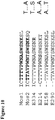
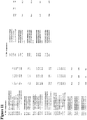
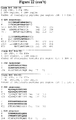
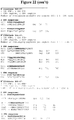
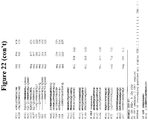
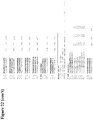
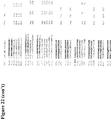
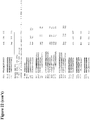
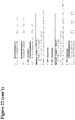
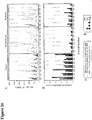
- Minimal regions within the peptides that are likely to contain the immune response epitope, based on overlap between reactive peptides when it occurs, are in bold in the vaccines. If there is no overlapping peptide, we assume the epitope can be anywhere in the peptide, so the whole region is bold. We cannot differentiate between different T cell responses targeting epitopes with different boundaries within a peptide, or more promiscuous clonal T cell responses that can tolerate variation when variants are present; either scenario could be advantageous in a vaccine immune response. The number of targeted regions corresponds to the minimum number of T cell responses required to account for the data.
- Amino acids where the vaccine and the peptides don't match are written in red; if they fall within the region likely to carry the epitope, they are bold red. Amino acid differences outside of the overlapping regions when multiple peptides overlap are marked in red, but not bold.
- the vaccines are always at the top.
- the letter for each protein (Gag is G, Pol is P, Envelope is E) and the peptide number are used to label for each reactive PTE peptide.
- the protein and HXB2 numbers follow each peptide.
- the reactive peptides are also marked in bold to indicate the positions where including two variants may have impacted the vaccine immune response and allowed greater breadth and depth.
- the first vaccine summarized is the clade B+C vaccine, and animal 287-95 is the first animal for which responses are listed.
- Two of the CD8 peptides show substantial overlap, E26 and E282, so both may be targets for the same CTL response; thus we also note there are only 2 CD8 responsive regions, and 1 CD4 responsive region.
- For each responsive region we write out the number of overlapping peptides per region (e.g., CD8: 12 CD4: 1) to assess depth of responses; the two is red to indicate that the region of overlap is variable in the reactive peptides.
- the vaccine differs, like the D/E in the second reactive region, it is marked in blue. Only the region of overlap is bold.
- the H in E282 was not found in either vaccine so it is marked with red; it is within the region of overlap so it is bold.
- Each reactive peptide has its protein and corresponding HXB2 numbering noted on the right.
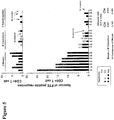
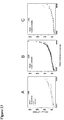
- Figures 23A-23C are graphs showing the magnitude of all Gag-, Pol-, and Env-specific CD8+ ( Figure 23A and 23B ) and CD4+ ( Figure 23C ) T lymphocyte responses arranged from lowest to highest.
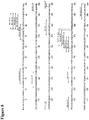
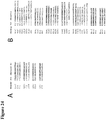
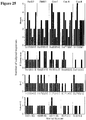
- Figures 24A-C show the depth of epitope-specific T lymphocyte responses to PTE peptides.
- Figure 24A is a schematic showing an example of mapped T lymphocyte responses in monkey 366 that received the optimal natural clade C antigens.
- Figure 24B is a schematic showing an example of mapped T lymphocyte responses in monkey 361 that received the 2-valent mosaic antigens.
- vaccine sequences are shown on the top (OptC; Mos1, Mos2), and reactive PTE peptides are shown beneath the vaccine sequences denoted by the antigen (G, Gag; P, Pol; E, Env) and the PTE peptide numbers. The minimal overlap region is shown in bold.
- Figure 24C is a graph showing the depth of CD4+ (top) and CD8+ (bottom) T lymphocyte responses following immunization with rAd26 vectors expressing mosaic, M consensus, clade B + clade C, or optimal natural clade C antigens. Individual monkeys are depicted on the x-axis. One response variant (light shade) or >1 response variants (dark shade) are shown for each epitopic region.
- Figure 24A discloses SEQ ID NOS 641-650, respectively, in order of appearance.
- Figure 24B discloses SEQ ID NOS 651-685, respectively, in order of appearance.
- Figure 25 is a graph showing the breadth of epitope-specific T lymphocyte responses to HIV-1 Gag peptides from clades A, B, and C. Breadth of cellular immune responses was assessed utilizing subpools of overlapping peptides from the following strains of HIV-1 Gag: clade C DU422, clade C ZM651, consensus C, consensus A, and consensus B. Numbers of positive subpools are shown following a single immunization of rAd26 vectors expressing mosaic (blue), M consensus (green), clade B + clade C (purple), or optimal natural clade C (red) HIV-1 Gag, Pol, and Env antigens. Individual monkeys are depicted on the x-axis.
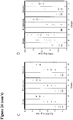
- Figure 26A-D are graphs showing the cellular and humoral immune responses following the boost immunization. Shown are the magnitude ( Fig. 26A ) and breadth ( Fig. 26B ) of individual T lymphocyte responses at week 4 post-prime (left side of each panel) and at week 44 post-boost (right side of each panel) for each monkey. Monkeys were primed at week 0 with rAd26 vectors and were boosted at week 40 with rAd5HVR48 vectors expressing mosaic, M consensus, or optimal natural clade C HIV-1 Gag, Pol, and Env antigens. Individual monkeys are depicted on the x axis. In Fig.
- FIG. 26A red denotes CD8+ T lymphocyte responses, blue denotes CD4+ T lymphocyte responses, lines depict responses observed at both timepoints, and dots depict responses observed at only one timepoint.
- Figure 26B different shades of each color reflect responses to the different antigens (Gag, Pol, Env).
- Figure 26C is a graph showing the Env-specific ELISA endpoint titers at weeks 0, 4, and 44.
- Figure 26D is a graph showing the neutralizing antibody (NAb) titers to the tier 1 clade A (DJ263.8), clade B (SF162.LS), and clade C (MW965.26) viruses at week 44.
- NAb titers to murine leukemia virus as a negative control were ⁇ 20 for all samples.
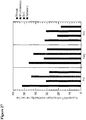
- Figure 27 is a graph showing the theoretical coverage of PTE peptides by the various vaccine antigens. Percentage of 9 amino acid PTE peptides that are covered by the mosaic (blue), M consensus (green), clade B + clade C (purple), or optimal natural clade C (red) HIV-1 Gag, Pol, and Env antigens are shown.
- the invention features optimized viral polypeptides that are computationally derived from naturally-occurring viral gene products.
- the optimized viral polypeptides of the invention allow for an increased breadth and depth of virus-specific immunity (e.g., cellular immunity, such as T cell-based immune responses) following immunization of a subject (e.g., a human) with one or more optimized viral polypeptides of the invention or vaccines (e.g., a vector) that incorporate one or more optimized viral polypeptides of the invention.
- virus-specific immunity e.g., cellular immunity, such as T cell-based immune responses
- vaccines e.g., a vector
- the invention provides vaccines that can be administered to a subject (e.g., a human) infected with or at risk of becoming infected with a viral infection.
- the vaccines of the invention may incorporate at least two distinct optimized viral polypeptides for each corresponding viral gene product represented.
- the incorporation of at least two distinct optimized viral polypeptides allows for increased coverage and representation of immunogenic epitopes in the vaccine, which the inventors have found results in an increase in the total number of virus-specific immune responses following vaccination of a subject.
- methods of administering and manufacturing vaccines, vectors, and optimized viral polypeptides to a subject e.g., a human.
- the compositions, methods, and kits described herein can substantially increase the diversity, breadth, and/or depth of the virus-specific cellular immune responses by providing at least two distinct optimized viral polypeptides.
- the present invention provides for polyvalent (e.g., 2-valent) vaccines that incorporate computationally-optimized viral polypeptides that correspond to and are derived from viral gene products that naturally circulate.
- Polyvalent mosaic proteins are assembled from natural sequences by in silico recombination and optimized to provide maximal coverage of potential T cell epitopes (PTEs) for a given valency.
- Mosaic antigens are full-length proteins that are designed to preserve natural antigen expression and processing.
- a 2-valent vaccine elicits a substantially higher number of cellular immune responses (e.g., T cell responses) than conventional monovalent or polyvalent vaccines that incorporate naturally-occurring polypeptides derived from the same viral gene product (e.g., sequences based on clinical isolates), or a consensus sequence of such naturally-occurring polypeptides derived from the same viral gene product.
- a vaccine that incorporates computationally-optimized viral polypeptides, the sequences of which provide maximum coverage of non-rare short stretches of circulating viral sequences, can increase the breadth and depth of the immune response.
- a genetic algorithm is used to create sets of optimized viral polypeptides as "mosaic” blends of fragments of an arbitrary set of naturally-occurring viral gene product sequences provided as inputs.
- This genetic algorithm strategy uses unaligned protein sequences from a general viral population as an input data set, and thus has the virtue of being “alignment independent.” It creates artificial optimized viral polypeptides that resemble viral proteins found in nature, but are not naturally-occurring.
- the genetic algorithm can be adjusted to optimize viral polypeptides of different lengths, depending on the intended target or desired immune response.
- the genetic algorithm utilized to design the optimized viral polypeptides of the invention was based on optimizing each consecutive 9-mer amino acid sequence of a given viral gene product (e.g., HIV-1 Gag).
- a given viral gene product e.g., HIV-1 Gag.
- 9-mers for example
- that do not exist in nature or that are very rare can be excluded - this is an improvement relative to consensus sequence-based vaccine strategies since the latter can contain some 9-mers (for example) that occur rarely or not at all in nature.
- the definition of fitness used for the genetic algorithm is that the most "fit" polyvalent cocktail is the combination of input viral sequences that gives the best coverage (highest fraction of perfect matches) of all of the 9 mers in the population and is subject to the constraint that no 9 mer is absent or rare in the population.
- the genetic algorithm used to generate the optimized viral polypeptides of the invention is further described in International Patent Application Publication WO 2007/024941 .
- the invention provides polyvalent (e.g., 2-valent) HIV-1 vaccines that incorporate the single optimized HIV-1 polypeptide set forth in SEQ ID NO:9).
- the invention features a polyvalent vaccine that incorporates two or more optimized HIV-1 polypeptides.
- the optimized HIV-1 polypeptides are based on all HIV-1 variants in global circulation, known as the HIV-1 Main (M) group.
- the inventors have generated a set of optimized HIV-1 polypeptides (SEQ ID NOS:1-29) that augment the breadth and depth of cellular immunity based on group M mosaic genes that utilize only two variants per gene (e.g., two polypeptide sequences each for Gag, Pol, Env, Nef, Tat, Rev, Vif, Vpr, and Vpu).
- group M mosaic genes that utilize only two variants per gene (e.g., two polypeptide sequences each for Gag, Pol, Env, Nef, Tat, Rev, Vif, Vpr, and Vpu).
- a polyvalent HIV-1 group M vaccine elicits a significantly greater breadth and depth of HIV-1-specific cellular immune responses when compared with two other leading vaccine antigen strategies (M consensus antigens and optimal natural clade C antigens).
- the invention also features the fusion of optimized viral polypeptides that correspond to different viral gene products.
- the genetic algorithm described above can be used to generate fused polypeptides for use in a vaccine of the invention.
- the optimized HIV-1 polypeptide fusions of Gag/Nef (SEQ ID NOS:19-20), Gag/Pol (SEQ ID NOS:21-27), and Gag/Pol/Nef (SEQ ID NOS:28-29) can be incorporated into a vector of the invention for administration to a subject (e.g., a human) infected with or at risk of being infected with HIV-1.
- the vaccines of the invention can also include one or more of the non-"mosaic" polypeptides (or sequences encoding them, respectively), such as, e.g., the optimal clade C sequences (SEQ ID NOS: 30-36) or the consensus sequences (SEQ ID NOS: 37-39).
- the optimized viral polypeptides disclosed in this invention can be prepared conventionally by chemical synthesis techniques, such as described by Merrifield, J. Amer. Chem. Soc. 85:2149 (1963 ) (see also, e.g., Stemmer et al., 164 Gene 49 (1995 )).
- the vaccines can be readily prepared using solid phase peptide synthesis (SPPS).
- SPPS solid phase peptide synthesis
- Automated solid phase synthesis can be performed using any one of a number of well known, commercially available automated synthesizers, such as the Applied Biosystems ABI 433A peptide synthesizer.
- the optimized viral polypeptides of the invention can be recombinantly produced by transfecting or transducing a cell or organism with a nucleic acid or vector (e.g., a viral vector, such an adenovirus) that allows for the intracellular expression of the optimized viral polypeptide.
- a nucleic acid or vector e.g., a viral vector, such an adenovirus
- Nucleic acids and vectors that encode the nucleotide sequence of optimized viral polypeptides of the invention can be synthesized by well-known recombinant DNA techniques, including those described herein.
- the invention also features vaccines that can be administered to a patient infected with or at risk of becoming infected with a virus (e.g., HIV-1).
- a vaccine of the invention contains at least one of the optimized viral polypeptides of the invention, as discussed herein, including the optimized viral polypeptide having the amino acid sequence set forth in SEQ ID NO:9.
- the vaccine of the invention can be a nucleic acid encoding the nucleotide sequence of two or more optimized viral polypeptides of the invention (e.g., the immunogenic component of a recombinant (e.g., subunit) or whole-organism (e.g., whole-virus) viral vector).
- Nucleic acids include vectors (e.g., viral vectors, such as adenoviruses) that incorporate the nucleotide sequence of two or more optimized viral polypeptides of the invention.
- the optimized viral polypeptides of the invention, as well as vaccines, nucleic acids, and vectors that incorporate optimized viral polypeptides, can be recombinantly expressed in a cell or organism, or can be directly administered to subject (e.g., a human) infected with, or at risk of becoming infected with, a virus.
- the invention also features vectors encoding the nucleotide sequences (e.g., DNA or RNA) of one or more optimized viral polypeptides of the invention, including a vector encoding an optimized viral polypeptide having the amino acid sequence set forth in SEQ ID NO:9.
- the vector can be a carrier (e.g., a liposome), a plasmid, a cosmid, a yeast artificial chromosome, or a virus that includes a nucleotide sequence encoding one or more optimized viral polypeptides of the invention.
- the vector can include additional nucleic acid sequences from several sources.
- Vectors encoding one or more optimized viral polypeptides of the invention can be constructed using any recombinant molecular biology technique known in the art.
- the vector upon transfection or transduction of a target cell or organism, can be extrachromosomal or it can be integrated into the host cell chromosome.
- the nucleic acid component of a vector can be in single or multiple copy number per target cell, and can be linear, circular, or concatamerized.
- Vectors of the invention can also include internal ribosome entry site (IRES) sequences to allow for the expression of multiple peptide or polypeptide chains from a single nucleic acid transcript.
- IRS internal ribosome entry site
- a vector of the invention can encode one or more optimized viral polypeptides of the invention as well as another polypeptide (e.g., a detectable label, such as green fluorescent protein (GFP)).
- GFP green fluorescent protein
- Vectors of the invention further include gene expression elements that facilitate the expression of optimized viral polypeptides of the invention.
- Gene expression elements useful for the expression of a vector encoding an optimized viral polypeptide of the invention include, but are not limited to (a) regulatory sequences, such as viral transcription promoters and their enhancer elements, such as the SV40 early promoter, Rous sarcoma virus LTR, and Moloney murine leukemia virus LTR; (b) splice regions and polyadenylation sites such as those derived from the SV40 late region; and (c) polyadenylation sites such as in SV40.
- plasmid origins of replication include antibiotic resistance or selection genes, multiple cloning sites (e.g., restriction enzyme cleavage loci), and other viral gene sequences (e.g., sequences encoding viral structural, functional, or regulatory elements, such as the HIV long terminal repeat (LTR)).
- antibiotic resistance or selection genes include multiple cloning sites (e.g., restriction enzyme cleavage loci), and other viral gene sequences (e.g., sequences encoding viral structural, functional, or regulatory elements, such as the HIV long terminal repeat (LTR)).
- multiple cloning sites e.g., restriction enzyme cleavage loci
- other viral gene sequences e.g., sequences encoding viral structural, functional, or regulatory elements, such as the HIV long terminal repeat (LTR)
- Vectors of the invention can also include optimized viral polypeptides of the invention that have been optimized for expression in humans, such as, e.g., any one of SEQ ID NOS:11, 14-18, and 23.
- Vectors of the invention can also be engineered to include a multiple cloning site (MCS) having the following enzyme cleavage sites: XbaI-EcoRI-Kozak-Start...Stop-BamHI-NheI; and the following sequence: TCTAGA GAATTC GCCACC [ATG gene TAA TGA] GGATCC GCTAGC.
- MCS multiple cloning site
- Vectors having this MCS can be used with optimized viral polypeptides having no internal Xbal, EcoRI, BamHI, NheI sites and no stretches of 6 or more C's or G's.
- the vaccines of the invention are useful in methods for the in vivo administration of one or more vaccines of the invention (e.g., a vector encoding two or more optimized viral polypeptides of the invention) to a subject (e.g., a human) to facilitate the expression of two or more optimized viral polypeptides of the invention.
- a subject e.g., a human
- one or more optimized viral polypeptides of the invention will be expressed that can elicit protective or therapeutic immune responses (e.g., cellular or humoral immune responses) directed against the viral immunogens.
- Vectors of the invention include viruses, naked DNA, oligonucleotides, cationic lipids (e.g., liposomes), cationic polymers (e.g., polysomes), virosomes, and dendrimers.
- the vaccines of the invention can also be used in methods for the ex vivo transfection and transduction of cells (e.g., blood cells, such as lymphocytes), followed by administration of these cells to a subject (e.g., a human).
- the cells may be autologous to the treated subject.
- Cells can be transfected or transduced ex vivo with one or more vectors encoding the nucleotide sequence of one or more optimized viral polypeptides of the invention to allow for the temporal or permanent expression of the optimized viral polypeptides in the treated subject.
- one or more optimized viral vectors of the invention will be expressed that can elicit protective or therapeutic immune responses (e.g., cellular or humoral immune responses) directed against the viral immunogens.
- Vectors of the invention include viruses, naked DNA, oligonucleotides, cationic lipids (e.g., liposomes), cationic polymers (e.g., polysomes), virosomes, and dendrimers.
- the vaccines of the present invention can also be used in methods for the ex vivo transfection or transduction of cells (e.g., blood cells) followed by administration of these cells back into the donor subject to allow for the expression of optimized viral polypeptides of the invention that have immunogenic properties.
- Cells that can be isolated and transfected or transduced ex vivo according to these methods include, but are not limited to, blood cells, skin cells, fibroblasts, endothelial cells, skeletal muscle cells, hepatocytes, prostate epithelial cells, and vascular endothelial cells.
- Stem cells are also appropriate cells for transduction or transfection with a vector of the invention.
- Totipotent, pluripotent, multipotent, or unipotent stem cells including bone marrow progenitor cells and hematopoietic stem cells (HSC)
- HSC hematopoietic stem cells
- the method of transfection or transduction used to express an optimized viral vector of the invention has a strong influence on the strength and longevity of protein expression in the transfected or transduced cell, and subsequently, in the subject receiving the cell.
- the present invention provides vectors that are temporal (e.g., adenoviral vectors) or long-lived (e.g., retroviral vectors) in nature. Regulatory sequences (e.g., promoters and enhancers) are known in the art that can be used to regulate protein expression.
- the type of cell being transfected or transduced also has a strong bearing on the strength and longevity of protein expression. For example, cell types with high rates of turnover can be expected to have shorter periods of protein expression.
- Viral vectors encoding the nucleotide sequence of one or more optimized viral polypeptides of the invention can be used as a vaccine of the invention.
- the nucleotide sequence of one or more optimized viral polypeptides of the invention can be inserted recombinantly into that of a natural or modified (e.g., attenuated) viral genome suitable for the transduction of a subject (e.g., in vivo administration) or cells isolated from a subject (e.g., for ex vivo transduction followed by administration of the cells back to the subject).
- a vector of the invention can be expressed by the transduced cell and secreted into the extracellular space or remain with the expressing cell (e.g., as an intracellular molecule or displayed on the cell surface). Chimeric or pseudotyped viral vectors can also be used to transduce a cell to allow for expression of one or more optimized viral polypeptides of the invention. Exemplary vectors are described below.
- adenoviruses offer several significant advantages for use as vectors for the expression of one or more optimized viral polypeptides of the invention.
- the viruses can be prepared to high titer, can infect non-replicating cells, and can confer high-efficiency transduction of target cells ex vivo following contact with a target cell population.
- adenoviruses do not integrate their DNA into the host genome. Thus, their use as expression vectors has a reduced risk of inducing spontaneous proliferative disorders.
- adenoviral vectors In animal models, adenoviral vectors have generally been found to mediate high-level expression for approximately one week.
- transgene expression expression of a nucleic acid encoding an optimized viral polypeptide of the invention
- duration of transgene expression can be prolonged by using cell or tissue-specific promoters.
- Other improvements in the molecular engineering of the adenoviral vector itself have produced more sustained transgene expression and less inflammation. This is seen with so-called "second generation" vectors harboring specific mutations in additional early adenoviral genes and "gutless” vectors in which virtually all the viral genes are deleted utilizing a Cre-Lox strategy ( Engelhardt et al., Proc. Natl. Acad. Sci. USA 91:6196 (1994 ) and Kochanek et al., Proc. Natl. Acad. Sci. USA 93:5731 (1996 )).
- the rare serotype and chimeric adenoviral vectors disclosed in International Patent Application Publications WO 2006/040330 and WO 2007/104792 are particularly useful as vectors of the invention.
- recombinant adenoviruses rAd26, rAd34, rAd35, rAd48, and rAd5HVR48 can encode one or more optimized viral polypeptides of the invention.
- One or more recombinant viral vectors encoding optimized viral polypeptides of the invention can be administered to a subject to treat or prevent a viral infection.
- AAV Adeno-Associated Viruses
- Adeno-associated viruses derived from non-pathogenic parvoviruses, can also be used to express optimized viral polypeptides of the invention as these vectors evoke almost no anti-vector cellular immune response, and produce transgene expression lasting months in most experimental systems.
- Retroviruses are useful for the expression of optimized viral polypeptides of the invention. Unlike adenoviruses, the retroviral genome is based in RNA. When a retrovirus infects a cell, it will introduce its RNA together with several enzymes into the cell. The viral RNA molecules from the retrovirus will produce a double-stranded DNA copy, called a provirus, through a process called reverse transcription. Following transport into the cell nucleus, the proviral DNA is integrated in a host cell chromosome, permanently altering the genome of the transduced cell and any progeny cells that may derive from this cell. The ability to permanently introduce a gene into a cell or organism is the defining characteristic of retroviruses used for gene therapy.
- Retroviruses include lentiviruses, a family of viruses including human immunodeficiency virus (HIV) that includes several accessory proteins to facilitate viral infection and proviral integration.
- HIV human immunodeficiency virus
- Current, "third-generation,” lentiviral vectors feature total replication incompetence, broad tropism, and increased gene transfer capacity for mammalian cells (see, e.g., Mangeat and and Trono, Human Gene Therapy 16(8):913 (2005 ) and Wiznerowicz and Trono, Trends Biotechnol. 23(1):42 (2005 )).
- viruses include Poxviruses (e.g., vaccinia virus and modified vaccinia virus Ankara or (MVA); see, e.g., U.S. Patent Nos. 4,603,112 and 5,762,938 ), Herpesviruses, Togaviruses (e.g., Venezuelan Equine Encephalitis virus; see, e.g., U.S. Patent No.
- Poxviruses e.g., vaccinia virus and modified vaccinia virus Ankara or (MVA); see, e.g., U.S. Patent Nos. 4,603,112 and 5,762,938 )
- Herpesviruses e.g., Togaviruses (e.g., Venezuelan Equine Encephalitis virus; see, e.g., U.S. Patent No.
- Picornaviruses e.g., poliovirus; see, e.g., U.S. Patent No. 5,639,649
- Baculoviruses, and others described by Wattanapitayakul and Bauer Biomed. Pharmacother, 54:487 (2000 )).
- Naked DNA or oligonucleotides encoding one or more optimized viral polypeptides of the invention can also be used to express these polypeptides in a cell (e.g., a blood cell, such as a lymphocyte) or subject (e.g., a human).
- a cell e.g., a blood cell, such as a lymphocyte
- subject e.g., a human
- a cell e.g., a blood cell, such as a lymphocyte
- a human e.g., a human
- a cell e.g., a blood cell, such as a lymphocyte
- subject e.g., a human
- a cell e.g., a blood cell, such as a lymphocyte
- a human e.g., a human
- lipoplexes e.g., liposomes
- polyplexes can be used to protect the vector DNA from undesirable degradation during the transfection process.
- Plasmid DNA can be covered with lipids in an organized structure like a micelle or a liposome. When the organized structure is complexed with DNA it is called a lipoplex.
- lipids There are three types of lipids, anionic (negatively-charged), neutral, or cationic (positively-charged).
- Lipoplexes that utilize cationic lipids have proven utility for gene transfer. Cationic lipids, due to their positive charge, naturally complex with the negatively- charged DNA. Also as a result of their charge they interact with the cell membrane, endocytosis of the lipoplex occurs, and the DNA is released into the cytoplasm. The cationic lipids also protect against degradation of the DNA by the cell.
- polyplexes Complexes of polymers with DNA are called polyplexes. Most polyplexes consist of cationic polymers and their production is regulated by ionic interactions.
- One large difference between the methods of action of polyplexes and lipoplexes is that polyplexes cannot release their DNA load into the cytoplasm, so to this end, co-transfection with endosome-lytic agents (to lyse the endosome that is made during endocytosis) such as inactivated adenovirus must occur.
- endosome-lytic agents to lyse the endosome that is made during endocytosis
- polymers such as polyethylenimine have their own method of endosome disruption as does chitosan and trimethylchitosan.
- Exemplary cationic lipids and polymers that can be used in combination with an nucleic acid encoding an optimized viral polypeptide of the invention to form lipoplexes, or polyplexes include, but are not limited to, polyethylenimine, lipofectin, lipofectamine, polylysine, chitosan, trimethylchitosan, and alginate.
- Virosomes for example, combine lipoplexes (e.g., liposomes) with an inactivated virus. This approach has been shown to result in more efficient gene transfer in respiratory epithelial cells than either viral or liposomal methods alone.
- Other methods involve mixing other viral vectors with cationic lipids or hybridising viruses. Each of these methods can be used to facilitate transfer of a nucleic acid encoding optimized viral polypeptides of the invention into a cell (e.g., a blood cell, such as a lymphocyte) or subject (e.g., a human).
- Dendrimers may be also be used to transfer a nucleic acid encoding an optimized viral polypeptide of the invention into a cell (e.g., a blood cell, such as a lymphocyte) or subject (e.g., a human).
- a dendrimer is a highly branched macromolecule with a spherical shape.
- the surface of the particle may be functionalized in many ways, and many of the properties of the resulting construct are determined by its surface.
- a cationic dendrimer i.e. one with a positive surface charge.
- charge complimentarity leads to a temporary association of the nucleic acid with the cationic dendrimer.
- the dendrimer-nucleic acid complex is then taken into the cell via endocytosis.
- the invention also features vaccines useful in in vivo methods for immunizing a subject (e.g., a human).
- one or more vaccines of the invention can be for direct administration to a subject to elicit a protective or therapeutic immune response (e.g., a cellular or humoral immune response) against a virus (e.g., HIV-1).
- a vector encoding one or more optimized viral polypeptides of the invention, as described above can be directly administered to a subject to prevent or treat a viral infection.
- a vector e.g., a viral vector
- a vector that efficiently transfects or transduces one or more cells in vivo can elicit a broad, durable, and potent immune response in the treated subject.
- the host cell Upon transfer of the nucleic acid component of the expression vector into a host cell (e.g., a blood cell, such as a lymphocyte), the host cell produces and displays or secretes the vaccine of the invention, which then serves to activate components of the immune system such as antigen-presenting cells (APCs), T cells, and B cells, resulting in the establishment of immunity.
- a host cell e.g., a blood cell, such as a lymphocyte
- APCs antigen-presenting cells
- T cells T cells
- B cells resulting in the establishment of immunity.
- the invention also features the vaccines, vectors, and optimized viral polypeptides of the invention in combination with one or more pharmaceutically acceptable excipients, diluents, buffers, or other acceptable carriers.
- the formulation of a vaccine, vector, or optimized viral polypeptides will employ or allow expression of an effective amount of the optimized viral polypeptide immunogen. That is, there will be included an amount of antigen which will cause the treated subject (e.g., a human) to produce a specific and sufficient immunological response so as to impart protection to the subject from subsequent exposure to a virus (e.g., HIV-1) or to treat an existing viral infection.
- a virus e.g., HIV-1
- a formulation of a vaccine of the invention can allow for the expression of an amount of antigen which will cause the subject to produce a broad and specific cellular immune response.
- a subject treated with a vaccine, vector, or optimized viral polypeptide of the invention can also produce antiviral antibodies (e.g., neutralizing antibodies) which can confer a protective or therapeutic benefit to the subject.
- a vaccine, vector, or optimized viral polypeptide of the invention can be directly administered to a subject, either alone or in combination with any pharmaceutically acceptable carrier, salt or adjuvant known in the art.
- phrases may include non-toxic acid addition salts or metal complexes that are commonly used in the pharmaceutical industry.
- acid addition salts include organic acids such as acetic, lactic, pamoic, maleic, citric, malic, ascorbic, succinic, benzoic, palmitic, suberic, salicylic, tartaric, methanesulfonic, toluenesulfonic, or trifluoroacetic acids or the like; polymeric acids such as tannic acid, carboxymethyl cellulose, or the like; and inorganic acids such as hydrochloric acid, hydrobromic acid, sulfuric acid phosphoric acid, or the like.
- Metal complexes include zinc, iron, and the like.
- physiological saline One exemplary pharmaceutically acceptable carrier is physiological saline.
- physiologically acceptable carriers and their formulations are known to one skilled in the art and described, for example, in Remington's Pharmaceutical Sciences, (18th edition), ed. A. Gennaro, 1990, Mack Publishing Company, Easton, PA .
- compositions of a prophylactically or therapeutically effective amount of a vaccine, vector, or optimized viral polypeptide of the invention can be administered orally, parenterally (e.g., intramuscular, intraperitoneal, intravenous, or subcutaneous injection, inhalation, intradermally, optical drops, or implant), nasally, vaginally, rectally, sublingually, or topically, in admixture with a pharmaceutically acceptable carrier adapted for the route of administration.
- concentration of a vaccine, vector, or optimized viral polypeptide of the invention in the formulation can vary from about 0.1-100 wt. %.
- Formulations for parenteral administration of compositions containing a vaccine, vector, or optimized viral polypeptide of the invention include sterile aqueous or non-aqueous solutions, suspensions, or emulsions.
- suitable vehicles include propylene glycol, polyethylene glycol, vegetable oils, gelatin, hydrogenated naphalenes, and injectable organic esters, such as ethyl oleate.
- Such formulations may also contain adjuvants, such as preserving, wetting, emulsifying, and dispersing agents.
- Biocompatible, biodegradable lactide polymer, lactide/glycolide copolymer, or polyoxyethylene-polyoxypropylene copolymers may be used to control the release of the compounds.
- Other potentially useful parenteral delivery systems for compositions containing a vaccine, vector, or optimized viral polypeptide of the invention include ethylene-vinyl acetate copolymer particles, osmotic pumps, implantable infusion systems, and liposomes.
- Liquid formulations can be sterilized by, for example, filtration through a bacteria-retaining filter, by incorporating sterilizing agents into the compositions, or by irradiating or heating the compositions. Alternatively, they can also be manufactured in the form of sterile, solid compositions, which can be dissolved in sterile water or some other sterile injectable medium immediately before use.
- compositions containing vaccine, vector, or optimized viral polypeptide of the invention for rectal or vaginal administration are preferably suppositories which may contain, in addition to active substances, excipients such as coca butter or a suppository wax.
- Compositions for nasal or sublingual administration are also prepared with standard excipients known in the art.
- Formulations for inhalation may contain excipients, for example, lactose, or may be aqueous solutions containing, for example, polyoxyethylene-9-lauryl ether, glycocholate and deoxycholate, or may be oily solutions for administration in the form of nasal drops or spray, or as a gel.
- the amount of active ingredient in the compositions of the invention can be varied.
- One skilled in the art will appreciate that the exact individual dosages may be adjusted somewhat depending upon a variety of factors, including the peptide being administered, the time of administration, the route of administration, the nature of the formulation, the rate of excretion, the nature of the subject's conditions, and the age, weight, health, and gender of the patient.
- the severity of the condition treated by the vaccine, vector, or optimized viral polypeptide will also have an impact on the dosage level.
- dosage levels of between 0.1 ⁇ g/kg to 100 mg/kg of body weight are administered daily as a single dose or divided into multiple doses.
- the general dosage range is between 250 ⁇ g/kg to 5.0 mg/kg of body weight per day.
- the amount of a vaccine, vector, or optimized viral polypeptide of the invention present in each dose given to a patient is selected with regard to consideration of the patient's age, weight, sex, general physical condition and the like.
- the amount of a vaccine, vector, or optimized viral polypeptide required to induce an immune response (e.g., a cellular immune response) or produce an exogenous effect in the patient without significant adverse side effects varies depending upon the pharmaceutical composition employed and the optional presence of an adjuvant.
- Initial doses can be optionally followed by repeated boosts, where desirable.
- the method can involve chronically administering the vaccine, vector, or optimized viral polypeptide of the invention.
- repeated dosages of the immunizing vaccine, vector, or optimized viral polypeptide can be desirable, such as a yearly booster or a booster at other intervals.
- the dosage administered will, of course, vary depending upon known factors such as the pharmacodynamic characteristics of the particular vaccine, vector, or optimized viral polypeptide, and its mode and route of administration; age, health, and weight of the recipient; nature and extent of symptoms, kind of concurrent treatment, frequency of treatment, and the effect desired.
- a vaccine, vector, or optimized viral polypeptide of the invention can be administered in chronic treatments for subjects at risk of acute infection due to needle sticks or maternal infection.
- a dosage frequency for such "acute" infections may range from daily dosages to once or twice a week i.v.
- the vaccine, vector, or optimized viral polypeptide can also be employed in chronic treatments for infected patients, or patients with advanced infection with a virus (e.g., HIV-1).
- the frequency of chronic administration can range from daily dosages to once or twice a week i.v. or i.m., and may depend upon the half-life of immunogen present in the vaccine, vector, or optimized viral polypeptide of the invention.
- a vaccine of the invention used to vaccinate a mammal (e.g., a human) in need thereof against a virus can be administered concurrent with or in series with one or more pharmaceutically acceptable adjuvants to increase the immunogenicity of the vaccine.
- adjuvants approved for human use include aluminum salts (alum). These adjuvants have been useful for some vaccines including hepatitis B, diphtheria, polio, rabies, and influenza.
- CFA Complete Freund's Adjuvant
- IFA Incomplete Freund's Adjuvant
- MDP muramyl dipeptide
- synthetic analogues of MDP N-acetylmuramyl-L-alanyl-D-isoglutamyl-L-alanine-2-[1,2-dipalmitoyl-s-gly- cero-3-(hydroxyphosphoryloxy)]ethylamide
- MTP-PE compositions containing a metabolizable oil and an emulsifying agent, wherein the oil and emulsifying agent are present in the form of an oil-in-water emulsion having oil droplets substantially all of which are less than one micron in diameter.
- kits that include a pharmaceutical composition containing a vaccine, vector, or optimized viral polypeptide of the invention, and a pharmaceutically-acceptable carrier, in a therapeutically effective amount for preventing or treating a viral infection.
- kits include instructions to allow a clinician (e.g., a physician or nurse) to administer the composition contained therein.
- kits include multiple packages of the single-dose pharmaceutical composition(s) containing an effective amount of a vaccine, vector, or optimized viral polypeptide of the invention.
- instruments or devices necessary for administering the pharmaceutical composition(s) may be included in the kits.
- a kit of this invention may provide one or more pre-filled syringes containing an effective amount of a vaccine, vector, or optimized viral polypeptide of the invention.
- the kits may also include additional components such as instructions or administration schedules for a patient infected with or at risk of being infected with a virus to use the pharmaceutical composition(s) containing a vaccine, vector, or optimized viral polypeptide of the invention.
- the mosaic antigen Gag, Pol, Nef, and Env sequences were constructed using the genetic algorithm discussed above. These sequences were then modified to make them practical for vaccine development by eliminating cleavage/fusion activity in Env (SEQ ID NOS:9-11), eliminating catalytic activity in Pol (SEQ ID NOS:12-14), eliminating myristylation sites in Nef (SEQ ID NOS:16-18), and constructing fusion constructs including GagNef, GagPol, or GagPolNef (SEQ ID NOS:19-29).
- the comparator optimal natural clade C genes are also depicted (SEQ ID NOS:30-36).
- M consensus (Group 1), 2-valent M mosaic (Group 2), or optimal natural clade C (Group 3) sequences.
- the M consensus sequences represent synthetic sequences that represent the single best "average" of circulating viruses worldwide.
- the 2-valent M mosaic sequences are described above.
- the optimal natural clade C sequences are naturally occurring sequences from actual clade C HIV-1 viruses that are the most "consensus-like" in character.
- Cellular immune breadth was assessed by evaluating the number of responding peptides from the global potential T cell epitope (PTE) peptide set.
- PTE global potential T cell epitope
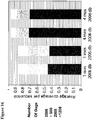
- Table 1 Mosaic HIV-1 Gag/Pol/Env Antigens Expand Breadth against Global PTE Peptides in Rhesus Monkeys Breadth Group I: M Consensus Group II: 2-valent M Mosaic Group III: Natural Clade C Mean SEM Mean SEM Mean SEM Gag 2.0 0.4 7.7 0.9 2.2 0.5 Env 2.0 0.4 4.0 0.6 1.6 0.5 Pol 2.7 0.5 8.1 1.4 2.4 0.5 Total 6.7 0.7 19.9 1.9 6.1 1.1 1.1
- Cellular immune breadth was assessed by evaluating the number of responding peptides from the global potential T cell epitope (PTE) peptide set.
- PTE T cell epitope
- the mosaic vaccines still generate a greater number of responses to distinct regions.
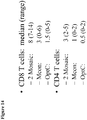
- the following table is a tally of the total responses to Gag, Pol, and Env responses to the three vaccines in the 7 animals vaccinated with 2 Mosaic (Mos2) or Mcon, and the 6 animals vaccinated with the Optimal Natural C clade (OptC): CD8 CD4 Env Gag Pol Env Gag Pol 2Mos 13 20 33 3 10 11 ConM 8 7 8 2 3 4 OptC 4 5 5 1 2 1
- the OptC vaccine yielded an average response across all monkeys that was slightly less than the CD8+ T cell response per protein.
- the Mcon vaccine exhibited ⁇ 1 response per protein. Only with Mos2 do we observe a difference in the proteins, where Env typically has fewer responses than either Gag or Pol.
- Mosaic HIV-1 vaccines of the invention expand the breadth and depth of cellular immune responses in Rhesus monkeys.
- a 2-valent mosaic strategy was utilized to balance the competing issues of theoretical coverage and practical utility.
- 2-valent mosaic HIV-1 Gag, Pol, and Env antigens substantially expanded the breadth and magnitude (depth) of epitope-specific CD8+ and CD4+ T lymphocyte responses in rhesus monkeys, relative to the immune response observed using consensus and natural sequence HIV-1 antigens in rhesus monkeys.
- a total dose of 3x10 10 viral particles of rAd26 vectors expressing these antigens was administered once i.m. to each animal.
- the optimal clade C antigens were the natural strain sequences selected to provide maximal PTE coverage of clade C sequences in the Los Alamos HIV-1 sequence database (discussed in the Materials and Methods below).
- P 1 x 10-11, comparing the mosaic with the consensus antigens, the next highest group, based on a Poisson regression model.
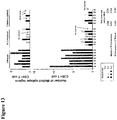
- the median number of CD8+ T lymphocyte responses was highest for the mosaic vaccine, followed by the consensus, the combined B+C, and the natural clade C vaccines (medians of 16, 5, 3, and 2 responses per animal in each group, respectively). Although there were fewer CD4+ T lymphocyte responses overall, the same relative pattern emerged with the highest number of CD4+ T lymphocyte responses to the mosaic vaccine, followed by the consensus, the combined B+C, and the natural clade C vaccines (medians of 4, 1, 1, and 0.5 responses per animal in each group, respectively). The numbers of CD8+ and CD4+ T lymphocyte responses elicited by the consensus, the combined B+C, and the natural clade C vaccines were not statistically distinguishable.
- PTE peptides include multiple overlapping sequences that reflect naturally occurring HIV-1 sequence polymorphisms, and thus the PTE peptide responses encompass both the recognition of a particular epitope (breadth) and the cross-recognition of variants of that epitope (depth).
- breadth the number of reactive epitopic regions per monkey in which all reactive PTE peptides that overlapped by 8 or more amino acids were counted as one event.
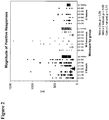
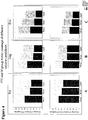
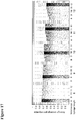
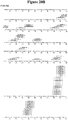
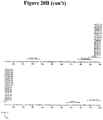
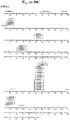
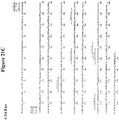
- Epitopic regions exhibited some clustering across animals, as evidenced by regions of high epitope density ( Figs. 20A-20C and Figs. 21A-21C ). Complete alignments of all positive peptides organized by response regions are shown in Fig. 22 .
- mosaic antigens substantially increased the breadth of cellular immune responses as compared with M consensus and natural clade C antigens.
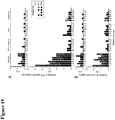
- the 2-valent mosaic antigens also proved superior to the 2-valent combination of clade B and clade C antigens ( Fig. 19A and 19B ), indicating that the enhanced breadth was due to the mosaic sequence design and did not simply reflect the use of two distinct antigenic sequences per protein.
- mosaic antigens expanded cellular immune breadth without compromising the magnitude of individual epitope-specific responses, indicating that antigenic competition and immunodominance constraints did not limit the immunogenicity of the mosaic antigens in this study.
- depth As the depth of the cellular immune responses elicited by the various vaccine regimens. We defined depth as the number of simultaneously elicited variant PTE peptides for a particular epitopic region. Inducing responses to multiple common epitope variants may increase immunologic coverage of infecting virus sequences, block common escape routes in vivo, or force the virus down tertiary escape routes that incur high fitness costs.
- the consensus and natural sequence antigens elicited responses that were characterized by a high degree of sequence identity between the vaccine sequences and the reactive PTE peptides, as exemplified by the responses in monkey 366 that received the natural clade C antigens ( Fig. 24A ; see also Fig. 22 ).
- the mosaic antigens elicited responses that were characterized by multiple reactive PTE peptides in particular epitopic regions. These peptides represented common variants and often reflected the polymorphisms contained in the mosaic vaccine sequences, as exemplified by the responses in monkey 361 ( Fig. 24B ; see also Fig. 22 ).
- the mosaic antigens augmented cellular immune breadth not only to PTE peptides but also to actual Gag peptides from clades A, B, and C.
- the mosaic antigens even proved superior to the optimal natural clade C antigens for inducing responses against clade C Gag peptides.
- the mosaic antigens elicited comparable responses to Gag peptides from multiple clades, whereas the natural clade C antigens exhibited diminished responses to clade A and clade B Gag peptides ( Fig. 25 ).
- Gag-specific cellular immune responses has been shown to be critical for SIV control in rhesus monkeys and for HIV-1 control in humans.
- the rAd5-based HIV-1 vaccine candidate expressing natural clade B Gag, Pol, and Nef antigens elicited only a limited breadth of HIV-1-specific cellular immune responses, and no vaccine benefit was observed.
- Vaccinees in the STEP study developed a median of only 2-3 epitope-specific T lymphocyte responses, including a median of only 1 epitope-specific response to Gag, and this very narrow breadth of cellular immune responses likely provided insufficient immunologic coverage of the diversity of infecting viruses.
- Modeling the protective efficacy of mosaic vaccines against SIV challenges in nonhuman primates has intrinsic limitations, since the observed diversity of SIV and HIV-1 M group sequences differs substantially and is influenced by different underlying biology. For example, CD8+ T lymphocyte selection pressure in natural hosts such as sooty mangabees appears substantially less than that in humans. Thus, the further evaluation of mosaic antigens as candidate H1V-1 vaccines can be benefited by clinical trials.
- Antigen design and vector production 2-valent mosaic Gag, Pol, and Env antigens were constructed to provide optimal coverage of HIV-1 M group sequences in the Los Alamos HIV-1 sequence database essentially as described ( 1, 2 ).
- Optimal natural clade C antigens were selected to be the sequences that provide optimal PTE coverage of clade C sequences in the Los Alamos HIV-1 sequence database (C.IN.-.70177 Gag, C.ZA.04.04ZASK208B1 Pol, C.SN.90.90SE_364 Env).
- Clade B antigens were selected to be near-consensus or consensus sequences (B.CAM-1 Gag, B.IIIB Pol, B.Con Env) and were used to complement the optimal clade C antigens for the 2-valent clade B + C vaccine approach.
- Pol antigens contained RT and IN without PR and included point mutations to eliminate catalytic activity as described ( Priddy et al., Clinical infectious diseases 46:1769, 2008 ).
- Env gpl40 antigens contained point mutations to eliminate cleavage and fusion activity.
- Vaccine sequences are depicted in Fig. 27 .
- Recombinant, replication-incompetent adenovirus serotype 26 (rAd26) and hexon-chimeric rAd5HVR48 vectors expressing these antigens were grown in PER.55K cells and purified by double CsCl gradient sedimentation essentially as described ( Abbink et al., J. Virol. 81:4654, 2007 , and Roberts et al., Nature 441:239, 2006 ).
- IFN- ⁇ ELISPOT assays HIV-1-specific cellular immune responses in vaccinated monkeys were assessed by interferon- ⁇ (IFN- ⁇ ) ELISPOT assays essentially as described ( Roberts et al., Nature 441:239, 2006 , and Liu et al., Nature 457:87, 2009 ).
- HIV-1 Gag, Pol, and Env potential T cell epitope (PTE) peptides that included all PTEs found in at least 15% of HIV-1 M group sequences as well as HIV-1 Gag peptides from clade C DU422, clade C ZM651, consensus C, consensus A, and consensus B strains were obtained from the NIH AIDS Research and Reference Reagent Program.
- D-PBS Dulbecco's PBS
- the plates were then washed three times with D-PBS containing 0.25% Tween-20 (D-PBS/Tween), blocked for 2 h with D-PBS containing 5% FBS at 37°C, washed three times with D-PBS/Tween, rinsed with RPMI 1640 containing 10% FBS to remove the Tween-20, and incubated with 2 ⁇ g/ml each peptide and 2 x 10 5 PBMC in triplicate in 100 ⁇ l reaction volumes. Following an 18 h incubation at 37oC, the plates were washed nine times with PBS/Tween and once with distilled water.
- the plates were then incubated with 2 ⁇ g/ml biotinylated anti-human IFN- ⁇ (BD Biosciences) for 2 h at room temperature, washed six times with PBS/Tween, and incubated for 2 h with a 1:500 dilution of streptavidin-alkaline phosphatase (Southern Biotechnology Associates). Following five washes with PBS/Tween and one with PBS, the plates were developed with nitro blue tetrazolium/5-bromo-4-chloro-3-indolyl-phosphate chromogen (Pierce), stopped by washing with tap water, air dried, and read using an ELISPOT reader (Cellular Technology Ltd). Spot-forming cells (SFC) per 10 6 PBMC were calculated. Media backgrounds were typically ⁇ 15 SFC per 10 6 PBMC. Positive responses were defined as > 55 SFC per 10 6 PBMC and > 4-fold background.
- SFC spot-forming cells
- Partial epitope mapping utilizing PTE subpools was also performed 4 weeks following the boost immunization at week 44. All borderline responses were retested and only considered positive if confirmed. Partial epitope mapping utilizing subpools containing 10 overlapping Gag peptides was also performed to assess breadth to HIV-1 Gag from various clades.
- Humoral immune assays Env-specific humoral immune responses were evaluated by direct ELISAs utilizing HIV-1 clade C Env gp140 and luciferase-based pseudovirus neutralization assays essentially as described ( Montefiori, Evaluating neutralizing antibodies against HIV, SIV and SHIV in luciferase reporter gene assays. Current Protocols in Immunology, Coligan, Kruisbeek, Margulies, Shevach, Strober, and Coico, Ed. (John Wiley & Sons, 2004, pp. 1-15 ).
- the 3.8-fold enhancement in the number of PTE peptides recognized by monkeys that received the mosaic antigens as compared to those that received the consensus or natural sequence antigens applied equally to PTEs from Gag, Pol, and Env and held for responses by CD8+ as well as CD4+ T lymphocytes.
- the analysis of the number of reactive epitopic regions also included Poisson regression models with random effects and again fit well (dispersion parameter 0.87) without any significant interactions.
- Comparisons of the magnitude of CD8+ and CD4+ T lymphocyte responses ( Fig. 23 ) were performed utilizing 2-sided Kolmogorov-Smirnov tests.
- Non-parametric tests to compare the breadth and depth of responses per monkey between different vaccines were also performed ( Figs. 19A and 24C ).
- To analyze the breadth of responses to HIV-1 Gag from various clades ( Fig. 25 ), we fit the data to binomial regression models. These models used the vaccine group as an explanatory variable and included random effects to account for animal-to-animal and strain-to-strain variation. The data were slightly underdispersed, but the animals that received the mosaic vaccine still elicited a significantly larger number of responses.
- PTE coverage assessment was performed using tools available at the Los Alamos HIV-1 sequence database.
- MOSAIC ENV1 GP160 (AA SEQUENCE)
- MOSAIC ENV2 GP160 (AA SEQUENCE)
- MOSAIC POL1 (AA SEQUENCE)
- MOSAIC POL2 (AA SEQUENCE)
- MOSAIC ENV1 GP140 (AA SEQUENCE)
- MOSAIC ENV2 GP140 (AA SEQUENCE)
- MOS3 ENV GP140 (AA SEQUENCE)
- MOSAIC POL1 (AA SEQUENCE)
- MOSAIC POL2 (AA SEQUENCE)
- MOS3 POL V3 (AA SEQUENCE)
Landscapes
- Health & Medical Sciences (AREA)
- Life Sciences & Earth Sciences (AREA)
- Chemical & Material Sciences (AREA)
- Virology (AREA)
- Medicinal Chemistry (AREA)
- General Health & Medical Sciences (AREA)
- Immunology (AREA)
- Organic Chemistry (AREA)
- Animal Behavior & Ethology (AREA)
- Pharmacology & Pharmacy (AREA)
- Public Health (AREA)
- Veterinary Medicine (AREA)
- Microbiology (AREA)
- Mycology (AREA)
- Epidemiology (AREA)
- Genetics & Genomics (AREA)
- Engineering & Computer Science (AREA)
- Bioinformatics & Cheminformatics (AREA)
- Communicable Diseases (AREA)
- General Chemical & Material Sciences (AREA)
- Chemical Kinetics & Catalysis (AREA)
- Nuclear Medicine, Radiotherapy & Molecular Imaging (AREA)
- Biochemistry (AREA)
- Molecular Biology (AREA)
- Wood Science & Technology (AREA)
- Zoology (AREA)
- Biophysics (AREA)
- Gastroenterology & Hepatology (AREA)
- Proteomics, Peptides & Aminoacids (AREA)
- Hematology (AREA)
- Oncology (AREA)
- General Engineering & Computer Science (AREA)
- Biotechnology (AREA)
- Biomedical Technology (AREA)
- AIDS & HIV (AREA)
- Tropical Medicine & Parasitology (AREA)
- Medicines Containing Antibodies Or Antigens For Use As Internal Diagnostic Agents (AREA)
- Peptides Or Proteins (AREA)
- Medicines Containing Material From Animals Or Micro-Organisms (AREA)
- Medicines That Contain Protein Lipid Enzymes And Other Medicines (AREA)
Priority Applications (5)
| Application Number | Priority Date | Filing Date | Title |
|---|---|---|---|
| EP18191558.8A EP3470437A1 (en) | 2008-11-18 | 2009-11-18 | Antiviral vaccines with improved cellular immunogenicity |
| PL09828172T PL2358757T3 (pl) | 2008-11-18 | 2009-11-18 | Szczepionki antywirusowe o ulepszonej immunogenności komórkowej |
| SI200931885T SI2358757T1 (sl) | 2008-11-18 | 2009-11-18 | Antivirusna cepiva z izboljšano celularno imunogenostjo |
| HRP20181776TT HRP20181776T1 (hr) | 2008-11-18 | 2009-11-18 | Antivirusna cjepiva sa poboljšanom staničnom imunogenosti |
| SM20180631T SMT201800631T1 (it) | 2008-11-18 | 2009-11-18 | Vaccini antivirali con immunogenicità cellulare migliorata |
Applications Claiming Priority (4)
| Application Number | Priority Date | Filing Date | Title |
|---|---|---|---|
| US11570308P | 2008-11-18 | 2008-11-18 | |
| US15218409P | 2009-02-12 | 2009-02-12 | |
| US24818809P | 2009-10-02 | 2009-10-02 | |
| PCT/US2009/064999 WO2010059732A1 (en) | 2008-11-18 | 2009-11-18 | Antiviral vaccines with improved cellular immunogenicity |
Related Child Applications (1)
| Application Number | Title | Priority Date | Filing Date |
|---|---|---|---|
| EP18191558.8A Division EP3470437A1 (en) | 2008-11-18 | 2009-11-18 | Antiviral vaccines with improved cellular immunogenicity |
Publications (3)
| Publication Number | Publication Date |
|---|---|
| EP2358757A1 EP2358757A1 (en) | 2011-08-24 |
| EP2358757A4 EP2358757A4 (en) | 2013-07-31 |
| EP2358757B1 true EP2358757B1 (en) | 2018-09-12 |
Family
ID=42198483
Family Applications (2)
| Application Number | Title | Priority Date | Filing Date |
|---|---|---|---|
| EP09828172.8A Active EP2358757B1 (en) | 2008-11-18 | 2009-11-18 | Antiviral vaccines with improved cellular immunogenicity |
| EP18191558.8A Withdrawn EP3470437A1 (en) | 2008-11-18 | 2009-11-18 | Antiviral vaccines with improved cellular immunogenicity |
Family Applications After (1)
| Application Number | Title | Priority Date | Filing Date |
|---|---|---|---|
| EP18191558.8A Withdrawn EP3470437A1 (en) | 2008-11-18 | 2009-11-18 | Antiviral vaccines with improved cellular immunogenicity |
Country Status (22)
| Country | Link |
|---|---|
| US (5) | US9017691B2 (enExample) |
| EP (2) | EP2358757B1 (enExample) |
| JP (4) | JP5694945B2 (enExample) |
| CN (1) | CN102282175B (enExample) |
| AP (1) | AP3719A (enExample) |
| AU (1) | AU2009316629B2 (enExample) |
| BR (2) | BR122021004758B1 (enExample) |
| CY (1) | CY1121215T1 (enExample) |
| DK (1) | DK2358757T3 (enExample) |
| ES (1) | ES2699685T3 (enExample) |
| HR (1) | HRP20181776T1 (enExample) |
| HU (1) | HUE042397T2 (enExample) |
| IL (2) | IL212984A (enExample) |
| LT (1) | LT2358757T (enExample) |
| NZ (2) | NZ602504A (enExample) |
| PL (1) | PL2358757T3 (enExample) |
| PT (1) | PT2358757T (enExample) |
| SG (1) | SG10201408784SA (enExample) |
| SI (1) | SI2358757T1 (enExample) |
| SM (1) | SMT201800631T1 (enExample) |
| WO (1) | WO2010059732A1 (enExample) |
| ZA (2) | ZA201104538B (enExample) |
Families Citing this family (45)
| Publication number | Priority date | Publication date | Assignee | Title |
|---|---|---|---|---|
| JP3227814B2 (ja) | 1992-07-29 | 2001-11-12 | 三菱マテリアル株式会社 | スクラッププレス装置 |
| SMT202000101T1 (it) | 2008-10-10 | 2020-03-13 | Childrens Medical Center | Vaccino con trimero di env di hiv-1 stabilizzato biochimicamente |
| NZ602504A (en) | 2008-11-18 | 2014-01-31 | Beth Israel Hospital | Antiviral vaccines with improved cellular immunogenicity |
| EP2620446A1 (en) * | 2012-01-27 | 2013-07-31 | Laboratorios Del Dr. Esteve, S.A. | Immunogens for HIV vaccination |
| US10106781B2 (en) | 2012-11-16 | 2018-10-23 | Beth Israel Deaconess Medical Center, Inc. | Recombinant adenoviruses and use thereof |
| SG10201705880QA (en) * | 2013-01-07 | 2017-08-30 | Beth Israel Deaconess Medical Ct Inc | Stabilized human immunodeficiency virus (hiv) envelope (env) trimer vaccines and methods of using the same |
| WO2015048770A2 (en) | 2013-09-30 | 2015-04-02 | Beth Israel Deaconess Medical Center, Inc. | Antibody therapies for human immunodeficiency virus (hiv) |
| DK3052518T3 (da) | 2013-10-04 | 2020-04-06 | Beth Israel Deaconess Medical Ct Inc | Stabiliserede humant immundefektvirus-(hiv)-klade c-kappe-(env)-trimer-vacciner og fremgangsmåder til anvendelse deraf |
| DK3054972T3 (da) | 2013-10-07 | 2019-06-11 | Univ Pennsylvania | Vacciner med interleukin-33 som et adjuvans |
| JP6769869B2 (ja) * | 2013-10-16 | 2020-10-14 | ニユー・イングランド・バイオレイブス・インコーポレイテツド | 強化された特性を有する逆転写酵素 |
| CA2941116A1 (en) * | 2014-02-28 | 2015-09-03 | Janssen Vaccines & Prevention B.V. | Replicating recombinant adenovirus vectors, compositions, and methods of use thereof |
| CN106999571B (zh) | 2014-09-26 | 2020-10-02 | 贝斯以色列护理医疗中心有限公司 | 诱导针对人免疫缺陷病毒感染的保护性免疫性的方法和组合物 |
| MA40783A (fr) | 2014-10-03 | 2017-08-08 | Los Alamos Nat Security Llc | Vaccins contre le vih comprenant un ou plusieurs antigènes episensus de population |
| TWI640540B (zh) * | 2014-10-27 | 2018-11-11 | 中央研究院 | 植物防禦訊息胜肽及其應用 |
| WO2016196471A1 (en) | 2015-06-02 | 2016-12-08 | Cooper Human Systems Llc | Methods and compositions for treatment of hiv infection |
| US10542961B2 (en) | 2015-06-15 | 2020-01-28 | The Research Foundation For The State University Of New York | System and method for infrasonic cardiac monitoring |
| AU2016326745A1 (en) * | 2015-09-25 | 2018-04-12 | University Of Florida Research Foundation, Inc. | Cross-reactive T-cell epitopes of HIV, SIV, and FIV for vaccines in humans and cats |
| DK3584252T3 (da) * | 2015-12-15 | 2021-11-15 | Janssen Vaccines & Prevention Bv | Human immundefektvirus-antigener, -vektorer, -sammensætninger og fremgangsmåder til anvendelse deraf |
| MA45381A (fr) | 2016-06-16 | 2021-04-21 | Janssen Vaccines & Prevention Bv | Formulation de vaccin contre le vih |
| JP2019526580A (ja) | 2016-09-02 | 2019-09-19 | ヤンセン ファッシンズ アンド プリベンション ベーフェーJanssen Vaccines & Prevention B.V. | 抗レトロウイルス処置を受けている対象においてヒト免疫不全ウイルス感染に対する免疫応答を誘発するための方法 |
| PT3512543T (pt) | 2016-09-15 | 2020-10-13 | Janssen Vaccines & Prevention Bv | Trímero que estabiliza mutações das proteínas do envelope do hiv |
| WO2018075559A1 (en) | 2016-10-17 | 2018-04-26 | Beth Israel Deaconess Medical Center, Inc. | Signature-based human immunodeficiency virus (hiv) envelope (env) trimer vaccines and methods of using the same |
| KR20200015759A (ko) | 2017-06-15 | 2020-02-12 | 얀센 백신스 앤드 프리벤션 비.브이. | Hiv 항원을 인코딩하는 폭스바이러스 벡터, 및 그 사용 방법 |
| AU2018304502B2 (en) | 2017-07-19 | 2022-03-31 | Janssen Vaccines & Prevention B.V. | Trimer stabilizing HIV envelope protein mutations |
| WO2019018724A1 (en) | 2017-07-21 | 2019-01-24 | Janssen Vaccines & Prevention B.V. | METHODS FOR SAFE INDUCTION OF MULTICLADED CROSS-IMMUNITY AGAINST HUMAN IMMUNODEFICIENCY VIRUS INFECTION IN HUMAN BEINGS |
| US20190083620A1 (en) | 2017-09-18 | 2019-03-21 | Janssen Vaccines & Prevention B.V. | Methods for inducing an immune response against human immunodeficiency virus infection in subjects undergoing antiretroviral treatment |
| US11773142B2 (en) | 2017-12-11 | 2023-10-03 | Beth Israel Deaconess Medical Center, Inc. | Recombinant adenoviruses and uses thereof |
| EP3797118A4 (en) | 2018-05-22 | 2022-06-29 | Beth Israel Deaconess Medical Center, Inc. | Antibody therapies for human immunodeficiency virus (hiv) |
| WO2020064621A1 (en) | 2018-09-25 | 2020-04-02 | Janssen Vaccines & Prevention B.V. | Method of inducing an immune response against human immunodeficiency virus by co-localized administration of vaccine components |
| US12459989B2 (en) | 2018-11-21 | 2025-11-04 | Beth Israel Deaconess Medical Center, Inc. | Antibody therapies for human immunodeficiency virus (HIV) |
| WO2020237052A1 (en) | 2019-05-22 | 2020-11-26 | Janssen Vaccines & Prevention B.V. | Methods for inducing an immune response against human immunodeficiency virus infection in subjects undergoing antiretroviral treatment |
| TWI810456B (zh) | 2019-05-22 | 2023-08-01 | 美商基利科學股份有限公司 | Tlr7調節化合物及hiv疫苗之組合 |
| KR20240137107A (ko) | 2019-07-16 | 2024-09-19 | 길리애드 사이언시즈, 인코포레이티드 | Hiv 백신, 및 이의 제조 및 사용 방법 |
| AU2020384323A1 (en) | 2019-11-14 | 2022-06-02 | Aelix Therapeutics, S.L. | Dosage regimens for vaccines |
| JP2023512519A (ja) | 2020-01-31 | 2023-03-27 | ベス イスラエル ディーコネス メディカル センター インコーポレイテッド | コロナウイルス感染症を予防および処置するための組成物および方法-sars-cov-2ワクチン |
| WO2021211749A1 (en) * | 2020-04-14 | 2021-10-21 | The Regents Of The University Of California | Multi-epitope pan-coronavirus vaccine compositions |
| US12558415B2 (en) | 2020-04-14 | 2026-02-24 | The Regents Of The University Of California | Broad-spectrum multi-antigen pan-coronavirus vaccine |
| US20210353744A1 (en) | 2020-05-12 | 2021-11-18 | Janssen Vaccines Prevention B.V. | Administration of homologous adenoviral vectors |
| WO2022084333A1 (en) | 2020-10-20 | 2022-04-28 | Janssen Vaccines & Prevention B.V. | Hiv vaccine regimens |
| US12053517B2 (en) * | 2021-01-14 | 2024-08-06 | Gilead Sciences, Inc. | HIV vaccines and methods of using |
| JP2024509769A (ja) | 2021-02-23 | 2024-03-05 | ヤンセン ファッシンズ アンド プリベンション ベーフェー | 三量体安定化hivエンベロープタンパク質変異 |
| US20240084313A1 (en) * | 2021-12-31 | 2024-03-14 | Chengdu Boe Optoelectronics Technology Co., Ltd. | HIV Pseudovirus Particles and Method for Preparing the Same |
| WO2023156505A1 (en) | 2022-02-17 | 2023-08-24 | Janssen Vaccines & Prevention B.V. | Trimer stabilizing hiv envelope protein mutations r304v, n302m and t320l |
| WO2023198815A1 (en) | 2022-04-14 | 2023-10-19 | Janssen Vaccines & Prevention B.V. | Sequential administration of adenoviruses |
| EP4661878A2 (en) * | 2023-02-07 | 2025-12-17 | Merck Sharp & Dohme LLC | Adjuvant formulations including low viscosity chitosan or chitosan derivatives |
Family Cites Families (30)
| Publication number | Priority date | Publication date | Assignee | Title |
|---|---|---|---|---|
| US4603112A (en) | 1981-12-24 | 1986-07-29 | Health Research, Incorporated | Modified vaccinia virus |
| US5298416A (en) | 1989-01-18 | 1994-03-29 | British Technology Group Ltd. | Attenuated polioviruses |
| DE69233158T2 (de) | 1991-03-07 | 2004-05-13 | Connaught Technology Corp., Greenville | Gentechnologisch hergestellter stamm für impfstoffe |
| US5505947A (en) | 1994-05-27 | 1996-04-09 | The University Of North Carolina At Chapel Hill | Attenuating mutations in Venezuelan Equine Encephalitis virus |
| US6479258B1 (en) * | 1995-12-07 | 2002-11-12 | Diversa Corporation | Non-stochastic generation of genetic vaccines |
| US6913922B1 (en) | 1999-05-18 | 2005-07-05 | Crucell Holland B.V. | Serotype of adenovirus and uses thereof |
| US20050232900A1 (en) | 1999-05-18 | 2005-10-20 | Crucell Holland B.V. | Serotype of adenovirus and uses thereof |
| US20040101957A1 (en) * | 2001-09-14 | 2004-05-27 | Emini Emilio A. | Enhanced first generation adenovirus vaccines expressing codon optimized hiv1-gag, pol.nef and modifications |
| JP2004508064A (ja) * | 2000-09-15 | 2004-03-18 | メルク エンド カムパニー インコーポレーテッド | コドン最適化hiv1−gag、pol、nefおよび修飾体を発現する増強された第1世代アデノウイルスワクチン |
| WO2003039470A2 (en) | 2001-11-07 | 2003-05-15 | Duke University | Polyvalent immunogen of hiv |
| US7195768B2 (en) | 2001-11-07 | 2007-03-27 | Duke University | Polyvalent immunogen |
| US7172761B2 (en) | 2001-11-07 | 2007-02-06 | Duke University | Polyvalent immunogen |
| US20030219452A1 (en) | 2001-11-27 | 2003-11-27 | Haynes Barton F. | HIV envelope V3-CCR5 binding site immunogen |
| EP1497440B1 (en) | 2002-04-25 | 2008-08-20 | Crucell Holland B.V. | Stable adenoviral vectors and methods for propagation thereof |
| US20080153083A1 (en) | 2003-10-23 | 2008-06-26 | Crucell Holland B.V. | Settings for recombinant adenoviral-based vaccines |
| AU2003288273A1 (en) | 2002-10-23 | 2004-05-13 | Crucell Holland B.V. | New settings for recombinant adenoviral-based vaccines |
| US20050221493A1 (en) | 2002-12-04 | 2005-10-06 | Crucell Holland B.V. | Recombinant virus production for the manufacturing of vaccines |
| BRPI0414443A (pt) | 2003-09-17 | 2006-11-21 | Univ Duke | imunógenos consensuais/ancestrais |
| US20070298051A1 (en) | 2003-11-19 | 2007-12-27 | Beth Israel Deaconess Medical Center | Adjuvants Of Immune Response |
| AP2351A (en) * | 2004-10-13 | 2012-01-25 | Crucell Holland Bv | Improved adenoviral vectors and uses thereof. |
| CN102220357B (zh) | 2004-11-16 | 2013-12-25 | 克鲁塞尔荷兰公司 | 包含重组病毒载体的多价疫苗 |
| US7951377B2 (en) | 2005-08-23 | 2011-05-31 | Los Alamos National Security, Llc | Mosaic clade M human immunodeficiency virus type 1 (HIV-1) envelope immunogens |
| CN101969996A (zh) | 2005-08-23 | 2011-02-09 | 加利福尼亚大学董事会 | 多价疫苗 |
| WO2007104792A2 (en) | 2006-03-16 | 2007-09-20 | Crucell Holland B.V. | Recombinant adenoviruses based on serotype 26 and 48, and use thereof |
| US20080279879A1 (en) | 2006-11-17 | 2008-11-13 | New York University | INDUCTION OF BROADLY REACTIVE NEUTRALIZING ANTIBODIES BY FOCUSING THE IMMUNE RESPONSE ON V3 EPITOPES OF THE HIV-1 gp120 ENVELOPE |
| JP2010530356A (ja) | 2007-03-27 | 2010-09-09 | ザ リージェンツ オブ ザ ユニバーシティ オブ カリフォルニア | 急性伝染hivエンベロープ・サイン |
| WO2010042817A1 (en) * | 2008-10-10 | 2010-04-15 | The United States Of America, As Represented By The Secretary, Department Of Health And Human Services | Use of hiv mosaic envelope proteins to optimize t-cell responses against hiv envelope |
| NZ602504A (en) | 2008-11-18 | 2014-01-31 | Beth Israel Hospital | Antiviral vaccines with improved cellular immunogenicity |
| WO2010096561A1 (en) | 2009-02-18 | 2010-08-26 | The United States Of America, As Represented By The Secretary, Department Of Health And Human Services | Synthetic hiv/siv gag proteins and uses thereof |
| US9017961B2 (en) | 2012-03-05 | 2015-04-28 | E.I. Du Pont De Nemours And Company | Recombinant bacteria comprising novel sucrose transporters |
-
2009
- 2009-11-18 NZ NZ60250409A patent/NZ602504A/en not_active IP Right Cessation
- 2009-11-18 NZ NZ593598A patent/NZ593598A/xx not_active IP Right Cessation
- 2009-11-18 PT PT09828172T patent/PT2358757T/pt unknown
- 2009-11-18 CN CN200980154787.4A patent/CN102282175B/zh not_active Expired - Fee Related
- 2009-11-18 SM SM20180631T patent/SMT201800631T1/it unknown
- 2009-11-18 AP AP2011005767A patent/AP3719A/en active
- 2009-11-18 BR BR122021004758-8A patent/BR122021004758B1/pt active IP Right Grant
- 2009-11-18 ES ES09828172T patent/ES2699685T3/es active Active
- 2009-11-18 HR HRP20181776TT patent/HRP20181776T1/hr unknown
- 2009-11-18 HU HUE09828172A patent/HUE042397T2/hu unknown
- 2009-11-18 BR BRPI0921588-3A patent/BRPI0921588B1/pt not_active IP Right Cessation
- 2009-11-18 JP JP2011537586A patent/JP5694945B2/ja not_active Expired - Fee Related
- 2009-11-18 AU AU2009316629A patent/AU2009316629B2/en not_active Ceased
- 2009-11-18 DK DK09828172.8T patent/DK2358757T3/da active
- 2009-11-18 EP EP09828172.8A patent/EP2358757B1/en active Active
- 2009-11-18 WO PCT/US2009/064999 patent/WO2010059732A1/en not_active Ceased
- 2009-11-18 LT LTEP09828172.8T patent/LT2358757T/lt unknown
- 2009-11-18 US US13/130,018 patent/US9017691B2/en active Active
- 2009-11-18 EP EP18191558.8A patent/EP3470437A1/en not_active Withdrawn
- 2009-11-18 PL PL09828172T patent/PL2358757T3/pl unknown
- 2009-11-18 SG SG10201408784SA patent/SG10201408784SA/en unknown
- 2009-11-18 SI SI200931885T patent/SI2358757T1/sl unknown
-
2011
- 2011-05-18 IL IL212984A patent/IL212984A/en active IP Right Grant
- 2011-06-20 ZA ZA2011/04538A patent/ZA201104538B/en unknown
-
2012
- 2012-07-04 ZA ZA2012/04999A patent/ZA201204999B/en unknown
-
2015
- 2015-02-05 JP JP2015021128A patent/JP6023233B2/ja not_active Expired - Fee Related
- 2015-02-26 US US14/632,869 patent/US9670253B2/en active Active
-
2016
- 2016-02-07 IL IL243991A patent/IL243991B/en active IP Right Grant
- 2016-10-06 JP JP2016198037A patent/JP6224197B2/ja not_active Expired - Fee Related
-
2017
- 2017-04-17 US US15/489,220 patent/US10426831B2/en not_active Expired - Fee Related
- 2017-10-04 JP JP2017193941A patent/JP6368416B2/ja not_active Expired - Fee Related
-
2018
- 2018-12-10 CY CY20181101309T patent/CY1121215T1/el unknown
-
2019
- 2019-06-14 US US16/441,703 patent/US10772952B2/en not_active Expired - Fee Related
-
2020
- 2020-09-10 US US16/948,257 patent/US11331386B2/en active Active
Also Published As
Similar Documents
| Publication | Publication Date | Title |
|---|---|---|
| US11331386B2 (en) | Antiviral vaccines with improved cellular immunogenicity | |
| US8454972B2 (en) | Method for inducing a multiclade immune response against HIV utilizing a multigene and multiclade immunogen | |
| Paris et al. | Prime–boost immunization with poxvirus or adenovirus vectors as a strategy to develop a protective vaccine for HIV-1 | |
| US7332588B1 (en) | Genome of the HIV-1 inter-subtype (C/B) and use thereof | |
| ZA200504021B (en) | Methods and compositions for immunization against HIV | |
| Marsac et al. | Enhanced presentation of major histocompatibility complex class I-restricted human immunodeficiency virus type 1 (HIV-1) Gag-specific epitopes after DNA immunization with vectors coding for vesicular stomatitis virus glycoprotein-pseudotyped HIV-1 Gag particles | |
| HK40007621A (en) | Antiviral vaccines with improved cellular immunogenicity | |
| HK1160871A (en) | Antiviral vaccines with improved cellular immunogenicity | |
| HK1160871B (en) | Antiviral vaccines with improved cellular immunogenicity | |
| US20080306244A1 (en) | Renta: an HIV immunogen and uses thereof | |
| HK1164896B (en) | Antiviral vaccines with improved cellular immunogenicity |
Legal Events
| Date | Code | Title | Description |
|---|---|---|---|
| PUAI | Public reference made under article 153(3) epc to a published international application that has entered the european phase |
Free format text: ORIGINAL CODE: 0009012 |
|
| 17P | Request for examination filed |
Effective date: 20110620 |
|
| AK | Designated contracting states |
Kind code of ref document: A1 Designated state(s): AT BE BG CH CY CZ DE DK EE ES FI FR GB GR HR HU IE IS IT LI LT LU LV MC MK MT NL NO PL PT RO SE SI SK SM TR |
|
| RIN1 | Information on inventor provided before grant (corrected) |
Inventor name: FISCHER, WILLIAM, M. Inventor name: BAROUCH, DAN, H. Inventor name: KORBER, BETTE, T. |
|
| RIN1 | Information on inventor provided before grant (corrected) |
Inventor name: KORBER, BETTE, T. Inventor name: BAROUCH, DAN, H. Inventor name: FISCHER, WILLIAM, M. |
|
| RAP1 | Party data changed (applicant data changed or rights of an application transferred) |
Owner name: BETH ISRAEL DEACONESS MEDICAL CENTER Owner name: LOS ALAMOS NATIONAL SECURITY, LLC |
|
| RAP1 | Party data changed (applicant data changed or rights of an application transferred) |
Owner name: LOS ALAMOS NATIONAL SECURITY, LLC Owner name: BETH ISRAEL DEACONESS MEDICAL CENTER |
|
| RIN1 | Information on inventor provided before grant (corrected) |
Inventor name: KORBER, BETTE, T. Inventor name: BAROUCH, DAN, H. Inventor name: FISCHER, WILLIAM, M. |
|
| RIN1 | Information on inventor provided before grant (corrected) |
Inventor name: KORBER, BETTE, T. Inventor name: BAROUCH, DAN, H. Inventor name: FISCHER, WILLIAM, M. |
|
| DAX | Request for extension of the european patent (deleted) | ||
| REG | Reference to a national code |
Ref country code: HK Ref legal event code: DE Ref document number: 1160871 Country of ref document: HK |
|
| A4 | Supplementary search report drawn up and despatched |
Effective date: 20130701 |
|
| RIC1 | Information provided on ipc code assigned before grant |
Ipc: C07K 17/00 20060101AFI20130625BHEP |
|
| 17Q | First examination report despatched |
Effective date: 20170124 |
|
| GRAP | Despatch of communication of intention to grant a patent |
Free format text: ORIGINAL CODE: EPIDOSNIGR1 |
|
| RIC1 | Information provided on ipc code assigned before grant |
Ipc: C12N 7/00 20060101ALI20180222BHEP Ipc: A61K 39/235 20060101ALI20180222BHEP Ipc: A61K 39/12 20060101ALI20180222BHEP Ipc: A61K 39/275 20060101ALI20180222BHEP Ipc: C07K 17/00 20060101AFI20180222BHEP Ipc: C07K 14/005 20060101ALI20180222BHEP Ipc: A61K 39/21 20060101ALI20180222BHEP Ipc: A61K 39/00 20060101ALI20180222BHEP |
|
| INTG | Intention to grant announced |
Effective date: 20180322 |
|
| GRAS | Grant fee paid |
Free format text: ORIGINAL CODE: EPIDOSNIGR3 |
|
| GRAA | (expected) grant |
Free format text: ORIGINAL CODE: 0009210 |
|
| AK | Designated contracting states |
Kind code of ref document: B1 Designated state(s): AT BE BG CH CY CZ DE DK EE ES FI FR GB GR HR HU IE IS IT LI LT LU LV MC MK MT NL NO PL PT RO SE SI SK SM TR |
|
| REG | Reference to a national code |
Ref country code: GB Ref legal event code: FG4D |
|
| REG | Reference to a national code |
Ref country code: CH Ref legal event code: EP |
|
| REG | Reference to a national code |
Ref country code: IE Ref legal event code: FG4D |
|
| REG | Reference to a national code |
Ref country code: DE Ref legal event code: R096 Ref document number: 602009054519 Country of ref document: DE |
|
| REG | Reference to a national code |
Ref country code: AT Ref legal event code: REF Ref document number: 1040471 Country of ref document: AT Kind code of ref document: T Effective date: 20181015 |
|
| REG | Reference to a national code |
Ref country code: HR Ref legal event code: TUEP Ref document number: P20181776 Country of ref document: HR |
|
| REG | Reference to a national code |
Ref country code: RO Ref legal event code: EPE |
|
| REG | Reference to a national code |
Ref country code: NL Ref legal event code: FP |
|
| REG | Reference to a national code |
Ref country code: PT Ref legal event code: SC4A Ref document number: 2358757 Country of ref document: PT Date of ref document: 20181204 Kind code of ref document: T Free format text: AVAILABILITY OF NATIONAL TRANSLATION Effective date: 20181128 |
|
| REG | Reference to a national code |
Ref country code: SE Ref legal event code: TRGR |
|
| REG | Reference to a national code |
Ref country code: DK Ref legal event code: T3 Effective date: 20181218 |
|
| REG | Reference to a national code |
Ref country code: HR Ref legal event code: ODRP Ref document number: P20181776 Country of ref document: HR Payment date: 20181220 Year of fee payment: 10 |
|
| REG | Reference to a national code |
Ref country code: HR Ref legal event code: T1PR Ref document number: P20181776 Country of ref document: HR |
|
| REG | Reference to a national code |
Ref country code: NO Ref legal event code: T2 Effective date: 20180912 |
|
| REG | Reference to a national code |
Ref country code: ES Ref legal event code: FG2A Ref document number: 2699685 Country of ref document: ES Kind code of ref document: T3 Effective date: 20190212 |
|
| REG | Reference to a national code |
Ref country code: EE Ref legal event code: FG4A Ref document number: E016637 Country of ref document: EE Effective date: 20181203 |
|
| REG | Reference to a national code |
Ref country code: GR Ref legal event code: EP Ref document number: 20180403697 Country of ref document: GR Effective date: 20190404 |
|
| REG | Reference to a national code |
Ref country code: DE Ref legal event code: R097 Ref document number: 602009054519 Country of ref document: DE |
|
| REG | Reference to a national code |
Ref country code: HU Ref legal event code: AG4A Ref document number: E042397 Country of ref document: HU |
|
| PLBE | No opposition filed within time limit |
Free format text: ORIGINAL CODE: 0009261 |
|
| STAA | Information on the status of an ep patent application or granted ep patent |
Free format text: STATUS: NO OPPOSITION FILED WITHIN TIME LIMIT |
|
| 26N | No opposition filed |
Effective date: 20190613 |
|
| REG | Reference to a national code |
Ref country code: HR Ref legal event code: ODRP Ref document number: P20181776 Country of ref document: HR Payment date: 20191111 Year of fee payment: 11 |
|
| REG | Reference to a national code |
Ref country code: AT Ref legal event code: UEP Ref document number: 1040471 Country of ref document: AT Kind code of ref document: T Effective date: 20180912 |
|
| REG | Reference to a national code |
Ref country code: HR Ref legal event code: ODRP Ref document number: P20181776 Country of ref document: HR Payment date: 20201119 Year of fee payment: 12 |
|
| REG | Reference to a national code |
Ref country code: HR Ref legal event code: ODRP Ref document number: P20181776 Country of ref document: HR Payment date: 20211108 Year of fee payment: 13 |
|
| REG | Reference to a national code |
Ref country code: HR Ref legal event code: ODRP Ref document number: P20181776 Country of ref document: HR Payment date: 20221118 Year of fee payment: 14 |
|
| PGFP | Annual fee paid to national office [announced via postgrant information from national office to epo] |
Ref country code: TR Payment date: 20221118 Year of fee payment: 14 Ref country code: SM Payment date: 20221128 Year of fee payment: 14 Ref country code: SK Payment date: 20221118 Year of fee payment: 14 Ref country code: SE Payment date: 20221127 Year of fee payment: 14 Ref country code: RO Payment date: 20221123 Year of fee payment: 14 Ref country code: PT Payment date: 20221118 Year of fee payment: 14 Ref country code: NO Payment date: 20221125 Year of fee payment: 14 Ref country code: MC Payment date: 20221122 Year of fee payment: 14 Ref country code: LV Payment date: 20221121 Year of fee payment: 14 Ref country code: LU Payment date: 20221128 Year of fee payment: 14 Ref country code: LT Payment date: 20221121 Year of fee payment: 14 Ref country code: IT Payment date: 20221123 Year of fee payment: 14 Ref country code: IE Payment date: 20221128 Year of fee payment: 14 Ref country code: FI Payment date: 20221125 Year of fee payment: 14 Ref country code: ES Payment date: 20221201 Year of fee payment: 14 Ref country code: EE Payment date: 20221121 Year of fee payment: 14 Ref country code: DK Payment date: 20221125 Year of fee payment: 14 Ref country code: CZ Payment date: 20221121 Year of fee payment: 14 Ref country code: BG Payment date: 20221123 Year of fee payment: 14 Ref country code: AT Payment date: 20221121 Year of fee payment: 14 |
|
| PGFP | Annual fee paid to national office [announced via postgrant information from national office to epo] |
Ref country code: SI Payment date: 20221121 Year of fee payment: 14 Ref country code: PL Payment date: 20221118 Year of fee payment: 14 Ref country code: IS Payment date: 20221121 Year of fee payment: 14 Ref country code: HU Payment date: 20221129 Year of fee payment: 14 Ref country code: HR Payment date: 20221118 Year of fee payment: 14 Ref country code: GR Payment date: 20221129 Year of fee payment: 14 Ref country code: CH Payment date: 20221205 Year of fee payment: 14 Ref country code: BE Payment date: 20221128 Year of fee payment: 14 |
|
| PGFP | Annual fee paid to national office [announced via postgrant information from national office to epo] |
Ref country code: MT Payment date: 20221118 Year of fee payment: 14 Ref country code: MK Payment date: 20221121 Year of fee payment: 14 |
|
| PGFP | Annual fee paid to national office [announced via postgrant information from national office to epo] |
Ref country code: CY Payment date: 20221122 Year of fee payment: 14 |
|
| REG | Reference to a national code |
Ref country code: HR Ref legal event code: PBON Ref document number: P20181776 Country of ref document: HR Effective date: 20231118 |
|
| REG | Reference to a national code |
Ref country code: LT Ref legal event code: MM4D Effective date: 20231118 |
|
| REG | Reference to a national code |
Ref country code: EE Ref legal event code: MM4A Ref document number: E016637 Country of ref document: EE Effective date: 20231130 |
|
| REG | Reference to a national code |
Ref country code: DK Ref legal event code: EBP Effective date: 20231130 |
|
| REG | Reference to a national code |
Ref country code: CH Ref legal event code: PL |
|
| PG25 | Lapsed in a contracting state [announced via postgrant information from national office to epo] |
Ref country code: MC Free format text: LAPSE BECAUSE OF NON-PAYMENT OF DUE FEES Effective date: 20231130 |
|
| REG | Reference to a national code |
Ref country code: SE Ref legal event code: EUG |
|
| PG25 | Lapsed in a contracting state [announced via postgrant information from national office to epo] |
Ref country code: LT Free format text: LAPSE BECAUSE OF NON-PAYMENT OF DUE FEES Effective date: 20231118 |
|
| PG25 | Lapsed in a contracting state [announced via postgrant information from national office to epo] |
Ref country code: GR Free format text: LAPSE BECAUSE OF NON-PAYMENT OF DUE FEES Effective date: 20240610 Ref country code: LU Free format text: LAPSE BECAUSE OF NON-PAYMENT OF DUE FEES Effective date: 20231118 |
|
| REG | Reference to a national code |
Ref country code: AT Ref legal event code: MM01 Ref document number: 1040471 Country of ref document: AT Kind code of ref document: T Effective date: 20231118 |
|
| PG25 | Lapsed in a contracting state [announced via postgrant information from national office to epo] |
Ref country code: CH Free format text: LAPSE BECAUSE OF NON-PAYMENT OF DUE FEES Effective date: 20231130 Ref country code: HR Free format text: LAPSE BECAUSE OF NON-PAYMENT OF DUE FEES Effective date: 20231118 |
|
| PG25 | Lapsed in a contracting state [announced via postgrant information from national office to epo] |
Ref country code: AT Free format text: LAPSE BECAUSE OF NON-PAYMENT OF DUE FEES Effective date: 20231118 Ref country code: CZ Free format text: LAPSE BECAUSE OF NON-PAYMENT OF DUE FEES Effective date: 20231118 |
|
| PG25 | Lapsed in a contracting state [announced via postgrant information from national office to epo] |
Ref country code: SK Free format text: LAPSE BECAUSE OF NON-PAYMENT OF DUE FEES Effective date: 20231118 |
|
| PG25 | Lapsed in a contracting state [announced via postgrant information from national office to epo] |
Ref country code: SM Free format text: LAPSE BECAUSE OF NON-PAYMENT OF DUE FEES Effective date: 20240606 Ref country code: SK Free format text: LAPSE BECAUSE OF NON-PAYMENT OF DUE FEES Effective date: 20231118 Ref country code: RO Free format text: LAPSE BECAUSE OF NON-PAYMENT OF DUE FEES Effective date: 20231118 Ref country code: NO Free format text: LAPSE BECAUSE OF NON-PAYMENT OF DUE FEES Effective date: 20231130 Ref country code: MC Free format text: LAPSE BECAUSE OF NON-PAYMENT OF DUE FEES Effective date: 20231130 Ref country code: LU Free format text: LAPSE BECAUSE OF NON-PAYMENT OF DUE FEES Effective date: 20231118 Ref country code: LT Free format text: LAPSE BECAUSE OF NON-PAYMENT OF DUE FEES Effective date: 20231118 Ref country code: HR Free format text: LAPSE BECAUSE OF NON-PAYMENT OF DUE FEES Effective date: 20231118 Ref country code: GR Free format text: LAPSE BECAUSE OF NON-PAYMENT OF DUE FEES Effective date: 20240610 Ref country code: FI Free format text: LAPSE BECAUSE OF NON-PAYMENT OF DUE FEES Effective date: 20231118 Ref country code: EE Free format text: LAPSE BECAUSE OF NON-PAYMENT OF DUE FEES Effective date: 20231130 Ref country code: CZ Free format text: LAPSE BECAUSE OF NON-PAYMENT OF DUE FEES Effective date: 20231118 Ref country code: CY Free format text: LAPSE BECAUSE OF NON-PAYMENT OF DUE FEES Effective date: 20231118 Ref country code: CH Free format text: LAPSE BECAUSE OF NON-PAYMENT OF DUE FEES Effective date: 20231130 Ref country code: BG Free format text: LAPSE BECAUSE OF NON-PAYMENT OF DUE FEES Effective date: 20231118 Ref country code: AT Free format text: LAPSE BECAUSE OF NON-PAYMENT OF DUE FEES Effective date: 20231118 Ref country code: SI Free format text: LAPSE BECAUSE OF NON-PAYMENT OF DUE FEES Effective date: 20231119 |
|
| PG25 | Lapsed in a contracting state [announced via postgrant information from national office to epo] |
Ref country code: PT Free format text: LAPSE BECAUSE OF NON-PAYMENT OF DUE FEES Effective date: 20240520 |
|
| REG | Reference to a national code |
Ref country code: BE Ref legal event code: MM Effective date: 20231130 |
|
| PG25 | Lapsed in a contracting state [announced via postgrant information from national office to epo] |
Ref country code: SE Free format text: LAPSE BECAUSE OF NON-PAYMENT OF DUE FEES Effective date: 20231119 Ref country code: PT Free format text: LAPSE BECAUSE OF NON-PAYMENT OF DUE FEES Effective date: 20240520 Ref country code: LV Free format text: LAPSE BECAUSE OF NON-PAYMENT OF DUE FEES Effective date: 20231118 Ref country code: HU Free format text: LAPSE BECAUSE OF NON-PAYMENT OF DUE FEES Effective date: 20231119 |
|
| REG | Reference to a national code |
Ref country code: IE Ref legal event code: MM4A |
|
| REG | Reference to a national code |
Ref country code: SI Ref legal event code: KO00 Effective date: 20240813 |
|
| PG25 | Lapsed in a contracting state [announced via postgrant information from national office to epo] |
Ref country code: IE Free format text: LAPSE BECAUSE OF NON-PAYMENT OF DUE FEES Effective date: 20231118 |
|
| PG25 | Lapsed in a contracting state [announced via postgrant information from national office to epo] |
Ref country code: DK Free format text: LAPSE BECAUSE OF NON-PAYMENT OF DUE FEES Effective date: 20231130 |
|
| PG25 | Lapsed in a contracting state [announced via postgrant information from national office to epo] |
Ref country code: BE Free format text: LAPSE BECAUSE OF NON-PAYMENT OF DUE FEES Effective date: 20231130 |
|
| PG25 | Lapsed in a contracting state [announced via postgrant information from national office to epo] |
Ref country code: IE Free format text: LAPSE BECAUSE OF NON-PAYMENT OF DUE FEES Effective date: 20231118 Ref country code: DK Free format text: LAPSE BECAUSE OF NON-PAYMENT OF DUE FEES Effective date: 20231130 Ref country code: BE Free format text: LAPSE BECAUSE OF NON-PAYMENT OF DUE FEES Effective date: 20231130 |
|
| PG25 | Lapsed in a contracting state [announced via postgrant information from national office to epo] |
Ref country code: IT Free format text: LAPSE BECAUSE OF NON-PAYMENT OF DUE FEES Effective date: 20231118 |
|
| PG25 | Lapsed in a contracting state [announced via postgrant information from national office to epo] |
Ref country code: IT Free format text: LAPSE BECAUSE OF NON-PAYMENT OF DUE FEES Effective date: 20231118 |
|
| REG | Reference to a national code |
Ref country code: ES Ref legal event code: FD2A Effective date: 20250103 |
|
| PG25 | Lapsed in a contracting state [announced via postgrant information from national office to epo] |
Ref country code: ES Free format text: LAPSE BECAUSE OF NON-PAYMENT OF DUE FEES Effective date: 20231119 |
|
| PG25 | Lapsed in a contracting state [announced via postgrant information from national office to epo] |
Ref country code: ES Free format text: LAPSE BECAUSE OF NON-PAYMENT OF DUE FEES Effective date: 20231119 |
|
| PG25 | Lapsed in a contracting state [announced via postgrant information from national office to epo] |
Ref country code: PL Free format text: LAPSE BECAUSE OF NON-PAYMENT OF DUE FEES Effective date: 20231118 |
|
| PG25 | Lapsed in a contracting state [announced via postgrant information from national office to epo] |
Ref country code: IS Free format text: LAPSE BECAUSE OF NON-PAYMENT OF DUE FEES Effective date: 20240607 |
|
| PGFP | Annual fee paid to national office [announced via postgrant information from national office to epo] |
Ref country code: NL Payment date: 20251126 Year of fee payment: 17 |
|
| PGFP | Annual fee paid to national office [announced via postgrant information from national office to epo] |
Ref country code: DE Payment date: 20251128 Year of fee payment: 17 |
|
| PGFP | Annual fee paid to national office [announced via postgrant information from national office to epo] |
Ref country code: GB Payment date: 20251127 Year of fee payment: 17 |
|
| PGFP | Annual fee paid to national office [announced via postgrant information from national office to epo] |
Ref country code: FR Payment date: 20251125 Year of fee payment: 17 |