EP2356901A1 - Induktion der Genexpression bei Gliederfüßern - Google Patents
Induktion der Genexpression bei Gliederfüßern Download PDFInfo
- Publication number
- EP2356901A1 EP2356901A1 EP10001476A EP10001476A EP2356901A1 EP 2356901 A1 EP2356901 A1 EP 2356901A1 EP 10001476 A EP10001476 A EP 10001476A EP 10001476 A EP10001476 A EP 10001476A EP 2356901 A1 EP2356901 A1 EP 2356901A1
- Authority
- EP
- European Patent Office
- Prior art keywords
- arthropod
- nucleic acid
- insect
- dna
- production
- Prior art date
- Legal status (The legal status is an assumption and is not a legal conclusion. Google has not performed a legal analysis and makes no representation as to the accuracy of the status listed.)
- Withdrawn
Links
Images







Classifications
-
- C—CHEMISTRY; METALLURGY
- C12—BIOCHEMISTRY; BEER; SPIRITS; WINE; VINEGAR; MICROBIOLOGY; ENZYMOLOGY; MUTATION OR GENETIC ENGINEERING
- C12N—MICROORGANISMS OR ENZYMES; COMPOSITIONS THEREOF; PROPAGATING, PRESERVING, OR MAINTAINING MICROORGANISMS; MUTATION OR GENETIC ENGINEERING; CULTURE MEDIA
- C12N15/00—Mutation or genetic engineering; DNA or RNA concerning genetic engineering, vectors, e.g. plasmids, or their isolation, preparation or purification; Use of hosts therefor
- C12N15/09—Recombinant DNA-technology
- C12N15/11—DNA or RNA fragments; Modified forms thereof; Non-coding nucleic acids having a biological activity
- C12N15/111—General methods applicable to biologically active non-coding nucleic acids
-
- A—HUMAN NECESSITIES
- A01—AGRICULTURE; FORESTRY; ANIMAL HUSBANDRY; HUNTING; TRAPPING; FISHING
- A01K—ANIMAL HUSBANDRY; AVICULTURE; APICULTURE; PISCICULTURE; FISHING; REARING OR BREEDING ANIMALS, NOT OTHERWISE PROVIDED FOR; NEW BREEDS OF ANIMALS
- A01K67/00—Rearing or breeding animals, not otherwise provided for; New or modified breeds of animals
- A01K67/30—Rearing or breeding invertebrates
-
- C—CHEMISTRY; METALLURGY
- C12—BIOCHEMISTRY; BEER; SPIRITS; WINE; VINEGAR; MICROBIOLOGY; ENZYMOLOGY; MUTATION OR GENETIC ENGINEERING
- C12N—MICROORGANISMS OR ENZYMES; COMPOSITIONS THEREOF; PROPAGATING, PRESERVING, OR MAINTAINING MICROORGANISMS; MUTATION OR GENETIC ENGINEERING; CULTURE MEDIA
- C12N15/00—Mutation or genetic engineering; DNA or RNA concerning genetic engineering, vectors, e.g. plasmids, or their isolation, preparation or purification; Use of hosts therefor
- C12N15/09—Recombinant DNA-technology
- C12N15/11—DNA or RNA fragments; Modified forms thereof; Non-coding nucleic acids having a biological activity
-
- C—CHEMISTRY; METALLURGY
- C12—BIOCHEMISTRY; BEER; SPIRITS; WINE; VINEGAR; MICROBIOLOGY; ENZYMOLOGY; MUTATION OR GENETIC ENGINEERING
- C12N—MICROORGANISMS OR ENZYMES; COMPOSITIONS THEREOF; PROPAGATING, PRESERVING, OR MAINTAINING MICROORGANISMS; MUTATION OR GENETIC ENGINEERING; CULTURE MEDIA
- C12N15/00—Mutation or genetic engineering; DNA or RNA concerning genetic engineering, vectors, e.g. plasmids, or their isolation, preparation or purification; Use of hosts therefor
- C12N15/09—Recombinant DNA-technology
- C12N15/63—Introduction of foreign genetic material using vectors; Vectors; Use of hosts therefor; Regulation of expression
-
- C—CHEMISTRY; METALLURGY
- C12—BIOCHEMISTRY; BEER; SPIRITS; WINE; VINEGAR; MICROBIOLOGY; ENZYMOLOGY; MUTATION OR GENETIC ENGINEERING
- C12N—MICROORGANISMS OR ENZYMES; COMPOSITIONS THEREOF; PROPAGATING, PRESERVING, OR MAINTAINING MICROORGANISMS; MUTATION OR GENETIC ENGINEERING; CULTURE MEDIA
- C12N15/00—Mutation or genetic engineering; DNA or RNA concerning genetic engineering, vectors, e.g. plasmids, or their isolation, preparation or purification; Use of hosts therefor
- C12N15/09—Recombinant DNA-technology
- C12N15/63—Introduction of foreign genetic material using vectors; Vectors; Use of hosts therefor; Regulation of expression
- C12N15/67—General methods for enhancing the expression
-
- C—CHEMISTRY; METALLURGY
- C12—BIOCHEMISTRY; BEER; SPIRITS; WINE; VINEGAR; MICROBIOLOGY; ENZYMOLOGY; MUTATION OR GENETIC ENGINEERING
- C12N—MICROORGANISMS OR ENZYMES; COMPOSITIONS THEREOF; PROPAGATING, PRESERVING, OR MAINTAINING MICROORGANISMS; MUTATION OR GENETIC ENGINEERING; CULTURE MEDIA
- C12N2310/00—Structure or type of the nucleic acid
- C12N2310/10—Type of nucleic acid
- C12N2310/11—Antisense
-
- C—CHEMISTRY; METALLURGY
- C12—BIOCHEMISTRY; BEER; SPIRITS; WINE; VINEGAR; MICROBIOLOGY; ENZYMOLOGY; MUTATION OR GENETIC ENGINEERING
- C12N—MICROORGANISMS OR ENZYMES; COMPOSITIONS THEREOF; PROPAGATING, PRESERVING, OR MAINTAINING MICROORGANISMS; MUTATION OR GENETIC ENGINEERING; CULTURE MEDIA
- C12N2310/00—Structure or type of the nucleic acid
- C12N2310/10—Type of nucleic acid
- C12N2310/14—Type of nucleic acid interfering nucleic acids [NA]
-
- C—CHEMISTRY; METALLURGY
- C12—BIOCHEMISTRY; BEER; SPIRITS; WINE; VINEGAR; MICROBIOLOGY; ENZYMOLOGY; MUTATION OR GENETIC ENGINEERING
- C12N—MICROORGANISMS OR ENZYMES; COMPOSITIONS THEREOF; PROPAGATING, PRESERVING, OR MAINTAINING MICROORGANISMS; MUTATION OR GENETIC ENGINEERING; CULTURE MEDIA
- C12N2330/00—Production
- C12N2330/50—Biochemical production, i.e. in a transformed host cell
Definitions
- the present invention relates to the induction of gene expression in arthropods in vivo, especially to the induction of protein expression in insects in vivo.
- Arthropods are a highly diverse group of animals comprising about 80% of all described living animal species.
- the most important classes of arthropods are hexapoda (which include insects), chelicerata (including spiders, mites and scorpions), crustacea and myriapoda (Brusca and Brusca 2003).
- An arthropod may be a pest in agriculture, an ectoparasite on animals, including human, an endoparasite in animals, including human, an epidemiologic vector, a pest destroying property by feeding or contamination or a pest endangering ecological balance.
- an arthropod may serve as native or agricultural animal feed, as nutrition for humans, as factor to balance an ecosystem or as a source of material susceptible of the industrial utilisation.
- insect cell cultures e.g. SF-9 or SF-21 cell cultures
- the production of a gene encoded molecule in an arthropod in vivo is still hampered by the problem to incorporate the required nucleic acid in the cells of said arthropod.
- Arthropods bear an impermeable barrier, in form of a chitin shield, all over their body surface and are therefore extensively protected from exogenous influences and extensively isolated from the molecular environment. Therefore, the application of a nucleic acid by methods regularly used in the art, such as the use of gene guns (Tang et al 1992), may fail or may be complicated. Furthermore, it is well-known in the art that the use of a nucleic acid, in particular the use of DNA and/or RNA, in vivo does mostly not lead to the desired result. It is well-known that an aforementioned nucleic acid is highly ineffective in in vivo applications in nearly all animal species (Wahren and Liu 2005). It is a common prejudice that this is also true for the use of nucleic acids in living arthropods.
- the present invention relates to a method for the production of a gene encoded molecule in an arthropod in vivo, wherein a nucleic acid comprising a gene encoding said molecule is fed to the arthropod.
- the term “gene encoded molecule” refers to all molecules and combinations of molecules that may be generated by gene expression. Particularly, said term includes, but is not limited to a protein, or an RNA. According to the invention, the term “gene encoded molecule” does not include a siRNA or an antisense RNA or DNA.
- the gene encoded molecule is a protein or a biologically active RNA.
- biologically active denotes that the given molecule has a biological function.
- said biologically active RNA is selected from the group consisting of:
- the RNA is a catalytic RNA capable of catalyzing chemical reactions.
- the gene encoded molecule is a protein.
- protein includes polypeptides composed of a consecutive sequence of amino acid moieties of all lengths including short peptides, protein domains, high-molecular weight proteins and proteins comprising independent similar or different subunits.
- the protein may be a protein naturally occurring in arthropods or may be a foreign protein, i.e. a protein which naturally does not occur in arthropods.
- the gene encoded molecule is controlling the rate of the production of other molecules of interest in the arthropod.
- the gene encoded molecule may be a protein, e.g. a hormone or a transcription factor, which induces the production of other proteins in the arthropod.
- the production of the gene encoded molecule is induced by feeding to the arthropod a nucleic acid comprising a gene encoding said gene encoded molecule.
- the term "gene” refers to a DNA or RNA, preferably a DNA encoding said molecule.
- the “gene” may be a naturally occurring gene or a part thereof.
- Said gene is according to the invention comprised in a nucleic acid.
- This nucleic acid is either a DNA or an RNA, depending on the gene.
- the nucleic acid is a DNA.
- said nucleic acid is in the form of a purified nucleic acid, is contained in a bacterial cell, or an archeal cell, an eukaryotic cell or virus or virus-like particles or is complexed with a transfecting agent.
- the term "purified nucleic acid” means that the nucleic acid has been purified, e.g. extracted, from the context where it has been produced, preferably a cell or a tissue, more preferably a bacterial cell.
- Methods for the purification of nucleic acids are known in the art, e.g. from Sambrook and Russel, 2001.
- the nucleic acid may still be included in the cell where it has been produced, e.g. a bacterial or archeal cell or a eukaryotic cell. This means that the cell itself is fed to the arthropod.
- the nucleic acid may be contained in a virus (e.g a baculovirus, an adenovirus, a vaccinia virus), a bacteriophage or a virus-like particle.
- the nucleic acid may further be contained in a transfecting agent.
- transfecting agent refers to molecular compositions that improve the cellular and systemic uptake of a nucleic acid.
- Said molecular compositions comprise but are not limited to liposome compositions and complexes and conjugates with fatty acids, synthetic polymers (in particular positively charged or hydrophobic polymers, e.g. polyethylene imine (PEI) and derivatives thereof), polysaccharides (e.g. chitosan), virus-like particles, proteins (in particular DNA- or RNA-interacting proteins and proteins comprising cell-penetrating peptides (CPPs)), protein transduction domains (PTDs) or antimicrobial peptides).
- PEPs cell-penetrating peptides
- PTDs protein transduction domains
- antimicrobial peptides antimicrobial peptides
- Said nucleic acid may preferably be either (i) plasmid DNA, (ii) linear DNA, (iii) circular DNA, (iv) single stranded DNA, (v) RNA, (vi) non natural DNA like molecules or (vii) a hybrid formed out of any of these molecules. These molecules are known in the art (see Sambrook and Russel, 2001).
- plasmids can be used in the method of the invention, wherein the gene of interest is then cloned into said commercially available plasmid.
- vectors that are not carrying additional genes such as antibiotic resistance genes, although also such vectors may be used.
- the nucleic acid may contain further nucleic acid sequences, especially regulatory sequences like promoters or enhancers. Promoter and enhancer sequences are known in the art. Since the feeding of the nucleic acid results in the production of the gene encoded molecule, it is particularly preferred that the nucleic acid further contains a promoter active in said arthropod.
- a promoter may be a promoter which is active in a broad range of cells including e.g. the CMV promoter, or the TK promoter.
- the promoter may be an arthropod, especially an insect specific promoter.
- examples include the WSSVie1 promoter, a virus promoter from white spots syndrome virus which infest arthropods (Liu et al 2007), the B. mori (Bm) actin A3 promoter, the Apis m Actin promoter, and the Drosophila Hsp70 promoter.
- the method of the present invention can be applied to all arthropods.
- the arthropod may be but is not limited to an insect, an arachnid, a crustacean and a myriapodum.
- the arthropod is an insect, in more preferred embodiments, the insect is a holometabolic insect or a hemimetabolic insect or the insect is from the order Hymenoptera, Coleoptera or Orthoptera. In the most preferred embodiment, the insect is a honey bee Apis mellifera, a mealworm Tenebrio molitor, or a Mediterranean field cricket Gryllus bimaculatus.
- the arthropod is an arachnid, more preferred a mite or a spider.
- the nucleic acid is fed to the arthropod.
- every feed can be used that is accepted by the arthropod to be fed.
- the feed that is used to induce the production of the gene encoded molecules in the arthropods is either a liquid feed comprising the nucleic acid, a dry feed mixed with a solution comprising the nucleic acid or a dry feed comprising the dry nucleic acid or any form of encapsulated nucleic acid (bacteria, archaea, viruses, virus-like particles, eukaryotic cells) in any of these formulations.
- the method of the invention can be used for all purposes where the production of a gene encoded molecule in an arthropod is suitable and/or desirable.
- transgenic arthropod refers to an arthropod in which at least in some of the cells the nucleic acid has inserted into the genome in a stable thus irreversible way or to a progeny of said arthropod.
- transiently transfected in contrast, refers to a situation where no stable integration of the nucleic acid into the genome has occurred.
- the method of the invention may be used to generate a cell culture of transiently transfected or transgenic arthropod cells, e.g. by isolating the cells from the fed arthropod.
- the method of the invention may be used for the production of a recombinant protein, especially a pesticide, a regulatory protein or a vaccine antigen.
- a pesticide especially suitable in cases where the arthropod, in particular an insect, is a pest.
- the term "vaccine” refers to every gene encoded molecule, in particular a protein, that can provoke a cellular or a humoral immune response in a subject.
- the arthropod expressing said antigen is eaten by an animal (e.g. small mammals, birds or fish), hence inducing an immune response against said antigen.
- the method of the invention may be used for the production of an arthropod useful in pharmacological screenings.
- the gene product may be the target of drug substances that are preferably tested in a living animal.
- the gene product allows direct monitoring of the actions of insectizides or other agents that change the cellular status.
- Such monitoring systems which are well known in the art, can otherwise only be used in certain cases in species accessible to germ line manipulations.
- the method of the invention may be used for the production of an arthropod useful for vaccination of insectivores or for protecting insectivores against ectoparasites.
- insectivore refers to all kinds of animals, including human, that feed/eat regularly, sporadically or exceptionally insects or parts thereof, larvae of insects or parts thereof, pupals of insects or part thereof, cocoons of insects or part thereof, eggs of insects or part thereof, imago of insects or part thereof or metabolic products of the insects, larvae, pupal, cocoon or eggs (e.g. silk or other cocoon materials or chitin or chitosan) or products thereof.
- the arthropod may be a crustacean which is eaten by all kinds of animals, including human, that feed/eat regularly, sporadically or exceptionally crustacea or parts thereof.
- crustaceans similar to insects, opens in addition of the feeding of insects the possibilities to vaccinate fish, which would be extremely useful for commercial fish breeding.
- the method of the invention may be used for protecting the arthropod against pest influences.
- pest influences refers to all influences that cause a decrease in the viability or a decrease of the health of the arthropod, in particular but not limited to natural and synthetic toxins and pathogens, in particular viruses, bacteria, moulds, protozoa, other arthropods and other animals, plants and fungi.
- the method of the present invention may be used for protecting the arthropod against an ectoparasite of the arthropod.
- honey bee Apis mellifera can be protected against the ectoparasite Varroa destructor, as shown in the present examples, because by feeding a honey bee, it is possible to obtain the presence of the gene encoded molecule also in the ectoparasite Varroa destructor.
- said gene encoded molecule is an acarizide which is harmful to the parasitizing mite Varroa. This is of enormous economic significance, since the damages caused by said ectoparasite are very high. It is estimated that losses due to the weakness and collapse of bee colonies worldwide reach several billion US$ per year.
- the present invention relates to a method for the delivery of a purified nucleic acid to arthropod cell in vivo, wherein the purified nucleic acid is fed to the arthropod.
- said nucleic acid encodes an siRNA or an antisense RNA or is an siRNA or antisense RNA.
- the siRNA or antisense molecule is produced in the arthropod by feeding the arthropod with the nucleic acid.
- the nucleic acid is preferably a plasmid encoding the siRNA and further containing promoter sequences enabling the production of the siRNA.
- the nucleic acid may be the siRNA or antisense molecule itself.
- the siRNA or antisense molecule is preferably protected, e.g. by methylation or by the use of nucleic acid analogues, such as Peptide nucleic acids (PNAs), morpholinos or locked nucleic acids (LNAs), in order to prevent degradation of the molecule.
- PNAs Peptide nucleic acids
- LNAs locked nucleic acids
- the following example iter alia demonstrates that feeding a nucleic acid to an arthropod is capable to induce the production of gene encoded molecules in said arthropod.
- a nucleic acid was used in different species of arthropods and the production of the gene encoded molecule enhanced green fluorescent protein (EGFP) was induced in the said arthropods.
- EGFP enhanced green fluorescent protein
- the fluorescence was detected in different organs and tissues of the arthropod.
- Western blot analysis was performed from samples of the arthropod tissues.
- Arthropods bear an impermeable barrier, in form of a chitin shield, all over their body surface and are therefore extensively protected from exogenous influences and extensively isolated from the molecular environment. Therefore, the application of a nucleic acid by methods regularly used in the art, such as the use of gene guns, may fail or may be complicated. Furthermore, it is well-known in the art that the use of a nucleic acid, in particular the use of DNA and/or RNA, in vivo does mostly not lead to the desired result. It is well-known that an aforementioned nucleic acid is highly ineffective in in vivo applications in nearly all animal species. It is a common prejudice that this is also true for the use of nucleic acids in living arthropods.
- the nucleic acid DNA encoding for EGFP was fed to the arthropod, whereupon EGFP was induced in different organs of the arthropod. We thereby circumvented the chitin shield barrier.
- the plasmids used in this invention are based the on pVAX1 plasmid purchased from Invitrogen.
- the colonies of honey bee Apis mellifera were obtained from a beekeeper in Leipzig, Germany.
- the external parasite mite Varroa destructor was found on the collected bees.
- the first antibody for Western blotting was purchased from Cell Signaling.
- the second antibody (the polyclonal goat anti-rabbit immunoglobulins (IgG)/HRP) was obtained from Dako Denmark A/S.
- Electroporation cuvettes (1 mm) and the GenePulser Xcell machine were supplied by Bio-Rad.
- the page ruler plus prestained protein ladder was purchased from Fermentas.
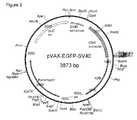
- Three plasmids were constructed ( Figures 1 , 2 and 3 ).
- the first one (pVAX-SV40) was used as negative control ( Figure 1 ).
- This plasmid is based on commercially available pVAX1 and was modified by the insertion of a 72bp SV40 enhancer element.
- the second plasmid pVAX-EGFP-SV40 ( Figure 2 ) was generated by inserting the coding sequence for EGFP in the MCS of pVAX-SV40, hence downstream of the CMV promoter.
- the third plasmid was pVAX-EGFP-WSSVie1 ( Figure 3 ).
- the virus promoter from white spots syndrom virus (Liu et al. 2007) was used to replace the CMV promoter.
- Dilution to 500 ng/ ⁇ l plasmid was made with water (for cricket Gryllus bimaculatus ) and glucose-water (1:1) (for the honey bee Apis mellifera ) , respectively.
- the cricket Gryllus bimaculatus was fed with dried feed too.
- the cricket food was prepared based on the method described by Ibler et al. (Ibler et al., 2009).
- the crickets were fed with a dried mixture of 2.4 g cricket food + 1 ml [1mg/ml] plasmid.
- the food for Tenebrio molitor consisted of a dried mixture of 2.4 g meal + 1ml [1mg/ml] plasmid.
- the first antibody for the EGFP detection was diluted 1:2000 in 5% milk PBS-Tween solution and incorporated for 1.5 h.
- the second antibody was the polyclonal goat anti-rabbit immunoglobulins (IgG)/HRP. This second antibody was diluted 1:2000 in 5% milk PBS-Tween solution and incorporated for 1 h.
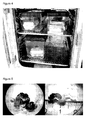
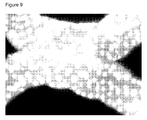
- EGFP protein could be microscopically detected in the Malphigian tubule system of a honey bee Apis mellifera that had been treated with the oral application of the plasmid pVAX-EGFP-SV40 ( Figures 7 and 9 ).
- a bee that was treated with the negative control the plasmid pVAX-SV40, did not show any EGFP protein in its Malphigian tubule system ( Figure 8 ).
- the same result was found in a sample from a muscle of a bee that had been treated with the plasmid pVAX-EGFP-SV40. In the latter case, the EGFP was detected by Western blot analysis ( Figure 15 , lane 3).
- EGFP protein could be microscopically detected in the intestinal tissue of a mealworm Tenebrio molitor that had been treated by the oral application of the plasmid pVAX-EGFP-SV40 ( Figure 10 ).
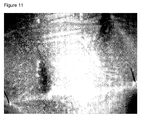
- a mealworm that was treated with the negative control, the plasmid pVAX-SV40 did not show any EGFP protein in its intestinal tissue ( Figure 11 ).
- the same result was found in a sample from a mealworm that had been treated with the oral application of the plasmids pVAX-EGFP-SV40 and pVAX-SV40.
- EGFP was only detected when the mealworm was treated with the plasmid pVAX-EGFP-SV40 ( Figure 14 and 15 , lane 5). When the mealworm was treated with the negative control pVAX-SV40, no EGFP could be detected ( Figure 14 ).
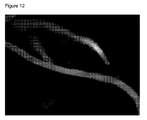
- EGFP protein could be microscopically detected in the Malphigian tubule system of cricket Gryllus bimaculatus that had been treated with the oral application of the plasmid pVAX-EGFP-SV40 ( Figure 12 ).
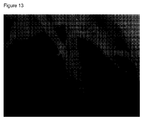
- a cricket that was treated with the negative control, the plasmid pVAX-SV40 did not show any EGFP protein in its Malphigian tubule system ( Figure 13 ).
- EGFP protein could be detected in the mite Varroa destructor parasiteizing on a honey bee Apis mellifera that was orally treated with the plasmid pVAX-EGFP-SV40.
- the detection was performed by Western blot ( Figure 15 , lane 4).
- bee feces from untreated bees was spiked with 1 ng of plasmid DNA.
- naked DNA was used (1 ng, 100 pg, 10 pg). Transformations were performed as described above.
- the present invention demonstrates the usability of a method based on feeding of arthropods with feed comprising a nucleic acid comprising a gene encoding a molecule of interest in numerous technical fields.
- Said method based on feeding may be conducted easily by a person skilled in the art.
- the nucleic acid may be obtained by standard genetic engineering methods well-known in the art.
- the plainness of the feeding procedure easily allows the incorporation of the nucleic acid into an arthropod of interest.
- the present invention represents a capable technical solution to overcome the problem of usability of nucleic acids in living arthropods and inducing production of a molecule of interest therein. Said problem existed for a long time and its solution may allow the use of the presented invention in numerous applications. Furthermore, the prejudice that the in vivo use of nucleic acids administered orally did not result in an induction of the production of molecules of interest was overcome by aforementioned experiments.
Landscapes
- Health & Medical Sciences (AREA)
- Life Sciences & Earth Sciences (AREA)
- Genetics & Genomics (AREA)
- Engineering & Computer Science (AREA)
- Biomedical Technology (AREA)
- Zoology (AREA)
- Biotechnology (AREA)
- General Engineering & Computer Science (AREA)
- Organic Chemistry (AREA)
- Chemical & Material Sciences (AREA)
- Wood Science & Technology (AREA)
- Bioinformatics & Cheminformatics (AREA)
- Molecular Biology (AREA)
- Biophysics (AREA)
- Plant Pathology (AREA)
- Microbiology (AREA)
- Biochemistry (AREA)
- General Health & Medical Sciences (AREA)
- Physics & Mathematics (AREA)
- Environmental Sciences (AREA)
- Animal Behavior & Ethology (AREA)
- Animal Husbandry (AREA)
- Biodiversity & Conservation Biology (AREA)
- Agricultural Chemicals And Associated Chemicals (AREA)
- Micro-Organisms Or Cultivation Processes Thereof (AREA)
Priority Applications (2)
| Application Number | Priority Date | Filing Date | Title |
|---|---|---|---|
| EP10001476A EP2356901A1 (de) | 2010-02-12 | 2010-02-12 | Induktion der Genexpression bei Gliederfüßern |
| PCT/EP2010/006982 WO2011057825A1 (en) | 2009-11-16 | 2010-11-16 | Induction of gene expression in arthropods |
Applications Claiming Priority (1)
| Application Number | Priority Date | Filing Date | Title |
|---|---|---|---|
| EP10001476A EP2356901A1 (de) | 2010-02-12 | 2010-02-12 | Induktion der Genexpression bei Gliederfüßern |
Publications (1)
| Publication Number | Publication Date |
|---|---|
| EP2356901A1 true EP2356901A1 (de) | 2011-08-17 |
Family
ID=42244333
Family Applications (1)
| Application Number | Title | Priority Date | Filing Date |
|---|---|---|---|
| EP10001476A Withdrawn EP2356901A1 (de) | 2009-11-16 | 2010-02-12 | Induktion der Genexpression bei Gliederfüßern |
Country Status (1)
| Country | Link |
|---|---|
| EP (1) | EP2356901A1 (de) |
Cited By (3)
| Publication number | Priority date | Publication date | Assignee | Title |
|---|---|---|---|---|
| CN103719023A (zh) * | 2013-11-28 | 2014-04-16 | 中国水利水电科学研究院 | 利用农村农副废弃物养殖黄粉虫的方法 |
| CN105085643A (zh) * | 2014-05-21 | 2015-11-25 | 广东省昆虫研究所 | 一种狄斯瓦螨毒性蛋白及其编码基因和应用 |
| CN108967369A (zh) * | 2018-10-10 | 2018-12-11 | 金华市农业科学研究院 | 一种中蜂借浆育王的方法 |
Citations (4)
| Publication number | Priority date | Publication date | Assignee | Title |
|---|---|---|---|---|
| EP0586892A1 (de) * | 1992-08-07 | 1994-03-16 | Research Corporation Technologies, Inc. | Herstellung von Bazillus-Entomotoxinen in methylotropher Hefe |
| US6090379A (en) * | 1992-04-29 | 2000-07-18 | Boyce Thompson Institute For Plant Research, Inc. | Stable pre-occluded virus particle for use in recombinant protein production and pesticides |
| WO2005042753A1 (en) * | 2003-10-28 | 2005-05-12 | Chesapeake Perl, Inc. | Production of human glycosylated proteins in transgenic insects |
| WO2005049841A1 (en) * | 2003-11-17 | 2005-06-02 | Commonwealth Scientific And Industrial Research Organisation | Insect resistance using inhibition of gene expression |
-
2010
- 2010-02-12 EP EP10001476A patent/EP2356901A1/de not_active Withdrawn
Patent Citations (4)
| Publication number | Priority date | Publication date | Assignee | Title |
|---|---|---|---|---|
| US6090379A (en) * | 1992-04-29 | 2000-07-18 | Boyce Thompson Institute For Plant Research, Inc. | Stable pre-occluded virus particle for use in recombinant protein production and pesticides |
| EP0586892A1 (de) * | 1992-08-07 | 1994-03-16 | Research Corporation Technologies, Inc. | Herstellung von Bazillus-Entomotoxinen in methylotropher Hefe |
| WO2005042753A1 (en) * | 2003-10-28 | 2005-05-12 | Chesapeake Perl, Inc. | Production of human glycosylated proteins in transgenic insects |
| WO2005049841A1 (en) * | 2003-11-17 | 2005-06-02 | Commonwealth Scientific And Industrial Research Organisation | Insect resistance using inhibition of gene expression |
Non-Patent Citations (13)
| Title |
|---|
| BRUSCA R.C.; BRUSCA G.J.: "Invertebrates", 2003, SINAUER ASSOCIATES |
| HOFFMANN ANDREA ET AL: "Fate of plasmid-bearing, luciferase marker gene tagged bacteria after feeding to the soil microarthropod Onychiurus fimatus (Collembola)", FEMS MICROBIOLOGY ECOLOGY, vol. 30, no. 2, October 1999 (1999-10-01), pages 125 - 135, XP002590599, ISSN: 0168-6496 * |
| IBLER B.; MAKERT G. R.; LORENZ M. W.: "Larval and adult development and organisation of a systemic breeding of the Mediterranean field cricket", ZOOL.GARTEN, vol. 78, 2009, pages 81 - 101 |
| KOVALEVA ELENA S ET AL: "Recombinant protein production in insect larvae: host choice, tissue distribution, and heterologous gene instability", BIOTECHNOLOGY LETTERS, vol. 31, no. 3, March 2009 (2009-03-01), pages 381 - 386, XP002590578, ISSN: 0141-5492 * |
| LIU W. J.; CHANG Y. S.; WANG A. H.; KOU G. H.; LO C. F.: "White spot syndrome virus annexes a shrimp STAT to enhance expression of the immediate- early gene iel", J VIROL., vol. 81, 2007, pages 1461 - 1471 |
| LOPEZ M G ET AL: "Trans-complementation of polyhedrin by a stably transformed Sf9 insect cell line allows occ baculovirus occlusion and larval per os infectivity", JOURNAL OF BIOTECHNOLOGY, ELSEVIER SCIENCE PUBLISHERS, AMSTERDAM, NL, vol. 145, no. 2, 15 January 2010 (2010-01-15), pages 199 - 205, XP026854245, ISSN: 0168-1656, [retrieved on 20091105] * |
| MEYERING-VOS ET AL: "RNA interference suggests sulfakinins as satiety effectors in the cricket Gryllus bimaculatus", JOURNAL OF INSECT PHYSIOLOGY, PERGAMON PRESS, OXFORD, GB LNKD- DOI:10.1016/J.JINSPHYS.2007.04.003, vol. 53, no. 8, 1 August 2007 (2007-08-01), pages 840 - 848, XP022191783, ISSN: 0022-1910 * |
| SAMBROOK J.; RUSSEL D. W.: "Molecular Cloning - Laboratory Manuals", 2001, COLD SPRING HARBOUR LABORATORY PRESS |
| SEABAUGH R C ET AL: "Development of a Chimeric Sindbis Virus with Enhancedper OsInfection ofAedes aegypti", VIROLOGY, ACADEMIC PRESS,ORLANDO, US LNKD- DOI:10.1006/VIRO.1998.9034, vol. 243, no. 1, 30 March 1998 (1998-03-30), pages 99 - 112, XP004445916, ISSN: 0042-6822 * |
| SHEN MIAOQING ET AL: "Intricate transmission routes and interactions between picorna-like viruses (Kashmir bee virus and sacbrood virus) with the honeybee host and the parasitic varroa mite", JOURNAL OF GENERAL VIROLOGY, vol. 86, no. Part 8, August 2005 (2005-08-01), pages 2281 - 2289, XP002590581, ISSN: 0022-1317 * |
| TANG D.C.; DEVIT M.; JOHNSTON S.A.: "Genetic Immunization Is A Simple Method for Eliciting An Immune-Response", NATURE, vol. 356, 1992, pages 152 - 154, XP002044310, DOI: doi:10.1038/356152a0 |
| TIAN HONGGANG ET AL: "Developmental Control of a Lepidopteran Pest Spodoptera exigua by Ingestion of Bacteria Expressing dsRNA of a Non-Midgut Gene", PLOS ONE, vol. 4, no. 7, E6225, July 2009 (2009-07-01), pages 1 - 13, XP002590579, ISSN: 1932-6203 * |
| WAHREN B.; LIU M.: "DNA Vaccines - An Overview. In: DNA Vaccination and Immunotherapy", WILEY-VCH VERLAG GMBH & CO. KGAA, pages: 1 - 6 |
Cited By (6)
| Publication number | Priority date | Publication date | Assignee | Title |
|---|---|---|---|---|
| CN103719023A (zh) * | 2013-11-28 | 2014-04-16 | 中国水利水电科学研究院 | 利用农村农副废弃物养殖黄粉虫的方法 |
| CN103719023B (zh) * | 2013-11-28 | 2016-02-03 | 中国水利水电科学研究院 | 利用农村农副废弃物养殖黄粉虫的方法 |
| CN105085643A (zh) * | 2014-05-21 | 2015-11-25 | 广东省昆虫研究所 | 一种狄斯瓦螨毒性蛋白及其编码基因和应用 |
| CN105085643B (zh) * | 2014-05-21 | 2018-01-19 | 广东省生物资源应用研究所 | 一种狄斯瓦螨毒性蛋白及其编码基因和应用 |
| CN108967369A (zh) * | 2018-10-10 | 2018-12-11 | 金华市农业科学研究院 | 一种中蜂借浆育王的方法 |
| CN108967369B (zh) * | 2018-10-10 | 2020-09-11 | 金华市农业科学研究院 | 一种中蜂借浆育王的方法 |
Similar Documents
| Publication | Publication Date | Title |
|---|---|---|
| Avila et al. | Delivery of lethal dsRNAs in insect diets by branched amphiphilic peptide capsules | |
| Lewis et al. | Ectopic gene expression and homeotic transformations in arthropods using recombinant Sindbis viruses | |
| Oppenheimer et al. | Functional conservation of the wingless–engrailed interaction as shown by a widely applicable baculovirus misexpression system | |
| CN101712955B (zh) | 利用基因重组蚕生产生理活性蛋白质的方法 | |
| Hiroyasu et al. | Extraction of hemocytes from Drosophila melanogaster larvae for microbial infection and analysis | |
| Mialhe et al. | Future of biotechnology-based control of disease in marine | |
| Ward et al. | Aedes aegypti transducing densovirus pathogenesis and expression in Aedes aegypti and Anopheles gambiae larvae | |
| EP2356901A1 (de) | Induktion der Genexpression bei Gliederfüßern | |
| Zimowska et al. | The β2-tubulin gene from three tephritid fruit fly species and use of its promoter for sperm marking | |
| Dong et al. | Genetic bioengineering of overexpressed guanylate binding protein family BmAtlastin-n enhances silkworm resistance to Nosema bombycis | |
| CN110747199B (zh) | 蜜蜂抗逆相关基因nf-y及其应用 | |
| WO2011057825A1 (en) | Induction of gene expression in arthropods | |
| Hou et al. | Identification and characterization of two long-type peptidoglycan recognition proteins, PGRP-L1 and PGRP-L2, in the orange-spotted grouper, Epinephelus coioides | |
| Ejiofor | Insect biotechnology | |
| Allen et al. | Using phiC31 integrase to make transgenic Xenopus laevis embryos | |
| Zhou et al. | Identification and function analysis of an immune deficiency homolog in swimming crab, Portunus trituberculatus | |
| Cheng et al. | Characterization of an endogenous gene expressed in Aedes aegypti using an orally infectious recombinant Sindbis virus. | |
| Chairunnisa et al. | Efficacy of GP-11 KHV DNA vaccine in Cyprinus carpio koi | |
| Mialhe et al. | Gene transfer technology in marine invertebrates | |
| Bossin et al. | Somatic transformation efficiencies and expression patterns using the JcDNV and piggyBac transposon gene vectors in insects | |
| JP6964843B2 (ja) | バイナリー遺伝子発現システム | |
| Chengfei et al. | Establishing a zebrafish transgenic line expressing tilapia lysozyme with enhanced antibacterial activity | |
| Anderson et al. | Development of DNA vaccines for salmonid fish | |
| Kıvrak | Crispr-Cas9 Knockdown Of Octopamine Beta Receptor Subtype 2 To Understand Its Role In Honey Bee Appetite Regulation | |
| US20230172175A1 (en) | Recombinant protein production in insects |
Legal Events
| Date | Code | Title | Description |
|---|---|---|---|
| PUAI | Public reference made under article 153(3) epc to a published international application that has entered the european phase |
Free format text: ORIGINAL CODE: 0009012 |
|
| AK | Designated contracting states |
Kind code of ref document: A1 Designated state(s): AT BE BG CH CY CZ DE DK EE ES FI FR GB GR HR HU IE IS IT LI LT LU LV MC MK MT NL NO PL PT RO SE SI SK SM TR |
|
| AX | Request for extension of the european patent |
Extension state: AL BA RS |
|
| 17P | Request for examination filed |
Effective date: 20120217 |
|
| STAA | Information on the status of an ep patent application or granted ep patent |
Free format text: STATUS: THE APPLICATION IS DEEMED TO BE WITHDRAWN |
|
| 18D | Application deemed to be withdrawn |
Effective date: 20120218 |