EP2348610A1 - Non-contact power transmission device and design method thereof - Google Patents
Non-contact power transmission device and design method thereof Download PDFInfo
- Publication number
- EP2348610A1 EP2348610A1 EP09824675A EP09824675A EP2348610A1 EP 2348610 A1 EP2348610 A1 EP 2348610A1 EP 09824675 A EP09824675 A EP 09824675A EP 09824675 A EP09824675 A EP 09824675A EP 2348610 A1 EP2348610 A1 EP 2348610A1
- Authority
- EP
- European Patent Office
- Prior art keywords
- frequency
- power source
- coil
- input impedance
- voltage
- Prior art date
- Legal status (The legal status is an assumption and is not a legal conclusion. Google has not performed a legal analysis and makes no representation as to the accuracy of the status listed.)
- Withdrawn
Links
Images


Classifications
-
- B—PERFORMING OPERATIONS; TRANSPORTING
- B60—VEHICLES IN GENERAL
- B60L—PROPULSION OF ELECTRICALLY-PROPELLED VEHICLES; SUPPLYING ELECTRIC POWER FOR AUXILIARY EQUIPMENT OF ELECTRICALLY-PROPELLED VEHICLES; ELECTRODYNAMIC BRAKE SYSTEMS FOR VEHICLES IN GENERAL; MAGNETIC SUSPENSION OR LEVITATION FOR VEHICLES; MONITORING OPERATING VARIABLES OF ELECTRICALLY-PROPELLED VEHICLES; ELECTRIC SAFETY DEVICES FOR ELECTRICALLY-PROPELLED VEHICLES
- B60L53/00—Methods of charging batteries, specially adapted for electric vehicles; Charging stations or on-board charging equipment therefor; Exchange of energy storage elements in electric vehicles
- B60L53/10—Methods of charging batteries, specially adapted for electric vehicles; Charging stations or on-board charging equipment therefor; Exchange of energy storage elements in electric vehicles characterised by the energy transfer between the charging station and the vehicle
- B60L53/12—Inductive energy transfer
-
- H—ELECTRICITY
- H02—GENERATION; CONVERSION OR DISTRIBUTION OF ELECTRIC POWER
- H02J—ELECTRIC POWER NETWORKS; CIRCUIT ARRANGEMENTS OR SYSTEMS FOR SUPPLYING OR DISTRIBUTING ELECTRIC POWER; SYSTEMS FOR STORING ELECTRIC ENERGY
- H02J50/00—Circuit arrangements or systems for wireless supply or distribution of electric power
- H02J50/10—Circuit arrangements or systems for wireless supply or distribution of electric power using inductive coupling
- H02J50/12—Circuit arrangements or systems for wireless supply or distribution of electric power using inductive coupling of the resonant type
-
- B—PERFORMING OPERATIONS; TRANSPORTING
- B60—VEHICLES IN GENERAL
- B60L—PROPULSION OF ELECTRICALLY-PROPELLED VEHICLES; SUPPLYING ELECTRIC POWER FOR AUXILIARY EQUIPMENT OF ELECTRICALLY-PROPELLED VEHICLES; ELECTRODYNAMIC BRAKE SYSTEMS FOR VEHICLES IN GENERAL; MAGNETIC SUSPENSION OR LEVITATION FOR VEHICLES; MONITORING OPERATING VARIABLES OF ELECTRICALLY-PROPELLED VEHICLES; ELECTRIC SAFETY DEVICES FOR ELECTRICALLY-PROPELLED VEHICLES
- B60L2210/00—Converter types
- B60L2210/20—AC to AC converters
-
- H—ELECTRICITY
- H02—GENERATION; CONVERSION OR DISTRIBUTION OF ELECTRIC POWER
- H02J—ELECTRIC POWER NETWORKS; CIRCUIT ARRANGEMENTS OR SYSTEMS FOR SUPPLYING OR DISTRIBUTING ELECTRIC POWER; SYSTEMS FOR STORING ELECTRIC ENERGY
- H02J2105/00—Networks for supplying or distributing electric power characterised by their spatial reach or by the load
- H02J2105/30—Networks for supplying or distributing electric power characterised by their spatial reach or by the load the load networks being external to vehicles, i.e. exchanging power with vehicles
- H02J2105/33—Networks for supplying or distributing electric power characterised by their spatial reach or by the load the load networks being external to vehicles, i.e. exchanging power with vehicles exchanging power with road vehicles
- H02J2105/37—Networks for supplying or distributing electric power characterised by their spatial reach or by the load the load networks being external to vehicles, i.e. exchanging power with vehicles exchanging power with road vehicles exchanging power with electric vehicles [EV] or with hybrid electric vehicles [HEV]
-
- Y—GENERAL TAGGING OF NEW TECHNOLOGICAL DEVELOPMENTS; GENERAL TAGGING OF CROSS-SECTIONAL TECHNOLOGIES SPANNING OVER SEVERAL SECTIONS OF THE IPC; TECHNICAL SUBJECTS COVERED BY FORMER USPC CROSS-REFERENCE ART COLLECTIONS [XRACs] AND DIGESTS
- Y02—TECHNOLOGIES OR APPLICATIONS FOR MITIGATION OR ADAPTATION AGAINST CLIMATE CHANGE
- Y02T—CLIMATE CHANGE MITIGATION TECHNOLOGIES RELATED TO TRANSPORTATION
- Y02T10/00—Road transport of goods or passengers
- Y02T10/60—Other road transportation technologies with climate change mitigation effect
- Y02T10/70—Energy storage systems for electromobility, e.g. batteries
-
- Y—GENERAL TAGGING OF NEW TECHNOLOGICAL DEVELOPMENTS; GENERAL TAGGING OF CROSS-SECTIONAL TECHNOLOGIES SPANNING OVER SEVERAL SECTIONS OF THE IPC; TECHNICAL SUBJECTS COVERED BY FORMER USPC CROSS-REFERENCE ART COLLECTIONS [XRACs] AND DIGESTS
- Y02—TECHNOLOGIES OR APPLICATIONS FOR MITIGATION OR ADAPTATION AGAINST CLIMATE CHANGE
- Y02T—CLIMATE CHANGE MITIGATION TECHNOLOGIES RELATED TO TRANSPORTATION
- Y02T10/00—Road transport of goods or passengers
- Y02T10/60—Other road transportation technologies with climate change mitigation effect
- Y02T10/7072—Electromobility specific charging systems or methods for batteries, ultracapacitors, supercapacitors or double-layer capacitors
-
- Y—GENERAL TAGGING OF NEW TECHNOLOGICAL DEVELOPMENTS; GENERAL TAGGING OF CROSS-SECTIONAL TECHNOLOGIES SPANNING OVER SEVERAL SECTIONS OF THE IPC; TECHNICAL SUBJECTS COVERED BY FORMER USPC CROSS-REFERENCE ART COLLECTIONS [XRACs] AND DIGESTS
- Y02—TECHNOLOGIES OR APPLICATIONS FOR MITIGATION OR ADAPTATION AGAINST CLIMATE CHANGE
- Y02T—CLIMATE CHANGE MITIGATION TECHNOLOGIES RELATED TO TRANSPORTATION
- Y02T10/00—Road transport of goods or passengers
- Y02T10/60—Other road transportation technologies with climate change mitigation effect
- Y02T10/72—Electric energy management in electromobility
-
- Y—GENERAL TAGGING OF NEW TECHNOLOGICAL DEVELOPMENTS; GENERAL TAGGING OF CROSS-SECTIONAL TECHNOLOGIES SPANNING OVER SEVERAL SECTIONS OF THE IPC; TECHNICAL SUBJECTS COVERED BY FORMER USPC CROSS-REFERENCE ART COLLECTIONS [XRACs] AND DIGESTS
- Y02—TECHNOLOGIES OR APPLICATIONS FOR MITIGATION OR ADAPTATION AGAINST CLIMATE CHANGE
- Y02T—CLIMATE CHANGE MITIGATION TECHNOLOGIES RELATED TO TRANSPORTATION
- Y02T90/00—Enabling technologies or technologies with a potential or indirect contribution to GHG emissions mitigation
- Y02T90/10—Technologies relating to charging of electric vehicles
- Y02T90/12—Electric charging stations
-
- Y—GENERAL TAGGING OF NEW TECHNOLOGICAL DEVELOPMENTS; GENERAL TAGGING OF CROSS-SECTIONAL TECHNOLOGIES SPANNING OVER SEVERAL SECTIONS OF THE IPC; TECHNICAL SUBJECTS COVERED BY FORMER USPC CROSS-REFERENCE ART COLLECTIONS [XRACs] AND DIGESTS
- Y02—TECHNOLOGIES OR APPLICATIONS FOR MITIGATION OR ADAPTATION AGAINST CLIMATE CHANGE
- Y02T—CLIMATE CHANGE MITIGATION TECHNOLOGIES RELATED TO TRANSPORTATION
- Y02T90/00—Enabling technologies or technologies with a potential or indirect contribution to GHG emissions mitigation
- Y02T90/10—Technologies relating to charging of electric vehicles
- Y02T90/14—Plug-in electric vehicles
Definitions
- the present invention relate to a non-contact power transmission device and a design method thereof.
- Fig. 6 shows a schematic view of a non-contact power transmission device that transmits power from a first copper wire coil 51 to a second copper wire coil 52, which is arranged spaced apart from the first copper wire coil 51, by resonance of electromagnetic fields.
- a magnetic field generated around a primary coil 54 connected to an AC power source 53 is intensified by magnetic field resonance of the first and second copper wire coils 51, 52.
- the power of the secondary coil 55 is then supplied to a load 56. It has been observed that the load 56, which is a 60-watt electric lamp in this embodiment, can be lighted up when the first and second copper wire coils 51, 52 both having a radius of 30 cm are arranged apart from each other by 2 m.
- Non-Patent Document 1 does not specify the relationship between the frequency of the output voltage of the AC power source 53 and the resonant frequency of the first copper wire coil 51 of a transmitting section, or an electric power transmitting section, and the second copper wire coil 52 of a receiving section, or an electric power receiving section. Such a relationship is necessary to design and manufacture a non-contact power transmission device.
- a method for determining the frequency of the output voltage of the AC power source 53 for transmitting power with high efficiency is not disclosed. Therefore, it is necessary to check the relationship between the frequency of the output voltage of the AC power source 53 and the power transmission efficiency in a wide range to determine the optimal frequency of the output voltage of the AC power source 53, which is time consuming.
- a first aspect of the present invention discloses a non-contact power transmission device including an AC power source, a resonant system, and a load.
- the resonant system includes a primary coil connected to the AC power source, a primary resonance coil, a secondary resonance coil, and a secondary coil connected to the load.
- the frequency of the AC voltage of the AC power source is set between a first frequency at which the input impedance has a local maximum value, and a second frequency that is greater than the first frequency and at which the input impedance has a local minimum value.
- a second aspect of the present invention provides a non-contact power transmission device including an AC power source, a resonant system, and a load.
- the resonant system includes a primary coil connected to the AC power source, a primary resonance coil, a secondary resonance coil, and a secondary coil connected to the load.
- a frequency of an AC voltage of the AC power source is set within an input impedance decreasing range, which is a frequency range in which an input impedance of the resonant system is decreased as the frequency of the AC voltage is increased.
- a third aspect of the present invention provides a method for designing a non-contact power transmission device including an AC power source, a resonant system, and a load.
- the resonant system includes a primary coil connected to the AC power source, a primary resonance coil, a secondary resonance coil, and a secondary coil connected to the load.
- the frequency of the AC voltage of the AC power source is set between a first frequency at which the input impedance has a local maximum value, and a second frequency that is greater than the first frequency and at which the input impedance has a local minimum value.
- a fourth aspect of the present invention provides a method for designing a non-contact power transmission device including an AC power source, a resonant system, and a load.
- the resonant system includes a primary coil connected to the AC power source, a primary resonance coil, a secondary resonance coil, and a secondary coil connected to the load.
- a frequency of an AC voltage of the AC power source is set within an input impedance decreasing range, which is a frequency range in which an input impedance of the resonant system is decreased as the frequency of the AC voltage is increased.
- Figs. 1 to 4 illustrate a non-contact power transmission device 10 according to one embodiment of the present invention.
- the non-contact power transmission device 10 includes a resonant system 12, which transmits power supplied from an AC power source 11 to a load 17 without contact.
- the resonant system 12 includes a primary coil 13 connected to the AC power source 11, a primary resonance coil 14, a secondary resonance coil 15, and a secondary coil 16.
- the secondary coil 16 is connected to the load 17.
- the AC power source 11 supplies an AC voltage to the primary coil 13.
- the AC power source 11 may be one that converts a DC voltage input from a DC power source to an AC voltage and supplies the AC voltage to the primary coil 13.
- the non-contact power transmission device 10 generates a magnetic field around the primary coil 13 by applying the AC voltage to the primary coil 13 from the AC power source 11.
- the non-contact power transmission device 10 intensifies the magnetic field generated around the primary coil 13 by magnetic field resonance between the primary resonance coil 14 and the secondary resonance coil 15.
- power is generated in the secondary coil 16 through electromagnetic induction of the intensified magnetic field in the vicinity of the secondary resonance coil 15.
- the generated power is supplied to the load 17.
- the primary coil 13, the primary resonance coil 14, the secondary resonance coil 15, and the secondary coil 16 are each formed by an electric wire.
- the diameter and the number of turns of the coils 13, 14, 15, 16 are set in accordance with, for example, the level of power to be transmitted as required.
- the primary coil 13, the primary resonance coil 14, the secondary resonance coil 15, and the secondary coil 16 have the same diameter.
- the frequency of the AC voltage output from the AC power source 11 can be changed freely.
- the frequency of the AC voltage applied to the resonant system 12 can be changed freely.
- the specifications of the primary resonance coil 14 and the secondary resonance coil 15, which form the resonant system 12, are set.
- the specifications include, besides the material of the electric wire forming the primary resonance coil 14 and the secondary resonance coil 15, values required for manufacturing and mounting the resonance coils 14, 15 such as the size of the electric wire, the diameter and the number of turns of the coils, and the distance between the resonance coils 14, 15.
- specifications for the primary coil 13 and the secondary coil 16 are set.
- the specifications include, besides the material of the electric wire forming the coils 13, 16, the size of the electric wire, and the diameter and the number of turns of the coils.
- a copper wire is generally used as the electric wire.
- the primary coil 13, the primary resonance coil 14, the secondary resonance coil 15, and the secondary coil 16 are formed in accordance with the set specifications, which are then assembled into the resonant system 12. Thereafter, the load 17 is connected to the secondary coil 16. Then, the input impedance Zin of the resonant system 12 is measured while changing the frequency of the AC voltage of the AC power source 11 applied to the primary coil 13.
- the input impedance Zin of the resonant system 12 refers to the impedance of the entire resonant system 12 measured at both ends of the primary coil 13 regardless of whether the load 17 is connected to the secondary coil 16.
- a graph is prepared with the vertical axis representing the input impedance Zin and the horizontal axis representing the frequency of the AC voltage of the AC power source 11.
- the frequency of the AC voltage of the AC power source 11 is set between a frequency at which the input impedance Zin of the resonant system 12 has a local maximum value, that is, a first frequency, and a frequency that is greater than the first frequency and at which the input impedance Zin has a local minimum value, that is, a second frequency.
- the input impedance Zin may have two local maximum points and two local minimum points depending on the resonant system 12.
- the frequency of the AC voltage of the AC power source 11 is set within the frequency range corresponding to the range between a local maximum point Pmax and a local minimum point Pmin in Fig. 2 .
- the local maximum point Pmax is the local maximum point with the greater input impedance Zin among the two local maximum points
- the local minimum point Pmin is the local minimum point with the smaller input impedance Zin among the two local minimum points.
- the local maximum point and the local minimum point there might be several sets of the local maximum point and the local minimum point depending on the resonant system 12.
- several local maximum points of the input impedance Zin might be the same as one another, and several local minimum points of the input impedance Zin might be the same as one another.
- the frequency of the AC voltage of the AC power source 11 is set within the frequency range corresponding to the set of the local maximum point Pmax and the local minimum point Pmin in the lowest frequency range among some frequency ranges.
- the output impedance of the AC power source 11 and the input impedance Zin of the resonant system 12 are matched with each other. If the output impedance of the AC power source 11 and the input impedance Zin of the resonant system 12 cannot be matched, a matching circuit may be arranged between the AC power source 11 and the primary coil 13 so that the output impedance of the AC power source 11 matches with the input impedance Zin of the resonant system 12.
- the impedances match completely.
- the output impedance of the AC power source 11 and the input impedance of the resonant system 12 may match with each other within the range that achieves a desired performance, that is, a desired power transmission efficiency as the non-contact power transmission device.
- the difference between the output impedance of the AC power source 11 and the input impedance of the resonant system 12 may be within the range of ⁇ 10%, or preferably ⁇ 5% with respect to the input impedance of the resonant system 12.
- thin vinyl insulated low-voltage cables for automobiles that is, AVS cables having the size or the cross-sectional area of 0.5 sq (square mm) are used as the electric wires for the coils 13, 14, 15, 16, which form the resonant system 12.
- the primary coil 13, the primary resonance coil 14, the secondary resonance coil 15, and the secondary coil 16 are formed in accordance with the following specifications.
- Primary coil 13 and secondary coil 16 number of turns...2; diameter...150 mm; closely wound.
- Resonance coils 14, 15 number of turns...45; diameter...150 mm; closely wound; both ends of coils are open.
- the load 17 which is a resistor of 50 ⁇ in this embodiment, is connected to the secondary coil 16.
- a sine wave AC voltage of 10 Vpp (amplitude of 5 V) and having a frequency of 1 MHz to 7 MHz is supplied to the primary coil 13 from the AC power source 11 as an input voltage. Then, the impedance Z1 of the primary coil 13, the input impedance Zin of the resonant system 12, and the power transmission efficiency ⁇ were measured.
- the number of turns of the primary coil 13 was changed to one turn and four turns without changing the specifications of the coils 14, 15, 16 except the primary coil 13, and the measurement was performed on the resonant system 12 with the same conditions.
- the measurement results are shown in the graphs of Figs. 2 , 3, and 4 .
- the horizontal axis represents the frequency of the AC voltage of the AC power source 11
- the vertical axis represents the input impedance Zin, the impedance Z1 of the primary coil 13, and the power transmission efficiency ⁇ .
- Figs. 2 to 4 the horizontal axis represents the frequency of the AC voltage of the AC power source 11
- the vertical axis represents the input impedance Zin, the impedance Z1 of the primary coil 13, and the power transmission efficiency ⁇ .
- the power transmission efficiency ⁇ is simply indicated as efficiency ⁇ .
- the local maximum point of the input impedance Zin of the resonant system 12 is denoted as Pmax, and the local minimum point is denoted as Pmin.
- the power transmission efficiency ⁇ shows the ratio of the consumed power at the load 17 with respect to the input power to the primary coil 13. The following equation is used to calculate the power transmission efficiency ⁇ in terms of percentage (%).
- Figs. 2 to 4 suggest the following.
- the present embodiment has the following advantages.
- the present invention is not limited to the illustrated embodiment, but may be modified as follows.
- the shape of the coils 13, 14, 15, 16 does not need to be cylindrical.
- the shape of the coils 13, 14, 15, 16 may be a polygonal tubular shape such as a triangular tubular shape, a square tubular shape, and a hexagonal tubular shape, or a simple tubular shape such as an oval tubular.
- the shape of the coils 13, 14, 15, 16 may be a tubular shape having an asymmetrical cross-section.
- the primary resonance coil 14 and the secondary resonance coil 15 are not limited to the coil formed by winding the electric wire into a cylindrical shape, but may be a coil formed by winding the electric wire on a plane as shown in Fig. 5 .
- the coils 13, 14, 15, 16 may have a structure in which the electric wire is closely wound so that the adjacent wires contact each other.
- the coils 13, 14, 15, 16 may have a structure in which the electric wire is wound with a space between wound sections such that the wound sections do not contact each other.
- the primary coil 13, the primary resonance coil 14, the secondary resonance coil 15, and the secondary coil 16 do not need to have the same diameter.
- the primary resonance coil 14 and the secondary resonance coil 15 may have the same diameter, and the primary coil 13 and the secondary coil 16 may have different diameters from each other.
- the primary coil 13 and the secondary coil 16 may have a diameter different from that of the resonance coils 14, 15.
- the electric wire forming the coils 13, 14, 15, 16 does not need to be a vinyl insulated wire, but may be an enamel wire. Alternatively, after winding a bare wire, the bare wire may be resin molded.
- the method for designing the non-contact power transmission device 10 is not limited to a method in which, after setting the specifications for the primary resonance coil 14 and the secondary resonance coil 15, which form the resonant system 12, the specifications of the AC power source 11 is set, and the impedance Z1 of the primary coil 13 is set such that the output impedance of the AC power source 11 matches with the input impedance Zin of the resonant system 12.
- the specifications of the AC power source 11 may be set first, and the specifications of the primary resonance coil 14 and the secondary resonance coil 15, which form the resonant system 12, and the impedance Z1 of the primary coil 13 may be set to match with the set specifications of the AC power source 11.
- Setting the specifications of the AC power source 11 prior to the specifications of the resonant system 12 means that, when setting the specifications of the resonant system 12, the material of the electric wire forming the primary resonance coil 14 and the secondary resonance coil 15 and values such as the size of the electric wire, the diameter of the coils, the number of turns, and the distance between the resonance coils 14, 15 are set in a state where the resonant frequency has already been determined.
Landscapes
- Engineering & Computer Science (AREA)
- Power Engineering (AREA)
- Computer Networks & Wireless Communication (AREA)
- Transportation (AREA)
- Mechanical Engineering (AREA)
- Electric Propulsion And Braking For Vehicles (AREA)
- Current-Collector Devices For Electrically Propelled Vehicles (AREA)
- Charge And Discharge Circuits For Batteries Or The Like (AREA)
Abstract
Description
- The present invention relate to a non-contact power transmission device and a design method thereof.
-
Fig. 6 shows a schematic view of a non-contact power transmission device that transmits power from a firstcopper wire coil 51 to a secondcopper wire coil 52, which is arranged spaced apart from the firstcopper wire coil 51, by resonance of electromagnetic fields. Such devices are disclosed in, for example,Non-Patent Document 1 andPatent Document 1. InFig. 6 , a magnetic field generated around aprimary coil 54 connected to anAC power source 53, is intensified by magnetic field resonance of the first and secondcopper wire coils copper wire coil 52 caused by such magnetic field resonance, power is generated in asecondary coil 55. The power of thesecondary coil 55 is then supplied to aload 56. It has been observed that theload 56, which is a 60-watt electric lamp in this embodiment, can be lighted up when the first and secondcopper wire coils -
- Patent Document
- Patent Document 1: International Publication Brochure
WO2007/008646 - Non-Patent Document
- Non-Patent Document 1: NIKKEI ELECTRONICS Dec. 3, 2007, pages 117 to 128
- However, Non-Patent
Document 1 does not specify the relationship between the frequency of the output voltage of theAC power source 53 and the resonant frequency of the firstcopper wire coil 51 of a transmitting section, or an electric power transmitting section, and the secondcopper wire coil 52 of a receiving section, or an electric power receiving section. Such a relationship is necessary to design and manufacture a non-contact power transmission device. In particular, a method for determining the frequency of the output voltage of theAC power source 53 for transmitting power with high efficiency is not disclosed. Therefore, it is necessary to check the relationship between the frequency of the output voltage of theAC power source 53 and the power transmission efficiency in a wide range to determine the optimal frequency of the output voltage of theAC power source 53, which is time consuming. - Accordingly, it is an objective of the present invention to provide a non-contact power transmission device that is easily designed and manufactured, and a design method thereof.
- To achieve the above objective, a first aspect of the present invention discloses a non-contact power transmission device including an AC power source, a resonant system, and a load. The resonant system includes a primary coil connected to the AC power source, a primary resonance coil, a secondary resonance coil, and a secondary coil connected to the load. When the relationship between an input impedance of the resonant system and a frequency of an AC voltage of the AC power source is plotted on a graph, the frequency of the AC voltage of the AC power source is set between a first frequency at which the input impedance has a local maximum value, and a second frequency that is greater than the first frequency and at which the input impedance has a local minimum value.
- A second aspect of the present invention provides a non-contact power transmission device including an AC power source, a resonant system, and a load. The resonant system includes a primary coil connected to the AC power source, a primary resonance coil, a secondary resonance coil, and a secondary coil connected to the load. A frequency of an AC voltage of the AC power source is set within an input impedance decreasing range, which is a frequency range in which an input impedance of the resonant system is decreased as the frequency of the AC voltage is increased.
- A third aspect of the present invention provides a method for designing a non-contact power transmission device including an AC power source, a resonant system, and a load. The resonant system includes a primary coil connected to the AC power source, a primary resonance coil, a secondary resonance coil, and a secondary coil connected to the load. When the relationship between an input impedance of the resonant system and a frequency of an AC voltage of the AC power source plotted on a graph, the frequency of the AC voltage of the AC power source is set between a first frequency at which the input impedance has a local maximum value, and a second frequency that is greater than the first frequency and at which the input impedance has a local minimum value.
- A fourth aspect of the present invention provides a method for designing a non-contact power transmission device including an AC power source, a resonant system, and a load. The resonant system includes a primary coil connected to the AC power source, a primary resonance coil, a secondary resonance coil, and a secondary coil connected to the load. A frequency of an AC voltage of the AC power source is set within an input impedance decreasing range, which is a frequency range in which an input impedance of the resonant system is decreased as the frequency of the AC voltage is increased.
-
-
Fig. 1 is a schematic diagram illustrating a non-contact power transmission device according to one embodiment of the present invention; -
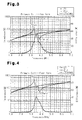
Fig. 2 is a graph showing the relationship of the impedance of the primary coil, the input impedance of the resonant system, and the power transmission efficiency with the frequency of the AC voltage of the AC power source in a case where the number of turns of the primary coil is a single turn; -
Fig. 3 is a graph showing the relationship of the impedance of the primary coil, the input impedance of the resonant system, and the power transmission efficiency with the frequency of the AC voltage of the AC power source in a case where the number of turns of the primary coil is two turns; -
Fig. 4 is a graph showing the relationship of the impedance of the primary coil, the input impedance of the resonant system, and the power transmission efficiency with the frequency of the AC voltage of the AC power source in a case where the number of turns of the primary coil is four turns; -
Fig. 5 is a schematic diagram illustrating a modified embodiment of the primary resonance coil and the secondary resonance coil forming the resonant system; and -
Fig. 6 is a schematic diagram illustrating a conventional non-contact power transmission device. -
Figs. 1 to 4 illustrate a non-contactpower transmission device 10 according to one embodiment of the present invention. - As shown in
Fig. 1 , the non-contactpower transmission device 10 includes a resonant system 12, which transmits power supplied from anAC power source 11 to aload 17 without contact. The resonant system 12 includes aprimary coil 13 connected to theAC power source 11, aprimary resonance coil 14, asecondary resonance coil 15, and asecondary coil 16. Thesecondary coil 16 is connected to theload 17. TheAC power source 11 supplies an AC voltage to theprimary coil 13. TheAC power source 11 may be one that converts a DC voltage input from a DC power source to an AC voltage and supplies the AC voltage to theprimary coil 13. - The non-contact
power transmission device 10 generates a magnetic field around theprimary coil 13 by applying the AC voltage to theprimary coil 13 from theAC power source 11. The non-contactpower transmission device 10 intensifies the magnetic field generated around theprimary coil 13 by magnetic field resonance between theprimary resonance coil 14 and thesecondary resonance coil 15. As a result, power is generated in thesecondary coil 16 through electromagnetic induction of the intensified magnetic field in the vicinity of thesecondary resonance coil 15. The generated power is supplied to theload 17. - The
primary coil 13, theprimary resonance coil 14, thesecondary resonance coil 15, and thesecondary coil 16 are each formed by an electric wire. The diameter and the number of turns of thecoils primary coil 13, theprimary resonance coil 14, thesecondary resonance coil 15, and thesecondary coil 16 have the same diameter. - The frequency of the AC voltage output from the
AC power source 11 can be changed freely. Thus, the frequency of the AC voltage applied to the resonant system 12 can be changed freely. - A method for designing the non-contact
power transmission device 10 will now be described. - First, the specifications of the
primary resonance coil 14 and thesecondary resonance coil 15, which form the resonant system 12, are set. The specifications include, besides the material of the electric wire forming theprimary resonance coil 14 and thesecondary resonance coil 15, values required for manufacturing and mounting theresonance coils resonance coils primary coil 13 and thesecondary coil 16 are set. The specifications include, besides the material of the electric wire forming thecoils - Subsequently, the
primary coil 13, theprimary resonance coil 14, thesecondary resonance coil 15, and thesecondary coil 16 are formed in accordance with the set specifications, which are then assembled into the resonant system 12. Thereafter, theload 17 is connected to thesecondary coil 16. Then, the input impedance Zin of the resonant system 12 is measured while changing the frequency of the AC voltage of theAC power source 11 applied to theprimary coil 13. The input impedance Zin of the resonant system 12 refers to the impedance of the entire resonant system 12 measured at both ends of theprimary coil 13 regardless of whether theload 17 is connected to thesecondary coil 16. Based on the measurement results, a graph is prepared with the vertical axis representing the input impedance Zin and the horizontal axis representing the frequency of the AC voltage of theAC power source 11. The frequency of the AC voltage of theAC power source 11 is set between a frequency at which the input impedance Zin of the resonant system 12 has a local maximum value, that is, a first frequency, and a frequency that is greater than the first frequency and at which the input impedance Zin has a local minimum value, that is, a second frequency. As shown inFig. 2 , when the graph is prepared with the vertical axis representing the input impedance Zin and the horizontal axis representing the frequency of the AC voltage of theAC power source 11, the input impedance Zin may have two local maximum points and two local minimum points depending on the resonant system 12. In this case, the frequency of the AC voltage of theAC power source 11 is set within the frequency range corresponding to the range between a local maximum point Pmax and a local minimum point Pmin inFig. 2 . The local maximum point Pmax is the local maximum point with the greater input impedance Zin among the two local maximum points, and the local minimum point Pmin is the local minimum point with the smaller input impedance Zin among the two local minimum points. Also, there might be several sets of the local maximum point and the local minimum point depending on the resonant system 12. For example, several local maximum points of the input impedance Zin might be the same as one another, and several local minimum points of the input impedance Zin might be the same as one another. For example, there might be some sets of the local maximum point Pmax and the local minimum point Pmin inFig. 2 . In such a case, the frequency of the AC voltage of theAC power source 11 is set within the frequency range corresponding to the set of the local maximum point Pmax and the local minimum point Pmin in the lowest frequency range among some frequency ranges. - In a state where the frequency of the AC voltage of the
AC power source 11 is set as described above, the output impedance of theAC power source 11 and the input impedance Zin of the resonant system 12 are matched with each other. If the output impedance of theAC power source 11 and the input impedance Zin of the resonant system 12 cannot be matched, a matching circuit may be arranged between theAC power source 11 and theprimary coil 13 so that the output impedance of theAC power source 11 matches with the input impedance Zin of the resonant system 12. - When matching the output impedance of the
AC power source 11 with the input impedance of the resonant system 12, it is most preferable that the impedances match completely. However, the output impedance of theAC power source 11 and the input impedance of the resonant system 12 may match with each other within the range that achieves a desired performance, that is, a desired power transmission efficiency as the non-contact power transmission device. For example, the difference between the output impedance of theAC power source 11 and the input impedance of the resonant system 12 may be within the range of ±10%, or preferably ±5% with respect to the input impedance of the resonant system 12. - In the present embodiment, thin vinyl insulated low-voltage cables for automobiles, that is, AVS cables having the size or the cross-sectional area of 0.5 sq (square mm) are used as the electric wires for the
coils primary coil 13, theprimary resonance coil 14, thesecondary resonance coil 15, and thesecondary coil 16 are formed in accordance with the following specifications. -
Primary coil 13 and secondary coil 16: number of turns...2; diameter...150 mm; closely wound. - Resonance coils 14, 15: number of turns...45; diameter...150 mm; closely wound; both ends of coils are open.
- Distance between
primary resonance coil 14 and secondary resonance coil 15: 200 mm - The
load 17, which is a resistor of 50 Ω in this embodiment, is connected to thesecondary coil 16. A sine wave AC voltage of 10 Vpp (amplitude of 5 V) and having a frequency of 1 MHz to 7 MHz is supplied to theprimary coil 13 from theAC power source 11 as an input voltage. Then, the impedance Z1 of theprimary coil 13, the input impedance Zin of the resonant system 12, and the power transmission efficiency η were measured. To check the influence of the impedance Z1 of theprimary coil 13 on the input impedance Zin of the resonant system 12 and the power transmission efficiency η, the number of turns of theprimary coil 13 was changed to one turn and four turns without changing the specifications of thecoils primary coil 13, and the measurement was performed on the resonant system 12 with the same conditions. The measurement results are shown in the graphs ofFigs. 2 ,3, and 4 . InFigs. 2 to 4 , the horizontal axis represents the frequency of the AC voltage of theAC power source 11, and the vertical axis represents the input impedance Zin, the impedance Z1 of theprimary coil 13, and the power transmission efficiency η. InFigs. 2 to 4 , the power transmission efficiency η is simply indicated as efficiency η. The local maximum point of the input impedance Zin of the resonant system 12 is denoted as Pmax, and the local minimum point is denoted as Pmin. The power transmission efficiency η shows the ratio of the consumed power at theload 17 with respect to the input power to theprimary coil 13. The following equation is used to calculate the power transmission efficiency η in terms of percentage (%). - Power transmission efficiency η = (consumed power at the load 17)/(input power to the primary coil 13) × 100 [%]
-
Figs. 2 to 4 suggest the following. - 1. The impedance Z1 of the
primary coil 13 is monotonically increased as the frequency of the AC voltage of theAC power source 11 increases from 1 MHz to 7 MHz regardless of the number of turns of theprimary coil 13. As the frequency is decreased, the increasing rate of the impedance Z1 is increased. - 2. When the frequency of the AC voltage of the
AC power source 11 is constant, the impedance Z1 of theprimary coil 13 is increased as the number of turns of theprimary coil 13 is increased. Also, the increasing rate of the impedance Z1 of theprimary coil 13 with respect to the frequency of the AC voltage of theAC power source 11 is greater when the number of turns of theprimary coil 13 is increased by four times as compared to the case where the number of turns of theprimary coil 13 is increased by two times. - 3. The power transmission efficiency η has the maximum value at substantially the same frequency regardless of the number of turns of the
primary coil 13. The frequency at which the power transmission efficiency η has the maximum value is defined as the resonant frequency of the resonant system 12. - 4. When the frequency of the AC voltage of the
AC power source 11 is in the range of 2 MHz or lower, or in the range of 6 MHz or higher, the input impedance Zin of the resonant system 12 changes to substantially match with the impedance of theprimary coil 13. In the vicinity of the resonant frequency, parallel resonance and series resonance subsequently occurs, whereby the input impedance Zin changes to take the local maximum point Pmax and the local minimum point Pmin. - 5. The frequency at which the input impedance Zin of the resonant system 12 takes the local maximum point Pmax and the local minimum point Pmin is constant regardless of the impedance Z1 of the
primary coil 13. - 6. The resonant frequency occurs between the first frequency and the second frequency. The first frequency is a frequency at which the input impedance Zin of the resonant system 12 takes the local maximum point Pmax, and the second frequency is a frequency greater than the first frequency. At the second frequency, the input impedance Zin of the resonant system 12 takes the local minimum point Pmin. When the frequency of the AC voltage of the
AC power source 11 is set between the first frequency, which corresponds to the local maximum point Pmax, and the second frequency, which is greater than the first frequency and corresponds to the local minimum point Pmin, the power transmission efficiency η is increased. - 7. The power transmission efficiency η is maximized when the frequency of the AC voltage of the
AC power source 11 is set to a frequency between the first frequency, which corresponds to the local maximum point Pmax of the input impedance Zin of the resonant system 12, and the second frequency, which is greater than the first frequency and corresponds to the local minimum point Pmin of the input impedance Zin, and more over to a frequency at which the impedance Z1 of theprimary coil 13 is equal to the input impedance Zin. Such a frequency is the resonant frequency. - 8. In other words, the resonant frequency occurs in an input impedance decreasing range, which is a frequency range in which the input impedance Zin of the resonant system 12 is decreased as the frequency is increased. That is, the power transmission efficiency η is increased when the frequency of the AC voltage of the
AC power source 11 is set within the range in which the input impedance Zin of the resonant system 12 is decreased as the frequency is increased. - 9. The power transmission efficiency η is the highest at the frequency in the input impedance decreasing range, which is the frequency range in which the input impedance Zin of the resonant system 12 is decreased as the frequency is increased, and at which the impedance Z1 of the
primary coil 13 is equal to the input impedance Zin. Such a frequency is the resonant frequency. - The present embodiment has the following advantages.
- (1) The non-contact
power transmission device 10 includes theAC power source 11, the resonant system 12, and theload 17. The resonant system 12 includes theprimary coil 13, which is connected to theAC power source 11, theprimary resonance coil 14, thesecondary resonance coil 15, and thesecondary coil 16, which is connected to theload 17. When the relationship between the input impedance Zin of the resonant system 12 and the frequency of the AC voltage of theAC power source 11 is shown in the graph, the frequency of the AC voltage of theAC power source 11 is set in the range between the first frequency, which is the frequency corresponding to the local maximum point Pmax of the input impedance Zin, and the second frequency, which is the frequency greater than the first frequency and corresponding to the local minimum point Pmin of the input impedance Zin. Thus, by only measuring the input impedance Zin of the resonant system 12, the range of the frequency of the AC voltage of theAC power source 11 that needs to be set to increase the power transmission efficiency η is limited between the first frequency, at which the input impedance Zin has a local maximum value, and the second frequency, which is greater than the first frequency and at which the input impedance Zin has a local minimum value. The non-contactpower transmission device 10 is therefore easily designed. - (2) When the relationship between the input impedance Zin of the resonant system 12 and the frequency of the AC voltage of the
AC power source 11 is shown in the graph, the frequency of the AC voltage of theAC power source 11 is set to the frequency between the first frequency, at which the input impedance Zin has a local maximum value, and the second frequency, which is greater than the first frequency and at which the input impedance Zin has a local minimum value, and moreover to the frequency at which the impedance Z1 of theprimary coil 13 is equal to the input impedance Zin. Thus, the non-contactpower transmission device 10 is easily designed. When the AC voltage having a frequency set to such a value is applied to the primary coil, the power transmission efficiency η of the resonant system 12 is maximized. - (3) The
primary coil 13, theprimary resonance coil 14, thesecondary resonance coil 15, and thesecondary coil 16 all have the same diameter. Thus, by winding theprimary coil 13 and theprimary resonance coil 14 around a single cylinder, thecoils secondary resonance coil 15 and thesecondary coil 16 around a single cylinder, thecoils primary resonance coil 14 and thesecondary resonance coil 15, the resonant frequency of thecoils - (4) The non-contact
power transmission device 10 includes theAC power source 11, the resonant system 12, and theload 17. The resonant system 12 includes theprimary coil 13, which is connected to theAC power source 11, theprimary resonance coil 14, thesecondary resonance coil 15, and thesecondary coil 16, which is connected to theload 17. The frequency of the AC voltage of theAC power source 11 is set within the input impedance decreasing range, which is the frequency range in which the input impedance Zin of the resonant system 12 is decreased as the frequency of the AC voltage of theAC power source 11 is increased. Thus, by only measuring the input impedance Zin of the resonant system 12, the range of the frequency of the AC voltage of theAC power source 11 that needs to be set to increase the power transmission efficiency η is limited to the input impedance decreasing range, which is the frequency range in which the input impedance Zin of the resonant system 12 is decreased as the frequency is increased. The non-contactpower transmission device 10 is therefore easily designed. - (5) The frequency of the AC voltage of the
AC power source 11 is set to a frequency within the input impedance decreasing range, which is the frequency range in which the input impedance Zin of the resonant system 12 is decreased as the frequency of the AC voltage of theAC power source 11 is increased, and at which the input impedance Zin of the resonant system 12 has the same value as the impedance Z1 of theprimary coil 13. Thus, the non-contactpower transmission device 10 is easily designed. In particular, when the AC voltage having a frequency set to such a value is applied to theprimary coil 13, the power transmission efficiency η of the resonant system 12 is maximized. - (6) The impedance Z1 of the
primary coil 13 is set such that the output impedance of theAC power source 11 matches with the input impedance Zin of the resonant system 12 at the set frequency. Thus, power is efficiently supplied to the non-contactpower transmission device 10 from theAC power source 11. Also, when matching the output impedance of theAC power source 11 with the input impedance Zin of the resonant system 12, only measuring the impedance Z1 of theprimary coil 13 is enough, instead of measuring the input impedance Zin of the resonant system 12. Thus, the impedances Zin, Z1 are easily matched. - (7) The design method for the non-contact
power transmission device 10 includes setting the frequency of the AC voltage of theAC power source 11 between the first frequency, at which the input impedance Zin has a local maximum value, and the second frequency, which is greater than the first frequency and at which the input impedance Zin has a local minimum value, when the relationship between the input impedance Zin of the resonant system 12 and the frequency of the AC voltage of theAC power source 11 is shown in the graph. Thus, the range of the frequency of the AC voltage of theAC power source 11 that needs to be set to increase the power transmission efficiency η is limited to the range between first frequency, at which the input impedance Zin of the resonant system 12 has a local maximum value, and the second frequency, which is greater than the first frequency and at which the input impedance Zin has a local minimum value, by only measuring the input impedance Zin of the resonant system 12. Thus, the non-contactpower transmission device 10 is easily designed. - The present invention is not limited to the illustrated embodiment, but may be modified as follows.
- When forming the
coils coils coils coils - The
primary resonance coil 14 and thesecondary resonance coil 15 are not limited to the coil formed by winding the electric wire into a cylindrical shape, but may be a coil formed by winding the electric wire on a plane as shown inFig. 5 . - The
coils coils - The
primary coil 13, theprimary resonance coil 14, thesecondary resonance coil 15, and thesecondary coil 16 do not need to have the same diameter. For example, theprimary resonance coil 14 and thesecondary resonance coil 15 may have the same diameter, and theprimary coil 13 and thesecondary coil 16 may have different diameters from each other. Alternatively, theprimary coil 13 and thesecondary coil 16 may have a diameter different from that of the resonance coils 14, 15. - The electric wire forming the
coils - The method for designing the non-contact
power transmission device 10 is not limited to a method in which, after setting the specifications for theprimary resonance coil 14 and thesecondary resonance coil 15, which form the resonant system 12, the specifications of theAC power source 11 is set, and the impedance Z1 of theprimary coil 13 is set such that the output impedance of theAC power source 11 matches with the input impedance Zin of the resonant system 12. For example, the specifications of theAC power source 11 may be set first, and the specifications of theprimary resonance coil 14 and thesecondary resonance coil 15, which form the resonant system 12, and the impedance Z1 of theprimary coil 13 may be set to match with the set specifications of theAC power source 11. Setting the specifications of theAC power source 11 prior to the specifications of the resonant system 12 means that, when setting the specifications of the resonant system 12, the material of the electric wire forming theprimary resonance coil 14 and thesecondary resonance coil 15 and values such as the size of the electric wire, the diameter of the coils, the number of turns, and the distance between the resonance coils 14, 15 are set in a state where the resonant frequency has already been determined. - Pmax...local maximum point, Pmin... local minimum point, 10... non-contact power transmission device, 11...AC power source, 12... resonant system, 13... primary coil, 14... primary resonance coil, 15... secondary resonance coil, 16... secondary coil, 17...load.
Claims (10)
- A non-contact power transmission device comprising an AC power source, a resonant system, and a load,
the resonant system including a primary coil connected to the AC power source, a primary resonance coil, a secondary resonance coil, and a secondary coil connected to the load,
the non-contact power transmission device being characterized in that, when the relationship between an input impedance of the resonant system and a frequency of an AC voltage of the AC power source is plotted on a graph, the frequency of the AC voltage of the AC power source is set between a first frequency, at which the input impedance has a local maximum value, and a second frequency, which is greater than the first frequency and at which the input impedance has a local minimum value. - The non-contact power transmission device according to claim 1, wherein the frequency of the AC voltage of the AC power source is set to a frequency between the first frequency and the second frequency, and at which the input impedance and an impedance of the primary coil are equal to each other.
- The non-contact power transmission device according to claim 1, wherein the primary coil, the primary resonance coil, the secondary resonance coil, and the secondary coil have the same diameter.
- A non-contact power transmission device comprising an AC power source, a resonant system, and a load,
the resonant system comprising a primary coil connected to the AC power source, a primary resonance coil, a secondary resonance coil, and a secondary coil connected to the load,
the non-contact power transmission device being characterized in that a frequency of an AC voltage of the AC power source is set within an input impedance decreasing range, which is a frequency range in which an input impedance of the resonant system is decreased as the frequency of the AC voltage is increased. - The non-contact power transmission device according to claim 4, wherein the frequency of the AC voltage of the AC power source is set to a frequency that is in the input impedance decreasing range and at which the input impedance and an impedance of the primary coil are equal to each other.
- The non-contact power transmission device according to claim 4, wherein the primary coil, the primary resonance coil, the secondary resonance coil, and the secondary coil have the same diameter.
- A method for designing a non-contact power transmission device comprising an AC power source, a resonant system, and a load,
the resonant system including a primary coil connected to the AC power source, a primary resonance coil, a secondary resonance coil, and a secondary coil connected to the load,
the design method being characterized in that, when the relationship between an input impedance of the resonant system and a frequency of an AC voltage of the AC power source is plotted on a graph, the frequency of the AC voltage of the AC power source is set between a first frequency, at which the input impedance has a local maximum value, and a second frequency, which is greater than the first frequency and at which the input impedance has a local minimum value. - The method according to claim 7, wherein the frequency of the AC voltage of the AC power source is set to a frequency between the first frequency and the second frequency, and at which the input impedance and an impedance of the primary coil are equal to each other.
- A method for designing a non-contact power transmission device comprising an AC power source, a resonant system, and a load,
the resonant system including a primary coil connected to the AC power source, a primary resonance coil, a secondary resonance coil, and a secondary coil connected to the load,
the design method being characterized in that a frequency of an AC voltage of the AC power source is set within an input impedance decreasing range, which is a frequency range in which an input impedance of the resonant system is decreased as the frequency of the AC voltage is increased. - The method according to claim 9, wherein the frequency of the AC voltage of the AC power source is set to a frequency that is in the input impedance decreasing range and at which the input impedance and an impedance of the primary coil are equal to each other.
Applications Claiming Priority (2)
| Application Number | Priority Date | Filing Date | Title |
|---|---|---|---|
| JP2008283562A JP5114364B2 (en) | 2008-11-04 | 2008-11-04 | Non-contact power transmission device and design method thereof |
| PCT/JP2009/066756 WO2010052975A1 (en) | 2008-11-04 | 2009-09-28 | Non-contact power transmission device and design method thereof |
Publications (1)
| Publication Number | Publication Date |
|---|---|
| EP2348610A1 true EP2348610A1 (en) | 2011-07-27 |
Family
ID=42152785
Family Applications (1)
| Application Number | Title | Priority Date | Filing Date |
|---|---|---|---|
| EP09824675A Withdrawn EP2348610A1 (en) | 2008-11-04 | 2009-09-28 | Non-contact power transmission device and design method thereof |
Country Status (6)
| Country | Link |
|---|---|
| US (1) | US20110298294A1 (en) |
| EP (1) | EP2348610A1 (en) |
| JP (1) | JP5114364B2 (en) |
| KR (1) | KR101243099B1 (en) |
| CN (1) | CN102197568B (en) |
| WO (1) | WO2010052975A1 (en) |
Cited By (5)
| Publication number | Priority date | Publication date | Assignee | Title |
|---|---|---|---|---|
| EP2629395A3 (en) * | 2012-02-17 | 2015-08-12 | LG Innotek Co., Ltd. | Wireless power transmitter, wireless power receiver, and power transmission method of wireless power transmitting system |
| EP2722966A4 (en) * | 2011-06-17 | 2015-09-09 | Toyota Jidoshokki Kk | NON-CONTACT RESONANCE TYPE ELECTRIC POWER SUPPLY SYSTEM |
| EP2722967A4 (en) * | 2011-06-17 | 2015-09-09 | Toyota Jidoshokki Kk | NON-CONTACT RESONANCE TYPE ELECTRIC POWER SUPPLY SYSTEM |
| EP2882075A4 (en) * | 2012-07-30 | 2015-11-04 | Nissan Motor | CONTACTLESS POWER SUPPLY DEVICE |
| US9705565B2 (en) | 2011-09-28 | 2017-07-11 | Nissan Motor Co., Ltd. | Non-contact power supply device |
Families Citing this family (42)
| Publication number | Priority date | Publication date | Assignee | Title |
|---|---|---|---|---|
| JPH05175716A (en) | 1991-12-19 | 1993-07-13 | Furuno Electric Co Ltd | Antenna directing device for mobile object |
| EP2269283B1 (en) * | 2008-04-15 | 2016-08-10 | Toyota Jidosha Kabushiki Kaisha | Wireless energy transfer device |
| JP5308127B2 (en) * | 2008-11-17 | 2013-10-09 | 株式会社豊田中央研究所 | Power supply system |
| JP4759610B2 (en) * | 2008-12-01 | 2011-08-31 | 株式会社豊田自動織機 | Non-contact power transmission device |
| KR101423406B1 (en) * | 2009-11-18 | 2014-07-24 | 가부시끼가이샤 도시바 | Wireless power transmission device |
| KR101744162B1 (en) * | 2010-05-03 | 2017-06-07 | 삼성전자주식회사 | Apparatus and Method of control of matching of source-target structure |
| JP5589786B2 (en) * | 2010-11-12 | 2014-09-17 | 日産自動車株式会社 | Non-contact power feeding device |
| JP5510670B2 (en) * | 2010-11-29 | 2014-06-04 | 株式会社エクォス・リサーチ | Power transmission system |
| CN103782483A (en) * | 2011-06-30 | 2014-05-07 | 矢崎总业株式会社 | Power feeding system design method and power feeding system |
| JP5071574B1 (en) * | 2011-07-05 | 2012-11-14 | ソニー株式会社 | Sensing device, power receiving device, non-contact power transmission system, and sensing method |
| JP6019581B2 (en) * | 2011-12-26 | 2016-11-02 | ソニー株式会社 | Detection device, detection system, power transmission device, non-contact power transmission system, and detection method |
| JP5696058B2 (en) | 2012-01-13 | 2015-04-08 | 株式会社東芝 | Power receiving device, power transmitting device and control device |
| WO2013125090A1 (en) * | 2012-02-24 | 2013-08-29 | 株式会社村田製作所 | Power transmission system |
| US9466418B2 (en) * | 2012-06-12 | 2016-10-11 | Gerogia Tech Research Corporation | Multi-band and broadband wireless power transfer through embedded geometric configurations |
| US10525181B2 (en) | 2012-07-27 | 2020-01-07 | Tc1 Llc | Resonant power transfer system and method of estimating system state |
| US9592397B2 (en) | 2012-07-27 | 2017-03-14 | Thoratec Corporation | Thermal management for implantable wireless power transfer systems |
| US10383990B2 (en) | 2012-07-27 | 2019-08-20 | Tc1 Llc | Variable capacitor for resonant power transfer systems |
| US9805863B2 (en) | 2012-07-27 | 2017-10-31 | Thoratec Corporation | Magnetic power transmission utilizing phased transmitter coil arrays and phased receiver coil arrays |
| WO2014018973A1 (en) | 2012-07-27 | 2014-01-30 | Thoratec Corporation | Resonant power transmission coils and systems |
| WO2014018971A1 (en) | 2012-07-27 | 2014-01-30 | Thoratec Corporation | Resonant power transfer systems with protective algorithm |
| US10291067B2 (en) | 2012-07-27 | 2019-05-14 | Tc1 Llc | Computer modeling for resonant power transfer systems |
| WO2014018967A1 (en) | 2012-07-27 | 2014-01-30 | Thoratec Corporation | Self-tuning resonant power transfer systems |
| US10373756B2 (en) | 2013-03-15 | 2019-08-06 | Tc1 Llc | Malleable TETs coil with improved anatomical fit |
| WO2014145664A1 (en) | 2013-03-15 | 2014-09-18 | Thoratec Corporation | Integrated implantable tets housing including fins and coil loops |
| CN103208866B (en) * | 2013-04-23 | 2015-09-16 | 中国科学院电工研究所 | A kind of method for designing of Contactless power transmission device |
| WO2014181462A1 (en) * | 2013-05-10 | 2014-11-13 | 富士通株式会社 | Charging battery, charging system, and electronic device |
| EP3072210B1 (en) | 2013-11-11 | 2023-12-20 | Tc1 Llc | Resonant power transfer systems with communications |
| EP3069358B1 (en) | 2013-11-11 | 2019-06-12 | Tc1 Llc | Hinged resonant power transfer coil |
| WO2015070200A1 (en) | 2013-11-11 | 2015-05-14 | Thoratec Corporation | Resonant power transfer systems with communications |
| WO2015134871A1 (en) | 2014-03-06 | 2015-09-11 | Thoratec Corporation | Electrical connectors for implantable devices |
| EP3826104B1 (en) | 2014-09-22 | 2023-05-03 | Tc1 Llc | Antenna designs for communication between a wirelessly powered implant to an external device outside the body |
| EP3204989B1 (en) | 2014-10-06 | 2019-08-21 | Tc1 Llc | Multiaxial connector for implantable devices |
| JP6057477B2 (en) * | 2014-10-15 | 2017-01-11 | 学校法人加計学園 岡山理科大学 | Non-contact power feeding device |
| CN104953722B (en) * | 2015-06-12 | 2017-06-30 | 中国科学院电工研究所 | It is a kind of to improve the control method that wireless charging system offsets tolerance |
| US10148126B2 (en) | 2015-08-31 | 2018-12-04 | Tc1 Llc | Wireless energy transfer system and wearables |
| EP3902100A1 (en) | 2015-10-07 | 2021-10-27 | Tc1 Llc | Resonant power transfer systems having efficiency optimization based on receiver impedance |
| US10898292B2 (en) | 2016-09-21 | 2021-01-26 | Tc1 Llc | Systems and methods for locating implanted wireless power transmission devices |
| WO2018136592A2 (en) | 2017-01-18 | 2018-07-26 | Tc1 Llc | Systems and methods for transcutaneous power transfer using microneedles |
| CN109830948B (en) * | 2017-11-23 | 2023-01-06 | 丰郅(上海)新能源科技有限公司 | Power processing system and power processing method |
| WO2019135890A1 (en) | 2018-01-04 | 2019-07-11 | Tc1 Llc | Systems and methods for elastic wireless power transmission devices |
| KR102659090B1 (en) * | 2019-03-29 | 2024-04-23 | 삼성전자주식회사 | Method for performing adaptive impedance matching, electronic device and storage medium therefor |
| TWI741958B (en) * | 2021-03-05 | 2021-10-01 | 國立陽明交通大學 | Minimum power input control method |
Family Cites Families (9)
| Publication number | Priority date | Publication date | Assignee | Title |
|---|---|---|---|---|
| JP3070987B2 (en) * | 1991-08-30 | 2000-07-31 | 三洋電機株式会社 | Automatic tuning circuit |
| CN100521484C (en) * | 2003-08-19 | 2009-07-29 | 高周波热錬株式会社 | Power-feeding device and induction heating device |
| DE102005022352A1 (en) * | 2005-05-13 | 2006-11-23 | BSH Bosch und Siemens Hausgeräte GmbH | Energy transmission device |
| KR101118710B1 (en) * | 2005-07-12 | 2012-03-13 | 메사추세츠 인스티튜트 오브 테크놀로지 | Wireless non-radiative energy transfer |
| EP2078330A2 (en) * | 2006-10-25 | 2009-07-15 | Laszlo Farkas | High power wireless resonant energy transfer system transfers energy across an airgap |
| JP2008125198A (en) * | 2006-11-09 | 2008-05-29 | Ishida Co Ltd | Non-contact power feeding device |
| KR101356409B1 (en) * | 2007-03-27 | 2014-01-27 | 메사추세츠 인스티튜트 오브 테크놀로지 | Wireless energy transfer |
| CN101842962B (en) * | 2007-08-09 | 2014-10-08 | 高通股份有限公司 | Increasing the Q factor of a resonator |
| JP4453741B2 (en) * | 2007-10-25 | 2010-04-21 | トヨタ自動車株式会社 | Electric vehicle and vehicle power supply device |
-
2008
- 2008-11-04 JP JP2008283562A patent/JP5114364B2/en not_active Expired - Fee Related
-
2009
- 2009-09-28 KR KR1020117010528A patent/KR101243099B1/en not_active Expired - Fee Related
- 2009-09-28 US US13/126,512 patent/US20110298294A1/en not_active Abandoned
- 2009-09-28 WO PCT/JP2009/066756 patent/WO2010052975A1/en not_active Ceased
- 2009-09-28 CN CN200980142897.9A patent/CN102197568B/en not_active Expired - Fee Related
- 2009-09-28 EP EP09824675A patent/EP2348610A1/en not_active Withdrawn
Non-Patent Citations (1)
| Title |
|---|
| See references of WO2010052975A1 * |
Cited By (8)
| Publication number | Priority date | Publication date | Assignee | Title |
|---|---|---|---|---|
| EP2722966A4 (en) * | 2011-06-17 | 2015-09-09 | Toyota Jidoshokki Kk | NON-CONTACT RESONANCE TYPE ELECTRIC POWER SUPPLY SYSTEM |
| EP2722967A4 (en) * | 2011-06-17 | 2015-09-09 | Toyota Jidoshokki Kk | NON-CONTACT RESONANCE TYPE ELECTRIC POWER SUPPLY SYSTEM |
| US9577715B2 (en) | 2011-06-17 | 2017-02-21 | Kabushiki Kaisha Toyota Jidoshokki | Resonance-type non-contact power supply system |
| US9705565B2 (en) | 2011-09-28 | 2017-07-11 | Nissan Motor Co., Ltd. | Non-contact power supply device |
| EP2629395A3 (en) * | 2012-02-17 | 2015-08-12 | LG Innotek Co., Ltd. | Wireless power transmitter, wireless power receiver, and power transmission method of wireless power transmitting system |
| US9966998B2 (en) | 2012-02-17 | 2018-05-08 | Lg Innotek Co., Ltd. | Wireless power transmitter, wireless power receiver, and power transmission method of wireless power transmitting system |
| EP2882075A4 (en) * | 2012-07-30 | 2015-11-04 | Nissan Motor | CONTACTLESS POWER SUPPLY DEVICE |
| US9755461B2 (en) | 2012-07-30 | 2017-09-05 | Nissan Motor Co., Ltd. | Non-contact power feeding apparatus |
Also Published As
| Publication number | Publication date |
|---|---|
| KR20110067061A (en) | 2011-06-20 |
| CN102197568A (en) | 2011-09-21 |
| US20110298294A1 (en) | 2011-12-08 |
| KR101243099B1 (en) | 2013-03-13 |
| JP2010114964A (en) | 2010-05-20 |
| WO2010052975A1 (en) | 2010-05-14 |
| CN102197568B (en) | 2014-01-15 |
| JP5114364B2 (en) | 2013-01-09 |
Similar Documents
| Publication | Publication Date | Title |
|---|---|---|
| EP2348610A1 (en) | Non-contact power transmission device and design method thereof | |
| US8432066B2 (en) | Non-contact power transmission apparatus and method for designing non-contact power transmission apparatus | |
| EP2372870A1 (en) | Non-contact power transmission apparatus and design method | |
| JP5114372B2 (en) | Power transmission method and non-contact power transmission apparatus in non-contact power transmission apparatus | |
| US20120175968A1 (en) | Non-contact power transmission apparatus and power transmission method thereof | |
| JP5515659B2 (en) | Non-contact power transmission device | |
| JP5114371B2 (en) | Non-contact power transmission device | |
| EP2395628A1 (en) | Non-contact power transmission device | |
| EP2621057A3 (en) | Electric wire, coil, apparatus for designing electric wire, and electric motor | |
| JP5405694B1 (en) | Power transmission device, electronic device and wireless power transmission system | |
| US10090105B2 (en) | Methods for designing and manufacturing transformers | |
| CN102437657A (en) | Multi-coil wire energy collector | |
| CN118504502B (en) | Low-loss inductance design method and electronic equipment | |
| Abd Aziz et al. | A study on wireless power transfer using tesla coil technique | |
| Chaidee et al. | Maximum output power tracking for wireless power transfer system using impedance tuning | |
| Murakami et al. | Effects of Q factor on wireless power transmission by magnetic resonant coupling | |
| CN102420041A (en) | Transformer and transformation device | |
| CN202153472U (en) | Soft current transmitting instrument | |
| RU2483409C1 (en) | Secondary of power supply source with power takeoff from phase wire of industrial frequency high-voltage power transmission line | |
| RU120519U1 (en) | SECONDARY POWER SUPPLY WITH POWER TAKE-OFF FROM PHASE WIRE OF HIGH-VOLTAGE INDUSTRIAL FREQUENCY LINE | |
| CN108599393B (en) | Design Method of Equal Length Receiver Coil for High Efficiency Wireless Power Transmission | |
| Toh et al. | Harvesting energy from aircraft power lines | |
| Park et al. | Analysis of efficiency characteristics of superconducting coil-applied wireless power transmission systems by transmission distance | |
| CN112953248A (en) | Step-up transformer, step-up method and step-up circuit | |
| WO2019158967A1 (en) | A device for and a method of amplifying power |
Legal Events
| Date | Code | Title | Description |
|---|---|---|---|
| PUAI | Public reference made under article 153(3) epc to a published international application that has entered the european phase |
Free format text: ORIGINAL CODE: 0009012 |
|
| 17P | Request for examination filed |
Effective date: 20110427 |
|
| AK | Designated contracting states |
Kind code of ref document: A1 Designated state(s): AT BE BG CH CY CZ DE DK EE ES FI FR GB GR HR HU IE IS IT LI LT LU LV MC MK MT NL NO PL PT RO SE SI SK SM TR |
|
| AX | Request for extension of the european patent |
Extension state: AL BA RS |
|
| DAX | Request for extension of the european patent (deleted) | ||
| RAP1 | Party data changed (applicant data changed or rights of an application transferred) |
Owner name: TOYOTA JIDOSHA KABUSHIKI KAISHA Owner name: KABUSHIKI KAISHA TOYOTA JIDOSHOKKI |
|
| STAA | Information on the status of an ep patent application or granted ep patent |
Free format text: STATUS: THE APPLICATION HAS BEEN WITHDRAWN |
|
| 18W | Application withdrawn |
Effective date: 20140407 |