EP2332986B1 - Antibody that binds to H-1 parvovirus - Google Patents
Antibody that binds to H-1 parvovirus Download PDFInfo
- Publication number
- EP2332986B1 EP2332986B1 EP09015373.5A EP09015373A EP2332986B1 EP 2332986 B1 EP2332986 B1 EP 2332986B1 EP 09015373 A EP09015373 A EP 09015373A EP 2332986 B1 EP2332986 B1 EP 2332986B1
- Authority
- EP
- European Patent Office
- Prior art keywords
- antibody
- parvovirus
- antigen binding
- binding fragment
- cells
- Prior art date
- Legal status (The legal status is an assumption and is not a legal conclusion. Google has not performed a legal analysis and makes no representation as to the accuracy of the status listed.)
- Active
Links
Images




Classifications
-
- C—CHEMISTRY; METALLURGY
- C07—ORGANIC CHEMISTRY
- C07K—PEPTIDES
- C07K16/00—Immunoglobulins [IG], e.g. monoclonal or polyclonal antibodies
- C07K16/08—Immunoglobulins [IG], e.g. monoclonal or polyclonal antibodies against material from viruses
- C07K16/081—DNA viruses
-
- A—HUMAN NECESSITIES
- A61—MEDICAL OR VETERINARY SCIENCE; HYGIENE
- A61P—SPECIFIC THERAPEUTIC ACTIVITY OF CHEMICAL COMPOUNDS OR MEDICINAL PREPARATIONS
- A61P31/00—Antiinfectives, i.e. antibiotics, antiseptics, chemotherapeutics
- A61P31/12—Antivirals
- A61P31/20—Antivirals for DNA viruses
-
- G—PHYSICS
- G01—MEASURING; TESTING
- G01N—INVESTIGATING OR ANALYSING MATERIALS BY DETERMINING THEIR CHEMICAL OR PHYSICAL PROPERTIES
- G01N33/00—Investigating or analysing materials by specific methods not covered by groups G01N1/00 - G01N31/00
- G01N33/48—Biological material, e.g. blood, urine; Haemocytometers
- G01N33/50—Chemical analysis of biological material, e.g. blood, urine; Testing involving biospecific ligand binding methods; Immunological testing
- G01N33/53—Immunoassay; Biospecific binding assay; Materials therefor
- G01N33/569—Immunoassay; Biospecific binding assay; Materials therefor for microorganisms, e.g. protozoa, bacteria, viruses
- G01N33/56983—Viruses
-
- C—CHEMISTRY; METALLURGY
- C07—ORGANIC CHEMISTRY
- C07K—PEPTIDES
- C07K2317/00—Immunoglobulins specific features
- C07K2317/70—Immunoglobulins specific features characterized by effect upon binding to a cell or to an antigen
- C07K2317/76—Antagonist effect on antigen, e.g. neutralization or inhibition of binding
-
- G—PHYSICS
- G01—MEASURING; TESTING
- G01N—INVESTIGATING OR ANALYSING MATERIALS BY DETERMINING THEIR CHEMICAL OR PHYSICAL PROPERTIES
- G01N2333/00—Assays involving biological materials from specific organisms or of a specific nature
- G01N2333/005—Assays involving biological materials from specific organisms or of a specific nature from viruses
- G01N2333/01—DNA viruses
- G01N2333/015—Parvoviridae, e.g. feline panleukopenia virus, human Parvovirus
Definitions
- the present invention relates to the embodiments characterized in the claims.
- it relates to an antibody or an antigen binding-fragment thereof specifically binding to a full or empty H-1 parvovirus capsid, wherein said antibody or antigen binding fragment thereof binds only to a native H-1 parvovirus capsid but not to denatured H-1 parvovirus capsid proteins.
- the antibody of the present invention is useful for various diagnostic and therapeutic methods, e.g., for the detection/therapy of an H-1 parvovirus infection.
- Parvovirus designates a genus of the virus family Parvoviridae.
- the parvovirus genus comprises a number of small, icosaedric viruses that can replicate in the absence of a helper virus.
- Parvovirus contains a single-stranded DNA having a length of about 5.000 bp. At the 3' and 5' ends of the DNA there is one palindromic sequence each.
- the DNA codes for two capsid proteins, VP1 and VP2 [ Figure 1 ], as well as for two regulatory non-structure proteins, NS-1 and NS-2. The latter proteins are phosphorylated and show nuclear or both cytoplasmic and nuclear localization, respectively.
- VP3 a third, smaller capsid protein, is derived from VP2 by proteolytic cleavage.
- the two capsid proteins VP1 and VP2 are encoded by overlapping open reading frames so that the VP2 encoding region is entirely comprised within the VP1 encoding region.
- capsid proteins are expressed in a VP1:VP2 ratio of 1:10 due to alternative splicing.
- the region of the capsid proteins which is specific for VP1 contains motifs common to cellular phospholipase A and indeed exerts this activity in vitro.
- NS1 The calcium dependent, secreted PLA 2 to which parvovirus VP1 shares similarities, takes part in signaling pathways that involve cell lysis by permeabilizing membranes.
- NS1 has been shown to be regulated by members of the protein kinase C family, which in turn are subject to regulation through phospholipases.
- Parvoviruses are usually well-tolerated by populations of their natural host, in which they persist without apparent pathological signs. This is due to both the protection of foetuses and neonates by maternal immunity, and the striking restriction of parvovirus replication to a narrow range of target proliferating tissues in adult animals. This host tolerance concerns especially rodent parvoviruses, for example the minute virus of mice (MVM) and H-1 virus in their respective natural hosts, namely mice and rats.
- MMVM minute virus of mice
- H-1 virus in their respective natural hosts, namely mice and rats.
- parvovirus e.g., H-1 parvovirus.
- parvovirus is a common infection, usually presenting as erythema infectiosum in children. It is usually mild and self-limiting in healthy people.
- parvovirus can also cause reactive arthritis in adults, and severe anaemia in those with haematological conditions or immunocompromise.
- parvovirus affects about 1 in 400 pregnancies and may cause fetal loss or fetal hydrops.
- identification of parvovirus infection in particular in a pregnant woman is important for monitoring and possible treatment.
- current methods for the diagnosis/therapy of a parvovirus infection need improvement, e.g., until now a specific antibody against assembled H-1 parvovirus is not available.
- WO 94/10294 A1 concerns human monoclonal antibodies, fragments, and derivatives thereof, specific for B19 parvovirus.
- Maxwell et al., J. of General Virology, 74, pp. 1175-1179 (1993 ) describe the encapsidation of recombinant Lulll parvovirus genome by H1 virus and the fibrotropic and lymphotropic strains of minute virus of mice.
- the technical problem underlying the present invention is to provide an improved means for diagnosis and treatment of a parvovirus infection or a disease associated therewith.
- the present invention provides an antibody or an antigen binding-fragment thereof specifically binding to a full or empty H-1 parvovirus capsid, wherein said antibody or antigen binding fragment thereof binds only to a native H-1 parvovirus capsid but not to denatured H-1 parvovirus capsid proteins.
- antibody refers to an intact antibody, or a binding fragment thereof that competes with the intact antibody for specific binding.
- (Antigen) binding fragments are produced by recombinant DNA techniques, or by enzymatic or chemical cleavage of intact antibodies. Binding fragments include Fab, Fab', F(ab') 2 , Fv, and single-chain antibodies as well as “diabodies”.
- An antibody other than a "bispecific” or "bifunctional” antibody is understood to have each of its binding sites identical.
- capsid is the protective coat of protein surrounding the viral nucleic acid which is formed from different or identical protein subunits called capsomers.
- the capsid made from proteins encoded by the viral genome and its shape serves as the basis for morphological distinction. Virally coded protein subunits will self-assemble to form a capsid, generally requiring the presence of the virus genome.
- the parvovirus capsid consists of the proteins VP1, VP2 and VP3 as part of maturation of full particles.
- full capsid refers to a parvovirus capsid containing the viral nucleic acid, preferably a viable virus.
- empty capsid refers to a capsid without embedded nucleic acid.
- the antibody of the present invention is an antibody (or an antigen binding fragment thereof) binding to a native H-1 parvovirus capsid but not to a denatured capsid, e.g., a capsid denatured by use of a detergent or heat.
- the antibody of the present invention (or an antigen binding fragment thereof) is a neutralizing antibody.
- neutralizing antibody means an antibody that reduces or abolishes the biological activity of the parvovirus, e.g., replication and/or infectivity.
- the antibody of the present invention is a monoclonal antibody.
- Monoclonal antibodies which specifically bind to H-1 parvovirus can be prepared using any technique which provides for the production of antibody molecules by continuous cell lines in culture. These techniques include the hybridoma technique, the human B cell hybridoma technique, and the EBV hybridoma technique ( Kohler et al., Nature 256 (1985), 495-7 ). An entire capsid, VP1, VP2, VP3 or fragments thereof can be used to immunize a mammal, such as a mouse, rat, rabbit, guinea pig, monkey, or human, to produce polyclonal antibodies.
- the immunogen can be conjugated to a carrier protein, such as bovine serum albumin, thyroglobulin, and keyhole limpet hemocyanin.
- a carrier protein such as bovine serum albumin, thyroglobulin, and keyhole limpet hemocyanin.
- various adjuvants can be used to increase the immunological response.
- adjuvants include Freund's adjuvant, mineral gels (e.g., aluminum hydroxide), and surface active substances (e.g. lysolecithin, pluronic polyols, polyanions, peptides, oil emulsions, keyhole limpet hemocyanin, and dinitrophenol).
- BCG Bacilli Calmette-Guerin
- Corynebacterium parvum are especially useful.
- Single chain antibodies can be adapted using methods known in the art to produce single chain antibodies which specifically bind to the H-1 parvovirus capsid. Antibodies with related specificity, but of distinct idiotypic composition, can be generated by chain shuffling from random combinatorial immunoglobulin libraries [ Burton, PNAS USA 88 (1991), 11120-3 ). Single-chain antibodies also can be constructed using a DNA amplification method, such as PCR, using hybridoma cDNA as a template [ Thirion et al., Eur.J.Cancer Prev. 5 (1996), 507-11 ). Single-chain antibodies can be mono- or bispecific, and can be bivalent or tetravalent.
- the monoclonal antibody of the present invention is produced by the hybridoma cell line BL-H1 which has been deposited, in accordance with the Budapest Treaty in the DSMZ under the number DSM ACC3030 on November 25, 2009.
- the present invention also provides a monoclonal antibody or antigen binding fragment thereof, which binds to the same epitope as the antibody which is produced by the hybridoma cell line BL-H1 which has been deposited, in accordance with the Budapest Treaty in the DSMZ under the number DSM ACC3030 on November 25, 2009.
- epitope includes any protein determinant capable of specific binding to an antibody.
- Epitopic determinants usually consist of chemically active surface groupings of molecules such as amino acids or sugar side chains and usually have specific three dimensional structural characteristics, as well as specific charge characteristics.
- An antibody of the invention is said to specifically bind an antigen when the dissociation constant iso ⁇ 1 ⁇ M, preferably ⁇ ⁇ M 100 nM and most preferably 10 nM.
- the dissociation constant iso ⁇ 1 ⁇ M, preferably ⁇ ⁇ M 100 nM and most preferably 10 nM.
- at least 6, 8, 10, or 12 contiguous amino acids are required to form an epitope.
- epitopes which involve non-contiguous amino acids may require more, e.g., at least 15, 25, or 50 amino acids.
- the present invention also provides a monoclonal antibody or antigen binding fragment thereof, which competes for binding to a full or empty H-1 parvovirus capsid with an antibody of the invention as characterized above.
- the antibody or antigen binding fragment thereof carries a detectable label.
- the antibody/fragment can be directly or indirectly detectably labeled, for example, with a radioisotope, a fluorescent compound, a bioluminescent compound, a chemiluminescent compound, a metal chelator or an enzyme.
- a radioisotope for example, with a radioisotope, a fluorescent compound, a bioluminescent compound, a chemiluminescent compound, a metal chelator or an enzyme.
- the present invention also relates to cell lines, i.e., cell lines that produce an antibody or an antigen binding fragment thereof according to the invention.
- this cell line is a mammalian cell line.
- Mammalian cell lines available as hosts for expression are well known in the art and include any immortalized cell lines available from the DSMZ or American Type Culture Collection (ATCC), including CHO cells, NSO cells, HeLa cells, BHK cells, COS cells, Hep cells, and a number of other cell lines.
- Non-mammalian cells including bacterial, yeast, insect, and plants can also be used to express recombinant antibodies.
- the expression methods are selected by determining which system generates the highest expression levels and produces antibodies with the desired binding properties.
- Antibodies produced by such cell line can be purified by methods well known in the art. For example, antibodies can be affinity purified by passage over a column to which a parvovirus capsid, or parvovirus envelope protein(s) are bound. The bound antibodies can then be eluted from the column using a buffer with a high salt concentration.
- the most preferred cell line is the hybridoma cell line BL-H1 which was deposited, in accordance with the Budapest Treaty in the DSMZ under the number ACC3030 on November 25, 2009.
- the present invention also provides a nucleic acid which encodes a monoclonal antibody or an antigen binding fragment thereof according to the present invention.
- a nucleic acid encoding an antibody of the invention e.g., a single-chain antibody, can be constructed using manual or automated nucleotide synthesis, cloned into an expression construct using standard recombinant DNA methods, and introduced into a cell to express the coding sequence.
- antibodies can be produced directly using, for example, filamentous phage technology ( Verhaar et al., Int. J. Cancer 61 (1995), 497-501 ).
- the present invention also provides a diagnostic composition comprising an antibody or antigen binding fragment thereof according to the invention.
- a diagnostic composition comprising an antibody or antigen binding fragment thereof according to the invention.
- Such composition might be useful for the diagnosis of a parvovirus infection.
- such composition can be used for diagnostic purposes.
- an antibody which specifically binds to a full or empty H-1 parvovirus capsid can be used in immunochemical assays, such as Western blots, ELISAs, radioimmunoassays, immunohistochemical assays, immunoprecipitations, or other immunochemical assays known in the art. Numerous protocols for competitive binding or immunoradiometric assays are well known in the art. Such immunoassays typically involve the measurement of complex formation between the immunogen and an antibody which specifically binds to the immunogen.
- Diagnosis is not limited to a particular immunoassay procedure, and therefore is intended to include both homogeneous and heterogeneous procedures.
- exemplary immunoassays which can be conducted include fluorescence polarisation immunoassay (FPIA), fluorescence immunoassay (FIA), enzyme immunoassay (EIA), nephelometric inhibition immunoassay (NIA), enzyme linked immunosorbent assay (ELISA), and radioimmunoassay (RIA).
- FPIA fluorescence polarisation immunoassay
- FIA fluorescence immunoassay
- EIA enzyme immunoassay
- NIA nephelometric inhibition immunoassay
- ELISA enzyme linked immunosorbent assay
- RIA radioimmunoassay
- An indicator moiety, or label group can be attached to the subject antibodies and is selected so as to meet the needs of various uses of the method which are often dictated by the availability of assay equipment and compatible immunoassay procedures.
- the present invention also provides a pharmaceutical composition
- a pharmaceutical composition comprising an antibody or antigen binding fragment thereof according to the invention and a pharmaceutically acceptable carrier.
- the antibody or antigen binding fragment thereof can be used, e.g., in a method for the treatment of a H-1 parvovirus infection or a disease associated therewith, using the capability of the antibody to neutralize the virus (antidot).
- the antibodies or antigen binding fragments thereof are present in an effective dose and combined with a pharmaceutically acceptable carrier.
- a pharmaceutically acceptable carrier is meant to encompass any carrier, which does not interfere with the effectiveness of the biological activity of the active ingredients and that is not toxic to the patient to whom it is administered.
- suitable pharmaceutical carriers include phosphate buffered saline solutions, water, emulsions, such as oil/water emulsions, various types of wetting agents, sterile solutions etc.. Such carriers can be formulated by conventional methods.
- the antibodies or antigen binding fragments thereof according to the invention can be administered to the subject at an effective dose.
- An "effective dose” refers to amounts of the antibodies or antigen binding fragments thereof that are sufficient to affect the course and the severity of the infection/disease, leading to the reduction or remission of such pathology.
- An "effective dose” useful for treating and/or preventing these infections, diseases, or disorders may be determined using methods known to one skilled in the art (see for example, Fingl et al., The Pharmocological Basis of Therapeutics, Goodman and Gilman, eds. Macmillan Publishing Co., New York, pp. 1-46 ((1975 )).
- the present invention also provides a kit useful for diagnosis or therapy of an H-1 parvovirus infection or a disease associated with such infection comprising an antibody or an antigen binding fragment thereof according to the invention.
- the kit comprises a carrier means being compartmentalized to receive in close confinement therein one or more containers such as vials, tubes, and the like, each of the container means comprising one of the separate elements to be used in the assay.
- one of the container means may comprise an antibody or antigen binding fragment thereof according to the invention which is, or can be, detectably labelled.
- the kit may also have containers containing buffer(s) and/or a container comprising a reporter-means (for example, a biotin-binding protein, such as avidin or streptavidin) bound to a reporter molecule (for example, an enzymatic or fluorescent label).
- a reporter-means for example, a biotin-binding protein, such as avidin or streptavidin
- a reporter molecule for example, an enzymatic or fluorescent label
- mice were immunized according to the following schedule:
- Anesthesia intraperitoneal [i.p.] injection of 100 ⁇ l 0,20 % Xylazinhydrochlorid (Rompun, Bayer) in PBS and each 10 ⁇ g Ketaminhydrochloride (Ketavalt, Parke-Davis) each 10 g bodyweight in PBS.
- Hybridomas were generated according to the following schedule:
- RPMI 1640 (Gibco No. R8758)
- Hybridoma Medium 500 ml RPMI 1640 (Gibco No. R8758) + 5 ml L-glutamine 200 mM (Gibco) +5 ml Pen/Strep (Penicillin 10 000 U/ml; Streptomycin 10 mg/ml (Gibco) +10 ml Hepes 1M pH 7,2 (Sigma) +50 ml FCS (fusion tested, 30 min heat inactivated 56°C)
- Ag8/X63 B-cell tumor cells
- Cells are thawed at least one week before fusion, cultivate in hybridoma medium, and splitted 1 day before fusion. Cells should be in the proliferating phase.
- Ag8 control seed 1E4 Cells/well in selection medium (around 24 wells, not more).
- control Ag8 cells in HAT selection medium should be dead.
- feed the fused cells take 100 ⁇ l pro well, discard, feed 100 ⁇ l fresh HAT selection medium.
- Screening should be started (Medium with BM CondiMed 10%), Immunfluorescence, Western dot blot.
- Positive screened wells should be selected.
- BL-H1 generation time of BL-H1 ⁇ 27h; suspension cells; medium exchange: centrifuge medium with cells: 300 x g; 10 min; harvest of B1-H1: centrifugation: 5000 x g; 5 min; BL-H1 cell growth is better with higher glucose concentration; RPMI contains 2 g/l glucose, increase of 3 or 4 g/l could be an improvement of antibody production; cell densities up to 2x 10 6 cells/ml are possible.
- All buffers should be filtered with bottle-top filters and should be out gassed with ultrasound for 10 min at room temperature with 100% (480W).
- the Chromatography should be run in the main menu through ,,Manual Run". For rinsing and loading the following conditions are used:
- the chromatography should be run with in the main menu through ,,Manual Run".
- the column should be rinsed with buffer as long as the UV baseline is permanent.
- put in manual run "auto zero", this resets the UV-baseline to zero.
- press ,,continue At the end press "break” and turn back the tube A, press continue for washing. Wash as long as the UV-baseline is almost zero.
- the flow through during loading and washing should be collected in extra bottle (in case that the column is overloaded: this could be seen through additional increasing of UV signal. So, the flow through could be used for second time.
- the plate can be coated in the morning with incubation for 2h at RT.
- Blocking should not be performed over a longer period of time than over night. Longer incubation leads to formation of aggregates etc. All dilutions of virus and antibody should be prepared directly before use. Wells should be rinsed carefully to avoid loss of bound antibody. In addition it is important to add TMB in equal time steps to each row. The same time steps should be used for to stop the reaction, to minimize variation between two rows. When removing the remaining liquid with a pipette touch the bottom of the well only lightly and do not scratch, to avoid loss of bound reactants. Incubation of the plate at 37°C can cause border effects because polystyrene is a weak heat conductor. Therefore it is important to keep the blocking buffer during the performance of the assay on 37°C.
- the labelled second antibody should not be frozen again after use. This would lead to a lower intensity of the signal.
- the blocking buffer containing the Casein can be stored at least for 4 weeks frozen at -20°C. The dilution procedure should be performed carefully, as mistakes here lead to incorrect results. Not to many dilutions one after the other should be performed and they should be made very exact.
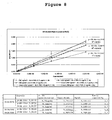
- BL-H1 shows a peak between fractions 8-18 corresponding to empty and full H-1 parvovirus particles. The full or empty capsids are demonstrated via hemagglutination [fractions 8-17]. Full capsids are determined via viral genome containing particles [fractions 10-17] and active particles via infection units [fractions 12-18]. In contrast non-assembled viral proteins were detected in fractions 3-14 with an antibody against viral proteins.
- BL-H1 recognizes specifically conformational epitopes present on assembled H-1 parvovirus capsids. All together this shows that BL-H1 recognizes structural epitopes displayed only by assembled particles.
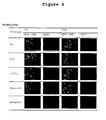
- Figure 4 shows the detection of H-1 production in infected NB-324K cells with BL-H1 by immune fluorescence.
- the BL-H1 antibody is stable at least for 3 weeks stored by room temperature, 4°C and -20°C.
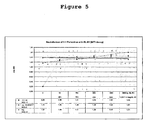
- MTT-Assay was done to find out the right ratio between H-1 parvovirus and BL-H1 antibody. 1 ⁇ g BL-H1 is efficient to neutralize up to 1E5 H-1 parvovirus [ Figure 5 ].
Landscapes
- Health & Medical Sciences (AREA)
- Life Sciences & Earth Sciences (AREA)
- Chemical & Material Sciences (AREA)
- Immunology (AREA)
- Virology (AREA)
- Molecular Biology (AREA)
- Engineering & Computer Science (AREA)
- Organic Chemistry (AREA)
- General Health & Medical Sciences (AREA)
- Medicinal Chemistry (AREA)
- Biochemistry (AREA)
- Urology & Nephrology (AREA)
- Hematology (AREA)
- Biomedical Technology (AREA)
- Biotechnology (AREA)
- Tropical Medicine & Parasitology (AREA)
- Physics & Mathematics (AREA)
- Analytical Chemistry (AREA)
- Cell Biology (AREA)
- Food Science & Technology (AREA)
- General Physics & Mathematics (AREA)
- Pathology (AREA)
- Biophysics (AREA)
- Genetics & Genomics (AREA)
- Proteomics, Peptides & Aminoacids (AREA)
- Microbiology (AREA)
- Communicable Diseases (AREA)
- Oncology (AREA)
- Chemical Kinetics & Catalysis (AREA)
- General Chemical & Material Sciences (AREA)
- Nuclear Medicine, Radiotherapy & Molecular Imaging (AREA)
- Pharmacology & Pharmacy (AREA)
- Animal Behavior & Ethology (AREA)
- Public Health (AREA)
- Veterinary Medicine (AREA)
- Peptides Or Proteins (AREA)
- Preparation Of Compounds By Using Micro-Organisms (AREA)
- Micro-Organisms Or Cultivation Processes Thereof (AREA)
- Medicines Containing Antibodies Or Antigens For Use As Internal Diagnostic Agents (AREA)
Priority Applications (9)
| Application Number | Priority Date | Filing Date | Title |
|---|---|---|---|
| DK09015373.5T DK2332986T3 (da) | 2009-12-11 | 2009-12-11 | Antistof som binder til H-1 parvovirus |
| EP09015373.5A EP2332986B1 (en) | 2009-12-11 | 2009-12-11 | Antibody that binds to H-1 parvovirus |
| ES09015373.5T ES2438774T3 (es) | 2009-12-11 | 2009-12-11 | Anticuerpo que se une a parvovirus H-1 |
| US13/513,502 US8828400B2 (en) | 2009-12-11 | 2010-12-01 | Antibody that binds to H-1 parvovirus |
| AU2010330349A AU2010330349B2 (en) | 2009-12-11 | 2010-12-01 | Antibody that binds to H-1 parvovirus |
| CA2781796A CA2781796C (en) | 2009-12-11 | 2010-12-01 | Antibody that binds to h-1 parvovirus |
| JP2012542386A JP5755239B2 (ja) | 2009-12-11 | 2010-12-01 | H−1パルボウイルスに結合する抗体 |
| EP10803562A EP2509998A1 (en) | 2009-12-11 | 2010-12-01 | Antibody that binds to h-1 parvovirus |
| PCT/EP2010/007301 WO2011069614A1 (en) | 2009-12-11 | 2010-12-01 | Antibody that binds to h-1 parvovirus |
Applications Claiming Priority (1)
| Application Number | Priority Date | Filing Date | Title |
|---|---|---|---|
| EP09015373.5A EP2332986B1 (en) | 2009-12-11 | 2009-12-11 | Antibody that binds to H-1 parvovirus |
Publications (2)
| Publication Number | Publication Date |
|---|---|
| EP2332986A1 EP2332986A1 (en) | 2011-06-15 |
| EP2332986B1 true EP2332986B1 (en) | 2013-10-09 |
Family
ID=42072902
Family Applications (2)
| Application Number | Title | Priority Date | Filing Date |
|---|---|---|---|
| EP09015373.5A Active EP2332986B1 (en) | 2009-12-11 | 2009-12-11 | Antibody that binds to H-1 parvovirus |
| EP10803562A Withdrawn EP2509998A1 (en) | 2009-12-11 | 2010-12-01 | Antibody that binds to h-1 parvovirus |
Family Applications After (1)
| Application Number | Title | Priority Date | Filing Date |
|---|---|---|---|
| EP10803562A Withdrawn EP2509998A1 (en) | 2009-12-11 | 2010-12-01 | Antibody that binds to h-1 parvovirus |
Country Status (8)
| Country | Link |
|---|---|
| US (1) | US8828400B2 (da) |
| EP (2) | EP2332986B1 (da) |
| JP (1) | JP5755239B2 (da) |
| AU (1) | AU2010330349B2 (da) |
| CA (1) | CA2781796C (da) |
| DK (1) | DK2332986T3 (da) |
| ES (1) | ES2438774T3 (da) |
| WO (1) | WO2011069614A1 (da) |
Cited By (1)
| Publication number | Priority date | Publication date | Assignee | Title |
|---|---|---|---|---|
| US12398198B2 (en) | 2019-07-30 | 2025-08-26 | Elanco Us Inc. | Parvovirus antibodies for veterinary use |
Families Citing this family (6)
| Publication number | Priority date | Publication date | Assignee | Title |
|---|---|---|---|---|
| EP2451844B1 (en) | 2009-07-10 | 2015-04-22 | Innate Pharma | Tlr3 binding agents |
| EP2332986B1 (en) * | 2009-12-11 | 2013-10-09 | Deutsches Krebsforschungszentrum | Antibody that binds to H-1 parvovirus |
| WO2013178736A1 (en) | 2012-05-31 | 2013-12-05 | Innate Pharma | Tlr3 binding agents |
| EP3108892A1 (en) * | 2015-06-23 | 2016-12-28 | Deutsches Krebsforschungszentrum | Parvovirus formulation for treating tumors |
| CA2988446C (en) * | 2015-06-23 | 2020-07-21 | Deutsches Krebsforschungszentrum | Method for large scale production and purification of parvovirus |
| CN109627331B (zh) * | 2019-01-22 | 2022-03-29 | 长春西诺生物科技有限公司 | 一种抗犬细小病毒抗体的重链、轻链可变区及基因工程抗体 |
Family Cites Families (2)
| Publication number | Priority date | Publication date | Assignee | Title |
|---|---|---|---|---|
| WO1994010294A1 (en) | 1992-10-23 | 1994-05-11 | New York University | Human monoclonal antibodies to human parvovirus and methods of making and using thereof |
| EP2332986B1 (en) * | 2009-12-11 | 2013-10-09 | Deutsches Krebsforschungszentrum | Antibody that binds to H-1 parvovirus |
-
2009
- 2009-12-11 EP EP09015373.5A patent/EP2332986B1/en active Active
- 2009-12-11 DK DK09015373.5T patent/DK2332986T3/da active
- 2009-12-11 ES ES09015373.5T patent/ES2438774T3/es active Active
-
2010
- 2010-12-01 CA CA2781796A patent/CA2781796C/en active Active
- 2010-12-01 US US13/513,502 patent/US8828400B2/en active Active
- 2010-12-01 JP JP2012542386A patent/JP5755239B2/ja active Active
- 2010-12-01 AU AU2010330349A patent/AU2010330349B2/en active Active
- 2010-12-01 WO PCT/EP2010/007301 patent/WO2011069614A1/en not_active Ceased
- 2010-12-01 EP EP10803562A patent/EP2509998A1/en not_active Withdrawn
Cited By (1)
| Publication number | Priority date | Publication date | Assignee | Title |
|---|---|---|---|---|
| US12398198B2 (en) | 2019-07-30 | 2025-08-26 | Elanco Us Inc. | Parvovirus antibodies for veterinary use |
Also Published As
| Publication number | Publication date |
|---|---|
| WO2011069614A1 (en) | 2011-06-16 |
| JP5755239B2 (ja) | 2015-07-29 |
| AU2010330349A1 (en) | 2012-06-28 |
| EP2332986A1 (en) | 2011-06-15 |
| US8828400B2 (en) | 2014-09-09 |
| CA2781796C (en) | 2016-02-02 |
| CA2781796A1 (en) | 2011-06-16 |
| ES2438774T3 (es) | 2014-01-20 |
| DK2332986T3 (da) | 2013-12-16 |
| JP2013513358A (ja) | 2013-04-22 |
| US20130028913A1 (en) | 2013-01-31 |
| EP2509998A1 (en) | 2012-10-17 |
| AU2010330349B2 (en) | 2013-09-19 |
Similar Documents
| Publication | Publication Date | Title |
|---|---|---|
| US8828400B2 (en) | Antibody that binds to H-1 parvovirus | |
| JP6979875B2 (ja) | チクングニヤウイルスの抗体媒介性中和 | |
| CN115724958B (zh) | 抗诺如病毒gⅱ基因组衣壳蛋白vp1的单克隆抗体及其应用 | |
| CN116836270B (zh) | 一种抗蓝舌病毒vp7蛋白的单克隆抗体及制备方法与用途 | |
| CN109232734B (zh) | 特异性结合犬腺病毒的单克隆抗体、药物组合物、试剂盒及其应用 | |
| KR102748987B1 (ko) | 사스-코로나바이러스-2에 특이적으로 결합하는 항체 및 그의 용도 | |
| US20190022211A1 (en) | Rabies virus g protein epitope, and rabies virus neutralising binding molecule that binds specifically thereto | |
| KR102652398B1 (ko) | 돼지 유행성 설사병 바이러스의 스파이크 단백질에 특이적인 단클론항체, 및 이의 용도 | |
| CN119371523B (zh) | 抗瘟病毒广谱中和单克隆抗体及其应用 | |
| CN116178529B (zh) | 一株人源中和抗体或其抗原结合片段及其应用 | |
| CN115806611A (zh) | 抗新型冠状病毒n蛋白的抗体及其应用 | |
| CN119350494A (zh) | 区分猪瘟兔化弱毒疫苗株和流行毒株的单克隆抗体及其应用 | |
| CN117700534B (zh) | 一种抗猴痘病毒a35r蛋白的抗体及其应用 | |
| WO2013043125A1 (en) | Enterovirus 71 specific antibodies and uses thereof | |
| US11906520B2 (en) | Composition and methods for detecting cancer | |
| CN117700537A (zh) | 一种与非洲马瘟病毒vp7蛋白具有良好亲和反应能力的单克隆抗体及用途 | |
| KR102029394B1 (ko) | 치쿤구니아 바이러스 감염 진단용 단일클론항체, 이를 생산하는 하이브리도마 및 이를 이용한 치쿤구니아 바이러스 감염 진단 방법 | |
| KR20190128520A (ko) | 돼지파보바이러스에 특이적인 단일클론항체 및 이의 용도 | |
| JP2011072248A (ja) | 狂犬病ウイルスに対するヒト抗体ならびにその組成物 | |
| US20240124558A1 (en) | Antibodies binding to sars-cov-2 virus and uses thereof | |
| CN115960220A (zh) | 特异性结合柯萨奇病毒a6的单克隆抗体及其用途 | |
| JP2007145775A (ja) | ノロウイルスgiの高感度検出方法 | |
| CN119390827B (zh) | 一种抗呼吸道合胞体病毒f蛋白的抗体或其抗原结合片段、生物产品及其应用 | |
| CN118930642B (zh) | 一种针对乙型脑炎病毒和寨卡病毒的人源单克隆抗体及其应用 | |
| CN118146360A (zh) | 针对SARS-CoV-2 S蛋白的抗体1A01及其用途 |
Legal Events
| Date | Code | Title | Description |
|---|---|---|---|
| PUAI | Public reference made under article 153(3) epc to a published international application that has entered the european phase |
Free format text: ORIGINAL CODE: 0009012 |
|
| AK | Designated contracting states |
Kind code of ref document: A1 Designated state(s): AT BE BG CH CY CZ DE DK EE ES FI FR GB GR HR HU IE IS IT LI LT LU LV MC MK MT NL NO PL PT RO SE SI SK SM TR |
|
| AX | Request for extension of the european patent |
Extension state: AL BA RS |
|
| 17P | Request for examination filed |
Effective date: 20111214 |
|
| 17Q | First examination report despatched |
Effective date: 20120606 |
|
| GRAP | Despatch of communication of intention to grant a patent |
Free format text: ORIGINAL CODE: EPIDOSNIGR1 |
|
| INTG | Intention to grant announced |
Effective date: 20130529 |
|
| GRAS | Grant fee paid |
Free format text: ORIGINAL CODE: EPIDOSNIGR3 |
|
| GRAA | (expected) grant |
Free format text: ORIGINAL CODE: 0009210 |
|
| AK | Designated contracting states |
Kind code of ref document: B1 Designated state(s): AT BE BG CH CY CZ DE DK EE ES FI FR GB GR HR HU IE IS IT LI LT LU LV MC MK MT NL NO PL PT RO SE SI SK SM TR |
|
| REG | Reference to a national code |
Ref country code: GB Ref legal event code: FG4D |
|
| REG | Reference to a national code |
Ref country code: CH Ref legal event code: EP Ref country code: AT Ref legal event code: REF Ref document number: 635538 Country of ref document: AT Kind code of ref document: T Effective date: 20131015 |
|
| REG | Reference to a national code |
Ref country code: IE Ref legal event code: FG4D |
|
| REG | Reference to a national code |
Ref country code: CH Ref legal event code: NV Representative=s name: ING. MARCO ZARDI C/O M. ZARDI AND CO. S.A., CH |
|
| REG | Reference to a national code |
Ref country code: DE Ref legal event code: R096 Ref document number: 602009019292 Country of ref document: DE Effective date: 20131205 |
|
| REG | Reference to a national code |
Ref country code: DK Ref legal event code: T3 Effective date: 20131212 |
|
| REG | Reference to a national code |
Ref country code: NL Ref legal event code: T3 |
|
| REG | Reference to a national code |
Ref country code: SE Ref legal event code: TRGR |
|
| REG | Reference to a national code |
Ref country code: ES Ref legal event code: FG2A Ref document number: 2438774 Country of ref document: ES Kind code of ref document: T3 Effective date: 20140120 |
|
| PG25 | Lapsed in a contracting state [announced via postgrant information from national office to epo] |
Ref country code: SI Free format text: LAPSE BECAUSE OF FAILURE TO SUBMIT A TRANSLATION OF THE DESCRIPTION OR TO PAY THE FEE WITHIN THE PRESCRIBED TIME-LIMIT Effective date: 20131009 |
|
| REG | Reference to a national code |
Ref country code: LT Ref legal event code: MG4D |
|
| PG25 | Lapsed in a contracting state [announced via postgrant information from national office to epo] |
Ref country code: LT Free format text: LAPSE BECAUSE OF FAILURE TO SUBMIT A TRANSLATION OF THE DESCRIPTION OR TO PAY THE FEE WITHIN THE PRESCRIBED TIME-LIMIT Effective date: 20131009 Ref country code: NO Free format text: LAPSE BECAUSE OF FAILURE TO SUBMIT A TRANSLATION OF THE DESCRIPTION OR TO PAY THE FEE WITHIN THE PRESCRIBED TIME-LIMIT Effective date: 20140109 Ref country code: FI Free format text: LAPSE BECAUSE OF FAILURE TO SUBMIT A TRANSLATION OF THE DESCRIPTION OR TO PAY THE FEE WITHIN THE PRESCRIBED TIME-LIMIT Effective date: 20131009 Ref country code: HR Free format text: LAPSE BECAUSE OF FAILURE TO SUBMIT A TRANSLATION OF THE DESCRIPTION OR TO PAY THE FEE WITHIN THE PRESCRIBED TIME-LIMIT Effective date: 20131009 Ref country code: IS Free format text: LAPSE BECAUSE OF FAILURE TO SUBMIT A TRANSLATION OF THE DESCRIPTION OR TO PAY THE FEE WITHIN THE PRESCRIBED TIME-LIMIT Effective date: 20140209 |
|
| PG25 | Lapsed in a contracting state [announced via postgrant information from national office to epo] |
Ref country code: PL Free format text: LAPSE BECAUSE OF FAILURE TO SUBMIT A TRANSLATION OF THE DESCRIPTION OR TO PAY THE FEE WITHIN THE PRESCRIBED TIME-LIMIT Effective date: 20131009 Ref country code: LV Free format text: LAPSE BECAUSE OF FAILURE TO SUBMIT A TRANSLATION OF THE DESCRIPTION OR TO PAY THE FEE WITHIN THE PRESCRIBED TIME-LIMIT Effective date: 20131009 Ref country code: CY Free format text: LAPSE BECAUSE OF FAILURE TO SUBMIT A TRANSLATION OF THE DESCRIPTION OR TO PAY THE FEE WITHIN THE PRESCRIBED TIME-LIMIT Effective date: 20131009 |
|
| PG25 | Lapsed in a contracting state [announced via postgrant information from national office to epo] |
Ref country code: PT Free format text: LAPSE BECAUSE OF FAILURE TO SUBMIT A TRANSLATION OF THE DESCRIPTION OR TO PAY THE FEE WITHIN THE PRESCRIBED TIME-LIMIT Effective date: 20140210 |
|
| REG | Reference to a national code |
Ref country code: DE Ref legal event code: R097 Ref document number: 602009019292 Country of ref document: DE |
|
| PG25 | Lapsed in a contracting state [announced via postgrant information from national office to epo] |
Ref country code: EE Free format text: LAPSE BECAUSE OF FAILURE TO SUBMIT A TRANSLATION OF THE DESCRIPTION OR TO PAY THE FEE WITHIN THE PRESCRIBED TIME-LIMIT Effective date: 20131009 |
|
| PLBE | No opposition filed within time limit |
Free format text: ORIGINAL CODE: 0009261 |
|
| STAA | Information on the status of an ep patent application or granted ep patent |
Free format text: STATUS: NO OPPOSITION FILED WITHIN TIME LIMIT |
|
| PG25 | Lapsed in a contracting state [announced via postgrant information from national office to epo] |
Ref country code: CZ Free format text: LAPSE BECAUSE OF FAILURE TO SUBMIT A TRANSLATION OF THE DESCRIPTION OR TO PAY THE FEE WITHIN THE PRESCRIBED TIME-LIMIT Effective date: 20131009 Ref country code: MC Free format text: LAPSE BECAUSE OF FAILURE TO SUBMIT A TRANSLATION OF THE DESCRIPTION OR TO PAY THE FEE WITHIN THE PRESCRIBED TIME-LIMIT Effective date: 20131009 Ref country code: SK Free format text: LAPSE BECAUSE OF FAILURE TO SUBMIT A TRANSLATION OF THE DESCRIPTION OR TO PAY THE FEE WITHIN THE PRESCRIBED TIME-LIMIT Effective date: 20131009 Ref country code: RO Free format text: LAPSE BECAUSE OF FAILURE TO SUBMIT A TRANSLATION OF THE DESCRIPTION OR TO PAY THE FEE WITHIN THE PRESCRIBED TIME-LIMIT Effective date: 20131009 Ref country code: LU Free format text: LAPSE BECAUSE OF FAILURE TO SUBMIT A TRANSLATION OF THE DESCRIPTION OR TO PAY THE FEE WITHIN THE PRESCRIBED TIME-LIMIT Effective date: 20131211 |
|
| 26N | No opposition filed |
Effective date: 20140710 |
|
| REG | Reference to a national code |
Ref country code: DE Ref legal event code: R097 Ref document number: 602009019292 Country of ref document: DE Effective date: 20140710 |
|
| PG25 | Lapsed in a contracting state [announced via postgrant information from national office to epo] |
Ref country code: SM Free format text: LAPSE BECAUSE OF FAILURE TO SUBMIT A TRANSLATION OF THE DESCRIPTION OR TO PAY THE FEE WITHIN THE PRESCRIBED TIME-LIMIT Effective date: 20131009 |
|
| PG25 | Lapsed in a contracting state [announced via postgrant information from national office to epo] |
Ref country code: TR Free format text: LAPSE BECAUSE OF FAILURE TO SUBMIT A TRANSLATION OF THE DESCRIPTION OR TO PAY THE FEE WITHIN THE PRESCRIBED TIME-LIMIT Effective date: 20131009 |
|
| PG25 | Lapsed in a contracting state [announced via postgrant information from national office to epo] |
Ref country code: BG Free format text: LAPSE BECAUSE OF FAILURE TO SUBMIT A TRANSLATION OF THE DESCRIPTION OR TO PAY THE FEE WITHIN THE PRESCRIBED TIME-LIMIT Effective date: 20131009 Ref country code: HU Free format text: LAPSE BECAUSE OF FAILURE TO SUBMIT A TRANSLATION OF THE DESCRIPTION OR TO PAY THE FEE WITHIN THE PRESCRIBED TIME-LIMIT; INVALID AB INITIO Effective date: 20091211 Ref country code: MK Free format text: LAPSE BECAUSE OF FAILURE TO SUBMIT A TRANSLATION OF THE DESCRIPTION OR TO PAY THE FEE WITHIN THE PRESCRIBED TIME-LIMIT Effective date: 20131009 |
|
| PG25 | Lapsed in a contracting state [announced via postgrant information from national office to epo] |
Ref country code: MT Free format text: LAPSE BECAUSE OF FAILURE TO SUBMIT A TRANSLATION OF THE DESCRIPTION OR TO PAY THE FEE WITHIN THE PRESCRIBED TIME-LIMIT Effective date: 20131009 Ref country code: GR Free format text: LAPSE BECAUSE OF NON-PAYMENT OF DUE FEES Effective date: 20131009 |
|
| REG | Reference to a national code |
Ref country code: FR Ref legal event code: PLFP Year of fee payment: 7 |
|
| PG25 | Lapsed in a contracting state [announced via postgrant information from national office to epo] |
Ref country code: GR Free format text: LAPSE BECAUSE OF FAILURE TO SUBMIT A TRANSLATION OF THE DESCRIPTION OR TO PAY THE FEE WITHIN THE PRESCRIBED TIME-LIMIT Effective date: 20140110 |
|
| REG | Reference to a national code |
Ref country code: FR Ref legal event code: PLFP Year of fee payment: 8 |
|
| REG | Reference to a national code |
Ref country code: FR Ref legal event code: PLFP Year of fee payment: 9 |
|
| PGFP | Annual fee paid to national office [announced via postgrant information from national office to epo] |
Ref country code: GB Payment date: 20250626 Year of fee payment: 16 Ref country code: ES Payment date: 20250626 Year of fee payment: 16 Ref country code: DK Payment date: 20250626 Year of fee payment: 16 |
|
| PGFP | Annual fee paid to national office [announced via postgrant information from national office to epo] |
Ref country code: NL Payment date: 20250627 Year of fee payment: 16 Ref country code: BE Payment date: 20250627 Year of fee payment: 16 |
|
| PGFP | Annual fee paid to national office [announced via postgrant information from national office to epo] |
Ref country code: FR Payment date: 20250626 Year of fee payment: 16 |
|
| PGFP | Annual fee paid to national office [announced via postgrant information from national office to epo] |
Ref country code: CH Payment date: 20250626 Year of fee payment: 16 |
|
| PGFP | Annual fee paid to national office [announced via postgrant information from national office to epo] |
Ref country code: AT Payment date: 20250630 Year of fee payment: 16 |
|
| PGFP | Annual fee paid to national office [announced via postgrant information from national office to epo] |
Ref country code: IE Payment date: 20250626 Year of fee payment: 16 |
|
| PGFP | Annual fee paid to national office [announced via postgrant information from national office to epo] |
Ref country code: SE Payment date: 20250626 Year of fee payment: 16 |
|
| PGFP | Annual fee paid to national office [announced via postgrant information from national office to epo] |
Ref country code: DE Payment date: 20250630 Year of fee payment: 16 |
|
| PGFP | Annual fee paid to national office [announced via postgrant information from national office to epo] |
Ref country code: IT Payment date: 20250626 Year of fee payment: 16 |