EP2332384B1 - Umgang mit der aufwärtsstrecken-gewährung bei der direktzugriffsantwort - Google Patents
Umgang mit der aufwärtsstrecken-gewährung bei der direktzugriffsantwort Download PDFInfo
- Publication number
- EP2332384B1 EP2332384B1 EP09791433.7A EP09791433A EP2332384B1 EP 2332384 B1 EP2332384 B1 EP 2332384B1 EP 09791433 A EP09791433 A EP 09791433A EP 2332384 B1 EP2332384 B1 EP 2332384B1
- Authority
- EP
- European Patent Office
- Prior art keywords
- resource block
- grant
- block assignment
- uplink
- interpreting
- Prior art date
- Legal status (The legal status is an assumption and is not a legal conclusion. Google has not performed a legal analysis and makes no representation as to the accuracy of the status listed.)
- Active
Links
Images



Classifications
-
- H—ELECTRICITY
- H04—ELECTRIC COMMUNICATION TECHNIQUE
- H04W—WIRELESS COMMUNICATION NETWORKS
- H04W28/00—Network traffic management; Network resource management
- H04W28/02—Traffic management, e.g. flow control or congestion control
- H04W28/04—Error control
-
- H—ELECTRICITY
- H04—ELECTRIC COMMUNICATION TECHNIQUE
- H04W—WIRELESS COMMUNICATION NETWORKS
- H04W74/00—Wireless channel access
- H04W74/08—Non-scheduled access, e.g. ALOHA
- H04W74/0833—Random access procedures, e.g. with 4-step access
-
- H—ELECTRICITY
- H04—ELECTRIC COMMUNICATION TECHNIQUE
- H04W—WIRELESS COMMUNICATION NETWORKS
- H04W74/00—Wireless channel access
- H04W74/002—Transmission of channel access control information
- H04W74/006—Transmission of channel access control information in the downlink, i.e. towards the terminal
-
- H—ELECTRICITY
- H04—ELECTRIC COMMUNICATION TECHNIQUE
- H04L—TRANSMISSION OF DIGITAL INFORMATION, e.g. TELEGRAPHIC COMMUNICATION
- H04L1/00—Arrangements for detecting or preventing errors in the information received
- H04L1/0001—Systems modifying transmission characteristics according to link quality, e.g. power backoff
- H04L1/0002—Systems modifying transmission characteristics according to link quality, e.g. power backoff by adapting the transmission rate
- H04L1/0003—Systems modifying transmission characteristics according to link quality, e.g. power backoff by adapting the transmission rate by switching between different modulation schemes
-
- H—ELECTRICITY
- H04—ELECTRIC COMMUNICATION TECHNIQUE
- H04L—TRANSMISSION OF DIGITAL INFORMATION, e.g. TELEGRAPHIC COMMUNICATION
- H04L5/00—Arrangements affording multiple use of the transmission path
- H04L5/003—Arrangements for allocating sub-channels of the transmission path
- H04L5/0053—Allocation of signalling, i.e. of overhead other than pilot signals
-
- H—ELECTRICITY
- H04—ELECTRIC COMMUNICATION TECHNIQUE
- H04W—WIRELESS COMMUNICATION NETWORKS
- H04W72/00—Local resource management
- H04W72/04—Wireless resource allocation
-
- H—ELECTRICITY
- H04—ELECTRIC COMMUNICATION TECHNIQUE
- H04W—WIRELESS COMMUNICATION NETWORKS
- H04W72/00—Local resource management
- H04W72/04—Wireless resource allocation
- H04W72/044—Wireless resource allocation based on the type of the allocated resource
- H04W72/0453—Resources in frequency domain, e.g. a carrier in FDMA
-
- H—ELECTRICITY
- H04—ELECTRIC COMMUNICATION TECHNIQUE
- H04W—WIRELESS COMMUNICATION NETWORKS
- H04W72/00—Local resource management
- H04W72/20—Control channels or signalling for resource management
- H04W72/23—Control channels or signalling for resource management in the downlink direction of a wireless link, i.e. towards a terminal
- H04W72/232—Control channels or signalling for resource management in the downlink direction of a wireless link, i.e. towards a terminal the control data signalling from the physical layer, e.g. DCI signalling
-
- H—ELECTRICITY
- H04—ELECTRIC COMMUNICATION TECHNIQUE
- H04W—WIRELESS COMMUNICATION NETWORKS
- H04W72/00—Local resource management
- H04W72/20—Control channels or signalling for resource management
- H04W72/23—Control channels or signalling for resource management in the downlink direction of a wireless link, i.e. towards a terminal
-
- H—ELECTRICITY
- H04—ELECTRIC COMMUNICATION TECHNIQUE
- H04W—WIRELESS COMMUNICATION NETWORKS
- H04W74/00—Wireless channel access
- H04W74/002—Transmission of channel access control information
- H04W74/004—Transmission of channel access control information in the uplink, i.e. towards network
-
- H—ELECTRICITY
- H04—ELECTRIC COMMUNICATION TECHNIQUE
- H04W—WIRELESS COMMUNICATION NETWORKS
- H04W74/00—Wireless channel access
- H04W74/08—Non-scheduled access, e.g. ALOHA
- H04W74/0866—Non-scheduled access, e.g. ALOHA using a dedicated channel for access
Definitions
- the exemplary and non-limiting aspects described herein relate generally to wireless communications systems, methods, computer program products and devices, and more specifically to techniques for formatting an uplink grant.
- Wireless communication systems are widely deployed to provide various types of communication content such as voice, data, and so on. These systems may be multiple-access systems capable of supporting communication with multiple users by sharing the available system resources (e.g., bandwidth and transmit power). Examples of such multiple-access systems include code division multiple access (CDMA) systems, time division multiple access (TDMA) systems, frequency division multiple access (FDMA) systems, and orthogonal frequency division multiple access (OFDMA) systems.
- CDMA code division multiple access
- TDMA time division multiple access
- FDMA frequency division multiple access
- OFDMA orthogonal frequency division multiple access
- a wireless multiple-access communication system can simultaneously support communication for multiple wireless terminals.
- Each terminal communicates with one or more base stations via transmissions on the forward and reverse links.
- the forward link (or downlink) refers to the communication link from the base stations to the terminals
- the reverse link (or uplink) refers to the communication link from the terminals to the base stations.
- This communication link may be established via a single-in-single-out, multiple-in-signal-out or a multiple-in-multiple-out (MIMO) system.
- MIMO multiple-in-multiple-out
- Universal Mobile Telecommunications System is one of the third-generation (3G) cell phone technologies.
- UTRAN short for UMTS Terrestrial Radio Access Network, is a collective term for the Node-B's and Radio Network Controllers which make up the UMTS core network. This communications network can carry many traffic types from real-time Circuit Switched to IP based Packet Switched.
- the UTRAN allows connectivity between the UE (user equipment) and the core network.
- the UTRAN contains the base stations, which are called Node Bs, and Radio Network Controllers (RNC).
- the RNC provides control functionalities for one or more Node Bs.
- a Node B and an RNC can be the same device, although typical implementations have a separate RNC located in a central office serving multiple Node B's. Despite the fact that they do not have to be physically separated, there is a logical interface between them known as the Iub.
- the RNC and its corresponding Node Bs are called the Radio Network Subsystem (RNS).
- RNS Radio Network Subsystem
- 3GPP LTE Long Term Evolution
- 3GPP Third Generation Partnership Project
- Goals include improving efficiency, lowering costs, improving services, making use of new spectrum opportunities, and better integration with other open standards.
- the LTE system is described in the Evolved UTRA (EUTRA) and Evolved UTRAN (EUTRAN) series of specifications.
- the system may utilize a resource assignment scheme in which a UE may request for resources whenever the UE has data to send on the uplink.
- a base station may process each resource request from the UE and may send a grant of resources to the UE.
- the UE may then transmit data on the uplink using the granted resources.
- uplink resources are consumed to send requests for resources, and downlink resources are consumed to send grants of resources.
- RAR random access response
- WO 2008/055235 is directed to random access for wireless communication.
- a Node B may receive a random access preamble from a UE and may respond by sending a random access response to the UE.
- a random access response may also be referred to as Message 2, an access grant, an access response, etc.
- the UE may receive the random access response and may send Message 3 for Radio Resource Control (RRC) connection request.
- RRC Radio Resource Control
- a PDCCH physical downlink control channel
- RAR random access response
- UL uplink
- MCS Modulation and Coding Scheme
- a method for decoding a grant is provided.
- a grant is received on a downlink channel.
- a portion of the grant is detected whose length was adjusted.
- a resource block assignment is decoded based upon the number of uplink resource blocks.
- At least one processor for decoding a grant is provided.
- a first module receives a grant on a downlink channel.
- a second module detects a portion of the grant whose length was adjusted.
- a third module decodes a resource block assignment based upon the number of uplink resource blocks.
- a computer-readable storage medium comprises a first set of codes for causing a computer to receive a grant on a downlink channel.
- a second set of codes causes the computer to detect a portion of the grant whose length was adjusted.
- a third set of codes causes the computer to decode a resource block assignment based upon the number of uplink resource blocks.
- an apparatus for decoding a grant is provided. Means are provided for receiving a grant on a downlink channel. Means are provided for detecting a portion of the grant whose length was adjusted. Means are provided for decoding a resource block assignment based upon the number of uplink resource blocks.
- an apparatus for decoding a grant receives a grant on a downlink channel.
- a computing platform detects a portion of the grant whose length was adjusted. The computing platform decodes a resource block assignment based upon the number of uplink resource blocks.
- a method for encoding a grant is provided.
- a number of uplink resource blocks and a length adjustment based upon system bandwidth for the grant are determined.
- the resource block assignment is encoded based upon the number of uplink resource blocks to achieve the determined length adjustment.
- a grant is transmitted on a downlink channel.
- At least one processor for encoding a grant determines a number of uplink resource blocks and a length adjustment based upon system bandwidth for the grant.
- a second module encodes the resource block assignment based upon the number of uplink resource blocks to achieve the determined length adjustment.
- a third module transmits a grant on a downlink channel.
- a computer-readable storage medium comprises a first set of codes for causing a computer to determine a number of uplink resource blocks and a length adjustment based upon system bandwidth for the grant.
- a second set of codes causes the computer to encode the resource block assignment based upon the number of uplink resource blocks to achieve the determined length adjustment.
- a third set of codes causes the computer to transmit a grant on a downlink channel.
- an apparatus for encoding a grant is provided. Means are provided for determining a number of uplink resource blocks and a length adjustment based upon system bandwidth for the grant. Means are provided for encoding the resource block assignment based upon the number of uplink resource blocks to achieve the determined length adjustment. Means are provided for transmitting a grant on a downlink channel.
- an apparatus for encoding a grant determines a number of uplink resource blocks and a length adjustment based upon system bandwidth for the grant.
- the computing platform encodes the resource block assignment based upon the number of uplink resource blocks to achieve the determined length adjustment.
- a transmitter transmits a grant on a downlink channel.
- a wireless communication system provides for a random access channel (RACH) procedure for user equipment (UE) to request access to an uplink channel.
- RACH random access channel
- UE user equipment
- eNB evolved Base Station
- RAR random access response
- C-RNTI Cell Radio Network Temporary Identifier
- a component may be, but is not limited to being, a process running on a processor, a processor, an object, an executable, a thread of execution, a program, and/or a computer.
- a component may be, but is not limited to being, a process running on a processor, a processor, an object, an executable, a thread of execution, a program, and/or a computer.
- an application running on a server and the server can be a component.
- One or more components may reside within a process and/or thread of execution and a component may be localized on one computer and/or distributed between two or more computers.
- exemplary is used herein to mean serving as an example, instance, or illustration. Any aspect or design described herein as “exemplary” is not necessarily to be construed as preferred or advantageous over other aspects or designs.
- the one or more versions may be implemented as a method, apparatus, or article of manufacture using standard programming and/or engineering techniques to produce software, firmware, hardware, or any combination thereof to control a computer to implement the disclosed aspects.
- article of manufacture (or alternatively, “computer program product”) as used herein is intended to encompass a computer program accessible from any computer-readable device, carrier, or media.
- computer readable media can include but are not limited to magnetic storage devices (e.g., hard disk, floppy disk, magnetic strips%), optical disks (e.g., compact disk (CD), digital versatile disk (DVD)...), smart cards, and flash memory devices (e.g., card, stick).
- a carrier wave can be employed to carry computer-readable electronic data such as those used in transmitting and receiving electronic mail or in accessing a network such as the Internet or a local area network (LAN).
- LAN local area network
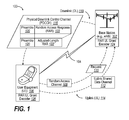
- a communication system 100 of a base station depicted as an evolved base node (eNB) 102, communicates via an over-the-air (OTA) link 104 with user equipment (UE) 106.
- the eNB 102 monitors a random access channel (RACH) 108 for requests 110 from UE 106 for communicating on an uplink shared data channel 112.
- RACH random access channel
- the eNB transmits a Random Access Response 116 of a shared downlink channel (DL) 118.
- the RAR 116 contains a preamble 120, uplink grant and other fields [see above] 122.
- a RAR UL grant encoder 124 of the eNB 102 can advantageously truncate the data in the RAR 122 in a predictable way to create an adjusted-size RAR 122' that an RAR UL grant decoder 126 at the UE 106 can interpret the full information for higher layer processing.
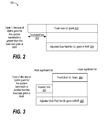
- a first example of an adjusted-size RAR 122' ( FIG. 1 ) is achieved by truncating an uplink (UL) grant 200 of a size fixed by an upper layer that supplies or consumes the information.
- UL uplink
- truncated bits 202 are removed to leave a truncated UL grant 204 with an implicit understanding of constraints used in truncation such that a recipient can reconstruct the fixed-size UL grant 200.
- the UL grant information can be conveyed on a system bandwidth of reduced size.
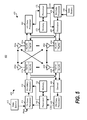
- a second example of an adjusted-size RAR 122' ( FIG. 1 ) is achieved by adding inserted bits 302 to a fixed-size UL grant 304 to achieve an expanded RAR 306 of a size appropriate for a larger system bandwidth.
- wireless communication systems are widely deployed to provide various types of communication content such as voice, data, and so on.
- These systems may be multiple-access systems capable of supporting communication with multiple users by sharing the available system resources (e.g., bandwidth and transmit power).
- Examples of such multiple-access systems include code division multiple access (CDMA) systems, time division multiple access (TDMA) systems, frequency division multiple access (FDMA) systems, 3GPP LTE systems, and orthogonal frequency division multiple access (OFDMA) systems.
- CDMA code division multiple access
- TDMA time division multiple access
- FDMA frequency division multiple access
- 3GPP LTE systems 3GPP LTE systems
- OFDMA orthogonal frequency division multiple access
- a wireless multiple-access communication system can simultaneously support communication for multiple wireless terminals.
- Each terminal communicates with one or more base stations via transmissions on the forward and reverse links.
- the forward link (or downlink) refers to the communication link from the base stations to the terminals
- the reverse link (or uplink) refers to the communication link from the terminals to the base stations.
- This communication link may be established via a single-in-single-out, multiple-in-signal-out or a multiple-in-multiple-out (MIMO) system.
- MIMO multiple-in-multiple-out
- a MIMO system employs multiple ( N T ) transmit antennas and multiple ( N R ) receive antennas for data transmission.
- a MIMO channel formed by the N T transmit and N R receive antennas may be decomposed into N S independent channels, which are also referred to as spatial channels, where N S ⁇ min ⁇ N T , N R ⁇ .
- Each of the N S independent channels corresponds to a dimension.
- the MIMO system can provide improved performance (e.g., higher throughput and/or greater reliability) if the additional dimensionalities created by the multiple transmit and receive antennas are utilized.
- a MIMO system supports a time division duplex (TDD) and frequency division duplex (FDD) systems.
- TDD time division duplex
- FDD frequency division duplex
- the forward and reverse link transmissions are on the same frequency region so that the reciprocity principle allows the estimation of the forward link channel from the reverse link channel. This enables the access point to extract transmit beamforming gain on the forward link when multiple antennas are available at the access point.
- An access point 350 includes multiple antenna groups, one including 354 and 356, another including 358 and 360, and an additional including 362 and 364. In FIG. 4 , only two antennas are shown for each antenna group, however, more or fewer antennas may be utilized for each antenna group.
- Access terminal (AT) 366 is in communication with antennas 362 and 364, where antennas 362 and 364 transmit information to access terminal 366 over forward link 370 and receive information from access terminal 366 over reverse link 368.
- Access terminal 372 is in communication with antennas 356 and 358, where antennas 356 and 358 transmit information to access terminal 372 over forward link 376 and receive information from access terminal 372 over reverse link 374.
- communication links 368, 370, 374 and 376 may use different frequency for communication.
- forward link 370 may use a different frequency then that used by reverse link 368.
- Each group of antennas and/or the area in which they are designed to communicate is often referred to as a sector of the access point 350.
- antenna groups each are designed to communicate to access terminals 366, 372 in a sector of the areas covered by access point 350.
- the transmitting antennas of access point 350 utilize beamforming in order to improve the signal-to-noise ratio of forward links for the different access terminals 366 and 374. Also, an access point using beamforming to transmit to access terminals scattered randomly through its coverage causes less interference to access terminals in neighboring cells than an access point transmitting through a single antenna to all its access terminals.
- An access point 350 may be a fixed station used for communicating with the terminals and may also be referred to as an access point, a Node B, or some other terminology.
- An access terminal 366, 372 may also be called user equipment (UE), a wireless communication device, terminal, access terminal or some other terminology.
- UE user equipment
- FIG. 5 is a block diagram of an aspect of a transmitter system 410 (also known as the access point) and a receiver system 450 (also known as access terminal) in a MIMO system 400.
- traffic data for a number of data streams is provided from a data source 412 to a transmit (TX) data processor 414.
- TX transmit
- each data stream is transmitted over a respective transmit antenna.
- TX data processor 414 formats, codes, and interleaves the traffic data for each data stream based on a particular coding scheme selected for that data stream to provide coded data.
- the coded data for each data stream may be multiplexed with pilot data using OFDM techniques.
- the pilot data is typically a known data pattern that is processed in a known manner and may be used at the receiver system to estimate the channel response.
- the multiplexed pilot and coded data for each data stream is then modulated (i.e., symbol mapped) based on a particular modulation scheme (e.g., BPSK, QSPK, M-PSK, or M-QAM) selected for that data stream to provide modulation symbols.
- a particular modulation scheme e.g., BPSK, QSPK, M-PSK, or M-QAM
- the data rate, coding, and modulation for each data stream may be determined by instructions performed by processor 430.
- TX MIMO processor 420 may further process the modulation symbols (e.g., for OFDM).
- TX MIMO processor 420 then provides N T modulation symbol streams to N T transmitters (TMTR) 422a through 422t.
- TMTR TX MIMO processor 420 applies beamforming weights to the symbols of the data streams and to the antenna from which the symbol is being transmitted.
- Each transmitter 422 receives and processes a respective symbol stream to provide one or more analog signals, and further conditions (e.g., amplifies, filters, and upconverts) the analog signals to provide a modulated signal suitable for transmission over the MIMO channel.
- N T modulated signals from transmitters 422a through 422t are then transmitted from N T antennas 424a through 424t, respectively.
- the transmitted modulated signals are received by N R antennas 452a through 452r and the received signal from each antenna 452 is provided to a respective receiver (RCVR) 454a through 454r.
- Each receiver 454 conditions (e.g., filters, amplifies, and downconverts) a respective received signal, digitizes the conditioned signal to provide samples, and further processes the samples to provide a corresponding "received" symbol stream.
- An RX data processor 460 then receives and processes the N R received symbol streams from N R receivers 454 based on a particular receiver processing technique to provide N T "detected" symbol streams.
- the RX data processor 460 then demodulates, deinterleaves, and decodes each detected symbol stream to recover the traffic data for the data stream.
- the processing by RX data processor 460 is complementary to that performed by TX MIMO processor 420 and TX data processor 414 at transmitter system 410.
- a processor 470 periodically determines which pre-coding matrix to use (discussed below). Processor 470 formulates a reverse link message comprising a matrix index portion and a rank value portion.
- the reverse link message may comprise various types of information regarding the communication link and/or the received data stream.
- the reverse link message is then processed by a TX data processor 438, which also receives traffic data for a number of data streams from a data source 436, modulated by a modulator 480, conditioned by transmitters 454a through 454r, and transmitted back to transmitter system 410.
- the modulated signals from receiver system 450 are received by antennas 424, conditioned by receivers 422, demodulated by a demodulator 440, and processed by a RX data processor 442 to extract the reverse link message transmitted by the receiver system 450.
- Processor 430 determines which pre-coding matrix to use for determining the beamforming weights then processes the extracted message.
- Logical Control Channels comprises Broadcast Control Channel (BCCH), which is DL channel for broadcasting system control information. Paging Control Channel (PCCH), which is DL channel that transfers paging information.
- Multicast Control Channel (MCCH) which is Point-to-multipoint DL channel used for transmitting Multimedia Broadcast and Multicast Service (MBMS) scheduling and control information for one or several MTCHs.
- BCCH Broadcast Control Channel
- PCCH Paging Control Channel
- MCCH Multicast Control Channel
- MCCH Point-to-multipoint DL channel used for transmitting Multimedia Broadcast and Multicast Service (MBMS) scheduling and control information for one or several MTCHs.
- MBMS Multimedia Broadcast and Multicast Service
- DCCH Dedicated Control Channel
- Logical Traffic Channels comprises a Dedicated Traffic Channel (DTCH), which is Point-to-point bi-directional channel, dedicated to one UE, for the transfer of user information.
- DTCH Dedicated Traffic Channel
- MTCH Multicast Traffic Channel
- Transport Channels are classified into DL and UL.
- DL Transport Channels comprises a Broadcast Channel (BCH), Downlink Shared Data Channel (DL-SDCH) and a Paging Channel (PCH), the PCH for support of UE power saving (DRX cycle is indicated by the network to the UE), broadcasted over entire cell and mapped to PHY resources which can be used for other control/traffic channels.
- the UL Transport Channels comprises a Random Access Channel (RACH), a Request Channel (REQCH), an Uplink Shared Data Channel (UL-SDCH) and plurality of PHY channels.
- the PHY channels comprise a set of DL channels and UL channels.
- the DL PHY channels comprises: Common Pilot Channel (CPICH); Synchronization Channel (SCH); Common Control Channel (CCCH); Shared DL Control Channel (SDCCH); Multicast Control Channel (MCCH); Shared UL Assignment Channel (SUACH); Acknowledgement Channel (ACKCH); DL Physical Shared Data Channel (DL-PSDCH); UL Power Control Channel (UPCCH); Paging Indicator Channel (PICH); Load Indicator Channel (LICH);
- the UL PHY Channels comprises: Physical Random Access Channel (PRACH); Channel Quality Indicator Channel (CQICH); Acknowledgement Channel (ACKCH); Antenna Subset Indicator Channel (ASICH); Shared Request Channel (SREQCH); UL Physical Shared Data Channel (UL-PSDCH); Broadband Pilot Channel (BPICH).
- CPICH Common Pilot Channel
- SCH Common Control Channel
- CCCH Common Control Channel
- SDCCH Shared DL Control Channel
- MCCH Multicast Control Channel
- SUACH Shared UL Assignment Channel
- a methodology 600 provided for User Equipment (UE) 602 is able to request uplink resources and interpret a random access response (RAR) from an evolved Base Node (eNB) 604.
- the RAR can have a fixed length irrespective of system bandwidth, yet not lose information.
- a resource block assignment for that uplink system bandwidth is expanded or contracted in order to fit in the RAR.
- the UE 602 determines a number of uplink resource blocks (N RB UL ) needed (block 610) and avails itself of a random access channel (RACH) procedure to make a request to the eNB 604 (block 612).
- N RB UL uplink resource blocks
- RACH random access channel
- the physical L1 layer of the eNB 604 receives a fixed length random access response (RAR) from an upper layer (block 614). A determination is made as what length adjustment should be made to accommodate system bandwidth (block 616). A length adjustment to accommodate system bandwidth is made, such as by expanding/compressing a resource block (RB) assignment. This adjustment is made based upon the number of uplink resource blocks so that information is not lost (block 618). The adjusted length RAR is transmitted to the UE 602 (block 620).
- RAR random access response
- the UE 602 detects the adjusted length of the RAR, and in an illustrative aspect detects the adjusted length of the RB assignment (block 622). Based upon information for the number of uplink resource blocks, the original fixed-size RAR can be determined (block 624). The L1 provides its upper layer the fixed-sized resource block assignment (block 626).
- a methodology 900 is depicted in FIG. 7 for the Random Access Response. Processing by upper layer of the RAR indicates a 20-bit uplink grant containing the following:
- N rb ul is the number of uplink resource blocks
- N rb ul + 1 the number of uplink resource blocks
- b ceiling log2(( Nrb ul * Nrb ul + 1)/2) - 10 (block 908).
- the UE determines the 5 bit modulation and coding scheme and redundancy version I MCS by concatenation of '0' as the most significant bit with the received 4 bit Truncated MCS (block 912).
- a new transmission may be indicated to the higher layers (block 914).
- the resource allocation information indicates to a scheduled UE a set of contiguously allocated localized virtual resource blocks (VRBs) or distributed virtual resource blocks depending on the setting of a 1-bit flag carried on the associated PDCCH (block 1002).
- Localized VRB allocations for a UE vary from a single VRB up to a maximum number of VRBs spanning the system bandwidth.
- Distributed VRB allocations for a UE vary from a single VRB up to N rb dl VRBs if N rb dl is 6-49 and vary from a single VRB up to 16 if N rb dl is 50-110 (block 1004).
- a type 2 resource allocation field consists of a resource indication value (RIV) corresponding to a starting resource block ( RB start ) and a length in terms of contiguously allocated resource blocks ( L CRBs ) (block 1006).
- RIV resource indication value
- L CRBs contiguously allocated resource blocks
- the higher layers process the Random Access Response and provide the following information to the physical layer:
- DCI downlink control information
- an access terminal e.g., user equipment 1100 has computing platform 1102 that provides means for causing a computer to decode a fixed length random access response coded for limited system bandwidth received from a base node ( FIG 10 ).
- the computing platform 1102 comprises sets of instructions or code (modules) 1104-1112 executable by a processor 1114 that also controls transmission and reception by a transceiver ("Tx/Rx") 1116.
- means (module) 1104 are provided for transmitting a random access channel request for access to an uplink channel.
- Means (module) 1106 are provided for receiving a random access response on a downlink control channel.
- Means (module) 1108 are provided for detecting an adjusted-length resource block assignment whose length was adjusted to accommodate system bandwidth.
- Means (module) 1110 are provided for decoding a resource block assignment of length based upon the number of uplink resource blocks.
- Means (module) 1112 are provided for decoding a truncated Modulation & Coding Scheme (MCS) from 4 bits to the original 5 bits.
- MCS Modulation & Coding Scheme
- an evolved Base Node (eNB) 1200 has computing platform 1202 that provides means for causing a computer to encode a fixed length random access response coded for limited system bandwidth.
- the computing platform 1202 comprises sets of instructions or code (modules) 1204-1213 executable by a processor 1214 that also controls transmission and reception by a transceiver ("Tx/Rx") 1216.
- means (module) 1204 are provided for receiving a random access channel request for access to an uplink channel.
- Means (module) 1206 are provided for determining a number of uplink resource blocks and a system bandwidth.
- Means (module) 1208 are provided for determining a fixed size random access response.
- Means (module) 1210 are provided for encoding a portion of the fixed-size random access response based upon the number of uplink resource blocks with length based upon system bandwidth.
- Means (module) 1212 are provided for transmitting the adjusted-length random access response on a downlink control channel.
- Means (module) 1213 are provided for encoding an original Modulation & Coding Scheme (MCS) from 5 bits to a truncated 4 bits.
- MCS Modulation & Coding Scheme
- the terms (including a reference to a "means") used to describe such components are intended to correspond, unless otherwise indicated, to any component which performs the specified function of the described component (e.g ., a functional equivalent), even though not structurally equivalent to the disclosed structure, which performs the function in the herein illustrated exemplary aspects.
- the various aspects include a system as well as a computer-readable medium having computer-executable instructions for performing the acts and/or events of the various methods.
- various portions of the disclosed systems and methods may include or consist of artificial intelligence, machine learning, or knowledge or rule based components, sub-components, processes, means, methodologies, or mechanisms (e.g., support vector machines, neural networks, expert systems, Bayesian belief networks, fuzzy logic, data fusion engines, classifiers ).
- Such components can automate certain mechanisms or processes performed thereby to make portions of the systems and methods more adaptive as well as efficient and intelligent.
- the evolved RAN e.g., access point, eNode B
Landscapes
- Engineering & Computer Science (AREA)
- Signal Processing (AREA)
- Computer Networks & Wireless Communication (AREA)
- Quality & Reliability (AREA)
- Mobile Radio Communication Systems (AREA)
Claims (17)
- Verfahren (600) zum Dekodieren einer Gewährung von Ressourcen, aufweisend:Empfangen (620) einer Gewährung von Ressourcen auf einem Abwärtsstreckenkanal, wobei die Länge eines Abschnitts der Gewährung, welche eine Ressourcenblockzuweisung aufweist, angepasst wurde basierend auf einer Systembandbreite für die Gewährung; undInterpretieren des Abschnitts der Gewährung, um die Ressourcenblockzuweisung zu dekodieren, wobei das Interpretieren auf einer Bestimmung einer Anzahl von Aufwärtsstreckenverbindungsressourcenblöcken und einer Erkennung der Längenanpassung basiert.
- Verfahren (600) nach Anspruch 1, weiter aufweisend Erkennen (622) des Abschnitts angepasster Länge der Gewährung, welche eine gekürzte oder erweiterte Ressourcenblockzuweisung in Übereinstimmung mit einer Systembandbreite enthält.
- Verfahren (600) nach Anspruch 1, weiter aufweisend Interpretieren einer weiteren Kürzung der Gewährung durch Erkennen einer Anzeige in einer physikalischen Schicht, dass eine neue Übertragung angefordert wird, wenn eine Aufwärtsstreckenverbindungsgewährung in der Zufallszugriffsantwort empfangen wird.
- Verfahren (600) nach Anspruch 1, weiter aufweisend Interpretieren der Gewährung mit anpassbarer Länge, dass sie ein Format fester Größe eines 1-Bit Frequenzsprungflags, eine 10-Bit Ressourcenblockzuweisung fester Größe, ein 4-Bit Modulations- und Kodierungsschema, eine 3-Bit Gesamtleistungssteuerung für eine eingeteilte physikalische Aufwärtsstrecke, PUSCH, eine 1-Bit Aufwärtsstreckenverzögerung, und eine 1-Bit Kanalqualitätsanzeige, CQI, -Anforderung erfüllt.
- Verfahren (600) nach Anspruch 1, weiter aufweisend Interpretieren der Ressourcenblockzuweisung, unter der Voraussetzung, dass NRB UL die Anzahl an Aufwärtsstreckenressourcenblöcken ist, durch:Als Antwort auf das Ermitteln, dass

 Als Antwort auf das Ermitteln, dass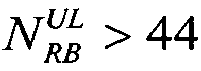

- Verfahren (600) nach Anspruch 5, weiter aufweisend Interpretieren eines gekürzten Modulations- und Kodierungsschemas, MCS, als Indizes 0-15 unter Auslassung einer höchsten Modulation.
- Vorrichtung (1100) zum Dekodieren einer Gewährung von Ressourcen, aufweisend:Mittel (1106) zum Empfangen einer Gewährung von Ressourcen auf einem Abwärtsstreckenkanal, wobei die Länge eines Abschnitts der Gewährung, welche eine Ressourcenblockzuweisung aufweist, angepasst wurde basierend auf einer Systembandbreite für die Gewährung; undMittel (1110) zum Interpretieren des Abschnitts der Gewährung, um die Ressourcenblockzuweisung zu dekodieren, wobei das Interpretieren auf einer Bestimmung einer Anzahl von Aufwärtsstreckenverbindungsressourcenblöcken und einer Erkennung der Längenanpassung basiert.
- Vorrichtung (1100) nach Anspruch 7, weiter aufweisend Mittel zum Erkennen des Abschnitts angepasster Länge der Gewährung, welche eine gekürzte oder erweiterte Ressourcenblockzuweisung in Übereinstimmung mit einer Systembandbreite enthält.
- Vorrichtung (1100) nach Anspruch 7, weiter aufweisend Mittel zum Interpretieren der Gewährung mit anpassbarer Länge, dass sie ein Format eines 1-Bit Frequenzsprungflags, eine 10-Bit Ressourcenblockzuweisung, ein 4-Bit Modulations- und Kodierungsschema, eine 3-Bit Gesamtleistungssteuerung für eine eingeteilte physikalische Aufwärtsstrecke, PUSCH, eine 1-Bit Aufwärtsstreckenverzögerung, und eine 1-Bit Kanalqualitätsanzeige, CQI, -Anforderung erfüllt.
- Vorrichtung (1100) nach Anspruch 7, weiter aufweisend Mittel zum Interpretieren der Ressourcenblockzuweisung, unter der Voraussetzung, dass NRB UL die Anzahl an Aufwärtsstreckenressourcenblöcken ist, durch:Als Antwort auf das Ermitteln, dass

 Als Antwort auf das Ermitteln, dass

- Verfahren zum Kodieren einer Gewährung von Ressourcen, aufweisend:Bestimmen einer Anzahl von Aufwärtsverbindungsressourcenblocks und einer Längenanpassung basierend auf einer Systembandbreite für die Gewährung;Kodieren einer Ressourcenblockzuweisung basierend auf der Anzahl von Aufwärtsverbindungsressourcenblöcken, um die bestimmte Längenanpassung zu erreichen; undÜbertragen der Gewährung auf einem Abwärtsverbindungskanal.
- Verfahren nach Anspruch 11, weiter aufweisend Anpassen der Länge der Gewährung durch Kürzen oder Erweitern der Ressourcenblockzuweisung in Übereinstimmung mit einer Systembandbreite.
- Verfahren nach Anspruch 11, wobei die Ressourcenblockzuweisung so kodiert wird, dass sie, unter der Voraussetzung, dass
 wenn
wenn
 wenn
wenn

- Vorrichtung zum Kodieren einer Gewährung von Ressourcen, aufweisend:Mittel zum Bestimmen einer Anzahl von Aufwärtsverbindungsblöcken und einer Längenanpassung basierend auf einer Systembandbreite für die Gewährung;Mittel zum Kodieren einer Ressourcenblockzuweisung basierend auf der Anzahl an Aufwärtsverbindungsressourcenblöcken, um die bestimmte Längenanpassung zu erreichen; undMittel zum Übertragen der Gewährung auf einem Abwärtsverbindungkanal.
- Vorrichtung nach Anspruch 14, wobei das Mittel zum Kodieren der Ressourcenblockzuweisung die Ressourcenblockzuweisung so kodiert, dass sie, unter der Voraussetzung, dass
 wenn
wenn
 wenn
wenn

- Vorrichtung nach Anspruch 14, weiter aufweisend Mittel zum Anpassen der Länge der Gewährung durch Kürzen oder Erweitern der Ressourcenblockzuweisung in Übereinstimmung mit einer Systembandbreite.
- Computerprogrammprodukt, aufweisend ein computerlesbares Speichermedium, welches Anweisungen enthält, welche einen Computer dazu veranlassen, ein Verfahren nach einem der Ansprüche 1 bis 6 oder 11 bis 13 durchzuführen, wenn sie ausgeführt werden.
Priority Applications (1)
| Application Number | Priority Date | Filing Date | Title |
|---|---|---|---|
| PL09791433T PL2332384T3 (pl) | 2008-08-12 | 2009-08-12 | Obsługiwanie przyznania łącza uplink w odpowiedzi dostępu bezpośredniego |
Applications Claiming Priority (4)
| Application Number | Priority Date | Filing Date | Title |
|---|---|---|---|
| US8830808P | 2008-08-12 | 2008-08-12 | |
| US8832708P | 2008-08-12 | 2008-08-12 | |
| US12/501,235 US8780816B2 (en) | 2008-08-12 | 2009-07-10 | Handling uplink grant in random access response |
| PCT/US2009/053565 WO2010019676A1 (en) | 2008-08-12 | 2009-08-12 | Handling uplink grant in random access response |
Publications (2)
| Publication Number | Publication Date |
|---|---|
| EP2332384A1 EP2332384A1 (de) | 2011-06-15 |
| EP2332384B1 true EP2332384B1 (de) | 2014-10-01 |
Family
ID=41305486
Family Applications (1)
| Application Number | Title | Priority Date | Filing Date |
|---|---|---|---|
| EP09791433.7A Active EP2332384B1 (de) | 2008-08-12 | 2009-08-12 | Umgang mit der aufwärtsstrecken-gewährung bei der direktzugriffsantwort |
Country Status (17)
| Country | Link |
|---|---|
| US (2) | US8780816B2 (de) |
| EP (1) | EP2332384B1 (de) |
| JP (1) | JP5341192B2 (de) |
| KR (1) | KR101234140B1 (de) |
| CN (2) | CN105722242B (de) |
| AU (1) | AU2009282047B2 (de) |
| BR (1) | BRPI0917670B1 (de) |
| CA (1) | CA2731864C (de) |
| DK (1) | DK2332384T3 (de) |
| ES (1) | ES2527138T3 (de) |
| IL (1) | IL210790A0 (de) |
| MX (1) | MX2011001642A (de) |
| MY (1) | MY156165A (de) |
| PL (1) | PL2332384T3 (de) |
| PT (1) | PT2332384E (de) |
| TW (1) | TWI416978B (de) |
| WO (1) | WO2010019676A1 (de) |
Families Citing this family (64)
| Publication number | Priority date | Publication date | Assignee | Title |
|---|---|---|---|---|
| US8014359B2 (en) * | 2006-10-27 | 2011-09-06 | Interdigital Technology Corporation | Method and apparatus for assigning radio resources and controlling transmission parameters on a random access channel |
| US7907677B2 (en) * | 2007-08-10 | 2011-03-15 | Intel Corporation | Open loop MU-MIMO |
| US8665857B2 (en) * | 2007-12-18 | 2014-03-04 | Qualcomm Incorporated | Method and apparatus for sending and receiving random access response in a wireless communication system |
| US9094202B2 (en) * | 2008-08-08 | 2015-07-28 | Qualcomm Incorporated | Utilizing HARQ for uplink grants received in wireless communications |
| US8780816B2 (en) | 2008-08-12 | 2014-07-15 | Qualcomm Incorporated | Handling uplink grant in random access response |
| KR101221289B1 (ko) | 2008-10-01 | 2013-01-21 | 엘지전자 주식회사 | 무선통신 시스템에서 중계기를 위한 무선 자원 할당 방법 및 장치 |
| US8228851B2 (en) * | 2008-11-03 | 2012-07-24 | Htc Corporation | Method for handling random access response reception and an E-UTRAN and user equipment thereof |
| CN101483909B (zh) * | 2009-02-06 | 2011-03-02 | 中兴通讯股份有限公司 | 基于多载波的反向功率控制方法 |
| GB2469689A (en) | 2009-04-24 | 2010-10-27 | Nec Corp | Relay communications system |
| CN101610564B (zh) * | 2009-04-29 | 2015-04-01 | 中兴通讯股份有限公司 | 一种下行控制信息的发送和检测方法 |
| KR101782640B1 (ko) * | 2009-07-16 | 2017-09-28 | 엘지전자 주식회사 | 다중 반송파 시스템에서 harq 수행 장치 및 방법 |
| US20110013574A1 (en) * | 2009-07-16 | 2011-01-20 | Chia-Chun Hsu | Method of Handling Unicast Transmission on Multimedia Broadcast Multicast Service Subframe and Related Communication Device |
| KR20110014101A (ko) * | 2009-08-04 | 2011-02-10 | 엘지전자 주식회사 | 릴레이 백홀 자원 할당 |
| US8478258B2 (en) * | 2010-03-05 | 2013-07-02 | Intel Corporation | Techniques to reduce false detection of control channel messages in a wireless network |
| CN101807974B (zh) * | 2010-04-07 | 2015-05-20 | 中兴通讯股份有限公司 | 一种在物理上行共享信道传输上行控制信令的系统及方法 |
| WO2011132911A2 (ko) * | 2010-04-19 | 2011-10-27 | 엘지전자 주식회사 | 스케줄링 지연을 수행하기 m2m 기기와 기지국 및 그 수행 방법 |
| CN103119861B (zh) * | 2010-04-30 | 2016-04-06 | 韩国电子通信研究院 | 无线通信系统中控制信道的收发方法 |
| US20110267948A1 (en) | 2010-05-03 | 2011-11-03 | Koc Ali T | Techniques for communicating and managing congestion in a wireless network |
| US8958382B2 (en) * | 2010-05-11 | 2015-02-17 | Lg Electronics Inc. | Method and device for receiving downlink signals |
| US20130121278A1 (en) * | 2010-06-01 | 2013-05-16 | Lg Electronics Inc. | Method and apparatus for allocating resources in a wireless communication system |
| CN101969361B (zh) * | 2010-09-30 | 2015-06-03 | 中兴通讯股份有限公司 | 传输周期反馈报告的方法和装置 |
| CN102469615B (zh) * | 2010-11-05 | 2015-10-21 | 中兴通讯股份有限公司 | 一种随机接入方法及装置 |
| WO2012074273A2 (ko) * | 2010-11-29 | 2012-06-07 | 엘지전자 주식회사 | 무선 통신 시스템에서 상향링크 제어정보를 위한 자원 할당 방법 및 이를 위한 단말 |
| EP2503835A1 (de) | 2011-03-23 | 2012-09-26 | Panasonic Corporation | Ressourcenzuweisung für Einfach- und Mehrfachclusterübertragung |
| US9059822B2 (en) * | 2011-08-12 | 2015-06-16 | Telefonaktiebolaget L M Ericsson (Publ) | Radio network node, user equipment and methods therein |
| US9232540B2 (en) * | 2011-09-30 | 2016-01-05 | Qualcomm Incorporated | Random access channel design for narrow bandwidth operation in a wide bandwidth system |
| WO2013065990A1 (ko) * | 2011-11-04 | 2013-05-10 | 주식회사 팬택 | 전송단, 자원 할당 방법, 단말, 및 자원 할당 정보 수신 방법 |
| KR20130049695A (ko) | 2011-11-04 | 2013-05-14 | 주식회사 팬택 | 전송단, 자원 할당 방법, 단말, 및 자원 할당 정보 수신 방법 |
| CN103327615B (zh) * | 2012-03-20 | 2016-04-20 | 华为技术有限公司 | 资源分配指示方法、资源分配方法及设备 |
| JP5958536B2 (ja) * | 2012-05-29 | 2016-08-02 | 富士通株式会社 | 無線通信システム、移動局および基地局 |
| CN103582143B (zh) * | 2012-07-23 | 2016-12-21 | 华为技术有限公司 | 获取上行授予的方法、用户设备和基站 |
| WO2014175788A1 (en) * | 2013-04-22 | 2014-10-30 | Telefonaktiebolaget L M Ericsson (Publ) | Transmission of a random access response message |
| US9716988B2 (en) | 2013-09-26 | 2017-07-25 | Sierra Wireless, Inc. | Method and apparatus for communicating with LTE terminals having restricted capabilities |
| USD742081S1 (en) | 2014-01-15 | 2015-10-27 | Milwaukee Electric Tool Corporation | Dust collector |
| US11057921B2 (en) * | 2014-10-01 | 2021-07-06 | Samsung Electronics Co., Ltd. | System and method for improving spectral efficiency and coverage for user equipments |
| US10555345B2 (en) * | 2015-01-30 | 2020-02-04 | Qualcomm Incorporated | Random access procedure and broadcast prioritization for machine type communications (MTC) |
| US9918344B2 (en) | 2015-04-09 | 2018-03-13 | Intel IP Corporation | Random access procedure for enhanced coverage support |
| US10250420B2 (en) * | 2015-04-10 | 2019-04-02 | Motorola Mobility Llc | Method and apparatus for reception of control signaling |
| US9743426B2 (en) * | 2015-04-19 | 2017-08-22 | Alcatel Lucent | Dynamic determination and signaling of a RAR window size to a coverage enhanced low complexity machine type communication device |
| KR20160141086A (ko) | 2015-05-27 | 2016-12-08 | (주)휴맥스 | 사물 통신 단말의 랜덤 액세스 응답 수신 장치 |
| KR20160141160A (ko) | 2015-05-28 | 2016-12-08 | (주)휴맥스 | 사물 통신 단말의 랜덤 액세스 응답 수신 장치 |
| WO2016208836A1 (ko) * | 2015-06-26 | 2016-12-29 | 엘지전자 주식회사 | 가상 단말 방식을 사용한 단말의 네트워크 접속 방법 |
| WO2017068747A1 (ja) * | 2015-10-20 | 2017-04-27 | パナソニック インテレクチュアル プロパティ コーポレーション オブ アメリカ | 通信装置及び通信方法 |
| US10334633B2 (en) | 2016-01-07 | 2019-06-25 | Qualcomm Incorporated | Narrow band physical random access channel frequency hopping patterns and detection schemes |
| CN108476513B (zh) * | 2016-01-19 | 2022-01-07 | 苹果公司 | 用于提供5g上行链路请求的设备和方法 |
| CN109314616B (zh) * | 2016-06-01 | 2021-04-20 | 华为技术有限公司 | 一种信道估计方法、相关设备及系统 |
| CN109417811B (zh) | 2016-06-30 | 2023-02-17 | Lg 电子株式会社 | 在无线通信系统中报告信道状态信息的方法和装置 |
| US10849066B2 (en) * | 2016-09-29 | 2020-11-24 | Apple Inc. | Mobile device management based on predicted base station behavior |
| US10425970B2 (en) * | 2016-09-30 | 2019-09-24 | Qualcomm Incorporated | Precoding management for random access procedures |
| WO2018085701A1 (en) * | 2016-11-04 | 2018-05-11 | Intel IP Corporation | Message 3 transmission in random access procedure for nr |
| EP3319263B1 (de) * | 2016-11-04 | 2020-10-14 | Mitsubishi Electric R&D Centre Europe B.V. | Resourceszuweisung mit unterschiedlichen numerologien in demselben band |
| US10524294B2 (en) | 2017-05-04 | 2019-12-31 | Ofinno, Llc | Scheduling request transmission |
| US20180324677A1 (en) * | 2017-05-05 | 2018-11-08 | Motorola Mobility Llc | Method and apparatus for sending and receiving information on a wireless network |
| CN111226484B (zh) * | 2017-08-18 | 2023-12-19 | 株式会社Ntt都科摩 | 终端、无线通信方法、基站以及系统 |
| EP4301072B1 (de) | 2017-11-15 | 2025-10-29 | Nokia Technologies Oy | Direktzugriff mit bandbreitenteilschalter |
| JP2021513232A (ja) * | 2017-12-21 | 2021-05-20 | オッポ広東移動通信有限公司Guangdong Oppo Mobile Telecommunications Corp., Ltd. | キャリア負荷制御方法、ネットワーク装置、ue及びコンピュータ記憶媒体 |
| WO2019158686A1 (en) | 2018-02-16 | 2019-08-22 | Telefonaktiebolaget Lm Ericsson (Publ) | Resource block assignment for msg3 transmission |
| US11133908B2 (en) * | 2018-02-16 | 2021-09-28 | Nokia Technologies Oy | Apparatus and method for physical layer transmission of paging and broadcasted system information |
| US20190313445A1 (en) * | 2018-04-05 | 2019-10-10 | Mediatek Inc. | Dl reception with consideration of qcl assumption |
| JP2021533592A (ja) * | 2018-06-06 | 2021-12-02 | ノキア テクノロジーズ オサケユイチア | タイミングアドバンスを決定するための方法、デバイス、およびコンピュータ可読媒体 |
| JP7197297B2 (ja) * | 2018-07-17 | 2022-12-27 | シャープ株式会社 | 基地局装置、端末装置、および、通信方法 |
| CN110574484B (zh) * | 2019-07-25 | 2022-11-18 | 北京小米移动软件有限公司 | 随机接入方法、装置及存储介质 |
| KR102511242B1 (ko) * | 2019-10-21 | 2023-03-20 | 엘지전자 주식회사 | 무선 통신 시스템에서 신호를 송수신하는 방법 및 장치 |
| KR102952979B1 (ko) * | 2020-10-15 | 2026-04-15 | 엘지전자 주식회사 | 디지털 aircomp 시그널링 |
Family Cites Families (74)
| Publication number | Priority date | Publication date | Assignee | Title |
|---|---|---|---|---|
| US5673253A (en) * | 1996-02-29 | 1997-09-30 | Siemens Business Communication Systems | Dynamic allocation of telecommunications resources |
| KR100565712B1 (ko) | 1998-12-09 | 2006-09-20 | 엘지전자 주식회사 | 이동통신시스템에서의모바일아이디생성방법 및 랜덤 액세스 방법 |
| FI114077B (fi) * | 1999-03-10 | 2004-07-30 | Nokia Corp | Tunnuksen varausmenetelmä |
| US6950399B1 (en) * | 2000-07-06 | 2005-09-27 | Matsushita Electric Industrial Co., Ltd. | System and associated method for scheduling transport of variable bit-rate data over a network |
| US7039717B2 (en) * | 2000-11-10 | 2006-05-02 | Nvidia Corporation | Internet modem streaming socket method |
| ATE460801T1 (de) * | 2002-01-03 | 2010-03-15 | Innovative Sonic Ltd | Mechanismus zur vermeidung eines datenstromabbruchs in drahtlosen hochgeschwindigkeits-kommunikationssystemen mittels eines zeitschalters |
| US7159184B2 (en) * | 2002-07-31 | 2007-01-02 | Hewlett-Packard Development Company, L.P. | Method and graphical user interface for creating a configuration file used to allocate computer system resources among workloads |
| EP1710946B1 (de) | 2002-08-13 | 2010-05-12 | Panasonic Corporation | Hybrides automatisches Wiederholungsaufforderungsprotokoll |
| FI115021B (fi) | 2002-12-20 | 2005-02-15 | Nokia Corp | Suora ylössuuntainen pääsy |
| KR20040064867A (ko) | 2003-01-10 | 2004-07-21 | 삼성전자주식회사 | 이동통신 시스템에서 역방향 메시지의 전송 구간을제공하는 방법 |
| US8842657B2 (en) * | 2003-10-15 | 2014-09-23 | Qualcomm Incorporated | High speed media access control with legacy system interoperability |
| KR100882057B1 (ko) | 2004-08-10 | 2009-02-09 | 닛본 덴끼 가부시끼가이샤 | 통신 제어 방법, 무선 통신 시스템, 기지국, 이동국 및 컴퓨터 판독 가능 기록 매체 |
| RU2280929C1 (ru) | 2004-12-10 | 2006-07-27 | Ростовский военный институт ракетных войск им. Главного маршала артиллерии Неделина М.И. | Способ подавления помех при приеме электромагнитной волны круговой поляризации биортогональной антенной системой |
| US7639653B2 (en) | 2005-03-10 | 2009-12-29 | Qualcomm Incorporated | Method and apparatus for managing uplink resource allocation in a communication system |
| JP4782829B2 (ja) * | 2005-06-17 | 2011-09-28 | テレフオンアクチーボラゲット エル エム エリクソン(パブル) | 通信資源管理 |
| KR100703287B1 (ko) | 2005-07-20 | 2007-04-03 | 삼성전자주식회사 | 통신 시스템에서 자원 할당 정보 송수신 시스템 및 방법 |
| ES2377652T3 (es) * | 2005-08-16 | 2012-03-29 | Panasonic Corporation | Método y aparato para configurar nuevamente un número de secuencias de transmisión (NST) |
| KR100984819B1 (ko) * | 2005-10-07 | 2010-10-04 | 인터디지탈 테크날러지 코포레이션 | 고속 다운링크 및 업링크를 지원하기 위한 제어 정보의제공 방법 및 시스템 |
| US8125961B2 (en) * | 2005-10-25 | 2012-02-28 | Qualcomm Incorporated | Four way handshake for robust channel estimation and rate prediction |
| WO2007052972A1 (en) | 2005-11-04 | 2007-05-10 | Lg Electronics Inc. | Random access channel hopping for frequency division multiplexing access systems |
| US7668175B2 (en) * | 2005-11-22 | 2010-02-23 | Sun Microsystems, Inc. | Dynamic power management for I/O resource pools |
| KR20070080552A (ko) | 2006-02-07 | 2007-08-10 | 엘지전자 주식회사 | 이동 통신 시스템에서의 응답 정보 전송 방법 |
| EP1982476B1 (de) * | 2006-01-20 | 2018-09-05 | Nokia Technologies Oy | Direktzugriffsprozedur mit verbesserter abdeckung |
| KR101086820B1 (ko) * | 2006-03-14 | 2011-11-25 | 삼성전자주식회사 | 이동통신 시스템에서 복합 재전송 방법과 이를 위한 수신방법 및 장치 |
| GB2436416A (en) | 2006-03-20 | 2007-09-26 | Nec Corp | Signal resource allocation in a communication system using a plurality of subcarriers |
| GB2436912B (en) | 2006-04-04 | 2008-03-12 | Nec Technologies | ARQ and HARQ protocol data units and method of formation |
| US7693156B2 (en) * | 2006-04-19 | 2010-04-06 | Nokia Corporation | Apparatus, method and computer program product providing user equipment operation by considering scheduling information with regard to the use of relative grants |
| CN1878052B (zh) | 2006-04-29 | 2011-03-02 | 中兴通讯股份有限公司 | 基于单载波发射和接收系统的随机接入信号的发射方法 |
| KR101151817B1 (ko) | 2006-05-03 | 2012-06-01 | 한국전자통신연구원 | 이동 통신 시스템에서의 상향 링크 제어 정보 전송 방법 |
| US8102802B2 (en) * | 2006-05-08 | 2012-01-24 | Motorola Mobility, Inc. | Method and apparatus for providing downlink acknowledgments and transmit indicators in an orthogonal frequency division multiplexing communication system |
| JP4430052B2 (ja) | 2006-06-19 | 2010-03-10 | 株式会社エヌ・ティ・ティ・ドコモ | 移動通信システム、ユーザ装置及び送信方法 |
| US7554566B2 (en) | 2006-07-07 | 2009-06-30 | Hewlett-Packard Development Company, L.P. | Image development methods, hard imaging devices, and image members |
| US8295243B2 (en) * | 2006-08-21 | 2012-10-23 | Qualcomm Incorporated | Method and apparatus for random access in an orthogonal multiple-access communication system |
| US8509323B2 (en) * | 2006-08-22 | 2013-08-13 | Motorola Mobility Llc | Resource allocation including a DC sub-carrier in a wireless communication system |
| KR101424258B1 (ko) * | 2006-08-23 | 2014-08-13 | 엘지전자 주식회사 | 무선통신 시스템에서 랜덤 액세스 과정을 수행하는 방법 |
| ES2635276T3 (es) | 2006-10-02 | 2017-10-03 | Telefonaktiebolaget Lm Ericsson (Publ) | Ejecución paralela condicional de señalización de estrato de acceso (AS) y de estrato sin acceso (NAS) |
| US8374150B2 (en) | 2006-10-03 | 2013-02-12 | Qualcomm Incorporated | Re-synchronization of temporary UE IDs in a wireless communication system |
| BRPI0720514B1 (pt) * | 2006-10-03 | 2019-12-03 | Qualcomm Inc | transmissão de sinalização de acesso aleatório para acesso de sistema em comunicação sem fio |
| CN106131969B (zh) * | 2006-10-25 | 2019-11-29 | 三星电子株式会社 | 执行无线通信中的随机接入的方法和装置 |
| WO2008050428A1 (en) | 2006-10-26 | 2008-05-02 | Fujitsu Limited | Radio base station apparatus, pilot transmitting method thereof and terminal apparatus |
| AU2007313625A1 (en) * | 2006-10-31 | 2008-05-08 | Qualcomm Incorporated | Apparatus and method of random access for wireless communication |
| AU2008205287A1 (en) | 2007-01-08 | 2008-07-17 | Interdigital Technology Corporation | Method and apparatus for uplink scheduling signaling in a wireless communication |
| WO2008097030A1 (en) * | 2007-02-07 | 2008-08-14 | Lg Electronics Inc. | Optimized random access channel (rach) access |
| US20080228878A1 (en) | 2007-03-15 | 2008-09-18 | Tao Wu | Signaling Support for Grouping Data and Voice Users to Share the Radio Resources in Wireless Systems |
| EP1971097B1 (de) * | 2007-03-16 | 2014-03-12 | LG Electronics Inc. | Verfahren zur Erzeugung von einer zufälligen Zugangspräambel in einem drahtlosen Kommunikationssystem |
| ES2563166T3 (es) * | 2007-03-19 | 2016-03-11 | Telefonaktiebolaget Lm Ericsson (Publ) | (H)ARQ para planificación semi-persistente |
| US8724556B2 (en) * | 2007-03-19 | 2014-05-13 | Apple Inc. | Uplink control channel allocation in a communication system and communicating the allocation |
| JP2008278473A (ja) * | 2007-03-21 | 2008-11-13 | Asustek Computer Inc | 無線通信システムにおいてランダムアクセスプロセスを処理する方法及び装置 |
| KR20080086415A (ko) * | 2007-03-21 | 2008-09-25 | 이노베이티브 소닉 리미티드 | 무선 통신 시스템에서 랜덤 액세스 프로시져를 처리하는방법 및 장치 |
| CN101272336B (zh) * | 2007-03-21 | 2015-03-25 | 创新音速有限公司 | 无线通信系统处理随机访问过程的方法及其相关装置 |
| JP2008263600A (ja) * | 2007-03-21 | 2008-10-30 | Asustek Computer Inc | 無線通信システムにおいてランダムアクセスプロセスを処理する方法及び装置 |
| EP1986455A1 (de) * | 2007-04-27 | 2008-10-29 | Matsushita Electric Industrial Co., Ltd. | Kommunikation von Informationen zur Zeitplanung in einem mobilen Kommunikationssystem |
| ES2734122T3 (es) * | 2007-05-01 | 2019-12-04 | Nokia Technologies Oy | Selección de formato de transporte de enlace ascendente |
| KR101388351B1 (ko) * | 2007-06-19 | 2014-04-22 | 엘지전자 주식회사 | 제어 정보를 이용하여, 빠르게 랜덤 액세스 프리앰블의전송을 재시도 하는 방법 |
| KR101416994B1 (ko) * | 2007-06-26 | 2014-07-08 | 삼성전자주식회사 | 무선 통신 시스템에서 주파수 자원 할당 장치 및 방법 |
| US8169992B2 (en) * | 2007-08-08 | 2012-05-01 | Telefonaktiebolaget Lm Ericsson (Publ) | Uplink scrambling during random access |
| KR101514841B1 (ko) * | 2007-08-10 | 2015-04-23 | 엘지전자 주식회사 | 효율적인 랜덤 액세스 재시도를 수행하는 방법 |
| WO2009022836A2 (en) * | 2007-08-10 | 2009-02-19 | Lg Electronics Inc. | A random access method for multimedia broadcast multicast service(mbms) |
| WO2009057932A2 (en) * | 2007-10-29 | 2009-05-07 | Lg Electronics Inc. | Method of performing random access procedure in wireless communication system |
| US20090141661A1 (en) * | 2007-11-29 | 2009-06-04 | Nokia Siemens Networks Oy | Residual traffic state for wireless networks |
| US8665857B2 (en) * | 2007-12-18 | 2014-03-04 | Qualcomm Incorporated | Method and apparatus for sending and receiving random access response in a wireless communication system |
| US20090175253A1 (en) * | 2008-01-08 | 2009-07-09 | Sunplus Mmobile Inc. | Frame format for random access response of wireless communication transmission |
| US8243667B2 (en) * | 2008-01-28 | 2012-08-14 | Lg Electronics Inc. | Method for transmitting scheduling request effectively in wireless communication system |
| US8081606B2 (en) * | 2008-01-31 | 2011-12-20 | Research In Motion Limited | Method and apparatus for allocation of an uplink resource |
| EP2255484B1 (de) * | 2008-03-20 | 2013-08-28 | Nokia Corporation | Anzeiger für neue daten für durchgehend zugewiesene pakete in einem kommunikationssystem |
| EP2263341B1 (de) * | 2008-04-14 | 2018-09-19 | Amazon Technologies, Inc. | Verfahren und vorrichtung zur durchürung von direktzugriffsprozeduren |
| EP2286536B1 (de) * | 2008-05-21 | 2013-03-27 | Nokia Siemens Networks Oy | Einsatz eines lte-ul-systems für beliebige systembandbreiten über pucch-konfiguration |
| WO2010002130A2 (en) * | 2008-07-03 | 2010-01-07 | Lg Electronics Inc. | Method for processing ndi in random access procedure and a method for transmitting and receiving a signal using the same |
| US8300544B2 (en) * | 2008-07-11 | 2012-10-30 | Broadcom Corporation | Wireless subscriber uplink (UL) grant size selection |
| KR101548748B1 (ko) * | 2008-08-07 | 2015-09-11 | 엘지전자 주식회사 | 랜덤 접속 절차를 수행하는 방법 |
| US8199730B2 (en) * | 2008-08-07 | 2012-06-12 | Innovative Sonic Limited | Method and apparatus for handling uplink grant |
| US9094202B2 (en) * | 2008-08-08 | 2015-07-28 | Qualcomm Incorporated | Utilizing HARQ for uplink grants received in wireless communications |
| US8780816B2 (en) | 2008-08-12 | 2014-07-15 | Qualcomm Incorporated | Handling uplink grant in random access response |
| US20100074204A1 (en) * | 2008-09-16 | 2010-03-25 | Qualcomm Incorporated | Uplink hybrid automatic repeat request operation during random access |
-
2009
- 2009-07-10 US US12/501,235 patent/US8780816B2/en active Active
- 2009-08-12 AU AU2009282047A patent/AU2009282047B2/en active Active
- 2009-08-12 MY MYPI2011000331A patent/MY156165A/en unknown
- 2009-08-12 CN CN201610082058.4A patent/CN105722242B/zh active Active
- 2009-08-12 WO PCT/US2009/053565 patent/WO2010019676A1/en not_active Ceased
- 2009-08-12 ES ES09791433.7T patent/ES2527138T3/es active Active
- 2009-08-12 PL PL09791433T patent/PL2332384T3/pl unknown
- 2009-08-12 DK DK09791433.7T patent/DK2332384T3/en active
- 2009-08-12 CA CA2731864A patent/CA2731864C/en active Active
- 2009-08-12 PT PT97914337T patent/PT2332384E/pt unknown
- 2009-08-12 EP EP09791433.7A patent/EP2332384B1/de active Active
- 2009-08-12 KR KR1020117005933A patent/KR101234140B1/ko active Active
- 2009-08-12 CN CN200980131491.0A patent/CN102124807B/zh active Active
- 2009-08-12 JP JP2011523141A patent/JP5341192B2/ja active Active
- 2009-08-12 MX MX2011001642A patent/MX2011001642A/es active IP Right Grant
- 2009-08-12 BR BRPI0917670-5A patent/BRPI0917670B1/pt active IP Right Grant
- 2009-08-12 TW TW098127166A patent/TWI416978B/zh active
-
2011
- 2011-01-20 IL IL210790A patent/IL210790A0/en active IP Right Grant
-
2013
- 2013-02-22 US US13/774,151 patent/US9591668B2/en active Active
Also Published As
| Publication number | Publication date |
|---|---|
| TW201108824A (en) | 2011-03-01 |
| EP2332384A1 (de) | 2011-06-15 |
| CN102124807B (zh) | 2016-03-09 |
| AU2009282047B2 (en) | 2013-09-26 |
| CA2731864A1 (en) | 2010-02-18 |
| KR101234140B1 (ko) | 2013-02-18 |
| BRPI0917670A2 (pt) | 2016-11-01 |
| CA2731864C (en) | 2016-12-06 |
| MX2011001642A (es) | 2011-04-05 |
| US8780816B2 (en) | 2014-07-15 |
| CN105722242B (zh) | 2019-06-04 |
| BRPI0917670B1 (pt) | 2020-10-06 |
| WO2010019676A1 (en) | 2010-02-18 |
| US20100040001A1 (en) | 2010-02-18 |
| US9591668B2 (en) | 2017-03-07 |
| ES2527138T3 (es) | 2015-01-21 |
| JP2012500528A (ja) | 2012-01-05 |
| IL210790A0 (en) | 2011-03-31 |
| DK2332384T3 (en) | 2015-01-12 |
| AU2009282047A1 (en) | 2010-02-18 |
| PT2332384E (pt) | 2014-12-11 |
| JP5341192B2 (ja) | 2013-11-13 |
| CN102124807A (zh) | 2011-07-13 |
| HK1156786A1 (zh) | 2012-06-15 |
| KR20110050674A (ko) | 2011-05-16 |
| CN105722242A (zh) | 2016-06-29 |
| MY156165A (en) | 2016-01-15 |
| PL2332384T3 (pl) | 2015-03-31 |
| TWI416978B (zh) | 2013-11-21 |
| US20130163549A1 (en) | 2013-06-27 |
Similar Documents
| Publication | Publication Date | Title |
|---|---|---|
| EP2332384B1 (de) | Umgang mit der aufwärtsstrecken-gewährung bei der direktzugriffsantwort | |
| US11357035B2 (en) | Cross-subframe control channel design | |
| US10389479B2 (en) | Method and apparatus for signaling expansion and backward compatibility preservation in wireless communication systems | |
| CN103222328B (zh) | 移动终端、基站和其中的方法 | |
| EP2243244B1 (de) | System und technik zum verbesserten multiplexen für aufwärtsstrecken-steuerkanäle | |
| KR20100126593A (ko) | 제어 신호를 신뢰적으로 송신하는 방법 | |
| CN101904211B (zh) | 用于信号传输随机接入信道的方法 | |
| RU2465745C1 (ru) | Управление предоставлением восходящей линии связи в ответе произвольного доступа | |
| HK1156786B (en) | Methods and apparatus for handling uplink grant in random access response |
Legal Events
| Date | Code | Title | Description |
|---|---|---|---|
| PUAI | Public reference made under article 153(3) epc to a published international application that has entered the european phase |
Free format text: ORIGINAL CODE: 0009012 |
|
| 17P | Request for examination filed |
Effective date: 20110217 |
|
| AK | Designated contracting states |
Kind code of ref document: A1 Designated state(s): AT BE BG CH CY CZ DE DK EE ES FI FR GB GR HR HU IE IS IT LI LT LU LV MC MK MT NL NO PL PT RO SE SI SK SM TR |
|
| AX | Request for extension of the european patent |
Extension state: AL BA RS |
|
| DAX | Request for extension of the european patent (deleted) | ||
| 17Q | First examination report despatched |
Effective date: 20120525 |
|
| GRAP | Despatch of communication of intention to grant a patent |
Free format text: ORIGINAL CODE: EPIDOSNIGR1 |
|
| INTG | Intention to grant announced |
Effective date: 20140109 |
|
| RIN1 | Information on inventor provided before grant (corrected) |
Inventor name: MONTOJO, JUAN Inventor name: MEYLAN, ARNAUD |
|
| GRAP | Despatch of communication of intention to grant a patent |
Free format text: ORIGINAL CODE: EPIDOSNIGR1 |
|
| INTG | Intention to grant announced |
Effective date: 20140409 |
|
| GRAS | Grant fee paid |
Free format text: ORIGINAL CODE: EPIDOSNIGR3 |
|
| GRAA | (expected) grant |
Free format text: ORIGINAL CODE: 0009210 |
|
| AK | Designated contracting states |
Kind code of ref document: B1 Designated state(s): AT BE BG CH CY CZ DE DK EE ES FI FR GB GR HR HU IE IS IT LI LT LU LV MC MK MT NL NO PL PT RO SE SI SK SM TR |
|
| REG | Reference to a national code |
Ref country code: GB Ref legal event code: FG4D |
|
| REG | Reference to a national code |
Ref country code: AT Ref legal event code: REF Ref document number: 690042 Country of ref document: AT Kind code of ref document: T Effective date: 20141015 Ref country code: CH Ref legal event code: EP |
|
| REG | Reference to a national code |
Ref country code: IE Ref legal event code: FG4D |
|
| REG | Reference to a national code |
Ref country code: DE Ref legal event code: R096 Ref document number: 602009026987 Country of ref document: DE Effective date: 20141113 |
|
| REG | Reference to a national code |
Ref country code: CH Ref legal event code: NV Representative=s name: HEPP WENGER RYFFEL AG, CH |
|
| REG | Reference to a national code |
Ref country code: SE Ref legal event code: TRGR |
|
| REG | Reference to a national code |
Ref country code: PT Ref legal event code: SC4A Free format text: AVAILABILITY OF NATIONAL TRANSLATION Effective date: 20141128 |
|
| REG | Reference to a national code |
Ref country code: RO Ref legal event code: EPE |
|
| REG | Reference to a national code |
Ref country code: DK Ref legal event code: T3 Effective date: 20150105 |
|
| REG | Reference to a national code |
Ref country code: NL Ref legal event code: T3 |
|
| REG | Reference to a national code |
Ref country code: ES Ref legal event code: FG2A Ref document number: 2527138 Country of ref document: ES Kind code of ref document: T3 Effective date: 20150121 |
|
| REG | Reference to a national code |
Ref country code: NO Ref legal event code: T2 Effective date: 20141001 |
|
| REG | Reference to a national code |
Ref country code: GR Ref legal event code: EP Ref document number: 20140402532 Country of ref document: GR Effective date: 20150128 |
|
| REG | Reference to a national code |
Ref country code: LT Ref legal event code: MG4D |
|
| REG | Reference to a national code |
Ref country code: PL Ref legal event code: T3 |
|
| PG25 | Lapsed in a contracting state [announced via postgrant information from national office to epo] |
Ref country code: CZ Free format text: LAPSE BECAUSE OF FAILURE TO SUBMIT A TRANSLATION OF THE DESCRIPTION OR TO PAY THE FEE WITHIN THE PRESCRIBED TIME-LIMIT Effective date: 20141001 Ref country code: LT Free format text: LAPSE BECAUSE OF FAILURE TO SUBMIT A TRANSLATION OF THE DESCRIPTION OR TO PAY THE FEE WITHIN THE PRESCRIBED TIME-LIMIT Effective date: 20141001 Ref country code: IS Free format text: LAPSE BECAUSE OF FAILURE TO SUBMIT A TRANSLATION OF THE DESCRIPTION OR TO PAY THE FEE WITHIN THE PRESCRIBED TIME-LIMIT Effective date: 20150201 |
|
| PG25 | Lapsed in a contracting state [announced via postgrant information from national office to epo] |
Ref country code: HR Free format text: LAPSE BECAUSE OF FAILURE TO SUBMIT A TRANSLATION OF THE DESCRIPTION OR TO PAY THE FEE WITHIN THE PRESCRIBED TIME-LIMIT Effective date: 20141001 Ref country code: LV Free format text: LAPSE BECAUSE OF FAILURE TO SUBMIT A TRANSLATION OF THE DESCRIPTION OR TO PAY THE FEE WITHIN THE PRESCRIBED TIME-LIMIT Effective date: 20141001 Ref country code: CY Free format text: LAPSE BECAUSE OF FAILURE TO SUBMIT A TRANSLATION OF THE DESCRIPTION OR TO PAY THE FEE WITHIN THE PRESCRIBED TIME-LIMIT Effective date: 20141001 |
|
| REG | Reference to a national code |
Ref country code: DE Ref legal event code: R097 Ref document number: 602009026987 Country of ref document: DE |
|
| PG25 | Lapsed in a contracting state [announced via postgrant information from national office to epo] |
Ref country code: SK Free format text: LAPSE BECAUSE OF FAILURE TO SUBMIT A TRANSLATION OF THE DESCRIPTION OR TO PAY THE FEE WITHIN THE PRESCRIBED TIME-LIMIT Effective date: 20141001 Ref country code: EE Free format text: LAPSE BECAUSE OF FAILURE TO SUBMIT A TRANSLATION OF THE DESCRIPTION OR TO PAY THE FEE WITHIN THE PRESCRIBED TIME-LIMIT Effective date: 20141001 |
|
| PLBE | No opposition filed within time limit |
Free format text: ORIGINAL CODE: 0009261 |
|
| STAA | Information on the status of an ep patent application or granted ep patent |
Free format text: STATUS: NO OPPOSITION FILED WITHIN TIME LIMIT |
|
| 26N | No opposition filed |
Effective date: 20150702 |
|
| REG | Reference to a national code |
Ref country code: HU Ref legal event code: AG4A Ref document number: E024375 Country of ref document: HU |
|
| PG25 | Lapsed in a contracting state [announced via postgrant information from national office to epo] |
Ref country code: SI Free format text: LAPSE BECAUSE OF FAILURE TO SUBMIT A TRANSLATION OF THE DESCRIPTION OR TO PAY THE FEE WITHIN THE PRESCRIBED TIME-LIMIT Effective date: 20141001 |
|
| PG25 | Lapsed in a contracting state [announced via postgrant information from national office to epo] |
Ref country code: MC Free format text: LAPSE BECAUSE OF FAILURE TO SUBMIT A TRANSLATION OF THE DESCRIPTION OR TO PAY THE FEE WITHIN THE PRESCRIBED TIME-LIMIT Effective date: 20141001 Ref country code: LU Free format text: LAPSE BECAUSE OF FAILURE TO SUBMIT A TRANSLATION OF THE DESCRIPTION OR TO PAY THE FEE WITHIN THE PRESCRIBED TIME-LIMIT Effective date: 20150812 |
|
| REG | Reference to a national code |
Ref country code: FR Ref legal event code: PLFP Year of fee payment: 8 |
|
| PG25 | Lapsed in a contracting state [announced via postgrant information from national office to epo] |
Ref country code: MT Free format text: LAPSE BECAUSE OF FAILURE TO SUBMIT A TRANSLATION OF THE DESCRIPTION OR TO PAY THE FEE WITHIN THE PRESCRIBED TIME-LIMIT Effective date: 20141001 |
|
| PG25 | Lapsed in a contracting state [announced via postgrant information from national office to epo] |
Ref country code: BG Free format text: LAPSE BECAUSE OF FAILURE TO SUBMIT A TRANSLATION OF THE DESCRIPTION OR TO PAY THE FEE WITHIN THE PRESCRIBED TIME-LIMIT Effective date: 20141001 Ref country code: SM Free format text: LAPSE BECAUSE OF FAILURE TO SUBMIT A TRANSLATION OF THE DESCRIPTION OR TO PAY THE FEE WITHIN THE PRESCRIBED TIME-LIMIT Effective date: 20141001 |
|
| REG | Reference to a national code |
Ref country code: FR Ref legal event code: PLFP Year of fee payment: 9 |
|
| PG25 | Lapsed in a contracting state [announced via postgrant information from national office to epo] |
Ref country code: TR Free format text: LAPSE BECAUSE OF FAILURE TO SUBMIT A TRANSLATION OF THE DESCRIPTION OR TO PAY THE FEE WITHIN THE PRESCRIBED TIME-LIMIT Effective date: 20141001 |
|
| PG25 | Lapsed in a contracting state [announced via postgrant information from national office to epo] |
Ref country code: MK Free format text: LAPSE BECAUSE OF FAILURE TO SUBMIT A TRANSLATION OF THE DESCRIPTION OR TO PAY THE FEE WITHIN THE PRESCRIBED TIME-LIMIT Effective date: 20141001 |
|
| REG | Reference to a national code |
Ref country code: FR Ref legal event code: PLFP Year of fee payment: 10 |
|
| REG | Reference to a national code |
Ref country code: DE Ref legal event code: R082 Ref document number: 602009026987 Country of ref document: DE Representative=s name: BARDEHLE PAGENBERG PARTNERSCHAFT MBB PATENTANW, DE Ref country code: DE Ref legal event code: R081 Ref document number: 602009026987 Country of ref document: DE Owner name: QUALCOMM INCORPORATED, SAN DIEGO, US Free format text: FORMER OWNER: QUALCOMM INC., SAN DIEGO, CALIF., US |
|
| PGFP | Annual fee paid to national office [announced via postgrant information from national office to epo] |
Ref country code: PL Payment date: 20250618 Year of fee payment: 17 |
|
| PGFP | Annual fee paid to national office [announced via postgrant information from national office to epo] |
Ref country code: PT Payment date: 20250625 Year of fee payment: 17 |
|
| PGFP | Annual fee paid to national office [announced via postgrant information from national office to epo] |
Ref country code: NL Payment date: 20250711 Year of fee payment: 17 |
|
| PGFP | Annual fee paid to national office [announced via postgrant information from national office to epo] |
Ref country code: HU Payment date: 20250804 Year of fee payment: 17 |
|
| PGFP | Annual fee paid to national office [announced via postgrant information from national office to epo] |
Ref country code: ES Payment date: 20250908 Year of fee payment: 17 Ref country code: FI Payment date: 20250729 Year of fee payment: 17 |
|
| PGFP | Annual fee paid to national office [announced via postgrant information from national office to epo] |
Ref country code: DK Payment date: 20250729 Year of fee payment: 17 Ref country code: DE Payment date: 20250709 Year of fee payment: 17 |
|
| PGFP | Annual fee paid to national office [announced via postgrant information from national office to epo] |
Ref country code: GR Payment date: 20250728 Year of fee payment: 17 Ref country code: NO Payment date: 20250728 Year of fee payment: 17 |
|
| PGFP | Annual fee paid to national office [announced via postgrant information from national office to epo] |
Ref country code: IT Payment date: 20250811 Year of fee payment: 17 |
|
| PGFP | Annual fee paid to national office [announced via postgrant information from national office to epo] |
Ref country code: BE Payment date: 20250710 Year of fee payment: 17 Ref country code: GB Payment date: 20250710 Year of fee payment: 17 |
|
| PGFP | Annual fee paid to national office [announced via postgrant information from national office to epo] |
Ref country code: FR Payment date: 20250709 Year of fee payment: 17 Ref country code: AT Payment date: 20250728 Year of fee payment: 17 |
|
| PGFP | Annual fee paid to national office [announced via postgrant information from national office to epo] |
Ref country code: CH Payment date: 20250901 Year of fee payment: 17 Ref country code: SE Payment date: 20250808 Year of fee payment: 17 |
|
| PGFP | Annual fee paid to national office [announced via postgrant information from national office to epo] |
Ref country code: IE Payment date: 20250709 Year of fee payment: 17 |
|
| PGFP | Annual fee paid to national office [announced via postgrant information from national office to epo] |
Ref country code: RO Payment date: 20250728 Year of fee payment: 17 |