EP2330500B1 - System and method for using a branch mis-prediction buffer - Google Patents
System and method for using a branch mis-prediction buffer Download PDFInfo
- Publication number
- EP2330500B1 EP2330500B1 EP10189135.6A EP10189135A EP2330500B1 EP 2330500 B1 EP2330500 B1 EP 2330500B1 EP 10189135 A EP10189135 A EP 10189135A EP 2330500 B1 EP2330500 B1 EP 2330500B1
- Authority
- EP
- European Patent Office
- Prior art keywords
- branch
- instructions
- instruction
- mis
- bmb
- Prior art date
- Legal status (The legal status is an assumption and is not a legal conclusion. Google has not performed a legal analysis and makes no representation as to the accuracy of the status listed.)
- Active
Links
Images


Classifications
-
- G—PHYSICS
- G06—COMPUTING OR CALCULATING; COUNTING
- G06F—ELECTRIC DIGITAL DATA PROCESSING
- G06F9/00—Arrangements for program control, e.g. control units
- G06F9/06—Arrangements for program control, e.g. control units using stored programs, i.e. using an internal store of processing equipment to receive or retain programs
- G06F9/30—Arrangements for executing machine instructions, e.g. instruction decode
- G06F9/38—Concurrent instruction execution, e.g. pipeline or look ahead
- G06F9/3802—Instruction prefetching
- G06F9/3804—Instruction prefetching for branches, e.g. hedging, branch folding
-
- G—PHYSICS
- G06—COMPUTING OR CALCULATING; COUNTING
- G06F—ELECTRIC DIGITAL DATA PROCESSING
- G06F9/00—Arrangements for program control, e.g. control units
- G06F9/06—Arrangements for program control, e.g. control units using stored programs, i.e. using an internal store of processing equipment to receive or retain programs
- G06F9/30—Arrangements for executing machine instructions, e.g. instruction decode
- G06F9/38—Concurrent instruction execution, e.g. pipeline or look ahead
- G06F9/3802—Instruction prefetching
- G06F9/3804—Instruction prefetching for branches, e.g. hedging, branch folding
- G06F9/3806—Instruction prefetching for branches, e.g. hedging, branch folding using address prediction, e.g. return stack, branch history buffer
-
- G—PHYSICS
- G06—COMPUTING OR CALCULATING; COUNTING
- G06F—ELECTRIC DIGITAL DATA PROCESSING
- G06F9/00—Arrangements for program control, e.g. control units
- G06F9/06—Arrangements for program control, e.g. control units using stored programs, i.e. using an internal store of processing equipment to receive or retain programs
- G06F9/30—Arrangements for executing machine instructions, e.g. instruction decode
- G06F9/38—Concurrent instruction execution, e.g. pipeline or look ahead
- G06F9/3802—Instruction prefetching
- G06F9/3808—Instruction prefetching for instruction reuse, e.g. trace cache, branch target cache
-
- G—PHYSICS
- G06—COMPUTING OR CALCULATING; COUNTING
- G06F—ELECTRIC DIGITAL DATA PROCESSING
- G06F9/00—Arrangements for program control, e.g. control units
- G06F9/06—Arrangements for program control, e.g. control units using stored programs, i.e. using an internal store of processing equipment to receive or retain programs
- G06F9/30—Arrangements for executing machine instructions, e.g. instruction decode
- G06F9/38—Concurrent instruction execution, e.g. pipeline or look ahead
- G06F9/3802—Instruction prefetching
- G06F9/3808—Instruction prefetching for instruction reuse, e.g. trace cache, branch target cache
- G06F9/381—Loop buffering
-
- G—PHYSICS
- G06—COMPUTING OR CALCULATING; COUNTING
- G06F—ELECTRIC DIGITAL DATA PROCESSING
- G06F9/00—Arrangements for program control, e.g. control units
- G06F9/06—Arrangements for program control, e.g. control units using stored programs, i.e. using an internal store of processing equipment to receive or retain programs
- G06F9/30—Arrangements for executing machine instructions, e.g. instruction decode
- G06F9/38—Concurrent instruction execution, e.g. pipeline or look ahead
- G06F9/3861—Recovery, e.g. branch miss-prediction, exception handling
Definitions
- Embodiments of the invention relate to methods and systems for predicting outcomes of branch instructions.
- embodiments of present invention relate to storing instructions from branch mis-predictions for use during subsequent branch mis-predictions.
- a program may include a branch instruction at which, based on a branch condition, a process may proceed in one of multiple possible ways. For example, in a sequence of instructions, 1, 2, 3, 4, 5, where 5 is a branch instruction, instruction 5 may command the process to proceed sequentially to instructions 6, 7, 8, ... or to jump ahead to instructions 100, 101, 102, ...
- instructions are typically fetched from program memory ahead of time so that they are ready for use when they are needed in the processor pipeline.
- the next instruction may be unknown until the branch instruction is executed. Therefore, subsequent instructions can not be fetched beforehand, thereby causing a time delay in the process pipeline.
- a branch predictor may be used to predict the outcome of a conditional branch.
- the predicted instructions at the branch are preemptively retrieved from program memory and temporarily stored in a program cache for easy access.
- a branch predictor may be static, using only the branch instructions themselves to determine the branch outcome or dynamic, also using historical statistics of the branch to determine the branch outcome.
- branch predictors may perform poorly for some algorithms, e.g., predicting correctly at approximately 50% of branches and predicting incorrectly at approximately 50% of branches. Furthermore, some algorithms cannot benefit from dynamic branch prediction, e.g., when there is no correlation between a current branch decision and preceding branch decisions.
- branch mis-prediction penalty When a branch prediction is correct, the predicted instructions are immediately retrieved from the program cache. When the branch prediction is incorrect, the retrieved instructions are discarded and the processor must again retrieve the correct instructions from program memory using additional computational cycles.
- the additional computational cycles used to retrieve the correct instructions from program memory after a branch mis-prediction may be referred to as a branch mis-prediction penalty.
- WO 99/04335 A2 discloses a method of handling a branch instruction where respective instructions are stored in an instruction buffer in a sequence that corresponds to the sequential order in which respective instructions are read into the processor.
- the last position in the instruction buffer constitutes a read-out position.
- the results obtained when processing respective instructions can be saved in spaces allocated to these instructions in the instruction buffer and the results are read-out from the read-out position.
- the branch target instructions are stored in a second instruction buffer while the instructions sequentially following the branch continue to be stored in a first buffer.
- US 5,734,881 A discloses a method of detecting short change-of-flow conditions in which both the change of flow instruction and its associated target instruction are in a prefetch buffer.
- US 7,197,630 A discloses predicting an execution path of a first conditional branch operation stored in an entry of a cache, and in response to predicting the execution path, if a first operation stored in the entry of the trace cache is not in the execution path according to the prediction, assigning to the first operation a non-executable status indicative that the first operation is not in the execution path.
- FIG. 1 is a schematic illustration of a system for in accordance with embodiments of the invention.
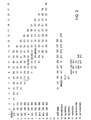
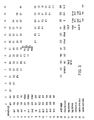
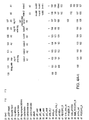
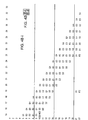
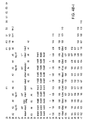
- Figs. 2 - 4 are tables showing processor operations initiated by a branch instruction in accordance with embodiments of the invention.
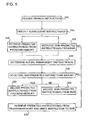
- Fig. 5 is a flowchart of a method in accordance with embodiments of the invention.
- a branch instruction may refer to an instruction at which a process may proceed in one of multiple possible ways.
- Branch instructions may be conditional or unconditional.
- An unconditional branch instruction may be one in which the outcome is predetermined and subsequent instructions are known prior to processing the branch instruction.
- an unconditional branch instruction may be to repeat an instruction loop a predetermined number of times and then jump to a latter instruction.
- a conditional branch instructions may be one in which the outcome is dependent on a condition. The condition is typically unknown before subsequent instructions are to be fetched. For example, in one scenario, the condition may only be known when the branch instruction is decoded.
- a processor may retrieve one or more instructions from a program memory that are predicted to follow the branch instruction. To retrieve instructions from the program memory, the processor may fetch the instructions, store them in a program cache, queue and dispatch the instructions. Then, to read the instructions, the processor may access a tag array, perform a tag compare, and access the program cache. This series of operations is typically extensive and power consuming. In conventional systems, when the branch prediction is incorrect and the wrong predicted instructions have been retrieved from the program memory, these instructions are discarded and the processor accesses the program memory again, repeating the extensive process to retrieve the correct instructions. Each time the branch prediction is incorrect, the processor may suffer a significant time delay and computational penalty, i.e., a mis-prediction penalty, in order to fetch the correct instruction from program memory.
- a branch predictor may predict one or more instructions. The predicted instructions may depend on the conditional branch instruction.
- a branch mis-prediction buffer may store correct instructions that were not predicted by the branch predictor during a branch mis-prediction.
- a system and method are provided for executing a conditional branch instruction.
- One or more correct instructions may be retrieved from a branch mis-prediction buffer during a branch mis-prediction.
- the branch mis-prediction buffer may store previously used instructions that were not predicted during a previous branch mis-prediction.
- a system and method are provided for storing instructions in a branch mis-prediction buffer.
- One or more predicted instructions that depend on a conditional branch instruction may be retrieved from program memory.
- a processor may determine that the one or more predicted instructions are incorrect.
- One or more correct instructions may be retrieved from program memory. The one or more correct instructions may be stored in the branch mis-prediction buffer.
- Embodiments of the invention may include a local cache, e.g., a branch mis-prediction buffer (BMB), to store mis-predicted instructions.
- a mis-predicted instruction may refer to an instruction that, once the branch condition is known, is determined to be the correct instruction(s) succeeding the branch instruction, but which was not predicted by the branch predictor.
- the instruction may be quickly retrieved from the BMB and not from program memory, resulting in a zero mis-prediction penalty.
- the correct instruction may be retrieved from program memory and a mis-predict penalty may be incurred.
- the mis-predicted instructions instead of discarding the mis-predicted instructions and wasting the computational effort used to fetch them, the mis-predicted instructions may be stored in the BMB for use during subsequent branches that may result in mis-predictions.
- Fig. 1 is a schematic illustration of a system according to embodiments of the invention.
- the system may include a device 100 having a processor 1 , a data memory unit 2 , a program memory unit 3 , and a program cache 10 .
- Device 100 may include a computer device, cellular device, or any other digital device such as a cellular telephone, personal digital assistant (PDA), video game console, etc.
- Device 100 may include any device capable of executing a series of instructions to run a computer program.
- Processor 1 may include a central processing unit (CPU), a digital signal processor (DSP), a microprocessor, a controller, a chip, a microchip, a field-programmable gate array (FPGA), an application-specific integrated circuit (ASIC) or any other integrated circuit (IC), or any other suitable multi-purpose or specific processor or controller.
- CPU central processing unit
- DSP digital signal processor
- microprocessor a controller
- FPGA field-programmable gate array
- ASIC application-specific integrated circuit
- IC integrated circuit
- Processor 1 may be coupled to data memory unit 2 via a data bus 4 and to program memory unit 3 via a program memory bus 5 .
- Program memory unit 3 typically stores a set of instructions and rules for running a computer program while data memory unit 2 typically stores data generated while operating the program instructions such as pre-generated (i.e. static) data and/or scratch pad (i.e. dynamic) data; however, other arrangements for storing instructions and data in a memory or memories may be used.
- Program cache 10 may provide temporary storage for program instructions retrieved from program memory unit 3 so that the instructions are more accessible for use by program control unit 8 .
- Program memory unit 3 may be a long term memory unit, while program cache 10 may be a short term memory unit.
- Data memory unit 2, program memory unit 3 and program cache 10 may include, for example, random access memory (RAM), dynamic RAM (DRAM), flash memory, cache memory, volatile memory, non-volatile memory or other suitable memory units or storage units.
- Data memory unit 2, program memory unit 3, and program cache 10 may be implemented as separate or integrated memory units.
- Data memory unit 2, program cache 10 and/or program memory unit 3 may be integrated (“on-chip”) or may be separate (i.e., "off-chip”).
- program memory unit 3 may be off-chip and the program cache 10 and/or Data memory unit 2 may be on-chip, e.g., an L-1 cache (e.g., which may run at a different rate than the processor clock rate) or an L-2 cache (e.g., which is relatively more integrated than the L-1 cache and typically runs at the processor clock rate).
- L-1 cache e.g., which may run at a different rate than the processor clock rate
- L-2 cache e.g., which is relatively more integrated than the L-1 cache and typically runs at the processor clock rate
- Other or additional memory architectures may be used.
- Processor 1 may include a program control unit 8 .
- Program control unit 8 may request, retrieve, and dispatch instructions from program memory unit 3 and may be responsible, in general, for the program pipeline flow.
- Program control unit 8 may include a data memory controller (not shown) coupled to data memory bus 4, and a program memory controller (not shown) coupled to program memory bus 5 to retrieve data from data memory unit 2 and program memory unit 3 , respectively.
- Program control unit 8 may include a fetch unit 12 , an interrupt unit 13 , and a branch mechanism 14 .
- Fetch unit 12 may retrieve or fetch program instructions from program memory unit 3 and save the instructions to program cache 10 until they are requested for use by program control unit 8 .
- Fetch unit 12 may be used to fetch instructions to a local queue prior to dispatching the instructions.
- Branch mechanism 14 may detect branch instructions, predict the outcome of branch instructions, and based on the predicted outcome of branch instructions request subsequent instructions from program memory unit 3 via fetch unit 12.
- Interrupt unit 13 may interrupt a current process, e.g., to initiate another higher priority process.
- Processor 1 may include a decode unit 6 , a load/store unit 7 , one or more register files 9 , and an execution unit 11 . Once instructions are dispatched by program control unit 8 , decode unit 6 may decode the instructions. Processor 1 may use register files 9 to implement tags to efficiently access decoded instruction, e.g., in the same computational cycle as they are requested. Execution unit 11 may execute the instructions. Load/store unit 7 may perform load and store operations from/to data memory unit 2.
- Processor 1 may execute, for example, the following sequential pipeline stages for each instruction:
- fetch unit 12 may preemptively retrieve instructions so that each instruction is fetched before the processor is ready to dispatch the instruction.
- the fetched instructions are temporarily stored in program cache memory 10 , and/or a local queue which is significantly faster to access than program memory 3 .
- instructions succeeding a conditional branch instruction may depend on a branch condition that is not yet known at the time the instructions are to be fetched.
- the branch instruction may proceed to any of multiple different instructions or process paths depending on the outcome of the branch condition.
- Branch mechanism 14 may identify whether or not an instruction is a branch instruction, for example, at the decode stage (D2) of processing the instruction. When an instruction is a branch instruction, if the correct one of multiple possible subsequent instructions is not known at the time when the instruction is to be retrieved, branch mechanism 14 may predict which instruction most likely succeeds the branch instruction.
- a branch target buffer (BTB) 16 may store data used to make the predictions. BTB 16 may be a buffer or temporary memory unit, which may be separate from, integrated with or part of program cache 10 .
- the predicted branch instruction matches the actual branch instruction, the predicted instruction may be used and the branch mis-prediction penalty is zero.
- the process may suffer a time delay and computational penalty of fetching the correct instruction from program memory 3 , for example, 3 cycles (IF1 to D1). This time delay or number of cycles may vary for different processor 1 pipelines.
- BMB 17 may accumulate correct branch instructions that were not predicted.
- the program incurs a one-time mis-prediction penalty to initially retrieve these instructions from program memory 3 , by saving them for use during subsequent mis-predictions, the mis-prediction penalty for retrieving the same instructions may be avoided thereafter.
- branch mechanism 14 predicts the correct instruction succeeding a branch instruction and the correct subsequent instructions has already been retrieved from program memory 3 .
- the correct subsequent instruction may then be used. In this case, there is no mis-prediction and the mis-predict penalty is zero.
- branch mechanism 14 makes a mis-prediction and predicts the wrong instruction succeeding a branch instruction.
- processor 1 may attempt to retrieve the instruction from BMB 17.
- Processor 1 may check if BMB 17 contains the mis-predicted instruction simultaneous to program control unit 8 fetching a new instruction from the program memory sub-system. Only later when the branch instruction is known does processor 1 select between the predicted and mis-predicted instruction. If the correct instruction was a mis-predicted instruction in a previous program branch, the instruction should already be stored in BMB 17 . Accordingly, instead of retrieving the correct instructions from program memory 3 , processor 1 may retrieve the correct instruction from BMB 17 .
- the mis-predict penalty for retrieving instructions from program memory 3 may be zero.
- the mis-predict penalty is zero for both correct as well as incorrect branch predictions.
- BMB 17 may store instructions that have been dispatched (at the D1 pipeline stage). Alternatively, instructions in BMB 17 may be stored in other stages of a pipeline process (e.g., IF2 or D2). BMB 17 may be relatively more accessible than program cache 10 because BMB 17 is typically smaller than program cache 10 . BMB 17 may be physically integrated with branch mechanism 14.
- FIGS. 2 - 4 are tables showing processor operations initiated by a branch instruction according to embodiments of the invention.
- each row in the tables shows the processor pipeline stages for a single instruction.
- the instructions (listed in column 1) are ordered in sequential rows in the order in which they may be processed, i.e., in the order in which the instructions first enter the processor pipeline (in operation IF1).
- Each sequential column shows the operations executed on the instructions that occur in each sequential computational cycle. That is, once an instructions in each row first enter the processor pipeline, in each sequential column, the processor executes sequential operations on the instruction, e.g., program memory address (IF1), fetching (IF2), dispatching (D1), decoding (D2), register file read (D3 to D4), execute, data memory access, and register file write-back (El to E4). Other or additional operations may be used.
- a branch predictor mis-predicts that branch instruction Branch A,B will branch to instruction A instead of the correct instruction B. That is, the branch condition of a conditional instruction Branch A,B does not match the static prediction for that condition. However, in the figure, the mis-predicted correct branch instruction B is stored in the BMB and therefore, there is no penalty for the branch mis-prediction.
- the upper-right cell (row 1, column 1) in the table shows an instruction labeled "Branch A,B."
- the instruction Branch A,B may be an instruction in a sequence of instructions of a program.
- Instruction Branch A,B may be stored at a first address, e.g., denoted arbitrarily to be 101.
- Instruction Branch A,B may be a branch instruction, for example, providing instructions to proceed next to either instruction A or instruction B, but this is not known until the instruction is decoded (in operation D2).
- the next instruction following Branch A,B (e.g., after the three delay slots) may be determined by comparing the predicted and mis-predicted instructions and is typically only known after Branch A,B has completed pipeline stage E1. The example in the figure does not depend on a static prediction.
- address A or B may be the next sequential address.
- Instruction A may be stored at a second address, e.g., denoted arbitrarily to be 201, and instruction B may be stored at a third address, e.g., denoted arbitrarily to be 301.
- instruction Branch A,B may enter the processor pipeline, e.g., in pipeline stage IF1 (row 1, column 4).
- pipeline stage IF1 a processor may access a program memory address to locate instruction Branch A,B stored at address 101 in a program memory.
- Instruction Branch A,B may proceed to the next sequential stages IF2 (row 1, column 5), D1 (row 1, column 6), and then D2 (row 1, column 7).
- a processor may decode instruction Branch A,B to detect that Branch A,B is a branch instruction.
- branch instruction e.g., 3 computational cycles may be used (IF1-D1).
- Delay slots e.g., three slots, ds1, ds2, and ds3 may be used to delay the pipeline cycle until instruction Branch A,B is decoded.
- a branch mechanism may determine that instruction Branch A,B is a branch instruction in operation D2 (row 1, column 7).
- a branch predictor predicts the branch to proceed to instruction A at address 201. Accordingly, instruction A may enter the processor pipeline, e.g., in pipeline stage IF1 (row 5, column 8) and may be fetched from program memory in the next pipeline stage IF2 (row 5, column 9).
- the BMB may be simultaneously searched for non-predicted instruction B at address 301, e.g., by checking for a BMB cache tag matching the instruction B cache tag (row 15, column 8). In this scenario, address 301 (where instruction B resides) is found in the cache tag, and the tag compare asserts the hit flag (row 16, column 8).
- the cache tag may be implemented in registers (e.g., not RAM) causing the hit flag to be available in the same computational cycle (corresponding to column 8). Since there is a hit in the cache (row 16, column 8), the BMB may proceed to extract instruction B data.
- the cache address corresponding to the tag where instruction B found a match, may be applied to the BMB.
- instruction B may be retrieved from the BMB (row 19, column 10). Instructions may be stored in the BMB after they have been dispatched (in D1 pipeline stage for a previous branch instruction). Accordingly, after instruction B is read from the BMB (row 19, column 10), it may proceed to the decode stage D2 of the pipeline (row 14, column 11).
- instruction B While instruction B is being retrieved from the BMB, the processor may continue to process instruction A and the instructions succeeding A, i.e., A+1, A+2, ... under the assumption that the branch prediction is correct. If the branch prediction is correct then instruction B retrieved from the BMB is not used. Predicted instructions A, A+1, A+2, ... are typically processed at least until the branch condition is known.
- instruction Branch A,B completes the E1 pipeline stage (row 1, column 10)
- the branch condition may be known and therefore, the actual branch direction is known.
- the condition result indicates that the predicted branch instruction A is wrong and therefore the process should proceed with instruction B instead.
- the processor replaces the input of instruction A with the correct branch instruction B from the BMB (row 14, column 11).
- instructions B+1 and B+2 are read from the BMB (row 19, columns 11 and 12) and are used to replace instructions A+1 and A+2, respectively, in the decoding stage (row 14, columns 12 and 13). Instructions A, A+1, A+2 are replaced by B, B+1, B+2, respectively, in each sequential decode stage D2 (row 5, column 11), (row 6, column 12), and (row 7, column 13), indicated by D2 -> D2. Since the predicted instruction A (from program memory) and the non-predicted instruction B (from BMB) are both available and dispatched in the same computational cycle (corresponding to column 10), replacing predicted instruction A with non-predicted instruction B in a branch mis-prediction occurs without any computational penalty or time delay for the mis-prediction.
- Fig. 3 the operations occur when, similarly to Fig. 2 , a branch predictor mis-predicts that the branch instruction Branch A,B will branch to instruction A instead of the correct instruction B.
- the correct branch instruction B is not stored in the BMB.
- instruction B may be added to the BMB, and in this way, the BMB may be filled with instructions for use during subsequent mis-predictions.
- Branch mechanism may determine that instruction Branch A,B is a branch instruction in operation D2 (row 1, column 7).
- a branch predictor predicts the branch to proceed to instruction A at address 201. Accordingly, instruction A may enter the processor pipeline, e.g., in pipeline stage IF1 (row 5, column 8) and may be fetched from program memory in the next pipeline stage IF2 (row 5, column 9).
- the BMB may be simultaneously searched for non-predicted instruction B at address 301, e.g., by checking for a BMB cache tag matching the instruction B cache tag (row 17, column 8).
- address 301 (where instruction B resides) is not found in the cache tag, and the tag compare may assert a miss flag (row 18, column 8).
- the cache tag may be implemented in registers (e.g., not RAM) causing the miss flag to be available in the same computational cycle (corresponding to column 8). Since there is a miss in the cache (row 18, column 8), the BMB typically does not access the tag or the BMB data, e.g., to keep power dissipation at a minimum.
- the processor may continue to fetch and dispatch instruction A and the instructions succeeding A, i.e., A+1, A+2, ... under the assumption that the branch prediction is correct. If the branch prediction is correct, then the BMB cache miss (row 16, column 8) is inconsequential and there is no computational penalty for the cache miss.
- branch condition When instruction Branch A,B completes the E1 pipeline stage (row 1, column 10), the branch condition may be known and therefore, the actual branch direction may be known.
- the condition result in this case, may indicate that the predicted branch instruction A is wrong and therefore the process may "kill" instruction A and the instructions succeeding A, i.e., A+1, A+2, ... (column 10, rows 5, 6, and 7, respectively) before they are decoded in the D2 decoding stage.
- the input of the decode stage D2 should be the correct branch instruction B from the BMB.
- instruction B was not found in the BMB, there is no input for the decode stage D2 until instruction B is obtained, e.g., for 3 computational cycles (row 16, columns 8, 9, and 10).
- the processor may fetch the instruction B from program memory (row 8, column 11). Address 301 of instruction B may be written as a tag in the BMB (row 17, column 13) in preparation for instructions B, B+1, B+2 to be stored in the BMB (row 19, columns 13, 14, 15, respectively).
- Each of instructions B, B+1, B+2 may be fetched (rows 8, 9, 10, respectively, columns 12, 13, 14, respectively) and dispatched.
- the dispatched instruction packets B, B+1, B+2 may be written to the BMB at a BMB address (row 20, columns 13, 14, 15, respectively), e.g., placed in the BMB based on, for example, a least recently used (LRU) replacement policy.
- LRU least recently used
- the same dispatched instruction packets B, B+1, B+2 may simultaneously enter the dispatch pipeline stage D 1 (rows 8, 9, 10, respectively, columns 13, 14, 15, respectively).
- the processor may decode the dispatched instruction packets B, B+1, B+2 in the D2 stage (rows 8, 9, 10, respectively, columns 14, 15, 16, respectively).
- the branch instructions that were not predicted may be stored in the BMB, e.g., if they have not already been stored. In this way, the processor may fill the BMB with correct branch instructions, which were erroneously not predicted. Once stored in the BMB, these branch instructions may be used during future branch mis-predictions, as described in reference to Fig. 2 .
- the processor may retrieve instruction B from program memory sub-system (row 8, columns 11, 12, and 13). Retrieving instruction B from program memory sub-system may use additional, e.g., three, computational cycles and thus, the program process may incur a mis-prediction penalty.
- the dispatched instructions A and B may be available in the same cycle, e.g., in Fig. 2 , (row 5, column 10) and (row 19, column 10), respectively, simultaneously ready to be decoded depending on the outcome of the conditional branch instruction Branch A,B.
- instructions A and B may be dispatched in different cycles or may be processed depending on mis-predict history, penalties, or other criteria.
- processor 1 stores instructions in the BMB after they have been dispatched (in D 1 pipeline stage), in an alternate embodiment, processor 1 may store instructions at any other or additional stage of a pipeline process.
- the BMB stores the correct un-predicted branch instruction.
- the BMB or a separate memory unit may store the correct predicted branch instruction.
- the BMB or a separate memory unit may store statistical data corresponding to each instruction entry in the BMB.
- the statistical data may include, for example, usage history data such as the computational cycle in which the instruction is used (e.g., for ordering the instructions based on which instruction was least or most recently used), the rate or number of times the instruction was mis-predicted (e.g., for determining whether or not to store the instruction in the BMB or for ordering the instructions in the BMB based on a total or average usage of the instruction), the size of the instruction (e.g., for ordering the instructions based on the size of the instruction), etc.
- usage history data such as the computational cycle in which the instruction is used (e.g., for ordering the instructions based on which instruction was least or most recently used), the rate or number of times the instruction was mis-predicted (e.g., for determining whether or not to store the instruction in the BMB or for ordering the instructions in the BMB based on a total or average usage of the instruction), the size of the instruction (e
- BMB 17 may store mis-predictions for branches that have a mis-prediction rate that is greater than a predetermined threshold.
- the threshold may be automatically predetermined to satisfy computational efficiency parameters of a computing platform, e.g., based on the success or usage history of instructions stored in BMB 17 for each branch or process versus the memory and computational costs of storing instructions in BMB 17 .
- the predetermined threshold may be manually or semi-automatically set by a programmer e.g., to be greater than 30-50%. If the mis-prediction rate is sufficiently small or less than a predetermined threshold for a specific branch or process, the processor may not store mis-predicted instructions for that branch or process. For example, if an average reduction in the branch mis-prediction penalty for the branch or process is, e.g., less than a specified number of cycles, mis-predicted instructions may not be stored in BMB 17 .
- branch mechanism 14 may predict instructions partially or completely based on which instructions supplement the instructions already stored in BMB 17 instead of instructions that are statistically most likely to occur. For example, branch mechanism 14 may search BMB 17 , look for any of the potential unknown branch instructions stored and if any is already stored in BMB 17 , the branch prediction unit may predict, or be statistically more likely to predict, the instruction not stored in BMB 17 . In this way, processor 1 will retrieve instructions from program memory 3 such that the instructions are new or not redundant to those already stored in BMB 17.
- BMB 17 may be empty. As a program is run, for each (or alternatively, for only some) branch mis-predictions, the mis-predicted instruction may be added to fill BMB 17 .
- BMB 17 may have a fixed or maximum size, e.g., determined by a programmer, or a variable size, e.g., determined automatically based on BMB 17 usage history. The smaller the size of BMB 17 , the more efficient its usage. However, the larger the size of BMB 17 , the greater the number of instructions that may be stored.
- VLIW very long instruction word
- the VLIW packet After being issued, the VLIW packet are dispatched to the execution units, and only after being dispatched may they be decoded and executed. In conventional systems, this extensive series of operations is executed each and every time there is a branch mis-prediction. According to embodiments of the inventions, even when there is a branch mis-prediction, if the correct instruction was previously mis-predicted, the correct instruction is already stored in BMB 17 . Therefore, the correct instruction may be quickly retrieved from BMB 17 and the aforementioned extensive series of operations may be eliminated, e.g., wholly or at least partially.
- Fig. 4 includes four figures, Figs. 4A -i, 4A-ii, 4B-I, and 4B-ii , which are to be viewed together and arranged in four quadrants, Fig. 4A-i in the upper right quadrant, Fig. 4A-ii in the lower right quadrant, Fig. 4B -i in the upper left quadrant, and Fig. 4B -ii in the lower left quadrant.
- Fig. 4 shows processor operations initiated by a loop instruction according to embodiments of the invention.
- a loop instruction e.g., brloop_write
- row 1, column 1 is a special type of branch instruction in which one of the possible branch paths is to repeat a previous instruction, thereby causing a loop or sequence of repeating instructions.
- the branch loop instruction is conditional although an unconditional branch loop instruction may also be used.
- Embodiments of the invention include a system and method for using BMB 17 as a loop buffer.
- BMB 17 may be dedicated to storing loop instructions so that they may be accessed locally rather than from program memory 3 . Since loop instructions may be used more often than other non-repeating instructions that are not part of a loop sequence, storing the loop instructions locally in BMB 17 rather than in program memory 3 may reduce power consumption used to access program memory 3 and queue and align/dispatch the instructions more so than for other non-repeating instructions.
- the instruction “nop” indicates no-operation due to latency in the processor pipeline.
- Processor 1 may use instructions (e.g., chip_select and write_enable instructions) to write the first, n-1, instruction packets of the instruction loop to BMB 17 .
- BMB 17 may include a dedicated register (e.g., brloop_last_ir_r) to which the last, n th instruction packet in the loop is written. While the last instruction packet in the loop is being written to the dedicated register, it is know that there are no more instructions in the loop, and the first instruction packet in the loop may be automatically and simultaneously retrieved from BMB 17 .
- the BMB 17 tag array may be updated, while the BMB 17 cache array may be updated using the cache index instruction (row 30).
- Each BMB 17 entry may hold one or more (e.g., four) instruction packets.
- the first BMB 17 entry may be filled with the first four instruction packets in the loop A1 - A4 (row 30, columns 7-10).
- a corresponding tag address may be written to BMB 17 (row 27, column 7) for each BMB 17 entry. If the instruction loop includes more than four instructions, then processor 1 may update BMB 17 registers to find the next BMB 17 entry to be filled with the next (up to) four instruction packets A5 (row 30, column 11), and accordingly write the corresponding tag address (row 28, column 11). Processor 1 continues this process until all but the last instruction A6 is written to BMB 17 (row 30, column 11). Processor 1 may perform a tag compare for every fourth instruction to find the address of the next BMB 17 entry (row 28, column 12) to retrieve instructions from BMB 17 (row 31, columns 13, 14, ).
- instructions are written to BMB 17 in an order based on a least recently used (LRU) algorithm.
- BMB 17 may include registers and corresponding entries that are ordered based on a LRU algorithm.
- the branch loop (brloop) instruction A4 (row 6, column 1) (with two delay slots A5 and A6 - rows 7 and 8, column 1) may be predicted taken or not-taken
- the predicted-taken address 102 may be written to a "not predicted branch target address" or "PTADDR_R" register (row 43, column 12) and used to search the tag array of BMB 17 (row 26, column 12).
- loop instructions may be accessed from BMB 17 instead of from program memory 3 to reduce power consumption.
- the not-taken address 108 is typically only used at the end of the last loop iteration or on an exit condition where the branch is predicted incorrectly.
- the last loop of the iteration (row 25, column 26) may be where there is an exit condition or where branch is predicted incorrectly.
- Interrupt unit 13 may interrupt a current process (not shown), e.g., to initiate another process, often damaging partially processed branch instruction data. Interrupt unit 13 may be disabled while processor 1 writes loop instructions to BMB 17 . Interrupt unit 13 may also be disabled while processor 1 reads instructions from BMB 17 . In one exception, interrupts may be allowed while reading the last instruction packet, e.g., in each iteration of an instruction loop. If such an interruption is accepted then, if a branch instruction is taken then the return register may be written with the program address in the PTADDR_R register (row 43, columns 12, 18, 24), and if the branch is not-taken then the return register may be written with the program address from the program counter or "pseq_pc". BMB 17 may be locked, to allow a programmer to control replacement of BMB 17 entries.
- the status of the loop buffer may be tracked by indicators, flags, or other markers.
- a "buf valid” flag may be set when all of the instructions in the loop are written and/or available in BMB 17.
- the buf_valid flag may be cleared when any of the loop instructions are replaced in BMB 17 .
- a "buf_active'" flag may be set when processor 1 accesses instructions from BMB 17.
- the buf_active flag may be set after encountering a brloop_write instruction and loop instructions are written to BMB 17 .
- the buf_active flag may be cleared when a branch is taken or when a call or interruption is encountered.
- the status of the loop buffer may be indicated by different flag combinations.
- buf_valid and buf_active may indicate each of the following four different states:
- Fig. 4 shows an example of a process having a loop with six instruction packets A1 - A6 (rows 3-8, column 1).
- branch instruction of the loop (brloop_write) is conditional.
- embodiments of the invention similarly apply to branch loop instructions that are unconditional, i.e., always taken.
- Fig. 4 shows a process of writing to BMB 17 (row 30), reading from BMB 17 during the iterations of the loop (row 31), and exiting from the loop (either due to the loop counter being negative or due to the branch condition being false).
- the loop exit may be seen in row 25, column 26 where the decoder input is operating on "next instruction" (NI) at address 108, which is not a loop instruction and in row 29, column 26, where BMB 17 is no longer being accessed for loop instructions.
- NI next instruction
- the instructions are executed and simultaneously written to BMB 17 .
- the instructions are accessed from BMB 17 , while program memory 3 , queue, and dispatcher are idle.
- program memory 3 , queue, and dispatcher begin operating on the next sequentially instruction packet that comes after the loop, e.g., address 108, 109, 110, ...
- BMB 17 may include a buffer, cache or other memory structure that stores mis-predicted or loop instructions in a separate cache for access during subsequent mis-predictions or iterations of the loop. BMB 17 typically does not rely on the history of branch outcomes to make future predictions, thereby overcoming the limitations of both static and dynamic branch prediction techniques. In alternate embodiments, BMB 17 may wholly or partially take into account branch prediction histories to make future predictions.
- BMB 17 typically does not rely on software directives. However, in some embodiments, software directives may be used to pre-load instructions into BMB 17 .
- BMB 17 may be fully or partially transparent to a programmer.
- BMB 17 may use a fully or partially associative cache to store instructions at the branch target address. These instructions may be automatically retrieved during an instruction loop or when a branch predictor predicts incorrectly (e.g., achieving zero overhead during branch mis-predictions).
- Fig. 5 is a flowchart of a method according to embodiments of the invention.
- a processor may decode a conditional branch instruction.
- a branch prediction unit may predict the subsequent instruction(s) following the branch.
- a fetching unit may retrieve the predicted instruction(s) from program memory.
- the processor may retrieve a non-predicted instruction from the branch mis-prediction buffer (BMB), e.g., by checking for a BMB cache tag matching the instruction cache tag.
- Operations 520 and 525 may be run substantially simultaneously, e.g., in the same clock cycle.
- the processor may execute the branch instructions and determine the actual subsequent instruction(s) following the branch.
- the processor may compare the actual subsequent instruction(s) following the branch with the predicted instruction(s) retrieved from program memory. If the actual instruction(s) match the predicted instruction(s), a process may proceed to operation 550. If the actual instruction(s) do not match the predicted instruction(s), a process may proceed to operation 560.
- the processor may decode the predicted instruction(s) retrieved from program memory.
- the processor may decode the non-predicted instruction(s) retrieved from the BMB.
- a process may proceed to operation 570.
- the processor may retrieve the non-predicted instructions from program memory, decode the instructions and write the instruction to the BMB.
- Embodiments of the invention may include an article such as a computer or processor readable medium, or a computer or processor storage medium, such as for example a memory, a disk drive, or a USB flash memory, encoding, including or storing instructions which when executed by a processor or controller, carry out methods disclosed herein.
- an article such as a computer or processor readable medium, or a computer or processor storage medium, such as for example a memory, a disk drive, or a USB flash memory, encoding, including or storing instructions which when executed by a processor or controller, carry out methods disclosed herein.
Landscapes
- Engineering & Computer Science (AREA)
- Software Systems (AREA)
- Theoretical Computer Science (AREA)
- Physics & Mathematics (AREA)
- General Engineering & Computer Science (AREA)
- General Physics & Mathematics (AREA)
- Advance Control (AREA)
- Executing Machine-Instructions (AREA)
Applications Claiming Priority (1)
| Application Number | Priority Date | Filing Date | Title |
|---|---|---|---|
| US12/611,937 US9952869B2 (en) | 2009-11-04 | 2009-11-04 | System and method for using a branch mis-prediction buffer |
Publications (2)
| Publication Number | Publication Date |
|---|---|
| EP2330500A1 EP2330500A1 (en) | 2011-06-08 |
| EP2330500B1 true EP2330500B1 (en) | 2013-08-28 |
Family
ID=43413571
Family Applications (1)
| Application Number | Title | Priority Date | Filing Date |
|---|---|---|---|
| EP10189135.6A Active EP2330500B1 (en) | 2009-11-04 | 2010-10-27 | System and method for using a branch mis-prediction buffer |
Country Status (4)
| Country | Link |
|---|---|
| US (2) | US9952869B2 (enExample) |
| EP (1) | EP2330500B1 (enExample) |
| JP (1) | JP5520779B2 (enExample) |
| CA (1) | CA2719615C (enExample) |
Families Citing this family (26)
| Publication number | Priority date | Publication date | Assignee | Title |
|---|---|---|---|---|
| US20120005462A1 (en) * | 2010-07-01 | 2012-01-05 | International Business Machines Corporation | Hardware Assist for Optimizing Code During Processing |
| US9342432B2 (en) | 2011-04-04 | 2016-05-17 | International Business Machines Corporation | Hardware performance-monitoring facility usage after context swaps |
| US8868886B2 (en) | 2011-04-04 | 2014-10-21 | International Business Machines Corporation | Task switch immunized performance monitoring |
| US20130055033A1 (en) | 2011-08-22 | 2013-02-28 | International Business Machines Corporation | Hardware-assisted program trace collection with selectable call-signature capture |
| US8874884B2 (en) | 2011-11-04 | 2014-10-28 | Qualcomm Incorporated | Selective writing of branch target buffer when number of instructions in cache line containing branch instruction is less than threshold |
| US9235419B2 (en) | 2012-06-11 | 2016-01-12 | International Business Machines Corporation | Branch target buffer preload table |
| US9753733B2 (en) * | 2012-06-15 | 2017-09-05 | Apple Inc. | Methods, apparatus, and processors for packing multiple iterations of loop in a loop buffer |
| US9557999B2 (en) | 2012-06-15 | 2017-01-31 | Apple Inc. | Loop buffer learning |
| US9471322B2 (en) | 2014-02-12 | 2016-10-18 | Apple Inc. | Early loop buffer mode entry upon number of mispredictions of exit condition exceeding threshold |
| US9135015B1 (en) * | 2014-12-25 | 2015-09-15 | Centipede Semi Ltd. | Run-time code parallelization with monitoring of repetitive instruction sequences during branch mis-prediction |
| US10296350B2 (en) | 2015-03-31 | 2019-05-21 | Centipede Semi Ltd. | Parallelized execution of instruction sequences |
| US10296346B2 (en) | 2015-03-31 | 2019-05-21 | Centipede Semi Ltd. | Parallelized execution of instruction sequences based on pre-monitoring |
| US9916164B2 (en) * | 2015-06-11 | 2018-03-13 | Intel Corporation | Methods and apparatus to optimize instructions for execution by a processor |
| US10908902B2 (en) * | 2016-05-26 | 2021-02-02 | International Business Machines Corporation | Distance based branch prediction and detection of potential call and potential return instructions |
| JP2019101543A (ja) | 2017-11-29 | 2019-06-24 | サンケン電気株式会社 | プロセッサ及びパイプライン処理方法 |
| US10901743B2 (en) * | 2018-07-19 | 2021-01-26 | International Business Machines Corporation | Speculative execution of both paths of a weakly predicted branch instruction |
| US10915322B2 (en) * | 2018-09-18 | 2021-02-09 | Advanced Micro Devices, Inc. | Using loop exit prediction to accelerate or suppress loop mode of a processor |
| JP7100258B2 (ja) * | 2018-10-10 | 2022-07-13 | 富士通株式会社 | 演算処理装置及び演算処理装置の制御方法 |
| US11182166B2 (en) * | 2019-05-23 | 2021-11-23 | Samsung Electronics Co., Ltd. | Branch prediction throughput by skipping over cachelines without branches |
| CN110688160B (zh) * | 2019-09-04 | 2021-11-19 | 苏州浪潮智能科技有限公司 | 一种指令流水线处理方法、系统、设备及计算机存储介质 |
| WO2021205529A1 (ja) * | 2020-04-07 | 2021-10-14 | 日本電信電話株式会社 | 情報処理装置、情報処理方法、およびプログラム |
| WO2022212220A1 (en) * | 2021-03-27 | 2022-10-06 | Ceremorphic, Inc. | Mitigation of branch misprediction penalty in a hardware multi-thread microprocessor |
| US20220308887A1 (en) * | 2021-03-27 | 2022-09-29 | Redpine Signals, Inc. | Mitigation of branch misprediction penalty in a hardware multi-thread microprocessor |
| US20220308888A1 (en) * | 2021-03-27 | 2022-09-29 | Redpine Signals, Inc. | Method for reducing lost cycles after branch misprediction in a multi-thread microprocessor |
| JP7319439B1 (ja) * | 2022-08-30 | 2023-08-01 | 株式会社スギノマシン | バリ取り工具 |
| US20240385841A1 (en) * | 2023-05-18 | 2024-11-21 | Qualcomm Incorporated | Fetching beyond predicted-taken branch instructions in fetch bundles of processor-based devices |
Family Cites Families (14)
| Publication number | Priority date | Publication date | Assignee | Title |
|---|---|---|---|---|
| JPS549456B2 (enExample) | 1972-07-05 | 1979-04-24 | ||
| JPS6051948A (ja) | 1983-08-31 | 1985-03-23 | Hitachi Ltd | 情報処理装置 |
| JPH01106141A (ja) | 1987-10-19 | 1989-04-24 | Mitsubishi Electric Corp | データ処理装置 |
| GB9412487D0 (en) * | 1994-06-22 | 1994-08-10 | Inmos Ltd | A computer system for executing branch instructions |
| US5850542A (en) * | 1995-09-15 | 1998-12-15 | International Business Machines Corporation | Microprocessor instruction hedge-fetching in a multiprediction branch environment |
| US5734881A (en) | 1995-12-15 | 1998-03-31 | Cyrix Corporation | Detecting short branches in a prefetch buffer using target location information in a branch target cache |
| SE510295C2 (sv) | 1997-07-21 | 1999-05-10 | Ericsson Telefon Ab L M | Metod vid processor för att hantera villkorade hoppinstruktioner samt processor anpassad att verka enligt den angivna metoden |
| US8285976B2 (en) | 2000-12-28 | 2012-10-09 | Micron Technology, Inc. | Method and apparatus for predicting branches using a meta predictor |
| US7010675B2 (en) * | 2001-07-27 | 2006-03-07 | Stmicroelectronics, Inc. | Fetch branch architecture for reducing branch penalty without branch prediction |
| US6918030B2 (en) * | 2002-01-10 | 2005-07-12 | International Business Machines Corporation | Microprocessor for executing speculative load instructions with retry of speculative load instruction without calling any recovery procedures |
| US7197630B1 (en) | 2004-04-12 | 2007-03-27 | Advanced Micro Devices, Inc. | Method and system for changing the executable status of an operation following a branch misprediction without refetching the operation |
| EP1826667A4 (en) * | 2004-11-25 | 2008-07-23 | Matsushita Electric Industrial Co Ltd | COMMAND FEEDING DEVICE |
| US7437543B2 (en) * | 2005-04-19 | 2008-10-14 | International Business Machines Corporation | Reducing the fetch time of target instructions of a predicted taken branch instruction |
| TWI328771B (en) * | 2005-07-15 | 2010-08-11 | Nvidia Corp | Pipelined central processing unit structure and method of processing a sequence of instructions |
-
2009
- 2009-11-04 US US12/611,937 patent/US9952869B2/en active Active
-
2010
- 2010-10-27 EP EP10189135.6A patent/EP2330500B1/en active Active
- 2010-11-02 JP JP2010246340A patent/JP5520779B2/ja active Active
- 2010-11-02 CA CA2719615A patent/CA2719615C/en active Active
-
2018
- 2018-01-23 US US15/877,408 patent/US10409605B2/en active Active
Also Published As
| Publication number | Publication date |
|---|---|
| CA2719615C (en) | 2019-04-09 |
| US20180210735A1 (en) | 2018-07-26 |
| JP2011100454A (ja) | 2011-05-19 |
| US20110107071A1 (en) | 2011-05-05 |
| US9952869B2 (en) | 2018-04-24 |
| JP5520779B2 (ja) | 2014-06-11 |
| US10409605B2 (en) | 2019-09-10 |
| CA2719615A1 (en) | 2011-05-04 |
| EP2330500A1 (en) | 2011-06-08 |
Similar Documents
| Publication | Publication Date | Title |
|---|---|---|
| US10409605B2 (en) | System and method for using a branch mis-prediction buffer | |
| US7487340B2 (en) | Local and global branch prediction information storage | |
| US7437537B2 (en) | Methods and apparatus for predicting unaligned memory access | |
| US6907520B2 (en) | Threshold-based load address prediction and new thread identification in a multithreaded microprocessor | |
| KR101493019B1 (ko) | 희소 및 조밀 예측 캐쉬들을 갖는 하이브리드 브랜치 예측 장치 | |
| EP2024820B1 (en) | Sliding-window, block-based branch target address cache | |
| CN1255986A (zh) | 基于惩罚的高速缓冲存储器和置换技术 | |
| US20070288733A1 (en) | Early Conditional Branch Resolution | |
| US20120210107A1 (en) | Predicated issue for conditional branch instructions | |
| US11099850B2 (en) | Branch prediction circuitry comprising a return address prediction structure and a branch target buffer structure | |
| US9547358B2 (en) | Branch prediction power reduction | |
| US10922082B2 (en) | Branch predictor | |
| US9395985B2 (en) | Efficient central processing unit (CPU) return address and instruction cache | |
| US20070288732A1 (en) | Hybrid Branch Prediction Scheme | |
| US20070288731A1 (en) | Dual Path Issue for Conditional Branch Instructions | |
| US20070288734A1 (en) | Double-Width Instruction Queue for Instruction Execution | |
| CA2725906C (en) | System and method for processing interrupts in a computing system | |
| CN101916184A (zh) | 更新微处理器中的分支目标地址快取的方法及其微处理器 | |
| HK1112983A (en) | Unaligned memory access prediction |
Legal Events
| Date | Code | Title | Description |
|---|---|---|---|
| PUAI | Public reference made under article 153(3) epc to a published international application that has entered the european phase |
Free format text: ORIGINAL CODE: 0009012 |
|
| AK | Designated contracting states |
Kind code of ref document: A1 Designated state(s): AL AT BE BG CH CY CZ DE DK EE ES FI FR GB GR HR HU IE IS IT LI LT LU LV MC MK MT NL NO PL PT RO RS SE SI SK SM TR |
|
| AX | Request for extension of the european patent |
Extension state: BA ME |
|
| 17P | Request for examination filed |
Effective date: 20111208 |
|
| GRAP | Despatch of communication of intention to grant a patent |
Free format text: ORIGINAL CODE: EPIDOSNIGR1 |
|
| INTG | Intention to grant announced |
Effective date: 20130408 |
|
| GRAS | Grant fee paid |
Free format text: ORIGINAL CODE: EPIDOSNIGR3 |
|
| GRAA | (expected) grant |
Free format text: ORIGINAL CODE: 0009210 |
|
| AK | Designated contracting states |
Kind code of ref document: B1 Designated state(s): AL AT BE BG CH CY CZ DE DK EE ES FI FR GB GR HR HU IE IS IT LI LT LU LV MC MK MT NL NO PL PT RO RS SE SI SK SM TR |
|
| REG | Reference to a national code |
Ref country code: GB Ref legal event code: FG4D |
|
| REG | Reference to a national code |
Ref country code: CH Ref legal event code: EP |
|
| REG | Reference to a national code |
Ref country code: AT Ref legal event code: REF Ref document number: 629681 Country of ref document: AT Kind code of ref document: T Effective date: 20130915 |
|
| REG | Reference to a national code |
Ref country code: IE Ref legal event code: FG4D |
|
| REG | Reference to a national code |
Ref country code: DE Ref legal event code: R096 Ref document number: 602010009744 Country of ref document: DE Effective date: 20131024 |
|
| REG | Reference to a national code |
Ref country code: NL Ref legal event code: T3 |
|
| REG | Reference to a national code |
Ref country code: AT Ref legal event code: MK05 Ref document number: 629681 Country of ref document: AT Kind code of ref document: T Effective date: 20130828 |
|
| REG | Reference to a national code |
Ref country code: LT Ref legal event code: MG4D |
|
| PG25 | Lapsed in a contracting state [announced via postgrant information from national office to epo] |
Ref country code: AT Free format text: LAPSE BECAUSE OF FAILURE TO SUBMIT A TRANSLATION OF THE DESCRIPTION OR TO PAY THE FEE WITHIN THE PRESCRIBED TIME-LIMIT Effective date: 20130828 Ref country code: CY Free format text: LAPSE BECAUSE OF FAILURE TO SUBMIT A TRANSLATION OF THE DESCRIPTION OR TO PAY THE FEE WITHIN THE PRESCRIBED TIME-LIMIT Effective date: 20130717 Ref country code: SE Free format text: LAPSE BECAUSE OF FAILURE TO SUBMIT A TRANSLATION OF THE DESCRIPTION OR TO PAY THE FEE WITHIN THE PRESCRIBED TIME-LIMIT Effective date: 20130828 Ref country code: LT Free format text: LAPSE BECAUSE OF FAILURE TO SUBMIT A TRANSLATION OF THE DESCRIPTION OR TO PAY THE FEE WITHIN THE PRESCRIBED TIME-LIMIT Effective date: 20130828 Ref country code: NO Free format text: LAPSE BECAUSE OF FAILURE TO SUBMIT A TRANSLATION OF THE DESCRIPTION OR TO PAY THE FEE WITHIN THE PRESCRIBED TIME-LIMIT Effective date: 20131128 Ref country code: IS Free format text: LAPSE BECAUSE OF FAILURE TO SUBMIT A TRANSLATION OF THE DESCRIPTION OR TO PAY THE FEE WITHIN THE PRESCRIBED TIME-LIMIT Effective date: 20131228 Ref country code: HR Free format text: LAPSE BECAUSE OF FAILURE TO SUBMIT A TRANSLATION OF THE DESCRIPTION OR TO PAY THE FEE WITHIN THE PRESCRIBED TIME-LIMIT Effective date: 20130828 Ref country code: PT Free format text: LAPSE BECAUSE OF FAILURE TO SUBMIT A TRANSLATION OF THE DESCRIPTION OR TO PAY THE FEE WITHIN THE PRESCRIBED TIME-LIMIT Effective date: 20131230 |
|
| PG25 | Lapsed in a contracting state [announced via postgrant information from national office to epo] |
Ref country code: SI Free format text: LAPSE BECAUSE OF FAILURE TO SUBMIT A TRANSLATION OF THE DESCRIPTION OR TO PAY THE FEE WITHIN THE PRESCRIBED TIME-LIMIT Effective date: 20130828 Ref country code: FI Free format text: LAPSE BECAUSE OF FAILURE TO SUBMIT A TRANSLATION OF THE DESCRIPTION OR TO PAY THE FEE WITHIN THE PRESCRIBED TIME-LIMIT Effective date: 20130828 Ref country code: PL Free format text: LAPSE BECAUSE OF FAILURE TO SUBMIT A TRANSLATION OF THE DESCRIPTION OR TO PAY THE FEE WITHIN THE PRESCRIBED TIME-LIMIT Effective date: 20130828 Ref country code: LV Free format text: LAPSE BECAUSE OF FAILURE TO SUBMIT A TRANSLATION OF THE DESCRIPTION OR TO PAY THE FEE WITHIN THE PRESCRIBED TIME-LIMIT Effective date: 20130828 Ref country code: BE Free format text: LAPSE BECAUSE OF FAILURE TO SUBMIT A TRANSLATION OF THE DESCRIPTION OR TO PAY THE FEE WITHIN THE PRESCRIBED TIME-LIMIT Effective date: 20130828 Ref country code: GR Free format text: LAPSE BECAUSE OF FAILURE TO SUBMIT A TRANSLATION OF THE DESCRIPTION OR TO PAY THE FEE WITHIN THE PRESCRIBED TIME-LIMIT Effective date: 20131129 |
|
| PG25 | Lapsed in a contracting state [announced via postgrant information from national office to epo] |
Ref country code: CY Free format text: LAPSE BECAUSE OF FAILURE TO SUBMIT A TRANSLATION OF THE DESCRIPTION OR TO PAY THE FEE WITHIN THE PRESCRIBED TIME-LIMIT Effective date: 20130828 |
|
| PG25 | Lapsed in a contracting state [announced via postgrant information from national office to epo] |
Ref country code: EE Free format text: LAPSE BECAUSE OF FAILURE TO SUBMIT A TRANSLATION OF THE DESCRIPTION OR TO PAY THE FEE WITHIN THE PRESCRIBED TIME-LIMIT Effective date: 20130828 Ref country code: RO Free format text: LAPSE BECAUSE OF FAILURE TO SUBMIT A TRANSLATION OF THE DESCRIPTION OR TO PAY THE FEE WITHIN THE PRESCRIBED TIME-LIMIT Effective date: 20130828 Ref country code: CZ Free format text: LAPSE BECAUSE OF FAILURE TO SUBMIT A TRANSLATION OF THE DESCRIPTION OR TO PAY THE FEE WITHIN THE PRESCRIBED TIME-LIMIT Effective date: 20130828 Ref country code: SK Free format text: LAPSE BECAUSE OF FAILURE TO SUBMIT A TRANSLATION OF THE DESCRIPTION OR TO PAY THE FEE WITHIN THE PRESCRIBED TIME-LIMIT Effective date: 20130828 Ref country code: DK Free format text: LAPSE BECAUSE OF FAILURE TO SUBMIT A TRANSLATION OF THE DESCRIPTION OR TO PAY THE FEE WITHIN THE PRESCRIBED TIME-LIMIT Effective date: 20130828 |
|
| PG25 | Lapsed in a contracting state [announced via postgrant information from national office to epo] |
Ref country code: IT Free format text: LAPSE BECAUSE OF FAILURE TO SUBMIT A TRANSLATION OF THE DESCRIPTION OR TO PAY THE FEE WITHIN THE PRESCRIBED TIME-LIMIT Effective date: 20130828 Ref country code: MC Free format text: LAPSE BECAUSE OF FAILURE TO SUBMIT A TRANSLATION OF THE DESCRIPTION OR TO PAY THE FEE WITHIN THE PRESCRIBED TIME-LIMIT Effective date: 20130828 Ref country code: ES Free format text: LAPSE BECAUSE OF FAILURE TO SUBMIT A TRANSLATION OF THE DESCRIPTION OR TO PAY THE FEE WITHIN THE PRESCRIBED TIME-LIMIT Effective date: 20130828 |
|
| REG | Reference to a national code |
Ref country code: DE Ref legal event code: R097 Ref document number: 602010009744 Country of ref document: DE |
|
| PLBE | No opposition filed within time limit |
Free format text: ORIGINAL CODE: 0009261 |
|
| STAA | Information on the status of an ep patent application or granted ep patent |
Free format text: STATUS: NO OPPOSITION FILED WITHIN TIME LIMIT |
|
| REG | Reference to a national code |
Ref country code: IE Ref legal event code: MM4A |
|
| 26N | No opposition filed |
Effective date: 20140530 |
|
| REG | Reference to a national code |
Ref country code: DE Ref legal event code: R097 Ref document number: 602010009744 Country of ref document: DE Effective date: 20140530 |
|
| PG25 | Lapsed in a contracting state [announced via postgrant information from national office to epo] |
Ref country code: IE Free format text: LAPSE BECAUSE OF NON-PAYMENT OF DUE FEES Effective date: 20131027 |
|
| PG25 | Lapsed in a contracting state [announced via postgrant information from national office to epo] |
Ref country code: SM Free format text: LAPSE BECAUSE OF FAILURE TO SUBMIT A TRANSLATION OF THE DESCRIPTION OR TO PAY THE FEE WITHIN THE PRESCRIBED TIME-LIMIT Effective date: 20130828 |
|
| REG | Reference to a national code |
Ref country code: CH Ref legal event code: PL |
|
| PG25 | Lapsed in a contracting state [announced via postgrant information from national office to epo] |
Ref country code: TR Free format text: LAPSE BECAUSE OF FAILURE TO SUBMIT A TRANSLATION OF THE DESCRIPTION OR TO PAY THE FEE WITHIN THE PRESCRIBED TIME-LIMIT Effective date: 20130828 |
|
| PG25 | Lapsed in a contracting state [announced via postgrant information from national office to epo] |
Ref country code: BG Free format text: LAPSE BECAUSE OF FAILURE TO SUBMIT A TRANSLATION OF THE DESCRIPTION OR TO PAY THE FEE WITHIN THE PRESCRIBED TIME-LIMIT Effective date: 20130828 Ref country code: MK Free format text: LAPSE BECAUSE OF FAILURE TO SUBMIT A TRANSLATION OF THE DESCRIPTION OR TO PAY THE FEE WITHIN THE PRESCRIBED TIME-LIMIT Effective date: 20130828 Ref country code: CH Free format text: LAPSE BECAUSE OF NON-PAYMENT OF DUE FEES Effective date: 20141031 Ref country code: RS Free format text: LAPSE BECAUSE OF FAILURE TO SUBMIT A TRANSLATION OF THE DESCRIPTION OR TO PAY THE FEE WITHIN THE PRESCRIBED TIME-LIMIT Effective date: 20131128 Ref country code: LI Free format text: LAPSE BECAUSE OF NON-PAYMENT OF DUE FEES Effective date: 20141031 Ref country code: HU Free format text: LAPSE BECAUSE OF FAILURE TO SUBMIT A TRANSLATION OF THE DESCRIPTION OR TO PAY THE FEE WITHIN THE PRESCRIBED TIME-LIMIT; INVALID AB INITIO Effective date: 20101027 Ref country code: LU Free format text: LAPSE BECAUSE OF NON-PAYMENT OF DUE FEES Effective date: 20131027 |
|
| PG25 | Lapsed in a contracting state [announced via postgrant information from national office to epo] |
Ref country code: MT Free format text: LAPSE BECAUSE OF FAILURE TO SUBMIT A TRANSLATION OF THE DESCRIPTION OR TO PAY THE FEE WITHIN THE PRESCRIBED TIME-LIMIT Effective date: 20130828 |
|
| REG | Reference to a national code |
Ref country code: FR Ref legal event code: PLFP Year of fee payment: 6 |
|
| REG | Reference to a national code |
Ref country code: FR Ref legal event code: PLFP Year of fee payment: 7 |
|
| REG | Reference to a national code |
Ref country code: FR Ref legal event code: PLFP Year of fee payment: 8 |
|
| REG | Reference to a national code |
Ref country code: FR Ref legal event code: PLFP Year of fee payment: 9 |
|
| PG25 | Lapsed in a contracting state [announced via postgrant information from national office to epo] |
Ref country code: AL Free format text: LAPSE BECAUSE OF FAILURE TO SUBMIT A TRANSLATION OF THE DESCRIPTION OR TO PAY THE FEE WITHIN THE PRESCRIBED TIME-LIMIT Effective date: 20130828 |
|
| PGFP | Annual fee paid to national office [announced via postgrant information from national office to epo] |
Ref country code: DE Payment date: 20241021 Year of fee payment: 15 |
|
| PGFP | Annual fee paid to national office [announced via postgrant information from national office to epo] |
Ref country code: GB Payment date: 20241022 Year of fee payment: 15 |
|
| PGFP | Annual fee paid to national office [announced via postgrant information from national office to epo] |
Ref country code: FR Payment date: 20241021 Year of fee payment: 15 |
|
| PGFP | Annual fee paid to national office [announced via postgrant information from national office to epo] |
Ref country code: NL Payment date: 20251021 Year of fee payment: 16 |