EP2329520B1 - Cmp-verfahren - Google Patents
Cmp-verfahren Download PDFInfo
- Publication number
- EP2329520B1 EP2329520B1 EP10707249A EP10707249A EP2329520B1 EP 2329520 B1 EP2329520 B1 EP 2329520B1 EP 10707249 A EP10707249 A EP 10707249A EP 10707249 A EP10707249 A EP 10707249A EP 2329520 B1 EP2329520 B1 EP 2329520B1
- Authority
- EP
- European Patent Office
- Prior art keywords
- composition
- substrate
- abrasive
- acid
- liquid carrier
- Prior art date
- Legal status (The legal status is an assumption and is not a legal conclusion. Google has not performed a legal analysis and makes no representation as to the accuracy of the status listed.)
- Not-in-force
Links
Images
Classifications
-
- H10P52/00—
-
- H10P52/403—
-
- C—CHEMISTRY; METALLURGY
- C09—DYES; PAINTS; POLISHES; NATURAL RESINS; ADHESIVES; COMPOSITIONS NOT OTHERWISE PROVIDED FOR; APPLICATIONS OF MATERIALS NOT OTHERWISE PROVIDED FOR
- C09G—POLISHING COMPOSITIONS; SKI WAXES
- C09G1/00—Polishing compositions
- C09G1/02—Polishing compositions containing abrasives or grinding agents
Definitions
- the disclosure relates methods of chemically-mechanically polishing (CMP) of substrates having a metal layer containing copper.
- CMP chemically-mechanically polishing
- dendrites and/or nanoparticles of conductive material may be formed between metal or other conductive material interconnects during fabrication of a semiconductor device.
- a polishing step is utilized to planarize the surface of the layer holding the damascene-formed lines.
- the polishing step involves a slurry or solution incorporating a grinding compound and/or chemical. The polishing process accordingly will produce small particles of the material being ground away which will remain suspended in the slurry. Consequently, the interconnect being polished will be immersed in a slurry having conductive particles suspended therein.
- a voltage potential may appear across some or all of the interconnects. This voltage potential, in conjunction with chemical activity associated upon the interconnects in the slurry may cause a dendrite of conductive material to form on at least one of the interconnects. Additionally, such a dendrite may grow towards another interconnect and ultimately, make electrical contact with the other interconnect.
- the interconnect towards which the dendrite grows will have a voltage potential opposite to the voltage potential of the interconnect producing the dendrite.
- the voltage potential on each interconnect driving the dendrite growth is produced by, for example, the structure of the device to which the interconnects are connected, and may not be necessarily directly related to the process at the device's surface.
- a dendrite growth control circuit is disclosed in US Pat. 7,109,584 . This solution to control dendrite growth requires installation of an additional circuit in the semiconductor device. US Pat. 6,218,290 provides a solution to dendrite formation by chemically removing a portion of the surface of the semiconductor device after CMP.
- US 2004/224521 A1 discloses a method of polishing a substrate comprising abrading at least a portion of a metal layer comprising copper to polish the substrate with a first chemical-mechanical polishing composition comprising: an abrasive, a surfactant, an oxidizer, a corrosion inhibitor, and a liquid carrier; and then contacting the abraded substrate with a second chemical-mechanical polishing composition comprising: a surfactant, a corrosion inhibitor, and a liquid carrier thereby minimizing dendrite formation on the substrate.
- a first chemical-mechanical polishing composition comprising: an abrasive, a surfactant, an oxidizer, a corrosion inhibitor, and a liquid carrier
- a the invention relates to a method of polishing a substrate according to claim 1.
- Embodiments of the invention relate to a method for minimizing or preventing dendrite growth between interconnects during semiconductor fabrication.
- Copper (Cu) interconnects formed by a damascene method, including a chemical-mechanical polishing (CMP) process, are susceptible to electrochemical reactions. Dendrite formation is an electrochemical redeposition of Cu +2 ions on negatively charged sites.
- Modem CMP slurries employ organic acids containing acrylates to control CMP rates and selectivities of materials. Polymers adsorb to different materials at different concentrations, modifying surface potential and electrostatic interaction with the abrasive particles.
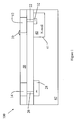
- FIG. 1 is an illustration of a semiconductor device 100 and is used to explain the mechanism of dendrite growth.
- the semiconductor device 100 includes a substrate 42 having an N-well 40 therein.
- a P + contact 28 is formed in the substrate 42 and an N + contact 32 is formed in N-well 40 and substrate 42.
- a diffusion barrier layer, such as Ta or TaN, is shown as 50.
- Semiconductor device 100 includes a metal line 22 leading to an interconnect 12 is attached to N + contact 32.
- Interconnect 14 is attached to P + contact 28 through metal line 20.
- the semiconductor junction has a driving force equal to the potential difference between interconnect 14 and 12. Accordingly, charge is formed with negative charge being generated on the N-well 40 side of an interface 41 and positive charge being generated on substrate 42 side of interface 41. Negative charges may distribute themselves along current flow path which passes through N-well 40, N + contact 32, second metal line 20 to second interconnect 14. Additionally, the positive charges may be allowed to distribute themselves along the current flow path along substrate 42, P + contact 28, first metal line 22 and first interconnect 12. With charge being generated at the semiconductor junction 41, and being allowed to freely move along the current flow paths, opposite charges collect at the first and second interconnects, 12 and 14, respectively.
- a dendrite 10 may form on interconnect 12 while the semiconductor device is being polished.
- Dendrite 10 is formed by Cu +2 ions precipitating out of the CMP solution at the negatively charged interconnect 12. Embodiments of the present invention provide a way to control this occurrence.
- the following components are used in a first CMP solution: an oxidizer, an abrasive, a surfactant, an organic acid, such as polyacrylic acid or polymethacrylic acid and a corrosion inhibitor. These components are dispersed in a liquid carrier. It has been found that polyacrylates of the organic acid promote formations of dendrites on metal/dielectric surfaces in the presence of an electrochemical driving force. Not to be bound by theory, it is thought that the CMP composition provides a polymeric layer containing Cu +2 ions which accumulates on the surfaces of and provides the source for dendrite deposition and growth. This process is accelerated by a negative potential on the surface which attracts Cu +2 ions and this attraction is stronger in the presence of a polyacrylic acid.
- Embodiments of the instant invention include a method of polishing a substrate including contacting a substrate having at least one metal layer including copper with a first chemical-mechanical polishing composition.
- the first CMP composition includes an abrasive, a surfactant, an oxidizer, an organic acid including polyacrylic acid or polymethacrylic acid, a corrosion inhibitor, and a liquid carrier.
- a portion of the copper in the metal layer is abraded to polish the substrate.
- a second CMP composition contacts the abraded substrate, the second composition including an abrasive, a surfactant, an oxidizer, and a corrosion inhibitor, and a liquid carrier with no organic acid. Any dendrites that may have formed on the substrate are removed through abrasion.
- the second CMP composition would be used between 10 and 20 % of the total CMP process. The most preferred embodiment would be use of the second CMP composition for 15% of the total CMP process, based on time.
- An alternate embodiment of the present invention includes contacting and abrading a substrate including at least one metal layer including copper with a continuous supply of a chemical-mechanical polishing composition.
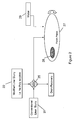
- Fig. 2 is a schematic representation of a way to implement this method.
- the first CMP composition includes an abrasive, a surfactant, an oxidizer, an organic acid including polyacrylic acid or polymethacrylic acid, a corrosion inhibitor, and a liquid carrier. This first composition is stored or supplied as shown by element 20.
- a second CMP composition which includes an abrasive, a surfactant, an oxidizer, a corrosion inhibitor, and a liquid carrier without an acrylate is stored or supplied by element 22.
- the amount of organic acid is reduced to zero during the abrading using valve 25 which switches the slurry delivery to a platen 27 from supply 20 to supply 22 for polishing the substrate or wafer 28. If desired, a water delivery line for additional water is shown in 29. Dendrite formation on the substrate is reduced using this method.
- Embodiments of a CMP solution include an abrasive.
- the abrasive can be in any suitable form (e.g., abrasive particles).
- the abrasive is typically in particulate form and suspended in the liquid carrier.
- the abrasive as well as any other components suspended in the liquid carrier, form the polishing compositions of the CMP systems.
- the abrasive typically has a mean primary particle size of about 100 nm or greater (e.g., about 105 nm or greater, about 110 nm or greater, or even about 120 nm or greater). Typically, the abrasive has a mean primary particle size of about 500 nm or less (e.g., about 250 nm or less, or even about 200 nm or less). Preferably, the abrasive has a mean primary particle size of about 100 nm to about 250 nm (e.g., about 105 nm to about 180 nm). The abrasive can be substantially free of aggregated abrasive particles such that the mean particle size is about the same as the mean primary particle size.
- the abrasive can be any suitable abrasive, for example, an inorganic metal oxide abrasive selected from the group consisting of alumina (e.g., ⁇ -alumina, ⁇ -alumina, ⁇ -alumina, and fumed alumina), silica (e.g., colloidally dispersed condensation-polymerized silica, precipitated silica, fumed silica), ceria, titania, zirconia, germania, magnesia, co-formed products thereof, and combinations thereof.
- the metal oxide abrasive can be electrostatically coated with an oppositely-charged polyelectrolyte.
- the abrasive also can comprise a cross-linked polymer abrasive.
- the abrasive is a silica abrasive or a polyelectrolyte-coated alumina abrasive (e.g., polystyrenesulfonic acid-coated alumina abrasive).
- Silica abrasives and polymer-coated alumina abrasives are particularly desirable when polishing soft metal layers such as copper which can easily be scratched by hard abrasives such as alumina abrasives.
- the abrasive typically has a mean primary particle size of about 20 nm or greater (e.g., about 30 nm or greater, or even about 50 nm or greater).
- the mean primary particle size preferably is about 1 micron or less (e.g., about 500 nm or less).
- the abrasive in the second embodiment additionally can have the characteristics of the abrasive in the first embodiment, and vice versa.
- the abrasive described herein is colloidally stable.
- the CMP compositions typically include about 0.1 wt. % to about 20 wt. % (e.g., about 0.5 wt. % to about 15 wt. %, or about 1 wt. % to about 10 wt. %) abrasive, based on the weight of the liquid carrier and any components dissolved or suspended therein.
- the surfactant of the CMP composition or solution in embodiment of this invention is used to promote wetting.
- surfactant can be sodium octyl sulfate, ammonium lauryl sulfate or sodium lauryl sulfate.
- the polishing systems typically comprise about 0.1 wt. % or less surfactant, based on the weight of the liquid carrier and any compounds dissolved or suspended therein.
- the polishing system comprises about 0.001 wt. % to about 0.06 wt. % (e.g., about 0.01 wt. % to about 0.04 wt. %) surfactant, based on the weight of the liquid carrier and any compounds dissolved or suspended therein.
- the chemical oxidizing agent can be any suitable oxidizing agent.
- suitable oxidizing agents include inorganic and organic per-compounds, bromates, nitrates, chlorates, chromates, iodates, iron and copper salts (e.g., nitrates, sulfates, ethylenediaminetetraacetic acid (EDTA), and citrates), rare earth and transition metal oxides (e.g., osmium tetraoxide), potassium ferricyanide, potassium dichromate, iodic acid, and the like.
- a per-compound is a compound containing at least one peroxy group (--O--O--) or a compound containing an element in its highest oxidation state.
- compounds containing at least one peroxy group include hydrogen peroxide and its adducts such as urea hydrogen peroxide and percarbonates, organic peroxides such as benzoyl peroxide, peracetic acid, and di-tert-butyl peroxide, monopersulfates (SO 5 2 -), dipersulfates (S 2 O 8 2 -), and sodium peroxide.
- Examples of compounds containing an element in its highest oxidation state include periodic acid, periodate salts, perbromic acid, perbromate salts, perchloric acid, perchlorate salts, perboric acid, perborate salts, and permanganates.
- the oxidizing agent preferably includes hydrogen peroxide.
- the CMP composition typically includes about 0.1 wt. % to about 15 wt. % (e.g., about 0.2 wt. % to about 10 wt. %, about 0.5 wt. % to about 8 wt. %, or about 1 wt. % to about 5 wt. %) oxidizing agent, based on the weight of the liquid carrier and any compounds dissolved or suspended therein.
- the organic acid in the initial first CMP composition includes polyacrylic acid or polymethacrylic acid.
- the amount of organic acid used in the polishing system typically is about 0.01 to about 5 wt. %, preferably about 0.05 to about 3 wt. %.
- the corrosion inhibitor i.e., a film-forming agent
- passivant can be any suitable corrosion inhibitor.
- the corrosion inhibitor is an organic compound containing a heteroatom-containing functional group.
- the corrosion inhibitor may include a heterocyclic organic compound with at least one 5- or 6-member heterocyclic ring as the active functional group, wherein the heterocyclic ring contains at least one nitrogen atom, for example, an azole compound.
- the corrosion inhibitor includes a triazole; more preferably, 1,2,4-triazole, 1,2,3-triazole, or benzotriazole.
- the amount of corrosion inhibitor used in the polishing system typically is about 0.0001 to about 3 wt. %, preferably about 0.001 to about 2 wt. %.
- a liquid carrier is used to facilitate the application of the abrasive and any components dissolved or suspended therein to the surface of a suitable substrate to be polished (e.g., planarized).
- the liquid carrier is typically an aqueous carrier and can be water alone, can comprise water and a suitable water-miscible solvent, or can be an emulsion. Suitable water-miscible solvents include alcohols such as methanol, ethanol, etc.
- the aqueous carrier consists of water, more preferably deionized water.
- the polishing compositions can have any suitable pH, for example, the polishing compositions can have a pH of about 2 to about 12. Typically, the polishing compositions have a pH of about 3 or greater (e.g., about 5 or greater, or about 7 or greater) and a pH of about 12 or lower (e.g., about 10 or lower).
- the CMP systems optionally can further comprise other components.
- Such other components may include, for example, complexing or chelating agents, biocides, anti-foaming agents, and the like.
- the complexing or chelating agent is any suitable chemical additive that enhances the removal rate of the substrate layer being removed.
- Suitable chelating or complexing agents can include, for example, carbonyl compounds (e.g., acetylacetonates, and the like), di-, tri-, or polyalcohols (e.g., ethylene glycol, pyrocatechol, pyrogallol, tannic acid, and the like) and amine-containing compounds (e.g., ammonia, amino acids, amino alcohols, di-, tri-, and polyamines, and the like).
- the choice of chelating or complexing agent will depend on the type of substrate layer being removed in the course of polishing a substrate with the polishing composition.
- the amount of complexing agent used in the polishing system typically is about 0.1 to about 10 wt. %, preferably about 1 to about 5 wt. %.
- the biocide can be any suitable biocide, for example isothiazolinone biocide.
- the amount of biocide used in the polishing system typically is about 1 to about 50 ppm, preferably about 10 to about 20 ppm.
- the anti-foaming agent can be any suitable anti-foaming agent.
- the anti-foaming agent can be a polydimethylsiloxane polymer.
- the amount of anti-foaming agent present in the polishing system typically is about 40 to about 140 ppm.
- the CMP composition optionally can further comprise one or more components such as pH adjusters, regulators, or buffers, and the like.
- Suitable pH adjusters, regulators, or buffers can include, for example, sodium hydroxide, potassium hydroxide, ammonium hydroxide, sodium carbonate, potassium carbonate, sulfuric acid, hydrochloric acid, nitric acid, phosphoric acid, citric acid, potassium phosphate, mixtures thereof, and the like.
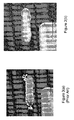
- FIG. 3(a) shows the same substrate polished using the two step process described and it is clear that dendrites are absent from the substrate.
Landscapes
- Chemical & Material Sciences (AREA)
- Organic Chemistry (AREA)
- Engineering & Computer Science (AREA)
- Mechanical Treatment Of Semiconductor (AREA)
- Physics & Mathematics (AREA)
- Condensed Matter Physics & Semiconductors (AREA)
- General Physics & Mathematics (AREA)
- Manufacturing & Machinery (AREA)
- Computer Hardware Design (AREA)
- Microelectronics & Electronic Packaging (AREA)
- Power Engineering (AREA)
Claims (12)
- Verfahren zum Polieren eines Substrats (42), welches das Folgende umfasst:(i) In-Kontakt-Bringen eines Substrats, welches mindestens eine Metallschicht (12, 14) umfasst, welche Kupfer umfasst, mit einer ersten chemisch-mechanischen Polierzusammensetzung, welche das Folgende umfasst: ein Schleifmittel, eine oberflächenaktive Substanz, ein Oxidationsmittel, eine organische Säure, wie Polyacrylsäure oder Polymethacrylsäure, einen Korrosionshemmer und einen flüssigen Trägerstoff;(ii) Abtragen zumindest eines Teils der Metallschicht, um das Substrat zu polieren;(iii) In-Kontakt-Bringen des abgetragenen Substrats aus (ii) mit einer zweiten acrylatfreien freien chemisch-mechanischen Polierzusammensetzung, welche das Folgende umfasst: ein Schleifmittel, eine oberflächenaktive Substanz, ein Oxidationsmittel und einen Korrosionshemmer und einen flüssigen Trägerstoff; und(iv) Entfernen von Dendriten (10), welche sich auf dem Substrat gebildet haben können, durch Abtragen.
- Verfahren nach Anspruch 1, wobei das Schleifmittel in der ersten und zweiten Zusammensetzung aus der Gruppe ausgewählt ist, die aus Aluminiumoxid, Siliciumdioxid, Cerdioxid, Titandioxid, Zirconiumdioxid, Germaniumdioxid, Magnesiumoxid und Kombinationen dieser besteht.
- Verfahren nach Anspruch 1, wobei das Schleifmittel in der ersten und zweiten Zusammensetzung eine mittlere Teilchengröße von 105 nm bis zu etwa 180 nm umfasst.
- Verfahren nach Anspruch 1, wobei die oberflächenaktive Substanz in der ersten und zweiten Zusammensetzung Natriumoctylsulfat, Ammoniumlaurylsulfat oder Natriumlaurylsulfat umfasst.
- Verfahren nach Anspruch 1, wobei das Oxidationsmittel in der ersten und zweiten Zusammensetzung aus der Gruppe ausgewählt ist, die aus anorganischen Perverbindungen, organischen Perverbindungen, Bromaten, Nitraten, Chloraten, Chromaten, Iodaten, Eisensalzen, Kupfersalzen, Seltenerdmetalloxiden, Übergangsmetalloxiden, Kaliumcyanoferrat(III), Kaliumdichromat und Iodsäure besteht.
- Verfahren nach Anspruch 1, wobei der flüssige Trägerstoff der ersten und zweiten Zusammensetzung Wasser umfasst.
- Verfahren nach Anspruch 1, wobei der Korrosionshemmer in der ersten und zweiten Zusammensetzung aus der Gruppe ausgewählt ist, die aus Benzotriazol, 6-Tolyltriazol, 1,2,3-Triazol, 1,2,4-Triazol und Kombinationen dieser besteht.
- Verfahren nach Anspruch 1, wobei die erste Zusammensetzung einen pH-Wert von etwa 3 oder höher aufweist.
- Verfahren nach Anspruch 1, wobei das In-Kontakt-Bringen des abgetragenen Substrats aus (ii) mit einer zweiten acrylatfreien freien chemisch-mechanischen Polierzusammensetzung 10 % bis 20 % der Gesamtzeit des Verfahrens umfasst.
- Verfahren nach Anspruch 1, welches das Folgende umfasst:In-Kontakt-Bringen des Substrats mit einer kontinuierlichen Zufuhr der ersten Zusammensetzung; und Verringern der Menge der organischen Säure in der ersten Zusammensetzung auf Null, um die zweite Zusammensetzung zu erzeugen, wodurch die Dendritbildung auf dem Substrat verringert wird.
- Verfahren nach Anspruch 10, wobei die erste und/oder zweite Zusammensetzung ferner Chelatbildner, Biozide und Antischaummittel umfassen.
- Verfahren nach Anspruch 10, wobei die erste und/oder zweite Zusammensetzung ferner Mittel zum Einstellen des pH-Werts, Regulatoren oder Puffer umfassen.
Applications Claiming Priority (2)
| Application Number | Priority Date | Filing Date | Title |
|---|---|---|---|
| US12/415,406 US8088690B2 (en) | 2009-03-31 | 2009-03-31 | CMP method |
| PCT/EP2010/052093 WO2010112265A1 (en) | 2009-03-31 | 2010-02-19 | Cmp method |
Publications (2)
| Publication Number | Publication Date |
|---|---|
| EP2329520A1 EP2329520A1 (de) | 2011-06-08 |
| EP2329520B1 true EP2329520B1 (de) | 2012-10-24 |
Family
ID=42040562
Family Applications (1)
| Application Number | Title | Priority Date | Filing Date |
|---|---|---|---|
| EP10707249A Not-in-force EP2329520B1 (de) | 2009-03-31 | 2010-02-19 | Cmp-verfahren |
Country Status (7)
| Country | Link |
|---|---|
| US (1) | US8088690B2 (de) |
| EP (1) | EP2329520B1 (de) |
| JP (1) | JP4996774B1 (de) |
| KR (1) | KR101307582B1 (de) |
| CN (1) | CN102341896B (de) |
| TW (1) | TWI463554B (de) |
| WO (1) | WO2010112265A1 (de) |
Families Citing this family (10)
| Publication number | Priority date | Publication date | Assignee | Title |
|---|---|---|---|---|
| TWI421334B (zh) * | 2010-12-21 | 2014-01-01 | Uwiz Technology Co Ltd | 研磨組成物及其用途 |
| EP3410080B1 (de) | 2011-01-20 | 2022-07-13 | University of Washington through its Center for Commercialization | Verfahren und systeme zur durchführung digitaler messungen |
| JP5703060B2 (ja) * | 2011-02-22 | 2015-04-15 | 株式会社トッパンTdkレーベル | 化学的機械的研磨液 |
| WO2012123839A1 (en) * | 2011-03-11 | 2012-09-20 | Basf Se | Method for forming through-base wafer vias |
| TWI453273B (zh) * | 2011-11-07 | 2014-09-21 | Uwiz Technology Co Ltd | 研漿組成物及其用途 |
| US8920567B2 (en) | 2013-03-06 | 2014-12-30 | International Business Machines Corporation | Post metal chemical-mechanical planarization cleaning process |
| US10217645B2 (en) | 2014-07-25 | 2019-02-26 | Versum Materials Us, Llc | Chemical mechanical polishing (CMP) of cobalt-containing substrate |
| TWI535835B (zh) * | 2015-02-05 | 2016-06-01 | 盟智科技股份有限公司 | 化學機械拋光漿液 |
| US10294399B2 (en) * | 2017-01-05 | 2019-05-21 | Cabot Microelectronics Corporation | Composition and method for polishing silicon carbide |
| CN109971357B (zh) * | 2017-12-27 | 2021-12-07 | 安集微电子(上海)有限公司 | 一种化学机械抛光液 |
Family Cites Families (13)
| Publication number | Priority date | Publication date | Assignee | Title |
|---|---|---|---|---|
| US6218290B1 (en) | 1998-11-25 | 2001-04-17 | Advanced Micro Devices, Inc. | Copper dendrite prevention by chemical removal of dielectric |
| US6348076B1 (en) * | 1999-10-08 | 2002-02-19 | International Business Machines Corporation | Slurry for mechanical polishing (CMP) of metals and use thereof |
| US6653242B1 (en) * | 2000-06-30 | 2003-11-25 | Applied Materials, Inc. | Solution to metal re-deposition during substrate planarization |
| US6821897B2 (en) | 2001-12-05 | 2004-11-23 | Cabot Microelectronics Corporation | Method for copper CMP using polymeric complexing agents |
| US6936543B2 (en) | 2002-06-07 | 2005-08-30 | Cabot Microelectronics Corporation | CMP method utilizing amphiphilic nonionic surfactants |
| DE10257682A1 (de) | 2002-12-10 | 2004-07-08 | Infineon Technologies Ag | Halbleiterschaltungsanordnung |
| US7188630B2 (en) * | 2003-05-07 | 2007-03-13 | Freescale Semiconductor, Inc. | Method to passivate conductive surfaces during semiconductor processing |
| JP4649871B2 (ja) * | 2003-05-12 | 2011-03-16 | Jsr株式会社 | 化学機械研磨剤キットを用いた化学機械研磨方法 |
| JP4012180B2 (ja) * | 2004-08-06 | 2007-11-21 | 株式会社東芝 | Cmp用スラリー、研磨方法、および半導体装置の製造方法 |
| US7109584B2 (en) | 2004-11-23 | 2006-09-19 | International Business Machines Corporation | Dendrite growth control circuit |
| EP1899111A2 (de) * | 2005-06-06 | 2008-03-19 | Advanced Technology Materials, Inc. | Zusammensetzung zum integrierten chemisch-mechanischen polieren und verfahren zur einzelplattenbehandlung |
| JP2007220891A (ja) * | 2006-02-16 | 2007-08-30 | Toshiba Corp | ポストcmp処理液、およびこれを用いた半導体装置の製造方法 |
| JP2008078577A (ja) * | 2006-09-25 | 2008-04-03 | Jsr Corp | 基板処理方法 |
-
2009
- 2009-03-31 US US12/415,406 patent/US8088690B2/en not_active Expired - Fee Related
-
2010
- 2010-02-19 CN CN201080010689.6A patent/CN102341896B/zh not_active Expired - Fee Related
- 2010-02-19 EP EP10707249A patent/EP2329520B1/de not_active Not-in-force
- 2010-02-19 JP JP2011551469A patent/JP4996774B1/ja not_active Expired - Fee Related
- 2010-02-19 WO PCT/EP2010/052093 patent/WO2010112265A1/en not_active Ceased
- 2010-02-19 KR KR1020117024588A patent/KR101307582B1/ko not_active Expired - Fee Related
- 2010-03-25 TW TW099108982A patent/TWI463554B/zh not_active IP Right Cessation
Also Published As
| Publication number | Publication date |
|---|---|
| US20100248479A1 (en) | 2010-09-30 |
| JP4996774B1 (ja) | 2012-08-08 |
| TW201044451A (en) | 2010-12-16 |
| CN102341896B (zh) | 2014-04-16 |
| TWI463554B (zh) | 2014-12-01 |
| US8088690B2 (en) | 2012-01-03 |
| KR101307582B1 (ko) | 2013-09-12 |
| CN102341896A (zh) | 2012-02-01 |
| JP2012518913A (ja) | 2012-08-16 |
| WO2010112265A1 (en) | 2010-10-07 |
| EP2329520A1 (de) | 2011-06-08 |
| KR20110137802A (ko) | 2011-12-23 |
Similar Documents
| Publication | Publication Date | Title |
|---|---|---|
| EP2329520B1 (de) | Cmp-verfahren | |
| EP1483349B1 (de) | Mit positiv geladenen polyelektrolyten behandelte anionische schleifmittelteilchen für das chemomechanische polieren | |
| EP1451863B1 (de) | Verfahren zum kupfer-cmp mit polymerischen komplexbildner | |
| EP1090083B1 (de) | Suspension zum chemisch-mechanischen polieren von kupfer/tantalum-substraten | |
| US6083419A (en) | Polishing composition including an inhibitor of tungsten etching | |
| JP5448994B2 (ja) | 両親媒性非イオン性界面活性剤を利用したcmp法 | |
| WO2000000567A1 (en) | Chemical mechanical polishing slurry useful for copper/tantalum substrate | |
| KR20160099498A (ko) | 텅스텐 화학적 기계적 연마에서 디싱 감소 | |
| EP2038361A1 (de) | Cmp-aufschlämmungen mit gezielt einstellbarer selektivität | |
| US10170335B1 (en) | Chemical mechanical polishing method for cobalt | |
| US10377921B2 (en) | Chemical mechanical polishing method for cobalt | |
| EP3891234A1 (de) | Zusammensetzung und verfahren für kupferbarriere-cmp | |
| US6858531B1 (en) | Electro chemical mechanical polishing method | |
| Penta | Abrasive-free and ultra-low abrasive chemical mechanical polishing (CMP) processes |
Legal Events
| Date | Code | Title | Description |
|---|---|---|---|
| PUAI | Public reference made under article 153(3) epc to a published international application that has entered the european phase |
Free format text: ORIGINAL CODE: 0009012 |
|
| 17P | Request for examination filed |
Effective date: 20110301 |
|
| AK | Designated contracting states |
Kind code of ref document: A1 Designated state(s): AT BE BG CH CY CZ DE DK EE ES FI FR GB GR HR HU IE IS IT LI LT LU LV MC MK MT NL NO PL PT RO SE SI SK SM TR |
|
| AX | Request for extension of the european patent |
Extension state: AL BA RS |
|
| RIC1 | Information provided on ipc code assigned before grant |
Ipc: H01L 21/321 20060101AFI20120426BHEP Ipc: C09G 1/02 20060101ALI20120426BHEP Ipc: H01L 21/768 20060101ALI20120426BHEP |
|
| GRAP | Despatch of communication of intention to grant a patent |
Free format text: ORIGINAL CODE: EPIDOSNIGR1 |
|
| DAX | Request for extension of the european patent (deleted) | ||
| GRAS | Grant fee paid |
Free format text: ORIGINAL CODE: EPIDOSNIGR3 |
|
| GRAA | (expected) grant |
Free format text: ORIGINAL CODE: 0009210 |
|
| AK | Designated contracting states |
Kind code of ref document: B1 Designated state(s): AT BE BG CH CY CZ DE DK EE ES FI FR GB GR HR HU IE IS IT LI LT LU LV MC MK MT NL NO PL PT RO SE SI SK SM TR |
|
| REG | Reference to a national code |
Ref country code: GB Ref legal event code: FG4D |
|
| REG | Reference to a national code |
Ref country code: CH Ref legal event code: NV Representative=s name: IBM RESEARCH GMBH ZURICH RESEARCH LABORATORY INTEL Ref country code: CH Ref legal event code: EP |
|
| REG | Reference to a national code |
Ref country code: DE Ref legal event code: R084 Ref document number: 602010003357 Country of ref document: DE |
|
| REG | Reference to a national code |
Ref country code: AT Ref legal event code: REF Ref document number: 581315 Country of ref document: AT Kind code of ref document: T Effective date: 20121115 |
|
| REG | Reference to a national code |
Ref country code: IE Ref legal event code: FG4D |
|
| REG | Reference to a national code |
Ref country code: GB Ref legal event code: 746 Effective date: 20121119 |
|
| REG | Reference to a national code |
Ref country code: DE Ref legal event code: R096 Ref document number: 602010003357 Country of ref document: DE Effective date: 20121220 |
|
| REG | Reference to a national code |
Ref country code: DE Ref legal event code: R084 Ref document number: 602010003357 Country of ref document: DE Effective date: 20121109 |
|
| REG | Reference to a national code |
Ref country code: AT Ref legal event code: MK05 Ref document number: 581315 Country of ref document: AT Kind code of ref document: T Effective date: 20121024 |
|
| REG | Reference to a national code |
Ref country code: NL Ref legal event code: VDEP Effective date: 20121024 |
|
| PG25 | Lapsed in a contracting state [announced via postgrant information from national office to epo] |
Ref country code: NO Free format text: LAPSE BECAUSE OF FAILURE TO SUBMIT A TRANSLATION OF THE DESCRIPTION OR TO PAY THE FEE WITHIN THE PRESCRIBED TIME-LIMIT Effective date: 20130124 Ref country code: ES Free format text: LAPSE BECAUSE OF FAILURE TO SUBMIT A TRANSLATION OF THE DESCRIPTION OR TO PAY THE FEE WITHIN THE PRESCRIBED TIME-LIMIT Effective date: 20130204 Ref country code: SE Free format text: LAPSE BECAUSE OF FAILURE TO SUBMIT A TRANSLATION OF THE DESCRIPTION OR TO PAY THE FEE WITHIN THE PRESCRIBED TIME-LIMIT Effective date: 20121024 Ref country code: IS Free format text: LAPSE BECAUSE OF FAILURE TO SUBMIT A TRANSLATION OF THE DESCRIPTION OR TO PAY THE FEE WITHIN THE PRESCRIBED TIME-LIMIT Effective date: 20130224 Ref country code: FI Free format text: LAPSE BECAUSE OF FAILURE TO SUBMIT A TRANSLATION OF THE DESCRIPTION OR TO PAY THE FEE WITHIN THE PRESCRIBED TIME-LIMIT Effective date: 20121024 Ref country code: HR Free format text: LAPSE BECAUSE OF FAILURE TO SUBMIT A TRANSLATION OF THE DESCRIPTION OR TO PAY THE FEE WITHIN THE PRESCRIBED TIME-LIMIT Effective date: 20121024 Ref country code: NL Free format text: LAPSE BECAUSE OF FAILURE TO SUBMIT A TRANSLATION OF THE DESCRIPTION OR TO PAY THE FEE WITHIN THE PRESCRIBED TIME-LIMIT Effective date: 20121024 |
|
| PG25 | Lapsed in a contracting state [announced via postgrant information from national office to epo] |
Ref country code: LV Free format text: LAPSE BECAUSE OF FAILURE TO SUBMIT A TRANSLATION OF THE DESCRIPTION OR TO PAY THE FEE WITHIN THE PRESCRIBED TIME-LIMIT Effective date: 20121024 Ref country code: GR Free format text: LAPSE BECAUSE OF FAILURE TO SUBMIT A TRANSLATION OF THE DESCRIPTION OR TO PAY THE FEE WITHIN THE PRESCRIBED TIME-LIMIT Effective date: 20130125 Ref country code: SI Free format text: LAPSE BECAUSE OF FAILURE TO SUBMIT A TRANSLATION OF THE DESCRIPTION OR TO PAY THE FEE WITHIN THE PRESCRIBED TIME-LIMIT Effective date: 20121024 Ref country code: PT Free format text: LAPSE BECAUSE OF FAILURE TO SUBMIT A TRANSLATION OF THE DESCRIPTION OR TO PAY THE FEE WITHIN THE PRESCRIBED TIME-LIMIT Effective date: 20130225 Ref country code: PL Free format text: LAPSE BECAUSE OF FAILURE TO SUBMIT A TRANSLATION OF THE DESCRIPTION OR TO PAY THE FEE WITHIN THE PRESCRIBED TIME-LIMIT Effective date: 20121024 Ref country code: BE Free format text: LAPSE BECAUSE OF FAILURE TO SUBMIT A TRANSLATION OF THE DESCRIPTION OR TO PAY THE FEE WITHIN THE PRESCRIBED TIME-LIMIT Effective date: 20121024 |
|
| PG25 | Lapsed in a contracting state [announced via postgrant information from national office to epo] |
Ref country code: AT Free format text: LAPSE BECAUSE OF FAILURE TO SUBMIT A TRANSLATION OF THE DESCRIPTION OR TO PAY THE FEE WITHIN THE PRESCRIBED TIME-LIMIT Effective date: 20121024 |
|
| PG25 | Lapsed in a contracting state [announced via postgrant information from national office to epo] |
Ref country code: BG Free format text: LAPSE BECAUSE OF FAILURE TO SUBMIT A TRANSLATION OF THE DESCRIPTION OR TO PAY THE FEE WITHIN THE PRESCRIBED TIME-LIMIT Effective date: 20130124 Ref country code: DK Free format text: LAPSE BECAUSE OF FAILURE TO SUBMIT A TRANSLATION OF THE DESCRIPTION OR TO PAY THE FEE WITHIN THE PRESCRIBED TIME-LIMIT Effective date: 20121024 Ref country code: EE Free format text: LAPSE BECAUSE OF FAILURE TO SUBMIT A TRANSLATION OF THE DESCRIPTION OR TO PAY THE FEE WITHIN THE PRESCRIBED TIME-LIMIT Effective date: 20121024 Ref country code: SK Free format text: LAPSE BECAUSE OF FAILURE TO SUBMIT A TRANSLATION OF THE DESCRIPTION OR TO PAY THE FEE WITHIN THE PRESCRIBED TIME-LIMIT Effective date: 20121024 Ref country code: CZ Free format text: LAPSE BECAUSE OF FAILURE TO SUBMIT A TRANSLATION OF THE DESCRIPTION OR TO PAY THE FEE WITHIN THE PRESCRIBED TIME-LIMIT Effective date: 20121024 |
|
| PG25 | Lapsed in a contracting state [announced via postgrant information from national office to epo] |
Ref country code: RO Free format text: LAPSE BECAUSE OF FAILURE TO SUBMIT A TRANSLATION OF THE DESCRIPTION OR TO PAY THE FEE WITHIN THE PRESCRIBED TIME-LIMIT Effective date: 20121024 Ref country code: IT Free format text: LAPSE BECAUSE OF FAILURE TO SUBMIT A TRANSLATION OF THE DESCRIPTION OR TO PAY THE FEE WITHIN THE PRESCRIBED TIME-LIMIT Effective date: 20121024 |
|
| PLBE | No opposition filed within time limit |
Free format text: ORIGINAL CODE: 0009261 |
|
| STAA | Information on the status of an ep patent application or granted ep patent |
Free format text: STATUS: NO OPPOSITION FILED WITHIN TIME LIMIT |
|
| PG25 | Lapsed in a contracting state [announced via postgrant information from national office to epo] |
Ref country code: MC Free format text: LAPSE BECAUSE OF NON-PAYMENT OF DUE FEES Effective date: 20130228 |
|
| 26N | No opposition filed |
Effective date: 20130725 |
|
| REG | Reference to a national code |
Ref country code: FR Ref legal event code: ST Effective date: 20131031 |
|
| REG | Reference to a national code |
Ref country code: DE Ref legal event code: R097 Ref document number: 602010003357 Country of ref document: DE Effective date: 20130725 |
|
| PG25 | Lapsed in a contracting state [announced via postgrant information from national office to epo] |
Ref country code: CY Free format text: LAPSE BECAUSE OF FAILURE TO SUBMIT A TRANSLATION OF THE DESCRIPTION OR TO PAY THE FEE WITHIN THE PRESCRIBED TIME-LIMIT Effective date: 20121024 |
|
| REG | Reference to a national code |
Ref country code: IE Ref legal event code: MM4A |
|
| PG25 | Lapsed in a contracting state [announced via postgrant information from national office to epo] |
Ref country code: FR Free format text: LAPSE BECAUSE OF NON-PAYMENT OF DUE FEES Effective date: 20130228 Ref country code: IE Free format text: LAPSE BECAUSE OF NON-PAYMENT OF DUE FEES Effective date: 20130219 |
|
| PG25 | Lapsed in a contracting state [announced via postgrant information from national office to epo] |
Ref country code: LT Free format text: LAPSE BECAUSE OF FAILURE TO SUBMIT A TRANSLATION OF THE DESCRIPTION OR TO PAY THE FEE WITHIN THE PRESCRIBED TIME-LIMIT Effective date: 20121024 Ref country code: MT Free format text: LAPSE BECAUSE OF FAILURE TO SUBMIT A TRANSLATION OF THE DESCRIPTION OR TO PAY THE FEE WITHIN THE PRESCRIBED TIME-LIMIT Effective date: 20121024 |
|
| REG | Reference to a national code |
Ref country code: CH Ref legal event code: PL |
|
| PG25 | Lapsed in a contracting state [announced via postgrant information from national office to epo] |
Ref country code: LI Free format text: LAPSE BECAUSE OF NON-PAYMENT OF DUE FEES Effective date: 20140228 Ref country code: CH Free format text: LAPSE BECAUSE OF NON-PAYMENT OF DUE FEES Effective date: 20140228 |
|
| PG25 | Lapsed in a contracting state [announced via postgrant information from national office to epo] |
Ref country code: SM Free format text: LAPSE BECAUSE OF FAILURE TO SUBMIT A TRANSLATION OF THE DESCRIPTION OR TO PAY THE FEE WITHIN THE PRESCRIBED TIME-LIMIT Effective date: 20121024 |
|
| PGFP | Annual fee paid to national office [announced via postgrant information from national office to epo] |
Ref country code: GB Payment date: 20150226 Year of fee payment: 6 |
|
| PG25 | Lapsed in a contracting state [announced via postgrant information from national office to epo] |
Ref country code: TR Free format text: LAPSE BECAUSE OF FAILURE TO SUBMIT A TRANSLATION OF THE DESCRIPTION OR TO PAY THE FEE WITHIN THE PRESCRIBED TIME-LIMIT Effective date: 20121024 |
|
| PG25 | Lapsed in a contracting state [announced via postgrant information from national office to epo] |
Ref country code: HU Free format text: LAPSE BECAUSE OF FAILURE TO SUBMIT A TRANSLATION OF THE DESCRIPTION OR TO PAY THE FEE WITHIN THE PRESCRIBED TIME-LIMIT; INVALID AB INITIO Effective date: 20100219 Ref country code: LU Free format text: LAPSE BECAUSE OF NON-PAYMENT OF DUE FEES Effective date: 20130219 Ref country code: MK Free format text: LAPSE BECAUSE OF FAILURE TO SUBMIT A TRANSLATION OF THE DESCRIPTION OR TO PAY THE FEE WITHIN THE PRESCRIBED TIME-LIMIT Effective date: 20121024 |
|
| REG | Reference to a national code |
Ref country code: DE Ref legal event code: R081 Ref document number: 602010003357 Country of ref document: DE Owner name: GLOBALFOUNDRIES US 2 LLC (N.D.GES.DES STAATES , US Free format text: FORMER OWNER: INTERNATIONAL BUSINESS MACHINES CORPORATION, ARMONK, N.Y., US Ref country code: DE Ref legal event code: R081 Ref document number: 602010003357 Country of ref document: DE Owner name: GLOBALFOUNDRIES INC., KY Free format text: FORMER OWNER: INTERNATIONAL BUSINESS MACHINES CORPORATION, ARMONK, N.Y., US |
|
| REG | Reference to a national code |
Ref country code: DE Ref legal event code: R082 Ref document number: 602010003357 Country of ref document: DE Representative=s name: RICHARDT PATENTANWAELTE PARTG MBB, DE Ref country code: DE Ref legal event code: R081 Ref document number: 602010003357 Country of ref document: DE Owner name: GLOBALFOUNDRIES INC., KY Free format text: FORMER OWNER: GLOBALFOUNDRIES US 2 LLC (N.D.GES.DES STAATES DELAWARE), HOPEWELL JUNCTION, N.Y., US |
|
| GBPC | Gb: european patent ceased through non-payment of renewal fee |
Effective date: 20160219 |
|
| PG25 | Lapsed in a contracting state [announced via postgrant information from national office to epo] |
Ref country code: GB Free format text: LAPSE BECAUSE OF NON-PAYMENT OF DUE FEES Effective date: 20160219 |
|
| PGFP | Annual fee paid to national office [announced via postgrant information from national office to epo] |
Ref country code: DE Payment date: 20170214 Year of fee payment: 8 |
|
| REG | Reference to a national code |
Ref country code: DE Ref legal event code: R119 Ref document number: 602010003357 Country of ref document: DE |
|
| PG25 | Lapsed in a contracting state [announced via postgrant information from national office to epo] |
Ref country code: DE Free format text: LAPSE BECAUSE OF NON-PAYMENT OF DUE FEES Effective date: 20180901 |