EP2306741A2 - Bildsignalverarbeitungsvorrichtung, Verfahren und Programm zur Eingabe von Bildern und Steuerungsdaten in eine omnidirektionale stereoskopische Bildanzeigevorrichtung - Google Patents
Bildsignalverarbeitungsvorrichtung, Verfahren und Programm zur Eingabe von Bildern und Steuerungsdaten in eine omnidirektionale stereoskopische Bildanzeigevorrichtung Download PDFInfo
- Publication number
- EP2306741A2 EP2306741A2 EP20100176647 EP10176647A EP2306741A2 EP 2306741 A2 EP2306741 A2 EP 2306741A2 EP 20100176647 EP20100176647 EP 20100176647 EP 10176647 A EP10176647 A EP 10176647A EP 2306741 A2 EP2306741 A2 EP 2306741A2
- Authority
- EP
- European Patent Office
- Prior art keywords
- entire
- viewpoint images
- circumference
- control data
- frame
- Prior art date
- Legal status (The legal status is an assumption and is not a legal conclusion. Google has not performed a legal analysis and makes no representation as to the accuracy of the status listed.)
- Withdrawn
Links
Images





Classifications
-
- H—ELECTRICITY
- H04—ELECTRIC COMMUNICATION TECHNIQUE
- H04N—PICTORIAL COMMUNICATION, e.g. TELEVISION
- H04N13/00—Stereoscopic video systems; Multi-view video systems; Details thereof
- H04N13/30—Image reproducers
- H04N13/398—Synchronisation thereof; Control thereof
Definitions
- the present invention relates to an image signal processing apparatus, an image signal processing method, an image display apparatus, an image display method, a program, and an image display system, preferably (though not exclusively) used when a stereoscopic image of a subject is displayed, for example.
- viewpoint images entire circumference stereoscopic image display apparatuses that can display a stereoscopic image over the entire circumference of a subject using plural images at different viewpoints (hereinafter, referred to as "viewpoint images") imaged from plural viewpoints provided on a circumference around the subject (or generated on the assumption of the states of the subject seen from the entire circumference by computer graphics) have been proposed (see JP-A-2004-177709 or JP-A-2005-114771 ).
- the entire circumference stereoscopic image display apparatuses have their display units in cylindrical shapes and display images of a subject stereoscopically visible for a user who watches the side surface of the cylindrical shape from an arbitrary direction.
- NTSC National Television System Committee
- an image signal processing apparatus that supplies entire-circumference viewpoint images including plural viewpoint images respectively corresponding to plural viewpoints provided on a circumference around a subject to an image display apparatus that displays a stereoscopic image of the subject seen from an entire circumference, including: buffering means for buffering the input entire-circumference viewpoint images; generating means for arranging the buffered entire-circumference viewpoint images on a frame of arbitrary video standards to generate the frame of the arbitrary video standards; and replacing means for replacing pixel values of a pixel in a predetermined position on the generated frame by control data for controlling the image display apparatus and outputting the control data as video signals of the arbitrary video standards.
- the replacing means may replace the lowermost bit of the pixel values of the pixel in the predetermined position on the generated frame by the control data.
- the replacing means may replace the entire of the pixel values of the pixel in the predetermined position on the generated frame by the control data.
- the replacing means may replace the pixel values of pixels in plural predetermined positions on the generated frame by the control data, and thereby, multiplexes and recodes the control data.
- the control data may contain information for commanding the image display apparatus whether to output the input video signals to another display or not.
- an image signal processing method of an image signal processing apparatus that supplies entire circumference viewpoint images including plural viewpoint images respectively corresponding to plural viewpoints provided on a circumference around a subject to an image display apparatus that displays a stereoscopic image of the subject seen from an entire circumference, including the steps of: by the image signal processing apparatus, the buffering step of buffering the input entire-circumference viewpoint images; the generating step of arranging the buffered entire-circumference viewpoint images on a frame of arbitrary video standards to generate the frame of the arbitrary video standards; and the replacing step of replacing pixel values of a pixel in a predetermined position on the generated frame by control data for controlling the image display apparatus and outputting the control data as video signals of the arbitrary video standards.
- a control program of an image signal processing apparatus that supplies entire-circumference viewpoint images including plural viewpoint images respectively corresponding to plural viewpoints provided on a circumference around a subject to an image display apparatus that displays a stereoscopic image of the subject seen from an entire circumference
- the program allows a computer of the image signal processing apparatus to execute processing including the steps of: the buffering step of buffering the input entire-circumference viewpoint images; the generating step of arranging the buffered entire-circumference viewpoint images on a frame of arbitrary video standards to generate the frame of the arbitrary video standards; and the replacing step of replacing pixel values of a pixel in a predetermined position on the generated frame by control data for controlling the image display apparatus and outputting the control data as video signals of the arbitrary video standards.
- the input entire-circumference viewpoint images are buffered, the buffered entire-circumference viewpoint images are arranged on the frame of arbitrary video standards and the frame of the arbitrary video standards is generated, and the pixel values of the pixel in the predetermined position on the generated frame are replaced by the control data for controlling the image display apparatus and output as video signals of the arbitrary video standards.
- an image display apparatus that displays a stereoscopic image of a subject seen from an entire circumference based on video signals input from an image signal processing apparatus including buffering means for buffering entire-circumference viewpoint images including plural viewpoint images respectively corresponding to plural viewpoints provided on a circumference around the subject, generating means for arranging the buffered entire-circumference viewpoint images on a frame of arbitrary video standards to generate the frame of the arbitrary video standards, and replacing means for replacing pixel values of a pixel in a predetermined position on the generated frame by control data for controlling the image display apparatus and outputting the control data as video signals of the arbitrary video standards, including: extracting means for extracting the control data from the video signals; and display control means for reading out the entire-circumference viewpoint images from the video signals and allowing a display to display the read out entire-circumference viewpoint images according to the extracted control data.
- the image display apparatus of the second embodiment of the invention may further include output means for outputting the input video signals to another display in response to information for commanding whether to output the input video signals to the other display or not contained in the control data.
- an image display method of an image display apparatus that displays a stereoscopic image of a subject seen from an entire circumference based on video signals input from an image signal processing apparatus including buffering means for buffering entire-circumference viewpoint images including plural viewpoint images respectively corresponding to plural viewpoints provided on a circumference around the subject, generating means for arranging the buffered entire-circumference viewpoint images on a frame of arbitrary video standards to generate the frame of the arbitrary video standards, and replacing means for replacing pixel values of a pixel in a predetermined position on the generated frame by control data for controlling the image display apparatus and outputting the control data as video signals of the arbitrary video standards, including the steps of: by the image display apparatus, the extracting step of extracting the control data from the video signals; and the display control step of reading out the entire-circumference viewpoint images from the video signals and allowing a display to display the read out entire-circumference viewpoint images according to the extracted control data.
- a control program of an image display apparatus that displays a stereoscopic image of a subject seen from an entire circumference based on video signals input from an image signal processing apparatus including buffering means for buffering entire-circumference viewpoint images including plural viewpoint images respectively corresponding to plural viewpoints provided on a circumference around the subject, generating means for arranging the buffered entire-circumference viewpoint images on a frame of arbitrary video standards to generate the frame of the arbitrary video standards, and replacing means for replacing pixel values of a pixel in a predetermined position on the generated frame by control data for controlling the image display apparatus and output the control data as video signals of the arbitrary video standards, and the program allows a computer of the image display apparatus to execute processing including the steps of: the extracting step of extracting the control data from the video signals; and the display control step of reading out the entire-circumference viewpoint images from the video signals and allowing a display to display the read out entire-circumference viewpoint images according to the extracted control data.
- control data is extracted from the video signals, the entire-circumference viewpoint images are read out from the video signals, and the read out entire-circumference viewpoint images are displayed on a display according to the extracted control data.
- an image display system including: an image display apparatus that displays a stereoscopic image of a subject seen from an entire circumference; and an image signal processing apparatus that supplies entire-circumference viewpoint images including plural viewpoint images respectively corresponding to plural viewpoints provided on a circumference around the subject to the image display apparatus, wherein the image signal processing apparatus includes buffering means for buffering the input entire-circumference viewpoint images, generating means for arranging the buffered entire-circumference viewpoint images on a frame of arbitrary video standards to generate the frame of the arbitrary video standards, and replacing means for replacing pixel values of a pixel in a predetermined position on the generated frame by control data for controlling the image display apparatus and outputting the control data as video signals of the arbitrary video standards, and wherein the image display apparatus includes extracting means for extracting the control data from the video signals input from the image signal processing apparatus, and display control means for reading out the entire-circumference viewpoint images from the video signals and allowing a display to display the read out entire-circ
- the image signal processing apparatus by the image signal processing apparatus, the input entire-circumference viewpoint images are buffered, the buffered entire-circumference viewpoint images are arranged on the frame of arbitrary video standards and the frame of the arbitrary video standards is generated, and the pixel values of the pixel in the predetermined position on the generated frame are replaced by the control data for controlling the image display apparatus and output as video signals of the arbitrary video standards. Then, by the image display apparatus, the control data is extracted from the video signals, the entire-circumference viewpoint images are read out from the video signals, and the read out entire-circumference viewpoint images are displayed on a display according to the extracted control data.
- the entire-circumference viewpoint images of the subject and the control data can be input to the image display apparatus as the video signals of the arbitrary video standards.
- the video signals of the arbitrary video standards containing the entire-circumference viewpoint images of the subject and the control data can be acquired, and the subject can be displayed as a stereoscopic image seen from the entire circumference.
- the entire-circumference viewpoint images of the subject and the control data can be input to the image display apparatus as the video signals of the arbitrary video standards, and the subject can be displayed as a stereoscopic image seen from the entire circumference in the image display apparatus.
- Fig. 1 shows a configuration example of a three-dimensional image display system to which embodiments of the invention are applied.
- the three-dimensional image display system 10 includes an image signal processing apparatus 20, an entire circumference stereoscopic image display apparatus 30, and a flat display 40.
- the image signal processing apparatus 20 arranges externally input entire-circumference viewpoint images on frames of video standards having general versatility that can be input to a general flat display 40 (a liquid crystal monitor, a television receiver, or the like), and outputs them to the entire circumference stereoscopic image display apparatus 30.
- a general flat display 40 a liquid crystal monitor, a television receiver, or the like
- DVI digital Visual interface
- the entire circumference stereoscopic image display apparatus 30 includes a display unit 55 ( Fig. 8 ) in a cylindrical part 31 provided with plural slits 32.
- the entire circumference stereoscopic image display apparatus 30 extracts control data from the respective frames (hereinafter, also referred to as "DVI frames") of video signals of DVI standards (hereinafter, also referred to as "DVI signals”) input from the image signal processing apparatus 20 and extracts the entire-circumference viewpoint images, and displays the entire-circumference viewpoint images in a predetermined sequence on the display unit 55 according to the extracted control data.
- the cylindrical part 31 is rotationally driven. A user who watches the side surface of the cylindrical part 31 from an arbitrary direction glimpses the images of the display unit 55 via the slit 32, and thereby, the user is able to visually recognize the stereoscopic images over the entire circumference of a subject.
- the entire circumference stereoscopic image display apparatus 30 relays the DVI signals input from the image signal processing apparatus 20 to the flat display 40 according to the extracted control data.
- the flat display 40 displays the images of the DVI signals input from the image signal processing apparatus 20 via the entire circumference stereoscopic image display apparatus 30.
- the frames of DVI standards in which the viewpoint images are stored may be encoded using a predetermined encoding method (MPEG2 method or the like) and output, and, in the entire circumference stereoscopic image display apparatus 30 and the flat display 40, they may be decoded and displayed.
- MPEG2 method MPEG2 method or the like
- Fig. 2 shows the case where 360 viewpoints are provided by equally dividing the circumference around a subject into 360 parts and viewpoint images are obtained by simultaneously imaging the subject from the respective viewpoints.
- the viewpoint images may be generated not by actually imaging the subject, but by assuming the states when the subject is seen from the respective viewpoints using computer graphics or the like.
- viewpoint images are obtained.
- a viewpoint image seen from there is A000, and subsequently, viewpoint images obtained at viewpoint intervals of 1° are A001, A002, ..., A359.
- the number of viewpoints provided in the entire circumference of the subject in other words, the number of viewpoint images is not limited to 360, but may be the smaller number or the larger number.
- the larger the number the smoother the stereoscopic images of the subject can be displayed.
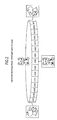
- Fig. 3 shows an example of storing entire-circumference viewpoint images A000 to A359 in two DVI frames.
- even-numbered images of the entire-circumference viewpoint images A000 to A359 are sorted into an even frame and odd-numbered images are sorted into an odd frame, and further, the viewpoint images adjacent to the same position of the respective frames are stored. That is, 180 viewpoint images are arranged in one DVI frame, and, when the image size of the DVI frame is 1920 x 1080 pixels, it is necessary to set the image size of the respective viewpoint images to 96 x 120 pixels.
- the number of DVI frames for sorting the entire-circumference viewpoint images is not limited to two.
- the entire-circumference viewpoint images A000 to A359 may equally be divided into three and stored in three DVI frames, or equally be divided into four and stored in four DVI frames.
- Figs. 4A to 4C show a position for embedding the control data for the entire circumference stereoscopic image display apparatus 30 in the viewpoint images, i.e., a position of an information bit.
- the position of the information line in each viewpoint image is not limited to the uppermost row.
- the lowermost one bits of the respective values of R, G, B are used as an information bit (Info bit). That is, three bits of information bit can be secured with respect to each pixel on the information line.
- one DVI frame is divided into four blocks (blocks A to D) and the same control data is multiplexed and recorded in the information bits of the respective blocks, that is, the control data is quadruply recorded.
- errors loss, bit inversion, or the like
- the multiplex recording of the control data is not limited to quadruple, but triple or more may be applied for addressing errors.
- the control data is not multiplexed in a space direction within the same DVI frame, but the data may be multiplexed in a time-series direction using DVI frames temporally before and after in which viewpoint images imaged at different times are arranged.
- the 8 bits (256 levels) are employed as R, G, B values with respect to the pixels not in the information line, and, with respect to the pixels in the information line, the lowermost one bits are replaced by the control data, and the values of R, G, B are not 7 bits (128 levels), but the lowermost one bits are regarded as zero and processed as 8 bits (256 levels) of values.
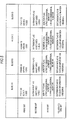
- Fig. 5 shows an example of control data quadruply recorded in one DVI frame. As described above, in the case where the control data is quadruply recorded in the information bits of the 51840 bits provided in one DVI frame, 12960 bits of control data can be recorded.
- a frame ID indicating whether the DVI frame is an even frame or an odd frame is recorded.
- the frame ID is set to "0" and, in the case of an odd frame, the frame ID is set to "1".
- an extension flag indicating whether the third and subsequent bits are used for storage of the control data or not is recorded. For example, if they are not used, the extension flag is set to "0" and, if they are used, the extension flag is set to "1".
- a monitor flag indicating whether the DVI frame is displayed on a two-dimensional monitor (the flat display 40 in Fig. 1 or the like) or displayed on a three-dimensional monitor (the entire circumference stereoscopic image display apparatus 30 in Fig. 1 or the like) is recorded.
- the monitor flag is set to "0" and, in the case where the frame is displayed on a three-dimensional monitor, the monitor flag is set to "1".
- the monitor flag may be increased into two bits, for example, to take four kinds of values, and, in the case where the frame is displayed on a two-dimensional monitor only, the monitor flag may be set to "01", in the case where the frame is displayed on a three-dimensional monitor only, the monitor flag may be set to " 10 ", and, in the case where the frame is displayed on both a two-dimensional monitor and a three-dimensional monitor, the monitor flag may be set to "11".
- the fourth and subsequent bits in the case where the extension flag recorded in the second one bit is "0", that is, in the case where the extension bit is not used, the values of the lowermost bits of the pixel values that the pixels originally have are recorded. In the case where the extension flag recorded in the second one bit is "1", that is, in the case where the extension bit is used, the fourth and subsequent bits (the fourth to 12960 bits) are secured as reserve area (reserve) for recording the control data.
- Fig. 6 is a block diagram showing the detailed configuration example of the image signal processing apparatus 20.
- the image signal processing apparatus 20 includes a viewpoint image buffer 21, a resizing unit 22, a frame generating unit 23, and a control data embedding unit 24.
- the viewpoint image buffer 21 buffers the externally input entire-circumference viewpoint images, and outputs the buffered viewpoint images to the resizing unit 22 in a predetermined sequence according to an output control signal from the frame generating unit 23.
- the resizing unit 22 resizes (reduces or enlarges) the viewpoint images input from the viewpoint image buffer 21 in response to the number of viewpoint images arranged in one DVI frame and outputs them to the frame generating unit 23.
- 180 viewpoint images of the entire-circumference viewpoint images A000 to A359 are arranged, and, when the DVI frame has 1290 x 1080 pixels, the respective viewpoint images are resized to 96 x 120 pixels.
- the frame generating unit 23 arranges the resized viewpoint images input from the resizing unit 22 as shown in Fig. 2 to generate DVI frames and output them to the control data embedding unit 24.
- the control data embedding unit 24 stores the control data in the information bits (the lowermost bits of the pixel values of the pixels in the information lines provided in the uppermost rows of the respective viewpoint images) of the respective DVI frames input from the frame generating unit 23 and outputs them to the downstream entire circumference stereoscopic image display apparatus 30.
- the viewpoint image buffer 21 When the entire-circumference viewpoint images are externally input to the image signal processing apparatus 20, they are buffered in the viewpoint image buffer 21.
- the frame generating unit 23 outputs the output control signal to the viewpoint image buffer 21, the viewpoint image buffer 21 outputs the buffered viewpoint images to the resizing unit 22 in a predetermined sequence according thereto.
- the resizing unit 22 resizes and outputs the viewpoint images input from the viewpoint image buffer 21 to the frame generating unit 23.
- the frame generating unit 23 generates DVI frames by arranging the even-numbered images of the resized viewpoint images input from the resizing unit 22 in the even frame and the odd-numbered images in the odd frame, and outputs them to the control data embedding unit 24.
- the control data embedding unit 24 stores the control data in the information bits of the respective DVI frames input from the frame generating unit 23, and outputs them to the downstream entire circumference stereoscopic image display apparatus 30.
- Fig. 7 is a flowchart for explanation of the control data embedding processing by the control data embedding unit 24.
- control data embedding processing described as below is on the assumption that the control data embedding unit 24 has a GPU (Graphics Processing Unit) inside thereof and uses Direct X.
- GPU Graphics Processing Unit
- control data embedding unit 24 depicts the DVI frames input from the frame generating unit 23 in a back buffer built in itself.
- control data embedding unit 24 copies the DVI frames depicted in the back buffer in a texture.
- control data embedding unit 24 uses a shader program to overwrite the DVI frames copied in the texture in the back buffer while dropping the values of the information bits (the lowermost bits of the pixel values of the respective values of R, G, B) of the respective pixels in the information lines (the uppermost one rows of the respective viewpoint images) to "0".
- control data embedding unit 24 overwrites predetermined values as control data in the information bits of the DVI frames on the texture. For example, in the case where the DVI frame is an even frame, "0" is overwritten as the frame ID in the first one of the information bit. On the other hand, in the case where the DVI frame is an odd frame, "1" is overwritten as the frame ID in the first one of the information bit.
- control data embedding unit 24 alpha-blends only the information lines of the DVI frames on the texture in the DVI frames on the back buffer (having the information bits dropped to "0" at step S3).
- both of the blending ratios of the DVI frames on the back buffer to the information lines of the DVI frames on the texture are set to 100%. This is the end of the control data embedding processing.
- the DVI frames in which the control data are embedded in the information bits are depicted in the back buffer built in the control data embedding unit 24, and, by outputting them as DVI signals, the viewpoint images and the control data can be supplied to the downstream while the deterioration of image quality of the viewpoint images is minimized.
- conditional branching is not provided and that fits the characteristics of GPU not good at processing including conditional branching, and thus, the control data embedding unit 24 with the GPU inside thereof can execute the control data embedding processing in real time.
- the entire of the pixel values of only one pixel for each block of the DVI frames may be used for storing the frame ID of the control data.
- pixel values (R,G,B) of one pixel in the upper left corner of each block may be set to (0, 0, 0) in the case of an even frame and may be set to (1,0,0) in the case of an odd frame.
- the DVI frame only four pixels are fixed to black points ((0,0,0) or (1,0,0)), and, when the pixels are displayed, the pixel values may be interpolated using the adjacent pixels and displayed.
- the control data other than the frame ID may be stored in the same manner.
- the black points are not left after decoding, that is, the frame ID of the control data may not be transmitted to the downstream.
- a predetermined area including several pixels is provided with respect to each block of the DVI frame, and the pixel values of all pixels in the predetermined area may be used for storage of the frame ID of the control data.
- a predetermined area is provided in the upper left corner of each block, only in the case of an even frame, the pixel values (R, G, B) of the pixels therein may be changed to a bright point (for example, the maximum values (255, 255, 255)), and, in the case of an odd frame, they may be unchanged.
- the four predetermined areas on the DVI frame are bright points only in the case where the DVI frame is an even frame, and, when the pixels of the areas are displayed, the pixel values may be interpolated using the pixels of the same area of the adjacent pixels and displayed.
- the predetermined area as the frame ID of the control data is a bright point, even in the case where the DVI frame is compression-coded by the MPEG2 method or the like, the brightness point can be left though the brightness point blurs around or fades after decoding. Therefore, even when the DVI frame containing the frame ID as the control data is compression-coded and supplied to the downstream, the frame ID as the control data can be read out at the downstream.
- control data may be embedded using electronic watermarking, for example, in the DVI frame in which viewpoint images are arranged.
- control data embedding processing and the other methods includes embedding of control data in the pixel values of the viewpoint images, and may be applied to video signals having versatility other than the DVI signals.
- Fig. 8 shows a configuration example of the entire circumference stereoscopic image display apparatus 30 to which the DVI signals from the image signal processing apparatus 20 are input.
- the entire circumference stereoscopic image display apparatus 30 includes a switch 51, a control data extracting unit 52, a switch control unit 53, a display control unit 54, a display unit 55, and a DVI signal output unit 56.
- the switch 51 outputs the DVI signals input from the upstream image signal processing apparatus 20 to either of the display control unit 54 or the DVI signal output unit 56 according to control from the switch control unit 53.
- the control data extracting unit 52 extracts the control data from the DVI signals input from the upstream image signal processing apparatus 20 and performs error correction of the control data according to need. Then, the control data extracting unit 52 outputs the monitor flag of the extracted control data to the switch control unit 53. Further, the control data extracting unit 52 outputs the frame ID and the extension flag of the extracted control data to the display control unit 54.
- the switch control unit 53 controls switching of the switch 51 according to the monitor flag as the control data input from the control data extracting unit 52. That is, in the case where the monitor flag is "0", the unit allows the switch 51 to switch the output to the DVI signal output unit 56, and, in the case where the monitor flag is "1", the unit allows the switch 51 to switch the output to the display control unit 54.
- the display control unit 54 extracts the viewpoint images from the DVI frames of the DVI signals input via the switch 51. Further, the display control unit 54 allows the display unit 55 to display the extracted viewpoint images while referring to the frame ID and extension flag as the control data input from the control data extracting unit 52.
- the DVI signal output unit 56 outputs the DVI signals input via the switch 51 to the downstream flat display 40.
- the DVI signals from the upstream image signal processing apparatus 20 are input to the switch 51 and the control data extracting unit 52.
- the monitor flag of the control data is extracted from the DVI signals and output to the switch control unit 53.
- the switch control unit 53 switches the output destination of the switch 51 to the display unit 55 or the DVI signal output unit 56 based on the monitor flag. Therefore, according to the control data contained in the DVI signals, the display destination of the image corresponding to the DVI signals can be switched to the display unit 55 or the DVI signal output unit 56.
- the above described series of processing of the image signal processing apparatus 20 and the entire circumference stereoscopic image display apparatus 30 may be executed by hardware or software.
- programs forming the software are installed from a program recording medium into a computer incorporated in dedicated hardware or into a general-purpose personal computer that can execute various functions with installed various programs.
- Fig. 9 is a block diagram showing a configuration example of hardware of a computer that executes the above described series of processing using programs.
- a CPU Central Processing Unit
- ROM Read Only Memory
- RAM Random Access Memory
- an input/output interface 105 is further connected.
- an input unit 106 including a keyboard, a mouse, a microphone, etc.
- an output unit 107 including a display, speakers etc.
- a storage unit 108 including a hard disk, a nonvolatile memory, etc.
- a communication unit 109 including a network interface etc.
- a drive 110 that drives removable media 111 including a magnetic disk, an optical disc, a magneto-optical disc, a semiconductor memory, or the like are connected.
- the CPU 101 loads and executes the program stored in the storage unit 108, for example, in the RAM 103 via the input/output interface 105 and the bus 104, and thereby, the above described series of processing is performed.
- the programs executed by the computer may be programs in which processing is performed in the time-series sequence along the sequence explained in this specification, or may be programs in which processing is performed in parallel or at necessary times when a call is made or the like.
- programs may be processed by a single computer or processed in a distributed manner by plural computers. Furthermore, the programs may be transferred to a remote computer.
- system refers to an entire system including plural apparatuses.
- Another preferred embodiment provides an image signal processing apparatus that supplies images subject to an image display apparatus, wherein the image signal processing apparatus replaces pixel values of a pixel in a predetermined position on the images by control data for controlling the image display apparatus.
Landscapes
- Engineering & Computer Science (AREA)
- Multimedia (AREA)
- Signal Processing (AREA)
- Testing, Inspecting, Measuring Of Stereoscopic Televisions And Televisions (AREA)
- Studio Devices (AREA)
- Stereoscopic And Panoramic Photography (AREA)
Applications Claiming Priority (1)
| Application Number | Priority Date | Filing Date | Title |
|---|---|---|---|
| JP2009231674A JP2011082675A (ja) | 2009-10-05 | 2009-10-05 | 画像信号処理装置、画像信号処理方法、画像表示装置、画像表示方法、プログラム、および画像表示システム |
Publications (1)
| Publication Number | Publication Date |
|---|---|
| EP2306741A2 true EP2306741A2 (de) | 2011-04-06 |
Family
ID=43412485
Family Applications (1)
| Application Number | Title | Priority Date | Filing Date |
|---|---|---|---|
| EP20100176647 Withdrawn EP2306741A2 (de) | 2009-10-05 | 2010-09-14 | Bildsignalverarbeitungsvorrichtung, Verfahren und Programm zur Eingabe von Bildern und Steuerungsdaten in eine omnidirektionale stereoskopische Bildanzeigevorrichtung |
Country Status (5)
| Country | Link |
|---|---|
| US (1) | US20110080461A1 (de) |
| EP (1) | EP2306741A2 (de) |
| JP (1) | JP2011082675A (de) |
| CN (1) | CN102036088A (de) |
| SG (1) | SG169945A1 (de) |
Cited By (1)
| Publication number | Priority date | Publication date | Assignee | Title |
|---|---|---|---|---|
| CN105847965A (zh) * | 2016-03-29 | 2016-08-10 | 百度在线网络技术(北京)有限公司 | 一种视频数据的处理方法及系统 |
Families Citing this family (8)
| Publication number | Priority date | Publication date | Assignee | Title |
|---|---|---|---|---|
| JP2011082622A (ja) * | 2009-10-02 | 2011-04-21 | Sony Corp | 画像信号処理装置、画像信号処理方法、画像表示装置、画像表示方法、プログラム、および画像表示システム |
| JP2011087119A (ja) * | 2009-10-15 | 2011-04-28 | Sony Corp | 画像信号処理装置、画像信号処理方法、画像表示装置、画像表示方法、プログラム、画像表示システム、およびビデオ信号 |
| JP2012231254A (ja) * | 2011-04-25 | 2012-11-22 | Toshiba Corp | 立体映像生成装置及び立体映像生成方法 |
| KR102689919B1 (ko) | 2015-08-18 | 2024-07-30 | 매직 립, 인코포레이티드 | 가상 및 증강 현실 시스템들 및 방법들 |
| JP7058946B2 (ja) * | 2017-04-28 | 2022-04-25 | キヤノン株式会社 | 情報処理装置、情報処理システム、情報処理方法及びプログラム |
| US10735649B2 (en) | 2018-02-22 | 2020-08-04 | Magic Leap, Inc. | Virtual and augmented reality systems and methods using display system control information embedded in image data |
| CN110365929B (zh) * | 2018-04-10 | 2021-01-05 | 北京仁光科技有限公司 | 信息传输方法、装置、设备、系统及存储介质 |
| CN110365858B (zh) * | 2018-04-10 | 2020-08-25 | 北京仁光科技有限公司 | 信息传输方法、装置、设备、系统及存储介质 |
Citations (2)
| Publication number | Priority date | Publication date | Assignee | Title |
|---|---|---|---|---|
| JP2004177709A (ja) | 2002-11-27 | 2004-06-24 | Toshiba Corp | 立体画像表示装置及び立体画像表示方法 |
| JP2005114771A (ja) | 2003-10-02 | 2005-04-28 | Sony Corp | ディスプレー装置 |
Family Cites Families (7)
| Publication number | Priority date | Publication date | Assignee | Title |
|---|---|---|---|---|
| US20020085219A1 (en) * | 2000-08-11 | 2002-07-04 | Victor Ramamoorthy | Method of and system for generating and viewing multi-dimensional images |
| JP2002223457A (ja) * | 2001-01-29 | 2002-08-09 | Ocean Network Co Ltd | 画像認識処理装置 |
| US7728877B2 (en) * | 2004-12-17 | 2010-06-01 | Mitsubishi Electric Research Laboratories, Inc. | Method and system for synthesizing multiview videos |
| JP4033859B2 (ja) * | 2004-12-28 | 2008-01-16 | 独立行政法人科学技術振興機構 | 立体画像表示方法 |
| AU2005338930B2 (en) * | 2005-12-05 | 2010-12-09 | Thomson Licensing | Watermarking encoded content |
| JP4761539B2 (ja) * | 2006-04-03 | 2011-08-31 | オリンパス株式会社 | 視覚表示装置 |
| JP2011082622A (ja) * | 2009-10-02 | 2011-04-21 | Sony Corp | 画像信号処理装置、画像信号処理方法、画像表示装置、画像表示方法、プログラム、および画像表示システム |
-
2009
- 2009-10-05 JP JP2009231674A patent/JP2011082675A/ja not_active Withdrawn
-
2010
- 2010-09-06 SG SG201006463-2A patent/SG169945A1/en unknown
- 2010-09-14 EP EP20100176647 patent/EP2306741A2/de not_active Withdrawn
- 2010-09-27 US US12/890,763 patent/US20110080461A1/en not_active Abandoned
- 2010-09-28 CN CN2010102996019A patent/CN102036088A/zh active Pending
Patent Citations (2)
| Publication number | Priority date | Publication date | Assignee | Title |
|---|---|---|---|---|
| JP2004177709A (ja) | 2002-11-27 | 2004-06-24 | Toshiba Corp | 立体画像表示装置及び立体画像表示方法 |
| JP2005114771A (ja) | 2003-10-02 | 2005-04-28 | Sony Corp | ディスプレー装置 |
Cited By (1)
| Publication number | Priority date | Publication date | Assignee | Title |
|---|---|---|---|---|
| CN105847965A (zh) * | 2016-03-29 | 2016-08-10 | 百度在线网络技术(北京)有限公司 | 一种视频数据的处理方法及系统 |
Also Published As
| Publication number | Publication date |
|---|---|
| JP2011082675A (ja) | 2011-04-21 |
| US20110080461A1 (en) | 2011-04-07 |
| SG169945A1 (en) | 2011-04-29 |
| CN102036088A (zh) | 2011-04-27 |
Similar Documents
| Publication | Publication Date | Title |
|---|---|---|
| EP2306741A2 (de) | Bildsignalverarbeitungsvorrichtung, Verfahren und Programm zur Eingabe von Bildern und Steuerungsdaten in eine omnidirektionale stereoskopische Bildanzeigevorrichtung | |
| JP5127633B2 (ja) | コンテンツ再生装置および方法 | |
| JP4740364B2 (ja) | 三次元画像処理装置及びその制御方法 | |
| EP1662809A1 (de) | Einrichtung zur dreidimensionalen video-wiedergabe und verfahren zur dreidimensionalen video-wiedergabe | |
| EP2942953A1 (de) | Vorrichtung zur codierung stereoskopischer videos, vorrichtung zur decodierung stereoskopischer videos, verfahren zur codierung stereoskopischer videos, verfahren zur decodierung stereoskopischer videos, programm zur codierung stereoskopischer videos und programm zur decodierung stereoskopischer videos | |
| KR20130052621A (ko) | 3차원 콘텐츠에 관한 영상들을 조합하기 위한 방법 | |
| US20110249091A1 (en) | Video signal processing apparatus and video signal processing method | |
| CN104604222B (zh) | 用于产生、传送和接收立体图像的方法及有关设备 | |
| JP2011070450A (ja) | 三次元画像処理装置およびその制御方法 | |
| US20120256962A1 (en) | Video Processing Apparatus and Method for Extending the Vertical Blanking Interval | |
| US8369693B2 (en) | Visual information storage methods and systems | |
| US11659153B2 (en) | Image data transmission method, content processing apparatus, head-mounted display, relay apparatus and content processing system | |
| US8619123B2 (en) | Video processing apparatus and method for scaling three-dimensional video | |
| US9172941B2 (en) | Moving image processing device and moving image processing method | |
| US8896663B2 (en) | Transmitting device, receiving device, communication system and program | |
| KR101140570B1 (ko) | 입체영상 멀티비전 시스템 | |
| US20140056524A1 (en) | Image processing device, image processing method, and program | |
| US20120249872A1 (en) | Video signal processing apparatus and video signal processing method | |
| KR102492367B1 (ko) | 영상 데이터 생성 방법과 이를 이용한 입체 영상 표시 시스템 | |
| CN103650026B (zh) | 视频信号控制装置、视频信号控制方法以及显示装置 | |
| US20110090214A1 (en) | Image signal processing device, image signal processing method, image display device, image display method, program, image display system and video signal | |
| JP5296140B2 (ja) | 三次元画像処理装置及びその制御方法 | |
| JP5777920B2 (ja) | 画像処理装置および画像処理方法 | |
| JP2013214788A (ja) | 映像信号処理装置および映像信号処理方法 | |
| HK1155595A (en) | A method and a system for processing video |
Legal Events
| Date | Code | Title | Description |
|---|---|---|---|
| PUAI | Public reference made under article 153(3) epc to a published international application that has entered the european phase |
Free format text: ORIGINAL CODE: 0009012 |
|
| 17P | Request for examination filed |
Effective date: 20101011 |
|
| AK | Designated contracting states |
Kind code of ref document: A2 Designated state(s): AL AT BE BG CH CY CZ DE DK EE ES FI FR GB GR HR HU IE IS IT LI LT LU LV MC MK MT NL NO PL PT RO SE SI SK SM TR |
|
| AX | Request for extension of the european patent |
Extension state: BA ME RS |
|
| STAA | Information on the status of an ep patent application or granted ep patent |
Free format text: STATUS: THE APPLICATION HAS BEEN WITHDRAWN |
|
| 18W | Application withdrawn |
Effective date: 20130507 |