EP2306415A1 - Communication device, communication method, information processing device, information processing method, program, and communication system - Google Patents
Communication device, communication method, information processing device, information processing method, program, and communication system Download PDFInfo
- Publication number
- EP2306415A1 EP2306415A1 EP10177027A EP10177027A EP2306415A1 EP 2306415 A1 EP2306415 A1 EP 2306415A1 EP 10177027 A EP10177027 A EP 10177027A EP 10177027 A EP10177027 A EP 10177027A EP 2306415 A1 EP2306415 A1 EP 2306415A1
- Authority
- EP
- European Patent Office
- Prior art keywords
- target
- key
- card
- information processing
- partial randomization
- Prior art date
- Legal status (The legal status is an assumption and is not a legal conclusion. Google has not performed a legal analysis and makes no representation as to the accuracy of the status listed.)
- Withdrawn
Links
Images




Classifications
-
- G—PHYSICS
- G07—CHECKING-DEVICES
- G07F—COIN-FREED OR LIKE APPARATUS
- G07F7/00—Mechanisms actuated by objects other than coins to free or to actuate vending, hiring, coin or paper currency dispensing or refunding apparatus
- G07F7/08—Mechanisms actuated by objects other than coins to free or to actuate vending, hiring, coin or paper currency dispensing or refunding apparatus by coded identity card or credit card or other personal identification means
- G07F7/10—Mechanisms actuated by objects other than coins to free or to actuate vending, hiring, coin or paper currency dispensing or refunding apparatus by coded identity card or credit card or other personal identification means together with a coded signal, e.g. in the form of personal identification information, like personal identification number [PIN] or biometric data
- G07F7/1008—Active credit-cards provided with means to personalise their use, e.g. with PIN-introduction/comparison system
-
- G—PHYSICS
- G06—COMPUTING OR CALCULATING; COUNTING
- G06Q—INFORMATION AND COMMUNICATION TECHNOLOGY [ICT] SPECIALLY ADAPTED FOR ADMINISTRATIVE, COMMERCIAL, FINANCIAL, MANAGERIAL OR SUPERVISORY PURPOSES; SYSTEMS OR METHODS SPECIALLY ADAPTED FOR ADMINISTRATIVE, COMMERCIAL, FINANCIAL, MANAGERIAL OR SUPERVISORY PURPOSES, NOT OTHERWISE PROVIDED FOR
- G06Q20/00—Payment architectures, schemes or protocols
- G06Q20/30—Payment architectures, schemes or protocols characterised by the use of specific devices or networks
- G06Q20/34—Payment architectures, schemes or protocols characterised by the use of specific devices or networks using cards, e.g. integrated circuit [IC] cards or magnetic cards
- G06Q20/341—Active cards, i.e. cards including their own processing means, e.g. including an IC or chip
-
- G—PHYSICS
- G06—COMPUTING OR CALCULATING; COUNTING
- G06Q—INFORMATION AND COMMUNICATION TECHNOLOGY [ICT] SPECIALLY ADAPTED FOR ADMINISTRATIVE, COMMERCIAL, FINANCIAL, MANAGERIAL OR SUPERVISORY PURPOSES; SYSTEMS OR METHODS SPECIALLY ADAPTED FOR ADMINISTRATIVE, COMMERCIAL, FINANCIAL, MANAGERIAL OR SUPERVISORY PURPOSES, NOT OTHERWISE PROVIDED FOR
- G06Q20/00—Payment architectures, schemes or protocols
- G06Q20/30—Payment architectures, schemes or protocols characterised by the use of specific devices or networks
- G06Q20/34—Payment architectures, schemes or protocols characterised by the use of specific devices or networks using cards, e.g. integrated circuit [IC] cards or magnetic cards
- G06Q20/355—Personalisation of cards for use
-
- G—PHYSICS
- G06—COMPUTING OR CALCULATING; COUNTING
- G06Q—INFORMATION AND COMMUNICATION TECHNOLOGY [ICT] SPECIALLY ADAPTED FOR ADMINISTRATIVE, COMMERCIAL, FINANCIAL, MANAGERIAL OR SUPERVISORY PURPOSES; SYSTEMS OR METHODS SPECIALLY ADAPTED FOR ADMINISTRATIVE, COMMERCIAL, FINANCIAL, MANAGERIAL OR SUPERVISORY PURPOSES, NOT OTHERWISE PROVIDED FOR
- G06Q20/00—Payment architectures, schemes or protocols
- G06Q20/38—Payment protocols; Details thereof
- G06Q20/385—Payment protocols; Details thereof using an alias or single-use codes
-
- G—PHYSICS
- G06—COMPUTING OR CALCULATING; COUNTING
- G06Q—INFORMATION AND COMMUNICATION TECHNOLOGY [ICT] SPECIALLY ADAPTED FOR ADMINISTRATIVE, COMMERCIAL, FINANCIAL, MANAGERIAL OR SUPERVISORY PURPOSES; SYSTEMS OR METHODS SPECIALLY ADAPTED FOR ADMINISTRATIVE, COMMERCIAL, FINANCIAL, MANAGERIAL OR SUPERVISORY PURPOSES, NOT OTHERWISE PROVIDED FOR
- G06Q20/00—Payment architectures, schemes or protocols
- G06Q20/38—Payment protocols; Details thereof
- G06Q20/40—Authorisation, e.g. identification of payer or payee, verification of customer or shop credentials; Review and approval of payers, e.g. check credit lines or negative lists
- G06Q20/409—Device specific authentication in transaction processing
- G06Q20/4097—Device specific authentication in transaction processing using mutual authentication between devices and transaction partners
- G06Q20/40975—Device specific authentication in transaction processing using mutual authentication between devices and transaction partners using encryption therefor
Definitions
- the non-contact communication system includes a reader/writer (hereinafter, abbreviated as R/W) and a non-contact communication IC card (hereinafter, abbreviated as IC card).
- the non-contact communication system communicates information using electromagnetic waves between the R/W and the IC card in a non-contact type. Before various types of information are communicated, a mutual authentication process is executed.
- a mobile phone or the like is used in which an IC chip having the same function as the IC card has been built.
- information regarding a plurality of services such as an electronic money service, a commutation ticket service for an electric train or the like, and an employee ID card service is capable of being mounted on one IC card.
- the access right or access method for user data within the IC card is controlled in a service unit. There is a key by which user data for each service is accessed. The right of access to user data corresponding to a T9 service is controlled by the above-described key. For each service, an access method is prescribed for use in a history data write method or an electronic money subtraction method.
- one key (degenerate key) is generated from keys of a plurality of services. It is possible to access the plurality of services by one mutual authentication process using the degenerate key. In this regard, it is possible to have access by executing a mutual authentication process using a key held for each service even in individual services.
- a mutual authentication process for each service is necessary to use a plurality of different services, that is, to access information regarding each service.
- the mutual authentication process is executed using a different key for each service, the process becomes troublesome. Therefore, a technique has been implemented in which one key (degenerate key) is generated in advance on the basis of a plurality of keys respectively corresponding to services, and the degenerate key is commonly used in mutual authentication processes for the services (for example, see JP-A-10-327142 ).
- the present disclosure relates to a communication device, a communication method, an information processing device, an information processing method, a program, and a communication system, and more particularly to a communication device, a communication method, an information processing device, an information processing method, a program, and a communication system, which are suitable for use in the case where information is communicated in a non-contact type.
- the unique ID of the IC card It is necessary for the unique ID of the IC card to be prevented from being leaked since there is a possibility that the leaked unique ID of the IC card may be used in an unauthorized identification tracking process for a user of the IC card.
- the present disclosure provides a new and innovative information processing apparatus, method and computer readable memory device for preventing a unique ID from being leaked.
- the information processing apparatus includes a processor; a communication section operatively coupled to the processor; and a memory device operatively coupled to the processor, the memory device storing instructions that cause the processor, in cooperation with a communication section and a memory device, to: determine whether a target ID is a unique ID or a partial randomization ID, the partial randomization ID including a first part being replaced by a different number and a second part being generated based on the unique ID; in response to the target ID being the partial randomization ID, generate an access key based on the second part of the partial randomization ID and a key; execute a mutual authentication process using the generated access key.
- the information processing apparatus is a reader/writer. In another example embodiment, the information processing apparatus is a non-contact communication card.
- the instructions cause the processor to determine whether the target ID is the unique ID or the partial randomization ID based on a randomization flag.
- the target ID includes a code.
- the instructions cause the processor, to determine whether the target ID is the unique ID or the partial randomization ID based on the code.
- the different number which replaces the first part of the partial randomization ID is randomly generated.
- the instructions cause the processor to change the randomly generated different number.
- the second part of the partial randomization ID includes a part of the unique ID.
- the instructions in response to the target ID being the partial randomization ID, the instructions cause the processor to generate the access key by applying the second part of the partial randomization ID to the key.
- applying the second part of the partial randomization ID to the key includes adding the second part of the partial randomization ID to the key.
- the instructions in response to the target ID being the unique ID, the instructions cause the processor to generate the access key by applying the unique ID to the key.
- a method of operating an information processing apparatus including instructions includes: (a) causing a processor to execute the instructions to determine whether a target ID is a unique ID or a partial randomization ID, the partial randomization ID including: (i) a first part being replaced by a different number; and (ii) a second part being generated based on the unique ID; (b) causing the processor to execute the instructions to, in response to the target ID being the partial randomization ID, generate an access key based on the second part of the partial randomization ID and a key; and(c) causing the processor to execute the instructions to execute a mutual authentication process using the generated access key.
- the information processing apparatus is a reader/writer. In another example embodiment, the information processing apparatus is a non-contact communication IC card.
- the method includes causing the processor to execute the instructions to determine whether the target ID is the unique ID or the partial randomization ID based on a randomization flag.
- the method includes: causing the processor to execute the instructions to determine whether the target ID includes a code; and causing the processor to execute the instructions to determine whether the target ID is the unique ID or the partial randomization ID based on the code.
- the different number is randomly generated.
- the method includes causing the processor to execute the instructions to change the randomly generated different number.
- the second part of the partial randomization ID includes a part of the unique ID.
- the method includes causing the processor to execute the instructions to, in response to the target ID being the partial randomization ID, generate the access key by applying the second part of the partial randomization ID to the key.
- applying the second part of the partial randomization ID to the key includes adding the second part of the partial randomization ID to the key.
- the method includes causing the processor to execute the instructions to, in response to the target ID being the unique ID, generate the access key by applying the unique ID to the key.
- the computer readable memory stores instructions to cause an information processing apparatus to: (a) determine whether a target ID is a unique ID or a partial randomization ID, the partial randomization ID including:(i) a first part being replaced by a different number; and (ii) a second part being generated based on the unique ID; (b) in response to the target ID being the partial randomization ID, generate an access key based on the second part of the partial randomization ID and a key; and (c) execute a mutual authentication process using the generated access key.
- the information processing apparatus is a reader/writer. In another example embodiment, the information processing apparatus is a non-contact communication card.
- the instructions cause the information processing apparatus to determine whether the target ID is the unique ID or the partial randomization ID based on a randomization flag.
- the target ID includes a code.
- the instructions cause the information processing apparatus to determine whether the target ID is the unique ID or the partial randomization ID based on the code.
- the different number is randomly generated.
- the instructions cause the information processing apparatus to change the randomly generated different number.
- the second part of the partial randomization ID includes a part of the unique ID.
- Fig. 1 is a block diagram showing a configuration example of a non-contact communication system according to an exemplary embodiment of the present disclosure.
- Figs. 2A and 2B are block diagrams showing functional configuration examples of an R/W and an IC card.
- Figs. 3A, 3B, and 3C are diagrams showing data structures of a target ID.
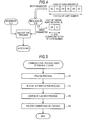
- Fig. 4 is a diagram illustrating the individualization of a degenerate key.
- Fig. 5 is a flowchart illustrating a communication process by the R/W and the IC card of Figs. 2A and 2B .
- Fig. 6 is a flowchart illustrating a process of the IC card of Fig. 2B .
- Fig. 7 is a flowchart illustrating a process of the R/W of Fig. 2A .
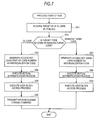
- Fig. 8 is a flowchart illustrating a process of an R/W of the related art.
- Fig. 1 shows a configuration example of a non-contact communication system according to an exemplary embodiment of the present disclosure.
- This non-contact communication system 1 includes an R/W 10 and an IC card 20.
- R/W 10 When a user moves the IC card 20 toward the R/W 10, drive power is generated inside the IC card 20.
- the R/W 10 has a built-in CPU 11 to which a ROM 12, a RAM 13, an NVM (non volatile memory) 14, and a modulation/demodulation circuit 16 are connected via a bus 15.
- the CPU 11 controls each element of the R/W 10 by executing a control program prestored in the ROM 12.
- the RAM 13 is used as a work area when the CPU 11 executes various processes.
- a degenerate key is held in the NVM 14.
- the modulation/demodulation circuit 16 modulates a carrier by information, which is output from the CPU 11, input via the bus 15, and transmitted to the IC card 20, and outputs the modulated carrier to an antenna 17. Also, the modulation/demodulation circuit 16 demodulates a received wave received by the antenna 17, and outputs information as the demodulation result from the IC card 20 to the CPU 11 via the bus 15.
- the antenna 17 transmits a modulated wave input from the modulation/demodulation circuit 16. Also, the antenna 17 receives a modulated wave transmitted from the IC card 20 and outputs the modulated wave to the modulation/demodulation circuit 16.
- the IC card 20 has a built-in CPU 21 to which a ROM 22, a RAM 23, an NVM 24, and a modulation/demodulation circuit 26 are connected via a bus 25.
- the CPU 21 controls each element of the IC card 20 by executing a control program prestored in the ROM 22.
- the RAM 23 is used as a work area when the CPU 21 executes various processes.
- information regarding a degenerated key or various services is hierarchized and stored for each service.
- the modulation/demodulation circuit 26 demodulates a carrier received by an antenna 27 from the R/W 10, and outputs information from the R/W 10 as the demodulation result to the CPU 21 via the bus 25.
- the modulation/demodulation circuit 26 modulates a carrier by information, which is output from the CPU 21, input via the bus 25, and transmitted to the R/W 10, and outputs the modulated carrier to the antenna 27.
- the antenna 27 receives a modulated wave transmitted from the R/W 10, outputs the modulated wave to the modulation/demodulation circuit 26. Also, the antenna 27 transmits a modulated wave input from the modulation/demodulation circuit 26.
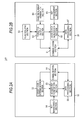
- FIGs. 2A and 2B show diagrams of functional blocks to be implemented by the control programs respectively executed by the CPU 11 of the R/W 10 and the CPU 21 of the IC card 20.
- a communication section 51 In the R/W 10, a communication section 51, a target code determination section 52, an access key generation section 53, a key management section 54, and a data processing section 55 are implemented.
- the communication section 51 controls communication with the IC card 20.
- the target code determination section 52 reads a target code from a target ID reported from the IC card 20, and determines whether the target ID is a card-specific ID or a partial randomization ID.
- the access key generation section 53 generates an access key by individualizing a degenerate key on the basis of the determination result of the target code determination section 52. A degenerate key individualization process will be described with reference to Fig. 4 .
- the key management section 54 manages a pre-held degenerate key and a generated access key.
- the data processing section 55 executes a mutual authentication process with the IC card 20 using the generated access key via the communication section 51.
- the data processing section 55 decrypts encrypted information transmitted from the IC card 20 or encrypts information to be transmitted to the IC card 20 after the mutual authentication process.
- a communication section 61 In the IC card 20, a communication section 61, a target ID output section 62, a flag holding section 63, a random number generation section 64, an access key generation section 65, a key management section 66, and a data processing section 67 are implemented.
- the communication section 61 controls communication with the R/W 10.
- the target ID output section 62 In response to the state of a flag held by the flag holding section 63, the target ID output section 62 outputs a card-specific ID or a partial randomization ID as a target ID, wherein the partial randomization ID is generated by replacing a part of the card-specific ID with a random number.
- the card-specific ID is prestored in the NVM 24.
- the partial randomization ID is generated by the target ID output section 62 at a predetermined timing, and is stored in the NVM 24. A partial randomization ID generation process will be described with reference to Figs. 3A, 3B, and 3C .
- a target ID randomization flag indicating whether to directly use a card-specific ID of the related art or to use a partial randomization ID as the target ID is preset.
- the card-specific ID is directly used when the target ID randomization flag is invalid
- the partial randomization ID is used when the target ID randomization flag is valid.
- the IC card 20 before the IC card 20 is provided to the user, it is determined whether to directly use the card-specific ID or to use the partial randomization ID as the target ID to be reported to the R/W 10.
- the validity/invalidity of the target ID randomization flag held in the flag holding section 63 can be switched in response to a predetermined command from the R/W 10.
- the target ID randomization flag is set to be invalid so that the card-specific ID is reported as the target ID until the R/W 10 according to an exemplary embodiment of the present disclosure is widely supplied to the society.
- the target ID randomization flag is reset to be valid so that the partial randomization ID is reported as the target ID after the R/W of the related art is abolished and the R/W 10 is widely supplied to the society.
- the random number generation section 64 generates a random number in response to a request from the target ID output section 62.
- the access key generation section 65 generates an access key by individualizing a degenerate key on the basis of a target code of the generated target ID at a predetermined timing.
- the key management section 66 manages the degenerate key pre-held in the NVM 24. A degenerate key individualization process will be described later with reference to Fig. 4 .
- the data processing section 67 executes a mutual authentication process with the R/W 10 using the generated access key via the communication section 61. After the mutual authentication process, the data processing section 67 decrypts encrypted information transmitted from the R/W 10 or encrypts information to be transmitted to the R/W 10.
- Figs. 2A and 2B are implemented by software (control programs) as described above, but may be installed as hardware.
- Figs. 3A, 3B, and 3C are diagrams illustrating a process of generating a target ID by the target ID output section 62 of the IC card 20.
- Fig. 3A shows a data structure of a card-specific ID pre-allocated to the IC card 20 and stored in the NVM 24 or the like.
- the card-specific ID has an amount of information of 8 bytes D0 to D7 in which a 4-bit system number, a 12-bit manufacturer code, and a 6-byte card number are recorded in order from the MSB (Most Significant Bit) side.
- MSB Mobile Bit
- the system number and the manufacturer code are common. Accordingly, the 6-byte card number becomes substantially unique information of the IC card 20.
- Fig. 3B shows a data structure of a partial randomization ID generated from the target ID output section 62. That is, the partial randomization ID is obtained by replacing the manufacturer code of the card-specific ID with an IDr code including a predetermined value, and replacing predetermined n bytes (4 bytes in Fig. 3B ) at the MSB side of the 6-byte card number with a random number generated by the random number generation section 64.
- n is an integer which is equal to or greater than 1 and less than 6.
- the card-specific ID of Fig. 3A or the partial randomization ID of Fig. 3B has been reported as the target ID from the IC card 20 to the R/W 10
- a target code 12 bits subsequent to the system number are referred to as a target code, and 6 bytes D2 to D7 subsequent thereto are referred to 6 less significant bytes of the target ID.
- the target code may include information indicative of which byte and how many bytes in the 6 less significant bytes of the target ID (D2 - D7) are to be replaced with the random number. For example, it may be arranged that when 12 low bits of the target code are "2FEh", then the 4 bytes in the 6 less significant bytes of the target ID (D2 - D5) are replaced with the random number and, as a result, the less significant 2 bytes (D6 and D7) of the target ID are the same as less significant 2 bytes of the card number.
- the target code when 12 low bits of the target code are "2FFh", then the 3 bytes in the 6 less significant bytes of the target ID (D2 - D4) are replaced with the random number and, as a result, the less significant 3 bytes (D5 and D7) of the target ID are the same as less significant 3 bytes of the card number.
- Fig. 4 is a diagram illustrating degenerate key individualization to be executed in each of the access key generation key 53 of the R/W 10 and the access key generation section 65 of the IC card 20.
- the degenerate key individualization is executed by applying an individualization code to the degenerate key, for example, by adding the individualization code to the degenerate key.
- the individualized degenerate key as the result of the individualization process is referred to as an access key.
- the individualization code is generated by an input parameter of the individualization code.
- the input parameter may be directly used as the individualization code.
- the target ID When the target ID is the card-specific ID, the 6 less significant bytes of the target ID, that is, a total of the card number, become the input parameter of the individualization code.
- the target ID When the target ID is the partial randomization ID, the (6-n) less significant bytes of the target ID, that is, the (6-n) less significant bytes of the card number excluding a random number part from the 6 less significant bytes of the target ID, become the input parameter of the individualization code.
- 2 less significant bytes D6 and D7 of the target ID become the input parameter of the individualization code when the target ID is the partial randomization ID.
- FIG. 5 is a flowchart illustrating the communication process by the non-contact communication system 1.
- a polling process is executed in step S1. That is, when the R/W 10 executes the polling process for searching for the IC card 20 as a communication partner, the IC card 20 reports its own target ID (the partial randomization ID or the card-specific ID) to the R/W 10 in response thereto.
- the target ID the partial randomization ID or the card-specific ID
- step S2 a mutual authentication process is executed. That is, the R/W 10 obtains an access key as the result of executing an individualization process in which an individualization code is extracted from the target ID reported from the IC card 20 and is applied to the degenerate key.
- the IC card 20 obtains an access key as the result of executing an individualization process in which an individualization code is extracted from the target ID reported to the R/W 10 and is applied to the degenerate key.
- the mutual authentication process is executed using the same access key.
- step S3 a user block access process is executed. That is, the R/W 10 executes a process of reading information recorded on the IC card 20, rewriting information recording on the IC card 20, or writing new information on the IC card 20 according to an instruction from a controller (not shown).
- step S4 a random number change process is executed.
- the random number change process is executed by the IC card 20 according to a predetermined command from the R/W 10 only when the IC card 20 is set to report the partial randomization ID as the target ID.
- a process of updating the partial randomization ID is executed by changing a random number included in the partial randomization ID as the target ID.
- the random number change process of step S4 may not be necessarily executed at every time when the communication process is executed. That is, the R/W 10 causes the IC card 20 to execute the random number change processing the above-described predetermined command as necessary.
- FIG. 6 is a flowchart illustrating the process of the IC card 20. This process is started when drive power has been generated inside the IC card 20 by the user moving the IC card 20 toward the R/W 10.
- the partial randomization ID already generated by the target ID output section 62 is held in the NVM 24.
- step S11 the communication section 61 of the IC card 20 waits for polling to be received from the R/W 10. When the polling has been received, the process proceeds to step S12.
- step S12 the target ID output section 62 determines the state of the target ID randomization flag held by the flag holding section 63.
- the process proceeds to step S13 and subsequent steps and the partial randomization ID is reported as the target ID to the R/W 10.
- step S13 the target ID output section 62 reads the previously generated partial randomization ID stored in the NVM 24 and outputs the read ID to the communication section 61 and the access key generation section 65.
- the partial randomization ID is already generated. However, when the partial randomization ID is not generated on any reason, it is desirable to generate the partial randomization ID in step S 13.
- step S14 the communication section 61 provides the R/W 10 with the partial randomization ID as the target ID input from the target ID output section 62.
- step S15 the access key generation section 65 generates the access key by causing the key management section 66 to read the degenerate key and applying 2 less significant bytes of the card number of the partial randomization ID input from the target ID output section 62 to the read degenerate key.
- step S16 the data processing section 67 executes the mutual authentication process with the R/W 10 using the generated access key via the communication section 61. After the mutual authentication process has succeeded, the data processing section 67 executes the user block access process in step S 17. That is, information is read from, or written to, the NVM 24 in response to a request from the R/W 10.
- step S18 the target ID output section 62 determines whether a random number change command has been transmitted from the R/W 10. The process proceeds to step S 19 at the time of determining that the random number change command has been transmitted.
- step S19 the target ID output section 62 causes the random number generation section 64 to generate a random number and re-generates a partial randomization ID by replacing a random number part of the current partial randomization ID with the generated random number, and causes the NVM 24 to store the re-generated partial randomization ID.
- the re-generated partial randomization ID is used as the target ID reported from the IC card 20 to the R/W 10 at the time of the next communication process. Then, the process of the IC card 20 is ended.
- step S12 when the target ID randomization flag has been determined to be invalid in step S12, the process proceeds to step S22 and subsequent steps.
- the card-specific ID as the target ID is reported to the R/W 10.
- step S20 the target ID output section 62 reads the card-specific ID stored in the NVM 24 and then outputs the read card-specific ID to the communication section 61 and the access key generation section 65.
- step S21 the communication section 61 provides the R/W 10 with the card-specific ID input from the target ID output section 62 as the target ID.
- step S22 the access key generation section 65 generates the access key by causing the key management section 66 to read the degenerate key and applying the 6-byte card number of the card-specific ID input from the target ID output section 62 to the read degenerate key, and outputs the generated access key to the data processing section 67.
- step S23 the data processing section 67 executes the mutual authentication process with the R/W 10 using the generated access key via the communication section 61. After the mutual authentication process has succeeded, the data processing section 67 executes the user block access process in step S 17. Then, the process of the IC card 20 is ended.
- a process of determining whether the target ID randomization flag is valid or invalid every time when polling is received has been described above.
- the determination process may be omitted by associating in advance the partial randomization ID or the card-specific ID with the target ID.
- a process of reading and reporting the partial randomization ID generated and stored in advance when the partial randomization ID as the target ID is reported to the R/W 10 has been described above.
- the random number may be generated to generate the partial randomization ID at every report.
- the target ID randomization flag held in the flag holding section 63 of the IC card 20 is set to be valid as described above, the partial randomization ID as the target ID is reported from the IC card 20 to the R/W 10. Therefore, the leakage of the card-specific ID of the IC card 20 can be prevented.
- Fig. 7 is a flowchart illustrating the process of the R/W 10. This process is started under control from a controller (not shown).
- step S51 the communication section 51 of the R/W 10 performs polling.
- a target ID is acquired from the IC card 20 moving toward the R/W 10.
- the acquired target ID is output to the target code determination section 52.
- step S52 the target code determination section 52 determines whether a target code of the target ID is an IDr code or a manufacturer code, and reports the target ID to the access key generation section 53 with the determination result.
- the target code has been determined to be the IDr code, the process proceeds to step S53.
- the target ID reported from the IC card 20 is a partial randomization ID.
- step S53 the access key generation section 53 generates an access key by causing the key management section 54 to read a degenerate key and applying 2 less significant bytes of a card number of the target ID (partial randomization ID) as an input parameter of an individualization code to the read degenerate key, and outputs the generated access key to the data processing section 55.
- the key management section 54 to read a degenerate key and applying 2 less significant bytes of a card number of the target ID (partial randomization ID) as an input parameter of an individualization code to the read degenerate key, and outputs the generated access key to the data processing section 55.
- step S54 the data processing section 55 executes a mutual authentication process with the IC card 20 using the generated access key via the communication section 51. After the mutual authentication process has succeeded, the data processing section 55 executes the user block access process in step S55. That is, information is read from, or written to, the IC card 20.
- step S56 the communication section 56 transmits a random number change command to the IC card 20.
- the IC card 20 re-generates the partial randomization ID.
- the process of step S56 may be omitted.
- the random number change command may be transmitted only when a communication process has been executed in a predetermined time band. Then, the process of the R/W 10 is ended.
- step S52 when the target code has been determined to be the manufacturer code, the process proceeds to S57.
- the target ID from the IC card 20 is a card-specific ID.
- step S57 the access key generation section 53 generates an access key by causing the key management section 54 to read the degenerate key and applying 6 bytes of the card number of the target ID (card-specific ID) as the input parameter of the individualization code to the read degenerate key, and outputs the generated access key to the data processing section 55.
- step S58 the data processing section 55 executes the mutual authentication process with the IC card 20 using the generated access key via the communication section 51. After the mutual authentication process has succeeded, the data processing section 55 executes the user block access process in step S59. That is, information is read from, or written to, the IC card 20. Then, the process of the R/W 10 is ended.
- FIG. 8 is a flowchart illustrating the process of the R/W of the related art.
- the IC card 20 communicable with the R/W of the related art its target ID randomization flag is assumed to be invalid.
- step S71 the R/W of the related art performs polling, and a target ID (card-specific ID) is acquired from the IC card 20 moving toward the R/W of the related art.
- step S72 the R/W of the related art generates an access key by applying 6 bytes of a card number of the acquired target ID (card-specific ID) as an input parameter of an individualization code to a degenerate key held in advance.
- step S73 the R/W of the related art executes a mutual authentication process with the IC card 20 using the generated access key. After the mutual authentication process has succeeded, a user block access process is executed in step S74. Then, the process of the R/W of the related art is ended.
- the IC card 20 is also wirelessly communicable with the R/W of the related art by setting the target ID randomization flag of the IC card 20 to be invalid as described above.
- the information processing device of the exemplary embodiment of the present disclosure is also applicable to a mobile phone or the like equipped with an IC chip equivalent to the IC card 20 as well as the IC card 20 in this embodiment.
- the communication system of the exemplary embodiment of the present disclosure is applicable to any communication system which executes a mutual authentication process as well as the non-contact communication system 1 in this embodiment.
- a series of processes described above may be executed by hardware and may also be executed by software.
- a program constituting the software is installed from a program recording medium on a computer built in dedicated hardware or, for example, a general-purpose personal computer capable of executing various functions by installing various programs.
- a program to be executed by the computer may be a program to be processed in a time series manner according to a sequence described herein or may be a program to be processed in parallel or at a time when invoked, for example.
- a program may be processed by one computer, or alternatively may be processed by a plurality of computers by distributed processing.
- the program may also be transferred to and executed by a remote computer.
- system represents the entirety of an apparatus including a plurality of devices.
Landscapes
- Business, Economics & Management (AREA)
- Engineering & Computer Science (AREA)
- Accounting & Taxation (AREA)
- General Physics & Mathematics (AREA)
- Physics & Mathematics (AREA)
- Strategic Management (AREA)
- General Business, Economics & Management (AREA)
- Theoretical Computer Science (AREA)
- Finance (AREA)
- Microelectronics & Electronic Packaging (AREA)
- Computer Networks & Wireless Communication (AREA)
- Computer Security & Cryptography (AREA)
- Storage Device Security (AREA)
Applications Claiming Priority (1)
| Application Number | Priority Date | Filing Date | Title |
|---|---|---|---|
| JP2009221300A JP5423280B2 (ja) | 2009-09-25 | 2009-09-25 | 通信装置、通信方法、情報処理装置、情報処理方法、プログラム、および通信システム |
Publications (1)
| Publication Number | Publication Date |
|---|---|
| EP2306415A1 true EP2306415A1 (en) | 2011-04-06 |
Family
ID=43088315
Family Applications (1)
| Application Number | Title | Priority Date | Filing Date |
|---|---|---|---|
| EP10177027A Withdrawn EP2306415A1 (en) | 2009-09-25 | 2010-09-16 | Communication device, communication method, information processing device, information processing method, program, and communication system |
Country Status (6)
| Country | Link |
|---|---|
| US (1) | US8677137B2 (https=) |
| EP (1) | EP2306415A1 (https=) |
| JP (1) | JP5423280B2 (https=) |
| CN (1) | CN102035650A (https=) |
| BR (1) | BRPI1003590A2 (https=) |
| RU (1) | RU2010138627A (https=) |
Families Citing this family (4)
| Publication number | Priority date | Publication date | Assignee | Title |
|---|---|---|---|---|
| JP2013251609A (ja) * | 2012-05-30 | 2013-12-12 | Sony Corp | 情報処理装置、icチップ及び情報処理方法 |
| US10129235B2 (en) * | 2015-10-16 | 2018-11-13 | Qualcomm Incorporated | Key hierarchy for network slicing |
| JP2017147507A (ja) * | 2016-02-15 | 2017-08-24 | スター精密株式会社 | 識別情報伝送システムおよび識別情報復号方法 |
| US11954477B2 (en) * | 2019-04-26 | 2024-04-09 | Felica Networks, Inc. | Information processing device, information processing method, and program |
Citations (6)
| Publication number | Priority date | Publication date | Assignee | Title |
|---|---|---|---|---|
| JPH10327142A (ja) | 1997-03-26 | 1998-12-08 | Sony Corp | 認証システムおよび方法、並びに認証装置および方法 |
| US20020129250A1 (en) * | 2001-02-27 | 2002-09-12 | Akira Kimura | Authentication system and method, identification information inputting method and apparatus ands portable terminal |
| GB2398152A (en) * | 2003-02-07 | 2004-08-11 | Stephen Anthony Gerar Chandler | A Credit or debit card with a changing card number |
| EP1760671A1 (en) * | 2005-08-15 | 2007-03-07 | Assa Abloy Identification Technology Group AB | Unified reference ID mechanism in a multi-application machine readable credential |
| JP2008099335A (ja) | 2008-01-07 | 2008-04-24 | Sony Corp | データ処理装置、その方法およびそのプログラム |
| US20090159666A1 (en) * | 2007-12-20 | 2009-06-25 | Bce Inc. | Contact-less tag with signature, and applications thereof |
Family Cites Families (6)
| Publication number | Priority date | Publication date | Assignee | Title |
|---|---|---|---|---|
| JPH02273886A (ja) * | 1989-04-14 | 1990-11-08 | Omron Corp | Icカード装置 |
| JP2003519420A (ja) * | 1999-12-17 | 2003-06-17 | チャンタレイ・コーポレイション・リミテッド | セキュリティを確保した取り引きシステム |
| JP2001175606A (ja) * | 1999-12-20 | 2001-06-29 | Sony Corp | データ処理装置、データ処理機器およびその方法 |
| JP4654498B2 (ja) * | 2000-08-31 | 2011-03-23 | ソニー株式会社 | 個人認証システム、個人認証方法、および情報処理装置、並びにプログラム提供媒体 |
| JP2006080642A (ja) * | 2004-09-07 | 2006-03-23 | Sony Corp | 情報処理装置および方法、プログラム並びに記録媒体 |
| JP4768327B2 (ja) * | 2005-06-13 | 2011-09-07 | フェリカネットワークス株式会社 | 認証システム,情報処理装置,情報処理方法,およびコンピュータプログラム |
-
2009
- 2009-09-25 JP JP2009221300A patent/JP5423280B2/ja active Active
-
2010
- 2010-07-21 US US12/840,514 patent/US8677137B2/en active Active
- 2010-09-01 CN CN2010102713931A patent/CN102035650A/zh active Pending
- 2010-09-16 EP EP10177027A patent/EP2306415A1/en not_active Withdrawn
- 2010-09-17 BR BRPI1003590-7A patent/BRPI1003590A2/pt not_active IP Right Cessation
- 2010-09-17 RU RU2010138627/08A patent/RU2010138627A/ru unknown
Patent Citations (6)
| Publication number | Priority date | Publication date | Assignee | Title |
|---|---|---|---|---|
| JPH10327142A (ja) | 1997-03-26 | 1998-12-08 | Sony Corp | 認証システムおよび方法、並びに認証装置および方法 |
| US20020129250A1 (en) * | 2001-02-27 | 2002-09-12 | Akira Kimura | Authentication system and method, identification information inputting method and apparatus ands portable terminal |
| GB2398152A (en) * | 2003-02-07 | 2004-08-11 | Stephen Anthony Gerar Chandler | A Credit or debit card with a changing card number |
| EP1760671A1 (en) * | 2005-08-15 | 2007-03-07 | Assa Abloy Identification Technology Group AB | Unified reference ID mechanism in a multi-application machine readable credential |
| US20090159666A1 (en) * | 2007-12-20 | 2009-06-25 | Bce Inc. | Contact-less tag with signature, and applications thereof |
| JP2008099335A (ja) | 2008-01-07 | 2008-04-24 | Sony Corp | データ処理装置、その方法およびそのプログラム |
Also Published As
| Publication number | Publication date |
|---|---|
| US8677137B2 (en) | 2014-03-18 |
| CN102035650A (zh) | 2011-04-27 |
| JP5423280B2 (ja) | 2014-02-19 |
| RU2010138627A (ru) | 2012-03-27 |
| BRPI1003590A2 (pt) | 2013-01-08 |
| US20110078455A1 (en) | 2011-03-31 |
| JP2011071758A (ja) | 2011-04-07 |
Similar Documents
| Publication | Publication Date | Title |
|---|---|---|
| US8391837B2 (en) | Method, system and trusted service manager for securely transmitting an application to a mobile phone | |
| CN102037499B (zh) | Nfc移动通信设备和rfid读取器 | |
| CN107820238B (zh) | Sim卡、区块链应用安全模块、客户端及其安全操作方法 | |
| US20100235629A1 (en) | Information storage medium, authentication data generation method, and medium authentication system | |
| US8115596B2 (en) | Method and system for controlling distant equipment | |
| US12170726B2 (en) | Pre-personalized secure element and embedded personalization | |
| EP1703408B1 (en) | Data communicating apparatus and method for managing memory of data communicating apparatus | |
| CN112613872B (zh) | 作为协议接口的类型4nfc标记 | |
| US9065635B2 (en) | Information processing apparatus, IC chip, and information processing method | |
| US8677137B2 (en) | Communication device, communication method, information processing device, information processing method, program, and communication system | |
| JP5795921B2 (ja) | Icカード、携帯可能電子装置、icカードの制御方法 | |
| EP3023925B1 (en) | Secure element with applications | |
| EP2000936A1 (en) | Electronic token comprising several microprocessors and method of managing command execution on several microprocessors | |
| JP5444138B2 (ja) | 通信システム、通信方法及び携帯可能電子装置 | |
| JP2011060136A (ja) | 携帯可能電子装置、および、携帯可能電子装置におけるデータ管理方法 | |
| JP4899499B2 (ja) | Icカード発行方法、icカード発行システムおよびicカード | |
| JP2005084926A (ja) | Icカード、icカード発行装置 | |
| JP7487837B1 (ja) | 電子情報記憶媒体、icチップ、icカード、鍵データ格納方法、及びプログラム | |
| US8521935B2 (en) | Portable electronic apparatus, control method for portable electronic apparatus, and IC card | |
| JP2024000429A (ja) | 電子情報記憶媒体、鍵生成方法、プログラム、icチップ及び鍵生成システム | |
| JP2008033549A (ja) | 携帯可能電子装置、icカードおよび携帯可能電子装置の重要データ隠匿方法 | |
| JP2013239801A (ja) | 情報処理装置およびその情報処理方法 | |
| JP2008243096A (ja) | 携帯可能電子装置および携帯可能電子装置の制御方法 |
Legal Events
| Date | Code | Title | Description |
|---|---|---|---|
| PUAI | Public reference made under article 153(3) epc to a published international application that has entered the european phase |
Free format text: ORIGINAL CODE: 0009012 |
|
| 17P | Request for examination filed |
Effective date: 20100916 |
|
| AK | Designated contracting states |
Kind code of ref document: A1 Designated state(s): AL AT BE BG CH CY CZ DE DK EE ES FI FR GB GR HR HU IE IS IT LI LT LU LV MC MK MT NL NO PL PT RO SE SI SK SM TR |
|
| AX | Request for extension of the european patent |
Extension state: BA ME RS |
|
| 17Q | First examination report despatched |
Effective date: 20140903 |
|
| STAA | Information on the status of an ep patent application or granted ep patent |
Free format text: STATUS: THE APPLICATION IS DEEMED TO BE WITHDRAWN |
|
| 18D | Application deemed to be withdrawn |
Effective date: 20160401 |