EP2298946A2 - High-strength Ni-based wrought superalloy and manufacturing method of same - Google Patents
High-strength Ni-based wrought superalloy and manufacturing method of same Download PDFInfo
- Publication number
- EP2298946A2 EP2298946A2 EP10176855A EP10176855A EP2298946A2 EP 2298946 A2 EP2298946 A2 EP 2298946A2 EP 10176855 A EP10176855 A EP 10176855A EP 10176855 A EP10176855 A EP 10176855A EP 2298946 A2 EP2298946 A2 EP 2298946A2
- Authority
- EP
- European Patent Office
- Prior art keywords
- mass
- heat treatment
- content
- based wrought
- wrought superalloy
- Prior art date
- Legal status (The legal status is an assumption and is not a legal conclusion. Google has not performed a legal analysis and makes no representation as to the accuracy of the status listed.)
- Withdrawn
Links
Images

Classifications
-
- C—CHEMISTRY; METALLURGY
- C22—METALLURGY; FERROUS OR NON-FERROUS ALLOYS; TREATMENT OF ALLOYS OR NON-FERROUS METALS
- C22C—ALLOYS
- C22C19/00—Alloys based on nickel or cobalt
- C22C19/03—Alloys based on nickel or cobalt based on nickel
- C22C19/05—Alloys based on nickel or cobalt based on nickel with chromium
- C22C19/051—Alloys based on nickel or cobalt based on nickel with chromium and Mo or W
- C22C19/056—Alloys based on nickel or cobalt based on nickel with chromium and Mo or W with the maximum Cr content being at least 10% but less than 20%
-
- C—CHEMISTRY; METALLURGY
- C22—METALLURGY; FERROUS OR NON-FERROUS ALLOYS; TREATMENT OF ALLOYS OR NON-FERROUS METALS
- C22C—ALLOYS
- C22C19/00—Alloys based on nickel or cobalt
- C22C19/03—Alloys based on nickel or cobalt based on nickel
- C22C19/05—Alloys based on nickel or cobalt based on nickel with chromium
- C22C19/051—Alloys based on nickel or cobalt based on nickel with chromium and Mo or W
- C22C19/055—Alloys based on nickel or cobalt based on nickel with chromium and Mo or W with the maximum Cr content being at least 20% but less than 30%
-
- C—CHEMISTRY; METALLURGY
- C22—METALLURGY; FERROUS OR NON-FERROUS ALLOYS; TREATMENT OF ALLOYS OR NON-FERROUS METALS
- C22F—CHANGING THE PHYSICAL STRUCTURE OF NON-FERROUS METALS AND NON-FERROUS ALLOYS
- C22F1/00—Changing the physical structure of non-ferrous metals or alloys by heat treatment or by hot or cold working
- C22F1/10—Changing the physical structure of non-ferrous metals or alloys by heat treatment or by hot or cold working of nickel or cobalt or alloys based thereon
Definitions
- the present invention relates to nickel (Ni) based superalloys, especially to Ni-based wrought superalloys having high creep strength for use mainly in high temperature environments (such as high temperature steam turbine components), and manufacturing methods thereof.
- precipitation strengthened Ni-based superalloys used in such applications require good formability of large ingot and good hot-forgeability.
- a precipitation strengthened Ni-based superalloy may be used in combination with a ferrite steel to form a high temperature steam turbine component.
- the ferrite steel usually has a relatively small thermal expansion coefficient, and therefore the precipitation strengthened Ni-based superalloy used in combination with such ferrite steel also needs to have a low thermal expansion coefficient.
- FENIX-700 of a Ni-based superalloy (produced by Hitachi, Ltd.) provides very high phase stability, very high strength, and excellent formability of large ingot.
- M-252 of a Ni-based superalloy has a linear thermal expansion coefficient close to that of a ferrite steel, and can therefore be used combined with the ferrite steel.
- JP-A Hei 10(1998)-317079 and WO 2009/028671 report a Ni-based superalloy which has a low thermal expansion coefficient and excellent high-temperature strength.
- the high temperature creep properties of materials are swayed by various factors, among which the microstructure is one.
- the grain boundaries of a material are prone to be the starting points of a creep rupture. Therefore, creep deformations can be suppressed by reducing grain boundaries.
- rotor blades of some state-of-the-art gas turbine are made of a single crystalline material in order to eliminate potentially rupture-causing grain boundaries and to increase the creep strength.
- the present invention it is possible to provide a high-strength Ni-based wrought superalloy which exhibits high creep strength owing to the coarsened grains of the polycrystalline body and that still provides sufficient ductility owing to the granular precipitations of appropriate amount and sizes precipitated along the grain boundaries of the polycrystalline body. Moreover, it is possible to provide a production method of the high-strength Ni-based wrought superalloy having such microstructures.
- the present inventors intensively investigated preferable microstructures of an Ni-based wrought superalloy and a heat treatment for controlling the microstructures. Therethrough, the inventors have developed the following two-step solution heat treatment as a novel heat treatment for producing an Ni-based wrought superalloy having preferable microstructures.
- a starting alloy is solution heat treated at a temperature higher than the solvus temperature of the ⁇ '-phase and higher than the solvus temperature of the carbides, which is a higher temperature than conventional, thereby coarsening the grains.
- the alloy is further solution heat treated at a temperature higher than the solvus temperature of the ⁇ '-phase but lower than the solvus temperature of the carbides, that is an intermediate temperature range, thereby causing some of the carbides to precipitate in the form of granular precipitations along each grain boundary and in grains of the superalloy.
- the inventors have developed the following single-step prolonged solution heat treatment as another novel heat treatment for producing an Ni-based wrought superalloy having preferable microstructures.
- a starting alloy is solution heat treated at a temperature higher than the solvus temperature of the ⁇ '-phase but lower than the solvus temperature of the carbides, that is an intermediate temperature range, for a long time (specifically, for 24 hours or more, and more preferably for 48 hours or more).
- a long time specifically, for 24 hours or more, and more preferably for 48 hours or more.
- Figure 1 shows a schematic illustration in a cross-sectional view of an exemplary microstructure of an Ni-based wrought superalloy after a solution heat treatment according to the present invention.
- Fig. 1 there are also showed comparative exemplary microstructures of Ni-based wrought superalloys without the solution heat treatment of the present invention (comparative Ni-based wrought superalloys A and B).
- a polycrystalline body of the Ni-based wrought superalloy in accordance with the present invention has a microstructure comprising coarsened grains 1 and granular carbides 3 in which the granular carbides 3 are precipitated along grain boundaries 2 between the coarsened grains 1 like an intermittent chain (a discontinuous chain). Also, the granular carbides 3 are precipitated inside the coarsened grains 1.
- a polycrystalline body of an Ni-based wrought superalloy without the solution heat treatment of the present invention has microstructures comprising relatively small grains 1' and granular carbides 3 in that the granular carbides 3 are precipitated along grain boundaries 2 between the relatively small grains 1'.
- a polycrystalline body of another Ni-based wrought superalloy without the solution heat treatment of the invention e.g., comparative Ni-based wrought superalloy B
- Carbon (C) constituent has an effect of preventing exaggerated grain coarsening by forming carbide.
- carbides are liable to precipitate in a form of a stringer and ductility of the superalloy is deteriorated in a perpendicular direction to a working direction.
- Ti titanium
- the C content is preferably from 0.005 to 0.2 mass%, more preferably from 0.005 to 0.15 mass%, further preferably from 0.005 to 0.08 mass%, and most preferably from 0.005 to 0.05 mass%.
- Si and Mn constituents are used as deoxidizers when melting an alloy. It is effective even if addition of these constituents is small. However, if the excessive amounts of Si and/or Mn are added, hot-workability (hot-forgeability) in production and toughness (ductility) in use of the superalloy are deteriorated. Therefore, the Si content is preferably from 0 to 1 mass%, and the Mn content is preferably from 0 to 1 mass%.
- the each content of Si and Mn is more preferably from 0 to 0.5 mass%, further preferably from 0 to 0.1 mass%, and most preferably from 0 to 0.01 mass%.
- Chromium (Cr) constituent is dissolved into a matrix to make a solid solution thereby improving oxidation resistance property of the superalloy.
- the Cr content is required to be 10 mass% or more.
- the excessive addition of Cr deteriorates plastic workability of the superalloy.
- the Cr content is preferably from 10 to 24 mass%, more preferably from 15 to 24 mass%, further preferably from 18 to 22 mass%, and most preferably from 19 to 21 mass%.
- Molybdenum (Mo) and tungsten (W) constituents are important elements having an effect of lowering a thermal expansion coefficient of the superalloy, so that one or more of Mo and W is indispensable.
- the total content expressed by "[Mo content] + 0.5x[W content]” is preferably from 5 to 17 mass%. If the total content of "[Mo content] + 0.5x[W content]” is less than 5 mass%, the above effect is not obtainable and if the total content of "[Mo content] + 0.5x[W content]" exceeds 17 mass%, plastic workability of the superalloy is deteriorated.
- the total content of "[Mo content] + 0.5x[W content]” is more preferably from 5 to 15 mass%, and further preferably from 5 to 12 mass%. Moreover, if the content ratio of W to Mo is high, a LAVES phase is prone to generate, thereby deteriorating ductility or hot-workability of the superalloy. Thus, a single addition of Mo is preferable, and its content is preferably from 8 to 12 mass%, more preferably from 9 to 11 mass%.
- Aluminum (Al) constituent forms an intermetallic compound (Ni 3 Al), which is called ⁇ ' (gamma prime) phase, when the superalloy is subjected to an artificial aging heat treatment, thereby improving high temperature strength of the superalloy.
- the Al content should be 1 mass% or more. However, if the Al content exceeds 2 mass%, hot-workability of the superalloy is deteriorated.
- the Al content is preferably from 1 to 2 mass%, more preferably from 1 to 1.8 mass%.
- Titanium (Ti) constituent forms a ⁇ ' phase (in this case, Ni 3 (Al,Ti)) as a precipitation strengthening phase together with the Al constituent.
- the ⁇ ' phase formed with Ni, Al and Ti (Ni 3 (Al,Ti)) exhibits more excellent high temperature strength as compared with the aforementioned ⁇ ' phase of Ni 3 Al.
- the Ti content should be 0.5 mass% or more. However, if the Ti content exceeds 3.5 mass%, the ⁇ ' phase of Ni 3 (Al,Ti) becomes unstable, resulting in that a transformation from the ⁇ ' phase to an ⁇ (eta) phase is liable to occur, thereby deteriorating high temperature strength and hot-workability.
- the Ti content is preferably from 0.5 to 3.5 mass%, more preferably from 1 to 3 mass%, further preferably from 1.2 to 2.5 mass%, and most preferably 1.2 to 1.8 mass%.
- a content balance between the Al and the Ti constitutions is important in the inventive superalloy.
- the value (the ratio expressed by "[Al content]/([A1 content] + 0.56x[Ti content])" is preferably from 0.45 to 0.7, and more preferably from 0.45 to 0.60.
- Fe iron
- Fe has an effect of improving hot-workability of the superalloy; thereby it may be added as occasion demands. If the Fe content exceeds 10 mass%, the thermal expansion coefficient of the superalloy becomes large, and oxidation resistance is deteriorated.
- the Fe content is preferably from 0 to 10 mass%, more preferably from 0 to 5 mass%, and further preferably from 0 to 2 mass%.
- B and Zr constituents strengthen grain boundaries of the superalloy, thereby improving ductility of the superalloy at a high temperature. Therefore, one or more of B and Zr are added to the superalloy. However, excessive additions of B and Zr deteriorate the superalloy in hot-workability, respectively.
- the B content is preferably from 0.002 to 0.02 mass%, and the Zr content is preferably from 0.01 to 0.2 mass%.
- the residuals of the inventive superalloy other than the above additive elements are nickel (Ni) constituent and inevitable impurities. If the Ni content is less than 48 mass%, high temperature strength of the superalloy is insufficient. On the contrary, if the Ni content exceeds 80 mass%, ductility of the superalloy is deteriorated. Therefore, the Ni content is preferably from 48 to 80 mass%, more preferably from 50 to 75 mass%, and further preferably from 54 to 72 mass%.
- the inventive superalloy may contain other elements than those mentioned above, so long as they are in small amounts and essentially do not adversely affect characteristics of the superalloy.
- the following elements are such other elements: 0.05 mass% or less of P (phosphorus); 0.01 mass% or less of S (sulfur); 1 mass% or less of Nb (niobium); 20 mass% or less of Co (cobalt), 5 mass% or less of Cu (copper); 0.01 mass% or less of Mg (magnesium); 0.01 mass% or less of Ca (calcium); 0.02 mass% or less of O (oxygen); 0.05 mass% or less of N (nitrogen); and 0.1 mass% or less of REMs (rare earth metals).
- the Nb content is more preferably 0.8 mass% or less
- the Co content is more preferably 5 mass% or less.
- the Ni-based wrought superalloy according to the present invention which has a polycrystalline body including a plurality of grains, has an average grain size of 72 ⁇ m or larger and 289 ⁇ m or smaller.
- the Ni-based wrought superalloy of the invention has a uniform grain size distribution; i.e., the grains of Ni-based wrought superalloy of the invention are generally of approximately the same size.
- the grain size within a range from 0.99 to 5.0 specified in grain size number (GS No.) of JIS G 0551 (Methods of Austenite Grain Size Test for Steel) is suitable. That is, the average grain size of 72 ⁇ m as a lower limit is GS No. of 5.0, and the average grain size of 289 ⁇ m as an upper limit is GS No. of 0.99.
- Ni-based wrought superalloy having an average grain size of larger than 289 ⁇ m will have very poor ductility even if the superalloy has a grain boundary structure according to the invention.
- such Ni-based wrought superalloys (having an average grain size of larger than 289 ⁇ m) will have poor ultrasonic transmittance; thus, when a large component is formed using such a superalloy, the defect detectability by ultrasonic testing will be poor.
- an average length of the granular precipitations is preferably from 0.5 to 2.5 ⁇ m, and more preferably from 0.5 to 2.5 ⁇ m.
- the average length of the granular precipitations means an average length of them along the grain boundaries in an arbitrary cross-sectional view of the polycrystalline body.
- the average length of the granular precipitations along the grain boundaries means an average length of the grain boundary covered by one granular precipitation.
- the Ni-based wrought superalloys of the invention preferably have an average length of the granular precipitations of 2.5 ⁇ m or less, and more preferably 1.5 ⁇ m or less.
- the granular precipitations comprise mainly: at least chromium carbides; and molybdenum carbides and/or tungsten carbides, and may include titanium carbides.
- the amount of precipitates is also important to achieve sufficient grain boundary hardening (improvement of grain boundary connectivity). That is, too small an amount of precipitates will not provide sufficient grain boundary hardening even if the average length of the granular precipitations falls within the above-described range.
- a ratio of a total length of the granular precipitations to that of the grain boundaries (covering ratio) in an arbitrary cross-sectional view of the polycrystalline body is 50% or more.
- the superalloy of the invention preferably have three or more granular precipitations having the above-described average length per 10 ⁇ m grain boundary length, more preferably four or more, and further preferably five or more.
- Manufacturing method of Ni-based wrought superalloy according to the present invention is characterized most by a heat treatment process (solution heat treatment in particular).
- a heat treatment process solution heat treatment in particular.
- the other processes There are no particular limitations in the other processes, and it is possible to utilize conventional ones.
- the heat treatments in the production method of the invention will be described in detail.
- a first-step solution heat treatment is conducted at a temperature from 1100 to 1160°C.
- This first-step solution heat treatment accelerates grain growth in a relatively short period of time. Heat treatments at temperatures higher than 1160°C will result in too high a grain growth rate, thus making it difficult to control the average grain size to a level of 289 ⁇ m or less.
- Ni-based wrought superalloys having an average grain size larger than 289 ⁇ m after this first-step solution heat treatment cannot provide sufficient ductility even by subjecting such an superalloy to successive heat treatments including a second-step solution heat treatment described later.
- the defect detectability by ultrasonic testing will be poor.
- a second-step solution heat treatment is conducted at a temperature from 980 to 1080°C.
- Thermodynamic calculations show that, of the ⁇ '-phase solvus temperatures for Ni-based wrought superalloys of the invention, the highest one is about 980°C. Therefore, this second-step solution heat treatment needs to be conducted at least 980°C or higher.
- carbides that would otherwise precipitate along the grain boundaries will be dissolved in the matrix of superalloy.
- the carbides are possible to precipitate thermodynamically.
- a supersaturation for precipitating carbides is small (i.e., a nucleation frequency of carbide nucleus is small) in this temperature region, a small number of carbide particles precipitate along the grain boundaries and grow.
- some of the carbides are precipitated inside the grains of superalloy during the second-step solution heat treatment.
- the second-step solution heat treatment has an effect preventing a lot of carbide fine particles from being precipitated in one breath; that is, the continuous film-like carbide precipitation along each grain boundary can be suppressed during a successive artificial aging heat treatment.
- a single-step prolonged solution heat treatment as another novel heat treatment, in which a starting alloy is heat treated within a temperature range from 980 to 1080°C for a long time (specifically, for 24 hours or more, and more preferably for 48 hours or more).
- the temperature range from 980 to 1080°C is an intermediate temperature that is higher than the solvus temperature of the ⁇ '-phase but lower than the solvus temperature of the carbides, as mentioned above.
- this single-step prolonged solution heat treatment there is obtained a microstructure in that: grains of the superalloy are coarsened; and granular carbides are precipitated along each grain boundary like an intermittent chain.
- the creep ductility of the Ni-based wrought superalloy can be improved.
- the single-step prolonged solution heat treatment requires longer period of time than the two-step solution heat treatment.
- the single-step prolonged solution heat treatment can also prevent a lot of carbide fine particles from being precipitated along the grain boundaries because of a temperature range in that: the carbides are not dissolved into the matrix of superalloy; and the supersaturation of the carbides is small.
- it since there is no need to change a temperature during the single-step prolonged solution heat treatment, it is able to suppress a temperature distribution inside a product being heat-treated; therefore being suitable for forming grains with more uniform sizes.
- An artificial aging heat treatment is conducted after the solution heat treatment.
- the artificial aging heat treatment there is no particular limitation in the artificial aging heat treatment, then conventional artificial aging heat treatment can be carried out. Through intensive investigations in terms of creep strength and ductility, it was found that the following artificial aging heat treatment was preferable.
- a first-step aging heat treatment is conducted at a temperature from 820 to 880°C.
- a second-step aging heat treatment is conducted at a temperature from 600 to 800°C. This two-step artificial aging heat treatment can improve both creep strength and creep ductility of the superalloy.
- an Ni-based wrought superalloy according to the present invention has good high-temperature mechanical properties
- the superalloy can be used desirably as a material for high-temperature components of a coal fired thermal power plant.
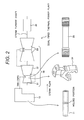
- Figure 2 shows schematic diagrams of a 700°C-class coal fired thermal power plant and exemplary high-temperature components used therein. As shown in Fig.
- a 700°C-class coal fired thermal power plant has a power generating system, in which a high-temperature steam (e.g., 700 to 750°C) heated with a boiler 10 is supplied stepwise to a high-pressure turbine 21, a middle-pressure turbine 22 and a low-pressure turbine 23 that comprise a steam turbine 20, thereby an electric generator 30 connected with a steam turbine shaft is rotated.
- a high-temperature steam e.g., 700 to 750°C
- the Ni-based wrought superalloy of the invention can be suitably used for high-temperature components exposed directly to the high-temperature steam and applied large mechanical stress such as boiler tubes 11, high-pressure turbine blades 24 and casing bolts 25.
- the boiler tubes 11 are connected each other usually by welding to assemble the boiler 10. At this time, the boiler tubes 11 are required to be in a soften state in order to prevent from cracking during the welding process. Therefore, when assembling the boiler 10, it is preferable to use the boiler tubes 11 subjected the solution heat treatment according to the invention but not subjected an artificial aging heat treatment. When such the boiler tubes 11 connected by welding are used in a 700°C-class coal fired thermal power plant, the boiler tubes 11 are subjected to a substantial aging heat treatment during use. Thereby, the ⁇ '-phase precipitations are generated in a matrix of the superalloy, leading to good high-temperature mechanical properties. On the other hand, with respect to the high-pressure turbine blades 24 and the casing bolts 25, it is preferable to use the components subjected both the solution heat treatment according to the invention and the above-mentioned artificial aging heat treatment.
- a starting superalloy was prepared by a double melt process, which consists of a vacuum induction melting (VIM) and an electroslag remelting (ESR), followed by a hot forging process.
- VIM vacuum induction melting
- ESR electroslag remelting
- Table 1 Compositions of starting superalloys.
- Ni-based wrought superalloys (Examples 1 to 18, and Comparative examples 1 to 7) were prepared by subjecting the above starting superalloys to various heat treatments, respectively.
- Cross sectional microstructure observation and creep test were carried out to each of the Ni-based wrought superalloys prepared.
- Table 2 shows conditions of the heat treatments (solution heat treatment and artificial aging heat treatment) and experimental results (microstructure observation and creep properties) in Examples 1 to 6;
- Table 3 shows those in Examples 7 to 16; and
- Table 4 shows those in Comparative examples 1 to 6. Meanwhile, the creep test was conducted under a condition of 45 kgf/mm 2 of tensile stress at 700°C through Tables 2 to 4.
- Tables 2 to 4 show, for each superalloy, the heat treatment condition and the resulting superalloy properties: the average grain size (unit: ⁇ m) and the grain size number defined in JIS; the average length of precipitations along the grain boundaries (unit: ⁇ m); the average number of precipitations per 10- ⁇ m grain boundary length; the covering ratio; and the creep properties (time to rupture (unit: hour), creep elongation, and reduction of area).
- the continuous film-like carbide precipitations were precipitated (see, e.g., the comparative Ni-based wrought superalloy B shown in Fig. 1 )
- the average length of precipitations was measured and the average number of precipitations was counted.
- Comparative example 1 was heat-treated under the conventional condition. As shown in Table 4, Comparative example 1 has very high creep ductility but a relatively shorter time to rupture (260 hours or so), i.e., Comparative example 1 was desired to have longer time to rupture (larger creep strength). Then, in Comparative examples 2 to 4, in order to increase the average grain size, temperatures of the solution heat treatments were increased. As a result, the creep strength was increased but the creep ductility was drastically degraded. Furthermore, each of Comparative examples 2 to 4 had a microstructure in which a lot of carbide fine particles were precipitated and joined together along the grain boundaries like a continuous film covering each coarsened grain.
- Comparative example 5 had a microstructure in that granular carbides were precipitated along each grain boundary like an intermittent chain. However, the average grain size became so large that the creep ductility of the superalloy was deteriorated. Although Comparative example 6 also had a microstructure similar to Comparative example 5, the covering ratio of the granular precipitations to the grain boundaries became so small that the time to rupture (i.e., creep strength) was insufficient.
- the invented and comparative superalloys had a slower creep strain rate than the conventional superalloy.
- the comparative superalloys had very poor creep ductility (the creep elongation is as small as about 1/4 that of the conventional superalloy).
- the Ni-based wrought superalloys formed according to the above-described invented method exhibited both long time to rupture (creep strength) due to the coarsened grains and necessary-and-sufficient creep ductility.
- the time to rupture was 1.3-1.7 times that of Comparative example 1; and the creep ductility was 0.5-1.1 times that of Comparative example 1.
Landscapes
- Chemical & Material Sciences (AREA)
- Engineering & Computer Science (AREA)
- Materials Engineering (AREA)
- Mechanical Engineering (AREA)
- Metallurgy (AREA)
- Organic Chemistry (AREA)
- Physics & Mathematics (AREA)
- Thermal Sciences (AREA)
- Crystallography & Structural Chemistry (AREA)
- Turbine Rotor Nozzle Sealing (AREA)
Abstract
Description
- The present invention relates to nickel (Ni) based superalloys, especially to Ni-based wrought superalloys having high creep strength for use mainly in high temperature environments (such as high temperature steam turbine components), and manufacturing methods thereof.
- Currently, in order to achieve more efficient coal fired thermal power plants, thermal power plants whose steam temperature exceeds 700°C are being increasingly developed. Conventionally, high temperature steam turbine components are made of 12Cr (12 chromium) ferritic steel (a type of iron-based material). However, such materials are considered to be able to withstand high steam temperatures only up to 650°C. So, on behalf of such 12Cr ferritic steel, precipitation strengthened Ni-based superalloys are being investigated for use for steam turbine components exposed to high temperatures of around 700°C.
- Most components of a high temperature steam turbine are large in size; therefore, precipitation strengthened Ni-based superalloys used in such applications require good formability of large ingot and good hot-forgeability. Also, in some cases a precipitation strengthened Ni-based superalloy may be used in combination with a ferrite steel to form a high temperature steam turbine component. The ferrite steel usually has a relatively small thermal expansion coefficient, and therefore the precipitation strengthened Ni-based superalloy used in combination with such ferrite steel also needs to have a low thermal expansion coefficient.
- To meet the above requirements, e.g., FENIX-700 of a Ni-based superalloy (produced by Hitachi, Ltd.) provides very high phase stability, very high strength, and excellent formability of large ingot. M-252 of a Ni-based superalloy has a linear thermal expansion coefficient close to that of a ferrite steel, and can therefore be used combined with the ferrite steel. Furthermore,
JP-A Hei 10(1998)-317079 WO 2009/028671 report a Ni-based superalloy which has a low thermal expansion coefficient and excellent high-temperature strength. - The high temperature creep properties of materials are swayed by various factors, among which the microstructure is one. For example, it is known that the grain boundaries of a material are prone to be the starting points of a creep rupture. Therefore, creep deformations can be suppressed by reducing grain boundaries. As an example of such effort, rotor blades of some state-of-the-art gas turbine are made of a single crystalline material in order to eliminate potentially rupture-causing grain boundaries and to increase the creep strength.
- Another possible approach to reducing grain boundaries is to coarsen grains in a material. Through the intensive examinations by the present inventors, it is found that to coarsen grains simply can enhance creep strength of an Ni-based wrought superalloy, but will undesirably degrade ductility thereof, which is a new problem to be solved.
- In view of the foregoing, it is an objective of the present invention to provide a high-strength Ni-based wrought superalloy and a production method thereof that provides high creep strength owing to the coarsened grains and still provides sufficient ductility.
- (I) According to one aspect of the present invention, there is provided an Ni-based wrought superalloy including:
- (a) from 0.005 to 0.2 mass% of C (carbon); (b) from 0 to 1 mass% of Si (silicon); (c) from 0 to 1 mass% of Mn (manganese); (d) from 10 to 24 mass% of Cr (chromium); (e) at least one of Mo (molybdenum) and W (tungsten), the total content expressed by "[Mo content] + 0.5x[W content]" being from 5 to 17 mass%; (f) from 1 to 2 mass% of Al (aluminum); (g) from 0.5 to 3.5 mass% of Ti (titanium); (h) from 0 to 10 mass% of Fe (iron); (i) at least one of from 0.002 to 0.02 mass% of B (boron) and from 0.01 to 0.2 mass% of Zr (zirconium); and (j) the balance being Ni (nickel) and inevitable impurities, the Ni content being from 48 to 80 mass%. Furthermore, the Ni-based wrought superalloy has a polycrystalline body including a plurality of grains, and an average size of the grains after a heat treatment is from 72 to 289 µm. Moreover, a plurality of granular precipitations precipitate along the grain boundaries of the Ni-based wrought superalloy after the heat treatment, and an average length of the granular precipitations along the grain boundary (an average length of the grain boundary covered by one granular precipitation) is from 0.5 to 2.5 µm in an arbitrary cross-sectional view of the polycrystalline body. Besides, as mentioned above, it is defined that an Ni-based wrought superalloy of the present invention has a polycrystalline body. And, grains mean crystal grains of the matrix phase.
- (i) In an arbitrary cross-sectional view of the polycrystalline body, a ratio of a total length of the granular precipitations to a total length of the grain boundaries is 50% or more. In other words, a covering ratio with the granular precipitations to the grain boundaries is 50% or more.
- (ii) In an arbitrary cross-sectional view of the polycrystalline body, a number of the granular precipitations per 10-µm-length of the grain boundary is three or more.
- (iii) The granular precipitations comprise at least chromium carbide, and molybdenum carbide and/or tungsten carbide.
- (iv) The heat treatment includes a first solution heat treatment carried out at a temperature from 1100 to 1160°C, and a second solution heat treatment carried out at a temperature from 980 to 1080°C subsequently to the first solution heat treatment.
- (v) The heat treatment includes a solution heat treatment carried out at a temperature from 980 to 1080°C for 24 hours or more.
- (vi) The Ni-based wrought superalloy further includes: (k) from 0 to 20 mass% of Co; and (1) from 0 to 1 mass% of Nb.
- (vii) A ratio expressed by "[Al content]/([Al content] + 0.56x[Ti content])" is from 0.45 to 0.70.
- (viii) Boiler tubes for use in a boiler of a coal fired thermal power plant are made of the above Ni-based wrought superalloy.
- (ix) Steam turbine blades for use in a coal fired thermal power plant are made of the above Ni-based wrought superalloy.
- (x) Casing bolts for use in a steam turbine of a coal fired thermal power plant are made of the above Ni-based wrought superalloy.
- (II) According to another aspect of the present invention, there is provided a method for producing an Ni-based wrought superalloy, the Ni-based wrought superalloy including: (a) from 0.005 to 0.2 mass% of C; (b) from 0 to 1 mass% of Si; (c) from 0 to 1 mass% of Mn; (d) from 10 to 24 mass% of Cr; (e) at least one of Mo and W, total content expressed by "[Mo content] + 0.5x[W content]" being from 5 to 17 mass%; (f) from 1 to 2 mass% of Al; (g) from 0.5 to 3.5 mass% of Ti; (h) from 0 to 10 mass% of Fe; (i) at least one of from 0.002 to 0.02 mass% of B and from 0.01 to 0.2 mass% of Zr; and (j) balance being Ni and inevitable impurities, the Ni content being from 48 to 80 mass%.
Furthermore, the method comprises step of carrying out a two-step solution heat treatment, in which the two-step solution heat treatment is composed of a first solution heat treatment at a temperature from 1100 to 1160°C, and a second solution heat treatment at a temperature from 980 to 1080°C subsequently to the first solution heat treatment. - (III) According to still another aspect of the present invention, there is provided a method for producing an Ni-based wrought superalloy, the Ni-based wrought superalloy including: (a) from 0.005 to 0.2 mass% of C; (b) from 0 to 1 mass% of Si; (c) from 0 to 1 mass% of Mn; (d) from 10 to 24 mass% of Cr; (e) at least one of Mo and W, total content expressed by "[Mo content] + 0.5x[W content]" being from 5 to 17 mass%; (f) from 1 to 2 mass% of Al; (g) from 0.5 to 3.5 mass% of Ti; (h) from 0 to 10 mass% of Fe; (i) at least one of from 0.002 to 0.02 mass% of B and from 0.01 to 0.2 mass% of Zr; and (j) balance being Ni and inevitable impurities, the Ni content being from 48 to 80 mass%.
Furthermore, the method comprises step of carrying out a single-step prolonged solution heat treatment at a temperature from 980 to 1080°C for 24 hours or more. - In the above aspects (II) and (III) of the present invention, the following modifications and changes can be made.
- (xi) After the step of carrying out the two-step solution heat treatment or the single-step prolonged solution heat treatment, the method further comprises step of carrying out a two-step artificially aging heat treatment, in which the two-step artificially aging heat treatment is composed of a first aging heat treatment at a temperature from 820 to 880°C, and a second aging heat treatment at a temperature from 600 to 800°C subsequently to the first aging heat treatment.
- According to the present invention, it is possible to provide a high-strength Ni-based wrought superalloy which exhibits high creep strength owing to the coarsened grains of the polycrystalline body and that still provides sufficient ductility owing to the granular precipitations of appropriate amount and sizes precipitated along the grain boundaries of the polycrystalline body. Moreover, it is possible to provide a production method of the high-strength Ni-based wrought superalloy having such microstructures.
-
-
Fig. 1 shows a schematic illustration in a cross-sectional view of an exemplary microstructure of an Ni-based wrought superalloy after a solution heat treatment according to the present invention. -
Fig. 2 shows schematic diagrams of a 700°C-class coal fired thermal power plant and exemplary high-temperature components used therein. - Preferred embodiments of the present invention will be described in detail hereinafter with reference to the accompanying drawings. However, the invention is not limited to the specific embodiments described below, but various combinations of its features are possible within the scope of the invention.
- In order to solve the above-mentioned problems, the present inventors intensively investigated preferable microstructures of an Ni-based wrought superalloy and a heat treatment for controlling the microstructures. Therethrough, the inventors have developed the following two-step solution heat treatment as a novel heat treatment for producing an Ni-based wrought superalloy having preferable microstructures.
- At the first step of the two-step solution heat treatment, a starting alloy is solution heat treated at a temperature higher than the solvus temperature of the γ'-phase and higher than the solvus temperature of the carbides, which is a higher temperature than conventional, thereby coarsening the grains. Subsequently, as the second step of the two-step solution heat treatment, the alloy is further solution heat treated at a temperature higher than the solvus temperature of the γ'-phase but lower than the solvus temperature of the carbides, that is an intermediate temperature range, thereby causing some of the carbides to precipitate in the form of granular precipitations along each grain boundary and in grains of the superalloy. As a result, there is obtained an Ni-based wrought superalloy according to the present invention having microstructures in which granular carbides are precipitated along each grain boundary of the superalloy like an intermittent chain (a discontinuous chain).
- Furthermore, the inventors have developed the following single-step prolonged solution heat treatment as another novel heat treatment for producing an Ni-based wrought superalloy having preferable microstructures. In the single-step prolonged heat treatment, a starting alloy is solution heat treated at a temperature higher than the solvus temperature of the γ'-phase but lower than the solvus temperature of the carbides, that is an intermediate temperature range, for a long time (specifically, for 24 hours or more, and more preferably for 48 hours or more). Thereby, there is also obtained an Ni-based wrought superalloy having microstructures in which granular carbides are precipitated along each grain boundary of the superalloy like an intermittent chain.
- Meanwhile, after the two-step solution heat treatment or the single-step prolonged solution heat treatment, it is preferable to conduct an appropriate artificially aging heat treatment to the Ni-based wrought superalloy in accordance with the uses of the superalloy.
-
Figure 1 shows a schematic illustration in a cross-sectional view of an exemplary microstructure of an Ni-based wrought superalloy after a solution heat treatment according to the present invention. InFig. 1 , there are also showed comparative exemplary microstructures of Ni-based wrought superalloys without the solution heat treatment of the present invention (comparative Ni-based wrought superalloys A and B). As shown inFig. 1 , a polycrystalline body of the Ni-based wrought superalloy in accordance with the present invention has a microstructure comprising coarsened grains 1 andgranular carbides 3 in which thegranular carbides 3 are precipitated alonggrain boundaries 2 between the coarsened grains 1 like an intermittent chain (a discontinuous chain). Also, thegranular carbides 3 are precipitated inside the coarsened grains 1. - On the other hand, a polycrystalline body of an Ni-based wrought superalloy without the solution heat treatment of the present invention (e.g., comparative Ni-based wrought superalloy A) has microstructures comprising relatively small grains 1' and
granular carbides 3 in that thegranular carbides 3 are precipitated alonggrain boundaries 2 between the relatively small grains 1'. Furthermore, a polycrystalline body of another Ni-based wrought superalloy without the solution heat treatment of the invention (e.g., comparative Ni-based wrought superalloy B) has microstructures comprising coarsened grains 1 and carbide fine particles 3' in that the carbide fine particles 3' are precipitated alonggrain boundaries 2 between the coarsened grains 1 like a continuous film covering each coarsened grain 1. - A creep test was conducted to the Ni-based wrought superalloy polycrystalline bodies having various microstructures. The results showed that the comparative Ni-based wrought superalloy A exhibited good creep ductility, but was required to improve creep strength further. The comparative Ni-based wrought superalloy B exhibited improved creep strength due to the coarsened grains. However, creep ductility of the comparative Ni-based wrought superalloy B was seriously degraded. In contrast, the inventive Ni-based wrought superalloy shown in
Fig. 1 had good creep ductility as well as improved creep strength due to the coarsened grains. The present invention has been accomplished based on these findings. - Next, composition of the Ni-based wrought superalloy according to the present invention will be described.
- Carbon (C) constituent has an effect of preventing exaggerated grain coarsening by forming carbide. However, if the excessive amount of C is added, carbides are liable to precipitate in a form of a stringer and ductility of the superalloy is deteriorated in a perpendicular direction to a working direction. Furthermore, when the carbon combines with titanium (Ti) to produce a carbide, it is difficult to ensure the amount of Ti enough to form the γ' (gamma prime) phase serving as a precipitation strengthening phase for Ni-based superalloys, thereby degrading the strength of the superalloy. Thus, the C content is preferably from 0.005 to 0.2 mass%, more preferably from 0.005 to 0.15 mass%, further preferably from 0.005 to 0.08 mass%, and most preferably from 0.005 to 0.05 mass%.
- Silicon (Si) and manganese (Mn) constituents are used as deoxidizers when melting an alloy. It is effective even if addition of these constituents is small. However, if the excessive amounts of Si and/or Mn are added, hot-workability (hot-forgeability) in production and toughness (ductility) in use of the superalloy are deteriorated. Therefore, the Si content is preferably from 0 to 1 mass%, and the Mn content is preferably from 0 to 1 mass%. The each content of Si and Mn is more preferably from 0 to 0.5 mass%, further preferably from 0 to 0.1 mass%, and most preferably from 0 to 0.01 mass%.
- Chromium (Cr) constituent is dissolved into a matrix to make a solid solution thereby improving oxidation resistance property of the superalloy. When the superalloy is used especially at a high temperature exceeding 700°C, the Cr content is required to be 10 mass% or more. However, the excessive addition of Cr deteriorates plastic workability of the superalloy. Thus, the Cr content is preferably from 10 to 24 mass%, more preferably from 15 to 24 mass%, further preferably from 18 to 22 mass%, and most preferably from 19 to 21 mass%.
- Molybdenum (Mo) and tungsten (W) constituents are important elements having an effect of lowering a thermal expansion coefficient of the superalloy, so that one or more of Mo and W is indispensable. The total content expressed by "[Mo content] + 0.5x[W content]" is preferably from 5 to 17 mass%. If the total content of "[Mo content] + 0.5x[W content]" is less than 5 mass%, the above effect is not obtainable and if the total content of "[Mo content] + 0.5x[W content]" exceeds 17 mass%, plastic workability of the superalloy is deteriorated. The total content of "[Mo content] + 0.5x[W content]" is more preferably from 5 to 15 mass%, and further preferably from 5 to 12 mass%. Moreover, if the content ratio of W to Mo is high, a LAVES phase is prone to generate, thereby deteriorating ductility or hot-workability of the superalloy. Thus, a single addition of Mo is preferable, and its content is preferably from 8 to 12 mass%, more preferably from 9 to 11 mass%.
- Aluminum (Al) constituent forms an intermetallic compound (Ni3Al), which is called γ' (gamma prime) phase, when the superalloy is subjected to an artificial aging heat treatment, thereby improving high temperature strength of the superalloy. In order to obtain a precipitation strengthening effect, the Al content should be 1 mass% or more. However, if the Al content exceeds 2 mass%, hot-workability of the superalloy is deteriorated. Thus, the Al content is preferably from 1 to 2 mass%, more preferably from 1 to 1.8 mass%.
- Titanium (Ti) constituent forms a γ' phase (in this case, Ni3(Al,Ti)) as a precipitation strengthening phase together with the Al constituent. The γ' phase formed with Ni, Al and Ti (Ni3(Al,Ti)) exhibits more excellent high temperature strength as compared with the aforementioned γ' phase of Ni3Al. In order to obtain a higher precipitation strengthening effect, the Ti content should be 0.5 mass% or more. However, if the Ti content exceeds 3.5 mass%, the γ' phase of Ni3(Al,Ti) becomes unstable, resulting in that a transformation from the γ' phase to an η (eta) phase is liable to occur, thereby deteriorating high temperature strength and hot-workability. Thus, the Ti content is preferably from 0.5 to 3.5 mass%, more preferably from 1 to 3 mass%, further preferably from 1.2 to 2.5 mass%, and most preferably 1.2 to 1.8 mass%.
- As set forth above, a content balance between the Al and the Ti constitutions is important in the inventive superalloy. The more the content ratio of Al in the γ' phase of Ni3(Al,Ti) is, the more the ductility of the superalloy is improved while strength of the superalloy decreases. In the present invention, it is important that sufficient ductility is ensured, so that a value expressed by "[Al content]/([Al content] + 0.56x[Ti content])" is set in order to define the content ratio of Al in the γ' phase of Ni3(Al,Ti). If this value is lower than 0.45, the ductility of the superalloy is insufficient. On the other hand, if the value exceeds 0.7, the superalloy lacks the strength. Therefore, the value (the ratio expressed by "[Al content]/([A1 content] + 0.56x[Ti content])") is preferably from 0.45 to 0.7, and more preferably from 0.45 to 0.60.
- An addition of iron (Fe) constituent is not always needed. On the other hand, Fe has an effect of improving hot-workability of the superalloy; thereby it may be added as occasion demands. If the Fe content exceeds 10 mass%, the thermal expansion coefficient of the superalloy becomes large, and oxidation resistance is deteriorated. Thus, the Fe content is preferably from 0 to 10 mass%, more preferably from 0 to 5 mass%, and further preferably from 0 to 2 mass%.
- Boron (B) and zirconium (Zr) constituents strengthen grain boundaries of the superalloy, thereby improving ductility of the superalloy at a high temperature. Therefore, one or more of B and Zr are added to the superalloy. However, excessive additions of B and Zr deteriorate the superalloy in hot-workability, respectively. Thus, the B content is preferably from 0.002 to 0.02 mass%, and the Zr content is preferably from 0.01 to 0.2 mass%.
- The residuals of the inventive superalloy other than the above additive elements are nickel (Ni) constituent and inevitable impurities. If the Ni content is less than 48 mass%, high temperature strength of the superalloy is insufficient. On the contrary, if the Ni content exceeds 80 mass%, ductility of the superalloy is deteriorated. Therefore, the Ni content is preferably from 48 to 80 mass%, more preferably from 50 to 75 mass%, and further preferably from 54 to 72 mass%.
- Meanwhile, the inventive superalloy may contain other elements than those mentioned above, so long as they are in small amounts and essentially do not adversely affect characteristics of the superalloy. The following elements are such other elements: 0.05 mass% or less of P (phosphorus); 0.01 mass% or less of S (sulfur); 1 mass% or less of Nb (niobium); 20 mass% or less of Co (cobalt), 5 mass% or less of Cu (copper); 0.01 mass% or less of Mg (magnesium); 0.01 mass% or less of Ca (calcium); 0.02 mass% or less of O (oxygen); 0.05 mass% or less of N (nitrogen); and 0.1 mass% or less of REMs (rare earth metals). The Nb content is more preferably 0.8 mass% or less, and the Co content is more preferably 5 mass% or less.
- The Ni-based wrought superalloy according to the present invention, which has a polycrystalline body including a plurality of grains, has an average grain size of 72 µm or larger and 289 µm or smaller. Preferably, the Ni-based wrought superalloy of the invention has a uniform grain size distribution; i.e., the grains of Ni-based wrought superalloy of the invention are generally of approximately the same size. In other words, the grain size within a range from 0.99 to 5.0 specified in grain size number (GS No.) of JIS G 0551 (Methods of Austenite Grain Size Test for Steel) is suitable. That is, the average grain size of 72 µm as a lower limit is GS No. of 5.0, and the average grain size of 289 µm as an upper limit is GS No. of 0.99.
- Average grain sizes smaller than 72 µm will not provide a creep strength sufficiently higher than those of conventional Ni-based wrought superalloys. On the other hand, an Ni-based wrought superalloy having an average grain size of larger than 289 µm (GS No. < 0.99) will have very poor ductility even if the superalloy has a grain boundary structure according to the invention. Also, such Ni-based wrought superalloys (having an average grain size of larger than 289 µm) will have poor ultrasonic transmittance; thus, when a large component is formed using such a superalloy, the defect detectability by ultrasonic testing will be poor. The average grain size of 141 µm or larger and 282 µm or smaller, which is GS No. of 1.0-3.0, is more preferable. Note that grain sizes as used herein do not include those of duplex grains (coexistence of grains of three or more different GS No.) as defined in JIS.
- In the Ni-based wrought superalloy according to the present invention, a plurality of granular precipitations precipitate along grain boundaries in the polycrystalline body of the superalloy. Furthermore, an average length of the granular precipitations is preferably from 0.5 to 2.5 µm, and more preferably from 0.5 to 2.5 µm. Herein, the average length of the granular precipitations means an average length of them along the grain boundaries in an arbitrary cross-sectional view of the polycrystalline body. In other words, the average length of the granular precipitations along the grain boundaries means an average length of the grain boundary covered by one granular precipitation.
- An average length of the granular precipitations shorter than 0.5 µm will not provide sufficient contribution to grain boundary hardening (improvement of grain boundary connectivity). On the other hand, too long an average length of the granular precipitations (i.e., too long an average length of the grain boundary covered by one granular precipitation) may have the opposite effect of degrading the grain boundary connectivity. Experimental results show that, in order to prevent ductility degradation, the Ni-based wrought superalloys of the invention preferably have an average length of the granular precipitations of 2.5 µm or less, and more preferably 1.5 µm or less. Meanwhile, the granular precipitations comprise mainly: at least chromium carbides; and molybdenum carbides and/or tungsten carbides, and may include titanium carbides.
- In addition to the above-mentioned average length of the granular precipitations, the amount of precipitates (i.e., the number of granular precipitations per unit grain boundary length) is also important to achieve sufficient grain boundary hardening (improvement of grain boundary connectivity). That is, too small an amount of precipitates will not provide sufficient grain boundary hardening even if the average length of the granular precipitations falls within the above-described range. In the Ni-based wrought superalloy of the invention, it is preferable that a ratio of a total length of the granular precipitations to that of the grain boundaries (covering ratio) in an arbitrary cross-sectional view of the polycrystalline body is 50% or more. Specifically, the superalloy of the invention preferably have three or more granular precipitations having the above-described average length per 10 µm grain boundary length, more preferably four or more, and further preferably five or more.
- Manufacturing method of Ni-based wrought superalloy according to the present invention is characterized most by a heat treatment process (solution heat treatment in particular). There are no particular limitations in the other processes, and it is possible to utilize conventional ones. Hereafter, the heat treatments in the production method of the invention will be described in detail.
- As mentioned before, the inventors have developed a two-step solution heat treatment as a novel heat treatment. A first-step solution heat treatment is conducted at a temperature from 1100 to 1160°C. This first-step solution heat treatment accelerates grain growth in a relatively short period of time. Heat treatments at temperatures higher than 1160°C will result in too high a grain growth rate, thus making it difficult to control the average grain size to a level of 289 µm or less. Moreover, Ni-based wrought superalloys having an average grain size larger than 289 µm after this first-step solution heat treatment cannot provide sufficient ductility even by subjecting such an superalloy to successive heat treatments including a second-step solution heat treatment described later. Also, as already described, when a large component is formed of such the superalloy, the defect detectability by ultrasonic testing will be poor.
- On the other hand, experimental results show that carbides are almost completely dissolved in the matrix of superalloys of the invention at a temperature of 1100°C or more, so that the grain boundary migration is easy to occur, thereby the grains coarsening. More preferably, the first-step solution heat treatment is performed at a temperature of 1125°C or more for accelerating grain growth.
- According to the present invention, a second-step solution heat treatment is conducted at a temperature from 980 to 1080°C. Thermodynamic calculations show that, of the γ'-phase solvus temperatures for Ni-based wrought superalloys of the invention, the highest one is about 980°C. Therefore, this second-step solution heat treatment needs to be conducted at least 980°C or higher. However, if an Ni-based wrought superalloy is subjected to the second-step solution heat treatment above 1080°C, carbides that would otherwise precipitate along the grain boundaries will be dissolved in the matrix of superalloy. That is, within a temperature range of the second-step solution heat treatment, although the γ'-phase is in a state of solid solution, the carbides are possible to precipitate thermodynamically. Herein, because a supersaturation for precipitating carbides is small (i.e., a nucleation frequency of carbide nucleus is small) in this temperature region, a small number of carbide particles precipitate along the grain boundaries and grow. Thus, there is obtained a microstructure in which granular carbides are precipitated along each grain boundary of the superalloy like an intermittent chain (a discontinuous chain), thereby improving a creep ductility of the superalloy. Meanwhile, some of the carbides are precipitated inside the grains of superalloy during the second-step solution heat treatment.
- After the above-described first-step solution heat treatment, if a Ni-based wrought superalloy is successively subjected to the conventional artificial aging heat treatments without being subjected to this second-step solution heat treatment, there are took place a lot of carbide nucleation driven by a large chemical potential difference (supersaturation, supercooling) as a driving force along the grain boundaries in one breath, and is obtained a microstructure in that a lot of carbide fine particles are precipitated and joined together along the grain boundaries like a continuous film covering each grain. Thus, the grain boundary hardening (grain boundary connectivity) of the superalloy is deteriorated, and therefore no sufficient creep ductility can be obtained. In the present invention, the second-step solution heat treatment has an effect preventing a lot of carbide fine particles from being precipitated in one breath; that is, the continuous film-like carbide precipitation along each grain boundary can be suppressed during a successive artificial aging heat treatment.
- In addition to the above-described two-step solution heat treatment, the inventors have developed a single-step prolonged solution heat treatment as another novel heat treatment, in which a starting alloy is heat treated within a temperature range from 980 to 1080°C for a long time (specifically, for 24 hours or more, and more preferably for 48 hours or more). The temperature range from 980 to 1080°C is an intermediate temperature that is higher than the solvus temperature of the γ'-phase but lower than the solvus temperature of the carbides, as mentioned above. According to this single-step prolonged solution heat treatment, there is obtained a microstructure in that: grains of the superalloy are coarsened; and granular carbides are precipitated along each grain boundary like an intermittent chain. Thus, the creep ductility of the Ni-based wrought superalloy can be improved.
- The single-step prolonged solution heat treatment requires longer period of time than the two-step solution heat treatment. However, the single-step prolonged solution heat treatment can also prevent a lot of carbide fine particles from being precipitated along the grain boundaries because of a temperature range in that: the carbides are not dissolved into the matrix of superalloy; and the supersaturation of the carbides is small. Moreover, since there is no need to change a temperature during the single-step prolonged solution heat treatment, it is able to suppress a temperature distribution inside a product being heat-treated; therefore being suitable for forming grains with more uniform sizes.
- An artificial aging heat treatment is conducted after the solution heat treatment. In the present invention, there is no particular limitation in the artificial aging heat treatment, then conventional artificial aging heat treatment can be carried out. Through intensive investigations in terms of creep strength and ductility, it was found that the following artificial aging heat treatment was preferable. A first-step aging heat treatment is conducted at a temperature from 820 to 880°C. Then, a second-step aging heat treatment is conducted at a temperature from 600 to 800°C. This two-step artificial aging heat treatment can improve both creep strength and creep ductility of the superalloy.
- As described thereinbefore, because an Ni-based wrought superalloy according to the present invention has good high-temperature mechanical properties, the superalloy can be used desirably as a material for high-temperature components of a coal fired thermal power plant.
Figure 2 shows schematic diagrams of a 700°C-class coal fired thermal power plant and exemplary high-temperature components used therein. As shown inFig. 2 , a 700°C-class coal fired thermal power plant has a power generating system, in which a high-temperature steam (e.g., 700 to 750°C) heated with aboiler 10 is supplied stepwise to a high-pressure turbine 21, a middle-pressure turbine 22 and a low-pressure turbine 23 that comprise asteam turbine 20, thereby anelectric generator 30 connected with a steam turbine shaft is rotated. The Ni-based wrought superalloy of the invention can be suitably used for high-temperature components exposed directly to the high-temperature steam and applied large mechanical stress such asboiler tubes 11, high-pressure turbine blades 24 andcasing bolts 25. - The
boiler tubes 11 are connected each other usually by welding to assemble theboiler 10. At this time, theboiler tubes 11 are required to be in a soften state in order to prevent from cracking during the welding process. Therefore, when assembling theboiler 10, it is preferable to use theboiler tubes 11 subjected the solution heat treatment according to the invention but not subjected an artificial aging heat treatment. When such theboiler tubes 11 connected by welding are used in a 700°C-class coal fired thermal power plant, theboiler tubes 11 are subjected to a substantial aging heat treatment during use. Thereby, the γ'-phase precipitations are generated in a matrix of the superalloy, leading to good high-temperature mechanical properties. On the other hand, with respect to the high-pressure turbine blades 24 and thecasing bolts 25, it is preferable to use the components subjected both the solution heat treatment according to the invention and the above-mentioned artificial aging heat treatment. - Next, the present invention will be described below with reference to specific examples, but is not limited to these examples. First, a starting superalloy was prepared by a double melt process, which consists of a vacuum induction melting (VIM) and an electroslag remelting (ESR), followed by a hot forging process. The compositions of the starting superalloys are shown in Table 1.
[Table 1] Table 1 Compositions of starting superalloys. (unit: mass%) Superalloy 1 Superalloy 2Superalloy 3Superalloy 4 Superalloy 5 Superalloy 6 Superalloy 7 C 0.03 0.03 0.03 0.03 0.03 0.03 0.03 Si 0.02 0.02 0.02 0.02 0.02 0.02 0.01 Mn 0.01 0.01 0.02 0.01 0.03 0.05 0.02 Cr 20.0 19.2 19.2 19.2 19.7 12.4 19.7 Mo 10.0 5.3 9.9 7.0 10.2 9.5 10.2 W - 10.1 - - - - - Al 1.2 1.7 1.2 1.7 1.4 0.6 1.5 Ti 1.6 1.4 2.2 1.3 1.3 1.1 1.2 Fe - - 1.1 - - - 1.2 B 0.001 0.004 - 0.004 0.009 0.006 0.008 Zr - 0.07 0.09 0.07 - - 0.05 Co - - - - 5.0 - - Nb - - - - - 0.3 - P 0.002 0.001 0.001 0.001 0.001 0.001 0.002 S 0.001 0.001 0.002 0.001 0.001 0.001 0.001 Ni Bal. Bal. Bal. Bal. Bal. Bal. Bal. Note 1: Mark of "-" means no addition.
Note 2: Inevitable impurities are included in "Bal." of Ni. - Ni-based wrought superalloys (Examples 1 to 18, and Comparative examples 1 to 7) were prepared by subjecting the above starting superalloys to various heat treatments, respectively. Cross sectional microstructure observation and creep test were carried out to each of the Ni-based wrought superalloys prepared. Table 2 shows conditions of the heat treatments (solution heat treatment and artificial aging heat treatment) and experimental results (microstructure observation and creep properties) in Examples 1 to 6; Table 3 shows those in Examples 7 to 16; and Table 4 shows those in Comparative examples 1 to 6. Meanwhile, the creep test was conducted under a condition of 45 kgf/mm2 of tensile stress at 700°C through Tables 2 to 4.


- Tables 2 to 4 show, for each superalloy, the heat treatment condition and the resulting superalloy properties: the average grain size (unit: µm) and the grain size number defined in JIS; the average length of precipitations along the grain boundaries (unit: µm); the average number of precipitations per 10-µm grain boundary length; the covering ratio; and the creep properties (time to rupture (unit: hour), creep elongation, and reduction of area). Meanwhile, in the case that the continuous film-like carbide precipitations were precipitated (see, e.g., the comparative Ni-based wrought superalloy B shown in
Fig. 1 ), for convenience sake, regarding one continuous film along the grain boundary as one precipitation, the average length of precipitations was measured and the average number of precipitations was counted. - Comparative example 1 was heat-treated under the conventional condition. As shown in Table 4, Comparative example 1 has very high creep ductility but a relatively shorter time to rupture (260 hours or so), i.e., Comparative example 1 was desired to have longer time to rupture (larger creep strength). Then, in Comparative examples 2 to 4, in order to increase the average grain size, temperatures of the solution heat treatments were increased. As a result, the creep strength was increased but the creep ductility was drastically degraded. Furthermore, each of Comparative examples 2 to 4 had a microstructure in which a lot of carbide fine particles were precipitated and joined together along the grain boundaries like a continuous film covering each coarsened grain.
- Comparative example 5 had a microstructure in that granular carbides were precipitated along each grain boundary like an intermittent chain. However, the average grain size became so large that the creep ductility of the superalloy was deteriorated. Although Comparative example 6 also had a microstructure similar to Comparative example 5, the covering ratio of the granular precipitations to the grain boundaries became so small that the time to rupture (i.e., creep strength) was insufficient.
- The invented and comparative superalloys (having coarser grains) had a slower creep strain rate than the conventional superalloy. However, the comparative superalloys had very poor creep ductility (the creep elongation is as small as about 1/4 that of the conventional superalloy).
- In contrast, the Ni-based wrought superalloys formed according to the above-described invented method (Examples 1 to 16) exhibited both long time to rupture (creep strength) due to the coarsened grains and necessary-and-sufficient creep ductility. Specifically, compared to the conventional Ni-based wrought superalloys (e.g., Comparative example 1), the time to rupture was 1.3-1.7 times that of Comparative example 1; and the creep ductility was 0.5-1.1 times that of Comparative example 1.
- Next, supposing use as boiler tubes for a 700°C-class coal fired thermal power plant, another creep test (under 19.6 kgf/mm2 at 750°C) was carried out to specimens (Examples 17 and 18, and Comparative example 7) which were subjected a solution heat treatment but not subjected an artificial aging heat treatment. Table 5 shows conditions of the heat treatments and experimental results in Examples 17 and 18 and Comparative example 7. As shown in Table 5, it was proved that the Ni-based wrought superalloy according to the invention (Examples 17 and 18) had the time to rupture about 1.5 times that of the conventional Ni-based wrought superalloy (Comparative example 7), and had an equivalent creep ductility to Comparative example 7.
[Table 5] Table 5 Heat treatment conditions and experimental results in Examples 17 and 18 and Comparative example 7. Example 17 Example 18 Comparative example 7 Starting superalloy No. Superalloy 1 Solution heat treatment 1150°C × 1 h
+
1066°C ×4 h1066°C ×48 h 1066°C ×4 h Artificial aging heat treatment Not conducted Average grain size
(Grain size number)199 µm
(2.0)119 µm
(2,7)57 µm
(5.5)Average length of precipitations 1.5 µm 1.4 µm 0.6 µm Average number of precipitations
(/10-µm grain boundary)6.6 6.7 9.6 Covering ratio 99% 94% 58% Creep properties
(19.6 kgf/mm2, at 750°C)Time to rupture 4127 h 4463 h 2827 h Creep elongation 32.2% 38.5% 31.1 % Reduction of area 45.3% 51.3% 57.0% - The above embodiments of the invention as well as the appended claims and figures show multiple characterizing features of the invention in specific combinations. The skilled person will easily be able to consider further combinations or sub-combinations of these features in order to adapt the invention as defined in the claims to his specific needs.
Claims (15)
- An Ni-based wrought superalloy, including: (a) from 0.005 to 0.2 mass% of C; (b) from 0 to 1 mass% of Si; (c) from 0 to 1 mass% of Mn; (d) from 10 to 24 mass% of Cr; (e) at least one of Mo and W, total content expressed by "[Mo content] + 0.5×[W content]" being from 5 to 17 mass%; (f) from 1 to 2 mass% of Al; (g) from 0.5 to 3.5 mass% of Ti; (h) from 0 to 10 mass% of Fe; (i) at least one of from 0.002 to 0.02 mass% of B and from 0.01 to 0.2 mass% of Zr; and (j) balance being Ni and inevitable impurities, the Ni content being from 48 to 80 mass%,
wherein the Ni-based wrought superalloy has a polycrystalline body including a plurality of grains, and an average size of the grains after a heat treatment is from 72 to 289 µm; and
wherein a plurality of granular precipitations precipitate along the grain boundaries of the Ni-based wrought superalloy after the heat treatment, and an average length of the granular precipitations along the grain boundary is from 0.5 to 2.5 µm in an cross-sectional view of the polycrystalline body. - The Ni-based wrought superalloy according to claim 1, wherein, in a cross-sectional view of the polycrystalline body, a ratio of a total length of the granular precipitations to a total length of the grain boundaries is 50% or more.
- The Ni-based wrought superalloy according to claim 1 or 2, wherein, in a cross-sectional view of the polycrystalline body, a number of the granular precipitations per 10-µm-length of the grain boundary is three or more.
- The Ni-based wrought superalloy according to any one of claims 1 to 3, wherein the granular precipitations comprise at least chromium carbide, and molybdenum carbide and/or tungsten carbide.
- The Ni-based wrought superalloy according to any one of claims 1 to 4, wherein:the heat treatment includes a first solution heat treatment carried out at a temperature from 1100 to 1160°C, and a second solution heat treatment carried out at a temperature from 980 to 1080°C subsequently to the first solution heat treatment.
- The Ni-based wrought superalloy according to any one of claims 1 to 4, wherein the heat treatment includes a solution heat treatment carried out at a temperature from 980 to 1080°C for 24 hours or more.
- The Ni-based wrought superalloy according to any one of claims 1 to 6, further including: (k) from 0 to 20 mass% of Co; and (1) from 0 to 1 mass% of Nb.
- The Ni-based wrought superalloy according to any one of claims 1 to 7, wherein a ratio expressed by "[the Al content]/([the Al content] + 0.56x[the Ti content])" is from 0.45 to 0.70.
- Boiler tubes for use in a boiler of a coal fired thermal power plant, being made of the Ni-based wrought superalloy according to any one of claims 1 to 8.
- Steam turbine blades for use in a coal fired thermal power plant, being made of the Ni-based wrought superalloy according to any one of claims 1 to 8.
- Casing bolts for use in a steam turbine of a coal fired thermal power plant, being made of the Ni-based wrought superalloy according to any one of claims 1 to 8.
- A method for producing an Ni-based wrought superalloy, the Ni-based wrought superalloy including: (a) from 0.005 to 0.2 mass% of C; (b) from 0 to 1 mass% of Si; (c) from 0 to 1 mass% of Mn; (d) from 10 to 24 mass% of Cr; (e) at least one of Mo and W, total content expressed by "[Mo content] + 0.5×[W content]" being from 5 to 17 mass%; (f) from 1 to 2 mass% of Al; (g) from 0.5 to 3.5 mass% of Ti; (h) from 0 to 10 mass% of Fe; (i) at least one of from 0.002 to 0.02 mass% of B and from 0.01 to 0.2 mass% of Zr; and (j) balance being Ni and inevitable impurities, the Ni content being from 48 to 80 mass%, wherein
the method comprises step of carrying out a two-step solution heat treatment, the two-step solution heat treatment being composed of a first solution heat treatment at a temperature from 1100 to 1160°C, and a second solution heat treatment at a temperature from 980 to 1080°C subsequently to the first solution heat treatment. - A method for producing an Ni-based wrought superalloy, the Ni-based wrought superalloy including: (a) from 0.005 to 0.2 mass% of C; (b) from 0 to 1 mass% of Si; (c) from 0 to 1 mass% of Mn; (d) from 10 to 24 mass% of Cr; (e) at least one of Mo and W, total content expressed by "[Mo content] + 0.5x[W content]" being from 5 to 17 mass%; (f) from 1 to 2 mass% of Al; (g) from 0.5 to 3.5 mass% of Ti; (h) from 0 to 10 mass% of Fe; (i) at least one of from 0.002 to 0.02 mass% of B and from 0.01 to 0.2 mass% of Zr; and (j) balance being Ni and inevitable impurities, the Ni content being from 48 to 80 mass%, wherein
the method comprises step of carrying out a single-step prolonged solution heat treatment at a temperature from 980 to 1080°C for 24 hours or more. - The method for producing an Ni-based wrought superalloy according to claim 12, wherein
after the step of carrying out the two-step solution heat treatment, the method further comprises step of carrying out a two-step artificially aging heat treatment, the two-step artificially aging heat treatment being composed of a first aging heat treatment at a temperature from 820 to 880°C, and a second aging heat treatment at a temperature from 600 to 800°C subsequently to the first aging heat treatment. - The method for producing an Ni-based wrought superalloy according to claim 13, wherein
after the step of carrying out the single-step prolonged solution heat treatment, the method further comprises step of carrying out a two-step artificially aging heat treatment, the two-step artificially aging heat treatment being composed of a first aging heat treatment at a temperature from 820 to 880°C, and a second aging heat treatment at a temperature from 600 to 800°C subsequently to the first aging heat treatment.
Applications Claiming Priority (2)
| Application Number | Priority Date | Filing Date | Title |
|---|---|---|---|
| JP2009212632 | 2009-09-15 | ||
| JP2010205741A JP5657964B2 (en) | 2009-09-15 | 2010-09-14 | High-strength Ni-base forged superalloy and manufacturing method thereof |
Publications (2)
| Publication Number | Publication Date |
|---|---|
| EP2298946A2 true EP2298946A2 (en) | 2011-03-23 |
| EP2298946A3 EP2298946A3 (en) | 2011-09-28 |
Family
ID=43414034
Family Applications (1)
| Application Number | Title | Priority Date | Filing Date |
|---|---|---|---|
| EP10176855A Withdrawn EP2298946A3 (en) | 2009-09-15 | 2010-09-15 | High-strength Ni-based wrought superalloy and manufacturing method of same |
Country Status (2)
| Country | Link |
|---|---|
| EP (1) | EP2298946A3 (en) |
| JP (1) | JP5657964B2 (en) |
Cited By (24)
| Publication number | Priority date | Publication date | Assignee | Title |
|---|---|---|---|---|
| EP2423342A1 (en) * | 2010-08-26 | 2012-02-29 | Hitachi Ltd. | Forged alloy for steam turbine and steam turbine rotor using the same |
| EP2664686A1 (en) * | 2012-04-10 | 2013-11-20 | Hitachi Ltd. | High-temperature piping product and method for producing same |
| EP2703507A1 (en) * | 2012-08-30 | 2014-03-05 | Hitachi Ltd. | Ni base alloy and gas turbine blade and gas turbine utilizing the same |
| RU2538054C1 (en) * | 2014-02-19 | 2015-01-10 | Открытое акционерное общество Научно-производственное объединение "Центральный научно-исследовательский институт технологии машиностроения" ОАО НПО "ЦНИИТМАШ" | Heat-resistant alloy based on nickel for manufacture of blades of gas-turbine units |
| RU2542194C1 (en) * | 2014-02-19 | 2015-02-20 | Открытое акционерное общество Научно-производственное объединение "Центральный научно-исследовательский институт технологии машиностроения" ОАО НПО "ЦНИИТМАШ" | Refractory nickel-based alloy for casting gas turbine working blades |
| RU2542195C1 (en) * | 2014-02-19 | 2015-02-20 | Открытое акционерное общество Научно-производственное объединение "Центральный научно-исследовательский институт технологии машиностроения" ОАО НПО "ЦНИИТМАШ" | Refractory alloy on nickel base for casting of nozzle vanes with equiaxial structure of gas turbine plants |
| EP2860272A4 (en) * | 2012-06-07 | 2016-02-24 | Nippon Steel & Sumitomo Metal Corp | ALLOY BASED ON Ni |
| US10087989B2 (en) | 2013-06-06 | 2018-10-02 | Ntn Corporation | Bearing component and rolling bearing |
| US10094422B2 (en) | 2013-06-06 | 2018-10-09 | Ntn Corporation | Bearing component and rolling bearing |
| US10107335B2 (en) | 2013-06-06 | 2018-10-23 | Ntn Corporation | Bearing component and rolling bearing |
| US10156259B2 (en) | 2013-06-06 | 2018-12-18 | Ntn Corporation | Bearing component and rolling bearing |
| EP3444366A4 (en) * | 2016-04-05 | 2019-08-28 | Mitsubishi Heavy Industries Aero Engines, Ltd. | NICKEL ALLOY, TURBINE VANE, AND PROCESS FOR PRODUCING MOLDED ARTICLE BY INJECTING NICKEL ALLOY |
| CN110268078A (en) * | 2016-10-12 | 2019-09-20 | Crs 控股公司 | High temperature damage resistant superalloy, articles made from the alloy, and method of making the alloy |
| CN110300811A (en) * | 2017-02-17 | 2019-10-01 | 株式会社日本制钢所 | Ni based alloy, gas turbine material and the method for manufacturing Ni based alloy |
| CN110468304A (en) * | 2019-08-26 | 2019-11-19 | 飞而康快速制造科技有限责任公司 | A kind of nickel base alloy and preparation method thereof |
| US10975700B2 (en) | 2016-03-31 | 2021-04-13 | Mitsubishi Heavy Industries, Ltd. | Turbine blade designing method, turbine blade manufacturing method, and turbine blade |
| US11634792B2 (en) | 2017-07-28 | 2023-04-25 | Alloyed Limited | Nickel-based alloy |
| CN116179966A (en) * | 2023-02-20 | 2023-05-30 | 华能国际电力股份有限公司 | A kind of iron base superalloy and its preparation method and application |
| CN116590550A (en) * | 2023-05-10 | 2023-08-15 | 江西宝顺昌特种合金制造有限公司 | A kind of UNS NO 7252 alloy and its manufacturing method and application |
| CN116904893A (en) * | 2023-07-18 | 2023-10-20 | 西北工业大学 | GH4169 alloy capillary grain refinement method |
| CN117070728A (en) * | 2023-08-21 | 2023-11-17 | 中国科学院金属研究所 | A plasticizing and blanking method for deformed high-temperature alloys |
| CN117702024A (en) * | 2023-11-10 | 2024-03-15 | 南方科技大学 | Preparation method of nickel-based superalloy, component and nickel-based superalloy |
| US12241144B2 (en) | 2019-06-07 | 2025-03-04 | Alloyed Limited | Nickel-based alloy |
| US12319985B2 (en) | 2019-10-02 | 2025-06-03 | Alloyed Limited | Nickel-based alloy |
Families Citing this family (12)
| Publication number | Priority date | Publication date | Assignee | Title |
|---|---|---|---|---|
| JP5646521B2 (en) * | 2012-02-08 | 2014-12-24 | 株式会社東芝 | Ni-based alloy for steam turbine casting and cast component for steam turbine |
| JP5921401B2 (en) * | 2012-02-10 | 2016-05-24 | 株式会社東芝 | Ni-based alloy, method for producing the same, and turbine component |
| JP5981250B2 (en) * | 2012-07-19 | 2016-08-31 | 株式会社東芝 | Ni-base alloy for casting, method for producing Ni-base alloy for casting, and turbine cast component |
| JP6012454B2 (en) * | 2012-12-21 | 2016-10-25 | 三菱日立パワーシステムズ株式会社 | Forged member and steam turbine rotor, steam turbine rotor blade, boiler piping, boiler tube and steam turbine bolt using the same |
| JP6211811B2 (en) * | 2013-06-06 | 2017-10-11 | Ntn株式会社 | Bearing parts and rolling bearings |
| KR101604598B1 (en) | 2014-11-24 | 2016-03-21 | 한국기계연구원 | Ni-based superalloy with excellent oxidization-resistance and creep property and method of manufacturing the same |
| JP6805583B2 (en) * | 2016-07-04 | 2020-12-23 | 大同特殊鋼株式会社 | Manufacturing method of precipitation type heat resistant Ni-based alloy |
| JP6772736B2 (en) * | 2016-10-04 | 2020-10-21 | 日本製鉄株式会社 | Ni-based heat-resistant alloy |
| JP7431730B2 (en) * | 2017-11-10 | 2024-02-15 | ヘインズ インターナショナル,インコーポレーテッド | Heat treatment to improve ductility of Ni-Cr-Co-Mo-Ti-Al alloy |
| KR20190102392A (en) * | 2018-02-26 | 2019-09-04 | 한국기계연구원 | Nickel base superalloyfor high temperature fastening member and method for manufacturing the same |
| JP2023029224A (en) * | 2021-08-19 | 2023-03-03 | 大同特殊鋼株式会社 | Heat-resistant alloy material and elastic member formed by processing the same |
| JP7719831B2 (en) * | 2023-07-26 | 2025-08-06 | Thk株式会社 | Ni-based alloy additive manufacturing |
Citations (1)
| Publication number | Priority date | Publication date | Assignee | Title |
|---|---|---|---|---|
| WO2009028671A1 (en) | 2007-08-31 | 2009-03-05 | Hitachi Metals, Ltd. | Low-thermal-expansion ni-based super-heat-resistant alloy for boiler and having excellent high-temperature strength, and boiler component and boiler component production method using the same |
Family Cites Families (16)
| Publication number | Priority date | Publication date | Assignee | Title |
|---|---|---|---|---|
| GB731441A (en) * | ||||
| GB607616A (en) * | 1945-11-28 | 1948-09-02 | Harold Ernest Gresham | Nickel base alloy |
| GB632712A (en) * | 1947-01-17 | 1949-12-05 | Int Nickel Co | Improvements relating to heat-resisting alloys and to articles made from them |
| US3615906A (en) * | 1969-03-27 | 1971-10-26 | United Aircraft Corp | Process for fabricating threaded elements from the age-hardenable alloys |
| DE2215510A1 (en) * | 1972-03-30 | 1973-10-11 | Licentia Gmbh | Increasing creep - relaxation resistance of metal elements working at high temps - by adding molybdenum to a heat-resis |
| GB1417474A (en) * | 1973-09-06 | 1975-12-10 | Int Nickel Ltd | Heat-treatment of nickel-chromium-cobalt base alloys |
| US3976480A (en) * | 1974-09-18 | 1976-08-24 | Hitachi Metals, Ltd. | Nickel base alloy |
| JP2862487B2 (en) * | 1994-10-31 | 1999-03-03 | 三菱製鋼株式会社 | Nickel-base heat-resistant alloy with excellent weldability |
| JP4037929B2 (en) * | 1995-10-05 | 2008-01-23 | 日立金属株式会社 | Low thermal expansion Ni-base superalloy and process for producing the same |
| JP3559681B2 (en) * | 1997-05-14 | 2004-09-02 | 株式会社日立製作所 | Steam turbine blade and method of manufacturing the same |
| JPH11256258A (en) * | 1998-03-13 | 1999-09-21 | Toshiba Corp | Ni-based single crystal superalloy and gas turbine parts |
| JP4430974B2 (en) * | 2004-04-27 | 2010-03-10 | 大同特殊鋼株式会社 | Method for producing low thermal expansion Ni-base superalloy |
| JP4575111B2 (en) * | 2004-10-28 | 2010-11-04 | 株式会社東芝 | Heat-resistant alloy and method for producing heat-resistant alloy |
| JP4543380B2 (en) * | 2004-12-24 | 2010-09-15 | 日立金属株式会社 | Fuel cell stack fastening bolt alloy |
| JP5232492B2 (en) * | 2008-02-13 | 2013-07-10 | 株式会社日本製鋼所 | Ni-base superalloy with excellent segregation |
| JP5633883B2 (en) * | 2010-08-26 | 2014-12-03 | 三菱日立パワーシステムズ株式会社 | Forged alloy for steam turbine, steam turbine rotor using the same |
-
2010
- 2010-09-14 JP JP2010205741A patent/JP5657964B2/en not_active Expired - Fee Related
- 2010-09-15 EP EP10176855A patent/EP2298946A3/en not_active Withdrawn
Patent Citations (1)
| Publication number | Priority date | Publication date | Assignee | Title |
|---|---|---|---|---|
| WO2009028671A1 (en) | 2007-08-31 | 2009-03-05 | Hitachi Metals, Ltd. | Low-thermal-expansion ni-based super-heat-resistant alloy for boiler and having excellent high-temperature strength, and boiler component and boiler component production method using the same |
Cited By (32)
| Publication number | Priority date | Publication date | Assignee | Title |
|---|---|---|---|---|
| EP2423342A1 (en) * | 2010-08-26 | 2012-02-29 | Hitachi Ltd. | Forged alloy for steam turbine and steam turbine rotor using the same |
| EP2664686A1 (en) * | 2012-04-10 | 2013-11-20 | Hitachi Ltd. | High-temperature piping product and method for producing same |
| US9541281B2 (en) | 2012-04-10 | 2017-01-10 | Mitsubishi Hitachi Power Systems, Ltd. | High-temperature piping product and method for producing same |
| EP2860272A4 (en) * | 2012-06-07 | 2016-02-24 | Nippon Steel & Sumitomo Metal Corp | ALLOY BASED ON Ni |
| US9932655B2 (en) | 2012-06-07 | 2018-04-03 | Nippon Steel & Sumitomo Metal Corporation | Ni-based alloy |
| EP2703507A1 (en) * | 2012-08-30 | 2014-03-05 | Hitachi Ltd. | Ni base alloy and gas turbine blade and gas turbine utilizing the same |
| EP2703507B1 (en) | 2012-08-30 | 2016-01-20 | Mitsubishi Hitachi Power Systems, Ltd. | Ni base alloy and gas turbine blade and gas turbine utilizing the same |
| US10107335B2 (en) | 2013-06-06 | 2018-10-23 | Ntn Corporation | Bearing component and rolling bearing |
| US10087989B2 (en) | 2013-06-06 | 2018-10-02 | Ntn Corporation | Bearing component and rolling bearing |
| US10094422B2 (en) | 2013-06-06 | 2018-10-09 | Ntn Corporation | Bearing component and rolling bearing |
| US10156259B2 (en) | 2013-06-06 | 2018-12-18 | Ntn Corporation | Bearing component and rolling bearing |
| RU2542195C1 (en) * | 2014-02-19 | 2015-02-20 | Открытое акционерное общество Научно-производственное объединение "Центральный научно-исследовательский институт технологии машиностроения" ОАО НПО "ЦНИИТМАШ" | Refractory alloy on nickel base for casting of nozzle vanes with equiaxial structure of gas turbine plants |
| RU2542194C1 (en) * | 2014-02-19 | 2015-02-20 | Открытое акционерное общество Научно-производственное объединение "Центральный научно-исследовательский институт технологии машиностроения" ОАО НПО "ЦНИИТМАШ" | Refractory nickel-based alloy for casting gas turbine working blades |
| RU2538054C1 (en) * | 2014-02-19 | 2015-01-10 | Открытое акционерное общество Научно-производственное объединение "Центральный научно-исследовательский институт технологии машиностроения" ОАО НПО "ЦНИИТМАШ" | Heat-resistant alloy based on nickel for manufacture of blades of gas-turbine units |
| DE112016006678B4 (en) | 2016-03-31 | 2022-09-29 | Mitsubishi Heavy Industries, Ltd. | Turbine Blade Design Process, Turbine Blade Manufacturing Process and Turbine Blade |
| US10975700B2 (en) | 2016-03-31 | 2021-04-13 | Mitsubishi Heavy Industries, Ltd. | Turbine blade designing method, turbine blade manufacturing method, and turbine blade |
| EP3444366A4 (en) * | 2016-04-05 | 2019-08-28 | Mitsubishi Heavy Industries Aero Engines, Ltd. | NICKEL ALLOY, TURBINE VANE, AND PROCESS FOR PRODUCING MOLDED ARTICLE BY INJECTING NICKEL ALLOY |
| CN110268078A (en) * | 2016-10-12 | 2019-09-20 | Crs 控股公司 | High temperature damage resistant superalloy, articles made from the alloy, and method of making the alloy |
| CN115354193A (en) * | 2016-10-12 | 2022-11-18 | Crs控股有限责任公司 | High temperature damage resistant superalloys and articles made therefrom and methods of making the alloys |
| CN110300811A (en) * | 2017-02-17 | 2019-10-01 | 株式会社日本制钢所 | Ni based alloy, gas turbine material and the method for manufacturing Ni based alloy |
| US11131013B2 (en) | 2017-02-17 | 2021-09-28 | Japan Steel Works M&E, Inc. | Ni-based alloy, gas turbine material, and method for manufacturing Ni-based alloy |
| CN110300811B (en) * | 2017-02-17 | 2021-08-31 | 株式会社日本制钢所 | Ni-based alloy, gas turbine material, and method for manufacturing Ni-based alloy |
| US11634792B2 (en) | 2017-07-28 | 2023-04-25 | Alloyed Limited | Nickel-based alloy |
| US12258655B2 (en) | 2017-07-28 | 2025-03-25 | Alloyed Limited | Nickel-based alloy |
| US12241144B2 (en) | 2019-06-07 | 2025-03-04 | Alloyed Limited | Nickel-based alloy |
| CN110468304A (en) * | 2019-08-26 | 2019-11-19 | 飞而康快速制造科技有限责任公司 | A kind of nickel base alloy and preparation method thereof |
| US12319985B2 (en) | 2019-10-02 | 2025-06-03 | Alloyed Limited | Nickel-based alloy |
| CN116179966A (en) * | 2023-02-20 | 2023-05-30 | 华能国际电力股份有限公司 | A kind of iron base superalloy and its preparation method and application |
| CN116590550A (en) * | 2023-05-10 | 2023-08-15 | 江西宝顺昌特种合金制造有限公司 | A kind of UNS NO 7252 alloy and its manufacturing method and application |
| CN116904893A (en) * | 2023-07-18 | 2023-10-20 | 西北工业大学 | GH4169 alloy capillary grain refinement method |
| CN117070728A (en) * | 2023-08-21 | 2023-11-17 | 中国科学院金属研究所 | A plasticizing and blanking method for deformed high-temperature alloys |
| CN117702024A (en) * | 2023-11-10 | 2024-03-15 | 南方科技大学 | Preparation method of nickel-based superalloy, component and nickel-based superalloy |
Also Published As
| Publication number | Publication date |
|---|---|
| JP5657964B2 (en) | 2015-01-21 |
| JP2011084812A (en) | 2011-04-28 |
| EP2298946A3 (en) | 2011-09-28 |
Similar Documents
| Publication | Publication Date | Title |
|---|---|---|
| JP5657964B2 (en) | High-strength Ni-base forged superalloy and manufacturing method thereof | |
| EP3327158B1 (en) | Method for producing ni-based superalloy material | |
| JP2778705B2 (en) | Ni-based super heat-resistant alloy and method for producing the same | |
| EP2287349B1 (en) | Austenitic heat-resistant alloy, heat-resistant pressure member comprising the alloy, and method for manufacturing the same member | |
| US11198930B2 (en) | Austenitic stainless steel plate | |
| EP3327157B1 (en) | Method for producing ni-based superalloy material | |
| EP1591548B1 (en) | Method for producing of a low thermal expansion Ni-base superalloy | |
| JP4037929B2 (en) | Low thermal expansion Ni-base superalloy and process for producing the same | |
| JP6315319B2 (en) | Method for producing Fe-Ni base superalloy | |
| KR20160046770A (en) | Ni-BASED ALLOY FOR FORGING, METHOD FOR MANUFACTURING THE SAME, AND TURBINE COMPONENT | |
| KR20120136362A (en) | Nickel-chromium-cobalt-molybdenum alloy | |
| JP2014070230A (en) | METHOD FOR PRODUCING Ni-BASED SUPERALLOY | |
| JP3559681B2 (en) | Steam turbine blade and method of manufacturing the same | |
| JP3781402B2 (en) | Low thermal expansion Ni-base superalloy | |
| KR20120053645A (en) | Polycrystal ni base superalloy with good mechanical properties at high temperature | |
| JP2025524498A (en) | nickel-based alloy | |
| JP2004256840A (en) | Composite strengthened Ni-base superalloy and method for producing the same | |
| CN108517453A (en) | Austenitic alloy | |
| EP0226458B1 (en) | Method of manufacture of a heat resistant alloy useful in heat recuperator applications | |
| EP1382701A1 (en) | FERRITIC HEAT&minus;RESISTANT STEEL AND METHOD FOR PRODUCTION THEREOF | |
| US11208707B2 (en) | Ni-based alloy and heat-resistant sheet material obtained using same | |
| JPH11350076A (en) | Precipitation strengthened ferritic heat resistant steel | |
| KR100268708B1 (en) | Method of manufacturing high cr ferritic heat resisting steel for high temperature,high pressure parts | |
| EP0533059B1 (en) | Super alloy with low thermal expansion | |
| JPH11131190A (en) | High strength heat-resistant steel and turbine rotor for high-low pressure integrated rotor |
Legal Events
| Date | Code | Title | Description |
|---|---|---|---|
| PUAI | Public reference made under article 153(3) epc to a published international application that has entered the european phase |
Free format text: ORIGINAL CODE: 0009012 |
|
| 17P | Request for examination filed |
Effective date: 20110113 |
|
| AK | Designated contracting states |
Kind code of ref document: A2 Designated state(s): AL AT BE BG CH CY CZ DE DK EE ES FI FR GB GR HR HU IE IS IT LI LT LU LV MC MK MT NL NO PL PT RO SE SI SK SM TR |
|
| AX | Request for extension of the european patent |
Extension state: BA ME RS |
|
| PUAL | Search report despatched |
Free format text: ORIGINAL CODE: 0009013 |
|
| AK | Designated contracting states |
Kind code of ref document: A3 Designated state(s): AL AT BE BG CH CY CZ DE DK EE ES FI FR GB GR HR HU IE IS IT LI LT LU LV MC MK MT NL NO PL PT RO SE SI SK SM TR |
|
| AX | Request for extension of the european patent |
Extension state: BA ME RS |
|
| RIC1 | Information provided on ipc code assigned before grant |
Ipc: F01D 5/28 20060101ALI20110823BHEP Ipc: C22F 1/10 20060101ALI20110823BHEP Ipc: C22C 19/05 20060101AFI20110823BHEP |
|
| RAP1 | Party data changed (applicant data changed or rights of an application transferred) |
Owner name: MITSUBISHI HITACHI POWER SYSTEMS, LTD. |
|
| RAP1 | Party data changed (applicant data changed or rights of an application transferred) |
Owner name: MITSUBISHI HITACHI POWER SYSTEMS, LTD. |
|
| 17Q | First examination report despatched |
Effective date: 20160527 |
|
| STAA | Information on the status of an ep patent application or granted ep patent |
Free format text: STATUS: EXAMINATION IS IN PROGRESS |
|
| RAP1 | Party data changed (applicant data changed or rights of an application transferred) |
Owner name: MITSUBISHI POWER, LTD. |
|
| GRAP | Despatch of communication of intention to grant a patent |
Free format text: ORIGINAL CODE: EPIDOSNIGR1 |
|
| STAA | Information on the status of an ep patent application or granted ep patent |
Free format text: STATUS: GRANT OF PATENT IS INTENDED |
|
| INTG | Intention to grant announced |
Effective date: 20220105 |
|
| STAA | Information on the status of an ep patent application or granted ep patent |
Free format text: STATUS: THE APPLICATION IS DEEMED TO BE WITHDRAWN |
|
| 18D | Application deemed to be withdrawn |
Effective date: 20220517 |