EP2295613A1 - Mg-BASE ALLOY - Google Patents
Mg-BASE ALLOY Download PDFInfo
- Publication number
- EP2295613A1 EP2295613A1 EP09758360A EP09758360A EP2295613A1 EP 2295613 A1 EP2295613 A1 EP 2295613A1 EP 09758360 A EP09758360 A EP 09758360A EP 09758360 A EP09758360 A EP 09758360A EP 2295613 A1 EP2295613 A1 EP 2295613A1
- Authority
- EP
- European Patent Office
- Prior art keywords
- alloy
- quasi
- magnesium
- crystal phase
- shows
- Prior art date
- Legal status (The legal status is an assumption and is not a legal conclusion. Google has not performed a legal analysis and makes no representation as to the accuracy of the status listed.)
- Granted
Links
Images








Classifications
-
- C—CHEMISTRY; METALLURGY
- C22—METALLURGY; FERROUS OR NON-FERROUS ALLOYS; TREATMENT OF ALLOYS OR NON-FERROUS METALS
- C22C—ALLOYS
- C22C23/00—Alloys based on magnesium
- C22C23/04—Alloys based on magnesium with zinc or cadmium as the next major constituent
-
- C—CHEMISTRY; METALLURGY
- C22—METALLURGY; FERROUS OR NON-FERROUS ALLOYS; TREATMENT OF ALLOYS OR NON-FERROUS METALS
- C22C—ALLOYS
- C22C1/00—Making non-ferrous alloys
- C22C1/11—Making amorphous alloys
-
- C—CHEMISTRY; METALLURGY
- C22—METALLURGY; FERROUS OR NON-FERROUS ALLOYS; TREATMENT OF ALLOYS OR NON-FERROUS METALS
- C22C—ALLOYS
- C22C18/00—Alloys based on zinc
-
- C—CHEMISTRY; METALLURGY
- C22—METALLURGY; FERROUS OR NON-FERROUS ALLOYS; TREATMENT OF ALLOYS OR NON-FERROUS METALS
- C22C—ALLOYS
- C22C23/00—Alloys based on magnesium
- C22C23/02—Alloys based on magnesium with aluminium as the next major constituent
-
- C—CHEMISTRY; METALLURGY
- C22—METALLURGY; FERROUS OR NON-FERROUS ALLOYS; TREATMENT OF ALLOYS OR NON-FERROUS METALS
- C22C—ALLOYS
- C22C45/00—Amorphous alloys
- C22C45/005—Amorphous alloys with Mg as the major constituent
-
- C—CHEMISTRY; METALLURGY
- C22—METALLURGY; FERROUS OR NON-FERROUS ALLOYS; TREATMENT OF ALLOYS OR NON-FERROUS METALS
- C22F—CHANGING THE PHYSICAL STRUCTURE OF NON-FERROUS METALS AND NON-FERROUS ALLOYS
- C22F1/00—Changing the physical structure of non-ferrous metals or alloys by heat treatment or by hot or cold working
- C22F1/06—Changing the physical structure of non-ferrous metals or alloys by heat treatment or by hot or cold working of magnesium or alloys based thereon
Definitions
- the present invention relates to an Mg-based alloy of which the yield anisotropy has been reduced.
- Magnesium is a lightweight and provides rich resources, and thus, magnesium is specifically noted as a material for weight reduction for electronic devices, structural members, etc.
- the alloy needs to show the high strength, ductility and toughness, from the viewpoints of safety and reliability for the human been.
- wrought alloys show higher ductility and toughness than those of the casted alloys. Therefore, the wrought process, i.e., strain working, is found to be one of the effective methods to obtain excellent characteristics of strength, ductility and toughness.
- the quasi-crystal phase has a good matching to a magnesium matrix interface, i.e., the interface between magnesium and quasi-crystal phase is coherency. Therefore, the dispersion of a quasi-crystal phase in a magnesium matrix causes to the reduction of the basal texture and can enhance the compression strength with high tensile strength. In addition, this alloy can reduce the yield anisotropy, which is an unfavorable characteristic to apply the structural parts.
- the rare earth element is an element that is rare and valuable. Therefore, if the alloy with the addition of rare earth elements could exhibit good properties, its material cost is expensive; not advantage from the industrial point of views.
- Patent References 1 to 3 merely specify that, the addition of a rare earth element (especially yttrium) is necessary to form the quasi-crystal phase in magnesium.
- Patent Reference 4 merely shows that, the addition of yttrium and other rare earth element is indispensable to form the quasi-crystal phase in magnesium.
- Patent Reference 5 merely specifies that the addition of yttrium and other rare earth element is indispensable to form the quasi-crystal phase in magnesium.
- This reference shows the working conditions (working temperature, speed, etc.) at the secondary forming using the magnesium alloys with dispersion of quasi-crystal phase.
- Non-Patent References 1 and 2 describe the formation of a quasi-crystal phase of Mg-Zn-Al alloy. However, since the phase is a quasi-crystal single phase, an Mg matrix does not exist in this alloy.
- Non-Patent Reference 3 the size of the Mg matrix is at least 50 ⁇ m since the alloys are produced by a casting method. Therefore, this reference does not show that the alloy exhibit high strength/high toughness properties on the same level as or higher than that of the above-mentioned, rare earth element-added (Mg-Zn-RE) alloys. In addition, it would involve technical difficulties (see Figs. 1 and 2 ).
- the present Invention has been made in consideration of the above-mentioned situation, and Its object is to make it possible to reduce the yield anisotropy, which is a serious problem of the wrought magnesium alloys, by using additive elements which are easily obtained in place of a rare earth element while maintaining a high tensile strength.
- the present invention is characterized by the following:
- uses of Zn and Al elements in place of a rare earth element expresses that the alloy with using of Zn and Al elements can reduce the yield anisotropy to the same level as or to a higher level than that in the alloy with a rare earth element.
- composition of the present invention represented by (100 - a - b) wt% Mg - a wt% Al - b wt% Zn satisfies 0.5 ⁇ b/a
- the results, which describe in below, show that the yield anisotropy could reduce.
- the yield anisotropy could reduce.
- 1 ⁇ b/a preferably 1.5 ⁇ b/a.
- a quasi-crystal phase and/or the close to the structure of the quasi-crystal phase is formed in magnesium.
- a quasi-crystal phase and/or the close to the structure of the quasi-crystal phase is formed in magnesium.
- the size of the magnesium matrix is preferably at most 40 ⁇ m, more preferably at most 20 ⁇ m, even more preferably at most 10 ⁇ m.
- the volume fraction of the quasi-crystal phase or the close to the structure of quasi-crystal phase is preferably from 1 % to 40%, more preferably from 2% to 30%.
- the size of the quasi-crystal phase particles and the close to the structure of quasi-crystal phase particles is preferably at most 5 ⁇ m, more preferably at most 1 ⁇ m, and its limit is preferably at least 50 nm.
- the applied strain is at least 1, and the temperature is from 200°C to 400°C (at intervals of 50°C - the same shall use hereafter).
- the alloys with the addition of rare earth elements have homogenized at a temperature of at most 460°C for at least 4 hours before the extrusion or severe plastic deformation.
- uniform dispersion of the quasi-crystal phase could be attained without the heat treatment before the extrusion or severe plastic deformation.
- the formation of the Quasi-crystal phase and the close to the structure of quasi-crystal phase is greatly influenced by the cooling speed during solidification.
- the quasi-crystal phase and the phase close to the structure of the quasi-crystal phase are possible to form even at the cooling rate. Therefore, the casted alloy is possible to be produced by not only the conventional casting process with a low cooling rate, but also die casting or rapid solidification with a high cooling rate.
- Mg - 8 wt.% Zn - 4 wt.% Al Pure magnesium (purity, 99.95%), 8 wt.% zinc and 4 wt% aluminium (hereinafter this is referred to as Mg - 8 wt.% Zn - 4 wt.% Al) were melted to produce a casted alloy.
- the casted alloy was machined to prepare an extrusion billet having a diameter of 40 mm.
- the extrusion billet was put into an extrusion container heated up to 300°C, kept therein for 1/2 hours, and then hot-extruded at an extrusion ratio of 25/1 to produce an extruded alloy having a diameter of 8 mm.
- the microstructural observation and X-ray analysis were carried out in the extruded alloy.
- the observed position was the parallel to the extrusion direction.
- the microstructural observation by a transmission electronic microscope (TEM) and X-ray analysis were carried out in the casted alloy.
- Fig. 3 The results of the microstructural observation in the casted and extruded alloys were shown in Fig. 3 and Fig. 4 .
- Fig. 5 shows the result of X-ray analysis of the two alloys. From Fig. 3 , it is known that particles (P) with a size of a few microns exist in the magnesium matrix. From the selected area diffraction image, it is known that the particles (P) is a quasi-crystal phase. From Fig. 4 , it is confirmed that the average size of the magnesium matrix In the extruded alloy is 12 ⁇ m. They are equi-axed grains and are quite homogeneous structures. The average size was measured by the linear intercept method.
- the X-ray diffraction patterns of the two samples, as shown in Fig. 5 are the same, and thus, the presence of the quasi-crystal phase in the magnesium matrix is confirmed after the extrusion process,
- the white circles in Fig. 5 are the diffraction angle of the quasi-crystal phase.
- a tensile test specimen has a diameter of 3 mm and a length of 15 mm and a compression test specimen has a diameter of 4 mm and a height of 8 mm. These specimens were machined from each material such as to make the tensile and compression axis parallel to the extrusion direction; and the initial tensile/compression strain rate was 1 x 10 -3 sec -1 .
- Fig. 6 shows a nominal stress-nominal strain curves in the tensile/compression test at room temperature. The results of the mechanical properties obtained from Fig. 6 are listed in Table 1. The yield stress is measured the stress value at a nominal strain 0.2%, the maximum tensile strength is measured the maximum nominal stress value, and the elongation is measured the nominal strain value when the nominal stress lowered by at least 30%.
- the nominal stress-nominal strain curves of a typical wrought magnesium alloy, extruded Mg - 3 wt.% Al - 1 wt.% Zn (initial crystal particle size: about 15 ⁇ m) is also shown in Fig. 6 .
- the two extruded alloys have nearly the same size of magnesium matrix; however, it is known that the yield stress in the tensile/compression of the extruded Mg - 8 wt.% Zn - 4 wt.% Al alloy is 228 and 210 MPa, respectively, and the Mg-8wt.%Zn-4wt.%Al alloy has excellent strength properties (especially, excellent compression strength property).
- the ratio of compression/tensile yield stress of the extruded Mg - 8 wt.% Zn - 4 wt.% Al alloy is 0.9, and thus, the Mg-8wt.%Zn-4wt.%Al alloy is found to have obvious reduction in the yield anisotropy.
- Fig. 9 shows the result of texture analysis by a Schulz reflection method of the extruded Mg - 3 wt.% Al - 1 wt.% Zn alloy of Comparative Example 1. It is known that the basal plane is lying to the extrusion direction, showing the typical texture of a extruded magnesium alloy. The maximum integration intensity is 8.0.
- the average size of the Mg matrix was 3.5 ⁇ m. From Fig. 6 , it is known that the yield stress in tensile and compression of the extruded alloy is 275 and 285 MPa, respectively. The strength is found to increase due to the grain refinement. The ratio of the compression/tensile yield stress is more than 1, which confirms the reduction of yield anisotropy of this extruded alloy.
- Fig. 10 shows the result of microstructural observation by a transmission electronic microscope of the extruded alloy of Example 2.
- the Mg matrix is confirmed to be fine as in Fig. 7 . From the selected area diffraction image, it is known that the particles which exist in the matrix, are consisted of the quasi-crystal phase particles.
- Fig. 11 shows the result of texture analysis by a Schulz reflection method of the extruded alloy of Example 2. It is confirmed that the basal plane tends to lies parallel to the extrusion direction as in Fig. 9 . However, when the results of this alloy shown in Fig. 10 compares with that in Fig. 9 , (i) the width of the texture in Example 2 is extremely broad, and (ii) the maximum integration Intensity is not more than a half. It is considered that the reduction of strong yield anisotropy results from the broadening texture in basal plane and the reduction in the integration intensity shown in Fig. 11 .
- Fig. 12 the presence of a quasi-crystal phase is not confirmed, but the close to the structure of quasi-crystal phase is confirmed.
- the presence of a quasi-crystal phase and the close to the structure of quasi-crystal is confirmed in Fig. 13 .
- the alloys having a quasi-crystal phase or the close to the structure of quasi-phase show the reduction of yield anisotropy.
- the alloys having a quasi-crystal phase i,e., Example 9 and 10, have a higher yield strength.
Landscapes
- Chemical & Material Sciences (AREA)
- Engineering & Computer Science (AREA)
- Materials Engineering (AREA)
- Mechanical Engineering (AREA)
- Metallurgy (AREA)
- Organic Chemistry (AREA)
- Physics & Mathematics (AREA)
- Thermal Sciences (AREA)
- Crystallography & Structural Chemistry (AREA)
- Powder Metallurgy (AREA)
- Forging (AREA)
- Analysing Materials By The Use Of Radiation (AREA)
- Contacts (AREA)
Abstract
Description
- The present invention relates to an Mg-based alloy of which the yield anisotropy has been reduced.
- Magnesium is a lightweight and provides rich resources, and thus, magnesium is specifically noted as a material for weight reduction for electronic devices, structural members, etc.
- On the other hand, in order to apply to the structural parts, i.e., rail ways and auto mobiles, the alloy needs to show the high strength, ductility and toughness, from the viewpoints of safety and reliability for the human been.
-
Fig. 1 shows a relationship between the strength and the elongation-to-failure of wrought magnesium alloys and cast magnesium alloys; andFig. 2 shows a relationship between the specific strength (=yield stress/density) and the fracture toughness. It is known that wrought alloys show higher ductility and toughness than those of the casted alloys. Therefore, the wrought process, i.e., strain working, is found to be one of the effective methods to obtain excellent characteristics of strength, ductility and toughness. - However, when magnesium alloys are produced by wrought process through rolling, extrusion, there is a problem that the alloy has a strong texture due to the process. Therefore, a conventional wrought magnesium alloy could have a high tensile strength at room temperature; however this alloy shows a low compression strength. Accordingly, when a conventional wrought magnesium alloy is applied to mobile structural parts, there is a large defect; the part, which is applied the compressive strain, occurs brittle fracture and the lacks of isotropic deformation.
- Recently, it has been found that the formation of a specific phase, i.e., quasl-crystal phase, which possesses five-fold symmetry and is very different from crystalline phases, has discovered in an Mg-Zn-RE alloy (where RE = Y, Gd, Dy, Ho, Er, Tb).
- The quasi-crystal phase has a good matching to a magnesium matrix interface, i.e., the interface between magnesium and quasi-crystal phase is coherency. Therefore, the dispersion of a quasi-crystal phase in a magnesium matrix causes to the reduction of the basal texture and can enhance the compression strength with high tensile strength. In addition, this alloy can reduce the yield anisotropy, which is an unfavorable characteristic to apply the structural parts.
- However, in order to form a quasi-crystal phase in a magnesium alloy, there is a serious problem that the addition of a rare earth element is indispensable. The rare earth element is an element that is rare and valuable. Therefore, if the alloy with the addition of rare earth elements could exhibit good properties, its material cost is expensive; not advantage from the industrial point of views.
- Concretely,
Patent References 1 to 3 merely specify that, the addition of a rare earth element (especially yttrium) is necessary to form the quasi-crystal phase in magnesium. - Patent Reference 4 merely shows that, the addition of yttrium and other rare earth element is indispensable to form the quasi-crystal phase in magnesium. The problem that the wrought magnesium alloy shows the yield anisotropy, could be solved due to the dispersion of quasi-crystal phase and the grain refinement.
- Patent Reference 5 merely specifies that the addition of yttrium and other rare earth element is indispensable to form the quasi-crystal phase in magnesium. This reference shows the working conditions (working temperature, speed, etc.) at the secondary forming using the magnesium alloys with dispersion of quasi-crystal phase.
-
Non-Patent References 1 and 2 describe the formation of a quasi-crystal phase of Mg-Zn-Al alloy. However, since the phase is a quasi-crystal single phase, an Mg matrix does not exist in this alloy. - In Non-Patent Reference 3, the size of the Mg matrix is at least 50 µm since the alloys are produced by a casting method. Therefore, this reference does not show that the alloy exhibit high strength/high toughness properties on the same level as or higher than that of the above-mentioned, rare earth element-added (Mg-Zn-RE) alloys. In addition, it would involve technical difficulties (see
Figs. 1 and2 ). - Patent Reference 1:
JP-A 2002-309332 - Patent Reference 2:
JP-A 2005-113234 - Patent Reference 3:
JP-A 2005-113235 - Patent Reference 4: Japanese Patent Application No.
2006-211523 - Patent Reference 5: Japanese Patent Application No.
2007-238620 - Non-Patent Reference 1: G. Bergman, J. Waugh, L. Pauling: Acta Cryst. (1957) 10 254
- Non-Patent Reference 2: T. Rajasekharan, D. Akhtar, R. Gopalan, K. Muraleedharan: Nature (1986) 322 528
- Non-Patent Reference 3: L. Bourgeois, C. L. Mendis, B. C. Muddle, J. F. Nie: Philo. Mag. Lett. (2001) 81 709
- The present Invention has been made in consideration of the above-mentioned situation, and Its object is to make it possible to reduce the yield anisotropy, which is a serious problem of the wrought magnesium alloys, by using additive elements which are easily obtained in place of a rare earth element while maintaining a high tensile strength.
- For solving the above-mentioned problems, the present invention is characterized by the following:
- The Mg-base alloy of the invention is an Mg-base alloy containing Zn and Al added to magnesium, comprising a composition represented by (100 - a - b) wt% Mg - a wt% Al - b wt% Zn and satisfying 0.5 ≤ b/a.
- In the Mg-base alloy, 5 ≤ b ≤ 55 and 2 ≤ a ≤ 18 are preferable.
- In the Mg-base alloyl a quasi-crystal phase or its approximate crystal phase is preferably dispersed in the magnesium matrix.
- In the Mg-base alloy, the size of the Mg matrix is preferably at most 40 µm.
- According to the invention, uses of Zn and Al elements in place of a rare earth element expresses that the alloy with using of Zn and Al elements can reduce the yield anisotropy to the same level as or to a higher level than that in the alloy with a rare earth element.
-
-
Fig. 1 shows a relationship between the strength and the elongation-to-failure of wrought magnesium alloys and cast magnesium alloys. -
Fig. 2 shows a relationship between the specific strength (=yield stress/density) and the fracture toughness of wrought magnesium alloys and cast magnesium alloys. -
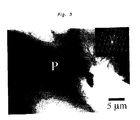
Fig. 3 is a photograph showing the result of microstructural observation in Example 1, and shows the microstructure of the casted alloy by a transmission electronic microscope. -
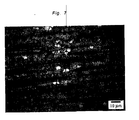
Fig. 4 is a photograph showing the result of microstructural observation in Example 1, and shows the result of microstructure of the extruded alloy by an optical microscope. -
Fig. 5 shows the result of X-ray analysis in Example 1. -
Fig. 6 is a nominal stress-nominal strain curves in tensile/compression test at room temperature in Examples 1 and 2 and Comparative Example 1. -
Fig. 7 is a photograph showing the result of microstructural observation in Example 2, and shows the result of microstructure of the extruded alloy by with an optical microscope. -
Fig. 8 is an Mg-Zn-Al ternary phase diagram. -
Fig. 9 shows the result of texture analysis by a Schulz reflection method in Comparative Example 1. -
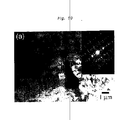
Fig. 10 shows an example of microstructural observation by a transmission electronic microscope in Example 2. -
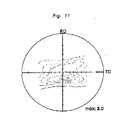
Fig. 11 shows the result of texture analysis by a Schulz reflection method in Example 2. -
Fig. 12 shows a result of X-ray analysis in Examples 4, 5, 7 and 8. -
Fig. 13 shows a result of X-ray analysis in Examples 9, 10 and 12. - The invention will be described in detail.
- When the composition of the present invention represented by (100 - a - b) wt% Mg - a wt% Al - b wt% Zn satisfies 0.5 ≤ b/a, the results, which describe in below, show that the yield anisotropy could reduce. In the present invention, preferably, 1 ≤ b/a, more preferably 1.5 ≤ b/a.
- When 5 ≤ b ≤ 55 and 2 ≤ a ≤18, a quasi-crystal phase and/or the close to the structure of the quasi-crystal phase is formed in magnesium.
- More preferably, 2 ≤ b/a ≤ 10, and when 6 ≤ b ≤ 20 and 2 ≤ a ≤ 10, a quasi-crystal phase and/or the close to the structure of the quasi-crystal phase is formed in magnesium.
- In order to reduce the yield anisotropy, i.e., showing the ratio of compression tensile yield stress of ≥ 0.8, the size of the magnesium matrix is preferably at most 40 µm, more preferably at most 20 µm, even more preferably at most 10 µm. The volume fraction of the quasi-crystal phase or the close to the structure of quasi-crystal phase is preferably from 1 % to 40%, more preferably from 2% to 30%. The size of the quasi-crystal phase particles and the close to the structure of quasi-crystal phase particles is preferably at most 5 µm, more preferably at most 1 µm, and its limit is preferably at least 50 nm.
- In order to obtain the above-mentioned microstructures and mechanical properties, the applied strain is at least 1, and the temperature is from 200°C to 400°C (at intervals of 50°C - the same shall use hereafter).
- In general, in order to reduce the fraction of dendrite structures, the alloys with the addition of rare earth elements have homogenized at a temperature of at most 460°C for at least 4 hours before the extrusion or severe plastic deformation. However, in the present invention, uniform dispersion of the quasi-crystal phase could be attained without the heat treatment before the extrusion or severe plastic deformation.
- The formation of the Quasi-crystal phase and the close to the structure of quasi-crystal phase is greatly influenced by the cooling speed during solidification. In the case of the present alloy, the quasi-crystal phase and the phase close to the structure of the quasi-crystal phase are possible to form even at the cooling rate. Therefore, the casted alloy is possible to be produced by not only the conventional casting process with a low cooling rate, but also die casting or rapid solidification with a high cooling rate.
- The invention will be described in more detail with reference to the following Examples. However, the invention is not limited at all by the Examples.
- Pure magnesium (purity, 99.95%), 8 wt.% zinc and 4 wt% aluminium (hereinafter this is referred to as Mg - 8 wt.% Zn - 4 wt.% Al) were melted to produce a casted alloy. The casted alloy was machined to prepare an extrusion billet having a diameter of 40 mm. The extrusion billet was put into an extrusion container heated up to 300°C, kept therein for 1/2 hours, and then hot-extruded at an extrusion ratio of 25/1 to produce an extruded alloy having a diameter of 8 mm.
- The microstructural observation and X-ray analysis were carried out in the extruded alloy. The observed position was the parallel to the extrusion direction. Also, the microstructural observation by a transmission electronic microscope (TEM) and X-ray analysis were carried out in the casted alloy.
- The results of the microstructural observation in the casted and extruded alloys were shown in
Fig. 3 andFig. 4 .Fig. 5 shows the result of X-ray analysis of the two alloys. FromFig. 3 , it is known that particles (P) with a size of a few microns exist in the magnesium matrix. From the selected area diffraction image, it is known that the particles (P) is a quasi-crystal phase. FromFig. 4 , it is confirmed that the average size of the magnesium matrix In the extruded alloy is 12 µm. They are equi-axed grains and are quite homogeneous structures. The average size was measured by the linear intercept method. The X-ray diffraction patterns of the two samples, as shown inFig. 5 , are the same, and thus, the presence of the quasi-crystal phase in the magnesium matrix is confirmed after the extrusion process, The white circles inFig. 5 are the diffraction angle of the quasi-crystal phase. - A tensile test specimen has a diameter of 3 mm and a length of 15 mm and a compression test specimen has a diameter of 4 mm and a height of 8 mm. These specimens were machined from each material such as to make the tensile and compression axis parallel to the extrusion direction; and the initial tensile/compression strain rate was 1 x 10⁻³ sec-1.
Fig. 6 shows a nominal stress-nominal strain curves in the tensile/compression test at room temperature. The results of the mechanical properties obtained fromFig. 6 are listed in Table 1. The yield stress is measured the stress value at a nominal strain 0.2%, the maximum tensile strength is measured the maximum nominal stress value, and the elongation is measured the nominal strain value when the nominal stress lowered by at least 30%. - As a comparative example, the nominal stress-nominal strain curves of a typical wrought magnesium alloy, extruded Mg - 3 wt.% Al - 1 wt.% Zn (initial crystal particle size: about 15 µm) is also shown in
Fig. 6 . The two extruded alloys have nearly the same size of magnesium matrix; however, it is known that the yield stress in the tensile/compression of the extruded Mg - 8 wt.% Zn - 4 wt.% Al alloy is 228 and 210 MPa, respectively, and the Mg-8wt.%Zn-4wt.%Al alloy has excellent strength properties (especially, excellent compression strength property). The ratio of compression/tensile yield stress of the extruded Mg - 8 wt.% Zn - 4 wt.% Al alloy is 0.9, and thus, the Mg-8wt.%Zn-4wt.%Al alloy is found to have obvious reduction in the yield anisotropy. -
Fig. 9 shows the result of texture analysis by a Schulz reflection method of the extruded Mg - 3 wt.% Al - 1 wt.% Zn alloy of Comparative Example 1. It is known that the basal plane is lying to the extrusion direction, showing the typical texture of a extruded magnesium alloy. The maximum integration intensity is 8.0. - Pure magnesium (purity, 99.95 %), 8 wt.% zinc and 4 wt.% aluminum were melted to prepare a casted alloy. The casted alloy was machined to prepare an extrusion billet having a diameter of 40 mm. The extrusion billet was put into an extrusion container heated up to 200°C, kept therein for 1/2 hours, and then hot-extruded at an extrusion ratio of 25/1 to produce an extruded alloy having a diameter of 8 mm. The microstructural observation and the tensile/compression tests at room temperature were performed Under the same condition as in Example 1 described above.
Fig. 7 shows the result of microstructural observation of the extruded alloy.Fig. 6 shows the nominal stress-nominal strain curves in tensile/compression tests at room temperature. - From
Fig. 7 , the average size of the Mg matrix was 3.5 µm. FromFig. 6 , it is known that the yield stress in tensile and compression of the extruded alloy is 275 and 285 MPa, respectively. The strength is found to increase due to the grain refinement. The ratio of the compression/tensile yield stress is more than 1, which confirms the reduction of yield anisotropy of this extruded alloy. -
Fig. 10 shows the result of microstructural observation by a transmission electronic microscope of the extruded alloy of Example 2. The Mg matrix is confirmed to be fine as inFig. 7 . From the selected area diffraction image, it is known that the particles which exist in the matrix, are consisted of the quasi-crystal phase particles. -
Fig. 11 shows the result of texture analysis by a Schulz reflection method of the extruded alloy of Example 2. It is confirmed that the basal plane tends to lies parallel to the extrusion direction as inFig. 9 . However, when the results of this alloy shown inFig. 10 compares with that inFig. 9 , (i) the width of the texture in Example 2 is extremely broad, and (ii) the maximum integration Intensity is not more than a half. It is considered that the reduction of strong yield anisotropy results from the broadening texture in basal plane and the reduction in the integration intensity shown inFig. 11 . - To add to the above-mentioned Examples 1 and 2 and Comparative Example 1, other samples were produced in the same procedures as above but changing the amount of Zn and Al elements. The mechanical properties were evaluated, and the results were listed in Table 1. The data in Table 1 obtained by the above-mentioned methods.
Fig. 12 andFig. 13 show the results of X-ray analysis in Examples 4, 5, 7 to 10 and 12. The black circles indicate magnesium and the white circles indicate the quasi-crystal phase; and the other diffraction peaks correspond to the close to the structure of quasi-crystal phase having components of Mg-Zn-Al. - In
Fig. 12 , the presence of a quasi-crystal phase is not confirmed, but the close to the structure of quasi-crystal phase is confirmed. The presence of a quasi-crystal phase and the close to the structure of quasi-crystal is confirmed inFig. 13 . - The alloys having a quasi-crystal phase or the close to the structure of quasi-phase show the reduction of yield anisotropy. On the other hand, it is known that the alloys having a quasi-crystal phase, i,e., Example 9 and 10, have a higher yield strength.
[Table 1] Zn/Al σys,
MPaσUTS,
MPaδ, % σcys,
MPacys/tys Quasi
-
CrystalQuasi-Crystal
Approximate
PhaseExample 1 ZA84 2 228 309 0.134 210 0.92 O O Example 2 ZA84 2 275 345 0.135 288 1.05 O O Comparative AZ31 0.33 215 277 0.161 127 0.59 X X Example 1 Example 3 ZA42 2 225 292 0.223 211 0.94 X O Example 4 ZA615 4 233 302 0.187 228 0.98 X O Example 5 ZA62 3 255 323 0.193 264 1.04 X O Example 6 ZA63 2 233 315 0.207 231 0.99 O O Example 7 ZA82 4 251 321 0.179 257 1.02 X O Example 8 ZA1025 4 255 329 0.102 279 1.10 X O Example 9 ZA105 2 264 344 0.096 296 1.12 O O Example 10 ZA122 6 268 337 0.096 282 1.05 O O Example 11 ZA124 3 290 356 0.110 319 1.10 O O Example 12 ZA126 2 305 329 0.071 352 1.15 O O Example 13 ZA164 4 301 362 0.066 334 1.11 O O Example 14 ZA202 10 330 383 0.043 378 1.15 O O σys: Tensile yield stress, σUTS: Maximum tensile stress, δ: Elongation, σcys: Compression yield stress, cys/tys: Ratio of compression/tensile yield stress. - In Table 1, ZA means a composition of Zn and Al (b wt.%, a wt.%); and in Examples 1 to 14, (b wt%, a wt%) = (8, 4), (8, 4), (4, 2), (6, 1.5), (6, 2), (6, 3), (8, 2), (10, 2.5), (10, 5), (12, 2), (12, 4), (12, 6), (16, 4), (20, 2).
Claims (4)
- An Mg-base alloy, which is added Zn and Al elements to magnesium, comprising a composition represented by (100 - a - b) wt% Mg - a wt% Al - b wt% Zn and satisfying 0.5 ≤ b/a.
- The Mg-base alloy as claimed in claim 1, wherein 5 ≤ b ≤ 55 and 2 ≤ a ≤ 18.
- The Mg-base alloy as claimed in claim 1 or 2, wherein a quasi-crystal phase is dispersed in the magnesium matrix.
- The Mg-base alloy as claimed in any of claims 1 to 3, wherein the size of the Mg matrix is at most 40 µm.
Applications Claiming Priority (3)
| Application Number | Priority Date | Filing Date | Title |
|---|---|---|---|
| JP2008145520 | 2008-06-03 | ||
| JP2009069660 | 2009-03-23 | ||
| PCT/JP2009/060188 WO2009148093A1 (en) | 2008-06-03 | 2009-06-03 | Mg-BASE ALLOY |
Publications (3)
| Publication Number | Publication Date |
|---|---|
| EP2295613A1 true EP2295613A1 (en) | 2011-03-16 |
| EP2295613A4 EP2295613A4 (en) | 2013-07-24 |
| EP2295613B1 EP2295613B1 (en) | 2015-01-14 |
Family
ID=41398166
Family Applications (1)
| Application Number | Title | Priority Date | Filing Date |
|---|---|---|---|
| EP09758360.3A Not-in-force EP2295613B1 (en) | 2008-06-03 | 2009-06-03 | Mg-BASE ALLOY |
Country Status (6)
| Country | Link |
|---|---|
| US (1) | US8313692B2 (en) |
| EP (1) | EP2295613B1 (en) |
| JP (1) | JP5540415B2 (en) |
| KR (1) | KR101561150B1 (en) |
| CN (1) | CN102046821B (en) |
| WO (1) | WO2009148093A1 (en) |
Cited By (3)
| Publication number | Priority date | Publication date | Assignee | Title |
|---|---|---|---|---|
| WO2014001191A1 (en) * | 2012-06-26 | 2014-01-03 | Biotronik Ag | Magnesium alloy, method for the production thereof and use thereof |
| US10344365B2 (en) | 2012-06-26 | 2019-07-09 | Biotronik Ag | Magnesium-zinc-calcium alloy and method for producing implants containing the same |
| US10358709B2 (en) | 2012-06-26 | 2019-07-23 | Biotronik Ag | Magnesium-zinc-calcium alloy, method for production thereof, and use thereof |
Families Citing this family (26)
| Publication number | Priority date | Publication date | Assignee | Title |
|---|---|---|---|---|
| JP2009293075A (en) * | 2008-06-04 | 2009-12-17 | Mitsui Mining & Smelting Co Ltd | Magnesium-zinc alloy and magnesium-zinc alloy member |
| CN102282277B (en) * | 2009-01-19 | 2013-09-04 | 独立行政法人物质·材料研究机构 | Mg-based alloy |
| JP5403508B2 (en) * | 2009-03-24 | 2014-01-29 | 独立行政法人物質・材料研究機構 | Mg alloy member. |
| JP5561592B2 (en) * | 2010-03-18 | 2014-07-30 | 独立行政法人物質・材料研究機構 | Magnesium alloy |
| BR112013001000A2 (en) * | 2010-09-08 | 2016-05-24 | Synthes Gmbh | magnesium core clamping device |
| JP6768295B2 (en) | 2012-06-26 | 2020-10-14 | バイオトロニック アクチェンゲゼルシャフト | Magnesium alloy, its manufacturing method and its use |
| US10695811B2 (en) | 2013-03-22 | 2020-06-30 | Battelle Memorial Institute | Functionally graded coatings and claddings |
| US12186791B2 (en) | 2013-03-22 | 2025-01-07 | Battelle Memorial Institute | Devices and methods for performing shear-assisted extrusion and extrusion processes |
| US10189063B2 (en) | 2013-03-22 | 2019-01-29 | Battelle Memorial Institute | System and process for formation of extrusion products |
| US11383280B2 (en) | 2013-03-22 | 2022-07-12 | Battelle Memorial Institute | Devices and methods for performing shear-assisted extrusion, extrusion feedstocks, extrusion processes, and methods for preparing metal sheets |
| US20210379638A1 (en) | 2013-03-22 | 2021-12-09 | Battelle Memorial Institute | Devices and Methods for Performing Shear-Assisted Extrusion and Extrusion Processes |
| US12403516B2 (en) | 2013-03-22 | 2025-09-02 | Battelle Memorial Institute | Shape processes, feedstock materials, conductive materials and/or assemblies |
| US12365027B2 (en) | 2013-03-22 | 2025-07-22 | Battelle Memorial Institute | High speed shear-assisted extrusion |
| US11045851B2 (en) | 2013-03-22 | 2021-06-29 | Battelle Memorial Institute | Method for Forming Hollow Profile Non-Circular Extrusions Using Shear Assisted Processing and Extrusion (ShAPE) |
| US12551946B2 (en) | 2013-03-22 | 2026-02-17 | Battelle Memorial Institute | Devices and methods for performing shear-assisted extrusion and extrusion processes |
| US10109418B2 (en) | 2013-05-03 | 2018-10-23 | Battelle Memorial Institute | System and process for friction consolidation fabrication of permanent magnets and other extrusion and non-extrusion structures |
| CN104998296B (en) * | 2015-08-13 | 2018-07-13 | 苏州奥芮济医疗科技有限公司 | Bio-medical with special microstructure can absorb magnesium material and preparation method thereof |
| CN105056309B (en) * | 2015-08-13 | 2018-02-16 | 苏州奥芮济医疗科技有限公司 | Magnesium metal bone screw that a kind of orientable degraded absorbs and preparation method thereof |
| US20180073532A1 (en) | 2016-09-12 | 2018-03-15 | Battelle Memorial Institute | System and process for joining dissimilar materials and solid-state interlocking joint with intermetallic interface formed thereby |
| US20200016687A1 (en) | 2016-09-12 | 2020-01-16 | Battelle Memorial Institute | Methods and Devices for Connecting Two Dissimilar Materials |
| JP6800482B2 (en) * | 2017-04-19 | 2020-12-16 | 地方独立行政法人東京都立産業技術研究センター | Magnesium alloy manufacturing method |
| CN107326235B (en) * | 2017-07-20 | 2018-11-06 | 重庆大学 | A kind of high-strength Mg-Zn-Al series deformation magnesium alloys and preparation method thereof containing Cu |
| US11549532B1 (en) | 2019-09-06 | 2023-01-10 | Battelle Memorial Institute | Assemblies, riveted assemblies, methods for affixing substrates, and methods for mixing materials to form a metallurgical bond |
| US11919061B2 (en) | 2021-09-15 | 2024-03-05 | Battelle Memorial Institute | Shear-assisted extrusion assemblies and methods |
| US12502701B2 (en) | 2022-07-05 | 2025-12-23 | Battelle Memorial Institute | Shear assisted extrusion apparatus, tools, and methods |
| JP7321601B1 (en) | 2022-10-21 | 2023-08-07 | ネクサス株式会社 | Magnesium alloy, magnesium alloy compact, method for producing the same, and magnesium alloy member |
Family Cites Families (17)
| Publication number | Priority date | Publication date | Assignee | Title |
|---|---|---|---|---|
| BE786930A (en) * | 1971-07-29 | 1973-01-29 | Dow Chemical Co | PRESSURE CASTING PROCESS OF MAGNESIUM AND ZINC ALLOYS |
| FR2642439B2 (en) * | 1988-02-26 | 1993-04-16 | Pechiney Electrometallurgie | |
| JPH0499244A (en) * | 1990-08-09 | 1992-03-31 | Yoshida Kogyo Kk <Ykk> | High strength magnesium base alloy |
| DE69214735T2 (en) * | 1991-07-26 | 1997-03-20 | Toyota Motor Co Ltd | Heat-resistant magnesium alloy |
| JP3110116B2 (en) * | 1991-12-26 | 2000-11-20 | 健 増本 | High strength magnesium based alloy |
| JPH05311310A (en) * | 1992-05-11 | 1993-11-22 | Kobe Steel Ltd | Mg-al or mg-al-zn alloy excellent in corrosion resistance |
| KR20020078936A (en) | 2001-04-11 | 2002-10-19 | 학교법인연세대학교 | Quasicrystalline phase hardened Mg-based metallic alloy exhibiting warm and hot formability |
| US7057049B2 (en) | 2001-09-25 | 2006-06-06 | Pharmacia Corporation | Process for making substituted pyrazoles |
| JP3558628B2 (en) * | 2002-06-05 | 2004-08-25 | 住友電工スチールワイヤー株式会社 | Magnesium alloy plate and method for producing the same |
| JP4332889B2 (en) * | 2003-05-30 | 2009-09-16 | 住友電気工業株式会社 | Method for producing magnesium-based alloy compact |
| JP4155149B2 (en) | 2003-10-09 | 2008-09-24 | トヨタ自動車株式会社 | High strength magnesium alloy and method for producing the same |
| JP2005113235A (en) | 2003-10-09 | 2005-04-28 | Toyota Motor Corp | High strength magnesium alloy and method for producing the same |
| CA2572002A1 (en) * | 2004-06-24 | 2006-01-05 | Cast Centre Pty Ltd | Die cast magnesium alloy |
| JP2006211523A (en) | 2005-01-31 | 2006-08-10 | Asahi Kasei Microsystems Kk | Digital switching circuit |
| JP4864413B2 (en) * | 2005-10-18 | 2012-02-01 | 株式会社神戸製鋼所 | High strength magnesium alloy extruded material |
| EP1997927B1 (en) * | 2006-03-20 | 2016-09-28 | Nippon Steel & Sumitomo Metal Corporation | Highly corrosion-resistant hot dip galvanized steel stock |
| NO20063703L (en) * | 2006-08-18 | 2008-02-19 | Magontec Gmbh | Magnesium stop process and alloy composition |
-
2009
- 2009-06-03 WO PCT/JP2009/060188 patent/WO2009148093A1/en not_active Ceased
- 2009-06-03 KR KR1020107026751A patent/KR101561150B1/en not_active Expired - Fee Related
- 2009-06-03 US US12/995,522 patent/US8313692B2/en not_active Expired - Fee Related
- 2009-06-03 EP EP09758360.3A patent/EP2295613B1/en not_active Not-in-force
- 2009-06-03 JP JP2010515897A patent/JP5540415B2/en not_active Expired - Fee Related
- 2009-06-03 CN CN2009801203439A patent/CN102046821B/en not_active Expired - Fee Related
Cited By (5)
| Publication number | Priority date | Publication date | Assignee | Title |
|---|---|---|---|---|
| WO2014001191A1 (en) * | 2012-06-26 | 2014-01-03 | Biotronik Ag | Magnesium alloy, method for the production thereof and use thereof |
| US10344365B2 (en) | 2012-06-26 | 2019-07-09 | Biotronik Ag | Magnesium-zinc-calcium alloy and method for producing implants containing the same |
| US10358709B2 (en) | 2012-06-26 | 2019-07-23 | Biotronik Ag | Magnesium-zinc-calcium alloy, method for production thereof, and use thereof |
| US10895000B2 (en) | 2012-06-26 | 2021-01-19 | Biotronik Ag | Magnesium alloy, method for the production thereof and use thereof |
| US11499214B2 (en) | 2012-06-26 | 2022-11-15 | Biotronik Ag | Magnesium-zinc-calcium alloy and method for producing implants containing the same |
Also Published As
| Publication number | Publication date |
|---|---|
| US20110076178A1 (en) | 2011-03-31 |
| US8313692B2 (en) | 2012-11-20 |
| KR20110013431A (en) | 2011-02-09 |
| CN102046821A (en) | 2011-05-04 |
| WO2009148093A8 (en) | 2010-02-04 |
| JP5540415B2 (en) | 2014-07-02 |
| JPWO2009148093A1 (en) | 2011-11-04 |
| KR101561150B1 (en) | 2015-10-16 |
| WO2009148093A1 (en) | 2009-12-10 |
| CN102046821B (en) | 2013-03-27 |
| EP2295613B1 (en) | 2015-01-14 |
| EP2295613A4 (en) | 2013-07-24 |
Similar Documents
| Publication | Publication Date | Title |
|---|---|---|
| EP2295613B1 (en) | Mg-BASE ALLOY | |
| Yu et al. | Microstructure evolution and mechanical properties of as-extruded Mg-Gd-Y-Zr alloy with Zn and Nd additions | |
| KR101159790B1 (en) | Magnesium alloy having high ductility and high toughness and process for preparing the same | |
| CN101027420B (en) | High-strength and high-toughness metal and process for producing the same | |
| Bu et al. | Study on the mutual effect of La and Gd on microstructure and mechanical properties of Mg-Al-Zn extruded alloy | |
| US12305267B2 (en) | Rapidly solidified aluminum-rare earth element alloy and method of making the same | |
| EP3656884B1 (en) | Magnesium-based alloy wrought product and method for producing same | |
| US11692256B2 (en) | Magnesium-based wrought alloy material and manufacturing method therefor | |
| KR102043774B1 (en) | High formability magnesium alloy sheet and method for manufacturing the same | |
| Lv et al. | Microstructures and mechanical properties of a hot-extruded Mg− 8Zn− 6Al− 1Gd (wt%) alloy | |
| KR20110104056A (en) | MG alloy | |
| EP2835437B1 (en) | Magnesium alloy, magnesium alloy member and method for manufacturing same, and method for using magnesium alloy | |
| JP2002256370A (en) | High strength and high ductility Mg-based alloy | |
| Itoi et al. | Microstructure and mechanical properties of Mg-Zn-Y rolled sheet with a Mg12ZnY phase | |
| CN101193715B (en) | Magnesium alloy powder raw material, high yield strength magnesium alloy, method for producing magnesium alloy powder raw material, and method for producing high yield strength magnesium alloy | |
| EP1813689A1 (en) | Magnesium alloy | |
| EP2157201B1 (en) | Mg-based alloy | |
| US8728254B2 (en) | Mg alloy | |
| EP3643802A1 (en) | Magnesium alloy sheet and manufacturing method therefor | |
| JP2013001987A (en) | Magnesium-based composite material | |
| JP7701756B2 (en) | Magnesium-based alloy extrusion material | |
| Lu et al. | + Effect of niobium on microstructure and properties of 6016 aluminum alloy | |
| Morales Garza | Influence of the microstructure on the creep behaviour of semi-solid processed magnesium-zinc alloys |
Legal Events
| Date | Code | Title | Description |
|---|---|---|---|
| PUAI | Public reference made under article 153(3) epc to a published international application that has entered the european phase |
Free format text: ORIGINAL CODE: 0009012 |
|
| 17P | Request for examination filed |
Effective date: 20101221 |
|
| AK | Designated contracting states |
Kind code of ref document: A1 Designated state(s): AT BE BG CH CY CZ DE DK EE ES FI FR GB GR HR HU IE IS IT LI LT LU LV MC MK MT NL NO PL PT RO SE SI SK TR |
|
| AX | Request for extension of the european patent |
Extension state: AL BA RS |
|
| DAX | Request for extension of the european patent (deleted) | ||
| A4 | Supplementary search report drawn up and despatched |
Effective date: 20130625 |
|
| RIC1 | Information provided on ipc code assigned before grant |
Ipc: C22C 1/00 20060101ALI20130619BHEP Ipc: C22F 1/06 20060101ALI20130619BHEP Ipc: C22C 23/02 20060101ALI20130619BHEP Ipc: C22C 23/04 20060101AFI20130619BHEP Ipc: C22C 18/00 20060101ALI20130619BHEP Ipc: C22C 45/00 20060101ALI20130619BHEP |
|
| RIC1 | Information provided on ipc code assigned before grant |
Ipc: C22C 18/00 20060101ALI20140415BHEP Ipc: C22C 1/00 20060101ALI20140415BHEP Ipc: C22F 1/06 20060101ALI20140415BHEP Ipc: C22C 45/00 20060101ALI20140415BHEP Ipc: C22C 23/04 20060101AFI20140415BHEP Ipc: C22C 23/02 20060101ALI20140415BHEP |
|
| GRAP | Despatch of communication of intention to grant a patent |
Free format text: ORIGINAL CODE: EPIDOSNIGR1 |
|
| INTG | Intention to grant announced |
Effective date: 20140526 |
|
| RIN1 | Information on inventor provided before grant (corrected) |
Inventor name: OSAWA YOSHIAKI Inventor name: SOMEKAWA HIDETOSHI Inventor name: SINGH ALOK Inventor name: MUKAI TOSHIJI |
|
| GRAP | Despatch of communication of intention to grant a patent |
Free format text: ORIGINAL CODE: EPIDOSNIGR1 |
|
| INTG | Intention to grant announced |
Effective date: 20141008 |
|
| GRAS | Grant fee paid |
Free format text: ORIGINAL CODE: EPIDOSNIGR3 |
|
| GRAA | (expected) grant |
Free format text: ORIGINAL CODE: 0009210 |
|
| AK | Designated contracting states |
Kind code of ref document: B1 Designated state(s): AT BE BG CH CY CZ DE DK EE ES FI FR GB GR HR HU IE IS IT LI LT LU LV MC MK MT NL NO PL PT RO SE SI SK TR |
|
| REG | Reference to a national code |
Ref country code: GB Ref legal event code: FG4D |
|
| REG | Reference to a national code |
Ref country code: CH Ref legal event code: EP |
|
| REG | Reference to a national code |
Ref country code: IE Ref legal event code: FG4D |
|
| REG | Reference to a national code |
Ref country code: AT Ref legal event code: REF Ref document number: 707115 Country of ref document: AT Kind code of ref document: T Effective date: 20150215 |
|
| REG | Reference to a national code |
Ref country code: DE Ref legal event code: R096 Ref document number: 602009028984 Country of ref document: DE Effective date: 20150226 |
|
| REG | Reference to a national code |
Ref country code: NL Ref legal event code: VDEP Effective date: 20150114 |
|
| REG | Reference to a national code |
Ref country code: AT Ref legal event code: MK05 Ref document number: 707115 Country of ref document: AT Kind code of ref document: T Effective date: 20150114 |
|
| REG | Reference to a national code |
Ref country code: LT Ref legal event code: MG4D |
|
| PG25 | Lapsed in a contracting state [announced via postgrant information from national office to epo] |
Ref country code: ES Free format text: LAPSE BECAUSE OF FAILURE TO SUBMIT A TRANSLATION OF THE DESCRIPTION OR TO PAY THE FEE WITHIN THE PRESCRIBED TIME-LIMIT Effective date: 20150114 Ref country code: HR Free format text: LAPSE BECAUSE OF FAILURE TO SUBMIT A TRANSLATION OF THE DESCRIPTION OR TO PAY THE FEE WITHIN THE PRESCRIBED TIME-LIMIT Effective date: 20150114 Ref country code: LT Free format text: LAPSE BECAUSE OF FAILURE TO SUBMIT A TRANSLATION OF THE DESCRIPTION OR TO PAY THE FEE WITHIN THE PRESCRIBED TIME-LIMIT Effective date: 20150114 Ref country code: BG Free format text: LAPSE BECAUSE OF FAILURE TO SUBMIT A TRANSLATION OF THE DESCRIPTION OR TO PAY THE FEE WITHIN THE PRESCRIBED TIME-LIMIT Effective date: 20150414 Ref country code: FI Free format text: LAPSE BECAUSE OF FAILURE TO SUBMIT A TRANSLATION OF THE DESCRIPTION OR TO PAY THE FEE WITHIN THE PRESCRIBED TIME-LIMIT Effective date: 20150114 Ref country code: SE Free format text: LAPSE BECAUSE OF FAILURE TO SUBMIT A TRANSLATION OF THE DESCRIPTION OR TO PAY THE FEE WITHIN THE PRESCRIBED TIME-LIMIT Effective date: 20150114 Ref country code: NO Free format text: LAPSE BECAUSE OF FAILURE TO SUBMIT A TRANSLATION OF THE DESCRIPTION OR TO PAY THE FEE WITHIN THE PRESCRIBED TIME-LIMIT Effective date: 20150414 |
|
| PG25 | Lapsed in a contracting state [announced via postgrant information from national office to epo] |
Ref country code: AT Free format text: LAPSE BECAUSE OF FAILURE TO SUBMIT A TRANSLATION OF THE DESCRIPTION OR TO PAY THE FEE WITHIN THE PRESCRIBED TIME-LIMIT Effective date: 20150114 Ref country code: LV Free format text: LAPSE BECAUSE OF FAILURE TO SUBMIT A TRANSLATION OF THE DESCRIPTION OR TO PAY THE FEE WITHIN THE PRESCRIBED TIME-LIMIT Effective date: 20150114 Ref country code: PL Free format text: LAPSE BECAUSE OF FAILURE TO SUBMIT A TRANSLATION OF THE DESCRIPTION OR TO PAY THE FEE WITHIN THE PRESCRIBED TIME-LIMIT Effective date: 20150114 Ref country code: GR Free format text: LAPSE BECAUSE OF FAILURE TO SUBMIT A TRANSLATION OF THE DESCRIPTION OR TO PAY THE FEE WITHIN THE PRESCRIBED TIME-LIMIT Effective date: 20150415 Ref country code: NL Free format text: LAPSE BECAUSE OF FAILURE TO SUBMIT A TRANSLATION OF THE DESCRIPTION OR TO PAY THE FEE WITHIN THE PRESCRIBED TIME-LIMIT Effective date: 20150114 Ref country code: IS Free format text: LAPSE BECAUSE OF FAILURE TO SUBMIT A TRANSLATION OF THE DESCRIPTION OR TO PAY THE FEE WITHIN THE PRESCRIBED TIME-LIMIT Effective date: 20150514 |
|
| REG | Reference to a national code |
Ref country code: DE Ref legal event code: R097 Ref document number: 602009028984 Country of ref document: DE |
|
| PG25 | Lapsed in a contracting state [announced via postgrant information from national office to epo] |
Ref country code: EE Free format text: LAPSE BECAUSE OF FAILURE TO SUBMIT A TRANSLATION OF THE DESCRIPTION OR TO PAY THE FEE WITHIN THE PRESCRIBED TIME-LIMIT Effective date: 20150114 Ref country code: DK Free format text: LAPSE BECAUSE OF FAILURE TO SUBMIT A TRANSLATION OF THE DESCRIPTION OR TO PAY THE FEE WITHIN THE PRESCRIBED TIME-LIMIT Effective date: 20150114 Ref country code: SK Free format text: LAPSE BECAUSE OF FAILURE TO SUBMIT A TRANSLATION OF THE DESCRIPTION OR TO PAY THE FEE WITHIN THE PRESCRIBED TIME-LIMIT Effective date: 20150114 Ref country code: RO Free format text: LAPSE BECAUSE OF FAILURE TO SUBMIT A TRANSLATION OF THE DESCRIPTION OR TO PAY THE FEE WITHIN THE PRESCRIBED TIME-LIMIT Effective date: 20150114 Ref country code: CZ Free format text: LAPSE BECAUSE OF FAILURE TO SUBMIT A TRANSLATION OF THE DESCRIPTION OR TO PAY THE FEE WITHIN THE PRESCRIBED TIME-LIMIT Effective date: 20150114 |
|
| PLBE | No opposition filed within time limit |
Free format text: ORIGINAL CODE: 0009261 |
|
| STAA | Information on the status of an ep patent application or granted ep patent |
Free format text: STATUS: NO OPPOSITION FILED WITHIN TIME LIMIT |
|
| 26N | No opposition filed |
Effective date: 20151015 |
|
| PG25 | Lapsed in a contracting state [announced via postgrant information from national office to epo] |
Ref country code: IT Free format text: LAPSE BECAUSE OF FAILURE TO SUBMIT A TRANSLATION OF THE DESCRIPTION OR TO PAY THE FEE WITHIN THE PRESCRIBED TIME-LIMIT Effective date: 20150114 |
|
| PG25 | Lapsed in a contracting state [announced via postgrant information from national office to epo] |
Ref country code: MC Free format text: LAPSE BECAUSE OF FAILURE TO SUBMIT A TRANSLATION OF THE DESCRIPTION OR TO PAY THE FEE WITHIN THE PRESCRIBED TIME-LIMIT Effective date: 20150114 |
|
| REG | Reference to a national code |
Ref country code: CH Ref legal event code: PL |
|
| GBPC | Gb: european patent ceased through non-payment of renewal fee |
Effective date: 20150603 |
|
| PG25 | Lapsed in a contracting state [announced via postgrant information from national office to epo] |
Ref country code: LU Free format text: LAPSE BECAUSE OF FAILURE TO SUBMIT A TRANSLATION OF THE DESCRIPTION OR TO PAY THE FEE WITHIN THE PRESCRIBED TIME-LIMIT Effective date: 20150603 Ref country code: SI Free format text: LAPSE BECAUSE OF FAILURE TO SUBMIT A TRANSLATION OF THE DESCRIPTION OR TO PAY THE FEE WITHIN THE PRESCRIBED TIME-LIMIT Effective date: 20150114 |
|
| REG | Reference to a national code |
Ref country code: IE Ref legal event code: MM4A |
|
| REG | Reference to a national code |
Ref country code: FR Ref legal event code: ST Effective date: 20160229 |
|
| PG25 | Lapsed in a contracting state [announced via postgrant information from national office to epo] |
Ref country code: CH Free format text: LAPSE BECAUSE OF NON-PAYMENT OF DUE FEES Effective date: 20150630 Ref country code: IE Free format text: LAPSE BECAUSE OF NON-PAYMENT OF DUE FEES Effective date: 20150603 Ref country code: GB Free format text: LAPSE BECAUSE OF NON-PAYMENT OF DUE FEES Effective date: 20150603 Ref country code: LI Free format text: LAPSE BECAUSE OF NON-PAYMENT OF DUE FEES Effective date: 20150630 |
|
| PG25 | Lapsed in a contracting state [announced via postgrant information from national office to epo] |
Ref country code: BE Free format text: LAPSE BECAUSE OF FAILURE TO SUBMIT A TRANSLATION OF THE DESCRIPTION OR TO PAY THE FEE WITHIN THE PRESCRIBED TIME-LIMIT Effective date: 20150114 Ref country code: FR Free format text: LAPSE BECAUSE OF NON-PAYMENT OF DUE FEES Effective date: 20150630 |
|
| PG25 | Lapsed in a contracting state [announced via postgrant information from national office to epo] |
Ref country code: MT Free format text: LAPSE BECAUSE OF FAILURE TO SUBMIT A TRANSLATION OF THE DESCRIPTION OR TO PAY THE FEE WITHIN THE PRESCRIBED TIME-LIMIT Effective date: 20150114 |
|
| PG25 | Lapsed in a contracting state [announced via postgrant information from national office to epo] |
Ref country code: HU Free format text: LAPSE BECAUSE OF FAILURE TO SUBMIT A TRANSLATION OF THE DESCRIPTION OR TO PAY THE FEE WITHIN THE PRESCRIBED TIME-LIMIT; INVALID AB INITIO Effective date: 20090603 |
|
| PG25 | Lapsed in a contracting state [announced via postgrant information from national office to epo] |
Ref country code: CY Free format text: LAPSE BECAUSE OF FAILURE TO SUBMIT A TRANSLATION OF THE DESCRIPTION OR TO PAY THE FEE WITHIN THE PRESCRIBED TIME-LIMIT Effective date: 20150114 |
|
| PGFP | Annual fee paid to national office [announced via postgrant information from national office to epo] |
Ref country code: DE Payment date: 20170621 Year of fee payment: 9 |
|
| PG25 | Lapsed in a contracting state [announced via postgrant information from national office to epo] |
Ref country code: TR Free format text: LAPSE BECAUSE OF FAILURE TO SUBMIT A TRANSLATION OF THE DESCRIPTION OR TO PAY THE FEE WITHIN THE PRESCRIBED TIME-LIMIT Effective date: 20150114 |
|
| PG25 | Lapsed in a contracting state [announced via postgrant information from national office to epo] |
Ref country code: MK Free format text: LAPSE BECAUSE OF FAILURE TO SUBMIT A TRANSLATION OF THE DESCRIPTION OR TO PAY THE FEE WITHIN THE PRESCRIBED TIME-LIMIT Effective date: 20150114 Ref country code: PT Free format text: LAPSE BECAUSE OF FAILURE TO SUBMIT A TRANSLATION OF THE DESCRIPTION OR TO PAY THE FEE WITHIN THE PRESCRIBED TIME-LIMIT Effective date: 20150114 |
|
| REG | Reference to a national code |
Ref country code: DE Ref legal event code: R119 Ref document number: 602009028984 Country of ref document: DE |
|
| PG25 | Lapsed in a contracting state [announced via postgrant information from national office to epo] |
Ref country code: DE Free format text: LAPSE BECAUSE OF NON-PAYMENT OF DUE FEES Effective date: 20190101 |