EP2280098A1 - Regenerated cellulose fibre - Google Patents
Regenerated cellulose fibre Download PDFInfo
- Publication number
- EP2280098A1 EP2280098A1 EP09450139A EP09450139A EP2280098A1 EP 2280098 A1 EP2280098 A1 EP 2280098A1 EP 09450139 A EP09450139 A EP 09450139A EP 09450139 A EP09450139 A EP 09450139A EP 2280098 A1 EP2280098 A1 EP 2280098A1
- Authority
- EP
- European Patent Office
- Prior art keywords
- fiber
- spinning
- cellulose
- viscose
- absorbent polymer
- Prior art date
- Legal status (The legal status is an assumption and is not a legal conclusion. Google has not performed a legal analysis and makes no representation as to the accuracy of the status listed.)
- Withdrawn
Links
- 229920003043 Cellulose fiber Polymers 0.000 title claims abstract description 29
- 239000004627 regenerated cellulose Substances 0.000 title claims abstract description 14
- 239000000835 fiber Substances 0.000 claims abstract description 125
- 238000009987 spinning Methods 0.000 claims abstract description 58
- 229920000297 Rayon Polymers 0.000 claims abstract description 50
- 230000002745 absorbent Effects 0.000 claims abstract description 29
- 239000002250 absorbent Substances 0.000 claims abstract description 29
- 229920000642 polymer Polymers 0.000 claims abstract description 23
- BVKZGUZCCUSVTD-UHFFFAOYSA-L Carbonate Chemical compound [O-]C([O-])=O BVKZGUZCCUSVTD-UHFFFAOYSA-L 0.000 claims abstract description 14
- 238000005192 partition Methods 0.000 claims abstract description 8
- 230000011218 segmentation Effects 0.000 claims abstract description 6
- 229920002134 Carboxymethyl cellulose Polymers 0.000 claims description 40
- 239000001768 carboxy methyl cellulose Substances 0.000 claims description 37
- 235000010948 carboxy methyl cellulose Nutrition 0.000 claims description 37
- 239000008112 carboxymethyl-cellulose Substances 0.000 claims description 37
- 229920002678 cellulose Polymers 0.000 claims description 23
- 239000001913 cellulose Substances 0.000 claims description 23
- 238000000034 method Methods 0.000 claims description 23
- HEMHJVSKTPXQMS-UHFFFAOYSA-M Sodium hydroxide Chemical compound [OH-].[Na+] HEMHJVSKTPXQMS-UHFFFAOYSA-M 0.000 claims description 12
- 239000000243 solution Substances 0.000 claims description 8
- 239000012670 alkaline solution Substances 0.000 claims description 3
- 206010021639 Incontinence Diseases 0.000 claims description 2
- 235000013305 food Nutrition 0.000 claims description 2
- 235000013622 meat product Nutrition 0.000 claims description 2
- 238000004806 packaging method and process Methods 0.000 claims description 2
- QAOWNCQODCNURD-UHFFFAOYSA-N Sulfuric acid Chemical compound OS(O)(=O)=O QAOWNCQODCNURD-UHFFFAOYSA-N 0.000 abstract description 3
- PMZURENOXWZQFD-UHFFFAOYSA-L Sodium Sulfate Chemical compound [Na+].[Na+].[O-]S([O-])(=O)=O PMZURENOXWZQFD-UHFFFAOYSA-L 0.000 abstract description 2
- 229910052938 sodium sulfate Inorganic materials 0.000 abstract description 2
- NWONKYPBYAMBJT-UHFFFAOYSA-L zinc sulfate Chemical compound [Zn+2].[O-]S([O-])(=O)=O NWONKYPBYAMBJT-UHFFFAOYSA-L 0.000 abstract description 2
- 229910000368 zinc sulfate Inorganic materials 0.000 abstract description 2
- 235000011152 sodium sulphate Nutrition 0.000 abstract 1
- 229960001763 zinc sulfate Drugs 0.000 abstract 1
- CDBYLPFSWZWCQE-UHFFFAOYSA-L Sodium Carbonate Chemical compound [Na+].[Na+].[O-]C([O-])=O CDBYLPFSWZWCQE-UHFFFAOYSA-L 0.000 description 16
- 238000004519 manufacturing process Methods 0.000 description 11
- 230000000694 effects Effects 0.000 description 10
- 239000011734 sodium Substances 0.000 description 8
- 229910000029 sodium carbonate Inorganic materials 0.000 description 8
- 239000000654 additive Substances 0.000 description 7
- 238000002474 experimental method Methods 0.000 description 6
- 229910052708 sodium Inorganic materials 0.000 description 6
- 206010052428 Wound Diseases 0.000 description 5
- 208000027418 Wounds and injury Diseases 0.000 description 5
- 238000010521 absorption reaction Methods 0.000 description 5
- 239000000203 mixture Substances 0.000 description 5
- 230000000996 additive effect Effects 0.000 description 4
- 239000012510 hollow fiber Substances 0.000 description 4
- 239000000463 material Substances 0.000 description 4
- XLYOFNOQVPJJNP-UHFFFAOYSA-N water Substances O XLYOFNOQVPJJNP-UHFFFAOYSA-N 0.000 description 4
- 239000008186 active pharmaceutical agent Substances 0.000 description 3
- 150000004649 carbonic acid derivatives Chemical class 0.000 description 3
- 239000000047 product Substances 0.000 description 3
- VTYYLEPIZMXCLO-UHFFFAOYSA-L Calcium carbonate Chemical compound [Ca+2].[O-]C([O-])=O VTYYLEPIZMXCLO-UHFFFAOYSA-L 0.000 description 2
- CURLTUGMZLYLDI-UHFFFAOYSA-N Carbon dioxide Chemical compound O=C=O CURLTUGMZLYLDI-UHFFFAOYSA-N 0.000 description 2
- 230000015572 biosynthetic process Effects 0.000 description 2
- 238000009960 carding Methods 0.000 description 2
- 238000007596 consolidation process Methods 0.000 description 2
- 238000007726 management method Methods 0.000 description 2
- BWHMMNNQKKPAPP-UHFFFAOYSA-L potassium carbonate Chemical compound [K+].[K+].[O-]C([O-])=O BWHMMNNQKKPAPP-UHFFFAOYSA-L 0.000 description 2
- 238000012545 processing Methods 0.000 description 2
- 238000003860 storage Methods 0.000 description 2
- 238000012360 testing method Methods 0.000 description 2
- 239000004753 textile Substances 0.000 description 2
- KXDHJXZQYSOELW-UHFFFAOYSA-M Carbamate Chemical compound NC([O-])=O KXDHJXZQYSOELW-UHFFFAOYSA-M 0.000 description 1
- 239000007832 Na2SO4 Substances 0.000 description 1
- RTAQQCXQSZGOHL-UHFFFAOYSA-N Titanium Chemical compound [Ti] RTAQQCXQSZGOHL-UHFFFAOYSA-N 0.000 description 1
- 239000002253 acid Substances 0.000 description 1
- 150000001253 acrylic acids Chemical class 0.000 description 1
- 229920000615 alginic acid Polymers 0.000 description 1
- 235000010443 alginic acid Nutrition 0.000 description 1
- 229910000288 alkali metal carbonate Inorganic materials 0.000 description 1
- 150000008041 alkali metal carbonates Chemical class 0.000 description 1
- 229910000019 calcium carbonate Inorganic materials 0.000 description 1
- 238000003490 calendering Methods 0.000 description 1
- 239000001569 carbon dioxide Substances 0.000 description 1
- 229910002092 carbon dioxide Inorganic materials 0.000 description 1
- 229920003064 carboxyethyl cellulose Polymers 0.000 description 1
- 238000010960 commercial process Methods 0.000 description 1
- 239000013065 commercial product Substances 0.000 description 1
- 230000000052 comparative effect Effects 0.000 description 1
- 238000010276 construction Methods 0.000 description 1
- 238000011109 contamination Methods 0.000 description 1
- 238000007796 conventional method Methods 0.000 description 1
- 229920001577 copolymer Polymers 0.000 description 1
- 238000011161 development Methods 0.000 description 1
- 230000018109 developmental process Effects 0.000 description 1
- 238000007380 fibre production Methods 0.000 description 1
- 239000002657 fibrous material Substances 0.000 description 1
- 239000012530 fluid Substances 0.000 description 1
- 230000001788 irregular Effects 0.000 description 1
- 239000007788 liquid Substances 0.000 description 1
- 239000011159 matrix material Substances 0.000 description 1
- 238000005259 measurement Methods 0.000 description 1
- 239000004745 nonwoven fabric Substances 0.000 description 1
- 229910000027 potassium carbonate Inorganic materials 0.000 description 1
- 230000001007 puffing effect Effects 0.000 description 1
- 230000008929 regeneration Effects 0.000 description 1
- 238000011069 regeneration method Methods 0.000 description 1
- 210000002023 somite Anatomy 0.000 description 1
- 238000007655 standard test method Methods 0.000 description 1
- 239000000126 substance Substances 0.000 description 1
- 238000006467 substitution reaction Methods 0.000 description 1
- 230000002195 synergetic effect Effects 0.000 description 1
- 239000010936 titanium Substances 0.000 description 1
- 229910052719 titanium Inorganic materials 0.000 description 1
- 238000009736 wetting Methods 0.000 description 1
- 239000011686 zinc sulphate Substances 0.000 description 1
Images
Classifications
-
- D—TEXTILES; PAPER
- D01—NATURAL OR MAN-MADE THREADS OR FIBRES; SPINNING
- D01D—MECHANICAL METHODS OR APPARATUS IN THE MANUFACTURE OF ARTIFICIAL FILAMENTS, THREADS, FIBRES, BRISTLES OR RIBBONS
- D01D5/00—Formation of filaments, threads, or the like
- D01D5/24—Formation of filaments, threads, or the like with a hollow structure; Spinnerette packs therefor
- D01D5/247—Discontinuous hollow structure or microporous structure
-
- A—HUMAN NECESSITIES
- A61—MEDICAL OR VETERINARY SCIENCE; HYGIENE
- A61F—FILTERS IMPLANTABLE INTO BLOOD VESSELS; PROSTHESES; DEVICES PROVIDING PATENCY TO, OR PREVENTING COLLAPSING OF, TUBULAR STRUCTURES OF THE BODY, e.g. STENTS; ORTHOPAEDIC, NURSING OR CONTRACEPTIVE DEVICES; FOMENTATION; TREATMENT OR PROTECTION OF EYES OR EARS; BANDAGES, DRESSINGS OR ABSORBENT PADS; FIRST-AID KITS
- A61F13/00—Bandages or dressings; Absorbent pads
- A61F13/15—Absorbent pads, e.g. sanitary towels, swabs or tampons for external or internal application to the body; Supporting or fastening means therefor; Tampon applicators
- A61F13/20—Tampons, e.g. catamenial tampons; Accessories therefor
- A61F13/2051—Tampons, e.g. catamenial tampons; Accessories therefor characterised by the material or the structure of the inner absorbing core
-
- A—HUMAN NECESSITIES
- A61—MEDICAL OR VETERINARY SCIENCE; HYGIENE
- A61L—METHODS OR APPARATUS FOR STERILISING MATERIALS OR OBJECTS IN GENERAL; DISINFECTION, STERILISATION OR DEODORISATION OF AIR; CHEMICAL ASPECTS OF BANDAGES, DRESSINGS, ABSORBENT PADS OR SURGICAL ARTICLES; MATERIALS FOR BANDAGES, DRESSINGS, ABSORBENT PADS OR SURGICAL ARTICLES
- A61L15/00—Chemical aspects of, or use of materials for, bandages, dressings or absorbent pads
- A61L15/16—Bandages, dressings or absorbent pads for physiological fluids such as urine or blood, e.g. sanitary towels, tampons
- A61L15/22—Bandages, dressings or absorbent pads for physiological fluids such as urine or blood, e.g. sanitary towels, tampons containing macromolecular materials
- A61L15/28—Polysaccharides or their derivatives
-
- D—TEXTILES; PAPER
- D01—NATURAL OR MAN-MADE THREADS OR FIBRES; SPINNING
- D01D—MECHANICAL METHODS OR APPARATUS IN THE MANUFACTURE OF ARTIFICIAL FILAMENTS, THREADS, FIBRES, BRISTLES OR RIBBONS
- D01D5/00—Formation of filaments, threads, or the like
- D01D5/24—Formation of filaments, threads, or the like with a hollow structure; Spinnerette packs therefor
-
- D—TEXTILES; PAPER
- D01—NATURAL OR MAN-MADE THREADS OR FIBRES; SPINNING
- D01F—CHEMICAL FEATURES IN THE MANUFACTURE OF ARTIFICIAL FILAMENTS, THREADS, FIBRES, BRISTLES OR RIBBONS; APPARATUS SPECIALLY ADAPTED FOR THE MANUFACTURE OF CARBON FILAMENTS
- D01F2/00—Monocomponent artificial filaments or the like of cellulose or cellulose derivatives; Manufacture thereof
- D01F2/06—Monocomponent artificial filaments or the like of cellulose or cellulose derivatives; Manufacture thereof from viscose
-
- A—HUMAN NECESSITIES
- A61—MEDICAL OR VETERINARY SCIENCE; HYGIENE
- A61F—FILTERS IMPLANTABLE INTO BLOOD VESSELS; PROSTHESES; DEVICES PROVIDING PATENCY TO, OR PREVENTING COLLAPSING OF, TUBULAR STRUCTURES OF THE BODY, e.g. STENTS; ORTHOPAEDIC, NURSING OR CONTRACEPTIVE DEVICES; FOMENTATION; TREATMENT OR PROTECTION OF EYES OR EARS; BANDAGES, DRESSINGS OR ABSORBENT PADS; FIRST-AID KITS
- A61F13/00—Bandages or dressings; Absorbent pads
- A61F13/15—Absorbent pads, e.g. sanitary towels, swabs or tampons for external or internal application to the body; Supporting or fastening means therefor; Tampon applicators
- A61F13/15203—Properties of the article, e.g. stiffness or absorbency
- A61F2013/15284—Properties of the article, e.g. stiffness or absorbency characterized by quantifiable properties
- A61F2013/15365—Dimensions
-
- A—HUMAN NECESSITIES
- A61—MEDICAL OR VETERINARY SCIENCE; HYGIENE
- A61F—FILTERS IMPLANTABLE INTO BLOOD VESSELS; PROSTHESES; DEVICES PROVIDING PATENCY TO, OR PREVENTING COLLAPSING OF, TUBULAR STRUCTURES OF THE BODY, e.g. STENTS; ORTHOPAEDIC, NURSING OR CONTRACEPTIVE DEVICES; FOMENTATION; TREATMENT OR PROTECTION OF EYES OR EARS; BANDAGES, DRESSINGS OR ABSORBENT PADS; FIRST-AID KITS
- A61F13/00—Bandages or dressings; Absorbent pads
- A61F13/15—Absorbent pads, e.g. sanitary towels, swabs or tampons for external or internal application to the body; Supporting or fastening means therefor; Tampon applicators
- A61F13/15203—Properties of the article, e.g. stiffness or absorbency
- A61F2013/15284—Properties of the article, e.g. stiffness or absorbency characterized by quantifiable properties
- A61F2013/15447—Fibre dimension, e.g. denier or tex
-
- A—HUMAN NECESSITIES
- A61—MEDICAL OR VETERINARY SCIENCE; HYGIENE
- A61F—FILTERS IMPLANTABLE INTO BLOOD VESSELS; PROSTHESES; DEVICES PROVIDING PATENCY TO, OR PREVENTING COLLAPSING OF, TUBULAR STRUCTURES OF THE BODY, e.g. STENTS; ORTHOPAEDIC, NURSING OR CONTRACEPTIVE DEVICES; FOMENTATION; TREATMENT OR PROTECTION OF EYES OR EARS; BANDAGES, DRESSINGS OR ABSORBENT PADS; FIRST-AID KITS
- A61F13/00—Bandages or dressings; Absorbent pads
- A61F13/15—Absorbent pads, e.g. sanitary towels, swabs or tampons for external or internal application to the body; Supporting or fastening means therefor; Tampon applicators
- A61F13/15203—Properties of the article, e.g. stiffness or absorbency
- A61F2013/15284—Properties of the article, e.g. stiffness or absorbency characterized by quantifiable properties
- A61F2013/15463—Absorbency
-
- D—TEXTILES; PAPER
- D01—NATURAL OR MAN-MADE THREADS OR FIBRES; SPINNING
- D01D—MECHANICAL METHODS OR APPARATUS IN THE MANUFACTURE OF ARTIFICIAL FILAMENTS, THREADS, FIBRES, BRISTLES OR RIBBONS
- D01D5/00—Formation of filaments, threads, or the like
- D01D5/253—Formation of filaments, threads, or the like with a non-circular cross section; Spinnerette packs therefor
-
- D—TEXTILES; PAPER
- D10—INDEXING SCHEME ASSOCIATED WITH SUBLASSES OF SECTION D, RELATING TO TEXTILES
- D10B—INDEXING SCHEME ASSOCIATED WITH SUBLASSES OF SECTION D, RELATING TO TEXTILES
- D10B2201/00—Cellulose-based fibres, e.g. vegetable fibres
- D10B2201/20—Cellulose-derived artificial fibres
- D10B2201/22—Cellulose-derived artificial fibres made from cellulose solutions
- D10B2201/24—Viscose
-
- D—TEXTILES; PAPER
- D10—INDEXING SCHEME ASSOCIATED WITH SUBLASSES OF SECTION D, RELATING TO TEXTILES
- D10B—INDEXING SCHEME ASSOCIATED WITH SUBLASSES OF SECTION D, RELATING TO TEXTILES
- D10B2509/00—Medical; Hygiene
- D10B2509/02—Bandages, dressings or absorbent pads
-
- D—TEXTILES; PAPER
- D10—INDEXING SCHEME ASSOCIATED WITH SUBLASSES OF SECTION D, RELATING TO TEXTILES
- D10B—INDEXING SCHEME ASSOCIATED WITH SUBLASSES OF SECTION D, RELATING TO TEXTILES
- D10B2509/00—Medical; Hygiene
- D10B2509/02—Bandages, dressings or absorbent pads
- D10B2509/026—Absorbent pads; Tampons; Laundry; Towels
-
- Y—GENERAL TAGGING OF NEW TECHNOLOGICAL DEVELOPMENTS; GENERAL TAGGING OF CROSS-SECTIONAL TECHNOLOGIES SPANNING OVER SEVERAL SECTIONS OF THE IPC; TECHNICAL SUBJECTS COVERED BY FORMER USPC CROSS-REFERENCE ART COLLECTIONS [XRACs] AND DIGESTS
- Y10—TECHNICAL SUBJECTS COVERED BY FORMER USPC
- Y10T—TECHNICAL SUBJECTS COVERED BY FORMER US CLASSIFICATION
- Y10T428/00—Stock material or miscellaneous articles
- Y10T428/29—Coated or structually defined flake, particle, cell, strand, strand portion, rod, filament, macroscopic fiber or mass thereof
- Y10T428/2904—Staple length fiber
-
- Y—GENERAL TAGGING OF NEW TECHNOLOGICAL DEVELOPMENTS; GENERAL TAGGING OF CROSS-SECTIONAL TECHNOLOGIES SPANNING OVER SEVERAL SECTIONS OF THE IPC; TECHNICAL SUBJECTS COVERED BY FORMER USPC CROSS-REFERENCE ART COLLECTIONS [XRACs] AND DIGESTS
- Y10—TECHNICAL SUBJECTS COVERED BY FORMER USPC
- Y10T—TECHNICAL SUBJECTS COVERED BY FORMER US CLASSIFICATION
- Y10T428/00—Stock material or miscellaneous articles
- Y10T428/29—Coated or structually defined flake, particle, cell, strand, strand portion, rod, filament, macroscopic fiber or mass thereof
- Y10T428/2913—Rod, strand, filament or fiber
- Y10T428/2973—Particular cross section
- Y10T428/2975—Tubular or cellular
Definitions
- the present invention relates to a regenerated cellulose fiber obtained by the viscose method.
- the invention relates to a regenerated cellulose fiber having a collapsed hollow cross-sectional structure.
- fibers having a particularly high liquid storage capacity are desirable in order to allow the highest possible absorption capacity of the hygiene product.
- the absorbent material not be adhered to the wound so that painless release of the dressing from the wound is achievable.
- Viscose fibers with a content of carboxymethylcellulose are known. It is a mixed fiber obtained by spinning carboxymethylcellulose into viscose spinning pulp. Such fibers have also been produced commercially ( US 4,199,367 A . US 4,289,824 A ).
- Viscose CMC mixed fibers have the disadvantage in the production that due to their high absorbency and the strong adherence of the fibers in the wet state (gel effect on the fiber surface) from a storage ratio of about 15% CMC based on cellulose in the conventional Viscose methods tend to sink in the baths of post-treatment and not to raise like conventional viscose fibers. This considerably impedes the production of these fibers in a conventional commercial process.
- a desirable effect of these fibers is their gelatinous surface consistency in the wet state. This effect is under control, but again partially reduced by the fact that these fibers as well as conventional viscose fibers have a strongly corrugated surface structure.
- carboxymethylated fibers ie fibers which are produced by the subsequent carboxymethylation of viscose fibers (commercially available as "Aquacell” fibers from the company Convatec; US 6,548,730 B1 ; AU 757461 B ; WO00 / 01425 A1 ; EP 1 091 770 A1 ). Although these fibers allow a very high water absorption, these fibers form a gel on contact with water with complete loss of the fiber structure, which is not desirable for all possible applications.
- the US 3,318,990 describes a process for the production of viscose flat fibers, in which on the one hand sodium carbonate and on the other hand a water-swelling high molecular weight substance, eg CMC, are mixed into the viscose.
- a water-swelling high molecular weight substance eg CMC
- the resulting fibers are described as being completely flat.
- the collapsed cross-sectional structure holds together even when wet.
- the fibers are suitable according to US 3,318,990 for the production of paper.
- the object of the present invention is to provide a viscose fiber with the highest possible water retention capacity, the highest possible absorption under pressure and an additional surface gel effect.
- the fiber is to be produced by conventional viscose fiber production processes and to be further processed by the usual nonwoven production process (for example carding, consolidation by needling, hydroentanglement, thermal consolidation, calendering).
- the absorbent polymer is carboxymethylcellulose (CMC).
- CMC carboxymethylcellulose
- suitable absorbent polymers may be selected from the group consisting of viscose-compatible polymers such as viscose carbamate, carboxyethyl cellulose, alginates, or homo- and copolymers of acrylic acids (such as those described in U.S. Pat US4399255 described).
- a combination of a hollow viscose fiber that again has a tubular structure with voids upon rewetting and a viscose blend fiber with CMC is provided.
- the fiber according to the invention preferably has an irregular, multi-limbed or irregularly ribbed cross-section.
- Such fibers are also referred to as "SI"("superinflated”) fibers.
- SI "superinflated" fibers.
- the cross-section of the fibers which has been described again opens up again and becomes tubular again with the formation of cavities.
- the fiber according to the invention also differs in particular from those in the US 3,318,990 A described fibers by the presence of a segmentation in the longitudinal direction due to partitions.
- the distance between the partitions is preferably between 0.3 and 3 times, preferably 0.5-2 times the fiber width averaged over the fiber length. It is assumed that the presence of these partitions is partly responsible for the re-formation of a tubular structure with cavities when the fiber is moistened.
- an absorbent polymer in particular CMC
- CMC absorbent polymer
- the cellulose fiber according to the invention has a very high water retention capacity; but the fiber character also remains in the wet state.
- the fiber according to the invention can be prepared well in a conventional viscose process and is particularly easy to process.
- the proportion of absorbent polymer, in particular of CMC, in the fiber according to the invention is preferably 5% by weight to 50% by weight, especially 15% by weight to 40% by weight, most preferably 20% by weight to 30% by weight. based on underivatized cellulose.
- the cellulose fiber according to the invention is preferably in the form of a staple fiber and can be produced in all conventional titanium ranges.
- the fiber titer may preferably be from 0.5 dtex to 8 dtex, preferably from 1.3 to 6 dtex.
- the fiber length of the fiber according to the invention can be from 2 mm to 80 mm and depends in particular on the field of application.
- fiber lengths of 2 to 20 mm are suitable for a wetlaid process, and fiber lengths of 20 to 80 mm for a carding process.
- the tensile strength of the fiber according to the invention is typically above 10 cN / tex; the elongation at break above 15%.
- the cellulose fiber according to the invention preferably has a water retention capacity of at least 300%, measured according to DIN 53814.
- a cylindrical tampon made from the fiber of the invention having a mass of 2.72 g, a length of 44 mm and a diameter of 13 mm preferably has a Syngina value of at least 5.2 g / g, measured according to EDANA / INDA Standard Test Methods for the Nonwoven and Related Industries ERT 350.0 and WSP 350.1, respectively.
- the fiber has a higher Syngina value than the currently commercially most important absorbent viscose fiber, a commercial under the brand name "Galaxy” ® marketed viscose fiber with regular trilobal cross section ( EP 0 301 874 A1 ), on.
- the process according to the invention thus combines the known step of spinning in a carbonate, in particular sodium carbonate, to produce a hollow cross-section, with the step of spinning in an absorbent polymer.
- the absorbent polymer is preferably CMC.
- Suitable carbonate is any carbonate, in particular alkali metal carbonate, which is compatible with the conditions of the viscose process. Particularly suitable is sodium carbonate. Other suitable carbonates are potassium carbonate, calcium carbonate and more generally all carbonates that release carbon dioxide under the influence of acid.
- the carbonate is preferably used in an amount of 11% by weight to 23% by weight (calculated as (CO 3 ) 2- ). based on cellulose in the Viskosespinnmasse, mixed. In the specific case of sodium carbonate, the preferred amount is from 20% by weight to 40% by weight, based on cellulose.
- the absorbent polymer in particular the carboxymethylcellulose, in an amount of 5% by weight to 50% by weight, particularly preferably 15% by weight to 40% by weight, most preferably 20% by weight to 30% by weight, based on cellulose in the Viskosespinnmasse, mixed.
- the carbonate and / or the carboxymethyl cellulose may preferably be mixed in the form of a solution.
- the carbonate and the carboxymethylcellulose can also be mixed together, in particular in the form of a common solution.
- a conventional viscose spinning composition can be used to produce the cellulose fiber according to the invention.
- the carboxymethyl cellulose is a commercial product with a degree of substitution DS of 0.6 to 1.2, preferably 0.65 to 0.85 and a viscosity (2% solution, 25 ° C) of 30-800 mPas; preferably 50-100 mPas.
- the additive solutions (carbonate and CMC) are preferably injected into the already spun-mature viscose spinning mase, in particular immediately before spinning.
- the viscose is then homogenized, preferably via a dynamic mixer.
- the viscose is spun out and treated with parameters customary for textile fibers.
- the spinning masses were spun with identical spinning parameters into fibers having a denier of 3 dtex.
- fibers B and C are SI-type hollow fibers (superinflated, segmented).
- the fibers A, D, E and F are fibers with the ribbed-round cross-section usual for viscose fibers.
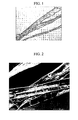
- FIGS. 1, 2 and 2 Longitudinal view and cross section of the dried fiber C according to the invention are shown in FIGS. 1, 2 and 2 shown.
- FIGS. 1 and 2 clearly shows the longitudinal segmentation typical of the fiber according to the invention.
- the segmentation is effected by partitions, which - what in FIG. 2 can be detected under greater magnification - actually cause a firm and membranous subdivision.
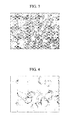
- FIG. 3 is the typical for "SI" fibers, collapsed hollow cross-sectional structure to form multi-limb or irregularly ribbed cross sections recognizable.
- FIG. 4 shows the tubular cross section of the fiber according to the invention after wetting the dry fiber.
- All fibers can be spun with the usual parameters. While the fibers E and F tend to sink in the fiber post-treatment baths, this effect is not observed in the fiber C according to the invention.
- Fiber A 80% Fiber B: 220% Fiber C: 335% Fiber D: 93% Fiber E: 149% Fiber F: 193%
- the water retention capacity can be increased by 100% by spinning in 20% CMC based on cellulose by about 50%, by spinning in 30% CMC. (Comparison of the fibers D -> E -> F).
- the surface gel effect (slimy, soapy feel) is somewhat stronger in the case of the fibers C according to the invention than in the case of the comparative sample E (with the same CMC content). This gel effect arises only in the wet state.
- the fiber C according to the invention reaches a fiber tenacity of 13.1 cN / tex at a titer of 4.4 dtex at an elongation of 22.9%, which is acceptable for use in nonwoven processing.
- Tampon plugs of 2.72 g each were pressed from the fibers A, B and C and a syngine measurement according to WSP 351.0 was carried out.
- an identical plug made of 100% commercial trilobal viscose fiber (“Galaxy” ®) was produced. Result: Fiber A: 4.56 g / g Fiber B: 4.75 g / g Fiber C: 5.73 g / g 100% Galaxy: 5.05 g / g
- the regenerated cellulose fiber according to the invention is therefore outstandingly suitable for use in absorbent products, hygiene articles, in particular tampons, incontinence products, sanitary napkins and pantyliners, food packaging, in particular for meat products, papers, in particular filter papers, clothing (eg apparel textiles for moisture management mixed with other fibers or as a multilayer construction) and wound dressings.
Landscapes
- Engineering & Computer Science (AREA)
- Health & Medical Sciences (AREA)
- Textile Engineering (AREA)
- Chemical & Material Sciences (AREA)
- Mechanical Engineering (AREA)
- Life Sciences & Earth Sciences (AREA)
- Veterinary Medicine (AREA)
- General Chemical & Material Sciences (AREA)
- Public Health (AREA)
- Epidemiology (AREA)
- Chemical Kinetics & Catalysis (AREA)
- Animal Behavior & Ethology (AREA)
- General Health & Medical Sciences (AREA)
- Materials Engineering (AREA)
- Hematology (AREA)
- Artificial Filaments (AREA)
- Biomedical Technology (AREA)
- Heart & Thoracic Surgery (AREA)
- Vascular Medicine (AREA)
- Absorbent Articles And Supports Therefor (AREA)
- Materials For Medical Uses (AREA)
- Polysaccharides And Polysaccharide Derivatives (AREA)
- Nonwoven Fabrics (AREA)
Abstract
Description
Die vorliegende Erfindung betrifft eine regenerierte Cellulosefaser, die durch das Viskoseverfahren erhalten wird.The present invention relates to a regenerated cellulose fiber obtained by the viscose method.
Insbesondere betrifft die Erfindung eine regenerierte Cellulosefaser mit kollabierter hohler Querschnittsstruktur.In particular, the invention relates to a regenerated cellulose fiber having a collapsed hollow cross-sectional structure.
Für Hygieneanwendungen wie zum Beispiel Tampons oder Saugkörper im Allgemeinen sind Fasern mit besonders hohem Flüssigkeitsspeichervermögen wünschenswert, um so eine möglichst hohe Absorptionskapazität des Hygieneprodukts zu ermöglichen.For hygiene applications such as tampons or absorbent articles in general, fibers having a particularly high liquid storage capacity are desirable in order to allow the highest possible absorption capacity of the hygiene product.
Konventionelle superabsorbierende Materialien haben den Nachteil, dass sie in der Regel bei Kontakt mit Wasser ein Gel bilden und so die Integrität des Saugkörpers verringern und zudem den Flüssigkeitsweitertransport durch den Saugkörper blockieren. Die Integrität des Saugkörpers ist in diesen Anwendungen auch deshalb wichtig, weil so ein Austreten von Absorptionsmaterial und somit eine Kontamination beispielsweise von Wunden mit diesem Material verhindert wird.Conventional superabsorbent materials have the disadvantage that they usually form a gel on contact with water and thus reduce the integrity of the absorbent body and also block the fluid transport through the absorbent body. The integrity of the absorbent body is also important in these applications because it prevents leakage of absorbent material and thus contamination of, for example, wounds with this material.
Für Wundauflagen ist es ebenfalls wünschenswert, dass das absorbierende Material nicht mit der Wunde verklebt, so dass ein schmerzfreies Ablösen der Auflage von der Wunde erreichbar ist.For wound dressings, it is also desirable that the absorbent material not be adhered to the wound so that painless release of the dressing from the wound is achievable.
Eine weitere Forderung an Fasermaterial in diesen Anwendungsgebieten ist die einwandfreie Verarbeitbarkeit in konventionellen Produktionstechniken der Vliesherstellung.Another requirement for fiber material in these fields of application is the perfect processibility in conventional production techniques of nonwoven production.
Viskosefasern mit einem Anteil an Carboxymethylcellulose (CMC) sind bekannt. Es handelt sich dabei um eine Mischfaser, die durch das Einspinnen von Carboxymethylzellulose in die Viskosespinnmasse erhalten wird. Solche Fasern wurden auch kommerziell hergestellt (
Die Herstellung von Viskosefasern mit einer hohlen Querschnittsstruktur ("Hohlfasern") durch Einspinnen von Natriumcarbonat in die Viskosespinnmasse ist bereits seit 1920 bekannt. Fasern dieser Art wurden früher von unterschiedlichen Anbietern kommerziell hergestellt. Hohlfasern vom "Superinflated"-Typ mit hohen Wasserrückhaltevermögen wurden speziell für Hygiene-Anwendungen hergestellt (
Ein umfassende Übersicht über Entwicklung und Geschichte von Viskose-Hohlfasern findet sich unter:
Viskose-CMC-Mischfasern weisen in der Herstellung den Nachteil auf, dass bedingt durch ihre hohe Saugfähigkeit und das starke Aneinanderhaften der Fasern im nassen Zustand (Geleffekt an der Faseroberfläche) die Fasern ab einem Einlagerungsgrad von ca. 15% CMC bezogen auf Cellulose im herkömmlichen Viskoseverfahren dazu neigen, in den Bädern der Nachbehandlung abzusinken und nicht wie herkömmliche Viskosefasern aufzutreiben. Dieses erschwert die Herstellung dieser Fasern in einem üblichen kommerziellen Verfahren erheblich.Viscose CMC mixed fibers have the disadvantage in the production that due to their high absorbency and the strong adherence of the fibers in the wet state (gel effect on the fiber surface) from a storage ratio of about 15% CMC based on cellulose in the conventional Viscose methods tend to sink in the baths of post-treatment and not to raise like conventional viscose fibers. This considerably impedes the production of these fibers in a conventional commercial process.
Ein erwünschter Effekt dieser Fasern ist ihre gelartige Oberfächenkonsistenz im feuchten Zustand. Dieser Effekt wird im Griff aber wieder teilweise dadurch verringert, dass diese Fasern genauso wie herkömmliche Viskosefasern eine stark geriffelte Oberflächenstruktur aufweisen.A desirable effect of these fibers is their gelatinous surface consistency in the wet state. This effect is under control, but again partially reduced by the fact that these fibers as well as conventional viscose fibers have a strongly corrugated surface structure.
Die maximale Steigerung des Wasserrückhaltevermögens solcher Fasern ist limitiert, da es bei Einspinnen von >50 % CMC zu massiven Verarbeitungsproblemen kommt.The maximum increase in the water retention capacity of such fibers is limited, as it comes with spinning of> 50% CMC to massive processing problems.
Auch bei Viskosehohlfasern ist die Steigerung des Wasserrückhaltevermögens limitiert. Durch eine stärkere Inflation der Faser wird ab einem bestimmten Grad kein höheres Wasserrückhaltevermögen mehr erreicht, es kommt vielmehr zur Bildung von bandartigen Fasern mit flachem Querschnitt welche ein geringeres Wasserrückhaltvermögen aufweisen und deren Nachbehandlung in einem Stapelfaserverfahren, aufgrund ihrer sehr großen und glatten Oberfläche und dem damit verbundenen sehr hohen Faser-Faser Bindevermögen, äußerst problematisch ist.Even with Viskosehohlfasern the increase of the water retention capacity is limited. By a higher degree of inflation of the fiber, from a certain degree, no higher water retention capacity is achieved, but the formation of ribbon-like fibers with a flat cross-section which have a lower water retention capacity and their post-treatment in a staple fiber process, because of their very large and smooth surface and thus connected very high fiber-fiber binding capacity, is extremely problematic.
Bekannt sind weiters carboxymethylierte Fasern, d.h. Fasern, die durch die nachträgliche Carboxymethylierung von Viskosefasern hergestellt werden (kommerziell erhältlich als "Aquacell"-Fasern der Fa. Convatec;
Die
Die resultierenden Fasern werden als vollkommen flach beschrieben. Die kollabierte Querschnittsstruktur hält auch im feuchten Zustand fest zusammen. Die Fasern eignen sich gemäß
Die vorliegende Erfindung stellt sich zur Aufgabe, eine Viskosefaser mit möglichst hohem Wasserrückhaltevermögen, einer möglichst hohen Absorption unter Druck und einem zusätzlichen Oberflächen-Geleffekt zur Verfügung zu stellen. Die Faser soll sich mit den üblichen Verfahren zur Viskosefaserherstellung produzieren lassen und sich nach dem üblichen Verfahren zur Vliesherstellung weiterverarbeiten lassen (beispielsweise Krempeln; Verfestigung durch Vernadlung, Wasserstrahlverfestigung, thermische Verfestigung, Kalandrieren).The object of the present invention is to provide a viscose fiber with the highest possible water retention capacity, the highest possible absorption under pressure and an additional surface gel effect. The fiber is to be produced by conventional viscose fiber production processes and to be further processed by the usual nonwoven production process (for example carding, consolidation by needling, hydroentanglement, thermal consolidation, calendering).
Diese Aufgabe wird mit einer regenerierten Cellulosefaser gemäß Anspruch 1 gelöst. Zur Herstellung der erfindungsgemäßen Cellulosefaser dient das Verfahren gemäß Anspruch 11. Bevorzugte Ausfiihrungsformen sind in den Unteransprüchen angeführt.This object is achieved with a regenerated cellulose fiber according to claim 1. The process according to claim 11 serves to produce the cellulose fiber according to the invention. Preferred embodiments are specified in the subclaims.
-
Figur 1 zeigt die Längsansicht einer getrockneten erfindungsgemäßen Cellulosefaser.FIG. 1 shows the longitudinal view of a dried cellulose fiber according to the invention. -
Figur 2 zeigt eine stärker vergrößerte Längsansicht einer getrockneten erfindungsgemäßen Cellulosefaser.FIG. 2 shows a more enlarged longitudinal view of a dried cellulose fiber according to the invention. -
Figur 3 zeigt den Querschnitt von getrockneten erfindungsgemäßen Cellulosefasern.FIG. 3 shows the cross section of dried cellulose fibers according to the invention. -
Figur 4 zeigt den röhrenförmigen Querschnitt einer erfindungsgemäßen Cellulosefaser nach Kontakt mit Wasser.FIG. 4 shows the tubular cross section of a cellulose fiber according to the invention after contact with water.
Die vorliegende Erfindung stellt eine regenerierte Cellulosefaser mit kollabierter hohler Querschnittsstruktur zur Verfügung, die durch die Kombination der folgenden Eigenschaften gekennzeichnet ist:
- die Faser weist im trockenen Zustand eine kollabierte hohle Querschnittsstruktur auf
- die Faser weist im feuchten Zustand eine Querschnittstruktur mit Hohlräumen auf
- die Faser weist in Längsrichtung eine Segmentierung durch Trennwände auf
- in die Faser ist ein saugfähiges Polymer inkorporiert.
- the fiber has a collapsed hollow cross-sectional structure when dry
- the fiber has a cross-sectional structure with cavities when wet
- the fiber has a segmentation in the longitudinal direction by partitions
- An absorbent polymer is incorporated in the fiber.
Bevorzugt ist das saugfähige Polymer Carboxymethylcellulose (CMC). Andere geeignete saugfähigen Polymer können aus der Gruppe bestehend aus mit dem Viskoseverfahren kompatiblen Polymeren, wie z.B. Viskosecarbamat, Carboxyethylcellulose, Alginaten oder Homo- und Copolymeren von Acrylsäuren (wie zum Beispiel in
Mit der vorliegenden Erfindung wird somit in der bevorzugten Ausführungsform erstmalig eine Kombination aus einer Viskosehohlfaser, die bei Wiederbefeuchten wieder eine röhrenförmige Struktur mit Hohlräumen aufweist, und einer Viskosemischfaser mit CMC bereitgestellt.Thus, with the present invention, in the preferred embodiment, for the first time, a combination of a hollow viscose fiber that again has a tubular structure with voids upon rewetting and a viscose blend fiber with CMC is provided.
Unter einer regenerierten Cellulosefaser mit kollabierter hohler Querschnittsstruktur versteht der Fachmann eine Viskosefaser, deren Querschnitt so stark aufgebläht ("inflated") wurde, dass die Querschnittstruktur in sich selbst kollabiert. Die Herstellung solcher Fasern (durch Beimischen von Natriumcarbonat) wird in der
Die erfindungsgemäße Faser hat im getrockneten Zustand bevorzugt einen unregelmäßigen, mehrschenkeligen oder unregelmäßig gerippten Querschnitt. Solch Fasern werden auch als "SI" (für "superinflated")-Fasern bezeichnet. Im Unterschied zu den in der
Die erfindungsgemäße Faser unterscheidet sich zudem insbesondere von den in der
Der Abstand der Trennwände beträgt dabei bevorzugt zwischen 0,3 und 3 mal, bevorzugt 0,5-2 mal der über die Faserlänge gemittelten Faserbreite. Es wird vermutet, dass die Anwesenheit dieser Trennwände dafür mitverantwortlich ist, dass sich bei Befeuchten der Faser wieder eine röhrenförmige Struktur mit Hohlräumen ausbildet.The distance between the partitions is preferably between 0.3 and 3 times, preferably 0.5-2 times the fiber width averaged over the fiber length. It is assumed that the presence of these partitions is partly responsible for the re-formation of a tubular structure with cavities when the fiber is moistened.
Diese röhrenförmige Struktur ist vermutlich dafür verantwortlich, dass die erfindungsgemäße Faser im Unterschied zu den auch bei Wiederbefeuchten flachen Fasern der
Unter der Maßnahme, dass in die Faser ein saugfähiges Polymer, insbesondere CMC inkorporiert ist, versteht der Fachmann, dass in die Matrix der (nach Regeneration der Faser) underivatisierten Cellulose das saugfähige Polymer, z.B. CMC eingelagert ist. Dies ist - im Unterschied zu einem Aufbringen von CMC auf die bereits fertige Faser - insbesondere durch Einspinnnen von CMC in die Spinnviskose möglich.Under the measure that an absorbent polymer, in particular CMC, is incorporated into the fiber, it is understood by those skilled in the art that in the matrix of (after regeneration of the fiber) underivatized cellulose the absorbent polymer, e.g. CMC is stored. This is possible - in contrast to applying CMC to the already finished fiber - in particular by spinning CMC into the spinning viscose.
Die erfindungsgemäße Cellulosefaser hat ein sehr hohes Wasserrückhaltevermögen; der Fasercharakter bleibt aber auch im nassen Zustand erhalten. Zudem zeigt sich, dass die erfindungsgemäße Faser im Unterschied zu herkömmlichen Viskose-CMC-Mischfasern in einem konventionellen Viskoseverfahren gut herstellbar und insbesondere gut verarbeitbar ist.The cellulose fiber according to the invention has a very high water retention capacity; but the fiber character also remains in the wet state. In addition, it is found that, in contrast to conventional viscose-CMC mixed fibers, the fiber according to the invention can be prepared well in a conventional viscose process and is particularly easy to process.
Der Anteil an saugfähigem Polymer, insbesondere an CMC, in der erfindungsgemäßen Faser beträgt bevorzugt 5 Gew.% bis 50 Gew.%, besonders 15 Gew.% bis 40 Gew.%, am meisten bevorzugt 20 Gew.% bis 30 Gew.%, bezogen auf underivatisierte Cellulose.The proportion of absorbent polymer, in particular of CMC, in the fiber according to the invention is preferably 5% by weight to 50% by weight, especially 15% by weight to 40% by weight, most preferably 20% by weight to 30% by weight. based on underivatized cellulose.
Die erfindungsgemäße Cellulosefaser liegt bevorzugt in Form einer Stapelfaser vor und kann in allen üblichen Titerbereichen hergestellt werden. Bevorzugt kann der Fasertiter von 0,5 dtex bis 8 dtex, bevorzugt von 1,3 bis 6 dtex betragen.The cellulose fiber according to the invention is preferably in the form of a staple fiber and can be produced in all conventional titanium ranges. The fiber titer may preferably be from 0.5 dtex to 8 dtex, preferably from 1.3 to 6 dtex.
Die Faserlänge der erfindungsgemäßen Faser kann von 2 mm bis 80 mm betragen und hängt insbesondere vom Anwendungsgebiet ab. Für einen Wetlaidprozess sind insbesondere Faserlängen von 2 bis 20 mm geeignet, für einen Kardierprozess Faserlängen von 20 bis 80 mm.The fiber length of the fiber according to the invention can be from 2 mm to 80 mm and depends in particular on the field of application. In particular, fiber lengths of 2 to 20 mm are suitable for a wetlaid process, and fiber lengths of 20 to 80 mm for a carding process.
Die Reissfestigkeit der erfindungsgemäßen Faser liegt typischerweise bei über 10cN/tex; die Reissdehnung bei über 15%.The tensile strength of the fiber according to the invention is typically above 10 cN / tex; the elongation at break above 15%.
Die erfindungsgemäße Cellulosefaser weist bevorzugt ein Wasserrückhaltevermögen von mindestens 300%, gemessen nach DIN 53814, auf.The cellulose fiber according to the invention preferably has a water retention capacity of at least 300%, measured according to DIN 53814.
Es wurde beispielsweise bei erfindungsgemäßen Fasern mit einem Anteil von 35% Gew.% CMC ein Wasserückhaltevermögen von bis zu 400% WRV gemessen.For example, in the case of fibers according to the invention with a proportion of 35% by weight CMC, a water retention capacity of up to 400% WRV was measured.
Ein aus der erfindungsgemäßen Faser hergestellter zylindrischer Tampon mit einer Masse von 2,72 g, einer Länge von 44 mm und einem Durchmesser von 13 mm weist bevorzugt einen Syngina-Wert von mindestens 5,2 g/g, gemessen nach EDANA / INDA Standard Test Methods for the Nonwovens and Related Industries ERT 350.0 bzw. WSP 350.1, auf.A cylindrical tampon made from the fiber of the invention having a mass of 2.72 g, a length of 44 mm and a diameter of 13 mm preferably has a Syngina value of at least 5.2 g / g, measured according to EDANA / INDA Standard Test Methods for the Nonwoven and Related Industries ERT 350.0 and WSP 350.1, respectively.
Damit weist die Faser einen höheren Syngina-Wert als die derzeit kommerziell bedeutendste saugfähige Viskosefaser, eine unter dem Markennamen "Galaxy"® vermarktete Viskosefaser mit regelmäßigem trilobalem Querschnitt (
Zur Herstellung einer regenerierten Cellulosefaser gemäß der vorliegenden Erfindung dient ein Verfahren, umfassend die Schritte
- Bereitstellen einer Viskosespinnmasse
- Einmischen eines mit Viskose kompatiblen Carbonates in die Viskosespinnmasse
- Einmischen eines saugfähigen Polymers in die Viskosespinnmasse
- Verspinnen der Viskosespinnmasse in ein Spinnbad unter Bildung von Fasern,
wobei - die Reife der Viskosespinnmasse vor dem Verspinnen weniger als 15° Hottenroth, bevorzugt 10° bis 14° Hottenroth beträgt
- der Gehalt an H2SO4 im Spinnbad 8% bis 10% beträgt
- der Gehalt an ZnSO4 im Spinnbad 0,3% bis 0,5% beträgt und
- der Gehalt an Na2SO4 im Spinnbad 25% bis 30% beträgt.
- Providing a Viskosepinnmasse
- Mixing a viscose compatible carbonate in the Viskosepinnmasse
- Mixing an absorbent polymer in the Viskosepinnmasse
- Spinning the viscose spinning composition into a spinning bath to form fibers,
in which - the viscosity of the viscose spinning composition before spinning is less than 15 ° Hottenroth, preferably 10 ° to 14 ° Hottenroth
- the content of H 2 SO 4 in the spinning bath is 8% to 10%
- the content of ZnSO 4 in the spinning bath is 0.3% to 0.5%, and
- the content of Na 2 SO 4 in the spinning bath is 25% to 30%.
Das erfindungsgemäße Verfahren kombiniert somit den an sich bekannten Schritt des Einspinnens eines Carbonates, insbesondere Natriumcarbonat, zur Herstellung eines hohlen Querschnittes, mit dem Schritt des Einspinnens eines saugfähigen Polymers.The process according to the invention thus combines the known step of spinning in a carbonate, in particular sodium carbonate, to produce a hollow cross-section, with the step of spinning in an absorbent polymer.
Im Vergleich zu dem in der
Das saugfähige Polymer ist bevorzugt CMC. Die folgenden Ausführungen beziehen sich auf diese bevorzugte Ausfiihrungsform, gelten aber mutatis mutandis auch für andere saugfähige Polymere, die mit dem Viskoseverfahren kompatibel sind.The absorbent polymer is preferably CMC. The following statements relate to this preferred embodiment, but mutatis mutandis apply to other absorbent polymers which are compatible with the viscose process.
Als Carbonat ist jedes Carbonat, insbesondere Alkalimetallcarbonat, geeignet, welches mit den Bedingungen des Viskoseverfahrens kompatibel ist. Besonders geeignet ist Natriumcarbonat. Andere geeignete Carbonate sind Kaliumcarbonat, Kalziumcarbonat sowie ganz allgemein alle Carbonate, die unter Säureeinfluß Kohlendioxid freisetzen.Suitable carbonate is any carbonate, in particular alkali metal carbonate, which is compatible with the conditions of the viscose process. Particularly suitable is sodium carbonate. Other suitable carbonates are potassium carbonate, calcium carbonate and more generally all carbonates that release carbon dioxide under the influence of acid.
Die Beeinflussung der Querschnittsform der Faser (Aufblähen und Kollabieren) dahingehend, dass sich eine kollabierte hohle Querschnittsstruktur ergibt, z.B. durch Wahl entsprechender Bedingungen im Spinnbad, Wahl der Temperatur und natürlich Menge an zugegebenem Carbonat, ist dem Fachmann insbesondere aus den oben zitierten Patentveröffentlichungen bekannt.Influencing the cross-sectional shape of the fiber (puffing and collapsing) to give a collapsed hollow cross-sectional structure, e.g. By choosing appropriate conditions in the spinning bath, choice of temperature and of course added amount of carbonate, the skilled worker is known in particular from the patent publications cited above.
Bevorzugt wird das Carbonat in einer Menge von 11 Gew.% - 23 Gew.% (gerechnet als (CO3)2-). bezogen auf Cellulose in der Viskosespinnmasse, eingemischt. Im konkreten Fall von Natriumcarbonat beträgt die bevorzugte Menge von 20 Gew.% bis 40 Gew.%, bezogen auf Cellulose.The carbonate is preferably used in an amount of 11% by weight to 23% by weight (calculated as (CO 3 ) 2- ). based on cellulose in the Viskosespinnmasse, mixed. In the specific case of sodium carbonate, the preferred amount is from 20% by weight to 40% by weight, based on cellulose.
Weiters bevorzugt wird das saugfähige Polymer, insbesondere die Carboxymethylcellulose, in einer Menge von 5 Gew.% bis 50 Gew.%, besonders bevorzugt 15 Gew.% bis 40 Gew.%, am meisten bevorzugt 20 Gew.% bis 30 Gew.%, bezogen auf Cellulose in der Viskosespinnmasse, eingemischt.Further preferred is the absorbent polymer, in particular the carboxymethylcellulose, in an amount of 5% by weight to 50% by weight, particularly preferably 15% by weight to 40% by weight, most preferably 20% by weight to 30% by weight, based on cellulose in the Viskosespinnmasse, mixed.
Das Carbonat und/oder die Carboxymethylcellulose können bevorzugt in Form einer Lösung eingemischt werden.The carbonate and / or the carboxymethyl cellulose may preferably be mixed in the form of a solution.
Insbesondere kann die Carboxymethylcellulose in Form einer alkalischen Lösung, enthaltend 2 Gew.% bis 9 Gew.%, bevorzugt 3 Gew.% bis 5 Gew.% NaOH und 5 Gew.% bis 15 Gew.%, bevorzugt 8 Gew.% bis 12 Gew.% Carboxymethylcellulose, eingemischt werden.In particular, the carboxymethylcellulose in the form of an alkaline solution containing 2 wt.% To 9 wt.%, Preferably 3 wt.% To 5 wt.% NaOH and 5 wt.% To 15 wt.%, Preferably 8 wt.% To 12 Wt.% Carboxymethylcellulose, are mixed.
Das Carbonat und die Carboxymethylcellulose können auch gemeinsam, insbesondere in Form einer gemeinsamen Lösung, eingemischt werden.The carbonate and the carboxymethylcellulose can also be mixed together, in particular in the form of a common solution.
Zur Herstellung der erfindungsgemäßen Cellulosefaser kann eine herkömmliche Viskosespinnmasse herangezogen werden.A conventional viscose spinning composition can be used to produce the cellulose fiber according to the invention.
Eine typische Ausgestaltung des erfindungsgemäßen Verfahrens umfasst folgende Maßnahmen:A typical embodiment of the method according to the invention comprises the following measures:
Einer nach den herkömmlichen Verfahren hergestellten Viskosespinnmasse (Cellulosegehalt = 9-10%, NaOH-Gehalt 5-6%; Viskosität 30-50 Kugelfallsekunden, Reife 10-15° Hottenroth) werden 25-35 Gew.% Na2CO3 (je nach Fasertiter zu variieren), bezogen auf Cellulose in der Viskosespinnmasse, in Form einer 20%igen Na2CO3 Lösung zugesetzt. Weiter werden der Spinnmasse 5 Gew.% - 45 Gew.%, bevorzugt 20 Gew.% - 30 Gew.%, bezogen auf Cellulose in der Viskosespinnmasse, Carboxymethylcellulose in Form einer alkalischen Lösung (2-9 Gew.% NaOH; bevorzugt 3-5 Gew.%) zugegeben. Die Konzentration der Lösung beträgt 5 Gew.% bis 15 Gew.%, bevorzugt 8-12 Gew.%. Die Carboxymethylcellulose ist ein handelsübliches Produkt mit einem Substitutionsgrad DS von 0,6 - 1,2, bevorzugt 0,65 - 0,85 und einer Viskosität (2%ige Lösung; 25°C) von 30-800 mPas; bevorzugt 50-100 mPas.A viscose spinning mass (cellulose content = 9-10%, NaOH content 5-6%, viscosity 30-50 falling ball seconds, maturity 10-15 ° Hottenroth) prepared according to the conventional methods are 25-35 wt.% Na 2 CO 3 (depending on Fiber titer), based on cellulose in the Viskosespinnmasse, added in the form of a 20% Na 2 CO 3 solution. 5% by weight, preferably 20% by weight to 30% by weight, based on cellulose in the viscose spinning mass, of carboxymethylcellulose in the form of an alkaline solution (2-9% by weight of NaOH, preferably 3-30% by weight). 5% by weight) was added. The concentration of the solution is 5% by weight to 15% by weight, preferably 8-12% by weight. The carboxymethyl cellulose is a commercial product with a degree of substitution DS of 0.6 to 1.2, preferably 0.65 to 0.85 and a viscosity (2% solution, 25 ° C) of 30-800 mPas; preferably 50-100 mPas.
Die Additiv-Lösungen (Carbonat und CMC) werden bevorzugt in die bereits spinnreife Viskosespinnmase, insbesondere unmittelbar vor dem Verspinnen, injiziert. DieViskose wird anschließend homogenisiert, bevorzugt über einen dynamischen Mischer.The additive solutions (carbonate and CMC) are preferably injected into the already spun-mature viscose spinning mase, in particular immediately before spinning. The viscose is then homogenized, preferably via a dynamic mixer.
Die Viskose wird mit für textile Fasern üblichen Parametern ausgesponnen und nachbehandelt.The viscose is spun out and treated with parameters customary for textile fibers.
Zur im Folgenden beschriebenen Herstellung von regenerierten Cellulosefasern wurde eine herkömmliche Viskosespinnmasse herangezogen.
- Versuch A: Verspinnen der Viskosespinnmasse ohne Additive
- Versuch B: Verspinnen der Viskosespinnmasse mit 30% Na2CO3 bezogen auf Cellulose Versuch C (erfindungsgemäß): Verspinnen der Viskosespinnmasse mit 30% Na2CO3 und 20% CMC (DS=0,81; Viskosität 2% = 53 mPas, Type Blanose 7M1F, Hersteller: Fa. Aqualon France (Hercules)), jeweils bezogen auf die in der Viskosespinnmasse vorhandene Cellulose.
- Test A: spinning the Viskosepinnmasse without additives
- Test B: spinning of the viscose spinning mass with 30% Na 2 CO 3 based on cellulose Experiment C (according to the invention): spinning the viscose spinning mass with 30% Na 2 CO 3 and 20% CMC (DS = 0.81, viscosity 2% = 53 mPas, Type Blanose 7M1F, manufacturer: Aqualon France (Hercules)), in each case based on the present in the Viskosepinnmasse cellulose.
Die Spinnmassen wurden mit identischen Spinnparametern zu Fasern mit einem Titer von 4,4 dtex ausgesponnen.
- Versuch D: Verspinnen der Viskosespinnmasse ohne Additive
- Versuch E: Verspinnen der Viskosespinnmasse mit 20% CMC (Spezifikation wie bei Versuch C) bezogen auf Cellulose
- Versuch F: Verspinnen der Viskosespinnmasse mit 30% CMC (Spezifikation wie bei Versuch C) bezogen auf Cellulose
- Experiment D: spinning the Viskosepinnmasse without additives
- Experiment E: spinning the viscose spinning mass with 20% CMC (specification as in experiment C) based on cellulose
- Experiment F: spinning the viscose spinning mass with 30% CMC (specification as in experiment C) based on cellulose
Die Spinnmassen wurden mit identischen Spinnparametern zu Fasern mit einem Titer von 3 dtex ausgesponnen.The spinning masses were spun with identical spinning parameters into fibers having a denier of 3 dtex.
Bei mikroskopischer Betrachtung handelt es sich bei den Fasern B und C um Hohlfasern vom SI-Typ (superinflated, segmentiert). Bei den Fasern A, D, E und F handelt es sich um Fasern mit dem für Viskosefasern üblichen gerippt-runden Querschnitt.When viewed microscopically, fibers B and C are SI-type hollow fibers (superinflated, segmented). The fibers A, D, E and F are fibers with the ribbed-round cross-section usual for viscose fibers.
Längsansicht und Querschnitt der getrockneten erfindungsgemäßen Faser C sind in
In
In
Alle Fasern lassen sich mit den üblichen Parametern verspinnen. Während die Fasern E und F in den Bädern der Fasernachbehandlung zum Absinken neigen, ist dieser Effekt bei der erfindungsgemäßen Faser C nicht zu beobachten.All fibers can be spun with the usual parameters. While the fibers E and F tend to sink in the fiber post-treatment baths, this effect is not observed in the fiber C according to the invention.
Für alle Fasern wurde das Wasserrückhaltevermögen in % nach DIN 53814 ermittelt.
Wie die Resultate zeigen, lässt sich das Wasserrückhaltevermögen, absolut betrachtet, durch Einspinnen von 20% CMC bezogen auf Cellulose um etwa 50%, durch Einspinnen von 30% CMC um 100% steigern. (Vergleich der Fasern D -> E -> F).As the results show, the water retention capacity can be increased by 100% by spinning in 20% CMC based on cellulose by about 50%, by spinning in 30% CMC. (Comparison of the fibers D -> E -> F).
Durch Einspinnen von 30% Na2CO3 bezogen auf Cellulose lässt sich das Wasserrückhaltvermögen um 140% steigern. (Vergleich der Faser A -> B).By entanglement of 30% Na 2 CO 3 based on cellulose, the water retention capacity can be increased by 140%. (Comparison of fiber A -> B).
Durch Einspinnen von 20% CMC und 30% Na2CO3 bezogen auf Cellulose (erfindungsgemäß) lässt sich das Wasserückhaltvermögen dagegen um 255% steigern. Das zeigt, dass sich die Effekte der beiden Additive nicht additiv sondern eher synergistisch verstärken:By spinning in 20% CMC and 30% Na 2 CO 3 based on cellulose (according to the invention), the water retention capacity can be increased by 255%. This shows that the effects of the two additives do not increase additively but rather synergistically:
Der Effekt der Zugabe von CMC alleine bzw. Na2CO3 alleine beträgt:
- A->B = +140%
- D ->E = +56%
- Erwartungswert für die Faser C wäre somit 80 + 140 + 56 = 276%
- A-> B = + 140%
- D -> E = + 56%
- Expected value for the fiber C would thus be 80 + 140 + 56 = 276%
Da das gemessene Wasserrückhaltevermögen für die Faser C mit 335% um den Faktor 1,2 höher liegt, wirken die beiden Additiv-Komponenten somit in überraschender Weise synergistisch.Since the measured water retention for fiber C is 335% higher by a factor of 1.2, the two additive components thus act surprisingly synergistic.
Der Oberflächen-Geleffekt (schleimiger, seifiger Griff) ist bei der erfindungsgemäßen Fasern C etwas stärker ausgebildet als beim Vergleichsmuster E (bei gleichem CMC-Gehalt). Dieser Geleffekt entsteht nur im feuchten Zustand.The surface gel effect (slimy, soapy feel) is somewhat stronger in the case of the fibers C according to the invention than in the case of the comparative sample E (with the same CMC content). This gel effect arises only in the wet state.
Die erfindungsgemäße Faser C erreicht bei einem Titer von 4,4 dtex eine Faserfestigkeit von 13,1 cN/tex bei einer Dehnung von 22,9%, was für einen Einsatz in der Vliesverarbeitung akzeptabel ist.The fiber C according to the invention reaches a fiber tenacity of 13.1 cN / tex at a titer of 4.4 dtex at an elongation of 22.9%, which is acceptable for use in nonwoven processing.
Aus den Fasern A, B und C wurden Tamponplugs zu je 2,72g gepresst und eine Syngina-Messung nach WSP 351.0 durchgeführt. Als zusätzliche Referenz wurde ein identisch hergestellter Plug aus 100% kommerzieller trilobaler Viskosefaser ("Galaxy"®) hergestellt.
Das Ergebnis zeigt, dass sich mit den erfindungsgemäßen Fasern eine deutlich erhöhte Syngina-Absorption sogar gegenüber kommerziellen trilobalen Fasern erreichen lässt.The result shows that with the fibers according to the invention a significantly increased Syngina absorption can be achieved even compared to commercial trilobal fibers.
Die erfindungsgemäße regenerierte Cellulosefaser eignet sich daher hervorragend zur Verwendung in absorbierenden Produkten, Hygieneartikeln, insbesondere Tampons, Inkontinenzprodukten, Hygienebinden und Pantylinern, Verpackungen für Lebensmitteln, insbesondere für Fleischprodukte, Papieren, insbesondere Filterpapieren, Bekleidung (z.B. Bekleidungstextilien für das Feuchtemanagement in Mischung mit anderen Fasern oder als mehrschichtige Konstruktion) und Wundauflagen.The regenerated cellulose fiber according to the invention is therefore outstandingly suitable for use in absorbent products, hygiene articles, in particular tampons, incontinence products, sanitary napkins and pantyliners, food packaging, in particular for meat products, papers, in particular filter papers, clothing (eg apparel textiles for moisture management mixed with other fibers or as a multilayer construction) and wound dressings.
Claims (18)
wobei
in which
Priority Applications (9)
| Application Number | Priority Date | Filing Date | Title |
|---|---|---|---|
| EP09450139A EP2280098A1 (en) | 2009-07-31 | 2009-07-31 | Regenerated cellulose fibre |
| KR1020127005144A KR101683329B1 (en) | 2009-07-31 | 2010-07-09 | Regenerated cellulose fibre |
| EP10729916.6A EP2459782B1 (en) | 2009-07-31 | 2010-07-09 | Regenerated cellulose fibre |
| PCT/EP2010/059870 WO2011012424A1 (en) | 2009-07-31 | 2010-07-09 | Regenerated cellulose fibre |
| CN201080034193.2A CN102639767B (en) | 2009-07-31 | 2010-07-09 | Regenerated cellulose fibre |
| US13/387,277 US9279196B2 (en) | 2009-07-31 | 2010-07-09 | Regenerated cellulose fiber |
| CA2767933A CA2767933C (en) | 2009-07-31 | 2010-07-09 | Regenerated cellulose fibre |
| JP2012522074A JP5735964B2 (en) | 2009-07-31 | 2010-07-09 | Regenerated cellulose fiber |
| US14/828,835 US10047458B2 (en) | 2009-07-31 | 2015-08-18 | Regenerated cellulose fiber |
Applications Claiming Priority (1)
| Application Number | Priority Date | Filing Date | Title |
|---|---|---|---|
| EP09450139A EP2280098A1 (en) | 2009-07-31 | 2009-07-31 | Regenerated cellulose fibre |
Publications (1)
| Publication Number | Publication Date |
|---|---|
| EP2280098A1 true EP2280098A1 (en) | 2011-02-02 |
Family
ID=41429009
Family Applications (2)
| Application Number | Title | Priority Date | Filing Date |
|---|---|---|---|
| EP09450139A Withdrawn EP2280098A1 (en) | 2009-07-31 | 2009-07-31 | Regenerated cellulose fibre |
| EP10729916.6A Active EP2459782B1 (en) | 2009-07-31 | 2010-07-09 | Regenerated cellulose fibre |
Family Applications After (1)
| Application Number | Title | Priority Date | Filing Date |
|---|---|---|---|
| EP10729916.6A Active EP2459782B1 (en) | 2009-07-31 | 2010-07-09 | Regenerated cellulose fibre |
Country Status (7)
| Country | Link |
|---|---|
| US (2) | US9279196B2 (en) |
| EP (2) | EP2280098A1 (en) |
| JP (1) | JP5735964B2 (en) |
| KR (1) | KR101683329B1 (en) |
| CN (1) | CN102639767B (en) |
| CA (1) | CA2767933C (en) |
| WO (1) | WO2011012424A1 (en) |
Cited By (5)
| Publication number | Priority date | Publication date | Assignee | Title |
|---|---|---|---|---|
| US20140147616A1 (en) * | 2011-07-15 | 2014-05-29 | Kelheim Fibres Gmbh | Regenerated cellulose fiber |
| US20140154507A1 (en) * | 2011-07-15 | 2014-06-05 | Kelheim Fibres Gmbh | Regenerated cellulose fiber |
| EA020360B1 (en) * | 2012-01-19 | 2014-10-30 | Джамал Вейс оглы Мамедов | Reactive cellulose and process for production thereof |
| WO2017097864A1 (en) * | 2015-12-08 | 2017-06-15 | Technische Universität Berlin | Modified cellulose fibers and preparation method |
| DE102023103842A1 (en) | 2023-02-16 | 2024-08-22 | MeMi Textiles GmbH | Absorbent roving |
Families Citing this family (12)
| Publication number | Priority date | Publication date | Assignee | Title |
|---|---|---|---|---|
| JP2639765B2 (en) | 1991-10-09 | 1997-08-13 | ワイケイケイ株式会社 | Reed device of loom for weaving slide fastener |
| EP2280100A1 (en) * | 2009-07-31 | 2011-02-02 | Kelheim Fibres GmbH | Use of a regenerated cellulose fibre in a flame-retarded product |
| JP5885961B2 (en) * | 2010-08-12 | 2016-03-16 | ダイワボウホールディングス株式会社 | Flat rayon fiber, method for producing the same, and fiber assembly using the same |
| DE102013218412A1 (en) * | 2013-09-13 | 2015-03-19 | Kelheim Fibres Gmbh | Filter aid and filter layer |
| CN104264278B (en) * | 2014-09-25 | 2016-04-20 | 哈尔滨欧替药业有限公司 | A kind of have the viscose of the curling moisture regain performance of moisture absorption for suppository carrier |
| US9610379B2 (en) | 2015-01-23 | 2017-04-04 | Fpinnovations | Absorbent fibres produced from low-substituted carboxymethyl cellulose and the process thereof |
| TWI842670B (en) | 2017-03-03 | 2024-05-21 | 德商凱爾海姆纖維有限公司 | Transparent cosmetic mask and manufacturing method thereof |
| US10383369B2 (en) | 2017-06-07 | 2019-08-20 | Rai Strategic Holdings, Inc. | Fibrous filtration material for electronic smoking article |
| CN112695415B (en) * | 2020-12-28 | 2022-11-01 | 潍坊欣龙生物材料有限公司 | A kind of super absorbent regenerated cellulose fiber and preparation method thereof |
| US11795624B2 (en) | 2021-11-01 | 2023-10-24 | Kimberly-Clark Worldwide, Inc. | Through-air dried tissue products comprising regenerated cellulose fiber |
| KR102446659B1 (en) * | 2022-04-05 | 2022-09-23 | 김민영 | Heat storage fiber fabric with permanent antibacterial properties |
| CN115337148A (en) * | 2022-08-19 | 2022-11-15 | 露乐健康科技股份有限公司 | Absorption core body and sanitary product |
Citations (15)
| Publication number | Priority date | Publication date | Assignee | Title |
|---|---|---|---|---|
| US2476293A (en) * | 1944-10-03 | 1949-07-19 | American Viscose Corp | Artificial fiber |
| GB758651A (en) * | 1952-07-11 | 1956-10-10 | Rayonier Inc | Hollow filament yarn formed in the viscose process |
| US3318990A (en) | 1962-08-18 | 1967-05-09 | Kurashiki Rayon Co | Method of manufacturing flat viscose fibers |
| GB1086496A (en) * | 1963-10-28 | 1967-10-11 | Kurashiki Rayon Kk | Process for the manufacture of flat and hollow rayon fibre suitable for the manufacture of glossy paper |
| US3699965A (en) * | 1970-11-10 | 1972-10-24 | Int Playtex Corp | Tampon for absorbing body fluids |
| GB1333047A (en) | 1969-11-27 | 1973-10-10 | Courtaulds Ltd | Process for making filaments |
| GB1393778A (en) | 1972-08-09 | 1975-05-14 | Courtaulds Ltd | Regenerated cellulose filaments |
| JPS53143722A (en) * | 1977-05-17 | 1978-12-14 | Asahi Chem Ind Co Ltd | Hollow viscose filament yarns and their production |
| US4182735A (en) * | 1978-05-25 | 1980-01-08 | International Paper Company | Production of high crimp, high strength, hollow rayon fibers |
| US4199367A (en) | 1975-11-07 | 1980-04-22 | Avtex Fibers Inc. | Alloy rayon |
| US4289824A (en) | 1977-04-22 | 1981-09-15 | Avtex Fibers Inc. | High fluid-holding alloy rayon fiber mass |
| US4399255A (en) | 1980-12-22 | 1983-08-16 | Avtex Fibers Inc. | Alloy rayon fibers of regenerated cellulose and copolymeric acrylic acid salts |
| EP0301874A1 (en) | 1987-07-30 | 1989-02-01 | Courtaulds Plc | Cellulosic fibre |
| WO2001000425A1 (en) | 1999-06-29 | 2001-01-04 | GUR, Günther, Karl | Article manufacturing method |
| EP1091770A1 (en) | 1998-07-01 | 2001-04-18 | Acordis Speciality Fibres Limited | Wound dressings and materials suitable for use therein |
Family Cites Families (7)
| Publication number | Priority date | Publication date | Assignee | Title |
|---|---|---|---|---|
| US2913769A (en) * | 1948-04-08 | 1959-11-24 | Kastli Leo | Process of puffing dry regenerated cellulose and cellulose acetate textile fibers by generating oxygen in situ and precipitating barium sulphate within the fibers |
| US2835551A (en) * | 1955-04-09 | 1958-05-20 | Toyo Rayon Co Ltd | Process for producing hollow viscose filaments |
| JPS569418A (en) * | 1979-07-06 | 1981-01-30 | Avtex Fibers Inc | Alloy rayon fiber with high fluid holding property |
| AT363578B (en) * | 1979-10-18 | 1981-08-10 | Chemiefaser Lenzing Ag | MIXED FIBERS BASED ON REGENERATED CELLULOSE OF HIGH SUCTION AND HIGH LIQUID RETENTION RESISTANCE, METHOD FOR THE PRODUCTION AND USE THEREOF |
| JPS5818408A (en) * | 1981-07-23 | 1983-02-03 | Japan Exlan Co Ltd | Water-absorbing acrylic fiber showing antistatic properties |
| US5124197A (en) * | 1989-07-28 | 1992-06-23 | Kimberly-Clark Corporation | Inflated cellulose fiber web possessing improved vertical wicking properties |
| CN100558951C (en) * | 2007-06-14 | 2009-11-11 | 山东海龙股份有限公司 | A kind of high-performance hollow cellulose fiber manufacturing method |
-
2009
- 2009-07-31 EP EP09450139A patent/EP2280098A1/en not_active Withdrawn
-
2010
- 2010-07-09 KR KR1020127005144A patent/KR101683329B1/en active Active
- 2010-07-09 JP JP2012522074A patent/JP5735964B2/en active Active
- 2010-07-09 CA CA2767933A patent/CA2767933C/en active Active
- 2010-07-09 CN CN201080034193.2A patent/CN102639767B/en active Active
- 2010-07-09 EP EP10729916.6A patent/EP2459782B1/en active Active
- 2010-07-09 US US13/387,277 patent/US9279196B2/en active Active
- 2010-07-09 WO PCT/EP2010/059870 patent/WO2011012424A1/en not_active Ceased
-
2015
- 2015-08-18 US US14/828,835 patent/US10047458B2/en active Active
Patent Citations (17)
| Publication number | Priority date | Publication date | Assignee | Title |
|---|---|---|---|---|
| US2476293A (en) * | 1944-10-03 | 1949-07-19 | American Viscose Corp | Artificial fiber |
| GB758651A (en) * | 1952-07-11 | 1956-10-10 | Rayonier Inc | Hollow filament yarn formed in the viscose process |
| US3318990A (en) | 1962-08-18 | 1967-05-09 | Kurashiki Rayon Co | Method of manufacturing flat viscose fibers |
| GB1086496A (en) * | 1963-10-28 | 1967-10-11 | Kurashiki Rayon Kk | Process for the manufacture of flat and hollow rayon fibre suitable for the manufacture of glossy paper |
| GB1333047A (en) | 1969-11-27 | 1973-10-10 | Courtaulds Ltd | Process for making filaments |
| US3699965A (en) * | 1970-11-10 | 1972-10-24 | Int Playtex Corp | Tampon for absorbing body fluids |
| GB1393778A (en) | 1972-08-09 | 1975-05-14 | Courtaulds Ltd | Regenerated cellulose filaments |
| US4199367A (en) | 1975-11-07 | 1980-04-22 | Avtex Fibers Inc. | Alloy rayon |
| US4289824A (en) | 1977-04-22 | 1981-09-15 | Avtex Fibers Inc. | High fluid-holding alloy rayon fiber mass |
| JPS53143722A (en) * | 1977-05-17 | 1978-12-14 | Asahi Chem Ind Co Ltd | Hollow viscose filament yarns and their production |
| US4182735A (en) * | 1978-05-25 | 1980-01-08 | International Paper Company | Production of high crimp, high strength, hollow rayon fibers |
| US4399255A (en) | 1980-12-22 | 1983-08-16 | Avtex Fibers Inc. | Alloy rayon fibers of regenerated cellulose and copolymeric acrylic acid salts |
| EP0301874A1 (en) | 1987-07-30 | 1989-02-01 | Courtaulds Plc | Cellulosic fibre |
| EP1091770A1 (en) | 1998-07-01 | 2001-04-18 | Acordis Speciality Fibres Limited | Wound dressings and materials suitable for use therein |
| AU757461B2 (en) | 1998-07-01 | 2003-02-20 | Acordis Speciality Fibres Limited | Wound dressings and materials suitable for use therein |
| US6548730B1 (en) | 1998-07-01 | 2003-04-15 | Acordis Speciality Fibres Limited | Wound dressings and materials suitable for use therein |
| WO2001000425A1 (en) | 1999-06-29 | 2001-01-04 | GUR, Günther, Karl | Article manufacturing method |
Non-Patent Citations (2)
| Title |
|---|
| C.R. WOODINGS AND A.J. BARTHOLOMEW: "The Manufacture, Properties and Uses of Inflated Viscose Fibres", LENZINGER BERICHTE, vol. 58, 1 January 1985 (1985-01-01), pages 33 - 39, XP002562009, ISSN: 0024-0907 * |
| C.R. WOODINGS; A. J. BARTHOLOMEW: "The manufacture properties and uses of inflated viscose rayon fibres", TAPPI NONWOVENS SYMPOSIUM, 1985, pages 155 - 165 |
Cited By (8)
| Publication number | Priority date | Publication date | Assignee | Title |
|---|---|---|---|---|
| US20140147616A1 (en) * | 2011-07-15 | 2014-05-29 | Kelheim Fibres Gmbh | Regenerated cellulose fiber |
| US20140154507A1 (en) * | 2011-07-15 | 2014-06-05 | Kelheim Fibres Gmbh | Regenerated cellulose fiber |
| US10435481B2 (en) * | 2011-07-15 | 2019-10-08 | Kelheim Fibres Gmbh | Regenerated cellulose fiber |
| EA020360B1 (en) * | 2012-01-19 | 2014-10-30 | Джамал Вейс оглы Мамедов | Reactive cellulose and process for production thereof |
| WO2017097864A1 (en) * | 2015-12-08 | 2017-06-15 | Technische Universität Berlin | Modified cellulose fibers and preparation method |
| AU2016369019B2 (en) * | 2015-12-08 | 2018-07-26 | Technische Universität Berlin | Modified cellulose fibers and preparation method |
| US10501606B2 (en) | 2015-12-08 | 2019-12-10 | Technische Universität Berlin | Modified cellulose fibers and preparation method |
| DE102023103842A1 (en) | 2023-02-16 | 2024-08-22 | MeMi Textiles GmbH | Absorbent roving |
Also Published As
| Publication number | Publication date |
|---|---|
| EP2459782B1 (en) | 2013-08-21 |
| EP2459782A1 (en) | 2012-06-06 |
| KR20120090950A (en) | 2012-08-17 |
| US9279196B2 (en) | 2016-03-08 |
| KR101683329B1 (en) | 2016-12-06 |
| US20120209234A1 (en) | 2012-08-16 |
| WO2011012424A1 (en) | 2011-02-03 |
| JP2013501151A (en) | 2013-01-10 |
| CA2767933A1 (en) | 2011-02-03 |
| US10047458B2 (en) | 2018-08-14 |
| CA2767933C (en) | 2017-01-10 |
| CN102639767B (en) | 2015-04-29 |
| US20150354095A1 (en) | 2015-12-10 |
| JP5735964B2 (en) | 2015-06-17 |
| CN102639767A (en) | 2012-08-15 |
Similar Documents
| Publication | Publication Date | Title |
|---|---|---|
| EP2459782B1 (en) | Regenerated cellulose fibre | |
| EP3011090B1 (en) | Highly absorbent polysaccharide fiber and use thereof | |
| EP3011091B1 (en) | Polysaccharide fibres and method for producing same | |
| AT514475B1 (en) | Polysaccharide fiber and process for its preparation | |
| EP3645771A1 (en) | Hydrogel-forming multicomponent fiber | |
| WO2014161018A1 (en) | Polysaccharide fibres with an increased fibrillation tendency and method for the production thereof | |
| EP2785899B1 (en) | Regenerated cellulose fibre | |
| DE2324589B2 (en) | DRY ALKALINE MIXED FIBERS, PROCESS FOR THEIR PRODUCTION AND THEIR USE FOR THE PRODUCTION OF A HIGHLY ABSORBENT MASS | |
| EP1606439B1 (en) | Solid regenerated standard viscose fibres | |
| EP0797696B1 (en) | Process for producing cellulose fibres | |
| EP2732080B1 (en) | Regenerated cellulose fiber | |
| DE3036415A1 (en) | MIXED FIBER WITH HIGH SUCTION AND HIGH LIQUID RETENTION RESISTANCE BASED ON REGENERATED CELLULOSE, METHOD FOR THE PRODUCTION AND USE THEREOF | |
| DE1288238B (en) | Process for the production of tubular, flat regenerated cellulose fibers | |
| EP3762537B1 (en) | Pulp and lyocell articles with reduced cellulose content | |
| EP2732082A1 (en) | Regenerated cellulose fiber | |
| EP2546396A1 (en) | Fibre bundle | |
| DE1794163A1 (en) | Process for the production of rayon threads with self-binding properties, which are suitable for the production of rayon paper or rayon fiber non-woven fabrics | |
| EP1926384B1 (en) | Packaging film with microfibres and clean production method | |
| DE2638654C3 (en) | Highly absorbent fibrous material for use in hygienic articles |
Legal Events
| Date | Code | Title | Description |
|---|---|---|---|
| PUAI | Public reference made under article 153(3) epc to a published international application that has entered the european phase |
Free format text: ORIGINAL CODE: 0009012 |
|
| AK | Designated contracting states |
Kind code of ref document: A1 Designated state(s): AT BE BG CH CY CZ DE DK EE ES FI FR GB GR HR HU IE IS IT LI LT LU LV MC MK MT NL NO PL PT RO SE SI SK SM TR |
|
| AX | Request for extension of the european patent |
Extension state: AL BA RS |
|
| STAA | Information on the status of an ep patent application or granted ep patent |
Free format text: STATUS: THE APPLICATION IS DEEMED TO BE WITHDRAWN |
|
| 18D | Application deemed to be withdrawn |
Effective date: 20110809 |