EP2258430B1 - 5-(Aziridin-1-yl)-4-hydroxylamino-2-nitrobenzamide and its use in medicine - Google Patents
5-(Aziridin-1-yl)-4-hydroxylamino-2-nitrobenzamide and its use in medicine Download PDFInfo
- Publication number
- EP2258430B1 EP2258430B1 EP10075381.3A EP10075381A EP2258430B1 EP 2258430 B1 EP2258430 B1 EP 2258430B1 EP 10075381 A EP10075381 A EP 10075381A EP 2258430 B1 EP2258430 B1 EP 2258430B1
- Authority
- EP
- European Patent Office
- Prior art keywords
- aziridin
- hydroxylamino
- nitrobenzamide
- tretazicar
- cells
- Prior art date
- Legal status (The legal status is an assumption and is not a legal conclusion. Google has not performed a legal analysis and makes no representation as to the accuracy of the status listed.)
- Active
Links
- MXPOCMVWFLDDLZ-NSCUHMNNSA-N C[n](c(/C=C/CO)c1CO)c(C(C=C2N3CC3)=O)c1C2=O Chemical compound C[n](c(/C=C/CO)c1CO)c(C(C=C2N3CC3)=O)c1C2=O MXPOCMVWFLDDLZ-NSCUHMNNSA-N 0.000 description 1
- VAOCPAMSLUNLGC-UHFFFAOYSA-N Cc([n]1CCO)ncc1[N+]([O-])=O Chemical compound Cc([n]1CCO)ncc1[N+]([O-])=O VAOCPAMSLUNLGC-UHFFFAOYSA-N 0.000 description 1
- PCTFIHOVQYYAMH-UHFFFAOYSA-N [O-][N+](c(cc(cc1[N+]([O-])=O)C(O)=O)c1Cl)=O Chemical compound [O-][N+](c(cc(cc1[N+]([O-])=O)C(O)=O)c1Cl)=O PCTFIHOVQYYAMH-UHFFFAOYSA-N 0.000 description 1
Images


Classifications
-
- A—HUMAN NECESSITIES
- A21—BAKING; EDIBLE DOUGHS
- A21D—TREATMENT OF FLOUR OR DOUGH FOR BAKING, e.g. BY ADDITION OF MATERIALS; BAKING; BAKERY PRODUCTS
- A21D2/00—Treatment of flour or dough by adding materials thereto before or during baking
- A21D2/02—Treatment of flour or dough by adding materials thereto before or during baking by adding inorganic substances
- A21D2/06—Reducing agents
-
- A—HUMAN NECESSITIES
- A61—MEDICAL OR VETERINARY SCIENCE; HYGIENE
- A61K—PREPARATIONS FOR MEDICAL, DENTAL OR TOILETRY PURPOSES
- A61K31/00—Medicinal preparations containing organic active ingredients
- A61K31/33—Heterocyclic compounds
- A61K31/395—Heterocyclic compounds having nitrogen as a ring hetero atom, e.g. guanethidine or rifamycins
- A61K31/396—Heterocyclic compounds having nitrogen as a ring hetero atom, e.g. guanethidine or rifamycins having three-membered rings, e.g. aziridine
-
- A—HUMAN NECESSITIES
- A61—MEDICAL OR VETERINARY SCIENCE; HYGIENE
- A61K—PREPARATIONS FOR MEDICAL, DENTAL OR TOILETRY PURPOSES
- A61K31/00—Medicinal preparations containing organic active ingredients
- A61K31/04—Nitro compounds
-
- A—HUMAN NECESSITIES
- A61—MEDICAL OR VETERINARY SCIENCE; HYGIENE
- A61K—PREPARATIONS FOR MEDICAL, DENTAL OR TOILETRY PURPOSES
- A61K31/00—Medicinal preparations containing organic active ingredients
- A61K31/045—Hydroxy compounds, e.g. alcohols; Salts thereof, e.g. alcoholates
-
- A—HUMAN NECESSITIES
- A61—MEDICAL OR VETERINARY SCIENCE; HYGIENE
- A61K—PREPARATIONS FOR MEDICAL, DENTAL OR TOILETRY PURPOSES
- A61K31/00—Medicinal preparations containing organic active ingredients
- A61K31/12—Ketones
-
- A—HUMAN NECESSITIES
- A61—MEDICAL OR VETERINARY SCIENCE; HYGIENE
- A61K—PREPARATIONS FOR MEDICAL, DENTAL OR TOILETRY PURPOSES
- A61K45/00—Medicinal preparations containing active ingredients not provided for in groups A61K31/00 - A61K41/00
- A61K45/06—Mixtures of active ingredients without chemical characterisation, e.g. antiphlogistics and cardiaca
-
- A—HUMAN NECESSITIES
- A61—MEDICAL OR VETERINARY SCIENCE; HYGIENE
- A61K—PREPARATIONS FOR MEDICAL, DENTAL OR TOILETRY PURPOSES
- A61K9/00—Medicinal preparations characterised by special physical form
- A61K9/0012—Galenical forms characterised by the site of application
- A61K9/0014—Skin, i.e. galenical aspects of topical compositions
-
- A—HUMAN NECESSITIES
- A61—MEDICAL OR VETERINARY SCIENCE; HYGIENE
- A61K—PREPARATIONS FOR MEDICAL, DENTAL OR TOILETRY PURPOSES
- A61K9/00—Medicinal preparations characterised by special physical form
- A61K9/0012—Galenical forms characterised by the site of application
- A61K9/0019—Injectable compositions; Intramuscular, intravenous, arterial, subcutaneous administration; Compositions to be administered through the skin in an invasive manner
-
- A—HUMAN NECESSITIES
- A61—MEDICAL OR VETERINARY SCIENCE; HYGIENE
- A61K—PREPARATIONS FOR MEDICAL, DENTAL OR TOILETRY PURPOSES
- A61K9/00—Medicinal preparations characterised by special physical form
- A61K9/0012—Galenical forms characterised by the site of application
- A61K9/0031—Rectum, anus
-
- A—HUMAN NECESSITIES
- A61—MEDICAL OR VETERINARY SCIENCE; HYGIENE
- A61K—PREPARATIONS FOR MEDICAL, DENTAL OR TOILETRY PURPOSES
- A61K9/00—Medicinal preparations characterised by special physical form
- A61K9/0012—Galenical forms characterised by the site of application
- A61K9/007—Pulmonary tract; Aromatherapy
- A61K9/0073—Sprays or powders for inhalation; Aerolised or nebulised preparations generated by other means than thermal energy
- A61K9/0075—Sprays or powders for inhalation; Aerolised or nebulised preparations generated by other means than thermal energy for inhalation via a dry powder inhaler [DPI], e.g. comprising micronized drug mixed with lactose carrier particles
-
- A—HUMAN NECESSITIES
- A61—MEDICAL OR VETERINARY SCIENCE; HYGIENE
- A61K—PREPARATIONS FOR MEDICAL, DENTAL OR TOILETRY PURPOSES
- A61K9/00—Medicinal preparations characterised by special physical form
- A61K9/06—Ointments; Bases therefor; Other semi-solid forms, e.g. creams, sticks, gels
-
- A—HUMAN NECESSITIES
- A61—MEDICAL OR VETERINARY SCIENCE; HYGIENE
- A61K—PREPARATIONS FOR MEDICAL, DENTAL OR TOILETRY PURPOSES
- A61K9/00—Medicinal preparations characterised by special physical form
- A61K9/14—Particulate form, e.g. powders, Processes for size reducing of pure drugs or the resulting products, Pure drug nanoparticles
- A61K9/141—Intimate drug-carrier mixtures characterised by the carrier, e.g. ordered mixtures, adsorbates, solid solutions, eutectica, co-dried, co-solubilised, co-kneaded, co-milled, co-ground products, co-precipitates, co-evaporates, co-extrudates, co-melts; Drug nanoparticles with adsorbed surface modifiers
-
- A—HUMAN NECESSITIES
- A61—MEDICAL OR VETERINARY SCIENCE; HYGIENE
- A61M—DEVICES FOR INTRODUCING MEDIA INTO, OR ONTO, THE BODY; DEVICES FOR TRANSDUCING BODY MEDIA OR FOR TAKING MEDIA FROM THE BODY; DEVICES FOR PRODUCING OR ENDING SLEEP OR STUPOR
- A61M11/00—Sprayers or atomisers specially adapted for therapeutic purposes
- A61M11/006—Sprayers or atomisers specially adapted for therapeutic purposes operated by applying mechanical pressure to the liquid to be sprayed or atomised
-
- A—HUMAN NECESSITIES
- A61—MEDICAL OR VETERINARY SCIENCE; HYGIENE
- A61M—DEVICES FOR INTRODUCING MEDIA INTO, OR ONTO, THE BODY; DEVICES FOR TRANSDUCING BODY MEDIA OR FOR TAKING MEDIA FROM THE BODY; DEVICES FOR PRODUCING OR ENDING SLEEP OR STUPOR
- A61M11/00—Sprayers or atomisers specially adapted for therapeutic purposes
- A61M11/02—Sprayers or atomisers specially adapted for therapeutic purposes operated by air or other gas pressure applied to the liquid or other product to be sprayed or atomised
-
- A—HUMAN NECESSITIES
- A61—MEDICAL OR VETERINARY SCIENCE; HYGIENE
- A61M—DEVICES FOR INTRODUCING MEDIA INTO, OR ONTO, THE BODY; DEVICES FOR TRANSDUCING BODY MEDIA OR FOR TAKING MEDIA FROM THE BODY; DEVICES FOR PRODUCING OR ENDING SLEEP OR STUPOR
- A61M15/00—Inhalators
- A61M15/009—Inhalators using medicine packages with incorporated spraying means, e.g. aerosol cans
-
- A—HUMAN NECESSITIES
- A61—MEDICAL OR VETERINARY SCIENCE; HYGIENE
- A61P—SPECIFIC THERAPEUTIC ACTIVITY OF CHEMICAL COMPOUNDS OR MEDICINAL PREPARATIONS
- A61P17/00—Drugs for dermatological disorders
-
- A—HUMAN NECESSITIES
- A61—MEDICAL OR VETERINARY SCIENCE; HYGIENE
- A61P—SPECIFIC THERAPEUTIC ACTIVITY OF CHEMICAL COMPOUNDS OR MEDICINAL PREPARATIONS
- A61P17/00—Drugs for dermatological disorders
- A61P17/06—Antipsoriatics
-
- A—HUMAN NECESSITIES
- A61—MEDICAL OR VETERINARY SCIENCE; HYGIENE
- A61P—SPECIFIC THERAPEUTIC ACTIVITY OF CHEMICAL COMPOUNDS OR MEDICINAL PREPARATIONS
- A61P17/00—Drugs for dermatological disorders
- A61P17/12—Keratolytics, e.g. wart or anti-corn preparations
-
- A—HUMAN NECESSITIES
- A61—MEDICAL OR VETERINARY SCIENCE; HYGIENE
- A61P—SPECIFIC THERAPEUTIC ACTIVITY OF CHEMICAL COMPOUNDS OR MEDICINAL PREPARATIONS
- A61P35/00—Antineoplastic agents
-
- A—HUMAN NECESSITIES
- A61—MEDICAL OR VETERINARY SCIENCE; HYGIENE
- A61P—SPECIFIC THERAPEUTIC ACTIVITY OF CHEMICAL COMPOUNDS OR MEDICINAL PREPARATIONS
- A61P43/00—Drugs for specific purposes, not provided for in groups A61P1/00-A61P41/00
-
- C—CHEMISTRY; METALLURGY
- C07—ORGANIC CHEMISTRY
- C07B—GENERAL METHODS OF ORGANIC CHEMISTRY; APPARATUS THEREFOR
- C07B31/00—Reduction in general
-
- C—CHEMISTRY; METALLURGY
- C07—ORGANIC CHEMISTRY
- C07C—ACYCLIC OR CARBOCYCLIC COMPOUNDS
- C07C49/00—Ketones; Ketenes; Dimeric ketenes; Ketonic chelates
- C07C49/20—Unsaturated compounds containing keto groups bound to acyclic carbon atoms
- C07C49/24—Unsaturated compounds containing keto groups bound to acyclic carbon atoms containing hydroxy groups
-
- C—CHEMISTRY; METALLURGY
- C07—ORGANIC CHEMISTRY
- C07D—HETEROCYCLIC COMPOUNDS
- C07D203/00—Heterocyclic compounds containing three-membered rings with one nitrogen atom as the only ring hetero atom
- C07D203/04—Heterocyclic compounds containing three-membered rings with one nitrogen atom as the only ring hetero atom not condensed with other rings
- C07D203/06—Heterocyclic compounds containing three-membered rings with one nitrogen atom as the only ring hetero atom not condensed with other rings having no double bonds between ring members or between ring members and non-ring members
- C07D203/08—Heterocyclic compounds containing three-membered rings with one nitrogen atom as the only ring hetero atom not condensed with other rings having no double bonds between ring members or between ring members and non-ring members with only hydrogen atoms, hydrocarbon or substituted hydrocarbon radicals, directly attached to the ring nitrogen atom
- C07D203/14—Heterocyclic compounds containing three-membered rings with one nitrogen atom as the only ring hetero atom not condensed with other rings having no double bonds between ring members or between ring members and non-ring members with only hydrogen atoms, hydrocarbon or substituted hydrocarbon radicals, directly attached to the ring nitrogen atom with carbocyclic rings directly attached to the ring nitrogen atom
-
- A—HUMAN NECESSITIES
- A61—MEDICAL OR VETERINARY SCIENCE; HYGIENE
- A61M—DEVICES FOR INTRODUCING MEDIA INTO, OR ONTO, THE BODY; DEVICES FOR TRANSDUCING BODY MEDIA OR FOR TAKING MEDIA FROM THE BODY; DEVICES FOR PRODUCING OR ENDING SLEEP OR STUPOR
- A61M2202/00—Special media to be introduced, removed or treated
- A61M2202/06—Solids
- A61M2202/064—Powder
Definitions
- European patent application no. 0 330 432 is entitled " Improvements relating to the control of neoplastic tissue growth” and discloses 5-(aziridin-1-yl)-4-hydroxylamino-2-nitrobenzamide.
- Tretazicar (5-(aziridin-1-yl)-2,4-dinitrobenzamide) is an example of an agent that can be used to combat proliferative disorders. There are many disorders in which it is desirable to prevent or reduce cell growth or proliferation. Some of these diseases, such as cancer, are life-threatening and others, although not life-threatening, are debilitating (such as psoriasis) or irritating and uncomfortable (such as warts).
- One strategy of combating these diseases, notably cancer is to make use of chemical agents which are able to effect the cross-linking of DNA and which prevent or reduce cell growth or proliferation. Tretazicar achieves this cross-linking, but only after it has been reduced (at a nitro group) to the corresponding hydroxylamine (which is then further activated as discussed below).
- Tretazicar has been the subject of continuing interest for over 35 years. It was first synthesised in the late 1960s as part of a series of potential anti-cancer compounds that had been studied since the early 1950s. When synthesised and tested, tretazicar appeared to represent the vision of cancer chemotherapy - a small, low molecular weight compound that could cure tumours with minimal toxic side-effects. As an anti-cancer agent, it represents one of the very few examples of a compound that shows a real anti-tumour selectivity. Unfortunately, for the treatment of human cancer, this anti-tumour selectivity was seen only in certain rat tumours.
- tretazicar The basis for the anti-tumour selectivity of tretazicar is that it is a prodrug that is enzymatically activated to generate a difunctional agent, which can form DNA-DNA interstrand crosslinks.
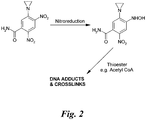
- the bioactivation of tretazicar in rat cells involves the aerobic reduction of its 4-nitro group to a 4-hydroxylamine by the enzyme NQO1 (DT-diaphorase) ( Figure 2 ).
- NQO1 DT-diaphorase
- Figure 2 The human form of NQO1 metabolises tretazicar much less efficiently than rat NQO1. Thus human cells and tumours are insensitive to tretazicar.
- NQO1 dihydronicotinamide riboside
- NQO2 human NAD(P)H quinone oxidoreductase2
- NQO2 can catalyse the two-electron reduction of quinones and the four-electron nitroreduction of tretazicar (Wu et al , 1997). NQO2 can be considered as a human NRH-dependent nitroreductase.
- 5-(Aziridin-1-yl)-4-hydroxylamino-2-nitrobenzamide is highly cytotoxic, even to those cells resistant to tretazicar and can form interstrand crosslinks in their DNA. It is the formation of this compound that accounts for the sensitivity of cells when they are able to activate tretazicar. Irrespective of the ability to bioactivate tretazicar, all the cell types appear have a comparable sensitivity towards the reduced 4-hydroxylamino derivative (Boland et al , 1991). While 5-(aziridin-1-yl)-4-hydroxylamino-2-nitrobenzamide can produce DNA-DNA interstrand crosslinks in cells, it cannot form these lesions in naked DNA (Knox et al , 1991 a).
- 5-(aziridin-1-yl)-4-hydroxylamino-2-nitrobenzamide can be activated non-enzymatically, to a form capable of reacting with naked DNA to produce interstrand crosslinks, by a direct chemical reaction with acetyl-coenzyme A and other thioesters (Knox et al , 1991 a) ( Figure 2 ).
- the ultimate, DNA-reactive, derivative of tretazicar is probably 4-(N-acetoxy)-5-(aziridin-1-yl)-2-nitrobenzamide.
- Tretazicar can also be used for selective cell ablation in transgenic animals.
- Conditional targeted ablation of specific cell populations in living transgenic animals is a very powerful strategy to determine cell functions in vivo.
- Targeted ablation is achieved by constructing a transgene incorporating a bacterial nitroreductase that can activate tretazicar aerobically (NTR) (Anlezark et al , 1992; Knox et al , 1992) and appropriate tissue specific promoters and injecting this into the fertilised eggs of the animal under study - normally mice. After birth, genomic integration of the transgene is confirmed and founder mice bred to establish the transgenic lines.
- NTR tretazicar aerobically
- the animals are treated with tretazicar at various stages of their development to access the affect of the specific ablation of the cell population being studied.
- Cell ablation occurs very rapidly, starting as early as 7 h after administration of the prodrug and appears to be independent of a functional p53 (Cui et al , 1999).
- Examples of the use of this system include the luminal cells of the mammary gland of transgenic mice. Treatment of NTR expressing animals with resulted in a rapid and selective killing of this population of cells whereas the closely associated myoepithelial cells were unaffected.
- DNA interstrand crosslinks is being induced in both dividing and non-dividing cell populations but this only results in cell cytotoxicity when a cell attempts to undergo division whilst its DNA is still damaged.
- S-phase specific agents such as anti-folates only affect cells that are undergoing division while the agent is present.
- the tissue to be ablated is dividing but the adjoining tissues probably will not - thus the very clean result.
- the DNA damage is not permanent and it is slowly repaired (Friedlos et al , 1992).
- the result is a window in which the non-dividing tissues can repair the damage but any cells that enter division will die.
- the length of this window will depend on the amount of initial DNA damage induced.
- the tretazicar induced crosslink is repaired with a half-life of about 55 hours (Friedlos et al , 1992). This is much longer than other DNA crosslinking agents (Friedlos et al , 1992) and, extrapolating this to the in vivo situation, gives a window (10x half-lives) of about 3 weeks.
- tretazicar in humans is limited by either the practicality of G(V)DEPT technology or the distribution of NQO2.
- tretazicar could be therapeutically beneficial for treating other cancers (or other diseases of undesirable cell growth or proliferation) if it could be activated in their vicinity.
- a system for activating tretazicar in, for example, the cervix, bladder, brain, thorax or topically would isolate the activation system from the systemic circulation and allow this to occur. In theory, this could be done by using an enzyme and a co-substrate, although with practical difficulties.
- there are alternative methods for reducing nitro groups Electrolytic reduction is not realistic in vivo , but nitro groups can be reduced chemically.
- the invention includes a pharmaceutical composition as defined in the attached Claim 1.
- compositions will depend on the way in which they are used in treating a patient and, in particular, will depend on the route of administration to the patient.
- compositions or pharmaceutical composition of the invention are one which is suitable for topical administration.
- Such pharmaceutical compositions include creams, ointments, lotions, sprays and gels.
- the pharmaceutical composition is in the form of a sterile, pyrogen-free aqueous solution or suspension.
- compositions such as creams, ointments, lotions, sprays and sterile, pyrogen free aqueous solutions or suspensions are well known in the art.
- ointments may be formulated by suspending or dissolving the components of the composition, kit of parts or therapeutic system in, for example, a mixture with one or more of the following: mineral oil, liquid petrolatum, white petrolatum, propylene glycol, polyoxyethylene polyoxypropylene compound, emulsifying wax and water.
- the components of the compositionor therapeutic system may be suspended or dissolved in, for example, a mixture of one or more of the following: mineral oil, sorbitan monostearate, a polyethylene glycol, lanolin, liquid paraffin, white soft paraffin, polysorbate 60, cetyl esters wax, cetearyl alcohol, 2-octyldodecanol, benzyl alcohol and water.
- 5-(aziridin-1-yl)-4-hydroxylamino-2-nitrobenzamide is known as the product of the nitro-reduction of tretazicar, as far as the inventor is aware, nobody has proposed that a composition, such as a pharmaceutical composition as discussed above, containing it could be used in medicine. Thus, 5-(Aziridinyl-1-yl)-4-hydroxylamino-2-nitrobenzamide for use in medicine is also disclosed.
- an aspect of the invention provides a composition containing 5-(aziridin-1-yl)-4-hydroxylamino-2-nitrobenzamide for use in a method of combating undesirable growth or proliferation of cells at a site in an individual the method comprising administering or providing a composition containing 5-(aziridin-1-yl)-4-hydroxylamino-2-nitrobenzamide at the said site in the individual.
- a further aspect of the invention provides the use of 5-(aziridin-1-yl)-4-hydroxylamino-2-nitrobenzamide in the manufacture of a medicament for combating undesirable growth or proliferation of cells in an individual.
- Corresponding aspects of the invention relate to 5-(aziridin-1-yl)-4-hydroxylamino-2-nitrobenzamide for use in a method of treating an undesirable growth or proliferation of cells, said method comprising administering to a patient in need of such treatment an effective amount of 5-(aziridin-1-yl)-4-hydroxylamino-2-nitrobenzamide.
- the 5-(aziridin-1-yl)-4-hydroxylamino-2-nitrobenzamide may be administered as the sole therapeutic system or agent or, alternatively, may be administered in conjunction with (i.e. either concomitantly or sequentially) with one or more further active agents (e.g. active agents known for treating the particular disorder in question).
- further active agents e.g. active agents known for treating the particular disorder in question.
- the undesirable growth or proliferation of cells to be combated may be any such undesirable growth or proliferation, particularly those which are susceptible to cross-linking of their DNA.
- the undesirable growth or proliferation of cells may be benign such as is the case with common warts or psoriasis or other skin conditions which involve undesirable growth or proliferation of cells, or it may be neoplastic, such as in a tumour or metastasis thereof.
- methods and medicaments of the invention may be used in the treatment of warts and other skin diseases such as psoriasis, other benign growths, pre-cancerous conditions and cancer, including cancer of the cervix, bladder, brain, thorax and uterus.
- the methods and medicaments are used for combating disease by administration into body cavities such as the bladder or peritoneum or thorax.
- body cavities such as the bladder or peritoneum or thorax.
- tretazicar its active 4-hydroxylamine derivative has a very short half-life after application or delivery and cannot migrate very far from the site of activation, so there is no depot effect and the active drug does not enter the circulation and cause systemic effects.
- composition described above comprising 5-(aziridin-1-yl)-4-hydroxylamino-2-nitrobenzamide may also take particular pharmaceutical forms, such as:
- the topical composition (or cream, lotion or ointment) of (i) above may be employed, for example, in the treatment of skin cancer, non-melanomas on skin, prostate cancer, pre-cancerous conditions (e.g. lentigo maligna or, particularly, actinic keratoses), warts or psoriasis.
- pre-cancerous conditions e.g. lentigo maligna or, particularly, actinic keratoses
- warts or psoriasis e.g. lentigo maligna or, particularly, actinic keratoses
- warts or psoriasis e.g. lentigo maligna or, particularly, actinic keratoses
- warts or psoriasis e.g. lentigo maligna or, particularly, actinic keratoses
- warts or psoriasis e.g. lent
- the solution or suspension of (ii) above may be deployed by injection, transcatheterisation or other infusion method into a body cavity or space in which there exists an undesirable growth or proliferation of cells.
- the solution may be introduced into the bladder to treat conditions such as bladder cancer, brought into contact with the cervix to treat cervical cancer, injected into the peritoneum to treat, for example, cancer of the ovary, or may be injected into the brain to treat brain cancer.
- a solution or suspension comprising 5-(aziridin-1-yl)-4-hydroxylamino-2-nitrobenzamide may be administered by intravesical urinary catheter infusion in order to treat bladder cancer.
- a solution or suspension comprising 5-(aziridin-1-yl)-4-hydroxylamino-2-nitrobenzamide for use in a method of treating bladder cancer, said method comprising administering, by intravesical urinary catheter infusion, an effective amount of a solution or suspension comprising 5-(aziridin-1-yl)-4-hydroxylamino-2-nitrobenzamide.
- the solution or suspension of (ii) above may be administered by way of a spray to the mouth, nasal cavity, throat, pharynx, larynx, trachea or lungs in order to treat an undesirable proliferation of cells (e.g. a cancer) at any one of those locations.
- a sprayable solution or suspension comprising 5-(aziridin-1-yl)-4-hydroxylamino-2-nitrobenzamide and a pharmaceutically-acceptable adjuvant, diluent or carrier.
- a still further aspect of the invention relates to a solution or suspension comprising 5-(aziridin-1-yl)-4-hydroxylamino-2-nitrobenzamide and a pharmaceutically-acceptable adjuvant, diluent or carrier for use in a method of treating a cancer of the mouth, nasal cavity, throat, pharynx, larynx, trachea or lungs, said method comprising administering, by way of a spray, a solution or suspension comprising 5-(aziridin-1-yl)-4-hydroxylamino-2-nitrobenzamide and a pharmaceutically-acceptable adjuvant, diluent or carrier.
- Suitable devices include those described in, for example, WO 2006/005845 .
- the device described in (b) above may be, in one embodiment, a metered dose inhaler device.
- a dry powder can be aerosolised in order to deliver a pharmaceutical to sites such as the lungs.
- a dry powder aerosol composition comprising 5-(aziridin-1-yl)-4-hydroxylamino-2-nitrobenzamide.
- dry powder aerosol composition we include references to dry powder formulations that are capable of being delivered by an inhalation device to the mouth, nasal cavity, throat, pharynx, larynx, trachea or lungs.
- the term includes references to dry powders having an average particle size of 100 um (e.g. 50 or 10 ⁇ m) or less.
- particle size may be determined by methods known to those skilled in the art (e.g. by laser light scattering techniques, such as those using a particle size analysis device such as a MastersizerTM).
- a therapeutic system comprising:
- the therapeutic system may comprise the device and dose(s) of composition as physically separate entities (i.e. effectively as a kit-of-parts).
- the inhalation device may be pre-loaded with the one or more doses of composition.
- compositions including topical compositions, solid delivery vehicles, solutions or suspensions, dry powder aerosols, etc.
- a particular condition an undesirable growth or proliferation of cells, such as a cancer of the bladder, cervix, peritoneum or brain, or a cancer of the mouth, nasal cavity, throat, pharynx, larynx, trachea or lungs
- the compositions may be administered in conjunction (i.e. either concomitantly or sequentially) with one or more further active agents (e.g. active agents known for treating the particular disorder in question).
- active agents known for use in the treatment of bladder cancer include cisplatin, doxorubicin and mitomycin C.
- Suitable doses of reduction-activated prodrug (e.g. tretazicar) for human use include 10 to 30 mg/m 2 , typically 15 to 25 mg/m 2 for example 24 mg/m 2 .
- the methods and medicaments of the invention can be used to treat animals (such as non-human mammals, in particular horses, cows, sheep and the like, and cats and dogs) and humans. It is preferred if they are used to treat humans.
- Figure 1 shows the structure of tretazicar (5-(aziridin-1-yl)-2,4-dinitrobenzamide).
- Figure 2 shows the bioactivation of tretazicar.
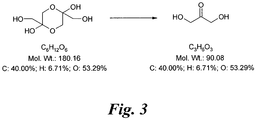
- Figure 3 shows the structure of dihydroxyacetone (DHA; CAS No: 62147-49-3, Beil. 8, 266, Merck Index 13, 3166). The normal form is the dimer, but this rapidly reverts to the monomer in solution.
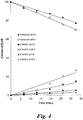
- Figure 4 shows the reduction of tretazicar by DHA.
- Figure 5 shows the reduction of tretazicar by DHA in an E45 based cream (as described in Example 2 below).
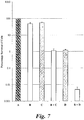
- Figure 7 shows the percentage survival of Chinese Hamster V79 cells over the course of 2 hours at pH 7.5 and 37°C in a 10 mM phosphate buffer containing 140 mM NaCl and the following: A: control (i.e. no additional substances); B: 10 mM DHA; C: 10 ⁇ M E09; B+C: a combination of 10 mM DHA and 10 ⁇ M E09; D: 100 ⁇ M E09; and B+D: a combination of 10 mM DHA and 100 ⁇ M E09.
- A control (i.e. no additional substances)
- B 10 mM DHA
- C 10 ⁇ M E09
- B+C a combination of 10 mM DHA and 10 ⁇ M E09
- D 100 ⁇ M E09
- B+D a combination of 10 mM DHA and 100 ⁇ M E09.
- V79 cells The survival of V79 cells was determined using the following method:
- tretazicar is commercially available for research purposes from Morvus Technology Limited and Sigma Chemical Company.
- Dihydroxyacetone (DHA; 1,3-dihydroxy-2-propanone; CAS No: 62147-49-3, Beil. 8, 266, Merck Index 13, 3166; Figure 3 ) is the active ingredient in sunless or self-tanning lotions and has received approval by the FDA.
- DHA is a colourless sugar that darkens the skin by staining. It interacts with the dead surface cells found in the epidermis producing a color change. As the dead skin cells are naturally sloughed off, the color gradually fades, typically within 5 to 7 days of application. Sunless tanning products contain dihydroxyacetone concentrations of up to 5%. The higher the concentration, the darker is the tan that will follow. As a tanning agent it stable in pH conditions of between 4 and 6.
- Erythrulose (1,3,4-trihydroxy-2-butanone) is similar in action to DHA, but it does not produce as deep or fast a tan.
- DHA is produced through the fermentation of glycerine and is a simple three-carbon sugar, non-toxic in nature and comes in the form of a white powder. The normal form is the dimer (C 6 H 12 O 6 ) but this rapidly reverts to the monomer in solution.
- the FDA has approved DHA only for external use, and recommends that users should take protective measures to avoid contact with eyes, nose and mucous membranes.
- DHA has never been reported as a reducing agent. Reducing sugars are known but these are aldoses and have an aldehyde in one end.
- the aldehyde behaves as a reducing agent and in the presence of mild oxidizing agent, such as Cu 2+ or Fe 3+ , there is oxidation of the aldehyde to a carboxylic acid.
- mild oxidizing agent such as Cu 2+ or Fe 3+
- dihydroxyacetone has been shown to promote the formation of hydroxyl radicals in the presence of iron (III) chelates (Malisza & Hasinoff, 1995). This type of reaction may be related to its reducing ability and its alkali instability that results in the formation of brown compounds.
- the assay was started by addition of 100 ⁇ L of 100mM DHA in water to a mixture of tretazicar (100 ⁇ M) in 0.1 M sodium bicarbonate buffer, pH 9 or pH10, to give a final volume of 1 ml.
- the mixture was incubated at 37°C and aliquots (10 ⁇ L) were taken every 6 min and assayed immediately by HPLC [Partisil 10 SCX (4.2 ⁇ 150 mm) (Whatman, Maidstone, Kent, U.K.] eluted isocratically with 0.13 M sodium phosphate (pH 5) at 1.5 mL/min).
- the concentration of tretazicar was determined in each sample by reference of the corresponding peak area with an external standard, quantified by absorbance at 325 nm. Initial rates were calculated by curve fitting (FigP, Biosoft, Cambridge, U.K.). Reduction products were identified by retention time relative to an authentic standard.
- Example 2 Activation of Tretazicar in a cream formulated for topical application
- Cream A consists of an E45 base (white soft paraffin BP 14.5% w/w, light liquid paraffin Ph Eur 12.6% w/w, hypoallergenic anhydrous lanolin (Medilan) 1.0% w/w, Crookes Healthcare Ltd, Nottingham, UK) containing 10 mg tretazicar, 10 mg NaHCO 3 & 90 mg Na 2 CO 3 per g.
- Cream B contains E45 with 100 mg DHA dimer per g. Mixing the two components, A and B, produced a pale yellow cream. This turned brown over a few hours and continued to darken for about 24 hours.
- Cream A (consisting of an E45 base (white soft paraffin BP 14.5% w/w, light liquid paraffin Ph Eur 12.6% w/w, hypoallergenic anhydrous lanolin (Medilan) 1.0% w/w, Crookes Healthcare Ltd, Nottingham, UK) containing 10 mg tretazicar, 10 mg NaHCO 3 & 90mg Na 2 CO 3 per g and cream B (containing E45 with 100 mg DHA dimer per g) were mixed and at various times 200 ⁇ g was extracted with 1 mL of DMSO with vigorous agitation. The extract was cleared by centrifugation and then diluted 1/100 with 50 mM ammonium bicarbonate buffer (pH 10) and analysed by HPLC.
- E45 base white soft paraffin BP 14.5% w/w, light liquid paraffin Ph Eur 12.6% w/w, hypoallergenic anhydrous lanolin (Medilan) 1.0% w/w, Crookes Healthcare Ltd, Nottingham, UK
- cream B containing E45
- a sample (10 ⁇ L) was injected onto a Waters Symmetry Shield RP18 column (150 x 3.9 mm) and eluted with a linear gradient (1-40% over 30 minutes) of acetonitrile in 10 mM ammonium formate (pH 4.5). The eluate was continually monitored for UV absorbance between 230 and 400 nm using a TSP UV3000 scanning detector.
- B. An extract from the cream 4 hours after it had been mixed.
- C.) a synthetic standard of 5-(aziridin-1-yl)-4-hydroxylamino-2-nitrobenzamide.
- the blue line (the lower line in each pair of traces) is the trace obtained at 260nm and the red line (the upper line in each pair of traces) the trace obtained at 325nm.
- the peak art ⁇ 13 minutes is CB 1954 and the large 260nm peak art ⁇ 19 minutes comes from the E45. It is not possible to measure the efficiency of the extraction method.
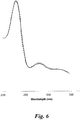
- Tretazicar was still detected and a peak with a retention time of ⁇ 5.0 minutes was identified as the 4-hydroxylamine of tretazicar as indicated by the same retention time and the spectral matching of the UV absorbance spectrum relative to an authentic standard ( Figure 6 ).
- the other peaks did not correspond to known tretazicar reduction products and may have arisen from the oxidation of DHA or reaction of reduced tretazicar products with either cream or DHA.
- tretazicar (5-(aziridin-1-yl)-4-hydroxylamino-2-nitrobenzamide), is formed in the E45 based cream.
- Example 3 Topical application of a Tretazicar cream
- a cream formulated above was mixed and about 0.1 g applied to a wart (growing, dome 1.5 mm high) located on the finger of a healthy human volunteer and covered with a plaster. An initial warmth was reported from the applied cream. After about 4 hours the plaster was removed and the wart was found to have sloughed off and left a pit of ⁇ 1 mm depth. The immediate surrounding tissue had a yellow colouration. This gradually turned white over a few days and no re-growth of the wart was reported after 6 weeks. No adverse affects were apparent or reported.
- Cream A (consisting of an E45 base (white soft paraffin bp 14.5% w/w, light liquid paraffin Ph Eur 12.6% w/w, hypoallergenic anhydrous lanolin (Medilan) 1.0% w/w, Crookes Healthcare Ltd, Nottingham, UK) containing 10 mg tretazicar, 10 mg NaHCO 3 & 90 mg Na 2 CO 3 per g and cream B (containing E45 with 100 mg DHA dimer per g) were mixed and applied (100 ⁇ g) to a wart (growing, dome 1.5 mm high) located on the finger of a healthy human volunteer and covered with a plaster.
- E45 base white soft paraffin bp 14.5% w/w, light liquid paraffin Ph Eur 12.6% w/w, hypoallergenic anhydrous lanolin (Medilan) 1.0% w/w, Crookes Healthcare Ltd, Nottingham, UK
- cream B containing E45 with 100 mg DHA dimer per g were mixed and applied (100 ⁇ g) to a wart
- Activation of tretazicar in a topical application has a marked effect on a wart with minimal effects on normal surrounding tissue.
- Bladder chemotherapy instillations, or intravesical chemotherapy are given to people who have superficial bladder cancer by filling the bladder with medication to fight the cancer cells. Although superficial bladder cancers are an early form of cancer, many will recur after initial removal. However, by using treatment which puts medication directly in contact with the bladder wall, it may well be possible to prevent recurrence or lengthen the time until recurrence.
- Intravesical chemotherapy is a brief procedure. A catheter is put into the bladder through the urethra. Tretazicar in bicarbonate buffer (pH 9) is instilled over 2 to 3 minutes, followed by an infusion of DHA in water over a similar time. The catheter is removed and after 2 hours the medication removed by urination.
- the assay mixture contained the compound under test (100 ⁇ M) and DHA (10 mM) in a final reaction volume of 1 mL of sodium phosphate buffer (of the required pH). The reaction was started by addition of DHA and the mixture is incubated at 37°C. Aliquots (10 ⁇ L) were taken every 20 min and assayed immediately by HPLC on a Partisphere 5 C18 (4.2 x 150mm) column (Whatman, Maidstone, Kent, U.K.], eluted with a gradient of acetonitrile in water (1-95% over 10 minutes) at 2.0 mL per minute. The eluate was continuously monitored for absorbance using a photodiode array UV-VIS detector.
- test compound at a concentration of 100 mM in water
- 200 ⁇ M NADP + aqueous solution approximately 990 ⁇ L
- pH 10 1 mM NaHCO 3 buffer
- the final concentration of the test compound in the assay solution was 1 mM.
- Reduction of NADP + was then monitored by measuring the increase, over the course of 2 minutes, of absorption at 350 nM on a spectrophotometer. Initial rates were recorded as the change in A350 per minute.
- the compounds showing reducing activity in the above assay are ⁇ -hydroxycarbonyl compounds that are capable of forming cyclic dimers of the type depicted in Formula Ia.
- compounds for which rate in the above assay determined to be below 0.001 include the following:
- the assay was started by addition of 100 ⁇ L of 100 mM test compound (compound of formula I) in water to a mixture of tretazicar (100 ⁇ M) in 0.1 M sodium bicarbonate buffer, pH 9 or pH 10, to give a final volume of 1 mL.
- the mixture was incubated at 37°C and aliquots (10 ⁇ L) were taken every 6 min and assayed immediately by HPLC [Partisil 10 SCX (4.2 ⁇ 150 mm) (Whatman, Maidstone, Kent, U.K.] eluted isocratically with 0.13 M sodium phosphate (pH 5) at 1.5 mL/min).
- the concentration of tretazicar was determined in each sample by reference of the corresponding peak area with an external standard, quantified by absorbance at 325 nm. Initial rates were calculated by curve fitting (FigP, Biosoft, Cambridge, U.K.). Reduction products were identified by retention time relative to an authentic standard.
- compounds for which rate in the above assay determined to be below 0.001 include the following:
- the product hydroxylamines show greater sensitivity to air oxidation in the presence of alkali, hence it is recommended that the K 2 CO 3 reagent is removed from the reaction mixture as soon as possible. Chromatographic separation of the mixture containing the 2- and 4-hydroxylamine products requires minimisation of any exposure for dissolved material to O 2 (air) during handling.
Landscapes
- Health & Medical Sciences (AREA)
- Chemical & Material Sciences (AREA)
- Life Sciences & Earth Sciences (AREA)
- Animal Behavior & Ethology (AREA)
- Veterinary Medicine (AREA)
- Public Health (AREA)
- General Health & Medical Sciences (AREA)
- Medicinal Chemistry (AREA)
- Pharmacology & Pharmacy (AREA)
- Epidemiology (AREA)
- Organic Chemistry (AREA)
- Engineering & Computer Science (AREA)
- Bioinformatics & Cheminformatics (AREA)
- Dermatology (AREA)
- Nuclear Medicine, Radiotherapy & Molecular Imaging (AREA)
- General Chemical & Material Sciences (AREA)
- Chemical Kinetics & Catalysis (AREA)
- Heart & Thoracic Surgery (AREA)
- Biomedical Technology (AREA)
- Anesthesiology (AREA)
- Hematology (AREA)
- Pulmonology (AREA)
- Inorganic Chemistry (AREA)
- Otolaryngology (AREA)
- Mechanical Engineering (AREA)
- Food Science & Technology (AREA)
- Pharmaceuticals Containing Other Organic And Inorganic Compounds (AREA)
- Acyclic And Carbocyclic Compounds In Medicinal Compositions (AREA)
- Organic Low-Molecular-Weight Compounds And Preparation Thereof (AREA)
- Medicinal Preparation (AREA)
- Heterocyclic Compounds That Contain Two Or More Ring Oxygen Atoms (AREA)
- Medicines That Contain Protein Lipid Enzymes And Other Medicines (AREA)
Applications Claiming Priority (2)
| Application Number | Priority Date | Filing Date | Title |
|---|---|---|---|
| GB0526552A GB0526552D0 (en) | 2005-12-29 | 2005-12-29 | New use |
| EP06831498A EP1951213B1 (en) | 2005-12-29 | 2006-12-29 | Use of alpha-hydroxy carbonyl compounds as reducing agents |
Related Parent Applications (2)
| Application Number | Title | Priority Date | Filing Date |
|---|---|---|---|
| EP06831498.8 Division | 2006-12-29 | ||
| EP06831498A Division EP1951213B1 (en) | 2005-12-29 | 2006-12-29 | Use of alpha-hydroxy carbonyl compounds as reducing agents |
Publications (3)
| Publication Number | Publication Date |
|---|---|
| EP2258430A2 EP2258430A2 (en) | 2010-12-08 |
| EP2258430A3 EP2258430A3 (en) | 2011-06-08 |
| EP2258430B1 true EP2258430B1 (en) | 2017-03-22 |
Family
ID=35841324
Family Applications (2)
| Application Number | Title | Priority Date | Filing Date |
|---|---|---|---|
| EP10075381.3A Active EP2258430B1 (en) | 2005-12-29 | 2006-12-29 | 5-(Aziridin-1-yl)-4-hydroxylamino-2-nitrobenzamide and its use in medicine |
| EP06831498A Active EP1951213B1 (en) | 2005-12-29 | 2006-12-29 | Use of alpha-hydroxy carbonyl compounds as reducing agents |
Family Applications After (1)
| Application Number | Title | Priority Date | Filing Date |
|---|---|---|---|
| EP06831498A Active EP1951213B1 (en) | 2005-12-29 | 2006-12-29 | Use of alpha-hydroxy carbonyl compounds as reducing agents |
Country Status (15)
| Country | Link |
|---|---|
| US (3) | US9029569B2 (enExample) |
| EP (2) | EP2258430B1 (enExample) |
| JP (2) | JP5368803B2 (enExample) |
| KR (1) | KR20080091354A (enExample) |
| CN (4) | CN107080746B (enExample) |
| AU (1) | AU2006329678B2 (enExample) |
| CA (2) | CA2635388C (enExample) |
| ES (2) | ES2399288T3 (enExample) |
| GB (1) | GB0526552D0 (enExample) |
| IL (1) | IL192507A0 (enExample) |
| MX (1) | MX2008008616A (enExample) |
| NO (1) | NO20082852L (enExample) |
| NZ (1) | NZ569483A (enExample) |
| RU (2) | RU2445078C2 (enExample) |
| WO (1) | WO2007074344A1 (enExample) |
Families Citing this family (5)
| Publication number | Priority date | Publication date | Assignee | Title |
|---|---|---|---|---|
| GB0526552D0 (en) | 2005-12-29 | 2006-02-08 | Morvus Technology Ltd | New use |
| JP5570996B2 (ja) | 2007-12-14 | 2014-08-13 | エアロデザインズ インコーポレイテッド | エアロゾル化可能な食料品の送達 |
| AU2009304542A1 (en) * | 2008-10-15 | 2010-04-22 | Xingnong Wang | Use of tetrose to inhibit cancer and to increase cell viability |
| US20110216880A1 (en) * | 2010-03-05 | 2011-09-08 | General Electric Company | System and method for molecular breast imaging |
| US8691198B2 (en) * | 2010-06-25 | 2014-04-08 | Somogyi Agtech Llc | Environmentally benign plasticizers based on derivatives of acetone |
Family Cites Families (42)
| Publication number | Priority date | Publication date | Assignee | Title |
|---|---|---|---|---|
| US3208999A (en) | 1964-09-09 | 1965-09-28 | Nat Starch Chem Corp | Preparation of non-inhibited starch amines |
| US3658788A (en) * | 1969-06-06 | 1972-04-25 | Salk Inst For Biological Studi | Aminooxazolines and products thereof and processes for synthesizing same |
| US3711602A (en) * | 1970-10-30 | 1973-01-16 | Crown Zellerbach Corp | Compositions for topical application for enhancing tissue penetration of physiologically active agents with dmso |
| JPS52145523A (en) * | 1976-05-28 | 1977-12-03 | Kouki Yagishita | Antiitumor agent |
| DE2730720C2 (de) * | 1977-07-07 | 1979-07-12 | Basf Ag, 6700 Ludwigshafen | Verfahren zur Herstellung von praktisch reinem l-Amino-8-nitro-43dihydroxy-anthrachinon |
| CA1089763A (en) | 1978-10-30 | 1980-11-18 | Willard J. Johnson | Rodenticide comprising 6-aminonicotinamide and 6- aminonicotinohydroxamic acid |
| CS204501B1 (en) | 1978-11-06 | 1981-04-30 | Miroslav Dub | Shaped trap for regulation of the numbers of exoantropous and hemisynantropous rodents classes |
| US4375394A (en) * | 1982-03-11 | 1983-03-01 | Eastman Kodak Company | Electrolytic process for the preparation of ethylene glycol and glycerine |
| ATE66375T1 (de) * | 1984-10-05 | 1991-09-15 | Bioferon Biochem Substanz | Verwendung von interferon-gamma (ifn-gamma) enthaltenden praeparationen zur systemischen behandlung von verschiedenen erkrankungen des menschen in niedriger dosierung. |
| GB8705477D0 (en) | 1987-03-09 | 1987-04-15 | Carlton Med Prod | Drug delivery systems |
| GB8804068D0 (en) * | 1988-02-22 | 1988-03-23 | Roberts J R | Improvements relating to control of neoplastic tissue growth |
| CH680180B5 (enExample) | 1988-07-29 | 1993-01-15 | Ciba Geigy Ag | |
| DE3833194A1 (de) | 1988-09-30 | 1990-04-05 | Basf Ag | Verfahren zum faerben von textilen materialien aus cellulosefasern |
| DE4103639A1 (de) * | 1991-02-07 | 1992-08-13 | Basf Ag | Verfahren zum faerben von textilen materialien aus cellulosefasern |
| AU681337B2 (en) | 1991-10-23 | 1997-08-28 | Cancer Research Campaign Technology Limited | Bacterial nitroreductase for the reduction of CB 1954 and analogues thereof to a cytotoxic form |
| GB9412394D0 (en) | 1994-06-21 | 1994-08-10 | Danbiosyst Uk | Colonic drug delivery composition |
| DE4425436A1 (de) * | 1994-07-19 | 1996-01-25 | Basf Ag | Verfahren zur Herstellung von Acyloinen |
| GB9415167D0 (en) | 1994-07-27 | 1994-09-14 | Springer Caroline J | Improvements relating to cancer therapy |
| US5632782A (en) * | 1994-09-01 | 1997-05-27 | Clariant Finance (Bvi) Ltd. | Exhaust dyeing process for sulphur dyes |
| US20040053208A1 (en) | 1995-08-29 | 2004-03-18 | V. I. TECHNOLOGIES, Inc. | Methods to selectively inactivate parasites in biological compositions |
| WO1997023456A1 (en) | 1995-12-21 | 1997-07-03 | British Technology Group Ltd. | Indoloquinone derivatives as bioreductive agents |
| NZ336381A (en) * | 1996-12-30 | 2000-11-24 | Battelle Memorial Institute | Formulation and method for treating neoplasms by inhalation |
| WO1998035701A1 (en) | 1997-02-11 | 1998-08-20 | Theramark Limited | Drug targeting |
| GB9710699D0 (en) | 1997-05-24 | 1997-07-16 | Danbiosyst Uk | Gastro-retentive controlled release system |
| GB9712370D0 (en) * | 1997-06-14 | 1997-08-13 | Aepact Ltd | Therapeutic systems |
| GB2365338B (en) | 1997-06-14 | 2002-04-03 | Enzacta R & D Ltd | Therapeutic systems |
| US6159706A (en) | 1997-12-23 | 2000-12-12 | Newbiotics, Inc. | Application of enzyme prodrugs as anti-infective agents |
| HRP20000794A2 (en) | 1998-05-22 | 2001-10-31 | Shionogi Biores Corp | Bioreductive cytotoxic agents |
| JP2002523382A (ja) | 1998-08-19 | 2002-07-30 | ザ・ビクトリア・ユニバーシテイ・オブ・マンチエスター | 薬物ターゲティング |
| WO2001036007A2 (en) * | 1999-11-12 | 2001-05-25 | Angiotech Pharmaceuticals, Inc. | Compositions of a combination of radioactive therapy and cell-cycle inhibitors |
| HK1053845A1 (zh) | 2000-03-02 | 2003-11-07 | Ml Laboratories Plc | Tcf應答成分 |
| HUP0301120A2 (hu) * | 2000-06-22 | 2003-08-28 | Pfizer Products Inc. | Szubsztituált fenilamino-kinazolin-származékok, alkalmazásuk rendellenes sejtnövekedés kezelésére és azokat tartalmazó gyógyszerkészítmények |
| DE10049468A1 (de) * | 2000-10-06 | 2002-04-11 | Bayer Ag | N-Alkoxyalkyl-substituierte Benzimidazole, ihre Herstellung und ihre Verwendung als Mittel gegen parasitäre Protozoen |
| EP1355566B1 (en) * | 2000-12-18 | 2012-11-28 | Board Of Regents, The University Of Texas System | Local regional chemotherapy and radiotherapy using in situ hydrogel |
| US20030228285A1 (en) | 2002-05-03 | 2003-12-11 | Mien-Chie Hung | Bipartite T-cell factor (Tcf)-responsive promoter |
| GB0223696D0 (en) | 2002-10-14 | 2002-11-20 | Ml Lab Plc | Improved immunotherapy |
| GB0313604D0 (en) * | 2003-06-12 | 2003-07-16 | Britannia Pharmaceuticals Ltd | Delivery device for powdered medicament |
| DE102004009434A1 (de) * | 2004-02-24 | 2005-12-15 | Boehringer Ingelheim International Gmbh | Zerstäuber |
| FR2871697B1 (fr) | 2004-06-17 | 2007-06-29 | Galderma Sa | Composition sous forme de spray comprenant une association d'actifs pharmaceutiques, une phase alcoolique, au moins un silicone volatile et une phase huileuse non volatile |
| CA2570245A1 (en) | 2004-07-02 | 2006-01-12 | Warner-Lambert Company Llc | Compositions and methods for treating pathological infections |
| GB0517957D0 (en) | 2005-09-03 | 2005-10-12 | Morvus Technology Ltd | Method of combating infection |
| GB0526552D0 (en) | 2005-12-29 | 2006-02-08 | Morvus Technology Ltd | New use |
-
2005
- 2005-12-29 GB GB0526552A patent/GB0526552D0/en not_active Ceased
-
2006
- 2006-12-29 JP JP2008548029A patent/JP5368803B2/ja active Active
- 2006-12-29 EP EP10075381.3A patent/EP2258430B1/en active Active
- 2006-12-29 RU RU2008131054/15A patent/RU2445078C2/ru not_active IP Right Cessation
- 2006-12-29 EP EP06831498A patent/EP1951213B1/en active Active
- 2006-12-29 AU AU2006329678A patent/AU2006329678B2/en active Active
- 2006-12-29 NZ NZ56948306A patent/NZ569483A/xx not_active IP Right Cessation
- 2006-12-29 ES ES06831498T patent/ES2399288T3/es active Active
- 2006-12-29 CN CN201710224938.5A patent/CN107080746B/zh active Active
- 2006-12-29 CN CN201410341330.7A patent/CN104188943B/zh active Active
- 2006-12-29 WO PCT/GB2006/004947 patent/WO2007074344A1/en not_active Ceased
- 2006-12-29 CN CN201310241391.1A patent/CN103315995B/zh active Active
- 2006-12-29 CA CA2635388A patent/CA2635388C/en active Active
- 2006-12-29 ES ES10075381.3T patent/ES2623857T3/es active Active
- 2006-12-29 CN CN200680053566.4A patent/CN101389320B/zh active Active
- 2006-12-29 KR KR20087018577A patent/KR20080091354A/ko not_active Ceased
- 2006-12-29 CA CA2826746A patent/CA2826746C/en active Active
- 2006-12-29 US US12/159,363 patent/US9029569B2/en active Active
- 2006-12-29 MX MX2008008616A patent/MX2008008616A/es active IP Right Grant
-
2008
- 2008-06-27 NO NO20082852A patent/NO20082852L/no not_active Application Discontinuation
- 2008-06-29 IL IL192507A patent/IL192507A0/en unknown
-
2011
- 2011-11-16 RU RU2011146556/15A patent/RU2011146556A/ru not_active Application Discontinuation
-
2013
- 2013-01-30 JP JP2013015431A patent/JP5699170B2/ja active Active
-
2015
- 2015-02-23 US US14/628,980 patent/US9907784B2/en active Active
-
2018
- 2018-01-19 US US15/875,230 patent/US10398676B2/en active Active
Non-Patent Citations (1)
| Title |
|---|
| None * |
Also Published As
Similar Documents
| Publication | Publication Date | Title |
|---|---|---|
| US10398676B2 (en) | Use of alpha-hydroxy carbonyl compounds as reducing agents | |
| Lewis et al. | Treatment of pancreatic cancer cells with dicumarol induces cytotoxicity and oxidative stress | |
| DE69832702T2 (de) | Menschliche chinon reduktase konjugate für adept und gdept | |
| Yang et al. | Chemistry of advanced nanomedicines in cancer cell metabolism regulation | |
| Zini et al. | Resveratrol-induced limitation of dysfunction of mitochondria isolated from rat brain in an anoxia-reoxygenation model | |
| EP0627917A1 (en) | Cytoprotective compositions containing pyruvate and antioxidants | |
| Papadopoulou et al. | NLCQ-1 (NSC 709257) Exploiting Hypoxia with a Weak DNA-Intercalating Bioreductive Drug | |
| HK1151482B (en) | 5-(aziridin-1-yl)-4-hydroxylamino-2-nitrobenzamide and its use in medicine | |
| US11459295B2 (en) | 2-beta-naphthyl-acetic acid analogs as AKR1C3 inhibitors and methods of using same | |
| HK1151482A (en) | 5-(aziridin-1-yl)-4-hydroxylamino-2-nitrobenzamide and its use in medicine | |
| AU2013203344A1 (en) | Use of alpha-hydroxy carbonyl compounds as reducing agents | |
| HK1204269B (en) | Use of alpha-hydroxy carbonyl compounds as reducing agents | |
| Harfenist et al. | A selective, reversible, competitive inhibitor of monoamine oxidase A containing no nitrogen, with negligible potentiation of tyramine-induced blood pressure rise | |
| Chung et al. | An experimental study on radioprotective effect of 5-thio-D-glucose | |
| WO2004110361A2 (en) | Anticancer compositions comprising methenamine | |
| KR20070116913A (ko) | 인돌로퀴논 종양 방사선 감작 |
Legal Events
| Date | Code | Title | Description |
|---|---|---|---|
| PUAI | Public reference made under article 153(3) epc to a published international application that has entered the european phase |
Free format text: ORIGINAL CODE: 0009012 |
|
| 17P | Request for examination filed |
Effective date: 20100923 |
|
| AC | Divisional application: reference to earlier application |
Ref document number: 1951213 Country of ref document: EP Kind code of ref document: P |
|
| AK | Designated contracting states |
Kind code of ref document: A2 Designated state(s): AT BE BG CH CY CZ DE DK EE ES FI FR GB GR HU IE IS IT LI LT LU LV MC NL PL PT RO SE SI SK TR |
|
| AX | Request for extension of the european patent |
Extension state: AL BA HR MK RS |
|
| PUAL | Search report despatched |
Free format text: ORIGINAL CODE: 0009013 |
|
| AK | Designated contracting states |
Kind code of ref document: A3 Designated state(s): AT BE BG CH CY CZ DE DK EE ES FI FR GB GR HU IE IS IT LI LT LU LV MC NL PL PT RO SE SI SK TR |
|
| AX | Request for extension of the european patent |
Extension state: AL BA HR MK RS |
|
| RIC1 | Information provided on ipc code assigned before grant |
Ipc: A61M 11/00 20060101ALI20110503BHEP Ipc: B05B 11/00 20060101ALI20110503BHEP Ipc: A61M 15/00 20060101AFI20101102BHEP Ipc: A61K 31/396 20060101ALI20110503BHEP |
|
| REG | Reference to a national code |
Ref country code: HK Ref legal event code: DE Ref document number: 1151482 Country of ref document: HK |
|
| 17Q | First examination report despatched |
Effective date: 20120711 |
|
| GRAP | Despatch of communication of intention to grant a patent |
Free format text: ORIGINAL CODE: EPIDOSNIGR1 |
|
| RIC1 | Information provided on ipc code assigned before grant |
Ipc: A61K 31/045 20060101ALI20151026BHEP Ipc: A61K 45/06 20060101ALI20151026BHEP Ipc: A61K 31/396 20060101ALI20151026BHEP Ipc: B05B 11/00 20060101ALI20151026BHEP Ipc: A61M 15/00 20060101AFI20151026BHEP Ipc: C07B 31/00 20060101ALI20151026BHEP Ipc: A61M 11/00 20060101ALI20151026BHEP Ipc: A61K 31/04 20060101ALI20151026BHEP Ipc: A61K 31/12 20060101ALI20151026BHEP Ipc: C07D 203/14 20060101ALI20151026BHEP |
|
| INTG | Intention to grant announced |
Effective date: 20151118 |
|
| RAP1 | Party data changed (applicant data changed or rights of an application transferred) |
Owner name: MORVUS TECHNOLOGY LTD. |
|
| INTC | Intention to grant announced (deleted) | ||
| GRAP | Despatch of communication of intention to grant a patent |
Free format text: ORIGINAL CODE: EPIDOSNIGR1 |
|
| INTG | Intention to grant announced |
Effective date: 20161007 |
|
| STAA | Information on the status of an ep patent application or granted ep patent |
Free format text: STATUS: GRANT OF PATENT IS INTENDED |
|
| GRAS | Grant fee paid |
Free format text: ORIGINAL CODE: EPIDOSNIGR3 |
|
| RIN1 | Information on inventor provided before grant (corrected) |
Inventor name: KNOX, RICHARD JOHN |
|
| GRAA | (expected) grant |
Free format text: ORIGINAL CODE: 0009210 |
|
| STAA | Information on the status of an ep patent application or granted ep patent |
Free format text: STATUS: THE PATENT HAS BEEN GRANTED |
|
| AC | Divisional application: reference to earlier application |
Ref document number: 1951213 Country of ref document: EP Kind code of ref document: P |
|
| AK | Designated contracting states |
Kind code of ref document: B1 Designated state(s): AT BE BG CH CY CZ DE DK EE ES FI FR GB GR HU IE IS IT LI LT LU LV MC NL PL PT RO SE SI SK TR |
|
| AX | Request for extension of the european patent |
Extension state: AL BA HR MK RS |
|
| REG | Reference to a national code |
Ref country code: GB Ref legal event code: FG4D |
|
| REG | Reference to a national code |
Ref country code: CH Ref legal event code: EP |
|
| REG | Reference to a national code |
Ref country code: AT Ref legal event code: REF Ref document number: 877105 Country of ref document: AT Kind code of ref document: T Effective date: 20170415 |
|
| REG | Reference to a national code |
Ref country code: IE Ref legal event code: FG4D |
|
| REG | Reference to a national code |
Ref country code: DE Ref legal event code: R096 Ref document number: 602006052067 Country of ref document: DE |
|
| REG | Reference to a national code |
Ref country code: CH Ref legal event code: NV Representative=s name: ISLER AND PEDRAZZINI AG, CH |
|
| REG | Reference to a national code |
Ref country code: SE Ref legal event code: TRGR |
|
| REG | Reference to a national code |
Ref country code: NL Ref legal event code: FP |
|
| REG | Reference to a national code |
Ref country code: ES Ref legal event code: FG2A Ref document number: 2623857 Country of ref document: ES Kind code of ref document: T3 Effective date: 20170712 |
|
| PG25 | Lapsed in a contracting state [announced via postgrant information from national office to epo] |
Ref country code: GR Free format text: LAPSE BECAUSE OF FAILURE TO SUBMIT A TRANSLATION OF THE DESCRIPTION OR TO PAY THE FEE WITHIN THE PRESCRIBED TIME-LIMIT Effective date: 20170623 Ref country code: FI Free format text: LAPSE BECAUSE OF FAILURE TO SUBMIT A TRANSLATION OF THE DESCRIPTION OR TO PAY THE FEE WITHIN THE PRESCRIBED TIME-LIMIT Effective date: 20170322 Ref country code: LT Free format text: LAPSE BECAUSE OF FAILURE TO SUBMIT A TRANSLATION OF THE DESCRIPTION OR TO PAY THE FEE WITHIN THE PRESCRIBED TIME-LIMIT Effective date: 20170322 |
|
| REG | Reference to a national code |
Ref country code: LT Ref legal event code: MG4D |
|
| REG | Reference to a national code |
Ref country code: AT Ref legal event code: MK05 Ref document number: 877105 Country of ref document: AT Kind code of ref document: T Effective date: 20170322 |
|
| PG25 | Lapsed in a contracting state [announced via postgrant information from national office to epo] |
Ref country code: LV Free format text: LAPSE BECAUSE OF FAILURE TO SUBMIT A TRANSLATION OF THE DESCRIPTION OR TO PAY THE FEE WITHIN THE PRESCRIBED TIME-LIMIT Effective date: 20170322 Ref country code: BG Free format text: LAPSE BECAUSE OF FAILURE TO SUBMIT A TRANSLATION OF THE DESCRIPTION OR TO PAY THE FEE WITHIN THE PRESCRIBED TIME-LIMIT Effective date: 20170622 |
|
| PG25 | Lapsed in a contracting state [announced via postgrant information from national office to epo] |
Ref country code: AT Free format text: LAPSE BECAUSE OF FAILURE TO SUBMIT A TRANSLATION OF THE DESCRIPTION OR TO PAY THE FEE WITHIN THE PRESCRIBED TIME-LIMIT Effective date: 20170322 Ref country code: RO Free format text: LAPSE BECAUSE OF FAILURE TO SUBMIT A TRANSLATION OF THE DESCRIPTION OR TO PAY THE FEE WITHIN THE PRESCRIBED TIME-LIMIT Effective date: 20170322 Ref country code: EE Free format text: LAPSE BECAUSE OF FAILURE TO SUBMIT A TRANSLATION OF THE DESCRIPTION OR TO PAY THE FEE WITHIN THE PRESCRIBED TIME-LIMIT Effective date: 20170322 Ref country code: SK Free format text: LAPSE BECAUSE OF FAILURE TO SUBMIT A TRANSLATION OF THE DESCRIPTION OR TO PAY THE FEE WITHIN THE PRESCRIBED TIME-LIMIT Effective date: 20170322 Ref country code: CZ Free format text: LAPSE BECAUSE OF FAILURE TO SUBMIT A TRANSLATION OF THE DESCRIPTION OR TO PAY THE FEE WITHIN THE PRESCRIBED TIME-LIMIT Effective date: 20170322 |
|
| PG25 | Lapsed in a contracting state [announced via postgrant information from national office to epo] |
Ref country code: PL Free format text: LAPSE BECAUSE OF FAILURE TO SUBMIT A TRANSLATION OF THE DESCRIPTION OR TO PAY THE FEE WITHIN THE PRESCRIBED TIME-LIMIT Effective date: 20170322 Ref country code: PT Free format text: LAPSE BECAUSE OF FAILURE TO SUBMIT A TRANSLATION OF THE DESCRIPTION OR TO PAY THE FEE WITHIN THE PRESCRIBED TIME-LIMIT Effective date: 20170724 Ref country code: IS Free format text: LAPSE BECAUSE OF FAILURE TO SUBMIT A TRANSLATION OF THE DESCRIPTION OR TO PAY THE FEE WITHIN THE PRESCRIBED TIME-LIMIT Effective date: 20170722 |
|
| REG | Reference to a national code |
Ref country code: DE Ref legal event code: R097 Ref document number: 602006052067 Country of ref document: DE |
|
| PLBE | No opposition filed within time limit |
Free format text: ORIGINAL CODE: 0009261 |
|
| STAA | Information on the status of an ep patent application or granted ep patent |
Free format text: STATUS: NO OPPOSITION FILED WITHIN TIME LIMIT |
|
| PG25 | Lapsed in a contracting state [announced via postgrant information from national office to epo] |
Ref country code: DK Free format text: LAPSE BECAUSE OF FAILURE TO SUBMIT A TRANSLATION OF THE DESCRIPTION OR TO PAY THE FEE WITHIN THE PRESCRIBED TIME-LIMIT Effective date: 20170322 |
|
| 26N | No opposition filed |
Effective date: 20180102 |
|
| PG25 | Lapsed in a contracting state [announced via postgrant information from national office to epo] |
Ref country code: SI Free format text: LAPSE BECAUSE OF FAILURE TO SUBMIT A TRANSLATION OF THE DESCRIPTION OR TO PAY THE FEE WITHIN THE PRESCRIBED TIME-LIMIT Effective date: 20170322 |
|
| REG | Reference to a national code |
Ref country code: FR Ref legal event code: PLFP Year of fee payment: 12 |
|
| REG | Reference to a national code |
Ref country code: HK Ref legal event code: GR Ref document number: 1151482 Country of ref document: HK |
|
| PG25 | Lapsed in a contracting state [announced via postgrant information from national office to epo] |
Ref country code: LU Free format text: LAPSE BECAUSE OF NON-PAYMENT OF DUE FEES Effective date: 20171229 |
|
| REG | Reference to a national code |
Ref country code: BE Ref legal event code: MM Effective date: 20171231 |
|
| PG25 | Lapsed in a contracting state [announced via postgrant information from national office to epo] |
Ref country code: IE Free format text: LAPSE BECAUSE OF NON-PAYMENT OF DUE FEES Effective date: 20171229 |
|
| PG25 | Lapsed in a contracting state [announced via postgrant information from national office to epo] |
Ref country code: BE Free format text: LAPSE BECAUSE OF NON-PAYMENT OF DUE FEES Effective date: 20171231 |
|
| PG25 | Lapsed in a contracting state [announced via postgrant information from national office to epo] |
Ref country code: MC Free format text: LAPSE BECAUSE OF FAILURE TO SUBMIT A TRANSLATION OF THE DESCRIPTION OR TO PAY THE FEE WITHIN THE PRESCRIBED TIME-LIMIT Effective date: 20170322 Ref country code: HU Free format text: LAPSE BECAUSE OF FAILURE TO SUBMIT A TRANSLATION OF THE DESCRIPTION OR TO PAY THE FEE WITHIN THE PRESCRIBED TIME-LIMIT; INVALID AB INITIO Effective date: 20061229 |
|
| PG25 | Lapsed in a contracting state [announced via postgrant information from national office to epo] |
Ref country code: CY Free format text: LAPSE BECAUSE OF NON-PAYMENT OF DUE FEES Effective date: 20170322 |
|
| PG25 | Lapsed in a contracting state [announced via postgrant information from national office to epo] |
Ref country code: TR Free format text: LAPSE BECAUSE OF FAILURE TO SUBMIT A TRANSLATION OF THE DESCRIPTION OR TO PAY THE FEE WITHIN THE PRESCRIBED TIME-LIMIT Effective date: 20170322 |
|
| REG | Reference to a national code |
Ref country code: DE Ref legal event code: R082 Ref document number: 602006052067 Country of ref document: DE Representative=s name: DR. SCHOEN, NEYMEYR & PARTNER MBB, DE Ref country code: DE Ref legal event code: R081 Ref document number: 602006052067 Country of ref document: DE Owner name: GORDIAN PHARMA LTD., GB Free format text: FORMER OWNER: MORVUS TECHNOLOGY LTD., ABERGAVENNY, MONMOUTHSHIRE, GB |
|
| REG | Reference to a national code |
Ref country code: GB Ref legal event code: 732E Free format text: REGISTERED BETWEEN 20200924 AND 20200930 |
|
| REG | Reference to a national code |
Ref country code: NL Ref legal event code: PD Owner name: GORDIAN PHARMA LIMITED; GB Free format text: DETAILS ASSIGNMENT: CHANGE OF OWNER(S), ASSIGNMENT; FORMER OWNER NAME: MORVUS TECHNOLOGY LTD. Effective date: 20210607 |
|
| REG | Reference to a national code |
Ref country code: ES Ref legal event code: PC2A Owner name: GORDIAN PHARMA LIMITED Effective date: 20210804 |
|
| P01 | Opt-out of the competence of the unified patent court (upc) registered |
Effective date: 20230413 |
|
| PGFP | Annual fee paid to national office [announced via postgrant information from national office to epo] |
Ref country code: DE Payment date: 20241210 Year of fee payment: 19 |
|
| PGFP | Annual fee paid to national office [announced via postgrant information from national office to epo] |
Ref country code: NL Payment date: 20241224 Year of fee payment: 19 |
|
| PGFP | Annual fee paid to national office [announced via postgrant information from national office to epo] |
Ref country code: GB Payment date: 20241205 Year of fee payment: 19 |
|
| PGFP | Annual fee paid to national office [announced via postgrant information from national office to epo] |
Ref country code: FR Payment date: 20241206 Year of fee payment: 19 |
|
| PGFP | Annual fee paid to national office [announced via postgrant information from national office to epo] |
Ref country code: IT Payment date: 20241210 Year of fee payment: 19 |
|
| PGFP | Annual fee paid to national office [announced via postgrant information from national office to epo] |
Ref country code: SE Payment date: 20241212 Year of fee payment: 19 |
|
| PGFP | Annual fee paid to national office [announced via postgrant information from national office to epo] |
Ref country code: ES Payment date: 20250109 Year of fee payment: 19 |
|
| PGFP | Annual fee paid to national office [announced via postgrant information from national office to epo] |
Ref country code: CH Payment date: 20250101 Year of fee payment: 19 |