EP2255201B1 - Fluoreszenzpolarisations-herg-testverfahren - Google Patents
Fluoreszenzpolarisations-herg-testverfahren Download PDFInfo
- Publication number
- EP2255201B1 EP2255201B1 EP09716003.0A EP09716003A EP2255201B1 EP 2255201 B1 EP2255201 B1 EP 2255201B1 EP 09716003 A EP09716003 A EP 09716003A EP 2255201 B1 EP2255201 B1 EP 2255201B1
- Authority
- EP
- European Patent Office
- Prior art keywords
- herg
- channel
- assay
- cells
- fragment
- Prior art date
- Legal status (The legal status is an assumption and is not a legal conclusion. Google has not performed a legal analysis and makes no representation as to the accuracy of the status listed.)
- Active
Links
- JECYUBVRTQDVAT-UHFFFAOYSA-N CC(c(cccc1)c1O)=O Chemical compound CC(c(cccc1)c1O)=O JECYUBVRTQDVAT-UHFFFAOYSA-N 0.000 description 1
- GRJUSVMBNNLIQT-UHFFFAOYSA-N O=C(c1ccccc1)N(CC1)CCC1(C1)Oc(cccc2)c2C1=O Chemical compound O=C(c1ccccc1)N(CC1)CCC1(C1)Oc(cccc2)c2C1=O GRJUSVMBNNLIQT-UHFFFAOYSA-N 0.000 description 1
- NZAXGZYPZGEVBD-UHFFFAOYSA-N O=C(c1ccccc1)N(CC1)CCC1=O Chemical compound O=C(c1ccccc1)N(CC1)CCC1=O NZAXGZYPZGEVBD-UHFFFAOYSA-N 0.000 description 1
Images


Classifications
-
- G—PHYSICS
- G01—MEASURING; TESTING
- G01N—INVESTIGATING OR ANALYSING MATERIALS BY DETERMINING THEIR CHEMICAL OR PHYSICAL PROPERTIES
- G01N33/00—Investigating or analysing materials by specific methods not covered by groups G01N1/00 - G01N31/00
- G01N33/48—Biological material, e.g. blood, urine; Haemocytometers
- G01N33/50—Chemical analysis of biological material, e.g. blood, urine; Testing involving biospecific ligand binding methods; Immunological testing
- G01N33/58—Chemical analysis of biological material, e.g. blood, urine; Testing involving biospecific ligand binding methods; Immunological testing involving labelled substances
- G01N33/582—Chemical analysis of biological material, e.g. blood, urine; Testing involving biospecific ligand binding methods; Immunological testing involving labelled substances with fluorescent label
-
- C—CHEMISTRY; METALLURGY
- C07—ORGANIC CHEMISTRY
- C07D—HETEROCYCLIC COMPOUNDS
- C07D491/00—Heterocyclic compounds containing in the condensed ring system both one or more rings having oxygen atoms as the only ring hetero atoms and one or more rings having nitrogen atoms as the only ring hetero atoms, not provided for by groups C07D451/00 - C07D459/00, C07D463/00, C07D477/00 or C07D489/00
- C07D491/02—Heterocyclic compounds containing in the condensed ring system both one or more rings having oxygen atoms as the only ring hetero atoms and one or more rings having nitrogen atoms as the only ring hetero atoms, not provided for by groups C07D451/00 - C07D459/00, C07D463/00, C07D477/00 or C07D489/00 in which the condensed system contains two hetero rings
- C07D491/10—Spiro-condensed systems
- C07D491/107—Spiro-condensed systems with only one oxygen atom as ring hetero atom in the oxygen-containing ring
-
- G—PHYSICS
- G01—MEASURING; TESTING
- G01N—INVESTIGATING OR ANALYSING MATERIALS BY DETERMINING THEIR CHEMICAL OR PHYSICAL PROPERTIES
- G01N33/00—Investigating or analysing materials by specific methods not covered by groups G01N1/00 - G01N31/00
- G01N33/48—Biological material, e.g. blood, urine; Haemocytometers
- G01N33/50—Chemical analysis of biological material, e.g. blood, urine; Testing involving biospecific ligand binding methods; Immunological testing
- G01N33/68—Chemical analysis of biological material, e.g. blood, urine; Testing involving biospecific ligand binding methods; Immunological testing involving proteins, peptides or amino acids
- G01N33/6872—Intracellular protein regulatory factors and their receptors, e.g. including ion channels
-
- Y—GENERAL TAGGING OF NEW TECHNOLOGICAL DEVELOPMENTS; GENERAL TAGGING OF CROSS-SECTIONAL TECHNOLOGIES SPANNING OVER SEVERAL SECTIONS OF THE IPC; TECHNICAL SUBJECTS COVERED BY FORMER USPC CROSS-REFERENCE ART COLLECTIONS [XRACs] AND DIGESTS
- Y10—TECHNICAL SUBJECTS COVERED BY FORMER USPC
- Y10T—TECHNICAL SUBJECTS COVERED BY FORMER US CLASSIFICATION
- Y10T436/00—Chemistry: analytical and immunological testing
- Y10T436/13—Tracers or tags
Definitions
- the present invention relates to the field of cardiovascular safety assays, in particular to assays, methods, and kits for the screening of test compounds for their capability to induce cardiotoxicity in a subject.
- the assays, methods, and kits disclosed herein are based on the interaction of novel fluorescent tracer compounds with the hERG K + channel, which interaction is exploited by means of membrane preparations from a cell line engineered to have a high level of hERG K + channel expression.
- the assays, methods, and kits disclosed herein may be useful to identify compounds with undesirable effects on cardiac repolarization in man, in particular the propensity to prolong the Q-T interval in an electrocardiogram.
- the human ether-a-go-go related gene encodes the rapidly delayed inward rectifying potassium channel (I Kr ) that profoundly effects the repolarization of the human ventricle (see, Curran, M. E.; Splawski, I.; Timothy, K. W.; Vincent, G. M.; Green, E. D.; Keating, M. T., A molecular basis for cardiac arrhythmia: HERG mutations cause long QT syndrome. Cell 1995, 80, (5), 795-803 ; Sanguinetti, M. C.; Jiang, C.; Curran, M. E.; Keating, M.
- HERG encodes the IKr potassium channel.
- Cell 1995, 81, (2), 299-307 Trudeau, M. C.; Warmke, J. W.; Ganetzky, B.; Robertson, G. A., HERG, a human inward rectifier in the voltage-gated potassium channel family. Science 1995, 269, (5220), 92-5 ; and Warmke, J. W.; Ganetzky, B., A family of potassium channel genes related to eag in Drosophila and mammals. Proc Natl Acad Sci U S A 1994, 91, (8), 3438-42 ).
- Block of I Kr repolarizing current flowing through the channel in ventricular muscle can result in prolongation of the Q-T interval, a characteristic electrocardiogram pattern termed torsades de pointes, and potentially lethal arrhythmia (see, Sanguinetti, M. C.; Tristani-Firouzi, M., hERG potassium channels and cardiac arrhythmia. Nature 2006, 440, (7083), 463-9 ; and Haverkamp, W.; Breithardt, G.; Camm, A. J.; Janse, M. J.; Rosen, M.
- hERG K + channel The promiscuous nature of this channel, referred to herein as the hERG K + channel, to bind a diverse set of chemical structures (see, Cavalli, A.; Poluzzi, E.; De Ponti, F.; Recanatini, M., Toward a pharmacophore for drugs inducing the long QT syndrome: insights from a CoMFA study of HERG K(+) channel blockers. J Med Chem 2002, 45, (18), 3844-53 ), coupled with the potential fatal outcome that may emerge from that interaction, have resulted in the recommendation from the International Congress of Harmonization and the U.S.
- the [3H]dofetilide binding assay is a predictive screening tool for hERG blockade and proarrhythmia: Comparison of intact cell and membrane preparations and effects of altering [K+]o. J Pharmacol Toxicol Methods 2004, 50, (3), 187-99 ).
- Radioligand binding assays that use [ 3 H]-dofetilide see, Diaz, G. J.; Daniell, K.; Leitza, S. T.; Martin, R. L.; Su, Z.; McDermott, J. S.; Cox, B. F.; Gintant, G. A.,
- the [3H]dofetilide binding assay is a predictive screening tool for hERG blockade and proarrhythmia: Comparison of intact cell and membrane preparations and effects of altering [K+]o. J Pharmacol Toxicol Methods 2004, 50, (3), 187-99 ; and Finlayson, K.; Turnbull, L.; January, C. T.; Sharkey, J.; Kelly, J.
- radiometric assays that have been described to assess compound binding to the hERG K + channel are heterogeneous filter binding assays, and require a separation of free from bound radioligand by capturing radioligand-bound membrane protein on filter paper using a vacuum manifold. This procedure makes the assay difficult to automate for large-scale screening or routine compound profiling, thereby limiting its practical utility. Additionally, over the past decade, there has been a strong push within both industry and academia to develop non-radioactive methods to replace such assays.
- Fluorescence polarization (FP) assays provide a fully homogenous, mix-and-read format to characterize the affinity of a ligand for a receptor, and in many cases can be used to replace many radiometric binding assays (see, Burke, T. J.; Loniello, K. R.; Beebe, J. A.; Ervin, K. M., Development and application of fluorescence polarization assays in drug discovery. Comb Chem High Throughput Screen 2003, 6, (3), 183-94 ). The technique is based on the ability of a compound to displace a fluorescent probe (a "tracer") from a receptor, which is detected by a change in an optical signal.
- a fluorescent probe a "tracer”
- the tracer typically consists of a known, high-affinity ligand for the receptor that has been chemically attached to a fluorescent molecule, without substantially disrupting the affinity of the receptor-ligand interaction (see, Huang, X., Fluorescence polarization competition assay: the range of resolvable inhibitor potency is limited by the affinity of the fluorescent ligand. J Biomol Screen 2003, 8, (1), 34-8 ).
- the polarization of the emitted light is retained if the fluorophore maintains its orientation during the time (typically nanoseconds) between photon excitation and emission.
- FP assays are optimally configured using a limiting amount of tracer, and a concentration of receptor that is at or above the K d value for the receptor-tracer interaction. This is because the optical signal that is measured is dependant on the signal from all of the tracer that is present-both free and bound, which is unlike that in a radioligand binding assay in which (after separation) the only signal measured is due to bound ligand, and free ligand does not contribute to the signal.
- any unbound tracer contributes to the amount of depolarized light present, thereby lowering the polarization signal that is measured, and lowering the assay window.
- FP assays are configured such that between 50 and 70% of the total tracer is bound in the absence of competing ligand in order to strike a balance between the assay window (maximal - minimal polarization values that are measured) and the assay sensitivity (ability of IC 50 values to approach true K i values) (see, Huang, X., Fluorescence polarization competition assay: the range of resolvable inhibitor potency is limited by the affinity of the fluorescent ligand. J Biomol Screen 2003, 8, (1), 34-8 ).
- FP assays, methods, and kits for the screening of small molecules, i.e., test compounds, to characterize their affinity for the hERG K + channel, and their capability to induce cardiotoxicity in a subject.
- processes for preparing novel fluorescent tracer compounds and membrane preparations having a high level of hERG K + channel expression for use in the disclosed assays, methods, and kits.
- One aspect of the present invention describes a fluorescent tracer compound having the general structural formula (I): or a pharmaceutically acceptable salt thereof, wherein:
- the invention refers to fluorescent tracer compounds selected from compounds 13, 20 and 21: wherein Dye is a fluorescent dye, or a pharmaceutically acceptable salt thereof.
- Another aspect of the present invention provides an assay for screening test compounds, wherein the assay is a binding assay using a fluorescent tracer described herein binding to a source of the hERG K + channel or fragment thereof.
- Another aspect of the present invention provides a method for characterizing the activity of a test compound as a hERG K + channel blocker, the method comprising the steps of:
- kits for screening test compounds comprising:
- Another aspect of the present invention describes a hERG K + channel-expressing cell population, wherein the cell population expresses at least about 100 pmol of hERG K + channel per mg of total membrane protein.
- Another aspect of the present invention describes a process for preparing a fluorescent tracer compound of structural formula (I) the process comprising:
- Alkyl refers to monovalent saturated aliphatic hydrocarbyl groups having from 1 to 10 carbon atoms and preferably 1 to 6 carbon atoms. This term includes, by way of example, linear and branched hydrocarbyl groups such as methyl (CH 3 -), ethyl (CH 3 CH 2 -), n-propyl (CH 3 CH 2 CH 2 -), isopropyl ((CH 3 ) 2 CH-), n-butyl (CH 3 CH 2 CH 2 CH 2 -), isobutyl ((CH 3 ),CHCH 2 -), sec-butyl ((CH 3 )(CH 3 CH 2 )CH-), t-butyl ((CH 3 ) 3 C-), n-pentyl (CH 3 CH 2 CH 2 CH 2 CH 2 -), and neopentyl ((CH 3 ) 3 CCH 2 -).
- Alkoxy refers to the group -O-alkyl wherein alkyl is defined herein. Alkoxy includes, by way of example, methoxy, ethoxy, n-propoxy, isopropoxy, n-butoxy, t-butoxy, sec-butoxy, and n-pentoxy.
- Aryl or “Ar” refers to a monovalent aromatic carbocyclic group of from 5 to 14 carbon atoms having a single ring (e.g., benzo) or multiple condensed rings (e.g., naphthyl or anthryl) which condensed rings may or may not be aromatic (e.g., 2-benzoxazolinone, 2H-1,4-benzoxazin-3(4H)-one-7-yl, and the like) provided that the point of attachment is at an aromatic carbon atom.
- Amino refers to the group -NH 2 .
- Alkenyl refers to alkenyl groups having from 2 to 6 carbon atoms and preferably 2 to 4 carbon atoms and having at least 1 and preferably from 1 to 2 sites of alkenyl unsaturation. Such groups are exemplified, for example, by vinyl, allyl, and but-3-en-1-yl.
- Carboxyl or “carboxy” refers to -COOH or salts thereof.
- Halo or halogen refers to fluoro, chloro, bromo and iodo.
- Heteroaryl refers to an aromatic group of from 1 to 10 carbon atoms and 1 to 4 heteroatoms selected from the group consisting of oxygen, nitrogen and sulfur within the ring.
- Such heteroaryl groups can have a single ring (e.g., pyridinyl or furyl) or multiple condensed rings (e.g., indolizinyl or benzothienyl) wherein the condensed rings may or may not be aromatic and/or contain a heteroatom provided that the point of attachment is through an atom of the aromatic heteroaryl group.
- the nitrogen and/or the sulfur ring atom(s) of the heteroaryl group are optionally oxidized to provide for the N-oxide (N ⁇ O), sulfinyl, or sulfonyl moieties.
- Heterocycle or “heterocyclic” or “heterocycloalkyl” or “heterocyclyl” refers to a saturated or unsaturated group having a single ring or multiple condensed rings, including fused bridged and spiro ring systems, from 1 to 10 carbon atoms and from 1 to 4 hetero atoms selected from the group consisting of nitrogen, sulfur or oxygen within the ring wherein, in fused ring systems, one or more the rings can be cycloalkyl, aryl or heteroaryl provided that the point of attachment is through the non-aromatic ring.
- the nitrogen and/or sulfur atom(s) of the heterocyclic group are optionally oxidized to provide for the N-oxide, sulfinyl, sulfonyl moieties.
- Spirocyclyl or “spiro” refers to divalent saturated cyclic group from 3 to 10 carbon atoms having a cycloalkyl or heterocyclyl ring with a spiro union (the union formed by a single atom which is the only common member of the rings).
- Salt refers to acceptable salts of a compound, which salts are derived from a variety of organic and inorganic counter ions well known in the art and include, by way of example only, sodium, potassium, calcium, magnesium, ammonium, and tetraalkylammonium; and when the molecule contains a basic functionality, salts of organic or inorganic acids, such as hydrochloride, hydrobromide, tartrate, mesylate, acetate, maleate, and oxalate.
- die refers to a compound that emits light to produce an observable detectable signal.
- fluorophore or “fluorogenic” as used herein refers to a composition that demonstrates a change in fluorescence upon binding to a biological compound or analyte interest.
- Preferred fluorophores of the present invention include fluorescent dyes having a high quantum yield in aqueous media.
- Exemplary fluorophores include xanthene, indole, borapolyazaindacene, furan, and benzofuran, among others.
- the fluorophores of the present invention may be substituted to alter the solubility, spectral properties or physical properties of the fluorophore.
- linking refers to a series of stable covalent bonds incorporating atoms selected from the group consisting of C, N, O, and S that covalently attach the fluorogenic or fluorescent compounds to another moiety such as a chemically reactive group or a biological and non-biological component.
- exemplary linking members include a moiety that includes -C(O)NH-, -C(O)O-, -NH-, -S-, -O-, and the like.
- BSA bovine serum albumin
- CMV cytomegalovirus
- D-MEM Dulbecco's Modified Eagle Medium
- DMSO dimethyl sulfoxide
- EDTA refers to ethylenediamine tetraacetic acid.
- FACS fluorescence automated cell sorting
- FBS fetal bovine serum
- FP fluorescence polarization
- HPES 4-(2-hydroxyethyl)-1-piperazineethanesulfonic acid.
- hererin refers to the human ether-a-go-go related gene.
- LQTS long Q-T syndrome
- MEM NEAA as used hererin refers to minimal essential medium with non-essential amino acids.
- PBS phosphate buffered saline
- TdP Torsades de Pointe
- a novel fluorescent tracer compound having the general structural formula (I) describes or a pharmaceutically acceptable salt thereof, wherein:
- another aspect of the present invention provides for increasing the specific activity (B max ) of hERG K + channel membrane preparations. Since the B max levels required to configure an FP assay are well above those typically described for cell lines used in radioligand binding and patch-clamp assays, increasing the specific activity (B max ) of hERG K + channel membrane preparations was no less important than identifying fluorescent tracer candidates with sufficient affinity.
- an expression vector (SEQ ID NO: 2) was constructed using a CMV promoter to drive transcription of a bicistronic element composed of nucleotide sequences encoding the hERG K + channel and the CD8 cell surface marker, wherein translation of the two proteins was linked by an internal ribosomal entry site sequence (IRES).
- IRES internal ribosomal entry site sequence
- a puromycin-resistance marker was included on the expression vector to provide a means of selecting cells wherein stable, genomic incorporation of the expression cassette had occurred.
- the expression vector includes a nucleotide sequence encoding a hERG K + channel having the amino acid sequence of SEQ ID NO: 1.
- the expression vector may include a nucleotide sequence encoding a hERG K + channel having an amino acid sequence that is at least 80% homologous to that of SEQ ID NO: 1.
- hERG K + channel-expressing cell population with a B max of greater than 450 pmol of hERG K + channel per mg of total membrane protein was obtained.
- the underlying methodology enables the production of hERG K + channel-expressing cell populations with B max values over a broad range, i.e., preferably at least about 100 pmol to greater than 450 pmol of hERG K + channel per mg of total membrane protein, more preferably about 200 pmol to greater than about 450 pmol of hERG K + channel per mg of total membrane protein, even more preferably about 300 pmol to greater than about 450 pmol of hERG K + channel per mg of total membrane protein, and most preferably a B max of greater than 450 pmol of hERG K + channel per mg of total membrane protein.
- Another aspect of the present invention provides a process for preparing a fluorescent tracer compound of structural formula (I) the process comprising:
- compound (III) is a carboxylic acid succinimidyl ester, such that R 14 is succinimidyl.
- compound (III) is a carboxylic acid 4-sulfo-2,3,5,6-tetrafluorophenyl ester, such that R 14 is 4-sulfo-2,3,5,6-tetrafluorophenyl.
- compound (III) is an isothiocyanate.
- Another aspect of the present invention provides an assay for screening test compounds, wherein the assay is a binding assay using a fluorescent tracer described herein binding to a source of the hERG K + channel or fragment thereof.
- the assay includes the steps of:
- the assay buffer comprises 15 mM to 50 mM HEPES, 5 mM to 20 mM KCl, 0.5 mM to 2 mM MgCl 2 , and 0.02% to about 0.1% PLURONIC F-127, and the source of the hERG K + channel or fragment thereof is selected from the group consisting of:
- the source of the hERG K + channel or fragment thereof are membrane preparations derived from cells expressing on the surface thereof the hERG K + channel or fragment thereof, and the assay buffer comprises 25 mM HEPES, 15 mM KCl, 1 mM MgCl 2 , and 0.05% PLURONIC F-127, wherein the pH of the assay buffer is between pH 7.2 and pH 7.6 at room temperature.
- the cells express greater than about 450 pmol of hERG K + channel per mg of total membrane protein, and the assay buffer is at pH 7.4.
- Another aspect of the present invention provides a method for characterizing the activity of a test compound as a hERG K + channel blocker.
- the method includes the steps of:
- the nucleic acid expression vector further includes a nucleotide sequence which encodes an internal ribosomal entry site protein and a nucleotide sequence which encodes CD-8 plasma membrane protein, wherein the nucleotide sequences which encode the internal ribosomal entry site protein and the CD-8 plasma membrane protein are located successively downstream from the nucleotide sequence which encodes the hERG K + channel.
- the nucleic acid expression vector has the nucleotide sequence of SEQ ID NO: 2, and monitoring whether the test compound influences the binding of the fluorescent tracer to the membrane preparation containing the hERG K + channel is measured by fluorescence polarization.
- the assay buffer is at pH 7.4 and comprises 25 mM HEPES, 15 mM KCl, 1 mM MgCl 2 , and 0.05% PLURONIC F-127, and expression of the hERG K + channel is coupled to expression of the CD-8 plasma protein by means of the nucleotide sequence which encodes an internal ribosomal entry site protein.
- kits for screening test compounds includes:
- the source of the hERG K + channel or fragment thereof are membrane preparations derived from cells expressing on the surface thereof the hERG K + channel or fragment thereof, wherein the cells express at least about 100 pmol of hERG K + channel per mg of total membrane protein, and the assay buffer includes 25 mM HEPES, 15 mM KCl, 1 mM MgCl 2 , and 0.05% PLURONIC F-127 at pH 7.4.
- 2,2'-Oxybis(ethane-2,1-diyl) dimethanesulfonate (2, 10 g, 38 mmol), potassium carbonate powder (5.3 g, 38 mmol), and di-tert-butyl iminodicarboxylate (9.1 g, 42 mmol) were dissolved in 25 mL of anhydrous DMF in a 100 mL round bottom flask. This mixture was stirred at 60-65 °C for -3 hours. An additional 10 mL of anhydrous DMF was added and stirring at 60-65 °C was continued.
- the ethyl acetate extracts were combined and washed successively with 25 mL of 1 M aqueous hydrochloric acid, two 25 mL portions of water, and 25 mL of saturated aqueous sodium chloride.
- the ethyl acetate solution was dried over anhydrous sodium sulfate, filtered, and concentrated under reduced pressure on a rotary evaporator followed by high vacuum to afford 13.72 g of very pale yellow oil.
- This material was purified by flash chromatography on 260 g of Silica Gel 60 (230-400 mesh), eluting successively with 15:85 ethyl acetate-hexanes, 25:75 ethyl acetate-hexanes, and 30:70 ethyl acetate-hexanes, collecting ⁇ 125 mL fractions. Based on TLC (silica gel, 15:85 ethyl acetate-hexanes, ceric ammonium molybdate visualization), fractions were combined and concentrated by rotary evaporation under reduced pressure to give 7.21 g of clear, colorless oil.
- This material was combined with 0.62 g of material from a previous, smaller-scale reaction, and preabsorbed onto silica gel by dissolving in ethyl acetate, adding Silica Gel 60 (70-230 mesh, 50 g), and removing solvent by rotary evaporation under reduced pressure.
- the resulting powder was applied to the top of a slurry-packed (with 10:90 ethyl acetate-hexanes) 100 g Silica Gel 60 (70-230 mesh) flash chromatography column and eluted successively with 10:90 ethyl acetate-hexanes, 20:80 ethyl acetate-hexanes, 30:70 ethyl acetate-hexanes, 40:60 ethyl acetate-hexanes, and 50:50 ethyl acetate-hexanes, collecting -125 mL fractions.
- This material was again preabsorbed onto silica gel by dissolving in dichloromethane, adding Silica Gel 60 (70-230 mesh, 25 g), and removing solvent by rotary evaporation under reduced pressure.
- the resulting powder was applied to the top of a slurry-packed (with 50:50 ethyl acetate-hexanes) 335 g Silica Gel 60 (70-230 mesh) flash chromatography column and eluted successively with 50:50 ethyl acetate-hexanes and 60:40 ethyl acetate-hexanes, collecting ⁇ 125 mL fractions.
- This material was purified by flash chromatography on 220 g of Silica Gel 60 (230-400 mesh) eluting successively with dichloromethane and 2% methanol in dichloromethane, collecting ⁇ 200 mL fractions. Based on TLC (silica gel, 10% methanol in dichloromethane, UV visualization), fractions were combined and concentrated under reduced pressure on a rotary evaporator followed by high vacuum to provide 4.2 g of orange residue that showed several spots by TLC.
- This material was repurified by flash chromatography on 200 g of Silica Gel 60 (230-400 mesh) eluting successively with 40:60 ethyl acetate-toluene, 50:50 ethyl acetate-toluene, and 70:30 ethyl acetate-toluene, collecting ⁇ 125 mL fractions.
- Methanesulfonyl chloride (0.51 mL, 6.6 mmol) was added to a solution of 6-amino-1'-benzoylspiro-[chroman-2,4'-piperidin]-4-one (9, 1.85 g, 5.50 mmol) in 18.5 mL of pyridine. The reaction mixture was stirred at room temperature.
- Toluene ( ⁇ 10 mL) was added and evaporated under reduced pressure on the rotary evaporator. The toluene addition and evaporation was repeated two more times and the residue was dried under high vacuum. The resulting residue was triturated with 3 mL of diethyl ether, resulting in formation of a tan solid. The diethyl ether was removed under reduced pressure on the rotary evaporator followed by high vacuum to give a tan solid.
- reaction mixture was allowed to warm slowly (over ⁇ 30 minutes) to 0 °C and then stirred at 0 °C for 2.5-3 hours.
- TLC sica gel, 10% methanol in dichloromethane, UV visualization
- Methanol (4.5 mL) was added and the reaction was allowed to warm to room temperature.
- the reaction flask was fitted with a short path distillation head, placed in an oil bath, and heated to remove volatile components until the distillate temperature reached 62 °C. An additional 5 mL of methanol was added and the flask was heated in an oil bath at ⁇ 75 °C for 30 minutes as about half of the methanol was removed by distillation.
- This material (crude 16) was purified by flash chromatography on a 10 g Silica Gel 60 (230-400 mesh) column, eluting with 7% methanol in dichloromethane containing 0.2% aqueous ammonium hydroxide and collecting ⁇ 10 mL fractions.
- the reaction mixture was concentrated to dryness under reduced pressure on a rotary evaporator.
- the residue was dissolved in 5 mL of ethyl acetate and extracted successively with 10 mL of 0.5 M aqueous hydrochloric acid, 5 mL of water, and 5 mL of saturated aqueous sodium chloride.
- TLC (as above) showed the product (18) in the combined aqueous extracts, which were adjusted to pH ⁇ 13 by addition of sodium hydroxide pellets and then to pH ⁇ 4 by addition of 3 M aqueous hydrochloric acid.
- the aqueous solution was extracted with three 20 mL portions of ethyl acetate.
- the hERG-T-RExTM 293 cell line (Invitrogen, Carlsbad, CA) was used to generate membrane preparations for testing the affinity of fluorescent tracer molecules.
- Cells were maintained following the manufacturers recommended protocol at 37 °C in 5% CO 2 atmosphere, and were induced to express the hERG channel by the addition of 1 ⁇ g/mL doxycycline (MP biomedicals, Solon, OH). Following a 24 hr of induction, cells were washed with divalent ion free PBS (Invitrogen), harvested and washed once with Versene (Invitrogen) and then spun down at ⁇ 500g for 5 minutes.
- divalent ion free PBS Invitrogen
- Versene Invitrogen
- the cell pellet was kept on ice and resuspended with ice-cold homogenization buffer containing 20 mM HEPES (pH 7.4), 5 mM KCl, 1 mM EDTA, 1 mM PMSF, 0.01 mM E-64, and 10 ⁇ g/ml leupeptin.
- the cells were then homogenized with a Bio Polytron hand held homogenizer (Brinkmann, Westbury, NY), spun down at 40,000g for 10 min at 4 °C, and the supernatant was discarded.
- the membrane pellet was resuspended in ice-cold homogenization buffer, then homogenized and centrifuged again.
- the membrane pellet was resuspended in storage buffer containing 20 mM HEPES (pH 7.4), 5 mM KCl, 1 mM MgCl 2 , and 1 mM EGTA.
- the membrane pellet was broken up by pipetting, and sonicated until a uniform suspension was achieved.
- the resulting membrane preparation was aliquotted and stored at -80 °C.
- the homogenization and storage buffers were replaced with the experimentally-determined assay buffer containing 25 mM HEPES (pH 7.5), 15 mM KCl, 1 mM MgCl 2 , and 0.05% Pluronic F-127.
- hERG membranes were diluted into assay buffer containing 60 mM KCl, 71.5 mM NaCl, 1 mM CaCl 2 , 2 mM MgCl 2 0.1% BSA, and 10 mM HEPES, pH 7.4.
- 80 ⁇ L of the membrane/buffer mixture was added to each well of a 96-well deep-well assay block (Corning, Lowell.,MA) containing either 5 ⁇ L of 20X unlabeled astemizole (to determine non-specific binding) or empty wells (total binding).
- Labeled [ 3 H]-astemizole was added as 20 ⁇ L of a 5X stock of the appropriate concentration.
- Non-specific binding was determined in parallel for each concentration of label assayed. All assays were performed using triplicate wells, and the final concentration of membrane protein in the assay was 20 ⁇ g/well.
- hERG membranes were diluted into assay buffer and 80 ⁇ L of membrane/buffer mixture was added per well to a 96 well deep well assay block containing either 5 ⁇ L of 20X unlabeled astemizole (non-specific binding), 5 ⁇ L of 20X reference compounds or empty wells (total binding).
- [ 3 H]-astemizole was added as 20 ⁇ L of a 5X stock.
- Test compounds were typically tested using eight concentrations in duplicate wells. The final concentration of membrane protein in the assay was 10 ⁇ g/well and the final concentration of [ 3 H]-astemizole was 1.5 nM.
- the assay blocks were covered with parafilm and incubated at room temperature for two hours.
- the reaction was terminated by filtration through GF/B Unifilters (PerkinElmer, Waltham, MA) that had been presoaked for two hours in a 0.3% polyethylenimine solution (Sigma-Aldrich, St. Louis, MO).
- the filter plates were then washed with 6-8 volumes of cold (4°C) wash buffer containing 131.5 mM NaCl, 1 mM CaCl 2 , 2 mM MgCl 2 , 10 mM HEPES and 0.1% BSA and then dried on a hot block at 85°C for 1-2 hours.
- Voltage-dependent activation curves were obtained by stepping the command potential to -70 mV for 50 ms, then stepping the command potential through the range of -70 to +40 mV in 10 mV increments for a duration of 2 s, returning the command potential to -70 mV for 2 s and then returning to the holding potential of -90 mV, every 5 s.
- An expression vector was constructed using a CMV promoter to drive transcription of a bicistronic element composed of nucleotide sequences encoding the hERG channel and the CD8 cell surface marker. Translation of the two proteins was linked by an internal ribosomal entry site sequence (IRES). A puromycin-resistance marker was included on the expression vector to provide a means of selecting cells wherein stable, genomic incorporation of the expression cassette had occurred.
- a culture of 293 cells was maintained in 293 growth medium composed of high glucose D-MEM+Na-pyruvate+GlutaMAXTM supplemented with FBS (10%), MEM-NEAA, HEPES, and P/S at 37°C in 5% CO 2 .
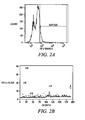
- Cells were then repeatedly (3 times) spun down at 1000 x g for 5 minutes and washed in PBS + 0.1% BSA, before being resuspended in 2 mL PBS + 0.1% BSA and filtered to achieve a disperse single cell suspension at ⁇ 1x10 6 cells/mL for sorting. Cell suspensions were then run on a FACSVantage (BD Biosciences, San Jose, CA) using the 488 nm laser line and collecting with an emission filter centered at 530 nm. Single cells from the top 10% of the stained population were isolated into 96-well microplates and were expanded for ⁇ 3 weeks.
- FACSVantage BD Biosciences, San Jose, CA
- Immunocytochemistry was performed in 96-well microplates (Corning) by washing cells with PBS and fixing in 4% paraformaldehyde in PBS for 10 min. Cells were permeabilized with 0.25% TritonX-100 in PBS for 3 min, washed three times with PBS and blocked with 1% BSA in PBS for 30 min. Cells were then stained with primary mouse anti-human CD8 monoclonal antibody (2 ⁇ g/mL) in PBS for 60 min at room temperature.
- Compound-displacement assays were performed by first dispensing 10 ⁇ L of assay buffer with or without test compounds to wells of a 384-well untreated polystyrene assay plate (Corning #3677), and then adding 10 ⁇ L of a mixture of membrane preparation and tracer at twice the final assay concentration. Reactions were incubated for 2 to 4 hours and then read on a Tecan InfiniTE F500 or Tecan Safire 2 microplate reader using polarized excitation and emission filters or monochromator settings that were appropriate to the tracer being evaluated.
- Optimal conditions for FP assays were determined by titrating a matrix of membrane protein against varying concentrations of fluorescent tracer in the presence and absence of 30 ⁇ M E-4031 (Tocris Bioscience, Ellisville, MO). These experimentally-determined concentrations of total membrane protein and fluorescent tracer were then used to perform competition assays against a dilution series of compounds known to block the hERG channel.
- final optimized tracer PredictorTM hERG Tracer Red
- final optimized assay conditions contained 1 nM tracer and 85 ⁇ g/mL membrane protein (B max of membrane preparation ⁇ 450 pmol/mg) in a 20 ⁇ L final assay volume.
- Assay wells were excited at 530 nm and emission was measured at 585 nm (20 nm bandwidth) using a Tecan Safire2 microplate reader. In experiments designed to measure the amount of non-hERG specific tracer that could be displaced, the assay also contained 30 ⁇ M E-4031.
- a series of candidate tracers were synthesized in order to generate compounds which varied in their affinity for the hERG K + channel. Compound variation was accomplished by combining a number of chemical scaffolds with various functional constituents, linkers and fluorophores (see, Singleton, D. H.; Boyd, H.; Steidl-Nichols, J. V.; Deacon, M.; Groot, M. J.; Price, D.; Nettleton, D. O.; Wallace, N. K.; Troutman, M. D.; Williams, C.; Boyd, J.
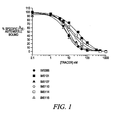
- Fig. 1 The highest-affinity tracers shown in Fig. 1 were examined for their performance in an FP assay using membrane preparations derived from the hERG-T-RExTM 293 cell line. Membrane preparations from this cell line had a specific activity (B max value) of approximately 7 pmol hERG protein/mg of total protein.
- B max value specific activity of approximately 7 pmol hERG protein/mg of total protein.
- Initial FP experiments failed to produce a measurable difference in polarization values in the presence or absence of known hERG channel blockers such as E-4031 or dofetilide with any of the candidate tracers, even when using total membrane concentrations as high as 6001 mg/mL in the assay.
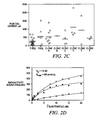
- a membrane preparation from the hERG-CD8 293 cell line was evaluated for use in an FP experiment by titrating a fixed amount of each tracer (1 nM) with increasing concentrations of membrane preparation.
- the assays were performed in the presence or absence of 10 ⁇ M dofetilide in order to discriminate non-specific from specific binding.
- IM-0107 only one provided an assay window of > 100 mP between specific- and non-specific binding at a concentration of membrane required to elicit ⁇ 70% bound tracer.
- This polarization signal was not an artifact due to scattered light from the membranes, as the specific signal from the tracer in the presence of membrane was > 40-fold that of membrane alone in both the parallel and perpendicular emission channels for all measurements when using the Safire 2 plate reader.
- Displacement with E-4031 produced data consistent with a one-site competition model, and an IC 50 value of 11 nM ( Fig. 4 ).
- Displacement by astemizole produced data that appeared to be consistent with a two-site binding model, with binding of the tracer to a second site being displaced only in the presence of high concentrations (> 1 ⁇ M) of astemizole.
- displacement data that provided a polarization value of less than that seen in a control well containing saturating E-4031 could be discarded, and the astemizole data then fit to a curve with the minimum mP value fixed to that seen in the control well contained saturating E-4031.
- the [3H]dofetilide binding assay is a predictive screening tool for hERG blockade and proarrhythmia: Comparison of intact cell and membrane preparations and effects of altering [K+]o. J Pharmacol Toxicol Methods 2004, 50, (3), 187-99 ; Deacon, M.; Singleton, D.; Szalkai, N.; Pasieczny, R.; Peacock, C.; Price, D.; Boyd, J.; Boyd, H.; Steidl-Nichols, J.
- the FP assay results using astemizole to displace the tracer suggest the presence of a second, lower-affinity binding site in membranes prepared from the high-expression hERG cell line described herein and in non-transfected 293 cells.
- a second, lower-affinity binding site for dofetilide see, Finlayson, K.; Turnbull, L.; January, C. T.; Sharkey, J.; Kelly, J. S., [3H]dofetilide binding to HERG transfected membranes: a potential high throughput preclinical screen. Eur J Pharmacol 2001, 430, (1), 147-8 ) or astemizole (see, Chiu, P. J.; Marcoe, K. F.; Bounds, S.
- the assay agrees with literature patch-clamp IC 50 values with no more than a 3-fold discrepancy across the patch-clamp data set, and when the FP results are compared across both patch-clamp and radioligand binding data, the FP data falls within the ranges reported by these techniques.
- the assay is fully homogenous, uses a red-shifted tracer to lessen problems of compound interference, and has a Z' value of > 0.8 over at least a 24-hour assay read window. Although we observed that some compounds produce a greater displacement of the FP signal than does the standard, E-4031, this signal is not hERG-dependent and can be easily identified and corrected for during IC 50 profiling. Together, these features make the assay well suited to routine and even automated compound profiling.
Landscapes
- Life Sciences & Earth Sciences (AREA)
- Health & Medical Sciences (AREA)
- Chemical & Material Sciences (AREA)
- Engineering & Computer Science (AREA)
- Molecular Biology (AREA)
- Biomedical Technology (AREA)
- Immunology (AREA)
- Urology & Nephrology (AREA)
- Hematology (AREA)
- Organic Chemistry (AREA)
- Cell Biology (AREA)
- General Health & Medical Sciences (AREA)
- Microbiology (AREA)
- Food Science & Technology (AREA)
- Medicinal Chemistry (AREA)
- Physics & Mathematics (AREA)
- Analytical Chemistry (AREA)
- Biotechnology (AREA)
- General Physics & Mathematics (AREA)
- Biochemistry (AREA)
- Pathology (AREA)
- Proteomics, Peptides & Aminoacids (AREA)
- Measuring Or Testing Involving Enzymes Or Micro-Organisms (AREA)
- Investigating Or Analysing Biological Materials (AREA)
- Micro-Organisms Or Cultivation Processes Thereof (AREA)
- Nitrogen Condensed Heterocyclic Rings (AREA)
Claims (15)
- Fluoreszenz-Tracerverbindung, die aus den Verbindungen 13, 20 und 21 ausgewählt ist:


oder ein pharmazeutisch verträgliches Salz davon. - Test zum Screenen von Testverbindungen, wobei der Test ein Bindungstest unter Verwendung der Fluoreszenz-Tracerverbindung nach Anspruch 1 oder eines pharmazeutisch verträglichen Salzes davon ist, die an eine Quelle des hERG K+-Kanals oder eines Fragments davon bindet.
- Test nach Anspruch 2, der folgende Schritte umfasst:a) Inkubation der Fluoreszenz-Tracerverbindung oder eines Salzes davon mit der Quelle des hERG K+-Kanals oder eines Fragments davon in einem Testpuffer in Gegenwart oder Abwesenheit verschiedener Mengen einer Testverbindung oder eines Gemischs von Testverbindungen; undb) Messen einer Wirkung der Testverbindung oder des Gemischs von Testverbindungen auf die Menge des Fluoreszenz-Tracers, der an den hERG K+-Kanal oder ein Fragment davon gebunden ist.
- Test nach Anspruch 3, wobei der Testpuffer 15 mM bis 50 mM HEPES, 5 mM bis 20 mM KCl, 0,5 mM bis 2 mM MgCl2 und 0,02% bis 0,1% PLURONIC F-127 umfasst.
- Test nach Anspruch 4, wobei der Testpuffer 25 mM HEPES, 15 mM KCl, 1 mM MgCl2 und 0,05% PLURONIC F-127 umfasst.
- Test nach Anspruch 5, wobei der Testpuffer einen pH von pH 7,2 bis pH 7,6 bei Raumtemperatur aufweist;
wobei der Testpuffer vorzugsweise den pH 7,4 aufweist; und
wobei optional der Testpuffer den pH 7,4 aufweist und wobei die Wirkung der Testverbindung oder des Gemischs der Testverbindungen mittels Fluoreszenzpolarisation gemessen wird. - Test nach Anspruch 3, wobei Schritt b) folgende Schritte umfasst:i) Bestimmen des spezifisch gebundenen Fluoreszenz-Tracers für jede Probe; undii) Berechnen der Inhibition der Fluoreszenz-Tracerbindung durch die Testverbindung oder das Gemisch von Testverbindungen.
- Test nach Anspruch 2, wobei die Quelle des hERG K+-Kanals oder eines Fragments davon aus der Gruppe ausgewählt ist, die aus Folgendem besteht:i) Membranpräparationen, die von Zellen gewonnen wurden, die auf ihrer Oberfläche den hERG K+-Kanal oder ein Fragment davon exprimieren;ii) Zellen, die auf ihrer Oberfläche den hERG K+-Kanal oder ein Fragment davon exprimieren; undiii) Membranpräparationen, die von Gewebe gewonnen wurden, das auf seiner Oberfläche den hERG K+-Kanal oder ein Fragment davon exprimiert.
- Test nach Anspruch 8, wobei die Quelle des hERG K+-Kanals oder eines Fragments davon Membranpräparationen sind, die von Zellen gewonnen wurden, die auf ihrer Oberfläche den hERG K+-Kanal oder eine Fragment davon exprimieren, wobei optional(a) die Zellen HEK 293-Zellen oder CHO-Zellen sind; oder(b) die Zellen mit einem Expressionsvektor transfiziert wurden, der aus der Gruppe ausgewählt ist, die aus Folgendem besteht:i) eine isolierte und gereinigte Nukleinsäure, die eine Nukleotidsequenz umfasst, die einen hERG K+-Kanal kodiert, der eine Aminosäuresequenz besitzt, die zu mindestens 80% homolog zu der von SEQ ID-Nr. 1 oder einem Fragment davon ist.ii) eine isolierte und gereinigte Nukleinsäure, die eine Nukleotidsequenz umfasst, die einen hERG K+-Kanal kodiert, der die Aminosäuresequenz der SEQ ID-Nr. 1 oder ein Fragment davon besitzt, wobei z.B. die Nukleinsäure weiter eine Nukleotidsequenz umfasst, die ein Internal Ribosomal Entry Site-Protein kodiert, sowie eine Nukleotidsequenz, die ein CD-8-Plasmamembranprotein kodiert, oder wobei die Nukleotidsequenzen, die das Internal Ribosomal Entry Site-Protein und das CD-8-Plasmamembranprotein kodieren, nacheinander downstream der Nukleotidsequenz liegen, die den hERG K+-Kanal kodiert, oder wobei die Nukleotidsequenzen, die das Internal Ribosomal Entry Site-Protein und das CD-8-Plasmamembranprotein kodieren nacheinander downstream der Nukleotidsequenz liegen, die den hERG K+-Kanal kodiert und die Expression des hERG K+-Kanals an die Expression des CD-8-Plasmaproteins durch die Nukleotidsequenz gekoppelt ist, die ein Internal Ribosomal Entry Site-Protein kodiert.
- Verfahren zum Charakterisieren der Aktivität einer Testverbindung als ein hERG K+-Kanal-Blocker, wobei das Verfahren folgende Schritte umfasst:a) Inkontaktbringen der Testverbindung mit einer Membranpräparation, die einen hERG K+-Kanal enthält, der die Aminosäuresequenz SEQ ID-Nr. 1 besitzt, wobei die Membranpräparation von Zellen gewonnen wurde, die mit einem Nukleinsäure-Expressionsvektor transfiziert wurden, der eine Nukleotidsequenz umfasst, die den hERG K+-Kanal kodiert, in einem Testpuffer in Gegenwart des Fluoreszenz-Tracerverbindung nach Anspruch 1 oder einem pharmazeutisch verträglichen Salz davon;b) Überwachen, ob die Testverbindung das Binden des Fluoreszenz-Tracers an die Membranpräparation, die den hERG K+-Kanal enthält beeinflusst; undc) Bestimmen der hERG K+-Kanal-Blockeraktivität der Testverbindung.
- Verfahren nach Anspruch 10, wobei die Zellen HEK 293-Zellen oder CHO-Zellen sind.
- Verfahren nach Anspruch 10, wobei der Nukleinsäure-Expressionsvektor weiter eine Nukleotidsequenz umfasst, die ein Internal Ribosomal Entry Site-Protein kodiert, und eine Nukleotidsequenz umfasst, die CD-8-Plasmamembranprotein kodiert.
wobei die Nukleotidsequenzen, die das Internal Ribosomal Entry Site-Protein und das CD-8-Plasmamembranprotein kodieren, vorzugsweise nacheinander downstream der Nukleotidsequenz liegen, die den hERG K+-Kanal kodiert;
optional wobei der Nukleinsäure-Expressionsvektor die Nukleotidsequenz von SEQ ID-Nr. 2 besitzt, oder wobei die Expression des hERG K+-Kanals an die Expression des CD-8-Plasmamembranproteins mittels der Nukleotidsequenz gekoppelt ist, die ein Internal Ribosomal Entry Site-Protein kodiert. - Kit zum Screenen von Testverbindungen, wobei der Kit Folgendes umfasst:a) die Fluoreszenz-Tracerverbindung nach Anspruch 1 oder ein pharmazeutisch verträgliches Salz davon;b) eine Quelle des hERG K+-Kanals oder eines Fragments davon; undc) einen Testpuffer.
- Kit nach Anspruch 13, wobei die Quelle des hERG K+-Kanals oder eines Fragments davon Membranpräparationen sind, die von Zellen gewonnen wurden, die auf ihrer Oberfläche den hERG K+-Kanal oder eine Fragment davon exprimieren, wobei der Kit optional eine Eigenschaft besitzt, die aus Folgendem ausgewählt ist:(a) Die Zellen sind HEK 293-Zellen oder CHO-Zellen.(b) Die Zellen sind mit einem Expressionsvektor transfiziert worden, der die Nukleotidsequenz von SEQ ID-Nr. 2 besitzt, wobei die Expression des hERG K+-Kanals optional an die Expression des CD-8-Plasmamembranproteins mittels einer Nukleotidsequenz gekoppelt ist, die ein Internal Ribosomal Entry Site-Protein kodiert.
- Verfahren nach Anspruch 10 oder Kit nach Anspruch 13, wobei der Testpuffer 25 mM HEPES, 15 mM KCl, 1 mM MgCl2 und 0,05% PLURONIC F-127 umfasst, wobei der Testpuffer optional einen pH von pH 7,2 und pH 7,6 bei Raumtemperatur aufweist und wobei der Testpuffer vorzugsweise den pH 7,4 aufweist.
Applications Claiming Priority (4)
| Application Number | Priority Date | Filing Date | Title |
|---|---|---|---|
| US3239008P | 2008-02-28 | 2008-02-28 | |
| US3260408P | 2008-02-29 | 2008-02-29 | |
| US3280908P | 2008-02-29 | 2008-02-29 | |
| PCT/US2009/035591 WO2009108905A2 (en) | 2008-02-28 | 2009-02-27 | Fluorescence polarization herg assay |
Publications (2)
| Publication Number | Publication Date |
|---|---|
| EP2255201A2 EP2255201A2 (de) | 2010-12-01 |
| EP2255201B1 true EP2255201B1 (de) | 2014-08-06 |
Family
ID=40756160
Family Applications (1)
| Application Number | Title | Priority Date | Filing Date |
|---|---|---|---|
| EP09716003.0A Active EP2255201B1 (de) | 2008-02-28 | 2009-02-27 | Fluoreszenzpolarisations-herg-testverfahren |
Country Status (5)
| Country | Link |
|---|---|
| US (2) | US8133695B2 (de) |
| EP (1) | EP2255201B1 (de) |
| JP (1) | JP2011517317A (de) |
| CN (1) | CN102016590A (de) |
| WO (1) | WO2009108905A2 (de) |
Families Citing this family (17)
| Publication number | Priority date | Publication date | Assignee | Title |
|---|---|---|---|---|
| WO2009108905A2 (en) | 2008-02-28 | 2009-09-03 | Life Technologies Corporation | Fluorescence polarization herg assay |
| US10412788B2 (en) | 2008-06-13 | 2019-09-10 | Lg Chem, Ltd. | Heating element and manufacturing method thereof |
| CN105412945B (zh) | 2010-04-02 | 2021-02-05 | 药物影像股份有限公司 | 罗丹明染料的单一同分异构结合物 |
| US9353122B2 (en) | 2013-02-15 | 2016-05-31 | Kala Pharmaceuticals, Inc. | Therapeutic compounds and uses thereof |
| US9688688B2 (en) | 2013-02-20 | 2017-06-27 | Kala Pharmaceuticals, Inc. | Crystalline forms of 4-((4-((4-fluoro-2-methyl-1H-indol-5-yl)oxy)-6-methoxyquinazolin-7-yl)oxy)-1-(2-oxa-7-azaspiro[3.5]nonan-7-yl)butan-1-one and uses thereof |
| US9353123B2 (en) | 2013-02-20 | 2016-05-31 | Kala Pharmaceuticals, Inc. | Therapeutic compounds and uses thereof |
| KR20160099084A (ko) | 2013-11-01 | 2016-08-19 | 칼라 파마슈티컬스, 인크. | 치료 화합물의 결정질 형태 및 그의 용도 |
| US9890173B2 (en) | 2013-11-01 | 2018-02-13 | Kala Pharmaceuticals, Inc. | Crystalline forms of therapeutic compounds and uses thereof |
| CA2968884A1 (en) | 2014-12-10 | 2016-06-16 | Massachusetts Institute Of Technology | Fused 1,3-azole derivatives useful for the treatment of proliferative diseases |
| JP6643764B2 (ja) * | 2016-02-05 | 2020-02-12 | 国立大学法人岐阜大学 | 抗がん剤 |
| RU2018132559A (ru) | 2016-02-16 | 2020-03-17 | Массачусетс Инститьют Оф Текнолоджи | Связывающие молекулы для max в качестве модуляторов myc и их применения |
| WO2018048750A1 (en) | 2016-09-08 | 2018-03-15 | Kala Pharmaceuticals, Inc. | Crystalline forms of therapeutic compounds and uses thereof |
| US10253036B2 (en) | 2016-09-08 | 2019-04-09 | Kala Pharmaceuticals, Inc. | Crystalline forms of therapeutic compounds and uses thereof |
| EP3509421A4 (de) | 2016-09-08 | 2020-05-20 | Kala Pharmaceuticals, Inc. | Kristalline formen therapeutischer verbindungen und verwendungen davon |
| CA3036726A1 (en) * | 2016-09-15 | 2018-03-22 | The Governors Of The University Of Alberta | Recombinant cardiomyocytes and cardiomyocyte cell lines expressing herg |
| CN114106002B (zh) * | 2020-08-31 | 2023-10-13 | 湖南超亟检测技术有限责任公司 | 一种荧光检测试剂及定量检测体内外co的技术 |
| US12359068B2 (en) | 2023-02-10 | 2025-07-15 | Singular Genomics Systems, Inc. | Rhodamine fluorescent compounds and production methods thereof |
Family Cites Families (6)
| Publication number | Priority date | Publication date | Assignee | Title |
|---|---|---|---|---|
| IL96507A0 (en) * | 1989-12-08 | 1991-08-16 | Merck & Co Inc | Nitrogen-containing spirocycles and pharmaceutical compositions containing them |
| US5206240A (en) * | 1989-12-08 | 1993-04-27 | Merck & Co., Inc. | Nitrogen-containing spirocycles |
| WO2001027323A1 (en) * | 1999-10-08 | 2001-04-19 | Vanderbilt University | Method of screening for susceptibility to drug-induced cardiac arrhythmia |
| ATE387222T1 (de) * | 2000-07-14 | 2008-03-15 | Merck & Co Inc | Radioliganden- und bindungs-assay |
| US20040115814A1 (en) * | 2002-09-30 | 2004-06-17 | Protein Design Labs, Inc. | Efficient generation of stable expression cell lines through the use of scorable homeostatic reporter genes |
| WO2009108905A2 (en) | 2008-02-28 | 2009-09-03 | Life Technologies Corporation | Fluorescence polarization herg assay |
-
2009
- 2009-02-27 WO PCT/US2009/035591 patent/WO2009108905A2/en not_active Ceased
- 2009-02-27 US US12/394,605 patent/US8133695B2/en active Active
- 2009-02-27 JP JP2010548928A patent/JP2011517317A/ja active Pending
- 2009-02-27 EP EP09716003.0A patent/EP2255201B1/de active Active
- 2009-02-27 CN CN2009801142115A patent/CN102016590A/zh active Pending
-
2012
- 2012-03-09 US US13/417,008 patent/US20120231541A1/en not_active Abandoned
Also Published As
| Publication number | Publication date |
|---|---|
| US20120231541A1 (en) | 2012-09-13 |
| WO2009108905A2 (en) | 2009-09-03 |
| US20090253148A1 (en) | 2009-10-08 |
| EP2255201A2 (de) | 2010-12-01 |
| CN102016590A (zh) | 2011-04-13 |
| US8133695B2 (en) | 2012-03-13 |
| WO2009108905A3 (en) | 2009-10-29 |
| JP2011517317A (ja) | 2011-06-02 |
Similar Documents
| Publication | Publication Date | Title |
|---|---|---|
| US8133695B2 (en) | Fluorescence polarization hERG assay | |
| JP4408451B2 (ja) | フッ素化キサンテン誘導体 | |
| AU751168B2 (en) | Xanthene dyes and their application as luminescence quenching compounds | |
| EP2721038B1 (de) | Alkylamino-körperfarbstoffe als selektive fluoreszenzsonden für proteine und embryonale stammzellen der maus | |
| JP2018533939A (ja) | Rasの阻害剤をスクリーニングするための方法 | |
| Piper et al. | Development of the predictor HERG fluorescence polarization assay using a membrane protein enrichment approach | |
| WO2008091681A2 (en) | Theramutein modulators | |
| US8026110B2 (en) | Combinatorial rosamine library and uses thereof | |
| FI90537C (fi) | Kemiluminesoivia arkidiinijohdannaisia, niiden valmistus ja niiden käyttö luminesenssi-immuunimäärityksissä | |
| ES2906117T3 (es) | Conjugados de androstenodiona quimioluminiscente | |
| EP1928847A2 (de) | Theramuteinmodulatoren | |
| JP6104877B2 (ja) | タンパク質モジュレーターを同定、合成、最適化および解析する化合物群および方法群 | |
| CN116675688A (zh) | 检测烟碱型乙酰胆碱受体的荧光探针及制备方法 | |
| Lee et al. | Synthesis and photophysical properties of a fluorescent cyanoquinoline probe for profiling ERBB2 kinase inhibitor response | |
| US20120040368A1 (en) | Mutated voltage-gated sodium channel nav alpha subunit for identification of modulators | |
| Elgiushy et al. | Synthesis, in vitro biological investigation, and molecular dynamics simulations of thiazolopyrimidine based compounds as corticotrophin releasing factor receptor-1 antagonists | |
| CN119954832B (zh) | 一种kras小分子荧光探针及其制备方法和应用 | |
| US20080153123A1 (en) | METHOD FOR DETECTION OF cAMP AND cGMP | |
| Yin et al. | A fluorogenic probe for TRPA1 channel imaging based on a molecular rotation mechanism | |
| Wu et al. | A potent and selective small molecule Kir2. 1 inhibitor | |
| Ishida et al. | Design, synthesis, and biological evaluation of novel somatostatin receptor subtype-2 agonists: Optimization for potency and risk mitigation of hERG and phospholipidosis | |
| EP4308547B1 (de) | Hoch wasserlöslicher und stabiler chemosensor für cystein | |
| US7745413B2 (en) | Collection of traceable compounds and uses thereof | |
| EP1042322A1 (de) | Kv2.1 antagonisten | |
| US20110300116A1 (en) | Method for Generating a Recombinant Clonal Cell Line and Novel Reagents for Use in the Method |
Legal Events
| Date | Code | Title | Description |
|---|---|---|---|
| PUAI | Public reference made under article 153(3) epc to a published international application that has entered the european phase |
Free format text: ORIGINAL CODE: 0009012 |
|
| 17P | Request for examination filed |
Effective date: 20100921 |
|
| AK | Designated contracting states |
Kind code of ref document: A2 Designated state(s): AT BE BG CH CY CZ DE DK EE ES FI FR GB GR HR HU IE IS IT LI LT LU LV MC MK MT NL NO PL PT RO SE SI SK TR |
|
| AX | Request for extension of the european patent |
Extension state: AL BA RS |
|
| RIN1 | Information on inventor provided before grant (corrected) |
Inventor name: DUFF, STEVE Inventor name: ZHONG, ZHONG Inventor name: PIPER, DAVID Inventor name: HESS, STEPHEN Inventor name: LIVELLI, THOMAS Inventor name: VOGEL, KURT Inventor name: SHEKHANI, MOHAMMED SALEH |
|
| DAX | Request for extension of the european patent (deleted) | ||
| 17Q | First examination report despatched |
Effective date: 20130502 |
|
| GRAP | Despatch of communication of intention to grant a patent |
Free format text: ORIGINAL CODE: EPIDOSNIGR1 |
|
| INTG | Intention to grant announced |
Effective date: 20140415 |
|
| GRAS | Grant fee paid |
Free format text: ORIGINAL CODE: EPIDOSNIGR3 |
|
| GRAP | Despatch of communication of intention to grant a patent |
Free format text: ORIGINAL CODE: EPIDOSNIGR1 |
|
| GRAA | (expected) grant |
Free format text: ORIGINAL CODE: 0009210 |
|
| INTG | Intention to grant announced |
Effective date: 20140618 |
|
| AK | Designated contracting states |
Kind code of ref document: B1 Designated state(s): AT BE BG CH CY CZ DE DK EE ES FI FR GB GR HR HU IE IS IT LI LT LU LV MC MK MT NL NO PL PT RO SE SI SK TR |
|
| REG | Reference to a national code |
Ref country code: GB Ref legal event code: FG4D |
|
| REG | Reference to a national code |
Ref country code: AT Ref legal event code: REF Ref document number: 681269 Country of ref document: AT Kind code of ref document: T Effective date: 20140815 Ref country code: CH Ref legal event code: EP |
|
| REG | Reference to a national code |
Ref country code: IE Ref legal event code: FG4D |
|
| REG | Reference to a national code |
Ref country code: DE Ref legal event code: R096 Ref document number: 602009025791 Country of ref document: DE Effective date: 20140918 |
|
| REG | Reference to a national code |
Ref country code: AT Ref legal event code: MK05 Ref document number: 681269 Country of ref document: AT Kind code of ref document: T Effective date: 20140806 |
|
| REG | Reference to a national code |
Ref country code: NL Ref legal event code: VDEP Effective date: 20140806 |
|
| REG | Reference to a national code |
Ref country code: LT Ref legal event code: MG4D |
|
| PG25 | Lapsed in a contracting state [announced via postgrant information from national office to epo] |
Ref country code: FI Free format text: LAPSE BECAUSE OF FAILURE TO SUBMIT A TRANSLATION OF THE DESCRIPTION OR TO PAY THE FEE WITHIN THE PRESCRIBED TIME-LIMIT Effective date: 20140806 Ref country code: BG Free format text: LAPSE BECAUSE OF FAILURE TO SUBMIT A TRANSLATION OF THE DESCRIPTION OR TO PAY THE FEE WITHIN THE PRESCRIBED TIME-LIMIT Effective date: 20141106 Ref country code: GR Free format text: LAPSE BECAUSE OF FAILURE TO SUBMIT A TRANSLATION OF THE DESCRIPTION OR TO PAY THE FEE WITHIN THE PRESCRIBED TIME-LIMIT Effective date: 20141107 Ref country code: SE Free format text: LAPSE BECAUSE OF FAILURE TO SUBMIT A TRANSLATION OF THE DESCRIPTION OR TO PAY THE FEE WITHIN THE PRESCRIBED TIME-LIMIT Effective date: 20140806 Ref country code: PT Free format text: LAPSE BECAUSE OF FAILURE TO SUBMIT A TRANSLATION OF THE DESCRIPTION OR TO PAY THE FEE WITHIN THE PRESCRIBED TIME-LIMIT Effective date: 20141209 Ref country code: NO Free format text: LAPSE BECAUSE OF FAILURE TO SUBMIT A TRANSLATION OF THE DESCRIPTION OR TO PAY THE FEE WITHIN THE PRESCRIBED TIME-LIMIT Effective date: 20141106 Ref country code: LT Free format text: LAPSE BECAUSE OF FAILURE TO SUBMIT A TRANSLATION OF THE DESCRIPTION OR TO PAY THE FEE WITHIN THE PRESCRIBED TIME-LIMIT Effective date: 20140806 Ref country code: ES Free format text: LAPSE BECAUSE OF FAILURE TO SUBMIT A TRANSLATION OF THE DESCRIPTION OR TO PAY THE FEE WITHIN THE PRESCRIBED TIME-LIMIT Effective date: 20140806 |
|
| PG25 | Lapsed in a contracting state [announced via postgrant information from national office to epo] |
Ref country code: AT Free format text: LAPSE BECAUSE OF FAILURE TO SUBMIT A TRANSLATION OF THE DESCRIPTION OR TO PAY THE FEE WITHIN THE PRESCRIBED TIME-LIMIT Effective date: 20140806 Ref country code: HR Free format text: LAPSE BECAUSE OF FAILURE TO SUBMIT A TRANSLATION OF THE DESCRIPTION OR TO PAY THE FEE WITHIN THE PRESCRIBED TIME-LIMIT Effective date: 20140806 Ref country code: NL Free format text: LAPSE BECAUSE OF FAILURE TO SUBMIT A TRANSLATION OF THE DESCRIPTION OR TO PAY THE FEE WITHIN THE PRESCRIBED TIME-LIMIT Effective date: 20140806 Ref country code: PL Free format text: LAPSE BECAUSE OF FAILURE TO SUBMIT A TRANSLATION OF THE DESCRIPTION OR TO PAY THE FEE WITHIN THE PRESCRIBED TIME-LIMIT Effective date: 20140806 Ref country code: LV Free format text: LAPSE BECAUSE OF FAILURE TO SUBMIT A TRANSLATION OF THE DESCRIPTION OR TO PAY THE FEE WITHIN THE PRESCRIBED TIME-LIMIT Effective date: 20140806 Ref country code: IS Free format text: LAPSE BECAUSE OF FAILURE TO SUBMIT A TRANSLATION OF THE DESCRIPTION OR TO PAY THE FEE WITHIN THE PRESCRIBED TIME-LIMIT Effective date: 20141206 Ref country code: CY Free format text: LAPSE BECAUSE OF FAILURE TO SUBMIT A TRANSLATION OF THE DESCRIPTION OR TO PAY THE FEE WITHIN THE PRESCRIBED TIME-LIMIT Effective date: 20140806 |
|
| PG25 | Lapsed in a contracting state [announced via postgrant information from national office to epo] |
Ref country code: SK Free format text: LAPSE BECAUSE OF FAILURE TO SUBMIT A TRANSLATION OF THE DESCRIPTION OR TO PAY THE FEE WITHIN THE PRESCRIBED TIME-LIMIT Effective date: 20140806 Ref country code: DK Free format text: LAPSE BECAUSE OF FAILURE TO SUBMIT A TRANSLATION OF THE DESCRIPTION OR TO PAY THE FEE WITHIN THE PRESCRIBED TIME-LIMIT Effective date: 20140806 Ref country code: RO Free format text: LAPSE BECAUSE OF FAILURE TO SUBMIT A TRANSLATION OF THE DESCRIPTION OR TO PAY THE FEE WITHIN THE PRESCRIBED TIME-LIMIT Effective date: 20140806 Ref country code: IT Free format text: LAPSE BECAUSE OF FAILURE TO SUBMIT A TRANSLATION OF THE DESCRIPTION OR TO PAY THE FEE WITHIN THE PRESCRIBED TIME-LIMIT Effective date: 20140806 Ref country code: EE Free format text: LAPSE BECAUSE OF FAILURE TO SUBMIT A TRANSLATION OF THE DESCRIPTION OR TO PAY THE FEE WITHIN THE PRESCRIBED TIME-LIMIT Effective date: 20140806 Ref country code: CZ Free format text: LAPSE BECAUSE OF FAILURE TO SUBMIT A TRANSLATION OF THE DESCRIPTION OR TO PAY THE FEE WITHIN THE PRESCRIBED TIME-LIMIT Effective date: 20140806 |
|
| REG | Reference to a national code |
Ref country code: DE Ref legal event code: R097 Ref document number: 602009025791 Country of ref document: DE |
|
| PLBE | No opposition filed within time limit |
Free format text: ORIGINAL CODE: 0009261 |
|
| STAA | Information on the status of an ep patent application or granted ep patent |
Free format text: STATUS: NO OPPOSITION FILED WITHIN TIME LIMIT |
|
| PG25 | Lapsed in a contracting state [announced via postgrant information from national office to epo] |
Ref country code: BE Free format text: LAPSE BECAUSE OF NON-PAYMENT OF DUE FEES Effective date: 20150228 |
|
| 26N | No opposition filed |
Effective date: 20150507 |
|
| PG25 | Lapsed in a contracting state [announced via postgrant information from national office to epo] |
Ref country code: LU Free format text: LAPSE BECAUSE OF FAILURE TO SUBMIT A TRANSLATION OF THE DESCRIPTION OR TO PAY THE FEE WITHIN THE PRESCRIBED TIME-LIMIT Effective date: 20150227 |
|
| REG | Reference to a national code |
Ref country code: CH Ref legal event code: PL |
|
| PG25 | Lapsed in a contracting state [announced via postgrant information from national office to epo] |
Ref country code: MC Free format text: LAPSE BECAUSE OF FAILURE TO SUBMIT A TRANSLATION OF THE DESCRIPTION OR TO PAY THE FEE WITHIN THE PRESCRIBED TIME-LIMIT Effective date: 20140806 Ref country code: CH Free format text: LAPSE BECAUSE OF NON-PAYMENT OF DUE FEES Effective date: 20150228 Ref country code: LI Free format text: LAPSE BECAUSE OF NON-PAYMENT OF DUE FEES Effective date: 20150228 |
|
| REG | Reference to a national code |
Ref country code: IE Ref legal event code: MM4A |
|
| PG25 | Lapsed in a contracting state [announced via postgrant information from national office to epo] |
Ref country code: SI Free format text: LAPSE BECAUSE OF FAILURE TO SUBMIT A TRANSLATION OF THE DESCRIPTION OR TO PAY THE FEE WITHIN THE PRESCRIBED TIME-LIMIT Effective date: 20140806 |
|
| REG | Reference to a national code |
Ref country code: FR Ref legal event code: PLFP Year of fee payment: 8 |
|
| PG25 | Lapsed in a contracting state [announced via postgrant information from national office to epo] |
Ref country code: IE Free format text: LAPSE BECAUSE OF NON-PAYMENT OF DUE FEES Effective date: 20150227 |
|
| PG25 | Lapsed in a contracting state [announced via postgrant information from national office to epo] |
Ref country code: BE Free format text: LAPSE BECAUSE OF FAILURE TO SUBMIT A TRANSLATION OF THE DESCRIPTION OR TO PAY THE FEE WITHIN THE PRESCRIBED TIME-LIMIT Effective date: 20140806 |
|
| PG25 | Lapsed in a contracting state [announced via postgrant information from national office to epo] |
Ref country code: MT Free format text: LAPSE BECAUSE OF FAILURE TO SUBMIT A TRANSLATION OF THE DESCRIPTION OR TO PAY THE FEE WITHIN THE PRESCRIBED TIME-LIMIT Effective date: 20140806 |
|
| REG | Reference to a national code |
Ref country code: FR Ref legal event code: PLFP Year of fee payment: 9 |
|
| PG25 | Lapsed in a contracting state [announced via postgrant information from national office to epo] |
Ref country code: HU Free format text: LAPSE BECAUSE OF FAILURE TO SUBMIT A TRANSLATION OF THE DESCRIPTION OR TO PAY THE FEE WITHIN THE PRESCRIBED TIME-LIMIT; INVALID AB INITIO Effective date: 20090227 |
|
| PG25 | Lapsed in a contracting state [announced via postgrant information from national office to epo] |
Ref country code: TR Free format text: LAPSE BECAUSE OF FAILURE TO SUBMIT A TRANSLATION OF THE DESCRIPTION OR TO PAY THE FEE WITHIN THE PRESCRIBED TIME-LIMIT Effective date: 20140806 |
|
| REG | Reference to a national code |
Ref country code: FR Ref legal event code: PLFP Year of fee payment: 10 |
|
| PG25 | Lapsed in a contracting state [announced via postgrant information from national office to epo] |
Ref country code: MK Free format text: LAPSE BECAUSE OF FAILURE TO SUBMIT A TRANSLATION OF THE DESCRIPTION OR TO PAY THE FEE WITHIN THE PRESCRIBED TIME-LIMIT Effective date: 20140806 |
|
| PGFP | Annual fee paid to national office [announced via postgrant information from national office to epo] |
Ref country code: DE Payment date: 20240205 Year of fee payment: 16 |
|
| REG | Reference to a national code |
Ref country code: DE Ref legal event code: R119 Ref document number: 602009025791 Country of ref document: DE |
|
| PG25 | Lapsed in a contracting state [announced via postgrant information from national office to epo] |
Ref country code: DE Free format text: LAPSE BECAUSE OF NON-PAYMENT OF DUE FEES Effective date: 20250902 |
|
| PGFP | Annual fee paid to national office [announced via postgrant information from national office to epo] |
Ref country code: GB Payment date: 20260209 Year of fee payment: 18 |
|
| PGFP | Annual fee paid to national office [announced via postgrant information from national office to epo] |
Ref country code: FR Payment date: 20260209 Year of fee payment: 18 |