EP2249162A1 - Method for grass species identification - Google Patents
Method for grass species identification Download PDFInfo
- Publication number
- EP2249162A1 EP2249162A1 EP09305385A EP09305385A EP2249162A1 EP 2249162 A1 EP2249162 A1 EP 2249162A1 EP 09305385 A EP09305385 A EP 09305385A EP 09305385 A EP09305385 A EP 09305385A EP 2249162 A1 EP2249162 A1 EP 2249162A1
- Authority
- EP
- European Patent Office
- Prior art keywords
- seq
- peptide
- grass
- composition
- group
- Prior art date
- Legal status (The legal status is an assumption and is not a legal conclusion. Google has not performed a legal analysis and makes no representation as to the accuracy of the status listed.)
- Withdrawn
Links
Images



Classifications
-
- G—PHYSICS
- G01—MEASURING; TESTING
- G01N—INVESTIGATING OR ANALYSING MATERIALS BY DETERMINING THEIR CHEMICAL OR PHYSICAL PROPERTIES
- G01N33/00—Investigating or analysing materials by specific methods not covered by groups G01N1/00 - G01N31/00
- G01N33/48—Biological material, e.g. blood, urine; Haemocytometers
- G01N33/50—Chemical analysis of biological material, e.g. blood, urine; Testing involving biospecific ligand binding methods; Immunological testing
- G01N33/68—Chemical analysis of biological material, e.g. blood, urine; Testing involving biospecific ligand binding methods; Immunological testing involving proteins, peptides or amino acids
- G01N33/6803—General methods of protein analysis not limited to specific proteins or families of proteins
- G01N33/6848—Methods of protein analysis involving mass spectrometry
-
- A—HUMAN NECESSITIES
- A61—MEDICAL OR VETERINARY SCIENCE; HYGIENE
- A61P—SPECIFIC THERAPEUTIC ACTIVITY OF CHEMICAL COMPOUNDS OR MEDICINAL PREPARATIONS
- A61P11/00—Drugs for disorders of the respiratory system
- A61P11/02—Nasal agents, e.g. decongestants
-
- A—HUMAN NECESSITIES
- A61—MEDICAL OR VETERINARY SCIENCE; HYGIENE
- A61P—SPECIFIC THERAPEUTIC ACTIVITY OF CHEMICAL COMPOUNDS OR MEDICINAL PREPARATIONS
- A61P11/00—Drugs for disorders of the respiratory system
- A61P11/06—Antiasthmatics
-
- A—HUMAN NECESSITIES
- A61—MEDICAL OR VETERINARY SCIENCE; HYGIENE
- A61P—SPECIFIC THERAPEUTIC ACTIVITY OF CHEMICAL COMPOUNDS OR MEDICINAL PREPARATIONS
- A61P17/00—Drugs for dermatological disorders
-
- A—HUMAN NECESSITIES
- A61—MEDICAL OR VETERINARY SCIENCE; HYGIENE
- A61P—SPECIFIC THERAPEUTIC ACTIVITY OF CHEMICAL COMPOUNDS OR MEDICINAL PREPARATIONS
- A61P27/00—Drugs for disorders of the senses
- A61P27/02—Ophthalmic agents
-
- A—HUMAN NECESSITIES
- A61—MEDICAL OR VETERINARY SCIENCE; HYGIENE
- A61P—SPECIFIC THERAPEUTIC ACTIVITY OF CHEMICAL COMPOUNDS OR MEDICINAL PREPARATIONS
- A61P37/00—Drugs for immunological or allergic disorders
- A61P37/08—Antiallergic agents
-
- G—PHYSICS
- G01—MEASURING; TESTING
- G01N—INVESTIGATING OR ANALYSING MATERIALS BY DETERMINING THEIR CHEMICAL OR PHYSICAL PROPERTIES
- G01N2333/00—Assays involving biological materials from specific organisms or of a specific nature
- G01N2333/415—Assays involving biological materials from specific organisms or of a specific nature from plants
Definitions
- the present invention relates to a method for determining if an extract from a grass species is present in a composition
- Type I allergic diseases such as seasonal allergic rhinitis (hayfever), conjunctivitis, allergic asthma and allergic dermatitis represent a major health problem in industrialised countries ( Wuthrich et al. (1989) Int Arch Allergy Appl Immunol 90:3-10 ). It is currently estimated that 15-20% of the population in developed countries are afflicted with some form of allergy.
- grass pollen The major outdoor cause of seasonal hay-fever and allergic asthma is airborne grass pollen ( Smart et al. (1982) Clin Allergy 12(1):83-9 ).
- the most important sources of grass pollen are common agricultural pasture grasses which have been widely introduced throughout the world. For example, in cool temperate regions, grasses such as Rye-grass, Kentucky bluegrass and Timothy (all belonging to the subfamily Pooideae ) are of clinical significance.
- Antigen-specific tolerance may be defined as the absence or a reduction in intensity, of one or several immune responses, particularly the responses which are responsible for the detrimental action on the organism, to a specific antigen, in the setting of an otherwise normal immune system.
- therapeutic interventions can involve injection or mucosal administration (e.g. oral administration) of the allergen or of mixture of allergens assumed to be responsible for the allergic disorders.
- mucosal administration e.g. oral administration
- the sublingual route for instance, has been explored for antigen administration in a variety of conditions (see e.g. Bahceciler et al. (2005) Int. Arch. Allergy Immunol. 136:287-294 ).
- sublingual grass tablets can be manufactured using one or several extracts made from pollens obtained from grass species. Examples of such tablets are presently sold under the name Grazax® ( Phleum pratense pollen extract) by the ALK Abello Company and Oralair® (mixture of pollen extracts from five grass species) by Staller relies.
- the present invention arises from the unexpected finding, by the inventors, that peptides derived from pollen allergens could be used in the identification of specific grass extracts present in compositions.
- the present invention relates to the use of at least one peptide comprising or consisting of a sequence selected from the group consisting of SEQ ID NO: 1, SEQ ID NO: 2, SEQ ID NO: 3, SEQ ID NO: 4 and SEQ ID NO: 5, for determining the presence of extracts from at least one grass species in a composition.
- the present invention also relates to a method for determining the presence of extracts from a grass species in a composition, comprising:
- the present invention also relates to peptide comprising a sequence selected from the group consisting of SEQ ID NO: 1, SEQ ID NO: 2, SEQ ID NO: 3, SEQ ID NO: 4 or SEQ ID NO: 5.
- the present invention also relates to a kit for detecting the presence of extracts from a grass species in a composition comprising at least two of the peptides according to the invention.
- the kit according to the invention comprises:
- peptide denotes a molecule comprising a linear array of D- or L- amino acid residues connected to each other in the linear array by peptide bond.
- amino acid notably to include the 20 naturally occurring amino acids (i.e.
- alanine arginine, asparagine, aspartic acid, cysteine, glutamic acid, glutamine, glycine, histidine, isoleucine, leucine, lysine, methionine, phenylalanine, proline, serine, threonine, tryptophan, tyrosine, and valine
- amino acids harbouring the post-translational modifications which can be found in vivo such as hydroxyproline, phosphoserine and phosphothreonine; and other unusual amino acids including, but not limited to, 2-aminoadipic acid, hydroxylysine, isodesmosine, nor-valine, nor-leucine and ornithine.
- the peptide of the invention comprises a sequence selected from SEQ ID NO: 1, SEQ ID NO: 2, SEQ ID NO: 3, SEQ ID NO: 4 or SEQ ID NO: 5, it is less than 100 amino acids long, more preferably less than 70 amino acids long and most preferably it contains no more than 50 amino acids.
- the peptides of the invention consist in a sequence selected from the group consisting of SEQ ID NO: 1, SEQ ID NO: 2, SEQ ID NO: 3, SEQ ID NO: 4 and SEQ ID NO: 5.
- SEQ ID NO: 1, SEQ ID NO: 2, SEQ ID NO: 3, SEQ ID NO: 4 and SEQ ID NO: 5 are respectively fragments of the group 1 allergens Lol p 1 (Perennial rye), Phl p1 (Timothy), Dac g 1 (Orchard), Ant o 1 (Sweet vernal) and Poa p 1 (Kentucky bluegrass).
- grass is used to design all monocotyledonous green plants.
- the term "grass species” as used herein refers to species of the Poaceae family (or Gramineae family). More preferably, the term “grass species” refers to species selected in the group consisting of Perennial rye ( Lolium perenne ), Timothy ( Pleum pratense ), Orchard ( Dactylis glomerata ), Sweet vernal ( Anthoxanthum odoratum ), and Kentucky bluegrass ( Poa pratensis ).
- composition refers to any mixture likely to contain at least an extract of one grass species, in particular of a grass species selected from the group consisting of Perennial rye, Timothy, Orchard, Sweet vernal, or Kentucky bluegrass.
- extract refers to a substance made by extracting a part of a raw material.
- the extract is a pollen extract more particularly a grass pollen extract.
- the extract is preferably such that it contains allergen proteins, such as Lol p 1, Phl p1, Dac g 1, Ant o 1 and Poa p 1.
- the extract can be obtained after aqueous extraction of grass pollen with an ammonium bicarbonate solution, in particular at a concentration of 4g/l.
- the composition of the invention is a pharmaceutical composition.
- pharmaceutical composition refers to a composition which is intended to be used for the treatment of a disease.
- the pharmaceutical composition is intended to be used in the treatment of allergy, in particular in the treatment of grass allergy.
- the pharmaceutical composition can be formulated for any administration route, such as the topical, oral, parenteral, intranasal, intravenous, intramuscular, subcutaneous, intraocular or sublingual route. However it is preferred that, the pharmaceutical composition is intended to be administered sublingually.
- the peptide of the invention can be detected by any suitable method known in the art.
- detection of the peptide is carried out by a combination of liquid chromatography and mass spectrometry.
- liquid chromatography refers to a technique for the separation of mixture. It usually involves passing a mixture dissolved in a liquid mobile phase through a stationary phase, which separates the analyte to be measured from other molecules in the mixtures and allows it to be isolated.
- HPLC the sample is forced through a column that is packed with irregularly or spherically shaped particles or a porous monolithic layer (stationary phase) by a liquid (mobile phase) at high pressure.
- Mass spectrometry is well known to one of skill in the art. Mass spectrometry techniques within the scope of the invention notably encompass MALDI-TOF (matrix assisted laser desorption/ionization-time of flight), or LC-ESI-MS/MS (Liquid chromatography-Electrospray lonisation-Mass Spectrometry/Mass spectrometry).
- MALDI-TOF matrix assisted laser desorption/ionization-time of flight
- LC-ESI-MS/MS Liquid chromatography-Electrospray lonisation-Mass Spectrometry/Mass spectrometry
- a combination of liquid chromatography and mass spectrometry is an analytical chemistry technique that combines the physical separation capabilities of liquid chromatography with the mass analysis capabilities of one or several mass spectrometers, preferably after electrospray ionization (ESI), such as tandem mass spectrometry (MS/MS).
- ESI electrospray ionization
- MS/MS tandem mass spectrometry
- proteolytic treatment refers to the directed degradation (digestion) of peptide by enzymes called proteases or intramolecular digestion.
- proteases included for example, trypsin, chymotrypsin, elastase, endoproteinase Glu-C, endoproteinase Asp-N, endoproteinase Lys-C, and endoproteinase Pro-C. More preferably, the protease is trypsin. Trypsin is a serine protease wich predominantly cleaves peptide chains at the carboxyl side of the amino acids lysine and arginine, except when either is followed by proline.
- the peptides contain in the kit of the invention are intended to be used as control when a method for determining the presence of extracts from a grass species in a composition is performed.
- Pollens from Kentucky bluegrass, Orchard, Perennial rye, Sweet vernal and Timothy are individually extracted for 24 hours with an 4 g/L ammonium bicarbonate solution under stirring. The extract is further filtrated, concentrated and lyophilized.
- extract form mixes containing only 4 of the above grass pollens are also prepared.
- LC-ESI-MS/MS For LC-ESI-MS/MS, 20 ⁇ L of an allergen solution (20 ⁇ g/mL) are injected on a column for liquid chromatography, such as hydrophobic chromatography, RP-HPLC (Reversed Phase High Pressure Liquid Chromatography), ion-exchange chromatography, size exclusion chromatography and affinity chromatography connected to a Dionex U3000 HPLC.
- a Q-TOF 1 (Waters) mass spectrometer is connected to the HPLC for accurate mass measurement. This instrument is operated in a positive ionisation mode. The calibration of the instrument is performed using apomyoglobin.
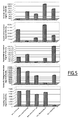
- the 4505.0 Da peptide (Dac g 1 specific peptide) was not detected in an extract made from a 4-grass mix lacking orchard, but was detected in all 4 grass mixes containing orchard ( FIG. 5 ). Individual markers specific for other species were not detected in 4-grass mixes lacking the corresponding grass species ( FIG. 5 ).
- this study provides a test to identify or to confirm the presence of a grass species within a mixture containing an extract of grass species.
- This study also provides a sensitive identity test to document the presence of each individual grass species within drug substances manufactured from 5-grass pollen extracts.
- Group 1 allergen-derived peptides were first identified with specific masses and amino acid sequence characteristics, which could be used as molecular signatures for each individual grass species. Using a LC-MS/MS methodology, a high level of detection specificity was reached when combining (i) MS/MS signals, (ii) high resolution mass measurements, and (iii) chromatographic retention times. Thus, it was shown that such group 1-derived peptides are truly specific for individual grass species as confirmed in three different batches for each individual pollen.
Landscapes
- Health & Medical Sciences (AREA)
- Life Sciences & Earth Sciences (AREA)
- Engineering & Computer Science (AREA)
- Bioinformatics & Cheminformatics (AREA)
- Chemical & Material Sciences (AREA)
- Molecular Biology (AREA)
- General Health & Medical Sciences (AREA)
- Medicinal Chemistry (AREA)
- Physics & Mathematics (AREA)
- Organic Chemistry (AREA)
- Veterinary Medicine (AREA)
- Pharmacology & Pharmacy (AREA)
- General Chemical & Material Sciences (AREA)
- Animal Behavior & Ethology (AREA)
- Chemical Kinetics & Catalysis (AREA)
- Public Health (AREA)
- Immunology (AREA)
- Nuclear Medicine, Radiotherapy & Molecular Imaging (AREA)
- Urology & Nephrology (AREA)
- Hematology (AREA)
- Biomedical Technology (AREA)
- Bioinformatics & Computational Biology (AREA)
- Pulmonology (AREA)
- Biochemistry (AREA)
- Food Science & Technology (AREA)
- Proteomics, Peptides & Aminoacids (AREA)
- Spectroscopy & Molecular Physics (AREA)
- Biotechnology (AREA)
- Cell Biology (AREA)
- Pathology (AREA)
- Microbiology (AREA)
- General Physics & Mathematics (AREA)
- Biophysics (AREA)
- Analytical Chemistry (AREA)
- Ophthalmology & Optometry (AREA)
- Otolaryngology (AREA)
- Dermatology (AREA)
- Peptides Or Proteins (AREA)
- Medicines Containing Antibodies Or Antigens For Use As Internal Diagnostic Agents (AREA)
- Preparation Of Compounds By Using Micro-Organisms (AREA)
Priority Applications (10)
| Application Number | Priority Date | Filing Date | Title |
|---|---|---|---|
| EP09305385A EP2249162A1 (en) | 2009-04-30 | 2009-04-30 | Method for grass species identification |
| US13/318,213 US8632993B2 (en) | 2009-04-30 | 2010-04-30 | Method for grass species identification |
| DK10721378.7T DK2425258T4 (da) | 2009-04-30 | 2010-04-30 | Fremgangsmåde til identificering af græsarter |
| PCT/EP2010/055915 WO2010125186A1 (en) | 2009-04-30 | 2010-04-30 | Method for grass species identification |
| AU2010243550A AU2010243550B2 (en) | 2009-04-30 | 2010-04-30 | Method for grass species identification |
| ES10721378T ES2565930T5 (es) | 2009-04-30 | 2010-04-30 | Método para la identificación de especies de gramíneas |
| EP10721378.7A EP2425258B2 (en) | 2009-04-30 | 2010-04-30 | Method for grass species identification |
| CA2760320A CA2760320C (en) | 2009-04-30 | 2010-04-30 | Method for grass species identification |
| JP2012507780A JP5788868B2 (ja) | 2009-04-30 | 2010-04-30 | 草種の同定のための方法 |
| JP2015151154A JP6130448B2 (ja) | 2009-04-30 | 2015-07-30 | 草種の同定のための方法 |
Applications Claiming Priority (1)
| Application Number | Priority Date | Filing Date | Title |
|---|---|---|---|
| EP09305385A EP2249162A1 (en) | 2009-04-30 | 2009-04-30 | Method for grass species identification |
Publications (1)
| Publication Number | Publication Date |
|---|---|
| EP2249162A1 true EP2249162A1 (en) | 2010-11-10 |
Family
ID=40972824
Family Applications (2)
| Application Number | Title | Priority Date | Filing Date |
|---|---|---|---|
| EP09305385A Withdrawn EP2249162A1 (en) | 2009-04-30 | 2009-04-30 | Method for grass species identification |
| EP10721378.7A Active EP2425258B2 (en) | 2009-04-30 | 2010-04-30 | Method for grass species identification |
Family Applications After (1)
| Application Number | Title | Priority Date | Filing Date |
|---|---|---|---|
| EP10721378.7A Active EP2425258B2 (en) | 2009-04-30 | 2010-04-30 | Method for grass species identification |
Country Status (8)
| Country | Link |
|---|---|
| US (1) | US8632993B2 (da) |
| EP (2) | EP2249162A1 (da) |
| JP (2) | JP5788868B2 (da) |
| AU (1) | AU2010243550B2 (da) |
| CA (1) | CA2760320C (da) |
| DK (1) | DK2425258T4 (da) |
| ES (1) | ES2565930T5 (da) |
| WO (1) | WO2010125186A1 (da) |
Families Citing this family (3)
| Publication number | Priority date | Publication date | Assignee | Title |
|---|---|---|---|---|
| EP2249162A1 (en) * | 2009-04-30 | 2010-11-10 | Stallergenes Sa | Method for grass species identification |
| US8835361B2 (en) * | 2010-06-01 | 2014-09-16 | The Curators Of The University Of Missouri | High-throughput quantitation of crop seed proteins |
| EP3282260B1 (en) * | 2011-09-02 | 2019-12-11 | DH Technologies Development Pte. Ltd. | System and method for detection of lactoglobulin |
Citations (2)
| Publication number | Priority date | Publication date | Assignee | Title |
|---|---|---|---|---|
| WO1995006728A2 (en) * | 1993-08-13 | 1995-03-09 | Immulogic Pharmaceutical Corporation | T cell epitopes of ryegrass pollen allergen |
| WO2007031080A1 (en) * | 2005-09-15 | 2007-03-22 | Alk-Abelló A/S | A method for quantification of allergens |
Family Cites Families (7)
| Publication number | Priority date | Publication date | Assignee | Title |
|---|---|---|---|---|
| US5480972A (en) * | 1992-10-30 | 1996-01-02 | The University Of Melbourne | Allergenic proteins from Johnson grass pollen |
| US5710126A (en) | 1993-03-12 | 1998-01-20 | Immulogic Pharmaceutical Corporation | T cell epitopes of ryegrass pollen allergen |
| NZ263913A (en) * | 1993-03-12 | 1997-10-24 | Immulogic Pharma Corp | Lol pi protein allergen from ryegrass and related peptides coding sequences, vectors, protein production and use |
| US7112333B1 (en) | 1994-08-05 | 2006-09-26 | Heska Corporation | T cell epitopes of ryegrass pollen allergen |
| DE19823097A1 (de) * | 1998-05-22 | 1999-11-25 | Max Planck Gesellschaft | Mittel gegen saisonale Typ-I-Allergien und bakterielle Infektionen |
| US20110320163A1 (en) * | 2008-11-06 | 2011-12-29 | Volvo Technology Corporation | Method and system for determining road data |
| EP2249162A1 (en) * | 2009-04-30 | 2010-11-10 | Stallergenes Sa | Method for grass species identification |
-
2009
- 2009-04-30 EP EP09305385A patent/EP2249162A1/en not_active Withdrawn
-
2010
- 2010-04-30 CA CA2760320A patent/CA2760320C/en active Active
- 2010-04-30 EP EP10721378.7A patent/EP2425258B2/en active Active
- 2010-04-30 AU AU2010243550A patent/AU2010243550B2/en active Active
- 2010-04-30 ES ES10721378T patent/ES2565930T5/es active Active
- 2010-04-30 US US13/318,213 patent/US8632993B2/en active Active
- 2010-04-30 DK DK10721378.7T patent/DK2425258T4/da active
- 2010-04-30 WO PCT/EP2010/055915 patent/WO2010125186A1/en not_active Ceased
- 2010-04-30 JP JP2012507780A patent/JP5788868B2/ja active Active
-
2015
- 2015-07-30 JP JP2015151154A patent/JP6130448B2/ja active Active
Patent Citations (2)
| Publication number | Priority date | Publication date | Assignee | Title |
|---|---|---|---|---|
| WO1995006728A2 (en) * | 1993-08-13 | 1995-03-09 | Immulogic Pharmaceutical Corporation | T cell epitopes of ryegrass pollen allergen |
| WO2007031080A1 (en) * | 2005-09-15 | 2007-03-22 | Alk-Abelló A/S | A method for quantification of allergens |
Non-Patent Citations (7)
| Title |
|---|
| BAHCECILER ET AL., INT. ARCH. ALLERGY IMMUNOL., vol. 136, 2005, pages 287 - 294 |
| ESCH R E; KLAPPER D G: "Isolation and characterization of a major cross-reactive grass group I allergenic determinant", MOLECULAR IMMUNOLOGY, PERGAMON, GB, vol. 26, no. 6, 1 June 1989 (1989-06-01), pages 557 - 561, XP023682824, ISSN: 0161-5890, [retrieved on 19890601] * |
| FENAILLE FRANÇOIS; NONY EMMANUEL; CHABRE HENRI; LAUTRETTE AURÉLIE; COURET MARIE-NOËLLE; BATARD THIERRY; MOINGEON PHILIPPE; EZAN ER: "Mass spectrometric investigation of molecular variability of grass pollen group 1 allergens.", JOURNAL OF PROTEOME RESEARCH AUG 2009, vol. 8, no. 8, August 2009 (2009-08-01), pages 4014 - 4027, XP002543171, ISSN: 1535-3893 * |
| FOCKE M; MARTH K; FLICKER S; VALENTA R: "Heterogeneity of commercial timothy grass pollen extracts", CLINICAL AND EXPERIMENTAL ALLERGY, vol. 38, no. 8, August 2008 (2008-08-01), pages 1400 - 1408, XP002543170, ISSN: 0954-7894 * |
| MOINGEON P; PELTRE G; BERGMANN K -C: "Rationale for a five-grass pollen vaccine", CLINICAL AND EXPERIMENTAL ALLERGY REVIEWS, vol. 8, no. 1, May 2008 (2008-05-01), pages 12 - 14, XP002543169, ISSN: 1472-9725 * |
| SMART ET AL., CLIN ALLERGY, vol. 12, no. 1, 1982, pages 83 - 9 |
| WUTHRICH ET AL., INT ARCH ALLERGY APPL IMMUNOL, vol. 90, 1989, pages 3 - 10 |
Also Published As
| Publication number | Publication date |
|---|---|
| US20120171710A1 (en) | 2012-07-05 |
| CA2760320C (en) | 2018-03-13 |
| JP2016026285A (ja) | 2016-02-12 |
| JP6130448B2 (ja) | 2017-05-17 |
| JP2012525572A (ja) | 2012-10-22 |
| AU2010243550B2 (en) | 2015-12-10 |
| EP2425258B1 (en) | 2016-01-13 |
| WO2010125186A1 (en) | 2010-11-04 |
| JP5788868B2 (ja) | 2015-10-07 |
| AU2010243550A1 (en) | 2011-11-17 |
| US8632993B2 (en) | 2014-01-21 |
| ES2565930T3 (es) | 2016-04-07 |
| DK2425258T4 (da) | 2019-08-19 |
| EP2425258B2 (en) | 2019-06-05 |
| DK2425258T3 (da) | 2016-03-21 |
| ES2565930T5 (es) | 2020-02-24 |
| EP2425258A1 (en) | 2012-03-07 |
| CA2760320A1 (en) | 2010-11-04 |
Similar Documents
| Publication | Publication Date | Title |
|---|---|---|
| KR101455375B1 (ko) | 알레르겐의 정량 방법 | |
| Zhang et al. | Automated chip‐based nanoelectrospray‐mass spectrometry for rapid identification of proteins separated by two‐dimensional gel electrophoresis | |
| EP2425258B2 (en) | Method for grass species identification | |
| CN101287991B (zh) | 对变应原进行定量的方法 | |
| US12493046B2 (en) | Allergen detection marker and allergen detection method using same | |
| WO2006002841A2 (en) | Analysis method | |
| Lagrain et al. | The primary structure of wheat glutenin subunit 1Dx2 revealed by electrospray ionization mass spectrometry | |
| EP1871898B1 (en) | Method of de novo sequencing of peptides using maldi mass spectrometry | |
| Blume et al. | Microheterogeneity of the major grass group 6 allergen Phl p 6: Analysis by mass spectrometry | |
| Roepstorff et al. | A general strategy for the use of mass spectrometric molecular weight information in protein purification and sequence determination | |
| Voráč et al. | A simplified method for peptide de novo sequencing using 18O labeling | |
| Fang et al. | A stable isotopic pre‐digestion labeling method for protein quantitative analysis using matrix‐assisted laser desorption/ionization mass spectrometry | |
| HK1120303B (en) | A method for quantification of allergens | |
| HK1148583B (en) | Quantification of allergens |
Legal Events
| Date | Code | Title | Description |
|---|---|---|---|
| PUAI | Public reference made under article 153(3) epc to a published international application that has entered the european phase |
Free format text: ORIGINAL CODE: 0009012 |
|
| AK | Designated contracting states |
Kind code of ref document: A1 Designated state(s): AT BE BG CH CY CZ DE DK EE ES FI FR GB GR HR HU IE IS IT LI LT LU LV MC MK MT NL NO PL PT RO SE SI SK TR |
|
| AX | Request for extension of the european patent |
Extension state: AL BA RS |
|
| STAA | Information on the status of an ep patent application or granted ep patent |
Free format text: STATUS: THE APPLICATION IS DEEMED TO BE WITHDRAWN |
|
| 18D | Application deemed to be withdrawn |
Effective date: 20110511 |