EP2243620A2 - Verfahren und Vorrichtung zur Herstellung eines Verbundbauteils aus einem Metallbauteil und einem Polymerformteil - Google Patents
Verfahren und Vorrichtung zur Herstellung eines Verbundbauteils aus einem Metallbauteil und einem Polymerformteil Download PDFInfo
- Publication number
- EP2243620A2 EP2243620A2 EP10160123A EP10160123A EP2243620A2 EP 2243620 A2 EP2243620 A2 EP 2243620A2 EP 10160123 A EP10160123 A EP 10160123A EP 10160123 A EP10160123 A EP 10160123A EP 2243620 A2 EP2243620 A2 EP 2243620A2
- Authority
- EP
- European Patent Office
- Prior art keywords
- metal part
- composite component
- infrared
- component
- producing
- Prior art date
- Legal status (The legal status is an assumption and is not a legal conclusion. Google has not performed a legal analysis and makes no representation as to the accuracy of the status listed.)
- Withdrawn
Links
- 239000002184 metal Substances 0.000 title claims abstract description 38
- 239000002131 composite material Substances 0.000 title claims abstract description 18
- 229920000642 polymer Polymers 0.000 title claims abstract description 17
- 238000000034 method Methods 0.000 title claims abstract description 13
- 239000003381 stabilizer Substances 0.000 claims description 15
- 238000010438 heat treatment Methods 0.000 claims description 11
- 238000000465 moulding Methods 0.000 claims description 10
- 238000004519 manufacturing process Methods 0.000 claims description 8
- 239000007767 bonding agent Substances 0.000 claims description 4
- 230000005855 radiation Effects 0.000 abstract description 6
- 239000004636 vulcanized rubber Substances 0.000 abstract description 4
- 239000000853 adhesive Substances 0.000 abstract 1
- 238000004073 vulcanization Methods 0.000 description 5
- 238000010068 moulding (rubber) Methods 0.000 description 4
- 239000002318 adhesion promoter Substances 0.000 description 3
- 238000001816 cooling Methods 0.000 description 2
- 230000001939 inductive effect Effects 0.000 description 2
- 235000010678 Paulownia tomentosa Nutrition 0.000 description 1
- 240000002834 Paulownia tomentosa Species 0.000 description 1
- 230000001419 dependent effect Effects 0.000 description 1
- 238000011161 development Methods 0.000 description 1
- 230000018109 developmental process Effects 0.000 description 1
- 230000000694 effects Effects 0.000 description 1
- 230000002093 peripheral effect Effects 0.000 description 1
- 230000001105 regulatory effect Effects 0.000 description 1
- XLYOFNOQVPJJNP-UHFFFAOYSA-N water Substances O XLYOFNOQVPJJNP-UHFFFAOYSA-N 0.000 description 1
Images
Classifications
-
- B—PERFORMING OPERATIONS; TRANSPORTING
- B29—WORKING OF PLASTICS; WORKING OF SUBSTANCES IN A PLASTIC STATE IN GENERAL
- B29C—SHAPING OR JOINING OF PLASTICS; SHAPING OF MATERIAL IN A PLASTIC STATE, NOT OTHERWISE PROVIDED FOR; AFTER-TREATMENT OF THE SHAPED PRODUCTS, e.g. REPAIRING
- B29C65/00—Joining or sealing of preformed parts, e.g. welding of plastics materials; Apparatus therefor
- B29C65/02—Joining or sealing of preformed parts, e.g. welding of plastics materials; Apparatus therefor by heating, with or without pressure
- B29C65/14—Joining or sealing of preformed parts, e.g. welding of plastics materials; Apparatus therefor by heating, with or without pressure using wave energy, i.e. electromagnetic radiation, or particle radiation
- B29C65/1403—Joining or sealing of preformed parts, e.g. welding of plastics materials; Apparatus therefor by heating, with or without pressure using wave energy, i.e. electromagnetic radiation, or particle radiation characterised by the type of electromagnetic or particle radiation
- B29C65/1412—Infrared [IR] radiation
-
- B—PERFORMING OPERATIONS; TRANSPORTING
- B29—WORKING OF PLASTICS; WORKING OF SUBSTANCES IN A PLASTIC STATE IN GENERAL
- B29C—SHAPING OR JOINING OF PLASTICS; SHAPING OF MATERIAL IN A PLASTIC STATE, NOT OTHERWISE PROVIDED FOR; AFTER-TREATMENT OF THE SHAPED PRODUCTS, e.g. REPAIRING
- B29C65/00—Joining or sealing of preformed parts, e.g. welding of plastics materials; Apparatus therefor
- B29C65/02—Joining or sealing of preformed parts, e.g. welding of plastics materials; Apparatus therefor by heating, with or without pressure
- B29C65/14—Joining or sealing of preformed parts, e.g. welding of plastics materials; Apparatus therefor by heating, with or without pressure using wave energy, i.e. electromagnetic radiation, or particle radiation
- B29C65/1429—Joining or sealing of preformed parts, e.g. welding of plastics materials; Apparatus therefor by heating, with or without pressure using wave energy, i.e. electromagnetic radiation, or particle radiation characterised by the way of heating the interface
- B29C65/1464—Joining or sealing of preformed parts, e.g. welding of plastics materials; Apparatus therefor by heating, with or without pressure using wave energy, i.e. electromagnetic radiation, or particle radiation characterised by the way of heating the interface making use of several radiators
- B29C65/1467—Joining or sealing of preformed parts, e.g. welding of plastics materials; Apparatus therefor by heating, with or without pressure using wave energy, i.e. electromagnetic radiation, or particle radiation characterised by the way of heating the interface making use of several radiators at the same time, i.e. simultaneous welding
-
- B—PERFORMING OPERATIONS; TRANSPORTING
- B29—WORKING OF PLASTICS; WORKING OF SUBSTANCES IN A PLASTIC STATE IN GENERAL
- B29C—SHAPING OR JOINING OF PLASTICS; SHAPING OF MATERIAL IN A PLASTIC STATE, NOT OTHERWISE PROVIDED FOR; AFTER-TREATMENT OF THE SHAPED PRODUCTS, e.g. REPAIRING
- B29C65/00—Joining or sealing of preformed parts, e.g. welding of plastics materials; Apparatus therefor
- B29C65/02—Joining or sealing of preformed parts, e.g. welding of plastics materials; Apparatus therefor by heating, with or without pressure
- B29C65/44—Joining a heated non plastics element to a plastics element
- B29C65/46—Joining a heated non plastics element to a plastics element heated by induction
-
- B—PERFORMING OPERATIONS; TRANSPORTING
- B29—WORKING OF PLASTICS; WORKING OF SUBSTANCES IN A PLASTIC STATE IN GENERAL
- B29C—SHAPING OR JOINING OF PLASTICS; SHAPING OF MATERIAL IN A PLASTIC STATE, NOT OTHERWISE PROVIDED FOR; AFTER-TREATMENT OF THE SHAPED PRODUCTS, e.g. REPAIRING
- B29C65/00—Joining or sealing of preformed parts, e.g. welding of plastics materials; Apparatus therefor
- B29C65/48—Joining or sealing of preformed parts, e.g. welding of plastics materials; Apparatus therefor using adhesives, i.e. using supplementary joining material; solvent bonding
-
- B—PERFORMING OPERATIONS; TRANSPORTING
- B29—WORKING OF PLASTICS; WORKING OF SUBSTANCES IN A PLASTIC STATE IN GENERAL
- B29C—SHAPING OR JOINING OF PLASTICS; SHAPING OF MATERIAL IN A PLASTIC STATE, NOT OTHERWISE PROVIDED FOR; AFTER-TREATMENT OF THE SHAPED PRODUCTS, e.g. REPAIRING
- B29C66/00—General aspects of processes or apparatus for joining preformed parts
- B29C66/01—General aspects dealing with the joint area or with the area to be joined
- B29C66/05—Particular design of joint configurations
- B29C66/10—Particular design of joint configurations particular design of the joint cross-sections
- B29C66/11—Joint cross-sections comprising a single joint-segment, i.e. one of the parts to be joined comprising a single joint-segment in the joint cross-section
- B29C66/112—Single lapped joints
- B29C66/1122—Single lap to lap joints, i.e. overlap joints
-
- B—PERFORMING OPERATIONS; TRANSPORTING
- B29—WORKING OF PLASTICS; WORKING OF SUBSTANCES IN A PLASTIC STATE IN GENERAL
- B29C—SHAPING OR JOINING OF PLASTICS; SHAPING OF MATERIAL IN A PLASTIC STATE, NOT OTHERWISE PROVIDED FOR; AFTER-TREATMENT OF THE SHAPED PRODUCTS, e.g. REPAIRING
- B29C66/00—General aspects of processes or apparatus for joining preformed parts
- B29C66/50—General aspects of joining tubular articles; General aspects of joining long products, i.e. bars or profiled elements; General aspects of joining single elements to tubular articles, hollow articles or bars; General aspects of joining several hollow-preforms to form hollow or tubular articles
- B29C66/51—Joining tubular articles, profiled elements or bars; Joining single elements to tubular articles, hollow articles or bars; Joining several hollow-preforms to form hollow or tubular articles
- B29C66/53—Joining single elements to tubular articles, hollow articles or bars
- B29C66/532—Joining single elements to the wall of tubular articles, hollow articles or bars
- B29C66/5324—Joining single elements to the wall of tubular articles, hollow articles or bars said single elements being substantially annular, i.e. of finite length
- B29C66/53241—Joining single elements to the wall of tubular articles, hollow articles or bars said single elements being substantially annular, i.e. of finite length said articles being tubular and said substantially annular single elements being of finite length relative to the infinite length of said tubular articles
-
- B—PERFORMING OPERATIONS; TRANSPORTING
- B29—WORKING OF PLASTICS; WORKING OF SUBSTANCES IN A PLASTIC STATE IN GENERAL
- B29C—SHAPING OR JOINING OF PLASTICS; SHAPING OF MATERIAL IN A PLASTIC STATE, NOT OTHERWISE PROVIDED FOR; AFTER-TREATMENT OF THE SHAPED PRODUCTS, e.g. REPAIRING
- B29C66/00—General aspects of processes or apparatus for joining preformed parts
- B29C66/70—General aspects of processes or apparatus for joining preformed parts characterised by the composition, physical properties or the structure of the material of the parts to be joined; Joining with non-plastics material
- B29C66/71—General aspects of processes or apparatus for joining preformed parts characterised by the composition, physical properties or the structure of the material of the parts to be joined; Joining with non-plastics material characterised by the composition of the plastics material of the parts to be joined
-
- B—PERFORMING OPERATIONS; TRANSPORTING
- B29—WORKING OF PLASTICS; WORKING OF SUBSTANCES IN A PLASTIC STATE IN GENERAL
- B29C—SHAPING OR JOINING OF PLASTICS; SHAPING OF MATERIAL IN A PLASTIC STATE, NOT OTHERWISE PROVIDED FOR; AFTER-TREATMENT OF THE SHAPED PRODUCTS, e.g. REPAIRING
- B29C66/00—General aspects of processes or apparatus for joining preformed parts
- B29C66/70—General aspects of processes or apparatus for joining preformed parts characterised by the composition, physical properties or the structure of the material of the parts to be joined; Joining with non-plastics material
- B29C66/73—General aspects of processes or apparatus for joining preformed parts characterised by the composition, physical properties or the structure of the material of the parts to be joined; Joining with non-plastics material characterised by the intensive physical properties of the material of the parts to be joined, by the optical properties of the material of the parts to be joined, by the extensive physical properties of the parts to be joined, by the state of the material of the parts to be joined or by the material of the parts to be joined being a thermoplastic or a thermoset
- B29C66/737—General aspects of processes or apparatus for joining preformed parts characterised by the composition, physical properties or the structure of the material of the parts to be joined; Joining with non-plastics material characterised by the intensive physical properties of the material of the parts to be joined, by the optical properties of the material of the parts to be joined, by the extensive physical properties of the parts to be joined, by the state of the material of the parts to be joined or by the material of the parts to be joined being a thermoplastic or a thermoset characterised by the state of the material of the parts to be joined
- B29C66/7375—General aspects of processes or apparatus for joining preformed parts characterised by the composition, physical properties or the structure of the material of the parts to be joined; Joining with non-plastics material characterised by the intensive physical properties of the material of the parts to be joined, by the optical properties of the material of the parts to be joined, by the extensive physical properties of the parts to be joined, by the state of the material of the parts to be joined or by the material of the parts to be joined being a thermoplastic or a thermoset characterised by the state of the material of the parts to be joined uncured, partially cured or fully cured
- B29C66/73755—General aspects of processes or apparatus for joining preformed parts characterised by the composition, physical properties or the structure of the material of the parts to be joined; Joining with non-plastics material characterised by the intensive physical properties of the material of the parts to be joined, by the optical properties of the material of the parts to be joined, by the extensive physical properties of the parts to be joined, by the state of the material of the parts to be joined or by the material of the parts to be joined being a thermoplastic or a thermoset characterised by the state of the material of the parts to be joined uncured, partially cured or fully cured the to-be-joined area of at least one of the parts to be joined being fully cured, i.e. fully cross-linked, fully vulcanized
-
- B—PERFORMING OPERATIONS; TRANSPORTING
- B29—WORKING OF PLASTICS; WORKING OF SUBSTANCES IN A PLASTIC STATE IN GENERAL
- B29C—SHAPING OR JOINING OF PLASTICS; SHAPING OF MATERIAL IN A PLASTIC STATE, NOT OTHERWISE PROVIDED FOR; AFTER-TREATMENT OF THE SHAPED PRODUCTS, e.g. REPAIRING
- B29C66/00—General aspects of processes or apparatus for joining preformed parts
- B29C66/70—General aspects of processes or apparatus for joining preformed parts characterised by the composition, physical properties or the structure of the material of the parts to be joined; Joining with non-plastics material
- B29C66/74—Joining plastics material to non-plastics material
- B29C66/742—Joining plastics material to non-plastics material to metals or their alloys
-
- B—PERFORMING OPERATIONS; TRANSPORTING
- B29—WORKING OF PLASTICS; WORKING OF SUBSTANCES IN A PLASTIC STATE IN GENERAL
- B29C—SHAPING OR JOINING OF PLASTICS; SHAPING OF MATERIAL IN A PLASTIC STATE, NOT OTHERWISE PROVIDED FOR; AFTER-TREATMENT OF THE SHAPED PRODUCTS, e.g. REPAIRING
- B29C66/00—General aspects of processes or apparatus for joining preformed parts
- B29C66/80—General aspects of machine operations or constructions and parts thereof
- B29C66/84—Specific machine types or machines suitable for specific applications
- B29C66/843—Machines for making separate joints at the same time in different planes; Machines for making separate joints at the same time mounted in parallel or in series
- B29C66/8432—Machines for making separate joints at the same time mounted in parallel or in series
-
- B—PERFORMING OPERATIONS; TRANSPORTING
- B60—VEHICLES IN GENERAL
- B60G—VEHICLE SUSPENSION ARRANGEMENTS
- B60G21/00—Interconnection systems for two or more resiliently-suspended wheels, e.g. for stabilising a vehicle body with respect to acceleration, deceleration or centrifugal forces
- B60G21/02—Interconnection systems for two or more resiliently-suspended wheels, e.g. for stabilising a vehicle body with respect to acceleration, deceleration or centrifugal forces permanently interconnected
- B60G21/04—Interconnection systems for two or more resiliently-suspended wheels, e.g. for stabilising a vehicle body with respect to acceleration, deceleration or centrifugal forces permanently interconnected mechanically
- B60G21/05—Interconnection systems for two or more resiliently-suspended wheels, e.g. for stabilising a vehicle body with respect to acceleration, deceleration or centrifugal forces permanently interconnected mechanically between wheels on the same axle but on different sides of the vehicle, i.e. the left and right wheel suspensions being interconnected
- B60G21/055—Stabiliser bars
- B60G21/0551—Mounting means therefor
-
- B—PERFORMING OPERATIONS; TRANSPORTING
- B29—WORKING OF PLASTICS; WORKING OF SUBSTANCES IN A PLASTIC STATE IN GENERAL
- B29C—SHAPING OR JOINING OF PLASTICS; SHAPING OF MATERIAL IN A PLASTIC STATE, NOT OTHERWISE PROVIDED FOR; AFTER-TREATMENT OF THE SHAPED PRODUCTS, e.g. REPAIRING
- B29C65/00—Joining or sealing of preformed parts, e.g. welding of plastics materials; Apparatus therefor
- B29C65/48—Joining or sealing of preformed parts, e.g. welding of plastics materials; Apparatus therefor using adhesives, i.e. using supplementary joining material; solvent bonding
- B29C65/4805—Joining or sealing of preformed parts, e.g. welding of plastics materials; Apparatus therefor using adhesives, i.e. using supplementary joining material; solvent bonding characterised by the type of adhesives
- B29C65/483—Reactive adhesives, e.g. chemically curing adhesives
- B29C65/485—Multi-component adhesives, i.e. chemically curing as a result of the mixing of said multi-components
-
- B—PERFORMING OPERATIONS; TRANSPORTING
- B29—WORKING OF PLASTICS; WORKING OF SUBSTANCES IN A PLASTIC STATE IN GENERAL
- B29C—SHAPING OR JOINING OF PLASTICS; SHAPING OF MATERIAL IN A PLASTIC STATE, NOT OTHERWISE PROVIDED FOR; AFTER-TREATMENT OF THE SHAPED PRODUCTS, e.g. REPAIRING
- B29C66/00—General aspects of processes or apparatus for joining preformed parts
- B29C66/70—General aspects of processes or apparatus for joining preformed parts characterised by the composition, physical properties or the structure of the material of the parts to be joined; Joining with non-plastics material
- B29C66/73—General aspects of processes or apparatus for joining preformed parts characterised by the composition, physical properties or the structure of the material of the parts to be joined; Joining with non-plastics material characterised by the intensive physical properties of the material of the parts to be joined, by the optical properties of the material of the parts to be joined, by the extensive physical properties of the parts to be joined, by the state of the material of the parts to be joined or by the material of the parts to be joined being a thermoplastic or a thermoset
- B29C66/737—General aspects of processes or apparatus for joining preformed parts characterised by the composition, physical properties or the structure of the material of the parts to be joined; Joining with non-plastics material characterised by the intensive physical properties of the material of the parts to be joined, by the optical properties of the material of the parts to be joined, by the extensive physical properties of the parts to be joined, by the state of the material of the parts to be joined or by the material of the parts to be joined being a thermoplastic or a thermoset characterised by the state of the material of the parts to be joined
- B29C66/7375—General aspects of processes or apparatus for joining preformed parts characterised by the composition, physical properties or the structure of the material of the parts to be joined; Joining with non-plastics material characterised by the intensive physical properties of the material of the parts to be joined, by the optical properties of the material of the parts to be joined, by the extensive physical properties of the parts to be joined, by the state of the material of the parts to be joined or by the material of the parts to be joined being a thermoplastic or a thermoset characterised by the state of the material of the parts to be joined uncured, partially cured or fully cured
- B29C66/73753—General aspects of processes or apparatus for joining preformed parts characterised by the composition, physical properties or the structure of the material of the parts to be joined; Joining with non-plastics material characterised by the intensive physical properties of the material of the parts to be joined, by the optical properties of the material of the parts to be joined, by the extensive physical properties of the parts to be joined, by the state of the material of the parts to be joined or by the material of the parts to be joined being a thermoplastic or a thermoset characterised by the state of the material of the parts to be joined uncured, partially cured or fully cured the to-be-joined area of at least one of the parts to be joined being partially cured, i.e. partially cross-linked, partially vulcanized
-
- B—PERFORMING OPERATIONS; TRANSPORTING
- B29—WORKING OF PLASTICS; WORKING OF SUBSTANCES IN A PLASTIC STATE IN GENERAL
- B29C—SHAPING OR JOINING OF PLASTICS; SHAPING OF MATERIAL IN A PLASTIC STATE, NOT OTHERWISE PROVIDED FOR; AFTER-TREATMENT OF THE SHAPED PRODUCTS, e.g. REPAIRING
- B29C66/00—General aspects of processes or apparatus for joining preformed parts
- B29C66/90—Measuring or controlling the joining process
- B29C66/91—Measuring or controlling the joining process by measuring or controlling the temperature, the heat or the thermal flux
- B29C66/914—Measuring or controlling the joining process by measuring or controlling the temperature, the heat or the thermal flux by controlling or regulating the temperature, the heat or the thermal flux
- B29C66/9141—Measuring or controlling the joining process by measuring or controlling the temperature, the heat or the thermal flux by controlling or regulating the temperature, the heat or the thermal flux by controlling or regulating the temperature
- B29C66/91411—Measuring or controlling the joining process by measuring or controlling the temperature, the heat or the thermal flux by controlling or regulating the temperature, the heat or the thermal flux by controlling or regulating the temperature of the parts to be joined, e.g. the joining process taking the temperature of the parts to be joined into account
-
- B—PERFORMING OPERATIONS; TRANSPORTING
- B29—WORKING OF PLASTICS; WORKING OF SUBSTANCES IN A PLASTIC STATE IN GENERAL
- B29C—SHAPING OR JOINING OF PLASTICS; SHAPING OF MATERIAL IN A PLASTIC STATE, NOT OTHERWISE PROVIDED FOR; AFTER-TREATMENT OF THE SHAPED PRODUCTS, e.g. REPAIRING
- B29C66/00—General aspects of processes or apparatus for joining preformed parts
- B29C66/90—Measuring or controlling the joining process
- B29C66/91—Measuring or controlling the joining process by measuring or controlling the temperature, the heat or the thermal flux
- B29C66/914—Measuring or controlling the joining process by measuring or controlling the temperature, the heat or the thermal flux by controlling or regulating the temperature, the heat or the thermal flux
- B29C66/9161—Measuring or controlling the joining process by measuring or controlling the temperature, the heat or the thermal flux by controlling or regulating the temperature, the heat or the thermal flux by controlling or regulating the heat or the thermal flux, i.e. the heat flux
-
- B—PERFORMING OPERATIONS; TRANSPORTING
- B29—WORKING OF PLASTICS; WORKING OF SUBSTANCES IN A PLASTIC STATE IN GENERAL
- B29L—INDEXING SCHEME ASSOCIATED WITH SUBCLASS B29C, RELATING TO PARTICULAR ARTICLES
- B29L2031/00—Other particular articles
- B29L2031/04—Bearings
-
- B—PERFORMING OPERATIONS; TRANSPORTING
- B29—WORKING OF PLASTICS; WORKING OF SUBSTANCES IN A PLASTIC STATE IN GENERAL
- B29L—INDEXING SCHEME ASSOCIATED WITH SUBCLASS B29C, RELATING TO PARTICULAR ARTICLES
- B29L2031/00—Other particular articles
- B29L2031/30—Vehicles, e.g. ships or aircraft, or body parts thereof
- B29L2031/3055—Cars
-
- B—PERFORMING OPERATIONS; TRANSPORTING
- B29—WORKING OF PLASTICS; WORKING OF SUBSTANCES IN A PLASTIC STATE IN GENERAL
- B29L—INDEXING SCHEME ASSOCIATED WITH SUBCLASS B29C, RELATING TO PARTICULAR ARTICLES
- B29L2031/00—Other particular articles
- B29L2031/721—Vibration dampening equipment, e.g. shock absorbers
-
- B—PERFORMING OPERATIONS; TRANSPORTING
- B60—VEHICLES IN GENERAL
- B60G—VEHICLE SUSPENSION ARRANGEMENTS
- B60G2204/00—Indexing codes related to suspensions per se or to auxiliary parts
- B60G2204/10—Mounting of suspension elements
- B60G2204/12—Mounting of springs or dampers
- B60G2204/122—Mounting of torsion springs
- B60G2204/1222—Middle mounts of stabiliser on vehicle body or chassis
-
- B—PERFORMING OPERATIONS; TRANSPORTING
- B60—VEHICLES IN GENERAL
- B60G—VEHICLE SUSPENSION ARRANGEMENTS
- B60G2206/00—Indexing codes related to the manufacturing of suspensions: constructional features, the materials used, procedures or tools
- B60G2206/01—Constructional features of suspension elements, e.g. arms, dampers, springs
- B60G2206/40—Constructional features of dampers and/or springs
- B60G2206/42—Springs
- B60G2206/427—Stabiliser bars or tubes
Definitions
- the present invention relates to a method for producing a composite component from a metal component and a polymer shaped part, in particular in the form of a stabilizer bearing or torsion bar shoulder bearing, according to the preamble of claim 1, as well as an apparatus for carrying out the method according to the preamble of claim 4.
- the rubber bearings and the metal part designed as a stabilizer are brought together by vulcanization of the rubber bearings on the stabilizer.
- the stabilizer is first treated with a bonding agent and then pushed a pre-vulcanized rubber bearing on the stabilizer. Subsequently, this composite is heated in a furnace for a predetermined time to a certain temperature. By the heat crosslinks the rubber with the bonding agent and thus with the stabilizer so that they are firmly bonded together.
- a disadvantage of this method is that the vulcanization process described above is very costly, since on the one hand a suitable oven must be purchased and secondly, the cycle time of the component for vulcanization is about 40 minutes. In addition, a lot of energy must be used, since the entire stabilizer must be heated.
- the investment costs and process costs are lower compared to the above variant.
- the disadvantage here is that a more reliable temperature control in an inductive heating is very expensive.
- the energy costs are still very high, since the efficiency of the overall system is very low.
- for the use of inductors and a cooling for the inductors must be provided.
- the object of the present invention is therefore to provide a method for producing a composite component from a metal component and a polymer molded part, with which the abovementioned disadvantages are eliminated.
- a production process for the vulcanization of polymer moldings is to be provided on metal components at significantly lower process energy.
- This object is achieved by a method for producing a composite component from a metal component and a polymer molded part having the features of claim 1 and by a device for carrying out such a method having the features of claim 4.
- the heat treatment is carried out by the use of infrared radiation.
- infrared lamps can be very well controlled or regulated, since the radiation intensity is directly adjustable. This makes it possible to create a defined Keep temperature constant for several minutes, which is an essential condition for the vulcanization process.
- heating by means of infrared radiation is significantly more energy-efficient, since the energy used is converted directly into short-wave radiation and thus an efficiency of up to 85% can be achieved.
- annular or in the form of two hemispherical infrared radiators which are arranged only around the metal component around where the polymer molding is brought together with the metal component, effective heating of the metal component is ensured only at the necessary point to be heated of the metal component.
- a composite component 1 such as a stabilizer bearing or a Drehstabschulterlagers, which consists of a trained example as a stabilizer metal part 2 and formed as a rubber molding polymer molding 3, the metal part 2 is pretreated with a primer in a first step to a to achieve sufficient adhesion between the metal part 2 and the rubber molding 3.
- the adhesion promoter may be both a one-component adhesion promoter and a multi-component adhesion promoter.
- a second step at least part surfaces of the metal part and the rubber molding 3 are brought together.
- which is formed as a rubber bearing pre-vulcanized rubber molded part 3 is pushed onto the designed as a stabilizer metal part 2 to a predetermined position on the metal component 2, so that it surrounds the metal part 2 as an annular rubber molded part 3.
- the composite component 1 thus assembled is heated to a predetermined temperature for a predetermined period of time. Due to the effect of heat, the vulcanized rubber molded part 3 connects to the bonding agent and thus to the metal component 2, so that the rubber molding 3 is firmly connected to the metal component 2.
- infrared lamps 4 are arranged, for example, on the left and right of the rubber-molded part 3 designed as a rubber ring around the metal component 2 designed as a stabilizer.
- the infrared lamps are placed around the position of the rubber bearing. Both arrangement variants cause heat application of the metal component 2 only on the part of the metal component 2, on which the rubber molded part 3 rests against the metal component 2 and is to be firmly connected thereto. As a result, a significantly lower energy input is required in the method according to the invention than in the case of heating of the components in an oven or by inductive heating of the metal component 2.
Landscapes
- Engineering & Computer Science (AREA)
- Mechanical Engineering (AREA)
- Physics & Mathematics (AREA)
- Electromagnetism (AREA)
- Health & Medical Sciences (AREA)
- Toxicology (AREA)
- Heating, Cooling, Or Curing Plastics Or The Like In General (AREA)
- Injection Moulding Of Plastics Or The Like (AREA)
- Processing And Handling Of Plastics And Other Materials For Molding In General (AREA)
- Lining Or Joining Of Plastics Or The Like (AREA)
Abstract
Description
- Die vorliegende Erfindung betrifft ein Verfahren zur Herstellung eines Verbundbauteils aus einem Metallbauteil und einem Polymerfonnteil, insbesondere in Form eines Stabilisatorlagers oder Drehstabschulterlagers, gemäß dem Oberbegriff des Anspruchs 1, sowie eine Vorrichtung zur Durchführung des Verfahrens gemäß dem Oberbegriff des Anspruchs 4.
- Aus dem Stand der Technik sind Verfahren zur Herstellung von Verbundsystemen aus Metall und Polymerformteilen bekannt, bei denen als Gummilager ausgebildete Polymerformteile als geschlitzte oder geteilte Ausführung auf einen Stabilisator aufgeschoben und anschließend mit einer Schelle unter Spannung gebracht und an einem Fahrzeug montiert werden.
- Bei einem weiteren bekannten Verfahren werden die Gummilager und das als Stabilisator ausgebildete Metallteil durch Vulkanisation der Gummilager auf dem Stabilisator zusammengebracht. Hierbei wird der Stabilisator zunächst mit einem Haftvermittler behandelt und anschließend ein vorvulkanisiertes Gummilager auf den Stabilisator aufgeschoben. Im Anschluss daran wird dieser Verbund in einem Ofen über eine vorher definierte Zeit auf eine bestimmte Temperatur erhitzt. Durch die Wärmeeinwirkung vernetzt sich der Gummi mit dem Haftvermittler und damit mit dem Stabilisator, so dass diese stoffschlüssig miteinander verbunden sind.
- Nachteilig an diesem Verfahren ist, dass das oben beschriebene Vulkanisationsverfahren sehr kostenintensiv ist, da zum Einen ein dafür geeigneter Ofen angeschafft werden muss und zum Zweiten die Durchlaufzeit des Bauteils zur Vulkanisation etwa 40 Minuten beträgt. Außerdem muss sehr viel Energie eingesetzt werden, da der gesamte Stabilisator erwärmt werden muss.
- Als Alternative zu der Wärmebehandlung in einem Ofen ist es auch bekannt, den Stabilisator induktiv zu erwärmen und so die Verbindung zwischen Gummilager und Stabilisator herbeizuführen.
- Bei dieser Variante sind im Vergleich zur oben genannten Variante die Investitionskosten und Prozesskosten geringer. Nachteilig ist hier, dass eine prozesssicherere Temperaturregelung bei einer induktiven Beheizung sehr aufwändig ist. Außerdem sind die Energiekosten nach wie vor sehr hoch, da der Wirkungsgrad des Gesamtsystems sehr niedrig ist. Überdies muss zum Einsatz von Induktoren auch eine Kühlung für die Induktoren vorgesehen werden.
- Aufgabe der vorliegenden Erfindung ist es daher, ein Verfahren zur Herstellung eines Verbundbauteils aus einem Metallbauteil und einem Polymerformteil bereit zu stellen, mit dem die oben genannten Nachteile beseitigt werden. Insbesondere soll ein serientaugliches Verfahren für die Aufvulkanisation von Polymerformteilen auf Metallbauteile bei deutlich geringerer Prozessenergie bereitgestellt werden.
- Diese Aufgabe wird durch ein Verfahren zur Herstellung eines Verbundbauteils aus einem Metallbauteil und einem Polymerformteil mit den Merkmalen des Anspruchs 1 sowie durch eine Vorrichtung zur Durchführung eines solchen Verfahrens mit den Merkmalen des Anspruchs 4 gelöst.
- Erfindungsgemäß erfolgt die Wärmebehandlung durch den Einsatz von Infrarotstrahlung. Solche Infrarotlampen können sehr gut gesteuert bzw. geregelt werden, da die Strahlungsintensität direkt einstellbar ist. Damit ist es möglich, eine definierte Temperatur über mehrere Minuten hinweg konstant zu halten, was für den Vulkanisationsprozess unerlässliche Bedingung ist. Außerdem ist eine Erwärmung mittels Infrarotstrahlung deutlich energieeffizienter, da die eingesetzte Energie direkt in kurzwellige Strahlung umgewandelt wird und damit ein Wirkungsgrad von bis zu 85% erreichbar ist. Außerdem sind beim Einsatz von Infrarotlampen keine Peripheriegeräte, wie beispielsweise Geräte zur Wasserkühlung notwendig.
- Vorteilhafte Weiterbildungen der Erfindung sind Gegenstand der Unteransprüche.
- Durch den Einsatz ringförmiger bzw. in Gestalt zweier halbkugelförmig ausgebildeter Infrarotstrahler, die nur dort um das Metallbauteil herum angeordnet sind, wo das Polymerformteil mit dem Metallbauteil zusammengebracht ist, ist eine effektive Erhitzung des Metallbauteils nur an der notwendig zu erhitzenden Stelle des Metallbauteils gewährleistet.
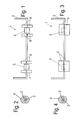
- Nachfolgend wird die Erfindung anhand eines Ausführungsbeispiels unter Bezugnahme auf die Zeichnungen näher beschrieben. Es zeigen:
- Fig. 1
- eine schematische Ansicht eines Ausführungsbeispiels einer Vorrich- tung zur Herstellung eines Verbundsystems,
- Fig. 2
- eine Schnittansicht durch den mit "A" bezeichneten Schnitt der
Figur 1 , - Fig. 3
- eine schematische Ansicht eines weiteren Ausführungsbeispiels einer Vorrichtung zur Herstellung eines Verbundsystems,
- Fig. 4
- eine Schnittansicht durch den mit "A" bezeichneten Schnitt der
Figur 3 . - Bei einem Verfahren zur Herstellung eines Verbundbauteils 1, wie beispielsweise eines Stabilisatorlagers oder eines Drehstabschulterlagers, das aus einem beispielsweise als Stabilisator ausgebildeten Metallteil 2 und einem als Gummiformteil ausgebildeten Polymerformteil 3 besteht, wird in einem ersten Schritt das Metallteil 2 mit einem Haftvermittler vorbehandelt, um eine hinreichende Haftung zwischen dem Metallteil 2 und dem Gummiformteil 3 zu erreichen. Bei dem Haftvermittler kann es sich sowohl um einen Einkomponenten-Haftvermittler als auch um einen Mehrkomponenten-Haftvermittler handeln.
- In einem zweiten Schritt werden zumindest Teilflächen des Metallteils und des Gummiformteils 3 zusammengebracht. Wie insbesondere in den
Figuren 2 und 4 zu erkennen ist, wird das als Gummilager ausgebildete vorvulkanisierte Gummiformteil 3 auf das als Stabilisator ausgebildete Metallteil 2 auf eine vorbestimmte Position auf dem Metallbauteil 2 aufgeschoben, so dass es das Metallteil 2 als ringförmiges Gummiformteil 3 umgibt. - Im Anschluss daran wird das so zusammengesetzte Verbundbauteil 1 über eine vorher definierte Zeitspanne auf eine vorbestimmte Temperatur erhitzt. Durch die Wärmeeinwirkung verbindet sich das vorvulkanisierte Gummiformteil 3 mit dem Haftvermittler und damit mit dem Metallbauteil 2, so dass das Gummiformteil 3 fest mit dem Metallbauteil 2 verbunden ist.
- Die Erhitzung des Verbundsystems 1 erfolgt, wie in den
Figuren 1 bis 4 schematisch dargestellt ist, durch Infrarotbestrahlung des Metallbauteils 2 im Bereich des Gummiformteils 3. Dazu werden Infrarotlampen 4 beispielsweise links und rechts des als Gummilager ausgebildeten Gummiformteils 3 ringförmig um das als Stabilisator ausgebildete Metallbauteil 2 angeordnet. In einer alternativen Anordnung werden die Infrarotlampen rund um die Position des Gummilagers angeordnet. Beide Anordnungsvarianten bewirken eine Wärmebeaufschlagung des Metallbauteils 2 nur an dem Teil des Metallbauteils 2, an dem das Gummiformteil 3 an dem Metallbauteil 2 anliegt und mit diesem fest verbunden werden soll. Dadurch ist bei dem erfindungsgemäßen Verfahren ein erheblich niedrigerer Energieeintrag notwendig als bei der Erwärmung der Bauteile in einem Ofen oder durch induktive Erwärmung des Metallbauteils 2. - Durch die Anordnung der Infrarotlampen ist eine sehr exakte Steuerung der Temperatur gegeben, da die Strahlungsintensität der Infrarotlampen direkt einstellbar ist.
-
- Verbundbauteil
- 1
- Metallteil
- 2
- Polymerformteil
- 3
- Infrarotlampen
- 4
Claims (6)
- Verfahren zur Herstellung eines Verbundbauteils (1) aus einem Metallbauteil (2) und einem Polymerformteil (3), insbesondere in Form eines Stabilisatorlagers oder Drehstabschulterlagers, mit den folgenden Verfahrensschritten:- Vorbehandlung des Metallteils (2) mit einem Haftvermittler,- Zumindest teilweises Zusammenbringen des Metallteils (2) mit dem Polymerfonnteil (3),- Erhitzen des Verbundbauteils (1) über eine vorbestimmte Zeit auf eine
vorbestimmte Temperatur,
dadurch gekennzeichnet, dass
die Erhitzung des Verbundbauteils (1) im Bereich der zusammengebrachten Teile durch Infrarotbestrahlung erfolgt. - Verfahren nach Anspruch 1, dadurch gekennzeichnet, dass das Polymerformteil (3) als vorvulkanisiertes Gummiteil ausgebildet ist.
- Verfahren nach Anspruch 1 oder 2, dadurch gekennzeichnet, dass das Polymerformteil (3) auf das Metallteil (2) aufgebracht wird.
- Vorrichtung zur Durchführung des Verfahrens zur Herstellung eines Verbundbauteils (1) gemäß einem der vorstehenden Ansprüche, dadurch gekennzeichnet, dass die Vorrichtung zur Erwärmung des Metallteils Infrarotstrahler aufweist, welche im Bereich des mit dem Metallteil (2) zusammengebrachten Polymerformteil (3) angeordnet sind.
- Vorrichtung nach Anspruch 4, dadurch gekennzeichnet, dass die Infrarotstrahler als ringförmig um das Metallteil im Bereich des daran angeordneten Gummilagers angeordnete Infrarotlampen ausgebildet sind.
- Vorrichtung nach Anspruch 4, dadurch gekennzeichnet, dass die Infrarotstrahler in Gestalt von zwei halbkugelförmig um das Metallteil im Bereich des daran angeordneten Gummilagers angeordneten Infrarotlampen ausgebildet sind.
Applications Claiming Priority (1)
| Application Number | Priority Date | Filing Date | Title |
|---|---|---|---|
| DE102009003803A DE102009003803A1 (de) | 2009-04-20 | 2009-04-20 | Verfahren und Vorrichtung zur Herstellung eines Verbundbauteils aus einem Metallbauteil und einem Polymerformteil |
Publications (2)
| Publication Number | Publication Date |
|---|---|
| EP2243620A2 true EP2243620A2 (de) | 2010-10-27 |
| EP2243620A3 EP2243620A3 (de) | 2013-08-28 |
Family
ID=42556522
Family Applications (1)
| Application Number | Title | Priority Date | Filing Date |
|---|---|---|---|
| EP10160123.5A Withdrawn EP2243620A3 (de) | 2009-04-20 | 2010-04-16 | Verfahren und Vorrichtung zur Herstellung eines Verbundbauteils aus einem Metallbauteil und einem Polymerformteil |
Country Status (2)
| Country | Link |
|---|---|
| EP (1) | EP2243620A3 (de) |
| DE (1) | DE102009003803A1 (de) |
Cited By (6)
| Publication number | Priority date | Publication date | Assignee | Title |
|---|---|---|---|---|
| DE102010033036A1 (de) * | 2010-08-02 | 2012-02-02 | Benteler Automobiltechnik Gmbh | Verfahren zur Herstellung eines Stabilisators mit Stabilisatorlager |
| EP2392449A3 (de) * | 2010-06-02 | 2013-11-13 | Benteler Automobiltechnik GmbH | Verfahren zum Verbinden eines Gummilagers mit einem Stabilisator für ein Kraftfahrzeug und eine Vorrichtung zum Verbinden eines Gummilagers mit einem Stabilisator |
| WO2015193438A1 (de) * | 2014-06-20 | 2015-12-23 | ThyssenKrupp Federn und Stabilisatoren GmbH | Verfahren zum verbinden einer stabilisatorstange eines kraftfahrzeugs mit elastomerformteilen |
| US10024323B2 (en) | 2012-11-19 | 2018-07-17 | Aarhus Universitet | Joining of polymer and surface-modified solid part |
| DE102018208514A1 (de) * | 2018-05-29 | 2019-12-05 | Zf Friedrichshafen Ag | Verfahren zur Herstellung eines aktiven Wankstabilisators für ein Kraftfahrzeug |
| DE102019216941A1 (de) * | 2019-11-04 | 2021-05-06 | Zf Friedrichshafen Ag | Verfahren zur stoffschlüssigen Verbindung eines Gummilagers mit einem faserverstärkten Bauteil |
Family Cites Families (9)
| Publication number | Priority date | Publication date | Assignee | Title |
|---|---|---|---|---|
| GB461478A (en) * | 1935-05-16 | 1937-02-17 | Leon Thiry | Improved elastic joint and method of manufacturing of the same |
| DE2230412A1 (de) * | 1972-06-22 | 1974-01-10 | Boellhoff & Co | Verfahren zum waermedruckeinbau von befestigungselementen in kalte werkstuecke aus thermoplastischem kunststoff und vorrichtung zur durchfuehrung des verfahrens |
| IT1151777B (it) * | 1982-05-26 | 1986-12-24 | Alfio Deregibus | Processo di vulcanizzazione di manufatti in gomma comprendenti parti metalliche incorporate o vulcanizzati a contatto con superfici metalliche |
| JPH05318692A (ja) * | 1992-05-15 | 1993-12-03 | Setsuo Tate | 金属表面へのプラスチックス被膜形成方法 |
| US6292995B1 (en) * | 1997-11-24 | 2001-09-25 | Bridgestone Corporation | Powder coating as substrate for epoxy bonding of vibration isolation mounts |
| DE10223039A1 (de) * | 2002-05-22 | 2004-01-08 | Woco Avs Gmbh | Verfahren zur Herstellung von Verbundsystemen aus Metall- und Polymerformteilen |
| DE10338588A1 (de) * | 2003-08-22 | 2005-03-24 | Bayer Ag | Verfahren zum Verbinden von Formteilen aus Kunststoff und Metall |
| DE102009011818B4 (de) * | 2008-04-17 | 2016-03-03 | Muhr Und Bender Kg | Verfahren zur Herstellung eines Verbundsystems von Metallteilen und Polymerformteilen |
| DE102011055181A1 (de) * | 2011-11-09 | 2013-05-16 | Benteler Automobiltechnik Gmbh | Verfahren zur Herstellung einer Kraftfahrzeugstabilisatoranordnung |
-
2009
- 2009-04-20 DE DE102009003803A patent/DE102009003803A1/de not_active Ceased
-
2010
- 2010-04-16 EP EP10160123.5A patent/EP2243620A3/de not_active Withdrawn
Non-Patent Citations (1)
| Title |
|---|
| None |
Cited By (8)
| Publication number | Priority date | Publication date | Assignee | Title |
|---|---|---|---|---|
| EP2392449A3 (de) * | 2010-06-02 | 2013-11-13 | Benteler Automobiltechnik GmbH | Verfahren zum Verbinden eines Gummilagers mit einem Stabilisator für ein Kraftfahrzeug und eine Vorrichtung zum Verbinden eines Gummilagers mit einem Stabilisator |
| DE102010033036A1 (de) * | 2010-08-02 | 2012-02-02 | Benteler Automobiltechnik Gmbh | Verfahren zur Herstellung eines Stabilisators mit Stabilisatorlager |
| US8454774B2 (en) | 2010-08-02 | 2013-06-04 | Benteler Automobiltechnik Gmbh | Method of producing a stabilizer with a stabilizer bearing |
| US10024323B2 (en) | 2012-11-19 | 2018-07-17 | Aarhus Universitet | Joining of polymer and surface-modified solid part |
| WO2015193438A1 (de) * | 2014-06-20 | 2015-12-23 | ThyssenKrupp Federn und Stabilisatoren GmbH | Verfahren zum verbinden einer stabilisatorstange eines kraftfahrzeugs mit elastomerformteilen |
| DE102018208514A1 (de) * | 2018-05-29 | 2019-12-05 | Zf Friedrichshafen Ag | Verfahren zur Herstellung eines aktiven Wankstabilisators für ein Kraftfahrzeug |
| DE102019216941A1 (de) * | 2019-11-04 | 2021-05-06 | Zf Friedrichshafen Ag | Verfahren zur stoffschlüssigen Verbindung eines Gummilagers mit einem faserverstärkten Bauteil |
| DE102019216941B4 (de) | 2019-11-04 | 2022-08-04 | Zf Friedrichshafen Ag | Verfahren zur stoffschlüssigen Verbindung eines Gummilagers mit einem faserverstärkten Bauteil |
Also Published As
| Publication number | Publication date |
|---|---|
| DE102009003803A1 (de) | 2010-10-21 |
| EP2243620A3 (de) | 2013-08-28 |
Similar Documents
| Publication | Publication Date | Title |
|---|---|---|
| DE102009008329B4 (de) | Preform-Vorrichtung zum Preformen eines Textilhalbzeugs | |
| DE102009003803A1 (de) | Verfahren und Vorrichtung zur Herstellung eines Verbundbauteils aus einem Metallbauteil und einem Polymerformteil | |
| DE102009031449A1 (de) | Verfahren zum Herstellen eines Aluminiumformteils | |
| EP2925510B1 (de) | Verfahren zur bearbeitung eines faserkunststoffverbundes eines rotorblattes, halbzeug in form eines aufbauverbundes und uv-lampe zum aushärten eines uv-aushärtbaren matrixmaterials | |
| DE102014221079A1 (de) | Achsträger und Verfahren zur Herstellung des Achsträgers | |
| EP1473131A2 (de) | Verfahren zum herstellen textiler vorformlinge aus textilen halbzeugen | |
| EP2480370B1 (de) | Kugelbolzen und verfahren zur herstellung des kugelbolzens | |
| DE102008051380B4 (de) | Verfahren zur Reparatur von faserverstärkten Kunststoffbauteilen | |
| EP3110612B1 (de) | Verfahren zur montage eines bauteils aus einem faserverbundwerkstoff im kraftfluss einer klemmverbindung | |
| DE102016114895A1 (de) | Verfahren zum Härten einer Wälzkörperlaufbahn eines Wälzlagerrings und Wälzlagerring | |
| DE102013107105B4 (de) | Faservorformling-Temperiervorrichtung | |
| DE102009053947B4 (de) | Verfahren zum Herstellen von Bauteilen | |
| EP3738752B1 (de) | Verfahren zur herstellung eines kunststofftanks mit verstärkungen | |
| DE102013107106B4 (de) | Faserhalbzeug-Fördervorrichtung und Verfahren zum Fördern von Faserhalbzeugen in eine Förderrichtung | |
| EP2567805B1 (de) | Herstellung eines Faserverbundbauelementes | |
| EP3317069B1 (de) | Verfahren zum herstellen eines windenergieanlagen-rotorblattes und windenergieanlagen-rotorblatt | |
| DE102014226148A1 (de) | Kleben von Klebebolzen | |
| EP3390554B1 (de) | Verfahren zum beschichten eines kunststoffbauteils mit einem schmelzklebstoff | |
| DE102011116639B4 (de) | Verfahren zur Herstellung eines faserverstärkten Kunststoff-Bauteils und Vorrichtung zur Durchführung des Verfahrens | |
| DE10320791B4 (de) | Verfahren zum Herstellen textiler Vorformlinge aus textilen Halbzeugen | |
| DE102015008953B4 (de) | Verfahren zum Vorbehandeln thermoplastischer Bauteile zum Strukturkleben - und Vorrichtung zum Bearbeiten einer Oberfläche | |
| EP3354444B1 (de) | Verfahren zur herstellung eines bauteils | |
| DE102015202120A1 (de) | Verfahren zur Herstellung eines Kunststoff-Metall-Hybridbauteil | |
| EP2617553A2 (de) | Verbinden von Faserverbundbauteilen mittels Karosserieklebstoff | |
| DE60313980T2 (de) | Verfahren und vorrichtung zum verbinden zweier plattenförmiger gegenstände |
Legal Events
| Date | Code | Title | Description |
|---|---|---|---|
| PUAI | Public reference made under article 153(3) epc to a published international application that has entered the european phase |
Free format text: ORIGINAL CODE: 0009012 |
|
| AK | Designated contracting states |
Kind code of ref document: A2 Designated state(s): AT BE BG CH CY CZ DE DK EE ES FI FR GB GR HR HU IE IS IT LI LT LU LV MC MK MT NL NO PL PT RO SE SI SK SM TR |
|
| AX | Request for extension of the european patent |
Extension state: AL BA ME RS |
|
| PUAL | Search report despatched |
Free format text: ORIGINAL CODE: 0009013 |
|
| AK | Designated contracting states |
Kind code of ref document: A3 Designated state(s): AT BE BG CH CY CZ DE DK EE ES FI FR GB GR HR HU IE IS IT LI LT LU LV MC MK MT NL NO PL PT RO SE SI SK SM TR |
|
| AX | Request for extension of the european patent |
Extension state: AL BA ME RS |
|
| RIC1 | Information provided on ipc code assigned before grant |
Ipc: B29K 105/24 20060101ALN20130724BHEP Ipc: B29K 705/00 20060101ALN20130724BHEP Ipc: B29L 31/30 20060101ALN20130724BHEP Ipc: B29K 21/00 20060101ALN20130724BHEP Ipc: B29C 65/44 20060101AFI20130724BHEP Ipc: B60G 21/055 20060101ALN20130724BHEP Ipc: B29C 65/14 20060101ALI20130724BHEP |
|
| STAA | Information on the status of an ep patent application or granted ep patent |
Free format text: STATUS: THE APPLICATION IS DEEMED TO BE WITHDRAWN |
|
| 18D | Application deemed to be withdrawn |
Effective date: 20140301 |